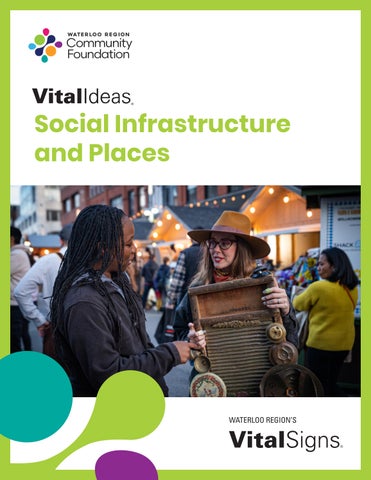
Social Infrastructure and Places
WATERLOO REGION’S
Territorial Acknowledgement
Waterloo Region Community Foundation (WRCF) is situated within the traditional territory of the Attawandaron (Neutral), Anishinaabeg, and Haudenosaunee peoples. The territory is within the Between the Lakes Treaty Lands of the Mississaugas of the Credit and within the Haldimand Tract, lands granted to the Six Nations of the Grand River (Haudenosaunee) in 1784. We recognize that Waterloo Region today is home to a diverse population of First Nations, Inuit, and Metis people. WRCF is committed to understanding the impact of settler colonialism on the Indigenous experience in order to envision and co-create collaborative, respectful paths together in mutuality and reciprocity.
Why Vital Ideas
Vital Signs® tells us how our community is doing. It brings together data, research, and lived experience to highlight the conditions shaping quality of life across Waterloo Region. In 2025, Waterloo Region Community Foundation (WRCF) published a Vital Signs® Report focused on social infrastructure
But no single report can hold every story, question, or idea that emerges from the findings.
As we talked about the report in community, many people asked us to explore specific themes in more detail and consider what they might mean for our shared future. Vital Ideas® responds to that call. It creates space to focus on selected topics raised by
Why Places
When people talk about what it takes to strengthen social infrastructure, they return, again and again, to the importance of place.
In the 2025 Vital Signs® Report, during the 2024 On the Table conversations, and in recent community discussions, including those sparked through the Community by Design podcast series, people consistently pointed to the spaces and places where connection happens, or fails to happen.
Vital Signs® and examine them through new lenses, voices, and perspectives.
Each Vital Ideas® Report centres on one idea linked to social infrastructure, with the potential to shape connection, wellbeing, and belonging in our community.
Vital Ideas® is not about prescribing solutions. It is about asking better questions, deepening understanding, sharing knowledge, and supporting thoughtful action. By continuing the Vital Signs® conversation, we can grow and strengthen the social infrastructure across our region.
As our region grows and evolves, places matter because they shape how people encounter one another, build relationships, and develop a sense of belonging. Thoughtfully designed and accessible places create the conditions for connection, reflection, and shared experience. By focusing on places, this first Vital Ideas® Report explores how our physical and social environments can better support a connected and thriving community.
From Space to Place: Designing for Connection in Waterloo Region
By Dr. Troy Glover
In a time marked by rising social isolation and loneliness, people naturally gravitate toward locations that provide safety, affirmation, and care. Often these conditions emerge where people gather and bond around shared identity. If we want to strengthen the social fabric of our region, though, we need to ask: where can people meet others who differ from themselves while still feeling safe, affirmed, and cared for?
The answer requires a conscious shift from havens1 to encounters.
Unfortunately, many people lack meaningful opportunities for connection, which makes this shift particularly urgent. A recent national study suggests six in ten Canadians report having little or no sense of community, which underscores the growing need
for places that foster belonging.2 As Waterloo Region continues to grow and diversify, this gap becomes more pressing. Nearly one in four residents in Waterloo Region were born outside of Canada,3 which increases the opportunity and need for spaces that bring people together across difference. Diversity may define our region, but connection requires intention. Too often, our spaces support socializing in parallel rather than shared experience.
To understand what must change, consider the distinction between space and place. Space begins as something abstract – a set of coordinates, a physical setting without inherent meaning. It becomes a place through use. As people spend time there, return to it, and interact within it, they begin
Throughout this report you will see citations to sources. You can find the details at wrcf.ca/vi1-sources

to assign meaning. Over time, familiarity takes hold, memories accumulate, and the space becomes a place and part of local social life.
We don’t just need more spaces. We need more spaces that become places.
But places do not emerge automatically. Simply bringing people into the same space doesn’t necessarily produce connection. People can sit side-by-side, pass each other daily, and still remain unseen. Proximity creates possibility, but not connection.
What matters lies in whether spaces create the conditions that make connection more likely.
Many of the social spaces in which we invest serve specific communities. Cultural centres, faith-based spaces, and affinity-based programs offer
Diversity may define our region, but connection requires intention. Too often, our spaces support socializing in parallel rather than shared experience.
Dr. Troy Glover, Professor, Department of Recreation and Leisure Studies, Director, Healthy Communities Research Network, University of Waterloo
vital opportunities for people to connect with others who share the same identities and interests. These environments foster what researchers call bonding social capital:4 strong relational ties grounded in trust, familiarity, and shared understanding.
However, a healthy community also depends on the ability to connect across differences. It needs spaces that foster bridging social capital,5 the more casual ties that link people beyond their immediate social circles. These ties include acquaintances, neighbours, and “familiar strangers” who broaden our sense of who belongs.
To support bridging, we need to create something we might call civic living rooms - spaces that support different uses, attract diverse groups, and invite a

range of activities to occur at the same time. These environments draw people in for different reasons, but hold them together in shared space by creating the conditions for encounter.
Montreal’s Sanaaq Centre6 offers a compelling example. Developed during a period of rapid urban change, it combines a library with a café, theatre, recording studio, social services, and community programming to create an environment where students, families, newcomers, and long-time residents share the same space, each drawn by different purposes, but brought into proximity.
By the Numbers
You will find a list of the sources used to create the numbers in this section at wrcf.ca/vi1-sources.
1/3 of Canada’s faith buildings are in danger of closing
Over 900 nonprofits in Southern Ontario use faith buildings – and 84% of them have no alternative if those spaces shut down.
Waterloo Region is in a period of rapid change, with growth and diversity reshaping how people live alongside one another. Several organizations, like our local libraries, have already started that transition to becoming a new kind of local cultural hub. For Waterloo Region to truly turn the tide, this type of place must be the standard and become more commonplace, rather than the exception.
In these environments, people encounter one another without needing to engage directly. They share space in ways that make recognition possible.
Canada’s recreation and active transportation infrastructure carries an estimated replacement value of
$42.5 billion
of all public infrastructure in Canada (including recreational and community facilities) is the responsibility of municipal governments, despite them receiving less than 10 cents of every tax dollar.
Library visits increased by nearly 10% in 2025, while bookings for shared spaces rose by 25%.
Over 60% 10% 25%
They notice one another and gradually become familiar. Over time, something subtle but powerful begins to unfold. A brief nod between strangers. A quiet recognition of a familiar face. A gradual shift from unfamiliar to familiar. A shift from gathering to mixing.
Enduring connection rarely happens in a single moment. It develops through repetition. When people return to the same place - day after day, week after week - they begin to recognize one another. Familiar strangers become part of the social landscape. Over time, these interactions can evolve into trust, conversation, even meaningful relationships.
For this reason, designing for connection also means designing for return. It requires environments that invite people to linger, where seating remains available without requiring a purchase, where layouts encourage pause, and where participation remains optional
rather than structured. These low-pressure conditions lower the social stakes and make interaction easier to initiate.
At the same time, not all shared spaces remain equally open. Some drift into what sociologist Lyn Lofland described as parochial spaces,7 those that appear to be public, but are subtly shaped by an in-group. They rarely intend to exclude. Instead, they develop unwritten norms about who belongs and how to behave. The in-group feels welcome. Others view the space as off-limits.
This dynamic creates a silent barrier to belonging.
Civic living rooms, like the Kitchener Market,8 help counter this tendency. By bringing together different people, activities, and rhythms, they resist capture by any one group. The constant flow of users
64% of Canadians report having a regular place outside home or work where they feel a sense of belonging.
keeps the space socially open, dynamic, and inclusive.
For Waterloo Region, this shift calls for three priorities:
First, design for overlap. Spaces that combine uses - work and play, solitude and sociability, culture and everyday lifedraw a wider mix of people. Research shows when public spaces support multiple uses at once, they create more varied patterns of activity and increase the potential for social mixing across groups.9 Consider the Kitchener Market: a space where a Saturday morning brings together university students, newcomers to Canada, and families who have lived in the region for decades. More than a place to buy produce once a week, the Market represents a layered landscape.

Well-designed spaces don’t just attract people; they activate them.
Public spaces that encourage people to linger, observe, and return often generate stronger patterns of social interaction over time. Take the Toronto Bentway as an example:
Visitors that interact with others
Visitors that leave feeling more connected
91% of Canadians believe shared community spaces help build strong communities.
By combining a food hall, a community kitchen, and a public piazza, it creates a “civic living room” where interaction occurs seamlessly with a variety of intentional programming. In these moments, “familiar strangers” begin to recognize one another, thereby weaving the first threads of bridging social capital.
Second, invest in accessibility across neighbourhoods and communities. Accessibility extends beyond physical design. It includes affordability, geographic distribution, cultural relevance, and ease of entry. Yet significant barriers remain. In Canada, over half of people with disabilities report barriers to accessing public spaces with challenges related to mobility, transportation, and affordability shaping participation.10 Locally, rising housing costs and uneven transit access further shape who can participate in community life, particularly across rural townships and lower-income neighbourhoods. In a region that balances urban and rural communities, accessibility requires distributing social infrastructure so that residents’ postal codes don’t determine their level of social connection. When access improves, participation broadens. So does the potential for connection across difference.

Third, support environments and programming that encourage repetition. People return to places that feel lively, comfortable, and easy to engage with. Research shows active, well - used spaces where people can sit, observe, eat, or simply be around others encourage longer stays and repeat visits.11 These low - pressure settings make interaction optional, allowing familiarity to build over time. Even small, low-cost features like seating, art, or WiFi can increase use and support wellbeing.12 Over time, these repeated encounters transform spaces into places, and strangers into familiar faces. Designing for repetition means creating welcoming environments to which people want to return.
More than creating spaces people can visit, then, we must create places to which people return. In returning, familiarity and recognition naturally occur.
This marks the evolution before us: from havens to encounters, from gathering to mixing, and ultimately, from space to place.
If we get this shift right, the impact won’t always appear in a dramatic way. It will surface in small, everyday moments - a nod between neighbours, a shared table, a quiet sense of recognition.
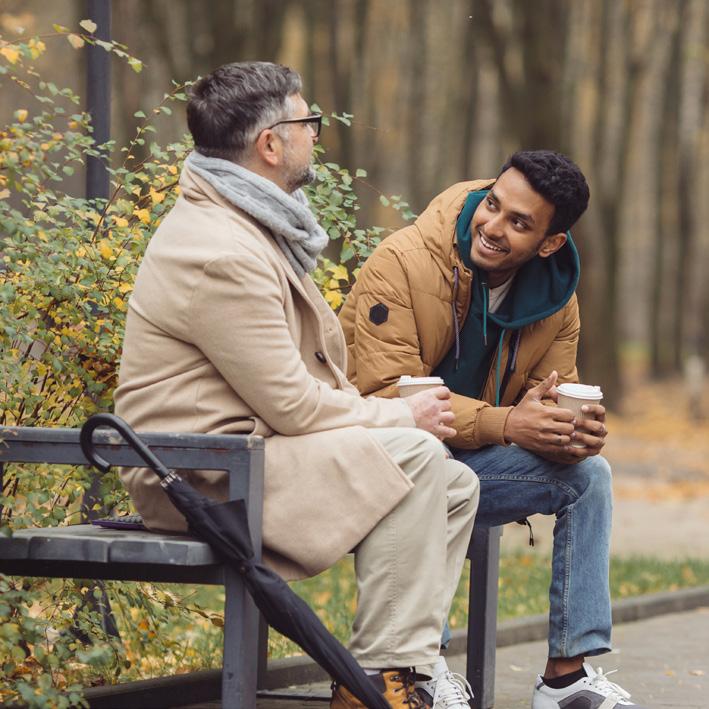
Over time, these moments will accumulate and weave the threads of connection that hold our region together.
By supporting this work, Waterloo Region Community Foundation can help create the conditions for encounter and strengthen our community.
In the end, the future of our region’s social fabric may depend less on what we build and more on how we bring people together within it.

Dr. Troy Glover
Professor, Department of Recreation and Leisure Studies, Director, Healthy Communities Research Network, University of Waterloo
Community Stories
Gaslight District builds social infrastructure by design
We’ve spent generations building infrastructure for efficiency. But what about infrastructure for the human spirit? That question led Montreal art and design studio Daily tous les jours to Cambridge’s Gaslight District, where two permanent public installations turn public space into an invitation – to pause, play, and notice the people beside you. These aren’t accidental features; they’re deliberate invitations to share something with strangers and create a sense of community.
wrcf.ca/news/dtlj-story
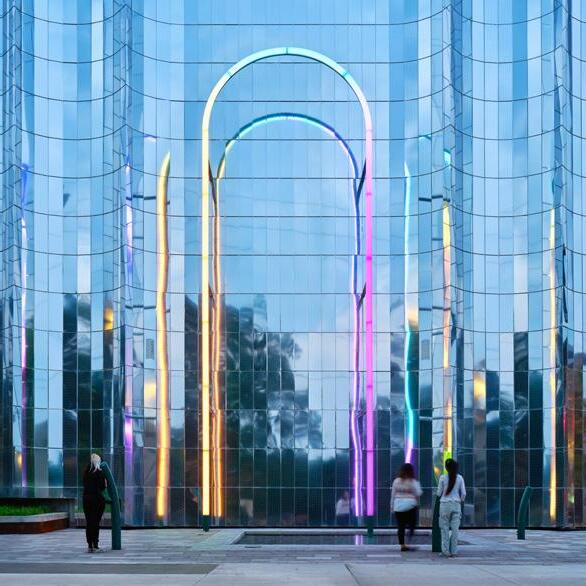
“If we can make pavement that sings under our feet, what else could we imagine collectively for our cities?”
Mouna
Andraos, Co-Founder, Daily tous les jours
‘Driven by the people’: Kitchener Market fosters community
For more than 150 years, the Kitchener Market has been more than a place to shop – it’s where strangers become neighbours. It’s where a Saturday morning ritual becomes something bigger. Thousands of brief conversations between people who might only see each other once a week, slowly building the connective tissue of a city. This downtown mainstay is a masterclass in social infrastructure: proving that connection, culture, and commerce don’t just coexist – they strengthen each other.

wrcf.ca/news/kitchener-market-story
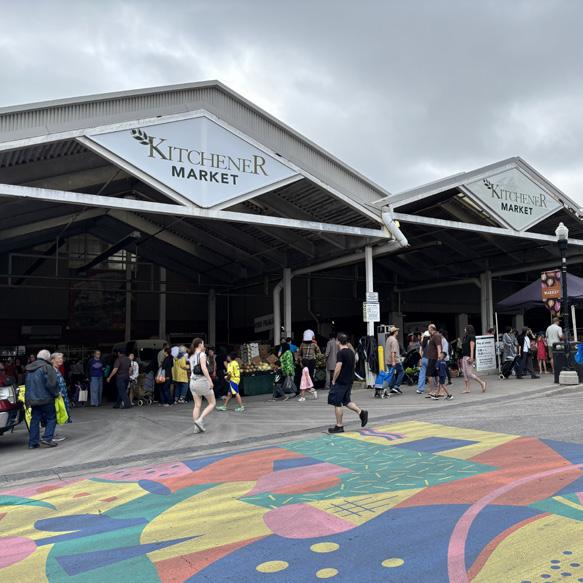
“We’re intentionally trying to build a space where connections can happen, but at the same time, it should feel like it’s just part of your process of being there.”
Cameron
Dale, Manager, Kitchener Market
Want to explore more ideas about Place, Connection, and Social Infrastructure?
Here are a few resources to continue the conversation.
Let’s Talk about Placemaking – A practical Canadian guide that introduces placemaking principles and explores how communities can create more connected, inclusive, and people-centred public spaces. placemakingcommunity.ca/wp-content/ uploads/2025/04/LTAP-EN.pdf
Building Community Centres that Build Community – An exploration of how community centres can move beyond recreation facilities to become welcoming civic spaces that support belonging, interaction, and everyday social life. perkinswill.com/news/building-community-centresthat-build-community
Places of the Heart: The Psychogeography of Everyday life – Waterloo Professor Colin Ellard examines how the spaces we move through shape emotion, behaviour, memory, and social experience. colinellard.com/writings
Placemaking – What if we built our Cities around Places? – The Project for Public Spaces introduces placemaking as a way of designing cities around human experience, public life, and community connection.
pps.org/product/placemaking-what-if-we-built-ourcities-around-places
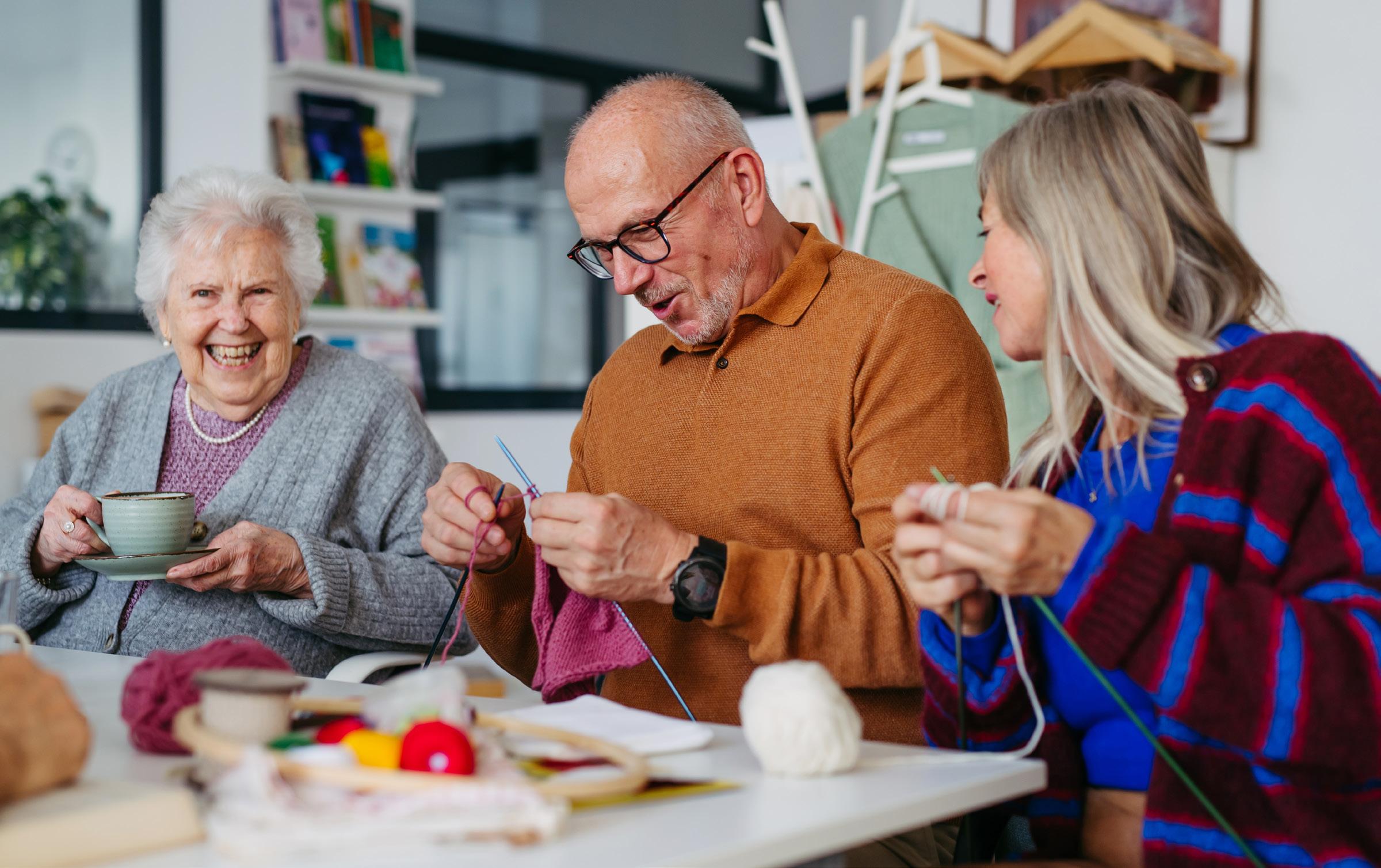
A Bench on Every Corner is More than just a Bench –A campaign exploring how simple public amenities support social connection and everyday community life.
sociallifeproject.org/campaign-to-put-a-bench-onevery-corner
Aging Playfully: Reimagining the Possibilities of Age-Friendly Community – A Canadian initiative exploring how play, creativity, and inclusive design can help communities support aging, participation, and social wellbeing. agingplayfully.ca
Activating Space: A Field Guide – A hands-on guide featuring low-cost strategies for transforming underused public spaces into vibrant places for gathering, creativity, and community life. spaceandculture.com/wp-content/ uploads/2020/04/Activating-Space-Field-GuideVertical.pdf
Happy City, Transforming our Lives Through Urban Design – Charles Montgomery explores how urban design shapes happiness, belonging, and social connection happycities.com/the-book
Activate Your Neighbourhood – A Canadian toolkit that helps residents, organizations, and municipalities create low-cost neighbourhood activities and public space interventions that strengthen local connection and belonging. activateyourneighbourhood.ca
Social Life Project – Research and storytelling focused on social connection, belonging, and public life. sociallifeproject.org
Excerpt from Placemaking: What If We Built Our Cities Around Places?:
What Makes a Great Place?
It’s surprisingly simple.
Most great places, whether a grand downtown plaza or humble neighbourhood park, share four key attributes:
They are accessible and well connected to other important places in the area
1 2 3 4
They are comfortable and project a good image

They attract people to participate in activities there
They are sociable environments in which people want to gather and visit again and again
Your next move: Actions you can take
Use GatherWR to discover places and spaces where people already come together—and look for opportunities to activate them.
Start a simple neighbourhood tradition in an everyday space: a driveway potluck, courtyard coffee hour, park meetup, or recurring shared meal. Repetition helps transform space into place.
Return to the same local place regularly - a café, market, park, or plaza. Familiarity grows through repeated presence, even small interactions like a nod or conversation.
Bring something shareable into public space: an extra chair, sidewalk chalk, a board game, or music. Small gestures can lower social barriers and invite interaction.
Support temporary, community - led uses of under - used spaces, including pop ups, murals, programming, seating areas, and playful installations.
Pay attention to which places feel welcoming, and which feel closed off. Ask yourself: who feels comfortable here? Who might not? Share that insight with people shaping local spaces.
Advocate for “civic living rooms”: public spaces with seating, shade, play elements, shared tables, and free amenities that invite people to linger and interact without needing to spend money.
When you travel, notice the places where people naturally gather. What encourages people to stay, mix, and return? Bring those ideas home with you.
Support placekeeping, not just placemaking. Many Indigenous approaches emphasize ongoing stewardship, care, and relationship with place, rather than one - time transformation. Learn more: creditvalleytrail.ca/indigenous-placemaking
Explore the Neighbourhood Services Map created by One Million Neighbours Waterloo Region to better understand which neighbourhoods need greater investment in social infrastructure and community support.
At Waterloo Region Community Foundation, we see every day how the spaces we share shape who we become as a community. The research is clear: connection doesn’t happen by chance. It grows in places designed for return, for overlap, for the quiet recognition of a familiar face. Our region’s future depends on whether we invest not just in spaces, but in the conditions that turn spaces into places. I invite community leaders, planners, funders, and neighbours to join us in this work. The opportunity is now.
Eric Avner, WRCF’s President & CEO
Thank You
Waterloo Region’s Vital Ideas® Report would not have been possible without the generous support of our sponsors and the individuals who contributed throughout this document.
Thank you.


LEAD AUTHOR AND RESEARCHER
Dr. Troy Glover
ADVISORS AND CONTENT CONTRIBUTORS
Eric Avner
Mouna Andraos
Cameron Dale
Ian Shantz
EXECUTIVE EDITOR
Lynne Short
DESIGNERS
Rochelle Benoit
Dani Siddique
About Waterloo Region Community Foundation
Waterloo Region Community Foundation (WRCF) is focused on making it easy for people to do more good. WRCF collaborates with partners to ensure communities across Waterloo Region are equitable, connected, and sustainable; and people are thriving. We work with individuals and companies to support the organizations and issues they care about.
WRCF drives measurable and sustainable impacts through Granting, Investing, and Mobilizing. Gifts are directed to WRCF’s endowed funds, with the income generated being distributed in partnership with Fundholders through grants and investments that support a wide range of charitable causes that drive positive change within our community. We are growing our assets in a socially-responsible way without compromising financial returns, and transitioning to a 100% missionaligned portfolio. These investments include directing at least 10% of our portfolio to impact investments. As a leading community-building organization, we also work to amplify voices and issues of importance by mobilizing conversations and sharing information, which leads people to action, while approaching our work with an equity mindset.
In 2026, WRCF continues to prioritize improving Waterloo Region’s social infrastructure. www.wrcf.ca
About Vital Signs
Vital Signs® is a community check-up conducted by community foundations across Canada that measures the vitality of our communities and identifies significant trends in a range of areas critical to quality of life. Vital Signs® is coordinated nationally by Community Foundations of Canada. The Vital Signs® trademark is used with permission from Community Foundations of Canada.
SDG Idea Factory
200-2 King Street West Kitchener, ON N2G 1A3
WRCF.CA
519-725-1806 | info@wrcf.ca
Cover photo by Taijasa Jordan