Economic Development in the World’s Third Largest Economy
Corporate investors are seeing measurable results in Montgomery a market defined
execution, speed to market, and sustained growth. Strong per-capita project
and continued expansion by existing employers reflect a competitive environment
high-impact corporate investment
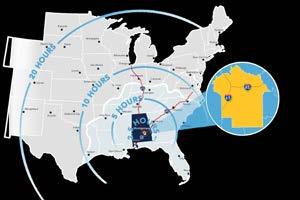
Strategically Located - Southeastern Hub Robust Infrastructure
Capital Logistics
Corridor: anchored by I65 & I85
Access to six major U.S. highways
Direct rail connections
Regional airport
Inland Port Connectivity (Opens 2027) –Seamless Multimodal
Access
Built for growth with industrial-grade utilities
High-capacity water and sewer systems
Extensive road networks
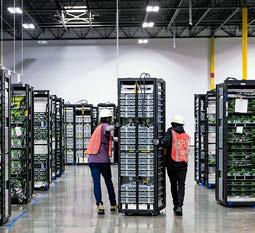
MGMix – Enterprisegrade speed, power & connectivity
Unified local leadership Powerful financial incentives
Streamlined Project Execution – One team. One contact. Faster results.
Led by an award-winning economic development team.
Robust talent pipeline AIDT state-backed workforce training
Six four-year universities
Two community colleges Local career technology programs
Proactive workforce alignment built around employer needs.
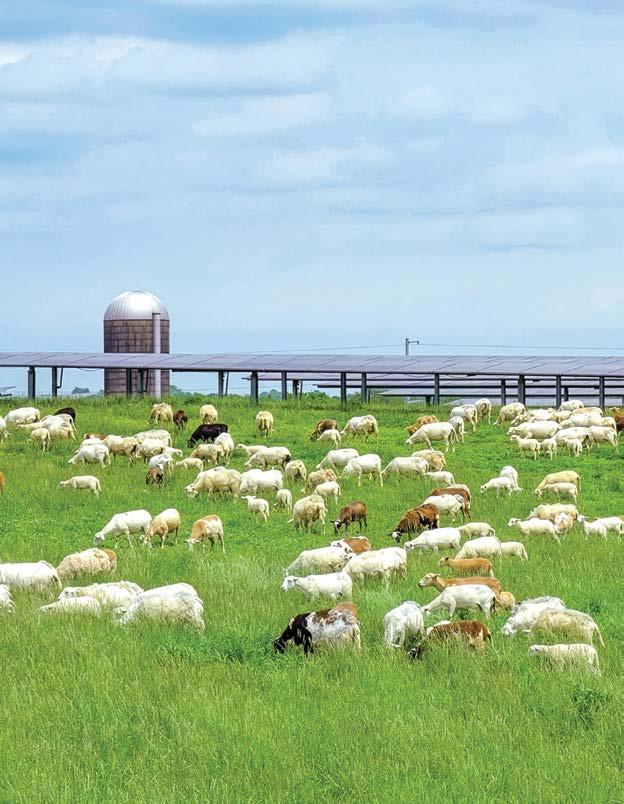
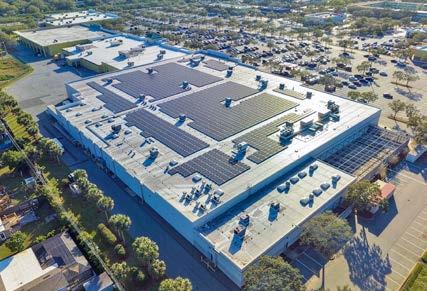
MAKING SOLAR DO MORE®
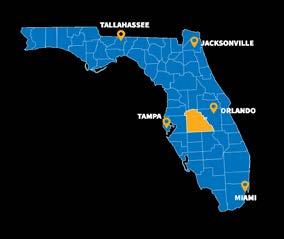
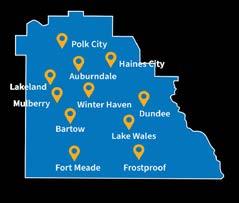
POLK COUNTY, FL
20,000
8,643 JOBS
Using
3.4x
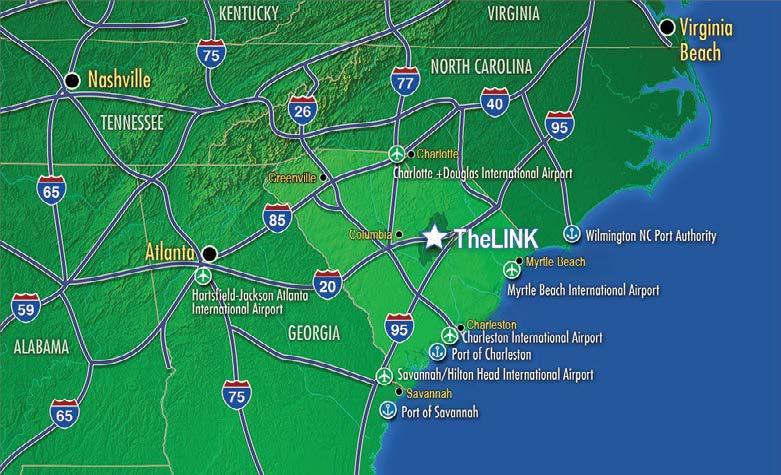
Phone: 803.418.0700
Email: info@thelinksc.com
Web: www.TheLINKsc.com
Lee & Sumter, SC
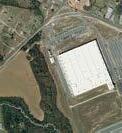
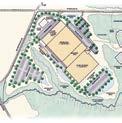
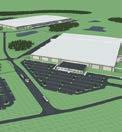
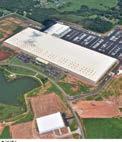
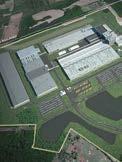
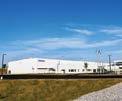
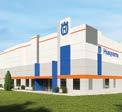
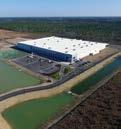
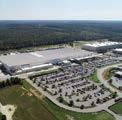
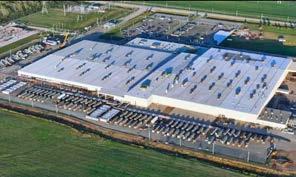
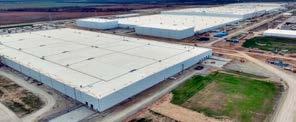
Tract 2 at Commonwealth Crossing Business Centre in Henry County, Virginia, was the first site in the nation to earn a Platinum designation from the Site Selectors Guild’s REDI Sites Program—the highest level of site readiness certification available.
Offering speed-to-market advantage for manufacturers, this site features robust, modern infrastructure, including rail access, designed to meet the demands of today’s industries.
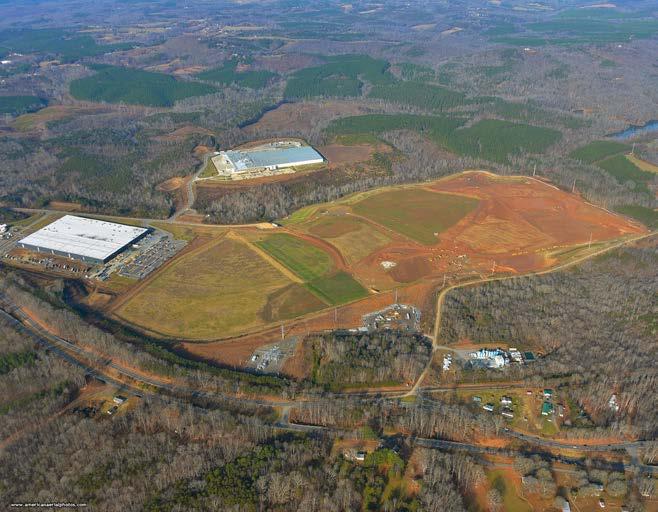
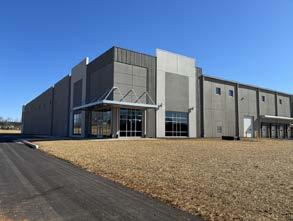
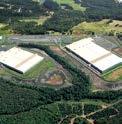
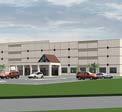
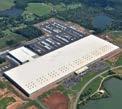
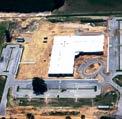
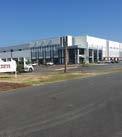
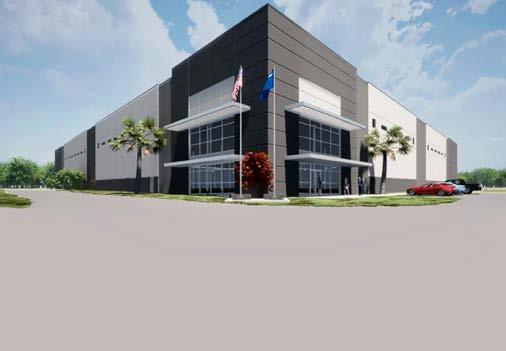
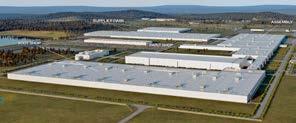
Located in Henry County, Virginia, the Patriot Centre Industrial Park offers a state-of-the-art shell building with quick access to U.S. 220 and key interstate corridors. Designed for flexibility, this facility is ideal for manufacturers and advanced industries. The park is fully equipped with municipal water and sewer, natural gas, an on-site substation, and high-speed fiber—delivering the infrastructure and scalability businesses need to grow.
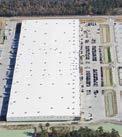
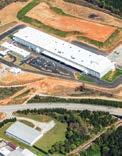
Scan the QR Code to learn more about Tract 2. • 100,440 SF expandable to 400,000 SF • Flexible Office Configuration
20 Acre Site
32’6” Clear Ceiling Height
Tract 2 Shell
34
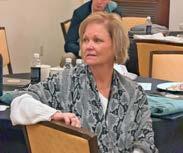
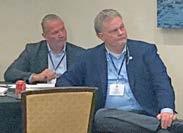
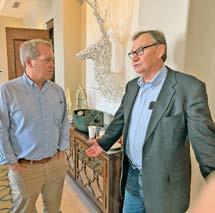
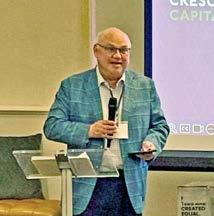
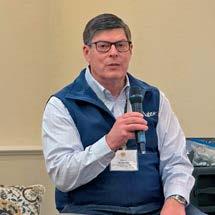
Southern Economic Development Roundtable 2025
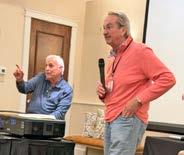
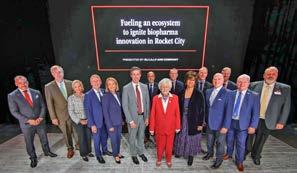
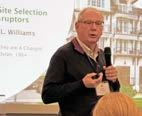
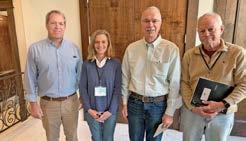
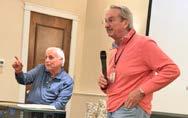
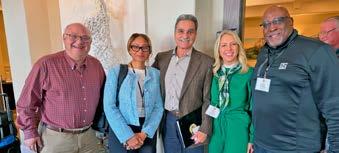
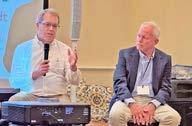
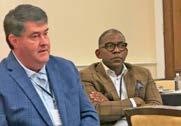
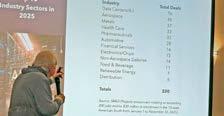
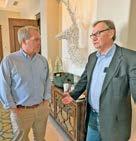
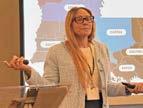
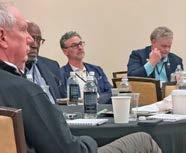
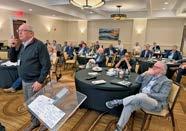
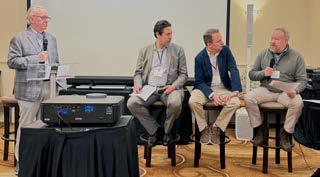
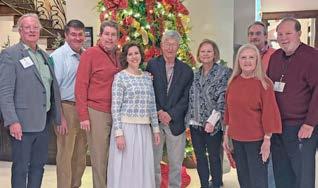
Some of the finest minds in economic development in the South gathered last December to exchange ideas
The SB&D 100
The numbers are in, and 2025 proves to be the strangest year in SB&D 100 history
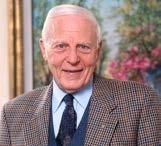
Southern Economic Development Hall of Fame
The fourth installment of SB&D’s look at those who have taken the South to incredible heights over the last 70 years
22 31
SouthBound
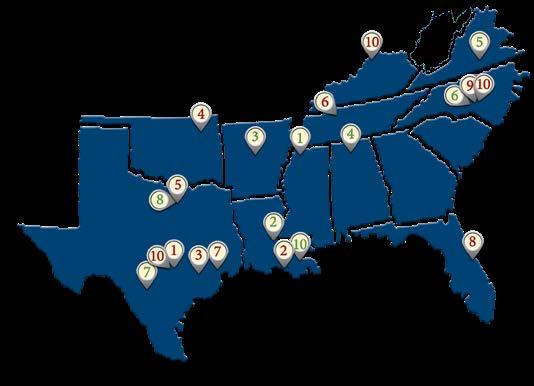
The ten largest employment and ten largest investment deals announced in the last quarter 10 13
The editor’s column Around the South
Top stories from the last quarter relative to business and economic development
Relocations & Expansions
All of the significant new starts, expansions and relocations announced in the South in the last quarter
Southern Auto Corridor
News from the South’s auto industry
Top Deals
On the Cover
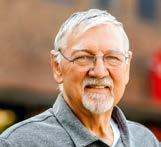
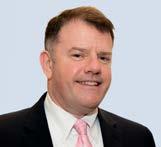
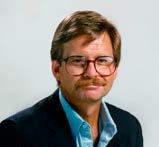
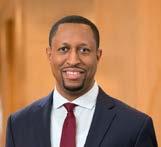
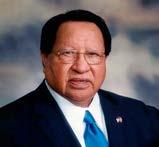
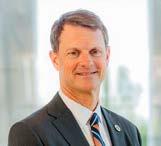
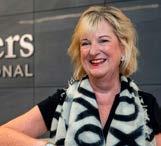
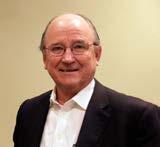
Left to right, top to bottom: Hilda Lockhart; Jack Belz; Jim Lentz; Andrew Young; John Bradley; Phillip Martin; Lewis Grizzard; Marvin Runyon; J. Michael Mullis; Bernie Ebbers; Maceo Nance; Janet Miller
GROW IN A GROWING REGION
150,000 Sq. Ft. Pad-Ready Site Available
Directly adjacent to I-26, nearest to the Port of Charleston in the TVA service area, with easy access to I-40 and I-81. CSX rail lines onsite. Unicoi County, TN: Speed-to-Market Advantage, Quality of Place, Business-Friendly Environment.
A large regional workforce with comprehensive development, education, and apprenticeships keeps industry ahead.
Schedule a site visit today with Austin Finch 423-735-4578 I Afinch@e-u.cc UnicoiCountyECD.com RealWildUnicoiCounty.com
SOUTHBOUND
By Michael Randle, EDITOR
After almost 45 years, SB&D is ending its run of printing magazines
You have it in your hands. If not, you wouldn’t be reading this.
Many folks still love to read, touch and feel paper. Yet, there are many who wouldn’t read print if it was the only thing readable in an igloo (much like the South’s weather this winter). They would tear it up for a makeshift blanket before they would read it.
And that’s sad. Not the weather; the fact that most under 40 simply do not sit down and read printed news in a nice, comfortable chair with a fire going. That is gone. Print is not part of their routine. Consequently, there are hardly any more daily newspapers left printing. I still adore tackling The New York Times Sunday edition, all six pounds of it.
The under-40 crowd gets their news on their phones. We get it. Forty-four years of print
I don’t go far enough back to the use of molten lead that would help Linotype machines cast entire lines of text. Each line was a solid metal slug. Every line! Pages were locked in to steel frames called chases and rolled onto presses. Can you imagine? That technology ended in the 1950s.
I started this media company as a 20-something in 1982. I also missed 1950s to 1970s phototypesetting, a real step-up from molten lead. But even then, the X-Acto knife was used prominently in the process.
I grew up in print with paste-up boards and pure darkroom wizardry (“You opened the door to the dark room? Shame on you!”). Before there were computer programs like InDesign or even Quark, printing prep was essentially a craft shop/chemistry lab. Amberlith, Rubylith, X-Acto knives and registration marks (“Don’t bleed on the boards, and I mean it!”) were mere parts of the tools of the trade.
There, we created — I created as the main layout artist after I
launched the Birmingham Business Journal in 1982 — a tabloid-style newspaper. I wrote it, sold the ads, did “layout,” and it was pure artistic magic at 3:00 a.m. on a Sunday with zero digital involvement.
I also owned it and had to make payroll; tough to do as a 20-something.
Yeah, you worked with cyan, magenta, yellow and black. No other colors. So, you had to mix the ink to make another color other than those. “Hey Gladys, we need 30 percent magenta, 30 percent black, 10 percent cyan and 30 percent yellow” for a brownish-red, brick shade.
Later, “WordStar” was invented, before email existed. But you could now take a floppy disc with your content straight to the typesetter.
But then, the most amazing thing happened, the dial-up modem was invented. Oh my, you could use your tiny 8-inch screen computer with the tiniest memory to send your content to the typesetter. The folks reading that would deliver to you type strips that could be hot-waxed and placed on boards, again, using an X-Acto knife. It was like an early version of Legos, just more difficult to build.
Content was not just written, it was built in the days of “publish or perish.” To this day, it is still “publish or perish” and I put that phrase on t-shirts with the BBJ logo on it. Because if you did not publish, you were not paid.
Then, you had to make all of that into negatives in photo form that would weigh about 100 pounds for a 96-pager. Four negatives (one for each color) for each page. I cannot believe we did that for decades.
Then, after completion that took us about three weeks at best, you shipped the negatives to your $50 million German press house. Our current printer is based in Missouri. We
Southern Business & Development (ISSN 1067-8751) is a registered trademark TM. Founded in 1992 and published quarterly by MCR Publishing, Inc. Affiliated Websites include www.SouthernBusiness.com and www.SB-D.com. Office address: 8086 Westchester Place, Montgomery, AL 36117. To subscribe, email stacy@ sb-d.com. Annual subscription: $25. Single edition delivery by three-day mail: $10. Information contained in SB&D and on its websites is gathered from reliable sources, however, the accuracy of this information is not guaranteed. All rights reserved. Permission must be granted by SB&D for reprint rights, in whole or in part. Copyright 1992-2026. Southern Business & Development TM 1997. Southern Auto Corridor and Southern Automotive Corridor TM 2003.
SOUTHBOUND
have printed in Alabama, Virginia, Florida and Tennessee over the four decades.
Mailing and maintaining a current mailing list — in our case for SB&D, site consultants and CEOs from up North — was a full-time job. Addresses were changed each month, people died, retired, moved to another job, etc.
And you had to catch every single change. The last thing a publisher wanted was to send a $30,000 print job to an address that was vacant.
This issue and the last this summer will be printed and mailed in Missouri. I always tried to keep our printer in the South. Missouri, at least the south of it, thinks it is “Southern.” (I missed the headline in USA Today that Missouri joined the South.)
So, if you are still into reading print, especially one dedicated to the South’s economic cause, look at what you are holding in your hands. We have one more to go, not to say we will never print again. Never say never, but SB&D has one more issue left before we retire SB-D.com and the magazine into the new SouthernBusiness.com this summer.
You are going to love this new site, SouthernBusiness.com, when it debuts this summer. The webmaster, Infomedia,
handles the sites for Brasfield & Gorrie, Harbert and O’Neal Steel here in Alabama. Those are huge corporations.
Finally, I lucked up. In 1997, when I designed my first news website, Network Solutions wanted $1.5 million for the domain, SouthernBusiness.com. I checked on the price during COVID and it was still priced at $150,000. I bought it in 2025 for $1,500.
So, soon, we will have digital-only reads for SB&D for PCs, MAC, iPhones and Androids, where you can discover a whole new platform. Soon, our deadlines will be daily, not monthly and quarterly.
And, for nostalgia purposes, I count over 1,000 advertisers, some ongoing every year for 34 years, that have advertised with SB&D since 1993. That sounds about right since I have visited and photographed a little over 1,100 of the 1,301 counties and parishes in the South during that time.
So, we end an era of printing, not because printing our product is not profitable; it is. But, I think 44 years of print with one owner is enough, don’t you?
We did the best we could. Now, watch what we do next. J
ECS Group of Companies is proud to support the Southeast’s growth with nearly 212,000+ projects and 780+ professionals across 29 offices. From site selection to certification, we’re committed to smart, sustainable development. We’re honored to be recognized by Southern Business and Development’s Economic Development Hall of Fame for the leadership of Chuck Whipple and Raul Peralta.
Chuck and Raul embody the grit and vision that drive real community impact. Their recognition reflects ECS’s mission to fuel meaningful progress across the region. Thank you to Southern Business & Development and Mike Randle for this honor.
CHUCK WHIPPLE, MSED, MEDP, SCCED, HLM VP, Director of Business Development
cwhipple@ecslimited.com
803.238.7969
RAUL PERALTA Senior Vice President rperalta@ecslimited.com
336.209.5923
Around SOUTH
The Milken Institute’s 2026 Best Performing Cities: South takes eight out of 12 in Tier 1 Large Cities Category
The South claimed eight markets in the Milken’s Institute’s 2026 Best Performing Large Cities 2026 ranking. Those at the top of the Tier 1 category were: Rank MSA
1 Fayetteville-Springdale-Rogers, Ark
2 Huntsville, Ala.
3 Charleston-North Charleston, S.C.
5 Raleigh-Cary, N.C.
8 Orlando-Kissimmee-Sanford, Fla.
9 Austin-Round Rock-San Marcos, Texas
11 Wilmington, N.C.
12 Arlington-Alexandria-Reston, Va.
Others outside the South ranked in the top 12 included: Boise City, Idaho; Provo-Orem-Lehi, Ore; Salt Lake City-Murray, Utah; and Olympia-Lacey-Turnwater, Wash.
U.S. Census releases new population growth stats
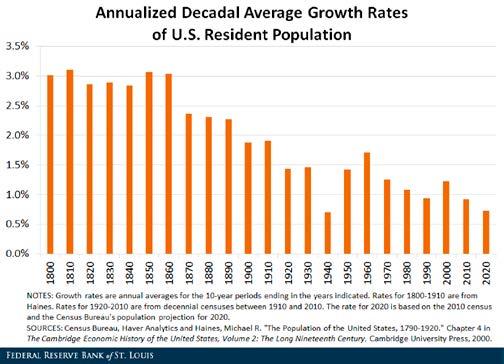
In 2025, the U.S. continued years of very little population growth. The culprit has always been low birth rates, but today, stagnant, almost zero immigration gains added to the mix.
According to the Census, between July 2024 and July of 2025, population increased 1.8 million persons in the U.S. That is a rate of 0.5 percent. It’s the slowest growth in the U.S. since 2021’s rate of 0.2 percent. In 2024, the population grew by 1.0 percent, which, according to the Census, was the fastest yearover-year growth since 2005.
The top five fastest-growing states during the period were South Carolina (1.46 percent); Idaho (1.44 percent); North Carolina (1.32 percent); Texas (1.25 percent) and Utah (1.03 percent).
Regionally, the American South led all regions in population growth from July 2024 to July 2025
U.S. Regional Growth Rates
South: 0.66 percent
West: 0.59 percent
Midwest: 0.45 percent
Northeast: 0.23 percent
Source: U.S. Census Bureau, July 2024-July 2025
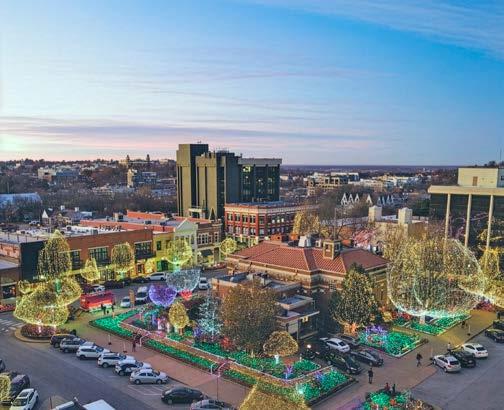
SHOWN ABOVE: Fayetteville, Ark., earned Milken Institute’s 2026 Best Performing City in the U.S.
The U.S. continued years of very little population growth in 2025. The culprit has always been low birth rates, but in 2025, stagnant, almost zero gains in immigration was added to the mix of declines last year. While births remained ahead of deaths in 2025, Baby Boomers are aging out of the workforce at record numbers.
Over half of the leading business startup states in the United States are in the South
Recent data from the U.S. Census and the Bureau of Economic Analysis (BEA) shows that startup businesses in the U.S. are being led by states in the American South.
Here are the figures regarding startup increases from Q2 2010 to Q1 2025, or 15 years compiled by Southern Business & Development.
It should be noted that a reading of 12.0 or higher means there were more than 12 more startups each year on average for every 100 that existed from Q2 2010 to Q1 in 2025.
The South was led by Mis-
sissippi with 13.2 startups, North Carolina and South Carolina with 12.3, Tennessee with 12.2, Texas with 12.8, Georgia with 12.7 and Florida with 12.7. Louisiana was the slowest state in the South with the least number of startups in 15 years at 8.8 percent.
Average startup gains from Q1 2010 to Q2 2015
South: 11.2 percent
West: 9.6 percent
Northeast: 8.4 percent
Midwest: 7.3 percent
Texas and Florida at the top of the heap again in 2025 migration trends
The annual U-Haul Growth Index saw Texas and Florida, the South’s two most
populated states, sit at the top nationwide in one-way moves (individual and family relocations).
Like 2024, 2025 saw the Dallas-Fort Worth-Arlington mega-market lead the nation in growing metros. Texas also claimed the top three metros at the top of the Index. In addition to D-FW, those were Houston and Austin.
In Florida, for the third time in four years, Ocala topped the U-Haul Growth Index as the No. 1 U.S. growth city proper. Lakeland also saw a tremendous influx of oneway moves.
Top Metros in the U.S. 2025 according to the U-Haul Growth Index:
Dallas, Texas
Houston, Texas
Austin, Texas
Charlotte, N.C.
Phoenix, Ariz.
Nashville, Tenn.
Charleston, S.C.
Raleigh, N.C.
Atlanta, Ga.
Brownsville, Texas
McAllen, Texas
Phoenix, Raleigh and Austin named top destinations for construction work
A new report by Astrak shows that Phoenix, Raleigh and Austin have emerged as the three top U.S. markets for job growth and wages in the construction industry. Total U.S. construction spending
is forecast to reach over $2.2 trillion in 2026, a two percent increase over 2025.
ALABAMA
Montgomery Chamber of Commerce: Keep emphasis on Maxwell Air Force Base
From the Black Belt News Network: Hyundai has had a huge impact on central Alabama, but Montgomery should continue to focus on Maxwell Air Force Base as well, a chamber of commerce official said.
“When we discuss the economic impact that Hyundai has on Montgomery, this region and this state, I think sometimes we forget the economic impact that Maxwell Air Force Base has on not just Montgomery, but the state of
GETTING THE BIG QUESTIONS ANSWERED AND THE LITTLE THINGS RIGHT
That’s Law Elevated
Around SOUTH THE
One of America’s oldest industrial giants is investing $3 billion in a new and advanced steel mill in Mississippi County/Osceola, Ark. U.S. Steel already has a huge presence there in Big River Steel. More steel is made in Mississippi County, Ark., than any county in North America.
ASTAYING POWER.
Our story is best told through the success of our members. Since 1988, South Carolina Power Team has been championing great stories through industry recruitment and by offering highly reliable power through South Carolina’s electric cooperatives. As an essential economic development partner, we continue to commit resources and incentives to help businesses thrive in South Carolina, and we play an essential role in the creation of job and career opportunities for those we serve. Powered by South Carolina’s Electric Cooperatives.
QTS DATA CENTER
$1B investment
Establishing operations in York County
Served by York Electric Cooperative FN AMERICA
$33M investment 176 new jobs
Expanding operations in Pickens County Served by Blue Ridge Electric Cooperative
ENGINEERED FOAM PACKAGING
$15M investment 53 new jobs
Alabama,” Caleb Goodwyn, chief economic development officer for the Montgomery Regional Chamber of Commerce, told the Montgomery County Commission in the winter quarter. “It’s imperative that we continue to focus on Maxwell,” Goodwyn said. “That’s why we’ve made it our priority at the chamber to focus on the redevelopment of Maxwell Boulevard, and we’ve been working with our local partners.”
U.S. Steel still investing in Fairfield plant that first opened in 1909
U.S. Steel announced an investment of $75 million at it Fairfield Tubular Operations in the Birmingham metro. Fairfield Tubular Operations specializes in producing high-quality, American-made steel pipe and tube products, primarily serving the energy sector, including oil and gas customers.
ARKANSAS
U.S. Steel is building another steel plant in Mississippi County, Ark. One of America’s oldest industrial giants is investing $3 billion in a new and advanced steel mill in Mississippi County/Osceola, Ark.
$29M ivestment 200 new jobs
Establishing operations in Claredon County
Served by Santee Electric Cooperative
Establishing operations in Lee County Served by Black River Electric Cooperative LATITUDE CORP
U.S. Steel already has a huge presence there in Big River Steel. This new mega-mill will be called “Big River Steel Works.”
The new mill will feature two electric arc furnaces, an endless casting and rolling line (the first of its kind in the U.S.) and advanced finishing capabilities. The project is the largest private development in Arkansas history, bringing 900 plant jobs and thousands of construction jobs to the Osceola area.
Hybar celebrates grand opening of world’s most sustainable rebar mill in Osceola, Ark.
Hybar, a startup steel manufacturer, has opened its new plant in Mississippi County, Ark. Since the startup company was formed a little more than two years ago, it has completed a scrap metal recycling steel production mill, a behind-the-meter solar and battery storage electrical energy facility and a Mississippi River port operation for a total investment of nearly $1 billion.
FLORIDA
Another data center pops up in the South, this one in Polk County, Fla.
The Polk County Commission approved a 10-year $150 million tax break for a data center in Fort Meade, Fla.
The 1.9 million-square-foot, hyperscale data center campus will initially be an investment of $2.66 billion; however, the campus is expandable to 4.4 million square feet. About 50 jobs will be created. The data center will be powered by Duke Energy’s nearby Hines complex.
GEORGIA
Georgia invests in rural site development grants
Governor Brian Kemp announced in January the third round of grants from the Rural Site Development Initiative (RSDI) within the OneGeorgia Authority. With $4.3 million included in this latest allotment, the total investment committed to rural site development projects since the program’s launch in FY 2025 is now up to $21 million.
WHY CHOOSE CHESTER?
Around SOUTH
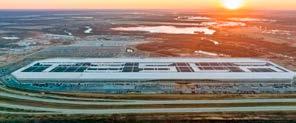
In the winter, Arizona-based First Solar opened its solar module plant in Iberia Parish, La. The $1.1 billion facility, which spans approximately 2.4 million square feet and is about 11 times the size of the New Orleans Superdome, currently employs over 700.
Georgia approves Georgia Power’s massive expansion plan
To serve the incredible demand for power in this new A.I. world, the Georgia Public Service Commission recently authorized nearly 10 gigawatts of new power capacity for Georgia Power. The additional capacity will be in the form of new gas-fired plants and battery storage.
LOUISIANA
Company finalizes agreement for entertainment redevelopment in Shreveport
G-Unit Film & Television Louisiana, LLC (“G-Unit”) has announced plans to invest over $124 million in a multi-phase initiative to develop three entertainment industry-related venues in Northwest Louisiana, revitalizing existing assets back
into commerce and supporting the growth of the state’s entertainment industry. The project includes the renovation of the former Stageworks facility to support a variety of live event and production entertainment uses, the modernization of the former Millennium Studios campus to enhance production capabilities and the construction of a dome-style immersive venue and green space park, all located within downtown Shreveport.
First Solar inaugurates new $1.1 billion A.I.enabled plant in Louisiana
In the winter, Arizona-based First Solar opened its solar module plant in Iberia Parish. The $1.1 billion facility, which spans approximately 2.4 million square feet and is about 11 times the size of the New Orleans Superdome, currently employs
over 700 people and is expected to have 826 employees by early 2026. The facility is forecast to raise Iberia Parish’s GDP by 4.4 percent in its first full year of operations at capacity. America’s largest domestic solar manufacturer expects almost 18 GW of production capacity in 2027.
Amazon selects Louisiana for $12 billion data center campuses in major U.S. expansion
l The project is expected to create 540 on-site new jobs and support an additional 1,700 in the community overall.
l The investment establishes Amazon’s first data center campus in Louisiana, supporting cloud computing technologies to serve customers and continue Amazon’s commitment to the state of Louisiana.
NORTH CAROLINA
What a blast! Winter deals rack up over 3,000 jobs in one week in North Carolina Five companies announced they are creating thousands of jobs and investing hundreds of millions of dollars in North Carolina, and the announcements all came before the end of 2025.
Below is a summary of each of the five projects:
l Vulcan Elements, a maker of rare earth magnets, is creating 1,000 jobs and investing $918 million in the Johnston County community of Benson. The company’s 1 million-square-foot facility will become the largest magnet factory in the world outside of China, and will help the U.S. reshore this crucial component of the supply chain for many defense and commercial electronics companies.
l Maersk, a global shipping company based in Copenhagen, Denmark, is creating 520 jobs and investing $16 million in Charlotte. The site will be home to the company’s North American headquarters. Maersk already has a sizable presence in Charlotte, and with this move, will eventually employ over 1,300 people in the Queen City.
l FIT Precast, an industrial concrete product manufacturer, is creating 125 jobs and investing $102 million in the Gaston County community of Gastonia. The company will build its headquarters and a concrete pipe production facility at the site, which will be the most advanced precast concrete manufacturing site in the U.S.
l Aspida Financial Services, a life insurance and annuity company, is creating 1,000 jobs and investing over $28 million in Durham. The company will locate to the former IQVIA building along I-40 and make the location its headquarters.
l Novartis, a life sciences company, is investing $771 million at three sites across Wake, Orange and Durham counties. The sites will house a small-molecule manufacturing facility, large-molecule manufacturing facility, and a fill-finish facility. Novartis, as part of an incentive agreement with the state of North Carolina, will create a total of 380 jobs across all three projects. However, the company anticipates exceed-
ing that total and plans to hire upwards of 700 people at the three locations.
This handful of projects adds to what has already been a historic 2025 for North Carolina as it attracts new businesses and facilitates the expansions of existing companies. In 2025, companies announced plans to create more than 30,000 new jobs and invest over $22 billion in North Carolina.
Data centers are everywhere Energy Storage Solutions is forging ahead with $38 billion (that’s with a “B”) of data center development in North Carolina. The two centers are in Tarboro, N.C., and a twin project is planned for Fayetteville, N.C. According to
North Carolina sources, the two data centers will be the largest in the Southeast (at least until the record is broken, which could be a matter of weeks the way data centers are being announced these days).
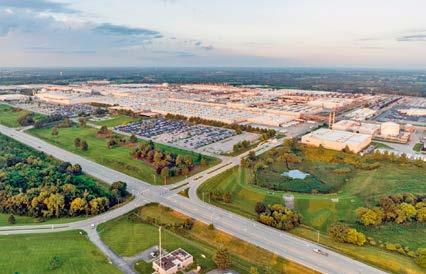
The big Toyota deal in Randolph County is now open for business
The history behind the Liberty site is well known by Southern Business & Development. We had someone photograph the late and former N.C. Secretary of Commerce Jim Fain and the retired Toyota site picker Dennis Cuneo walking the site around 2002. Publisher Michael Randle even emailed those photos to both and asked, “Hey, Fain,
Clarendon County Spec Building #9
l 19,000+ production workers within 60-minute drive
l 1.5 miles to Interstate 95
l Strategically located between Columbia and Charleston MSAs
l Park neighbors: Westinghouse, Cummings, Latitude Corp, 84 Lumber
Around SOUTH
FROM TOP: Maersk, a global shipping company based in Copenhagen, Denmark, is creating 520 jobs and investing $16 million in Charlotte, N.C. The site will be home to the company’s North American headquarters.
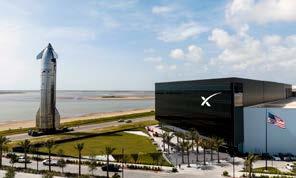
SpaceX, now a routine space launch company and no longer a startup, is planning on hiring 1,000 workers at its Boca Chica, Texas “Starbase.”
Cuneo, is that you two walking the Liberty Site” with their faces clearly visible in the photo. Jump ahead a couple of decades and Toyota has now opened it massive EV battery plant there at the old Liberty site that stood vacant for about 25 years.
Reuters wrote about the Toyota facility: “Toyota Motor said it had begun production at its $13.9 billion North Carolina battery plant as it ramps up hybrid production and confirmed plans to invest $10 billion over five years in U.S. manufacturing.”
The Japanese automaker first announced the plan to produce batteries for its hybrid and electric vehicles in December 2021. Batteries from the plant are set to power hybrid versions of the Camry, Corolla Cross, RAV4 and a yet-to-be-announced, all-electric, three-row SUV. The plant is producing hybrid batteries for factories in Kentucky and a Mazda Toyota joint venture in Alabama.
The Randolph County battery facility represents Toyota’s 11th major U.S factory and a huge win for the Carolina Core.
Apple asks for more time for its large campus in North Carolina North Carolina has backed Apple’s plans to postpone its hiring and investment goals that earned the company hundreds of millions in state incentives to build a corporate campus in Research Triangle Park. The Economic Investment Committee, the state board that approved the incentives in 2021, agreed to a four-year project extension recently at Apple’s request.
TEXAS
Eli Lilly’s deal in Houston and its $6.5 billion plant will average over $100,000 a year for each of the 600 jobs announced
The tax incentive agreement under Texas’ Jobs, Energy, Technology and Innovation (JETI) Act is now officially active after being signed by the governor’s office as of January 2026. Lilly will hire at least 600 full-time workers with an average annual wage of about $102,500. The project, announced in 2025, is one of the largest investments in pharmaceutical manufacturing in Texas and is part of Lilly’s broader effort to bring more manufacturing onshore in the U.S.
Google announces $40 billion investment in new A.I. data center infrastructure in Texas Alphabet and Google CEO Sundar Pichai announced in the fall quarter that the digital giant will invest $40 billion in new cloud and A.I. infrastructure in Texas. The deal includes increased energy capacity and three new data center campuses to support what is the single-most active sector driving the economy in 2025 — artificial intelligence. The new data centers will be located in North Texas, West Texas and the Texas Panhandle.
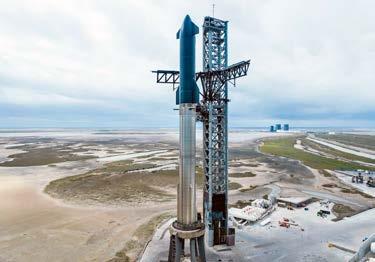
SpaceX seeking state incentives to add 1,000 new jobs at City of Starbase, Texas
SpaceX, now a routine space launch company and no longer a startup, is planning on hiring 1,000 workers at its Boca Chica, Texas “Starbase.” That would bring employ-
ment at the base to almost 4,000. SpaceX is planning two Triple Jumbo projects, requiring at least $250 million in investments and 500 jobs each to qualify for the maximum state incentives. The City of Starbase is located in Boca Chica, near the port of Brownsville and Matamoros, Mexico.
Long-awaited 2,000-acre megasite in San Marcos, Texas is now being marketed
A huge, 2,000-acre megasite south of Austin is now shovel-ready. Called the AXIS Logistics Park, it is a planned industrial park in Caldwell County that currently offers 735 acres of industrial zoned property in the city of San Marcos.
VIRGINIA
Companies to invest $120 million in Virginia for pharma training center
AstraZeneca, Eli Lilly and Merck are investing a combined $120 million in a new center for pharmaceutical training in Virginia. This initiative, developed in partnership with the state and its higher education institutions, aims to create a pipeline of skilled workers for the pharmaceutical manufacturing industry. The center is called the Virginia Center for Advanced Pharmaceutical Manufacturing (VCAPM). Plans are to train over 2,000 students annually.
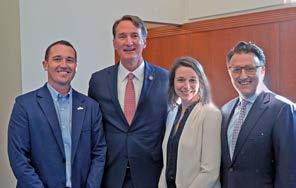
AstraZeneca, Eli Lilly and Merck are investing a combined $120 million in a new pharmaceutical training center in Virginia. Photo: Former Virginia Gov. Glenn Youngkin stands with officials from Lilly, AstraZeneca and Merck. Virginia’s new governor is Abigail Spanberger.
The South Carolina Technology & Aviation Center is the Southeast’s only business park dedicated to serving the robust needs of the automotive and aerospace industries. As Global Home of the Lockheed Martin F-16 and home to South Carolina’s world-class automotive proving ground, the International Transportation Innovation Center, there’s good reason why it’s all systems go at SCTAC.
Relocations EXPANSIONS&
Lilly to build $6 billion weight-loss drug factory in Alabama
Eli Lilly announced plans to invest more than $6 billion to build a manufacturing plant in Huntsville, Ala. The plant will focus on weightloss medications and other pharmaceutical ingredients. The site will manufacture orforglipron, Lilly’s first oral, small molecule GLP-1 receptor agonist, which the company expects to submit to regulatory agencies.
The factory is expected to bring 450 jobs to the area, including engineers, scientists, operations personnel and lab technicians. Construction is set for 2026 and 3,000 jobs are expected to be generated related to the Lilly project.
Alabama
A 121-year-old manufacturer to invest nearly $800 million to expand in the shadows of downtown Birmingham
American Cast Iron Pipe Company (ACIPCO) has been producing product since 1905 in Birmingham, still a center for the metals industry. ACIPCO announced in January it will invest $793 million that would switch the company’s operations to electric-fired furnaces, reducing emissions by more than 90 percent. About 80 new jobs paying over $100,000 a year will be added to the deal. Jefferson County approved $320,000 worth of incentives for the project.
Update on the relocation of the U.S. Space Command from Colorado to the Redstone Arsenal in Huntsville, Ala.
l Transition Leader: Maj. Gen. Terry Grisham, an Alabama native with nearly 40
years of service, will direct the program management office in Huntsville.
l Location: The permanent home for U.S. Space Command is Redstone Arsenal, chosen for its ability to support long-term, mission-critical operations.
l Progress: An initial office has been established in Huntsville, and the move is expected to take place over the next three years.
l Economic Impact: The move is projected to bring 1,600 to 1,800 jobs, with thousands more “spin-off” jobs anticipated.
l Incentives: The Command is offering significant retention and relocation bonuses to employees moving from Colorado.
l Context: The decision follows a lengthy battle over the location, with the move now proceeding despite legal challenges from Colorado.
Bad Boy Mowers placing tractor assembly plant in Monroeville, Ala. Arkansas-based Bad Boy Mowers is investing $10.5 million in a new tractor assembly plant in the historic town of Monroeville, Ala. The new plant will be located in the former Vanity Fair distribution center there in Monroe County. The company plans to build several different models of tractors in Monroeville and anticipates producing about 9,000 per
For all projects announced in the South and more, go to SB-D.com. In 2026, we are retiring SB-D.com as well as the Southern Business & Development print product and replacing it with the new SouthernBusiness.com.
year. The project will create 50 new jobs.
Ellen McNair, Secretary of the Alabama Department of Commerce, said Bad Boy’s expansion in Alabama is a strong vote of confidence in the state’s rural areas.
One of the largest private investments in Alabama history gets green light to build
The Bessemer City Council voted to approve a $14 billion data center on 700 acres of rural land southwest of the city of Birmingham. The project, called “Project Marvel,” is an 18-building hyper scale data center by Atlanta-based TPA Group.
Arkansas
Another billion-dollarplus data center; this one in Arkansas
AVAIO Digital Partners announced in January it will locate a $6 billion data center in Pulaski County, Ark., located near Little Rock. The campus will host the computer, networking, data storage technologies and power infrastructure that underpin cloud computing and artificial intelligence applications. The new data center campus is expected to ultimately create more than 500 new fulltime permanent operations jobs over the next five years as the campus is built out. In addition, the construction phase will bring thousands of new jobs to the region.
SpaceX is bringing its massive Starship rocket to Florida’s Space Coast for launches
Texas-based SpaceX is bringing its largest rocket to Florida for launches. The company will launch from Kennedy Space Center (LC39A) and Cape Canaveral Space Force Station (SLC37) for lunar, Mars and national security missions. A huge “Gigabay” integration facility is being built near Titusville, with construction expected to finish by late 2026, alongside plans for a local manufacturing facility. These expansions aim for “airport-like” operations, potentially supporting up to 76 Starship launches and 152 landings annually. About 600 jobs are expected to be created. No data yet on investment numbers.
InnovAsian Cuisine to build facility in Jonesboro
InnovAsian Cuisine Enterprises Inc., a subsidiary of Nichirei Foods Inc., will build a state-of-the-art frozen food manufacturing facility in Jonesboro, Ark. This major development will create approximately 200 new jobs, strengthening the region’s position as a vibrant hub for food manufacturing.
Arkansas is the “new game in town” for data centers
Data center developers are finding Arkansas to be probusiness, with competitive land prices, laws and regulatory timelines. Recent major investments include a $6 billion project in Little Rock and a $4 billion Google facility in West Memphis, attracted by fast-tracked approvals and substantial infrastructure.
The U.S. Army is partnering with Hanwha Defense USA to build a $1.3 billion munitions plant at the Pine Bluff Arsenal
The project aims to modernize the U.S. defense supply chain and enhance the safety and performance of munitions. The deal will create 200 jobs.
shipyard and represents a $37.5 million capital investment in the community. The project is expected to create 285 new, high-wage jobs.
Johnson & Johnson
Vision Care proposes large investment in Jacksonville
leased about 50,000 square feet in WPB and expects to house 100 workers in time.
U.K.-based manufacturer selects Escambia for HQ and manufacturing hub Field International, which provides engineering, tooling and ground support for a variety of industries including aerospace and energy, has selected Escambia County for its new United States headquarters and manufacturing operation. The company has operations in the United Kingdom, India, China and Singapore. The $8 million project will create 50 jobs.
A confirmed reshored deal in Tampa Lithium Battery Company is reshoring a fully automated, 100 percent domestic lithium-ion battery plant to South Tampa near the MacDill Air Force Base. It will feature five fully automated robotic manufacturing lines that can customize batteries in any shape or size imaginable. The plant will initially house 150 workers. The company expects to grow to 2,500 jobs as production scales.
Florida
New shipbuilder for Bay County
Voltari Electric Inc., a global leader in electric marine and autonomous vessel technology, has selected Bay County as the location for its U.S. headquarters, manufacturing operations and research and development center. Formerly known as Project Kilowatt, this project includes the acquisition and redevelopment of an existing
Johnson & Johnson Vision Care has announced a significant $550 million expansion of its Jacksonville facilities, which will include manufacturing upgrades and new packaging and distribution. The project will create 50 new jobs.
Wells Fargo moving wealth management HQ to West Palm Beach
Wells Fargo is relocating the headquarters of its wealth management business to West Palm Beach from San Francisco, bringing more than 50 senior executives to South Florida. The bank has
Georgia
Aerospace is leading the way in the South: Pratt & Whitney expanding in Columbus, Ga.
With a $200 million investment, jet engine maker Pratt & Whitney is expanding its Columbus Engine Center. There, it assembles the GTF engines for Airbus’ A320neo aircraft made in Mobile, Ala., and the F135 engine programs. The project is expected to increase engine part production by 30 percent by 2028. The deal will create 15
Relocations EXPANSIONS&
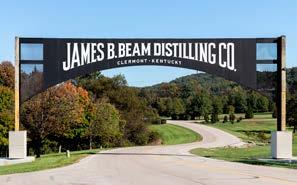
Jim Beam pauses distillation at its main Kentucky bourbon distillery for all of 2026
The primary James B. Beam distillery in Clermont will stop distilling new whiskey for 2026. The pause is happening in order to align production with demand, in part due to shifts in the market and trade issues on tariffs affecting spirits.
jobs. It should be noted Columbus had one of its best quarters we have ever seen in the winter.
London-based Finastra sets up new U.S. office in Atlanta Financial services software firm Finastra is opening a new office in Atlanta at the iconic King building at Perimeter on the Northside. Opening the office is an effort to meet the rising demand for A.I.-enabled, cloud-ready financial technology used in data, engineering and product development. It will be Finastra’s first major U.S. hub.
Virginia Transformer to create 400 jobs in Georgia
Virginia Transformer Corp. will invest $40 million to expand its existing manufacturing facility near Rincon, creating over 400 new jobs in Effingham County. The Rincon facility operates as Georgia Transformer and
business, Vialume, is Brazil’s largest producer of reflective raised pavement markers.
Kentucky
Louisville Mayor announces economic development merger
aims to boost capacity with automation and A.I.-driven tech, leveraging Hebron's strategic logistics location.
AKFA Aluminum to locate plant in Bowling Green
specializes in manufacturing custom-designed large power transformers for a wide range of industries, including utilities, data centers and renewable energy sectors.
Amazon places facility in New Brunswick, Ga.
Tech giant Amazon is locating its second Georgia lastmile delivery station on the coast in New Brunswick. The deal will create 100 jobs.
Brazilian manufacturer sets up shop in rural
Georgia
Grupo Vialume will invest $4.4 million in establishing its U.S. manufacturing operations in Colquitt-Miller County, creating 150 new jobs over approximately seven years. Based in the state of São Paulo, Grupo Vialume is a second-generation, family-owned enterprise founded in the 1980s that has grown into one of the largest global manufacturers of advanced visibility solutions for transportation safety. Its flagship
Louisville Mayor Craig Greenberg recently announced that the boards of directors of the Louisville Economic Development Alliance (LEDA) and Greater Louisville Inc. (GLI) have approved the transfer of their organizational assets into a new, combined organization. One Louisville will unify economic development, talent attraction, member services and advocacy under a single structure.
Green Energy Parks announces $142 million deal in Kentucky Gov. Andy Beshear highlighted major growth in Kentucky’s energy sector as Green Energy Parks announced plans to locate a new $142 million agricultural waste-to-energy facility in Arlington that will create 20 high-wage positions. The project represents a record investment in Carlisle County and the first private-sector announcement in the county in more than a decade.
Stord announces expansion in Northern Kentucky
In December, logistics company Stord Inc. announced a significant expansion in Hebron, Ky., investing over $40 million to grow its e-commerce fulfillment center, creating more than 500 new jobs by modernizing existing facilities and adding a new warehouse. This expansion
AKFA Aluminum Solutions, a division of Uzbekistan’s AKFA Group, announced plans to become the first Uzbekistani company to establish a manufacturing operation in the U.S., making a significant investment to locate a new facility in Bowling Green, creating 331 jobs. The new facility will serve as a full-cycle production hub. AKFA’s first U.S. operation will integrate recycled aluminum billets and energy-efficient systems to support a low-carbon supply chain.
Nice project for Louisville Anthro Energy, an advanced materials and battery developer, announced plans to locate a new manufacturing facility in Louisville, investing over $42 million and creating 110 new, full-time quality jobs in addition to 390 construction jobs. The new manufacturing facility will be the company’s first operation in the commonwealth and will focus on advanced electrolyte production.
Kroger to establish $391 million distribution center in Simpson County, Ky. Kroger, the largest traditional grocer in the United States, announced intentions to establish a new $391 million distribution center in Simpson County, a project that will create approximately 430 new full-time jobs. The new operation will serve as a fullline distribution center. This is in addition to the $204 million expansion in Bowl-
ing Green where Country Oven, a bakery owned by the Kroger Co., has reinvested in Kentucky.
GE Appliances (a Haier company) to add more punch in Louisville
In January, GE Appliances announced the launch of its first-ever in-house water filter manufacturing operation at Appliance Park in Louisville. The new plant is part of GE’s $3 billion investment in new manufacturing over five years and includes the addition of 800 jobs.
Foxconn investing in Kentucky Foxconn Technology USA Corp. (FTC USA), the American subsidiary of Taiwan-listed Foxconn Technology Co. Ltd., will locate its first U.S. manufacturing operation in Louisville with a $173 million investment that will create 180 new jobs. The project will include a state-of-the-art production system, incorporating artificial intelligence, Internet of Things (IoT) and cutting-edge computing technologies. The new facility is expected to become opera-
tional in the third quarter of 2026.
New North American HQ slated for Louisville Glovesafe OpCo Inc., doing business as GLVUS, announced plans to locate its North American headquarters in Louisville, with a nearly $6 million investment, creating 200 new jobs. The project will see GLVUS establish its North American headquarters in Louisville’s LOUMED Medical & Education District in addition to a Louisville-based manufacturing facility. The new facility will produce the nation’s first domestically manufactured premium sterile surgical gloves for the U.S. market.
A.I. company lands in Louisville Vsimple Inc., a leading A.I. company that specializes in improved operational inefficiencies for mid- to large-sized companies, has celebrated the ribbon-cutting of its newly relocated headquarters from Southern Indiana to Louisville, a $5.1 million investment that will create 194 jobs.
Louisiana
Big deal in Louisiana ATALCO will establish an alumina production facility in Gramercy, La., with a $450 million investment. The plant will be the country’s first large-scale gallium plant and is a partnership with the U.S. government.
Shaw Group adding 200 jobs in Livingston Parish The Shaw Group announced it will more than double the workforce at its manufacturing facility in Walker, La., as it scales operations to support current project needs across Louisiana. The company is expected to create 209 direct new jobs.
Drone manufacturer expands in Lafayette Drone Institute announced an expansion of its Lafayette headquarters to consolidate its drone operations, data processing and pilot training within a single facility. The new facility will support the company’s growing national operations and development of advanced aerial imaging software for infrastructure assessment. The company is
expected to create 610 new direct jobs over the next 10 years while retaining seven current positions in Lafayette Parish.
Amazon to invest $12 billion in Louisiana data center campuses in major U.S. expansion • The project is expected to create 540 on-site new jobs and support an additional 1,700 in the community overall.
• The investment establishes Amazon’s first data center campus in Louisiana, supporting cloud computing technologies to serve customers and continues Amazon’s commitment to the state of Louisiana.
Giant shipyard deal in Louisiana Saronic Technologies is expanding operations in St. Mary Parish to increase production capacity at its autonomous surface vessels shipyard. The $300 million investment will strengthen Louisiana’s advanced manufacturing base and create new opportunities for skilled workers in one
Another big deal in Southeast Louisiana ElementUSA announced an $850 million investment to build a rare earth and critical minerals refining facility in St. James Parish, strengthening the U.S. supply chain for materials essential to advanced manufacturing, national defense and energy technologies. The company is expected to create 200 direct new jobs with an average salary of $90,000, which is 28 percent above the average St. James Parish wage.
Relocations EXPANSIONS&
xAI investing more than $20 billion in Southhaven, Miss.
U.S.-based, Elon Musk-owned xAI will be locating a data center in Southaven, near Memphis. Musk already has supercomputing operations in Memphis. Google is also building a large data center across the river in West Memphis, Ark. The Southaven-DeSoto County data center, which will create hundreds of permanent jobs, will be known as MACROHARDRR, and is being created from an existing building being retrofitted near xAI’s newly acquired power plant in Southaven. When completed, the latest xAI data center will increase the company’s computing power to nearly 2 gigawatts.
of the state’s most historic maritime communities. The company is expected to create 1,500 direct new jobs. “Saronic’s shipyard expansion in Franklin represents a major step forward for American shipbuilding, and we’re proud to deepen our roots here in Louisiana,” said Dino Mavrookas, Co-Founder and CEO of Saronic.
Hut 8 selects Southeast Louisiana for $10 billion A.I. data center
Another new $10 billion artificial intelligence data center will locate in Louisiana’s West Feliciana Parish. A.I. firm Anthropic has signed a long-term deal to use the facility, which will require about 1,100 construction workers.
constructing a new manufacturing facility at the West Rankin Industrial Park in Pearl to produce electrical grid components, increasing its existing production capacity in Rankin County.
Poultry processor creating 190 jobs in Laurel, Miss.
South Carolina-based Amick Farms is expanding its chicken plant in Laurel. The $75 million deal will create 190 jobs. Gov. Tate Reeves said, “Agriculture has been at the core of Mississippi’s economy for centuries. This $74 million investment and nearly 200 jobs in Laurel builds on that strong foundation and legacy. Mississippi has the natural resources, transportation network and pro-growth environment in place to help ensure our state keeps feeding America for generations to come.”
nearly $316 million and will create 25 jobs.
North Carolina
Raleigh beats Austin and Atlanta for California firm's 300-job hub
BuildOps, a software-for-contractors company, has established a new East Coast hub in downtown Raleigh. The company will hire nearly 300 to support its rapid growth. The expansion, which includes roles with an average salary of $75,000 to $220,000, solidifies the firm's presence in North Carolina.
US Forged Rings announces new steel facility and up to 625 new jobs in Hertford County
Walmart modernizes Opelousas distribution center
Walmart is adding robotics and other advanced tech at its Opelousas center. The deal calls for a $330 million investment.
Mississippi
Siemens Energy plans $300 million deal in Rankin County
As part of a $1 billion investment by Siemens Energy in its U.S. manufacturing operations, the company is investing up to $300 million and creating up to 300 new advanced manufacturing jobs through an expansion in Rankin County. Siemens Energy is a global energy technology leader that operates across the full energy landscape. The company is
Firehawk Aerospace to establish new rocket engine plant in Lowndes County, Miss.
Firehawk Aerospace is investing $16.5 million to establish a new rocket engine manufacturing and integration facility in Crawford, Lowndes County, Miss. The project, which includes a 636-acre site, will create 100 high-tech jobs focused on producing proprietary 3D-printed propellant rockets for defense. Operations are set to begin soon, supported by Mississippi’s MFLEX tax incentives.
Pascagoula captures $316 million project Bulk liquid storage and logistics services provider BWC Terminals is locating a new terminal facility in Pascagoula. The project represents a corporate investment of
The company plans to invest up to $875 million over three phases in the historic project for Hertford County. US Forged Rings (USFR), a manufacturer of large steel components, announced the big deal at the end of February. Products include critical service fabrications and specialty tubulars and forgings used in power generation such as reactors, heat-exchangers; and industrial components such as rings, shafts and cylinders used in a variety of industries, like the marine, mining, defense and Liquid Natural Gas (LNG) markets.
Johnson & Johnson to build second major facility in Wilson County Johnson & Johnson, the world-leading healthcare company, will expand its presence in North Carolina. The company says it will make an additional multi-billion-dollar investment in the City of Wilson. According to the company, the project is
estimated to create up to 500 new jobs at a state-of-the-art drug manufacturing facility to help deliver transformational medicines for oncology and neurological diseases. The project marks the third time in just over a year that Johnson & Johnson has selected North Carolina’s life sciences cluster to help meet its goal of manufacturing the majority of its advanced medicines in the U.S.
In October 2024, J&J announced its first project in Wilson, a $2 billion investment that will create 420 jobs on a pharmaceutical manufacturing campus for innovative biologics. Construction of that facility is underway, and the company reports it is already ramping up hiring.
In August 2025, the company secured a 160,000-squarefoot site in Holly Springs dedicated to biopharmaceutical manufacturing. That $2 billion commitment over the next 10 years will create 120 jobs, according to J&J.
Corning and Meta announce multiyear, $6 billion agreement to accelerate U.S. data center buildout
Corning announced it will expand its North Carolina workforce 20 percent after a $6 billion Meta deal on data center development. The company will build a manufacturing facility in Hickory, N.C., in addition to expanded capacity across its North Carolina operations.
Oklahoma
Unmanned aircraft systems facility opens in Oklahoma City
MyDefence officially opened its U.S. counter-unmanned
aircraft systems (C-UAS) manufacturing and innovation facility in Oklahoma City on February 26, solidifying the company’s North American production footprint. By producing C-UAS technology on U.S. soil, MyDefence guarantees speed and access to the end user and a secure supply chain. Drone threats continue to evolve in complexity, range and frequency, driving increased demand for agile and scalable counter-UAS.
Mecad USA has chosen the Tulsa Port of Catoosa for its U.S. operations
The project will create nearly 300 new jobs in northeastern Oklahoma. Mecad specializes in precision components, industrial automation and advanced systems serving sectors such as aerospace, energy and manufacturing.
South Carolina
Food fiber plant goes to rural South Carolina
JGB Brothers, a food fibers manufacturer, announced it is establishing operations in Bamberg County. The company’s $7 million investment will create 40 new jobs. The manufacturing site will be used to produce plantsourced food fibers, which are used as additives in human and pet food, and have extensive applications for cosmetics, pharmaceuticals and building materials.
Cyclic Materials to invest $82 million in South Carolina
Canada-based Cyclic Materials, a leader in recycling solutions for rare earth elements, announced it selects Chesterfield County to establish the company’s first
Swiss drug maker surges investment in Wake County, N.C., to $2 billion, 500 jobs
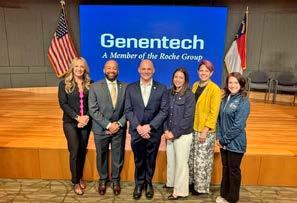
Genentech (Swiss/California-based drugmaker) will invest $2 billion in Holly Springs, N.C., to produce next-generation anti-obesity drugs. The deal will create 500 high-wage manufacturing jobs and 1,500 construction jobs.
East Coast operation. The over $82 million investment will create 90 highly skilled jobs.
Approximately $40 million investment will create 50 new jobs in Sumter County, S.C. Georg Utz, Inc., a plastic container manufacturer, announced it selected Sumter County to establish the company’s first South Carolina operation. The approximately $40 million investment will create 50 new jobs.
Data solutions contractor to settle in Orangeburg Texas-based Mission Critical Interior Solutions, Inc. (MCIS), a data center solutions contractor and manufacturer, announced it has chosen Orangeburg County to establish its first South Carolina operation. The $7.4 million investment will create 49 new jobs. MCIS creates architectural solutions
for the data center industry. The company specializes in the design and installation of containment, raised access flooring, security cages and cabinets, and structural ceiling systems.
Resin manufacturer expands in Florence, S.C. PRET Advanced Materials announced in the winter it will invest $18 million to expand its thermoplastic resins plant in Florence. The deal will create 74 jobs.
HVAC maker expands in Lexington County, S.C. Hoffman & Hoffman is expanding its heating, ventilation and air conditioning (HVAC) solutions plant near Columbia. The $8.5 million project will create 60 jobs.
Boat maker opening first manufacturing operation near Myrtle Beach Asis Boats, a manufacturer of rigid, inflatable boats, an-
Relocations EXPANSIONS&
Century Aluminum to build primary aluminum plant in Inola, Okla.
Emirates Global Aluminum and Century Aluminum Company announced that they have entered into a joint development agreement to build the first new primary aluminum production plant in the United States since 1980. The new plant, to be built in Inola as previously announced by EGA, is expected to produce 750,000 tons of aluminum per year, larger than previously envisioned and more than doubling current U.S. production. The Inola plant will create 1,000 permanent direct jobs at the facility and 4,000 jobs during construction.
nounced in December it has selected Horry County to establish its U.S. manufacturing headquarters. The $10.8 million investment will create 93 new jobs.
Metal fabricator creating jobs in South Carolina Advanced Metalworks, a metal fabrication company, announced it is expanding its operations in Anderson County. The company’s $10.5 million investment will create 69 new jobs.
A $13.5 million investment will create 170 new jobs in Columbia MSA
A Sweden-based manufacturer of modern oral pouches, WiJo Pouches, announced it will locate the company's first North American manufacturing operation in Lexington County.
Tennessee
Nuclear fuel supplier will invest more than $560 million to expand its Oak Ridge facility
Nuclear fuel supplier Centrus Energy plans a major expansion in East Tennessee, transitioning its Oak Ridge facility to a high-rate manufacturing plant. As part of the expansion, Centrus plans to create nearly 430 new jobs and invest more than $560 million in Anderson County over the next several years to support both the growth in workforce and investment in the production of thousands of advanced centrifuges.
FedEx to add 1.6 million square feet at Memphis hub
Federal Express, headquartered in Memphis, is building a five-story, 1.6 million-
square-foot sorting facility for e-commerce small package at its largest hub there.
Laser Isotope Separation Technologies expanding in Roane County LIS Technologies will create 203 jobs and invest $1.38 billion in an Oak Ridge, Tenn., facility on the formerly named Duct Island. This announcement marks the third-largest nuclear-related investment since the creation of TNECD’s Nuclear Energy Fund.
Big South Korean project lands in Tennessee
Korea Zinc will create 420 new jobs in Montgomery County, Tenn., and an additional 320 jobs in Smith County over the next five years. The project is a huge, $6.6 billion investment. The announcement, made by the world’s leading comprehensive nonferrous metal manufacturer, represents the company’s first U.S. locations and the largest single private corporate investment made in Tennessee state history.
acres for logistics operations. The deal could bring over 2,000 jobs over the course of five years to the Austin area according to several sources. Blue Origin already has a major launch site in Van Horn, Texas.
Tax breaks approved to lure $1 billion rare earth magnet plant to Northlake, Texas
MP Materials, which opened the only large-scale U.S.based rare earth magnet plant in Fort Worth in 2023, is on the hunt for another one, this one in Northlake, Texas. The magnets are essential components in aerospace (drones) and defense systems as well as the F-35s built in Fort Worth. The MP Materials deal could be worth $1.2 billion and generate 1,000 jobs or so, according to reports.
Stellar Energy looking to place data center supplier in Fort Worth; potential 1,400 jobs
Texas
Bezos’ Blue Origin has its eyes on Texas
According to sources, Blue Origin, the space exploration company founded and backed by Jeff Bezos, is reportedly eyeing Central Texas for a major aerospace project valued at nearly $1 billion. The planned investment would involve building a large-scale manufacturing and logistics hub in the Austin region. Blue Origin’s search is reportedly focused on about 100 acres of land within 15 miles of Interstate 35, with about 20 acres for manufacturing and 80
The City of Fort Worth is mulling capturing a company that produces modular cooling equipment for data centers, as that sector has seen rapid growth. Stellar Energy Americas is the target, which claims it will quickly create over 1,400 jobs by 2027.
A $500 million investment made in Bee Cave, Texas Advanced space communications company CesiumAstro plans to invest more than $500 million in a new, high-tech advanced manufacturing facility and global headquarters in Bee Cave, Texas. The project will create more than 500 new jobs in the next five years. The company’s work centers on
aviation, aerospace and the defense industries.
Tekscend Photomask expands in Round Rock
Tekscend Photomask is expanding its photomask production in the Austin MSA in Round Rock. The project will represent a $223 million investment and create 50 new jobs. The photomasks are used in the production of semiconductors.
Building materials manufacturer to invest $170 million in San Antonio MSA
Ecor Global is investing $170 million to convert agricultural waste into recyclable structural panels as alternatives to plywood in Elmendorf, Texas. The facility is expected to employ about 150 workers once fully operational.
GlobalWafers has begun production in Sherman, Texas
GlobalWafers’ first U.S. plant is producing 12-inch wafers with a $3.5 billion investment total. It opened in May 2025. The second plant there is a $4 billion facility. The product will be used by Texas Instruments and Apple.
Space-based cellular network creator investing billions in Texas
AST SpaceMobile is expanding its space-based satellite plant in Midland, Texas. The company now employs more than 1,800 people, the majority based at its west Texas headquarters. It has also established a new facility in Homestead, Fla.
AST SpaceMobile’s nextgeneration BlueBird satellites feature advanced cellular broadband communications technologies for low Earth orbit, including the largest phased-array antennas ever built. The company plans to continue working alongside its U.S. strategic partners, including AT&T, Verizon, American Tower and Google, to deploy a global satellite network.
Japanese solar manufacturer opens, aims for the creation of 750 jobs in Texas
Japanese solar manufacturer TOYO Co., Ltd. (Toyo Solar) has opened its flagship U.S. solar module plant near Houston, in Humble, Texas, starting production and aiming to create up to 750 jobs by scaling to five assembly lines
by 2027, bolstering U.S. solar supply with American-made panels. The facility, which received its certificate of occupancy in October 2025, is a major step in Toyo's strategy to serve the growing demand for domestic solar components, leveraging Inflation Reduction Act incentives.
Microsoft to add another data center in Medina County, Texas
Microsoft is significantly expanding its data center presence in Medina County, west of San Antonio, with plans for multiple massive facilities totaling over $1.4 billion in investment, adding significant capacity for cloud and A.I. services in the region. These new projects include several buildings along U.S. 90 West and County Road 381, with construction underway or planned through 2027-2028, adding to the already large land holdings and operations belonging to Microsoft in the area.
Drone maker picks Buda, Texas Defense tech startup Perseus Defense has chosen Buda (dubbed “America’s Golden Dome for Drones”) for its new headquarters and man-
ufacturing hub, aiming to build low-cost micro-missiles for drone defense, creating hundreds of high-tech jobs in a major boost for the region’s defense innovation sector. The new facility at Tower Business Park will handle R&D, testing and production of their guided missiles, creating 400 jobs within five years.
Southwest Airlines to expand with 2,000 jobs in Austin
Austin has become a key hub for Dallas-based Southwest Airlines. In the winter quarter, the airline announced it is establishing a new crew based at Austin-Bergstrom International Airport, with new hires of pilots and flight attendants. The project will create 2,000 jobs. The city of Austin is offering $2,750 per new hire over five years.
Taiwanese electronics manufacturer to create 900 jobs in Taylor, 100 in Georgetown, Texas
Compal USA Technology — a wholly owned subsidiary of Compal Electronics Inc. that has built computers, tablets and smartphones for companies like Apple Inc., Alphabet Inc., Dell Technologies
Google moves into the Sail Tower in Austin after all Google has begun occupying downtown Austin’s Sail Tower, officially ending years of the building sitting mostly dark despite the company leasing the entire space. Let me repeat that: the entire space of a 35-story building.
The building at 601 West Second Street is humming with workers, indicating a real move by Google. That activity started late in 2025 and is continuing in early 2026. The Sail Tower (pictured) broke ground in 2019 and was finished in 2022. Google’s lease, if they wish to renew it, runs to 2038.
Relocations EXPANSIONS&
Another data center announced in the American South. . .nearly 80 data centers announced in the South in calendar year 2025
CleanArc Data Centers will invest $3 billion to construct a new state-of-the-art data center campus in Caroline County, Va. At full capacity, the project will create 50 new jobs in the Commonwealth. “Virginia is the data center capital of the world, and I am thrilled that CleanArc has selected Caroline County as the site to invest $3 billion for their newest data center campus,” said Governor Glenn Youngkin.
Inc. and Toshiba Corp. — has a notable plan to expand near Austin.
AT&T HQ to leave downtown Dallas for Plano
AT&T is relocating its global headquarters from downtown Dallas to a 54-acre site in Plano. Construction and transition are expected to take place through 2028, with partial occupancy targeted in the second half of 2028.
AT&T has said it will consolidate several North Texas offices (Dallas, Plano, Irving) into the new campus, which will house thousands of employees, including the 6,000 at its current headquarters in downtown Dallas.
Pegatron plans to create 100 jobs at future Georgetown, Texas manufacturing plant Electronics contract man-
to expand operations at its Danville headquarters with a $34 million investment. The investment will more than double the company’s Virginia workforce, creating 150 new jobs in the Commonwealth. Founded in the City of Danville in 2005, Infinity Global provides end-toend packaging solutions for global luxury retailers across 70 countries. From product development and manufacturing to global distribution to data management, the company works with clients to design and source custom, sustainable packaging for high-end fashion, jewelry and beauty products.
facility in the Southern Virginia Multimodal Park in Hurt, Va. The new facility will produce solid rocket motors for defense, tactile propulsion, missile systems and the commercial space sectors. The Pittsylvania County facility will bring more than 1,000 new jobs to Southside Virginia through a major custom investment incentive partnership with the Commonwealth.
Cable maker investing big in Virginia
ufacturer Pegatron Corp. plans to create 100 jobs and invest $35 million at its new Georgetown facility, according to requirements outlined in a proposed incentives agreement with the city. The project will mark the Taiwanese company's first U.S. factory.
Virginia
Federal court grants Dominion injunction, allowing offshore wind construction to proceed Dominion Energy‘s $11.2 billion CVOW project off the coast of Virginia Beach, which was ordered to pause work in December 2025 by President Trump, has now been allowed to resume.
Plant expansion announced in Danville Infinity Global Inc., an international leader in high-end packaging solutions, plans
Company investing in Chesterfield County, Va. Solstice Advanced Materials announced plans in the winter to invest over $220 million in multiple projects to expand operations at the company’s existing ballistic fiber manufacturing facility in Chesterfield County. Upon completion, the expansion will create 100 new jobs in the Commonwealth. Solstice Advanced Materials is a global specialty materials company. It offers high-performance solutions that enable critical industries and applications, including refrigerants, semiconductor manufacturing, data center cooling, nuclear power, protective fibers, healthcare packaging and more.
Avio selects Pittsylvania County for $500 millionplus investment
Avio USA Inc. — a subsidiary of global aerospace company Avio S.p.A — will invest approximately $500 million to establish an 860,000 square-foot manufacturing
LS Cable & System, a leader in power and communication cable and system solutions, announced plans for a significant additional investment in Chesapeake, Va. Undertaken through three LS C&S subsidiaries, the $689 million project is expected to be the single largest capital investment in the history of the Hampton Roads region and create over 430 new jobs. Power solutions manufacturer investing $50 million in Richmond MSA
Eaton, an intelligent power management company, will invest over $50 million to expand its existing manufacturing footprint in Henrico County, Va.. Upon completion, the project is expected to create 200 new jobs.
Window and door manufacturer turns deal in rural Virginia Cornerstone Building Brands will invest $4.9 million and create 50 new jobs to expand production capacity at its Rocky Mount, Va., campus. The Franklin County production facility manufactures the company’s PlyGem® Windows & Doors. J
SouthernAutoCorridor
SB&D
Exclusive
Chinese automaker sniffing around the Southern
SB&D has confirmed a Southern site search by a Chinese automaker just after the first of the year, which SB&D is keeping confidential until more information is gathered. With the right economic environment, Chinese autos and automakers could be in the U.S. sooner than you think.
• China automakers make more vehicles than any country on Earth.
• China more than doubled U.S. light vehicle production in 2025.
• In 2025, China produced one-third of all cars worldwide.
• China eclipsed Japan as the world’s largest exporter of vehicles in 2023.
• Chinese automakers would rather build plants in the U.S. than rely solely on exports to North America.
Auto Corridor for a site
By Michael C. Randle
• In fact, multiple Chinese automakers are actually preparing for the day they can build assembly plants in the U.S.
• China is particularly competitive when it comes to electric vehicles.
• A Chinese automaker locating here would be a boon to the Southern Automotive Corridor, as it has essentially taken down Detroit in threeand-one-half decades.
• The formal entry into the U.S. would bring more choice and capacity, which means lower prices. That has been the case in Europe since Chinese automakers entered that market.
“The ambition is there,” said Lei Xing, former chief editor of China Automotive Review magazine. We predict it is just a matter of time before as many as three new full assembly Chinese plants are built, not in the U.S., but in the Southern Auto Corridor.
Prices for vehicles are increasing Tariffs on imported parts and vehicles are contributing to higher vehicle prices. Some analysts estimated tariffs could add thousands of dollars to the sticker price of new cars, or an estimated $3,000 to $6,400 per vehicle.
Foreign automakers are taking the hit, too. Hyundai reported a 40 percent drop in profit due to U.S. tariffs, even though it and sister company Kia set sales records for 2025 as buyers purchased cars last year en masse to avoid the implementation of the tariffs.
Some predictions for 2026:
l GM estimates that tariffs will cut into profits by roughly $4 billion in 2026.
l Tesla builds most of its U.S. consumed vehicles domestically, so unlike foreign imports, it does not face direct import tariffs on finished vehicles.
l Ford anticipates tariffs reducing gross profit by about $2.5 billion.
l Based on tariff modeling, Toyota expects a significant hit to net income in the range of 21 percent due to tariffs and other rising costs.
l Hyundai and Kia have seen their profits plunge by 40 percent in Q4 2025 until recent tariff relief.
l VW, BMW and Mercedes’ tariff exposure is very high, cutting into profits for U.S. consumption.
Toyota investing nearly $1 billion in the Southern Automotive Corridor Japanese automaker Toyota is investing $912 billion in its existing facilities in Mississippi, West Virginia, Kentucky, Missouri and Tennessee. It has already made a huge announcement at its plant in Limestone County, Ala., to increase its drivetrain production. From the Toyota report:
Toyota’s U.S. manufacturing presence is expanding again to meet growing demand for hybrid vehicles. As a part of Toyota’s recent commitment to invest up to $10 billion in the U.S. over the next five years, the company announces a $912 million investment and 252 new jobs across five manufacturing plants to increase hybrid capacity and bring hybrid-electric Corollas to its production lineup.
A state-by-state look at Toyota’s new investments, totaling $912 million and 252 new jobs:
AutoCorridorSouthern
Toyota’s largest plant globally, located in Georgetown, Ky., represents an investment exceeding $11 billion.
Toyota Kentucky
$204.4 million, 82 jobs
Toyota’s largest plant globally, located in Georgetown, Ky., will add 82 jobs and install an all-new machining line for four-cylinder hybrid-compatible engines, lining off in 2027. The powertrain facility can assemble up to 700,000 units annually. Toyota Kentucky employs nearly 10,000 team members and represents an investment exceeding $11 billion.
Toyota Mississippi
$125 million
Toyota’s Blue Springs, Miss., plant will add the hybrid-electric Corolla, marking the first electrified Corollas assembled in the U.S. The plant employs 2,400 and represents a $1.3 billion investment.
Toyota Tennessee
$71.4 million, 33 jobs
Toyota’s casting plant in Jackson, Tenn., will add 33 jobs to increase production of hybrid transaxle cases and housings and engine blocks for hybrid vehicles. The investment includes three all-new production lines and will increase
production capacity by nearly 500,000 units annually. Production on the new lines will start in 2027 and 2028. The plant represents a $497 million investment.
Alabama
Auto supplier DAS North America expands in Montgomery, Ala.
The Montgomery Regional Chamber held a press conference at the end of February to present new economic data and to announce a “major” industry expansion. An automotive supplier, DAS North America, announced a $77.6 million expansion in Montgomery that will bring 100 new jobs to the city.
Georgia
Toyota Financial Services to establish new service center in Alpharetta, Ga., and create 150 Jobs
Toyota Financial Services will open a new office in Alpharetta to become the company’s East Dealer Service Center. The investment of more than $8 million will
EV expansion. Backed by a $1.3 billion investment, production begins this fall, with the vehicle featuring a 300to 320-mile range, available AWD, and seating for six to seven passengers.
bring 150 new jobs to Fulton County.
Kentucky
Ford splits with SK On, to repurpose plant in Kentucky Ford is repurposing its BlueOval SK battery plant in Glendale, Ky., by ending EV battery production, laying off around 1,500 workers (layoffs began in February), and investing $2 billion to produce large-scale Battery Energy Storage Systems for utility customers, data centers and the power grid, shifting focus from just EVs to broader energy solutions. The plant, now fully Ford-owned after the SK On split, will focus on grid-scale batteries, while Ford also supports impacted employees and plans to add 2,100 jobs long-term as it transitions.
Toyota to build new electric SUV Highlander in Kentucky According to the Louisville Courier Journal, Toyota will produce the all-electric 2027 Highlander three-row SUV at its Georgetown, Ky. plant, marking a major US-based
Toyota Boshoku America opens new Kentucky plant Gov. Andy Beshear joined local officials and leadership at Toyota Boshoku America (TBA) to celebrate the grand opening of the company’s new, state-of-the-art $225 million facility in Hopkinsville, creating 157 full-time jobs. The new facility, located on nearly 50 acres in Christian County, is officially TBA’s first “smart plant,” implementing technologies to create a more efficient and environmentally responsible operation. Last month, the facility began production of seat frame mechanism parts such as seat tracks, seat recliners and motors with gear.
North Carolina
Another delayed EV battery maker plant; this one in North Carolina
Epsilon Advanced Materials EV battery materials plant planned for Brunswick County, N.C., has been delayed. About half of the EV battery assembly plants announced from 2021 to 2024 have been delayed in the Southern Automotive Corridor as of the end of 2025, and two have closed before they opened.
Joe Gibbs Racing sells manufacturing division; new owner to expand Joe Gibbs Racing has sold its manufacturing business to a private equity firm that plans to pump more than $25 million into expanding the op-
eration and creating dozens of new jobs in the Charlotte area.
South Carolina
Scout Motors delays EV launch at South Carolina plant
Scout Motors is facing reports of delaying its electric vehicle launch from 2027 to 2028 due to technical challenges and software integration issues, according to German media. While some reports claim the delay is official, Scout maintains it is still on track for initial production and validation in 2026/2027. The impact on its Charlotte, N.C. headquarters, which is currently in development, remains unclear, although the company continues its expansion. The Scout project is part of Germany’s Volkswagen.
Nice automotive deal captured in Orangeburg County
SODECIA AAPICO Joint Venture (Sodecia Aapico JV) announced in the winter it has chosen Orangeburg County to establish its first South Carolina operation to support Scout Motors. The company’s $120 million investment will create up to 392 new jobs. SODECIA and AAPICO — both family-owned, global automotive manufacturers — are combining to manufacture advanced ladder frames for Scout Motors. Scout is building its new assembly plant near Columbia and chose Charlotte, N.C. for its new headquarters and 1,200 jobs recently as well.
Tennessee
Ford is scrapping plans to make a next-generation
electric pickup truck north of Memphis Ford announced in December it will convert the facility to gas-powered truck assembly, rename the plant and ditch the former SK
On partnership, which has also been scrapped at the renamed Tennessee Truck Plant, formerly called BlueOval City. Ford has operated the Kentucky Truck Plant in Louisville for decades. When Ford announced the plant in 2021, it promised 5,760 new jobs in exchange for nearly $1 billion in Tennessee state incentives. About 3,000 workers were expected to work the Ford electric pickup line. By converting the plant to combustible engines, Ford announced it will employ 2,300 to produce the gas-powered F-150 model and SK On stated the start of the battery plant remains flexible.
South Korean aluminum giant ALUKO Group creating jobs in Lauderdale County
The $107 million project is the second for ALUKO in the U.S. and focuses on aluminum production for electric vehicles and solar products, and promises to create 285 new jobs in the West Tennessee county. The first ALUKO deal was announced for nearby Jackson, Tenn.
Another big deal captured by Clarksville, Tenn.
T.RAD will create 928 new jobs and invest $90.2 million in Montgomery County as the company constructs a new facility at the Clarksville-Montgomery County Corporate Business Park
South. T.RAD was founded in 1936 as a radiator manufacturer in Kawasaki, Japan, and today has grown into a
FROM TOP: 1. Scout Motors will begin assembly of its vehicles at a manufacturing plant in Blythewood, S.C., in 2028.
2. Ford announced it will employ 2,300 to produce the gaspowered F-150 model at the renamed Tennessee Truck Plant. 3. Tesla is actively hiring for its $200 million manufacturing facility in Brookshire, Texas.
global corporation, operating across four continents.
UAW reaches agreement with Volkswagen Chattanooga plant
From the UAW report: Autoworkers at Volkswagen’s Chattanooga plant have won a historic tentative agreement with the company. After making history as the first Southern autoworkers outside the Big Three to join the UAW, the 3,200 workers at Volkswagen Chattanooga have won a tentative contract deal that
provides 20 percent acrossthe-board wage increases, affordable health care, real job security and more.
Texas
Austin-based Tesla to create 1,500 jobs in Waller County EV maker Tesla is actively hiring for its $200 million manufacturing facility in Brookshire, Texas. According to the company’s tax abatement agreement, the new plant must house 750 workers by the end of 2027, and 1,500 by the end of 2028. J
SEDR 2025
December 11-13, 2025
The Pearl, Rosemary Beach, Fla.
We moved the winter edition of the Southern Economic Development Roundtable from January to December after two straight years of winter weather affecting the gathering of some of the finest minds in economic development in the South.
If fact, in January of 2025, only about half of the attendees planning to attend were able to make it, not because of snow in Alabama, Arkansas, Mississippi and Tennessee like in 2024, but because of 6 inches of snow actually on-site on Highway 30A, midway between Destin and Panama City, Fla.
Yes, in January of 2025, there was 6 inches of snow on the beach at Rosemary. Last year, many could make it to the Northwest Florida Beaches International Airport in Panama City, but could not make the 30-minute drive from Panama City to Rosemary as Interstate 10 and other roads were closed. It was a mess.
When I asked, every member of SEDR December 2025 raised their hand in agreement preferring to keep the meeting in early December for 2026 as opposed to January.
We have already set the SEDR Winter meeting for December 10-12, 2026, so you can reserve your spot in what is almost always a sold out event.
There were so many highlights among the presentations and discussions that all cannot be referenced here. Then again, this SEDR was dedicated to the great Neal Wade and his career. He had a wonderful Q&A where the attendees asked him a question and each question had a 10-minute response and discussion before he fielded the next one. It was memorable.
Make plans today to make the December dates for 2026. Simply email me and I will reserve you a seat.
And thanks to all of the sponsors who are listed here. We cannot put together this incredible event without your support.
As one attendee describes the meeting, “There is nothing like SEDR.”
“The Southern Economic Development Roundtable is where capital meets conviction. It’s one of the few rooms where you can trace the South’s next decade of growth directly to the people structuring the deals.”
– Mark Vitner, Chief Economist, Piedmont Crescent Capital,
4 5 3
6 7 8
Charlotte, N.C. 1 2
11 13 10 14 9
1. “Dubble Bubble” gum was passed out to all members as Michael Randle explained the EV and the battery industry is in a bubble. Then he asked, “Is A.I. a bubble?” If so, we are in a world of hurt. 2. Randle during his “A little bit of everything” presentation. 3. David Hooks, Executive of the Etowah Count Industrial Development Authority (Gadsden, Ala.); Jim Byard, CEO, Byard and Associates (Prattville, Ala.); David Rumbarger, CEO of the Community Development Foundation (Tupelo, Miss.). All three were Executive Directors of the Alabama Department of Economic and Community Affairs over the last 35 years and were together at SEDR. 4. Raul Peralta, Senior VP, ECS Southeast 5. Mark Williams, Founder, CEO of Strategic Development Group (Greenville, S.C.). 6. (l-r) James McClain, CEO, Southwestern Virginia Gas Company; Stacy Randle, Southern Business & Development; Mark Heath, CEO, Martinsville, Va. EDC; David Stone, CEO, Solid Stone Fabrics, Martinsville, Va. 7. Ed Castile, Director, Alabama Industrial Development Training (AIDT), Deputy Secretary, Alabama Department Commerce. 8. Neal Wade, Founding & Managing Partner, Advanced Economic Development Leadership; Former CEO, Economic Development Partnership of Alabama; Former Director, Alabama Development Office. 9. Neal Wade and Ed Castile. 10. Keith Phillips, Executive Director of the Alabama Technology Network (ATN) and Vice Chancellor of Workforce and Economic Development. 11. Mark Vitner, Former Senior Economist, Wells Fargo; Founder, CEO and Chief Economist, Piedmont Crescent Capital of Charlotte and Raleigh, N.C. 12. Randle with Mallory Darby, VP, Mississippi County, Ark. Economic Development. 13.Randle and Vitner. 14. Ryan Combs, Executive Director, Research Triangle Regional Partnership
18
15. (l-r) Mark Vitner; Mandi Mitchell, CEO, Lafayette, La. Economic Development Authority; Raul Peralta: Mallory Darby; Chuck Whipple, Director of Business Development, ECS Southeast. 16. Jay Schwedler, CEO, Sumter, S.C. Economic Development; Keith Bowers, Director, Office of Economic Vitality for the Tallahassee/Leon County; Chuck Whipple. 17. James McClain; David Stone, Martinsville, Va. 18. Tray Hairston, Attorney, Butler Snow (Jackson, Miss.)
19. Keith Phillips; Keith Bowers. 20. David Rumbarger. 21. Randle with a chart that shows the top industries with most big wins in calendar year 2025. After averaging 1.8 deals annually, the South captured nearly 80 data centers last year. Data centers/A.I. have topped the SB&D 100 for the first time in 33 years, while Southern stalwarts like automotive and financial services were off their deal counts by as much as 65 percent. 22. Rick Walker, Founder, CEO, Georgia Automotive Manufacturers Association; Mallory Darby and Mandi Mitchell. 23. Dr. Walter Kemmsies, CEO, Chief Economist, The Kemmsies Group, Savannah, Ga. 24. James McClain and Walter Kemmsies. 25. Cliff Brumfield, CEO, Lincoln, N.C. Economic Development Association. 26. Mandi Mitchell, CEO, Lafayette, La. EDA.
20 22 23
25 21 24 16 26 19
30 28
27. Jay Schwedler; Scott McClain, Principal and Managing Broker of Coldwell Banker Commercial McLain Real Estate, Huntsville, Ala. 28. Mark Williams; Chuck Whipple; Jay Schwedler; Robert Long, Director of Chester County, S.C. Economic Development. 29. Connie Bainbridge, Manager, Central Alabama Electric Cooperative, Prattville, Ala.
30. Mark Heath. 31. Mark Williams and the SEDR group. 32. George Kosinski, Executive Director, Clarendon County, S.C. Development Board; Robert Long
33. Aerospace panel with Jody Bryson, CEO, SC Technology and Aviation Center, Greenville, S.C., moderating a panel with (l-r), John Blair, Director, National Business Investment at Fairfax County, VA. Economic Development Authority; Nathan Sparks, Executive Director, One Okaloosa County, Fla. EDA; Jack Ellenberg, Managing Director with Maxis Advisors, Columbia, S.C. 34. Christmas time at The Pearl, and no snow! Scott McLain; Keith Phillips; Jim and Beverly Byard; Tucson Roberts; Connie Bainbridge; Ed Castile; Ketrenia and David Hooks. J
TOO MUCH, TOO FAST!
Or, too little, too late?
Well, 2025 was the strangest year in SB&D 100 history. The economy was a true dichotomy last year.
BY MICHAEL C. RANDLE
Here at SB&D, we try to stick to the data and the analysis. That is difficult to do when the data is so. . .what word am I trying to grasp here. . .“conflicting.” The economic data appears “conflicting” because different parts of the economy are moving in opposite directions.
For example:
GDP data is decent if not good. And in Q3 of 2025, it was absolutely great — an annualized rate of 4.4 percent, much higher than any quarter in 2025. Q4 fell to 0.7 percent.
1a: There were more mass layoffs in 2025 than any year since the recession-ravaged year of 2009 (sans COVID).
1b: At the same time, private sector job creation is totally stagnant throughout the U.S., states in the South included. In February, we lost 92,000 jobs. Artificial intelligence/ data centers are the only game in town in 2025 (other than aerospace, health care and metals), when it comes to deals in the South.
2a: Automotive and financial services, the absolute, fundamental bedrock of the South’s economy, faltered in project announcements last year as automotive deals dropped by almost 70 percent from normal levels. In 2025, those two industries saw the least number of job and investment announcements since the Great Recession.
Those two industries are the largest job generators almost each and every year outside of health care in the American South. Both have been bellwethers or the canary in the coal mine of the South’s and America’s economy for 100-plus years.
Methodology
To judge the economy and how it is performing, SB&D counts the number of economic development projects meeting or exceeding 200 jobs and/or $30 million in investment publicly announced by a corporate spokesperson AND a state official in the South each year.
Why do we use 200 jobs and $30 million as our thresholds? Back in 1993, when this list of big deals was first compiled, 200 jobs and $30 million was the threshold for local economic developers to use the state government plane for prospects, or at least in most Southern states. If I recall, that was the threshold in Tennessee, South Carolina and North Carolina.
We use projects submitted by each of the 13 states’ economic development agencies and back that up with announcements published in Southern Business & Development and other media sources like American Cities Business Journals.
We call it the SB&D 100 in that we publish what we believe are the top job and investment generating deals announced in the South the previous calendar year based on certain criteria. This is our 33rd SB&D 100 that we present to you.
When automotive and financial services slow their deals, our 40-plus years of experience tell us that a recession is either here or right around the corner. Then again, with such conflicting data, we are not quite sure that still applies.
A.I. has helped increase worker productivity to levels not seen in decades with a 4.9 percent increase in Q3 2025, and a 2.8 percent increase in Q4 2025. This surge was driven by a 5.4 percent increase in output, which outpaced a 0.5 percent increase in hours worked. Since 1947, the average annual worker productivity rate is 2.1 percent according to the Bureau of Labor Statistics.
However, experts say A.I. productivity gains show up un evenly in data. As for me, not true. A.I. is an astounding tool for journalists because research time for an article like this one has been cut in my estimation by about 65 percent.
The stock market was setting records, until we bombed Iran. The affluent are propping up services, such as retail and travel.
4a: On a micro level, my brother-in-law, Don Murdoch, owns the best independent music shop in the South in Birmingham, Ala. He has owned it for over 40 years. In fact, we both started our businesses in the same year in the early 1980s as twenty-something’s and in the same town. I founded and launched the Birmingham Business Journal and he launched Highland Music in the same year.
All kinds of musicians, such as Billy Gibbons (ZZ Top), The War on Drugs and others visit his shop when they are in Birmingham to buy famous, new and old guitars and equipment.
Don told me around Christmas when I asked, “In this economy, who is buying guitars at your shop?” Don said, “No one is buying the cheap stuff. It’s all rich people buying expensive guitars.”
4b: Those who do not own stocks are struggling with high inflation, rent and other rising costs.
4c: In fact, a Lending Tree survey shows that 37 percent of Americans reported being behind on at least one monthly bill in 2025 (credit cards, rent, utilities) when in calendar year 2023, that figure was 11.7 percent, according to the FDIC. Again, the rich are getting richer and the poor, poorer.
Dr. Walter Kemmsies, Ph.D., Chief Economist of the Kemmsies Group (Savannah, Ga.), a veteran of our Southern Economic Development Roundtable@RosemaryBeach, said this in December at SEDR: “Consumer spending fuel is waning. Payment delinquency rates have risen significantly in the last few years. A near term recession is likely even without cuts to federal government spending and employment.”
Then in January when I called him, his tone was somewhat less certain as I asked him if he stood by his statements at SEDR about a likely recession. “Michael, if we have a reces-
Billy Gibbons of ZZ Top visits Don Murdoch, the owner of Highland Music in Birmingham for over 40 years, to look at Murdoch’s selection of famous guitars. Murdoch says that in this economy, “No one is buying the cheap stuff. It’s all rich people buying expensive guitars.”
Dr. Walter Kemmsies (shown here with James McClain of Martinsville, Va.) said in December that a near term recession was likely even without cuts to federal government spending and employment. By January, things had changed. He said, “If we have a recession, it would be a garden variety type like in 1990-1991, not like the Great Recession of 2007-2009.” (It should be noted, he said that before war broke out.)
sion, it would be a garden variety type like in 1990-1991, not like the Great Recession of 2007-2009.” Believe me, Walter knows, as the federal government contracts him and has for decades for his data.
4d: Manufacturing, real estate and retail are struggling with high costs and shifting demand. New and expanded manufacturing projects for 2025 in the South are down significantly. One of the reasons behind the struggles for businesses is that many are still eating the added costs of the tariffs. That’s not sustainable.
Baby Boomer retirements are reducing labor participation rates by millions each year.
5a: Labor participation rates in some Southern states are as high as 40 percent. That is according to the greats Neal Wade
Mark Vitner, former senior economist at Wells Fargo and chief economist at Charlotte-based Piedmont Crescent Capital, said “Economic development has flipped the script. . . capital spending directed toward long-cycle assets such as data centers, energy infrastructure, pharmaceuticals, and aerospace and defense. These sectors are capital-intensive by design: enormous dollar investments, relatively modest job creation, and outsized gains in productive capacity.”
and Ed Castile at SEDR in December (look them up).
My uncle, Robert Lawler, told SEDR attendees recently that once folks get on disability, it is a rare case when one gets off it and gets back to work. He essentially told the group in 2025, “Once one gets on disability, they are on it for good.” Robert owned his own disability case management company for decades.
5b: The U.S. is currently experiencing a non-immigration economy, a policy that cannot resupply labor shortages as a result of some of the lowest birth rates in U.S. history. We predicted that in 2012. It’s not politics; it’s math.
5c: The U.S. still does not have a comprehensive immigration policy. It desperately needs one; one that vets every individual in an effort to find the best to come here.
So, let’s just move to this year’s SB&D 100 data and analysis, shall we?
Last year’s SB&D 100 batch of announced “Big Kahunas” (large corporate and industrial job and investment announcements, new and expanded) in the South will be noted as a deviation or divergence, if you will, from the norm of 33 years of data from the SB&D 100.
It’s a year that has never been duplicated and probably never will be as the support for A.I. and data centers in terms of construction, construction employment and capital investments are similar if not greater than the massive investments made from 2021 to 2024 in electric vehicle production and parts, specifically batteries.
Then again, 2026 may continue the string of data centers commanding the big deal list here in the world’s third largest economy. By all accounts, this data center boom will continue based on the demand of nearly $350 billion (that’s with a “B”)
invested in the South in announced — not yet built for most — data centers and artificial intelligence going forward. In fact, projections say that $350 billion invested in data centers in the South in 2025 may just be a drop in the bucket.
Truly, with no exaggeration, one industry dominated in 2025 — A.I. and its supporting data centers. And unlike past years, or decades, that domination wasn’t from the automotive or financial services sectors, the two largest industry sectors that have made the South rich for four decades or more.
Editor’s Note: The only industry since the first SB&D 100 was first published in 1994 (1993 data) that competed with automotive and financial services in total number of deals were those pesky call centers, which have averaged 58 deals of 200 jobs or more over the last 33 years. Now, if you go back prior to 1993, you could add chicken plants, apparel and textiles to that list. No more.
Now, add call centers to apparel, textiles and coal as industries that are fundamentally gone and never to return, except for high-end apparel. The South got rich off those industries as well from the 1930s to the early 1990s. (Or rich for us at the time in the region’s rural areas.)
Then again, maybe we didn’t get rich because those industries were notorious for low pay. But for decades, that’s all the South had — sans farming — in addition to timber, which is still very active in the region. The South’s economy had to start somewhere post-Civil War and pre-WWI and WWII.
A tiny example of A.I. A.I. has essentially wiped out call center announcements in the South and even the very existence of the industry itself. We counted five call center deals in 2025. I bet you there are none in 2026 of 200 jobs or more.
I mean, with A.I. why would there be? Even my local BBQ joint uses A.I. now for my phone-in order. You can ask it any question you want, like “I would like the ribs sliced please.”
The answer from the A.I. “server:” “We will have them sliced for you Mr. Randle (I never gave ‘it’ my name). What time are you going to pick them up?”
Me: “Can you cut half a pie with the order?” “Artificial Annie” replies: “Of course, Mr. Randle. What flavor pie would you like to be cut in half?”
The oldest BBQ joint in Alabama, Golden Rule, “can add that to your order.” Golden Rule BBQ has been at its same location in the Birmingham suburb of Irondale since 1891.
The Rules?
Ah, “RULES” in an age when the rules are whatever humans (particularly politicos) make them out to be while they still can as A.I. will reset all rules each year going forward. Artificial intelligence is already smarter than us and way smarter than politicians.
And why not break the rules of economic development and
the economy at large? The whole world is breaking all the geopolitical rules, especially the U.S. You can bet on that, as A.I. is an incredible “rule” and a journalist’s greatest tool ever, maybe since the dictionary.
As written earlier, my research time for articles like this has been cut by over 60 percent. It makes me more productive to go out and do more stuff, like selling advertisements for the new SouthernBusiness.com (summer), as this is our secondto-last print edition.
And A.I. is happening on the factory floor as well as in the shiniest office towers in Atlanta, Charlotte or Austin, as we now know.
Look, A.I. and “automation” are two different things altogether now. A.I. is directing our automation by accessing billions if not hundreds-of-billions of sources. The old Google couldn’t do that. That was a human job just a few years ago via whatever software chosen; software designed by humans.
A.I.:
A gigantic boost in worker productivity
The latest official data, released on January 8, 2026, show that U.S. non-farm labor productivity increased at a strong 4.9 percent annualized rate in the third quarter of 2025. That is basically unheard of. The data reflects the period from July through September 2025.
I know an economist who ranks “workforce productivity” as the most important factor in our economy. His name is Dr. Nariman Behravesh. I met and worked with him through Jim Newsome, former CEO of South Carolina Ports, as well as Dr. Kemmsies at the South Carolina International Trade Conference where we presented with my old nemesis, Wilbur Ross, the former U.S. Commerce Secretary during Trump’s first term.
Behravesh is retired now, but was Chief Economist of IHS Markit and author of Spin-Free Economics: A No-Nonsense, Nonpartisan Guide to Today’s Global Economic Debates (McGraw-Hill).
We are always in search of non-political geniuses to add to our work content. If it smells political, we throw it back like a bonito or ladyfish here in the South and that has been the case for five decades now.
Like Dr. Walter Kemmsies and Mark Vitner, Behravesh has no political leans. Like us, they just count this stuff up and with their vast experience, provide analysis.
Little did we know, though, a 4.9 percent increase in worker productivity would be at the expense of so many workers getting fired. Like over a million of them in one year, with new jobs a fraction of that figure in 2025.
Many economists predicted it, but many of us refused to believe it because some of the very CEOs that said “A.I. will not steal jobs,” are the ones laying off the most. Workers being replaced by machines will continue.
Regarding productivity, Mark Vitner, former senior econo-
mist at Wells Fargo and chief economist at Charlotte-based Piedmont Crescent Capital, had this to say regarding the rise in worker productivity since A.I. has come onto the scene as well as how the economic development layout has evolved:
“Economic development has flipped the script, almost as abruptly as RFK Jr. flipped the food pyramid. After decades of engineering the economy for sugar highs, this cycle is being built on protein — capital spending directed toward long-cycle assets such as data centers, energy infrastructure, pharmaceuticals, and aerospace and defense. These sectors are capital-intensive by design: enormous dollar investments, relatively modest job creation, and outsized gains in productive capacity.
“The result is an economy increasingly driven by productivity rather than headcount — one capable of sustaining growth near 3 percent this year even as inflation continues to decelerate toward the Fed’s 2 percent target. By contrast, consumer-oriented investment has shifted into the slow lane, as capital gravitates toward higher-productivity, higher-return activities.”
So, again, we are just in the beginning of this massive uptick in productivity, the shining light in what is a bad omen for the traditional Southern economy. Then again, why are financial services struggling? That to me is the ultimate question in today’s economy.
You cannot bypass that bad omen. Just follow the money to know that financial services were not in a spending mood in calendar year 2025.
Traditional industries are slowing
Regardless, both of the South’s largest deal-making sectors had poor years last calendar year, with automotive posting just 28 deals meeting or exceeding SB&D 100’s thresholds. The yearly average since 1993 in automotive deals is 89 projects announced meeting or exceeding 200 jobs and/or $30 million in investment. That figure soared to 111 in 2015.
Financial services had their worst year since 2008 and 2009. They put up a mere 16 deals in 2025 (there were only five in the Great Recession year of 2008 when banks were closing left and right) when they averaged 66 big deals in the South each year since 1993.
Yup, “The Times They Are a-Changin’” (Bob Dylan, The Byrd’s, 1960s).
Then again, aerospace, aviation and defense in the South were as hot as automotive and financials were not in 2025.
Financial services didn’t make an annual contribution like it did 30, 20 or even five years ago. And automotive, if anything, is struggling through tariffs, a bubble from the EV division and a general forced modification in the worldwide supply chain.
The Current Status of Electric Vehicle Battery Plants in the Southern Automotive Corridor
ALABAMA
Mercedes-Benz Bibb County, Ala. Operating
Hyundai Montgomery, Ala. Operating
GEORGIA
Hyundai Motor Group Ellabell, Ga. Delayed
SK Battery Commerce, Ga. Operating
Hyundai-SK On Bartow County, Ga. Delayed
KENTUCKY
AESC Bowling Green, Ky. Delayed
Ford-BlueOval SK Glendale, Ky. Delayed (Repurposed to large scale energy storage in 2027 with 2,000 announced jobs)
MISSISSIPPI
Amplify Cell Marshall County, Miss. Delayed
NORTH CAROLINA
Toyota Randolph County, N.C. Operating
SOUTH CAROLINA
AESC Florence, S.C. Delayed
Volvo Ridgeville, S.C. Operating
BMW Spartanburg, S.C. Delayed (Because AESC in Florence is delayed)
TENNESSEE
GM-Ultium Cells Spring Hill, Tenn. Halts production (700 laid off)
Nissan-AESC Smyrna, Tenn. Operating
Ford BlueOval City Stanton, Tenn. Delayed
(Repurposed by Ford to build gas-powered trucks. Now called the Tennessee Truck Plant. SK will eventually assemble batteries there.)
TEXAS
Tesla Austin, Texas Operating Source: SB&D
Dr. Kemmsies told us in December that 86 percent of industrial manufacturing and 90-plus percent of automotive manufacturers are restructuring their supply chains. Those stats are historically highs, I would imagine.
Automotive, depending on who you talk to, is either at a tipping point, or not. Like all of calendar year 2025, many of the automotive CEOs simply did not know what to do, except back out on some of their EV deals, but most have simply been delayed.
Automotive had a decent year in vehicle sales in 2025, propped up again by the affluent and their ability to buy high-end vehicles. That sector just didn’t perform in new investments last year; again, an economy moving in opposite directions; a dichotomy.
A Double Bubble?
But we now know this: The $250 billion spent on EV battery sites in the Southern Automotive Corridor from 2021 to 2024 is currently a bubble as more than half of those battery plants have been delayed, repurposed or, with one or two, closed as of January 2026. There are several $5 billion announced plants in the EV industry now built, but sitting vacant.
The great EV industry captures of 2021 to 2024 were simply too much, too fast. Then again, the federal incentives for green projects (Inflation Reduction Act of 2022) had a tight window to make a decision to invest.
Folks like Ford, Toyota and Hyundai, to name the most active, invested billions to gain those lucrative federal incentives in EV-related deals. Only for some CEOs to say later, “So, why did we do this so fast?”
It was a similar refrain heard back in 2010, when the U.S. became much more competitive with China as a result of rising wages there, some of my CEO friends said this regarding reshoring: “So, why are we making things halfway around the world for U.S. consumption?” It was a sound inquiry.
However, General Motors CEO Mary Barra told Reuters during a media event at the new GM Headquarters in Detroit, Mich., on January 12, 2026, that “We had to make some fairly significant changes,” referring to decisions to cut billions of dollars’ worth of EV investments while making a larger commitment to combustion-engine vehicles and hybrids. She also said, EVs are still the “end game” despite industry pullback in 2025.
It will be interesting to see this year if there are clawbacks from the feds and the states regarding those delayed and closed battery plants that have not churned out any product since completion, or, for that matter, housed any employees.
It is all up to demand, isn’t it? Like with every economic development gamble, right?
But now, the stakes are even higher with A.I. The question that arises is, “Could A.I. be walking the same path as EVs?” If so, we are in a world of hurt because with EV in a bubble and if A.I./ data centers become a bubble, then we are in a “Dubble Bubble.”
Huge deviation from the norm as the rules have changed
How do we count data centers? Again, what are the rules?
A data center used to be one or two large buildings holding 2,000 times more servers than employees. Now, some of the data centers we have reported on have 10, 15 or 20 of those “single” data centers that were known back in the day on one site.
We count each data center as one, but now hyperscale data centers may really be as large as 20 data centers as we used to know them. So, that’s how we are counting them in our data. These hyperscale data centers are not single data centers. Far from it.
So, we count smaller scale data centers as what they used to be, one or two buildings. Again, some of these $20 billion data centers are essentially 20 data centers as defined just five years ago, all located in the same place. So, we count them as 20, even though they may be on one site.
OLD VS NEW
We have never used the word “uncertain” so many times in our work. In prior deviations from the norm, most notably the dot-com era of the late 1990s, the war years of the early 2000s, the Great Recession late in the first decade of the millennium. . .no, those times were fairly predictable.
Even the pandemic was predictable; predictable in that just about everything shut down and employers and their workers simply had to adapt to survive. Millions of small businesses did not survive and some long-time employees chucked it all in and retired.
Who would have thought that an industry (data centers) that averaged 1.8 deals a year over 30-plus years (almost all in Virginia, then later Atlanta and Texas) would post nearly 80 massive projects in 2025, vaulting itself to No. 1 on the SB&D 100 list by a wide margin? In other words, data centers were as active as automotive and FIRE in their best years over the last four decades.
Mark Herbison (Tifton County, Tenn.), the main dude in capturing the Ford plant in Haywood County, Tenn., said to the audience at SEDR a few years back (paraphrasing), “This has been built. It’s going to happen. There’s more than 5 million square feet of space out there. If it’s not EVs and batteries, it is too big to fail.”
The rules have changed in economic development reporting
The rules have changed in every way. Now, some deals announced publicly are counting jobs to be created over a 10year span. That’s misleading. The unwritten rule for decades was that jobs created for an announced project were limited to a three-year period.
That “rule” has been thrown out the window, mainly by politicians, who are also publicly announcing “spin-off” jobs, even with the inclusion of projections of retail projects that “could be” tied to the project. Again, B.S. Many governors today micro-manage their state economic development departments as a mechanism for political gain. It didn’t used to be that way.
So, as reporters, we must determine these things. After all, the SB&D 100 has rules and we are remaining steadfast in our reporting. If a project announces it will create 1,000 jobs over 10 years, we count those deals as 300 jobs in three years, but we “mention” the 1,000 “over 10 years.”
Here is a cinema angle of the rules
A.I.: “Smokey, this is not ’Nam. This is bowling. There are rules!” – Walter Sobchak, played by John Goodman, in the Coen Brothers’ classic film The Big Lebowski. He says it during a heated moment in a league bowling game when Smokey steps over the foul line.
So, let’s turn to A.I. to lead us to the rules because there are no “political leans” in artificial intelligence, at least not yet and we hope there never will be.
A.I.: “The number of servers in a data center varies drastically, from hundreds in small facilities (500-2,000) to thousands in average ones (2,000-5,000), and tens or hundreds of thousands (or even millions) in massive hyperscale data centers like those run by Google or Amazon. Key factors are size (square footage), purpose and density (servers per rack), with larger, modern facilities packing many powerful servers into each rack.”
One could point to data centers and their enormous use of resources, such as power and water, and say, “This is a gamble.” Well, it is. A trillion-dollar gamble.
But you cannot blame small communities in the South for capturing massive, hyperscale data centers. If A.I. doesn’t bubble, those communities will get rich. That statement was made by David Rumbarger, CEO of the Community Development Foundation at SEDR in December. If I recall, as of yet, Rumbarger has refrained from landing a data center. Tupelo is already rich.
Tell that to rural Haywood County, Tenn., north of Memphis, where a $5 billion battery and F-150 EV assembly plant has now been repurposed as Ford has ditched its Korean partner-
ship with South Korean battery maker SK as a business venture. SK may one day still build batteries there.
Called the BlueOval City by Ford, the Detroit automaker is now renaming the massive plant the Tennessee Truck Plant, I guess similar to its Kentucky Truck Plant in Louisville. That plant, we have learned, will produce gas-powered and hybrid trucks starting in 2029, instead of electric vehicles; yes, the purest example of a bubble, but one with a likely solid landing.
Mark Herbison (Tifton County, Tenn.), the main dude in capturing that Ford plant in Haywood County, Tenn., said to the audience at SEDR a few years back (paraphrasing), “This has been built. It’s going to happen. There’s more than 5 million square feet of space out there. If it’s not EVs and batteries, it is too big to fail.”
Herbison was mostly right. You don’t build a $5 billion factory and let it sit for too long regardless of the EV bubble. Ford, as mentioned, will make it an F-150 assembly line. A gas one. A huge win! Just not as quickly as first announced.
More rules, as they are a-changin’
A.I. is as perplexing as when the internet was first widely used in the late 1990s. People saw the internet and domains coming, but they did not see the bubble early on. Or, the amazing benefits it would soon offer, like YouTube, Facebook. . .or, for that matter, email.
A more perfect example of the dot-com bubble can be found in SB&D’s next venture, almost 30 years later. I have been chasing the domain “SouthernBusiness.com” for all that time.
In 1997, Network Solutions priced the domain SouthernBusiness.com at $1.5 million. I have checked on the price off and on for decades. The domain was still priced at $150,000 in 2020. I bought it last year for $1,500 and we now own it and it is coming to a cell phone and computer screen near you soon.
We are retiring SB-D.com and the Southern Business & Development print product into one media property, SouthernBusiness.com, and y’all are going to go to it every single day. I promise you that. Instead of quarterly and monthly deadlines, SouthernBusiness.com’s deadlines will be daily.
“Reshoring:” The late Hal Sirkin of the Boston Consulting Group, Chicago
The “style” to describe the A.I. phenomenon is as convoluted as when the late Hal Sirkin of the Boston Consulting Group and I called the return of manufacturers from Asia to the U.S., “reshoring.” Sirkin was also the author of the book, “Made in America, Again,” which showed in great detail why manufacturers were leaving China and bringing their production back to North America.
Reshoring is perplexing in that Microsoft Word still does not recognize the word. Then again, the word was invented and first widely used in 2010. However, “offshoring” is a word, according to Microsoft.
It is as perplexing as the COVID years of 2020 and 2021. No one knew what to do then, even what to call it, but somehow we adapted and won that battle to a large degree.
Does anyone know what to do today, as the rules change every time the wind blows it seems. Some do, some don’t. Again, a dichotomy.
Are A.I. and electric vehicles a double bubble in this economy?
SB&D hosted an automotive summit event in Greenville, S.C., in the summer of 2024, at the height of those $250 billion investments in electric vehicles and battery manufacturing announcements made in the Southern Automotive Corridor. At the time, the CEO of the Michigan-based Center for Automotive Research, Alan Amici, told the audience, “This better work. There is too much money on the table for it not to work.”
Well, almost two years later, it hasn’t worked. Demand for EVs is rising, just not as fast as the investors expected. In other words, “Too much, too fast.” (See chart on page 42.)
Are the hundreds of billions already invested in A.I. a second bubble? While it is too early to tell, we do know that traditional stalwarts like automotive and financial services are AWOL on the big deal list of the 2026 SB&D 100.
Again, in a good economy, automotive and financial services soar in new projects. Not true in 2025. Too little, too late? Or are Trump’s policies too new and still in their infancy to materialize? That’s one of the dichotomies. Both may be correct in one form or another.
Morgan Stanley estimates that global investment in A.I. data centers and related industries could reach $3 trillion by the end of 2028
That figure is unheard of. That’s almost 10 percent of the U.S. GDP last year and 10 times what has transpired to date in total investment. And $350 billion has been spent so far in the South and in just one stinking year! This better work!
Morgan Stanley, the global financial services firm that provides investment banking, wealth management, investment management, and sales and trading services to corporations, governments and institutions, reports that global data center capacity will need to increase by approximately 10 times in the South and over six times in the U.S. in the next three years. That is just to support A.I. growth.
A.I. firms and their stocks, according to the British Broadcasting Corporation, have surged in the last year, “accounting for more than 80 percent of America’s economic growth.”
Wait, what? Eighty percent of America’s economic growth in 2025 has come from A.I., from one industry sector? Sounds like too much, too fast, huh? It should be noted that just about every traditional industry didn’t perform up to par in 2025. Too little, too late?
David Rumbarger, CEO of the Community Development Foundation in Tupelo, Miss., said in December, “I don’t blame so many communities for chasing data centers, they are a lucrative site location, but their utility use and land absorption are not congruent with our development plan here in Tupelo. We would opt for a medium or smaller service center that might be compatible with our advanced manufacturing cluster here.”
In 2015 (the best year in the history of the SB&D 100), the largest manufacturing project announced was a $2.4 billion expansion by Mercedes-Benz in Tuscaloosa County, Ala.
Data from the 2026 SB&D 100
To review, for the first time ever, data centers led all industry sectors meeting or exceeding 200 jobs and/or $30 million in investment in the South. At the same time, financial services and the automotive industry have reduced their project totals dramatically compared to the last 33 years in jobs and investments meeting those thresholds. Our question is why?
A timeline of 496 projects announced in the South in 2025
While I have given an overview of how calendar year 2025 went for the South and the nation’s economy, simply put, almost all of it is not what we are used to. “Stability” is a word that cannot be used to describe 2025. But only as it compares to the last 33 years. As mentioned, the word used the most was “uncertainty” by the media, including us.
Therefore, in terms of corporate and industrial project counts meeting or exceeding our thresholds, 2025’s numbers were not only down, they were down significantly.
I wrote a story mid-year about the shockingly low number of projects after the first two quarters of the year. In the first six months of 2025, only 119 projects were announced in the South meeting or exceeding our thresholds. This was most likely a response to “Liberation Day,” as President Trump called it (April 2, 2025) when tariffs were announced, many of which bounced up and down on a regular basis the rest of the year.
Those awful totals for the first six months were turned around the second half of 2025 as we just missed 500 projects announced. Without almost 80 data center deals announced, it would have been a year similar to those during and shortly after the Great Recession.
Then again, a total of 496 projects last year is right at the mark set during the COVID year of 2020, so certainly totals not worth writing home about.
In fact, by averaging all 33 years of the SB&D 100, 2025 was 46 projects below a typical year. Without data centers, 2025 would have mirrored the recession years of 2008 and 2009 (429 and 367 deals, respectively), as well as the recession of 2001 and 2002 when just 409 deals were turned.
Conclusion
While 2025 wasn’t a total cratering of big deals announced in the South, it was certainly not a good year. It was a bit below average when the year started off as a disaster. The two stalwarts of industry in the South, financial services and the automotive sector, simply sat on the sidelines.
The real canary in the coal mine is the lack of financial services deals. Those folks are smart. They can predict the future better
than any other industry (other than automotive).
The automotive industry knows the “standard economy” better than any based on our experiences of economic development journalism for four decades. Then again, today’s economy is far from standard.
Yet, this is a new day — a “real new day” — if you read the great economist Mark Vitner’s comments he made at SEDR@ RosemaryBeach in December and repeated in this story.
No doubt there is a new sheriff in town. And that sheriff is President Trump and his new and. . .what is the word again?. . .“distinct” or “incomparable” economic policies.
We don’t discuss “politics” at SEDR, mainly because political hate is so prevalent. But, we certainly do discuss economic policy among the finest economic and economic development minds in the South.
On a smaller scale, it is akin to someone taking a local or statewide economic development leadership position from another who had worked for decades with great success, only to throw out that template like the “baby with the bath water” to implement his or her system of recruitment and marketing. Sometimes it works, sometimes it doesn’t.
Believe me, after almost 50 years of owning this media company, we have seen both situations where ditching a proven system to implement another is chancy at best.
Or maybe the old one was getting stale?
A tipping point? There is so much on the line.
Throw in geopolitical tensions regarding trade that seem to be heightened each month, the South and the nation’s economy are at a tipping point. And that tipping point is focused on a single industry — A.I. — propping up an economy that is more than slow, it is “conflicting.”
Consumerism is “conflicting.” But without it and A.I., where would be after 2025? The poor and middle-class are buying less. The upper middle class and rich are buying more.
So, not unlike the introduction to this story, the economy is “conflicted.” Economic data appears “conflicting” because different parts of the economy are moving in opposite directions.
In short, the rich got richer in 2025 in the South and according to the data, the poor got poorer and the middle class squeezed.
It goes back to the age old question. . .are we better off with top-down economics or bottom-up economics? J
Sources for all data: SB&D, Southern state economic development agencies, other media sources. SB&D’s coverage area includes: AL, AR, D.C., FL, GA, KY, LA, MS, NC, OK, SC, TN, TX and VA.
Projects meeting or exceeding 200 jobs and/or $30 million in investment in the South Total Projects 1993-2025: 17,874 Average
By Michael Randle
Volume 4
Editor’s note: The following individuals are being named to the Southern Economic Development Hall of Fame based on SB&D owner Michael Randle’s travels throughout the American South since the late 1980s to today. The sidebar stories of individuals who earned their way into this volume are written by Randle, the Hall of Famer’s current employer, or penned by the Hall of Famer.
Randle has visited or met about 78 percent of the following people elected in Volume IV of the Southern Economic Development Hall of Fame. The results are partly defined by these individuals and their role in turning projects and their overall effect on economic and community development in their territories in South, as well as the impressions they have left or continue to leave on the American South’s overall economy.
The involvement and capture of larger projects (“Big Kahunas” as Randle deems them) were given special emphasis. Also included in our selections are each individual’s involvement in volunteering in a variety of causes, as well as the length of their careers; even their personalities were taken into account by SB&D. The humorous stories of Randle’s are true, but some could be embellished a bit.
Michael Randle has seen plenty of interesting things in his 40-plus years of traveling the South, but a statue of Jesus wearing cowboy boots in Paris, Texas, has got to be one of his favorites.
Libby Adams Shelby County, Ky. IDF
Beth Alexander
Crossville-Cumberland County, Tenn. Chamber
Lamar Alexander Governor of Tennessee; U.S. Senator
I got to know Mr. Alexander, not as the governor of Tennessee, but rather as a Senator. I knew Ned Ray McWherter, who followed Lamar as governor of Tennessee, very well.
Julie Allen Newport, Ark. Area Chamber of Commerce
Robert Allen Fort Worth, Texas EDP; Texas Attorney General; Texas Economic Development Corporation
Tim Allen Fort Smith, Ark. Chamber
Angelos Angelou Angelou Economics (Austin, Texas)
Lyn Arnold Tunica County, Miss. Chamber
Newell Baker
Norfolk Southern Corp. (Atlanta, Ga.)
Patrick Barker Frederick County EDA (Winchester, Va.)
Vince Barnett
Virginia Economic Development Partnership
Jack Belz
Belz Enterprises (Memphis, Tenn.)
Philip Belz
Belz Enterprises (Memphis, Tenn.)
Ron Belz
Belz Enterprises (Memphis, Tenn.)
The Belz family is and was Memphis development. They own the hotel with the ducks, where I have stayed many times. Here are the details: “The hotel in Memphis famous for its ducks is The Peabody Memphis, a historic luxury hotel known for its daily ‘Duck March’ where five Mallard ducks parade from their
rooftop palace to the lobby fountain at 11 a.m. and back at 5 p.m., a tradition started in the 1930s. Visitors gather to watch the ducks waddle across a red carpet into the fountain, a unique Memphis experience.”
Cyrus Ben
Tribal Chief Mississippi Band of Choctaw Indians (See Chief Phillip Martin in this issue.)
John Gustavo Blair
Fairfax County, Va. EDA; eBenefits Network; Bretton Woods
Now a semi-regular at SEDR@Rosemary Beach, John is a major player. He works for Victor Hoskins, CEO of the Fairfax County, Va. EDA. Blair has a fine future ahead of him and the Fairfax County EDA is one of the best ones out there, going all the way back to the decades of Dr. Gerald L. Gordon, Ph.D. Gordon was CEO of Fairfax EDA for 35 years. He was previously honored in the Southern Economic Development Hall of Fame. Victor Hoskins was honored in the summer 2025 edition of the SEDHOF. Fairfax County, Va., currently has 8,844 tech firms and 148,801 tech jobs.
Michael Bobroff
EDC of Mid-Florida; Metro Orlando EDC
Keith Boswell
Virginia's Gateway Region; Virginia Economic Development Partnership; McGuireWoods
Keith Bowers
Tallahassee-Leon County, Fla. OEV
Daniel Bowman
Allen, Texas EDC; San Antonio, Texas Economic Development
Terri Bradshaw
Kentucky Association for Economic Development; Kentucky Capital Development Corp.
Terri Bradshaw, I have been told, is a treasure in Kentucky with her work in Frankfort and at the Kentucky Association of Economic Developers. I have, unfortunately, never met her, even though I have visited just about 75 percent of all counties in Kentucky under
Pictured above: Jack Belz; John Blair; Keith Bowers; Terri Bradshaw
A look back at real cut-throat economic development advertising
By Michael C. Randle
Here are examples of competitive economic development advertising in the 1980s and the 1990s when adjoining counties were essentially at war with each other; not to mention states. That, of course, was prior to the whole “all for one and one for all Kumbaya” unity that became regionalism. Make no mistake, though, there still exists a healthy dose of “sibling rivalry” between counties. That has not changed, yet regionalism has essentially become the norm.
Disasters in California
In 1989, there were earthquakes (Loma Prieta), mudslides, floods, fires (some times all at once) and many other di sasters that hit California. The Arizona Republic ran a back-page ad in the Los Angeles Times with the headline, “What’s next, Locusts? Move to Arizona!”
That was foretelling as the Los Angeles Times reported on massive swarms of pallid band-wing grasshoppers (sometimes referred to as locusts by the public) that hit Arizona (specifically Lake Havasu City) and Southern California (including Anaheim) in April 1998. So, both were invaded by locusts after that insensitive but very effective full-page advertisement.
The LA Times article titled “Days of the Locust” describes a scene akin to a biblical plague, with grasshoppers so thick they obscured the center lines on Arizona roads.
The phrase “What’s next, locusts?” has since appeared in LA Times newsletters and sports commentary in later years (2013, 2019) to describe a series of unfortunate events. But it was first used by the Arizona Commerce Authority through the Arizona Republic
The New York Times’ jab at Mercedes-Benz choosing Alabama in 1993
We tried to find out who was behind the New York Times’ parody editorial graphic in October 1993, after the prestigious German automaker chose Alabama for its first full-scale assembly plant in North America to build SUVs, which were considered a new model at the time that combined a sedan with a mini-van.
As decent journalists, we wanted to see if New York’s economic develop-
ment agency, Empire State Development, did a pay-for-play deal through The Times. We found nothing, as no one up there would talk to us. Still, an example of “stab one in the heart” advertising.
Actually, Alabama officials loved it! That cartoon and Mercedes put Alabama on the international map for three more car and SUV plants, changing the state’s economy for the good in every way.
Bob Leak, Jr.
Bob Leak, Jr., Winston-Salem Business Inc., and his dad, Bob Leak, Sr., were previously featured in the Southern Economic Development Hall of Fame in Volume 1.
Bob bought the first ad in Southern Business & Development in 1992. After the sale, I had to go to my next appointment in High Point, so I asked him how to get there. He said “Michael, just take Highway 311 down to High Point and when you start seeing trailers, cars on blocks and folks with no teeth, then you know you are in High Point.”
Lamar Smith
Lamar was a long-time supporter of SB&D when he worked for Alagasco and then Energen (now Spire) in Birmingham. Lamar and Alagasco ran ads with SB&D for an en tire year that featured a giant propane tank adjacent to the back of a home and the head line read, “The bomb in your backyard.” J
Bob Leak, Jr.
John Bradley
Tennessee Valley Authority; Greater Memphis Chamber
There are few people in Southern economic development history more impressive than TVA’s SVP of Economic Development, John Bradley.
I have known John Bradley since the early 1990s when he worked for the Memphis Chamber. He moved on to the Tennessee Valley Authority in August of 2002, and has been there ever since. John recently announced his retirement and we are all going to miss him.
Bradley is a champion of economic development in the South — specifically the Tennessee Valley — and has been one of the most idea-centric economic development minds in our little world’s history. And economic development is, really, a tiny world all its own. John Bradley will forever be known as a leader in that realm during his time.
On a personal level, Bradley’s quick wit, personal charm and incredible ability to communicate professionally and personally are infectious. He is simply a leader, as well as a teacher, a mentor of mine and others, and a pundit.
Many have enjoyed John’s presence at events over the last 30-plus years, you know all of that. Myself and so many others have their own stories about working with John over the decades.
The idea of the modern certified megasite
What impressed me the most over the decades was John’s vision of recognizing the need for the first U.S. certified megasite program that he and the late Ed McCallum essentially invented. Others were involved, such as former TVA Chair Glenn McCullough, Jr., as well as the former site firm McCallum and Sweeney of Greenville, S.C.
Now, let’s give the TVA megasite program a timeline. This effort was born a quarter century ago. That megasite program may go down as one of the most successful economic development ideas and implementations on a multi-state regional effort off all time.
Just look at some of the results of companies that have chosen a TVA certified megasite over the last two decades. These deals have created thousands of jobs in the American South.
Lowndes Co., Miss. 2004 Steel
$2.04 billion Union Co., Miss. 2005
Hamilton Co., Tenn. 2005
Lowndes Co., Miss. 2006
Montgomery Co., Tenn. 2006
Limestone Co., Ala. 2016 Toyota-Mazda
Haywood Co., Tenn. 2006 Ford/SK
Lowndes Co., Miss. 2016 Steel Dynamics
Lowndes Co., Miss. 2025 (Cinco)
Source: TVA, SB&D
$600 million
$2.43 billion
$5.6 billion
$2.5 billion
$0
Regarding TVA’s program, we videoed John explaining exactly what his intentions were to launch the nation’s first certified megasite program.
Bradley in 2014: “We are really trying to advance sites to make sure the site consultants and companies that are looking in those areas are comfortable with the risk mitigation. In other words, they know what the risks are; they are comfortable if the risks have been identified and they can deal with them. I mean, the scariest thing for someone buying a site is what they don’t know.”
John Bradley: a one-of-a-kind, a Hall of Famer at the highest level and a true friend to so many. Again, his leadership will be missed. Let’s just go ahead and mention Heidi Smith, who works with John at TVA. She will pick up the slack after John retires. TVA truly is a champion for the Tennessee Valley.
- Michael Randle
Leigh Cockram
Rockingham County, N.C. Economic Development
Since January 2019, Rockingham County has experienced a period of significant growth and transformation under the leadership of Economic Development & Tourism Director Leigh Cockram. Through strategic planning, strong publicprivate partnerships, and a commitment to long-term, sustainable growth, the department has delivered measurable results that continue to strengthen the county’s economy and competitiveness.
During this time, Rockingham County Economic Development has facilitated more than $2 billion in new private investment, supporting major projects from companies including Ontex, Nestlé Purina, Farmina, Drylock Technologies, Joyalways, and Enovum/WhiteFiber Inc. These projects have generated more than 1,800 new jobs, expanding opportunities for residents while reinforcing the county’s position as a premier location for advanced manufacturing and industry.
A key priority has been ensuring infrastructure keeps pace with growth. The department has played an important role in advancing water and sewer capacity, improving site readiness, and supporting both industrial and residential development. These efforts have contributed to the development of more than 3,000 single-family homes, helping to meet housing demand and support a growing workforce.
Workforce development has remained a cornerstone of Rockingham County’s strategy. Initiatives supported during this time include Paxton Patterson career labs in middle schools, expanded career pathways in partnership with Rockingham County Schools, and the creation of the Envision Youth Career Expo — connecting approximately 4,500 students to local employers and career opportunities close to home.
Through collaboration with local governments, utilities, regional partners and state agencies, Rockingham County has strengthened business recruitment, expansion and long-term planning efforts.
This Hall of Fame recognition honors not only the progress across Rockingham County since 2019, but the steady, collaborative leadership of Leigh Cockram. Her commitment to partnership, preparation and long-term vision continues to guide the work of the Economic Development & Tourism team and the community they proudly serve.
Secretary Larry Hayes and former governor, Steve Beshear. I am about to set up a trip to Kentucky, so maybe in 2026
Thomas Jefferson Center for Studies in Political Economy (Nobel Prize)
Dale Bumpers
Governor of Arkansas
Raymond Burns Rogers-Lowell, Ark. Chamber
Jeb Bush
Governor of Florida
I knew Jeb back when he and Sena Black of Enterprise Florida were forcing down the 50,000-job Scripps deal in Palm Beach County way back when. It didn’t happen, but Scripps does have a nice presence in South Florida.
Rick Byars
Florida Power & Light; Gulf Power, Entergy
Adrian Cannady
Temple, Texas EDC; Victoria, Texas EDC
Maureen Carpenter
Barren County, Ky. Economic Authority; Bowling Green, Ky. Chamber of Commerce; Commerce Chenango (N.Y.)
Helen Cauthen
Central Virginia Partnership for Economic Development; Team Volusia County, Fla.; Greensboro, N.C. EDA; Louisville, Ky. Area Chamber
ACCESS THE WORLD FROM FAIRFAX COUNTY
Your business wants to change the world.
Your ambition is global. Your location should be, too. Meet Fairfax County, Virginia.
Located where innovation meets influence, just minutes from Washington, D.C., Fairfax County sits at the nexus of decision-making, discovery, and global reach. Here, business-ready Class A office space, a deeply connected innovation ecosystem, and industries shaping the future, from aerospace to quantum, create momentum that moves ideas to impact. From globally connected industries to a proven pipeline of highly skilled talent, Fairfax County is where world-changing companies come to scale faster, lead further, and win globally.
When will you make the move?
Jon Chadwell
Newport Economic Development Commission; The Partnership PrescottNevada County, Ark.; Camden, Ark. Area Chamber
I visited Jon about 12 years ago. What I remember was the country club next door to the high school football stadium. The fence was cut (not a gate) because that is all the club members needed to get a drink in the club at halftime.
Anna Chafin
Savannah Rise; Development Authority of Bryan County, Ga.; Liberty County, Ga. Development Authority
Lawton (‘Walkin’ Lawton’) Chiles Governor of Florida; U.S. Senator, Florida; Florida House of Representatives
First governor I ever met. He embarked on a 1,003-mile walk from Pensacola to Key West for his campaign, earning him the nickname "Walkin' Lawton." It was successful and Chiles defeated his opponent William C. Cramer by a 53.9 percent to 46.1 percent margin. Chiles was re-elected with relative ease in 1976 and 1982. He retired from the United States Senate in 1989.
Chris Chung
Economic Development Partnership of North Carolina, IEDC
J. Steve Clark
Fayetteville, Ark. Chamber; Arkansas Attorney General
V. Lee Cobb
Region 2000 (Lynchburg, Va.)
Leigh Cockram
Rockingham County, N.C. Economic Development
Adrienne Cole
Greater Raleigh, N.C. Chamber
Angie Cognevich Collins
Mississippi Development Authority; SEDC Chair
Ryan Combs
Research Triangle Regional Partnership; U.S. Sen. Richard Burr; U.S. Sen. Elizabeth Dole
This economic developer has a very bright future ahead of him as he is the primary marketing arm for the Research Triangle Region of North Carolina.
Scott Connell
Allen, Texas EDC; Killeen, Texas Chamber
Jennifer Conoley
Florida’s Great Northwest; Southern Company; Gulf Power
Jennifer is another outstanding young economic developer and her region of Northwest Florida is hot right now. Aerospace deals are flying in the Florida Panhandle.
Tom Cousins
Cousins Properties (Atlanta, Ga.)
Tom Croteau
Maxis Advisors; Georgia Department of Economic Development
Fred Trammell Crow
Trammell Crow (Dallas, Texas)
Bryan Daniels
Blount County, Tenn. Partnership; Tennessee DECD
Mallory Darby
“Cotton-to-Steel” (Mississippi County, Ark. Economic Development); City of West Memphis; Golden Triangle Development LINK (Columbus, Miss.)
Mallory Darby’s career has taken off. She has worked for two great ones in Joe Max Higgins and currently under Clif Chitwood in Mississippi County, Ark., where more steel is made than any other county in America.
Mallory has also been a bright star at SEDR, along with her boss, Clif Chitwood. There might be more happening in Mississippi County, Ark., than any county its size in the South; really, the entire country. In fact, in 2025, U.S. Steel announced another steel plant in the county that is now marketed as “Cotton-to-Steel.”
E. Will Davis
Virginia Economic Development Partnership; Chesterfield County, Va. EDA; American Electric Power
Pictured above: David Bronner; Anna Chafin; Chris Chung; Ryan Combs
Michael Dell
Dell Technologies
Fred Denton
Alabama Development Office; Alabama Power
Julius “Bud” Denton
Virginia Peninsula EDC
Kim Korzen Denton
Oak Ridge, Tenn. Economic Partnership; University of Tennessee Center for Industrial Services
Tad Deriso
Mid-Atlantic Broadband Communities (Virginia)
Tad, along with David Hudgins of Richmond-based Old Dominion Electric Cooperative, were visionaries in highspeed internet in rural Virginia way before it was cool.
Sue Dick Tallahassee, Fla. Chamber
Justyn Dixon
North Louisiana Economic Partnership; TVA; Mississippi Development Authority
Ron Drew
Greater Fort Lauderdale Alliance
Over the decades, Ron has been one of the best marketing directors in economic development in the South. He and Bob Swindell, even Robin Ronne back in the day, knew and know exactly how to sell Lauderdale.
Bernie Ebbers
LDDS; MCI; WorldCom
You don’t have to be a hero in economic development to make the “Southern Economic Development Hall of Fame.”
Case in point: The late Bernard Ebbers was a Mississippi business legend, as he founded a small long-distance company called LDDS, which soon became WorldCom. Then he purchased MCI for $47 billion, almost all of it debt-driven. MCI was the most active deal maker in the South in job deals in the 1990s. There was one year in the late ’90s when MCI announced 15 of the top 100 job generating projects in the South.
The Canadian-born Ebbers attended Mississippi College in Clinton, Miss., and that is where WorldCom built its world headquarters. Things began to unravel for Ebbers during the dot-com bust as questionable personal loans from WorldCom alerted the company’s board.
In 2022, WorldCom admitted to nearly $4 billion in accounting misstatements, which eventually grew to $11 billion. On June 25, 2002, WorldCom filed for bankruptcy.
In 2004, federal authorities indicted Ebbers on securities fraud and conspiracy charges. A year later, he was found guilty and spent 13 years in federal prison. The “telecom cowboy” later said, “I know what I don’t know. To this day, I don’t know technology, and I don’t know finance or accounting.” Ebbers was released from prison shortly before his death in 2020 in Brookhaven, Miss.
Dave Echols
Alabama Development Office
Dave Echols worked with Neal Wade, Linda Swann and others at the Alabama Development Office in Montgomery, now the Alabama Department of Commerce. His contributions to economic development in Alabama resulted in the creation of the “Dave Echols Award.” The award recognizes the exemplary performance and leadership of an Alabama economic developer at the local, regional or state level. It is one of the most prestigious awards given in the economic development practice in the state.
John F. England
Butler Snow
P. Scott Eubanks
Virginia Division of Industrial Development
Mary Fallin
Governor of Oklahoma
Ray Farley
Alliance Pickens (Pickens County, S.C.)
Walt Farrell
Georgia Power
Pictured above: Mallory Darby; Bernie Ebbers; Gerry Fedchun; Henry Florsheim
J. Mark Farris
Greenville, S.C. Area Development Corporation; York County, S.C. EDB; Sustainable Consulting Solutions
Gerry Fedchun
Automotive Parts Manufacturers Association of Canada
Fedchun is the second Canadian we have honored in the “Southern Economic Development Hall of Fame.” We noticed him when Toyota announced it was building its seventh North American assembly plant in Ontario in 2005.
Gerry Fedchun, then president of the Automotive Parts Manufacturers Association of Canada, said after capturing the Toyota deal, “Automakers in the South have resorted to using pictorials to train some of their illiterate plant workers on how to use high-tech equipment.”
Fuming, I wrote in an SB&D cover story titled “Battle Brewing between Ontario and the South,” “It is unfortunate that in 2005 some people still hold outdated views of the South. I guess we are going to have to start using ‘pictorials’ to educate those last remaining folks who still believe in the stereotypes on how attractive the South is to industry.”
That quote and this one were used in a story in the Wall Street Journal and the New York Times. I called my friend, Dennis Cuneo, who sited just about every one of those Toyota plants back in the day, including the one in Ontario. Cuneo told me, “Michael, I can tell you without equivocations that our workers in the South are literate, well-trained and productive.”
James Fenton
Gallatin, Tenn. Economic Development Agency; Vantage Point Investments; Cheatham, Tenn. Connect
Chris Finn
South Carolina I-77 Alliance
Don Fites
Former Caterpillar CEO
During a strike by union workers in the 1990s, Fites began his “Southern strategy” of locating non-union plants in the
South for the Illinois-based corporate giant.
Henry Florsheim
Cedar Hill, Texas Economic Development; Wichita Falls, Texas Chamber; EDC of El Dorado and Chamber
Henry is a great talent wherever he practices. I know him well. I visited him in El Dorado, Ark., and in Wichita Falls, Texas. His morning Facebook videos about the goings on in Cedar Hill are outstanding. He did the same thing in Wichita Falls. Very talented dude.
There’s lots of action, including Toyota, in Randolph County, N.C. I first walked that Liberty site with Dennis Cuneo and Sec. Jim Fain of the North Carolina Department of Commerce shortly after the new millennium. Toyota wanted it then and 20 years later they finally built their EV battery plant in Randolph County, where my friend Walter Sprouse worked during his last gig.
George Freeland Jackson County, Miss. EDF
A legend in Mississippi. I never got to know the guy. In over 30 years, he never responded to one of my emails, but I am pretty sure (not 100 percent) that George is real.
Lindsay Frilling Obion County, Tenn. JEDC
Burdette “Pete” Fullerton Kansas City Aviation Department; EDC of Kansas City; Platte County, Mo., EDC
James Garver Broward County, Fla. EDC; IEDC
Michael Gayman Columbus, Ga. Chamber
Pictured above: Lewis Grizzard; Tray Hairston; Scott Hamilton; Verdell Hawkins
George Kosinski Clarendon County, S.C. Economic Development
For the past 19 years, George has been a driving force behind rural South Carolina’s economic resurgence, proving that small communities can compete and win on a global stage. His work reflects the spirit that has transformed the American South into the third-largest economy in the world: vision, persistence and belief in people.
George built his career on a simple truth — rural regions deserve big opportunities. In Clarendon County, that philosophy became reality through strategic site development, workforce partnerships and landmark industrial investments. He helped land Homanit’s first U.S. manufacturing operation, a project valued at roughly $250 million and bringing 300 high-quality jobs to a rural market ready to grow. In addition, he was instrumental in securing major expansions for companies like 84 Lumber and Westinghouse.
Under his leadership, Clarendon County advanced nearly one million square feet of new industrial product, implemented reinvestment tools to fund future development, and reshaped workforce alignment with technical colleges, schools, and employers.
George’s legacy is not just measured in investment totals, but in people — in new careers created, rising wages, strengthened confidence, and the renewed belief that rural communities matter in the Southern economy.
Joe Geddie
North Mississippi IDA; TVA
Mike George
Blaine Construction, Knoxville, Tenn.
Charlie Giffen
Tennessee Department of Economic & Community Development; City of Smyrna, Tenn. (see Marvin Runyon write-up in this issue)
Industrial Asset Management Council; North Alabama IDA
W. Porter Grace
Memphis Area Chamber of Commerce
Brynn Grant
Liberty County, Ga. Dev Authority; Savannah EDA; World Trade Center
Savannah; The Creative Coast
April Gray
Alabama Department of Commerce; EDPA
Valerie Gray
Chambers County, Ala. Development Authority; Valor Strategies
Lewis Grizzard
Author, Humorist, Atlanta Journal
Constitution
Everyone now over 60 knew Lewis Grizzard, the writer with the Atlanta Journal Constitution, author of 25 books, lecturer and humorist. He became the sports editor of the AJC at age 23. Lewis was a huge Georgia Bulldogs fan.
He moved on to the Chicago Sun-Times and later recalled it was the most miserable period of his life as Grizzard was a true Southerner. In 1997, he returned to the AJC. Some of Grizzard’s quotes are:
1. “I know lots of people who are educated far beyond their intelligence.”
2. “There’s no such thing as being ‘too Southern.’”
3. “Instead of getting married again, I’m going to find a woman I don’t like and
give her a house.”
4. “On a New York subway you get fined for spitting. But you can throw up for nothing.”
Grizzard, who would be astounded by the massive Northerner migration to all parts of the South in the last 40 years, would tell Yankee immigrants who found fault with the South, “Delta is ready when you are.”
Paul Grossman
IBG Global; Virginia Economic Development Partnership
Ted Hackney
Coffee County, Tenn. Industrial Board
Tray Hairston
Butler Snow
Tray is a really talented attorney that knows economic development in the South. We loved his presentation at SEDR in December titled “Economic Development and The One Big, Beautiful Bill from a Lawyer’s Perspective.” His employer, Butler Snow, knows economic development as well as any law firm in the South.
George Halford
Cookeville-Putnam County, Tenn. Chamber; Clarksville-Montgomery, Tenn. EDC
George took me to the biggest honkytonk I had ever seen in Cookeville in the late 1990s. I think it was Cotton-EyeJoe’s, but now it may be Revolver Dance Hall & Saloon. They love ‘line daintcin’ in Cookeville.
Brian Hamilton
Montgomery County, Va. Economic Development; Roanoke County, Va.
Scott Hamilton
Golden LEAF Foundation; Appalachian Regional Commission; AdvantageWest (Asheville, N.C.)
Scott is a true intellectual in economic development. I have known him for almost 40 years.
Jack Hammontree
Knoxville, Tenn., Chamber; McMinn
County, Tenn. EDA; Alabama Development Office
Ron Hammontree
Tellico Reservoir Development Agency, Vonore, Tenn.
Bill Hannah
East Mississippi BDC (Meridian, Miss.); JESCO; Ashland, Ky. Alliance
Becca Hardin
Bay County, Fla. EDA; Columbus Ga. Chamber
Mike Harvey
Northwest Arkansas Council (Springdale)
Clay Hathaway
American Electric Power; SWEPCO
Verdell Hawkins
Florida Power & Light; Gulf Power; Mississippi Power
A really talented dude. FPL is one of the major sponsors of SEDR@RosemaryBeach. Verdell gets it.
John Hendrix
Mississippi Band of Choctaw Indians
Brandt Herndon
Effingham County, Ga. IDA; Savannah EDA; Fayette County, Ga. Development Authority
J. Britt Herrin
Delta Strong (Leland, Miss.); Tate County, Miss. EDF; Pike County, Miss. EDD; Webster Parish, La.
I think it was Britt Herrin who I got into a discussion with regarding the best gas station fried chicken gizzards in Mississippi. We both agreed on the same spot, one I have tried several times during my road warrior days.
R. Kent Hill
Dominion Energy
Sharon Hillstrom
Bradenton EDC; Manatee County, Fla.
EDC
G.C. Hixson
Joint ECD Board of Wilson County, Tenn.
Pictured above: Deana Epperly Karem; David Knight; Lee Lawson; Jim Lentz
Jen Kostyniuk
Dominion Energy (Richmond, Va.)
Jen has built a distinguished career defined by leadership, vision and an unwavering commitment to strengthening communities through economic development. She has spent more than 25 years guiding strategic engagement with local, regional and state partners. Jen leads Dominion Energy’s Economic Development team as a trusted partner in growth, investment, and long-term economic competitiveness across the region.
Throughout her tenure at Dominion Energy, Jen has held leadership roles spanning communications, external affairs, media relations, capital projects and economic development. This breadth of experience has uniquely positioned her to lead complex initiatives that bridge infrastructure planning, public engagement, and economic strategy. Her work consistently emphasizes collaboration — bringing together utilities, economic developers, elected officials and business leaders to create solutions that support job creation, community resilience and sustainable growth.
Jen is a graduate of the University of Oklahoma’s Economic Development Institute and a proud alumna of the 2016 class of Leadership Metro Richmond and the 2013 class of Lead Virginia. Her commitment to leadership development extends beyond her professional role through deep civic involvement. She currently serves on the boards of Leadership Metro Richmond, Lead Virginia, Virginia Voice, and Rx Partnership, supporting initiatives that advance leadership capacity, workforce readiness, health access and community well-being throughout Virginia.
Her career reflects a consistent focus on service — supporting not only economic outcomes, but also the people and partnerships that make growth possible. Jen’s influence can be seen in the strength of the relationships she has built, the leaders she has helped develop, and the communities she has supported over decades of service.
Jen holds three degrees from Virginia Commonwealth University: a B.S. in Mass Communications–Advertising, an M.S. in Mass Communications–Media Management, and an M.A. in English–Writing and Rhetoric. She resides in Richmond with her husband of 27 years, John, and their two retired racing greyhounds, Lefty and Doc. An accomplished endurance athlete, she is currently training for her 29th marathon — an apt reflection of a career defined by perseverance, discipline and sustained impact.
Jim Hodges
Governor of South Carolina
Marc Hoenstine
Duke Energy (Florida); Progress Energy; Enterprise Florida
Sandy Holifield
Economic Development Authority of Jones County, Miss.
Lori Huguley
City of Opelika, Ala.; Valor Strategies
Lynn Huff
The Austin Company; The Haskell Company
Jack Hutchison
Partners EDC, Horry County, S.C.; H&G Consulting Services
Old Jack and I visited a few bars in the Pee Dee region of South Carolina back in the day. He is still kickin’ after 15 years in Horry County and 25 as a consultant.
Kay Ivey
Governor of Alabama
A true Southern pragmatic governor. Gov. Ivey and her Secretary of Commerce, Ellen McNair, have made a great team three years running now.
Mark James
American Electric Power
Corey R. Johns
Joint ECD Board of Wilson County, Tenn.
Crystal Johnson
Batesville, Ark. Chamber
Peggy Jolley
Savannah EDA; Georgia Power; Live Oak Concepts
George Kaiser
Kaiser-Francis Oil Company, Tulsa, Okla.; George Kaiser Family Foundation
Deana Epperly Karem
Jeffersontown, Ky. Chamber of Commerce; Greater Louisville Inc.; Oldham County, Ky. Chamber
Judy Keller
City of Maumelle, Ark.
Angie Kellett
Mecklenburg County, Va. ED
Vernon R. “Randy” Kelley, III
Three Rivers Planning and Development District (Tupelo, Miss.)
John Kilgore
Scott County, Va. EDA
Dr. Eloisa Klementich
Invest Atlanta; U.S. Department of Commerce; California Economic Development and Commerce; State of California
Adam Knapp
Leaders for a Better Louisiana; Louisiana Committee of 100; Baton Rouge Chamber; Louisiana Economic Development
David Knight
Walker County, Ala. Development Authority
George Kosinski
Clarendon County, S.C. Economic Development
Jen Kostyniuk
Dominion Energy (Richmond, Va.)
Brooks Kracke North Alabama IDA
Griffin Lassiter
Alabama Power; City of Birmingham; Alabama Department of Commerce
Lee Lawson
Baldwin County, Ala. EDA; PowerSouth Energy; Jefferson County, Ala., EIDA
Lee has a great future ahead of him. He captured a “Big Kahuna” in Novelis in Baldwin County on the former South Alabama Megasite first developed by Robert Ingram, also a Hall of Famer, when he worked there.
Doug Lawyer
The Christman Company, Knoxville; Tenn. Chamber
Gena Lentz
Mississippi Development Authority; Mississippi Power; GRL Coaching
Jim Lentz
Toyota North America
Toyota Motor North America (TMNA) officially opened its new headquarters in Plano, Texas, within the Dallas-Fort Worth metroplex, in July 2017. The move consolidated operations from California, Kentucky and New York into a new $350 million, 2.1 million-squarefoot campus located at Legacy West. Lentz was CEO at the time and said that most of the workers would relocate with the company to Texas for this one reason: “Our California workers can sell their houses in Southern California and buy two houses in Texas.”
Irving Lafayette “Ted” Levi Alabama Power
Hilda Lockhart
Alabama Department of Commerce; Florida Department of Commerce
Hilda is another very talented economic development professional. From the Alabama Department of Commerce: “Hilda Lockhart, the international business expert who helped countless Alabama companies explore new markets and opportunities in every corner of the globe, is retiring from her position at the Alabama Department of Commerce.
“For the past 24 years, Lockhart has served as director of Commerce’s Office of International Trade, which is responsible for the state’s trade promotion and development efforts in an effort to sell Alabama-made products and services throughout the world and to create jobs for citizens.”
Robert Long
Chester County, S.C. Economic Development; Cumming- Forsyth County, Ga. Chamber; Gwinnett County, Ga. Planning & Development; Darlington County, S.C. EDP; Economic Development Partnership (Aiken, S.C.)
Pat Lyle
Joint ECD Board of Wilson County, Tenn.
Back in the days when economic development was pre-regionalism and so competitive from one county to the other, Pat ran ads with SB&D that featured a cut-out coupon.
The ad was so creative in that it had a
Pictured above: Hilda Lockhart; Phillip Martin; Stuart McWhorter; Lori Melancon
Robert
Long
Chester County Economic Development
With more than three decades of dedicated service in the economic development sector, Robert Long serves as the Director of Chester County Economic Development.
A highly respected Certified Economic Developer (CEcD), Robert’s career is defined by his commitment to regional growth and community prosperity. His expertise was notably recognized in 2022 when Consultant Connect named him one of North America’s Top 50 Economic Developers, a prestigious honor shared by only two other professionals in South Carolina that year.
Robert’s professional journey began in 1995, fueled by a strong academic foundation. In 1993, after earning his Bachelor of Arts in Sociology from the University of South Carolina Aiken, he then attended Florida State University, where he completed a Master of Science in Demography in late 1994.
Returning to his roots in the Palmetto State, he spent 13 years with the Aiken/Edgefield Economic Development Partnership, ascending to the role of Assistant Director. He then transitioned to the Darlington County Economic Development Partnership, where he served as its inaugural Executive Director from 2008 to 2012.
Starting in 2012, he was named Director of the Gwinnett County Economic Development Department, and then later served as the Vice President of Economic Development for the Forsyth County Chamber of Commerce.
In October 2020, Robert returned to South Carolina to lead Chester County’s economic initiatives, bringing his extensive cross-state experience back home.
Beyond his professional accolades, Robert has been married to his wife, Tara, for more than 25 years. They are the proud parents of two daughters, Zoe and Sophie. When he isn’t driving economic growth, Robert can be found outdoors pursuing his passions for traditional archery and sporting clays.
headline that read, “Free Farm with Coupon for the Purchase of an Industrial Site.” Pat was a bulldog. He had four organ transplants before he passed away, but did all kinds of deals in Wilson County and in Gallatin, Tenn. He essentially started the deal parade east of Nashville along with Charlie Giffen in Smyrna.
Griffith “Griff” Lynch
Georgia Ports Authority
Mark Benjamin Malphrus
Morehead State University
Ben simply stunned me one day when I visited him in 2012. Morehead State University and his department in East Kentucky made tiny satellites that are now used by SpaceX.
Mark Manning
Murray-Calloway County, Ky. EDC; Delta Council, Stoneville, Miss.
Mark has one of the longest tenures of any local economic developer in the South. I first met him in Stoneville, Miss., decades ago.
Phillip Martin
Tribal Chief Mississippi Band of Choctaw Indians
In about 1991, maybe 1992, I met Chief Phillip Martin of the Mississippi Band of Choctaw Indians at the request of Mississippi Sen. Trent Lott’s office. U.S. Sen. Lott made sure with a personal call that I would go meet Chief Martin.
So, I drove over to Philadelphia, Miss., to the Choctaw Nation and met with Chief Phillip Martin. He showed me all kinds of activity ongoing there, including new businesses the Choctaws had invested in to move into their industrial parks. Then he said, “Oh, I forgot Mike, we are also opening a casino.” And they did in 1994. The Pearl River Casino, which has expanded two dozen times.
The Choctaws had their own police department. So, as Chief Martin and I were driving around the reservation, he pointed out the make and model of the police department’s cars.
They were all Lincoln Town Cars with blue lights on the roof! I asked Chief Martin what’s the deal with that? He said, “Michael, only the best for our nation and the protection of it.”
When Phillip Martin was elected Chief, the Mississippi Choctaw Nation’s unemployment rate was 30 percent or more. Today, it is 4 percent.
Other contributions by Chief Martin:
• Tribal Chief of the Mississippi Band of Choctaw Indians from 1979 to 2007, a visionary leader who took his tribe from poverty to prosperity by establishing numerous businesses, including casinos.
• Established 23 tribally-owned enterprises, including the Pearl River Resort (with casinos, golf and water park), making the tribe a major employer in Mississippi.
• Created the Choctaw Tribal Scholarships Program, ensuring all students could pursue higher education, and significantly improved the tribe's education levels.
• Championed the doctrine of Choctaw Self-Determination, empowering the tribe to control its own destiny.
• Martin was often called "Moses" for leading his people out of poverty.
Scott Martinez
Tyler, Texas Chamber and EDC; North Louisiana EDP; Hutto, Texas EDC; Mississippi Development Authority
Warren McCullars
Energen; Alabama Gas Corporation; Spire
Dr. Mike McGrevey
BSS Global; Mississippi Development Authority
Gary R. McLaren
Henrico County, Va. EDA; Virginia EDP
Peggy Bowers McLean
Kershaw County, S.C. EDO
Linda McMahon
Dallas Economic Development Corp.
Stuart C. McWhorter
Tennessee Department of Economic & Community Development; Deputy Governor State of Georgia; Clayton Associates
Laura Meadows
Carl Vinson Institute of Government, University of Georgia; Georgia Office of the Secretary of State; OneGeorgia Authority
Lori Melancon
Baton Rouge Area Chamber; Virginia Economic Development Partnership; Louisiana Economic Development
Lori is another rising star who has worked all over the South for some of the best and brightest in the business. Now she has her own shop. Watch for great things in Baton Rouge.
Bill Mendenhall
Baker Donelson (Jackson, Miss.)
Larry Merihew
Warrior Tombigbee Waterway; First Alabama Bank-Regions Bank
Janet Miller
Nashville Area Chamber, Colliers Nashville
Janet is another legend of economic development in the South. She followed the great Fred Harris at the Nashville Chamber, who once had the greatest advertising budget of any community in the South, according to Janet the last time I visited her — over $1 million a year.
Fred said to me once in 1999, “Mike, I have never seen anything like this in my career in Nashville. We have people working in Nashville that don’t even want to work!”
That, folks, is as close to full employment as a community can get, as some states in the South have a 40 percent non-participation workforce rate. Janet is now Vice Chairman & Principal at Colliers Nashville.
Rodrick Miller
Beacon Council; Ascendant Global Consulting; Invest Puerto Rico; Detroit Economic Growth Corporation; New Orleans Business Alliance
Pictured above: Janet Miller; J. Michael Mullis; Maceo Nance; Trisha Ostrowski
David “Rocky” Rockett
Greater Bossier Economic Development Foundation
David R. (Rocky) Rockett serves as the Executive Director/President of the Greater Bossier Economic Development Foundation (GBEDF). Since taking over this position in the spring of 2005, the GBEDF has grown exponentially into many different areas to grow jobs, create investment opportunities and work with their existing business partners in Bossier City, Bossier Parish as well as Louisiana Economic Development in Baton Rouge and our national delegation to promote the positive business atmosphere that Bossier is known for.
As a graduate LSU and of the Economic Development Institute at the University of Oklahoma, as well as the Aspen Institute for Non-Profits, Mr. Rockett combines his experience in public service, commercial real estate and construction as a nonprofit director to promote and manage industrial and commercial development in Bossier and throughout Northwest Louisiana. He has also been instrumental in creating over 10,000 new job opportunities with over $2 billion dollars of new projects in the community during his tenure.
Rocky’s occupation as Executive Director of the GBEDF has allowed him and the organization to play pivotal roles in the growth opportunities presented by the military and cyber as well as Film/Entertainment industry along with the traditional manufacturing interest such as the largest industrial investment ever made in Bossier with Sumitomo Forestry’s lumber milling facility. The GBEDF under Rocky’s leadership has played roles in developing work force programs in partnership with LTCS, BPCC, culminating most recently in the Center for Advanced Manufacturing Studies. GBEDF continues its growth under Rocky’s leadership and endeavors to add to the investment witnessed during his tenure at GBEDF.
Mr. Rockett serves on the boards of Barksdale Forward, Bossier Parish Community College Foundation (Chairman), Louisiana Community and Technical College Foundation (Chairman), the Louisiana Workforce Commission (Senate Confirmation), Shreveport/Bossier Film Advisory Board, Louisiana Endowment for the Humanities, and others. He is an active member of the Louisiana Industrial Executives Economic Alliance for Development (Nee/LIDEA) (Past Chairman), SEDC, IEDC, ICSC and many other professional organizations. Rocky and his wife Ashley are also serving as Chairs for the Shreveport/Bossier Host Group for the annual Washington Mardi Gras event held in Washington DC.
Zell Miller
Governor of Georgia; U.S. Senator
Jay Moon
Mississippi Manufacturers Association; Mississippi Development Authority
Virginia Community College System; Columbia Gas; Virginia Department of Economic Development
J. Michael Mullis
JM Mullis, Inc.
Michael Mullis of Memphis and I go way back. We have been to all kinds of red carpets in states all over the South, including the Kentucky Governor’s Derby Train. Regarding incentive negotiations, the Hall of Famer Glenn McCullough, Jr. said, “Mullis is as tough as a $2 steak.”
Michael Mullis
JM Mullis, Inc., Farnsworth Holdings, Memphis Area Chamber
Maceo Nance
South Carolina Department of Commerce
Maceo is a legend working for decades for SC DOC and promoting the Palmetto State’s rural regions. Like others, such as Jim Rogers (Duke Power), George Freeland (Pascagoula) and Maceo, I am sure we were ships crossing in the night.
Al Nash
Development Authority of Fulton County; The Pendleton Group
Michael Neal
Tulsa Regional Chamber; Nashville Area Chamber; Monroe, La. Chamber
Allen Neel
East Tennessee Economic Development Agency; Tennessee Department of Economic and Community Development
Burris Nelson Anderson County, S.C. Economic Development; EDA of Pickens County, S.C.
Amy Blaylock New Cookeville-Putnam County, Tenn. Chamber
Allen Newton Sevier County, Tenn. EDC
Amanda Nobles Kilgore, Texas EDC
John Osborne Lubbock, Texas EDA/Market Lubbock; San Antonio EDF; Guthrie, Okla. Chamber
Trisha Ostrowski
Southern Business & Development; Carolinas Natural Gas Coalition; South Carolina Department of Commerce
Trisha wrote a lot of content for SB&D back in the day. She has been behind the scenes working for some other Hall of Famers all her life, including Wayne Sterling and her former cohort, Beth Braswell. Trisha is very organized, succinct and really an outstanding human being.
We know who the important folks are behind the scenes and we have placed many in the first four Volumes of the Southern Economic Development Hall of Fame. Trisha in every way is an outstanding and talented mother, writer and organizer. She is not the entrepreneurial type as she once said to me, “Michael, how do you come up with all these ideas? I just can’t do that part of your job.”
See, honest as the day is long. More than anyone I know, though, she has helped so many careers, especially mine, and I am so grateful to know Trisha Ostrowski.
Matt Parker
Dothan, Area Chamber
Nelson Peacock
Northwest Arkansas Council (Springdale)
Lucienne Gaufillet Pears
Babcock Ranch, Fla.; Charlotte County, Fla. EDO
Dr. Ray Perryman
The Perryman Group (Texas)
Keith Phillips
Alabama Community College System; Wallace Community College (Dothan, Ala.)
Mike Preston
CDI Contractors (Little Rock, Ark.); Arkansas Economic Development Commission; Enterprise Florida
Ronnie Price
Weakley County, Tenn. EDB; Hawkins County, Tenn. Industrial Board; Tennessee Economic Partnership
Marshall Ramsey
Morristown, Tenn. Chamber
Cynthia Reid
Greater Oklahoma City Chamber
I first met Cynthia in Oklahoma City shortly after the terrorist bombing there in 1995. When I asked her what the bombing was like, she said, “Michael, it was like a copy machine fell from two floors up and landed on my desk here at the office of the Chamber.” The bombing took place four blocks away.
John Reid
Oklahoma Department of Commerce; The Reid Group
Jack Rhodes Electric Cooperatives of Mississippi; Mississippi Agriculture and Industrial Board; Mississippi Development Authority
Buddy Rizer
Loudoun County, Va. Economic Development; Northern Virginia Community College
I don’t know Buddy, but I know he is really talented. We have been trying to get him to SEDR@Rosemary for a dozen years.
David Roberts
PowerSouth Energy; Goodwyn Mills & Cawood
Pictured above: Cynthia Reid; Stephen Roddey; Marvin Runyon; Chandler Russ
Mike Roberts
Morgan County, Ala. IDA
Jay Schwedler Sumter Economic Development
For more than two decades, Jay Schwedler has been a steady, trusted force in Sumter, S.C., as its lead economic development professional — an uncommon blend of strategist, collaborator and community advocate whose work has helped drive the resurgence of a proud South Carolina community.
His induction into the Southern Business & Development Hall of Fame recognizes not just a career of measurable results, but a philosophy of development that values longterm resilience over short-term wins.
Across a nearly 30-year career, Schwedler has been part of projects representing more than $5 billion in capital investment and nearly 4,000 new high-quality jobs. From transformational milestones such as Continental Tire the Americas’ first U.S. manufacturing facility to significant investments and expansions by companies including BD and eVAC Magnetics, his work has helped position the region to compete globally. Still, he is quick to point out that behind every announcement are families seeking opportunity, stability and the ability to build their lives close to home.
Schwedler’s career has been defined by navigating complexity — balancing public and private interests, aligning regional assets with market realities, and translating vision into execution. Through a practical, and at times stubborn approach, he has operated at the intersection of economic competitiveness, rural development, and quality-of-life investment. His focus has remained consistent: build strong fundamentals in workforce, infrastructure, education, and community character so growth can be sustained.
A respected voice among peers, Schwedler is frequently asked to moderate panels, advise elected officials, and mentor emerging professionals across the South. He brings credibility earned through hands-on experience and an honest understanding of the challenges facing rural and mid-sized communities — workforce constraints, infrastructure gaps, capital access, and the need to tell a compelling local story. Rather than rely on one-size-fits-all solutions, he tailors strategies to reflect each community’s distinct strengths.
As the founding CEO of TheLINKSC - Economic Development Alliance of Lee County and Sumter County and long-serving President and CEO of Sumter Economic Development Board (Sumter EDGE), Schwedler has emphasized collaboration and durable partnerships across public and private sectors.
Colleagues describe him as high-energy, steady and thoughtful. His Hall of Fame recognition reflects a career marked by integrity, persistence and a lasting positive imprint on the communities he serves — development done right, rooted in place and built to endure.
Tommy Ed Roberts
Morgan County, Ala. EDA; Alabama State Senate
William “Bill” Robinson, III BE NKY; Northern Kentucky Tri-County EDC
David “Rocky” Rockett
Greater Bossier, La. EDF
Stephen Roddey Central SC Alliance; South Carolina Department of Commerce; Terracon Consultants
Bill Rogers Springdale, Ark. Chamber
Lyle Roggow
Duncan Area EDF; Oklahoma Department of Commerce
Sandy Romenesko
Mount Sterling-Montgomery County, Ky. IDA; Kentucky IDC
Robin Ronne
Greater Fort Lauderdale Alliance
Jim Rowland Forcum Lannom Contractors, Dyersburg, Tenn.
Jeff Ruble
Columbia, S.C. ADP; Richland County, S.C. Economic Development; South Carolina Power Team
Marvin Runyon
Nissan Motor Manufacturing Corporation; U.S. Postmaster General; Tennessee Valley Authority
Does anyone remember Marvin Runyon, the former CEO of Nissan and the assembly plant in Smyrna, Tenn.? Mr. Runyon was also a former U.S. Postmaster General and Chairman of TVA. Marvin died in 2004.
And Charlie Giffen, who passed away in 2025 and was a serious racquetball player in the ’80s and ’90s. Both were colleagues and friends and now both are in the Hall of Fame.
I got a story about both and it is a short one:
In about 1995, I was riding in a very expensive Nissan sedan around Smyrna, a
suburb of Nashville where Nissan operates one of its largest plants in the world, if not the largest. I am in the back seat and Marvin Runyon and Charlie Giffen (City of Smyrna, Tennessee DECD) are riding up front. Charlie is driving.
Runyon was yapping and smoking his customary cigar, window open, cigar smoke blasting me in the face in the back seat. Charlie and I are listening to a bunch of Marvin’s ramblings (and Nashville country music on the radio) when he says to Charlie, "Oh, Chah-lee, Chahlee; this town is ****** up and we gotta do sumpin' about it!" Charlie says, "Yes sir! We will start first thing in the morning!"
I laughed so hard I told Charlie to stop the car and let me out for a minute! I just had to gather myself.
Chandler Russ Natchez, Miss. Inc.; Mississippi Development Authority; TVA
A Mississippi and Natchez legend. I have always loved Chandler; known him for almost 40 years. He is an outstanding developer.
Griff Salmon
VisionFirst Advisors; Enterprise Florida; Mississippi Development Authority
Michael Sanders Forcum Lannom Contractors
Larry Sassano Okaloosa County, Fla. EDC
Scott Satterfield Wilmington, N.C. Business Development
Harvey Schmitt Greenville, S.C. Chamber; Greater Raleigh, N.C. Chamber; Greater Tampa Chamber of Commerce; Schmitt Consulting
Andrea Schruijer
Gideon Construction; ValdostaLowndes County, Ga. Industrial Authority; Albany-Dougherty, Ga. EDC
Jay Schwedler
Sumter, S.C. Economic Development; Florence County, S.C. EDP; Michigan Economic Development
Rob Sitterley AR-TX REDI
Rob Sitterley has never been content to manage momentum. He relentlessly builds it.
As President and CEO of AR-TX REDI, Sitterley leads one of the more complex regional economic development models in the country. Texarkana USA is not a single jurisdiction. It is two states, two legislatures, two incentive structures, and a history of fragmented efforts. Under his leadership, it operates as one market with one strategy and a unified voice.
Before returning to regional leadership, Sitterley led Merit Advisors’ national site selection practice, advising companies on complex location strategy and high-stakes discretionary incentive negotiations. It was a national platform with significant reach. He chose to return to community leadership, where he could directly shape outcomes and build long-term regional capacity.
His earlier tenure in Florida cemented his reputation as a dealmaker. As Vice President of Business Development at Enterprise Florida, he helped lead his team to 425 project wins generating more than 78,000 new jobs and $7.9 billion in investment. Entrusted by the Secretary of Commerce with the state’s largest and most complex assignments, he led landmark relocations including Hertz Global Holdings’ headquarters move from New Jersey to Southwest Florida, the United States Tennis Association’s relocation from New York to Orlando, and Navy Federal Credit Union’s 5,000-job expansion into Pensacola, still the state’s single-project job creation record.
In 2019, he brought that same intensity to Texarkana.
Since then, AR-TX REDI has secured more than $62 million to lengthen and strengthen Texarkana Regional Airport’s runway infrastructure, aligning Federal, Arkansas, Texas, and local partners around a coordinated aviation strategy. Two mega sites, one in Arkansas and one in Texas, were acquired, engineered, and certified in record time, positioning the region for advanced manufacturing, logistics, and technology recruitment.
Sitterley personally championed and architected the 134-mile fiber broadband backbone initiative, assembling county, municipal, and institutional partners to move the project from concept to construction. It was not incidental progress. It was a REDI-driven infrastructure strategy rooted in his belief that modern connectivity is foundational to competitiveness.
He has broadened the definition of economic development in the process. The REDI. . .Set. . .Move talent attraction initiative has generated thousands of applications and relocated high-income households to the region. Recognizing the absence of a formal entrepreneurial ecosystem, Sitterley originated and executed The Assembly Line, a REDI initiative that established the region’s first innovation hub by securing institutional buy-in and financial commitments from higher education and municipal partners.
Economic development in the South rewards discipline, credibility and results. Rob Sitterley has delivered all three. His work in Florida reshaped a state. His leadership in Texarkana is reshaping a region.
Larry Scott
Okaloosa County, Fla. EDC
Chuck Sexton
Strategic Location Advisors; One East Kentucky
Susie Shannon
South Carolina Council on Competitiveness (SC Competes); McNair Law Firm
Ray Shaw
American Cities Business Journals; Dow Jones & Company; Associated Press
Whitney Shaw
American Cities Business Journals
We sold the Birmingham Business Journal to Whitney’s father, Ray Shaw, of American City Business Journals in the ’90s. Best thing I ever did.
Shelley Short
Arkadelphia, Ark. Alliance-Chamber; Arkansas State Chamber; Arkansas Economic Development Commission
George “Bill” Shuff
Middle Tennessee IDA; McMinnvilleWarren County, Tenn. IDB
Brian Shull
City of Harrisonburg, Va. Economic Development
Bob Shurtleff
Kentucky Power, American Electric Power
Crystal Sircy
Orlando Economic Partnership; Enterprise Florida
Rob Sitterley
AR-TX REDI; Merit Advisors; Enterprise Florida
Natalie Slate
Emporia-Greensville County, Va.
Economic Development
Kelly Smallridge
Business Development Board of Palm Beach County, Fla.
Doug Smith
Hampton Roads Alliance; City of Norfolk; Doug Smith Group; City of Virginia Beach; Kaufman and Canoles Consulting
Lamar Smith
Alagasco; Energen; Spire
Tom Seth Smith
Rural Enterprises of Oklahoma, Durant, Okla.
Phillip Sorrell
City of West Memphis, Ark.
Brad Sowden
Winchester-Clark County, Ky. Industrial Authority
Nathan Sparks
One Okaloosa EDC; Golden Isles, Ga. Development Authority; St. Joe Company; EDP Alabama
William M. Stafford
Stafford County, Va., VEDA
Gil Staley
The Woodlands, Texas Area EDP; Origin Bank
Terry Stiles Stiles, Fort Lauderdale, Fla.
Kenneth Stiles Stiles, Fort Lauderdale, Fla.
Crystal Stiles
NextEra Energy Resources; Florida Power & Light; Martinsville-Henry County, Va. EDC; Virginia International Raceway; BDB of Martin County, Fla.; Juno Beach, Fla. Economic Development
Crystal is a great economic developer, smart, great writer; worked for some outstanding folks like Mark Heath, Wayne Sterling and FP&L. Still does.
Jim Stock
Belz; Memphis, Tennessee IDC; Mississippi EDC
Tammy Stokes
Joint ECD Board of Wilson County, Tenn. Development Council
David Stone
Solid Stone Fabrics, Martinsville-Henry County, Va. EDC
Small Town Solutions; C3 of Northwest Alabama; Jackson County, Ala. EDA; Opelika Chamber; Greater Starkville DP
Daniel E Tobergte BE NKY; Northern Kentucky Tri-County EDC
Ron Tolley Liberty County, Ga. Development Authority
Mark Thomas
City of Georgetown, Texas; Taylor, Texas EDC; Waco, Texas Chamber
Patrick Topping
Macon, Ga. EDC; Topping Economic Development Consulting; CummingForsyth County, Ga. Chamber
John Truluck
Dorchester County, S.C. Economic Development; Clarendon County, S.C. Development Board
Truluck is a SEDR member. I visited him in Clarendon County to see his I-95 Mega-Site back in the day, probably 2014 or so. His middle name is Moultrie, as in the American Revolution War general.
So, Truluck and my son Matthew drove the I-95 Mega-Site that stretched from Clarendon County, S.C., into Sumter County. It had rained the previous day, and we were in John’s minivan.
The minivan got stuck once, twice and the third time, the back wheels disappeared in the mud. It was dusk and I had a speech in Charleston that night. I didn’t make it.
Why? Well, John called the public works department of Turbo, S.C. They brought a truck that also got stuck. So, Truluck and the works employee called the fire department and in about an hour of trying to free both the minivan and the public works truck, the fire truck got stuck in the mud.
Finally, around dark, a huge wrecker
the size of a small oil tanker drove up. The firetruck was pulled out first, then the public works vehicle and finally our minivan. I never made that Charleston speech and refunded them the money.
Ross Tucker
EDA of Jones County, Miss.; Greater Jackson Partnership; Rankin First
Marjette Upshur
City of Lynchburg, Va.; Lynchburg EDA
Brian Useforge
Mississippi Power
Gary Vest Paris, Texas
In 1994, I took a trip to Dallas and met with a bunch of leaders of the Big D, Plano, Richardson, McKinney and Fort Worth. It was my first sales and educational trip to Texas since SB&D was only two years old. Back then, I was making a point to learn the business and remember every damn word, visual and experience that was said and seen by me as much as selling ads.
We had just added Texas to our coverage as the state was not included in our first two years. Not because it was not in “the South.” Texas at the time was simply too far to work when I had closer states who demanded that I come see them in the early 1990s as I started this magazine, soon to be SouthernBusiness.com.
So, I walk in the Paris, Texas EDC office on my dime and felt right at home. Prominently displayed was a copy Southern Business magazine in the lobby.
Gary then told me he had purchased subscriptions of SB&D for his prospects (remember, no internet), some in California and some in the Midwest as SB&D has always had an agenda of seducing industry from outside the region by targeting CEOs from outside the South.
Why Paris and Gary Vest? Well, then Alabama football coach Gene Stallings lived there during the off season and I wanted to see his farm. While Coach
Pictured above: Crystal Stiles; David Thornell; John Truluck; Clay Walker
Stacey Zawacki Lafayette Economic Development Authority
Stacey S. Zawacki is the Director of Communications at the Lafayette Economic Development Authority (LEDA) in Lafayette, La., where she has spent over 20 years advancing the organization’s mission to strengthen and diversify the regional economy. In this role, she has been instrumental in positioning LEDA as a leading voice for economic development in the Acadiana region, building strategic relationships with business leaders, community stakeholders, and regional partners.
Stacey leads LEDA’s comprehensive marketing and communications strategy, directing public relations initiatives, signature events, community engagement opportunities, and organizational publications. Her work spans from high-level strategic planning to hands-on execution, ensuring consistent messaging that positions Lafayette as a competitive location for business growth and investment.
Throughout her tenure, Stacey has elevated LEDA’s visibility through strategic initiatives including a slate of annual career fairs — most notably the LEDA Job Fair, one of the largest recruitment events in the state — expanded K-12 STEM programming, and talent attraction storytelling that showcases Lafayette to national audiences of potential residents, corporate decision-makers, and site selectors.
Her work reflects a fundamental belief that effective economic development communications must balance data-driven business messaging with authentic storytelling about community and culture. This approach has helped Lafayette stand out in an increasingly competitive landscape for business recruitment and expansion, highlighting both the region’s strong business fundamentals and its distinctive cultural identity.
Prior to joining LEDA in 2005, Stacey developed her communications expertise through public relations and volunteer coordination roles with Lafayette Consolidated Government and two local nonprofit organizations, building a foundation in community engagement that continues to inform her work today.
Stacey earned her bachelor’s degree in mass communication from the University of Louisiana at Lafayette. She is an active member of the Southern Economic Development Council, where she serves on the Communications Committee, and the Louisiana Economic Development Alliance, an organization dedicated to shaping a stronger Louisiana through professional development and collaboration among economic development practitioners statewide.
Committed to her community beyond her professional role, Stacey serves on the boards of Les Amis de l’Immersion (Friends of French Immersion), Lafayette Lady Lions Soccer, and Girl Scouts of Louisiana Volunteer Partners. Her volunteer leadership reflects her dedication to education, youth development, and community engagement — values that align closely with her belief that economic prosperity and strong communities are inseparable.
Stallings was in Tuscaloosa, at least Vest drove me by so I could see his Texas spread.
Gary Vest insisted we go into town because he wanted to show me something important about Paris. So, we park in a nice, small CBD and walk together into a very old cemetery. I am baffled and Gary Vest said “just wait” as we walk to the center of the old graveyard.
We stop at one large gravestone from the mid-1800s featuring a life-size statue of Jesus Christ. Jesus is dressed in the traditional robe, all carved from marble.
Gary Vest asks me, “Do you see anything different about that statue of Jesus on that gravestone?” I looked at it from a foot away, stood back, top to bottom. It was old and weathered. I didn’t see anything “different” or “unusual.”
Gary then asked me to look at Jesus’ feet. Poking out of the robe, Jesus was wearing cowboy boots and spurs!
Ted VonCannon
Metropolitan Development Board (Birmingham, Ala.); Jefferson County, Ala. Economic and Industrial Development Authority; Tennessee Department of Economic & Community Development
Ted is a legend in Tennessee and Alabama. He met with me when he got the Birmingham job in the 1980s, when I owned the Birmingham Business Journal.
What I remember about Ted, other than his great prowess, was when he got a haircut, he got his money’s worth. Some folks in Alabama will remember that.
Dr. Michael L. Walden North Carolina State
Ryan Waldrep
Georgia Power; Dublin-Laurens County, Ga. Development Authority; Georgia Department of Economic Development
Clay Walker NETWORKS Sullivan County, Tenn. Partnership; Gallatin, Tenn. EDA; West Kentucky Corporation
Rick Walker
Clements Bernard Walker (Atlanta, Ga.); Georgia Automotive Manufacturers Association (GAMA); Southern Automotive Manufacturers Alliance (SAMA); Baker Donelson
We finally met Rick this year in December. Great guy. Smart, too.
Aundra Wallace
JAX USA (Jacksonville, Fla.)
Jacksonville may be the most underrated economy in the entire South. It has only taken four decades, but their Cecil Field is now gaining great traction in the aviation/aerospace division.
Chuck Whipple
ECS Limited (Columbia, S.C.); New Markets Partners; Midlands Technical College; County of Lexington, S.C. Economic Development; South Carolina Jobs EDA
Chuck was an attendee at the first SEDR. He and Raul Peralta are so talented and great supporters of SEDC and SEDR. ECS Southeast is lucky to have both.
H.W. “Rip” Wiley
Georgia Department of Industry, Trade and Tourism
Kristen Reese Williams
Greater Paducah, Ky. EDC; KRW Strategies; Cleveland-Bradley County, Tenn. EDC
Will Williams
Western SC Economic Development Partnership; South Carolina Department of Commerce; ReadySC
Oh, the stories I could tell about Will and Ellen Williams. There is no better couple. And Will following Fred Humes, a great friend of mine back in the day, and filling those shoes was no easy matter. Will did it.
Pat Wilson
CEO, Georgia Department of Economic Development; Office of Gov. Sonny Perdue, Greenberg Traurig
Sarah Davasher-Wisdom Greater Louisville Inc.
Charles Wood
Chattanooga Area Chamber of Commerce; Greater Pensacola, Fla. Chamber; City of College Station, Texas
Cal Wray
Augusta, Ga. EDA; ClarksvilleMontgomery County, Tenn. EDC; Dublin-Laurens County, Ga.; Cullman, Ala. EDA
Steven Wright
Chesapeake, Va. Economic Development
Andrew Young Politician, activist
Name another African American that has done more for the South other than Martin Luther King? Add Andrew Young right next to him.
Andrew Jackson Young, Jr. (born March 12, 1932) is an American politician, diplomat and activist. Beginning his career as a pastor, Young was an early leader in the civil rights movement, serving as executive director of the Southern Christian Leadership Conference and a close confidant to Martin Luther King Jr.
A member of the Democratic Party, Young later became active in politics, serving as a U.S. Congressman from Georgia, United States Ambassador to the United Nations in the Carter Administration, and 55th Mayor of Atlanta.
Rick Youngblood
Tennessee Automotive Manufacturer’s Association
Stacey Zawacki
Lafayette, La. Economic Development Authority
EDITOR’S NOTE: If you would like to nominate someone to be considered for the Southern Economic Development Hall of Fame, simply email their name and title to Michael Randle at michael@ sb-d.com. J
Pictured above: Rick Walker; Aundra Wallace; Chuck Whipple; Charles Wood
TEN TOP DEALS
The American South’s 10 largest new or expanded manufacturing and selected non-manufacturing job announcements
TOP JOB AND INVESTMENT ANNOUNCEMENTS MADE IN THE WINTER 2026 QUARTER
1.
2.
3.
4.
5.
7.
9.
3. AVAIO
4.
5.
6.
7.
8.
9.
10.
Pulaski County, Ark.
BUILDING TOMORROW TOGETHER
What tomorrow holds depends on what we do today. That’s why we’re working together to meet electricity needs and foster sustainable growth while preserving the things that make our communities great places to call home. As a part of the region’s rich history—and its thriving future—we’re proud to be Building Tomorrow Together with you.