Observer
Health Matters FEBRUARY/MARCH 2019
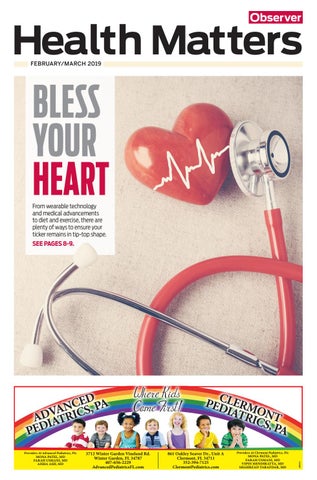
BLESS YOUR HEART
From wearable technology and medical advancements to diet and exercise, there are plenty of ways to ensure your ticker remains in tip-top shape. SEE PAGES 8-9.
Providers At Advanced Pediatrics, PA: MONA PATEL, MD FARAH USMANI, MD AISHA ASIF, MD
3712 Winter Garden Vineland Rd. Winter Garden, FL 34787 407-656-2229 AdvancedPediatricsFL.com
C PEDLERM IAT ONT RIC S, PA 861 Oakley Seaver Dr., Unit A Clermont, FL 34711 352-394-7125 ClermontPediatrics.com
Providers At Clermont Pediatrics, PA: MONA PATEL, MD FARAH USMANI, MD VIPIN MENDIRATTA, MD SHAHRZAD TARAFDAR, MD
299371-1
D A E C P N , A S C I R ADIV T A PED
HEALTH MATTERS
|
FEBRUARY/MARCH 2019
OrangeObserver.com
299432-1
2
OrangeObserver.com
HEALTH MATTERS
|
FEBRUARY/MARCH 2019
3
Family owned and operated since 1962, Browning’s Health Care provides high quality home medical equipment, custom wheelchairs, respiratory services, and specialty items our community needs.
Now Accepting Medicare Home Medical Equipment • Bedside Commodes • Canes & Crutches • CPAP Machines & Supplies • Knee Scooters • Lift Chairs • Portable Oxygen • Nebulizers • Ramps • Shower Chairs • Walkers & Rollators • Wheelchairs • Scooters • Hospital Beds
Medical Supplies • Aids for Daily Living • Bath Safety • Braces • Compression Stockings • Physical Therapy Products • Wound Care Supplies
Complex Rehab Technology
ONE CALL GETS IT ALL!
13000 W Colonial Dr. • Winter Garden FL • 407-650-9585
www.Brownings.net
299584-1
• Car Seats • Custom Manual & Power • Custom Molded Seating • Gait Trainers • Standers
4
HEALTH MATTERS
|
OrangeObserver.com
FEBRUARY/MARCH 2019
Observer “If we are to build a better world, we must remember that the guiding principle is this — a policy of freedom for the individual is the only truly progressive policy.” Friedrich Hayek
“Road to Serfdom,” 1944
Centennial celebration As Orlando Health commemorates its 100th anniversary, the organization today looks a lot different from the 50-bed Orange General Hospital that opened in 1918.
Publisher / Matt Walsh, mwalsh@YourObserver.com
DANIELLE HENDRIX
Executive Editor / Michael Eng,
BLACK TIE EDITOR
meng@OrangeObserver.com
U
Design Editor / Jessica Eng, jeng@OrangeObserver.com Community Editor / Amy Quesinberry, amyq@OrangeObserver.com News Editor / Gabby Baquero, gbaquero@OrangeObserver.com Sports Editor / Troy Herring, therring@OrangeObserver.com Black Tie Editor / Danielle Hendrix, dhendrix@OrangeObserver.com Staff Writer / Eric Gutierrez, egutierrez@OrangeObserver.com Multimedia Advertising Executives / Ann Carpenter, acarpenter@OrangeObserver.com Cyndi Gustafson, advertising@OrangeObserver.com Terri Hope, thope@OrangeObserver.com Advertising Operations Manager /
BY THE NUMBERS
2
nderstanding the scope and reach of Orlando Health’s presence in Central Florida today requires going back to its roots: a 50-bed, non-air-conditioned hospital built in an orange grove in 1918. Today, that hospital offers more than 1,780 beds at its core — near downtown Orlando — comprising Arnold Palmer Hospital for Children, Winnie Palmer Hospital for Women and Babies, Orlando Regional Medical Center and Orlando Health UF Health Cancer Center. That original hospital opened Nov. 5, 1918. Now, Central Florida’s fifth-largest employer is celebrating 100 years of serving the community.
The number of the region’s largest multispecialty practices owned by Orlando Health
4
The number of outpatient surgery centers
5
Orland Health’s rank in size of Central Florida employers
Allison Brunelle, abrunelle@OrangeObserver.com Creative Services / Tony Trotti, ttrotti@orangeobserver.com Customer Service Representative Katie Rehm, krehm@orangeobserver.com
CONTACT US
The Observer is published once weekly, on Thursdays. It provides subscription home delivery. The Observer also can be found in commercial locations and at our office, 661 Garden Commerce Parkway, Suite 180, Winter Garden, Florida 34787 If you wish to subscribe to, visit our website, OrangeObserver. com, call (407) 656-2121 or visit our office, 661 Garden Commerce Parkway, Suite 180, Winter Garden.
TO ADVERTISE
For display or digital advertising, call (407) 656-2121. For Classifieds, call (407) 656-2121.
SEND US YOUR NEWS
Let us know about your events, celebrations and achievements. To contact us, send your information via email to Michael Eng, meng@OrangeObserver.com.
OBSERVER The Observer (USPS 687-120) is published weekly for $40 per year ($50 outside of Orange County) by the Observer Media Group, 661 Garden Commerce Parkway, Suite 180, Winter Garden, Florida 34787 Periodical postage paid at Winter Garden, Florida. POSTMASTER send address changes to the Observer, 661 Garden Commerce Parkway, Suite 180, Winter Garden, Florida 34787.
Observer Media Group Inc. 1970 Main St. • Sarasota, FL 34236 941-366-3468
Editor and CEO / Matt Walsh Vice President / Lisa Walsh Chairman / David Beliles Publishers of the Longboat Observer, East County Observer, Sarasota Observer, Siesta Key Observer, Palm Coast Observer, Plant City Times & Observer, Ormond Beach Observer, West Orange Times & Observer, Observer, Winter Park/ Maitland Observer, Business Observer, Jacksonville Daily Record, Jacksonville Realty-Builder Connection, LWR Life, Season Magazine and Baldwin Park Living
OrangeObserver.com
Courtesy photo
HUMBLE BEGINNINGS
In 1920, the population of the city of Orlando alone was merely 9,282. Shortly after City Hall was built and a commission form of government was established, it was time to add a hospital to the community. Orange General Hospital opened on the heels of World War I and in the midst of the Spanish Flu epidemic worldwide. According to Orlando Health, the hospital was supported financially by the community and a group of doctors. Doctors John McEwan, Gaston Edwards and C.D. Christ, along with Orlando Mayor James Giles, banded together to raise $100,000 to buy the land and build and equip the hospital. Karen Jensen, vice president of the Orlando Health Foundation, wrote that there was no gas or electricity available and the first baby born at the hospital was delivered by candlelight. There was no air conditioning, and diapers were hung outside on the railing to dry. Orange General’s women’s auxiliary formed in 1920, and the hospital’s first class of nursing-school students graduated in 1921. During the early 1940s, many Orange General physicians left to serve in World War II, and the hospital practiced regular blackouts to ensure no light from the building would be visible to enemy bombers. By 1945, the hospital was the third-largest one in the state. Its expansion led to a name change in May 1946 to Orange Memorial Hospital, dedicated to those who served in WWII. As the city grew, so did the hospital. Through the latter half of the 20th century, it acquired new equipment, expanded its facilities, became the first hospital in Central Florida to provide openheart surgery, opened a neonatal intensive care unit and burn unit and more. It merged with Holiday Hospital in 1977 to create Orlando Regional Medical Center Inc. BECOMING ORLANDO HEALTH
Today, Orlando’s population alone is estimated at well over 280,000, and Orange County is home to 1.35 million. And although the organization is officially 100 years old, so much has occurred in just the past 10 years to make Orlando Health the network it is today. 2008 marked the corporation’s
The original Orange General Hospital, constructed in 1918, comprised 50 beds, and patients were seen by candlelight, because there was no electricity.
rebrand as Orlando Health, and many accomplishments have been made since: opening the Orlando Health Heart Institute, acquiring Health Central Hospital and Physician Associates, breaking ground on its proton therapy center in downtown Orlando, partnering with the West Orange Healthcare District to expand Health Central, opening the Orlando Health UF Health Cancer Center in Ocoee, and opening multiple freestanding emergency rooms in Central Florida, to name a few. “I’m in my 42nd year (here) now, so I’ve been here a good part of those 100 years,” said John Bozard, senior vice president of Orlando Health and president of the Orlando Health Foundation. “It’s been a wonderful time to watch how this organization has raised the level of health care in these communities. … We look at the health care organizations in the Central Florida area, and with us being one of the flagships and main anchors for so many years, we feel like it’s who we are.” For Bozard, some of the highlights of having seen Orlando Health through the years include the opening of the Arnold Palmer and Winnie Palmer hospitals, the partnership with Health Central and South Seminole Hospital, expansion of the Dr. P. Phillips Hospital and opening of ORMC’s trauma center — as well as the role it played during the Pulse nightclub tragedy. “We think that part of that, in providing the best health care, is providing the best access,” he said. “Traffic has (made it) so much harder to drive into the downtown location, and even though we’ve got all of the facilities, as we begin to look at those primary-care needs and subspecialties we found it important to provide for better access around the community.” THE NEXT CENTURY
Each year, Orlando Health serves about 112,000 inpatients and 2.4 million outpatients across its system, according to Kena Lewis, director of public affairs and media relations for Orlando Health. The $3.4 billion not-for-profit organization boasts more than 2,400 beds — and even that num-
ber continues to grow along with the Central Florida population. And although it is celebrating its centennial anniversary, it is also time to shift focus to the future. “We started celebrating the anniversary in November, because that was really our birthday, and we start with an acknowledgment of that fact, and we always like to celebrate things so we spent some time celebrating the past,” Bozard said. “We acknowledge and are grateful for it. But … the way we’ve really celebrated our 100 years, in addition to some of the parties we’ve had and the galas that took place, is really solidifying our strategic plan for the next 10 years.” Bozard said those plans are part of the rollout of the organization’s “Year 2030 Plan” for Arnold Palmer Hospital for Children. That includes the expansion of that facility but also the building of a comprehensive care center that will house all of its pediatric subspecialty areas. Another major focus continues to be access to health care within Central Florida’s communities. “If you look at the footprint of our locations, as this community has grown, we realize that not everyone has equal access to locations close to home,” he said. “One of our focuses has been trying to put facilities (in the communities). … We’ve tried to provide for better access around the community.” Other highlights to come soon are the expansion and reconfiguration of the organization’s trauma center, expansion of cancer care, completion of a freestanding emergency room and medical pavilion in both Lake Mary and east Orlando, and continued partnership with the West Orange Healthcare District to continue bringing services to the fastgrowing West Orange community. “We’re proud to be part of West Orange County and appreciate the relationship we have with the district, and together have partnered with a lot of of those new projects out there,” Bozard said. “We’re proud of that and what the district has done with the dollars. We’re going to celebrate — even though we’re 100 now — we’re going to celebrate the next 100 years.”
5
The number of freestanding cancer centers
8
The number of affiliated hospitals and rehab centers owned by Orlando Health
10
The number of urgent-care centers Orlando Health owns or with which it has affiliations or partnerships
50
The number of beds at Orange General Hospital
2,400
The number of beds across Orlando Health’s network
10,000
The number annual international patients
20,000 The number of employees
$100K
The price paid for land and construction of Orange General
112,000
The number of annual inpatient admissions
2.4M
The number of annual outpatient visits
HEALTH MATTERS
|
5
FEBRUARY/MARCH 2019
Call Today for your FR EE Consultati on
299468-1
OrangeObserver.com
6
HEALTH MATTERS
|
OrangeObserver.com
FEBRUARY/MARCH 2019
Bigger, better The physicians’ lounge has gotten some upgraded, home-like furnishings, such as large sofas and overstuffed couches.
After opening the Orlando Health UF Cancer Center in 2018, Health Central Hospital continues to expand. ERIC GUTIERREZ
WITHIN THE HALLS
STAFF WRITER
Driving by Orlando Heath’s Health Central Hospital in Ocoee, it’s easy to see that it has a number of construction projects underway. Some projects have been visible from the outside, such as the Orlando Health UF Health Cancer Center, which opened August 2018, while other expansion projects have been going on internally. With signage around the hospital property marking locations for future projects and other expansions going on within the walls, there’s a lot in store for the future of Health Central Hospital. Health Central COO Rick Smith said the new cancer center is just one of many projects going on at the Health Central campus. Some projects — such as the cancer center — are visible externally, while other projects are within the halls. “We’ve got a center for rehabilitation/post-acute care facility that will open in the March timeframe,” Smith said. “Along with those … major projects exterior to the campus, we’ve done a lot of stuff inside the hospital over the last couple years, as well.” With all the recent projects going on at Health Central Hospital campus and other projects on the horizon, patients can expect to benefit from all that’s new at the hospital, Smith said.
Many of the recent projects at Health Central Hospital have been taking place from within the hospital walls. The hospital’s on-site pharmacy and chapel both have gotten some recent upgrades. The pharmacy has even added a new service for patients. “Our retail pharmacy … recently underwent a renovation,” Smith said. “We reopened it … Feb. 1 with an expanded space due to the overwhelming popularity of the retail pharmacy there and the service they provide.” Regarding the new service, the pharmacy at Health Central Hospital now offers bedside-prescription delivery for patients. Patients now have the option of getting their prescriptions delivered to them while they are at Health Central Hospital or on their way out rather than having to go to a separate pharmacy, Smith said. “We started doing some bedside-prescription delivery to aid our patients in getting more efficient discharges,” Smith said. “Their medications are ready upon discharge, so they don’t have to stop anywhere along the way. They leave the hospital (with their prescriptions) and go head straight home and get comfortable.” Another internal change involves the hospital’s cardiovascular services. The hospital’s
Courtesy photo
cardiology and vascular services used to be spread out throughout different floors of the hospital’s medical office building. Those service providers will be relocated to the same floor to create a heart and vascular institute, Smith said. “After a lot of debate and some strategy, we decided to create a space where all of those providers could come together for a more efficient use of space and resources,” Smith said. “We are in the process now of renovating our fourth floor — our entire fourth floor, some 25,000 square feet — to create a heart and vascular institute. … And that’s where all of our cardiologists and our vascular surgeon will reside. Their office space will be there.” Smith added the heart and vascular institute project is expected to be completed by the end of the calendar year. In addition to the institute, Health Central Hospital also has a new cardiac catheterization lab, which is the hospital’s third such lab.
Afra Ali, MD •
Larissa Negron, MD •
Amber Eastwood, ARNP • Maryann Dunn, ARNP • Ana Souto,CPNP •
Providing comprehensive health care that compassionately supports infants, children and adolescents through every stage of their lives.
The new Center for Rehabilitation
SERVICES
• Post Acute Rehabilitation • Physical, Occupational, and Speech Therapy • Specialty Nursing Services • Wound Care • Nutritional Therapy We accept Medicare and most insurance plans. Please call our admissions office for details and to schedule a tour.
407-420-2090
www.SolarisHealthCare.org
7635 Ashley Park Court, Suite 501 Orlando, FL 32835 407.297.0080 www.windermerepediatrics.org Monday-Thursday 8-6:30 Friday 8-5:30 Saturday 9-1
300180-1
Denise Serafin, MD, FAAP •
FROM THE OUTSIDE
and post-acute care will be built on the south side of the Health Central Hospital campus. The building will front Old Winter Garden Road near Hempel Avenue. In addition to rehabilitation and post-acute care, the facility will offer memory care and hospice services, Smith said. “It’s (going to have) 110 beds,” Smith said. “Sixty beds will be (for) post-acute care with rehabtype beds, 40 beds will be (for) dementia care for our Alzheimer’s patients and (for the last) 10 beds, it will be for hospice care. We have an affiliation with Cornerstone Hospice to do in-patient hospice care.” Outside of the Emergency Department is another visible construction project in the works. That project will add 28 observation beds that will service patients who don’t have to stay in the hospital for an extended period of time. The 28 observation beds are expected to be open in August, Smith said.
A 120-bed skilled nursing and rehabilitation facility, serving the long and short term care needs of Orlando and the surrounding area.
407.297.0080 For All Your Growing Needs! Ginny Guyton, MD, FAAP •
“This lab has some of the newest technology available,” Smith said. “It has the lowest radiation available in the industry, which is great for patient safety, but it also great for our providers and our team members who work in and around the cath-lab rooms each and every day. … You have to have X-ray to perform these cardiac (catheterization) procedures, but minimizing the amount of radiation that is emitted is key, so we made that investment.” The chapel and physician’s lounge at Health Central Hospital also have gotten some upgrades. The original chapel previously was located on the second floor and was seldom used because it was almost hidden, but the new chapel has been built on the first floor of hospital. Additionally, the physician’s lounge has been enlarged and now has some new furnishings.
4875 Cason Cove Drive • Orlando, FL 32811 | A 501(c)(3) Nonprofit
HEALTH MATTERS
OrangeObserver.com
A grand design HARRY SAYER BLACK TIE REPORTER
There are countless meals and treats that are delicious to eat. But few of those are good for you — and it shows. More than 93 million adults in the United States are obese, according to a 2015-16 study by the Centers for Disease Control and Prevention. About one in three American adults has high blood pressure, with just more than half that number having it under control. A 2017 CDC study revealed more than 100 million Americans have either diabetes or prediabetes. Local nonprofit Health By Design USA is trying to help lower those numbers. The organization, led by a number of health care professionals in the Winter Garden area, has encouraged and educated West Orange County residents to live healthier lives since 2011. “We saw there was a lot of need,” said CEO Dorothy Richards. “In this community, people will eat everything that does not eat them first. Your health is in what you eat, and your health does not come to you automatically. It’s something we have to plan and work on. … And society today does not make it easy for us.” Much of the Health By Design staff comprises retired health professionals who felt they still had work to do, Richards said. The nonprofit CEO was born in Jamaica before traveling to the United States, where she worked as a nutritionist at the Brooklyn Jewish Hospital. She moved to Florida in 1978 and served as a nutrition program director for the Seminole County Health Department. Ida Williams, the group’s COO, has been a nurse and holistic healer for 36 years. Health By Design is a more mobile nonprofit compared to some of its contemporaries. It has its own van — with “Health By Design” painted on its sides — in which staffers give free diabetes screenings and host educational programs so people can learn how to better take care of themselves. A major focus for the group is showing compassion to the community for which it cares. Staff and volunteers make house trips
7
FEBRUARY/MARCH 2019
G
Get more out of life!
HEALTH BY DESIGN PHONE: (321) 213-9031 CONTACT: healthbydesign now.org/contact-us CLASS REGISTRATION: healthbydesignnow. org/class-registration/ INFORMATION Diabetes: cdc.gov/diabetes/ basics/diabetes.html Obesity: cdc.gov/obesity/ data/adult.html Hypertension: cdc.gov/ bloodpressure/index.htm
to different citizens to administer diabetes tests and deliver personal phone calls as follow ups with their patients. In one instance, a man approached the nonprofit complaining about pain in his big toe, which staff diagnosed as gout. One of the group’s members, a naturopathic doctor, returned to the man with advice on how to heal his foot without charging him. Richards said what she and staff do for others makes her feel good. “There’s a saying: ‘Don’t tell me how much you know until you tell me how much you care,’” Richards said. “That’s what we do. We go in, and we love the people. And once they see how much you love them and their children, then you can have a headway into their homes.” The group’s 10 to 12 members have hosted a number of health programs and initiatives since its inception. Twenty-five Winter Garden residents participated in a 2013 weight-loss program, and 94% lost an average of eight pounds, Richards said. Health By Design, which received a $25,000 grant from the West Orange Healthcare District, is popular at churches, where staff members pass out food and clothing, and at community health fairs. Health By Design also has hosted a number of nutrition lectures at local churches and has received a number of follow-up visit requests by audience members. “People are very lonely in the world today,” Richards said. “When somebody can pick up their phone and say, ‘Mrs. Jones, how are you feeling today? Are you feeling better from the instructions we gave you?’ … It makes us feel good that we are doing something good not for ourselves, but for the community.”
e a part of a community B where you can feel at home. Ask us today how you can qualify for our New Resident Incentives. Gable Villas
At Good Samaritan Society – Kissimmee Village, we believe that you deserve choices. • 55+ gated golf community • 425 acres nestled along the southern banks of Shingle Creek • Perfect setting to enjoy Florida’s natural beauty and wildlife • Full calendar of activities • Three wellness centers • Boat slips with access to Lake Toho • Kayaking on Shingle Creek • On-site RV/boat storage • Beautiful indoor and outdoor pools • Dog park and community gardens • Wide range of housing options, amenities and services • Unique financial option to minimize expenses and preserve your assets
Where people matter most!
AGE ADVANTAGE IS NOW WINTER GARDEN SENIOR HOME CARE
299451-1
We provide: -Supervision of our local disabled and elderly -Assistance with bathing, dressing, grooming, appointments and errands. -Professional caregivers available 24/7
112 S. Main Street, Winter Garden, FL 34787 407-347-2050 • www.wintergardenhomecare.com
Call (407) 933-1999 to schedule a personalized tour.
4250 Village Drive Kissimmee, FL 34746 Phone: (407) 933-1999 good-sam.com/kiss All faiths or beliefs are welcome. © 2019 The Evangelical Lutheran Good Samaritan Society. All rights reserved. 190376
299369-1
The Health By Design USA nonprofit is battling obesity and diabetes in Winter Garden.
|
8
HEALTH MATTERS
|
OrangeObserver.com
FEBRUARY/MARCH 2019
Matters of the heart TIM FREED | ASSOCIATE EDITOR
A
t the center of the human body and all its complexities is the ever-beating heart — the muscular organ that pumps blood throughout our bodies, sends oxygen and nutrients to body tissue and removes carbon dioxide and other wastes. How do we take care of it? What are
common heart conditions? How has technology helped us treat the heart and live longer lives?
A HEART HEALTHY DIET It’s not easy changing up a diet. Years of eating habits can be difficult to break, and cultural norms aren’t always the best option for a healthy heart. “People have different eating habits, especially in a city like Orlando, which sees people from multiple different cultures,” Orlando Health interventional cardiologist Dr. Sumith Aleti said. “Everybody has their own basic standard diet. It’s hard for people who are raised up to cook certain things and eat a certain way to think about something else as the main course of a meal.” But where’s the best place to start after years of being set in your ways? Aleti said removing all sugars or having minimal sugar consumption should be first. That includes processed foods, breads and sugary drinks. It’s best to cut red meat to about two or three times a month, as well, Aleti said. Chicken and fish are good, but be sure to portion them throughout your week. Aleti said diets that focus heavily on lean meats don’t result in good outcomes. The key to a heart healthy diet comes down to one thing: a predominant or complete plantbased diet, Aleti said. “I have patients that come to me and say, ‘Doc, I don’t eat any beef; I don’t eat any red meat, but I eat turkey and chicken all the time because that’s lean meat,’” Aleti said. “If you eat turkey and chicken all the time, that’s not healthy. You have to have a proportion of healthy plants in your diet.” What exactly does it mean to have a plant-based diet? What foods are the right foods? Aleti said a great place to start
is with wholegrain cereals and breads. “It doesn’t mean that anything that comes from plants is good,” Aleti said. “It’s about healthy plant foods — that’s more important. Healthy plant foods while reducing the intake of all animal foods — that should be the emphasized concept.” Vegetables and fruits are always good, though potatoes don’t count as a vegetable, and sugary fruits should be limited. “Fruits are always better than squeezed fruit juice because when you eat the fruit, there is a lot of fiber and everything else within that,” Aleti said, adding that when you drink the fruit juice, you’re only drinking the sugary part of the fruit. Nuts, lentils and mushrooms are also a good source of protein in a plant-based diet. “You have to have a diet con-
sisting predominantly of these kinds of healthy plant foods,” Aleti said. “Most people — if you have to go for lunch — you’ll eat a burger, sandwich or pizza. That consists of flour, a lot of red meat and a lot of cheese. … If you don’t have the time to diet, it doesn’t count. Don’t give the excuse, ‘OK, I have my portion of protein with this pizza.’ There’s enough protein and enough fat and there’s enough carbs, but they’re not coming from the right sources.” Studies have uncovered more benefits of taking on that plantbased diet, Aleti said. “There is more and more data that a vegan diet actually cannot only prevent but even reverse clogging of the arteries,” he said. Aleti acknowledged it’s hard to change your diet after years of habits and traditions, but that’s why it’s important to give children a proper diet early in life.
KNOW THE SIGNS When it comes to heart conditions and chest pain, most people think of one of two things: an angina and a heart attack, Orlando Health interventional cardiologist Dr. Sumith Aleti said. An angina surfaces during physical activity, resulting in that tightness and burning feeling, he said. “When people walk or exert themselves or climb up stairs or walk a long distance, you get chest pressure or tightness,” Aleti said. “Sometimes, the pain can go down the arm or jaw and then you sit down and rest, and the symptoms go away. If you experience new symptoms, it means that there’s an unstable blockage going on in your heart, and you need to get a doctor’s attention.” A heart attack, on the other hand, can happen even when you’re not doing anything physical or strenuous activity. Pain in this instance can mean a completely blocked artery, Aleti said. “You need to get to the hospital right away,” he said. “The sooner you come, the sooner we open it up and prevent damage of the heart muscle.” If you believe you’re experiencing an angina, the best thing to do is nothing at all. “You want to rest your body — sit down wherever you are,” he said. “If you have somebody or family with you and you have an aspirin in the house, just take aspirin. Beyond that, there’s not much anybody can do.” Aleti added it is best to wait for paramedics to arrive to transport a patient to the hospital. If a family member is driving you to a hospital, there’s a window of time during which you can’t be resuscitated, Aleti said.
POWER OF HABIT
Directly connected to the heart is the network of arteries and veins that runs throughout the entire body — and the health of both the heart and that system are closely intertwined, Orlando Health vascular surgeon Dr. Jonathan Higgins said. “The vascular system is arguably the most important system for sustaining life,” Higgins said. “The rate-limiting factor for getting a transplant, other than the immunologic and genetic match, is having the ability to sew in the arteries and veins. In other words, your kidneys can fail, but if you’ve got an artery and a vein that the donor can get sewn to, you can get it — you can get a new heart and new lungs if your vascular system is good enough to receive it.” The main obstacle and underlying problem with the vascular system that causes disease is atherosclerosis — the build-up of fats and cholesterol in the artery walls. “A lot of it has to do with lifestyle, diabetes, high blood pressure, your sex and other stressors,” Higgins said. In terms of factors patients can control, diet comes into play, but so do exercise habits, he said. “What the American Heart Association recommends is typically 30 to 45 minutes of moderate exercise at least five days a week,” Higgins said, adding that it’s helpful to have an accountability partner to keep you motivated. “You have to get your heart rate into that target zone — you have to be a little bit uncomfortable but certainly not huffing and puffing.” Higgins said that could be a brisk walk at your own pace — as long as it’s for the appropriate length of time. “What I don’t want people to think is that you have to go to a gym or you have to buy a $5,000 treadmill,” he said. What exercise does is prepare the heart for when it needs to work harder, like during fightor-flight scenarios, Higgins said. “It’s kind of like a car — a car is best suited to driving,” Higgins said. “When the heart starts pumping, it’s a muscle — it wants to exercise, so it becomes more efficient in its ability to pump the blood around. Also, (exercise) leads to hormones that are released like nitric oxide that helps dilate the blood vessels and improves their elasticity and their ability to respond to a stressful event.”
On-site: Labs, X-Rays, IV Fluids and more...
C oming Soon! Open 7 days a week • 8am-8pm Walk-In Clinic
Visit our website for more information!
ParamountUrgentCare.com
Next to Windermere High School 5845 Winter Garden Vineland Road, Suite 120 Most Insurances Accepted • No Appointment Needed
407-203-1682
HEALTH MATTERS
OrangeObserver.com
|
FEBRUARY/MARCH 2019
9
TRENDING
AN APP FOR THAT TECH
Evolving technology now allows us to monitor the heart rate using mobile devices, such as the recently released ECG Apple Watch app. The device captures your heart rate in real time and also keeps records of the results for tracking. “The EKG can determine irregularity in the (heart) beat … especially if you’re having a fast pulse and you need attention or if you’re having symptoms of weakness or dizziness and you feel your pulse is low,” Aleti said. “It can alert you if something is wrong.” In addition to Apple’s app, Fitbit and other third-party apps also can be used to record pulse. The information can be useful to doctors, he said. “People come to me with conditions and say, ‘I’m feeling tired,’ or ‘I have a slow heart rate,’ or some of them have very fast heart rates or irregular pulses,” Aleti said. “I can go back and look into their app and say, ‘You know what? You felt your heart racing fast, and I saw your pulse beating (at this point), so definitely something is going on.’ They still give good information that is really helping our diagnosis.” As the apps state, though, they shouldn’t be used to test for a heart attack. The technology someday may be able to predict the onset of a heart attack, though, Aleti said. “Whether it can predict a heart attack yet, I I think it’s going to be soon when even the EKG and these devices can actually detect that,” he said. “It’s not there yet.”
AdventHealth cardiac electrophysiologist and heart rhythm specialist Patricia Guerrero has witnessed firsthand how far technology has come in her field. Just like any mechanical pump, the heart needs a switch to turn it on — and that’s exactly what Guerrero is helping to fix and treat every day. The devices that flip that switch — pacemakers — have gotten smaller in recent years, Guerrero said. “Pacemakers, which originally entailed actually having openchest surgery over 50 years ago, moved to where we place the wires that attached a computer and source of energy to the heart with wires that were inside of the vein then connected to the right side of the heart,” she said. “More recently, that technology has become much smaller and much more convenient for patients, in that some patients are able to have a pacemaker injected into the heart muscle.” That pacemaker is roughly the size of a small bullet, she said, and that device contains not only the electrodes that allow for the delivery of the energy but also a small computer chip and a small battery that last about 10 years. “(It’s) really a great opportunity for people who previously would have had to have an incision, wires placed through a vein, and would have found it difficult or higher risk to have
those surgeries, because it is a little more involved and it requires a great deal of restriction to movement and weight bearing for several weeks after surgery,” Guerrero said. “Whereas his new pacemaker that’s just injected into the heart is done through a vein at the level of the groin of the leg. There’s really very limited restrictions — other than just avoiding any pushing and pulling of the leg for a few days.” The AdventHealth system in Central Florida has one of the largest cardiac transplant centers in Florida, Guerrero said. Technology is trending upward in that area, as well. “We’re taking care of very sick people who require both electrical devices, as well as advanced heart-failure devices, which essentially are things (such as) mechanical hearts and even heart transplantation,” she said. “This is not only just the trend, but this is really at the forefront of what we’re able to offer people, where perhaps even five
or 10 years ago we were not able to offer because it was simply not available or still in very early research stages.” AdventHealth has been at the forefront of placing valves inside hearts without opening the chest and going through the breast bone. This has been beneficial for patients suffering from aortic-valve stenosis — where the valve that pushes blood out of the heart into the main artery has closed, becomes stiff and doesn’t open well. “People who previously would have been considered too sick or have too many other medical problems to be able to have surgery — and essentially would just have to endure the symptoms related to this valve not opening well and perhaps even be the cause of death — are now able to have that valve replaced through a procedure that entails placing this new valve through an artery in the leg,” she said. “It’s really revolutionary in terms of what we’re able to offer.”
Personalized care with compassion and excellence.
Office Hours:
Mon-Fri 8AM-5PM
By Appointment Only Saturday Mornings 8-12
1551 Boren Drive, Suite A • Ocoee, FL 34761 Wellington Esquea, PA-C • Dr. Bindu Parekattil Dr. Shaista Usmani • Dr. Shahid Usmani
Se Habla Español
Call 407-395-2037 • www.OcoeeKidsDocs.com GO ONLIN OUR FUL ETO SEE AND NUT L MENU R INFORM ITIONAL ATION. Ask me how these State Farm® health products can products can protect you if you become ill, or get injured and are unable to work:
298391-1
• Disability insurance • hospital income insurance • Supplemental insurance • long-term care insurance
ORDER ONLINE AT: LittleGreekFreshGrill.com
299909-1
3131 Daniels Rd #104, Winter Garden, FL 34784 407.614.4740 | Open 7 days 11am - 9pm
10
HEALTH MATTERS
|
OrangeObserver.com
FEBRUARY/MARCH 2019
AdventHealth opens clinic for people born with heart defects The AdventHealth Adult Congenital Heart Disease Clinic opened November 2018 and treats adult patients with congenital heart defects. COMMON ISSUES FOR PEOPLE WITH HEART DEFECTS
Source: Adult Congenital Heart Association
FAST FACTS n A congenital heart defect (CHD) is a problem with the heart’s structure that is present at birth. Common defects include holes in the heart and misplaced, malformed, and/or missing valves, vessels, and heart chambers. n One in 10 children born with CHDs won’t survive to adulthood. n People born with more complex CHDs face a higher risk of death before age 18. n Adults with CHDs continue to face a high risk of early death and disability. n Heart defects are the most common birth defects. Almost one in 100 babies are born with some kind of heart defect. n There are between two to three million adults and children living in the United States with CHDs.
Why Choose Me?
Source: Adult Congenital Heart Association
AdventHealth for Children, formerly Florida Hospital for Children, recently opened a clinic that offers specialized care for adults living with congenital heart defects. The two-story clinic, located within the hospital at 2501 N. Orange Ave., Orlando, treats patients with a variety of CHDs. CHDs typically involve malformations with the heart’s structure that may present particular risks throughout a patient’s lifespan. “We mostly take care of conditions that patients are born with,” said Dr. David Briston, a pediatric and adult congenital cardiologist at AdventHealth for Children. “Among the most common forms of congenital heart disease are holes in the heart, which is called atrial septal defect or ventricular septal defect. But other things, such as valve diseases you might have been born with, specifically pulmonary stenosis, are commonly seen. And some patients only have a single ventricle, and that is a unique physiological state that requires close attention. So we see patients who give no signs something is wrong with their heart and are fully functioning members of society, as well as people who need multiple medications every day, multiple times a day, in order to remain functional.” Briston, who also serves as the clinic’s medical director, has practiced pediatric cardiology for five years and adult congenital cardiology for two-andone-half years. He and a group of adult and pediatric cardiologists started working together to launch the program, which was formalized in 2017. The program did not get its own clinic until last November, but already it has treated about 300 to 400 patients, and Briston expects it will receive about 600 to 700 patients by the end of the year. For that reason, the clinic is expected to expand to another suite and hire more cardiologists soon, he said. So far, the clinic employs six cardiologists — two of whom only treat adult patients. “In 2017 is when the program actually began,” Briston said. “The doctors here realized that a
TenderCare
Free Consultations 1065 Tildenville School Rd Winter Garden, FL 34787 918-521-1997 • www.therapyinthegarden.com
NEWS EDITOR
n Individuals with CHDs often need additional operations and/or medications as adults, even when they’ve had a successful repair. n Common long-term problems of CHDs include developmental delays, difficulty exercising, heart rhythm risks, heart failure, sudden cardiac arrest, stroke and premature cardiovascular death. n Many adults with CHDs in the United States report having problems getting insurance and coverage for specialized care. n Compared to the general population, adults with CHDs have three to four times higher rates of emergencyroom visits, hospitalizations and intensive-care unit stays. n People with CHDs are now living long enough to develop new problems such as highblood pressure, obesity and acquired heart disease.
Completed level 1 training in Gottman Couples Therapy
American Counseling Association (ACA) Florida Mental Health Counselors Association (FMHCA) American Mental Health Counseling Association (AMHCA)
GABBY BAQUERO
We are your hometown solution for one-on-one assistance. With some of the best rates in Central Florida, we make staying independent affordable.
Call us to learn of the TenderCare difference!
• Meal preparation • Light housekeeping & laundry • Medication reminders • Personal hygiene • Dressing & grooming • Walking & exercise • Going shopping or to appointments
407.599.1900
License 3014096
www.TenderCareHomeHealth.com
299430-1
Anger Management Anxiety Stress Divorce Parenting Women’s Issues BettyJo Camp, LMHC Coping Skills Family Conflict Life Transitions Marital and Premarital Peer Relationships Relationship Issues Self Esteem
297863-1
• • • • • • • • • • • • •
HEALTH MATTERS
OrangeObserver.com
|
11
FEBRUARY/MARCH 2019
Everything changes with time – some things change for the better! Courtesy photo
Dr. David Briston, a pediatric and adult congenital cardiologist at Florida Hospital for Children, is the medical director of the AdventHealth Adult Congenital Heart Disease Clinic.
IF YOU GO ADVENT HEALTH ADULT CONGENITAL HEART DISEASE CLINIC
2501 N. Orange Ave. Suite 442, Orlando PHONE: (407) 303-2001
lot of the patients were no longer children and there was an actual need to formalize the presence of a clinic, specifically for adults with congenital heart disease. ... And when they realized just how many patients there were and how fast it was growing, they realized we needed to formalize a program and get somebody here, and that’s when I came along.” According to the Adult Congenital Heart Association, more than 2 million adults and children in America are believed to have a congenital heart defect, and about 10,000 of them are estimated to be in Central Flor-
ida. Unfortunately, only about 10% of those adults receive the recommended care they need, the association estimates. Briston advises adults living with congenital heart defects to see a cardiologist every six to 12 months because such conditions require more surveillance and can present specific risks that are sometimes noticed only after it is too late. “The biggest thing I hope people understand during heart month is that if you have a question, ask,” Briston said. “We’ll see you — we will figure it out, and we’ll help you. I would happily tell you if you’re really cured, but don’t just assume everything is OK. For an adult who has congenital heart disease, there’s no such thing as being cured, really, so I would say it’s always worth getting seen at least once to be safe.”
Specializing in the diagnosis and treatment of skin cancer General Dermatology & General Skin Examinations
1067 S. Clarke Road, Ocoee FL 34761
(407) 654-7217
407-521-3550
402 Lakeview Road Winter Garden, FL 34787
299903-1
Office hours M-F by appointment Accepting new patients
Call today to schedule a tour - stay for lunch or dinner and experience our best! 299450-1
Now located at
• Affordable, all-inclusive rates for Assisted Living and Memory Care • Gourmet meals prepared by in house chef • Enhanced activities • Newly-remodeled accommodations and communal areas • Safe, secure accommodations that offer the care needed with the privacy desired
GoldenPondCommunities.Com
AL #9626
HEALTH MATTERS
|
OrangeObserver.com
FFEBRUARY/MARCH 2019
The hope cycle Kathleen Richardson raises awareness about pulmonary hypertension as an athlete on Team PHenomenal Hope. AMY QUESINBERRY COMMUNITY EDITOR
It hasn’t been easy living with a rare disease, but Kathleen Richardson is doing her best to bring more awareness to pulmonary hypertension. The Winter Garden City Commission even has recognized her for her efforts by offering a proclamation for Pulmonary Hypertension Month. People can acquire PH genetically or idiopathically. It can be caused by heart issues and can appear secondary to diseases such as rheumatoid arthritis, lupus or chronic obstructive pulmonary disease. Richardson was diagnosed in 2001, at a time when the average survival rate for those diagnosed was two to eight years. “Doctors didn’t really know much about PH,” she said. “If they figured out that you had PH, they would just tell you to get your things in order. There were treatments, but a lot of times, doctors didn’t know about it.” Richardson’s only symptom was shortness of breath. She saw a doctor, who gave her a few tests,
including a pulmonary function test, but came up with no explanation initially. “He started asking if I had panic attacks; I started questioning myself,” she said. An oximeter and a mercury test revealed the disease. During the stress test, Richardson’s oxygen saturation dipped to 78. A mercury test — in which the pulmonary arterial pressure in the lungs is measured — revealed 33 millimeters of mercury; normal is 25. The disease was caught early, and there was no damage to her heart or lungs. After she finally had an accurate diagnosis, doctors needed to find the right treatment. They put her on an endothelin blocker, which stops her blood vessels from constricting. She recently switched drugs after learning the old one can cause liver damage. “So far so good,” she said of her health. There is no cure for PH. TEAM PHENOMENAL HOPE
Richardson participates in Team PHenomenal Hope, a charity nonprofit that started in 2012 as a bicycling team. The group seeks to raise awareness of pulmonary hypertension to fund medical research into improved treatments or a cure, and to implement programming that focuses on providing patient services. Part of the fundraising is done
WHAT IS PULMONARY HYPERTENSION?
Amy Quesinberry
The city of Winter Garden declared November 2018 Pulmonary Hypertension Awareness Month in the city. The proclamation was presented to Kathleen Richardson, who was diagnosed with PH in 2001.
through the U.S. team of volunteer endurance athletes. Richardson is a cyclist who has participated in the Horrible Hundred bike ride in Clermont, and she pedaled 3,000 miles in a seven-month Unity Miles ride. “I live with it,” Richardson said. “I feel like it’s a cure, because for me I do all those sports for Team PHenomenal Hope. I’m one of the athletes — cycling, but now I do triathlons. In September, I did a half Iron Man in Augusta. I finished, and I had an hour to spare, so I was happy. My goal was to finish.” Only one other person on the team has PH. She said most of the participants either have relatives or friends with the disease or they work in the industry. This is where the program Let Me Be Your Lungs comes in. “The purpose of that is to con-
nect athletes with PH patients,” Richardson said. “Not all of our athletes know someone with PH, and they can learn more about someone who lives with PH.” Most PH patients are on oxygen, she said, but she is not the average PH patient. She knows she is one of the lucky ones. Because the disease was caught early, she has a much better chance at a longer life, she said. Nevertheless, she is committed to raising as many funds as possible to help others who are fighting a harder battle. She and her husband signed up for genetic testing after she was diagnosed so they would know the odds with their sons, who are now 19, 22 and 24. The boys have had several heart-related tests and will continue to do so. But for now, they are clear.
High blood pressure — hypertension — is a common condition that affects the way blood flows through the arteries from the left side of the heart. A less-common type of high blood pressure — pulmonary arterial hypertension — affects only the arteries in the lungs and the right side of the heart. Pulmonary hypertension begins when tiny arteries in the lungs, called pulmonary arteries and capillaries, become narrowed, blocked or destroyed. This makes it harder for blood to flow through the lungs, which raises pressure within the pulmonary arteries. As the pressure builds, the heart’s right ventricle must work harder to pump blood through the lungs, eventually causing the heart muscle to weaken and sometimes fail completely. Symptoms include shortness of breath with minimal exertion, chest pain, edema, fainting, unusual fatigue, dry cough and heart palpitations. For years, lung transplants were the only treatment for pulmonary arterial hypertension. Today, there are more than a dozen available FDA-approved treatments. With proper treatment, the progression can be delayed. SOURCE: Pulmonary Hypertension Association
297860-1
12
HEALTH MATTERS
OrangeObserver.com
|
FEBRUARY/MARCH 2019
13
The eyes have it Community Health Centers received a grant from the West Orange Healthcare District to help fund new equipment and renovations. SPORTS EDITOR
If you take a visit to the Community Health Centers’ Winter Garden location, things up front appear the same as usual. But if you go to get your eyes checked out, you’ll notice a few differences — both big and small. Although CHC offers numerous services, its optometry department now features several improvements — including state-of-the-art machines and a larger working space — thanks to a $250,000 grant from the West Orange Healthcare District. “Some of our equipment was starting to become a little bit outdated, or I think we were having some issues with some of the equipment being harder to fix,” said John Riordan, director of marketing and communications at CHC. “So, it actually helped us get some newer equipment that was easier to use.” The two biggest additions came in the form of a new Optical Coherence Topographer and a visual field machine. Both devices are used in the testing and diagnosing of glaucoma — a disease caused by intraocular pressure that can damage optic nerves and lead to blindness without treatment. “What happens when you have glaucoma is that you tend to lose
your peripheral,” said Jessica Araya Calvo, optometric coordinator at the facility. “So what this (visual field) machine does is it tests your peripheral vision to make sure you are still able to see. This (OCT machine) is also glaucoma testing, but it checks the angles and the thickness of your optic nerves. “The thinner your nerves, that shows the glaucoma,” said Lisa Myers, an optical technician. “The thinner it gets, the closer to going blind you get. There is no reversing it.” The OCT machine offers incredibly detailed information about the eye that helps optometrists at CHC identify and treat possible cases of glaucoma or macular degeneration. And if glaucoma is detected, Araya Calvo and her staff can prescribe medicinal eyedrops. The added benefits of having newer machines in place to help people is just one aspect that makes working at CHC even more fulfilling, Myers said. “I actually like it (more) here than my other places, only for the fact that I can see a difference,” Myers said. “To me, it’s about quality, not quantity. And if it’s not about what’s inside someone’s pocket, I feel like the patient benefits more.” Alongside the new machines, the most obvious change to the optometry department is the added space in the office.
IF YOU GO
COMMUNITY HEALTH CENTERS — WINTER GARDEN 13275 W. Colonial Drive, Winter Garden PHONE: (407) 905-8827 WEBSITE: chcfl.org
Photos by Troy Herring
With new equipment and more space, the optometry department at CHC can help more people.
Instead of limited space to move around, the bigger optometry area allows for easier mobility for patients to move around, as well as frees up a wall to showcase the variety of glasses that CHC offers.
“Optometry was kind of an afterthought, and what we were doing was we were using it, but then sending people down the hall — using one of the other offices to do some testing, and it wasn’t
good for patient flow,” Riordan said. “Now, we don’t have to ship them down the road and shuffle them back and forth.” It makes the process much more easy for the patients — many of who come from the underserved areas of the community. It also serves as a reminder of how important their work is, and the role they can play in helping people live better lives. “We have patients who are 50 or 60 years old, who have never had glasses in their entire life — they were never able to afford — and then we give them glasses, and then they’re able to see how they’re supposed to see,” Araya Calvo said.
297969-1
TROY HERRING
14
HEALTH MATTERS
|
OrangeObserver.com
FEBRUARY/MARCH 2019
Troy Herring
Matt and Paige Wideman sit with baby Asher in the bed at their home in Winter Park, where Asher was born.
Big baby on the block During a natural home birth in December, Winter Park couple Matt and Paige Wideman welcomed Asher — all 11 pounds, 1 ounces of him — into the world. TROY HERRING SPORTS EDITOR
On a rainy morning, just past 7 a.m. Dec. 20, something special was about to happen for Matt and Paige Wideman. Up in the spacious upstairs bedroom of their Winter Park home, the duo — alongside two midwives and their doula — were prepared for that magical moment. One that felt
like it took an eternity to arrive. The night before, an hour after putting their children — Cooper, 6, and Barron, 4 — to bed around 8 p.m., Paige went into labor. The rest of the night was a blur; Paige opted for natural birth. Then, at 7:07 a.m., Asher was brought into the world — at 11 pounds, 1 ounces and 23 inches long. “It was difficult — we didn’t
know at the time that he was 11 pounds; we just knew something extraordinary was going on during the process,” Paige said. “The boys — it was the most rewarding thing having them wake up and come in. “They woke up at 6:30 (a.m.), and my husband gave them a game, and they were able to distract themselves until his full delivery at 7:07 (a.m.),” she said. “They came in, and they helped measure him,
and they were just a part of the whole process after he was born. It was so incredibly special and irreplaceable.” Putting the kids to bed at that time and having them come in after Asher was born was all a part of the plan Paige had hoped would come to fruition. She knew the experience would be an important one for her family. Although some kids might be a bit jealous of having a new baby brother/sister arrive, the only jealousy that morning was based around Asher’s natural hairstyle. “Cooper was very excited to see him — and a little jealous that he was born with a mohawk,” Matt said. “He came out with a full-blown mohawk, and Cooper ran in and said, ‘Who did his hair?’” Paige said. “Cooper has been begging for a mohawk when we go to the barbershop. And I said, ‘That’s just how he came out,’ and he goes, ‘No fair!’” The family aspect was one of several reasons Matt and Paige decided to have a natural, home birth, which has actually become increasingly popular. According to a 2014 report by the Maryland Population Research Center at the University of Maryland, out of the 60,000 out-of-hospital births from 2014, 38,000 were home births. And many times — 90%— the births were planned. “It was very unique, as you can imagine, and actually, my midwife kept telling me, ‘Think about the birth plan of your dreams and keep saying it over and over,’” Paige said. “To me hearing that, I said, ‘I’ll do that, but I know things never happen the way they’re planned.’” Another huge aspect of the birthing process for Paige was that it was natural. Both Cooper and
“I think people, including myself before I got pregnant, tend to overlook the significance of birth. It’s the foundation of the child’s life, and it’s a very significant part of a child’s life.” — Paige Wideman
Barron’s birth had been at hospitals utilizing the usual epidural, but this time, she wanted something more. The more she thought about natural birth — and the emotional positives of it all — the more passionate Paige became. “I have heard so much about the depth of the bond that is formed when you do a natural birth, and I didn’t really understand it until I went through it,” Paige said. “I think people, including myself before I got pregnant, tend to overlook the significance of birth. It’s the foundation of the child’s life, and it’s a very significant part of a child’s life.” Since Asher’s birth, things in the Wideman household are back to normal — although there’s been some changes. Matt has taken over some roles Paige usually did — such as taking Cooper and Barron to school or to play at the park. And of course, helping the two older boys get used to their new little brother. “Just playing defense for the baby all the time I guess,” Paige said with a laugh. “You know, ‘Not too close, I know you’re his brother, but …’ Just trying to be constantly aware of what’s going on around him — it’s a full-time job.”
Join the
Movement
Download our mobile app - Carrot; with healthy content, challenges, and deals. It’s HWO in the palm of your hand.
300039-1
Healthy West Orange is a grassroots movement to create the healthiest community in the nation. We’re here to help you eat well, stay active, and enjoy life. HealthyWestOrange.org
Health Matters_FINAL_TRAFFICED_022019.indd 1
2/20/19 9:13 AM
HEALTH MATTERS
OrangeObserver.com
|
15
FEBRUARY/MARCH 2019
For EXCELLENCE in VEIN CARE and treatments for (PAD) PERIPHERAL ARTERIAL DISEASE
300252-1
Charles S.C. Garnette M.D., F.A.C.S.
www.orlandoveins.com
297886-1
7412 Docs Grove Circle • Orlando, FL 32819 • 407-363-7760
16
HEALTH MATTERS
|
OrangeObserver.com
FFEBRUARY/MARCH 2019
ADVERTORIAL
Recognizing the Symptoms and Risk Factors of Peripheral Artery Disease lar disease, PAD can occur in the stomach, arms and head, but most commonly occurs in arteries in the pelvis and legs.
Symptoms of PAD
By Sumith Aleti, MD One in 20 Americans over the age of 50 suffers from peripheral artery disease (PAD). PAD can be a subtle disease, but it has serious consequences. If untreated, PAD can increase the risk of coronary artery disease, heart attack and stroke.
PAD symptoms can be difficult to recognize. Many people may experience no symptoms or mistake symptoms such as leg cramping, pain or tiredness when walking for other causes — especially since the symptoms go away with rest, only to return with activity.
Symptoms of PAD include: • Cramping, pain and tiredness with walking • Sores on lower extremities that won’t heal • Toes that look pale, discolored or blue PAD occurs when plaque builds • Leg or foot pain that disturbs up on the inside of walls of the your sleep, including leg arteries that carry blood from cramps at night the heart to the legs and feet, • Leg numbness • Coldness in your lower leg or resulting in the narrowing foot of the arteries. This is called • Shiny skin on legs, or loss of atherosclerosis and is the most hair on your feet and lower common cause of PAD. Because legs of this narrowing, the vessels • Thick yellow toenails that are can’t deliver enough oxygen and nutrients to the body. Also not growing known as peripheral vascu• Erectile dysfunction in men ORHW-0041 - WOrange Times HalfPg_10.375x8 FINAL.pdf 1 2/7/19 6:03 PM
It’s important to talk with your doctor if you experience any of these symptoms.
Risk Factors
The risk of developing PAD increases with age. Those with coronary artery disease have a greater chance of having PAD. A family history of PAD, cardiovascular disease or stroke also increases the chances. Other risk factors include: • Smoking • Diabetes • High cholesterol • Chronic kidney disease • High blood pressure
Treatment
PAD can be diagnosed through a variety of tests, including a physical exam, a blood pressure test, ultrasound, blood tests
or angiography. Once PAD has been diagnosed, the goal is to reduce symptoms and decrease the atherosclerosis in the vessels. Stopping smoking and starting a supervised exercise program are two key ways to reduce the effects of PAD. Other lifestyle changes, such as following a healthy eating plan to reduce cholesterol and weight, also can help. Medications to lower cholesterol, reduce high blood
pressure or prevent blood clots may be recommended. In some cases, surgery or an angioplasty procedure may be needed to address blockage in a blood vessel. Dr. Sumith Aleti is an interventional cardiologist and endovascular specialist with the Orlando Health Heart Institute Cardiology Group – Ocoee, located at Orlando Health – Health Central Hospital, 10000 W. Colonial Dr., Ocoee, FL 34761.
C
M
Y
CM
MY
CY
CMY
297862-1
K