2 News map News highlights from around the global leather industry.
4 Industry & Innovation New technology, new ideas from leather industry suppliers and service providers.
6 Leatherscene People from around the industry and famous lovers of leather who have made the headlines in recent weeks.
8 Backtrack Headlines from www.leatherbiz.com, the industry’s best and most complete news website. Leatherbiz has been comprehensively covering the global leather sector for 25 years now. You can read about almost everything that has happened in the industry this century on leatherbiz. No other news archive comes close.
Leather Leaders
10 Africa is raising its voice Executive director of the African Leather and Leather Products Institute, Nicholas Mudungwe, says governments and business leaders across Africa are talking positively about leather now.
Technology
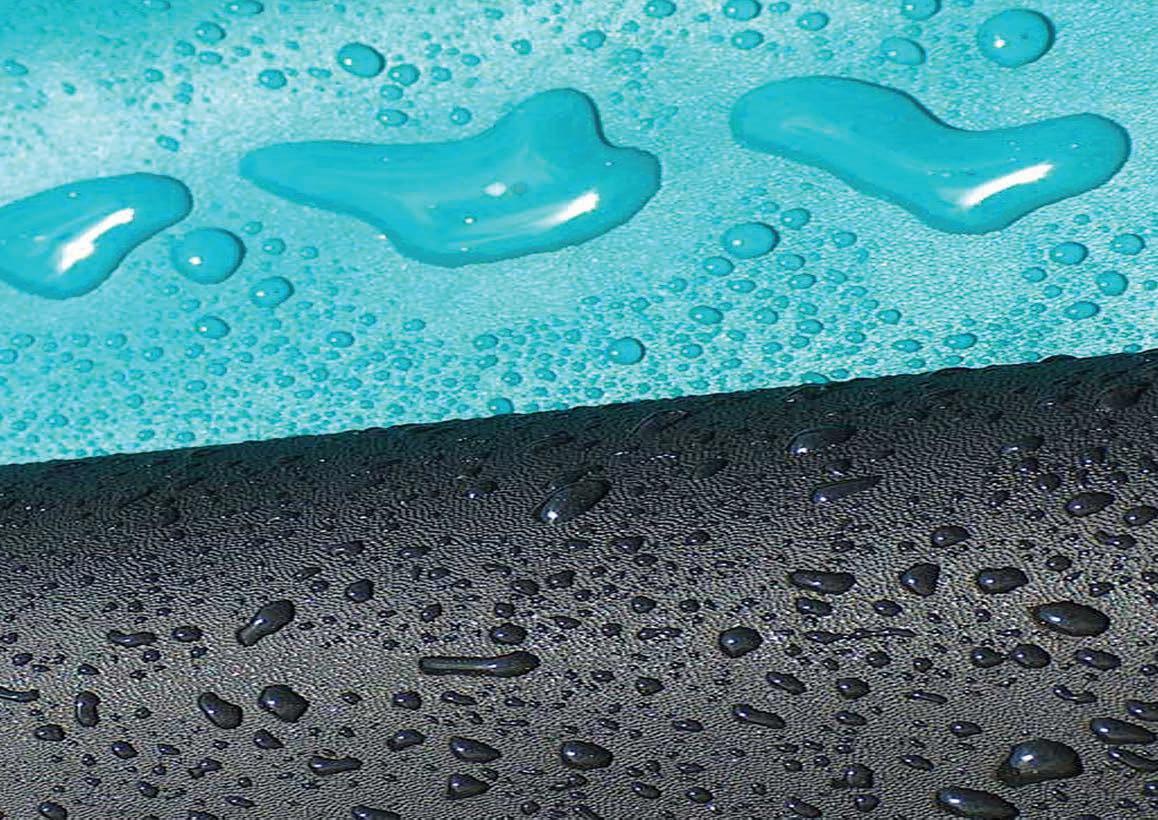
16 Deep thinking on water Industry campaign group Leather Naturally has published a guide to help companies in the industry make strides towards responsible water management.
18 In control Effective drying in leather finishing operations is, Erretre argues, about much more than removing moisture from hides.
20 Conference calls Industry leaders discussed regulatory developments, traceability, collagen science, and extracting value from waste at the 2026 Society of Leather Technologists and Chemists conference.
Leather and the Circular Economy
24 Thought Leadership: Close harmony A project that UNIDO launched in 2024 to produce guidelines for assessing more accurately leather’s environmental footprint is now complete.
30 Thought Leadership: Worth the effort Dr Greg Thoma of Colorado State University explains why lifecycle analysis (LCA) exercises, although hard work, can offer important benefits to leather manufacturers.
34 Thought Leadership: EUDR victory for leather It took years of intense fact-finding and persistence in presenting the facts clearly and objectively, but the industry has at last secured the removal of leather from the scope of the European Union Deforestation Regulation.
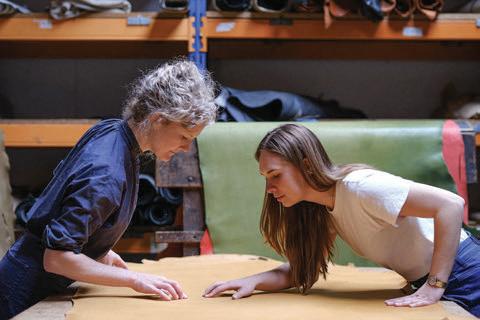
36 Circular Stories: Farms, food and factories British Pasture Leather, a specialist supplier of ‘slow leather’, is celebrating the ongoing success of its partnership with Mulberry.
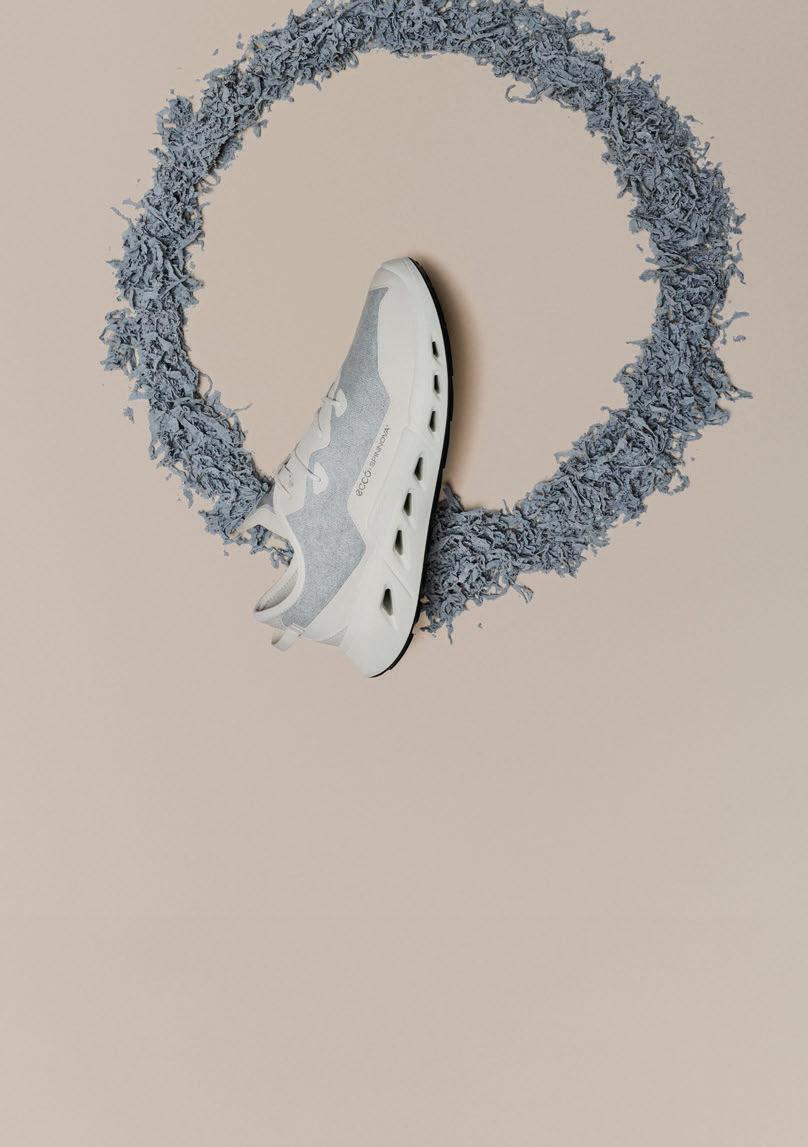
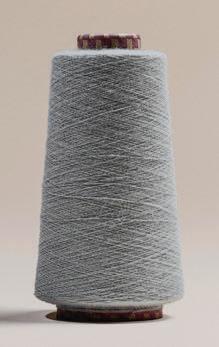
40 Circular Stories: Good fibre optics An idea for turning fibres from wet-blue shavings into new material for footwear uppers has borne fruit at last, thanks to the efforts of Ecco and biomaterials specialist Spinnova.
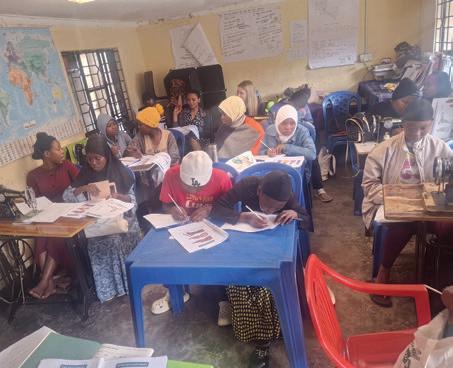
42 Circular Stories: Skills sharing A footwear design student from De Montfort University in the UK has travelled to Tanzania to pass on her skills and knowledge to help women there make an income from designing and making shoes.
Beast to Beauty
44 Renaissance brand Kering’s mixed messages over leather are at their most confusing when it comes to the luxury group’s biggest brand. It wants Gucci to add €1 billion in leathergoods revenues while reducing its use of leather.
48 Essential reading IBC Advertisers’ index
The World Leather team has been publishing a series of original, dynamic podcasts since 2019. The whole series is available on Anchor, Spotify, Apple Podcasts, Google Podcasts, Pocket Casts, Overcast and other podcasting platforms. Just search for the World Leather Podcast on the platform you prefer.
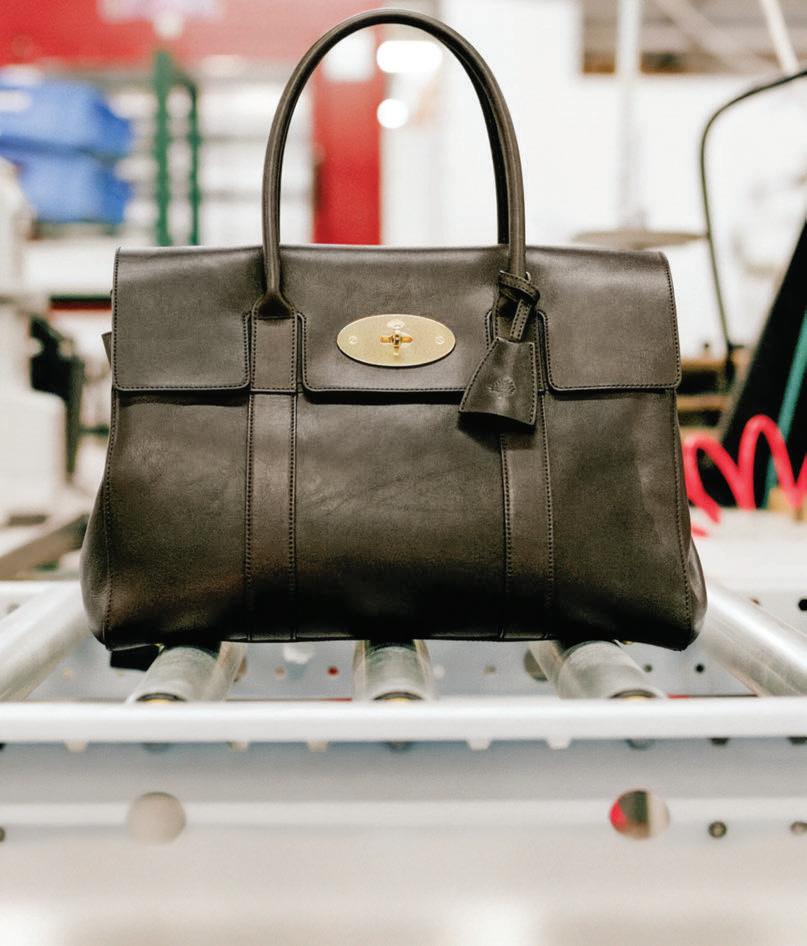
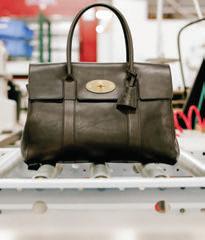
Cover image: A new range from leathergoods brand Mulberry. The collection celebrates its partnership with specialist supplier British Pasture Leather and the ties that exist between farms, food and finished leathergoods.
CREDIT: MULBERRY
World Leather iPad edition
The world’s best leather industry magazine is now available to download on iPad from www.leatherbiz.com
@WTPworldleather
@WTPworldleather
linkedin.com/showcase/wtpworldleather
@WTPworldleather
World Trades Publishing Ltd 2026. Contributions: The editor welcomes news items, articles and photographs for consideration and possible publication but no responsibility can be accepted for the loss or non-publication of such material. Opinions expressed by individual contributors do not necessarily reflect the view of the editor or publisher.
• Whilst every effort is made to ensure accuracy in reproduction, no responsibility can be accepted for the technical content or for claims made by manufacturers for product performance that are published. Publication in World Leather cannot be construed as an endorsement for a claim or product by the publisher.
• World Leather is published 6 times per year by World Trades Publishing, The Old Stone House, Teeton, Northampton NN6 8LH UK. Price UK £90, ROW: £150 per year (six issues).
Graphic origination by WTP. Print by Bishops Printers, Walton Road, Portsmouth, Hampshire PO6 1TR, England. All rights reserved. ISSN 0894-3087
World Trades Publishing 2026: All rights reserved. No part of this publication may be reproduced, stored in a retrieval system or transmitted in any form or by any means mechanical, electronic, recording, photocopying or otherwise, without the written permission of the publisher. World Leather®, Tannery of the Year® and Nothing to Hide® are
The World of News
UK London-based leathergoods brand Radley has undergone a restructuring of its business and has now come under the ownership of US investment firm Gordon Brothers. Insolvency firm FTI Consulting was appointed as the administrator of Radley in May 2026. Within days, it announced that it had sold the Radley brand and related intellectual property assets to an affiliate of Gordon Brothers. Gordon Brothers has said it will invest in Radley and support the brand’s development, expanding its footprint in the US, UK, Australia and Asia.
IRELAND Ireland’s national airline, Aer Lingus, has signed up to use leather from Boxmark to furnish some parts of the cabins of its aircraft. Boxmark said it was proud that the comfort and durability of its aviation leathers had helped it win Aer Lingus as a new customer. Aer Lingus is celebrating its ninetieth anniversary this year. It has direct services from Ireland to more than 100 destinations in Europe and North America using what it describes as a modern fleet of Airbus aircraft.
NIGERIA The Nigerian government has announced the creation of an abattoir built to “international standards” that will also process hides and skins as part of a programme to modernise the livestock industry. A minister said the facility would support between 7,000 and 10,000 jobs, including in leather production. The minister said Plateau State was selected for the project because of its strong agricultural base, livestock activities, favourable climate and the presence of the National Veterinary Research Institute in Vom.
SPAIN Spain’s national association of footwear component manufacturers, AEC, has said the shoe industry there is now in “an extreme situation”. It has called on national, regional and local governments to put immediate measures in place to help. AEC said Spain had lost 35% of its manufacturers of footwear and footwear components between 2020 and 2025. It said a total of 1,149 companies in the sector had closed their doors over that time, leaving a total of 2,131 operating.
FRANCE Figures for the January-April period show that France exported raw hides and skins with a value of €59.7 million. This represents a fall of 13% compared to the same months last year. Adult bovine hides contributed €40.3 million, while the total for exports of raw calfskins was €9.7 million, falls of 9% and 31% respectively. Shipments of sheepskins brought in €3.5 million, which was down by 35%. Only exotic skins showed an increase, bringing in €4.9 million, up by 17% year on year
IRAN Logistics firm Maersk has said this year’s increases in fuel prices, provoked by the conflict in the Middle East, have added $500 million per month to its operating costs. The shipping company’s chief executive, Vincent Clerc, said Maersk saw no alternative but to pass the additional costs on to customers. He said the company would try “to press the costsaving agenda further”, but insisted Maersk had to protect its margins and its “operations integrity going forward”.
KENYA Kenya’s president, William Ruto, has announced a County Livestock Investment Company to help 350,000 pastoralists in the north of the country gain financial support and extract more value from their herds. This could provide access to markets, financing and insurance services as part of a wider programme to make the region a livestock trading hub. He said: “We must move beyond live animal exports to higher-value products such as meat, leather and dairy products. We see livestock as enterprise, exports, jobs and wealth.”
SOUTH AFRICA Cattle slaughter in South Africa fell by more than 16% in the first quarter of 2026. Figures for the first three months of this year showed a total of 565,266 head of cattle going to slaughter, compared to 673,468 in the same months last year. Annual cattle slaughter in South Africa reached almost 2.7 million head in 2025.
EL SALVADOR Prisoners in El Salvador are learning livestock management skills as part of a programme called ‘Zero Leisure’. Low-risk inmates at the Santa Ana prison, 70 kilometres northwest of San Salvador, are being encouraged to take part in various agricultural projects during their time in jail. The institution runs its own farm. The projects include livestock-rearing opportunities. For each day they work, they receive a reduction of two days on their sentences.
BRAZIL The 6th edition of BFSHOW, held from May 18 to 20 in São Paulo, is expected to generate more than $46.7 million in exports for the footwear sector. According to national footwear industries association Abicalçados, 1.5 million pairs were sold onsite, generating $20.6 million in business. Letícia Sperb Masselli, Abicalçados business manager, said this is 7% more than at last year’s show. BFSHOW welcomed more than 1,000 importers from 60 countries this time. The next edition will take place between November 10 and 12.
The World of News
US Footwear group Caleres has reported revenues of $667 million for the first quarter of its current business year, the period ending May 2, 2026. Caleres said this represented growth of 8.5% compared to the same quarter last year. A significant factor was that Stuart Weitzman, which Caleres acquired on August 4, 2025, contributed extra revenue of $43.9 million to the group’s total for the first quarter. Even excluding the Stuart Weitzman contribution, Caleres would have achieved growth in the first quarter, with an increase in revenues of 1.4%.
PAKISTAN Pakistan’s leather industry has registered export revenues of nearly $740 million for the first ten months of the financial year that end on June 30. The figure was flat with the same period a year earlier. For the period spanning July 2025 to April 2026, exports of footwear brought in revenues of $152.9 million, an increase of 3% year on year. In contrast, finished leather brought in $108 million, down by 5% year on year. cattle, especially well finished grass-fed animals, was driving a “surge in prices”.
INDIA Automotive group Bentley Motors has opened a new showroom in New Delhi. The company described India as “one of the most promising luxury car markets in the world”. Its brand director for India, Abbey Thomas, said Bentley believed “luxury goes beyond the product” and is defined by experience. He said the new showroom in New Delhi had been designed to reflect this philosophy, “placing the customer at the heart of a truly bespoke journey”. Bentley will operate the new showroom in partnership with a local company, Bird Group.
CHINA Following the pattern of recent months, China’s imports of raw hides and skins went up in volume in the January-April period, but down in value compared to the same months last year. The China Leather Industry Association has put the import volume of raw hides for the first four months of the year at 505,000 tonnes, up by 1.7% year on year. This raw material had a value of $400 million, down by 4.9%. Imports of semi-finished hides reached 200,000 tonnes in volume and a value of $260 million, decreases of 10.8% and 20.1% respectively.
BANGLADESH Bangladesh’s commerce and industries minister, Khandaker Abdul Muktadir, has said the government will address deficiencies at the central effluent treatment plant (CETP) at the Savar Tannery Industrial Estate. Speaking after a meeting with tannery owners and company officials during a visit to the estate, Mr Muktadir said the leather sector in Bangladesh had failed to reach its potential because of the way the industry was relocated from Hazaribagh and because of years of mismanagement. He said the CETP currently treats between 14,000 and 18,000 cubic-metres of waste, although volumes can rise to around 45,000 cubic-metres during the busiest periods.
Industry & Innovation
Postgrad programme on automotive leather
The University of Lleida, which is the parent institution of the A3 Leather Innovation Centre in Igualada, is introducing a new postgraduate certificate in advanced leather finishes for automotive interiors.
It has developed the programme for the new certificate in partnership with chemicals group Stahl.
Another chemicals group, Henkel, has a formal agreement in place to acquire Stahl; the deal is not yet complete and is still subject to regulatory approvals and consultation processes.
Before this, Stahl completed the spin-off of the wet-end leather chemicals part of its business, which now operates as Muno, a fully independent company.
What Stahl has retained, and will take forward into its acquisition by Henkel, includes its leather finishing chemicals division.
Stahl has said the programme it has worked on for the new postgraduate certificate will combine industry expertise with hands-on learning. It said the new programme will equip industry professionals with the skills “to lead in automotive leather finishing”.
It said it was “proud to collaborate with leading academic and industry experts to drive innovation and sustainability in automotive interiors”.
Assomac sets up new working group as revenues fall
The representative body of Italy’s leather and footwear machinery manufacturers, Assomac, has estimated revenues of €512 million for 2025. This would be a fall of 11% year on year.
It said at its annual general meeting that tanning machinery was down by nearly 25% year on year. The decline for leathergoods machinery was lower at 9.8%, while revenues for footwear machinery were down by 4%.
In response, Assomac has said it will set up a new working group, with representatives of the tanning, leathergoods and footwear sectors as members. It said the working group would be “a stable forum for dialogue” and would allow companies across the leather and leather products value chain to develop shared strategies. They will also be able to speak with one voice to national and European institutions.
Assomac president, Mauro Bergozza, said: “The proposal for a permanent supply
chain working group stems from the desire to strengthen dialogue between technology, materials and finished products and to represent more effectively the needs of Italian manufacturing supply chains. There is no Made in Italy without a supply chain, no supply chain without manufacturing and no manufacturing without technology.”
Industry opens Pakistan’s first integrated CETP
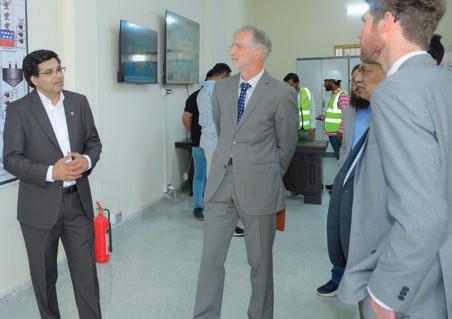
TheSialkot Tannery Association (Guarantee) Limited (STAGL) has inaugurated Pakistan’s first fully integrated Common Effluent Treatment Plant (CETP) at the Sialkot Tannery Zone (STZ).
The facility includes pre-treatment, primary, secondary and sludge treatment stages and has been declared ready for operation. According to STAGL, the plant has been designed to meet Pakistan's National Environment Quality Standards (NEQS) as well as international environmental requirements.
Pakistan's defence minister, Khawaja Muhammad Asif, attended the inauguration ceremony as chief guest. Representatives from UNIDO, provincial government departments and local authorities were also present.
STAGL chief executive Ahmed Zulfiqar said the CETP is a key part of the Sialkot Tannery Zone project, which aims to relocate 250 tanneries from the city centre to a dedicated industrial area. The project has received financial and technical support from the Global Environment Facility (GEF), UNIDO, the Export Development Fund (EDF) and the Punjab Environment Protection Department.
During the event, speakers said the facility would help the leather sector improve environmental compliance and support access to international markets. Industry estimates presented at the ceremony suggested the zone could increase leather exports by 18-23% in the short term and create additional employment opportunities.
The inauguration also marked the completion of other infrastructure within the zone, including a segregated drainage system and a 21MW grid station. Work is continuing on a chrome recovery plant and an engineered landfill site.
UNIDO project manager Ivan Kral said the organisation expects the Sialkot Tannery Zone to support the long-term sustainable development of Pakistan's leather industry.
During the event, UNIDO also launched new Guidelines for Assessment of Leather Environmental Footprint aimed at improving environmental transparency and supporting alignment with international best practices.
SLG reports net zero manufacturing emissions
Scottish Leather Group (SLG) has announced that it has achieved net zero greenhouse gas emissions for Scope 1 and Scope 2 across its manufacturing operations
The company said the milestone follows more than 20 years of investment and innovation through its “Journey to Zero” initiative, launched in 2004 to reduce the environmental impact of leather manufacturing through lower energy use, reduced waste and declining carbon intensity.
According to SLG, the reduction in emissions has been achieved while maintaining production levels, demonstrating that carbon emissions can be decoupled from manufacturing output in an energy-intensive industry.
The group said early work focused on energy efficiency and system optimisation, helping to reduce energy consumption by
around 40% within the first five years. Later investments included the development of its patented Thermal Energy Plant (TEP), renewable energy projects including onsite solar generation and wider operational changes across the business.
Updated proposal on bisphenols will be ready in 2027
Germany is preparing to resubmit its EU REACH restriction proposal on bisphenols next year after withdrawing the original dossier for a major overhaul following stakeholder feedback and new data.
The updated proposal is expected to be submitted to the European Chemicals Agency (ECHA) in 2027.
The restriction targets a group of bisphenols including BPA, BPS and BPF, with a focus on reducing environmental emissions from industrial and consumer uses. In the leather sector, the proposal is closely linked to syntan and polymerbased retanning agents where bisphenol derivatives are used as building blocks or may appear as residual monomers.
Industry sources indicate the revised dossier is likely to refine scope definitions and emission assumptions, particularly around bound versus free bisphenols in polymer systems. Once resubmitted, it will re-enter ECHA’s scientific evaluation process, including assessment by the Risk Assessment and Socio-Economic Analysis committees.
If adopted, the measure could reinforce pressure on chemical suppliers to accelerate bisphenol-free retanning and finishing systems, which are already emerging in response to brand-level restrictions.
UITIC names venue for 2027 international congress
The International Union of Shoe Industry Technicians (UITIC) has announced that Jakarta will be the venue for its twenty-third international congress. The event will take place next year, from August 2-4.
UITIC said the congress would take place with the support of the Indonesian national footwear association, Aprisindo, and of local event partner, Krista Exhibition.
“The choice of Indonesia reflects UITIC’s commitment to fostering an increasingly up-to-date exchange among the stakeholders that make up the global footwear supply chain,” said the organisation’s president, Sergio Dulio.
He added that “dialogue among industrial cultures”, cross-fertilisation and access to best practices are key factors in understanding “the major technological, manufacturing and social transformations affecting our industry”.
Industry & Innovation
He said the UITIC Congress in Jakarta would have the objective of creating “a global platform for exchange and shared growth for all stakeholders across the sector”.
Leather-cutting innovation makes its mark at VivaTech
Innovation for the leather industry featured at luxury group LVMH’s booth at the VivaTech technology event in Paris in mid-June.
LVMH presented a series of innovations for different parts of its supply chain in a space it called Dream Gallery. Innovations on display there included one from technology provider Comelz.
Based in Vigevano in Italy, Comelz has worked with leathergoods brand Louis Vuitton on a solution to improve leather cutting.
Using artificial intelligence, its technology creates “a digital twin” of hides before cutting. It then highlights “the unique characteristics” of each hide and draws attention to any “complex areas” on the surface before cutting begins.
John Lobb confirms new Northampton factory
High-end shoemaker John Lobb has announced plans to build a new manufacturing facility in Northampton, reaffirming its commitment to the region’s shoemaking heritage.
The footwear company, which is part of the Hermès group, said it will relocate from its current historic workshop to a new site in Northampton city centre. Construction is expected to be completed in 2029.
According to the company, the investment will secure its future in a region known for shoemaking expertise and skilled craftsmanship. The new facility will be designed in line with Hermès’ environmental objectives, with a focus on energy efficiency, operational performance and improved working conditions.
John Lobb said the factory will draw on architectural and operational standards developed across the Hermès network, creating an environment that supports craftsmanship, innovation and skills transfer.
Limoges workshop breathes new life into shoes
High-end footwear brand JM Weston is celebrating 80 years of producing its Mocassin 180 shoe.
The company has said it had always set out to produce footwear that would last for generations and has insisted that the quality, the construction and the repairability of this classic moccasin make it “the most
faithful expression” of that principle
Goodyear welting construction means each pair of 180s can be re-soled several times in the course of its life. JM Weston has hailed this as a way of renewing rather than replacing the shoes and, thus, of extending their useful life.
The company said the repair workshop it runs at its headquarters in Limoges is oneof-a-kind in France. The artisans who work there are now “breathing new life” into almost 10,000 pairs of shoes and boots each year.
Each repaired product goes through the different stages of production with exactly the same attention to detail with which the company constructed the products in the first place so that they come through the repair process as good as new.
“This is a circular-economy initiative that allows our designs to keep telling their story, step by step,” the footwear manufacturer said.
Stahl achieves EcoVadis platinum for fifth year
Speciality
coatings supplier Stahl has been awarded the platinum rating by EcoVadis for its sustainability performance, the fifth consecutive year that the company has achieved the highest rating.
EcoVadis, a provider of business sustainability ratings, evaluates more than 175,000 companies across environmental, social and governance (ESG) criteria. The platinum rating places Stahl among the top 1% of all assessed companies worldwide.
Laura Willemsen, director of sustainability and marketing, said: “Our sustainability strategy is focused on creating measurable value for our customers, supporting them in achieving their own sustainability goals. Year after year, we challenge ourselves to do better, and this recognition confirms we are on the right path.”
Forest visit
Italy-based
leather chemicals group
Silvateam hosted forestry sciences students from the University of Turin at its headquarters in San Michele Mondovì, during a recent visit focused on forestry practices and resource management.
The company shared an overview of its work with chestnut wood, including how it sources timber and manages woodland areas. Staff also explained how forest resources are monitored and planned over time as part of its operations.
The visit centred on discussion and exchange between the students and the company team, focusing on how forestry practices are applied in practice and the skills involved in the sector.
Leather scene
UNIC names new president
The new president of Italian tanning industry representative body UNIC is the chief executive of Bonaudo, Alessandro Iliprandi . Milan-based Bonaudo produces high-quality leather for the footwear, apparel and leathergoods sectors. It has manufacturing sites in Veneto, Tuscany and Lombardy.
On taking up the presidency, Mr Iliprandi said: “This is a particularly difficult moment for our sector. The challenges are many, but UNIC has the vision, the courage and the will to make things better.”
He said his priorities as president will include a strengthening of collaboration between leather manufacturers and their customers.
Mr Iliprandi replaces Fabrizio Nuti in the role. Mr Nuti was elected as UNIC president at the end of 2020. During his time at the head of the organisation, leather manufacturers have had to adjust to covid19, war in Ukraine, battles over deforestation regulations, further geopolitical conflict in the Middle East and the challenges involved in adapting to a new technological landscape.
New president for France’s FFM
Leathergoods industry body the Fédération Française de la Maroquinerie (FFM) has named Frédérique Laval as its new president. She takes over from Arnaud Haefelin, who headed the organisation from 2015 to 2019 and, again, from 2021 to 2026.
For more than 15 years, Ms Laval has helped run her family’s company, Groupe Fleurus. Founded in 1942, Fleurus has built up a strong reputation in the luxury industry, specialising in products including leather watchstraps.
More recently, the company has been a manufacturer of high-end leathergoods, producing on behalf of several prominent brands. It has also set up its own leathergoods brand, Maison Fèvre.
On being chosen as the new president of FFM, Ms Laval said: “The leathergoods sector in France is our living heritage, carried forward by committed companies, savoir-faire and excellence. FFM must continue to speak with a strong, unifying voice on behalf of the whole industry.”
New president elected at AQTCL
Mexico’s Association of Leather Chemists and Technicians of León (AQTCL) has elected Ernesto Martín Nache Rodríguez as its new president.
The election took place during the association’s assembly meeting on May 14. The organisation said it was confident his leadership would contribute to the strengthening and growth of the association.
CEN names new chair for leather
TheEuropean Committee for Standardisation (CEN) has appointed Gustavo Adrián Defeo as chairman of its technical committee for leather, replacing Gustavo GonzalezQuijano, who has retired.
As chairman, Mr Defeo will lead the development, revision and publication of European Standards, governing the nomenclature and testing of leather and leather chemicals. The appointment runs for six years.
The committee coordinates the work of national standards bodies across CEN member countries, ensuring that European leather standards reflect scientific knowledge, industry practice and regulatory requirements.
Mr Defeo said: “The leather sector stands at the intersection of tradition and innovation, and our standards must reflect that, upholding quality and safety while embracing the sustainable practices that will shape the industry’s future.”
He is also a fellow of the Society of Leather Technologists and Chemists (UK), awarded in recognition of sustained contributions to leather technology and research.
Antonio Banderas helps Loewe celebrate
Actor Antonio Banderas has taken part in a project to celebrate an important anniversary for Spanish leathergoods brand Loewe.
Loewe took its name from German entrepreneur Enrique Loewe Roessberg who arrived in Madrid and acquired an artisan leathergoods workshop in 1872. However, the company dates its origins to
1846, the year in which a group of local artisans set the workshop up.
This makes Loewe the second-oldest leathergoods brand in the world today; Delvaux was founded in Belgium (before it was called Belgium) in 1829.
To celebrate its 180th anniversary, the brand asked Antonio Banderas to narrate a short, animated film in which it celebrates the way the “intimate knowledge of leather” that those original artisans had shaped the workshop’s fortunes.
“What has endured,” Antonio Banderas says of Loewe at the end of the film, “is the persistence of the idea that artisanship can be art and imagination can be a tool.”
Leadership change at Tyson Meat
and wet blue producer Tyson has announced that Jeff Schomburger will become its new chief executive on October 4, following a transition period beginning in July.
Mr Schomburger has served on the company’s board since 2016 and is currently lead independent director. He previously spent 35 years at Procter & Gamble, retiring in 2019 as global sales officer.
He will replace Donnie King , who has been with Tyson Foods for 43 years. His tenure as CEO also included efforts to accelerate innovation, drive efficiency and consolidate corporate functions at the company’s headquarters in Springdale, Arkansas.
Tyson Foods has also appointed Wes Morris as chief operating officer.
Former CEO of Smit & Zoon dies
Leather chemicals group Smit & Zoon has announced the death of its former chief executive Joost Smit. He was 83.
Mr Smit was the sixth-generation owner of the company and served as its chief executive until 2006. It said he had played “a defining role” in shaping Smit & Zoon into the company it is today.
In a statement, the company said Joost Smit had “guided the organisation, with vision, dedication and an unwavering love for the company, through decades of growth and development”.
High honour
The president of French industry initiative Au-Delà du Cuir (ADC), Clémentine Colin Richard, has been awarded the Legion of Honour, France’s highest national distinction.
ADC is a joint-initiative of a range of industry organisations in France. Its aim is to encourage French companies to develop manufacturing operations in
France, rather than be obliged to produce elsewhere for economic reasons.
It works as an incubator body for leather-sector start-ups in France.
New director general sets out priorities for CTC
The director general of leather and footwear research and testing institution CTC, Maud Rascle, has said she aims to build on the organisation’s strengths and open up new opportunities.
Ms Rascle has taken over as director general from Françoise Nicolas, who has retired. She joined CTC at the start of the year and worked alongside Ms Nicolas for several months before taking over.
“These months have given me an opportunity to see CTC’s wealth of expertise and breadth of activity,” the new director general said. “We have a unique position in the leather and footwear sector.”
She said she had seen a high level of trust in CTC from member companies and that this trust was based on the organisation’s “technical excellence” and on the commitment of its teams, in France and overseas.
She laid out a series of priorities for CTC in the months and years ahead, saying the institute would work to help companies speed up their adoption of sustainable practices. She said this would range from renewable energy projects to eco-design principles.
Secondly, Ms Rascle said CTC would aim to help companies become more digital, integrating new technologies, including artificial intelligence, into their production processes.
Helping the industry survive and thrive through strengthening the skills of the people who work in it is another of the main aims of the new director general. She also said she wanted to help member companies reach new markets, while making sure their products comply with industry regulations.
Finally, she said she wanted to help the industry develop its communication skills.
Beef campaign to continue after complaint flops
The UK’s Agriculture and Horticulture Development Board (AHDB) has confirmed that an advertising campaign to highlight the health benefits of red meat and cow’s milk will continue, despite a complaint from a high-profile campaigner.
AHDB launched a campaign called ‘Let’s Eat Balanced’ in the autumn of 2024. This included advertisements on television, in the national press, on social media and on its own website.
On seeing the ads, a television presenter and environmental campaigner called Chris Packham submitted a formal complaint to the UK’s Advertising Standards Authority (ASA). The ASA launched an investigation into the content and, after 14 months, released its findings in May.
The authority summed up Mr Packham’s claims as saying the ads were misleading as they did not reflect “the full environmental impact of British meat and dairy”. He objected to claims that UK beef has a carbon footprint that is half the global average and that milk from the country’s dairy farms has a carbon footprint that is one-third lower than the global average.
He also claimed it was misleading for the campaign to imply that cows used to produce beef and milk in the UK are typically outdoor-grazed.
In its assessment, the ASA rejected almost all of Mr Packham’s complaints. It did say, though, that the campaign’s claims about carbon footprint were likely to make consumers think emissions for consumption and disposal of products were included. AHDB explained that it had only taken into account farm-to-retail phases of meat and milk production.
Leather scene
Backtrack
World Leather’s publishing cycle and limitations on space make it impossible for us to run more than a carefully selected sample of news from across the industry. However, we publish hundreds more stories on leatherbiz.com. The site is updated every day with news from every continent and every part of the industry, making leatherbiz.com one of the most comprehensive archives of news anywhere on the web for the global leather industry.
We list below just a few of the headlines that have appeared on the site in recent weeks and can still be accessed.
24 June 2026
Leather adds classy detail to special Dior product
Vietnam opportunity for Brazilian leather manufacturers
Richemont expands Scandicci leather hub Council backs Leather Museum review
23 June 2026
Castore acquires majority stake in Grenson Shoes
22 June 2026
Recruitment drive for Hermès in Geneva Henan-Prosper acquires French leather supplier
19 June 2026
Maserati partnership talks under way, says Stellantis CEO Ugg design patent ruled invalid by jury
18 June 2026
New project focuses on footwear circularity
17 June 2026
Grazing directive from USDA is part of beef support plan
Social dialogue meeting addresses TCLF challenges
16 June 2026
Soft touch of deer leather holds summer appeal for Artioli
Slaughter figures down in Argentina, average weights up
Dunhill focuses on leather craftsmanship for 2026
15 June 2026
Facility closures announced by JBS USA
New opening for Hermès in Japan
Henan Prosper subsidiary partners with Decathlon
12 June 2026
Jurassic handbag fails to bite
Red Wing diverts leather waste
11 June 2026
UNIC prepares to elect a new president
Prospects ‘brightening’ for US beef exports to China
Visitor registration opens for Simac Tanning Tech 2026
FDRA: families are footing the tariffs bill as shoe prices jump again
UNIDO publishes harmonised LCA framework for leather sector
09 June 2026
US confirms five cases of New World screwworm
08 June 2026
Italian accessories-makers prepare for ‘exciting’ showcase in London
Slight decline in number of tannery employees in Brazil
04 June 2026
Leather UK publishes annual report
Kering doubles down on confusing ‘leather intensity’ target
Leather, sustainability and design to feature in RLSD webinar
Lobatse SEZ secures $33.4 million investment commitments
03 June 2026
China: bag imports see double-digit growth China lifts beef import restrictions on Brazil
02 June 2026
Footwear sector in Ghana issues cry for help
Final call for registration to FILK Leather Days
World Leather Day deemed a success
01 June 2026
Q1 growth in leather export revenues for French tanners
Capri returns to profitability
29 May 2026
Footwear falls continue for China in first four months
28 May 2026
Drought affecting US hide availability
Savar hide arrivals pass 79,000
27 May 2026
New owners for Radley
Leather supplier prepares for Antwerp interior design event
Strong growth in Brazil beef trade
New leathergoods role at Givenchy
26 May 2026
Store redevelopment complete for Hermès in Berlin
Buyers prepare for Madrid event
Ferrari unveils first fully electric model, featuring leather interior
22 May 2026
Long-term focus is paying off, Richemont says
Bangladesh TCLP leather traceability policy launched in Dhaka
DNV awards ESG recognition to Dani
21 May 2026
European Parliament hears analysis of leather’s circular credentials
Tod’s chairman calls for brands to set a good example
20 May 2026
Positive start to 2026 for leather garments continues in China
Growth for Chanel in 2025
Natuzzi launches restructuring plan after wider Q4 losses
19 May 2026
Another record for Boot Barn as it continues store-opening spree
Record quarter for Australian beef
Profit growth for Dr Martens
18 May 2026
Increase in volume for China’s leather footwear exports
US beef sector welcomes progress after China summit
Ferragamo’s turnaround bears fruit with growth in America
LVMH agrees sale of Marc Jacobs
15 May 2026
Rwanda changes location of planned tannery park
Full-year results mark “inflection point”, Burberry says
US footwear inflation outpaces wider price growth
Leather Leaders: Nicholas Mudungwe
Half of Africa’s people are under 20 years old. Population growth means the continent is going to become a critical market for footwear and other products.
CREDIT: DOMINIC CHAVEZ/WORLD BANK
Africa is talking about leather
The African Leather and Leather Products Institute (ALLPI) is working hard to show that leather can be a good starting point for industrialisation. Executive director, Nicholas Mudungwe, says governments across Africa are starting to support the idea.
How did you come to be the executive director of the African Leather and Leather Products Institute (ALLPI)? What is your personal and professional background?
My home country is Zimbabwe. By training, I am an economist, and I have also completed master’s courses in business administration and in project management. Until 2003, I worked for the Zimbabwean government in industrial trade policy analysis. I was involved in trade negotiations, value chain and policy analysis. This covered several sectors, including leather, but also mining and textiles. In 2003, I joined a non-governmental organisation (NGO) as a national coordinator for a hides and skins improvement project. This brought me to the root of the leather value chain and enabled me to collaborate with farmers, slaughterhouses, hide and skin merchants and tanneries. All of this helped me form a good picture of the industrial sector and to understand the issues at every node of the value chain. My organisation had a regional oversight covering other eastern and southern African countries. This enhanced my appreciation of the dynamics of the sector in Zambia, Malawi and Tanzania. At the same time, I collaborated with the Eastern and Southern Africa Leather Industries Association (ESALIA) and with the International Trade Centre
(ITC) in Geneva to develop a platform called the ITC Leather Line. The United Nations’ Food and Agriculture Organisation (FAO) was the supervising body for that project. When the project ended in 2008, the FAO offered me a consulting role, so I had a six-month stint in Rome, focusing on drafting analysis reports on the global hides and skins market and appraising project proposals. After returning to Zimbabwe and still working for the NGO, I was seconded for six months to the Pacific, supporting Pacific Island secretariat member countries in preparing trade negotiation templates for the EU Economic Partnership Agreement. In 2010, I left the NGO to work as a freelance consultant, and I was then hired as a regional consultant by ITC to support the design of a COMESA regional value chain and the Zimbabwe national leather value chain. This involved coordinating tanneries in COMESA to participate in buyer-seller meetings in India and Italy. COMESA is the Common Market for Eastern and Southern Africa. In 2012, I was hired by COMESA as a cluster development expert, where I developed a cluster programme targeting the leather value chain. In 2013, COMESA seconded me to ALLPI as a cluster development expert, which led me to design cluster interventions and leather value chain strategies in 12 countries. In 2017, I was
“ There is a realisation slowly taking hold in Africa now that industrialisation does not happen on its own.”
NICHOLAS MUDUNGWE
appointed as the ALLPI programme coordinator (deputy executive director), and served until 2019. I then joined ITC in Geneva to support a large programme that covered Africa, the Caribbean and the Pacific. This is enhanced by knowledge and skills of managing multi-continent and country projects covering several commodities. I really appreciated the four years I spent with ITC because it equipped me with leadership, programme design and management skills. My biggest takeaways from ITC were cross-learning with people from across the globe, networking and understanding how global institutions function. These are some of the skills I am now using to transform ALLPI from an activity-based organisation into a programme-based, results-oriented one. We now view our work as more than delivering training, holding meetings and submitting reports. Now it is about increasing sales, accessing new markets, creating jobs and adding value.
What early impression did you form of the way the leather value chain worked, in comparison to the other industries you had contact with?
Compared to other value chains, it looked to me as though coordination in the leather sector was a bit complicated. It is still complicated even now. Part of my work at that time was to carry out analysis of different value chains and then suggest adjustments to tariff levels to support the different industries. Other value chains would come to meetings with a co-ordinated approach and detailed papers on their industries. The mining industry representatives and textile industry representatives would all come with their papers. But, for the leather industry, it was very complicated. Something else that struck me was that when you had an opportunity to talk to people in the leather value chain, in Italy, India, Turkey, from all over, they always seemed to be pessimistic about their industry and I wondered why they remained in it. I could also see clear parallels, especially between cotton and leather. Cotton farmers sell cotton lint to ginneries and, from this, the ginners come up with two products, the fibre and seed. Farmers are not paid for the seed. It is an important by-product. It is used in the production of edible oils, soap, chemicals and livestock feed. In the same way, no one raises animals for their skins, but the skins can become a valuable by-product, an important industrial commodity.
Please give an outline of ALLPI, its history, its current membership and activity.
ALLPI was established in the 1990s by COMESA, as COMESA Leather and Leather Products Institute with the objective of supporting the development of the leather value chain in the region. It was rebranded in 2017 to ALLPI, to align with the continental trading dynamics, which led to the
CREDIT: ALLPI
Africa Continental Free Trade Area. Over the years, as I mentioned, ALLPI’s work was activity-based, however following my appointment in 2023, we have started to transition to a programme- and results-oriented approach. ALLPI’s work mirrors the different nodes in the value chain. There is a programme on business eco-systems and clusters, one on product design and development, one on trade and marketing investment, another on tannery modernisation and, finally, one on sustainability. We have completed a draft of this set of programmes. We will publish it and it will guide us as we move forward. We have to be well organised. We need strong institutions, at ALLPI and in the national organisations. And private-sector enterprises have to be involved too, although we are not looking to create enterprises ourselves. If you look at enterprises in Africa, they are at a formative stage. We want to help enterprises grow so that governments can see the value in the leather value chain. We want to support all of these organisations so that, when they approach banks for new funding or approach customers in any part of the world for new business, they will be well prepared. ALLPI has ten members now. The ten are Burundi, Eritrea, Ethiopia, Kenya, Malawi, Rwanda, Sudan, Uganda, Zambia and Zimbabwe. Beyond that, we are working on projects with other countries. Our objective is for these other countries to become members too. We feel we are at the stage of opening up access across Africa. We have clear targets.
Africa is talking about leather
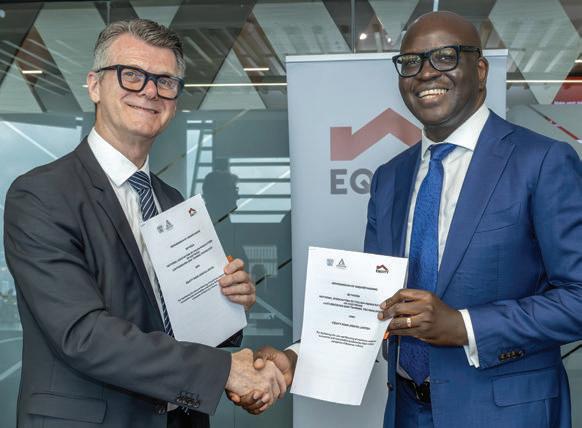
Assomac, the body that represents Italy’s tanning and footwear machinery companies, signed strategic agreements with the Kenya Association of Manufacturers and with financial institution Equity Bank Kenya in March 2026. This image shows Assomac president, Mauro Bergozza (left), with the managing director of Equity Bank Kenya, Moses Nyabanda.
CREDIT: ASSOMAC
Which countries are on your list of targets?
Our board has given approval to the idea of opening up. This year, our main focus is on COMESA countries but we are also starting to engage with countries that are outside COMESA. The list is very clear, with Egypt on top. We also have Tunisia, Madagascar, the Democratic Republic of Congo (DRC) and Eswatini. Outside COMESA, Algeria, Nigeria, Chad, South Africa, Namibia, Botswana and Ghana are the top priorities. You will notice that not all of these countries have large livestock herds. What we are saying is that countries in Africa, too, can import leather from somewhere else and use it to make finished products. We are looking at countries with a good population size and a good domestic market for those products.
Where are the major African sources of raw material for the leather industry? What volumes of hides and skins are they producing?
If you look at the statistics for bovine hides, the major producer is South Africa. The herd there is smaller than Ethiopia’s, but in South Africa, farmers largely raise the animals for business reasons. The turnover is higher there and per capita meat consumption is higher too. In many parts of Ethiopia, the animals are still regarded as more of a status symbol by many small-scale farmers across the country. South Africa slaughters more animals and, as a result, has 29,000 tonnes of bovine hides per year, followed by Tanzania, Chad and, perhaps surprisingly, Zimbabwe. When it comes to goatskins, Ethiopia leads. Algeria leads for sheepskins, followed by Sudan and Chad. Chad is prominent for hides
and skins; it is in the top five for all three types of raw material, although for finished leather it is not part of the picture. Aside from the number of hides and skins, quality and usability are the important things. South Africa, Zimbabwe, Botswana, Namibia and Eswatini have a good-quality slaughter set-up. It is more organised there than in the Horn of Africa or in the Sahel region, where most of the slaughter takes place near people’s homes, resulting in a lot of flay cuts and so on.
Where are the principal centres of leather production?
Egypt, Nigeria, Ethiopia and South Africa are the biggest. After that, we have Kenya, Tanzania, Sudan, Algeria and Chad at the end of that list. There are countries, including Kenya, Malawi and Zambia, where the leather value chain used to be stronger. They produced good-quality leather until centralised slaughter collapsed. After that, the quality of the hides deteriorated. If we want to move the sector forward, we must improve slaughter. If we do not address the quality of hides and skins, the industry will never grow. We are working on this. Kenya is starting to talk about this and it now has the support of an important financial institution, Equity Bank, and from technology providers from Italy. Slaughter facilities there should improve. We have also had a discussion about this with the government of Ethiopia. We ran a simulation for them showing that there are countries in which 70% of the hides and skins that are tanned are rejects. This means 70% of the chemicals and electricity consumed in those processes will go to waste if the quality remains poor. We want to start by making sure we eliminate flay-cuts and we are developing a traceability system to help us do that in a number of countries.
A symphony of NATURAL LEATHER SOLUTIONS
Since 1920, NTE Mimosa has used wattle mimosa to create a comprehensive range of sustainable, environmentally-friendly tanning products for the world’s finest leather.
“ We must improve slaughter; if we do not address the quality of hides and skins, the industry will never grow.”
When you spoke at the ICT meeting in Hong Kong in March, you outlined a number of priorities and you emphasised that your aim was to strengthen the leather industry across the whole of Africa. You mentioned job creation, skills and training, environmental responsibility, technological development, communication and for the leather value chain to become a driver of “inclusive industrialisation”. What are the signs that these ambitions can become reality? What gives you hope?
There is a realisation slowly taking hold in Africa now that industrialisation does not happen on its own. It requires focus and effort. If you look at recently industrialised countries, such as Taiwan, South Korea, Malaysia or Singapore, you will always see governments and the private sector collaborating, not leaving things to chance, but both sides having a common understanding and setting a common agenda. This is starting to permeate in Africa. I will give an example. The South Africans are pushing their leather industry, setting up clusters. COMESA began to talk to governments about clusters in 2019.
What other examples would you point to?
We have set up some centres already, and we have done this without spending a lot of money. There is one in Zambia, for example, that will have the capacity to produce 500 pairs of shoes per day, employing between 70 and 100 people. That centre required an investment of less than $200,000. There are similar centres in Zimbabwe, Malawi and the DRC. We have also put some machines in place in projects in Kenya and Burundi. This now has the attention of many African governments. Now, nearly all regional economic groups, not only COMESA, but also the Southern African Development Community (SADC) and the East African Community (EAC) are talking about leather. This has been possible because of the work of ALLPI. We have been able to advocate and to demonstrate that leather can be used as a basis for industrialisation. ALLPI is championing the idea; governments are starting to see the value of supporting it. Yes, there are other things that are coming, like the automotive industry and so forth. But what we are saying is that it is difficult to make complicated products before you can make a shoe. Do you see? We can set up leather and textiles clusters first. This will require much less investment than setting up production facilities to make motor vehicles or other sophisticated products. It is better to build the industrial base from below, focusing on sectors such as leather or textiles. We are seeing this process work already, as the examples show. We are building centres that are starting to produce finished products. There is a cluster in Uganda that has gone on to open its own shop in Kampala to market its products in the capital city. Some of the small and medium enterprises that make up the cluster have won contracts to supply footwear to public-sector bodies. The project I mentioned in Burundi is
Africa is talking about leather
also interesting. There were no shoe factories in Burundi. What we saw there were some guys who were carrying out basic shoe repairs. We have trained them and now they can make shoes that will sell in the shops. This has built up their skills and their confidence. We are seeing progress. It is slow, but we think we have set a good direction.
As you have mentioned, recent announcements have outlined new partnerships linking leather and footwear machinery manufacturers in Italy with leather and leather products manufacturers in Africa, specifically in Kenya. It was striking that important financial institutions are also part of those partnerships. What difference do you think these new arrangements will make? How do you think they will work on the ground?
What we have seen in Africa is that financial institutions will work with sectors that they know well, industries that are well established. ALLPI is working on national leather value chain strategies to help the leather sector present its case to the financial bodies. What we have seen recently in Kenya is a financial institution taking a strategic approach and going into areas it has not supported in the past. Banks will look. If they see a poorly equipped slaughter facility and flaying with knives, they will know that the probability of around 70% of the hides being rejected is high. But if they finance the installation of a puller device where automatic pulleys are used, they will be able to see the benefits. They will know that the quality of the hides will be higher and the price will be better. They are able to calculate the gain that using this technology will bring. In Kenya, the equipment at the moment is a bit old, but if you have access to new equipment and new skills, as this new partnership promises, all parties can see the value. Italian companies can sell their equipment and technology. Kenyan companies can produce higher-quality hides and skins, higher-quality wet blue and crust and improve the competitiveness of the industry there. These improvements are difficult to achieve without capital. I hope the Kenya project brings value. Other countries will follow. Given Kenya’s centrality, this could be a game-changer if it is properly managed by both sides. Zimbabwe is already using its sovereign fund to try to revive centralised slaughter and meat production. The tanning industry can be part of that too. Botswana is doing the same. And if technology providers, whether from Italy, from Turkey or from China, see an opportunity there, they will engage.
More broadly, what do you think the next ten years hold for governments, enterprises and people across Africa?
The critical thing is for there to be a convergence in thinking. As I said before, industrialisation will not happen by chance. We need smart industrial policies, strong institutions and investment in technology. We also need to invest in polytechnics and in technical skills. But we can already see that industry is as good a source of growth for African countries as agriculture is. And then there is the youth dimension. More than 1.5 billion people live in Africa now and around half of the population is under the age of 20. The statistics for footwear consumption are interesting. Per capita consumption for the whole of Africa was 0.85 pairs in the recent past. Now we are almost at 1.75 pairs per person. Because we have this trend for population growth, Africa will become a critical market.
Water use remains a fundamental part of leather production and is increasingly the focus of efficiency improvements.
Water management takes centre stage
Water has always been fundamental to leather manufacturing, but it is now firmly at the centre of the industry’s sustainability agenda. There could be an opportunity now for the leather industry to help define what effective water management looks like.
Anew guide from Leather Naturally highlights the growing importance of effective water management for both environmental performance and the long-term resilience of the global leather value chain. Drawing on lifecycle assessment (LCA) data, industry case studies and established reporting frameworks, the guide was developed by the Leather Naturally Impact Team with contributions from sustainability specialists including Aukje Berden sustainability and marketing director at Smit & Zoon, Kim Sena, sustainability director at JBS Couros and lifecycle assessment leader, and Camille Mori, chief sustainability officer at PrimeAsia Leather Company.
It examines how water is used across the leather value chain, from upstream agricultural production through to tanning and finishing processes, and sets out practical approaches to improving measurement, management and transparency. The report aims to equip stakeholders with tools to better understand water-related impacts and support more consistent reporting and stewardship practices across the sector.
Leather manufacturing relies on water at multiple stages of production, including soaking, liming, tanning and finishing. However, growing pressure on freshwater resources, driven by climate change, population growth and competing demands, is increasing the importance of efficient water management.
The report identifies measurement and transparency as essential foundations for improvement. Key performance indicators increasingly used by tanneries include water withdrawal intensity, water consumption, water reuse rates and wastewater quality metrics such as chemical oxygen demand (COD), biological oxygen demand (BOD) and total suspended solids (TSS).
Alignment with established frameworks including ISO 14046, GRI 303, the United Nations Sustainable Development Goal 6 and the ZDHC wastewater guidelines is also identified as important for creating consistency in reporting and enabling meaningful comparisons.
Beyond the tannery gate
A significant finding highlighted in the report is that much of leather's water footprint occurs upstream of the tannery. As a result, the authors argue that lifecycle thinking is essential when assessing water impacts. The publication also cautions against relying on single metrics when comparing materials. Water intensity figures should be considered alongside factors such as durability, longevity, repairability and overall lifecycle performance.
Examples presented in the report show that substantial reductions in water consumption are already being achieved across the industry. Through a combination of process optimisation, revised production recipes and
investment in new equipment, some tanneries have reduced water consumption by 30% to 40%.
Commenting on the technologies delivering the greatest benefits, Camille Mori told World Leather that outcomes vary depending on individual tannery operations.
“This is unique to each tannery and their operations,” she said. “There are several types of machinery that allow for recycling water in the wetting-back process or in the tanning process. Implementing certain chemicals into recipes can also support lower water consumption.”
The report also highlights examples from companies including JBS, PrimeAsia and ISA Tantec, alongside collaborative infrastructure projects such as ‘the Igualadina de Depuració i Recuperació (IDR) wastewater treatment facility near Barcelona.
Barriers remain
Despite this progress, the report acknowledges that significant barriers remain. Advanced wastewater treatment systems and water recycling technologies often require substantial capital investment, creating challenges particularly for small and medium-sized tanneries. Regulatory requirements are also becoming increasingly complex across different regions.
One area identified as requiring greater attention is the relationship between brands and suppliers.
Asked whether brands are doing enough to support water stewardship investments at tannery level, Ms Mori said there remains a disconnect between supplier expectations and purchasing practices.
"There is a gap in what customers are asking for and how they're able to support suppliers," she said. "The projects that get the most attention are focused on greenhouse gas reduction."
She argued that brands seeking improvements in water stewardship should incorporate water-related KPIs into supplier assessment programmes and link performance to financing and investment opportunities.
“This is starting to happen with some brands, and I anticipate other brands will follow suit, but it’s not yet at the level of focus on carbon reduction,” she added.
Kim Sena noted that many brands continue to rely primarily on certification programmes when evaluating environmental performance, telling World Leather: “Brands look mostly at
certification ratings and do not go in depth into water stewardship level. To catalyse action there is an opportunity to tailor ways to recognise suppliers that show progress.”
The report arrives at a time when water is increasingly being discussed alongside climate change as a critical sustainability risk. While carbon emissions have dominated corporate sustainability agendas for more than a decade, concerns around water scarcity, flooding and water quality are becoming more prominent.
Ms Mori believes this shift presents an opportunity for the leather industry to help define what effective water stewardship should look like.
"While carbon continues to dominate sustainability agendas, there is a movement towards nature risks like water scarcity and how this impacts leather manufacturing," she said.
At the same time, she cautioned against treating carbon and water as separate issues.
"Trade-offs between carbon and water need to be acknowledged as well. Investing in sophisticated wastewater treatment machinery can increase energy use and, in turn, increase carbon emissions, so both need to be considered in decision making."
The report also identifies digitalisation as an increasingly valuable tool for improving water performance.
According to Ms Mori, the ability to collect, manage and analyse data is
becoming central to optimisation efforts.
"Data is key to understanding where to optimise," she said. "The more a tannery can digitise their data collection and data analysis according to the KPIs highlighted in the paper, the better they can implement focused programmes that will make a difference."
Mr Sena added that more detailed industry data and improved coordination could help accelerate progress. "More granular data within the industry and better coordination in analysing all the data generated can mean an industry better aligned to technological developments and more able to optimise its water footprint," he said.
Ultimately, the report concludes that effective water stewardship will require collaboration across the value chain.
Chemical suppliers, tanners, brands, regulators and infrastructure providers all have a role to play in reducing water consumption, improving wastewater management and strengthening resilience against future water-related risks.
As regulatory scrutiny increases and customer expectations continue to evolve, the publication suggests that companies capable of demonstrating measurable improvements in water efficiency, transparency and risk management will be best positioned for the future.
For the leather sector, water management is no longer simply an environmental consideration. It is becoming a core business issue.
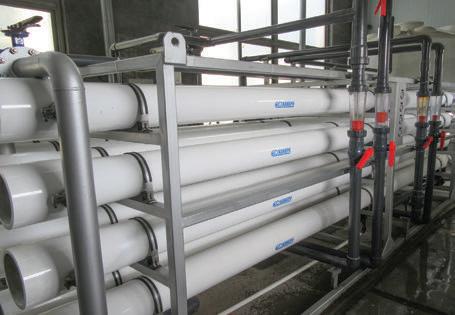
Reverse osmosis is increasingly used in modern tanneries as part of final wastewater treatment, allowing treated water to be fully reused in leather processing.
Technology
NER drying technology in practice
Drying is one of the most sensitive stages in leather finishing. Know-how and good technology are needed to control evaporation and chemical activation.
In leather finishing, final surface quality depends on the close interaction between film application and drying. Spraying determines the composition and uniformity of the coating, while drying defines its final performance. Even a well-designed finish can underperform if drying is not properly controlled, making it a critical factor in overall process success, particularly in systems such as the NER drying tunnel developed by Erretre.
A finishing film can only develop its full characteristics when water removal and heat input are carefully balanced. The drying tunnel is not simply removing moisture from the applied layer, it is also managing the transfer of thermal energy into the leather substrate. This dual function makes drying one of the most sensitive stages in the finishing line, where small deviations in process parameters can have a measurable impact on quality.
During drying, the objective is to remove water from the film without excessively heating the leather structure underneath. If too much heat is transferred to the substrate, two main defects can occur. The first is fibre stiffening caused by overheating, which reduces the natural flexibility of the leather. The second is surface shrinkage, which can lead to a reduction in area yield. Drying must therefore be understood as a controlled process in which temperature, residence (transit) time and airflow are carefully regulated rather than simply increased to maximise throughput.
In addition, heat contributes to crosslinking reactions within the polymeric components of the finishing film. These reactions strengthen the coating structure and improve resistance and durability, but they also introduce a critical balance. Insufficient energy input can leave the film under-developed and tacky, while excessive energy can damage the substrate or lead to unwanted rigidity. Drying systems must therefore support both evaporation and controlled chemical activation.
Modular control in tunnel drying
Conventional drying tunnels typically operate as single continuous chambers with uniform conditions. As leather travels through, it progressively accumulates heat. Initially, evaporation provides a cooling effect, but as moisture content decreases this protection is lost and temperature rises rapidly. Many systems compensate with end-stage cooling, but any thermal stress experienced earlier in the process cannot be reversed.
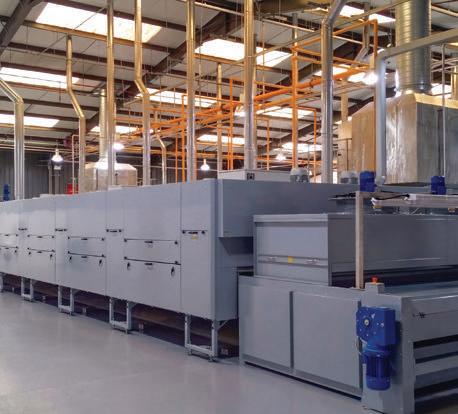
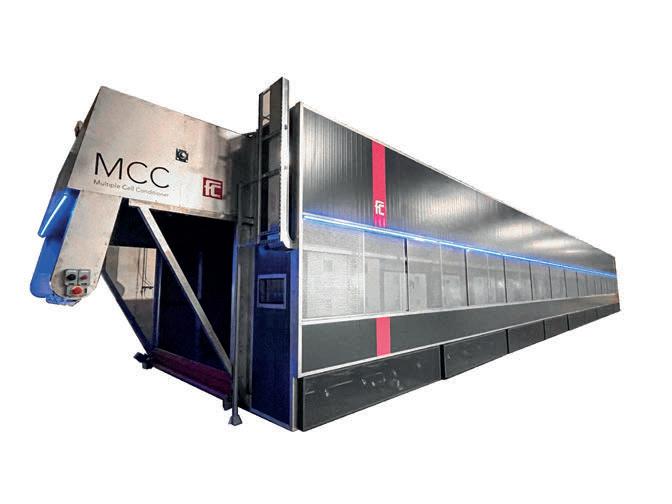
The NER drying tunnel takes a different approach through a modular architecture in which each chamber is physically separated and independently controlled. Each module features individual regulation of temperature and airflow, allowing the energy input to be adjusted progressively along the tunnel. Rather than applying a fixed drying profile, the
system self-regulates phase by phase according to the evaporation load, reducing the risk of uncontrolled heat build-up.
This modular design is specifically intended to guarantee thermal shockfree drying, avoiding sudden temperature changes that can affect surface performance or lead to loss of area. At the same time, it allows a highspeed operation without relying on excessive temperature increases.
Air circulation within each module is also carefully controlled. Continuous recirculation and filtration create a stable drying environment that reduces dust contamination, even when particulate matter accumulates at the base of the system. The airflow direction is set counter to the movement of the hides, improving uniformity of heat and moisture distribution across the surface. This contributes to more even drying
Modular NER drying tunnel with independent chamber control. CREDIT: ERRETRE
and reduces localised overheating or uneven fibre response.
The quality of airflow is influenced not only by temperature but also by relative humidity. To maintain stability, the system uses sensors to monitor and regulate humidity levels, ensuring the air remains within optimal parameters for consistent drying behaviour.
Moisture balance and fibre response
Moisture control remains a critical factor in determining downstream leather behaviour. If leather exits the tunnel too dry, fibre mobility decreases and the material becomes more rigid, affecting subsequent operations such as milling. Electrostatic effects may also increase, leading to uneven mechanical breakdown. If the leather is too moist, fibre movement becomes excessive, increasing the risk of surface distortion and unwanted pebbling.
Maintaining a controlled humidity range ensures the fibres remain in a plastic, workable state. This balance is essential for consistent mechanical response and directly influences both appearance and performance in later processing stages.
Process integration and control systems
The NER system is managed through a centralised LCAS touch-screen interface that regulates all drying parameters. Process recipes can be designed and adjusted through an integrated software environment, simplifying what would otherwise be an overly complex system of variables. All operational data is automatically stored during processing without operator intervention and can be retrieved for analysis or supervision purposes. The system is also compatible with SQL-based data exchange, enabling integration with Industry 4.0 manufacturing environments.
An inline help system provides access to documentation, wiring diagrams and operator guidance directly from the control panel, supporting usability across different working environments and language groups. A hybrid version of the tunnel is also available, combining hot air and infrared radiation. This configuration is particularly suited to confined installations or where very high line speeds are required.
Overall, the design philosophy behind the system is to simplify process control while increasing precision. By consolidating multiple variables into a single control architecture, the drying process becomes more predictable and easier to manage, even in complex production environments.
A critical but often underestimated stage
In many tanneries, attention is still primarily focused on spray application and formulation, as these are the most visible aspects of finishing. However, operational experience consistently shows that drying has an equally significant impact on final quality, consistency and yield. Unlike spraying, which can be adjusted by operator intervention, the drying tunnel functions continuously and shapes the outcome of every hide passing through the line.
If drying is not correctly controlled, variations in handle, weight and surface quality can occur without immediate detection, only becoming visible in later stages of production. For this reason, drying should be viewed not as a secondary step, but as a central control point in leather finishing, where thermal, mechanical and chemical factors converge to determine the final result.
The 128th Annual Conference of the SLTC
The Society of Leather Technologists and Chemists returned to Glasgow in April for its 128th annual conference, bringing together industry leaders to discuss collagen science, waste valorisation, regulation and traceability.
The programme at the 2026 SLTC annual conference comprised nine presentations, five of which are covered in this report. The keynote, the Procter Memorial Lecture was delivered by leather industry expert Dr Dietrich Tegtmeyer (formerly of Lanxess and TFL), who presented a technically focused examination of collagen, exploring its inherent value, structural complexity and largely untapped potential for upcycling within the leather sector.
He described collagen as one of the most abundant and structurally advanced biomolecules on Earth, estimating global volumes at around 50 trillion tonnes. Its hierarchical organisation, from triple helix to fibrils and fibre bundles, was presented as a naturally optimised system balancing strength and efficiency. To convey this scale, he noted that if a triple helix were expanded to the diameter of a human hair, the resulting fibre bundle would resemble the trunk of a 250year-old oak tree. This multi-level structure, supported by bound water within the matrix, continues to challenge synthetic replication.
Chemically, collagen is a scleroprotein forming the backbone of connective tissues. Its triple helix, rich in glycine, proline and hydroxyproline, accounts for its stability. Referring
to early work by Gustavson, he highlighted the link between hydroxyproline content and shrinkage temperature, demonstrating how molecular composition directly influences material performance.
Turning to markets, he placed global collagen consumption at around 4,000 kilotonnes annually, with leather accounting for approximately 1,500 kilotons. Beyond leather, he pointed to a diverse and higher-value landscape including pharmaceuticals, cosmetics, gelatine, agriculture and emerging technical applications such as 3D printing.
Despite this broad utilisation, he argued that much of the collagen within the leather value chain remains underused. From a typical tannery input of 10 tonnes of raw hides, only 1.5 to 2.5 tonnes become finished leather, leaving 6 to 7 tonnes of by-products, fleshings, trimmings and shavings, that still contain valuable collagen fractions.
He outlined several routes for better use of these streams. Hydrolysed collagen from shavings can support fertilisers and bio stimulants, while fleshings offer both lipid fractions for biofuels and protein streams for gelatine or feed. He also pointed to the potential for energy recovery, noting that even mid-sized tanneries could generate meaningful fuel equivalents.
CREDIT: ROYAL COLLEGE
Overall, he suggested that full utilisation of collagen-rich by-products could deliver around €700 million in annual value globally. While not transformative in scale, it represents a meaningful addition, particularly within integrated biorefinery models.
In closing, Dr Tegtmeyer proposed a shift in perspective, suggesting that tanneries should be seen not only as leather producers but as collagen processing systems. Leather, in this context, becomes one output within a wider biochemical platform. The technologies, he indicated, are largely in place, with the main challenges now lying in organisation, logistics and market development.
Tackling the PFAS problem
Professor Will Wise, from Eurofins Sustainability Services outlined PFAS as a large group of fully synthetic chemicals defined by strong carbon–fluorine bonds, which give them exceptional stability, durability and surface-active performance. These properties have supported widespread industrial use, including in leather finishing and waterproofing, but also underpin their core environmental challenge: extreme persistence. PFAS do not readily degrade, can remain in ecosystems for thousands of years, and are highly mobile, spreading through air and water while proving difficult to remove even with advanced treatment methods.
This persistence, combined with growing evidence of potential health risks such as endocrine disruption, immune effects and links to certain cancers, has led to rapidly expanding regulation since around 2020. Regulatory complexity is further heightened by the way PFAS are defined: substances like PFOA are regulated not as single chemicals but as broad families of related compounds, including isomers and derivatives, effectively multiplying compliance challenges across supply chains.
Analytically, PFAS cannot be treated like traditional singlesubstance hazards. Instead, testing relies on a combination of approaches, including total fluorine and extractable organic fluorine as broad indicators, alongside targeted analysis for specific compounds. Each method involves trade-offs between accuracy, cost and practicality, with screening techniques commonly used in industry settings.
Professor Wise acknowledged that documentation alone is insufficient for assurance. Safety data sheets cannot reliably confirm PFAS presence, particularly in reformulated products, making independent laboratory testing increasingly necessary as regulations expand. He also highlighted the growing importance of distinguishing between intentionally added PFAS and trace background contamination, with regulatory frameworks increasingly reflecting this nuance.
Finally, he cautioned against claims of “PFAS-free,” noting their global ubiquity. The industry is instead shifting towards reduction and control strategies, focusing on limiting emissions and strengthening supply chain oversight.
Waste valorisation
Dr Anke Mondschein of FILK Freiberg Institute presented work on the recovery and utilisation of hair from hairpreserving liming processes, focusing on its transformation into a functional retanning and filling agent.
During leather manufacture, hair represents a significant
keratin-rich by-product stream. At present it is typically directed to wastewater treatment, with associated energy demand, or sent to composting routes that incur additional cost. Overall, it was estimated that around four to five kilograms of by-products arise per hide, with hair accounting for approximately 0.5 kilograms. Despite its intrinsic protein value, its condition after liming, including brittleness, high alkalinity and partial degradation, limits direct reuse.
The study explored an on-site conversion approach designed to avoid drying and transport. Through alkaline and enzymatic hydrolysis, supported by hydrogen peroxide treatment to aid breakdown and reduce residual sulphide content, keratin was converted into a soluble intermediate. Molecular analysis confirmed effective reduction in particle size, and subsequent acrylic acid grafting was applied to enhance performance characteristics.
The resulting hydrolysed keratin products were evaluated as retanning and filling agents, with performance assessed across tensile strength, elasticity and softness. Comparative trials against conventional polymer systems showed broadly equivalent results, with no significant disadvantages observed in mechanical behaviour, ageing resistance, permeability or soil disintegration testing. The grafted variant demonstrated improved penetration into the leather structure, although with a modest reduction in biodegradability compared with the non-grafted hydrogel.
Pilot-scale production was undertaken using a containerbased system designed for flexible industrial deployment, enabling scale-up to around 400 kilograms of material. Fullhide industrial trials confirmed technical feasibility for replacing synthetic retanning agents with keratin-based alternatives.
A carbon footprint assessment indicated potential reductions of between two and four times compared with conventional materials, depending on system boundaries. Dr Mondschein noted that when keratin is treated as a wastederived feedstock, excluding upstream cattle-rearing emissions, the environmental benefits become significantly more pronounced. However, she cautioned that the results remain sensitive to methodological assumptions, particularly around allocation.
Dr Christine Anscombe (right) receiving the Axel Landmann award, from SLTC president Deborah Taylor, for outstanding contribution to the leather industry. CREDIT: SLTC
Seeing colour differently
European regulation-driven phase-out of incandescent and fluorescent lighting is accelerating the transition to LED systems, raising new questions around established colour matching standards in the leather industry, according to research presented by scientific director of research and testing laboratory CTC ARS Tinctoria, Gustavo Adrian Defeo.
While CIE D65 (6500 K) remains the primary reference illuminant under ISO 7906, Mr Defeo highlighted that its strong short-wavelength component can suppress perception of warm tones in leather due to the non-linear response of human vision. This can lead to measurable differences in colour discrimination, particularly within the red spectrum.
Trials using tuneable LED systems suggested that intermediate correlated colour temperatures in the range of 4500–5000 K, with more balanced spectral distributions, improve visual differentiation of subtle colour differences. Importantly, samples matched under these conditions remained consistent when reassessed under D65, supporting a two-stage workflow that combines perceptual optimisation with final standard verification.
The study also highlighted limitations of CRI-based assessment methods, which rely on a restricted set of reference samples. TM-30-18 was presented as a more robust alternative due to its expanded 100-sample approach and improved resolution of spectral fidelity.
As LED adoption increases across retail, automotive and transport environments, more complex metameric effects are emerging due to variation in spectral power distributions between systems. In response, new tools combining radiometric data with spectrophotometric modelling are being developed to simulate real-world lighting conditions within laboratory colour matching processes.
New Conservation project
Karl Flowers outlined a new collaborative initiative between the society and the Leather Conservation Centre aimed at addressing gaps in knowledge around modern leather materials. Speaking about the project, he said conservators are highly experienced in historic leathers but have limited reference data for 20th and 21st century materials. The focus is on documenting major changes in leather finishing since the 1920s, including shifts from protein-based systems to nitrocellulose, acrylics, polyurethanes and later water-based technologies. The work will be structured in two phases. The first will produce a three-part journal series and build a reference sample library on finishing systems, defects and degradation behaviour. The second will examine crust leather and tanning chemistry, covering the complexity of retanning systems and their implications for conservation. The project brings together volunteers from across the sector, including automotive and leathergoods finishers, traditional tanners, academics, conservation specialists and industry practitioners. Outputs will be published in the Journal of the SLTC, with wider member input invited throughout.
Other papers presented
• Valorising hair waste from the leather industry through sustainable protein extraction by Tanvi Maniyanghat, Scottish Leather Group.
• Leather upgrading solutions by Georges Fonseca, Stahl France
• Paving the way for sustainable leather in Pakistan by Adeel Younas, WWF for Nature, Pakistan.
• Mulberry – Made to last and journey to B Corp by Rosie Wollacott, Mulberry.
Axel
Landmann award
The 2026 Axel Landmann Award was presented to Dr Christine Anscombe in recognition of more than 40 years in the leather industry. A graduate of the University of Northampton as a leather technologist, she began her career in UK tannery management before working in Australia on kangaroo leather production. She later spent 11 years at the British Leather Centre as Innovation and Training Manager and went on to co-found Leatherwise, a leather training and consultancy business. Her wider roles have included senior positions with the Scottish Qualifications Authority, the British Standards Institution, the International Union of Leather Technologists and Chemists, and advisory work with the Sustainable Leather Foundation, alongside long-standing involvement in industry education and standards. She also worked at SATRA for more than 15 years.
Accepting the award, Dr Anscombe said she was “speechless” in the best possible way, describing it as a real honour and reflecting warmly on her long association with Axel Landmann, including his presence at her honorary doctorate ceremony. She spoke about the value of education in all its forms, noting her own unconventional start after early academic setbacks. She called for greater encouragement of young people into the industry, highlighted the importance of apprenticeships, and urged continued investment in training and knowledge transfer to sustain the sector’s future.
During the evening cocktail reception and dinner dance, outgoing vice president Professor Will Wise formally handed over the chain of office to incoming vice president David Miller. The occasion also marked a further transition, as Mr Miller oversaw the appointment of Nigel Payne of NTE as treasurer for the society.
Vice president handover - Professor Will Wise (left) and David Miller. CREDIT: SLTC
Leather and the circular economy
Credit: WTP/Flaticon
UNIDO sounds the call for harmony
The United Nations Industrial Development Organisation (UNIDO) has published comprehensive new guidelines for calculating the environmental footprint of bovine leather. It released the 119-page document in mid-June after years of work on the project. UNIDO’s industrial development officer for the global leather sector, Ivan Král, says producing the guidelines was far from easy, but that completing the task is a source of great satisfaction. He says the new guidelines are based on the work of specialist consultancy Spin 360 and its founder, Federico Brugnoli.
This project began in 2024, when UNIDO announced that it was working to create principles for carrying out assessments of leather’s environmental impact. It said its aim was to establish guidelines that all companies will be able to use in their calculations. It argued that a lack of consistency in lifecycle assessment (LCA) exercises had led to false comparisons between leather and other materials. By the middle of 2024, UNIDO said it was ready to put these principles in front of a technical advisory group, whose members represented academia, research organisations and all parts of the global leather industry. A few months later, at that year’s autumn edition of Lineapelle, Ivan Král was in a position to share the group’s initial findings.
A UNIDO project to set out new guidelines for calculating and assessing the environmental impact of leather is complete. The resulting document seeks to settle long-running disputes about the industry’s share of upstream impact and about links between durability and product carbon footprint.
No
quick wins
He warned then, though, that this was just the start of a much longer process and he made no apology for that. He said there would be no quick wins, adding that attempts to offer a simplified way of working out leather’s environmental impact on platforms such as the Higg Materials Sustainability Index had not worked.
Two years on from the formation of the technical advisory
group, the guidelines are ready.
uses renewable raw materials Waste from other sectors (meat and dairy) is the input for making leather
(SDGs)
Use of leather aids the battle against marine pollution, also part of the SDGs
The leather industry opens up pathways into the circular economy for companies of all sizes, including many thousands of small and medium enterprises
Leather content fulfils finished product manufacturers’ desire to use recycled material
Finished products made from leather will meet criteria for green tax relief and for green procurement exercises
Leather manufacturing supports green employment commitments
In the document, UNIDO explains that product environmental footprint (PEF) calculations must comply with “specific methodological requirements” if they are to be verifiable and certifiable and, therefore, earn acceptance in international markets. For this, there have to be product category rules (PCRs) in place. Leather has had a set of rules since 2018. Work on these began in 2011, led by the industry’s main representative body in the European Union, COTANCE. Partner organisations worked closely with COTANCE on this, most notably UNIC, Italy’s national tanning industry body, and Spin 360. In 2018, the leather industry PCRs the partners put together won approval from the European Commission.
This was a great achievement. It was the result of years of hard work, often in the teeth of fierce opposition from groups (some with substantial funding) that were ideologically opposed to the notion of leather presenting itself as a sustainable, renewable, circular material. However, according to the new UNIDO document, these PCRs lacked “a comprehensive and standardised methodological approach”. This has led to leather LCA calculations often proving difficult for third parties to assess, UNIDO says. Another consequence is that LCAs have not been easily comparable across products.
Explaining why this matters, UNIDO says these inconsistencies create confusion, particularly for market players that rely on LCA as a key tool for material selection. It adds: “The complexity and inherent uncertainty in environmental footprint analysis contrast with the need to communicate results in a simple, clear and unambiguous way along the value chain and, ultimately, to consumers.” It suggests that the people attempting to communicate with the public in this way may lack the expertise to assess the quality of a particular study or to understand the “methodological differences that impact results”. Or they may have the expertise but lack the time or the team-members to engage to a full enough extent with what the studies say. This has made harmonising the rules and the way companies put them into effect in LCAs both necessary and urgent. This is what the new guidelines have set out to do.
Twenty-first century knowledge
At its core, the new document outlines and analyses “the essential requirements” for calculating the
environmental footprint of leather. It also sets out recommendations for how companies embarking on LCA exercises can meet these requirements.
Underpinning this is the “significant amount of knowledge” that UNIDO says has built up in the first quarter of this century on topics that are “highly relevant” to these discussions. This means topics such as greenhouse gas emissions, climate change, carbon footprint, environmental management, environmental performance evaluation, labelling and others. UNIDO and the technical advisory group it appointed pored over publications from a range of august bodies, including the European Commission, the International Organisation for Standardisation (ISO), the European Committee for Standardisation (CEN), the Science Based Target Initiative (SBTI) and the EU-Joint Research Centre to pick out key definitions, methodologies and calculation methods. The oldest document the new guidelines quote is ISO standard 14062 for environmental management, which is from 2002. The most recent is version 5 of the general programme instructions for Environmental Products Declaration (EPD), from 2024
Because LCA is, in so many cases, the methodology of choice for working out environmental impact, the UNIDO guidelines pay close attention to two standards, ISO 14040 and ISO 14044, that set the framework for LCA. They make it clear, for example, that LCA
studies should include a definition of the goal of the exercise, the reasons for carrying out the study and who the intended audience is. For those who have engaged with LCA studies before, other familiar terms come up: the functional unit, the system boundary, the allocation procedures, and so on. In the case of leather LCAs, UNIDO points out that some elements have a higher influence than others on the impact calculation. Therefore, the guidelines focus on eight key elements. These are the topics the organisation has sought to harmonise and consolidate into a set of clear recommendations for the industry and for those who use and buy leather.
In black and white
The first of the eight is the leather “product system”. The guidelines do not set out to cover here all types of leather from all sources. Instead, the focus is only on leather produced from the hides and skins of animals slaughtered for human food consumption. In keeping with the decades of amassed knowledge referred to above and with all the relevant literature, this leather meets the definition of a “non-determining animal by-product”.
This is important. It means leather of this kind (which is close to 100% of the output of the global tanning industry) does not affect production volume of the raw material. In other words, here we
UNIDO’s industrial development officer for the global leather sector, Ivan Král (centre), on a recent visit to the Sialkot Tannery Zone in Pakistan.
Credit: UNIDO
have in black and white a clear justification of the industry’s long-held position that leather is not responsible for impacts such as deforestation. Increasing leather production would do nothing to exacerbate deforestation. In the same way, outlawing all leather production (heaven forbid) would not save a single tree.
Mathematical sense
Next comes the “declared unit” or “functional unit” that LCAs should include in their calculations. “The functional unit is one of the most important elements of an LCA study,” the document says. It provides a reference point that allows participants to “normalise in a mathematical sense” input and output data. Here, the functional unit is one square-metre of finished leather or, in the particular case of soling leather, one kilo.
The guidelines invite LCA practitioners to go beyond this and give details of the type of hide or skin, the origin of the raw material, the intended use, the thickness range, the type of tanning, retanning and finishing manufacturers have used in the process of making the leather to give a more precise definition of what it is the LCA is studying. UNIDO gives an example. The material under study could be a grain-split, finished bovine leather for footwear uppers, with a thickness range of between 1.8 and 2.0 millimetres, made from US wetsalted raw hides, processed using chrome tanning, organic retanning and aniline finishing. If you asked a company what its “declared unit” was, this could be its answer.
Durability debate
LCAs have traditionally paid too little attention to how long a product will last. Here the guidelines introduce an idea that the document calls “environmental amortisation” as a response to the long-running dispute about this. It says “environmental amortisation” is a way of measuring the potential distribution of the environmental impact of producing the material over the useful life of the material itself. It argues that tracking what it calls “the transition from a negative environmental impact during manufacturing to a positive impact during usage” is essential for assessing sustainability correctly. “This takes work,” Ivan Král says, “but it is a dimension that is completely missing at the moment. Comparing only a figure for CO2-equivalent per unit is not sufficient. Including durability will change the situation. Extending a product’s life yields a greater environmental benefit than any other measure.”
UNIDO recommends that companies work this out by calculating the emissions generated during the production phase, determining the expected lifespan of the material when it goes into finished products and then dividing the first by the second. It believes this will be an important and beneficial element for companies in the leather value chain to include in their LCAs.
“This is important for transparency and for the comparison of products and materials,” it explains. “In the case of leather, very often customers do not take account of how its technical performance can benefit the environmental footprint of their products over time. This may lead to the choice of alternative materials as a substitute. These alternative materials have lower technical performance properties, which in the end means a higher environmental impact.”
Farms and abattoirs
Another of the key elements that the guidelines focus on is
Bags, boots and apparel. If they are made from leather, they will last for years, which means their environmental footprint can be ‘amortised’.
Credit: Première Vision Paris
system boundaries. This determines which processes are to be included in the LCA and which can be left out. To cut to the chase, the big system-boundary question for leather LCAs is whether or not upstream processes on farms and in abattoirs should come into consideration. “International debate on this has been very intense, and sometimes harsh, over the past 10 or 12 years,” UNIDO says.
Which side of the debate does UNIDO come down on? It is in favour of including animal farming and animal slaughter as part of the lifecycle of leather. It draws this conclusion because of the terms for system boundaries that the ISO 14044/2006 standard lays out. The standard makes it clear that it is only permissible to delete lifecycle stages, processes, inputs or outputs if leaving them out does not significantly change the overall conclusions of the study. It also says any decision to omit these parts of the lifecycle must be clearly stated in the LCA, with the reasons and implications for their omission explained.
UNIDO’s position is clear. To miss out the livestock farming and slaughter stages would change the overall conclusions of any study of leather and, therefore, they should feature in leather LCAs. Two points here. To include rather than exclude these upstream processes is to show commitment to transparency. If finished product manufacturers accept this and think it is fair, perhaps they will begin to ask suppliers of synthetic materials to include the upstream processes required to produce polyester, polyvinyl chloride or nylon in their LCA studies too. Secondly, leather’s share of the upstream carbon footprint, the allocation question, will be
• Turn-key systems for leather cutting
• Powerful nesting for maximum material yield
• Highest level of productivity
• Individually configurable
www.zund.com
PASSION FOR LEATHER
relatively small. Ivan Král shares that there was less than a full consensus on this question among peer reviewers of the guidelines. But he insists recent studies make it clear that leather’s allocation from “the farm portion” will be significantly lower than previous figures suggested. Plus, subjecting it to environmental amortisation will make it even smaller over the lifetime of longlasting finished products, giving leather further advantages over synthetic pretenders to its place in the material mix of shoes, bags, garments, car interiors and so on.
Allocatable by-products
The guidelines go on to examine the allocation question in greater detail. UNIDO recommends an attributional rather than consequential approach. In an attributional LCA, part of the impact of a process, such as raising a herd of cattle, must be attributed to all the outputs of that process that are not waste. Hides and skins often do go to waste, but they are not, in themselves waste. They could and should nearly always be turned into leather.
Nor are hides and skins the main product, of course. Farmers raise cattle for meat and milk. Slaughterhouses process cattle because there is demand for meat. Hides are one of the byproducts of this or, as the guidelines document puts it, an “allocatable byproduct”. They have an economic value, they are intentionally subjected to treatments and processes to make them more usable and more valuable, and there is often a lucrative market for what they can be turned into.
In deciding exactly what allocation it recommends, UNIDO has preferred not to stick to the formula and figures in the leather industry PCRs that the European Commission approved in 2018. It says it took this decision in spite of those figures being widely adopted on a global scale. “It should not be a default value,” UNIDO says now. “It is based on data that referred only to the Netherlands. The data derived from a study carried out in 2009, with some selected sources from 2014 and 2015.”
Upstream allocation
More recent studies conducted by Spin 360 demonstrate that the allocation factors in the 2018 PCRs might not correspond to the current reality of the industry, UNIDO continues. Instead, it proposes in these
UNIDO sounds the call for harmony
guidelines a new default allocation ratio. Its calculations are based on primary data from the past four years. Specifically, the new ratio is based on 299 studies that Spin 360 carried out between 2022 and 2024. These were LCA studies on finished leather processed from adult bovine hides in 87 tanneries across 26 different countries.
The calculation involves working out the right economic allocation (EA) for the hide, which is the hide’s percentage of the total combined value of the meat and all the other allocatable by-products (including edible offal, bones and fat) that come from the slaughterhouse. You then have to work out the mass fraction (MF) of the hide, its share of the total combined mass of all these outputs. If you divide the EA by the MF, you can work out the allocation ratio.
In an LCA, UNIDO warns that companies should use data specific to their own supply chains to work these numbers out. But if they do not have this data, they can use default or generic figures.
The 2018 PCRs used a figure of 3.5% as the EA and 7% as the MF, giving an allocation ratio of 0.5. Now, UNIDO wants to replace this with the averages for mass fraction and economic allocation from the newer Spin 360 studies. These give an EA of 1.5% (the price of hides is lower now, and has been for years) and an MF of 7.33%. This gives an allocation ratio of just over 0.2.
Parting gift
Of course, the numbers will change again. UNIDO says finding ways of keeping the data up to date will be “one of the crucial next steps”. Any change in these numbers can have a major effect on the global warming potential that leather manufacturers and their customers present for leather, usually in terms of kilos of CO2-equivalent per square-metre of finished leather, the “functional unit” we refer to above. UNIDO accepts that the figures will vary. What it is calling for is for people across the industry to use the same method to work their figures out. It is calling for harmony.
There is a reflection of this in the list of names that the guidelines document includes in the acknowledgements. It is a list of the names of the members of the technical advisory group that lent its weight to this project. It reads like a rollcall of the great and the good of the global leather industry.
There have been too few occasions when so many senior figures in the industry joined forces to pull in the same direction. It is to the great credit of UNIDO and especially of Ivan Král that, on this occasion, all these voices have sung in harmony. Mr Král is preparing to leave his role at UNIDO to enjoy the rewards of retirement, which in his case will mean spending more time in the mountains of his beloved Slovakia. He has given the leather industry a valuable parting gift.
Skin in the game. The new guidelines make it clear that hides are not waste, but “allocatable by-products” of the livestock farming, meat and dairy sectors.
Credit: Pascal Xicluna/ agriculture.gouv.fr
For several years now, Colorado State University academic Dr Greg Thoma has been working with the leather industry to help it calculate its environmental impact more accurately and fairly. He acknowledges the challenges that remain with lifecycle assessment (LCA) methodology, but also believes in its value.
Why LCAs are worth the effort
When, in 2024, industry organisation the Leather and Hide Council of America (LHCA) decided to commission an independent study into the carbon footprint of leather from US cow hides, it looked to Colorado for the necessary expertise and gravitas. LHCA president, Kerry Brozyna, points out Dr Thoma’s credentials. He is director of agricultural modelling and agriculture-focused LCA on a Colorado State programme called AgNext. LHCA’s efforts to help communicate the sustainability credentials of leather and leather products led it to set up the Institute of Data Integrity last year
(please see World Leather October-November, 2025). Dr Thoma is a member of the governing board of this new notfor-profit organisation. In a similar way, he was a member of the technical advisory group that the United Nations Industrial Development Organisation (UNIDO) formed to help it put together new guidelines for assessing the environmental footprint of leather (please see our detailed article in this issue on the UNIDO guidelines).
He is also a board member of the International Lifecycle Academy, a non-profit run out of two European universities, Aalborg in Denmark and Pompeu Fabra in Barcelona.
Greg Thoma supports the UNIDO document’s recommendation to retain an allocation of the impacts of upstream processes to hides and skins.
Credit: Xavier Remongin/agriculture.gouv.fr
Future generations
The academics who serve in the International Lifecycle Academy are in no doubt that their work must be a contribution to wider efforts to improve sustainability. After years of listening to discussions on the subject, and taking part in many himself, Greg Thoma says he still thinks the best definition of sustainability is the one that United Nationsappointed body the Brundtland Commission gave in the late 1980s. It said that we need to operate the systems we run today in ways that will allow future generations to have the same opportunities to provide for themselves as we have. For him, all the work that companies and organisations carry out on LCA has to fit into this context.
Compare and contrast
For the leather sector, he asks aloud what the relevance of carrying out an LCA exercise is. He explains the limitations that come with relying on LCA for material selection, for example. He says: “If you use LCA to compare leather with synthetics, there can be divergence in the methodological [a favourite word] backgrounds of the two systems. This means you might not get an apples-to-apples comparison.”
Leather’s durability and the number of times a consumer can reasonably expect to use a product made from leather are in a different league compared to synthetics. His estimation is that if you buy a pair of canvas sports shoes, you may get a year’s wear out of them. If you buy leather shoes, you may be able to wear them for ten years.
The new UNIDO guidelines’ efforts to create a link between the environmental performance of a consumer product and its environmental impact (through an idea the document calls ‘environmental amortisation’) are welcome and much needed, according to Dr Thoma. “Most of the LCAs for the leather sector that I am familiar with don’t really address durability,” he says. “But these are the questions that have to be asked and answered so that we can have fair comparisons and make good selections.”
LCA is fundamentally a modelling system, he continues. He supposes that most people will have heard the expression ‘garbage in, garbage out’. In the same way, in LCA, if you do not have high-quality data going in, you cannot have what he calls “a good methodological backbone” for the model. And without this, it will be impossible to produce “good answers” at the end.
A new position
Questions concerning allocation, the share a hide should have of the upstream carbon footprint of the animal, feature prominently in the UNIDO guidelines. They received plenty of attention in the 2024 LCA that the Leather and Hide Council of America commissioned too. Naturally, allocation strikes Dr Thoma as an interesting subject. In fact, he calls determining that allocation “a critical methodological decision”. He believes the clear position the UNIDO guidelines take will provide a good route forward. The new document recommends retaining an allocation on hides and skins of the impact of upstream processes but recommends displaying it separately in LCAs from the impact of “core processes”. Dr Thoma, who has weighed up all the alternatives, supports this. UNIDO recommends a new default allocation ratio based on primary data from nearly 300 studies that specialist consultancy Spin 360 carried out between 2022 and 2024 (again, please see the separate article in this issue for more detail).
Something else that came out of the project for LHCA concerns a difference in the upstream carbon footprint of cattle depending on whether they are grass-fed until the end or go to a feedyard before slaughter. Intuitively, many of us might make the assumption that the findings would be favourable to grass-fed cattle. But not so. He explains that a higher level of forage in the diet of cattle grazing on pasture leads to a higher volume of methane emissions from those animals. In feedlots, a substantial proportion of the feed the animals receive is corn, which Dr Thoma describes as “easier to digest”. He simply says he found the comparison between feedlot and grass-fed cattle interesting, but there is an important underlying point. “The source of the hides matters; how they are produced matters,” he explains.
Graze into the future
We know there is much more to be said about the particular properties of biogenic carbon and its role in helping livestock farmers take their carbon footprint calculations to zero and beyond. The Colorado State academic is of the view that the lack of ways to measure benefits like this is a major limitation of LCAs. “Regenerative agriculture is certainly up and coming,” he says. “The question of carbon sequestration in pasture systems is big and we don’t do a very good job of capturing the data for it. There are things that grazing cattle do that are valuable. They can help provide fire-breaks and sometimes,
“The source of the hides matters; how they are produced matters,”
DR
GREG THOMA
Credit: APLF
just by their presence, animals on pasture help increase biodiversity. All of these things are poorly captured in LCAs.”
Cutting to the chase, Dr Thoma reveals that the LCA he worked on, with Spin 360 incidentally, for the leather sector in the US came up with a carbon footprint for tanning operations of around 9 kilos of carbon-dioxide equivalent per square-metre of finished leather. “This figure is not tremendously different from those in other studies,” he observes.
Challenges remain as this industry and others move forward with LCA. He points to “better data availability” as a requirement. Others have observed the same thing, not least leather manufacturers in Italy. Working with Spin 360 (again), a group of leather manufacturers has set up a new programme of data collection and supply chain collaboration. They are convinced that the work they are carrying out on this programme can be of benefit to the entire global leather industry (please see World Leather April-May, 2026).
Scope for hope
His answer to his own question about the relevance of carrying out an LCA begins with the assertion that “the key thing” is that it will allow company leaders to manage what most urgently needs their attention. It is only through measuring carefully the impact of the activities that are taking place under the roofs of their factories and offices that they can know what to focus on to gain improvement. LCA can provide what he calls “a holistic view of the supply chain”. Seeing opportunities for continuous improvement is one of the fruits of that.
In addition, Greg Thoma says there are good productdevelopment and eco-design reasons for embarking on the LCA pathway. You can also use LCA for the purposes of benchmarking, to inform public policy and, as mentioned above, for selecting materials.
An even more important possible benefit is that LCA could
help the industry “reframe scope 3 emissions”. Scope 1 are the emissions that come from a company’s own activity. Companies ought to have a clear vision of this. Scope 2 are the emissions that come from the energy they buy and use to carry out that activity. Scope 3 is the emissions that come from a company’s supply chain partners. If all the companies in the supply chain use LCA methodology to calculate their own scope 1 emissions these should combine to give an accurate scope 3 calculation further downstream. “Scope 3 is just a collection of data,” Greg Thoma says, “but it can be unclear where the data came from and you can end up with a mish-mash of data mixed together. Using the same methodological approach and collaborating with everyone else in the supply chain means there will be no undercounting or double-counting and brands can have more confidence in scope 3 data.”
Institutional advantage
LHCA’s efforts to help communicate the sustainability of leather will continue through the Institute of Data Integrity, the non-profit it set up last year, with Dr Thoma as a member of the governing board. The focus here, he explains, is to build a platform that will host science-based datasets and methodologies that will provide support to companies, principally in the leather sector, that are performing LCAs. This platform will be a digital hub for people to use to capture data. “We intend to work with stakeholders to co-create this,” he says, “and to come up with a standard for data collection. We intend to build on the framework document for leather that UNIDO has produced.”
Another of the institute’s intentions is to enable “streamlined data collection for tanners”. He explains that this means a focus on collecting the data “that really matters”. Because tanning is what he calls “a complex industrial process with highly variable raw material”, knowing what to measure and how to measure it is important.
Dr Greg Thoma delivering a talk on the value to the leather industry of LCA at APLF 2026 in Hong Kong.
It took years, but arguments for exempting leather from the scope of the European Union Deforestation Regulation have hit home.
All credits: European Union
TA battle won, but the fight goes on
he global leather industry has scored a significant success at the European Commission. After years of campaigning, with cogent arguments based on science and common sense, senior industry figures have secured the removal of leather from the scope of the European Union Deforestation Regulation (EUDR). As planned, the regulation will still come into force at the end of December this year for bigger companies and in June next year for smaller ones. But now leather manufacturers will no longer be among the companies that have to capture and share data from their upstream supply chains to show they have no link to deforestation. The European Commission has accepted that leather is not a driver of deforestation.
This journey towards realisation was tortuous. Formal adoption of EUDR by the European Parliament and by leaders of the 27 EU member states came in June 2023. Originally, it was to come into application on December 30, 2024. This was postponed until December 30, 2025. Then it was postponed again until December 30, 2026.
Against waste
EUDR focuses on seven commodities: palm oil, cattle, soy, coffee, cocoa, timber and rubber. The European Commission has consistently referred to these as the commodities “most
The European Parliament and the European Commission have listened and have removed leather from the scope of EUDR. Some campaign groups have taken the news badly.
associated with deforestation or forest degradation”. It immediately included “certain products made from these commodities” in EUDR’s scope too. Some by-products quickly secured an exemption, often on the basis that they were products or materials that would go to waste if manufacturers did not make use of them. Initial attempts to secure an exemption for hides, skins and leather, which can also lay claim to this criterion, were unsuccessful.
Now, though, the European Commission has published a new draft of a ‘delegated act’ amending EUDR legislation. The new draft is part of a formal review of EUDR that it promised to carry out before the end of April 2026. It removes leather from the scope of the regulation.
“This is formal recognition of a position COTANCE has held and defended, with evidence, since EUDR’s inception.”
Recovery from a low blow
A ‘delegated act’ allows the Commission to update EUDR legislation without going through the full legislative process again. The Commission says the new draft reflects stakeholder feedback. It was feedback that took years to filter through. In the build-up to EUDR’s initial adoption, at a vote at the European Parliament’s plenary session in Strasbourg in September 2022, more than 275 of the elected members voted in favour of an exemption for leather. But nearly 340 voted against. At the time, leather’s representative body in the EU, COTANCE, described this as a low blow.
After the Commission’s 2026 change of heart, COTANCE’s response was to say: “This is more than just a regulatory adjustment. It is the formal recognition of a position COTANCE has held and defended, with evidence, since EUDR’s inception.” Its position is that hides, skins and leather are “merely by-products” of the meat and dairy industries. They do not drive cattle farming. They do not drive deforestation and exclusion now of hides and leather is the correct thing for the Commission to do.
At the core of the industry’s argument is a research paper, ‘Socio-economic and environmental analysis of the effects of Regulation 2023/1115/EU on the European leather sector’, that a team of six academics at the Sant’Anna School of Advanced Studies in Pisa compiled. They found no direct link in academic literature between leather and deforestation. Instead, they found that including leather in the scope of EUDR would have had a severe economic impact on the European cattle and hide supply chain, leaving tanners without the raw materials they need, forcing some businesses to close and people working across the supply chain to lose their jobs. The study also warned of the detrimental environmental effect of the increased use of alternative materials and of hides going to waste if a “shortcircuiting of the European leather industry” came to pass.
Claims and clamour
The new draft was also open for stakeholder feedback, with the public having until June 1 to share their responses. The European Commission received comments from more than 4,000 people and organisations. More than 1,300 of these comments refer directly to the removal of leather from the scope of EUDR. Many of the comments are in favour of this development, but most of those that make a direct reference to leather are against this change. The feedback makes for unpleasant reading on the whole but none of the submissions raises any argument that we have not heard a hundred times before.
Frankly, we might have expected better from some of the campaign groups that responded. For example, the European policy programme at the World Wildlife Fund (WWF) says: “The proposed exclusion of leather and hides is particularly concerning. Leather has one of the highest deforestation footprints among products covered by EUDR.”
Greenpeace weighs in with this: “Leather circulating in the EU has also a significant negative impact on the livelihood of indigenous peoples and local communities in the areas of production.” Neither Brussels-based lobby group offers any evidence for these claims.
The point we make in quoting them is that, even though leather looks to have won this battle, the fight against anti-leather propaganda is far from over. Campaign groups like WWF and Greenpeace have been making comments like these for decades and seem not to feel the need to justify them. They have thousands of supporters who believe and repeat every word they say. You can see this in the feedback.
Worth the hard work
All the leather industry can do in the face of this is to keep improving in terms of sustainability and circularity, keep amassing facts to support its arguments and keep working out the best way to tell those stories.
There are people who will refuse to listen; they have already made their minds up. “Behind every piece of leather there are destroyed forests, exploited animals, and rivers polluted by tanneries,” claims one concerned citizen of France. At least on this occasion members of the European Parliament and officials at the European Commission did listen in the end, which means all the hard work involved in making a clear, fact-based case for leather can be worth it.
The European Commission has accepted that leather is not a driver of deforestation.
Mulberry’s beautifully British collection, from the farm to the consumer. It hopes to build on this momentum by improving visibility to farm level in its wider ranges.
Credit: Mulberry
Mulberry’s ‘true north’ points to the farm
Luxury brand Mulberry believes a stronger connection with natural ecosystems is the way to disassociate itself from negative connotations around cattle rearing, such as deforestation and methane, rather than following some of its peers in exploring alternatives to leather. Almost 90% of its products are made using leather and, as the biggest manufacturer of luxury leathergoods in the UK, it has made this stand in the material’s defence.
Five years ago, to mark Earth Day 2021, it published its Made To Last Manifesto, which promised a “transformative approach to leather sourcing” and vowed to work more closely with its suppliers, using a collaborative approach to create a transparent chain for its raw materials. This ethos struck a chord with Sara Grady, co-founder of British Pasture Leather, who was in the early days of the initiative and describes the manifesto as a “bold and inspiring declaration of support for precisely the sort of vision we were forming at that time”. She sought a connection with Mulberry’s sustainability manager, which would prove to be the beginning of a partnership that both parties hope to expand on.
The leathergoods brand has teamed up with British Pasture Leather for a collection that tells of a closer connection to animals and the land.
To celebrate the five-year anniversary of the manifesto’s publication, as well as Mulberry’s 55th, has brand has released a British Pasture Leather collection that celebrates the best of British farming, tanning and manufacture. The four designs include new and heritage styles: the Boston appears in an antique oak, while the classic Bayswater is available in a vintage ebony. The collection also includes the Darley cosmetic pouch and a zipped pouch. Each design is manufactured at The Rookery, Mulberry’s flagship Somerset factory, and is made from vegetable-tanned hides.
Mulberry’s ‘true north’ points to the farm
Encouraging response
Sara and co-founder Alice Robinson launched British Pasture Leather in 2020 after a realisation that leather as a material had become so disconnected from the farm and the animal that it was missing an intrinsic part of the story –linking these back together could offer value both for the supply chain and the consumer. Alice began her career as a designer, with a Master’s project on using the skin from a single animal inspiring her research into materials’ provenance. Sara spent 15 years providing direction for food and farming enterprises and believes grazing animals can be “ecosystem engineers” that bring tremendously positive impacts for soil, biodiversity and landscapes. With a growing movement around regenerative farming systems, the connection to leather could support storytelling for the fashion sector.
“Our early days were experimental, but the encouraging response we got from designers, farmers and other supporters prompted us to build what is now a working system,” she tells us. “What began as a project focused on proving the value of traceable British hides has evolved into a much broader conversation around farmed landscapes, preferred materials, transparency and regional manufacturing. Rather than treating hides as anonymous byproducts we are showing they are part of a wider British food and farming system.”
Flexible definitions
There has been a growing – albeit slowly – movement around regenerative farming in the fashion sector. While, of course, these kinds of systems have been around for millennia, with farmers rotating crops and animals, and using fallow times to regenerate soils and the ecosystems – the fashion sector has only really been talking about sourcing from regenerative systems within the past 10 years, or less, in most cases. The lack of availability and transparency of organic cotton has led to a demand for a new alternative to conventional fibres. Timberland and VF were among early investors in the research in terms of cattle
One of the problems of the system is that there is no standard definition of ‘regenerative’, so companies have to come up with their own. Mulberry, for instance, has adopted that of regenerative farming festival organiser Groundswell, in that it can be “any form
of farming that at the same time improves the environment”. LVMH has only set out its definition in the past few years. Its raw material supply chain manager, Guillaine Ipert, believes leather and fibres from regenerative farming systems are “the future”, while companies such as Burberry and Tapestry are members of the US-based system Land to Market, exploring what options are available there.
Another difficulty can be availability of these hides, then tracing them through the system. BPL works with Pasture for Life, a farmer-founded organisation that champions 100% pasture-fed livestock. Between them, they can connect the farm, abattoir, hide collector, tannery and finishing facility to offer fully traceable hides. The system works well, and there are currently more regeneratively raised hides in the UK than can be processed into leather, Sara tells us. “Our primary roadblock is tannery capacity – the UK’s onceabundant network of tanneries has reduced to just a few, and we are fortunate to have the opportunity to work with some of those remaining facilities,” she says.
Diversity in processing
Being able to tan the hides through a domestic system is a big part of the Mulberry collection story. All hides from this collection come from a single farm
in the south-west of England, and are tanned in Bristol at Thomas Ware then finished in Northamptonshire at Blenkinsop Leathers. In 2024, Mulberry commissioned BPL to undertake research to assess the potential for accessing cattle hides from regenerative British farms, and while this highlighted the decline of the infrastructure and logistics network, it also demonstrated opportunities, they say. “The UK holds an extraordinary depth of tanning knowledge and craftsmanship even though the industry is smaller than it once was,” says Sara. “There is still tremendous expertise and talent for a great diversity of leather processing including chrome tanning, vegetable tanning, currying and producing woolon sheepskins. What people might not realise is how fragmented production can be.”
She cites tannery closures in recent years, as well as the end of a “critical education programme” – the University of Northampton’s Institute for Creative Leather Technologies – as hampering career paths into the industry. “At the same time, grassroots initiatives such as ours have begun to emerge, aspiring to use local raw materials such as goat, deer and sheepskin as well as cattle hides. Like ours, these new enterprises are built on valuing traditions while creating a vision for future adaptation.”
British Pasture Leather co-founders Sara Grady (left) and Alice Robinson inspecting a hide. The company is expanding product development to offer a wider range of pieces for fashion brands, restaurants or corporate gifts. Credit: Jason Lowe
Mulberry’s
To further foster these relationships, BLP has hosted Field Days in autumn 2024 and 2025, to provide designers and materials buyers with a deeper understanding of sustainable leather production and its environmental benefits. The twoday events included visits to a regenerative farm to witness biodiversity, soil management and grazing practices, and a tour of Blenkinsops to meet the people behind the leather.
Knowledge gaps
This feeds into the idea of education – the more brands and designers understand about the supply chain and the material, the more they will use it and tell the story to the consumer, it is hoped. Five years ago, conversations with brands were often limited to questions around regulatory compliance or basic certifications for leather, but those conversations are becoming more sophisticated with the acceptance of the connection to the animal, says Sara. “With that awareness, it is increasingly possible to have deeper conversations around farm-level impacts, animal welfare, traceability and supply chain resilience.”
However, she thinks more flexibility is needed when it comes to processing and finishing approaches. “Uniformity is a priority for mass-production of identical products. But actually, leather is a natural material with inherent variation,” she says. “The sophistication we are starting to see is that brands are embracing this level of character and variation –celebrating the marks as evidence of the material’s origin.”
Hides proximity
Moving forward, Sara hopes to build stronger relationships between agriculture, leather and fashion. For its part, Mulberry is mapping its leather supply chain in collaboration with tannery partners and the Sustainable Leather Foundation
How the leather sector can improve its storytelling
Sarah Grady: “Leather sits at the intersection of farming, food systems, manufacturing and fashion, which makes its story complex. Yet that complexity is also where the richness exists. There are many stories behind leather production, from the farms where hides originate, to the tanneries where they are transformed, and the craftsmanship that brings the final material to life. Each stage offers an opportunity to share incredible work being done across the supply chain, but the interconnected and often opaque nature of leather production makes achieving transparency a challenge.
“The leather industry’s struggle with storytelling is mainly due to the opacity of conventional leather supply chains, and a negative association with industrial agriculture. But not all farming, and therefore not all leather, is the same, and we feel it’s important to be able to make that distinction. There are places, like the UK, where it’s appropriate to raise ruminant animals – and even beneficial to do so. The UK is a grassy place that has co-evolved with grazing animals, so it’s an appropriate place to produce the raw material for leather that has a positive story to tell.
“For us, the only strategy is to be associated with farming practices that are good for animals, land and people. Our approach has been to look at leather as an outcome of a pastoral farming system that supports people, nature and healthy soils. Leather can be an emblem of that possibility. We’ve focused on building relationships with the people and places at each stage of production, emphasising transparency and accountability, and creating opportunities for learning. With all of that, we’ve been able to tell a positive story that communicates the broader value embodied in the final material.”
as it works towards a “regenerative and circular” business model. The company, which makes half its main products in two Somerset-based facilities employing 240 craftspeople, as well as working with manufacturers in Turkey, has also introduced a traceability element into its tannery questionnaires, with hide proximity now factoring into sourcing decisions.
Mulberry’s CEO, Andrea Baldo, has expressed a desire to move even further towards regenerative sourcing. “Our true north in sustainability decision-making points to responsible leather sourcing, longer lasting product and lower emissions,” he says. The company’s turnover has surpassed £1 million and international expansion is under way. “Our partnership with British Pasture Leather is gaining momentum,” he adds. “This innovative leather embodies our values and our vision for the future, and we’re excited to bring it to life.”
At the launch of the ‘Mulberry made with British Pasture Leather’ collection, people along the supply chain, from the farm to the meat, to the tanning and finishing, the design team and product manufacturing were brought together. “We’d like moments like this to become the norm and not the exception,” says Sara. She wants more value placed on transparency, longevity, craftsmanship and regional resources. “And we’d like to see greater recognition for the raw materials coming from our local food system, viewed as a resource not waste. We believe there is energy and demand to make this work – what’s needed is the infrastructure to support these new networks.”
Field Days introduce brands and buyers to the wider agricultural system, where the health of soil, pasture and livestock are connected
Credit: Daisy Wingate-Saul
All Credits: Ecco/Respin
Ecco trials leather waste fibre
When Ecco first explored turning leatherproduction waste into textile fibre, the idea was largely experimental. Several years on, the concept has reached a footwear application in a limitededition model, the Biom 720.
The project, launched in 2021 with cellulosic fibre specialist Spinnova and then-partner KT Trading, was designed to investigate whether wet-blue leather waste could be converted into usable textile fibre for spinning, weaving and knitting. At the time, the aim was around extending the value of existing material streams, rather than replacing them. Following successful pilot trials, the partners confirmed plans to explore commercialisation and assess a first industrial-scale production set-up, initially earmarked for the Netherlands, where Ecco Leather’s operations are based.
The Danish brand has shown that wet blue shavings can be transformed into new material through its longstanding partnership with Spinnova.
By 2024, the companies had formalised their intent to scale the venture through a letter of intent covering the Respin joint venture, alongside confirmation that fibre quality had reached commercial requirements. Ecco also produced an early prototype shoe using material from the pilot line, marking the
ECCO Biom 720 with Spinnova fibre.
first step towards footwear application.
“Together, we have shown that leather waste can be transformed into a highquality textile fibre with commercial relevance,” said Spinnova chief executive officer Janne Poranen, describing the development as the outcome of several years of joint work.
The latest Biom 720 release represents the first limited edition footwear application of the fibre. The material is produced from wet blue shavings, a by-product generated during chrome tanning when thin layers are removed from hides to achieve a consistent leather thickness. For this launch, Ecco confirmed the shavings were sourced from its tannery in Dongen, the Netherlands. Following the previously announced closure of the Dongen site after a fire in 2025, the company indicated that future sourcing could also include its Asian operations as well as the potential to use other European tanneries.
Fibre technology
Spinnova’s technology uses a mechanical refining process rather than chemical hydrolysis to convert the shavings into continuous filaments, which are then cut into textile-grade fibres for use in woven and knitted applications. The company says the process also enables multiple waste streams, including wood, textile and agricultural residues, to be used without the need for harmful dissolving chemicals or production side streams.
Spinnova has previously described Respin as a way to “keep leather in circulation” by upcycling waste into new textile fibres, positioning the material within a broader circular economy framework for the leather value chain. The company has also noted that once processed, the fibre behaves more like a textile input than a leather-derived material, with some performance characteristics linked to its origin but without retaining the structural network of the original hide.
Ecco has similarly mirrored this distinction. In response to technical questions, the company said the original collagen structure of leather is no longer present after processing, with the fibre instead representing a physical transformation of a by-product into a new textile material.
“By combining our expertise with Spinnova’s technology, we are exploring new ways of using existing resources in
footwear,” said Ecco chief executive officer Thomas Gøgsig, pointing to material innovation as part of future product development.
Scalable production
The Biom 720 itself builds on Ecco’s biomechanical footwear platform, designed to support natural movement with a close-to-the-ground profile. It also integrates Ecco encore technology, with outsole ventilation features intended to improve breathability, energy return and shock absorption.
While the footwear application provides a visible milestone, the wider significance of the project lies in its attempt to establish a scalable route for leather production waste. Spinnova has previously reported that wet blue shavings from European tanneries, including Ecco’s own facilities, were used during early pilot work, helping to establish initial proof of concept for the process.
In the current phase of development, however, the companies told World Leather that work has been based exclusively on Ecco wet blue shavings. This controlled input approach has been used to maintain consistency during pilot optimisation and to better understand process behaviour before introducing wider variability at industrial scale
For Ecco, the introduction of the fibre
into footwear represents a transition into product-level testing in a controlled, limited format. For Spinnova, it provides further validation of its mechanical fibre technology beyond its original wood-based applications.
The companies also noted that the fibre remains in a pilot phase, with development work aimed at preparing for future commercial rollout. They added that fibre quality is sensitive to both raw material variation and process conditions, with early-stage work conducted under tightly controlled parameters.
The fibre is not currently positioned for direct cost comparison with conventional textile materials such as wool, polyester or cotton, with commercial viability expected to depend on scale and end-use application rather than immediate price parity. Internal preliminary environmental assessments have been conducted during pilot development, alongside testing against Ecco’s internal quality performance standards for footwear applications. Looking ahead, key questions remain around feedstock variability, the integration of external tannery waste streams and how a multi-supplier model could be managed in practice. These factors are expected to shape the next phase of development as Respin moves from pilot validation towards broader industrial application.
Ecco trials leather waste fibre
Spinnova mechanical fibre derived from leather production waste.
Damari Kota Diur-Kota presented her work to the UN in New York City alongside the DMU delegation. All Credits: Damari Kota Diur-Kota
Footwear offers hope for lasting change
For many people working in the footwear industry, the ability to design and make shoes is a career. In some parts of the world, however, those same skills can represent the opportunity to earn an income, support a family and build a future. That belief inspired De Montfort University (DMU) student Damari Kota Diur-Kota to take the technical knowledge she was gaining on her footwear design course in Leicester and share it with women in Tanzania, helping them gain practical skills that could eventually become the foundation of a livelihood.
The 25-year-old London-based student originally enrolled at DMU with ambitions of creating fashionable footwear for people who require extended sizing and wider fits. However, as her studies progressed, she realised her ambitions extended beyond footwear design alone. “During my first year, I realised my wider goal was to make people feel confident, supported and achieve a sense of belonging through their style,” she explains.
That realisation led to an ambitious proposal through DMU
A student has used her passion for inclusive footwear as a springboard into an international initiative, teaching shoemaking skills to women in Tanzania and presenting the project at the United Nations.
Global, the university’s international volunteering programme. Damari applied to deliver footwear training in Tanzania and was delighted when her project was accepted. She travelled to Arusha for four weeks to work alongside Perfect Vision Women Tanzania, a non-governmental organisation dedicated to tackling poverty through education and skills development.
There, Damari taught 15 women and girls aged between 15 and 37 the fundamentals of footwear design and manufacture. The programme covered foot anatomy, working with shoe lasts, sketching footwear, pattern cutting, material preparation, stitching and sole attachment. Participants also visited a local leather supplier to gain a broader understanding of the supply chain and materials used in production. “Securing supplies with local tanneries plays an important role in this process, as they ensure a reliable supply of quality leather, create opportunities for knowledge exchange and strengthen links in the community,” says Damari.
The project highlighted how relatively simple shoemaking skills can become a valuable economic asset in regions where vocational training opportunities are limited and unemployment remains high. By learning how to produce footwear, participants gained practical knowledge that could potentially be developed into small businesses or employment opportunities. “Most women I taught lived on the poverty line, and some hadn’t received a formal education,” says Damari. “However, these women and girls had hopes, dreams and ideas for their careers. I wanted to bring technical skills and something that I know these women could use to start selling their products in the future.”
Recognising the importance of accessibility, Damari arranged translation of training materials into Swahili and built up the partnership with local leather supply. By the project’s conclusion, her work had reached more than 1,800 people and culminated in a graduation celebration recognising the participants’ achievements.
Global recognition
The impact of the project soon extended beyond Tanzania. In January, DMU was selected as chair of the United Nations Academic Impact Hub for Sustainable Development Goal 11 –Sustainable Cities and Communities –becoming the only UK university to hold such a position. Damari’s work was highlighted as an example of how practical skills development can contribute to sustainable communities and economic empowerment. Dr Mark Charlton, associate professor of sustainable development, praised her achievement. “Not only did Damari leave Tanzania having provided footwear for
the women she helped, she also left them with the skills to make their own. It is a brilliant piece of sustainable development work”.
The success of the programme led to another opportunity: presenting the project at United Nations headquarters in New York as part of a panel discussion focused on the Sustainable Development Goals through DMU’s SDG Student Fellows programme. “It felt amazing – are there even words?” she says. “Visiting the UN was one of the top three biggest achievements of my life, alongside the programme itself. The level of support, encouragement and energy was so high. I felt open, confident, excited, thrilled and exhilarated.”
Damari says the response from the UN delegation reinforced her belief that local action can have global relevance. “The United Nations Academic Impact team were so engaged and interested in my project. I received amazing feedback and it was great to represent people doing work in their communities. I learned that there are always people watching and supporting good initiatives.”
Practical skills
While the recognition has been significant, Damari remains focused on
the women she worked with in Tanzania and the next stage of their development. “Next, I’d like to teach them how to add accessories,” she says. “The first time around we made sliders and strap sandals, but I’d like them to add trims because it will make the shoes more profitable.”
She also hopes to provide participants with shoe lasts, enabling them to continue making footwear independently and potentially generate an income from their work. The experience has also strengthened her commitment to her own charitable initiative, Luminary Footwear, which aims to bring shoemaking education to communities across Africa. The longterm goal is to equip people with practical skills that can lead to employment, entrepreneurship and greater economic independence. With further visits planned to Thailand and Vietnam, Damari’s journey demonstrates how footwear skills can be about more than making shoes. “I want to hear more ‘yeses’, she says, when asked about goals. “That will allow me to say yes to future participants. This project can grow beyond its current reach, empowering more women to build livelihoods and strengthen their communities. I want to show the women that people are rooting for them.”
Women learn footwear-making skills through the partnership with Perfect Vision Women Tanzania. Credit: DMU
Beast to Beauty
CREDIT: SHUTTERSTOCK
A monument in need of rebuilding
We reported in World Leather April-May 2026 that Kering has a new plan in place for the years ahead. Chief executive, Luca de Meo, has hinted heavily at important changes to the way the group sources and uses leather. At the same time, he has made it clear that leathergoods and footwear will continue to play an important role in attracting consumers to Kering brands, winning their loyalty and claiming a lasting share of their spending on luxury products. In that first article, we reviewed the strategy that Mr de Meo, in post since September 2025, has laid out for the group’s principal brands, including Saint Laurent, Bottega Veneta and Balenciaga. We said we would devote this follow-up article to what he has in mind for the group’s biggest brand, Gucci.
Radical plan
Luca de Meo was previously chief executive of Renault. The context for introducing a radical plan so soon after his arrival at Kering is that the luxury group saw revenues decline by more
Our analysis of Kering’s confusing recent messages about leather concludes with this second article, this time focusing entirely on the group’s biggest brand, Gucci.
than 25% between 2022 and 2025. Over the same period, Gucci’s revenues fell by more than 40%, reaching €6 billion in 2025. He says he remains confident in the group’s ability “to reinvent itself” and equally confident in the strength of its brands. Gucci is clearly the one that matters most, though. After only a few months in the job, the Milan-born group chief executive says he could see that Gucci had “lost some of its shine” and that “to reboot Gucci” needed to be a top priority.
Leathergoods will be a key contributor to Gucci’s Renaissance.
“ Gucci is more than a brand; it is one of the most admired expressions of the culture of Italy.”
Luca de Meo, Gucci
He comments: “As an Italian national, it is easy for me to understand that Gucci is more than a brand. It is one of the most admired expressions of the culture of Italy. It is almost a monument.” Sticking to this theme, he talks about a Renaissance for the brand. Gucci is not, he continues, “vanilla ice-cream”. It is, instead, “spicy, sometimes bitter, sometimes super-sweet”. He insists that clients in the US have a clear grasp of what Gucci means. In contrast, he accepts that for consumers in important Asian markets, including China and South Korea, Gucci’s desirability has weakened “because our discipline faded”. Kering talks at length about desirability. In market research that measures the desirability of brands, Gucci is still in the global top five, Mr de Meo shares. A few years ago it held the number-one spot. He wants the brand to reclaim that position.
Slow to react
Gucci’s own chief executive, Francesca Bellettini, says that restoring desirability in China, “more than anywhere else”, is a matter of urgency for the brand. “We opened too many stores there,” she explains, “and we didn’t react immediately when we saw brand desirability going down”. Unproductive stores in China, as in other markets, will close. Gucci will figure out, including through its use of artificial intelligence, which products are particularly popular among Chinese consumers and make sure it gives those products precedence. “There is work to do but we are on the right track,” she insists.
An early example is the success of a black leather bag called the Borsetto that the brand launched in its spring-summer 2026 collection. Sales of this product in China are showing promising signs, Ms Bellettini says.
Achieving desirability means doing the right things, according to Luca de Meo. He continues: “We must recognise, with humility, that in recent years we have not always done the right things. The creative direction [of Gucci] lacked stability and clarity. The offer became too uneven and, sometimes, we diluted our identity by trying to be all things to all people. We were not always consistent in the quality of our products. We acknowledge these shortcomings and have already begun to correct them. We understand Gucci and we know what we have to do.”
Identity codes
This will involve what he calls refocusing the way the brand works; it will have “fewer, sharper, more coherent narratives”. What he wants is for it to be clear to people “within one second” that a product is from Gucci. How they will know will be through
A monument in need of rebuilding
craftsmanship and “identity codes that are immediately Gucci, even when they are subtle”. Kering has come up with a name for this phenomenon of cultural expression: ‘La Gucci Vita’. It wants to bring back to life “the Gucci feeling” and project it to the world, to make it “unmissable again”.
Plenty of what happens at Gucci will still involve leather. Its most iconic bags will become increasingly important. These products represent around 10% of all Gucci leathergoods today; this should increase to 20% by 2030. “We will do this without losing our fashion authority,” Luca de Meo says.
The brand will concentrate on fewer families of products, more formality and higher quality, he continues. It will redesign its entry-level offering, develop “a strong mid-price proposal” with bags priced at between €2,000 and €3,000 each, and “elevate the top tier” by using “richer materials and distinctive details”. The Gucci Renaissance will involve a renewal of “price architecture” to make sure “perceived value” and price remain aligned. The group chief executive describes this as an essential element of rebuilding trust and the desirability he craves. Across the ranges, Gucci will rationalise its leathergoods assortment by around 20% by 2030. In spite of this, his ambition is for the brand to deliver an extra €1 billion in leathergoods revenues by the same year.
Kering chief executive, Luca de Meo. CREDIT: KERING
Material doubt
As we said in World Leather April-May, it looks on the surface as though the pledges to preserve quality, craftsmanship, identity and perceived value should send positive signals to the companies that operate in Gucci’s leather value chain. But Mr de Meo’s message relating to leather is double-edged.
Kering is intent on lowering the number of suppliers it works with to reduce complexity and cost, although multi-year partnerships will be on offer for companies on which the group bestows preferred-supplier status. Yes, tanners and finished leather product and footwear manufacturers will be among them, but the chief executive has also made it clear that he wants to diversify the group’s material sourcing. He has given no details so far of which materials he wants Gucci and the group’s other brands to source in larger volumes, but he has said he wants their dependency on leather to reduce. He cites “evolving client expectations, client pressure and animal welfare considerations” as his reasons for calling on the group “to broaden our material universe”.
Cause for complaint
His attempt to explain this deserves some of the criticism he himself has levelled at the recent past leadership of Gucci. What he says lacks clarity and is far from a coherent narrative. It also smarts of another of his complaints, that companies ought not to try to be all things to all people. He goes on to talk of a wish to “decouple growth from leather dependency” and for brands to achieve a reduction in “leather intensity”. Kering will measure this as the number of squaremetres of leather the group purchases for each €1 million in revenues it brings in from leathergoods and shoes. Mr de Meo wants this “leather intensity” to reduce by 30% by 2028, with 2025 as the base year. Based on figures Kering has published for revenue by product category, we can put a figure of around €3 billion for the revenues Gucci achieved in 2025 from sales of leathergoods. We do not know
how many square-metres of leather Gucci consumed to achieve those sales, but we can call it x. The point is that if those revenues remain constant, Luca de Meo will expect Gucci to be using x minus 30% by 2028. But he wants Gucci’s designers, craftspeople, sourcing professionals and strategic suppliers to help it take leathergoods revenues to €4 billion by 2030. He appears to be giving them the task of achieving this extra €1 billion in leathergoods revenue while using less leather. And, somehow, the team is to preserve ‘La Gucci Vita’ and bring about a Renaissance of the brand along the way. Mr de Meo outlined these plans at a Kering Capital Markets Day in Florence in April. To speak of Renaissance, of monuments and of cultural icons in
Florence is to bring to mind masterpieces such as Michelangelo’s David, located just 2 kilometres from where the Kering event took place. When Michelangelo completed the statue in 1504, a series of new commissions quickly came his way, including one for enormous sculptures of the twelve apostles for Florence cathedral, and another for, according to the original plan, 40 statues for the tomb of Pope Julius II. Demand for Michelangelo’s craftsmanship soared (so much so he couldn’t keep up). Influential patrons desired the fruit of his genius and hard work; they were willing to pay for it. There is no record anywhere of anyone asking him to carry out these commissions while sourcing less marble from the quarries of Carrara.
Bright lights on the Gucci flagship store in Milan. Kering chief executive, Luca de Meo, worries that the brand has “lost its shine”. CREDIT: SHUTTERSTOCK
World Leather
The world’s leading magazine for the leather industry. (6 issues per year)
World Leather & £270 per year
Leatherbiz (Digital)
World Leather (Print) £300 per year & Leatherbiz
Footwearbiz
All you need to know to assist you in the global footwear market. (4 issues per year)
Footwearbiz (Digital) £100 per year
Footwearbiz Premium (Print) £140 per year
Sportstextiles
The international technical trade magazine for innovative and responsible materials. (2 issues per year)
Sportstextiles (Digital) £100 per year
Sportstextiles Premium (Print) £120 per year
Inside Denim
Keep up to date with denim developments from raw material to finished product with in-depth coverage of advances at fibre and fabric level. (2 issues per year)
The Old Stone House, Teeton, Northampton NN6 8LH, UK Tel: +44 151 928 9288 E-mail: wl@worldtrades.co.uk
Editor Stephen Tierney
Deputy Editor Clare Grainger
Commercial Manager /Technical Editor Matthew Abbott
Graphic Designer Tim Button
Subscriptions John Collins
Administration Lisa Fabian-Smith
Publisher & CEO Simon Yarwood
Worldwide Sales Offices
India:
S Sankaran, 106 Vepery High Road, Periamet, Madras 600 003 Tel: 91 44 25386566 Fax: 91 44 28343685 E-mail: indianleather@yahoo.com
Indonesia: Niran Raphi BSc., Gedung Cahaya Palmerah 3rd fl, #307 Jl.Palmerah Utara III No.9 Jakarta Barat 11480 Indonesia Tel: +62 021 5329343 / 5329014 Fax: +62 021 5329344 E-mail: esdekatraco@centrin.net.id