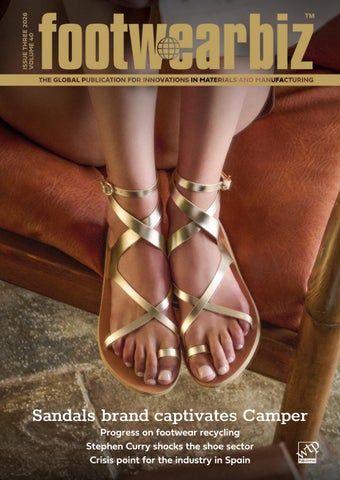
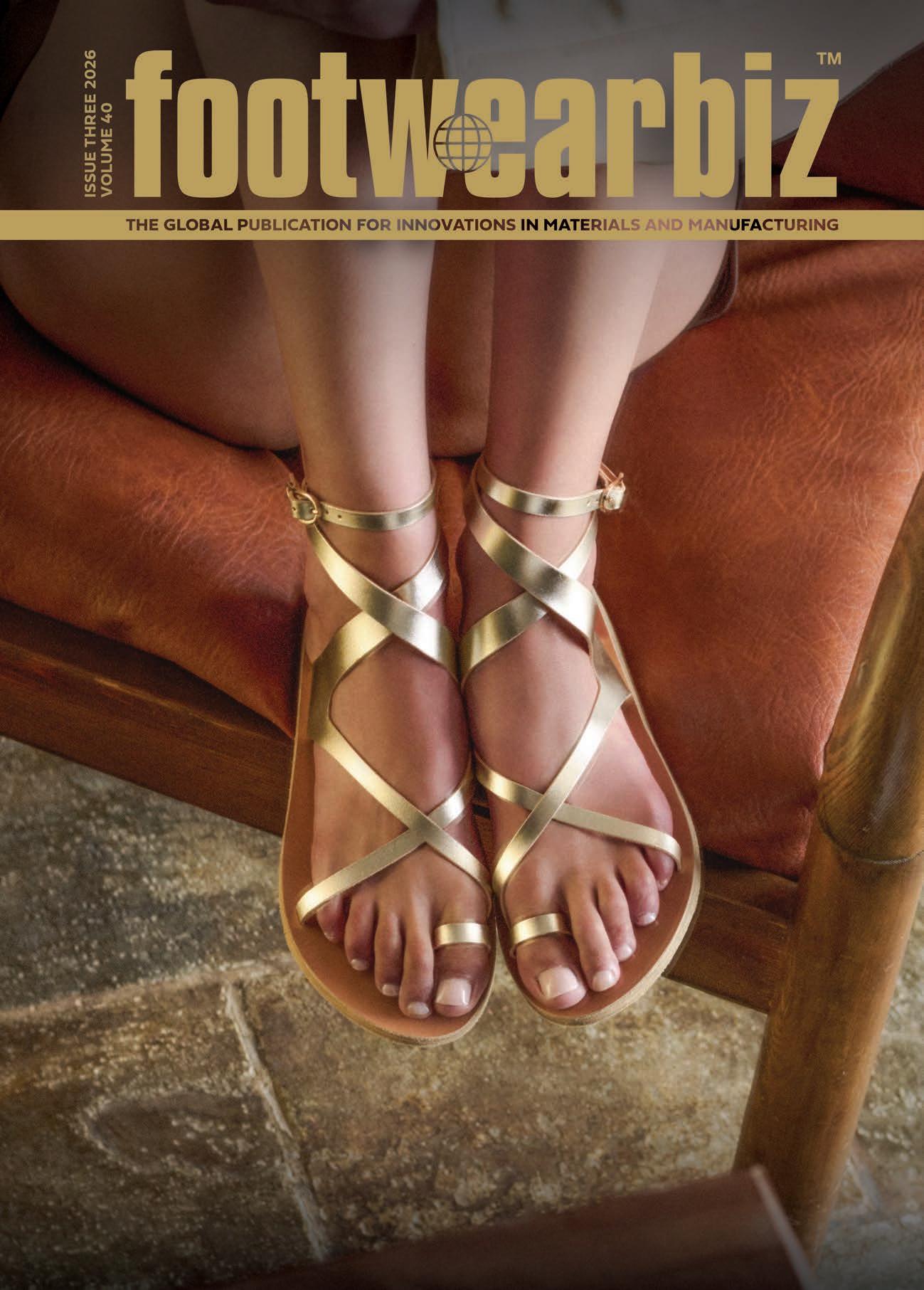
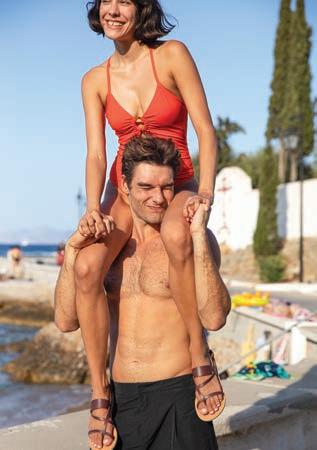
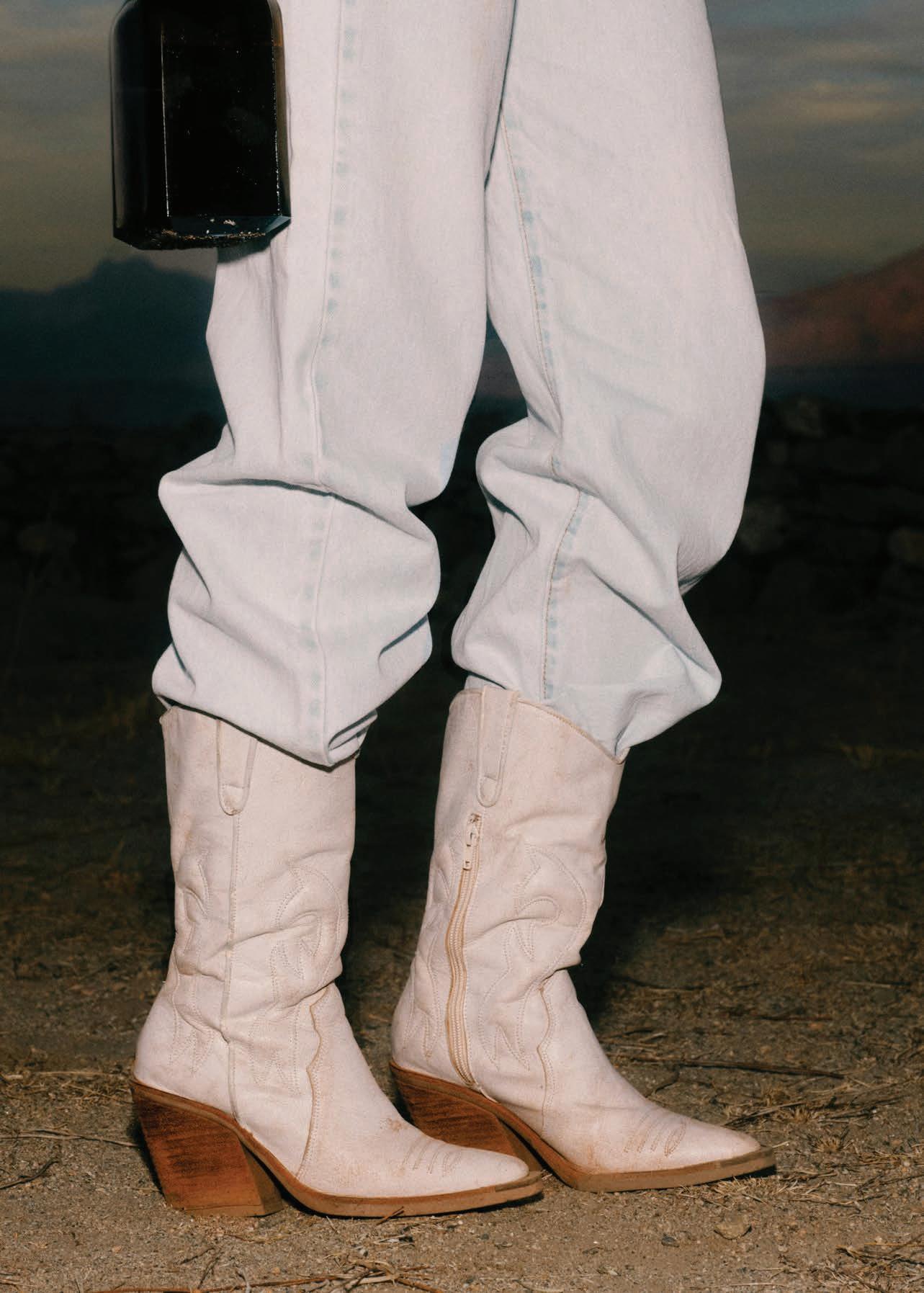
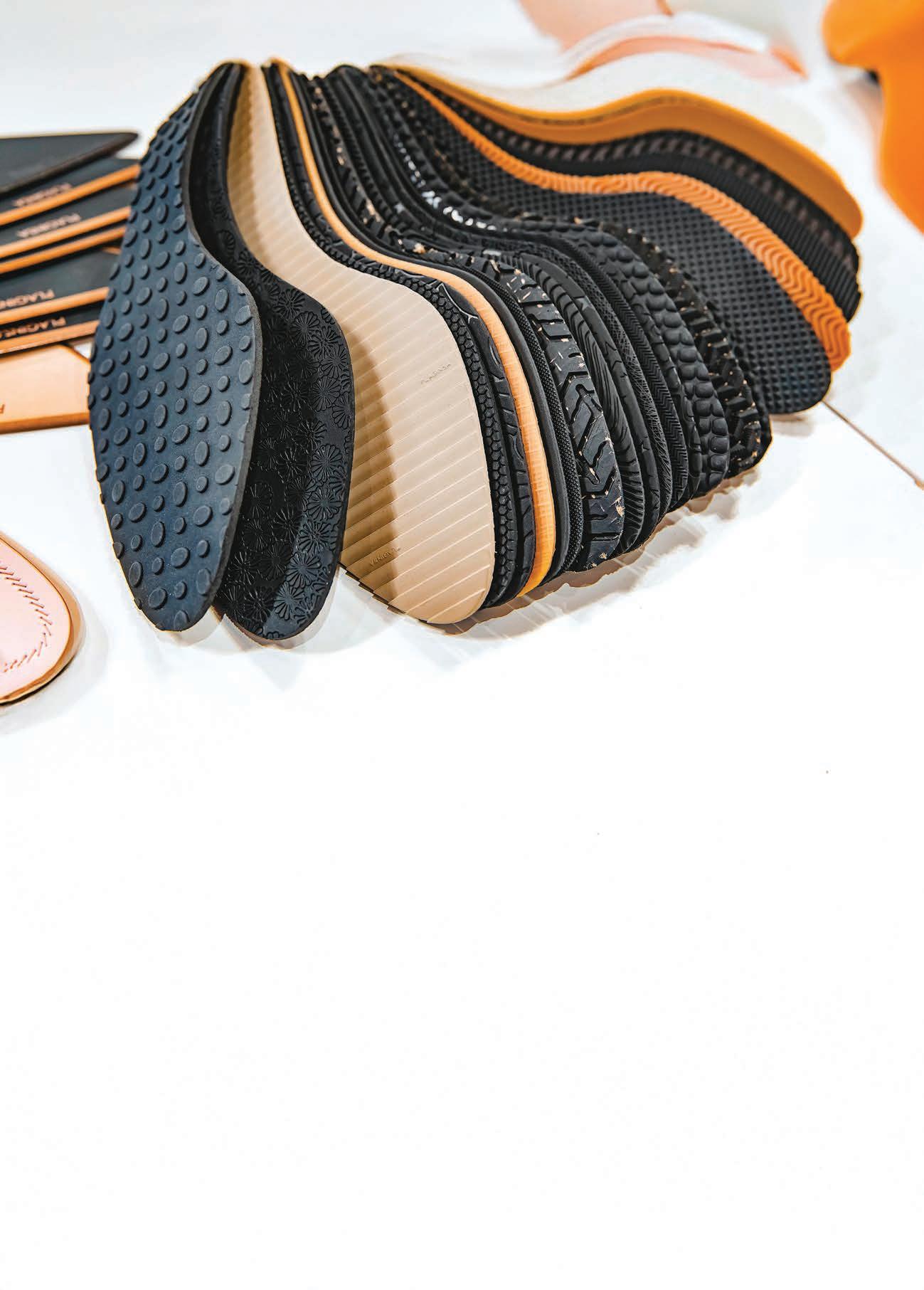
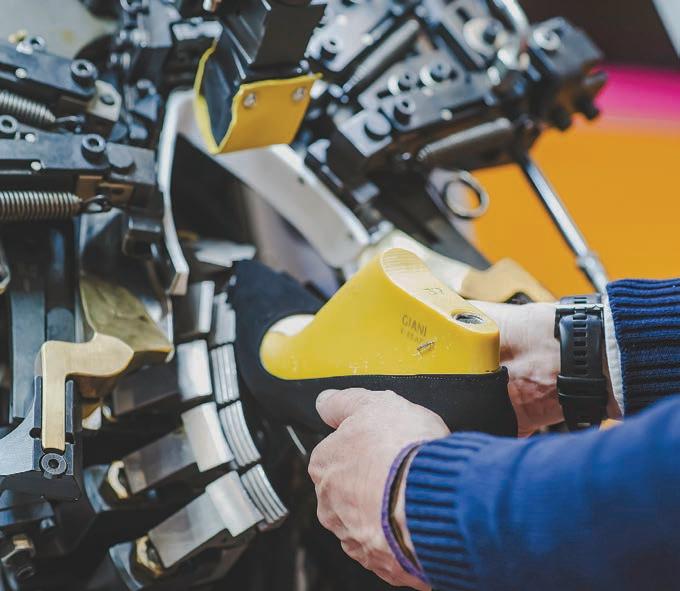
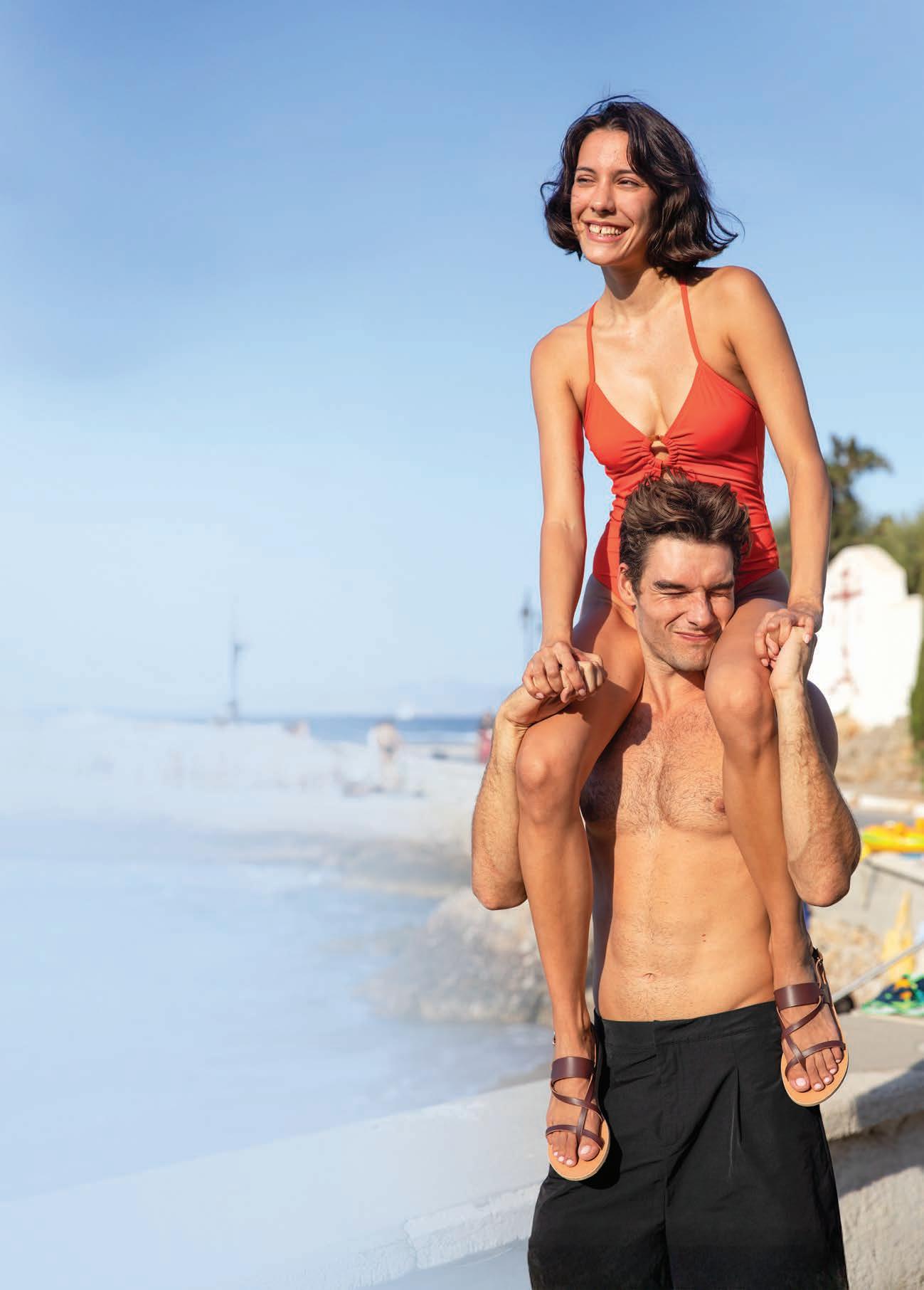
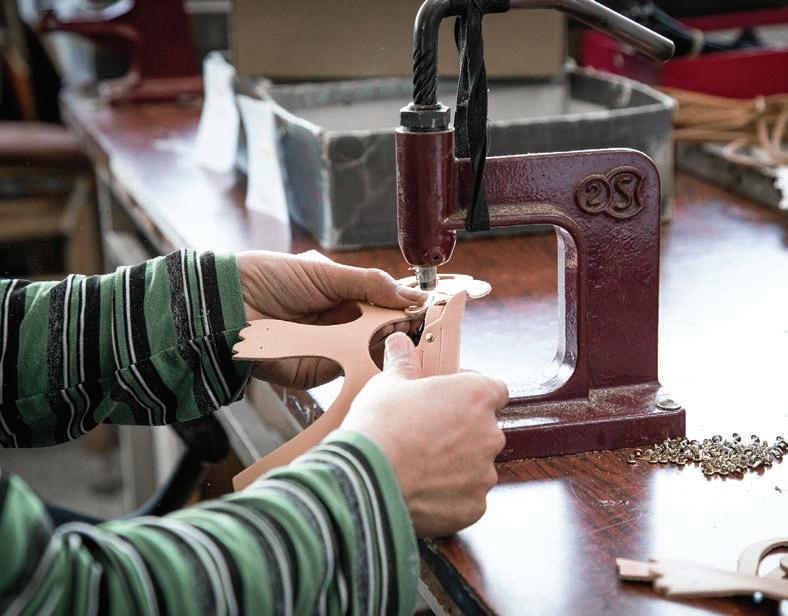
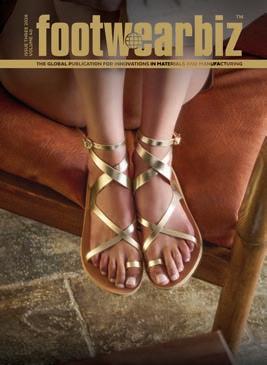
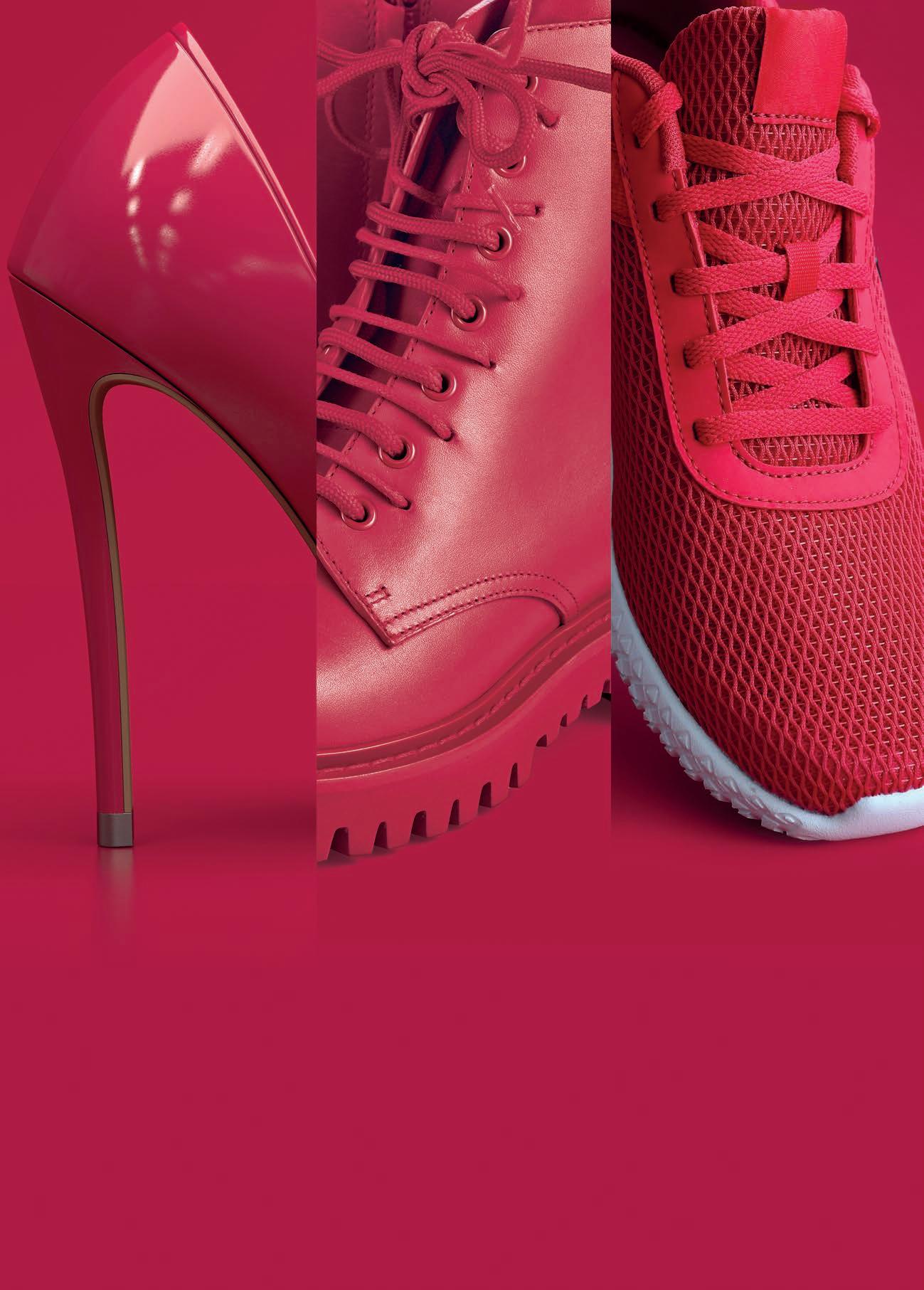
Footwear from Ancient Greek Sandals (AGS), showing the elegance and attractiveness that has moved Camper to take a majority stake in the Athens-based brand.
CREDIT: ANCIENT GREEK SANDALS
Editor
Stephen Tierney
Deputy editor
Clare Grainger
Contributors
Penny Leese
Sergio Dulio
Stuart Cleaver
Design
Tim Button
Global sales manager
Mat Abbott
Company secretary
John Collins
Publisher & CEO
Simon Yarwood
02 Global News
Highlights from around the world of footwear. For news on shoes every day, go to footwearbiz.com, the best news website in the business.
04 Footprints
People making an impact on the industry: designers, industry leaders and famous footwear lovers.
06 Industry & Innovation
Details of innovations from suppliers and service providers across the globe.
08 Backtrack
Headlines from footwearbiz.com, summing up the most recent developments in the global footwear sector.
MATERIALS, MANUFACTURING & INNOVATION
11 Traces of success
A two-year project to show that raw material traceability can work in Bangladesh has ended successfully. Leather, footwear and accessories manufacturers tracked millions of square-feet of leather from source to shoe.
14 Circle game
Footwear brands are backing a Fashion For Good initiative to make footwear materials more circular and to stop so many shoes from going to landfill.
18 Grain gains
An explanation of the technical and aesthetic reasons for footwear brands’ love of calf leather.
Sandals
captivates Camper
ADVERTISER’S INDEX
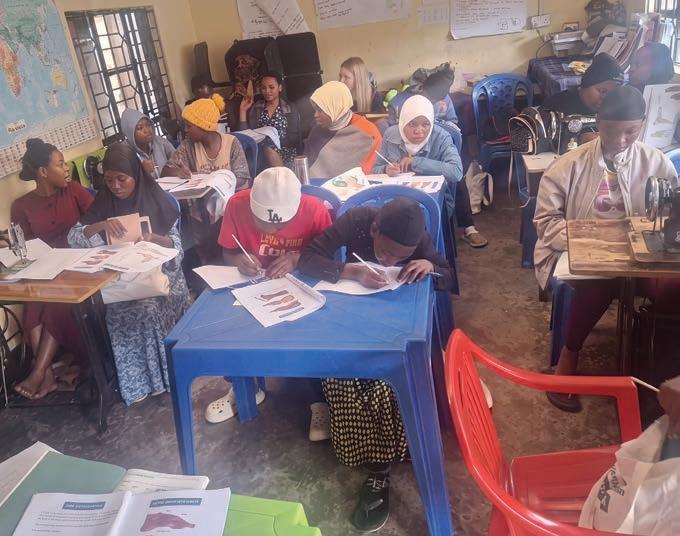
A student at De Montfort University in the UK has travelled to Tanzania to share her skills and help women there learn to earn a living from
Basketball star Stephen Curry caused amazement off the court when he announced a new partner for his footwear brand.
26 A cry for
The industry body that represents footwear components companies in Spain, AEC, warns that the whole sector faces a major crisis.
28 AGS buckles up for new chapter Athens-based footwear brand Ancient Greek Sandals now has Camper as its majority shareholder.
SALES OFFICES
Global sales: Mat Abbott T (+44) 151 3637600 E matthew@worldtrades.co.uk
India: S Sankaran E indianleather@yahoo.com
Pakistan: Abdul Rab Siddiqi E arsidiqi@yahoo.com
World Trades Publishing 2026
Contributions: The editor welcomes news items, articles and photographs for consideration and possible publication but no responsibility can be accepted for the loss or non-publication of such material. Opinions expressed by individual contributors do not necessarily reflect the view of the editor or publisher. Whilst every effort is made to ensure accuracy in reproduction, no responsibility can be accepted for the technical content or for claims made by manufacturers for product performance that are published. Publication in Footwearbiz cannot be construed as an endorsement for a claim or product by the publisher.
Footwearbiz (ISSN 2976-9809) is published 4 times per year by World Trades Publishing, The Old Stone House, Teeton, Northampton NN6 8LH, UK. Price UK £90, ROW £150 per year (four issues). Credit cards will be charged in GB Pounds converted at the daily bank rate. Your credit card company may charge you for this service. Graphic origination by WTP. Print by Bishops Printers, Walton Road, Portsmouth, Hampshire PO6 1TR, England. All rights reserved. ISSN 0894-3079.
World Trades Publishing 2026
All rights
or
in any form or by any means
electronic, recording, photocopying or otherwise, without the written permission of the publisher.
Global news
UK Footwear retailer Russell & Bromley closed the doors of the last of its remaining stores in early July. The company was still being run by the founding family at the start of this year, but in January it entered administration. Major retail group Next emerged as a buyer of some Russell & Bromley assets, but only wanted its three most profitable stores.
France High-end footwear brand JM Weston has said the repair workshop it runs at its headquarters in Limoges is now “breathing new life” into almost 10,000 pairs of shoes and boots each year. JM Weston said its commitment to repair services was a way of renewing rather than replacing shoes and of extending their useful life.
Czech Republic The Czech Republic national football team received gifts from its hosts for the 2026 World Cup. The team’s base was in Texas. Head coach, Miroslav Koubek, was presented with a personalised pair of cowboy boots from footwear manufacturer Lucchese. The boots featured the Czech flag, team crest and Mr Koubek’s initials.
Switzerland Swiss sportswear brand On has launched the Cloud X 5 featuring a midsole made with CleanCloud, an EVA foam technology that uses captured carbon emissions as a raw material. The company has scaled its use of CleanCloud EVA midsole to more than one million pairs, four years ahead of its original target.
Italy The Italian footwear sector achieved export revenues of €3 billion in the first quarter of 2026, a fall of 1.6% compared to the same period last year. Industry association, Assocalzaturifici, said figures also show “more encouraging signals” in the domestic market. Consumers in Italy spent nearly €1.3 billion on footwear in the first
Mexico CICEG, the main shoe industry body in Mexico’s biggest footwear-producing state, Guanajuato, hosted a series of seminars on July 22. The all-day event took place at CICEG’s headquarters in León and aimed to share new information and ideas that the organiser said would increase competitiveness in the sector.
Brazil The American Apparel and Footwear Association (AAFA) has told a committee in Washington DC that proposed tariffs of 25% on imports from Brazil would add to the burdens that US companies and families are facing. In 2025, US companies paid nearly $61 million in tariffs on footwear imported from Brazil. Footwear faced an average tariff rate of 23%, compared with 7.8% across all imported products.
Ghana The Ghana Leather and Footwear Manufacturers Association (GLFMA) has called on its national government to take action to support the shoe industry. GLFMA said the domestic footwear sector was facing “imminent collapse”. The association said more than 70% of the shoes sold in Ghana in 2024 and 2025 were imported from China.
China Sporting goods retailer Decathlon has signed a strategic cooperation agreement with Reshine, a footwear manufacturing subsidiary of Chinese leather group Henan Prosper & Colomer Moda. Reshine manufactures athletic footwear designed to offer comfort, durability and reduced environmental impact.
• A fatal fire occurred in July at a factory making athletic footwear in China. The fire broke out at a production facility run by Huiteng Shoes in Chendai, near Jinjiang, in Fujian province. State media outlet Xinhua reported 28 fatalities. China’s president, Xi Jinping, said the authorities would hold to account those responsible for any lack of safety provisions at the factory.
US Footwear manufacturer Red Wing Shoe Company has diverted almost 850,000 kilos of leather waste from landfill across its facilities in Minnesota since September 2025. All leather waste from the Minnesota sites is now processed into biochar, a carbon-rich material used to support soil health and long-term carbon storage.
Pakistan Pakistan’s leather sector registered export revenues of nearly $740 million for the first ten months of the financial year that has just ended. The figure was flat with the same period a year earlier. For the period spanning July 2025 to April 2026, exports of footwear brought in revenues of $152.9 million, an increase of 3% year on year.
India Bata India has surpassed 2,000 retail outlets and plans to expand its network to 3,000 stores through a franchise-led model. India is Bata’s largest global market and a key manufacturing and sourcing base, with the company selling around 50 million pairs of footwear there annually.
Japan Footwear brand Onitsuka Tiger opened its biggest ever flagship store in the Shinjuku district of Tokyo in mid-July. Spanning four floors and a total area of 1,837 square-metres, the store offers the brand’s whole portfolio under one roof. This includes Heritage, a modern reinterpretation of the Onitsuka Tiger archives; Contemporary, showcasing collections from Milan Fashion Week, and Formality, featuring the brand’s formal footwear category.
New Zealand Performance wool producer Nuyarn Technologies has teamed up with Ugg to supply linings for the brand’s Otzo clogs. Through its spinning technology, New Zealand-based Nuyarn drafts superfine merino wool around performance filaments, rather than twisting them, which results in lightweight and durable yarns.
Indonesia The International Union of Shoe Industry Technicians (UITIC) has announced that Jakarta will be the venue for its twenty-third international congress. The event will take place next year, from August 2-4. UITIC said the congress would take place with the support of the Indonesian national footwear association, Aprisindo, and of local event partner, Krista Exhibition.
Footprints
Fierce and friendly
US designer Willy Chavarria has collaborated with footwear brand Ugg on a unisex collection, which was shown at his spring-summer 2027 Paris Fashion Week show.
The former vice-president of design for Calvin Klein, and who now runs an eponymous label, described the tie-up as “the archival influence of leather culture wrapped in the warmth and intimacy that only Ugg can provide”.
He added: “We’ve designed this collection to be fierce and friendly.”
Last month, Ugg owner Deckers reported a 10% increase in annual sales to $5.5 billion. Ugg sales rose 8% to $2.7 billion and Hoka sales grew 16% to $2.6 billion. Steve Fasching, chief financial officer, said: “Our fiscal 2026 results reflect another year of exceptional performance, with record revenue, industry-leading operating margins and double-digit earnings per share growth.”
Leadership changes at Desma
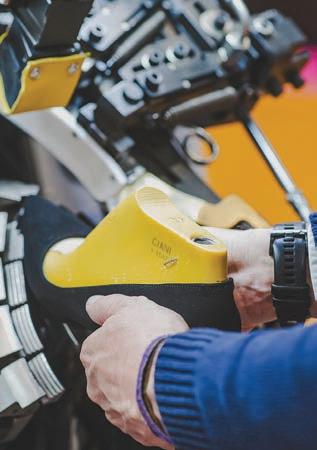
Footwear technology developer Desma has announced that sales director, Marten Beiersdorf, is to take up the roles of managing director, chief sales and chief technology officer. Mr Beiersdorf has worked at Desma in various roles for more than 20 years. He became sales director in 2016. The company has undergone substantial change in its leadership team. Chief executive Christian Decker left in April. Klaus Freese, who had been co-chief executive with Mr Decker, is now Desma’s chief operating officer. The company has referred to Narith Meksavanh as its chief executive now.
Mr Meksavanh is chief executive of Franco-German industrial group NMP, which acquired Desma from previous owner Salzgitter last year. NMP Group develops machinery for processing soft materials.
Glenn Barrett moves on
Parent group Coats has announced that Marius Wirtz has taken over as chief executive of its insole brand OrthoLite. He took over from OrthoLite founder, Glenn Barrett, on July 15.
Mr Barrett, who ran OrthoLite for nearly 30 years, will take up a senior advisory role in the wider Coats Group and become part of the group’s executive team.
Marius Wirtz steps into the role after a long career at Bayer and Covestro. He served, most recently, as Covestro’s head of supply chain in Asia and as managing director of its operation in Hong Kong. In his new leadership role at OrthoLite, he will continue to be based in Hong Kong.
He said he was thrilled to be joining OrthoLite “at such a pivotal and exciting time”, adding that he was honoured to continue the legacy that Glenn Barrett has built.
BFA names new CEO
The British Footwear Association (BFA) has appointed Ian Cartwright as its new chief executive officer, succeeding Richard Shetliffe
Mr Cartwright is currently chief operating officer at Mahabis and has more than 30 years’ footwear industry experience, having previously held roles at Calla Ltd., Royal Albartross, Seven Feet Apart, Hudson Shoe Agencies and Base London.
UNIC names new president
The new president of Italian tanning industry representative body UNIC is the chief executive of Bonaudo, Alessandro Iliprandi. Milan-based Bonaudo produces high-quality leather for the footwear, apparel and leathergoods sectors. It has manufacturing sites in Veneto, Tuscany and Lombardy.
Different thinking
Sports group Nike recently hosted UK-born designer Paul Smith at its headquarters in Oregon. Nike’s chief innovation officer, Phil McCartney, said afterwards that the talk had offered him and his colleagues “a strong reminder to think differently, look beyond the obvious and continue pushing how we think as creators”.
Finance move
Nike has appointed David Denton as its new chief financial officer, replacing Matthew Friend. He joins Nike from Pfizer, where he has served as chief financial officer and executive vice-president since May 2022. He brings more than 30 years’ finance and operating leadership experience to the athletic footwear company.
Former Nike exec joins Puma Puma has appointed Marcia Dos Santos as vice-president for its core business, a newly created position. Ms Dos Santos joins from Nike, where she most recently served as vice-president of merchandising for women’s products in Europe. She brings more than 20 years’ experience in the sporting goods industry.
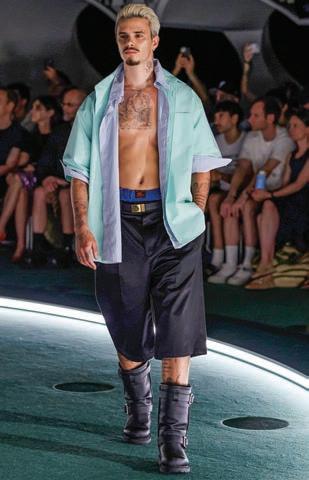
Romeo Beckham in UGG Willy Chavarria Biker.
CREDIT: WILLY CHAVARRIA/TAYLOR RAINBOLT
He will report to Pasquale Abruzzese, who is the chief executive of Coats Footwear and chief operating officer of the Coats Group.
For his part, Glenn Barrett said: “It has been the honour of my life to serve the footwear industry and build incredible relationships through OrthoLite. This company has been built on the power of trust, relationships and collaboration, and I have every confidence that this approach will continue to drive OrthoLite’s next chapter of growth.”
Under Glenn Barrett’s leadership, OrthoLite pioneered the use of open-cell PU technology in footwear, establishing a vertically integrated global platform and component brand recognised for its performance, comfort and sustainability credentials.
New director general sets out priorities for CTC
The director general of footwear and leather research and testing institution CTC, Maud Rascle, has said she aims to build on the organisation’s strengths and open up new opportunities.
Ms Rascle has taken over as director general from Françoise Nicolas, who has retired. She joined CTC at the start of the year and worked alongside Ms Nicolas for several months before taking over.
“These months have given me an opportunity to see CTC’s wealth of expertise and breadth of activity,” the new director general said. “We have a unique position in the leather and footwear sector.”
She said she had seen a high level of trust in CTC from member companies trust and that this was based on the organisation’s “technical excellence” and on the commitment of its teams, in France and overseas.
She laid out a series of priorities for CTC in the months and years ahead, saying the institute would work to help companies speed up their adoption of sustainable practices. She said this would range from renewable energy projects to eco-design principles.
Secondly, Ms Rascle said CTC would aim to help companies become more digital, integrating new technologies, including artificial intelligence, into their production processes.
Helping the industry survive and thrive through strengthening the skills of the people who work in it is another of the main aims of the new director general. She also said she wanted to help member companies reach new markets, while making sure their products comply with industry regulations.
Finally, she said she wanted to help the industry develop its communication skills.
After Allbirds
Parent group Columbia Sportswear has announced that Joe Vernachio became president of its Sorel outdoor footwear brand on June 22.
Mr Vernachio has worked at the group before, leading another of its brands, Mountain Hardwear. He left that role to become chief operating officer and, later, chief executive of Allbirds.
Group chief executive, Tim Boyle, commented: “We are excited to welcome Joe Vernachio back to the Columbia Sportswear family. He is a terrific leader, who can build on the great work, talent and momentum in place at Sorel.”
Allbirds launched in 2015, more than 50 years after Sorel first came to market. By the end of 2021, headline-grabbing, sustainability-focused Allbirds had floated its stock on Nasdaq. Its peak value reached $4.1 billion.
In April 2026, it announced that it was selling its intellectual property to brand management company American Exchange Group for $39 million, which will continue operating the Allbirds brand, with the original Allbirds company being wound down.
At the time, Allbirds said: “We began our journey in 2015 with fundamental beliefs about the emerging generation of consumers. These consumers do not want to compromise between looking good, feeling good, and doing good.
Talent recognition
The Worshipful Company of Cordwainers has announced the winners of the Cordwainers Awards 2026, celebrating emerging footwear talent from across the UK in design, craftsmanship and sustainability.
In design, first place went to Yevheniia Mizevych, followed by Ceci Sariol in second and Silva Coco in third. Commendations were awarded to Rose Frankland, Pranav Sudhir and Yi Wang
The Craft of Shoemaking Award was won by Matthew Gill, with Damon Ma in second and Ross Edwin Bell in third, alongside a commendation for Robert Hardy Additional honours included Haiyu Bo, who received the Daniel Charkow Award, Merrie Elisabet Wells, who won the Sustainability Award, and Anna Boutashkova, who received the Stuart Weitzman Award.
Book value
Luxury brand Berluti has taken inspiration for a new collection from The Little Prince, the famous book by Antoine de Saint-Exupéry. References include the Alessandro lace-up shoe being adorned with a rose, which represents love and devotion in the story. Berluti points out that almost all of the products in the collection can be repaired in its workshop.
Surprise appearance
Valencia’s regional footwear industry body, Avecal, held a seminar for members in July. Prominent designer Ágatha Ruiz de la Prada made a surprise guest appearance at the event in Alicante, taking the shoe industry professionals present through her personal and professional life. She described a journey “full of creativity, colour and authenticity”, Avecal said.
Leaner McQueen
Luxury group Kering has appointed Gianfranco D’Attis as chief executive of Alexander McQueen. Mr D’Attis took up the role in June, succeeding Gianfilippo Testa Kering said the Alexander McQueen brand was entering “a new phase”, supported by “a leaner and more disciplined model, built around focused collections”.
Industry & Innovation
From road to trail
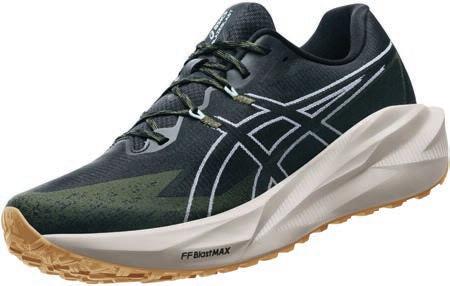
Sports group ASICS has unveiled a new trail-running footwear model, the Blazeblast. The company said the shoe is designed to bring “a fresh sense of energy, fun and versatility” to the trails. The Japanese company said it had developed the shoe for a new generation of trail-runners. It talked of making trail-running approachable and of using cushioning to make every trail run feel “more enjoyable, dynamic and accessible”.
At the core is the company’s FF Blast Max cushioning. This works alongside “a trampoline-pod construction” in the forefoot, designed to amplify the shoe’s bounce sensation and create a more energetic toe-off experience. Together, these technologies provide a comfortable and dynamic ride across a variety of trail terrains, ASICS said.
The shoe has an engineered woven upper for comfort and breathability, while a proprietary ASICSGRIP outsole with 2.5 millimetre lugs provides traction across the terrain.
These features, combined with a high-stack platform and lightweight construction, will help runners “move confidently from road-to-trail and beyond”, the company concluded.
Global product manager for performance running footwear, Magdalena Gassebner, said ASICS had spoken to consumers who said they loved “the bounce and fun” of the brand’s road-running shoes and wanted the same feeling on the trails. She said the Blazeblast was ASICS’s answer and described the launch as “an exciting opportunity to welcome a new generation of runners into the trail category”
John Lobb confirms Northampton factory project
British luxury shoemaker John Lobb has announced plans to build a new factory in Northampton, England, reaffirming its commitment to the region’s shoemaking heritage.
The luxury footwear company, which is part of the Hermès group, said it will relocate from its current historic workshop to a new site in Northampton city centre. Construction is expected to be completed in 2029.
According to the company, the investment will secure its future in a region known for shoemaking expertise and skilled craftsmanship. The new facility will be designed in line with Hermès’ environmental objectives, with a focus on energy efficiency, operational performance and improved working conditions.
Sourcing plant for adidas
Athletic footwear group adidas is set to expand its sourcing capacity in India, with production for the brand due to begin at a new plant operated by Phoenix Kothari Footwear in Karur, Tamil Nadu.
The facility is a joint venture between Kothari Industrial Corporation and Taiwan’s Evervan Group. It was expected to begin manufacturing adidas footwear before the end of July.
The companies are planning further expansion in India, with the new plant forming part of a broader investment programme aimed at increasing footwear production capacity.
Careers push
The metaskills4TCLF project has reported progress on initiatives aimed at supporting Europe's textile, clothing, leather and footwear (TCLF) sectors. Partners recently reviewed developments as the initiative enters its third year. According to project partners, work is advancing on 11 national TCLF skills strategies, the creation of new TCLF Regional Skills Partnerships and activities designed to improve the attractiveness of careers within the sectors.
Circular step
The Horizon Europe-funded ECOSTEP project has officially launched, bringing together 10 partners from across Europe to support the transition towards a more sustainable and circular footwear sector. The project aims to promote ecodesign throughout the footwear value chain. It will focus on improving circularity, durability, reparability, recyclability and overall sustainability in footwear products and manufacturing processes.
Separate ways
Japanese sports group Asics has announced it will separate its Onitsuka Tiger business into a wholly owned subsidiary, OT Group, through an absorption-type company split effective January 1, 2027. Under the restructuring, OT Group will act as the global headquarters for the brand while remaining fully owned by Asics, with no plans for an initial public offering.
Madrid meeting
Italy’s consulate in Madrid hosted an event for brands in early July.
Footwear machinery manufacturers’ association Assomac and tanning industry body UNIC said the event represented an opportunity for telling the story of “the excellence of ‘Made In Italy’ and the strategic synergy that exists between leather manufacturers and technology developers”. They said representatives in Spain of around 180 brands attended.
CREDIT: ASICS
Micam launches new campaign
Organisers of the Micam exhibition in Milan have launched a new international communications campaign called Shoes First.
They said the new campaign would be a prominent part of the autumn edition of the exhibition this year, which runs from September 13 to 15. Shoes First will then continue into the 2027 editions of Micam, for which the dates are February 21 to 23, and September 12 and 14.
CREDIT: MICAM
The Micam team said Shoes First was more than a slogan. Instead, it said it encapsulates a transformation that has redefined the value and significance of footwear in contemporary life.
“Shoes represent much more than an aesthetic choice,” said Micam president, Giovanna Ceolini. “They embody stories, territories, craftsmanship, expertise, and a capacity for innovation.”
She explained that the intention behind Shoes First was to interpret and communicate “a transformation that involves the entire industry”.
New working group
The representative body of Italy’s leather and footwear machinery manufacturers, Assomac, has estimated revenues of €512 million for 2025. This would be a fall of 11% year on year.
It said at its annual general meeting that tanning machinery was down by nearly 25% year on year. The decline for leathergoods machinery was lower at 9.8%, while revenues for footwear machinery were down by 4%.
In response, Assomac has said it will set up a new working group, with representatives of the tanning, leathergoods and footwear sectors as members. It said the working group would be “a stable forum for dialogue” and would allow companies across the leather and leather products value chain to develop shared strategies. They will also be able to speak with one voice to national and European institutions.
Vietnam targets greener growth
The footwear industry in Vietnam is increasing investment in sustainable production and domestic supply chains as it seeks to strengthen competitiveness in global markets.
According to industry figures, Vietnam’s footwear exports reached $11.9 billion in the first half of 2026, becoming the largest footwear supplier to the US market for the first time. Exports to the US totalled $4.5 billion, accounting for almost 39% of the sector’s export value.
The Vietnam Leather, Footwear and Handbag Association (Lefaso) has called for greater development of domestic raw material supply chains to reduce reliance on imports and improve resilience against geopolitical and trade-related disruptions.
Lefaso also highlighted growing sustainability requirements in key markets, particularly the EU, driving investment in clean technologies, automation, digitalisation and environmentally friendly materials.
Expansion plans
Foam materials developer DSC has announced plans to expand the capacity of its factory near Babakan in Indonesia. It opened the facility in 2023. This new project will include investment in training, engineering, testing, equipment integration and compliance systems. Chief operating officer, Mei-Fen Wei, said the group wanted to bring “advanced innovation capabilities” to customers there.
Flight of fancy
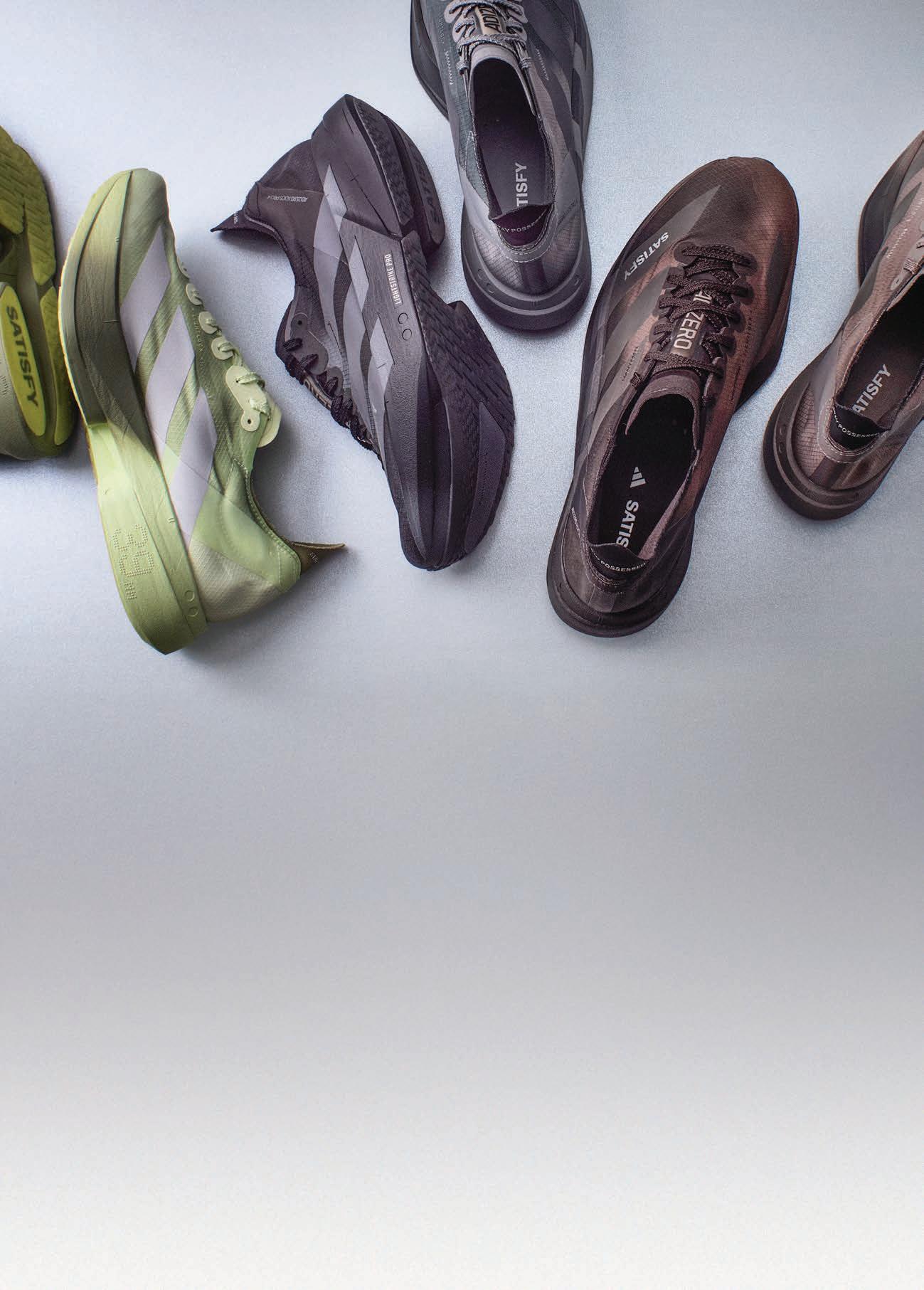
Footwear group adidas has spent 18 months researching a shoe that it says can help athletes jump higher and land more softly. The shoe, Crazyflight 7, is aimed at sports such volleyball and handball. It has improved cushioning and enhanced energy return, and uses a proprietary midsole called Lightstrike Pro.
Durban dialogue
South Africa’s department of trade, industry and competition (DTIC) has hailed as a major success a new event to set up dialogue between buyers from major retail groups and manufacturing companies in footwear and leather. The event took place in Durban at the start of July. DTIC said the event gave manufacturers the opportunity to engage directly with retail buyers.
Closer contact
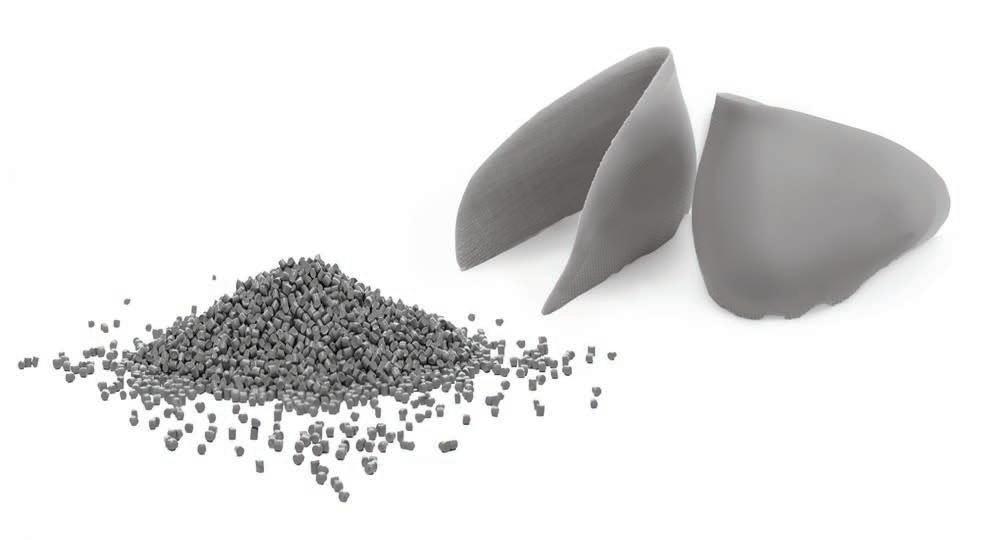
Covestro has opened a thermoplastic polyurethanes (TPU) application development centre in Guangzhou, China, which it has described as a significant milestone in bringing innovation closer to customers. TPU is used by the footwear sector for various parts of the shoe, including midsoles, outsoles and heel counters.
Devoted to deer
High-end footwear brand Artioli has used deer leather to create a new version of its penny loafer for its most recent collection, giving the shoe the name Viareggio. The Lombardy-based brand has said it believes “the exceptional softness” of deer leather, combined with a lightweight natural flat rubber sole, will offer wearers of the Viareggio “a feeling of effortless comfort and freedom”.
Backtrack
16 July 2026
UK shoe retailer narrows loss outlook
13 July 2026
Pou Sheng retail revenue declines in June
09 July 2026
Shoes & Leather Vietnam under way
06 July 2026
Ryka focuses on female runners
03 July 2026
La Sportiva announces €20 million investment
Clarks targets growth in Europe following ‘transition’ year
02 July 2026
Figures mostly flat for Nike, but China and Converse cause concern
Vietnam opportunity for Brazilian leather manufacturers
24 June 2026
Castore acquires majority stake in Grenson Shoes
22 June 2026
Ugg design patent ruled invalid by jury
18 June 2026
Social dialogue meeting addresses TCLF challenges
12 June 2026
FDRA: families are footing the tariffs bill as shoe prices jump again
11 June 2026
South Wales opening for Footasylum
Shoe Carnival to become Shoe Station Group
08 June 2026
Boost for Caleres in Q1 after Stuart Weitzman acquisition
Footwearbiz’s publishing cycle and limitations on space make it impossible for us to run more than a carefully selected sample of news from across the industry. However, we publish hundreds more stories on www.footwearbiz.com. The site is updated every day with news from every continent and every part of the industry, making footwearbiz.com one of the most comprehensive archives of news anywhere on the web for the global footwear industry.
We list below just a few of the headlines that have appeared on the site in recent weeks — www.footwearbiz.com allows you to read the news items you may have missed.
03 June 2026
Capri returns to profitability
Study finds almost a quarter of discarded shoes undamaged
02 June 2026
Schuh sales fall as Genesco reports Q1 growth
01 June 2026
Footwear falls continue for China in first four months
Global tour for 3D-printed Air Max designs to start in Tokyo
29 May 2026
Football culture inspires Lotto-H&M tie-up
Bata India profit hurt by charges
28 May 2026
Another record year for Deckers
Strong Q1 performance at Golden Goose
27 May 2026
Buyers prepare for Madrid event
26 May 2026
Long-term focus is paying off, Richemont says
JD Sports publishes inaugural Global Impact Report
22 May 2026
Hoka and Ugg lift Deckers revenue
21 May 2026
Another record for Boot Barn as it continues store-opening spree
First-quarter growth for ASICS
20 May 2026
Profit growth for Dr Martens
19 May 2026
Ferragamo’s turnaround bears fruit with growth in America
Increase in volume for China’s leather footwear exports
18 May 2026
Solid start for Wolverine Worldwide US footwear inflation outpaces wider price growth
15 May 2026
Birkenstock maintains growth momentum
12 May 2026
Success pushes ‘absolute emissions’ up for Amer Sports
Steve Madden reports higher Q1 revenue
08 May 2026
Wolverine revamps leadership in Work Group brands
07 May 2026
‘Live commerce’ workshops to be part of BF Shoes programme
Adidas to supply footwear for 2026 Solheim Cup
06 May 2026
Leather removed from EUDR scope
Footwear revenues up overall for Columbia, as Sorel suffers
05 May 2026
Brooks posts strong start to 2026
Q1 fall for Puma, but ‘foundations for future growth’ are in place
01 May 2026
Falls for footwear exports in France.
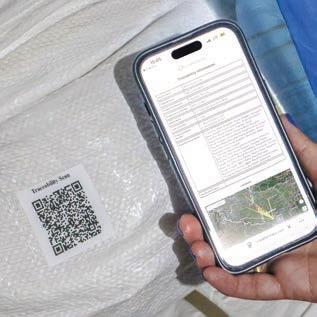
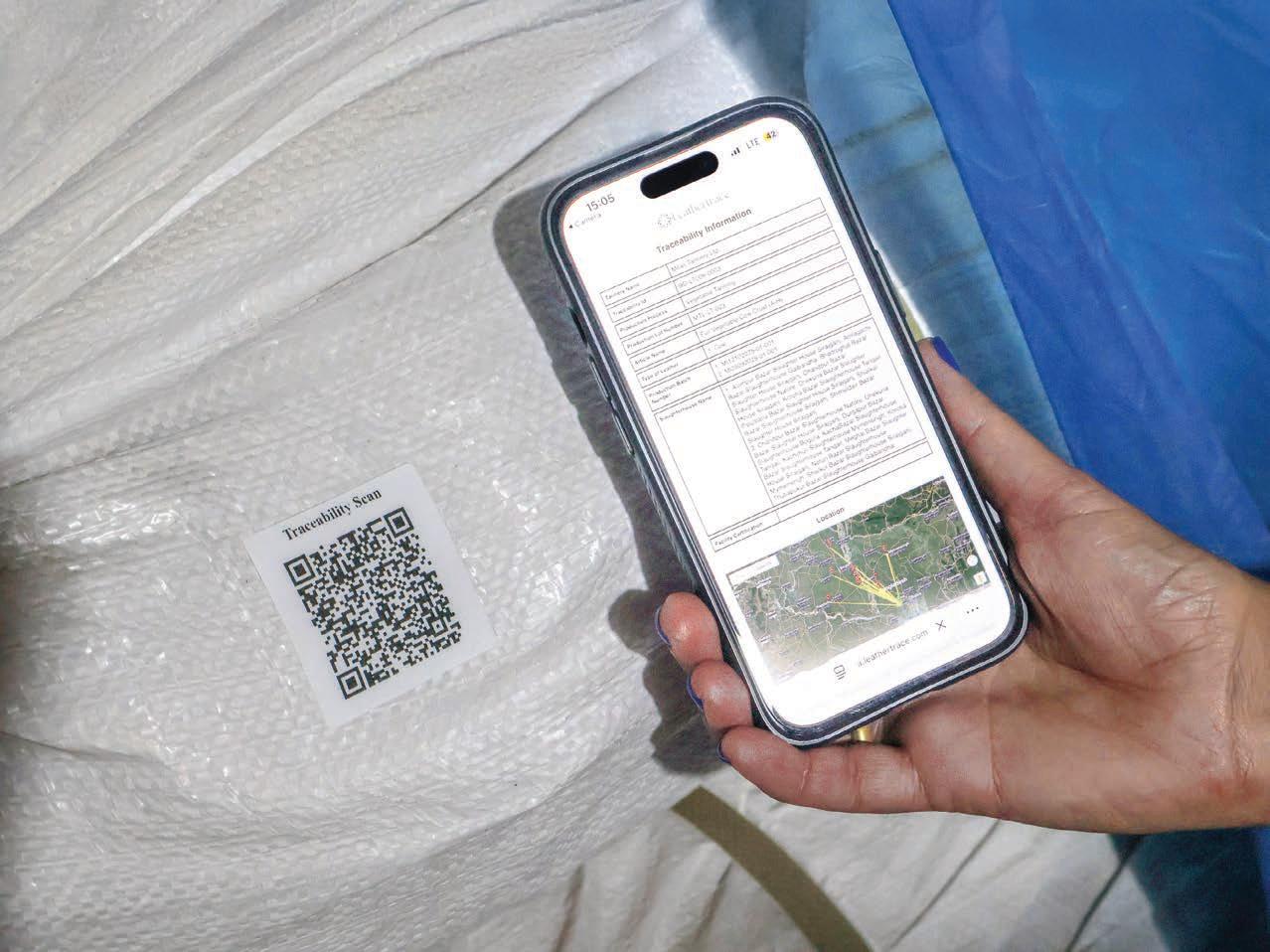
Leathertrace in action. A scan of bovine leather at the Mitali tannery in Bangladesh flags up the slaughterhouses the hides came from.
A new chapter for Bangladesh
Aproject called Leathertrace Bangladesh has come to a successful conclusion. Taking two years to complete, Leathertrace involved 11 leather manufacturers in Bangladesh, three finished product companies and more than 150 suppliers of hides and skins.
Working with academics from UK universities, nonprofit organisation the Sustainable Leather Foundation, and technology and management partners in Bangladesh, the project leaders successfully traced almost 200,000 cattle hides and 3 million square-feet of finished leather. This included material that went into shoes and leathergoods for customers in Europe and North America. Leathertrace also had the support of the United Nations Trade and Development body and of the UK’s Foreign, Commonwealth & Development Office.
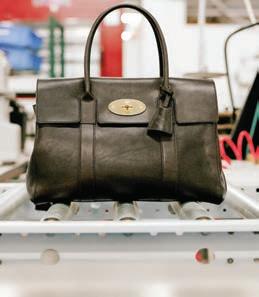
At an event in London at the end of June to mark the success of the project, which leathergoods brand Mulberry hosted, the managing director of the Sustainable Leather Foundation, Deborah Taylor, said: “Traceability is where we have to start from and Leathertrace has found a system that will work and will also scale up. The government in Bangladesh is working on a plan for the footwear and leather industry there. We want the work that has come out of this project to be part of that plan.”
A traceability project in Bangladesh successfully tracked millions of square-feet of leather from source to footwear and other finished products.
Great expectations
Dhaka-based consultancy Idea Tree was one of the project partners. Its head of operations, Kauser Ali, worked as the main project coordinator for Leathertrace. Summing the initiative up, he says: “For two years we worked together on the transformation of the footwear and leather industry in Bangladesh to make it more transparent and more circular. We want this to help position Bangladesh as a global leader in sustainable production.”
He explains that the project partners were working to address global expectations regarding environmental compliance and responsible sourcing. “We built and tested a traceability platform,” he continues, “we explored circular-economy options and we have now developed a policy blueprint, which we hope will
become an important resource for government policy-makers and industry leaders.”
This message seems to have landed already with the country’s ministry of commerce. Jointsecretary, Mostofa Jamal Haider, insists that footwear, leather and leathergoods can play an evergreater role in the development of Bangladesh. “We want to establish Bangladesh as a responsible sourcing destination,” he says. His colleague and fellow joint-secretary, Nargis Mushida, explains that the footwear and leather sector is the secondlargest earner of export revenues that the country has, behind readymade garments. “We want to move forward,” she says, “and to increase our industrial capability. To do this, we need stronger digital systems, we need good policies and we need our international partnerships to continue.” Her belief is that Leathertrace will help Bangladesh move forward on all these fronts.
Distant second
However, from an industry perspective, the managing director of Apex Footwear and current president of the Footwear Leathergoods and Accessories Exporters’ Association (FLAXA) of Bangladesh, Nasim Manzur, points out that the footwear and leather sector is, in fact, a very distant second to garments at the moment. “Our ready-made garments industry has export revenues of around $45 billion per year,” he says. “We are the second-biggest contributors, but we are at a level of around $1.5 billion. Bangladesh desperately needs to diversify and lower its dependence on the garment industry. We hope that the blueprint that the Leathertrace project has produced can help to make growth happen for the footwear and leather industry.”
The United Nations placed Bangladesh on its list of Least Developed Countries (LDCs) in 1975. Its graduation from that list is overdue. Following delays caused by covid-19, it should cease to be an LDC in the next few years. The benefits of being an LDC include
preferential trade access to some markets. When a country graduates from the LDC list, as Bangladesh is about to do, it leaves some of that preferential treatment behind and has to be ready to compete on its own terms. “We are going to graduate from that group in the next two or three years,” Nasim Manzur says. “If we don’t diversify, we could be in trouble.”
Further funding
His FLAXA colleague, Ibnul Wara, who is managing director of leathergoods manufacturer Austan, says the Leathertrace project proves what is possible in Bangladesh. But he insists that “piloting is over now” and that it is “time to scale” and that the private sector’s commitment to this is absolute. Private-sector partners are willing to fund the running of Leathertrace for a further six months, while additional partners come on board.
Mr Wara’s company is a longstanding supplier to German leathergoods brand Picard, which has been sourcing in Bangladesh since the mid-1990s. He accepts there is still work to do but he also argues that some assumptions international companies make about Bangladesh are misplaced. He says: “When we talk about supply chain traceability in the leather sector, we often look at it through the western lens of organised farming and formal slaughterhouses. This is not what we have in Bangladesh. Hides in our
country travel through a complex web of multiple hands before reaching the tannery.”
Untold story
And yet Bangladesh has what he calls “a unique, beautiful story that often remains untold”. Cattle there are not mere commodities but are reared by families in small villages as part of their households. “These animals are often treated with more care than you can imagine,” Ibnul Wara explains. “For example, families will often put mosquito nets over their cattle while doing without that protection themselves.”
On becoming part of the Leathertrace project, his view was that bringing traceability “to such a fragmented sector” would be almost impossible, but when he saw a demonstration of the digital platform, he says he was “blown away”. Austan is a handbag manufacturer with its own leather finishing unit. Until now, the managing director says, its traceability efforts ended at the point of crust sourcing. “Today, thanks to Leathertrace, our products can be traced all the way from the slaughterhouse to the finished products that we export all over the globe,” he adds.
He calls this the beginning of a new chapter for Bangladesh. He admits to being very excited about it.
“Traceability is no longer a luxury or an option,” he concludes. “It is a strict mandate for market access.”
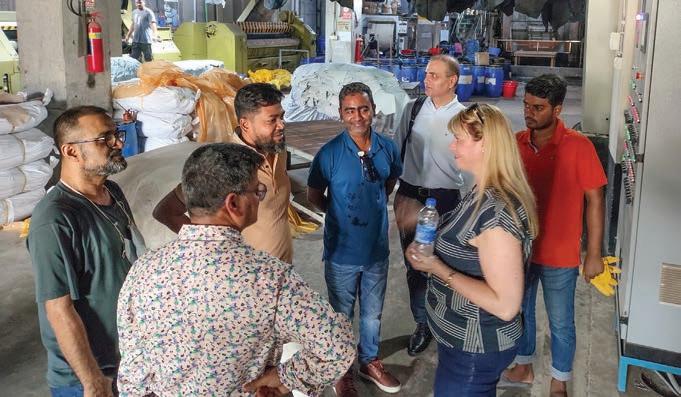
Members of the Leathertrace project team during a field visit at the Sadar tannery.
Adidas is among brands looking to gain insight into footwear’s journey after disposal.
Recycling: ‘challenging but possible’
Dutch sustainability hub Fashion for Good does a great job at uniting brands and the supply chain. It organises pilots addressing various challenges, helping to scale up, increase adoption or support with data novel materials and processes. Following seven years of focusing on textiles, in 2024 it announced a series of projects that would apply the research and collaborative development blueprint to the footwear sector, under a banner called Pioneering the Future of Footwear.
One of the biggest topics taking up headspace in the fashion industry is circularity – how can we keep materials in use for longer and recycle elements when they no longer serve their purpose? With an estimated 23.8 billion pairs of shoes produced annually, the vast majority of these ending up in landfill and less than 1% recycled, this is a question that needs some answers, compounded by incoming regulation such as Extended Producer Responsibility schemes, Digital Product Passports and stronger
Leading brands have supported Fashion for Good pilots to pool knowledge on circular thinking and search for solutions to the complex problems holding footwear recycling back.
circularity requirements. This is a sticking point for shoe companies – not least because of the multitude of materials, glues and components that they work with. But also in a practical sense. How can shoes be collected and sorted in a way that makes both economic and environmental sense?
Collaborative working is the only way, Fashion for Good has concluded. At the start of last year, it launched Closing the Footwear Loop, which brings
“ Closing the Footwear Loop represents our most ambitious effort yet to reimagine how we design, use and dispose of shoes. ”
KATRIN LEY, FASHION FOR GOOD
together 15 brands and four innovators to test ideas and pool resources, orchestrated by Dutch non-profit Circle Economy. It addresses the lack of end-of-life infrastructure, complex multi-material designs and the need for unified circularity approaches.
Fashion for Good describes its findings as the first large-scale, product-level dataset on non-rewearable shoes. “The footwear industry stands at a critical turning point,” says its managing director, Katrin Ley. “With billions of shoes produced annually and 90% ending up in landfills, 'Closing the Footwear Loop' represents our most ambitious effort yet to reimagine how we design, use and dispose of shoes.”
Adidas, Inditex, Otto Group, On, PVH Corp, Reformation, Target, Zalando, Arc'teryx Equipment, Coach, Dr Martens, Decathlon, Deichmann, Deckers Brands, Footwear Distributors and Retailers of America (FDRA), Lululemon, PUMA Group and Vivobarefoot are partners - demonstrating a healthy appetite from brands to gain some clarity.
Wheat from the chaff
The first phase of the study was conducted through research, stakeholder interviews and an on-ground analysis. Recycler Moda-re in Barcelona sorted 7,200 post consumer shoes, finding 4% cream [top] quality, 42% as Grade 2 quality rewearable, and 50% as nonrewearable. The best quality shoes are generally resold in Europe, with lower grades exported to countries such as Pakistan, UAE and India. The report noted the rise of peer-to-peer trading platforms means the most valuable shoes stay in that system, limiting the value for sorters. From this batch, 1,200 non-rewearable items were sent for analysis by CETIA, a French innovation centre dedicated to the recycling of fashion goods.
It is common practice to first shred and later identify and separate footwear materials, meaning that purification and classification is only possible after shredding. However, the team enlisted UK-based Matoha, which adapted its handheld infrared spectroscopy devices from clothing for this project. These machines take a reading before the shoe is physically broken down.
“In practical terms, this means shoes could be scanned at collection, sorting or disassembly stages to make faster decisions about reuse, resale, repair or recycling routes,” Chris Newton, Matoha’s chief commercial officer, tells Footwearbiz. “The benefit of
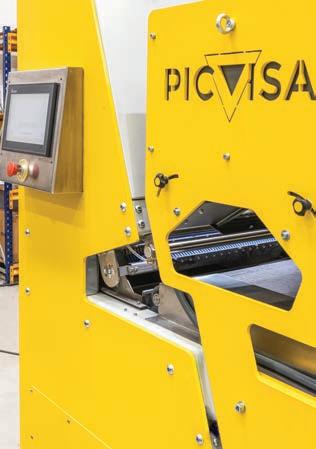
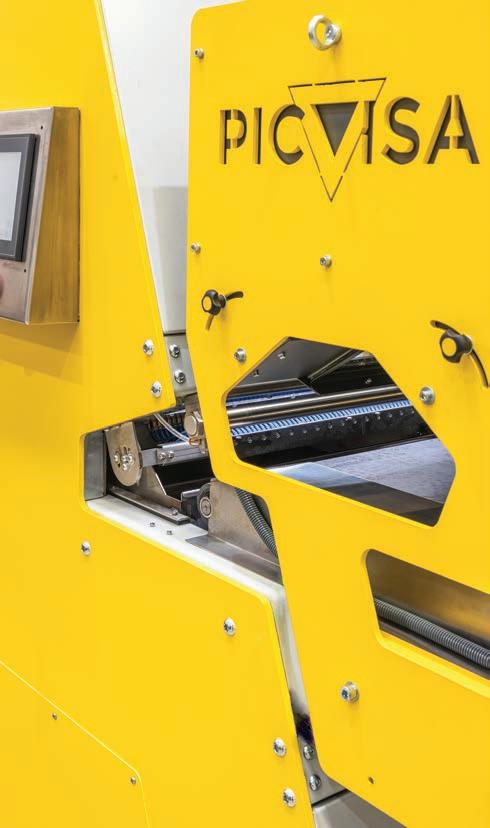
Picvisa’s ECOFLAKE optical sorting systems are equipped with high-resolution RGB cameras, NIR technology and a belt feed system, allowing for the separation of different types of materials and colours, with purity rates of over 90%.
CREDIT: PICVISA
rapid identification technology is speed and better decision-making. If operators can quickly understand what they are handling, they can sort materials more effectively, reduce contamination and potentially direct products into higher-value reuse or recycling streams.”
However, these devices face constraints with footwear. NIR scanners could not recognise 40% of the soles’ make-up. One of the main reasons is the inability to recognise carbon black, which does not reflect light that can be read by spectrometers, and which made up a third of the soles in the sample. The scanners also have problems with leather, due to the way the tanning process alters the surface, as well as any material that is heavily coated, or with thick prints, or blends of certain materials. Adhesives and dirt can also impact readings. In many cases, scanning specific exposed components or partially disassembled sections gives the best results, says Newton. “We see the technology as a powerful decision-support tool rather than a ‘magic scanner’ that solves every challenge instantly.”
Flies in the ointment
The complexity of shoes compounds the problem. A single running shoe can contain up to 65 parts assembled through more than 360 steps. In the sample, half of the shoes were bonded with strong adhesives, which prevents the clean separation and identification required for high-value closed-loop recycling. Even seemingly simple shoes combine multiple polymers, foams, textiles, rubbers and glues. Only 10% had midsoles and outsoles made of the same material, and those made from SBR (styrene butadiene rubber) and vulcanised rubber cannot be broken down chemically due to the crosslinkers. SBS (styrene-butadiene-styrene), TPU (thermoplastic polyurethane) and EVA (ethylenevinyl acetate) are technically capable of mechanical recycling but need need to be isolated from adhesives and thermoset contaminants. All of these stages add time, energy and, crucially, cost.
In terms of disassembly, another major problem was noted: around 90% of shoes had external disruptors such as logos, patches and trims, and 22% of the shoes had internal disruptors including adhesives, metals, hardpoints and blended materials.
Added insight
To complement the study, Spanish sorter Picvisa and French company The 8 Impact also conducted trials. To meet the requirements for Picvisa’s optical sorting machinery, a footwear sample was mechanically shredded and separated by density through machinery made by Eldan Recycling. At this stage, material loss varied depending on the type of shoe: for boots, around a quarter of the material was lost, but for performance shoes, this rose to 70%. The flakes were then sorted using Picvisa’s Ecoflake machine. Its study showed that while high levels of efficiency can be achieved under controlled conditions, significant challenges remain when dealing with complex waste streams; the shoes need better pre-processing and separating to gain more acceptable results.
Impact 8 gave a more positive verdict. The company is based near Lyon, and runs a successful line transforming old trainers and tennis balls into compounds for outsoles. Pre-sorting is conducted by collectors and social enterprises, ensuring consistency and low variability. Impact 8 shreds then separates the materials, recovering the rubber at a rate of 99% purity. This is ground to a fine powder that forms the base of the new soles.
It concludes “end-to-end sneaker recycling is technically viable, industrially scalable and capable of delivering recycled materials that are functionally competitive with virgin materials”. Recycled rubber and EVA could achieve price parity through volume and margin control, it says, but this requires early collaboration with design and supply chain teams as well as offtake commitments from brands and manufacturers.
First findings
At the start of this year, the Closing the Footwear Loop partners met at Adidas’ headquarters in Germany to discuss initial findings. Adidas, Decathlon, Footwear
Nature’s bounty
In a separate footwear pilot, Fashion for Good and its partners are analysing whether bio-based polymers could replace petro-based plastics for soling. Commonly made from PU, TPU, EVA and rubber, soles are said to represent 40% of the total mass of a shoe, making a significant contribution to its carbon footprint. The Next Stride project unites Adidas, Target and Zalando with material innovators Algenesis Labs, Balena, Evoco, Kuori and Yulex, with UK-based SATRA testing the performance.
Gudrun Messias, director of sustainability direction at adidas, said: “We will work with innovators to explore if bio-based materials can potentially lower the environmental impact of footwear soles while at the same time meeting or even enhancing the high-performance standards our athletes and consumers expect from adidas products.”
The project will conclude this autumn.
Innovation Foundation and Vivobarefoot shared their stories, and materials innovators pitched their products.
The first report from the project, published in June, concludes gains can be made from making shoes with fewer blended materials, avoiding black, using fewer heavy coatings, and reducing decorative disruptors. Data collection throughout the manufacturing processes will be essential to enhance sorting accuracy, it says. There needs to be infrastructure and system-level improvements for feedstock accessibility, including preprocessing, to enable component separation, contaminant removal and refurbishment. With a quarter of the unwearable shoes found to have no damage, there also need to be more education on the consumer side, with quick wins including tying shoelaces together when they are disposed of, so the pair doesn’t separate in transit.
Interviews are now being held regarding the design process to understand how visual guidance for stakeholders can be developed, and a pilot with disassembly specialist Idelam to separate out TPU/PU, EVA, leather and rubber using supercritical CO2 has been agreed. The teams want to work out how circularity can be designed in from the start, and how deeper connections can be made across the chain to enable collectors, sorters and recyclers to work more closely with brands.
“The path forward involves strengthening circular design practices, promoting the re-wear potential, improving sorting and preprocessing capacity and technology, and establishing robust data systems,” concludes the report. “Transforming non-rewearable shoes from a complex waste challenge into a valuable material resource is challenging but possible through collaborative intervention. By grounding policy and innovation in evidence, the footwear sector can take decisive steps towards closing the loop.”
The full report can be read on Fashion for Good’s website.
The beauty of calf leather
In luxury footwear, leather remains the defining upper material, but it is far from a single, uniform category. The terminology used to describe it is often complex, with terms such as full grain, top grain, corrected grain and aniline describing differences in surface treatment, finishing level and visual character rather than fundamentally different raw materials.
Among these categories, calf leather occupies a unique position. Produced from the skins of young cattle, it is valued for its fine grain, uniform appearance and balance of softness, flexibility and durability. These characteristics have made it one of the preferred materials for premium footwear uppers, particularly where refined aesthetics, comfort and long-term wear performance are essential.
Unlike adult bovine hides, calfskins come from animals that have experienced a shorter period of growth, resulting in a finer collagen fibre structure and a more compact grain layer. Like all bovine leather, calfskin is a by-product of the meat industry, but these age-related characteristics place it in a distinct category within the footwear market.
Calf leather remains a benchmark material in luxury footwear, valued for its fine grain, softness and performance. This feature explores the qualities, sourcing challenges and craftsmanship behind this premium leather.
Why footwear brands choose calf leather
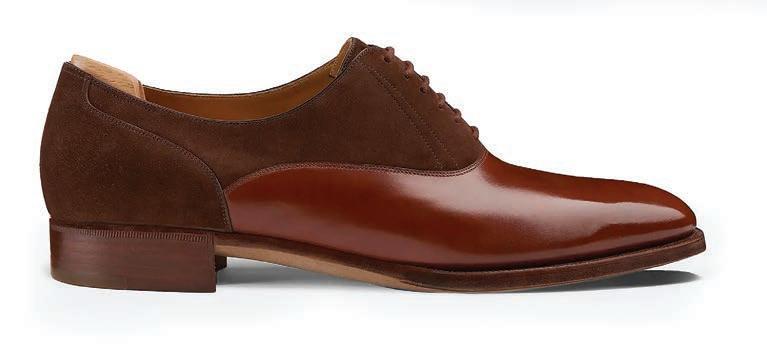
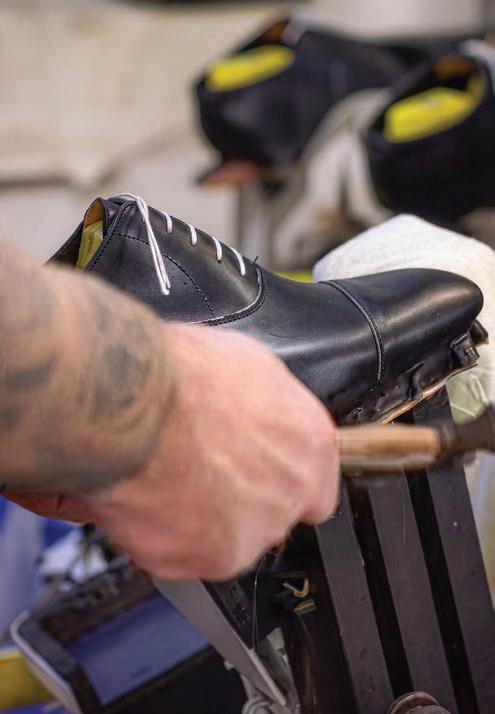
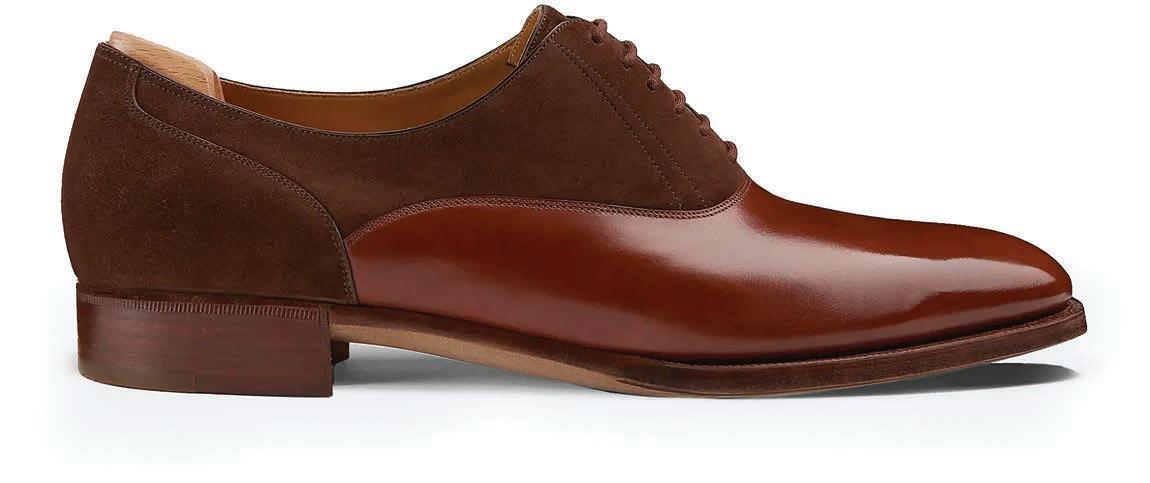
For premium footwear manufacturers, calf leather remains difficult to replace because it combines aesthetic qualities with practical performance. Duncan Stuart, leather buyer at English footwear manufacturer John Lobb, says calf leather remains central to the company’s footwear production, with both box calf - a firm, smooth and highly polished full grain aniline leather - and calf suede used across classic and more casual styles.
One of the defining characteristics of calf leather is the way it behaves during wear. Its tighter fibre structure helps create a clean break over the flex point of the shoe, reducing the risk of the loose, "pipey" creasing that can develop with more open-fibred leathers.
According to Mr Stuart, "calf leather will have a good tight break where the foot bends. There will be no 'pipey' appearance after a short time as calf has tight fibres in the core of the skin."
Its fine grain also provides an ideal surface for polishing, making it particularly suited to formal footwear where appearance is critical.
From a manufacturing perspective, consistency and workability are equally important. Mr Stuart explains that the company primarily uses natural aniline-finished calfskins, which offer a more authentic surface character but require careful selection and cutting because natural markings such as scars, flaws and veins remain visible.
Softer calf qualities are preferred for lasting, allowing the leather to form around the last more easily while reducing the risk of grain cracking. The choice of calf leather also influences comfort, with manufacturers looking for a rounded handle that allows footwear to achieve a shorter break-in period.
Working with minimally finished aniline leather does require careful production control, particularly when dealing with colour variation between skins. Components must be cut strategically, with areas such as shoe fronts taken from the stronger butt sections of the skin, helping to minimise stretch and maintain consistency between pairs.
Fibre structure and performance
The reputation of calf leather is intricately linked to its fibre structure. Compared with adult bovine hides, calfskins have a finer and more tightly packed collagen network, creating a tighter grain layer and a smoother surface character.
However, achieving consistent grain quality depends not only on the raw material but also on careful processing. The relationship between the grain and corium layers is critical, as differences in flexibility and response to chemical and mechanical treatments can influence the final appearance and performance of the leather.
Excessive mechanical action, over-aggressive swelling during liming or poorly controlled fibre opening can affect grain integrity, while insufficient conditioning or fatliquor penetration can influence softness and flexibility. The challenge for tanners is to preserve the natural tightness of the fibre structure while achieving the handle and performance characteristics required by footwear manufacturers.
When successfully processed, calf leather delivers a fine grain break and smooth, consistent surface, particularly in lightly finished and aniline grades. This combination of natural structure and controlled processing remains central to its appeal in premium footwear.
Sourcing calfskins
The availability of premium calfskin has become an increasingly important consideration for footwear
manufacturers and leather buyers, with supply influenced by agricultural trends, climate conditions and changing quality expectations.
Speaking at the 2024 Sustainable Leather Forum in Paris, Nick Winters, past-president of the International Council of Hides, Skins, and Leather Traders Associations (ICHSLTA), highlighted the growing pressure on calfskin supply. He noted that annual calfskin availability in France, one of Europe's most important sourcing markets, had fallen by around 600,000 pieces over the previous decade, with total volumes unlikely to exceed one million skins per year, compared with approximately 1.6 million a decade earlier.
These pressures continue to be felt throughout the supply chain. Chris Smith, a leather specialist and sourcing consultant with extensive experience in calf leather, says reduced hide availability is translating directly into a smaller pool of premium-quality material.
"That is exactly what is happening over the whole of Europe. Less hide availability translates into less quantity of premium quality hides. The quality of the hides has also dropped."
Mr Smith adds that only a small proportion of available calfskins are suitable for the highest-end footwear applications.
"From a pallet of calf hides only 5-10% will be suitable for high-end calfskin users."
The fine fibre structure of calf leather contributes to good lasting performance and reduced risk of grain cracking.
For those seeking premium footwear grades, selection begins with careful consideration of size, grain quality and fibre consistency. Mr Smith says calfskins in the 16-22 sq ft range are particularly suitable, as he finds the grain to be finer and the fibre structure more consistent across the entire skin.
Traceability has also become an increasingly important factor in premium calf leather supply chains. Mr Smith says he works with suppliers that process from raw material through to finished leather, providing a complete history from slaughterhouse to final product. However, he notes that some of the biggest challenges remain between farm level and tannery arrival.
Alongside availability, climate and farming conditions continue to influence raw material quality. Longer and warmer summers increase the likelihood of insect damage and more pronounced vein structures, reducing the availability of clean skins suitable for minimally finished footwear applications.
The characteristics of available material are also closely linked to production systems. French calves are typically reared under controlled indoor conditions and fed on milk for approximately four to six months, helping to minimise external damage and surface scarring. These conditions contribute to the clean appearance and grain quality valued by luxury footwear manufacturers.
Differences can also be seen between origins. Duncan Stuart notes that Dutch skins tend to offer larger sizes and good cleanliness, while French skins are often considered an ideal size but can contain more visible veins. Swiss calfskins are noted for having fewer veinrelated issues, while seasonal variations can also influence quality, with winter skins often showing reduced vein visibility.
Producing calf leather
The heritage of premium calf leather production is closely linked to the development of specialist European tanning expertise. Over generations, European tanneries have refined processes to produce the fine, consistent leathers demanded by luxury footwear manufacturers, particularly in areas such as grain control, finishing and colour uniformity.
The evolution of calf leather production reflects the wider development of industrial tanning, with the introduction of chrome tanning in the late nineteenth and early twentieth centuries marking a significant turning point.
Based on trivalent chromium (Cr III) salts, chrome tanning reduced processing times significantly compared with traditional vegetable tanning methods, while delivering softer, more flexible and more hydrothermally stable leather. Chrome tanning remains the dominant approach for calf leather destined for footwear due to its ability to deliver softness, water resistance, colour uniformity and a wide range of shades. Chrome tanning combined with smaller amounts of vegetable retanning is also used for specialist burnishable calf leathers, where the aim is to develop a natural patina and greater character through years of wear.
One of the continuing challenges in premium calf production is managing the balance between natural material characteristics and increasingly demanding footwear specifications. Growth marks and veins, for example, are natural features of the skin rather than defects from a leather perspective, but they become increasingly challenging as footwear designs move towards larger unbroken leather panels and customers expect near-perfect surfaces.
This challenge reflects the wider reality of calf leather production. Calves are primarily bred for meat production, meaning leather remains a valuable but secondary output. Breeding priorities are therefore focused on meat efficiency rather than leather characteristics.
The premium benchmark
Despite increasing pressure on raw material availability and growing interest in alternative materials, calf leather continues to occupy a unique position within premium footwear.
Its combination of fine grain, clean break, comfort, workability and finishing potential remains difficult to replicate consistently. As footwear brands continue to balance performance, aesthetics and responsible sourcing, calf leather remains the benchmark against which many premium upper materials are measured.
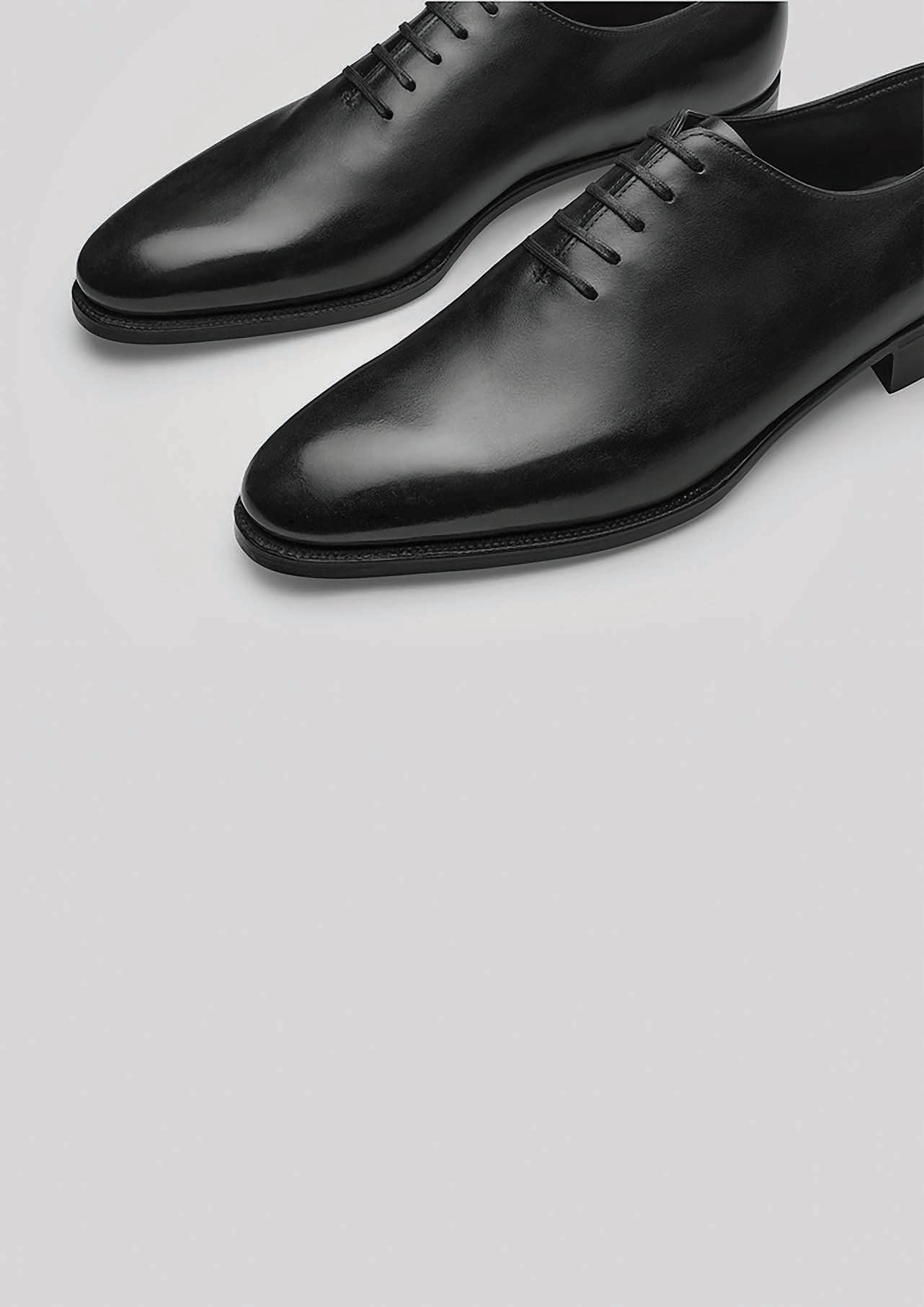
Single-piece uppers highlight the uniform grain and refined surface characteristics that have made calf leather a benchmark material for luxury footwear.
A new deal for Curry
Basketball star Stephen Curry has announced a new ten-year deal for his own-name athletic footwear brand. The Curry brand will now become part of Li-Ning. The deal is reported to be worth $400 million.
Stephen Curry plays for San Francisco-based Golden State Warriors in the NBA. He launched the Curry brand with Under Armour in 2020 after a longtime partnership between the athlete and the Baltimore-based brand. In November 2025, Mr Curry announced that he was separating the brand from Under Armour, with a final release, the Curry 13 shoe, coming to market in February 2026.
At the start of June, the athlete announced that the future of the Curry brand lay with Li-Ning. Plans include opening Curry brand stores, in the US and overseas, and moves into other sports, including golf.
“This is bigger than a shoe deal,” Stephen Curry says. “This is the partnership of a lifetime.” He says he admires Li-Ning as “a company truly rooted in sports innovation” and dedicated to creating quality products.
He also likes that the Chinese brand has a highprofile athlete, former gymnast Li Ning, a winner of five Olympic gold medals (four more than Stephen Curry), as its founder. “He is an athlete who has built one of the world’s most premium sportswear brands over the last 35 years,” the basketball star says. These comments are meaningful. Stephen Curry is under contract for the forthcoming NBA season. When the season ends, in June 2027, he will be 39 years old and, surely, close to retirement. His career has a long list of highlights. In addition to his Olympic gold with the US in Paris in 2024, he helped his national team win the basketball World Cup in 2010 and 2014. He has contributed to four championship wins for the Golden State Warriors and has twice won the NBA’s most valuable player award. In 2016 and 2021, he had the highest points-per-game average in the league. But he seems also to have had an eye on his post-basketball future for many years.
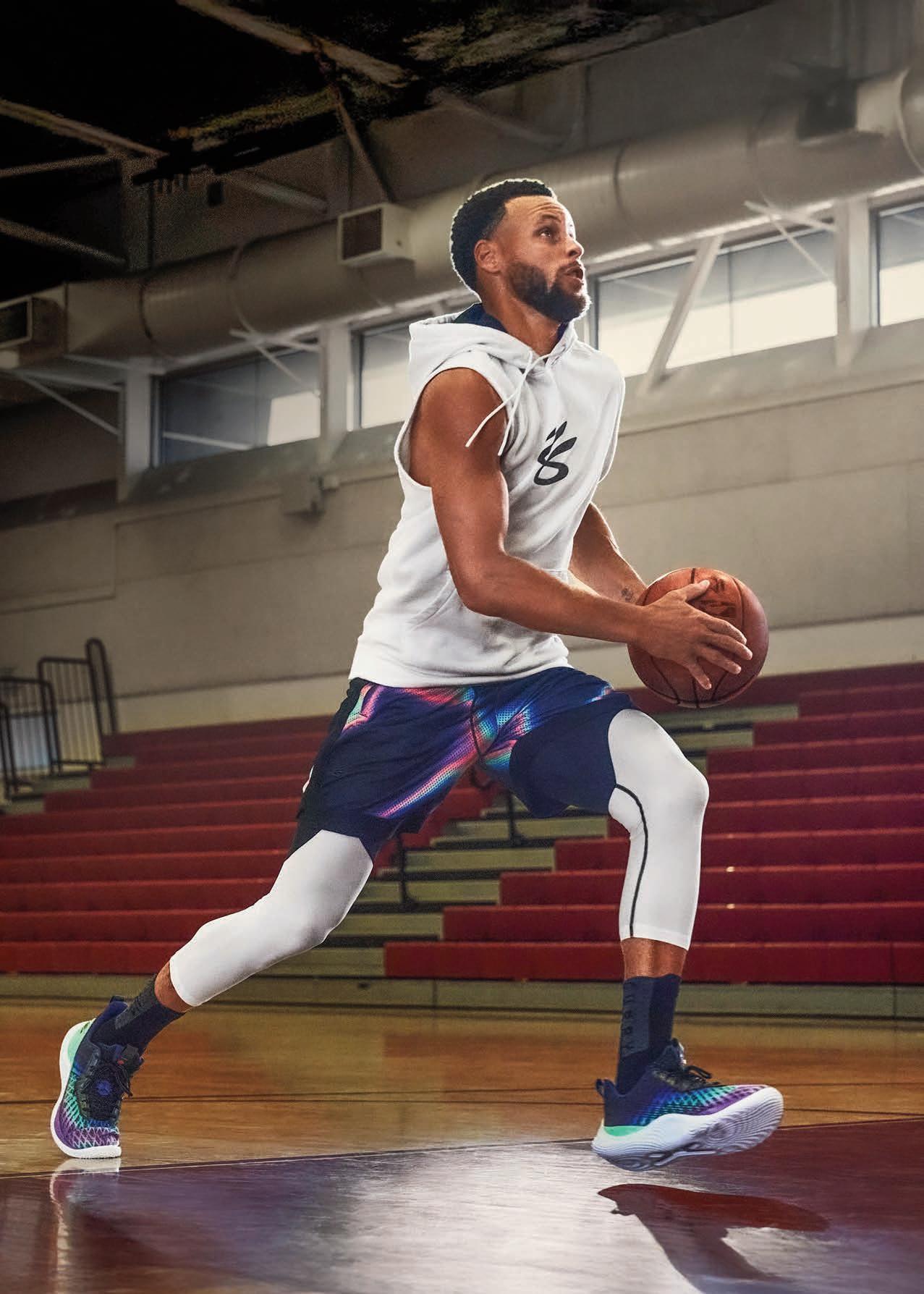
After 13 years as a key figure for Under Armour’s footwear category, Stephen Curry has chosen to develop his career in the shoe business with a surprising new partner.
Beyond playing
He also seems to regard his relationships with major sports footwear companies as much more than just a series of athlete-endorsement deals. He is on the record, as having said, to Sports Illustrated nearly a decade ago, that he viewed his entry into the footwear business as a chance to build something that will last “long beyond my playing career”.
Mr Curry says he has long admired the way Michael Jordan has moved from basketball star to highly successful footwear entrepreneur. But he also insists that he wants to shape his business career in a way that is “authentic to me”.
He signed his first agreement with Under Armour in 2013, having previously been on Nike’s athlete roster. The new partners worked together over the following 12 months on the development of the first shoe that bore his name, the Curry 1, which made its debut at the start of 2015.
Stephen Curry helped Under Armour build its footwear category into a $1.5 billion business.
ALL CREDITS: UNDER ARMOUR
Under Armour’s founder and chief executive, Kevin Plank, was delighted. A former American football athlete, Mr Plank launched Under Armour in 1996 as a supplier of technical apparel for his favourite sport. It took a further decade for Under Armour to enter the footwear business and, when it did, football was once again its target market. The footwear cleats it launched that year soon captured more than 20% of the market. In that first year, the brand’s footwear category contributed revenues of just over $25 million.
Own brand
Another decade on, Under Armour’s footwear business was worth more than $1 billion per year. Stephen Curry was a key part of that success. After the launch of the Curry 1, Kevin Plank described him as “one of the most dynamic and popular young stars in the NBA”.
By 2020, Stephen Curry was ready to take his career as an entrepreneur to the next stage. In agreement and still in partnership with Under Armour, he launched Curry as a brand in its own right, with the promise of ploughing a percentage of revenues into grass-roots sports opportunities for people in low-income communities.
Part of the family
In 2023, Under Armour and Stephen Curry marked a decade of working together. Building upon “the success and accomplishments” of that first decade, they set out to “continue driving product solutions and innovation, impacting communities across the globe and growing Under Armour and Curry together”.
“ This is bigger than a shoe deal; this is the partnership of a lifetime, ”
STEPHEN CURRY
Kevin Plank remained effusive in his appreciation for his star signing. He said: “Stephen is one of the greatest talents of our generation. He embodies what it means to be an Under Armour athlete and is an integral part of the Under Armour family. We are excited to keep building together.”
For his part, Stephen Curry said ten years of working with the Baltimore-based company had shown him they were able to “build great things together”. He added: “It is all about impacting athletes and creating products that perform and resonate with them.” The tenth shoe in the series cemented this tenth-anniversary celebration and Under Armour made the athlete the president of the brand that bore his name.
When growth stops
But that year, 2023, was the last in a while in which revenues grew for Under Armour. It posted a full-year figure of $5.9 billion, up by 3% year on year, with footwear sales contributing $1.5 billion. Its financial year ends on March 31 each calendar year. The company’s revenues slipped to $5.7 billion in 2024, with footwear falling to $1.4 billion. In 2025, the numbers were down again, with total revenues falling to $5.2 billion and footwear sales bringing in $1.2 billion. For the 12 months ending March 31, 2026, revenues went down again, reaching $5 billion in total, with the footwear category contributing $1.1 billion.
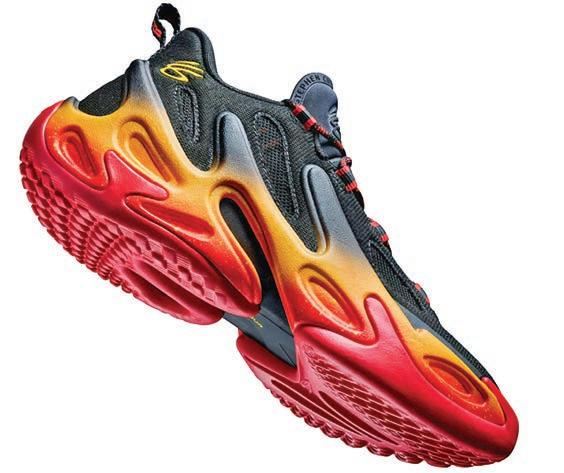
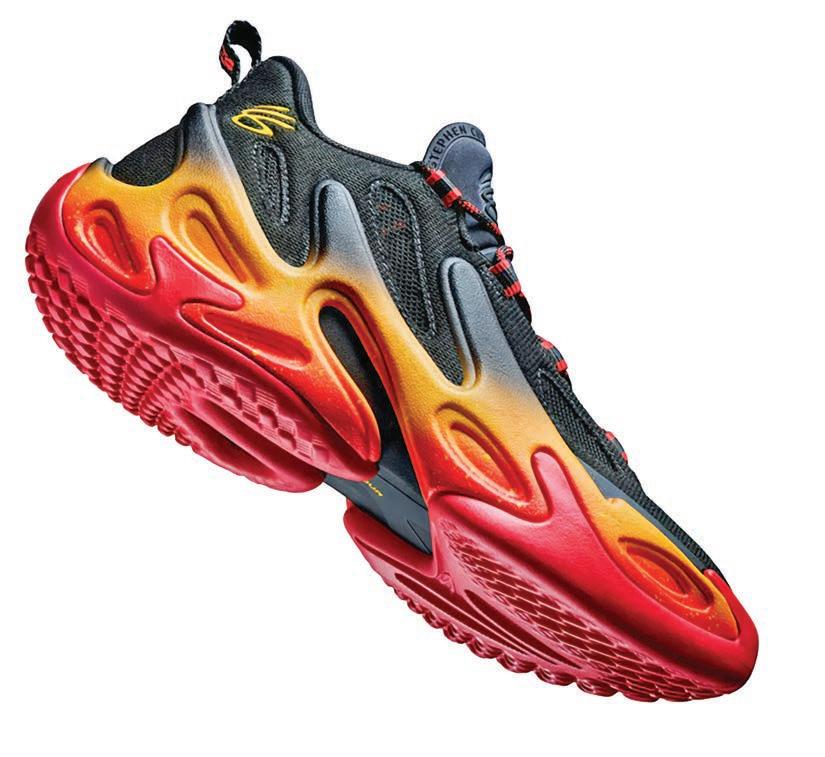
By the time the 2026 results came out, confirming three straight years of falling revenues, what everyone knew already to be the last of the Under Armour releases of Curry shoes, the Curry 13, had come to market. Lightweight and with high levels of stability, grip technology, and what Under Armour insisted was its best cushioning to date, it presented the Curry 13 as a shoe that brought together years of insight and oncourt feedback in “one final expression of performance and style”.
Within three months, the news of the switch to Li-Ning had become public.
Swan song. The Curry 13 is the basketball star’s final release for Under Armour.
AEC insists that Spain’s footwear components manufacturers have much to offer the international market.
ALL CREDITS: AEC
Cry for help
Spain’s national association of footwear component manufacturers, AEC, has said the shoe industry there is in “an extreme situation”. It has called on national, regional and local governments to put immediate measures in place to provide relief. It has also said the authorities must come up with a longer-term plan to shape the reform of a sector that it says is of strategic value to the country’s economy.
AEC says Spain lost 35% of its manufacturers of footwear and footwear components between 2020 and 2025. It contends that a total of 1,149 companies in the sector closed their doors over that time, leaving a total of 2,131 manufacturers operating at the mid-point of 2026. The organisation says it has not included in these figures businesses that shut down in the first half of this year.
Four autonomous communities, which is the term Spain uses for regions, currently account for almost 90% of the country’s footwear and footwear component production. They are the Valencia region (mostly the area around Elche), Castilla-La Mancha (mostly the area around Almansa), La Rioja and Murcia. According to AEC, Valencia lost 37% of its shoe production industry in the period in question, La Mancha almost 40%, La Rioja 17.4% and Murcia 22.5%.
The industry body that represents footwear components manufacturers in Spain, AEC, says the entire sector is facing a crisis.
Small companies
The association’s plea for help is also based on the scant scope the Spanish shoe sector has for absorbing the impact of important changes that are taking place domestically and in the wider footwear market. It says that of the more than 2,100 companies that remained in business at the end of 2025, only five of them were large companies, which it defines as enterprises employing more than 250 people. More than 1,000 of its member companies have ten or fewer employees. More than 400 of them have no employees at all. Overall, the leather and footwear sector in Spain reduced its workforce by 3,670 people in 2025. By May 2026, AEC’s calculation is that the total number of workers remaining in the sector was 35,806, meaning that it lost a further 1,700 jobs in the first five months of this year.
Chief executive of AEC, Álvaro Sánchez, says: “Our companies cannot take it any more. We need an immediate, coordinated response from the authorities. They need to come up with a vision for our industry. This is not about individual companies here and there. We are talking here about the entire supply chain.”
Complex context
Using figures for 2024, AEC has said Spain was in nineteenth position for footwear production globally, with a total output for the year of 71 million pairs. “But this hardly reaches 0.3% of global production,” it says. Spain’s national statistics body, INE, measured the domestic footwear industry’s production volumes for 2025 at 9.2% lower than the previous year. In the first months of 2026, INE put that decline at 29.1% year on year. According to AEC, this downturn is because of “the growing competitive difficulties that our companies are facing, in an economic and commercial context that is becoming more and more complex all the time”.
AEC has concerns about labour costs. It insists that the industry in Spain is operating with “a cost structure that is significantly higher than those of its main competitors”. Putting figures on this, it quotes 2023 figures for the footwear sector’s labour costs in Spain at €15.38 per hour, a rate that compares favourably to €26.38 for Italy and €20.83 for Germany that year. But AEC says that it is not really Italy and Germany that the Spanish industry is competing with.
Balance of trade
Rather, it views countries such as Portugal, which had a rate of €9.94 per hour in 2023, and Greece, which had a rate of €9.33, as more direct competitors. Beyond this, it points to rates of between €5 and €8 per hour for countries in eastern Europe and to “much lower rates” still in the major footwear manufacturing countries of Asia, and across the Atlantic in Brazil.
Its figures show that in 2025, Spanish manufacturers and brands
Help in investing in increased productivity is one of the measures AEC is calling for.
exported 167.7 million pairs of shoes, boots and other footwear, bringing in revenues of nearly €3.4 billion. However, retailers and brands imported 370.8 million pairs into Spain last year, with a total value of €5.2 billion. More than 80% of these imports came into the country from Asia; almost 200 million pairs came from one country alone, China.
Specific to components
When it comes to footwear components, AEC says the situation is particularly challenging. It claims that the almost 1,000 footwear component manufacturers operating across the country are attempting to cope with irregular demand and “unsustainable cost pressures” for raw materials, energy, transportation and business finance, in addition to the labour cost issues mentioned above.
In spite of all of this, the organisation insists that Spain’s footwear component companies have much to offer the market. “Our member companies are specialists,” AEC says. “They stand out for their quality, design capability, technical capacity and speed of response, plus
the high levels of compliance in sustainability, traceability and product safety that are a prerequisite for working with so many brands these days.”
There was a reflection of this in the export values of Spanish-made footwear components in 2025. Shipments of these products brought in almost €1.7 billion, an increase of 3% compared to the year before.
Measure for measure
The specific help AEC is calling for includes immediate measures to halt the loss of jobs and to prevent more of its member companies from closing down.
It says the authorities should provide targeted support to small companies in particular, including help with cash-flow and in making investments to improve productivity. It also says the authorities need to review policies on imports of products from Asia, including an increase in tariffs. “We want to raise awareness of the real situation that the industry finds itself in,” it concludes, “and we want the authorities to act quickly, decisively and in a coordinated way.”
A gift from the Gods
Impressed by its European manufacturing stance and strong branding, Camper has made its first purchase: Ancient Greek Sandals.
According to ancient Greek myth, the gods and goddesses had their sandals made on Crete by a gifted sandal-maker who enriched each pair with magical powers. The winged sandals of Hermes were forged by Hephaestus, the god of blacksmithing and fire, enabling him to fly as fast as a bird. Almost 2,000 years later, they would become the inspiration behind a footwear brand that sought to make Greek people proud of this heritage and propel the shoe from casualwear to sought-after staple.
The sandal has always been the world’s most democratic footwear, according to Ancient Greek Sandals, which designs its collections with “everyone and anyone” in mind. It was launched in 2012 by Christina Martini – a Cordwainers alumnus who had worked for Balenciaga and Louis Vuitton – and entrepreneur Nikolas Minoglou, who had taken over his family’s Greek footwear manufacturing business after completing an MBA in the US. The ethos is “locally made luxury” – boosting age-old techniques with modern approaches – and designs that convey simple elegance rather than historical reproductions. “When we started the brand, it was impossible to imagine that people around the world would wear our handmade sandals,” says Ms Martini. But only five years after launch, AGS was selling 80,000 pairs per year in 500 retail outlets, according to reports.
This global appeal, coupled with its strong Mediterranean heritage, was part of the attraction for family-run Mallorca-based footwear company Camper, which bought 60% of the company this summer. AGS founders remain shareholders and are staying in their roles, with Mr Minoglou as CEO, Ms Martini as creative director and Yiannis Vagenas as chief marketing officer. Crucially, Camper has said it has no plans to change the Greek manufacturing setup. “Nikolas and Christina have built a beautiful
Both Camper and Ancient Greek Sandals draw inspiration from their Mediterranean heritage.
ALL CREDITS: ANCIENT GREEK SANDALS
“ Joining forces gives us the logistical, technological and commercial backing we need. ”
NIKOLAS MINOGLOU, ANCIENT GREEK SANDALS
Handcrafted in Greece by skilled artisans, each pair is made using traditional techniques and veg-tanned leather that develops a unique patina over time.
brand that perfectly aligns with our own respect for quality and craftsmanship,” says Camper CEO Miguel Fluxà, the fourth generation of the founding family. “Their deep Mediterranean roots strongly resonate with our DNA.”
Local values
Camper was founded as a brand in 1975 but its roots go back to 1877 with the family’s first footwear factory in Mallorca. Its shoes are still designed and developed in Inca, in the rural heart of Mallorca, where a creative team work alongside artisans to create 500 models each season. It manufactures in Spain and Portugal, but it also sources some styles from Vietnam. Now in its fourth generation, the brand's footprint includes stores in more than 40 countries. “We’re people with local values and global horizons,” it says.
The acquisition, Camper’s first, could help support AGS’s growth by developing stronger international distribution channels, enhanced regional sales support and deeper relationships with retailers. Access to resources from the bigger group could also improve back-office technology, generate stronger customer data and elevate product development with increased access to suppliers. “Joining forces with a historic, familyowned company like Camper gives us the logistical, technological and commercial backing we need to reach our full potential, while allowing us the freedom to remain creatively independent,” says Mr Minoglou.
Staying faithful to traditional techniques, Most of the sandals are made from vegetable-tanned leather, with a small inner wedge inserted between the heel and the insole to elevate the back of the sandal. There is also a
thin rubber anti-slip heel under the leather sole with straps and joined together mostly with platinum rivets. Hot stamps, lacing, cut-outs, printing, braiding, beading and embossing decorate the uppers and for its 10th anniversary collection, Ms Martini collaborated with art historian Xenia Ventikou to create a collection inspired by famous Greek sculptures.
Diversifying from the leather-based staples, AGS has also achieved the feat of having its jelly versions – made with PVC and which retail around the same price as the leather versions – named as reaching “cult status” this summer by online style guide Who What Wear, noting how many “influencers” have been spotted wearing the red Saionara flip-flops. Fashion magazine Elle has also described the leather Etheria style as “the perfect summer sandal for walking all day long”.
With significant investments and the push for greater profitability, brands often find themselves in a dichotomy that needs careful management in terms of balancing expansion and authenticity. There is a need to grow carefully and in a way that is faithful to the brand and manufacturing. The founders have spoken of Minoglou’s family connections with factories and components suppliers and how these helped the brand drive profitability from the start, and could also help it move beyond its current offering of sandals, clogs, boat shoes, slippers and wedges. It also looks likely the partnership will also help boost its accessories, adding to the rattan and crochet bags and small leathergoods that complement the aesthetic. “Since day one, Christina and I have been driven by our love for Greek shoemaking history,” says Mr Minoglou. “We couldn't be more thrilled for the journey ahead.”
Footwear offers hope for lasting change
For many people working in the footwear industry, the ability to design and make shoes is a career. In some parts of the world, however, those same skills can represent the opportunity to earn an income, support a family and build a future. That belief inspired De Montfort University (DMU) student Damari Kota Diur-Kota to take the technical knowledge she was gaining on her footwear design course in Leicester and share it with women in Tanzania, helping them gain practical skills that could eventually become the foundation of a livelihood.
The 25-year-old London-based student originally enrolled at DMU with ambitions of creating fashionable footwear for people who require extended sizing and wider fits. However, as her studies progressed, she realised her ambitions extended beyond footwear design alone. “During my first year, I realised my wider goal was to make people feel confident, supported and achieve a sense of belonging through their style,” she explains. That realisation led to an ambitious proposal through DMU Global, the university’s international volunteering programme. Damari applied to deliver footwear training in Tanzania and was delighted when her project
A student has used her passion for inclusive footwear as a springboard into an international initiative, teaching shoemaking skills to women in Tanzania and presenting the project at the United Nations.
was accepted. She travelled to Arusha for four weeks to work alongside Perfect Vision Women Tanzania, a nongovernmental organisation dedicated to tackling poverty through education and skills development.
There, Damari taught 15 women and girls aged between 15 and 37 the fundamentals of footwear design and manufacture. The programme covered foot anatomy, working with shoe lasts, sketching footwear, pattern cutting, material preparation, stitching and sole attachment. Participants also visited a local leather supplier to gain a broader understanding of the supply chain and materials used in production.
Damari Kota Diur-Kota presented her work to the UN in New York City alongside the DMU delegation.
CREDIT: DAMARI KOTA DIUR-KOTA
“Securing supplies with local tanneries plays an important role in this process, as they ensure a reliable supply of quality leather, create opportunities for knowledge exchange and strengthen links in the community,” says Damari.
The project highlighted how relatively simple shoemaking skills can become a valuable economic asset in regions where vocational training opportunities are limited and unemployment remains high. By learning how to produce footwear, participants gained practical knowledge that could potentially be developed into small businesses or employment opportunities. “Most women I taught lived on the poverty line, and some hadn’t received a formal education,” says Damari. “However, these women and girls had hopes, dreams and ideas for their careers. I wanted to bring technical skills and something that I know these women could use to start selling their products in the future.”
Recognising the importance of accessibility, Damari arranged translation of training materials into Swahili and built up the partnership with local leather supply. By the project’s conclusion, her work had reached more than 1,800 people and culminated in a graduation celebration recognising the participants’ achievements.
Global recognition
The impact of the project soon extended beyond Tanzania. In January, DMU was selected as chair of the United Nations Academic Impact Hub for Sustainable Development Goal 11 – Sustainable Cities and Communities – becoming the only UK university to hold such a position. Damari’s work was highlighted as an example of how practical skills development can contribute to sustainable communities and economic empowerment. Dr Mark Charlton, associate professor of sustainable development, praised her achievement. “Not only did Damari leave Tanzania having provided footwear for the women she helped, she also left them with the skills to make their own. It is a brilliant piece
of sustainable development work”.
The success of the programme led to another opportunity: presenting the project at United Nations headquarters in New York as part of a panel discussion focused on the Sustainable Development Goals through DMU’s SDG Student Fellows programme. “It felt amazing – are there even words?” she says.
“Visiting the UN was one of the top three biggest achievements of my life, alongside the programme itself. The level of support, encouragement and energy was so high. I felt open, confident, excited, thrilled and exhilarated.”
Damari says the response from the UN delegation reinforced her belief that local action can have global relevance. “The United Nations Academic Impact team were so engaged and interested in my project. I received amazing feedback and it was great to represent people doing work in their communities. I learned that there are always people watching and supporting good initiatives.”
Practical skills
While the recognition has been significant, Damari remains focused on the women she worked with in Tanzania and the next stage of their
development. “Next, I’d like to teach them how to add accessories,” she says. “The first time around we made sliders and strap sandals, but I’d like them to add trims because it will make the shoes more profitable.”
She also hopes to provide participants with shoe lasts, enabling them to continue making footwear independently and potentially generate an income from their work. The experience has also strengthened her commitment to her own charitable initiative, Luminary Footwear, which aims to bring shoemaking education to communities across Africa. The longterm goal is to equip people with practical skills that can lead to employment, entrepreneurship and greater economic independence.
With further visits planned to Thailand and Vietnam, Damari’s journey demonstrates how footwear skills can be about more than making shoes. “I want to hear more ‘yeses’, she says, when asked about goals. “That will allow me to say yes to future participants. This project can grow beyond its current reach, empowering more women to build livelihoods and strengthen their communities. I want to show the women that people are rooting for them.”
Women learn footwear-making skills through the partnership with Perfect Vision Women Tanzania. CREDIT: DMU
Footwearbiz
All you need to know to assist you in the global footwear market. (4 issues per year)
Footwearbiz (Digital) £100 per year
Footwearbiz Premium (Print) £140 per year
World Leather
The world’s leading magazine for the leather industry. (6 issues per year)
World Leather & £270 per year
Leatherbiz (Digital)
World Leather (Print) £300 per year & Leatherbiz
Sportstextiles
The international technical trade magazine for innovative and responsible materials. (2 issues per year)
Sportstextiles (Digital) £100 per year
Sportstextiles Premium (Print) £120 per year
Inside Denim
Keep up to date with denim developments from raw material to finished product with in-depth coverage of advances at fibre and fabric level. (2 issues per year)
Websites
Designed to provide up-to-the-minute news and market intelligence.
Advertise in Footwearbiz magazine & footwearbiz.com to promote your latest products and innovations to a readership of over 4,500 worldwide. For more information: matthew@worldtrades.co.uk
WHAT IT MEANS TO BE GREEN
At Stanbee, we’ve built our name on innovation. Green innovation. We make it our mission to produce the lightest, thinnest, strongest, most resilient structural footwear materials in the industry. And we do it while cutting our reliance on raw materials—thus protecting the environment from unnecessary waste.
For example, all of our Nitro products are injected with a foaming system that displaces raw virgin materials, thereby reducing weight and improving performance.
Also, Nitro Force, our lightest, firmest heel counters, are made from at least 85% PET-recycled plastic bottles. Each pair of these counters reuses the recycled content of two one-time use PET water bottles. That helps offset the 500 billion plastic bottles tossed into the global waste stream every year at a rate of one million bottles per minute.
Now we’re offering three new Nitro products: Nitro Flex for unparalleled flexibility in a heel counter; Nitro Vulc for exceptional fit and comfort in vulcanized footwear; and Nitro Sport for high-performance toe boxes that are lighter, softer and more resilient—with increased recycled content.
All of these products are available in a zero-waste, net-product, closed-loop system.
So speak to your Stanbee representative today—or visit www.stanbee.com. Not only will you boost your product’s performance, you’ll be protecting the planet. That’s what it means to be green.