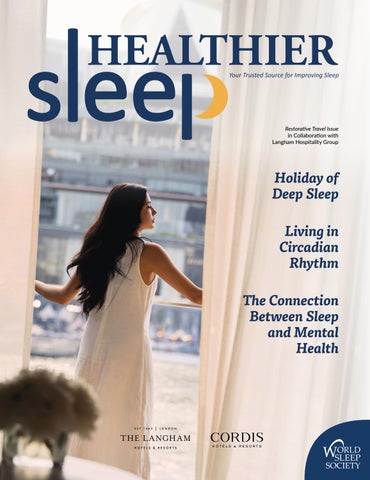
Restorative Travel Issue in Collaboration with Langham Hospitality Group
Holiday of Deep Sleep Living in Circadian Rhythm The Connection Between Sleep and Mental Health
Healthier Sleep A publication of World Sleep Society Your Trusted Source for Improving Sleep
ABOUT Healthier Sleep is published up to four times per year by World Sleep Society, 3270 19th Street NW, Suite 109, Rochester, MN 55901 and distributed to sleep medicine and research professionals as well as the public. No part of this publication may be reprinted or reproduced without written permission. Healthier Sleep does not necessarily endorse the claims or content of advertising or editorial materials. All advertisements and editorial material included represents the opinions of the respective authors. World Sleep Society/Healthier Sleep magazine does not provide or offer medical advice. All content within the magazine, such as text, graphics, information obtained from sleep experts, and other material, is for informational purposes only. The content is not intended to be a substitute for medical diagnosis, advice or treatment. Relying on information provided by World Sleep Society and/or any of its employees, experts within the material, or, other writers is solely at your own risk. For advertising or editorial contact information, email healthiersleep@worldsleepsociety.org or visit healthiersleepmag.com for current rates. ©2026 World Sleep Society. All rights reserved.
2 | Restorative Travel Issue in Collaboration with Langham Hospitality Group
Publisher World Sleep Society Editor Amy Larson Copy Editor Emily Neville Design Brook Lanz Issue Reviewers Matteo Cesari, PhD Ravindra Chandrashekhar, MD Venkatesh Krishnamurthy, MD Subham Sahoo, MD Robert Thomas, MD Issue Contributors Rayleigh Ping-Ying Chiang, MD, MMS Miguel Meira Cruz, PhD, DDS, MSc MaryAnn DePietro, CRT Erin Henze Kathy Sexton-Radek, PhD, CBSM, DBSM Genevieve Walker, PhD World Sleep Society Staff Sales Manager healthiersleep@worldsleepsociety.org healthiersleepmag.com
CONTENTS Restorative Travel Issue
|4| Holiday of Deep Sleep
8
Restoration Starts at Night
12
How Brain Age Relates to Sleep Health
16 21
|6| Living in Circadian Rhythm
Wearable Sleep Tracker Recommendations for Consumers Ways to Stay Positive with Chronic Sleep Issues
22
How Do I Know If I Have a Sleep Disorder?
24
Quiet Signs of Poor Sleep
26
Sleep Guide for Modern Life
| 18 | The Connection Between Sleep and Mental Health
Bedtime Reads Page 11
Your Sleep Story: A No-Hype Guide to Sleep Health
The BuZZZ About Sleep Page 14
Your Latest Buzzword is Hurkle-durkle
Right Now in Sleep Science Page 20
Personality and Sleep
Restorative Travel Issue in Collaboration with Langham Hospitality Group 3 | healthiersleepmag.com
Holiday of Deep Sleep By Genevieve Walker, PhD
Have you ever returned from vacation more tired than when you left? Many of us pack as much activity as possible into our breaks — staying up late and rushing from one thing to the next. If you do this, maybe it's time to consider a new type of trip: a sleep vacation.
What is a Sleep Vacation? Also called sleep tourism, it's travel designed specifically to help you rest and relax. Instead of treating sleep as whatever happens after a full day, this type of vacation puts it at the center of your plans. It doesn't mean sleeping your break away—it means giving your body and mind a real chance to recover.
The Benefits of Sleep Tourism Modern life often works against sleep. Long workdays, family demands, constant screen time, and stress wear us out. Poor sleep or not enough sleep is linked with health problems including heart disease, high blood pressure, weight gain, and depression.
4 | Restorative Travel Issue in Collaboration with Langham Hospitality Group
A traditional vacation can make things worse. Long flights, jet lag, late dinners, and packed schedules leave us with great photos but an even bigger gap between the sleep we needed and what we got. A sleep vacation flips that pattern. The goal is to come home feeling refreshed, clearheaded, and better able to manage daily life. Letting your mind recharge may even bring new insights or clearer priorities.
Is Sleep Tourism a Real Vacation? It's fair to wonder whether sleep tourism is a real vacation. Here's a bedtime story: for much of history, vacations were about rest and recovery. Wealthy families spent weeks at a summer house or spa town, away from the bustle of cities. Factory workers sometimes had long breaks when plants shut down for repairs. And in winter, farmers and hunter-gatherers experienced a season of greater rest and, before electric lights, more sleep. So, taking a break to sleep isn't as strange as it sounds. It revives the idea that getting away can refresh us, not just entertain us. In a world full of alerts, traffic, and late-night screens, rest may be one of the best reasons to get away.
What do I do on a Sleep Vacation? You may not want to spend your precious vacation days lying in bed (though if you do, that's fine, too). A sleep-focused trip still includes fun activities — just ones chosen to calm the body instead of overstimulating it. That might mean a morning walk, reading or playing games, a quiet dinner out or sitting in nature. The rhythm is gentler than a trip where you are trying to maximize your activity, leaving space to breathe, slow down, and notice when your body wants an early bedtime or midday nap.
What Makes Sleep Hotels Different? Some hotels now specialize in helping guests sleep better, paying far closer attention to the things that support good rest. You might find: •
Quiet, dark rooms with sound-reducing design and blackout curtains.
•
High-quality mattresses and pillow options.
•
Thoughtful lighting with softer evenings and sometimes gentle wake-up light.
•
Relaxation tools like eye masks, herbal tea, pillow spray or white noise machines.
•
Activities that support good sleep like stretching, yoga, spa treatments, or quiet places to relax.
•
Sleep education or coaching on what supports better rest.
What to Expect Even on a sleep vacation the first night may not be perfect. Many people sleep more lightly in a new place because the brain stays a little more alert in unfamiliar surroundings. This pattern is known as the “first-night effect.” That doesn't mean the trip has failed, just that your brain is adjusting. By the second or third night, you'll likely find it easier to fall asleep, stay asleep, and wake up refreshed. Use the time to build quality sleep habits: calm evenings, lighter meals before bed, less screen time and a dark, cool, quiet room.
Bringing Relaxation Home Not every trip can be a sleep vacation. Some trips are for city sights, active family time, or all-day adventures. But a sleep vacation has value that’s worth carrying on every trip: protect your bedtime, leave room for downtime, and go at your own pace instead of one that leaves you exhausted. The real gift of sleep tourism may be the reminder that rest is not wasted time. Instead, it’s part of your health, pleasure, and what helps your vacation do what you hoped it would in the first place. ....................................................................................................... Genevieve Walker, PhD is a freelance writer and editor specializing in patient education, plain language, and consumer health content. She holds a PhD in English and serves on the board of the American Medical Writers Association. 5 | healthiersleepmag.com
Living in Circadian Rhythm By Miguel Meira Cruz, PhD, DDS, MSc
T
he word circadian comes from the Latin phrase circa diem, meaning “about a day.” Circadian rhythm is a function that repeats the same time every 24 hours. In the body, the function may be physical, mental, or behavioral. One of these functions is sleep; you get physically and mentally tired every 24 hours. Circadian functions in the body must be organized, automatic without outside assistance, and occur without an external clock. Think about hunger, every day
we get hungry at about the same time of day. You don’t need the clock to tell you that you are hungry at about the same time each day, it just happens. Circadian rhythm usually follows external physical cues like light and dark, wet, and dry, or warm and cold. These universal cues put all living things on the same schedule and encourage cooperation. Light, temperature, actions, and social periods play a major role in establishing a circadian
6 | Restorative Travel Issue in Collaboration with Langham Hospitality Group
timing system. There is also a strong individual component to circadian cycles. Factors such as sleep schedules, diet, stress, age, genes, medical conditions, and technology all affect circadian rhythm. A healthy circadian rhythm starts with your genes. Each person has clock genes that determine optimal organization. Their function is to establish the clock in all cells, tissues, organs, and systems in the body. There are changes in the pattern of
hormones between night and day and summer and winter. This is important because it helps the body know how to anticipate and respond to the most basic changes in the world outside. There are many advantages to knowing that tomorrow will be a new day followed by night, or that after a hot summer, a cold season will follow. Likewise, we know that after we sleep, we feel more awake and ready to perform. A healthy circadian rhythm will have you working and playing at your best. Every day isn’t going to be perfect; illness and unexpected events happen. Medication, aging, and social interactions can also affect your internal clock. As much as possible, be aware of the timing of activities and circumstances.
Manage your activities and circumstances to keep your circadian clock ticking. To encourage a healthy circadian rhythm follow these suggestions: • Seek natural light exposure during the day. • Follow a regular sleep-wake schedule. • Follow a regular meal schedule. • Get physical activity. • Avoid large meals, alcohol, caffeine, and stimulants near bedtime. • Avoid environmental challenges to sleep including noise, air pollution, and abrupt temperature changes.
It may be tempting to stay up late on the weekends or eat that ice cream late at night. While not recommended, occasional changes from your regular schedule are manageable. But frequent changes can alter your circadian rhythm. This can negatively impact your health and well-being. It can result in a clock misalignment. And it may cause poor sleep quality and duration which leads to insomnia, sleepiness, bad mood, poor cognition, depression, and poor immunity. Working with your circadian rhythm will promote good sleep which leads to better health. .................................................................. Miguel Meira Cruz, PhD, DDS, MSc is head of the sleep unit of the Cardiovascular Center of the University of Lisbon, Faculty of Medicine, and is the Director of the European Sleep Center. 7 | healthiersleepmag.com
Restoration Starts at Night By MaryAnn DePietro, CRT
M
ost of us might think of sleep as a time to rest. But your body stays busy repairing tissues, clearing away waste, and balancing hormones. Sleep not only prepares you for the next day but is also critical for restoring your mind and body.
What Happens as You Sleep?
As you fall asleep your body begins a variety of restorative processes that help keep you healthy. Almost every part of your body is affected by sleep, including your brain, muscles, and immune system. For example, during sleep your brain processes information you learned throughout the day. Your muscle fibers recover from exercise, and small tissue injuries begin to heal. Most growth hormone release occurs during deep sleep. This helps the tissue repair and maintain bone health. During sleep, your body produces protective cytokines, and immune cells become more active. When your body isn’t getting enough sleep, it can be more vulnerable to illness because these illness-fighting processes are interrupted.
How Sleep Affects Your Mind
Have you ever noticed that you become irritable if you don't get a good night's sleep? You may also find it harder to focus, and decision-making can be a little more overwhelming. There is a physiological reason why sleep can affect your mind. While you sleep, your brain sorts through your experiences of the day. This can include things you learned, stored memories, or conversations you had. That is a lot for your brain to retain, so while you sleep, your brain clears away unnecessary information. Think of it as house cleaning for your brain. Clearing out unnecessary information makes it easier to think the next day. When your brain is well-rested, problem-solving and concentration are easier. Sleep also plays a critical role in your mood. According to the National Heart, Lung, and Blood Institute, poor sleep is linked to depression and increased risk-taking behavior. This is why, if you don’t get enough sleep, you may be less patient and more easily stressed. Restorative sleep helps regulate brain regions that control mood.
8 | Restorative Travel Issue in Collaboration with Langham Hospitality Group
Even one night of poor sleep can affect how you perform, think, and feel. Getting enough sleep can make you more resilient, helping you deal with the challenges of the day. Losing even a few hours of sleep can make you noticeably more irritable or less productive.
How Sleep Affects Physical Performance Because your body repairs itself during sleep, it has a significant impact on your physical performance. Getting enough rest improves endurance and gives you more energy. It can also improve reaction time, which is important for everything from athletic performance to preventing falls. As your body repairs itself with good sleep, it helps reduce soreness and improves workout recovery. This translates to everyday physical benefits of good sleep, such as working more efficiently, exercising more comfortably, and having more energy to do the things you enjoy.
Tips for Better Sleep
Because of all the restorative processes that happen during sleep, it's no surprise that when you don't get enough, you won't feel your best. Fortunately, by implementing these healthy sleep habits, you can encourage restorative sleep. •
Try to get seven to nine hours of sleep each night, recommended for adults.
•
Go to bed and wake up at the same time each night, even on the weekends.
•
Get sunlight exposure shortly after waking to support your body's internal clock.
•
Limit caffeine later in the day.
•
Decrease screen time a few hours before bed as it can stimulate your brain and make it harder to fall asleep.
•
Keep your bedroom dark, quiet, and cool. A relaxing environment encourages better sleep.
•
Consider developing a relaxing bedtime routine that signals your body it's time to unwind for the day.
Sleep affects almost all parts of your life. Without good sleep the adverse effects go beyond just feeling tired. Every night, good sleep gives your mind and body a chance to recharge. Making sleep a priority is one of the best things you can do for your overall health. *Citations available on healthiersleepmag.com
............................................................................................. MaryAnn DePietro, CRT is a medical writer and licensed respiratory therapist with over a decade of clinical experience, which includes being published in magazines, newspapers, and on health websites. As a therapist, she has worked with hundreds of patients with medical conditions, such as sleep apnea, and other sleep disorders. 9 | healthiersleepmag.com
Bedtime Reads Your Sleep Story: A No-Hype Guide to Sleep Health by Matt Bianchi MD, PhD
In every aspect of health, making good decisions means placing information into context. Nowhere is this more important than in sleep health. Your story is your context. This book is your guide to sifting through the mountains of information and advice about sleep for what matters most to you. Whether you’re just getting started making sleep a priority, or you’re already working through health concerns like insomnia or sleep apnea, you need practical information that fits into your story. Are you ready to make your own decisions about your sleep using information that is important to you? Then don’t allow headlines and hype to distract you. Just start. Right here.
11 | healthiersleepmag.com
How Brain Age Relates to Sleep Health By Rayleigh Ping-Ying Chiang, MD, MMS
W
hen hearing the word ‘age’, people often think about how many years they’ve been alive. But did you know your brain has its own age? Brain age may not be the same as your chronological age. When a brain appears older than your actual age, it may indicate a higher risk for cognitive aging and brain diseases, such as Alzheimer’s.1 In contrast, a younger brain age is often a sign of resilience and good health.
12 | Restorative Travel Issue in Collaboration with Langham Hospitality Group
What is Brain Age and How is it Measured?
Brain age is a way to measure the health of the brain based on its structure and function. Advanced technologies, such as an electroencephalogram (EEG) or magnetic resonance imaging (MRI), combined with artificial intelligence (AI) are used to estimate brain age.1-4 These tools analyze activity patterns in the brain, and measure volume, cortical thickness, white matter integrity, and other factors to determine the age of the brain. For example, a person who is 40 years old may have a brain age of 35. This would mean the brain is healthier than expected. On the other hand, a 40-year-old person with a brain age of 50 would mean the brain is aging faster than expected. The reason for the differences could be linked to lifestyle factors, quality of sleep, medical conditions, or environmental influences.5
Why Does Brain Age Matter
Brain age is more than a number—it is an indicator of overall brain health. Research shows that a brain age higher than a person’s actual age may predict an increased risk of dementia, Alzheimer’s disease, and other brain diseases.6, 7 It is also associated with memory, attention, and problemsolving abilities. Healthcare providers can offer early interventions and personalized recommendations to reduce or even reverse brain aging.8
How Sleep Affects Brain Age
Sleep is one of the most critical factors influencing brain age.6, 9-11 During sleep, the brain undergoes essential processes to maintain healthy functioning. These include detoxification, memory consolidation, and cellular damage repair. Lack of sleep and sleep disorders disrupt these functions and lead to inflammation, oxidative stress, and reduce brain volume. All are key contributors to accelerating brain aging.9, 12-14
Certain lifestyle changes, including early diagnosis and treatment of sleep disorders and getting the recommended seven to nine hours of sleep can take years off the brain. Studies have found that individuals who consistently get fewer than six hours of sleep per night tend to have an older brain age compared to those who sleep seven to nine hours. Sleep disorders like obstructive sleep apnea or periodic limb movement disorder, which fragment sleep quality, are also linked to premature brain aging.
Reversing Brain Age
The exciting news is that brain age is not permanent. Research suggests that certain lifestyle changes, including early diagnosis and treatment of sleep disorders and getting the recommended seven to nine hours of sleep can take years off the brain. Numerous studies show that practicing stress reduction techniques, such as meditation, can help reduce brain age.5 This can also improve sleep and lower cortisol levels. Cortisol levels, often associated with stress, may accelerate brain aging when consistently elevated. Prioritizing a regular sleep schedule and restorative sleep can help reverse some of the damages caused by sleep deprivation.9 Proper sleep health, regular physical exercise, a nutrient-rich diet, and mental stimulation are all good ways to keep the brain young.15, 16 ................................................................ Rayleigh Ping-Ying Chiang, MD, MMS, serves as the President of International Sleep Science & Technology Association. He is also the Director of Sleep Technology Consortium, Ministry of Science and Technology, Taiwan; Director, Sleep Technology SIG, INSIGHT Center, National Taiwan University; Professor, School of Medicine, China Medical University, Taiwan; and Clinical Professor, College of Osteopathic Medicine, Sam Houston State University, USA *Citations available on healthiersleepmag.com
13 | healthiersleepmag.com
The BuZZZ About Sleep Your Latest Buzzword is Hurkle-durkle Hurkle-durkle isn’t just fun to say—it might also help you feel calmer and more relaxed. It is an old Scottish term meaning to lounge in bed long after you should be getting up. The term originates from the word hurkle which, in the historic Scottish dialect, meant to huddle or crouch. Durkle was added as part of the Scottish rhyming slang tradition. This practice
helps you start the day more slowly and with less stress. Hurkle-durkle refers specifically to the time after you have woken up but have chosen to remain in bed. A hurkle-durkle morning starts by skipping the alarm and taking your time. You might stay in a comfy bed and read, write in a journal, daydream, or just
14 | Restorative Travel Issue in Collaboration with Langham Hospitality Group
relax. It’s done on purpose and with a calm, mindful attitude. This is not the same as “bed rotting” or hiding in bed to avoid responsibilities. If you choose to hurkle-durkle, try not to scroll on your phone. Scrolling can make you feel more tense, not more relaxed. When you do it mindfully, a hurkle-durkle morning can help you recharge.
Wearable Sleep Tracker Recommendations for Consumers By World Sleep Society Staff
ith so many consumer health trackers (CHTs) on the market assessing sleep in different ways, it can be difficult to know exactly what your tracker is telling you about your sleep. When investing in and using a CHT, be sure to consider the following three factors.
standards of measurement as a sleep laboratory. Health tracker devices should be consistently worn snugly against the skin and positioned according to the manufacturer's guidelines to improve accuracy. CHTs are also designed and tested with healthy adults, not people with sleep disorders.
A CHT can provide valuable sleep and health information.
A CHT can give feedback on sleep duration and the time spent in different stages or types of sleep. Sleep duration information is generally more accurate than sleep quality measurements. Many CHTs use movement and heart rate data to determine sleep and its stages. When we fall asleep, movement is reduced. It is further reduced in deeper non-rapid eye movement (NREM) sleep, and movement is absent during rapid eye movement (REM) sleep. Keep in mind that even the best sleep trackers can get it wrong sometimes. Because they gauge sleep primarily on movement, CHTs may mis-classify time
There are many CHTs on the market with varying methods of tracking. If you are interested in recording your sleep, look for one that will measure movement, heart rate, respiratory rate, and blood oxygen levels. Keep in mind that while CHT are increasingly advanced, they cannot meet the same high
16 | Restorative Travel Issue in Collaboration with Langham Hospitality Group
in bed not moving as sleep when in fact you may just be lying still trying to fall asleep. Children and the elderly are at the highest risk of inaccuracies. High-resolution movement data has been used to infer pulse rate and respiration. Heart rate and respiration may also be measured from pulse information by CHTs. Changes in heart rate, slowing or increasing, can indicate quality of sleep. Normally, with good sleep the heart rate drops. A CHT may be useful to alert you of poor sleep health including irregular sleep and delayed sleep timing. If your sleep is consistently poor, or you suspect a sleep disorder, consult a sleep professional. A formal sleep study may be ordered to more accurately measure and evaluate your sleep.
A CHT can give feedback on sleep duration and the time spent in different stages or types of sleep.
Focus on trends and patterns, not individual scores. Use scores to motivate, not compete.
Everyone has an occasional night of poor sleep, but it doesn’t help to worry about it. Often the worry will lead to more nights of poor sleep. When reviewing sleep data, it is better to look at overall trends. Is your sleep on the weekend the same as during the week? Are there certain days when you have difficulty going to sleep? What time did you fall asleep? Do you wake up after falling asleep? If you see sleep patterns that can be improved, start there. It may be helpful to keep a sleep journal along with the tracker. Some trackers may even have sleep journals built in. Note things that may affect your sleep, such as what or when you ate, stressors, or the cause of a late night. It will then be easier to assess your sleep tracker results.
Sleep scores may be used to motivate the user to get better sleep. Everyone is different and sleep trackers measure sleep a bit differently, so it is unhelpful to compare sleep scores. Each CHT manufacturer has their own set of algorithms and measurements. Comparing one device against another will not provide an accurate picture of your sleep. However, comparing how you slept last week against how you slept this week may be helpful in motivating you to get better sleep. The Food and Drug Administration (FDA) in the United States specifically advises people to consider symptoms rather than relying solely on a blood oxygen saturation number. If you have abnormal tracker data with significant shortness of breath, difficulty breathing, chest pain/ tightness, blue discoloration of the lips/face/nails, or other serious worsening symptoms, seek medical help right away; don’t wait for a routine appointment.
World Sleep Society Recommendations for the Use of Wearable Consumer Health Trackers that Monitor Sleep
Official journal of World Sleep Society & International Pediatric Sleep Association
Scan the code to read the full article in Sleep Medicine journal.
Sleep data is less reliable if sleep is significantly delayed, very short, or fragmented.
Trackers are programmed to measure a nightly block of sleep. Sleep outside that block may not be accurately reported. For instance, nap detection varies between devices and is not always reliable. It is difficult to know if the nap was intentional or spontaneous. This is where keeping a sleep journal is helpful. It is important to note that on nights when total sleep time is 80-85% or less, the accuracy of the total sleep time may be inaccurate. For the most accurate results from your wearable health tracker, wear the device according to manufacturer directions, get consistent sleep, watch for patterns, and keep a sleep journal to tell the story behind the sleep. This information can give you a better picture of your sleep health. 17 | healthiersleepmag.com
The Connection Between Sleep and Mental Health By World Sleep Society Staff
Q
uality sleep leads to better mental health. Whether or not you struggle with mental health issues quality sleep can improve the way you think and perform.
Healthier Sleep spoke with Kathy Sexton-Radek, PhD, CBSM, DBSM, a Psychology professor at Elmhurst College about sleep and how it impacts mental health and how to get quality sleep so you can be at your best.
18 | Restorative Travel Issue in Collaboration with Langham Hospitality Group
Effects of Sleep on Mental Health
Some of the positive effects of quality sleep on your mental health include increased energy, alertness, creativity, innovation, and cognition. When we wake up rested and ready for the day, feelings of motivation and positivity follow. However, poor sleep can lead to brain fog, low energy, reduced abilities, and irritability. The good news is that poor sleep is reversible. Even if you’ve had nights of poor sleep, establishing good sleep habits can turn it around.
Effects of Mental Health on Sleep
Some conditions like anxiety and post-traumatic stress disorder reliably disrupt sleep making it lighter and shorter, causing insomnia and awakenings. Overall, this sleep is unrefreshing. Depression is more complicated. Many people with depression experience insomnia, including early morning awakenings or hypersomnia which means sleeping too much. Some treatments of depression can also cause insomnia, including some antidepressants. Someone with depression may experience hypersomnia along with weight gain and increased eating as a result of seasonal depression, which often occurs during the long dark days of winter.
Poor Sleep Outcomes
Loss of sleep can complicate mental health issues. If you wake up sluggish with little motivation or energy, it may be difficult to get out of bed and do things that promote positive mental health. Mental health issues are complicated and may require multiple treatments. But one thing people can do to improve their mental health is to regulate their sleep. Regulating sleep provides a better longterm solution than drinking the third or fourth cup of coffee to stay awake. While there is no one treatment to cure mental illness, small steps in the right direction will help. It is empowering to know that you are making the difference. Each day can be a victory.
We all have the occasional day where we have difficulty concentrating on a task or having the energy to do what needs to be done. When this happens, Dr. Sexton-Radek suggests taking a small mental break. It may be as simple as stretching for a minute or listening to a favorite song. Perhaps a “power nap” would be beneficial. However, just as you wouldn’t eat a snack prior to a large meal, taking a nap close to bedtime detracts from the main event of sleep. If you choose to take a nap, make it fewer than 30 minutes before 4:00pm so you don’t disrupt your night of sleep.
Steps to Quality Sleep
Quality sleep is achieved through consistent practices. While some factors may be difficult to change, there are actions you can take to improve your sleep. Consider your sleeping environment. Is it dark, cool, and quiet? Is your bed, pillow, and bedding comfortable? If you answer yes to these questions and are still having difficulty sleeping, you may want to try using a weighted blanket. Studies suggest1,2 that weighted blankets may reduce the time to fall asleep, and ratings were very positive for feelings of readiness for the day. Weighted blankets provide a deep pressure touch that can quiet erratic patterns of nerve firings, providing an overall calming effect. Regulate your sleep with a consistent sleep schedule. The body runs on a 24-hour clock sometimes referred to as circadian rhythm. This clock works best when it is consistent. To keep it on track, go to bed at the same time and wake up at the same time each day, aiming for seven to nine hours of sleep each night. Create a relaxing bedtime ritual to relax the body and clear the mind to prepare for sleep. Turn off screens one hour prior to sleep. Not only because the blue light signals daytime, but emotions linked to what is being viewed can Continued on page 20
>
19 | healthiersleepmag.com
> Mental Health continued from page 19 delay sleep. Upon waking seek out natural light to “turn off” sleep. This tells your body it is time to be alert. Getting natural light during the day, appropriate timing of meals, and exercise will also help keep your clock on track. Dr. Sexton-Radek also suggests wearable devices as a motivating way to track sleep. If you have a wearable device, it can give insight into how you are doing with your sleep. It can be used to see where you can improve, but don’t obsess about it. That can be counterproductive and keep you awake at night.
Better Sleep, Better Mental Health
Sleep can have a positive impact on your mental health. It can promote creativity, innovation, initiative, energy, and alertness.
Sleep is one of the three pillars of health along with diet and exercise. Choose one thing you can do to improve your sleep to promote mental health. *Citations available on healthiersleepmag.com
Right Now in Sleep Science Personality and Sleep
Does your personality influence your sleep? That is the question researchers aim to answer in a systematic review and meta-analysis comparing the NEO-five personality test and sleep. The NEO-five measures your traits and classifies them into one of the following personality types: neuroticism, extraversion, openness, agreeableness, or conscientiousness. The NEO-five test was named for the original three: neuroticism, extraversion, and openness. Agreeableness and conscientiousness were added as personality types after the test was established. This study suggested that poor sleep quality was associated with a lower degree of openness,
conscientiousness, extraversion, and agreeableness combined with a higher level of neuroticism. Neuroticism was also associated with shorter sleep duration. This stands to reason as the personality traits of neuroticism include anxiety, angry hostility, depression, self-consciousness, impulsiveness, and vulnerability. Worrying or ruminating on concerns or events can delay sleep which shortens duration and may lead to poor sleep quality. While it is difficult to change your personality, it can be helpful to know certain personality traits may be impacting your sleep.. Then, steps can be taken to train yourself to sleep better. *Citations available on healthiersleepmag.com
20 | Restorative Travel Issue in Collaboration with Langham Hospitality Group
Ways to Stay Positive with Chronic Sleep Issues
Chronic sleep issues can significantly impact your mood and mental health. To combat this, engage in activities and practices that boost your mood. Studies have linked a positive outlook with better sleep.
Mind
Body
Spirit
• Practice Gratitude By being thankful for what you have, you pay less attention to what you do not have.
• Engage in Light Exercise By choosing yoga, an outdoor walk or other light exercise, you are working toward better sleep.
• Relax Consider a bubble bath, warm tea, quiet room or other way to relax after a stressful day. Give yourself time to unwind before getting into bed.
• Try Mindfulness or Meditation Research has linked spending time "doing nothing" with better health of the body and mind as well as healthier sleep. • Calm Negativity Practice being more aware of negative thoughts. Purposely try to change your thinking patterns by replacing negative thoughts such as, “I will never fall asleep” with positive thoughts such as, “I choose healthy sleep."
• Practice Good Sleep Hygiene Understand that light, bedding, noises, and shared spaces all contribute to a good night’s sleep. Put a plan in place to get the best rest possible. • Listen to Your Body Instead of living by the clock, try a few nights of going to bed when sleepy. Perhaps you are not listening to your natural circadian rhythm.
• Lessen Worries By writing in a journal, praying or keeping a list of things to do the next day, there will be less for you to worry about at night. • Choose Sleep Make a promise to yourself to put sleep at the top of your priority list. Then keep that promise.
21 | healthiersleepmag.com
How Do I Know If I Have a Sleep Disorder? By World Sleep Society Staff
Sleep is a basic human need. Like eating and drinking it is essential to our overall health and well-being. Occasionally everyone experiences a night of poor sleep that can leave you feeling tired, sluggish, or mentally foggy. When sleep difficulties persist or affect daytime functioning, health, or wellbeing, they may be a sign of a sleep disorder. Humans are great at adapting to new circumstances, including poor sleep. Being able to tell the difference between occasional bouts of poor sleep and recurring patterns may help you discern if you have a sleep disorder.
What does healthy sleep look like? Many important factors contribute to healthy sleep including:
• Duration – getting enough sleep for your age and individual needs. • Regularity – maintaining a consistent sleep wake schedule. • Timing – sleeping at a time that is appropriate for your body and daily schedule. • Efficiency – spending most of your time in bed asleep. • Satisfaction – feeling that your sleep is restorative and satisfactory. • Alertness – being appropriately awake and able to function during the day. Healthy sleep supports physical and mental restoration, helping you feel rested, alert, and able to function during the day. Good quality sleep is an important part of a healthy life just like nutrition and physical activity.
22 | Restorative Travel Issue in Collaboration with Langham Hospitality Group
Sleep disorders are common and can affect health, safety, daytime functioning, and quality of life. The good news is that many sleep disorders can be effectively treated or managed. Who is likely to have a sleep disorder? Anyone can develop a sleep disorder. Risk varies depending on the type of sleep disorder and may be influenced by age, genetics, medical or mental health conditions, medications, lifestyle, and other factors. For example, obesity increases the risk of obstructive sleep apnea. Sleep disorders are common and can affect health, safety, daytime functioning, and quality of life. The good news is that many sleep disorders can be effectively treated or managed.
What are the types of sleep disorders? Sleep disorders include many different conditions, which are grouped into several major categories.
• Insomnia disorders Persistent difficulty falling asleep, staying asleep, or obtaining restorative sleep despite an adequate opportunity for sleep. • Sleep-related breathing disorders Abnormal breathing during sleep, including obstructive sleep apnea. • Central disorders of hypersomnolence Excessive daytime sleepiness that is not explained simply by insufficient sleep or another cause. • Circadian rhythm disorders A mismatch between a person's internal body clock and the timing required by their environment or daily life. • Parasomnias Unusual experiences or behaviors that occur during sleep or around transitions between sleep and wakefulness. • Sleep-related movement disorders Unwanted movements or uncomfortable sensations associated with sleep.
How can a sleep disorder affect physical and mental health? Persistent poor-quality sleep and insufficient sleep can affect physical health in both the short and long term. Poor long-term sleep has been associated with health problems including obesity, diabetes, impaired immune function, and cardiovascular and metabolic disease. Poor sleep and sleep deprivation are also associated with mental health problems, including depression and anxiety, and can worsen mood and emotional well-being. The immediate effects of poor sleep may include difficulty with attention, memory, learning, reaction time, and mood.
What should I do if I think I have a sleep disorder? If you think you may have a sleep disorder, start by paying attention to sleep and daytime symptoms. Keeping a sleep diary for two weeks can provide useful information. Consider seeking a medical evaluation if you experience any of the following symptoms:
• Loud, habitual snoring or witnessed pauses in breathing during sleep. • Excessive daytime sleepiness or frequently feeling sleepy when you should be awake. • Persistent difficulty falling asleep, staying asleep, or waking earlier than intended. • Recurrent unusual behaviors during sleep, such as sleepwalking, acting out dreams, or recurrent nightmares. • An uncomfortable urge to move your legs, especially when resting or at night. • Persistent difficulty maintaining a sleep–wake schedule that fits your daily life. • Sleep problems that interfere with work, school, driving, relationships, or other daily activities. If sleep problems persist or interfere with your health and safety talk with a healthcare professional. The right evaluation can help identify possible sleep disorders and guide effective treatment. 23 | healthiersleepmag.com
Quiet Signs of Poor Sleep By Erin Henze
F
rom excessive yawning and trouble focusing to feeling irritable, everyone has experienced the effects of a bad night’s sleep. However, poor sleep can go deeper than a single night or a few annoying side effects. Even though you may not see or feel the long-term effects of poor sleep, they are quietly leading to significant health risks. The Centers for Disease Control (CDC) suggests adults get between seven and nine hours of sleep per night. This is just part of the story: even if you sleep eight hours, the sleep might not be high quality. There are many conditions that may affect your sleep quality. Whether sleeping less than recommended or waking up throughout the night, the quality and quantity of your sleep can affect almost every aspect of your life. Here are just a few examples of how poor sleep may be quietly affecting you. 24 | Restorative Travel
Heart Health
Heart Health
Healthy sleep protects the heart. Blood pressure decreases during sleep, and cardiac rhythms are more stable giving the heart a restful period each day. The likelihood of coronary heart disease and high blood pressure increases when quality, quantity, and timing of sleep suffers. Since cardiovascular diseases are the leading cause of death globally, keeping an eye on your sleep is essential. Sleep disruption may also increase the risk of abnormal heart rhythms including atrial fibrillation. Sleep regularity, or going to bed and waking at the same time, is another important part of healthy sleep for your heart.
Arthritis
The quality and quantity of your sleep can also affect joint pain. Poor sleep can increase existing pain and contribute to new arthritis. In one study, those who reported sleep difficulties had a 20 to 40% higher risk of symptomatic arthritis than the average sleeper. This may be because inflammation and tissue repair are connected to your sleep. Poor sleep may increase sensitivity to existing pain. Studies suggest sleep deprivation and fragmentation may reduce the pain threshold. Arthritis can cause a vicious cycle of pain and lack of sleep. However, the more sleep you get after a flare up, the better you will feel the next day.
Issues at Work
During the 2025 World Sleep Congress, sleep neuroscientist Dr. Els van der Helm shared research about how poor sleep affects the workplace. Issues include poor decision making, impaired mood, reduced creativity, and low productivity. In fact, poor sleep leads to more than two weeks of lost productivity per person per year. Whether nearing retirement or just at the start of your career, life at work will be better when you get good sleep.
Mental Health
Poor sleep can lead to more anxiety and less joy. That’s what a review of sleep loss over five decades of studies showed in 2023. Even if the loss of sleep was small, anxiety symptoms increased. Another study showed a person experiencing a lack of proper sleep was 20 times more likely to develop a panic disorder. Anxiety and panic aren’t the only mental problems poor sleep can bring. Depression has been linked to insomnia and other sleep disorders. Those suffering from insomnia are five times more likely to develop severe depression. If you’ve noticed increased mental health issues, your sleep may be at fault. Poor sleep was cited as a contributing factor to cognitive decline and dementia in a recent World Health Organization study. Specifically, insomnia, poor sleep quality, and sleep apnea have been seen to contribute to the development of dementia and Alzheimer's disease. During healthy sleep, the
brain cleans out harmful waste and strengthens connections, helping prevent memory loss. Often brain disorders result in sleep disruption creating a cycle of poor sleep and mental health issues. Sleep loss disruption may also change the way the brain functions emotionally. You may feel flat, irritable, or experience a lack of humor.
Early Aging
As a natural part of aging, sleep becomes lighter and more prone to fragmentation; however, good quality sleep is still possible. Because the two are so intertwined, it can be difficult to determine how they interact. Does aging cause poor sleep or does poor sleep cause early aging? A recent study has shown that both are true. Early aging occurs when a person is physically and cognitively behaving older than expected for their age. While some aspects of early aging come down to a person’s genes, optimal sleep habits can help you enjoy more years in a younger body.
Good Sleep is Key
Athletes are often reminded that sleep rebuilds the body, preparing them to compete another day. The same could be said for you! Maintaining proper sleep gives your body time to rest and recover. Whether it be your heart, your bones, or your mind, good sleep is key to a healthy and happy life. Sleep is worth investing in. If you are persistently tired in the daytime or regularly waking up unrefreshed, consider having a conversation with your healthcare provider. ............................................................................................. Erin Henze has a Bachelor of Arts degree in Media Studies and Spanish from the University of Wisconsin - Stevens Point. She is a reporter for a small-town newspaper in the American Heartland and is currently pursuing her Master of Library and Information Science degree at Louisiana State University. *Citations available on healthiersleepmag.com
25 | healthiersleepmag.com
Sleep Guide for Modern Life By World Sleep Society Staff
Sleep is a key piece to overall health, but with busy schedules and imposing environments, it can take extra time and effort to get quality sleep. By mindfully examining your schedule, environment, and how you approach sleep you can encourage better sleep even in a busy, modern world. Try practicing the following tips and see how quality, restorative sleep will help you feel your best.
Schedule • Exercise during daylight hours and, if possible, outdoors. Activity in the daylight will enhance sleep. • Eat meals on a regular schedule, avoiding meals three-tofour hours before bedtime. • Aim to get seven-to-nine hours of sleep each night which is recommended for adults.
Environment • Block loud noises, such as traffic or music. You may get so used to city noises that you don’t notice that they are interfering with your sleep. • Block out light at night. Your body’s circadian depends on darkness to prepare for sleep. • Keep the temperature cool. Cooler temperatures during sleep encourage hormone regulation and deeper sleep. • Dress in comfortable sleepwear and sleep in comfortable bedding.
Practices • Mindfulness – calm your mind when preparing for sleep. Rather than thinking about everything you need to accomplish, practice thinking about something beautiful or comforting. • Prepare your body for sleep. Turn off screens and dim lights an hour prior to bedtime. • If you consume caffeine or nicotine, do it early in the day. The stimulating effects of these substances can take hours to wear off and impact sleep. 26 | Restorative Travel Issue in Collaboration with Langham Hospitality Group