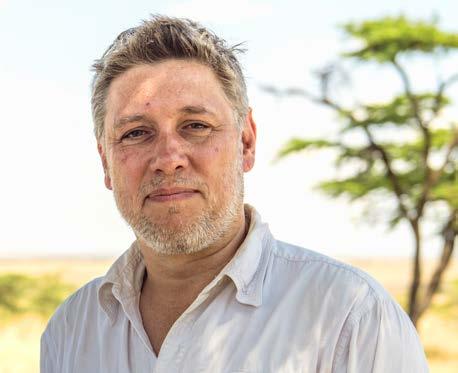
Wildlife Docs / Studio Silverback’s Jonnie Hughes

JUNE/JULY 2023 EDITION WWW.TVREAL .COM


 Ricardo Seguin Guise Publisher
Mansha Daswani Editor-in-Chief
Anna Carugati
Editor-at-Large
Kristin Brzoznowski
Executive Editor
Jamie Stalcup Associate Editor
David Diehl
Production & Design Director
Simon Weaver Online Director
Dana Mattison Sales & Marketing Director
Genovick Acevedo Sales & Marketing Manager
FAST has emerged as a buzzword across all sectors of the business, but factual distributors appear to be benefiting the most from the quickly growing segment.
“AVOD and FAST services are becoming a significant revenue stream for us,” reports Anne Olzmann, the managing director of Albatross World Sales. “We have been working with different operators for quite a while now, and while it has taken some time to set up, it is becoming more and more lucrative each year, especially for titles that have made their TV round and are ready for third and fourth runs. It is safe to say that we have extended the shelf lives and have longer distribution periods for suitable genres.”
Distributors discuss nature and wildlife programs that take a single-subject focus.
Ricardo Seguin Guise President
Anna Carugati Executive VP
Mansha Daswani Associate Publisher & VP of Strategic Development

“We collaborate with numerous platforms, licensing programs to their AVOD services, owned-and-operated FAST channels or entirely single IP channels, both in the German- and English-speaking territories, with other regions of the world envisaged for the near future,” notes Nikolas Huelbusch, Director Unscripted at ZDF Studios.
We’ll be taking a deep dive into the potential of FAST for factual distributors at our upcoming FAST Festival, a virtual conference taking place next month. Register for free here Mansha Daswani
The applauded director on harnessing the power of filmmaking and storytelling to create documentaries that awe and inspire while illustrating the perils impacting our environment.
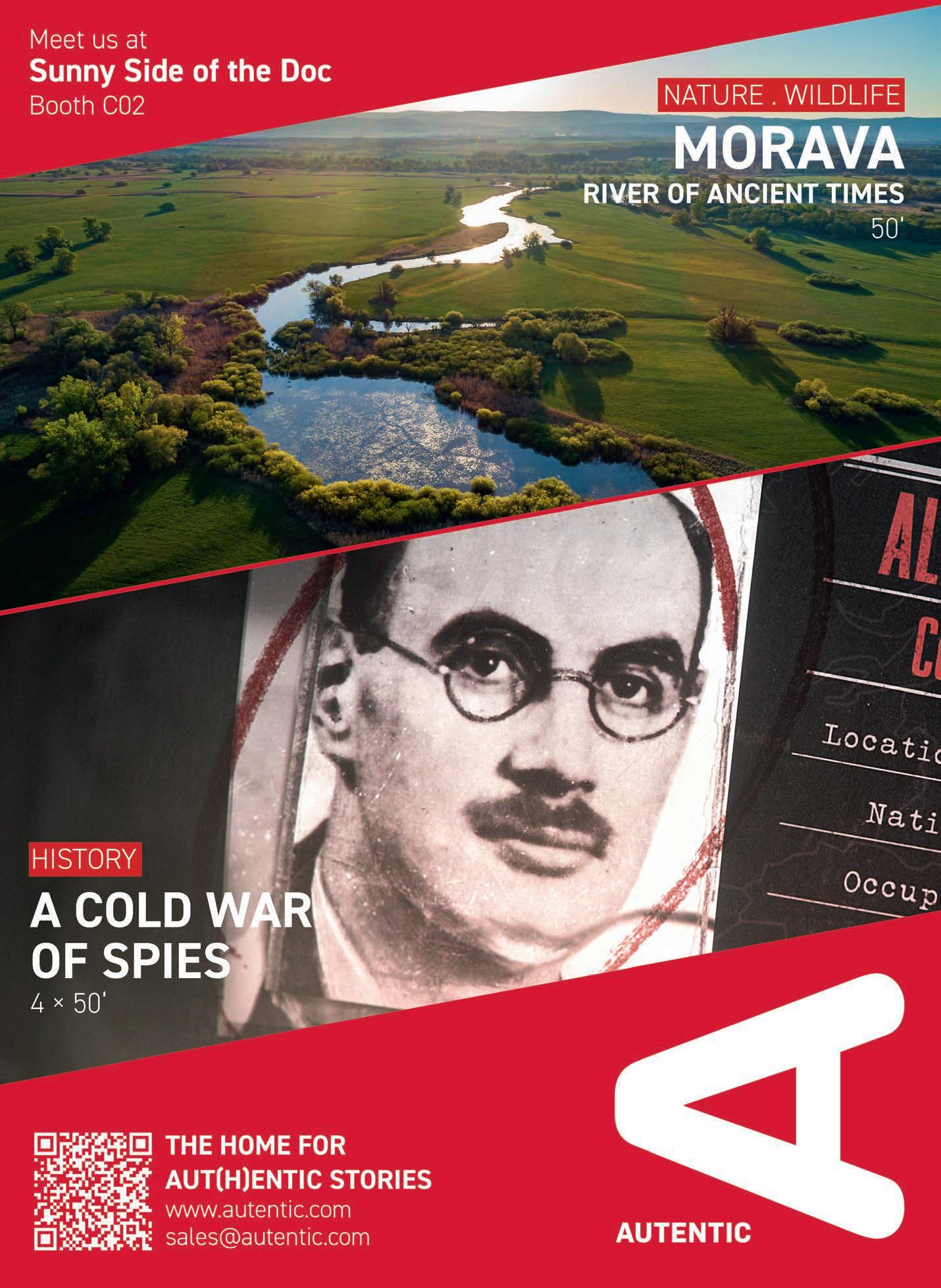
Morava—River of Ancient Times / Climate Chronicles / Mission Saving Paradise— Expedition to the Last Treasures of the Indian Ocean
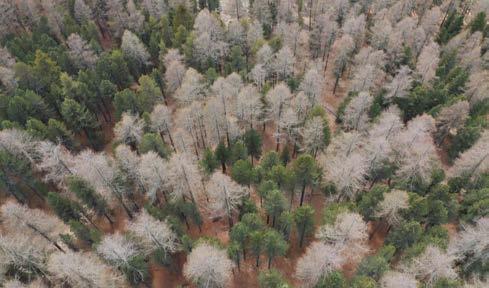
Autentic Distribution is showcasing a pair of titles focused on climate change. “The climate crisis and its environmental repercussions have an impact worldwide, making it a universally relevant and pressing topic,” says Mirjam Strasser, head of sales and acquisitions. “Climate Chronicles and Mission Saving Paradise—Expedition to the Last Treasures of the Indian Ocean captivate audiences by focusing on the issues and offering solutions that give hope.” Morava—River of Ancient Times is also a highlight.


“Our mission is to deliver gripping and captivating documentaries that meet the needs of broadcasters and platforms, captivating audiences with relevant and engaging content.”
—Mirjam StrasserYoung Addictions / The Wind Sentries / Real Madrid: The White Legend
Onza Distribution is highlighting three programs from very different genres: the socialissues documentary Young Addictions, the environment and conservation title The Wind Sentries and the sports history series Real Madrid: The White Legend. “Young Addictions focuses on a highly universal issue: the virtual addictions of young people from all over the world,” says Béatrice Nouh, head of sales. The Wind Sentries addresses climate change. Real Madrid: The White Legend is about the football club and its history.

“We are coming with a wide slate of documentaries from many genres: nature, travel, sports, social issues, religion, mystery, history and more.”
—Béatrice Nouh
Climate Chronicles Young Addictions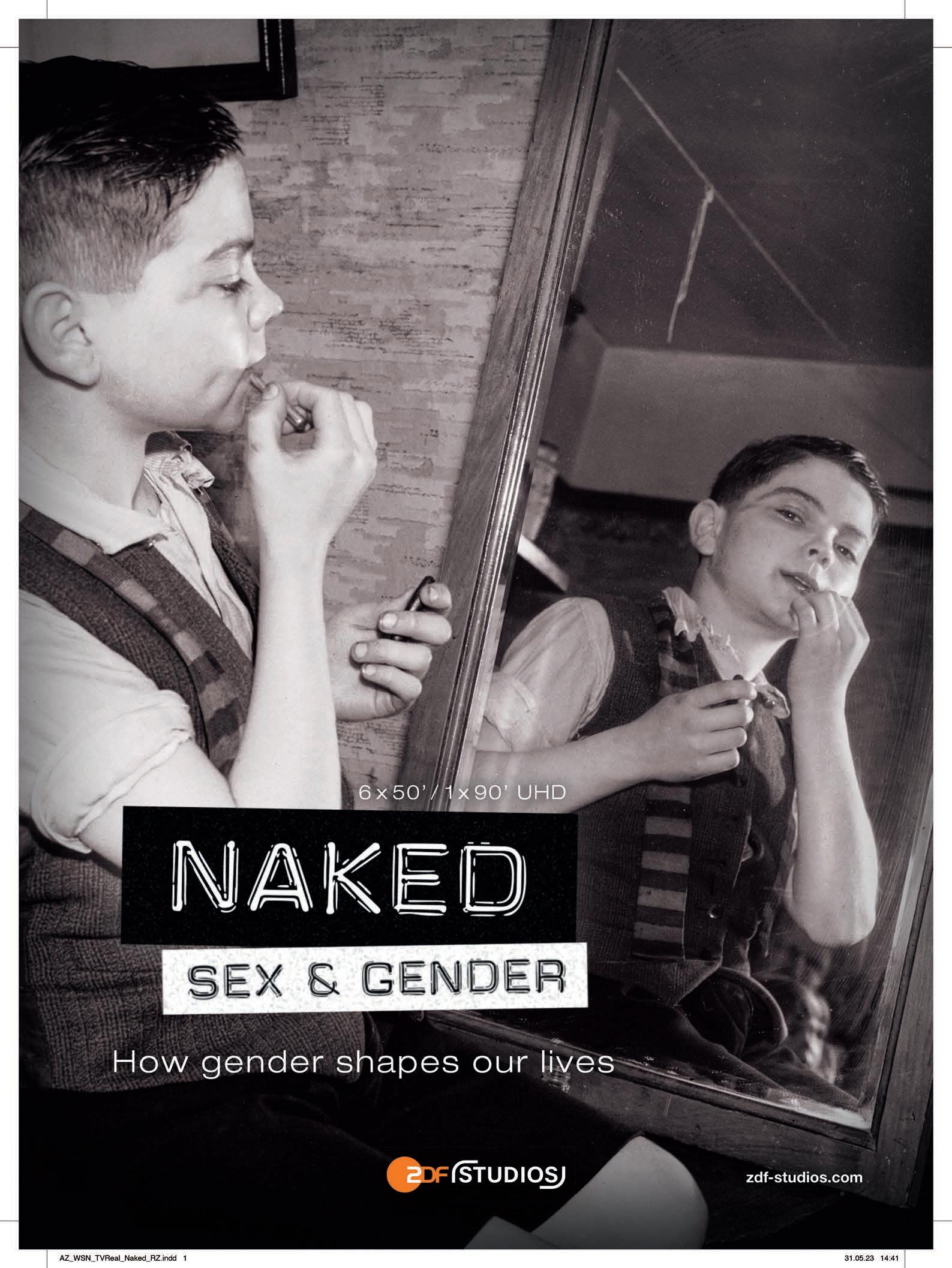

A Raven’s Tale—Mystic Czechia / Life on the Wing—Miracle of Bird Migration / High Life in the Dead Mountains
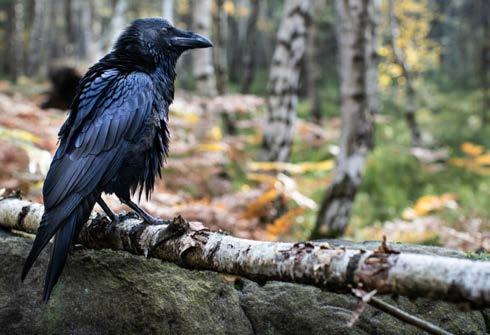
The ORF-Enterprise catalog features a number of wildlife and nature titles, including A Raven’s Tale—Mystic Czechia, looking at the landscapes of the Czech Republic. Life on the Wing—Miracle of Bird Migration showcases the wonder of bird migration. High Life in the Dead Mountains delves into diverse ecosystems. “We are experiencing high demand for our blue-chip titles in both the nature and wildlife and history segments,” notes Armin Luttenberger, head of content sales international.
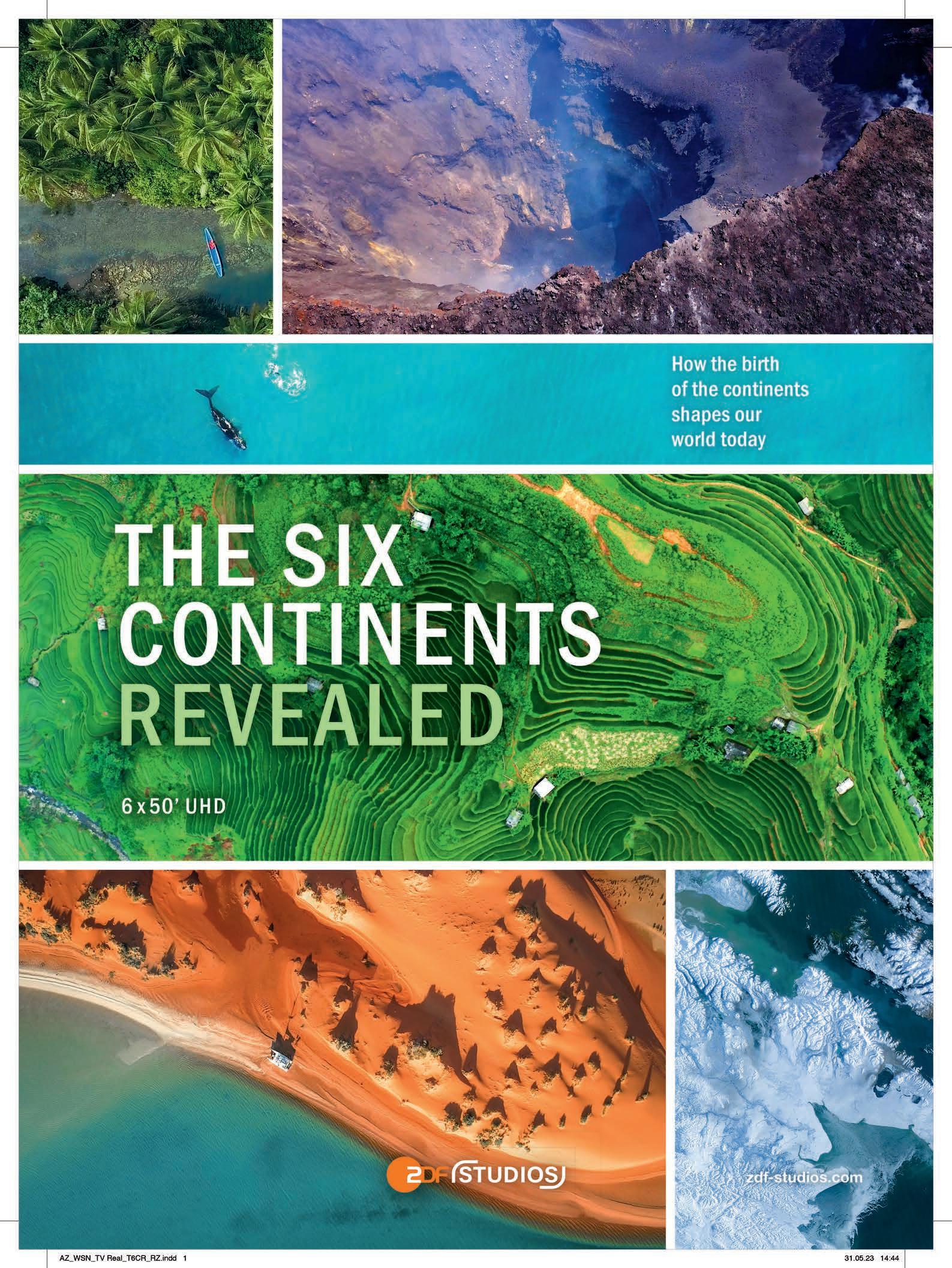
The Six Continents Revealed / Naked—Sex and Gender / Bison: An American Icon
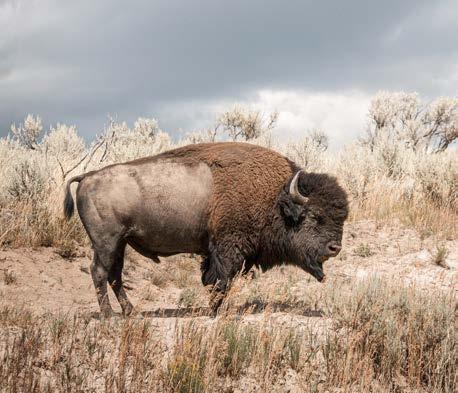
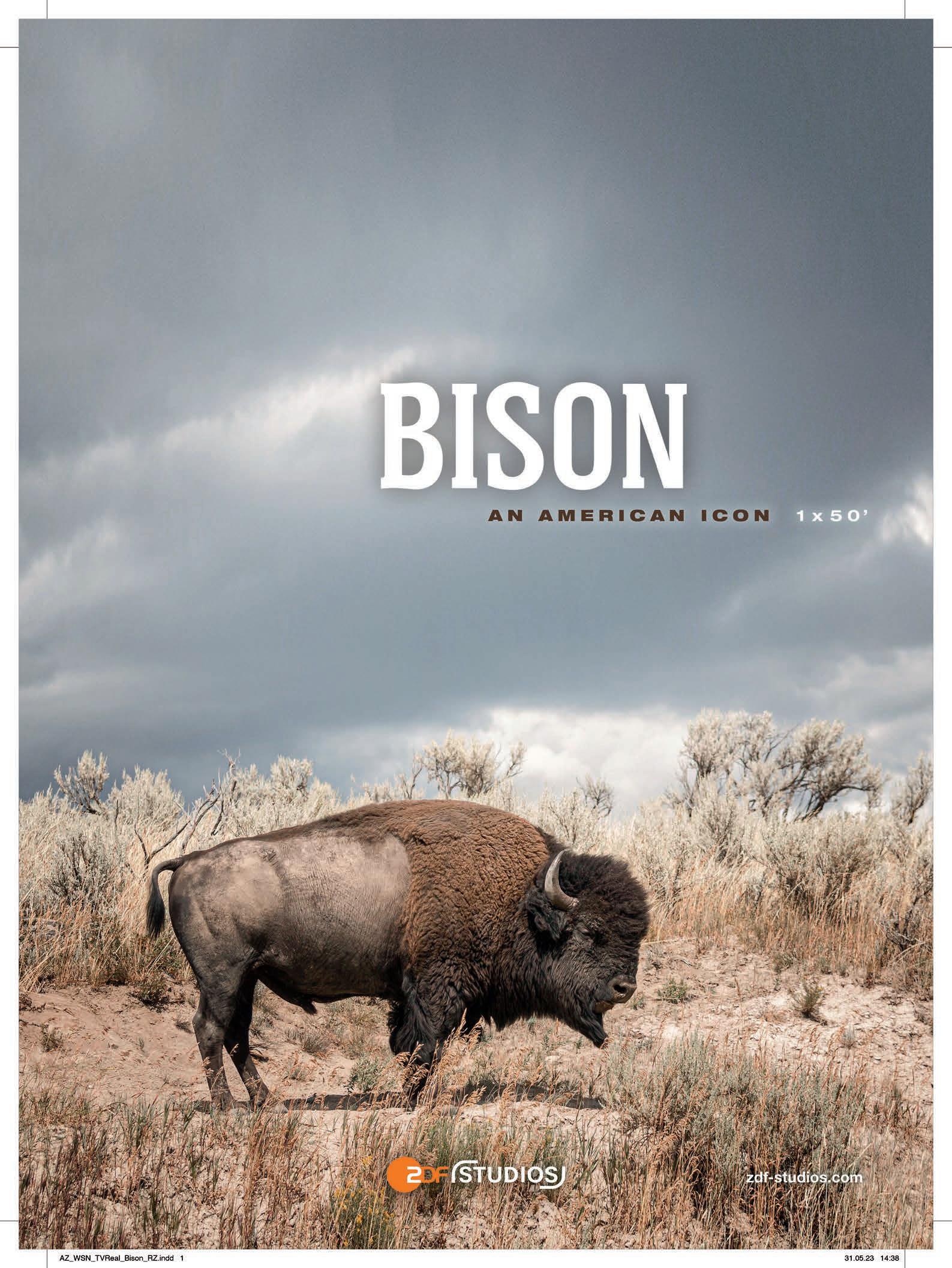
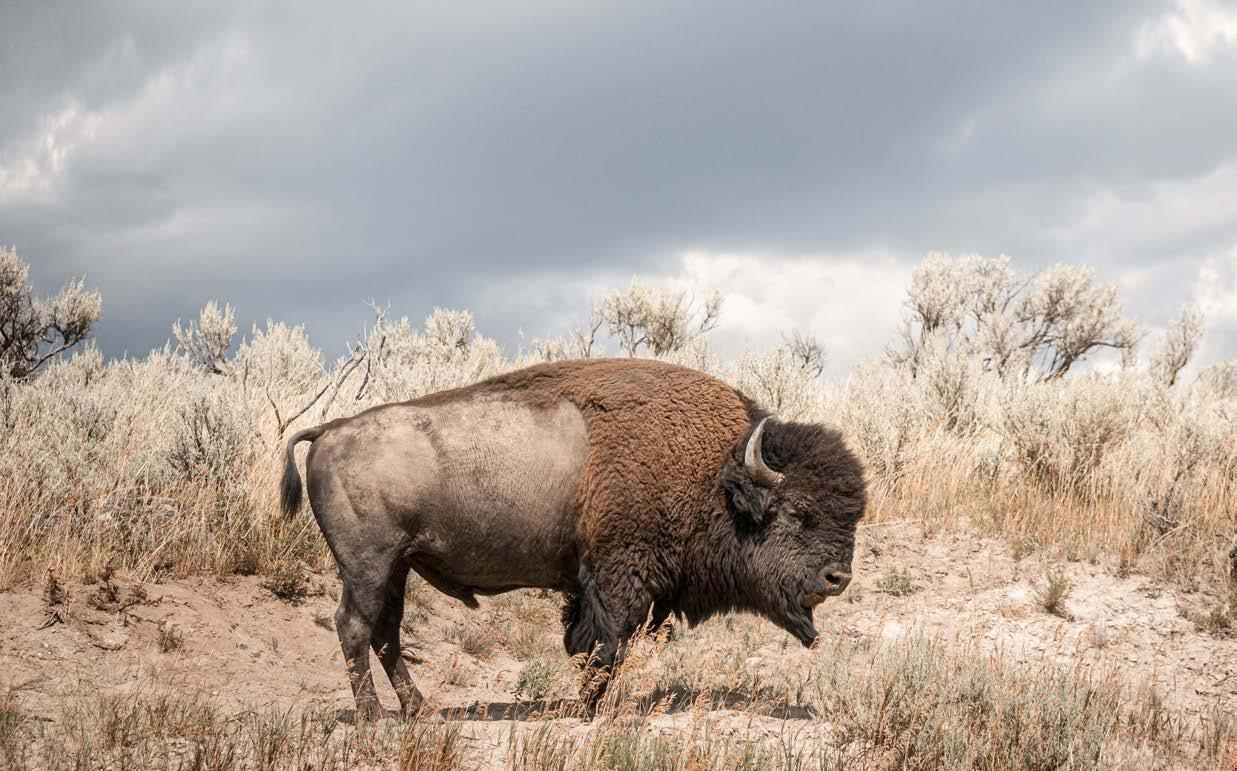
The docuseries The Six Continents Revealed, distributed by ZDF Studios, provides a geological and cultural-historical biography of the world. It reveals how nature has shaped and influenced cultures throughout history. Naked—Sex and Gender explores whether gender differences are innate or acquired, how puberty affects children’s perception of gender, the history and future of the patriarchy and more. Bison: An American Icon takes a deep dive into how the bison played a key role in shaping the North American continent and the U.S., despite being hunted to near extinction.

“Maintaining a balance between volume and quality is what distinguishes us as a distribution unit belonging to ORF.”
—Armin LuttenbergerThe Six Continents Revealed
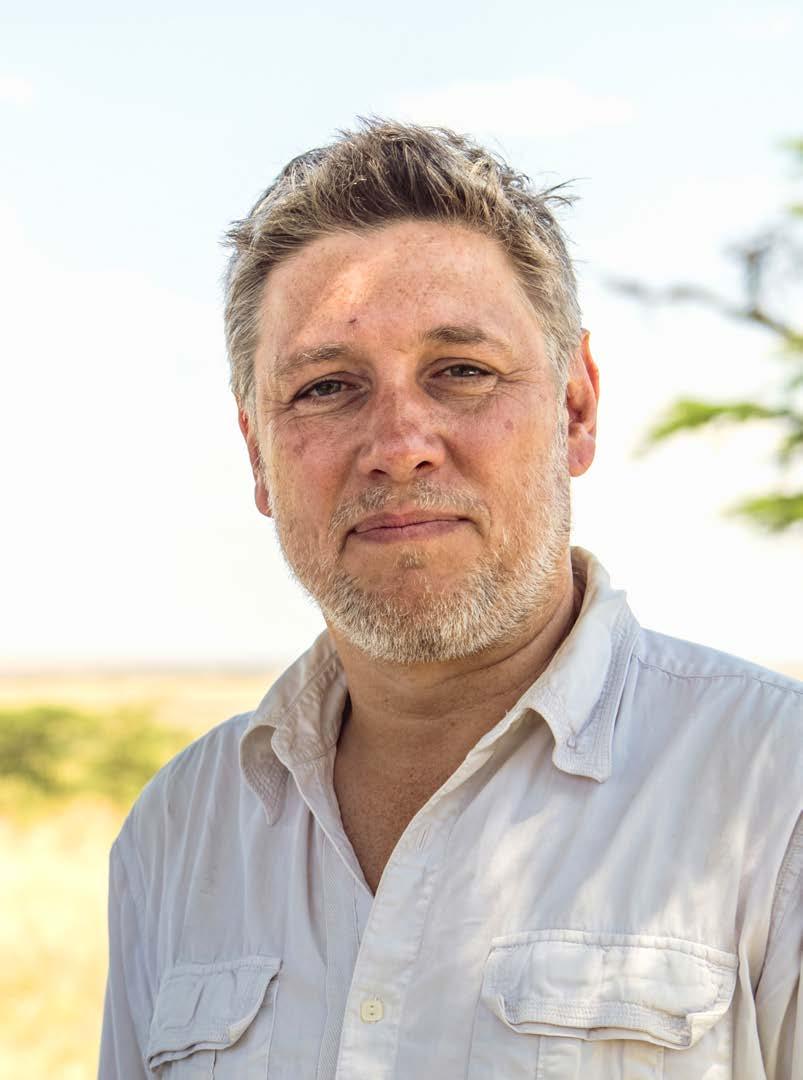
Saving our planet is hardly idle talk to Jonnie Hughes, a director at Studio Silverback. For years, he has been harnessing the power of filmmaking and storytelling to create documentaries that awe and inspire while clearly illustrating the perils impacting our environment. At MIPTV, Hughes was awarded a MIP SDG Award in recognition of Silverback Films and Studio Silverback’s work supporting the UN’s Sustainable Development Goals.
TV REAL: How do you balance making a show that will draw an audience while at the same time imparting somewhat depressing news about climate change?
HUGHES: It’s getting easier. Because there was no good news a few years ago, and because we were heading into a car crash and didn’t know how to steer away from it, environmental films were a very niche activi ty. But that’s not so much the case anymore. We can point to real change already happening. There is a huge
market change going on, which means that it’s mainstream. That allows commissioners to take a risk on those stories. And the average person is more engaged, more interested in it.
HUGHES: Nature is remarkable, and evolution is remarkable. My love originally was for science and ecology. There absolutely is a world in which human beings and wild
ani mals can be in harmony. If you look at the tiger parks in India, for example, the tiger numbers are escalating now. In the ’90s, you’d go there, and most of the people visiting the parks would be international tourists. When I went five years ago, 90 percent were Indian domestic tourists. That means that in India, the people and tigers are coming into harmony. Again, in the ’90s, most tigers dying early were dying of poaching. These days, if tigers die, it’s mostly from car accidents. Poaching is virtually gone in many parts of India. That harmony is possible. I have this dream of the whole world being like that in a hundred years’ time if we do the right things.
“Environmental films were a very niche activity. But that’s not so much the case anymore.”
 By Jamie Stalcup
Wildlife and nature programming has been a key component of broadcasters’ slates for many years. Sweeping, high-quality pieces that survey an area and its species are loved by audiences everywhere. It’s a crowded market, however, and it’s only becoming more so. Standing out can be tough. Distributors have found one way to break through the overly saturated genre: offering focused, single-subject programs.
“ Since there is hardly anything left that has not been filmed, it can only ever be a matter of finding a new approach,” says Armin Luttenberger, head of content sales
international at ORF-Enterprise. “James Cameron was not the first to make a film about the Titanic, but he was probably the first to think that a sinking ship alone is not enough.”
Luttenberger continues, “There are dozens of high-quality documentaries about lions and leopards in the market that all show more or less the same thing. Standing out from the crowd is a great art—and that is defined solely by profound storytelling and a unique visual language.”
“Premium wildlife content was formerly defined by high-end camerawork, but 4K and even 8K filming is not enough anymore to make a film stand out,” notes Mirjam Strasser, head of sales and acquisitions at Autentic Distribution. “Now, it is either neverbefore-seen animal behavior, access to an animal habitat that
hasn’t been shown before or fresh storytelling that stands out. By focusing on a single species that is mysterious, elusive and has not yet been covered by many wildlife programs, films can still compete for viewership.”
“You need to find your special approach and what makes your film different,” concurs Anne Olzmann, managing director of
“Standing out from the crowd is a great art—and that is defined solely by profound storytelling and a unique visual language.”
—Armin Luttenberger
Albatross World Sales. “This can be a new way of storytelling, for example, in an in-depth portrait of a particular species that the audience might even be very familiar with or through unique access to a specific topic or area. Find the unknown in the known, and for this, you need to dive deeper into the subject matter (or species).”
Olzmann offers Superbirds—The Secret Life of Tits, produced by Altayfilm, as a prime example. “It is a species that almost everybody knows, and you think there’s nothing special or surprising about them, but we now know that they have individual character traits and show different behavior.”
“There is still so much to learn about the different animals in their beautiful and varied forms,” Autentic’s Strasser adds. “Focusing on a single species allows viewers to fully immerse themselves in the world of an individual animal, a world they may not have known much about before. These documentaries get up close and are therefore captivating and emotional.”
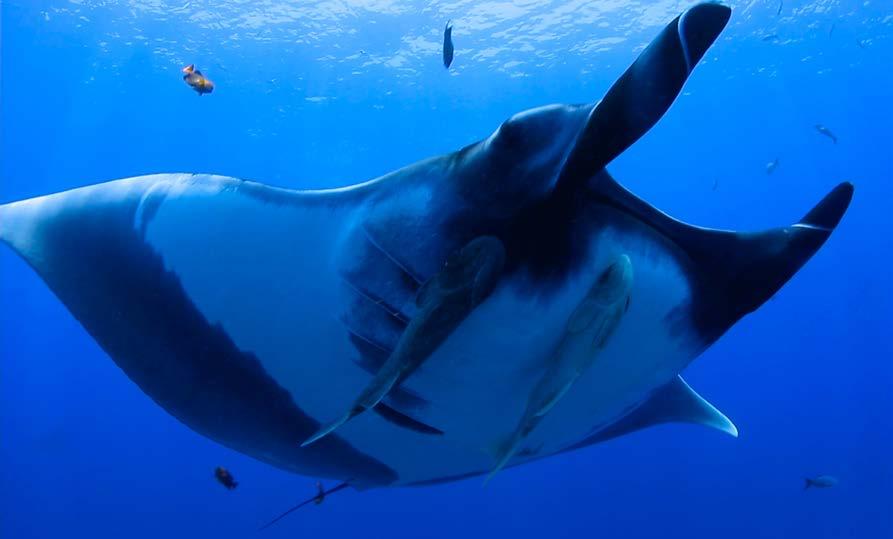
The Autentic catalog features an array of titles that fit the bill, including The Himalayan Ibex—Monarchs of the Mountains and Spirit of the Mountains—The Snow Leopard. It also includes the Terra Mater Studios slate, which features its own single-species programs such as Alien Contact about manta rays.
ZDF Studios, meanwhile, has in its slate Bison: An American Icon , a profile of this enduring icon of North American wilderness.
Along with singlespecies docs, high-quality factual fare that takes viewers deep into the heart of a specific location are in high demand. “There seems to be an appetite to discover parts of the world that have been underrepresented in documentary filmmaking in the past,” says Nikolas Huelbusch, Director Unscripted at ZDF Studios.
He points to Africa from Above—produced by Off the Fence in association with ZDF, Arte, ORF and UKTV—as an example. “Africa in the past was mostly present when it came to the archaeological sites of Ancient Egypt, the Rift Valley as the home of early humans and a handful of well-known national parks such as the Serengeti or the Maasai Mara. In our series Africa from Above, we show a much broader vision of ten African countries, their landscapes, wildlife and people, including such rarely shown countries as Mozambique, Ghana, Cameroon and Morocco. We realize there is a big demand for such series in the market.”
While a compelling feature of wildlife and nature documentaries is the cutting-edge technology used to produce them, all of the executives agree that storytelling is the most important element.
“Storytelling is crucial,” Albatross’s Olzmann says. “As a filmmaker or producer, you have to find the personal, emotional story that the audience can relate to but still learn something new.
In addition to that, you have to make this interest last for 50 minutes. The story needs strong characters and fresh insights, and, in combination with cutting-edge technology, this can be a real winner.”
In both Superbirds and Wolf—Wanderer Without Borders, one lead animal is followed the entire time. Superbirds sees an individual male fly from his origins in Germany to Southern France, where he starts his own family. Wolf—Wanderer Without Borders, meanwhile, follows a wolf named Scout, who roamed from Eastern Germany all the way to the Netherlands.
“Viewers appreciate it when they can accompany a main character through the film—or, in the case of wildlife, an animal with whom they can laugh, empathize and sympathize,” ORFEnterprise’s Luttenberger says.
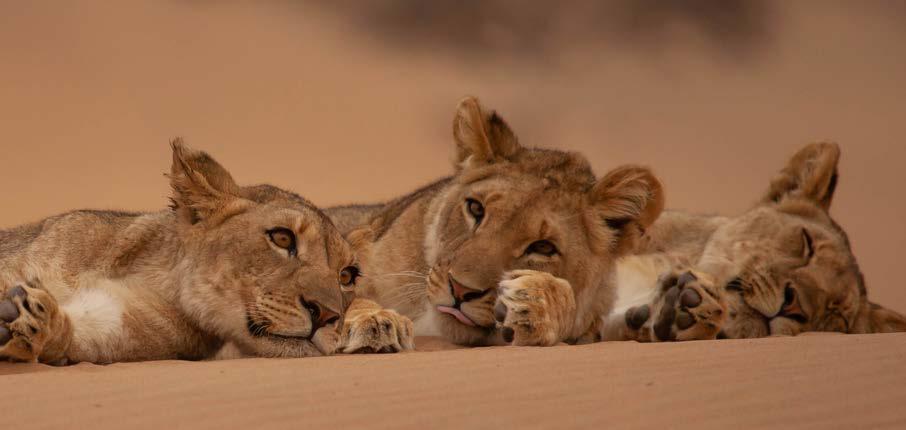
In ORF-Enterprise’s catalog, Will and Lianne Steenkamp have followed leopards and lions in Africa for many years, telling their stories across generations. “Those who, like these two, take the time to do so and are able to do so, naturally achieve extraordinary results,” Luttenberger notes. “Their new documentary Desert Phantoms—Surviving the Skeleton Coast , which will be on the market in early 2024, will prove that once again.”
“There seems to be an appetite to discover parts of the world.”
—Nikolas Huelbusch
All manner of broadcasters and platforms are interested in this hyper-focused style of doc, and FAST channels are presenting new opportunities. “AVOD and FAST buyers are currently standing out, as interest from these clients is increasing rapidly and more and more clients join the queue,” Strasser says.
“VOD platforms tend to be more open to experiment,” Olzmann explains. “When it comes to single-species films, there is a difference between VOD platforms and public broadcasters. Broadcasters have a few fixed slots—and the market for these is very competitive—so they have to be more selective, as the offer to their audience is simply limited.”
At the moment, she notes, “broadcasters usually decide to go with the ‘safer’ wildlife docs,” meaning those centered on the “Big Five” and other predators, which could be a single-species documentary, and programs that cover wide areas.
For distributors, producers and broadcasters alike, though, “it is a very rewarding genre,” Olzmann says. “It is universally attractive to a global audience, does not really seem to age and has a long shelf life.”
“There is still so much to learn about the different animals in their beautiful and varied forms.”
—Mirjam Strasser