• Clinician knowledge and expertise is needed to inform supply chain team decisions
• Data sharing and transparency across jurisdictions is needed to support multi-jurisdiction collaboration to manage major disruptions
Next Steps: Health Emergency Readiness Canada (HERC); PHAC
Mobilizing Clinician Engagement
Strategy to Strengthen Clinician Engagement in Supply
Disruptions
• There is limited or absent Clinician expertise to inform management of supply disruptions
• Decisions on alternative products, changes to care delivery procedures have limited clinician input
• Communication channels are needed to both inform clinicians and gather expert input to identify alternative products and alternative care delivery
• Bilaterial communication channels between leadership, supply chain teams and impacted clinician groups needed for proactive management of supply disruptions
Inform clinicians most impacted by the shortage delivery Mobilize clinical expertise to inform decisions Assess risks to patients, care delivery risk mitigation plan Monitor outcomes for patients, the workforce care
Strategy for Advancing “Canada First” Sovereignty
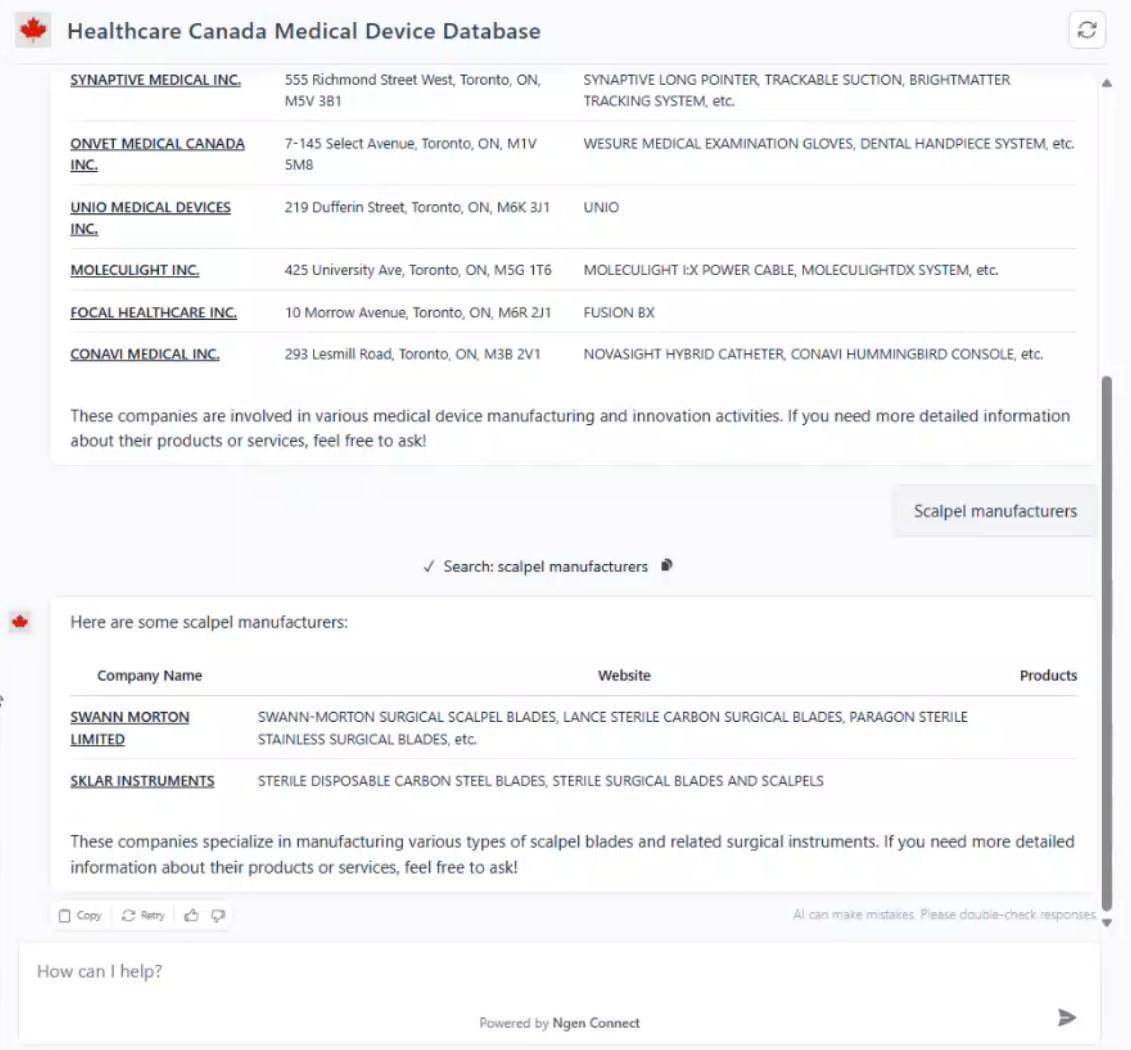
AI-Enabled Platform to Source Products
Pilot Tested: Simulated 9 products in shortage, tested use of this platform by supply chain organizations
Findings:
• Overcomes the limitations of “Google”, the primary tool to find companies and products
• Enabled discovery of domestic suppliers, identified location
• Automates manual search processes for suppliers
• Overcomes “never knew Canadian companies existed or where they are”
• May “solve” what products can we produce and where are they located”
Challenge: No available data on companies supplying Class I products.
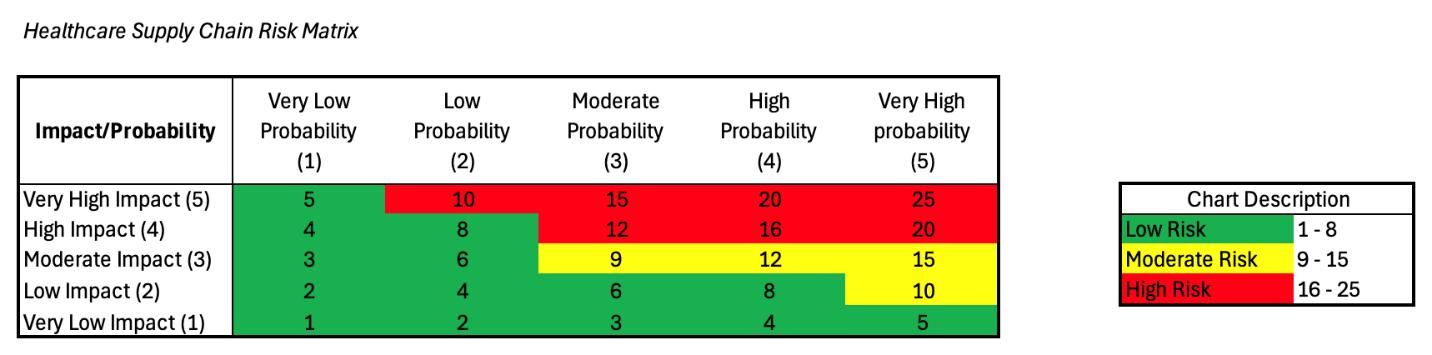
Proactive Management of Supply Resilience Risk Assessment Tool
Causal Factor of Disruption Severity of Impact Probability
Domestic Supplier
Alternative Product
Supplier Diversity 0 = Not relevant
Product Manufacturing
Access to Raw Materials
Supply Inventory, Stockpiles or ‘Buffer Stock’
Regulatory Changes
Disruptive ‘Historical’ Event
Economic and Geopolitical Factors
Duration of Supply Disruption
Distribution Logistics
Simulations of real-world product shortages with 11 supply chain teams
Findings
:
• Shifted focus from sourcing products towards managing severity and and probability of risk for People (not products) – impact and severity of risk for patients, and probability of risk outcomes
• Created awareness of causal factors driving supply disruptions, many of which were unknown or not considered previously
• Achieved a structured and quantifiable risk assessment to strategically advance proactive supply management
Advancing System Level Transparency of Product Use in Patient Care
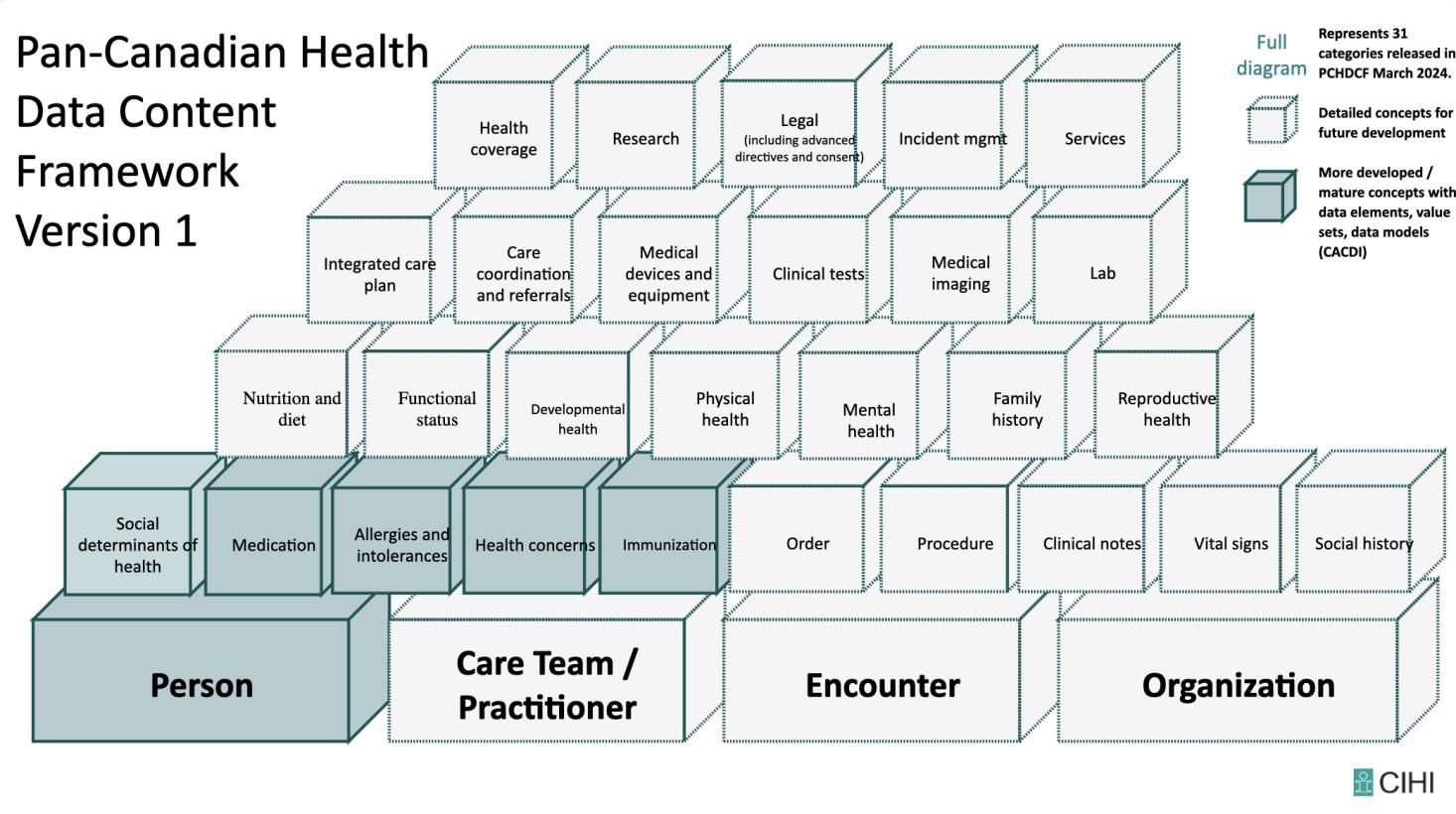
CIHI: Advancing product identification into Health Data Content framework
Phase 1: include GTIN product identifiers for all medications prescribed to patients
Phase 2: include GTIN for all vaccines
• Creates transparency of products used in every unique patient care episode
• Enables tracking of product utilization
• Identifies patients at greatest risk during supply disruptions
Next Step: CIHI implementation in tandem with Health Canada and PHAC
Healthcare Supply Chain Resilience Toolkit
Pilot Testing a Supply Chain Resilience Toolkit:
• Improve collaboration across jurisdictions to manage supply chain disruptions.
• Enhance health supply chain risk management and agility to proactively manage supply shortages.
• Build transparency of health product traceability
• Engage and mobilize clinical expertise to inform supply management decisions, management of disruptions.
Pilot Test (In Progress): Atlantic provinces testing the toolkit currently
Rural Healthcare Supply Chain Challenges
Emerging Findings from Rural Health Organizations
• Supply Chain teams learn about disruptions “when clinicians are yelling for it”
• “Supply team? Well, it’s me. I kind of just manage that off the side of my desk.”
• Unique challenges for rural and remote settings:
o Urgent orders occur “every day, maybe every 1 or 2 days”
o “It’s who you know, we’re very resourceful. We talk to each other, call other hospitals or even nursing homes,” “Beg, borrow, and steal”
o “There is no way a little rural hospital can be just in time. You just can’t. Just in time inventory doesn’t really work for us.”
o Road closures during winter very common - Air Ambulance (Ornge) lends, borrows and delivers products
“We’ve got specific legislation… that allows us to serve patients that want moose for their meal, for example.”
“Moose is not something you can… farm, so we depend heavily on donations for moose, deer and duck.”
“I can trace that moose that was served to the patients that day right back to the hunter that donated it.”
“There is not very many hospitals are taking confiscated wild game into their inventory.”
Chronic Supply Shortages and Health System Costs
Emerging Findings of Provincial Supply Chain Case Study
Centralized supply chain strategies are advancing in multiple provinces. One province reports:
• Backorders and supply shortages = 18 - 20% of all orders
▪ Total Orders = 60,619 product orders (Nov. 2025 - April 2026)
▪ Back ordered products = 10,943 (18%)
▪ Cost of Team Managing Back Orders (5x effort/order) = 20 - 75 min
▪ Hours = 3,647–13,678 hrs.= equivalent to 4-15 FTE’s for supply chain team
▪ Labour costs for provincial supply chain team: (based on $95,000 annual salary) = $380,000 - $1,425,000 (6 mon.) = $760,000 - $2,850,000/yr
▪ Projected annual cost for Canada: o $29,230,769 - $109,615,384 million/yr
Chronic Supply Shortages and Health System Costs
Emerging Findings of Provincial Supply Chain Case Study Cont’d
Additional (indirect) costs not accounted for:
• Infection Prevention and Control - to assess the suitability of substitutes
• Clinical Engineering / Biomed - to assess the suitability of substitutes
• Nurse Educators - to assess if any education/clinical practice updates will be necessary to use an alternative product
• Clinician Review: Nurses, Physicians to assess the suitability of substitutes
• Ward Aids/Ward Clerks/ Supply Technicians - to interact with the Buyer on order status, and setup a space and label in the department for the new product
• Warehouse staff updating shelving and labels to make a new space for the new item if applicable
• Master Data / System Admin staff - to setup new material masters, new vendors
The Impact of Supply Shortages on Citizens
“It’s a “you” problem”
• No System Accountability:
▪ “I am left the helpless victim, knocking on doors to try to find where I can get the medication renewal.” “… the system is very tailored to their (system) needs and not so much our needs. … It shows that a change is needed.”
▪ “Where is the accountability and transparency when something happens?...where is that accountability for serious things, like someone dies from a medication shortage?”
• Patients are the Default for Managing Access to Products
▪ “Whenever I have had a problem with shortages, … they always turn [it] into a ‘you problem,’ like you did not order them [prescriptions] early enough or you did not come here at the right time.”
▪ “One of my experiences, when there was a disruption, is having the pharmacist telling me to go back to the doctor, [and] the doctor going, ‘I do not know what to do,’ [and] having me go back to the pharmacist. … It should not be up to the patient to have to go back and forth to find alternatives.”
▪ “If you are just waiting for a refill, you are low on the totem pole in an emergency department.”
• Patients Need Information on Product Shortages:
▪ “[If] we can access information about traffic disruptions and power disruptions … we can [also] have public access to supply chain disruptions, alongside any mitigating information that is available?”
Citizen Impact Cont’d
• Significant Burden and Harm for Patients:
▪ “… the burden of all of this falls on the patient – the cognitive load, the navigating, the financial burden. All of this stuff you have got to do it yourself, its sink or swim.”
• Relationships with Pharmacists matter:
▪ “The pharmacist is great at providing the information. They will, at least ours, will always tell you, ‘We are having trouble getting this, [or] we are having trouble getting that,’ because there are some products that you just cannot substitute on. I think the pharmacist is important. … our local pharmacy will collaborate with us, and if they need to, with the pharmacist at the home hemodialysis center [too].”
• Rural Communities Ration Product to Consumers:
▪ “We are a little small province and live in the rural community, so a lot of time [was] spent traveling in, and we would end up showing up to pick up a prescription [that] only would be enough for one or two days, or sometimes not even be able to get any doses.”
▪ “They would not give it to you, even simple supplies. … they only give you a few at a time. Even [with] needles, I was getting the tips last week and they would only give me four at a time. It was like, ‘OK, use those four and then come back.’”
Progress of Supply Chain Resilience in Canada?
• Supply Chain Disruptions continue with significant cost pressures
• Northern and Remote Communities experience considerable risk.
• There remains is no Federal agency or entity whose job it is to be accountable for advancing supply chain resilience in Canada.
• Supply chain is about people:
▪ Canadians go without products, and go without treatments.
▪ Health workforce has no line of site to disruptions, and either “make do” or let patients figure it out on their own.
VITAL Call to Action: “The Future is What We Decide it will Be”
(David Frum, 2026)
• Demand system collaboration and accountability for supply chain resilience, to ensure patients are no longer suffering the impact of product shortages.
• Design a sustainable supply chain strategy for rural Canada, and in particular, the North
• Stop “leaving money on the table” –mobilize provinces, federal agencies, health systems, and supply chain organizations to ensure Canadians have access to quality care