Key drivers and trends in the Jones Act nancial market.
18 Focus: California Scheming
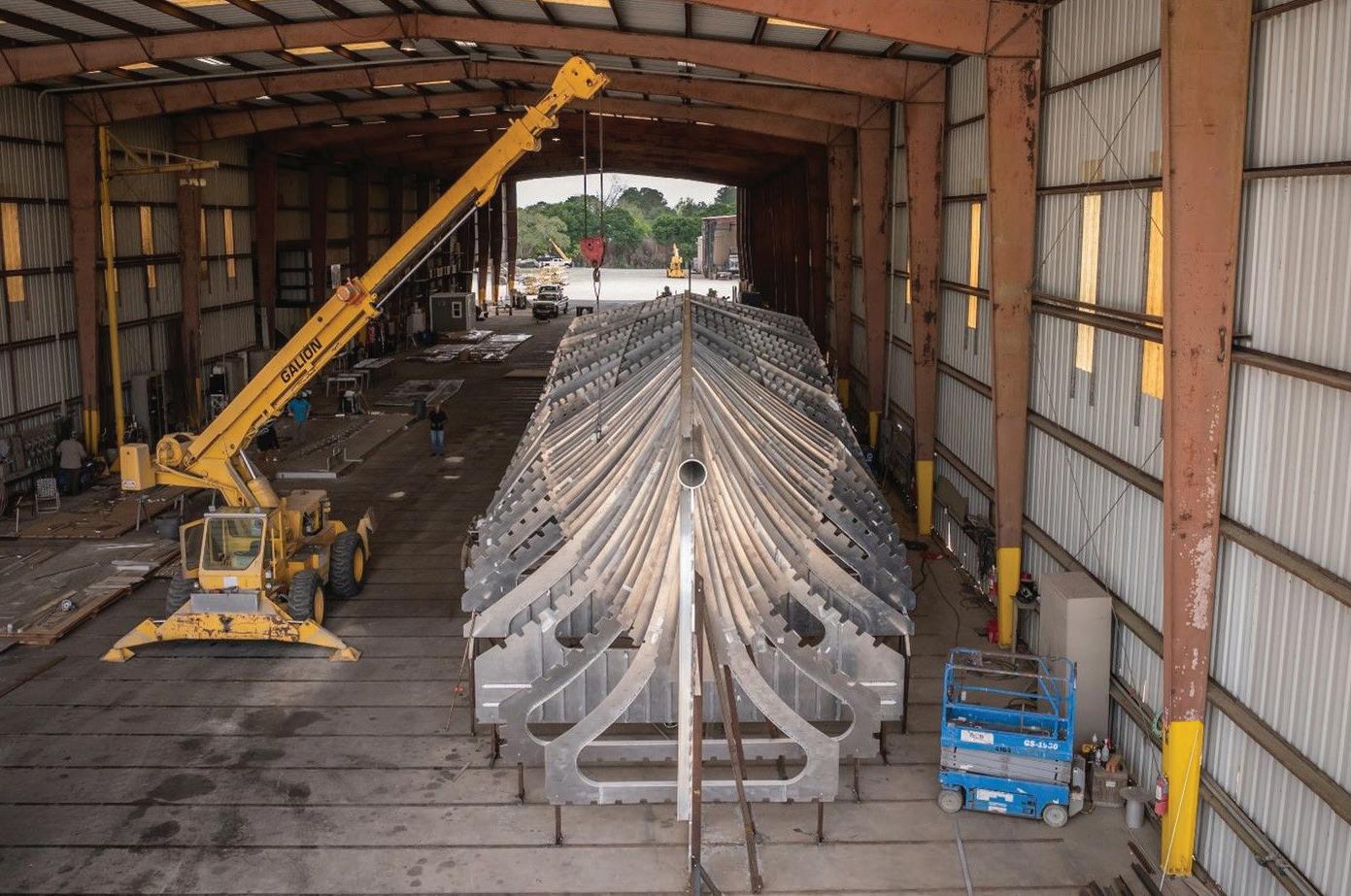
Tech titans deploy to build the world’s largest shipyard.
22 Cover Story: Yearbook
Updates on key workboat sectors.
34 Vessel Report: Deferred Demand
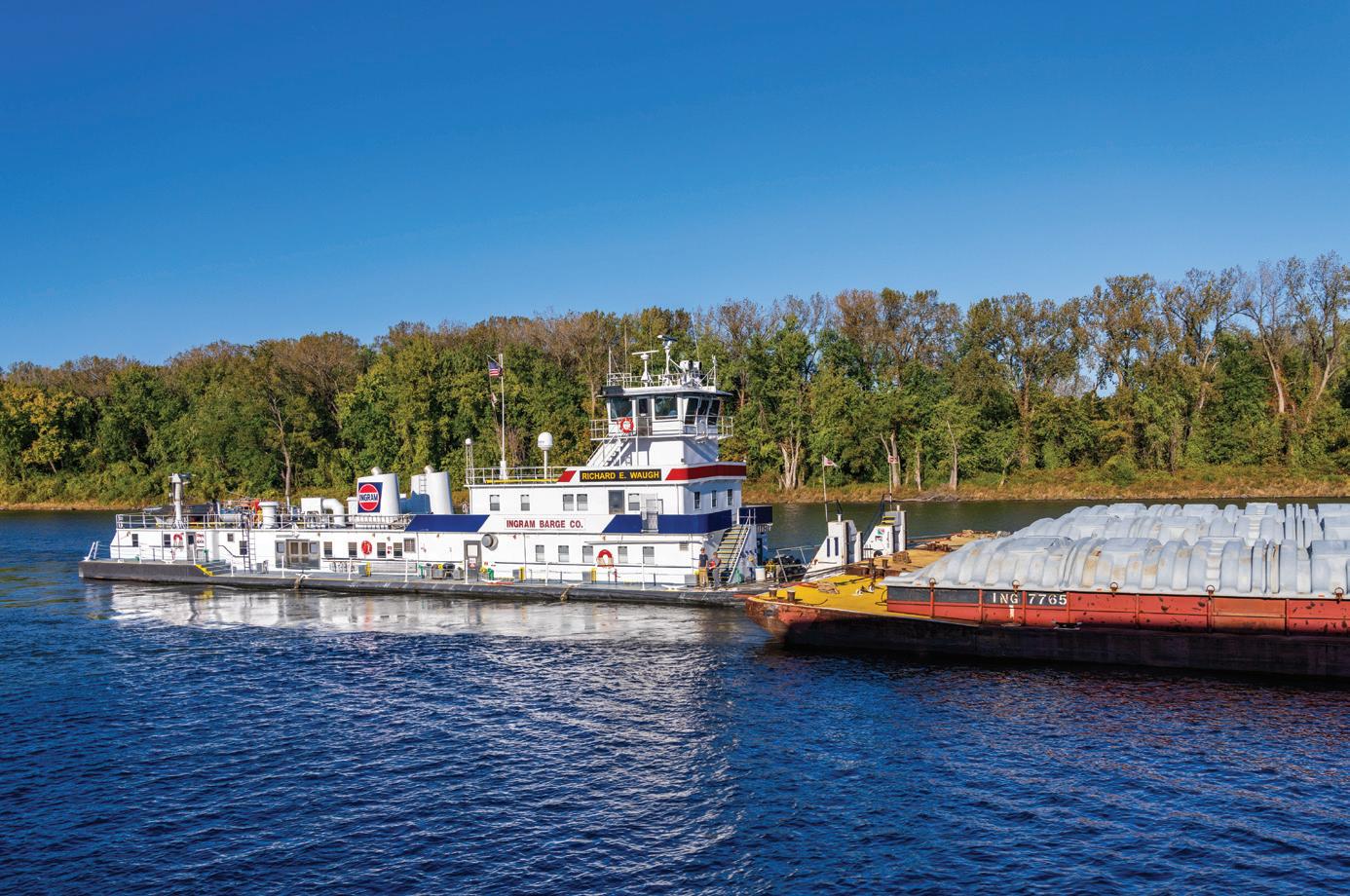
High prices limit towboat construction, but boats are needed.
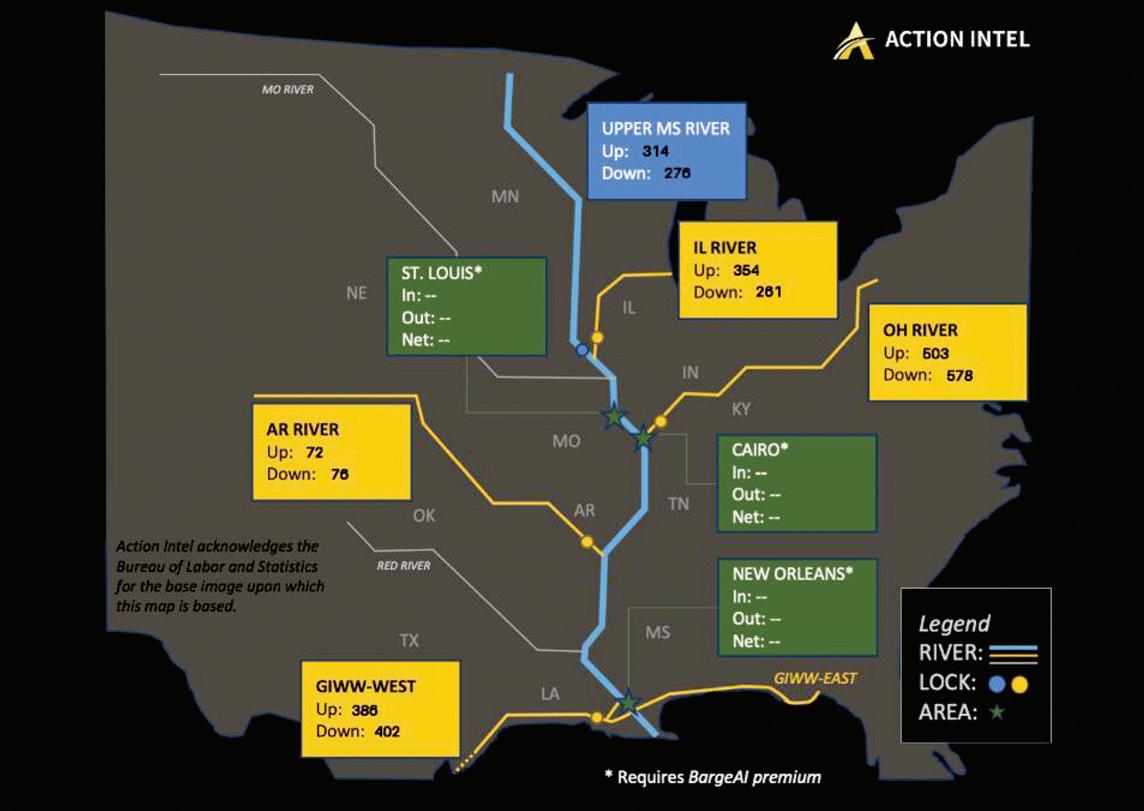
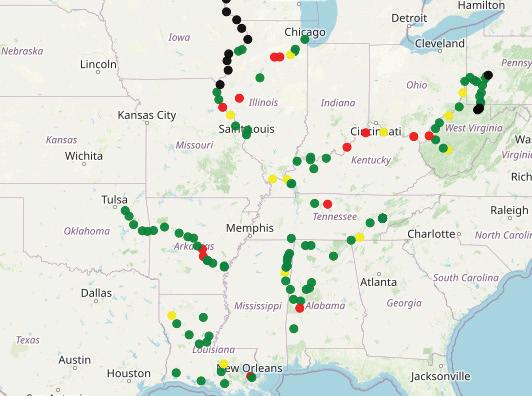
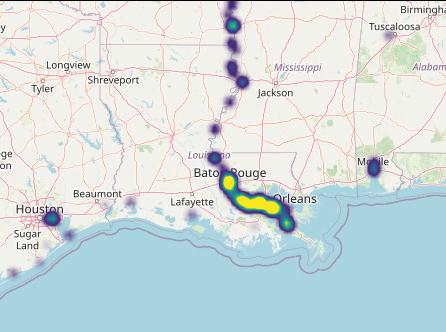
38 In Business: Action Intel
River insights can help optimize productivity.
40 Final Word: Morgan Fanberg
One-on-one with Glosten’s chief executive of cer.
BOATS & GEAR
8 On the Ways
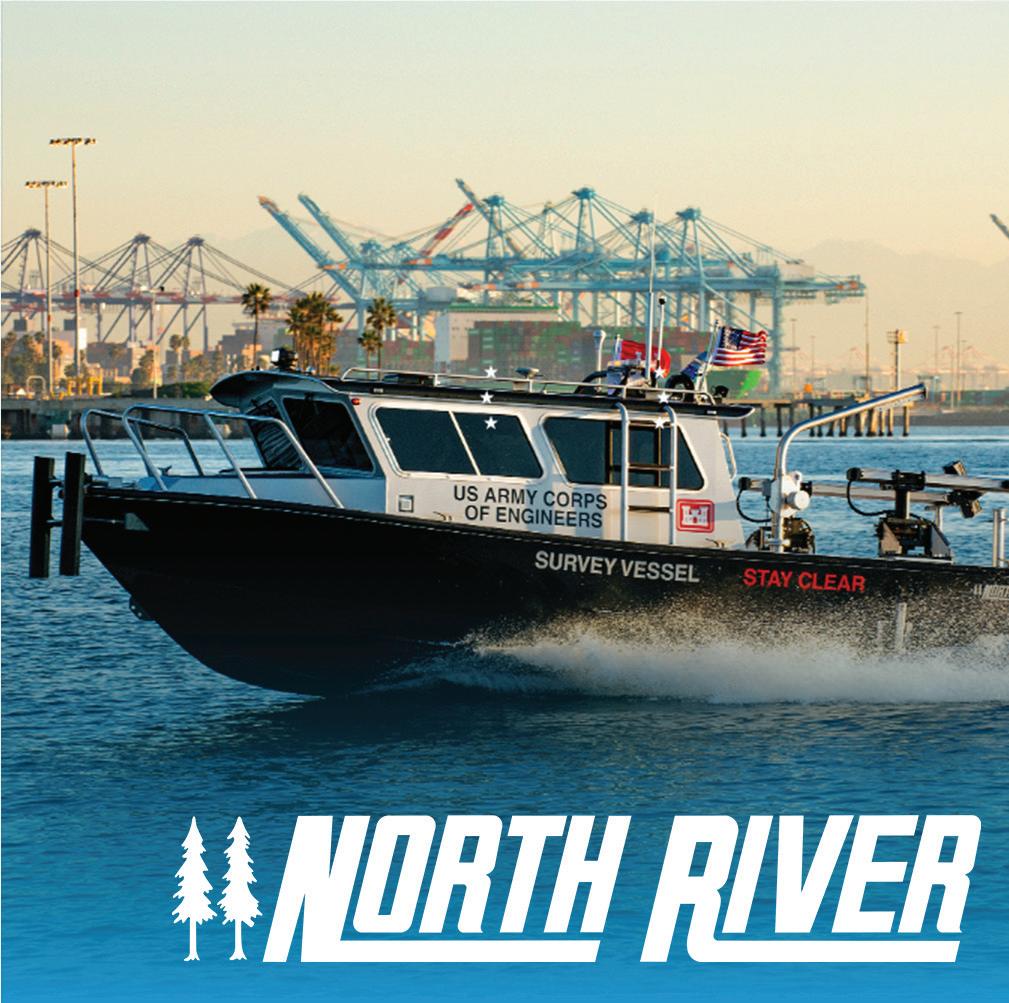
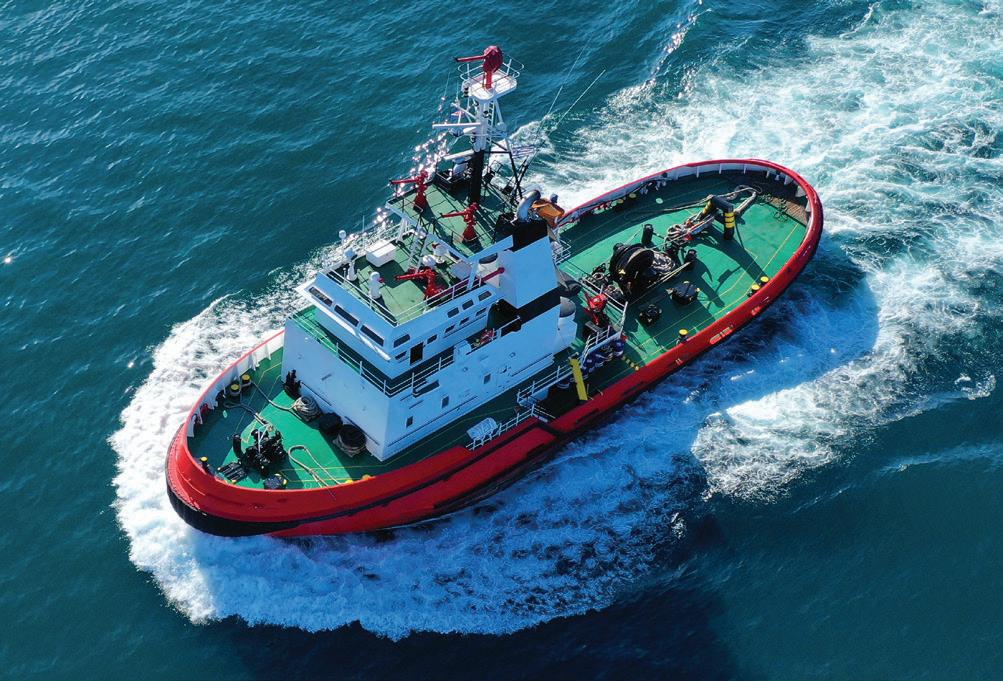
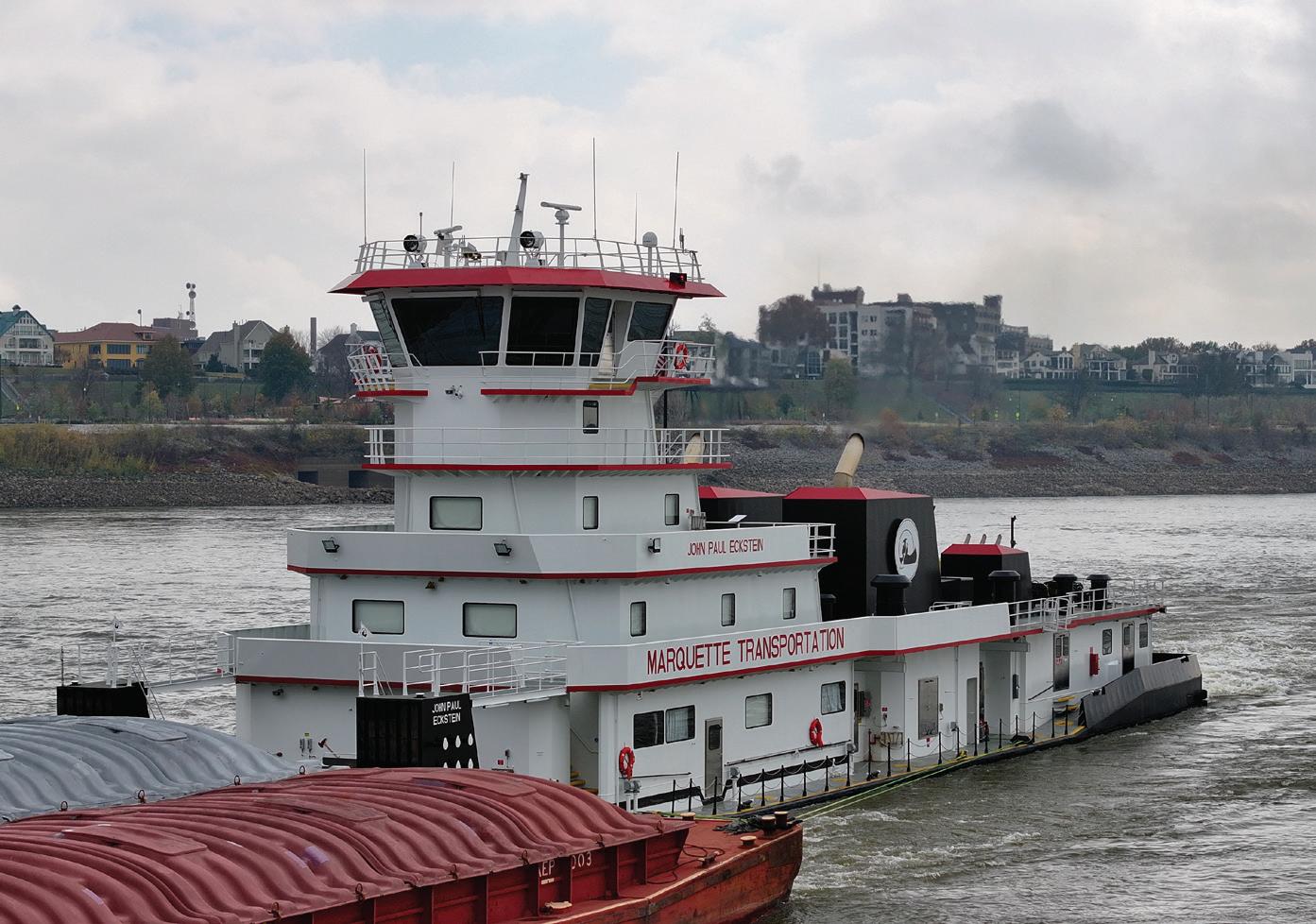
Vulcan Materials christens new pushboat • Silver Ships delivers survey boat to Port of Long Beach • Everglades pilots sea-trial Disruptor Marine boat • Mavrik delivers whale-watching boat to FRC Clipper • Keel laid for rst of four hybrid escort tugs • Senesco Marine launches diesel-electric hybrid ferry
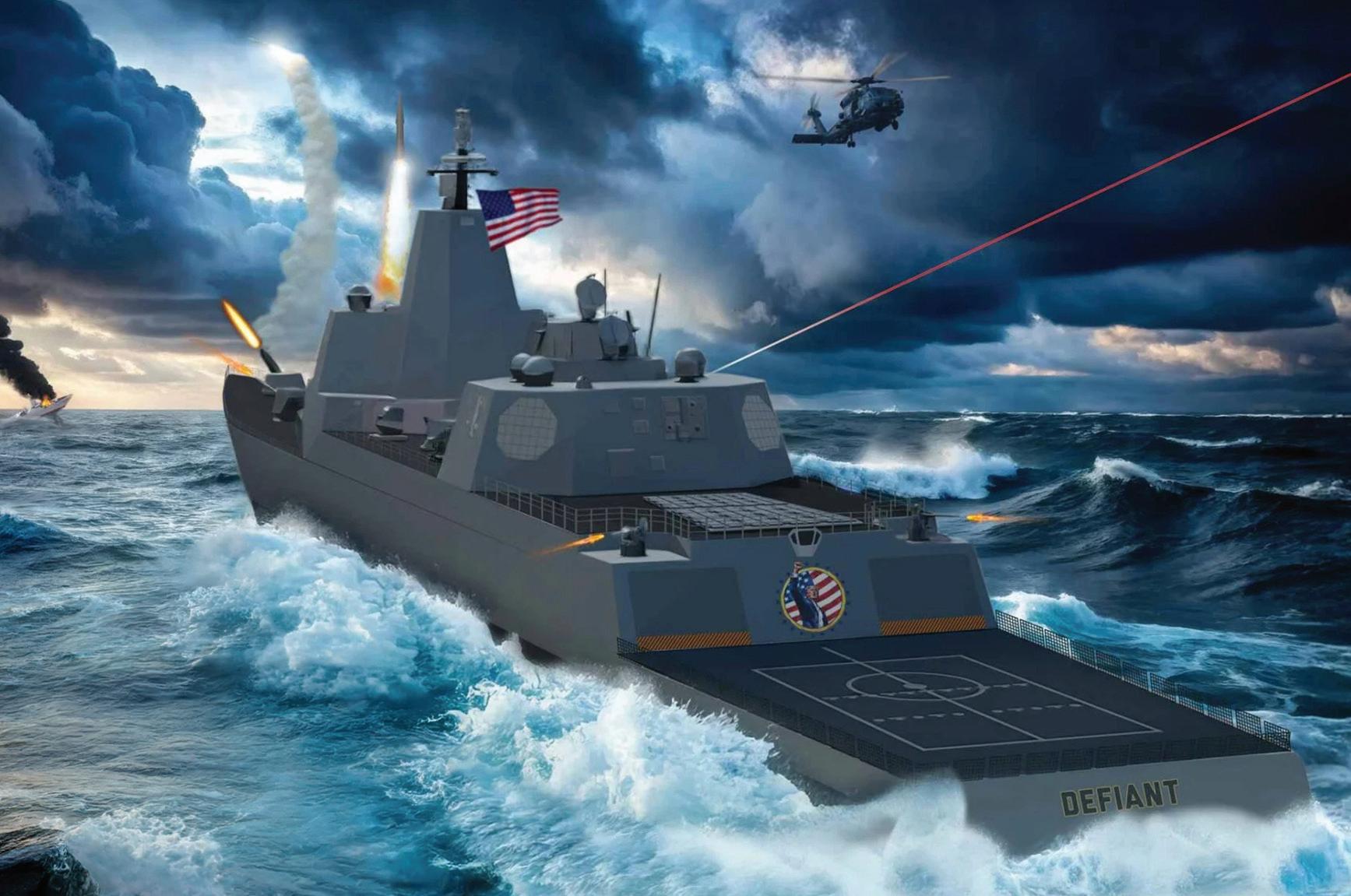
• Massachusetts State Police accept patrol boat from Metal Shark • Silverback Marine launches OX-series truckable tug • Ingalls Shipbuilding awarded FF(X)-class frigate Navy contract.
AT A GLANCE
4 Inland Insider: River barges enjoy brisk 2025.
4 On the Water: A battery of advantages.
5 Credentialing Insight: Back in action!
5 All Hands: High schools undervalue maritime careers.
6 Legal Talk: Who is liable if something goes wrong during bunkering?
6 Health, Safety, and Environment: Expanding environmental aspects of your business.
Value Added
Eric Haun, Executive Editor
ehaun@divcom.com
Earlier this year, WorkBoat’s parent company, Diversi ed, made news when it closed its acquisition of Marine Money, a leading brand in ship nance events and publications. The deal, completed in January, brings together two organizations with deep roots in the maritime world. Marine Money has spent nearly four decades at the intersection of shipping and nance, and we’re glad to have them in the fold. For those of us at WorkBoat, the acquisition feels like a natural t. Marine Money has been a xture in the maritime nance community since 1987, convening C-suite executives, lenders, owners, and investors at events in New York, London, Hamburg, Athens, Singapore, and beyond. For the past several years, Marine Money has also held its New Orleans conference alongside our International WorkBoat Show.
Marine Money joins the Diversi ed family at a moment when dealmaking in the U.S. maritime sector is picking up. If you have been following the news on WorkBoat.com, you’ve seen it: mergers, acquisitions, and re nancings across multiple segments of the industry. Money is on the move in the Jones Act sector.
That backdrop makes this issue’s deep dive into the Jones Act nancial market especially timely. Our feature, written by one of the newest members of the WorkBoat staff, Carley Milligan, explores the key drivers and trends shaping domestic marine nance. It’s a great read, starting on page 16.
Carley brings years of newsroom and industry association experience, and she will be working closely with the WorkBoat editorial team to shape conference programming for the WorkBoat Show and Paci c Marine Expo. Stay tuned as we piece together agendas that are sure to be better than ever!
Readers will also notice another new name in this issue: senior editor Frank McCormack, who brings more than a decade of maritime journalism experience, primarily covering the river barging industry. Frank joined our team very recently and has hit the ground running, delivering the inland waterways segment of the Yearbook section, which begins on page 24.
We’re thrilled to have both Frank and Carley on the WorkBoat crew!
EXECUTIVE EDITOR: Eric Haun / ehaun@divcom.com
SENIOR EDITOR: Frank McCormack / fmccormack@divcom.com
SENIOR ASSOCIATE EDITORS: Ben Hayden / bhayden@divcom.com Kirk Moore / kmoore@divcom.com
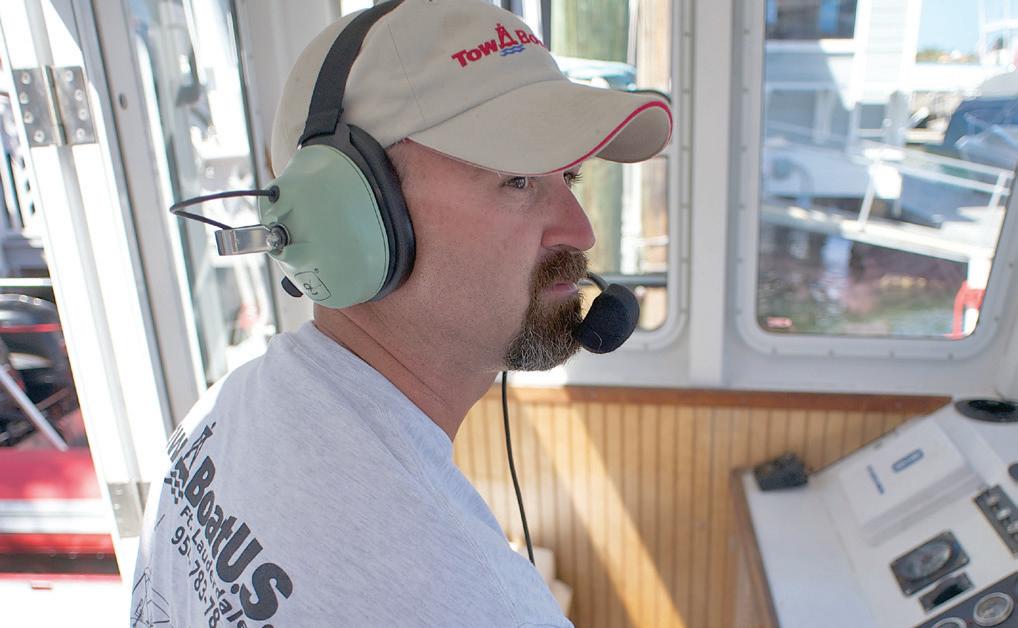
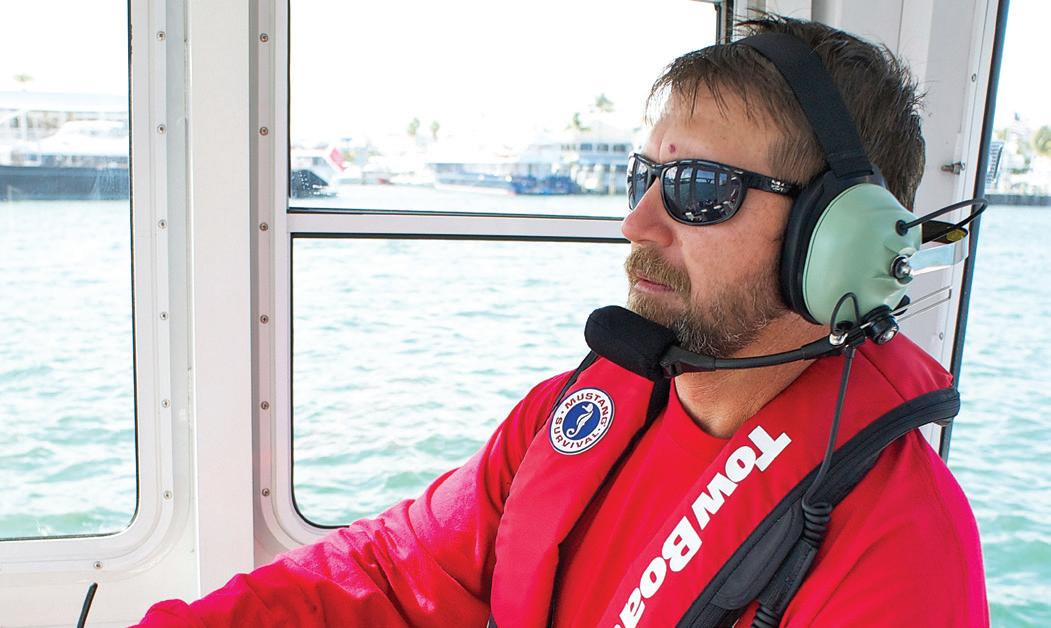
Crews on board tug and tow boats, fire/rescue craft, offshore service vessels, patrol boats and other workboats must perform a variety of complex operations. Wind noise, loud engines and pounding through rough waters can make boat crew communication extremely challenging.
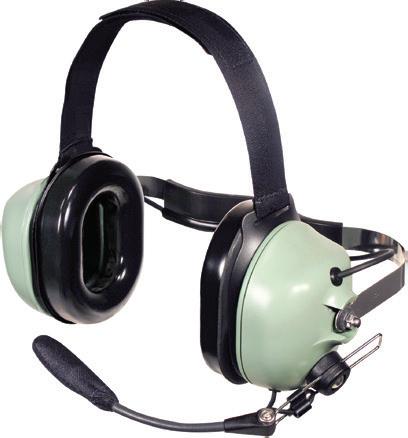
David Clark Marine Headset Systems offer clear communication and rugged reliability in the harshest marine environments, while enhancing the safety and situational awareness of boat crew members.
Call 800-900-3434 (508-751-5800 Outside the USA) to arrange a system demo or visit www.davidclark.com for more information.
Inland Insider
River barges were busy in 2025
BY PAMELA GLASS
Despite many operational challenges, the barge industry maintained a busy year with “robust” agricultural cargo movements in 2025, according to a report by the Department of Agriculture’s Agricultural Marketing Service, which tracks barge traffic on the inland waterways.
High water, low water, and ice accumulation along the Mississippi River system resulted in draft and tow-size restrictions for much of the harvest season, but strong corn exports kept barges moving. Total 2025 barge volumes were 11% higher than in 2024, and the largest since 2022. Corn volumes reached their highest level since 2021, while soybean and wheat volumes hit their lowest since 2021 and 2010, respectively.
On the Columbia-Snake River system, which mostly handles wheat shipments, movements were up 23% from 2024, due largely to an increase in soft white wheat exports.
The first challenges emerged in late January, when a rare winter storm disrupted barges unloading in New Orleans, followed in February by freezing temperatures and high water to the north. Delays and strong export demand pushed first-quarter spot rates 37% higher than 2024 at St. Louis,
On the Water
A battery of advantages
BY JOEL MILTON
Joel Milton works on towing vessels. He can be reached at joelmilton@yahoo.com.
We are very prone to casualness about the use of electrical appliances, tools, and devices — even more so when it comes to battery-powered ones. This is problematic. With the proliferation of rechargeable lithium battery technology, the amount of stored and apparently stable energy has multiplied exponentially. But it is never as simple or benign as it may seem.
Lithium-ion batteries (Li-ion) are the dominant form of battery used in most consumer electronics, including professional-grade items like marine handheld radios. In the past, these radios were typically powered by rechargeable nickel-cadmium batteries (Ni-Cd, or NiCads). In highercurrent applications like flashlights, nickel-metal-hydride (Ni-MH) batteries overtook NiCads in performance and popularity. Today, however, Li-ion has almost entirely taken over the market for both — although some flashlights may
and up 11% from the five-year average. Barges moved 7.5 million tons of grain through the Mississippi system, up 5% over 2024, while Columbia-Snake wheat movements surged 137%, reflecting an extended lock closure in 2024 and increased soft white wheat exports.
In the second quarter, unanticipated repairs and flooding on the Ohio River and Lower Mississippi delayed the reopening of two mid-Mississippi locks near St. Louis and the Melvin Price Lock and Dam in Illinois. After reopening, traffic recovered quickly.
The third quarter saw Mississippi River water levels drop to -0.5' in September at Memphis, causing barge movements to fall 68%. Grain volumes dipped 17% from the previous quarter but were up 12% from 2024, driven by a 30% jump in soybean shipments and a 4% increase in corn shipments, mostly due to an aggressive export push to move stored grain.
In October and November, critically low river levels forced barges to lighten loads. December ice accumulation caused further draft and tow restrictions, yet fourth-quarter volumes were still up 25% from the previous quarter, with western river wheat movements up 37%.
So far in 2026, barge volumes fell in early February due to ice, while spot rates increased sharply.
Looking ahead, the report notes that the February World Agricultural Supply and Demand Estimates project corn exports will climb 15% and wheat exports 9% from 2024/2025. As of February 5, total unshipped balances of corn, wheat, and soybeans were 42.79 million metric tons, up 20% from a year earlier.
still use standard alkaline batteries (AA, A, C, or D-size) or their lithium equivalents, either disposable or rechargeable.
The reasons for this dominance are clear: Li-ion energy density far exceeds that of its predecessors, and the batteries are very light. That’s an extremely advantageous combination. They also perform well in the cold — especially extreme cold — where all other batteries struggle at best and tend to fade fast. For something as vital to marine operations as portable radios, there’s no real debate about the superiority of Li-ion power. But, as with everything, there’s no free ride.
The trade-offs can be more than you bargained for or even understand. When alkaline batteries are left in a device past their service life, they will eventually leak electrolyte. The potassium hydroxide escapes from the caps or seams, forming that familiar white crust — potassium carbonate — on the contacts and wherever else it can reach. It is caustic and will cause damage. This is sometimes salvageable by cleaning with vinegar, but it can be extensive enough to ruin the device entirely. NiCad and Ni-MH batteries fail in the same manner and for the same reasons.
With Li-ion batteries, that is no longer an issue. Problem solved! Or maybe not.
Pamela Glass is the Washington, D.C., correspondent for WorkBoat. She reports on the congressional committees and federal agencies that affect the maritime industry, including the Coast Guard, Marad, and Army Corps of Engineers.
Credentialing Insight
Back in action!
BY NATE GILMAN
On April 14, I received an email that I had been waiting 98 days for. My own Merchant Mariner Credential renewal application, submitted on Jan. 6, was approved for my open book exam. I am one of 20,000 mariners caught in this shutdown, and seeing that update was a relief.
Movement is happening. DHS Secretary Markwayne Mullin recalled the entire DHS workforce last week, with back pay hitting accounts. NMC and REC staff are back at their desks and working through the largest credential backlog in program history. They care about the mission, they care about mariners, and that deserves recognition.
All Hands
High schools undervalue maritime careers
BY DENIELLE CHRISTENSEN
Denielle Christensen is founder, executive director, and CEO of WaveWorks Alliance, a national nonprofit dedicated to expanding access to careers in the ocean economy
Spend enough time around high schools and one thing becomes clear: the education system still signals, subtly but consistently, that college is the primary path and workforce careers are secondary. A routine end‑of‑year guidance letter reminded me of this recently. College planning dominated. Workforce and trade pathways appeared later. That structure is common, and it matters. When workforce careers appear after college planning, students absorb a hierarchy of value, even when educators don’t intend it.
That hierarchy is out of step with reality. Across maritime operations, shipbuilding, vessel construction, and ocean technology, employers face persistent workforce shortages. These are stable, well‑paying careers with long‑term growth, yet many students move through school with little real exposure to them. This is not a failure of guidance counselors or teachers alone. It is also a failure of employers who have been too passive in shaping the system. If industry wants workforce pathways treated as first‑class outcomes, employers must take a more active role in the education ecosystem.
Every mariner should know the extensions in NMC Update #3. Credentials with national endorsements and medical certificates expiring between Jan. 1 and May 31, 2026, are now valid through Aug. 31, 2026. Additional information letters, approval to test letters, course completion certificates, drug test letters, and examiner certifications expiring in that window are extended as well. Mariners sailing under this extension must carry the expired credential and a printed copy of the Update #3 letter.
Mariners who started but did not finish an exam before Feb. 13 can resume without penalty once the NMC reopens, with 60 days to complete. Medical certificate processing continued throughout the shutdown, as most of that team are contractors who kept working.
The ASAP portal is open. If you have been holding off, submit now — every day you wait adds a day on the back end. Submit complete and accurate with zero deficiencies.
For status updates, check your email or contact the NMC Monday through Friday, 8 a.m. to 5:30 p.m. Eastern at 1 888 IASKNMC, live chat, or IASKNMC@uscg.mil. Include “Status” and your reference number in the subject line.
Guidance counselors and faculty shape student perceptions daily through advising, coursework, and informal signals. Many have limited firsthand exposure to modern commercial marine workplaces. Employers can help change that by invit ing counselors and educators into their facilities. Shipyards, terminals, fabrication shops, and marine technology environ ments look very different today than they did decades ago and seeing that difference matters.
Employers also need to engage students earlier and more consistently. One career day late in high school is not enough. Partnerships with schools to reach students in math, science, technology, and career and technical education courses can have far greater impact.
It matters who does the talking. Having employees tell their story is critical. Early‑career workers, technicians, trades people, apprentices, and operators can explain how they got started, what training they needed, and how their responsibili ties and pay have grown. These real pathways resonate more than polished presentations or abstract job titles.
Exposure strengthens that connection. Facility tours, job shadow days, paid summer work experiences, and pre‑appren ticeships replace assumptions with firsthand understanding for students, parents, and educators alike.
If workforce pathways continue to appear last in school communications, it is because industry has not made itself essential to the process. Employers who engage educators, let employees tell honest stories, show up early for students, and open their doors consistently help change the narrative. When students regularly see commercial marine careers reflected in their schools, those careers stop being alterna tives. They become possibilities.
Nate Gilman, president of MM-SEAS USCG Licensing Software, uses his hawsepiping experience to support mariners and workforce development. Connect on LinkedIn.
Legal Talk
Who is liable if something goes wrong during bunkering?
BY TIM AKPINAR
Tim Akpinar, based in Little Neck, N.Y., is a maritime attorney and former marine engineer. He can be reached at t.akpinar@verizon.net or 718-224-9824.
Whenwe hear the term “oil spill” we might think of the Exxon Valdez or the Amoco Cadiz disasters. However, there are many smaller oil spills that regularly occur during cargo transfers that can be legally more complex. Instead of a single grounded tanker being prosecuted by the government, we could have companies on opposite sides of a bunkering operation disagreeing about who is to blame.
This can be illustrated by a recent lawsuit in federal court arising from bunkering operations between a fuel barge and a tanker on the Mississippi River in July 2022. The tug and barge, owned by a marine transportation company, were supplying low sulfur fuel to the tanker. During transfer, oil overflowed and spilled overboard.
The tanker interests sued for damages, clean-up costs, and
Health, Safety, and Environment
Expanding environmental aspects of your business
BY RICHARD PAINE JR.
Richard Paine Jr. is a licensed mariner and certified maritime safety auditor with more than 25 years of maritime industry experience. He can be reached at rjpainejr@gmail.com.
Whendiscussing the natural environment in today’s maritime industry, I find a great deal of contention and difference of opinion. Varying points of view and motivations shape how much or how little a company may value addressing environmental concerns.
Over the years, I’ve been part of many conversations with successful business leaders from different sectors of the industry who view the environment in completely different ways. Some see environmental agendas as politically driven, while others believe that advances in green technologies will drive operational and financial efficiencies. No matter where you land on the topic, it is worthwhile to consider how it could impact your business.
Environmental conversations typically start with pollution prevention. Companies and operators have been managing pollution prevention plans and emergency response initiatives
other expenses, asserting negligence and unseaworthiness under general maritime law. They also brought a claim under the Oil Pollution Act of 1990. In response, the tug and barge company filed a counterclaim alleging the negligence of the tanker crew.
Which side did the court find liable? From the bunkering agreement, the court saw that both sides had important duties. The agreement specified that the barge’s tankerman would begin transfer at a flow rate of 150 cu. meters per hour, increase to 400 cu. meters per hour, then reduce flow when the fuel delivered neared 700 tons. The person-in-charge on the receiving tanker had a duty to ensure that the starboard fuel oil tank had enough space to take on the incoming fuel.
The tug and barge admitted they pumped more oil than called for, but argued the tanker crew was required to monitor the operation and call stop when the final ullage was reached.
The tug and barge moved for summary judgment, asking the court to find there was no triable issue of fact. In other words, “This is plain to see on its face — no need for a full trial here.” The court denied summary judgment, finding enough disputed facts to require a full trial.
When crews from four or five different companies are working a single vessel, figuring out who bears more blame is rarely straightforward.
for years. Crew training and drills include many routine spill response and pollution prevention procedures introduced over the course of more than 50 years through environmentally focused regulations. Among these are the Clean Water Act (1972), the International Convention for the Prevention of Pollution from Ships (1973), the Oil Pollution Act following the Exxon Valdez oil spill in 1989, and the Environmental Protection Agency’s Vessel General Permit (2013) and Vessel Incidental Discharge Act (2018).
More recently, environmental discussion has expanded to include reductions in carbon footprint and greenhouse gas emissions, cleaner and renewable energy sources, and greater attention to environmental technology and innovation.
Tangible technology is available today across numerous new construction, vessel-repower, and retrofitting projects. The broader green technology sector continues to grow rapidly, generating more alternatives and strategic considerations for business leaders.
My viewpoint is neither for nor against any specific area of environmental thinking. Each successful business will determine what best serves its interests, stakeholders, community, regulatory obligations, and future. But I do believe it is important for all business leaders and operators to recognize that the environmental dimensions of their businesses extend well beyond pollution prevention and oil spill response. As the world moves forward with alternative energy sources and new areas of environmental innovation, business leaders must ensure they understand the full range of risks and opportunities that today’s environmental landscape presents.
ON THE WAYS
CONSTRUCTION ACTIVITY AT WORKBOAT YARDS
Vulcan Materials christens new pushboat
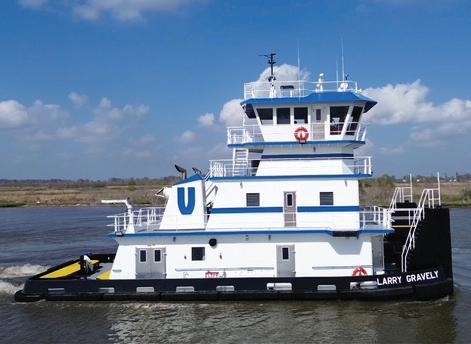
Vulcan Materials Co., Birmingham, Ala., one of the largest producers and suppliers of aggregate construction materials in the country, took delivery of a new pushboat built by Diversi ed Marine Services LLC, Bourg, La., in March.
Moving away from leasing vessels or purchasing used boats, Vulcan ordered two 72'x30' pushboats from Diversied in February 2025. The series’ rst vessel, the Larry Gravely, is named in honor of a longtime Vulcan operations manager who is retiring. Its sistership is currently under construction.
Gravely has been with Vulcan for 47 years and was surprised when he was informed the vessel would be named after him. “It was an honor for sure,” he said. “They don’t name boats after people unless they’re a president or someone high up the ladder.”
He said that Vulcan’s decision to purchase new pushboats instead of used vessels was the result of high price tags on the pre-owned boats and the upkeep cost for them. “It’s nice to have
something you don’t have to worry about,” said Gravely.
Diversi ed Marine specializes in pushboats and tugs ranging from 25' truckable diesel- and electric-powered vessels up to the 72-footers that Vulcan will be operating.
The yard decided to step up its interior nishing game with the Larry Gravely, according to Adam Hutchinson, general manager at Diversi ed. “We went above and beyond with interior nishes,” he said. “We moved away from a typical workboat style and went more with how a home would be nished.” That included lighter colors and nishes on interior walls and granite countertops.
“We wanted to rede ne what a workboat looks like,” he said. “When you have crew on these boats working most of the year, you want them to have the feel of being at home. You want to have a warm feel instead of a cold workboat feel.”
Added Gravely, “Adam built a big, roomy boat that’s comfortable for the
crew that gives them a feel for home. They do spend half a life on them.”
To give the crew the comforts of home in another way, Diversi ed has started putting Starlink high-speed internet systems on all its boats.
The Larry Gravely has accommodations for six plus a full galley equipped with a stove, microwave oven, refrigerator/freezer, an icemaker, and a washer/ dryer.
Hutchinson said that Vulcan got a deal by ordering two boats, but a retail price for the 72' pushboat as equipped would be just shy of $5 million.
The Larry Gravely is powered by a pair of 800-hp Mitsubishi diesels from Laborde Products, Covington, La. The electro-hydraulic steering and electric engine controls are provided by Glendinning
ed Marine Services
For the helm, Rhodes Marine, Houma, La., provided a full suite of Furuno electronics including 6-kW, 96-nautical-mile digital radar with a 4' antenna and 15-meter cable, a Class A AIS transponder with a 4.3" color LCD display, a satellite compass, 4.3" LCD navigation data organizer, depth nder, and bridge alarm system.
The boat features Standard Horizon marine VHF with NMEA 2000, AIS, graphic display, built-in GPS, and a loudhailer. For entertainment, the boat is equipped with a Kenwood Marine digital stereo receiver with 6.5" marine speakers.
Diversi ed builds its pushboats without bowthrusters, preferring to improve their maneuverability another way.
“We’re running 76"-diameter propellers, so you have a lot of surface area to work with, and you have anking rudders that really helps with the maneuverability,” said Hutchinson.
In addition to the two primary rudders that are in-line abaft the propellers, there are two anking rudders forward of the propeller on each side that enhance the 72' pushboat’s maneuverability. “These boats can almost move laterally,” said Hutchinson.
The Larry Gravely will push aggregate loads from Richmond, Va., to
Diversifi
The Larry Gravely is the first of two new towboats built by Diversified Marine Services for Vulcan Materials.
Norfolk, Va., and down to Kitty Hawk, N.C. She will run on Chesapeake Bay and the James River. For the rst trip, Larry Gravely himself will be at the helm. — Eric Colby
Silver Ships delivers survey boat to Port of
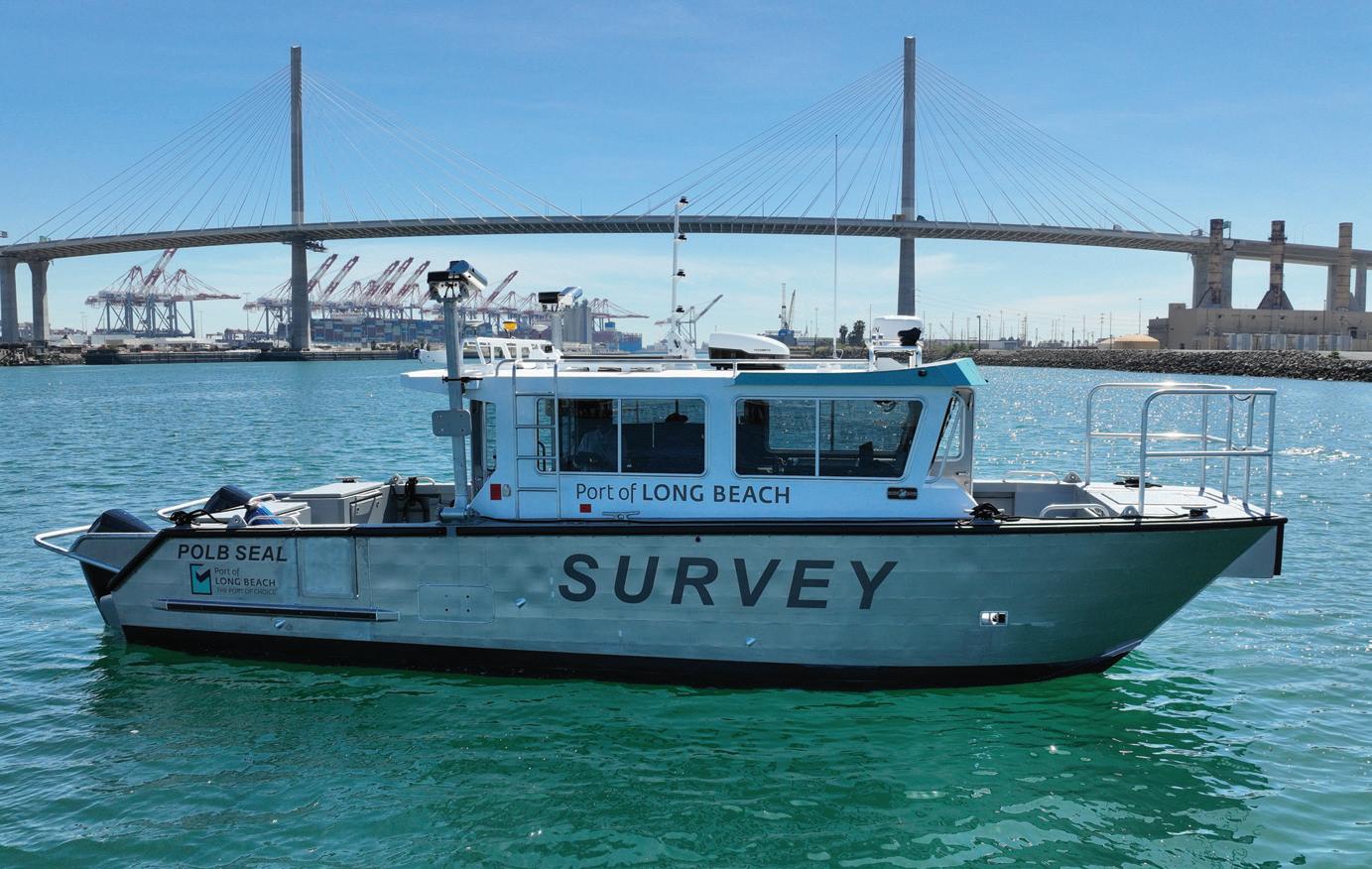
was built to perform high-resolution seabed mapping and
hydrographic surveys to support dredging, navigation safety, and waterfront construction, while also sharing data with agencies including NOAA and the Army Corps of
WAYS
“We were impressed when we met with the Silver Ships team as they answered all of our questions with thoughtfulness and had already developed great ideas for what we wanted based on the basics we initially provided,” said Kimberley Holtz, the port’s director of survey. “We worked closely with Silver Ships to customize the boat on things that were unique to our port’s needs, and they were incredibly communicative and willing to make adjustments for us.”
The new vessel is based on Silver Ships’ Catamaran 35 platform, con gured speci cally for survey operations. Silver Ships said the twin-hull design provides a stable working platform for multibeam sonar and LiDAR systems, improving data accuracy and repeatability compared to monohull con gurations.
“This vessel was designed from the keel up as a data acquisition platform, not a repurposed boat,” said David Hunt, director of business development at Silver Ships. “The catamaran hull provides a stable, predictable platform for multibeam and LiDAR systems, which directly improves data quality and repeatability. When you’re supporting dredging, construction, and navigation safety at a port like Long Beach, accuracy isn’t a feature; it’s the mission.”
The vessel is out tted with dual sonar systems and a LiDAR unit to collect both below-water and above-water data. Silver Ships said the survey suite supports pre- and post-dredge surveys, infrastructure monitoring, and data collection aimed at achieving CATZOC A1 standards, the highest level of hydrographic survey accuracy.
Holtz said the port surveys roughly half of its waterways each year, completing full coverage every two years. “Our data is always recent, which the pilots love,” she said.
The POLB Seal has full-load draft of 2'. The aluminum catamaran is powered by twin 300-hp Mercury outboards with Mercury DTS controls and an electric-over-hydraulic steering system, delivering a top speed of about 35 knots
and a cruise speed of 26 knots. Ship’s service power is provided by a Westerbeke MCGA 5.0-kW genset. The vessel carries approximately 500 gals. of fuel and 20 gals. freshwater and features an 8'x10'5" aft cargo deck.
Navigation electronics include a Garmin GPSMAP 8612XSV, AIS 800, and GMR 18HD+ radar. The survey package centers on a Teledyne T50-R inertially aided dual-head multibeam sonar with Multi-Detect and normalized backscatter, paired with a Velodyne VLP-16 Puck LiDAR system. Positioning and motion reference are handled by a Trimble MPS865 RTK GNSS with an Intuicom 4G-LTE RTK bridge, along with AML Oceanographic sound velocity and pressure sensors. Data acquisition and processing are supported by the Hypack MAX/HYSWEEP suite, a rack-mounted workstation equipped with an Nvidia Quadro RTX 4000 GPU, and an APC Smart-UPS 2200 VA system.
The POLB Seal is expected to support expanded coordination with federal agencies and improve the port’s ability to monitor ongoing construction and maintenance projects. The vessel also re ects broader investments by the port in infrastructure and operational ef ciency aimed at maintaining throughput at one of the country’s primary trade gateways.
— WorkBoat staff
Disruptor Marine builds rst aluminum Rafnar pilot boat
The Port Everglades (Fla.) Pilots have been running inboard-powered boats longer than 40' for decades. Then Robert Bodvake introduced them to the idea of a 9-meter (29'6") aluminum center-console design powered by twin outboards.
Bodvake launched Disruptor Maritime LLC, Norfolk, Va., three years ago. Initially, the company outsourced manufacturing, but it opened its own manufacturing facility in May 2025. Disruptor builds designs from Icelandic naval designer and builder Rafnar. Rafnar’s reputation for building boats that can handle rough water comes from the ÖK Hull that was designed by the company’s founder, the late Össur Kristinsson. The bottom can best be described as a hybrid displacement/deep-V design. The keel is in the middle of the hull and water ows around it, creating pressure beneath the aft running surface that is basically at. That lifts the stern while the bow stays down. The company said the design reduces slamming in waves because the boat doesn’t leave the water.
That kind of performance would make the Rafnar 9-meter pilot boat
Port Everglades Pilots
The Port Everglades Pilots (Fla.) tested a 9-meter pilot boat that features twin diesel outboards.
BOBTAIL R
The Huck BobTail® R delivers the same vibration-resistant, maintenance-free strength you expect from Huck—now with a twist: it's fully removable.
Built for heavy-duty applications that demand both staying power and future serviceability, the BobTail® R is your no-weld, no-loosen solution that’s easy to install and just as easy to take apart. No heat. No sparks. No nonsense.
+ Vibration-resistant, maintenance-free joint
+ Easy removal with standard torque-type tooling
+ Installs in seconds—no re-torquing, no retightening
See how the BobTail® R can power your next build. Visit hfindustrial.com
ON THE WAYS
powered by twin outboards attractive as a potential pilot vessel. Bodvake made the Disruptor version out of aluminum and convinced the team at Port Everglades Pilots in Fort Lauderdale, Fla., to charter the boat for an extended fourmonth sea trial.
“They wanted the opportunity to try something different, and chartering the boat made sense for them,” said Bodvake.
“Our charter of the Rafnar allowed us to try three things: a smaller pilot boat, a faster pilot boat, and a boat with outboards,” said Port Everglades Pilot Capt. David Ulrich. “Outboards were once uncommon in our industry, but more pilot organizations are adding outboard boats to their eet, so we were curious to see if they would work with our operation. We were fortunate Disruptor had the Oxe [Marine] diesel outboards available because it was one less hurdle for us: we could fuel the
boats the same way we fuel our other boats without needing to ll up with gasoline at the local marina.”
Ultimately, the Everglades Pilots decided the Disruptor wasn’t for them, but Bodvake still considered the extended test a success. The biggest difference was the shorter size of the Disruptor compared with the boats the pilots have been running. Most of those boats exceed 40' long, and Bodvake explained, “The bow space matters. They’re used to having the space, and sometimes, that gets to be muscle memory.”
Rafnar has 11-, 12-, and 15-meter designs that the Port Everglades Pilots are considering for the future.
“By the end of the charter, we had gained valuable knowledge about what does and does not work for our operation,” said Ulrich. “We concluded we liked the extra speed of a 40-knot boat, and the outboards had minimal downsides, but because
of our need to operate in any and all weather conditions, a 9-meter boat was ultimately too small for us. I would love to see a 40- or 45-foot aluminum Rafnar in our eet someday.”
The 9-meter Disruptor has an enclosed pilothouse with a single Ullman Dynamics shock-mitigating seat on the centerline, and the helm is out tted with Raymarine electronics.
Raymarine developed a platform for the Coast Guard called Scalable Integrated Navigation System II, which can send encrypted data for secure vessel-to-vessel messaging. If the Coast Guard is coordinating a rescue or similar situation, it can securely send tasks and orders to cooperating agencies.
Engine controls would depend on the propulsion chosen, as would the steering system. “We’re willing to work with the customer on that,” said Bodvake. “We understand that there’s some brand loyalty.” — E. Colby
YOUR PARTNER ON THE WATER.
Whether you’re powering an offshore service vessel, a passenger vessel, or an inland pushboat, Louisiana Cat has the right engine for your hard working fleet. We focus on you, the customer, and the reliability, safety and profitability of your business. Let us help you navigate every waterway. Visit us online to request an engine quote for your next project: www.LouisianaCat.com/Marine.
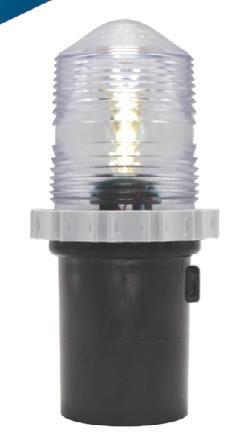
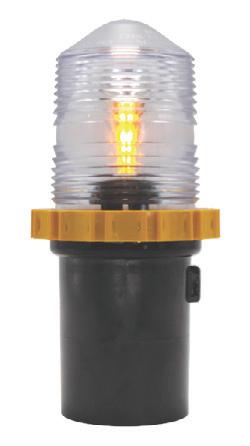
McDermott Light & Signal
Dredge Lights
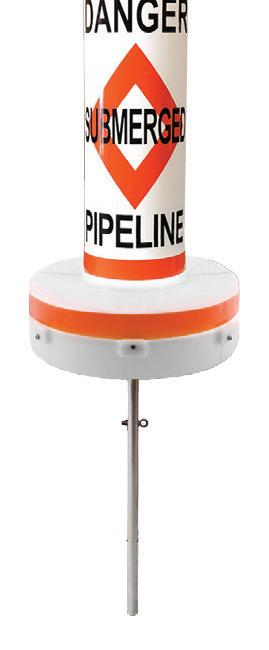
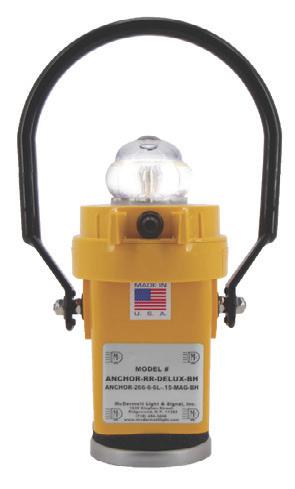
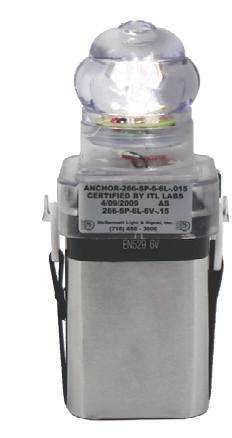
Meets 2 mile requirement for marking of dredge pipelines
Permanent mount LED lighting for bridges, docks, and barges
Marker Lights
1 to 3 mile visibility for aids to navigation and applications such as buoys, docks, barges, and temporary lighting
Barge
Navigation Lights
For vessels greater or less than 50 meters Certified to meet UL 1104 and Subchapter M
*Available with or without lighting* Solar
Solar or battery powered barge navigation lights for unmanned barges per UL1104 Regulatory Buoys
Available for all applications
BOATBUILDING BITTS
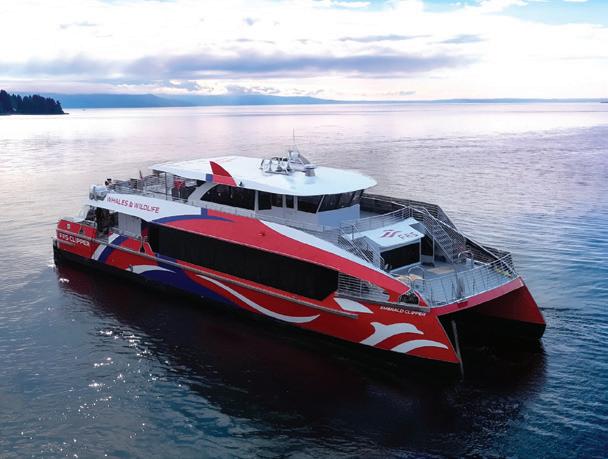
Mavrik Marine Inc., La Conner, Wash., has delivered a new whale-watching boat for Pacific Northwest ferry and excursion vessel operator FRS Clipper Inc., Seattle. The boat was christened during an April 16 ceremony. Designed by One2Three Naval Architects, Sydney, the 103.4'x32' highspeed aluminum catamaran, the Emerald Clipper, is a USCG
Subchapter T vessel with capacity for 150 passengers plus a crew of four to eight. It is powered by quad Scania DI16082M Tier 3 diesels, each producing 800 hp at 2,100 rpm. The engines power HamiltonJet HTX42 waterjets through ZF 655 SC gearboxes. The boat cruises at 32 knots, and it will have a range of 340 nautical miles.
2025_GH-Pilot7-WB.pdf 19 2/28/25 10:47 AM
C&C Marine and Repair, Belle Chasse, La., hosted a keel-laying ceremony to signal the start of construction for a series of four hybrid escort tugboats being built for Green Tug Towing, Lake Charles, La., to support operations at the Calcasieu Parish LNG terminal being developed by Woodside Energy, Perth, Australia. Slated for delivery by 2028, the four tugs will be built to Robert Allan Ltd.’s RApport 2800-H design and feature diesel-electric hybrid propulsion.
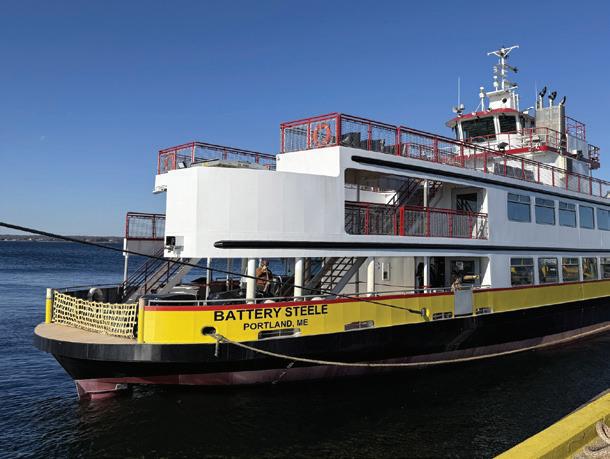
Senesco Marine, North Kingstown, R.I., has launched the diesel-electric hybrid ferry Battery Steele for Casco Bay Lines, which operates yearround service throughout Casco Bay from Portland, Maine. The 164' double-ended vessel was designed by Elliott Bay Design Group, with hybrid
R�p�d� 4�0�-�3
Shallow-Draft River Tug
propulsion and automation systems supplied by ABB. The ferry will primarily serve the Portland–Peaks Island route, where the short transit distance allows a full round trip on battery power, supported by Wabtec shoreside charging infrastructure in Portland.
Metal Shark, Jeanerette, La., has delivered a 55 Defiant NXT patrol vessel to the Massachusetts State Police Marine Unit for operations in Boston Harbor and along the Massachusetts coast. The 61'x16'6" aluminum vessel, constructed at Metal Shark’s Franklin, La., facility, is equipped with twin 800-hp Caterpillar C18 diesels that power the vessel to a top speed of approximately 30 knots. The boat features an integrated dive platform, Seakeeper stabilization, a FLIR Marine M400XR thermal imaging system, and equipment storage for dive gear, weapons, and medical supplies.
Silverback Marine, Tacoma, Wash., has completed the first vessel in its new OX-series of truckable tugboats. A compact, 25'x16' tractor tug that delivers approximately 14,300 lbs. of bollard pull astern, the vessel is equipped with a Wintech 480V three-phase towing winch as well
as twin Cummins QSL9 diesels that power twin Schottel Z-drives. The first OX-series vessel is slated for service with the Army Corps of Engineers in ship-assist and barge operations.
HII’s Ingalls Shipbuilding, Pascagoula, Miss., has been awarded a $283 million Navy contract to perform lead yard support activities for the new FF(X)-class frigate program. The contract covers procurement of long-lead-time materials, design work, and pre-construction activities for the first ship in what is planned as a class of 50 to 65 frigates built across multiple flights. The FF(X) program draws on the proven hull form of the Legend-class national security cutter, 10 of which Ingalls previously delivered to the Coast Guard. The first FF(X) is projected to cost $1.429 billion, with delivery anticipated by June 2030.
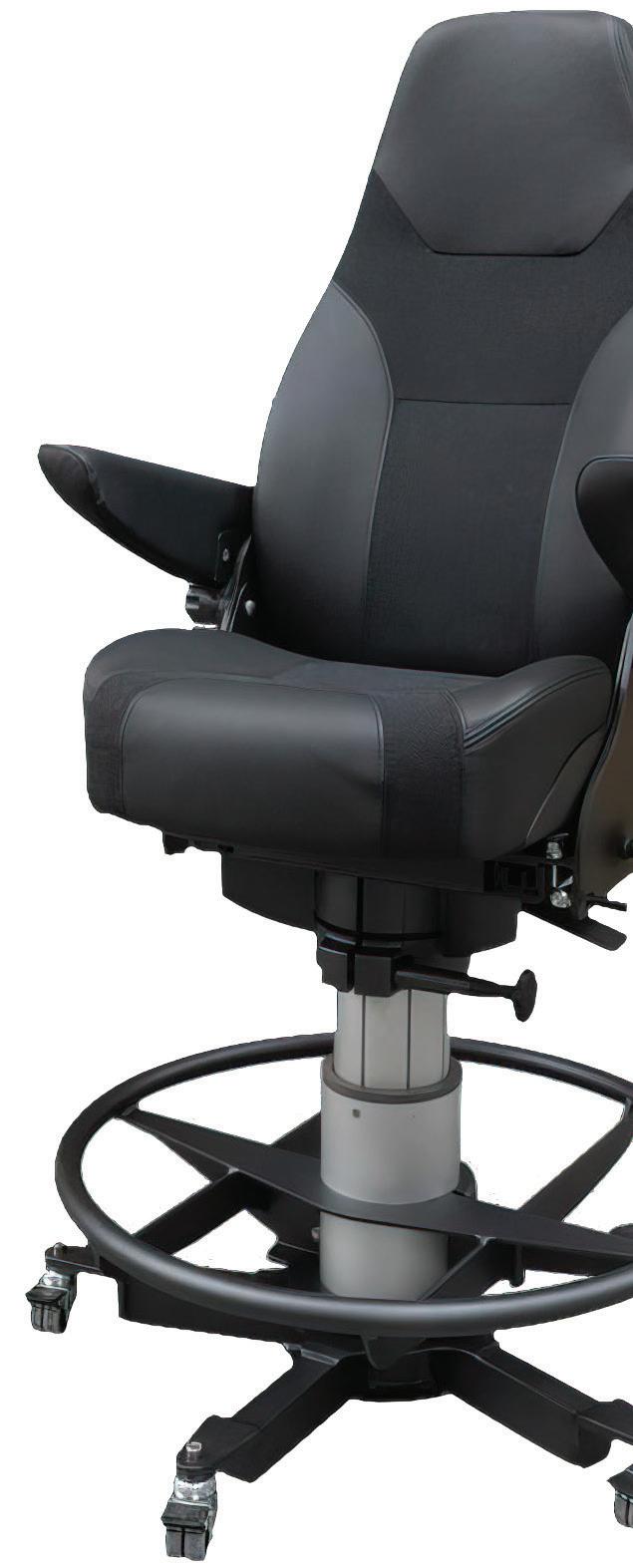
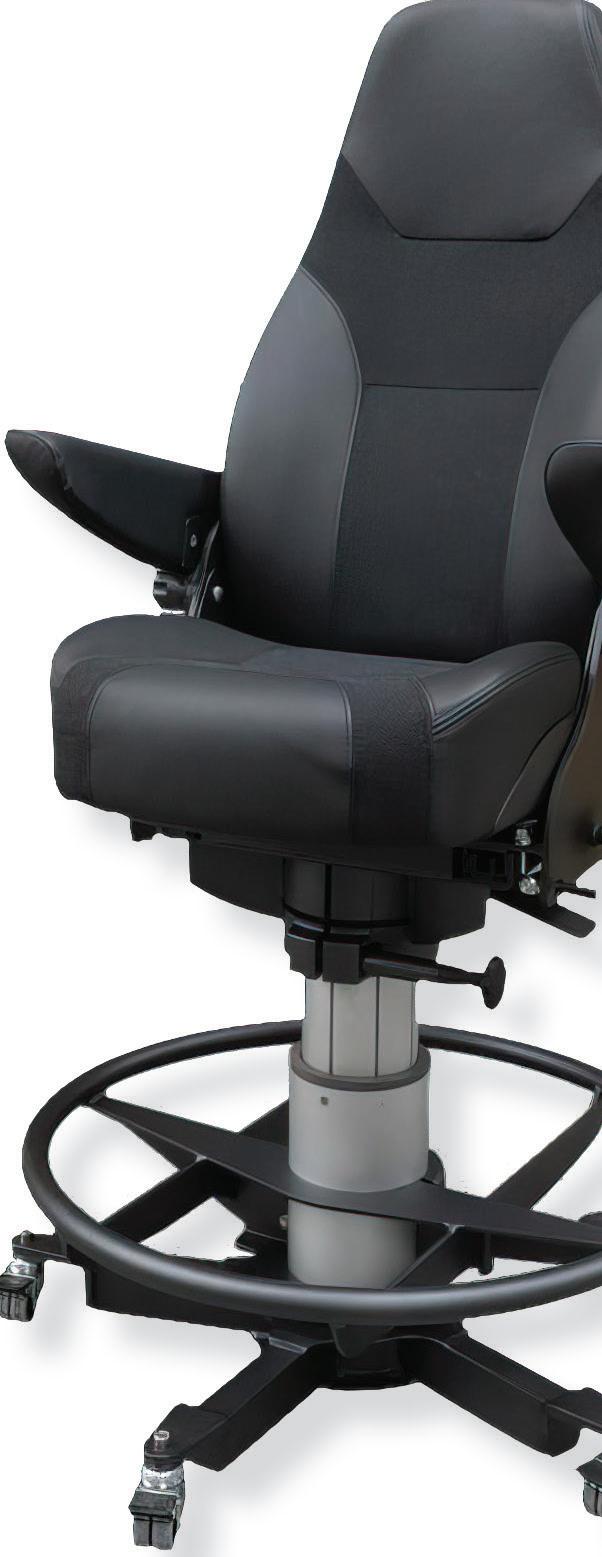
Long hours on the water demand more than just a seat—they demand support you can rely on. The Norsap 1500 Series Towboat Chair is designed
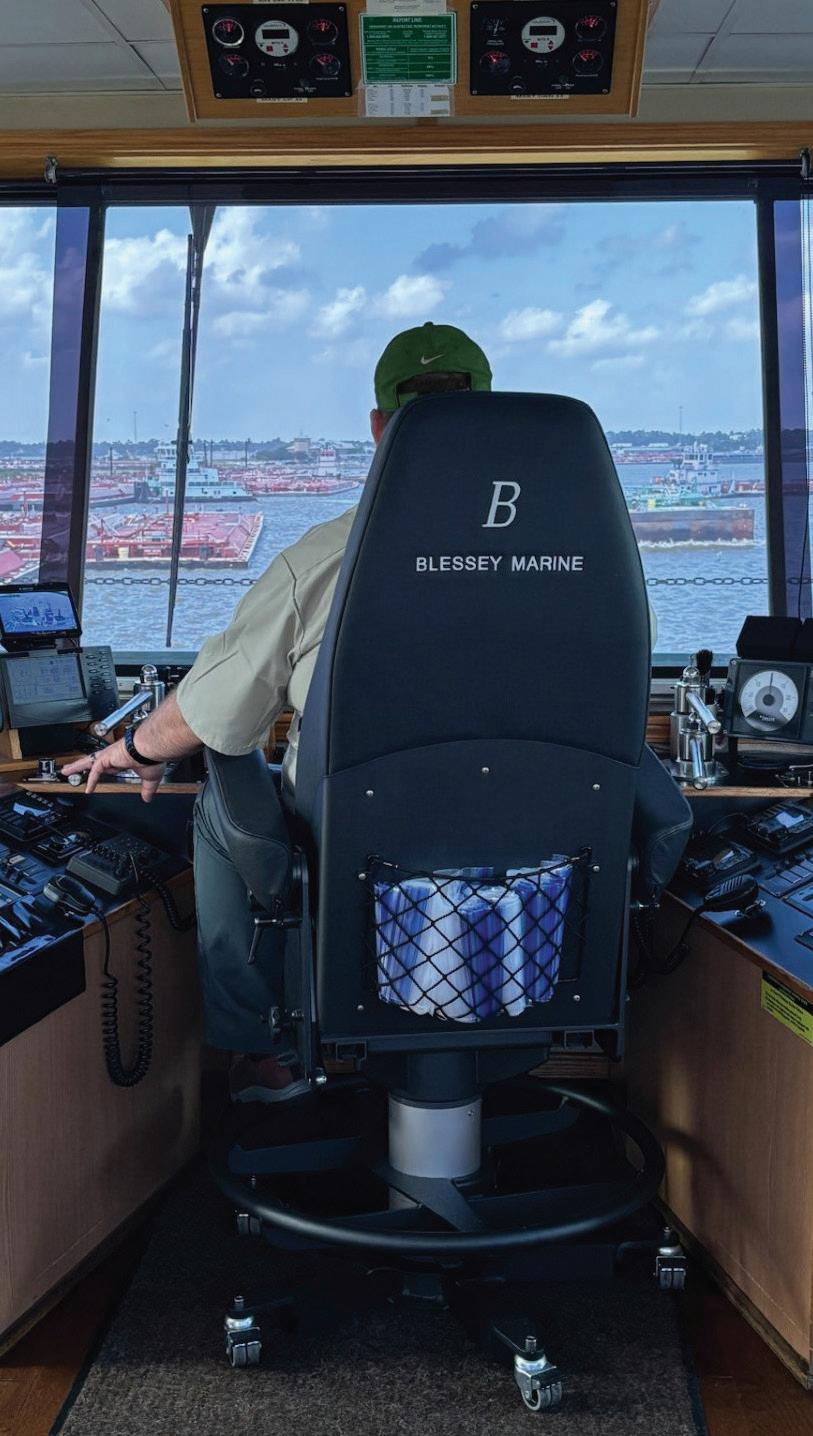
Long hours on the water demand more than just a seat—they demand support you can rely on. The Norsap 1500 Series Towboat Chair is designed specifically for inland marine operators who seek comfort without sacrificing mobility.
hours on the water demand more than just a seat—they demand support you can rely on. The Norsap 1500 Series Towboat Chair is designed specifically for inland marine operators who seek comfort without sacrificing mobility.
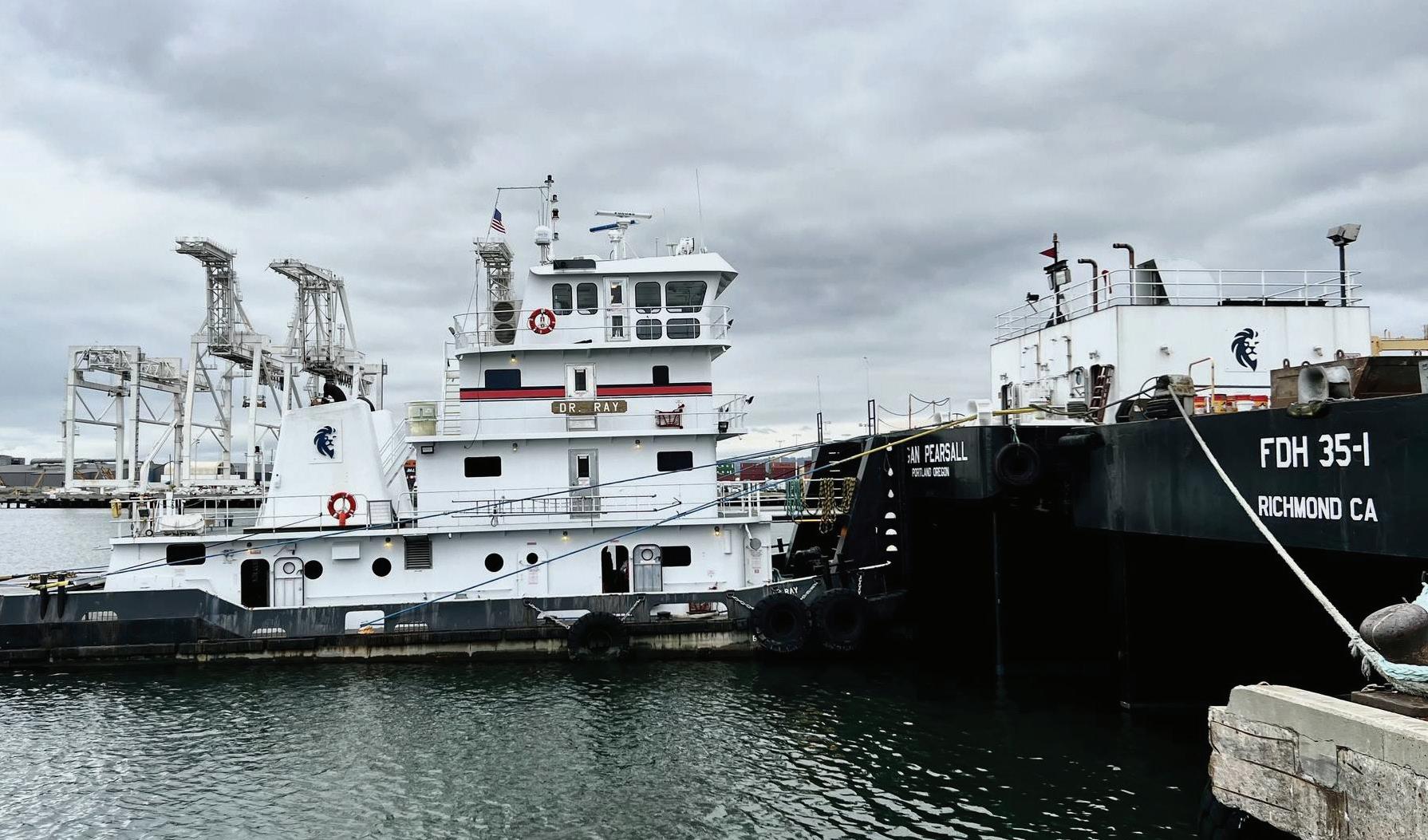
Maritime Partners LLC acquired Centerline Logistics Corp. last fall, reflecting the consolidation trend and continued investor appeal of the Jones Act market.
What’s the Deal (with All the Deals)?
Key drivers and trends fueling the Jones Act nancial market.
By Carley Milligan, Content Project Manager
Over the past 18 months, the U.S.- agged vessel market has witnessed a urry of investments, mergers, and acquisitions.
Throughout the Jones Act sector and across the nation, banks, venture capital rms, and large owneroperators have made deals to fund new vessels, update eets, and acquire assets to expand their existing services.
This activity is being driven by a timely alignment of factors. Renewed federal support, bipartisan legislative
activity, and generational business turnover have converged, opening the door to new opportunities for buyers and lenders in a long attractive market.
“The market is currently fundamentally sound and exhibits growth potential thanks to the twin controls of manageable supply and generally positive outlook,” said Andy Longhurst, managing director of shipping at CSG Investments Inc.
However strong these signals, investors say it’s just a start. Time, money, tax subsidies, regulatory
change, and continued strong fundamentals are required for the industry to achieve the level of revitalization desired. Meanwhile, other pressing economic and geopolitical challenges remain at odds with this goal.
“There is a general mood of con dence and positive outlook in the sector, but we need to understand the implementation details before we see the real impacts in the bottom line of shipowners and shipping investors,” Longhurst said. “As lenders, it’s always important to understand the longevity of federal or state support and whether it would endure across political cycles.”
A MARKET DIVIDED
CSG Investments — an af liate of Beal Bank USA, Plano, Texas — has been involved in maritime lending for 35 years, recognizing the domestic sector as attractive for its insulation from the boom-and-bust economics commonly associated with international shipping. The company focuses on underwriting deals between $100
million and $750 million and prioritizes “asset quality, structural protections, and sponsor alignment,” Longhurst said.
Most recently, that included lending Otto Candies LLC $450 million for the Des Allemands, La., shipowner’s acquisition of four multipurpose support vessels last fall.
Otto Candies offers an example of the companies currently able to make these types of “transformative transactions” thanks to their access to a small pool of attractive capital sources, Longhurst said.
It’s part of a bifurcation of the market he has been observing.
On one side, smaller companies are actively underwriting deals with equipment nanciers in the range of $50 million and below, potentially preventing consolidation within the sector. Alternatively, larger companies are harnessing limited available capital either to fund sale, purchase, and merger activity or to pursue consolidation and scale.
Maritime Partners LLC, New Orleans, offers an example of the consolidation trend, having acquired both West Gulf Marine and Centerline Logistics Corp. last fall.
The activity from small and large players, combined with the longstanding attractiveness of the Jones Act market, is appealing to both asset and
infrastructure investors, Longhurst said.
In many cases lately, the assets of longstanding companies have become even more valuable as their equity has grown, said Mark Thomas, senior vice president, West region and large corporate director of sales at Key Equipment Finance, a division of Key Bank and one of the largest bank-owned equipment nance providers in the U.S.
As costs have risen over the years, purchasing new equipment has become signi cantly more expensive than purchasing existing equipment. As a result, existing marine assets in high demand have appreciated considerably in value.
“A lot of the M&A activity we’re seeing is an owner’s ability to monetize their current vessels and sell a business,” Thomas said. “And it makes it easy for an investor, be it a private equity rm or a family of ce, to borrow against those assets to buy out the current owners.”
“A lot of the M&A activity we’re seeing is an owner’s ability to monetize their current vessels and sell a business.”
— Mark Thomas, Key Equipment Finance
Doug Stewart
MOVING THE NEEDLE
Another factor driving deal activity among small- to mid-sized familyowned businesses is that, as owners age into retirement, many are choosing to sell as opposed to passing down the business to the next generation.
“Many of those companies were self-funded, but with new ownership, we anticipate additional nancing transactions in the market,” said Rachel Telles, vice president of equipment nance, business development for Wintrust Commercial Finance
Private equity rms have been quick to respond to this generational shift, she said. They see the marine business as one with good assets that have a very long life, hold their value, and offer great potential for consolidation and nancial optimization.
Wintrust Commercial Finance, which was established in 2015 as part of Illinois nancial services company Wintrust Financial, Rosemont, Ill., is an active player in the market, serving as a cash ow lender. The company has forged close relationships with key players in the Jones Act space, which has been critical for gathering boots-onthe-ground knowledge and informing how the company goes to market.
Lately, Telles said, all eyes in the industry have been on the positive signals coming out of Washington.
She points speci cally to the proposed Shipbuilding and Harbor Infrastructure for Prosperity and Security for America Act (SHIPS Act). The bill is still making its way through Congress but has already increased investor con dence and demand for U.S.-built vessels, Telles said. Other factors, such as investments in infrastructure, shipyard modernization, eet revitalization, decarbonization, and offshore wind development, will “continue to drive demand in the industry, and ultimately, the need to transact,” she said.
Above all, the renewed federal focus on domestic shipbuilding and strengthening the broader maritime sector is the biggest driving force.
“Federal and legislative support,
Continued on page 42
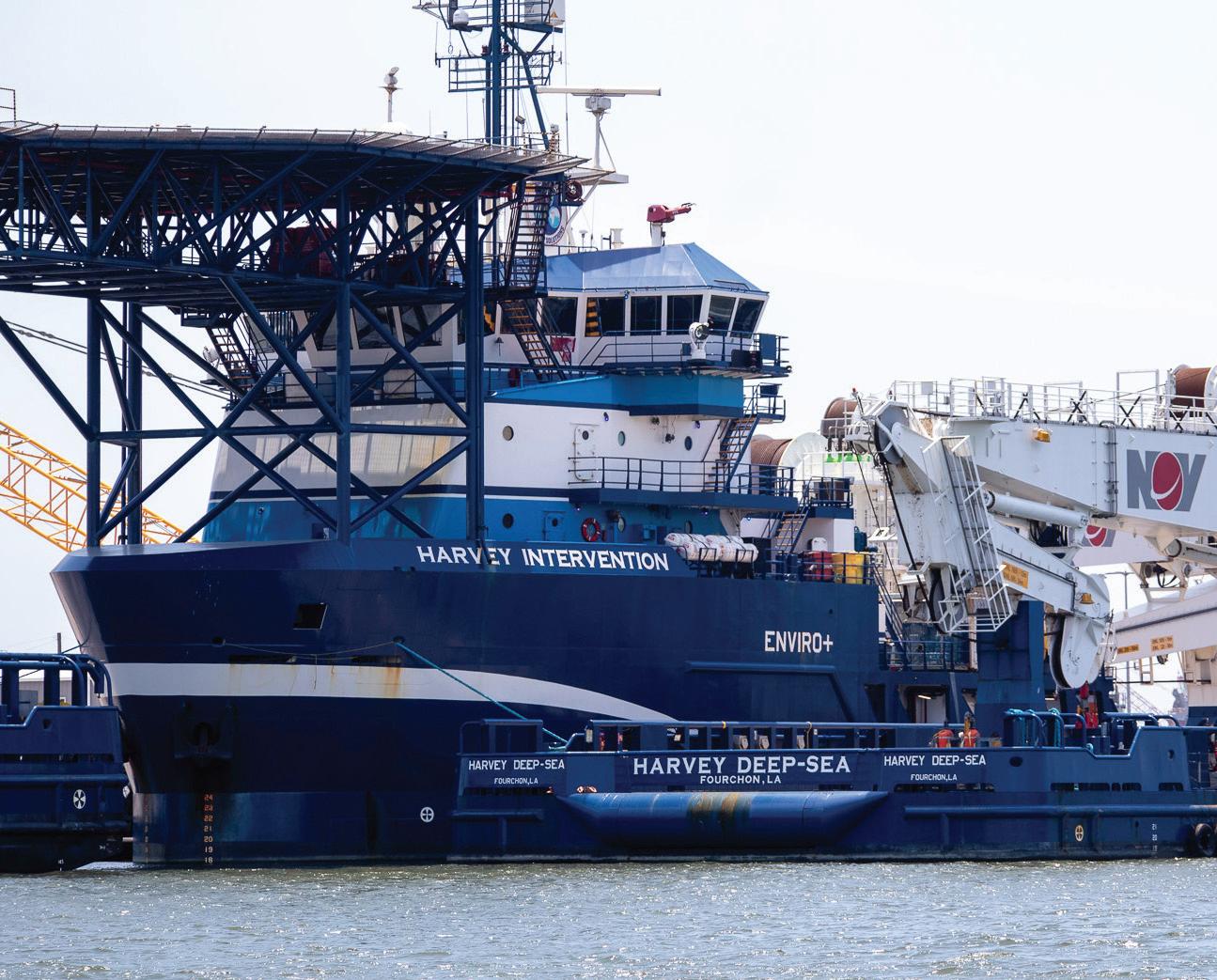
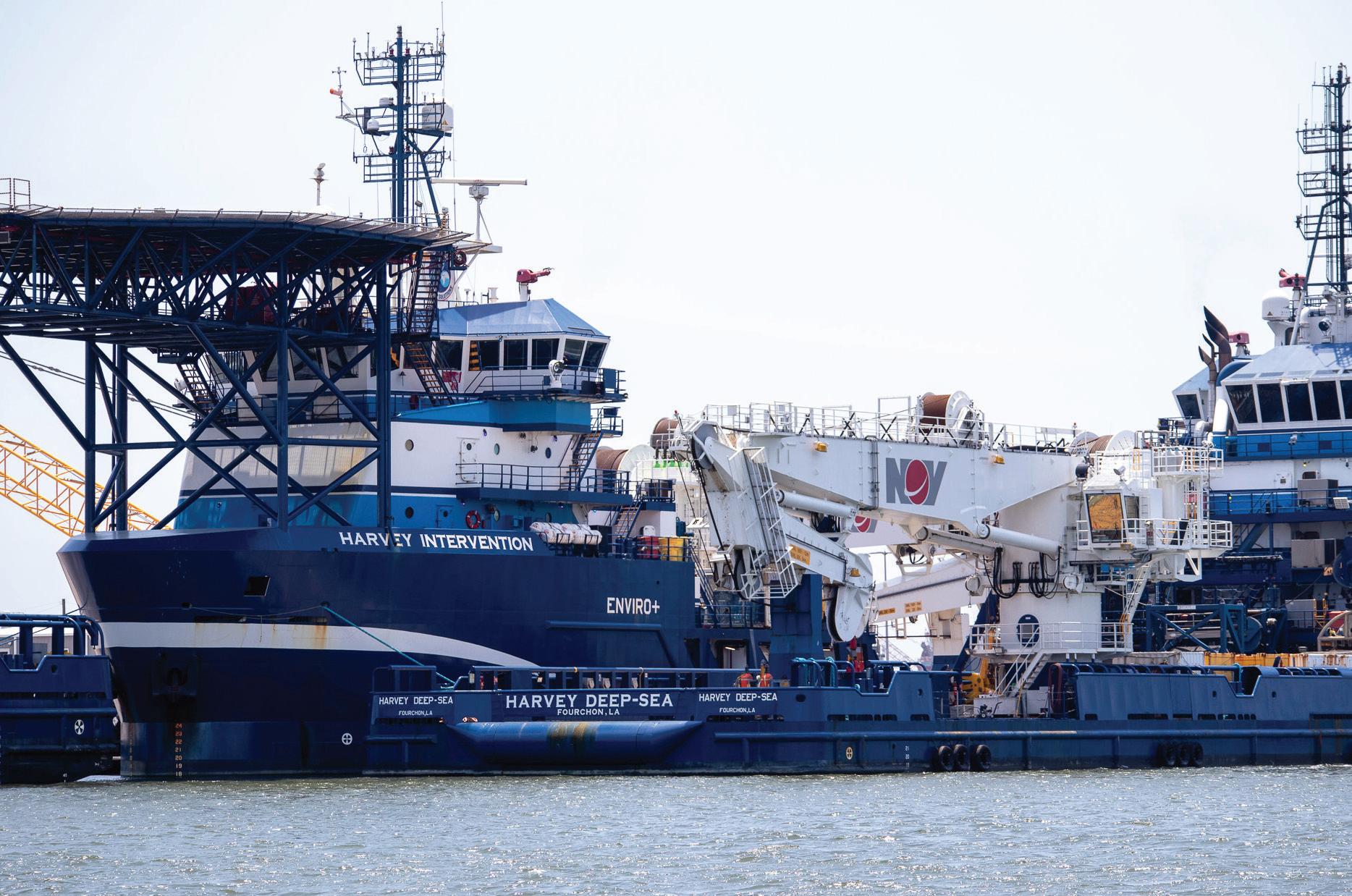
The Harvey Intervention and Harvey Deep-Sea are two of the four vessels sold to Otto Candies from Harvey Gulf International Marine in October 2025.
California Scheming
Tech billions fuel audacious bid to build the world’s largest shipyard.
By Stepen Blakely, Contributor
If America’s beleaguered shipbuilding industry can be revived, a bunch of Silicon Valley billionaires believe they have come up with a plan to do it.
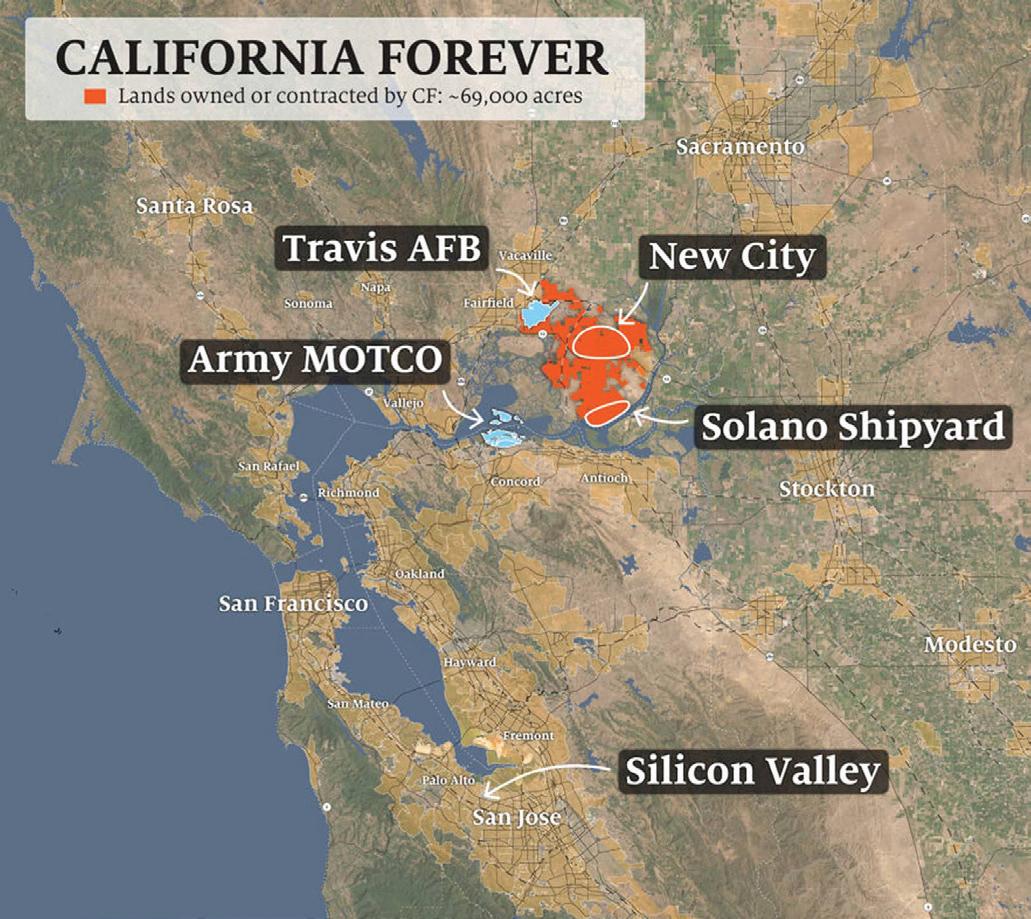
The massively expensive — and controversial — project is called California Forever, a proposed development northeast of San Francisco. Over 40 years, it would create the largest shipyard in the world, the biggest new manufacturing park in the country, and a master-planned city of 400,000 people, larger than Cleveland.
All of this would happen in undeveloped farm country in rural Solano County, halfway between San Francisco and Sacramento. Initial funding has come from an elite group of wealthy tech entrepreneurs playing to the Trump administration’s goals of cutting regulations and stimulating domestic shipbuilding and manufacturing.
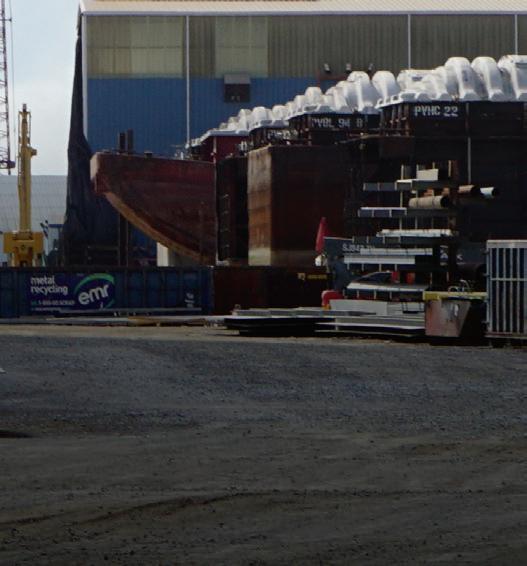
Among other things, California Forever would transform an empty 7,500acre maritime industrial site on the banks of the
Sacramento River into a shipyard complex double the size of the biggest shipyard in China. The Solano site (among others) is being considered by Saronic Technologies, Austin, Texas, for a $3 billion factory to
70,000 acres and building a strategic coalition of supporters.
Opponents accuse California Forever of secrecy, abusive lawsuits, and, in general, trying to break the rules. “Our distrust of this
A group of tech investors has spent about $900 million buying up about 70,000 acres of land for the California Forever project.
produce “boat drones” for the U.S. Navy.
California Forever touts the development as a “oncein-a-generation economic opportunity.” Since 2018, project developers spent about $900 million amassing
organization goes back to the very beginning when they began buying up land without telling anybody at all what they were up to and refusing to give any information about who they were,” said Rep. John
Garamendi, D-Calif., whose district includes part of the development.
THE PROJECT
California Forever’s founder and CEO is Jan Sramek, a former Goldman Sachs trader turned real estate entrepreneur. The project has three parts: A brand-new city covering 15,000 acres; “the largest advanced manufacturing park in America” encompassing 40 million sq. ft. for “innovative technologies;” and a shipyard complex for multiple operations constructing both miliary and commercial vessels.
Investors include billionaires Laurene Powell Jobs (Apple founder Steve Jobs’ widow), Reid Hoffman (cofounder of LinkedIn), Marc Andreessen, and Chris Dixon (venture capital principals), among others. Andreessen is co-founder of Andreessen Horowitz, a major investor in both California Forever and Saronic Technologies, a tech startup that won a $392 million Navy contract last December to build a fleet of its 24' Corsair boat drones.
GOVERNANCE
Central to the project’s success will be shortcircuiting the regulatory processes that make development in California dif cult and expensive.
Sramek seeks authority for California Forever to preapprove permits for all the construction that would be built in the future on land it owns — either through the developer itself or the local government.
Opponents argue this would destroy voterapproved land-use policies and local governance, and cause sprawl, traf c gridlock, and pollution. The coalition ghting the development, Solano Together, has united the local Republican and Democratic parties as well as environmentalists and farm groups.
Costs and who pays for what are big issues. The developer’s website claims California Forever will bring in $215 billion in private investment and create 530,000 new jobs, 170,000 new homes, and more than $16 billion in annual local, state and federal tax revenue over the next 40 years.
While developers pledge to contribute to new infrastructure, residents fear they’ll be taxed for most of the highways, water, sewer and electrical lines that would be needed. A 2024 Solano County government analysis predicted big de cits due to infrastructure.
PROS AND CONS
Sramek said the sprawling Solano Shipyard site “happens to be one of the best places to build ships
in America” because of its location on a deep river with Paci c Ocean access. Size is the point: “If we’re going to build on any kind of reasonable scale, this happens to be probably the only place in America where we can do it on that scale,” Sramek said. “China builds about 1,000 ships a year. We build about ve… If we’re going to do anything about it, it’s gonna have to be a Manhattan Project for shipbuilding.”
But Solano Together contends “any signi cant development at this remote site is highly unlikely” due to costs of building the shipyard from scratch. With U.S. shipbuilding nancially uncompetitive with Asia, “a massive, longterm commitment would be needed.”
The Trump administration recently proposed its Maritime Action Plan to restore maritime industrial capacity, modeled on related legislation pending in Congress, but Solano Together notes that both are far from being funded.
California Forever
recently unveiled a Maritime Prosperity Zone (MPZ) proposal that would encompass the entire fourcounty California Delta region, not just the Solano Shipyard. The concept is to create “opportunity-zone-like incentives and coordinated federal support across the broader California Delta” for long-term maritime and industrial investment.
If implemented, it would be the rst MPZ in the country and could help revive other regional shipyards such as the old Mare Island Naval Base. It is supported by a coalition of business groups as well as Garamendi, since it would promote the SHIPS Act legislation he has cosponsored in Congress.
POLITICS
California Forever created suspicion when its shell company, to avoid land speculation, started buying land without disclosing who or what was involved. After a New York Times exposé of the project, Sramek launched a charm offensive touting the economic and job bene ts, but public anger only grew.
Facing certain defeat, California Forever canceled a 2024 county referendum it hoped would allow construction to start.
Sramek’s current strategy is to have the two smallest and poorest cities in Solano County expand their borders to annex California Forever’s unincorporated land and approve the new city and foundry. Suisun City council may do so later this year.
But the Solano Shipyard is on a separate regulatory track with the state government. The developer’s lobbyists in Sacramento last December won support (although not approval) for legislation expanding the maritime industrial zone and exempting the shipyard from key environmental review.
For now, it remains unclear how, when, or if California Forever’s dream for the Solano Shipyard will get all the approvals it needs.
Also unclear is whether both government and industry will come up with enough money — and for long enough — to create “a Manhattan Project for shipbuilding.”
California Forever
Over the next 40 years, the California Forever project seeks to create the largest shipyard in the world, the biggest new manufacturing park in the United States, and a brand-new, masterplanned city of 400,000 people.
CELEBRATING SAFETY
Working on the waterfront requires a commitment to safety. As a leading USL&H provider, we take that commitment seriously. That’s why each year we celebrate our members with the strongest safety cultures in the business. Congratulations to our 2025 Safety Award winners.
ALA Energy, LLC
All About Labor, LLC
Allen Marine, Inc.
Amplify Energy Corp.
Austal USA, LLC
Barton & Gray Mariners Club
BWC Terminal Holdings, LLC
Canton Port Services, LLC
Conrad Shipyard
Cooper Consolidated, LLC
Cooper/Ports America, LLC
Danos Group
GCS Industrial Group, LLC
James Marine, Inc.
Jesse Co.
Manson Construction Co.
Marine Interior Systems, LLC
Marisco, Ltd.
MISTRAS Group
Norton Lilly International, Inc.
Pacific Pile & Marine, LP
Permanent Workers, LLC
Port Manatee Ship Repair & Fabrication, LLC
Rio Marine, Inc.
S23 Holdings & Affiliates
Saildrone, Inc.
Team Services, LLC
Teichman Group, LLC
The Cooper Group of Companies, Inc.
The Hiller Companies, LLC
The Quality Companies, LLC
Titan Talent & Titan Decking Learn
YEARBOOK
Shipbuilders are cautiously optimistic
It’s not easy to thrive in U.S. shipbuilding, an industry long-plagued by crippling workforce shortages, razor-tight margins, and relentless demand uctuations.
These days, however, builders who have weathered years of headwinds are beginning to look up.
Conrad Industries Inc., Morgan City, La., reported improved 2025 nancial performance “despite a continued challenging environment marked by steel tariffs, elevated material costs, labor constraints, and broader economic and geopolitical uncertainty,” the company’s president and CEO, Cecil A. Hernandez, said in a statement. “While these factors contributed to delays in certain contract awards, we remain cautiously optimistic about 2026.”
Hernandez, who oversees Conrad’s ve Gulf Coast facilities, cited project diversi cation as a growth driver. “For
the long term, we are aligning our [facilities] into a coordinated production system that will support government and commercial programs, lifecycle repair services, and industrial fabrication,” he said. “We believe this operating model will improve throughput, exibility, and capital ef ciency, while positioning us to participate in emerging opportunities across defense, infrastructure, and industrial markets.”
For many shipbuilders looking to diversify, uncrewed naval vessels are the next big thing. The Navy’s push to expand its eet of autonomous surface vessels — driven by both cost pressures and strategic demands — has opened a lane that commercial yards, with their exibility and available capacity, are well positioned to ll.
Conrad, for example, has partnered with Blue Water Autonomy Inc., Boston, to build 190’ steel autonomous ships based on the Stan Patrol 6009 hull design licensed from Damen Shipyards Group, Gorinchem, Netherlands. Other established ship-
builders venturing into the uncrewed vessel space include Breaux Brothers Enterprises, New Iberia, La., which is building uncrewed vessels in partnership with HII, Newport News, Va.; Senesco Marine LLC, North Kingstown, R.I., which has partnered with HavocAI, Providence, R.I.; as well as the Chouest Group, Cut Off, La., which will build for Anduril Industries Inc., Costa Mesa, Calif.
For smaller and mid-size commercial shipbuilders, long starved of long-term program commitments, recent Pentagon demand is offering something of a rare jolt of con dence to plan, hire, and invest.
Well-known tugboat builder Master Boat Builders Inc., Coden, Ala., in December announced plans to construct a new $60 million defense shipbuilding facility directly across Bayou Coden (a small titdal waterway) from its existing commercial shipyard. The company, which is already building modules for the U.S. Navy’s Navajoclass Towing, Salvage, and Rescue
Ship (T-ATS) program through a partnership with prime contractor Austal USA, Mobile, Ala., said it is poised to meet growing demand.
“We’re not competing with the major yards,” Garrett Rice, president of Master Boat Builders, said in March upon announcing the T-ATS contract. “We’re adding capacity that the Navy needs right now. Our proximity to Austal USA, our experienced workforce, and our new investment in dedicated defense infrastructure all position us to support this program and others that follow.”
The investment momentum extends beyond the Gulf Coast. In one of the most signi cant capital commitments the domestic industry has seen in decades, South Korean conglomerate Hanwha Group, Seoul, announced a $5 billion infrastructure expansion plan for Hanwha Philly Shipyard, Philadelphia, in August 2025. The announcement came as part of South Korea’s broader $150 billion U.S. shipbuilding investment commitment, reached following summit talks between President Donald Trump and South Korean President Lee Jae Myung.
Hanwha acquired Philly Shipyard in 2024 through a $100 million investment, establishing it as a beachhead for the conglomerate’s ambitions in the American market.
“Our workboat business is probably the best it’s been in many, many years. Demand is high, especially in the government sector right now, but also in the direct commercial sales sector. ”
— Mike Blocher, director of sales at North River Boats
The $5 billion expansion plan signals a long-term bet on U.S. shipbuilding’s trajectory under the current administration. The program calls for two additional docks and three quays, along with a possible new block assembly facility, with the goal of increasing annual production from fewer than two vessels to as many as 20.
Hanwha Vice Chairman Dong Kwan Kim, speaking at an August 2025 christening ceremony for the third National Security Multi-mission Vessel held at the shipyard, framed the investment in terms of reindustrialization — a theme that has resonated strongly with the Trump administration’s push to revitalize domestic manufacturing. “This is just the beginning,” Kim said. “Hanwha is committed to being a partner in building the next chapter of American shipbuilding.”
The company said it aims to leverage the expertise of its global ship-
building arm, Hanwha Ocean, to produce LNG carriers, naval modules and blocks, and eventually naval vessels from the Philadelphia facility.
A U.S. subsidiary of Hanwha’s shipping arm has also placed an order for 10 medium-range oil and chemical tankers from the yard, with the rst delivery expected by early 2029, aimed at supporting Jones Act eet renewal.
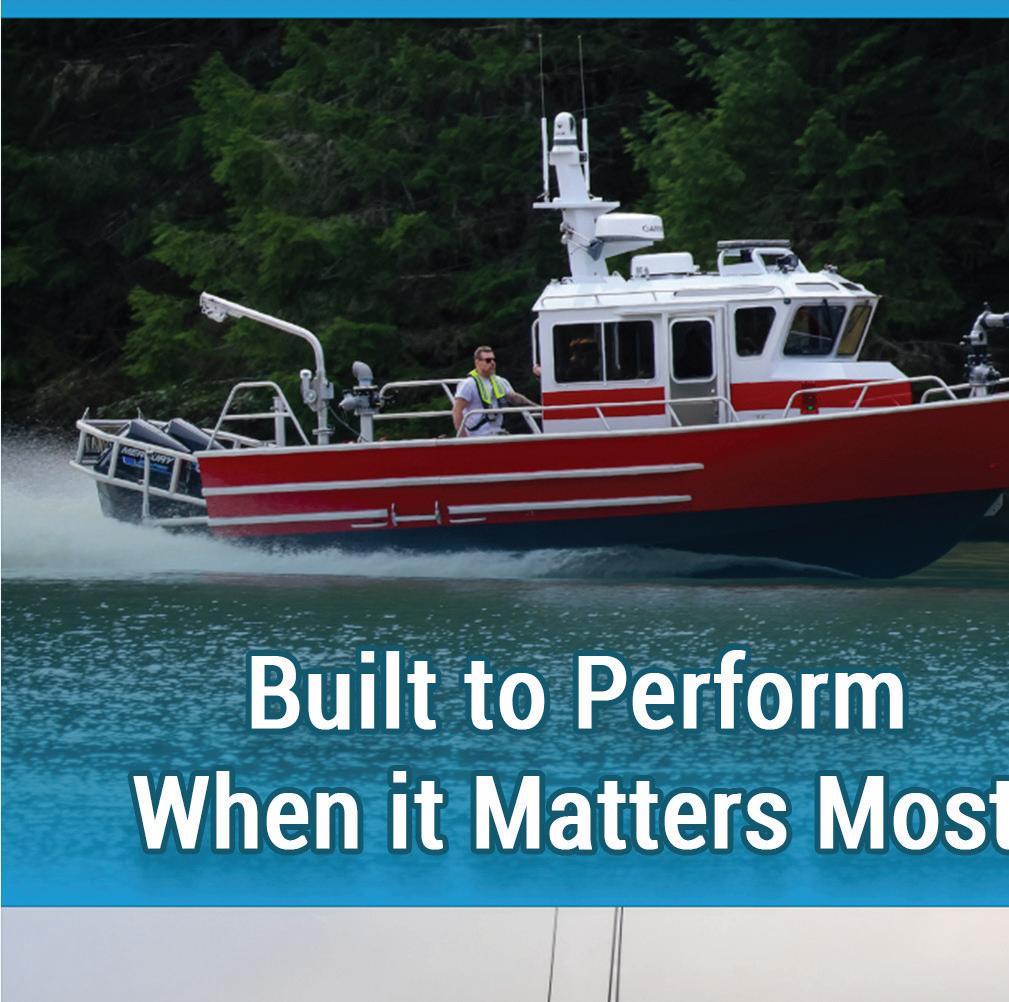
Business has been subdued in several shipbuilding markets, such as the towboat and barge sector, while demand in others, including re, law enforcement, and patrol boats, has been more robust.
“Our workboat business is probably the best it’s been in many, many years,” said Mike Blocher, director of sales at North River Boats, Roseburg, Ore., crediting much of the builder’s success to its reputation for quality while also pointing to more frequent requests for bids and quotes.
“Demand is high, especially in the government sector right now, but also in the direct commercial sales sector,” he said.
North River builds boats ranging from about 20' to 50' and beyond, including reboats, law enforcement and rescue craft, pilot boats, and hydrographic survey vessels.
Macroeconomic pressures, especially in ation, tariffs, and supply-chain volatility, have signi cantly increased boat prices and complicated cost forecasting and xed-price bidding, Blocher said, but noted that customers, in general, have been understanding.
“Everything is selling right now,” he said. — Eric Haun
Breaux Brothers Enterprises is building uncrewed vessels in partnership with HII. HII
Barge demand strengthening, but questions remain
During Kirby Corp.’s April 30 rst quarter earnings report, the company — the largest operator of inland tank barges in the United States — announced the rst three months of 2026 continued the positive momentum that characterized the close of 2025, with high utilization rates and price growth.
“In inland marine, market fundamentals improved during the quarter as customer demand strengthened and barge availability remained limited,” said David Grzebinski, CEO of Kirby Corp.
According to Grzebinski, barge utilization for Kirby averaged in the “low-90% range for the quarter,” with spot pricing up in the low-single digit range and contract renewals slightly up compared with the rst quarter of 2025.
“The combination of improved pricing and disciplined execution helped drive operating margins to the high-teens range,” Grzebinski said in his report.
In its coastal marine segment, Kirby Corp. reported barge utilization rates in the rst quarter of the year in the mid- to high-90% range, with strong customer demand and limited availability of higher-capacity vessels. Those forces pushed contract renewal rate increases to the 20% range compared with the rst quarter of 2025.
“Overall, rst quarter coastal revenues increased 23% year-overyear, and operating margins were in the high-teens range,” Grzebinski said.
“It’s a big pig in a python, in terms of barge eet demographics moving down the age pipeline.”
Overall, Kirby’s marine transportation segment accounted for $497.2 million in revenues through the rst three months of 2026 compared with $476.1 million in the rst quarter of 2025. Operating income through the rst quarter was $89.7 million, up slightly year-over-year. The operating margin for Kirby’s marine transportation segment was 18% for the rst quarter compared with 18.2% for the
— Sandor Toth, president and founder of Criton Corp. and editor and publisher of River Transport News
rst quarter of 2025.
Kirby’s inland marine business line accounted for about 79% of its marine transportation segment’s revenues in the rst quarter.
Kirby also reported the acquisition of 23 barges and a trio of “high-horsepower boats” from an undisclosed seller for $95.8 million.
Grzebinski pointed to geopolitics and supply chain dynamics as major factors contributing to the company’s full-year earnings per share growth guidance of 5% to 15%.
“Kirby is off to a solid start to the year amid a global macro environment that has become more uncertain, driven in part by heightened geopolitical tensions and volatility across energy and industrial markets,” Grzebinski said. “In marine transportation, underlying activity levels remain constructive, supported by strong re nery utilization and improving conditions in
the petrochemical markets amid ongoing global supply chain disruptions.”
Margin headwinds named in the report include in ation and an industrywide mariner shortage.
Looking ahead at the inland barge market more broadly, Sandor Toth, president and founder of Criton Corp. and editor and publisher of River Transport News, said he sees choppiness affecting rates and the industry as a whole.
Regarding hopper barge rates, Toth said he expects the Environmental Protection Agency’s (EPA) recently announced renewable fuel standard targets for 2026 and 2027 to have an indirect impact.
The Trump administration’s trade policies, particularly as they relate to China, led to volatility in soybean exports, Toth said, with China hitting pause on U.S. soybean purchases for much of 2025.
“The Trump administration faced incredible pressure last year because China basically boycotted the U.S. in terms of its soybean purchases, and China is the world’s largest soybean importer by far,” Toth said. “They’re our biggest market for soybean exports.”
In the context of that soybean export volatility, the EPA upped its renewable fuel standard target for biomass-based diesel from 3.35 billion gals. in 2025
The EPA’s new renewable fuel standard targets are expected to impact barge rates.
to 5.4 billion gals. in 2026 and 5.7 billion gals. in 2027.
“I think what Trump was trying to do was say, ‘Hey, China, you’re not going to control our politics and policies anymore. If you think that you can manipulate us by boycotting our soybeans, I’m just going to create a new market for the soybeans that you traditionally would have bought from us but have now decided to use as a lever against us,’” Toth said. “And if you take a look at the numbers [for the renewable fuel standard], they roughly correspond to what China historically has been buying from us, when you look at how much soybeans will be required to implement this new renewable fuel standard.”
According to Toth, a larger domestic market for soybean oil likely will mean less demand for soybean-laden barges moving through the New Orleans export region. And yet, an increase in domestic soybean oil creates soymeal as a byproduct, both for domestic use and for export. In a recent report, the American Soybean Association found that U.S. demand for soymeal is rising as high beef prices drive up consumption of poultry and pork.
Besides demand for biomass diesel and soybeans, steel prices — also a result of trade policy — are affecting barge rates and replacement trends, Toth said. Steel prices have been elevated since the Covid-19 pandemic, and current trade policy has sought to further increase domestic steel production, with multiple effects on the barge industry.
“It’s kind of a two-edged sword,” Toth said. “Number one, I think it’s helping drive up steel prices, which is increasing U.S. steel production and demand for raw materials, so we’ve got more demand for that traf c on the waterways. At the same time, these high steel prices are retarding the industry’s willingness to build new equipment, so it’s allowing rates to maintain an elevated status whereas they otherwise would soften due to eet expansion from new barge construction.”
In prior eras, when barge rates would rise, operators would “overbuild for an extended period,” Toth said, which would eventually result in protracted rate softness.
“Right now, the rise in steel prices is dampening new hopper barge construction,” Toth said. “In fact, new hopper prices this year, from what I’m seeing, are up, about $75,000 per unit over last year.”
That’s led barge companies to take steps to extend the life of barges, like reskinning hulls, which pushes retirements into the future. Toth said there’s a huge number of barges from the late 1990s that will have to be replaced. This replacement cycle is being pushed back.
“It’s a big pig in a python, in terms of barge eet demographics moving down the age pipeline,” he said. There are also operational costs, Toth said, including the price of diesel — up since the start of the war in Iran — and labor issues like recruitment and retention. — Frank McCormack
Escalating energy demands bring calls for permitting reform
Amid increasing U.S. energy demand and prices, voices are being raised in the name of greater consistency and predictability in the offshore energy permitting process. Years of partisan feuding over fossil fuels and renewable energy yielded
tful moves toward reform and led the House of Representatives to pass the Standardized Permitting and Expediting Economic Development (SPEED) Act in December. Failing to win support for Senate passage over the winter, advocates were nonetheless seeing a burst of bipartisan support by spring.
At a Senate Appropriations hearing in late April, Interior Secretary Doug Burgum called reform legislation “absolutely essential… This is the moment.”
tin Heinrich, D-N.M., and Sheldon Whitehouse. D-R.I., on March 5 called for bipartisan movement: “As we move forward, we expect that there will be no further interference with already-permitted wind projects and that the initial movement we’ve seen on solar project permitting will accelerate, and other renewable projects will move forward as well. Seeing permits continuing to be approved by the administration is critical for ensuring that talks can continue.”
Interest groups ranging from the National Association of Manufacturers to National Association of Counties organized members to push Congress on various measures, from large-scale federal policies to land-use decisions. One example, the bipartisan Create Expedited Reviews to Transform American Infrastructure Now (CERTAIN) Act, introduced April 15, would strengthen county consultation and set actionable deadlines for federal environmental permitting processes, proponents say.
Permitting reform negotiations stalled over the Trump administration’s opposition to offshore wind projects but restarted in March when the Interior Department opened a review of solar projects.
In a joint statement, Sens. Mar-
Meanwhile economic fallout continued from the wind industry’s misfortune. In early April, a U.S. subsidiary of German steel fabricator EEW led for federal Chapter 11 bankruptcy in New Jersey, a casualty of the demise of a $250 million state investment to build an offshore wind hub and port at Paulsboro on the Delaware River. EEW was to have built steel monopile foundations for New Jersey’s nowcanceled agship wind projects.
New Jersey utility regulators said April 21 that they were requesting to end a 2021 agreement the Board of Public Utilities signed with PJM Interconnection, a regional electricity wholesaler, to develop offshore wind transmission projects, part of the drive by the administration of then-Gov. Phil Murphy to speed offshore wind energy development.
Although New Jersey was touted as the rst state to align its offshore wind goals with regional gird planning, the agreement with PJM fell victim to the cancellation of Orsted’s Ocean Wind New Jersey project. This was followed
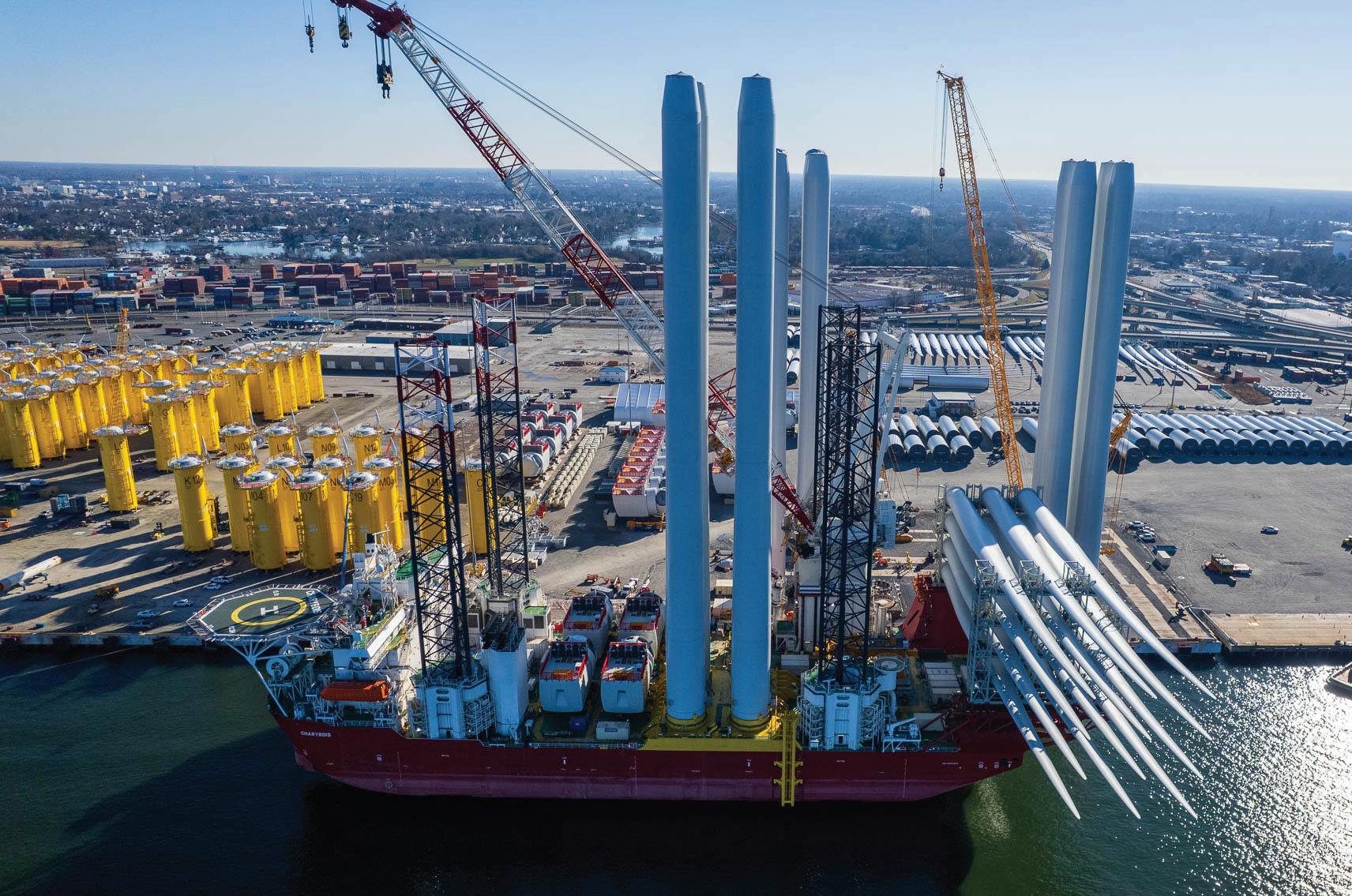
Offshore wind turbines are loaded onto a vessel for transport to the Coastal Virginia Offshore Wind (CVOW) project construction site.
Dominion Energy
Push more. Pull harder. Run longer.
When the work never stops, your engines can’t either. That’s why commercial operators choose Cummins engines. Built for long days, heavy loads, tight schedules, and zero tolerance for downtime, our engines are designed for longevity. With proven low‑maintenance requirements and no midlife overhaul, you save both time and money. Every component is engineered for uncompromising durability, every system tuned for maximum uptime, and every engine backed by a support network that understands the stakes.
From tugs and push boats to service and transport vessels, our diesel platforms deliver the torque, fuel efficiency, and reliability that keep your fleet moving forward.
Choose Cummins. Don’t compromise.
by the demise of the Atlantic Shores Offshore Wind Project, a joint venture by EDF Renewables and Shell, as a result of in ation, escalating costs, and supply chain shortages. Those business decisions were followed by the second Trump administration’s all-out assault on remaining offshore wind projects, with just ve off the East Coast surviving.
While remaining developers fought off the administration in federal courts, at the end of March TotalEnergies, the would-be developers of the Attentive Energy Two project off New Jersey, took up a legally novel offer from the Trump administration to give up its existing federal offshore leases in return for a $928 million refund.
In announcing the bargain, administration and company of cials said that refund would be re-invested in oil and LNG projects.
Backers of the Bluepoint Wind project off New York and New Jersey and the Golden State Wind array planned off California followed suit April 27, declaring they will “voluntarily end their offshore wind leases, with the respective af liate companies agreeing to make nancial investments in reliable conventional energy projects,” according to a statement from the I nterior Department.
“U.S. data center capacity is expected to increase from approximately 24 GW to 110 GW between 2026 and 2030, accounting for 68% of total load growth over the period.”
— Wood Mackenzie, April 28 report
New Jersey Gov. Mikie Sherill’s administration continues to tout solar and other renewable energy development. But with cancellation of the grid agreement, the state’s offshore wind prospects are deeply set back.
“Given the Trump administration’s aggressive and illegal actions to stop offshore wind projects in our region, including the recent agreement it reached with the rm TotalEnergies to use taxpayer dollars to buy back an offshore wind lease, the Sherrill administration had little choice but to cancel the agreement, given that there were no viable offshore wind projects to plug in and use the infrastructure,” the nonpro t Regional Plan Association said.
Even with U.S. offshore wind going
into hibernation, its advocates insist its long-term prospects still hold true with power demand steadily rising, particularly in the Mid-Atlantic and Northeast regions, driven by electri cation trends and data center construction.
In an April 28 report, international energy analysts Wood Mackenzie foresaw the immense demands coming for North American energy supply.
“U.S. data center capacity is expected to increase from approximately 24 GW to 110 GW between 2026 and 2030, accounting for 68% of total load growth over the period,” according to Wood Mackenzie. “With a projected increase of more than 400,000 GWh, data centers are expected to consume eight times more electricity than electric vehicles over the same timeframe – representing one of the most concentrated surges in electrical power demand in modern history.”
While reliability and affordability concerns are escalating, “retirements of legacy generation are slowing, and new capacity additions, especially natural gas, are constrained by long lead times and equipment shortages,” the wind industry group Oceantic Network noted in an April 14 brie ng paper. “In that environment, offshore wind offers something increasingly rare: largescale, shovel-ready power that can be
Financing expertise that moves marine projects forward
Shipbuilding takes time — and the right financing partner. From construction‑to‑term loans to alternative fuel vessels, Key delivers marine‑specific capital solutions designed around your timeline and cash flow needs. Chart your next move with Key. Visit key.com/keyequipmentfinance.
deployed in coastal load centers where demand is concentrated.”
The pressures for permitting reform come from both the wind and oil and gas sectors of the offshore industry. The possibility for changes unnerves some critics of offshore wind, who say there is danger of bypassing the National Environmental Policy Act (NEPA) and other safeguards.
Writing about the SPEED Act, Bob Stern of the New Jersey activist group Save Long Beach Island warned in March “this is not good law.”
“In its present form, the bill creates confusion and does not foster wise decision-making. It would eviscerate NEPA, which has been a bedrock of national environmental policy for over 50 years, and stands in direct con ict with other law and the Constitution itself. Most importantly, the bill does not address the root causes of many delays, which can be xed with more informed and cooperative applicant and agency staff work.” — Kirk Moore
Coast Guard sharpens cybersecurity focus for passenger vessels
Whas been growing at an average of 661 vessels per year over the past ve years. Excursion vessels dominate the eet at 41%, followed by charter shing vessels (14%), ferries (9%), and cruise vessels, crewboats, and water taxis at 7% each.
Geographically, Southeast District 7, covering Florida, Georgia, and South Carolina, leads all regions with 1,380 vessels. New England’s District 1 follows closely with 1,310, while the Gulf Coast’s District 8 rounds out the top three at 1,031.
Inspections remain central to the CVC’s work. The Coast Guard conducts roughly 12,000 inspections annually, turning up approximately 19,000 de ciencies each year.
ith new federal cybersecurity regulations put into effect July 2025, the Coast Guard is incorporating cyber readiness into routine vessel oversight, particularly during inspections and exams.
“Operators should expect an increased focus on cybersecurity during safety and security inspections and exams on board vessels as the new cybersecurity regulations are implemented,” the agency said.
The Coast Guard’s Commercial Vessel Compliance (CVC) of ce is responsible for setting the policy framework that underpins the agency’s marine safety, security, and stewardship mission, and the job is getting bigger every year.
The 2025 U.S. passenger vessel eet stood at 6,758 active vessels and
Top de ciency categories include structural issues (19.5%), propulsion and auxiliary machinery (15%), and lifesaving appliances (14%).
WorkBoat asked the Coast Guard directly how operators should prepare.
On training expectations, the Coast Guard emphasized that cybersecurity awareness, not technical specialization, is the baseline requirement for crews operating digital systems onboard.
“The cybersecurity training requirements are intended to ensure that personnel with access to information technology [IT] and operational
technology [OT] systems on board a regulated vessel attain baseline knowledge to raise awareness and reduce cyber vulnerabilities,” a Coast Guard spokesperson said.
In practice, this means crews must be familiar with vessel-speci c cyber procedures and understand how threats could impact operations.
“Cyber training must, at minimum, cover relevant provisions of an approved cybersecurity plan to include recognizing, detecting, and circumventing cybersecurity threats, and reporting cyber incidents to the cybersecurity of cer.”
The Coast Guard clari ed that while technical depth will vary by role, broad awareness across crews is expected.
“The U.S. Coast Guard does not expect that every person be a cyber expert, but all identi ed personnel should understand cybersecurity concerns relevant to their work, how it could affect operations, cyber hygiene, how to identify when ‘something is wrong’ with their digitalized critical onboard systems, and be familiar with their incident response procedures in the event of a cyber incident.”
To support compliance, the agency has issued CG-5PC Policy Letter 01-25 covering training requirements and Navigation and Vessel Inspec-
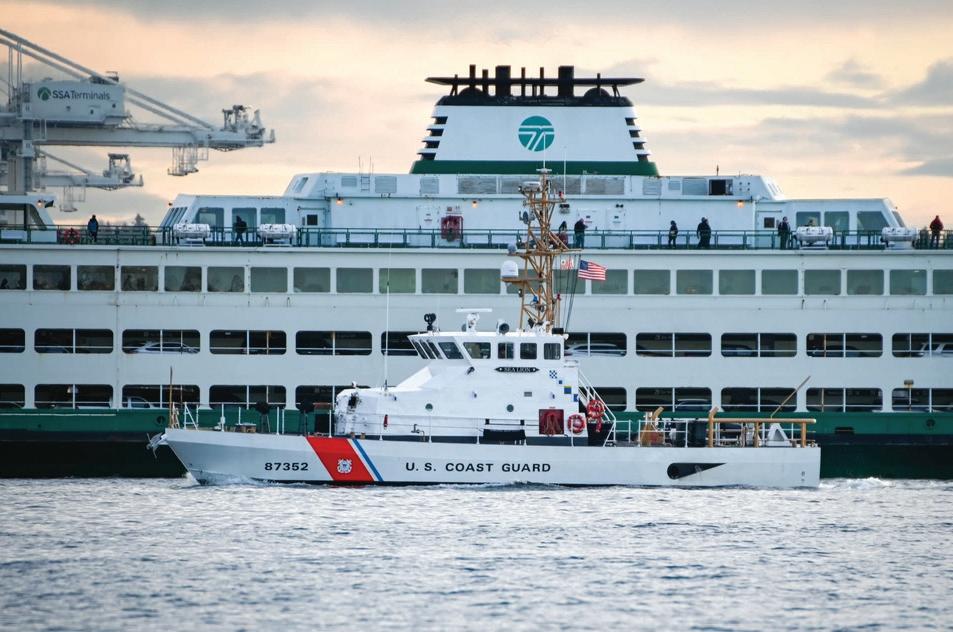
The Cutter Sea Lion underway near a Washington State ferry in Seattle’s Elliott Bay . U.S. Coast Guard
“The
U.S. Coast Guard does not expect that every person be a cyber expert, but all identi ed personnel should understand cybersecurity concerns relevant to their work, how it could affect operations, cyber hygiene, how to identify when ‘something is wrong’ with their digitalized critical onboard systems, and be familiar with their incident response procedures in the event of a cyber incident.”
The applicability of the new rules is limited. The Coast Guard noted that only certain vessels fall under the Maritime Transportation Security Act (MTSA) framework.
“The small passenger vessel population which is not MTSA-applicable will remain unaffected by the Cyber Final Rule,” the agency said. Speci cally, the regulations apply to small passenger vessels carrying 150 or more passengers under 33 CFR 104.105.
For operators that are subject to the rule, implementation will vary depending on vessel size, operational pro le, and onboard system complexity.
“The learning curve will vary across different eets, whether due to the size of the vessel or workforce, nature of the vessel’s operations, or the complexity of IT and OT systems and equipment,” the Coast Guard said.
Operators are expected to take a risk-based approach when developing cybersecurity plans, identifying critical systems and outlining mitigation strategies.
The Coast Guard made clear that cybersecurity is now part of the inspection landscape.
“Operators should expect an increased focus on cybersecurity during safety and security inspections and exams on board vessels as the new cybersecurity regulations are implemented,” the agency said.
“The mission here is to develop [and] maintain policy standards for prevention activities of the Coast Guard to achieve marine safety, security, and stewardship mission success,” said Capt. Mark Neeland, the former CVC chief.
For passenger vessel operators, that shift signals a broader expectation: digital systems are now treated as critical infrastructure, and their protection is subject to the same scrutiny as physical systems on board. — Ben Hayden
TAILORED SOLUTIONS INCLUDE
• Harbor services
• Inland and river coastal
• Coastwise transportation
• Manufacturing and repair
• Port and infrastructure
• Offshore energy services
Trump calls for plans to spur action on military shipbuilding
The Trump administration has moved aggressively on military shipbuilding since taking of ce, canceling a troubled frigate program, unveiling an ambitious new eet plan, and signing sweeping policy directives aimed at reversing decades of decline in the U.S. maritime industrial base.
The U.S. Navy eet stands at around 240 ships and submarines, and the service has struggled to grow its eet despite signi cant investment over two decades. “Simply put, we need more ships delivered on time and on budget, and we are challenged in both of these arenas,” Brett Seidle, acting assistant secretary of the Navy for research, development and acquisition, told the Senate Armed Services
“This order is a bold step in the right direction, to expand capacity in shipbuilding and workforce development ultimately in order to meet the urgent, increased demand for ships for the Navy and the nation.”
— Chris Kastner, HII president and CEO
an announced the cancellation of the bulk of the Constellation-class guidedmissile frigate program at Fincantieri Marinette (Wis.) Marine. The move terminated four planned ships before construction began, leaving only USS Constellation (FFG-62) and USS Congress (FFG-63) to be completed. Modi cations to the original design had delayed the rst hull from 2026 to 2029 and added an estimated $1.5 billion in unforeseen expenses.
Committee earlier this year.
“Speed to delivery is now our organizing principle,” Defense Secretary Pete Hegseth said in his November “Arsenal of Freedom” speech. “The sense of urgency has slipped too much, and when you look at what we face, we have to recapture it.”
As part of its pivot away from the Constellation class, the Navy is pursuing an FF(X) frigate and accelerating programs for Landing Ships Medium and larger uncrewed surface vehicles.
In April 2025, the administration took its rst major structural step. Trump signed an executive order tasking the heads of the defense, commerce, labor, transportation and homeland security departments with developing a Maritime Action Plan (MAP)to invest in the shipbuilding industrial base and reform the government’s acquisition processes. In February 2026, the administration released its 42-page MAP, organized around four pillars: rebuilding shipyard capacity, reforming workforce development, protecting the industrial base, and supporting national security. The plan aims to expand domestic shipbuilding to a level capable of supporting both the military and international trade.
On the program side, a consequential decision came in November when then-Secretary of the Navy John Phel-
In December, Trump unveiled the broader “Golden Fleet” initiative. The president announced plans for up to 25 new battleships of a new Trump class, with Hegseth describing the effort as “a generational commitment to eet power.” The administration’s FY 2027 budget request followed with supporting numbers. The proposal includes $65.8 billion to procure 18 warships and 16 support vessels, $427 million for uncrewed surface vehicles, and $8.7 billion for maritime industrial base and shipyard infrastructure. The White House described the 41-ship procurement plan as “the largest demand signal to the maritime industrial base since the administration of Franklin D. Roosevelt.”
Navy leadership has said it intends to avoid the design instability that doomed the Constellation program.
“We’re going to need to really improve our ability to build ships,” Phelan said at Sea Air Space on April 21, citing modular construction methods as central to that effort (Phelan was red by the Pentagon on April 22).
Industry has responded cautiously but positively. “This order is a bold step in the right direction, to expand
hired over the next decade to meet shipbuilding and maintenance goals, according to Matthew Sermon, the Navy’s direct reporting program manager for the maritime industrial base, who described it as “an all-hands-ondeck effort.” The Maritime Action Plan aims to address the gap through expanded training pipelines, militaryto-mariner credentialing reform, and proposed maritime scholarships — measures that will require congressional action to implement.
capacity in shipbuilding and workforce development ultimately in order to meet the urgent, increased demand for ships for the Navy and the nation,” HII President and CEO Chris Kastner said following the April executive order.
Workforce remains a central concern across the board. An estimated 250,000 skilled workers must be
How much of the administration’s shipbuilding agenda translates into vessels delivered will depend in large part on whether the industrial base can scale to meet demand. The Government Accountability Of ce has described the Navy as lingering in a “perpetual state of triage” — a condition the administration has identi ed as the core problem it intends to solve.
— Eric Haun
In December, the president announced plans for up to 25 new “Trump-class” battleships.
Deferred Demand
By Eric Haun, Executive Editor
RVolatile pricing limits towboat construction, but new boats are still needed.
ising costs are impacting businesses across the board, and it’s no exception in the towboat sector.
In general, new towboats are being ordered, but only on an as-needed basis, said Tony Cibilich, president and owner of C&C Marine and Repair, Belle Chasse, La. “[Customers are] generally moving forward with newbuilds when there’s a clear operational need, and that’s largely because of the signi cant cost increases we’ve seen over the past ve years,” he said.
“Pricing has been volatile across just about every part of the build process — steel pricing, freight costs, and now tariffs. All of that hits nal vessel pricing, and it can move fast, which makes forecasting tougher than it used to be,” Cibilich continued. “A lot of operators are telling us current day rates just don’t justify what a newbuild costs today.”
In response, C&C has altered its approach by planning further ahead and building boats on speculation to accelerate delivery timelines. “Inland eets continue to
C&C Marine and Repair is building a series of four 87'x33'8"x11'3"towboats
age, and replacement decisions are being deferred, but they aren’t going away,” Cibilich said. “When operators do move, they typically need vessels delivered on aggressive timelines, and shipyard capacity across the industry is tightening. By building on spec now, we’re positioning ourselves to deliver when our customers are ready, rather than asking them to wait years for a slot to open.”
Cibilich said qualities such as experience, transparency, and discipline become more important when market conditions are tight. “Our project managers are engineers by background, so they understand the build technically and they manage procurement tightly. That combination matters when conditions are moving,” he said. “The yards that succeed in this market aren’t the ones promising what they can’t deliver — they’re the ones managing complexity well and communicating honestly with their customers throughout the build.”
Eric Haun
for Canal Barge.
Towboats & Barges
NEWBUILDS
Despite challenging market conditions, many operators need new vessels, and towboat builders are building.
In December, C&C began delivering a series of 2,600-hp inland towboats for Canal Barge Co., New Orleans. The first three boats — Al Sloss, Deborah H. Valentine, and Cabby H. Boone — have been handed over, and a fourth vessel is under construction.
Earlier this year, Blessey Marine Services Inc., Harahan, La., christened its first EPA Tier 4 towboat, the 2,600-hp Capt. Daniel Armstrong, built by Vessel Repair Inc., Port Arthur, Texas, as part of a four-boat newbuild series that includes a pair of retractable wheelhouse vessels and two conventional towboats. Elsewhere, the Mary Beth, a new towboat for Dupre Marine Transportation, Houma, La., is nearing its launch date at Intracoastal Ironworks, Bourg, La. Turn Services LLC, Convent, La., has ordered a series of new boats at Verret Shipyard, Plaquemine, La.
Cost is not the only thing on operators’ minds. Many are also rethinking what they want in a vessel from a design standpoint, favoring improved onboard amenities and comfort to help with crew retention, according to Cibilich. “Operators are realizing that good living quarters actually matter. They help attract and keep good crew, and that’s a real challenge in this industry right now,” he said. “Crew comfort has become a key consideration in new vessel designs, and we’re building that thinking into every project.”
Larry Sibley, captain aboard the 10,000-hp linehaul towboat John Paul Eckstein, delivered from C&C to Marquette Transportation Co., Paducah, Ky., in December, said onboard accommodations, which include 12 berths distributed across 10 staterooms, are improved “massively” compared with those of towboats from previous generations. “The noise is so much less. Vibration is so much less,” he said. “It makes a big difference.”
Golding Barge Line Inc., Vicks-
burg, Miss., has been adding vessels, too. In 2025, it took delivery of the 2,800-hp retractable pilothouse towboat Gage Golding from Steiner Shipyard, Bayou La Batre, Ala., which delivered a sistership, the Alexa Golding, to the same operator this year.
Gregory Marshall, the shipyard’s project manager, said the two Golding boats are the first retractable pilothouse vessels to be built by Steiner Shipyard
under Subchapter M, noting the extra level of fitting and precision required for this type of vessel. “It definitely takes some tweaking to get that ram and pilothouse going up and down smoothly,” he said.
Steiner Shipyard is also building a pair of 130-footers for Florida Marine Transporters, Mandeville, La., including a retractable and a conventional vessel, Marshall said. Be-
The Capt. Daniel Armstrong is the first EPA Tier 4 towboat in Blessey Marine Services’ 85-vessel fleet.
Marquette Transportation’s 189'x50' towboat John Paul Eckstein is among the largest and most powerful in the United States.
Todd Qualls / TZachTowboats
VESSEL REPORT Towboats & Barges
yond that, the yard is looking to add to its backlog.
“We’d be open to signing contracts in June or July of this year and starting another vessel,” Marshall added. “We’ve seen a lot of specs come out to bid over the past three months. But with everything that’s going on in the government and overseas, prices are escalating. So, I don’t know if we’ll see contracts being signed until we get a little more clarity.”
Marshall said demand signals are present. “There’s definitely a need for more Subchapter M pushboats, and it seems like a lot of these guys are going with a bigger longline boat, so we anticipate some larger vessels in the future,” he said, noting that the yard has built boats up to 250' long and 70' wide.
MAINTENANCE & REPAIR
Steiner Shipyard balances openings with a steady stream of maintenance and repair work. “That’s been really big for us down here on the bayou. We’ve
seen a lot of growth with the repair yard over the past few years,” Marshall said. “We’re really interested in getting more involved with Subchapter M pushboat renewal work. There are a lot of five-year checks coming up in the near future, so hopefully we can find some time to fit some of those in along with the dredging contractors, Subchapter T, and Subchapter K ferries that have been coming in and out of here.”
In general, escalating costs are pushing operators toward repair and overhaul rather than new construction, Cibilich said. “Given the substantial increase in new construction costs, a lot of operators are prioritizing extending the service life of their existing vessels through more repair and maintenance,” he explained.
Inevitably, the calculus will shift. “There are practical limits to how long a vessel can stay economically viable. Eventually, replacement becomes unavoidable,” Cibilich said.
When that moment arrives, operators
“There’s definitely a need for more Subchapter M pushboats, and it seems like a lot of these guys are going with a bigger longline boat, so we anticipate some larger vessels in the future.”
— Gregory Marshall, Steiner Shipyard
may find themselves caught off guard. “What people miss in this calculation is timing risk. Replacement decisions can be deferred, but they can’t be avoided indefinitely,” Cibilich said. “When an operator finally needs to move, shipyard availability becomes the constraint, not just price.
“The yards capable of delivering quality tonnage on commercial timelines are a finite resource. If you’re planning fleet renewal, you need to be thinking about capacity access just as much as cost,” he added.
Both Marshall and Cibilich are optimistic, particularly amid increased signals of federal support toward the U.S. maritime industry, and each believes steady demand for new towboats will return.
“Look, the capacity picture is shifting in ways the market hasn’t fully caught up to yet,” Cibilich said. “The federal government is expanding its engagement with smaller shipyards, and as those contracts ramp, capacity is going to shift away from commercial work. At the same time, inland fleet aging is accelerating the need for replacement tonnage. Our approach — executing contracted work while building spec inventory — is designed for this exact environment.”
The dynamic will further separate those who are prepared from those who are not, Cibilich said: “Operators who plan ahead will have vessels available when they need them. Those who wait will be competing for slots that may not exist.”
Steiner Shipyard
Steiner Shipyard delivered the 94'x34'x12' Alexa Golding, an EPA Tier 4 towboat with a retractable pilothouse, to Golding Barge Line in April.
Freight Forecast
Insights can help optimize the productivity of river assets.
Inland freight has long been a market people learn by listening. Dispatchers call brokers. Traders call terminals. Operators compare notes. The picture forms through conversations more than measurements, a system understood through experience rather than visibility.
That works until the market moves faster than phone calls. By the time information travels from elevator to broker to eet, conditions may already be changing somewhere else on the system. The industry has always had knowledge, just rarely at the same time.
By Steve Mosco, Contributor
Susan Olson, founder of the data, software, and arti cial intelligence rm Action Intel, Louisville, Ky., said that uncertainty is what pushed her company toward forecasting freight from the river itself. “A lot of the request came from commercial participants moving grain,” Olson said. “They would ask, ‘Is there a way to get a look ahead of where freight is going?’”
That question became the starting point for Barge Flows, a new dataset within the company’s BargeAI platform, which subscribers access through a dedicated web application. Action Intel also offers API services that allow customers to connect BargeAI data directly into their own internal systems, tools, and planning models.
Instead of relying on past freight prices, Barge Flows tracks the physical behavior of barges across the Mississippi River system and uses those patterns to estimate freight conditions weeks in advance. The premise is intuitive and elemental. Freight rates are not the cause of market changes, but the result of supply and demand forces moving through the system.
“If you think about freight as a commodity,” Olson said, “there’s a supply of available barges and a demand to move cargo. What we’re trying to provide is a window into the fundamentals driving that push and pull.”
WATCHING THE SYSTEM
Traditional freight signals arrive after decisions have already been made. Grain programs, vessel arrivals, and logistics planning often occur months ahead, meaning capacity starts adjusting before market reports re ect it.
Olson believes that timing explains why reported rates trail physical movements. “You’ve got a vessel arriving in New Orleans in 90 days,” she said. “You need barges in the pipeline to ll it. So the supply chain starts adjusting ahead of that. The best information people have today informs what they’re willing to buy and sell freight for in the future.”
than tracking price history, the system counts barges moving through de ned regions — St. Louis; Cairo, Ill.; the Illinois River; New Orleans — and observes how equipment accumulates or disperses.
“What does watching equipment move tell you?” Olson asked. “It shows the overall supply-and-demand dynamics, not just a bilateral transaction. You see what the whole system is doing outside your organization.”
That distinction separates a reported rate from a physical signal. One records what happened, the other anticipates what is developing.
FLOWS, BALANCES, AND A CLOSED SYSTEM
Action Intel breaks cargo behavior into two related measures: ow and balance. Flow is simply movement past a point — the number of barges passing Baton Rouge, La., entering Cairo, or moving into St. Louis over a period of time. Balance looks at where those barges accumulate.
“A barge is a unit entity,” Olson said. “You can’t have a partial barge. If you start in Minnesota and end in New Orleans, everything has to add up. You’re seeing how those ows build and accumulate.”
Barge Flows measures those adjustments directly. Rather
When barges begin stacking up in a region faster than they are picked up, capacity shifts. Those shifts often precede freight changes. That can mean empty equipment sitting longer in one region while another area waits on capacity. The imbalance doesn’t immediately change rates, but it changes how participants position equipment and commitments. By the time the market reports respond, operators often have been repositioning boats and adjusting plans for weeks.
The rst evidence appeared when Action Intel overlaid freight curves with movement patterns. “We started to see signals that looked similar, but they were leading,” Olson said. “Freight changes came after the big changes in those signals.”
The correlation was strongest not at short horizons, but farther out. “The surprising thing was the model could be worse three weeks ahead than 12 weeks ahead,” she said. “That’s because the market trades forward.”
TOWBOAT DATA
The foundation of the system comes from towboats’ AIS transmissions. Many vessels report tow length and width, allowing Action Intel to estimate the number of barges in a tow.
From there the work becomes less straightforward. “Not
everyone updates those elds immediately,” Olson said. “You might pick up a barge and the eld doesn’t change for miles. You have to be diligent about data quality.”
Action Intel cleans and corrects those signals, accounts for missing information, and organizes them into regions where drops and pickups occur.
The goal, Olson said, is transparency rather than a black box. “We try to be very transparent about how we’re doing things,” she said. “We don’t want the numbers to just appear without understanding what’s behind them.”
RIVER BEHAVIOR
Current patterns suggest a system behaving differently than in recent years. “We’re seeing less volume moving out of the Upper Mississippi downstream,” Olson said. “At the same time there’s a strong push of barges upstream from New Orleans that’s been slow to move farther north.”
Seasonal demand still plays a role, but export dynamics have shifted. “Soybean exports in the fall were slow to materialize,” she said. “Corn was strong, but it didn’t fully offset it.”
Instead of the sharp harvest spike typical of recent low-water seasons, freight patterns have been more at. Signals looking into spring show volatility rather than a steady slide toward lower rates.
The result is a market still adjusting to its own physical balance.
PREDICTION MEETS EXPERIENCE
The model does not eliminate uncertainty. Olson stressed it adds context rather than certainty. “This isn’t the whole picture,” she said. “It’s a piece of information people didn’t have before.”
Large freight swings tend to appear clearly in the signals, while smaller week-to-week changes may still diverge from market sentiment. Weather, river conditions, and trading behavior continue to shape the outcome.
But the timing changes. Conditions that later show up in spot freight rates often appear rst as shifts in
accumulation and movement. Olson pointed to a recent freight increase tied to low water and ice that had been visible weeks earlier in the underlying data.
That does not replace experience, though. Rather, it changes how experience is applied.
Many of the people interpreting the signals began their careers on deck or in dispatch of ces, Olson said, and, thus, combine operational knowledge with analysis. “It’s a marriage between information and experience,” Olson said. “One without the other is missing a crucial element.”
DATA INFORMS STRATEGY
More visibility does not necessarily erase competitive advantage. Participants still interpret signals differently
based on contracts, geography, and risk tolerance. The data does not standardize strategy, but it changes how early those strategies take shape.
Olson believes decisions will still vary even when information is shared.
“If everyone has the same information, they won’t make the same decision,” she said. “But more information helps people make better decisions.”
Over time, the data itself may shape behavior. Barge Flow users planning further ahead could change how freight cycles form. “If you’re basing tomorrow’s decision on the best information you have today and you have better information now to make tomorrow’s decision,” Olson said. “Then it can have some impact on how that market looks in the future.”
Lock status updates continuously, showing where traffic is moving freely and where the system is quietly slowing commerce.
Action Intel photos
traffic is moving freely and where the river
Action Intel’s platform connects tracking, forecasting, and analytics into a single operational view of the river network.
Heat maps highlight where equipment demand concentrates, an early signal of pressure building in the freight market.
Morgan Fanberg
CEO, Glosten
By Ben Hayden, Senior Associate Editor
WorkBoat spoke with Morgan Fanberg, CEO of Seattleheadquartered naval architecture firm Glosten , on what it will take to reestablish American commercial shipbuilding — and why, without a serious investment in domestic naval architecture, initiatives like the SHIPS Act risk becoming another failed promise. Fanberg discusses the role of early-stage vessel design in shaping project outcomes, the growing gap between demand and available engineering talent, and how current projects are reflecting broader shifts in propulsion, operations, and fleet requirements across the U.S. maritime sector. The interview has been edited for length and clarity.
What are you seeing in terms of demand these days?
We’ve generally had a fairly steady level of demand from our longterm clients. That being said, many operators have been slow to pull the trigger due to the same factors you’re hearing about across the industry: interest rates, inflation, tariffs. It’s made it harder to know when to say yes and move forward.
What we’re starting to see now is that backlog beginning to break free; the faucet is opening. Clients are getting to the point of, “Okay, we can move forward,” and the challenge is shifting to how we schedule the work so we can support them effectively. Earlier in the year, we weren’t lacking opportunities, but we had capacity. Now there’s a sense of pentup demand for naval architecture as our clients recognize that while the uncertainty hasn’t gone away, delaying projects isn’t a viable option anymore. We typically handle between 150 and 200 projects a year, and we’re at about 65 [as of April].
Your social media post stating that America needs more naval architects struck a chord in the industry and was well received. Could you elaborate on that?
I was a little fired up that day. When President Donald Trump mentioned our industry at the joint session of Congress last year and talked about bringing back U.S. shipbuilding, it caught my attention. It’s not often you hear a president reference our industry, so there was a sense of optimism that we might finally get some serious attention.
I was hopeful that the focus would be on the commercial side, because that’s where we need the most support. We have a tremendous ability to build naval vessels. We have the
Glosten
infrastructure, demand, and funding to produce the best Navy ships in the world. What we don’t have are those same elements on the commercial side.
When the SHIPS Act came out, I appreciated the intent. It says the right things. But it’s missing a fundamental piece: demand. What’s actually going to drive shipyards to build a commercial eet? That’s the part I want to be in the conversation, not just reacting to another initiative that falls short.
There’s also the workforce side. Even if we do build more ships, who is going to crew them? The pipeline for licensed of cers is relatively strong thanks to great maritime academies. Where we’re really short is on the unlicensed side. Most high school graduates aren’t considering maritime careers, especially careers that are going to pull them away from their homes for three, four months at a time.
On the naval architecture side, it all starts with engineering. Clients need capital and a reason to build, but nothing moves forward without the ability to design. What we’re seeing more of is a willingness to go overseas for that expertise, and the primary driver is cost. Just as we need domestic capability for commercial shipbuilding in times of national con ict or need, we can’t afford to lose that same capability on the engineering side. If this trend continues, I’m concerned we’ll see an erosion of technical know-how in this country.
This is where the research vessel Sikuliaq is a good example. When people say the U.S. hasn’t designed an icebreaker in decades, they tend to forget about this boat. We began work on Sikuliaq in the early 2000s, and it demonstrates that we do have the domestic capability to design ice-capable vessels. Sikuliaq isn’t a heavy icebreaker like Polar Star, but that’s not the point. The point is that the expertise is here and should be acknowledged.
Before we default to outsourcing design, we need to recognize what we already have. Because once that capability is gone, it will be very dif cult to rebuild.
Glosten has been involved in many unique builds. How are you seeing the market today?
There’s been a subtle shift. Clients and operators are de nitely feeling the pressure around timing — when they can move forward and how quickly they need to act once they do. What we’re seeing more of is demand for adaptable, pre-developed concepts that can be tailored to speci c needs, rather than starting from a blank sheet of paper.
That puts more responsibility on us to anticipate where the market is going and do a bit of crystal-ball gazing — investing internally in developing concepts we think clients will need — and hope an operator shows up needing something very close to what we’ve developed.
Increasingly, they don’t have the time to start from scratch, but they still want solutions that are purpose-built. Even getting to a preliminary design can take months, so having a foundation in place helps accelerate the process.
At the same time, the earlier we can get involved, the better the outcome. The sooner naval architects and marine engineers are part of the conversation, the smoother the whole project will go. Shipyards will tell you the same thing. More engineering upfront leads to better pricing, more realistic schedules, and fewer surprises during construction.
From a cost perspective, that early engineering investment is small relative to the overall build, but it can have a signi cant impact over the life of a vessel. And in the U.S., we’re designing ships expected to last 40 to 50 years, so that long horizon matters.
To your point about unique builds, we’ve seen some of the more advanced designs pause in the near term. For example, we designed a hydrogen hybrid research vessel for Scripps Institution of Oceanography, but when the funding sources fell apart, the project shifted back to a diesel-fueled platform. It was a disappointing outcome, but also a valuable experience. We were able to work through many of the real challenges associated with hydrogen as a marine fuel.
Alternative fuel projects have slowed, but that work has kept our engineering mindset sharp. It’s allowed us to pivot to autonomy, hybrid-electric, and even nuclear without missing a beat.
In the meantime, the focus is on being ready — having strong concepts, the right design capability, and the ability to move quickly when clients decide it’s time to act.
Glosten
Glosten-designed research vessel Sikuliaq breaking ice. Built in 2014, the vessel is owned by the National Science Foundation and operated by the University of Alaska Fairbanks College of Fisheries and Ocean Sciences.
FOCUS Finance
Continued from page 17
combined with adequate capital deployment in the space, is keeping things interesting,” Telles said. “We’re seeing good activity.”
Longhurst described the consistent and positive messaging from the U.S. government for the Jones Act sector as both “surprising and welcome.” However, he cautioned that support doesn’t directly translate into concrete policy measures. New laws for tax and subsidy benefits are needed to spur investment.
“A Maritime Action Plan alone is not something I can take to my executive loan committee,” Longhurst said, referring to the federal roadmap released by the White House in February designed to support the 2025 executive order on “Restoring America’s Maritime Dominance.”
Telles offered a similar take, suggesting that investment alone isn’t enough. “There has to be some incentive for these investors and banks and lenders to continue deploying capital here,” she said. “There has to be a good pathway for this growth and revitalization to actually occur.”
She said the investors her team speaks with are focused on incentives such as tax-deferred accounts for shipyard capital improvements and Title XI financing for new construction.
“Federal and legislative support, combined with adequate capital deployment in the space, is keeping things interesting. We're seeing good activity.”
— Rachel Telles, Wintrust Commercial Finance
CHALLENGES PERSIST
Despite the well-timed convergence of federal support and private capital, the Jones Act market — and the maritime industry broadly — faces considerable challenges and a long road to achieve global dominance.
Aging infrastructure and assets, as well as a shrinking workforce, are welldocumented hurdles the industry has long worked to overcome. Other barriers include a lack of shipbuilding capacity and ongoing geopolitical instability.
Limited build capacity in the U.S. is a major constraint on the growth of the sector because of its impact on the cost and lead time to build a vessel, said Robert Harris, vice president and West region manager at Wintrust Commercial Finance.
“Build cycles are taking a lot longer
than they have in the past,” Harris said. “So, it does put the U.S. at a competitive disadvantage when you think about how long it takes a Jones Act vessel to be built versus say a non-domestic or international competitor.”
Geopolitical instability, as well as recent tariffs, have also fueled cost increases due to higher insurance premiums, safety risks, and supply chain delays. Shipyards are feeling the effects of these pressures, especially those in the Jones Act sector.
“There’s an awful lot of energy spent on determining what’s purchased from where and how it’s integrated to make sure it qualifies as a Jones Act vessel,” Thomas said. “They have to be very strategic to align with policies that are constantly changing.”
As an example, Thomas said one of his clients recently told him that a tugboat he paid $15 million for in 2019, could cost as much as $35 million to build in the U.S. today.
THE BOOM CONTINUES
Looking ahead, CSG, Wintrust, and Key all anticipate that the pace of deals will hold steady, with some potential to increase. The companies also plan to continue seeking opportunities to participate in the market throughout 2026 and beyond.
Many are keeping an eye on the federal money flowing into the Navy and defense sector — hopeful that the resulting synergies, new technologies, and capacity upgrades will trickle into the commercial side and throughout the supply chain.
It’s a positive sign, Longhurst said, to see discussions about maritime revitalization, and even the Jones Act itself, making it to the front pages of newspapers as part of a larger discussion on national and international security.
But while indicators and external forces may shift, above all, “fundamentals still matter.”
“Being successful depends on finding the right sponsor, the right collateral, and the right structure,” Longhurst said. “Sound underwriting remains very important and is key in every deal.”
On April 1, famiily-owned Saltchuk completed its $1.5 billion acquisition of Great Lakes Dredge & Dock Corp., bringing in the dredging contractor as a wholly owned subsidiary.