Keith Gabbard
OLD HOMEPLACE FARM
PRTC CEO celebrates 50 years of service REDEMPTION RECIPES

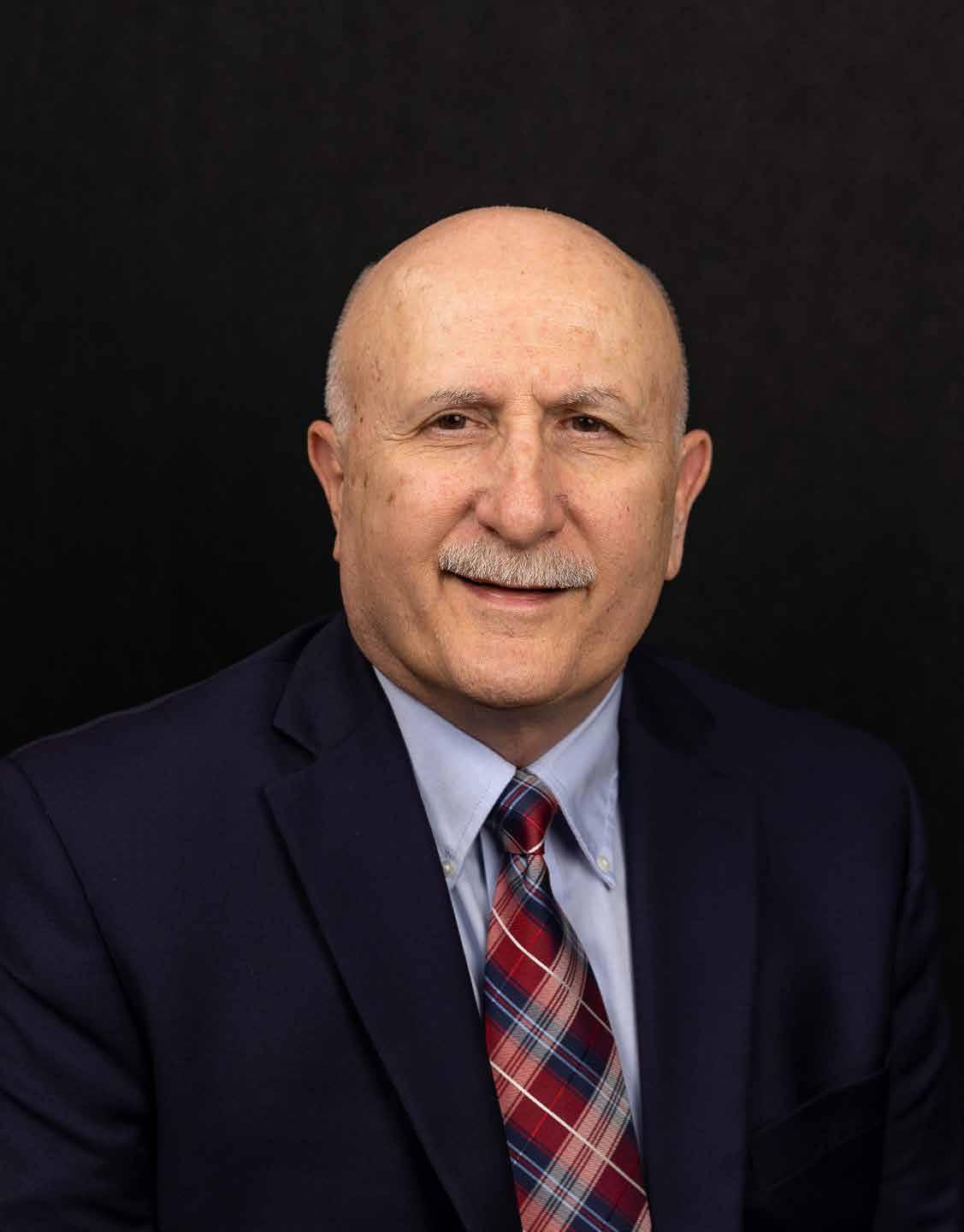

Keith Gabbard
OLD HOMEPLACE FARM
PRTC CEO celebrates 50 years of service REDEMPTION RECIPES

These days, you don’t have to be a technophobe to get fooled by scams. As criminals become more sophisticated, their messages and approaches have become convincing enough to fool anyone.
That’s especially true if you think your computer might be at risk. Tech support scammers often tell elaborate stories to convince people they need to hand over their financial information or remote access to their digital devices.
The Federal Trade Commission offers advice for times you’re unsure about someone claiming to offer technical support and provides steps you can take to protect yourself.
Real tech companies aren’t in the habit of reaching out by phone, email or text message every time your computer might have a problem. If someone does, that’s a red flag.
Legitimate security pop-ups and messages will never tell you to call a phone number for help. If your computer’s security software detects a legitimate problem, it will likely recommend a virus scan and walk you through the process.
Look out for language telling you to move money to “protect it.” Scammers may suggest depositing money in a “federal safety locker” or buying gold to give to someone. These protections are fake, and a real government employee will not demand payment in gold or cash.
Taking a break doesn’t necessarily mean long drives or booking a flight and a pricey hotel. Often, there are a wealth of adventures close to home, which means there’s an affordable summer staycation right outside your door.

Here are a few tips to consider:
Pop online and check out travel sites like TripAdvisor for your area. Are you overlooking destinations closest to you? Make a short list of nearby stops and plan a visit. You may be surprised by what you find.
Check your preferred app store for a geocaching app and prepare to enjoy real-world puzzle solving. Often, you’ll be guided to a nearby state or national park where clues will challenge you to find hidden caches.
Find a cozy spot and enjoy a virtual concert—as a bonus, there are no crowds. Options include YouTube Live Concerts or NPR’s Tiny Desk Concerts. Both serve a range of musical tastes. And look for genre
specific options like K-Love OnDemand, which features Christian artists. All are typically free.
Do you need to keep the kids moving? Organize a family Olympics. Go to a local park and choose events to suit all ages and abilities. Then, post your results on your favorite social media and challenge family and friends to join the fun.

Story by DREW WOOLLEY
There are few better ways to escape the heat and humidity than with a classic summer read. Finding your next great adventure has never been easier with the vast digital libraries available on the internet. Whether you’re looking to relax with your favorite e-reader or find an audiobook for a long road trip, you can start reading and listening today.
Since 1971, a veritable army of volunteer book nerds has been expanding and maintaining this digital archive of classic reads as they enter the public domain. Today, the Project Gutenberg library includes over 75,000 free e-books that you can download and read in a web browser or on most mobile devices. While you won’t find the latest bestsellers on Project Gutenberg, it is an excellent place to return to classics like “Pride and Prejudice” or “Moby Dick” without paying a cent.
Your library card is already a passport to free reads, but did you know it may also hold the key to a treasure trove of digital books and audiobooks? Apps like Libby and Hoopla let you borrow books and audiobooks from participating libraries around the world simply by linking your card to an account. Check out popular reads on your phone, tablet or browser, but don’t take too long. Just like with your local library, you can only borrow them for a limited time.
If you prefer to sit back and let someone read to you, or if you just
don’t have the time to sit down with a book, LibriVox is your friend. You can find audiobooks, in various languages, recorded by volunteers worldwide. Much like Project Gutenberg, all LibriVox audiobooks are in the public domain. Audio quality and reading styles can vary widely from one title to the next, but if you’re looking for a free repository of classic audiobooks read by real people, LibriVox has you covered.
Whether you want to dig into a timeless classic, settle in with the latest thriller or listen to a new favorite while tidying up, there have never been more ways to find free books online. Happy reading!
It’s easy to see why podcasts have become so popular in the last decade. Most are free, they’re easy to find and the variety of topics means you’re bound to find something that speaks to you.
If you aren’t sure where to start, platforms like Apple Podcasts, Spotify and iHeartRadio host thousands of podcasts that explore science, business, comedy, narrative fiction and so much more. Try top-ranked shows or go searching for deep dives on your favorite topics.
When we talk about broadband, we often start with the hardware, including the cables, the trucks on the road and the servers humming away in a secure room. But while those pieces are important chapters, they are not the whole story.

KEITH GABBARD Chief Executive Officer
The bigger picture appears when you open your laptop, pick up your phone or power up a tablet. It comes to life when you connect with someone, learn something new or share a piece of your day.
A recent report from the Pew Research Center helps show just how connected our country has become. Today, about 96% of U.S. adults use the internet. That number may not surprise you. Most of us go online every day. Still, for rural communities like ours, that figure means something important. It shows we are closing the digital divide. It means that whether you live on a back road, down a gravel driveway or in the center of town, you can take part in the same online world as someone in a major city.
Pew’s 2025 research also shows that 84% of adults use YouTube. Seventy-one percent use Facebook and about half use Instagram. Those aren’t just social media sites. They are modern gathering places where people learn, share and build connections.
When more than 8 in 10 adults use YouTube, it becomes more than a video app. It turns into a how-to guide, a classroom and even a stage. You can learn to fix a broken appliance, plant a better garden or understand a moment in history. You can study photography, practice guitar or follow a cooking lesson step by step. For many, it’s a free library of skills and ideas.
Facebook and Instagram also bring people together in meaningful ways. They help neighbors spread the word about local events and school programs. They give small businesses a chance to reach customers beyond their storefronts. They allow artists, gardeners and craftspeople to show their work to a wide audience. A favorite travel photo can spark someone else’s adventure. A short video explaining a repair might help a stranger miles away.
What starts as a simple post can grow into a conversation. A conversation can grow into a community. Sometimes, it even grows into a business opportunity. Behind every one of those moments is a reliable broadband connection working quietly in the background.
At PRTC, our job is to make sure that connection is steady and ready when you need it. We handle the maintenance, the upgrades and the long-term planning, so your service is dependable. Maybe you use that connection to learn a new skill. Maybe you use it to promote a local event, sell handmade goods or share family milestones with loved ones far from home.
Creativity always starts with one person willing to try. We’re proud our cooperative helps make that possible. I’d love to hear how you’re using PRTC broadband to connect, create and share your corner of the world.


The PRTC Connection is published by Peoples Rural Telephone Cooperative, ©2026. It is distributed without charge to all members of the cooperative.


is your member-owned cooperative serving Jackson and Owsley counties in East Kentucky. The cooperative is dedicated to using technology to keep its members connected through high-speed broadband internet, digital and HD television, wireless 4G phone service, local and long-distance calling and beyond.
your member-owned cooperative serving Jackson and Owsley counties in East Kentucky. The cooperative is dedicated to using technology to keep its members connected through highbroadband internet, digital and HD television, wireless 4G phone service, local and long-distance calling and beyond.
Send address corrections to:
Peoples Rural Telephone Cooperative P.O. Box 159 McKee, KY 40447
606-287-7101 • 606-593-5000 prtcnet.org
BOARD OF DIRECTORS
BOARD
Kendall Norris President
Kendall Gabbard
Wendell Gabbard Vice President
Pat Henderson
James Gary Cornett Secretary
Nelson Bobrowski Treasurer
Donald Barrett
Armel Davidson
Pat Henderson
Jerry McIntosh
Produced for PRTC by:
On the Cover:

Keith Gabbard’s career with PRTC began in 1976. Fifty years later, he serves the community he loves as the cooperative’s chief executive officer. See story Page 8.
As Keith Gabbard marks his 50th anniversary with PRTC, we invited several of his colleagues and local officials to share their thoughts on the CEO’s leadership, influence and values. Read more about his journey on Page 8.
“Keith Gabbard’s legacy is written in the lives he’s touched and the connections he’s built. For more than 50 years, his leadership at PRTC has meant more than wires and networks. It has meant opportunity, resilience and a deep belief that rural communities deserve world-class connectivity.”
—Shirley Bloomfield, former CEO of NTCA–The Rural Broadband Association
“Rural folks in the hills of Eastern Kentucky have never had a better advocate and a man who puts his efforts, resources and energy where his mouth is, selling people on the benefits of true broadband!”
—Hilda Legg, former administrator for the USDA Rural Communities Service
“Keith Gabbard’s unwavering dedication to connecting rural Kentucky has set a standard for our industry. For five decades he has championed the power of broadband not just as technology, but as a transformative force for economic opportunity, education, health care and community vitality.”
—Tyler Campbell, former executive director of the Kentucky Rural Broadband Association
“I’ve known Keith Gabbard for 30 years of his 50-year career. He’s dedicated his working life to his community by bringing all kinds of opportunities through PRTC’s investment in fiber optics and wireless communications to the most remote areas of Kentucky.”
—Tom Preston, CEO, DUO Broadband
“Keith is an awesome leader with a heart for others and the communities served by PRTC. He is a model for what a great cooperative CEO should be. He has been involved in so many good things inside and outside our industry but rarely seeks recognition and always gives credit to his team.”
—Greg Hale, CEO, LTC Connect
“I have known Keith Gabbard for my entire life. He is one of the most competitive people I know, and I know this has helped shape the man he is today. I am forever grateful for all that he has done for not only McKee and Jackson County, but for all of Eastern Kentucky. Congrats!”
—Rep. Timmy Truett, 89th district Kentucky House of Representatives
“Keith’s leadership philosophy has always been grounded in service. Employees have experienced a culture of accountability and respect. Members have experienced transparency and dependability. Community partners have experienced collaboration and shared purpose.”
—Tim Bobrowski, Ed.D., Eastern Kentucky University
“I’ve often said Keith Gabbard is the most important person in Jackson County. He has been a champion for small-town development and retainment. Jackson County wouldn’t be the same without his impact.”
—Shane Gabbard, Jackson County Judge Executive
“When I first stepped into the role of CEO, Keith quickly became, and continues to be, my greatest mentor. I have immense trust in, and appreciation for, his judgment and guidance.”
—Ruth Conley, CEO, Foothills Communications

Story by DREW WOOLLEY
With remote work becoming more mainstream, it has never been easier to hit the road in a recreational vehicle. As more Americans realize the appeal of making their office a national park one day and a beach the next, 16.9 million households are interested in buying an RV in the next five years, according to the RV Industry Association.
“There are so many great things happening this year, from America’s 250th birthday to the World Cup,” says Monika Geraci, a spokesperson for Go RVing. “People are discovering that RVing is one of the best and most affordable ways to be a part of the action and see incredible places across the country.”
When it comes to choosing an RV, there are options. At its most basic, you can pack a car with gear and head out. If you’re ready for more, renting an RV is a possibility. Of course you can also buy your own. About 90% of all RVs produced are towable, which can be an affordable solution.
When planning your first trip, Monika recommends staying close to home. Pick a destination just 30 or 40 miles away so you can learn how to work the water and power hookups in a lowstakes environment. The one challenge new campers shouldn’t stress about is backing up the RV.
“Everyone is a beginner once,” she says. “Most people in the RV community are incredibly helpful. If you’re struggling, a neighbor will likely offer to spot you.”
Once you’re on the road, you’ll have plenty of pit stops to choose from. Deciding where to pull over and stretch your legs will mostly depend on the camping experience you want.
RV parks and resorts: These are the best sites for beginners and families. With amenities like pools, Wi-Fi and full hookups for your utilities, you’ll have everything you need to keep everyone comfortable and happy.
State and national parks: The place to be for anyone looking to get away from it all and enjoy some incredible scenery. Just don’t expect the same amenities and ease of use you’ll find at an RV park.
Off the beaten path: There are plenty of apps and online platforms that can help you find low-cost or even free “boondocking” options, meaning a dry camp without utility hookups. These can range from sites on private and public land to secluded spots that provide truly one-of-a-kind experiences.




Burnout on long drives is a real concern for beginners and veterans alike. A good rule of thumb to keep from overdoing it is to travel in twos:
Drive no more than 200 miles at a time.
Arrive at your destination by 2 p.m.
Stay for at least two nights.
Following the 2-2-2 Rule can help drivers stay fresh and ensure everyone has time to enjoy the destination, rather than watching the world through a windshield.

Anchor Down RV Resort sits on Douglas Lake in Tennessee with views of the Great Smoky Mountains. Full-service sites with access to boating, paddling, fishing and scenic drives make it a perfect base for exploring the area.
If you’re longing for something more coastal, don’t skip Topsail Hill Preserve State Park in the Florida Panhandle. With a combination of dune lakes, beach access and convenient RV hookups, it blends natural beauty with biking, bird-watching and swimming excursions.
Many PRTC customers have known Keith Gabbard all their lives. Some have known him all his life and still others met him somewhere along the way on his 50-year journey with Peoples Rural Telephone Cooperative.
Keith and his wife, Marilyn, are also celebrating their 50th wedding anniversary this year. Their children, Matthew and Natalie, live close by in Berea.
Keith grew up in McKee, often on the basketball court or the baseball field. After high school, he attended Eastern Kentucky University and earned a business management degree. In 1976, he took a job answering the phone at PRTC—a position that would allow him and Marilyn to remain in McKee.
Over the years, Keith worked in several capacities at the cooperative, from dispatch to engineering to assisting the CEO. He also pursued his passion for sports, playing men’s slow-pitch softball around the state, making lifelong friends and creating treasured memories.
In 1996, after 20 years with PRTC, Keith seized the opportunity to step into the role of CEO. Thirty years later, he still serves in that position.
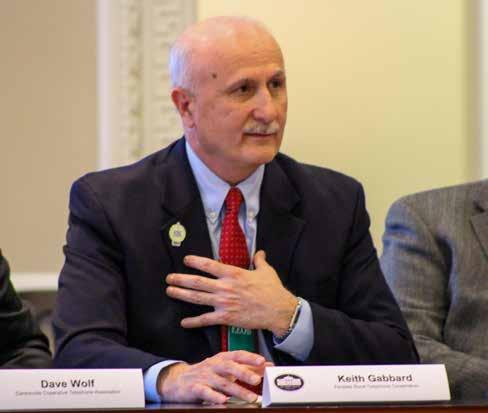
PRTC is built on commitment—to its members, neighbors and the community. Keith embodies that spirit of service. It is a calling that was instilled in him by his faith in God and by his parents. And one echoed by his baseball hero, Roberto Clemente, in a sentiment Keith often quotes. “If you have a chance to help others and fail to do so, you’re wasting your time on this Earth.”
Looking back over five decades, Keith recalls some of the highlights and some of the lessons learned. He remembers answering those early phone calls and fielding the complaints about party lines. He thought if only PRTC could get each customer on a private line, that would be the ultimate accomplishment. He couldn’t imagine the changes still to come.
One of those changes, Appalachian Wireless, started a few years before Keith became CEO. Known locally as App Wireless, the operation, which launched in 1990s, is a unique partnership among five Eastern Kentucky telecommunications companies to bring mobile service to the area. “At the time, we didn’t know the impact it would have," Keith says. “Now we see that mobile service is a very important part of PRTC.”

Keith took on the CEO mantle as the landscape of the telecommunications industry was shifting dramatically. The passage of the Telecommunications Act of 1996 allowed more competition and reduced regulations. The once-daunting goal of getting everyone on a private phone line was soon eclipsed by the possibilities on the horizon.
PRTC began expanding its offerings. It became clear internet service was more than a passing fad. In 2004, PRTC purchased a local TV cable company and later bought two more. But, as Keith recalls, the biggest pivotal moment came in 2008, when PRTC began switching from aging copper lines to an all-fiber network, a decision funded in large part by a $25 million federal loan/grant.
“It was a six-year project. We finished it in 2014,” Keith says. The final price tag reached $50 million to cover 1,000 miles. “We completed our whole service area. Every home and business had fiber, one of the first in the state—if not the country—to have countywide fiber.”
Today, PRTC is nearing 10,000 broadband customers in Jackson and Owsley counties, as well as expansion areas in six adjoining counties.
Major media outlets, like The New Yorker, began to call for interviews, wanting to learn more about this small, rural area in Eastern Kentucky where the broadband fiber speeds were better than those found in large cities. Keith soon found himself in an unfamiliar spotlight. “They all called us, and I just learned never say no to an interview,” he says.
Looking back, Keith realizes just how big that 2008 decision was. “When we built it, we probably didn’t realize how important it would be,” he says. “I’d like to tell you I was that smart, but, I mean, we just thought it would be a better network for whatever came down the road, whether it was TV or internet or voice or whatever.”
That importance came rushing to the surface when the country was faced with the COVID-19 pandemic in early 2020. Having a

100% fiber network, paired with a strategic training partnership, allowed many people to be hired for work-from-home jobs that required high-speed, reliable connections. It also provided an easier transition for schools as they moved to remote learning.
Under Keith’s leadership, PRTC was the first in the nation to offer a Virtual Living Room for veterans, providing crucial access to the Veterans Administration hospital through a telehealth connection at the local library. Because of its fiber network, PRTC also secured one of the first Smart Rural Community designations from NTCA–The Rural Broadband Association. That designation led to three White House invitations for Keith.
Over the decades, Keith has made professional connections just as powerful as the fiber ones. He served on the Eastern Kentucky Workforce Innovation Board, the Foundation for Rural Service Board of Directors, the Foundation for Appalachian Kentucky, Daniel Boone Community Action Agency, Southeast Kentucky Economic Development and the Kentucky Rural Broadband Association. At one point or another in his career, Keith has served as president for most of these groups. He also serves on many local boards.
Fifty years into his career at PRTC, Keith certainly hasn’t wasted his time on this Earth. He remains devoted to his faith, his family, his community and to the service mission of PRTC. “The goal is still the same,” he says. “Make our communities a better place to work and live in whatever way we can.”
Thank you, Keith.
Story by SARA DIAMOND PATTERSON
Can you see a wiener dog and not smile? Most people can’t. With their extra-long bodies, wide smiles and constantly wagging tails, dachshunds just look silly. And they know it.
“Dachshunds make people smile because they’re tiny dogs with huge personalities,” says Debbie Kiker, dachshund enthusiast and director of Alabama’s Hueytown Chamber of Commerce. “Watching them waddle and wiggle, it’s impossible not to laugh—it’s pure happiness on four short legs.”
Developed in Germany to hunt badgers, dachshunds’ powerful, slinky build, strong jaws and distinctively loud voices were perfect for that calling. Some 300 years later, they’re more adept at burrowing into the covers and hunting down snacks. Today they’re seeing success in a different sort of sport.
When you think of dachshunds, speed likely doesn’t come to mind, but they can run up to 15-20 mph for very short distances. Some folks in Australia noticed this, and in the 1970s began what evolved into today’s dachshund racing.
More chaos than competition, there’s no official standard, but most racecourses are 50-100 yards long. Each dog has a two-person entourage. One handler waits at the starting line with a pup to send flying to the other, who motivates the racer with a squeaky toy, snack or just love at the finish line.
The Hueytown Chamber brings the doxies to town as part of PAW Palooza, a full day celebrating all things canine.
“What I love best about the weenie dog races is the smiles, and it brings the community together,” Debbie says. “The dogs steal the show, and it’s all just good, lighthearted fun. Just being involved is the fun of it all, seeing the dogs run, or wander, and the crowd cheering. Everyone is just enjoying the moment. Some dogs sprint, and some stop and sniff. Every run is a surprise.”
The chamber is considering moving PAW Palooza to April, as September can be a little steamy for tiny-legged racers so close to the ground. For updates, find PAW Palooza & Wiener Dog Race on Facebook.


National Dachshund Day is June 21, the longest day of the year.
Napoleon Bonaparte was very fond of his dachshunds. The last four he owned are reportedly buried with him in the four pedestals holding his sarcophagus at Les Invalides in Paris.
John Wayne’s dachshund, Blackie, alerted his family to a house fire in 1958 in Encino, California, while the actor was filming on location in Japan.
“Being the owner of dachshunds, to me a book on dog discipline becomes a volume of inspired humor. Every sentence is a riot.”
—“Charlotte’s Web” author E.B. White
“Nothing will turn a man’s home into a castle more quickly and effectively than a dachshund.”
—Queen Victoria
Crusoe
A miniature black and tan from Canada, Crusoe enjoys internet fame for his pet blog, New York Times’ bestselling book and YouTube videos in homemade costumes. More than 3 million people follow him and his brother, Oakley, on Facebook.
Slinky Dog from ‘Toy Story’
Part metal, part dog, all heart, Slinky Dog is quite possibly the most famous doxie of all, introducing generations of children to the breed.
Lump
Pablo Picasso was, by all accounts, smitten with his dachshund, Lump, and incorporated the pup into many of his later pieces.
Story by LAURA McGILL
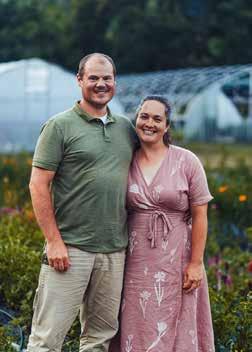
The Bowlings—Ronnie, Gloria, their son, Will, and his wife, Maggie—are deeply rooted in Clay County. Their two Oneida farms are separated by a short drive and connected by a focus on responsible livestock management and innovative vegetable production.
In the mid-1800s Gloria’s great-grandfather, Squire Hensley, moved his family to a farmstead in Clay County. The family’s daughters eventually inherited portions of the land. All were given the same directive—take care of the old homeplace.
Over time, the land passed down through generations of heirs, becoming fragmented. In 2004, Gloria and Ronnie brought two pieces back together by purchasing 90 acres adjoining her 30-acre parcel to establish their Old Homeplace Farm. In 2013, Will bought another 55 acres of the original Hensley land to form the Old Homeplace Farm No. 2, also known as River Bend Farm.
What began as a traditional cattle operation, Old Homeplace Farm evolved as the family implemented multispecies and rotational grazing practices. Another change came when they shifted from selling only to stockyards to selling beef, lamb and pork directly to individuals. When Maggie joined the family and the farm in 2014, she brought her love of vegetables to the mix.
Today, Old Homeplace Farm’s operations are guided by a mission to safeguard the land. “As stewards of the land, we try to protect the natural resources, hoping our farming neighbors do the same,” Ronnie says.
Gloria sees that mission as motivation. “What keeps us going is the effort to improve farming practices, enabling us to raise healthy livestock and provide healthy food for consumption,” she says.
“Managing a piece of land is a long-term project,” Will says. “I have a vision for what I think the property could be, and I enjoy making decisions that move us closer to that goal.”
The Bowling family invests time and effort into the practice of silvopasture, the deliberate integration of trees and grazing livestock on the same land. Other practices include rotational grazing of grass-fed cows and sheep and the creative use of goats for land management. The overall goal is to develop symbiotic relationships to benefit the entire ecosystem.
Will believes in raising and finishing cows and sheep on pasture. “For us as producers, one of the huge benefits is that all ruminants are designed to live on green vegetation,” he says. “Ruminants can digest grain, but they don’t need it. This is important because farming in the mountains often means you’re
going to be farming on the mountains. Most of our hills are too steep to allow row crop agriculture, but we can grow good grass on these areas.”
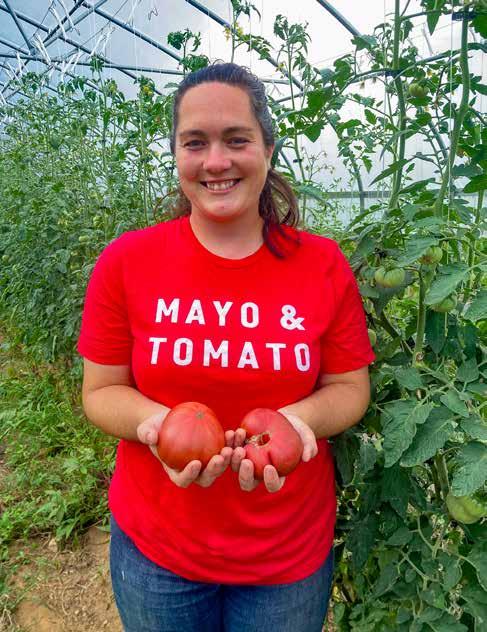
Maggie’s love of gardening comes from growing up on a certified organic vegetable farm. That love led her to work at Pine Mountain Settlement School in Harlan County as the Grow Appalachia Project coordinator before she joined the Bowling family for full-time farming. Today she is Old Homeplace Farm’s resident tomato tamer and bean boss.
Sharing what keeps her going even on the tough days of farming, Maggie says, “Constantly solving problems can be frustrating, but learning new farming techniques is also exciting. There are a million ways to farm, and it is fun to try new methods.”
Maggie’s methods are hard to miss when you see the four high tunnels, each measuring 30-by-96 feet. Those are paired with 2 acres of uncovered planting beds. It is a relatively small footprint for the volume of vegetables and fruits she grows. “We are currently raising about 800 to 1,000 tomato plants per year,” she says. “We have 2,500 strawberry plants in the ground for May harvest and 3,000 garlic plants for June. Last year we harvested about 1,000 pounds of heirloom beans.”
The beans are a favorite of Maggie’s for their unique history. “Eastern Kentucky has a wealth of heirloom bean varieties, with many of them being grown in very specific pockets where families have been saving them,” she says. “In home gardens 30 miles apart, people are most likely growing different varieties of beans that are specific to each area.”
Each summer, from mid-May through the end of September, Maggie coordinates the farm’s community supported agriculture, or CSA, subscriptions. CSA is how Old Homeplace Farm makes its ever-changing harvest available for purchase. On the farm’s website, customers can sign up for a weekly CSA box, choosing from small, medium or large sizes. The selection changes each week based on what is in season.

Baker Cemetery Road, Oneida 606-391-8446
oldhomeplacefarm.com
Follow Old Homeplace Farm on Facebook.
Maggie began offering vegetables for a la carte purchase on the farm’s website in 2014. Talking to her early customers, she learned they wanted something more. “The comment that came up the most was that our most loyal customers just wanted a box of veggies to show up each week, and they did not care what was in it,” she says. “They just couldn’t remember to get on the online store and order each week.”
The CSA model allows Maggie to have more direct contact with her neighbors. “People in the community often start conversations with me about gardening, preserving food or sharing recipes,” she says. “I love how farming connects me to other people in my community and to the land.”
TOP RIGHT: The farm has 2,500 strawberry plants for May harvest.
BELOW: Old Homeplace Farm practices rotational grazing for its grass-fed sheep and cows.




Brussels sprouts, kale and other greens, peas, mushrooms or pickled beets. There’s a long list of foods that grossed us out as kids. Sprouts were squishy. Greens were bitter. Peas were pushed to the side. Pickled beets were vinegary, and mushrooms were just strangely mushy.
So why is it that as we age, some of us grow to love those foods?
“As infants and children, we are born preferring sweet tastes,” says registered dietitian Danielle Townsend. “As we age, our other taste senses develop, which opens up our palette to foods that we didn’t like before.”
Here are some ideas using those once-hated ingredients in dishes that just might become part of your regular dinner rotation.

Food Editor Anne P. Braly is a native of Chattanooga, Tennessee.
1 tablespoon olive oil
4 boneless skinless chicken breasts
Sea salt, to taste
Ground black pepper, to taste
1 teaspoon oregano
3 tablespoons butter
1 cup cherry tomatoes, halved
1 teaspoon garlic powder
3 cups baby spinach
1/2 cup heavy cream
1/4 cup Parmesan cheese, grated Lemon wedges, for serving
Heat oil in a skillet over medium heat. Add chicken and season with salt, pepper and oregano. Cook until browned on both sides, about 8 minutes per side. Remove from the skillet and set aside.
In the same skillet over medium heat, melt butter. Add cherry tomatoes and season with salt, pepper and garlic powder. Cook until the tomatoes begin to soften, then add the spinach and cook until it starts to wilt.
Stir in heavy cream and Parmesan and bring mixture to a simmer. Reduce heat to low and simmer until sauce is slightly reduced, about 3 minutes. Return chicken to skillet and cook until heated through, 5 to 7 minutes. Serve with lemon wedges.


2 16-ounce packages frozen peas
6 ounces smoke-flavored almonds, finely chopped
1/2 sweet onion or more to taste, finely chopped 1/2 cup mayonnaise or reduced-fat mayonnaise 1/2 cup sour cream or light sour cream
Ground black pepper, to taste
1/2-1 cup cheddar cheese, shredded
Place frozen peas in a colander and rinse under cold water until thawed. Drain and transfer to a large bowl. Add almonds and onions. Mix well. Fold mayonnaise, sour cream and black pepper into the pea mixture until evenly coated. Transfer to a serving container and top with shredded cheese. Cover and refrigerate until serving.
1 pound beets, scrubbed with stems removed
1 teaspoon powdered gelatin
2 tablespoons water
2 cups heavy cream, divided
3 tablespoons sugar
2 teaspoons lemon juice
CANDIED WALNUTS
1/2 cup walnuts
1/4 cup maple syrup
Preheat oven to 400 F.
Wrap each beet loosely in foil and roast on a baking sheet for 1 hour or until tender. Remove beets from the oven and set aside to cool.
Stir the gelatin and water together in a small bowl. Let soak for 5 minutes.
Peel and discard the beet skins and place flesh in a blender along with 1 cup heavy cream. Puree until smooth.
Combine the remaining cream with the sugar and lemon juice in a large pot over medium heat. Warm until the cream becomes hot to the touch, but not boiling. Add the softened gelatin, remove from heat and stir until dissolved. Add the pureed beet mixture to the pot and stir until combined. Pour into a desired vessel, such as a pie plate. Let chill completely before serving, at least 4 hours.

slices bacon tablespoons butter small shallots, finely chopped pounds Brussels sprouts, halved Kosher salt
Cayenne pepper, to taste cup heavy cream cup Swiss or Gouda cheese, shredded cup sharp cheddar cheese, shredded
Preheat oven to 375 F.
Cook bacon in a large ovenproof skillet over medium heat, stirring occasionally, until crispy, about 8 minutes. Using a slotted spoon,
For the walnuts: Combine the walnuts and syrup in a saute pan over medium heat and cook the nuts, stirring constantly, until the sugar dries and crystallizes, about 5 minutes. Set the nuts aside to cool.
To serve, spoon the panna cotta into individual serving dishes and garnish with candied walnuts.

transfer to a paper towel-lined plate and let cool slightly. Discard bacon fat.
Return the skillet to medium heat and melt butter. Add shallots and Brussels sprouts. Season with salt and cayenne. Cook, stirring occasionally, until tender, about 10 minutes.
Meanwhile, transfer bacon to a cutting board and finely chop.
Remove skillet from heat and drizzle with cream. Top with Swiss cheese, cheddar and bacon. Bake the casserole until the cheese is bubbly, 12 to 15 minutes.
NOTE: If the cheese isn’t nicely browned, broil, watching closely, for about 1 minute.