SEPTEMBER/OCTOBER 2026
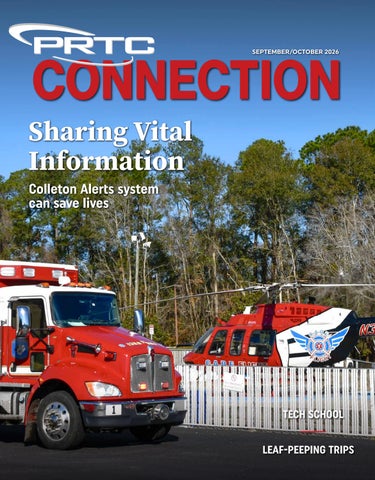
Sharing Vital Information Colleton Alerts system can save lives
TECH SCHOOL LEAF-PEEPING TRIPS PRTC
1
Rural Connections By Mike Romano, CEO NTCA–The Rural Broadband Association
America at 250: Building Connections That Last
E
very community has a story to tell, and at NTCA, we’re honored to help our members tell theirs. As we celebrate America’s 250th anniversary, it’s worth remembering that much of our nation’s story started in rural America, and the heartbeat of our great country can often be heard most loudly in the spaces between the biggest cities. You can see this spirit clearly in small towns and rural communities where generations of Americans have come together to build the infrastructure, roads, bridges, and yes, communications networks, that provide a reliable foundation for civic engagement, commerce and connection. For generations, local providers stepped forward to make sure rural America stayed connected with the rest of the country and the world when others wouldn’t. They invested in the infrastructure their communities needed to grow and thrive. As technology evolved, so did those networks. Today, our nation’s small, community-based broadband providers are delivering robust and reliable high-speed broadband that powers education, healthcare, agriculture, public safety, small businesses and countless opportunities. Throughout that journey, NTCA has been proud to advocate for the policies that make those investments possible—and help them provide connections that last for generations. As we think about what will help America thrive from coast to coast, far beyond the celebration of its 250th birthday, those will matter even more. Together, we’ll continue building connections that will take us into the next 250 years.
2
Protect the Keys, Not the House
W
hen it comes to cybersecurity, do you become overwhelmed by the idea of protecting dozens of accounts? Online banking, shopping sites, streaming services, social media and more. It can seem daunting. Try thinking about protecting the keys, not the whole house. Just a handful of accounts unlocks nearly everything else in your digital life. If criminals gain access to one of these “master keys,” they may be able to reset passwords, impersonate you or access sensitive information. The most important key is your email account. It’s where password reset links are sent, making it the gateway to many of your other accounts. Your mobile phone number is another key, since it’s often used to verify your identity. If you use a password manager, it deserves extra protection because it holds the credentials to many of your accounts. Finally, your financial accounts should always have the strongest safeguards available. Start by creating a strong, unique password for each of these accounts and turning on multifactor authentication whenever it’s offered. Then make sure your phone and computer stay updated with the latest security patches. You don’t have to secure every digital door at once. Protect the few keys that unlock everything else, and you’ve taken one of the biggest steps toward keeping your online life secure.
Adobe Stock image by sutthinon602
Sell More, Stress Less
Online alternatives to the Saturday yard sale Story by LAURA McGILL
W
ho looks forward to spending days planning a yard sale only to get up early on a Saturday morning to deal with the guy who arrives early to nose around the garage while you get everything set up or the lady determined to haggle over every price? All that hassle, and you’ll still likely wind up with less money in your pocket than you hoped. Step away from those headaches with convenient online options. You’ll be in control, and you can spend your Saturday mornings sleeping in.
WHAT TO SELL If you are trying to sell collectibles such as vintage records, trading cards and memorabilia, eBay and Etsy are good choices. To sell your grandmother’s china, crystal and silverware, start with Replacements Ltd., where you can search by pattern. There are even sites specializing in items like coins and currency or specific brands. To sell designer clothes and accessories, explore options like The RealReal, Poshmark and ThredUp. Seller beware, though, as these sites often charge high commission rates and have restrictions on which brands they will buy. For the option of shipping or local pickup, look to Facebook Marketplace, Craigslist or local buy/sell groups.
DETAILS MATTER Think about all the possible questions someone could ask about
your item. Take photos from multiple angles using good lighting. Consider taking a video as well, especially if it helps show the item is in working order. Write a detailed description including all relevant information such as dimensions, weight, brand, color, size and condition. State the terms in the listing, such as price, payment methods accepted and whether it will be sold on a first-come, first-served basis. When considering what price to ask, research comparable items. Know what the item costs to buy new, and leave room for negotiation.
SELL SAFELY Selling online isn’t completely free of hassles. Be prepared for lowball offers and messages from people who never respond to your reply. Don’t be surprised if someone says they want the item but never shows up or cancels at the last minute. Be aware of fake payment emails or overpayment scams. Ignore suspicious messages. Choose a safe, public location to meet. Your town may even have designated areas such as police station parking lots. If the buyer is coming to your house, be cautious. Choose a safe time of day. Do not allow someone into your home. Instead, have the item sitting on your front porch or in the driveway. If you are alone, tell a neighbor what you are doing, and ask them to keep an eye on you when the buyer is there.
November/December 2025 | 3
FROM THE CEO
Co-ops Are the Perfect Blend
SEPTEMBER/OCTOBER 2026
VOL. 16, NO. 5
PRTC Connection is a bimonthly magazine published by PRTC, © 2026. It is distributed without charge to all member/owners of the cooperative.
Celebrating National Cooperative Month
E
ach October, we pause to highlight the benefits of cooperative membership, and this year we’re thinking about the warm, inviting nature of co-ops, just like a good cup of coffee. Our shared values, our principles, our commitment and our members all make PRTC the perfect blend. Community is at the heart of everything co-ops do. We believe in democracy, people over profits and high-quality service for you and your neighbors. We believe in the people who live and work here and believe they should have the power to make decisions that affect them. We believe in cooperation among other co-ops to help each other get through the hard times and cheer each other on during the good times. Our principles are what make us strong and help our community flourish. Belonging to a co-op is like choosing to invest in a local roaster, JASON DANDRIDGE Chief Executive Officer instead of a national chain. Both are great, but they’re different— and supporting local is the most direct way to reinvest in our own community. Go ahead, grab a fresh cup of your favorite brew and read about the perks of belonging to a co-op. Open Membership: Everyone is welcome. All you need is a desire to join, and you’re in. Democratic Control: You have a direct say in the decision-making process. Member Participation: When you invest in us, the rewards return to the community by improving service, backing local charities and returning excess funds to you. Autonomy: Co-ops are strong, independent and self-reliant. Education: Co-ops empower members with knowledge and understanding. Cooperation: Different strengths and flavors come together to make something greater than the sum of its parts. Community Concern: Co-ops are grounded in doing good and supporting the neighborhood. Palmetto Rural Telephone Cooperative strives to live these principles every day, not just in October. Together with our members, we make the perfect blend. Thanks for your continued trust and partnership.
is a member-owned cooperative providing a complete telecommunications solution (internet, video, voice, wireless and security) to the homes and businesses in the Lowcountry of South Carolina.
Send address corrections to: PRTC P.O. Drawer 1577 Walterboro, SC 29488 Telephone: 843-538-2020 prtc.us
For information about the content included in PRTC Connection, please contact Sean Gruber, Public Relations and Marketing Coordinator, at 843-538-9330.
BOARD OF DIRECTORS District 1—Brian Ackerman District 2—Cynthia “Cindy” Colson District 3—Kenny Blakeney District 4—Liza Catterton District 5—Mark Williams District 6—Travis Avant District 7—Heath Griffith
Produced for PRTC by:
On the Cover: Colleton County FireRescue uses Colleton Alerts to send vital and potentially lifesaving information to residents during emergencies. See story Page 12.
2 4
Photo courtesy of Colleton County Fire-Rescue
PRTC
PRTC NEWS
HAPPY LABOR DAY! PRTC offices will be closed Monday, Sept. 7, for the holiday.
FIBER GRANT AND CONSTRUCTION UPDATE ARPA 3.0 Grant Closeout documentation is being completed for all grant project areas. PalmettoLink—Colleton River Subdivision Construction is complete in three service areas, and customer installations are underway. Construction in the final service area is nearing completion.
EMPLOYEE SPOTLIGHT Meet Josh Landry our first kid, Ollie, eight months ago, and we have two dogs, Fonzie and Lola.
Photo courtesy of PRTC
Q: What do you like to do in your spare time? A: We are still fairly new to Walterboro. I like to go golfing when I can. We like to take walks on the nature trails and downtown and enjoy going to Charleston, too.
Josh Landry, cybersecurity analyst
Q: What is your title with PRTC, and how would you explain your responsibilities? A: As a cybersecurity analyst, I help protect the organization’s technology infrastructure and strengthen its overall cybersecurity posture. My role focuses on monitoring security events, investigating potential threats, coordinating incident response efforts and identifying opportunities to improve security across the organization.
and helping ensure PRTC is prepared to address today’s evolving cyberthreats.
I also work with endpoint, network, identity and email security while supporting vulnerability management
Q: Tell us about your family. A: My wife, Hannah Landry, and I have been together for 13 years. We just had
PRTC
Q: When did you start working at PRTC? A: June 10, 2026. Q: What do you enjoy about your current position? A: There is a new learning opportunity each day and something to accomplish to help improve PRTC’s security and business.
Q: How has broadband access helped you or your family? A: My wife works from home, and we have been PRTC customers since we moved here. The solid connection helps her work remotely with no problems ever. Q: Since PRTC is a tech company, are there any apps that you use often or that help with your personal daily routine? A: I use Waze all the time and AllTrails when we go hiking. ClickUp helps with project management, and I prefer Claude of the AI options. Q: What are your favorite movies, modern or classic series? A: I love watching movies and have a wide array of styles I like. “Interstellar” and “Oppenheimer” are some of the more recent greats. 5 3
Autumn Advent TRAVEL TRAVEL
Hit the road for fabulous fall foliage
M
aple, aspen, birch, oak, hickory, dogwood and gum trees are known for vivid fall colors, ranging from bright reds and oranges to golden yellows and browns. Those vibrant colors are always present. They just need a little seasonal help getting to the surface. As temperatures drop and sunny days begin to shorten, trees stop producing chlorophyll, the substance that makes leaves
Know Your Colors YELLOW—Aspen, beech, birch, cottonwood, elm, ginkgo, hickory, sugar maple, tulip poplar, sassafras, sycamore ORANGE—Bigtooth maple, Rocky Mountain maple, sugar maple, sweetgum RED—Black gum, cypress, dogwood, oak, red maple, sourwood, sumac
green. As it fades, the brilliant red, orange and yellow pigments obscured by the green begin to shine through. Cool, crisp days and frost-free nights produce the sharpest fall colors. Drought conditions in early fall can trigger a premature chlorophyll shutdown, causing leaves to wither and fall without reaching their full color potential. And too much rain or an early frost can dull the leaves’ colors.
Where to Look Our expansive and ecologically diverse region offers ample leaf-peeping options beginning around mid-September and peaking in mid-October. Whether you’re hiking forested ridgelines, driving scenic byways, floating a river or camping beneath golden canopies, unforgettable fall colors await you. Chances are you can find plenty of color right in your own backyard. For fall excursions farther afield, consider these options: • Daniel Boone National Forest, Kentucky: The Red River Gorge and Natural Bridge State Resort Park feature brilliant foliage from maple, beech and sycamore trees with sandstone arches and cliffs adding to the drama.
Adobe Stock AI Image by Nico Vincentini
• Pisgah and Nantahala National Forests, North Carolina: The Blue Ridge Parkway, Craggy Gardens and Linville Gorge showcase fiery displays of sugar maples, red maples and hickories, framed by sweeping mountain views.
66
• Chattahoochee-Oconee National Forests, Georgia: Leaf peepers flock to Brasstown Bald, Tallulah Gorge and Anna Ruby Falls to see the golden hickories, scarlet oaks and tulip poplars.
tures Await
Adobe Sto
ck ima
ge by Ir
ina Mik
hailich
enko
Adobe Stoc
k image by
standret
Don’t Leaf Home Without a Plan No matter the season’s conditions, finding fall colors by car, boat or on foot is an autumn joy. Planning a leaf-peeping excursion has never been easier. Founded in 1875, American Forests is the nation’s oldest nonprofit conservation organization. Its fall foliage map offers a clear look at where leaves are peaking throughout the United States with tips and suggestions. Visit americanforests.org/fall-foliage-map. With the tried-and-true The Old Farmer’s Almanac, both the yellow-bound classic booklet and online version, arboreal enthusiasts can easily find the best spots near and far. The website features an animated map showing the progression and historical presence of fall colors. The print version includes tables of expected peak dates, regional weather trends and travel features. Visit almanac.com. Get tips from the folks at Find Fall, “the best place for fall foliage information, destinations, adventures and activities for an autumn you’ll never forget.” Visit findfall.com.
77
Hands on the CTE programs prepare teens for careers Story by MELANIE JONES
C
still in high school. When he completed it, the company paid his tuition for technical college and eventually hired him full time. “When I graduated college, he was already making more than I was when I was on my first job,” Anthony says. “It took me several years—I’m talking 10, 15, 20 years—before I caught up to him.” Jessica Williams, who recently retired as superintendent of the Colleton County School District, offers another example of success. Her daughter studied health sciences in high school and worked as a certified nursing assistant at Veterans Victory House before graduating. After completing internships at a local hospital, she got her nursing license before going on to earn her bachelor’s degree in nursing. “I truly believe her career and technical courses contributed to her success,” Jessica says. While there may have been a time when college-track students looked down on their tech-ed peers, that is no longer the
case. “Students see the value in the skills that are offered, especially students who have no intention of going further in their education and desire to go straight into the workforce,” Jessica says. “There is a big push for those types of skills.”
‘PIPELINE FOR SUCCESS’ Thunderbolt Career and Technology Center has a partnership with SC Works, an organization that helps employers screen, match, hire, train and retain workers. SC Works has an office in the district’s administrative building to help students with their job searches. SC Works also is open to anyone in the county looking for work. That isn’t the school’s only partnership. It also works with the Technical College of the Lowcountry, located right next door, to streamline the move to college. “I look at it as a pipeline for success,” Anthony says.
Photo courtesy of Colleton County School District
areer and technical education, or CTE, students don’t just study their subjects. They literally wrap their hands around them. Young people preparing for careers in healthcare practice take patients’ vitals. Sparks fly as welding students practice their skills, and mouth-watering aromas fill the air as budding chefs perfect tasty dishes. By the time they graduate high school— and in some cases even before—students can be employed in their chosen fields. They can earn certifications and start working without a four-year degree—or the student loan debt that so often comes with it. Anthony Kubik, director of Colleton County’s Thunderbolt Career and Technology Center, studied accounting at the school and went on to earn a four-year degree, while his younger brother studied to be a machinist. Anthony’s brother started an apprenticeship with Bosch while
Culinary arts students in Colleton County’s career and technical program practice their skills by serving their dishes to a group of diners.
8
Hampton County School District’s automotive students get a head start on their careers.
PRTC
GROWING STRENGTHS
so many facilities coming and growing in our area that need workers, and they know that we have the programs here at the high school that are preparing the students to be good manufacturing workers,” she says. Internet service from Palmetto Rural Telephone Cooperative is a vital part of the CTE programs in both counties because most students take their certification tests online. That’s what allows a student in a health sciences class to graduate certified as either a CNA or as a pharmacy technician.
In Hampton County, Director of Career and Technical Education Jeriah Greene’s program also lays the groundwork for success. About 500 to 600 students a year take Hampton County’s CTE courses, with about 100 of them set to graduate in 2027. Jeriah credits the success of the CTE program, in part, to the fact that students don’t have to sit in a classroom all day. “They like being able to get up and move around and have that hands-on component,” she says. Because students enjoy the classwork, CTE students tend to have fewer disciplinary problems, Erin Long, director of communications for Hampton County schools, says. Demand for skilled workers is high. Many employees in fields CTE students are studying are aging out of the workforce, so employers are pushing schools to prepare the next generation. Erin says industry leaders now come to the school to recruit new hires. “We have
EXPANDING HORIZONS
Photo courtesy of Hampton County School District
Both schools have seen changes this year. Colleton County is adding a law
RIGHT: Health science classes are offered through the Hampton County School District’s career and tech ed center. PRTC
Photo courtesy of Hampton County School District
e Future
enforcement program in partnership with the school system, the city and the county. “I’m very excited about that program,” Jessica says. “There’s a shortage of law enforcement officers, just like we’ve had shortages of teachers in the entire country.” Aretha Bright teaches law enforcement classes. “She’s bringing with her military experience. She has also worked with the Colleton County Sheriff’s Department. She’s been a student resource officer in the past, and she has been a teacher already,” Jessica says. Hampton County’s CTE program moved into a new building this year. “It’s a brand-new facility,” Jeriah says, “so all of our programs are getting an upgrade.” The school system bought new equipment, and the program now offers three new pathways—barbering, welding and pre-engineering.
9
Join the Adobe Stock AI image by makmur
Circle
Bluegrass music grows far beyond its Appalachian roots Story by DREW WOOLLEY
F
or many bluegrass musicians, the genre is steeped in tradition. Born with an instrument in their hand, they come of age listening to Bill Monroe, the Osborne Brothers and Jim and Jesse, learning the patterns of old-time folk music before eventually adding their own voices to the mix. The members of The Last Revel took a different path. Hailing from Minnesota and Wisconsin, far north of bluegrass music’s Appalachian roots, banjo player Ryan Acker, fiddler Vinnie Donatelle, guitarist Lee Henke and bass player Ryan Krauss came to the genre a bit later in life. “My first introduction to bluegrass was probably in college,” Ryan Acker says. “I was really drawn to it as the energetic side of the folk singer-songwriter music that I was already pretty fond of. It just seemed like a really great outlet for reckless-abandon youth.” Formed in Minneapolis in 2011, the band started out playing
music based more in blues-rock style, but quickly found the people they met in that space were not as welcoming as they hoped. Around that time, Lee remembers seeing bluegrass-influenced bands like Trampled by Turtles and Pert Near Sandstone and thinking they looked like they were having a pretty good time. “That was the moment when we were like, ‘Instead of trying to turn an acoustic song into something else, what if we just kept it acoustic?’” he says. “If it weren’t for all those bands in Minnesota kind of showing us the ropes, I don’t know if I would have ever gotten this steeped in it. But the genre itself has just been so heartwarming and embracing.”
Alabama-based band Mountain Grass Unit performs at the World of Bluegrass.
Sierra Hull joins The Wood Brothers, from left, Chris Wood, Oliver Wood and Jano Rix, on the Bluegrass Live! stage.
TIME TO SHOW OUT
Photo courtesy of Anh Bao Tran
Photo courtesy of Madison Thorn
As someone who grew up in Kentucky’s bluegrass tradition, Ken White finds the community to be as defining a feature as the music itself. A multi-instrumentalist who has played in
10
and the bluegrass aspect around it is almost secondary,” Ryan Acker says. “The music aspect is more like the vehicle for the song. And I think that is different from other subgenres around the country.”
BRIDGING THE GAP That distinction has, at times, left bands like The Last Revel on the fringes of the traditional bluegrass scene. Early in the band’s run, as the members incorporated their blues and indie rock influences alongside traditional bluegrass instrumentation, figuring out where they fit into the genre could be a source of frustration. “It used to be something we were worried about, and now we kind of pride ourselves on being a little different,” Lee says. “I have so much respect for traditional bluegrass. But I also like that we can lean into our own thing. There are so many variations on bluegrass and roots music. Maybe we can show a different side of it.” As the band tours in support of its 2025 album “Gone for Good,” those moments have become some of Ryan’s favorites. Whether it’s working the merch booth or meeting people at shows, fans regularly tell him they had never listened to bluegrass music until they discovered The Last Revel. “We’re like the gateway to this whole other genre of music that people maybe didn’t think they would like,” he says. “And I think that’s great. With Spotify and other streaming services, it’s easy for genres to blend together. If we can be a tiny little bridge for somebody’s musical tastes, I really get a kick out of that.”
The members of The Last Revel came to bluegrass in a nontraditional way and enjoy sharing the genre with new audiences.
Photo courtesy of The Last Revel
several bands, Ken now serves as the executive director for the International Bluegrass Music Association. This October, he’ll be welcoming musicians from across the globe to the World of Bluegrass in Chattanooga, Tennessee. “The thing I love about bluegrass is that you don’t have to know anybody in the jam circle to walk up and start making music,” he says. “From beginners all the way up to the best professionals, people are welcoming. And that’s something that transcends language.” The same is true for the music itself. Ken compares being part of a traditional bluegrass band to a jazz ensemble, where each musician has mastery of his or her instrument. They all make an essential contribution to the group’s sound but also have moments to shine individually. “In a lot of old-time folk traditions, the instrumentalist will just play the melody or an accompaniment. They don’t really show out,” he says. “Part of what makes bluegrass unique is the emphasis on virtuosity. I think that resonates with a lot of people around the globe and is a big part of why bluegrass takes root in other cultures.” Here in the United States, musicians in different parts of the country have found ways to take that sound and make it their own. Texas bluegrass often incorporates elements of Western swing and contest fiddling that are popular in folk music throughout the Lone Star State. For the members of The Last Revel, the earnestness that comes through in their songwriting follows the tradition of other Midwestern bluegrass musicians. “It’s all very songwriter based. That’s kind of the main focus
11
Every Second Counts
Alert system keeps Colleton County residents informed when it matters most Story by LAZ DENES
W
hen emergencies strike across Colleton County’s 1,132 square miles, information can be just as important as the first responders racing to the scene. That’s why Colleton County Fire-Rescue is embracing a powerful new platform designed to put trusted, lifesaving information directly into residents’ hands. Launched in April, the new Colleton Alerts system replaces the county’s previous CodeRED platform and is a major step forward in emergency communications. Built on Motorola’s Rave platform and powered through Smart911 technology, the system allows residents to receive targeted alerts about severe weather, flooding, missing people, public safety incidents and other emergencies. For Colleton County Fire-Rescue Capt. K.C. Campbell, it all comes down to speed. “Time is always precious in these situations,” K.C. says. “We can send an alert out in a matter of seconds.”
notifications, Colleton Alerts can be geographically targeted to specific neighborhoods or communities. “If we wanted to alert the town of Lodge and not alert the town of Cottageville, we would just geotarget the town of Lodge,” K.C. says. “We can make it as small as one residence, or we can make it all 1,132 square miles.” That capability allows officials to provide relevant information to people who need it most. Residents near rivers can receive flood-related updates, while communities affected by road closures, public safety incidents or severe weather can receive alerts tailored specifically to their areas. The platform also offers significant advantages for families. Parents can add children and multiple devices to a single household profile, ensuring important
notifications reach everyone regardless of where they are. Most importantly, the system creates a trusted source of information during emergencies.
FOUNDATION FOR THE FUTURE The platform lays the groundwork for more advanced emergency response capabilities as they develop. As Colleton County upgrades its dispatch technology over the coming years, Smart911 profiles will eventually integrate directly with the 911 center. When a registered resident calls for help, dispatchers will be able to instantly view critical information that could help responders, especially if a caller is unable to speak or communicate clearly. The result is faster access to information for first responders to make informed decisions at critical moments. “Not everybody has a Facebook
Serving one of South Carolina’s largest counties geographically, Colleton County Fire-Rescue faces unique communications challenges. The department has 35 fire stations staffed by 91 career personnel and 150 volunteers who provide everything from fire suppression and emergency medical services to water rescues, hazardous materials response, technical rescue operations and emergency management. Keeping residents informed across such a large area is increasingly important, particularly during hurricane season and other weather-related emergencies. Unlike traditional countywide 12
Photos courtesy of Colleton County Fire-Rescue
TARGETED REACH
Colleton County Fire-Rescue Lt. Shane Weber enters a structure fire as the support person for the firefighter on the nozzle. PRTC
The Colleton Air Rescue Evacuation helicopter lands to evacuate victims of a simulated plane crash at Lowcountry Regional Airport during the South Carolina Emergency Management Division’s Full-Scale Exercise Week.
account. Not everybody watches the news,” K.C. says. “But, typically, the majority of our residents have a cellphone. Being able to push messages directly to them just makes it so much easier.” The technology extends beyond public alerts. Fire-Rescue uses the platform to communicate instantly with school administrators and key personnel throughout the county, allowing emergency notifications to reach dozens of decision-makers simultaneously during situations that may require lockdowns or other protective actions.
CONNECTIVITY IS PARAMOUNT The system’s effectiveness, however, depends on a critical piece of infrastructure running behind the scenes—reliable broadband connectivity. As the region’s telecommunications provider, Palmetto Rural Telephone Cooperative supplies the high-speed internet that supports the department’s alerting systems, data transfers, websites and social media outreach. “It’s obviously very dependent on reliable connectivity,” K.C. says. “Without the upgrades that PRTC has made, it would certainly hinder our operations. Without the root basis of the internet, nothing else really works.” That connection becomes especially important during major emergencies. Whether officials are issuing evacuation PRTC
guidance ahead of a hurricane, sharing flood recovery resources or providing critical public safety information, dependable internet service helps ensure those messages reach residents quickly and reliably. For K.C., the goal is to provide accurate information from a trusted source when people need it most.
“It’s a super powerful program,” he says. “We’re really excited about it.” As Colleton County continues to grow and technology evolves, the partnership between emergency responders and advanced communications infrastructure will help keep residents informed, connected and safer than ever.
PROVIDING DAILY PEACE OF MIND For many older adults living alone, a simple daily phone call can make all the difference. Through Colleton County Fire-Rescue’s R.U.O.K. program—short for Are You OK?— vulnerable residents receive an automated wellness check each morning. Participants simply answer the call and press 1 to confirm they are safe and well. If no response is received, the system immediately begins a follow-up process. “An actual live dispatcher from the 911 center will call,” Colleton County Fire-Rescue Capt. K.C. Campbell says. “If they don’t answer, we’ll send a deputy or city police officer for a welfare check.” The program can contact participants through landlines, cellphones or email, offering flexibility based on individual needs. The extent of personal information provided by program participants is entirely up to them, but it can prove invaluable during emergencies. Residents who rely on powered medical equipment, are prone to falls or have chronic medical conditions can choose to share those details, giving first responders additional context before they arrive.
13
SOUTHEAST KITCHENS
School-Night
Scrambles
Adobe Stock photo by hanahal, Ирина Гутыряк
Quick and satisfying recipes for family dinner time
F
or many families, September means fresh school supplies, the morning rush to get everyone to class on time and, of course, the dreaded question—what’s for dinner? Between carving out time to cook and navigating pantry options, finding the right answer isn’t always easy. These quick and easy recipes will keep everyone at the table happy, even on a busy school night. Photography by Mark Gilliland Food Styling by Rhonda Gilliland
14
CREAMY TOMATO TORTELLINI WITH SPINACH 1 20-ounce package refrigerated cheese tortellini 1 tablespoon olive oil 2 cloves garlic, minced 1 24-ounce jar marinara sauce ½ cup heavy cream 4 cups fresh spinach ¼ cup grated Parmesan cheese Salt and pepper to taste Cook the tortellini according to the package directions. Meanwhile, heat the olive oil in a large skillet over medium heat and cook the garlic for about 30 seconds until fragrant. Stir in the marinara sauce and heavy cream and bring to a gentle simmer. Add the spinach and cook until wilted. Drain the tortellini and add it to the skillet, tossing until coated in the sauce. Stir in the Parmesan cheese, season with salt and pepper to taste. Serve immediately. This recipe offers a nice contrast to the other dishes in the lineup—it’s meatless, family-friendly and has a rich, comforting flavor while still taking less than 30 minutes from start to finish.
TERIYAKI MEATBALL BOWLS 1 24- to 26-ounce package frozen fully cooked meatballs 1 cup teriyaki sauce 3 cups broccoli florets 2 cups cooked white or brown rice 2 green onions, sliced 1 tablespoon sesame seeds (optional) Prepare the rice according to package directions if it is not already cooked. Meanwhile, place the frozen meatballs in a large skillet over medium heat with ¼ cup water. Cover and cook for 8 to 10 minutes, stirring occasionally, until heated through. Add the teriyaki sauce and simmer for 3 to 5 minutes, stirring until the meatballs are evenly coated and the sauce has thickened slightly. Steam the broccoli until tender. Divide the rice among serving bowls and top with the teriyaki meatballs and broccoli. Garnish with sliced green onions and sesame seeds, if desired. Serve immediately.
HONEY MUSTARD CHICKEN WITH ROASTED POTATOES AND CARROTS 4 boneless chicken thighs 1 pound baby potatoes, halved 4 medium carrots, sliced 2 tablespoons Dijon mustard 1 tablespoon honey 2 tablespoons olive oil 1 teaspoon garlic powder Salt and pepper to taste Preheat the oven to 425 F. In a small bowl, whisk together
the Dijon mustard and honey. Toss the potatoes and carrots with olive oil, garlic powder, salt and pepper on a sheet pan. Arrange the chicken thighs among the vegetables and brush them with the honey mustard mixture. Roast for about 30 minutes or until the chicken reaches 165 F and the vegetables are tender. Serve immediately.
CHEESY BLACK BEAN AND RICE SKILLET Heat the olive oil in a large 1 tablespoon olive oil 1 small onion, diced 1 bell pepper, diced 2 cans black beans, drained and rinsed 2 cups cooked rice 1 cup salsa 1 cup shredded cheddar cheese 1 teaspoon chili powder Salt and pepper to taste
skillet over medium heat and cook the onion and bell pepper until softened, about 5 minutes. Stir in the black beans, rice, salsa, chili powder, salt and pepper. Cook for several minutes until heated through. Sprinkle the cheese over the top, cover the skillet and cook until the cheese is melted. Serve on its own or with tortilla chips. 15
PRSRT STD U.S. POSTAGE PAID HILLSBORO, OR PERMIT No. 66
292 Robertson Blvd. Walterboro, SC 29488
Now That’s a Treat! PRTC fiber is like full-sized candy bars in your trick-or-treat bag.
Walterboro—843-538-2020 St. George—843-931-1212
prtc.us
Varnville—803-903-1800 or 843-547-8080