




By Mike Romano, CEO NTCA–The Rural Broadband Association
Before I begin this column, my first in your magazine, I would like to introduce myself. I am Mike Romano, the new CEO of NTCA–The Rural Broadband Association. I look forward to sharing a national perspective on the vital work your broadband provider does, and there is no better place to start than with the connections that work creates. Of course, I’m not only talking about broadband connections, but community connections, as well.

MIKE ROMANO Chief Executive Officer
Across the country, community-based broadband providers like yours deliver advanced, high-speed networks that keep rural communities connected. But these providers’ impact extends far beyond the technology they deploy. They are also active partners in the communities they serve.
Rooted in their hometowns, these providers are invested in helping their neighbors thrive. That may mean hosting workshops to help teach community members how to use new devices or stay safe online, supporting local schools with back-to-school supply drives, sponsoring sports teams and community events, creating good-paying jobs or partnering with local economic development organizations to build stronger communities. Their success is measured not only by network speeds and connections, but by the opportunities those connections make possible. I am excited to highlight these efforts and the remarkable things happening in rural communities in future columns. When you choose a local provider, you get more than quality high-speed internet. You also have a partner committed to your community’s success, today and for years to come.
Fast, reliable and irreplaceable, your internet service connects you to essential digital services and resources. The pace of change has been blazing.
1. The Dawn of the Internet (1970s–1980s):
Early computer networks connected universities, researchers and government agencies, laying the groundwork for the modern internet.
2. Bringing the Web Home (1990s): Internet access entered the home. Connections were slow by today’s standards, but suddenly information, email and websites were available—even if it took a noisy modem to make it happen.
3. Always-On Connections (Early 2000s): Faster, more dependable internet changed expectations. Users could stay connected without tying up phone lines.
4. The Streaming Era Begins (Mid-2000s): Rising speeds made online video, music and larger file downloads practical for more households and businesses.
5. A More Connected Lifestyle (Late 2000s–2010s): Internet service became essential, supporting smart devices, online gaming, social media and remote work.
6. High-Speed Homes and Businesses (2010s): Growing demand drove another leap in performance, enabling high-definition streaming, cloud services and multiple connected devices running at once.
7. Keeping Pace With Demand (2020s–Present): Today’s networks deliver remarkably fast speeds and reliability, powering everything from telehealth and online learning to smart homes and more.
8. The Future Is Unlimited: Thanks to your broadband service, you’ll have the speed you need.

The best video is the one you practice
Story by LAURA McGILL
Smartphones make it easy to capture video of life’s important moments. From concert footage of your favorite band to milestone events like graduations and weddings, there are so many special moments worth recording. Don’t risk the results by being unprepared.
The video camera on your phone is an amazing tool. And like with any tool, you need to practice to get the most out of it.
l Familiarize yourself with the settings and features to use them effectively. Do test shoots to learn and adjust.
l Holding a phone steady is harder than you think. If you notice your practice videos are shaky, try using a selfie stick, gimbal stabilizer or tripod.
l Take your videos up a notch with editing apps. These apps allow for color corrections and audio adjustments, as well as transitions, cuts and captions to produce an enhanced video.
l Be as prepared as possible by thinking ahead. Start with a full battery. If you are planning to shoot a long video or multiple videos, consider a portable battery pack. Check your phone’s available storage capacity. During a shoot is the wrong time to realize you are out of space.
Once the camera is rolling, be aware of your phone’s settings and your surroundings.
l Switch your phone to airplane mode to avoid interruptions from calls or notifications. Make sure your lens is clean.
l Position yourself in the optimal location. It is better to
be closer to your subject than to use the zoom function. Remember, while filming in landscape mode is best for traditional video, some social media platforms prefer vertical formats. Choose the best approach for your end goal.
l Think about the lighting and sound. Pick a spot that is welllit and close to the sound. If possible, use a microphone to improve sound quality.
l Tap the record button, then double-check that you are recording.
Now that you’ve shot that great video, you’ll want to store it somewhere safe.
Physical external storage options include USB-C flash drives, SD cards and external solid state or hard drives. External storage means a one-time purchase of a device that gives you full control of your files.
Using a cloud storage service means that your videos and other files are stored with a third party. Some may offer a small amount of storage free of charge to their users. For example, Google provides 15 GB free for Google accounts. Additional storage is available for a monthly fee, maxing out at 2 TB for $9.99 per month.
Amazon Prime members have access to 5 GB of free video storage from Amazon Photo. The free level also includes unlimited storage for photos. Additional video storage plans start at $1.99 a month. IPhone users start with 5 GB of free storage through iCloud. They can upgrade to iCloud+ options, which range from 50 GB up to an impressive 12 TB.
Summer still has a few weeks left, and I hope you’re soaking up the long days, whether that means back-porch visits, a trip to a lake or a weekend on the road to see family. But right about now, signs of another season are starting to show up, too. Do you have school supply lists on the kitchen table, or are sports practice schedules flying by text message? If they’re not already, families will soon shift back into the weekday rhythm of school.

JOHNNY MCCLANAHAN President/CEO
Many traditions tied to kicking off a school year haven’t changed, whether that’s buying new clothes and school supplies or bus rides and practices for fall sports or bands. Education itself, however, is now very different than even a few years ago. Technology, including the increasing use of artificial intelligence, plays a critical role in both the opportunities and challenges facing our youngest residents.
The news is filled with stories about the types of jobs that will need workers, as well as those that technology may reshape.
NCTC remains committed to providing the technology and resources needed to support our children so they can succeed. A fast, reliable internet connection is the gateway to the future and one that puts our community on the same playing field as any big city. No matter the technology, this network will put the latest resources at our children’s fingertips.
We’re in a time when homework may appear in online portals, and notes and reminders come through email or apps. And fast-evolving tools are creating fresh opportunities for creativity and research, as well as the vital need for future generations to learn critical-thinking skills.
The benefits of our fast, reliable network also extend beyond school, and the pages of this magazine often highlight how small businesses use broadband to run credit card machines, manage inventory and keep in touch with customers.
As new technologies become increasingly woven into our day-to-day lives, whether it’s quickly editing a photo on a smartphone or a business finding new ways to complete day-to-day tasks, a broadband connection is the link that ties it all together. Without it, innovation can’t occur.
That’s why we keep investing in our company and services. We emphasize the ability, even the responsibility, to allow every student to log in without frustration. A business should be able to reliably keep working without the fear of interruption, and families can stay connected without worry.
Most importantly, we are committed to giving today’s students the tools they need to develop the skills necessary for tomorrow even as our business community grows and innovates.
I hope you enjoy the last days of summer and are excited about the possibilities represented by our children and the future they will create.
The North Central Connection is a bimonthly newsletter published by NCTC, © 2026. It is distributed without charge to all member/ owners of the cooperative.
North Central is a member-owned corporation dedicated to delivering advanced telecommunications technology to the people of Northern Middle Tennessee and Southern Kentucky, including Macon County, Tennessee, and Allen County, Kentucky. NCTC also serves portions of Sumner, Trousdale, Smith and Clay counties in Tennessee. Through a partnership with Warren RECC, NCTC provides high-speed internet to portions of Butler, Grayson, Edmonson and Warren counties in Kentucky.
North Central 872 Highway 52 Bypass E. P.O. Box 70 Lafayette, TN 37083 Telephone: 615-666-2151 nctc.com
Randy Harston
Chairman of the Board
Scottsville Exchange East
Kevin Dickerson
Vice Chairman of the Board
Defeated/Pleasant Shade Exchanges
Donnie Steen
Secretary/Treasurer
Lafayette Exchange East
Martha Bowser
Westmoreland Exchange
Jeff Flippin
Lafayette Exchange West
Chad Evitts
Hillsdale/Green Grove Exchanges
Chad Owens
Red Boiling Springs Exchange
Billy Clay Marsh
Scottsville Exchange West
Marcell Baker
Bethpage/Oak Grove Exchanges
Johnny McClanahan
President/CEO
Guy Holliman
General Counsel
On the Cover:

Beat the heat this summer with a frozen treat like this Meyer lemon sorbet from The Status Crowe in Scottsville, Kentucky. See story Page 8.
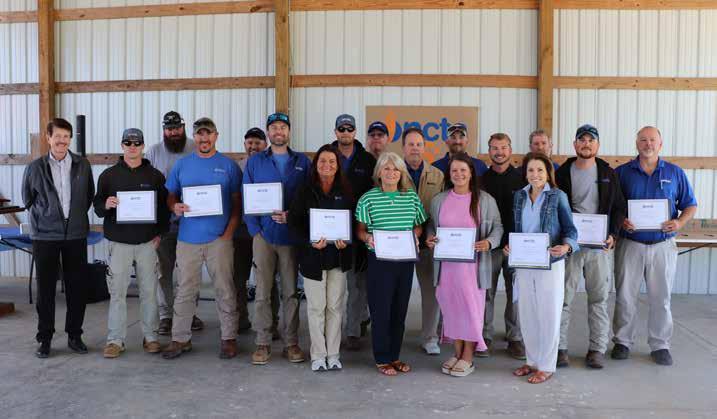
NCTC recently recognized a group of employees celebrating milestone anniversaries as members of the cooperative’s family. Thank you all for your service and dedication.
Ethan Jenkins, 5 years
Jason Draper, 5 years
Anthony Reid, 15 years
Billy Moran, 10 years
Cody Gregory, 5 years
Natasha Kittrell, 25 years
Josh Cummins, 5 years
Jon Blankenship, 30 years
Dawn Scholl, 25 years
Barry Hiett, 15 years
Melissa Rice, 25 years
In accordance with Federal civil rights law and U.S. Department of Agriculture (USDA) civil rights regulations and policies, the USDA, its Agencies, offices, and employees, and institutions participating in or administering USDA programs are prohibited from discriminating based on race, color, national origin, religion, sex, disability, age, marital status, family/ parental status, income derived from a public assistance program, political beliefs, or reprisal or retaliation for prior civil rights activity, in any program or activity conducted or funded by USDA (not all bases apply to all programs).
Remedies and complaint filing deadlines vary by program or incident.
Aaron Smith, 5 years
Logan Williams, 5 years
Janna Kirby, 25 years
Ethan Birdwell, 10 years
Daniel Kelley, 10 years
Jeff Powell, 25 years
Not pictured:
Ben Hoot, 5 years
Troy Wells, 15 years
Chris Carlyle, 15 years
Troy Mungle, 15 years

Persons with disabilities who require alternative means of communication for program information (e.g., Braille, large print, audiotape, American Sign Language, etc.) should contact the State or local Agency that administers the program or contact USDA through the Telecommunications Relay Service at 711 (voice and TTY). Additionally, program information may be made available in languages other than English.
Our offices will be closed Friday, July 3, in observance of Independence Day, and Monday, Sept. 7, for Labor Day, but you can still reach us 24 hours a day, seven days a week, 365 days of the year by calling 270-622-2056.
To file a program discrimination complaint, complete the USDA Program Discrimination Complaint Form, AD-3027, found online at usda.gov and at any USDA office or write a letter addressed to USDA and provide in the letter all of the information requested in the form. To request a copy of the complaint form, call 866-632-9992. Submit your completed form or letter to USDA by: (1) mail: U.S. Department of Agriculture, Office of the Assistant Secretary for Civil Rights, 1400 Independence Avenue, SW, Mail Stop 9410, Washington, D.C. 20250-9410; (2) fax: 202-690-7442; or (3) email: program. intake@usda.gov.
USDA is an equal opportunity provider, employer, and lender.
Story by LAURA McGILL
Nothing ruins a family road trip faster than an unhappy child. Meltdowns at the museum and refusals at restaurants are the stuff of parents’ nightmares. However, with a little planning, family getaways can be enjoyable experiences for everyone.
Consider the ages and tolerance levels of your kids when deciding how many miles you should drive, how many days to stay and what activities to plan. If this is your first family getaway, pick a closer destination and a shorter stay. If everything goes great, you can extend your visit. If things don’t go so well, you can end the trip early and be back home quickly.
Pack a few favorite toys and games and bring along plenty of snacks. Keep a supply of over-the-counter medications for cuts and scrapes, upset tummies and motion sickness handy. Look for convenient stops along the way to take short breaks.
Spend some time getting your children excited about the destination before you leave. Check for coloring pages and puzzles from the tourism office. You can also share details about the places you are going to visit to build interest and to set expectations.
Make sure your plan includes where to stay and where to eat. Pick a family-friendly accommodation close to the places on your itinerary to cut down on time in the car. Do some research in advance to check out restaurant menus, especially if you have a picky eater.
Pace yourself and be flexible because something will likely not work out as planned. Have options in mind if you need to adapt to weather conditions or need to slow things down with a low-key activity.






or are obsessed with their favorite sport.
In addition to a collection of 70 million-year-old dinosaur bones, the museum also features 40 million-yearold whales and the impressive skull of a saber-toothed cat that was unearthed about an hour’s drive from the museum.

The Middle Tennessee Museum of Natural History in Murfreesboro, Tennessee, allows visitors to observe ongoing research while touring exhibits of dinosaur bones and other unique relics from around the world. Cave City, Kentucky, takes the roar outdoors at Dinosaur World, where guests can walk among hundreds of life-sized replicas and enjoy interactive exhibits.
If your trip includes a Saturday near Franklin, Tennessee, stop by Noble Springs Dairy for Baby Goat Cuddling Days. During your visit, you can learn about the farm, pet some adorable baby goats and try some amazing cheese. In Cottageville, South Carolina, Bee City Zoo offers animal encounters with hedgehogs, lemurs, sloths and more.
If your child likes baseball but major league prices aren’t in the budget, try a minor league game. The tickets are more affordable, stadiums are smaller, putting you closer to the field, and the atmosphere is relaxed and family friendly with a children’s play area at many of the ballparks.
Madison, Alabama, just outside Huntsville, is home to the Rocket City Trash Pandas. Bats are swinging in Tennessee with the Nashville Sounds, Memphis Redbirds, Knoxville Smokies and Chattanooga Lookouts. In Kentucky, the Louisville Bats and Bowling Green Hot Rods take to the diamond. Central Indiana welcomes fans to watch the Indianapolis Indians. Fans in South Carolina cheer for six teams, the Greenville Drive, Hub City Spartanburg ers, Augusta GreenJackets, Myrtle Beach Pelicans, Charleston RiverDogs and Columbia Fireflies.
This summer’s biggest sporting event is the FIFA World Cup. With 48 clubs playing games in 16 host cities, it’s generating a lot of excitement. If your child now has soccer fever, consider a clos er-to-home option at an MLS NEXT Pro league match. Huntsville City FC plays its home games in Huntsville, Alabama, and the 2026 season runs through September.



Fcook, eat and create together, owning a specialty ice cream company is a sweet business dream come true. The journey Carol Crowe took to today’s storefront and commercial kitchen was decades in the making, with a couple of career changes along the way.
Before her current job creating unique ice cream flavors highlighting fresh local ingredients, Carol’s education and career path was decidedly different. After earning her Master of Science in biology from Western Kentucky University, she had a job conducting DNA fingerprinting on pigs. No, pigs don’t have fingers. That’s just what the process is called. The DNA testing is actually done with hairs.
Later, she worked at Abbott Laboratories as a pharmaceutical sales representative. In 1999, she decided to leave the corporate world behind and focus on homeschooling her daughter, Kenzie, and later her younger daughter, Laila. During those years, Carol also taught at a local homeschool co-op.
When Laila entered high school, Carol knew she would soon have to decide what would come next. “I did not want to return to the corporate world, and I did not want to continue teaching,” she says.
To determine what direction her career would take, Carol took an honest look at what brought her happiness. As a stayat-home mom and homeschool teacher,
she learned she enjoys the freedom of setting her own schedule. “Our family has always enjoyed being creative and cooking together,” she says. “When the girls were young, we often made homemade ice cream.”
In 2017, Carol took that next step and, along with her daughters, founded The Status Crowe. At the time, Kenzie was 18 and Laila was 14. Carol saw the business venture as a way to give her girls valuable work experience.
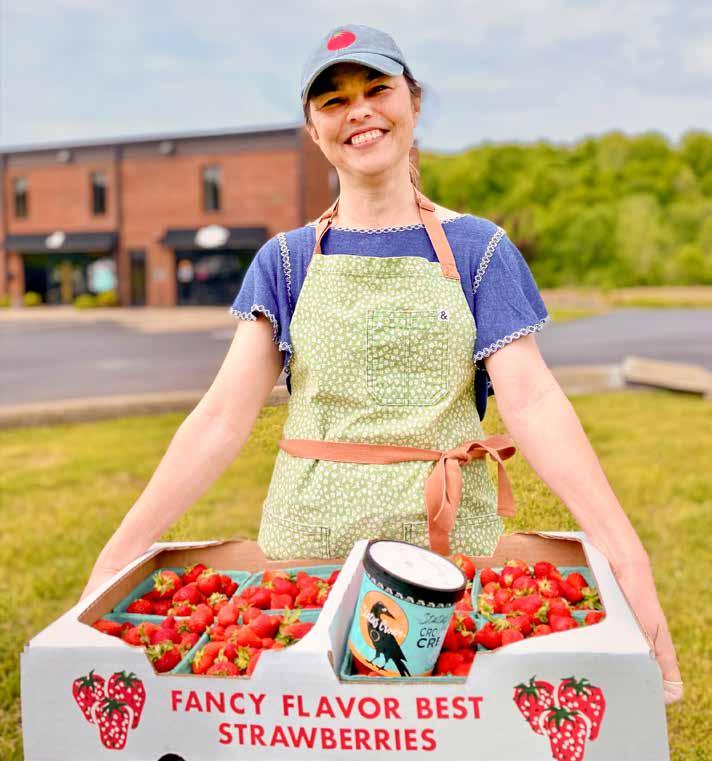

The first ice cream mixer they bought made small, 2-quart batches. Those batches of dairy and vegan flavors were packaged and sold at a local farmers market. As the Crowes developed a following and the business grew, they formed partnerships with retail locations to sell their ice cream.
About four years ago, The Status Crowe moved into its current storefront location, which has a convenient drivethru. The attached commercial kitchen gave Carol room to add a 6-quart mixer.
Carol had more time on her hands in the store, especially when her daughters moved on with their own careers. That led to more kitchen creativity, resulting in cookies, brownies, bourbon balls and cheesecakes. Her desire for fresh, convenient lunch items expanded the offerings to include pimento cheese sandwiches, salads and homemade dressings. Last year, she added cold-pressed juices to the menu. Carol also offers meal preps and specialty orders for schools, weddings and events.
Using locally sourced ingredients is a cornerstone of The Status Crowe, which is certified Kentucky Proud. Carol estimates about 80% of her ingredients come from local suppliers. “I don’t think I’m doing anything special,” she says. “I’m just buying the highest-quality ingredients available.” Customers can also be assured that the ice creams do not contain any added colors or flavor boosters.
Her support of local farmers and producers is something that has always been part of the business plan. “My husband, Kevin, owns a small business, and we’ve always tried to help other small businesses,” Carol says. The Status Crowe’s ice cream and other menu items feature ingredients from JD Country Milk, Hogue Farms, Bluegrass Blueberries, Dewitt Farm, Flourishing Herbs, Planted, The Market Farm, Howard’s Harvest Market, Rian’s Fatted Calf, Lovee & Rose Farm and JNE Farms.
Today, she has retail arrangements with
The Local Good General Store, Howard’s Harvest Market and Rian’s Fatted Calf Meat Shoppe to make her ice cream and other items available at popular locations.
Holding true to one of her early goals, Carol maintains limited business hours at her storefront. She values her freedom to be there for her family. “I am thankful for the support of my family,” she says. “At every step of the way, Kevin has been my biggest fan.” Helping hands also came from other family members including her aunt, her late mother, her son-in-law and her mother-in-law.
What about her daughters? Well, you may have heard of them. Today Kenzie

THE STATUS CROWE
486 Veterans Memorial Highway, Scottsville, Kentucky
270-202-1697
thestatuscrowe.com
Follow The Status Crowe on Facebook and Instagram.
and Laila tour the country and the world, performing as the band Girl Tones. When the girls were younger, they, along with Carol and Kevin, had a family band called Kenzie Crowe and the Flaming Hots. Carol played bass. So, you can add musician to Carol’s diverse list of accomplishments.
Bits of chocolate brownie join with chocolate chips and chocolate ice cream for an indulgent treat.
Chips lovers also enjoy strawberry chocolate chip and peanut butter chocolate chip.



Crowe Me a River
Locally grown blueberries are paired with lavender in this summer concoction. Fresh berries and fruits are showcased in several ice cream and sorbet flavors.
Scare Crowe
Autumn wouldn’t be complete without this pumpkin pie spice ice cream. Other seasonal favorites include Cocoa with Mojo and Twisted Peppermint, which includes a vegan option.
This colorful cosmopolitan sorbet is an adult-only frosty delight made with fresh cranberries and lime juice. Another popular 21-and-over treat is crafted from Carol’s bourbon balls.
Story by DREW WOOLLEY
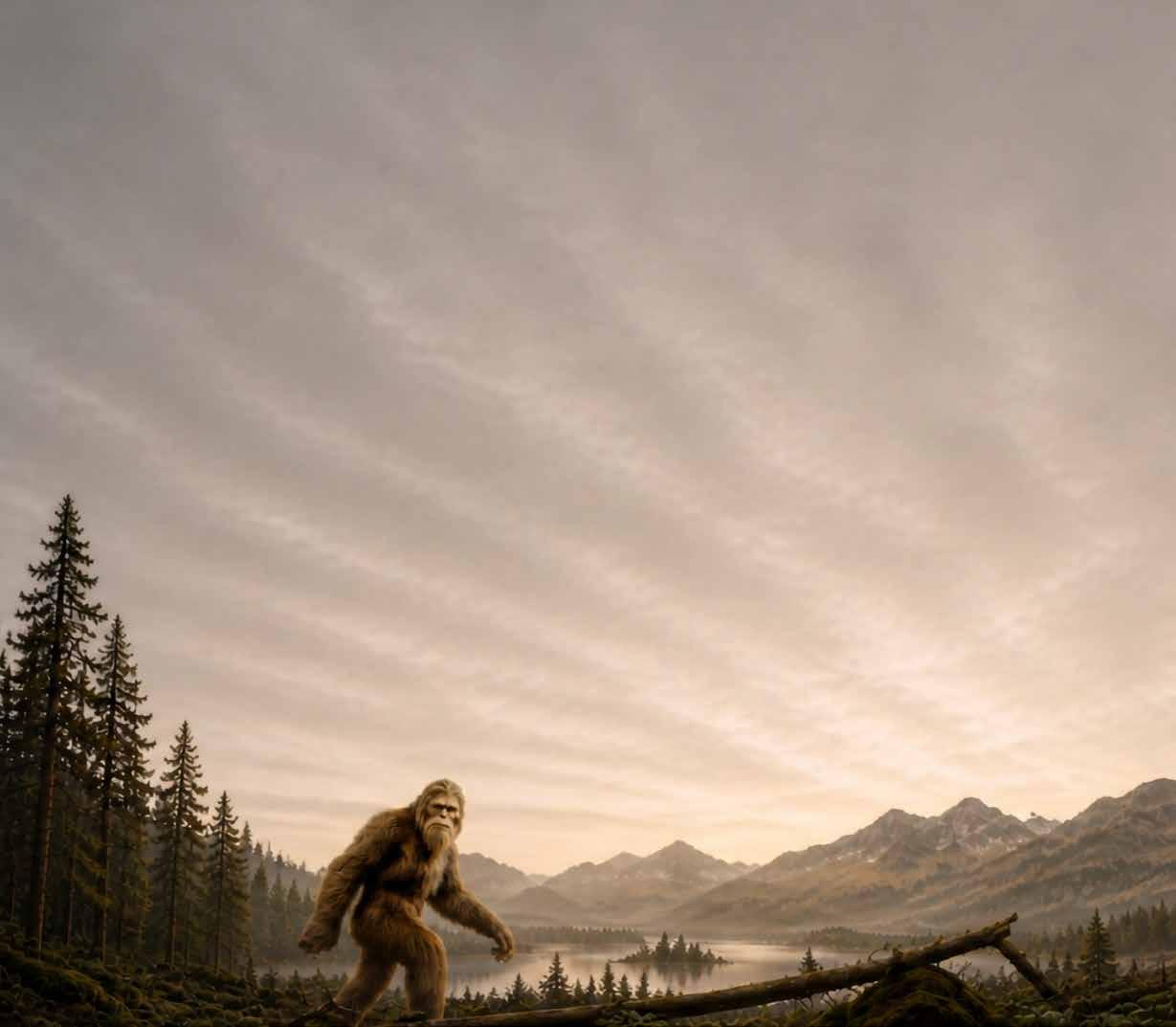
Charlie Raymond knows all the best spots for Bigfoot hunting in Kentucky. As founder of the Kentucky Bigfoot Research Organization, he can tell you where you’re most likely to run into the dark-haired Skunk Man or an Anderson County Sasquatch nicknamed Howdy for its habit of waving at spotters.
So, when a group of Girl Scouts visiting from Ohio wanted to go on their own expedition about 10 years ago, he knew Mammoth Cave was the place to take them. Bigfoot sightings at the edge of the park spiked after a park employee reported seeing what he thought was a bear stand up on two legs and run off.
“I told them Bigfoots are curious, so the best thing to do is go out there with no flashlights and just laugh, talk and act natural,” Charlie says. “Here I’ve got two dozen giddy girls, aged 10 to 14. I said, ‘You’re perfect bait.’”
Much like the skeptical Scout moms who joined them, Charlie didn’t really expect the group to run into Big Mo, the name of the Bigfoot living in the area, according to local legend. But Charlie showed the girls how to knock trees with a baseball bat and make whooping noises, which he believes the creatures use to communicate.
Then, they heard a distant knock and whistle in response. Shortly after, there was a loud bang as something big struck the boardwalk they were standing on. The entire group was so startled that Charlie recalls one of the moms making a break for the parking lot, leaving the girls behind.
“I think it thought we were another Bigfoot calling for help, then it stomped or jumped on the boardwalk as kind of a bluff charge,” Charlie says. “But I heard when they drove back to Ohio, those girls didn’t talk about putt-putt or riding horses.
All they talked about was that night.”
Charlie is just one of many Bigfoot researchers around the country hoping to find definitive proof of the legendary elusive creatures. Driven by true believers, skeptics and gawkers alike, the ongoing hunt has produced hit TV shows, museums and even festivals that bring people together from all corners.
Robert Dobler, a senior lecturer at the Indiana University Department of Folklore and Ethnomusicology, says the lasting power of these creatures is fundamentally human.
“I think it’s human to need to think about things outside of the everyday or the mundane,” he says. “We’re interested in these creatures that exceed language as often as they exceed categories. These stories are how we can take something that is unknown and unknowable and still find ways to talk about it.”
That sense of the unknown is often inseparable from the creatures themselves. For Bigfoot or his Florida cousin, the Skunk Ape, it might be the wilderness of the forests or swamplands where they’re believed to reside. In West Virginia, the dangers of munitions dumps often conjure sightings of the Mothman. Similarly, in Texas, stories of the Chupacabra are more likely to swirl when anxieties about uncontrollable livestock loss due to disease are at their height.
But that doesn’t mean those stories are entirely false.
“A lot of skeptics think these claims are made for attention,” Robert says. “But the reality is most people know they are vulnerable and subjecting themselves to potential ridicule. So, they’re usually reluctant to talk about it and kind of careful about who they tell.”
David Bakara, who owns the Expedition: Bigfoot museum in Blue Ridge, Georgia, has had much the same experience when people share their stories. Some people are still terrified of their experiences. Others are driven by curiosity. But they are all trying to confront something they know shouldn’t exist.
“Almost all the Bigfoot researchers I know used to be just normal people that watched football and cooked ribs in the backyard. Then they saw one of these things, and it kind of happened on accident,” David says. “Some things, the more you dig into them, the more boring they are. But that’s not the case here. The more you look into Bigfoot, the more interested you become.”
That allure of the unknown is one of the reasons Charlie helped start the Red River Gorge Bigfoot Festival, which takes place in Stanton, Kentucky, each May. The idea originated with a drive-in screening of “The Legend of Boggy Creek,” a 1972 docudrama about the Fouke Monster, a Bigfoot-like creature spotted around Fouke, Arkansas.
Now, the festival is an opportunity to gather researchers and cryptozoologists to speak to believers and naysayers alike. The celebration is one of many across the country focused on Bigfoot and other local cryptids that give enthusiasts a chance to gather without fear
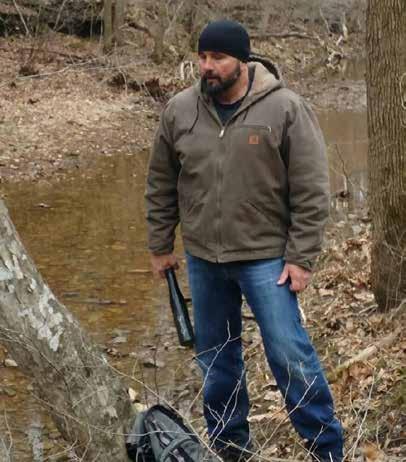
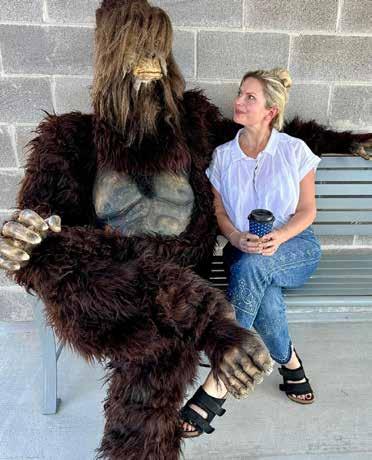
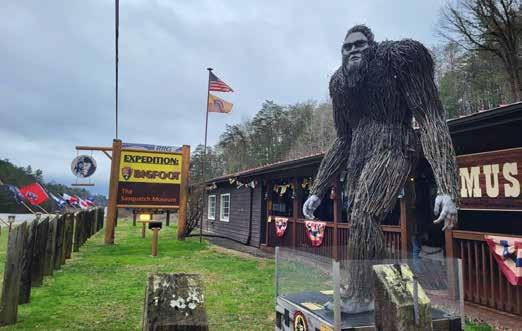

CLOCKWISE FROM TOP LEFT: Charlie Raymond carries along a bat on Bigfoot investigations in hopes of communicating with the creatures through tree knocks. Charlie’s wife, Lyndsey, is a fellow Bigfoot investigator and a police officer with experience in forensics and fingerprint
“There are lots of things in this world we don’t know about. A lot of animals we discover every year,” he says. “We like to say, ‘Leave only footprints. Pick up your trash, stop and smell the flowers every now and then and respect the wilderness.’ Just like Bigfoot.”


A Southern variation on Bigfoot, Sheepsquatch is reportedly a large beast with shaggy white fur and curled horns similar to a ram’s. The creature has been spotted in remote forests and hollows along the Appalachian Mountains and is said to be distinctive for its sulfuric odor.
If you would like to report a Bigfoot or cryptid sighting, in Kentucky or beyond, you can contact Charlie Raymond and the Kentucky Bigfoot Research Organization at info@kentuckybigfoot.com.

The Bigfoot Mapping Project has you covered. The site tracks reported encounters all over the country, with filters for locations where footprints, vocalizations and tree knocks are part of the accounts. Visit bigfootmap.com to find the location of your next adventure. of judgment. But Charlie’s hope is that the experience can also open more people’s minds and encourage them to ask questions. Barring that, it’s an opportunity to step away from technology and gain a better appreciation for all wildlife, whether it’s the creatures we know or those yet to be discovered.
Ready to track down your own Bigfoot sighting?


Story by LAURA McGILL
After eight years in Westmoreland’s Hilltop area, Grill on the Hill owner Brandon Hudson was faced with an unexpected challenge. His popular restaurant needed a new home. Thanks to a loyal staff and a supportive community, it was a challenge he and his wife, Monique, didn’t have to face alone.
The motivation for the move came when the Hilltop property came under new ownership. The new owner had plans that
did not include Brandon’s restaurant, so he did not extend the lease. “Once we got the notice, finding the next location was crucial,” Brandon says. “We wanted to keep going.”
Grill on the Hill developed a strong following at its Hilltop spot, and Brandon didn’t want to stray too far when choosing the new location. When he looked at the
former Mike’s Foodland on Park Street, the expansive 5,600-square-foot building eclipsed the 1,800 square feet of his old location. It would need a lot of work to become the restaurant’s new home.
To minimize the number of weeks the restaurant was closed, work began at the new location while the original eatery was still operating. “I have been super blessed,” Brandon says about the help he received both from employees and the
community. “Everyone pitched in. They moved things from the old place to the new one. Some helped with money and equipment during the transition.”
The transformation to create a new layout was a big undertaking that included building several walls. “This was way more renovation than we anticipated,” Brandon says. “From framing walls to plumbing and woodworking, it was a lot, but I enjoyed the process.”
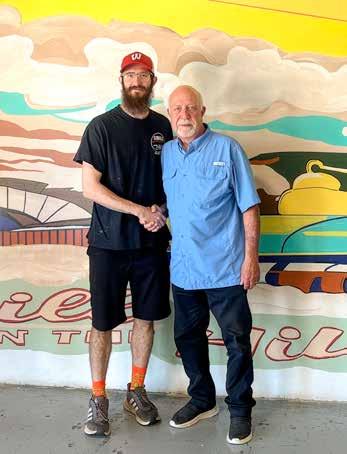
Those new walls gave Brandon an idea. He knew the place needed a pop of color, and he saw it as a chance to celebrate Westmoreland. He turned to former schoolmate Savannah Anderson, who had done seasonal window decorations at the old location. “From the first sketch to the last brushstroke, it was an honor to create something that celebrates the heart of Westmoreland and the amazing people who make this community so special,” she says.
With only six weeks of downtime, Grill on the Hill opened its new doors March 7 to the delight of loyal customers. Comments on the restaurant’s Facebook page attest to just how excited many people were for the return of their favorite place.
Brandon looked at the move as a good time to evaluate his menu. While a couple
of items were taken off, all the longtime favorites are still available. From thin-cut homemade potato chips to hand-pattied cheeseburgers and locally sourced catfish, customers can order up and chow down. “Shortly after we opened here, we added a salad bar,” Brandon says. “It’s been really popular.”
The team at Grill on the Hill keeps it all humming with phone and internet service from NCTC. “We get lots of to-go calls. The phone is always ringing,” he says. “Our point-of-sale system runs on Wi-Fi, and of course we have Wi-Fi for our customers.”
Family and community are the driving forces behind everything Brandon does. He and Monique arrange their schedules so that one of them can be at home with their children. They are also focused on the community and look for ways to give back. “It is important that we provide for the town that provided for me when I was growing up,” he says.
Brandon played sports as a kid, and he remembers how much local businesses supported the teams. In addition to serving as commissioner for Westmoreland’s peewee basketball league, he is also a board member and coach for one of the local baseball teams. “We want to help out by having spirit nights at the restaurant to help teams raise money,” he adds.
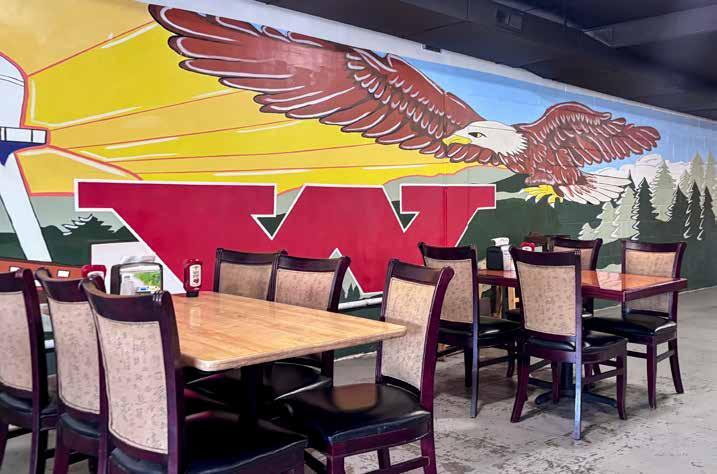
ON THE HILL 1013 Park St., Westmoreland 615-644-7455
Follow @grillonthehill18 on Facebook.
Westmoreland Mayor David Leath is happy to see Brandon and his crew busy in their new location. “The move of Grill on the Hill from Hilltop to the downtown Westmoreland square area has revitalized the Park Street area,” he says. “It is so nice to see the parking lot full of cars for the evening dinner period.”
Walking around the restaurant, the mayor recalled his younger days. “This location brings back many great memories for me, as when I was 16, I worked at Hawk’s Grocery as a butcher in the meat department,” he says. “This was over 50 years ago, and Hawk’s Grocery predated Mike’s Foodland located here for many years prior to them moving.”
The mayor sums up the sentiments of many in town by wishing Brandon luck in his new location. “It is fantastic to have Grill on the Hill in this location now. We wish Brandon much success here in downtown Westmoreland. Growth is coming back to the area which will be good for all.”

Potlucks call for recipes that can handle travel, sit happily on a table and please a wide range of tastes.
These summer-ready dishes rely on ingredients readily available in July and August, use straightforward techniques and are developed for home cooks. All are budget-conscious, and none require special equipment.



3 pounds chicken drumsticks
1 1/2 cups barbecue sauce
1 tablespoon vegetable oil Salt and black pepper to taste

pepper. Toss with oil and arrange on a foil-lined baking sheet. Bake 30 minutes, turn, brush generously with barbecue sauce and bake 15 minutes more until cooked through and sticky. Serve warm or at room temperature.
6 cups fresh peaches, peeled and sliced
1/4 cup granulated sugar
1 tablespoon lemon juice
TOPPING:
1 cup rolled oats
1/2 cup all-purpose flour
1/2 cup brown sugar
1/2 cup butter, melted


1 pound orzo pasta
1 pint cherry tomatoes, halved
2 cups English cucumber, diced
1/3 cup red onion, finely chopped
1/2 cup crumbled feta cheese
1/4 cup fresh parsley, chopped
DRESSING:
1/3 cup olive oil
2 tablespoons fresh lemon juice
1 teaspoon lemon zest
1 teaspoon dried oregano
Salt and black pepper, to taste

Preheat oven to 375 F.
Cook orzo in salted water until tender.
Drain and rinse with cold water. In a large bowl, combine orzo, tomatoes, cucumber, onion, feta and parsley. Whisk dressing ingredients and toss with salad.
Chill at least 30 minutes before serving.

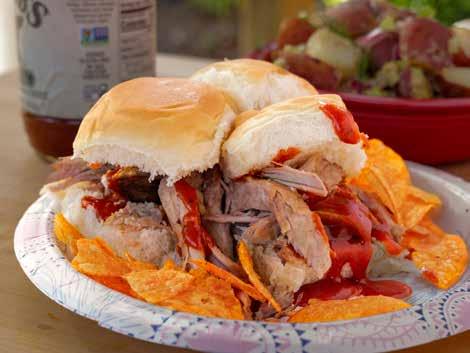
4 pounds pork shoulder or pork butt
1 teaspoon salt
1 teaspoon black pepper
1 teaspoon smoked paprika
1 cup barbecue sauce
1/2 cup chicken broth
12 slider buns
Season pork with salt, pepper and paprika. Place in slow cooker and add broth. Cover and cook on low for 8 hours until very tender. Shred meat with forks, discard excess fat and stir in barbecue sauce. Serve warm on slider buns.
3 pounds small red or Yukon Gold potatoes
4 tablespoons olive oil
2 tablespoons apple cider vinegar
2 tablespoons whole-grain mustard
1 tablespoon Dijon mustard
1/2 teaspoon sugar
1/2 cup celery, finely sliced
1/3 cup red onion, finely diced
1/4 cup fresh dill, chopped
Salt and black pepper, to taste
Toss peaches with sugar and lemon juice and spread in a baking dish. Mix topping ingredients and sprinkle evenly over fruit.
Bake until golden and bubbly, about 40 minutes. Cool slightly before serving.
Boil potatoes in salted water until fork-tender. Drain and cut into bite-size pieces while still warm.
In a large bowl, whisk together olive oil, vinegar, mustards and sugar. Add warm potatoes, celery and red onion, tossing gently so the potatoes absorb the dressing. Season with salt and pepper. Fold in dill just before serving. Serve warm or at room temperature.