

Years 7-8 Handbook
Woodleigh School 2027

Years 7-8 Handbook
Woodleigh School 2027
This booklet outlines the subjects and key educational experiences that will be offered to students undertaking Year 7 and 8 at Woodleigh School in 2027.
Students will study a combination of Year Long and Semester based subjects that align with the International Baccalaureate Middle Years Programme Framework. The content and skills for these subjects is drawn from the Victorian Curriculum.
Key Contacts
Head of Learning, Middle Years Programme
Lucy Kane
Heads of Wellbeing and Administration, Middle Years
Gab O’Loghlen and Craig Azzopardi
Head of Regenerative Futures Program
Michelle Pitcher
Homestead Coordinators
Homestead 1
Derek Kirk
Head of Learning, VCE
Craig Radley
Head of Careers and VET Coordinator
Shannon Maher
Co-Heads of Learning Enhancement
Jane Aylward and Callum Barnes
Homestead 2
Cass Kitto
Homestead 3
Paige Strouts
Learning Area Leaders
The Arts: Visual Arts
Emma Cleine
The Arts: Performing Arts
Anthony Bingham
Design
Andrea de Jong
Language and Literature
Nadia Davison
Health & Physical Education
Craig Radley
Homestead 4
Narelle Barnes
Humanities
Tom Ryan
Language Acquisition
Prue Patterson
Mathematics
Alasdair Ross
Science
David Benton
Homestead 6
Kate Hadley
Year
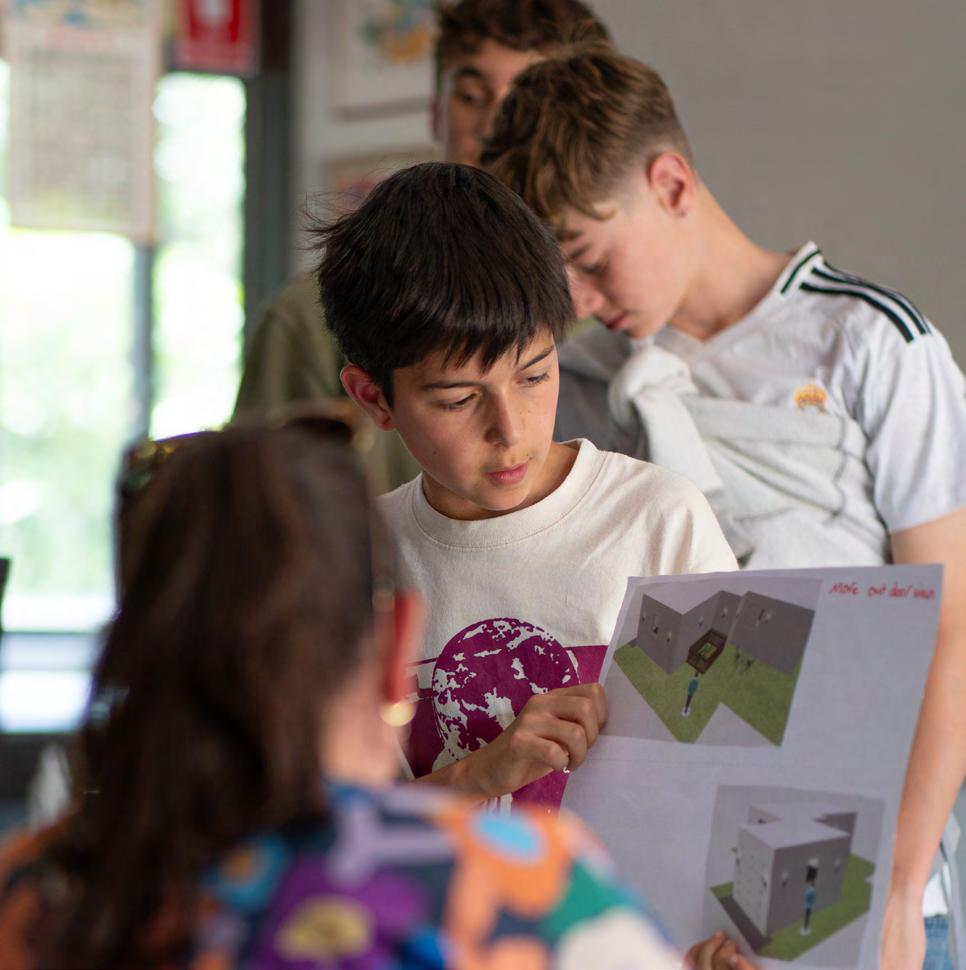
Students design and plan tiny homes to meet the needs of a client and micro-community. Students undertake a range of activities, experiencing firsthand the relationship between space and function. This hands-on, collaborative project demonstrates how the MYP encourages students to apply their knowledge creatively while developing problemsolving and teamwork skills in realworld settings.
Years 7-8
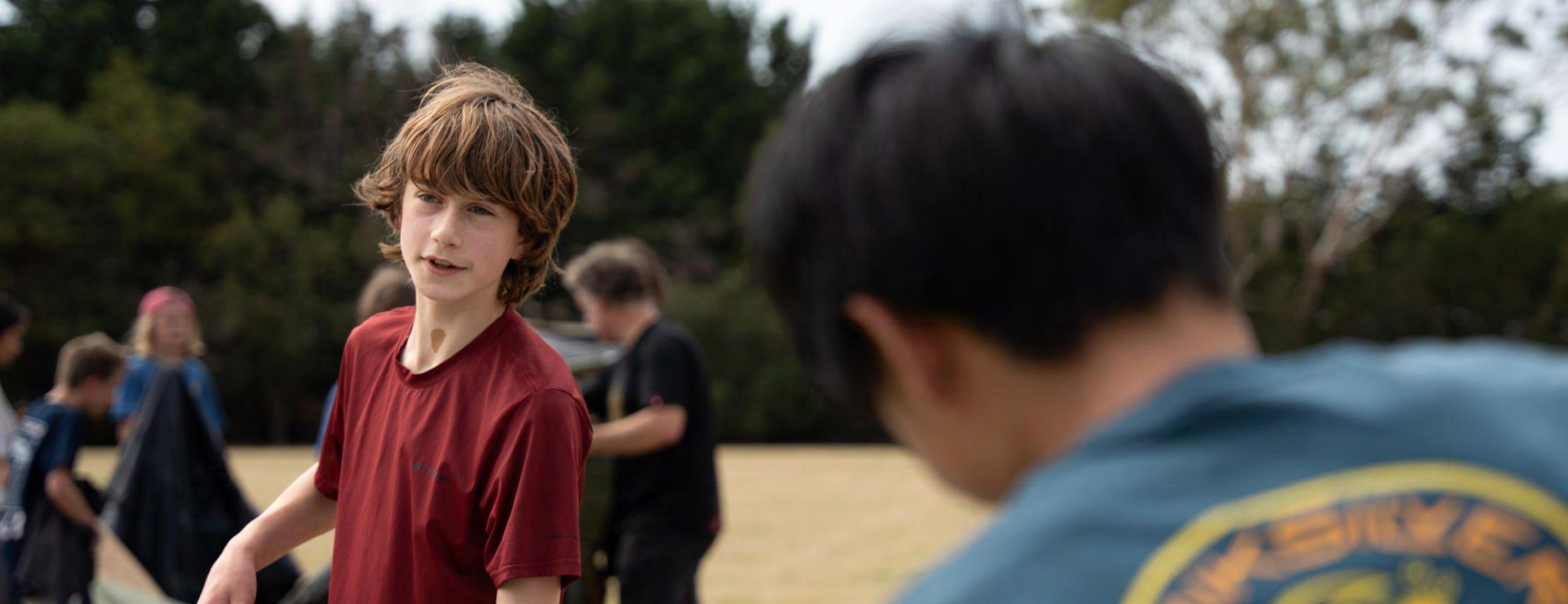
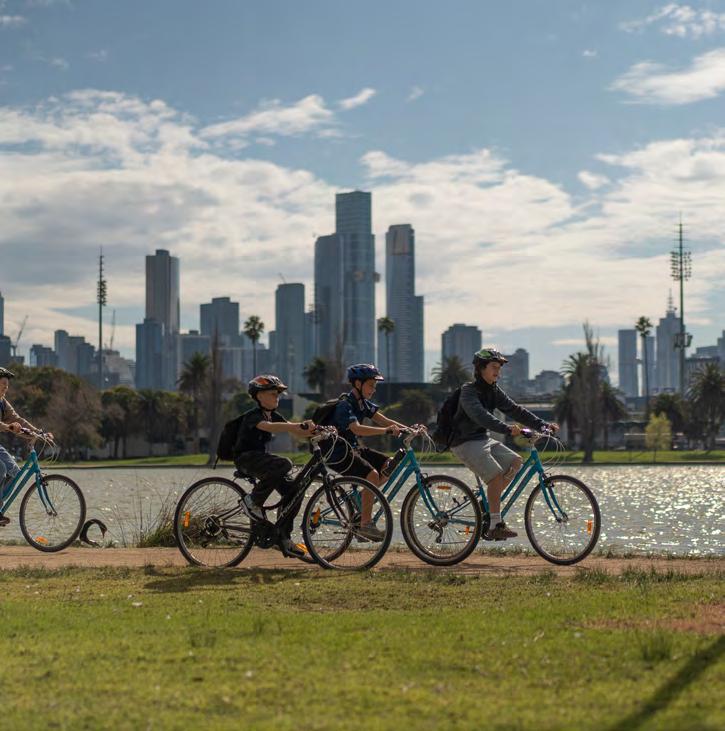
Homestead Camps are held in Term 1, and aim to foster community and teamwork among students in Years 7-8. These camps develop outdoor leisure skills, and feature activities like sea kayaking, bike riding, bushwalking, surfing and camping. Each Homestead heads to a coastal location, and staff work alongside outdoor experts to provide challenging, skill-building experiences for their students, helping them connect with their peers and gain confidence in various outdoor environments.
Years 7-8
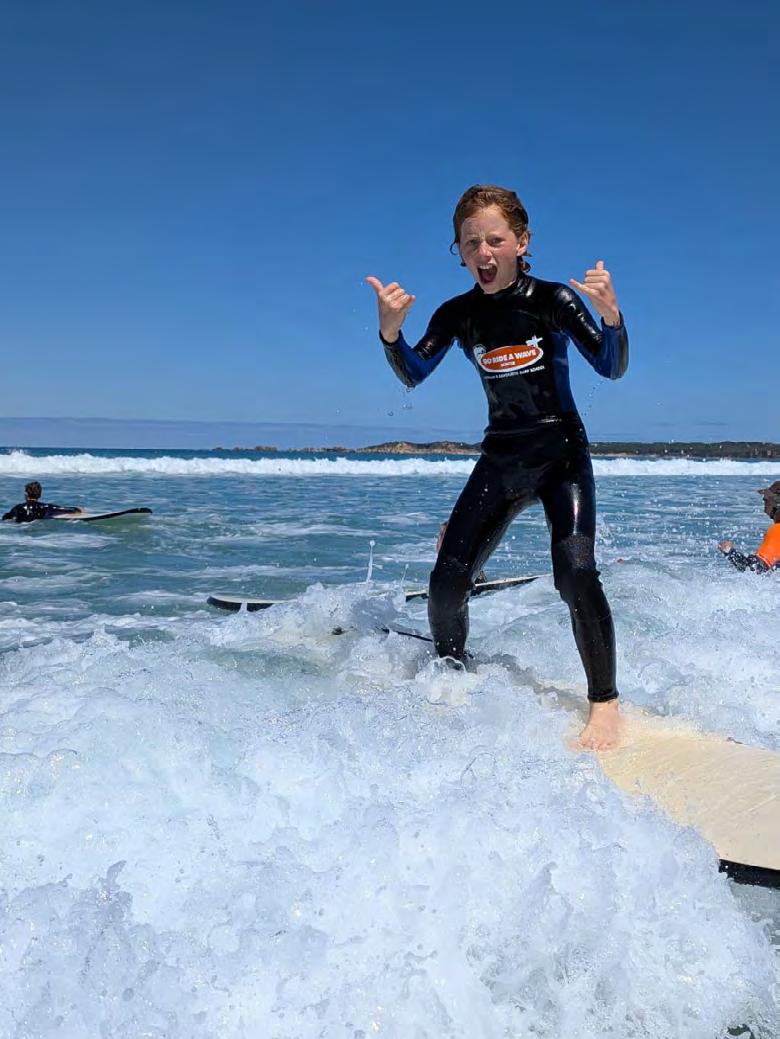
In Semester 2, during Activities Week, Years 7–11 students ballot for and head off on a variety of five-day, cross-age programs. On these activities, students pursue new skills or deepen existing ones with like-minded peers. Past camps have included surfing at Anglesea and Phillip Island, horse riding in the Victorian high country, rock climbing at Mt Arapiles, a photography camp in the city, and on-campus camps such as leatherwork, screen printing, and production.
Year 8
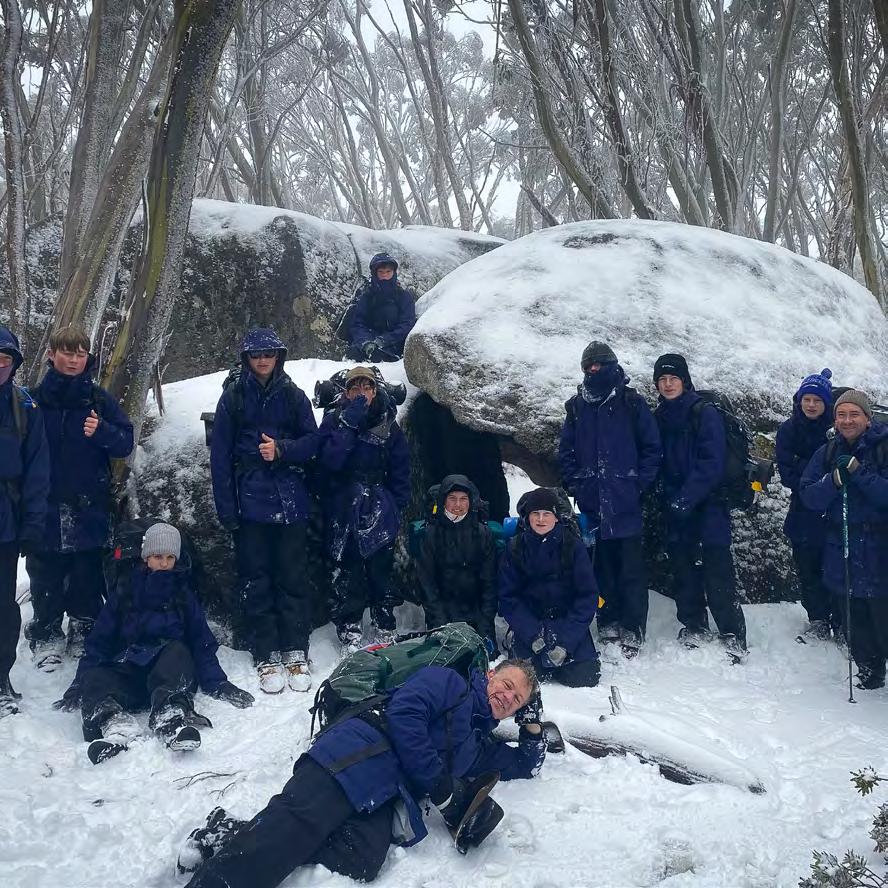
Year 8 students take part in a Bushwalking and Lightweight Camping Program in Term 4. This is the first step in preparing for the Year 9 Outward Bound journey and Hattah expedition, which culminates the compulsory aspect of the Woodleigh Outdoor Education program, in Year 10. The experience helps students develop essential skills for outdoor adventures, such as navigation, teamwork, and resilience, while also fostering a deeper connection to nature
The Middle Years Programme (MYP) is an internationally accredited framework that cultivates a rigorous and engaging syllabus based on big thinking and authentic learning experiences.
The MYP promotes a shift from content-driven curriculum to conceptual learning informed by the explicit teaching of proficiencies; the Approaches to Learning (ATLs) and the IB Learner Profile attributes, to develop internationally minded lifelong learners. The philosophy of the International Baccalaureate (IB) aligns strongly with that of Woodleigh and encourages a balanced development of the whole young person.
At Woodleigh School, we are committed to developing learners who, by recognising their shared humanity and stewardship of the planet, help to create a better and more peaceful world. We aim to work together as a community to nurture the development of the attributes of the IB Learner Profile. We aim to develop the capacity and ability of our community of learners to be:
Inquirers
We nurture our curiosity, developing skills for inquiry and research. We know how to learn independently and with others. We learn with enthusiasm and sustain our love of learning throughout life.
Knowledgeable
We develop and use conceptual understanding, exploring knowledge across a range of disciplines. We engage with issues and ideas that have local and global significance.
Thinkers
We use critical and creative thinking skills to analyse and take responsible action on
Social skills
Collaborative skills
Thinking skills
Transfer skills, critical thinking skills and creative thinking skills
Communication skills
Demonstrating communication through interaction and language
complex problems. We exercise initiative in making reasoned, ethical decisions.
Communicators
We express ourselves confidently and creatively in more than one language and in many ways. We collaborate effectively, listening carefully to the perspectives of other individuals and groups.
Principled
We act with integrity and honesty, with a strong sense of fairness and justice, and with respect for the dignity and rights of people everywhere. We take responsibility for our actions and their consequences.
Open-minded
We critically appreciate our own cultures and personal histories, as well as the values and traditions of others. We seek and evaluate a range of points of view, and we are willing to grow from the experience.
Caring
We show empathy, compassion and respect. We have a commitment to service,
Self-management skills
Reflective skills, affective skills and organisation skills
Research skills
Media literacy skills and information literacy skills
and we act to make a positive difference in the lives of others and in the world around us.
Risk-takers
We approach uncertainty with forethought and determination; we work independently and cooperatively to explore new ideas and innovative strategies. We are resourceful and resilient in the face of challenges and change.
Balanced
We understand the importance of balancing different aspects of our lives— intellectual, physical, and emotional—to achieve well-being for ourselves and others. We recognize our interdependence with other people and with the world in which we live.
Reflective
We thoughtfully consider the world and our own ideas and experience. We work to understand our strengths and weaknesses in order to support our learning and personal development.
Woodleigh is committed to delivering an education that equips young people with the knowledge, skills, capabilities, confidence, and purpose they require to shape their future and the future of others. Through the MYP young people are encouraged to be more than just globally aware, rather; the IB embodies the notion of being internationally minded, where our students develop an innate sense of responsibility and take positive action to create a better world.
The MYP provides a design structure that supports the teaching and learning of the Victorian Curriculum content, while emphasising an inquiry-based approach, and offers an inclusive educational experience for all students. The use of Global Contexts in the MYP framework further enhances learning by situating inquiries within relevant global themes, promoting critical thinking and helping students to make meaningful connections between their studies and real-world issues.
Fairness and development
Globalisation and sustainability
Identities and relationships
Orientation in space and time
Personal and cultural expression
Scientific and technical innovation
Inquiry learning encourages students to explore concepts deeply through questions and investigations, fostering critical thinking and problem-solving skills. Inquiry learning involves guidance, support and structure, but is student-driven, allowing learners to pursue their interests and make connections between subjects, and apply their learning to real-world contexts. This approach nurtures curiosity, independence, and a lifelong love of learning.
Structured Inquiry
Students follow the lead of the teacher as the entire class engages in one inquiry together.
Controlled Inquiry
Teacher chooses topics and identifies the resources students will use to answer questions.
Guided Inquiry
Teacher chooses topics and questions, and students design product or solution.
In years 7 and 8, students will study six year-long subjects. Each fortnight they will take part in seven sessions of Language & Literature (English) and Maths, and five sessions of Individuals & Societies (Humanities), Science, Language Acquisition and Health & PE. Language
(English)
* If students are taking part in Learning Enhancement (literacy support) this replaces Language Acquisition
Each semester, students will take part in six lessons per fortnight of a different Art and Design subject, developing skills in investigating, creating, making and appreciating:
Students will take part in three Homestead sessions per fortnight, as well as Activities five times a fortnight, taking part in up to six Activities over the year. They will also take part in two Music lessons per fortnight.
These subjects form the academic foundation of Years 7 and 8, building essential skills across language, science, mathematics, humanities and beyond.
In Language and Literature (English Language), students develop the core skills of reading, writing, speaking and listening. Being able to communicate with confidence and insight is a foundation skill for both school and life. The Language and Literature curriculum is designed to develop a student’s understanding of the issues that shape our society.
In Years 7-8 Mathematics, students study a broad range of topics whilst developing their problem solving and reasoning skills. They continue to build on concepts in number and algebra, measurement and geometry, and statistics and probability. Based on their background and performance, selected students will be exposed to more advanced mathematics in the Mathematics Enhancement pathway.
See page 8 for more information.
In Years 7-8 Science, students apply the concepts of systems, relationships and change to real world scientific contexts. Each term they will learn fundamental theories for the main disciplines: Biology, Chemistry, Physics and Earth Sciences. A large part of the first years in Secondary School Science is spent developing scientific investigation skills, such as, being safe in the Laboratory and following methods accurately, and how to predict, observe, and explain through experimentation.
The Individuals and Societies course for Years 7-8 is an interdisciplinary subject that integrates the study of History, Geography,
and Civics to explore the dynamic relationship between people and their social environment, emphasising personal identity development within various cultural contexts. The course aims to develop students’ research skills and understanding of human societies, their history, and their impact on the world.
Units and topics studied at Years 7-8 include Mapping, Ancient Societies, Citizens Create Change (Civics), Medieval Europe and the Black Death, Business and Enterprise, and Coastal Landscapes.
This course provides the foundation for students to become active and informed individuals, capable of managing lifelong physical activity. Students learn about the physical, emotional, and social benefits of exercise. They explore personal wellbeing, fitness, and the connections between physical activity and health. Students also assess their own wellbeing and engage in activities to enhance their active lifestyle.
Students develop proficiency in either French or Indonesian through comprehensive skills in reading, writing, listening, and speaking. They engage in various units that explore personal experiences, social issues, and current events. Additionally, they make cultural comparisons between life in Australia and the target country, enhancing their understanding and appreciation of different cultures and further developing international mindedness.
Language study also opens doors to immersive travel experiences – from Year 9, French students have the opportunity to engage in a language and culture tour to France and Indonesian students can take part in an Indonesian immersion tour, both running biennially.
Year 7 and Year 8 Music is a continuous two year program with one hour of classroom music per week. Students develop skills as a brass, strings or woodwind player, choosing from ’cello, clarinet,
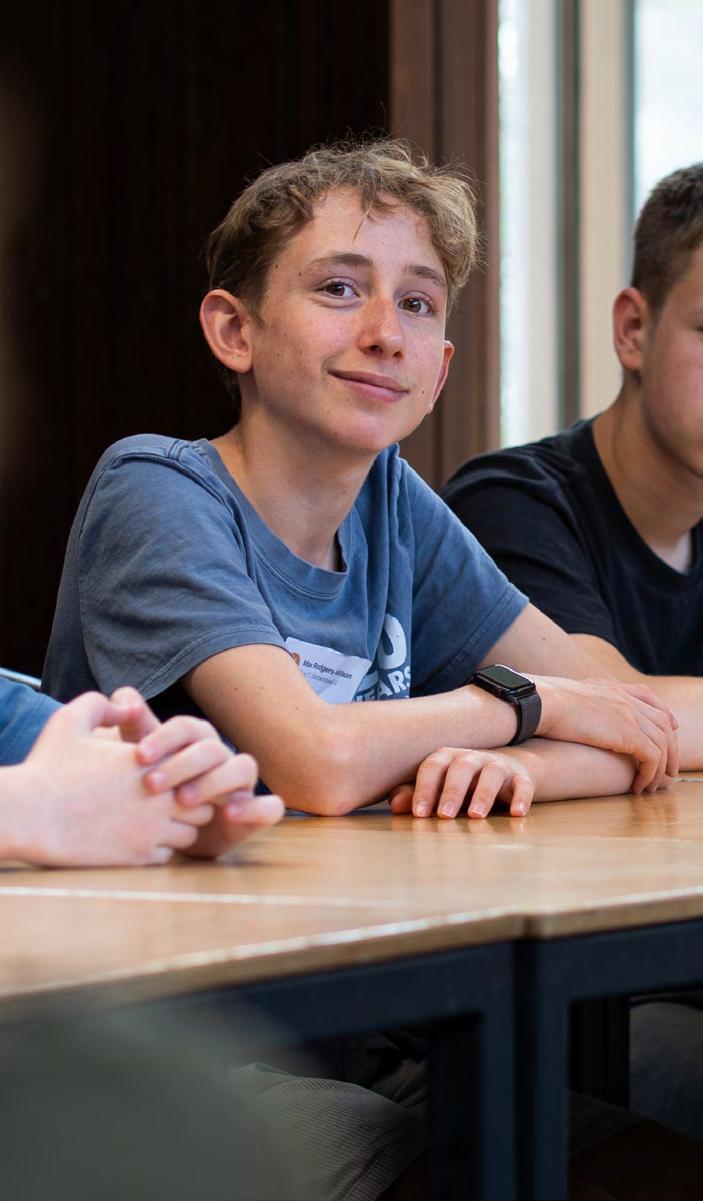
flute, trombone, trumpet, viola or violin. New students begin with a round robin experience before specialising from Term 2 of Year 7, with individual instrument groups gradually coming together to form a multi-instrument ensemble. All students build their understanding of musical notation, score terminology and aural skills throughout the program. Students with prior experience are encouraged to join the Extension Ensemble – aimed at those already developing sight reading and advanced musicianship skills, and particularly suited to students likely to continue with Music as an elective into Year 9 and beyond.
Learning Enhancement is available through consultation with the Learning Enhancement team, following strict selection criteria overseen by the Director of Wellbeing. The subject supports student’s literacy and numeracy skills, provides general academic and curriculum support. Additionally, Learning Enhancement classes focus on developing the MYP Approaches to Learning (ATL), helping students ‘learn how to learn’ within the IB Middle Years Programme.
From Year 7 to Year 9 Mathematics, students develop familiarity with a broad range of linear and non-linear functions and relations, and related algebra and graphs.
Learning continues to build on a range of skills and concepts in Number and Algebra, Measurement and Geometry, and Statistics and Probability. In Year 10, students select from Foundation Mathematics, regular Year 10 Mathematics, and the more advanced Year 10/10A Mathematics, depending on their mathematical aptitude and aspirations for VCE Mathematics.
Standard Maths Pathways
The Mathematics Enhancement program is offered to capable students who have demonstrated considerable mathematical ability, enthusiasm, and a good work ethic. The main intake is in Year 7, though well credentialled students can be added in later years. This pathway leads to students completing 10/10A
Years 7 and 8 includes a range of creative and practical subjects that give students the chance to explore new skills and ideas.
Students apply the design cycle to create solutions for their local and global communities. They develop practical skills in Python programming, video editing, and graphic design. This hands-on approach equips students with the foundational skills to design, develop, and produce innovative products.
Visual Art focuses on developing and responding to artworks. Students are guided through an inquiry to document how we express who we are, and how artists use innovative practices to create style and aesthetics. They use knowledge to make decisions for their artworks in response to the exploration of the work of other artists. Students create artistic responses demonstrate their knowledge and understanding of the art elements and principles.
Students develop basic food preparation skills to prepare a range of nutritionally balanced meals. They use many different tools, equipment, processes and ingredients which provide a breadth of culinary experiences that can be adapted for future cooking. Students complete two MYP projects that involve creating a Healthy Stir Fry (Food Systems) and a Burger (Fast Food Flip), in response to a Statement of Inquiry and a Design Brief. These involve the MYP criterion of Inquiring and Analysing, Developing Ideas, Creating the Solution and Evaluating the product and process.
Performing Arts builds on dramatic skills as students are introduced to the basic elements of performance with an emphasis on experimentation, collaboration, creating and performing. Students devise, rehearse, and refine specific tasks based on a variety of stimulus material. Classes focus on a range of different dramatic styles and areas including mime and script work.
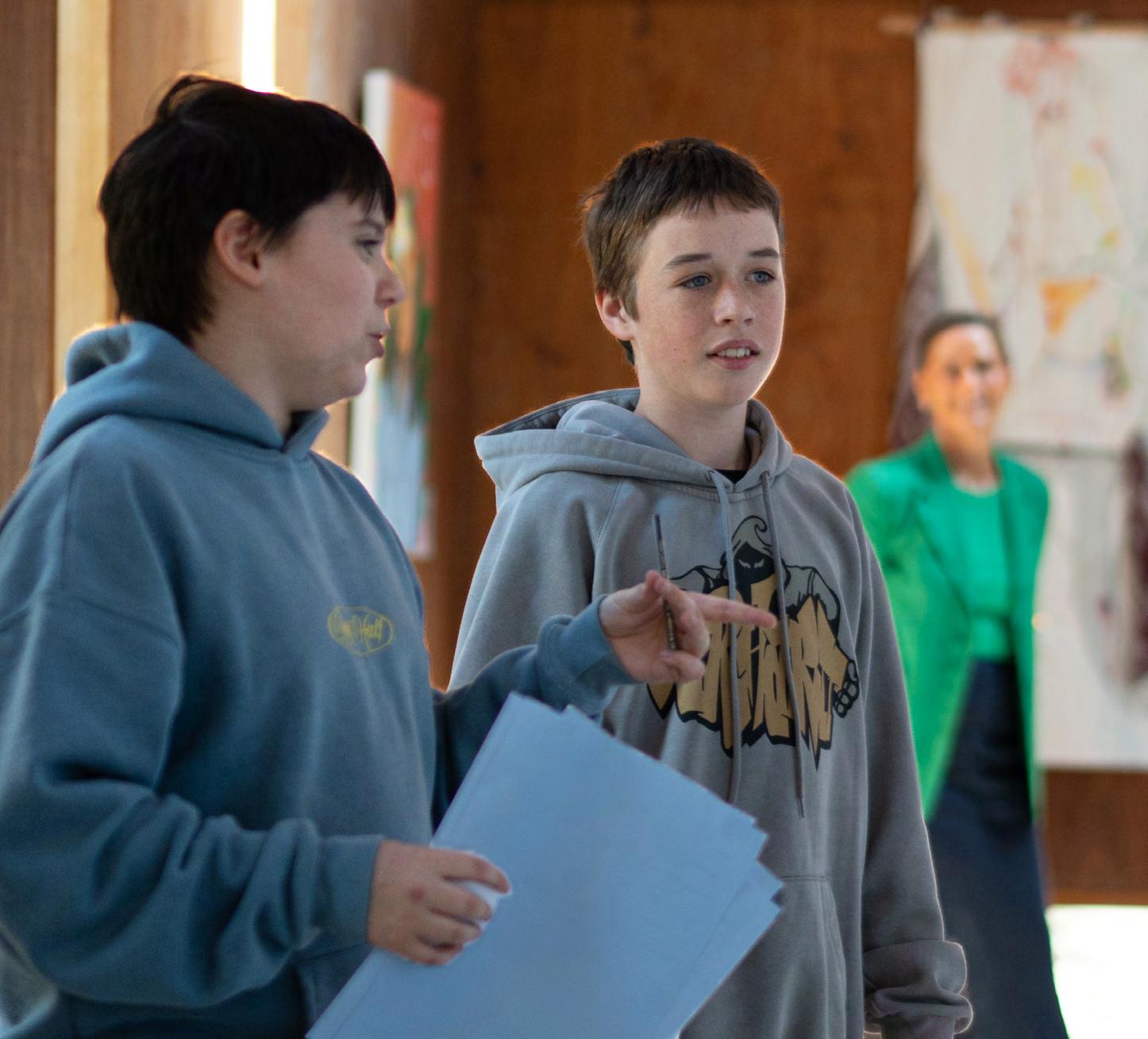
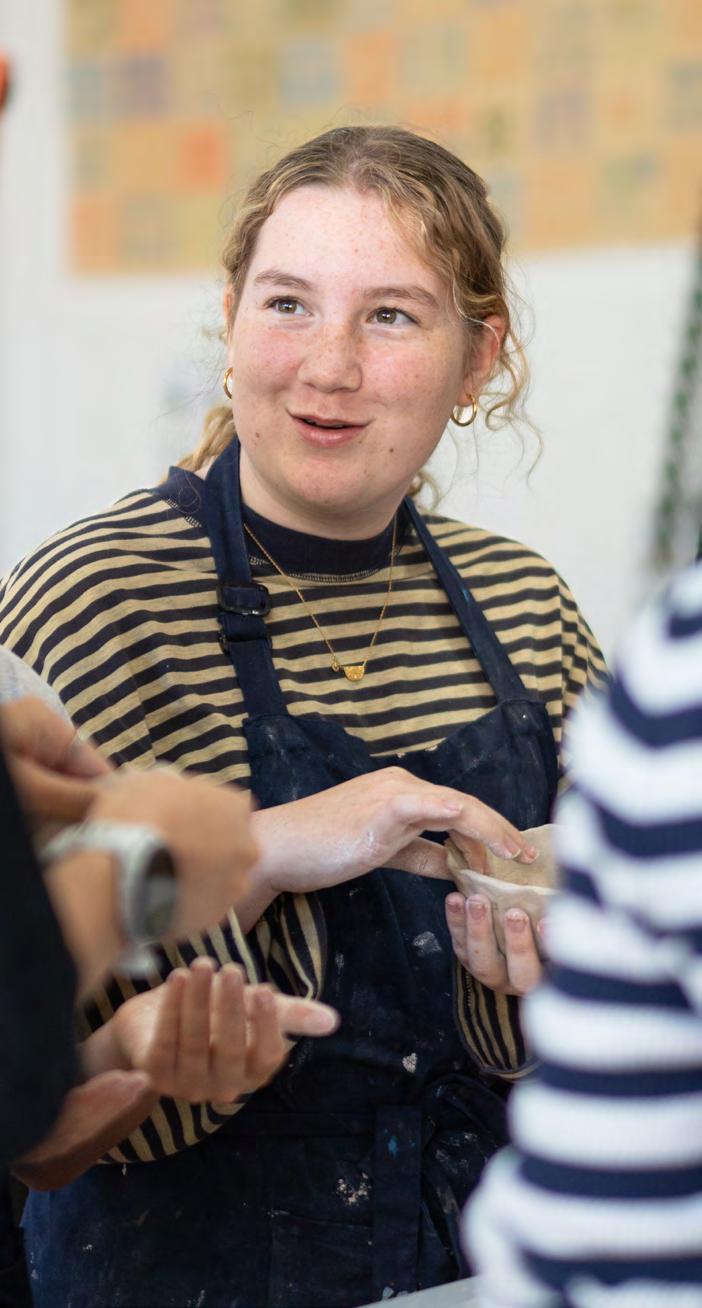
For a Year 7 or 8 student at Woodleigh School, the Homestead Program is a vital part of daily school life, offering a strong sense of community and continuity during a pivotal stage of adolescence. Each student belongs to one of five Homesteads at the Senior Campus, supported by a dedicated team of teachers and peers across Years 7-9.
Homesteads function as a second home – spaces where students grow into themselves, build lasting friendships and receive the pastoral care they need to thrive academically and personally.
In Year 9, students take on greater responsibility in the Homestead, often stepping into leadership and mentoring roles for younger peers. They participate in collaborative projects, community events, and shared decision-making that help them develop confidence, empathy, and a sense of purpose. The Homestead environment encourages open dialogue, creativity, and teamwork, all within a space designed to feel welcoming and student-led. It’s a place where students are not only known by name, but deeply understood and supported in their education.
As they prepare to transition into the senior years, Year 9 students benefit from the Homestead Program’s emphasis on independence and self-reflection. They are encouraged to explore their interests, take initiative in their learning, and contribute meaningfully to their community. This experience lays a strong foundation for the Regenerative Futures Program in Year 10, where students begin to shape their own educational pathways. By the end of Year 9, students emerge with a stronger sense of identity, a deeper connection to their peers and teachers, and the confidence to take on new challenges.
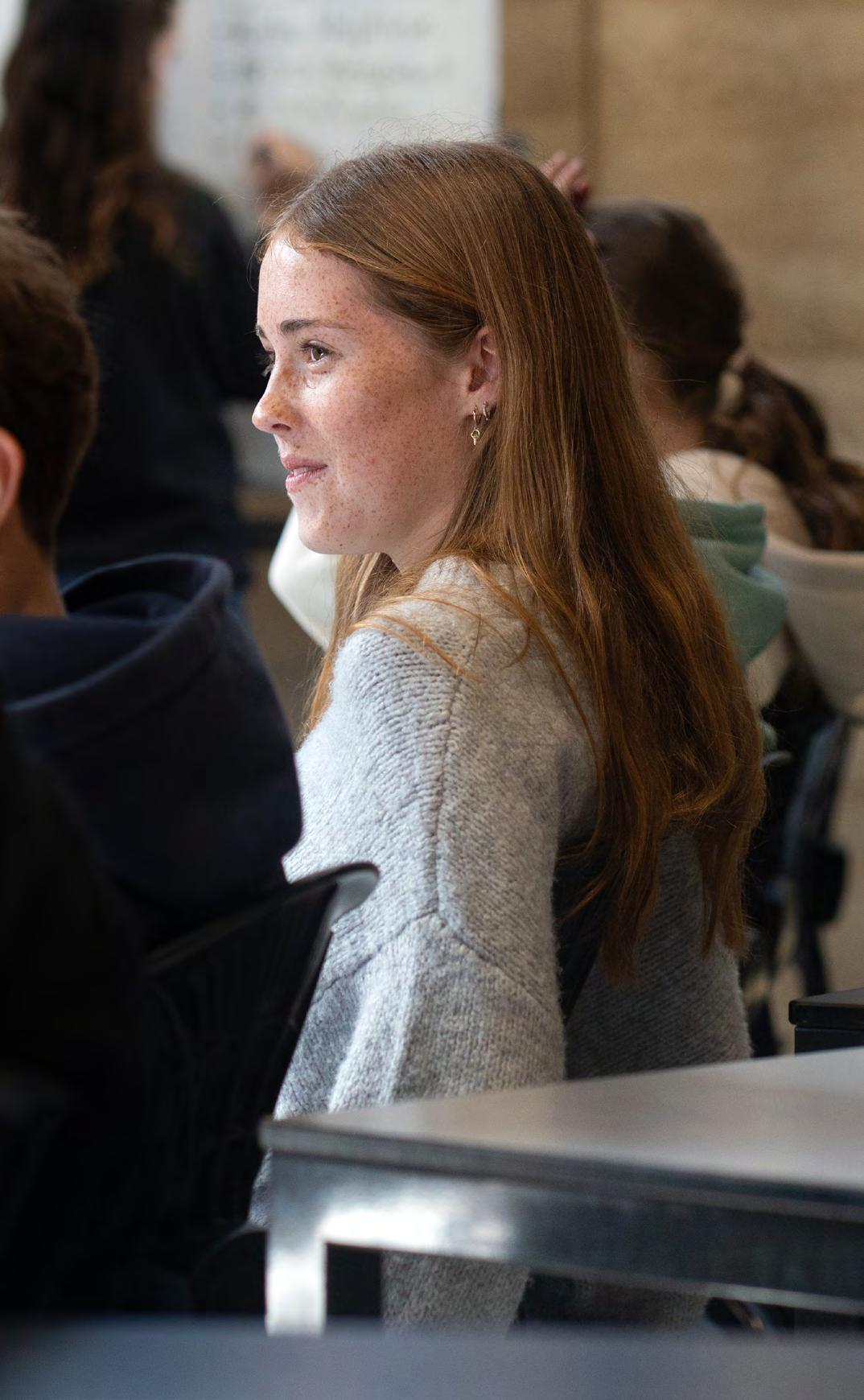
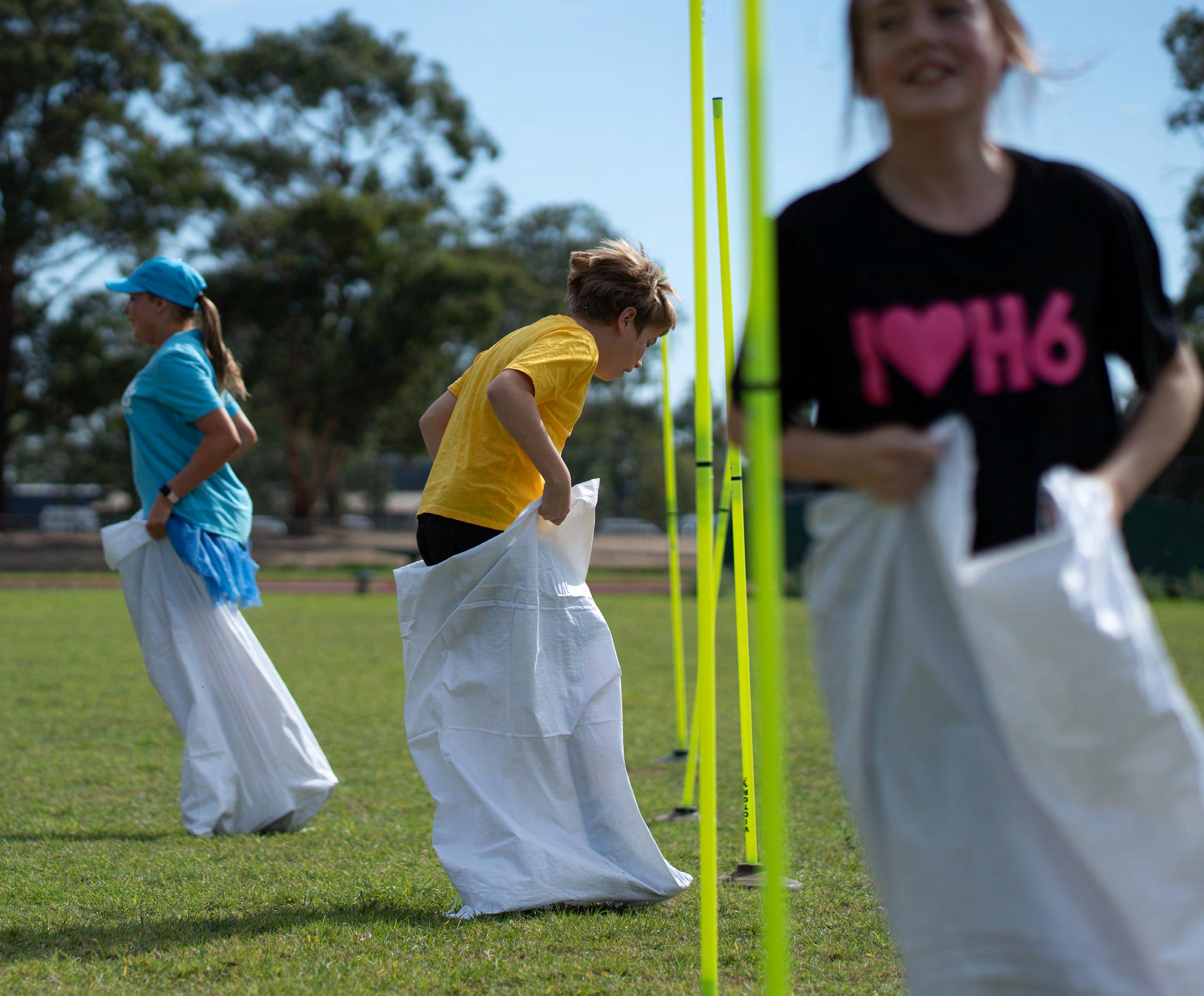
Woodleigh’s Activities Program is a vibrant and essential part of the student experience from Year 7 to 11, offering students the chance to explore their interests, develop new skills, and connect with peers across year levels.
The program is structured into six activity units across the school year, with each unit offering a fresh opportunity for students to engage in something new. For each unit, students participate in a ballot process where they select from over 30 diverse options –ensuring they find something that excites and challenges them.
The range of activities is impressively broad, spanning categories such as Academic Enrichment, Visual and Performing Arts, Sport and Physical Development, Health, Lifestyle and Practical Skills,
ICT & Technology, and Community and School Partnerships. For students, this means the chance to dive into everything from digital drawing, debating, and philosophy discussions to rock climbing, barista training, and even true crime investigations. Whether a student is passionate about sustainability, curious about coding, or eager to try their hand at ceramics or archery, there’s something to suit every interest and learning style.
What makes the program especially meaningful in Year 9 is the growing sense of independence and responsibility it fosters. Students are encouraged to step outside their comfort zones, take initiative, and reflect on their experiences. The Activities Program complements academic learning and supports personal growth, resilience, and a deeper connection to the school community. It’s a space where students are empowered to explore who they are and what they care about—one activity at a time.