


Year 10 Handbook and Subject Selection Guide
Woodleigh School 2027
Year 10 Handbook and Subject Selection Guide
Woodleigh School 2027
The Year 10 elective system is designed to provide students with choice and a broad educational experience prior to specialising in Year 11.
Students undertaking Year 10 in 2027 will subsequently undertake the Victorian Certificate of Education, a two-year course of study, in 2028 and 2029. Details of the VCE and VET courses offered are included at the rear of this handbook.
After finalising the VCE timetable, it may be possible for individual students in Year 10 to join VCE classes and hence opt for a VCE subject instead of two Year 10 electives. This will need to be determined once VCE subject blockings are finalised. Students wishing to accelerate into VCE subjects must meet the eligibility criteria outlined on page 19
Key Contacts
Head of Learning, Middle Years Programme
Lucy Kane
Heads of Wellbeing and Administration, Middle Years
Gab O’Loghlen and Craig Azzopardi
Head of Regenerative Futures Program
Michelle Pitcher
Homestead Coordinators
Homestead 1
Derek Kirk
Head of Learning, VCE
Craig Radley
Head of Careers and VET Coordinator
Shannon Maher
Co-Heads of Learning Enhancement
Jane Aylward and Callum Barnes
Homestead 2
Cass Kitto
Homestead 3
Paige Strouts
Learning Area Leaders
The Arts: Visual Arts
Emma Cleine
The Arts: Performing Arts
Anthony Bingham
Design
Andrea de Jong
Language and Literature
Nadia Davison
Health & Physical Education
Craig Radley
Homestead 4
Narelle Barnes
Humanities
Tom Ryan
Language Acquisition
Prue Patterson
Mathematics
Alasdair Ross
Science
David Benton
Homestead 6
Kate Hadley

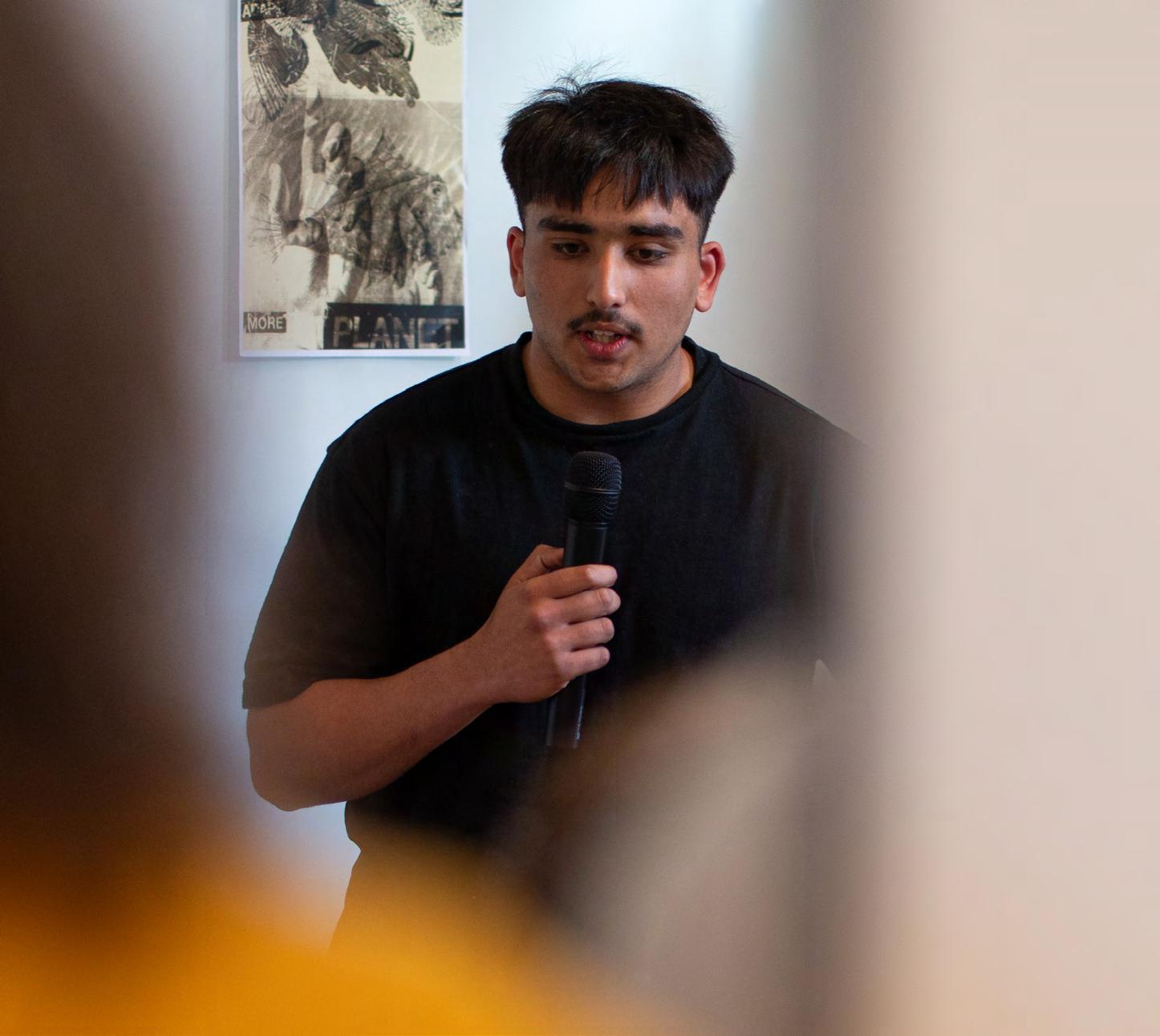
The Year 10 Regenerative Futures Program (RFP) is designed to equip students with the skills and knowledge to navigate a complex, rapidly changing world.
Through the RFP, students explore responses to some of their generation’s defining social, environmental, and economic challenges. By investigating these topics, students learn how their actions can positively impact the future.
The RFP is a space for deep thinking. The program builds on the knowledge and skills developed by the Middle Years Program and enhances students’ academic skillsets in preparation for the rigour of VCE. The RFP curriculum includes core studies in English, Mathematics, Science, Health and Physical Education, and Humanities. Students have access to a broad range of elective subjects and opportunities for accelerated studies in VCE.
The RFP presents a hopeful future –providing opportunities for students to explore regenerative practices that help heal and improve their world.
Regenerative Thinking is a way of seeing the world that aims to restore and enhance the wellbeing of people, places, and the planet. In the RFP, it is a lens for the design of learning that fosters a deeper connection between students, their communities, and the environment.
This approach supports students to contribute to the development of systems that are resilient, adaptive, and capable of continuous improvement, providing lasting benefits for future generations.
The focus on Regenerative Thinking in the RFP extends the long tradition of sustainability education at Woodleigh and reflects its core values: Respect for Self, Others, and the Environment. The program aims to foster a mindset that goes beyond simply maintaining the status quo, inspiring students to explore how their actions can have a positive and regenerative impact on their communities and the world.

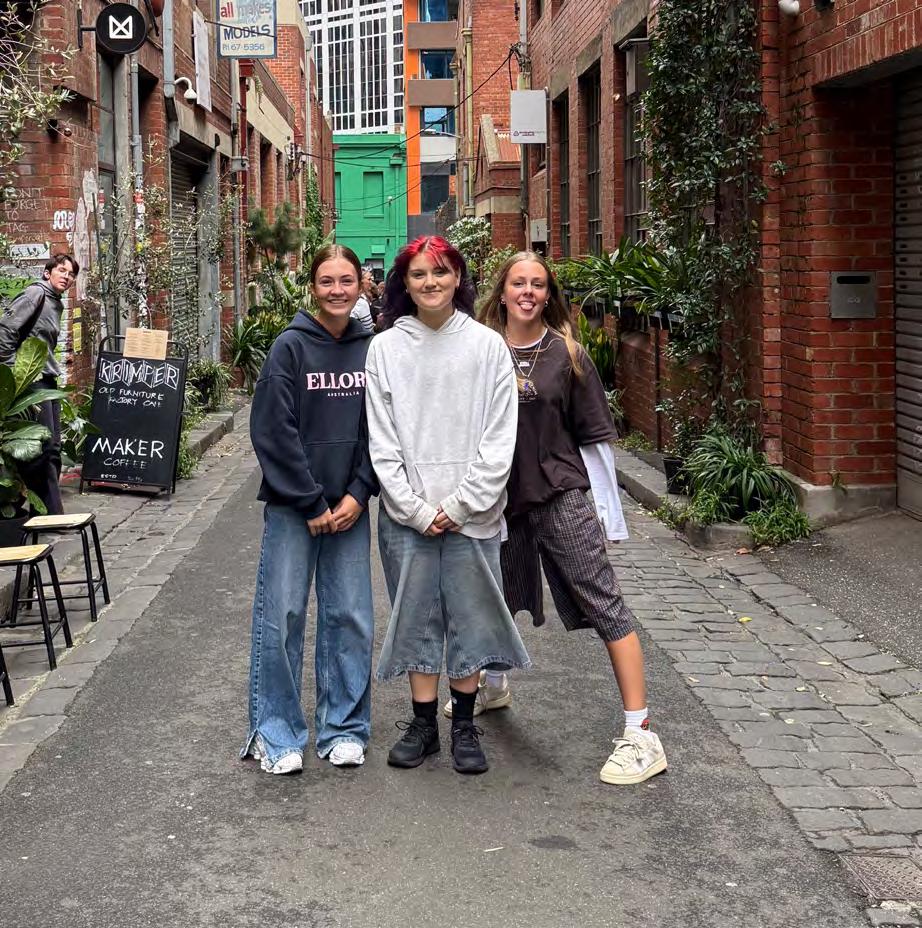
The Regenerative Retreat is a five day program that introduces Year 10 students to regenerative thinking in urban and coastal settings. Through workshops and fieldwork, students explore how creativity and systems thinking support healthier futures. Shared experiences and time in nature help them build wellbeing, purpose and a stronger sense of how they can contribute
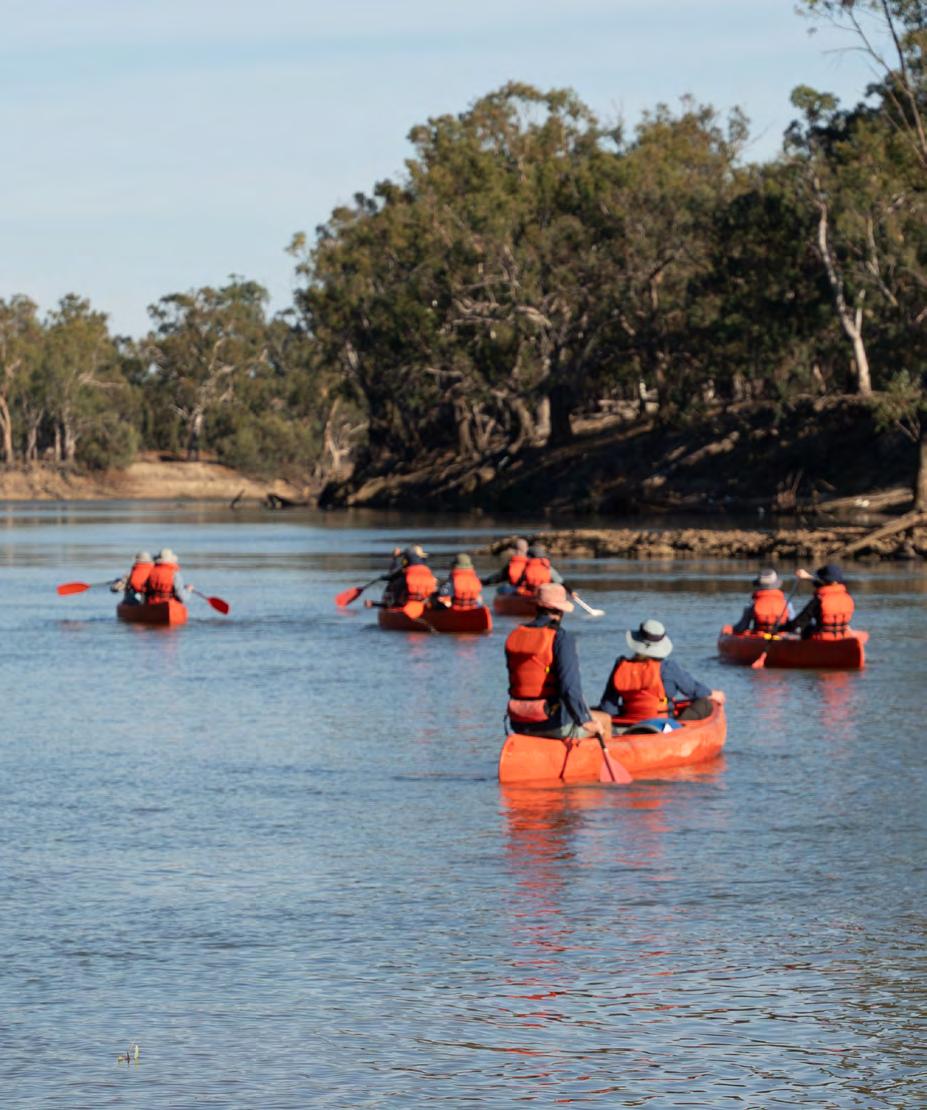
Hattah is the culmination of Woodleigh’s Outdoor Education Program and a true Woodleigh rite of passage. It is one of the experiences most referred to by alumni and departing students. The independence and perceived adventure, responsibility and freedom are valued highly. Equally important is the unusual experience of spending a week in such an unfamiliar environment. Students and staff refer to a sense of Hattah ‘magic’.
Students travel in small walk groups while staff guide the wider program. The key objectives of the program are to grow group leadership, teamwork and responsibility, and deepen understanding of the natural and human history of the Hattah and Murray regions. They are expected to show sound outdoor skills including minimal impact camping and safe bush travel.
The Futures Project is the centrepiece of the Year 10 Regenerative Futures Program – a six-month, student-led investigation running across Terms 3 and 4 in which each student pursues a topic of genuine personal interest through the lens of Regenerative Thinking. Building on the interdisciplinary studies and capability development of the first half of the year, the RFP supports students to engage with complex challenges and develop collaborative solutions that contribute to the thriving of people, places, and the planet. Students are mentored through a personalised design process, with hands-on methodology strengthening research, critical thinking, written and oral communication, and organisational skills in ways that textbook learning alone can’t replicate.
The Futures Project shows Year 10 students how to turn concern into action – culminating in a final exhibition where findings and possible solutions are shared with the broader school community. It’s also a deliberate rehearsal for the independence required in VCE, giving students the chance to develop a real sense of accountability for their own learning before they get there.
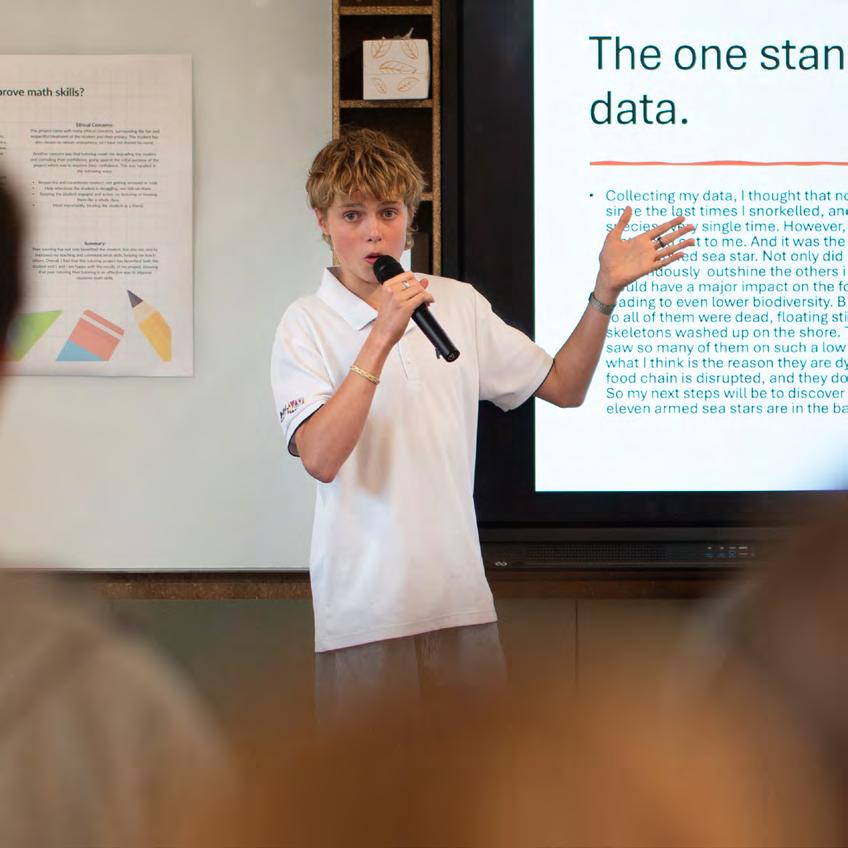
As part of the Regenerative Futures Program (RFP), students collaborate on hands-on projects that explore how communities can live, learn and grow regeneratively. Responding to real-world challenges such as waste, biodiversity loss, climate resilience and ethical enterprise, students design initiatives that restore ecosystems, reduce consumption and strengthen community wellbeing. Through interdisciplinary learning, these projects become a living laboratory for regenerative thinking, creativity and positive systems change.
Projects include the Swap Shop Collective, the Regen Café, the regeneration of Watson’s Creek, Food Forrest, Plastics Recycling (Circular Design) and Biodiversity in the Brian Henderson Reserve.
Work experience allows students a week to engage in a workplace that will provide them some insight into a career they aspire to pursue. It informs students about whether the day-to-day tasks performed in the job are what they expected and helps students identify the subjects they’ll need to pursue their chosen pathways.
The process of seeking a placement, communicating with a future employer and completing a contract from start to finish are valuable skills students can take into part-time employment.
In Year 10, students take part in a combination of core disciplinary subjects, interdisciplinary units culminating in the Futures Project, and a selection of elective subjects that connect directly to their future VCE study.
At Year 10 all students study English and Mathematics as core disciplinary studies for the duration of the year.
A key element of the Regenerative Futures Program is the Future Worlds subject, an interdisciplinary learning experience designed to connect knowledge, skills and ways of thinking across subject areas where students explore systems thinking, regenerative design and future-focused action. Students investigate how living systems sustain wellbeing, resilience and flourishing, while drawing inspiration from nature to imagine and design regenerative solutions for the future.
Having developed communication, collaboration and critical thinking skills throughout Terms 1 and 2 of the RFP students embark on their Futures
Project. The Futures Project is a sixmonth exploration of a topic of particular interest that is filtered through the lens of Regenerative Thinking. It runs throughout Terms 3 and 4, culminating in a final exhibition and showcase of findings and possible solutions.
Students are mentored through a personalised design process and handson methodology. Research skills, critical thinking, written and oral communication and organisational strategies are strengthened through hands-on experience. Students have the opportunity to develop a sense of accountability for their own learning before moving into their VCE studies.
The RFP’s project-based learning is a highly structured instructional approach to learning that gives students greater opportunity to develop skills and knowledge by engaging in real-world challenges. This approach aligns with Woodleigh’s learning by doing methods and encourages rigorous gains fueled by personalised passions and approaches.
Project-based learning shapes education around the needs of contemporary learners, fostering student agency, ethical and credible research, and accountability.
At Year 10, students have a choice of a range of Elective offerings. The Elective options allow for pathways through the Senior Years and should be considered in line with future VCE options.
All students must select at least one Science Elective.
Those students who elect to study a language (French or Indonesian) are required to study that language in both Semester 1 and Semester 2 if they intend to continue into VCE.
Overall, students will undertake:
• two core disciplinary subjects in Semesters 1 and 2 (English and Mathematics)
• a semester of Interdisciplinary Studies
• a semester of The Futures Project
• at least one semester of a Science Elective
• five more semester subjects via Elective choices (VCE accelerated subjects take up two semesters, as do French and Indonesian).
In English, students develop the core skills of Reading, Writing, Speaking and Listening. Being able to communicate with confidence and insight is a foundation skill for both school and life. The Language and Literature curriculum is designed to develop a student’s understanding of the issues, language and literature that shape our society.
Note: Students who require extra help with literacy-based subjects may choose the Learning Enhancement elective in order to obtain additional help from Learning Enhancement staff.
Based on their background, students will be able to elect two possible pathways:
• ‘Standard’ Year 10 Year 10 Mathematics: The groups (10, 10+10A, Foundation) will be formed and adjusted to allow for more specific preparation of students for General Mathematics Units 1 & 2 and/or Mathematical Methods Units 1 & 2 and/ or Foundation Mathematics Units 1 & 2. Consultations regarding student options and choices will take place in Mathematics classes during Semester 2.
• Acceleration
Acceleration into Specialist Maths Units 1 & 2: a program for students who have taken part in the Mathematics Acceleration program, or new students with proven ability.
Entry into each of these pathways will be based on recommendations of teachers and the Learning Area Leader of Mathematics after discussion with students and parents.
Students must select at least one All students must select at least one Science elective for Year 10 as a VCAA requirement. Science options are presented later in this booklet
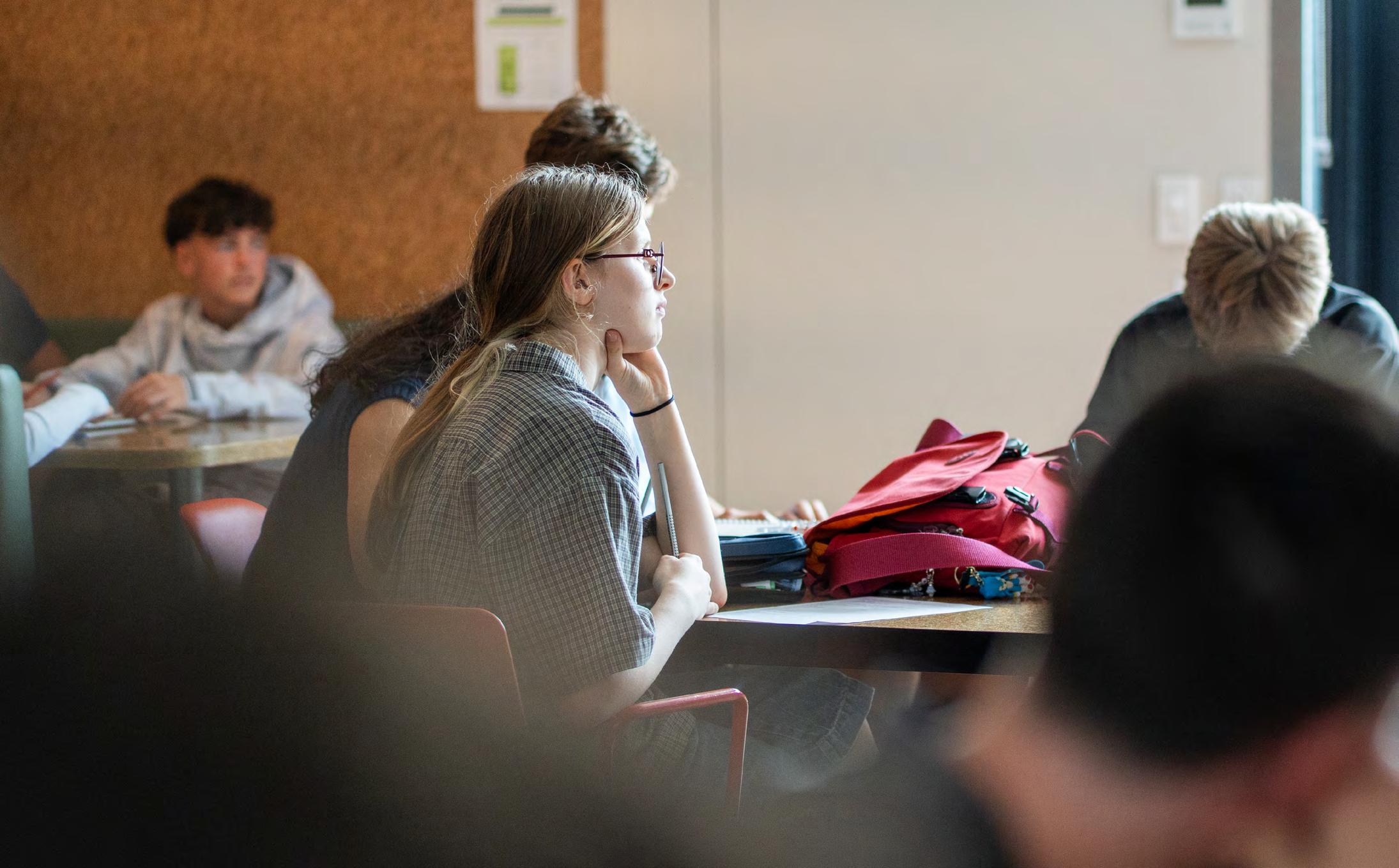
The VCE Mathematics studies are designed to provide access to worthwhile and challenging mathematical learning in a way which takes into account the needs and aspirations of a wide range of students.
It is also designed to promote students’ awareness of the importance of mathematics in everyday life in an increasingly technological society, and confidence in making effective use of mathematical ideas and processes. The appropriate use of technology will be incorporated into all of the VCE mathematics units.
The study is made up of the following units:
●
●
●
●
Interdisciplinary Studies access two or more academic disciplines combined in a learning approach.
Interdisciplinary approaches encourage real-world application and holistic understanding of an issue. The Interdisciplinary Studies will provide rich learning environments with an anchor in real-world learning. The Regenerative Futures Program uses interdisciplinary learning across the year through a series of interlinking units. Skills promoted during the Interdisciplinary Studies are deliberately aligned with preparation for VCE and beyond.
Term 1
Future Worlds: Regenerative Design, Biomimicry
Term 2
Future Worlds: Stories of Me, Stories of Place
Term 3
Futures Project
This course provides an interdisciplinary approach to Futures Thinking to develop key skills for Senior Years. With a focus on critical and quality thinking, students study Biomimicry and Systems Thinking to analyse various applications and benefits of regenerative approaches. Further, the course develops conceptual links between the individual experience and collective cohesion with a focus on Aboriginal Histories and cultures, and personal storytelling.
The Futures Project takes place in Term 3 and 4 and continues to support development of student agency and real-world regenerative impact. Selecting a personal interest, students develop research and investigation skills to find regenerative solutions to real-world issues.
The Futures Project provides students with opportunities to connect their learning to personal interests, as well as the Humanities.
The Collaborative Regenerative Projects are a year-long, hands-on learning experience in which students participate in regular half-day sessions throughout each term. Students apply regenerative principles to complex, real-world challenges while developing key competencies and practical skills. These projects provide opportunities for students to explore how their ideas and actions can contribute to a more hopeful future and help create conditions for both people and planet to thrive.
Across the year, students will draw on New Metrics capabilities in communication, quality thinking and collaboration.
Term 4
Woodleigh School offers a variety of electives to Year 10 students, including core sciences, humanities, languages and creative arts. The following pages detail the subjects on offer.
The Arts Page 11
Visual Arts
Art Media
Textiles
Performing Arts
Drama
Music Design Page 12
Digital Technologies
Food Studies
Product Design
Visual Communication
Health & Physical
Education Page 13
Health & Human Development
Outdoor Education
Physical Education
Humanities Page 14
Business & Commerce
History
Humanities
Law & Order
Language Acquisition Page 15
French
Indonesian
Language & Literature Page 16
Literature
Science Page 17
Animal and Plant Production
Biology
Chemistry
Marine Science
Physics
Science of Sport
Learning Enhancement Page 18
When selecting electives, students should take the following into account:
• Their interests and abilities.
• The need to maintain a broadly-based studies program.
• The need to keep options open for VCE and tertiary education.
• Career and further education prospects.
Year 10 should be seen as a perfect opportunity to ‘try’ new and different subjects for a final time prior to specialising in VCE.
Specific subject information, in addition to that which is provided here, can be sought from the relevant Learning Area Leader or Department Heads.
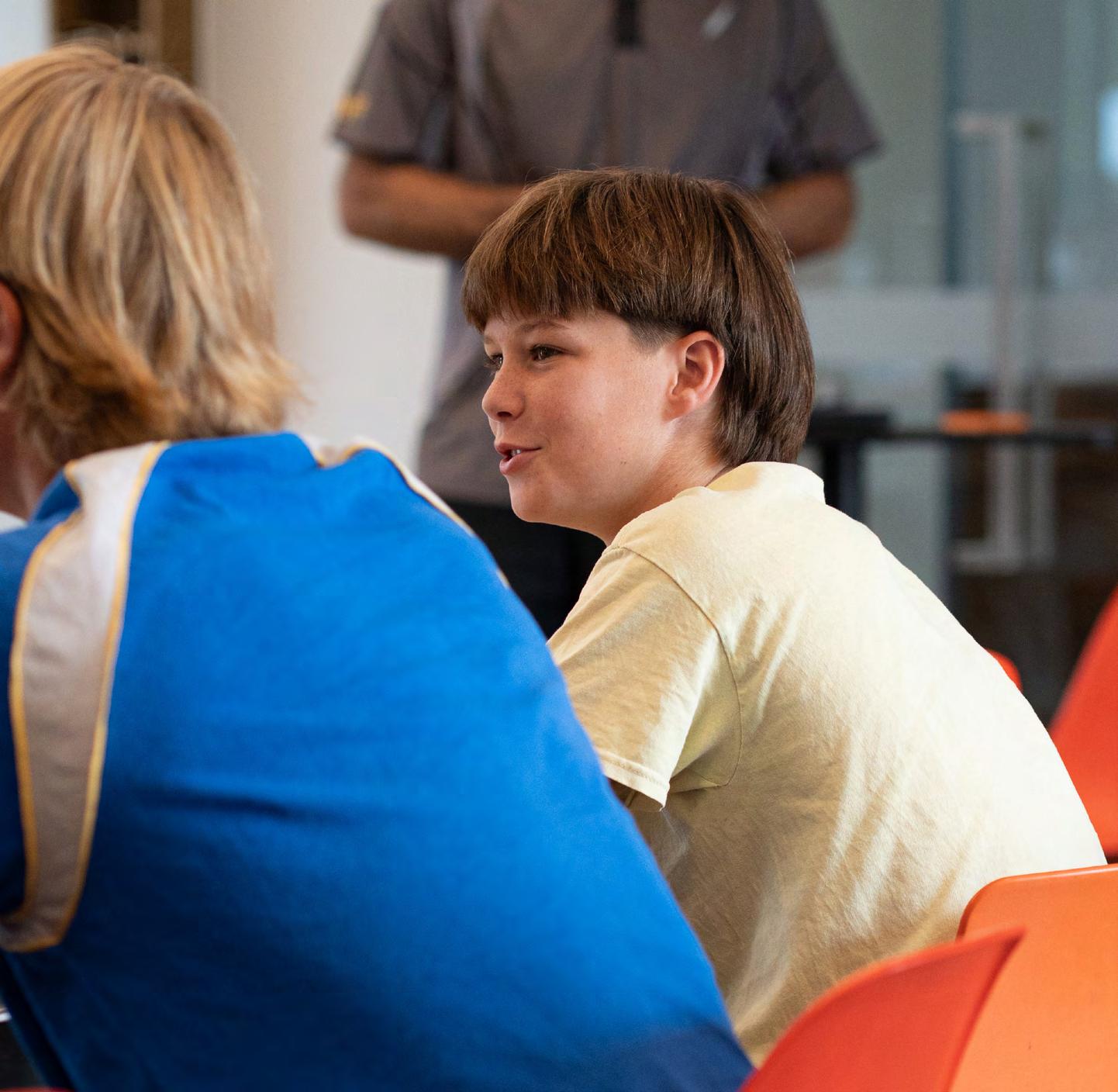
In addition to the information offered in this booklet, students and parents should feel free to seek the advice of teachers, tutor teachers and the Careers Counsellors. We encourage students to pursue continuing research into possible career and further education prospects. The internet, Library and Careers Room provide resources for this purpose.
Tuesday 19 May, 2026 from 6pm
This night provides specific information for Year 10 subject selection and will also provide information to enable planning for VCE subject selections and careers/ courses beyond school.
Subject Selection forms due Tuesday 28 July, 2026
Students will be required to complete their subject selection online, ensuring subjects are listed in preference order and carefully consider reserves as they may be used. If students are interested in taking one VCE subject in Year 10 this can also be indicated. Students need to print their final selections and return this signed form to Reception by Tuesday 28 July. This must include the acceleration application form (if relevant).
Step 4: Receive confirmation of your course
In early Term 4, a subject confirmation email will be sent. Every effort will be made to cater for all students, but inevitably some students may have to revise their choices for their final selection. These students will be notified.
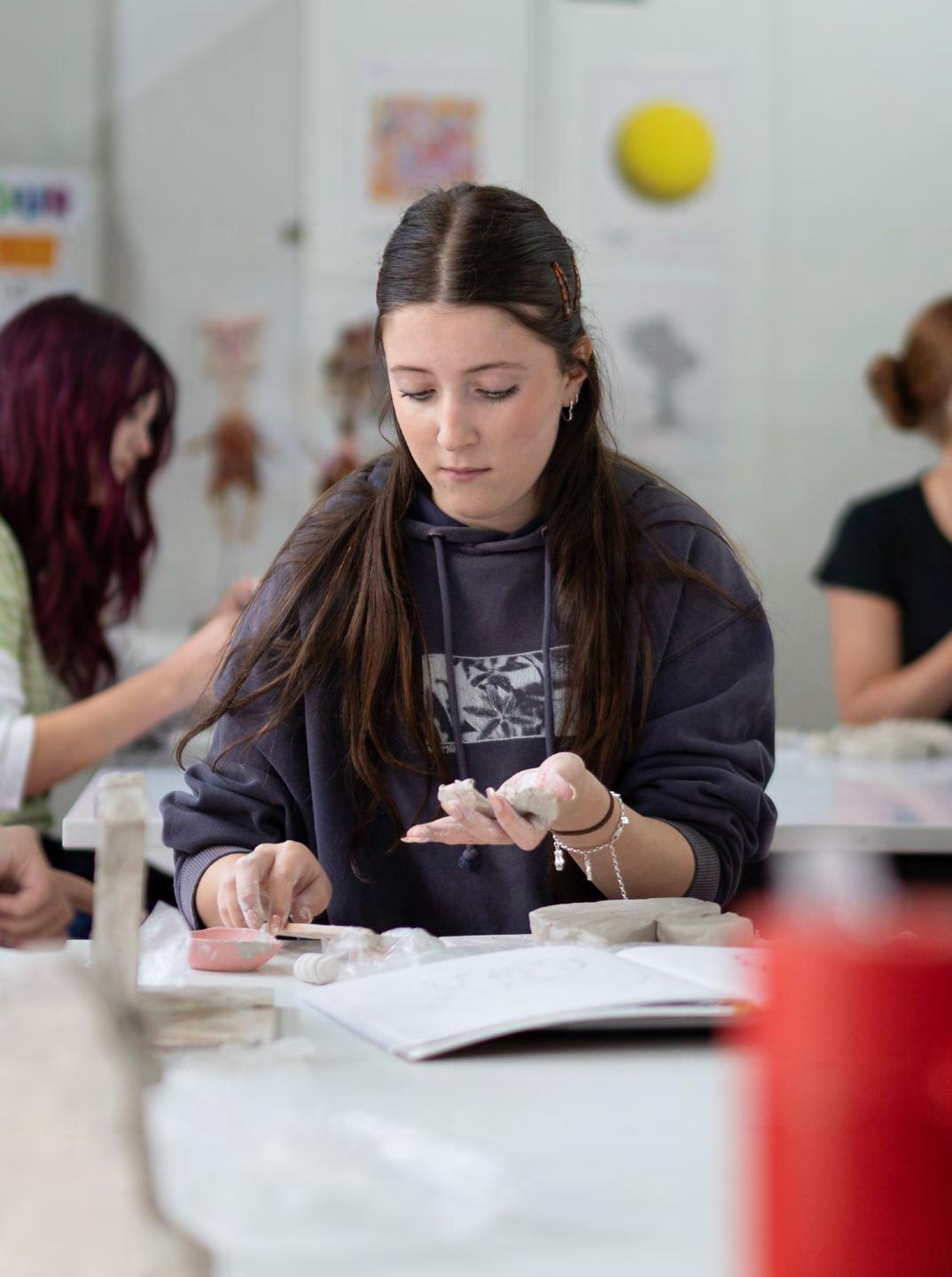
A diverse range of creative subjects designed to inspire and develop artistic talents, from visual arts and drama to music, media, and textiles.
Art
Art gives students the opportunity to develop visual literacy, interpret artworks and develop a folio of artworks, using experiential learning. Through investigating artworks and the exploration as the artist and audience, students considers their connection to artworks, and how their communication of ideas and presentation of challenges shapes their personal ideas. Students examine selected artworks to explore the different ways that artists interpret and communicate social and personal commentaries. This subject is ideal for students interested in VCE Art Creative Practice, Media, Product Design Technology and Visual Communication and Design, as the skills and learning in this class will support them as they move forward into senior school.
The Year 10 Media course offers students an exciting opportunity to explore the world of filmmaking and media production. Throughout the semester, students will develop essential skills in film analysis, production and editing while working hands-on with industry-standard equipment, including DSLR cameras and audio gear. Students will learn the fundamentals of storytelling and cinematography, culminating in the creation of their own short films. There will also be opportunities to enter local film competitions, allowing students to showcase their work and gain valuable experience in the media industry. This course is perfect for creative thinkers passionate about film and media production.
Textiles involves deconstructing the garment; the study of fabrics, fashion, and design as an artform. Throughout the course, students explore the history of textiles and fashion and its role in contemporary society. Students respond to the question, ‘what is an Australian aesthetic?’ through drawing, dyeing, construction, and printing. Students investigate sustainability, slow fashion, upcycling and use a range of innovative techniques. This subject is ideal for students interested in VCE Art Creative Practice, Product Design Technology and caters for those students who pursue VET studies in Fashion.
This elective offers students the opportunity to develop and refine performance skills through group-devised theatre, with a focus on constructing scenes and exploring playmaking techniques. Through workshops, master classes, and rehearsal sessions, students will create ensemble performances based on various stimuli, fostering collaboration and creativity. The elective will also place emphasis on developing the craft of acting, with students exploring a range of vocal, physical, and practical techniques necessary for creating characters. The elective provides a solid foundation for VCE Drama and is ideal for those looking to seriously improve and explore the craft of acting.
This subject builds on the skills acquired in Year 9 Group Music. The course aims to provide students with a broad and thorough understanding of music, with a focus on ensemble playing, theory, analysis and aural training. They develop their proficiency in, and understanding of, each of these components to support their growth as well-rounded musicians. In the practical component of the course, students will work as an ensemble, learn how to arrange repertoire, rehearse effectively, and consider their presentation as a group in performance. The final performance will be at one of the school’s Musicales. Students will also study existing arrangements to gain greater knowledge about how instruments are used in combination and will continue to develop their musicianship skills. This unit is excellent preparation for anyone intending to complete VCE Music in the future.
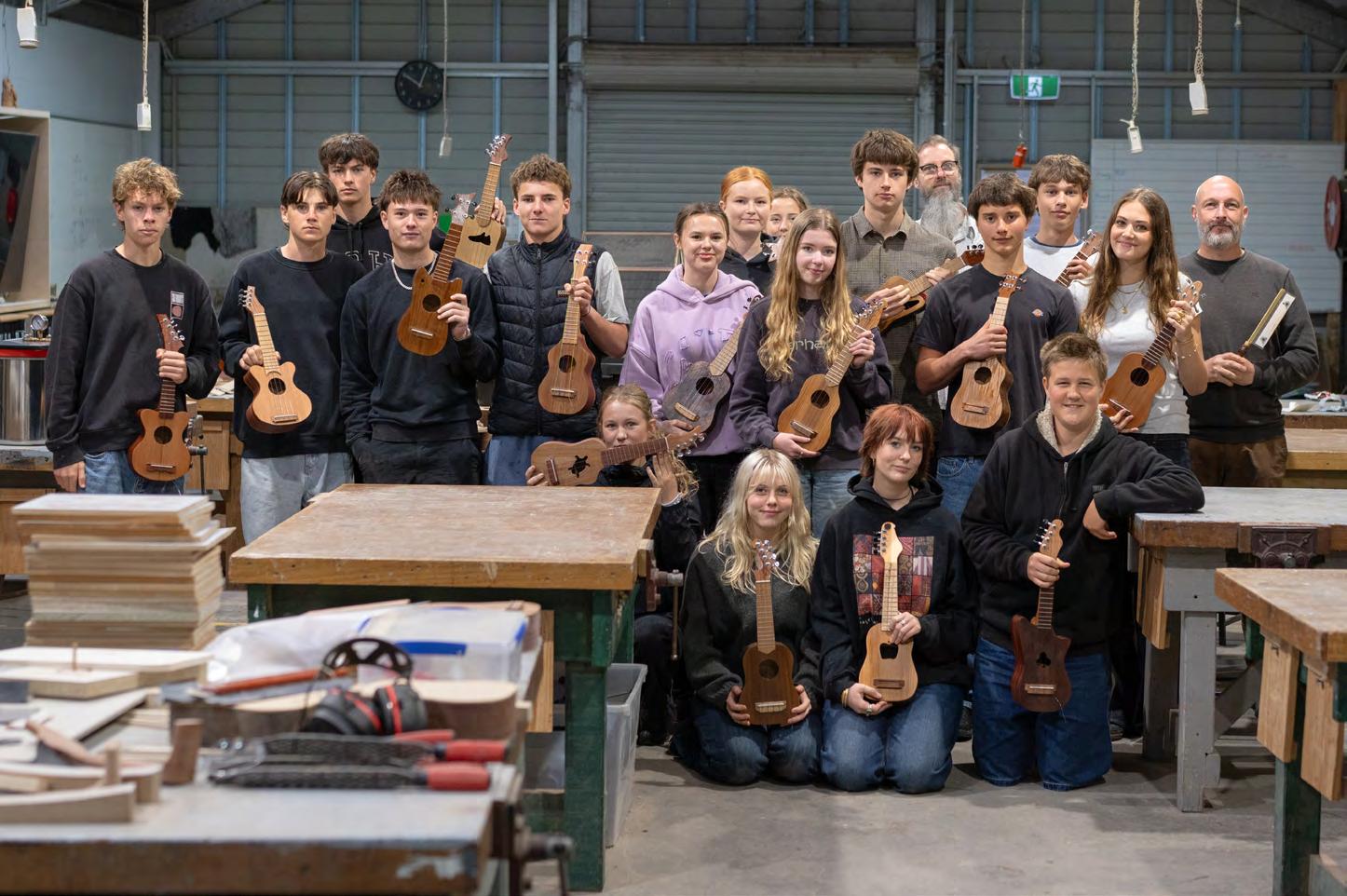

A variety of innovative design subjects that equip you with the skills to create, analyse and bring your ideas to life, from cyber applications and Product Design to Food Studies and Visual Communication.
This course serves as an entree to VCE Applied Computing, transitioning students from digital users to technical innovators. Year 10 is where you stop just using technology and start engineering it. You’ll gain the exact technical skills that industries like Cybersecurity, Data Science and Gave Development are looking for right now.
Engineer custom Python apps, architect AI-driven solutions and interrogate global datasets to build interactive dashboards. You’ll create a professional design folio, mastering the technical and problem-solving logic essential fior VCE Applied COmputing, Data Analytics and Software Development.
Product Design involves the design and production of innovative products that solve a problem and/or meet a need, combining skills in woodwork, technology and creative problem solving.
Coursework includes the design and manufacture of a final product as well as the drawing of ideas and written analysis work. Assessment also includes an annotated design folio. This subject is ideal for students interested in future studies in VCE Product Design and Technologies.
The focus of Food Studies in Year 10 is on creating designed solutions which involves investigating, generating, producing and evaluating, planning and managing. A broad variety of foods will be explored and prepared using diverse production techniques. Students will work collaboratively on the design process to create an instant restaurant evening for parents titled ‘Woodleigh Kitchen Rules’. Students will also explore the functional role of the key components of ingredients, techniques used to create quality food products, the impact on the sensory properties of meals and modern trends in the food industry. Assessment will be based on practical production work and a design folio. This elective provides an excellent preparation for VCE Food Studies.
In Year 10 Visual Communication and Design, students will develop a folio of observational and technical drawings using both manual techniques and digital illustration. Students will make and view visual communications and learn about how designs communicate ideas and information.
In this unit, students will be introduced to the visual communication fields, (Messages, Objects, Environments) and learn about the design process, to generate ideas and develop these in response to specified design needs.
Students will learn how to develop and demonstrate their skills, by using a variety of techniques, conventions, and processes in a range of designs. At Year 10, students will manipulate design elements and design principles, materials, methods, media, and technologies to develop concepts and drawing techniques for specific purposes and needs.
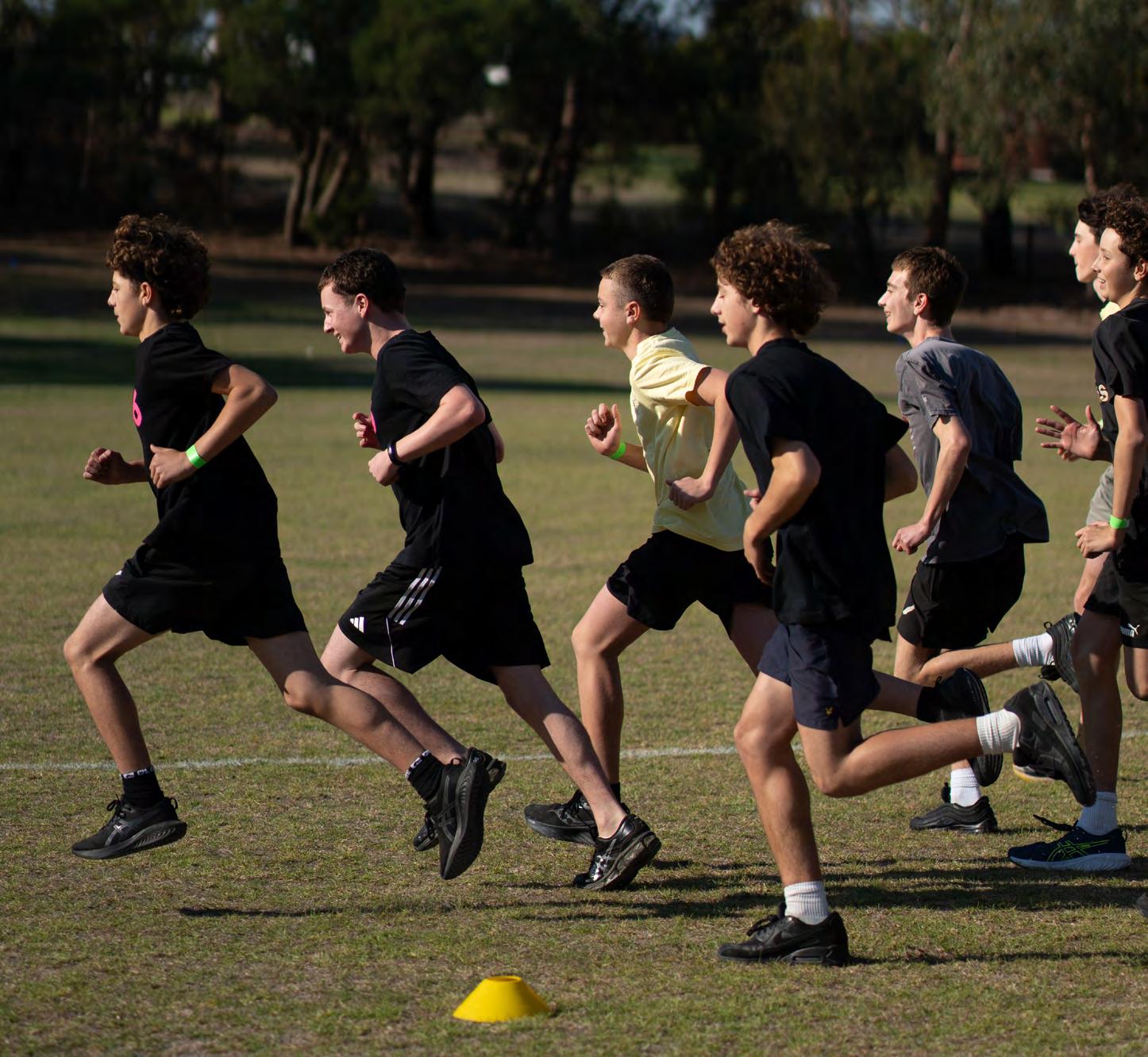
Engaging studies that blend practical and theoretical learning.
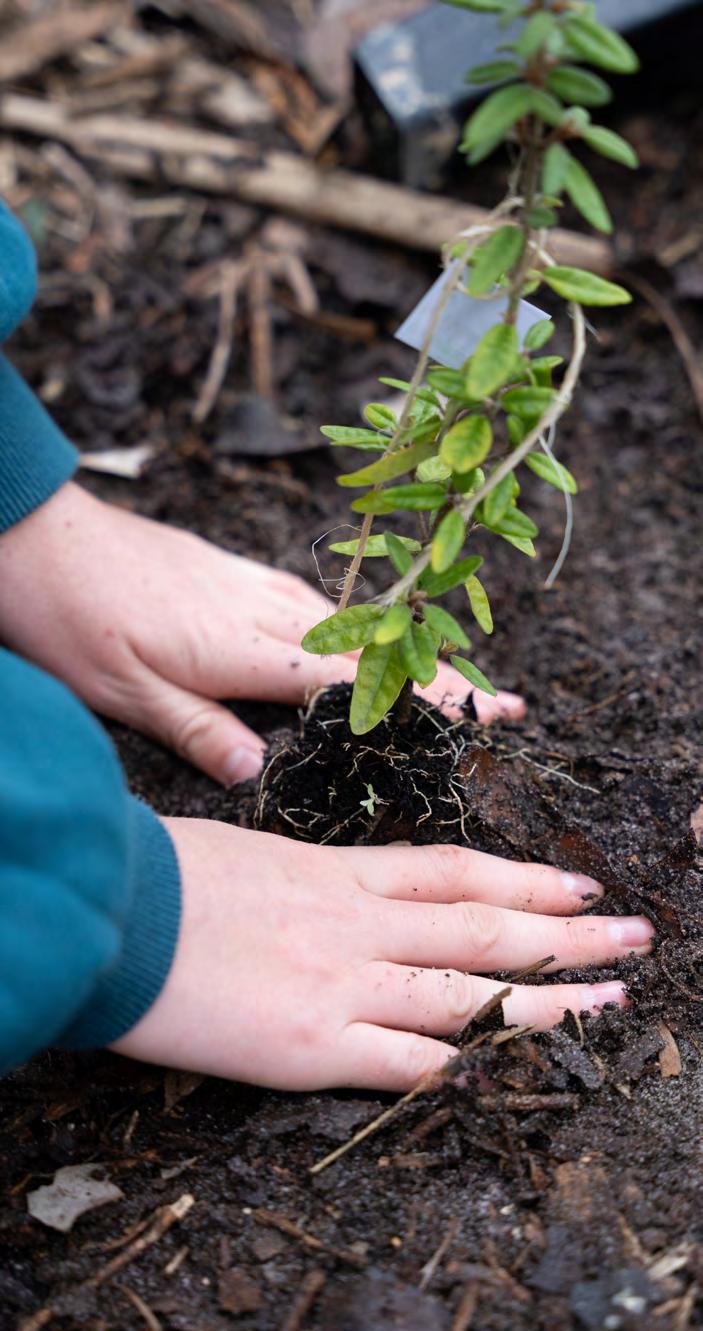
This course provides students with some understanding of concepts covered in VCE Outdoor and Environmental Studies.
The course has practical and theoretical components. There are a number of opportunities to explore the native outdoor environment at Woodleigh. Students contribute to developing an environmental interpretation trail within the Woodleigh grounds that include the indigenous perspectives on uses of plants and ecosystems. Students learn skills in bushcraft to safely plan and implement their own adventurous outdoor experiences and explore the importance of maintaining healthy outdoor environments.
Students will discover how and why the body moves by examining the biophysical principles that underpin human performance. They are introduced to key concepts from biomechanics and skill acquisition, using a range of tools and coaching techniques to analyse movement skills and understand how targeted adjustments can improve performance in physical activity, sport, and exercise.
Students build on this foundation by investigating performance from a physiological perspective. Through practical participation, they analyse the fitness requirements of different activities and apply relevant training principles and methods to enhance performance at individual, club, and elite levels.
By connecting scientific theory with hands-on application, this elective equips students with the analytical skills, practical knowledge, and confidence needed for success in VCE Physical Education and for deeper engagement in sport, exercise, and lifelong physical activity.
In this new elective, students will explore the key transitions in health, wellbeing, and human development from both individual and global perspectives. They examine the physical, social, and emotional changes that occur as young people move toward adulthood and consider the expectations and responsibilities that come with increasing independence — from forming long-term relationships to navigating health milestones and making informed decisions about their future.
Students build their health literacy by investigating the Australian healthcare system from a youth perspective and analysing the reliability of health information.
With a strong focus on youth, the unit encourages students to reflect on their own health as individuals and as a society. They develop skills in interpreting and using data through a research investigation into a contemporary youth health focus area and examine the role of food as an influence on health and wellbeing. Together, these learning experiences provide a solid foundation for students considering VCE Health and Human Development in later years.
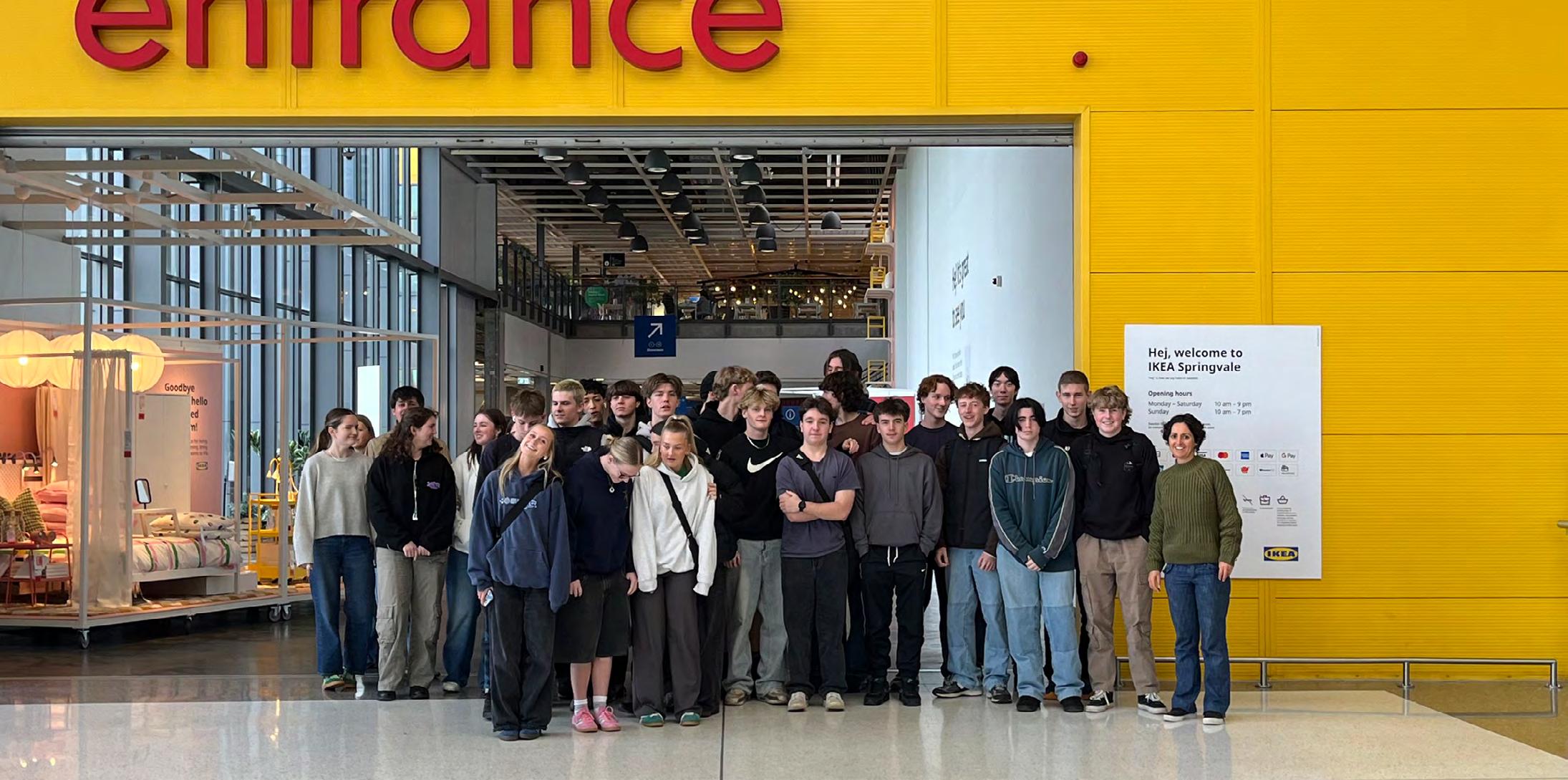
Delve into a variety of subjects that offer insights into business, history, and law, preparing you for future studies and real-world applications.
Year 10 Humanities investigates the world around us and our role as Australian citizens. Students study significant aspects of Australian society from the past and present. The Humanities curriculum is designed to support student knowledge about the complex processes that have shaped the modern world and to investigate people’s interconnections with the natural and social environment. A key depth study will include an investigation of Australia’s role in the Vietnam War through a focus on the origins of the conflict and different interests involved, as well as the long-term significance of the war. Further studies may include exploring challenges and conflicts impacting the world today.
Students explore the nature of innovation and examine how businesses create and maintain a competitive advantage in marketing, including within the global marketplace. They investigate key economic indicators to assess the performance of the Australian economy and analyse the relationship between economic performance and living standards, as well as reasons for differences between countries. Students also develop an understanding of basic accounting principles, learning essential terminology and practical financial skills, including the preparation of cash receipts and payments journals and statements of receipts and payments. Finally, students explore foundational business concepts such as types of businesses, business objectives, the 4Ps of marketing, target market characteristics, the importance of market research, and principles of corporate social responsibility. This course provides students with valuable insight into key topics studied in VCE Business Management and Economics.
There have been many times in the past when challenging and changing society has not been achieved by peaceful or democratic means. For many people, the fight for change was a desperate and dangerous struggle. Those in power often resisted challenges to the established order and fought back against people or groups who were seen as terrorists or rebels. In this course you will study a range of historical contexts where brave individuals challenged and changed political, social and economic systems. Topics may include: the French Revolution, slave revolts, the Civil Rights movement, the Suffragette movement and other examples of popular resistance to tyranny in the 20th Century. Essentially, you get to study guns, guillotines and girl power!
Year 10 Law & Order focuses on the civil justice system and how it aims to protect the rights of individuals and provide opportunities for a wronged party to seek remedies. In this unit, students develop an understanding of key concepts in civil law and investigate the areas of negligence and defamation in detail. Students consider how and why Rebel Wilson and Jonny Depp were successful in their defamation claims and apply the same legal reasoning to other hypothetical scenarios.
Students also develop an understanding of how civil disputes are resolved, including the methods and institutions available to resolve disputes, and the purposes and types of remedies. Through investigations of real and hypothetical civil cases, students apply their knowledge to discuss the effectiveness of the Victorian Civil and Administrative Tribunal (VCAT) and Consumer Affairs Victoria (CAV) and their available remedies.

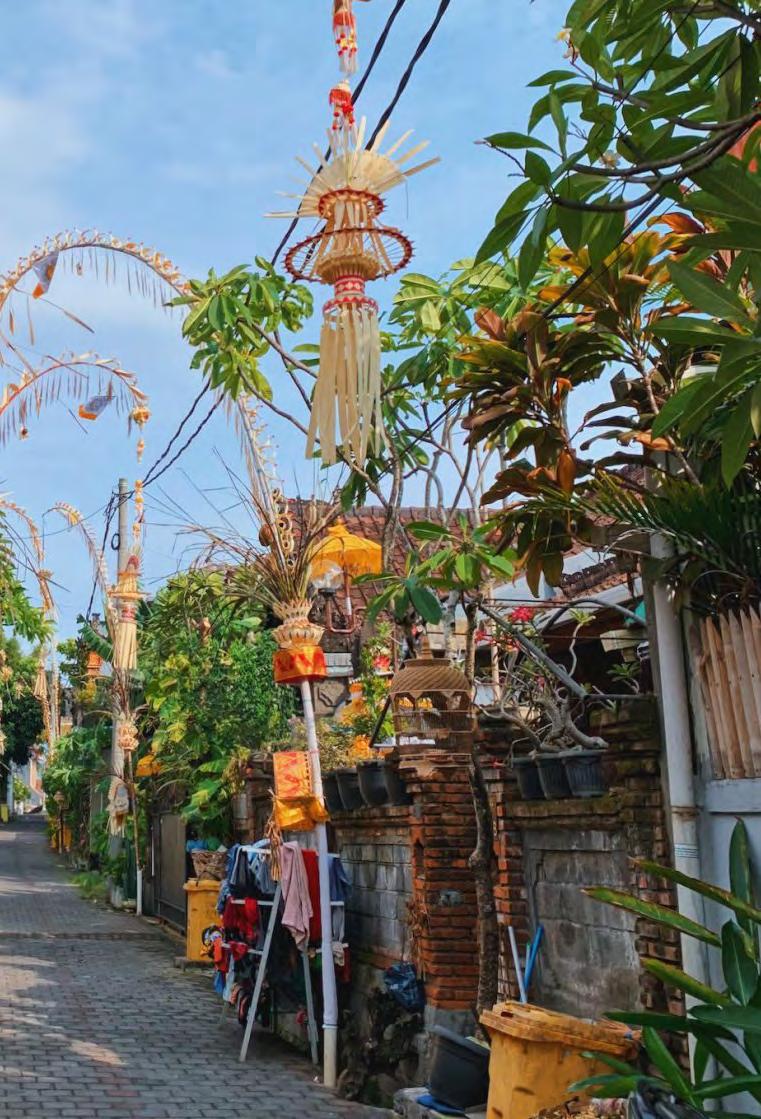
French and Indonesian are recognised by the Australian Government as two of the nine languages of economic significance for Australia. Apart from enhancing students’ cognitive skills, language acquisition also develops international mindedness through broadening appreciation of people and their cultures.
In Australia’s multicultural society, the study of an additional language also expands career options. The Middle Years Program encourages students to continue their Language Acquisition studies at least until the end of Year 10. Woodleigh also has a commitment to language studies and encourages students to continue their French and Indonesian courses to senior years. At some universities, completion of a VCE Language Other Than English is recommended for particular courses. Some courses also offer a bonus to those students who satisfactorily complete VCE LOTE. Semesters 1 and 2 must be done as a sequence, and are essential for non-native speakers considering French or Indonesian at VCE level.
The culture of everyday life is presented through situations in which you might find yourself in a French-speaking country. These include: the French-speaking world, friendships, family, health and wellbeing, school life, daily routine, future aspirations, the local neighbourhood, entertainment and leisure and planning
to go on exchange or visit a French-speaking country. The text uses authentic materials, recorded interviews and conversations, magazine articles, posters, timetables, literature extracts and advertisements. The way of life of French-speaking people is presented in material from different regions in France and other francophone countries around the world. Students will also be required to use technology in the presentation of their work.
In Indonesian, the focus is on real-life situations in which students might find themselves when visiting Indonesia. Some of these include: street life, health, the environment, travelling in Indonesia, entertainment, eating out, ceremonies and celebrations. The text uses authentic materials, including recorded interviews and conversations, magazine articles, posters, photos, literature and advertisements. Emphasis is given to developing fluency in both spoken and written language in order to prepare students for further study at VCE level.


Literature
The Literature elective focuses on developing an enjoyment and appreciation of reading that arises from discussion, debate and close analysis. You will reflect on your own interpretations and be introduced to new ways of thinking critically about what you read. The Year 10 literature study includes texts that vary in form (plays, poetry, short stories, novels) and range from classic to contemporary contexts. During the course, you will learn to: understand that texts are constructions, to consider the complexity of language and to challenge the assumptions that poets and authors would have you accept. The study of literature encourages independent and critical thinking and will help you to refine your written expression, skills which will assist you when undertaking the study of Literature at VCE level and other subjects.
All students must select at least one science elective for Year 10 as a VCAA requirement.
If you are considering studying Biology at VCE, then this course is highly recommended. In this unit of work, you will explore some of the core biological concepts through the lens of conservation of ecosystems; using the Reserve for field work. Those concepts include; Cell Theory, Ecosystem Study, Classification, Energy Transfer and Transformations through Ecosystems, Adaptations and Evolution. All of these topics will be expanded upon in the VCE Biology course. During this unit of work, you will be encouraged to develop your scientific investigation skills through the design, implementation and analysis of an individual investigation.
If you are considering studying Chemistry at VCE, then this course is highly recommended. During this unit of work, you will delve into the realm of atoms, bonding and chemical reactions and use these to explain the behaviour of the world around us. We will look at how similarities in the chemical properties of elements and their compounds are represented in the periodic table. You will use atomic symbols and balanced chemical equations to summarise, predict and explain chemical reactions, including neutralisation and combustion, and determine how different factors influence the rate of reactions. You will be encouraged to develop your scientific investigation skills through designing, conducting and analysing multiple experiments including student-designed investigations.
If you are considering studying Physics at VCE, then this course is highly recommended. During this unit you will explore and apply the properties of light as a wave. We will investigate the laws of reflection and refraction, including Snell’s Law and the dispersion of light in the visible spectrum. You will develop the basic manipulative skills of the Right-Hand Rule in Magnetism, including electromagnetism, field strength and solenoids. We will explore these concepts both physically and mathematically, using proofs as a method of practical investigation. We will investigate Straight Line Motion and the associated terms, including graphs, equations, and real-life applications. During this unit you will also explore Newton’s three Laws of Motion and use them to predict, describe and calculate the forces acting on objects with the aid of vectors and free-body diagrams.
Find out how sports like cycling, golf and surfing are governed by the principles of momentum, gravity, friction and buoyancy forces. Find out how your muscles, bones and ligaments function when running, swimming and playing netball. Where do we obtain our energy from and how can we tailor our diet for a specific sport or event? What happens to your heart and lungs when you exercise? In this unit, you will learn about your centre of gravity, your muscles,
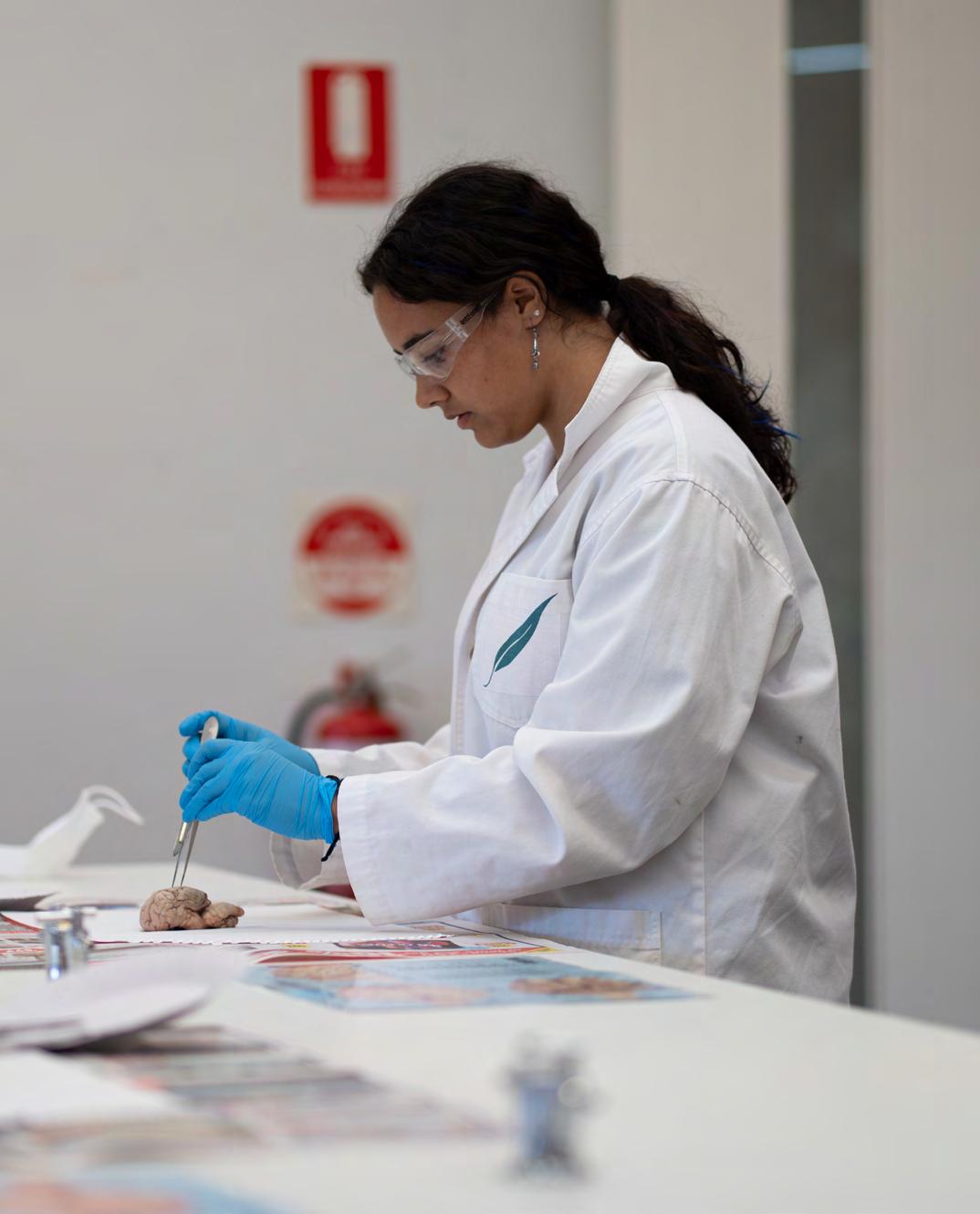
blood and bones. You will learn about the pressure your foot exerts on your sneakers and how drugs can affect the human body. You will learn how technology has played a major part in improving sporting performance. Apply this knowledge to the sports you play and work out how they can change how you play the game. This unit will allow students to investigate sport from biological, chemical and physical aspects.
The diversity of the plants and animals of our southern Australian ocean and the threats to their survival forms the basis of this unit. This course gives a basic introduction to the marine environment and the wide variety of life that exists within it. With a particular focus on Port Phillip Bay, students are introduced to the enormous diversity of marine life found locally, investigate the concepts of classification, and explore the structure and function of various marine animals and the reasons they belong to the same groups. One of the biggest threats to marine ecosystems and life in our seas is plastic, and through research and beach surveys students will investigate the implications of this pollution as well as the implications of other human impacts on our marine environments.
This semester long subject will look at a variety of both Animal and Plant production systems. You will be involved with caring for, and monitoring the growth rates of our animals on the Farm; propagating plants from both seed and cuttings; learning about the structure and function of plants; paddock to plate using an edible garden; and, gaining a basic understanding of a variety of agricultural production systems using the resources available at the Woodleigh School Farm. You will explore local agricultural and horticultural businesses and possible career options across the sustainability, food and fibre industries.
The Learning Enhancement staff provide extra support and assistance to students throughout Years 7-12.
A student’s particular area of difficulty may have been identified through Year 7 entry testing or by classroom teachers. This subject is a continuation of Year 8 or 9 Learning Enhancement and is available to students who were in Learning Enhancement in Year 8 or 9 (or by prior consultation with the Learning Enhancement team). This subject is intended to support students’ work in literacy. Work undertaken will complement the Year 9 or 10 Language and Literature syllabus to ensure students are prepared for Language and Literature classes.
Time will be available for the completion of homework with additional support available from the supervising teacher. You may choose this elective for one or both semesters. Please speak to Learning Enhancement staff for their recommendation.
The VCE is a two-year certificate for Years 11 and 12. It is made up of semester-length units of study.
What makes up a two-year program of study?
Most students will do 22 semesterlength units over two years. Students can do extra or fewer units or take more time to complete the program. The minimum number of units which must be satisfactorily completed to be awarded your VCE is 16.
It is a VCAA requirement that each student selects at least 4 units of English and/or Literature. Of these four units, at least 3 must be satisfactorily completed in order to be awarded your VCE. Further, if you wish to gain an ATAR score, VTAC requires that you satisfactorily complete both Units 3 and 4 of English or Literature.
Notes:
• At Woodleigh School we offer both English Units 1–4 and Literature Units 1–4. The majority of Woodleigh students complete English Units 1–4 to satisfy the above VCAA requirement.
• Students are strongly advised to
complete English Units 1–2 alongside Literature Units 1–2. Students thinking about Literature Units 1–2 on its own should discuss this with the Head of English prior to making this selection.
Students should select studies that are appropriate to their interests and aspirations for tertiary study, training and employment.
Students are able to begin most studies at Unit 1, 2 or 3 but not at Unit 4. Units are at two levels.
• Units 1 and 2 level is the equivalent of Year 11. Students can choose to do one or both units at this level.
• Units 3 and 4 level is the equivalent of Year 12. Students have to do both units as a sequence at this level. At Woodleigh, students generally undertake 22 units on the following basis:
– Year 11: 12 Units (most commonly 6 x Unit 1 and 6 x Unit 2)
– Year 12: 10 Units (most commonly 5 x Unit 3 and 5 x Unit 4)
• Depending on the circumstances of individual students, this structure may be altered according to the following guidelines:
• Under limited circumstances students may complete five rather than six Unit 1 and 2 studies. This gives the student the opportunity for additional study time and to seek help from Learning Enhancement staff.
• Students who are performing strongly in all subject areas and have particular strengths may be encouraged to undertake a Unit 3 and 4 sequence while still in Year 11. There is an expectation that this advancement will not be at the expense of a student’s Year 11 program and that students will still undertake a total of six studies during Year 11 and five in Year 12 (see the Acceleration Policy and information on page 18).
It is possible for students to accelerate in certain VCE studies. This process requires students to nominate a study in which they wish to accelerate and then to “qualify” to do so. Considerations will be made as follows:
There are many benefits of accelerating students into VCE subjects early, but it is also important to recognise that the academic transition is a significant step –not all students are mature enough, both emotionally and academically. Units 1 & 2 in the VCE are benchmarked nationally and internationally to a Year 11 standard. Similarly, Units 3 & 4 in the VCE are benchmarked nationally and internationally to a Year 12 standard.
Some benefits include:
• Having a 6th Unit 3 and 4 subject to include in your ATAR.
• Having the stepped experience of one study (or two studies) a year early, rather than stepping straight into a full VCE program.
• Experiencing a higher degree of challenge – the pace of the work, the rigid requirements for presentation and meeting deadlines.
• Working alongside a different (and older) peer group.
• The experience of SACs and external examinations.
Some of the drawbacks include:
• The student may focus on the accelerated study at the expense of the remainder of their Academic program.
• The possibility that the student may achieve a lower Study Score than they would have had they completed the study in the relevant Year level.
In order to minimise possible problems, we will consider each student application carefully. We require a (flexible) combination of:
• I am achieving at least 80% or more in Year 10, in the relevant/complementary subject(s).
• Relevant/complementary subject teacher and/or Tutor feedback.
• A high level of self-management and a sense of responsibility, as evidenced in a student’s Effective Learning Habits
• A history of a reasonable level of maturity and organisation with their Academic studies.
• The Maths Acceleration program is a special case and students involved in this program will be reviewed by the Mathematics Learning Area Leader.
Notes:
1 Students who do not initially satisfy the listed criteria will be alerted to this fact. Where the student has been deemed not to meet the requirements, the student will be asked to reconsider their subject
choices for the following year and their reserve subject selections will be used.
2 Progression from accelerated Units 1 and 2 to Units 3 and 4 subject is not automatic and may be subject to review.
3 This Acceleration criteria does not apply to students wishing to accelerate into VCE VET studies or any Block Credit recognition program. Students are discouraged from accelerating into both VCE and VET programs.
4 Approval for students wishing to apply to accelerate into a VCE subject will be at the discretion of the Head of Learning – Senior Years in consultation with other key staff. In every instance, the decision will be based on the best interests of the student.
We strongly recommend that for most students, the maximum number of VCE Units that they would accelerate is 2 Units (ie 1 subject). Students wishing to accelerate in more than 2 Units would only be considered in very special circumstances.*
It is an expectation that all students who accelerate in at least one study, do complete a full allotment of studies at their relevant Year level alongside this accelerated study. Accelerating one subject does not qualify students to reduce their subject load in Year 12.
* In the special case where a student is approved to do 2 studies at an accelerated pace, it is an expectation that they will complete a full load of 5 studies when they are in Year 12 (this may be 4 studies at Woodleigh plus one Higher Education Study or VET study or Virtual Schools Victoria study, thus an overall total of 5 studies).
The following VCE studies are offered in 2027 suitable for possible accelerated study by Year 10 students.
The Arts
• Music Units 1 & 2
Design
• Food Studies Units 1 & 2
Language & Literature
• Literature Units 1 & 2
* As part of Maths Acceleration program
Health & Physical Education
• Outdoor and Environmental Studies Units 1 & 2
• Physical Education Units 1 & 2
Humanities
• Accounting Units 1 & 2
• Applied Computing Units 1 & 2
• Business Management & Legal Studies Units 1 & 2
Timetable blockings and class size limits will restrict the availability of the studies listed above.
VCE subjects are only offered to students who demonstrate academic suitability – check the eligibility criteria.
This process requires the completion of a written Application Form (including obtaining necessary signatures). Only one is likely to be approved.
We will consider each student application carefully and will be looking for a combination of the following.
I am achieving at least 6 on MYP criteria in Year 9.
My Effective Learning Habits are at ‘consistently’ in the majority of my subjects.
Feedback from teachers in relevant and/or complementary subjects suggest that I would be a suitable candidate for accelerating in this area.
Feedback from teachers and tutor note an historical track record of maturity and organisation with my academic studies.
I have researched this subject and have discussed the details with relevant subject teachers, former students and/ or Head of Careers.
If you satisfy a majority of the criteria listed above, you will be able to complete a form for consideration by the VCE Coordinator.
Mathematics
• General Mathematics Units 1 & 2
• Specialist Mathematics Units 1 & 2*
Science
• Cert II Conservation and Ecosystem Management Units 1 & 2
• Biology Units 1 & 2
• Psychology Units 1 & 2
Students will be required to submit an Accelerated VCE Studies Expression of Interest form to be considered for a VCE Unit 1 & 2 subject as part of the Subject Selection process. This expression of interest will be reviewed according to the criteria listed under eligibility.
The Timetabler will provide summary information regarding these expressions of interest to the Head of Learning, VCE, who will review the requests and present their recommendations to the Timetable Committee for final authorisation.
You will receive a link to this form at the time of subject selection, and it can also be found on the Woodleigh website.
It is important that when planning a VCE program, future studies are kept in mind. The Victorian Certificate of Education (VCE) and Vocational Education and Training in Schools (VET) certificates can be included in a Year 10-12 student’s program of study. Most VET programs are for 2 years in duration, some can be completed in 1 year. This means that if you are interested in VET, you should look into it for the start of Year 10 or your VCE. It is possible for students to start a VET program in Year 12; however, a statement of attainment may only be given.
VET programs are available to Year 10 and VCE students as part of their Woodleigh School program. They are available in a range of industry areas and, on completion, students receive a nationally recognised accreditation as well as unit credit towards their VCE program.
Students combine school-based studies with a VET program which may involve attending a TAFE college or a Registered Training Organisation (RTO), usually for one day per week. VET programs involve competency-based learning which means students perform tasks and duties to the standard expected in employment.
Structured Workplace Learning (SWL) with an employer in the relevant industry area is also a compulsory component of some VET programs. The SWL hours of work required varies between VET certificates.
Students undertaking a VET program as part of their VCE studies will regularly miss some timetabled classes due to the schedule of external training (often these programs run on Wednesdays or Fridays). It is the responsibility of the student to ensure that they are still able to satisfactorily demonstrate the learning outcomes for their entire VCE program, so allowing time to catch up on the work missed is essential.
Some VET programs include a scored assessment. This allows the VET program to contribute to the VCE requirements and also the student’s ATAR score. Students will
also be required to sit the GAT if they are enrolled in a scored VET.
In order to receive the VET qualification, it is important to note that students must complete the whole duration of the course - usually 2 years. If a Certificate is not fully completed whilst at secondary school, students can also receive a Certificate of Attainment for the partial completion of a VET program and continue studying the Certificate as a post-schooling option.
There is an additional cost when students enrol in a VET course. This charge varies according to the provider / study location.
Though Woodleigh provides a 40% discount on these fees, it is each family’s obligation to meet these costs in addition to the school fees. Specific costs for courses should be investigated prior to choosing a VET study. Please contact the VET Coordinator for further details about program charges.
It is also the student’s responsibility to make their own travel arrangements to attend the various venues to complete their VET certificate. A limited bus service is available on Wednesday afternoons, departing Woodleigh School at approximately 11.50am and arriving at Chisholm TAFE Frankston around 12.20pm. This is an external service that is also used by students from other schools in our region, fees apply.
Note: Costs for the VET courses cannot be refunded after March 2025, even if the student exits the college or changes their enrolment status.
Some VET programs have a Study Score that can contribute directly towards the ATAR calculation as one of the student’s primary four scaled studies or as the fifth or sixth study.
It is important to note that the Unit 3–4 sequences of VCE VET programs are not designed as stand-alone studies. In order to receive the VET qualification,
students must undertake the entire Unit 1–4 structure of a VCE VET program (which normally takes 2 years).
The following VCE VET programs have a Study Score available to students undertaking the relevant Unit 3–4 sequence.
• Business
• Community Services
• Creative and Digital Media
• Dance
• Engineering Studies
• Equine Studies
• Furnishing
• Health
• Hospitality
• Information, Digital Media and Technology
• Integrated Technologies
• Laboratory Skills
• Music Industry (Performance or Technical Production)
• Sport and Recreation (Outdoor Recreation or Community)
For more detailed information, visit vcaa.vic.edu.au/pages/vet
In addition to the VCE VET scored programs, students are able to complete other Certificate programs which are given “Block Credit” recognition. It is important that students visit www.vcaa.vic.edu.au/ vet/programs or see the Head of Careers to clarify how the VET program may contribute towards their VCE and ATAR calculation. Block Credit programs are used in the 5th and 6th 10% calculation (as outlined in the VCE Assessment section).
Note: Any student who completes a VET program through Swinburne University or Chisholm TAFE will be given preferred entry into further study in higher qualifications in their specified field, regardless of their ATAR score.
Details pertaining to delivery times, locations and costs for each VET program can be obtained by contacting the school.
School Based Apprenticeships and Traineeships enable students to combine a senior secondary school certificate, with part-time employment and training.
Like other apprentices and trainees, a School Based Apprentice or Trainee must have a Training Contract and is paid for their work by the employer. School Based Apprentices or Trainees must be over 15 years of age and enrolled in a VCE program. The secondary school must acknowledge and endorse a Training Plan to ensure that the training will contribute appropriately to their secondary school studies.
As an example, an SBAT student may spend three days at school, one day at TAFE and one day in the workplace. The student may also do additional part-time work in the evenings or on holiday breaks. There are numerous models for delivery which is negotiated with the employer at the time of sign-up.
Woodleigh School is committed to supporting and developing SBAT. We understand the additional care required to ensure a smooth transition and successful completion. Several apprenticeship groups in the region facilitate the SBAT process from the initial RTO notification, training plan and enrolment through to attendance monitoring and results reporting to the secondary school.
A number of SBAT programs are approved to provide credit in the VCE. Other apprenticeship programs not yet approved may also provide credit in the VCE under Block Credit Recognition.
School Based Apprenticeships in the following areas are approved for the VCE:
• Agriculture
• Automotive
• Business
• Community Service
• Engineering
• Food Processing
• Food Processing (Wine)
• Horticulture
• Hospitality (Operations)
• Information Technology
• Retail Operations
• Seafood Industry
• Sport and Recreation
School Based Apprenticeships and Traineeships are also available in any other industry area for which Skills Victoria have approved funding. School Based Apprenticeships and Traineeships in other approved industry areas may also contribute to the VCE through Block Credit Recognition.
Australian Apprenticeships Phone 13 38 73 www.australianapprenticeships.gov.au
Australian Government Department of Education and Training www.training.gov.au
The VCAA www.vcaa.vic.edu.au
1 Student finds employer who will take them on as part-time apprentice/trainee.
2 Round table interview involving the Parents, Student, School, Employer and Apprenticeship Field Officer.
3 Student and Employer sign Training Contract (facilitated through an Australian Apprenticeship Centre).
4 RTO Notification form is sent to VET Co-ordinator.
5 Teaching Department will arrange training and develop the Training Plan.
6 Student registered on the Schools Database and the RTO Notification form forwarded to the Teaching Department.
7 Apprenticeship group will contact the secondary school to seek approval and signature on the Training Plan.
8 School Programs Co-ordinators will return the RTO Notification form with the signed Training Plan to the Apprenticeship Centre.
Note: Unit 3&4 OES is not recommended for students who plan on undertaking an SBAT due to the additional workload required to make up for missing field trips. Folio subjects are also to be considered carefully due to missed class time.