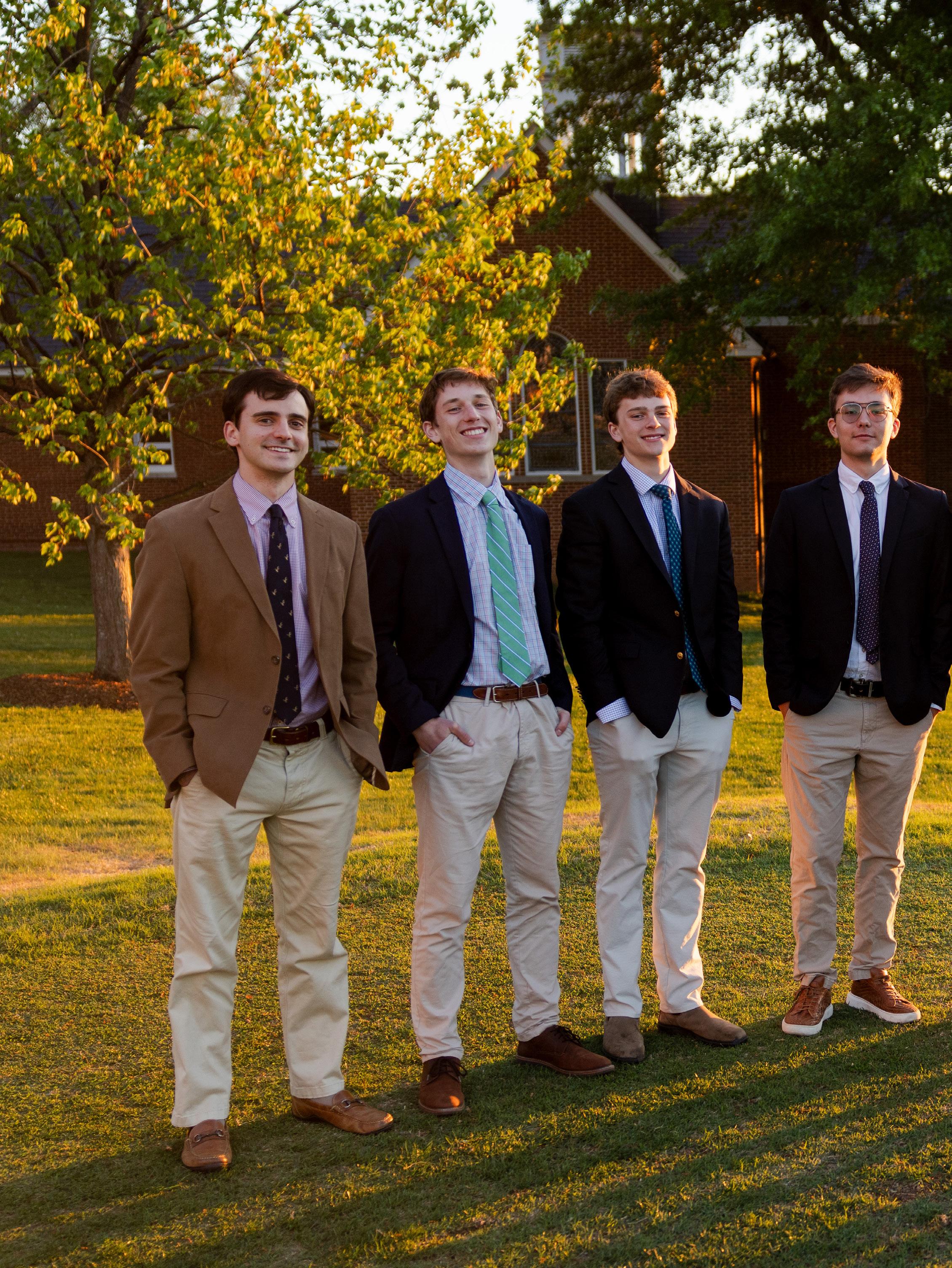
Inside Cover: The Residence | Lawrence Morrison | Woodberry Forest, VA | digital photography
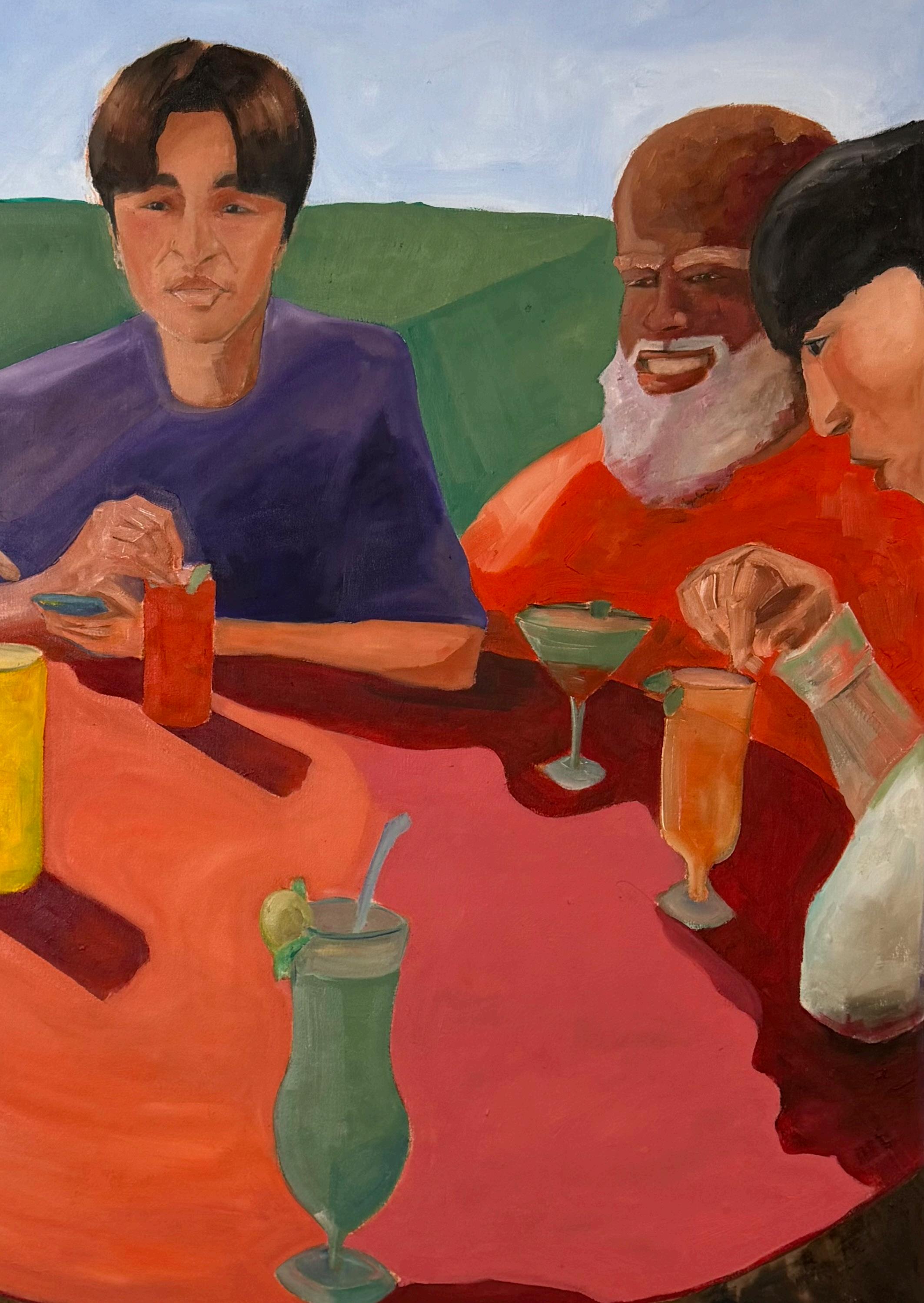
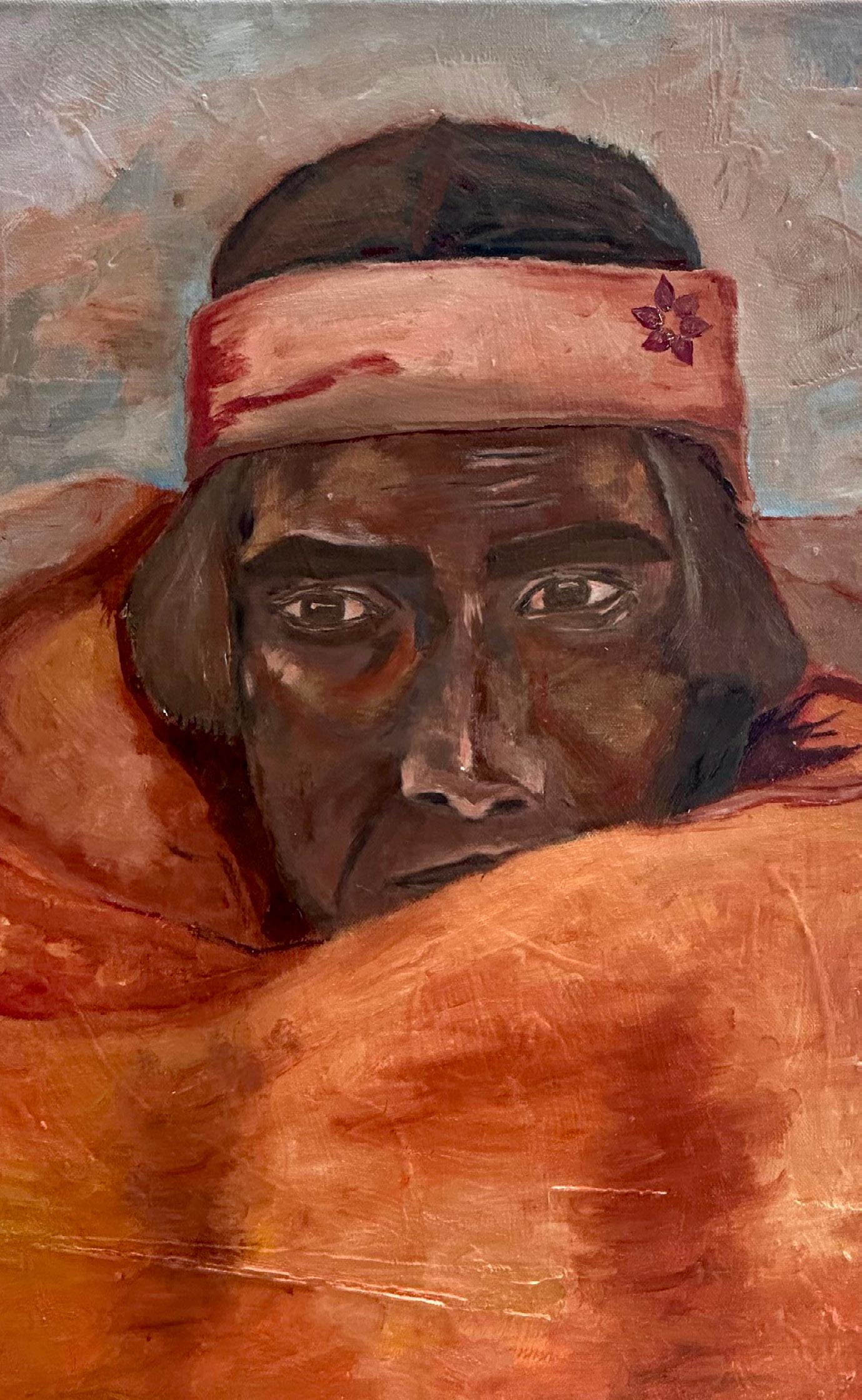
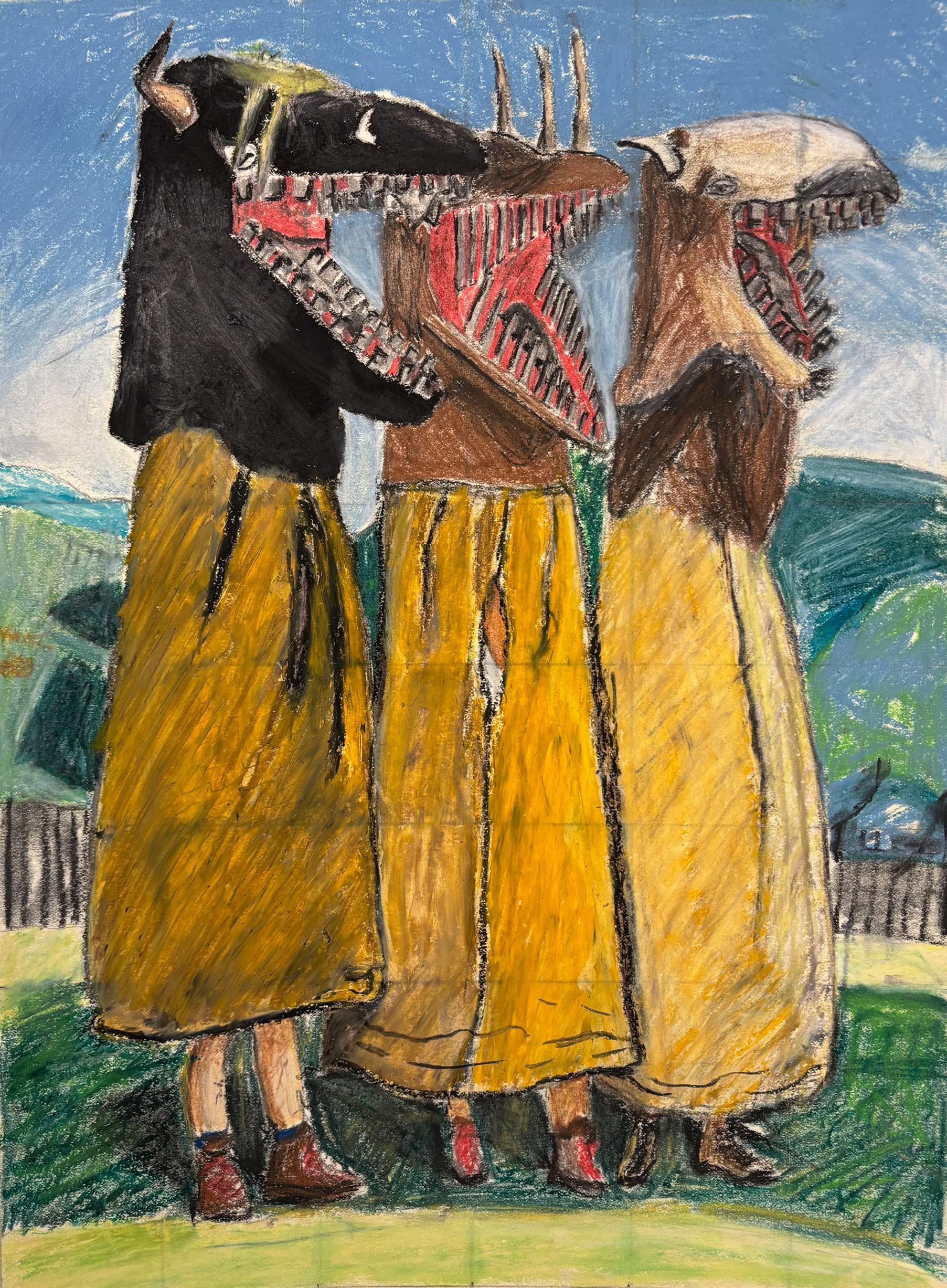
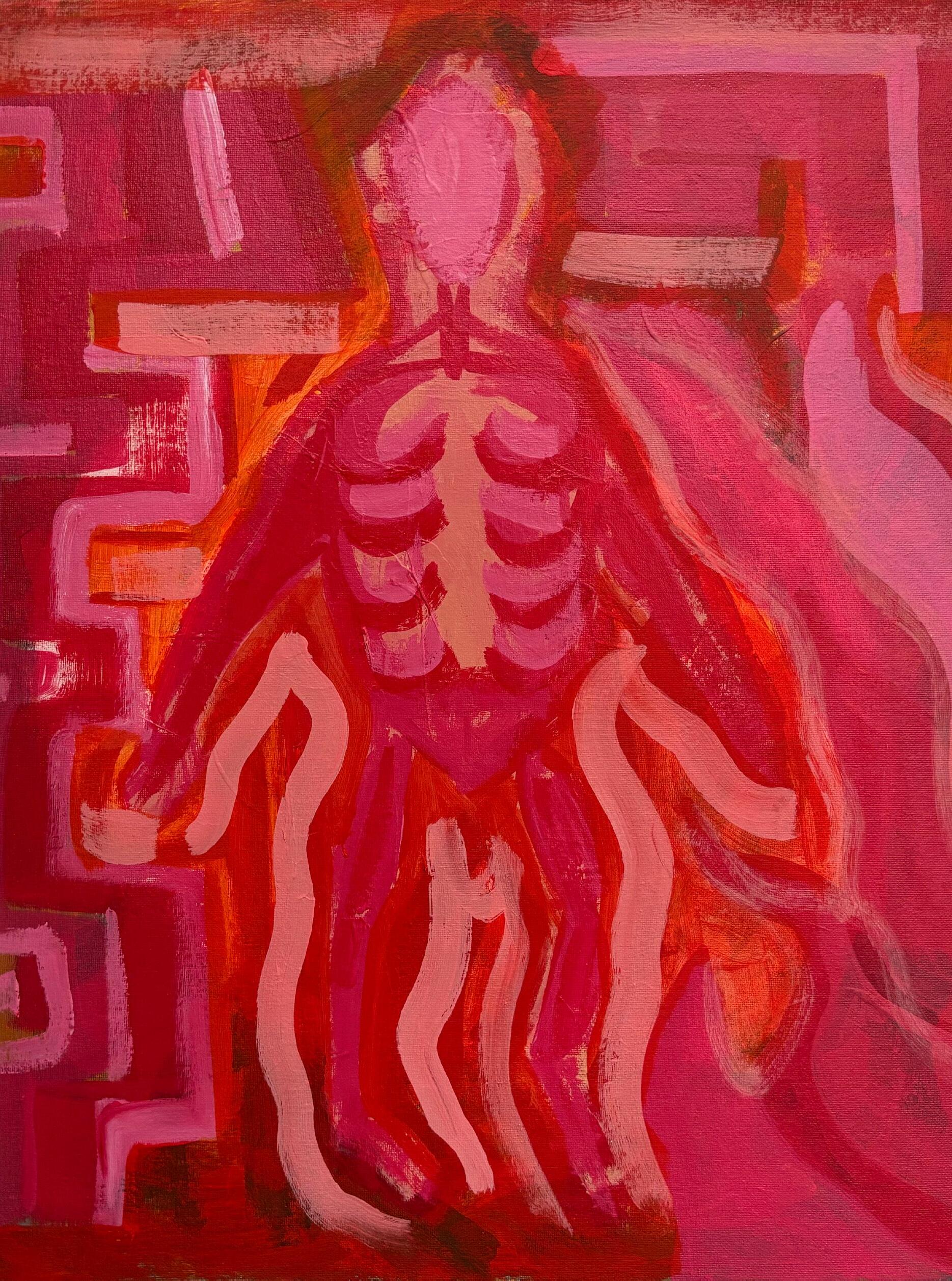
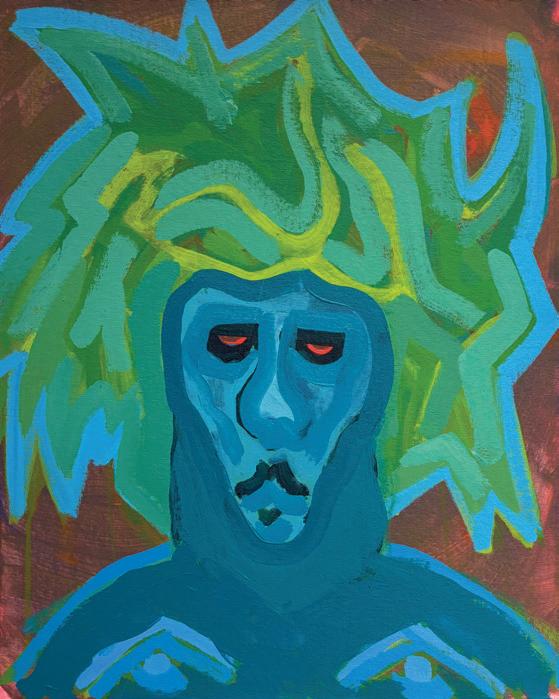
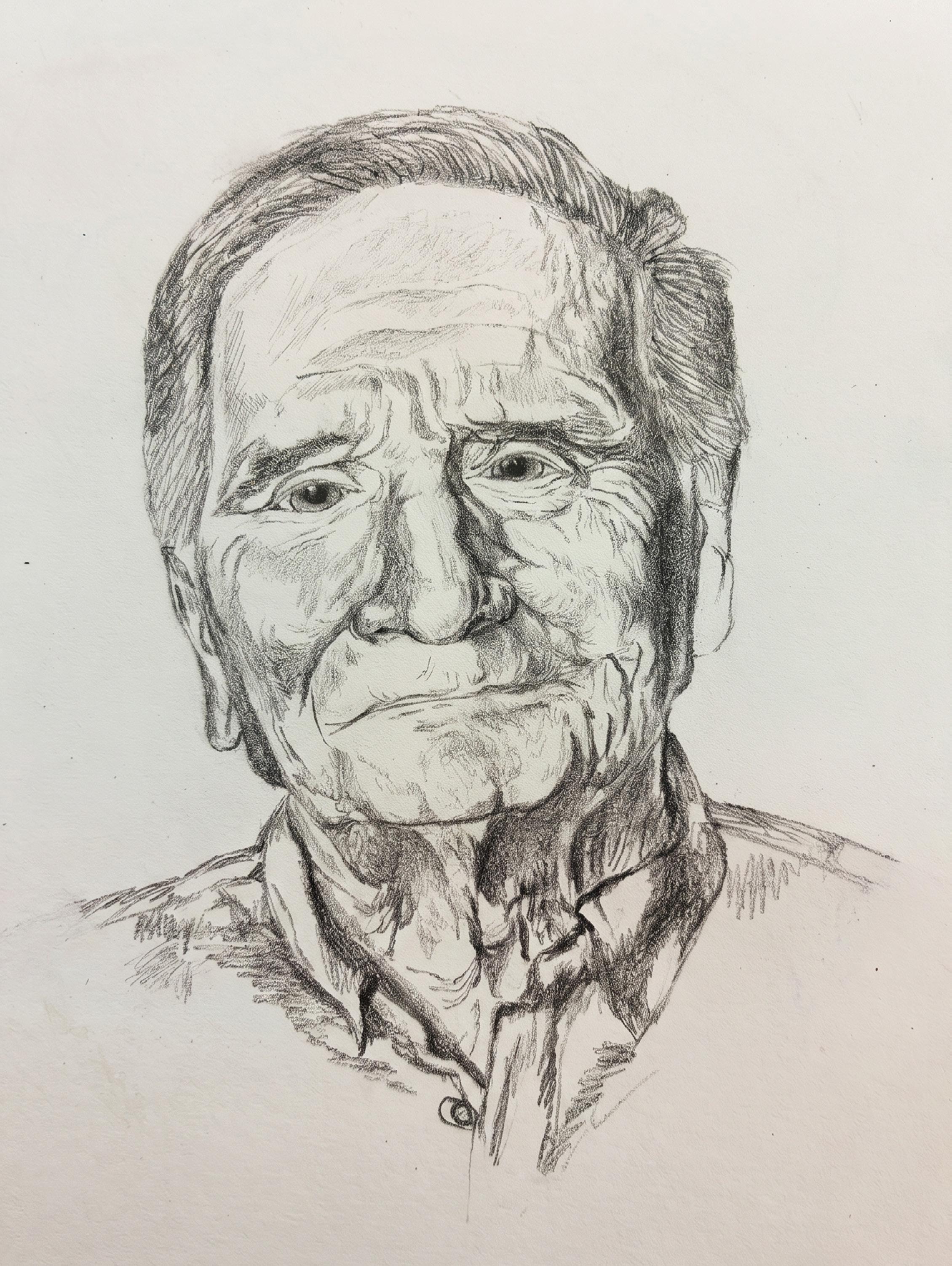
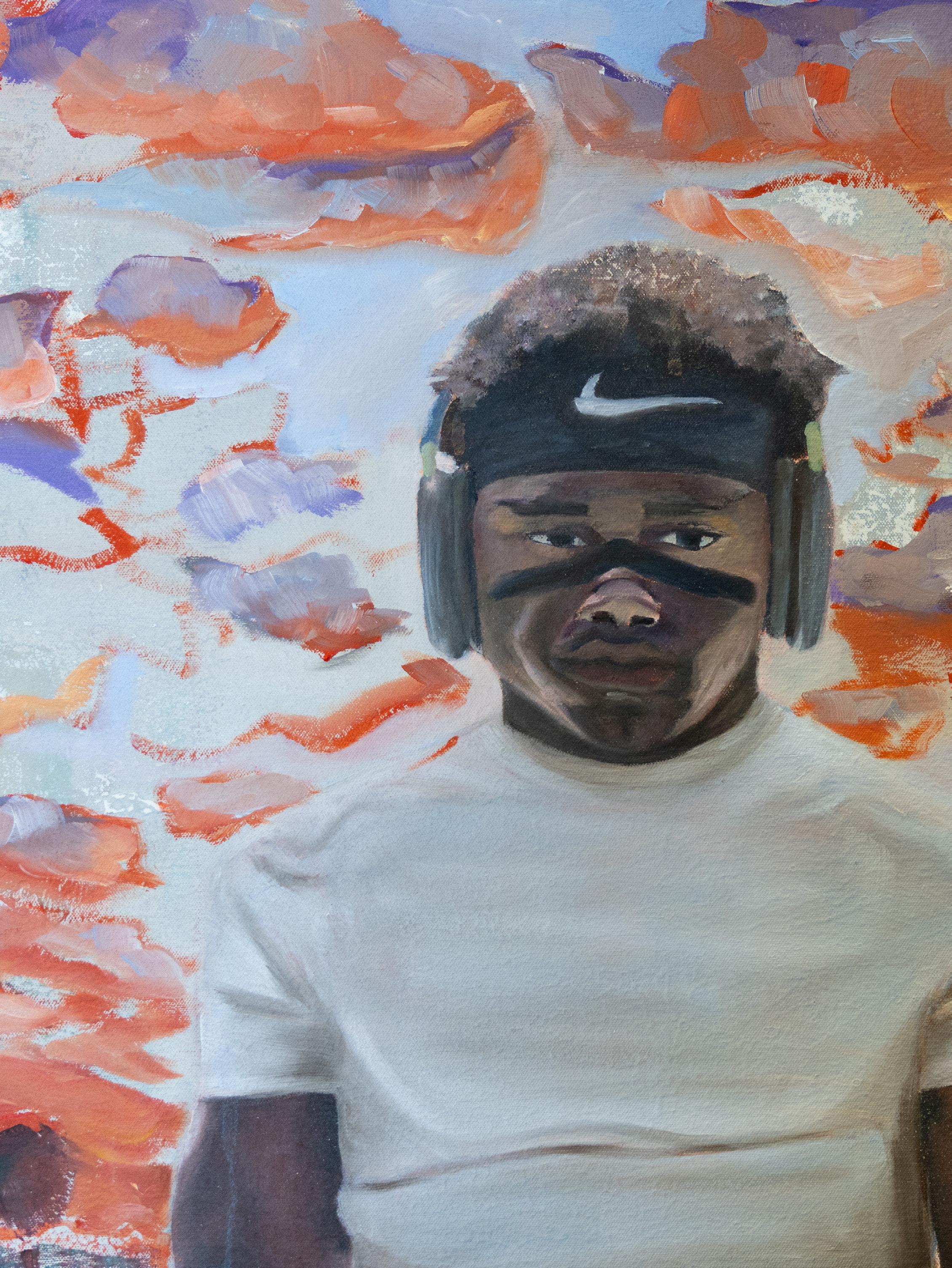
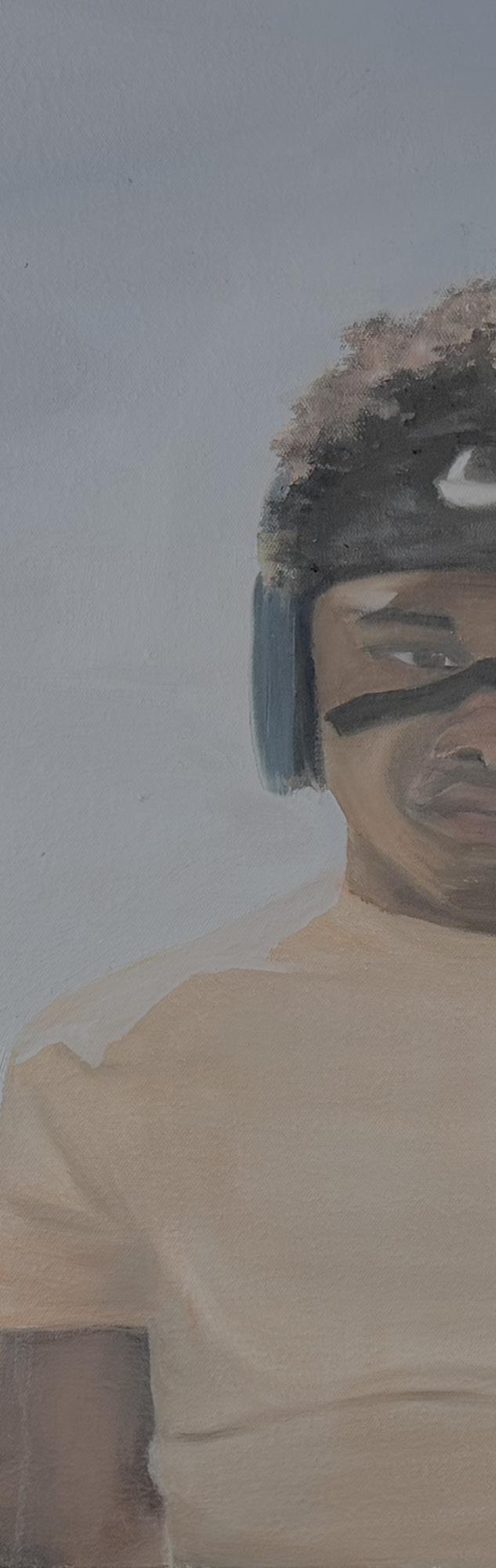
Cover: Tlatoani | Pato Saucedo | oil paint | 16 x 20 in.

Inside Cover: The Residence | Lawrence Morrison | Woodberry Forest, VA | digital photography


Tis year, Te Talon is about a Woodberry alumnus in a C-17. He’s landed in Taliban country, and Lieutenant Pappas is cussing him out. Te bay door opens, and the alum checks for his belongings: “his father’s watch, an old Masters golf ball, and a CD that reads Sacra et Profana….”
Sacra et profana. Sacred and profane.
Tat’s some of James O’Donahue’s ghost story, “An Old Sweet Song.” His piece achieved what Te Talon set out to do this year: to show that even the mundane, profane gunk of the world can be sacramental. Because a Woodberry alum can think about a heaven of choral harmony as his boots hit the ground. In “Qing Ming,” Daniel Tu can hold his grandpa’s hand after he cleans his grandpa’s grave. In “A Meditation,” Jack Reiss can fnd grace where there is poverty. In “Tractor,” Rienat's grandpa can make Soviet-era machinery sing. Yes, the sputtering of an old tractor has some music to it, the same music in a well-tuned organ, the same music in words on every page of this issue.
Tis year, Te Talon resurrects lost memories—memories of tattoos, of lawnmowers, of moonshine. Tese are the childhood stories. And then there are the ghost stories, inspired by Wright Tompson’s visit to Mr. Hale’s sixth-form English class. He challenged us to discover where the past haunts the present. So we wrote stories that played with time like an accordion, expanding it and compressing it at every paragraph break. We began to adopt memories that weren’t our own. And all the while, Pato Saucedo was writing biographies with paint on canvas.
Tis year, Te Talon went easy on the designs, on the distractions. We hope that you only see the storyteller and his story, the artist and his art. Because every time a Woodberry boy—under the weight of long bus rides, tests and headaches—picked up a pencil or a paintbrush and started working, he left a living part of himself hot on the page. Now go start looking for it.
– Charles, Rienat, and Tad




1 | The Residence | Lawrence Morrison 12 | Uncared | Graham Russell
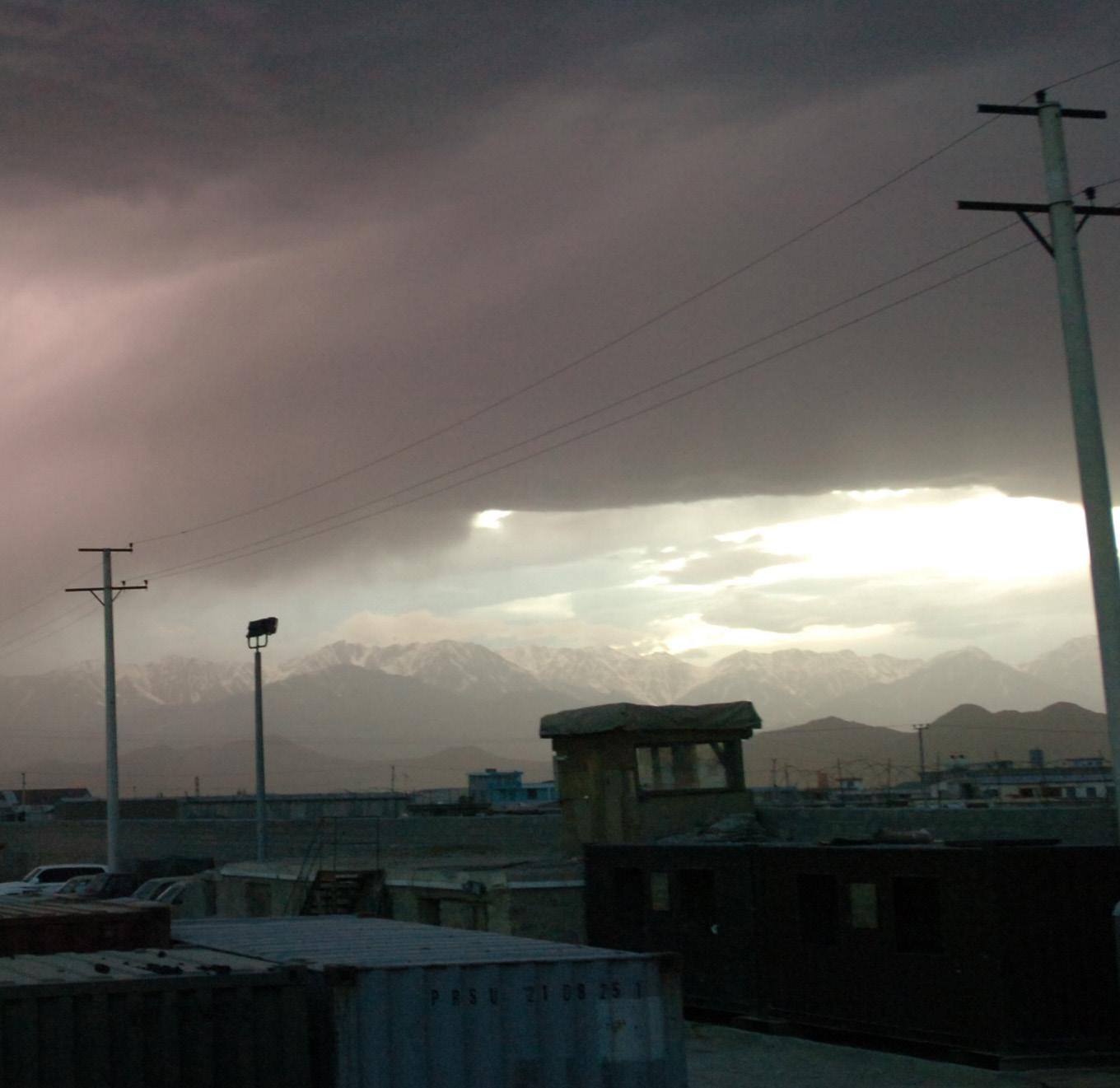
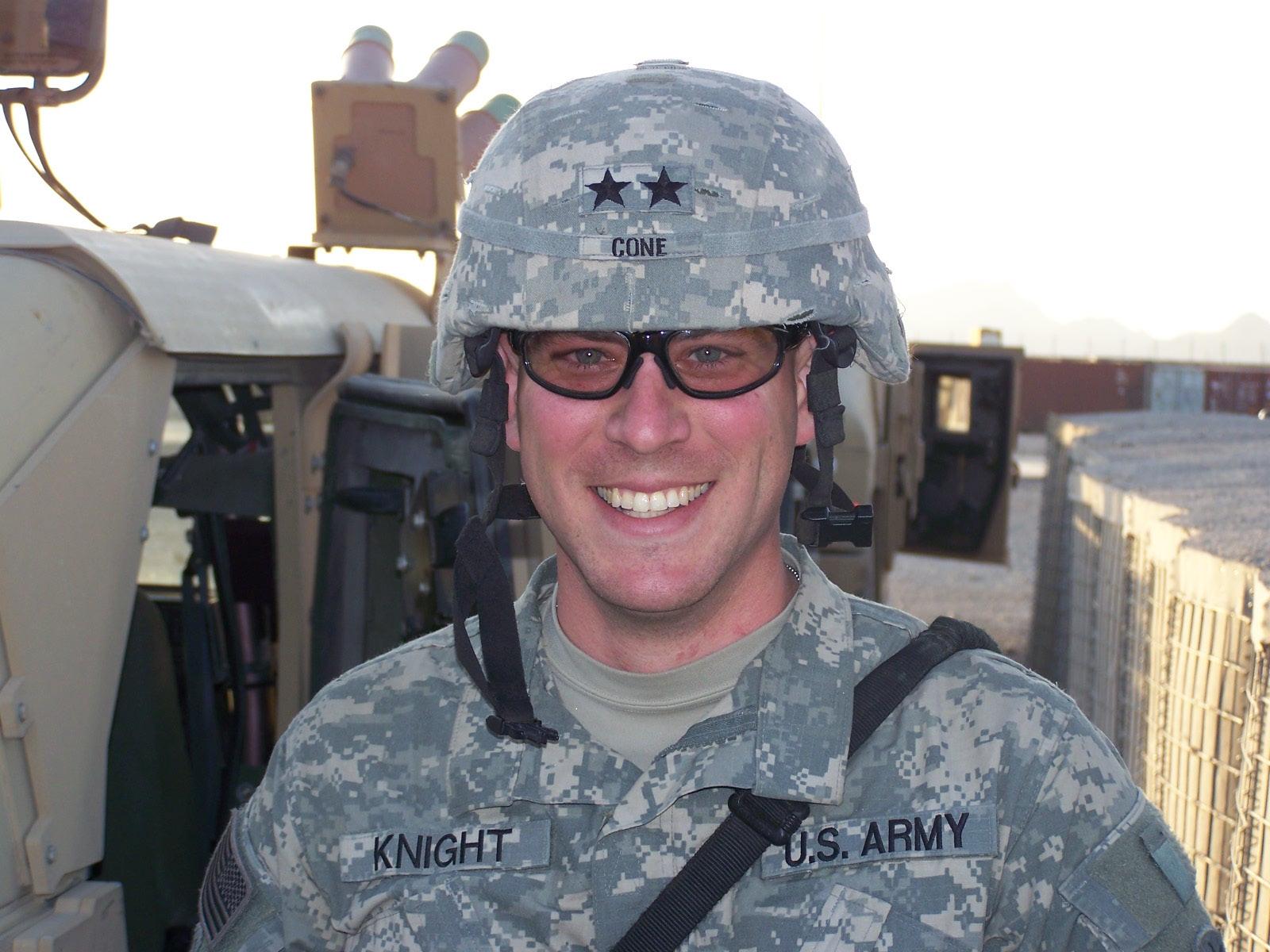
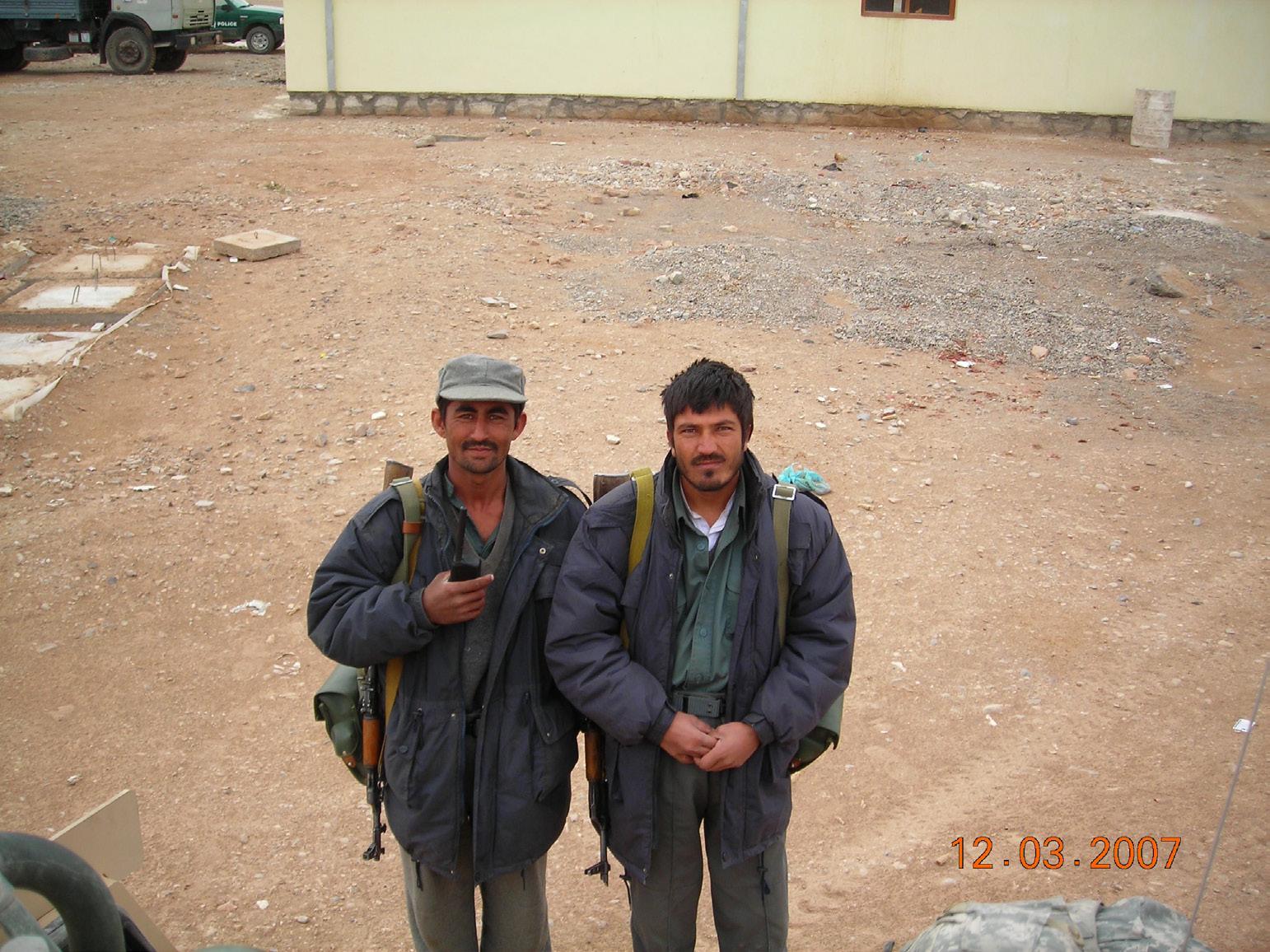
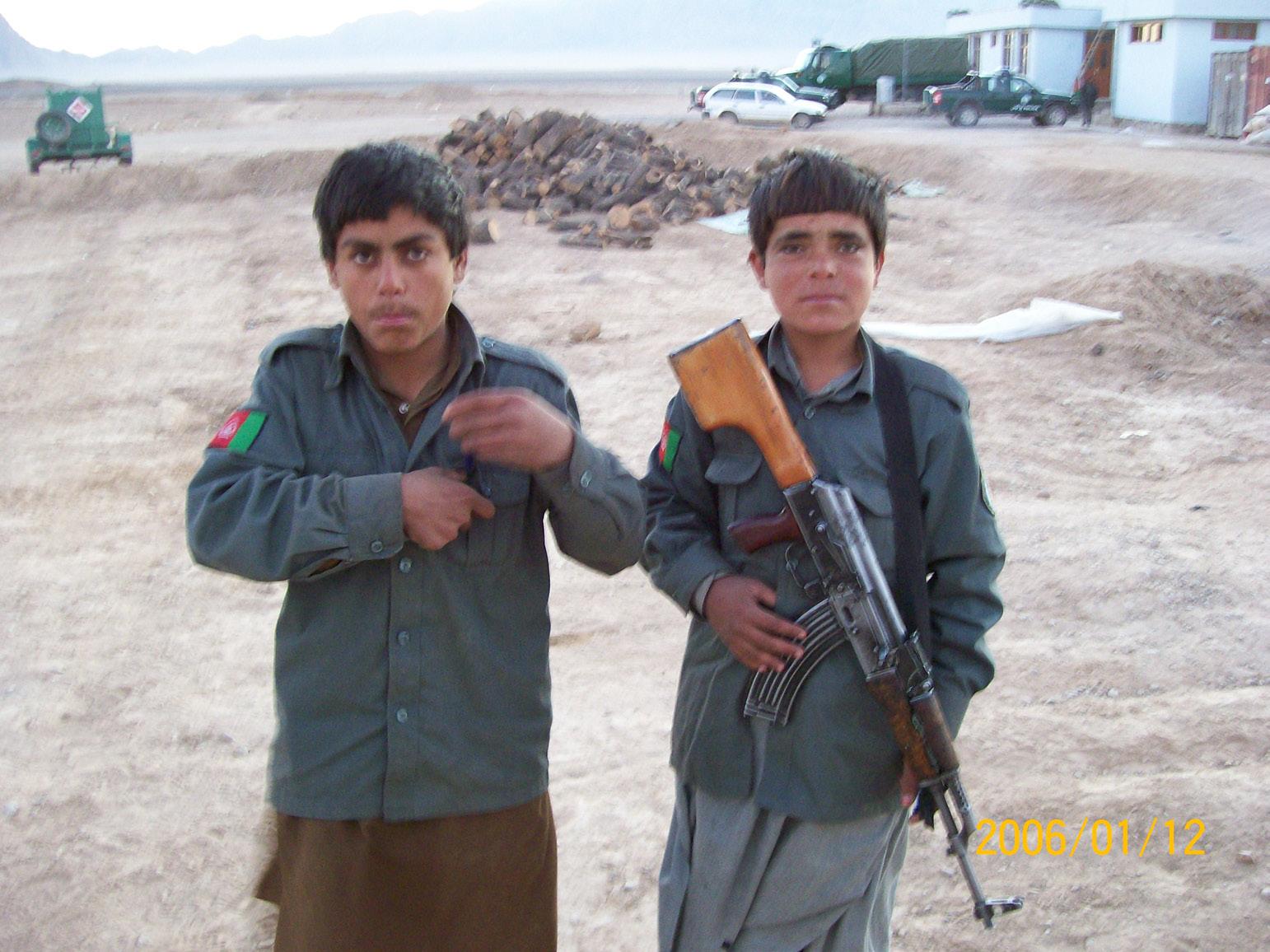
| Victoria Falls | Graham Russell 27 | Kabul Lightning Storm | US Army via Jonathan Knight 28 | Four Photos of Afghanistan | US Army via Jonathan Knight 31 | No. 2 | Shaffer Broughton 33 | Lourdes, France | Shaffer Broughton
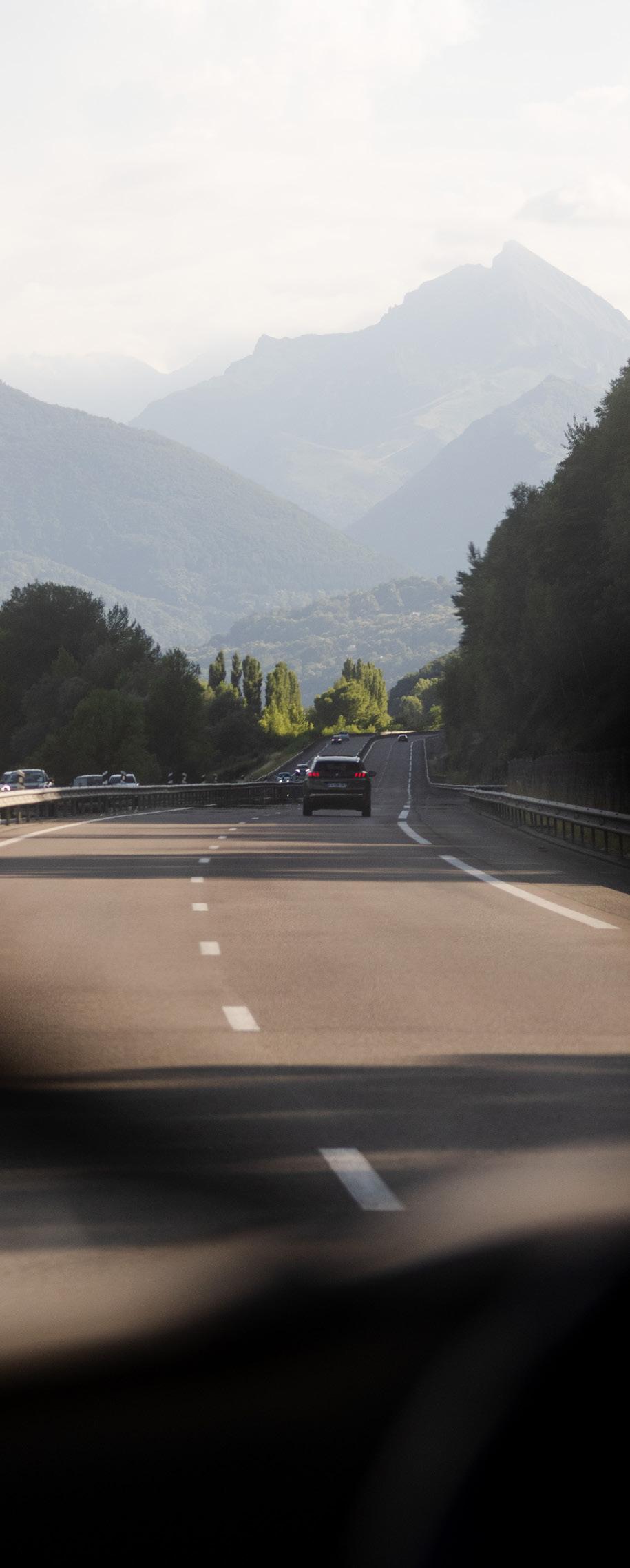
34 | Olympic Village | Shaffer Broughton 37 | Driving Away | Graham Russell 50 | Hollow | Shaffer Broughton 58 | Grady | Shaffer Broughton
| El Regateo | Shaffer Broughton 68 | Un Cerro Ensombrecido | Shaffer Broughton 70 | La Despedida | Shaffer Broughton 71 | Una Cruz en el Cielo | Shaffer Broughton
72 | Mercedes | Shaffer Broughton 74 | The Nowhere House | Lawrence Morrison 77 | Anderson | Lawrence Morrison 86 | Set | Shaffer Broughton 91 | Grafitti | Ethan Chang 92 | Bubbles Under The Rapidan | Cole Reade
| 10/10 Bench | Shaffer Broughton 97 | Frozen | Cole Reade


by Charles Horner
The night comes in through the chapel windows as the wooden doors rattle shut behind me. The doorway’s light fixture flickers dim. There is no noise but for the creak of floorboards beneath my feet. Just ahead the altar, a gaudy marble thing, reads Do This in Remembrance of Me. Beyond it waits the organ and its shadowy grille of pipes. The organ is why I’m here. But first I hustle to the lights and flick them all on. The dark still spooks me. But once I turn on the organ, with yet another flick of a switch, I no longer feel alone. Her pipes open with a hush, warm and serene. Then I lace up my organ shoes and lay my fingers into the keys.
Swarms upon swarms of them clumped like black tumors up in the cupola and the dead flies flaked like scabs onto the crimson carpet below.
As I move softly from chord to chord, the wind rattles the door hinges and my own life feels no sturdier. One time I went to practice a hymn called Holy, Holy for the All Saints service when I heard something buzzing. At first I thought it was the AC or maybe even a broken organ pipe. But then I saw the flies. Swarms upon swarms of them clumped like black tumors up in the cupola and the dead flies flaked like scabs onto the crimson
carpet below. Apparently it’s a yearly thing, hatching season. And as the flies fell senselessly around my sneakers I began to see that the lives of those I knew—and those I did not yet know—would converge right there, at the altar. That’s when I realized this chapel was built for the dying boys of Woodberry Forest. And that’s when I started poking around.
It turns out the altar was built in honor of a prankster. Alfred Baker Bransford, class 1911. When he was a fifth former he got caught smoking cigs in the Walker Building. His classmates remembered him in the yearbook as the kid who poured cough syrup on their beds and poured snow down the back of their shirts. In other words: a bit of a jackass. But later that August, they’d remember Alfred as the eighteen year-old who jumped into the James River after the rapids pulled his little brother Henry under. In truth, the boys just went for a swim. It was hot out at their father’s plantation in Bon Air, Virginia, and the water looked cool. But then it got too deep for Henry. And then Alfred swam over to help him, but the two brothers never felt the slippery rocks beneath their feet again until the tide pinned them down to the river bed and washed their lives away.
It was drizzling at the funeral, back at their winter home in Augusta, Georgia. The church bells tolled in solemn cadence
as shovelfuls of dirt piled up atop the two rose-covered caskets and returned the boys to the earth. Reverend William Johnson then led a small choir in the singing of “Crossing the Bar” and the raindrops trickled down their foreheads like the teary wake of the overturned skiff that washed up beside Alfred and Henry’s bodies at Boshers Dam. It was the skiff that their black servant Archie Johnson rowed into the choppy waters when he saw his masters gasping for air. But Archie fell into the water and drowned before he could save them. A couple days later, the third casket arrived in Augusta. And the Bransfords buried it under a lichen-covered rock.
Just over a year later, Mrs. Emily Bransford visited Woodberry Forest for the inaugural service at St. Andrew’s Chapel. It was almost Christmas and she was a widow now. About two hundred boys stuffed their hands into their pockets and turned up their collars as they descended the steps of the Walker Building into the December chill. They probably didn’t say much. The older ones would’ve known Alfred—the one who horsed around on dorm. But they saw Mrs. Bransford dedicate the chapel altar not to her son, nor even to the servant who died for him. They saw her dedicate the altar to the myth of the “chivalrous, scholarly young gentleman” that the newspapers cobbled together from the corpses at Bosher’s Dam. Archie’s name never passed her lips. But still, she might have heard Archie speaking softly in the hymns.
George Wayne Anderson, class of 1913, was singing those hymns in the pews that very evening. He watched on as a prefect
with a lot to look forward to in life. Four years later, he’d go on to serve as the Class President at the University of Virginia. And when he graduated from college, he received the most prestigious academic award in the world: the Rhodes Scholarship. But he postponed his studies at Oxford to fill a teaching vacancy at Woodberry. And when the United States entered the First World War just a year later, he signed up for officer training school, eager as ever. There, he had a portrait taken. It’s the same portrait hung in Anderson Hall—his namesake. Every day, boys just rush past it. Out of the corner of their eyes, it’s only more plaster on a wall. But George never leaves his post. Straightbacked, almost smiling, he proudly wears his dark green, stiff-collared uniform. His dark wells of eyes are filled with the sturdy conviction of a true soldier. In his left hand, he carries his officer’s cap. On his right, he wears what seems to be his class ring.
George also has a place in the chapel, and I visited it one cold Wednesday evening. It wasn’t too dark yet, so I didn’t need the lights to read the 104 year-old plaque. It’s there for him and the seven other Woodberry boys “who made the supreme sacrifice in the Great War waged on behalf of the liberation of mankind and for the preservation of righteousness and justice among men.” I ran my fingertips along the names and felt the coldness of their loss. Then I traced my finger along the wall to the Second World War. Forty-four more dead boys armored the chapel with those steely plaques. Another two boys never came back from Korea. In Vietnam three more, one of them by friendly fire. I did the math:
a boy every other year. By the time I got up to leave, my fingers were too cold and stiff to play the organ, and in the dying light the rows and rows of pews could’ve been two great treads on a tank rattling through time, churning through the mud of the Western front, not too far from where George Wayne Anderson spent his nights with the 313th Field Artillery Unit.
On the outskirts of the French town of Bantheville, George dozed off to the chitchat of his pal John Nash. An October chill seeped through the walls of their shelter and the boys “slept fitfully,” Nash recalled. Shells screamed overhead. Rats scuttled underfoot. Nash named one especially robust female Lolotta, but there wasn't much more romance than that. It was twilight when the 313th emerged from their shelters and shouldered their rucksacks. George leaned over to his friend and quipped, “Gee, ain’t this a hell of a Halloween!”
And it throbbed on all the more violently when she opened the letter and learned that her child had died without any flowers for his grave.
Nash agreed as the troops rolled out the batteries and the current of their shadows pressed on, passing over the muddy road beneath their feet. At first light, the batteries could be seen snaking through the hills, and suddenly the 313th fell under heavy machine gun fire. Germans.
George probably dived for cover, but there wasn’t any for a shell then came whistling through the gray air and with one shrill crescendo tore him apart. Though it killed him before he knew it, the cut and burn of the shrapnel in George’s flesh throbbed on, long after the dirt pulled him under, long after his portrait was slapped on a wall. It burned in the sore and veiny arms of Lieutenant Emory Niles, who picked up the body he knew and saw a bloodied and misshapen face he no longer recognized.
It ached in the fingers of Captain John Paul as he tried to pen a letter to George’s mother. And it throbbed on all the more violently when she opened the letter and learned that her child had died without any flowers for his grave.
His wounds were still throbbing exactly one hundred and seven years after the shrapnel entered him. It was November 1st, All Saints Day—the day I played a hymn at chapel to the unburied rhythms of George Wayne Anderson.
I scampered into the basement and put on the organ robes: a poofy white gown and wine-red cossack. I laughed at myself in the mirror. But the goofy get-up still didn’t take off the edge. Usually, I could play Holy, Holy with my eyes closed, but as I did some last-minute practice, my feet stumbled all over the pedals. My fingers knotted up and glazed the keys with sweat. I wasn’t getting anywhere, so I slid off the organ bench and took a look around. Cheap candles were scattered on the altar. A blue BIC lighter lay on it, too. The ushers came by and played with the lighter and put it down. I sat down.
Mr. Amos came hobbling in on his cane.
Behind him boys marched loudly into the chapel and made their way into their pews. After some time Mr. Amos stood up and the din of young voices faded away. Mr. Hornady played a dreamy prelude on the upper manual and Mr. Amos made some remarks. The boys said amen. Twenty minutes later, alumni strode up to the altar and bowed and then read the names of dead alumni. The deacons lit a candle for every name, and the flames welled up on the twisted wicks like the heads of departed congregants emerging from prayer . . . Mr. Eli W. Tullis . . . Mr. Edgar H. Lawton . . . Mr. Vaughan O. Fitzpatrick . . . some were cotton traders, others tennis champs . . . Mr. John B. Updike . . . Mr. J. Andrew Urquhart . . . Mr. C. Benjamin Hadden . . . but all of them were notes in an age-old fugue . . . Mr. R. Gregory McNeer . . . Mr. Edward F. Menefee . . . Mr. William B. Shuford . . . a fugue of men marching to an altar . . . Mr. Alexander H. Galloway . . . Dr. Paul P. Gwyn . . . Mr. Winchester F. Jordan . . . anointed altars and imagined ones . . . Mr. Francis P. Wetherbee . . . Mr. J. Neiland Pennington . . . Mr. George D. Auchter III . . . and false ones built for pranksters . . . Mr. Joseph W. Cooper III . . . again . . . Mr. DeWitt C. McCotter III . . . and again . . . The Rev. Wm. Hill Brown III . . . and again.
Four hundred boys sat on the frontlines of the no man’s land between altars and organs. I felt awkward, out of place: I was in the no man’s land. The bells tolled eleven times in solemn cadence and with each wave of resonance the forgotten names stirred on my lips. George got lost in the no man’s land and Archie got lost beneath the lichen. George
got lost in the no man’s land and Archie got lost beneath the lichen. George got lost in the no man’s land and Archie got lost beneath the lichen. They were the notes in an unheard melody, the invisible heat that simmered by the floorboards and began to enter my fingertips.
I trilled them impatiently on my robes and looked at the organ. I saw an army of lead pipes, dimpled with the thousand sonorous hammer-strikes of its maker. But behind that silver gleam I knew there were all sorts of pipes and gears—skinny ones, curly ones, and fat ones with wiry gizmos. They were all as greasy as the acne-covered boys dozing off in the pews. And yet the monotonous clatter and grind of the machinery breathed the ethereal music of the organ in and out, in and out with the lungs of the congregants who listened to it.
And there are other lives, other notes in our everlasting
refrain.
By then wisps of candlesmoke spiraled up from the altar and into the cupola. I let the incense sneak into my nostrils, just a stone’s throw from where Alfred dragged on his cigarettes. I wondered if Alfred might’ve been wise to the rhythmic wash of the water that carried him away. If he’d then been wise to the lie rooted in the marble stump that was built for him. If he’d then understood what Mr. Hornady had told me days before: that the hymn was an offering, that its pipes were turned up toward the sky. I looked at the organ again. The organ was the altar. Finally, I slid onto the organ bench and
looked at the keys. The keys were wooden caskets. I dropped my fingers into them anyway, and the caskets and the congregants alike began to sing.
Warm gusts of music left the pipes and joined my fingers, my feet, and my jawbones in a graceful dance to a hymn whose verses could've been names in one long, undying melody. I played it over and over again and never got tired of it. Mr. Hornady started pulling out more stops, and my vocal chords strummed that same refrain:
Holy, holy, holy! Lord God Almighty!
All thy works shall praise thy name, in earth, and sky, and sea;
Holy, holy, holy! Merciful and mighty!
God in three Persons, blessed Trinity.
As I marched my feet from pedal to pedal, I began to hear Archie lapping his oars in the muddy waters. I felt the throb of George’s shrapnel-ridden flesh in my chest. And as the blasts of music rippled through my body, I could hear Alfred crying out where the rapids break at Bosher Dam. The contraction of my muscles became our rhythm, and when I played those final chords I knew I was singing just by sitting there, for I had joined them in the refrain of our lives.

And there are other lives, other notes in our everlasting refrain. I hear one now as I leave the chapel, a couple months later. The doors close kindly behind me as unseen birds gently rouse the trees into spring. The All Saints Service is behind me. And also ahead of me. But for now, just as the birds begin to sing, I see a freshman strut over to the fourth teebox, a golf bag
slung over his shoulder. His irons clang the birds a bassline: Clip clank, clip clank, clip clank. Then a rest. He unsheaths his driver, watches its metallic sheen glint in the four o’clock sun. He tees up a golf ball, its dimples sparkling. And then he sets his feet and swings. No warm up. Just a clean whoosh and ping. As his ball gets lost in the vast blueness above, he picks up his bag and walks on, basking in that interstitial moment when the ball is still in the air. Soon he’s already disappeared behind the boxwood hedge. By then his ball has probably lodged itself in the earth. But I still can hear those silver pipes going clip clank, clip clank, clip clank, marching our music down the fairway forever.


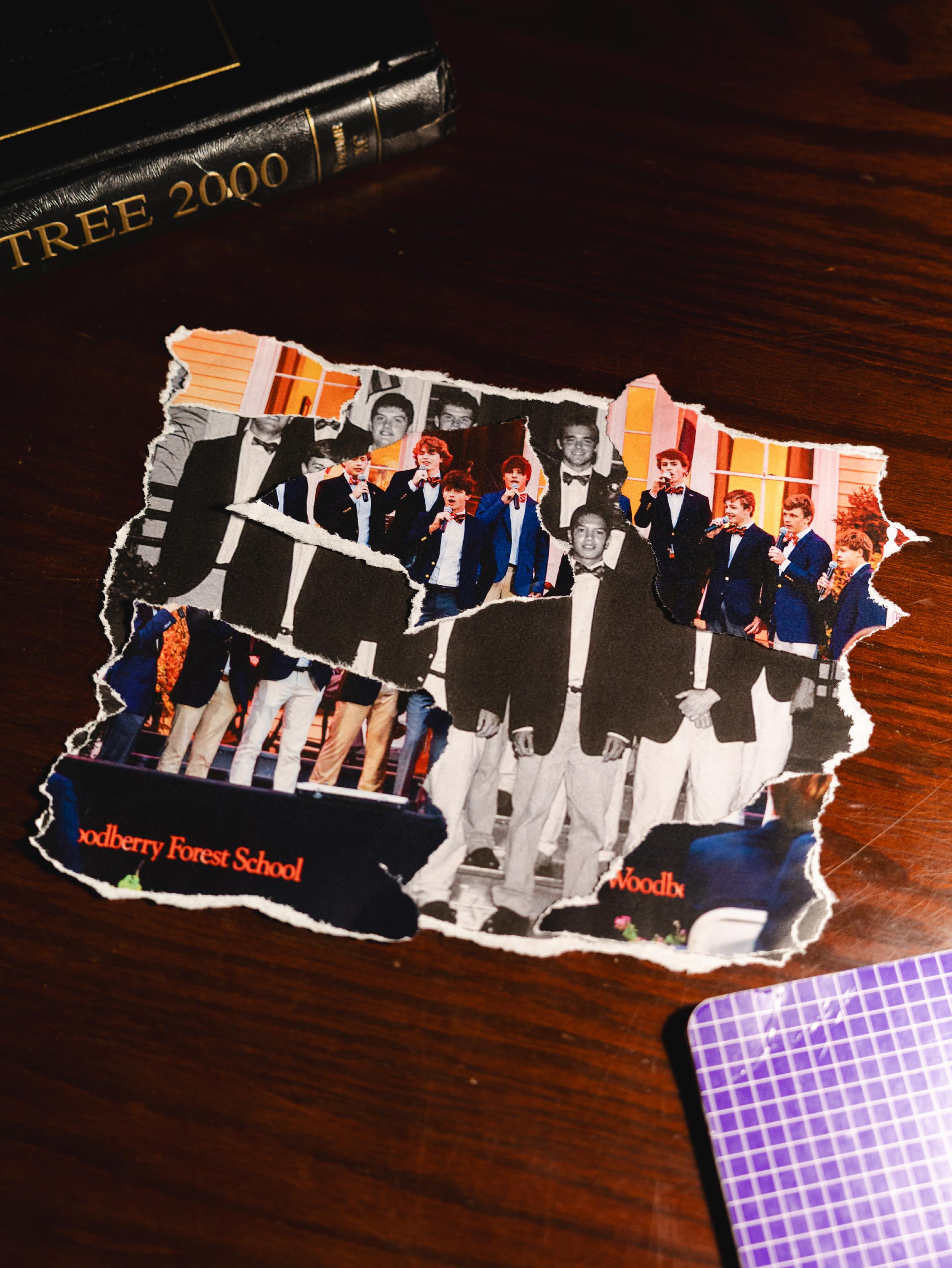
by James O’Donahue
“It’s been a while since we’ve performed ‘Georgia on My Mind.’ Jonathan Knight originally sang this in 2000, and I’m pleased James O’Donahue is singing it tonight.”
I stepped out of Dozen formation and looked around the Barbee, seeing a sea of people dressed in fancy clothes and sipping cocktails around orange tables decorated with flowers.
Mr. Hornady handed me the microphone and began tuning the group with his pitch pipe. He finally got to me and played my 1st note, a G. If I go sharp or flat, the song dies. As Mr. Hornady raised his arms, I took a deep breath, my eyes locked on the Barbee’s back wall, and we were off. The words flowed off my tongue like silk. I kept my gaze fixed just above the furthest table, letting my eyes sway left to right as if I were looking at every member of the audience. Suddenly, I felt my left leg start to quiver. I tried to hide it immediately, but the shaking was rattling every nerve in my leg. The audience’s stares only made it worse. All the Woodberry Alumni in their Brooks Brothers’ blazers, button-down shirts, and slacks. This would make their year if I fell, passed out, or ruined the harmony. I would be the laughingstock for years to come. The most memorable Captains’ Club in decades. My brain was playing games with me. I started to panic, almost forgetting the words to the last verse. I quickly took a step
to my left, and the shaking stopped. I felt a rush of relief, finishing the solo to a roaring applause.
Knight jolted awake as the C-17 hit the runway.
The carrier’s engine growled as it tore across the Iranian sky. The C-17 carried the third platoon in Charlie Company, where Jonathan Knight slept, squeezed between two Marines on their second tour.
In January 2007, he arrived in Afghanistan, the same month and year I was born. He´d be in Herat for the next eighteen months, a thriving city in the west untouched by the Taliban and controlled by the Afghan warlords, allies of the United States. As far as Knight knew, he was safe.
Knight jolted awake as the C-17 hit the runway.
He´d been in the air for over ten hours and spent six of them sleeping.
“Looks like Knight is finally awake,” said Lieutenant Corporal Maxwell Pappas, Commander of the third platoon in Charlie Company. The plane slowed to a stop as the ramp started to lower.
“You know, Knight, I can’t blame you,” Pappas said smugly, getting out of his seat and throwing his camo backpack over his shoulder.
“I got some sleep myself,” he said, slowly squatting down to look Knight dead in the eyes, close enough that Knight could smell the cigars on his breath.
“But if I ever catch you sleeping on my time, you’d be wishing the Taliban had your ass instead.” He stood up slowly, keeping his eyes locked on Knight. He then took a toothpick out of his shirt pocket, slipped it into his mouth, and walked off the ramp. Fucking bastard, Knight thought to himself, getting out of his seat and opening his sixtypound backpack. He could feel humidity filling the cargo bay. He quickly opened the top pouch, making sure he had his personal belongings: his father’s watch, an old masters golf ball, and a CD that read “Sacra et Profana” with a black and white photo of twelve boys wearing suits and bow-ties. There he stood at the center.
The camera flashed.
“How about one more?” Mr. Hornady said, grinning from ear to ear. We stood on the Residence’s steps, the historic home designed by Thomas Jefferson in 1793. The spring sun was making us sweat through our tuxedos.
“Mr. Hornady, if we stand here much longer, our tuxes will be drenched,” Mack Edwards exclaimed.
“Y’all will be fine. Ralph, would you switch with James, please?” We shifted quickly as Hornady counted down from three and snapped the picture.
“Remember, be back here in one hour with your dates. We’ll have one last soundcheck before we start,” Hornady said. He always wore a smile and his sweet
Southern charm, although at times he was a ferocious director. One time, he lashed out at the tenor twos for not hitting the correct chord.
“It’s a C! Open your folder and read the music!” he yelled, slamming the piano keys.
“You know what? Let’s call it for the day. We’ll resume tomorrow.” We all left, heads hung in shame, but Hornady smiled, knowing it would be a good rehearsal tomorrow. When Hornady came in 1996, he filled Don Kruger’s position while he was ill. Major General John S. Grinalds, headmaster at the time, offered him a full time position, but Hornady declined, intending on staying one month. After one week he signed the contract, falling in love with Woodberry, and wasting no time building the choir program. When he wasn’t teaching music theory or rehearsing, he slaved away in his office nook arranging Dozen classics like “Danny Boy” and “Shenandoah.” Sitting on his shelf in the top right corner is a picture of twelve young men wearing suits and ties, gathered around a piano with another man sitting on the bench. The tag below reads, “The Dozen I, 1969—Harold Lowry.”
Another flash. “Thank you sir,” Harold Lowry said to the cameraman while he put away his Polaroid Colorpack II.
“Alright everyone, you know we only have this hour,” Harold Lowry said, handing the group handwritten arrangements of “ShBoom” by The Chords.
Whitney Saunders nudged Jack Campbell and whispered, “A little late on this one, eh?”
Lowry snapped his head toward them. “Mr. Saunders, if you’d like to leave this group, you may. Woodberry will be hosting the Choral Festival in two weeks, and this group’s a cappella debut will not be made a laughingstock. We have two hours each week to rehearse, and let me remind you, it is on your own time.” He scanned the group sternly, eyebrows raised. “Have I made myself clear?”
“Yes, sir,” they said in unison.
“Excellent. Peterson, Larrick, Bowron, take it from measure twenty-four on ‘Everytime.’”
For days, he couldn’t explain where he went between hitting the ground and waking up at base camp.
“Sh-Boom” was the first song I saw the Dozen perform. It was April 1, 2022, and I sat in the back row of Bowman Gray Auditorium with my future classmates Hampton Jones and Edwards Tarumianz. The auditorium was crowded with future students and their parents for the music department’s annual Invite Back Weekend performance. I remember a tall boy on the far left, Jordan McConnell I later found out, and a very short one on the far right, Graham Lanuti, whom I would sing with for two years. When I watched them perform that weekend, I admired them as a group. All their voices moved with each other, all on different notes and parts, but with such unison I was mesmerized. I remember
thinking, Maybe I could do that. I didn’t give the idea much thought until I discovered I’d be in Mr. Hornady’s choir class the next year. Tryouts started in the spring. I was terribly nervous, squirming in my seat as Rawlings Leachman wrapped up his “Amazing Grace” solo.
“Okay, very nice Rawlings,” Hornady said smiling. He looked down at his clipboard,
“Next up we’ll have James O’Donahue.” I walked to the center and looked at the rest of the choir that lined the room. Gibbon Powell and I had practiced during study halls that week, trying to find a song that fit our vocal ranges. I decided on “Something in the Orange” by Zach Bryan. The solo happened quickly, but when Fitz Dillard came up to me after class and said, “That was really good,” it put my mind at ease.
Jonathan Knight’s head hurt. He didn’t know where he was or why he was lying facedown on shrubs and red dust. A few moments earlier he had been thrown from the top of his HUMV by an RPG explosion twenty feet behind the vehicle. The explosion threw him fifteen feet in the air, dislocating his shoulder and deafening his left ear. He could feel his shoulder shaking uncontrollably. On the ground, his ears rang, only hearing the faintest sound of yelling and gunfire. Then he blacked out.
For days, he couldn’t explain where he went between hitting the ground and waking up at base camp. Once his cloudy thoughts settled, he remembered an old Catalina sailboat and a bottle of Captain Morgan out on the South Carolina water.
He remembered snow and his brother Will at Woodberry. He remembered Wes Graham, Ben Harrow, the pushups, pullups, pain. He remembered an empty chapel with a microphone set just below the altar.
April 14, 2000. Sacra et Profana recording.
“Oh, Wes, spectacular,” Mr. Hornady exclaimed, smiling like always. “Great job, everyone. I know it’s late, but let’s see if we can record one more song. Jonathan, is Georgia on your mind?”
“It always is,” Jonathan replied, walking down the Chapel’s steps and taking the mic from Wes Graham. Hornady took his place in front of the Dozen. He raised his arms and thrusted them down. Jonathan let out a smooth deep G, as the Dozen followed his lead. The pace was slow, but the harmony crunched into that same sweet fifth major chord, the same fifth major chord we use today. Jonathan’s voice softened as he reached the final line: “Just an old sweet song, keeps Georgia on my mind.”


by Rienat Kharlan
The campus is mostly dark by the time I cut across it. Dorm windows glow in patches, then go blank. Walker sits heavy and quiet, its steps washed in thin lamplight. Turner is a long, sleeping shape. Everything looks like it has decided to be done for the day.
The science building refuses.
It holds its light with a steady, expensive calm. Three stories of glass, an open atrium, the staircase visible as if it’s part of the exhibit. The door gives easily, and the warmth that meets me is controlled, filtered. Inside, the quiet is not silence: ventilation moving air in slow cycles, a faint fan behind drywall, a soft click of a thermostat.
Above me, in the atrium, the double helix steals all the attention. Seventeen feet of LEDs climbing and twisting through the open space, green stepping into yellow stepping into red, then looping back as if repetition itself can pass for a pulse. In the day, it’s a teaching device, code rendered as architecture. At night, the building convinces you that it is alive, that wires and electric pulses are trying to pass for more than imitation.
I come here for work. Science department assistant, which sounds like a title someone’s grandmother could be proud of. Most nights it is me and a list of small things that need to be returned to their places before morning. A probe missing its
cap. A laptop cart left undocked, chargers hanging loose. Goggles tossed into a tub with fingerprints dried on the inside like a fog you can’t wipe away.
The physics floor is quieter. The carpet eats my steps. Further down, the east wall is glass—in daylight, fields and forest sloping toward the Rapidan; at night, your reflected face floating in front of the dark treeline, suspended out there with the branches.
The lab looks almost ordinary compared to the atrium’s performance. Fluorescent light, cabinets, butcher-block tables thick and scarred. The same dents in the same places, the same polished spots where anxious elbows always land. I start my loop. Straighten a clamp arm. Put a stack of worksheets back where they belong. Reach for the cabinet that holds the leftover equipment - the odd pieces that don’t match the new stuff, the things nobody checks out unless something breaks.
That’s when I find it.
A dynamometer, wooden. Not polished, not decorative. Wood that has been handled, darkened where fingers rested. A rusted spring inside, a hook, a cloudy plastic window with markings that were never perfectly printed to begin with. I clip a mass onto the hook and watch the needle slide. It wavers, then settles. A number appears, plain as a verdict.

Dr. Jacobs once told me about Frank Anderson, an older physics teacher who built his own experiments out of wood even when the school could have bought the equipment. He built what he needed because waiting for the perfect instrument was a way of avoiding the question. Holding this one, I believe it. The screw heads are chewed up. The wood has a shallow dent near the hook, as if it spent years being pulled in the same direction.
I’m still turning it over when I notice the plaque.
Bronze pressed into a name on the doorframe near the lab entrance. Not a glossy panel. Not a paragraph. Just cold letters bolted into place.
Heinz Pagels.
In the school day, many names like that slip past you. At night, alone in the lab, I stop.
There’s a photograph of him in the yearbook: a dark-haired boy in a jacket, tie pulled straight, the expression of someone who has learned that attention is a kind of discipline. Pagels came here as a day student from Wolftown, only two years, always slightly outside the circle that forms when boys live together. He ranked near the top anyway. Won the German prize as a fifth former. Cum Laude, Monitor Board, tennis, cross country, basketball—though never a varsity letter. Childhood polio had left a weakness in his legs.
I find myself wondering what the two years felt like from the inside. Whether Pagels was anxious about colleges the way I am anxious now. I look at names like his and assume confidence, because the ending
is already written. Did Princeton feel inevitable at sixteen or seventeen? Maybe you only know once it’s over.
Before any of that, he sat somewhere in what is now the basement of Turner Hall, where the school kept its physics rooms before the subject earned a building, and held a similar mass hooked on a spring.
The needle settling on a number. I wonder whether that felt like the real thing to him, or just the threshold before the real thing. Whether he was already somewhere close to quantum superposition and string theory, reaching way past Newton and F equals mg. Or whether the foundation was what hooked him—the simple fact that the universe answers at all.
On July 23, 1988, on the descent of Pyramid Peak, a rock shifts.
When I was small I took apart my grandparents’ wall clock on the floor— not gently—because I couldn’t stand not knowing how hanging weights made the bird appear on the hour. I wonder sometimes if Pagels broke stuff too.
He goes to Princeton, then Stanford for a PhD, then into theoretical work: quantum fields, the symmetries underlying matter, the kind of physics that asks questions this wooden instrument was never built to touch. Later Pagels doesn’t stay contained inside journals. He writes books: The Cosmic Code, Perfect Symmetry, The Dreams of Reason. He runs the New York Academy of Sciences and pushes science into policy rooms, into human rights work,
into places where the question isn’t just “is it true” but “what does it cost, and to whom.”
It’s strange to hold that adult life against the two-year boy at Woodberry. Two years is not enough time for a school to take full credit. It’s enough time for a place to leave a pressure mark on him.
Maybe that’s what the plaque is. Not a trophy. His pressure mark on us.
I put the dynamometer back and close the cabinet. Then I finish the loop. Level a track. Coil a cable so it won’t kink. Shut down a power strip. The work is small and it matters because tomorrow someone will walk in with questions for the universe, and a good setup will help with an answer.
On the way out I pass under the helix. The LEDs keep stepping through their tireless, looping sequence. Behind them, the lab stays plain and stubborn: dents in tables, smudges on goggles, a wooden dynamometer with a pressure mark by the hook, a bronze plaque on a doorframe.
Heinz Pagels ends up in Aspen, where physicists go to think and hike and talk as if the mountains are part of the conversation. He keeps climbing, even with the leg that polio left him. He keeps a pair of boots long past the point they are safe—badly worn, pronated out of shape—because they are comfortable. His friend Bernice Durand warned him just before that hike, but Pagels was as unbendable as a second law of thermodynamics.
On July 23, 1988, on the descent of Pyramid Peak, a rock shifts.
Gravity does what it has always done. There is no moral in it. There is only the old, indifferent rule you learn early in a lab
when you clip a mass onto a hook and watch the needle settle: things fall.


by Ry Cobbs
The old man hurries around to the other side of the golf cart and offers his hand to the young man struggling to pull himself out of the seat. The young man politely refuses and grabs the handle on the roof, gritting his teeth as he slowly pulls himself up. He grabs his wooden cane, and the two men walk side by side through the grass toward the track meet going on ahead. The old man slows his pace to match the young man’s ginger walk. A smile creeps across the younger one’s face as the sounds of fans cheering and feet hitting the cinder track grow louder with every step. The old man leads him to the porch of the little brick building that sits next to the track.
He rubs his hand across his quad, feeling the missing chunk.
“This okay, Frank? You should see everything from here,” says the old man. “Your limp is getting worse. Do you need a break?”
“No sir, don’t worry about me, I should be running again soon,” he replies.
Frank squints at the runners taking the turn around him in the 880. He recognizes three boys, but can’t give them names; his eyes drift from their faces to their legs. He studies how their quads and calves pop when they strike the ground, then how they loosen and jiggle in the air, before popping again. He rubs his
hand across his quad, feeling the missing chunk. Frank takes a deep breath and tries to activate what remains, and for a split second, he feels it tighten, but just as fast as the feeling comes, it disappears, and is followed by pain—the pain the shrapnel left in his leg.
He closes his eyes and tries to remember his last race two years ago, back when he was a boy. Standing on the cinder track, he cracks his neck and flexes his legs before walking with his head high toward the fourth lane. He’s racing the 880 for the state championship, his signature race. Frank’s teammates crowd the starting line, cheering, “This race is yours. Smoke ‘em!”
Ready. Set. Bang. The cheering grows louder. Two other runners go fast out the gates, but Frank slowly takes over each runner, as he focuses on the feeling of his muscles firing. By the 780-yard mark, his lead is insurmountable, but his legs grow heavy, screaming in pain. He groans and his perfect form fades with each step, until he finally stumbles across the finish line. His attention turns to his two teammates, Dana and George, who are fighting for second and third. Frank hustles toward the finish line, gasping for air, as his quads ache. Dana and George pull away from the opponent in the final straight, Frank’s pain vanishes in the excitement, and he runs to celebrate with his teammates. The three embrace at the finish one last time.
He opens his eyes. The race is tight, two
Woodberry boys fighting against a lone runner for first and second. In the final yards, the lone runner loses his legs, and the two teammates pull away. The crowd erupts, and boys get on their feet to ring in the runners. “Bring it home, boys!” Frank shouts. He goes to stand up, letting his cane drop to the brick floor. A sharp pain shoots up his leg, his knee buckles, and he screams as he falls onto the brick. It’s a pain he hasn’t felt since Italy; after he was struck by the grenade in the Italian countryside, crawling through the thick mud, dodging German machine gun fire, fighting through the pain
and shock of the shrapnel lodged in his leg. His face lies on the cold brick, and he stares blankly across the track. The old man calls for help, and a boy’s grandfather quickly comes over. The two grab Frank by the arms and try to hoist his limp body back onto the bench.
“Are you okay, Frank?” the old man says, out of breath.
“I think I’ve had enough.”

by BJ Smith
When we sit in diners like this, red booths, barely polished tables, you know what I mean—Look at those girl’s tattoos! That’s something women don’t wear everyday….
Sorry. Just preoccupied. This diner, you know, home in a sickening sense. Haven’t I told I come from somewhere else? Yes? I’mma assume—Don’t you see the words on her arm? “Memento Mori.” Huh, gnarly. That’s what kids say these days? Where I from, the kids circled the mangroves. Sun-up till supper. Punched, kicked, and carved the hell out of the trees. Marking the past with knives, like that girl’s tattoo artist…. Except hers is an art, ours a panic: When we lost our baby teeth, we planted them at the base of the trees, and never returned.
HAHAHWHA! I’m just jokin; we returned to fish, forgot the initials in the wood….
When we sit in diners like this, red booths, barely polished tables, you know what I mean—Look at those girl’s tattoos!
Maybe this diner ain’t home. Ain’t real enough. The temperate rainforest—I can smell the shit—excuse my language. You see, in the South, the s-word: as common as shitting itself—Is she coming near us? Shit, she is. I can’t look at those words again.
I know their meaning. Anyways, that rainforest’s bark can’t hold my initials. My knife? Too dull, too flimsy for the rain. Wouldn’t matter, I’m an alien. Like the ink to the woman’ s body. What? Don’t play, my tone ain’t playin’, What?? I don’t like her. I mean, she has a luster about her, sure. Nah, she’s too young. Can’t be playing with fragile goods. Am I right?
I’m blushing, aren’t I? Okay, but I don’t love her! She just looks like Momma. Not in appearances, of course. Momma, silky jet black hair like mine, not no frizzes. But her walk, all sluggish and defeated, how she walked into my bedroom. Turning that knob I’d swore was locked. And she saw what she couldn’t see. Our house in that time cracked under the revelation, like the bark cracked with our knives and the pen tatted that waitress.
Momma pointed a long, slender, boney, crinkly finger at me. And I had to do something. Something to make Momma forget…. Nah.
Sorry. I just—bein’ a talker: my thing. I don’t come from nowhere else. I’m from Oregon, only from the Pacific Northwestern forest. Where, I’ve forgotten in the past twenty years. No momma. Definitely no daddy. Just the trees and knives. The bark of these trees can hold my name. I’ll write it here. Look—
Huh, that’s funny: it broke.
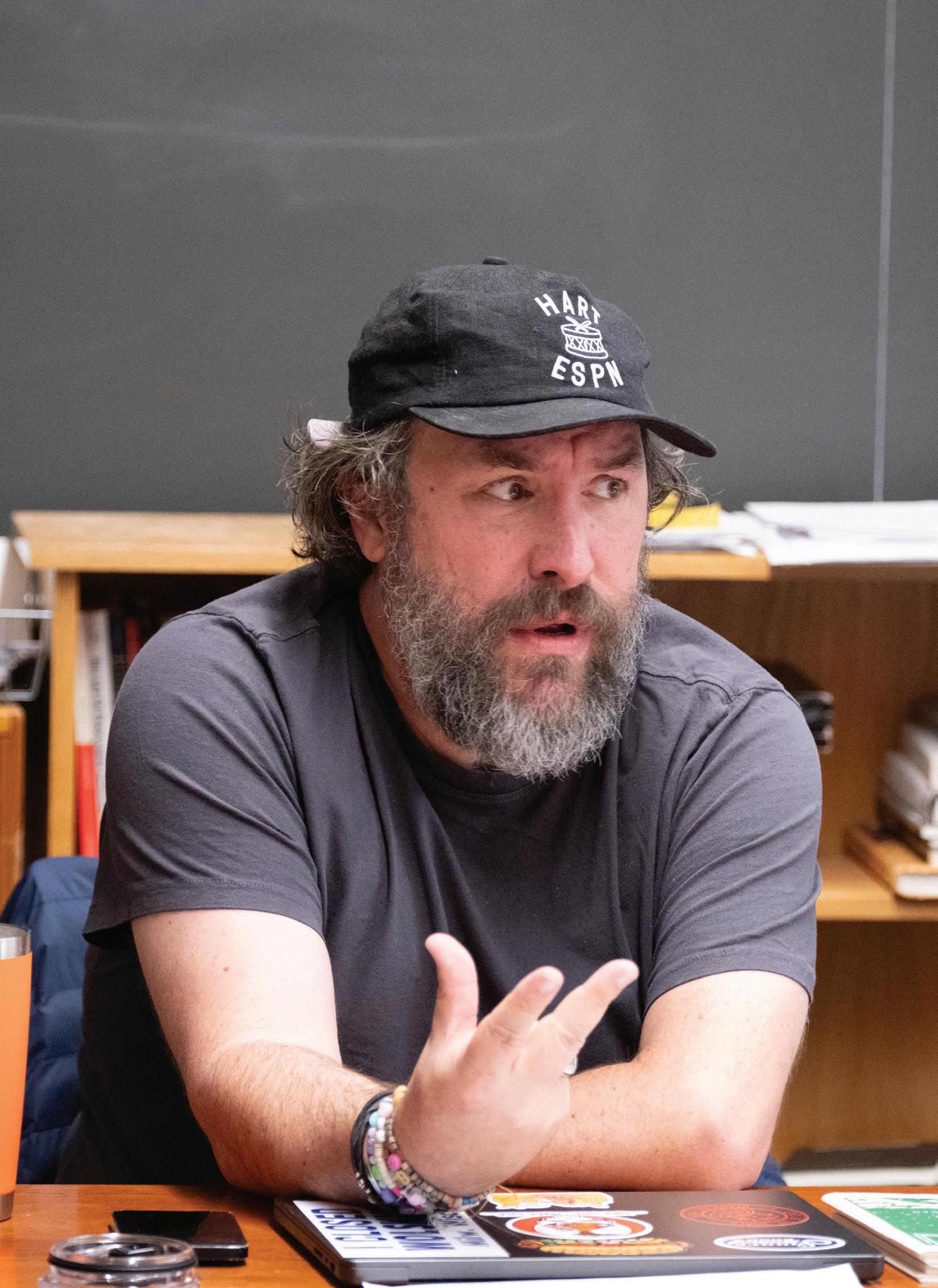
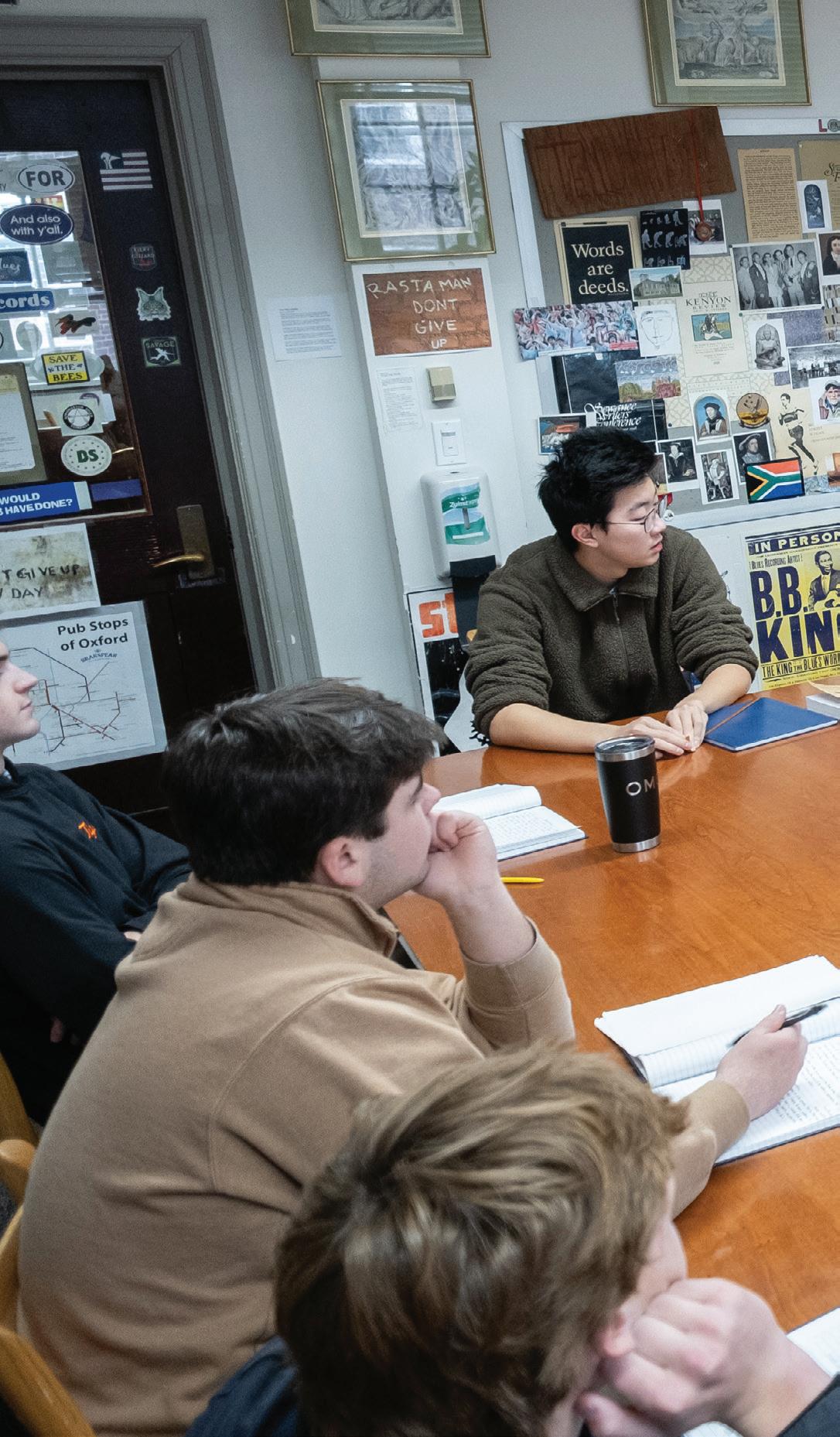
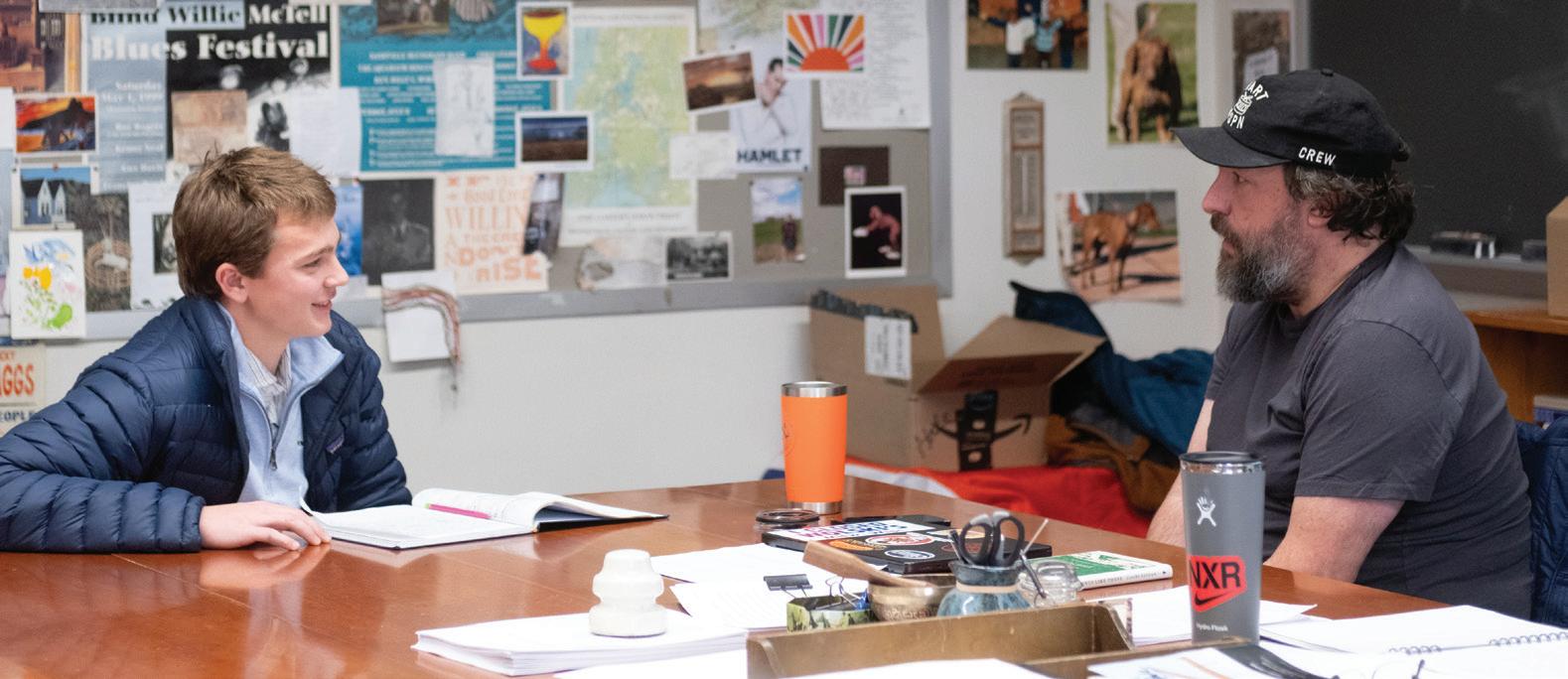
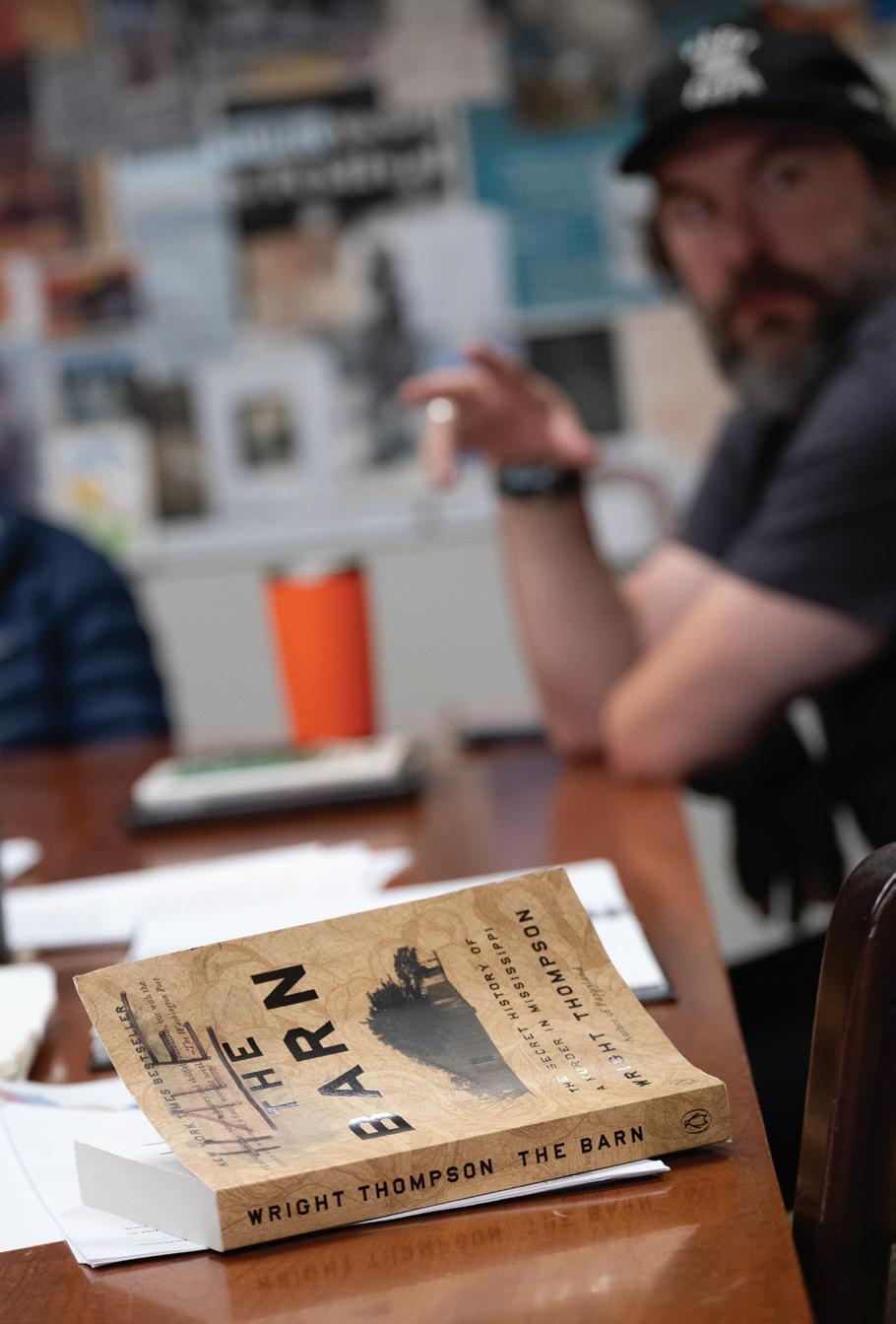
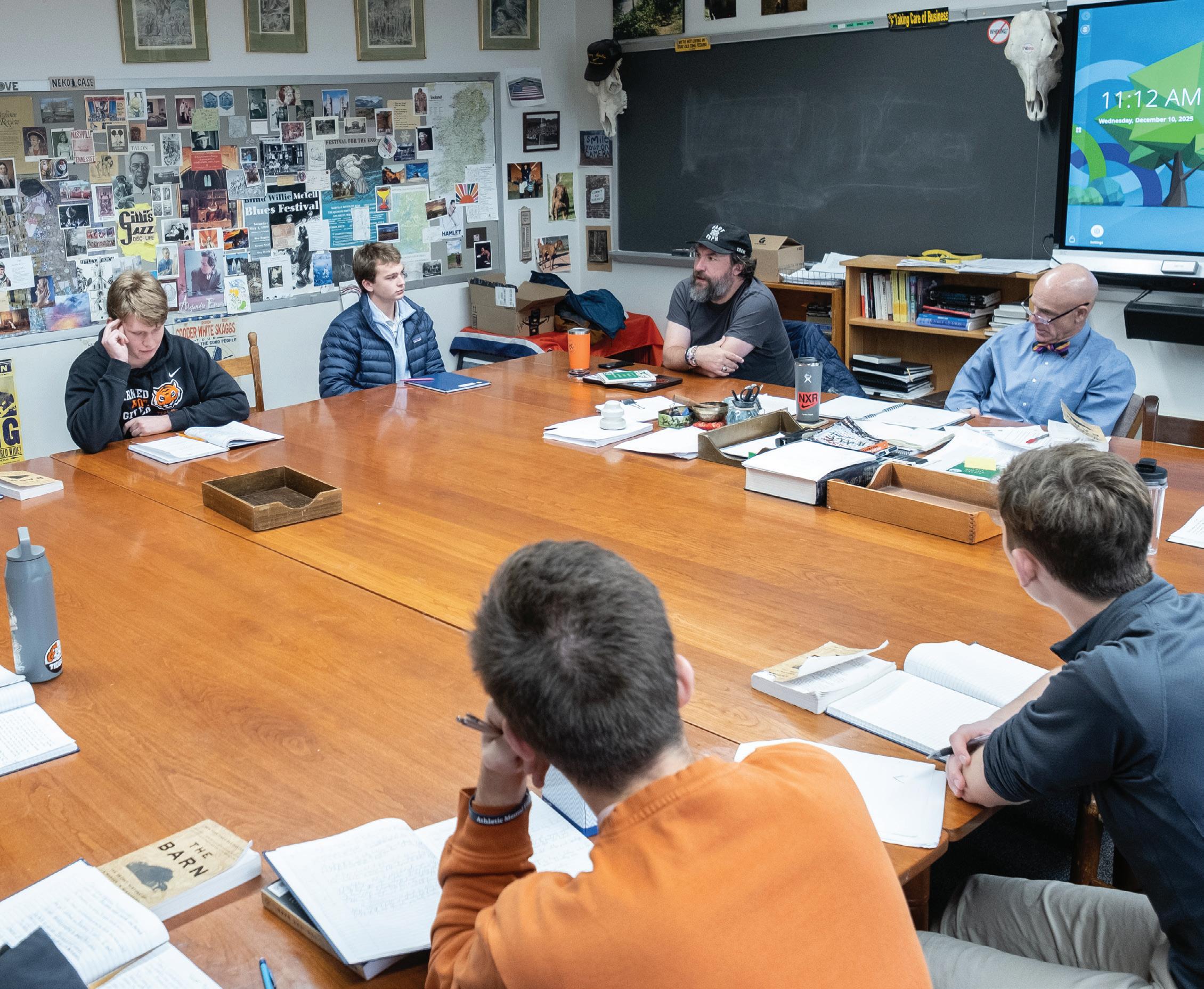
This winter, Wright Thompson returned to Woodberry and spent two weeks (one in December, the other in February) with Mr. Hale’s Creative Writing classes. Wright, a leading sports writer for ESPN and best-selling author, ran on the crosscountry team Mr. Hale in the nineties. The two still get along just fine. Together, we discussed The Barn: The Secret History of a Murder in Mississippi (2024), which investigates the murder of fourteen-year-old Emmett Till in 1965 and takes the reader to the heart of the Deep South’s tragic history. In The Barn, the past is everpresent. And in class, we learned how much he reveres seemingly mundane details, what it takes to fit such a messy and winding history into a coherent story, and how he talks to the people that bring his story to life. That’s how we got the idea of interviewing Wright himself. – Charles Horner and Tad Shores

Charles Horner: When we read Te Barn we were struck by the intimate interviews you had with these people who are dying. Like the old guys that were around when J. W. Milam was alive. Or the people that were the family of the Emmett Till. How did you broach these questions and say, “Hey, I want to talk about the most sensitive part of your life?”
Wright Tompson: Everybody’s diferent. I think the frst thing I would say is that whatever your reporting style is should be a natural extension of how you move through the world. I don’t like confrontation. Some people love it. I work with people who love it. I don’t ever want anybody to be mad at me.
And so my thing is, I try to hang around and hang around and hang around and hang around, and have these things come up—a little on their own and a little by trying to steer it that way. But the best thing in the world is where you create a situation where the person themselves brings up the thing that you want to talk about that’s sort of foreboding. I like that.
Te other thing with the book is that I spent three or four years following these people around with a notebook. I’d say 75 percent of it is from the last nine months.
Tad Shores: Really?
WT: Yeah, because once you get closer, there’s a degree of trust. I also realized I had twelve versions of the same scene, and I picked the best one. And the best one was the one where I’d been there the
longest. I don’t do a great job of rolling up and sitting across a table from you and then saying, “Let me ask you fourteen unbelievably blunt questions about the worst thing that’s ever happened to you.”
But there are people who do it that way, and for whom that’s efective, because in some ways it’s like ripping the Band-Aid of.
Like, “Here we go. How did your mother’s suicide affect you?” Now we’re on. You know what I mean?
TS & CH: Yeah.
TS: Do you think that gives you more true emotion or information?
WT: I think it works. I don’t think there is one true way. Te people who get the best stuf and write the best stuf are fully realized, actualized human beings moving through the world in a way that’s totally authentic to them. People can really smell phoniness. One of the hardest things about teaching here is you have to be really sure of who you are, because teenage boys are apex predators at snifng out bullshit. When the organism decides you’ve got to go, you’ve got to go.
So being yourself matters. People talk about good ideas and bad ideas, but I genuinely believe there’s no such thing as a bad idea. Tere’s something you’re curious about and passionate about, and whatever that is, that’s where the good stuf comes from. You have to do it in a way where you don’t feel phony.
CH: Was there any conversation or moment that clicked—either with the Till family or the other side—where something changed how you understood the book?
WT: Yeah. I got invited to what would have been his 80th birthday in Chicago. Every living human being who knew him was in the room, and they started telling stories. For me, that felt like being brought into the circle and deputized.
TS: How long had you been in that circle?
WT: A long time. But I never felt totally comfortable. I always felt like letting me into that world was an act of grace that had to be honored with vigilance. If I got careless or entitled, it could end. I always felt like I needed to be on my Ps and Qs.
TS: Did that prevent you from being authentic?
WT: No. It just meant I was intentional. Respectful. My default sense of humor is relentlessly picking on whoever thinks they’re in charge. He doesn’t think it’s funny, which makes it funnier to me. But none of that here. I wasn’t messing with Will Parker. It was yes sir, no sir, yes ma’am, no ma’am.
CH: We were curious about the idea of learning how to love and hate a place at the same time. You love Mississippi through this book, but you also acknowledge its blemishes. How do you reconcile that?
WT: I think the hardest thing in the world is telling the truth. If you only love Mississippi, you’re not paying attention. If you only hate Mississippi, you’re not paying attention. Tat’s true for anywhere. Te messiness is what makes it beautiful and real.
Writing needs to be an exercise in vulnerability and truth, not bravado. You forget anyone will ever read it. Ten suddenly it’s printed and out in the world. Writing is for yourself right up until it isn’t.
TS: When Mr. Hale puts our sentences on the screen, it’s like, damn.
Ten we talked about Woodberry for a little while, about how diferent things were way back in the nineties.
CH: We have this one question that I really liked, because I remember last time you came here and spoke, you mentioned reading One Hundred Years of Solitude.
WT: Yeah, I love it.
CH: And magical realism—that’s something I’m really interested in myself, and I really felt that while I read Te Barn, because you have the ghost of Emmett talking to Mrs. Andrews. You’ve got kind of that murkiness, the woodpeckers, like the bayou or the swamp, the mud.
WT: Yeah, the mud. All of this magic. Certainly, every time someone told me a story that was that trippy—like the
peacocks in the woods—every time somebody told me something that seemed fantastic, I wrote that down because that was going in. It was purely that. I wanted the tone. It has to be true, but I wanted that feeling. Because I think magical realism does something—it makes you reconsider all of it. If the project of the book is to strip away the tyranny of time and the idea that we all live in linear time, then stuf like that helps. It creates a mood of like, oh, the rules are sort of bending somehow.
TS: Yeah, most of us noticed that at the start you talk about the birds, and then you come back to it at the end. I forgot exactly what it was—like a juxtaposition. Yeah, the birds are right next to something else, and then it comes back. Tat’s all on purpose.
WT: Yeah, that was great. Birds. So, the birds—every time there’s a bird in the book, it’s very important.
Yeah. And I love shit like that. I think I said this on your phone—I’ve talked to so many classes, and now I’m repeating myself—but Rick Rubin, the music producer, says the frst thing all art must do is divide the audience. And I think that’s real. If everybody likes your shit, it sucks. If nobody likes it, you’ve got to go back to the drawing board. But if everybody likes it, it’s just schlock.
Rick Rubin’s the guy who just worked on Tyler Childers’s album. He also did Jay-Z, the Beastie Boys, Johnny Cash’s American series—he’s gone all around.
YouTube, AC/DC. I mean, he’s sort of the guy. He’s produced so many records, but his thing is: the very frst thing all art must do is divide the audience. Tere has to be somebody who hates it.
TS: Kind of going of that—how has music infuenced your writing? You also talked about Alan Lomax’s book about blues, where he says the music of a place is like the place crying.
WT: I mean, it’s dirt singing. It’s not an accident that the descendants of the inventors of blues invented gangster rap. Tere’s such a straight line between N.W.A. and the Mississippi Delta. I wanted to be a music writer before I wanted to be a sports writer. I randomly fell into sports in college—total accident. So I’m way more into music. I haven’t really written about music a lot because I don’t want to turn it into my hobby. I mean, I went to twenty Dead & Company shows in two years. To eighteen of the Sphere shows. I did my whole book on tape over a week or ten days in Las Vegas, and I recorded on all those days. I moved into the Venetian for ten days. I was in the band suite. I mean, it was nuts. It was a great run.
Ten he rifed on the Dead for twenty minutes. Highlights included: Wright making eye contact with Natasha Weir as Bob Weir sang “steal your wife,” Wright seeing “Te hottest hand surgeon ever,” and Wright going to an all-night diner with his six-year-old daughter after a concert at the Sphere.


WT: So all that to say—I don’t fuck around about music. Cool?
TS: Yeah.
WT: Like, there’s a boom-bap in my head to stuf. Sentences—there’s a syllable thing. Sometimes I’ll be like—I don’t count them like a psycho—but sometimes I want it to feel a certain way. And sometimes I need to add or take away words so that it feels like it lands on the downbeat.
Right. I want to end on a two or a four. And sometimes it ends on a one or a three, and it just sounds wrong. So, like, you know, I’m trying to sort of—I really want to do the whole thing.
TS: Right.
WT: My music is ritual music. Tere’s a reason churches play music.
CH: “Yes.”
WT: I mean, it’s like a hypodermic straight to your soul. Skips all the other shit. Music does something.
Mickey Hart from the Dead is very, very into this idea that the Big Bang sent out pulses into the universe, and that those pulses are the natural rhythm of life. And that what modern life has done—through devices, through things that shorten time— is that we’ve lost touch with the essential rhythms of the universe.
And there’s actually scientifc theory that says—and by the way, about two months ago, studies started coming out that were
about proving the thing he’s been saying. And he just texted me, gloating.
But it’s the idea that in rats—or some sort of caged animal—hitting them with music below a certain frequency, called gamma, does all sorts of physiological, almost medical stuf.
And so his theory is that the reason people walk out of Grateful Dead shows euphoric is because for twenty or thirty minutes before you walk out of there, they hit you in drum space with so much gamma that you don’t get anywhere else. That they are fundamentally affecting your physiology. Tat’s just—now, I don’t know. But he believes it. He’s nuts, but it’s cool.
CH: About those gamma rays… you use the word cosmos or cosmic a lot. And I just think—you say, you know, “A great cosmic clock counts down to Emmett Till’s murder in the barn,” that “the unspooling began in the frst pile dug into the frst room, breaking up the ground to serve the appetites of human beings.”
WT: You have cosmic justice. Tere’s this little barn, and then there’s all this—it’s kind of like the timeline isn’t linear.
CH: Yeah.
WT: Yeah, man. I had this thing on my desk. A big Post-it note that just said, “Everything is everything.”
And the only reason the barn matters is because it’s small, and it sits at the center of unbelievably complex things that orbit it—unbelievably complex patterns.
It’s like a solar system. And the reason time isn’t real is that they all have diferent revolutions. Tis idea’s year is diferent from that idea’s year, which is diferent from this one.
And then they intersect. Then they slow down. So time is layered. If you’re on that loop, it’s not linear. If you’re sitting in the middle watching all the loops, it’s different.




by Gibbon Powell
“That is why dogs don’t go to heaven,” said Mr. Blick after we finished a ten-minute Youtube video on Father Mike Schmitz.
“Now I can stop having to answer that silly question,” he said with a smirk.
“So you just listen to whatever this guy tells you?” I blurted out.
“Did you not just listen to that video?” Blick responded.
“Why don’t you give us your answer? Father Mike might as well be our religion teacher.”
“Oh, shut up,” said David under his breath.
“Get up! We’re going to see the principal.” And just like that I was headed back down the same bare hallway.
Entering the principal’s office, it was the priest sitting in the principal’s chair, Father McGee. He had a straight face and about a third of a donut left on the desk. “Take a seat Gibbon,” said McGee, brushing his short beard with his stubby fingers. “I heard what happened over the phone. Why do you question our beliefs?” He choked down the rest of the donut in a gulp. This guy’s a joke.
“Let Mr. Blick teach. You just need to listen.” He wasn’t done chewing and I could barely make out what he said. I looked over to Blick, who was staring right at me.
“Well, I wouldn’t say he’s teaching,” I said. McGee carried on.
“It seems to me you aren’t letting him. Do you not have anything to say to him? It doesn’t look like your values align with the

rest of your classmates’.”
“I should be able to have my own opinion on whether I’ll see my dog in heaven,” I said.
“It’s the Catholic belief, and you’re at a Catholic school,” Blick said. I wasn’t going to believe that just because it was Catholic. He told me it would all be over if I apologized to Blick. I just wanted to get out of there, so I forced the two-word phrase out of my mouth. He received it with his head cocked back and a satisfied smile.
“Thank you, Gibbon.” I left the office and returned to class.
“What was it this time?” David asked. “The usual bullshit. How come you never back me up?”
“I don’t want to be sitting in that room with y’all. Bite your lip next time you wanna say something like that.”
During religion period the following day, the class walked over to the church for confession—a moment for them to feel better about all of the things they’ve done wrong. I expected I’d sit next to David and talk to pass the time until Blick started speaking to the class: “Today, whether you are Catholic or not, I want everyone to confess their sins.” He made eye contact with me.
“You’ve really done it this time,” David laughed.
“Well, I didn’t know he hated dogs so much,” I joked. “What even happens in there?”
“Oh, you’ll see. It’s not bad,” he said before leaving for his confession booth.
What a great help that was. I sat thinking of what I was going to say. A sin is
something that’s pretty up in the air. What one person thinks is a sin could be the right thing to someone else. I’m starting to sound like Father Mike Schmitz in the abortion episode.
“Your turn, big guy.” Blick made me stand up, and pointed to the booth where I would confess. I fought the urge to tell him to get his wrinkly old fingers off me and bit my lip.
I walked toward the back of the church. This could feel good to get off my chest. That’s what everyone else says. I wonder what Blick will think. Everyone stared while I walked to the back of the church, wondering what the Methodist was going to do in his first confession.
I fought the urge to tell him to get his wrinkly old fingers off me and bit my lip.
I sat down next to a black shade that divided me and the priest. At least whoever I would talk to wouldn’t know who I was.
“Hello, this is Father McGee. Let’s start with the sign of the cross, then we’ll get into the penitent.” You gotta be kidding me. I wasn’t spilling shit to this guy. And no way I was making the sign of the cross.
I had no clue what to do or say. I didn’t want to mess up anything so I waited for him to speak first. He asked me how long it was since my last confession.
“A few months.” I used a deepened voice. I didn’t want him to know who he was talking to.
“Oh, was it?” There’s a chance he knew it was me. I went on to tell him small things like stealing a cookie from the cafeteria or

telling my mom I took the trash out when I hadn’t.
“God will forgive you. We sin no matter how hard we try not to. Even me.” That was not the response I expected. There was nothing asked about what I did. Only forgiveness.
“Anything else that happened more recently?” The moment was ruined. He knew it was me. He was just fishing for me to apologize for the previous day.
“Nope.”
“Okay. Well, we’re going to try something out here.” He slid a wooden rosary under the shade that decided us. I knew exactly what he was doing. He was making me participate in another meaningless Catholic tradition (saying the same prayer over and over again, as if the more you say it, the more it will mean). To me, it was like a completion grade, something you can say you did. In this case, it was just another demoralizing symbol of victory for Blick and Father McGee.
I had never done this before, and only witnessed it once in Mr. Blick’s religion class. I wanted to ask for some direction of what to do, but I refused to give McGee the satisfaction. I stared at it. Funny how people treat these necklaces.
“You don’t need to say a thing; just follow along and listen to my words,” McGee said gently. My fingers moved from bead to bead with every prayer, listening and meditating on each Hail Mary. On the last prayer, “Our Father,” I recited it with him. “Go in peace,” he said. I felt like I was drawn to tell him something, but I bit my lip, stood, and left. Mr. Blick was standing outside the door,
making it seem like he was waiting for his turn. He wasn’t fooling me at all. I knew he was trying to brainwash me, turn me into one of his devout Catholics. He stared at me, smiling, before walking into the same booth.
It was the day before Christmas break. We played Secret Santa. Mr. Blick started calling out numbers from a hat. I watched my peers get called one by one and pick sports cards or candy from the bag they chose. Then I heard, “13.”
“Me,” I said. I walked over to what was left of the presents. None of the big colorful ones were left. I chose one I figured a boy in my class would get. Before I sat down, the next number was called.
By the time I opened the bag, everyone had been called, eating sugar or showing their bestie the new bracelet they got, but not me. No candy. No sports cards. In the bag was a small, white box. I opened it carefully and stared.
It was a shiny, golden rosary.
“Whatcha got there?” David asked.
“Bad luck,” I said.
“Good stuff, man. Solid trade,” I heard Gentry say to Shane after exchanging their gifts. I started contemplating whether I would do the same when I heard, “Gibbon, I’d like to see you at my desk.”
I made my way over. Blick was staring at me with a straight face. “I see that you got the gift I put in. This rosary is very special.
You can give it to me and I’ll get whatever candy you want. Or, you could just trade it with another classmate.”
That’s when I realized this was absolutely killing him. Me, out of all people, got his gift.
“Yeah, I think I’m happy with what I got,” I said cheekily, staring him dead in the eye. He pushed on, “Well, I just thought…”
My lip was sore. “Just because I’m not Catholic doesn’t mean I don’t pray the Rosary. I just did confession, did I not?” I interrupted.
“You did,” he said.
“Thank you, Mr. Blick.” I cocked back my head and smiled. I carefully slid the rosary into my pocket and returned to my seat. I won.



by Hugh Morrison
When I was coming home from the hospital a few days after my C-Section birth, a man named Henry was cutting my grass. I did not know at the time that Henry would later be like a father to me. As my mother and father rolled down the driveway, Henry stopped his mower, got off, and came to greet them, helping get stuff out of the car and to the house. (They had been at the hospital for a long while as I was admitted to the NICU for breathing troubles.) In the midst of all this, my mother had handed me to Henry. Henry cradled me and held me and stopped my crying, and brought me into my home while my parents caught a break.
As I grew older, I would sit in the living room window, watching him roll the mower back and forth over the yard creating these perfect lines, and making this charming humming noise. When I was seven, my mother let me out to go see Henry. I went out and jumped on his lap and asked to ride around. We rode around on the mower for an hour and a half before ending up at the back of the yard on an overgrown sewage line. There he did something unexpected. He got off, sat me down in the seat, taught me how it ran, and let me go. All those years of watching paid off as I exceeded expectations from him and my mother, who had come to watch and was petrified at the sight of sevenyear-old me driving this large, commercial zero-turn mower. This was a turning point.
Later, after I finished mowing, Henry took me to a local restaurant. As we ate, he talked about all the stuff going on in his life because somehow seven-year-old me had responses. He explained he had back problems, and I understood it was killing him to keep mowing my yard week by week. He got to the end of the meal and on the ride home told me that this would be his last day mowing my yard and that he was quitting to start recovering from his injuries. I cried like I had the day we first met.
with not getting anything until I saw one rod, the Lew’s American Hero Spinning Combo, which was camo with a nice reel and rod. I was set on this rod even if I had to beg for money from random strangers. Henry saw this and immediately took me to the checkout counter, bought the rod and some bait, put some line on it and put it on his truck’s rod rack.
Few days after my C-Section birth, a man named Henry was cutting my grass.
A few months go by and I start to think of Henry. One day my Mom tells me to go outside because there was someone coming up the driveway. I look outside and see Henry’s bright red 98 Chevrolet Silverado pulling down the driveway. He didn’t have the mowing trailer, which was an odd sight, but I didn’t really care at the time as I was so excited to see him. As he talked with my mom and wrestled me with one arm like he used to, he mentioned he was going to Bass Pro Shops which was about thirty minutes away from my house and then he was going home. I really didn’t want him to leave so I jokingly put my car seat in his truck and sat in it. Instead of getting annoyed, my mom strapped in the car seat properly, gave me forty bucks, and said to go have fun and be home by nine. I was excited. As we went to Bass Pro, I talked about all the things I wanted to do with him and we decided to go fishing at this pond near his house. At Bass Pro, I was looking around at all these rods and taking mental notes because my birthday was nearing. I was pretty content
Over the years, Henry’s health has declined and it has been consistently harder for him to leave the house and come see me. I love Henry like a father, and I’d trade the world for his health to go back to normal and to rewind to the moments with him. I still keep this rod on my truck rack that I built to look like his and I use it from time to time when I see a private pond on the side of the road. Now, I pull off the side of the road at a pond. Picking the rod Henry gave me from among the many nicer rods, I tie on a chatter bait and give it a big cast, listening to the reel hum as the line peers over the rim of the spool. I will never let go.

by James O’Donahue
It was 6:00 pm in Washington. Staffers scuttled down Rayburn’s steps, eager to begin their evenings. A man stood on the street corner, wearing a classic blue suit and red tie and had dark circles around his bloodshot eyes. He pulled out his phone and answered a call. Suddenly, his bland expression gave way to a smile. He turned around to see a little girl running toward him in a baby blue sundress that highlighted her blonde curls. The man squatted down to pick her up, raising her high and twirling her around in his arms.
“She’s waited all day to see you,” said a smiling woman with long blonde hair, approaching them. She wore a white buttondown shirt and a long black skirt with heels. Her white purse was slung over her left shoulder.
“And I’ve waited all day to see her,” he said, bouncing their daughter in his arms. He turned to his wife, pecking her on the cheek. “How was your day?”
“Busy, I—” Her phone buzzed in her purse. “One second,” she said, walking away. He gave her a concerned look. Minutes passed before she hung up. When she turned around, they were gone. “Justin! Kate!” She started to panic, jogging up the street and screaming for them. Nobody seemed to notice her. She pushed through the men in suits, bumping shoulders as she ran down the sidewalk.
Olivia woke up drenched in sweat. She leaned over and vomited on the floor, pulling her hair back above her head. Her clock read
5:36 AM as she got up to use the bathroom. She turned on the lights and washed her face in the sink. She still hadn’t gotten used to waking up alone. She stepped back to look at herself. Her blonde hair was matted into a bird’s nest, her eyes bloodshot. She looked down and stared at the picture of her next to the sink. She wore a forest-green silk dress with her favorite gold hooped earrings. Her hair was braided up in a high ponytail with loose strands running down the side of her face. She forgot how good he could braid hair.
She felt the warm water, undressed, and got in.
“You look stunning,” Justin said, putting away his phone after snapping her picture. Filomena was crowded that night. The restaurant’s lights were dimmed with candles at every table.
“Well, you did my hair, so I’ll give you ten percent of the credit.”
“Only ten percent!” he exclaimed. “I need at least twenty-five.”
She laughed. “In your dreams. Twenty percent max.”
He shrugged. “Maybe it’ll be more once the wine arrives. How’s work?”
She laughed. “You mean my life?”
He grinned, “Nobody gets a reputation like yours with a work-life balance.”
Her smile faded. “You know I’m good at what I do. Lobbying is more of an art than a practice, but I can’t give away all my secrets.” The waiter arrived with a bottle of Merlot, pouring them each a glass and leaving the bottle.
“Oh, before I forget,” Justin said, pulling out a small wrapped box from his pocket. “Happy Valentine’s Day, Olivia.”
She smiled, taking the box and opening it, pulling out a pair of gold hooped earnings and putting them on. “How do they look?”
“Let me take a picture, and I’ll show you.”
Olivia looked away from the picture, turning on the shower and feeling the cold water against her hand. While the shower warmed, she walked to her nightstand to check her phone: messages from twelve clients. She groaned, slamming her phone on the dresser and went back into the bathroom. She felt the warm water, undressed, and got in. She noticed the water droplets against the glass door, running down from the top of the glass down.
The rain drizzled across the taxi’s window. “Look,” Olivia said to Justin, snuggling in the backseat. “They’re racing.” She pointed to a drop on the far left side of the window. “I bet that one wins.”
Justin laughed. “Okay, I pick this guy,” pointing to one close to Olivia’s. The rain drops raced diagonally across the window, absorbing the smaller ones. Olivia’s glided to the right side of the window. “Yes! Got it,” she exclaimed.
“Damn! What do I owe you?”
“Only a kiss,” she said, leaning into him as the taxi drove home.
Olivia turned the shower off, stepping out and letting the cold air grasp her. She grabbed a towel, shivering while she dried herself. She walked to the closet, opening it and smelling her husband’s
cologne. She couldn’t bring herself to move his clothes. She took a blue shirt and white skirt off the hangers, set them on the bed, then put on her underwear. Her clothes from the past week were strewn across the room. Her phone started to buzz on her dresser, and her eyes started to water.
Then she sat on her bed and cried.
Tears filled Olivia’s eyes. The hospital room was cold and smelled like bleach. The heart monitor let out a faint beep every four seconds. Justin lay in bed, helpless. Tubes were jammed into his stomach, and an oxygen mask was strapped to his face. The cancer had spread from his pancreas to his liver and lungs. “What am I going to do?” she said, her hands holding his arm, but he couldn’t hear her. She saw his final breath leave through the mask.
Olivia’s clock read 10:00 AM. Her dried tears left her face stiff. Her phone kept buzzing, but she couldn’t look. Then she heard a knock. She put on her sweatshirt, walked to the door and looked through the peephole. She let out a faint smile, opening the door and seeing her mother and daughter. Kate ran into her arms and didn’t let go. Olivia felt her long blonde hair, smelled her lavender scent. She didn’t cry or speak, only hugged her tight. His gift to her, wrapped tightly around in Olivia’s arms. She swore to never let go.


by Shaffer Broughton
3.1.25
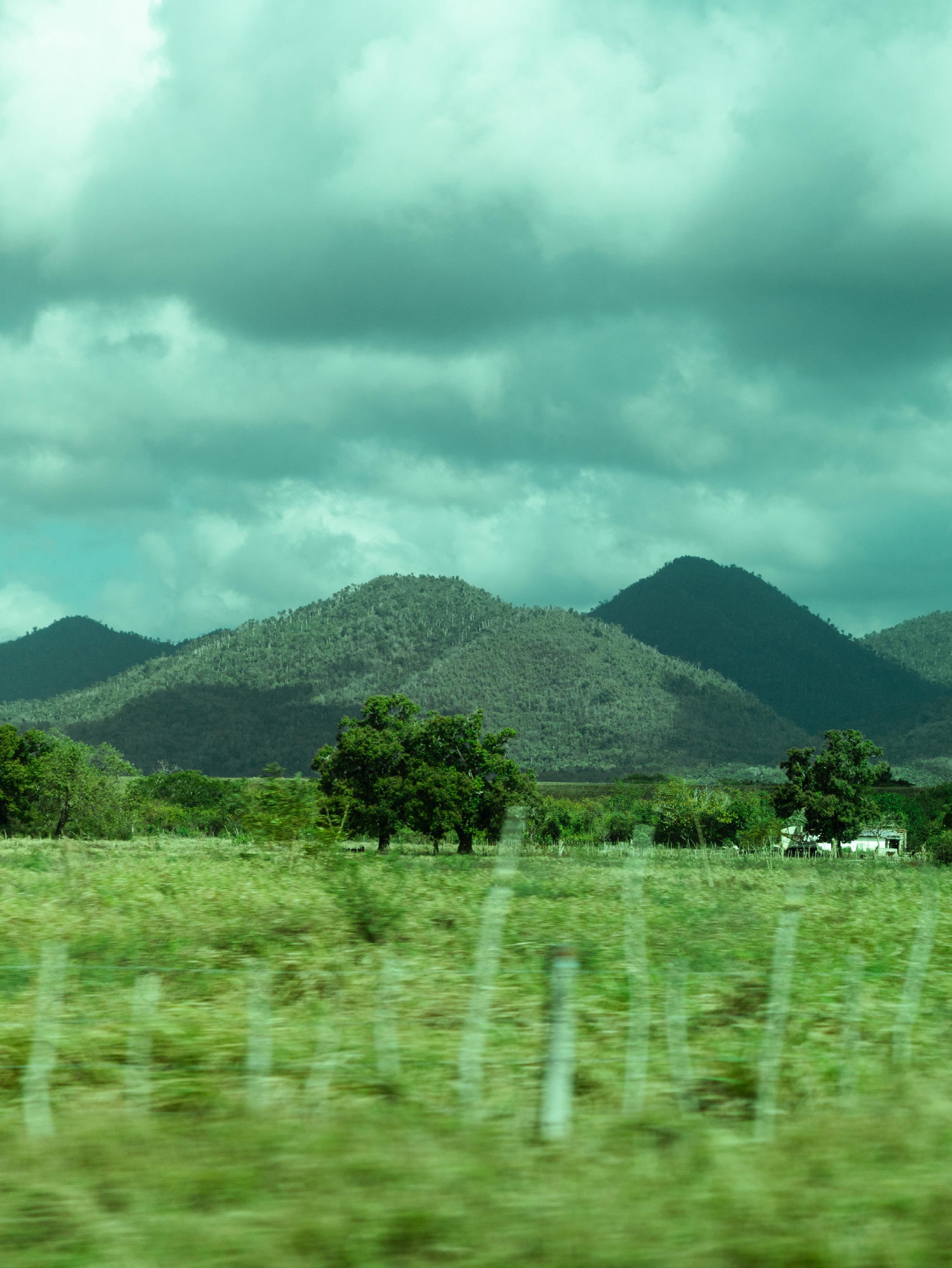
Some seventy miles south of Florida is another world: Cuba. From my plane window I could see the Cuban countryside for the first time. There was barren farmland, mud roads. Even the trees looked dead. When I got to Josí Martín airport, I saw nothing but a blue shanty. The airport is the shanty. The grass was on fire (that’s how they mow it), and there was one other plane. No one comes to Cuba. There are still cars from a century ago. Not the picturesque cars for tourists but cars without doors, without windows, veering all over the place. There are roosters, street dogs they call “chuchos,” and trash, lots of trash, people rummaging in the dumpsters in search of food under a billboard with a party slogan: THIS WAR THE PEOPLE HAVE WON. That, too, was trash.
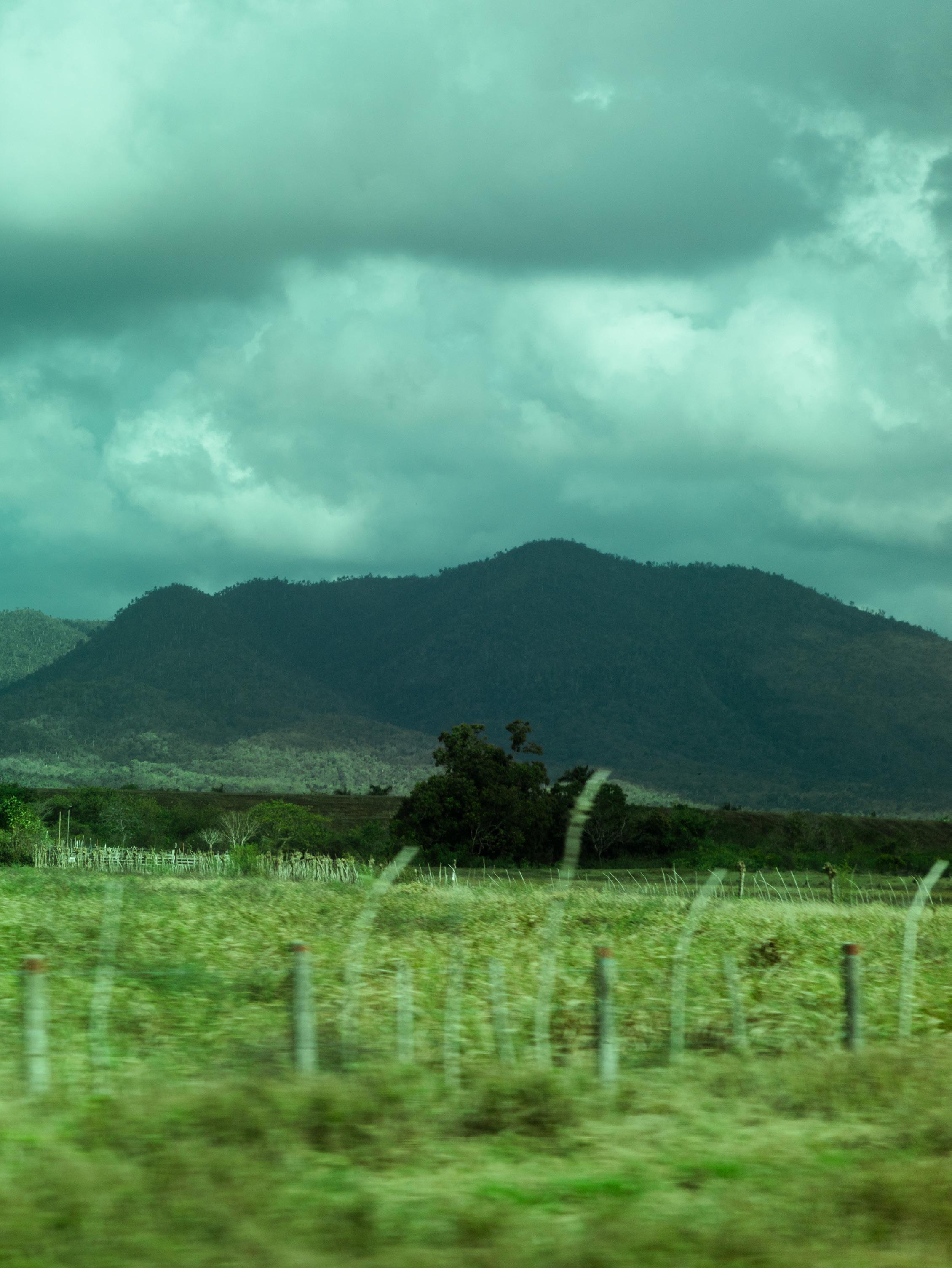
Unas sesenta millas al sur de Florida está otro mundo: Cuba. Desde la ventanilla del avión podía ver el campo cubano por primera vez. Había fincas baldías, calles de lodo. Y aún los árboles parecían desnudos, muertos. Cuando llegué al aeropuerto de Josí Martín no vi nada más una choza azul. El aeropuerto es la choza. Se ardía la hierba (así se corta), y había otro avión. Nadie viene a Cuba. Todavía hay coches de otro siglo. No los coches pintorescos para turistas, sino coches sin puertas y ventanas, moviéndose a diestro y siniestro. Había gallos, perros callejeros que se llaman “chuchos,” y basura, mucha basura, gente hurgando por los basureros en busca de comida bajo un lema partidista que dijo: ESTA GUERRA EL PUEBLO LA HA GANADO. Eso también, basura.
3.5.25
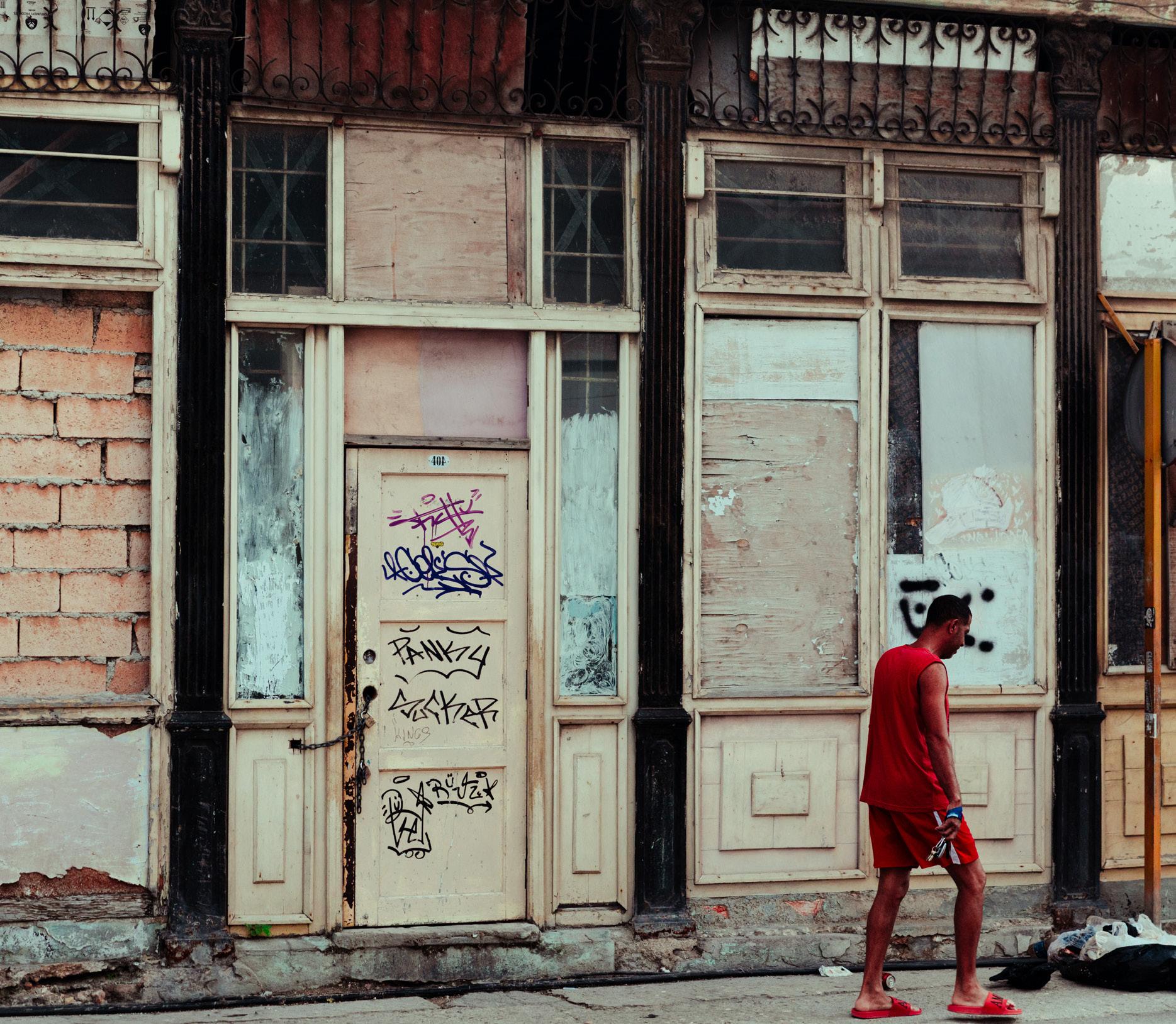
We also learned that Castro defeated illiteracy and that three revolutionaries were killed (by whom, no one knows) because they wanted to teach the peasants how to read. On the other side of the display-case, we saw their uniforms stained wine-red with blood. That’s the Yankee massacre for you. And that’s Cuba for you, too: where they always say WE WILL TRIUMPH, but never will.
Además, aprendimos que Casto venció la analfabetización y que tres revolucionarios fueron matados (por quien, no hay quien sepa) porque querían enseñar a los campesinos a leer. Por otro lado del vidrio vimos sus uniformes manchados con sangre vino-rojo, pues así es la matanza yanqui. Y así es Cuba: donde siempre se dice VENCEREMOS pero nunca vencerán.

3.6.25
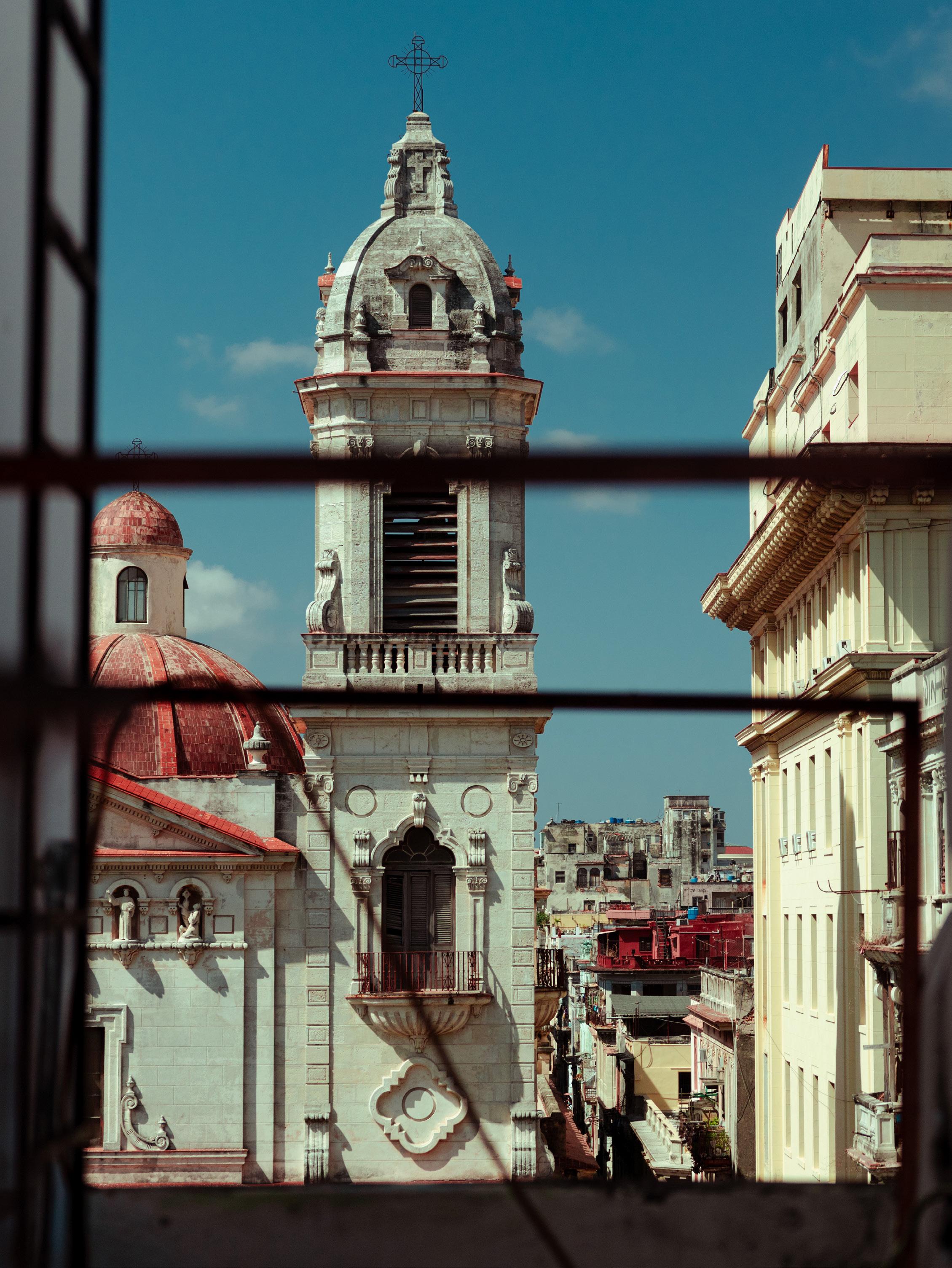
Afterwards, we walked around La Plaza de San Francisco, where there’s an orthodox church. (The colonial conquest of the Spanish has mixed with the ideological conquest of the Soviets.) It had an almost Tuscan roof and walls made of piedra caliza. Piedra caliza is a rock that you get from the bed of the bay. What’s cool about piedra caliza is that you can see the fossils of corral, of snails, of shells, and of other prehistoric crustaceans. Turned to stone like Havana was some seventy years ago.
3.7.25
We left the hotel for Mojito Mojito (the coolest restaurant we’ve eaten in). I had rice with black beans and a fried egg. The food was great; the music, spicy; the dancing, smooth. Everyone started to dance, even the one and only Mr. Collier. Then we went outside, into another alleyway, where a taxidriver (more like a rickshaw-driver) was sitting with his five year-old son. He wants to be a soccer player when he’s older. We chatted about our future, our hopes, our freedom, and then their lack of those things. I couldn’t dance anymore.
Después, pasamos por la plaza de San Francisco, en la que hay una iglesia ortodoxa. (La mezcla de la conquista católica y la conquista ideológica de los soviéticos.) Tenía un techo cuasi-tuscano y paredes de piedra caliza. La piedra caliza es una materia prima que se saca del cauce de la bahía. Pero lo interesante de la piedra es que se puede ver los fósiles del corral, de los caracoles, de las conchas, y de otros crustáceos prehistóricos. Congelados en el tiempo como la Havana fue hace unos sesenta y tantos años.
Nos salimos del hotel pa Mojito Mojito (el restaurante más chingón en que hemos cenado). Comí arroz con potaje y un huevo frito. La comida era buenísima; la música, picante; los bailes, suaves. Y, en efecto, nos echamos a bailar—aún el mismísimo Señor Collier. Pero luego fuimos pa afuera, a otro callejón, donde un taxista (más como un biciclista) se sentaba con su hijo de cinco años. Quiere ser futbolista cuando sea mayor. Hablamos de mi futuro, de mis esperanzas, mi libertad, y luego la falta suya de ellas. Ya no podía bailar.


by Charles Horner
CB leaned over his dish of lasagna and whispered in a hearty croak that made his vocal chords strain like the strings on a dulcimer.
“An’ at the funerah, a man came up and said: Popcorn never died.”
Catherine and I side-eyed each other and kept on slurping our spaghetti, wondering if we should laugh or get goosebumps. Luckily, my mouth was so full of noodles that I chewed my snicker into the frightened gulp of an 8th grader.
Tat was the fun part about dinner with my grandparents, Nonnie and CB: I could actually slurp my spaghetti. I didn’t have to spool it carefully and pretend to be smart. CB just told us stories, and I just listened, relieved that somewhere under my collared shirt there might be some spunk. So as Catherine and I few down the slick and twisty Willey Bridge, windshield wipers screeching to the FM radio, we were excited, even to hear the same old the same old.
CB, afer all, was everything we weren’t and everything we wish we were. Like at the restaurant, Joe’s Inn, when the shrill and callused waitress came with his piping-hot boat of lasagna: CB whistled in gratitude, let out a mmmm, and got ready to chow down. One Christmas, I recalled, he got nothing but an orange. Still, CB somehow closed the rif between our lives, and taught us gratitude we could never understand, taught us a dialect we never really knew. And above
all, he ensnared us in the eerie drama of his childhood country tales—anything from cow utters and voo-doo doctors, to blood feuds that last a century.
Nothing, though, could’ve prepared us for the story of Popcorn Sutton’s moonshine racket. I forget the details of exactly how Popcorn got away with it. At the time, I was too mesmerized by the thought of Popcorn’s spindly arms, Popcorn’s bulging eyes, Popcorn’s name, which probably alluded to his lungs, and Popcorn’s funeral, which CB told us was just a ruse.
When CB suggested that Popcorn might be immortal, Nonnie scowled and rolled her eyes. CB turned to her and chuckled soulfully, his wrinkles creasing around his eyes as if they, too, were smiling. He took a second to digest his laughter.
“Aggie, of course Popcorn’s probably dead, but at least I got some of his lefover shine.”
Nonnie thought he was joking. We did too. But CB looked too pleased with himself.
“Carroll,” she faltered, turning pale.
CB nodded and turned to me and Catherine.
“I’ll prove it to y’all.”
And he did. Tirty minutes later, CB slid open his back door, sauntered into his living room, and took us to his liquor cupboard. I had always thought it was just the place of
bubbles and lime. Only then did I realize that it was also the shrine for CB’s secret: there, in a used apple-juice jug, was the clear and quiet liquid.
CB twisted of the lid with his splotchybrown hands and took a cautious sip. His eyes screamed silently as his throat quivered like a turkey wattle.
“Want some?” he said.
We couldn’t believe our eyes.
“CB, we have to drive home.”
“ Ten take a whif.”
Catherine frst. Ten me: I took that long, eye-watering whif of mischief with gusto. Te vapors burned and tickled up my nostrils and maybe even into my brains.
I like to think that CB’s life still intoxicates the world around me. Somehow, even a suburban home like his can reek of the Appalachia I never knew. On the way there, I can hear the cicadas in trees long buried by highways; I can even hear the Powhatan paddle up the James. And of course I see Christmas in the plump and fbrous fesh of an orange. Because as far as I’m concerned, CB was right the frst time: Popcorn never died.
Late at night, he sulks where the shadows meet the tree line, reminding me that I inherited a world where the past whispers its mysteries to the present. So I keep my eyes peeled and my nostrils primed, knowing what seems like water is sometimes moonshine.
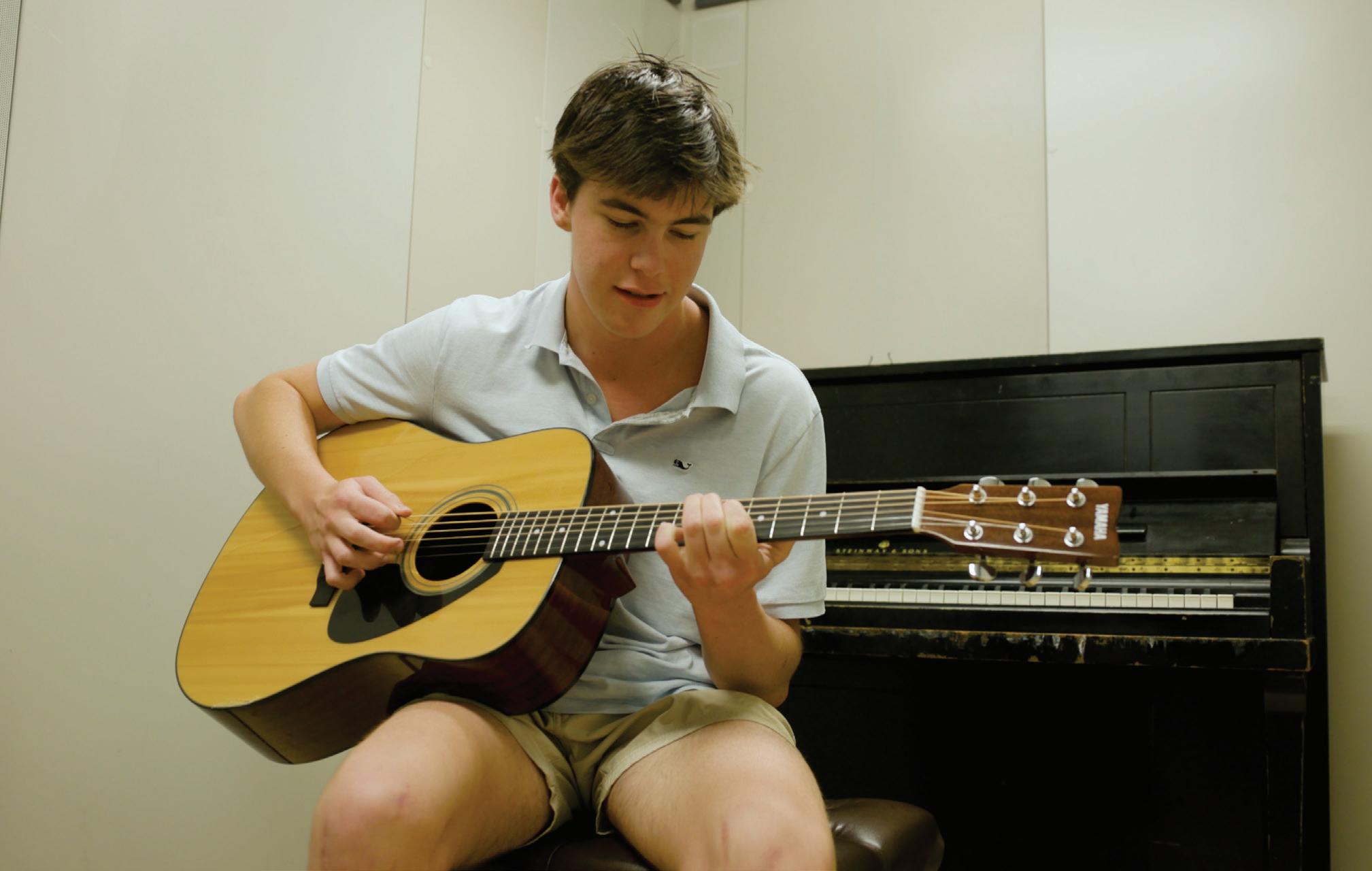
Q: How do you make playing music feel like an outlet?
A: Whenever I’m playing music with other people, it never feels stressful. It’s just a bunch of people playing music together and making something that sounds good. Te band we all play in does a good job of practicing enough so we don’t need to stress about getting a song down before we play. It’s always fun to learn new things about music. It’s only stressful if you put too much on yourself.

Q: Has your progression on the guitar been a straight path?
A: No, it hasn’t. Te biggest thing is motivation. You’ll play every second you get for a month straight, and then you have to be careful not to burn out. Tat was the problem for me. I loved it and would practice every free moment, but eventually you get tired of it. It never got to the point where I stopped playing, but that was the biggest thing holding me back.

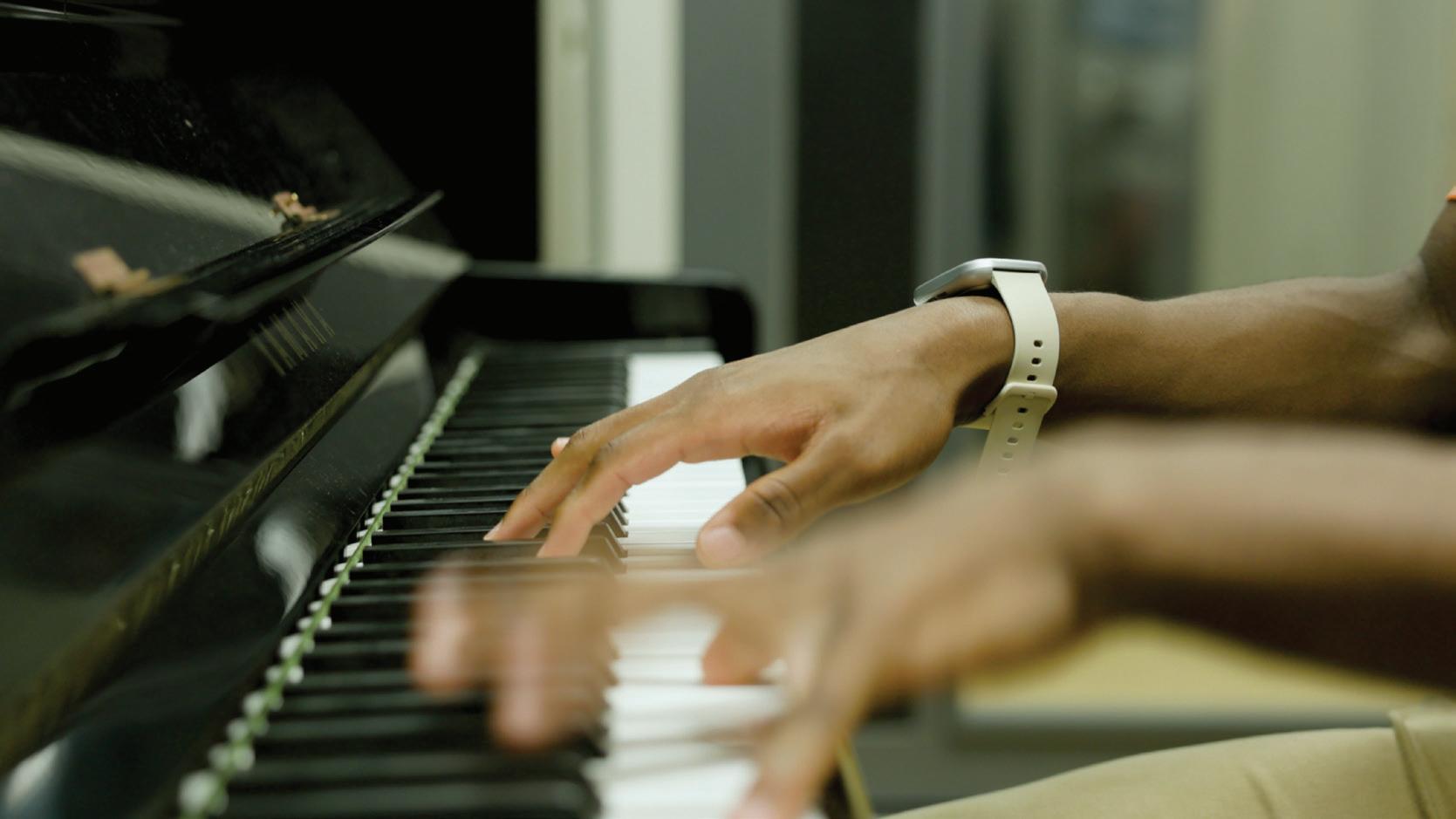
Q: What’s your favorite part about jazz?
A: When I’m playing jazz, I don’t really think. It feels like something not of me — like I’m controlled by the musical brain inside. Te improv part especially makes me feel weightless.
Q: People say you basically live in the Walker Fine Arts building. How do you keep fom getting burnt out?
A: Piano burns me out when I practice every day. It’s easy to get frustrated when things get really hard and take a long time to perfect. To stop myself from burning out, I listen to people who are better than me. It makes me incredibly jealous and makes me think, “I need to get like them immediately.” I know I probably won’t, but the chase of trying to get as good as them is exhilarating. It’s hard to replicate that feeling anywhere else in life.
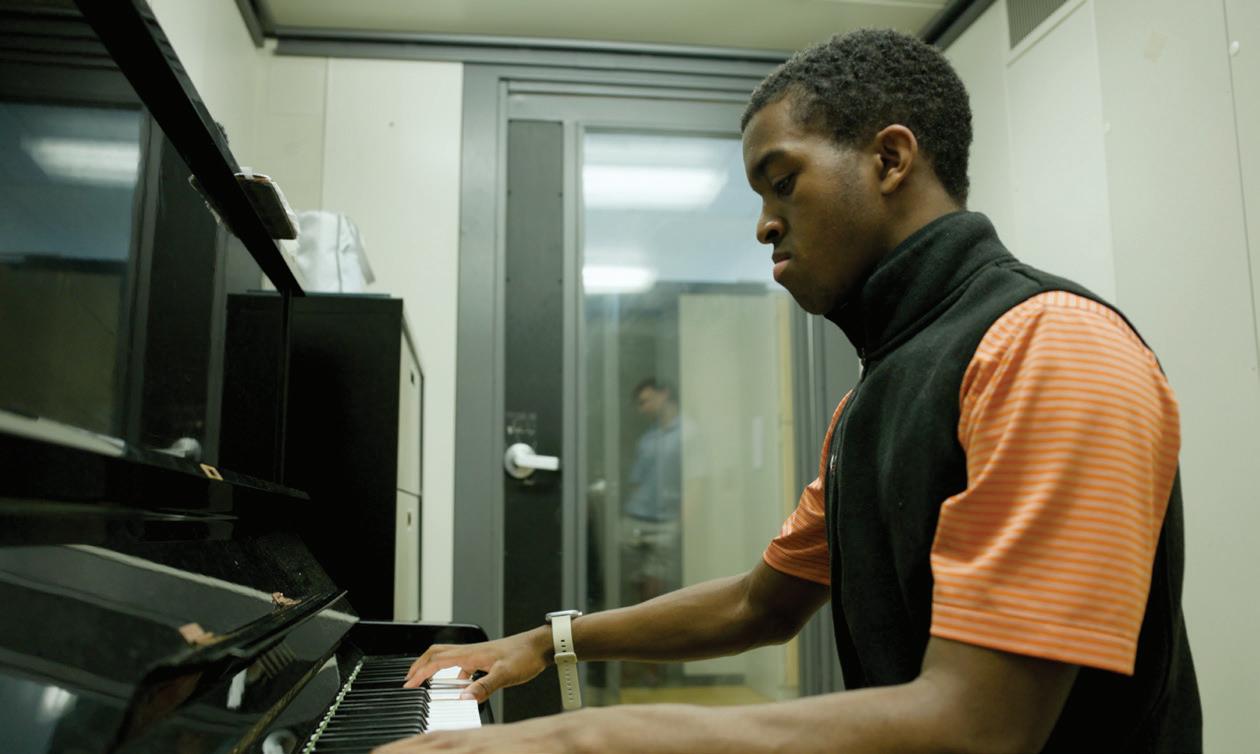
Q: Has any external infuence, like a book, play, or something else, infuenced your music career?

A: Defnitely compositionally. I wrote some music for one of the plays this year, Te Woman in Black. I created a theme for the titular character based on the knocking motif throughout the play. Te lef hand plays chords in a knocking motion. Trying to replicate plays and art has been really important in my compositional journey. I use that knocking motif in almost every improv now.

Q: Can you walk me through your progression on the violin?
A: In elementary and middle school it was mostly focused on classical solo stuf. When I got to Woodberry and joined the ensemble, it changed a lot. Instead of individual technical work, I was playing in a big group of thirty people with diferent instruments. I had to work much more on rhythm, even breathing with other people, playing with others, and controlling volume, all the little things you don’t get when playing by yourself. If I played by myself now, it might sound similar to how it did in eighth grade, but I have a completely new skill set from playing with other people.
Q: Are there any similarities between violin and DJing?
A: Tey’re a lot more similar than people give them credit for. Te overall structure of every song is basically the same across 99% of music genres: eight-bar intro, build-up or drop, then a breakdown and second drop. I didn’t really notice it in classical until I started DJing house music, but the large-scale structure is really similar.


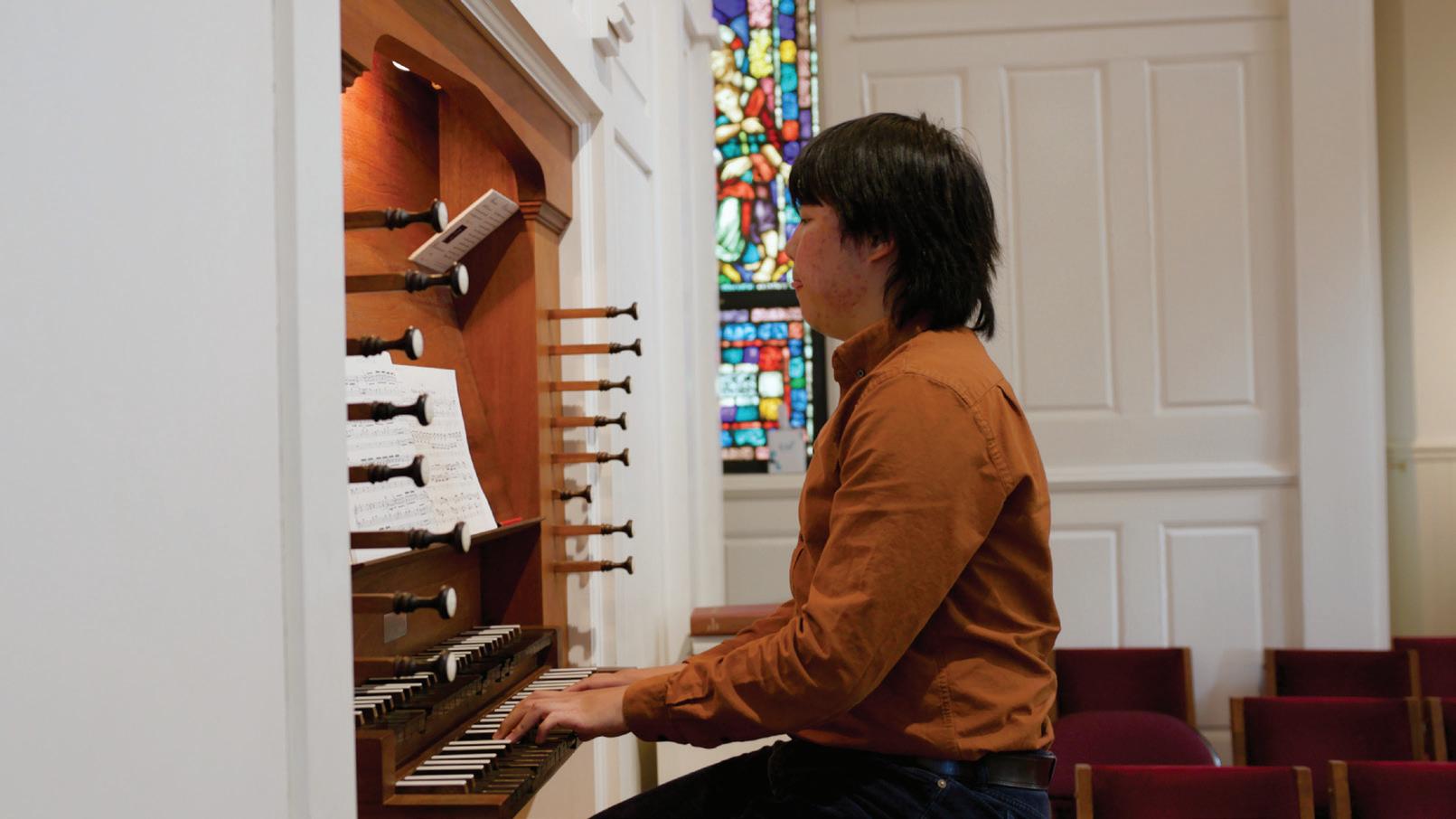
Q: Have you seen any improvements in your piano skills fom playing the organ?
A: Piano requires diferent touch and weight, while organ volume doesn’t change with how hard you press. Organ is more dexterous. But playing Bach on organ has helped me think polyphonically— hearing each independent line instead of just chords. With the pedals it’s like playing three melodies at once, which has helped me approach piano pieces better too.


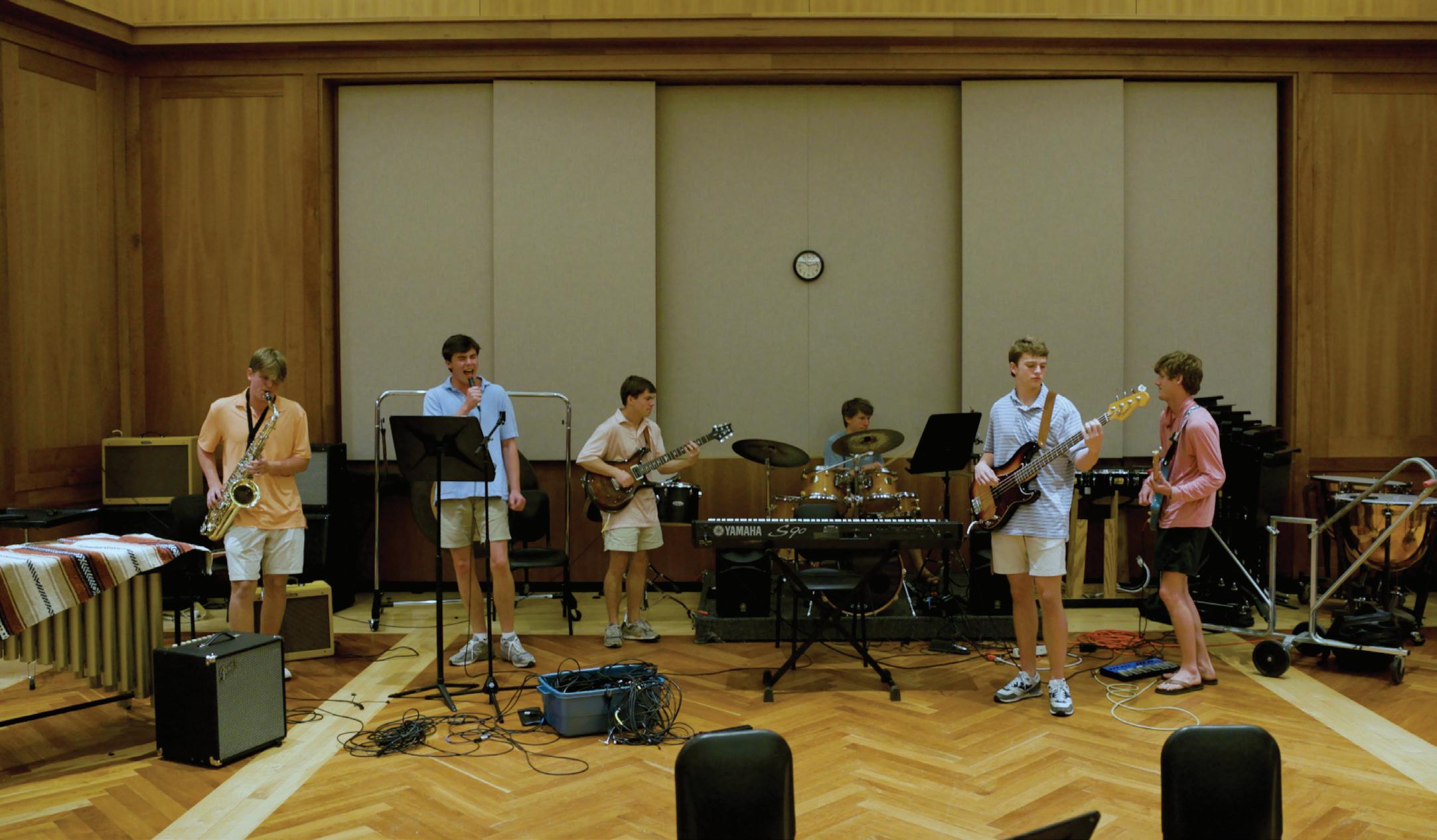
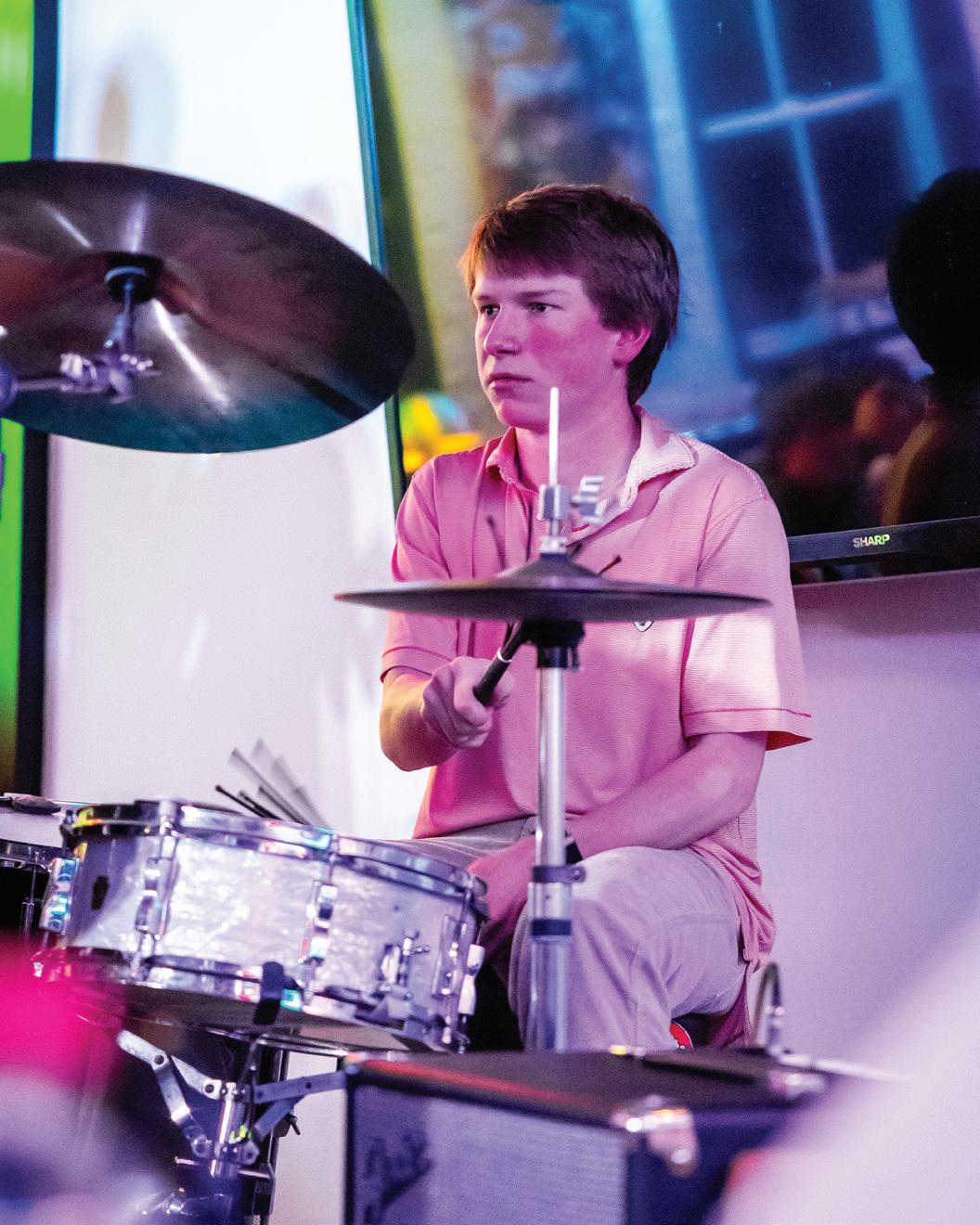

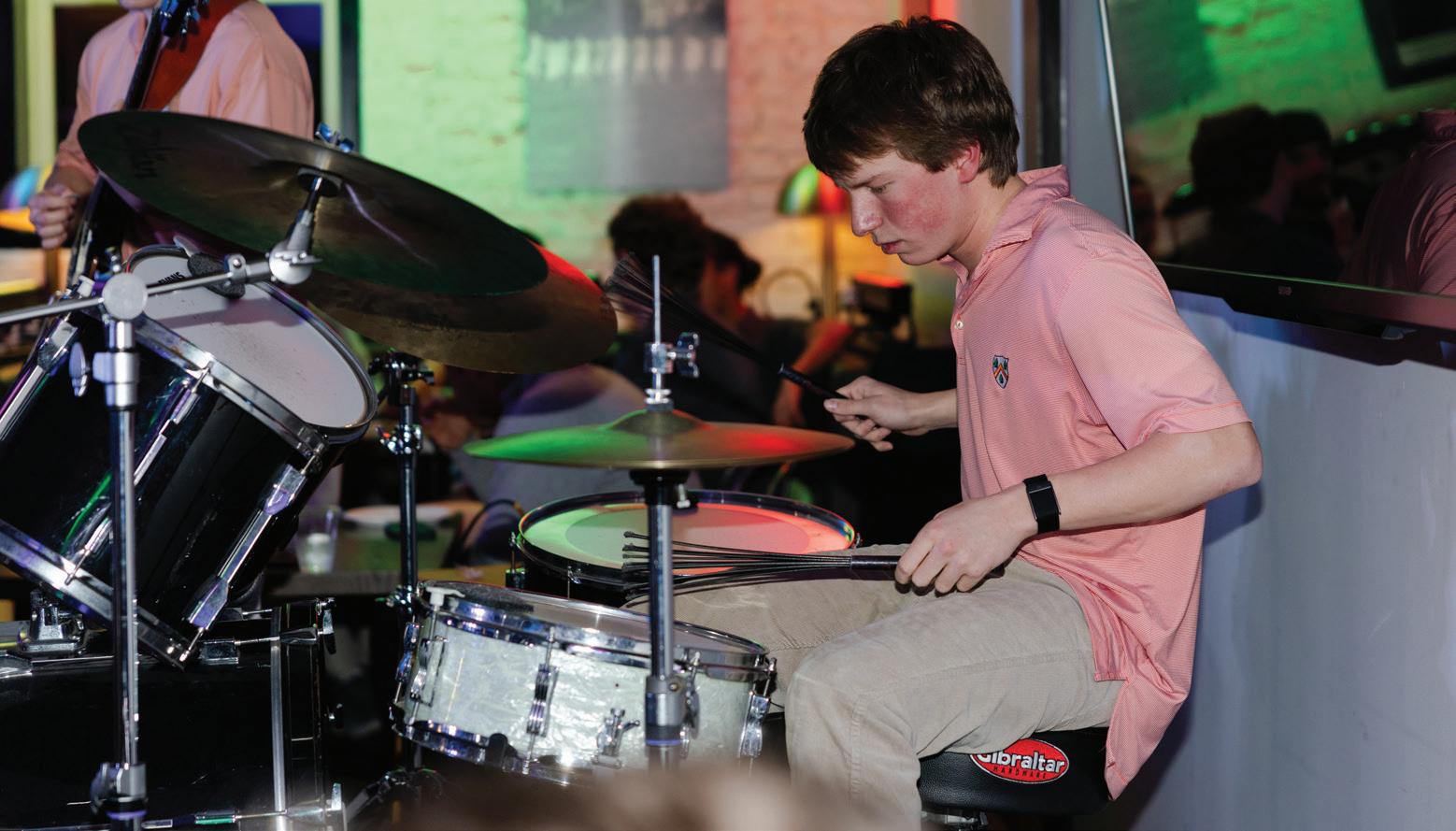
Q: Do you have any outside infuences on your music?
A: Honestly, it’s kind of like writing. When you’re drumming you can do diferent flls every time and it still sounds good. When you’re writing you get into a fow state and just go. Drumming feels similar—you can just go.
Q: Why do you prefer the drums to other instruments?
A: I like playing the drums for many reasons, but mostly because you can play it more freely than a string instrument or something that requires real theory. Teory is awesome, and I’ve learned a lot of it over the past few months, but it’s not necessary to be a good drummer. Drumming doesn’t limit me to using certain techniques or tactics when I’m playing, which makes it pretty unique.
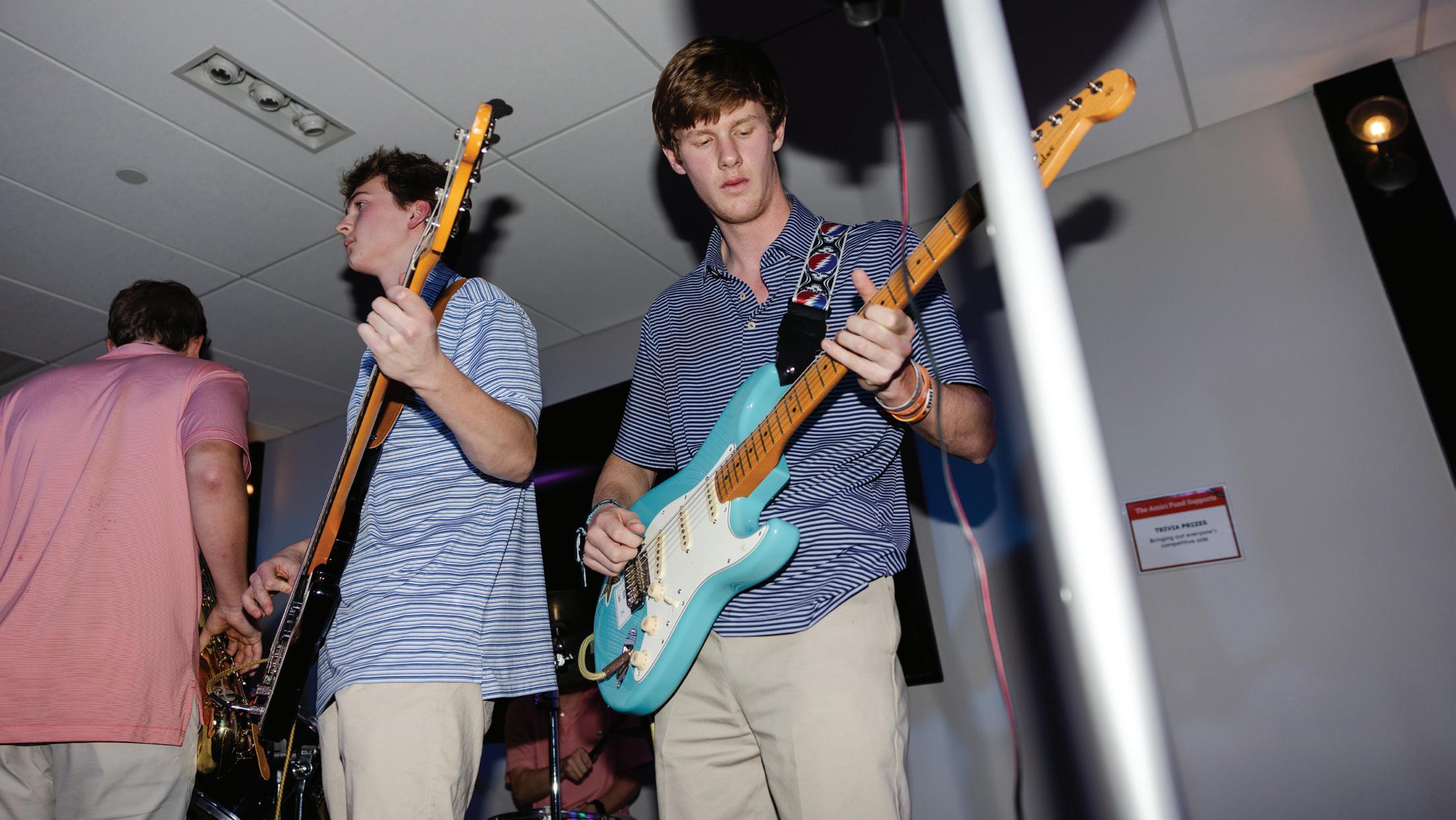



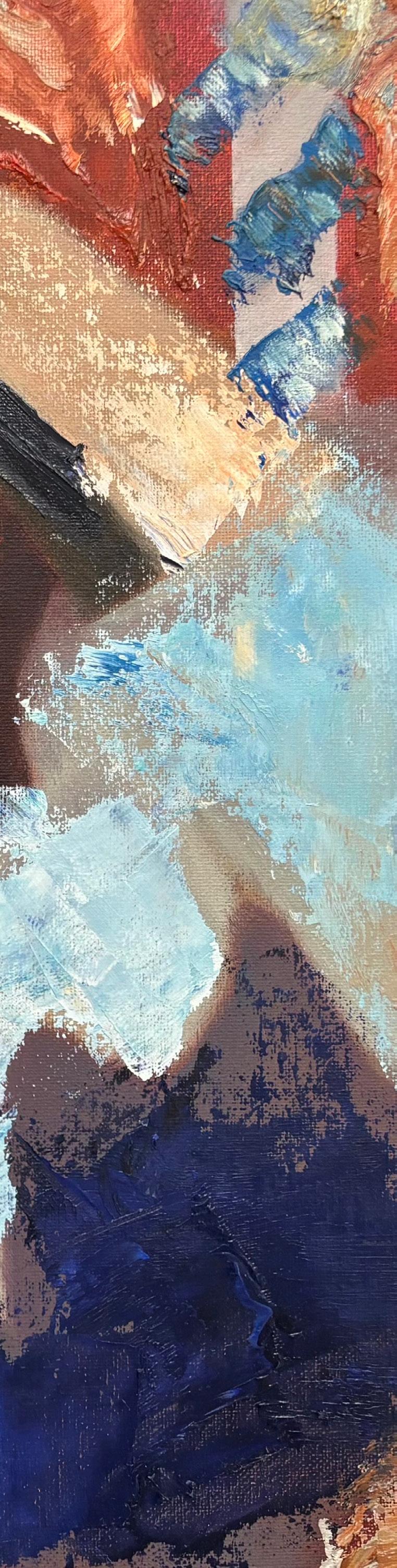
by Evan He
People are like foam. That’s what I understood from a young age. People are like foam: they can be molded, made into any shape you want, although often not of their own will. I was also like foam. I was like foam because Mama told me it was okay to cheat and steal from a young age. I was like foam because whenever I watched the New York City streets for cops while Mama stole from a corner store, I felt an adrenaline rush inside me. I was like foam because I did whatever Mama told me to. I was like foam.
Mama left when I was seven years old. But even before she left, it felt like she wasn’t really there at all. I wasted no time crying in voice when I woke up and she wasn’t there anymore. I didn’t cry over her note filled with flimsy excuses about why she “had to go.” I didn’t really care. I knew that I didn’t need her. She taught me what I needed to know to survive. To steal.
The first time I stole was from the 7-11 on Amsterdam. I walked up and down the crosswalk by the traffic light, debating whether I should really do it or not. Then I walked into the store ready to steal whatever I could get away with. I stuffed candy bars and beef jerky into my pockets and slid out the door. The cashier was on her phone, talking to her friends. “You wanna go downtown Friday?” she was saying. She didn’t even notice me. I felt like a ninja, an assassin dancing in the shadows of deceit. I strutted out of the store, triumphant.
“You’re smart,” Mama would always say to me, but not in terms of school or whatever. I was smart in that I could sense when the cops pulled up before you even heard the sirens. I was smart in that way. I never went to school, but I wondered what they studied in school. I didn’t need to go there, though. I was already smart.
I was going to knock over the house of a rich cat on Maverick Street.
I never related to those who got to live their lives normally, like how lives were meant to be lived. Go to a public school, a college, get a job, have a wedding, have two kids, and die. I never grasped how they did that. I was so different from them, yet I was proud to be this way. Mama always said, “Appreciate what you have.” I appreciate the Snickers bar I got from the 7-11. I bit into it. It was sweet. The caramel and peanut burst in my mouth like stars do when they get too old. I liked it. I appreciated it.
It had been eight years since Mama left. I lived fine by myself, dodging cops like the plague. When the thefts weren’t enough, I’d just swallow my pride and stand in lines for soup or whatever they could come up with that day. But I was different from the others in the line: I wasn’t homeless. As long as I was in the streets I felt at home. Just as I thought, I didn’t even need her for anything. I didn’t need her to watch out for me or anything since I was so inconspicuous. I stole a lot. I stole from stores and people. I stole from houses and pockets. I danced on the edges like a ballerina on tiptoes, like
a construction worker atop a crane on a skyscraper. I would approach a guy in his forties and snatch his wallet from his pocket. If he sensed I was there, I would run away as fast as I could. Faster than he could shout for help.
I didn’t care, though.
I decided on a major score. I was going to knock over the house of a rich cat on Maverick Street. I bet he wouldn’t mind. Whatever I stole, it would just be pocket change to him. That’s what I thought when I broke the window in the dead of night to the house. He lived in a huge house, like a mansion, and he had a swimming pool and everything. I watched him for weeks—his lifestyle, his habits, when he returned to his house from work—everything. I waited for the right time. No car in the driveway. I broke the window to the house and rushed into the living room like a rat searching for scraps of food.
He was there. There, standing right there, a bald guy in a bathrobe with unshaven beard. Right there, holding a shotgun.
“What the hell are you doing?” he yelled. I knew everything about him except his name.
I froze. Waves of thought crashed into my head as I struggled to comprehend the situation. What Mama had taught me about stealing—how to be sneaky, how to sort out valuables, how to escape—all left my head. My brain was like a ball of thread, eventually sorting itself out into one single thread after all the other tangled thoughts had left.
I was like foam. I was like foam when the gun fired. I didn’t resist. The world pressed into me and I took its shape.

by Laurie St. Clair

Osprey diving down
Breaking the water, hunting Fly victorious
The waves crash harshly
Against the white, sun bleached sand
Swells surging, breaking
Fish glide through the kelp
The blades swaying in the tide Green against the blue

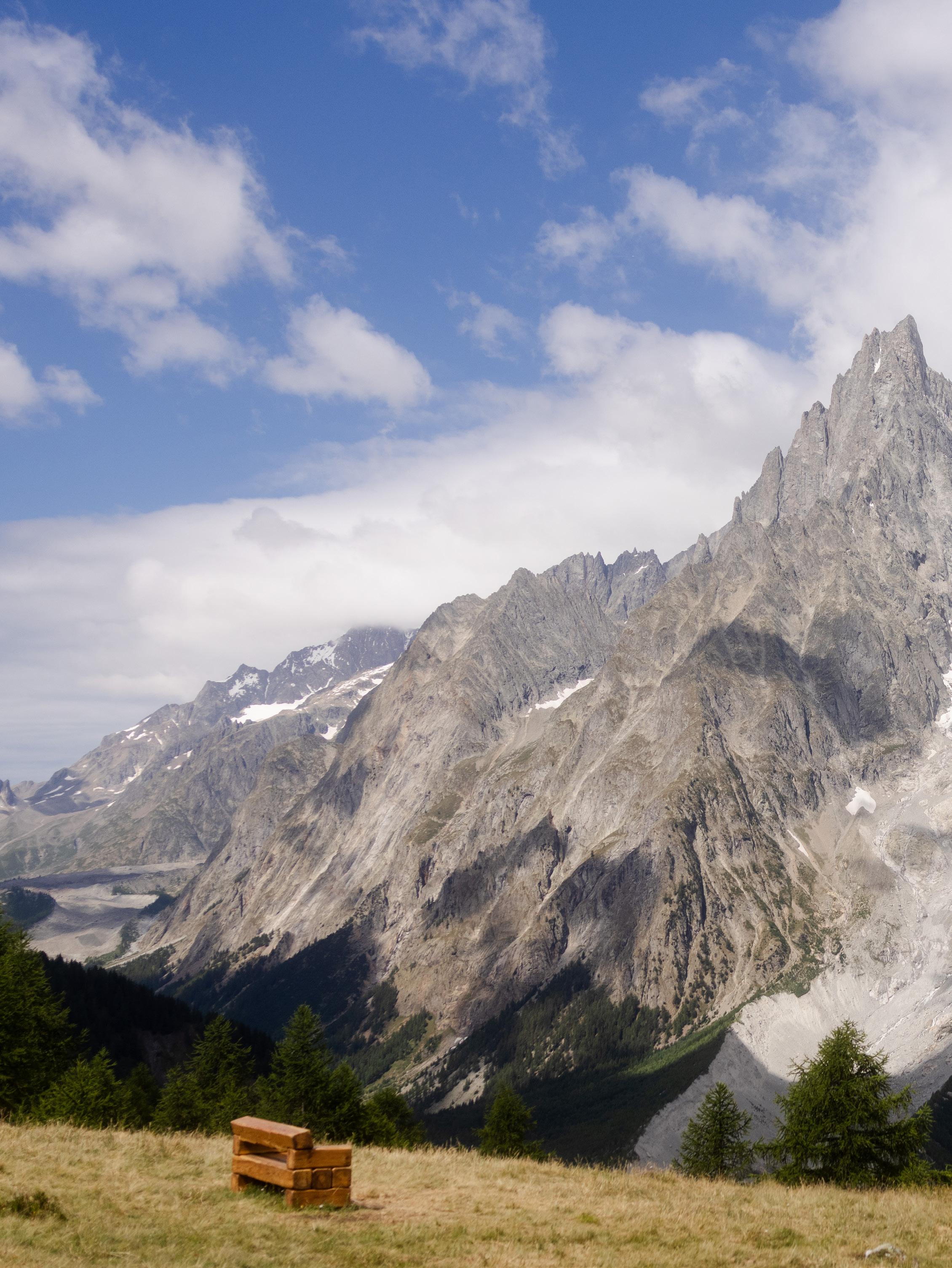

by Carter Vining
h
Dry twigs snap and crack, Cold wind whistles through the bark, A lone fruit hangs still.
Cold and crisp, a bite, Sweetness on a frozen tongue: Winter tastes like this.
Brittle, icy air, Needles sharp beneath the snow, Frozen to the bone.
Scent of pine under the frost; World of one color, Quietly at rest.



by Daniel Tu
In my memory, Qing Ming smells of muddy ground, fresh grass, and burning incense. It rained the day we went visiting our family’s tombs in NanNing, Guangxi province. Father prepared items for the visit— paper money, incense in pink wrappings, fruits and pastries to give to our ancestors before their tomb. Mother gently dressed me in a light yellow raincoat. The fifth was just like any other day in April—cool, dim, and rainy. It reminded me of an ancient Chinese poem I learned in elementary school: Rain drizzled down on a mourning day, melancholy travelers lost in dismay.
Qing Ming was, after all, the time for us to remember the dead.
Since I was little, my mother would spread a mattress on the ground, prop open an umbrella, and tell me to stay with the rest of the children until our parents finished their ceremony. Not far away, I would see my family stop by a black marble tomb. Father would light the charcoal in the barrel along with the incense sticks, as other people tossed stacks of yellow paper money inside. Then, they would take three incense sticks, bow three times, and stick them in an ash-filled copper bowl before the tomb. The smoke from the incense would slowly spiral up and disappear into the sky.
I did not like the festival as a child. The rain dripped inside my shoes and soaked my socks, the sky was dark and dreary, and the flying ashes made my eyes twitch.
Until one sunlit Saturday afternoon in 2016. My father was driving mom and me home when his phone rang. Father answered. His face turned pale. “Your Grandpa fell down on his way to town,” he said. Hours later, we were on the train, north toward HuangGang, Hubei province.
The walls in his room were tinted black, black as the smoke from that burning incense years before.
The house was lit yellow, but it did not feel warm and welcoming. The rest of the family was already there, some sitting, others standing. It was quiet, but the sound of sobbing would break the silence from time to time. Grandpa’s body lay on his bed, a towel covering his face. Grandpa only had a few hobbies; smoking was one. The walls in his room were tinted black, black as the smoke from that burning incense years before.
Here, at this house, Grandpa always took me to play in his yard, where he had planted a few pomelo trees that blossom white flowers in summer. Sometimes, I would draw my hands away from Grandpa’s hold to chase off chickens and geese that came in. Back then, Grandpa’s hands were rough and bony, but full of strength from farmwork and chores.
But now, they lay cold and lifeless beside his body. I had an urge to hold them, to feel the roughness in his hands. The mourning lasted until midnight, and a few stayed behind to look after the body while the rest
of the family and I returned home. Grandpa died at the age of seventy-five, nine years after I was born.
Every year during Qing Ming, our family would go and visit Grandpa’s tomb. We gave it a deep clean, sweeping off leaves and clearing off fallen branches. Then we sat around the tomb telling stories about Grandpa. Some were sad, but most were funny. One of my father’s favorites was how Grandpa taught me to curse in dialect; we would all burst into laughter every time he told it. Father has the ability to make Grandpa come alive through his storytelling almost like he had never left us. And right at that moment, I could imagine Grandpa sitting on the couch, chuckling, and saying in his smoker’s voice, “This son of a gun has grown so much since I last saw him.”
A few days ago I had a dream about Grandpa.
It was noontime in summer. The sky was blue and a light wind gently brushed the golden wheat field. Warm sunlight shone past the window and cast shadows of trees on the floor. Father leaned back in a wooden chair, resting. Grandma cooked porridge back in the kitchen for lunch. On the table was a basket of freshly picked vegetables from Grandpa’s garden. I sat on the ground, bored. Then Grandpa came into the house and asked me whether I wanted to play in the fields. He reached out his hand to me. I took it.

world to world pool to pool name to name the fish jumps a splash a ripple no more who was he not the tiny boy not the water balloons not the new student not the funny looks not the library not the games not the fantasy books not the silence no not that no not that no not that the fish jumps again before the water can remember him before the teachers before the classmates before the names before the rooms before the pools close over him a soft splash ripples who then who was he the fish jumps carrying every version of himself and refusing to become only one world to world pool to pool name to name the fish jumps a splash a ripple no more who was he not the tiny boy not the water balloons not the new student not the funny looks not the library not the games not the fantasy books not the silence no not that no not that no not that the fish jumps again before the water can remember him before the teachers before the classmates before the names before the rooms before the pools close over him a soft splash ripples who then who was he the fish jumps carrying every version of himself and refusing to become only one world to world pool to pool name to name the fish jumps a splash a ripple no more who was he not the tiny boy not the water balloons not the new student not the funny looks not the library not the games not the fantasy books not the silence no not that no not that no not that the fish jumps again before the water can remember him before the teachers before the classmates before the names before the rooms before the pools close over him a soft splash ripples who then who was he the fish jumps carrying every version ofworld to world pool to pool name to name the fish jumps a splash a ripple no more who was he not the tiny boy not the water balloons not the new student not the funny looks not the library not the games not the fantasy books not the silence no not that no not that no not that the fish jumps again before the water can remember him before the teachers before the classmates before the names before the rooms before the pools close over him a soft splash ripples who then who was he the fish jumps carrying every version of himself and refusing to become only one himself and refusing to become only one world to world pool to pool name to name the fish jumps a splash a ripple no more who was he not the tiny boy not the water balloons not the new student not the funny looks not the library not the games not the fantasy books not the silence no not that no not that no not that the fish jumps again before the water can remember him before the teachers before the classmates before the names before the rooms before the pools close over him a soft splash ripples who then who was he the fish jumps carrying every version of himself and refusing to become only one world
A person who traveled From world to world, like A fish which jumped From pool to pool, A splash, A ripple. No more.
That person, who was he? Do you remember?
Was it—
by Thomas Fang
That tiny boy who made the teachers yell? No, not that.
The fish jumps
That kid who threw water balloons in school? No, not that.
The fish jumps
That new Chinese student with funny looks?
No, not that.
The fish jumps
That student who hides in the library to game?
No, not that.
The fish jumps
That young man who loves reading fantasy?
No, not that.
The fish jumps
That classmate who never says a word?
A soft splash.
Ripples. Who, then?
No, not that.
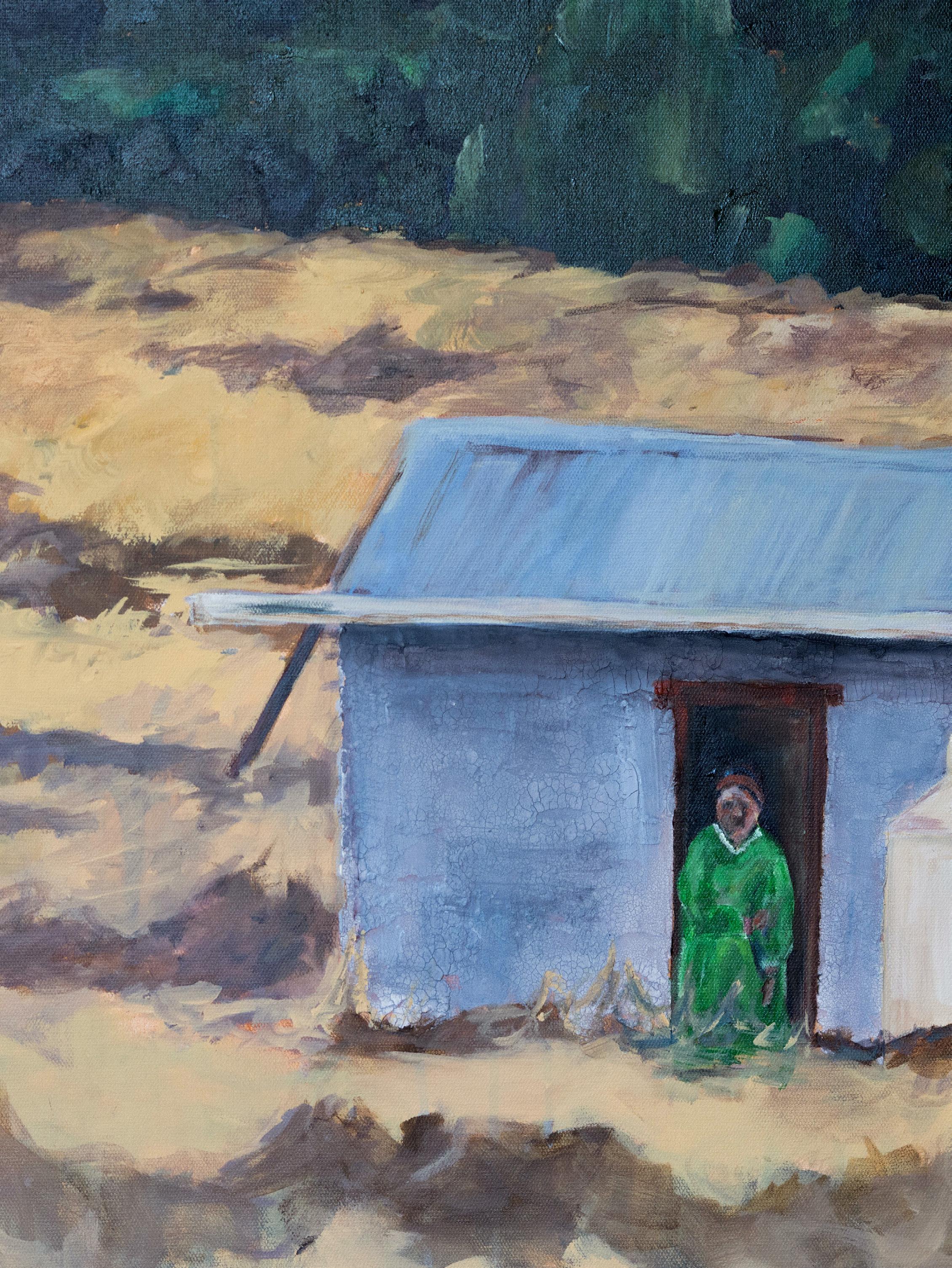
by Rienat Kharlan
Before first light, while Grandpa tugged on his shoes in the hallway, Grandma stopped me in the kitchen for a head-to-toe check: no white shirt, no too-new sneakers. She knew the diesel and oil would get us. Grandpa pushed the kitchen door with his elbow, coat still cold from the morning air. “Put this on so your grandma doesn’t blame me,” he said, and pressed an old apron into my hands—his, from back when it fit.
On the way out, I slid a physics book under the passenger seat of our Lada. That summer, I was dragging those problem sets everywhere: frictionless planes, perfect circuits, engines that never overheated on the page. The old sedan was none of that—a beater that, by any sensible law of mechanics, should have rotted in a junkyard years ago. Grandpa kept it alive the way you keep an old mule going, with care, attention, and a practiced eye.
“You have to ask the metal first,” Grandpa said, laying his palm on the bracket as if calming a horse.
After the old collective farm was sold to a private holding, Grandad, pushing sixty, stayed on as a head engineer. That’s where he took me in the mornings: a long hall of diesel and metal. A new corporate logo shone on tin, but inside it was still Soviet at heart: MTZ tractors hunched like resting beasts,
a John Deere open and waiting for parts, chains hanging on cranes. Every surface carried a shine you couldn’t scrub—grease laid down by generations of working hands.
The patient for the day was one of the tractors. When Grandpa turned the key, the fan belt squealed and the temperature needle started to creep up.
“Set the belt,” he said.
“See if you can do it right.” I went straight for the MTZ manual. It said the belt should drop about a centimeter under a certain pull. I worked out in my notebook how hard to pry on the alternator bracket to get that deflection. Then, the real thing— hot shop, painted bolt, belt older than me. The wrench slipped; the bracket barely moved. On paper, the tension was right, but the engine didn’t care. The tractor coughed again.
“You have to ask the metal first,” Grandpa said, laying his palm on the bracket as if calming a horse. He warmed the fitting, cleaned the threads, and only then eased the bolt loose. No extra force, no slipping wrench. He nudged the alternator over by hand, watching the belt, not the page. When it sagged just enough, he paused, let his shoulders read the torque, and tightened it down with one smooth pull. Two fingers on the throttle cable, feeling the pulse.
“Here,” he said.
We tightened the last fastener. I reached for the key and hesitated, my brain itching for a final number check. Grandpa only nodded.
The starter dragged for a heartbeat, then the sound rose and settled, the idle holding
itself like a note that had finally found its pitch. I felt it through the sheet metal against my thigh, then in the ribs. Grandpa closed his eyes. His face softened. “There,” he said, not in triumph, but recognition. “Now it agrees.”
On the drive home, the Lada complained in second as it always did. The road unreeled past black waste heaps from the mines, the horizon scalloped by spoil tips and grain elevators.
With hands smelling of solvent and grit in my teeth, I ran the math again: sag, lever arm, pull, tension. Why did the tractor answer to touch and ignore the numbers?
Now, in America, I button a white shirt and shrug on a jacket to hear Kip Thorne lecture. Like in a dream, I sit straight with my notebook open in front of a Physics Nobel Laureate. I track every line of equations marching across the board. Physics brought me here, but it’s the grease and the hours beside Grandpa that remind me how often the world refuses to fit inside a formula.
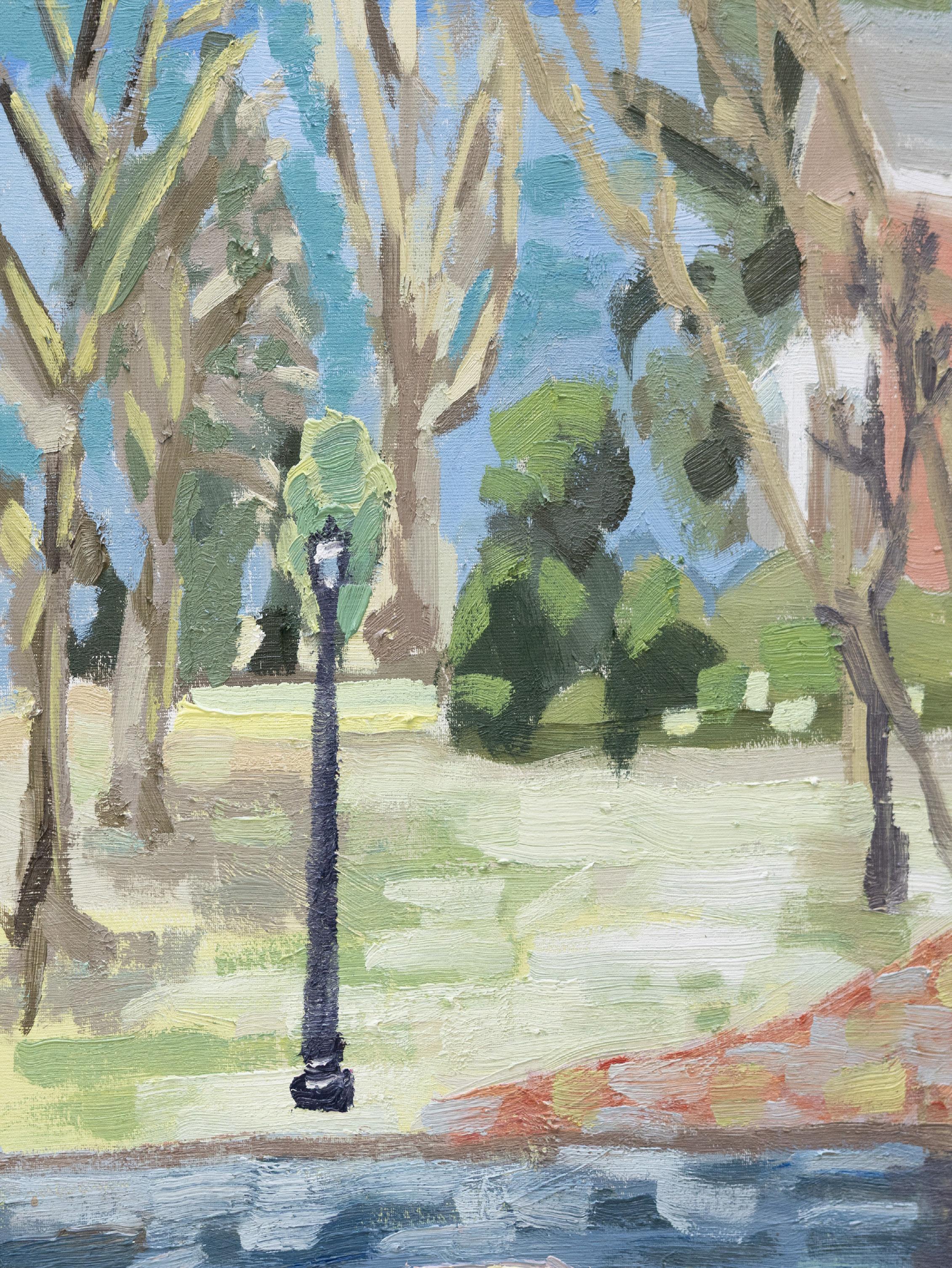
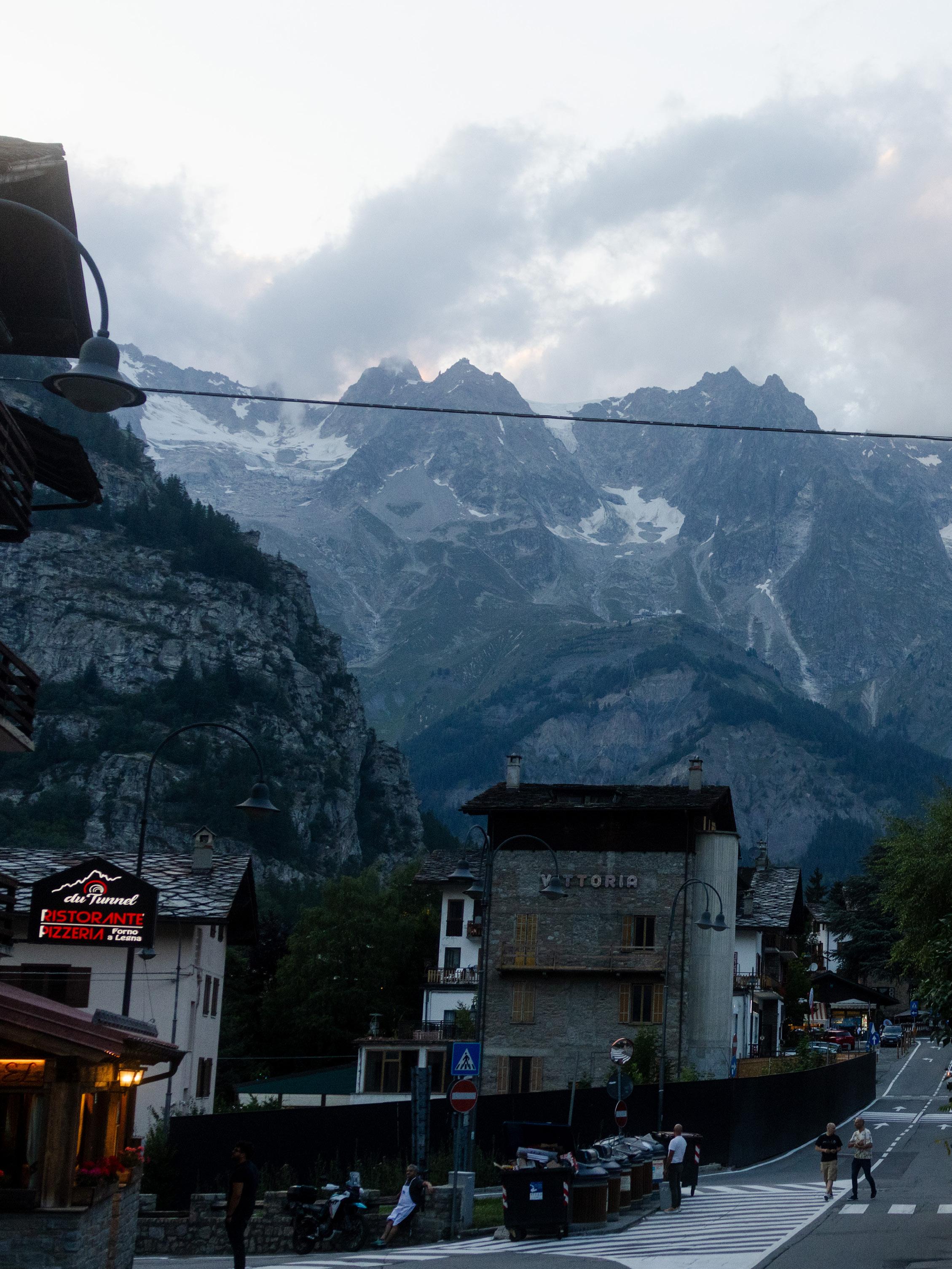
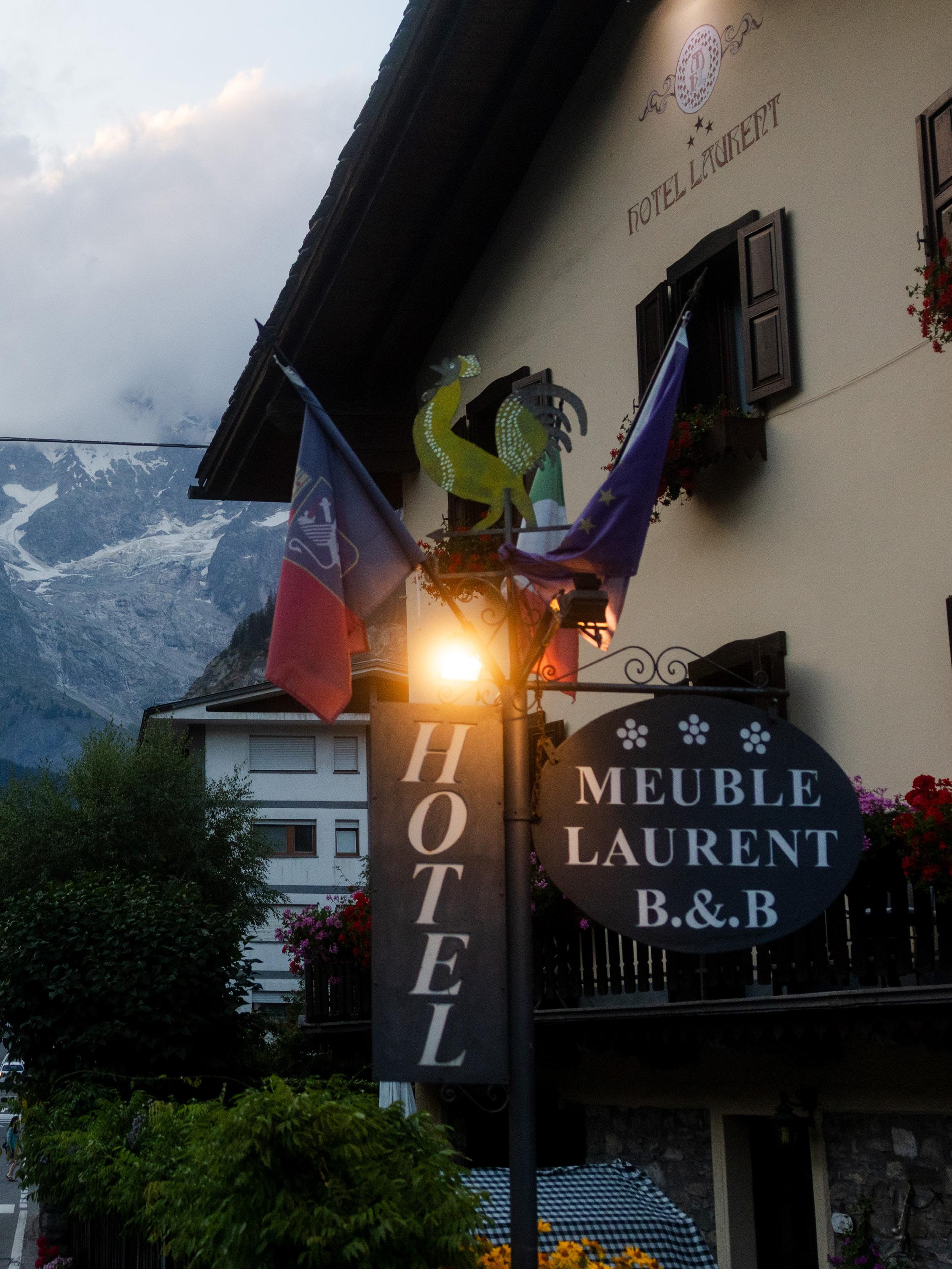


by Osawe Stewart
A boy drowned at my friend’s pool party when I was 8.
I didn’t know him well. But when it's quiet enough,
I can hear the sound of his bubbles.
I can hear his sunken cries, his saturated breath, clinging for air, his slow, wild swipes, as he dug out the sky. Buried, shrunk down to a speck under the sound of gleaming children basking in the sun.


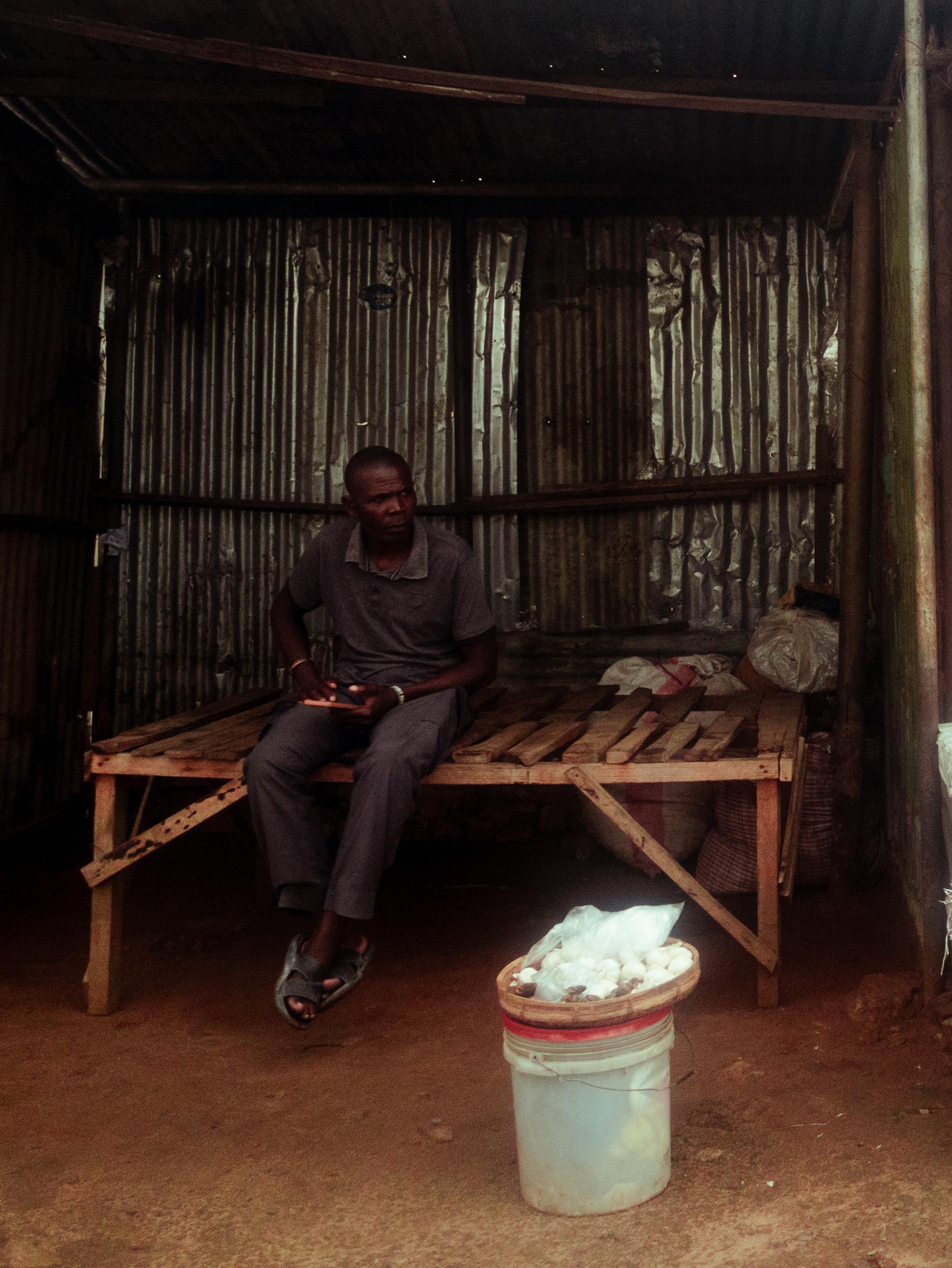
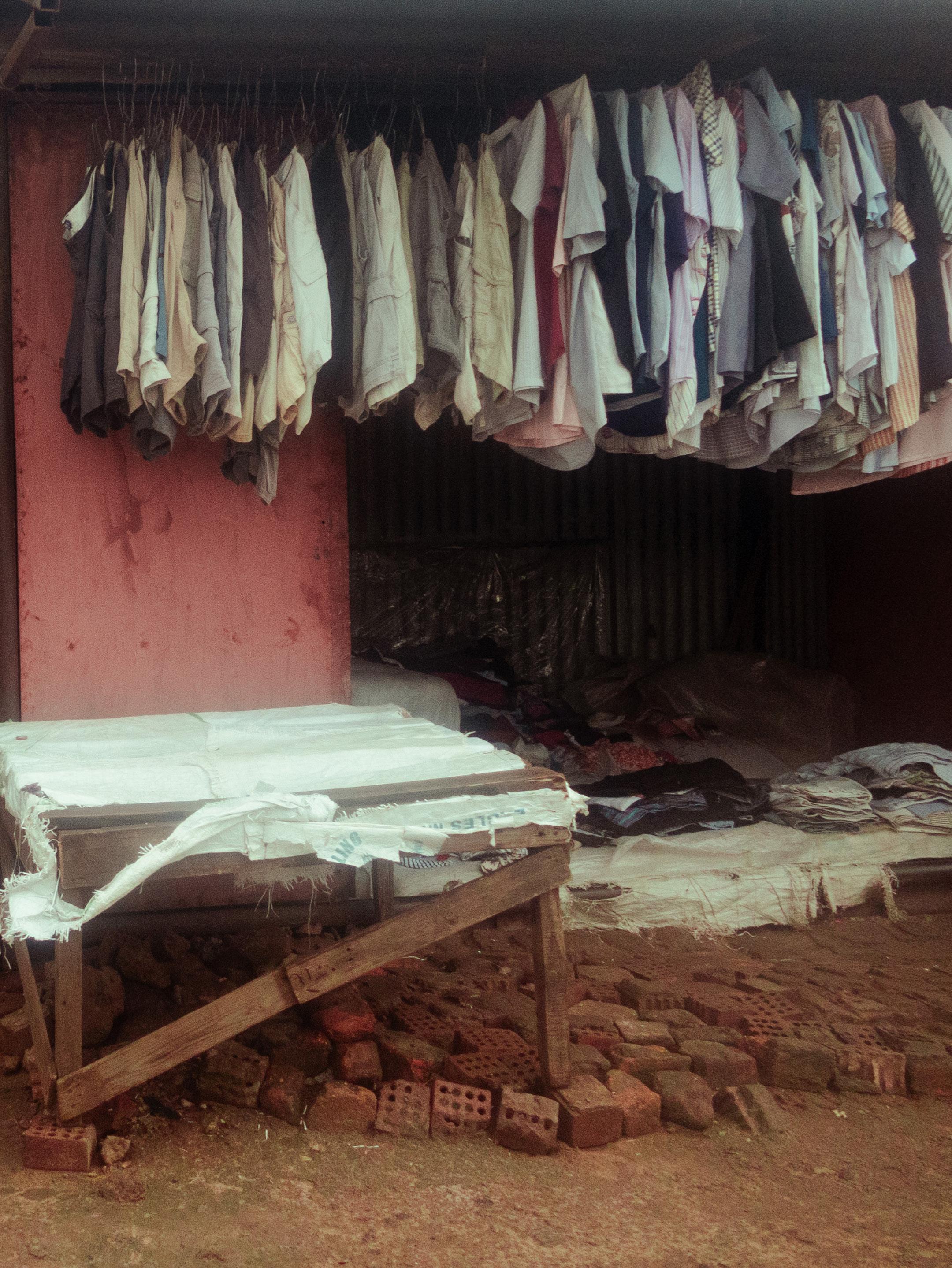
by Jack Reiss
One day at lunch at the Tongabezi School, outside Livingstone, Henry [Dixon] asked some boys why they walked hours to come to Tongabezi when there were schools in closer villages. Because he didn’t get beaten like his friends in the village school, Aaron said. I had felt the hospitality and kindness of the school from the moment I entered, but not the way Aaron did.
We started to replaster the crumbling foundation outside of a classroom. A group of seventh-grade boys came down to watch, and soon they were trying to help, but they didn’t know what they were doing. Desmond grabbed a handful of wet cement and tried to rub it on the wall, only to watch it all fall off, so Court taught them how to use the trowel, and they spent the rest of the day working with us.
As we were leaving, my good friend Abraham came to me and said that he was grateful to learn so that he could fix the houses in his village. After touring the closest village, Simonga, I understood what Abraham meant: most of the mud houses there were falling apart.
Mr. Hale had described the trip as “sacramental”—as “an outward sign of an inward grace.” At first, I thought that he was just trying to find a fancy word for “spiritual” without sounding like a hippie. Now, I understand that sacramental was exactly the right word. I felt the grace in my heart and in my gut.
Grace in the girls who knitted our rugs.
Grace in the kids running to the lunch we served.
Grace in the rhythm of their drums and in the voices of their choir.
Grace everywhere.

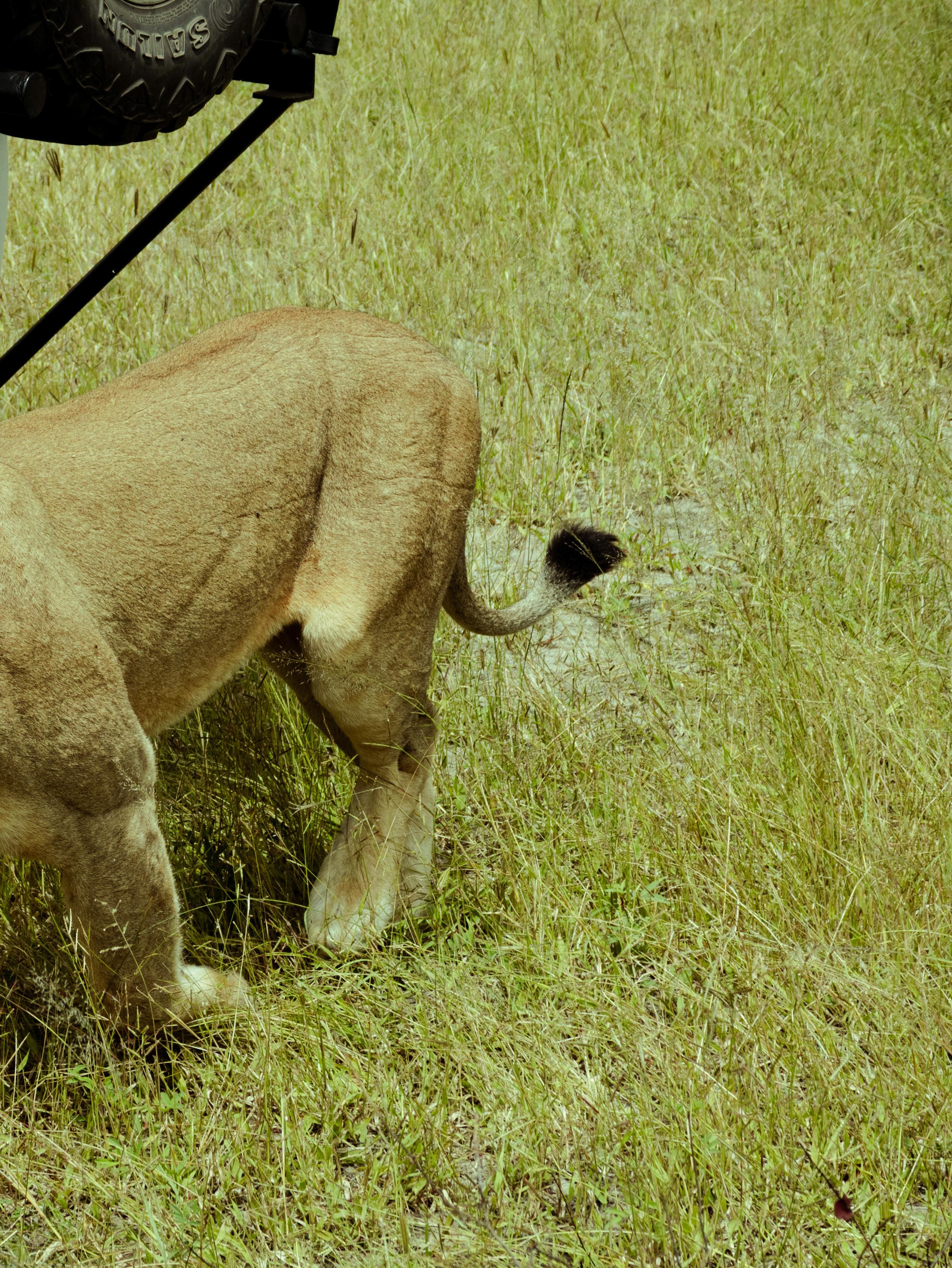
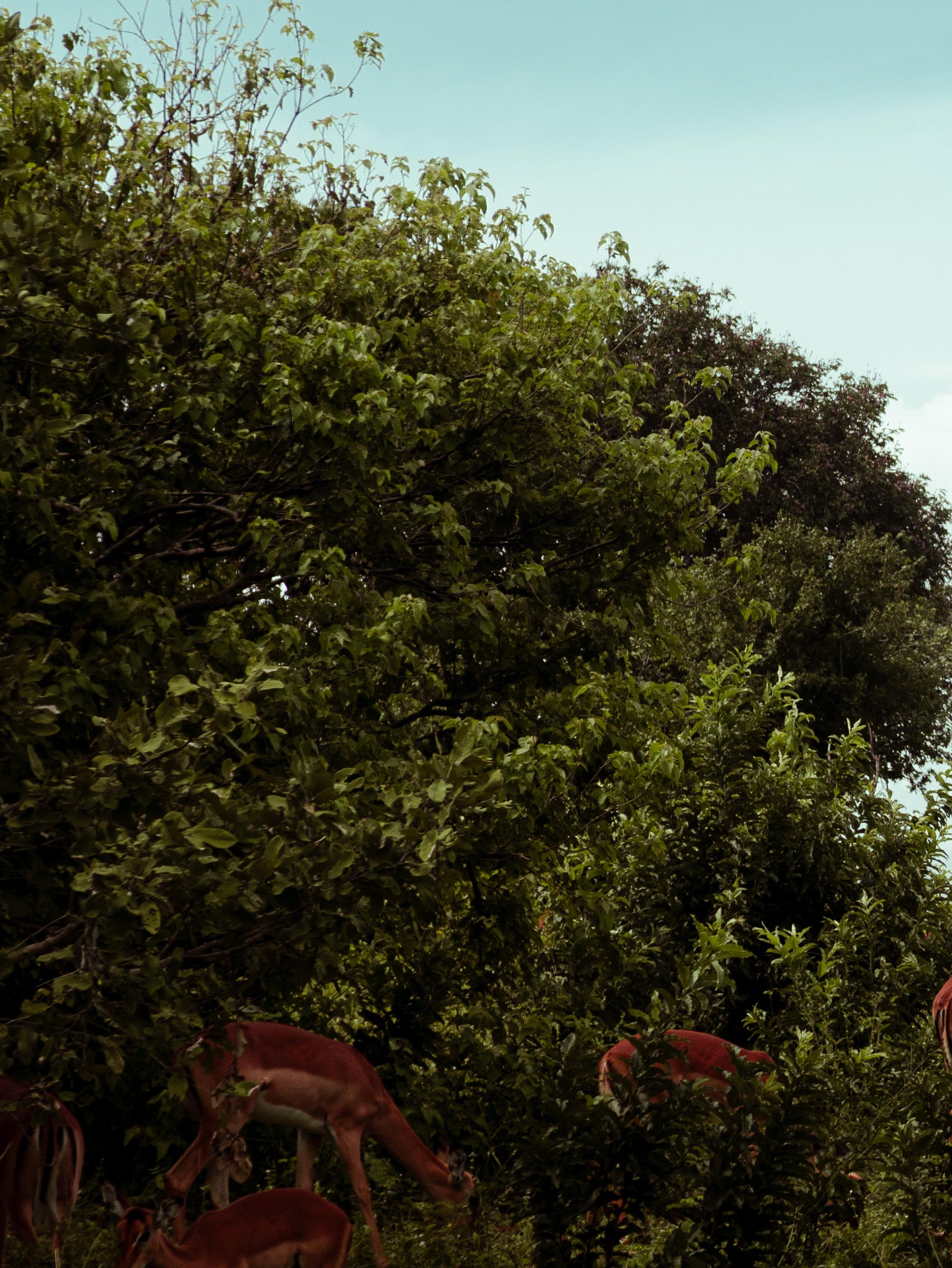
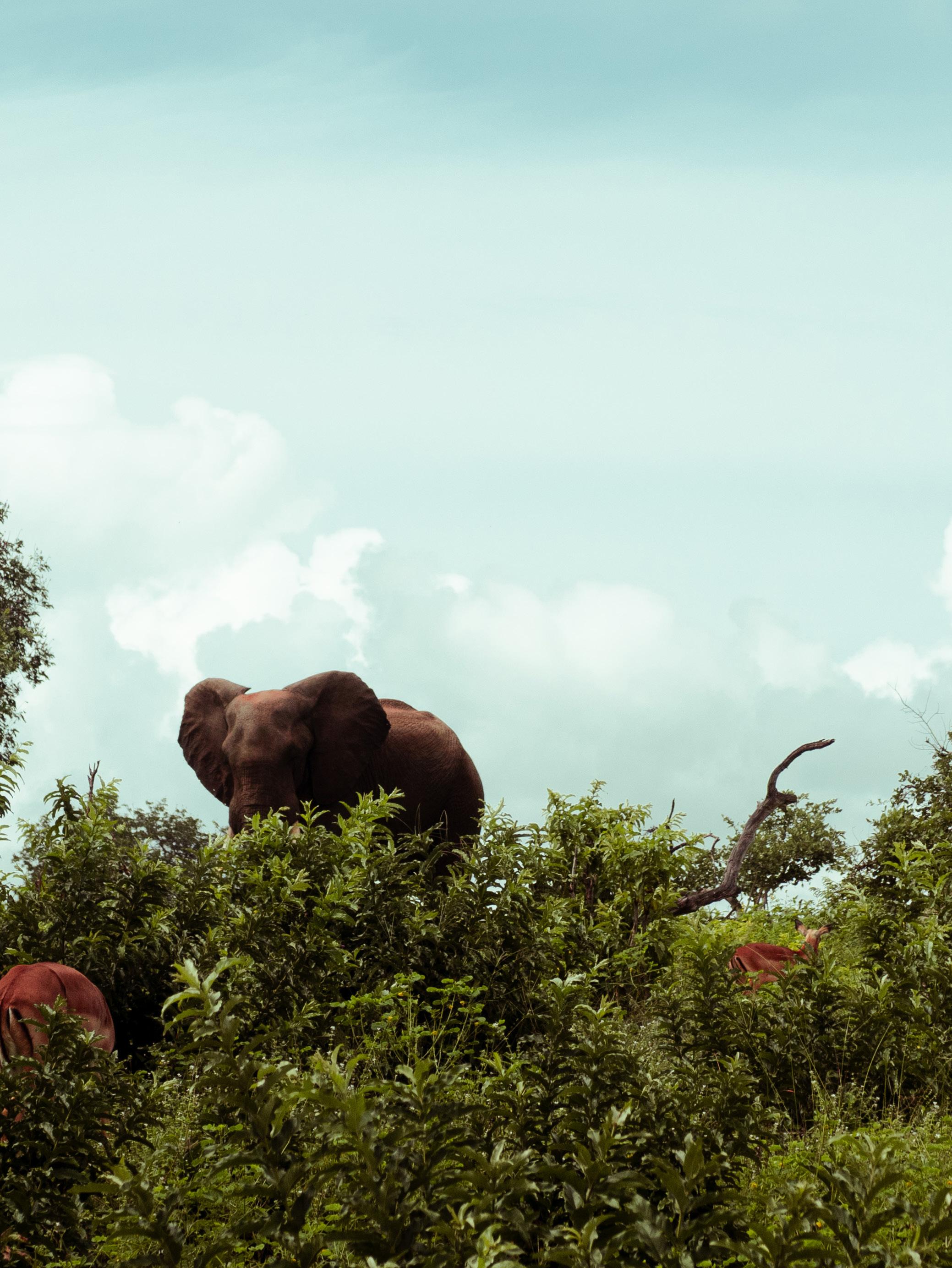
by Graham Russell
I could hear my friends drumming in the music room, playing tag on the playground, and kicking around the soccer ball. Meanwhile, I was ripping off rotten boards drenched in sweat, with Mr. Hale in my ear, correcting my hammer form. As I made a trip down the unstable ladder for wood, Charles, a 7th grader, was watching. Before I got to the bottom, Charles was already there, heaving up a board twice his size.
When we had finally painted the new roof, a sudden downpour washed off the fresh coat. My heart sank. I wondered why I even started this, but Charles, who was still standing by my side in the rain, looked at me and said, “We will have to paint it again.”
Soon enough, the rain cleared, and Charles and I got right back to work. Before I knew it, the treehouse had attracted more and more kids. They wanted to help. They were picking up brushes and washing out rags when one little girl covered her hand in bright pink paint and smacked her palm on the wall. Within seconds we were lifting the kids up as high as we could, and they covered the treehouse with their handprints. It was beautiful.
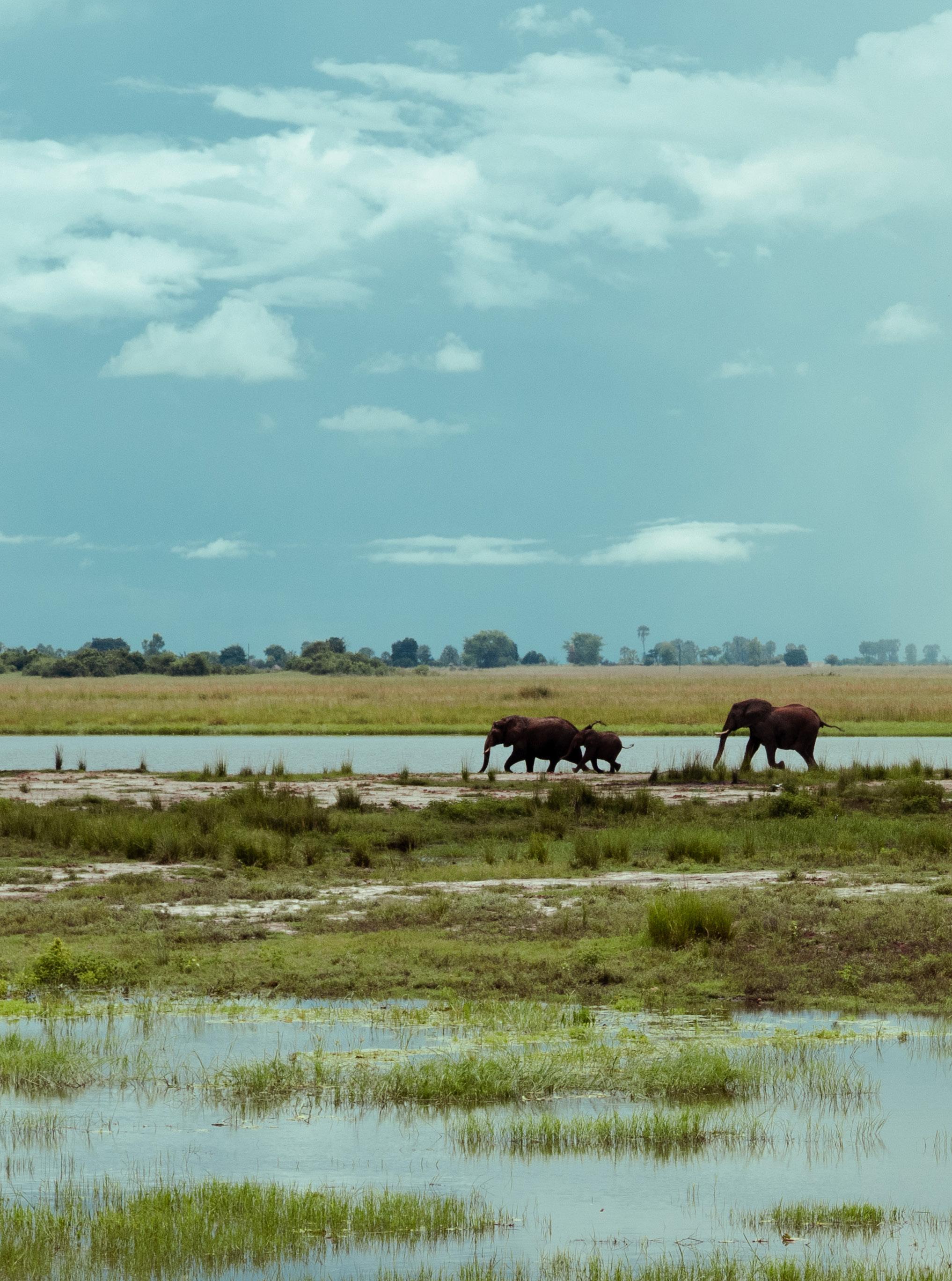
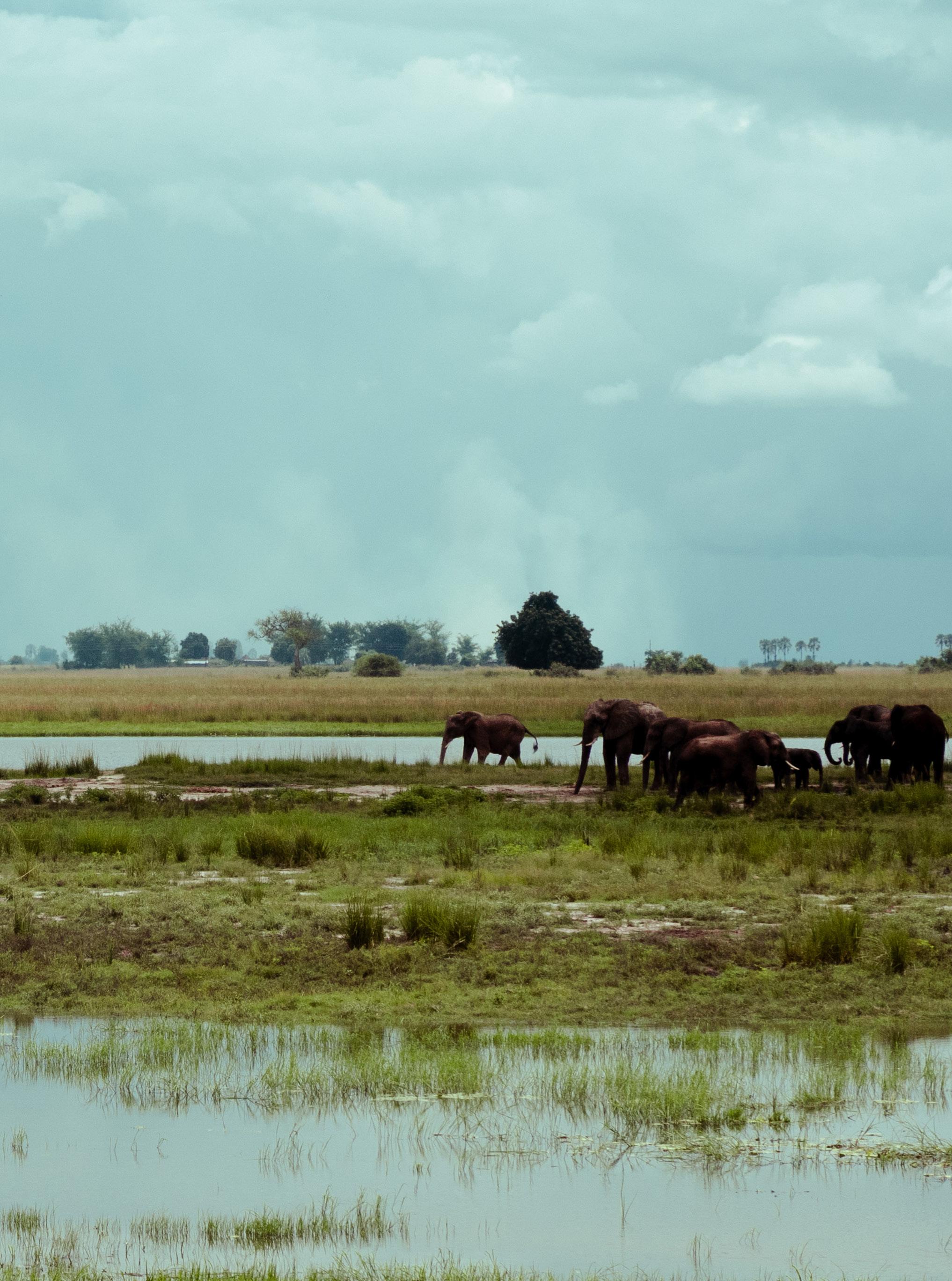
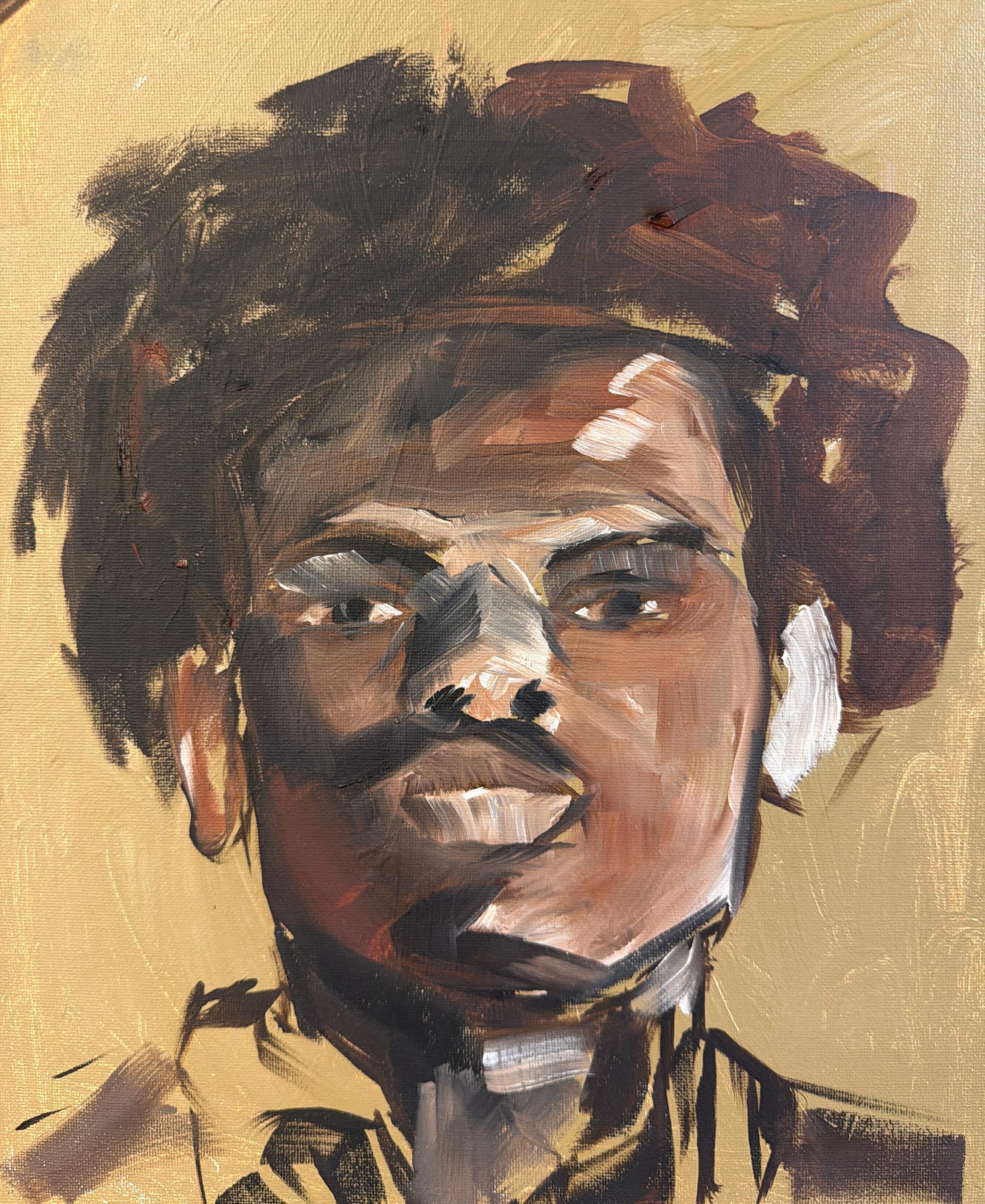
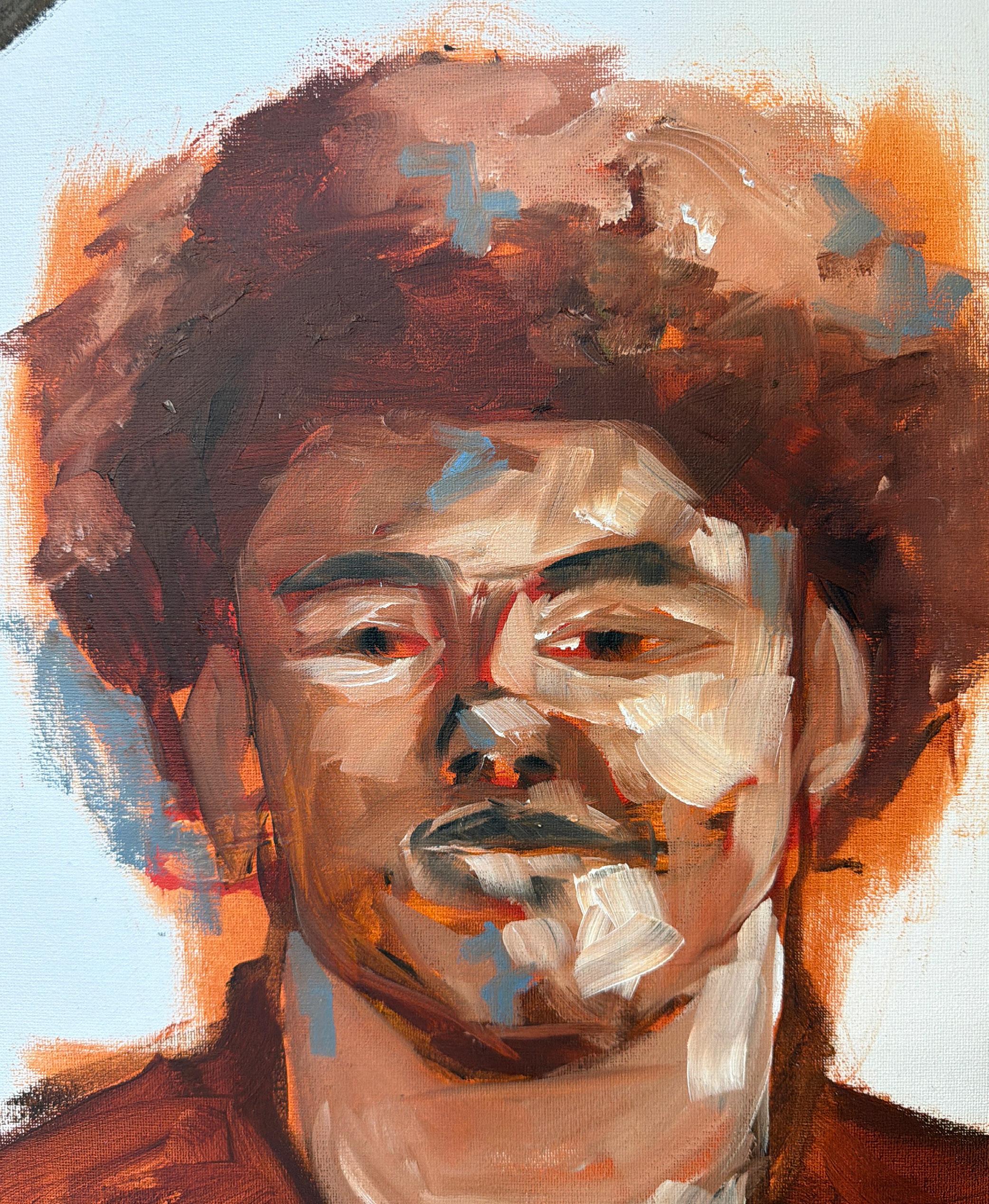
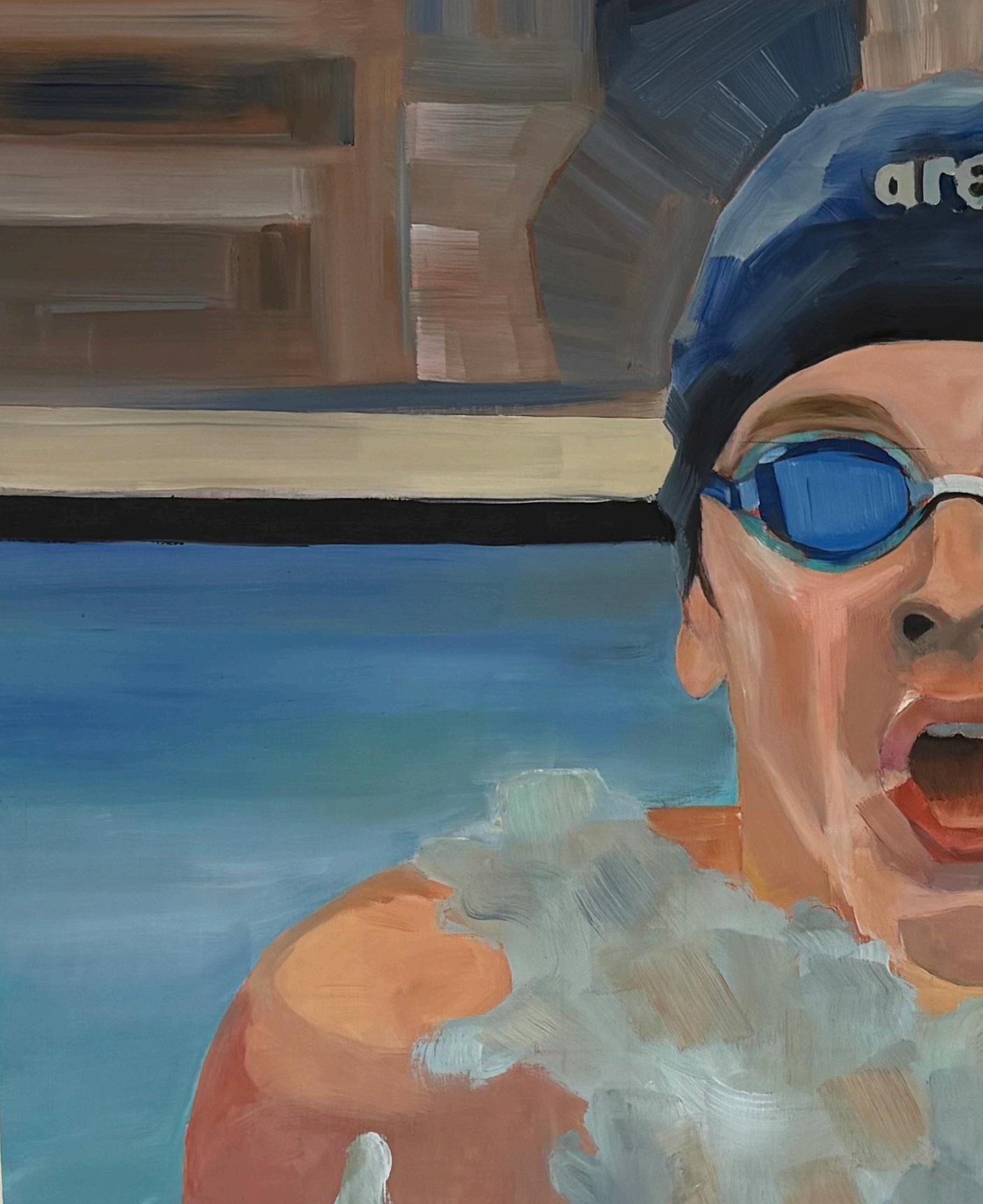
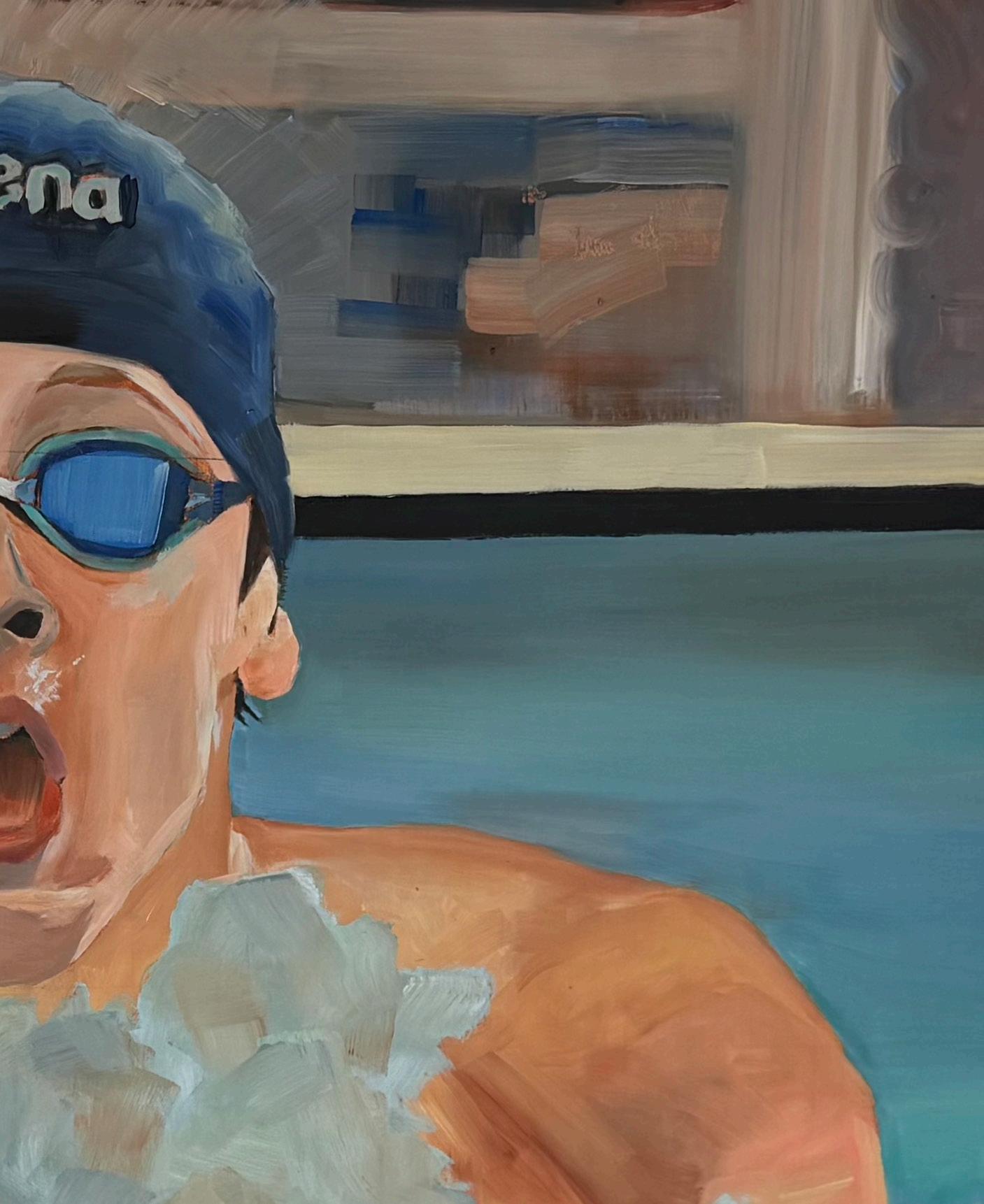
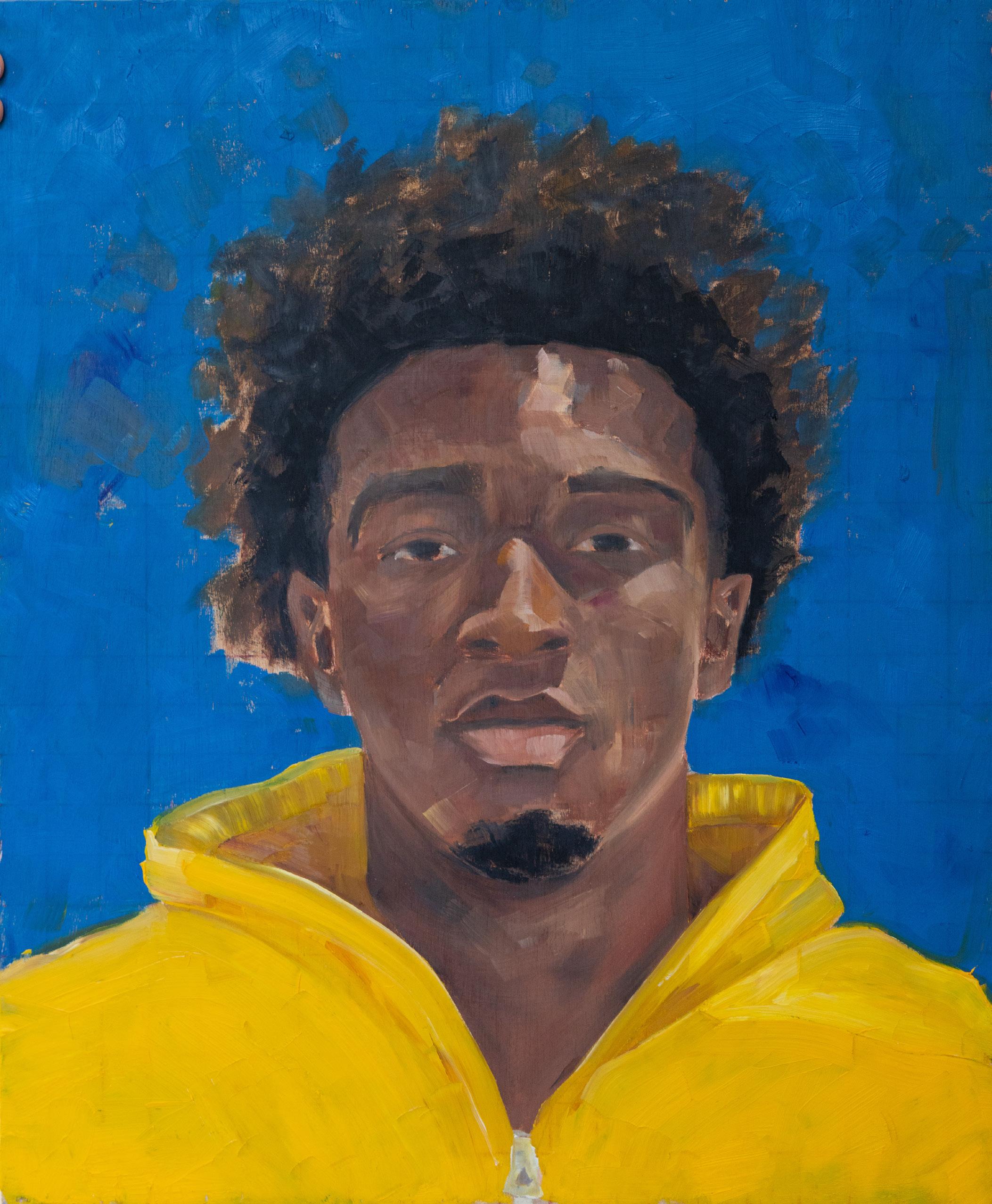



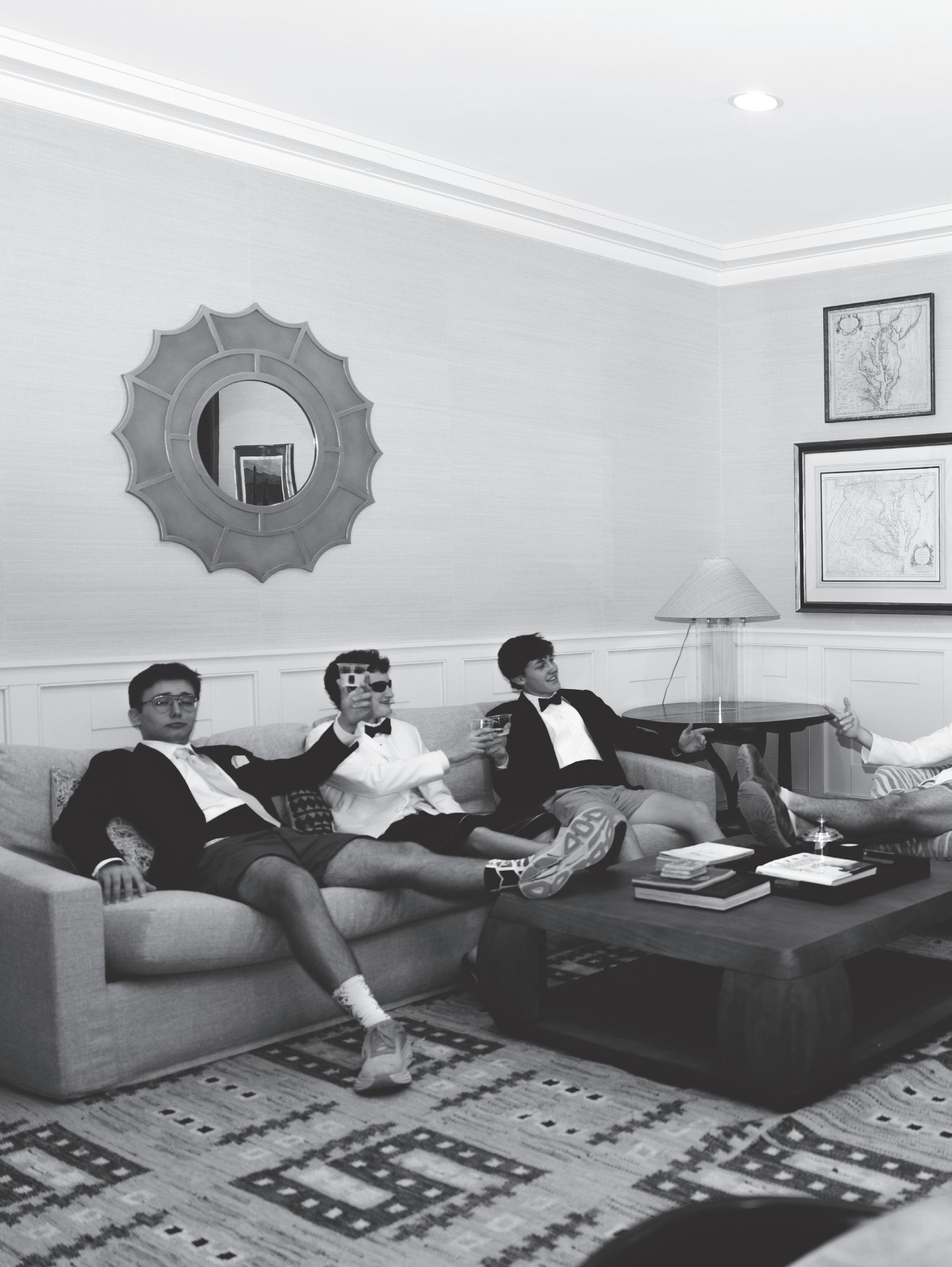
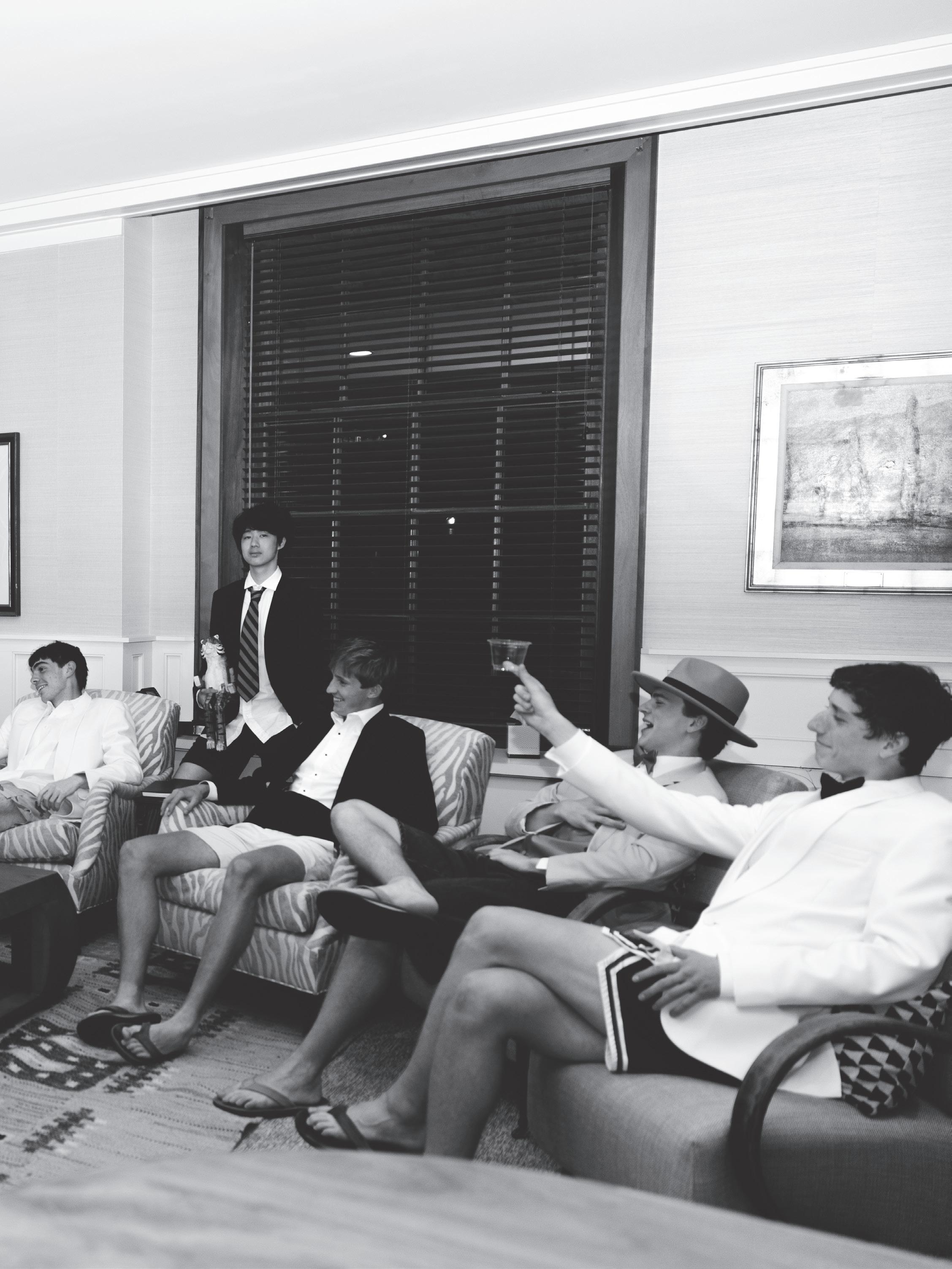
Te word which you see on the cover is the product of the creative genius of the staf ; and, with the exception of identical spelling and pronunciation, has no connection with any word in the English or any other language. In plain Woodberrian, it has one meaning only—the literary magazine of your school.
Frank Davenport, Jr. 1949 Editor-in-Chief
Tis is the second edition of the 77th volume of Te Talon, the semiannual literary arts publication of Woodberry Forest School. First published in 1949, the magazine was originally issued quarterly and cost 35 cents a copy. Publication of Te Talon is now funded by Woodberry Forest School.
Te Talon editors encourage submissions from members of the Woodberry Forest community. All opinions expressed within this magazine are the intellectual property of the authors and artists and do not represent the views of Woodberry Forest School. Works are selected through blind review by the editorial staf. New editors for the coming year are also selected by the editorial staf and the faculty advisor. Te editors of Te Talon create the magazine in the course Design and Editing for Literary Arts Publications and during their free time.
Tis issue of Te Talon was produced on laptops and iMacs using Adobe Creative Cloud. Body text and credits are set in Garamond Premier Pro. McClung Companies in Waynesboro, Virginia, prints 550 perfect-bound copies. Te magazines are distributed to the community by the editorial staf in January and May of each academic year.
Te Talon is a member of the Columbia Scholastic Press Association and the National Scholastic Press Association.