First Friday Letter
The World Methodist Council
Greetings from the General Secretary
The Steering Committee of the World Methodist Council (WMC) received nominations for the World Methodist Council Peace Award and, at its meeting in May 2026, decided to present the award to Dr. Humberto Martin Shikiya.
Dr. Shikiya, from the Methodist Church in Argentina, is an active peace mediator and serves as the World Council of Churches ecumenical accompanist and envoy to the peace dialogue in Colombia. The Peace Award Ceremony will take place on 14th August in San Salvador, El Salvador, at the University of the Americas, and during the World Methodist Council meeting. Delegates and other are most welcome.
Inside this First Friday Letter you will find a fuller announcement explaining the reasons for this year’s award. Dr. Shikiya’s recognition as the 2026 Peace Award Laureate connects meaningfully with the World Methodist Council’s Youth and Young Adults programme for peace-building. It also builds on the education, learning, and reflection that have marked the 2025–2026 ecclesiastical year following the inspiring contribution of H.E. Dr. Fatou Bensouda, the 2025 Peace Award Laureate.
Closely connected to the ongoing efforts for peace in Colombia, the WMC Youth and Young Adults, together with young people from the Methodist Church in Korea and seminarians from the United Methodist Church supported by General Board of Global Ministries (GBGM), are currently undertaking a Pilgrimage of Peace in Colombia. It is especially significant that the announcement of the 2026 Peace Award Laureate coincides with this pilgrimage, as both witness and encourage the work of peace-building in Colombia. We were able to add their Message that arrived just before the publication of this First Friday Letter.
During my recent visit to the Martin Luther King Jr. Center for Popular Education in Havana, Cuba, I was given a remarkable book of Christian poetry published by the Centre’s well-known publishing house. The Centre is a Christian and macro-ecumenical organisation that promotes critical reflection, social participation, and community development throughout Cuba. I asked Dr. Samuel Murillo to translate the book’s prologue because the editor introduces these poems as expressions of a profound theological and confessional commitment: a refusal to submit. These are poems of resistance.
The service of Christ does not call us to conformity but to transformation—of ourselves and of the world around us. As the traditional Collect reminds
July 2026
us, “whose service is perfect freedom.” The peace of Christ calls us to reconciliation with ourselves, including the discipline of self-denial, and to faithful resistance against the forces that seek to possess our spirits. I encourage you to read this beautiful, provocative and inspiring reflection.
In this First Friday Letter you will also find an invitation to join the Revd. Dr. Inderjit Bhogal, recipient of the 2018 WMC Peace Award, on a new pilgrimage: the Equiano Way. This pilgrimage follows the remarkable journey of Olaudah Equiano, the formerly enslaved African whose powerful witness contributed to the abolition of slavery in eighteenth-century Britain. John Wesley was reading Equiano’s autobiography on his deathbed.
The pilgrimage begins in Sheffield, continues to Epworth—where participants will visit the Old Rectory, the birthplace of John Wesley —and concludes in Hull, the birthplace of William Wilberforce, the parliamentarian who became the leading advocate for the abolition of the transatlantic slave trade. Wilberforce also led the Clapham Sect, the influential network of evangelical Christian social reformers based in south London. This pilgrimage offers a meaningful opportunity to engage with the ministry of one of the World Methodist Council’s Peace Award Laureates while reflecting on the Christian witness for justice and human dignity.
As you explore the pages of this First Friday Letter, you will also discover news of another exciting initiative taking shape within the World Methodist Council: the Regional Bodies Roundtable. As its name suggests, this new forum brings together the Regional Council’s and Regional Bodies’ leadership. The inaugural meeting was just held in Seoul, South Korea, under the generous hospitality of the Korean Methodist Church. The communiqué from this first Roundtable is included in the pages that follow.
From Seoul, I send you greetings in Christian love as together we seek perfect love in the tradition of John and Charles Wesley:
“Didst Thou not make us one, That we might one remain, Together travel on, And bear each other’s pain, Till all Thy utmost goodness prove, And rise renewed in perfect love.”
(Charles Wesley)
Revd. Dr. Reynaldo Ferreira Leão Neto (Léo)
Dr. Humberto Martín Shikiya named 2026 Peace Award Laureate
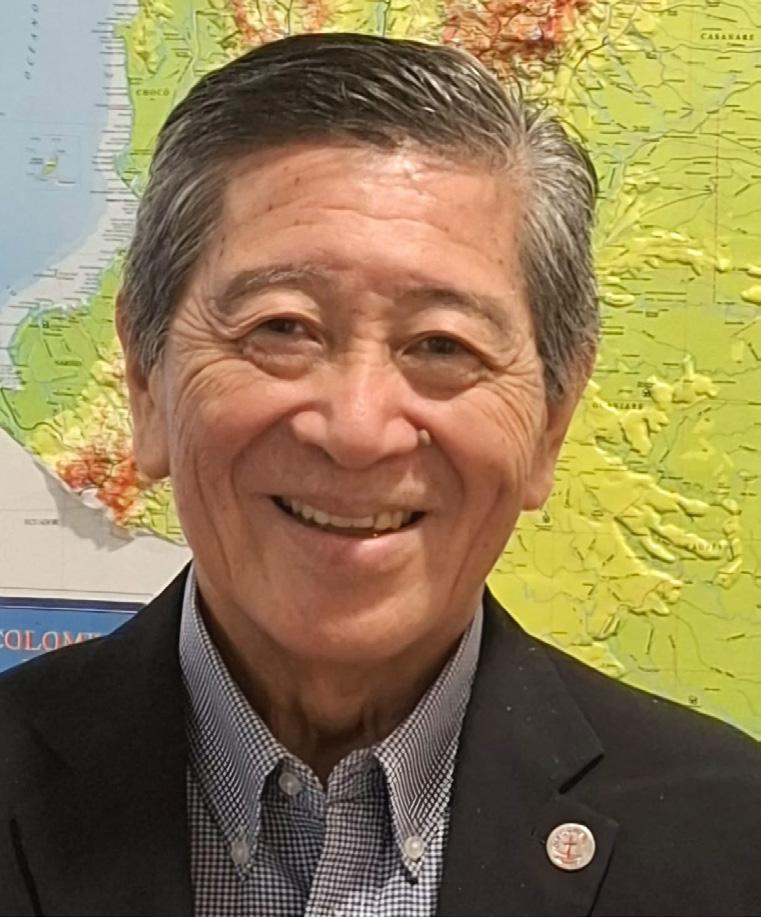
Dr. Humberto Martín Shikiya 2026 World Methodist Council Peace Laureate displays acts of courage, creativity and consistency in efforts to promote peace and justice. Dr Shikiya is a member of the Methodist Church in Argentina.
Dr. Shikiya has shown courage when he was invited by the World Council of Churches in 2022 to serve as Special Envoy for the Peace Process in Colombia. Colombia’s former President, Gustavo Petro, took office on August 7, 2022. When the World Council of Churches held its 11th General Assembly in Karlsruhe, Germany, from August 31 to September 8, an official letter from former President Petro was received, addressed to the General Assembly, inviting the World Council of Churches to accompany Colombia’s peace process.
Colombia’s peace process was established as a state policy through the Total Peace Law (Law 2272 of November 4, 2022). This law enables the Colombian government to open peace talks with rebel armed groups, such as guerrilla organizations, as well as with high-impact criminal organizations.
It is important to remember that Colombia has endured a conflict lasting more than 60 years. The Colombian State has recorded more than 8.5 million people as victims of forced displacement.
This marked the first time in Colombia’s history that a government officially invited the World Council of Churches to serve as a permanent companion in the total peace process. Historically, because it is the majority faith in the country, the Catholic Church has had official representatives in the various dialogue and peace-negotiation efforts under previous administrations. Therefore, this was the first time another Christian institution accompanied Colombia’s peace process.
Dr. Humberto Martin Shikiya was appointed Special Envoy of the World Council of Churches (WCC) for the Peace Process in Colombia, in consultation with the WCC’s member churches and in light of his more than 20 years of work and relationships in Colombia with Evangelical and Protestant churches, their service organizations, and ecumenical networks. This also includes Dr. Humberto Martín Shikiya’s contribution to the Government of Colombia in drafting and establishing the public policy on religious freedom during the administration of President Juan Manuel Santos (Nobel Peace Prize 2016), in which recognition was included for all religious actors as peacebuilders.
Dr. Shikiya has had the courage to assume the role of a permanent accompanier in the peace process—initially with a guerrilla group known as the FARC-EP Central General Staff (EMC-FARCEP)—starting from the preparation, organization, and establishment of the Peace Dialogue Table between the Colombian government and the EMCFARC-EP.
Alongside the WCC, other permanent accompaniers at this peace dialogue table include the Colombian Episcopal Conference of the Catholic Church, the United Nations Verification Mission, and the Organization of American States’ Mission to Support the Peace Process in Colombia (MAPP-OAS).
Over the course of six negotiation cycles at the Peace Dialogue Table between the government and the EMC-FARC-EP, there have been many risks—as is typical of any peace process based from the outset on a bilateral territorial ceasefire. This bilateral ceasefire requires a mechanism for oversight, monitoring, and verification involving all parties at the Peace Dialogue Table. While progress on the peace agenda is crucial and much has been achieved, instances of non-compliance by certain parties inevitably occur, undermining the trust built during the dialogue.
In most cases, the dialogue table meetings have taken place in territories controlled by the EMCFARC-EP. This has also entailed constant risk, as government security forces are unable to enter beyond certain territorial limits. Security was provided by the guerrilla group itself and, at times, by indigenous guards who also protect their own territories. Since September 2025, Dr. Humberto Shikiya has taken on a new role still as a Special Envoy for the WCC (World Council of Churches). Alongside representatives from the Colombian Episcopal Conference, he accompanies the sociolegal dialogue process with Colombia’s most significant high-impact criminal organization—known as the Clan del Golfo—which is the illegal armed group with the largest number of combatants and extensive territorial control in the country.
continued on next page...
Dr. Humberto Martín Shikiya named 2026 Peace Award Laureate
continued...
Once again, the negotiation meetings between the government and the Clan del Golfo entail risks regarding the disclosure of locations; the venue remains unknown until the very last minute—often not until the moment of boarding a helicopter or ground transport—with only the driver possessing the coordinates for the meeting with the Clan del Golfo’s Joint General Staff commanders. These territories lack a public security force presence and are under the absolute control of the Clan del Golfo.
Clearly, the experience Dr. Shikiya has gained over several years organizing and facilitating roundtables with Methodist churches across Latin America has enabled him to creatively chair meetings of the Peace Dialogue Table.
For Dr. Humberto, the educational dimension of peace is essential to building peace a the local level. In that spirit, both during the Peace Dialogue Table with the EMC–FARC- EP and now in the Negotiation Table with the Gulf Clan, he has convened and formed teams to join the work—participating in and also moderating large-scale meetings focused on territorial transformation and community development.
For more than 20 years, Dr. Shikiya has led and supported innovative training processes for church, ecumenical, social, and community leadership—strengthening capacities for peacebuilding, promoting human dignity, overcoming polarization, and caring for creation and our common home. Programs for church youth leadership—such as Emprendemos Paz in its time, and now the Laboratory of Ecumenical and Interfaith Best Practices for peacebuilding and reconciliation—reflect his creative spirit.
Dr. Shikiya’s one essential quality in building peace, justice, and reconciliation is patience—especially in processes where dialogue is indispensable. In that spirit, Dr. Shikiya has demonstrated persis-
tence and steady commitment to ensuring that the parties seeking a negotiated path to peace do not walk away from the Dialogue Table.
And even when that has happened, Dr. Shikiya— serving as a peace accompanier alongside other colleagues—has traveled to the territory to underscore the importance of returning to the Dialogue Table.
According to Dr. Shikiya, peace processes move forward and backward, often due to failures by one or more parties to comply with agreements. This can be deeply frustrating for those who accompany these processes. Even so, Dr. Shikiya has repeatedly urged the parties involved to remain calm and resume dialogue, so they can continue shaping the reality of a lasting peace. This demonstrates how consist he is even through the setbacks and long term communication agreements.
In Dr. Shikiya’s years of experience in peace processes and as an accompanier at Peace Dialogue Tables, in Colombia beginning sessions with a shared prayer of invocation—together with a bishop or priest from the Catholic Church—has given a clear sign of the parties’ need to place themselves in God’s presence, recognizing that peacebuilding must also account for a spiritual dimension. Dr. Shikiya has even taken the initiative to include the Indigenous government representative in that invocation, acknowledging the other spiritual traditions present in territories affected by conflict.
Dr. Humberto Martín Shikiya will be receiving his prestigious award in person at the World Methodist Council meeting in August 2026 in San Salvador, El Salvador.
WMC Regional Bodies Roundtable in Seoul, Korea
Dear Friends,
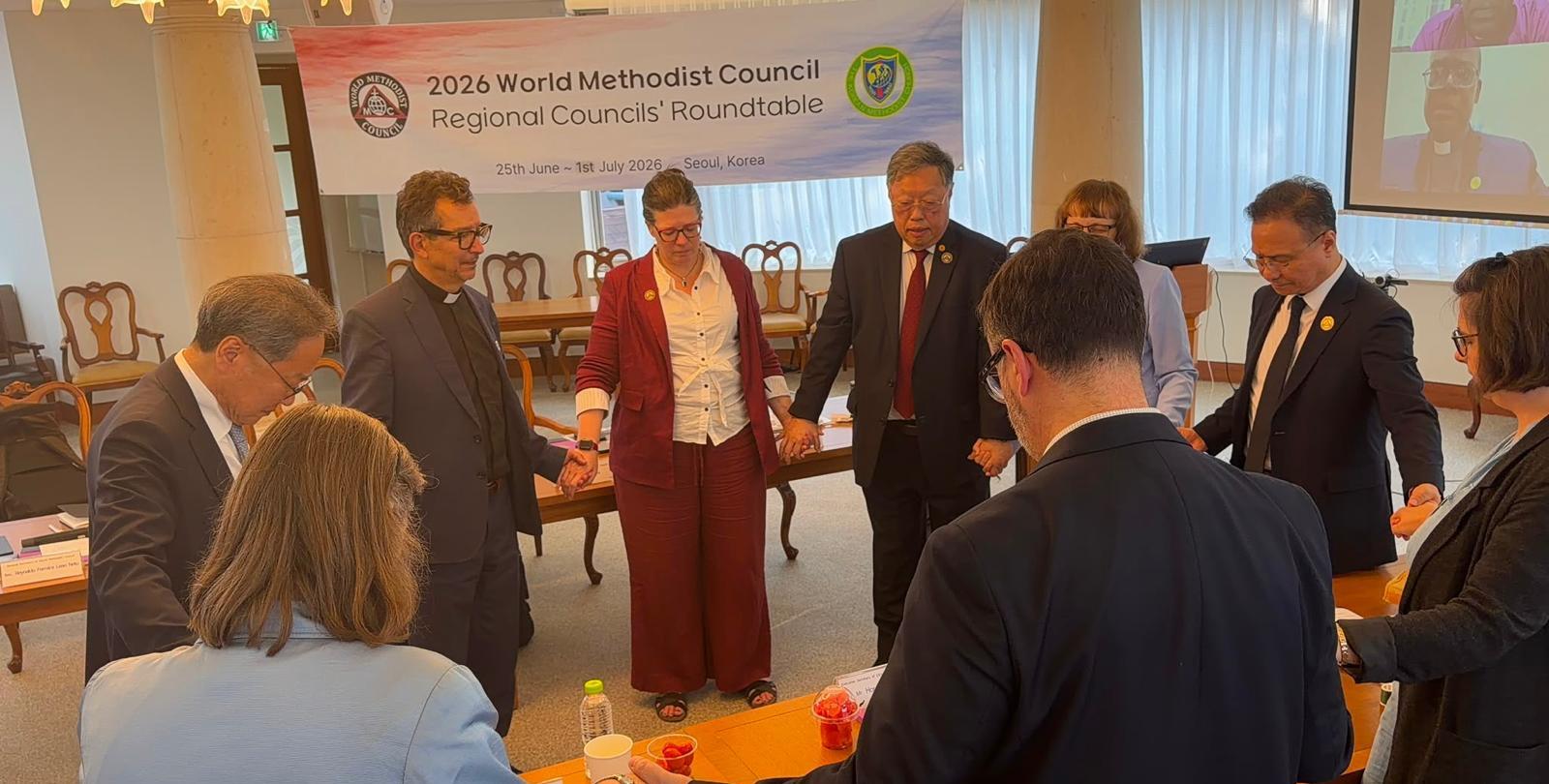
What a joy it was to participate in the June 25-July 1 World Methodist Council Regional Bodies Roundtable in Seoul, Korea. Convened by General Secretary Rev. Dr. Reynaldo Ferreira Leao Neto and myself, participants included:
- Bishop Chungsuk Kim- President, Asian Methodist Council/President Bishop Korean Methodist Church
- Mr. Kim Seah- Vice President of Asian Methodist Council
- Rev. Dr. Byung-Bae Hwang, General Secretary, Board of Missions, Korean Methodist Church
- Rev. Dr. Martin Mujinga, General Secretary of Africa Methodist Council
- Bishop Paul Boafa, President of Africa Methodist Council
- Rev. Dr. Jean Hawxhurst, Representative of North American Table
- Rev. Dr. Jennifer Janzen Ball, Representative of North American Table
- Ms. Maria Sonnleithner, Representative of European Methodist Council
- Bishop Juan de Dios, President of CIEMAL (Latin America Council)
- Mr. Horacio Mesones, Executive Secretary of CIEMAL (Latin America Council)
Representatives from five of our six regions participated in the Roundtable. We are hopeful that all six regions will be represented in future gatherings.
The purpose of this initial Roundtable was to strengthen the relationship between the Regional Bodies and with the World Methodist Council. The focal point was learning about how each region is involved in mission and migration.
We were treated with extraordinary hospitality by the Korean Methodist Church. Our three half-day sessions focused on “unity not uniformity,” mission for migration and diaspora churches, and the relationship between Regional bodies and the World Methodist Council. In addition, we participated in an early morning Horeb Mountain Prayer Meeting, toured the Cemetery of Foreign Missionaries in Tang Hwa-Jin, learned about the Korea Medical Foundation, worshipped at Kwanglim Methodist Church, enjoyed the National Museum of Korea, met with the President and several faculty of Methodist Theological University, visited with the President of the National Council of Churches Korea, experienced the DMZ (the demilitarized zone between North and South Korea), were introduced to the Segeora Methodist Church and were hosted by several churches and individuals for various meals.
I expect that the candid conversation, enjoyable fellowship, significant learning and emphasis on unity will impact our Regional bodies and the World Methodist Council for years to come. Below you will find a communiqué that emerged out of the Roundtable experience.
Thank you, World Methodist Council, for being a voice for unity as we are “on the move” together. I look forward to seeing many of you in El Salvador.
Blessings,
Bishop Debra Wallace-Padgett President World Methodist Council
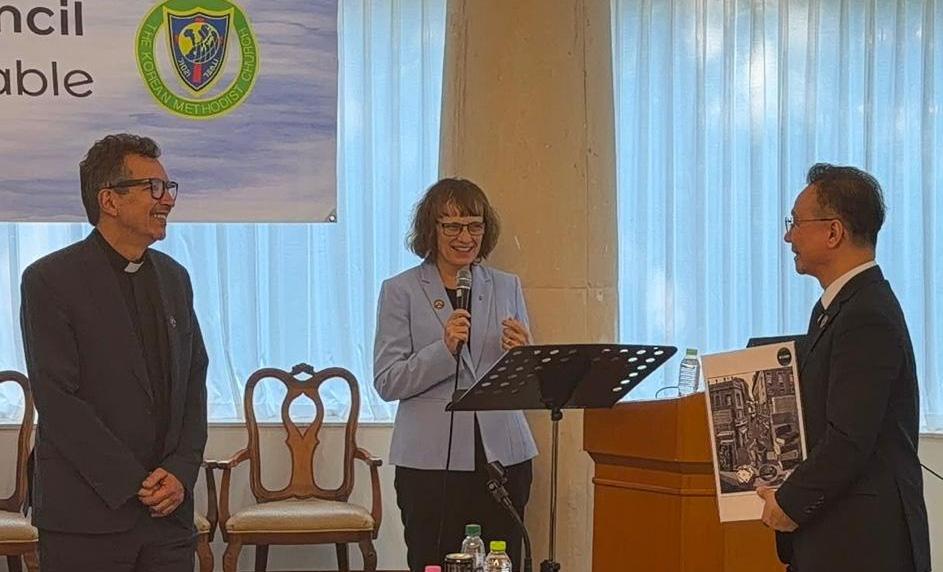
General Secretary Revd. Dr. Reynaldo Ferreira Leão Neto (Léo) and President Bishop Debra Wallace-Padgett with Rev. Byung-Bae Hwang
WMC Regional Bodies’ Roundtable Communique
Unity, Not Uniformity - World Partnership in Sharing the Good News of Jesus Christ
We, the representatives of five Regional bodies of the World Methodist Council, gathered in Seoul, Republic of Korea, at the gracious invitation of the Korean Methodist Church for the 2026 WMC Regional Bodies’ Roundtable.
We give thanks to Almighty God for this historic gathering, marking the first time that representatives of five Regional bodies of the World Methodist Council have come together in Korea for the Roundtable. We express our sincere gratitude to the Korean Methodist Church for its generous hospitality and faithful leadership in hosting this Roundtable.
Gathered under the theme “Unity, Not Uniformity,” we affirm that our unity in Jesus Christ does not require uniformity. Rather, our unity embraces the rich diversity of cultures, languages, traditions, histories, and mission experiences that God has entrusted to the global Methodist family. We celebrate this diversity as a gift of God’s grace and reaffirm that we are one body in Christ, called to participate together in God’s mission.
Today, we recognize that we are living in a Multifaceted and Polycentric Mission Era, in which the vitality and leadership of Christian mission emerge from many regions of the world. In this new reality, no single church or region stands at the center of God’s mission. Rather, every region has unique gifts to offer, and every region has much to learn from one another.
During this Roundtable, we also reflected on the growing reality of migration. We recognize migrants, refugees, and displaced people not merely as recipients of ministry but as brothers and sisters created in the image of God and as participants in God’s mission. We commit ourselves to listening to one another’s experiences and working together in compassionate, just, and Christ-centered responses to migration across all regions.
Therefore, we affirm that world partnership is one of the greatest priorities of our generation. The future of Methodist mission depends not on competition, dependence, or unilateral leadership, but on mutual partnership, reciprocal learning, shared leadership, and common responsibility in God’s mission.
Inspired by the Methodist tradition of connexionalism and solidarity we commit ourselves to strengthening relationships of trust, friendship, accountability, and collaboration among all Regional Bodies and with the World Methodist Council. We believe that stronger partnerships will enable us to proclaim the Gospel more faithfully and respond more effectively to the challenges facing our world, particularly those faced by the young.
Therefore, we declare our common commitment:
1. To strengthen fellowship and partnership among all Regional bodies of the World Methodist Council.
2. To build a global partnership for world mission based on mutual respect, equality, reciprocity, and shared responsibility.
3. To promote collaborative mission in the multifaceted and Polycentric Mission Era through networking, resource sharing, leadership development, and theological dialogue.
4. To cooperate in responding to the spiritual, social, and humanitarian needs of migrants, refugees, and displaced peoples.
5. To encourage the respectful and helpful exchange of missionaries, young leaders, theological educators, and mission resources among our regions.
6. To bear faithful witness to the Good News of Jesus Christ together while honoring the diversity of God’s people under the unity of the Holy Spirit.
7. To collaborate on projects in support of migrants and the communities from which they came and to which they go.
We pray that the Holy Spirit will continue to unite us in love, guide us in wisdom, and empower us to serve as faithful partners in God’s mission until all people have the opportunity to hear the Good News of Jesus Christ.
Together in Christ, together in Mission, together for the World - on the move!
To God alone be the glory.
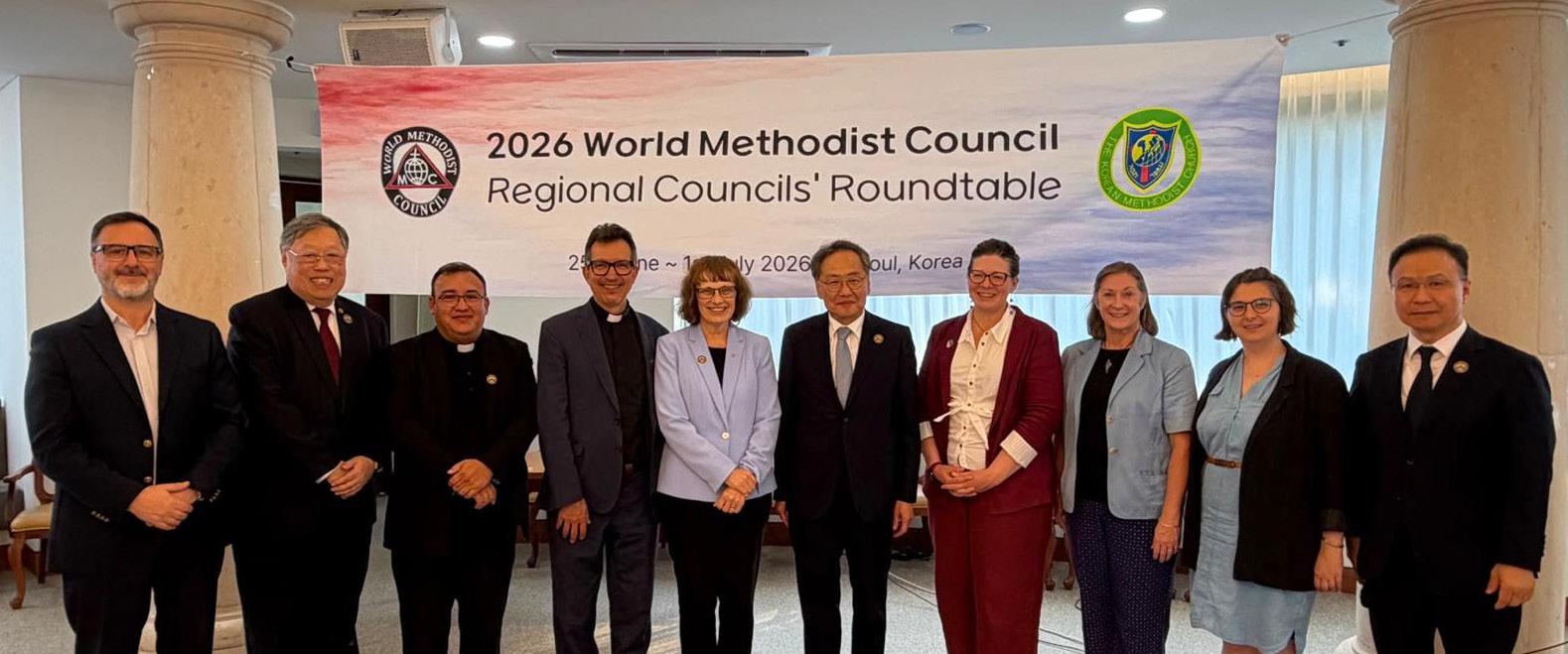
The Roundtable of Regional Bodies (Africa Methodist Council on Zoom) together with President Bishop Chungsuk Kim President of the Korean MC and Asian Methodist Council and Rev Dr Hwang, Byung-Bae, General Secretary of the Board of Mission, KMC - our hosts
Palabras Proféticas Teo-Poemas Insumisos Translated
Prologo
Las teologías insumisas —como este libro— quizás forman parte de una pedagogía más amplia: la pedagogía insumisa. Esa que no pretende enseñar desde la autoridad ni imponer verdades, sino abrir caminos para habitar el mundo con otros ojos, otros pasos, otros latidos. Aquí, desde estas páginas, se nos propone una manera distinta de mirar y ser parte del mundo, una mirada que nace de la palabra viva, de la profecía encarnada, de una teopoética que no pretende definir a Dios, sino invocar Su presencia allí donde menos se la espera. En este gesto, el autor Gerardo Oberman nos convoca no solo a leer, sino a participar, a dejar que estas palabras nos atraviesen como lo hace la poesía verdadera, como lo hace el clamor de quienes luchan por la vida.
Este libro es una invitación a repensar la espiritualidad. No como algo etéreo o reservado a unos pocos, sino como una práctica cotidiana que se enraíza en la historia concreta, en los cuerpos vulnerables, en las memorias colectivas y las búsquedas individuales. La misión de la iglesia —esa institución tantas veces alejada del dolor del pueblo— se reencuentra aquí con su posibilidad más honda: ser espacio de consuelo y lucha, de celebración y resistencia, de escucha radical y cuidado amoroso. En estas páginas, espiritualidad, sujeto e iglesia ya no están separadas por los muros de la tradición o de la jerarquía, sino entrelazadas como cuerpos vivos que se reconocen mutuamente, que caminan juntas.
No enseñaba como las otras autoridades, aquellas que se colocaban en el pedestal de una supuesta sabiduría divina, las que ponían cargas sobre otros hombros, las que juzgaban sin misericordia, las que imponían doctrinas sin libertad, las que condenaban a infiernos inventados, las que paseaban su opulencia escandalosa.
Gerardo Oberman escribe desde un lugar particular: el de quien está dentro y fuera al mismo tiempo. Como liturgista y pastor, conoce los lenguajes, los símbolos, los silencios. Como militante de la vida y de la justicia, se niega a usarlos para mantener lo establecido. Por eso, sus poemas —que son oraciones, gritos, cantos, susurros— no se acomodan a ninguna fórmula. Nos provocan. Nos cuestionan. Nos invitan a una nueva lectura, no solo del texto, sino de la vida. Es una escritura que nace de la preocupación, del miedo, de la provocación ética, y que se transforma en propuesta. No como quien enseña desde la certeza, sino como quien necesita hablarle a su generación —y quizás a sí mismo— para intentar entender el mundo como un don, como un misterio, como una posibilidad divina.
Prologue
Insumisas theologies —like this book— are perhaps part of a broader pedagogy: insumisa pedagogy. The one that does not intend to teach from the authority or impose truths, but to open paths to inhabit the world with other eyes, other steps, other heartbeats. Here, from these pages, we are proposed a different way of looking and being part of the world, a look that is born from the living word, from the incarnate prophecy, from a theopoetics that does not pretend to define God, but to invoke His presence where it is least expected. In this gesture, the author Gerardo Oberman calls us not only to read, but to participate, to let these words cross us as true poetry does, as the clamour of those who fight for life does.
This book is an invitation to rethink spirituality. Not as something ethereal or reserved for a few, but as a daily practice that is rooted in concrete history, in vulnerable bodies, in collective memories and individual searches. The mission of the church —that institution so often away from the pain of the people— is reunited here with its deepest possibility: to be a space of comfort and struggle, of celebration and resistance, of radical listening and loving care. In these pages, spirituality, subject and church are no longer separated by the walls of tradition or hierarchy, but intertwined as living bodies that recognise each other, that walk together.
He did not teach like the other authorities, those who placed themselves on the pedestal of a supposed divine wisdom, those who put burdens on other shoulders, those who judged without mercy, those who imposed doctrines without freedom, those who condemned invented hells, those who walked their scandalous opulence.
Gerardo Oberman writes from a particular place: that of those who are inside and outside at the same time. As a liturgist and pastor, he knows languages, symbols, silences. As a militant of life and justice, he refuses to use them to maintain what is established. Therefore, his poems —which are prayers, screams, songs, whispers— do not fit any formula. They provoke us. They question us. They invite us to a new reading, not only of the text, but of life. It is a writing that is born of concern, fear, ethical provocation, and that is transformed into a proposal. Not as someone who teaches from certainty, but as someone who needs to speak to his generation —and perhaps to himself— to try to understand the world as a gift, as a mystery, as a divine possibility.
continued on next page...
Palabras Proféticas Teo-Poemas Insumisos Translated
El libro se estructura en tres partes que no son escalones ni compartimentos estancos, sino pliegues de una misma trama: A las puertas..., Estás, ahora..., Jamás entenderían... Tres movimientos que no buscan responder, sino abrir preguntas. Como una liturgia que no tranquiliza, sino que desestabiliza; como una oración que no busca respuestas automáticas, sino que nos pone en camino. El lector no encontrará aqui una verdad cerrada ni una doctrina sistemática. Lo que encontrará, más bien, es un diálogo abierto con los vericuetos de la existencia humana y con el rostro de Dios que se revela en lo cotidiano, en lo pequeño, en lo inesperado.
Y una mañana nos descubrimos llorando por el dolor de otras personas sufriendo injusticias y nos damos cuenta de que no perdimos el alma y somos bautizados y bautizadas en la sensibilidad que nos salva de las mezquindades y de los egoísmos.
Las teologías insumisas que recorren este libro comienzan a darle forma —palabra, cuerpo, sentido— a las experiencias de quienes habitan y habitamos los bordes. Quienes estamos fuera de las cábalas, de los mapas, de las normas. Es, por momentos, una declaración de principios: una teología que no pide permiso, que no se disculpa por existir, que se nombra desde el margen con orgullo y con dignidad. Y en ese gesto, se hace también lugar para otras voces, otras corporalidades, otras espiritualidades que han sido históricamente silenciadas. En estas páginas, hay un acto político: nombrarse desde el borde es resistir al centro que pretende absorberlo todo.
La palabra poética aquí no es adorno. Es teología. Es denuncia. Es plegaria. Es pan compartido. Oberman escribe como quien sabe que la liturgia no es solo ritual, sino también respiración colectiva, práctica de la esperanza, ejercicio comunitario del alma. Por eso sus textos pueden leerse como poemas, pero también como cantos, como lamentos, como propuestas para una liturgia que celebra la vida en toda su complejidad. Una liturgia que no teme al dolor ni al gozo, que no excluye a nadie, que no impone una forma única de estar ante lo sagrado.
Este libro es, también, un elogio a la ternura y al dolor. Como si fueran una misma cosa. Como si no pudiera haber ternura sin la memoria del dolor, ni pudiera resistirse el dolor sin la práctica de la ternura. La ternura aquí no es un gesto superficial, sino una ética profunda, una política del cuidado, una espiritualidad encarnada. Y el dolor no es aquí solo sufrimiento, sino también motor, memoria, herida que guía, cicatriz que orienta. Quien se adentre en estas páginas podrá encontrarse a sí mismo en las preguntas, en los fragmentos, en los silencios. Es un espejo que no devuelve la imagen que esperamos, sino la que necesitamos para seguir caminando.
The book is structured in three parts that are not steps or watertight compartments, but folds of the same plot: At the doors..., these are, now..., You would never understand... Three movements that do not seek to respond, but to open questions. Like a liturgy that does not reassure, but destabilises; like a prayer that does not seek automatic answers, but puts us on the road. The reader will not find here a closed truth or a systematic doctrine. What you will find, rather, is an open dialogue with the twists of human existence and with the face of God that is revealed in the everyday, in the small, in the unexpected.
And one morning we find ourselves crying for the pain of other people suffering injustices and we realise that we have not lost our soul and we are baptised in the sensitivity that saves us from meanness and selfishness.
The insubmissive theologies that run through this book begin to give shape —word, body, meaning— to the experiences of those of us who inhabit the edges. Who are out of the cabals, the maps, the rules. It is, for the moment, a declaration of principles: a theology that does not ask for permission, that does not apologise for existing, that is named from the margins with pride and dignity. And in that gesture, there is also room for other voices, other corporeality, other spiritualities that have been historically silenced. In these pages, there is a political act: to be named from the edge is to resist the centre that intends to absorb everything.
The poetic word here is not an ornament. It’s theology. It’s a denunciation. It’s a prayer. It’s shared bread. Oberman writes as someone who knows that the liturgy is not only ritual, but also collective breathing, practice of hope, community exercise of the soul. That is why his texts can be read as poems, but also as songs, as lamentations, as proposals for a liturgy that celebrates life in all its complexity. A liturgy that does not fear pain or joy, that does not exclude anyone, that does not impose a unique way of being before the sacred.
This book is also a praise to tenderness and pain. As if they were the same thing. As if there could be no tenderness without the memory of pain, nor could I resist pain without the practice of tenderness. Tenderness here is not a superficial gesture, but a deep ethics, a policy of care, an embodied spirituality. And the pain here is not only suffering, but also a movement, memory, wound that guides, scar that guides. Those who enter these pages will be able to find themselves in the questions, in the fragments, in the silences. It is a mirror that does not return the image we expect, but the one we need to keep walking.
continued on next page...
Palabras Proféticas Teo-Poemas Insumisos Translated
Quítense el peso de todos sus temores, porque los miedos aprisionan el alma.
No desfallezcan en sus intentos por hacer el bien y por abrazar lo justo, por anunciar la libertad de todas las opresiones, por promover la sanidad de las heridas, por construir puentes y por abrir ventanas que promuevan la vida y los derechos.
No se contagien de la resignación ni de la apatía ni de la indiferencia de quienes han olvidado el poder de un “te quiero” y la potencia revolucionaria de un gesto solidario.
En tiempos donde la palabra está desgastada por el mercado y la propaganda, este libro devuelve a la palabra su carácter sagrado. Cada poema es una pequeña ofrenda, una provocación espiritual, una pregunta teológica. Y al mismo tiempo, es una forma de abrazar. De recordar que no estamos solas, solos. Que hay otras y otros que también preguntan, también buscan, también creen —no a pesar de las dudas, sino con ellas.
Gerardo Oberman, con su voz insumisa, nos regala una obra que es más que un libro: es una experiencia, una invitación a pensar, a sentir, a orar con los pies en la tierra y los ojos en el horizonte. Es una herramienta para las comunidades que resisten, para las iglesias que se reconstruyen, para las personas que aman a Dios desde los márgenes. Pero, sobre todo, es una caricia para el alma herida de este mundo, una señal de que aún es posible creer desde otro lugar, cantar desde otra voz, construir desde otra ternura.
Quien se atreva a leer estas páginas con el corazón abierto, encontrará no solo teología, sino humanidad. No solo crítica, sino esperanza. No solo palabras, sino presencia. Porque, al fin y al cabo, de eso se trata la teología insumisa: de nombrar a Dios en los márgenes, de celebrar la vida en todas sus formas, de sostener la esperanza incluso cuando todo parece perdido.
Este libro no da respuestas. Pero sí nos deja una certeza: hay otras formas de creer, de vivir, de resistir. Y en ellas, quizás, está el germen de un mundo nuevo.
YULIET TERESA VILLARES PAREJO Feminista, comunicadora popular cubana. Disidente sexual y teóloga.
Take away the weight of all your fears, because fears imprison the soul.
Do not faint in your attempts to do good and to embrace the just, to announce the freedom of all oppressions, to promote wound healing, to build bridges and to open windows that promote life and rights.
Do not be infected by the resignation or apathy or the indifference of those who have forgotten the power of expressing “I love you” and the revolutionary power of a gesture of solidarity.
In times where the word is worn out by the market and propaganda, this book returns the word to its sacred character. Each poem is a small offering, a spiritual provocation, a theological question. And at the same time, it’s a way of hugging. To remember that we are not alone. That there are others who also ask, also seek, they also believe —not despite doubts, but with them.
Gerardo Oberman, with his insumisa voice, gives us a work that is more than a book: it is an experience, an invitation to think, to feel, to pray with your feet on the ground and your eyes on the horizon. It is a tool for communities that resist, for churches that are rebuilt, for people who love God from the margins. But, above all, it is a caress for the wounded soul of this world, a sign that it is still possible to believe from another place, to sing from another voice, to build from another tenderness.
Whoever dares to read these pages with an open heart, will find not only theology, but humanity. Not only criticism, but hope. Not just words, but presence. Because, after all, that’s what an insumisa theology is all about: naming God on the margins, celebrating life in all its forms, sustaining hope even when everything seems lost.
This book doesn’t give answers. But it does leave us with one certainty: There are other ways to believe, to live, to resist. And in them, maybe, is the seed of a new world.
YULIET TERESA VILLARES PAREJO Feminist, popular Cuban communicator. Sexual dissident and theologian.
Gerardo Oberman, Palabras Proféticas, Teo-Poemas Insumisos,Editorial Caminos, Havana, 2025.
Translation into English of the Prologue by Revd. Dr. Samuel Murillo, President of the Youth and Young Adults Programme - World Methodist Council
The Equiano Way
Explore a Journey of Heritage and Legacy
The Equiano Way is an 80-mile trail that travels from Sheffield, South Yorkshire to Hull, East Yorkshire exploring the heritage of some key figures and places that shaped our shared legacy of faith and freedom. 80 miles | 8 days (or 75 miles | 7 days)
Upper Wincobank Chapel, Sheffield to Wilberforce House, Hull
Wincobank | Whiston | Roche Abbey | Austerfield | Epworth | Scunthorpe | (Alkborough) | South Ferriby | Hull
Find out how you can help us develop the route HERE
Pilgrimage Stories Held in Pathways
Every path holds stories of those who have walked and talked and reflected on it. There are layers of stories on ancient pathways. Stories unfold and unveil and connect paths. Stories encompass different paths. Paths connect those who traverse them. Paths ground us. Paths connect us to the past and present and beckon us to the way ahead. When we walk on paths or sit or lie down beside them, or ponder them, we are connected to our mother earth, and reminded that all of us are also connected to all others who ever tread or trod on this one earth that is our home.
Our route is named after one man, Olaudah Equiano (Gustavas Vassa), born a prince in Nigeria, enslaved and bought and sold in the Trans-Atlantic Slave Trade, escaped his bondage, bought his own freedom, wrote his story and walked and worked around Britain and many parts of the world as a well-known campaigner for the abolition of slavery. This story lives on, it is a story of challenge and inspiration. The Equiano Way is designed to connect other remarkable stories and histories along the way. The route is a pilgrimage, a journey of significance that gives rise to reflection, not least spiritual contemplation.
Rev. Dr. Inderjit Bhogal, 2018 WMC Peace Laureate
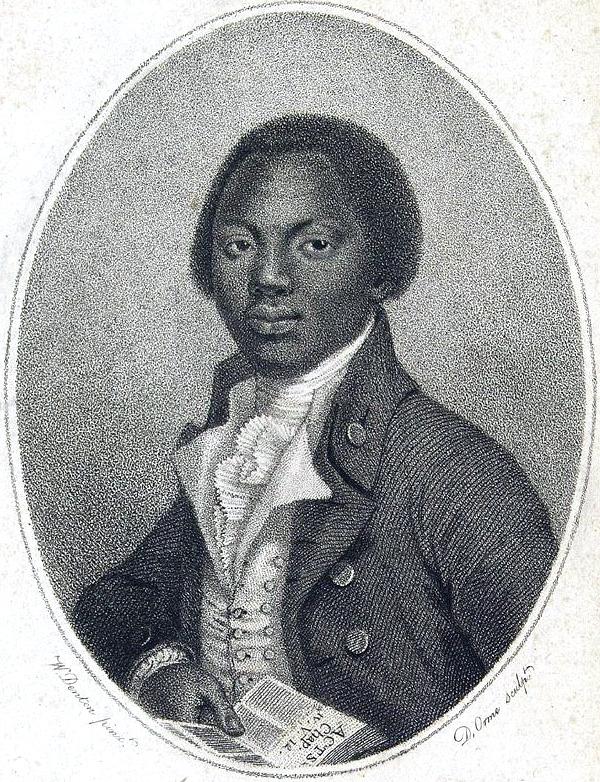
Also known as Gustavus Vassa, Equiano, was an African writer, former enslaved person, and a key figure in the British abolitionist movement. Born in what is now south-eastern Nigeria, he was kidnapped as a child, sold into the transatlantic slave trade, and endured the Middle Passage and years of servitude before buying his freedom in 1766.
After settling in Britain, He was baptised into the Church of England in 1759, was influenced by Methodist evangelism and later became deeply involved in campaigning against the slave trade.
Equiano’s autobiography, ‘The Interesting Narrative of the Life of Olaudah Equiano’ (1789), drew on his experiences in slavery and freedom; its vivid firsthand account helped shape public opinion and was widely read, going through multiple editions during his lifetime and promoted by Equiano as he travelled the country. It is said that John Wesley was reading this book on his deathbed. Its influence was such that one of Wesley’s final letters, written on 24 February 1791, was to William Wilberforce, who played a central role in securing the passage of the Abolition of the Slave Trade Act in 1807 and later supported efforts that led to the abolition of slavery throughout the British Empire in 1833.
In London in the 1780s, Equiano became a leading abolitionist himself, working with key figures in the movement such as Granville Sharp and others, and co-founding the Sons of Africa, an early Black political group campaigning for an end to the slave trade. The places Olaudah visited on his book tour included Hull and he visited Sheffield, in August 1790, a visit arranged by the Rev Thomas Bryant, a local Methodist Minister. In Sheffield Olaudah had the support of radicals like James Montgomery, and was a significant influence on anti-slavery campaigners Joseph and Elizabeth Read of Wincobank Hall. The Read’s daughter, Mary Anne Rawson attended the inaugural World Anti-Slavery Convention in London (1840), and went on to form the Sheffield Ladies Association for the Universal Abolition of Slavery.
Through his writing, speaking tours, and collaborations within both abolitionist and religious reform circles, Equiano helped to bring the realities of slavery to the British public and advance the campaign that eventually led to the abolition of the British slave trade in 1807.
Discover The Equiano Way Route HERE
Read more on the Equiano Way Here.
Olaudah Equiano (c1745-1797)
Register Today for the Upcoming World Methodist Council Meeting
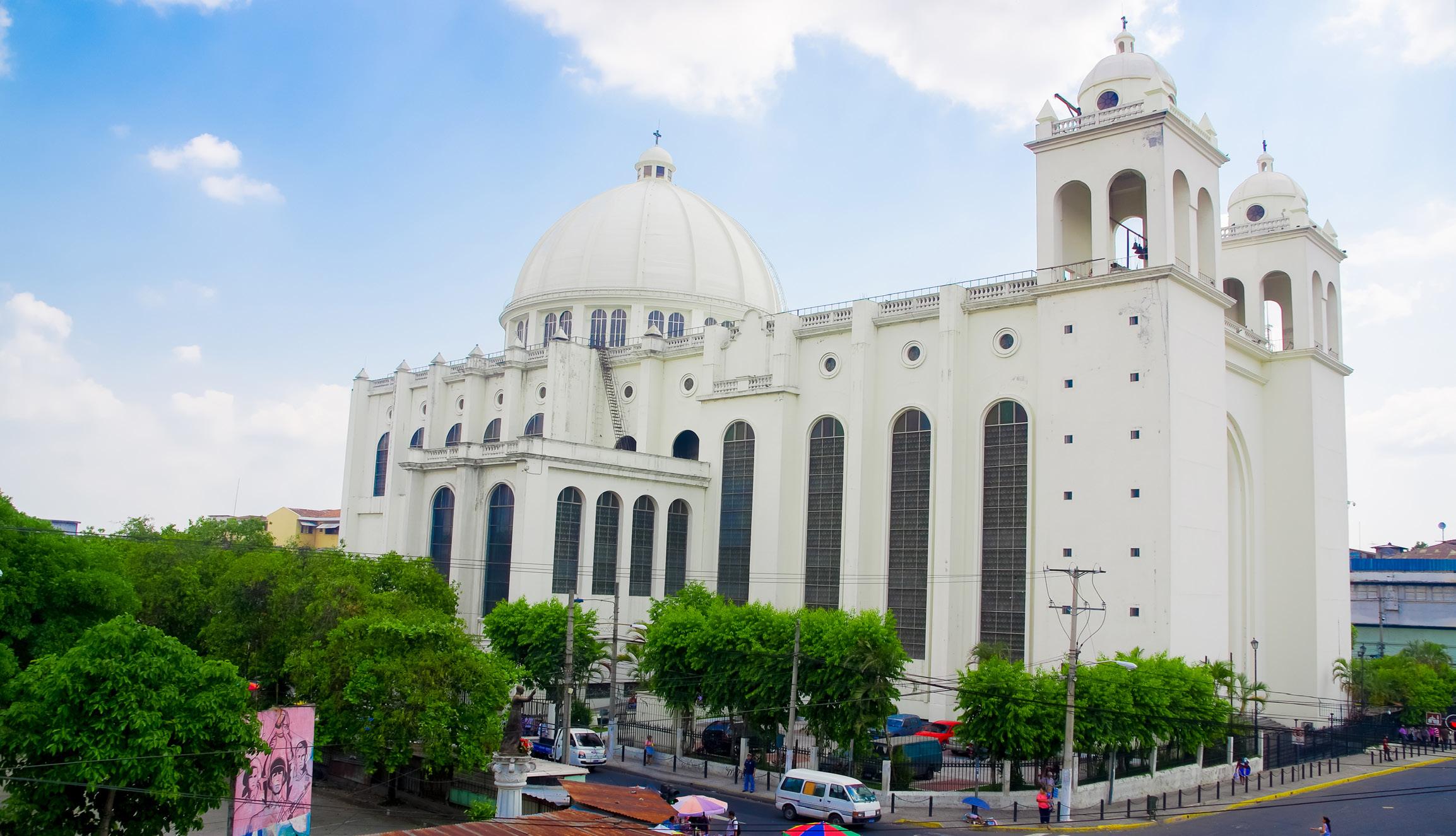
The 2026 World Methodist Council Meeting will be held at the Hilton San Salvador Hotel. Meetings will start on the afternoon of 13th August, and end with lunch on 17th August. Please reach out to mbryson@worldmethodistcouncil.org for a list of additional hotel options.
You will fly into El Salvador International Airport (SAL), also known as Monseñor Óscar Arnulfo Romero International Airport, which is located about 45 kilometers (27–28 miles) from downtown San Salvador.
All travel expenses and hotel accommodations must be covered by the respective member church, delegate representative, or outside organization. The WMC will not cover these costs.
If you are planning to stay a few extra days after the meeting, El Salvador offers beautiful opportunities for local tourism. Participants may enjoy hiking in natural parks, visiting beaches along the Pacific coast, exploring volcanoes, and experiencing the rich culture and cuisine of the country. Click here to book through El Salvador Xpedition where you can find tours with information and pricing. Please contact xpeditionsv@gmail.com with any questions.
A second tour option is from Positive Tours in El Salvador, click here to find out more about pricing and the extraordinary places you can explore. If you have any questions regarding these tours please contact info@elsalvadorpositivetours.com.
Registration cost will remain $100, please register by August 1! https://www.surveymonkey.com/r/NNXN3YW
Peruvian Methodists Plant Organic Gardens
The Methodist Church of Peru is launching organic gardens at two congregations to encourage environmental stewardship and sustainable use of natural resources.
The first garden will be established in July at Costa Verde church in Chimbote, in the Church’s North Coast District.
Church members have been raising seedlings as part of environmental workshops and are now preparing to transplant tomatoes and coriander into a 1,700-square- metre site that already contains banana and passion-fruit trees.
A second organic garden is being created at Quebrada de Agua church in the Piura highlands. The 500-square-metre garden is being overseen by the congregation’s environmental co-ordinator, Sefelmira Córdova Merino, an agriculturalist who has already begun transferring seedlings from pots into the ground.
The projects have emerged from the denomination’s Care for Creation initiative, which encourages churches to take practical action in response to environmental challenges.
The programme is also expanding to other parts of the country. Bishop César Llanco, the Rev Petronila Correa and the Rev Liberato Tinta held a Care for Creation workshop this month to train pastors and lay leaders.
Participants discussed environmental damage caused by waste, excessive plastic use and poor manage-
ment of natural resources. They also explored ways churches can promote environmental awareness and responsible stewardship.
Eighteen environmental co-ordinators were appointed during the workshop. Each received seeds and planting materials and committed to encouraging care for creation in their local congregations.
This article first appeared in the “Methodist Recorder”, an independent, weekly newspaper published in Great Britain.
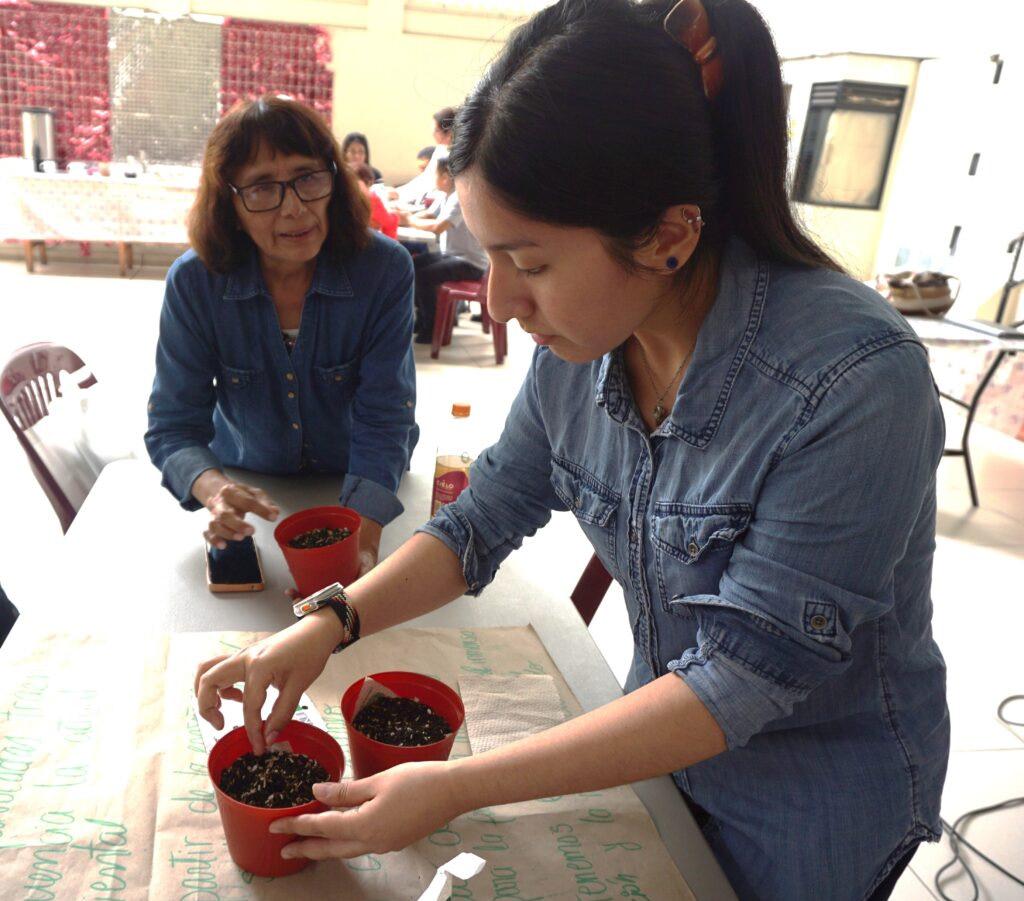
Church members plant seeds as part of the Methodist Church of Peru’s Care for Creation initiative. (Photograph: Iglesia Metodista del Perú.)
Methodist Liaison Office in Jerusalem receives Award
As you enter Hope School, a sign above reads ‘God is Love’—a message that is lived out daily by staff and governors alike, welcoming pupils, parents and visitors into a community shaped by compassion and care. Often known as a ‘second chance’ school, Hope School ensures that children from Beit Jala can access education regardless of past experiences, family circumstances, or the challenges of living under occupation. The Methodist Liaison Office is honoured to support this vital work through visits, fundraising and sharing the school’s story. We are deeply grateful for this recognition and look forward to strengthening our partnership in the years ahead.
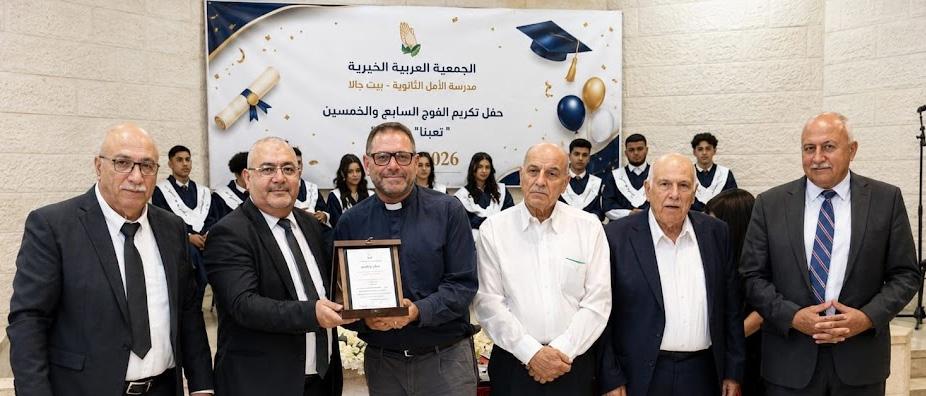
Rev. David Hardman, Methodist Liaison Officer, Jerusalem receiving an award from members of the Hope School Board, including the Mayor of Beit Jala, along with Mr. Khader Saba, the Chairperson of the Orthodox Benevolent Society, the Chairperson of the Seniors’ Society, and Mr. Nader Abuamsha.
Denominations seek full communion
The United Methodist Church (UMC) and the United Church of Canada (UCC) have taken a significant step towards full communion after leaders of both denominations approved an interim covenant intended to strengthen co-operation and support growing migrant Methodist communities in Canada.
The agreement was approved unanimously by the UMC council of bishops and separately by the General Council executive of the UCC. It commits the Churches to seek formal approval for a full communion relationship from the UMC General Conference and the UCC’s General Council when they next meet in 2028.
The move came as the UCC prepared to host the UMC council of bishops leadership gathering in Calgary in October, a development Church leaders describe as both a sign of and catalyst for closer ties.
The interim covenant included mutual recognition of clergy and a commitment to consult before establishing new UMC congregations in Canada. Leaders from both Churches also pledged to develop shared ministries among migrant populations.
Driving the agreement was a rise in the number of United Methodists moving to Canada from countries including the Philippines and Zimbabwe.
Many have sought to establish worshipping communities reflecting the Methodist traditions they knew in their home countries.
UCC general secretary the Rev Michael Blair said the agreement would help both denominations support migrant Methodist communities more effectively and create opportunities for closer co-operation.
This article first appeared in the “Methodist Recorder”, an independent, weekly newspaper published in Great Britain.
Vice President Rathnam meets with WCRC in Hannover
Joshua Rathnam, Vice President of the World Methodist Council and Director of Ecumenical Relations of the Church of North India, visited Hannover to meet with the staff of the World Communion of Reformed Churches. The conversation centred on the closely related themes of Mission, Theology and Justice, which lie at the heart of both organisations’ commitments.
Over the course of the visit, the discussion explored how the WCRC and the World Methodist Council might deepen their cooperation in the years ahead, particularly in addressing the pressing justice concerns facing churches around the world today. The exchange also offered an opportunity to reflect on the shared theological foundations that unite the Reformed and Methodist traditions, and on the practical ways these convictions can be expressed in common mission and witness.
The WCRC was glad to welcome Joshua Rathnam and looks forward to continuing this fruitful relationship between our two communions.
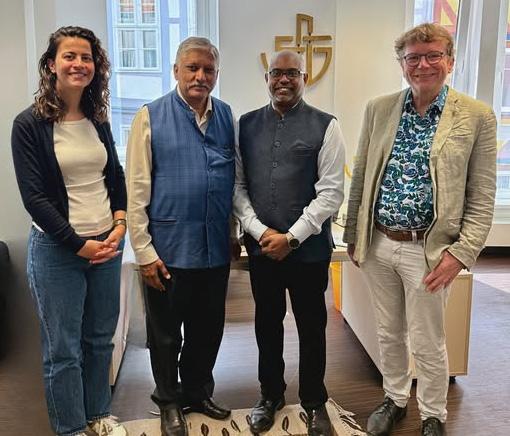
The WCRC office staff in Hannover after a meeting with Joshua Rathnam, Vice President of the Methodist World Council and Director of Ecumenical Relations at the Church of North India.
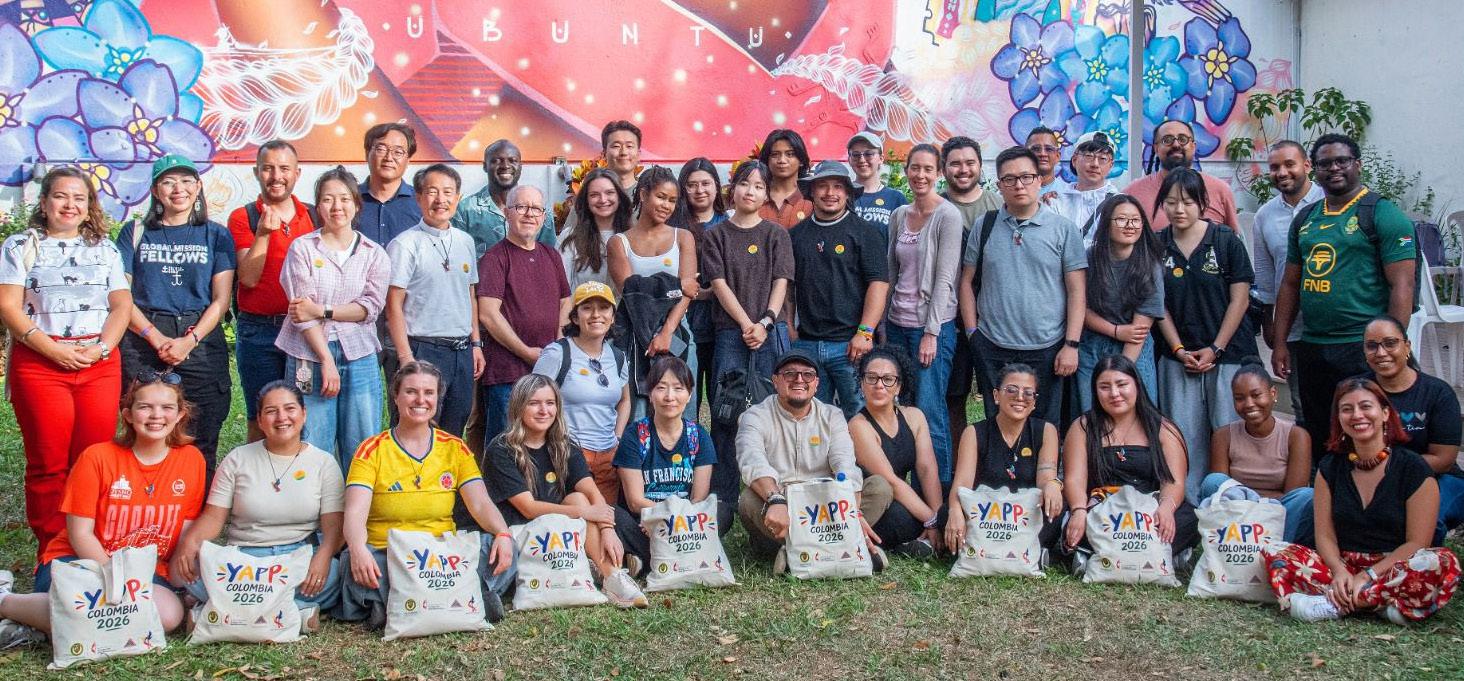
A Message from the Young Adults Peace Pilgrimage to the Methodist, Wesleyan, United, and Uniting Churches
in the World Methodist Council
Depart from evil, and do good; seek peace, and pursue it. Psalm 34.14
We, the young people from the World Methodist Communion, gathered in Bogotá and Cali, Colombia, June 27 to July 2, 2026, cohosted by GBGM-GBHEM of The United Methodist Church and The Colombian Methodist Church, in partnership with The World Methodist Council, The United Methodist Church, The Colombian Methodist Church and The Korean Methodist Church. We are writing from the south of time, representing 11 countries gathered together in the pursuit of peace, to learn and be transformed by more than 60 years of armed conflict in Colombia and the subsequent 2016 peace agreement. As a continuation of the 2025 Pilgrimage in South Korea, we recognise and seek to be a living witness on the way in embracing these journeys as the beginning of the sacred work of peacebuilding.
It has become clear to us that violence is not an accident of this world and has been systematically sought and implemented against marginalised communities. We urge our churches to recognise the presence of the incarnate Christ on the path of peace we journey on together and cleanse themselves of sinful indifference to the suffering present at the centres of power. In Colombia, we witnessed the devastating consequences of armed conflict and of state-sponsored violence against young people in the Siloé community of Cali during 2021.1 Current indifferent approaches to violence such as this perpetuate all continuing cycles of violence. As Archbishop Desmond Tutu said, “If you are neutral in situations of injustice, you have chosen the side of the oppressor.” To choose silence is indifference to the violence in our world. It is to side with the structures that sustain that violence, including fundamentalist instrumentalisation of religion. This is an intolerable position for the Body of Christ; we must never default to indifference but rather speak out for a complete peace, not as a superficial absence of conflict but the presence of the divine Shalom.
We rejoice in the resiliency of the Colombian Methodist Church as they seek to usher forth this embodiment of Christ’s Shalom even as we lament the lack of accompaniment for peacemakers around the world. The complexity of implementing the 2016 peace agreement has made achieving such integral peace challenging. Yet, the hope we have seen rising from the midst of the suffering in Colombia is a tangible example of the sacred community Jesus calls us to live into. In our witnessing of this suffering, we question ourselves and you: Church, whose neighbour will you be? Will you abide with the Colombian people and peacemakers around the world in their journey toward Christ’s truth, love, justice, and righteousness? Will you commit to acting in accordance with God’s Peace?
Through Christ’s gracious presence on our pilgrimage, God has revealed that we have not loved our neighbours at the margins well, we have not loved them as image bearers of God, and we have not abided with them in the midst of state-sponsored violence. Church, we ask as young Methodists: Why is it difficult for you to provide accompaniment to these beloved children? What makes it easier to choose violence and indifference resulting in necropolitical theologies? Why do we continue to erase the storytelling of marginalised communities’ rather than choose to love our neighbours as God loves us?
We call on each of our World Methodist Council constituent bodies to denounce injustice for the barrier it poses to peace, and support and resource peacebuilding activities in Colombia and elsewhere by engaging in intergenerational listening to victims of violence all around the world. The mourning of those in places of suffering asks for committed pastoral presence; we need the heads of churches and those in positions of decision making on the side of those who suffer. Church, Christ calls us forth to draw near and touch the wounds of Christ. Will you touch the wounds of Christ, wounds that we have encountered in Korea and Colombia, and will most certainly continue to encounter in our common Christian pilgrimage around the world?
1See: https://co.boell.org/es/2023/11/02/tribunal-popular-en-siloe-conmemorar-dignificar-y-resistir

We build Peace When… Collective poem by Uniting Churches, Methodist, and Wesleyan Young People. Please pray with us:
We build peace when we find trust across divides When all are included! When we believe and act in the hope and justice that God provides When we smile.
We build peace when we are called to live out UBUNTU When we hear others stories Cuando podemos mirar a otros y ver el rostro de Dios Cuando recordamos sin rencor, debemos recordar pero sin rencor.
We build peace when we commit to loving our neighbour When we put those treated as the last and least as the first and most When we reconcile all Creation When we listen, carefully and respectfully to each other.
We build peace when build peace when we acompañar: eat the same bread Cuando nuestras manos y nuestros pies estan en dirección de quienes están al borde del camino. When the fire needs a community’s hands on the rocks to be rediscovered. When we recognise the dignity of every person as God’s beloved. When we choose dialogue over division.
We build peace when no one is excluded and everyone is heard. Cuando compartimos lágrimas y contagiamos sonrisas. Cuando escuchamos e incluimos a los demás
We build peace when we respect and love one another. When we draw near, we walk each other home Peace > love
Cuando practicamos el respeto, la tolerancia y, sobre todo, el amor hacia todas las personas que nos rodean. When we accompany the marginalised.
We build peace when we WORK FOR JUSTICE AND RIGHTS When we stand in solidarity across borders Construimos paz cuando miramos a los ojos a otros y abrazamos el corazón When we dare to move boldly despite the risks. After all, to risk is to hope, and to hope is to believe that something beautiful is possible.
Please send press releases, articles and resources! Submissions should be a page around 500 words, edited and ready to publish. Contact us by Monday, 20 July at mbryson@worldmethodistcouncil.org if you would like your story to be included in the August edition of the First Friday Letter.
On the Web
This and past First Friday Letters can be found online at FirstFridayLetter.worldmethodistcouncil.org.
The World Methodist Council’s website may be found at worldmethodistcouncil.org.
To subscribe to this newsletter, please email communications@worldmethodistcouncil.org.
About the First Friday Letter
The First Friday Newsletter is a monthly publication of the World Methodist Council.
Publisher: Rev. Dr. Reynaldo F. Leão Neto, General Secretary
Layout Design, Art, and Graphics: Mrs. Michaela Bryson, Staff
All stories and photos, unless otherwise stated, are protected by their respective copyrights. Please do not copy without expressed written permission from the Council.
Photo from the Peacebuilding Online Learning Programme
The WMC Regional Bodies Roundtable concluding moment in Seoul, Korea.