Student Life Director CJ Gamble studentlife@wkcr.org
Publicity Director June Frankel publicity@wkcr.org
Business Manager
Sara Carson business@wkcr.org
Department Directors
Jazz
Emma Lacy & Stella Manyan jazz@wkcr.org
New Music
Isadora Evers newmusic@wkcr.org
Classical
Isabel Norman classical@wkcr.org
American
Ben Rothman & Landon Pottebaum american@wkcr.org
In All Languages
Ethan Thacker ial@wkcr.org
Latin Merielen Espino latin@wkcr.org
News & Arts
Natalie Lahr news@wkcr.org
Sports
Mason Lau sports@wkcr.org
Dear Listeners,
I would first like to take this opportunity to introduce myself as Director of Operations at WKCR. Though I am usually responsible for the physical wellbeing of the station I am happy to have the opportunity to greet you listeners and keep you in the loop regarding our recent and upcoming programming.
Phil Schaap called our station the “home of technical difficulties” and that label is still unfortunately apt to this day. However, thanks to the support of our listeners and the expertise of the station’s engineer “Midnight Bob” we are doing our best to keep the original FM running. I was overwhelmed by a sense of gratitude and community after our summer fund drive this past month from July 16-19. I must have sat in the station for upwards of 13 hours over those 4 days, pitching on air and answering phones as our listener community rallied to help us meet operating costs.
Fundraising was only 4 days out of our packed July with broadcasts for Hariprasad Chaurasia, Louis Armstrong, Gustav Mahler, Manfred Eicher, and Albert Ayler all in the first few weeks. August will be a comparatively slower, but exciting month for me as a jazz programmer. It will include Part II of our Louis Armstrong broadcast, on August 4th, his actual and not self-declared birthday, and our iconic 3-day Bird-Prez broadcast August 27-29.
I can hardly believe that we are entering the last month of summer. I will miss the relaxation and freedom, but I am looking forward to an exciting fall, including a two month celebration of WKCR’s 85th anniversary featuring livebroadcast concerts all over the city!
Keep listening,
Hadassah
by Jem Hanan AMERICAN
HThe Ramones and Punk: A 50 Year Retrospective
ey, ho, let’s go!” crows Joey Ramone in the opening track of the Ramones’s selftitled debut album. The album, while not receiving much fanfare on its 1976 release, became a punk rock touchstone in the decades that followed. The Ramones themselves represented much of what made the emerging punk rock scene of the 1970s, well, punk. 50 years after the release of their first album, I thought it apt to reflect on the Ramones and their undeniable influence on punk.
The four original members of the Ramones—Jeffrey Hyman, John Cummings, Douglas Colvin, and Thomas Erdelyi—met in Forest Hills, Queens, and began playing music together in 1974. After tweaking and refining their roles, the four settled into the band positions that would feature on their album, Ramones, two years later. They also settled into the stage names they would use from then on: Dee Dee Ramone for Colvin (the first to adopt the name), Joey Ramone for Hyman, Johnny Ramone for Cummings, and Tommy Ramone for Erdelyi. The adopted surname “Ramone” was inspired by Paul McCartney’s pseudonym, Paul Ramone, back when the Beatles were still the Silver Beetles in the earliest iteration of the band. Thus, the group dubbed themselves the Ramones.
It’s difficult to talk about the development of punk rock and the Ramones without mentioning the infamous New York venue CBGB. Located in the East Village, the club is considered the nucleus of the American punk rock scene before the movement spread to the UK and beyond. The Ramones’s first show at CBGB was on August 16, 1974, and they would go on to play 74 more times at the
club in that year alone. “…They counted off this song. And they started playing different songs, and it was just this wall of noise… They looked so striking. These guys were not hippies. This was something completely new,” said Legs McNeil, co-founder of Punk magazine, of the group’s inaugural CBGB performance. With the backdrop of New York City’s 1975 financial crisis, the Ramones and their distinctly underground flavor flourished in the grittier pockets of the city’s art scene.1
The Ramones’s sound was a stripped down, minimalist, and almost crude adaptation of rock ‘n roll. In a 2007 interview with Uncut magazine, Joey Ramone said “In its initial form, a lot of 1960s stuff was innovative and exciting. Unfortunately, what happens is that people who could not hold a candle to the likes of Hendrix started noodling away. Soon you had endless solos that went nowhere. By 1973, I knew that what was needed was some pure, stripped down, no nonsense rock 'n' roll.”2 Other early pioneers of punk, while taking different approaches, still contained this same blunt and unabashed attitude. The distinctive Ramone ethos was made manifest in their song’s lyrics, length, and relative harmonic simplicity, which are on full display in their debut album Ramones. Ramones was a peculiar case of being a critical hit but commercial miss. Critics praised its “exhilarating intensity”3 and claimed that it 1 End of the Century: The Ramones. PBS, Independent Lens. Archived May 6, 2010. Accessed November 5, 2009.
2 Ramone, Tommy. "Fight Club." Uncut, January 2007.
3 Nelson, Paul. "Album Reviews: Ramones: Ra-
blew “everything else off the radio.”4 What was it about the record that made it so different? For starters, the tracks, much like the Ramones’s CBGB sets, are startlingly short: most barely surpass the 2-minute mark. This stood in direct contrast to the mainstream rock of the early ‘70s, which often featured the “endless solos” that Joey Ramone disdained. Each track is fast, loud, in-your-face, then over.
Their lyrics are barebones, avoiding stuffy metaphors and complex poetry in favor of straightforward feelings or actions. Track titles are often repeated refrains in the songs themselves, such as “I Wanna Sniff Some Glue” and “Beat on the Brat,” which grounds each song to itself and lodges its lyrics in the listener’s ears. “We’re intellectual 12-yearolds,” said Tommy Ramone in a 1976 Rolling Stone interview.5 I think that sums it up pretty well.
Complementing the lyrics is the rhythmic simplicity of Johnny Ramone’s constant sixteenth-note downstroke. Traditionally, guitarists use the downstroke and the upstroke, which is a more balanced approach, not to mention more physically sustainable. Johnny Ramone, on the other hand, would exclusively use a fast-paced downstroke, sometimes for entire sets, creating the wall-of-noise experience McNeil described of their first CBGB gig. While the technique itself is not simple to execute, the kind of sound it produces—loud, endless, with no room to breathe—became synonymous with the Ramones quintessentially punk attitude. I would be remiss not to highlight the impact the Ramones’s visual imagery had on the punk scene. With their t-shirts, black leather jackets, torn jeans, and sneakers, the band set a precedent of minimalist fashion. This was reflective of their no-frills approach mones." Rolling Stone, July 29, 1976. Archived June 7, 2011. Accessed February 22, 2012.
4 Bessman, Jim. Ramones: An American Band. New York: St. Martin's Press, 1993, 55.
5 Young, Charles M. "The Ramones Are Punks and Will Beat You Up: New York Band Plays Rock & Roll—Not Solos." Rolling Stone, 1976.
to music. Ramone’s monochrome album cover further established the simplicity of their image. The band’s now-iconic logo, the Seal of the President of the United States, was designed by Arturo Vega, who said he thought to use the coat of arms because he “saw them [the Ramones] as the ultimate all-American band… They reflected the American character in general—an almost childish innocent aggression.”6
Although the Ramones wouldn’t enter the American mainstream for some time, their Ramones tour in England had a significant impact on the punk scene across the pond. Their performances at the Roundhouse venue in London were a hit with both audiences and other popular punk acts at the time, including Sex Pistols and the Clash. As they continued to tour, the Ramones would electrify the punk scenes around the world. “They were the first band to leave New York and play anywhere and everywhere in order that this music could get past the barriers of radio and mass media,” said former editor of New York Rocker, Andy Schwartz.7 The impact of their band’s influence on punk cannot be overstated.
Perhaps what makes the Ramones so enduring is how unpretentious they were. They were not interested in virtuosity or in reinventing rock through grand artistic statements. They simply played the kind of music they wanted to hear. In doing so, they captured something that resonated far beyond the clubs of downtown Manhattan. Punk spread because four musicians, doing and saying exactly what they liked, connected with people at the most fundamental level. 50 years later, their sentiments and style continue to do so.
6 Bessman, Jim. Ramones: An American Band. New York: St. Martin's Press, 1993, 40.
7 Powers, Ann. "Joey Ramone, Raw-Voiced Pioneer of Punk Rock, Dies at 49." The New York Times, April 17, 2001. Accessed November 3, 2009.
&
NEWS
ARTS
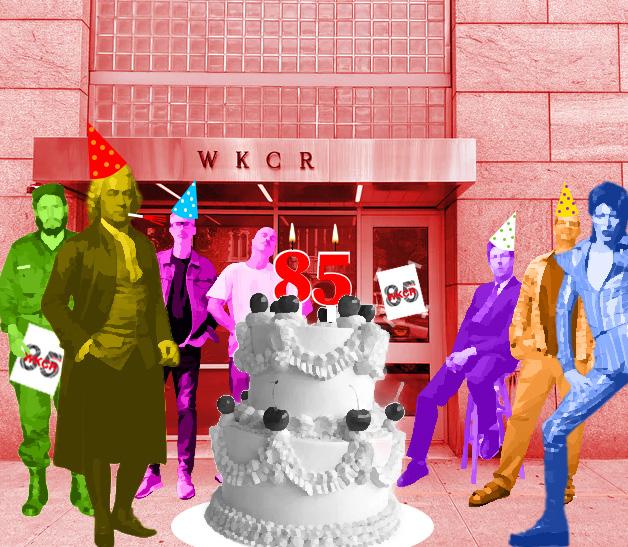
On the Occasion of WKCR’s 85th Birthday
by Charlie Kusiel King
As often happens towards the end of summer, I begin to dread the start of another semester yet simultaneously look forward to the months of programming ahead at WKCR. August sees two favorites: 24 hours of Satchmo and 72 hours of Bird-Prez bookending the month. With school in full swing by September, comes an exciting mix of jazz and new music broadcasts, including a special centennial this year. Something unusual will be taking place this fall, however, coinciding with the birthday of Thelonious Monk on October 10: WKCR’s own 85th anniversary.
A brief history of our station:
CURC (the Columbia University Radio Club) made its first broadcast in February 1941 and received its license from the FCC later that year on October 10. In 1956, Columbia University’s radio station was among the first college stations to broadcast on the FM, adopting the call sign WKCR (King’s Crown Radio) on the 89.9 frequency.
The early years of WKCR established the station as being centrally focused on talkradio, meant to reflect the intellectual side of the university it represented. Early guests included Dr. Martin Luther King Jr., Jimmy Hoffa, Ayn Rand, and Fidel Castro. The late 1960s ushered in a period of transition, spurred by the student protest movement at Columbia University in 1968. WKCR embraced its reputation as “The Alternative,” by shifting programming to a focus on music and initiating a financial separation from the university, which it maintains today, with 100% of station funding coming from listener donations.
introduced the world to The Notorious B.I.G., Jay-Z, and Eminem, and in 2012, David Ellenbogen began the Ragas Live Festival, which has continued to broadcast live for 24 hours every October, now from Pioneer Works. Of course, an omnipresent staple of WKCR’s schedule is its numerous birthday broadcasts, as well as the 10-day BachFest celebration which closes out the year.
This fall, we are excited to further WKCR’s ongoing legacy in celebration of the station’s 85th. From September 6 through October 10, we will broadcast concerts and events throughout New York City, from venues including the American Academy of Arts and Letters, Close Up NYC, Ergot Records, The Hot Club of New York (run by WKCR’s own Matthew “Fat Cat” Rivera), Jalopy Theatre, Public Records, Reggae Under The Bridge: Summer Soundsystem Series, Sacred Music at Columbia, Smoke Jazz Club, the Village Vanguard, World Music Institute, and Zinc Bar. Throughout the coming weeks, we will announce concert information both on the air and online, and of course, every event will be heard live on WKCR.
Despite its status as a college station, WKCR proved itself as a major presence in New York through countless live jazz broadcasts from around the city, a first radio broadcast of salsa, an opera remix album recorded in-studio by John Cage, a 1979 benefit concert at Carnegie Hall (featuring David Bowie, Nico, and Philip Glass), and the introduction of legendary jazz hosts such as Phil Schaap, Sid Gribetz, Sharif Abdus-Salaam, and others, many of whom are still on the air today.
In the 1990s, Stretch Armstrong and Bobbito
The general body of the station couldn’t be more thrilled for this 85th anniversary series, and, not to mention, the next 85 years of furthering musical boundaries. Happy Birthday, WKCR.
Charlie Kusiel King is Program Director and the regular host of Thursday Cereal Music and Friday’s The Early Music Show (both 9:30am-12pm).
am
am
Sin Fronteras
Jazz Alternatives
Nueva Canción
Som do
Special Broadcasts
SPECIAL BROADCASTS
Louis Armstrong Birthday Broadcast
Tuesday, August 4, All Day
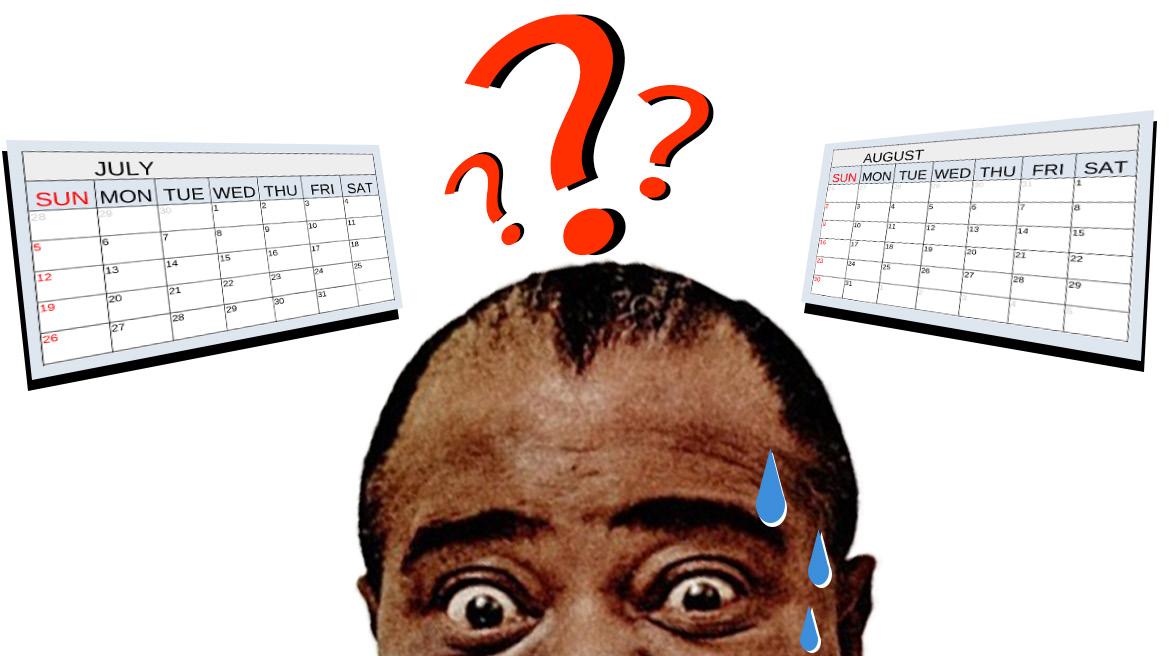
Armstrong returns! Though he himself celebrated his birthday on July 4, Satchmo’s actual date of birth was August 4, 1901. Among WKCR’s most iconic birthday broadcasts, we are excited to this year celebrate the 125th anniversary of Louis Armstrong’s birth, in this second yearly installment.
Lester Young and Charlie Parker Birthday Broadcast
Tursday, August 27 - Saturday August 29
For three days every summer, we celebrate the legacies of two jazz greats. On August 27, listeners can tune in and hear 24 hours of the music of Lester Young (1909-1959). Two days later, we air 24 hours of a special character at WKCR—one of only two with a dedicated weekly program—Charlie Parker (1920-1955). August 28, the day in between? Why stop the fun when we can play 24 hours of Bird-Prez back to back?
THEMED SHOWS
SATURDAY NIGHT AT THE OPERA
Saturdays 9:00 PM - 12:30 AM
SUNDAY PROFILES
Sundays 2:00-7:00 PM
Show Listings
JAZZ
Daybreak Express, Mon.-Fri. 5-8:20am
Out to Lunch, Mon./Tues./Thurs./Fri. 12-3pm
Jazz Alternatives, Mon.-Fri. 6-9pm
The core of our jazz offerings, these three programs span the entire range of recorded jazz: everything from New Orleans jazz, jazz age, swing era, bebop, hardbop, modal, free, and avant-garde. Hosts rotate daily, offering an exciting variety of approaches, some of which include thematic presentation, artist interviews, or artist profiles. On the first Wednesday of every month, Jazz Alternatives becomes “The Musician’s Show” and is hosted by a professional working musician.
Birdflight, Tues.-Thurs. 8:20-9:30am
Archival programs from the late Phil Schaap, one of the world’s leading jazz historians, producers, and an NEA Jazz Master, who hosted this daily forum on the music of Charlie Parker for about 40 years.
Now's The Time*, Fri. 8:20-9:30am
The newest show from WKCR Jazz is dedicated to jazz as a living art form and features the music of young, upand-coming musicians pushing the genre forward.
Traditions in Swing, Sat. 6-9pm
Archival programs from the late Phil Schaap. This awardwinning Saturday night staple presents focused thematic programs on jazz until World War II. Schaap presents the music, much of it incredibly rare, from the best sound source—often the original 78 issue.
Phil Lives*, Mon. 3-5am
Selections of archival programs from late Phil Schaap. This show features interviews, tributes, and portions of longform programs.
Jazz ‘til Dawn, Sun. 4-6 AM
An early Sunday morning jazz program, limitless in era and style.
CLASSICAL
Cereal Music, Mon.-Thurs. 9:30am-12pm
An entirely open-ended classical show to start your weekdays.
The Early Music Show, Fri. 9:30am-12pm
Dedicated primarily to European medieval, Renaissance, and baroque music before c. 1800.
Extended Technique*, Wed. & Thurs. 3-6pm
WKCR’s first interdepartmental show (in the New Music and Classical departments) dedicated to contemporary classical music. Under the direction of the New Music and Classical departments, this program is dedicated to experimental classical music.
Afternoon Classical, Fri. 3-6pm.
Two hours of unrestricted classical music selections followed by one hour dedicated entirely to the music of J.S. Bach.
Saturday Night at the Opera, Sat. 9pm-12:30am.
One of NYC’s longest running opera shows, Saturday Night at the Opera features one opera in its entirety, with time for history and commentary, each week.
NEW MUSIC
Afternoon New Music, Mon. & Tues. 3-6pm
Our daytime new music program features a wide variety of music that challenges boundaries and subverts categorizations. Shows include everything from seminal new music compositions to the most challenging of obscure deep cuts and new releases.
Transfigured Night, Tues./Thurs. 1-5am and Sat. 2-6am
Our overnight explorations into the world of new music, Transfigured Night rewards our late night listeners with a wide range of sounds and experimental music.
Workaround*, Fri. 9-10pm
WKCR presents live sets from local professional and student DJs.
Live Constructions, Sun. 10-11pm
This weekly program features a live in-studio performance or a previous performance recorded at WKCR.
* Indicates show was created after January 2022
LISTINGS FOR LISTENERS
Honky Tonkin’, Tues. 10-11pm
One of WKCR’s longest-running American music programs, Honky Tonkin’ focuses on country music from the 1930s through the 1950s.
Tuesday’s Just as Bad, Tues. 11:30pm - Wed. 1am
For the first hour, Tuesday’s Just as Bad explores the world of blues prior to World War II. In the final half hour, hosts turn to the post-war years.
Night Train, Wed. 1-5am
All aboard! One of two overnight programs in the American Department, Night Train rolls through the post-war R&B and soul tradition, from the genre’s emergence in the 1940s and ‘50s through the funk revolution in the ‘70s. Shows often feature extended live recordings and concerts.
Offbeat, Fri. 1-5am
Offbeat exposes undiscovered, underplayed, or up-andcoming new hip hop artists, including experimental instrumental artists not typically played on mainstream hip hop radio.
Across 110th Street, Sat. 12-2pm
Across 110th Street airs soul, funk, and dance music from the 1960s through the ‘80s and ‘90s.
Something Inside of Me, Sat. 2-4pm
WKCR’s Saturday afternoon blues show, Something Inside of Me focuses on electric and post-war styles.
Hobo’s Lullaby, Sat. 4-6pm
Rooted in the folk revival of the 1950s and ‘60s, Hobo’s Lullaby airs American folk and traditional music styles from the early 20th century through the present day. Shows feature old staples like Leadbelly, Elizabeth Cotton, and Woody Guthrie through contemporary stalwarts like the Carolina Chocolate Drops.
Notes from the Underground, Sun. 12:30-2am
Notes from the Underground showcases contemporary hip hop and rap music with an emphasis on emerging and experimental artists. The program also hosts local and visiting artists for interviews, freestyles, and guest curation.
Amazing Grace, Sun. 8-10am
Greeting listeners on Sunday morning, Amazing Grace shares the African-American gospel tradition.
The Moonshine Show, Sun. 10am-12pm
On the air for nearly 60 years, The Moonshine Show showcases the American Bluegrass tradition, from the earliest roots in vernacular string-band music, the genre’s pioneers in the 1940s and 50s and advancements in the 60s and 70s, through the leading innovators of today.
The Tennessee Border Show, Sun. 12-2pm
The Tennessee Border Show highlights the singersongwriter tradition, from Hank Williams and Townes Van Zandt to Lucinda Williams.
LATIN
Caribe Latino, Mon. 10pm-12am
Caribe Latino features the diverse, upbeat music from Latin communities in the Caribbean. Popular Latin rhythms such as Salsa, Merengue, Bachata and Latin Jazz take center stage throughout the program.
Urbano Latinx, Tues. 12-1am
From salsa and merengue to Latin punk rock, Urbano Latinx airs contemporary sounds from Latin America, the Caribbean, and the diaspora.
Sin Fronteras*, Wed. 12-3pm
Occupying the time slot of Out to Lunch on Wednesday afternoons, Sin Fronteras explores the tremendous and growing tradition of Latin Jazz.
Nueva Canción, Wed. 10-11pm
Nueva Canción explores protest music created throughout Latin America during the 1960s and ‘70s, on its own and in the context of protest music from other countries and during time periods.
Som do Brasil, Wed. 11pm - Thurs. 1am
From samba and bossa nova to MPB, Som do Brazil features the enchanting sounds and rhythms of Brazil.
Sonidos Colombianos, Fri. 10-11pm
Sonidos Colombianos presents music from Colombia. The bilingual musical tour includes not only cumbia, but also the guitar-based bambuco from the Andean region, the harp llanero music from the Eastern Plains, the marimba-infused currulao from the Pacific Region, and the accordion-driven vallenato of the North Atlantic Coast.
* indicates show was created after January 2022
LISTINGS FOR LISTENERS
The Mambo Machine, Fri. 11pm - Sat. 2am
The Mambo Machine is the longest running salsa show in New York City. The program plays a wide spectrum of Afro-Latin rhythms perfect for dancing.
El Sonido de la Calle*, Sun. 2-4am
The Latin companion to Sunday morning’s Notes from Underground, El Sonido de la Calle highlights the diverse world of contemporary Spanish-language hip hop and dance music.
IN ALL LANGUAGES
The Celtic Show, Mon. 12-1am
Music from across the island of Ireland throughout the era of recorded music, particularly focusing on traditional folk and vernacular music forms.
Coordinated Universal Time, Mon. 1-3am
Coordinated Universal Time brings listeners the latest cut of music from across the globe, especially highlighting music that does not get attention in America.
The African Show, Thurs. 10pm-12am
The longest running African music radio show in the United States, The African Show brings listeners a variety of music from the entire continent of Africwa.
Middle Eastern Influences, Fri. 12-1am
Middle Eastern Influences features selections from the Middle East and North Africa, with particular attention on traditional forms.
Sounds of Asia and Couleurs Antillaises, Sat. 6-8am
Previously Sounds of China, Sounds of Asia explores the recorded musical traditions and innovations of Asia and the Pacific Islands. Couleurs Antillaises features music from Haiti and the French-speaking Carribean. These shows alternate in the Saturday morning timeslot so each airs every two weeks.
Eastern Standard Time, Sat. 8am-12pm
One of New York’s most popular Reggae programs, Eastern Standard Time captures listeners with the hypnotic sounds of Reggae and Jamaican dance music.
Field Trip, Sun. 6-8am
Field Trip focuses on the music and practice of field recordings: music recorded outside of a studio. This definition is expansive and includes everything from released recordings to street music documented by WKCR.
Raag Aur Taal, Sun. 7-9pm
Raag Aur Taal (which means “melody and rhythm”) explores the classical musical heritage of South Asia.
Back in the USSR, Sun. 11pm-12am
Back in the USSR features music from Eastern Europe, East Asia, and Central Asia, from the mid-20th century through the present.
NEWS & ARTS
Monday Morningside*, Mon. 8:30-9:30am
WKCR’s morning news broadcast, Monday Morningside features segments on events around Morningside Heights and upper Manhattan. All episodes are available as podcasts on Spotify.
News and Arts Program, Sun.-Thurs. 9-10pm
These programs form the core of our News and Arts programming. On Sundays, “Soundstage” features a live reading of a play; on Mondays, “Late City” offers retrospective coverage on local cultural happenings; on Thursdays, “Playlist Profiles” characterize a person through music. As news is constantly evolving, note that these programs are subject to change and preemption.
SPECIAL BROADCASTS
Sunday Profile, Sun. 2-7pm*
This five-hour program dedicated to a longform, researched profiles of a pioneering artist, label, or musical movement. Originally known as “Jazz Profiles,” this show has expanded its scope; today, it may feature any of the musical traditions represented by WKCR’s programs.
* indicates show was created after January 2022
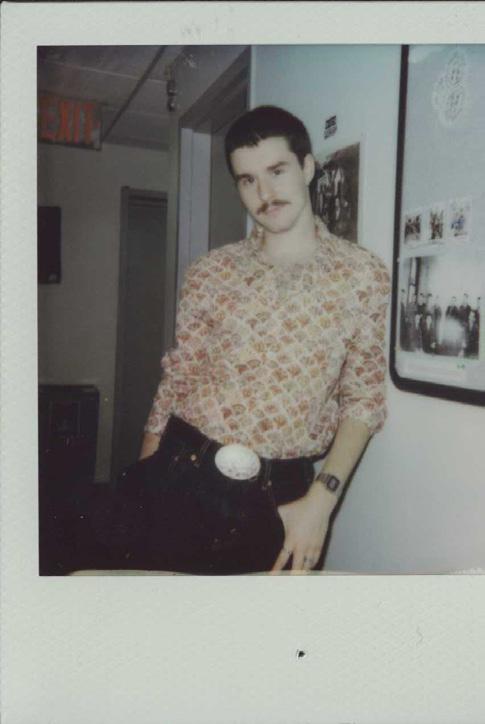
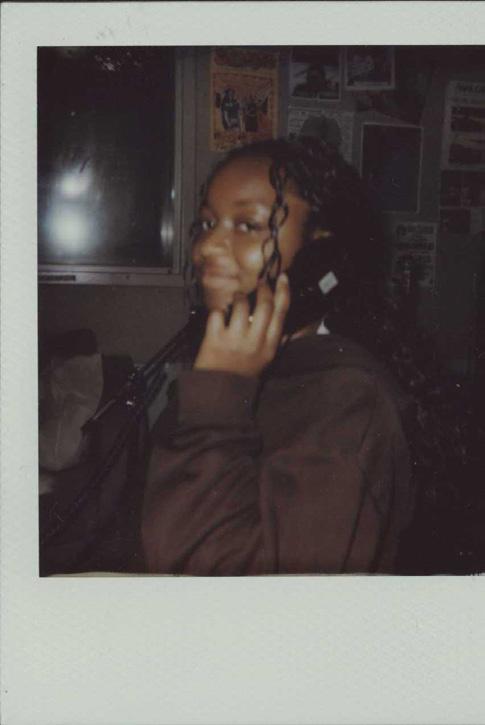
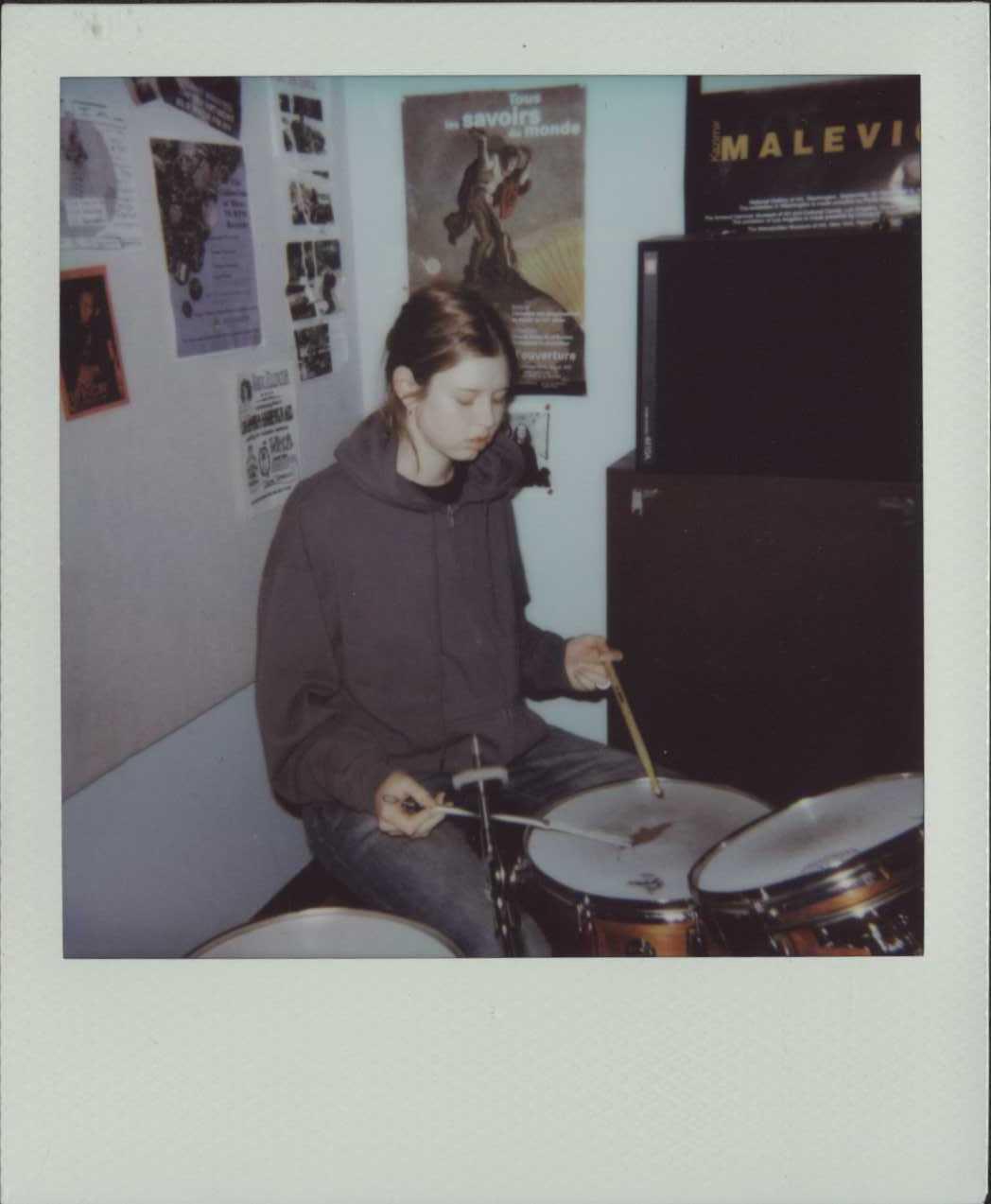
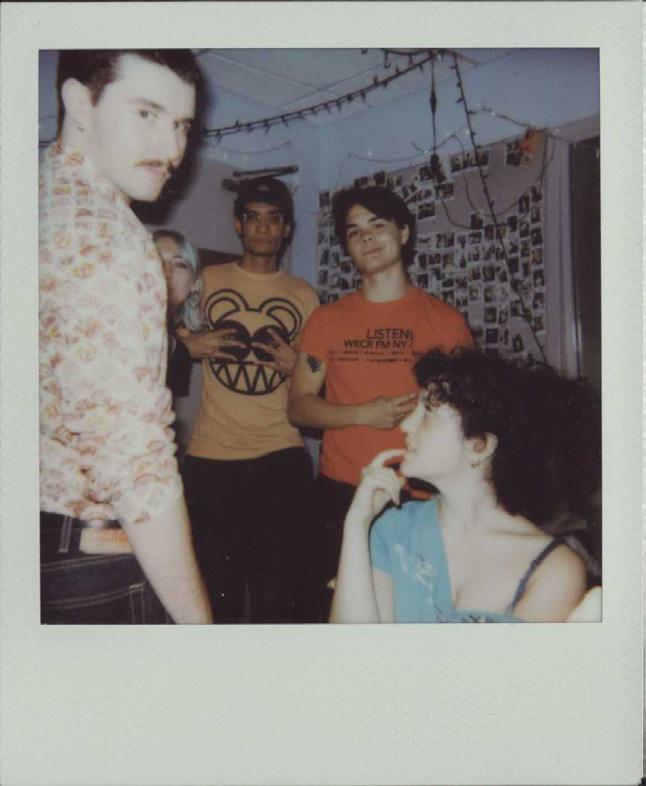
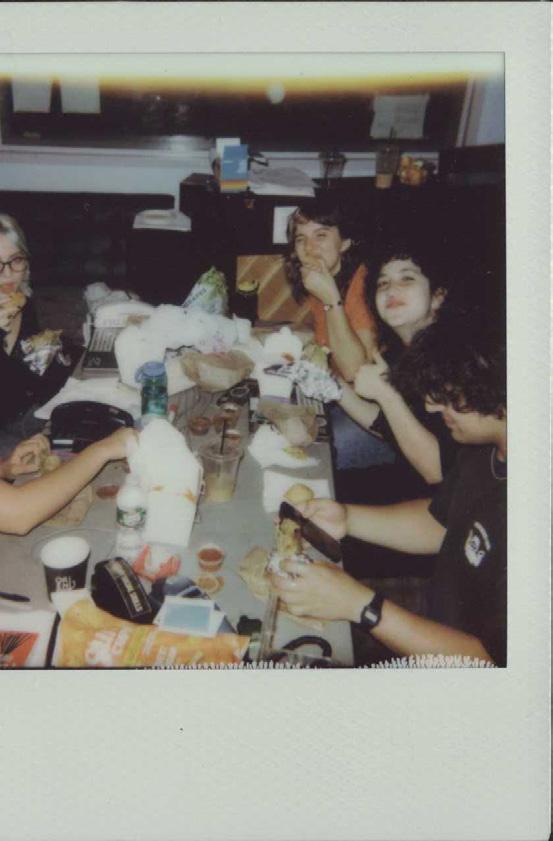
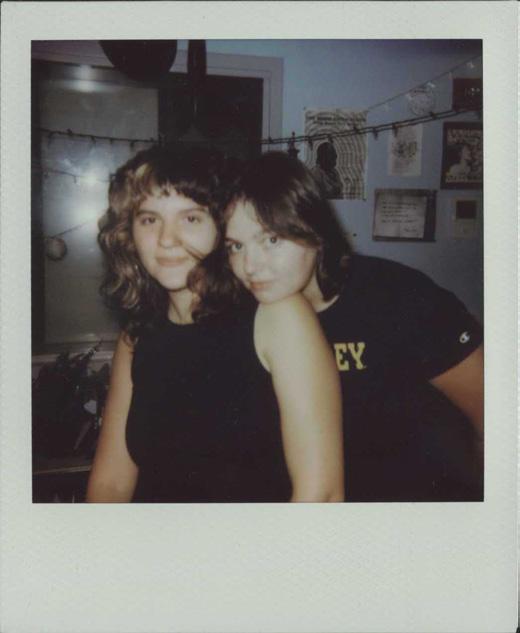
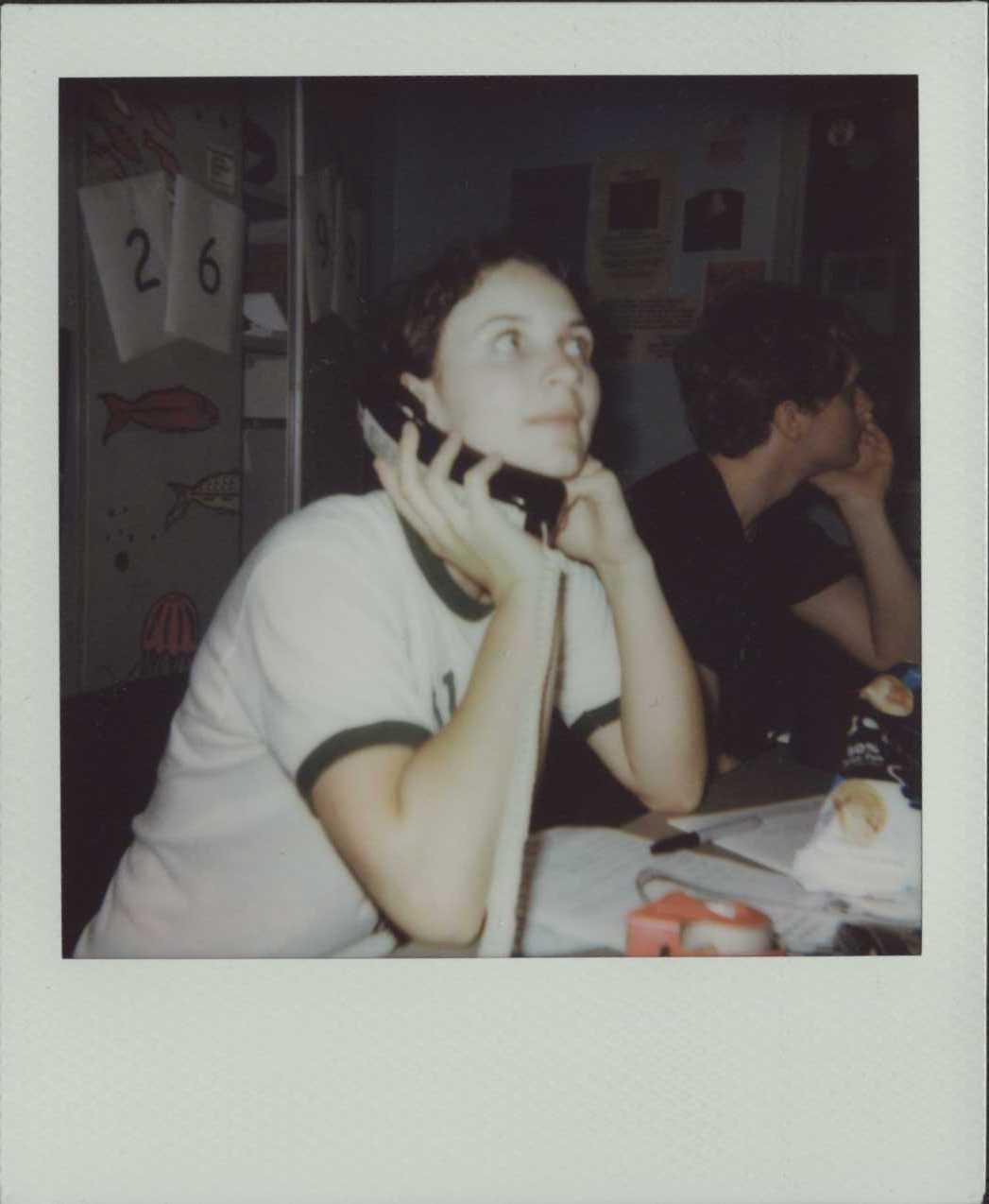
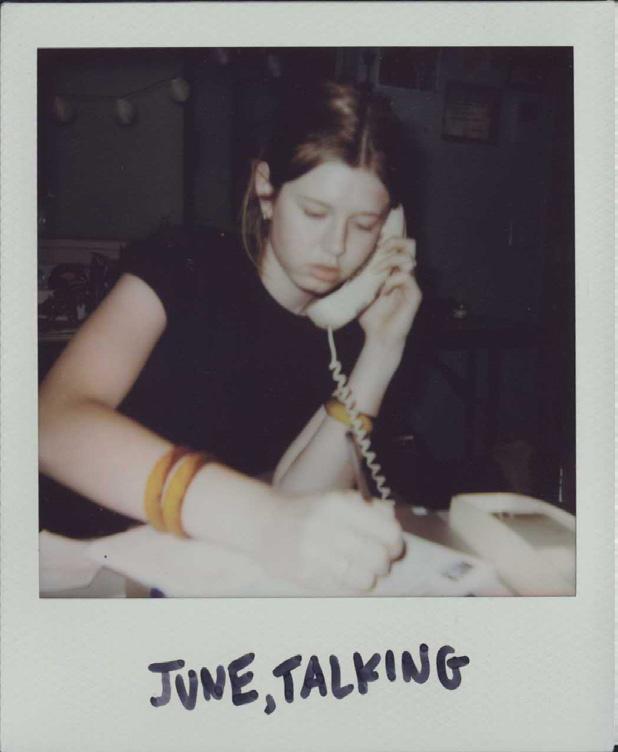
Summer Fundrive
by June Frankel and SolèneMillsap
Photos by June Frankel and Solène Millsap.
SUPPORT WKCR
TOP 5 REASONS TO DONATE TO WKCR
1. You’d be helping a student-run, listener-funded, and volunteer-based radio station continue to bring you the absolute best in what radio has to offer. Music, arts, news, and sports— we’ve got the works!
2. You wouldn’t be a free-rider anymore.
3. WKCR donations are tax-deductible (so make sure you donate before tax season). For more info on that, or anything else business-related, email business@wkcr.org
4. Being “the Original FM,” our equipment is getting a bit old. Thanks to your donations, we were able to retire Buzz, the hamster that ran the wheel powering us. But our new hamster, Roach, needs to start saving for retirement... can you blame him?
5. Isn’t On Air cool? Without proper funding, projects like this can’t come to fruition and, if they do, don’t make it very long. Donate to allow the little On Air minions to stay in the job.
HOW TO DONATE TO WKCR IN 4 STEPS
BY MAIL
Step 1: Locate your nearest checkbook
Step 2: Indicate “WKCR” as payee and fill out as usual
Step 3: Mail check to CU Gift Systems, 622 West 113th Street, MC 4524, New York, NY 10025
Step 4: ...and VOILÀ! Just like that, you have become a WKCR supporter!
ONLINE
Step 1: head to www.wkcr.org
Step 2: Click the yellow “DONATE TO WKCR” banner at the top of the page
Step 3: Fill out the form in the giving portal and enter your information...
Step 4: ...and VOILÀ! Just like that, you have become a WKCR supporter!
WKCR also accepts checks to our direct address. Just follow the same steps listed above but mail the check to: 2920 Broadway, New York, NY 10027
Did you know you can make recurring donations to WKCR when you donate online?
Just indicate your frequency preferences on the giving portal when prompted!