English Epkeye Hausa Yoruba isiZulu Afrikaans English Epkeye Hausa Yoruba isiZulu Afrikaans English Epkeye Hausa Yoruba isiZulu Afrikaans English Epkeye Hausa Yoruba isiZulu
Afrikaans English Epkeye Hausa Yoruba isiZulu Afrikaans English Epkeye Hausa Yoruba isiZulu Afrikaans English Epkeye Hausa Yoruba isiZulu Afrikaans English Epkeye Hausa Yoruba isiZulu Afrikaans English Epkeye Hausa Yoruba isiZulu Afrikaans English Epkeye Hausa Yoruba isiZulu Afrikaans English Epkeye Hausa Yoruba isiZulu Afrikaans English Epkeye Hausa Yoruba isiZulu Afrikaans English Epkeye Hausa Yoruba isiZulu Afrikaans
English Epkeye Hausa Yoruba isiZulu Afrikaans English Epkeye HausaYoruba isiZulu Afrikaans
English Epkeye Hausa Yoruba isiZulu Afrikaans English Epkeye Hausa Yoruba isiZulu Afrikaans
English Epkeye Hausa Yoruba is iZulu Afrikaans English Epkeye Hausa Yoruba isiZulu
Afrikaans English Epkeye Hausa Yoruba isiZulu Afrikaans English Epkeye Hausa Yoruba isiZulu Afrikaans English Epkeye Hausa Yoruba isiZulu Afrikaans English Epkeye Hausa Yoruba isiZulu Afrikaans English Epkeye Hausa Yoruba isiZulu Afrikaans English Epkeye Hausa Yoruba isiZulu Afrikaans English Epkeye Hausa Yoruba isiZulu Afrikaans English Epkeye Hausa Yoruba isiZulu Afrikaans English Epkeye Hausa Yoruba isiZulu Afrikaans
English Epkeye Hausa Yoruba isiZulu Afrikaans English Epkeye Hausa Yoruba isiZulu
Afrikaans English Epkeye Hausa Yoruba isiZulu Afrikaans English Epkeye Hausa Yoruba isiZulua Afrikaans English Epkeye Hausa Yoruba isiZulu Afrikaans English Epkeye Hausa
Yoruba isiZulu Afrikaans English Epkeye Hausa Yoruba isiZulu Afrikaans English Epkeye Hausa Yoruba isiZulu Afrikaans English Epkeye Hausa Yoruba isiZulu Afrikaans English Epkeye Hausa Yoruba isiZulu Afrikaans English Epkeye Hausa Yoruba isiZulu Afrikaans
English Epkeye Hausa Yoruba isiZulu Afrikaans English Epkeye Hausa Yoruba isiZulu Afrikaans English Epkeye Hausa Yoruba isiZulu Afrikaans English Epkeye Hausa Yoruba isiZulu Afrikaans English Epkeye Hausa Yoruba isiZulu Afrikaans English Epkeye Hausa Yoruba isiZulu Afrikaans English Epkeye Hausa Yoruba isiZulu Afrikaans English Epkeye HausaYoruba isiZulu Afrikaans English Epkeye Hausa Yoruba isiZulu Afrikaans English Epkeye Hausa Yoruba isiZulu Afrikaans English Epkeye Hausa Yoruba is iZulu Afrikaans English Epkeye Hausa Yoruba isiZulu Afrikaans English Epkeye Hausa Yoruba isiZulu Afrikaans English Epkeye Hausa Yoruba isiZulu Afrikaans English Epkeye Hausa Yoruba isiZulu Afrikaans English Epkeye Hausa Yoruba isiZulu Afrikaans English Epkeye Hausa Yoruba isiZulu Afrikaans English Epkeye Hausa Yoruba isiZulu Afrikaans English Epkeye Hausa Yoruba isiZulu Afrikaans English Epkeye Hausa Yoruba isiZulu Afrikaans English Epkeye Hausa Yoruba isiZulu Afrikaans English Epkeye Hausa Yoruba isiZulu Afrikaans English Epkeye Hausa Yoruba isiZulu Afrikaans English Epkeye Hausa Yoruba isiZulu Afrikaans English Epkeye Hausa Yoruba isiZulu Afrikaans English Epkeye Hausa Yoruba isiZulu Afrikaans English Epkeye Hausa Yoruba isiZulu Afrikaans English Epkeye Hausa Yoruba isiZulu Afrikaans English Epkeye Hausa Yoruba isiZulu Afrikaans English Epkeye Hausa Campus Innovation Laboratory
Wits-VITS Director and Founder: Professor Nnamdi Elleh
Wits-VITS Programme Coordinator: Patricia Theron
An initiative of the Campus Innovation Laboratory (CIL)
This collection is the product of student work and lecturer contributions to the ‘Settlements and Architectural Histories and Theories’ course (ARPL 1027 and ARPL 1014), first presented as a combined architecture and planning course in 2019.
2019 Course Convenors:
Professor Nnamdi Elleh
Dr Sechaba Maape
Dr Tsepang Leuta
Mr Elijah Katsetse
Ms Patricia Theron
Ms Megan Eardley
Mr Christopher Onyeneke
2020 Course Convenors:
Professor Nnamdi Elleh
Dr Sechaba Maape
Dr Tsepang Leuta
Ms Patricia Theron
Ms Megan Eardley
Mr Taiwo Afinow
Mr Christopher Onyeneke
Mr Caspar Elbertse.
Booklet Compiled in November 2020:
Edited by Patricia Theron
Booklet Design by Hashim Tarmahomed and Karen Lambert
Illustrations by Ariella Gimpel
The Development of Wits-VITS (Vernacular Innovations in
Technology and Science)
What is Wits-VITS?
Founded by Professor Nnamdi Elleh, Wits-VITS is both a research portal and a clearing house for scientific concepts, ideas, theories, and knowledge across all fields of study. It is not a translation website for words and terminologies. It is a venue for investigating and sharing abstract and complex ideas that have been thought through in one’s own African language/languages before importing that concept into English text, or any national spoken language as the case may be in respective countries in Africa.
It is well known in all disciplines in the academy that most scientific concepts and terms are taught and explained in non-African languages, and languages that are spoken by minority groups in different parts of the world are also excluded. This poses a huge problem in learning and comprehension for many African students and scholars. Wits-VITS is a global collective learning platform for addressing this problem. An example is how Latin, Greek, and other European languages, and terms we take for granted, have enriched
English language. Wits-VITS is a forum for integrating African languages to play similar roles across all the fields of study in the academy. Although Africans have been contributing to global experiences and popular cultures, Wits-VITS will specifically facilitate the infusion of African knowledge and terms, and information from other minority languages around the world into all the fields of study in the academy. We are inspired by the pioneering contributions from diverse perspectives by the African Studies Association on Keywords’ studies, and by Raymond Williams’ (1983) Culture and Society, and recently Gaurav Desai and Adeline Masquelier’s (2018) Critical Terms for the Study of Africa.
Origin of the Programme for Architectural History at WITS:
Wits-VITS was developed by Professor Nnamdi Elleh as a resource for teaching first year Architecture and Planning students in the School of Architecture and Planning (SoAP), University of the Witwatersrand, Johannesburg. The students are highly motivated to learn that they are among the first group who would be developing and laying the foundations for the new ways of studying in architecture and planning in the continent.
What Wits-VITS Is Not:
Wits-VITS is not about translating, writing, or speaking multiple languages, although that would be an asset for the users and the contributors. Instead, it is about engaging the existing body of academic knowledge across all disciplines, and the global language infrastructure, with complex terms that would otherwise not be understood, for the reason that in many African countries, English, French, Portuguese and Spanish, are the major colonial languages of instruction, commerce and government business.
AIM: The Decolonisation of the Academy:
The aim is to assist students and scholars, whose native language is not English or any of the colonial languages, to think through complex ideas in their natural languages, and to import what they understand into their English language discourses and learning, either in the classroom, academic setting, business, or social life as a whole. Scholars take this for granted because they are mature and are able to deploy such techniques in their anthropological and sociological field studies, but students and emerging scholars are not skilled to do that. Wits-VITS would start training African students across all levels of learning to learn how to think through complex
terms and concepts.
Wits-VITS and the Future of Books in Africa and Globally:
Wits-VITS is envisioned as a resource that will impact the ways books will be written for African students across all levels of learning in the future. Moreover, it would have global impact by opening the channel for languages spoken by minority populations in their respective nationalities to permeate the larger fields of education and discourses across all fields.
Stakeholders – Embedding the Future of African Students and Scholars in the Academy:
It is common for students in African universities to think of their education as colonial, “European” based, or as a “Western” derived body of knowledge. WitsVITS is a medium and a tool for pollinating all fields of endeavour with African concepts and languages, so that in the distant future, students in African universities could be studying physics and finding KiSwahili, Isizulu, Hausa, and Yoruba terms in textbooks that might be written in English, French, Portuguese, or Spanish. We believe it would impress African students to see the definitions of complex concepts in a physics textbook with analogies from multiple African languages, even if it is
a text that is written in English, French, or Portuguese? With time, African students and scholars whose first languages are not commonly found in the academy would no longer be alienated from the subjects they will be studying. They would feel and believe that their ancestors had contributed to the growth of knowledge across all the fields, by identifying with the body of knowledge, concepts, terms, ideas, and theories. Wits-VITS is not developed for African students alone. It is for global usage as a portal for exploring complex ideas in languages that are endangered, making the findings available in globally spoken languages.
Goals: Wits-VITS as a Medium for Decolonising, Deconstructing, Democratising, and Expanding Concepts, Ideas, Theories, and Meanings:
We are finding that when students think through complex terms in their own languages, even words like “colonisation” which might not exist in their own language, they are able to understand the ideas better and sometimes expand the body of knowledge about the word by bringing perspectives that the word has not been able to consider outside of the English speaking world. By doing this, they are decolonising the academy, deconstructing the words, and expanding the body of knowledge.
Approaches for Development/Technical Infrastructure:
First of all, a proper integrative user-friendly infrastructure is being set up. We will invite colleagues in other disciplines across the university (WITS), Africa as a whole, and the world at large, to start contributing to Wits-VITS once the basic technical infrastructure is in place. We hope to develop the technical infrastructure continuously as we learn and contribute to the system.
Contribution Guidelines:
All concepts, ideas and theories must be verified by a minimum of two to three speakers of the language before new suggestions would be entered into the system. Above all, the contributor must provide a 100-words short piece showing how the idea can be used in a sentence, a concept, or in a theoretical discourse in the specific field. In this sense, Wits-VITS is different from other lexicons and media out there.
Timeline:
We bring the Wits-VITS to the awareness of the general public, and the world at large, and hope to expand this portal within the School of Architecture and Planning site during 2020. Select first year architectural and planning students’ work, demonstrating the intents, goals, aims, and objectives for which the
medium is developed, will be shown, while the technical requirements of the system are in development.
Information – Contact Us: Trademarked and housed as a research entity in the School of Architecture and Planning, the administrators will be working with language experts, and scientists across multiple disciplines at the University of Witwatersrand and beyond, in setting up the infrastructures for public contributions and open access. The development of Contributors’ Guidelines is in progress. It will be made available to the public in the near future.
An initiative of the Campus Innovation Laboratory (CIL)
Editors & Scientific Committee: The Scientific Committee consisting of African linguists and scholars from different disciplines is being constituted.
Language and Meaning
With examples contributed by Dr Tsepang Leuta and Professor Nnamdi Elleh
In this short communication, and using two words, “civilization” and “culture”, we are providing two examples of what Wits-VITS is about and how it is different from other online sources like WIKIPEDIA. We will examine these two words in three indigenous African languages, two in South Africa and one from West Africa.
Meanings Are Not Stable:
You will find in the two examples that follow that meanings are not stable. The meanings of broad concepts like civilization and culture would vary when considered critically from other languages. Moreover the expanded meanings may or may not contradict each other, but they nevertheless expand our knowledge. Please consider the first example that follows.
Civilization Examined in English Language:
Oxford Advanced Learner’s Dictionary (2010: 254) lists three definitions for civilization, and all are related. The first one says that it is “a state of human civilization that is very developed and organized… .”
The dictionary lists these examples in italic letters in the first definition. The technology of modern civilization. The Victorians regarded the railways as bringing progress and civilization. The second listing suggests that civilization is about “a society, its culture and way of life during a particular period of time or in a particular part of the world.” The third definition is broader by including all the people in the world, environments, etc. The examples below expand this definition without contradicting it.
Civilization Examined in Sotho and in Setswana Languages/Dialects:
The word civilization means tsoelopele in Southern Sotho and tswelopele in Northern Sotho (Sepedi) and Setswana. The day-to-day meaning of tsoelopele/tswelopelo is progress and advancement depending on the context of the conversation. We find parallels in the Sotho and the Setswana and the English definition above. An example in an English language context usage is ‘there are remains of tsoelopele/tswelopelo (ancient civilizations) that are well preserved at the BakoneMalapa Open Air Museum in Polokwane, Limpopo’. In Sesotho, Setswana and Sepedi an example can read: Dichaba tse fapaneng di tlisitse tswelopele Afrika Borwa. This can be translated as many
nations brought civilization to South Africa. Another example – ‘Tsoelopele e re thusa ka ho fetola bophelo ba rona ho latela lilemo tsa morao-rao’. This can be translated as ‘development helps us better our lives to meet today’s needs’. In this example, tsoelopele is personalized and used to express individual progress, development, and advancement. To take its meaning further, tsoelopele/ tswelopelo can also imply progress/progression, growth or even success depending on the context of a conversation. The last example we would like to show on civilization is also drawn from Sotho and Setswana. ‘Thuto ke senotlolo sa tswelopele (bophelong)’ or ‘Thuto ke bokamoso’.
Expressed in English, the statement can read: ‘Education is key to success (in life)’. It is even more interesting if we do a literal translation. ‘Education is the future’. Notice how the meaning has now changed to success. This interpretation and its meaning further indicate advancement and development in one’s life (e.g. personal development).
Contributed by Dr. Tsepang Leuta, co-lecturer in history course.
Civilization Examined in Èkpéyé Languages:
Èkpéyé people are one of the minority groups in the Niger-Delta of Nigeria. There is very little documentation
about this language and the culture. Ékpéyé people speak Ékpéyé language. Civilization in Èkpéyé language means ūsamalí. This word has many meanings, including (i) light, (ii) Washing or to wash, (iii) contrasts between old and new. (iv) It also means openness depending on the context of the usage.
Example: (i) South Africa samalí a samalí means South Africa is civilized. It also means there is light in South Africa. In the context of usage, an Ékpéyé speaking person would understand that the sentence means, South Africa is civilized and would not conflate it with the presence or absence of light and darkness as we would literarily understand it. (ii) In the second instance, Adhiym samalí a samalí means ‘this place is civilized’. Literary translation means light has washed this place, and this does not imply cleanliness or hygiene. (iii) In the third example, ūsamalí indicates that the old thing, idea, culture, has been replaced by the new ways of thinking. In the evergreen rain forest region where I grew up, and where there are tall trees, and where one could be in the swamp in the daylight but the canopies prevent the sun from penetrating into the forest ground, ūsamalí has a complex sad meaning. Without knowing that they are damaging the forest, people sometimes clear the canopies to let light in. Adhiym samalí
a samalí, meaning ‘this place now has light’ or ‘this place is now civilized’. It also literarily means ‘this place has been cleared of the forest to let light in’. In the end the context of usage determines how each statement is understood by Ékpéyé language speakers. (iv) The fourth example is related to the third because it implies open mindedness and being able to reflect beyond the immediate present.
Prepared by Professor Elleh
Culture Examined in English Language:
The Oxford Advanced Learner’s Dictionary (2010: 357) explains that culture is a “way of life.” It is the “customs and beliefs, art, way of life and social organization of a particular country or group: …” A lot more is explained in different subheadings under culture, and the various shades and usage of the word does not contradict the ways they are shown in two languages below.
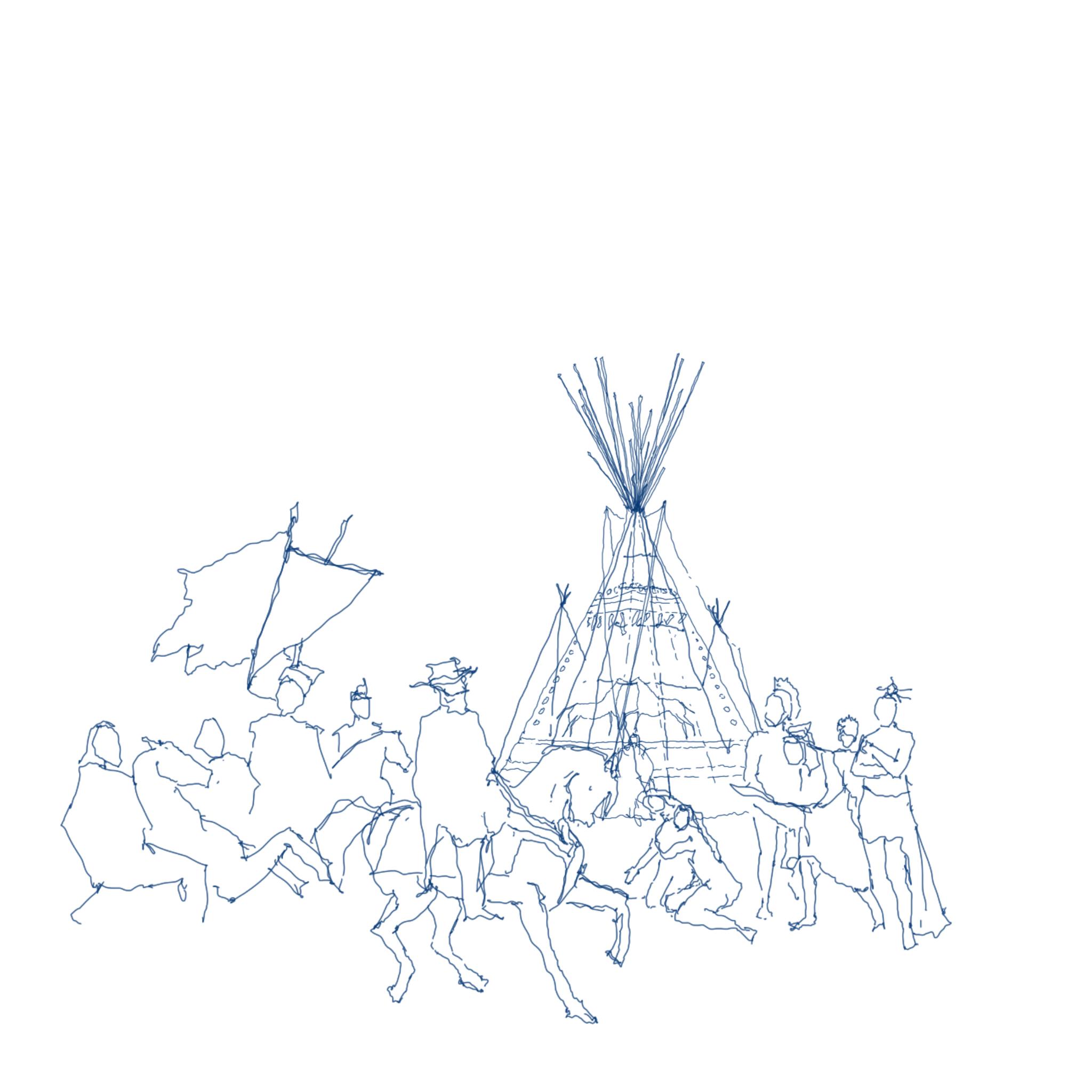
Figure 1: Civilization
Culture Examined In
Sesotho Language:
Culture is commonly referred to as ‘setso’ in Sesotho. (i) As a way of life, it embodies a nation’s food, traditional attire, music, language, etc. (ii) In Southern Sesotho, one would say ‘setso ke mothapo oa rona chabana se sets’o hore re itsebe le moo re tsoang teng’. In this example, the conceptual meaning of culture is equivalent to the term ‘origin’. Examples of how to use this concept in Southern Sesotho –‘Ngoana o tlameha ho holisoa ho latela setso sa hae le sa batsoali ba hae’ – translated‘A child is raised according to his/her parents’ culture’ and interpreted – ‘Our culture is the root of our origins’.
Contributed by Dr. Tsepang Leuta, co-lecturer in history course.
Culture Examined in Èkpéyé
Language: In Èkpéyé language culture is not one word as in English. It is described in the three words, omé na ala,. In English it ‘translates to the way things are done in the land’. Omé na ala has several meanings, including but not limited to: (i) the customs of the land and (ii) the laws of the land. (iii) Ala, the land, tells us that customs are geographically and land/earth centered in relationship to people, and for that reason it varies from land to land, place to place, and from
people to people. (iv) Moreover omé na ala recognizes people in groups of ancestral lineages and descendants instead tribes, although the latter is commonly used in describing various people in Africa. This is the reason Ékpéyé people identify themselves as people from one ancestral lineage. The etymology of Ékpéyé is from two words, èkpé yé, and it means ‘our lineage’. This identification assumes that all the people of the same lineage occupy the same land and share the same customs. (v) For Ékpéyé people, lineage is both metaphorical and biological. Ékpé means umbilical cord, the rope—lifeline—between a child and its mother. Ékpé yé literarily means an extension of our mother’s life-line, or our mother’s umbilical cord. Here, custom/culture is biological, geographical, and human centered, and it is conveyed through mother’s and father’s bloodline. Omé na ala yé whé bu ūgbu gbé madu, translates to ‘our culture forbids murder’. Literarily it translates to “our culture forbids the killing of person (madu)’.
Prepared by Professor Elleh
Reference: Hornby, A. S. et. al. (2010). Oxford Advanced Learner’s Dictionary of Current English. International Student’s Edition. 8th ed. Oxford: Oxford University Press.
The Meaning of Settlement
The word ‘settlement’, as defined by the Oxford Dictionary, means “a place, typically one which has previously been uninhabited, where people establish a community.” This definition emphasises that the word ‘settlement’ is closely related and interlinked with ‘the people that settle’. The inhabitants of a settlement, and the settlement patterns that they establish, are thus central to an understanding of place. Architecture can be understood as a way that people have customised settlement over time, so that each place is uniquely formed by its inhabitants. While an architect designs spaces on a drawing board, those that dwell are also adapting and shaping their environment by making it more comfortable for themselves.
The word for ‘settlement’ in Arabic is mustawtana (ةنطوتسم). This has two definitions, the first is similar to the English, describing a place that is inhabited, but in Arabic it is also used for ‘a colony’. In the second meaning, the people that settle in a land are colonisers as they are taking over that land and benefiting from it, whether this may be from farming, hunting, or building and dwelling. A synonym for this second interpretation of settlement is the word estekrar (رارقتسإ) , which has a slightly different meaning. It is used in Arabic
to mean a group of people, or a person, that have settled in a place and are established, in other words it is certain that they will remain there and that they are not going to move around again. This word is usually used to describe something that is permanent and could also relate to the type of architecture that is created. For nomadic peoples, the architecture of their dwellings had to of a form that could be easily disassembled and would be relatively light to transport. However, as people became more sedentary, their architecture became more permanent and consequently more robust.
These definitions in Arabic do not hold the same meanings that the word ‘settlement’ has in English. While the denotations and connotations might share a conceptual link, it takes a deeper knowledge of a culture to understand these words differently and appreciate their subtlety. It makes one appreciate the beauty of language
Reference: Oxford University Press (2020). Settlement. Lexico.com. Available online at: https://www.lexico.com/ definition/settlement [Accessed 10 July 2020].
Figure 2: Settlement
SETTLEMENT
a place, typically one which has previously been uninhabited, where people establish a community
MUSTAWTANA
1. a place that is inhabited, or ‘a colony’
2. the people that settle in a land are colonisers as they are taking over that land and benefiting from it
ESTEKRAR
a group of people, or a person, that have settled in a place and are established.
Mosque Architecture as a Form of a Visual Language
Understanding the Architectural and Societal Contribution of the First Mosque of the Dutch Cape Colony
INEZ ADAMS
The nature of settlement formation and development is reflective of the community and society who live within it. Broadly speaking, it can be said that the colonial project was successful in its imposition of Eurocentric standards of living and architectural style (Ben-Hamouche 2010). However, the first mosque that was built during the 1790s in the Dutch Cape demonstrates how architecture can be used strategically to subvert the powers of the dominant group in order to allow for religion to be practiced collectively by those who do not have total control of the environs within which they resided (Davids & da Costa 1994; Hutchinson 2006; Toffa 2004). The façade of the Auwul Mosque flattered the Dutch architectural style of the time and expressed little about the religious activity that occurred within its walls (Toffa 2004). This inconspicuous building is reflective of the intentions and the resilience of the Muslim community that valued spirituality and imaan (faith) over worldly possessions (Toffa, 2004).
This essay will explore how, like the formation of the Afrikaans language by mixing Dutch and Malaya languages (Hutchinson 2006), the Auwul Mosque was built in a visually hybrid planning and architectural language that allowed the two groups, the rulers and the ruled, to coexist with each
other (Hirsch 2016; Toffa 2004). It will examine factors that influenced and sustained Islam in the Cape region and identify the visual planning and architectural vocabularies of mosques by focusing on the following words of Arabic origin and Islamic foundation: Taqlid (ديلقتلا), Ijtihad (داهتجلاا) and minaret (ةرانم). I will review the parallels between Afrikaans, as a hybrid language, and the Auwul Mosque, as a hybrid building, in establishing the fundamental function and meaning of the mosque to a Muslim.
Taqlid (ديلقتلا) is an Islamic term defining conformity of one person to the teachings of another. The direct translation of the word is ‘to follow’ and thus it is used to refer to the traditional. Ijtihad (داهتجلاا) can be defined as a way of legal reasoning through which Islamic jurists justifies law on the basis of Qur’an or traditional views and beliefs. A minaret (ةرانم) is a tall slender tower-like structure that is typically found as a part of, or next to, a mosque from which the call to prayer is historically called. It is also a widely accepted symbol of Islam to the Muslim community. It is suggested that Islam arrived to the Cape through utilisation of the Cape as a “penal colony and place of exile for political prisoners” by the Dutch (Davids and da Costa 1994). The significance of the Islamic
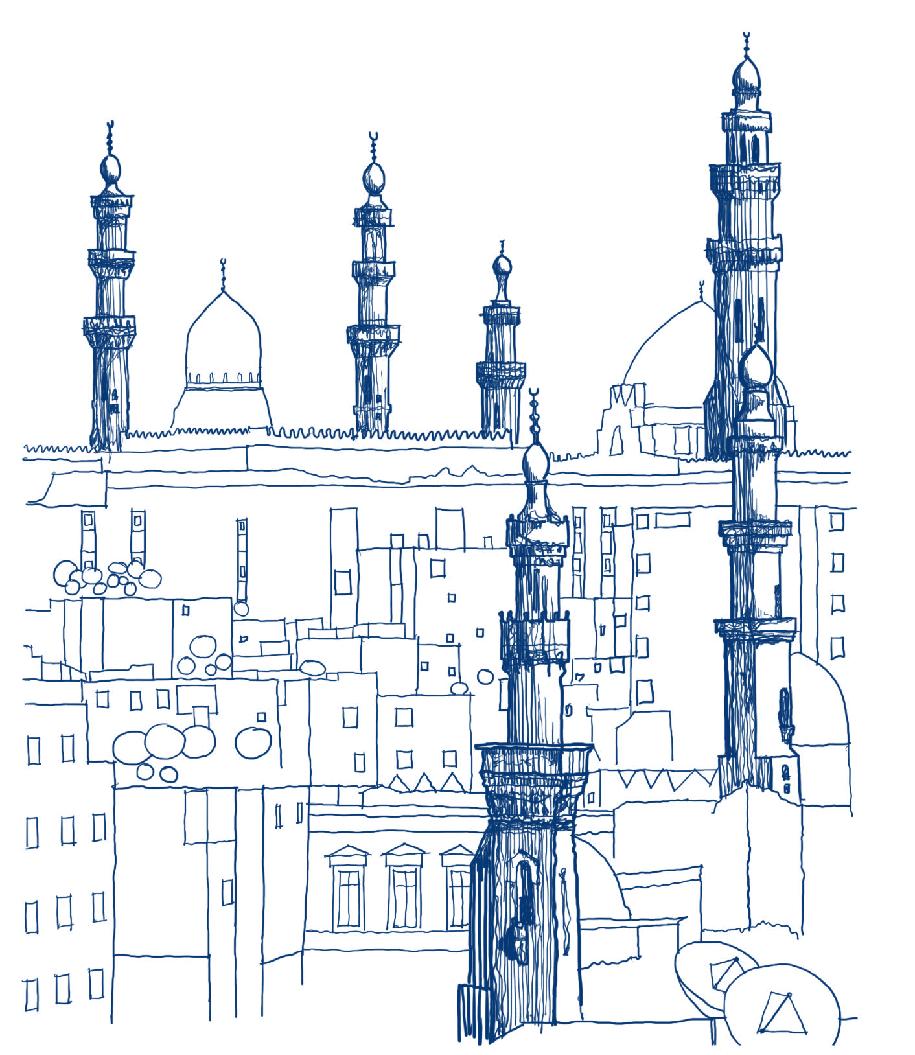
A tall, slender tower like structure that is typically found as part of, or next to a mosque, from which the call to prayer is historically called.
Figure 3: Minaret
identity to the slave community encouraged the establishment of the mosque, which in Arabic translates to the masjid (دجسم) (Arkoun 2002; Hirsch 2016). A mosque is easily identifiable through structural features such as the minaret (ةرانم), the thin tower-like structure containing a small window or balcony from which a man called the muezzin reads out the Azaan, the call to prayer fellow Muslims (Arkoun, 2002). It is a structure that plays an important role to the functioning of the mosque as communal place of worship to the Muslim community. Apart from clearly identifying the building as a mosque, the minaret provides an appropriate platform from which the muezzin can read the Azaan from an elevated point so as to be heard from varying distances (Arkoun, 2002, p. 8). Thus, its English translation as ‘beacon’ is appropriate as the minaret (ةرانم) plays a role in visually communicating the presence and location of a mosque, making it of spatial and urban planning interest.
The Auwul Mosque was the first mosque built in the Cape Colony and dates back to about 1798 (Hutchinson 2006). Its façade disguised the religious building from an ordinary house by mimicking the Cape Dutch architecture and underplaying the minaret (ةرانم) element by setting it back into the roof as a balcony (Toffa, 2004). This hybrid building allowed
for the community to worship in peace and without fear of being prosecuted by the Dutch Christians who did not tolerate other religions (Toffa 2004). The simplistic nature of the architecture is indicative of the nature of prayer to the Cape Muslim community, part of a religion to be practised with ease and simplicity (Hirsch 2016).
The building of the mosque and later the madras (Islamic school) formed the “vehicle and ecological base for the transmission of culturalreligious ideas” (Davids and da Costa 1994). The institution embodied the slave community, unified in their religious belief and dignified through the growth and strength of the collective self (Davids and da Costa 1994).
The Islamic education system, through the madras was a turning point in the Muslim community and saw a significant increase in the number of converts (Davids and da Costa 1994). Firstly, it provided an alternate model of education that appealed to a large number of those who were sceptical of the Dutch Christian state (Ibid). Secondly, lessons were “opened to all irrespective of race”, and thus brought in those children who were excluded from other forms of education (Ibid). Lastly but most importantly, lessons were offered in Afrikaans by the imams, accommodating
the “largest linguistic pool” during the 18th century (Ibid). Therefore, Islam became a religion taught without discrimination and in a language that was easy to comprehend by most. The madras is still a big part of Islamic upbringing, most Muslim children are sent to madrassah to gain an understanding and connection with their religion from an early age.
worship and divine nature that juxtaposed the “secular surroundings” (Taib and Rasdi 2012). It was believed that by virtue of its sacred status, the mosque “enhanced” the nature of the worshiper’s prayers, deeds and actions whilst in that space (Taib and Rasdi 2012). The “sacred character” of the mosque by this traditional
The significance of the Islamic identity to the slave community encouraged the establishments of mosques
In “Spirituality and Architecture” (2002), Mohammed Arkoun argues that mosques can be awarded architectural merit on the basis of two opposing ideological views: taqlid (ديلقتلا) and ijtihad ( داهتجلاا). Taqlid (ديلقتلا) is Arabic for ‘tradition’, it describes “the strict reproduction of orthodox teachings in one of the recognized theological-juridical schools”.
During the Medieval era, the Muslim world was a society that was expressed through the mosque (Taib and Rasdi 2012). A mosque was a building that enclosed a sacred space, creating a place of
conception is integral to the function and meaning of the building (Arkoun 2002; Taib and Rasdi, 2012). Hence, features and forms intrinsic to a mosque, such as the minaret, mihrab and dome are usually replicated according to “architectural imagery” made subconsciously familiar to the individual through deliberate repetition and replication of these features over time (Taib and Rasdi 2012).
Ijtihad (داهتجلاا) is a concept that refers to the reasoning used to achieve a juridical decision or opinion “in the absence of direct and clear fundamental text” by Islamic jurists (BenHamouche (2010). When applied to Islamic civilization,
the term is often used in relation to art and architecture. Arkoun (2002) defines ijtihad ( داهتجلاا) as an “intellectual endeavour to seek new, original solutions for new situations”.
Tradition and ingenuity or innovation are often in conflict with one another and this conflict is not unique to the fields of architecture and urban design. Therefore, in order to appreciate the unique architecture of the Auwul Mosque and its significance to the Cape slave community, one must exercise both ijtihad ( داهتجلاا) and taqlid (ديلقتلا) based thinking.
Auwul Mosque built in the Cape Colony does not follow the pattern of Medieval Islamic architecture. Subsequently one could claim it does not reproduce the scared character or intrinsic function of the mosque correlating to taqlid (ديلقتلا) ideology. However, a more nuanced reading would not confine the ‘sacred character’ of a mosque to a single architectural style, form and design. Instead, the Auwul Mosque demonstrates ijtihad (داهتجلاا). Flattery of the Dutch architecture was strategic and an ingenious design that facilitating the growing need of the Muslim community, whilst not openly threating the Dutch State.
Architecture is a form of visual language, symbolism
and representation. The architectural style, design and form of a mosque communicates to the observer the context under which the building was constructed (Farrag 2017). It can indicate the era of its formation through its design style, degree of decoration and grandeur, as does the discreet and simplistic façade of the Auwul mosque, built in a society of religious intolerance and supressed free will.
Mosque architecture is different and unique to the time and place of its establishment however, all mosques are devoted to the purpose of worshipping one God (Allah). The visual language of the Auwul Mosque is nevertheless different due to its unique determinants such as the influence of the Dutch societal values and norms and cultural diffusion amongst the slaves. The minaret of the mosque has mutated to look like an ordinary balcony and the façade compliments other Dutch buildings. The function of the mosque as a communal place of prayer is still true however, the meaning of the mosque is more complex.
Through merging Dutch and Malayu languages, the hybrid language Afrikaans developed in order to facilitate communications between slaves and masters. Similarly, the façade of Auwul Mosque aimed to create an
architecturally harmonious, unobtrusive building that would meet the needs of the growing Muslim slave community whilst refraining from upsetting the devout Christian Dutch masters.
References:
Arkoun, M., 2002. Spirituality and Architecture. In A. Petruccioli and K. K. Pirani, (Eds.), Understanding Islamic Architecture. pp. 3-8, New York: RoutledgeCurzon.
Ben-Hamouche, M., 2010. Islamization of Contemporary Architecture: Shifting the Paradigm of Islamic Architecture. Journal of Islamic Architecture, 1(2), 70-86.
Davids, A. and da Costa, Y., 1994. Pages from Cape Muslim History. Cape Town: Shuter & Shooter (Pty) Ltd.
Farrag, E., 2017. Architecture of mosques and Islamic centres in Non-Muslim Context. Alexandria Engineering Journal, 56, 613-620. Hirsch, P., 2016. Islamic architecture in the Cape South Africa, 1794-2013. Thesis (PhD), SOAS University of London. Hutchinson, M. (Ed.), 2006. BoKaap: Colourful Heart of Cape Town. Cape Town: David Philip Publishers.
Taib, M. Z. and Rasdi, M. T., 2012. Islamic Architecture Evolution: Perception and Behaviour. Procedia - Social and Behavioral Sciences, 49, 293303.
Toffa, T., 2004. Cape Town, BoKaap: the architecture of identity Cape Town: The Vernacular Architecture Society of SA.
Tomer, S., 2006. Examining a Boundary: Spatial Manifestations of Social Practice along the Buitengracht, Cape Town, 1652 - 2005. Cape Town: University of Cape Town.
English Afrikaans Igbo isiZulu Xhosa Hopi Guugu Yimithirr Spanish Sesotho English Afrikaans Igbo isiZulu Xhosa Hopi Guugu Yimithirr Spanish Sesotho English Afrikaans Igbo isiZulu Xhosa Hopi Guugu Yimithirr Spanish Sesotho English Afrikaans Igbo isiZulu Xhosa Hopi Guugu Yimithirr Spanish Sesotho English Afrikaans Igbo isiZulu Xhosa Hopi Guugu Yimithirr Spanish Sesotho English Afrikaans Igbo isiZulu Xhosa Hopi Guugu Yimithirr Spanish Sesotho English Afrikaans Igbo isiZulu Xhosa Hopi Guugu Yimithirr Spanish Sesotho English Afrikaans Igbo isiZulu Xhosa Hopi Guugu Yimithirr Spanish Sesotho English Afrikaans Igbo isiZulu Xhosa Hopi Guugu Yimithirr Spanish Sesotho English Afrikaans Igbo isiZulu Xhosa Hopi Guugu Yimithirr Spanish Sesotho English Afrikaans Igbo isiZulu Xhosa Hopi Guugu Yimithirr Spanish Sesotho English Afrikaans Igbo isiZulu Xhosa Hopi Guugu Yimithirr Spanish Sesotho English Afrikaans Igbo isiZulu Xhosa Hopi Guugu Yimithirr Spanish Sesotho English Afrikaans Igbo isiZulu Xhosa Hopi Guugu Yimithirr Spanish Sesotho English Afrikaans Igbo isiZulu Xhosa Hopi Guugu Yimithirr Spanish Sesotho English Afrikaans Igbo isiZulu Xhosa Hopi Guugu Yimithirr Spanish Sesotho English Afrikaans Igbo isiZulu Xhosa Hopi Guugu Yimithirr Spanish Sesotho English Afrikaans Igbo isiZulu Xhosa
English Afrikaans Igbo isiZulu Xhosa Hopi Guugu Yimithirr Spanish Sesotho English Afrikaans Igbo isiZulu Xhosa Hopi Guugu Yimithirr Spanish Sesotho English Afrikaans Igbo isiZulu Xhosa Hopi Guugu Yimithirr Spanish Sesotho English Afrikaans Igbo isiZulu Xhosa Hopi Guugu Yimithirr Spanish Sesotho English Afrikaans Igbo isiZulu Xhosa Hopi Guugu Yimithirr Spanish Sesotho English Afrikaans Igbo isiZulu Xhosa Hopi Guugu Yimithirr Spanish Sesotho English Afrikaans Igbo isiZulu Xhosa Hopi Guugu Yimithirr Spanish
Sesotho English Afrikaans Igbo isiZulu Xhosa Hopi Guugu Yimithirr Spanish Sesotho English Afrikaans Igbo isiZulu Xhosa Hopi Guugu Yimithirr Spanish Sesotho English Afrikaans Igbo isiZulu Xhosa Hopi Guugu Yimithirr Spanish Sesotho English Afrikaans Igbo isiZulu Xhosa Hopi Guugu Yimithirr Spanish Sesotho English Afrikaans Igbo isiZulu Xhosa Hopi Guugu
Yimithirr Spanish Sesotho English Afrikaans Igbo isiZulu Xhosa Hopi Guugu Yimithirr
Spanish Sesotho English Afrikaans Igbo isiZulu Xhosa Hopi Guugu Yimithirr Spanish Sesotho English Afrikaans Igbo isiZulu Xhosa Hopi Guugu Yimithirr Spanish Sesotho English
Afrikaans Igbo isiZulu Xhosa Hopi Guugu Yimithirr Spanish Sesotho English Afrikaans Igbo isiZulu Xhosa Hopi Guugu Yimithirr Spanish Sesotho English Afrikaans Igbo isiZulu Xhosa Hopi Guugu Yimithirr Spanish Sesotho English Afrikaans Igbo isiZulu Xhosa Hopi Guugu Yimithirr Spanish Sesotho English Afrikaans Igbo isiZulu Xhosa Hopi Guugu Yimithirr
Spanish Sesotho English Afrikaans Igbo isiZulu Xhosa Hopi Guugu Yimithirr Spanish
Sesotho English Afrikaans Igbo isiZulu Xhosa Hopi Guugu Yimithirr Spanish Sesotho English Afrikaans Igbo isiZulu Xhosa Hopi Guugu Yimithirr Spanish Sesotho English
Afrikaans Igbo isiZulu Xhosa Hopi Guugu Yimithirr Spanish Sesotho English Afrikaans Igbo isiZulu Xhosa Hopi Guugu Yimithirr Spanish Sesotho English Afrikaans Igbo isiZulu Xhosa
Hopi Guugu Yimithirr Spanish Sesotho English Afrikaans Igbo isiZulu Xhosa Hopi Guugu Yimithirr Spanish Sesotho English Afrikaans Igbo isiZulu Xhosa Hopi Guugu Yimithirr
Spanish Sesotho English Afrikaans Igbo isiZulu Xhosa Hopi Guugu Yimithirr Spanish Sesotho English Afrikaans Igbo isiZulu Xhosa Hopi Guugu Yimithirr Spanish Sesotho English
Afrikaans Igbo isiZulu Xhosa Hopi Guugu Yimithirr Spanish Sesotho English Afrikaans Igbo isiZulu Xhosa Hopi Guugu Yimithirr Spanish Sesotho English Afrikaans Igbo isiZulu Xhosa
Hopi Guugu Yimithirr Spanish Sesotho English Afrikaans Igbo isiZulu Xhosa Hopi Guugu Yimithirr Spanish Sesotho English Afrikaans Igbo isiZulu Xhosa Hopi Guugu Yimithirr Spanish Sesotho English Afrikaans Igbo isiZulu Xhosa Hopi Guugu Yimithirr Spanish Sesotho English Afrikaans Igbo isiZulu Xhosa Hopi Guugu Yimithirr Spanish Sesotho English Afrikaans Igbo isiZulu Xhosa Hopi Guugu Yimithirr Spanish Sesotho English Afrikaans Igbo isiZulu Xhosa Hopi Guugu Yimithirr Spanish Sesotho English Afrikaans Igbo isiZulu Xhosa Hopi Guugu Yimithirr Spanish Sesotho English Afrikaans Igbo isiZulu Xhosa Hopi Guugu Yimithirr Spanish Sesotho English Afrikaans Igbo isiZulu Xhosa Hopi Guugu
The Power and Influence
Language Has over Culture and Society
Academics and thinkers have claimed that our perception of any topic is influenced by the words and connotations inherent in language. In the article The Whorf-Sapir Hypothesis and Probability: Evidence from the Domain of Color, (2016) the authors put forward the theory that “our thoughts are shaped by our native language and that speakers of different languages therefore think differently” (Cibelli et al 2016). If the language we use influences the way we think, how then do we understand a concept we have no words for? Do we think with words, and if not, how do we think without them? More often than we are aware, there are unconscious biases in the vocabulary that we use, these shape our thoughts and our understanding of the world. In a multicultural and multilingual society such as South Africa, reaching a mutual understanding through communication can be transformative, making language a powerful tool for cooperation and the formation of a community that is inclusive.
In South Africa most Anglophones make no effort to learn another language. This is usually not the fault of the speaker, but rather a result of a strong societal expectation that everyone must speak some English. Almost all South Africans are bilingual or even trilingual, an able to speak an
African language or Afrikaans fluently, and English. This one-sided approach where most non-English speakers compromise, while all Englishspeaking people do not, creates many barriers within communication (Alexander, N, 2000). According to a study on multilingualism in KwaZulu Natal (Broeder et al 2010), although English is the official language, only 40 percent of people who use English speak it as their first language. If language is shaping our ability to think, then to be fluent in only one would be to limit our understanding of the world. For Charlemagne, the first Emperor of Rome, “to have a second language is to have a second soul.” Language expands our horizons and our understanding of different cultures.
The power of language comes from the culture it develops from. If a plant were to evolve in a luscious, tropical biome, it would develop in ways that respond to the environment: shallow roots to compensate from the humid air, and a leafy body to maximise photosynthesis. Similarly, language develops depending on its environment. In SouthEast Asian countries, a common greeting is “have you eaten yet?” This originates from the Chinese Moa Zedong chairmanship wherein food was a scarcity – asking if someone had eaten was really asking if
they were in good health and thriving (Wang, 2016). This greeting cannot be carried into English speaking countries because in a different context the meaning changes.
A keen observer of the cultural positioning language can make is the author Chimamanda Adichie (2009) who describes growing up in Nigeria, and her first language which was Igbo. All the novels she read as a child were in English: her understanding of Christmas was linked with snow. This led her to believe that she had not properly experienced Christmas as she had never experienced it in a way that matched its literary description. Few stories about Nigeria were available, Adichie formed ideas about events based on the culture of the language in which it they had originated. As a child, ‘Christmas’ did not mean a religious celebration, but instead it meant snow, ginger beer, and a world of things she could not experience. Thus the cultural positioning of the language can form one’s understanding of standards, culture and values.
In politics, also dominated by English, political jargon is used that originated in countries with vastly different political systems. This means that the conversations about how society should be organised are restricted by the vocabulary used to discuss
it. In an African country with vastly different cultural values, the language used to articulate conceptions of society carries different values and beliefs; when political jargon in English is imposed, it represents a different way of understanding. This is not to impose a valuejudgement on the words themselves, but to recognise that they were not developed by societies with the same principles. In isiZulu, the word for democracy is ‘inkululeko’, however the meaning of this word is actually closer to ‘freedom’. ‘Democracy’ and ‘freedom’ often come hand in hand, but they are not the same. ‘Democracy’ describes a society in which all individuals may have an opinion on affairs in the public sector, while ‘freedom’ usually describes having ‘choice’; political freedom implies being about to vote and criticise the government without fear of consequences. The word autocratic in Xhosa is ‘ngokuzimela’, however this word more closely resembles ‘independent’ in meaning These English words do not have a direct translation.
Language is not the same as culture, however they often run along parallel lines. Structures of language can influence how speakers conceptualise the world, the term ‘linguistic relativity’ was coined by Benjamin Lee Whorf (Black 1959), who studied Hopi, a
Native American language. Whord claimed that Hopi and English speakers value certain concepts differently as a result of linguistic differences. English has twelve tenses, and anything said is always in relation to when it happened. Hopi, only has the present tense and thus time must be specified. Where the English would say “he walked to the top of the hill”, the Hopi would say “he walks to the top of the hill”, irrespective of when it had occurred. This led Whorf to the conclusion that an English cultural focus on history and event in time, was a consequence of the grammar in that language.
Similarly, an Aboriginal language called Guugu Yimithirr has a completely different set of prepositions to those found in English. In this culture, concerns of the sun and the cosmos are at the forefront of thinking, with the way they had orientated everything being based on the cardinal directions. In English speaking cultures, spaces and buildings would be described as being next to or across from one other, whereas in Guugu Yimithirr they would be described as ‘westwards’, or ‘South’, of another object. The knowledge of ‘North’ is a constant factor in their awareness, which changes their experience of space. These differences also manifest in the technological
advancements made in each culture; Western culture developed mechanical readings for navigation as orientation is not inherent to their linguistic structure, whereas the Guugu Yimithirr people would use the sun and the stars.
Language can affect society through the emphasis it puts on certain things. Certain languages focus on temporality, while others tend to be more descriptive of place. Some language structures greatly change the way different societies describe events. For example, in an Englishspeaking country if someone broke a glass by mistake, an onlooker might recount that someone “had broken the glass.” In Spanish, however, if this were unintentional, it would be considered impolite to name the person who did it, so one would say “the glass broke itself” (Fausey and Boroditsky 2011). Similarly, if one were to say, “I broke a tooth,” in Spain it would be understood that you intentionally broke your own tooth and not that this had been accidentally done. Language is something that can expand and reduce, it can open the mind and yet it can also limit thinking. The greater one’s vocabulary the more freely one is able to express one’s thoughts, however the exact meaning of words might still restrict one. Birner (2019) describes this using an analogy
In
a multicultural and multilingual society such as South Africa, reaching a mutual understanding through communication can be transformative.
of changing paint colours, where if you add blue to red it gradually transforms the shade through varieties of differing purple hues along a spectrum. However, language, brings division into the description of colour, breaking it into categories of ‘red’ and ‘purple’ that cannot capture the full process of transformation of the colours. In New Guinea, there are two separate words for light
blue, ‘goluboy’ and dark blue, ‘siniy’. In English, ‘pink’ and ‘red’ are two different colours but if pink were named ‘light red’, they might be thought of as shades of the same colour. Two words that have vastly different meanings and are often confused, are the words ‘astronomy’ and ‘astrology.’ This misunderstanding comes from the words sounding so similar, and each practice
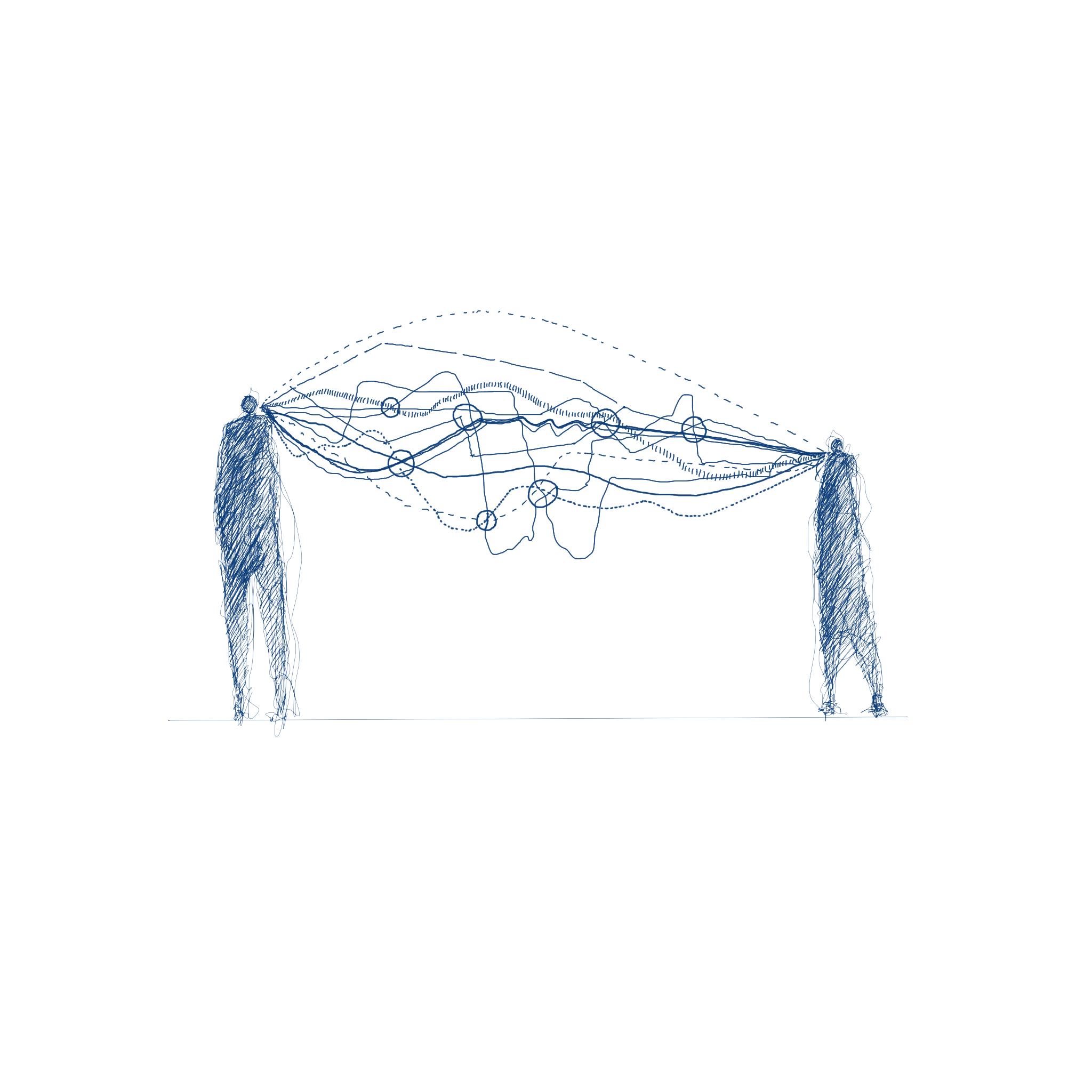
Figure 4: Language
can often be impacted by the bias of the other. If the name of each study were changed, this problem might not occur – ‘astronomy’ and ‘horoscoprosy’, for example. And yet Shakespeare (1998) wrote the following lines for Juliet: “What’s in a name? A rose by any other name would smell as sweet.” This suggests that the words we use do not have to define our attitudes if we are able to think beyond the associations we make with them. Words are more than just a tool for us to express ourselves. Modernity has increased cross-cultural interaction and online translators are being used increasingly to navigate the globalising world. But as much as these translators are available to us, they cannot provide the kind of insight into meaning that immersion in a culture and its language can bring.
The nature of all languages is that they change continuously. While society is open to technological, medical, and educational development, it is not as open to language developing in the same way. So often the ‘self-proclaimed protectors’ of language see borrowed words from other languages as improper usage. However language has always been hybrid and dynamic, borrowing from other sources as they develop: English has its roots in Latin and French; the
word for television has its roots in Greek, with the word tele, meaning far off or far away; and the Latin word for sight is visio, which is the root of the word vision. This process is an evolution of language, which keeps it alive in the present rather than existing as a pure and historical form which is beyond influence. The fact that the Oxford Dictionary, along with many others, publishes new editions with dozens of new entries is evidence that languages are still being created through their common usage.
Language purists view borrowed Afrikaans, Xhosa, or other words in English, as slang. But the borrowing of words can also be seen as a healthy way to bridge meaning and form understanding between languages. Every word has an inherent bias and this bias changes depending on the user and the listener. The understanding of a word can be determined by the user’s prior moral conditioning, religious beliefs, culture and upbringing. It is almost impossible to control what predisposition someone may have, but we can control the words we use. An overuse of generic, unspecific words plagues contemporary communication and can lead to ambiguity. The meaning of a word in English may have a direct translation in Sesotho, but their connotations might easily vary. This slight
variation is often subtle but can culminate in an overall difference in understanding. Having knowledge of other languages gives one an insight into other cultures, creating a more sympathetic understanding of different peoples’ backgrounds. In South Africa, if English were to better accommodate and mix with other languages, a strong communicative society could form within this nation.
References:
Adichie, C., 2009. The Danger of a Single Story [Video file] Avalable online at: http://www.ted.com/ talks/sheryl_sandberg_why_we_ have_too_few_women_leaders. html [Accessed 26 September 2019]
Alexander, N., 2000. English unassailable but unattainable. The Dilemma of Language Policy in South African Education. PRAESA Occasional Papers, (3). Available online at: https://marxists.catbull. com/archive/alexander/1999english-unassailable.pdf [Accessed 26 September 2019]
Birnger, B., n.d. Does the language I speak influence the way I think? Linguistic Society of America. Available online at: https://www.linguisticsociety.org/ content/does-language-i-speakinfluence-way-i-think [Accessed 26 September 2019]
Black, M. (1959). Linguistic Relativity: The Views of Benjamin Lee Whorf. The Philosophical Review, 68(2), 228-238. doi: 10.2307/2182168
Broeder, P., Extra, G.
and Maartens, J. (2002), Multilingualism in South Africa with a focus on KwaZulu-Natal and Metropolitan Durban. PRAESA Occasional Papers. (7). Available online at: http://www.praesa.org. za/wp-content/uploads/2017/01/ Paper7.pdf [Accessed 26 September 2019]
Charlemagne Quotes, n.d. BrainyQuote.com. Available online at: https://www.brainyquote.com/ quotes/charlemagne_182029 [Accessed 4 October 2019]
Fausey, C. and Boroditsky, L., 2011. Who dunnit? Crosslinguistic differences in eyewitness memory. Psychonomic Bulletin & Review, 18(1), 150-157. doi:10.3758/s13423-010-0021-5
Fausey, C., Long, B., Inamori, A. and Boroditsky, L., 2010. Constructing agency: the role of language. Frontiers in Psychology, 1(162):162. doi: 10.3389/ fpsyg.2010.00162
Shakespeare, W., and Durband, A., 1985. Romeo and Juliet. Hauppage, NY, Barron’s.
Wang, J., 2016. Why do Chinese people always ask “Have you eaten?” Available online at: http:// blog.tutorming.com/mandarinchinese-learning-tips/why-dochinese-people-ask-have-youeaten [Accessed 4 October 2019]
The connection between Space, Self, Settlement and Sanctuary
This essay will explore the Afrikaans translations of four English words, each having a practical application in the field of Architecture and Planning: (1) Ruimte and plek, both meaning ‘space’ in English; (2) selfwaarneembaar meaning subjective; (3) nedersetting meaning settlement; and (4) the word veilige hawe which is translated as ‘sanctuary’.
While ‘plek’ could refer to place or position, ruimte is a place determined by borders or a spacious open area. Ruimte van beweging means a space that is easy to move through (Eksteen, 2007). Alternatively, ruimte also refers to outer space and the universe. But space can also refer to personal space and the space within the mind.
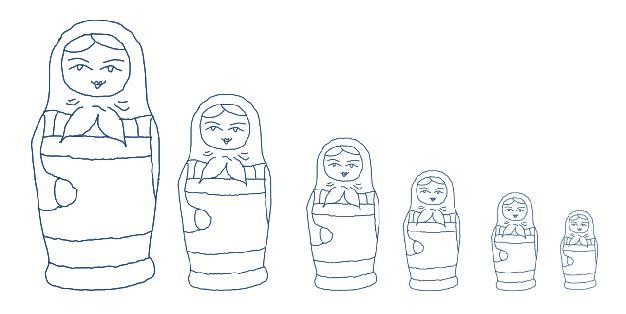
We could think of these definitions through the analogy of the Russian nested Matryoshka Dolls that all fit perfectly within one other. Each compartment can be opened to discover a new space. All of these dolls relate to one another in terms of their position or plek. With the definition of ruimte, we recall that it relates to borders. Each layer within the nested dolls represents a boundary, delimiting each of the spaces. The first doll, and the biggest doll, represents outer space, the biggest space we know. Within this space there are galaxies, stars and planets. Planet Earth is
represented by the second largest doll. Earth also consists of different elements: oceans, islands, and continents. Every continent is distinctive, with settlements such as cities, neighbourhoods and villages, which are all represented by the third doll. Within these spaces we find individual dwellings and houses: the fourth doll. These spaces are inhabited by human beings who live in, and experience, these spaces as home. Humans also have personal space surrounding them. This is represented by the fifth doll. And finally, the sixth and tiniest doll is the space within us. This space contains our knowledge, ideas, values and beliefs, and although physically the smallest, this is fundamentally the most extensive and the most important. It is the core of our experience of all other spaces.
Looking at the smallest two dolls, they both refer to the self and subjectivity. Subjectivity “is influenced by personal opinion” and may therefore be biased (Longman, 2001). The Afrikaans translation is selfwaarneembaar (Bosman et al, 1984), with the word self, referring to the individual and waarneem meaning ‘to notice’ (Eksteen, 2007). Waar can mean both ‘where’, indicating place and physical location, as well as ‘truth’, which in this context can refer to phenomena taking place. Neem means
selfwaarneembare
Plek
Place or position
Ruimte
A place determined by borders or a spacious open area; outer space and the universe
Nedersetting settlement; an official agreement between people, a group of buildings and houses, or a new area in development
Veilige hawe sanctuary; a peaceful place that is safe and provides protection
the ability to take note of and observe one’s surroundings”
Figure 5: Different Realms of Spaces
‘to take’. The suffix -baar means “to be able”. Therefore, selfwaarneembaar in Afrikaans can mean the ability to take note of and observe one’s surroundings.
Our human settlements are represented in the analogy by the third doll. Settlement can be defined as an official agreement between people, a group of buildings and houses, or a new area in development (Longman, 2001). The Afrikaans translation is nedersetting. (Bosman et al, 1984) and this means kolonie (colony) or woonplek (a place to stay) (Eksteen, 2007). This word can be expanded into a sentence- om neer te sit. This means to sit down or to put down. “Settle” can be translated to vestig (Bosman et al, 1984) meaning “to stay and to build up” (Eksteen,
from the word ‘sanctum’, which is defined as “a place or a room that only a few important people are allowed to enter” (Longman, 2001). ‘Sanctuary’ has several Afrikaans translations including veilige hawe which means “safe space” or “safe haven”.
If we begin to relate these words to one another using the analogy, the first and second dolls are related to our physical space and location in the universe. These spaces serve as cosmic and planetary boundaries for human beings. The third doll represents settlement, this is related to sanctuary and to safety. We can see sanctuary in all the different tiers of spaces. The fourth doll, protects individuals from outside elements, and the fifth and sixth dolls represent the privacy of our personal
Our subjective (selfwaarneembare) thoughts relate to various types of experiences in different realms of spaces.
2007). This word connotes a permanent resting place that is built up by people with the same values, in agreement with one another. A ‘sanctuary’ is defined as “a peaceful place that is safe and provides protection,” (Longman, 2001). The word sanctuary is derived
domains and our innermost thought processes. This makes all of these spaces veilge hawens. The translation of ‘settlement’ relates to rest. But what made people choose a specific place to rest and settle in? Our subjective (selfwaarneembare) thoughts
relate to various types of experiences in different realms of spaces. These thoughts and ideas lead us to create sanctuaries (veilige hawe) and settlements (nedersettings) in all the different types of spaces (ruimtes) that are possible to inhabit.
References: Bosman, D. B., Van der Merwe, I. W. and Hiemstra, L. W., 1984. Tweetalige Woordeboek Bilingual Dictionary. Cape Town: Tafelberg Eksteen, L. C., 2007. Beknopte Verklarende Woordeboek. Cape Town: Pharos Woordeboeke
Pearson Education Limited., 2001. Longman Dictionary Third Edition with New Words supplement. England: Pearsons Education Limited
Translating Within Architecture to Find New Design Possibilities
“So, know that words hold only that which is continually imparted to them. They are vital when those who use them vitalise them. They expand with the expansion of a thought.”
Sullivan, 2015:132
As language can give shape to experience and reality, so translation allows categories of experience to be transferred from one language into another, with implications for disciplines such as the built environment. The creative role of language in everyday life is as a fundamentally constructive tool, for poiesis, the Greek root of “poetry”, means “to create”. Our use of language engages even the unconscious mind, or as ancient Greek rhetorician Longinus stated in the first century CE that “thought and language usually unfold together” (1991:41). The initial conceptualisation finds expression in language, and so language not only has an epistemological dimension (helping us to identify, categorise, and communicate knowledge about the world around us), but also an ontological dimension (giving shape and experience to reality by making it knowable and colouring it with associations, contradictions, irony, and metaphor). Experience informs
the conceptual content of language, and language informs what we can identify as legitimate experiences. The way in which language creates and shapes our experience, and the way this differs between languages, becomes most clear through the act of translation, when an attempt is made to move a word, with all its attendant associations, experiences, and worldviews, from one language into another.
“To develop” in English is defined as “to grow or change”, to “bring something into existence”, or to “build houses” (Cambridge English Dictionary, 2020). The normal appearance of “develop” in an architectural setting would include such sentences as “to develop an idea”, or to “construct a development”, one is a verb and the other a noun. Development is the process of change that something undergoes as a means of asserting its existence. In Afrikaans, the nearest
equivalent is ontwikkel, which is not borrowed directly from English, and which is defined in the HAT (Verklarende Handwoordeboek van die Afrikaanse Taal) as a verb meaning to come into existence and to grow (1988:776). What is interesting, however, is the fact that ontwikkel consists of two words: the prefix ont- and the verb wikkel. Afrikaans, like German and Dutch, is prone to portmanteaus and neologisms, for it has the capacity to throw disparate words together and so to create both a linguistic and experiential intersection. Ontis generally a negation, serving the same purpose as “de-” in, for instance, “devalue”. Yet in ontwikkel, it does not serve to negate wikkel, which is a verb meaning to move, wiggle, or make haste (1988:1361), but rather to emphasise it. The usual negative quality of ontthus subverts its own role: to ontwikkel is to become more, rather than less.
Ontwikkel thus has a very strong connotation of organic
motion, speed, and disruption, which its English equivalent lacks. In fact, the English variation “develop” has a connotation of slowness: to develop takes time, whereas to wikkel is to defeat time through speed. The use of ont- in an encouraging rather than negating sense, liberates wikkel to the extent that the visual connotation of ontwikkel is a spreading, flowering explosion of development. Wikkel also means to destabilise, something can be wikkelrig (wobbly), or made to come loose, or one can wikkel to make haste, or wikkel (manoeuvre) one’s way into a conversation. These uses colour the word ontwikkel by extension, and comparatively recent architectural tendencies such as urban sprawl and skyscrapers can perhaps be seen as a manifestation of ontwikkeling (development), in keeping with modernity’s emphasis on speed and change.
Finally, and perhaps most
related to architectural development and modernity, it is worth connecting the fact that ontwikkel is a portmanteau to the physical event it describes, development, as a manifestation of this portmanteau in practice. “To develop” means to bring together disparate entities, whether people or structural materials, and so create a new identity. The word ontwikkel also reflects this linguistically and draws attention to the connective nature of development as the word itself is a combination, but so too is the act of developing.
Ontwikkel thus has the potential to contribute a richer understanding to its English translation in the built environment. To “develop” a piece of land, or to place a “development”, in English may mean little beyond “making the land change to what it was not before”. But to ontwikkel a land means to loosen the land to its roots, to destabilise it, to tease it into a rapid explosion of “development”. Moreover since ontwikkel is not a single word, but two with an errant negation, to ontwikkel is to have a fraught and complex conversation with the land, one that oscillates between imposition (ont-) and encouragement (wikkel), negation and growth. Rather than defining the land as a commodity to be (ex) changed or seen as an enduser “development”, ontwikkel
encourages a processual rather than economic understanding, filled with contradictions and unexpected combinations.
References:
Odendal, F.F. (Ed.), 1988. HAT: Verklarende Handwoordeboek van die Afrikaanse Taal. Johannesburg: Perskor Uitgewery. Longinus., 1991. On Great Writing (on the Sublime). (G.M.A. Gruber, transl.). Indianapolis: Hackett Publishing Company, Inc. Quine, W.V.O., 2013. Word and Object. Cambridge, Massachusetts: The MIT Press. Sullivan, L., 2015. Kindergarten Chats and Other Writings. New York: Dover Publications. Whorf, B.L., 1978. Language, Thought and Reality: Selected Writings of Benjamin Lee Whorf. (Carroll, J.B., Ed.). Cambridge, Massachusetts: The MIT Press.
ontwikkel
Ontsuffix
a negation, serving the same purpose as ‘de-’
Figure 6: Development +
to move, wiggle, or make haste; to destabilise Wikkel verb
to come into existence and to grow
U thuthekhanya U kwasha U thuta U kwashekanya U thuthekhanya U kwasha U thuta U kwashekanya U thuthekhanya U kwasha U thuta U kwashekanya U thuthekhanya U kwasha U thuta U kwashekanya U thuthekhanya U kwasha U thuta U kwashekanya U thuthekhanya U kwasha U thuta U kwashekanya U thuthekhanya U kwasha U thuta U kwashekanya U thuthekhanya U kwasha U thuta U kwashekanya U thuthekhanya U kwasha U thuta U kwashekanya U thuthekhanya U kwasha U thuta U kwashekanya U thuthekhanya U kwasha U thuta U kwashekanya U thuthekhanya U kwasha U thuta U kwashekanya U thuthekhanya U kwasha U thuta U kwashekanya U thuthekhanya U kwasha U thuta U kwashekanya U thuthekhanya U kwasha U thuta U kwashekanya U thuthekhanya U kwasha U thuta U kwashekanya U thuthekhanya U kwasha U thuta U kwashekanya U thuthekhanya U kwasha U thuta U kwashekanya U thuthekhanya U kwasha U thuta U kwashekanya U thuthekhanya U kwasha U thuta U kwashekanya U thuthekhanya U kwasha U thuta U kwashekanya U thuthekhanya U kwasha U thuta U kwashekanya U thuthekhanya U kwasha U thuta U kwashekanya U thuthekhanya U kwasha U thuta U kwashekanya U thuthekhanya U kwasha U thuta U kwashekanya U thuthekhanya U kwasha U thuta U kwashekanya U thuthekhanya U
U thuthekhanya U kwasha U thuta U kwashekanya U thuthekhanya U kwasha U thuta U kwashekanya U thuthekhanya U kwasha U thuta U kwashekanya U thuthekhanya U kwasha U thuta U kwashekanya U thuthekhanya U kwasha U thuta U kwashekanya U thuthekhanya U kwasha U thuta U kwashekanya U thuthekhanya U kwasha U thuta U kwashekanya U thuthekhanya U kwasha U thuta U kwashekanya U thuthekhanya U kwasha U thuta U kwashekanya U thuthekhanya U kwasha U thuta U kwashekanya U thuthekhanya U kwasha U thuta U kwashekanya U thuthekhanya U kwasha U thuta U kwashekanya U thuthekhanya U kwasha U thuta U kwashekanya U thuthekhanya U kwasha U thuta U kwashekanya U thuthekhanya U kwasha U thuta U kwashekanya U thuthekhanya U kwasha U thuta U kwashekanya U thuthekhanya U kwasha U thuta U kwashekanya U thuthekhanya U kwasha U thuta U kwashekanya U thuthekhanya U kwasha U thuta U kwashekanya U thuthekhanya U kwasha U thuta U kwashekanya U thuthekhanya U kwasha U thuta U kwashekanya U thuthekhanya U kwasha U thuta U kwashekanya U thuthekhanya U kwasha U thuta U kwashekanya U thuthekhanya U kwasha U thuta U kwashekanya U thuthekhanya U kwasha U thuta U kwashekanya U thuthekhanya U kwasha U thuta U kwashekanya U thuthekhanya U kwasha U thuta U kwashekanya U thuthekhanya U kwasha U thuta U kwashekanya U thuthekhanya U kwasha U thuta U kwashekanya U thuthekhanya U kwasha U thuta U kwashekanya U thuthekhanya U kwasha U thuta U kwashekanya U thuthekhanya U kwasha U thuta U kwashekanya U thuthekhanya U kwasha U thuta U kwashekanya U thuthekhanya U kwasha U thuta U kwashekanya U thuthekhanya U kwasha U thuta U kwashekanya U thuthekhanya U kwasha U thuta U kwashekanya U thuthekhanya U kwasha U thuta U kwashekanya U thuthekhanya U kwasha U thuta U kwashekanya U thuthekhanya U kwasha U thuta U kwashekanya U thuthekhanya U kwasha U thuta U kwashekanya U thuthekhanya U kwasha U thuta U kwashekanya U thuthekhanya U kwasha U thuta U kwashekanya U thuthekhanya U kwasha U thuta U kwashekanya U thuthekhanya U kwasha U thuta U kwashekanya U thuthekhanya U kwasha U thuta U kwashekanya U thuthekhanya U kwasha U thuta U kwashekanya U thuthekhanya U kwasha U thuta U kwashekanya U thuthekhanya U kwasha U thuta U kwashekanya U thuthekhanya U kwasha U thuta U kwashekanya U thuthekhanya U kwasha U thuta U kwashekanya U thuthekhanya U kwasha U thuta U kwashekanya U thuthekhanya U kwasha U thuta U kwashekanya U thuthekhanya U kwasha U thuta U kwashekanya U thuthekhanya U kwasha U thuta U kwashekanya U thuthekhanya U kwasha U thuta U kwashekanya U thuthekhanya U kwasha U thuta U kwashekanya U thuthekhanya U kwasha U thuta U kwashekanya U thuthekhanya U kwasha U thuta U kwashekanya U thuthekhanya U kwasha U thuta U kwashekanya U thuthekhanya U kwasha U thuta U kwashekanya U thuthekhanya U kwasha U thuta U kwashekanya U thuthekhanya U kwasha U thuta U kwashekanya U thuthekhanya U kwasha U thuta U kwashekanya U
Demolition is a term that is commonly used in the architectural, urban, and regional planning fields. Demolition, and the replacement of buildings is common practice, to the extent that we might think of ourselves as living in a ‘demolition era’. As Day (2020) describes it, “[w]e are entering a new world where skyscrapers and other huge buildings are becoming redundant and need significant overhaul or replacement”.
One can also understand ‘demolition’ as relating to war. In this context, it signifies destruction and brings with it fear, uncertainty and loss. Bevan (2007) elaborates on this by saying that “[a]mong the most indelible scars left by war are the destroyed landscapes, and such architectural devastation damages far more than mere buildings”. When we think in terms of demolition, are we erasing unwanted thoughts and ideas, does the action of demolition clear the way for new things, or is something lost in the process?
Demolition is defined as ‘the act of pulling or knocking down a building’; the complete destruction of something, especially a person’s argument or theory; or in informal usage, ‘to demolish’ is to eat a large amount of food very fast (Oxford South African Secondary School Dictionary, 2014). ‘To demolish’ translates into a few
terms in Tshivenda, which are u thuthekhanya, u kwasha, u thuta, and u kwashekanya. U thuthekhanya is derived from the term u thuta, and u kwashekanya is derived from the term u kwasha.
U thuthekhanya and u thuta refer to the act of erasing. My grandfather, Mavhutha (2020) describes this as the permanent removal of an instance, person, or object out of one’s life, and “never to be seen again”. These terms would usually be used to refer to the action of erasing something typed or written, or when one is trying to dissociate oneself from a particular person or memory. U kwashekanya and u kwasha refer to the act of demolition. For my grandfather these terms are used to describe abrupt disturbances in one’s life or surroundings. They are associated with the demolition of buildings, the act of destroying one’s property or belongings, such as plates or glasses, and the destruction of relationships.
U kwasha, u kwashekanya, u thuta and u thuthekhanya are terms that I have been hearing and using all my life. When I was young, the act of me breaking my mother’s crockery would be described as u kwasha and the act of me erasing a word from my homework book would be described as u thuta. As I became older, the meaning of these terms acquired added
Ro Kwashiwa ”
We have been destroyed
Figure 7: Demolition: the breaking up of material and social fabric
U THUTHEKHANYA; U THUTA
the act of erasing; the permanent removal of an instance, person or object out of one’s life, and never to be seen again. Used to refer to the action of erasing something typed or written, or when one is trying to dissociate oneself from a particular person or memory.
U KWASHEKANYA; U KWASHA
the act of demolition; abrupt disturbances in one’s life or surroundings, associated with the demolition of buildings, the act of destroying one’s property or belongings, such as plates or glasses, and the destruction of relationships.
depth. I saw how broken relationships, households and people were spoken of using the terms u kwasha or u kwashekanya. I saw the hurt and pain that was represented by u thuta and u thuthekhanya. I also noticed how the elders back in Venda spoke about objects, people and instances using these terms.
Not everything that was being addressed was negative: they spoke about rebirth to a great
disruption or destruction that demolition implies. The definition of the term in Tshivenda is much more detailed, not leaving much to the imagination and evoking emotions that are easily relatable. I consider the English definition to be more generic: the concepts it presents are not nearly as relatable.
In South Africa, demolition has caused a breaking down of human emotion. We have
In South Africa, demolition has caused a breaking down of human emotion. We have people who suffer from the devastation that demolition brings upon their livelihoods.
extent using these terms. They described how the downfall and destruction of relationships, objects and instances need not mean that life should end there, but that they might rather provide an opportunity to see and approach life from a different standpoint.
The English and Tshivenda definitions of the term ‘demolition’ are different, but they are built on the same foundation. What is common to both languages, is the
people who suffer from the devastation that demolition brings upon their livelihoods. This is clearly seen all over the country, again and again, with the destruction and removal of informal homes and businesses. Disturbingly this form of destruction has been on the rise during the national lockdown, leaving many people displaced and distraught. Phillips (2020) describes this period as “the plague of inhuman evictions”. These homes that have been
destroyed were of great value to those living in them. For a person to witness the tearing down of a structure that had represented their security, is devastating. It leaves children, mothers and fathers with emotional scars that may never heal. In this instance, the words which capture to the greatest degree the destruction felt and witnessed, would be the Tshivenda term u kwashekanya. Ro Kwashiwa = we have been destroyed.
References:
Bevan, R., 2007. TheDestruction of Memory: Architecture at War. London: Reaktion Books.
Day, N., 2020. The most common way to demolish a building is also the most wasteful. Fast Company. Available online at: https://www. fastcompany.com/90453869/themost-common-way-to-demolisha-building-is-also-the-mostwasteful [Accessed 18 September 2020].
Hall, M., 2014. Demolish. Oxford South African Secondary School Dictionary. South Africa: Oxford University Press.
Mavhutha, W., 2020. Interviewed by Rotondwa Mulaudzi. 14 September 2020. Phillips, J., 2020. Redefining the meaning of ‘home’ could help solve South Africa’s unlawful eviction crisis. The Daily Maverick. Available online at: https://www.dailymaverick. co.za/opinionista/2020-09-03redefining-the-meaning-ofhome-could-help-solve-southafricas-unlawful-eviction-crisis/
A pillar is known commonly as a vertical structure offering support to a building. In the IsiZulu and IsiXhosa languages, a word that closely describes a pillar is ntsika. This essay explores the meanings of this word in English and its corresponding term in vernacular languages, and argues that although a pillar and ntsika are slightly different, in that ntsika is specific to a hut, the connotation of the words in each of these languages is essentially the same.
A pillar may refer to “a tall vertical structure of stone, wood or metal, used as a support for a building, or as an ornament or monument” (Oxford Dictionary 2020), but also to a thick vertical structure that offers support to a building (Gerwing, 2018). Here, emphasis is on the thickness of the structure rather than its height. Evidently, its bearing role is what defines the function of a pillar; metaphorically a pillar is a symbol of strength and support. For example, people might refer to those who offer great assistance as ‘pillars of strength’. Similarly, the function of a pillar is to ensure structural integrity and to prevent the collapse of a building. In many other areas of life, the word pillar is used to outline certain factors which are essential to upholding the key principles of an organisation or institution.
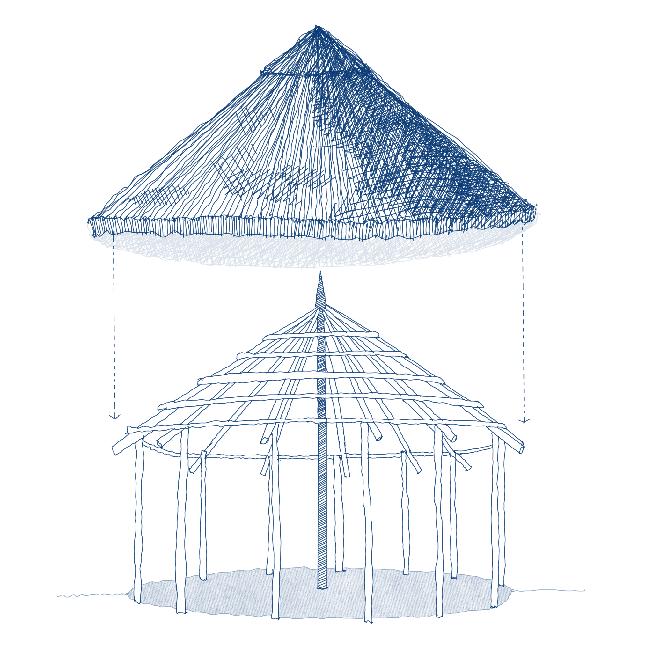
Originating from two Nguni languages, IsiZulu and IsiXhosa, ntsika refers to the strongest single pillar in an African hut, holding it upright and preventing it from collapse. It makes up part of the support structure of the building.
To the indigenous people of the Xhosa and Zulu tribes, ntsika extends far beyond a pillar in a hut. It is a symbol of strength and stability, and at times a symbol of solidarity. Admiration of ntsika stems from its physical ability and properties to hold up a structure on its own. It is this that allowed meaning to be drawn. It became a name commonly given to a boychild: Ntsika. It stems from the belief that men need to be the pillars of strength in their households and their communities. Although the name Ntsika may not be given to a child at birth, it can be used later to refer to the most productive child in a home. If a child is not named this at birth, it does not undermine his ability to support his family. For example, it may be used to describe a child whose parents have gone away, and that child takes the mantle of a parent to siblings. In this case, the child may be called, Ntsikayomzi. This translates to ‘pillar of the home.’
Evidently, the meanings, interpretations and uses of ntsikaand pillar seem to parallel each other, with only small differences of interpretation.
Ntsika
”
the strongest single pillar in an African hut; a symbol of strength and stability, and at times a symbol of solidarity
Both meanings are reliant on the factor of strength and support to serve their purpose, and both words can be used to describe people. However, difference exists in that a pillar can be used for a variety of buildings and can exist in groups in a single building, but ntsika is the sole pillar in an African hut. But these words hold an essential meaning, both literally and figuratively, ‘to support’.
References:
Gerwing, M., 2018. Architects. Architect’s Glossary – Post, Pillar, Column, Pier and Pilaster. Available online at: https://mgerwingarch.com/mgerwing/2018/12/16/architectsglossary-post-column [Accessed 17 August 2020]
Koshland, D., 2002. The Seven Pillars of Life. Science, 295(5563), 2215-2216.
Oxford University Press, 2020. Pillar. Lexico.com, available online at: https://www.lexico.com/ definition/pillar [Accessed 17 August 2020]
The IsiZulu word ‘isivivane’ can be analysed, to understand its meaning, effect and purpose in both the Zulu culture and the architectural world. ‘Isivivane’ is roughly translated as a ‘carin of stones’, but its deeper meaning is a ‘monument’, ‘memorial’, ‘testimonial’, or ‘fervour’: the concentration of energy and commitment to solidarity and oneness of purpose’ (Ngubane, 2003). In architectural terms Isivivane is “a mound of rough stones built as a memorial or landmark, typically on a hilltop or skyline” (Oxford Advanced Learner’s Dictionary, 2020), but within the context of the isiZulu culture, isivivane is a monument to which ordinary people can contribute, by adding a stone to the collection. This is its great significance, that by people engaging with the ‘spirituality of the monument’ they are able to form part of that which would ultimately hold a ‘collective memory’, created by different people arranging stones over time’ (Cougar et al, 2007).
A prime example of how the word is used in IsiZulu is, “Ukuphosa itshe esivivaneni” (South African Proverbs and Sayings, 2014). This is a Zulu proverb inspired by the term ‘isivivane’ and translates as to “throw your stone upon the pile”. This is said to a member of a community when it is their time to contribute to the greater community work. Culture thrives when a
large number of people work together towards a greater goal: to ‘throw your stone upon the pile’ is to signify singular contribution to an outcome that has a multitude of effects in physical terms. This act forms bonds, spiritual ties between those that have contributed to the monument, thus forming a stronger community and a sense of togetherness through a physical monument that holds spiritual and historical significance. Isivivane shows that unlike in the Western tradition, where a specialist, be it stone carver or an architect, designs a monument, in the IsiZulu culture, a monument is a work in progress and all members of the community are supposed to participate in its making.
The Isivivane at the Freedom Park heritage site in Tshwane, Pretoria, is a spiritual monument formed by a pool of rocks. It represents “the final resting place for South African fallen heroes” (MMA Design Studio, 2019). This Isivivane creates a Lekgothla, or community meeting place, as it is built around a tree, which is a common place for people to meet under the natural shade. The Lesaka represents the burial ground, with marked boulders that come from all around South Africa forming the monument. This feature within Freedom Park thus creates an understanding of the term “Ukuphosa itshe esivivaneni”
ISIVIVANE
a carin of stones; a monument, memorial, testimonial, or fervour; the concentration of energy and commitment to solidarity and oneness of purpose; a mound of rough stones built as a memorial or landmark, typically on a hilltop or skyline” a monument to which ordinary people can contribute, by adding a stone to the collection
” Ukuphosa itshe esivivaneni
throw your stone upon the pile
Figure 10: Isivivane
in the modern mind, for it symbolises the country’s unity through the one monument which is the purpose of an isivivane in Zulu culture. Today the architectural project brings together architects, artists, builders and workers, whereas in ancient times it would have been ordinary people from the community that would have contributed to these great works. The contemporary term ‘isivivane’, signifies a less personal connection to the monument than its historical meaning.
A ‘carin’ is a “pile of stones used to mark a path on a mountain or place where somebody is buried” (Oxford Advanced Learner’s Dictionary, 2020). This differs from the meaning that the isivivane held for the Zulu community since the carin marks the resting place of an individual whereas the isivivane was a monument symbolising the contributions of the collective. The English translation of isivivane to carin is a simplification that removes the deeper connotation it has as a communal monument within the Zulu culture. The modern iteration of the word casts a shadow on the African meaning, as a person looking for the Zulu meaning may accept the definition without understanding its historical significance within Zulu culture. As people evolve so do terms and their meanings in order to become more relevant to
the present context. We now live in a world where things are less communal, thus a community today is different from that of ancient times. Now people tend not to be as cognisant of the need to work as a collective in order to survive, and independent success is seen as a greater achievement. This is why the formation and the building of an isivivane today would not encapsulate the same meaning as it had previously. Like in the example at Freedom Park, it would not always be formed by a community.
References:
Cougar, J., et al., 2007. Isivivane for Change and Transformation. South Africa: Isivivane.com. Freedom Park., 2020. Eternal Flame and Amphitheatre. Available online at: https:// www.freedompark.co.za/index. php/stay-informed/images-offreedom-park/eternal-flame-andamphitheatre.html. [Accessed 19 September 2020]
Ngubane, H., 2003. The role of research in the indigenous knowledge sector of Freedom Park. Proceedings of the Youth Workshop, Pretoria: 26 May 2003. MMA Design Studio., 2019. Freedom Park - Phase 1 –Isivivane. Available online at: http://mmastudio.co.za/portfolio/ freedom-park-phase-1-isivivane/. [Accessed 18 September 2020].
The English definition of ‘home’ is the place where ‘someone’ lives (Oxford English Dictionary, 1884). The ‘home’, like the ‘dwelling’ is associated with safety. The word ‘home’ in Mandarin is ‘家(jiā)’. This word has two common usages, the first being similar to the English denotation, while the second means family ‘家人 (jiā ren)’. With the addition of the word ‘人(ren)’, which translates to people, the combination of these two words produces the meaning ‘family’. This is significant because it places the word for home at the root of the concept of family.
In ancient times Chinese political power was articulated in terms of a hierarchy of spaces, with ‘inner’ sanctums protected by ‘outer’ fortifications. Temples, palaces, and houses in early China were walled on the outside, and the first buildings encountered upon entering through the gate would contain more public programmes, for example those associated with business. The “insiders” who were members of the family, or the ruler and his household, would receive people from the outside. As a visitor moved inwards through a sequence of spaces, the focus would become inward-looking and increasingly private, and access would become more and more restricted. In a residential compound, these inner spaces would be the
private chambers of the men and women of the house (Cartwright, 2017). However today, the system has changed and property development in China is outgrowing the number of people who can buy new homes leading to increased property prices which have resulted in many people renting or living outside the major urban areas in villages.
The Chinese language is one of the oldest written languages in the world, with Chinese characters found in turtle shells dating from the Shang Dynasty between 1766 and 1123 BCE (Lin, 2009). After generations of modification and change, in 1949 Simplified Chinese was invented and is still used today in modern China (Yang, 2008). The Chinese characters are artistic symbols that represent the form of landscape and animals. The evolution of the word ‘家 (jiā)’ started with a drawing of pig. But why are pigs inside instead of people? During the Shang Dynasty, animal husbandry was a central component of community life and pigs were kept as domestic animals; therefore, having a pig inside the house indicated a place where people lived. Pigs then symbolise good fortune and happiness in the Chinese culture.
家 (jiā) consists of two radicals: one is 豕(shǐ) and the other is 宀 (miān) 豕, which can stand
Figure 11: Evolution of jiā
JIĀ REN
Farmer
on its own as a character (Su, 2017). 宀 (miān) means hog or wine, however, this word is not common and is replaced by the modern characters 猪(zhu) and 酒(Jiu). The top of the modern character (宀 miān) represents a house. 宀 (miān) is not a character and can only act as a radical: it is also called the roof radical and it surrounds and roofs the pig.
and the presence of your family. The Chinese characters are very similar to architecture because each stroke represents something, just like each line in an architectural drawing is significant. The writing is a source of information and also a form of communication, where each shape and their combinations reveal a deeper meaning.
The Chinese characters are very similar to architecture because each stroke represents something ”
The word jiā is a basis of many other words. It can also be used to describe a certain identity, for example: 渔家 (yu jiā, fisherman), 农家 (nong jiā, farmer) and 东家 (dong jiā, landlord). These names were given to people who were involved around their houses. It is also used to express a person who has mastered a specialised area of knowledge or activity 专家 (zhuan jiā, expert), and 科学家 (ke xue jiā, scientist) (Su, 2017).
Chinese and English are very different languages, the definition of ‘home’ in Chinese has a much broader meaning than just a dwelling. It is also a place where you feel warmth
References:
Cartwright, M., 2017. Ancient History Encyclopedia. Available online at: https://www.ancient.eu/ Chinese_Architecture/ [Accessed 20 October 2020].
Oxford English Dictionary., 1884. Oxford English Dictionary First Edition. United Kingdom: Oxford University Press.
Lin, K., 2009. Chinese Language. Ethnomed. Available online at: http://ethnomed.org/resource/ chinese-language/ [Accessed 16 August 2020].
Su, Q. G., 2017. What Does the Chinese Character 家 Mean? Available online at: https://www. thoughtco.com/home-jiā-chinesecharacter-profile-2278374 [Accessed 18 09 2020].