


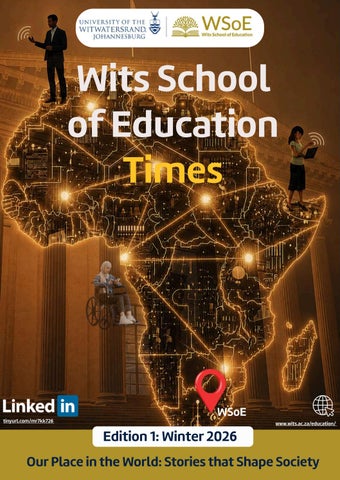


I am delighted to welcome you to the third edition of the Wits School of Education (WSoE) Times as we celebrate one year since its launch in June 2025. Over the past year, the publication has become an important platform for sharing the achievements, innovations, partnerships and experiences that shape the WSoE community. I extend my sincere appreciation to every contributor who has shared their experiences, achievements, reflections and insights in this and previous editions.
The theme of this edition, Our Place in the World: Stories that Shape Society, invites us to reflect on the transformative role of education beyond institutional boundaries. It reminds us that education is never confined to classrooms, campuses or qualifications. Rather, it is ultimately about people, relationships, ideas and the many ways in which we shape, and are shaped by, the world around us. This theme is reflected in the journeys of our students and alumni, whose perseverance and achievements continue to inspire; in the work of our academics and researchers whose scholarship contributes to addressing complex educational and social challenges; and in the partnerships we cultivate locally, nationally and internationally as we strive to create learning environments that are inclusive, innovative and responsive to a rapidly changing world.
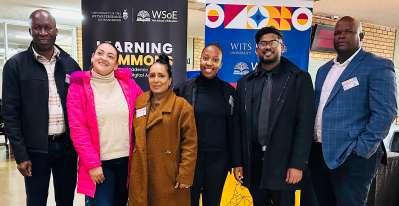
The contributions curated in this edition are organised around themes that reflect the breadth and depth of life within the WSoE. In Student Voices and Journeys, we celebrate stories of resilience, remarkable achievement and inspiring personal transformation. Through Health and Wellness, we are reminded that education must attend not only to academic success but also to the mind, body and spirit to promote human flourishing, dignity and wellbeing. The sections on Innovative Approaches Shaping the Future of Education and New Initiatives, Technologies and Transformative Ideas showcase how our staff and students are reimagining teaching, learning and research in ways that respond to contemporary challenges and future possibilities. Highlights include the Joint AFRETEC Project and WSoE Research Bonanza, which brought together scholars, practitioners and postgraduate students in a celebration of research, innovation and collaboration, as well as the launch of the Learning Commons, an exciting new space designed to support academic development, digital fluency and collaborative learning.
In Language, Literacy and Learning and WSoE Building Partnerships, we see the power of multilingualism, international engagement and scholarly exchange in advancing understanding and strengthening educational communities across geographical boundaries. We also showcase achievements such as the Faculty of Humanities Prize-Giving Ceremony, which recognises academic excellence and student success.
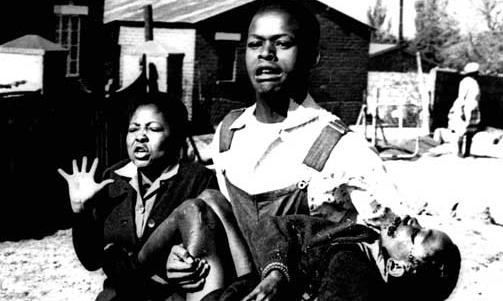
The narratives affirm that African experiences, knowledge systems and ways of knowing are not peripheral to global conversations; they are central to understanding and addressing the challenges of our time. The WSoE continues to contribute African perspectives to global scholarship while remaining deeply attentive to the contexts and communities from which that knowledge emerges. Furthermore, as we commemorate fifty years since the 1976 student uprisings, we salute the courage of young people who challenged educational inequality and asserted the right to learn in languages that affirmed their identities, dignity and humanity. Their legacy continues to inform contemporary conversations about linguistic rights, justice and educational inclusion.
The University of the Witwatersrand continues to be recognised as a leading university on the African continent, having recently claimed the top position in Africa in the 2026 Center for World University Rankings. We acknowledge that such standing carries with it a responsibility to generate knowledge that serves society, to foster collaboration across borders, and to address the pressing educational challenges facing Africa and the wider world. Collectively, the narratives in this edition testify that meaningful change often begins with individuals who are committed to making a difference. These stories impress upon us that the most enduring solutions to contemporary challenges emerge through collaboration, mutual learning and a willingness to engage across disciplines, cultures and borders. They affirm that our diversity is a source of strength, our scholarship a catalyst for transformation, and our collective endeavour a pathway to a more equitable future.

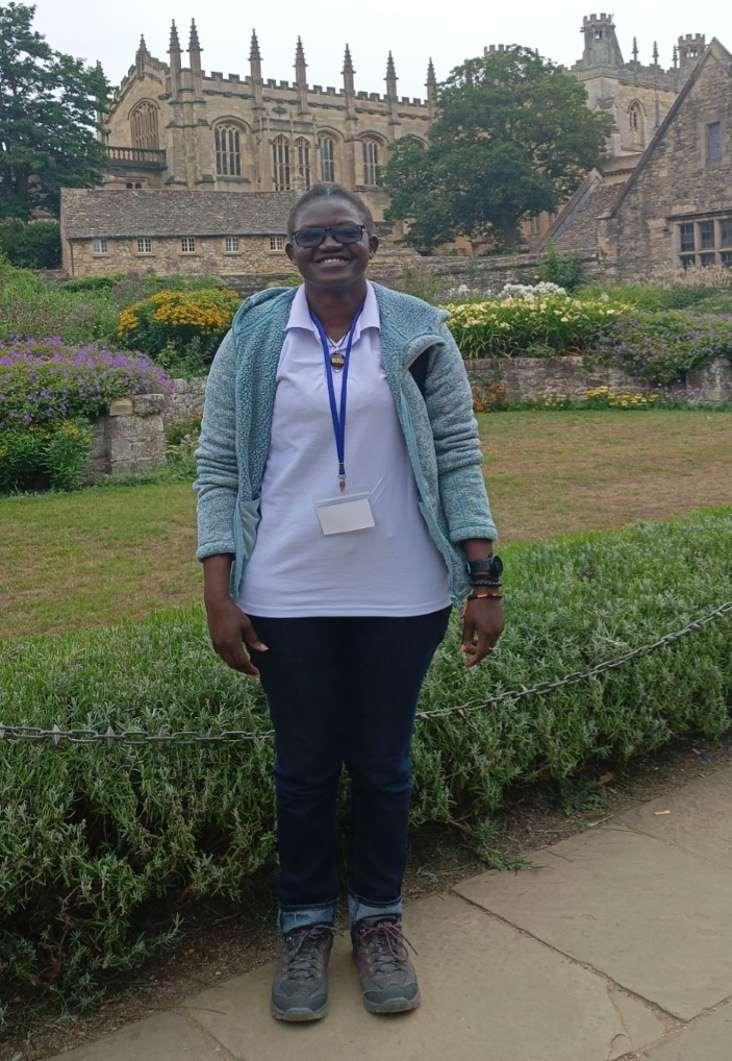

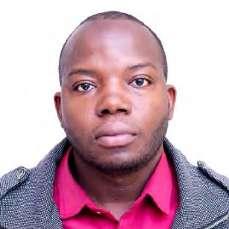
Six years ago, I was working as a project administrator at Gulu University in Northern Uganda, with no vision of a doctoral future ahead of me. Today, I am pursuing a PhD on a full prestigious Economic and Social Research Council (ESRC) scholarship at Cardiff University. At the heart of this remarkable transformation stands the Wits School of Education, an institution that fundamentally rebuilt my sense of what was possible.
My connection to WSoE began in 2019, when I joined the ESRC-funded Vocational Education and Training (VET) Africa 4.0. This collaborative research initiative explored how vocational education and training could reduce inequality and enhance sustainability, bringing together researchers from the University of Nottingham, Gulu University, Rhodes University, and Wits Centre for Researching Education and Labour (REAL). Working alongside this dynamic team, I discovered a deep passion for research, sharpening my data collection skills and seizing every learning opportunity the project offered.
When the project concluded, it was WSoE Prof. Presha Ramsarup of the REAL Centre who became a pivotal figure in my journey. Recognising my potential, Presha informed me of an NRF scholarship specifically available for master's students and offered to supervise my studies. That single act of encouragement set everything in motion.
The path to enrolment, however, was not straightforward. My Ugandan bachelor's degree was classified at NQF Level 7, one level short of the NQF Level 8 required for entry into Wits' Master of Education programme. Rather than turning me away, the REAL team at WSoE worked with me to navigate the Recognition of Prior Learning (RPL) process, helping me compile a portfolio that demonstrated my research experience and capabilities. Wits accepted my application, opening the door to a future I had barely dared to imagine.
Once enrolled, I threw myself into the opportunity with everything I had, attending campus seven days a week and completing both my coursework and research report within a single year. Despite initial anxieties about transitioning from agriculture to education, I excelled, completing my dissertation on occupational roles in agricultural extension with distinction.
WSoE did more than educate me academically; it actively expanded my professional and intellectual horizons. While there, I completed a 12-week online course through the Open Society University Network on Policy and Practices in Global Education, facilitated by leading Wits academics. I was given the opportunity to present my master's research at the Global Change Conference in Bloemfontein, where I also participated in a panel discussion alongside established researchers. I also received a fully funded opportunity to present at an Early Career Researchers Conference in Cape Town. Wits also connected me to a Professional Speed Dating networking event, linking me with potential employers across South Africa.
Each of these opportunities, carefully cultivated within the WSoE environment, built the skills, confidence, and networks that ultimately positioned me for doctoral study in the UK. Reflecting on my time at the WSoE, to say I had a transformative experience would be an understatement. The relationships, mentorship, and opportunities I found there continue to sustain me through the challenges of PhD life in Wales today.
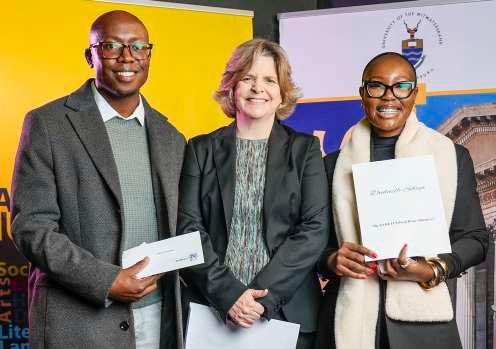
Khayalethu Myoli, Dr Beverly Blake and Duduzile Sibiya

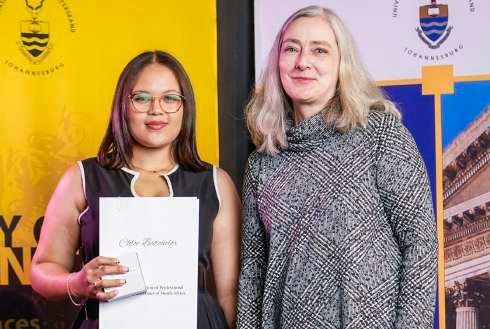
Chloe Batchelor and Dr Tanya Bekker

Awards in Education
Shafiq Erasmus
Nicole Masango
Franz Auerbach Award
Giuliana Vieira
J.W. Jagger Bequest Award
Nicole Masango
NAPTOSA Excellence Award
Carina Faria, Nicola Moll, Azraa Lambat, Chloe Batchelor, Shafiq Erasmus and Dineo Segale
Postgraduate Certificate in Education Excellence Award
Caitlin Moodley, Amy Malan, Tamika Moonsamy and Khwezikazi Nxumalo
Outstanding Performance in the First 3 Years of BEd
Shani Levenberg, Laquita Bennett and Zainab Limbada
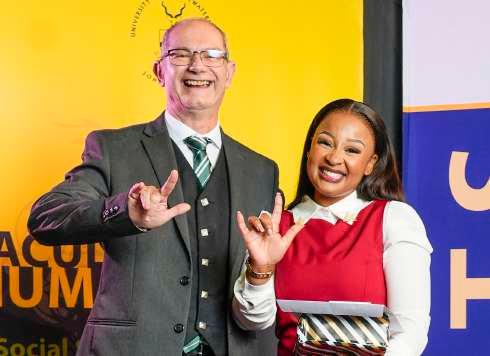
Dr Guy McIlroy and Siphiwe Lesole
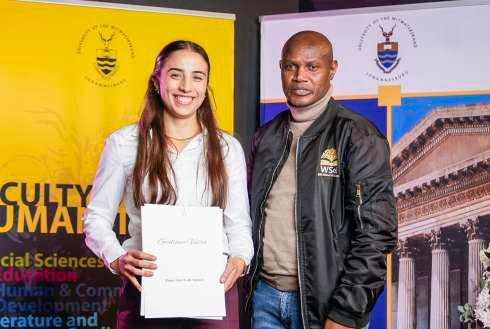
Giuliana Viera and Prof. Thokozani Mathebula
Best Master of Education Students
Duduzile Sibiya, Khayalethu Myoli and Rabia Arif
Paul Laridon Mathematics Award
Shafiq Erasmus
Subject Excellence Awards
Achievement across English, isiZulu, Sesotho, South African Sign Language (SASL), Mathematics, Physical Sciences, Life Sciences, Geography, History, Mechanical Technology, Engineering Graphics and Design (EGD), Drama in English Education, Commercial Subjects, Humanities, Deaf Education. Mapitso Malepe, Sumaiyah Amodjee, Anelisa Duma
Siyabonga Mtsweni, Namatullah Pandor, Mogau Seroka, Shafiq Erasmus, Noeline Mlambo and Bongani Sibiya
HoS Ubuntu Translanguaging Award
Recognising multilingual education, African languages and community service. Thembelihle Motha, Portia Shisalandaku, Anelisa Duma and Lerato Sediane
HoS Digital Education Innovation Award
Shafiq Erasmus and Khadijah Valjie

42 27 31 11 14 Award Recognitions
Undergraduate Awards
Postgraduate Awards Award Areas Sponsored Awards
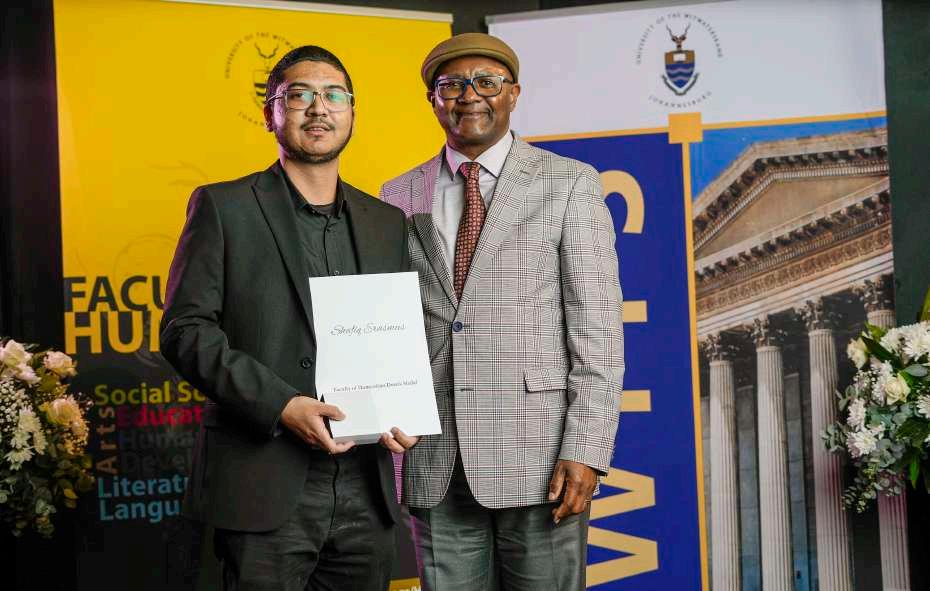
Erasmus and Prof. Mucha Musemwa, Dean of the Faculty of Humanities
Bachelor of Education student Shafiq Erasmus emerged as one of the Wits School of Education's most celebrated students at the Faculty of Humanities Prize Giving Ceremony, earning an impressive five awards in recognition of academic excellence, innovation, and outstanding achievement. Raised in Bosmont and guided by strong family values, the award-winning student discovered a passion for teaching during a gap year after matriculating as the top learner at St Barnabas School of Specialisation in 2020. What began as tutoring soon developed into a calling, inspiring the decision to pursue a career in education.
Behind these achievements lies a story of discipline, perseverance, and countless hours of dedication. Success was built on consistent hard work, careful planning, and the support of family and mentors, including Dr Fatima Makda, Dr Alton Dewa, and Prof. Reuben Dlamini. Looking ahead, the aspiring educator hopes to inspire learners not only to excel academically but also to grow into compassionate, curious, and respectful individuals. The remarkable recognition received this year reflects the sacrifices, determination, and passion that have shaped an exceptional journey in education.



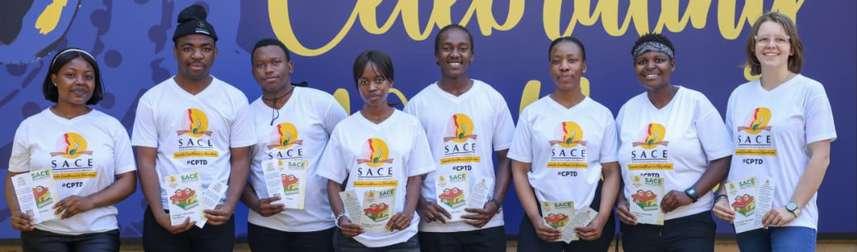
Each May, before their first Teaching Experience (TE), first-year student teachers meet in small groups with fourth year students for a two-hour mentoring session. First year students present a prepared lesson and receive structured feedback on their teaching, activities and lesson design. The groups meet again in September, after TE, when first year students reflect on their classroom experiences while fourth year students demonstrate and unpack one of their most successful lessons.
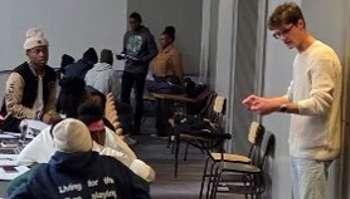
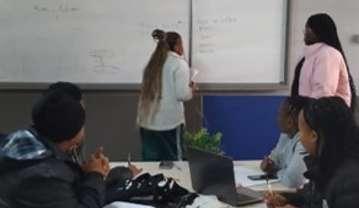
The initiative benefits both cohorts. First year students gain early teaching practice, reducing the shock often associated with their first placement, while learning from the experiences of more advanced peers. Fourth year students apply mentoring and feedback skills developed through their Being a Teacher module, supporting junior colleagues while reflecting on their own professional growth. By fostering collaboration across year groups, the initiative strengthens pedagogical understanding, confidence and professional identity among future teachers.



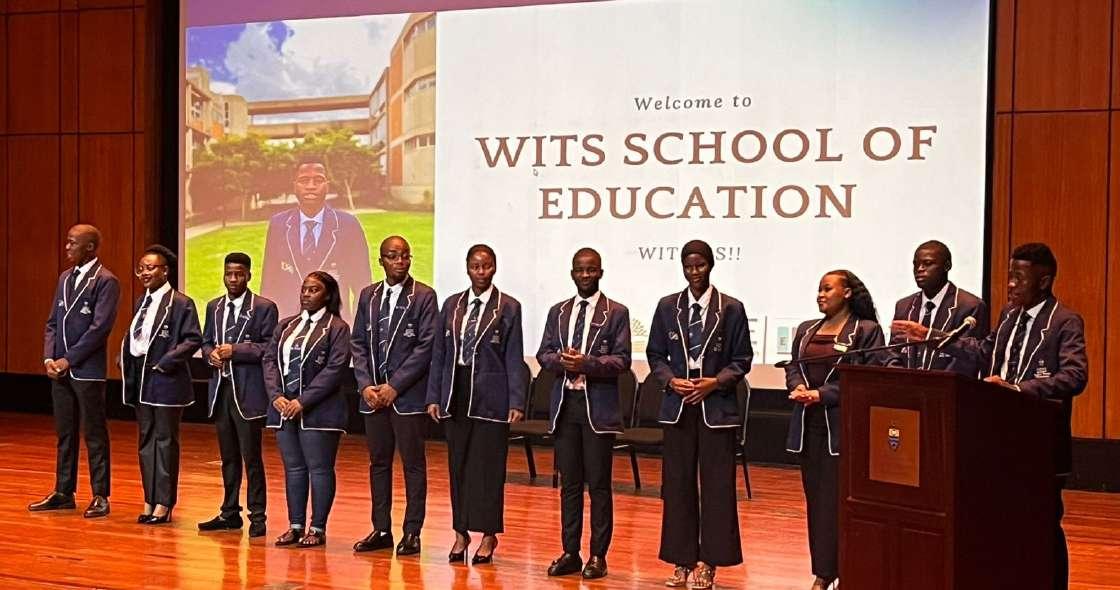

Secondary School with university applications, helping to create pathways to higher education. During the June examination period, the ESC conducted a stationery drive, providing students with essential examination materials. The ESC also successfully advocated for an increase in the Teaching Experience allowance and looks forward to launching the Feed the Pedagogue Initiative in the second semester to support unfunded students with food parcels. The ESC extends its sincere appreciation to the WSoE Executive Members for their unwavering support and commitment to the success of Wits School of Education students.

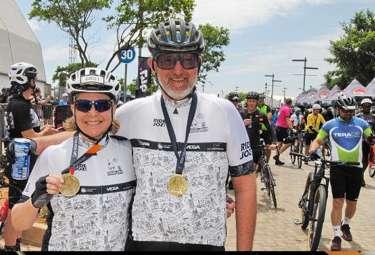
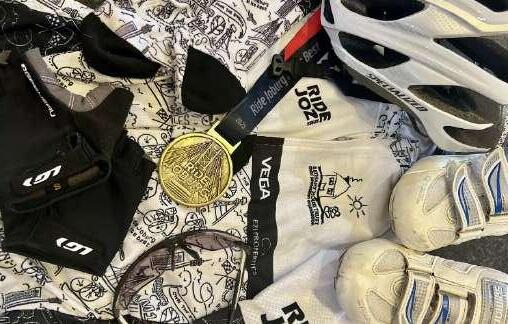
collective compassion. More than a fundraising effort, it demonstrates how collective action and community spirit can make a tangible difference in the lives of vulnerable children. I will be riding again on 22 November 2026 and warmly invite others to join or support this worthy cause.





The Wits School of Education Benevolent Fund (WSoESBF) was established to support the well-being of the most vulnerable student teachers at the Wits School of Education. Many students face severe personal financial challenges that hinder their ability to learn and thrive. This fund provides critical assistance to ensure food security, access to basic healthcare, and the ability to fully participate in academic activities.
The fund is administered through the Wits University Foundation. Contributions are tax deductible under Section 18A of the Income Tax Act (Act 58 of 1962, as amended), and donors will receive a Section 18A certificate a�ter each tax year. Regular updates, including monthly support reports and quarterly financial summaries, are available to all donors. The fund’s financials are also submitted to the WSoE Executive Committee for transparency and accountability.
Your contribution helps restore dignity, support academic success, and change lives.
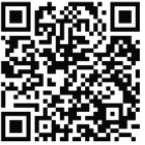
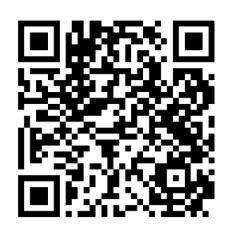
Scan the QR code to donate to the Wits School of Education Student Benevolent Fund
www.wits.ac.za/education/study-with-us/student-benevolent-fund/

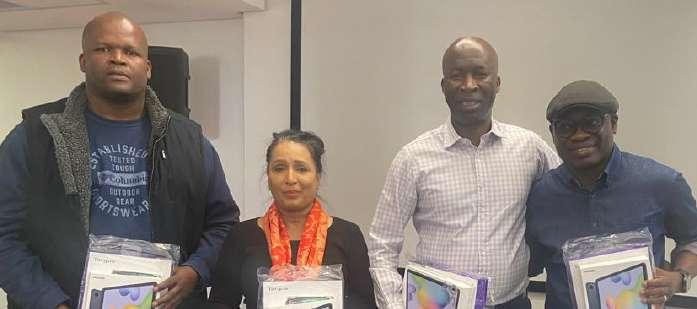
The African Engineering and Technology (AFRETEC) Project Conference and WSoE Research Bonanza 2026 combined two important initiatives within the School, i.e. the Education Research Bonanza, which has become an important platform for showcasing educational research, innovation, and postgraduate scholarship, and the AFRETEC Project, a collaborative initiative focused on inclusive digital transformation within African education systems.
Under the theme, “Synergising Research for Transformative Education Futures’ the event brought together researchers, academics and postgraduate students for a vibrant exchange of ideas and reflected the WSoE’s ongoing commitment to research-led teaching and learning, transformative scholarship, and the development of contextually relevant educational innovation, technology, and socially responsive educational practice aligned to the realities and aspirations of the African continent.
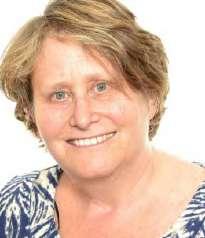
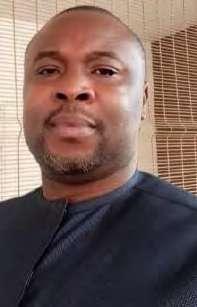
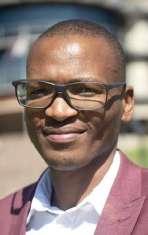
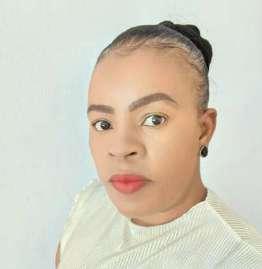
The Wits School of Education–University of Rwanda (UR) AFRETEC Project led by the WSoE (Profs. Juliet Perumal, Emmanuel Ojo, Reuben Dlamini and Leketi Makalela) and collaborators from the UR (Profs. Innocent Twagilimana, Irenee Ndayambaje, Epimaque Niyibizi, and Dr Oliviera Habimana), focused on six interconnected areas: digital infrastructure and innovation, teacher education and capacity development, research and knowledge production, partnerships and scholarly networks, equity and inclusion, and institutional strengthening. A key outcome has been the establishment of the Digital Education and Learning Lab (DELab), which serves as a dedicated space for digital teaching, learning, research, innovation, coding, robotics, and computational thinking. The project has also advanced digital inclusion in under-resourced communities, expanded opportunities for women and girls in STEAM education, and contributed to reducing the digital knowledge divide within teacher education systems in South Africa and Rwanda.
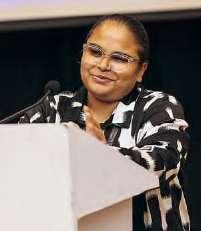
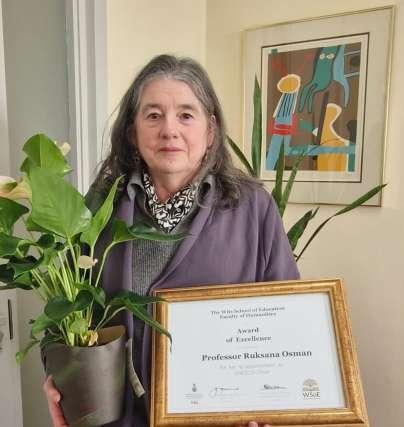
Senior Deputy Vice Chancellor: Academic, Prof. Ruksana Osman, who played a pivotal role in securing the funding for the AFRETEC initiative delivered a thought-provoking keynote address. It challenged attendees to reflect on the role of higher education and research in responding to contemporary academic and administrative technological realities within education systems, generally and higher education, in particular. Over 30 presentations were delivered on Day 1 of the conference, reflecting the breadth and depth of scholarship within the WSoE and its partner institutions. Broad session themes included: Artificial Intelligence, Digital Transformation and Educational Technology; Critical Pedagogies, Teacher Development and Educational Futures; Multilingualism, Decolonisation and Inclusive Education; ICT Integration, Digital Pedagogies and Technology-Enhanced Learning; Research, Innovation and Scholarly Collaboration; and Open Education, Digital Skills and Emerging Technologies.
The presentations demonstrated how research can contribute to improved educational policy and practice, while also creating opportunities for dialogue across disciplines, institutions, and national boundaries. Day 1 set an inspiring tone for the joint conference, reaffirming the School's commitment to producing impactful research that informs policy, enriches practice, and contributes to transformative education futures. The rich discussions and scholarly exchanges laid a strong foundation for the celebrations of research excellence, postgraduate scholarship, and academic achievement that followed on Day Two of the Research Bonanza.

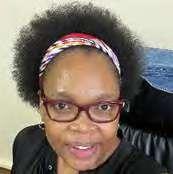
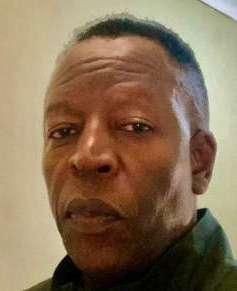
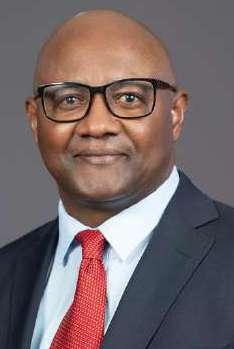
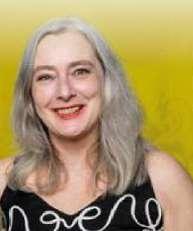
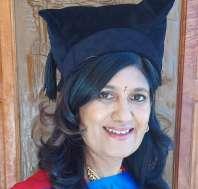
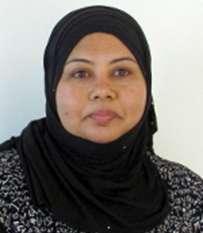
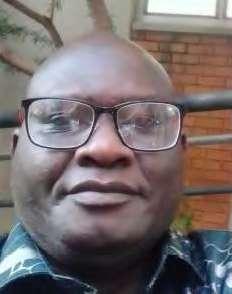


The term bonanza signifies abundance and richness. Within the context of the WSoE, it reflects the collective intellectual labour, scholarly productivity, and knowledge production that continue to shape the School’s research identity.
The origins of the Research Bonanza are closely linked to efforts to strengthen the School’s research culture and scholarly visibility. Established in 2019, the initiative emerged during a period of significant institutional transition and declining research outputs. The Bonanza formed part of a broader strategy to revitalise scholarly engagement, foster collaboration across divisions, and reaffirm research as a central academic responsibility alongside teaching and professional service. Over time, it has evolved into an established institutional platform that showcases scholarly work, promotes interdisciplinary dialogue, and advances research capacity development.
The impact of these efforts is reflected in the increase in the School’s research outputs from 53.07 DHET accredited units in 2019 to 139.89 units in 2025, representing the highest recorded research output in the School’s history. This growth reflects the sustained commitment of academic staff, postgraduate students, postdoctoral fellows, and research leadership structures to strengthening research productivity and visibility.
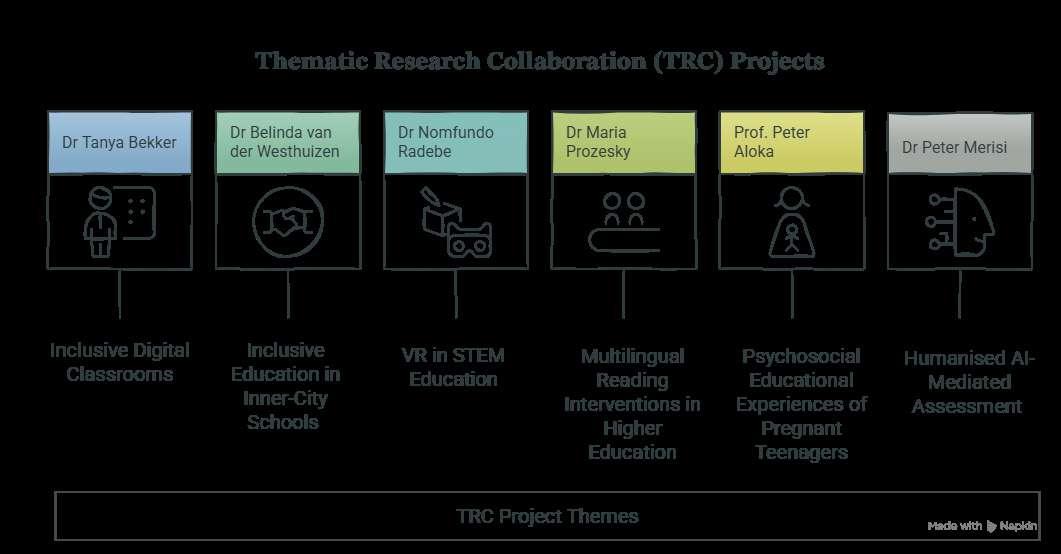
Since September 2022, under the leadership of Deputy Head: Research and Innovation, Prof. Leketi Makalela, the School has expanded support for individual and collaborative research projects through seed funding, writing retreats, postgraduate and postdoctoral development opportunities, and support for international conference participation. Building on these initiatives, the School introduced the Thematic Research Collaboration (TRC) grants in 2026 as a strategic funding mechanism designed to support cross-disciplinary research collectives focused on high-impact thematic areas over a three-year cycle. The TRC framework represents a transition from the earlier “research thrusts” model towards a more integrated structure of collaborative scholarship, accountability, and measurable research impact.
The Research Bonanza is therefore a celebratory occasion, and an academic platform through which the WSoE reflects on its evolving research trajectory, recognises scholarly contributions, and strengthens a culture of inquiry and innovation.

Highest Publication Units Award (Established Researcher)

Dr Fatima Makda
Highest Publication Units Award (Emerging Researcher)
Prof. Peter Aloka
Postgraduate Student Co-Authored Publication Award

Dr Tobias Orji
Postdoctoral Publication Excellence Award
Prof. Ruksana Osman
Highest RINC Allocation Award (2026)
Dr Zaheera Jina-Asvat Short Collection Book Award
Re-appointment: UNESCO Chair in Teacher Education for Diversity and Development
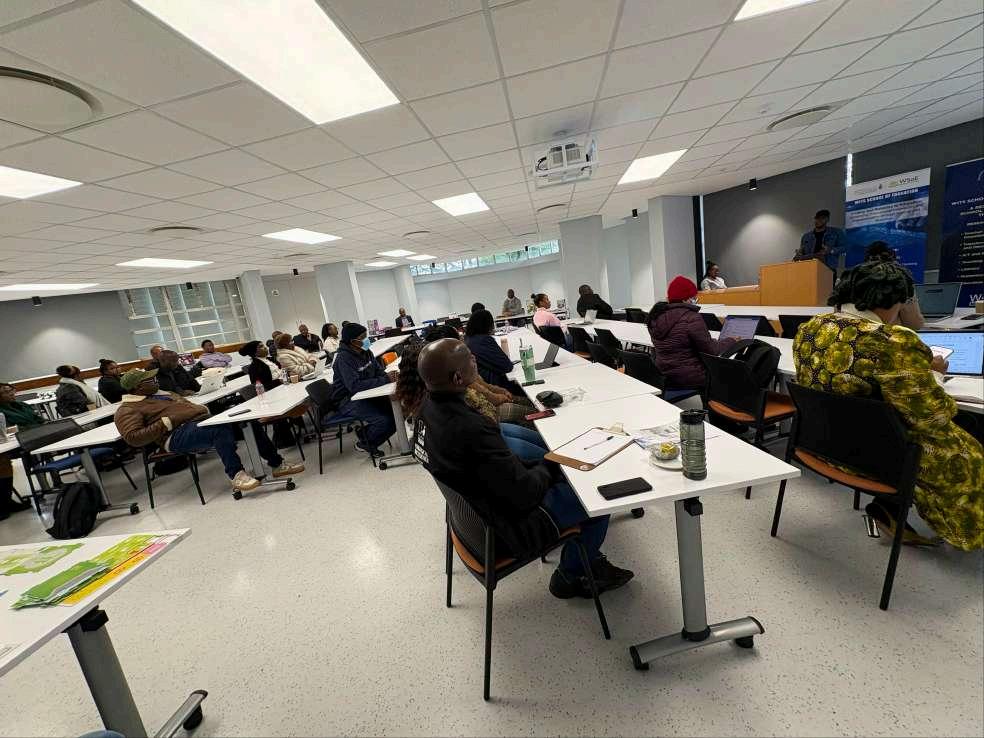

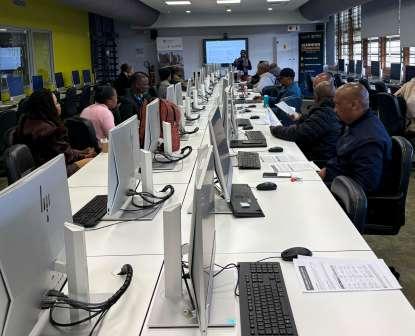
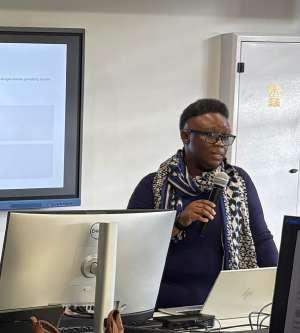
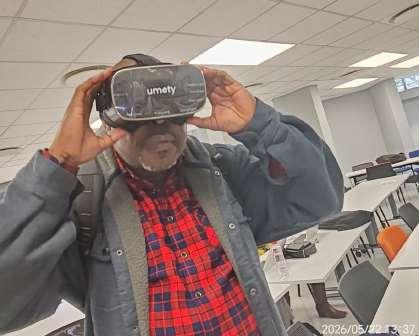
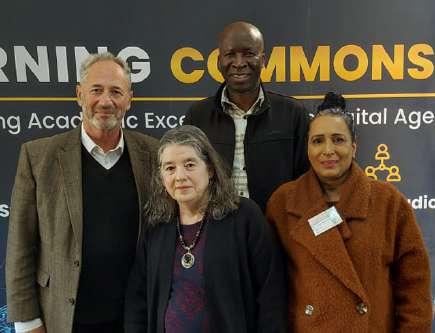
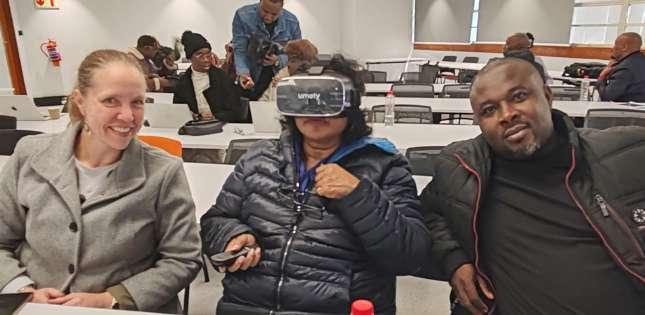
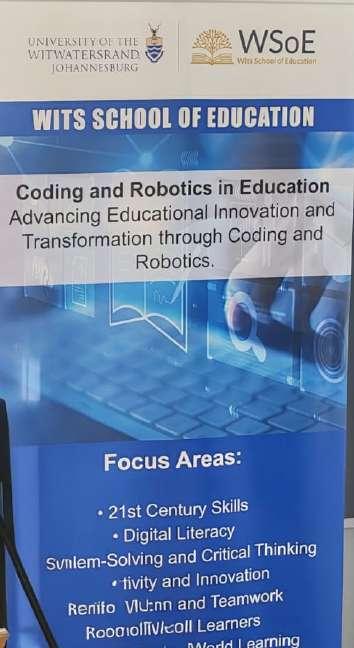
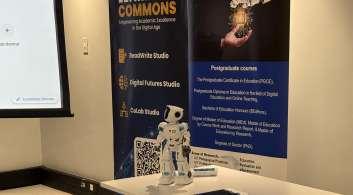
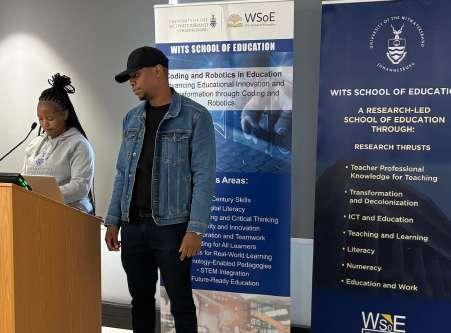
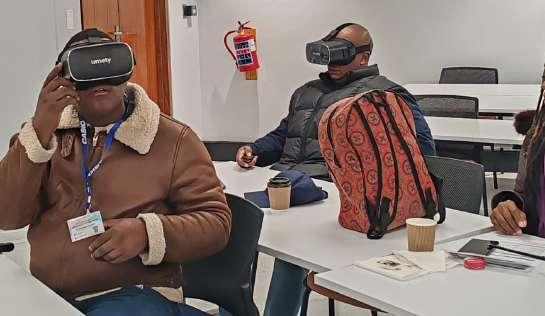
The final day of the Joint AFRETEC Project and WSoE Research Bonanza comprised a series of interactive workshops, during which participants explored innovative approaches to teacher education, educational technology and research collaboration, reinforcing the conference theme of advancing transformative education futures through partnership and innovation.
Dr Belinda van der Westhuizen and Dr Nokulunga Ndlovu facilitated a workshop on Open Educational Resources (OER) in Teacher Education. The session explored strategies for scaffolding OER co-authoring in teacher education and highlighted the importance of contextually responsive approaches to resource development. Participants engaged in discussions on how open educational practices can expand access, encourage collaboration and strengthen knowledge sharing across institutions. Led by a multidisciplinary team comprising Ms Zime Ngcobo, Dr Rekai Zenda, Mr Monas Allotey, Ms Nokuphila Buthelezi, Mr James Managa, Mr Qakhathekile Ndlovu and Mr Lucky Mabena, the Coding and Robotics in Teacher Education workshop examined how coding, robotics and computational thinking can foster critical twenty-first-century skills among future teachers. Participants explored innovative pedagogical approaches and considered how digital technologies can be meaningfully integrated into classroom practice. The workshop on Virtual Reality Integration in Teacher Education, facilitated by Dr Pam Moodley demonstrated how immersive technologies can enhance preservice teachers' conceptual understanding and pedagogical competence. Participants were introduced to emerging applications of virtual reality and considered its potential to create engaging and authentic learning experiences.
The conference concluded with a Thematic Research Collaboration (TRC) workshop facilitated by Prof. Leketi Makalela. The workshop encouraged participants to identify shared research interests and opportunities for




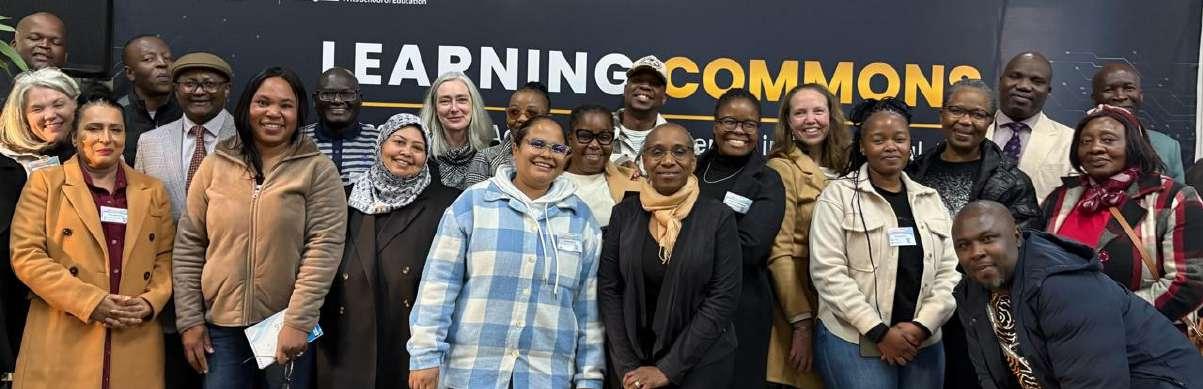
The Wits School of Education recently launched the Learning Commons, a dynamic new hub designed to support student and staff success through academic development, digital innovation and collaborative engagement. Bringing together the ReadWrite Studio, Digital Futures Studio and CoLab Studio, the Learning Commons offers an integrated approach to academic literacy, digital fluency and scholarly participation.

• Writing Consultations
• Academic Literacy Support
• Workshops and Development
• Digital skills for research and innovation
• Collaboration and engagement initiatives
• Creative workshops and events
• Innovation and knowledge sharing
The initiative responds to the evolving demands of higher education by creating an inclusive, future-focused space where students and staff can strengthen their academic writing, research, digital skills and engagement with emerging technologies. Through workshops, consultations, learning resources and collaborative projects, the Learning Commons aims to foster a culture of innovation, academic excellence and lifelong learning.
The launch marks an exciting step forward in the School's commitment to enhancing teaching, learning and research while preparing students and educators to thrive in an increasingly digital world.
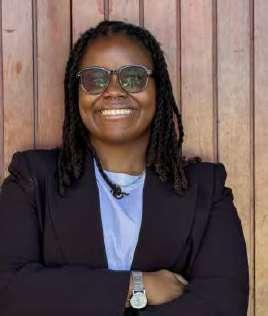
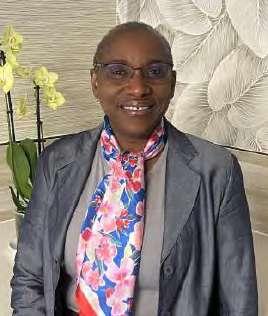
Dr Mmanape Hlungwane

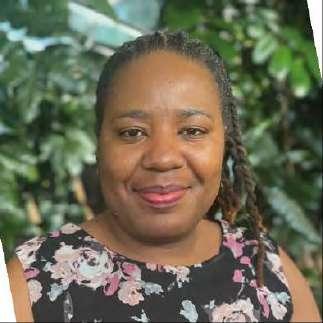
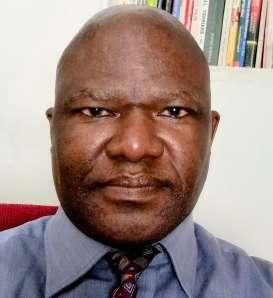
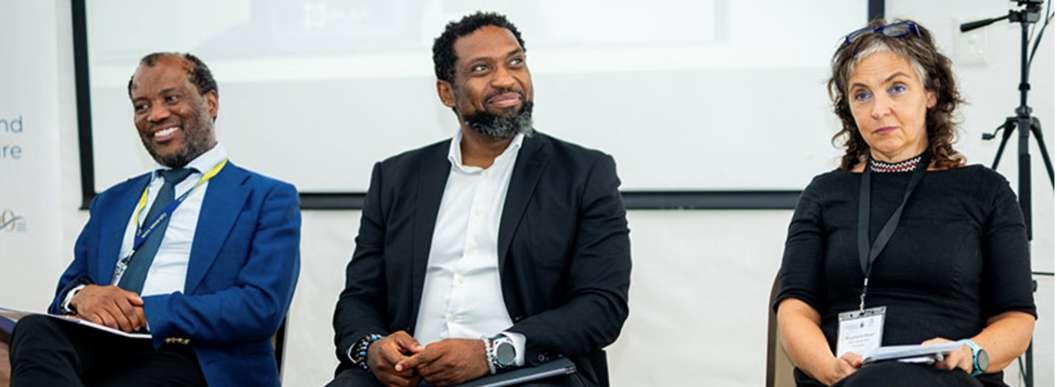
Dr Emure Kadenge Dr Jeanette Lafleur
www.wits.ac.za/education/learning-commons/
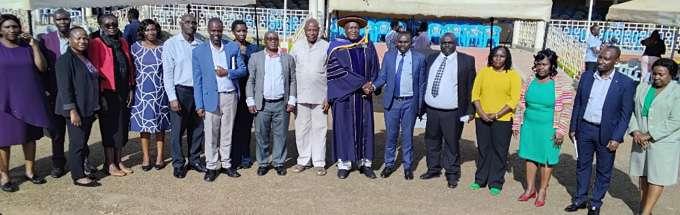
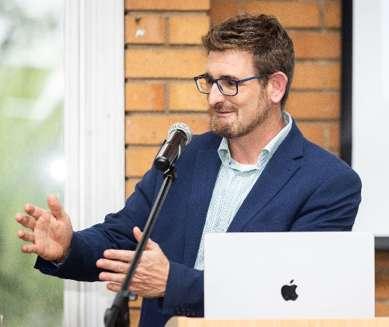
I was invited to Chuka University by Dr Harrison Mbogo to deliver a sabbatical lecture. The event drew an audience of approximately 500 undergraduate and postgraduate students, the Dean of the Faculty of Education, Dr Peter, members of staff, and the Acting Vice-Chancellor of the Using Learner Errors and Misconceptions as a Resource to Lower Mathematical Anxiety and Build Mathematical Resilience in Primary and High ”, explored how teachers can leverage students’ mistakes as pedagogical tools to foster resilience and reduce anxiety in mathematics learning. The lecture was covered by a local television channel Mwendantu TV and broadcast to the wider community, further extending its
https://www.facebook.com/reel/1294324749255879
The Mathematics Division hosted two international visiting researchers during the first semester of 2026. Prof Konstantinos (Kostas) Nikolantonakis from the University of Western Macedonia in Greece visited Wits through the Erasmus+ staff exchange programme, hosted by Prof Tony Essien. During his guest lectures, he introduced students to historical mathematical instruments and demonstrated how concepts such as isosceles and right triangles were used to measure otherwise inaccessible distances, highlighting the value of experiential and historically informed mathematics teaching.



From 13–20 March 2026, Dr Rina Durandt hosted Prof Vince Geiger from Australian Catholic University. Prof Geiger, a leading international scholar in mathematics education and STEM, conducted a workshop on mathematical modelling for master’s students, delivered a public lecture on interdisciplinary STEM education, and contributed to planning for ICTMA23, which will be hosted in Skukuza in 2027. These visits strengthened international collaboration and enriched teaching, research, and student learning within the Wits School of Education.

Prof. Naomi Nkealah from the Division of Languages, Literacies and Literatures (WSoE) was invited to facilitate a workshop on African feminist theory at a Literary Theories Workshop hosted by the School of Languages at North West University from 27 February to 1 March 2026.
The workshop formed part of a broader programme designed to support postgraduate students in engaging with key literary theories. Prof. Nkealah explored African feminism as practice, theory, pedagogy, indigenous epistemology, and praxis, while also examining its relationship with intersectionality. Her interactive session incorporated performance poetry, storytelling, and indigenous artefacts, creating a vibrant and engaging learning experience.
Attended by postgraduate students and staff teaching English, Sesotho, and Setswana, the workshop was widely praised for its insightful and dynamic approach. The event highlighted the growing influence of African feminist scholarship and the Wits School of Education’s contribution to advancing critical and transformative knowledge across institutions.

In an innovative approach to assessment, 107 students in the Teaching Mathematics FET course participated in a viva-style assessment following a curriculum mapping assignment. Conducted through brief individual oral discussions, the assessment required students to explain and justify their reasoning in real time. The experience demonstrated the assessments in promoting academic integrity, critical thinking, and authentic understanding, particularly in an era of increasing AI-assisted learning. While challenging to implement at scale, the initiative highlighted the importance of assessment practices that move beyond memorisation to emphasise curriculum literacy, reflection, and deeper engagement with learning.



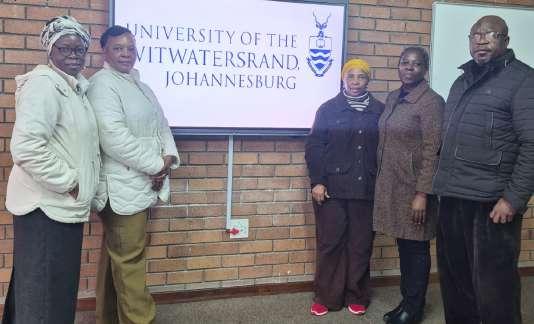
The WSoE Core Team completed a 10-day Sub-Saharan Africa Teacher Leadership for Education for Sustainable Development (SSATL-ESD) Training of Trainers programme in March 2026. The initiative brings together four European and ten African universities to strengthen teacher education and leadership for sustainable development. Addressing the region's teacher capacity challenges, the project aims to equip educators with the knowledge and skills needed to promote quality education, sustainability, and social development. From May 2026, the programme will be offered online to Wits staff, with a particular focus on the Wits School of Education.

In April 2026, Dr Guy McIlroy and Prof. Claudine Storbeck represented the Centre for Deaf Studies at the launch of the NOSO-DEPICT project in Bergen, Norway. Funded by the Norwegian Research Foundation, the three-year initiative brings together researchers from Norway, Sweden, Uganda, and South Africa to explore depiction in signed languages – a complex visual-spatial feature that extends beyond conventional signed vocabulary. The project offers exciting opportunities for the Centre for Deaf Studies to deepen its understanding of South African Sign Language (SASL) and explore innovative approaches to supporting teachers and teaching assistants in schools for the Deaf. During the launch meeting, the team participated in research workshops, training on sign language analysis tools, and scholarly discussions on signed language research within the Global South. Through this international collaboration, the Centre for Deaf Studies will contribute to advancing knowledge in sign language research while strengthening global partnerships over the

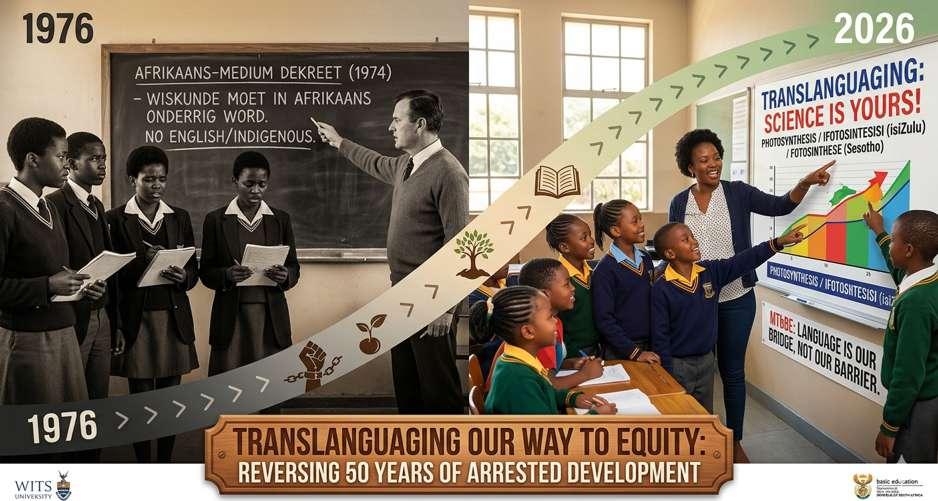
Ha Afrika Boroa e qala tshebetso ea thuto e thehilweng puong ea lapeng(MTbBE) ka 2026, thuto ea STEM e fuoa monyetla oa ho feta meeli ea phetolelo e tobileng. Mekhoa ea setso hangata e sebelisa lipuo tsa matsoalloa e le lisebelisoa feela tsa ho fetisa mehopolo ea Bophirimela, e leng se etsang hore baithuti ba ikutloe ba arohane le tsebo ea saense. Dr Herman Tshesane o bontsha hore translanguaging ke mokhoa o matla ho feta. Ho e-na le ho fetolela mantsoe feela, translanguaging e lumella baithuti ho sebelisa tsebo eohle ea bona ea puo le setso ho utloisisa mehopolo e rarahaneng. Ha e kopanngoa le meralo ea tsebo ea matsoalloa e kang Triangle Knowledge System, e hokahanya tlhokomeliso, khopolo le moelelo o pharaletseng, e nolofalletsa baithuti ho ithuta STEM ka litsela tse amanang le bophelo le setso sa bona. Ka ho sebelisa mehlala ea mekhoa ea ho fofa ha linonyana tsa matsoalloa ho hlalosa likamano tsa jiometri, ho kenyeletsa le Theorem ea Pythagoras, mokhoa ona o bontsha kamoo kutloisiso ea lipalo e ka hlahang ka tlhaho ho tsoa litsamaisong tsa tsebo tsa lehae. Dr Tshesane o phethela ka hore barupeli ba kamoso ba lokela ho ba balebeli ba bohlale ba saense bo patiloeng lipuong tsa Afrika, ba fetole baithuti hore e be barupeluoa ba mafolofolo tlhahisong ea tsebo ho e-na le ho ba baamoheli feela ba tsebo e tsoang kantle.
Read More



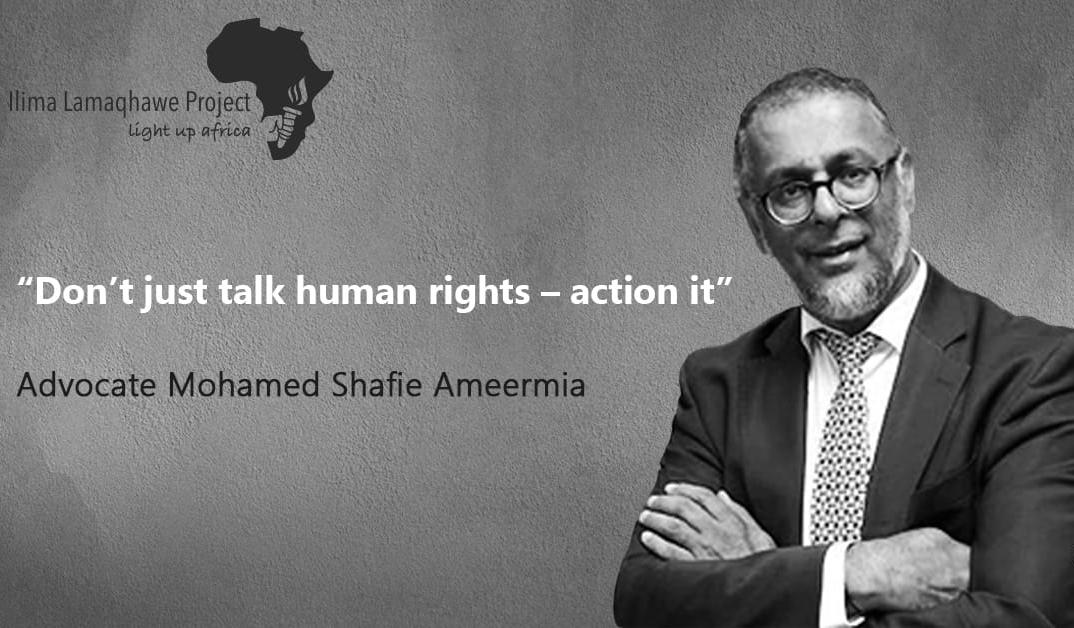
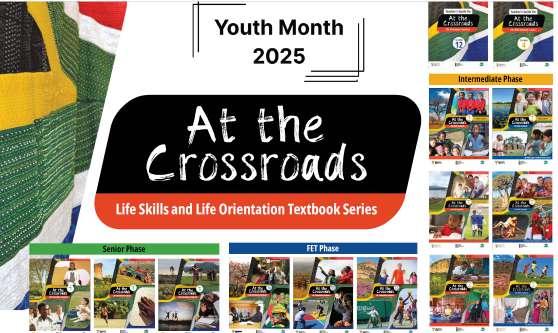
I had the privilege of delivering a keynote message at the official launch of the Life Skills and Life Orientation textbook series hosted by the Department of Basic Education (DBE), where I expressed strong support for this important educational milestone. I commended the DBE for its continued commitment to strengthening the schooling system through the development of updated learning materials that embed life orientation and life skills in a meaningful and structured way. This initiative reflects a significant step toward deepening constitutional awareness and civic education among learners.
I emphasised the importance of human rights education as defined under international standards, including the United Nations framework, which describes it as a process of training, dissemination, and information-sharing aimed at building a universal culture of human rights through knowledge, skills, and value formation.
I further highlighted that, within the South African context, human rights education is particularly vital given the transformative intent of our Constitution in addressing historical injustice and advancing equality. I stressed that the mere existence of rights is not sufficient unless individuals are equipped with the knowledge to understand and apply them in their daily lives. I cautioned that without deliberate and sustained investment in human rights education, constitutional rights risk remaining abstract and inaccessible to the majority of citizens, rather than being fully realised as living instruments of justice and empowerment.
I explained that, in the absence of human rights education, “human rights will have a hollow-ring as they will continue to remain the preserve of the legal professionals, policy-makers, legislators and other members of the highly educated elite”. I cautioned that it would be illusory to assume that a Constitution containing expansive rights is meaningful if the people to whom these rights apply do not know that they are entitled to them. Such a scenario would render the Constitution a piece of paper with unattainable promises.
I stressed that to guard against this, constitutional literacy and deeper engagement with the content of human rights must be regarded as non-negotiable. In conclusion I reinforced the importance of embedding human rights education at foundational levels of learning, ensuring that future generations are equipped not only with knowledge of their rights but also with the capacity to meaningfully exercise and defend them.
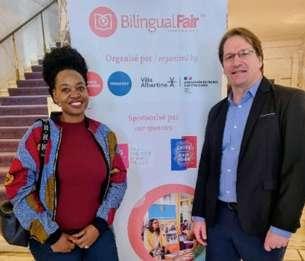
In November 2025, Dr Anna Nkomo participated in National French Week in New York as part of the Centre for the Advancement of Languages, Education, and Communities (CALEC). The event brought together educators and advocates of bilingual education to share ideas and promote multilingual learning. Dr Nkomo contributed to discussions on bilingual education and showcased her work on translanguaging and multilingual literacy in South Africa. The event also highlighted opportunities for collaboration between CALEC and the Wits School of Education through the Read in 2 Languages initiative, creating pathways for Wits students to contribute multilingual stories and resources that support literacy development and biliteracy.
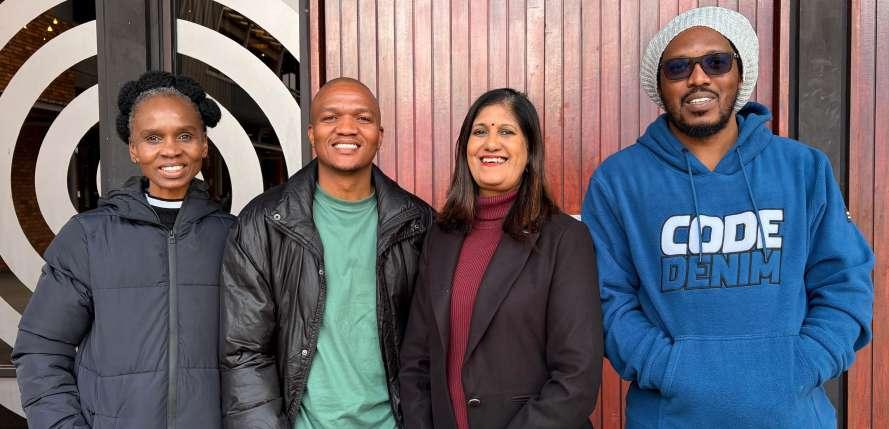
Five staff members successfully completed the full peer review course (Developing Reflective and Constructive Feedback Practice) and received certification as qualified peer reviewers. As certified peer reviewers, they are positioned to support institutional teaching excellence through the implementation of peer review practices in line with the Wits peer review frameworks and processes. Dr Nsele echoes, “Completing the course in Peer Review of Teaching competence has been a transformative experience that deepened my commitment to a pedagogy of care. By attending this course, I have improved vital tools in developing collegial, reflective, and constructive feedback.” Dr Pam Moodley reiterates “peer review is a meaningful mechanism for enhancing teaching practices of colleagues. It encourages the alignment between teaching strategies, learning outcomes, and the development of graduate attributes which includes critical thinking, ethical awareness, and supports reflective teaching, ensuring that teaching practices contribute to the holistic development of graduates.”

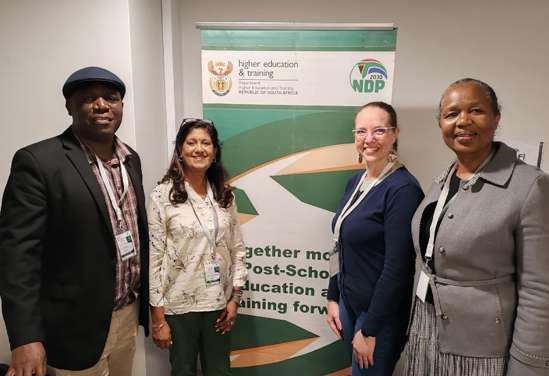
Four WSoE academics, contributed to national discussions on the future of teacher education at the DHET-led National Workshop on Open Learning for Schools of Education. The workshop brought together policymakers, education leaders, and local and international partners to explore open, flexible, and blended learning approaches that address challenges of access, equity, and quality. The WSoE presentations explored open learning models, OER policy frameworks, ethical engagement with AI, and innovative approaches that connect theory with work-integrated learning. A key outcome was the establishment of a national community of practice, further strengthening WSoE’s commitment to collaborative innovation in teacher education.
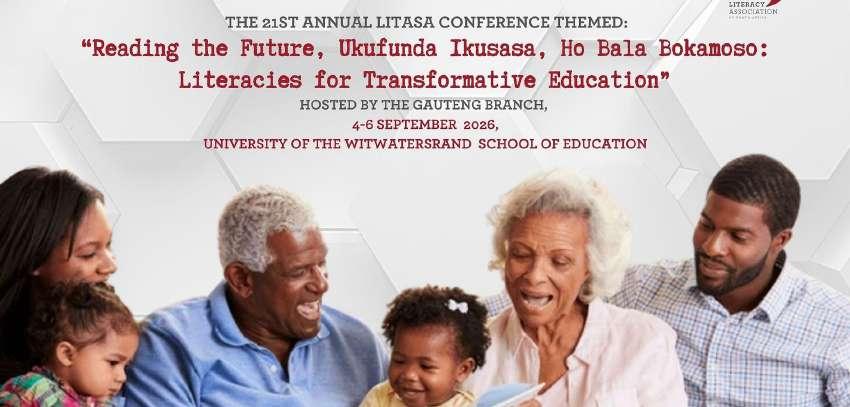
The Wits School of Education will host the 21st Annual Conference of the Literacy Association of South Africa (LITASA) from 4–6 September 2026 under the theme, “Reading the Future, Ukufunda Ikusasa, Ho Bala Bokamoso: Literacies for Transformative Education.” Bringing together researchers, educators, policymakers and community practitioners, the conference will explore how literacy can contribute to equitable, multilingual and socially just futures. Discussions will highlight innovative research and practice in literacy education, multilingual pedagogies, community engagement, assessment and emerging technologies, including artificial intelligence. As LITASA celebrates its 21st anniversary, the conference reaffirms the vital role of literacy in advancing educational transformation and social change. Presenter registration closes on 20 July 2026, while non-presenting delegates must register by 25 August 2026. For more information and registration, visit https://www.litasa.org.za/conference2026


In November, the Wits LCT Hub will host the Sixth International Legitimation Code Theory (LCT6) Conference, bringing together researchers, educators and practitioners from around the world. Running from 23–26 November, the conference will showcase new developments LCT, a framework used to analyse how knowledge is taught, learned and applied across diverse fields. The programme features over 100 presentations, alongside plenary sessions led by WSoE Visiting Professor Karl Maton and Prof Lee Rusznyak. LCT6 places a strong focus on supporting emerging scholars through mentoring and skills-development opportunities. The Wits LCT Hub has already hosted an online session on on conference presentations and turning presentations into published papers. For more information, visit: https://lctconferences.com/
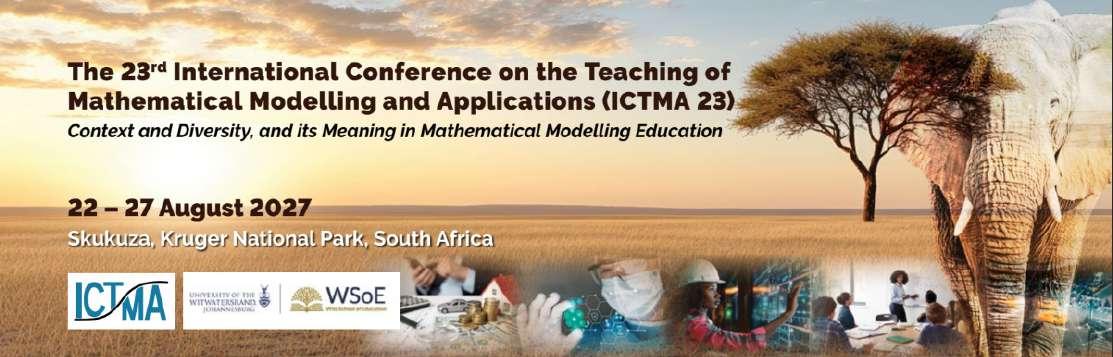
WSoE Hosts the International Conference on the Teaching of Mathematical Modelling and Applications (ICTMA23) in 2027: The event, under the theme ‘Context and Diversity, and its meaning in mathematical modelling’, is being held from 22-27 August 2027 and will bring together researchers and teachers to share ideas and research on modelling in real-world contexts. Dr Rina Durandt – the conference organiser – points out that abstract submissions are now open.
Click here for more information: