





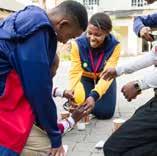


























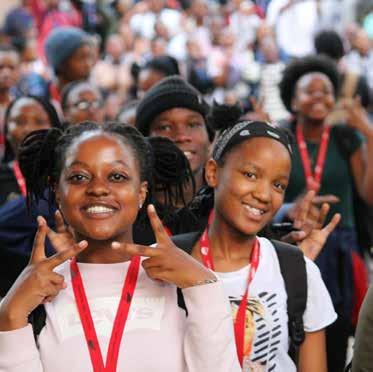




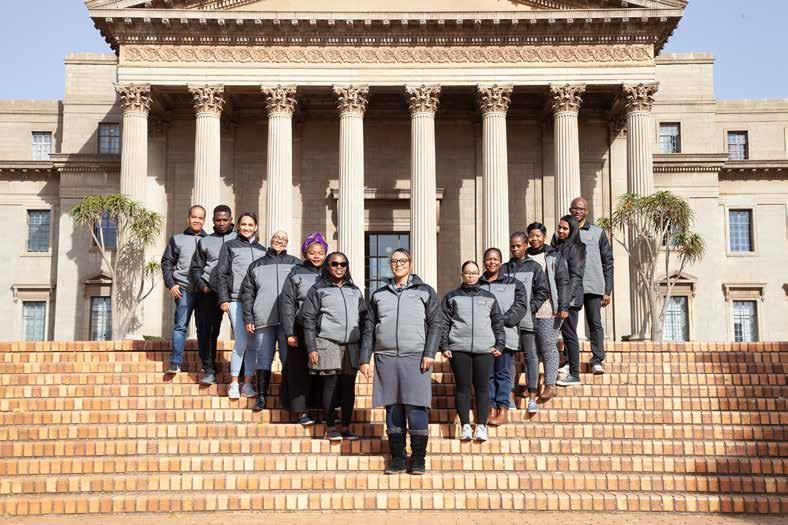
The Student Equity and Talent Management Unit (SETMU), based at the University of the Witwatersrand (WITS), was established in 2007. Its purpose was to assist the University in developing strategic partnerships, which actively contribute to the public good. SETMU currently implements the Targeting Talent Programme (TTP); a pre-university enrichment and supplementation programme which aims to increase the academic, social and psychological development of high school learners with academic potential.
The Student Equity and Talent Management Unit’s (SETMU) Annual Report is intended to provide a broad overview of the activities undertaken by the Unit during the 2019 academic year; this includes the following:
• Provincial visits in the form of family workshops in five provinces in South Africa (Gauteng, Mpumalanga, Limpopo, Free State and North West),
• the March and September Mathematics and Science Supplementation Curriculum (MSSC) Sessions; the June-July Residential Academic Enrichment Curriculum (RAEC) Session; and
• The Annual Educators Enrichment Programme.
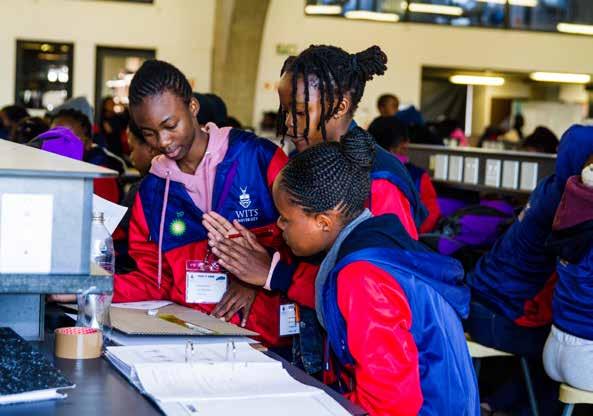
The Targeting Talent Programme (TTP) forms part of an educational community, which requires constantly analyzing our strengths and opportunities to determine how well we are meeting the needs of all learners, teachers and their parents/ guardians. We hope that the 2019 Annual Report will indicate the benefits that can be derived from investing in educational initiatives.
There is no doubt that without the major contribution from corporate, social organisations and Sector Education and Training Authority (SETA)’s, highly innovative and important initiatives such as the TTP would be lost. Such partnerships create and contribute to future social capital. For instance, by investing in the youth before they access higher educational institutions; by providing future skills for a knowledge economy, a company can influence its future talent recruitment and retention practices and as such invest in the creation of future social capital.
This report provides an update regarding the TTP’s success in 2019, how much was invested in the youth, what skills were acquired and the recruitment and high retention rate with the Programme.
Gratitude to all our donors for supporting the TTP.
The University of the Witwatersrand (WITS) states, in its admission policy, that it aims not only to increase the numbers of enrolled students but seeks ways to ensure that those who gain access have equal opportunities to succeed (Admissions Policy: S2003/1714A).
In response to the aim above, the Student Equity and Talent Management Unit (SETMU) seeks to develop interventions that will increase eligibility and access to higher education through identifying and building on existing academic potential in young people, and to encourage and support studies in the fields of Science, Technology, Engineering, Arts and Mathematics (STEAM). The way the Unit does this is through the implementation of its flagship programme, the TTP.
Beyond the challenges regarding access to higher education, research has shown that failure to succeed in higher education is associated, as much, with a lack of familiarity with the university environment and its institutional culture, as with academic capability (Conley, 2008). An increasing concern for South African universities is the lack of preparedness of students for university study and university life, particularly among students from disadvantaged backgrounds (Wilson-Strydom, 2010). It has been argued that there is an important distinction between university eligibility and university readiness – therefore, despite students meeting the access requirements they may still not succeed as a result of not being ready.
In response to these challenges, various universities have implemented ‘access’ or ‘bridging’ programmes, as alternate routes for students from disadvantaged backgrounds to meet the necessary requirements for entrance into university courses.
The TTP seeks to identify learners with academic potential, largely from a broader range of under resourced schools. The Programme, in its thirteenth year of implementation (in 2019), is a pre-university enrichment programme which aims to increase the academic, social and psychological preparation of learners with academic potential, from socioeconomically disadvantaged backgrounds for admission to South African higher education institutions. High school learners from Grades 10 and 11 are selected from various schools across South Africa to attend the Programme until their final Grade 12 year in school.

Programme and Learner Participation Update
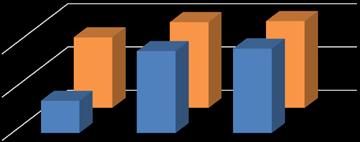
Two-hundred and twenty (n=220) new learners, 100 grade 10 and 120 grade 11 learners, were selected to participate in the Targeting Talent Programme (TTP), in 2019. The Education, Training and Development Practices Sector Education and Training Authority (ETDP SETA) funds the grade 10 learners, grade 11 learners are funded by BPSA Education Foundation Trust (BPSA EFT), as seen in the figure below:
Figure 1: Number of selected learners according to donor
The graph below depicts the number of learners selected, according to sex, per province. The majority of the learners (n=156) are from Limpopo, followed by Gauteng (n=39) and Mpumalanga (n=25).
Figure 2: Number of learners selected to participate in the Targeting Talent Programme (TTP) according to provinces
Number of learners selected according to province
Number of learners selected
Over half (n=150; 68%) of the newly selected learners are female and 70 learners are male (32%).
Figure 2: Number of learners selected to participate in the Targeting Talent Programme (TTP) according to provinces
The retention rate stipulates the percentage of learners retained from one contact session to the next. The retention rates have been calculated for the three contact sessions: the March Mathematics and Science Supplementation Curriculum (MSSC) Session, the June/July Residential Academic Enrichment Curriculum (RAEC) Session and the September MSSC Session that took place in 2019.
The largest complement of active learners at any given moment in the year is during the June-July Residential Academic Enrichment Curriculum (RAEC) Session. For 2019, the number of active learners in June was 636. The number of learners per grade and their respective donor is seen below:
Table 1: Grade distribution of learners active in the Targeting Talent Programme (TTP) in June 2019
The TTP has a footprint across six provinces in 2019. The map below details the provincial donor spread of learners for 2019.
NORTHERN CAPE




The TTP was successfully launched in 2007, with a cohort of 267 Grade 10 learners and 46 of their educators. The learners and educators were from 41 schools across three provinces; namely, Gauteng, Limpopo and Mpumalanga, funded by Goldman Sachs and the Telkom Foundation.
• For the 2010 intake, the TTP was jointly funded by Beyond Petroleum South Africa (Pty) (BP SA) and the South African National Roads Agency (Pty) (SANRAL) for the period, 2010-2012. A total of 191 learners from three provinces namely Gauteng, Limpopo and Mpumalanga completed the Programme.
• During the same period, 94 learners funded by the Limpopo Department of Education successfully completed the Programme.
• The Department of Science and Technology (DST) commenced their funding period from 2011 to 2016; DST funded 830 learners in the Programme.
• In 2013 BP South Africa Education Foundation Trust independently funded learners from 2013 to date. Thus far, BPSA EFT have funded 1250 learners who have completed the Programme as of June 2019.
• The Industrial Development Corporation (IDC) commenced their funding for the TTP in 2011 with 21 learners from Limpopo. In 2015, the IDC re-invested in the Programme and funded 47 learners from eight provinces.
• SANRAL independently funded a cohort of 49 learners in 2013 To 2015.
• In 2016 the Manufacturing, Engineering and Related SETA (merSETA) funded 23 learners, who completed the Programme in June 2018.
• In 2017, PRIMEDIA and Standard Bank funded 17 and 47 learners respectively. These learners completed the Programme in June 2019.
• To date, 624 educators have participated in the Educators Enrichment Programme from 2007 to 2019. The figure below shows the donor profile since the inception of TTP.
*The data from 2010/2011 is not available.
2019 TTP Alumni’s NSC Pass Type
The NSC matric class of 2019 achieved an 81% pass rate, with 37% of these learners accomplishing a Bachelor’s pass (Department of Basic Education1, 2019). The overall TTP learners comprise 0.03% of the total number of NSC matriculants. The matric pass rate for the TTP was 100% and 97% of these learners achieved a Bachelor’s pass rate. The Independent Examinations Board (IEB) results indicate that the IEB learners achieved a 99% pass rate (Eye Witness News (EWN), 2019) and attained a 97% Bachelor’s pass rate, as seen in the figure below (Department of Basic Education1, 2019).
The NSC matric class of 2019 achieved an 81% pass rate, with 37% of these learners accomplishing a Bachelor’s pass (Department of Basic Education1, 2019). The overall TTP learners comprise 0.03% of the total number of NSC matriculants. The matric pass rate for the TTP was 100% and 97% of these learners achieved a Bachelor’s pass rate. The Independent Examinations Board (IEB) results indicate that the IEB learners achieved a 99% pass rate (Eye Witness News (EWN), 2019) and attained a 97% Bachelor’s pass rate, as seen in the figure below (Department of Basic Education1, 2019).
Figure 1: Pass rate and Bachelors Pass rate of the TTP, IEB, and the overall NSC matriculants
Figure 1: Pass rate and Bachelors Pass rate of the TTP, IEB, and the overall NSC matriculants
Pass rate and bachelor admision rates
The aim of the family workshop is to explain the role and purpose of the TTP to the families and educators of the selected learners. The overarching aim is to develop sustainable educational partnership practices across school, families and communities in order to enhance the learning outcomes for the learner. The involvement of family and community members/schools in the education of their children enriches the learning environment and directly contributes to learner achievement. The family supports the learner emotionally and physically and the trust they have in the school to also support their child has a positive impact on the learner’s success and well-being. By parents engaging with learners in the home environment, learners are exposed to positive roles models and their parents are enthusiastic about educational development and progression of their child. Although parents may not possess the necessary academic foundation, the fact that this engagement takes place shows learners that their parents support them in their educational endeavours. Within the South African context, the term “family” is used in this to embrace the diversity of parental and extended family structures. Regardless of parents’ own socio-economic background, experiences in school or their own educational backgrounds, all parents can, and do support their children’s success. For 2019, the Family Workshops occurred on the following dates:
In 2019, the Family Workshops took place on the following dates:

• Mpumalanga Family Workshop: 25 May 2019
• Vryburg Family Workshop 26 May 2019
• Rustenburg Family Workshop: 1 June 2019
• Gauteng Family Workshop: 1 June 2019
• Limpopo Family Workshop: 8 June 2019
Enrichment programmes are learner-centred programmes that target individual learners rather than classrooms or schools. The aim of enrichment is not to impact on a school’s existing curriculum or teaching practices, but rather to supplement and extend a learner’s weekday curricular and extra-curricular experiences. The Targeting Talent Programme (TTP), through both the supplementation curriculum sessions and the Residential Academic Enrichment Curriculum (RAEC), aims to support learners in accessing higher education at South African higher education institutions. The objectives of both sessions are as follows:

Dates
April/September MSSC session
•Reinforce the content learnt at school;
•Teach the learners additional content not yet covered in the school curriculum, and
•Help learners prepare for examinations.

June/July RAEC Session
•Assist learners in reinforcing the content learnt at school;
•Teach learners new content not covered in school;
April MSSC session: 16 - 22 March 2019
June RAEC Session: 23 June - 6 July 2019
September MSSC Session: 21- 27 September 2019
•Instill a good work ethic of studying;
•Motivate and prepare learners to navigate university.
The mentor component is vital for the implementation of the Programme. The objectives of the mentor component for the session include:
• Providing a role of mentorship, motivation and support to the learners
• Providing important information from the grassroots level to programme coordinators with the aim of improving each contact session
• Providing a big brother/sister role to learners
• Providing the role of a guide by accompanying learners to the various venues, updating them on vital programme information and acting as the mediators between the programme implementation team and learners
Secondary objectives of the mentor component include:
• Developing leadership and teamwork skills in mentors
Ninety (n=90) students were selected to mentor TTP learners in 2019. The mentors selected to participate in the Programme are WITS students, in their second year of study and above.
Returning Mentor and TTP alumni
New mentor (First time as a TTP mentor and non TTP alumni)
Returning mentor and non-TTP alumni
TTP alumni
The Educator Enrichment Programme aims to:
• Upgrade the subject specific, subject-didactic and curriculum-specific knowledge of participating educators
• Upgrade the educators’ technical dexterity thus educators will be better equipped to create their own materials for learners
• Assistance in the creation of professional learning communities amongst educators which will assist in the dissemination and generation of knowledge
It is envisaged that the educator enrichment programme will impact on the school through the training of mathematics and science (physical and life science) educators from selected schools and generate knowledge.
72% 9% 9% 1%

Bachelors Diploma
Access r ate (Eligibility for admission to higher education) of the 2019 cohor t = 100%
Total number of Alumni in the 2019 Cohort
REASONS FOR


Programme Director: Dr Zena Richards
Photography: MS pictures
Compilation of Information and Pictures: Ms Linah Sesheba
SETMU Staff Editors: Ms Magabjane Makobe, Mr Malesela Lamola, Ms Arthee Roopnarain
Acknowledgements: SETMU Staff
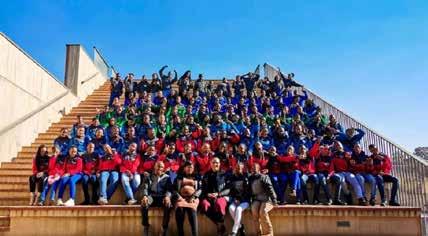
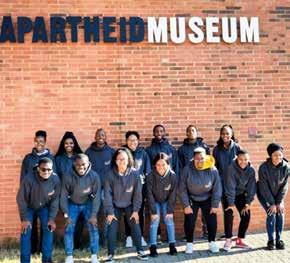
Apartheid Museum Excursion
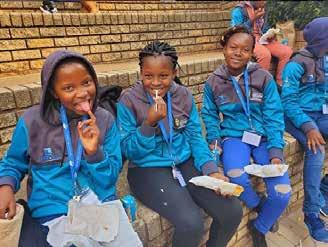
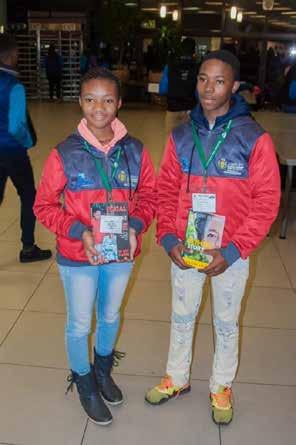
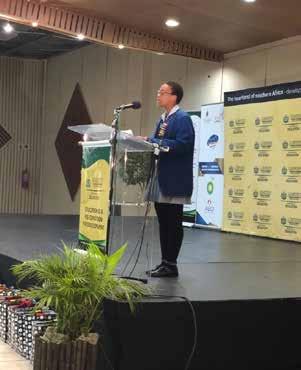
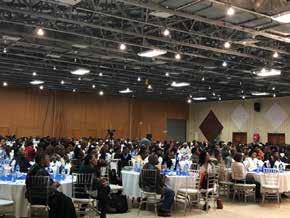
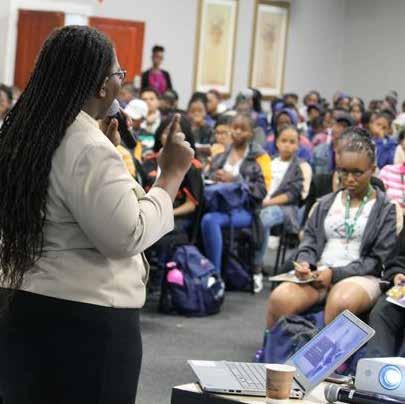
Learners during the RAEC session
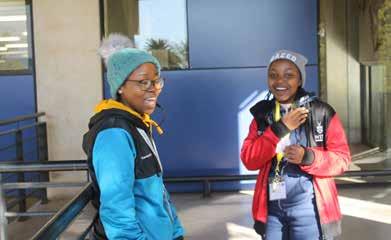
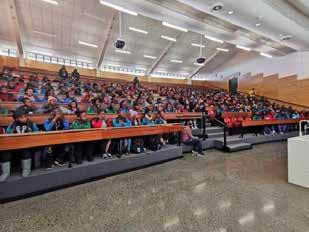
Mentors - Apartheid Musem
Celebration of Work EventRAEC session

Marang Centre, Floor 2
Education Campus
University of the Witwatersrand
Johannesburg
T. +27 (0)11 717 8665
E. ttp.setmu@wits.ac.za
W. www.wits.ac.za/setmu
Facebook: Targeting Talent Programme (TTP)
Twitter: Targeting Talent (@targeting talent)
LinkedIn: www.linkedin.com/groups/12029197/profile