
Clive van den Berg: Porous
This exhibition showcases artworks made by Clive van den Berg over the past four decades. Throughout his career, van den Berg has explored themes of land and love. Porous reveals the artist’s commitment to developing a personal visual language through which he investigates ways of loving, relationships, mourning, belonging, displacement, and vulnerability, working across many mediums. Use this education resource to guide your engagement with the exhibited artworks. The activities in this booklet enable learning about van den Berg’s artmaking practice and ways to express your thoughts about art.
This book belongs to:________________________________________
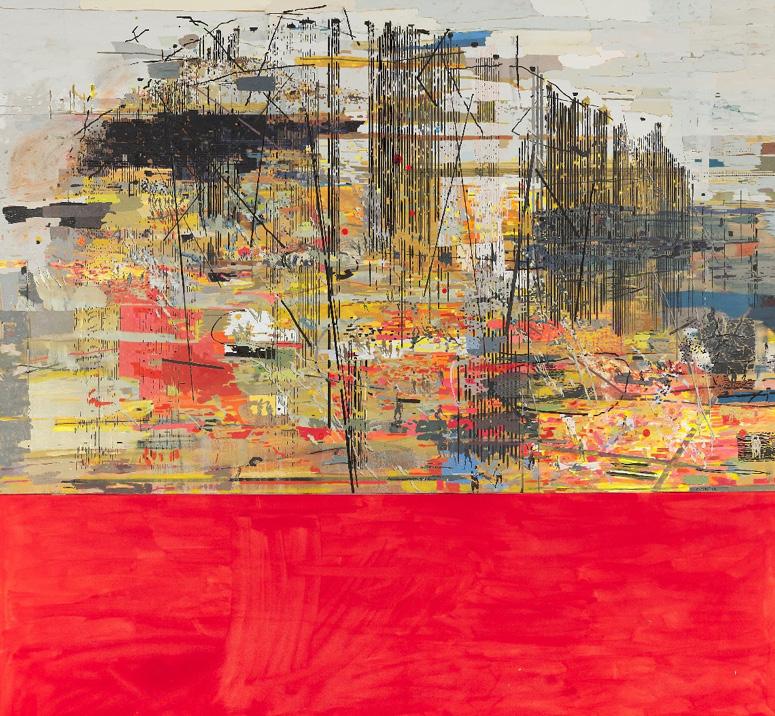
African Landscape VIII (The Big Koppie), 2019, oil on canvas, 270 x 270cm. Private collection.
Clive van den Berg’s Visual Lexicon
Born in 1956, Clive van den Berg’s decades-long career is many-sided. He is an accomplished artist, activist, heritage consultant, researcher, exhibition designer and univeristy lecturer.
Van den Berg’s art is centered around two main themes: love and land. The artist has developed a personal lexicon made of visual elements that he uses repeatedly across his sculptures, paintings, prints and drawings.
Broken, delicate or globular lines, holes, branding, blemishes, scratches, cartographic marks and other repeated elements are among van den Berg’s visual language. The artist uses these elements to map the complexities of love, loss, and landscapes; and to speak out against homophobia and other human rights injustices in South Africa and abroad.
Glossary
A lexicon is the complete set of meaningful units in a spoken language; all the words of that language. In visual language, the lexicon is made from all the marks that make up the image.
Cartographic means related to the science or practice of drawing maps.
Homophobia is the fear, hatred, discomfort with or discrimination against people who are lesbian, gay or bisexual.
Stigmatised means being treated unfairly and discriminated against.
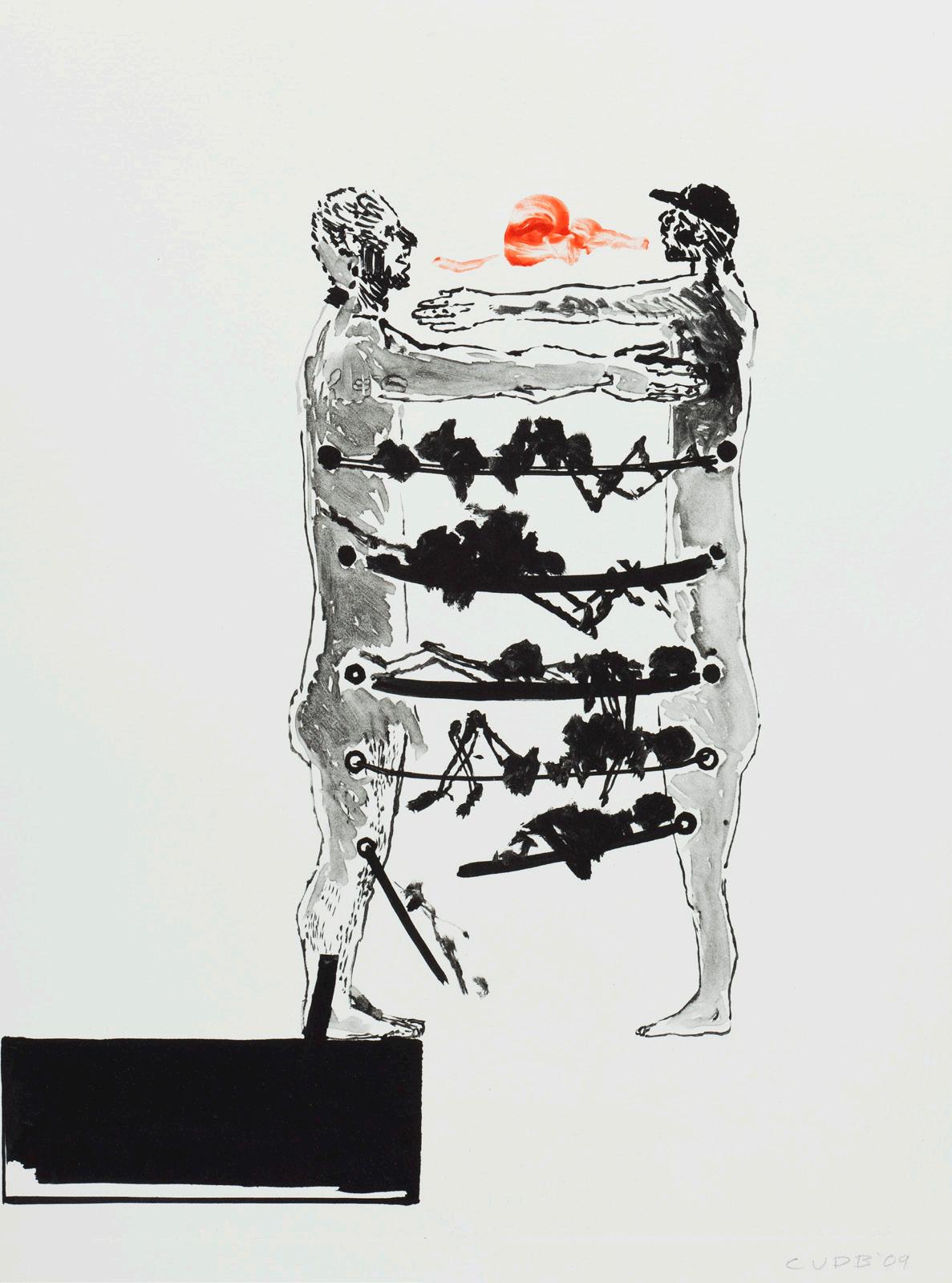
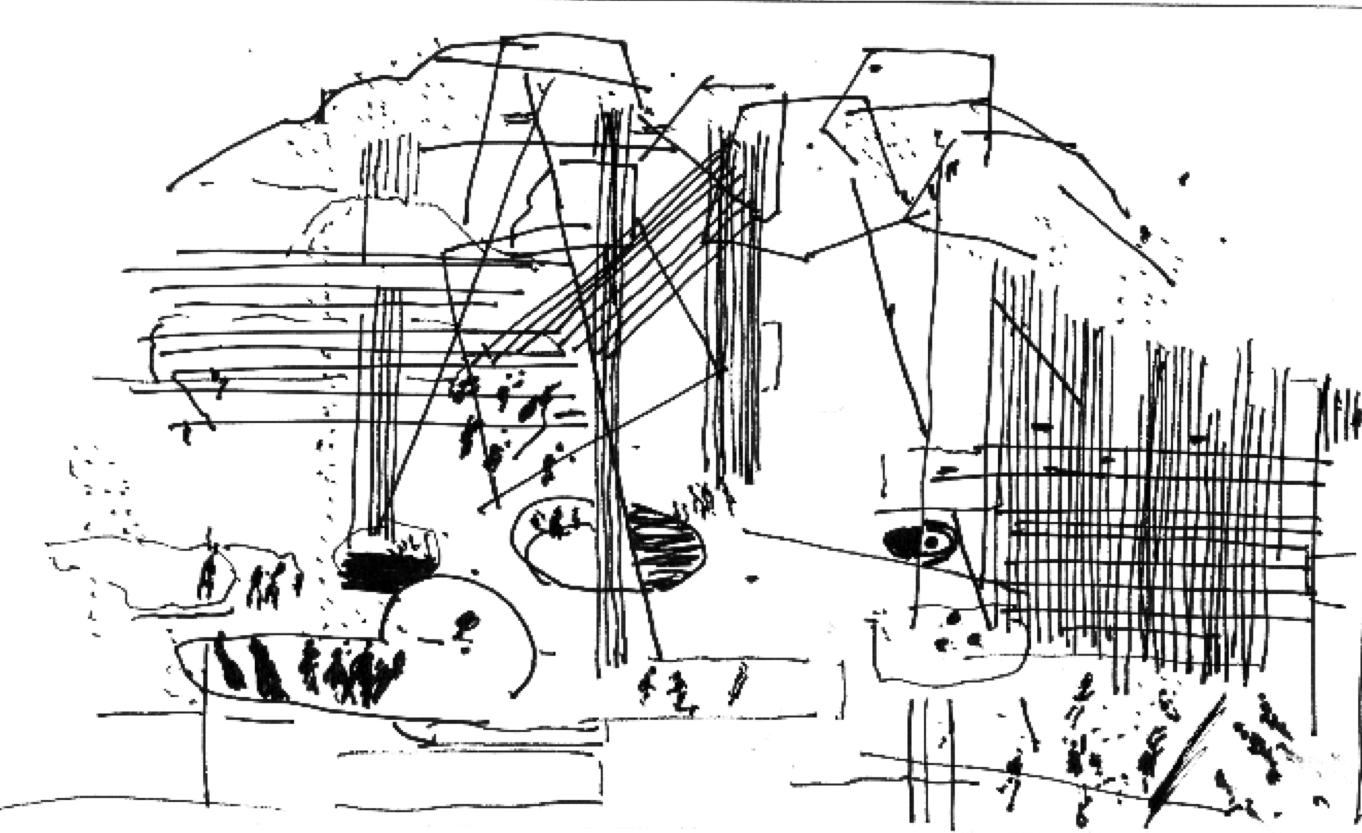
Above: Speaking Love, 2008, monoprint. Private collection. Below: Sketchbook drawings in preparation for African Landscape VIII (The Big Koppie).
Clive van den Berg’s interest in finding a visual language for love and mourning is partly inspired by his experiences of love and loss, during the early days of the HIV and AIDS pandemic. In the late 1980s and early 1990s, before it was known that HIV is a virus transmitted by the exchange of bodily fluids, and before there were treatments like there are today, it was incorrectly thought that HIV was a homosexual disease, spread when men had sex with each other.
Van den Berg says “from that time I began to re-imagine my body as a porous thing, vulnerable to an invisible and incomprehensible threat…medicine meant nothing and the words gay and plague, were joined. And yet we found ways to love, knowingly, in the face of accumulating threats to our health and identity.”
Fear of HIV increased homophobia. Homosexual men were stigmatised because of their sexuality, and peoples’ fear of HIV. The invisible, and at that time, still uncontrollable disease meant that the most intimate act of love had become potentially deadly. The ghosts of friends, lovers and strangers who died from AIDS haunt van den Berg’s works, like Lovers With Room For a Ghost, 2008. Ghosts give presence to those who have gone before us, thereby signalling their absence.
Let’s draw and describe
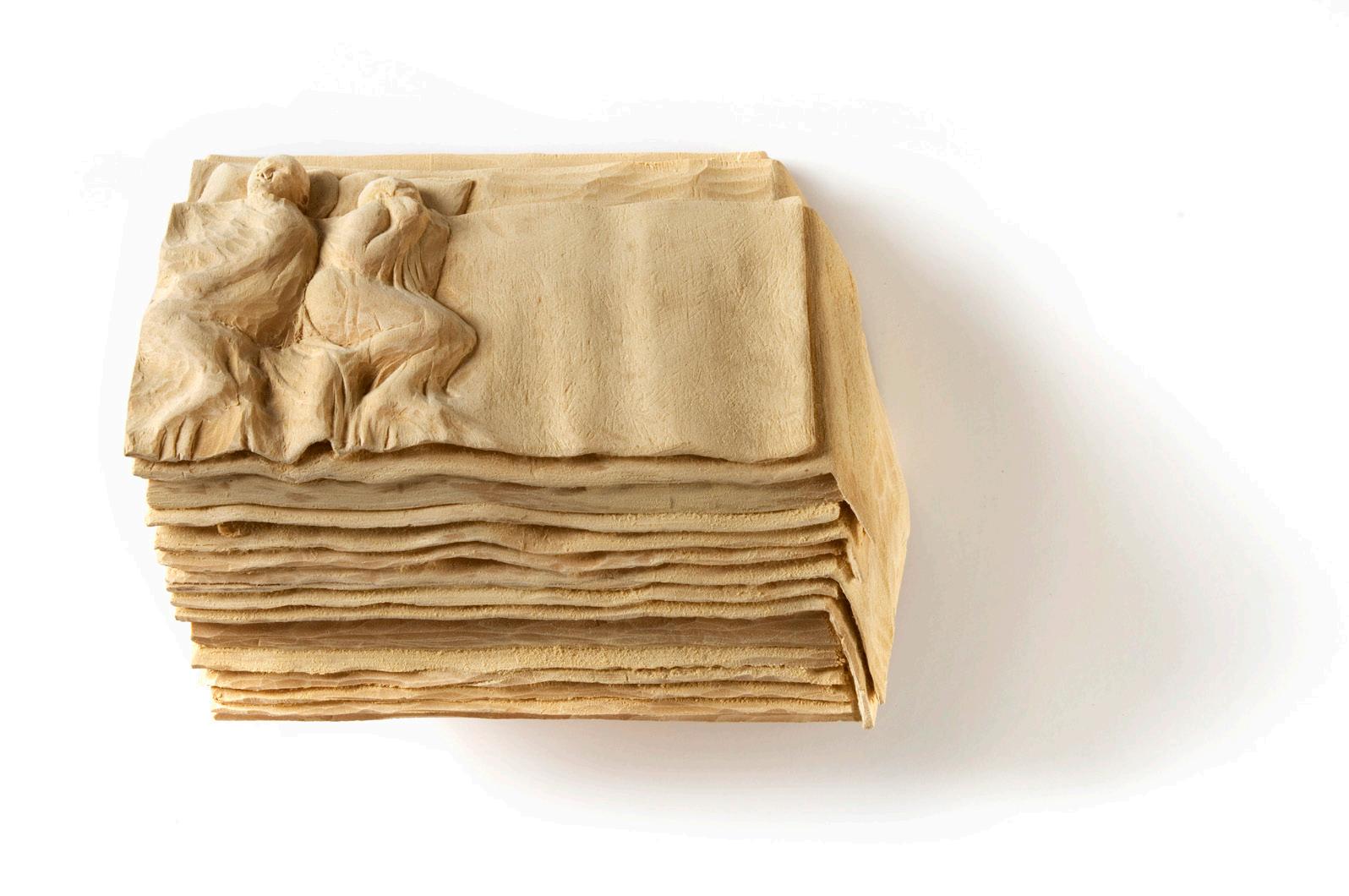
Imagine you are a cartographer making a map of the surface of one of Clive van den Berg’s sculptures. Choose a sculpture, and then draw the map you need to navigate the surface valleys, folds and hills here:
Top: Lovers With Room For a Ghost, 2008. Wood, wax, 18.5 x 25.5 x 14cm. Jack Ginsberg Centre for Book Arts Collection. Right: Sketchbook drawing in preparation for Meeting in Limbo.
Porous Surfaces
Porous means having minute spaces or holes through which liquid or air may pass. To be porous means having a boundary that is not secure. The opposite of porous is impermeable, which means solid and resistant.
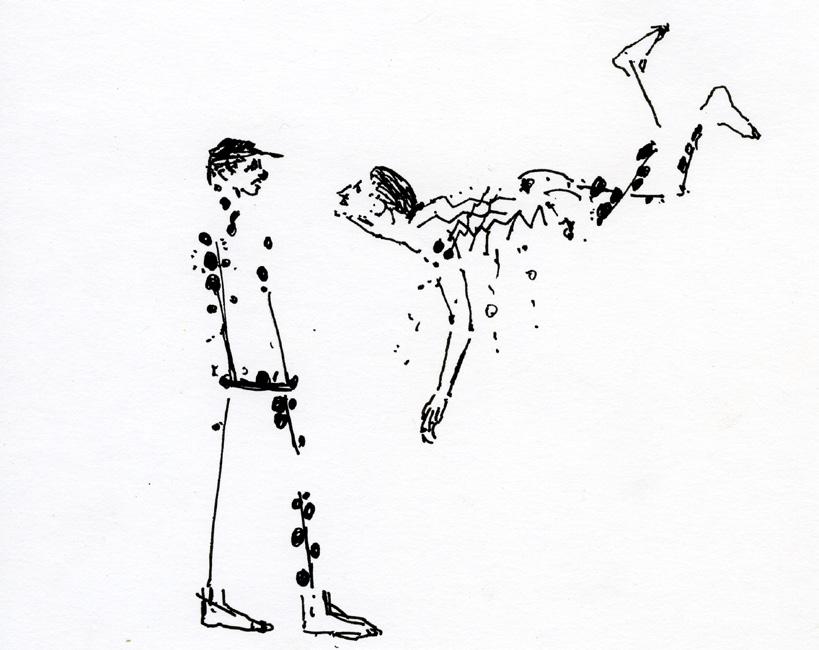
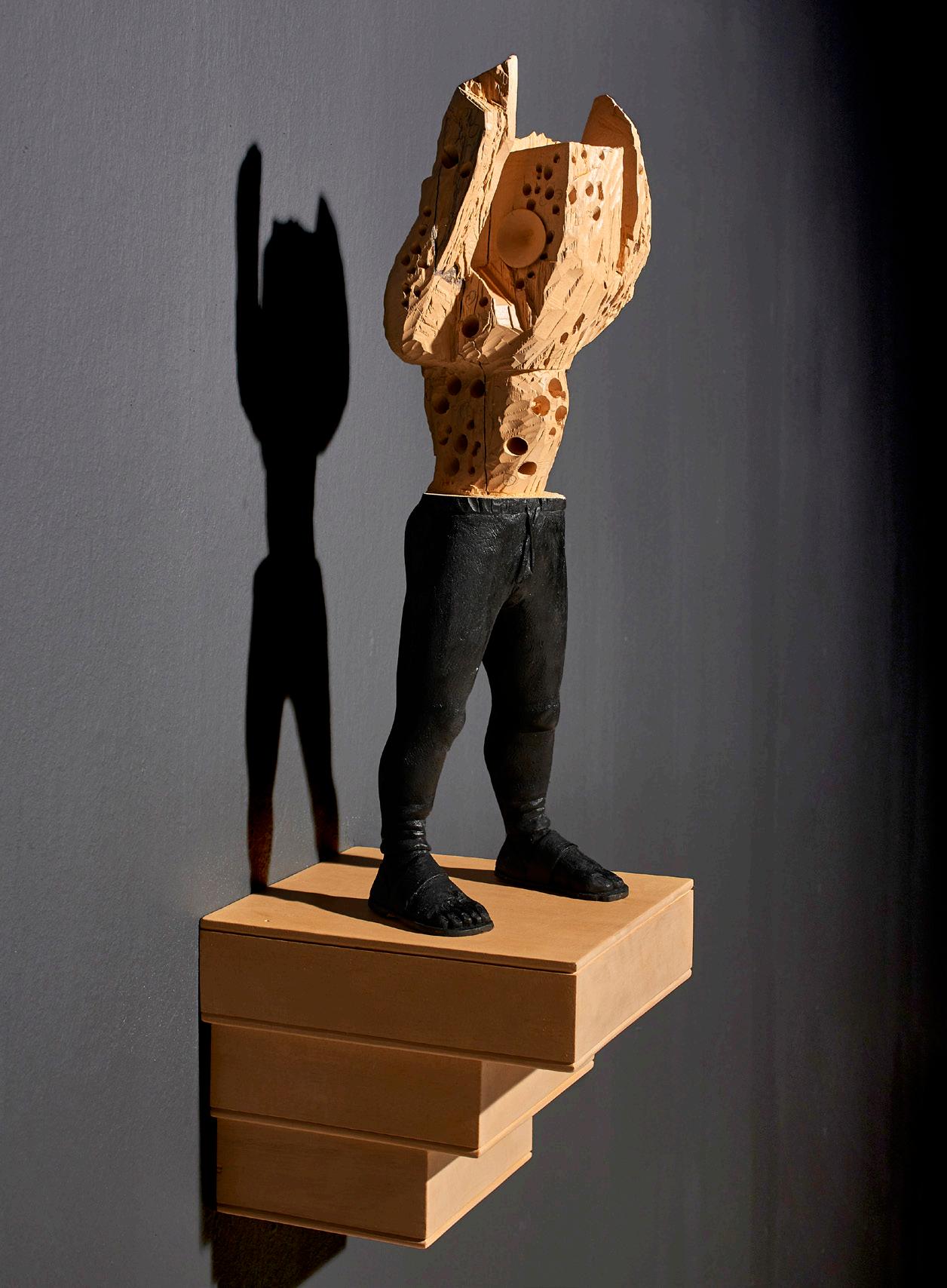
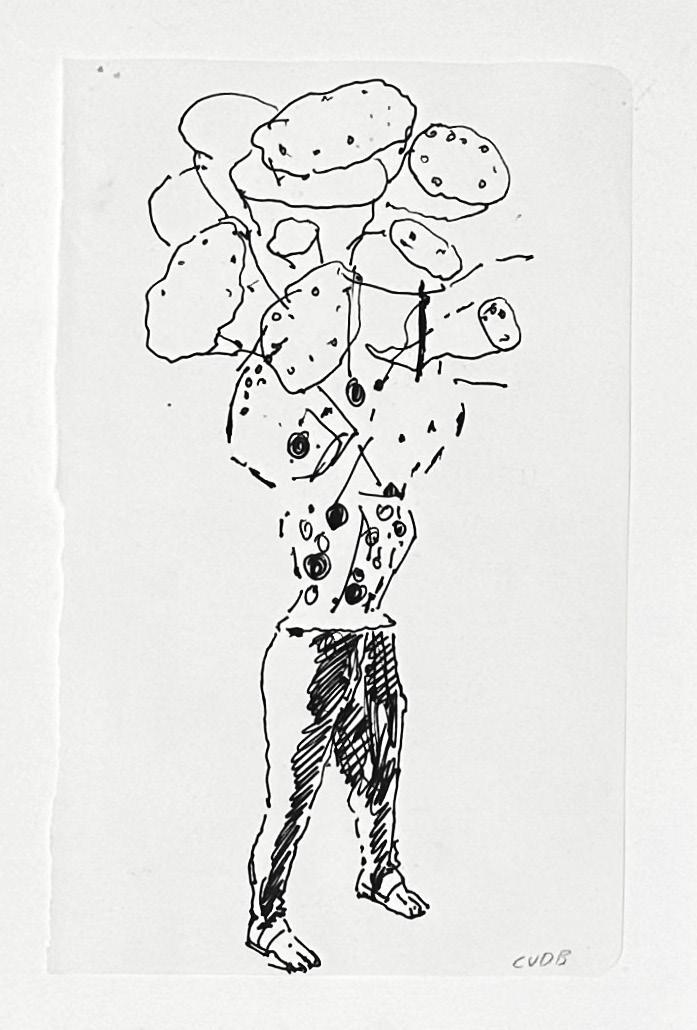
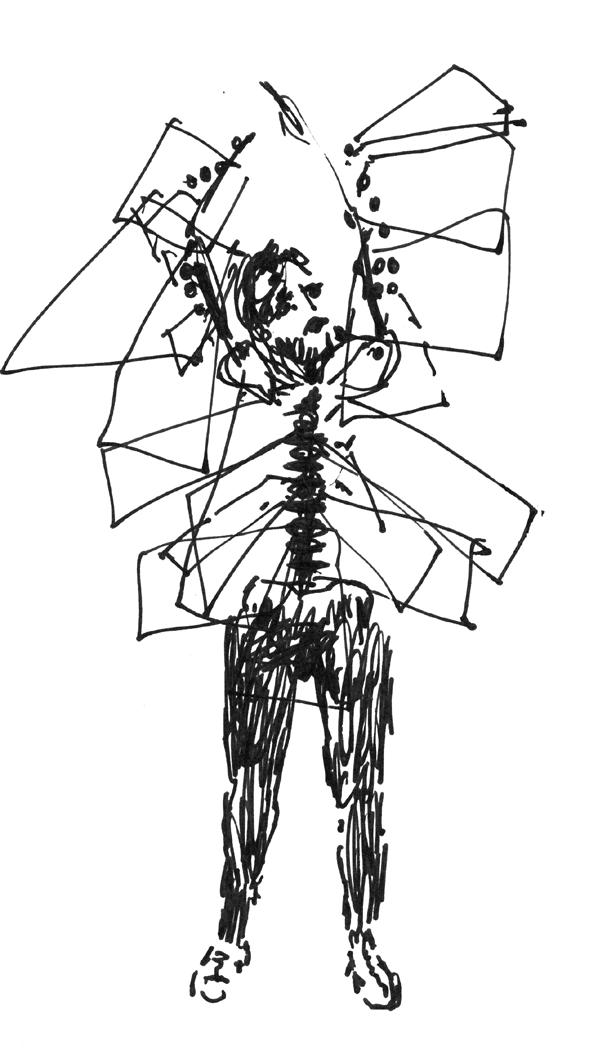
For the artist, the HIV virus revealed the human body to be vulnerable and porous. The pockmarks and blemishes that are part of van den Berg’s visual lexicon are signs of the vulnerable, defenseless body. Figure in Disguise I, was created in 2016 as part of a series of works made in protest against the public killing of homosexual men by the Salafi jihadist group, the Islamic State of Iraq and Syria, commonly known by its acronym, ISIS. The holes, scars and scratches on the torso expose the bodies’ vulnerability.
Clive van den Berg explores strength and resistance to injustice through his themes and choice of materials. He uses soft jelutong wood, canvas, and paper: all porous, yet sturdy materials. When carving wood, he uses his chisel slowly and deliberately, to carefully shape the surface of the material to his imagination. Each mark made in the wood is an act of care, even though the artist must penetrate the wood to make the mark.
Let’s talk
Why do you think the artist chose to leave the torso rough, seemingly incomplete in comparison to the legs of this sculpture? What does the title FigureinDisguiseI mean for you?
Figure in Disguise I, 2016, wood, wax, pigment, 60 x 18 x 15cm (above) and preparatory sketchbook drawing, ink on paper, 20 x 12.5cm (below) Presented in 2017 by Jack Ginsberg to Wits Art Museum.
For Clive van den Berg, the surface of the land is porous, like the surface of a body: like skin, the surface of the land is a site on which and to which things happen. The land is penetrated, injured, mined, excavated. These are all violent actions that take place on, as well as under the surface. Just as scars reveal the bodies’ past trauma, so the traces of excavation left on the land are traces of the damage done to the land. On this page are a range of artworks made by Clive van den Berg in the 1990s, in which he explored the relationship between representing the land, and using the land as a site for making artworks.
Glossary
To be in disguise is to give oneself a different appearance in order to conceal identity. To be in disguise is a form of hiding.
Let’s find
Find an artwork in which the artist depicts porous barriers:
Write down the Title of the work: ___________________
Date: ___________________
Medium : ____________________
Explain the reason for your choice:
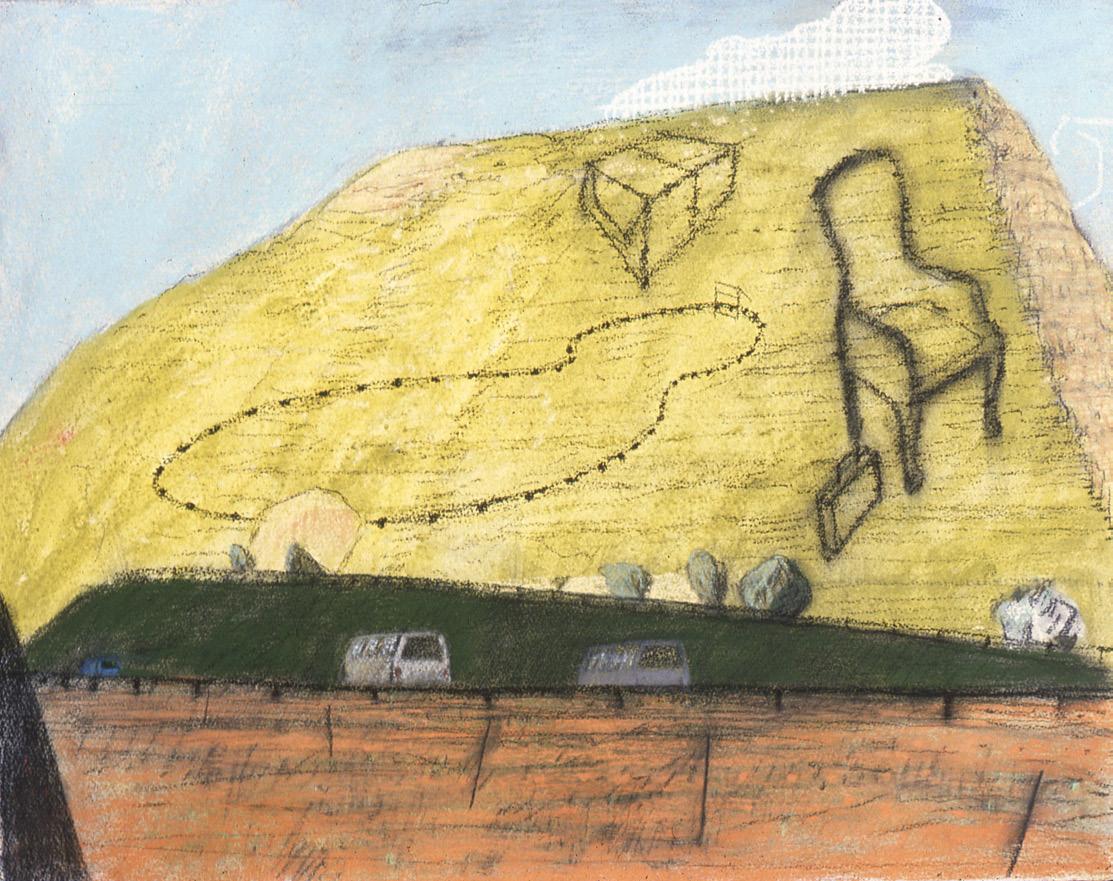
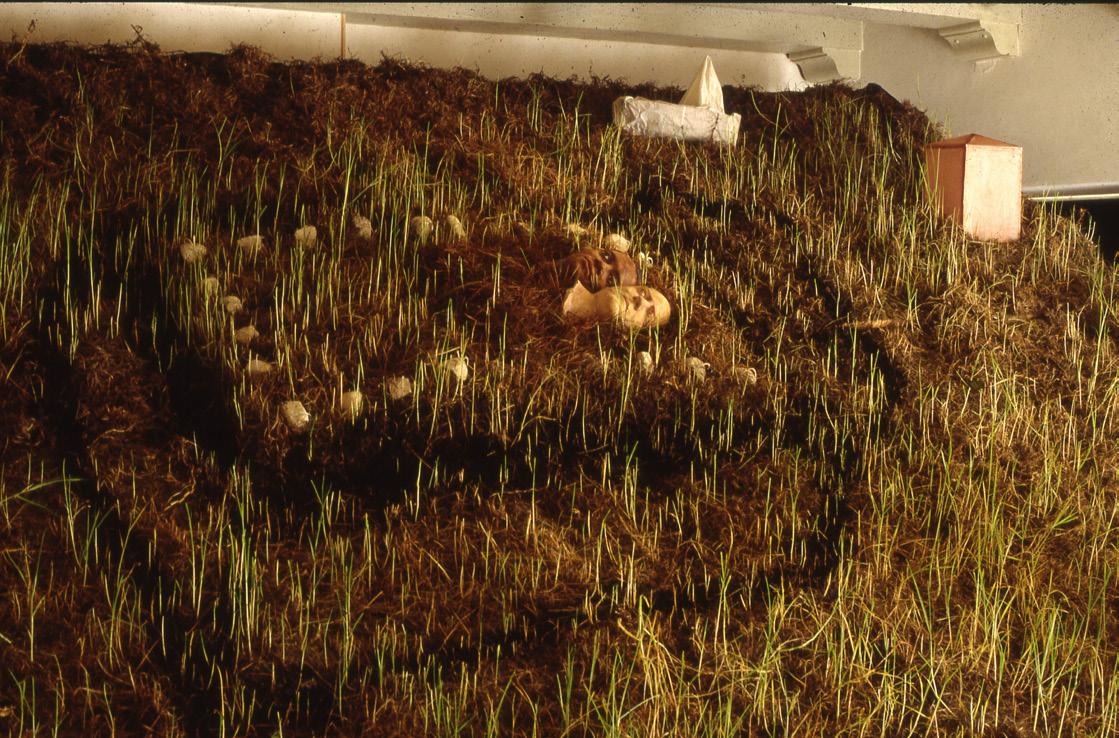
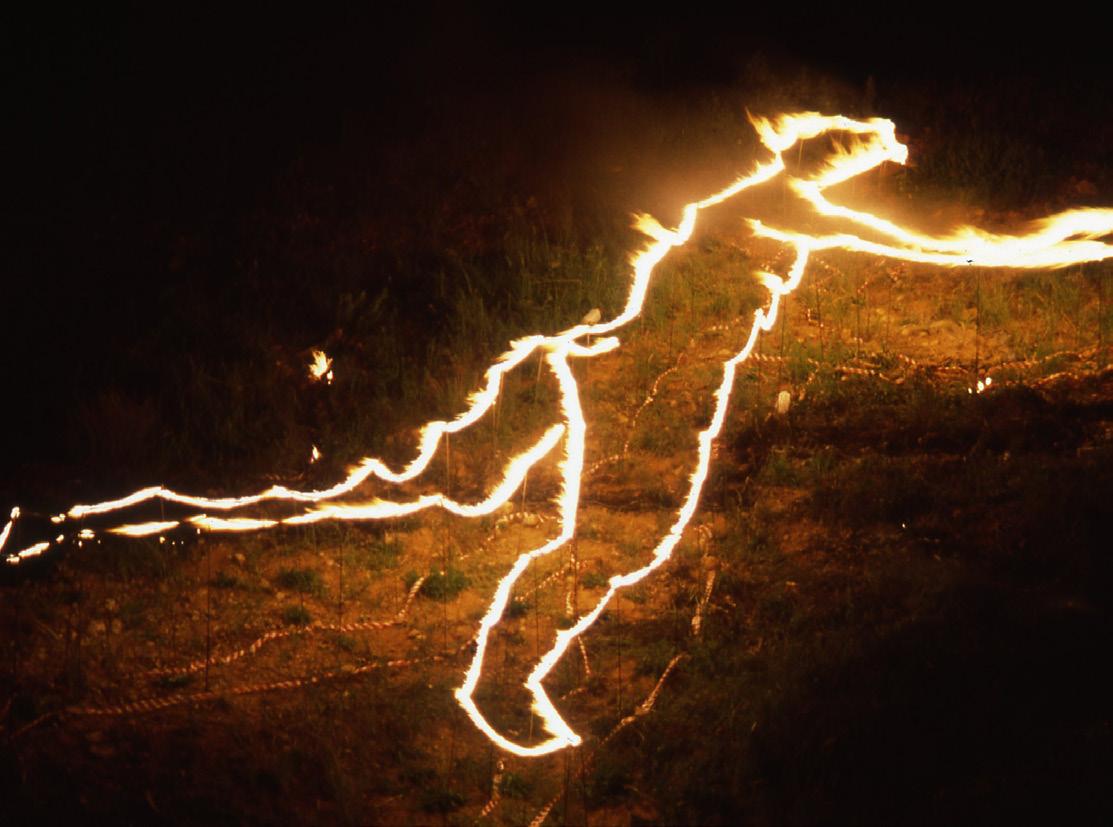
Top: Drawing in preparation for Sometimes Histories of Time, Johannesburg Biennale, 1995; Middle: Installation view of Men Loving, Fault Lines exhibition, Cape Town Castle, 1996; Bottom: Installation for District Six Sculpture Festival, 1997.
Multiple Perspectives
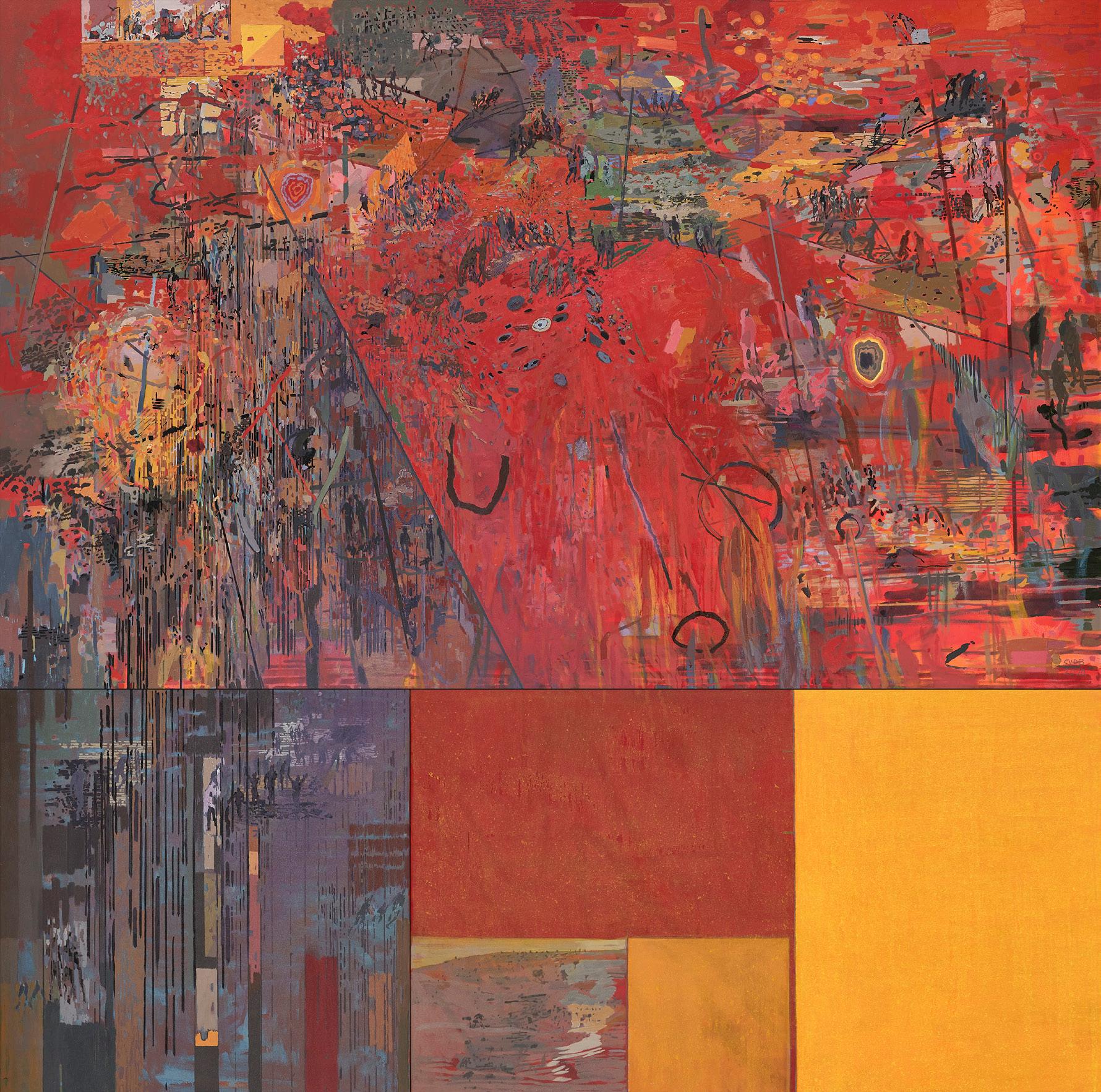
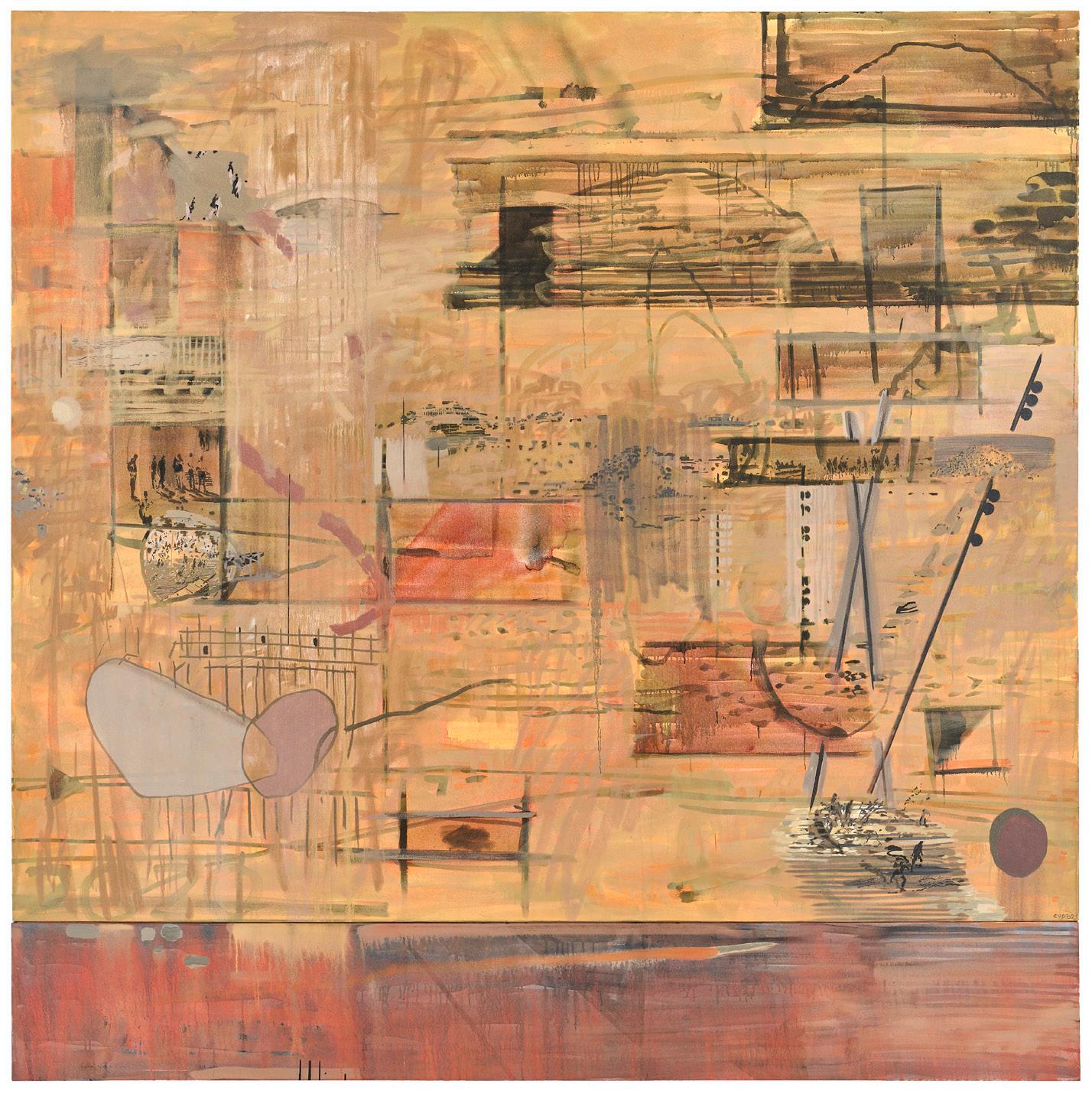
Clive van den Berg combines multiple points of view In his landscape paintings. In traditional western landscape painting, artists used one-point perspective to represent three dimensional objects on a flat surface. This enabled the artist to imagine the position from which the viewer would see the landscape, as if the viewer was part of the scene. By contrast, van den Berg’s use of multiple perspectives makes it impossible for the viewer to know where they are standing in relation to the scene.
This disorienting way of representing landscapes can be seen in African Landscape XII (Gold Below) 2020, a large work made up of several panels. Some panels are detailed, inviting close looking while other panels are made of pure fields of colour, better seen from a distance. To see the whole painting the viewer must engage physically with the painting, shifting position, bending down as well as craning up to see details.
African Landscape XII (Gold Below), 2020, oil on canvas, 280 x 280cm. Courtesy of Clive van den Berg and Goodman Gallery.
Glossary
Perspective is the art of representing three-dimensional objects on a twodimensional surface. Perspective indicates an attitude towards something; a point of view.
Something that is disorienting causes us to lose our sense of direction.
The marks and blemishes that appear in van den Berg’s figurative drawings and sculptures are visible in the artist’s landscape paintings. When painting, he combines quick gestures with blocks of colour, scratching into the paint in some areas, letting the paint pool in other parts. Dotted lines and cartographic elements as can be seen in African Landscape XVII (Seep), 2021, show what is above and below the surface of the land. By using these elements of his visual lexicon, the artist visually compares the surface of the land to skin on the body, revealing the permeability and vulnerability of the land.
Let’s change our perspective
Look carefully at AfricanLandscapeXII(GoldBelow), 2020¸ and write down five things you see:
Then, change your position, look from another angle, and write down another five things:
Repeat this activity until you run out of things:
What difference, if any, does changing our perspective when looking make?
African Landscape XVII (Seep), 2021, oil on canvas, 270 x 270cm. Private collection.

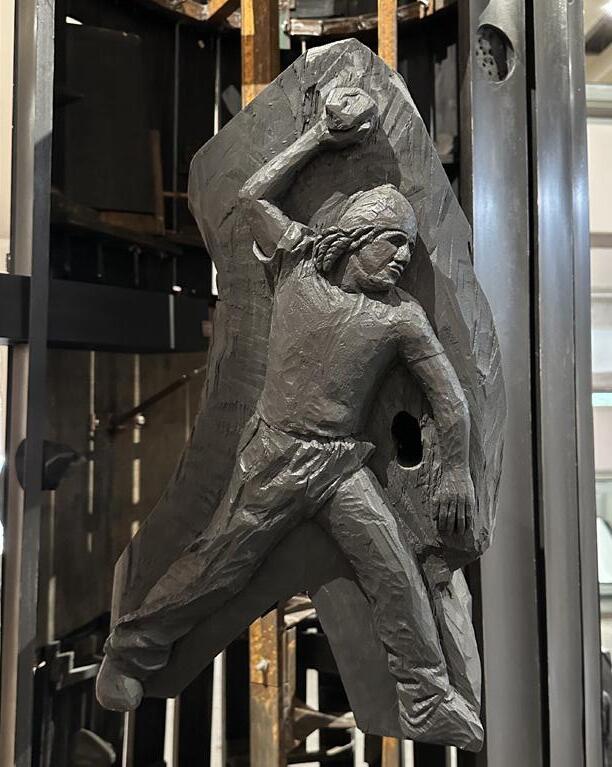
In Memoriam: They Threw Them, 2017, wood, pigment, steel, 103 x 70 x 30cm. Private collection
Let’s look and sketch
Memorialisation and Remembrance
Throughout his career Clive van den Berg has honored and celebrated love between men that is villified and criminalised. In Memorium: They Threw Them, 2016 is a large carved sculpture, that looks like a casket, coffin or sarcophagus. The work is a memorial to the individuals represented on the sculpture, who was murdered by public execution by ISIS for being homosexual.
The meticulous attention to detail in the relief carving positions the artist as witness, mourner and truth teller. The artist does not look away. The beauty with which he has represented the atrocity makes the viewer pay attention. Van den Berg invites the viewers to reflect on violence, murder, and injustice. He has found a way around the audiences’ numbness to shocking images.
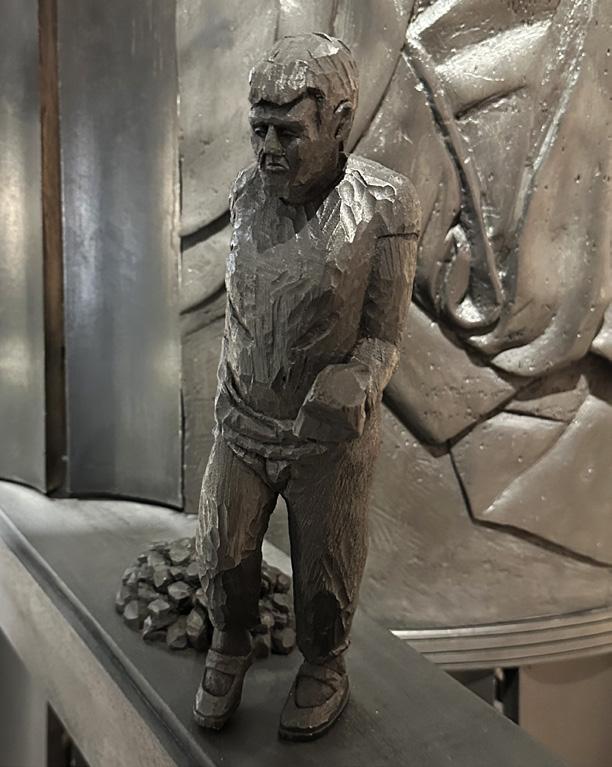
Man Loses History, 2011 explores the loss of knowledge and history, as archives are damaged or forgotten when not recorded.
Look carefully at InMemoriam:TheyThrewThem, 2017. Sketch some of the marks, shapes and forms you see, then write down some adjectives to describe the marks you made:
Marks
Adjectives
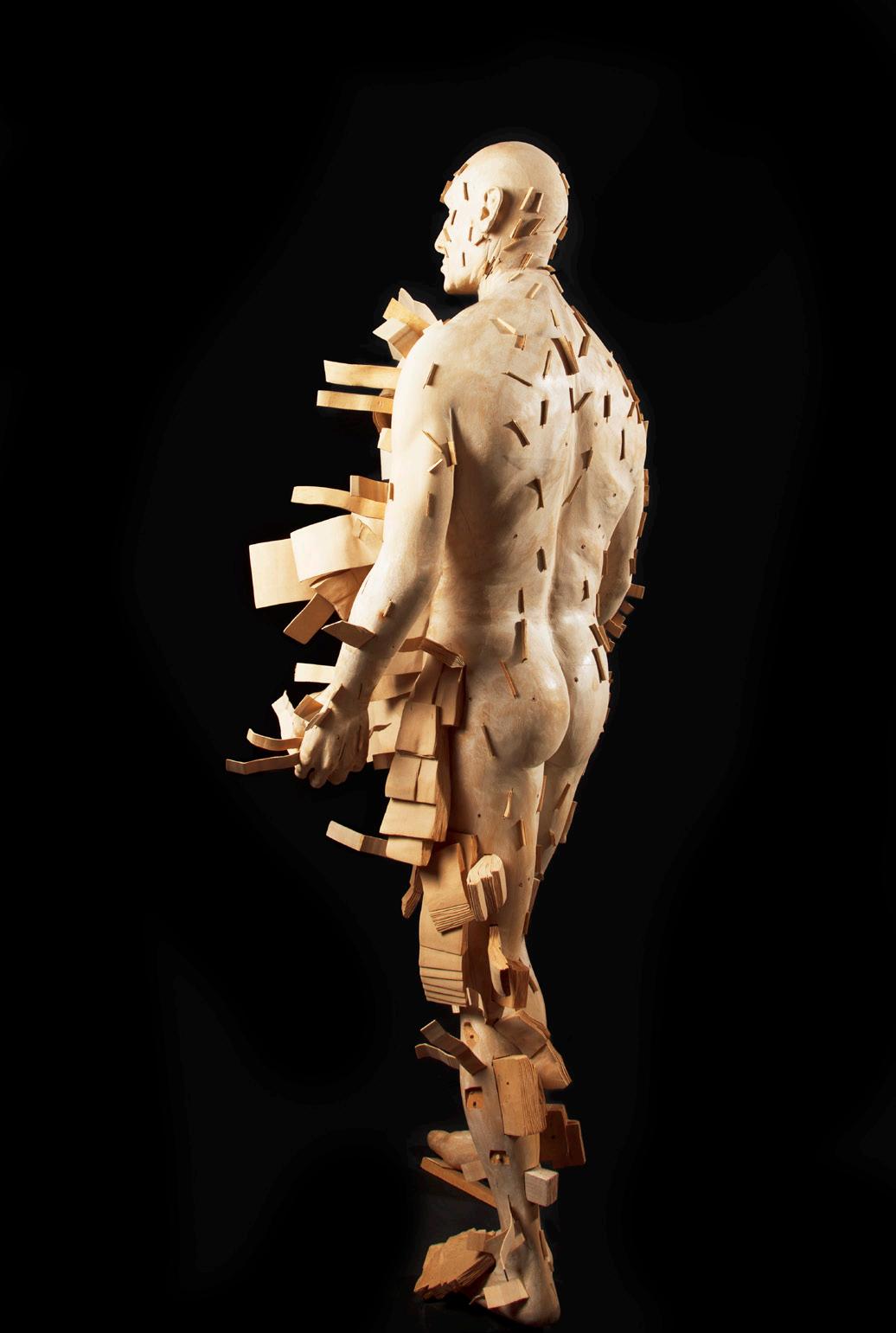
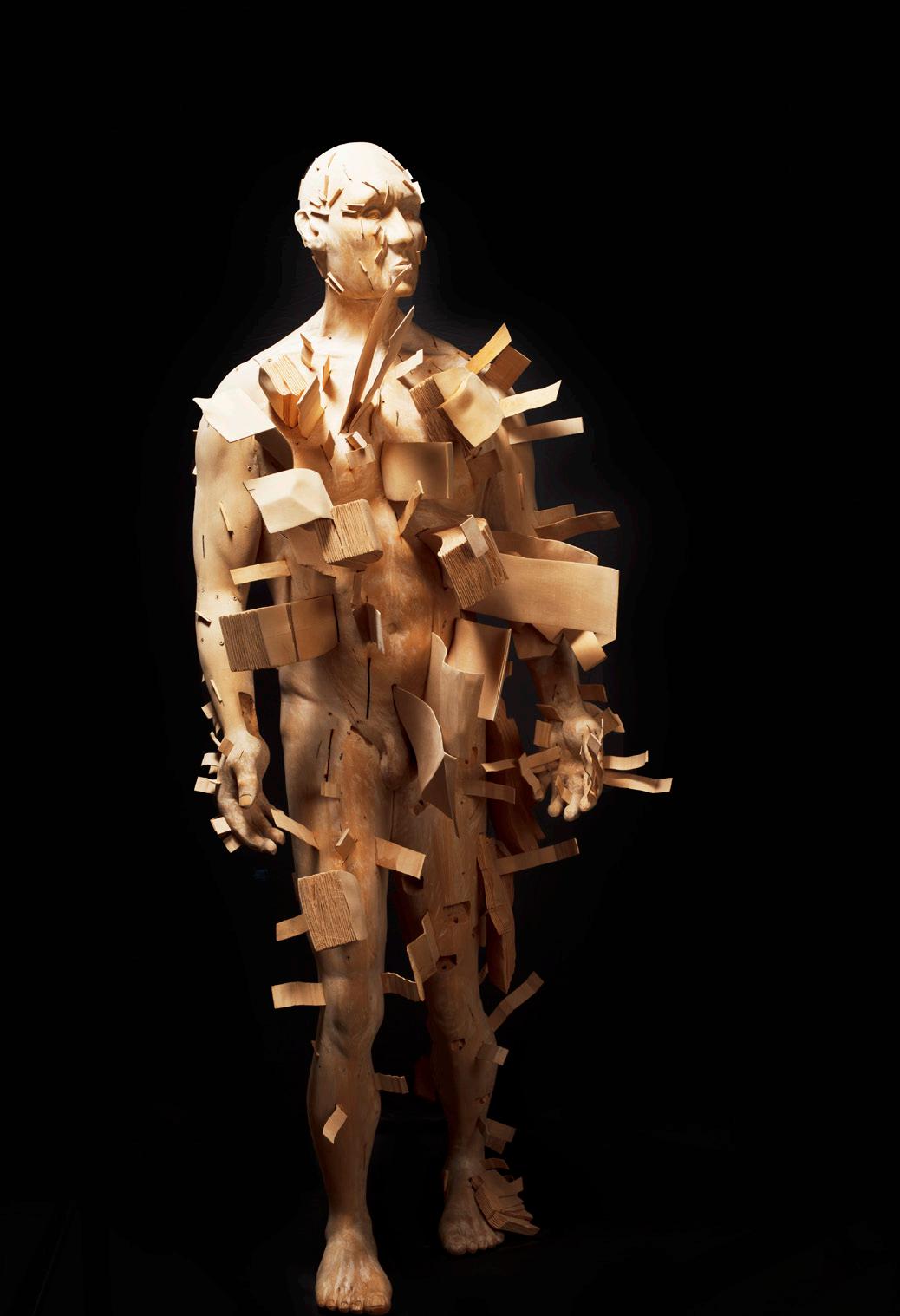

The sculpture of a wounded man presents the urgent need to preserve witnesses’ stories’ of events which should not be forgotten. It is a reminder of the responsibility of museums and memorials to help tell the stories which were once suppressed.
Drawing is a significant part of van den Berg’s art making practice. He believes strongly in the discipline of drawing every day. He uses drawing to think, to plan, and to express ideas.
Let’s compare
Compare ManLosesHistory, 2011 with it’s preparatory sketch. How does the sketch relate to the sculpture? What are the benefits of starting with a sketch?
Glossary
A sarcophagus is a stone coffin.
A memorial is a statue or structure created to remind people of a person or event
A relief sculpture is a sculpture that projects in varying degrees from a two-dimensional background
Man Loses History, 2011, wood, pigment, wax, 176 x 70 x 60cm and preparatory sketchbook drawing, ink on paper, 20 x 12.5cm (below). Wits Art Museum collection.
Looking as if Through the Eyes of Others
Look carefully at the artwork on the facing page, and then write down your answers to the questions below, in the spaces provided:
What do you see?
What does the structure remind you of?
Describe some of the sculptural elements attached to the main structure:
What is the relationship between the relief elements?
What personal connections can you make with this work?
What do you think the artist is trying to say to audiences?
In what ways do your family remember those who have passed away?
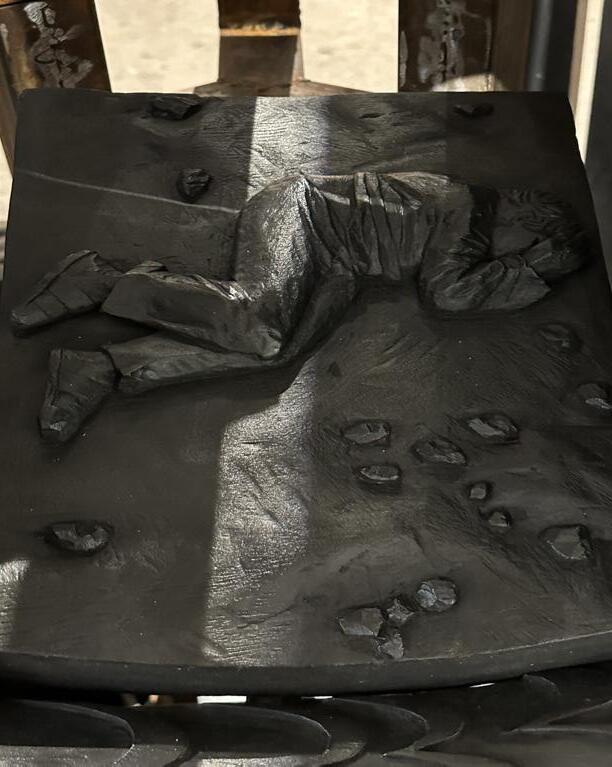
Details of A Pile of Stones, 2016, installation of wood, steel, pigment, 320 x 160 x 160cm. Private collection.
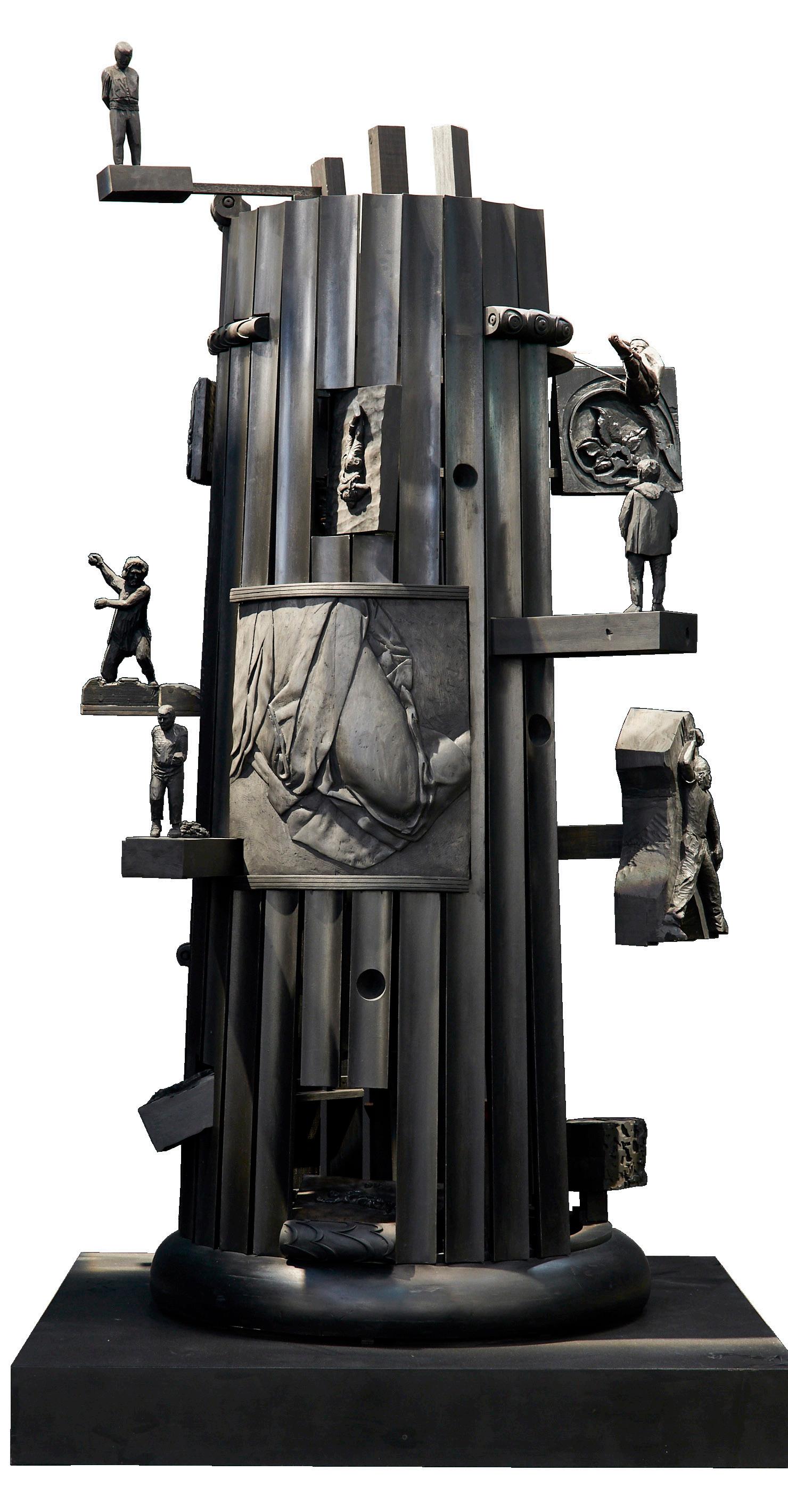
A Pile of Stones, 2016, installation of wood, steel, pigment, 320 x 160 x 160cm. Private collection.
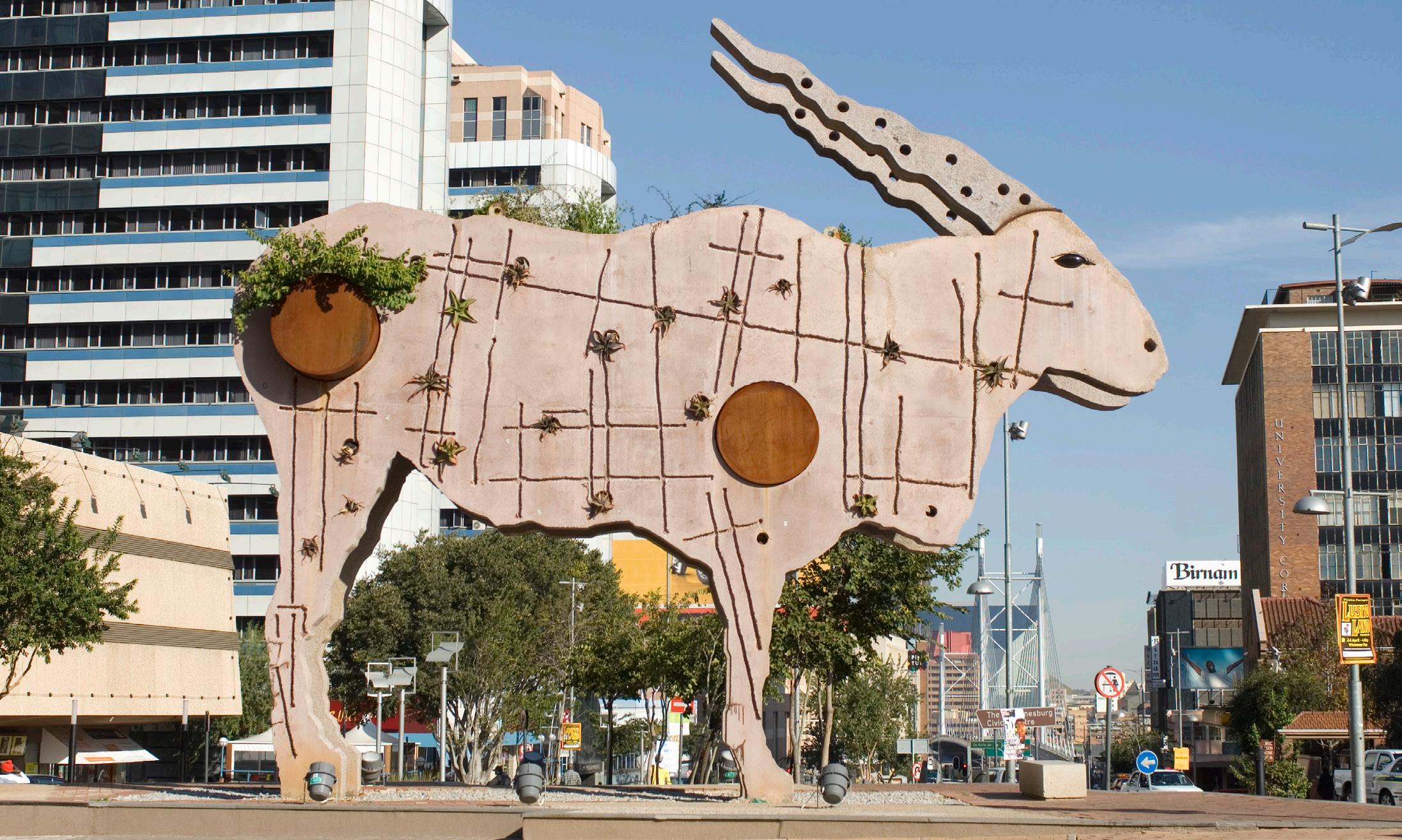
Clive van den Berg, Eland, 2007, cast concrete, metal, indigenous plants, height: 550cm. Corner of Bertha and Ameshoff Streets, Braamfontein. Commissioned by a partnership between the Johannesburg Development Agency (JDA) and the Braamfontein Business Improvement District
Do you notice that this public sculpture has elements of Clive van den Berg’s visual lexicon?
Clive van den Berg stated that Eland, 2007 placed at the entrance to Braamfontein is
“an emblem that prompts reflection on our relationship to the past, and to the interconnectedness of environmental, cultural and spiritual destinies.”
Let
WAM know what you think
Share your reflections about the exhibtion with us by posting on WAM’s Facebook page: www.facebook.com/witsartmuseum. or on Instagram: @witsartmuseum_wam
#Clivevandenbergporous #witsartmuseum
This education resource was written by Alison Kearney and edited by Julia Charlton. It was produced by Wits Art Museum to accompany Clive van den Berg: Porous, 27 August - 26 October 2024. Design and layout by NativeJoint.
(BID)