DSI-NRF Centre of Excellence in Human Development
Individual and Society

DSI-NRF Centre of Excellence in Human Development
Individual and Society

As the world navigates the COVID-19 waves, the socio-ecological impact on the lives of people continues unabated. In the midst of widespread and increased unemployment, widening inequality, and deterioration of a collective global empathy, many have found themselves battling declining mental health in response to the threats posed by the pandemic. With national vaccination rates steadily on the rise, the new SARS-CoV-2 Omnicron variant (B.1.1.529) was first reported to the World Health Organisation from South Africa on 24 November 2021. The resurgence of the now mutated virus has catapulted the world into a frenzy of shock and panic, with devastating economic, social and geo-political consequences. Calls by President Cyril Ramaphosa to utilise scientific evidence for decision-making rang loud in his Address to the South African nation on 28 November 2021. This national governmental narrative in support of scientific evidence allowed the space for the CoE-HUMAN to enhance our national footprint, the CoE-HUMAN is now part of the body of Anchor Institutions within the National Data Policy Observatory (“NPDO”) As a national structure, the NPDO reports scientifically based research around topical national issues directly to the National Coronavirus Command Council (“NCCC”) and the National Joint Operational and Intelligence Structure (“NATJOINTS”).
Notwithstanding our support to our COVID-19 Grantee Projects, the CoE-HUMAN also continues to fund Grantee Projects focused on the Fourth Industrial Revolution; Climate Change and Rural Development. In relation to the latter, we would like to extend our congratulations to Prof Monde Makiwane on his recently published book, Reflections from the Margins – Complexities, Transitions and Developmental Challenges: The Case of the Eastern Cape Province, South Africa.
We would also like to take this opportunity to honour a stalwart of the CoE-HUMAN, Distinguished Professor Richter who was bestowed the National Research Foun-
dation Lifetime Achievement Award in 2021. Congratulations Linda! In addition, we congratulate CoE-HUMAN Associate Professor Tamsen Rochat for her appointment on the Wellcome Trust Population and Public Health Discovery Advisory Group. All the best, Tamsen!
We are happy to report that our nationally representative baseline study – South African Human Development Pulse Survey 2021 – is now completed. The survey investigates South African specific Human Development Indicators – social vulnerability, early child development, mental health, food insecurity and coping with food insecurity, tobacco and alcohol use, and intergenerational attitudes. Study findings will be released in early 2022.
Adolescence is a time of rapid changes in both physical growth and development and cognitive and emotional capacities. Nutrition has a formative role in the timing and pattern of puberty, with consequences for adult height, muscle, and fat mass accrual, as well as risk of non-communicable diseases in later life. Research has shown that the lifestyle choices teenagers make can have an effect of the health of their future children. In December, the Lancet Adolescent Nutrition Series launched at the Tokyo Nutrition for Growth Summit 2021, with the involvement of CoE-HUMAN researchers in the series.
The CoE-HUMAN’s other achievements are documented in the facts and figures of this report, and in the appendices, where we show our achievements measured against our Service Level Agreement with the National Research Foundation. We thank you for your continued support and interest in the CoE-HUMAN. We will endeavor to continue to provide scientifically based evidence to inform decision-making at local, national and international levels, and to provide an-ever present, relevant and meaningful service to South Africa and building excellence in the field of human development
Prof Shane Norris
Director: DSI-NRF Centre of Excellence in Human Development (COE-HUMAN)
Prof Shane Norris (Chair) | Director
Prof Norris is Director of the DST-NRF Centre of Excellence in Human Development and Director of the MRC/Wits Developmental Pathways for Health Research Unit, Department of Paediatrics, at the University of the Witwatersrand. He is an epidemiologist with research interests that include child growth and development, obesity, and inter-generational risk of metabolic disease.
Associate Professor Nicole de Wet-Billings | Department of Demographic and Population Studies, University of the Witwatersrand
Prof. De Wet-Billings holds a PhD degree in demography and population studies from the University of the Witwatersrand. She is currently an Associate Professor of Demography and Population Studies, Social Sciences and Assistant Dean for Research in the Faculty of Humanities at Wits. She has received research grants from the National Research Foundation, the Female Academic Leaders Fellowship (FALF), the British Academy’s Newton Foundation Grant and from CoE-HUMAN. In 2018, she was awarded a Y2-rating by the NRF and named by the Mail & Guardian as one of its 200 Young South Africans of the year.
Associate Professor Malose Langa | Senior Lecturer, School of Human and Community Development, University of the Witwatersrand
Dr Langa is a Senior Lecturer in the School of Human and Community Development at the University of Witwatersrand and Associate Senior Researcher at the Centre for the Study of Violence and Reconciliation (CSVR) in South Africa. He has published book chapters and journal articles on violent crime, substance abuse, problems facing former combatants and masculinity. His research interests include risk-taking behaviours amongst young people and their role in politics, the trauma of collective violence and the psychology of men (masculinity) in post-apartheid South Africa.
Dr Shelley Macaulay | Genetic Counselling Manager, National Health Laboratory Service and University of the Witwatersrand
Dr Macaulay’s research interests lie within the field of clinical genetics and the developmental origins of health and disease (DOHaD). She holds a Master’s degree in Genetic Counselling and a PhD in Clinical Epidemiology, both obtained from the University of the Witwatersrand. She is the Genetic Counselling Manager at the National Health Laboratory Service in Johannesburg, and a lecturer in the Division of Human Genetics at Wits. She oversees the provision of genetic counselling services to patients in Johannesburg’s academic hospitals and holds consultations with patients and families who have, or are at risk of, genetic conditions.


Prof Shanaaz Mathews | Director of the Children’s Institute, University of Cape Town
Prof Mathews has extensive experience in the women’s and children’s sectors and has worked within civil society organisations, as an academic, and as an advocate for the rights of women and children. Prof Mathews is a faculty affiliate of the Care and Protection of Children (CPC) Learning Network at Columbia University and has served as an International Advisory Board member for the UNICEF Innocenti Research Office. Her research interests include violence against women and children, as well as pathways to violent masculinities using both qualitative and quantitative approaches, with a particular focus on understanding gaps in the child protection system and alternative models of treating trauma in low-resourced settings. She holds a PhD in Public Health from the University of the Witwatersrand.
Prof Zitha Mokomane | Associate Professor, Department of Sociology, University of Pretoria
Prof Mokomane holds a PhD in Demography from the Australian National University. Before joining the Department of Sociology at the University of Pretoria she was a Chief Research Specialist in the Human and Social Development Research Programme at the Human Sciences Research Council. Her research interests and expertise lie in the field of the work-family interface with a specific interest in child, adolescent, and elder care; social protection; social evaluation of policy options; and family demography.
Dr Siphelo Ngcwangu | Senior Lecturer, Department of Sociology, University of Johannesburg
Dr Ngcwangu is a senior lecturer in the Department of Sociology at the University of Johannesburg. His research interests are industrial sociology, skills development, political economics, trade unions, labour studies, work restructuring and education. He is involved in a collaborative project on Higher Education, Inequality and the Public Good in four African countries: South Africa, Ghana, Nigeria and Kenya, which is supported by the National Research Foundation, the UK Economic and Social Research Council (ESRC) and the Newton Fund. He was previously a researcher at the Centre for Researching Education and Labour (REAL) at the University of the Witwatersrand.
Prof Ratele is a professor at the University of South Africa and a researcher in the MRC-Unisa Violence, Injury and Peace Research Unit. He runs their Research Unit on Men and Masculinities as well as the Transdisciplinary African Psychologies Programme. His research, teaching, social-political activism, and community mobilization has focused on the subject of men and masculinity as it intersects with violence, class, traditions, sexuality, parenting and race. He is former chairperson of Sonke Gender Justice, currently a member of the Ministerial Committee on Transformation in South African Universities, and current convener of the National Research Foundation’s Specialist Committee for Psychology Rating Panel. His books include There was this goat, Liberating masculinities, and The world looks like this from here (forthcoming, Wits University Press).
Prof Aryeh D. Stein (Chair) | Professor in the Hubert Department of Global Health of the Rollins School of Public Health at Emory University
Prof Stein has a joint appointment in the Department of Epidemiology at Emory University in the USA. He is a member of the faculty of the Nutrition and Health Sciences program of the Laney Graduate School of Arts and Sciences. In his research, he identifies critical periods of susceptibility to nutritional deficits and surfeits using intervention trials and natural experiments such as war-induced famine to study the role of prenatal and childhood nutrition on the development of adult chronic disease and cognitive achievement. He obtained his B.Sc. in nutrition from the University of London, and his MPH and PhD degrees, both in epidemiology, from Columbia University in New York City.
Prof Zané Lombard | Associate Professor in Human Genetics, University of the Witwatersrand
Zané obtained her PhD in Human Genetics and Bioinformatics in 2008, under the supervision of Prof Michele Ramsay in the Division of Human Genetics (Wits University & NHLS). Her PhD research focused on a bioinformatics approach to disease-gene discovery. She is currently a Principal medical scientist and associate professor in the Division of Human Genetics, where she heads the Research laboratory and the Research & Development team in the Department. Before this she worked as a Senior Lecturer in Bioinformatics in the School of Molecular & Cell Biology, also at Wits. Zané is passionate about promoting science in Africa, and therefore participates in several academic service domains at University, national and international level, like the SA Society for Human Genetics and the H3Africa Consortium.
She currently is the PI of the H3Africa NIH-funded project called Deciphering Developmental Disorders in Africa, which was started in 2017. The aim of the study is to evaluate how new sequencing technologies can be used effectively in the diagnosis of rare genetic diseases to enhance the service we can offer to patients in the public healthcare sector.
Prof Kofi Marfo | Director of the Institute for Human Development at the Aga Khan University in Nairobi
Prof Marfo was previously Professor of Educational Psychology at the University of South Florida in Tampa, USA, where he founded the Center for Research on Children’s Development and Learning. He also served as Director of the Doctoral Program in Special Education. Prior to that, he taught at Kent State University, Memorial University of Newfoundland (Canada), and the University of Cape Coast (Ghana). He currently serves on the Institute of Medicine’s Forum on Investing in Young Children Globally. Dr Marfo holds a BEd (Hons) from the University of Cape Coast, Ghana, and an MEd and PhD from the University of Alberta, Canada.
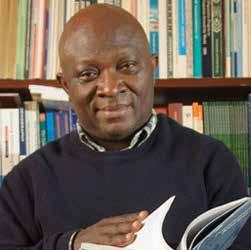
Prof Julian May | Director of the DSI-NRF Centre of Excellence in Food Security at the University of the Western Cape
Prof May has worked on options for poverty reduction including land reform, social grants, information technology and urban agriculture in Africa and in the Indian Ocean Islands. He has also worked on the development and use of systems for monitoring the impact of policy using official statistics, impact assessment and action research. His current research focuses on food security, childhood deprivation and malnutrition. He has been an associate researcher at Oxford University, the University of Manchester and the International Food Policy Research Institute. He currently serves on the South African Statistics Council, is a Member of the Academy of Science in South Africa, is the President of the South African Development Studies Association and is a Research Fellow in the Comparative Research Programme of Poverty at the University of Bergen in Norway. He is an associate editor of the Journal of Human Development and Capabilities and of Development Southern Africa. In 2009 the National Research Foundation awarded him a Tier One South African Research Chair in Applied Poverty Reduction Assessment.
Prof Relebohile Moletsane | Professor and the John Langalibalele Dube Chair in Rural Education in the School of Education, University of KwaZulu-Natal
Prof Moletsane’s areas of expertise include rural education and development, gender and education, and girlhood studies. She was co-editor (with Claudia Mitchell and Ann Smith) of Was it Something I Wore? Dress, Identity, and Materiality which was published in 2012. She was the 2012 winner of the Department of Science and Technology’s Distinguished Women in Science (Social Sciences and Humanities) Award. In 2014 she was Echidna Global Scholar at the Brookings Institution’s Center for Universal Education, and in 2015 she was a New Voices Fellow of the Aspen Institute. She holds a PhD from Indiana University Bloomington.
Prof Clifford Odimegwu | Professor in Demography and Social Statistics, University of the Witwatersrand
Clifford Odimegwu is a full professor of demography and social statistics, and heads the Demography and Population Studies Programme, an interdisciplinary programme of the Schools of Public Health and Social Sciences. Prof Odimegwu is an acknowledged researcher in the field of population health and development issues in sub-Sahara Africa. He has graduated 23 PhDs, numerous Masters and Honors students; and has over 200 publications in top Journals. He has 3 books to his credit and the fourth, The Handbook of African Demography, is under production by Routledge. He has few years to retire.
Professor Lynn Morris | Deputy Vice-Chancellor: Research and Innovation
Lynn Morris is the Deputy Vice-Chancellor of Research and Innovation at the University of the Witwatersrand in Johannesburg, South Africa. She has a DPhil from the University of Oxford and is Research Professor and Director of the Antibody Immunity Research Unit based at the National Institute for Communicable Diseases (NICD), a division of the National Health Laboratory Service (NHLS). Over the last 28 years she has made significant contributions to understanding the antibody response to HIV and is responsible for performing validated antibody assays for HIV clinical trials. Lynn is an NRF A-rated scientist, has published over 270 papers holding an H-Index of 63 and has featured in the Web of Science list of highly cited researchers. She is a member of the Academy of Science of South Africa (ASSAf) and a Fellow of the African Academy of Sciences (AAS), the Royal Society of South Africa (FRSSA) and The World Academy of Sciences (TWAS).
Dr Mongezi Mdhluli | Chief Research Operation Officer in the Office of the South African Medical Research Council President
Dr Mongezi Mdhluli is the Chief Research Operation Officer (CROO) in the office of the SAMRC President. He is responsible for the research operations of the SAMRC, the Project Management Office, Research Operations (including laboratory operations) Ethics Committee and the Research Integrity Office, and overseeing the efficient operations of the Insectary and PUDAC.
Prior to the CROO position, Mongezi was employed in the SAMRC as a Scientist and then moved to head the supply Chain Management Division. Mongezi completed his PhD at the University of the Western Cape and MBA at the University of Stellenbosch Business School.
Ms Mastoera Sadan | Programme Manager of PSPPD II in the Department of Planning, Monitoring and Evaluation of the national government of the Republic of South Africa
Ms Sadan is the Programme Manager of the Programme to Support Pro-poor Policy Development Phase II (PSPPD II) Prior to this, she managed the PSPPD Phase I from 2007-2012. The Programme is located within the Department of Planning, Monitoring and Evaluation. She was previously a Senior Policy Analyst in the Social Sector in the Policy Coordination and Advisory Services (PCAS) in the Presidency. She was a Visiting Scholar at the University of Oxford in 2002/03. She holds an MSc from the London School of Economics and is currently a doctoral candidate at Rhodes University. Her doctoral research is examining the trajectory of poverty policies and programmes in South Africa in the post-apartheid period. Ms Sadan also chairs this CoE’s Scientific Advisory Committee.
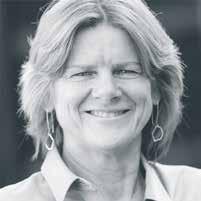
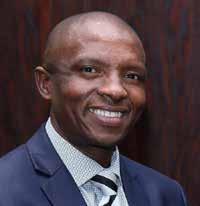
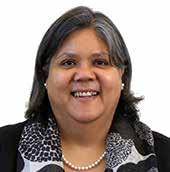
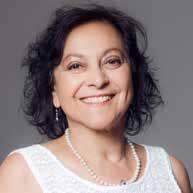
Prof Leila Patel | South African Research Chair in Welfare and Social Development at the Centre for Social Development in Africa, University of Johannesburg
Professor Patel is the South African Research Chair in Welfare and Social Development at the Centre for Social Development in Africa of the University of Johannesburg. In 2014 she was awarded the Distinguished Woman Scientist Award in the Humanities and Social Sciences and in 2013 she was the Helen Harris Pearlman Visiting Professor of International Social Welfare at the University of Chicago. Previously, she was the Head of the Department of Social Work at the University of Johannesburg, the Director General of Social Welfare in South Africa, and Deputy Vice-Chancellor and Vice-Principal of Wits University. She played a leading role in the development of South Africa’s welfare policy. The second edition of her book on Social Welfare and Social Development in South Africa was published by Oxford University Press in 2015. She has a Master’s in Social Work (MSW) from West Michigan University and a PhD from the Universit of the Witwatersrand.
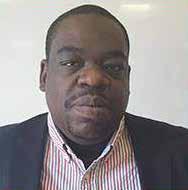
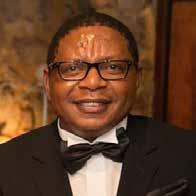
Dr Vusi Malele | Deputy Director: High-End Skills at the Department of Science and Innovation
Dr Malele is the Deputy Director: High-End Skills at the Department of Science and Technology (DST). He is currently a doctoral candidate in Industrial Engineering at the Tshwane University of Technology. He holds a Master’s in Engineering Sciences (Electronics and Computer Science) from the University of Stellenbosch He also holds a certificate in Managing Public Policy from the Wits School of Governance. His working experience has included being an educator, an engineer, a lecturer, a research professional and a manager. He also sits on the steering committees of other Centres of Excellence.
Dr Makobetsa Khati | Executive Director of the Research Chairs and Centres of Excellence directorate at the National Research Foundation
Dr Khati holds a BSc Honours in Public Health from the University of Cape Town. He completed his MSc at Imperial College London and his DPhil in Molecular Pathology at Oxford University where he subsequently was also a post-doctoral fellow at the Sir William Dunn School of Pathology. In addition, he was a Visiting Scientist at the Scripps Research Institute in San Diego, California. Dr Khati spent 10 years at the Council for Scientific Industrial Research (CSIR), first as Research Group Leader and later as Head of Department at the Emerging Health Technology unit. He also worked at the Institute for Infectious Diseases at UCT where he currently holds an Honorary Professorship.
Mr Sassman is the Director: Centres of Excellence at the National Research Foundation (NRF). He holds a BSc from the University of the Western Cape, BEd and MEd degrees from the University of Cape Town, and an MBA from the Business School Netherlands in Buren in the Netherlands. He also received training in financial management from Price Waterhouse & Coopers, in internal financial controls from the National Treasury and in negotiation skills from the (former) South African Management Development Institute. His working experience has included being an educator, as well as working for the national Department of Education, the national Department of Provincial and Local Government, and at the Foundation for Human Rights.
Robin Drennan has a PhD in Chemistry from Rhodes University, awarded for the investigation of pyrotechnic reactions. He has practiced as an applied researcher in a public company, AECI, and a science council, CSIR. He worked at a national funding agency (National Research Foundation) where he managed many different programmes. In 2011 he joined the Wits University as Director for Research Development. His role entails leading, encouraging and supporting research across the University. In 2010 Dr Drennan won a Golden Quill award for research reporting and in 2017 a SARIMA award for distinguished contribution to the Research Management Profession.
Garth Japhet is medical doctor and the founding CEO of Heartlines. Heartlines is an NGO that initiates research-based campaigns that use story to tackle society’s big issues such as reconciliation and father absence. The basis for these campaigns are feature films and TV dramas, which are complemented by resources to equip workers in workplaces, schools, correctional facilities, churches and NGOs.
In 1992, he co-founded the internationally acclaimed Soul City a multimedia edutainment project which addresses variety of health issues. It has reached over 50-million people in ten southern African countries through TV and radio drama series, written resources, community mobilisation and advocacy initiatives. He was CEO for 17 years
Garth is a Schwab fellow of the World Economic Forum (WEF), a fellow of the African Leadership Initiative and Senior Ashoka Fellow. He has received the global Everett Rogers Award for contribution to Entertainment Education.
Garth is married to Jayne and they have two children, Rebecca and Leigh.
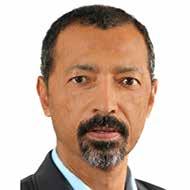


Prof Norris is Director of the DST-NRF Centre of Excellence in Human Development and Director of the MRC/Wits Developmental Pathways for Health Research Unit, Department of Paediatrics, at the University of the Witwatersrand. He is an epidemiologist with research interests that include child growth and development, obesity, and inter-generational risk of metabolic disease.
Justin Du Toit joined the CoE-HUMAN as Centre Manager in November 2020. Justin has more than a decade of management and research experience in the private and public sectors. His public sector career began in 2015 as Deputy Director of Research in the Private Office of then Deputy President Cyril Ramaphosa. He continued to work with Mr Ramaphosa when he became President of the Republic of South Africa. His work focused on evidence-based research to strengthen ethical and strategic policymaking and governance. Justin’s research interests include land restitution and the Fourth Industrial Revolution.
Dr Ware is a senior researcher at the CoE-HUMAN and an associate director of DPHRU at the University of the Witwatersrand. Her research interests are how health behaviours are impacted by our environment and how these relate to chronic disease risk. She holds funding from the Wellcome Trust to investigate how vascular health has been transmitted across three generations in Sowetan families. She is also the recipient of several bilateral funding awards with UK universities to assess various ways to monitor and shift health behaviours. She is the Research Director of the Wits Health HUBB programme, a research and training initiative empowering young people as agents for change to create healthier communities. She currently has a C-Rating from the NRF.

Kopano Masemola is a DOHaD Africa Project Officer and a final year Bachelor of Arts (BA) Student at the University of the Witwatersrand. Her Bachelor of Arts degree majors in International Relations and Political Studies. Her academic interest lies in African agency particularly in terms of Africa’s collaboration with the world. Her career with Wits University commenced in 2018 at Wits plus; Centre for Part-Time Studies, later moved to the Student Enrolment Centre (SEnC) then the Developmental Pathways for Health Research Unit (DPHRU) and now CoE-HUMAN. The mission of the DOHaD Africa aligns well with her objective to enhance representation, visibility and agency of Africa through collaboration and participation.
Ms Rebecca Mudau | Research Assistant & Administrator
Rebecca Mudau joined the CoE-Human in May 2021 as a Research Assistant and Administrator. She has a wealth of experience in business administration support. She previously worked for the South African Post Office as a Data Capturer and Call Centre agent. Before that, she fulfilled the role of Customer Service Agent for South African Airways. Her career begin at BCA as a part-time administrator and receptionist.
Prof Monde is currently a Director of MBMak (Pty) LTD which is an independent research company. Monde is also a National Research Foundation C3 rated scientist. He held an Extra-Ordinary Professor at the Walter Sisulu University and an Honorary Associate Professor at the CoE-HUMAN at the University of Witwatersrand.
Monde has a BSc degree in Statistics and Computer Science from the University of the Western Cape, a Masters Degree in Social Science in Sociology from the University of KwaZulu-Natal and a PhD in Demography from the University of the Witwatersrand. In addition, Monde held two fellowships: one at Harvard University and another at the University of Pennsylvania. He has previously lectured undergraduate and graduate students at Walter Sisulu University. His current areas of research interest include: ageing, family, gender, intergenerational relations, youth, teenage sexuality, fertility, social security and migration. Monde’s publication record includes a number of international and national conference presentations and authoring and co-authoring a number of journal articles. Monde is competent in the following fields: family sociology, gender, applied statistics, demography and data management. Currently, Monde is working with Prof Leeson who is a Director at the Oxford Institute of Ageing on the broad topic of Longevity.
Dr Roisin Drysdale | Postdoctoral Fellow
Dr. Drysdale is a postdoctoral fellow at the DSI-NRF CoE-HUMAN at the University of the Witwatersrand. She holds a doctoral degree (PhD) in Public Health and a master’s degree in Development Studies (MDev) from the University of KwaZulu-Natal, as well as a Bachelors with honours (BA (Hons)) in Geography from the University of Plymouth. Her research interests are focused around how household factors such as poverty and food insecurity affect individual child health, growth, nutritional status and development, and is currently investigating how the COVID-19 pandemic is indirectly affecting child growth and well-being.
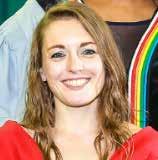
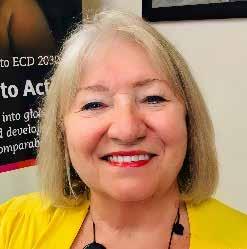
Linda Richter is a Distinguished Professor in the Centre, a developmental psychologist with a PhD from the University of Natal. Linda is the author or co-author of more than 400 papers, books, chapters and reports on basic and policy research in child and family development. She led the development of South Africa’s National Integrated Early Child Development Policy and Programme, adopted by Cabinet in 2015 as well as the 2017 Lancet Series Advancing Early Child Development: From Science to Scale. Linda is also the Principal Investigator of several large-scale, long-term collaborative projects, including Birth to Thirty, a birth cohort study of 3 273 South African children followed up for 30 years. Linda is currently writing a book on the study and has just received the NRF Lifetime Achievement Award for 2021, recognizing her extraordinary contributions to science in and for South Africa and globally. Linda is also a member of the Wellcome Trust Discovery Award Interview Panel.

Prof Rochat is a clinical psychologist who has extensively researched parenting and mental health interventions, including providing seminal research leadership to the Amagugu Intervention in KwaZulu-Natal. She is a Wellcome Trust Intermediate Fellow in Public Health and Tropical Medicine, an honorary research associate in the Department of Psychiatry, University of Oxford, and leads the adolescence research programme at the DPHRU. She also leads the Siyakhula Cohort and in 2020 established a new cohort in Soweto (the BEACON Cohort) which is investigating the link between executive function, mental health and risk behaviour in early adolescence. She has a C-Rating from the NRF.
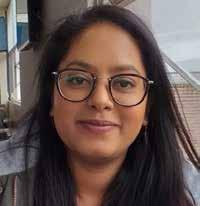
Sara Naicker is a Research Project Manager in the Centre. She has managed a number of projects – both large- and small-scale, based in South Africa and abroad, on early childhood development, child and adolescent health and well-being, and families and children in vulnerable contexts. Sara’s current work on adversity assesses the extent to which exposure to multiple and cumulative adversities in childhood is associated with poor health and wellbeing in adulthood.

























New grantee: Dr Rizwana
In recent years, the incidence of infectious disease remains high in South Africa, female obesity and the chronic non-communicable diseases continues to rise, coupled with birth defects and other issues that have brought great challenges to South Africa. The approach to medical care is changing and developing countries like South Africa are looking at better ways to use a patient centric approach to create sustainable healthcare.
PURPOSE:
The HELTI project has collected blood samples and corresponding clinical information of South African women aged 18 to 28 years old. We aim to conduct Whole Genome Sequencing (WGS) of nuclear genomic DNA (gDNA) at different sequencing depth gradients. The project will further construct from reproductive women genomes, specific genetic analysis in South Africa, and establish the database for a healthy population baseline and biobank.

New grantee: Prof Karen Hofman USE OF CHAT-SOWETO TOOL – CENTRE FOR HEALTH ECONOMICS & DECISION SCIENCE: PRICELESS SA
Many urban areas, like Soweto in South Africa, are seeing a rise in the prevalence of malnutrition.
PURPOSE:
The study seeks to understand supportive nutrition interventions in the ‘first 1000 days plus’ (preconception, pregnancy and first 2 years) period that simultaneously reduce the risk and burden of under- and over-nutrition in this population.
RESEARCH OBJECTIVES:
To use the “Choosing All Together” (CHAT) tool along with the community to inform decisions about candidate interventions to improve maternal and child nutrition, based on effectiveness and cost.
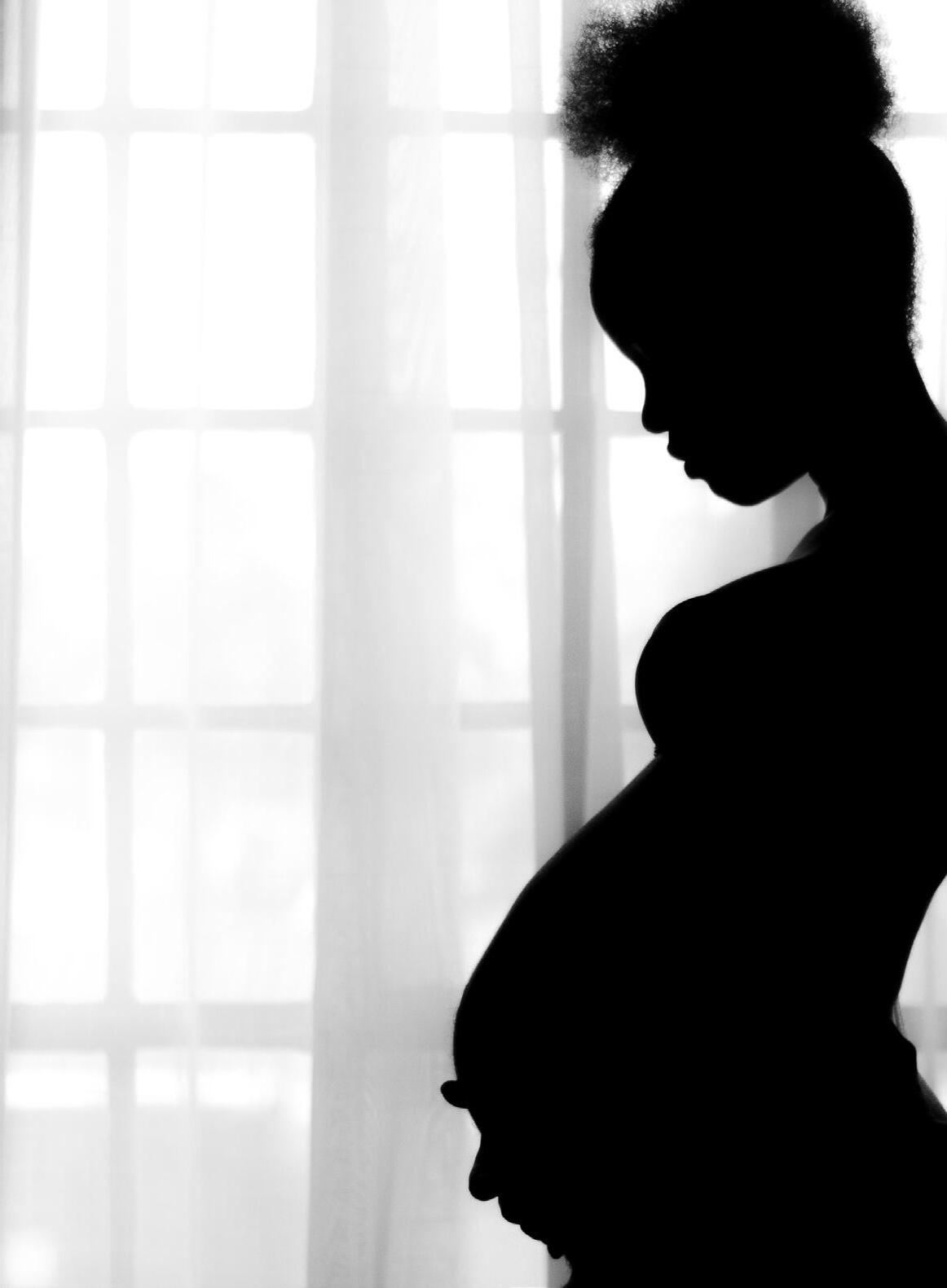
“Assessing the effects of food insecurity, malnutrition and teenage pregnancy on pregnant and parenting adolescents’ mental health needs in DIMAMO Population Health Research Centre”
Food insecurity, a condition in which households lack access to adequate food because of limited money or other resources, is a leading health and nutrition issue (Gundersen & Ziliak, 2015).
This can be coupled with lack of access to healthy and affordable foods; cycles of food deprivation and overeating; high levels of stress, anxiety, and depression; fewer opportunities for physical activity; greater exposure to marketing of obesity-promoting products; and limited access to health care (Chilton et al., 2007).
PURPOSE:
The aim of the study is to investigate the effects of food insecurity, malnutrition and teenage pregnancy on pregnant and parenting adolescents’ mental health in DIMAMO Population Health Research Centre.
RESEARCH OBJECTIVES:
1. To determine the prevalence and severity of food insecurity
2. To determine proportion of malnourished pregnant and parenting adolescent’s
3. To determine the level of teenage pregnancy
4. To investigate the prevalence of depression and factors associated with depression amongst adolescent pregnant women.
5. To explore the knowledge and perception of adolescent pregnant women on depression associated with pregnancy
6. To explore the barriers that prevent mothers from seeking mental health services, and interventions for this vulnerable population that can be integrated into primary care services.
7. To investigate support structures for adolescent pregnant women.
The Science Synthesis Report (“SSR”) was undertaken to review the body of research produced and the impact of this since the inception of CoE-Human in 2014 across our four thematic research areas: development across the life course, intergenerational development, socioeconomic development and transformation. The report followed a systematic review process of abstract and full text screening to identify output that acknowledged the CoE-HUMAN between July 2014 and May 2021.
CoE-Human research outputs covered all aspects of human development from early years to older adult health and development, gender-based violence, HIV-prevention, mental health care, obesity, inequality and poverty. The greatest contribution to date has been within the field of early child development, led by Professor Linda Richter with influence on policy and society locally and globally.
413 research outputs
15% of all articles published in journal with impact factor of ≥5.0
7,364 citations; H-index of 36
MAJOR IMPACT:
Output speaks to:
– health and UNDP indicators of human development
Our immense body of work has achieved research, social and political impact to drive the agenda for Human Development progression within South Africa and, in several areas, internationally. We are now restructuring our thematic research areas (socioeconomic development and transformation will merge into a single theme: socio-ecological and transformational development). This promotes exploration of the impact of broader cultural norms and practices, and the wider socio-ecology of South Africa on human development, previously viewed through a lens on issues such as politics and religion, land restitution, food security, migration and xenophobia, and access to water, sanitation, hygiene and technology.
The CoE-HUMAN will continue to build on this solid foundation; to support, generate and directly contribute to work towards filling the critical gaps in knowledge; and to leverage the opportunities identified to continue to promote the development of our nation.
– ALL priority areas of government
19 National legislative Acts that influence human development progress
Unparalleled knowledge impact within the domain of human development
Future research opportunities cluster around optimal development of South Africa’s youth and our future generations of parents and grandparents
“Birth
to Thirty: A Study as Ambitious as the Country We Wanted to Create”


The stories, science and people in the largest and longest running birth cohort study in Africa, which followed more than 3,000 young people born in 1990 in Soweto-Johannesburg for the first 30 years of their lives.

The CoE-HUMAN ran its first nationally representative survey in 2021 – results and outputs will follow in 2022.
In June 2021, the CoE-HUMAN conducted a snap online survey of 1,000 South Africans across the country, aged between 18 and 55 years. We explored various topical issues impacting quality of life in South Africa, including Covid-19 and food security. In three separate reports we presented those findings.
In June 2021, the DSI-NRF Centre of Excellence in Human Development at the University of the Witwatersrand, conducted a snap online survey of 1,000 South Africans across the country, aged between 18 and 55 years. We explored various topical issues impacting quality of life in South Africa.
In early March 2020, the former Minister of Health Dr Zweli Mkhize confirmed the first known South African to test positive for the novel Covid-19 virus. The first related death occurred 20 days later. It is now almost 16 months later, and the pandemic has truly taken a social, economic and emotional toll on the country and its citizens. Over 2-million Covid-positive cases have been confirmed by laboratories, and 62,000 people have died from Covid-19 related complications. However, the Institute of Health Metrics and Evaluation suggests that South Africa has nearly three times this number – likely around 161 100 deaths. https://covid19.healthdata.org/ south-africa?view=cumulative-deaths&tab=trend). South Africa has tried to navigate unchartered waters of the largest public health crisis in a generation by instituting “lockdowns”, in line with other countries. The first Level 5 lockdown was among the most stringent and strictest in the world. In July 2021 owing to a tsunami of cases and deaths, the country is back to Level 4. At the time of writing, over 3.3 million vaccine doses have been provided with over 480k citizens fully vaccinated (still at only 0.8% of the population). In the global context, over 11% of the population is fully vaccinated.
www.wits.ac.za/coe-human/ 011 717 2680 coe.human@wits.ac.za
(Source: https://bit.ly/3hAS3Ae)
The main survey findings were:
The impact of Covid-19 has been pervasive across the adult age groups. Government and news media sources are critical information sources to communicate facts clearly and accessibly, minimise fear mongering, foster trust with less confusion and reduce vaccine hesitancy. However, Government must respond in a non-biased and consistent way to reach all South Africans, especially the marginalised and vulnerable, in terms of its messaging.
The economic pressures that South Africans are experiencing are impacting household food security. The knock-on effect is that households must utilise an array of strategies to cope, especially if there are children within the home. These strategies may mitigate some of the economic strain but place households in a more vulnerable position. This increased vulnerability can affect mental and physical health, nutrition and child development. Job creation, community food support programmes, and social grants are urgently needed to help mitigate and deal with the effects of hunger.
South Africans display resilience and in the general sense, have a positive perception of their quality of life, health and circumstances. The pandemic is however impacting people’s mental health. The significant challenges that impact quality of life in South Africa are primarily economic and infrastructural. Investment in job creation, economic upliftment and critical infrastructure, including provision of mental health services and safe spaces for outdoor exercise, are essential priorities. These investments will enhance South Africans’ quality of life, which in turn, will contribute to better human development outcomes.
SPSS and Excel formatted data can be accessed via the CoE-HUMAN website: https://www.wits.ac.za/coe-human/openaccess-datasets/

The new Lancet Series on adolescent nutrition launched December 2021
Adolescence is a time of rapid changes in both physical growth and development, cognitive, and emotional capacities.There rightly has been much emphasis on early childhood nutrition. However, adolescence is an additional important phase of risks and opportunities for healthy nutrition with lifelong and intergenerational consequences. Yet, this age group has been neglected in national and global plans and policies. The new Lancet Adolescent Nutrition Series highlights the effect of nutrition on adolescent growth and development, the role the food environment has on food choices, and which strategies and interventions might lead to healthy adolescent nutrition and growth. Professor Norris lead the first paper in the series with a team of global scientists summarising the extraordinary biological changes adolescents go through and how nutrition impacts these processes.
The series papers:
Nutrition in adolescent growth and development
Shane A Norris, Edward A Frongillo, Maureen M Black, Yanhui Dong, Caroline Fall, Michelle Lampl, and others. The Lancet, Vol. 399, No. 10320; 2021
Food choice in transition: adolescent autonomy, agency, and the food environment
Lynnette M Neufeld, Eduardo B Andrade, Ahna Ballonoff Suleiman, Mary Barker, Ty Beal, Lauren S Blum, and others. The Lancet, Vol. 399, No. 10320; 2021
Strategies and interventions for healthy adolescent growth, nutrition, and development
Dougal Hargreaves, Emily Mates, Purnima Menon, Harold Alderman, Delan Devakumar, Wafai Fawzi, and others. The Lancet, Vol. 399, No. 10320; 2021

The advent of COVID-19 and its effects on the poor –including further entrenched food and job insecurity is a game changer for rural development research and policy making. In particular, the weaknesses in our urban-biased model of development have been revealed.
Rural areas in South Africa are currently characterised by poor physical infrastructure, scarcity of running water and poor sanitation, and lack of work opportunities and skills to harness business opportunities. In our research, we found that the economic fallout during the pandemic and its subsequent lockdowns hit rural areas hardest.
The CoE-HUMAN therefore held a conference in January 2021, attended by approximately 300 online participants, to stimulate focused research activity on Rural Development in Southern Africa through discussions contributing to the new dynamics for rural development research and policy, in a post-pandemic world.

Notably, a CoE-HUMAN Honorary Appointee, Prof Monde Makiwane, published a book in partnership with other organisations, Reflections from the Margins: Complexities, Transitions and Development Challenges: The case of the Eastern Cape, South Africa. This book brings together different perspectives and realities of the post-apartheid Eastern Cape to provide an in-depth exploration of the province’s development dilemmas. The book is useful for development scholars and practitioners interested in understanding the state of the province, and similar settings, and the degree to which it has emerged from the shadows of its colonial and apartheid legacies.
The CoE-HUMAN hosted a seminal 11-episode radio serial, entitled “Live your Best Life”, which raised awareness about the importance of preconception health for current and future generations in Africa. It was broadcast across Africa’s biggest radio station by listenership, Ukhozi FM, and Jozi FM, a prolific radio station in Soweto, Johannesburg. Both were recorded in isiZulu, with an English recording for international audiences.

Listenership on Jozi FM – 414 000 per week.
Listenership on Ukhozi FM – Ukhozi FM is one of the biggest radio stations on the planet and the largest in Africa with its listenership in constant access of 7.7 million over the past decade (overall stats, not per show – information not available).
The episodes on gender-based violence, suicide and depression attracted the most responses from listeners via the accompanying Facebook page, indicating a demand for more knowledge particularly among youth. To meet this demand, we partnered with award-winning NGO R-Labs, to create a series of digital nano-courses
for youth available on a data-free platform, giving young people opportunities to learn and earn rewards (airtime, electricity) while doing so.

Early adolescence is a critical time for healthy development that influences the rest of the life course and it presents a golden opportunity for preventative interventions to mitigate the risks adolescents face in South Africa.
The Behaviour, Executive Function in Adolescents with CONduct problems (BEACON) is a Wellcome Trust Funded study led by Associate Professor Tamsen Rochat in the Centre for Excellence in Human Development (CoE-HD). The ultimate goal of BEACON is to deliver a clear understanding of the mechanisms of risky and violent behaviour in young South African adolescents so that prevention and intervention programmes can be designed and implemented. The complex intervention and prevention programmes likely needed are however expensive and difficult to implement, and they require substantial investment.
Ensuring that interventions are salient, relevant and acceptable to the proposed end user, the adolescent is as
important as knowing that the intervention works. The Mzansi Teen lab which was established by Prof Rochat with seed funding from the CoE-HD in 2020 aims to address this gap. During the 2021 period, the teen lab has been formally established in a large open plan room providing teen friendly space that can host up to 20 adolescents at a time, in a variety of zones for the purposes of teen engagement and co-creation research, using digital technologies. A wide range of participatory techniques have been tested over the past year including focus group discussions, digital storytelling, interviews, telephone surveys and in 2021 we have focused on developing a flagship project called “Through my eyes”: A “Teencam” video observational study in Soweto, South Africa. Existing research has shown that the parent-adolescent relationship and its associated communication and interaction styles, are central to adolescent development and outcomes, but we have very little methodology which allows us to measure this objectively, and self-report data is often limited by bias. In collaboration


with Bristol, Bath, Oxford and Manchester Metropolitan Universities, and co-ordinated by a CoE-HD post-doctoral fellow, Dr Rachana Desai, and a CoE-HD and masters fellow Fortunate Lukhuleni, the Mzansi teen lab has conducted extensive formative research, and has successfully piloted the ‘Teencam’ technology. Teencam is based on the ‘babycam’ technology previously used in observational research with parents of young children in the UK whereas in the Mzansi Teen lab we have adapted this for use with teens in South Africa. This has established a protocol for Teencam that is acceptable to adolescents and explores a variety of activities and tasks that can be utilised to collect research data using Teencam technology.
We have invested in purchasing 20 of the newest versions of the headcam, and in the lighting, setup and soundproofing of the Mzanzi teen lab to make sure that high quality data is collected, which is critical to the success of the project to allow for automated analysis AI software which can be used to analyse large volumes of video data quickly. We have established a small computer lab, to safely store and analyse video data, and purchased a licence for Facereader. Facereader is an automated artificial intelligence (AI) coding software, able to code a number of specific properties in facial images, including the six basic or universal expressions: happy, sad, angry, surprised, scared, and disgusted and it also has
a physiological module which can be used to measure heart rate and stress during video recorded interactions. Formative work has been successful and to date, using the full protocol over 549 adolescents and their parents have participated in our Teencam study. Adolescents and parents wear head cameras called “Teencam” that capture audio and video footage of parent- adolescent interactions over an observational task. The observational task explores adolescent-parent communication about protective and risky behaviours. Custom designed playing cards containing images of positive (technology use, friendships etc.) and negative (pregnancy, substance use, harsh discipline etc.) adolescent behaviours were used in the match-pairs game followed by adolescents and parents telling each other stories based on the playing card images while wearing the headcams.
Our achievements of the past year include that our masters fellow Fortunate Lukhuleni has completed her masters project using the formative work on Teencam and will submit her thesis for examination in early 2022. Dr Desai has emerged as a passionate science communicator as evident by her being a national finalist in Famelab, where she spoke about the impact of digital worlds on adolescent brain development based on a pilot of the first 60 parent-adolescent pairs which she is preparing for publication.
The research activities have also recently been expanded by Prof Rochat to begin to explore video data in understanding social cognition, including video observations of adolescents and parents undertaking computer based executive function tasks which examine risk taking, self-confidence, sensation seeking and recognition of facial cues. In 2022/3 Prof Rochat aims to expand the work of the Mzansi Teen lab to include the co-creation of interventions and the engagement of adolescence as experts in their own lives. This intervention research will include exploring using Teencam video footage as a communication intervention tool, whereby parents and adolescents are able to watch and reflect on video footage, alongside their Facereader outputs, to develop a better understanding of one another. This may have important intervention potential as developing the capacity of perspective taking or seeing the other persons point of view (called mentalizing) is critical for developing healthy adolescent social cognition, but is also a key ingredient in most successful parent-adolescent interventions.

The 2021 edition of the South African Child Gauge developed by the Children’s Institute (CI), supported by the CoE-HUMAN, collates and interrogates the latest evidence on child and adolescent mental health in South Africa. It reflects on current and emerging challenges, and identifies critical points of intervention in order to promote mental health, wellbeing and resilience across the life course.
Yet, access to Child and Adolescent Mental Health services in South Africa is extremely limited and concentrated in urban centres and private health care services, with most families, children and adolescents unable to access care. Untreated mental disorders impact on functioning, relationships, risk behaviour, health, education, productivity and care of the next generation. This has enormous social and economic costs across the life course and the next generation of children. It is therefore vital to intervene early in childhood to promote the wellbeing and optimal development of children and adolescents, to reduce the occurrence of and promote recovery from mental illness,

The medicalization of distress has resulted in significant advances in the field of the pharmacological treatment of mental illness. However, it has resulted in a tendency to locate ‘the problem’/illness in the individual and in the ‘brain’ with until recently, little attention being paid to the impact of the psychosocial and socio-economic context on mental wellbeing and recovery from mental illness. Poverty, violence, exclusion and discrimination continue to be key drivers of poor mental health undermining the capacity of families to provide, protect and care for children. This burden gets heavier across the life course with impacts on children’s education and employment prospects. Similarly, constant exposure to violence of all types – including gender-based violence has the potential to erode children’s mental health and wellbeing, increasing the risk of further victimisation and/or perpetration of violence and the use of harsh parenting and corporal punishment.
COVID-19 has severely stretched the capacity of families to maintain their sense of wellbeing and mental health, and disrupted access to social and environmental supports and many families are grappling with the loss of both loved ones and livelihoods. The global recession, and introduction of austerity measures and budget cuts
KEY FINDINGS:
1. Nearly 1 in 3 people in South Africa will experience a mental disorder in their lifetime, and most mental health disorders have their roots in early childhood and adolescence.
2. While there are no national prevalence data, mental health problems affect an estimated 10 -20% of children and adolescents in lowand middle-income countries (LMICs) with the most common being anxiety, depression, post-traumatic stress disorder and substance-use disorders.
are likely to further undermine children’s access to services and support systems. While climate change, rising temperatures and extreme weather events are shaking the very foundations of our planetary life support system and fuelling a rise in anxiety, depression and PTSD.
Given these existing challenges and emerging shocks to the system, a focus on remedies and on enabling children and families to cope with adversity is both urgent and essential. The 2021 Child Gauge therefore aims to focus attention on opportunities to promote child and adolescent mental health and wellbeing across the life course; and identify emerging and best practice policy and programmes for prevention, promotion and treatment both within and outside the health care system.

After the release of the groundbreaking 2017 Lancet Series on advancing early childhood development, a key recommendation was the development of a global monitoring and evaluation system. The Countdown to 2030 Country Profiles on Early Childhood Development were thus devised, providing available data for each country and allowing progress to be tracked on 42 indicators. While initially 91 country profiles were released, 138 low- and- middle income countries were included in 2019. This work gave rise to the Harnessing Global Data Project, funded by the UKRI’s Global Challenges Research Fund, and led by Professors Linda Richter, who heads the CoE-HUMAN Durban office, and Alan Stein (University of Oxford). The project brings together researchers, policymakers and implementers from around the world to use available data on young children in low- and middle-income coun-
tries to improve child development, early learning and pre-primary education through better understanding of the determinants of and risks to children’s development, the economic consequences of inaction, and policy and legal frameworks to address challenges.
UNICEF’s ECD Countdown to 2030 country profiles included data from 197 countries and contained 42 early childhood development (ECD) indicators. This gives the most comprehensive picture of about 99.8% of the world’s children younger than five years old.
In 2021, the researchers modelled global estimates of the impacts of Covid on the world’s youngest children. Already data reveals that 10.75 million additional children fell “off track” in their early development, with this concentrated in LMICs.

The COVID-19 pandemic has affected families everywhere, both directly through illness and death, and indirectly through the effects of containment measures on economic activities and routines of daily life.
Both short- and long-term adverse physical, psychological, and social effects of the pandemic conditions on children are predicted, with supporting evidence emerging. These include interrupted, delayed, and missed preventive health care visits for pregnant women and children, separation of parents and neonates at birth, closure of day care facilities, household poverty and food shortages, parental and child mental health stresses, and increased risk of parental substance abuse and interpersonal violence, including child abuse.
Now, a study entitled A Data-Free Platform to Reach Families with Young Children During the COVID-19 Pandemic: an Online Survey Study, by Professor Linda Richter and Sara Naicker and published in the JMIR Paediatrics and Parenting journal, aimed to assess the feasibility of using a data-free online platform to conduct regular surveys and to provide support for families of young children in South Africa during these unprecedented times.
“In low- and middle-income countries, the most immediate challenge is to establish communication channels to reach the greatest number of affected families in order to convey accurate information,” says Professor Richter.
“We also wanted to gather data on the impact of the COVID-19 pandemic on families of young children using an online survey on a data-free online platform. Ultimately we’d like to see how this methodology could provide meaningful and robust support for families,” adds Naicker.
More than 44,000 individuals accessed the survey link and 16,217 consented to the short survey within 96 hours of its launch. Respondents were predominantly from lower-class mothers comprised 70.2% of respondents and fathers comprised 29.8%, representing 18,672 children 5 years of age and younger. A total of 82% of parents experienced at least one challenge during the pandemic, and 32.4% did not receive help when needed. (Participants were able to download contact details for support and referral services at no data cost once they completed the study’s survey.)
“Data-free survey methodology breaks new ground and demonstrates potential not previously considered. Reach is greater than achieved through phone surveys and some social media platforms, men are not usually included in parent surveys, costs are lower than phone surveys, and the technology allows for immediate feedback to respondents. These factors suggest that zero-rated, or no-cost, services could provide a feasible, sustainable, and equitable basis for ongoing interactions with families of young children,” says Prof Richter.
* There is a second paper on the outcomes of the study in production at South African Journal of Child Health.


On the 1st of October 2020, twenty NEET youth from Soweto started the Health Advocate programme and their training to become Health Promotion Officers (NQF 3) within their community. These advocates visited homes providing basic health checks, and worked alongside the City of Johannesburg health promotion officers and primary care clinic staff through the COVID-19 pandemic. By end of 2021, 70% of these young people had ongoing employment.
A survey of community members (n=122) showed how much such services are needed:
Over 93% of households said –
– they had not received similar home health checks before
– the advocates seemed very knowledgeable and answered their questions well with easy to understand information
– they would be likely or very likely to request this service again at home if it were available.
Community members experienced an average 37% improvement in how they felt about their health after the visit.
When asked to estimate the value of the home visit to them in local currency, the median reported value was R68 (significantly higher for men at R76).
Four of the 2020 cohort have also joined the Wits Health Hubb core team and are helping to expand the teams’ capacity. During 2021, the team also expanded to employ a professional nurse part-time specializing in palliative care.
Excitingly, the team are now based at the newly opened Jabulani Safe Hub, in region D Soweto. Phase 1 of the centre (fullsize soccer artificial pitch, swimming pool, outdoor courts, gym facility, and kids play area) was officially launched on the 9th of September 2021. This was then followed by Phase 2 (a community centre and administration offices) opened on the 29th of October 2021. The aim of this centre in Jabulani is to promote youth development and to create a community of peace and protection against social ills.
Because of our success in year one, in October 2021 we have taken on another 30 NEET youth! They’ve had their baseline health assessments in partnership with the Wits Centre for Exercise Science and Sports Medicine (CESSM) and had training in the Jabulani Youth Café with Healthy Conversation Skills, a brief motivational interviewing technique to help them support the community toward better health.


Basetsana (21) from Dobsonville is one of our new 2021/2022 Health Advocates. She says “growing up I only knew health as being a doctor or a nurse, I didn’t know there were other things”. She now realises the importance of doing regular health-checks “I’ve never done any health checks before and I now realise that high blood pressure is a silent killer, you never know whether you have it or not, so it is important for people to go for check-ups”. She believes the program has a positive impact on youth and the community, and she’s looking forward to using the skills she’s learned.
One paper in submission and four in preparation
Leveraged funding:
– Development Bank of Southern Africa of around R2 million per year
– Corporate sponsorship from Wits Health Consortium of R290k in year one, increasing to R460k in year two
– Several seed awards for pilot projects with UK universities (Edinburgh, Queens University Belfast, Cambridge University)
– Awarded R600k from CoE-Human to co-create and test a health literacy programme for youth in Jabulani.
Since August 2021, the CoE-HUMAN and the MRC/Wits Developmental Pathways for Health Research Unit (DPHRU) have been running monthly webinars on different aspects of qualitative health research in order to support learning, encourage methodological discussions, and foster networking among African students and qualitative health researchers in particular. The webinars have featured presentations from some of our own researchers, as well as external colleagues representing specific areas of expertise. These sessions have been chaired by Mr Justin Du Toit and Dr Sonja Klingberg, and they have been well attended, each attracting between 20 and 150 participants. Attendees have included students from South African Universities and other African countries, health researchers from across the world, and even some policy-makers and other stakeholders from the CoE-HUMAN’s wide networks. The webinars have been widely advertised via the CoE-HUMAN’s mailing list, both institutions’ social media channels, and through Wits University’s website. At least two more webinars will be organised as part of the series in 2022 and there has been interest from many international collaborators to contribute to the series.
This first webinar will look at the different qualitative analysis approaches and methods, and consider strengths and limitations. We will consider how to choose qualitative analysis methods. This webinar is the first in a series of 6 webinars in the Qualitative Health Research Series.
DR EDNA BOSIRE

Dr Edna Bosire is a postdoc research scientist for the Blantyre Prevention Strategy at Georgetown University, Centre for Innovation in Global Health, and the Kamuzu University of Health Sciences, Malawi. She is also a researcher at DPHRU, Wits University. Edna’s research interests include health systems strengthening in Africa, HIV/AIDS, Diabetes, Mental health, Adolescent health and Nutrition.
WEBINAR DETAILS:
Thursday, 12 August 2021
14.00-15.00 SAST (UTC+2)
Register in advance for this meeting: https://bit.ly/3ifukGa
You will receive a confirmation email containing information about joining the meeting.
DR SONJA KLINGBERG
Dr Sonja Klingberg is a postdoc research fellow at DPHRU, Wits University. Her background is in social science and public health, and her research interests are community engagement with non-communicable disease research and interventions, qualitative health research, and process evaluation.

About the Qualitative Health Research Series:
This 6-part series is open to anyone interested in qualitative health research in African settings. Its mission is to be a respectful and constructive online forum for sharing experiences, advancing methodological discussions, networking and supporting qualitative researchers.
Meetings will take place once a month via Zoom, allowing a wide audience to connect and listen.
Each session will comprise of a presentation followed by a group discussion, practical case reviews and useful tips. These sessions will be recorded and converted afterwards into online self-directed learning resources.

The webinars are recorded, and turned into freely available online learning resources including reading lists, and can be accessed on the CoE-HUMAN YouTube Channel and Website:

https://www.youtube.com/channel/UCe13tI5O-JWiHLnBRg1sidw/videos https://www.wits.ac.za/coe-human/learning-resources/
We are excited with the launch of the pilot of a new Postdoctoral Accelerated Programme that aims to mentor and develop post-PhD fellows to the senior researcher level within two years (inclusive of a NRF-rating). Four postdocs joined the programme in Sept 2021. This programme will be monitored and evaluated for potential scale-up.

The COE-Human co-hosted a webinar with South African and international academics, looking at the risk of elevated blood pressure in children.
Evidence suggests that blood pressure levels in children and adolescents are rising, particularly in the African region. In the absence of other symptoms or illness, and with little clinical guidance available for the African context, the path forward is unclear. This webinar, moderated by Professor Alta Schutte (Professor of Cardiac, Vascular and Metabolic Medicine in the University of New South Wales in Sydney, Australia and immediate past-president of the International Society for Hypertension) explored current clinical guidelines for paediatric primary hypertension, recent evidence of change in paediatric blood pressure levels in Africa, the risk factors and longer-term impact. A subsequent webinar series from Dr Juliana Kagura expanded on the topic exploring blood pressure in teens.


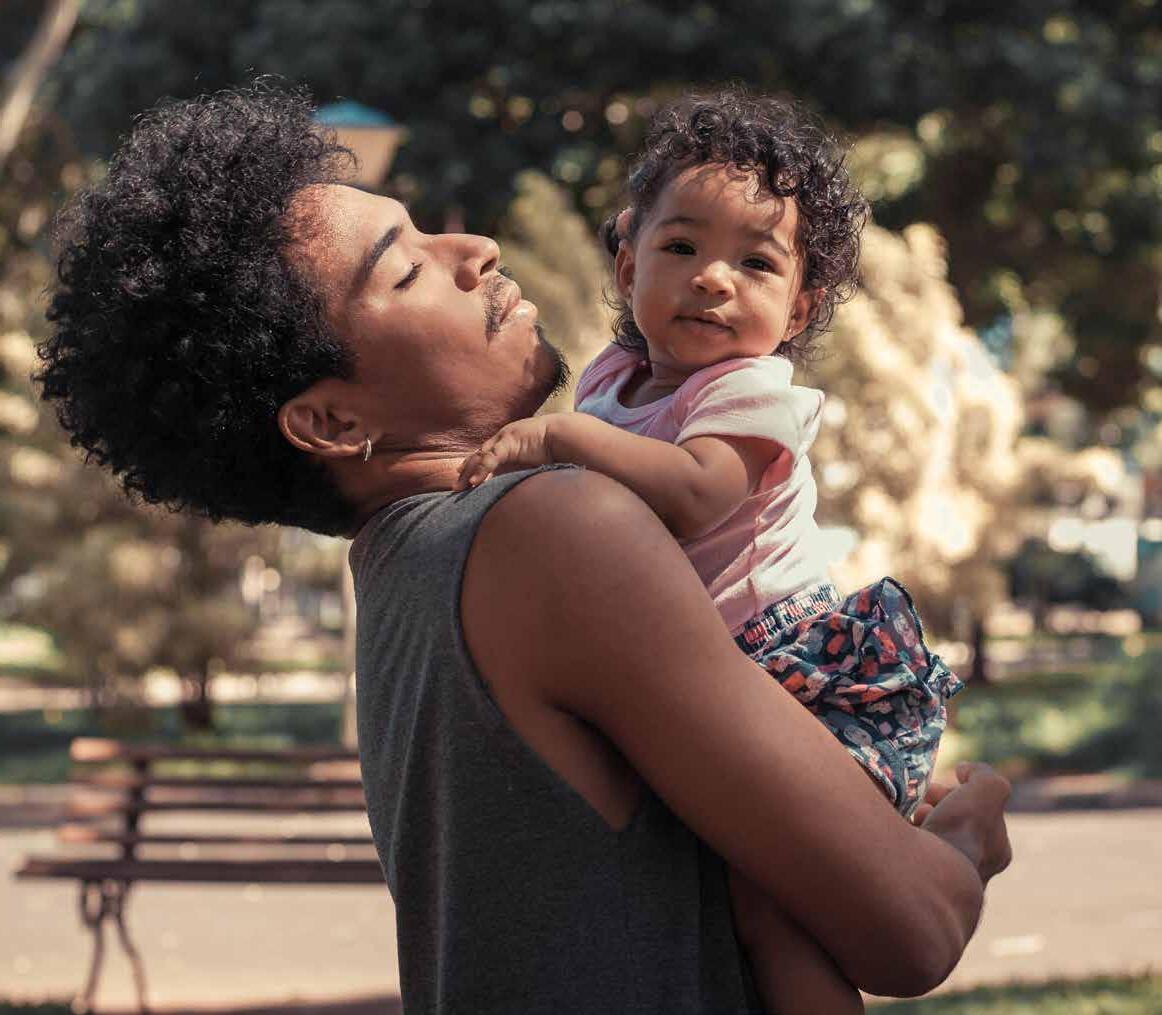
How we as individuals, including children, adolescents and adults, develop from conception through our lives
Larske M. Soepnel, Veronique Nicolaou, Christine Slater, Glory Chidumwa,
Naomi S. Levitt, Kerstin Klipstein-Grobusch & Shane A. Norris (2021) Obesity and adiposity of 3- to 6-year-old children born to mothers with hyperglycaemia first detected in pregnancy in an urban South African setting, Annals of Human Biology, 48:2, 81-92, DOI: 10.1080/03014460.2021.1918245
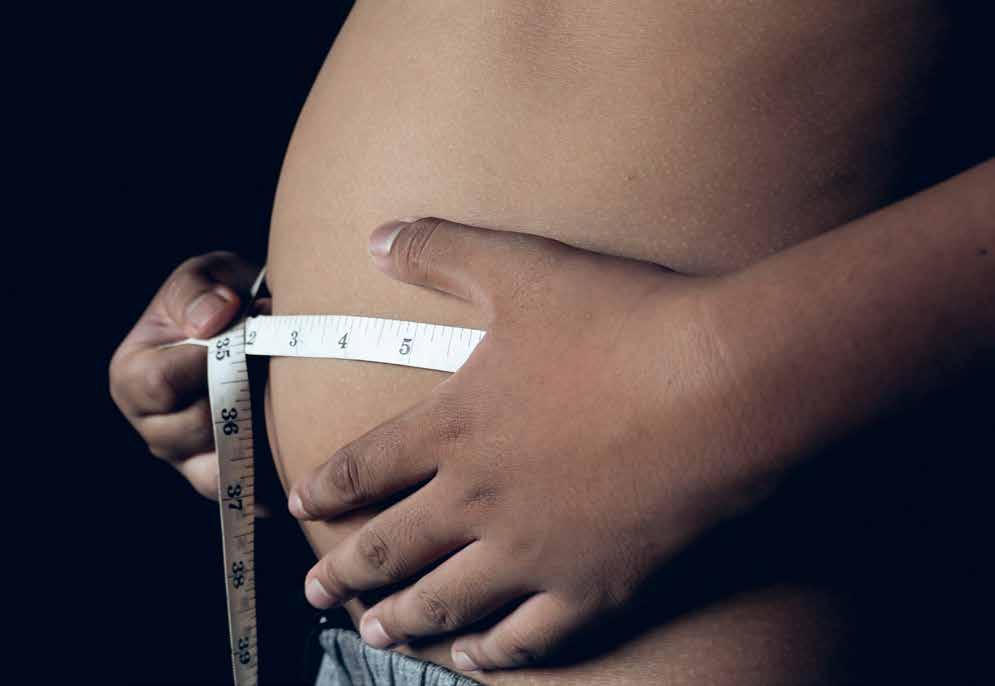
PhD student Larske Soepnel investigated the association between maternal metabolic conditions in pregnancy (such as gestational diabetes) and the risk of children being overweight. Overweight and obesity is a growing concern in sub-Saharan Africa and this study helps identify opportunities for childhood obesity prevention.
One hundred and two (102) children between the ages of 3 and 6, born to mothers with gestational diabetes or hyperglycaemia first detected in pregnancy (HFDP), were tested for overweight and obesity indicators. A further 102 children whose mothers did not have the disease during pregnancy were also tested. The children’s anthropometry and fat mass index were measured.
It was found that the prevalence of overweight/obesity was 10.5% and 11.1% in children born to mothers who had gestational diabetes. Fat mass index readings were also significantly higher in this group. In the “unexposed” group in comparison, only 3.9% of the children were overweight or obese.
However, the study revealed that mothers who had a higher BMI during pregnancy gave birth to children with more adiposity. Maternal pregnancy BMI therefore seems to be more significant than maternal hyperglycaemia for children becoming overweight or obese. This study points to the need for further research to assess how gestational weight gain impacts childhood health.
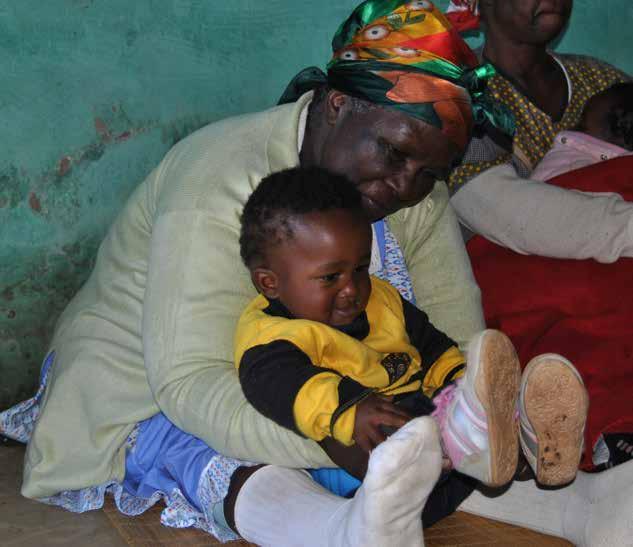
While many health services in the past have been combined with programmes to prevent mother to child transmission of HIV (or PMTCT programmes) in primary care, PhD student Stephanie Redinger investigated how feasible it was to integrate early child development (ECD) sessions into PMTCT services. Group ECD sessions were delivered to mums and their infants under 8 weeks of age, while they waited for appointments at the PMTCT centre.
Weekly and monthly sessions ran for eight months, with the intervention based on the WHO/UNICEF Care for Child Development (CCD) package. When the mums were interviewed at nine months, they reported feeling
an improved self-confidence and parenting capacity, increased father involvement and improved relationships with healthcare providers. Mums also said that the ECD programme made their PMTCT visits more enjoyable and supportive, and reduced time and effort required for HIV care. Mothers also believed the programme had a positive impact to reduce stigma.
While more research is needed to determine the effects on child development, integration of early child development services into PMTCT clinics has positive effects for the PMTCT service and holds promise in low resource settings.
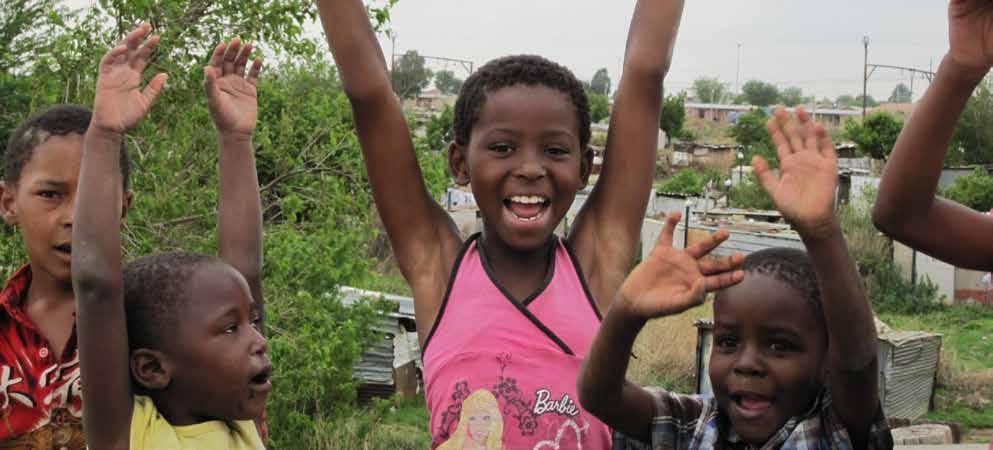
between South African preschoolers’ routine physical activity, self-regulation and psychosocial well-being.”
Following on from her PhD research, Caylee Cook, a postdoctoral student at UCT investigated the association between the amounts and type of physical activity in pre-schoolers and their psychosocial wellbeing and self-regulation.
To include children in both urban and rural settings, she recruited 119 children (aged 3-6 years) from two preschools in Soweto, Gauteng and three preschools in Bushbuckridge, Mpumalanga. The educators at each preschool were trained to complete questionnaires reporting the children’s cognitive self-regulation (CSR), behavioural self-regulation (BSR) and emotional self-regulation (ESR) and their positive (sociability and prosocial) and negative (externalising and internalising problems) aspects of psychosocial well-being. Examples of the items were; BSR: waits their turn in activities; good at following instructions; CSR: persists with difficult tasks, does not need much help with tasks; ESR: is calm and easy going, gets over being upset quickly; sociability: chosen as a friend by others, plays easily with other children; prosocial: happy to share, helps others; externalising: aggressive to children, shows wide mood swings; internalising: most days distressed or anxious, most days says feeling unwell.
To measure physical activity levels, hip-worn accelerometers were given to the children to wear every day for a week, with parents and teachers shown how to fit these and instructions to only take them off when bathing. A
Health and Physical Activity 20: 100383.
smiley face was put on the devices so the children and caregivers could see which way up to put the device.
The results showed that children were generally very active, recording an average of 7.5 hours of total physical activity each day, including almost 2 hours of moderate to vigorous activity. However, higher levels of activity were related to lower levels of self-regulation. Increased total physical activity levels were also associated with higher levels of externalising behaviour.
In this study, and in her previous research, 80% of the children in these preschools were reported to have strong self-regulatory skills and high levels of executive function (higher than preschool children in high-income country preschools). One hypothesis is that living in low-income settings presents a number of challenges that provide children with more opportunities to exercise their executive function and self-regulatory skills.
The relationships seen between these skills and the measured physical activity levels have been observed in other studies where higher activity levels were seen alongside behavioural disorders and hyperactive/inattention problems. The authors caution though that context is critical, and more work is needed to understand when, where and how the children are most active. For example, understanding if children are playing freely outside at preschool and missing learning activities or if activity is taking place outside of preschool hours.

How we attain a better life through health, education, social security, food security and decent employment
Those who don’t know where their next meal is have higher chances of depression
Jesson J, Dietrich J, Beksinska M, Closson K, Nduna M, Smit J, Brockman M, Ndung’u T, Gray G, Kaida A. Food insecurity and depression: a cross-sectional study of a multi-site urban youth cohort in Durban and Soweto, South Africa. Trop Med Int Health. 2021 Jun;26(6):687-700. doi: 10.1111/tmi.13572. Epub 2021 Mar 25. PMID: 33666301.
Julie Jesson. is a postdoctoral fellow in Public Health at Simon Fraser University (Burnaby, British Columbia, Canada).
Globally, over two-billion people do not have regular access to safe, nutritious and sufficient food. In subSaharan Africa, food insecurity estimates are much higher with 25% of the population being severely food insecure. In South Africa, 20% of households are food insecure.
Experiences of food insecurity include anxiety about food supply, difficulties to find food in socially-acceptable ways, and alterations in food quality and quantity. The study found that food insecurity is an important source of stress that contributes to poor mental health outcomes. In addition, food insecurity also leads to higher levels of interpersonal violence and intimate partner violence.
In this cross-sectional analysis, data from the AYAZAZI youth cohort was collected. Participants are aged 16-24 years old and live in Soweto or Durban. Findings reveal that 18% of the youth were food insecure. In particular,
living in a female-headed household with four or more adults, and not being a student were the main socio-demographic factors associated with food insecurity. Young men were more likely to be more food insecure and young women who engaged in transactional sex had higher levels of food insecurity.
A significant number of food insecure youth (42%) were depressed. These results are consistent with previous studies. In conclusion, South African youth in Durban and Soweto experience a high burden of food insecurity as well as high rates of depression. The strong association the study found between depression and food insecurity reinforces the need to address basic needs such as access to nutritious food and mental health care services. Improving food security in South Africa is a complex undertaking that requires improving education, work opportunities, gender parity and health interventions.
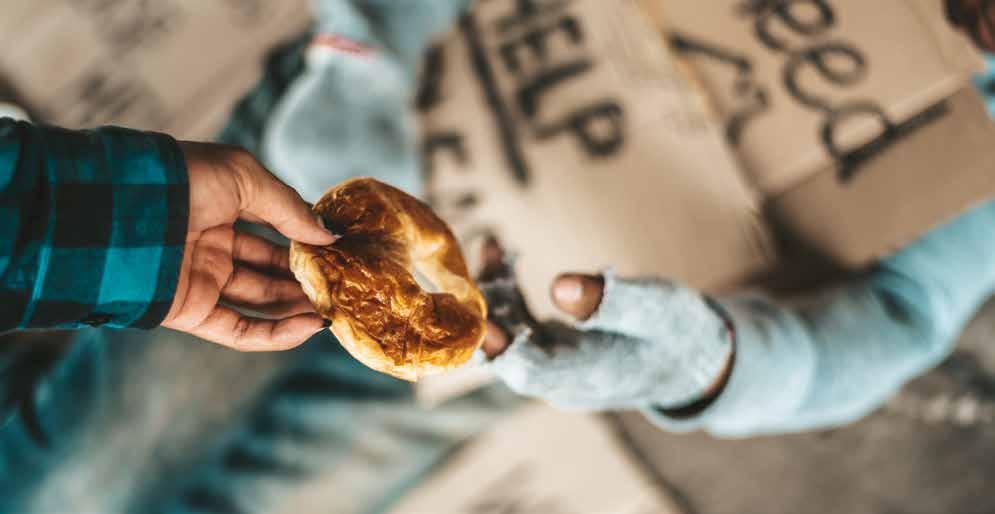
Mthethwa S.L., and Wale E. (2020). Household Vulnerability to Food Insecurity in Rural South Africa: Evidence from a Nationally Representative Survey Data. International Journal for Environmental Research and Public Health 17,0. https://dx.doi.org/10.3390/ ijerph17230000.
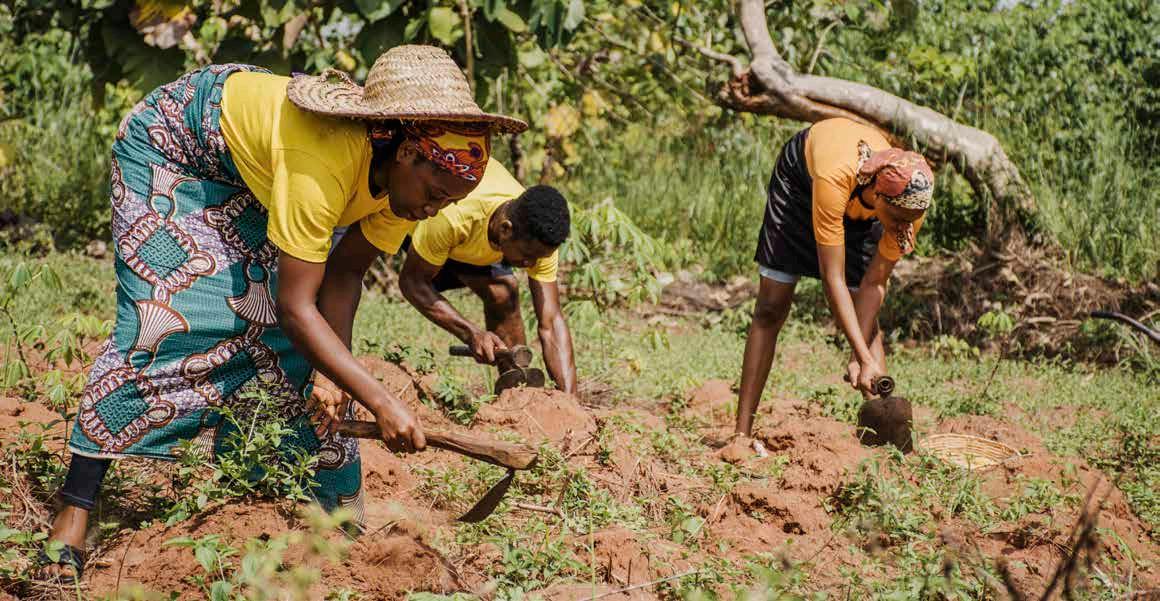
Sandile Mthethwa, a PhD student at the HSRC in Durban applied the Vulnerability as Expected Poverty framework to a national dataset of rural households to find those that were most vulnerable. The measure, based on the sustainable livelihoods framework, showed that both human and financial capital play a critical role in the resilience of rural households to food insecurity. Another important factor was found to be the failure of natural resources to support agricultural livelihoods.
Mthethwa et al. identified gender-based imbalances as explaining most of the rural household vulnerability to food insecurity, with female-dominated households and, even worse, households headed by younger females faring the worst.
They argue that policies, strategies, and institutions in South Africa have failed to address household vulnerability to food insecurity, and need to be prioritised especially in the Eastern Cape and KwaZulu-Natal.
Xaba, M. B. (2021). South African land question and the dilemma of land expropriation without compensation: a critical examination. The New Political Economy of Land Reform in South Africa, Springer: 79-99.
Mzingaye Xaba, a postdoctoral student at Stellenbosch University, reviewed the history and application of land expropriation and reform within South Africa’s changing political landscape. In his paper, he discusses how land expropriation without compensation (LEWC) has been used as a political tool, which has clouded the real challenges in this process included how to make land reform effective.
He argues that conversations on land reform need to focus on the process when land has been identified, gazetted and transferred, in order to align all land stakeholders to improve provision of post-settlement support (PSS). While he recognises that LEWC may not be the answer and faces challenges, including potentially from The Constitution and International Law, his article lays out recommendations for the way forward including improved post-settlement support, that is critical for successful land reform.
Our aspirations and values, which influence, and are influenced by, individual and group identities

Ms Ragi Bashonga is a PhD student at UCT, and a lecturer in Sociology at University of Johannesburg. She is also a Youth Rep to the United Nations at the International Sociological Association (ISA). In her chapter in The Oxford Handbook of Global South Youth Studies, she talks about the film Black Panther.
The global movie production house, Marvel, broke ground in filming Black Panther. The appeal of Black Panther to young people is evidenced by its box office success. The film was launched in the context of enduring global forms of racism, racial exclusion, violence, and discrimination. Growing expressions of dissent, on social media and through the Black Lives Matter movement, point to a yearning for representations of identity and culture that celebrate blackness and are associated with Africa.
The film’s fictional setting, Wakanda, allowed audiences to imagine the advancement of a country in the heart of Africa, free from the implications of colonialism—a nation technologically advanced, not engaging in foreign trade, and not a recipient of aid.
The journal article Home, Belonging and Africanity explored the topic of Afrofuturism, and departed from images of backwardness and dependency. One of the film’s achievements is bringing to the fore, highlighting,
and disrupting the misrepresentation and under-representation of Black people and of Africa in popular culture. The film is largely a celebration of ‘Africanness’, something which is all too rare.
Africanity’ is therefore not only conferred on those based on the continent, or associated with those who have strong, enduring ties to the continent, but on all peoples with historical and cultural heritages associated with Africa.
However, the article shows that ‘Africanness’ is not a static or universal concept or notion. Intersectionality is an important lens with which to interpret what being African means to different people. While there is a shared and deep history, some Africans remain marginalised and oppressed owing to particular socioeconomic and cultural conditions on the continent.
Nevertheless, the article shows the importance of Black Panther in offering an imagined African future free from its typical constructions in the media.
what it means to be a man at University shows it’s open to interpretation
Khumalo S, Mabaso M, Makusha T, Taylor M. Intersections
Between Masculinities and Sexual Behaviors Among Young Men at the University of
KwaZulu-Natal, South
Africa. SAGE Open. July 2021. doi:10.1177/21582440211040114
Sinakekelwe Khumalo, a PhD intern at the HSRC, examined how the university period provides a critical developmental transition from adolescence to adulthood. During this period, young people establish patterns of behaviour and make lifestyle choices that affect their current and future health.
This article explores the interactions between masculinities and sexual behaviours of young men at the University of KwaZulu-Natal, South Africa.
University provides opportunities for young men to evaluate or re-evaluate their masculinity, giving space for them to express themselves in ways that they might not in a different context. In this article, young men were asked to reflect on their subjective experiences of being in the university space and how that has shaped the way they enact and negotiate their masculine identities and sexual behaviours.
The article reveals that in a university, young men show “multiple masculinities” that are contradictory. Indeed, many young men further entrench “toxic masculinity” by believing their manhood is determined by their power over women. In other ways, the young men have adopted masculinities that counter hegemonic practices such as support for gender equality, the opposition of violence against women, and having multiple sexual partners.
These multiple masculinities point to the complexities of human beings and their relationships with various spaces, people, and contexts. The study is consistent with heterogeneous notions of men, showing that there is no such thing as a “typical” young man. With men possessing multiple masculinities, we cannot and should not expect men to be homogeneous.

It is therefore critical that institutions of higher learning promote positive gender norms around what it means to be a young man or woman. Institutions of higher learning should broaden gender policies and their implementation to recognise the gender-specific needs and realities of young men. Strategies need to support young men’s meaningful involvement in the promotion of positive masculinities and healthy sexual behaviours while acknowledging that they are not a homogeneous group.
This includes investing in male-friendly HIV prevention strategies and reaching young men with messages that promote changing of inequitable gender norms and risky sexual behaviours.
2021;36(1-2):7-32. doi:10.1177/0886260517726413

Matamela Makongoza, a PhD student at Wits, writes how intimate partner violence (IPV) is the most prevalent form of interpersonal violence experienced by women in South Africa. In a study with young South African women (aged 13 to 23 years), around 42% had experienced physical violence from their intimate partners. The subtle and nuanced social dynamics of IPV are less understood owing to little qualitative research on this subject. This study qualitatively explored how young women perceive and experience IPV.
Participants were recruited in Soweto, outside Johannesburg. Participants reported direct experiences of IPV and indirect through exposure to interparental and interpersonal violence.
Makongoza et al found a progressive shift of perceptions from absolute tolerance of relationship violence to rejection. However, victim blaming and relegating relationship violence to the private realm still existed. Essentialisation of masculine qualities such as anger was used to construct and understand men’s use of violence. Young women highlighted infidelity, pregnancy, and sex demands from their partners as reasons for them being subjected to IPV.
Group. Patterns of Growth in Childhood in Relation to Adult Schooling Attainment and Intelligence Quotient in 6 Birth Cohorts in Low- and Middle-Income Countries: Evidence from the Consortium of Health-Oriented Research in Transitioning Societies (COHORTS). J Nutr. 2021 Aug 7;151(8):2342-2352.
Natalia Poveda, a PhD student from Emory University, looked at the associations between growth in early childhood and adult human capital. The study was conducted in five low and middle income countries (LMICs): Brazil, Guatemala, India, the Philippines and South Africa. Data from 9503 participants was analysed in these birth cohort studies.
Stunting remains widespread in LMICs, with 96.8 million children under the age of 5 years being stunted. The period between conception and the second birthday is critical for human growth as well as for development of brain structure, architecture, and function.
In early childhood, sensory and motor functions develop, followed by acquisition of basic language skills and spatial attention. The height and weight of children at four year age intervals (birth, 4, mid childhood and adulthood) were documented in this study, in relation to human capital achievements – schooling attainment and adult IQ scores.
Evidence from the birth cohort studies indicates that size at birth and linear growth in the first 24 months
after birth (whether represented as attained length/ height or as change in length/height) is one of the strongest predictors of future development.
Not only did this growth in the first 1000 days predict school attainment (including the number of years of schooling, the probability of repeating a grade, the age of enrolment in school, and better verbal and nonverbal skills) but also childhood and adolescent cognitive skills. Worryingly, the effects of poor growth in the first 1000 days were seen into adulthood, with differences observed in adult IQ.
Lower schooling attainment is related to future disadvantages such as lower wages, less income, unemployment or informal sector work, and a higher probability of living in poverty. The findings reinforce the importance of good nutrition in the first 1000 days to realise human capital.
Ngandu, C. B., D. Momberg, A. Magan, L. Chola, S. A. Norris and R. Said-Mohamed (2020). “The association between household socio-economic status, maternal sociodemographic characteristics and adverse birth and infant growth outcomes in sub-Saharan Africa: a systematic review.” Journal of developmental origins of health and disease 11(4): 317-334.
Christian Ngandu, a postdoctoral student in Soweto, investigated how household socioeconomic factors were related to birth outcomes and infant birth size comparing South Africa and the Democratic Republic of Congo (DRC).
Over 1000 mothers and newborns were recruited to the study across the two countries. While socioeconomic factors differed, the incidence of low birthweight, preterm delivery and of infants small for gestational age was high in both countries, affecting 10-20% of newborns in South Africa, and 11-33% in the DRC.
Marriage appeared to reduce the odds of these birth outcomes in DRC, with an 80%-plus reduction in both low birthweight and preterm births. While in South Africa maternal education level was related to birth outcomes. Although this was not in the direction that may have been expected as women with secondary level education or above (compared to women with primary level or no education) had a two fold increase in risk for preterm births.
However, when other factors were examined, the nutritional status of the mother and the country of residence were found to be stronger predictors of birth outcomes than any of the socioeconomic factors investigated.

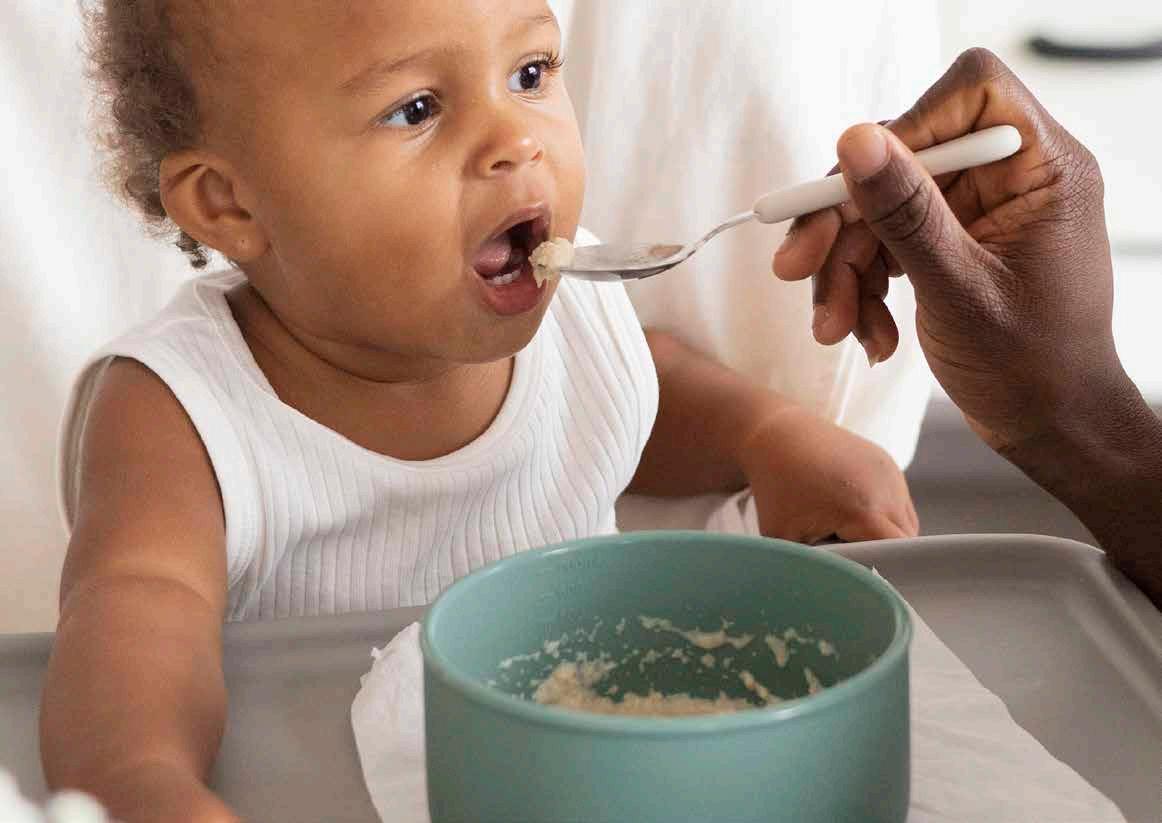
Postdoctoral student, Stephanie Wrottesley, set out to describe the infant feeding practices of mums in Soweto and what influences these practices. Indepth interviews and focus group discussions with 19 mothers of infants aged 0-24 months, showed that mums knew the importance of breastfeeding.
However, exclusive breastfeeding (as recommended by WHO for the first six months of life) was only happening for shorter periods. In addition to challenges with breastfeeding in public spaces and after returning to work, mothers believed it was important to give infants solid food before six months. Eating was seen as a sign of good health, and not wanting to eat was a sign of ill health, leading some mothers to describe force-feeding babies that refused to eat.
When looking at the foods most frequently used during weaning, these were often of poor quality and lacked diversity. For example, while some specifically designed weaning porridges were used, other food sources were predominantly maize porridge, cereals, bread, milk and yoghurt. Few babies were given fruit or vegetables as many mothers believed they did not like these foods.
Worryingly, most mothers believed that all children liked and needed snack or ‘junk’ foods such as crisps, sweets and biscuits, juice and sweetened fizzy drinks. Though a few mothers did give yoghurt and fruit as snacks to avoid junk foods.
When talking about what influences their feeding practices, mothers described how often they would follow the guidance of their own mothers who had raised large families, and who were seen to know what was best. The advice of nurses to breastfeed exclusively for six months was rarely followed, with mothers reporting not telling the nurses what they were doing so as to avoid being shouted at in the clinic.
The research suggests that interventions to promote healthier infant feeding practices need to consider mothers beliefs and to engage the matriarchs in the family to create supportive household and community structures.
Notwithstanding the adverse impact of the COVID-19 Pandemic in 2021, the CoE-HUMAN has made a meaningful science impact within the South African Human Development Sector this past year. The COE-HUMAN’s 2022 vision is to identify, support and produce excellent research, expand research capacity through training and networking, and make findings available in service of human development in South Africa and beyond. We have an exciting set of new initiatives in the pipeline for 2022 – watch this space!

Preamble:
This Service Level Agreement is linked to the Memorandum of Agreement between the NRF and the University of the Witwatersrand
Activities related to the Current Stage:
• Research outputs
– Research outputs of students will be increased to 70+ journal article outputs in ISI-recognised journal, and reporting of research outputs will indicate the roles of authors, students and collaborators.
• Networking
– The 2021 CoE symposium on the 2020 Child Gauge will increase the CoE’s networks
– The CoE is reaching out to Historically Disadvantaged Institutions to increase its grant and student support in these institutions.
– Stronger working relationships established with key stakeholders’ communications’ people (DSI, NRF, Wits Comms, Wits Alumni)
– Recruit 600 members signed up on the DOHaD Africa Chapter
• Knowledge transfer
– The CoE shall make available to the NRF, on a quarterly basis (March, June, September and December), current “nuggets” of information for publication on the CoE website.
– While the current high level of knowledge transfer activities will be maintained, we intend to concentrate dissemination activities to 3-4 carefully selected topics per year.
• Service delivery
– CoE researchers maintain a high level of service delivery through membership of professional and disciplinary societies, editorial boards of journals, and policy committees in South Africa and abroad.
• Capacity development
– The CoE shall provide to the NRF a list of students that are being supported by the Centre by July of each year, using the student nomination platform on the NRF online submission system. Additional students can be appended to this list as and when they arrive.
– Student capacity development will be carried out through the outlined training workshops
– Attendance and feedback (rating) from each training workshop will be documented and presented
• Growing team spirit
– The CoE works to maintain its excellent relationships with stakeholders, CoE researchers, grantees and students.
– The CoE will work closer with the SAMRC Developmental Pathways for Health Research Unit
• Sustainability
– Exploring potential collaborators, partners and funders is ongoing, and the CoE will continue to apply for research and innovation grants to increase its leveraged funds and grow its research and innovation outputs. Leveraged funds will be a key indicator.
– A detailed short- and longer-term sustainability plan to the Steering Committee in 2021.
Financial responsibilities:
• The CoE shall present an audited set of financial statements at the March-April 2022 Steering Committee meeting reflecting the financial situation of the CoE during the previous financial year (January to December 2020).
• The CoE shall submit quarterly cash-flow statements within 15 days of the end of each quarter, indicating expenditure and commitments.
Reports due in this Stage:
• The CoE shall submit an Annual Progress Report including Gate Review Documentation by no later than February 2022 to be reviewed by the CoE Steering Committee.
• The CoE shall comply to the NRF rule to submit the NRF online APR and shall meet the deadline set by the NRF (which currently is the end of February, unless a new date is set and provided that it is communicated two months in advance)
• The CoE shall submit a Statement of Compliance by no later than March 2022.
• The CoE will put out a call for postgraduates and postdoctoral fellows in February 2022 and ensure successful candidates from this call respond to the annual NRF call as part of its obligations in terms of nominations.
Standard Output Targets per annum in the Current Stage:
1. Research
• Number of peer-reviewed publications that acknowledge funding from the CoE ≥ 60 (must be ISI rated) which is increased from 2020
• Number of peer-reviewed publications, acknowledging the CoE (impact factor >5) ≥ 5
• Policy inputs or policy evaluations ≥ 2
• CoE researchers maintain or improve their NRF rating ≥ 6/9
2. Education and Training
• Total number of bursaries awarded ≥ 48 in total
• 1% of bursaries will be awarded to disabled students
• Women ≥ 55% of all students
• ≥ 95 % of all students supported will be South African
• Black South African students ≥ 90% of all SA students supported (Black = African, Coloured, Asian and Indian)
• Only up to 5% of bursaries will be awarded to international students (SADC; other African; non- African continent students)
• Post-doctoral Fellows < 15% of all bursaries awarded
• Education and training workshops, conferences, symposia ≥ 5
3. Dissemination
• Dissemination pieces (“nuggets”) ≥ 4
• CoE Events (Exhibitions, symposia, conferences etc) increased to 10
• Media coverage (print, radio, television, social media) ≥ 35
4. Networking
• Collaborative agreements in total ≥ 20
• Growing and Supporting Excellence Campaign – visit to 2 Historically Disadvantaged Universities with intention to sign 2 new Collaborative Agreements
• Number of workshops, symposia, seminars convened or funded ≥ 5
• Host DOHAD student training event ≥ 1
5. Service
• CoE researchers serving on journal editorial boards = 8/9
• CoE researchers serving on local science or policy committees = 8/9
• CoE researchers serving on international science or policy committees = 8/9
Special Output Targets for the Current Stage:
• Stronger working relationships established with key stakeholders’ communications’ people (DSI, NRF, Wits Comms, Wits Alumni)
• Recruit up to 600 members signed up for the DOHAD AFRICA chapter
• Host student training events
• The CoE will continue to strive to have a sound working relationship between the CoE host institution and the satellite institutions.
• Allocate 1 Opportunity Grant to researchers at the University of Limpopo
• Continuing students’ progress reports template will be provided to the students upon receipt from the NRF and evaluated by the CoE/Wits University assessment committee.
With 7 continuing PhD students (of which 3 are black SAs) and the 10 prospective black SA students approved by the NRF for 2022 – the CoE-HD will achieve 82 percent and hence, not meet this target in 2022.
55
56
57
58
59 ≥
60
61
We will specifically work with DVC offices to eccourage disaabled student applications in 2022
62
63
69
Nine articles (10% of all 2021 articles) published in journals with an impact factor ≥ 5.
1. Drysdale, R. E., M. Moshabela and U. Bob (2021). “‘A creeping phenomenon’: the association between rainfall and household food insecurity in the district of iLembe, KwaZulu-Natal.” Climate and development 13(2): 128138.
2. Richter, L. M. and S. N. Naicker (2021). “A Data-Free Digital Platform to Reach Families With Young Children During the COVID-19 Pandemic: Online Survey Study.” JMIR Pediatrics and Parenting 4(2): e26571.
3. Mendenhall, E., A. W. Kim, A. Panasci, L. Cele, F. Mpondo, E. N. Bosire, S. A. Norris and A. C. Tsai (2021). “A mixed-methods, population-based study of a syndemic in Soweto, South Africa.” Nature human behaviour: 1-10.
4. Bosire, E. N., K. Chiseri, D. L. Comeau, L. Richter, A. D. Stein and S. A. Norris (2021). “A qualitative study of risks and protective factors against pregnancy among sexually-active adolescents in Soweto, South Africa.” PLOS Global Public Health 1(11): e0000044.
5. Nyati, L. H., J. M. Pettifor, K. K. Ong and S. A. Norris (2021). “Adolescent growth and BMI and their associations with early childhood growth in an urban South African cohort.” American Journal of Human Biology 33(3): e23469.
6. Richter, L. M., M. N. Ahun, S. Besharati, S. N. Naicker and M. Orri (2021). “Adolescent mental health problems and adult human capital: findings from the South African Birth to Twenty Plus Cohort at 28 years of age.” Journal of Adolescent Health.
7. Micklesfield, L. K., S. K. Hanson, F. Lobelo, S. A. Cunningham, T. J. Hartman, S. A. Norris and A. D. Stein (2021). “Adolescent physical activity, sedentary behavior and sleep in relation to body composition at age 18 years in urban South Africa, Birth-to-Twenty+ Cohort.” BMC pediatrics 21(1): 1-13.
8. Slemming, W., R. Drysdale and L. M. Richter (2021). “An Opportunity During Antenatal Services to Strengthen Nurturing Care: Global and National Recommendations for Routine Ultrasound Before 24 Weeks Gestation.” Frontiers in Public Health: 1015.
9. Orri, M., S. Besharati, M. N. Ahun and L. M. Richter (2021). “Analysis of Maternal Postnatal Depression, Socioeconomic Factors, and Offspring Internalizing Symptoms in a Longitudinal Cohort in South Africa.” JAMA network open 4(8): e2121667-e2121667.
10. Anakpo, G. and U. Kollamparambil (2021). “Artificial intelligence and average wages in Southern Africa: A panel VAR approach.” Development Southern Africa: 1-14.
11. Mpondo, F., C. Wray, S. A. Norris, A. D. Stein, A. Stein and L. M. Richter (2021). “Assessing psychological well-being measures among South African adults in the birth to twenty plus cohort.” African Journal of Psychological Assessment 3: 7.
12. Wrottesley, S. V., N. Stacey, G. Mukoma, K. J. Hofman and S. A. Norris (2021). “Assessing sugar-sweetened beverage intakes, added sugar intakes and BMI before and after the implementation of a sugar-sweetened beverage tax in South Africa.” Public Health Nutrition 24(10): 2900-2910.
13. Ngandu, C. B., D. Momberg, A. Magan, S. A. Norris and R. Said-Mohamed (2021). “Association Between Household and Maternal Socioeconomic Factors with Birth Outcomes in the Democratic Republic of Congo and South Africa: A Comparative Study.” Maternal and Child Health Journal: 1-9.
14. Cj, C., H. Sj, G. Scerif, R. Twine, K. Kahn, N. Sa and D. Ce (2021). “Associations between South African preschoolers’ routine physical activity, self-regulation and psychosocial well-being.” Mental Health and Physical Activity 20: 100383.
15. Makongoza, M. and M. Nduna (2021). “Awareness and rejection accounts of intimate partner violence by young women in Soweto, Johannesburg, South Africa.” Journal of interpersonal violence 36(1-2): 7-32.
16. Chidumwa, G., I. Maposa, P. Kowal, L. K. Micklesfield and L. J. Ware (2021). “Bivariate Joint Spatial Modeling to Identify Shared Risk Patterns of Hypertension and Diabetes in South Africa: Evidence from WHO SAGE South Africa Wave 2.” International journal of environmental research and public health 18(1): 359.
17. Gordon, S. L. (2021). “Can social dominance orientation predict intergroup hostility and aggression in South Africa? Testing the applicability of the SDO7 (s) Scale.” South African Journal of Psychology: 00812463211022492.
18. Varghese, J. S., L. S. Adair, S. A. Patel, S. A. Bechayda, S. K. Bhargava, D. B. Carba, B. L. Horta, N. P. Lima, R. Martorell and A. M. Menezes (2021). “Changes in asset-based wealth across the life course in birth cohorts from five low-and middle-income countries.” SSM-population health 16: 100976.
19. Von Fintel, M. (2021). “Chronic child poverty and health outcomes in South Africa using a multidimensional poverty measure.” Child Indicators Research: 1-26.
20. Ngwenya, N., T. Barnett, C. Groenewald and J. Seeley (2021). “Complex trauma and its relation to hope and hopelessness among young people in KwaZulu-Natal, South Africa.” Vulnerable Children and Youth Studies 16(2): 166-177.
21. Khambule, I. (2021). “COVID-19 and the Counter-cyclical Role of the State in South Africa.” Progress in Development Studies 21(4): 380-396.
22. Menyanu, E. K., B. Corso, N. Minicuci, I. Rocco, J. C. Russell, L. J. Ware, G. Chidumwa, N. N. Naidoo, R. B. Biritwum and P. R. Kowal (2021). “Determinants of change in blood pressure in Ghana: Longitudinal data from WHOSAGE Waves 1–3.” Plos one 16(1): e0244807.
23. Mpondo, F., A. W. Kim, A. C. Tsai and E. Mendenhall (2021). “Development and validation of the Soweto Stress Scale: Mixed-methods, population-based study of adults living in Soweto, South Africa.” Social Science & Medicine 281: 114023.
24. Nduna, M. and S. O. Tshona (2021). “Domesticated poly-violence against women during the 2020 Covid-19 lockdown in South Africa.” Psychological studies 66(3): 347-353.
25. Redinger, S., E. Udedi, L. M. Richter, K. L. Dovel, L. Bruns, T. J. Coates and T. J. Rochat (2021). “Double benefit? Integrating an early childhood development programme into HIV PMTCT Option B+ services in Malawi.” AIDS care: 1-8.
26. Erzse, A., S. Goldstein, S. A. Norris, D. Watson, S. H. Kehoe, M. Barker, E. Cohen and K. J. Hofman (2021). “Double-duty solutions for optimising maternal and child nutrition in urban South Africa: a qualitative study.” Public Health Nutrition 24(12): 3674-3684.
27. Nakpo, G. and U. Kollamparambil (2021). “Effect of automation on unemployment: The case of Southern Africa.” Development Southern Africa: 1-12.
28. Charlton, K. E., B. Corso, L. Ware, A. E. Schutte, L. Wepener, N. Minicuci, N. Naidoo and P. Kowal (2021). “Effect of South Africa’s interim mandatory salt reduction programme on urinary sodium excretion and blood pressure.” Preventive medicine reports 23: 101469.
29. Trude, A. C., L. M. Richter, J. R. Behrman, A. D. Stein, A. M. Menezes and M. M. Black (2021). “Effects of responsive caregiving and learning opportunities during preschool ages on the association of early adversities and adolescent human capital: an analysis of birth cohorts in two middle-income countries.” The Lancet Child & Adolescent Health 5(1): 37-46.
30. Tirivangasi, H. M., L. Nyahunda, T. Mabila and T. Zingwena (2021). “Exploring Humanitarian response strategies in the aftermath of disasters induced by climate change in Zimbabwe.” Development Southern Africa: 1-16.
31. Khoza, S. B. (2021). “Exploring the Migration to a Digitalised Curriculum at UKZN.” Education Sciences 11(11): 682.
32. Anakpo, G. and U. Kollamparambil (2021). “Family structure and household well-being: Evidence from South Africa.” Development Southern Africa: 1-19.
33. De Wet-Billings, N. and P. Mataboge (2021). “Family structure and socio-demographic factors associated with binge drinking among adolescents in South Africa.” Vulnerable Children and Youth Studies: 1-12.
34. Drysdale, R. E., W. Slemming, T. Makusha and L. M. Richter (2021). “Father involvement, maternal depression and child nutritional outcomes in Soweto, South Africa.” Maternal & Child Nutrition 17: e13177.
35. Nduna, M. (2021). “Fiona Bloomer, Claire Pierson and Sylvia Estrada-Claudio, Reimagining global abortion politics: A social justice perspective.” Feminism & Psychology: 09593535211032054.
36. Jesson, J., J. Dietrich, M. Beksinska, K. Closson, M. Nduna, J. Smit, M. Brockman, T. Ndung’u, G. Gray and A. Kaida (2021). “Food insecurity and depression: a cross-sectional study of a multi-site urban youth cohort in Durban and Soweto, South Africa.” Tropical Medicine & International Health 26(6): 687-700.
37. McCoy, D. C., J. Cuartas, J. Behrman, C. Cappa, J. Heymann, F. López Bóo, C. Lu, A. Raikes, L. Richter and A. Stein (2021). “Global estimates of the implications of COVID-19-related preprimary school closures for children’s instructional access, development, learning, and economic wellbeing.” Child development 92(5): e883-e899.
38. Makusha, T., M. Mabaso, S. Moyo, N. Zungu, K. Zuma and L. Simbayi (2021). “HIV prevalence and associated factors among men in South Africa 30 years into the epidemic: the fifth nationwide cross-sectional survey.” AIDS and Behavior: 1-10.
39. Mthethwa, S. and E. Wale (2021). “Household vulnerability to food insecurity in rural South Africa: evidence from a nationally representative survey data.” International Journal of Environmental Research and Public Health 18(4): 1917.
40. Chidumwa, G., I. Maposa, B. Corso, N. Minicuci, P. Kowal, L. K. Micklesfield and L. J. Ware (2021). “Identifying co-occurrence and clustering of chronic diseases using latent class analysis: cross-sectional findings from SAGE South Africa Wave 2.” BMJ open 11(1): e041604.
41. Meer, R., D. Boateng, K. Klipstein-Grobusch, S. A. Norris and J. Kagura (2022). “Incidence and correlates of high blood pressure from childhood to adulthood: the Birth to Twenty study.” Journal of hypertension 40(2): 274-282.
42. Kowalski, A. J., O. Y. Addo, M. R. Kramer, R. Martorell, S. A. Norris, R. N. Waford, L. M. Richter and A. D. Stein (2021). “Initial engagement and persistence of health risk behaviors through adolescence: longitudinal findings from urban South Africa.” BMC pediatrics 21(1): 1-10.
43. Dovel, K., P. Kalande, E. Udedi, T. Temelkovska, J. Hubbard, C. Mbalanga, L. Bruns, S. Mulungu, S. Gupta and L. Richter (2021). “Integrated early childhood development services improve mothers’ experiences with prevention of mother to child transmission (PMTCT) programs in Malawi: a qualitative study.” BMC health services research 21(1): 1-9.
44. Khumalo, S., M. Mabaso, T. Makusha and M. Taylor (2021). “Intersections between masculinities and sexual behaviors among young men at the University of KwaZulu-Natal, South Africa.” SAGE Open 11(3): 21582440211040114.
45. Bashonga, R. (2021). “Life has no# TriggerWarnings: reflections on triggering in contexts of violence.” Feminist Theory 22(1): 149-151.
46. Kowalski, A. J., O. Y. Addo, M. R. Kramer, R. Martorell, S. A. Norris, R. N. Waford, L. M. Richter and A. D. Stein (2021). “Longitudinal Associations of Pubertal Timing and Tempo With Adolescent Mental Health and Risk Behavior Initiation in Urban South Africa.” Journal of Adolescent Health.
47. Murray, A. J. and K. Durrheim (2021). “Maintaining the status quo through repressed silences: The case of paid domestic labour in post-apartheid South Africa.” Sociology 55(2): 283-299.
48. Gordon, S. (2021). “Mass Preferences for the Free Movement of People in Africa: A Public Opinion Analysis of 36 Countries.” International Migration Review: 01979183211026243.
49. Wrottesley, S. V., A. Prioreschi, W. Slemming, E. Cohen, C.-L. Dennis and S. A. Norris (2021). “Maternal perspectives on infant feeding practices in Soweto, South Africa.” Public Health Nutrition 24(12): 3602-3614.
50. Richter, L. M., J. R. Behrman, P. Britto, C. Cappa, C. Cohrssen, J. Cuartas, B. Daelmans, A. E. Devercelli, G. Fink and S. Fredman (2021). “Measuring and forecasting progress in education: what about early childhood?” npj Science of Learning 6(1): 1-7.
51. Simon, B. A. and I. Khambule (2021). “Modelling the impact of the COVID-19 pandemic on South African livelihoods.” International Journal of Sociology and Social Policy ahead-of-print(ahead-of-print).
52. Khumalo, S., M. Mabaso, T. Makusha and M. Taylor (2021). “Narratives of young black men on barriers to health care and poor health care seeking behaviours at a university setting: a qualitative study.” BMC Health Services Research 21(1): 1-9.
53. Norris, S. A., E. A. Frongillo, M. M. Black, Y. Dong, C. Fall, M. Lampl, A. D. Liese, M. Naguib, A. Prentice and T. Rochat (2021). “Nutrition in adolescent growth and development.” The Lancet.
54. Soepnel, L. M., V. Nicolaou, C. Slater, G. Chidumwa, N. S. Levitt, K. Klipstein-Grobusch and S. A. Norris (2021). “Obesity and adiposity of 3-to 6-year-old children born to mothers with hyperglycaemia first detected in pregnancy in an urban South African setting.” Annals of Human Biology 48(2): 81-92.
55. Jasmine, U. H. and M. Nduna (2021). “Parenting in Bangladesh: A Review of the Literature from 2006 to 2018.” Journal of Comparative Family Studies: e20210071.
56. Bosire, E. N., E. Mendenhall, S. A. Norris and J. Goudge (2021). “Patient-centred care for patients with diabetes and HIV at a public tertiary hospital in South Africa: an ethnographic study.” International Journal of Health Policy and Management 10(9): 534-545.
57. Bosire, E. N. (2021). “Patients’ experiences of comorbid HIV/AIDS and diabetes care and management in Soweto, South Africa.” Qualitative Health Research 31(2): 373384.
58. Poveda, N. E., F. P. Hartwig, C. G. Victora, L. S. Adair, F. C. Barros, S. K. Bhargava, B. L. Horta, N. R. Lee, R. Martorell and M. Mazariegos (2021). “Patterns of Growth in Childhood in Relation to Adult Schooling Attainment and Intelligence Quotient in 6 Birth Cohorts in Low-and Middle-Income Countries: Evidence from the Consortium of Health-Oriented Research in Transitioning Societies (COHORTS).” The Journal of Nutrition.
59. Kim, A. W., R. Burgess, N. Chiwandire, Z. Kwinda, A. C. Tsai, S. A. Norris and E. Mendenhall (2021). “Perceptions, risk and understandings of the COVID-19 pandemic in urban South Africa.” South African Journal of Psychiatry 27(1): 1-10.
60. Ayeni, O. A., S. A. Norris, M. Joffe, H. Cubasch, M. Galukande, A. Zietsman, G. Parham, C. Adisa, A. Anele and J. Schüz (2021). “Preexisting morbidity profile of women newly diagnosed with breast cancer in sub-Saharan Africa: African Breast Cancer—Disparities in Outcomes study.” International journal of cancer 148(9): 21582170.
61. Roberts, B. J., S. L. Gordon, J. Struwig, N. Bohler-Muller and M. Gastrow (2021). “Promise or precarity? South African attitudes towards the automation revolution.” Development Southern Africa: 1-18.
62. Kolkenbeck-Ruh, A., L. M. Soepnel, A. W. Kim, S. Naidoo, W. Smith, J. Davies and L. J. Ware (2022). “Pulse wave velocity in South African women and children: comparison between the Mobil-O-Graph and SphygmoCor XCEL devices.” Journal of hypertension 40(1): 65-75.
63. Slemming, W., R. Cele and L. M. Richter (2021). “Quality of early childcare in the home and cognitive development at age 5: results from the South African birth to Twenty Plus cohort study.” Early Child Development and Care: 1-14.
64. Naicker, S. N., S. A. Norris and L. M. Richter (2021). “Secondary analysis of retrospective and prospective reports of adverse childhood experiences and mental health in young adulthood: Filtered through recent stressors.” EClinicalMedicine 40: 101094.
65. Dlamini, S. N., G. Mukoma and S. A. Norris (2021). “Should fast-food nutritional labelling in South Africa be mandatory?” South African Journal of Clinical Nutrition: 1-7.
66. Rae, D. E., S. A. Tomaz, R. A. Jones, T. Hinkley, R. Twine, K. Kahn, S. A. Norris and C. E. Draper (2021). “Sleep and BMI in South African urban and rural, high and low-income preschool children.” BMC public health 21(1): 1-10.
67. Hodes, L. N., J. Oosthuizen, M. Henry and K. G. Thomas (2021). “Smartphones and psychosocial development: Self-compassion mediates the association between trait anxiety and smartphone attachment in digital natives but not digital immigrants.” Development Southern Africa: 1-17.
68. Ware, L. J., A. W. Kim, A. Prioreschi, L. H. Nyati, W. Taljaard, C. E. Draper, S. J. Lye and S. A. Norris (2021). “Social vulnerability, parity and food insecurity in urban South African young women: the healthy life trajectories initiative (HeLTI) study.” Journal of Public Health Policy: 1-17.
69. Foley, L., A. Brugulat-Panés, J. Woodcock, I. Govia, I. Hambleton, E. Turner-Moss, E. R. Mogo, A. C. Awinja, P. M. Dambisya and S. S. Matina (2021). “Socioeconomic and gendered inequities in travel behaviour in Africa: Mixed-method systematic review and meta-ethnography.” Social Science & Medicine: 114545.
70. Drysdale, R., U. Bob and M. Moshabela (2021). “Socio-economic determinants of increasing household food insecurity during and after a drought in the district of ilembe, south africa.” Ecology of Food and Nutrition 60(1): 25-43.
71. Harrison, C., H. Loxton and N. Z. Somhlaba (2021). “Stress and coping: considering the influence of psychological strengths on the mental health of at-risk South African adolescents.” Child care in practice 27(1): 72-86.
72. Chidumwa, G., R. Said-Mohamed, L. H. Nyati, F. Mpondo, T. Chikowore, A. Prioreschi, J. Kagura, L. J. Ware, L. K. Micklesfield and S. A. Norris (2021). “Stunting in infancy, pubertal trajectories and adult body composition: the Birth to Twenty Plus cohort, South Africa.” European Journal of Clinical Nutrition 75(1): 189-197.
73. Anakpo, G. and U. Kollamparambil (2021). “Teenage motherhood and child outcomes: Evidence from South Africa.” South African Journal of Childhood Education 11(1): 12.
74. Wrottesley, S. V., A. Prioreschi and S. A. Norris (2021). “The association between fetal growth and neonatal adiposity in urban South African infants.” Pediatric Obesity 16(4): e12737.
75. May, A. K. and M. M. Pitman (2021). “The association between sensory processing sensitivity, the five-factor model and university adjustment amongst South African university students.” Current Psychology: 1-15.
76. Chivese, T., J. Hirst, J. T. Matizanadzo, M. Custodio, A. Farmer, S. Norris and N. Levitt (2021). “The diagnostic accuracy of HbA1c, compared to the oral glucose tolerance test, for screening for type 2 diabetes mellitus in Africa–a systematic review and meta-analysis.” Diabetic Medicine: e14754.
77. Wrottesley, S. V., R. Pearson and A. Prioreschi (2021). “The headcam mother-infant interaction assessment tool: testing the feasibility and acceptability in Soweto, South Africa, using participatory engagement.” Pilot and feasibility studies 7(1): 1-9.
78. Gordon, S. (2021). “The importance of being African: public attitudes towards immigration selection in South Africa.” Commonwealth & Comparative Politics 59(1): 25-46.
79. Chavasa, N. (2021). “The Kutanda Botso Ritual as a Means of Preventing Femicide Targeting Biological Mothers in Shona Communities of Zimbabwe.” Journal of International Women’s Studies 22(1): 473-485.
80. Black, M. M., J. R. Behrman, B. Daelmans, E. L. Prado, L. Richter, M. Tomlinson, A. C. Trude, D. Wertlieb, A. J. Wuermli and H. Yoshikawa (2021). “The principles of Nurturing Care promote human capital and mitigate adversities from preconception through adolescence.” BMJ global health 6(4): e004436.
81. Erzse, A., S. Goldstein, A. Tugendhaft, S. A. Norris, M. Barker, K. J. Hofman and I. group (2021). “The roles of men and women in maternal and child nutrition in urban South Africa: A qualitative secondary analysis.” Maternal & Child Nutrition 17(3): e13161.
82. Pillay, N. (2021). “‘There is no more future for me? Like really, are you kidding?’: agency and decision-making in early motherhood in an urban area in Johannesburg, South Africa.” Global Health Action 14(1): 1886456.
83. Redinger, S., R. Pearson, B. Houle, S. Norris and T. Rochat (2021). “Thoughts of self-harm in early and late pregnancy in urban South Africa: Investigating prevalence, predictors and screening options.” South African Medical Journal 111(7): 627-634.
84. Groenewald, C. (2021). “To Vaccinate or Not? Decision-Making in the Time of COVID-19 Vaccines.” Cultural Studies↔ Critical Methodologies: 15327086211056575.
85. Senbore, S. and S. Oke (2021). “Urban development impact on climate variability and surface water quality in part of Mangaung metropolis of South Africa.” Development Southern Africa: 1-20.
86. Momberg, D., B. Ngandu, L. Voth-Gaeddert, K. C. Ribeiro, J. May, S. Norris and R. Said-Mohamed (2021). “Water, sanitation and hygiene (WASH) in sub-Saharan Africa and associations with undernutrition, and governance in children under five years of age: a systematic review.” Journal of Developmental Origins of Health and Disease 12(1): 6-33.
87. Richter, L., L. Ghent, G. Issa, L. Okengo and E. Santiago (2021). “What the ODA cuts mean for us.” The Lancet 397(10286): 1705.
88. Tomlinson, M., L. Richter and W. Slemming (2021). “What the science of child and adolescent development contributes to understanding the impacts of COVID-19.” South African Journal of Science 117(1-2): 1-2.
89. ME, A. and G. Odularu (2021). “WOMEN DEVELOPMENT IN AGRICULTURE AS AGENCY FOR FOSTERING INNOVATIVE AGRICULTURAL FINANCING IN NIGERIA.” African Journal of Food, Agriculture, Nutrition & Development 21(7).
90. Bosire, E. N., L. J. Ware, C. E. Draper, B. Amato, L. Kapueja, S. Lye and S. A. Norris (2021). “Young women’s perceptions of life in urban South Africa: Contextualising the preconception knowledge gap.” African Journal of Reproductive Health 25(2): 39-49.
91. Mabuza, L. H., G. G. Darong, S. J. Makhudu, R. E. Drysdale and M. Moshabela (2021). “The Training of Undergraduate Medical Students in General Medical Practice and Primary Health Care: A Scoping Review.” The Open Public Health Journal 14(1).
1. Gordon, S. L. (2021). “Addressing the marginalisation of refugees and asylum seekers in South Africa.”
2. Amisi, M. and S. Naicker (2021). “An Evidence Review of Violence Prevention in South Africa.”
1. Patel, L., J. Pillay, E. Henning, A. Telukdarie, S. Norris, L. Graham, S. Haffejee, T. Sani, N. Ntshingila and A. D.-P. Faurie (2021). “Community of Practice for Social Systems Strengthening to Improve Child Well-being Outcomes.”
2. Bucher, M., M. A. Suleman, K. Q. Abdool, D. Steven, H. A. Sudan, H. Bongeka, M. Tsepo, M. Marc, P. Francesco and P. Howard (2021). Essential facts about Covid-19: the disease, the responses, and an uncertain future. For South African learners, teachers, and the general public.
3. Amisi, M. and S. Naicker (2021). “Preventing Violence Against Women and Children: An Evidence Review.”
1. Bashonga, R. (2021). “Home, Belonging, and Africanity in the Film Black Panther.” The Oxford Handbook of Global South Youth Studies: 259.
2. Xaba, M. B. (2021). South African land question and the dilemma of land expropriation without compensation: a critical examination. The New Political Economy of Land Reform in South Africa, Springer: 79-99.
3. Monde Makiwane, Ntombizonke A. Gumede, Wanga Zembe-Mkabile. (2021). Reflections from the Margins: Complexities, Transitions and Developmental Challenges: The Case of the Eastern Cape Province, South Africa. African Sun Media.
1. le Roux, M. C. (2021). “Ideas and practices of paternal care in low-income, rural, Afrikaans-speaking communities in the Western Cape.”


GreatLeapForward:Entrepreneurialacademicscatalysingthe4thindustrialrevolution
Universitieshavetraditionallyfulfilledteachingandresearchroles,but withtheadventofthefourthindustrialrevolution,thisischanging.
“Engageduniversities”aresolvingcommercialandsocialproblems,while furtheringtheaimsofentrepreneurship.Critically,academicsin universitiesneedtobenurturedtosynthesiseandintegratetheir scientificandacademicactivitieswithmarket-relatedandsocialneeds.
Theageoftheacademicentrepreneurhasarrived,andalreadythese entrepreneurshavesavedlivesandbroughtaboutmuchneededrevenue forstrugglingtertiaryinstitutions.(ThroughWitsHealthConsortiumfor example,R2.5-billionincomehasbeenraised.Theconsortium’sentities likeWitsAlive,haveimplementedlifesavingvaccineprogrammes.The greatertheentrepreneurialorientationofuniversities,thebetterable theyaretoexploitopportunitiestocoverthisfundingdeficit.)
TheWitsHeathConsortium’sGreatLeapForwardinitiativelooks specificallyatacademicentrepreneurship.CEOAlfFarrellseesacademic entrepreneurshipasa“thirdmission”inwhichuniversitiesengage.Butin orderforthistobescaleableandsustainable,itisimportantthat entrepreneurialthinkingandpracticesareembeddedinteaching, researchandadministrationpolicies.Itisimportanttoidentifythe characteristicsandbehavioursofacademicswhoareentrepreneurially inclined,andbreakdownthebarrierstheymayfaceinauniversityina developingeconomycontext.Entrepreneurshipmustbeakeystrategic pillar.
Ascopingreview,supportedbytheDSI-NRFCentreofExcellencein HumanDevelopment(COE-Human),aimedtodoexactlythis.Inthis reviewandthe22articlesassessed,themostcommonlymentioned academicentrepreneurialcharacteristicsincludedtheneedfor achievement(hungerforsuccess),thedesireforindependence (autonomy),aninternallocusofcontrol,innovation,creativity,futuristic thinkingandself-esteem.ResearchEntrepreneurialismbyacademics wastiedtothefollowingbehaviours:theacademic’sawarenessof technologytransfer,havingcollaborativenetworkswithindustryora hybridcareerandnumberofpublicationsinthelastfiveyears.
Forentrepreneurshiptoflourish,severalenablers(drivers)suchasdonor support,strongnationalandinternationalcollaboration,strong regulatorysystems,politicalandmacroeconomicstabilityarenecessary.


www.wits.ac.za/coe-human
Severalbarrierssuchasfragmentationintheenvironmentoreconomy, insufficienthumanresourcesandapoorentrepreneurialeco-system havebeenidentifiedtoimpedeacademicentrepreneurialactivity.

Attributesof Entrepreneurial Academics (Characteristics
DriversofEntrepreneurialBehaviour(Enablers)
Entrepreneurial Intention
Inhibitorsto Entrepreneurial Action
Entrepreneurial Action (Behaviour)
In conclusion, academic entrepreneurship and engaged academia, must be a central strategy in a university setting, in particular, for universities to support academics activating their entrepreneurship.
Reference:
Thecharacteristicsandbehavioursofentrepreneurialuniversity academicsandtheenablersorbarrierstheyfaceinlowandmiddleincomecountries:ascopingreview
AlfredFarrell1,WitnessMapanga2,NombuleloChitha1,JamesAshton1, MaureenJoffe1,2,3
Affiliations:
GLFdivisionoftheWitsHealthConsortium,FacultyofHealthSciences, UniversityofWitwatersrand,Johannesburg,SouthAfrica1 NCDRdivisionoftheWitsHealthConsortium,FacultyofHealth Sciences,UniversityofWitwatersrand,Johannesburg,SouthAfrica2 MRC/WitsDevelopmentalPathwaystoHealthResearchUnitDepartment ofPaediatrics,FacultyofHealthSciences,UniversityofWitwatersrand, Johannesburg,SouthAfrica3

1stFloor,SchoolofPublicHealth, UniversityoftheWitwatersrand YorkRoad,Parktown, Johannesburg2193, SouthAfrica Director:ProfShaneNorris www.facebook.com/CoEHuman twitter.com/CoEHuman



NewresearchcontestsEuro-centricviewsontreatmentandprovidescompellinginsightinto Africancosmologyandmentalillness.
Whiletraditionalhealershavebeenrecognisedasimportantin offeringprimaryhealthcareservicesinSouthAfrica,theirrolein treatingmentalillnessisunderstudiedandunderrepresented.
NewresearchentitledUkugulaKwabantu:AStudyofTraditional Healers’constructionsofMentalHealth,byCOE-HUMANfunded studentSinethembaMakhanya,suggeststhattraditionalhealers arestillnotseenasexpertsineffectivelytreatingmentalillness.
Traditionalhealersarelessinterestedintreatingsymptomsand concernedmorewiththerootcausesofillness,especiallythose situatedinthesupernaturalandancestralrealms.Whilethishas typicallyraisedsuspicionanddistrustinclinicalsettings,Ukugula Kwabantushowsthatatraditionalhealers’worldviewandrange oftreatmentmethodsarenuanced,anddiverseandarenot diametricallyopposedtothebiomedicalmodel.
UkugulaKwabantustrengthenstheunderstandingoftraditional modelsofhealthandillnessbyexaminingthemasexistingona continuum,expandingtheclassificationsofthecausesofmental illnessandillnessmorebroadly,beyondthatofnaturaland
www.wits.ac.za/coe-human
unnaturalcauses.Anexaminationofthiscontinuumoffered categoriesofcausationfromwhichtheresearchcouldabstract howhealthisconstructedbytraditionalhealersinaperi-urban setting.
UkugulaKwabantu:AstudyofTraditionalHealers'constructions ofMentalHealth isastudythatlooksathowpsychologycan integratewith ubunyanga ('traditionalhealing')tooffer integratedapproachesto(mental)health.
MakhanyahasbeeninterviewedbyTheSowetanandPowerFM: https://tinyurl.com/Makhanyasowetanlive https://tinyurl.com/MakhanyaPowerFM MakhanyawasalsothewinneroftheWitslegofthe2018 FameLabInternationalScienceCompetition.
1stFloor,SchoolofPublicHealth, UniversityoftheWitwatersrand YorkRoad,Parktown, Johannesburg2193, SouthAfrica
Director:ProfShaneNorris www.facebook.com/CoEHuman twitter.com/CoEHuman


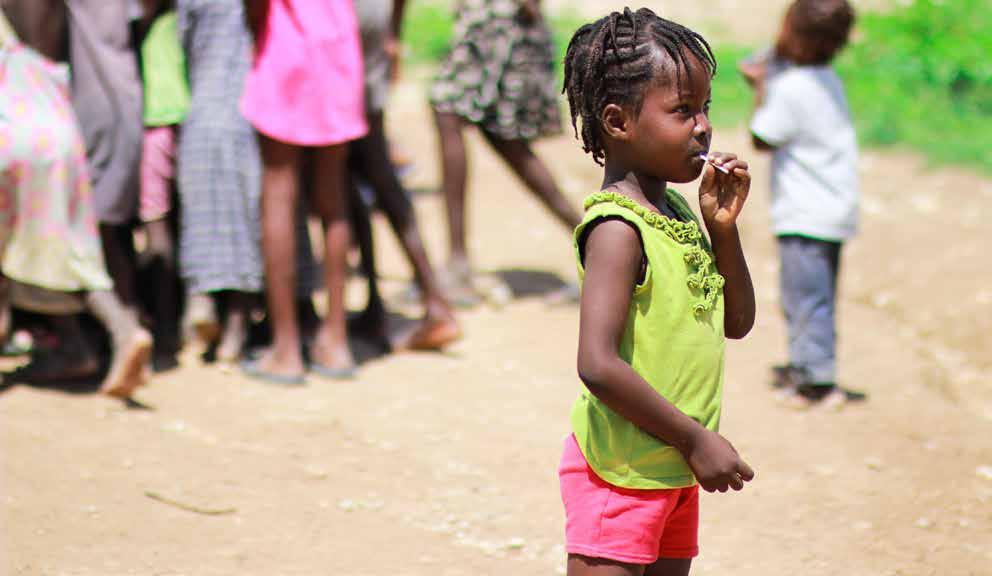
Improvingchildnutritionisalong-terminvestmentinhumancapital,whichhasatripledividendforthe childrenoftoday,theadultsoftomorrowandthenextgenerationofchildren.
ThenutritionalstatusofSouthAfrica’schildrenisdeteriorating.Onein fourchildrenundertheageoffiveisstunted,asignofchronic undernutritionthathasremainedunchangedfor20years.
Overthesameperiod,SouthAfricahasseenasteadyincreaseinchildren beingoverweightorobese.Oneineightchildrenundertheageoffiveis overweightorobese,doubletheglobalaverage.
Theseweresomeofthefindingsofthe2020SouthAfricanChildGauge, publishedannuallybytheChildren’sInstituteattheUniversityofCape Town(UCT)inpartnershipwiththeDSI-NRFCentresofExcellencein HumanDevelopmentandFoodSecurity.
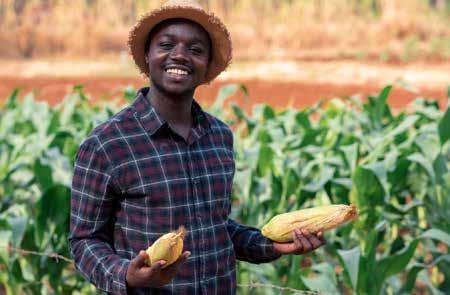
TheGaugedetailsSouthAfrica’sprogressinrealisingchildren’srightsto adequatefoodandnutritionandtheimpactofmalnutrition.Thereis muchthatthestatecando,andtheGaugeoutlinesarangeof opportunitiesfordouble-dutyactionstoaddressthedoubleburdenof malnutrition,startingearlyduringtheantenatalperiodandextending acrossthelifecourse.
Wayswecanimprove:
Theurgentestablishmentofanationalfoodandnutritionsecurity counciltoprovidepoliticalleadershipatthehighestlevelinthe presidency,withtheauthoritytoholdgovernmentdepartments accountableandtodriveconcertedandconsolidatedactionforchildren acrossarangeofsectors,fromhealth,educationandsocialdevelopment totradeandindustry.
Improvingchildnutritionisalong-terminvestmentinhumancapital, whichhasatripledividendforthechildrenoftoday,theadultsof tomorrowandthenextgenerationofchildren.Itisalsoagreatequaliser, helpingtoleveltheplayingfieldbyimprovingchildren’scognitive developmentandenhancingeconomicproductivityinadulthood.”
Suggestedcitation: MayJ,WittenC&LakeL(eds)(2020)South AfricanChildGauge2020.CapeTown:Children’sInstitute, UniversityofCapeTown.
DownloadtheChildGauge: https://bit.ly/3eIOmpQ
1stFloor,SchoolofPublicHealth, UniversityoftheWitwatersrand YorkRoad,Parktown, Johannesburg2193, SouthAfrica
Director:ProfShaneNorris www.facebook.com/CoEHuman twitter.com/CoEHuman www.wits.ac.za/coe-human

In countries such as the United States, Canada, Australia, Ireland, Saudi Arabia, South Korea, Taiwan, and United Arab Emirates, provision of fast food nutritional information is mandatory to the public. However, South African fast food restaurants are not compelled to provide any form of nutritional information.
A study, entitled “Should fast food nutritional labelling be mandatory in South Africa,”and supported by the DSI-NRF Centre of Excellence in Human Development, was recently conducted at the University of the Witwatersrand. One of the aims of the study was to determine the proportion of the largest South African fast food restaurants (based on the BusinessTech 2017 and 2018 annual reviews) that had nutritional information. The study shows that only 58% of the included South African fast food companies in the study (n = 18) had nutritional information available to the public. This is accessible either through a restaurant’s website or made available to the public on request.
The study also aimed to describe the nutritional information of a standard fast food item (burgers or pizzas) and meal combination (burger/pizza + medium fried chips + a sugar sweetened beverage 440 ml) across the fast-food restaurants. Energy, fat, salt and sugar, varied widely amongst similar fast-food items (burgers, pizzas and fried chips), highlighting the importance of nutritional labelling.
This is in contrast to popular belief that similar foods contain similar nutrients. While burgers and pizzas were high in protein, some were also high in fat and salt, as indicated by percentages of the nutritional reference ranges above 30% level. All meal combinations exacerbated the total energy, carbohydrates, sugar, and salt content, and mostly fat. Therefore, the findings from the study suggest that consumption of fast foods may contribute disproportionally to daily nutrient intakes for energy, fat, salt, and sugar, especially when eaten as meal combinations, as these often exceed the daily recommended intakes for a meal.
In addition, the “traffic light system” was utilised by the study to showcase the quantity of each nutrient, and whether this was high (red), medium (orange), or low (green). While the availability of nutritional information is important, it is equally important that fast food nutritional information labelling be easy to understand and recognisible by consumers. Therefore the traffic light approach could help consumers to interpret and understand the nutritional value of different meals and in turn increase their awareness and consideration around dietary choices.
Certainly, the nutritional information of fast food can be used by consumers to make healthier dietary choices and in turn assist the government to mitigate obesity and related noncommunicable diseases, such as diabetes and hypertension.
Dietshighinfat,sugar,andsaltarecorrelatedwiththerise innon-communicablediseases(NCDs)whicharealeading causeofmortalityinadults.
Therefore,consumersmaybenefitfromunderstandinghow choosingtopurchasefastfooditemsorcombinationmeals
contributetotheirdietaryintakeoffat,saltandsugarand overallenergyintake.Furthermore,governmentregulation tomandatenutritionallabellingoffastfoodsinSouth Africamaybeanimportantcomponentoftheirhealth strategytoreduceNCDsinSouthAfrica.Particularly,ifthe labellingisclearandeasilyinterpretable.
⬛ Low ⬛ Medium ⬛ High ⬛ Missingdata(notprovided)
A440mlcolasugar-sweetenedbeveragehas48gsugarperserving.
Mostmealequivalents(combinationofastandardfooditem+mediumfriedchips+440mlsugar-sweetened beverage)wereassignedredforhighfat,saltandsugarcontent.
Figure1:AssignedtrafficlightcoloursfortheSouthAfricanfast foods.(Red:High;Amber:Medium;Green:Low;Lightgrey: Colourcouldnotbeassignedduetomissinginformation). Themajorityofthestandardfastfooditems(burgers/pizzas)and mediumfriedchipsarehighinfatandsaltcontent.Whilesugar contentisrelativelylowinburgers,pizzasandmediumfried chips,inclusionofasugar-sweetenedbeverageinameal combinationensureshighsugarcontentinfastfoods.Thereis somemissingnutritionalinformationasmanyoftheSouth Africanfastfoodrestaurantsdonotprovidenutrientvaluesper 100g,whichisrequiredforthe“trafficlight”classification.
www.wits.ac.za/coe-human
Reference: ShouldfastfoodnutritionallabellinginSouthAfricabe mandatory?
SiphiweNDlamini1*,GudaniMukoma1,ShaneANorris1,2 1SAMRC/WitsDevelopmentalPathwaysforHealthResearch Unit,SchoolofClinicalMedicine,FacultyofHealthSciences, UniversityoftheWitwatersrand,Johannesburg,SouthAfrica 2GlobalHealthResearchInstitute,SchoolofHealthand HumanDevelopment,UniversityofSouthampton,UK *Correspondingauthor,email: siphiwe.dlamini2@wits.ac.za

1stFloor,SchoolofPublicHealth, UniversityoftheWitwatersrand YorkRoad,Parktown, Johannesburg2193, SouthAfrica
Director:ProfShaneNorris www.facebook.com/CoEHuman twitter.com/CoEHuman
Agreed-uponproceduresreportontheNationalResearchFoundation(NRF)awardsreceived bytheUniversityoftheWitwatersrand,JohannesburgfortheCentreofExcellenceinHuman Developmentfortheyearended31December2021
TotheCouncilMembersofUniversityoftheWitwatersrand PurposeofthisAgreed-uponproceduresreport
OurreportissolelyforthepurposeofassistingyouinreportingtotheNRFontheCashFlowAnalysis relatingtotheCentreofExcellenceinHumanDevelopmentfortheyearended31December2021 andmaynotbesuitableforanotherpurpose.
Thecouncilmembershaveacknowledgedthattheagreed-uponproceduresareappropriateforthe purposeoftheengagement.
DrRobinDrennan(Director:ResearchDevelopment),asidentifiedbymanagement,isresponsiblefor thesubjectmatteronwhichtheagreed-uponproceduresareperformed.
Wehaveconductedtheagreed-uponproceduresengagementinaccordancewithInternational StandardonRelatedServices(ISRS)4400(Revised), Agreed-UponProceduresEngagements.An agreed-uponproceduresengagementinvolvesourperformingtheproceduresthathavebeenagreed withthedirectors,andreportingthefindings,whicharethefactualresultsoftheagreed-upon proceduresperformed.Wemakenorepresentationregardingtheappropriatenessoftheagreed-upon procedures.
Thisagreed-uponproceduresengagementisnotanassuranceengagement.Accordingly,wedonot expressanopinionoranassuranceconclusion.Hadweperformedadditionalprocedures,other mattersmighthavecometoourattentionthatwouldhavebeenreported.
WehavecompliedwiththeethicalrequirementsoftheCodeofProfessionalConductforRegistered AuditorsissuedbytheIndependentRegulatoryBoardforAuditors(IRBACode).TheIRBACodeis foundedonfundamentalprinciplesofintegrity,objectivity,professionalcompetenceandduecare, confidentialityandprofessionalbehaviour;anditisconsistentwiththecorrespondingsectionsofthe InternationalEthicsStandardsBoardforAccountants’ InternationalCodeofEthicsforProfessional Accountants(includingInternationalIndependenceStandards).Forthepurposeofthisengagement, therearenoindependencerequirementswithwhichwearerequiredtocomply.
OurfirmappliesInternationalStandardonQualityControl1, QualityControlforFirmsthatPerform AuditsandReviewsofFinancialStatements,andOtherAssuranceandRelatedService Engagements;and,accordingly,maintainsacomprehensivesystemofqualitycontrol,including documentedpoliciesandproceduresregardingcompliancewithethicalrequirements,professional standardsandapplicablelegalandregulatoryrequirements.
Wehaveperformedtheproceduresdescribedbelow,whichwereagreeduponwiththecouncilinthe termsofengagementdated27January2022,ontheNationalResearchFoundation(NRF)awards receivedbytheUniversityoftheWitwatersrand,JohannesburgfortheCentreofExcellenceinHuman Developmentfortheyearended31December2021.
1.Inspectthatthedeclaredincome andexpenditureiscorrectandthat allincomeandexpenditureasper thegeneralledgerhasbeen declaredbyagreeingtheCoE CashFlowAnalysistothegeneral ledgerfortheperiod.The transactions,bothexpenditureand incomewillbesubjecttothe proceduresstipulatedbelow.
2.Inspectthat:
a.TwoSteeringCommitteeBoard meetingswereheldintheperiodof funding,andminutesforboth meetings havebeenadoptedandsignedby theChairpersonoftheBoard.
b.TheSteeringCommittee approvedtheBusinessPlan,and thatminutesofthemeetingaswell astheBusinessPlanwas submittedtotheNRF.
3.Inspectthatthegrantfundswere usedtoadvancetheresearch agendaby:
a.Selectingasampleasperthe NRFguidelines,beingatenthof thenumberoftransactionsofthe expensesperthegeneralledger.
b.AgreeingwithBeverleyManus (UniversityoftheWitwatersrand: FinanceManagerResearchOffice) thatthetransactionsselectedin procedure3(a)isappropriatefor thepurposesofthisengagement.
c.Forthetransactionsselectedper procedure3(a),performthe followingprocedures:
Withrespecttoitem1,weobtainedtheCoECashFlow Analysisandgeneralledgerfortheperiodand inspectedthatthedeclaredincomeandexpenditure wascorrectandthatallincomeandexpenditureasper thegeneralledgerhasbeendeclaredbyagreeingthe CoEcashflowanalysistothegeneralledgerforthe period.Noexceptionswerenoted.
Withrespecttoitem2(a),weinspectedthattwo SteeringcommitteeBoardmeetingswereheldinthe periodoffunding,andminutesforbothmeetingswere adoptedandsignedbytheChairpersonoftheBoard. Noexceptionswerenoted.
Withrespecttoitem2(b),weinspectedthatminutesof themeetingaswellastheBusinessplanwere submittedtotheNRF.Wefurtherinspectedthatthe businessplanwasapprovedinthemeetingheld.No exceptionswerenoted.
Withrespecttoitem3,weinspectedthatthegrant fundswereusedtoadvancetheresearchagendaby performingthefollowingprocedures:
Withrespecttoitem3(a),weselectedasampleof 10.87%ofthenumberoftransactionsoftheexpenses perthegeneralledger.Noexceptionswerenoted.
Withrespecttoitem3(b),weagreedwithBeverley Manus(UniversityoftheWitwatersrand:Finance ManagerResearchOffice)thatthetransactions selectedinprocedure3(a)wereappropriateforthe purposesofthisengagement.Noexceptionswere noted.
Withrespecttoitem3(c),forthesampleselectedper procedure3(a),weperformedthefollowing procedures:
i.Obtainthesourcedocuments (invoices,payslips,expense breakdownsandtravelclaim expenseforms,etc.)foritems selectedfromthegeneralledger andagreethedetailspergeneral ledgertothesupporting documentationinspected.
Withrespecttoitem3(c)(i),weobtainedthesource documents(invoices,payslips,expensebreakdowns andtravelclaimexpenseforms,etc.)foritemsselected fromthegeneralledgerandagreedthedetailsper generalledgertothesupportingdocumentation inspected,exceptasdetailedbelow.
Thefollowingexceptionswerenotedwherebywewere unabletoobtainsupportingdocumentation:

Inaddition,thefollowingdifferencewasnotedbetween theamountpertheGeneralLedgerandtheamountper theSupportingDocumentation:

RefertoAppendixAformanagementcomments.
ii.Inspectthenatureofexpenses asperthesupportingdocuments descriptionandcomparethe natureofexpensestothepurpose ofresearchasstipulatedinthe businessplan.
Withrespecttoitem3(c)(ii),weinspectedthenatureof expensesasperthesupportingdocumentsdescription andcomparedthenatureofexpensestothepurpose ofresearchasstipulatedinthebusinessplan.
iii.Inspectthedateasperthe sourcedocumentationandagree thatitwasrecordedinthecorrect financialperiod,1January202131December2021basedonwhen thegoodsorserviceswere received.
Thefollowingexceptionswerenotedwherebywewere unabletoobtainsupportingdocumentation: RefertoAppendixAformanagementcomments.
Withrespecttoitem3(c)(iii),weinspectedthedateas perthesourcedocumentationandagreedthatitwas recordedinthecorrectfinancialperiod,1January2021 -31December2021basedonwhenthegoodsor serviceswerereceived,exceptasdetailedbelow.
Thefollowingexceptionswerenotedwherebywewere unabletoobtainsupportingdocumentation:
Inaddition,thefollowingexceptionswerenotedwith regardstoitemscapturedintheincorrectperiod.The transactionswererecordedin2021butthedateasper thesupportingdocumentationrelatesto2020:
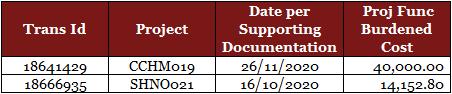
iv.Inspectthe source documentation and agree thatitis in the nameof theUniversity.
Referto AppendixA formanagement comments.
Withrespect to item3(c)(iv),we inspected the source documentation and agreedthat it is inthenameofthe University,exceptas detailed below.
Thefollowingexceptions were noted wherebywe were unableto obtain supportingdocumentation:

Referto AppendixA formanagement comment.
v.Inspectthe source documentation and where VATis levied, thatitis correctlyrecorded in the generalledgerbyagreeing VATamountper source document to VAT amount recordedingeneral ledger.
4. Forgrant fundsutilised on nominationof students, agreethe amount perthe studentnomination formtotheamountpaidto the studentbyobtaining the relevant studentaccounts.
Withrespect to item3(c)(v), we inspectedthe source documentation and where VAT waslevied,thatitwas correctlyrecordedin the generalledgerbyagreeing VATamountper source documenttoVATamount recordedin generalledger, exceptas detailed below.
Thef ollowingexceptions were noted wherebywe were unableto obtain supportingdocumentation:
Referto AppendixA formanagement comments.
Withrespect to item4, for grantfundsutilisedon nominationof students, weagreedthe amountperthe studentnominationform tothe amount paidtothe studentbyobtaining the relevant studentaccounts, exceptas detailed below.
Thefollowingexceptions were noted whenagreeing the amount perthe studentnomination formtothe amount paidtothe studentbyobtainingtherelevant studentaccounts:
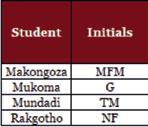
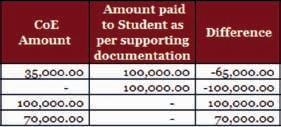
Referto AppendixA formanagement comments.
5.Inspectthat funds werespent in accordance withthe signed Memorandumof Agreement (MOA), by obtaining signed representatio nfromuniversity management.
6.Inspectthat theactivities pursued byCoE's related tothe5 KPAs,by obtaining signed representation from university management.
Withrespect to item5, we inspectedthatfundswere spentinaccordance withthe signedMemorandumof Agreement (MOA), byobtaining signed representation from university management.Noexceptions were noted.
Withrespect to item6, we inspectedthattheactivities pursuedbyCoE'srelated tothe5KPAs,by obtaining signedrepresentationfromuniversitymanagement. No exceptionswere noted.
Ourreportissolelyforthepurposesetforthinthefirstparagraphofthisreportandisintendedtobe usedbythecouncil.Ourreportshouldnotbeusedforanyotherpurposeorbedistributedtoanyother

CharteredAccountant(SA) Johannesburg,SouthAfrica
8March2022
AppendixA:Managementcommentsonexceptionnoted Procedure Number ManagementComment
3(c)(i).Obtainthe sourcedocuments (invoices,payslips, expense breakdownsand travelclaim expenseforms, etc.)foritems selectedfromthe generalledgerand agreethedetails pergeneralledger tothesupporting documentation inspected.
Thefollowingexceptionswerenotedwherebywewereunabletoobtain supportingdocumentation:
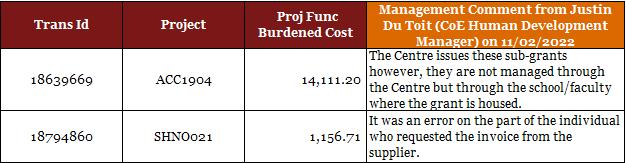
Inaddition,thefollowingdifferencewasnotedbetweentheamountperthe GeneralLedgerandtheamountpertheSupportingDocumentation:

3(c)(ii).Inspectthe natureofexpenses asperthe supporting documents descriptionand comparethe natureofexpenses tothepurposeof researchas stipulatedinthe businessplan.
3(c)(iii).Inspectthe dateasperthe source documentationand agreethatitwas recordedinthe correctfinancial period,1January 2021-31 December2021 basedonwhenthe goodsorservices werereceived.
Thefollowingexceptionswerenotedwherebywewereunabletoobtain supportingdocumentation:
Thefollowingexceptionswerenotedwherebywewereunabletoobtain supportingdocumentation:
3(c)(iv).Inspectthe source documentation and agree thatitisin the nameof the University.
Inaddition,thefollowingexceptionswere noted with regardto items captured in theincorrectperiod.Thedateasper the generalledgerdoesnotagree to the dateasper the supporting documentation, based onwhenthe goodsor serviceswerereceived:
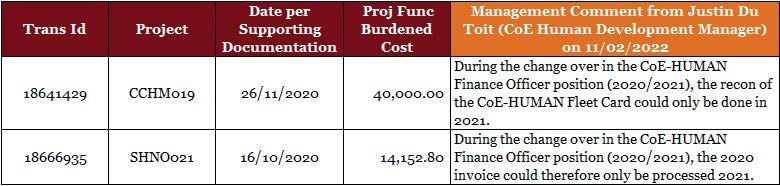
Thefollowingexceptions were noted wherebywe were unabletoobtain supportingdocumentation:
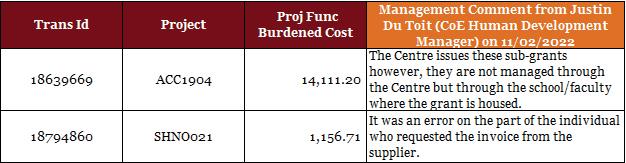
3(c)(v).Inspectthe source documentation and where VAT is levied, thatitis correctlyrecorded in the general ledgerby agreeing VATamountper source document to VAT amount recordedin general ledger.
4. Forgrantfunds utilisedon nominationof students,agreethe amount perthe studentnomination formtotheamount paidtothe student byobtainingthe relevant s tudent accounts.
Thefollowingexceptions were noted wherebywe were unabletoobtain supportingdocumentation:
Thefollowingexceptions were noted whenagreeing theamountper the studentnominationform tothe amount paid tothe studentbyobtainingthe relevant studentaccounts:
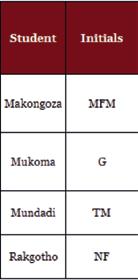
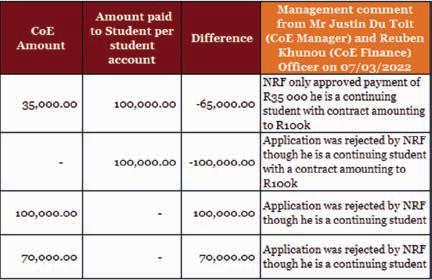
DST-NRF CoE-HD Programme Cash Flow analysis for the 2021 financial year

Student Nominations
Grant uidGrantholderStudent
91489NorrisChidembo RCN048706Doctoral Approved 91489NorrisChivasa NFN570989Post Approved 91489NorrisCraig A9205010102081Post Approved 91489NorrisDesai R900214016608 Approved 91489NorrisDlamini N890612552108 Approved


91489NorrisDrysdale RPU1567417Post Approved 91489NorrisJobela Z8903040979087Doctoral Approved 91489NorrisLekota B.K.L8910300761089Doctoral Approved 91489NorrisMakongozaMFM790821044008 Approved 91489NorrisMapanga W8403066460187Post Approved 91489NorrisMasiakwalaE841101068808 Approved 91489NorrisMasuluke I9108231207087Masters Approved 91489NorrisMoagi LM881206068608 Approved 91489NorrisMolelekeng AdeniranG9005040282089Masters Approved 91489NorrisMoyana MTFN473347Doctoral Approved 91489NorrisMpondo F8304040401083Post Approved 91489NorrisMthethwa SL910404600108 Approved 91489NorrisMtintsilanaA: 8909130679081Post Approved 91489NorrisMukoma G9205175555081Doctoral Approved 91489NorrisMundadi 6043 Approved 91489NorrisMuti MFN788713Doctoral Approved 91489NorrisRakgotho NF9702070346087Masters Approved 91489NorrisRosslee T9505190065085Masters Approved 91489NorrisSamukimbaJCZN623537Doctoral Approved 91489NorrisSithole EA6510085511089Doctoral Approved 91489NorrisThokwane LZ960604072208 Approved 91489NorrisTjemolane LST8407055471089Doctoral Approved 91489NorrisVilanculos E8906011056082Doctoral 100,000.00 NRF Approved

This will be done electronically by the Designated Authority

Professor Lynn Morris Deputy Vice-Chancellor: Research and Innovation
Date: 12 April 2022