Graduation Ceremony
Date: 11 December 2024
Time: 09:30
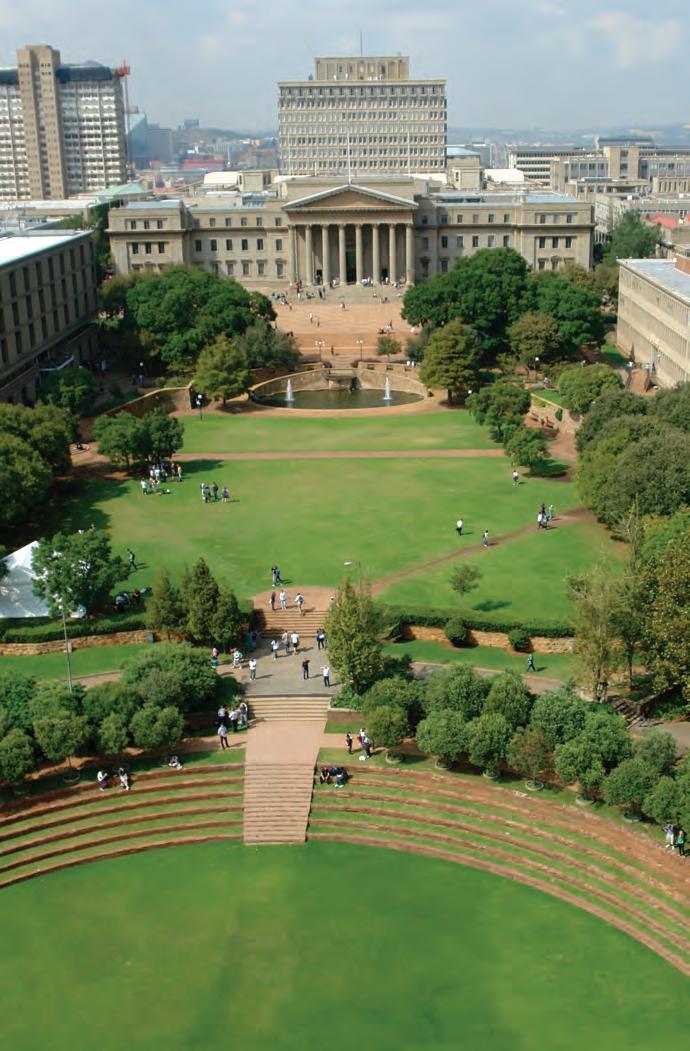
Venue: The Great Hall

Date: 11 December 2024
Time: 09:30
Venue: The Great Hall
CONGRATULATIONS! HALALA!
GO LEAD SOUTH AFRICA TO GREATNESS!
A hearty congratulations to the class of 2024! Some of you entered university as the world sank into a global pandemic, COVID-19; some were already pursuing their studies at this world class university, the University of the Witwatersrand. We applaud you for strength of character, grit, and commitment to success.
Our country continues to experience a plethora of challenges that threaten our economic stability and social cohesion, further deepening inequality and hopelessness. It is in this century that, as one of the member states of the UN that approved the 2030 Agenda for Sustainable Development, we intend to eradicate inequality, achieve peace, prosperity, and dignity for all, through partnerships while preserving the planet for future generations. We cannot achieve these lofty ambitions without your wisdom and servant leadership as you embark on your careers.
Your hard work and dedication to achieve your dreams is a true reflection of your resilience and commitment. It is this resilience that makes us confident that you have what it takes to build a better future that is equal and just. History has proven time and again that it is the weakest amongst us that determine our strength as a nation. The highly educated have the responsibility to enlighten and fight for social justice for the marginalised, for the good of humankind.
As you venture into the world, take time to expand the depth and breath of your knowledge. Read outside your specialisation, engage with people outside your comfort zone. Be lifelong learners. Understand the plight of people less fortunate than yourself. Leaders who leave footprints worth emulating, are not only the brightest but also those who take time to learn from others, who are accountable for their actions and omissions, who use what they know and what they have, to make the world a better place. Leaders who care! Those leaders do this consistently with Integrity. May you be those leaders!
CONGRATULATIONS! HALALA! GO LEAD SOUTH AFRICA TO GREATNESS!
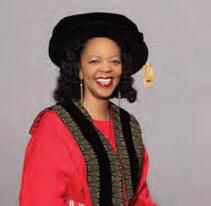
Dr Judy Dlamini Chancellor Wits University
Dear Wits Graduate,
Congratulations on successfully completing your academic programme at the University of the Witwatersrand, the premier University on the continent.
You are now a member of an elite group of graduates of this august institution. More than 200 000 alumni at the cutting edge of excellence, both locally and internationally in business, the public sector, the academy, and in civil society have trodden this path.
Today, you become a member of this illustrious community. Over the past 100 years, Wits has grown into one of the leading universities on the continent and a globally respected institution for its teaching and learning, knowledge creation and generation, and social impact. It has shaped the lives of many and changed society for good. You are now an integral part of this proud and enduring legacy. Here at Wits, we actively pursue excellence and societal relevance in everything we do. From the abstract to the practical, our focus is on creating a space for the best thought, knowledge, and expertise to be unearthed and nurtured. Wits is renowned for its intellectual leadership and for nurturing critical thinkers, creative innovators, problem-posers, and problem solvers. We have strived to match your ambition and drive to overcome the challenges thrown our way by the pandemic. Together we have reached the crest of the hill and proven, once again that excellence is achievable, even in times of uncertainty and adversity.
Your success has furthered our commitment to equipping the next generation of leaders with the skills and determination that you will need to find innovative and sustainable solutions to the pressing problems of the 21st Century.
As a Wits graduate, you had access to an exceptional educational experience. You have been exposed to a world-class academic and research programme and a vibrant community that makes you a true global citizen. You have been part of an institution that generates cutting-edge knowledge and innovation for South Africa and the world. It is now time for you to step into the world and use that experience, for good. We know that you will enter the next stage of your journey with the determination to build a better society tomorrow. I want to encourage you to remain a part of the Wits family by participating in our alumni programme and by further advancing the reputation of your alma mater.
Best wishes for the next steps of your journey and congratulations on being such a big part of the history of this illustrious institution.
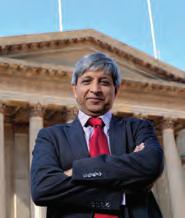
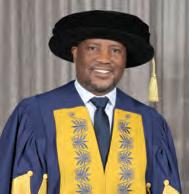
Professor Zeblon Vilakazi, FRS Vice-Chancellor and Principal Wits University
Gaudeamus igitur
Juvenes dum sumus
Post jucundum juventutem
Post molestam senectutem
Nos habebit humus.
Ubi sunt qui ante nos
In mundo fuere?
Vadite ad superos
Transite in inferos
Hos si vis videre.
Vita nostra brevis est Brevi finietur.
Venit mors velociter
Rapit nos atrociter
Nemini parcetur.
Vivat academia
Vivant professores
Vivat membrum quodlibet
Vivat membra quaelibet
Semper sint in flore.
Vivant omnes virgines
Faciles, formosae.
Vivant et mulieres
Tenerae amabiles
Bonae laboriosae.
Vivant et republica et qui illam regit.
Vivat nostra civitas, Maecenatum caritas
Quae nos hic protegit.
Pereat tristitia, Pereant osores.
Pereat diabolus, Quivis antiburschius
Atque irrisores.
Let us rejoice therefore
While we are young.
After a pleasant youth
After a troublesome old age
The earth will have us.
Where are they
Who were in the world before us?
You may cross over to heaven
You may go to hell If you wish to see them.
Our life is brief
It will be finished shortly.
Death comes quickly Atrociously, it snatches us away. No one is spared.
Long live the academy!
Long live the teachers!
Long live each male student!
Long live each female student!
May they always flourish!
Long live all maidens
Easy and beautiful!
Long live mature women also,
Tender and loveable
And full of good labor.
Long live the State
And the One who rules it!
Long live our City
And the charity of benefactors
Which protects us here!
Let sadness perish!
Let haters perish!
Let the devil perish!
Let whoever is against our school
Who laughs at it, perish!
Nkosi sikelel’ iAfrika
Maluphakanyisw’ uphondo lwayo,
Yizwa imithandazo yethu, Nkosi sikelela
Thina lusapho lwayo.
Morena boloka setjhaba sa heso, O fedise dintwa le matshwenyeho, O se boloke, O se boloke setjhaba sa heso, Setjhaba sa, South Afrika — South Afrika.
Uit die blou van onse hemel, Uit die diepte van ons see, Oor ons ewige gebergtes, Waar die kranse antwoord gee,
Sounds the call to come together, And united we shall stand, Let us live and strive for freedom In South Africa our land.
The Wits Choir
The Wits Choir has been around since 1995. Their repertoire is colourful and vibrant. They perform regularly at graduations and important ceremonies. The Wits Choir has toured internationally as well as playing host to other choirs here. They are also active in the community, undertaking choral outreach programmes.
11 DECEMBER 2024 AT 09:30
The audience will rise as the academic procession enters the hall and will remain standing until the Chancellor is in place
The Chancellor will constitute the congregation
The Chancellor will welcome the graduands, diplomates and guests
Address to the congregation
Conferment of degrees and granting of diplomas and certificates
The Acting President of Convocation will address the graduates and diplomates
The Chancellor will dissolve the congregation
The audience will stand while Ihele is played
Members of the audience are requested to stand while the academic procession leaves the hall and not to leave the hall before the end of the ceremony.
In the event of load-shedding or power cuts, the Great Hall may become totally dark until the generator comes into operation.
DEAN: PROFESSOR M MUSEMWA BA Hons (Zimbabwe) MA (Cape Town) PhD (Minnesota, USA) MASSAf
ALLI, Muhammad Matola
Labour Policy and Globalisation RESEARCH REPORT: The effects of the National Minimum Wage as a Labour Market Mechanism for Reducing Income Inequality in South Africa
ARGALL, Timothy Normand (with Distinction) Digital Arts DISSERTATION: An Animator Prepares: a Practice-Based Investigation of Acting Principles and their application in the Craft of Character Animation
ATKINSON, Kendall Lee
Cultural Policy and Management RESEARCH REPORT: Protecting Independent Local Contemporary Fashion: an exploration of policies that shaped the South African fashion industry and approaches to protect local independent South African contemporary fashion as cultural heritage
AYSEN, Savannah Courtney (with Distinction)
Organisational Psychology RESEARCH REPORT: Psychological Well-Being and South African Socio-Economic Stressors: the moderating role of Leaders creating Hope
BAETA, Raquel Christina E-Science RESEARCH REPORT: The role of international commitments in combating the Illicit Distribution of Cocaine
BAIA, Tristan Leonardo Contemporary Curatorial Practice RESEARCH REPORT: Crafting Spaces: Exploring the potential for a Queer(ed) Curatorial Practice through Zines.
BAMBO, Matsidiso Princess (with Distinction)
Social and Psychological Research RESEARCH REPORT: Depression Demographic Profiling of Young Adults in South Africa
BOLTINA, Sinovuyo Sociology RESEARCH REPORT: People's Dignity is at stake: the ambulance availability Crisis in Lusikisiki, Ingquza Hill Local Municipality
BROWN, Ryan Lenora (with Distinction) Creative Writing DISSERTATION: Comrades on the Road: the story of South Africa's Unlikely Iconic Race
BUX-WILLIAMSON, Fatima Bee Bee International Relations RESEARCH REPORT: Hugging the Crocodile: South Africa's (SA's) tense relationship with the International Criminal Court (ICC)
CHETTY, Teakshania
Applied Drama: Theatre in Education, Communities and Social Contexts
RESEARCH REPORT: Forum Theatre as a form of protest. A Practice-Based Investigation
CLAASEN, Estee Lauren
Applied Drama: Theatre in Education, Communities and Social Contexts
RESEARCH REPORT: Unheard Narratives: theatre-making that celebrates Coloured stories
CRONJE, Sherrilee Jade (with Distinction)
Organisational Psychology RESEARCH REPORT: The role of social media in career discovery, aspirations, and choice of South African university students: a social cognitive perspective
DAVIES, Tanswell Nathan ICT Policy and Regulation RESEARCH REPORT: The effect of the ICT policy and legislative regime on the Namibian Telecomunications Sector 2009-2024
DLAMINI, Lindokuhle Sibahle Anna-Maria (with Distinction) Psychology DISSERTATION: The experiences of COVID-19 related lockdown and social media usage among the youth in Vosloorus, Mfundo Park, Gauteng
DLAMINI, Phiwokuhle (with Distinction) Digital Arts DISSERTATION: Enabling Authentic Learning Experiences for Indigenous Knowledge Acquisition in a Digital Environment: a case of Zulu beading practice
DLAMINI, Sanelisiwe Siduduzo Pauline Drama Therapy RESEARCH REPORT: Hip hop and Narrative Therapy in Drama Therapy: an exploration of the ways in which Hip hop in Narrative Form can be used to address issues of displacement, foster cohesion and conscientize a sense of self in urban adolescents
DUBE, Gugulethu Violet Development Sociology RESEARCH REPORT: Fluid Justice: Tracing the experiences of women navigating urban water insecurity in Luveve In Bulawayo, Zimbabwe
EFFENDI, Karima Film and Television DISSERTATION: Encountering apartheid publics: an essay film on Hendrik Verwoerd as public symbol 1958-1966 and implications for counter-publics today.
GARDINER, Eric Selous
Digital Arts DISSERTATION: 2D Animation: the key to growth and adaptation of the South African Animation Ecosystem
GOBA, Lindi Mpumelelo
Journalism and Media Studies RESEARCH REPORT: The requirements of ethical journalism: an analysis of COVID-19 related news coverage by South African print and online media
ISAACK, Jeaneth Samantha
Political Studies RESEARCH REPORT: “They will never know what we lost when we lost our home”: How do women in Ladysmith, KwaZulu-Natal, remember forced emovals (1960-1990)?
JANTJIES, Aphelele
Social Development RESEARCH REPORT: Experiences of grade eight learners in transitioning from primary to secondary school settings: a case of learners at a secondary school in Soweto
JIANG, Zhiqi (with Distinction)
International Relations RESEARCH REPORT: Cultural Diplomacy and Soft Power: the Impact of South Korea's Pop Culture on China and the World
KGOMO, Tshegofatso Marriam
E-Science RESEARCH REPORT: The Influence of Perceived Opportunities and Perceived Capabilities on entrepreneurial activity in sub-Saharan Africa
KHOZA, Palesa Johanna
E-Science RESEARCH REPORT: Food Riot? Analyzing the July 2021 unrest in South Africa using Topic Modeling
KHUMALO, Sibongile Sinenhlanhla
Journalism and Media Studies RESEARCH REPORT: The 1995 Shobashobane Christmas Day massacre: political mass murder that shook the new South Africa
KRIENKE, Hannah Celine
Political Studies RESEARCH REPORT: Changing patterns of violence in the Western Sahel
KUTU, Siyamthanda Elia
Organisational Psychology RESEARCH REPORT: Career adaptability, occupational identity, and psychological well-being after a career change during the Covid-19 pandemic
LALLA, Mayuri Psychology RESEARCH REPORT: The role of executive function and socioeconomic status on risk-taking behaviours in the low-to-middle income context of South Africa
LANGA, Nkateko Nicole
Film and Television DISSERTATION: Re-imagining African Storytelling Conventions within the Cinematic Virtual Reality Medium
LIPSHITZ, Danya Raquel Digital Arts DISSERTATION: Africa Remix; Reposted Curating African Identity in Postcolonial & Digital Spaces
LOWE, Graham Mark Applied Ethics for Professionals RESEARCH REPORT: Is there a moral right for civilian gun ownership?
LUKHELE, Ntfombiyenkhosi Patricia Labour, Economic and Development Sociology RESEARCH REPORT: Supporting women smallholder farmers in Eswatini: Comparing those in cooperatives to those outside of cooperatives
MACINGWANE, Nontokozo
Social and Psychological Research RESEARCH REPORT: The Psychosocial Impacts of COVID-19 on children: a parents' perspective
MADDAMS, Amy Charlotte Drama Therapy RESEARCH REPORT: An integrated literature review investigating how significant elements of Drama Therapy, namely Role Method and Narradrama, can support the congruent identity formation of teenagers influenced by contemporary social media
MADUBYE, Koketso Tholo Health Demography RESEARCH REPORT: An analysis of the relationship between HIV-testing and cervical cancer screening uptake, among females of reproductive age (15-49 years old) in South Africa
MADZIWO, Alexia Ruvarashe (with Distinction) Linguistics DISSERTATION: Phonological memory and sentence processing in South African L2 English-speaking children
MAEPA, Pontsho Social Development RESEARCH REPORT: An investigation of the financial and psychological impact of COVID-19 on students at the University of the Witwatersrand, South Africa
MAGAGULA, Noncedo Badelisile
International Relations RESEARCH REPORT: Investment and social conflict in Extractive Industries in Africa: the case of Cabo Delgado, Northern Mozambique
MAGOLA, Delipher Health Sociology RESEARCH REPORT: Exploring the involvement of HIV patients in person-centred care: the case of Nancholi Youth Organization (NAYO) in Blantyre, Malawi
MAHLANGU, Thato
Cultural Policy and Management RESEARCH REPORT: Exploring the efficacy of an audience-centred approach in establishing culturally sensitive art centres in Tshwane
MAHLANGU, Theophelus Sphesihle Demography and Population Studies RESEARCH REPORT: Male Circumcision and Multiple Sexual partners in South Africa
MAHOBE, Patience Ntsoaki (with Distinction)
Critical Diversity Studies RESEARCH REPORT: The role of intersecting identities in the career development and progression in the core disciplines within the South African mining industry
MAHUMAPELO, Mmabatho Christophine Health Sociology RESEARCH REPORT: "I thought I was dying": Menstruation experiences, knowledge gaps, and knowledge-seeking practices among young black South African women
MAKGALE, Tswelopele (with Distinction)
Health Demography RESEARCH REPORT: Factors associated with HIV knowledge among younger adolescents aged 12-14 years old in South Africa
MAKHATHINI, Sinqobile Luyanda Anthropology RESEARCH REPORT: Azibuye Emasisweni: Exploring everyday notions of Zulu Nationalism through the women in the hostels of Alexandra Township
MAKUBE, Mpho Mamokgethi (with Distinction) Psychology RESEARCH REPORT: Young Black Women's experiences of negotiating dominant cultures in corporate South Africa
MASHIANE, Sphiwe Dorcus (with Distinction)
Social Development RESEARCH REPORT: The experiences of Black Female postgraduate students with mental health during the COVID-19 pandemic, 2019-2021, the case of the University of the Witwatersrand
MASOKA, Petunia Ntokozo
Organisational Psychology RESEARCH REPORT: A qualitative exploration of Teachers' experiences of bullying by learners- a job demands resources perspective
MATHEBULA, Sipho Sol
Social Development RESEARCH REPORT: The perceptions of social workers on the implementation of the Occupation Specific Dispensation policy (OSD) within the Department of Social Development in the Johannesburg Region
MAWILA, Cathrine Kate Journalism and Media Studies RESEARCH REPORT: Framing of climate change in South Africa: an analysis of content in News24 and Tiktok
MBALA, Mhlangabezi
Political Studies RESEARCH REPORT: Missionary Conversions and Cross-Cultural Translations in the highveld, 1820 to 1870
MDLULI, Busisiwe
Social Development RESEARCH REPORT: Children placed in alternative care: experiences of primary caregivers pending finalisation of the Children's Court Inquiry
MJINDI, Mathew Uzubenathi Digital Arts DISSERTATION: Exploring the relevance of Garrett's Elements of UX Design in contemporary design practices, through a local FIFA (EA) esports mobile app prototype
MOCHECHANE, Khumo Sophia
African Literature RESEARCH REPORT: Intimacy, sadness-as-courage and post-apartheid disillusionment in Nhlanhla P. Maake's Mangolo a Nnake
MOFOLO, Katleho Digital Arts DISSERTATION: Digital Avatar Design and Social Masks: the atavism of Totemic-storytelling
MOJELA, Tshenolo (with Distinction) International Relations DISSERTATION: The economic and geopolitical implications of China's BRI in Nigeria and Ethiopia: a comparative analysis
MONGWE, Veli Conrad
Political Studies RESEARCH REPORT: Access to the Township Economy: a comparative study of the spaza shop sector in the City of Ekurhuleni Townships, Tsakane and Duduza
MOODLEY, Paalini Jasanthini (with Distinction) Anthropology RESEARCH REPORT: Caste and Colourism: Constructions of beauty among women in the historically Indian area of Chatsworth, Durban
MOOLLA, Sadiyyah Applied Ethics for Professionals RESEARCH REPORT: A critical inquiry into the ethical justification(s) for decriminalising Cannabis use In South Africa.
MTHEMBU, Xoliswa
Applied Ethics for Professionals RESEARCH REPORT: Understanding the requirements and barriers to providing Post-Trial Access (PTA): a review of continued access to effective medicine
MTONGANA, Lutho Siphe African Literature RESEARCH REPORT: Memory, trauma and narrative in Yvonne Vera's The Stone Virgins and Delia Jarrett-Macauley's Moses,Citizen & Me
NCANANA, Nomfundo Innocentia Drama Therapy RESEARCH REPORT: The Awakening: Makudlalwe. A study on how play awakens the inner child in black Indigenous African adults
NDLOVU, Xolane (with Distinction) Political Studies RESEARCH REPORT: Contesting Heritage: a political analysis of Freedom Park and Voortrekker Monument in South Africa
NEVOBASI, Aletta Adaaku International Relations RESEARCH REPORT: An evaluation of democratization processes in West Africa: a comparative analysis of Nigeria's and Ghana's democratic governance
NGWENYA, Nonhlanhla Nomusa E-Science RESEARCH REPORT: A computational study of media bias in South African online political news reporting over the period 2021 - 2023
NKOSI, Nhlanhla Lucky Digital Arts DISSERTATION: The Usability of Cross-Device Controllers
NTLOKOTSE, Mamolaba Ruth Labour Policy and Globalisation RESEARCH REPORT: Labour led strategy towards the fourth industrial revolution: a critical appraisal of Numsa's approach to worker control
NYATHI, Denzel Contemporary Curatorial Practice RESEARCH REPORT: bubblewrapped: (Queered) Exhibition Making as a means of creating spaces in Johannesburg which balance Intimacy, Safety and Access
ODURO, Twumwaa Nosibusiso Digital Arts DISSERTATION: Genre and Narrative in Adaptation: Romance in Heartstopper from comic to live-action series
PARUK, Fathima Publishing Studies RESEARCH REPORT: Representative Fiction in Muslim Literature in South Africa
PASSOS, Monique Coimbra (with Distinction) Organisational Psychology RESEARCH REPORT: The Impact of a Psychological Capital Micro-Intervention on academic engagement within a student-university context
PETER, Andrea Nathania Health Demography RESEARCH REPORT: Factors and Levels associated with HIV Knowledge among Non-Heteronormative Youth in South Africa
QUINN, Caroline Lesley Psychology RESEARCH REPORT: Interactional dynamics during residential robbery: Victims' accounts and reflections
RAMONOEDI, Never Tshepo
Journalism and Media Studies RESEARCH REPORT: The link between economic and digital diplomacy: the case of US-South Africa relations on LinkedIn
REDDI, Benita Yolanda Psychology RESEARCH REPORT: The Mediating Effects of CPA Coverage on Curriculum and Early Mathematics Performance in Mpumalanga, South Africa
SEETH, Avantika
Journalism and Media Studies RESEARCH REPORT: How Does the Media Frame Human Trafficking in South Africa: a study of Four Metropolitan Newspapers
SEGONE, Tshepiso Mmabotshe E-Science RESEARCH REPORT: Determinants of Adaptation and Insurance Uptake among Small-Scale Farmers in Kenya
SELOLWANE, Marang Galaletsang
Cultural Policy and Management DISSERTATION: Explicit and Implicit Cultural Policies: a critical analysis of the role and impact of cultural policies that govern the Television Sector in Botswana
SHAW, Angela History of Art DISSERTATION: Sustainability of the KwaZulu-Natal creative sector: the KwaZulu-Natal Society of Arts as a case study
SHIRINDE, Karabelo (with Distinction)
African Literature RESEARCH REPORT: Exploring the Anti-Bildungsroman in Kopano Matlwa's Coconut (2007) and Adaobi Tricia Nwaubani's I Do Not Come to You by Chance (2009)
TEBELE, Sharon Maphokolo Psychology RESEARCH REPORT: Tutor-student interaction: How advice is requested, offered, and responded to in an online consultation
THELEDI, Kamogelo Tinyiko
Cultural Policy and Management RESEARCH REPORT: To regulate or not to regulate South African podcasts? A qualitative study on cultural expression
TLADI, Lesedi Mosenngwe
Social and Psychological Research RESEARCH REPORT: The Impact of Loadshedding on the Mental Health of Small Business Owners in the Alexandra Township
VAN BILJON, Johanna Yvonne
Development Studies RESEARCH REPORT: Assessing how an alternative waste management system may facilitate subaltern and environmental justice: a thematic analysis of a zero waste pilot case study in South Africa
XATE, Lulamile Lincoln
Applied Ethics for Professionals RESEARCH REPORT: Ethical foundations for International Investments in developing poor African Countries
ZITHA, Albert Shangu
Applied Drama: Theatre in Education, Communities and Social Contexts
RESEARCH REPORT: Teaching at Sir Alba Tutoring and Arts Academy: Investigating Theatre of the Oppressed as a teaching approach to After Care Centre Classrooms in Etwatwa Township in Johannesburg
DU TOIT, Marlene
RESEARCH REPORT: The Impact of Stalking and Harassment on Females of Intimate Partner Violence in Johannesburg following the break-up of a relationship
MABONGO, Qhawekazi Khazimla RESEARCH REPORT: Car culture and masculinity as resources for understanding road rage
MOLAAPHENE, Puseletso RESEARCH REPORT: Investigating constructions of beauty amongst young, urban, Black South African women as influenced by their socio-cultural contexts.
SEBIDI, Kgaugelo (with Distinction) RESEARCH REPORT: Making Home in Setswetla: a narrative exploration of 'Belonging' and 'Home' in a Contested Informal Settlement in Johannesburg
DAVIS, Catherine Michelle (with Distinction) RESEARCH REPORT: Sub-Saharan African Refugee women's lived experiences of Gender-Based Violence and their adaptive processes
DZENGA, Rachel Leigh (with Distinction) RESEARCH REPORT: Exploring older adult narratives of living with a depressed parent
PRESENCE, Jewel Christina RESEARCH REPORT: The Legacy of Parental Divorce as an Adverse Childhood Experience On Emerging Adults
SIGOLA, Nozipho RESEARCH REPORT: Adverse Childhood Experiences and Psychological Resilience among HIV Positive Youth in South Africa
FLORENTINO, Gabriella DISSERTATION: Womedy and its women: How female comedians confront and perform gender within dress and costume, in their stand-up performances
Master of Arts in Fine Arts
GREYLING, Marcia Elizabeth (with Distinction) DISSERTATION: Seeking joy: between secrecy and silence in a white Afrikaner home
Master of Arts in Social Work
BALOPEDI, Karabo Mpho RESEARCH REPORT: Social Workers' experiences of providing psychosocial support to learners in foster care in Merafong City, Gauteng during the covid-19 pandemic
BOTHA, Noluthando Daleen Elizabeth RESEARCH REPORT: The influence of children displaying characteristics of autism spectrum disorder (ASD) on the lives of working parents: a case of the Northern Cape Province (NC) South Africa
DOODHNATH, Sirishka
RESEARCH REPORT: The Exploration of the experiences and perceptions of service providers on the implementation of the Amendments to the Criminal Law (Sexual Offenses and Related Matters) Amendment Act 13 of 2021: the case of statutory rape in Johannesburg, Gauteng
MASEKO, Nokuthula
RESEARCH REPORT: Primary caregivers' perceptions of the effect of COVID-19 on the mental well-being of learners at a secondary school in Soweto.
SMITH, Lerelle
RESEARCH REPORT: The provision of School Social Work Intervention Services: a case study of schools in Johannesburg
TLAKULA, Caroline Hleziphi
RESEARCH REPORT: Factors that affect job satisfaction: perceptions of child protection social workers employed by the Department of Social Development in the Johannesburg Metro Region
ALLSOP, Elizabeth Julia DISSERTATION: The Experiences of Community Service Rehabilitation Professionals who managed their own department in South Africa
MOGOLANE, Mamaila Joyce (with Distinction) DISSERTATION: An exploration into the verbal and non-verbal social use of the Sepedi language in the Pedi culture.
NAIDOO, Kerchia
DISSERTATION: The Expressive Semantic Skills of Sesotho-Speaking Toddlers (28 and 30 months): a comparison using the Sesotho Picture-Naming Vocabulary Task and the Preliminary Version of the Sesotho Communicative Development Inventory.
BUTHELEZI, Bridget Snethemba Samukelisiwe
Education RESEARCH REPORT: Exploring the integration of school food gardens as a learning and food security tool at a primary school in Orlando West, Soweto
CHINDOMU, Rodwell (with Distinction)
Education RESEARCH REPORT: Technology practices to promote equity, access and quality in South African higher education: a multi-case study
DADABHAI, Qudsiyyah
Education DISSERTATION: Teacher experiences of using digital technology to support reading development in grade 1 learning contexts
DLAMINI, Noxolo Zandile (with Distinction)
Education RESEARCH REPORT: What exactly is to decolonise curricula? Exploring lecturers' perspectives on decolonisation in relation to the intended and enacted curriculum: a case study of a postgraduate teacher education course at a university in Gauteng
DLODLO, Khanyisa
Education RESEARCH REPORT: An investigation of quality assurance practices and teaching in a higher learning institution in Johannesburg South Africa
JAMES, Lindy Michele (with Distinction)
Education DISSERTATION: Observing literacy pedagogies: a comparison of how first- and fourth-year preservice teachers analyse practice
JOHNSON, Tamlyn Lauren
Educational Psychology RESEARCH REPORT: High school learners' experiences of Inclusive Education: Reflections from first year psychology students
KGASAGO, Lesedi
Education DISSERTATION: Reforming the grade 11 economics curriculum: Amplifying the perspectives of black township school teachers
KHANYE, Mapaseka Ntintiseng
Education RESEARCH REPORT: Investigating practising teachers' willingness to teach genetics with the use of ICT
KISTOO, Kerisha (with Distinction)
Education RESEARCH REPORT: A critical realist account of the factors enabling and constraining lesson differentiation in STEM Education: a case study of a private school in the eastern suburbs of Johannesburg
LACHMAN, Sarah Jerusha
Education RESEARCH REPORT: Game-based learning and simulations to enhance FET History teaching practices
LEFORA, Neo (with Distinction) (Posthumously)
Education RESEARCH REPORT: Exploring indigenous knowledge as curriculum knowledge for the life sciences CAPS: What rural communities can offer in South Africa
MABENA, Phindile Nothando
Educational Psychology RESEARCH REPORT: Understanding Teachers' childhood exposure to corporal punishment and the abandonment of this practice: a thematic analysis
MADIMABE, Mapoulo Boitumelo
Education RESEARCH REPORT: Investigating the use of ICT tools on the Canvas learning management system (LMS) by STEM lecturers at a South African university
MAEANE, Matjema Caroline (with Distinction)
Education DISSERTATION: Investigating the impact of ICT professional development of six South African primary school teacher's innovation in curriculum delivery
MAGWAZA, Sthembile Lebohang
Education RESEARCH REPORT: An analysis of the affordances for learning probability in a commonly used mathematical literacy grade 12 textbook
MANIKAI, Tarumbidzwa Petronella
Education RESEARCH REPORT: Foundation phase teachers' experiences of compulsory mask wearing on teaching language and literacy in the foundation phase
MAUNATLALA, Phoko Martha
Education DISSERTATION: Fostering commitment as a tool in environmental education to alleviate littering in rural schools
MBHELE, Saneliso
Education RESEARCH REPORT: Explanations: a comparison of novice and experienced teachers' explanations in grade 9 linear functions
MLAUZI, Kate Mercia
Education RESEARCH REPORT: Perspectives on working for the common good and its implications for education and training
MOAGI, Kedibone Ivory
Education RESEARCH REPORT: Re-designing the road to Success Programme (RSP) as a tutorial: Blended mode
MOCHOSA, Karabo Ngako
Education RESEARCH REPORT: Exploring how grade 7 learners solve additive word problems
MOHLALA, Morufane Relebogile (with Distinction)
Education DISSERTATION: Representations of masculinity in African women's literature and their implications for English FET education: a feminist study of Ama Ata Aidoo's Changes: a love story, Chimamanda Ngozi Adichie's Purple Hibiscus and Sindiwe Magona's Mother to Mother
MOHLALA, Nkeke Onicah
Education RESEARCH REPORT: Investigating the experiences of school principals servant and ethical leadership in Gauteng province
MOKOKO, Thembinkosi
Education RESEARCH REPORT: A review of the school-based support teams (sbst) experiences in the implementation of curriculum policy (caps): challenges of reading and writing
MOOLLA, Fatima
Education DISSERTATION: An interpretivist account of the factors that facilitate and constrain the translation of inclusive education theory, legislation and policy into practice
MSIZA, Busisiwe Lerato (with Distinction)
Education RESEARCH REPORT: The effect of using grade 9 learner errors and misconceptions when explaining algebraic equations in a professional noticing intervention
MTHETHWA, Nolwazi
Education RESEARCH REPORT: An investigation of how the lecturer promotes meaning-making when teaching cell biology to 1st year natural sciences pre-service teachers in an e-learning classroom on the BigBlueButton conferencing platform
NADASON, Salome
Education RESEARCH REPORT: Exploring the effect of professional noticing in the context of algebraic fractions: a case study of national certificate vocational L3 lecturers in a TVET college
NDABA, Mandisa Chardeen
Education RESEARCH REPORT: Characteristics of school leadership and management in low and high performing schools: Voices of SMT
NDELU, Sithabile
Education RESEARCH REPORT: Integration of education for sustainable development in teacher education, life sciences classroom practices, during the COVID pandemic
NDWAMBI, Mueletshedzi Farai Revival (with Distinction)
Education
RESEARCH REPORT: Exploring the effectiveness of an online tutor training programme in a South African university: a case study
NEDAMBALE, Nndileleni
Education RESEARCH REPORT: The influence of visual technological resources on grade 9 learners' conceptual knowledge of transformation geometry
NGEMA, Kwanele Adequate Peabo
Education RESEARCH REPORT: Grade 8 learners' perspectives on inclusion and exclusion: Affordances and drawbacks of participating in sports
NGUBANE, Nkululeko (with Distinction)
Education DISSERTATION: Investigating the impact of interactive simulations: a case of PhET simulators to teach algebraic functions in quintile three schools
NKABINDE, Nonkululeko
Education RESEARCH REPORT: Integration of Cultural Heritage when teaching and learning about the kidney in Grade 11 life sciences classrooms in SA: a self study
NKOSI, Thulani Gift
Education RESEARCH REPORT: What knowledge-building is required by the admission exams for attorneys? An analysis with Legitimation Code Theory
NYEMBE, Brenda Zanele (with Distinction)
Education DISSERTATION: Graduate Experiences of Learnerships in South Africa: Understanding transitions into and through a learnership for employability
PILLAY, Yvette Uzziel (with Distinction)
Education RESEARCH REPORT: Using branching google forms with multimedia to enhance word problem-solving skills in mathematics
PRATT, Juanita Renee
Education RESEARCH REPORT: Examining lecturers' use of ICT in an introductory economics course during the Covid-19 pandemic
RAMCWANA, Christopher Tebogo
Education RESEARCH REPORT: Exploring the conceptualisation, practices and experiences of talent management: a case of the mining qualification authority
REDDY, Leslie Cheston Nicholas
Education RESEARCH REPORT: Investigating the experiences of female heads of departments leading at an independent high school in South Africa
SEHOWA, Mmatsela Kate
Education RESEARCH REPORT: Teachers' choice of examples and talk in mediating the chosen examples in Grade 8 multilingual classrooms
SEOPETSOA, Sara Mamoraka (with Distinction)
Education RESEARCH REPORT: Exploring school leadership strategies for supporting teachers to address learning gaps of progressed learners: a case study in selected secondary schools in Gauteng province
SHABANGU, Thabo (with Distinction)
Education DISSERTATION: Exploring the application of procedural knowledge and conceptual knowledge in Geometry: a case of schools in Bushbuckridge in the Mpumalanga province, South Africa
SITOE, Maida Carlos
Education RESEARCH REPORT: Investigating teachers' perceptions on unemployment caused by the possibility of deploying robots into the teaching profession: a case of three schools in South Africa
SOUSA, Danica Franca (with Distinction)
Education RESEARCH REPORT: L.S. Vygotsky's theory of the development of higher mental functions and defectology - A challenge or support for the contemporary notions of "Inclusion" and "Inclusive Education" in South Africa?
TRIPP, Jacob Mark Anthony (with Distinction)
Education RESEARCH REPORT: An exploration of grade 4 teachers' understanding and practice of formative assessment in Mathematics
VILAKAZI, Naledi
Education RESEARCH REPORT: Newly qualified in-service teachers' readiness for pedagogical technology use in the classroom: case studies of township schools
WESLEY, John
Education DISSERTATION: Learning and knowledge production: a case study of the auto industry in the Pretoria region
ZIKALALA, Lucia Educational Psychology RESEARCH REPORT: The parents' lived experience of the pathways to identification and support provision of a child's Learning Difficulty: case studies
ZULU, Mandisa Bertha Education RESEARCH REPORT: The beliefs held by school principals and SGB members about the value of inclusion in a township full-service school, special school, and special school as a resource centre
DU PLESSIS, Marc Rene (with Distinction)
DISSERTATION: Composing Speech: Investigation and application of musical expression embedded in spoken language
DICKSON, Tyran Basil (with Distinction)
Organizational Psychology
DLAMINI, Siphesihle Zamaswazi Psychology
FEMELE, Zokwanda
Development Studies and International Relations
GEORGE, Adam Leighton Music
KOTANE, Lebogang International Relations
KOTU, Kelebogile
KUMALO, Nonkululeko
LEBALLO, Keamogetse Tshegofatso
South African Sign Language
Heritage Studies
Organisational Psychology
MAGUIRAGA, Ramanata Psychology
MARINDA, Kimberly Tafadzwa (with Distinction)
MATISONN, Rebecca (with Distinction)
Drama Therapy
Organisational Psychology
MBONISWA, Amanda Bongiwe Psychology
MGOBHOZI, Kwanele
Migration and Displacement
MOROPA, Tshepiso Rorisang Linguistics
MOTHETHO, Johannes Hlomohang
Drama and Film
MOTSWAI, Marang Fika Tebogo History of Art
MTHOMBENI, Thubelihle
NCALO, Sinazo Zukhanye
Applied Drama: Theatre in Education, Communities and Social Contexts
Film and Television
NDABENI, Esinako Diana Creative Writing
NGWIRA, Wisdom Labour Policy and Globalisation
NHLANGULELA, Lwaluhle Anthropology
PICKER, Bianca Carley Psychology
QANGULE, Qaqamba South African Sign Language
SELLO, Relebohile Irene Labour, Economic and Development Sociology
SHOZI, Nokukhanya Brightness Anele African Languages and Linguistics
ZIDE, Siyamthanda Psychology
ZULU, Nolwazi Siphokazi International Relations
ZWANE, Buhle Nomasonto Anthropology
Bachelor of Arts with Honours
MAHLANGU, Nkosinathi Nicholas Philosophy
Bachelor of Education Honours
GASEKATSWE, Reamogetse Mitah
HARRIS, Kefue Emily
KHAN, Juwayria
LETSELA, Mthokozisi Onkemetse
MAGANA, Kamogelo Conel
MARKUS, Melanie
MATLALA, Vanessa Konope
MBATHA, Siphesihle
MOHLAKWANA, Refuoe Elena
MPIYAKHE, Mvuyisi
MSIYA, Gabisile
NDLOVU, Nompumelelo Nombuso
NGWENYA, Niyola Ellen
NKUNA, Matimo Martin
NKUTA, Minenhle Nomonde Amanda
PRANTICE, Lauren Carmen
SALOOJEE, Aaliya (with Distinction)
SEBUSHI, Cindy Mmatloo
SHABALALA, Imogen Noxolo Nosipho
Postgraduate Diploma in Arts
HLONGWANE, Sibusiso
Postgraduate Diploma in Education
ASOBA, Samson Nambei
BELENG, Perseverance Mamotshewa
BIYELA, Precious Thabisile (with Distinction)
BURNHAM, Kayleigh (with Distinction)
FAREO, Adewunmi Gideon
KOLOKO, Mpolai Anacletta (with Distinction)
MATELA, Sifiso Tsietsi (with Distinction)
MEHLOMAKHULU, Esona
MUGWEDI, Lutendo (with Distinction)
NGABASE, Xabiso
NNDWAMATO, Ndivhudzannyi Michael
QUAYE, Emmanuel Ato Silva
VILJOEN, Johannes Matheus (with Distinction)
MOLOI, Katleho
Postgraduate Diploma in Education in the field of Digital Education and Online Teaching
Postgraduate Diploma in Education in the field of Digital Education and Online Teaching
Postgraduate Diploma in Education in the field of Digital Education and Online Teaching
Postgraduate Diploma in Education in the field of Digital Education and Online Teaching
Postgraduate Certificate in Education in Senior Phase and Further Education and Training Teaching
BURTON, Ashlin Paige
BUYEYE, Avela
CHABANT, Taine Mckellar Blue
COTSHANI, Lumka
DIVHULA, Dzivhuluwani Anitar
DUBE, Prudence Dimakatso
GUMEDE, Bathandwa Lerato, Fundiswa
GWALA, Phumzile Prunella
HARRY, Saranya
HLAHASOANE, Keabetswe
HLATSHWAYO, Samkelo
HOOSAIN, Tasneem
JOBELA, Sanelisiwe
JOOSUB, Amana
JULIES, Zoë
KGADITSI, Melissa Phemetso
KGOSIEMANG, Letlhogonolo
KHANYILE, Njabulo Sithembiso
KHUMALO, Bonga Paul Charles
LANGA, Kgomotso Makgabo
LETSWALO, Bothlale Mercy
LIKHETHA, Ompha
LIKHETHE, Motshewa Felicia (with Distinction)
MABE, Mathapelo Felicia
MACHWISA, Thuto Queenton
MAEKO, Maria Makwena
MAJAFE, Boineelo Antrolia
MAKGOTLHO, Monni Isher
MANGANYI, Ripfumelo Tracy
MASHININI, Amanda
MATELA, Sbongakonke Lerato
MATHIBA, Nompumelelo Precious
MBOLA, Zusive Masande
MCCALLUM, Michael Neil (with Distinction)
MINYUKU, Ripfumelo Tiyiselani
MLOTSHWA, Dineo Surprise
MODLEY, Tamika Calista
MOHLALA, Linda Motsokhuloane
MOKOENA, Tshepo Justice
MONAMA, Mmathapelo Rosina
MOOLLAN, Lauren Ashleigh
MPOSI, Mpho Lopez
MSIZA, Sithabile Nolwazi
MUDACA, Isaac
NGWANE, Nombulelo (with Distinction)
NKONZO, Nqobile
NKOSI, Samukelisiwe Nontokoza
NKOSI, Simphiwe Wiseman
PHALANE, Precious Ramatsemela
SEABI, Thapelo
SHABALALA, Pumla Thokozile
SIBANDA, Nesiduduzo
SIBANYONI, Buhle Precious
SONTASHE, Boitumelo Agreement
TAMBANI, Emmanuel
THOKA, Lebogang Ramathabathe
TSHIFHIWA, Tshikovhi
KHOSA, Andrew Vanaye
MAKHUBEDU, Presley Mthobisi
MKHONTO, Kindred
MOKOENA, Sylvia Vivy
NETSIANDA, Dovhani Annah
RABBIA, Mamohube Magdeline
SIYERANE, Joel Jones
XAKI, Odumo
Chancellor
DR NJ DLAMINI MBChB (Natal) DOH (Free State) MBA (Witwatersrand) DBL (Unisa) PGCE (Witwatersrand) IEC (Stanford-USA)
Vice-Chancellor and Principal
PROFESSOR Z VILAKAZI BSc (Manchester) MSc PhD (Witwatersrand) FRS, FAAS, MASSAf
Chairman of Council
MR I SHONGWE BA (Wesleyan) MPhil (Oxford)
Senior Deputy Vice-Chancellor (Academic)
PROFESSOR R OSMAN BA (Witwatersrand) HDipEd BEd (Unisa) MEd PhD (Witwatersrand) MASSAf
Deputy Vice-Chancellor (Research and Innovation)
PROFESSOR L MORRIS BSc (Hons) (Witwatersrand) DPhil (Oxford) FRSSA FAAS MASSAf
Deputy Vice-Chancellor (Systems and Operations)
PROFESSOR IR JANDRELL BSc (Eng) GDE PhD (Witwatersrand) IntPE(SA) PrEng FSAAE FSAIEE SMIEEE
Deputy Vice-Chancellor (People Development and Culture)
PROFESSOR G STEVENS BA (Cape Town) BA Psych Hons MPsych (Western Cape) DLitt et Phil (Unisa), MASSAf
Registrar
MS CG CROSLEY BA HDipEd (Witwatersrand) BEd Hons (Unisa) MEd (Witwatersrand)
Chief Financial Officer
MS MM MANYAMA CA (SA) BCom Accounting (Cape Town) BCompt Hons (Unisa) BCom Hons Taxation (Pretoria) MBA (GIBS)
Dean of Student Affairs
MR JAP SEPTEMBER BA MPhil (Cape Town)
DEANS OF THE FACULTIES
Faculty of Commerce, Law and Management
PROFESSOR J COHEN BCom Hons PhD (Witwatersrand)
Faculty of Engineering and the Built Environment
PROFESSOR T MAJOZI BScEng MScEng (Natal) PhD (UMIST) CEng PrEng FIChemE FAAS MASSAf FWISA FSAAE
Faculty of Health Sciences
PROFESSOR SA MADHI MBBCh MMed PhD (Witwatersrand) FCPaeds(SA) MASSAf, RSSAf, TWAS, CBE
Faculty of Humanities
PROFESSOR M MUSEMWA BA Hons (Zimbabwe) MA (Cape Town) PhD (Minnesota, USA) MASSAf
Faculty of Science
PROFESSOR N CHETTY BSc Hons (Natal) MS PhD (U. Illinois Urbana-Champaign) MASSAf, MSAIP
President of Convocation
MS K MUFAMADI BA LLB LLM (Witwatersrand)
The Faculty of Humanities is a leading, vibrant, dynamic centre of teaching and learning as well as a hub of academic and research excellence on the continent.
Our students undergo rigorous theoretical and methodological training which imparts strong research and analytical skills and enables them to adapt, and often define, the constantly changing world of work. Our students learn to think critically – they are problem-posers, problem-solvers, and active social citizens who make a difference in society. The Faculty has a student-centred ethos which simply means that through its Teaching and Learning Unit, it offers student support in a timely manner and ensures that it is relevant to students’ needs; helps student develop a strong sense of purpose and assists students to recognise the value of their humanities degree.
The creative suite of programmes on offer in the Faculty equips our students to compete globally and to act locally. To this end, the Faculty engages creatively and critically with its location in Johannesburg – South Africa’s most globally networked city – taking advantage of its dynamic political, social, economic, and cultural links to the rest of Africa and the world.
The Faculty drives innovation in our undergraduate and postgraduate studies by encouraging multi-disciplinary, cross-disciplinary, inter-disciplinary and trans-disciplinary programmes that link the arts, social sciences, natural sciences, engineering, health sciences, education, and law. To this end, we have collaborative degrees in Digital Arts, E-Science, Institutional Studies, Public Health, and Law. As a research-intensive university, the Faculty is steadily increasing its post-graduate enrolments in order to innovate and service the needs of our fast-changing world. The Humanities Graduate Centre is a home for collaboration and public intellectual activities where students are active participants.
The Faculty offers a wide range of research-oriented programmes, including professional degrees. Collectively, our programmes impart skills that offer graduates access to a range of careers across a variety of professions in the public and private sectors, including, academia, research institutes and science councils, governmental and non-governmental organisations, civil society, and corporate enterprises, amongst others.
Renowned for its distinguished academics and scholars, the Faculty is home to globally acclaimed and emerging scholars working at the horizon of the knowledge economy. Its cosmopolitan mix of international and local staff are located in a number of disciplines that are highly ranked across a range of global higher education measures. It is home to more than 70 researchers rated by the South African National Research Foundation as having national and international standing. Our scholars are innovating at the leading edge of research in the areas of African art, area studies, cities and housing, human migration, diversity and difference, critical race studies, violence, gender and sexuality, cultural studies, trans-languaging, narrative, and labour/work, etc. Our mission is to develop and advance globally impactful scholarship on the questions that define and disrupt what it means to be human in the twenty-first century.
The Faculty comprises of five schools, namely, the Wits School of Social Sciences, Wits School of Education, Wits School of Arts, the Wits School of Human and Community Development and the Wits School of Language, Literature and Media. The Faculty boasts a number of prestigious research institutes including the Society, Work and Politics Institute; the Wits Institute for Social and Economic Research; the Centre for Researching Education and Labour; the History Workshop; the African Centre for Migration and Society; and the Wits Centre for Diversity Studies.
complement the research institutes, we host 8 prestigious research chairs.
• NRF Chair in Critical Diversity Studies
• NRF Chair in Mobility and the Politics of Difference
• NRF Chair in SA-UK Bilateral Chair Political Theory
• NRF Chair in Skills Development in PSET
• NRF Chair in Advancing African Languages for Social Inclusion and Success in Higher Education
• NRF/FRF Chair in Mathematics Education
• NRF/FRF Chair in Numeracy Education
• UNESCO Chair in Teacher Education for Diversity and Development
The Faculty of Humanities remains a dynamic hub of teaching innovation, research excellence and critical scholarship embedded in a local and global society. Our extensive list of renowned alumni provides inspiration for our current students and new graduates to leave their mark in society.

1. In the event of an emergency and/or fire:
• The presiding official (Chancellor/Vice-Chancellor/Deputy Vice-Chancellor) will make an announcement requesting guests, graduands and staff to keep calm and remain seated;
• The Ushers will assist guests to proceed to the nearest Emergency exits in order to evacuate the Great Hall in an orderly fashion;
• Emergency exit signs are visible in red above all exit doors situated on your left and right hand sides as well as the back of the Hall;
• The Ushers will assist the elderly and disabled guests out of the building;
• The academic procession on stage must exit through the back stage door;
• Once outside the Great Hall all guests, graduands and staff must proceed to the main assembly point on the piazza.
2. In the event of a Bomb threat
All bomb threats will be treated as real in order to protect lives and property and the premises will be evacuated immediately.

Dear Wits Graduate,
There are a few defining moments in life – and it is without doubt that graduation is one of them!
Today, you enter the world as a graduate from one of the top universities on the African continent. You enter into a world filled with many challenges, but a world that is also filled with limitless possibilities. May you meet all the challenges and opportunities that await you with pride, drive, passion, innovation, social-conscience and positive-purpose.
In addition to earning the degree conferred upon you today, you have also earned the right to be associated with a special group of individuals – the Convocation of Wits University. Convocation represents all the degreed graduates of Wits and forms a vital link between the University and the global community in which it operates. Membership to Convocation is free and serves as an official channel, allowing you, the members, to convey to the University management your views about the University. This membership comes with several unique privileges, which include nominating the Chancellor of the University. The Convocation Executive has two members on the Wits Council (the governing body of the University) and maintains other regular contact with the University to ensure the voice of the Convocation is represented at the highest levels of The University.
There are approximately 200 000 Wits alumni worldwide. The distinction of our university is important to the prestige of our collective qualifications. We call upon you to nurture and enhance the value of your degree by promoting Wits’ image, preserving our values, and contributing towards our ongoing development, ensuring that we grow in stature as a globally competitive, proudly South African institution of higher learning. Please engage with us via our numerous social media channels and keep connected with us so you can access career support, receive invitations to events and reunions and have sight of all the latest news about Wits and prominent Witsies: www.wits.ac.za/alumni/updateyourdetails/
I would like to extend a warm welcome to you – you are now a #Witsie4Life!
Ms Kgomotso Mufamadi President of Convocation Wits University

Convocation is a statutory body that includes all graduates of the University. Convocation is the largest constituency of the University (since the founding of the University in 1922, graduates number over 200 000). Its statutory mandate is to “… discuss and state its opinion upon any matters relating to the University including matters referred to it by the Council” and allows for the views of graduates to be represented at the highest levels of governance of the University.
Words and music by S.B.P. Mnomiya
Anhom
Falalala
Obani labo?
Baphi Ahhom?
Ngibona beza
Beyikazela
Bathwel ‘ongiyane
Bavela kuphi na?
Obani labo?
Ongqondongqondo
Osibakhulu
Yibo labo hhom!
Yini na leyo?
Ihele
Ihele lezingwazi zakithi
Ahhom udwendwe
Ahhom
Udwendwe lwezingqwele zakithi
Nant’ ihele
Longqondongqondo
Nant’ ihele
Losibakhulu
Udwendwe
Udwendwe Iwezingqwele zakithi
Who are those? Which, Falalala?
I see them coming
Walking with swinging garments
They are wearing head rings
Where do they come from?
Who are those?
They are people with knowledge
They are people in authority
These are the ones
What is that?
It is a procession
A procession of our heroes
It is a procession
A procession of our champions
Here is a procession
Of people of knowledge
Here is a procession
Of people of knowledge
A procession
A procession of our heroes
Ihele is known as the ‘Black’ Gaudeamus Igitur. In song, the writer, Mnomiya uses very poetic language to describe a graduation ceremony. The soloist sings of the ‘strange’ procession of people in long robes and head gear. The choir responds by saying that these people are academics who read profound books of knowledge.
Mnomiya goes on to say that the graduates are an inspiration to all of us, and we will also graduate like them one day. The song goes on to wish the graduates well and it ends with a resounding “Halala” (well done!).
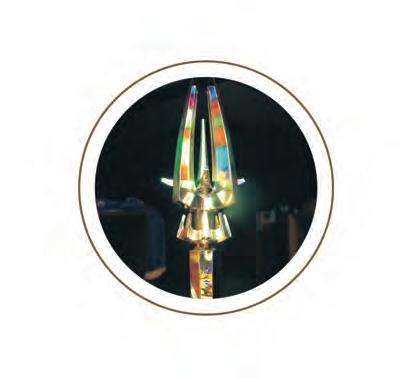
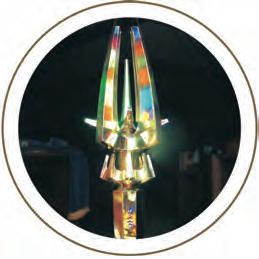
Maces were originally weapons of defence, designed to break through armour. In medieval times, bishops carried a mace instead of a sword into battle to enable them to defend themselves in accordance with the canonical rule that forbade a priest to shed blood. In time, the mace has come to be regarded as a symbol of delegated authority vested in a person or an institution. At this University, it is a symbol of the authority vested in the Chancellor and a reminder of the mandate given by the legislature of this country to the University to grant degrees.
The University mace is the work of the Edinburgh designer, silversmith and engraver, William Kirk, who designed and made the mace of the University of Stirling and of other institutions. It is silver-and gold-plated, is 1070 millimetres long and 180 millimetres broad and weighs seven kilograms. The heraldic devices used in the decoration reflect the character of this University as an institution of learning, set in a mining centre within the Republic of South Africa.
The head of the mace with its spreading vertical blades is symbolic of the horns of a springbok. The central vertical spike is representative of a rock drill on the mine, and the amber stone set in the head is intended as a tribute to a past Chancellor through its association with his name, Bernstein, which in German means amber stone. The heavy quality of the head is consistent with the traditional concept of the mace as a weapon of defence. The collar repeats the shape of the head. It consists of eight cogs which symbolise the cog-wheel in the University coat of arms and represents mining and industry. The shaft is octagonal and divided into three sections. The coat of arms of the University is placed on the shaft under the collar. Below this the words Universitas Witwatersrandensis Johannesburgi: are inscribed, followed by the date in Roman numerals – MCMLXXVI (1977) – which signifies the year of the dedication of the mace.
The mace is a symbolic portrayal of this University, this city, the Witwatersrand and the Republic of South Africa. It is a constant reminder to members of Council and Senate to uphold at all times the rights, powers and privileges of the University and its governing bodies.
The academic dress of this University is patterned on that of the Universities of Oxford and Cambridge, with modifications based on the model of the University of London and certain individual features, particularly in the costumes of office bearers and the hoods of degreesof bachelor and master.
Dress for Office Bearers
• The Chancellor wears a scarlet silk gown with a broad facing of black velvet down each side, embroidered in gold and a black velvet cap with gold cord and tassels.
• The Vice-Chancellor and Principal wears a blue silk gown with a broad facing of gold silk down each side, embroidered in blue, the sleeves being lined with gold silk. The cap is of the same design as that of the Chancellor.
• The Chairman of Council wears a black silk gown with a broad facing of red velvet down each side and around the neck, the sleeves being lined with gold silk. The cap is of the same design as that of the Chancellor.
• The academic dress of the Deputy Vice-Chancellors and the Executive Directors is the same as that of the Vice-Chancellor and Principal, except that the colour of the facing and sleeves of the gown and of the cord and tassels of the cap is silver-grey.
• The gown of the President of Convocation is of blue silk, with a broad facing of gold silk down each side, the sleeves being lined with white silk. The cap is the same as that of the Chancellor, but with a blue cord and tassels.
• The Registrar wears a black silk gown with a broad facing of blue silk down each side, bordered with gold braid. The cap is the same as that of the President of Convocation.
• A member of Council wears a black silk gown with a broad facing of gold silk. The cap is the same as that of the Chancellor.
• The gown of the President of the Students’ Representative Council is black with a broad facing of blue satin.
Graduands’ Gowns
• The gowns for all degrees of bachelor and master of the University are black, of the same pattern as the gown for a Master of Arts at the University of Oxford.
• The gown for the degree of Doctor of Philosophy is scarlet, after the University of London pattern.
• The gown for a senior doctorate is the same as that for the PhD, but with a gold satin facing on each side of the gown and with the sleeve button and cord in gold.
The Academic Hood
The academic hood is the principal feature of the costume for holders of our degrees of bachelor and master. The hood for the PhD is standard, regardless of the Faculty in which the degree was obtained. It is scarlet silk, lined with white silk.
Degree Colours
The hoods reflect the colour or colours of a particular degree or associated degrees.
As a 100-year-old public university in South Africa, Wits is proud of its record of achievement as a significant contributor to our society. We contribute people to society that are training in their chosen field that are engaged and able to tackle problems using evidence-based solutions. We also contribute knowledge that has a positive impact on the quality of life. Wits for Good.
Wits is a world-class research university based on our intellectual excellence, international competitiveness, and commitment to social justice; all of which have a measurable impact.
What makes Wits distinct? Here are a few of many differentiators:
• An international perspective that helps us maintain high standards in teaching and learning and research while not distracting us from our place in Johannesburg, South Africa, and Africa. 60% out our 2021 publications included international collaborators.
• An intellectual hub of Africa, a founding member of the African Research University Alliance. In 2021 Wits published 167 articles with Namibia, 220 with Botswana, 326 with Zimbabwe and 137 with Mozambique.
• An active and engaged community leader that takes a stand on social issues and is fully committed to the advancement of the public good.
• A growing contribution to the body of knowledge through peer reviewed academic publications: 4 400 in 2021 and an average growth rate of 500 per year over the last five years.
• Knowledge contribution that is above global quality averages in several fields including: clinical and pre-clinical health studies (76% above global norms); arts and humanities (58% above global norms); life sciences (36% above global norms); physical sciences (12% above global norms).
• Wits is particularly associated with the study of the fields of virology, particle physics and the Higgs Boson, malaria, archaeology, paleontology, paleoanthropology, violence, local and regional politics, geochemistry, rock mechanics, deep mining, forensic anthropology, climate change, migration, social justice, and many more.
• Proud of the four Nobel laureates and the 98 Rhodes Scholars.
• Proud of our current 40 000 students of whom 16 000 (40%) are undertaking postgraduate studies and learning to make their own unique contributions to the global knowledge base.
• Proud of our 200 000 graduates. More than 90% of Wits graduates obtain permanent employment within 12 months of graduation.
• Proud of its ability to raise external funding to support and drive its research efforts, with contributions exceeding R 2 billion per annum.