WITS HEALTH SCIENCES
REVIEW
ISSUE 17
September 2026
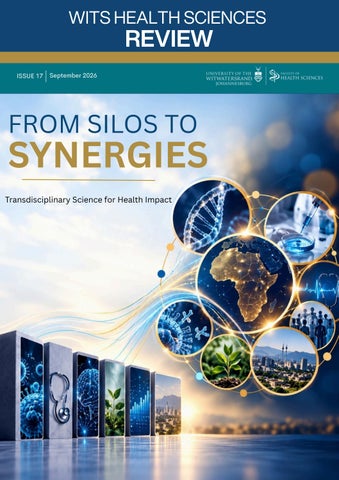
FROM SILOS TO
SYNERGIES Transdisciplinary Science for Health Impact
CONTENTS
Message from the Dean Research Highlights AI in Healthcare High-Impact Research Legacy, Excellence & Institutional Impact News Student News Alumni Recognition Funding & Partnerships Thought Leadership Events Faculty Publications Senior Appointees
DEAN MESSAGE FROM THE
As we move into the final quarter of the year, August and September have given us an opportunity to reflect on the people and values that shape our Faculty. Women's Month and Heritage Month are important reminders of the strength of our diversity and of the many people whose contributions help make the Faculty what it is. They also remind us that we have a responsibility to create an environment in which everyone feels respected, valued, and able to thrive. Recent events in our country have also brought the reality of genderbased violence into sharp focus. As a Faculty, we have been clear in our condemnation of violence against women and girls, and we
The complex health challenges we face require us to work across boundaries, and our greatest impact comes when we bring our strengths together.
remain committed to building a culture of dignity, respect and safety.
Our Research Day theme of From Silos to Synergies has also captured an important part of our work this quarter. In the largest Research Day in the Faculty of Health Sciences (FHS) to date, we celebrated the breadth and diversity of research across the Faculty and the possibilities that emerge when different disciplines, perspectives and expertise come together. The complex health challenges we face require us to work across boundaries, and our
Investing in the next generation is an important part of how we continue to build on this excellence. This quarter, we launched the Faculty's Emerging Researchers Forum to support young researchers as they develop independent careers, strengthen their research programmes and build new collaborations. I am excited to see these young researchers grow, supported by the expertise and experience across our Faculty, and to see where they take us next.
greatest impact comes when we bring our strengths together. The impact of our research continues to be recognised nationally and internationally through major awards, honours, partnerships and
I would also like to thank all our staff for their continued contribution to the Faculty.
programmes. These achievements reflect the total over our researchers, but they also remind us that lasting impact is built over time through collaboration, investment and strong research capacity. One of the noteworthy achievements was Professor
Our academic and research staff, as well as our professional and administrative staff, all play an essential role in keeping the Faculty moving forward.
Yahya Choonara being the newest Faculty member to receive an A-rated in the National Research Foundation (NRF), bringing the total number of A-rated scientists in the Faculty to nine. I would also like to congratulate the many other Faculty members who received NRF ratings and numerous other awards in the past quarter.
To our students, good luck as you complete your studies, finalise theses and dissertations and prepare for your final examinations. We wish you well for the months ahead. Let us carry the same energy and spirit into the final quarter of the year, continue to support one another, and keep building on the work we are doing together.
Shabir A. Madhi Dean: Faculty of Health Sciences
Research Highlights
From silos to synergies: connecting research, people, and ideas. The complex health challenges we face rarely fit within a single discipline or area of expertise. Greater impact comes from bringing different perspectives, skills, and experiences together and creating stronger connections between researchers, clinicians, communities, policymakers, and other partners. This is at the heart of this quarter’s Faculty Review theme. Across the Faculty, our ‘silos to synergies’ approach is already producing new ideas, new partnerships and new ways of addressing health challenges. The stories in this section highlight what becomes possible when we work across traditional boundaries, share expertise and build on each other’s strengths. Together, these examples show how collaboration can strengthen research and help move ideas from discovery towards meaningful impact.
Faculty Research Day brings disciplines together for health impact More than 1,300 people attended the Faculty of Health Sciences Research Day on 17 September 2026, bringing researchers, clinicians and students together to consider how work across disciplines can improve health. Patients need care for overlapping conditions, clinicians need usable evidence and policymakers must weigh benefits against costs and unequal access. These shared problems shaped the theme of the Faculty of Health Sciences Research Day on 17 September: “From Silos to Synergy: Transdisciplinary Science for Health Impact”. Organising committee chair Dr Prudence Ditlopo said the Faculty had rethought its traditional thematic tracks to encourage conversations across biological, social, technological, environmental and policy research. Professor Aletta Millen, Assistant Dean for Research, reported more than 500 abstract submissions, most from students and early-career researchers. She acknowledged the mentors behind that work and encouraged delegates to attend unfamiliar sessions, listen and ask questions. Read more
Faculty Research Day 2026 snapshots
Dr Siyabonga Khoza
Professor Mary Kawonga
“If you move as a collective, you’ve got a bigger chance of making a huge impact that will be meaningful.”
“AI and machine learning allow clinicians, educators and different disciplines to actually do research together.”
Professor Lynn Morris “A patient doesn’t experience HIV, cardiovascular disease, mental health, poverty and climate vulnerability as separate academic disciplines.”
Professor Laetitia Rispel “We need to stop externalising the problem. What’s important is for us to reflect and to look at how our own actions and behaviour can make a difference.”
Professor Stephen Tollman “Collaboration helps us build stronger health systems that protect brain health throughout life.”
Professor Aletta Millen “Go listen to somebody you wouldn't necessarily choose to listen to. And perhaps by the end of the day you will have discovered something, or someone, that you did not know before.”
Emeritus Professor Patrick Arbuthnot
Professor Flavia Senkubuge “The key predictor of how our future will look is in the manner and in the way that we work together. Yes, it is in our discovery, but it is in the manner that we are discovering, and who we are discovering with, and who we are allowing on that proverbial table.”
“Transdisciplinary topics include commercialisation of academic research, engagement with policymakers, business developers, with venture capital funders, as well as the basic research activities within the institution.”
Safe Mkhukhu: Communities co-designing safer homes for children Caregivers in Thembelihle, Gauteng, are working with researchers and engineers to design affordable ways to prevent childhood injuries in informal homes.
The Child Health and Mortality Prevention Surveillance (CHAMPS) South Africa team at the Wits Vaccines and Infectious Diseases Analytics (VIDA) Research Unit leads Safe Mkhukhu with the Wits School of Civil and Environmental Engineering, Surgeons for Little Lives and the University of Oxford. At a three-day workshop, 20 caregivers of children under five brought their knowledge of daily risks to injury surveillance data and engineering expertise.
Participants identified burns, poisoning, drowning and electrocution as priorities. Together, they developed 19 home-redesign blueprints and 19 small-scale intervention designs using recycled or locally available materials. Proposed solutions included child-proof storage, electrical socket covers, safer water storage and layouts that separate play areas from hazards.
Caregivers reported greater confidence in identifying risks, and all said they intended to implement the designs at home. The prototypes will now be refined, pilot-tested and evaluated to establish how effectively they reduce injury risks.
Hazard Prioritization Identify and rank common, severe and preventable household injuries
Implementation and Monitoring
Spatial Mapping
Workshop participant survey, Pilot implementation study design
Zoning and Conceptualization Integrate spatial and structural prevention strategies into 'redesigned' household map
Thembelihle Informal Settlement 29-Jun to 02-Jul 2026 19 caregivers 5 field workers 1 communication specialist 1 civil engineer 1 nurse 3 social scientists 2 community liaisons 6 child health specialists
Micro-Intervention Design Design small-scale structural solutions to improve safety and prevent common and severe injuries
Create a 'child's eye view' map to visualize spatial and structural informal household injury risks
Evidence and Inspiration Galleries Explore injury data, examples of structural and spatial risk and prevention strategies
Material Sourcing Identify low cost, recycled or free materials within the informal settlement
110K Human Genome Programme: A South African Initiative Four Wits research projects are part of the pilot phase of South Africa’s SA110k Human Genome Programme, a national initiative that aims to sequence 110,000 South African genomes and address the underrepresentation of African populations in global genomic data. The projects are GENARK-SA, HelTI, Heart Failure, and the DIAMOND study. Wits’ contribution brings together expertise from the Donald Gordon Medical Institute, the SAMRC/Wits Rural Public Health and Health Transitions Unit (Agincourt) and the Sydney Brenner Institute for Molecular Bioscience (SBIMB). Read more.
Highlight on GENARK-SA: a kidney disease genomics cohort A Wits kidney disease cohort has joined the SA110k Human Genome Programme, linking clinical research with the development of a South African genomics resource. GENARK-SA investigates chronic disease in African populations. Its inclusion creates an opportunity to examine why kidneyfunction measures and genetic risk predictions developed elsewhere may not work equally well for African patients. A joint effort between SAMRC, DSTI, and MGI, the 110K Human Genome Program aims to bridge the global gap in genomic data representation from African populations. This landmark commitment will sequence 110,000 South African genomes, ultimately establishing the country’s first comprehensive national genomic reference database. The GENARK-SA builds on the African Research on Kidney Disease Consortium and the SAMRC/Wits Agincourt research platform. Researchers combine DNA and clinical information with measured kidney function, cardiovascular health data, body composition, and other biological processes. For Dr June Fabian, co-director of the Wits Donald Gordon Medical Institute (Wits DGMI), in which GENARK-SA is nested, inclusion in the SA110k programme will give researchers an opportunity to address longstanding gaps in kidney disease research. Read more
Ageing with HIV: global report highlights the need to prepare health systems
The Lancet HIV Commission on Ageing’s 2026 report highlights how profoundly the global HIV epidemic is changing. In 2025, an estimated 11.5 million (29%) people living with HIV were aged 50 years and older. This is projected to increase to 20.2 million by 2040. That would account for more than half (51%) of all people living with HIV. And, crucially, 96% will live in low- and middle-income countries. Sub-Saharan Africa is continuing to shoulder the greatest burden of the global HIV epidemic. Much of this change reflects the success of antiretroviral therapy (ART), which has enabled millions of people who acquired HIV earlier in life to grow older. The challenge has gone beyond helping people live longer, to ensuring they age well – that they maintain good health, independence and quality of life throughout older age. Read more at The Conversation Africa
Educators and clinicians build games for health sciences learning Team eFundanathi brought educators, clinicians, students and learning designers together to develop games for health sciences education. Projects included immersive simulations, Minecraftbased learning and gamified orientation across disciplines from physiotherapy and pharmacy to nursing and medicine. The team has also produced research and built a growing community of practice. “Together we can combine educational, clinical, technological and creative expertise to design transformative learning experiences that no single discipline could achieve alone.”
Wits research examines combined use of traditional and conventional medicines
Wits researchers are investigating how often patients use traditional African medicines alongside conventional treatments, and what this could mean for treatment effectiveness and safety. Dr Zelna Botha, a lecturer and pharmacist in the Department of Pharmacy and Pharmacology, works with specialists in pharmacy practice, microbiology, pharmacology and pharmacognosy, the study of medicines from natural sources.
Professor Michele Ramsay, Director of the Sydney Brenner Institute for Molecular Bioscience (SBIMB) at Wits, discusses Africa's genetic diversity and how genomic research can benefit African health systems.
Patients do not always tell clinicians when they use traditional and conventional medicines together, making interactions harder to identify. The team is studying these practices in clinical settings to inform treatment decisions and South African health policy. Traditional health practitioners bring knowledge of plant-based medicines and their use in communities; conventional healthcare teams bring clinical and safety-monitoring expertise. Together, they aim to identify combinations that may weaken treatment or cause harm, and improve face for patients who use both forms of medicine.
What does African genetic diversity tell us about our history?
Human populations are highly diverse, reflecting our evolution over the past 300,000 years. Most of this time has spent in Africa, during a period marked by climate fluctuations, waves of infectious epidemics, food uncertainty, and migration. These changes shaped our species' genetic diversity as we adapted and survived. What have African genomics partnerships taught us? First and foremost, we have learned that by forming networks and partnerships across the continent, we can do better science and have more impact. Why study genetic and environmental risks together? When a group of people move from one environment to another (for example, emigrant populations), their health risks change. Their genetic heritage stays the same, but many other things change—that's list, the weather, access to health care, exposure to infectious pathogens, and socioeconomic factors. To displace a ale the genetic contributions to diseases risk is even more needed to measure and account for these factors. Read the full O&A
AI in healthcare Understanding death to protect life through AI and global health innovation
CODA is being designed to guide interviews, process clinical notes and suggest possible causes of death. Where feasible, it could recommend targeted postmortem tests.
Many deaths in sub-Saharan Africa are never recorded with a reliable cause, leaving health authorities with incomplete evidence for decisions about prevention and care. Wits VIDA is part of the international consortium developing the Cause of Death Assistant (CODA), a Gates Foundation-funded project to 26.2 million of artificial intelligence can inform.
Wits VIDA will help compare CODA with existing methods, including routine death certification and CHAMPS expert-panel assessments. The evaluation will test its accuracy, consistency and potential use at scale.
Full autopsies require scarce specialist skills and facilities. Family interviews cost less but cannot always identify a cause precisely. Since 2017, the CHAMPS Network has combined minimally invasive tissue sampling with clinical records and family interviews to investigate deaths. The approach provides more detail, but remains costly for routine use.
CODA
If validated, better cause-of-death information could help health services identify disease patterns, assess programmes and direct prevention and treatment. where they are needed. Those benefits remain to be established through evaluation.
Cause of Death Assistant An AI tool that uses clinical history and verbal autopsy to guide the process of assigning cause of death in real time
CODA – AI LLM ASSISTANT
INPUTS
OUTPUTS
CLINICAL HISTORY
RANKED CAUSE(S) OF DEATH
Demographics Symptoms Medical conditions Treatments
GUIDE VERBAL
RECOMMEND TARGETED
AUTOPSY IN REAL TIME
LAB DIAGNOSTICS
Asks relevant,
Suggests tests to
refine-dual questions
refine differential diagnoses
Adapts based on responses
Considers availability and relevance
Timeline of illness
VERBAL AUTOPSY Structured conditions & treatments responses
Tuberculosis 0.72 3. Pneumonia 0.18 3. HIV/AIDS 0.07 Evidence & reasoning Certainty score
Additional questions Recommended tests (e.g., HIV test, GeneXpert)
GENERATE CAUSE OF DEATH ASSESSMENT Produces a ranked list of probable causes
Language support
with explanation and certainty score
DOCUMENTATION Structured summary for health records
TRAINED BY
COMPARED WITH:
TRAINING DATA & EXPERT ANNOTATION
Diverse populations,
Clinical cases
Adapts based on
conditions & settings
& lab results
cause of death
Standardized & Consistent
Real-time Decision Support
COMPARISON & CONTINUOUS LEARNING
HUMAN CAUSE OF DEATH ASSISTANTS (DOMAIN EXPERTS)
Evidence-based & Transparent
Compare CODA outputs with expert decisions
Evaluate accuracy, calibration & consistency
Supports Clinicians, Strengthens Systems
Continuous improvement & model updates
Adaptable to Context
Setting their sights on early detection for childhood retinoblastoma A white or pink glow in the pupil, sometimes visible in flash photos, can signal retinoblastoma. Dr Lara Sandri, a PhD candidate supervised by Geel, is studying whether an AI system can flag a possible case from a smartphone photograph, prompting referral to a specialist. The route from a general practitioner (GP) to specialist treatment can involve several referrals. “A family may go from a GP to a clinic, then to a secondary or district hospital, then to ophthalmology, and eventually to us,” Geel says. A young patient, dressed up as a doctor, helps oncologist Professor Jennifer Geel make a cup of coffee in the paediatric oncology ward at Charlotte Maxeke Johannesburg Academic Hospital.
The proposed tool could shorten that route if it proves reliable. Access will also matter. In a 33-country survey coauthored by Geel, Sandri and Jacques van Heerden,
A Wits study is testing whether artificial
76% of healthcare workers said they were willing to
intelligence could help identify retinoblastoma
adopt AI tools, but 80% cited inadequate
earlier from a photograph of a child’s eye. The
infrastructure and 87% cited cost.
cancer begins in the retina, mostly affects children under three and is highly treatable when found
The study has enrolled its first patient and is still
early. Late diagnosis can be fatal.
testing whether the model can identify retinoblastoma. A later phase will assess whether it
Professor Jennifer Geel, Academic Head of Paediatric
can distinguish disease stages. The tool is some years
Haematology and Oncology at Wits and a paediatric
from clinical use, and its value will depend on reliable
oncologist at Wits Donald Gordon Medical Centre,
detection and timely access to specialist care.
oversees the study in primary healthcare settings. Read more about this promising technology. “Retinoblastoma is a cancer of the eye that is almost 100% curable, but in our setting, we are achieving only about 60% survival,” Geel says. Misdiagnosis and limited awareness can delay treatment. Some families also fear that their child will lose an eye and do not seek further care. Earlier referral would give specialists more time to explain treatment options and support families.
High-Impact Research
HIV treatment study weighs viral control against weight gain
Maternal vaccine study supports efforts to protect newborns from Group B Streptococcus An investigational maternal vaccine produced immune responses against six types of Group B Streptococcus (GBS), with antibodies transferred from mothers to their babies, in an international phase 1/2 trial involving Wits VIDA. The findings were published in Nature Medicine. The study evaluated Pfizer’s GBS6 candidate in nonpregnant and pregnant women. The vaccine was generally well tolerated, with similar safety outcomes in the vaccine and placebo groups. South Africa contributed most participants, and Wits VIDA played a leading role in conducting the trial.
A South African trial found less weight gain with one HIV treatment regimen while maintaining similar viral suppression, offering another option for some people starting therapy. The partnership between Wits Ezintsha and the Africa Health Research Institute (AHRI) enrolled 600 adults in urban Johannesburg and rural northern KwaZulu-Natal. Dr Joana Woods led the report, with co-authors including Professor Francois Venter and AHRI’s Professor Limakatso Lebina. Published in the Journal of the American Medical Association (JAMA), the randomised trial compared doravirine, lamivudine and tenofovir disoproxil fumarate with dolutegravir, emtricitabine and tenofovir alafenamide. At 48 weeks, viral suppression was achieved by 89.0% and 90.7% of participants respectively, meeting the study’s criterion for non-inferiority. Read more about the study
More than 80% of neonatal deaths caused by infections in South Africa and similar settings could be prevented with stronger clinical care and targeted interventions according to a study led by the Child Health and Mortality Prevention Surveillance (CHAMPS) Consortium.
GBS can cause sepsis, meningitis and pneumonia in newborns. Vaccination during pregnancy could offer protection during the first months of life, but immune responses alone do not establish that a vaccine prevents disease. Further studies are needed before licensing. The results support continued development, and Wits is enrolling participants in a phase 3 trial. Read more.
Legacy, Excellence & Institutional Impact
The Faculty's impact is built over years of research, partnerships and investment in people and shared resources. These stories trace that work through vaccine science, wider access to transplantation and new research platforms. Supporting emerging researchers helps sustain it for the next generation.
Wits VIDA looks to the next frontier in vaccine development
After three decades of vaccine research, Wits VIDA is looking to its next frontier: strengthening Africa’s ability to develop vaccines from scientific discovery through to evaluation and use. The Wits Vaccines & Infectious Diseases Analytics Research Unit marked its 30th anniversary at an Academic Day at the Wits BioHub in Johannesburg, bringing together scientists and emerging researchers to reflect on its contribution to vaccine science – and where the field needs to go next. Professor Shabir Madhi, Director of Wits VIDA and Dean of the Wits Faculty of Health Sciences, said the unit has built extensive expertise in epidemiology, clinical research and vaccine evaluation. Its ambition now is to strengthen the research and development component of that pipeline.“We want to have an end-to-end approach to our offering on vaccines,” he said.
One example is Wits VIDA’s long-running research on Group B Streptococcus (GBS), which can cause severe illness in newborns. Findings from a Phase 2 Wits VIDA maternal vaccination study have contributed to evidence supporting the development of a potential GBS vaccine. Over the past 15 years, VIDA has enrolled more than 80,000 mothers and newborn babies in research that contributes to the evidence base on GBS. As the unit enters its fourth decade, the focus is increasingly on connecting Africa’s strengths in infectious disease research and clinical trials with the ability to develop new vaccines and technologies closer to home. Read the press release
National kudos for Wits liver transplantation programme
Caption: The 1000th liver transplant patient, Desiree Pretorius with her daughter, Bianca.
A Wits University programme that has enabled 183 public-sector patients, including 125 children, to receive liver transplants has earned national recognition for improving access to specialised healthcare. Universities South Africa (USAf) selected the programme’s impact case study among 14 successful submissions, including two from Wits. Since its reestablishment in 2004, the liver transplant programme at Wits Donald Gordon Medical Centre (WDGMC) has performed 1,000 transplants.
University, public-sector, and philanthropic partners have made transplantation possible for patients facing substantial barriers to care. Teams across surgery, intensive care, liver medicine and infectious diseases contribute to treatment, research and training. Research has helped expand treatment options where donor organs are scarce. WDGMC established South Africa’s first living-donor liver transplant programme and offers split-liver transplantation, allowing one donated liver to serve two recipients. The team also performed the world’s first intentional living-donor liver transplant from an HIV-positive donor to an HIVnegative recipient, involving a mother donating to her child. Read more
Caption: A young patient after receiving her life-saving liver transplant
Caption: A breakdown of the types of liver transplants.
Building connections: The next chapter for the Wits BioHub
A year after the sod was turned, the Wits BioHub is beginning to take on a new life as researchers and teams start moving into the facility. The BioHub is being developed as an enabling platform for the wider Wits and African research community, bringing together shared infrastructure, specialist capabilities and opportunities for collaboration.
This is particularly important in a research environment where valuable expertise and infrastructure can often sit in different parts of the University. By creating opportunities for researchers to meet, share capabilities and work across disciplines, the BioHub can help strengthen connections across the research enterprise. Researchers will be able to engage with the BioHub in different ways. Some will be based in the facility, while others may access specialist platforms, services or collaborative opportunities as their research requires.
Reflecting on the Unit’s growth, Head of Anatomical Sciences Professor Amedi Ihunwo notes that what began as a small research initiative has developed into an internationally recognised centre of expertise. Today, HVIRU is one of the South African Police Service’s leading research and expertise partners and has become an important training hub for forensic anthropology across the continent.
As more teams move into the building, the focus will increasingly shift from the physical space to what it enables: researchers working together, sharing knowledge and creating opportunities for new ideas and partnerships to develop.
The BioHub represents a significant investment in the Faculty’s research future. Its success will ultimately be measured not by the building itself, but by the quality of the science, the connections it enables and the impact those collaborations can achieve.
New SA Medical Research Units at Wits Connecting drug delivery research with clinical needs Getting a medicine to the right tissue in sufficient quantities remains a barrier to effective treatment. A new SAMRC-funded unit at Wits will investigate microscopic drug carriers designed to improve delivery and reduce harmful effects elsewhere in the body. Led by Professor Lisa du Toit, the Centre for Nanopharmaceutical Translational Research in Infectious Diseases, Cancer and Neurotherapeutics (CENTRIC) sits within the Wits Advanced Drug Delivery Platform. Its research will connect laboratory Professor Lisa Micklesfield is A3RU’s director
testing with the manufacturing and regulatory requirements involved in developing potential treatments.
African evidence for healthier CENTRIC will work with clinical specialists in ageing infectious diseases and oncology, and with universities Assessments developed in wealthier countries may miss important health risks in ageing African populations. The SAMRC/Wits Ageing African Adult Research Unit (A3RU), led by Professor Lisa Micklesfield, will investigate these risks using evidence grounded in local lives and environments. Based at Chris Hani Baragwanath Academic Hospital in
in Limpopo, Gauteng and Pretoria. The partnerships bring clinical questions into drug development and widen postgraduate training. Planned work spans cancer, infectious diseases, neurological and eye conditions. Laboratory and animal studies will test the delivery systems before moving to pilot manufacturing and clinical research. Read more about CENTRIC.
Soweto, A3RU builds on the cohorts and partnerships of the Developmental Pathways for Health Research Unit. Its work connects physiology and genetics with research on chronic disease, health behaviours and environmental exposures, including heat and air pollution. Collaboration across settings will help researchers understand how place shapes ageing. Read more about A3RU.
Professor Lisa du Toit is CENTRIC’s director
Emerging Researchers Forum invests in the next generation
The Faculty of Health Sciences has launched the
Monthly late-afternoon sessions will accommodate
Emerging Researchers Forum to help researchers
clinical work. Participants will develop career plans
build independent careers and sustain the Faculty’s
and review their CVs against progression
research capacity. Mentoring, practical career
requirements.
development and support for funding applications will help participants turn doctoral training into
Mentors outside their fields, separate from supervisors
research programmes of their own.
and heads of department, will offer an independent perspective, while a peer buddy system will support
After a PhD, researchers must often find funding and
exchange across the Faculty.
collaborators while balancing teaching or clinical work. Speakers at the launch called this transition the “PhD
Smaller groups will receive intensive support for
lull”: expectations of independence can outpace the
international grant applications, including workshops,
support available.
feedback and mock interviews. Other sessions will cover publication, supervision, resilience, research
The rolling programme is open to anyone who identifies
leadership and putting findings into practice.
as an emerging researcher, without an age or post-PhD cut-off. An initial commitment of at least a year is
See more about the day.
encouraged.
Caption: Dr Simone RIchardson, Professor Ziyaad Dangor and Professor Alicia Wade were panellists
Caption: Professor Aletta Millen engages with emerging researchers
News
Testing earlier treatment for HIV related fungal disease
What are we dying from? Cardiovascular disease caused about a third of deaths among more than 5,000 adults aged 40 and older in rural Mpumalanga. Infections remained a major cause, underscoring the need to address multiple disease burdens at once. Published in Age and Ageing, the Health and Ageing Caption: Professor Nelesh Govender The Efficacy of Flucytosine and Fluconazole as Early Cryptococcal Treatment (EFFECT) trial recorded fewer deaths among people receiving two antifungal medicines for early HIV-related cryptococcal disease. The difference was not statistically significant, so the findings support further investigation rather than establish a survival benefit. Across 11 sites in South Africa and Tanzania, researchers enrolled 604 adults with cryptococcal antigen in their blood but no meningitis symptoms. Participants received either fluconazole plus flucytosine or fluconazole alone for two weeks, followed by fluconazole treatment. At six months, 40 of 304 participants in the combination group had died, compared with 50 of 300 in the single-drug group: approximately 13% versus 17%. This represented an observed 21% relative reduction in the risk of death.
in Africa: A Longitudinal Study of an INDEPTH Community in South Africa (HAALSI) analysis recorded 1,116 deaths over seven years. Infections other than HIV and tuberculosis (TB) accounted for 23.8%, cancers for 14.4%, and HIV/AIDS and TB for 10.1%. The findings describe this cohort, rather than South Africa as a whole. Led by Dr Chodziwadziwa Kabudula at the SAMRC/Wits Agincourt Unit, the research linked mortality with clinical, social and physical-function measures. Difficulties with everyday activities, slower walking and weaker grip were associated with higher mortality. Long-term community follow-up can inform care and service planning. Professor Kathleen Kahn argues that
Wits coordinated the trial with City St George’s, University of London, and clinical sites. Co-chief investigators Professor Nelesh Govender and Dr Síle Molloy now want to test the approach in routine care, particularly where lumbar punctures are hard to provide, and symptom-free meningitis may be missed. Read more
systems built for sustained HIV care could also support the detection and management of hypertension, diabetes and other chronic conditions. Read more about the study.
CoRECT study targets unanswered questions about colorectal cancer in South Africans
The future of malaria control is more mosquitoes South Africa’s malaria elimination teams could gain Caption: Dr Lisa Campbell The CoRECT Cancer Study at Wits Donald Gordon Medical Institute will follow South African patients to investigate colorectal cancer, with a focus on younger people and those of African ancestry. “There are still major gaps in what is known about colorectal cancer in South African populations. We want to understand what causes the disease, how it can be detected earlier, why it is being seen in younger people and why some treatments work better for certain patients than for others,” says Dr Lisa Campbell-Roper, the study’s project manager. The study pairs a clinical cohort with a biorepository. Researchers will also examine clinical histories, diet, and occupational exposures. Clinical leads Dr Brendan Bebington at Wits Donald Gordon Medical Centre and Dr Vuyo Soldati at Chris Hani Baragwanath Academic Hospital work with a multidisciplinary team. Studies of tumour tissue, genes, proteins, and microbial communities aim to link biological differences to disease progression and treatment response.
a new tool: sterile male mosquitoes bred at Africa’s first mosquito factory. The National Institute for Communicable Diseases (NICD) and Wits University are developing the Sterile Insect Technique to supplement existing mosquitocontrol measures. For a decade, NICD scientists have worked to breed and sterilise male Anopheles arabiensis mosquitoes. Indoor residual spraying has helped control the housedwelling Anopheles funestus, but elimination has stalled and the outdoor-biting Anopheles arabiensis may be one reason. Because it bites and rests outdoors, Anopheles arabiensis can evade indoor spraying and bed nets. Females mate only once. If they mate with sterile males, their eggs will not develop, potentially reducing the wild population. The approach would add an outdoor-targeted option
Supported by the Cancer Association of South Africa (CANSA), the platform could support further research and precision oncology approaches grounded in African evidence.
to existing malaria control measures. Its contribution to
Read more.
Read more about the technique.
elimination will depend on whether releases can reduce wild mosquito populations in practice.
Vitamin A findings prompt closer look at child supplementation Analysis of liver tissue collected after children’s deaths found high or very high vitamin A stores in 62.3% of the South African cohort studied. Wits VIDA researchers are investigating whether overlapping exposure from supplements, fortified foods and diet could be contributing to these elevated stores. Vitamin A supports children’s growth, vision and immune function. South Africa’s supplementation programme and mandatory food fortification help prevent deficiency. The postmortem finding does not establish that vitamin A caused the children’s deaths or show how common elevated stores are among children nationally. To investigate possible sources of exposure, the team surveyed households with 722 children in the CHAMPS surveillance area. Some 83.6% had three or more overlapping sources of vitamin A, including clinic supplements and fortified foods. A further finding was that 20.6% met the study’s criteria for possible excess supplementation, having received more doses than expected for their age. Interviews with healthcare professionals at four Soweto clinics explored how they deliver supplementation. Nurses relied on the Road-to-Health Booklet and immunisation schedules to guide dosing, but described gaps in documentation, children moving between facilities, inconsistent management of missed doses and occasional stock shortages. These difficulties could contribute to children receiving too little or too much supplementation. Researchers will review the laboratory, household and clinic findings with government partners to identify where dosing records and supplementation practices could be improved. The aim is to help child health programmes prevent deficiency while avoiding unnecessary additional doses for children already receiving enough vitamin A.
What happens to their health if young people move for opportunity? Moving can change the conditions that shape health, so health and social policy must plan for a mobile population. Moving between rural homes, towns and cities is a normal part of life for many South Africans. Young adults often move in search of work or education, sometimes settling elsewhere for long periods and sometimes moving repeatedly between rural homes and urban destinations. These patterns of temporary and circular migration are particularly prevalent in South Africa. They have deep roots in the country’s labour system and apartheid spatial planning. But changing the place where someone lives can also change the conditions that shape their health: whether they have a job, what they eat, the environment they live in and the healthcare they can access. Despite high levels of internal mobility in South Africa, we still know relatively little about what happens to people’s health when they move and spend more time in urban areas. This is the question behind the Migrant Health FollowUp Study. Read the Wits article.
Student News 28
STUDENT NEWS Ayesha Aswat receives a Women in Science fellowship Ayesha Aswat of the Wits Research Institute for Malaria received a Department of Science, Technology and Innovation (DSTI)–Professor Keolebogile Shirley Motaung Master's Fellowship at the 2026 South African Women in Science Awards.
Read more about the awards.
Simisola Ayodele wins PhD GradFlash at Wits symposium PhD student Simisola Ayodele, from the Wits Advanced Drug Delivery Platform (WADDP), won first place in the PhD GradFlash competition at Wits' 17th Cross-Faculty Postgraduate Symposium. His one-minute presentation showcased research into 3D-printed pediatric nanomedicine and targeted drug delivery. The one-minute GradFlash format asks researchers to explain complex work to people outside their field. Read more about the Cross-Faculty Postgraduate Symposium.
Alumni
Alumni Michael Belfort MBBCh 1981 Michael Belfort led a team performing fetal surgery to treat gastroschisis, a condition in which a baby's intestines develop outside of the abdomen. The reported operation took place in utero at 26 weeks of pregnancy. BBC report Texas Medical Center profile from 2019 Report supporting the correction to 26 weeks
Linda-Gail Bekker DPTM&H 1992 Linda-Gail Bekker, Director of the Desmond Tutu HIV Research Centre at the University of Cape Town (UCT), welcomed a reported reversal of US National Institutes of Health restrictions affecting global HIV and tuberculosis research funding. Business Day report
Patrick Mokhobo MBBCh 1957; DTM&H 1979; DPH 1980 Medical pioneer Patrick Mkhobo received an honorary doctorate from Wits at the age of 94. The Sowetan profiled his recognition and career. Sowetan report
Nicholas Crisp MMed 1992; DOH 1990 A Financial Mail report covered the retirement of Nicholas Crisp, a deputy director-general in the National Department of Health and a leading official involved in National Health Insurance, alongside the departure of other senior officials. Financial Mail report
Christopher Szabo Emeritus professor in Psychiatry Christopher Szabo contributed insights on children's exposure to violent, sexual or exploitative material online in a report published by The Citizen. The Citizen report
Recognition
Women making an impact We celebrated Women’s Month in August, a time to recognise the women whose work, leadership, and commitment continue to strengthen the Faculty. Professor Helen Rees received the National Research Foundation’s 2026 Lifetime Achievement Award for work spanning HIV prevention, vaccines, reproductive health and the policies that determine access to care. Rees credited the collective effort behind the work: “It’s never ‘I did’. It’s always ‘we did’.” Wits report on the 2026 NRF awards
Distinguished Professor Marietjie Venter won the Distinguished Woman Researchers award in the Natural (Life and Physical) and Engineering Sciences category at the 2026 South African Women in Science Awards. Venter holds the South African Research Chairs Initiative (SARChI) Chair in Emerging Viral Threats, One Health Surveillance and Vaccines at Wits. Her research connects human, animal and environmental health to investigate viruses with epidemic potential and improve their detection. Her One Health work brings scientists, clinicians and veterinarians together to track infections moving between people, animals and the environment. Venter also received the Royal Society of South Africa’s 2026 Marloth Medal, recognising her scientific career, mentorship and contribution to One Health and epidemic preparedness.
Marietjie Venter is acknowledged for her contribution for the women in science: human and animal health
Rachel Jewkes recognised for research that tests how violence can be prevented Professor Rachel Jewkes has received the 2026 National Science and Technology Forum (NSTF)– South32 Lifetime Award for three decades of research on gender-based violence and health. An Executive Scientist at the South African Medical Research Council and Honorary Professor in the Wits School of Public Health, she has helped establish violence against women as a public health concern that can be measured and addressed. Her work began by listening. Interviews with pregnant teenagers exposed experiences of rape and coercion that conventional questionnaires had overlooked. Those accounts changed the research questions and helped shape a programme connecting epidemiology with social research and women’s lived experience. With Naeema Abrahams and colleagues, Jewkes developed national femicide studies that draw on mortuary records and police investigations. She also led evaluations of prevention programmes, including Stepping Stones, and the international What Works to Prevent Violence Against Women and Girls programme. The work brings researchers, communities and public institutions together to test what reduces violence. Jewkes argues for sustained funding to implement, evaluate and improve interventions, with longer followup to establish whether their effects endure. Wits profile of Rachel Jewkes
Wits RHI Director of Research Sinead Delany-Moretlwe has been invited to serve on a World Health Organization technical advisory group on sexually transmitted infections. Wits RHI announcement
Award winners and NRF Ratings
WADDP wins the NRF Science Team Award
Kahn and Tollman honoured for three decades of rural health evidence
Professors Kathleen Kahn and Stephen Tollman received the NSTF-South32 Special Annual Theme Award for Healthy Ageing as a team, recognising their contribution to evidence on health across the life course in South and sub-Saharan Africa. Wits profile of Kathleen Kahn and Stephen Tollman
The Wits Advanced Drug Delivery Platform (WADDP) received the NRF Science Team Award at the ceremony in Gqeberha on 3 September 2026. Led by Professor Yahya Choonara, the team was recognised for its collective contribution to pharmaceutical research and innovation. Wits report on WADDP’s Science Team Award
Other Health Sciences NRF ratings recognised in 2026
Prof Yahya Choonara
Professor Yahya Choonara, Director and co-founder of WADDP, has become the first pharmacist in South Africa to receive an NRF A-rating. The rating recognises international leadership based on the quality and impact of a researcher’s recent work.
Researcher
Rating
Research area or unit
Professor Frances Griffiths
B
Centre for Health Policy
Professor Thashree Marimuthu
C
Pharmacy and Pharmacology
Professor Ruchika Meel
C
School of Clinical Medicine
Professor Sonti Pilusa
C
Physiotherapy
Dr Wenlong Carl Chen
Y
Sydney Brenner Institute for Molecular Bioscience
Dr Siyabonga Kunene
Y
Physiotherapy
Dr Tessa Moll
Y
School of Public Health
Wits announcement of Yahya Choonara’s A-rating
Funding and Partnerships
Agincourt and BANKSETA bring entrepreneurship training to rural communities Sixty rural learners have completed six months of entrepreneurship training through a partnership funded by the Banking Sector Education and Training Authority (BANKSETA), involving the SAMRC/Wits Agincourt Unit and Wits School of Business Sciences. The programme responds to high unemployment and limited access to business skills in the communities Agincourt serves. Agincourt has worked with these communities since 1992. Its longstanding relationships connect interested residents to the Wits Entrepreneurship Clinic, which provides training through the School of Business Sciences. Agincourt brings community relationships, the School of Business Sciences brings entrepreneurship expertise and BANKSETA funds the training. The longer-term aim is to help learners build viable businesses. Learn more about the entrepreneurship project.
FORTRESS-SSA connects African institutions to strengthen outbreak response Led by the Wits School of Public Health, FORTRESS-SSA will combine postgraduate training and field experience to help African public health teams detect and respond to outbreaks sooner.
FORTRESS-SSA stands for Fostering Outbreak Resilience Through Training, Research, Epidemiology and Statistical Science to Strengthen the Sub-Saharan Africa Public Health Workforce. Read more about this exciting multinational partnership.
Thought Leadership 38
Sepsis shows where health systems need to work together A preventable infection, missed warning signs, a
The canary in the coal mine
delayed laboratory result, or a late transfer can each contribute to a sepsis death.
Can one medical emergency show us where South Africa’s health system is failing and where repair is
In a News24 opinion piece, Professor Shabir A.
possible? Sepsis can.
Madhi, Robyn Hayes-Badenhorst and Professor Andrew Argent argue that prevention and treatment
Sepsis is an infection that causes failure of one or more
depend on better connections across health services
organs. It can follow illness, childbirth, hospital care or cancer treatment. It cuts across the health system, but
A woman who develops an infection after giving birth
the response is divided between medical silos.
can deteriorate within hours. Her temperature rises. Her pulse quickens. Her breathing changes. In a busy
The African Sepsis Alliance connects clinicians,
maternity ward, staff may miss these signs.
researchers, policymakers, patients and families around an African response that strengthens existing health
Across 59 hospitals in Malawi and Uganda, APT-Sepsis
programmes rather than creating another silo.
tested whether better implementation of existing guidance could improve outcomes.
Paediatric intensivist and Chair of the African Sepsis Alliance, Professor Andrew Argent, has seen resistant
All hospitals received guidelines and obtained
pathogens narrow treatment options for critically ill
medicines through usual procurement. APT-Sepsis
children.
hospitals also engaged leaders, appointed staff champions, trained multidisciplinary teams, introduced
Vaccination, clean water, sanitation, nutrition and safe
practical tools and gave staff performance feedback.
facilities can prevent infection. Early treatment can stop it progressing to sepsis. Infection control and careful
Extra soap and alcohol-based hand rub were supplied
antibiotic use can limit resistant organisms.
where needed. Read more in News24. Colour-coded vital-sign charts identified deterioration. Red flags triggered the FAST-M treatment bundle: fluids, antibiotics, control of the infection, transfer where necessary, and monitoring. More than 431,000 women gave birth during the trial. Severe infection-related outcomes occurred in 1.4% of women in APT-Sepsis facilities, compared with 1.9% in usual-care facilities: a 32% relative reduction. It used no new drug or clinical protocol and did not depend on expensive technology. Leadership, behaviour, teamwork and accountability changed outcomes.
Events
EVENTS
Students and staff take the plunge for mental health BOTLHALE ORENSTEIN LECTURE Bothale Orenstein Lecture Gift of the Givers founder Dr Imtiaz Sooliman used the 2026 Botlhale Orenstein Memorial Lecture to remind health professionals that excellence in medicine begins with recognising the humanity of the person in front of them.
Students and staff support mental health at the Wits Pathology Students’ Society Ice Bucket Challenge, Health Sciences Campus, 1 September 2026.
On 1 September 2026, the Wits Pathology Students’ Society hosted a thrilling Ice Bucket Challenge at the Health Sciences Campus Quad to raise funds for the South African Depression and Anxiety Group (SADAG) and bring vital awareness to mental health. The high-energy fundraising event united staff and students for an unforgettable afternoon. Tickets and donations secured front-row seats to watch nominees Professor Bavesh Kana, Dr Edgar Phukubje, Dr Nicholas Bacci, Professor Tanya Augustine, and Dr Josh Davimes, bravely face the icy splash. As the main nominee, Professor Bavesh Kana, Head of the School of Pathology, set the tone with a heartfelt welcome that reminded attendees of the deeper purpose behind the laughter. While acknowledging his own hesitation, he emphasised the seriousness of the cause:
"Mental health challenges are real. They're eroding the fabric of our university society. Our students, our academic staff, and our PAS staff face daily challenges that really take a strain on mental health and well-being."
Read more about the event.
Read more about his lecture, “The Heart of Healthcare: Humanity in a Fractured World” and the history of the lecture series here.
Bothhale Orenstein Lecture
UPCOMING EVENTS Save the dates 15 October 2026 — Wits Library Open Research Seminar and the Celebration of Open Access Author Awards - Register here 19-23 October 2026 — BIE Workshop 23 October 2026 — AMEE Abract Workshop Register here 24 November 2026 — FHS Innovation Fair and Faculty Prestigious Lecture
Faculty Publications
WITS JOURNAL OF CLINICAL MEDICINE The Pressure Beneath the Surface: A Thematic Issue on Hypertension in Africa Hypertension remains one of the most important drivers of cardiovascular, cerebrovascular, renal and maternal morbidity and mortality in Sub-Saharan Africa (SSA). Unfortunately, awareness remains low, treatment uptake is inconsistent and overall control rates remain stubbornly low. With this background in mind, the editorial team at the Wits Journal of Clinical Medicine presents this thematic issue dedicated exclusively to hypertension, exploring its complexity, its science, and its expression across the African continent. This issue brings together a rich collection of reviews and original research addressing a central challenge: while hypertension science is advancing rapidly, its implementation across African settings remains inconsistent.
Guidelines and the Real World
The opening commentary examines the latest American and European guidelines. The South African Hypertension Society guidelines were last published in 2014. Without a more recent local update, the commentary offers a glimpse of how international guidelines could be applied in the South African context, where resource constraints, competing comorbidities, and health system infrastructure influence how consensus translates into practice. The second commentary builds on a companion paper on persistent hypertension in real-world settings and interrogates the gaps between evidence-based targets and what patients actually achieve, candidly asking: why are we still not there?
Beyond the Pill
Raised blood pressure does not always require medication as the first intervention, and medication alone is insufficient when the underlying lifestyle drivers of hypertension are neglected. The review on nonpharmacological therapies makes a compelling case for examining the evidence for dietary modification, weight management, structured exercise, smoking cessation and reduced alcohol intake, and calling for their routine integration into primary care. For patients in whom drug therapy has not achieved control, a perspective piece considers renal denervation through an African lens, including its place in the treatment algorithm and for which patients it should be considered.
Drugs: Old and new
The pharmacological management of hypertension has evolved considerably over the past decade. A systematic review of single-pill combination therapies makes a cogent argument, especially in SSA, that this approach offers a rational alternative to single-pill or multi-singlepill regimens to improve adherence and outcomes. Looking further ahead, a review of newer drugs targeting novel mechanisms in the Renin Angiotensin Aldosterone System—including small interfering RNA therapies and aldosterone synthase inhibitors— introduces treatment paradigms that may fundamentally reshape how we think about blood pressure control. This review is complemented by an original meta-analysis of aldosterone synthase inhibitors also published in this issue, which provides a rigorous quantitative synthesis of the current evidence base for this emerging class.
Hypertension Across the Lifespan
Two of the most underappreciated dimensions of hypertension epidemiology concern its extremes of age, and this issue addresses both with dedicated contributions. Reviews of paediatric and adolescent hypertension emphasise that hypertension is not a disease of middle age alone and is often underrecognised. Together with a focused epidemiological study of blood pressure and anthropometric measures in young urban South African adolescents, we begin to build the local evidence base that clinical policy in this domain urgently needs. At the other end of the age spectrum, a narrative review of hypertension management in older adults addresses the challenge of frailty, orthostatic hypotension, and polypharmacy and navigates the question of how aggressively to pursue blood pressure targets in patients whose physiological reserve is reduced.
Special Populations and Original Research
Hypertensive disorders of pregnancy deserve particular attention. A contribution on hypertensive disorders of pregnancy emphasises that hypertension during pregnancy is not an isolated obstetric event, but an early warning sign for future cardiovascular and renal disease. It also offers a South African postpartum care pathway aimed at reducing longterm complications. The mini-review on inflammation and hypertension reminds us that African hypertension cannot be understood only through sodium, obesity and genetics. It explores, in the South African context, the role of inflammatory and immune activation markers across a variety of hypertension-related settings. Original research rounds out the issue: the aldosterone synthase inhibitor meta-analysis noted above; the adolescent anthropometric study; and a sub-analysis of South African data from the May Measure Month campaign, one of the largest global blood pressure screening initiatives, which adds meaningfully to what we know about population-level patterns of awareness, treatment, and control.
A Final Word
This thematic issue argues that hypertension in Africa deserves sustained, locally grounded academic attention, not merely to translate from global guidance, but to investigate and, where necessary, challenge it. The papers published in this issue are not the last word on any topic they address. They are invitations: to further research, to critical reading, and to the conversations that must take place if we are to reduce the burden that elevated blood pressure imposes on the people in South Africa and the wider African continent. The editorial team sincerely thanks all contributing authors, reviewers, and the editorial advisory board for making this issue possible. Read Volume 8, Issue 2 here.
Senior Appointees
Academic heads Reappointments
Dr Langanani Mbodi – Academic Head of Division: Gynaecological Oncology
Associate Professor Charl Verwey – Academic Head of Division: Pulmonology
Dr Manoko Seabi – Academic Head of Division: Gastroenterology
Professor Duvern Ramiah – Academic Head of Division: Radiation Oncology
New appointment
Dr Justin Molebatsi – Academic Head of Division: Urogynaecology
WITS HEALTH SCIENCES
1 Nobel Prize Winner 1 DSI/NRF Centres of Excellence 2 ANDI Centres of Excellence 6 Research Intensive Schools 8 DSI/NRF SARChI Chairs Arated
8 NRF A-rated Scientists 28 Research Entities 124 NRF-rated Scientists