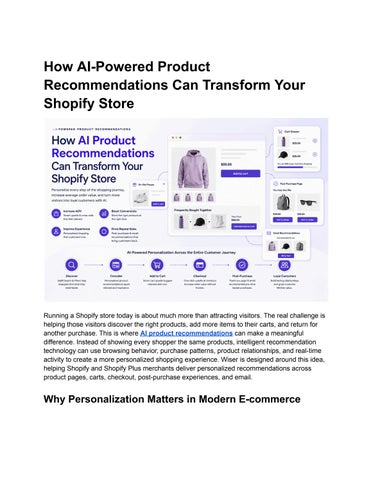
How AI-Powered Product Recommendations Can Transform Your Shopify Store
Running a Shopify store today is about much more than attracting visitors. The real challenge is helping those visitors discover the right products, add more items to their carts, and return for another purchase. This is where AI product recommendations can make a meaningful difference. Instead of showing every shopper the same products, intelligent recommendation technology can use browsing behavior, purchase patterns, product relationships, and real-time activity to create a more personalized shopping experience. Wiser is designed around this idea, helping Shopify and Shopify Plus merchants deliver personalized recommendations across product pages, carts, checkout, post-purchase experiences, and email.
Why Personalization Matters in Modern E-commerce
Online shoppers have more choices than ever. When someone lands on an e-commerce website, they may browse dozens of products before deciding what to buy. If the store does not make product discovery simple, the customer can easily leave without purchasing. Personalization changes that experience. Think about walking into a physical store where a salesperson understands what you are looking for and suggests products that actually fit your needs. A well-designed recommendation system can provide a similar experience online. It can help shoppers discover complementary products, popular combinations, relevant alternatives, or items that match their browsing behavior. This is especially valuable for Shopify merchants because increasing revenue does not always mean finding more visitors. Sometimes, the opportunity is already sitting inside the traffic a store receives. If a customer is already interested in a pair of running shoes, for example, recommending running socks, sleeves, or other relevant accessories can make the purchase more useful while increasing the value of the order.
What Makes Wiser Different? Wiser is built as an AI-powered personalization and upselling platform for Shopify stores. According to its website, the platform is trusted by more than 5,000 Shopify stores and has generated more than $737 million in additional revenue. It also reports more than 500 Shopify reviews with a 4.9 rating. Rather than limiting recommendations to one location on a website, Wiser focuses on multiple touchpoints throughout the customer journey. That includes product pages, cart drawers, checkout, thank-you pages, post-purchase experiences, and email. This broader approach is important because customer intent changes as shoppers move through the buying journey. A visitor browsing a product may need inspiration. A shopper with products in the cart may be ready for a complementary add-on. Someone who has just completed an order may be more receptive to another relevant product or a future purchase reminder. The recommendation strategy should change accordingly.
Turning Product Pages Into More Valuable Shopping Experiences The product page is one of the most important places for recommendations.
A shopper who is already viewing a product has demonstrated interest. Instead of allowing that customer to reach the bottom of the page and leave, merchants can introduce related products, frequently purchased items, or personalized suggestions. Wiser's frequently bought together feature uses previous purchasing behavior to identify products customers commonly purchase together. The platform also provides related product recommendations that can be personalized based on a visitor's session. Imagine a customer viewing a camera. Instead of displaying random products, the store could suggest a compatible memory card, camera bag, or tripod. These recommendations feel natural because they solve an obvious customer need. That is one of the biggest advantages of AI product recommendations: when recommendations are relevant, upselling does not have to feel like aggressive selling. It can simply feel helpful.
Increasing Average Order Value With Smart Upsells Average order value, or AOV, is an important metric for online retailers. If a store can encourage existing customers to purchase one additional relevant product, revenue can increase without requiring another visitor. Wiser provides upselling opportunities through cart drawers, checkout extensions, post-purchase offers, and product-page recommendations. Its cart experience can show add-ons based on what is already inside the shopper's cart, while dynamic recommendations can change as the cart changes. This matters because context is everything. A customer buying a laptop might be interested in a mouse. A customer buying skincare might need a complementary moisturizer. Someone purchasing baby products may appreciate related accessories. The best recommendation is often not the most expensive product. It is the product that makes the original purchase more complete.
Making the Cart More Than a Checkout Step Many merchants think of the cart as a place where customers simply review their products before payment. But the cart can also become a valuable merchandising opportunity. Wiser's cart drawer can display personalized add-ons without requiring shoppers to leave the page. The platform also supports features such as free-shipping progress indicators and dynamic cart upsells.
For customers, this can reduce friction. Instead of navigating through another category or searching for accessories, relevant suggestions appear at a moment when the shopper is already highly engaged. For merchants, the benefit is equally clear: the cart becomes another opportunity to increase basket size while keeping the buying journey simple.
Checkout Upsells Without Creating Friction Checkout is arguably the highest-intent stage of the customer journey. The shopper has already decided to buy and is close to completing the transaction. That makes checkout an attractive place for carefully selected recommendations. For Shopify Plus merchants, Wiser supports checkout upsells through Shopify's native checkout extensibility. The platform describes one-click add functionality and recommendations based on cart contents and customer browsing history. The key here is relevance. Too many offers can distract customers. The right recommendation, however, can feel like a convenient final suggestion. For example, if a shopper has purchased a pair of premium shoes, a recommendation for compatible care products may make more sense than an unrelated product with a higher price.
The Opportunity Doesn't End After Purchase One of the most interesting parts of e-commerce personalization is what happens after the transaction. A completed order does not necessarily mean the customer journey is over. In many cases, it is the beginning of a relationship. Wiser supports post-purchase recommendations on thank-you pages and through email recommendation blocks. The platform also describes repeat-purchase nudges designed to surface consumable or complementary products when customers may be ready to reorder. This can be particularly useful for businesses selling products that naturally need replenishment. For example, a coffee brand can recommend another blend after a customer's initial purchase. A beauty brand can suggest complementary products. A wellness business can remind customers about products they may need again.
Instead of treating every order as an isolated transaction, merchants can use personalization to build a longer customer lifecycle.
Using Customer Behavior to Improve Recommendations The strength of modern recommendation technology comes from its ability to use behavioral signals. Wiser states that its machine-learning system can adapt to real-time customer data, including on-site behavior, product assortment, pricing, and offers. It can then use those signals to display recommendations as visitors browse a Shopify store. This approach can be more effective than relying exclusively on manually selected recommendations. Manual merchandising still has value, particularly for campaigns and strategic products. But customer behavior can reveal patterns that are difficult to identify manually. If shoppers who view Product A frequently purchase Product B, that relationship can become useful recommendation data. Over time, the system can become better aligned with how real customers shop.
Search and Discovery Are Part of Personalization Personalization is not limited to recommendation widgets. Customers also need to find products quickly. Wiser includes Intelli Search & Filter, which is designed to help shoppers find relevant products faster. The platform positions intelligent search as another way to improve product discovery and connect shoppers with products that can generate engagement and revenue. This is important because a customer cannot buy a product they cannot find. Search, filtering, recommendations, and upselling should therefore work together. A shopper might start with a search, discover a product, receive a related recommendation, add an accessory, and then see another relevant offer in the cart. That creates a connected shopping journey rather than a collection of isolated features.
Personalization Across Email
The relationship between an online store and its customers does not have to stop when they leave the website. Email can bring customers back with relevant product suggestions. Wiser supports personalized product recommendations through email and lists integrations with platforms including Klaviyo, Mailchimp, Omnisend, Drip, and Brevo. It also states that dynamic recommendation URLs can work with email service providers that support custom HTML. This gives merchants another opportunity to use existing customer relationships. Instead of sending every customer the same product list, brands can make email content more relevant to individual shopping behavior. That can be especially useful for product launches, replenishment reminders, cross-selling campaigns, and post-purchase communication.
Testing What Actually Works No recommendation strategy should be based entirely on assumptions. Different audiences respond differently. A recommendation that performs well for one store may not produce the same results for another. That is why testing matters. Wiser includes A/B testing capabilities, allowing merchants to experiment with recommendation strategies and evaluate their performance. Testing can help answer practical questions: Which recommendation placement generates more clicks? Do customers respond better to related products or frequently bought together items? Does a cart upsell perform better than a post-purchase offer? Which products contribute most to additional revenue? The answers can help merchants make decisions based on actual store performance rather than guesswork.
Real-World Results From Shopify Merchants
Wiser's website highlights case studies from businesses across categories including fashion, baby products, wellness, fragrance, coffee, and food. For example, Wooden Ships reports additional revenue from recommendations along with increases in average order value and post-purchase revenue. R for Rabbit reports an increase in AOV and a boost in conversions and engagement. Other featured businesses include Nabhi Sutra, Perfumania, Just Coffee, and Sampoorna Ahara. These examples highlight an important point: personalization is not limited to one type of Shopify business. Fashion stores can recommend complementary pieces. Food brands can suggest additional products. Beauty companies can create product combinations. Baby brands can recommend accessories and related essentials. The strategy changes according to the products, but the underlying principle remains the same: make the next purchase easier and more relevant.
Building a Better Shopify Shopping Journey Ultimately, successful e-commerce is about understanding the customer journey. A visitor arrives with a need. They browse. They compare. They find a product. They consider complementary items. They add products to their cart. They complete the purchase. Then they decide whether they want to return. Every one of these moments represents an opportunity to improve the customer experience. AI product recommendations can connect these moments by helping merchants present relevant products at the right stage of the journey. Instead of relying on a one-size-fits-all storefront, brands can create shopping experiences that respond to customer behavior. Wiser brings many of these capabilities into one Shopify-focused platform, including recommendations, frequently bought together products, cart upsells, checkout offers,
post-purchase recommendations, email personalization, smart popups, search, quizzes, and A/B testing.
Final Thoughts E-commerce personalization is moving from being a competitive advantage to becoming an important part of the modern shopping experience. Customers expect online stores to understand their interests, reduce the effort required to find products, and provide useful suggestions. For Shopify merchants, the goal is not simply to show more products. It is to show better products at the right moment. That distinction matters. A relevant recommendation can help a customer discover something they genuinely need. It can increase the value of an order, improve product discovery, create additional post-purchase opportunities, and encourage customers to return. Wiser takes this approach across the Shopify customer journey, combining AI-driven recommendations with upselling, cross-selling, search, email, post-purchase experiences, and testing. For merchants looking to make better use of their existing traffic, this kind of personalization can provide a practical way to create more relevant shopping experiences while pursuing sustainable revenue growth. As online competition continues to grow, the stores that understand their customers best will have an important advantage. Personalization is no longer just about recommending another product. It is about making the entire shopping journey feel more useful, relevant, and effortless.