“I shall never be content until the beneficent influence of the University reaches every family of the state.”
UW President Charles Van Hise, 1905
Dear Readers,
The Dish is the only food magazine in Madison for students, by students.
For 14 years, our publication has served literary cuisine content to hungry readers on diverse topics from international menus to the emerging intersection of food and tech.
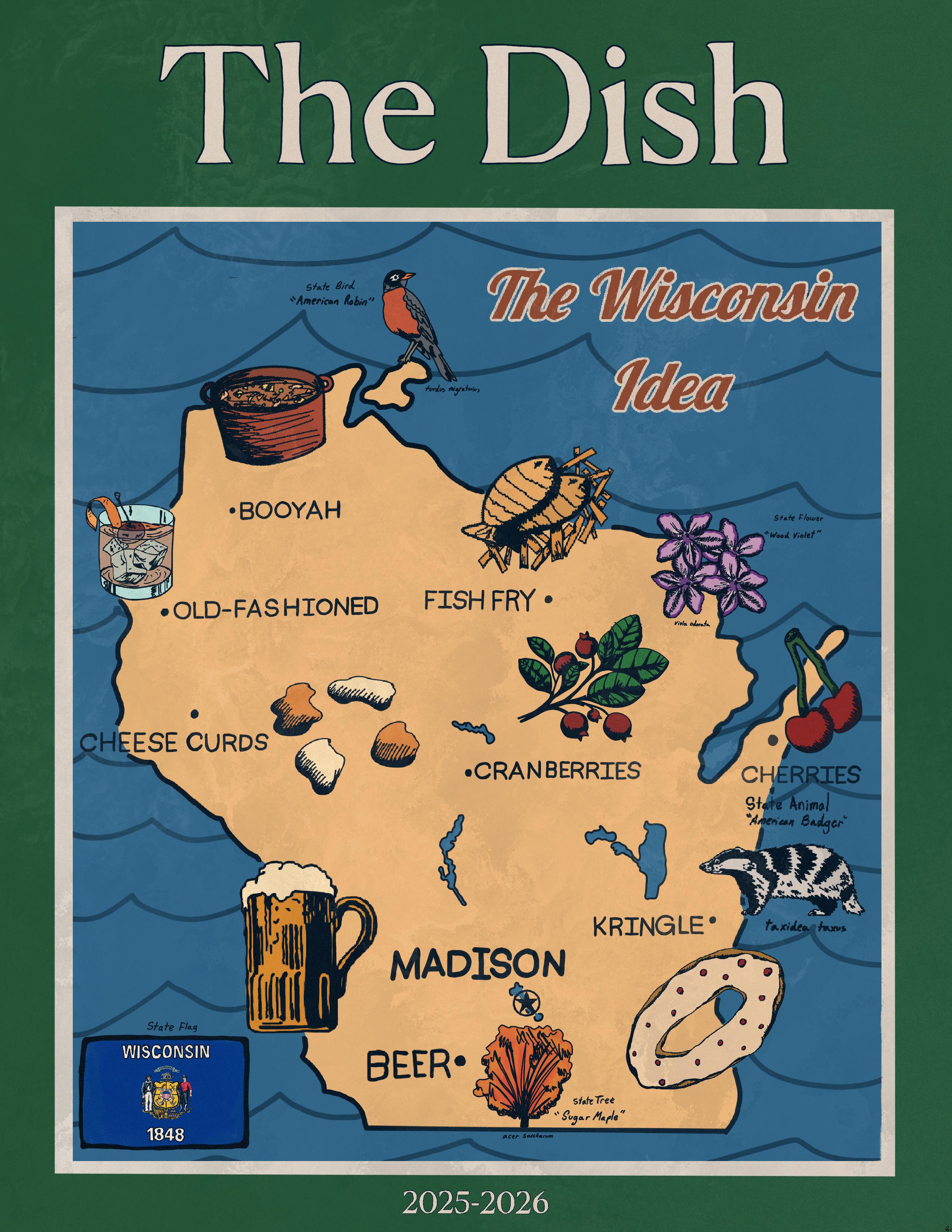
One thing we haven’t done is consider our place – as Badgers and as Madisonians – in the broader culinary culture of Wisconsin. This is the origin by which we situate this Dish edition; through the lens of UW’s Wisconsin Idea.
From cheesemaking innovations in America’s Dairyland, to the enduring indigenous heritage of Dejope, and the University’s pioneering history of food research, The Dish: Wisconsin Idea celebrates the cultures, traditions, and cuisine of the Badger State.
I am especially proud of this opportunity to align the mission of The Dish with the life and identity of Wisconsin. As a student here in Wisconsin, I witness firsthand uncertainty in my community. Changes from the university, up to the local, and national levels remind me of the constance of food as a keystone of community.
When the foundations of our communities are undermined, our affirmation of the universality of food reminds me of the strength we have together. It reminds me why I value my friends and family, and my neighbors on this campus, in this city, and in Wisconsin.
The Dish, a magazine where students engage with their community to celebrate and showcase cooking is what the Wisconsin Idea represents. I hope our Spring 2026 edition reminds you of all your best food memories and serves fresh culinary perspectives.
This magazine would not be what it is without the hard work of The Dish’s talented editorial team. Thank you Britta, Everett, and Jessie for your hard work, creativity, and commitment to our mission. Thank you to our writers, Brittany, Emmy, and Bridget.
The Wisconsin Union Directorate’s Literary Arts Committee sets the tone for The Dish’s commitment to journalistic integrity and literary appetite. Thank you to Sophie Reader, our Director for leading our committee in a year defined by change. Thank you to Tony Wise, our Advisor for supporting students’ literary ambitions. Thank you to Jackie, Bailey, Ellie and Soleil for planning and promoting our events. Finally, I’m incredibly excited to read WUD Lit’s two other publications, EMMIE, and Illumination.
Always in good taste,
James O’Toole, Editor-in-Chief
The Dish 2025-‘26
James O’Toole
Editor-In-Chief
Journalism & Communication Arts ‘27
James is a junior at UW-Madison and in his third year with The Dish. Prior to Editor-in-Chief, he served as a Copy Editor. Growing up in Chicagoland, James developed a strong interest and appreciation for diverse cuisines. The vibrant food scene in Madison is one of the reasons James joined The Dish. One of James’ favorite restaurants is Greenbush Bar on Regent St. He is also looking forward to the upcoming opening of Tall Grass in MMoCA.
Britta Sevick
Content Editor
Journalism & Communication Arts ‘28
Britta is a sophomore at UW-Madison and is the Content Manager for The Dish. She is from Door County, Wisconsin, and is a lover of cheese curds (the best ones in Madison, in her humble opinion, are from Echo Tap and Grill.) If she were to recommend a Madison restaurant to try, it would be Chen’s Dumpling House on State St.
Editorial Team
Jessie Polson
Social Media Editor
Journalism & Information Science ‘26
Jessie is a senior at UW-Madison and she is a Content/Layout Manager for The Dish. She is from Bergen County, New Jersey, and is a hardcore bagel and coffee lover. If she were to recommend a restaurant in Madison to try, it would be Estacion Inka (specifically the Chicken Saltado).
Everett Smith
Design Editor
Communication Arts & Consumer Science and Marketplace Studies ‘29
Everett is a freshman at UW-Madison and the Design Manager for The Dish. As a Los Angeles Native, their biggest Wisconsin food culture shock was the lack of vegetables on most menus. If they were to recommend one Madison restaurant for you to try it would be The Deliciouser: Modern Spice Shop & Restaurant. If you’re there, try their steak frites!
Memories
Sweet Potatoes with Marshmallow
— Jackie
“My grandma always made it and I would always help. I would always try to steal the marshmallows while we were making it. I was always teased for just eating the marshmallows until I grew up a bit and started enjoying the whole part of it.”
of the Meals
By Everett Smith
Cranberry Ice
— Adam
“Since my family moved to Madison, we’ve had Thanksgiving at my sister’s house and her motherin-law has brought a cranberry ice that my kids have loved and devoured ever since. She’s had to make more to satisfy their craving.”
Masala Mac and Cheese
— Maya
“I have a memory of hiding some [Masala Mac Cheese] in tupperware to bring to a potluck the day after Thanksgiving and making all my friends try it. They all loved it and I was very excited.”
Cranberry Relish — Layla
“I remember my grandma would have me come help make the cranberry relish every year specifically when I was too little to actually cook. It was just a sweet thing we’d do together.”
Becoming a Cottage Cheese Lover
By Jessie Polson
Cottage cheese: let’s talk about it. It’s something you either grow up loving or hating… most of the time. Personally, I grew up hating it. I was completely repulsed by the texture, the look, and honestly — even the name.
But lately, cottage cheese has been everywhere. It’s taken over social media and people can’t seem to get enough of it — and I hate to admit it, but for good reason.
A few years ago, I was really focused on my health goals and trying to find new ways to increase my protein intake (because let’s be honest, the usual options get repetitive fast).
After seeing countless TikToks and Instagram Reels showing how you can blend cottage cheese into sauces, dressings, and pretty much anything, I became slightly more open to giving it another try.
And here’s the game changer: blending it.
If you blend cottage cheese with just a little water, the texture, arguably the biggest battle for most people, is completely smooth. One of the first things I made was a high-protein tomato soup. Tomato soup and grilled cheese has always been one of my favorite meals, so instead of using heavy cream, I swapped in blended cottage cheese.
I was genuinely blown away. It was shockingly good — and even better knowing how nutritious it was.
After that, I never looked back. Now, I have cottage cheese in at least one meal a day. I’ve used it in just about every way imaginable: blended into sauces like creamy vodka or pesto, turned into dressings (think avocado ranch or a spicy “mayo”), and even incorporated into desserts as a substitute for ricotta or cream cheese- like a lighter, cheesecake-inspired treat.
And recently, I’ve even leveled up to eating it unblended.
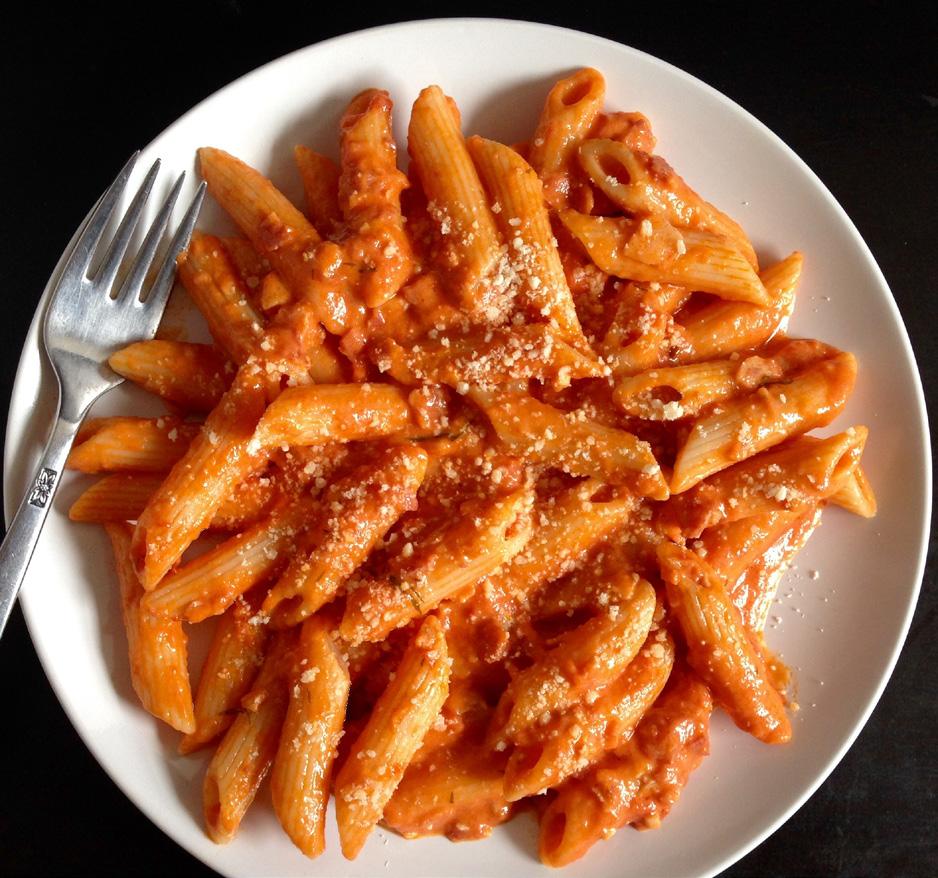
Pasta with vodka sauce can be made with cottage cheese! Wikimedia Commons
A great way to ease into that is cottage cheese toast. My go-to is toasted sourdough with a thick layer of cottage cheese, topped with sliced tomatoes, olive oil, garlic, salt, pepper, basil, parmesan, and a drizzle of balsamic. It’s basically like bruschetta meets burrata — on toast. Another favorite: cottage cheese with avocado, chili crunch oil, and honey. Trust me on this one.
What’s interesting is that cottage cheese’s biggest “competitor” is probably yogurt. Yogurt feels way less controversial, but it actually has a much stronger flavor. Cottage cheese is mild, slightly salty, and incredibly versatile- which is exactly what makes it so useful.
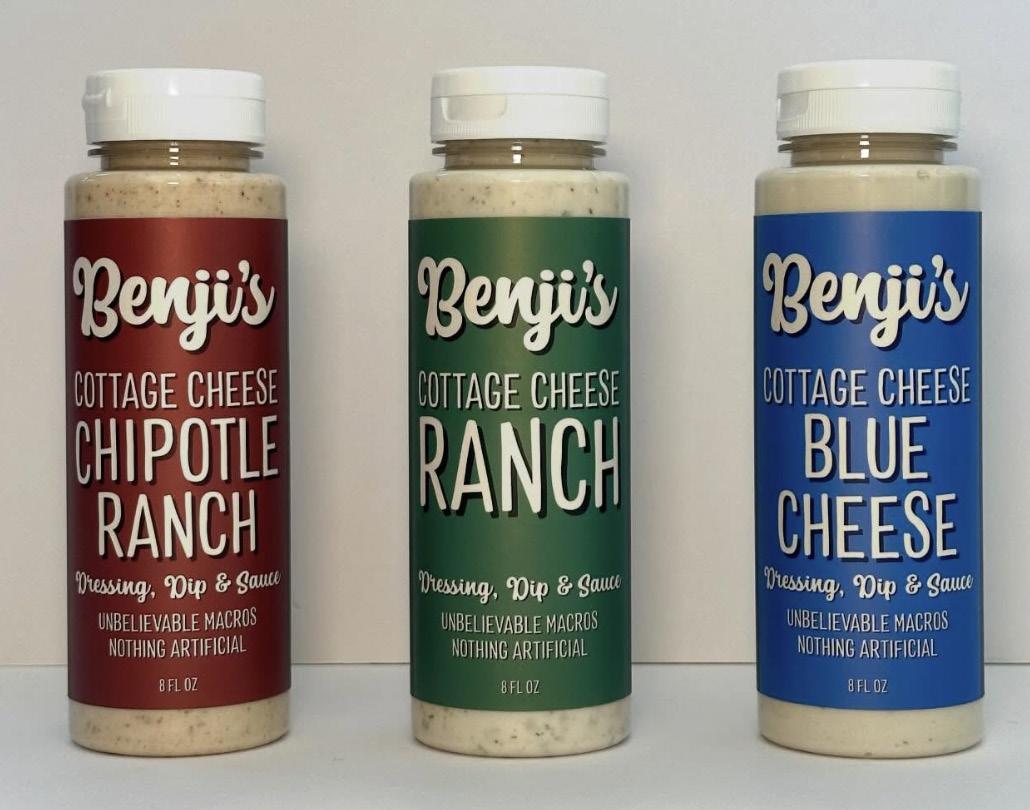
Now, brands are finally catching on. While yogurt-based dips and dressings have been around for years, cottage cheese is starting to have its moment. One standout is Eat Benji’s, which offers flavors like classic ranch, chipotle ranch, and caesar. All high-protein, low-calorie, and honestly addictive. You’d never guess cottage cheese was the base unless someone told you.
The brand’s founder, Benji Polson, puts it best:
“Cottage cheese can be used as a high-
protein, low-calorie substitute for mayo, sour cream, cream cheese, and heavy cream — the possibilities are endless.”
And maybe that’s part of why this trend feels especially fitting here in Wisconsin. As the Dairy State, we’re surrounded by innovation in how dairy is produced, used, and reimagined. In a way, the rise of cottage cheese reflects the Wisconsin Idea — taking something rooted in tradition and making it accessible, useful, and relevant to everyday life.
All in all, the cottage cheese trend is viral for a reason. I’m so glad I gave it another chance. And if you’ve been skeptical like I was, consider this your sign — you might just become a cottage cheese person too.
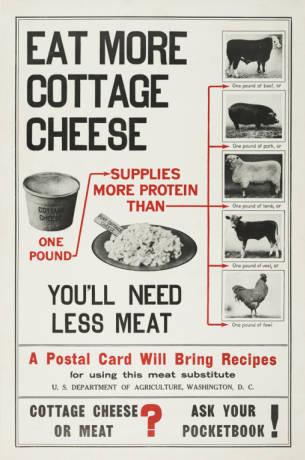
A WWI-era poster advertises the benefits of cottage cheese Pritzker Military Library
Eat Benji’s offeres a selection of cottage cheese-based ranch Pritzker Military Library
Feeding the Future
Food Innovation at UW-Madison
By James O’Toole
For 177 years, the University of WisconsinMadison has served as one of the world’s leading universities for food research and innovation. From milk to vitamins and even bacteria, UW food research has shaped our understanding of cuisine.
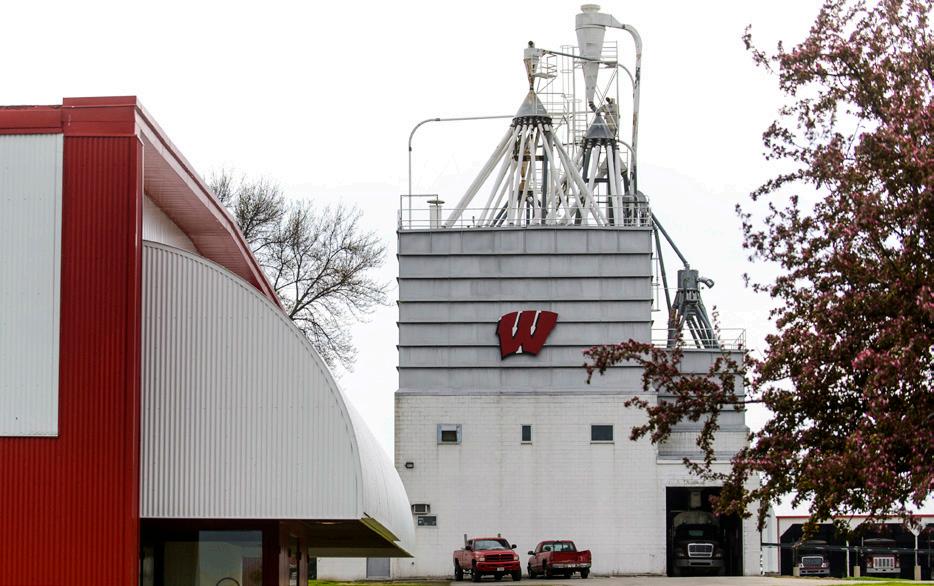
Bryce Richter / UW-Madison
Babcock Dairy
Dairy is possibly the most famous food from Wisconsin. Milk, cheese, and more, Wisconsin does it best. Since UW’s early days, dairy research and innovation was pioneered on our campus. Dr. Steven Babcock (namesake of Babcock Dairy Store) developed the groundbreaking Butterfat Test in 1890. This test measures the fat content of milk, allowing for a standardized assessment of milk quality. The Babcock Butterfat Test increased the quality for milk across the board. It stopped the practice of watering down milk which improved quality for customers and saved dairy farmers time and money.
Dr. Babcock also pioneered the so-called single-grain experiment, which tested the diet of cows. He wanted to see if they could survive on a single type of grain. Groups of cows were fed grains like corn or wheat. In the experiment, the corn-fed cows stayed healthy, while the wheat-fed group were the least healthy. This experiment proved for the first time that there is a measurable difference in nutritional values between foods. It gave researchers the idea that foods contained minerals and vitamins. Although it might seem simple now, this study began the development of modern nutritional science.
Food Research Institute
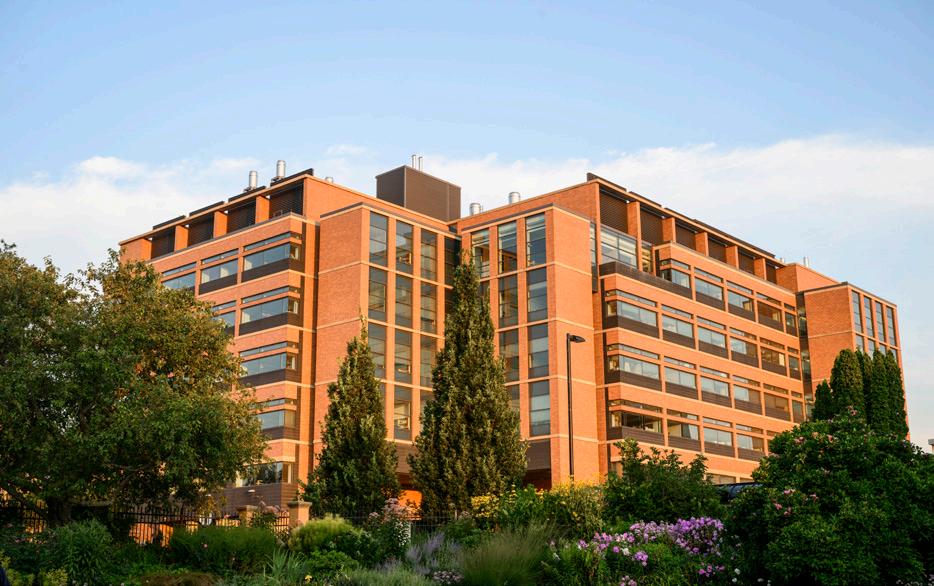
One of the biggest threats to food and public safety are pathogens like bacteria and mold. Since 1966, the Food Research Institute at UW-Madison has worked with industry partners to improve food safety. The FRI’s mission is to “catalyze multidisciplinary and collaborative research… and to provide training, outreach, and service to enhance the safety of the food supply.” Major milestones have included the identification and elimination of various pathogens in foods. Back in 1995, the FRI found one strain of E. coli (classified as O157:H7) which was more acid-tolerant than others. This changed our understanding of the bacteria and allowed us to develop new responses to E. coli transmission in Wisconsin farms.
UW-Madison hosts a research dairy farm in Arlington, WI. Bryce Richter / UW-Madison
The FRI is located in the Microbial Sciences Building. Althea Dotzour / UW-Madison
Vitamin A
Besides the familiarity of their names on campus, biochemistry professors Davis, Elvehjem, Hart, McCollum and Babcock helped identify the first vitamins, A and B. Along with identifying the vitamins’ existence, they also determined their roles in nutrition. Among other things, vitamins A and B are essential for growth and development, immune health, nerve function, energy production, and mental health. UW-Madison still hosts the Vitamin A Assessment Laboratory to expand insight into the essential nutrient. The laboratory continues to deepen our understanding of vitamin A toxicity and deficiency.
Food Science at Wisconsin Today
The UW Food Science Department is busier than ever finding new insights into our food staples. The department offers a wide selection of courses, including food chemistry, microbiology, and food engineering. Some interesting innovations at the Food Science Department include, no-melt ice cream, an analysis of cheese squeakiness, and protein bar optimization. In true Wisconsin fashion, the department also launched a new certificate on Fermented Foods and Beverages. Food research at UW-Madison is cooking up more than ever. It’ll be exciting to see what they cook up next!
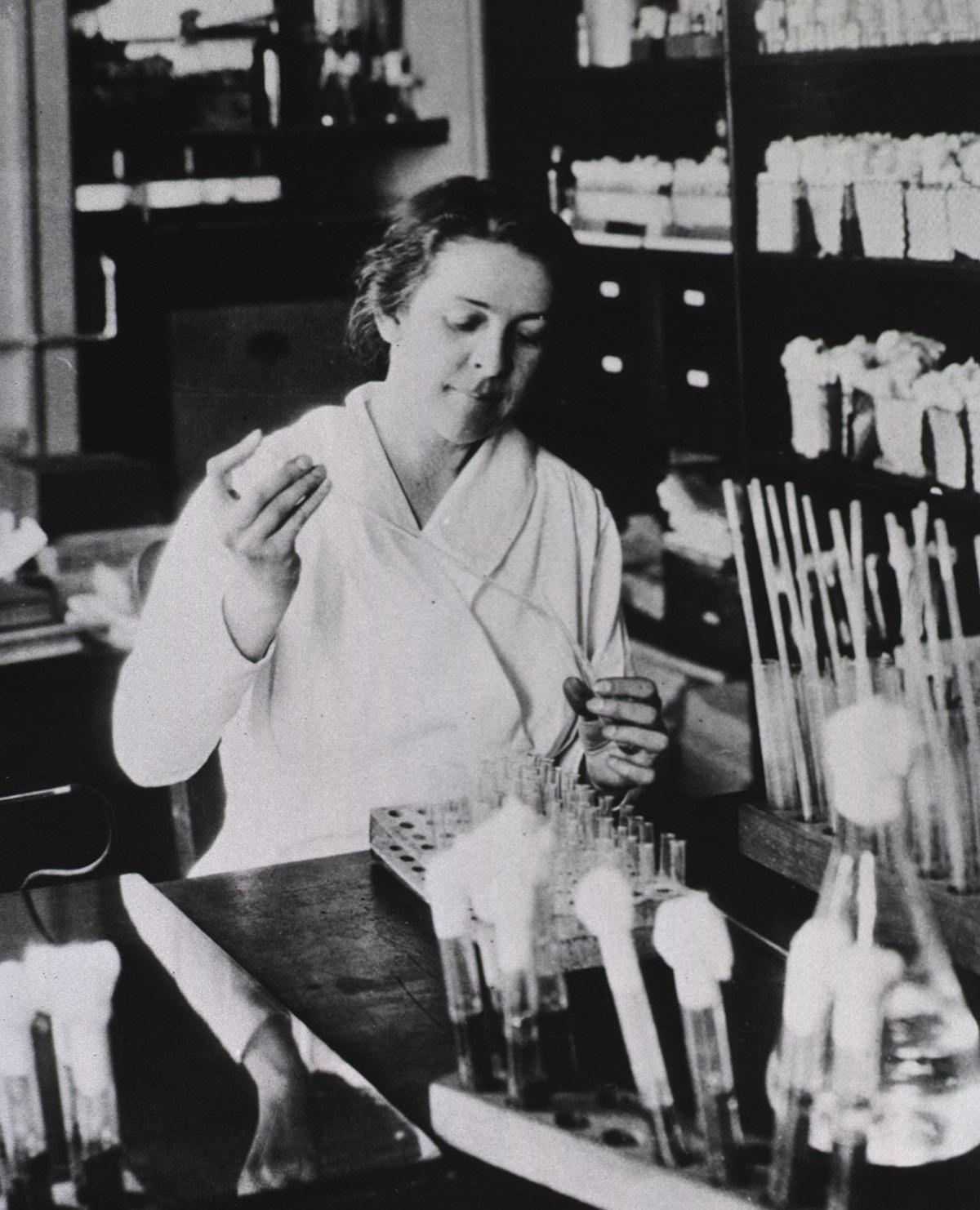
Alice Evans was UW’s first-ever female recipient of a graduate scholarship in bacteriology. She studied under Vitamin-A researcher Elmer McCollum National Institutes of Health
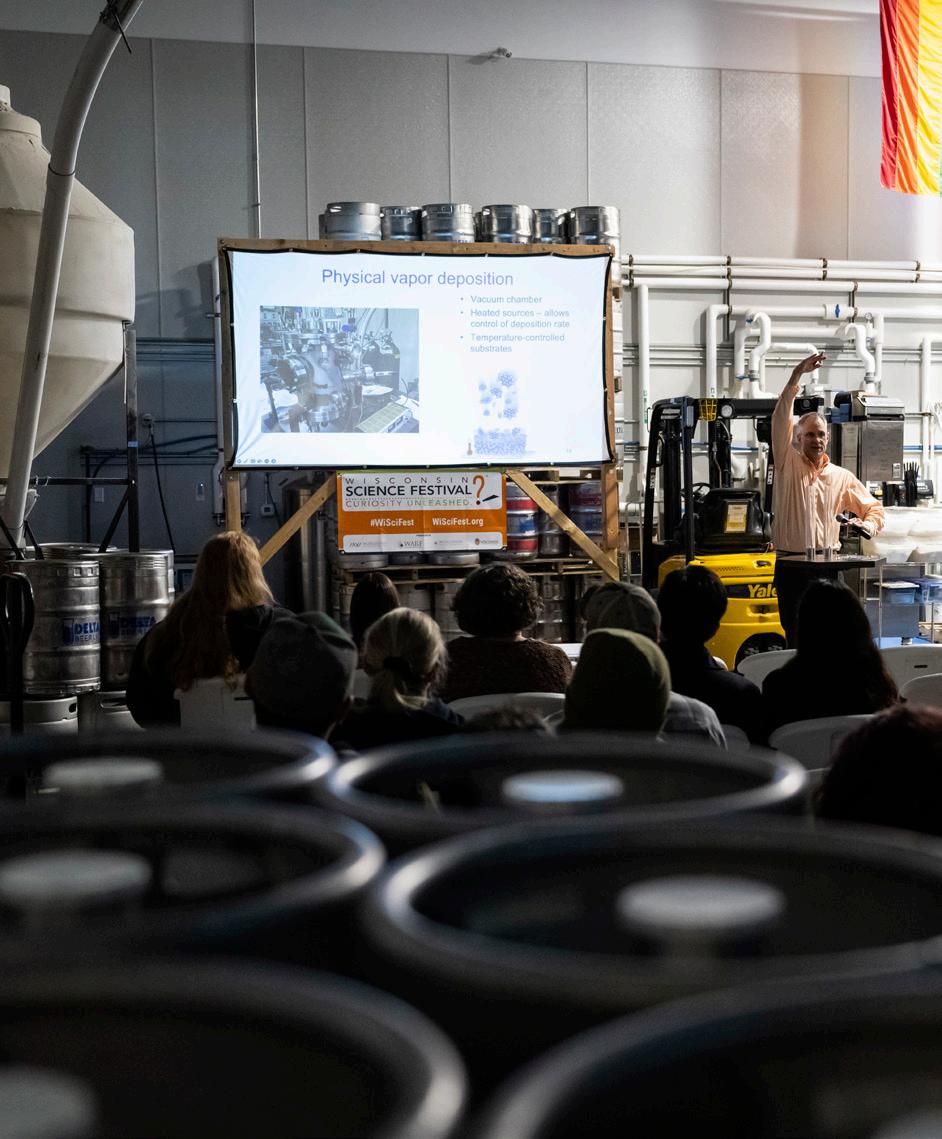
Mark Ediger, professor of chemistry, speaks at an outreach event called Badger Talks, to spread the Wisconsin Idea by sharing UW’s latest discoveries and engaging communities Jeff Miller / UW-Madison
A Case Study: The Deviled Egg
By Emmy Parks
A Wisconsin Party Classic Before They Were Deviled
They aren’t satanic, deviled eggs actually have nothing to do with religion, and were first known by various names, including “stuffed eggs” and “dressed eggs,” to avoid association. In the midwest, you can find them at potlucks, church functions, and Wisconsin supper clubs. Some may even consider them the epitome of Wisconsin holiday party hors d’oeuvres.
Originating in an area of ancient Rome that comprises Southern Spain today, deviled eggs were originally served as the starter of fancy meals for wealthy Romans. They were typically boiled, gutted, and served with seasoned sauces. It wouldn’t be until the 13th century for these eggs to start being stuffed. Some of the first iterations pounded the boiled egg yolks with fresh herbs, such as coriander and cilantro, and mixed in fermented fish extracts, oil, salt, and pepper before adding them back to the boiled egg white halves. As time passed and this dish spread across different regions, more variations were created. For instance, it’s recorded in medieval cookbooks that the British of the 15th century added raisins, cheese, and mint before frying the eggs and topping them with powdered sugar.
How Eggs Became “Deviled”
With the expansion of the spice trade, “deviling” became a popular and affordable phenomenon in which dishes were heavily seasoned or spiced. Paprika became a common topping to these eggs that is still commonly added today. A final change in the recipe came when it was suggested to use mayonnaise as a glue to hold the innards together. While the first mention of mayo in deviled eggs was recorded in 1896, it became widespread after the Great Depression and World Wars when mayo became more accessible and people had time to experiment in the kitchen.
A Tale of Two Deviled Eggs
In America, there is contention on who owns the rights to this cultural staple: the Midwest or the South. Alabama is thought to have been the first to pioneer a recipe for deviled eggs in 1877. However, recipes from Wisconsin, Illinois, and Indiana were published in local newspapers a year after the Southern debut. This begs the question of what controls ownership: the first, the most, or the best? Both regions tend to preserve mayo and mustard in their recipes but differ slightly in toppings, texture, and taste. Southern deviled eggs are characterized by the specific use of Duke’s mayo, salt, paprika, and a sweet pickle relish that adds an unexpected crunch. Meanwhile, Midwesterners focus on a smoother, more acidic profile, typically adding garlic powder, vinegar, and sugar to the mixture, as well as chives, fresh dill, or paprika as garnish.
The Local Egg Scene
If you’re looking to try deviled eggs for the first time, or you already love them and want to experience them in a new way, there are numerous options in Madison to choose from. Classic options can be found at The Old Fashioned and Fairchild restaurants. The former offers a deviled egg platter with “one dozen creamy Classic deviled eggs,” while the latter offers a deviled egg appetizer with paprika and parsley. Merchant provides a Southern, chile-pimento cheese inspired version featuring Hook’s 1-year cheddar, peppers, bacon, and smoked paprika. The most elevated take, which is dairy free, can be found at Heritage Tavern. There, you have the option of crispy pork and fried rice, whitefish and lump crab, or spicy tuna and tobiko toppings. The most unique version of deviled eggs is found just outside Madison at the new Canter Inn in New Glarus, WI. Here, the dish includes beet pickled egg, chili aioli, everything spice, and crispy shallots. Similarly, Mint Mark in Madison serves a gochujang (Korean chili paste), everything chili crisp, and scallion deviled eggs for dinner and Friday lunch.
A Wisconsin Family Tradition
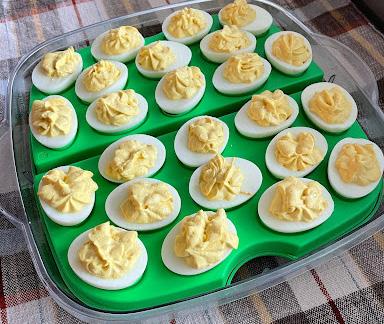
While restaurants continue to experiment with variations, for many Midwestern families the best deviled eggs are still the ones made at home. Growing up a Wisconsinite, my mother has perfected the deviled eggs tradition in the eyes of all my midwestern relatives. Each Easter, Thanksgiving, and Christmas, at least one person requests them, and they are sorely missed when she doesn’t feel up to the task. We even have our own deviled egg container to make transportation to family functions easier. While some other Midwestern families I know put paprika and bacon bits on their eggs, my mom stays true to her roots. For those looking to test their culinary skills, her recipe is as follows: “Mix egg yolk with a little finely diced onion (very fine), mayo and yellow mustard. No measurements — just to taste.”
Regardless of the many variations and origins, deviled eggs remain a beloved Midwest tradition that have only grown in popularity.
Campus Organizations Fight Back
Unaffordable groceries in Madison
By Britta Sevcik
Scattered amongst the grocery store isles, college students stand aghast at the prices they see. At a grocery store that is most accessible to their dorm or apartment, they must choose between affordability and accessibility without a car on campus. For some, this can mean making the choice of going with or without groceries for the week.
As a student at the University of Wisconsin-Madison when it comes to grocery shopping on campus, one only has two options, the Target on State Street or the Fresh Madison Market on University Avenue. Both choices are convenient but not affordable.
A student’s perspective
“If you don’t have the time to walk somewhere, that’s cheaper, you’re kind of screwed for just the places that you have access to.” Callie Goodman, senior and executive director of Slow Food, an affordable meal resource on campus, said.
It is not typical for a UW-Madison student to have a car on campus, especially during their Freshmen and Sophomore years. So, although there are cheaper grocery options further away, they are still inaccessible.
Photo By Jeff Miller / UW-Madison
Althea Dotzour / UW–Madison
Morgridge Center for Public Service
Jeff Miller / UW-Madison
“My roommate has a car, so I pretty much rely on when she can go to the grocery store,” said Callie. “I have basically not much food back in my apartment because I have to wait until she is willing to take me.”
The further from campus you go, the more affordable groceries become with most students who have cars choosing to go to Woodman’s, Aldi or the Hilldale Target. Although these options are accessible by bus, that transportation option comes with a slew of other issues.
“When you’re thinking about groceries... they’re really heavy. They’re not easy to transport, especially if you’re trying to
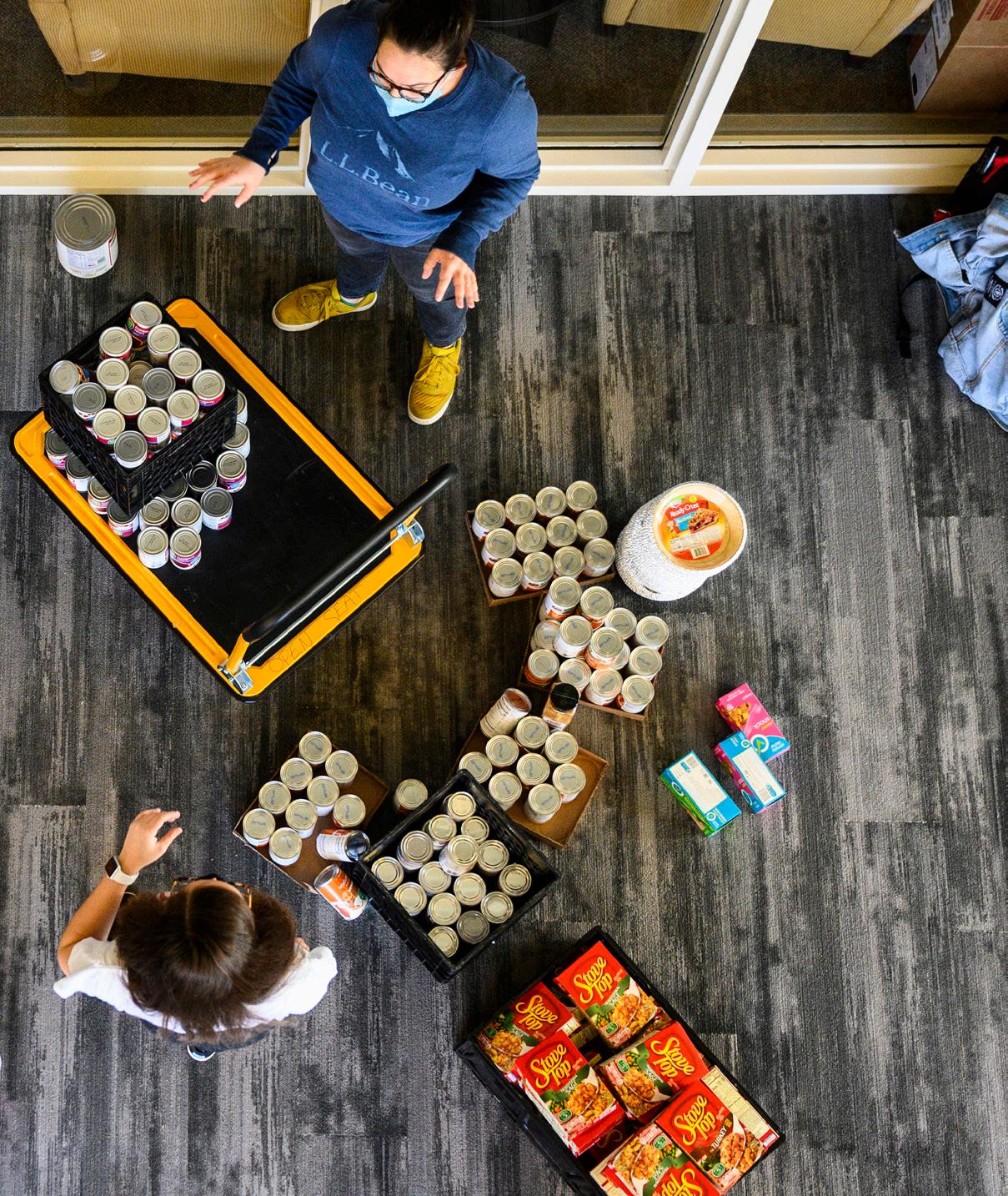
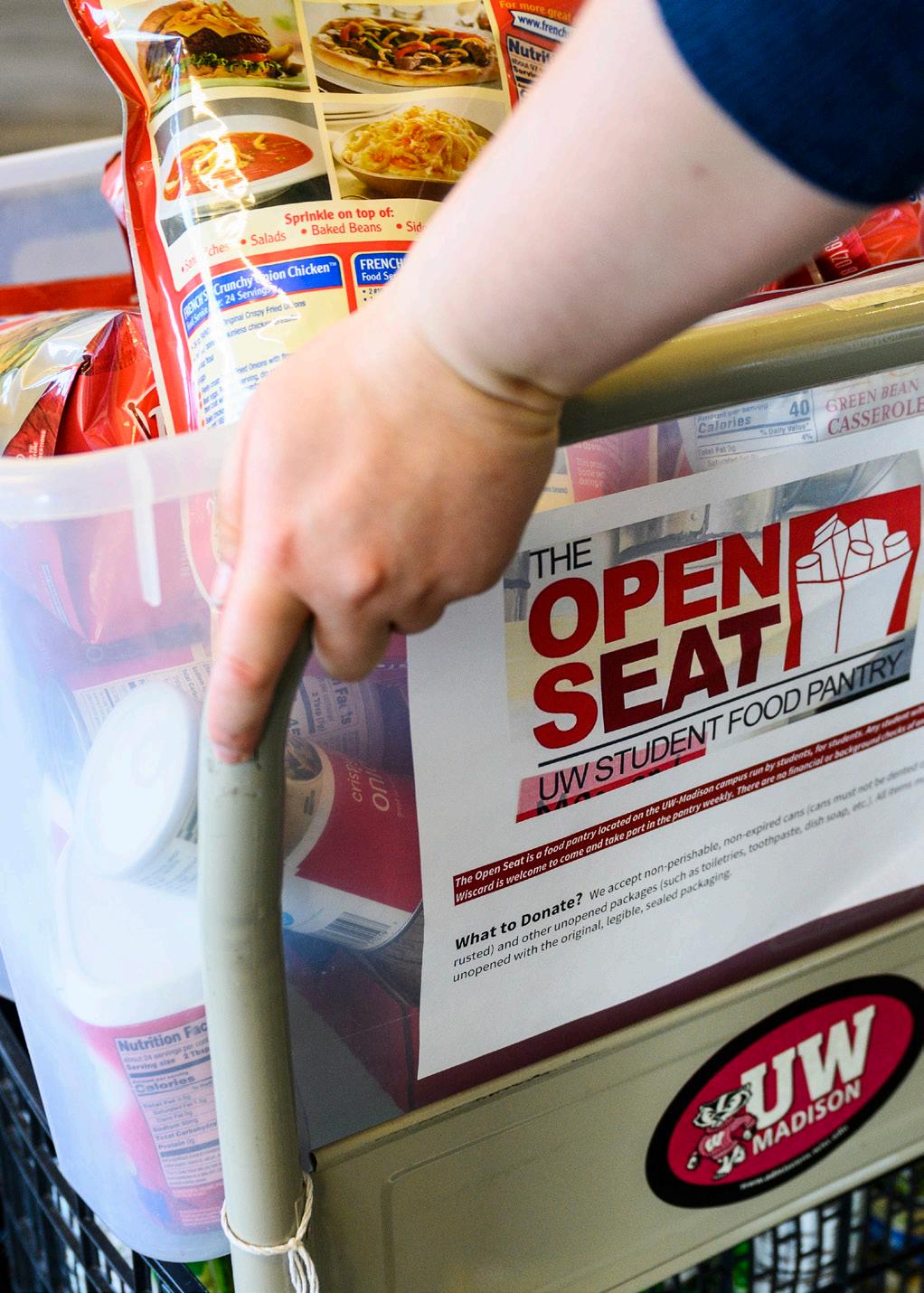
buy cheap bulk items or you’re making your way out to Woodman’s to stock up on canned or cheap goods,” said Chloe Shomo, distribution director of The Open Seat, a food pantry on campus. “To carry that back, you might have to ride the bus, and the buses are often super unreliable.”
While there are options on and off campus to purchase groceries, cheap groceries are inaccessible to UW-Madison students.
According to a resource distributed by the Office of International Student Services only 2 out of the ten grocery stores they recommend are within walking distance of campus.
Jeff Miller / UW-Madison
Campus resources for affordable groceries
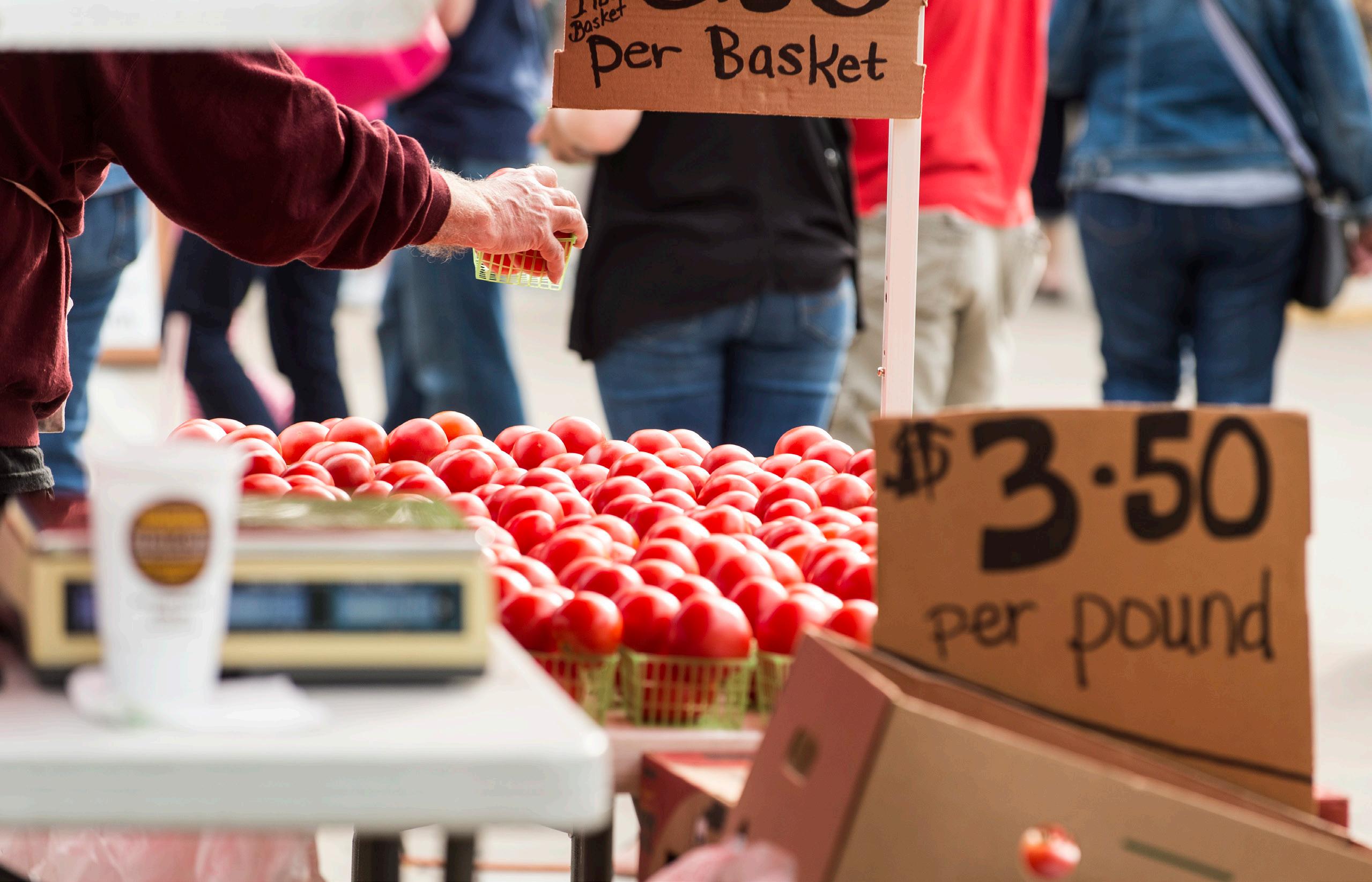
The Dane County Farmer’s Market can be a resource for both finding more affordable produce and aiding in food insecurity.
Jamie Bugel, the executive director of the Dane County Farmer’s Market, shared how to shop smartly and take advantage of the different resources they offer.
“It is absolutely cheaper to buy an inseason product [from the Farmer’s Market],” Jamie said. “Because you’re buying locally, farmers have more control over their prices, and they know their customers and there isn’t that middleman happening.”
The Dane County Farmer’s Market not only accepts SNAP and EBT benefits, but from June 1 to Oct. 31, they participate in a Double Dollars program where customers get to spend twice the amount of money they are cashing in.
Food insecurity is a growing issue across the country as the prices of groceries grow astronomically throughout the U.S. This is an issue that also impacts college students with 31% of UW-Madison students identifying as food insecure in 2024, according to a study conducted by the Office of Basic Needs.
Chloe Shomo has seen an increase in need over time with her work for both the Open
Seat and the Office of Basic Needs. “We haven’t gotten the data back on what’s going on this semester yet, but just from surface level looking when I’m welcoming people into the pantry and what we’re seeing at Eagle Heights. It’s definitely increased since last semester,” said Chloe.
She attributed this growth to several factors including the rise in cost of tuition at the university and the rise in housing costs across the Madison area.
There are programs across campus that help aid in this disparity, with most being highlighted on the Office of Financial Aid’s website in their Basic Needs map.
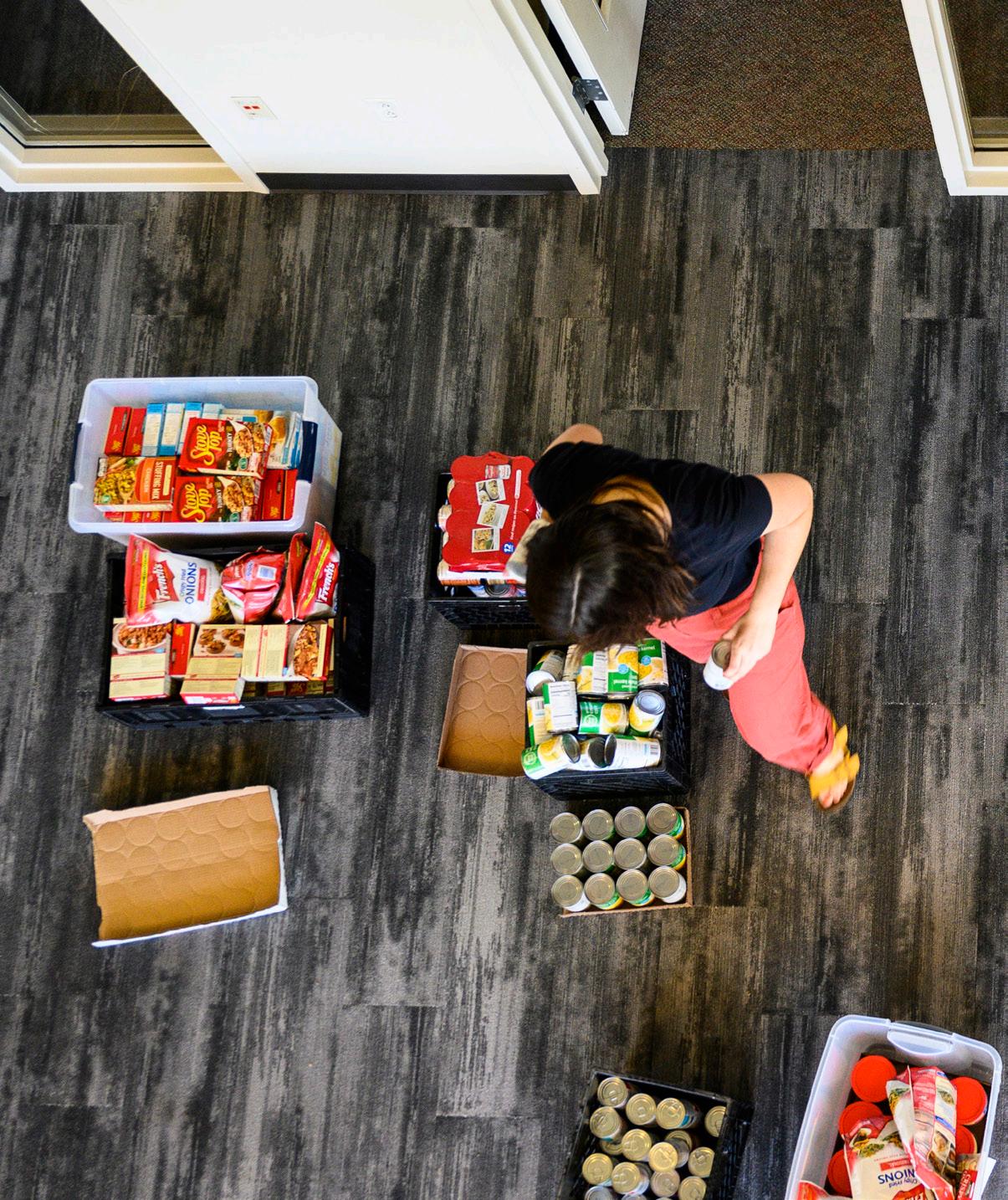
Open Seat is one of these programs. Located at 333 East Campus Mall on the 3rd floor, it operates as a food pantry accessible to all students as long as they have an appointment.
“We don’t do any needs testing because we know that when pantries or services implement needs testing or applications... it can really reduce access to that service,” said Chloe. “So, what we always tell students is that our main goal is to make sure that students can focus on their success. And, if acquiring free food from the pantry is going to help them do that, great! Come on by.”
Campus resources for ready-made affordable meals
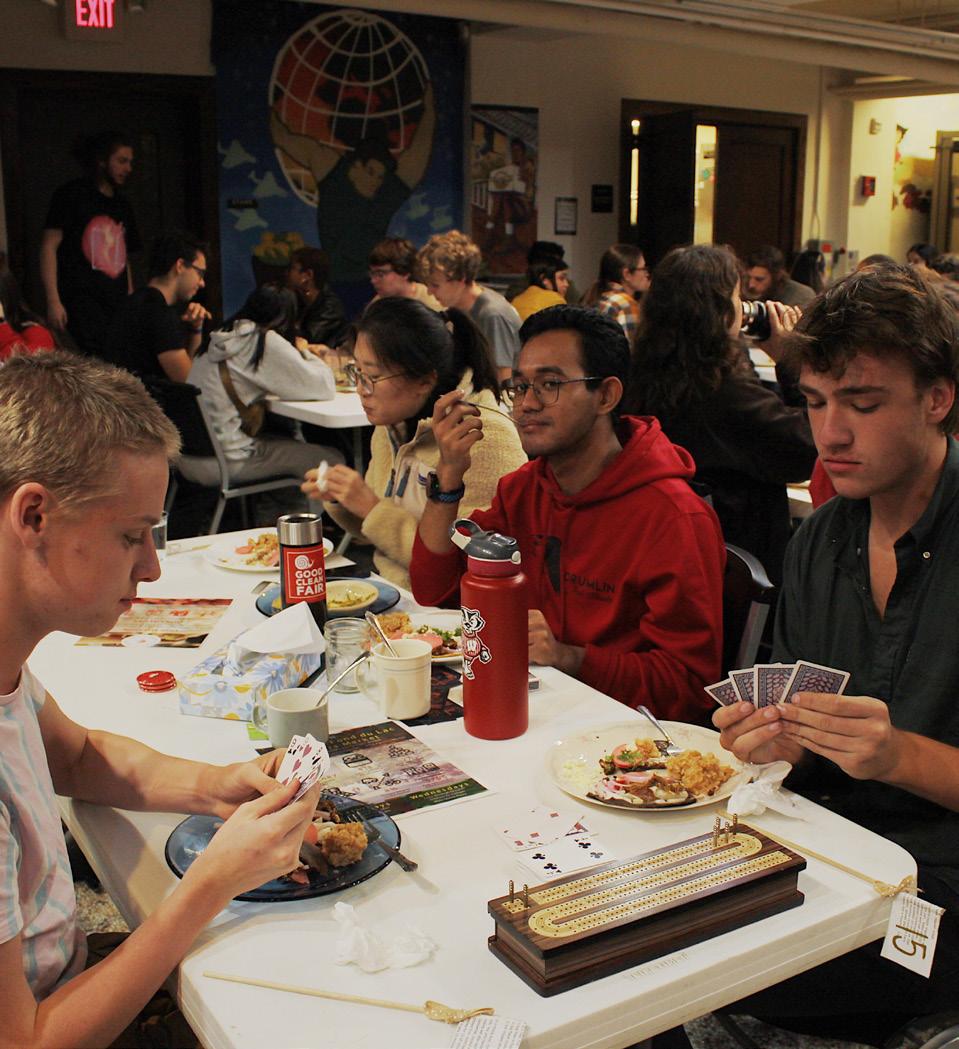
Slow Food is another program that helps to give students consistent access to affordable and healthy food. On Mondays at 6:30 p.m. and Wednesdays at noon, students and community members can stop by the Crossings Church basement at 1127 University Avenue for an affordable meal that is always between $6 and $8.
“I think what we’re really trying to do from our foundation is show that meals should be affordable, sustainable and nutritious,” said Callie Goodman.
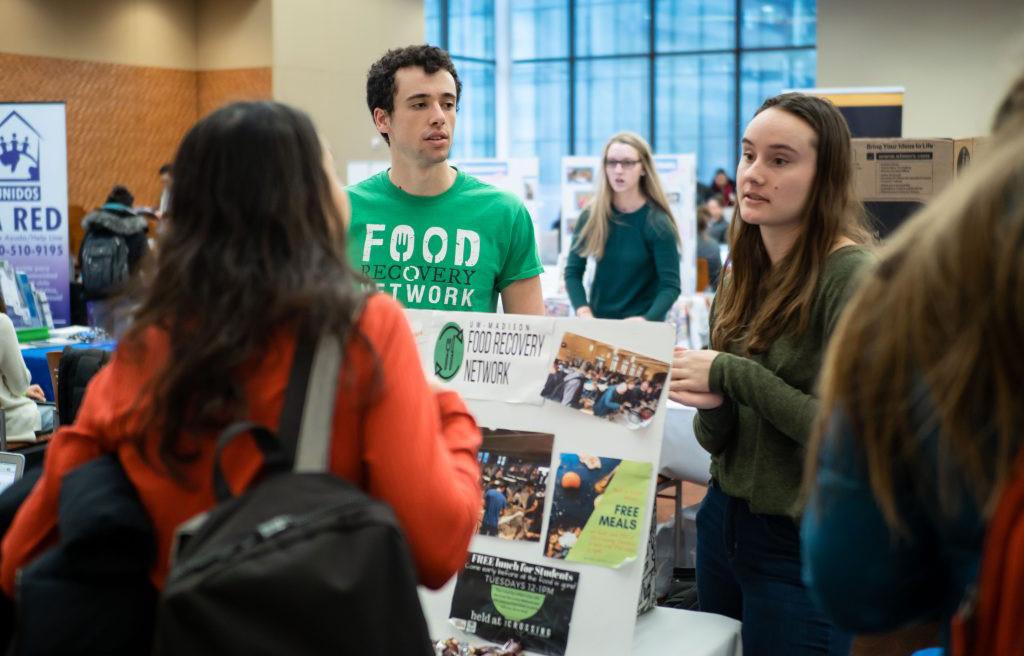
Food Recovery Network (FRN) also inhabits the Crossing Church basement twice a week. On Tuesdays at 6:30 p.m. and Fridays at noon, the student organization serves free meals made up of leftover food from various dining halls on campus.
Emma Benewich the co-president of FRN emphasized their mission of “fighting waste and feeding people.” Their organization is not only a resource for struggling students, but an example of how helping to fight hunger can also help combat waste in a sustainable way.
Conquering food insecurity starts with acknowledging that it is not something to be ashamed of and asking for help.
“The first step, I think, is talking about that experience because you’re not alone
in that, and your community and your friends can provide you with so much support,” Chloe said.
In Madison, groceries are nowhere near accessible in distance or price, but there are resources that can aide in finding affordable groceries and food. When faced with food insecurity, it is important to remember you are never alone and there are always resources available if you know where to look.
Students enjoy a meal with a game of cards Slow Food UW
New to the Scene: Madison’s Latest Food Spots Worth Checking Out
By Emmy Parks
Madison’s food scene continues to evolve with an exciting wave of new openings and upcoming concepts that reflect both culinary creativity and community-driven dining. From Mediterranean-Asian fusion to artisan bakeries, and collaborative food halls, here’s a look at some of the newest additions — and what makes each one stand out.
Eloura
Mediterranean-Asian Fusion | Located on Capitol Square
Eloura brings a fresh and inventive approach to Madison’s downtown dining landscape with a Mediterranean-Asian fusion menu that leans into bold, unexpected combinations. One standout example is their lamb bao bun, which captures the restaurant’s broader philosophy of blending familiar comfort with globally inspired flavors.
Operating as a café in the morning and transitioning into lunch and dinner service, Eloura offers flexibility throughout the day. Its early hours (opening at 7:00 a.m.) makes it a strong option for coffee, breakfast, or a casual morning meeting right on the Square.
Another notable feature is their attention to dietary needs, with a variety of options available for different allergies and restrictions. Students can also take advantage of a 10% discount with a valid Student ID. Additionally, morning café discounts are offered from 7:00 a.m. to 9:00 a.m., making it an appealing stop for early risers.
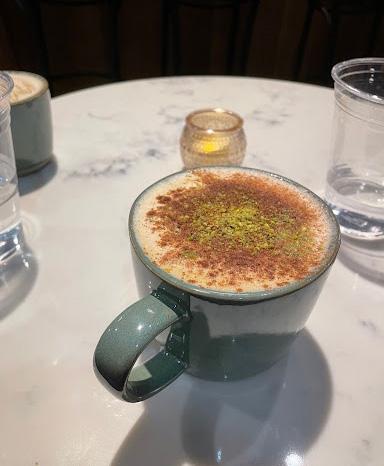
Eloura’s Baklava Latte Emmy Parks
One Social Food Hall
Multi-Vendor Dining & Social Space
One Social Food Hall is designed around variety and atmosphere. With multiple food vendors under one roof, it functions as both a dining destination and a social hub. It is an especially convenient option for groups with different preferences, since everyone can choose something that fits their taste. Food options include: pizza, American-style comfort food, Mexican cuisine, and seafood offerings.
Beyond casual dining, One Social also features more elevated experiences, such as a cocktail lounge and One Prime Steakhouse (reservations may be required). The venue also caters to sports fans, with viewing areas that make it a lively spot to catch a game while enjoying food and drinks.
Osteria Novella
Italian Coastal Cuisine | Artisan Focus
From the owner of Bar Corallini, Osteria Novella is a collaboration that highlights the heritage and culinary vision of Chef Giovanni Novella, inspired by the Amalfi Coast. The concept emphasizes house-made pasta, sourdough pizzas, and dishes rooted in traditional Italian craftsmanship.
The dining experience is centered on sharing and appreciation of food as an art form. Each dish is designed not just for flavor, but for presentation and storytelling, reflecting a deeper connection to regional Italian culture.
Osteria Novella also features specialty offerings such as house-made limoncello, adding a signature touch that complements its coastal Italian identity.
Bao Lao
Asian Market-Inspired Bar Experience
Bao Lao, from the creators of Ahan, introduces a smaller, more focused concept that draws inspiration from Asian market culture. Designed partly as an overflow space for Ahan, Bao Lao emphasizes popular menu items, shareable plates, appetizers, and a strong beverage program.
The atmosphere leans into a bar-forward experience while still maintaining a connection to the flavors and influences associated with its sister restaurant. It’s positioned as a more casual but still curated option for those looking to enjoy Ahan-style cuisine without the full dining experience.
The Baked Lab
Dessert-Focused Bakery & Evening Treat Spot
The Baked Lab, led by home-baker Shawn Bolduc, expands on his existing reputation for wedding cakes and baking classes with a dedicated storefront focused on desserts and baked goods. The concept fills a niche that many people can relate to: finding the right dessert when dining out — or simply needing a last-minute option for an event.
During the day, The Baked Lab offers items like focaccia, buns, and other bread-style baked goods. As the day progresses, the menu shifts toward indulgent dessert options, which become available around 4:00 p.m. These include specialty cheesecakes, cakes, and other creative sweets.
The shop also partners with Nordskov Coffee for their specialty cold coffee and offers alcoholic beverages, making it a viable stop for a relaxed evening “nightcap” dessert experience.
Bri’s Fresh Bakes
Local Favorite Turned Storefront | Grand Opening March, 2026
Bri’s Fresh Bakes has officially transitioned from a beloved farmers market staple into a brick-and-mortar storefront in Sun Prairie. Having built a strong following over several years at local markets and through select partnerships with coffee shops like Broken Board Coffee and Mercies Coffee, this expansion marks a significant milestone for the business.
The bakery specializes in a rotating selection of handcrafted goods, including seasonal croissants, vanilla bean cinnamon rolls, sourdough breads, specialty cookies
With its storefront now open, Bri’s Fresh Bakes offers a more consistent and accessible way for customers to enjoy its products while continuing to emphasize quality and seasonal creativity.
To Come:
Himali Chulo
A new project from the grandson of the original Himal Chuli owners, this upcoming restaurant is expected to open in the same location. While details remain limited, it carries forward a legacy tied to Nepali cuisine and family tradition, suggesting continuity with a modern interpretation.
Jennifer Street Market
A hybrid marketplace concept featuring: Craft beer, fresh produce, a meat counter, and a cheese selection. Jennifer Street Market aims to combine elements of a grocery store, specialty market, and casual gathering space, creating a versatile destination for both shopping and socializing.
Tall Grass
Chef Elena Terry, a renowned culinary figure, is behind this concept rooted in local flavors and cultural expression. The restaurant is expected to explore the intersection of food, art, and community, with a particular emphasis on her Ho-Chunk heritage.
The guiding philosophy of “seed-to-table” reflects a deeper connection to ingredients, sourcing, and storytelling. Tall Grass is envisioned not just as a restaurant, but as a space that highlights cultural identity through cuisine and artistic collaboration.
Read more about Chef Elena Terry and her upcoming Tall Grass on page 35.
A Reflection:
Madison’s evolving food landscape continues to reflect a blend of global influences, local entrepreneurship, and experiential dining. Whether it’s a quick café stop, a shared meal with friends, or a curated culinary experience, these new and upcoming spots add depth and variety to the city’s growing identity as a food destination.
This Year’s Recipes
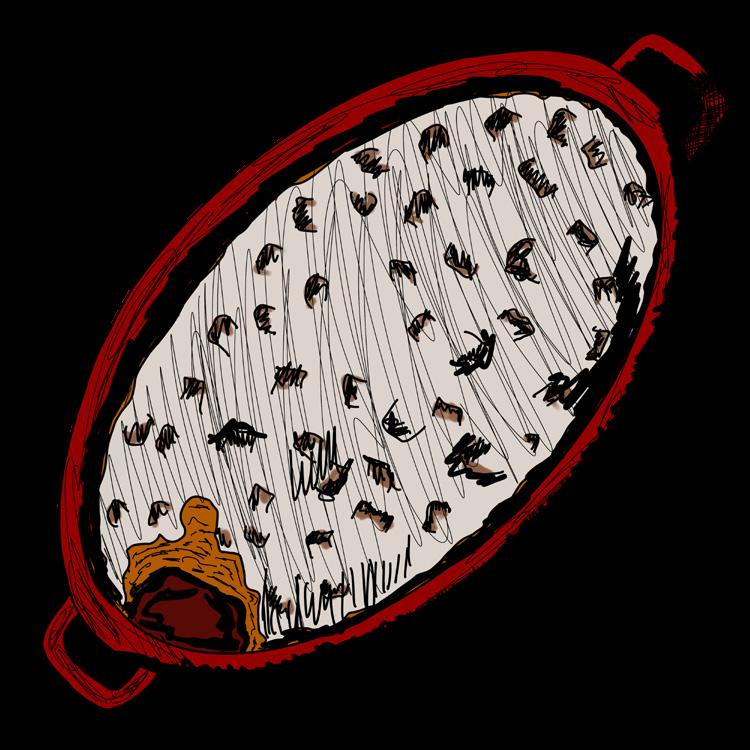
Banana Cream Pie
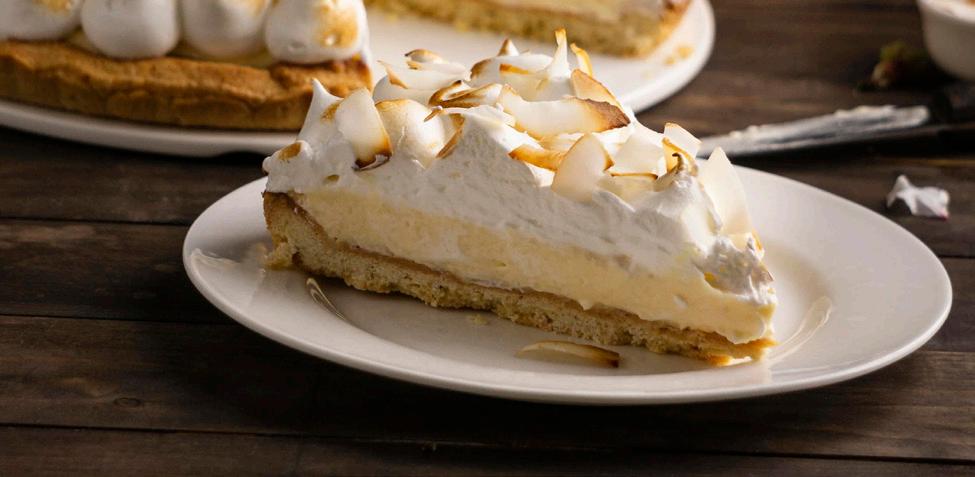
A favorite thanksgiving pie in my house is my Magnolia Bakery-Inspired Banana Cream Pie. With layers of banana, vanilla cookies, and decadent whipped pudding goodness, it’s a perfect treat to close out the day (and an even better leftover). — Everett Smith
Ingredients:
Filling
1 (14oz) can condensed milk
1 ½ cups cold water
1 (5.1oz) box family size instant vanilla pudding
NOTE: You can use the smaller 3.4oz pack, the filling will just be a little looser.
2 cups heavy cream
2-4 bananas, cut into slices. Feel free to use more or less depending on preference
1/4 standard Nilla Wafers box
Crust
3/4 standard Nilla Wafers box, crushed almost to a powder. Small chucks are okay.
Half a stick of unsalted butter, melted
Pinch of salt
Steps:
Filling pt. 1
Mix condensed milk and water in a medium bowl until combined.
Add pudding mix and stir until combined
Cover with plastic wrap, making sure it’s in contact with the pudding to prevent a skin from forming.
Chill for 4 hours to overnight
Recommend overnight for the most stable filling
Crust
Mix the crushed nilla wafers, salt and butter together in a medium bowl until it makes a dough. You want it to be able to stay together when squished in your hand. Feel free to add more or less butter if needed.
Press crust mixture into a pie pan or whatever dish you are using for this recipe. Make sure to press the mixture on the walls, corners, and bottom of the dish firmly for the most compact, strong crust. Let chill in the fridge for at least 40 minutes before filling.
Filling pt. 2
Whip the heavy cream to stiff peaks aka until the cream can stand on its own, not changing shape when the bowl is tilted.
Add the cream to the pudding a third at a time, making sure to gently fold it in.
Assembly
Place a layer of cut bananas into the bottom of your dish.
Add ⅓ of the cream-pudding mixture
Add more bananas plus some of the extra nilla wafers in a layer.
Add more cream-pudding mix
Repeat until you have no more pudding left/can’t physically add anymore
Don’t be afraid of the pie being dome-shaped. Put the pie in the fridge for at least 2 ½ hours, preferably closer to 4.
When ready to serve, top with any extra cookies, bananas, or even crust mixture and enjoy!
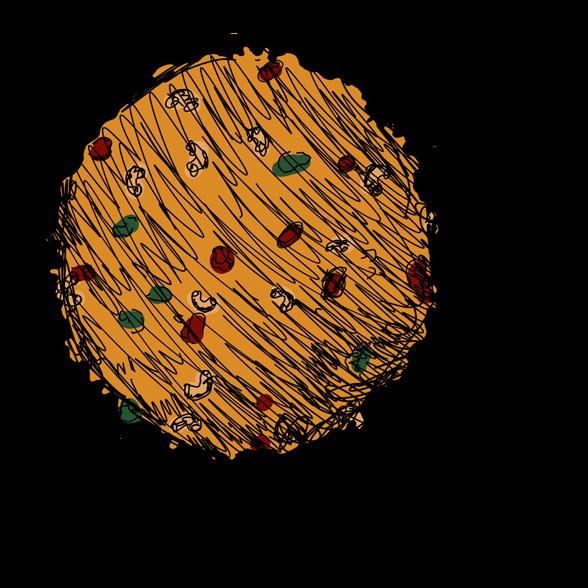
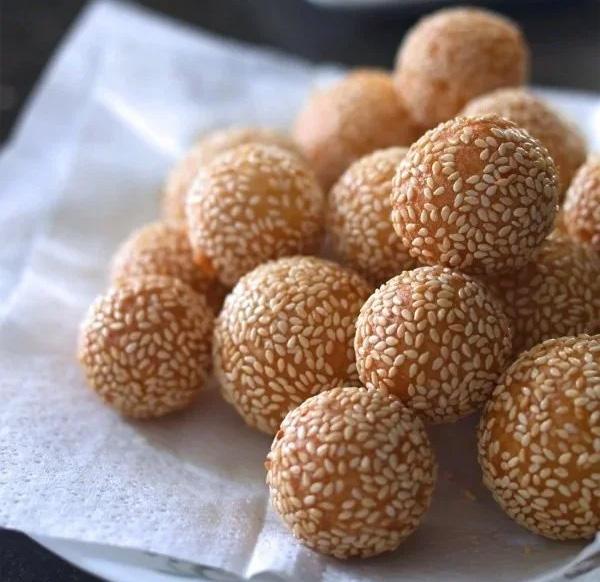
Bánh Cam (Vietnamese sesame balls)
Ingredients:
Sweet Mung Bean Filling:
1-½ cups dried peeled split mung beans
1 cup granulated sugar
¼ teaspoon salt
1 tablespoon vegetable oil
1 cup unsweetened shredded
coconut
1 tsp vanilla extract
Shell:
1 bag glutinous rice flour (16 oz)
3 tablespoons rice flour
⅓ cup potato starch
2 teaspoons baking powder
1½ cups hot water
1¼ cups granulated sugar
1 tablespoon vegetable oil and more for deep-frying
1 cup sesame seeds
— Suchita Hothur
Procedure:
Filling:
Rinse the mung beans until water runs clear. Soak them overnight with 5x the water by volume.
Transfer beans to a medium-size pot and add water to cover by 3 inches. Bring the pot to a boil then reduce heat to a low simmer. Partially cover with a lid. Cook for about 1 hour or until you can easily smash a mung bean.
Add beans to a blender and blend with sugar, vanilla, salt, coconut and oil. Blend to make a runny liquid. Pour the mixture back onto the pan. Stir constantly until it releases from the pan. It should be a dough. Let the mixture cool and form into 1-inch balls.
Dough:
Mix all dry ingredients in a bowl until evenly combined - Add water, sugar, and vegetable oil and kneed until you get a smooth, slightly sticky dough ball.
Assembly:
Make discs using 1.5 tbsp of dough. Use extra glutinous rice flour if dough is sticky.
Wrap the mung bean balls tightly with this dough. Seal at edges to prevent bursting in the oil.
Roll each ball in sesame seeds. Bring a pot of oil on the stove to heat up.
Once hot, fry each Bánh Cam until golden brown. This should take about 6 minutes. If it browns quickly, the oil is too hot
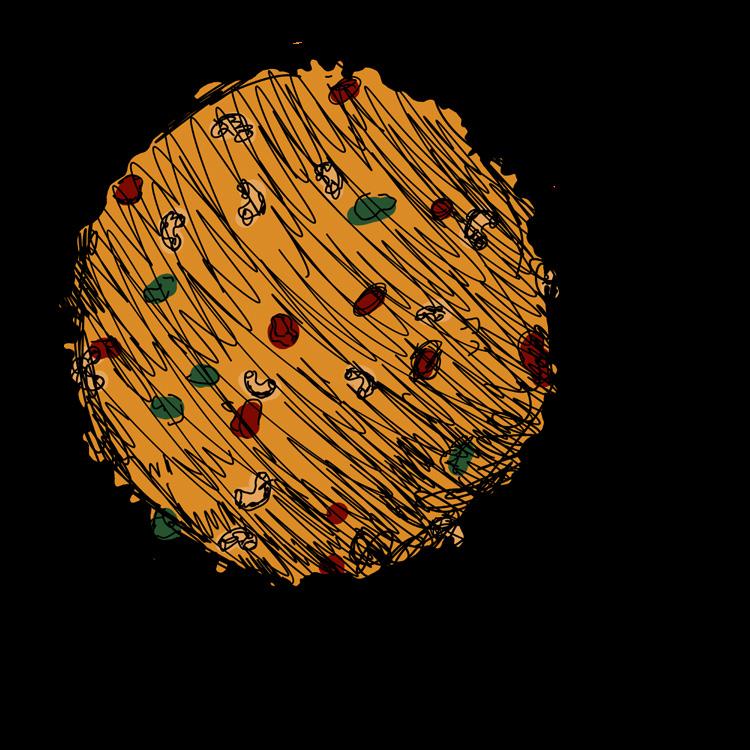
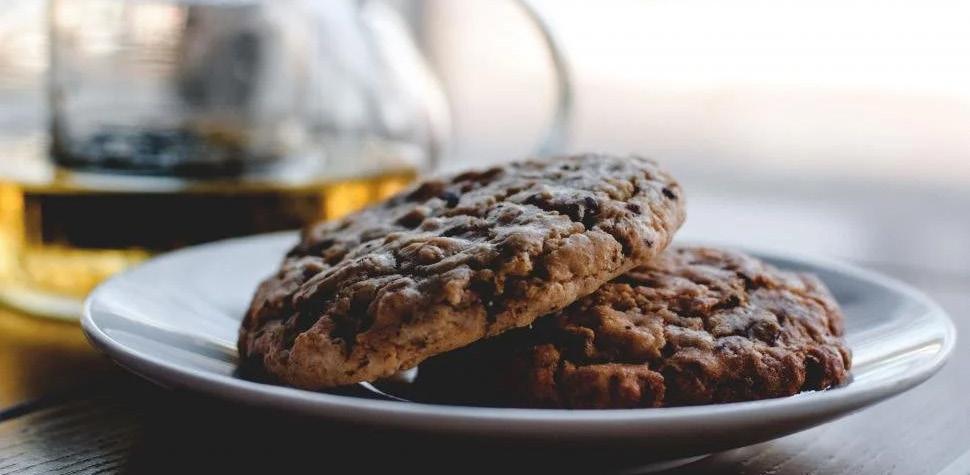
Chewy Earl Grey Oatmeal Cookies
Ingredients
1/2 cup Earl Grey infused butter, softened
2/3 cup light brown sugar, packed
1 large egg
1/2 teaspoon vanilla extract
3/4 cup all-purpose flour
1/2 teaspoon baking soda
1/2 teaspoon ground cinnamon
1/4 teaspoon salt
1 1/2 cups rolled oats
Directions
Make the Earl Grey butter a couple hours before starting the cookies.
To make the Earl Grey/Citrus-Infused Butter:
• 1 stick unsalted butter at room temperature zest of one orange (this compliments the bergamot in the earl grey) 3 bags of your favorite Earl Grey tea
• Heat a small saucepan and melt the butter over medium-low heat. Once it begins to steam a little, place the tea bags and zest into the butter and allow to steep for 5—7 minutes. Be careful not to burn the butter.
You should be able to smell the tea when it is ready.
Preheat the oven to 350°F before starting to bake the cookies.
In a large bowl, cream together the butter, brown sugar, egg and vanilla. In another bowl, mix the flour, baking soda, cinnamon and salt. Combine the dry ingredients with the butter mixture.
If the dough is difficult to shape, chill it for an hour or so. Once you are able to, shape the dough into small balls and place two inches apart on a cookie sheet. Lightly press to flatten them before baking.
Bake for 10-12 minutes until the cookies are just golden at the edges.
Apple Cider
Old Fashioned
Warm apple cider with a splash of brandy sounds like just the drink that would be paired with a plaid blanket, a movie, and the crackle of a fire. This recipe has no rules, just suggestions, so there is flexibility to have fun with it. — Maya Fidziukiewicz
Add orange slides, cherries and brown sugar to your glass and mash them to release the juices from the fruits. Add grenadine and bitters, then pour in brandy and the cider. Top off your beverage with ginger ale and sprinkle on a garnish of choice. Now kick your feet up because you deserve to relax with your favorite show or a good book. Makes 2 servings.
Cilbir
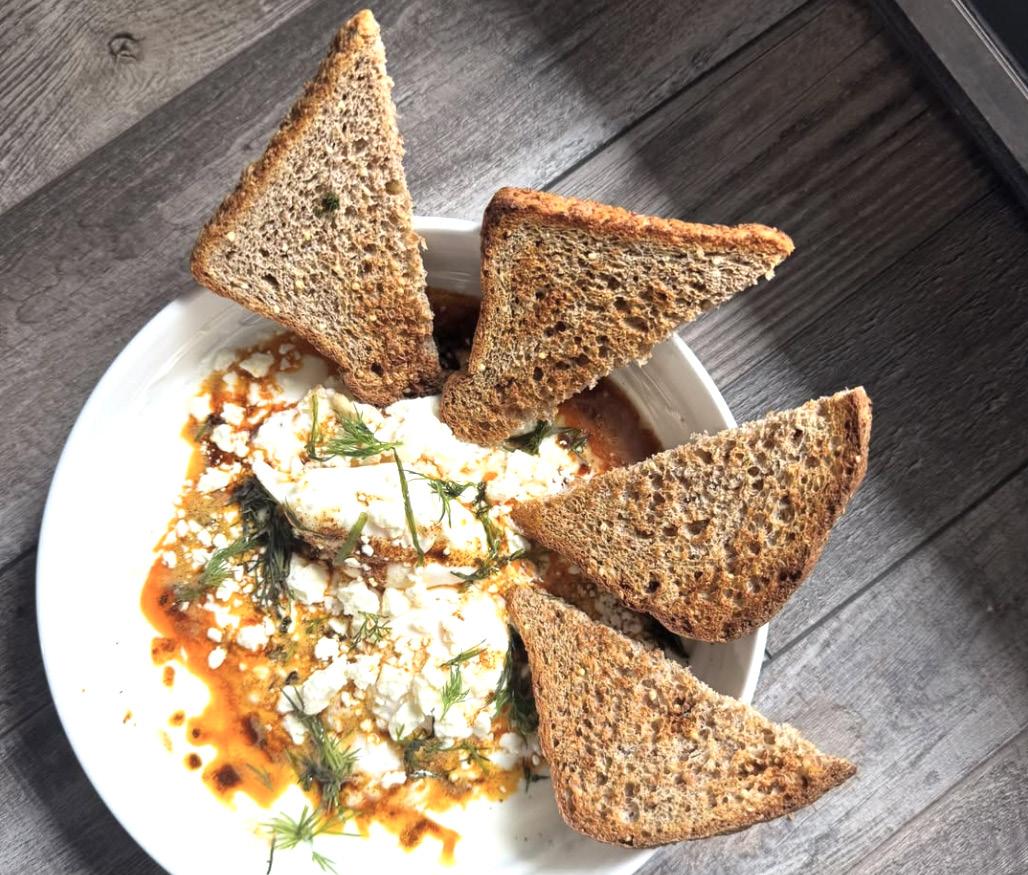
This dish is Turkish eggs, also known as “cilbir.” It has a base of a garlic lemon yogurt, topped with poached eggs, a chili butter, and usually fresh herbs. It is also served with bread. It’s surprisingly easy to make, super good for you, and DELICIOUS!! Here’s how to do it:
— Jessie Polson
Ingredients:
Yogurt base: plain greek yogurt (1/2-1 cup, up to you)
tsp lemon juice
1 grated garlic clove pinch salt
2 eggs your favorite bread toasted
Chili butter sauce:
1 tsp olive oil
1 tbsp butter
1/2 tsp paprika some chili flakes
To top: dill feta (optional)
Process:
mix all yogurt ingredients into a bowl
boil water with some salt to poach eggs, and once boiling, add one egg at a time and leave in water for about 2 min to 2:30, and remove with a slotted spoon and place onto top of yogurt.
Repeat for second egg.
Now, toast your bread, and while it’s toasting, make sauce
On medium in a small pan, combine all sauce ingredients and cook for about a minute until everything is combined and melted
Assemble: drizzle sauce on top of yogurt and eggs, and top with dill and feta. Slice bread in half and serve with it to dip.
Jessie Polson
Cilbir
Wisconsin Old Fashioned
Ingredients:
Brandy 7UP
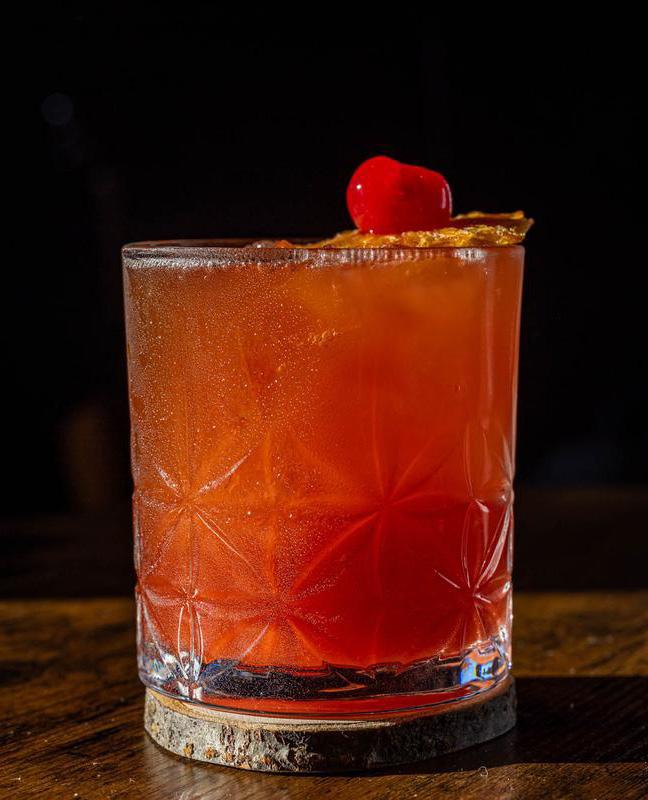
The brandy old fashioned is a symbol of Wisconsin. So much so, it was made the state’s official cocktail in 2023. It’s the use of brandy, instead of whiskey, that gives the drink its Wisconsin twist and a sweeter, smoother taste. The precise proportions of ingredients in this classic beverage may vary around the state. This version is provided by a Green Bay native.
— Ian Hendries
7UP is the standard, but can be substituted for a different lemon lime soda. For a sour old fashioned, use Squirt.
Maraschino cherries
Orange slice
Sugar
Bitters
Ice
Directions:
Add 1-2 maraschino cherries, an orange slice, and 6-7 dashes of bitters to your glass. Add a pinch of sugar and a bit of the maraschino cherry syrup to taste. Muddle the cherries, orange slice, bitters, sugar, and syrup. Pour a splash of 7UP and stir. Fill your glass to the top with ice. Add brandy, typically 1.5–2 fl oz. Fill the rest of the glass with 7UP. Stir again. Enjoy!
HungryHuy
Freepik Olia Gozha
Bánh Cam
Banana Cream Pie
Earl Grey Oatmeal Cookie
Wisconsin Devied Eggs
While restaurants continue to experiment with variations, for many Midwestern families the best deviled eggs are still the ones made at home. Growing up a Wisconsinite, my mother has perfected the deviled eggs tradition in the eyes of all my midwestern relatives. Each Easter, Thanksgiving, and Christmas, at least one person requests them, and they are sorely missed when she doesn’t feel up to the task. We even have our own deviled egg container to make transportation to family functions easier. — Emmy Parks
Ingredients:
Onion
Mayonnaise
Yelow Mustard
Process: Eggs
Mix egg yolk with a pinch very finely diced onion, mayo and yellow mustard. Measure to taste.
Ingredients:
Sliced bread of choice
Butter or cooking spray
Campfire Pie
Instructions:
Light a campfire and give it time to create some good cooking coals.
Fillings of choice: We did Roald Dahlinspired fillings
Chocolate frosting - Charlie & the Chocolate
Factory
Canned blueberries - Matilda
Canned peaches - James & the Giant Peach
Optional: whipped cream
Materials:
Pie Iron Sandwich Maker
Fire pit
Utensils
Spray or line both sides of your pie iron with parchment paper.
Butter or spray the outside of two pieces of bread.
Place the bread piece on each side of the pie iron with the buttered sides toward the iron.
Add fillings to one or both sides.
Close the pie iron.
Cook over hot coals for 2 to 6 minutes. Carefully open the sandwich maker and check the pie.
Reclose and cook longer if needed. Enjoy, but do not burn your mouth!
Emmy Parks
Top Food Orders in Madison With No Explanation
1.
2.
3.
4.
5.
6.
7.
8.
9.
10.
11.
14.
13.
15.
Banana Bread Pudding French Toast | Mint Mark
Cinnamon Roll | Graze’s
Beef Wellington | Cento
Frozen Meatballs | Allimentari
Creste di Gallo | Cento
Apple Bread | New Glarus Bakery
Sirloin Steak Sandwich with Horseradish Sauce | Cassetta’s
Creamy Chili Crisp Pancetta Focaccia | The Baked Lab
Baba | Naples 15
Cafe Neapolitan Espresso | Naples 15’s
Amy’s Salad with Chicken | Coopers Tavern
12. Early Willy on Everything Bagel | Gotham Bagels
Honey Bacon Biscuit | Ancora
Summer Friday Fish Fry | Edgewater
Breakfast Steak Tacos | A La Brasa
16. Coconut Cream Pie Latte | Madison Chocolate Company By Emmy Parks
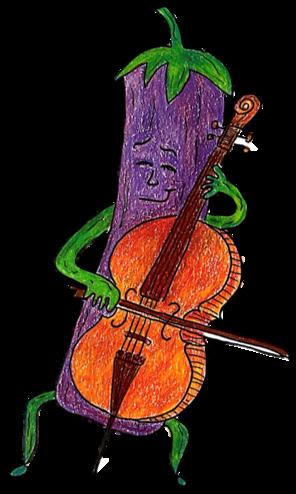
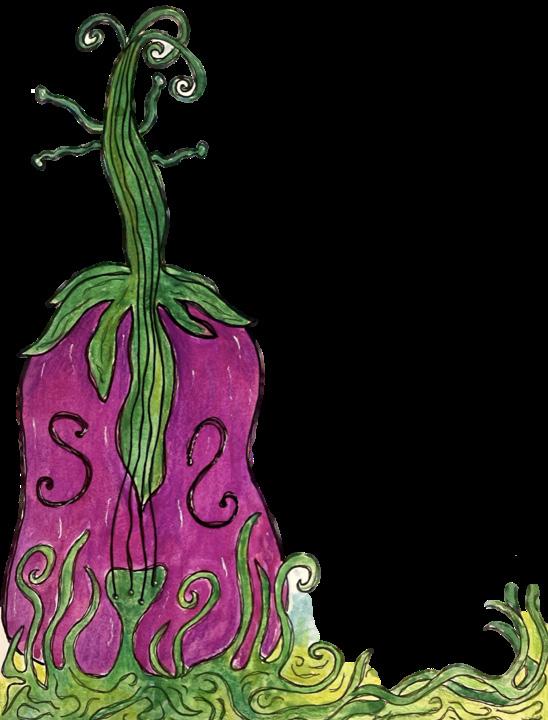
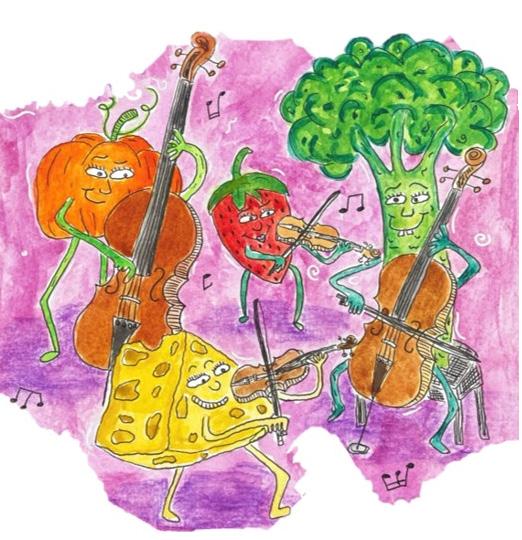
At center stage, an eggplant plays the cello. The musicians are dressed in purples, greens, and oranges, calling to mind carrots and beets, potatoes and parsnips. These Scandinavian roots are vegetables shaped by cold soil and long winters. Outside, snow falls steadily. Inside, the room is warm with sound. On this wintry evening, we gathered to hear Ensemble Aubergine.
A Fresh Addition to the Menu
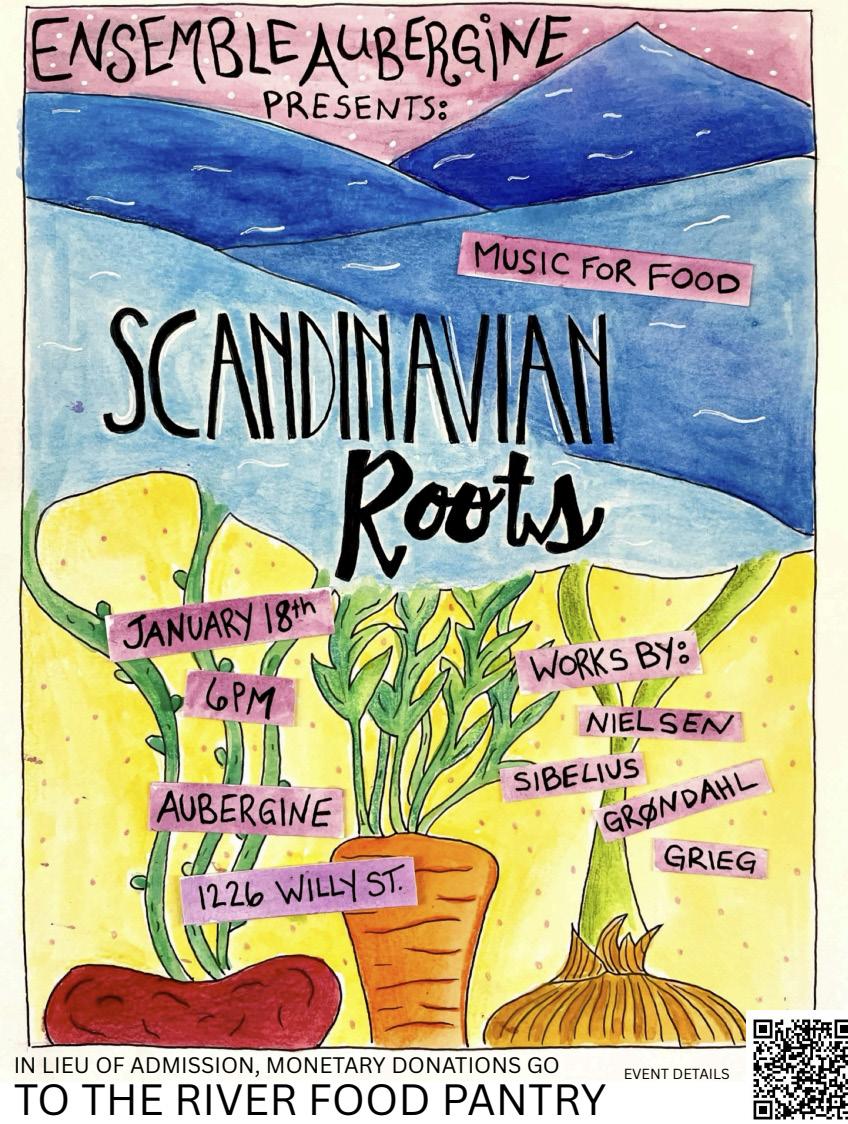
Ensemble Aubergine, named after the space by Willy St. Co-op (a mixed-use community space available for private rental), is a recent addition to Madison’s local classical music scene. The ensemble aims to create exhilarating and intimate musical experiences for our community while supporting efforts to combat food insecurity. Their inaugural concert, presented on January 18, 2026, featured works by a variety of Scandinavian composers such as Edvard Grieg, Jean Sibelius, Agathe Backer Grøndahl, and Carl Nielsen. Instead of tickets, the ensemble asked for donations to the River Food Pantry, the busiest food pantry in Dane County.
By Brittany Trinh
by Carolyn Van De Velde
locating rehearsal space, rehearsing, and performing. Most notably, their ensemble is conductorless.
A New Recipe for Chamber Music
From concept to creation, Ensemble Aubergine turned around their first concert within a month. The process involved finding members, choosing a theme, selecting music,
Aaron Fried, along with Madlen Breckbill, is one of the co-founders of Ensemble Aubergine. They heard murmurs for a conductorless orchestra and “just decided to make it happen,” Fried says. January is an ideal time for planning and executing something like this, since there are fewer concerts and more musicians available. The goal of an unconducted chamber group like Ensemble Aubergine is to have the intensity of orchestral music, while retaining the intimacy of chamber music. The lack of hierarchy allows the musicians more opportunities for creativity and collaboration. Programming a concert, for Ensemble Aubergine, is like planning a seasonal tasting menu. The flavors must blend well, the textures need contrast, and the diner should leave feeling nourished. Without a conductor, the choice of repertoire becomes a rotating responsibility. For the inaugural concert, Fried and Breckbill leaned into their shared love of Scandinavian music and into the spirit of hygge (pronounced “hoo-gah”): the Danish idea of warmth, liveliness, and intentional coziness, a kind of communal comfort suited to a snowy January night.
Art
Behind the Scenes: The Brigade
Running the ensemble is as collaborative as performing in it. “I’ve put together little ensembles before,” Fried says, “and I think this one has been more successful because there’s been so many people on board who want to contribute in different ways.” Each member took on a task such as Instagram marketing, flyer and program design, or rehearsal and concert logistics. The collective effort stems from a shared desire to contribute beyond the stage. “A lot of people these days are trying to do something a little bit helpful for our community,” Fried says. For many of the musicians, Ensemble Aubergine offers a way to make art and a difference at the same time.
Many of Ensemble Aubergine’s members trace their roots back to UW–Madison. Fried, now a local professional cellist and teacher, drew inspiration from the UW Bridge Ensemble, created by Peter Dominguez, professor of double bass and jazz. That group blended chamber music with jazz and performed at local middle and high schools. “It inspired me a lot, seeing how these instructors created a sense of community,” Fried says. Carolyn Van De Velde, a violinist in the group and a visual art student of cartoonist Lynda Barry, associate professor of interdisciplinary creativity, is the hand behind the ensemble’s playful posters and like programs, making their concerts
What’s Cooking Next
Ensemble Aubergine’s second concert took them to the Goodman Community Center on March 15, 2026 to fundraise for the Fritz Food Pantry. This time, violinists Chantel Charis and Sahada Buckley focused the concert around the concept of pyrotechnics, featuring fiery works by Bartok, Stravinsky, and more. Community support has already come from the Wisconsin Youth Symphony Orchestra and Willy St. Co-op in the form of rehearsal and performance spaces. The group hopes for future patronage that might make the ensemble a paid orchestra one day. For now, what matters is the warmth they can impart. “This is definitely a labor of love… at the very least, we will raise a bunch of money for food pantries this year,” Fried says. Judging by their first two concerts, where they raised more than $2,800, they’re off to a strong start. In a season defined by roots, they are planting new ones.
Follow Ensemble Aubergine on Instagram @ensembleaubergine for more information about future concerts.
Ensemble Aubergine concert flyers.
ensemble performs at community centers in Madison to raise money for the River Food Pantry.
The
MMoCA
Chef Elena Terry Recipes for Community with
By James O’Toole
“I understand the kitchen.”
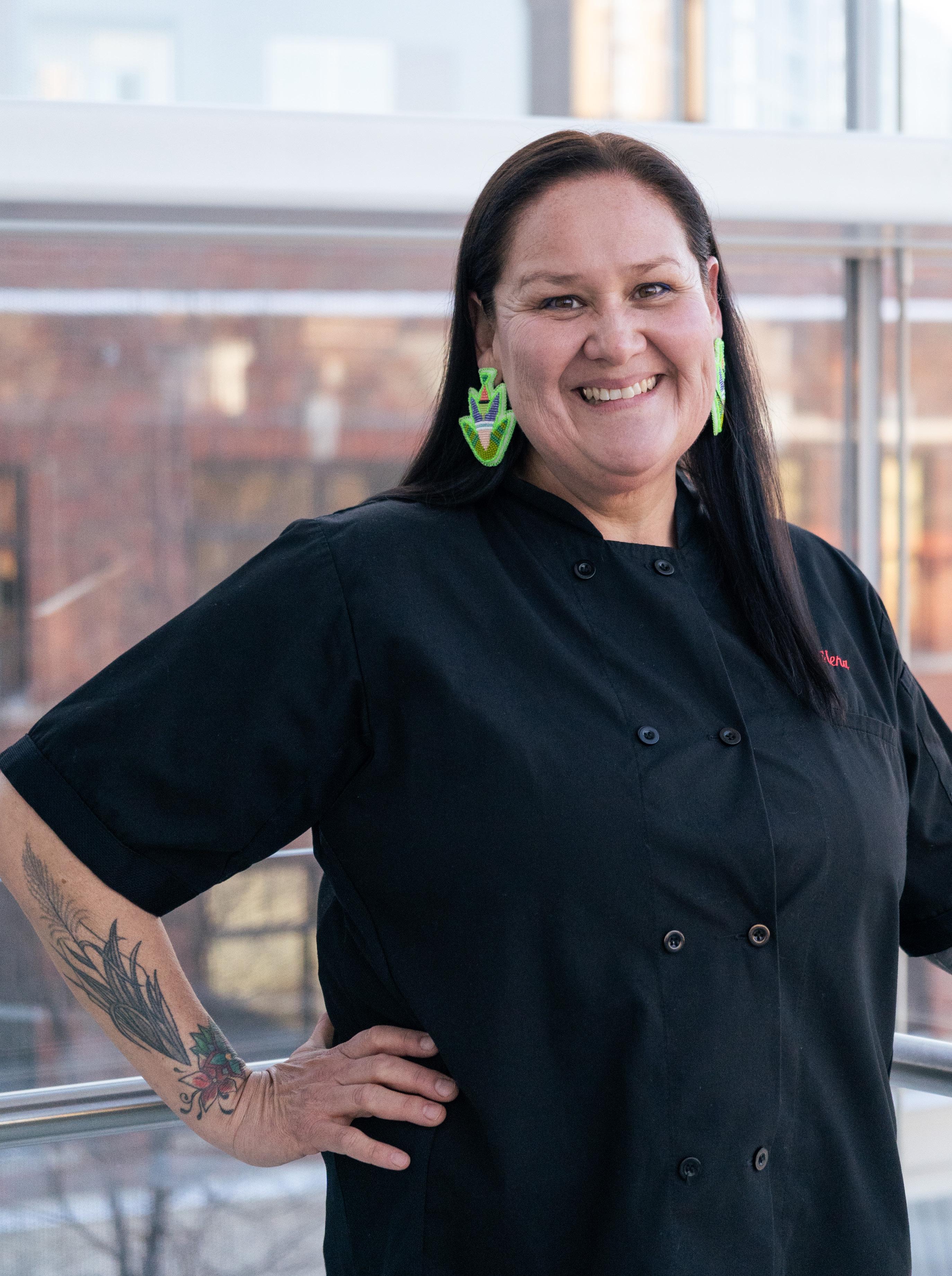
Chef Elena Terry is one of the leading culinary figures in Wisconsin. A chef, an advocate, a Seed Keeper, an educator, an artist, a founder, and more, Elean Terry’s many hats only hint at her impactful presence in Wisconsin.
Her mission to uplift Wisconsin First Nations communities, while protecting and celebrating her Ho-Chunk heritage, makes Chef Terry a source of inspiration nationwide and an embodiment of the Wisconsin Idea.
“[Cooking] is what I love. This is where I’m cared for. I understand the kitchen,” says Elena.
Boasting an accomplished career, with experience in commercial kitchens, traditional open-fire cooking,
cultural advocacy, and even television appearances, Chef Terry is an expert on a diverse array of cuisine.
Before becoming a chef, Elena also served as a tribal legislator, where she recognized the dire needs of her community that were so often overlooked. Alcoholism and substance abuse greatly impacted so many young lives in the Ho-Chunk tribe. “There was like one long funeral for months,” says Elena.
After experiencing the challenges of political life, Elena soon realized it was not where she could best enact change. While working three restaurant jobs, she found her true calling. She remembers the physical toll and long hours, but it was in the kitchen where she found her place.
“There was no chaos there for me. It helped me heal from everything that I had to go through as a young woman, as a
survivor of domestic violence, as a single mother,” says Elena. “I [couldn’t] make the transformation in policy that I thought I could, but I can show up, and I can share a meal.”
“I’m grateful to have a tribe”
“...and to have a community that cares for me the way they do.”
Some of the earliest memories of cooking Chef Terry recalls are with her family and community.
“Age three, I can remember being outside on the open fire with my great grandma and my grandmothers, and cooking. From a very young age, I was taught how to have good feelings in the kitchen, to honor that space,” says Elena.
As a child, Chef Terry split her time between Chicagoland and Wisconsin Dells, centered around the ancestral lands of the Ho-Chunk.
“We were raised very traditionally in HoChunk. It was always a very strong part of my life,” says Elena.
Spending time in the city also exposed Elena to a wide range of perspectives and experiences. It also showed her the value of a close community that looks out for and cares for one another.
Chef Terry recalled an episode of her childhood when she and her brother tagged along with her father for work in an orchestra at Chicago’s Grant Park.
“[My father] would work all day at the bandshell and other musicians would look out for us. My dad played the bass, so they called him Mingus.” (After the jazz bassist Charles Mingus) “And they’d be like, ‘there’s Mingus’ kids,’” says Elena. “I was exposed to so many different arts and experiences and culture, and accepted in those spaces.”
Being part Irish, along with her Ho-Chunk ancestry, Chef Terry has learned from and celebrates numerous cultural influences. These connections and the memories associated with them also inform Elena’s early connections with cooking.
“I was blessed to have this Old Country grandmother on my father’s side; she came from England and Ireland, and had these incredible Old Country techniques that she taught me. And my stepfather’s mother was from Birmingham and was this renowned Southern cook. So I was able to learn from her as well,” says Elena. “It was always a part of my life where I felt supported and cared for.”
These early experiences of cooking and community continued to shape Elena’s philosophy of food.
“It took me on a journey of healing.”
Seeing the negative effects of alcoholism, substance abuse, and trauma persist in her Ho-Chunk community, Chef Terry sought action in the form of a culinary mentorship program known as Wild Bearies. The organization operates around the idea of food healing.
“We can’t live without food, right? If we don’t have a relationship with our food, it just is there. We have to honor it. We have to acknowledge that there are medicinal properties and nutritional properties to our food, and we are consuming it for a purpose,” says Elena.
The process of healing and building comes in a number of different forms. One way in which healing occurs is through the conduit of hosting events for tribal communities.
The ingredients that Wild Bearies sources are selected with purpose and a community focus. Chef Terry recalled a partner of hers in Minnesota, who grows wild rice.
“It comes from me building a relationship with my friend Jack from northern Minnesota, who is still going out and hand harvesting and traditionally parching his wild rice,” explains Elena. “And I now have a friendship with Jack, and I’ve learned these processes because of that. And he has shown up to support Wild Bearies and has shared his knowledge.”
“And I think because of that, the advocacy started happening because I can’t support Jack if you don’t know he exists,” says Elena. “You need to know why I’m charging this much for the wild rice, because I’m willing to pay him whatever he needs me to pay. If it’s $50 a pound, that’s what I’m going to pay him because that work is so important that it continues.”
Agricultural advocacy has been one of the greatest successes of Wild Bearies. As a Seed Keeping organization, Wild Bearies works with seed vaults and collections, intended for scientific research, to reconnect indigenous communities with their ancestral foods and culinary practices.
Chef Terry is aided by her daughter, a master’s student in agroecology at UWMadison, who contributes to Wild Bearies through their acquisition of indigenous seeds and the support of holistic food practices, according to Chef Terry.
Overall, the Wild Bearies philosophy is to support community through food. It’s about giving growers the ability to pursue a livelihood in growing indigenous crops, and fostering a space to excel when they have nowhere else to turn, and spreading these benefits of community across the state and the country.
“[Wild Bearies] started building this incredible community of people who weren’t ashamed or shy, who all were
contributing in these incredible ways. And we’re able to say, yeah, ‘I’m a wild Beary’ unapologetically,” says Elena.
“Everything I’ve done is to bring light home.”
Being a keystone member for a community comes with responsibility and purpose. For Chef Terry, whose career has brought her to television appearances on Top Chef, BBQ Brawl, and Chopped, along with awards and partnerships with organizations like the Smithsonian and the James Beard Foundation, remembering her roots is top of mind.
“I have serious imposter syndrome sometimes, and so culturally shifting that and being able to say, I can be humble, and I don’t have to mute, I shine,” is a valuable investment Elena has made in herself, she says.
Even to the heights she has soared, including with national and international organizations, like the United Nations Food and Agriculture Organization, Chef Terry keeps her focus local.
“I graduated from [Madison Area Technical College (MATC)], culinary school, and I still go home to that kitchen; it’s familiar, and I cook there occasionally, and sometimes I just stop in to check on the school, [and] the kids because I’m on the culinary advisory board,” says Elena.
“But I am there because I’m invested, and it transformed me. I was a nontraditional student, I think I was 40 or something when I enrolled, and it was really intimidating, but I did it, and I did it because it mattered to me.”
What also matters to Elena is supporting and showcasing the incredible work of indigenous communities. Whether it is with cuisine, agriculture, or art, Chef Terry’s work lifts up voices.
“Everything I’ve done is to bring light home. For generations and generations, my family has called [Dejope] home, and that’s where my heart is. I didn’t ever want to compromise being in the space where I can go to ceremony, where I need to go to ceremony, and participate in these tribal things that make Elena, Elena,” says Terry.
She attributes finding strength through the mentorship and support of other indigenous women. After all, a community is created together.
“It has been a very difficult journey because there aren’t a lot of people who have been indigenous, especially indigenous women doing this work,” says Elena. “There’s Loretta Barrett Oden, and she had a cafe in Santa Fe. She has been a shining light for me. Even just to say ‘girl, get yourself up and brush off, keep moving forward.’ Sometimes that’s what you need to hear because it is a difficult industry.”
Through the investments she has made in herself and in her community, Chef Terry has pushed the bounds of cuisine in Wisconsin. New opportunities, like the upcoming opening of her restaurant in the Madison Museum of Contemporary Art (MMoCA), have repositioned Elena’s role as a chef.
“I’m an artist.”
Last year, Chef Terry was awarded the Taproot Fellowship from the Alliance for California Traditional Arts. This award recognizes the efforts made by chefs in the “reclamation and continuation” of traditional culinary arts.
This program positions chefs not only as professionals who cook, but also as sources of creative expression and cultural preservation; Taproot chefs are artists.
For Chef Terry, the Taproot Fellowship validated something she had not considered before.
“I never considered myself as a knowledge keeper, or [a culinary artist], so receiving that fellowship, I was like, ‘I’m an artist, hear me roar’,” says Elena.
In her collaboration with MMoCA, Chef Terry has been able to explore her creative expression with the utmost freedom.
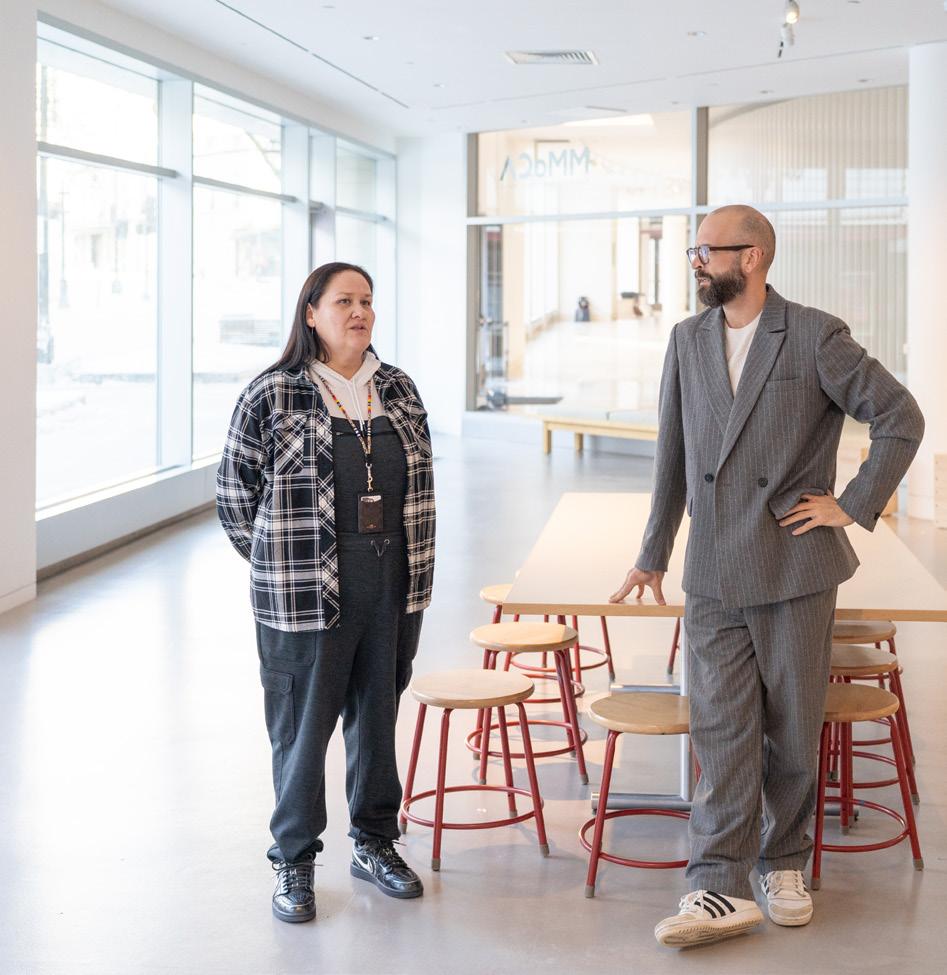
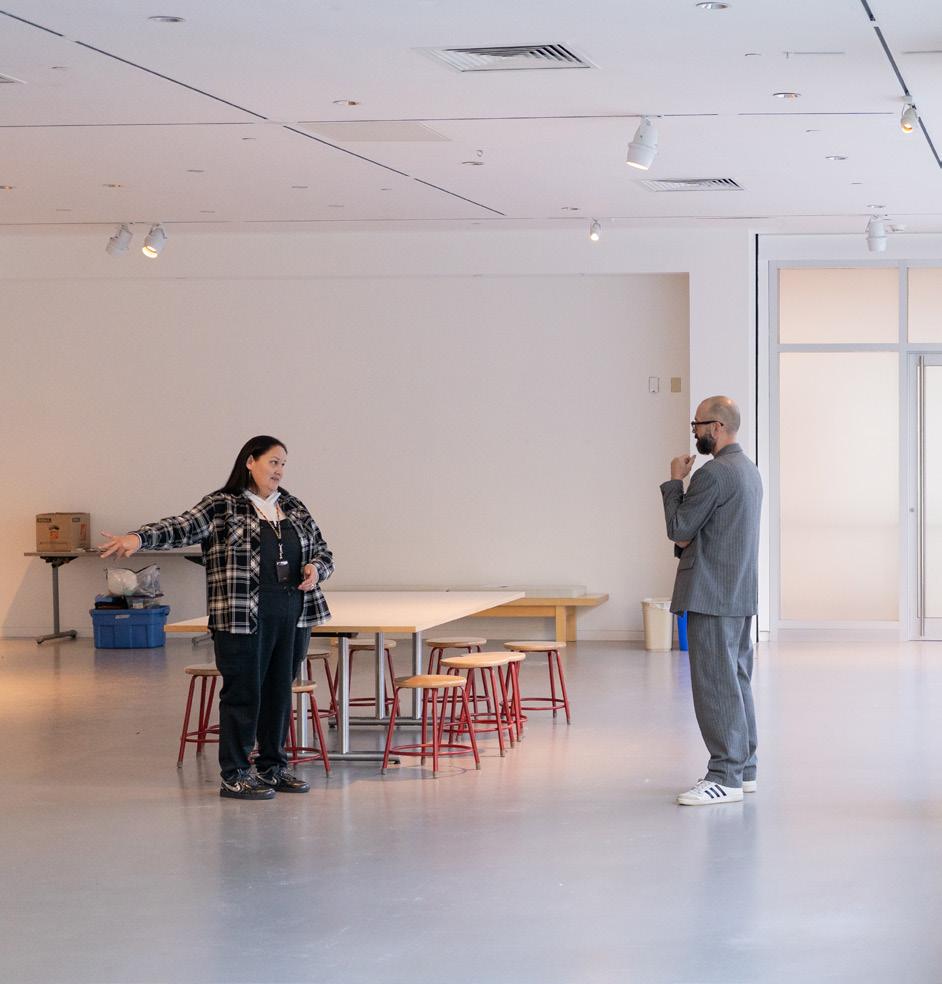
Elena Terry, Executive Chef of MMoCA’s new restaurant Tall Grass, speaks with MMoCA’s Gabriele Haberland Director, Paul Baker Prindle in the space that will become Tall Grass.
MMoCA
“That is the beauty of what I do. I don’t give myself any restrictions on what I’m creating. When I showed up at the [MMoCA] at the first board meeting, they were like, ‘you need to recognize that you are an artist,’” says Elena. “I really
need to approach this in that way and acknowledge where I can focus on this being living, active art.”
This philosophy of cuisine as an art form drives Chef Terry’s innovation, and it is something not even she hears very often.
“If I have an idea and I believe I can execute it, I don’t have anybody saying no. I have people saying, ‘This work is important, what you do is beautiful.’ And those are things that I have never heard professionally in this industry,” says Elena.
It is through Chef Terry’s upcoming restaurant, Tall Grass, which will be located in MMoCA, that the ultimate intersection of creativity and community will collide.
traditional name for the area of four lakes given by indigenous inhabitants, is “a dream come true” for Elena.
“I’ve been waiting for it, I’ve been waiting for the opportunity, the understanding, and the support of somebody, of an organization, or a space or a tribe. For it to be in the Capitol area in Dejope, at a museum of art… it’s just mind-blowing still,” says Elena.
Tall Grass will be more than just a restaurant. According to Chef Terry, there will be opportunities to use the space to showcase other chefs, artists, and mentors. The space of the museum, to host visual exhibitions, lectures, and events, will integrate Tall Grass deeper into the local community.
“Let’s build a beautiful community here.”
The significance of a local, indigenous-run restaurant is something not lost on Chef Terry. It’s an opportunity to bring her work to the largest audience yet.
“Tall Grass gives me the opportunity to continue supporting my community to still be a Wild Beary, to reach a larger audience, and to provide more of that experience to a greater community like Dejope,” says Elena.
The location of Tall Grass, in Dejope, the
Chef Terry recalled a recent Muse event with students at MMoCA, where, as the museum describes it, “art, music, and mixology converge.”
“The Muse event was the first time that I really saw a lot of students in one place at one time in the museum. It was such a completely different vibe. I loved it,” says Elena.
Events like this, to build community, including the UW community, over food are something Tall Grass seeks to serve.
As she sifts through the endless recipes that come to her mind every day, Chef Terry prepares an innovative dining experience. Tall Grass will feature
traditional indigenous ingredients and techniques, and combine them with a contemporary flair.
“I just cannot wait to start creating in that space. That will give me the opportunity to introduce our food, [it will] give me a chance to create it and provide it for the community,” says Chef Terry. “Let’s build a beautiful community here, that’s what I’ve been waiting for.”
Chef Terry is currently working to bring the Tall Grass restaurant to MMoCA by the end of Summer 2026. In the meantime, Tall Grass is looking to meet the local community at events like the evening sidewalk sales and Art Fair on the Square.
In June, Tall Grass will start hosting private rooftop events at MMoCA, while Chef Terry and her team continue to brainstorm opportunities for culinary connections in the Capitol District.
Wild Bearies also remains active in supporting the local indigenous community. Along with a handful of public events throughout the year, readers can connect with Wild Bearies at the MATC Powwow at the end of April.
To keep up with Tall Grass and Chef Terry’s other ventures, her TikTok account @chefelenaterry documents the progress of the restaurant’s construction. In a recent video, Elena shares the delivery of kitchen equipment for the MMoCA restaurant.
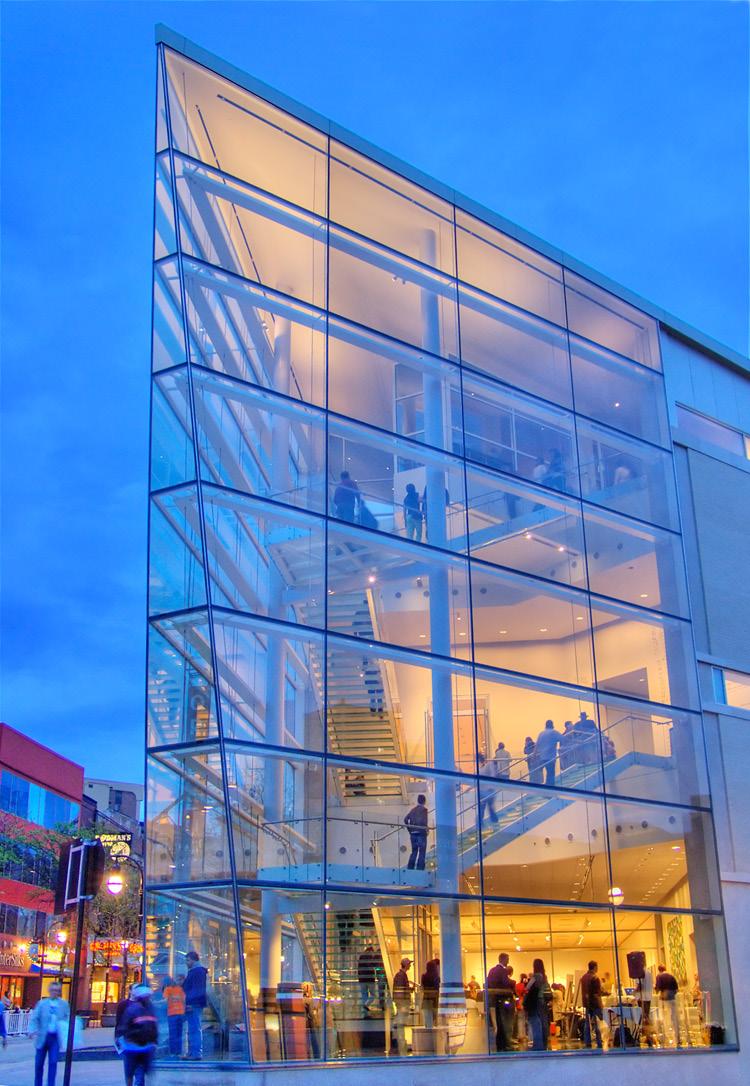
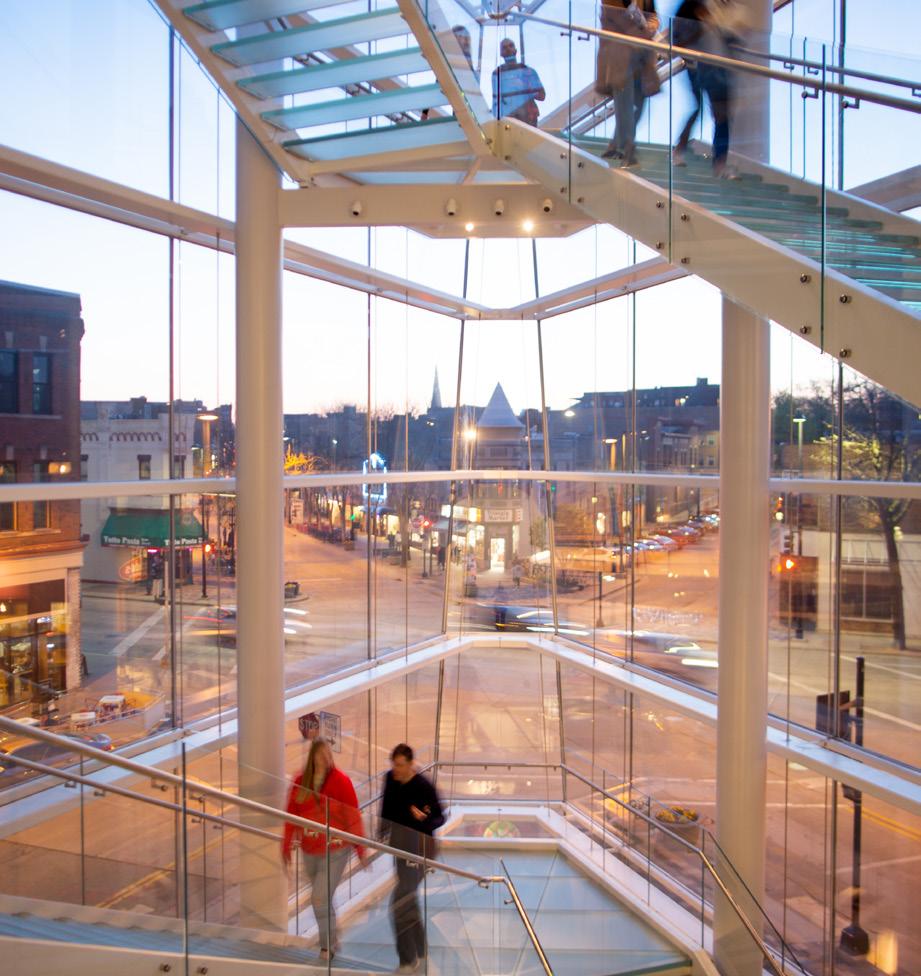
The Madison Museum of Contemporary Art is located at State and Johnson St. Their current space opened in 2006 and features over 6,000 art objects in its permanent collection. MMoCA will soon host the restaurant, Tall Grass in 2026.
MMoCA
Food & Community
By Emmy Parks
Madison’s Collaborative Food Scene
One of the first words that comes to mind when thinking about the defining features of the Midwest is community. This is apparent in the “ope, sorry” when you accidentally run into someone, the wave to people in cars or pedestrians on the sidewalk when deciding who gets to cross the road, and the leaving a function at least an hour after you said your goodbyes because you keep talking anyway.
That same sense of connection extends into the food scene. In Madison, food is not just about individual restaurants or isolated experiences – it’s about relationships. Chefs collaborate with one another and businesses support neighboring establishments. The result is a food culture that feels interconnected rather than competitive.
Local Sourcing and Farm-to-Table Connections
A major pillar of Madison’s food community is its emphasis on supporting local producers. Many restaurants source ingredients from nearby farms and regional producers, reinforcing both quality and community ties. Common local ingredients include greens and mushrooms from Vitruvian Farms, cheddar from Hook’s Cheese Company, bacon from Nueske’s smoked meats, and locally produced honey and maple syrup.
These ingredients don’t just appear on menus – they represent ongoing relationships between chefs and farmers.
Mint Mark’s Superette, a small grocery-style market connected to the East Side restaurant, exemplifies this connection. For the second year in a row, they are partnering with Vitruvian Farms to host a Community Supported Agriculture (CSA) pickup location. Operating Tuesdays from 3:00 p.m.–9:00 p.m., this program allows customers to receive weekly baskets of fresh, seasonal produce throughout the growing season, directly supporting local agriculture while strengthening the farm-to-table pipeline.
in the Midwest
Collaborative Culinary Events and Chef Partnerships
Collaboration among chefs is another defining feature of Madison’s food scene. L’etoile, located on the Capitol Square, frequently hosts events that bring together prominent chefs from across the state. In one such event, Milwaukee-based chefs — including Dane Baldwin (The Diplomat), Justin Aprahamian (Sanford), Milunka Radicevic (Three Brothers), and Adam Siegel (Lupi & Iris) — will each contribute a course to a curated six-course meal.
Events like this highlight not only individual talent but also a shared culinary identity across regions. Rather than operating in isolation, chefs actively participate in building a broader Midwest food network through shared experiences and cross-restaurant collaboration.
Business-to-Business and Cross-Brand Partnerships
Beyond restaurants and chefs, local businesses often collaborate in ways that strengthen the ecosystem as a whole.
The Baked Lab, a dessert-focused bakery in Madison’s Atwood neighborhood, partners with Nordskov Coffee to pair its baked goods with thoughtfully sourced coffee offerings. Similarly, Stellies, a local ice cream store, collaborates with EBNS, carrying their products in-store and co-hosting events that blend retail, food, and community engagement.
Barrett’s Bagels also participates in this network, as they work toward a designated storefront through pop-ups at venues like Pasture and Plenty, which itself emphasizes a farm-to-table system. These partnerships help circulate resources, increase visibility for small producers, and create opportunities for customers to experience multiple local brands in a single setting.
Pop-Ups, Markets, and Shared Spaces
Pop-up events and shared vendor spaces are another important part of Madison’s food culture. These formats allow businesses to test concepts, reach new audiences, and collaborate without the overhead costs of a permanent location.
Other Pop-Ups Include, sandwich pop-ups at Graze, Madison Sourdough bread at Ali-
mentari, Greenbush Bakery, Stella’s spicy cheesy bread, and Fortune Favors nuts at local grocery and specialty stores
Events and partnerships like these create a distribution network that keeps local products circulating throughout the city, reinforcing the visibility of small businesses.
Community Events and Food-Driven Gatherings
Madison’s food community is also shaped by events that bring people together around shared experiences. Spaces like Garver Feed Mill host seasonal markets such as the winter farmers market, while events like Sauced Market feature vendors including CinnCity Smash and Ice Cream Social.
Night markets and Saturday farmers markets along state street and around the capitol square further extend this concept by creating lively, vendor-driven environments where attendees can explore a variety of foods in one place. Fitness and lifestyle spaces also participate in community-building; for example, Barre3, a fitness studio in Middleton, supported their anniversary celebration with local businesses like Miggy’s, Forage, Moka Coffee, and Joia Food Group.
Even corporate environments contribute to this ecosystem. Companies like Epic and Promega incorporate local food into their cafeterias, often sourcing ingredients from producers such as Vitruvian Farms, further integrating local agriculture into daily routines.
Social Media and Mutual Support Among Businesses
Another visible layer of community support exists online. Madison-area businesses frequently promote one another through social media, amplifying openings, events, and collaborations.
On the East Side, businesses such as The Baked Lab, Level 5 Donuts, and Bar Corallini regularly highlight each other’s milestones. This extends beyond neighborhood boundaries as Madison businesses often celebrate openings in nearby communities, showing a willingness to support growth across the broader region.
On the West Side, Bloom Bake Shop and Cafe Domestique regularly post pictures featuring one another’s respective goods, usually showcasing a seasonal pastry and specialty latte.
This digital cross-promotion reinforces the idea that success in the local food scene is often shared rather than siloed.
Large-Scale Events and Citywide Food Culture
At a larger scale, Madison’s food community comes together through citywide events that blend cuisine, culture, and social gathering.
On April 26th, 2026, the Concerts & Cuisine event at the Madison Marriott West, in collaboration with the Wisconsin Chamber Orchestra, showcased signature dishes from some of the area’s top chefs. This event offered a preview of the broader atmosphere surrounding the annual Concerts on the Square series.
Concerts on the Square itself is a defining summer tradition, drawing thousands of attendees to the Capitol lawn. The experience is as much about food and community as it is about music. Attendees bring picnic setups – blankets, lawn chairs, and even small folding tables – while surrounding food trucks and nearby restaurants serve additional options. People gather with friends, meet new acquaintances, and reconnect with familiar faces in a relaxed, communal setting.
The season ultimately culminates in the Taste of Madison, an event that brings together a wide array of local food vendors in a single, celebratory environment, a showcase and a snapshot of the city’s culinary identity. It is the perfect start to the beginning of the fall semester for college students in the area.
Final Thoughts
Madison’s food scene reflects a broader Midwestern value: community as infrastructure. Whether through local sourcing, chef collaborations, pop-up markets, or large-scale public events, food becomes a medium through which relationships are built and maintained.
In this environment, restaurants and businesses are not just individual entities, they are part of a larger, interconnected ecosystem where support flows in multiple directions. That shared foundation is what allows the scene to grow while still maintaining the familiarity and connection that define it.
Photo by Jeff Miller / UvW-Madison
A Review
By James O’Toole
No matter how hard I try or how strongly my responsibilities urge me, I’m not a morning person. If I had my way, I’d never take a class earlier than 11:00 a.m., and I’d stay up to the early morning hours every day. When I do find myself up and ready in the morning, which is more often than I’d like, an obligatory coffee is usually involved.
This is to say, it usually takes some convincing to get me going in the morning.
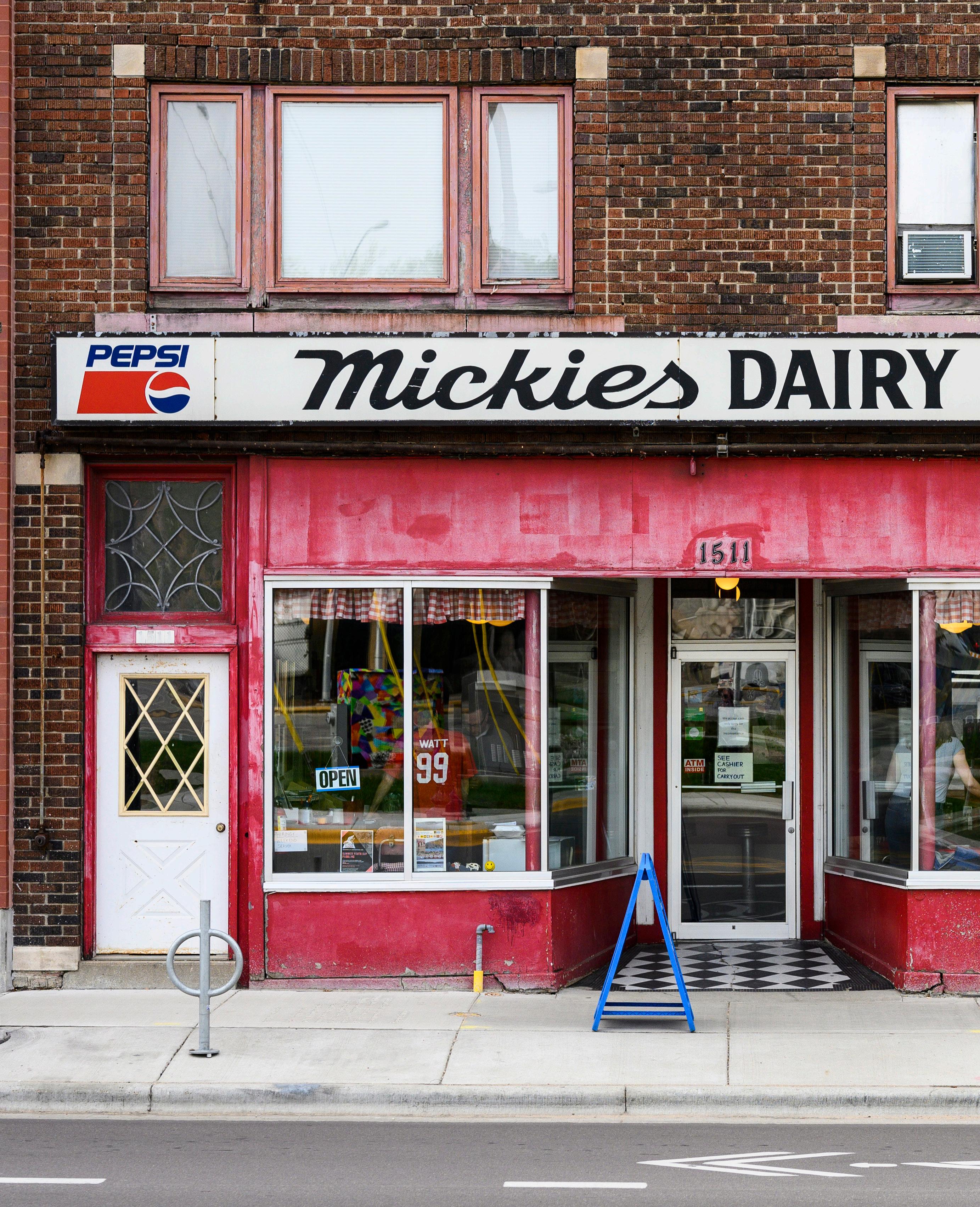
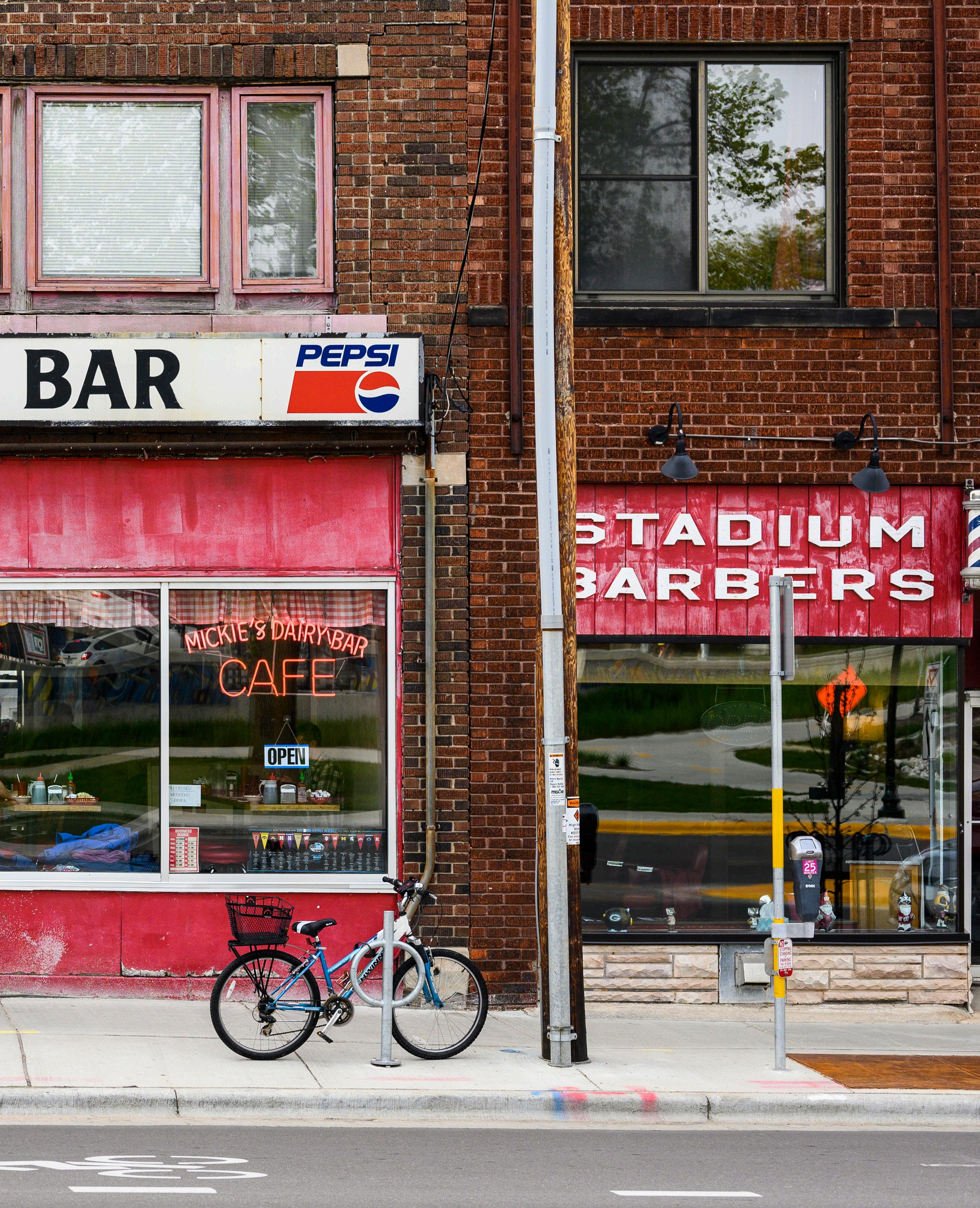
For Mickie’s, however, things are different. This establishment – more of an institution really – has served breakfast in Madison for 79 years.
The dining room is decked out in Wisconsin cardinal and white, with UW’s own Bucky Badger and lesserknown gal pal, Becky.
cheeseburgers. It would be hard to convince anyone to sell you a burger for 30 cents these days, however.
I visited Mickie’s for the first time with friends a couple of weeks ago on a Saturday morning. Like every weekend morning, there was a line out the door; something to be expected. Even with a group of six, we were seated quickly, and our coffees were ready not long after.
As tempting as everything on the menu was (except the liver and onions), I decided on Mickie’s signature dish, the Scrambler.
At their Nighthawks-esque counter, customers order brunch classics: pancakes, omelets, sandwiches, and of course, endless coffee.
To the right of the Badgers is a vintage menu of the restaurant, a testament to how much things have and haven’t changed in the last eight decades. All the staples are there, from pancakes and coffee, to
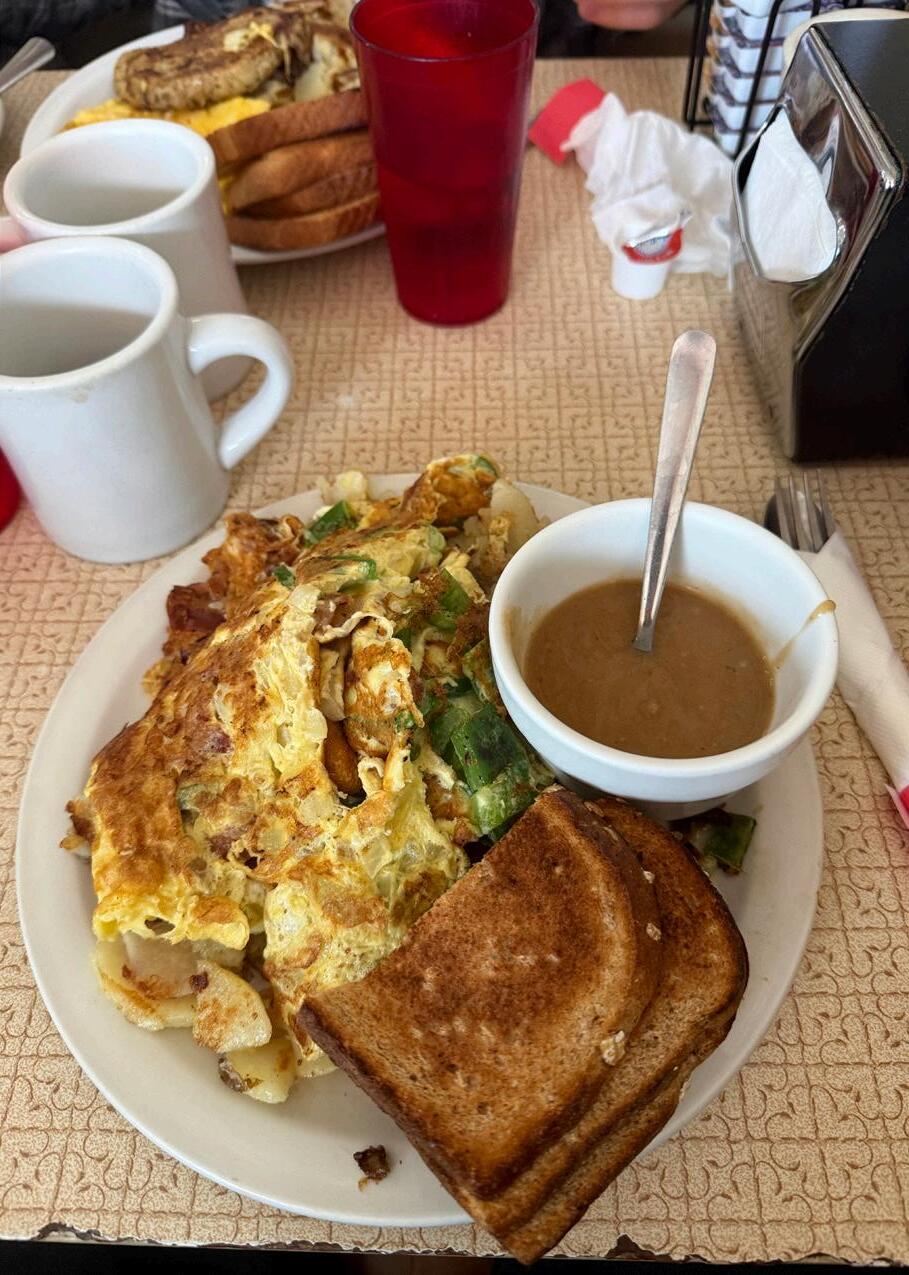
Three eggs scrambled, yanks (fried potatoes), your choice of meat, vegetables, and toast, topped with gravy and cheese, and that might be the perfect breakfast plate.
A view of my scrambler as it was served to me. James O’Toole
I was impressed with the speed and quality of service we received. Even with a full house and a line out the door, our server was attentive and welcoming. After a mixup with somebody’s order, our server got it quickly remade and even took our coffees off the bill, something we certainly didn’t expect her to do.
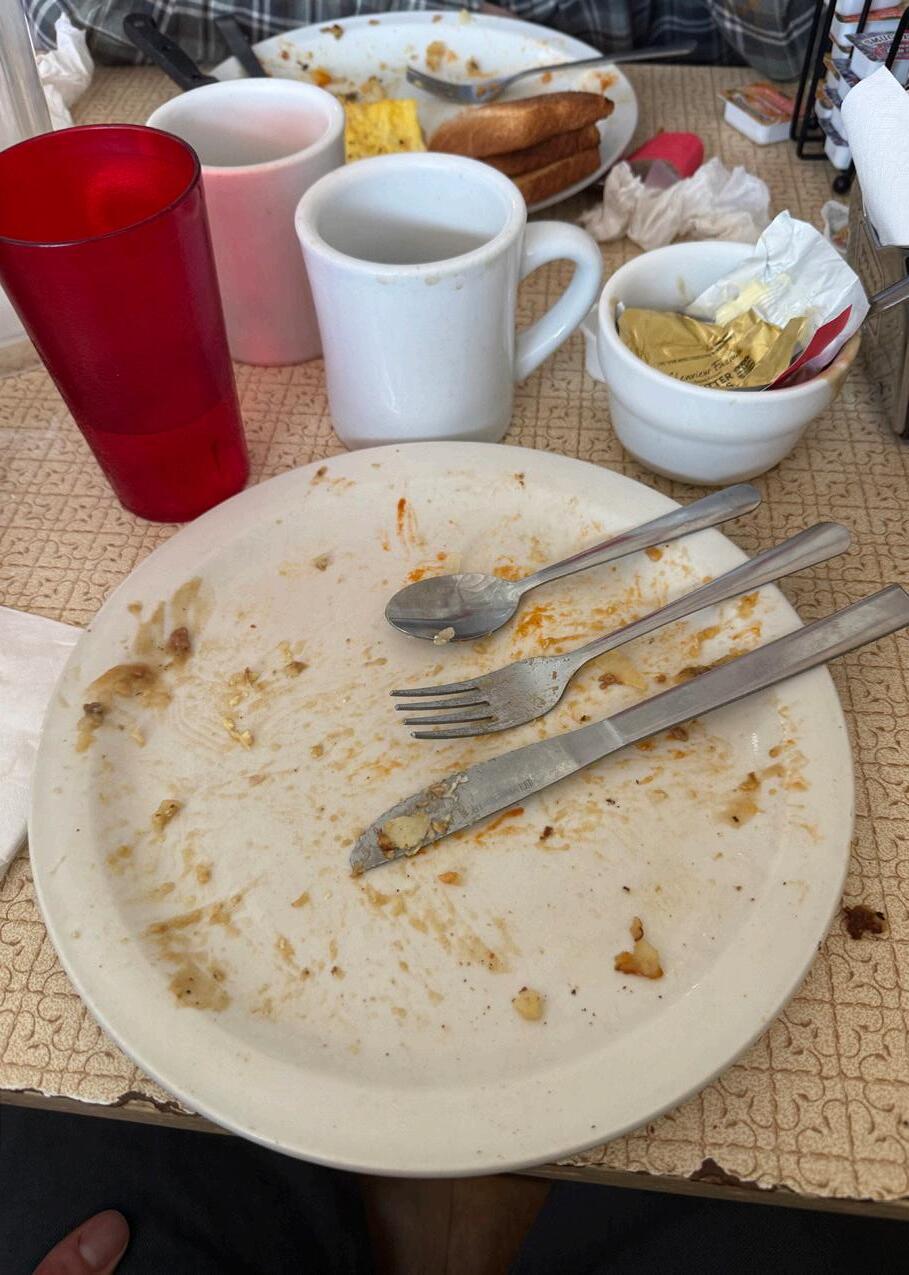
My scrambler, with bacon, onion, peppers, and rye bread, was just what I needed on an early weekend morning. I probably should have taken some leftovers home, but it was too good to leave on the plate.
Mickie’s Dairy Bar: A Review
food you get for the price you pay is one of the best in town. Just remember to bring cash!
In a city with all the latest chain restaurants
good seem like a rare combination in a restaurant these days.
What I enjoy most about places like Mickie’s, more than even the food, is what it offers and what it represents. The community the restaurant creates as a place where I enjoy time with my friends is one of the most valuable things a meal has to offer.
One of the best parts of the Mickie’s experience is the value. The scramblers, a full plate of breakfast, start at $13. Omelets are about the same, and pancakes cost $10. For cost-sensitive college students, the amount of
and trendy new high rises under construction everywhere, it can seem like Mickie’s is a relic… but really, it’s an asset. The welcoming service, authentic atmosphere, and food that is simply
If you haven’t yet had the chance, a trip to Mickie’s on Monroe St. should be your next stop.
You can visit Mickie’s at 1511 Monroe St, just across from Camp Randall and the UW Fieldhouse. They’re open from 7:00 a.m. to 2:00 p.m. on Wednesday, Thursday, and Sunday, and from 6:00 a.m. to 2:00 p.m. on Friday and Saturday. Expect a line.
A view of my scrambler at the end of my meal. James O’Toole
More than the Famous Cheesy Bread: Stella’s Bakery
By Jessie Polson
Jeff Miller/UW-Madison
Ruthie Hauge
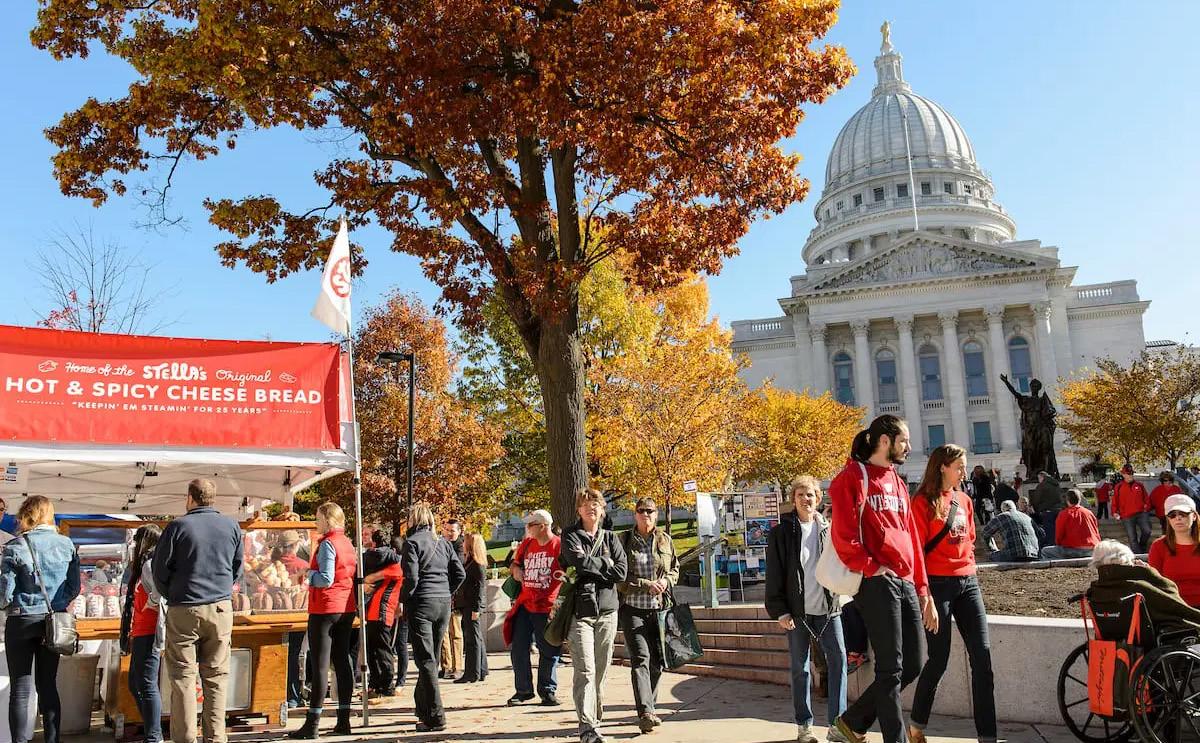
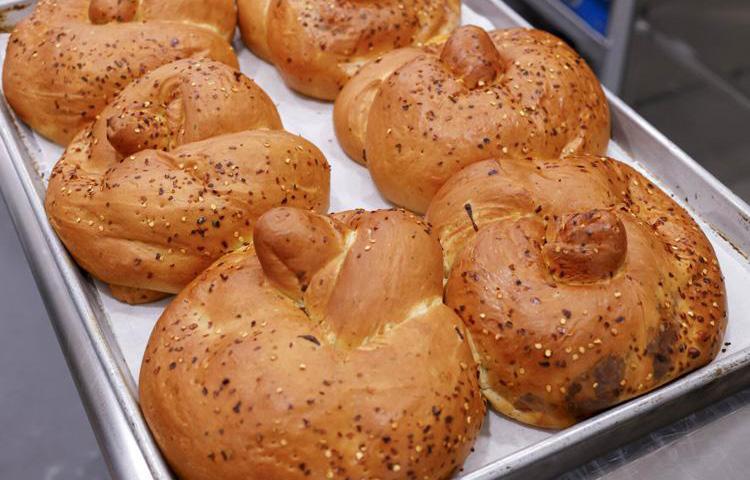
One of my favorite establishments here in Madison is Stella’s Bakery. If you’ve ever been to the Dane County Farmers’ Market, you’ve probably heard of the famous cheesy bread or spinach and cheese empanadas- and let me tell you, they are absolutely worth the hype (and the line).
But Stella’s is more than just a bakery. It has become a meaningful part of the experience and memories for many UW-Madison students and members of the Madison community. There’s something about walking around the Capitol on a Saturday morning, cheesy bread in hand, that just feels like Madison.
Jennifer Patrello, owner of Stella’s Bakery, has seen the impact of the University of WisconsinMadison firsthand.
She says, “I believe the university really drives that because the University is bringing so many people from all over the country, even the world,” she explains. “When they come to the farmers’ market, whether it’s parents visiting their kids or students attending, they really enjoy our bread. And then I believe that drives our shipping, especially to places like New York.”
Because the university brings in new students every year, Stella’s is constantly being introduced to new customers. Students not only support the business in person, but also help expand its reach beyond Madison through word-of-mouth and shipping demand. As Patrello puts it, “The Dane County Farmers’ Market on Saturdays is our largest revenue stream for our business.”
That strong foundation proved especially important during the COVID-19 pandemic. When the market shut down, Stella’s had to adapt
quickly by expanding into shipping and finding new ways to generate sales. The loyal customer base they built through the farmers’ market ultimately helped sustain the business during an uncertain time.
At its core, Stella’s is a family-run business, founded by Patrello’s parents. What sets it apart is not just its popularity, but its story. Influenced by her mother’s Panamanian heritage, the bakery incorporates unique, family-inspired recipes (like their empanadas) that distinguish it from other vendors. Combined with a commitment to freshness and a welcoming presence, Stella’s has become a true staple of the market.
Now, Stella’s is entering a new chapter. With the opening of a new location near campus, their baked goods are no longer limited to Saturday mornings at the market- they’re available to students year-round.
For many students, this addition is a big deal. UW student Tara Behnam shares, “I was so happy to hear that Stella’s was going to have a physical location close to campus. Getting Stella’s at the farmers market was always something I looked forward to every Saturday. Now that it’s easily accessible all year round is just amazing. I especially enjoy specialty items like sandwiches and soups.”
Ultimately, Stella’s Bakery represents more than just great food — it reflects the connection between local businesses, students, and the broader Madison community. In many ways, it embodies the spirit of the Wisconsin Idea: something rooted locally, but with an impact that extends far beyond. Whether it’s a Saturday morning tradition or a quick stop between classes, Stella’s continues to bring people together- one piece of cheesy bread at a time!
Food for Thought: Feeding change, one plate at a time
By James O’Toole
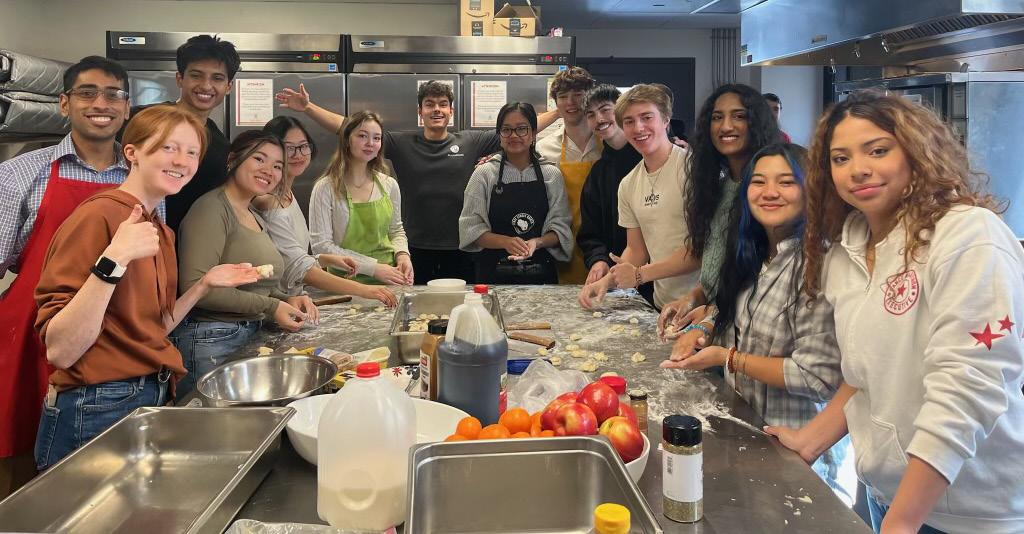
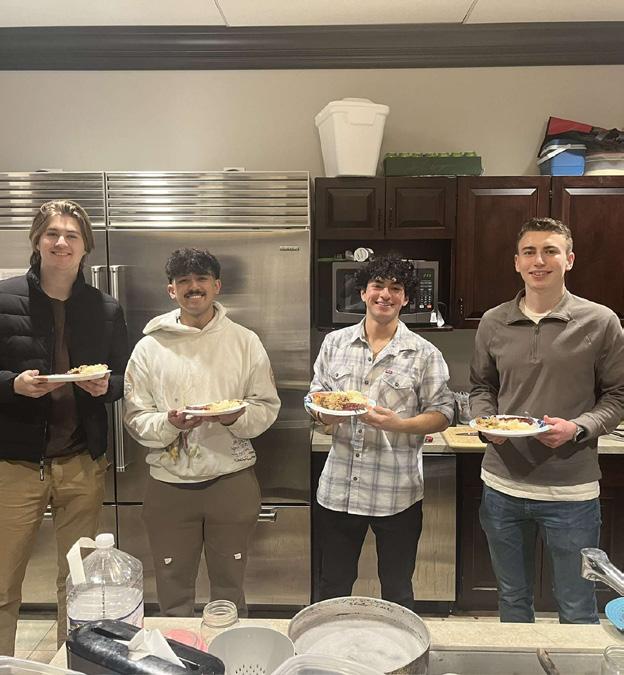
Some students might be overwhelmed with radical change. They might feel they can’t make an impact on their own or that their goal is too lofty to be realistic. Fortunately, that’s not how everyone thinks. The students who make up Food for Thought seek to change the stigmas surrounding homelessness as they build a community that includes the excluded.
Change is something Madison
is increasingly familiar with. Recent estimates project Dane County’s population will balloon to nearly 900,000 residents by 2050, a 58% jump from the 2020 census count of 560,000.
Even with efforts at the city and county levels to increase housing supply, rents in Madison have already increased by 47% in the last five years. All of these factors: population growth, housing supply, affordability, and
more, like cost of living and access to essential resources are related. Importantly, they all contribute to the quality of community for Madisonians.
One side effect of lacking resources is the inability for some individuals to access stable housing. With prices rising and fewer homes available, this is an issue that Madison will continue to face.
The tragedy is that to many, those experiencing homelessness are invisible.
Volunteers prepare tortellini pasta. Food for Thought
They often do not have access to the broader civic community to find support. This serves as the basis of Food for Thought’s mission.
Like the name suggests, the organization has a “dual mission of not only providing food but also companionship to those without shelter.”
Members prepare and distribute meals to people experiencing homelessness. With the food as a launching point for conversation, Food for Thought members then seek to connect over the meal.
Food for Thought co-founder, Jack Kirmeier explains, “we are founded on the idea that the real poverty is loneliness. We want to rebuild community.”
“Our founder in spirit was Paul Selberg. Before [Food for Thought] was an organization, he would make meals for the homeless and then go out and sit with them and eat with them,” Jack says.
“And then he figured he might as well try to scale it up. To get more people involved.”
Since then, Food for Thought has grown to more than 150 volunteers. These members, meeting twice a week, prepare more than 300 meals each month.
A day-in-the-life for Food for
Food for Thought comprises a team of more than 150 volunteers. They share over 200 meals each month. Food for Thought
Thought consists of cooking and connecting. A group of about 15-20 students prepare meals together. This is a great opportunity for Badgers to connect over the organization’s purpose.
Food for Thought sources their food from various locations. Volunteers and members of the public are able to donate money which is then used to purchase ingredients. They are also working to partner with organizations like University Dining to source surplus food from dining halls.
The quality of food is important to Food for Thought. “Those without shelter are often given high carbohydrate/sugar filled foods that don’t truly nourish their body. We are committed to serving delicious, nutrient dense meals that provide good sources of protein, healthy
fats, fiber, vitamins and minerals,” according to the Food for Thought website.
When the cooking is finished, members take time to reflect and acknowledge their “obligation to serve the underrepresented.” After that, groups of 2-3 members share their meals to spread compassion and strengthen community.
“We act as if there’s not some kind of strange barrier; it’s refusing to accept that that’s how the world is,” Jack says. “Treating people with humanity” is the Food for Thought perspective.
Food for Thought connects with individuals across Madison, from State Street to area shelters. They have also expanded to include Support Teams, which assist individuals in the acquisition of a driver’s license, a job, or housing.
“Food is like a social catalyst,” Jack says. “Maybe it’s just a subconscious thing. Or maybe it’s just convenience, but it creates a warm environment that grounds the conversation.”
Even on this local level, Food for Thought seeks to enact major change, especially surrounding the perceptions and exclusion toward those experiencing homelessness.
Though a nourishing meal and a meaningful conversation, the hope is that people can more feasibly find support.
Down the line, the hope is for individual connections to result in large-scale impacts.
“I like to think our idea is bigger than just Wisconsin,” Jack says.
You can read more about Food for Thought at their website or stay up to date with them on Instagram @foodforthoughtmadison.
Membership is open to all students interested in making a positive impact and building community.
Food for Thought
Wisconsin Food Staples
By James O’ Toole Illustrated by Everett Smith
Wisconsin’s culinary traditions are defined by a generationslong blend of native and immigrant delicacies and customs to create deliciousness that can be found nowhere else.
For thousands of years, nations like the Ho-Chunk, Potawotami, and Menominee enjoyed the lands of forests and lakes to find their food. Wild rice, corn, beans, cranberries, and bison are just some of the ingredients that informed native cuisines. European settlers to Wisconsin, significantly those from Germany and Scandinavia brought staples of their own, most notably beer, sausages, and cheese.
Let’s explore some of Wisconsin’s classic food and drink staples.
It wouldn’t be a list of Wisconsin’s food staples without mentioning at least one of the countless dairy products produced in the state. Cheese curds are a Wisconsin delicacy — small pieces of curdled milk that can be eaten alone or fried with breading to make them Wisconsin-style. Curds are characterized by their signature squeak when they’re bitten into. A curd can lose its squeak (and much of its freshness) after only 12 hours of refrigeration. The perfect bar snack, cheese curds are one of Wisconsin’s most famous food exports, with chains like Culver’s and Dairy Queen serving them.
Almost 60% of America’s cranberry production comes from Wisconsin. That’s more than 790 million pounds each year! The small berry is known for its acidic and sweet taste, making it a common fixture in baked goods and on Thanksgiving dinner. A native plant to North America, cranberries have been a staple in diets for centuries. These days, cranberries are popular additions to scones, muffins, breads, jellies, compotes, sauces, and beverages.
Perhaps Wisconsin’s greatest national export are its brews. Historic brands like Miller, Pabst, and Schlitiz have been produced in Milwaukee and enjoyed around the country for generations. Milwaukee’s brewing culture is so strong, it has received the nickname “Brew City.” The state’s strong German heritage is largely responsible for the diverse beer culture. While the large brands remain popular, regional breweries, like New Glarus’ famous brand, Spotted Cow or 3 Sheeps Brewing out of Sheboygan are where some of the state’s best beer can be found. Wisconsinites enjoy their beer too; it’s estimated that Wisconsinites consume 634 drinks per person each year. That’s more than 36 gallons!
To complete the trifecta of true Wisconsin classics, along with beer and curds, you need a brat. Bratwurst, as they’re originally called in their homeland of Germany, are pork sausages with dozens of variations. A Wisconsin specialty is the “beer brat,” which is the practice of simmering brats in beer (often with butter and onions) before they’re grilled. A common distinction of brats in Wisconsin is “white” versus “red,” White brats are made of uncured pork, while red brats are made of a mixture of pork and beef, which are often cured or smoked. Variations like the jalapeno cheddar infused brats are also popular. If all things brats is what you’re looking for, check out Madison’s Brat Fest, hosted on Memorial Day weekend, which is the largest bratwurst festival in the world!
Like the name suggests, the old fashioned cocktail has been around for a long time. Originally devised in the early 1880s, and given its name in the 1880s, this cocktail has been popular for generations. The traditional composition of the cocktail includes whiskey, sugar, and bitters, served on the rocks with an orange slice garnish. In Wisconsin, the classic beverage is served with a twist: whiskey is substituted with brandy, creatively called a brandy old fashioned. For a true Wisconsin old fashioned, muddle a maraschino cherry with orange and add a splash of lemon lime soda. Designated the state’s official cocktail in 2023, the Wisconsin-style old fashioned is a must have at a Wisconsin pub.
Continuing the focus on meals that build community, booyah, a stew with Belgian roots is a unique Wisconsin specialty that often involves social settings. The origin of the name “booyah” is debated, but it was coined by the Walloon people, a unique subgroup of Belgian Americans who settled in Wisconsin. Cooked in special “booyah kettles,” a booyah, which can also refer to the event itself, can feed large groups of people. The stew can take multiple days and require multiple cooks to complete. There are many varieties of booyah, but the stew often begins with a bone broth, followed by a meat like beef, chicken, or pork added; sometimes all three. Vegetables like potatoes, carrots, onions, and peas are also added. Like fish frys, booyah is a common sight at VFWs, fairs, churches, and other community events in Wisconsin.
On Friday nights in Wisconsin, there’s one meal more popular than the rest. The Fish Fry is a popular social event that includes battered fish, french fries, coleslaw, sauces, and dessert, often occurring during lent. You can find fish frys all around Wisconsin, in restaurants, taverns, VFWs and churches. Being a Great Lakes state, Wisconsin fish frys often include freshwater fish, like perch, bluegills, and walleye. As community events, fish fries are some of the best ways to connect with people over food.
Although they look like pretzels in their native Denmark, the Wisconsin kringle is a slightly sweet, flaky pastry, filled and iced into a large oval. Kringles are a common addition to breakfasts, snacks, and desserts. They’re a great pairing with coffee and are especially popular around Christmas time. The flavorful filling inside a kringle can vary, often changing seasonally, with fruit, nut, or other filling options. Due to their large size, kringles are also popular at community gatherings, including office or school events and family functions. Racine is traditionally the epicenter of kringles in Wisconsin because of the area’s Danish heritage. The pastry was voted the Official State Pastry of Wisconsin in 2013.
Cook the Book Roald Dahl Classics
An event presented by The Dish and WUD Cuisine
By James O’Toole
The kids crave whimsy. That’s what the WUD Lit and Cuisine teams discovered during our collaboration event in April that featured food and activities inspired by the work of the children’s book author, Roald Dahl.
Matilda, James and the Giant Peach, and Charlie and the Chocolate Factory were the focus of the recipes. With pie making supplies provided by OutdoorUW, event attendees cooked campfire pies filled with blueberries, peaches, or chocolate.
While we enjoyed our pies, many attendees tried blackout poetry for the first time. Taking a marker to a page from a used Roald Dahl novel creates an original story limited only to your imagination.
This event was a great opportunity to enjoy the early spring weather and a sweet treat with friends.
Thank you to WUD Cuisine for co-hosting Cook the Book with The Dish. Follow WUD Cuisine on Instagram @wudcuisine.
To make a campfire pie of your own, visit this year’s recipes on page 25.
James O’Toole
James O’Toole
From a Tiny Farm to the World Stage
A Young Cheesemonger’s Story
By Britta Sevcik
When you think of Wisconsin, you think of cheese. But an American, let alone a Wisconsinite, has never conquered cheesemongering internationally, until now.
From a young age, Hanna Lee had been interested in animals and the production of their byproducts, a fascination that catapulted her to the world stage this past November.
“I studied animal science in school. So that’s kind of what got me into the dairy industry. I was interested in animals, food, animal reproduction and dairy science,” said Hanna.
Hanna Lee became the first American to win the Young Cheesemonger of the Year award, a competition held annually and hosted by the Academy of Cheese, on November 13, 2025.
As the first American to ever win this competition, it is not lost on Hanna how important this moment is for young cheesemongers across the U.S. “It’s pretty ex-
citing to represent Wisconsin and the U.S. on an international stage,” said Hanna. “We’re having a pretty good year for Americans in international competitions with the Mondial du Fromage, which happened in France in September. Two Americans were on the podium there too, it’s really cool to be representing Wisconsin [and] just showing how passionate people here are about cheese and high-quality foods and dairy.”
Currently, Hanna works at Uplands Cheese for half of the year, a 300-acre dairy farm and cheese producer located in Dodgeville, Wisconsin, about an hour west of Madison. Hanna grew up in Seattle and has split her time between Colorado and Dodgeville. Recently, she moved to Albuquerque to join in growing New Mexico’s fledgling cheese scene.
According to Hanna, Uplands Cheese is unique in its operation as a seasonal dairy, as they only produce cheese between May and December. Both of the cheeses Uplands produces are raw milk cheeses, a
Hanna Lee, the Young Cheesemonger of the Year poses with a tray of cheese. Academy of Cheese
Judges test the quality of cheese produced by contestants. Academy of Cheese
sign of the high-quality cow’s milk used, according to Hanna. You can find Uplands Cheese products at Fromagination and Wisconsin Cheese Mart, two stores located near the Capitol that come highly recommended by Hanna.
“Most cheese factories in Wisconsin and everywhere are year-round. But we only do seasonal breeding and only make cheese in the spring, summer, and fall, we [also] only make two styles of cheese,” said Hanna.
While the majority of Wisconsin cheese producers make multiple types of cheese, Uplands focuses strictly on Pleasant Ridge Reserve, an Alpine-style cheese, and Rush Creek Reserve, a cheese wrapped in spruce bark.
Hanna first got her start in cheese production at a small farm in Au Sable Forks, near upstate New York. The Farm only had 70 goats and produced strictly goat cheese. From there, she worked in both cheese retail and production.
Hanna used her knowledge of both the retail and production sides of cheesemaking to prepare for the Young Cheesemonger of the Year awards. Preparation for the competition for Hanna involved reading about cheesemongering, cutting and wrapping cheese and perfecting her cheese pairing skills. “The whole purpose of the cheese mongering competition is just for you to do what you would normally do every day at work. But see if you can do it well,” said Hanna.
During the competition, Hanna prepared a pairing of Stilton blue cheese and Trader Joe’s cookie butter. “I felt like the fudgey texture of the spread works really well with the same kind of density in the cheese, and it was very lightly sweet, which paired nicely with the savory and kind of sweet notes in the cheese,” said Hanna.
The competition itself consisted of five rounds, with each round testing a specific skill needed to be a successful cheesemonger. The rounds vary, including interviews, creating a perfect pairing, identifying specific kinds of cheese, the participants’ ability to accurately cut and wrap cheese, and a knowledge test.
For those wanting to get their start in cheese production, Hanna recommends “finding farmers or places you want to work and reach out to them. The worst thing they can say is, ‘we’re not hiring,’” said Hanna. “There’s a lot of information that can be learned just by chatting with somebody who works at a cheese shop.”
In the future, Hanna plans to continue competing in the cheesemongering world. She wants to participate in the Cheesemonger Invitational, then the Cheesemonger Invitational Masters, while eventually working her way up to Mondial du Fromage in France. In the meantime, she plans to continue to “network with the industry” and “talk to civilians about cheese,” said Hanna. “There are lots of great opportunities for travel and cheese, too. So hopefully I can do some more abroad.”
Wisconsin’s Edible Plants
By Bridget Adams
Photos from The Biodiversity Heritage Library
Intro to Foraging
Foraging for native edible plants in Wisconsin is an amazing opportunity to connect with the land and get free, nutritious alternatives to your favorite fruits and vegetables. While foraging is a fun and soothing activity for many, it is important to keep safety in mind. Be sure to cross-check your identification with reputable sources and do not eat anything unless you are 100% sure that it is a safe species. Additionally, keep hunting seasons in mind if you are going deep into the woods. Finally, make sure you treat the plants with care and avoid overharvesting or harming large plants when gathering specific parts.
Here are some awesome native plants to look for in Wisconsin. Please forage with care. Enjoy!
Milkweed
Milkweed was traditionally eaten by Indigenous tribes in Wisconsin, but was not adopted by Colonists as other crops were. Don’t eat Milkweed if it tastes bitter; a few species do. Some people dangerously confuse it with the plant Dogbane, which can cause irritation on contact. Common preparation for milkweed is boiling it, which produces a final product that resembles mozzarella and behaves like cheese, because of the silks that keep the plant together when pulled. You can try putting boiled Milkweed in a casserole to experience that melty goodness.
Spring Beauty
Basswood Tree
Spring beauty is a very versatile plant with flowers, stems, and leaves that are all edible. It is the midwestern cousin to the plant often referred to as “miner’s lettuce” because it was eaten to prevent scurvy during the gold rush. Its hue is a rich and juicy green. Spring beauty also has a high vitamin C content. It is recommended to enjoy raw, uncut in salads, so its delightful, tender chewiness can be fully appreciated. Some people also enjoy boiling it.
Jokingly referred to as “salad on a stick” by foragers, basswood trees are the most common shade cover in western Wisconsin and can be easily identified by their gray bark with flat furrows. It’s easy to use the leaves in salads and other dishes with just a simple wash. Flowers are dried and used to make Linden tea (Linden is the tree’s other common name). Additionally, people enjoy the flavor so much that the syrup made from flowers is used to infuse everything from honey to liqueurs.
Scouring Rush
American Potato Bean
Considered a living fossil, Scouring Rush is an ancient source of vitamin B eaten by indigenous communities for generations. In the spring, the shoots at the bottom can be harvested along with the roots. The shoots can be thought of like vegetables such as leek and asparagus. They taste delightful after being roasted. The roots can be dried and then cooked as a source of starch. Be careful not to eat any part of the plant raw; harmful enzymes are normally present in small, non-toxic amounts. Cooking breaks down the enzymes, eliminating any potential for harm.
The American potato bean is a legume that grows as a herbaceous vine found wrapping around shrubs, herbs, and small trees, often in flooded areas. They are best harvested in late summer and fall, so the tubers (a part of the root) are tougher. To find edible tubers, simply follow the vine down into the ground. It is important to be mindful when gathering, as the American potato bean can take up to 2 years to grow. To prepare for cooking, peel the tubers and check that all the inside flesh is white. Then, it is the chef’s choice on how to cook them. They are commonly enjoyed in soup, as they add texture.
Brewing Community and Connection Over Coffee with Mesh
By Brittany Trinh
Watching the gang from Friends hang out at Central Perk so often made me believe that I would be doing that a lot more in my 20s. I imagined holding a large, foamy cappuccinxo while listening to my friends gossip about their love lives and petty work grievances. But in real life, especially on a big campus like UWMadison, those moments don’t always happen on their own. Mesh is trying to change that, one coffee chat at a time.
Mesh is a friend-making app that is designed to bring people in the community together. When you join Mesh, you’ll fill out a short survey about your age and interests. Then you’ll get a weekly invite to meet people for coffee every Saturday morning at 10 a.m. Since you accept a weekly invite, you are grouped with three other people who have similar interests or are within a similar age range as you. You show up to the coffee shop, find your group, and get to know people in live conversation, in real life. There’s no profile to create or swiping required. It’s a low stakes way to expand your bubble and make new friends. All you have to decide is, “Do I want to get some coffee and chat with some new people this Saturday?”
The founder, Michael Orosz-Fagen, created Mesh because he wanted to make it easier for people to approach others.
“Although there are many ways to build community at UW-Madison, such as joining a student organization, sometimes it can be difficult to identify who to talk to, especially when it is your first meeting and it’s a large group. In a Mesh group, you know that the three other people that are interested in meeting you are social types of people who want to meet strangers for coffee on a Saturday morning,” says OroszFagen.
Coffee outside the Capitol Building is popular during Farmer’s Market Saturdays. Mesh
Meeting for coffee is more informal than a scheduled activity or dinner. You can get a pastry or drink of your choice while enjoying conversation with new people. If you mesh well, you can continue your time together after coffee. You can
also add them as a friend on the app or in real life afterwards. Sometimes you might end up in a group that you don’t mesh well, and that’s OK — at least you practiced the muscle of showing up and supported a local coffee shop.
My Experience Making New Friends Through Mesh
Last summer I became curious about expanding my friend group. As a graduate student in chemistry, I spend most of my time in the research lab, so many of my friends are graduate students in STEM. When I saw an ad for Mesh on Instagram, I thought it would be a great opportunity to meet new people in Madison with different interests and hobbies from me. I filled out a short survey about myself and waited to receive an invitation with my group’s information and meeting place.
However, my first Mesh meetup didn’t go as planned. I was invited to
meet 3 other people at Ancora on King St. When I showed up, I couldn’t find anyone in my group because it was so crowded. Instead of leaving right away, I sat on the patio to read and waited to see if someone would approach me. I noticed two other women looking for people and I asked them if they were here for Mesh. They both were, but couldn’t find their groups either. Since we couldn’t find our groups, we decided to combine groups and get to know each other anyway. One of them is a software developer at Epic and the other one is a law student. Our first conversations were about our hobbies and books that we enjoyed reading. Eventually
A group meets at Colectivo Coffee on State St. Mesh
we discovered that we shared similar values and perspectives from these topics. Over time, we started going out to dinner together, watching movies at the theater, and hosting potlucks. Now over a year later, we are still good friends. If it weren’t for Mesh, I most likely would not have met them.
I attended a couple more Mesh hangouts and found some people that I meshed well with. For example, I
introduced a Mesh friend to my roommate because they both play Dungeons & Dragons (D&D), and now my roommate is in a D&D group with my Mesh friend and his Mesh friends. Later, we all met for a game night and boba at Roll Play. Now we are one big group of friends who love to play board games and have potlucks. Once you become more confident in showing up, you can become the person who builds the community or connects people to others.
Building Community in a New City with Mesh
When we graduate and move to a new city, it can be hard to know where to make new friends because we no longer have the built-in community from our classes or student organizations. Brock Wilson, an ambassador for Mesh, lived in Indiana before moving to Wisconsin. To make new friends in Madison, he’s attended more than 45 weekly Mesh meetups out of the 80 weeks Mesh has been active in Madison. As a recent postgrad with a job, he’s met a mix of people still in college and other recent graduates through Mesh meetups. Some of his favorite Mesh locations include Leopold’s and Bandit Tacos. “Whenever I go, I get chips and salsa for the table and everyone just kind of shares out of that and they find a sense of community in that,” says Wilson.
In addition to Madison, Mesh is also currently active in Austin, Charlotte, Raleigh, Chicago, Milwaukee, Nashville,
and St. Louis. If you’re moving to any of these cities after graduation, make sure to check your local Mesh community (or join the waitlist for any cities not listed). Mesh just launched “Mesh Nights”, where meetups will focus more on locations with fun nightlife, such as arcade bars and mini golf. “We were college students too, so we’re just trying to do things that we wanted to do in college,” says OroszFagen.
Mesh is a great way to take advantage of the great coffee scene and to get outside your social bubble, whether you’re in Madison now, or in a new city after graduation. If you’re looking for your next social event, search “Mesh” on your app store or go to mesh-local.com and fill out their short questionnaire to get started. You never know who you might meet: some cool new classmates, your next best friend, or possibly a new love in your life.
Ode to Kwik Trip
By Caroline Kluge
Kwik Kwik Kwik
Open 24/7, that’s sick!
Everywhere I go in Wisco
Bosco sticks and Glazers, my beau
You fuel your car, they fuel your heart
The fresh chicken is the best part
One Stop Shop
Oh lord, I’m ‘bout to pop.
Special Thanks To:
Literary Arts Committee Director: Sophie Reader
Literary Arts Committee Advisor: Tony Wise
Associate Directors of Marketing: Ellie Frankovis, Soleil Rumpit
Associate Director of Programming: Jacqueline Beck
Associate Director of Access & Outreach: Bailey Krause
Editor-in-Chief of Illumination: Lilah Grubb
Editor-in-Chief of EMMIE: Ian Hoffman
Illumination Journal, EMMIE Magazine
The Dish Contributors: Britta Sevcik, Everett Smith, Jessie Polson, Brittany Trinh, Emmy Parks, Bridget Adams, Caroline Kluge, Ian Hendries, Suchita Hothur, Carolyn Van De Velde