
Established in 2004 by Adam Blackbourn, Illumination was created for the purpose of providing a beautiful space for undergraduate students of the University of Wisconsin-Madison to share their creative work.
Illumination publishes a print journal once a semester, showcasing fiction, poetry, essays, artwork, and in-depth exploration pieces on the Wisconsin Idea.
Illumination prints student work in an industry-quality publication— giving undergraduates a chance to share their work in a format that doesn’t take away from their creative talent.



Anna Glick
Christine Negovani
Hadley Quinn
Soleil Rumpit
Dana Yedica

Dear Reader,
Thank you so much for taking an interest in Illumination Journal! It means a great deal to be able to work alongside such creative, unique and hard-working individuals. I would like to give yet another special shoutout to our staff, as well as the other Associate Directors and Editor-inChiefs. We could not acomplish what we have if we did not have each other to lean on. I would also like to give a very special thanks to our Director for the 2025-26 year, Sophie Reader, for all of her time and dedication to the Literary Arts Committee. She has helped me grow my leadership in ways I cannot put here into writing.
Our goals for Illumination this year were to foster a collaborative environment, where all voices and ideas are heard and valued at the highest degree. With this mindset, we were able to accomplish great things, such as visiting Mineral Point, Wisconsin, to attend the Wisconsin Fall Art Tour. We were also able to incorporate a new medium for arties and writers to combine their passions via blodding. On out website, we have established art reviews (some of which are featured in this publication). These reviews showcase various ways our staff are able to interact with the community and generate honest reactions to galleries across Madison. I have loved watching our staff grow through this process, and I hope art reviews are used in future years for Illumination.
Well, I won’t keep you here too long. Please enjoy the works that made it into our publication! This was a difficult process as we had sooo many amazing submissions, but I hope you find what is in here to be thought-provoking and an honest representation of Illumination Journal.
Best,
Lilah Grubb Editor-in-Chief

Anna Bitonti
Octavia Ikard
“Yes, there is such a thing between Korea and Japan. Can’t we just forget it? It’s the past, it’s the past.”
- Pachinko
funny how our pasts disperse in the air before returning as a flower again something to make us sneeze
Alex Goff
“The cat is dead.”
“The cat is dead.”
“How can you say that?”
“How can you say that?”
When cats are close to their eternal slumber, they tend to disappear. They descend to the basement, to spend their final hours in tranquil nothingness. No one to look at them as they fade away, no prying eyes to disturb a most peaceful moment. My cat had not been seen for a few days. She was never quite herself after she went missing for a few weeks. Out in the wilderness something got to her. Something primal. Now she was somewhere between the laundry machines and the water heater, waiting to die.
When cats are close to their eternal slumber, they tend to disappear. They descend to the basement, to spend their final hours in tranquil nothingness. No one to look at them as they fade away, no prying eyes to disturb a most peaceful moment. My cat had not been seen for a few days. She was never quite herself after she went missing for a few weeks. Out in the wilderness something got to her. Something primal. Now she was somewhere between the laundry machines and the water heater, waiting to die.
When I go, I’ll follow in my cat’s footsteps. Although rather than a basement, I would hope to be on a beautiful hill, or next to an immense ocean, where an aromatic breeze would carry scents of blossoming flowers. The sun could either be rising or setting. Death and birth are one in the same, so I could care less which of the two bids me farewell.
When I go, I’ll follow in my cat’s footsteps. Although rather than a basement, I would hope to be on a beautiful hill, or next to an immense ocean, where an aromatic breeze would carry scents of blossoming flowers. The sun could either be rising or setting. Death and birth are one in the same, so I could care less which of the two bids me farewell.
My wife still does not understand my sentiment, and she goes back to bed. It is quite early after all. Sliding off the mattress, I descend the stairs for a cup of coffee. What I lack for in true ambition is well made up for by caffeine induced mania. I have not slept well since I lost my first true love, although I will never tell that to anyone. Nevertheless, there is nothing to do today except rot on the couch and possibly on the front porch. The boring neighbors are likely outside already – their loud yardwork has ruined every quiet morning since they moved in – and I would rather avoid them as I avoid most people.
My wife still does not understand my sentiment, and she goes back to bed. It is quite early after all. Sliding off the mattress, I descend the stairs for a cup of coffee. What I lack for in true ambition is well made up for by caffeine induced mania. I have not slept well since I lost my first true love, although I will never tell that to anyone. Nevertheless, there is nothing to do today except rot on the couch and possibly on the front porch. The boring neighbors are likely outside already – their loud yardwork has ruined every quiet morning since they moved in – and I would rather avoid them as I avoid most people.
People anger me. They seem so interesting and possibly intriguing at first glance, but in reality, most of them are baseless and have no more personality than the wooden boards beneath my feet, or the hot coffee in my hand with its corporate taste. I take interest in nature and all of the grand simplicities of the world around me. Truly only when one is surrounded by earth outside of human contraptions does everything seem real.
People anger me. They seem so interesting and possibly intriguing at first glance, but in reality, most of them are baseless and have no more personality than the wooden boards beneath my feet, or the hot coffee in my hand with its corporate taste. I take interest in nature and all of the grand simplicities of the world around me. Truly only when one is surrounded by earth outside of human contraptions does everything seem real.
This brings me back to the cat. It wants to be alone, yet as a member of the animal kingdom, and as its friend, I feel compelled to give it a better ending. I only hope it would do the same for me. I embark on a journey to the basement, small plastic flashlight in hand. However, I do not make it far. I barely take one step off the stairs when I see my beautiful chat noir laying in front of the heating vent. Her big green eyes tell a thousand stories, mostly of love, but recently of pain and a desire to leave this worldly enclosure.
This brings me back to the cat. It wants to be alone, yet as a member of the animal kingdom, and as its friend, I feel compelled to give it a better ending. I only hope it would do the same for me. I embark on a journey to the basement, small plastic flashlight in hand. However, I do not make it far. I barely take one step off the stairs when I see my beautiful chat noir laying in front of the heating vent. Her big green eyes tell a thousand stories, mostly of love, but recently of pain and a desire to leave this worldly enclosure.
What can be done when we are dying? In most times of human crisis, the sufferer is left to their own devices as those around them seem to turn away. The grief of the coming loss is too much to bear for many. The common case in America is to die alone in a nursing home or hospital, family far away. I have seen these places. The artificial lighting and ghastly silence is the opposite of a serene farewell. In lieu of these thoughts, it seems unfair to let my cat die alone.
What can be done when we are dying? In most times of human crisis, the sufferer is left to their own devices as those around them seem to turn away. The grief of the coming loss is too much to bear for many. The common case in America is to die alone in a nursing home or hospital, family far away. I have seen these places. The artificial lighting and ghastly silence is the opposite of a serene farewell. In lieu of these thoughts, it seems unfair to let my cat die alone.
Cradling her in my arms, I ascend back to my living room, where I place her on her favorite blanket. Running up to the bedroom, three stairs at a time, I don yesterday’s pair of pants and slip a jacket over my thin t-shirt. There is nothing more intriguing than the fact that you can easily re-wear t-shirts when it is cold out. No one can see them under the other layers. I consider waking my wife, but she does not know the cat like I do. Thirteen years as pet and owner create a bond that is unlike any other.
Cradling her in my arms, I ascend back to my living room, where I place her on her favorite blanket. Running up to the bedroom, three stairs at time, I don yesterday’s pair of pants and slip a jacket over my thin t-shirt. There is nothing more intriguing than the fact that you easily re-wear t-shirts when it is cold out. No one can see them under the other layers. I consider waking my wife, but she does not know the cat like I do. Thirteen years as pet and owner create a bond that is unlike any other.
My small friend awaits me downstairs. She has not moved, save her perceptive eyes that scan my face. She still recognizes me; her love is eternal, as is mine for her. We embark to the car. I place her in the passenger seat. Neither of us buckle up; inducing risk into life makes it all the more interesting.
My small friend awaits me downstairs. She has not moved, save her perceptive eyes that scan my face. She still recognizes me; her love is eternal, as is mine for her. We embark to the car. I place her in the passenger seat. Neither of us buckle up; inducing risk into life makes it all the more interesting.
Where we will go, I do not know and do not care to think about. Anywhere far away from that dingy old basement. The sun shines through the clouds; a good sign to be sure.
Where we will go, I do not know and do not care to think about. Anywhere far away from that dingy old basement. The sun shines through the clouds; a good sign to be sure.
I fill my body. With meaningless waste. Ask myself why am I not happy? I pump my lungs. With psychedelic fumes. Fill my stomach. Acid pouring Down. Throat burns. Stumble up the block. Alone. Dark. Asking for it. Asking for it. What am I asking for? What did the other women ask for?
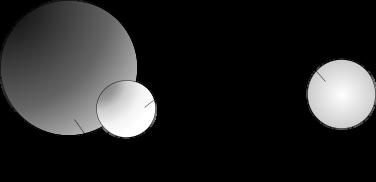
Figure 1: What the women “asked” for
The System says that it’s the fault Of the Woman. It isn’t. It is Man. What the hell am I Supposed to do with that? Report. Report what’s heard. No. The System won’t do anything. There is no mandate. For Justice. When a man is accused. Of wanting.
I wake up dying another sunrise until the day ends, and I can start the filling. Again. Pump my –Fill fill filling my stomach. I should report what my friend tells me when he hurts her But I’m not mandated to report, only implored to listen, so I keep my mouth shut. Perpetrator. Perpetrator ’s crime is kept safe. I keep it safe through association. I am a perpetrator Of listening.
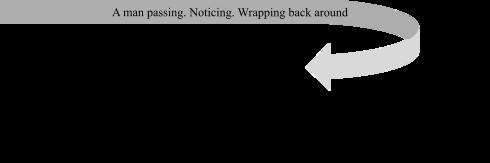
Figure 2: Why can’t I help her?
Bystander. I am a safe space where Justice dies. Dies. Dies with women. Men walk Free. I’m afraid of the waste. Pumping and filling. I want someone To tell me it hurts when it happens to Me. I want mandation. The waste. It Fills pumps, what if it isn’t the waste That I choose it to be? What if it’s Forced into me?
My friend shouldn’t walk alone in the darkness. She knows that. I think she doesn’t care. The System would say she’s asking for it. What is she asking for again? I trip down Town where it’s my fault if I’m alone. I heard that the other women said no. Still, Justice said, So?
Flora Stolzenburg
Fleshy and smooth with variant stripes
From olive to mousse you keep one constant
Your flesh sticks as I attempt to peel back your fruit
Tainted with your nectar, I see you
Rolled back uncovering a desolate scape
Rosy and seeded, sweet and jammy
I see you
In the way I left you
Your color persists through all your stages
Ever changing with the world around
Your natural compote keeps you anchored to your roots
The roots that fell in to the hand of my mother to the feet of hers
Displaced from yours, blocked by walls
your name up for trade
While dazed in unknown terrain, your roots repot to intertwine with the vine that sustains my breath
Your aged center melds with my rippled cheek brightening when I find our way home
Oh, siko mou
Wyman
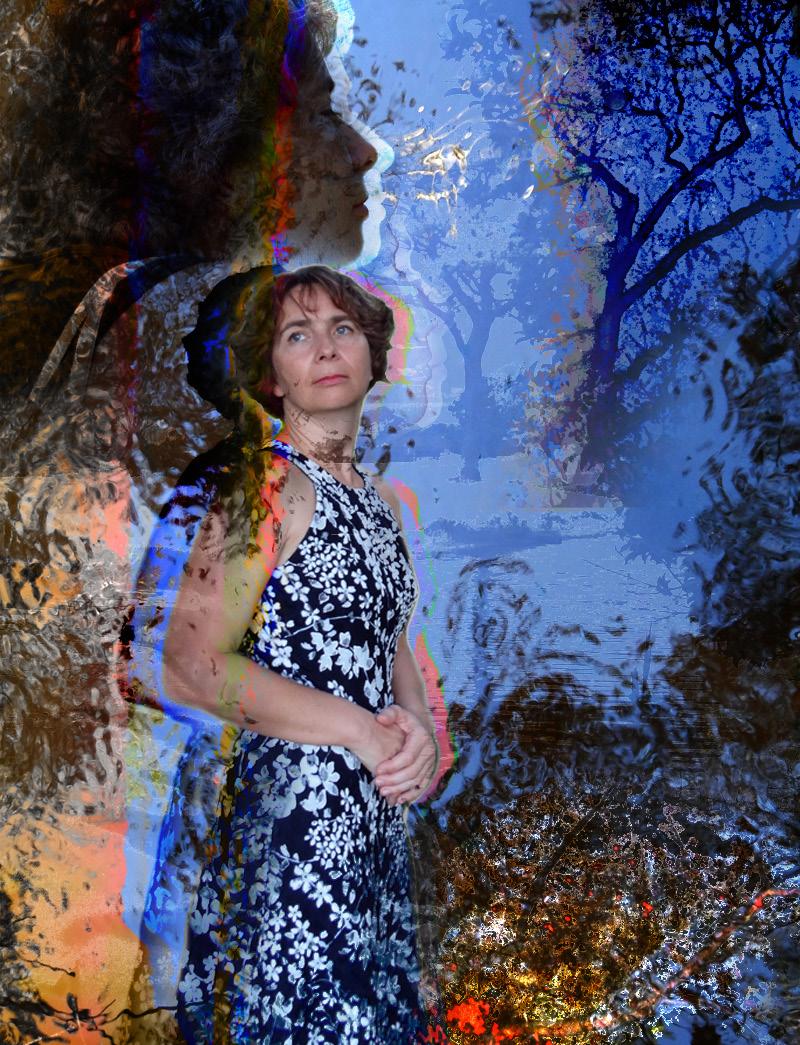
Illumination 2025-26


Mineral Point Fall Art Tour is a weekend-long art show featuring a series of live demos from artists in the town. This year, 46 artists’ works were scattered throughout the town in galleries and businesses to be enjoyed by locals and tourists alike. It was an easy trip for the Illumination crew, just an hour drive away from Madison.
We were first greeted by the charming blue doors of Artful Apparel, a small shop filled with history. Kathleen, the artisan, walked us through the history of fiber work and how she mentally counts, almost seeing patterns as a rhythm to a song to create beautifully complex color combinations for garments. She has been weaving for over 40 years and has owned the shop for almost 30. She provided powerful insight into how tour sales are roughly half of her sales each year, and into how the high level of visitor traffic would be too difficult for their small town infrastructure. Most of the galleries are positioned right next to each other, making it easy to meander slowly and be exposed to many different media. Next, we spoke with an interdisciplinary artist who creates metalwork jewelry and wildlife photography. It was interesting to see the different ambience created in the shops holding several other artists’ work. My personal favorite had a range from fiber arts, glass mosaics, and iPad still life drawings. Having them all right next to each other allowed me to really process and appreciate each piece for the vision and skill it took.
We took the short 10 minute drive over to the other side of town to finish up with looking at the artist retreat center, which some of the painters we had been talking to previously learned about. It provided a look at the serene nature that surrounds the small town, with fields between the small cottages where artists stay during their time there and the various centers where they can develop skills like blacksmithing. Talking to all the artists at each stop makes it feel like you are slowly unlocking the town, as at every spot we were told to check out, we found more artists eager to share their favorite places. The tour provides a unique opportunity for folks to expand their knowledge and collections in a casual, inviting setting.
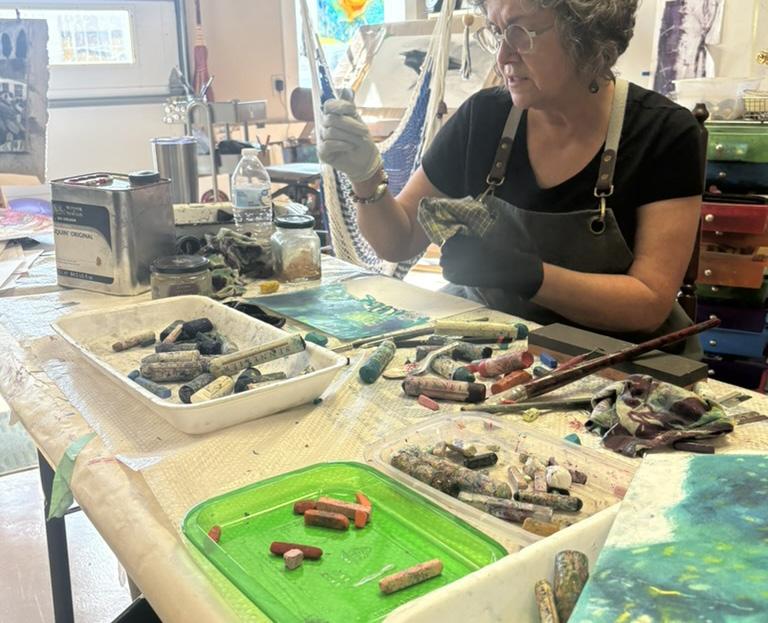
Artist Kathleen performing an oil pastel demo for the WUD Literary Arts Committee
Photographed by: Bridget Adams
A city-wide celebration of the arts and local artists, Madison’s Gallery Night, displayed dozens of exhibitions and artwork for an evening of exploration last November . The Madison Museum of Contemporary Art (MMoCA) sits central to Gallery Night, organizing and hosting the event since its revival in 2021. Alongside Sabina Ott’s exhibition “All This and Not Ordinary,” the Fall 2025 Gallery Night saw the MMoCA host a dedication to the Museum and its designer, César Pelli.
The exhibition featured original sketches, models, and plans from the museum’s conception. The sketches imagine the street view of the museum and the third floor balcony. Framed alongside these was the block’s blueprint. In the center of the exhibition stood a wooden model of the surrounding Madison area with the proposed design of the museum in white. Notably lacking from these displays were labels, dates, and accreditation, consequentially assigning all credit and importance–however incorrectly–to Pelli. The last two walls presented a documentary on the design of the museum and a step-by-step guide to the construction.
Lastly, two glass cases held written process reports and building material samples. Offering no more explanation than the other displays, and inspiring no deep contemplation or appreciation of the objects themselves, the exhibit nonetheless asks viewers to consider the museum around them. In breaking down the museum’s conception in this wordless way, one’s admiration can be drawn to the museum itself. After all, the exhibit’s name “Iconic” narrates not these elements, but the totality of process and product.
The next Gallery Night will take place on the evening of May 8, 2026.
I’ve been called a lot of things.
Had a lot of names stamped over my chart notes.
I’ve been called a lot of things.
Even introduced myself by them,
Falseness ringing in my ears,
Sitting with and running from
Had a lot of names stamped over my chart notes. Even introduced myself by them,
Falseness ringing in my ears,
A laundry list of diagnoses.
Sitting with and running from
Words and words, chained like a wreck to the depths of assumption.
A laundry list of diagnoses.
I swim and drown and dance in this deep.
It’s this same deep, dark ocean blue I turn to,
Where humpbacks and giant mantas carry me off away from
Words and words, chained like a wreck to the depths of assumption. I swim and drown and dance in this deep.
All those strange men
It’s this same deep, dark ocean blue I turn to,
Where humpbacks and giant mantas carry me off away from
Explaining my own body to me,
All those strange men
In words that just sink and sink past our orca pod.
Because how can anyone possibly claim to understand this world
Explaining my own body to me,
In words that just sink and sink past our orca pod.
So completely that they’ll tell the beluga to swim south or The seal to leave her kelp or The ocean to shift her tides?
Because how can anyone possibly claim to understand this world
So completely that they’ll tell the beluga to swim south or The seal to leave her kelp or The ocean to shift her tides?
My fins aren’t on their anatomy posters and
We don’t share habitats or language but I just keep swimming regardless
Because I know that even in these depths,
My fins aren’t on their anatomy posters and We don’t share habitats or language but I just keep swimming regardless
The humanity, no, the wildness, The nature, the truth of people, Is that of the creatures of the sea.
And my whale-shark skin is covered in remoras bathing me clean just like
The neuro doc who checked on me during her maternity leave.
Because I know that even in these depths, The humanity, no, the wildness, The nature, the truth of people, Is that of the creatures of the sea.
And my whale-shark skin is covered in remoras bathing me clean just like
The pcp who never picked fights about labs I needed ordered.
The nurse who didn’t comment or stare when I needed a bandaid.
The neuro doc who checked on me during her maternity leave.
We flourish even as the depths call us, doom us, further.
The pcp who never picked fights about labs I needed ordered.
The nurse who didn’t comment or stare when I needed a bandaid.
We flourish even as the depths call us, doom us, further.
Stumbling to give it a name,
These years of my life spent swimming.
Fish? Mammal? Mermaid?
Stumbling to give it a name,
These years of my life spent swimming.
Fish? Mammal? Mermaid?
Stuttering on words you think you already know,
Have already been taught that a shark is a fish.
Which right species will put my right story in your head?
Or do I just skip the flashy names
And say what I know to be true
That I’m just swimming, breaching for gasps of air, and diving deeper than you’ll ever go.
So now that I know the sea turtles and they know me,
Now that you know I live and choose this wild ocean life,
What shall I do?
Because even my salvation, A kindred bottlenose traversing oceans and oceans
Who cares, cares, cares so much
That she’ll brave these waters.
Whose rainbow stethoscope and nose-piercing glitter
Even here within this twilight zone of fluorescent lights and anglerfish
Who hears my calls and gives me this new name,
Now says we can get me back to dry land
That I’ll be good as new.
And I’m relieved, I truly am,
But my gills don’t understand and
My animal knowing yowls
And screams
And sings with the whales.
Because I never jumped into this water,
But was weighted and pushed.
So when my lungs filled and I found rest in the tentacles of giant squid and
Found myself awoken by the electric, joyful sting of the jellies, I let the humpbacks teach me how to swim and
The sunfish how to breathe and
The dolphins how to love this dark, dazzling, deep blue underwater life.
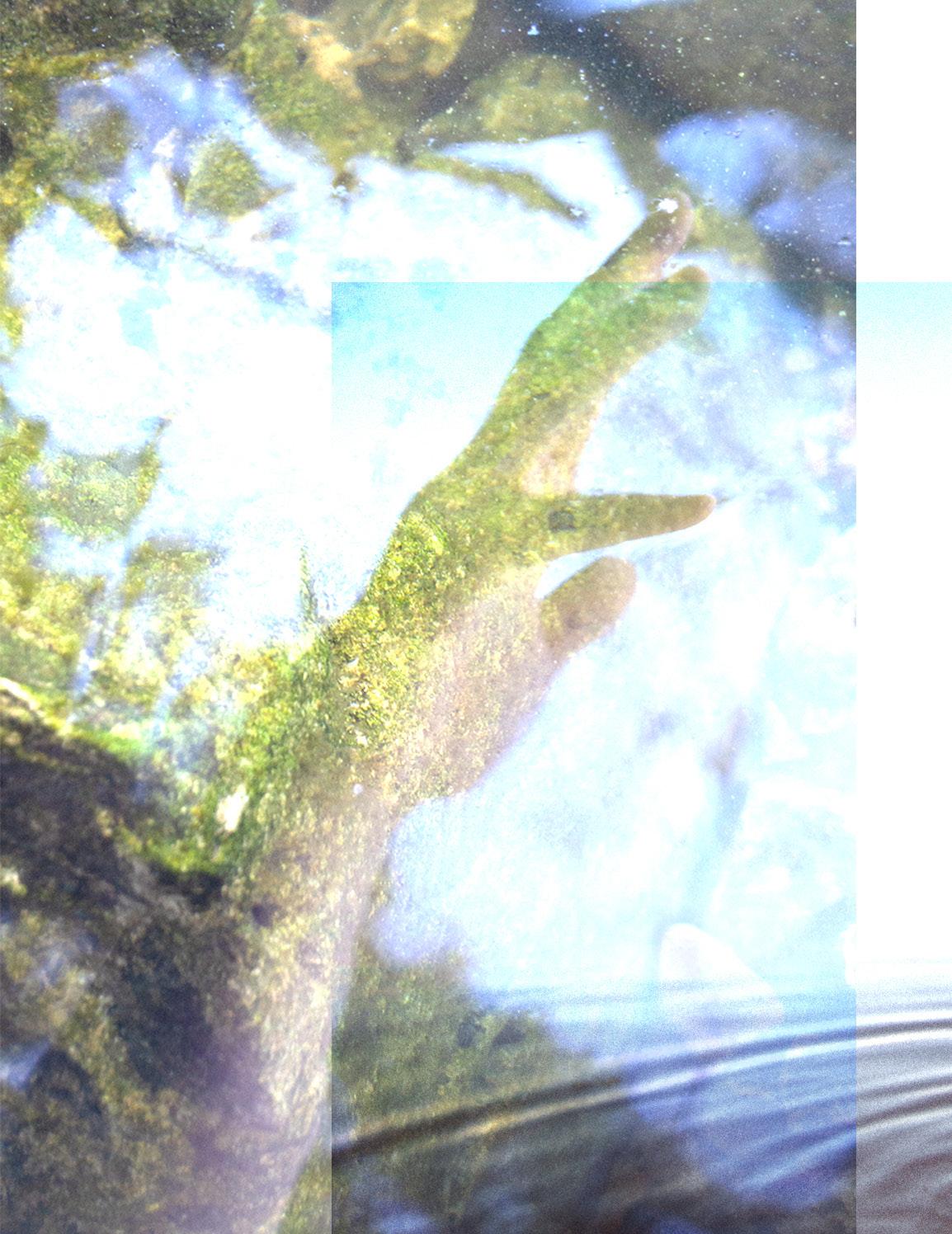
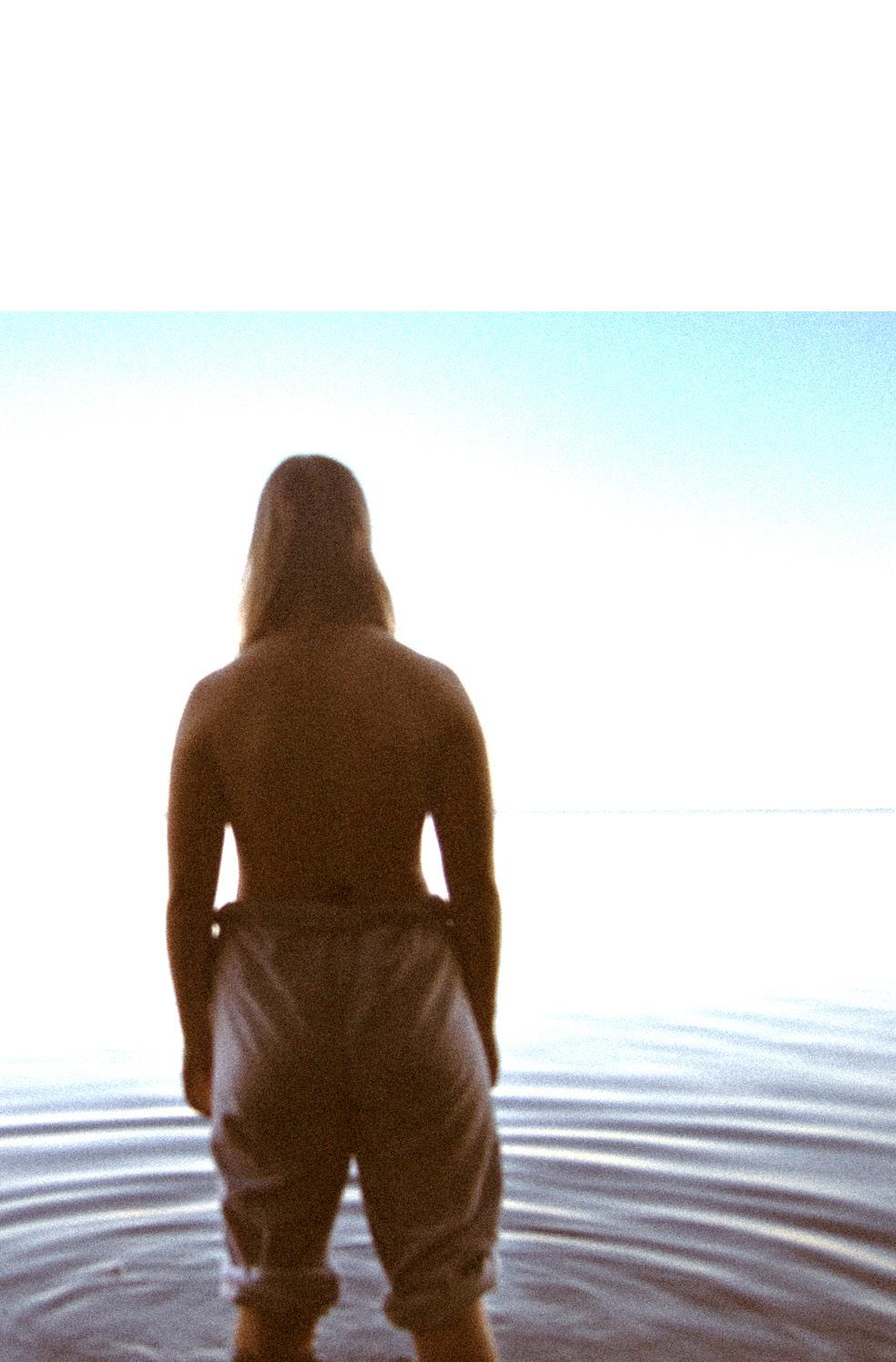
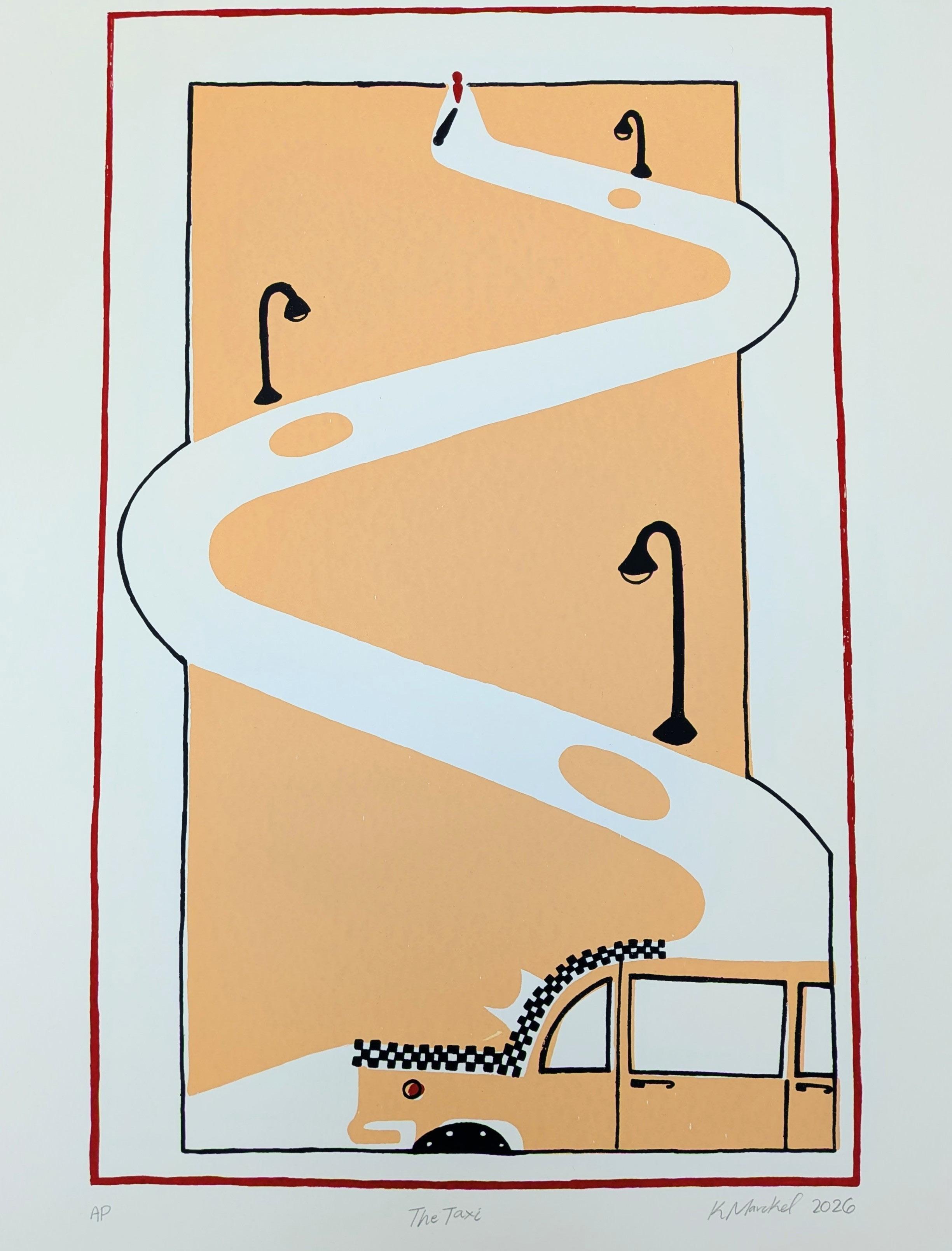
“The Yellow Wallpaper”
Mars Mittelstadt in AP English, we read “The Yellow Wallpaper” and it felt like the whole class was discussing my late mother. my teacher made light of the subject matter, laughed off the narrator’s delusions, as if to shatter my mother’s urn before my eyes. within the distortion of the photocopied story, I watched as cigarette smoke painted my mother’s room with the hue of her illness— a sickly yellow, dull and putrid. the narrator was trapped in the walls of her room, so she tore herself from the dark ivory.
I wish I had the strength to rip my mother from the wallpaper, but she remains a figure— a stain on destained walls.
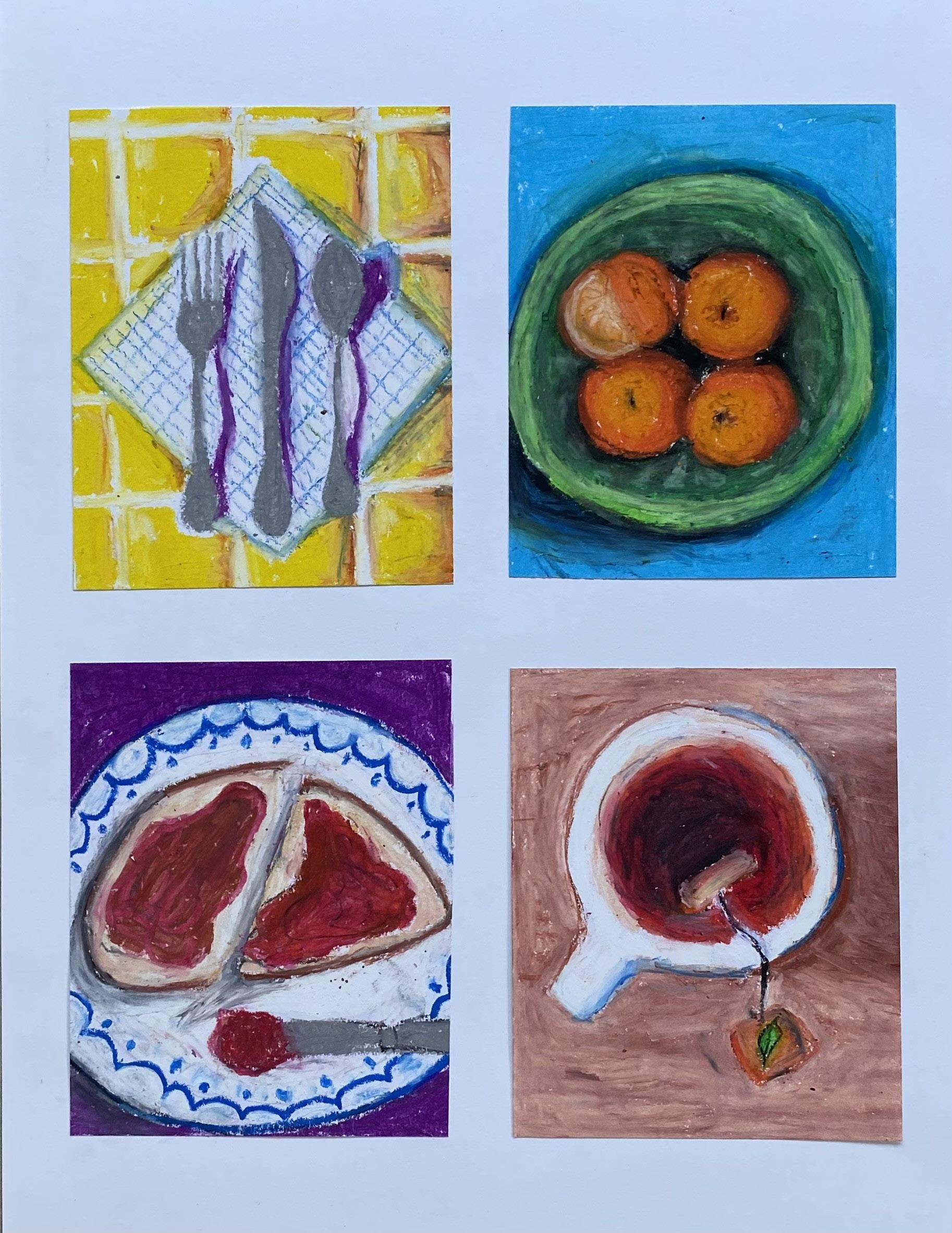
Olivia Morsbach
I didn’t know my mom’s life before motherhood. By the time I came to know her, she was already a Mom. I feel like someone who arrived late to a play, hurrying into the theater only after the part no one ever asks about had already ended.
My mom is from Gansu in China’s northwest; my dad is from Putian, Fujian, on the southeast coast. Between those two places lie roughly twenty-five hundred kilometers, a distance that stamps a woman with a familiar label: she married far from home. It was brave. It was also impulsive. At twenty, she left for love thinking she was marrying one person. Only later did she realize she was also marrying an unfamiliar city, along with its weather, its food, its rules, and its ways of speaking.
Everything was different. The cuisine she grew up with, noodles and wheat and the comfort of what she knew, was replaced by bowls of thick rice porridge. The chilies she once couldn’t live without vanished, and what used to be pleasure became a slow withdrawal. Southern village nights were humid and relentless; mosquitoes left her skin raised and red, bite after bite, like a crude welcome from a place that wasn’t hers. But the hardest barrier wasn’t heat or hunger. It was language. The local dialect sounded to her like a sealed book. The moment she opened her mouth, she could feel herself standing outside the conversation. Others understood one another with ease. Her words arrived late, if they arrived at all.
We like to talk about love as if it can cut through anything. But even love has limits. My mom once told me, smiling as if it were only a story, that when the thorns of reality scraped romance down to the bone, she thought more than once about leaving. I laughed and teased her: “Why didn’t you run? If it were me, I’d be gone.” And maybe I would have. If you have no ties, leaving can be a single decision. You can become light again, like a dandelion carried off by one gust of wind.
But then I arrived.
I was born from her body, and my first cry split open the life she’d been living. A bond landed into her arms and opened its eyes. From that moment on, she couldn’t live only as herself. Responsibility and attachment built a quiet cage around her, and the door closed without anyone calling it a prison.
So she did what she has always insisted people can do: she got used to it. She would say, almost casually, that in the end, human beings can adapt to anything. Over time, she learned to follow conversations in Putian dialect without stumbling.The distance between her and the people around her didn’t vanish overnight. It was worn down by repetition, by endurance, by habit. The southern dishes she once couldn’t stomach became dishes she could cook with ease.
And the Putian specialties she makes now still surprise locals. They taste them and admit, a little sheepishly, that hers are better.
Maybe she’s right. I’ve had my own version of it, studying far from home. I’ve had to learn a different language, step into customs that aren’t mine, adjust to food that tastes like the opposite of what I grew up with. I’ve even had to face Lunar New Year’s Eve without family, without a reunion dinner. I am trying to soothe myself with the same phrase: I’ll get used to it.
But my mom broke that spell.
She showed up at my apartment near campus carrying bag after bag, bright with excitement, announcing she was going to cook me a real New Year’s Eve feast. I stood there stunned, joy rising too quickly to contain. In the days she was there, I didn’t fall asleep hungry once. For the things I can’t change, she never seems willing to let me simply learn to tolerate them.
And that’s when it hits me: before she was Mom, she was a girl who needed to be loved.
When I flip through old photographs and try to imagine the first half of her life, my eyes fill too fast, as if they’re too small to hold that much saltwater. I wonder what she was like at eighteen. Was she like me, slinging a small, fashionable bag over her shoulder on a sunny afternoon, weaving through busy streets with friends, laughing without restraint? Did she lie awake under star-filled nights and quietly picture her future? Did she keep a pen close, recording fragments of life—favorite song lyrics, lines that moved her—tucking what she couldn’t say into stray sentences and unfinished poems? Did she ever love herself without conditions: the color of a dress, the wind of a season, a wish that wasn’t grand, only clear? Did she believe she could live like the wind on those high northwestern slopes, wild, untamed, free?
And before I existed, maybe she didn’t have to learn to endure so much. Maybe she didn’t have to call endurance “getting used to it.”
Mom, by the time I reach this point, my composure is gone. The sea finally spills over, and every line sounds like surf: If there is another life, I want to be your friend. I want to know you starting from your girlhood. And I hope that before you become a Mom, you can always be yourself first.
Hazel Purins
We are the luckiest people alive, we four intrepid moon landers the only humans to walk this stretch of earth as we make the funerary preparations for the shrubs and the grasses, take the last set of vitals on this patch of Himalayan blackberry. another storm rears up behind us, another afternoon sitting in the car, sticky with humidity, sweaty with frustration. I am the luckiest thing I can think of, alone on this stretch of the earth.
The heavy equipment is stilled, deer in headlights. Excavator, steamroller, bulldozer and backhoe freeze when they spot me, still on the spot and staring me down. Silent.
No one ever tells you how uncanny it is to see a silent construction site, trenches gaping open like the surgeon left the room and forgot the sutures. Being near a still and silent motor grader is like being allowed to approach a horse. We are the only voices for miles.
In their silence, ceanothus speaks in rustles and we listen. Waist-high in manzanita, we step recklessly on the things we claim to be saving. A man with a gun tells us to get the fuck out of his backyard and off his property. It’s not the time to debate who owns what. We get the fuck out of dodge.
What is the point? How do you justify doing the things we do? I tap the nail into the young dogwood and try not to flinch. I stand face to face with Sequoia and hold up the hammer. I breathe deep in between the puzzle pieces of Ponderosa, and I aim the spike. Spring wildflowers break beneath my feet. I look up and the trencher looks back at me, guilty.
Takes one to know one.
Or does it? We Are Saving People.
Well, maybe. We think we’re saving people. We think we’re saving trees. We’d rather be saving trees.
At least we have the data, Precious numbers, all-powerful. The data justifies the means. The data will save us, will reveal the secrets that can stop the fire in its tracks, will freeze time freeze space freeze the flame in freeze-frame, click pause on the model we built. Every nail in the heart of the tree a point on a map, surely, a number.
Surely these numbers will add up to something, come together and build a hundred-foot firebreak around the trunk of this ancient tree and save us all.
Louis Karlsen
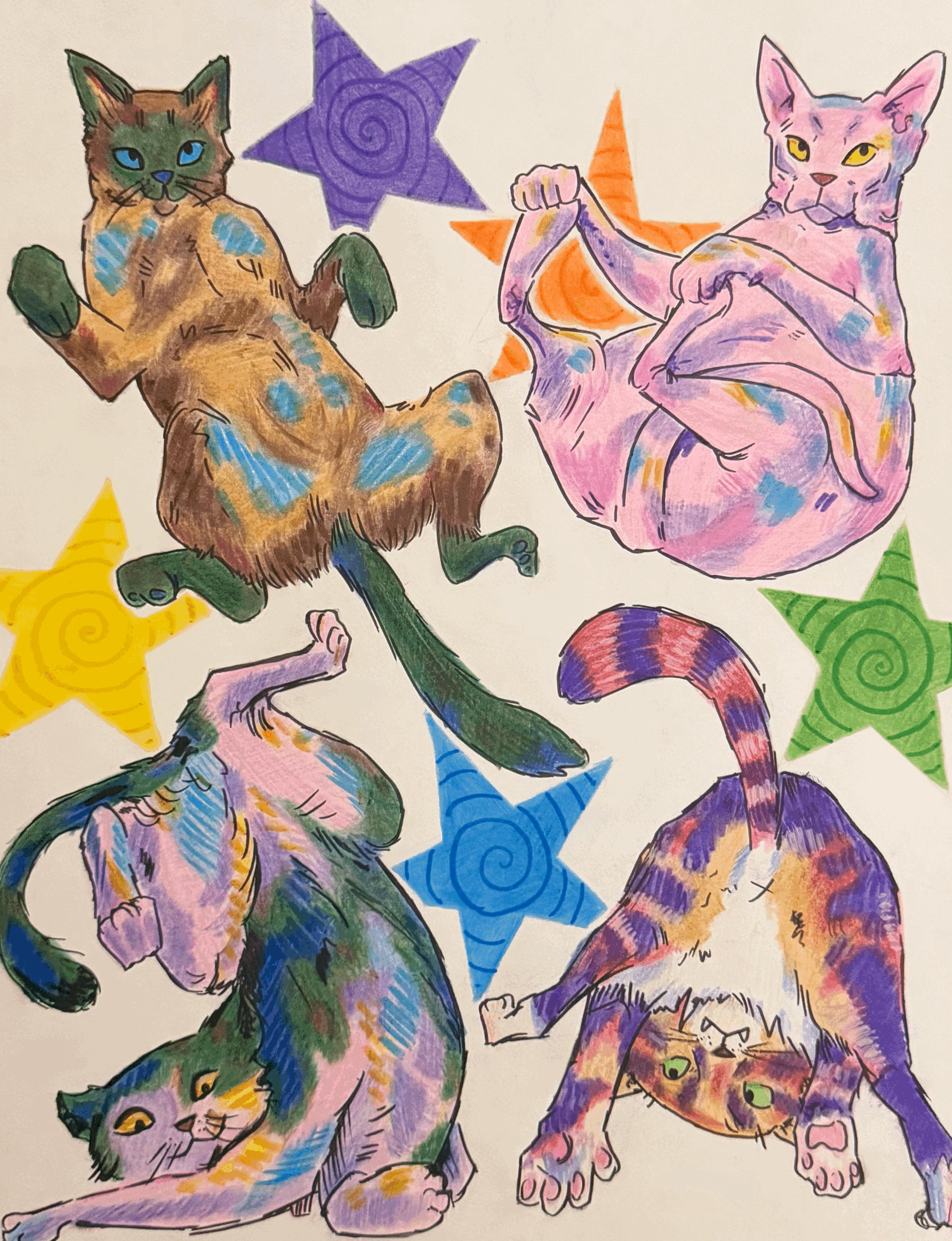
In a little ramshackle thing that one could hardly call a dwelling there lived a figure, something dangling from the precipice of being, which sought to evade all living interest, and so it stayed out in the middle of a great fir forest, where the enormous trees shamed the sun with the shadows they cast and the light they hid. The figure was afflicted, but did not seek out the affliction when it first came. These things happen when we least expect them to.
The figure stayed there because the trees obscured the seers’ view, the veiny brooks caused men and beasts alike to stumble, and the brambles would snag deep into their prying hands and eyes. The frightened figure stayed there not because of its own affliction, but because it didn’t want its eyes to meet strangeness, and did not want to be brought back when it would soon be long gone.
Some days the affliction left it feeling so weak that it could not leave its shelter, and its only solace were the ever-rushing brooks which graciously turned its thoughts into static. Those days were only its forewarning for what was yet to come-for the inexperienced could only last so long in the woods before an ancient and pervading hunger conquered their thoughts.
And on nights when I ascended above all natural deterrents, when fog clouded all soulful consciousness, I could watch that shadowed figure lurch out of its crumbling abode, lantern in hand, the only weak light there below, the moon vanished and the stars hidden. But through my half-opened eyes, another light was cast onto the searching, rotten and pale face in the fog below, and I hated to see that figure for how it was. Despite its wretched face, it was so forlorn, so anxiously looking all about, first sharply that way and then freezing there on the other way. It did not suit the figure to look so distraught, I thought, and through my dreamlike gaze I continued to observe its strange habit.
It struggled through its home terrain, slipping on the brooks, snagged by the brambles as well as any unfamiliar intruder would have. I wondered if it was because of the affliction, and several times throughout any one of these nights I watched the lantern tumble down through a snarly hill, the figure feebly going after it. The repetition of these nights never seemed to give it any experience with the land, and by the end of the night, as the day began to grace the sky, the figure would be crawling and limping all at once, all the way back to its deteriorating home. But if I drew ever so slightly closer, I could see that its arms were desperately clutching a pile of small animal corpses, and it kept and held every one that it found, every one that had fallen to the land’s roughness, although they fell far more severely than the figure had.’
When it finally made it through the door, which hung by just one creaking hinge, it heaved the creatures onto a table of damp and rotting wood, which I saw through the great light in my eyes. Then it pushed itself up so as to see the top of the table, and I saw the foam bubbling at its mouth as it shakily held one of the creatures, and was just about devour it when all of the corpses sizzled and dissolved into the wood. After this was the only time when the figure would make a sound, and it was barely audible, a pathetic little whimper, preceding a collapse into fetal position where it would lie there for many days and nights, sometimes until the next new moon, when this strange cycle would begin again. I watched this happen countless times over and over, trying to make sense of the affliction and the hold it had upon the figure. But like all else, I had to leave before anything changed in the ramshackle dwelling out there in the deep fir forest, and I left the melancholic and agonized figure to be consumed, either by its own decay or the progressing, unceasing hunger cycle of the affliction, coiled deep within its heart. Whichever it was that would turn it unto death (if such a thing happens in those woods as it does here) I could not be certain.
But I heard in the rushing brooks, in the heavy, pressing fog, and in the rustling of the bramble-bush and fir branches, that one day, all afflicted will find rest in the becoming of scattered soil, of nervous regrowth that takes the familiar form of lightning above, veins within, and roots below.
Hannah Jones
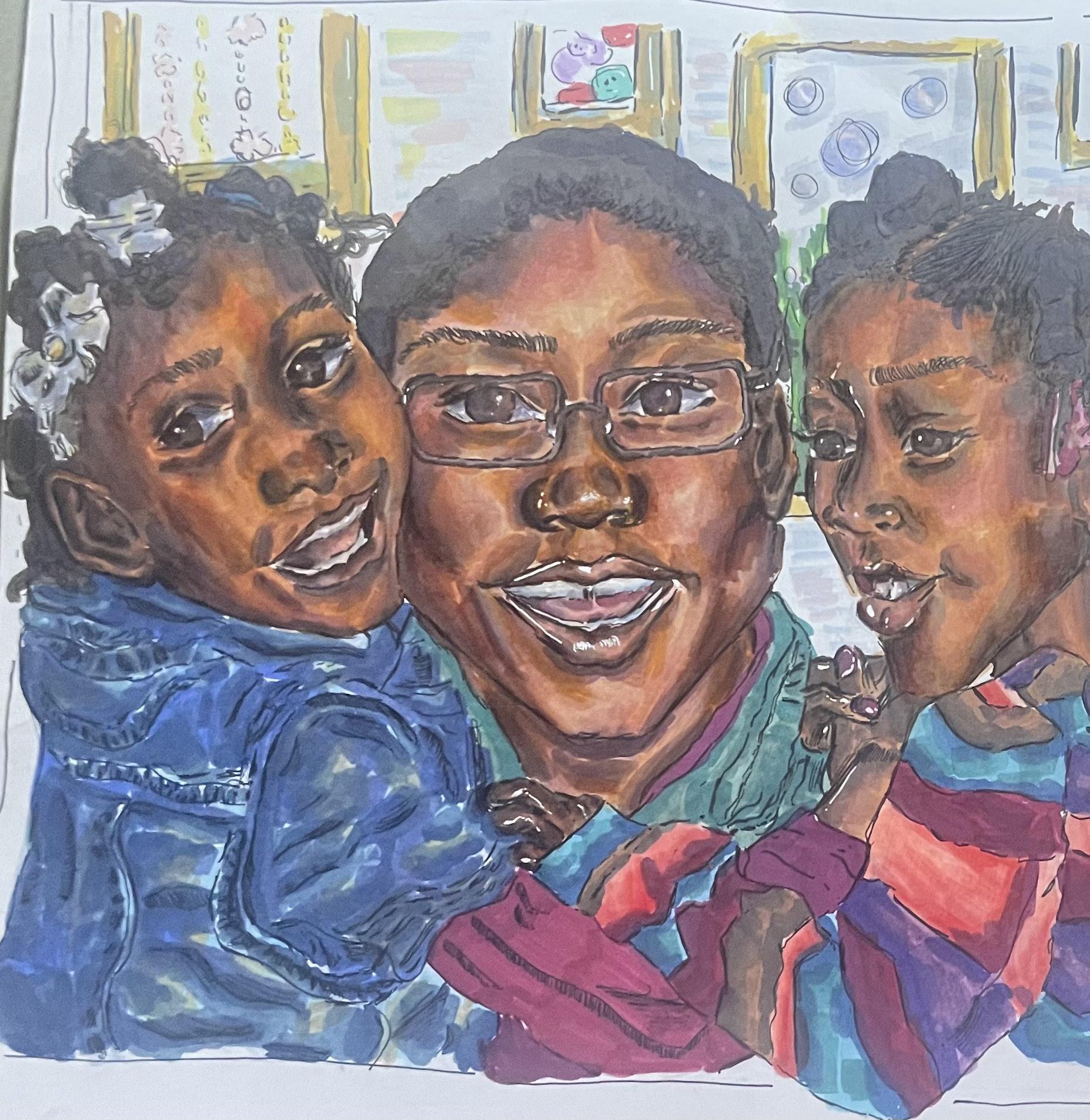
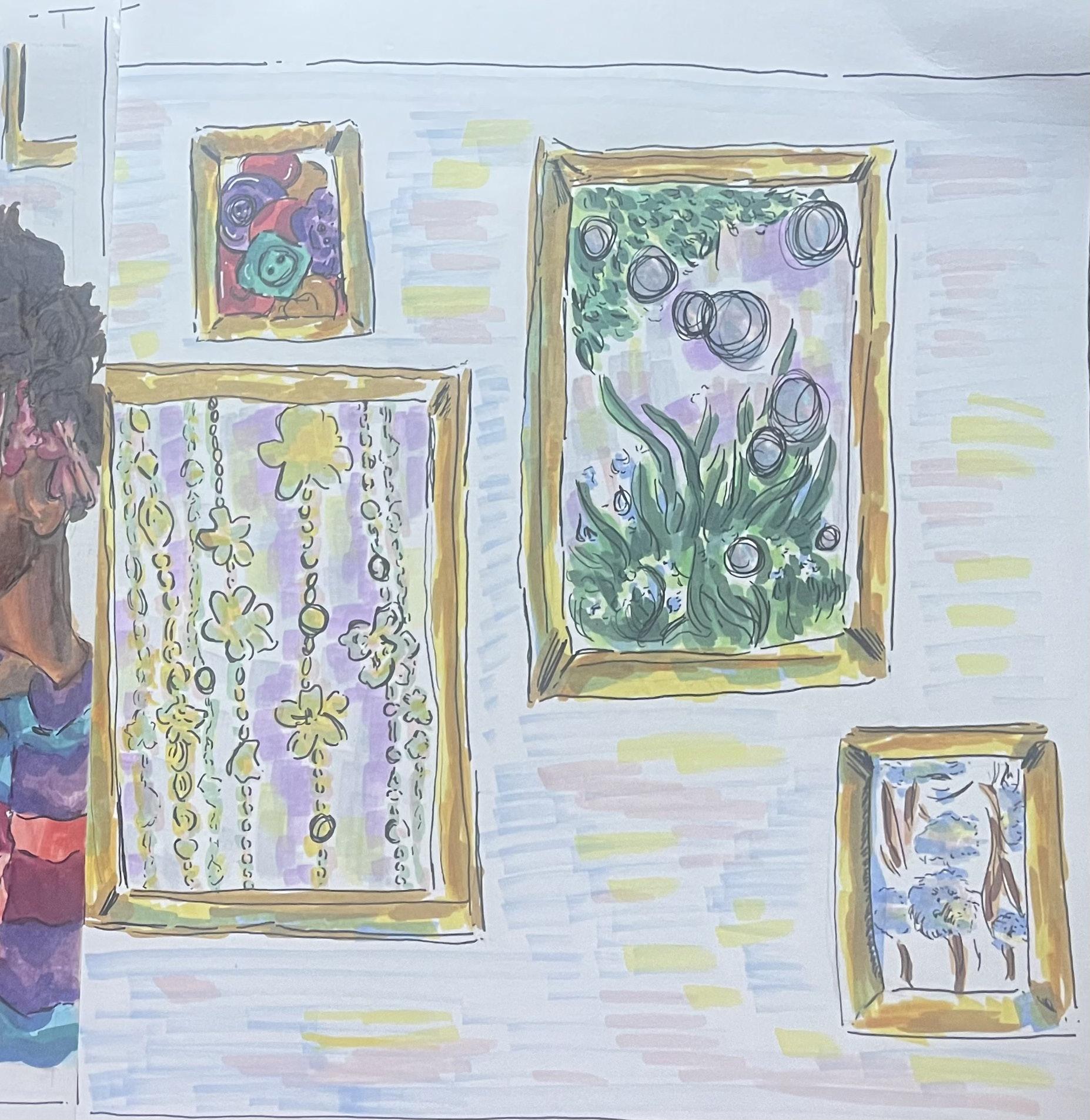
Alejandro is inside his house gathering the last of the items we’ll need for our day-trip to the creek. My chin rests on my folded hands as I look out from the passenger seat of Alejandro’s Tacoma. Some speckles of the morning rays from the summer sun penetrate the tree shading me and the truck. I reach my hand to mindlessly enjoy the dancing of the beams across my arm. The revving of the truck and the blasting of the air conditioner consume my left ear while the chirping of the birds that is replacing the last buzzing of the cicadas from the night before whispers into my right one.
“Feliz día, mami. ¡Te amo!”
I hear the distant slamming of the front door as Alejandro hops off the porch and makes his way to the driver’s side of the vehicle. He enters and slams the door, causing the truck to shake. His mom exits to stand on the porch as a final goodbye. I stick my hand out the window to wave at her, which she reciprocates. I turn my focus back to Alejandro.
“Ready?” He eagerly looks at me, childlike, and all I can muster is a nod with a suppressed smile; otherwise, I’ll laugh from how excited he looks.
Alejandro shifts the gear into drive and slowly accelerates out of his driveway.
“Que te vaya bien, Señora Morales,” I yell from the window, disrupting the peace of the early morning countryside. She gradually becomes smaller and smaller in the Tacoma’s rear-view mirrors.
Alejandro plays his playlist of his favorite bandas and corridos. I roll my eyes, and he smacks my shoulder without missing a beat.
“Hey! What was that for?” A stifled giggle interrupts my question.
“You rolled your eyes,” a wide smile, exposing his dimples, intonates his statement.
“Why aren’t your eyes on the road, sir?”
“I didn’t even have to look at you to know that you did it.”
This time, he does briefly look over at me. He offers a smug look–a subtle brag that he knows me so well.
“Well, maybe you should make a new playlist because I’m sick of this one,” I smack his shoulder.
“Well, maybe I would give you control of the music if all you played wasn’t puro pop music.”
“Don’t sit here and pretend like you weren’t bumping to Taylor Swift with me the other day,” I extend an accusatory finger his way.
“That’s beside the point, Mauricio.”
He briefly makes eye contact with me, which sends us into a laughing fit for a few seconds. Our Song by Taylor Swift begins to blare through his truck speakers. From my peripheral, Alejandro looks over my way, awaiting my approval; I fight back a smile.
“This isn’t even pop Taylor,” I tease.
He’s mouthing the lyrics of the song in an attempt to ignore me. I join in by actually singing the song, prompting him to do the same. We’re approaching the entrance of the highway as the song builds up to the chorus. Alejandro rolls down all the windows and abruptly accelerates onto the road towards the creek. I stick my hand out of the truck, enjoying the warm breeze and the music. As the song continues, Alejandro seems more and more immersed in the song, completely forgetting about his playlist. I smile to myself, internally celebrating the win.
I admire him from the passenger side. His right hand is on the steering wheel while his left is riding the strong winds outside his window as if they were ocean waves. His eyebrows are tense from his awful attempt to keep up with the song vocally. His eyes squint in the morning sun entering the truck, highlighting his dark tan skin. Even with his eyes squinted, I can still see their golden caramel color—a color I envy since mine are a darker shade of brown.
“Earth to Mauricio.”
I’m brought back to reality by Alejandro’s hand waving in my face. I didn’t even realize that a new song had been playing.
“¿Qué te pasa, flaco?”
I look around the truck, trying to reaffirm my surroundings.
“Nada,” I regain my composure and look over at him, “sorry about that.”
“You’re good,” he switches between looking at me and the road with a static, worried look, “I was trying to talk to you,” he pauses, trying to find his words, “ and you just dozed off on me.”
”Aww, que lindo,” I teasingly mess with his freshly shaved-down goatee.
He playfully smacks my hand away and continues to speed down the interstate.
He rolls his eyes at me before taking off his shirt, exposing his broad shoulders, toned pecs, and defined abs.
“Ven aquí.” I motion to him to come to me as I grab the spray-on sunscreen.
He reluctantly walks over to me.
“Close your eyes.”
Alejandro does as I say. I spray him down, starting with his face. I rub it across his chest for him, then apply it to his neck and back.
“Okay, ya. It’s your turn,” Alejandro rushes me.
He takes the sunscreen from me. I turn towards him and close my eyes.
“Are you not going to take off your shirt?” He waits a moment.
I fight back a sigh and take off my shirt.
Alejandro catcalls me. “Qué guapo.”
“Shut up,” I say right as he sprays my face. Asshole.
I rub in the sunscreen while he finishes spraying all around. I feel his warm hand against my back, applying it where I can’t reach.
I turn towards him, and he returns the bottle to my tote bag.
The Tacoma shakes as it drives across the sea of pebbles along the shore of the creek. Alejandro pulls the truck into a well-shaded area. I hop out of the truck as I survey the area. Given that we came early on a random Wednesday, it’s not as busy as it has been before.
“I don’t know why you bothered bringing sunscreen,” Alejandro says as he sets down the last of what he packed for us, “neither of us sunburns; we tan.”
“UV rays still damage our skin, menso.”
Alejandro grins at me. “You ready to jump off the cliff?”
Alejandro and I walk down the bank towards the waterfall that feeds into a section that is deep enough to jump into. We walk along the waterfall, balancing ourselves as we would on a tightrope, until we reach the center. Once we do, I stop and turn around to face Alejandro. He’s smiling ear to ear. I know how much he loves this place.
Alejandro admires the jump we’re about to do. “You first?”
I give him a look that rejects his request.
Alejandro grabs my arm and pulls me closer to him. He grabs my hips and pretends to push me towards the edge. I hold onto his shoulders, despite them being slippery from the sunscreen. If I’m going down, he’s going down with me. We laugh and agree to jump in together.
I assume position and mentally prepare myself for the cold creek water that is going to engulf me when I break through the surface. I look over at Alejandro; I don’t even have to check if he’s ready to make the leap. I inhale a deep breath before letting him know to jump. Anxiety travels through my body like a shockwave that began at the sole of my right foot before leaving the rocky ledge of the waterfall. It reaches the pit of my stomach as I’m midair. Finally, I’m underwater.
Water rushes into my ears. I forcefully exhale out of my nose, creating a battle between the air and the water trying to get in. The cold creek isn’t as freezing as I thought it would be. I hear the waterfall make contact with the standing section of the creek, creating ripples and sending distorted soundwaves that I can hear even while underwater. I sense Alejandro as he finally sinks next to me after a delayed jump. My legs dance with the water; they work together to propel me to the surface.
I break the barrier between the underwater world and the surface world, followed by Alejandro. What once was muted and dull is now loud and vibrant. The waterfall and creek rhythmically clash; the faint laughter and screams from the other families blend with the chirps and buzzes of nearby wildlife. The sun’s warmth has yet to reach the section of the creek we’re in; the breeze meets my soaked neck and head, sending a cold shiver throughout my body. I shake my head like a dog when wet; I wipe my face clean of the curtain of water dripping from my soaked hair; I spit out the water that managed to infiltrate my lips.
We tread the water next to one another. We burst out laughing, high off the adrenaline that’s slowly wearing off. We float in the water for a moment, just looking at one another.
The sun beams down on me as I lie on the inflated pool tube that I brought. I relax with my eyes closed, enjoying the sound of the nearby waterfall interrupting the creek’s stillness. I listen to tree branches dance with one another with the help of the soft winds that brought them together in the first place; the orchestra of birds, crickets, and dragonflies serves as the music. With how peaceful it is, I could stay lounging here forever.
“Mauricio,” Alejandro sings. He starts to hum the theme from Jaws.
“Ale, don’t even think—“
Before I can even finish my sentence, Alejandro tips over the tube, submerging me in the water.
“Alejandro Raul Morales, que te dije,” I scream as I break from the surface of the creek.
“Not the government,” he laughs.
Ignoring that Alejandro is taller and stronger than me, I jump onto his back and shove him into the water. I assume he wasn’t expecting it because of how he went down pretty easily.
“Timeout! Timeout!” He yells out when I give him the chance to be above water.
I let go of his shoulders and float nearby while he recovers from drowning. He flips his hair around and wipes his face clean of water. He glares at me, but I can see his dimples piercing through his act.
“Apologize, enfadoso,” I smirk at him.
Alejandro gives me a devious look. He dashes towards me and lifts me up into a bridal carry.
“Ale, put me down.”
“No,” he says, sarcastically, with a dead face.
I try to wiggle out of his arms, but he won’t budge.
“Alejandro, put me down!”
“Someone’s fussy,” he fights back a smile.
I reposition myself so that he falls backwards. We’re both underwater now. Water floods into my ears, distorting my hearing. Alejandro disrupts the water as he collects himself. I, on the other hand, am having trouble finding my footing. I then feel his hands grab my shoulders and pull me up to my feet. I sporadically shake my head and wipe the water from my eyes.
The world feels like it stopped when I find myself inches away from Alejandro’s chest, which quickly becomes his face when I slightly tilt my head up. He’s giggling, but I don’t hear the sound of his laugh—or anything for that matter. But I do see the way his smile lines create a road to his dimples; the way his eyes wrinkle; the way his nose scrunches up along with his eyebrows. His hands have made their way from my shoulders to right above my waist, around my rib cage. The warmth from his hands on my cold, wet skin penetrates into my stomach, where more and more butterflies are being awoken.
He can’t keep doing this to me.
I hear him ask if I’m okay, but it’s so distant, as if we were hundreds of feet from each other or something was in between us, obstructing his voice. He’s still laughing, throwing his head back like a little kid. Even his laugh sounds worlds away from me. His laugh becomes a brief smile before his face goes neutral once he realizes that I’ve been silently staring at him. There is an absence of worry and confusion that I would expect from him; he hates it when I’m quiet. His eyes glimmer with the rays of the sun, and so does his skin, which has become darker with the time we’ve spent here.
I want to kiss him again. Alejandro’s dilated eyes tell me that he wants me to–either that or the blinding sun is causing it, but God, I hope it’s the former.
My vision goes dark as my lips attach to his. What I thought would’ve been a brief moment–an insignificant peck–became longer than I could’ve imagined. I expected Alejandro to pull away, but he didn’t; I also wouldn’t be the one to shorten this encounter. So, we kissed and kissed and kissed in the middle of the creek that we love so much. Butterflies erupt in my stomach when I feel his hand around my waist.
As much as I try to fight it, I pull away to catch my breath before returning my lips towhere they want to call home. But they don’t. Alejandro hesitantly pulls himself out of reach, stopping another kiss from happening. Our bodies are still close to one another, our faces are inches away from each other, but there’s a look in his eyes that makes me feel like we’re, once again, worlds apart.
Alejandro starts to walk backwards, away from me, towards where we set up camp.
“It’s getting pretty late,” he starts without making eye contact with me, “we should...,” he trails off.
“Start packing up,” he says as he turns around, quickening his steps.
I stand in the water alone for a moment before getting out to help Alejandro pack up.
We don’t exchange words or banter like we usually would while we do it. Despite the silence between us, there’s an excruciatingly loud dialogue happening inside me. I’m upset; I’m sad; I’m angry–at him and myself; I’m confused. Every emotion you can think of, all at once.
I hate this. I hate this because I never would’ve expected one of the best moments in my life to leave me feeling the absolute worst I’ve ever felt. I, especially, never would’ve expected it to be caused by my best friend.
* * *
Alejandro’s Tacoma shakes as he halts the last of our supplies in the backseat. He scouts the area to make sure that we’re not leaving anything behind.
Once he’s satisfied, he returns to the truck. He double-checks that the trunk and backseat doors are closed. The vehicle shakes when he slams the door after entering.
I stare blankly at Alejandro before I slowly rest my head and look out the window at the creek, already feeling nostalgic about the day we just shared while also wishing it never happened in the first place. I can feel Alejandro’s eyes on me, trying to decode my mood and behavior.
“Mauricio,” Alejandro starts, ¿qué onda?”
I remain silent. Alejandro is fidgeting with the steering wheel; the car is moving from his leg, anxiously bouncing. Even though I would want nothing more than to suppress what I’m feeling and lie that everything is alright, I can’t. I owe myself more than that, and I also feel like I owe Alejandro the truth.
“I can’t keep doing this with you, Ale, ” I say, still looking out of the passenger window.
“W-what do you mean, flaco?”
“I mean,” I whip around to face him, fighting back tears from coming out, “I can’t keep kissing you and going about my life like it didn’t happen–or like it didn’t mean anything.”
He stutters over his words. I look at the gold cross necklace he always wears with disdain; it sits across his collarbone, mocking me and reminding me that it is the sole reason he won’t say what he truly feels.
“I-It didn’t mean anything,” he avoids my eyes; his lips quivering as he speaks, “at least, I thought it didn’t.”
“You’re so full of shit.”
His wavering glances briefly meet my steadfast stare every few milliseconds.
“You kissed me when you got drunk freshman year,” I don’t think I ever told him about that night, “you kissed me when we were on your roof,” there was no alcohol to blame for that one, “and you most definitely did not pull away when I kissed you just now in the creek.”
He falls back into the driver’s seat in defeat, followed by a deafening silence.
Tears trickle down his cheeks, illuminating with the sunset. His eyes become even more golden as water sits on them.
I also fall back into my seat–not in defeat, but in acceptance. I sigh, knowing that what I need isn’t here anymore.
“Take me home, Alejandro,” I say, returning my attention to the creek, “please.”
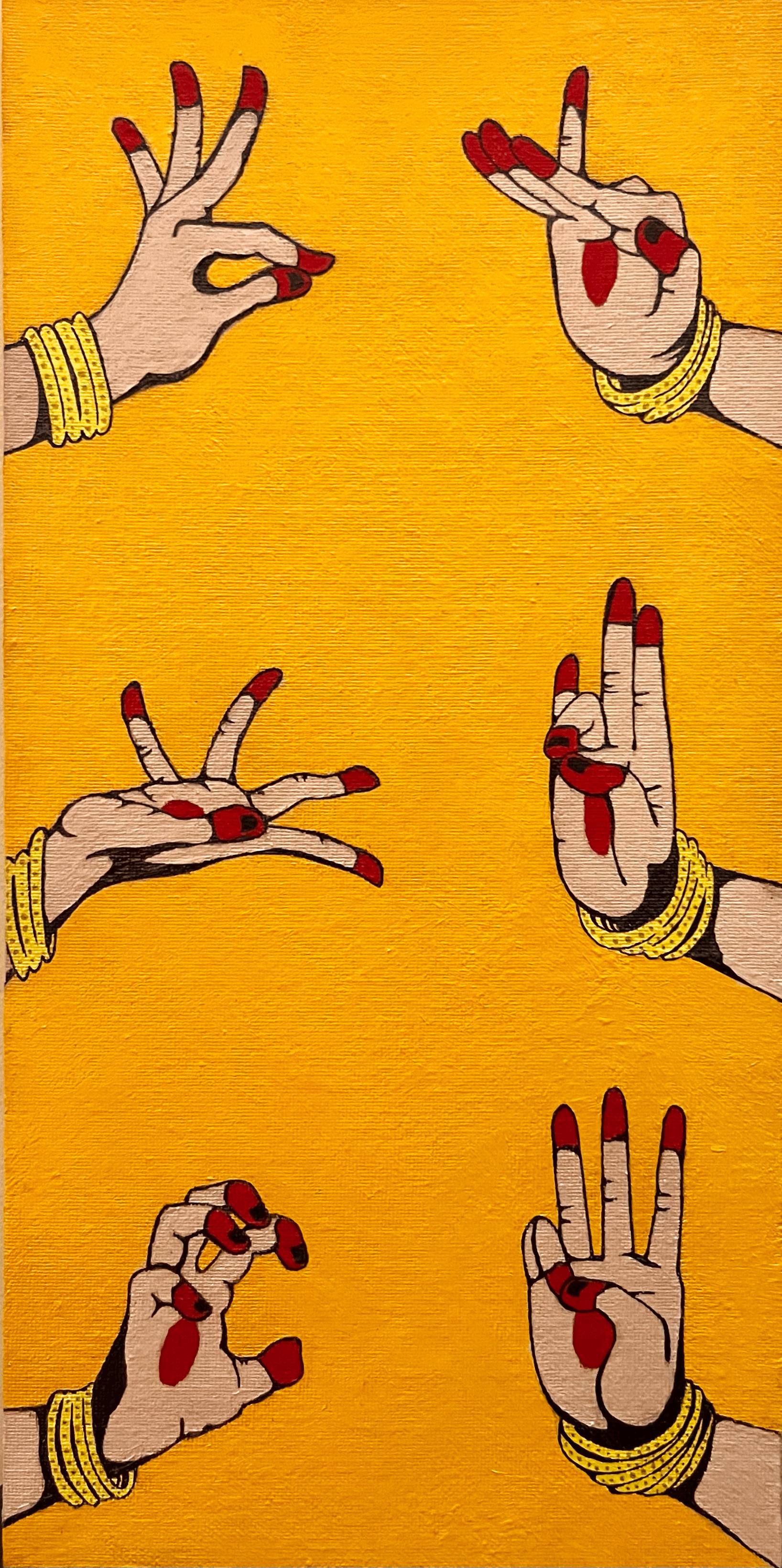
Mia Chen
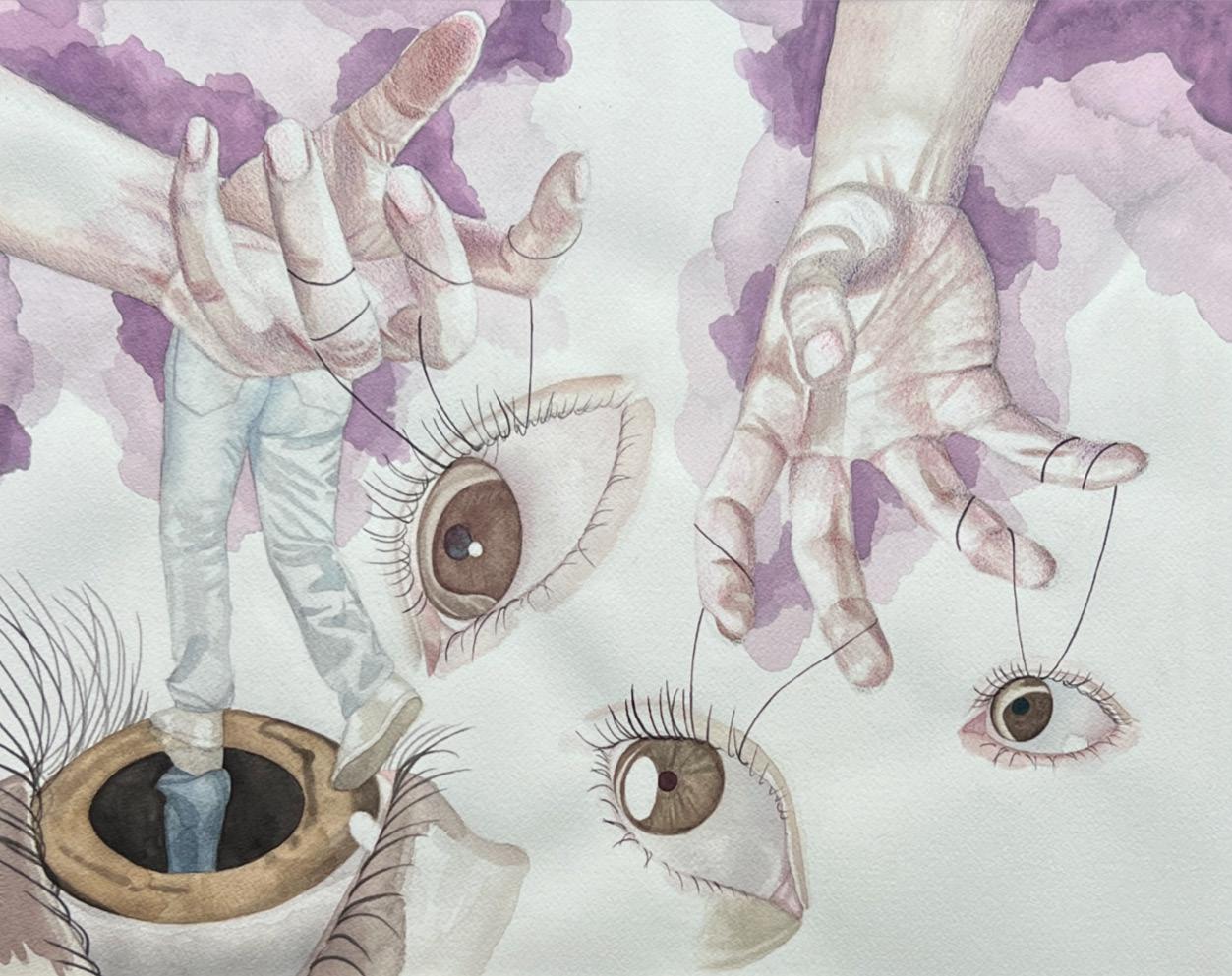
My wallet, my keys, my phone, hair ties, The remote, my glasses, single socks, Expensive headphones, those cheap ones from by the register,
My grandmother’s old golden ring with a pretty blue gem, My passport one hour before I was supposed to be on the plane, A button from right off my the first skirt I bought myself,
Lunchboxes, backpacks, my youth, One earring, my virginity, school papers, stuffed animals, Daisy chain crowns I made with other girls at recess,
Gifts from people I love, friends, family, Strength, color, sleep, a shocking amount of hair, The book my mother gave me about staying positive,
My train of thought, my way, my memories, My money, my confidence, my voice, My sanity, my spark—
My dad used to tell me I should write a book on the art Of losing and misplacing And he’s right.
I’ve had to change the locks a few times.
Elliot Schrag
Winter Wyman
When I clean out a child-sized grave I think about you.
Trowel in hand, I sweep out dirt and clean the walls, Making it a presentable hole in the ground. It is just your size.
In another time I would have laid you here Directly on the dirt. There is no stone floor. I couldn’t have afforded to give you one anyway.
Perched over the grave, brush in hand, I look like a mourner
Hundreds of years too late And their bones look like
What your bones must look like by now, Somewhere buried deep in my mind.
When I pick up the child’s skull, Their bones now so light and fragile in my hands,
I think about how I couldn’t have carried you
In my arms to your resting place.
When you died, we were the same size then.
I couldn’t carry that weight
I couldn’t lay you on that dirt floor
And cross your arms over your body
And close the stone lid And let the earth take you.
When I photograph the stones marking the shape of the grave I think about you.
And how you were never given the dignity of a casket
How you will never have a grave marker
How there will be no physical remains
For some future archaeologist to dig up And lovingly wash in a basin.
No body to be held once more
No bones to be acknowledged as having any significance.
Sitting in this ancient gravesite I remember you.
I wish I could have allowed you the mercy of a quick death
And the grace of a beautiful resting place,
Even if it was only a stone grave With just a dirt floor. Instead, you died for years. I watched you And saved myself Until you eventually disappeared. But maybe, somewhere in my mind, I will hold you.