
6 minute read
Better Waterbodies, The Natural Way

Lauren Haydon, Scott Van Egeren and Amy Kowalski
Lauren Haydon is the watershed protection coordinator for the DNR, and Scott Van Egeren is a DNR lakes biologist. Amy Kowalski is a communications specialist for Extension Lakes, UW-Stevens Point.
The health of our lakes, rivers, shorelands and wildlife are inescapably linked. Natural shorelines not only support a thriving ecosystem, but help hold soil in place, intercept and filter stormwater runoff and provide scenic beauty.
In Wisconsin administrative code, the shoreland buffer is defined as the zone of vegetation that extends inland from the water’s edge (ordinary high-water mark) at least 35 feet. This near-shore habitat supports various needs for 90% of aquatic species and 70% of terrestrial species at some point in their life cycle, including food, habitat, breeding and nesting.
Development of shorelines has led to the loss of trees and shrubs, fewer logs in shallow water areas and a decrease in nearshore aquatic vegetation, especially emergent and floating leaf plants. In turn, populations of frogs, songbirds and species of small fish have declined, as have gamefish growth rates.
The volume of water that runs off into lakes and rivers is much greater from developed shorelines compared to shorelines with intact natural vegetation. This leads to increased sediment and nutrients entering waterbodies, which can negatively impact water quality.
In response to growing requests from residents and partners, the DNR launched Healthy Lakes & Rivers in 2015 to reduce barriers and streamline processes for protecting and restoring the health of Wisconsin waters.
Ten years later, success stories related to the program abound.
DIY Improvements
The mission of Healthy Lakes & Rivers is to protect and improve the health of our waterbodies by increasing shoreland property owner participation in habitat restoration and runoff and erosion control projects. HLR employs five simple and inexpensive best practices to achieve its goals:
fish sticks (clusters of trees placed in the water to create fish and wildlife habitat)
native plantings (350 square feet)
diversions (to prevent runoff from getting into the waterbody)
rain gardens
rock infiltration
HLR supports shoreland property owners who want to take a do-it-yourself approach to improving the health of their waterbody. The program provides self-evaluation tools, fact sheets and technical guidance documents that offer step-by-step instructions for each best practice.
Local partners like lake and river organizations, municipalities and tribal governments may apply for DNR Healthy Lakes & Rivers grants on behalf of shoreland property owners. Thanks to the efforts of local grant sponsors throughout Wisconsin, more than 1,100 landowners across 205 waterbodies have received funding assistance to install HLR best practices since the program’s inception.
Early adopters of Healthy Lakes & Rivers practices were primarily “lake group leaders who were showcasing practices on their own properties, leading by example,” said Pamela Toshner, a founding HLR team member and DNR water resources supervisor.
Over the years, feedback from partners and grant participants has highlighted a key theme — creating Healthy Lakes & Rivers practices is contagious! Often, it takes just one person to start embracing a natural shoreline buffer or to display an HLR grant sign on their shore to start a chain reaction.
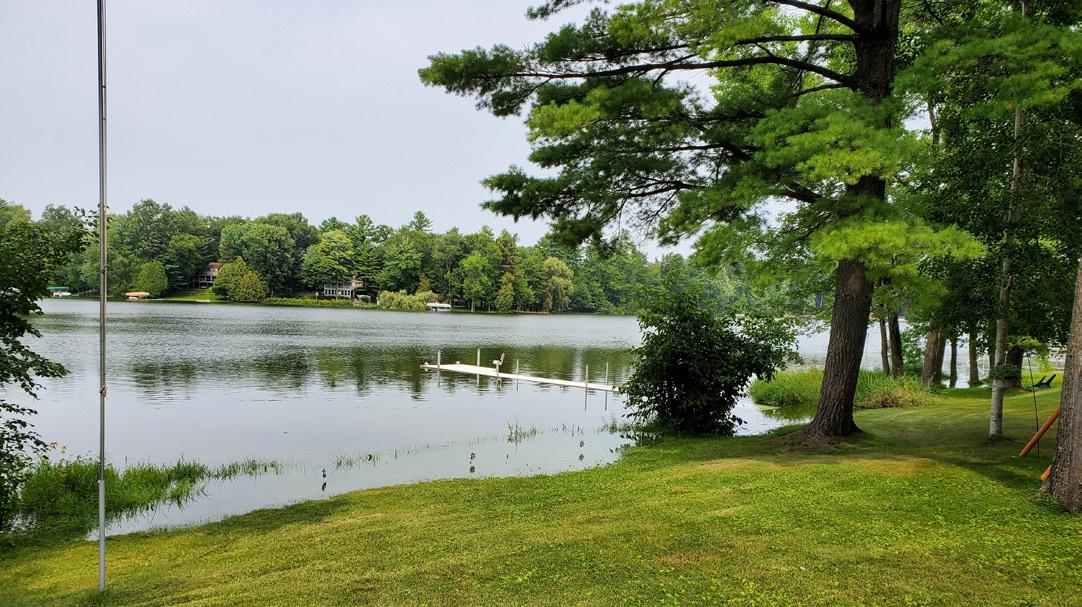
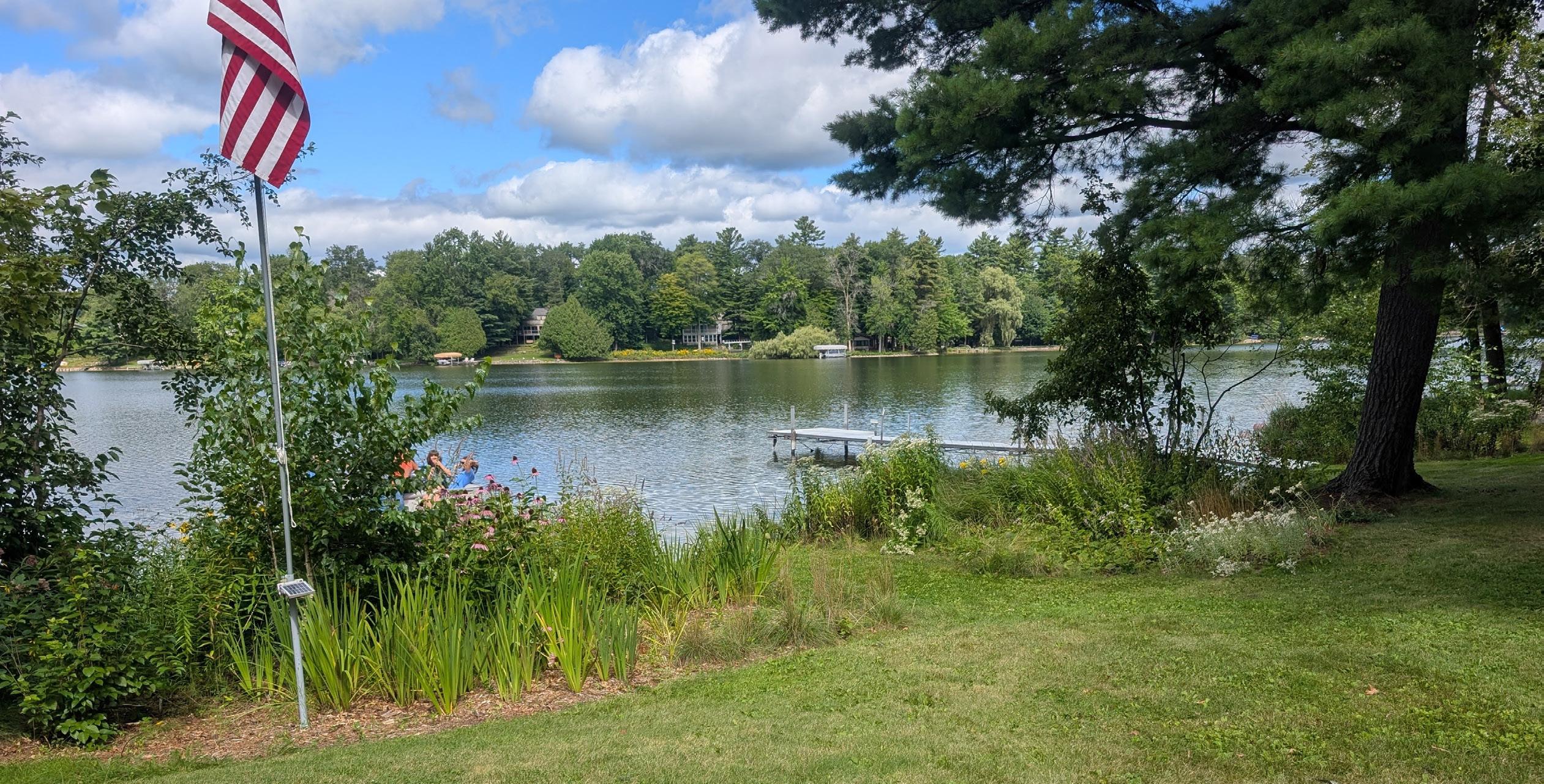
Healthy Lakes & Rivers has helped Kathy and Dave Littlejohn create a more natural shoreline for their property on Long Lake in Shawano County, as shown in these before-and-after images.
Celebrating Success
Every year, the HLR team plans a series of site visits to meet with grant recipients and celebrate their project successes.
In August, for example, HLR team members toured Long Lake in Shawano County, along with representatives of the Waterways Association of Menominee and Shawano Counties. WAMSCO president Shanda Hubertus led the tour to highlight fish sticks and several shoreline native plantings.
Kathy and Dave Littlejohn were among the Long Lake property owners who had reached out to WAMSCO for guidance on restoring their shoreline. Historically mowed to the water’s edge, it was actively eroding into the lake.
When presented with the opportunity to receive an HLR grant, the Littlejohns were interested. But they “definitely needed to have (their) kayak launches,” they said, and space for their grandkids to play.
Once assured that the native planting grant requirements would meet their needs, the Littlejohns were in, considering HLR to be a “win-win” solution for their shoreline erosion.
Three years later, their native plantings are thriving. Along with an improved shoreline area, the Littlejohns are noticing other benefits.
“(We’re) seeing quite a few hummingbirds around and had lots of butterflies this year,” Kathy Littlejohn said. “I don’t think a lot of people realize how special the natural lakes are in Wisconsin.”
When asked why others should consider participating in HLR, the Littlejohns talked about their desire to have their lake “be there for our kids and grandkids” to enjoy.
Partnerships At Work
Healthy Lakes & Rivers is a partnership of the DNR, Extension Lakes, the Wisconsin Lakes nonprofit organization and local boots-on-the-ground partners. Representatives from each of these groups serve on the Healthy Lakes & Rivers team and share responsibilities for grant administration, communications, partnership building, technical guidance and other duties.
This unique collaboration puts a strong emphasis on maintaining and growing a strong network of property owners, businesses and local organizations to serve as program ambassadors. HLR offers a variety of resources to support local outreach, engagement and shoreland health projects.
Cost-Share Grants
On a year-round basis, the DNR’s Surface Water Grants program provides cost-share grants of $1,000 per Healthy Lakes & Rivers practice (with a cap of $25,000) for eligible applicants. Grants typically cover most of a project installation expense and some technical assistance.
Eligible shoreland properties include land within 1,000 feet of a lake’s ordinary high-water mark, or the greater distance of 300 feet to a river or the landward side of a floodplain. For grant information, interested shoreland property owners should contact their lake or river organization or their county.
Score Your Shore
Want to know more about the health of your lake or river property and how you can improve it? The HLR Score My Shore online evaluation tool can help. Complete the survey to receive a unique score for your shoreland property and learn tips on how you can help improve habitat and water quality.
Learn More
For details on Healthy Lakes & Rivers, including numerous resources and the online tool to score your shore, visit the Healthy Lakes & Rivers website.
