
5 minute read
Species On The Rebound: Why There's Cautious Optimism For The Sharp-Tailed Grouse

Daniel Powell
Daniel Powell is a communications specialist for the DNR’s Wildlife Management program.
This fall, for the first time since 2018, Wisconsin allowed a limited hunt for sharp-tailed grouse. While this was great news for hunters, it also should be viewed as a win for habitat conservationists and bird lovers everywhere.
Once widespread across much of Wisconsin, sharptailed grouse are now only found in the Northwest Sands region of the state along the border with Minnesota. As most of their habitat was converted to agriculture and urban uses or lost due to fire suppression, this region’s relatively open landscape became the last stronghold of the bird.
Known as “pine and oak barrens,” the ecosystem of the Northwest Sands region once comprised around 7% percent of Wisconsin’s landscape. Historically, the sandy soil, left by outwash of melting glaciers, provided a habitat that hosted growth of prairie grasses and forbs, low-growing shrubs, sedge meadows and trees like pin oak and jack pine.
This scrubby landscape also burned regularly, keeping trees from reaching maturity. The wide swath of young “early successional” forest created by frequent fires was the perfect habitat for sharp-tailed grouse, upland plovers and other fire-dependent species.
Habitat History
Around the turn of the 20th century, much of this landscape was converted for agricultural use. But adverse growing conditions led many farmers to abandon this region in the 1920s and ’30s, and many of these lands ended up in the hands of surrounding counties.
Much of the area was often left to mature into mixed, unmanaged forests or planted with red and white pine and designated for timber sales. As early as the 1940s, hunters and conservationists acknowledged a steep drop in sharp-tailed grouse populations, and piecemeal conservation work was started in the region.
In 1946, the state of Wisconsin purchased 12,000 acres of tax-delinquent land and started the Crex Meadows Wildlife Area. In 1956, the state acquired 5,700 acres from Burnett County and established the Namekagon Barrens Wildlife Area.
The properties were removed from timber rotation, cleared and returned to a more regular prescribed fire regime. Over time, the state continued to acquire more land parcels in the region. Surrounding counties also began converting timber holdings to more barrens-like cover.
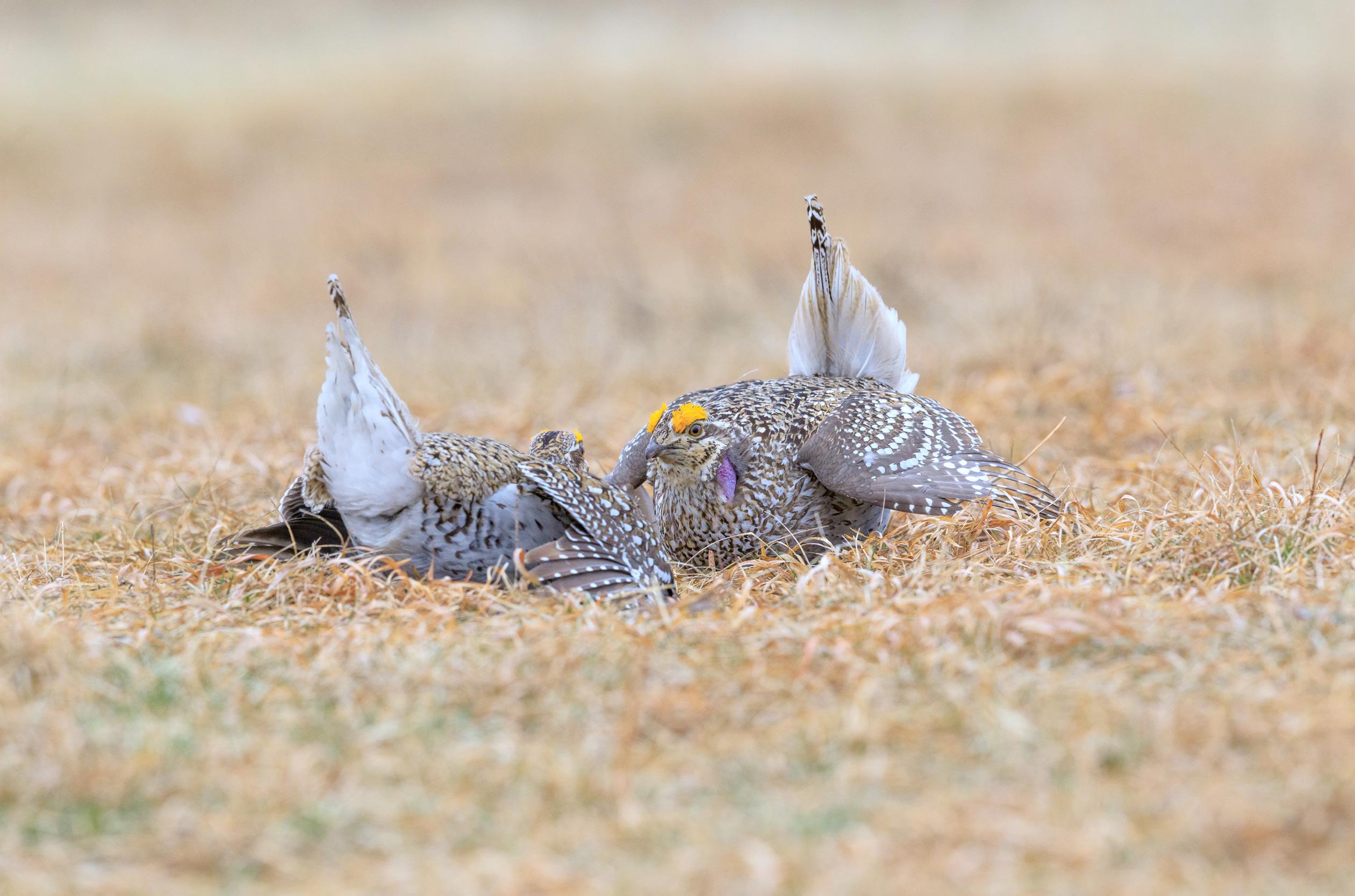
This cooperative work created a mosaic of favorable sharp-tailed grouse habitat.
Population Plummets
Conservation work went far beyond foresters and biologists at the state and county levels. A host of concerned parties, including the U.S. Fish and Wildlife Service, regional tribes, wildlife organizations, Friends Groups, timber companies and private landowners continued to reshape the landscape.
Still, the historical fragmentation of habitat and lack of the large-scale fire disturbances needed to manage the landscape continued to hamper the rebound of the sharp-tailed grouse.
Considered area-sensitive, sharp-tailed grouse require large open blocks of contiguous habitat. Even with significant work being done in multiple locations on the ground, the birds were unable to move between properties. Population numbers continued to fall.
By the late 1990s, it appeared the sharp-tailed grouse population had entered what biologists feared was an extinction vortex. This perfect storm of catastrophic events on a small, fragmented population seemed dire.
By the mid-2000s, the state was approaching the sharp-tailed grouse hunting season with caution. Following the 2018 season, hunting of the species was paused in Wisconsin.
In early 2019, the Wisconsin Natural Resources Board approved the Northwest Sands Regional Master Plan, a comprehensive plan focused, in part, on restoring and connecting pine and oak barrens via “stepping stones” to address the lack of contiguous habitat facing sharp-tailed grouse.
Despite the many conservation measures on behalf of the sharp-tailed grouse, population numbers from a core group of managed public properties and private lands hit an all-time low in 2021.
Numbers Slowly Rebound
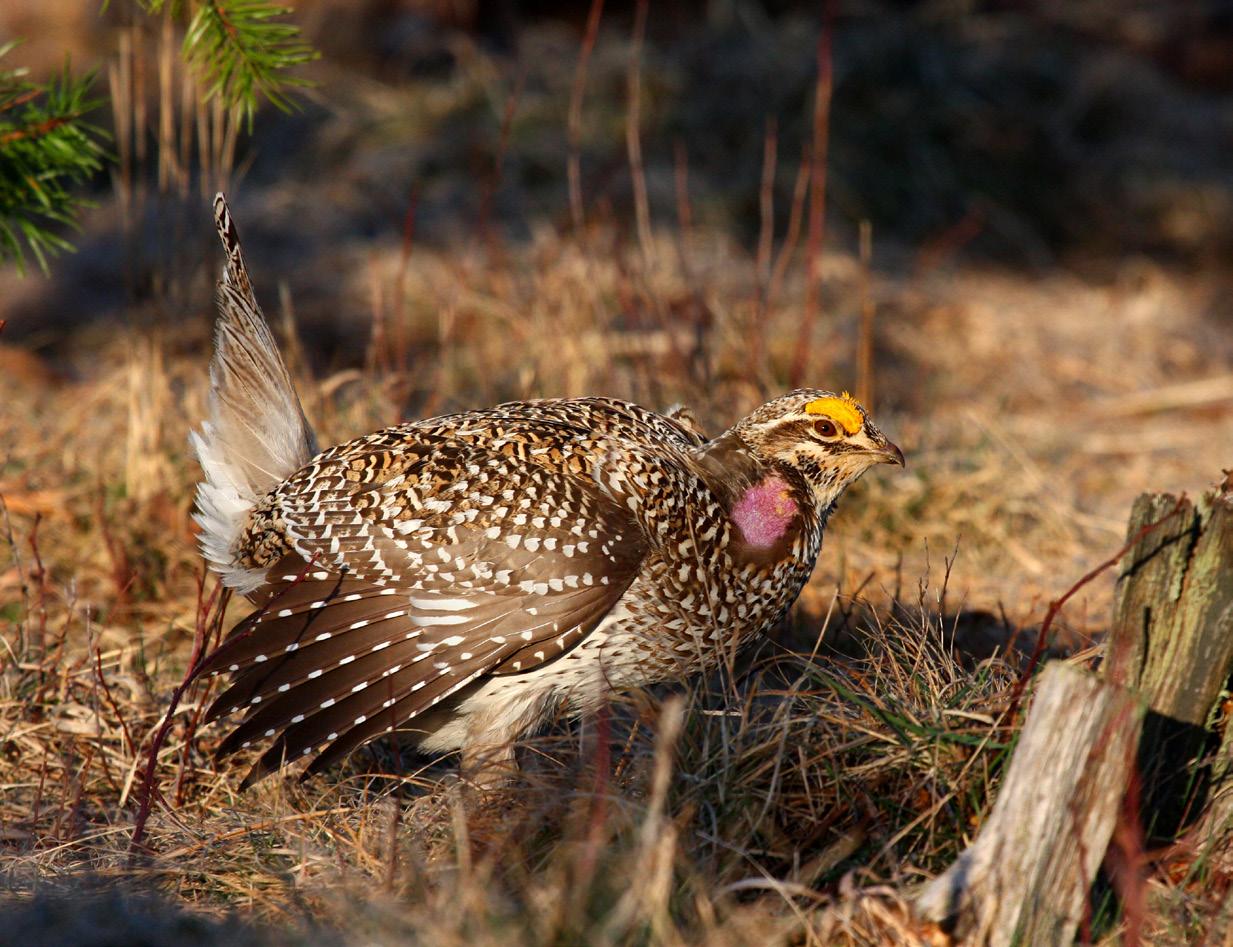
The state’s Sharp-tailed Grouse Advisory Committee continued to assess lek surveys (data from the bird’s mating grounds) to determine population numbers. Habitat work at the landscape level — such as focused rotational prescribed burns at Crex and Namekagon wildlife areas — also continued, and the hunting season remained closed.
Slowly, something interesting has happened. In 2025, for the fourth consecutive year, population numbers of the sharp-tailed grouse have increased.
In fact, 2025 numbers represent a 7% increase over the previous year, the largest year-over-year uptick since 2010. Earlier this year, the Sharp-tailed Grouse Advisory Committee agreed that numbers had risen enough to support a limited hunt.
“The committee used several criteria to evaluate whether the population could support a hunt,” said DNR wildlife biologist Bob Hanson, who has worked on sharp-tailed grouse projects for years.
“We looked at lek numbers, winter survivability, nesting and brood-rearing success, weather forecasts and habitat metrics. Based on the population response we’ve been seeing, the metrics considered were all satisfied.”
The data suggested the sharp-tailed grouse population “was large enough again” to allow limited fall hunting, Hanson added.
Awareness And Optimism
Along with sharp-tailed grouse numbers, interest in the imperiled species also has grown. In 2016, 148 hunters applied for the chance at 25 permits. The last year before the pause on the sharp-tailed grouse season, 205 hunters applied for the same number of permits.
This summer, when the DNR again opened a limited hunt, around 800 hunters applied for a chance at just 12 permits.
Opening the sharp-tailed grouse lottery has generated a spike of awareness and income that can be turned right back into habitat work. And the Sharptailed Grouse Advisory Committee is cautiously optimistic that numbers can further rebound.
“I hope to see the population numbers continue to climb,” Hanson said. “As we continue creating new barrens habitat and connecting habitat segments within a fragmented landscape, we should continue to see the population increase.”
Learn More
For details about hunting of sharp-tailed grouse plus a link to species management information, visit the DNR website.
