
9 minute read
Make Way - And Home - For Ducklings

Story and photos by Jeff Bahls
Jeff Bahls is a wildlife technician at Horicon Marsh State Wildlife Area and president of the Horicon Marsh Bird Club.
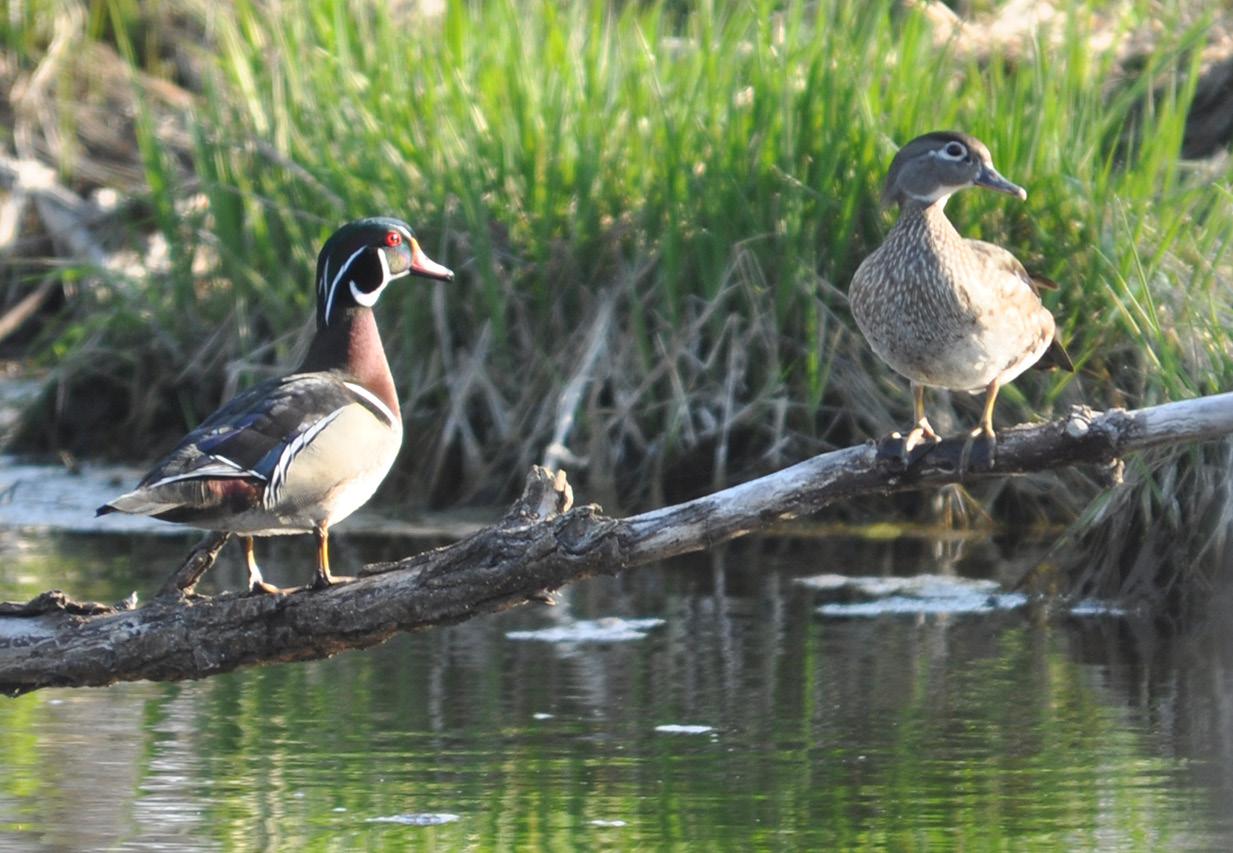
The wood duck (Aix sponsa) is the most colorful duck and one of the most spectacular birds in Wisconsin. A favorite of waterfowl hunters and bird enthusiasts alike, it is now abundant throughout the state.
That was not always the case. A century ago, market hunting, along with logging of the trees that wood ducks depend on for nesting habitat, nearly wiped them out.
When the Migratory Bird Treaty Act became federal law in 1918, it made it illegal to kill, capture, sell, trade or transport any migratory bird — such as wood ducks — or harm their nest or eggs without a permit. In addition, the wood duck hunting season was closed and remained closed until 1941.
Fortunately, conservation-minded individuals also began to think “outside the box” to aid this species. Recognizing that wood ducks were losing their nesting habitat, they developed an interesting idea: What if we were to make artificial nest cavities and place them in the right habitat?
Dedicated waterfowl research pioneers like Art Hawkins and Frank Belrose climbed into known wood duck nesting trees. They measured hole size, cavity depth and diameter. They made 100 boxes and placed them in floodplain forests.
Wood ducks quickly used the boxes, and the wood duck nest box was born. After a few improvements along the way, we have a very successful tool that can help boost wood duck numbers.
Placement Details
Wood ducks, which make their homes in cavities, can nest up to 2 miles from water. Luckily in Wisconsin we have an abundance of creeks, streams, rivers and ditches that can be habitat for wood ducks. So what are these birds looking for when it comes to nesting?
As far as location, they need a spot that’s easy to access and safe from predators, preferably with a woodland component. Floodplain forests, stream corridors, lakes, ponds and even suburban yards can work, if conditions are right.
A box mounted on a pole with a predator guard is key to successful nesting. This was one lesson learned from early trials. Yes, birds will use boxes placed on trees, but so will everything else, including raccoons, squirrels and various other nest competitors or predators. A pole with a guard is a must!
The box must have a clear flight path to and from the box, with no branches or leaves covering the hole. Hen wood ducks want to come and go from the box as quietly as possible.
Locate boxes 5–10 yards from a tree, as squirrels can jump quite a distance. This distance includes overhanging branches — keep the nest box away.
Monitor The Box
If placing nest boxes in your yard, locate them where you can see them from your house. It’s always a bonus if you can see results, but don’t be discouraged if you don’t see action right away. Birds can come and go very early in the day and want to keep the nest location a secret from competitors and predators.
Wood ducks start looking for nest sites when they return from winter areas as open water becomes available. Make sure your wood box nests are in place just about the start of spring.
The first wood duck eggs can be laid around April 1 in southern Wisconsin. (Hooded mergansers, also cavity nesters, lay their eggs about 7–10 days earlier than wood ducks.) Hens lay one egg a day until their egg-laying is complete.
For about the first six eggs, hens will bury the eggs. Adding material such as wood shavings or pet bedding to the bottom of your nest box accommodates this practice in the beginning. After that, hens will start adding down from their breast to cover eggs once they start to incubate.
An annual clutch in a wood duck nest box will be about 12–16 eggs, sometimes more. New research has shown that nearly every box has eggs from multiple hens.
Also, hens will lay in multiple boxes, possibly as a way to provide genetic diversity and ensure at least some of a hen’s genes get passed along. It’s like the old saying, “Don’t put all your eggs in one basket.”
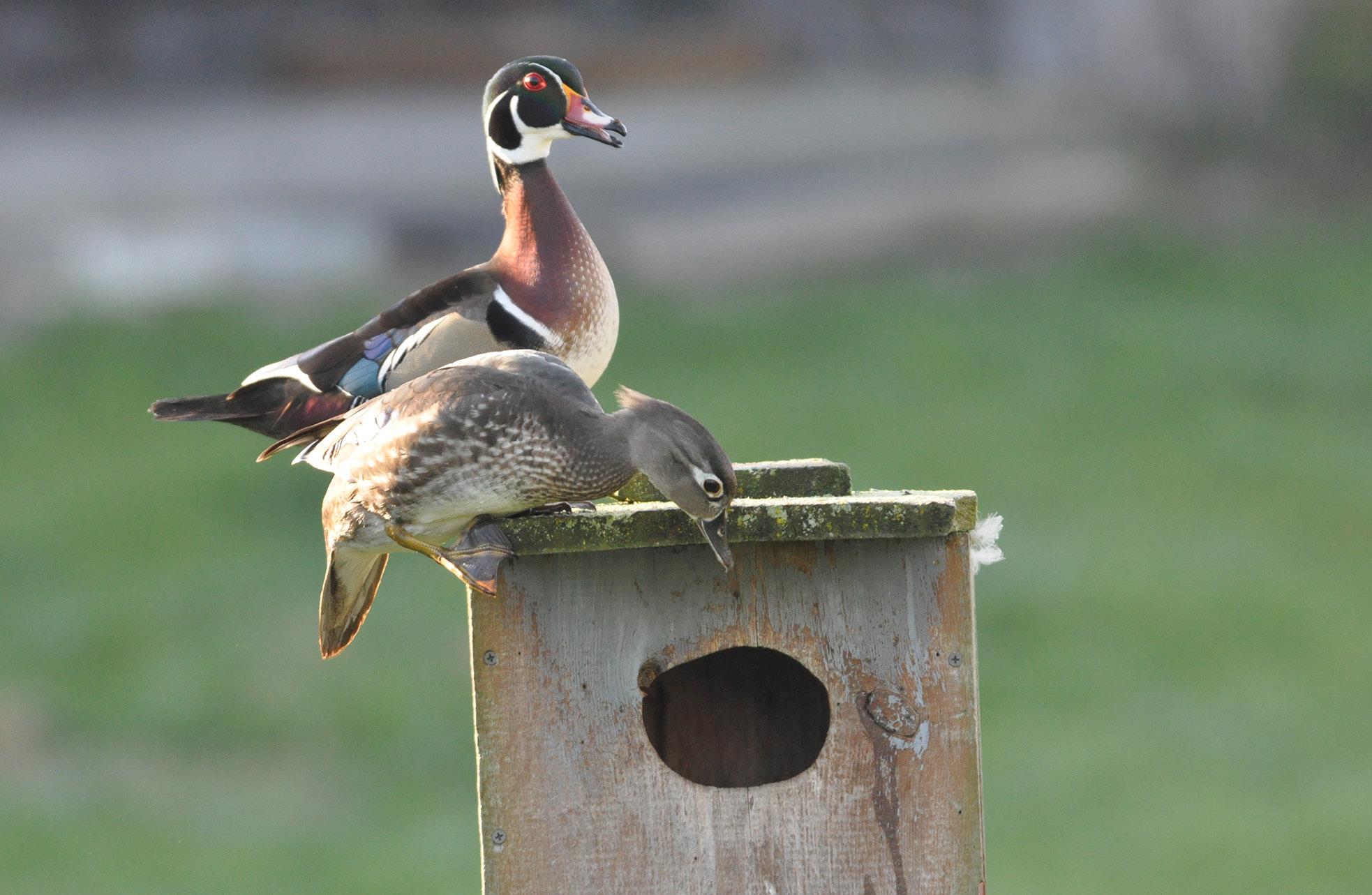
Nest boxes can be monitored with a cell phone camera — just put the camera up to the hole and take a picture. If a duck is present, back off and leave them be; if not, it’s safe to open the nest box and look for or count any eggs.
Pro tip: Do your monitoring in the afternoon, as most egg-laying takes place in the early mornings. This means less disturbance to the hens.
Time To Hatch
Wood duck eggs incubate for approximately 30 days. Cold weather, the amount of time a hen is off the nest (they take two breaks a day, morning and evening) and large clutches can affect hatching time.
Once pipping — the process of the baby bird breaking out of its egg — has started, hens will “talk” to the eggs. Hatching takes about 24 hours.
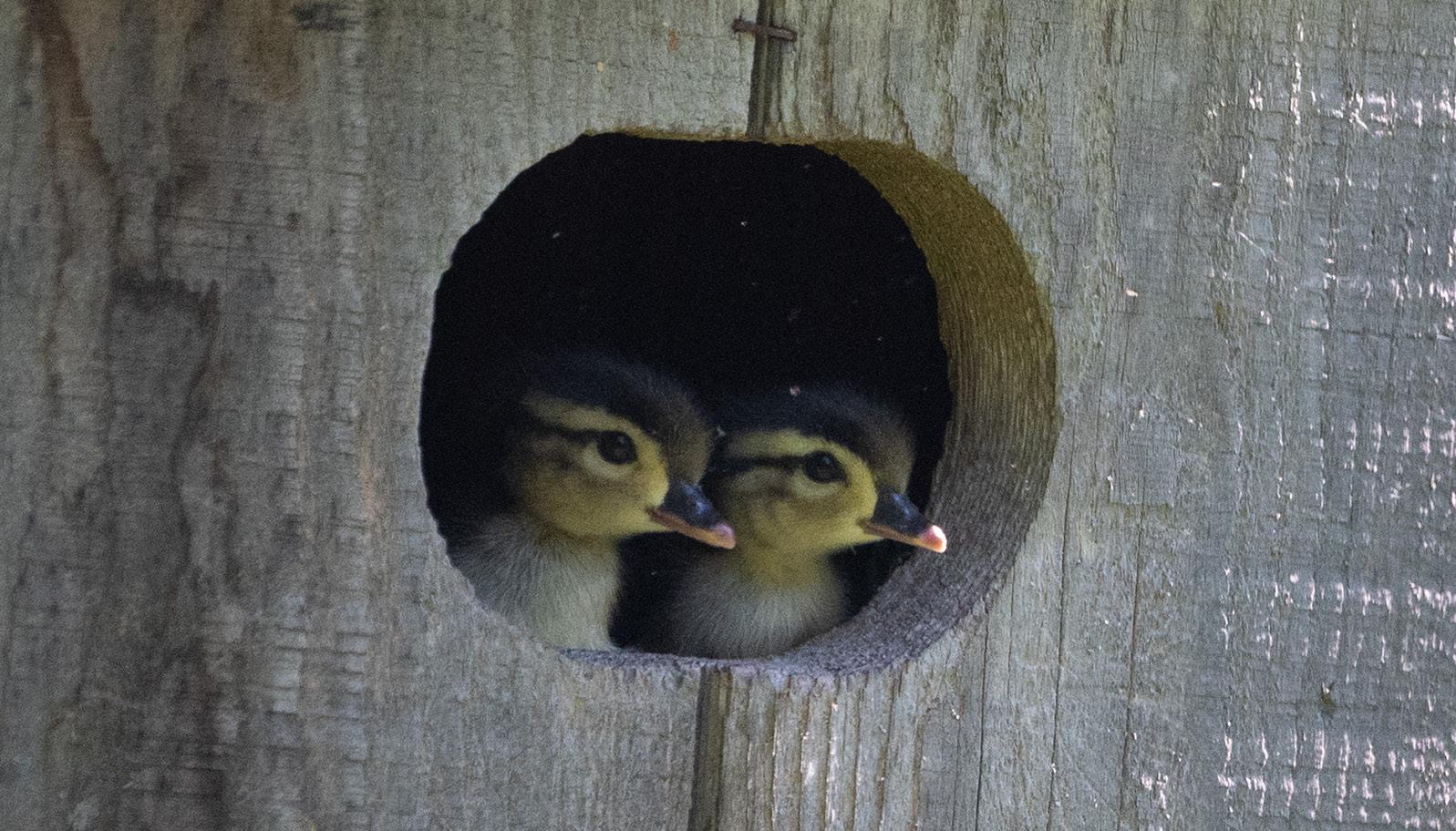
The ducklings then spend about another 24 hours in the nest box before it’s time to leave the nest.
The Jump
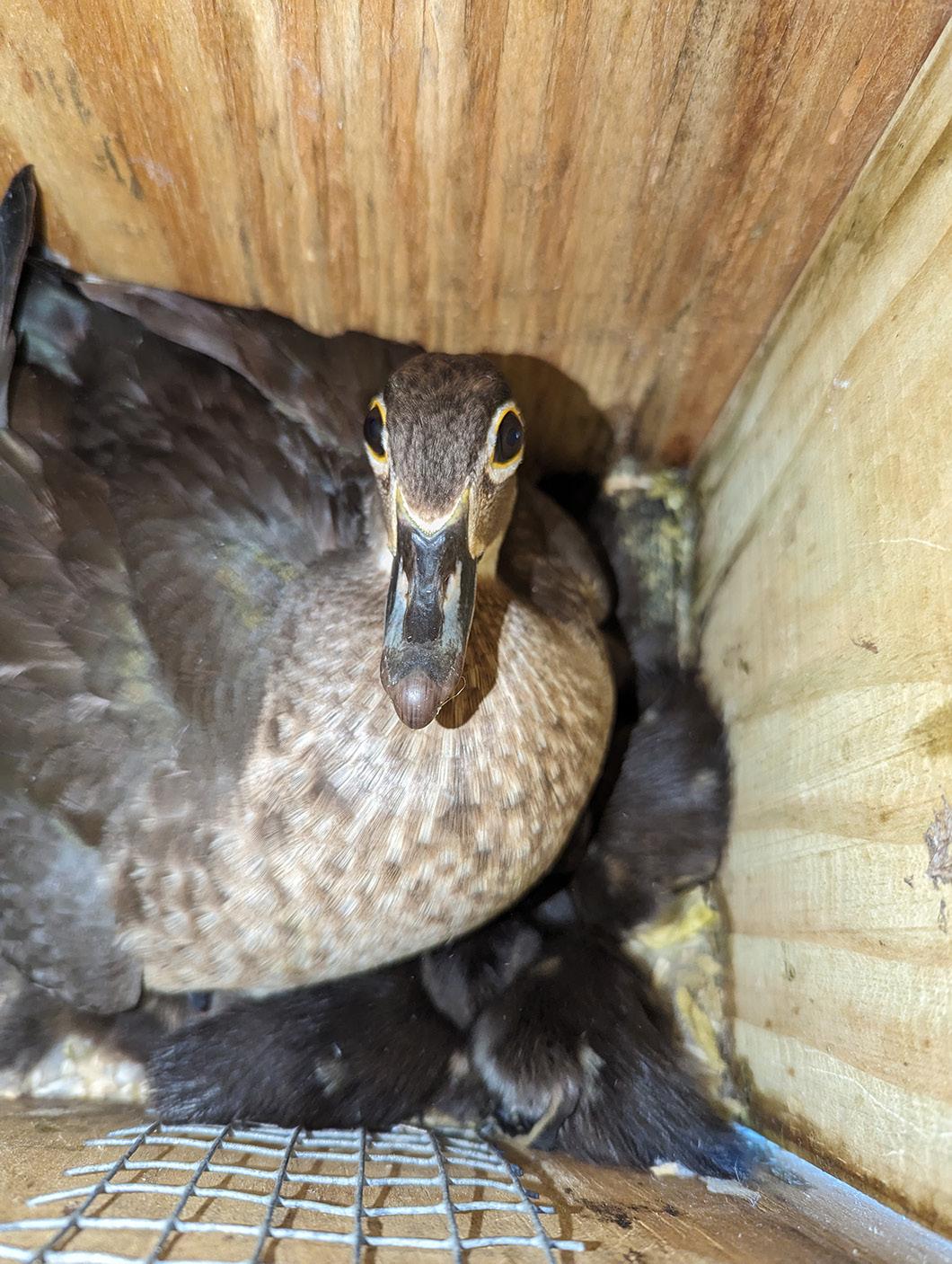
It’s a big day when the ducklings leave the nest, as they must jump from the nest box to the ground below. Calculating incubation, pipping and post-hatching times can help estimate when this will happen.
As far as the jump itself, the timing is typically mid-morning, though it really can vary from first thing in the day to early afternoon. Each hen is different in their approach. Some leave the box early in the morning — like they would on any other nesting day — presumably to scout the route; some stay in the box with their brood.
All hens will look out the box opening to spot potential predators. Some peek out and return inside the box multiple times, while others keep steady watch and wait, slowly moving their head to scan the area. Still other hens might look out for a minute or two and proceed.
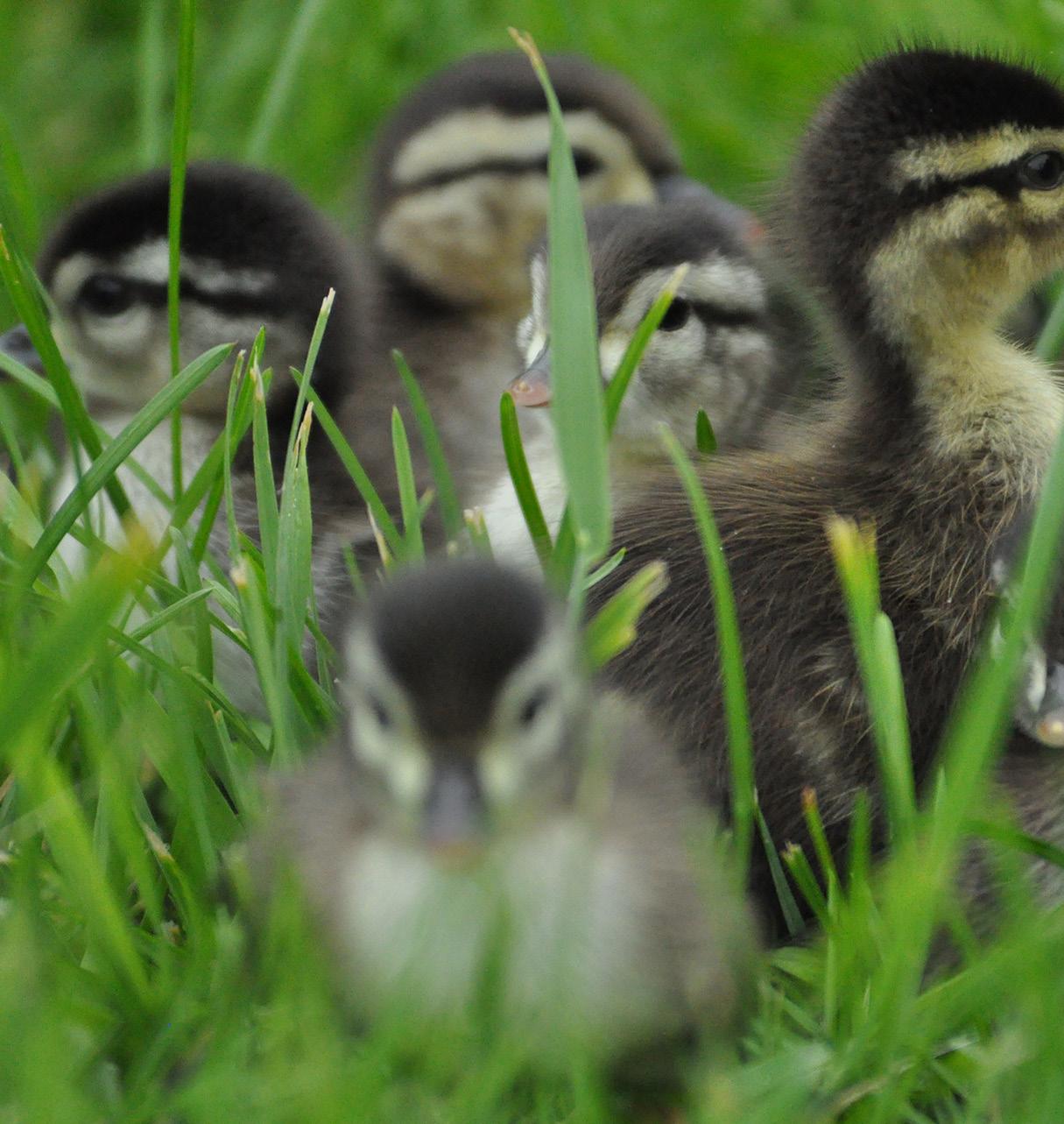
Once the hen is satisfied it’s safe for the ducklings to exit, she will fly down and start calling to them. Ducklings begin peeping back and soon emerge, leaping from the nest box and running immediately to the calling hen.
The hen listens carefully until all the ducklings have jumped, then leads them to water. It only takes a couple of minutes for all the ducklings to make the leap and begin their new life.
Building A Wood Duck Nest Box
If you have the right habitat location, installing a wood duck box can help these beautiful birds with their nesting needs. Here’s what to know.
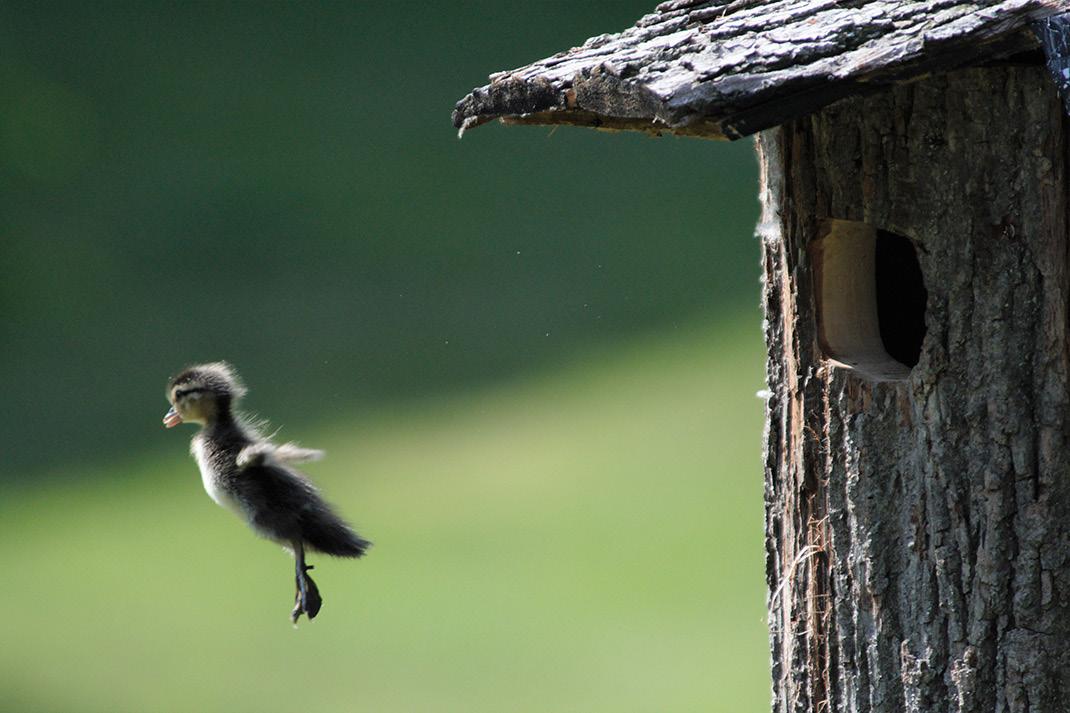
Size: This need not be exact, but a good size to aim for is 10 inches wide by 8 inches for the sides, with a height of 22–24 inches (using 1-inch cedar boards is recommended). The hole size on the front is more specific and should be 3 inches high and 4 inches wide, the minimum needed for a wood duck hen to enter, or slightly larger.
Must-haves: All boxes require a few specific elements.
Side or top that opens for cleaning the box.
“Ladder” for ducklings to climb out of the nest and up to the box opening when they’re ready to leave the nest. Pieces of hardware cloth or plastic gutter guard stapled to the front inside of the box just below the hole work well, or use a saw to make kerf cuts in the wood as toeholds.
Nest material for the box. Wood ducks do not bring in any nesting material (a natural tree cavity will have decaying wood inside for this purpose). Add wood shavings or use pet bedding, sold for rabbits, chickens and guinea pigs. Keep it about 3-4 inches deep, or enough to bury an egg.
Installation: The nest box should be mounted on a metal pole or wooden post about 6-8 feet high, which will allow access for maintenance and monitoring. For the post, use a 10-foot section of pipe or pole, buried about 2 feet deep for stability.
Predator guard: This is a must when placing the nest box. Several types of predator guard can be made and attached to your mounting pole, including a metal or PVC pipe guard, a sheet metal cone or a steel sheet “sandwich.” If using a wooden post, it must be wrapped with aluminum trim coil to prevent raccoons and squirrels from climbing the post and making it past the predator guard.
Post-jump: Give some thought to where the wood ducks will go after the ducklings leave the nest. If you have a new pond or a spot that is bare around the shore, having a couple of logs, large branches or rocks that stick out of the water will give the ducks a resting area. Brush piles at the water’s edge also can enhance the pond by providing cover to ducklings and the macroinvertebrates on which they feed. Turtles, frogs and other birds will benefit, too.
Building plans: Ducks Unlimited has additional information about wood duck nest boxes, including detailed plans for building, installing and maintaining a box and adding the all-important predator guard. Scan the QR code or check dnr.wi.gov/tiny/3966.
Learn More
Horicon Marsh Bird Club will hold its annual Nest Box Seminar from 8 a.m. to noon on March 7 at the Horicon Marsh Education and Visitor Center, N7725 Highway 28 in Horicon.
Talks and displays will include information on wood ducks, bluebirds and other cavity nesting creatures. Learn from the experts to make your boxes “pro-duck-tive!” For more about the Horicon Marsh Bird Club website for more information.
