
8 minute read
Veterinarians Of The DNR

Garrett Dietz
Garrett Dietz is a public information officer in the DNR’s Office of Communications.
When someone's pet gets sick, they might bring it to the vet. But with fish and wildlife, the story is a little different.
Most people don’t realize it, but the DNR employs three fully licensed and credentialed veterinarians: Dr. Lindsey Long, Dr. Danielle Godard and Dr. Nicole Nietlisbach. The vet team is responsible for ensuring the population health of Wisconsin’s fish and wildlife species.
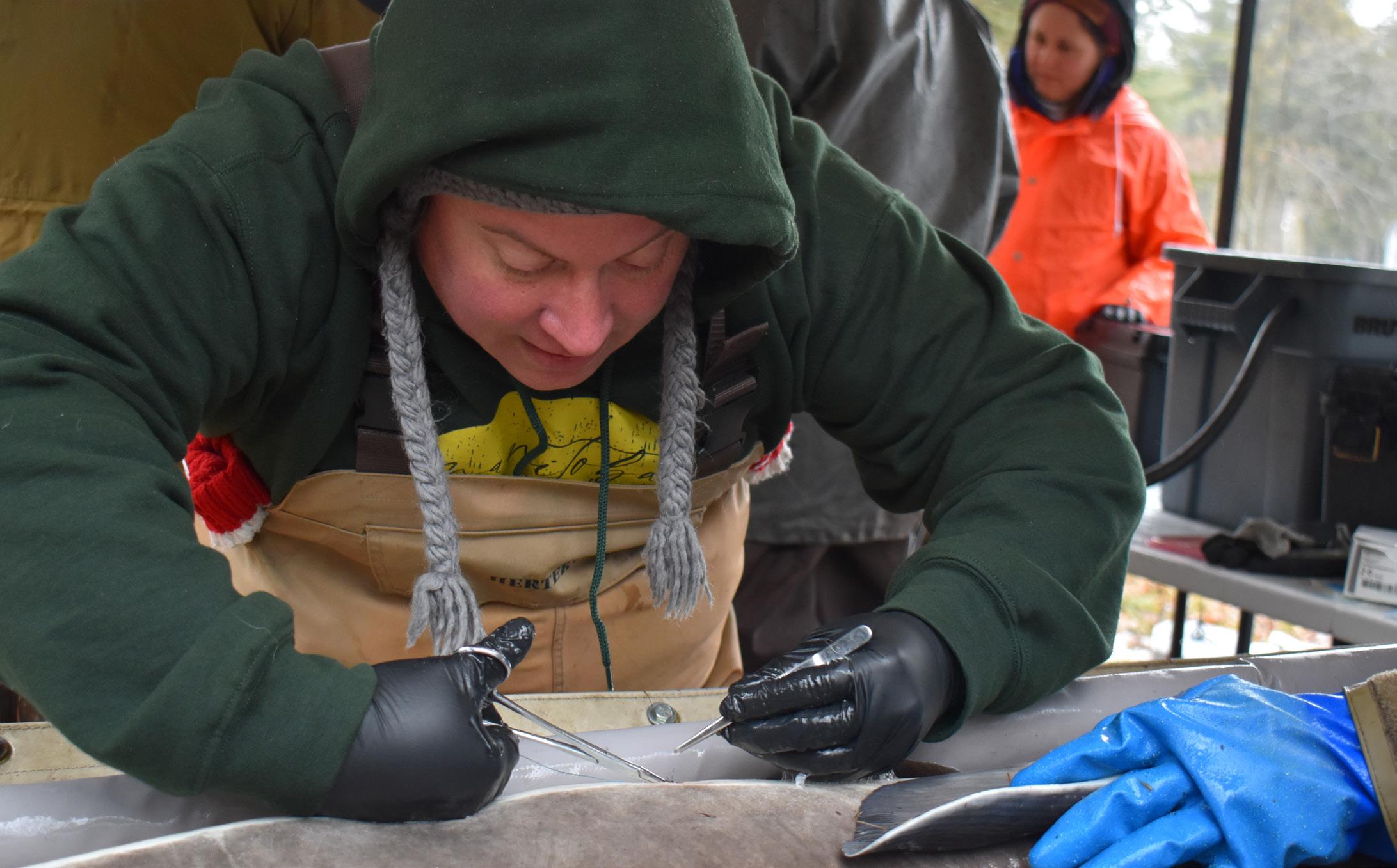
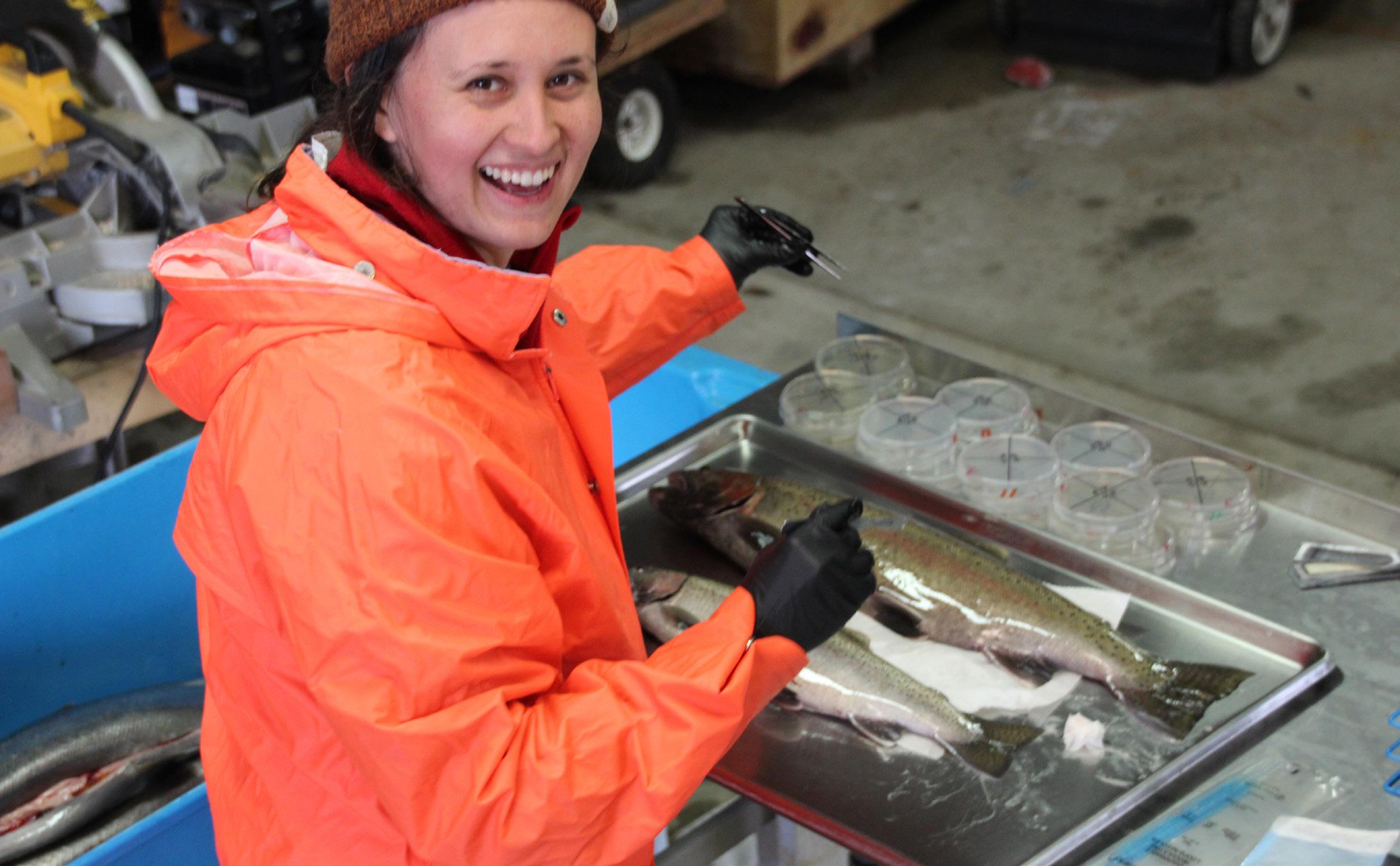
If it sounds like a big task, that’s because it is. Godard and Nietlisbach, along with a technician, are responsible for fish health in Wisconsin. They do everything from health inspections at DNR hatcheries and rearing facilities to investigating fish mortality events, monitoring broodstock populations, assisting in researching new viruses and diseases, educating the public and training both DNR fisheries staff and the next generation of veterinarians.
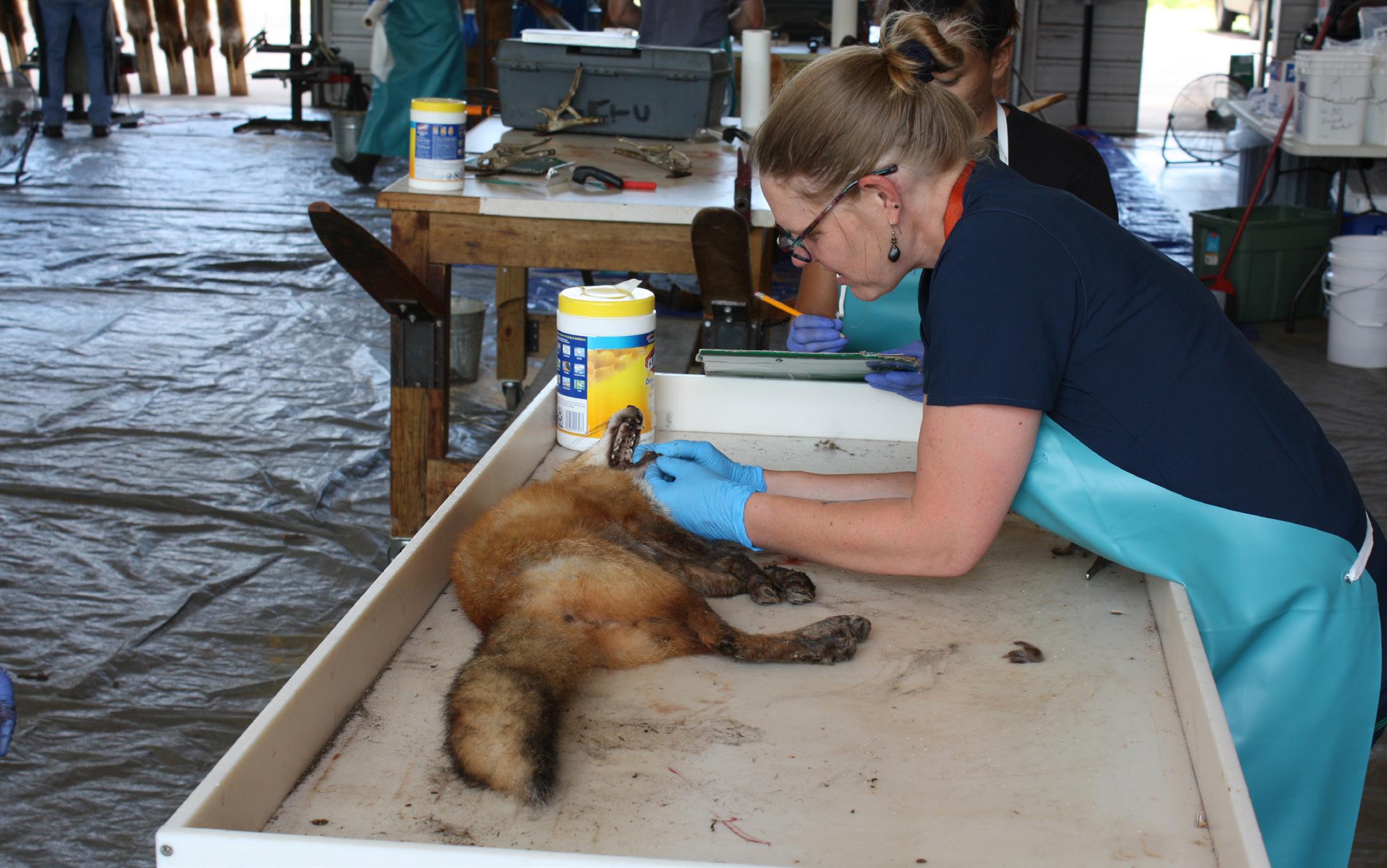
Long, on the other hand, does all things wildlife. Her position is incorporated into the DNR’s Wildlife Health section, where she and other team members oversee wildlife health and disease monitoring, staff training and morbidity and mortality investigations.
She also sets standards and trains DNR wildlife staff on proper animal handling, oversees chemical immobilization (when drugs like anesthetics are needed to work safely with wildlife) and partners with DNR staff and other agencies conducting wildlife research projects.
An important role that all DNR veterinarians play is helping to write DNR policies, procedures and management plans. Their input in these plans helps to ensure that population health and wellness are embedded in the agency’s ongoing management work for specific fish and wildlife species.
Fish Hatcheries And Health
The DNR’s fisheries veterinarians spend a significant amount of time monitoring and certifying the health of fish being reared in the state, which includes surveillance testing on the broodstock from which eggs are collected. The veterinarians provide fish health services to more than a dozen fish hatcheries, egg collection facilities and rearing stations across the state.
The fish produced at these facilities are stocked into hundreds of Wisconsin waters, resulting in millions of fish for anglers to target each year. Stocking helps to boost fish populations where natural reproduction can no longer support the fishery, maintain or restore existing fisheries and increase recreational fishing opportunities.
The last thing anyone wants is for stocked fish to be carriers of diseases that could spread throughout Wisconsin’s waterways. That’s where Godard and Nietlisbach come in.
DNR veterinarians perform fish sampling, do site inspections and issue health certificates before movements of captive-reared and wild fish. They also work with hatchery staff to administer treatments or change rearing practices.
These interventions ensure that the fish being stocked in Wisconsin’s waters and the Great Lakes are healthy and free of regulated pathogens (small, disease-carrying organisms).
The veterinarians work closely with the state Department of Agriculture, Trade and Consumer Protection, the regulatory authority for fish rearing in Wisconsin, and other partners like the Great Lakes Fish Health Committee to ensure the DNR is taking all necessary precautions to monitor fish health.
Part of the work also involves surveilling for potential new diseases and monitoring wild populations for abnormalities.
“We are constantly looking at emerging fish health concerns, communicating with our partner agencies around the Great Lakes and expanding our testing parameters beyond just regulated diseases,” Nietlisbach said.
Wildlife Monitoring
Long is part of the DNR’s Wildlife Health section in the Bureau of Wildlife Management. She works on a little bit of everything that is not a fish, including mammals, birds and herptiles.
Long trains staff on safe handling practices, manages the immobilization program and assists researchers with sample collection.
“The ultimate goal is to minimize wildlife handling where we can,” Long said. “But when we have to handle wildlife, we want to make sure that we minimize risk to Wisconsin’s wild animals and staff, and that it is necessary and worth the risk.”
Another important consideration for Long is the ecological system.
“When we’re conducting wildlife sampling or using immobilization drugs, we need to be mindful that these animals are a part of a system and that what drugs we use can become part of that system as well,” she said.
“That means ensuring we consider secondary impacts and consumption possibilities, including through hunting, in our decisions.”
One collaborative effort Long is especially passionate about is the Great Lakes Eagle Health Project, a long-term study that has tracked reproductive success and a variety of contaminant levels in eagles across Wisconsin since 1990.
As the former chair and a current member of the Midwest Association of Fish and Wildlife Agencies’ Fish and Wildlife Health Committee, Long also works with other state, federal, industry and nonprofit partners on wildlife health issues.
One such collaboration resulted in the creation of the “Voluntary Best Management Practices for Reducing Unintended Ingestion of Lead Ammunition and Tackle Residues in Wildlife.” Long was part of the
subcommittee that generated this compilation of tools for hunters and anglers to reduce risks to wildlife, including common loons and bald eagles.
Other wildlife health monitoring activities include disease surveillance, developing biological security protocols for emerging diseases and, when necessary, responding to environmental emergencies like chemical spills.
Long’s role in these situations is to provide technical expertise to minimize the negative impacts on wildlife. She works with other DNR programs and partners such as DATCP, the state Department of Health Services, the U.S. Fish and Wildlife Service and the U.S. Department of Agriculture to respond to these dynamic situations.
Given all this, a day in the life of a DNR veterinarian can vary drastically.
Research And Education
DNR vets are also key partners for fish and wildlife research in Wisconsin and beyond.
They work regularly with the U.S. Geological Survey’s National Wildlife Health Center, the Midwest Association of Fish and Wildlife Agencies, the U.S. Fish and Wildlife Service, the University of Wisconsin System and other institutions across the country. And they collaborate with the DNR’s own Office of Applied Science to facilitate and assist with DNR-led studies.
Although they usually don’t lead new research themselves, DNR veterinarians play a pivotal role in identifying new diseases or emerging fish and wildlife health concerns. If they encounter something amiss during field work or sampling, they will work with researchers to conduct pathogen studies or testing to get to the bottom of it.
In fact, Nietlisbach was part of a team of DNR personnel and external partners who discovered a new species of fish parasite previously unknown to the scientific community. And Godard was part of a team of DNR staff and partners who identified a previously unknown virus in Wisconsin’s lake sturgeon populations.
“When you’re in veterinary school, you never think you’ll be part of a new pathogen discovery,” Nietlisbach said. “Fish and wildlife health is such a unique field to work in. The sheer number of species we work with means that we’re constantly learning and discovering more.”
Now, with years of combined veterinary medicine experience, the three DNR vets are in a position to help scientists study new issues and train the next generation of conservationists and veterinarians. They regularly instruct on fish and wildlife health in college courses at the undergrad and veterinary student levels, and present at nonprofit events and national conferences.
“We assist with the UW School of Veterinary Medicine’s fish health selective course and offer senior year veterinary student rotations,” Godard said. “Dr. Nietlisbach and I even had the privilege of each writing a chapter in an upcoming textbook.”
The chance to give back and strengthen the profession is something they all have deeply enjoyed.
“There is no ‘right route’ to get into fish and wildlife medicine,” Long added. “We’ve all taken different paths to get here and want to help others pursue their passions and broaden their knowledge of where a career as a veterinarian can take them.”
How You Can Help
Fish and wildlife can get sick, just like humans. When that happens in the wild, DNR veterinarians are sometimes called upon to work with the public — an experience DNR vets all say they appreciate.
“We get cases of anglers sending in pictures of diseased fish,” said Dr. Danielle Godard, one of the DNR’s three staff veterinarians. “They usually want to know what’s ‘wrong’ with the fish.”
Those interactions allow DNR vets to get direct reports on fish and wildlife health and are important educational opportunities. Most times, a little information can go a long way to assuage public fears.
If you encounter wild animals or fish that appear ill or injured, DNR veterinarians encourage you to report it. You can report sick, injured or dead wildlife to the DNR using an online form.
You also can contact your local fisheries biologist as well as fish health staff to report fish mortality events or sick fish.
DNR veterinary staff encourage individuals reporting these incidents to share pictures or videos. While a diagnosis is unlikely to be made from a photo, it does help them narrow down suspected causes and more easily identify and respond to the situation.
