5 minute read
Frozen Features: Wisconsin's Breathtaking Ice Formations

Garrett Dietz
Garrett Dietz is a public information officer in the DNR’s Office of Communications.
As winter settles in across Wisconsin, the landscape transforms. For some, snow and cold mean fewer opportunities for outdoor fun. But for those willing to brave the elements, Wisconsin’s winter can provide the most amazing marvels.
Add these frozen features to your winter to-do list and enjoy some of the season’s most fleeting and fragile natural phenomena.
Frozen Falls
The roaring flows of summer and fall turn into cascades that can appear stopped in time during the winter. These frozen waterfalls suspended over rocky cliffs or lofty drop-offs create spectacular photo opportunities.
Nearly every corner of the state boasts these ice-encrusted enchantments. Here are a few notable locations.
Willow Falls
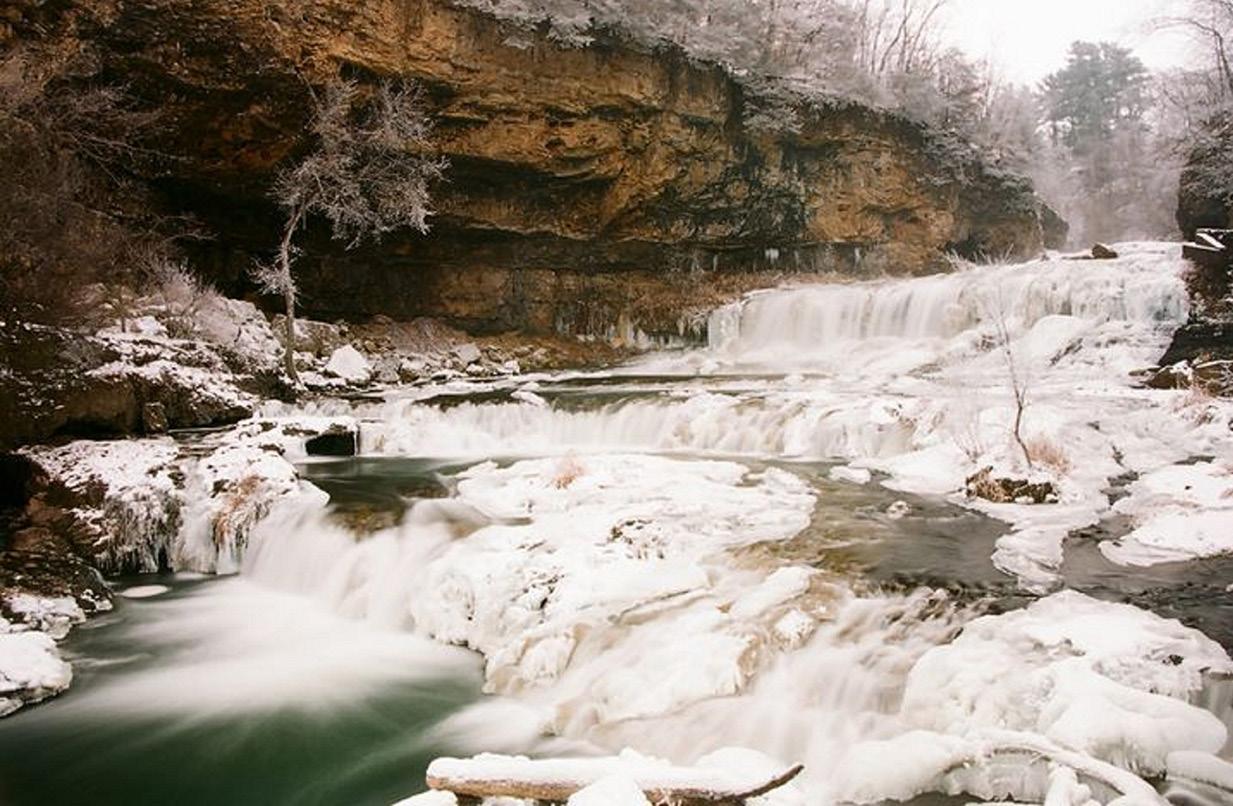
Those on the northwest side of the state might be familiar with Willow River State Park and the scenic falls and gorge that run through the property. In winter, the scene seems like it’s cut right out of a photo book.
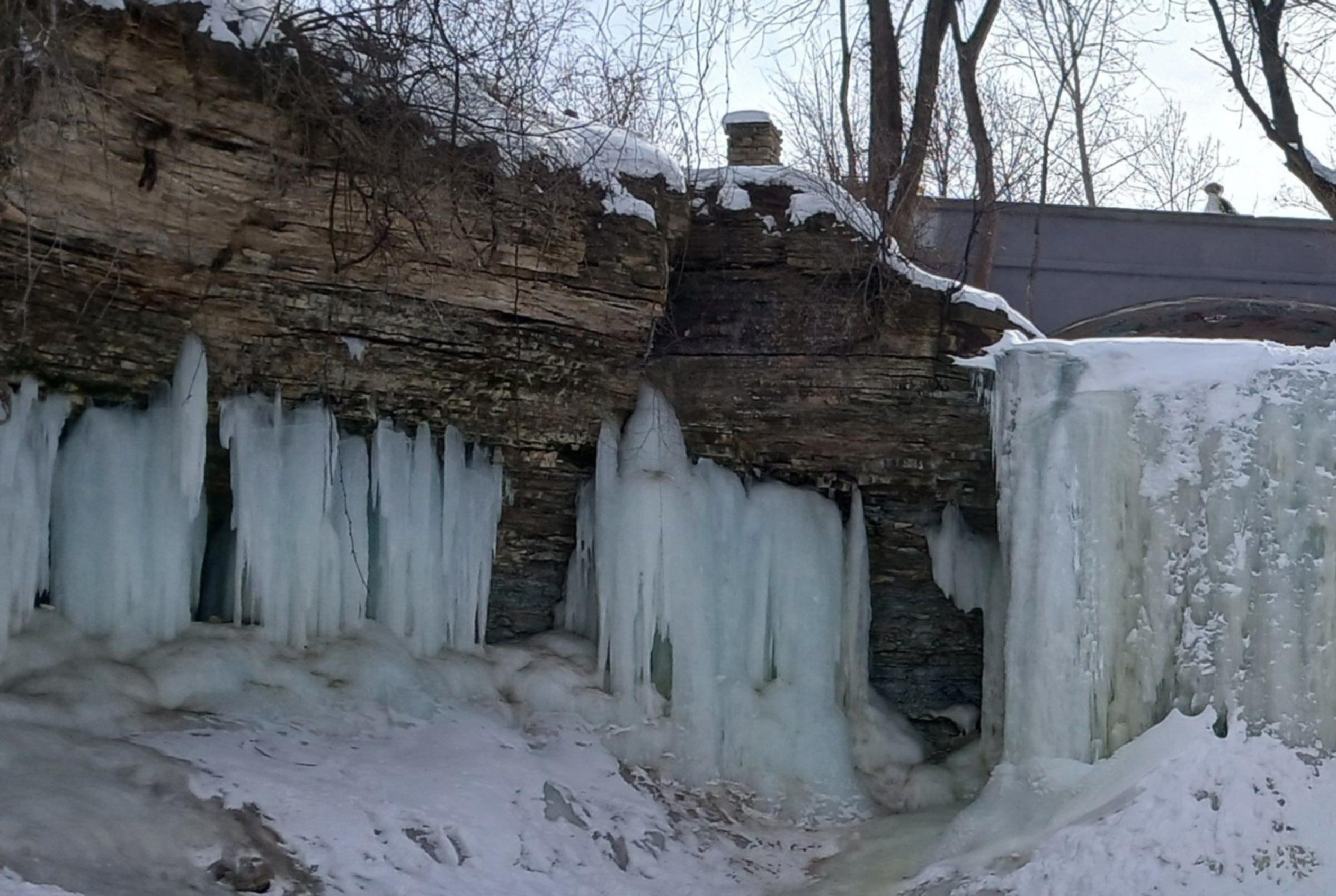
Cavernous, snow-covered rock walls frame the 45-foot falls as they cascade along icy rock shelves. A short hike from the parking lot leads to the base of the falls, where visitors can hear the muffled roar of the water echoing through the gorge and see the icy shelves glistening in the winter sun.
Stephens’ Falls
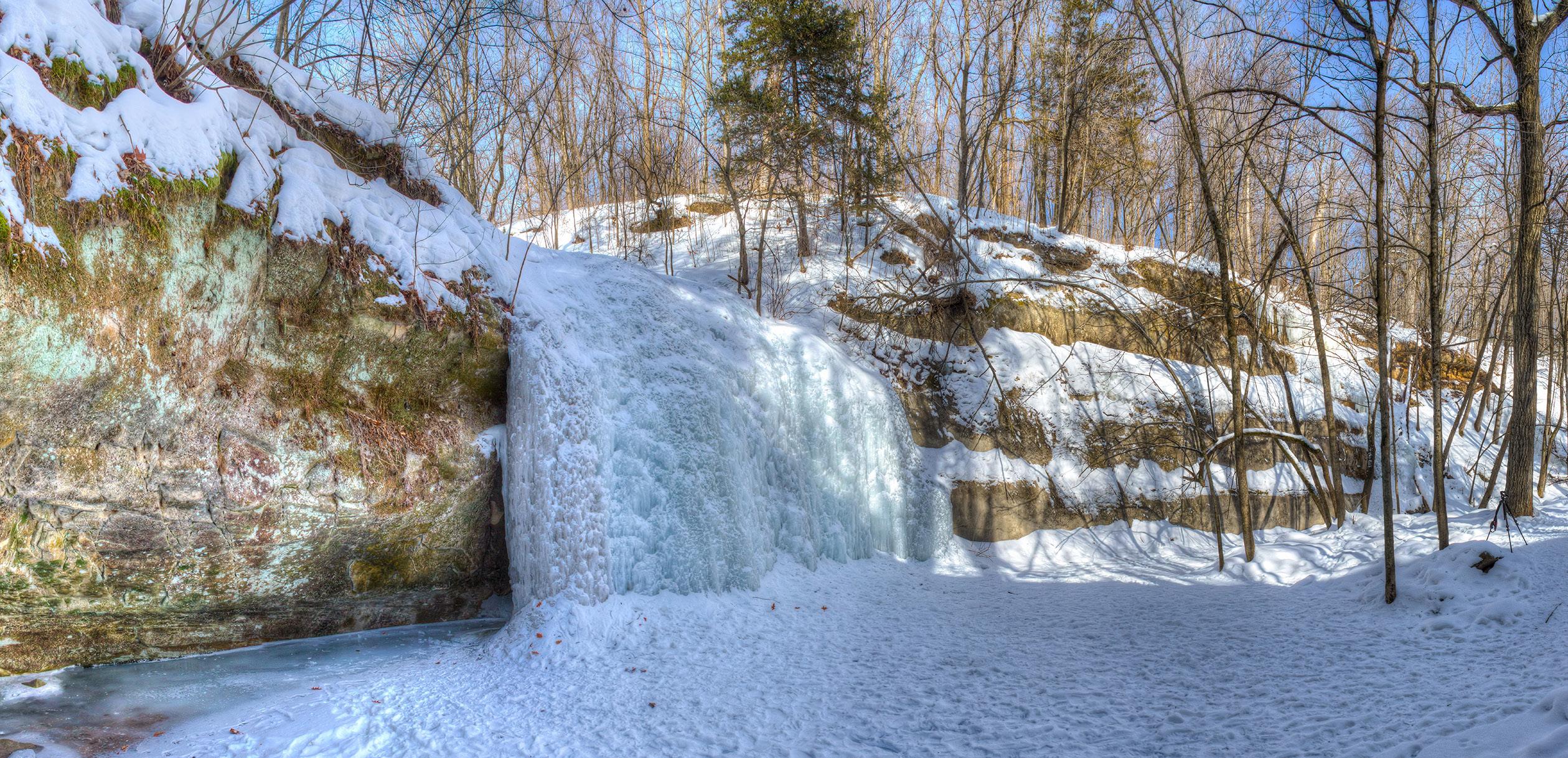
One of the largest state parks, Governor Dodge, offers all kinds of winter recreation in the rolling hills, valleys and steep gorges of southwest Wisconsin’s Driftless Region. Hidden back on a short, picturesque trail, hikers can find Stephens’ Falls.
The stream gently cascades over an outcropping before misting the rocky walls with ice. Sustained freezing can turn the falls into a dramatic ice formation.
There is a scenic overlook along a paved trail above the falls and steps leading to the bottom. Visitors should be mindful of conditions when hiking to the base of the falls. Uneven terrain and icy stone steps can make the trek difficult.
Wequiock Falls And Fonferek Falls
Wequiock Falls County Park, just east of Green Bay, offers views of the Niagara Escarpment — the glacial formation created millions of years ago that spans from Lake Winnebago to Niagara Falls. During the summer, Wequiock Falls can slow to a trickle, but in winter, it transforms into the perfect photo spot.
Also in Brown County, Fonferek’s Glen Conservancy Area boasts a 30-foot waterfall with a scenic overlook platform. Plan to visit both sights in one day, or head to Door County for more icy exploration.
Lake Michigan's Frigid Shoreline
The Great Lakes provide outdoor adventure all year long, and winter brings its own unique opportunities. Two popular destinations for stunning winter ice formations along Lake Michigan are Door County’s Cave Point County Park and Whitefish Dunes State Park.
These connected properties offer views of Lake Michigan’s coastal dunes, rugged cliffs and caverns. Freezing winds and crashing waves break against the rocky shoreline and crystallize, creating ever-changing winter scenes.
Here, delicate frozen webs form between tree branches while nearby cliffs become completely encased in white, resembling cloud-like creations of ice and snow. These fairy-tale-like scenes can change daily, shaped by shifting winds, waves and temperature fluctuations.
These winter wonders are accessible from various trails originating at Whitefish Dunes State Park, including the Brachiopod Trail and the Cave Point Trail. The trails are ungroomed and may be icy, so hikers are encouraged to use caution. Snowshoes might help visitors access prime locations during the winter.
Lake Superior's Ice Caves
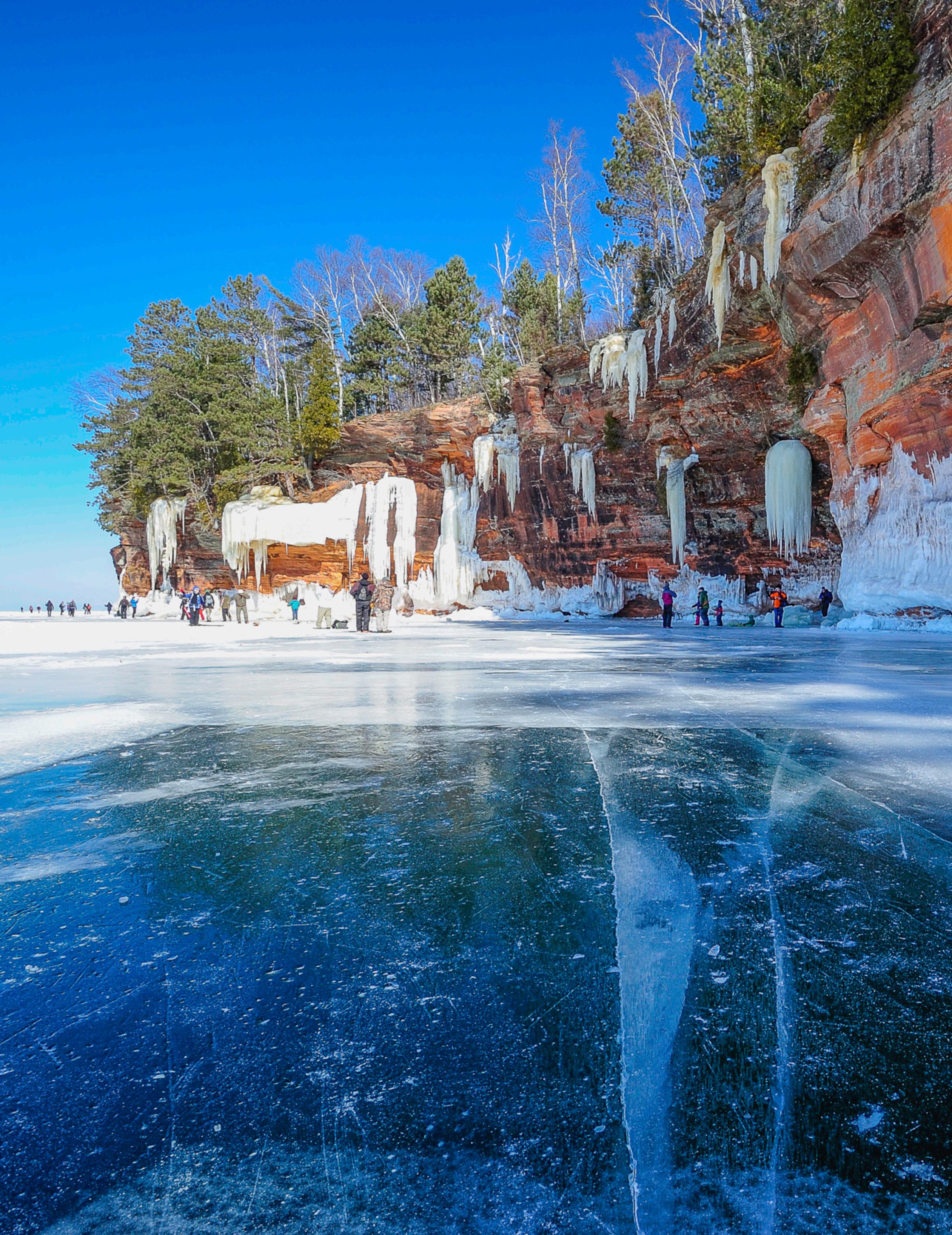
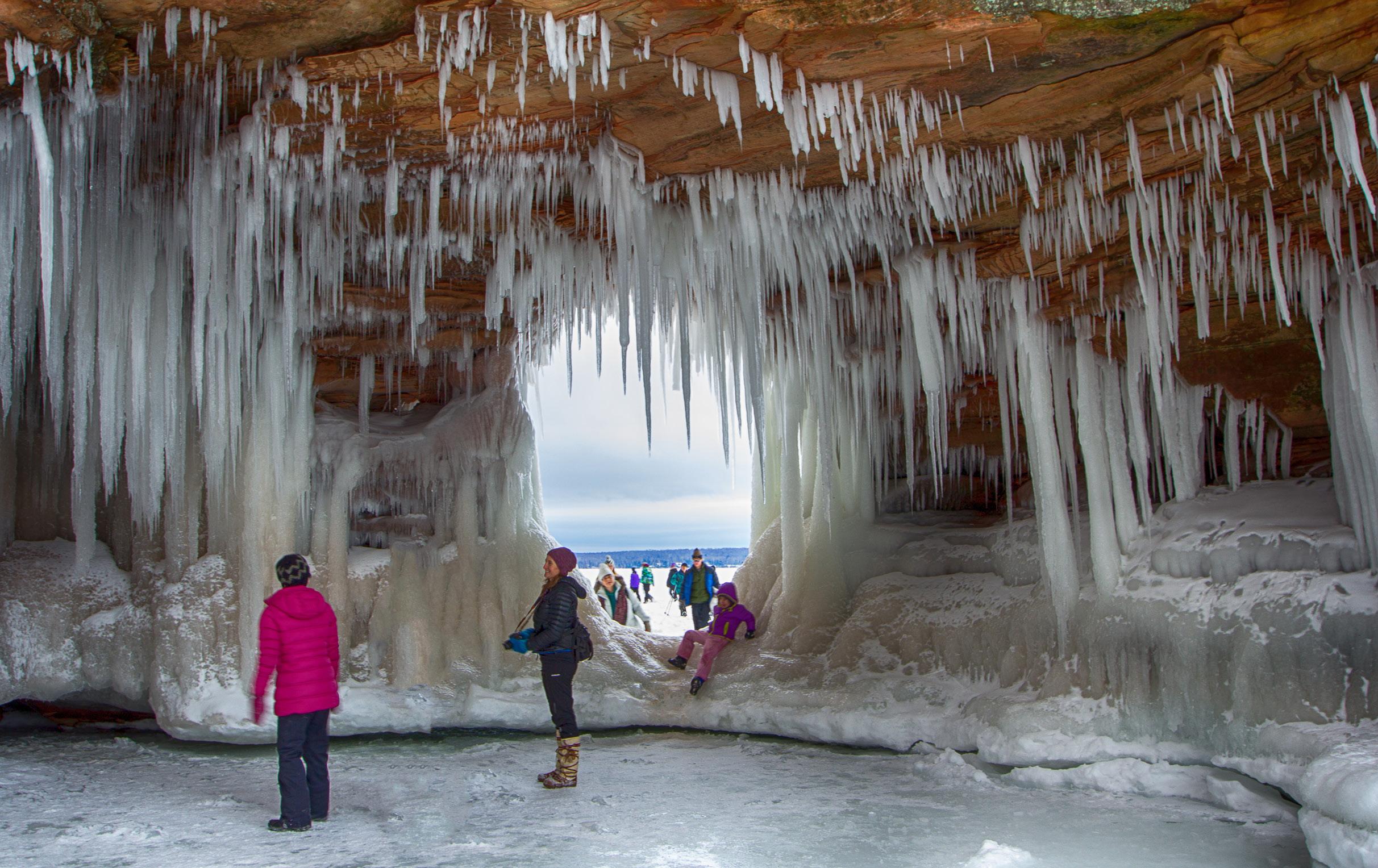
The red and brown sandstone cliffs along the Apostle Islands National Lakeshore are stunning attractions year-round. During the summer, many visitors take boat tours or sea kayaks along the shoreline to witness the wide arches and hidden nooks created by millennia of erosion. However, the depths of winter is when they really shine.
When the freezing winter winds blow across Lake Superior, they leave in their wake some of the most mesmerizing of Wisconsin’s winter scenery — ice caves.
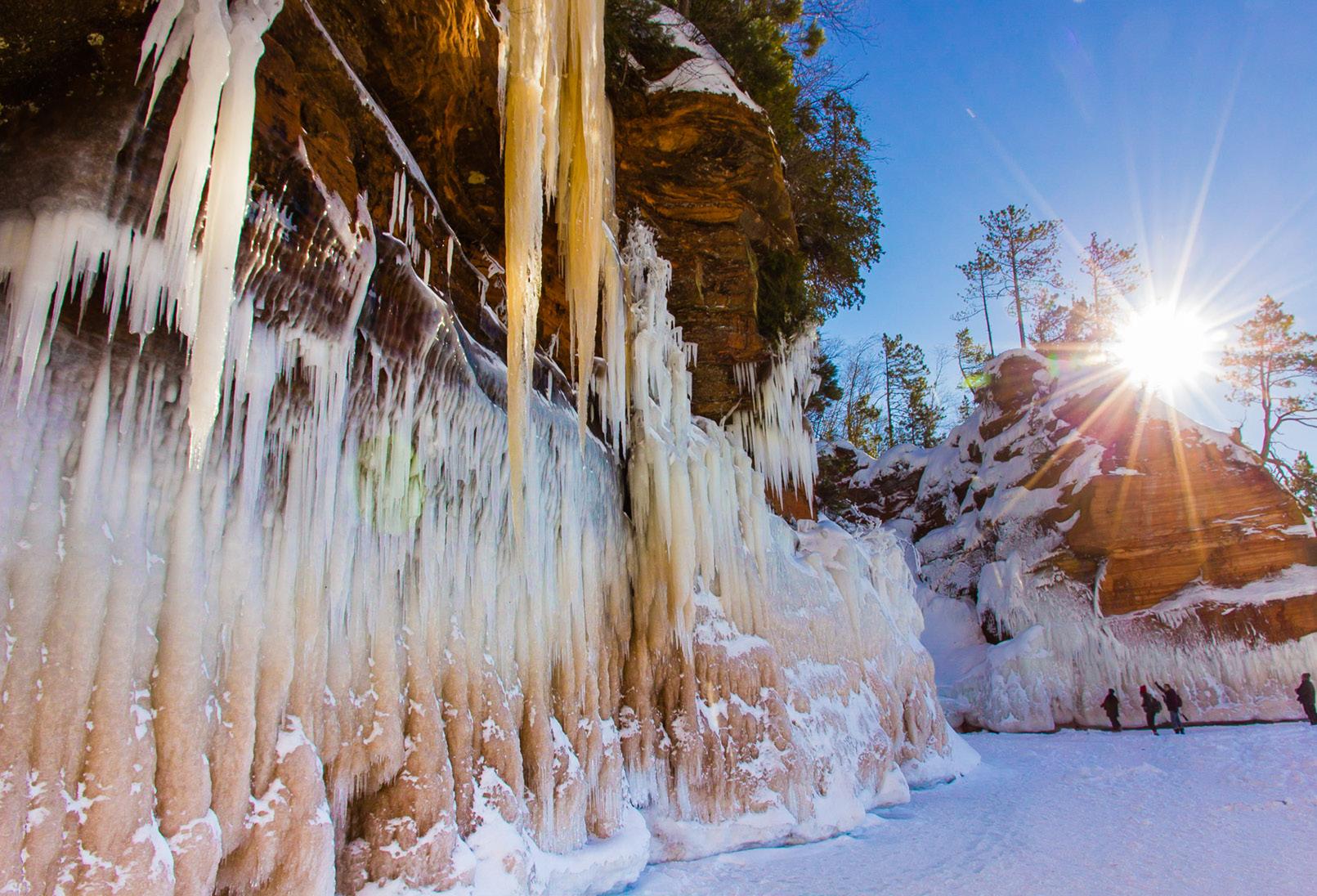
Pillars of ice frozen to cliff tops create cascades of frozen water that glisten in the sunlight. Inside the ice caves, the frigid spray of the lake creates layers of frozen water that take on a life of their own, forming finger-like and tooth-like shapes reaching down from above.
Unpredictable conditions mean the ice formations are never the same, changing from day to day and cave to cave. And ice caves are as rare as they are unpredictable.
Ice caves only form under specific conditions and are not always reachable. Access depends on sustained sub-zero temperatures, light winds, an ice shelf anchored to the land at multiple points and ice thick enough to support emergency vehicles. The last access was allowed in 2015.
The National Park Service, which manages the Apostle Islands National Lakeshore, closely monitors ice conditions during the winter to determine if ice caves are accessible. To learn if conditions are right this winter, check the National Park Service website.
If conditions don’t allow on-ice adventures, outdoor enthusiasts can still hike the Apostle Islands Lakeshore Trail from Meyers Beach. This route takes visitors over miles of sandstone cliffs and the mainland sea caves, where they can overlook the frozen spectacle.
Remember to dress for the weather, and keep in mind that the trails are ungroomed and may be covered in ice or snow.