5 minute read
Heartfelt Desire To Help: Underwater Drone Team Answers The Call On Sensitive Search Missions

Joanne M. Haas
Joanne M. Haas is the public information officer for the DNR’s Division of Public Safety and Resource Protection.
The DNR conservation wardens who search to find a loved one lost in water call it a mission of the highest order — a priceless act from a service heart to ease a broken one.
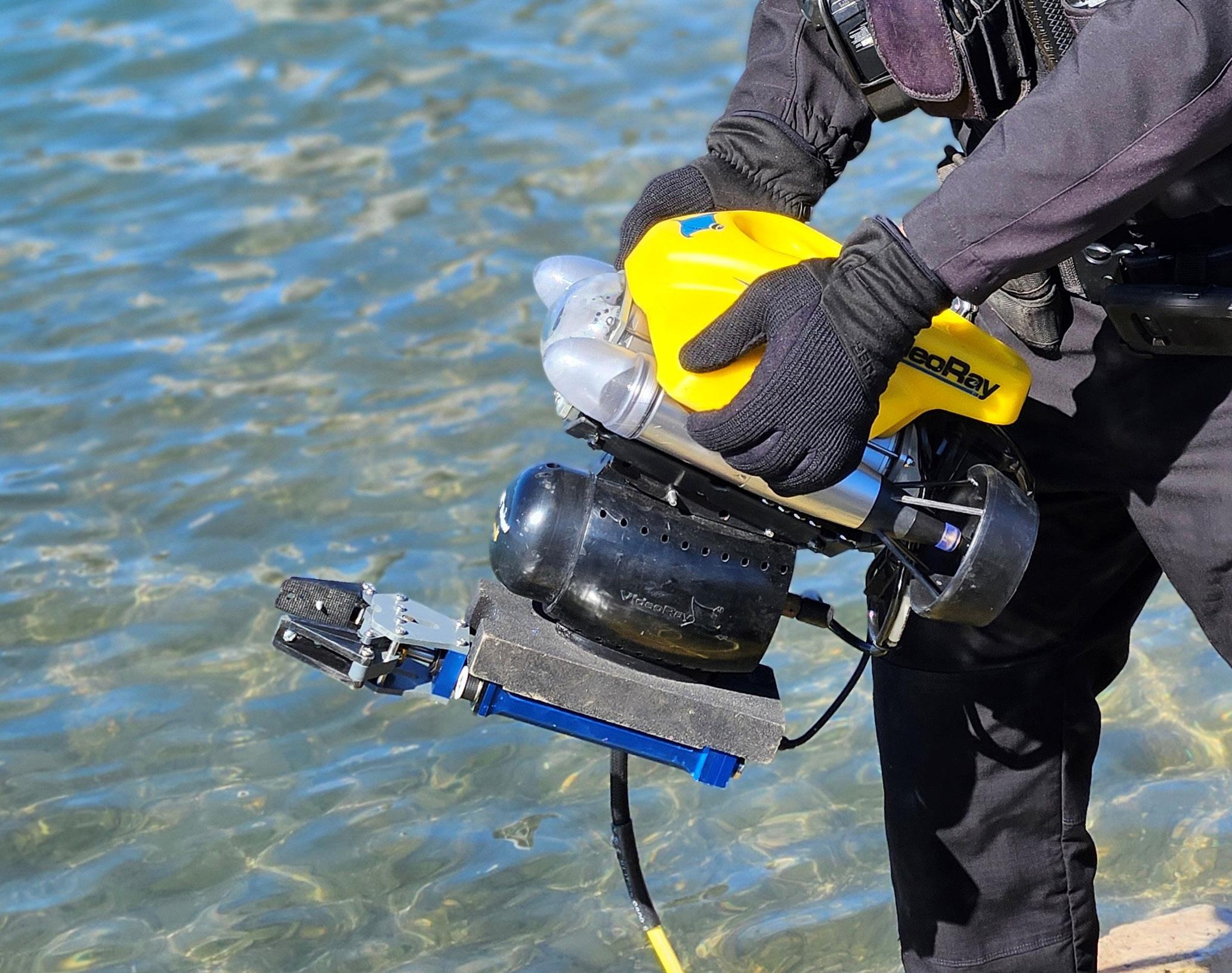
There are 10 wardens who train and dedicate their time, in addition to their regular duties, to pilot sophisticated underwater search drones, known as remotely operated vehicles. Together, they are the DNR’s Mission Ready ROV Team.
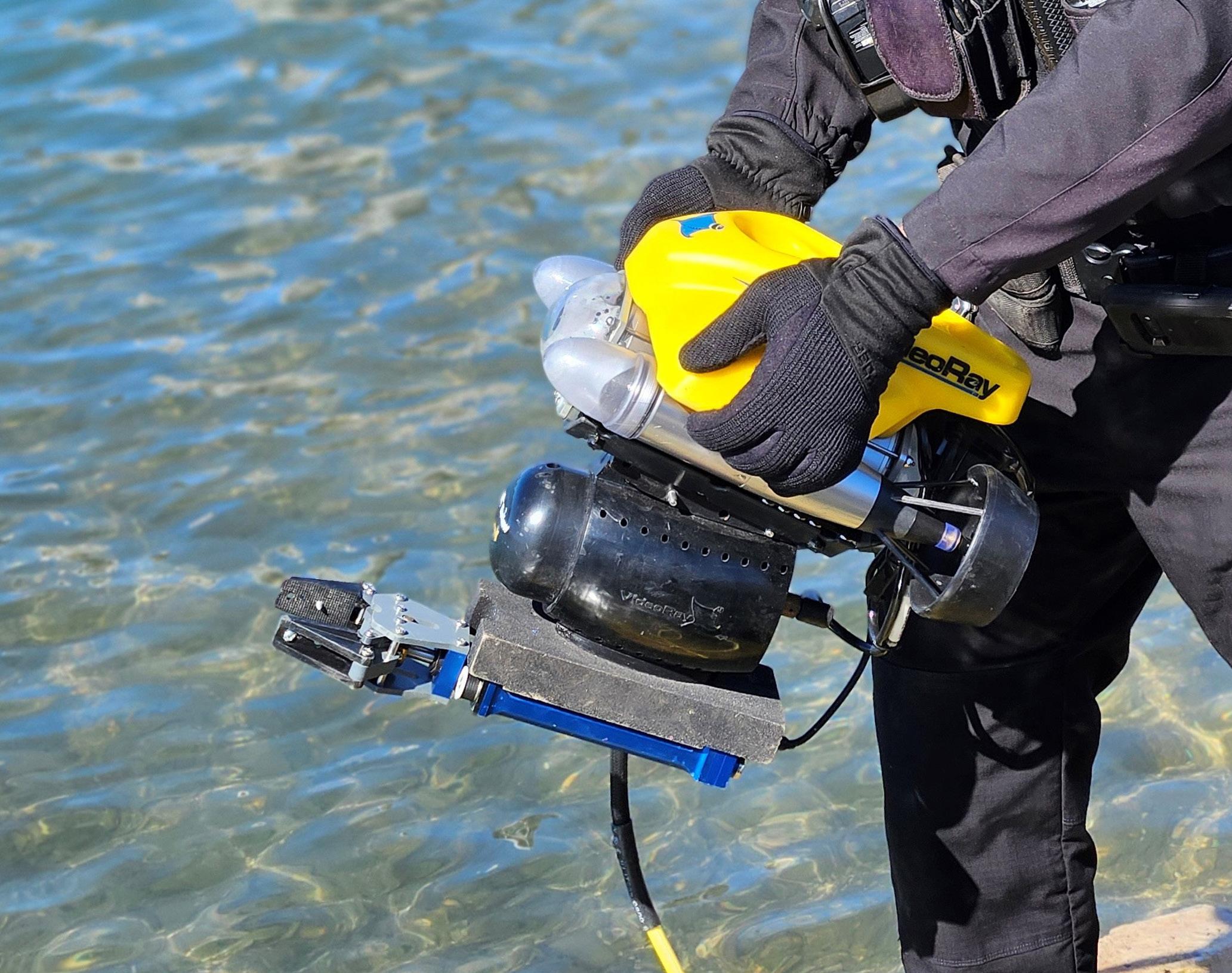
These wardens can find sunken evidence, storm debris, stolen property, submerged homeland security threats, infrastructure issues, invasive species and more, working in conditions from ice-covered winter waters to the shimmering waters of summer.
“Any task is a challenge, and it is a mission,” said Lt. Drew Starch, who joined the team in 2019 and is among the most experienced of the ROV team. “You are driven to have an end result. It is rewarding when you are successful.”
Stressful And Somber
While all calls for ROV help from the DNR are important, the most critical call at any hour is to find someone who didn’t make it home, was seen breaking through the ice or struggling before going under.
The DNR team, often working with external partners, utilizes physics, water science, 911 calls and more to make searches as efficient and effective as possible. Such information, team expertise and ROV technology combine to help narrow search locations and speed what sadly may become a recovery process.
Overall, the knowledge and experience of the ROV team can reduce or even eliminate long, exhausting search dives that stretch for hours in dark, cold and unknown water situations.
The heartfelt drive to help is real when trying to find a missing person fast, said Lt. Jon Hagen, the DNR’s Spooner Warden Team supervisor. Hagen joined the ROV team after accompanying others on ROV calls.
“You want to find this person as quickly as you can,” he said. “For all of us on the team, if I can drop (the ROV) one time and find the missing person, that’s what we hope for every time.”
Other Uses
Recreation warden Jason Roberts, who has been on the DNR team for about a decade, is among the most deployed ROV pilots. He serves the state’s southeast region, which is loaded with popular waterbodies that can bring water-borne crashes.
When a crash occurs, the ROV call often is to find a missing passenger, but Roberts’ role doesn’t stop there.
“With the ROV, I can recover pieces and parts that get lost in the crash. I can find parts of the boats,” he said. “Then, we can determine impact and figure out how boats came together.
“Making sure we can get things back that we feel are important to making the crash make sense both to a judge and to the families — that’s a key part.”
Roberts and Starch also were on hand for the 2024 Republican National Convention in Milwaukee to keep watch for possible homeland security threats using ROV tools. And Starch has been deployed to search waters for weapons used in homicide cases, cement chunks left on a waterbody’s floor after a bridge was rebuilt, and a plane that crashed during Oshkosh’s 2023 Experimental Aircraft Association event.
Winter Ice Dives
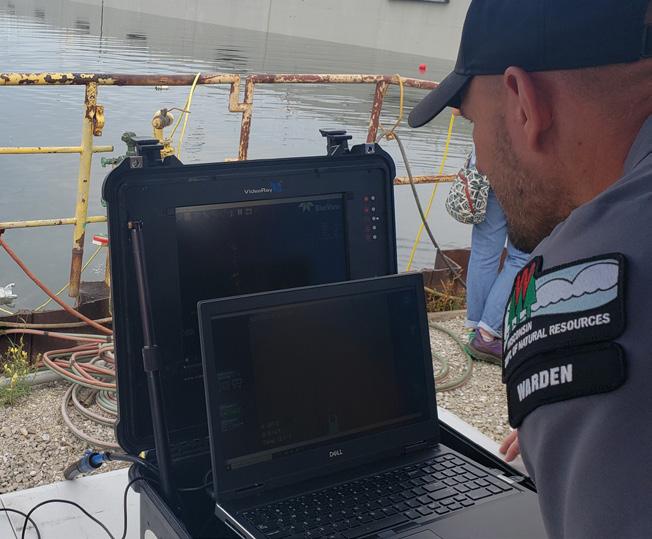
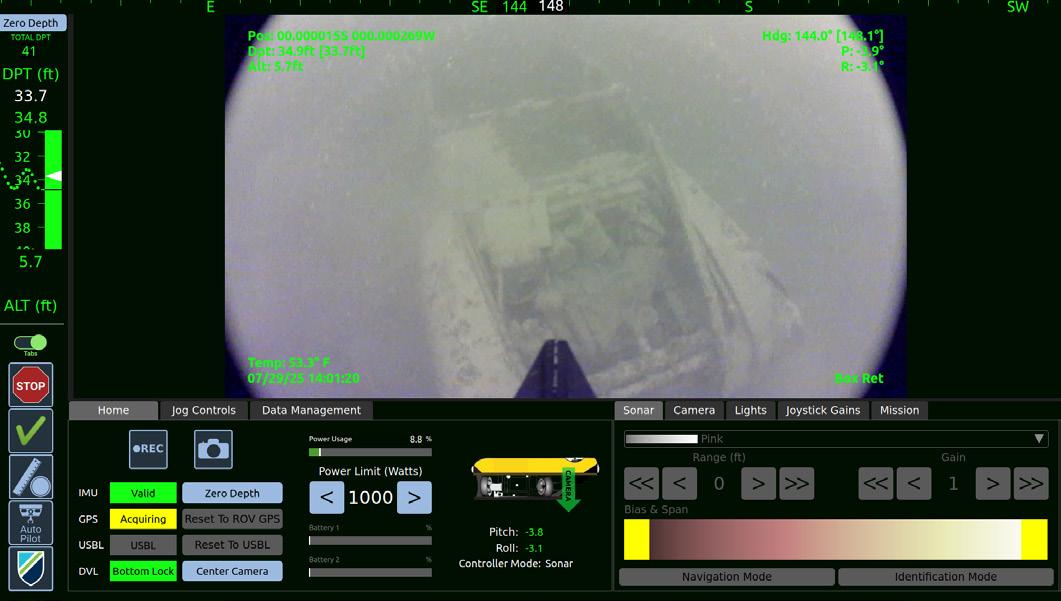
Winter offers clearer water under the ice than the turgidity of summer water. The pilots will sit in a pop-up on the ice or on nearby land and fly the ROV unit with sonar under the ice, tracking the vehicle using monitors. Yearly ice dive trainings keep their skills fresh.
Gone are the days of sending a diver down to search in extremely cold and dangerously exhausting conditions.
“In the old days, we’d have to send a diver to clear and see,” Roberts said. Instead, the ROV can be sent and use its sonar, camera and lights to locate a missing person or item of evidence. “The only time a diver has to go down is if they see something (using the ROV).”
In water considered too dangerous for divers, the ROV can even be used to elevate a discovery to the water’s surface for recovery.
“Going under ice means whole different conditions,” Starch said. “It is frozen water and with that, we’ll have to cut holes to start the search.”
Hagen noted the ice often will reform after there has been a break by a snowmobiler, UTV or someone walking. This is when the team uses its expertise to determine drift, if any, of the missing person, along with other water conditions.
The DNR’s Mission Ready ROV Team is known for its skill, professionalism and remarkable speed. This is why partner agencies often call for help.
Ice Safety
For all those heading onto Wisconsin’s many frozen waterbodies this winter to fish, hike, ski, use a snowmobile/ATV/UTV or just enjoy a winter day, please remember no ice is ever 100% safe.
Proper planning and taking basic precautions can help ensure you return home safely. To learn more about ice safety, visit the DNR website.
