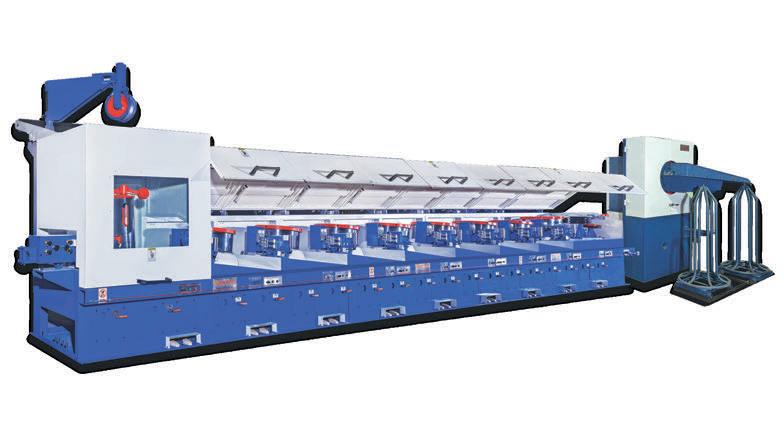
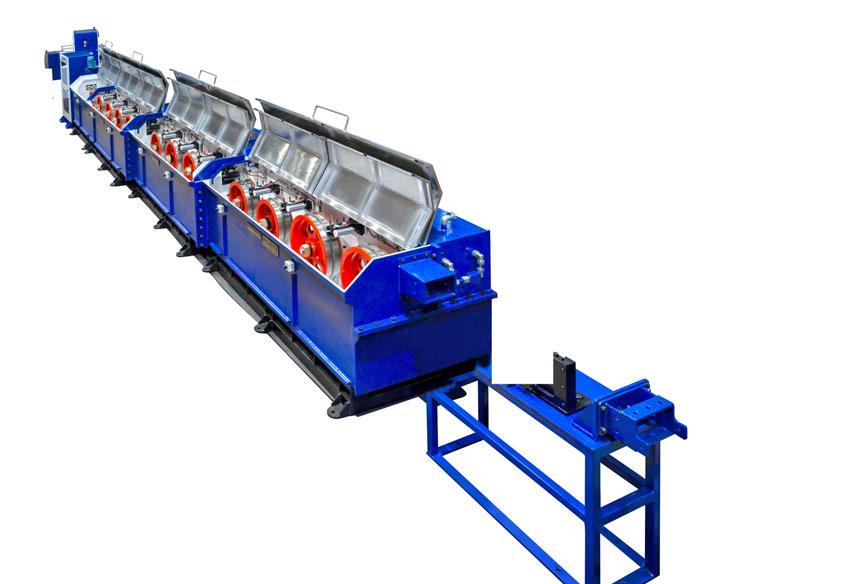
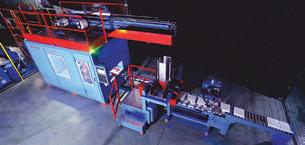
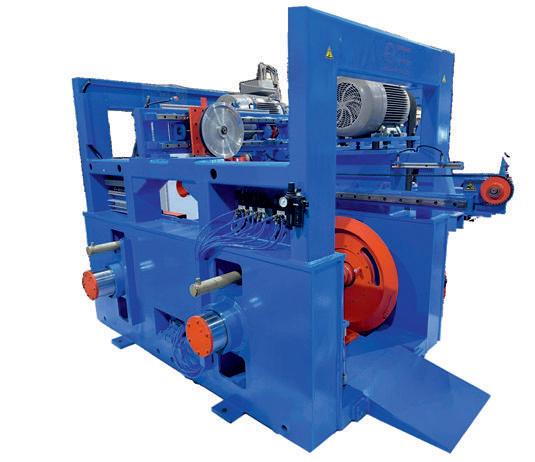
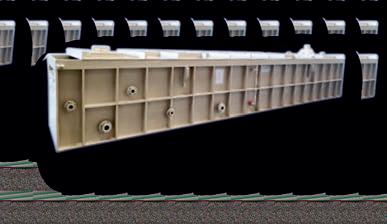
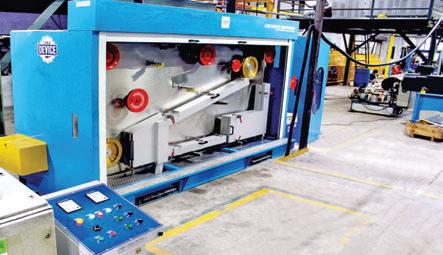
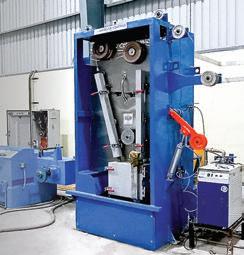
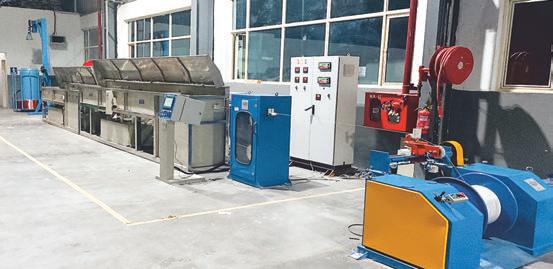
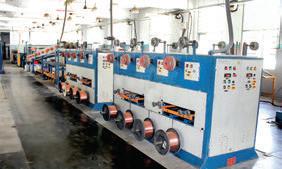
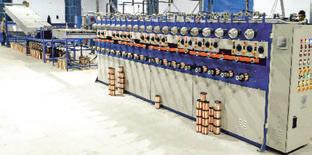
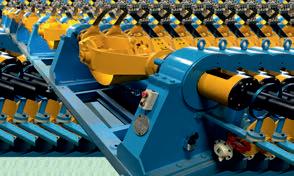
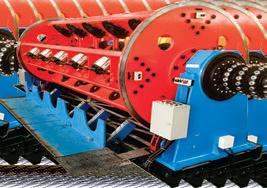
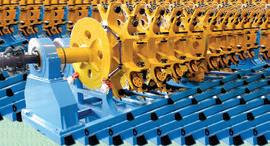
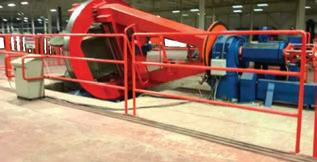
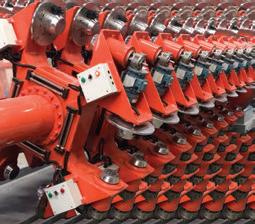
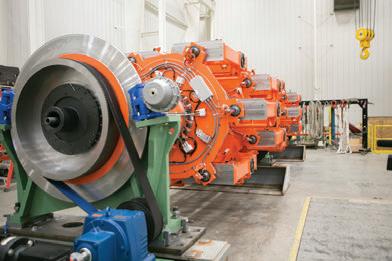
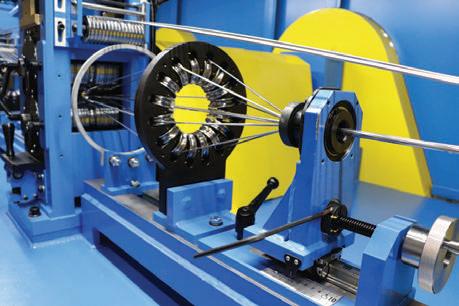
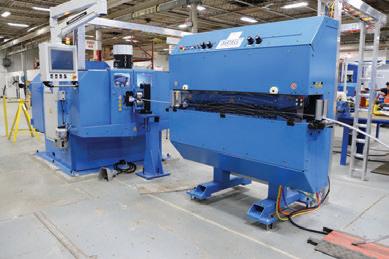
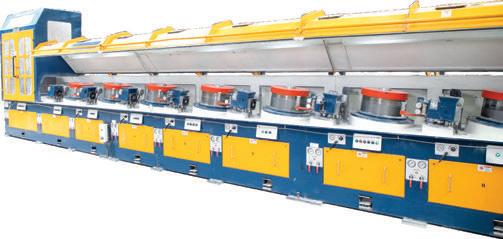
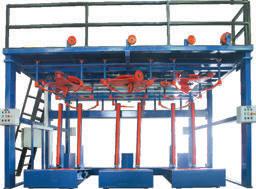
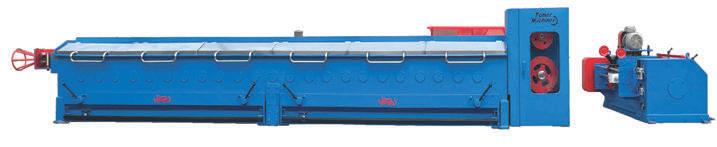
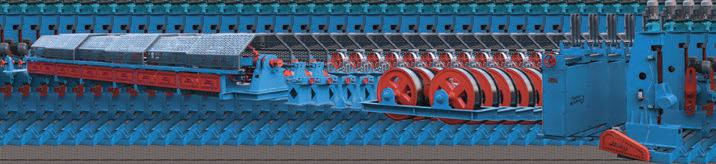
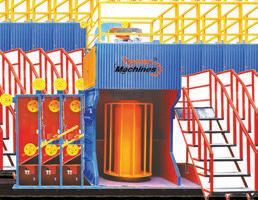
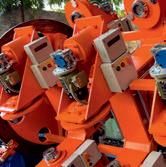
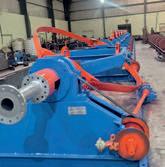
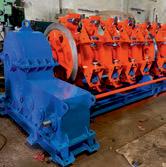
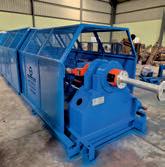
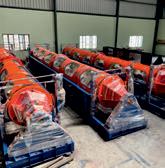
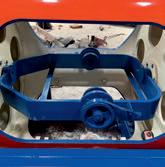
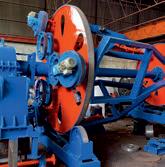
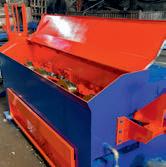
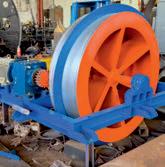
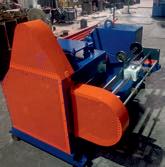
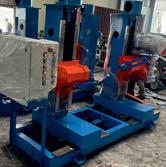
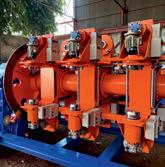
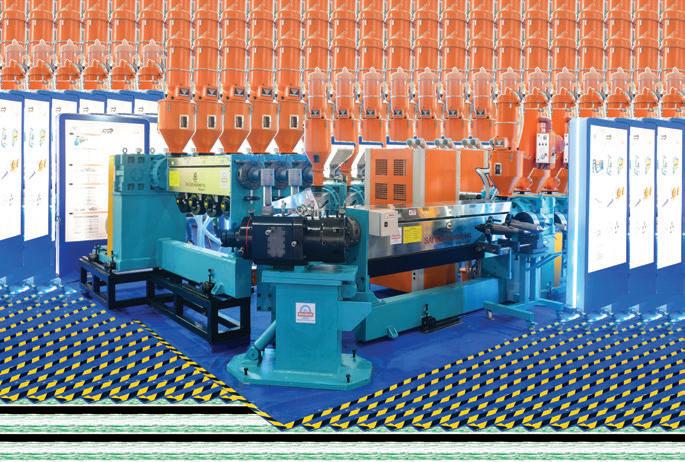
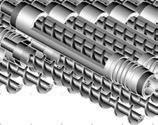
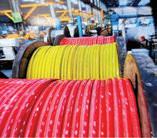
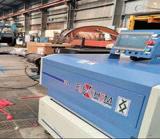
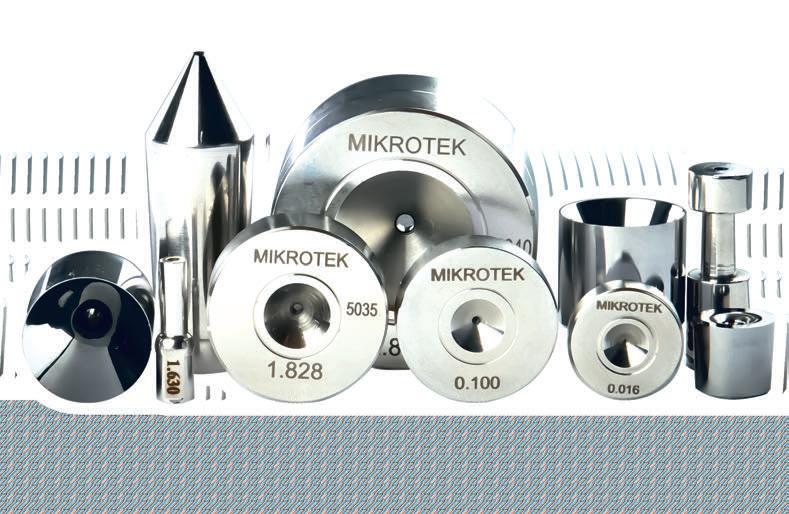
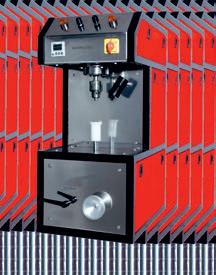
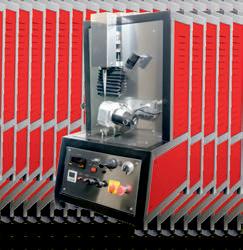
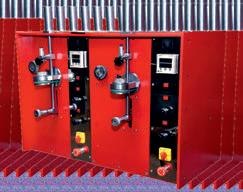
• TIG Wire Straightening Cutting Machines With Embossing
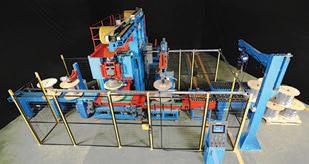
• Welded Wire Mesh Lines For Mesh Rolls Or Mesh Panels
We Invite You To Visit
At
Stand No:
Hall No: 9 April 13–17, 2026
Düsseldorf, Germany
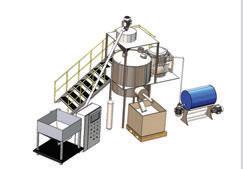
TURNKEY PROJECTS
• Plants For Galvanized Wires - Hot Dipped & Electro coated (High Speed Galvanizing Line With Nitrogen / Pad Wiping)
• Plants For M.S., H.B. & Binding Wires
• Plants For High Carbon & Alloy Steel Wires (40mm To 0.20mm)
• Plants For LRPC Wires & Strands
• Plants For Stainless Steel Wires
• Plants For Cold Ribbed Wires / Deformed Bars
• Plants For Tire Bead Wire (Bronzing Lines)
• Plants For CO2 MIG / TIG / Saw Welding Wires
• Plants For Flux-Core Welding Wires
Cable Packing & Compounding Engineering
•
•
•
•
•
•
•
•
NOV-DEC, 2025 | WIRE & CABLE INDIA
Empowering Urban Development with Smarter Wiring Choices
Aluminium Wire Rods: The Invisible Thread Powering India’s Electrification
DICABS: Redefining Reliability in India’s Wire & Cable Industry
Bihani Group Showcases Advances in Next-Gen Halogen-Free...
Kennametal Enhances Wire Manufacturing with High- Performance Tungsten...
Durga Engineering Works Establishing a Greenfield Plant; Enters 66kV CCV...
Tirupati Reels Investing in Downstream and Upstream Enhancement...
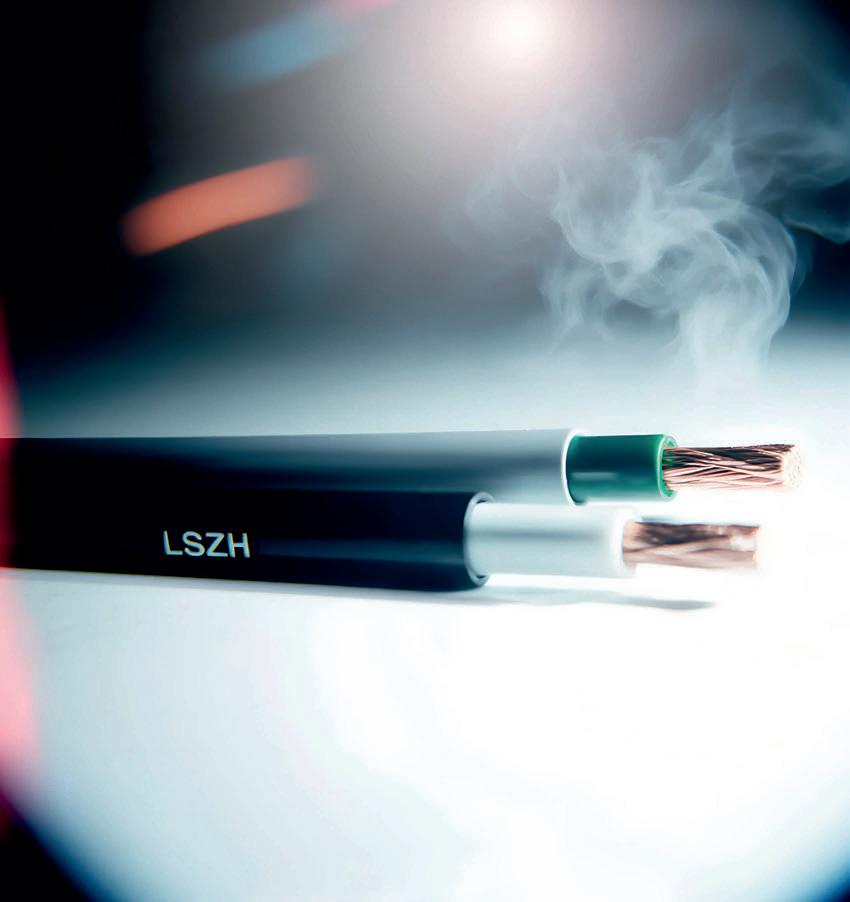
Takkar Polychem Explores Next- Gen LSZH Technologies Along With...
Strengthening Dialogue and Driving the Future of the Steel Wire Industry
From Process to Performance: Insights from the Niehoff–Mikrotek Symposium
‘Make in India’ to ‘Made in India’: Competing in Global
the Multisector Growth Wave: Cable Demand Across India’s Expanding Economy
BharatNet to 6G: Cabling the Next Wave of Connectivity
Steel Wire: Past, Present and Future– Building Strength Through Innovation
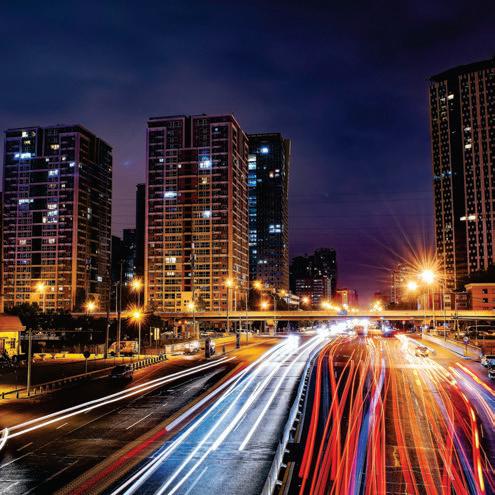
Empowering Urban Development with Smarter Wiring Choices
By Mr. Shreegopal Kabra, Managing Director at RR Kabel
Cities in India are evolving at a rapid pace, and with this transformation comes a growing need for infrastructure that isn’t just modern and functional but also sustainable and resilient. Amid the expanding rate of residential and commercial projects, one essential element often goes unnoticed, i.e., wiring solutions. These cables and wires, though often overlooked, form the foundation of safe and sustainable urban development. Beyond simply powering homes and buildings, they are instrumental in accelerating India’s ambitious housing vision and enhancing the quality of life for millions.
The Indian cables and wires industry, valued at INR 1.8 lakh crore in FY23, is at the forefront of meeting these critical needs. With a projected compound annual growth rate (CAGR) of 10%, the industry is poised to support the burgeoning demand from these essential sectors.
The Role of Wiring in Smart and Sustainable Cities
With brilliant work being done by changemakers in accelerating India’s “Housing for All” mission, the infrastructure sector is increasingly prioritizing holistic functionality and safety. Advanced cables and wires play a pivotal role in this transformation, serving as the backbone for this development by supplying reliable power to urban structures, including residential complexes, offices, hospitals, and educational institutions.
The Role of Stakeholders in Sustainable Development
It is important for us all to acknowledge that India’s mission to provide accessible, sustainable housing is not solely the responsibility of the government. It requires dedicated support from stakeholders at all levels, including policymakers, industry leaders, engineers, and end-users. Everyone must collectively work toward prioritizing quality, sustainable materials in construc-
tion. By adopting advanced wiring solutions, we can set a new benchmark for infrastructure, ensuring these buildings remain secure, functional, and resilient for generations to come.
Advancements in Smart Wiring That Support Modern Infrastructure
As urban development embraces smart city initiatives, the demand for sophisticated wiring solutions is growing. Technological advancements are enabling a new era of “smart” infrastructure in hospitals, schools, residential buildings, and hotels. For instance:
Smart Hospitals - Require resilient wiring to support advanced telemedicine capabilities, electronic health records, and uninterrupted power for critical life-support equipment.
Educational Institutions - Depend on secure, efficient wiring for digital learning platforms and enhanced safety systems.
Modern Housing Complexes - Incorporate energy-efficient and sustainable wiring solutions to support automation and optimize energy use.
Hotels - Require reliable wiring for smart room controls, climate management, and other automated services that enhance guest comfort.
These requirements highlight the shift from basic electrical infrastructure to a smart, interconnected system tailored to meet the evolving demands of modern urban development.
Fire safety is a non-negotiable aspect in both commercial and residential developments, especially in spaces designed for vulnerable populations. Fire-resistant cables, such as RR Kabel’s fire survival cables, are specifically designed to
withstand extreme conditions, ensuring that critical systems, like fire alarms, emergency lighting, and evacuation routes, remain functional during emergencies. Adopting such advanced wiring solutions not only enhances safety but also aligns with India’s urban development goals by ensuring that infrastructure is both resilient and responsive to potential hazards.
A Larger Call for Quality and Compliance in Wiring Standards
As India’s construction sector continues to grow, the need for stringent wiring standards has never been more critical. The widespread use of substandard cables can undermine safety and compromise efficiency, making it essential to ensure that only high-quality materials are used. To safeguard the integrity and longevity of urban developments, robust regulatory frameworks and policy support are important. By prioritizing compliance and quality, we can build a safer, more sustainable future for India’s growing cities.
The Future Is Bright with Wiring Solutions Serving as Catalysts for Progress
The future of India’s urban development holds immense promise, driven by a commitment to quality and innovation in wiring solutions. Advanced cabling technology is a key enabler in shaping cities that are smarter, safer, and more sustainable. By embracing these advancements, we can efficiently address the energy demands of today’s infrastructure while creating a foundation for a future where every building contributes to a higher quality of life and a controlled carbon footprint.
Through collaboration, commitment to quality, and an eye toward innovation, we can empower India’s journey toward “Housing for All” and a sustainably urbanized future.
13-17, April 2026
Düsseldorf, Germany
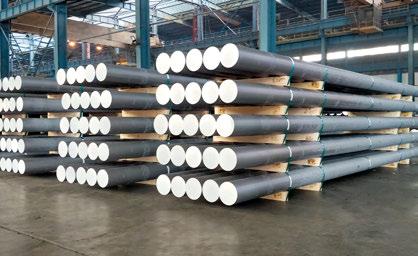
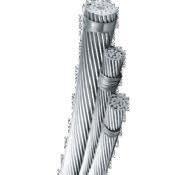
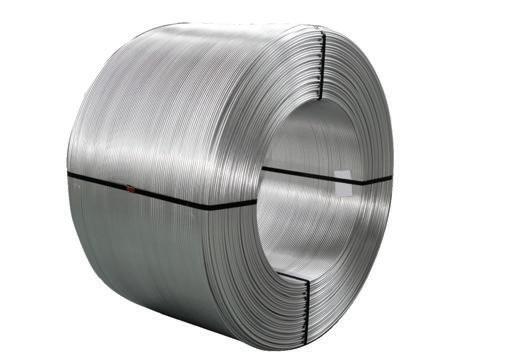
Aluminium Wire Rods: The Invisible Thread Powering India’s Electrification
Rajiv Kumar, CEO of Vedanta Aluminium, says , “Our products are more than materials, they are enablers of national priorities like renewable integration, e-mobility, and digital infrastructure. Aluminium wire rods, for instance, form the backbone of India’s electrification journey, powering everything from transmission lines to advanced cable systems. As demand for aluminium surges globally, driven by clean energy, we are committed to delivering world-class products that combine performance with responsibility.
If the present chapter in humankind’s saga of progress were to be represented by a single metal, it would in all likelihood be aluminium. Lightweight yet strong, endlessly recyclable, and remarkably versatile, aluminium is shaping the critical technologies that define our era: from electric vehicles to renewable energy systems to ‘green’ infrastructure. But its influence isn’t merely confined to the spectacular, it thrives in the everyday. Every time a light turns on or a machine hums to life, it is often aluminium that is at work behind the scenes.
Among its many forms, one stands out for its quiet significance: wire rods. These slender strands of shining metal may seem ordinary, yet they are a key carrier of the lifeblood of modern living: electricity. From smelter to socket, they form the invisible network that powers homes, industries, and entire cities.
At Vedanta Aluminium, India’s largest aluminium producer, wire rods are crafted with precision and purpose. Using state-of-the-art technology from global leaders Southwire (USA) and Continuus-Properzi (Italy), the company ensures every rod meets the highest standards of performance. This results in products with exceptional electrical conductivity, uniform diameter, and a flawless surface finish, qualities that make them indispensable for power transmission and distribution.
These rods come in EC-grade diameters of 7.6 mm, 9.5 mm, 12 mm, and 15 mm, alongside specialty alloys like T4, AL59, and 8xxx series. Each variant is designed for demanding applications, whether it be AAC and ACSR conductors stretching across landscapes, HT/LT cables powering entire industries, or transformer windings ensuring grid stability.
In environments where strength, corrosion resistance, and efficiency are non-negotiable, Vedanta Aluminium’s wire rods deliver.
Every batch undergoes rigorous testing in ISO/IEC 17025:2017 NABL-accredited laboratories, ensuring compliance with global benchmarks. Vedanta Aluminium is also the first aluminium producer in India to secure BIS certification for wire rods and rolled products under the Government’s Quality Control Orders, a milestone that underscores its leadership in quality and reliability. Add to this the Aluminium Stewardship Initiative (ASI) Performance Standard, and you have a company that marries precision with responsibility.
The future demands a keen focus on sustainability, and Vedanta Aluminium aims to be a benchmark in this aspect. Through Restora, India’s first low-carbon aluminium brand, and Restora Ultra, made from recovered aluminium, the company is redefining what green metal means. These wire rods are verified by independent global agencies as low-carbon aluminium, with GHG intensities well below 4
tCO₂e per tonne, the global threshold for low-carbon aluminium. Restora Ultra goes even further, achieving one of the lowest carbon footprints in the world. For utilities, cable manufacturers, and infrastructure projects, this means meeting climate goals without compromising performance.
From the light in a child’s study room to the high-voltage lines spanning vast landscapes, aluminium wire rods are the silent force behind progress. And with Vedanta Aluminium’s precision engineering, sustainability leadership, and global-standard quality assurance, India is not just wiring its present, it is powering a cleaner, smarter future.
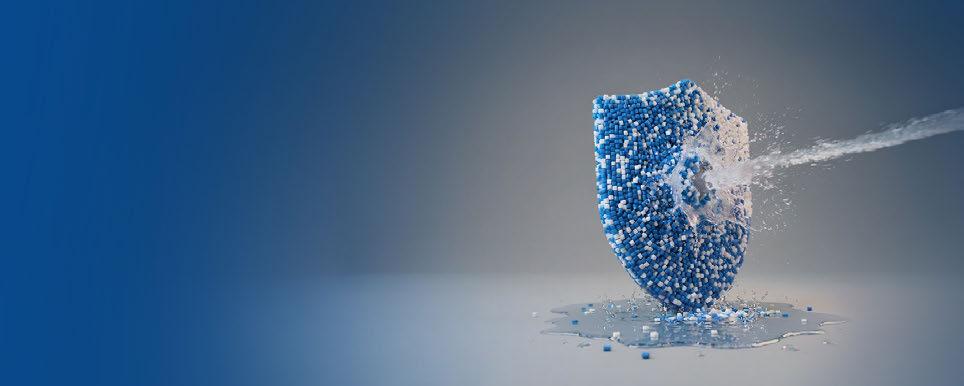
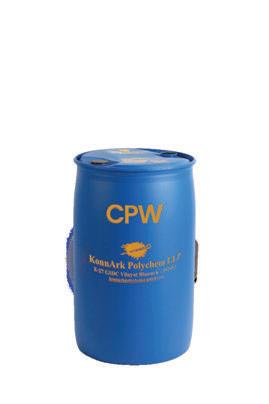
WATER BLOCKING SEMICONDUCTING COMPOUND
DICABS: Redefining Reliability in India’s Wire & Cable Industry
For more than 55 years, DICABS (Diamond Power Infrastructure Ltd.) has been at the forefront of India’s wire and cable industry. This remarkable legacy is a testament to the company’s resilience, innovation, and unwavering commitment to quality. Over the decades, DICABS has grown from a pioneering manufacturer into a trusted partner powering India’s infrastructure and industrial growth.
A Legacy of Integration and Excellence
With over five decades of expertise, DICABS has established itself as one of India’s most comprehensive and integrated manufacturers—producing conductors, wires, LV cables, HT cables, and EHV cables under one roof. This seamless integration ensures consistency, reliability, and efficiency across its product portfolio, enabling DICABS to deliver solutions that meet the nation’s evolving power transmission and distribution needs with confidence.
From 1.1 kV LV cables to 400kV EHV
cables, DICABS’ portfolio powers industries as diverse as energy, petrochemicals, steel, cement, healthcare, and renewables. Its conductors, spanning capacities up to 765 kV HVDC lines, form the backbone of India’s transmission infrastructure.
Quality That Inspires Trust
In a sector where reliability is nonnegotiable, DICABS has built a reputation for precision engineering and rigorous quality control. Every product undergoes stringent testing, ensuring compliance with global standards. This relentless pursuit of excellence has made DICABS the trusted partner for government utilities, industrial giants, and multinational corporations alike.
Innovation at the Core
DICABS’ leadership believes that innovation is the key to sustainability. By investing in advanced technologies and continuously upgrading its processes, the company delivers tailor-made solutions for diverse sectors—from solar power projects to oil & gas pipelines.
Its future-ready approach ensures that India’s infrastructure is not only powered today but prepared for tomorrow.
A Promise for the Future
As India accelerates its journey toward becoming a global industrial powerhouse, DICABS stands tall as a promising, reliable, and quality-focused manufacturer. Its 55-year legacy, integrated capabilities, customer-centric ethos, and innovation-driven mindset make it a frontrunner in shaping the future of power transmission and distribution. The future of power generation is rapidly shifting toward renewable and next-generation energy sources—from solar, offshore wind, and pump storage to Battery Energy Storage Systems (BESS), green hydrogen, nuclear, and bio-waste solutions. DICABS is fully
Our cables don’t just carry electricity—they carry trust, reliability, and India’s growth story.
COMPANY PROFILE
At DICABS, we believe reliability is the foundation of progress. Every conductor, wire, and cable we produce is a promise—to our clients, to our nation, and to the future. Our mission is not just to manufacture products, but to empower India’s growth with solutions that stand the test of time.
prepared to support this transition. With its diverse product range of conductors, wires, LV, HT, and EHV cables, the company is ready to meet the demands of these emerging power generation avenues, ensuring reliable transmission and distribution for India’s evolving energy landscape.
By aligning its capabilities with the nation’s renewable ambitions, DICABS reinforces its role as a future-ready partner—empowering sustainable growth while maintaining its hallmark of quality and reliability. For stakeholders, clients, and partners, DICABS is more than a manufacturer— it is a partner in progress, a custodian of quality, and a symbol of reliability.
Quality is not an act, it is a habit. At DICABS, it is our DNA.
Survey no. 79/1, 79/2, 79/3 and 80/2, Padana, Gandhidham, Kachchh, Gujarat-370201, India +91 7778940193 | marketing@tirupatireels.com www.tirupatireels.com
Tirupati Reels Private Limited
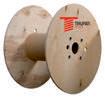
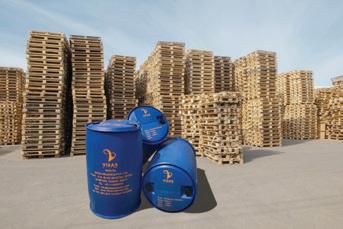
PINEWOOD REELPINEWOOD PALLETS
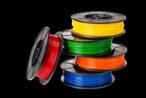
PLYWOOD REELSPLASTIC SPOOLS
Pinewood Boxes
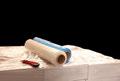
Shrink Wrap
Pinewood Laggings
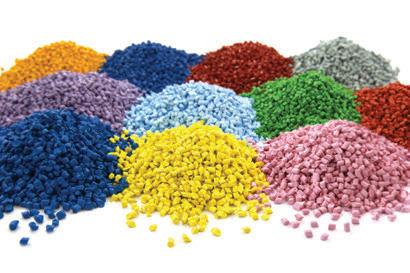
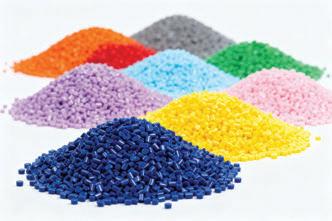
COMPOUNDS
Bihani Group Showcases Advances in Next-Gen Halogen-Free & CrossLinkable Compounds; Unveils FraudDetection Masterbatch
Bihani Group started as a PVC compounding company but over the years have emerged as an entity specializing in halogen-free and cross-linkable compounds. In an exclusive interview with Wire & Cable India, Mr. Jaideep Bihani, Director of Bihani Group, shared that the company has recently launched a unique ‘fraud detection’ masterbatch, equipped with software and ready-to-use tools that easily distinguish standard material from fake material, while also tracking fraud incidents across India and globally. The company is additionally developing innovative halogen-free, cross-linkable, and electron-beam compounds in collaboration with SACO AEI Polymers Inc., thereby shaping the future of compounding in the wire and cable industry.
Wire & Cable India: Can you please briefly tell us about your company?
Jaideep Bihani: Bihani Group has been active in the wire and cable industry for over 30 years now, with pan-India distribution and supply to the Middle East and North Africa through its own concerns and setup. Previously, we were based out of Bhiwadi, Rajasthan and now the company also operates in Vapi, Gujarat. Our company has a joint venture with Saco AEI Polymers Inc., global leaders in cable and automotive compounds. SACO is also holding company of AEI Compounds Ltd., which is a UK-based company, known worldwide for their halogen-free & crosslinkable compounds.
Together, Bihani Group and Saco AEI Polymers have come to form SAB (Saco AEI Bihani Polymers India Limited). The objective is to harness Saco AEI’s product
range and their proprietary technology to build the compounds of the future, moving away from PVC standard materials to crosslinked HFFR and electron beam HFFR, with higher temperature rating and higher flame resistance.
WCI: What are the latest developments and innovations happening in your company?
JB: We have a manufacturing facility for Saco AEI Bihani Polymers, making HFFR compounds on co-kneading systems using their proprietary/ patented technology and bypassing the standard and conventional routes of Maleic Anhydridebased systems, making more resilient products for outdoor applications.
We have also innovated a lot in master batches. Our SMARTBATCH® Masterbatch systems
include products for high line speeds, ambient cure XLPE and now, with a European partner, we have launched a ‘fraud detection master batch’ that we are showcasing here in the Cable and Wire Fair.
This is a patented technology that has limited access. It’s a non-IR-based, real-time infrared spectroscopy-based system. These technologies are also going to be used in many applications, like defense, where we are very active, as a group.
We have launched this new product for selected customers who are increasingly sensitive to such issues. This is a complete package system which works not only on the detection but also on the database. It comes with the software and ready-to-use tools which can be given to the POCs, and they can easily identify the standard material
Jaideep Bihani, Director, Bihani Group
COMPOUNDS
I think we stand away from the competition by a great distance, because rather than going through conventional routes of manufacturing products, we are now using patented and proprietary technologies, which impart properties to our materials, and are not only hard to catch but also control.
compared to a fake material, and also simultaneously track pan-India or globally where all such fraud incidents are occurring. So the entire database is on the cloud and is real-time.
WCI: What sets you apart from your competitors?
JB: As a compounding company, Bihani is perhaps one of the few companies who has worked directly with market leaders based out of Americas, Europe & Asia-Pacific & Japan. This has given us an exposure to a variety of products and specifications, appreciating the sensitivities involved.
At the same time, our association with international companies, including cables and compounds manufacturers, has given us leverage for where we are today. I think we stand away from the competition by a great distance, because rather than going through conventional routes of manufacturing products, we are now using patented and proprietary technologies, which impart properties to our materials, and are not only hard to catch but also control.
WCI: What certifications have you achieved so far?
JB: Notably, we have moved away from batch processes to continuous processes and have attained many compliances, including ROHS, REACH, GADSL, and USFDA.
WCI: How has been your experience at CWF 2025 so far? What are you displaying at the event?
JB: It is our first time at the Cable & Wire Fair in Delhi. The exhibition, I think, has come a very long way. And I would like to thank the Tulip 3P Media team for this event, which serves as a meeting point for great professionals from the industry. I wish them the best.
At the exhibition, we have displayed our products in three categoris. The first is the Bihani Group profile, which is PVC, and non general PVC PVC-FRLSH that we make on European lines for very high line speed extrusion. Second is our flagship JV SACO AEI BIHANI Compounds through which we offer Halogen free & cross linkable grades. The third is Saco AEI USA products which are directly dealt from USA & Ms. Ayushi Gangwal here is dealing with most of the Indian customers.
WCI: What are the latest trends & key technologies adopted in the wire and cable industry?
JB: The demographic of India is changing and the conventional buyers are now in an upper-age stratum. New people are coming in and we expect a sort of change in consumer behavior in every sector, including wires and cables. So this means that people are going to be more interested
in safer products, like HFFR, that are going to be the new norm of the day in the coming couple of years.
We have started seeing that with the National Building Code, there is a growing emphasis on using HFFR cables in circuit integrity application. We are in discussions with several airports, malls, and major construction companies to secure source approvals for HFFR products, which is our flagship offerings of SAB and Saco AEI.
We are also seeing a trend of cross-linkable cables for domestic wire applications. Moreover, high line speed and higher throughput materials are on the cards. So it is going to be a very changed environment for cables as far as we see, at least on the domestic building wire side.
The industrial cable side is also going to be impacted, where PVCs are going to be replaced by XLPE, HDPE in certain areas, like in MVCC. Other innovative compounds are track-resistant HDPE, PP based compound systems to replace XLPE (we are working on this product at an advanced stage). These new products are going to come in the future, because demand-wise, the material selection is going to change in the next couple of years. We strongly believe that, and with our tie-ups with market leaders, such as Saco AEI, we are going to be at the forefront of
these innovations in cable compounding in the next five years. This would also be demonstrated through our market presence.
WCI: What are your future plans?
JB: We expanded from Bhiwadi to Vapi, and another plant is coming up very soon that will add to our existing capacities. From the masterbatch standpoint, we conventionally have very high line speed master batches with India’s top wire and cable manufacturers among our key buyers. Our goal is to increase this number going forward.
We are also working with halogen-free compounds, cross-linkable compounds and electron beam compounds that are under development with certain clients. With these developments, we see the future of India and the future of compounds changing very rapidly.
As far as I see in my 25 years of business in the compounding and wire and cable industry, with the past three years and the coming five years, the new innovative compounds are going to shape the future and might completely change the face of the industry.
We have attained many compliances, including ROHS, REACH, GADSL, and USFDA.
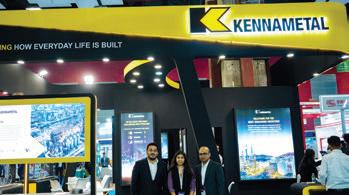
Kennametal Enhances Wire Manufacturing with HighPerformance Tungsten Carbide Nibs and Advanced Solutions
Kennametal India, a subsidiary of Kennametal Inc., USA, operates a manufacturing facility in Bangalore. By integrating materials science, deep technical expertise, and continuous innovation, the company develops high-performance tools, materials, and wear-resistant solutions that help customers achieve long-lasting, and reliable solutions. In an exclusive interview to Wire & Cable India, Mr. Subbakrishna K S, Sales HeadIndia at Kennametal, shares how India’s infrastructure growth has increased the demand for LRPC wires and how the company is fulfilling this demand with its advanced tungsten carbide nib solutions, ensuring precision, durability, and consistency in wire production, enhancing operational efficiency and meeting the evolving needs of the wire and cable industry.
Mr. Subbakrishna K S , Sales Head-India, Kennametal
Wire & Cable India: Can you please give a brief introduction of your company?
Subbakrishna K S:
Kennametal Inc., USA is a pioneer in the manufacturing of tungsten carbide products. With production facilities around the world, we deliver advanced solutions to our customers globally. With more than 20 new innovative products introduced and over 1,800 active patents worldwide, our Kennametal team continues to set industry benchmarks in technology, quality, and performance, providing solutions to industries, including aerospace, automotive, construction, defense, general engineering, medical, mining, oil and gas, process industries and transportation. The wire and cable sector is one part of these segments.
Kennametal India, an INR 1,000 crore company and a subsidiary of Kennametal Inc., USA, operates a manufacturing facility in Bangalore, where we also have a specified Research & Development team. By integrating materials science, deep technical expertise, and continuous innovation, the company develops high-performance tools, materials, and wearresistant solutions that help customers achieve longer, more reliable solutions.
WCI: How does Kennametal push the boundaries in innovation and product development for the wire & cable industry?
SKS: We deliver specialised solutions for the tyre and spring manufacturing industry, with LRPC (Low Relaxation Pre-Stressed
Concrete) wires being one of our major focus areas. Our high-performance carbide nibs are widely used in this segment to ensure precision, durability, and consistency in production.
India’s infrastructure sector is experiencing rapid growth fueled by government initiatives. The demand for LRPC wires is rising significantly. To meet market demand, we are committed to supporting manufacturers with advanced carbide solutions that enhance operational efficiency and meet the evolving needs of the industry.
The wire and cable industry is evolving rapidly, driven by an increasing demand for greater efficiency and productivity. That is where Kennametal’s innovation and material science expertise stand out. We consistently
INTERVIEW
At Cable & Wire Fair 2025, we showcased a comprehensive product line, including steel mill rolls, wire drawing pellets, bar drawing pellets, tube drawing pellets, pressure dies and wire drawing nibs. Each of these products is designed to withstand the severe wear conditions and mechanical stress in the wire and cable manufacturing environments.
meet industry expectations by delivering solutions that enhance customer productivity and accelerate their manufacturing processes.
WCI: Can you tell us about the current showcase in Cable & Wire Fair 2025?
SKS: We have a comprehensive product line tailored to meet the rigorous demands of wire drawing and forming processes. We plan to display steel mill
rolls, wire drawing pellets, bar drawing pellets, tube drawing pellets and pressure dies. Also on display will be wire drawing nibs. Each of these products is designed to withstand the severe wear conditions and mechanical stresses common in wire and cable manufacturing environments.
WCI: How has your experience been at Cable & Wire Fair?
SKS: We’ve been pleased with the response and have
generated high-quality leads. That’s been quite encouraging, and we’re optimistic about generating even more meaningful engagement as the event continues.
WCI: What are your future plans in the next 5-10 years?
SKS: Kennametal is a pioneer in innovation and we constantly work with our customers to provide better solutions for industries. We cater to various industries
with a wide range of products and continuously develop processes and products to better serve customers.
We deliver specialized solutions for the tire and spring manufacturing industry, with LRPC (Low Relaxation Pre-Stressed Concrete) wires being one of our major focus areas.
Durga Engineering Works Establishing a Greenfield Plant; Enters 66kV CCV Line Segment
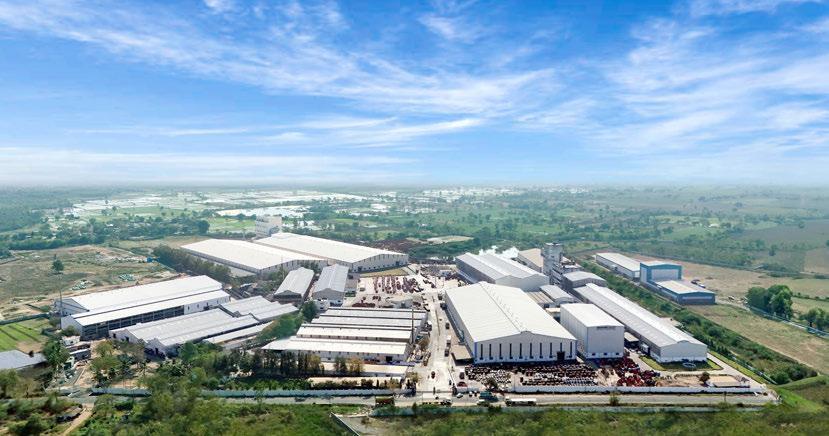
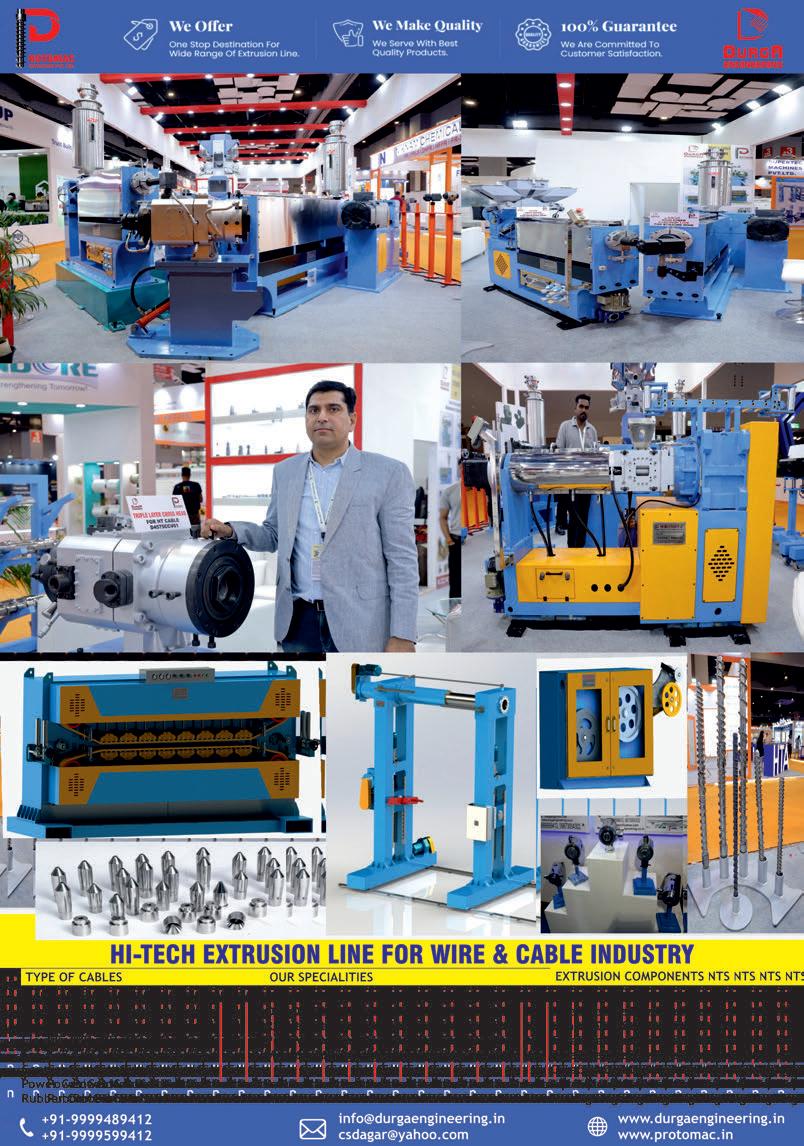
Durga Engineering Works, with 50+ successful 11 kV to 33 kV Sioplas extrusion lines for HT cable applications, is progressing toward the 66 kV CCV line, setting new standards in high-voltage extrusion technology. In an exclusive interview with Wire & Cable India, Mr. Charan Singh Dagar, Managing Director of Protomac Extrusion Private Limited and Durga Engineering Works, revealed that the company is setting up a greenfield manufacturing facility spanning 46,500 sq. meters., which is slated to become fully operational in the upcoming financial year. This major expansion will significantly boost production capacity, streamline workflow efficiencies, and enable the company to achieve its target of delivering any extrusion line within 30 days.
Mr. Charan Singh Dagar , Managing Director, Protomac Extrusion Private Limited and Durga Engineering Works
Wire & Cable India: Please highlight the latest advancements and technology developments that you have introduced in your machines to cater to the evolving needs.
Charan Singh Dagar: Over the past year, we have focused heavily on strengthening our technology portfolio to meet the rapidly evolving requirements of the wire and cable industry. One of our major achievements has been our commitment to developing and supplying 11 kV to 33 kV Sioplas extrusion lines for HT cable applications, with 50+ successful Sioplas installations completed so far. These lines are engineered for superior consistency, excellent bonding performance, and long-term reliability in medium- and high-voltage applications.
Beyond Sioplas, we have also successfully delivered 1000+ insulation, sheathing, and
rewinding lines, reinforcing our position as a strong and dependable technology partner across the entire cable production range.
After achieving significant success in the 33 kV segment, we are now progressing toward the 66 kV CCV line, with a confirmed order already in hand. Our team is fully dedicated to making this project a benchmark and one of its kind, setting new standards in high-voltage extrusion technology.
In the rubber cable segment, we have further expanded our capabilities by manufacturing extrusion lines suitable for applications up to 35 kV, meeting the increasing demand for highperformance rubber-based HT cables.
For the building wire segment, we have upgraded our line capabilities to
deliver production speeds of up to 1000 mpm, enabling customers to significantly enhance throughput and reduce production costs. Additionally, we now support bobbin sizes up to 1250 mm with fully automatic changeover, ensuring continuous, interruptionfree operation and improved operational efficiency.
Across all product categories, our focus remains on delivering high-quality machines with the fastest possible manufacturing and delivery timelines, backed by advanced process control, improved stability, and robust engineering standards.
WCI: How do you help your customers achieve better efficiencies in their production processes?
CSD: We support our customers in achieving higher production efficiency
INTERVIEW
For the building wire segment, we have upgraded our line capabilities to deliver production speeds of up to 1000 mpm, enabling customers to significantly enhance throughput and reduce production costs.
by ensuring that all our machines are engineered with precision, consistency, and long-term reliability in mind. Internally, we rely on the latest manufacturing technologies and advanced software systems, which significantly reduce human error and enhance overall accuracy. Our machines are compatible with Industry 4.0, so that we can use the data of our machines for further analysis and improvements.
Our production ecosystem includes state-of-the-art equipment such as CNC laser cutting, CNC laser welding, CNC screw cutting machine, CNC deep hole machines, CNC turning machines capable of operating materials up to 1.2 meters dia and 5 meters in length, and VMC systems that operate on components up to 3 × 6 × 2.5 meters.
We also maintain a fully in-house powder-coating facility and several automated sub-processes to ensure superior finishing and consistent quality.
These capabilities allow us to manufacture extrusion lines that are high in output, low in maintenance, and cost-effective, enabling customers to reduce
downtime, optimize energy consumption, and improve overall production throughput.
WCI: What is your future technology roadmap and upcoming developments for the wire & cable industry?
CSD: Our future technology roadmap is strongly aligned with our vision of scaling up capabilities and delivering next-generation solutions to the wire and cable industry. We are currently developing a new greenfield manufacturing facility spread across 46,500 sq. meters, which is already under construction and scheduled to become fully operational in the upcoming financial year. This expansion will significantly enhance our production capacity, workflow efficiency, and meet our goal of 30 days delivery of any extrusion line.
The new plant will integrate state-of-the-art machinery, advanced automation systems, and upgraded precision technologies aimed at reducing manual intervention and improving manufacturing consistency. A major focus will be on automating most of the manual processes to ensure
higher accuracy, faster production cycles, and improved repeatability.
Additionally, our dedicated R&D team is actively working on new product developments and technological upgrades that will further strengthen our offerings and support the evolving needs of the global wire and cable market.
WCI: How do you ensure product quality and reliability across your entire machine portfolio?
CSD: To ensure consistent product quality and long-term reliability, we follow a fully standardized and process-driven manufacturing approach. All our machines are produced using high-precision CNC equipment, automated systems, and advanced quality control procedures, which minimizes variability and enhances accuracy across every stage of production.
Each critical component undergoes multiple quality checks, including dimensional inspection, load testing, electrical verification, and full performance validation before assembly. We work only with certified raw
material suppliers and conduct regular supplier audits to maintain strict consistency in material quality.
With strong in-house capabilities—covering machining, fabrication, powder coating, assembly, and testing—we maintain complete control over quality without relying heavily on external processes. Before dispatch, every machine goes through a full-load trial run, ensuring defectfree performance and stable operation at the customer’s site.
This disciplined approach ensures that every machine in our portfolio delivers high output, long service life, and dependable performance, even under demanding production conditions.
WCI: How do you support customers after the sale in terms of service, spares, training, and technical assistance?
CSD: Our customers and partners have always been at the core of our journey. To ensure seamless support, we provide immediate guidance and assistance within 24 hours of machine supply, followed by the deployment of our dedicated installation
Our production ecosystem includes state-of-the-art equipment such as CNC laser cutting, CNC laser welding, CNC screw cutting machine, CNC deep hole machines, CNC turning machines capable of operating materials up to 1.2 meters dia and 5 meters in length, and VMC systems that operate on components up to 3 × 6 × 2.5 meters.
INTERVIEW
In the rubber cable segment, we have further expanded our capabilities by manufacturing extrusion lines suitable for applications up to 35 kV, meeting the increasing demand for highperformance rubber-based HT cables.
and commissioning team to ensure smooth start-up and stable production. We also maintain readily available spares for all our machines, enabling quick replacements and minimizing downtime for our customers.
Our commitment is to build long-term relationships based on trust, transparency, and consistent performance, ensuring customers always receive dependable and future-ready solutions.
Our vision for all upcoming machines is providing failure-free performance supported by IOT-based assistance, enabling realtime monitoring, predictive
maintenance, and enhanced operational visibility and setting new benchmarks for quality, reliability, and technological excellence in our industry. Additionally, we aim to achieve the shortest delivery timelines to support our customers’ growing production demands and market commitments.
WCI: What are the key innovations and emerging trends shaping the wire and cable industry?
HVDC, smart grids, and underground/submarine cables. The industry is driven by renewable energy, power infrastructure, and urban development.
high-performance and specialized cables.
The company is progressing toward the 66 kV CCV line, with a confirmed order already in hand.
CSD: The key innovations & emerging trends shaping the wire and cable industry include advanced materials & safety products such as halogen-free, low-smoke, fire-resistant (LSZH) cables, and high-performance polymers and elastomers for durability, heat, and UV resistance.
Electrification & high-voltage transmission is an emerging trend with the growth in
Development of high-speed fiber-optic and data cables for 5G, data centers, and smart cities in the telecom & data infrastructure sector is the focal point, targeting bandwidth, signal integrity, and latency reduction. The innovations also include smart/ intelligent cables that are embedded with sensors for real-time monitoring, fault detection, and predictive maintenance, and supports smart grids and automated infrastructure management.
The automated manufacturing & Industry 4.0 is another emerging trend in the industry with robotics, AI, IoT, and digital twins ensuring quality, efficiency, and consistency in wire and cable manufacturing. It optimizes production of
Sustainability & green manufacturing is another critical trend in the industry with eco-friendly materials, recyclable polymers, and lowcarbon production that has become a necessity and the wire and cable manufacturers need to comply with safety and green-building standards.
All in all, market drivers including urbanization, infrastructure expansion, renewable energy, telecom growth, and EV adoption are creating rising demand for safe, durable, high-performance, and environmentally friendly cables. The industry is moving toward safer, smarter, high-performance, and sustainable cable solutions to meet the growing demands of electrification, digitalization, and green infrastructure.
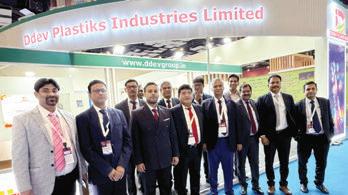
Ddev Plastiks Industries has announced a INR 50 crore capacity expansion, which will add 30,000 MTPA to its production volume by Q3 FY2025-26, including 5,000 MTPA HFFR capacity, 15,000 MT new PVC compound facility, and 10,000 MT additional capacity across product lines. The expansion will be funded through internal accruals and is aimed at meeting increasing demand from the HFFR market, solar cable segment and new entrants in the industry.
The company is currently operating at 84% of its existing
238,400 MTPA capacity, and the latest expansion aligns with its strategic roadmap to reach INR 5,000 crore revenue by FY2030. Ddev Plastiks has also indicated further capacity additions in XLPE, with details expected in future updates.
Tirupati Reels Investing in Downstream and Upstream Enhancement, Automation and Multi-Material Packaging Formats
Tirupati Reels Private Limited, a manufacturer of wooden cable drums, industrial pallets, and engineered transit packaging solutions, caters to major cable manufacturers across India and supports export-oriented global infrastructure supply chains. In an exclusive interaction with Wire & Cable India, Mr. Pratik Jajodia, Managing Director, Tirupati Reels, shared that the company is building India’s first one-stop industrial packaging platform by diversifying into allied packaging categories such as steel drums, PP spools, and PP sheets, demonstrating its future-readiness as a multimaterial solutions provider to the wire and cable sector.
Wire & Cable India: Please briefly describe the history and evolution of Tirupati Reels.
Pratik Jajodia: Tirupati Reels began its journey as a specialised manufacturer of wooden cable drums for India’s emerging wire and cable industry. Over time, we transformed into an advanced industrial packaging company offering engineered wood-based solutions including wooden drums, industrial pallets, customised skids and heavy-duty transit packaging systems.
Today, Tirupati Reels partners with some of the leading cable, wire, steel and various infrastructure companies in India and global markets, supporting them with reliable, scalable and export-compliant packaging solutions.
WCI: What is your current manufacturing capacity? What kind of raw materials do you source for your drums/ reels and how do you ensure their quality?
PJ: We operate multilocation manufacturing infrastructure with scalable production capabilities,
tailored for high-volume and fast-turnaround requirements for India’s wire and cable manufacturing ecosystem.
We make close to 50,000 wooden drums, and 25,000 wooden pallets every month. Our raw materials are sourced from certified forestry partners across the globe, ensuring uniformity, dimensional accuracy, and mechanical performance. Each drum or pallet passes through rigorous quality control at every stage, enhancing structural integrity and safe transportation of high-value cables across long distances.
WCI: Kindly elaborate on the current market reach of the company, both in the international and the domestic markets.
PJ: Tirupati Reels enjoys a strong domestic presence across all major wire and cable producing regions in India, along with the various other sectors like steel, engineering goods etc. Our products are extensively used across power transmission, renewable energy, telecom, metro, defence and industrial infrastructure projects. Alongside
Mr. Pratik Jajodia, Managing Director, Tirupati Reels
CABLE PACKAGING
Our recent facility upgrades include new-generation machining lines for all product ranges, automated material handling, finishing systems and structural design enhancements suitable for specialised cable & industrial packaging.
domestic leadership, we have expanded significantly into export-driven supply chains, partnering with all the manufacturing companies catering to global infrastructure markets. This expansion reinforces our commitment to support Indian manufacturing growth worldwide.
WCI: Could you please take us through the key strengths of Tirupati Reels which have played a significant role in providing competitive edge to the company in the wooden reels segment?
PJ: Our biggest strength lies in offering high-quality wooden drums and wooden pallets to our customers, along with the end-to-end industrial transit packaging. The company has invested significantly in upstream and downstream capabilities
including global sourcing, advanced machining, treatment technologies and export-ready finishing.
Our ability in delivering engineered packaging solutions tailored to customer needs, positions us not just as a product supplier, but as a solutions partner supporting the entire logistics chain—from production to the project site.
WCI: Please shed light on any development or innovation with respect to the product offerings and any technological upgradation at your production facility in the recent past.
PJ: Our recent facility upgrades include newgeneration machining lines for all product ranges, automated material handling, finishing systems
and structural design enhancements suitable for specialised cable & industrial packaging.
In addition to wooden reels, Tirupati Reels has diversified into industrial pallets, export skids and engineered transit packaging. Our upcoming expansion into allied packaging products such as steel drums, PP spools and PP sheets reflect our futurereadiness as a multi-material solutions provider to Indian industry.
WCI: What is your outlook on the current market scenario and the opportunities ahead for the wooden drums/reels market?
PJ: The Indian wire and cable industry is entering a decisive growth cycle, supported by energy transition, infrastructure expansion, and global
manufacturing participation. This increased cable movement requires packaging solutions that are stronger, safer and export compliant. Tirupati Reels is strategically investing in downstream and upstream enhancement, automation and multi-material packaging formats. Our vision is to build Tirupati Reels into a comprehensive ‘One-Stop Shop Solution’ for industrial packaging across wooden, steel and polymer categories.
The Indian wire and cable industry is entering a decisive growth cycle, supported by energy transition, infrastructure expansion, and global manufacturing participation.
At Tirupati, our focus has always been on building capabilities ahead of industry needs. As India’s infrastructure and global connectivity continue to expand, we are committed to supporting our customers with integrated packaging solutions that enhance safety, efficiency and competitiveness across every stage of the supply chain.
Venkateswara Wires Begins Construction of New Facility with Bhoomi Pooja Ceremony
Venkateswara Wires has commenced construction of its upcoming facility, marking the milestone with a Bhumi Pooja ceremony reflecting tradition and new beginnings.
Dec 11, 2025
Venkateswara Wires Pvt. Ltd. has performed the Bhoomi Pooja for its new facility, marking a significant step in the company’s expansion plans.
The management expressed gratitude to the team, architects, and workers whose efforts have enabled this progress. The new facility underscores the company’s commitment to growth, industry presence, and delivering greater value to its customers.
Takkar Polychem Explores NextGen LSZH Technologies Along With Eco-Friendly Modifiers and Additives
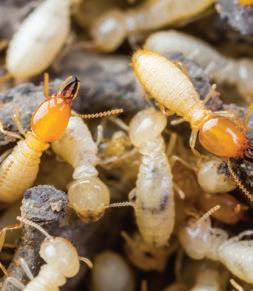
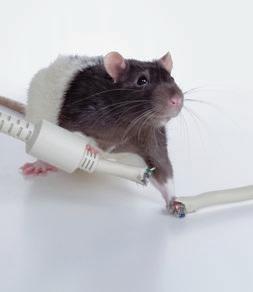
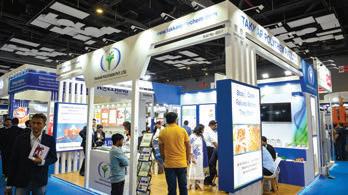
Takkar Polychem Private Limited offers a specialised portfolio of ZHFR and LSZH solutions engineered for the high-humidity and high-ambient-temperature conditions typical of the cable industry. In an exclusive interview with Wire & Cable India, Mr. Deepak Takkar, Managing Director, highlights their flagship ZHFR 516 UV fire-performance grade-an insulation compound that delivers flame resistance, low smoke generation, zero-halogen emissions and long-term stability for wires and cables. He also emphasises their Anti-Rodent & Anti-Termite Masterbatch ARAT 12006, which helps protect cables in environments prone to biological attack, ensuring long-term safety, consistent performance and extended service life in demanding applications. Looking ahead, the company plans to focus on next-generation LSZH formulations and explore bio-derived modifiers and low-impact additive packages, supporting the industry’s continued shift toward safer and environmentally responsible materials.
Wire & Cable India:
As infrastructure projects like metro rails and smart cities expand with stricter fire safety protocols, which of your current compounds are specifically engineered to meet cable manufacturers’ fire performance requirements, and what cable types or sectors are they most suited for?
Deepak Takkar: India’s next decade of infra growth such as metros, tunnels, airports, data centres, smart buildings, demands cable materials that go far beyond basic FR performance. Cable OEMs today look for a combination of high LOI, low smoke, zero halogen, strong mechanicals, and UV stability for outdoor and semi-outdoor applications.
Based on the technical data sheets, Takkar Polychem currently offers a specialised ZHFR portfolio precisely engineered for these highrisk, compliance-driven installations. For highrisk, compliance-driven applications, such as metro rail systems, airports, tunnels, smart buildings and data centres, our flagship fire-performance grade ZHFR 516 UV is the preferred choice. It is engineered for premium insulation applications where flame resistance, low smoke, zero halogen emissions and longterm stability are critical.
WCI: The transition toward halogen-free solutions continues in the cable industry despite processing challenges in tropical manufacturing environments. How are you leveraging
halogen-free flame retardants, mineral fillers like ATH or MDH, or phosphorusbased systems in your fire-safe formulations to align with cable manufacturers’ processing capabilities and fire safety needs?
DT: We engineer our halogen-free formulations through a carefully balanced combination of flameretardant minerals and synergistic additives that deliver both strong fire performance and reliable processability. Our focus is on achieving high LOI, low smoke emission and stable electrical properties, while ensuring the material runs efficiently on standard extrusion challenges such as high torque (smoother & more professional), moisture sensitivity or thermal stress. By optimising melt flow,
Mr. Deepak Takkar , Managing Director, Takkar Polychem Private Limited
COMPOUNDS
We engineer our halogen-free formulations through a carefully balanced combination of flame-retardant minerals and synergistic additives that deliver both strong fire performance and reliable processability. Our focus is on achieving high LOI, low smoke emission and stable electrical properties, while ensuring the material runs efficiently on standard extrusion lines without issues like high torque, moisture sensitivity or thermal stress.
pre-heating behaviour and thermal stability, our ZHFR and LSZH systems are tailored to the realities of highhumidity, high-ambienttemperature manufacturing environments common across the cable industry.
WCI: Cable manufacturers report varying levels of success with newer fireresistant compounds in high-speed production environments. How do your fire-retardant compounds perform in high-speed extrusion or when used with crosslinking processes like e-beam or silane grafting?
DT: Our fire-retardant compounds are engineered to deliver stable melt behaviour, low torque and consistent output even at high extrusion speeds, allowing manufacturers to scale productivity without compromising cable geometry or surface quality.
For applications involving e-beam curing, XLPO or XLPE technologies, our functional masterbatches are formulated to integrate seamlessly into downstream crosslinking processes. They provide uniform dispersion,
predictable curing response and stable mechanical performance after irradiation or silane grafting, enabling cable makers to achieve both high-throughput production and reliable long-term fire performance.
In parallel, solutions such as our Anti-Rodent & Anti-Termite Masterbatch ‘ARAT 12006’ help cable manufacturers enhance long-term protection in environments prone to biological attack, ensuring cables maintain both performance and service life in high-demand applications.
WCI: Metro rail projects increasingly specify low smoke and toxicity requirements alongside mechanical durability standards. What breakthroughs have you made to help cable manufacturers in reducing smoke density and toxicity without compromising mechanical integrity in LSZH compounds?
DT: We focus on nextgeneration LSZH formulations that optimise mineral synergy and polymer architecture to suppress smoke and acidic gas formation while maintaining
strong tensile and elongation features.
Our approach enhances char formation, reduces volatile release during combustion and stabilises the polymer matrix so manufacturers achieve low smoke density and non-toxic gas performance without sacrificing mechanical strength.
These advancements allow LSZH compounds to meet metro-grade specifications while still delivering consistent extrusion stability and long-term durability in demanding operational environments.
WCI: Global export markets demand varying certification standards while domestic requirements continue evolving. Are your compounds developed and certified in direct response to cable manufacturers’ compliance needs for CPR Euroclass B2ca, C1A, or other international fire safety standards? How do you support them in regional compliance efforts?
DT: Our formulations are developed with a clear focus
: to help manufacturers meet diverse regional firesafety classifications such as CPR Euroclass B2ca, C1A and similar international requirements.
Among our portfolio, ZHFR 538 UV has a fireperformance profile that aligns strongly with the flame-spread, smokesuppression and toxicitycontrol characteristics expected in these classifications. With a high LOI, IEC 60332-3 compliance and very low smoke and acidity levels, it gives cable designers a robust foundation for developing cables that target highergrade safety categories.
To support manufacturers across geographies, we provide detailed technical data, processing guidance, extrusion optimisation support and property benchmarking. This helps them map their cable designs to regional compliance pathways, ensuring they can confidently approach new export markets with materials engineered for consistent, test-ready and specification-aligned performance.
WCI: Advanced material science
Our R&D efforts increasingly focus on synergistic flame-retardant systems that complement traditional mineral approaches and enhance overall fire performance. This includes exploring micro- and nano-scale additives, improved char-forming agents and tailored polymer–additive interactions that help reduce flame spread, suppress smoke generation and stabilise the material during thermal stress.
COMPOUNDS
Our functional masterbatches are formulated for applications in e-beam curing, XLPO or XLPE technologies, integrating seamlessly into downstream crosslinking processes.
applications are beginning to appear in commercial fireresistant formulations. Are you working with nano-fillers, intumescent systems, or synergistic blends that go beyond traditional ATH-based flame retardants, specifically to enhance fire resistance in cables?
DT: Our R&D efforts increasingly focus on synergistic flame-retardant systems that complement traditional mineral approaches and enhance overall fire performance. This includes exploring micro- and nano-scale additives, improved char-forming agents and tailored polymer–additive interactions that help reduce flame spread, suppress smoke generation and stabilise the material during thermal stress.
These advancements allow us to strengthen fire resistance without compromising mechanical properties or extrusion stability, giving cable manufacturers access to formulations that are more robust and better suited for next-generation infrastructure requirements.
WCI: Circular economy principles are reshaping material selection processes throughout the value chain. How are you addressing environmental concerns in fire-retardant compounds-whether through halogenfree formulations, recyclable blends, or bio-based additives?
DT: We address these concerns by focusing on halogen-free fireretardant systems, cleaner mineral combinations and formulations that support easier recyclability at the end of a cable’s service life. Our approach emphasises reducing corrosive emissions, lowering smoke generation and designing blends that maintain stability without relying on heavy additive loading that can complicate reprocessing.
We continue exploring bio-derived modifiers and low-impact additive packages that can enhance performance while aligning with the industry’s broader shift toward materials that are safer for both users and the environment.
WCI: The gap between laboratory certification
and field performance remains a discussion point in industry forums. What kind of feedback do you typically receive from cable manufacturers regarding fire performance in terms of what works well, and what still needs improvement?
DT: Cable manufacturers consistently report strong performance in areas such as stable LOI values, low smoke generation, predictable ageing behaviour and smooth extrusion, even at higher production speeds. They also appreciate the uniformity of batches and the consistency of electrical and mechanical properties after installation, which helps them maintain reliability across large projects.
At the same time, manufacturers share helpful insights on how future iterations can evolve, such as enhancing long-duration heat stability or fine-tuning flow behaviour for newer, faster extrusion lines. This feedback guides our ongoing development work and helps ensure that our formulations continue to align closely with both laboratory expectations and real-world operating conditions.
WCI: Material science innovation continues driving performance advances while addressing processing challenges. From a compounder’s perspective, what’s the next big leap needed in fire-safety material science to meet the cable industry’s evolving needs?
DT: From our perspective, the next step forward is creating materials that deliver better fire performance while staying simple and dependable on the production floor. With our TPPL ZHFR compounds, we already work toward these balance-formulations that run smoothly, stay consistent over time and help manufacturers meet evolving safety expectations without added processing complexity.
The future will build on this direction through more efficient additive synergies, improved char-forming behaviour and better compatibility between polymers and flame-retardant systems. As requirements tighten, the priority is to keep making materials that help cable makers achieve reliable, high-quality results with greater ease.
Strengthening Dialogue and Driving the Future of the Steel Wire Industry
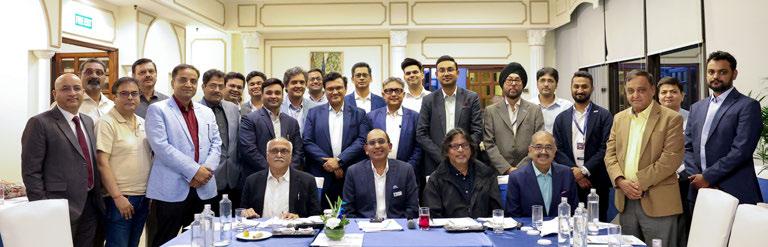
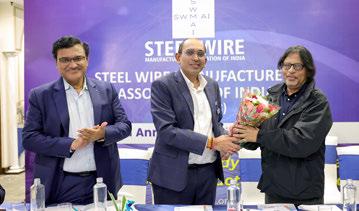
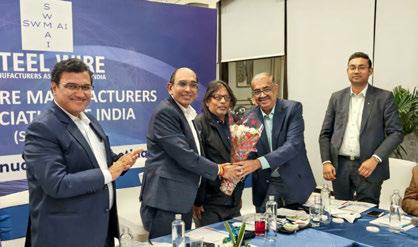
The 55th AGM of the Steel Wire Manufacturers Association of India (SWMAI) was held on 5th November 2025 at Le Meridien, New Delhi. Led by the association’s Chairman Mr. Sidharth Agrawal, the event witnessed enthusiastic participation from members, reflecting their commitment to advancing the steel wire sector and collectively addressing emerging challenges.
SWMAI, established over 60 years ago, serves as the apex national body representing steel wire and wire rope manufacturers in India. Its diverse and expanding membership- spanning both organized and small-scale sectors actively contributes to the industry’s overall development and progress. Recognized by the Government of India and major steel producers, SWMAI continues to play a pivotal role in facilitating dialogue between policymakers and industry stakeholders on critical issues related to raw materials, pricing, technology, and growth.
A key highlight of the 55th meeting was the presence of two distinguished speakers: Mr. Rajesh Gupta, Managing Director of Lloyds Metals & Energy Ltd, and Dr. A. S. Firoz, Former Chief Economist, Ministry of Steel.
Mr. Rajesh Gupta shared an inspiring account of his entrepreneurial journey and the evolution of Lloyds Metals & Energy Ltd. As one of
India’s rapidly expanding integrated steel producers, Lloyds operates extensive mining and steelmaking facilities, with significant iron ore reserves in Gadchiroli, Maharashtra. The company has grown steadily over the years, crossing notable turnover milestones while building capabilities across mining, sponge iron, billets, and value-added steel.
Mr. Gupta also spoke about the company’s ambitious next phase of growth- the establishment of a state-of-the-art wire rod mill at Gadchiroli, scheduled for commissioning by March 2027. Designed to support India’s rising consumption of wire rods, the new mill will enhance domestic availability, reduce supply gaps for the wire-drawing industry, and ensure consistent quality aligned with modern applications. Members welcomed the development, noting its potential to strengthen the competitiveness of the Indian steel wire sector.
Dr. A. S. Firoz spoke about the long-term steel demand outlook for India, outlining the factors that will shape pricing, consumption cycles, and market behaviour in the coming decades. Drawing from policy frameworks and national projections, he highlighted that by 2030, India is expected to require around 230–250 million tonnes of steel, driven largely by infrastructure, renewable energy, automobiles, and construction. Looking further ahead, he noted government planning scenarios that estimate India’s steel requirement could reach approximately 600 million tonnes by 2100, depending on
STEEL WIRE
economic expansion and urban development.
He also cautioned the industry about possible rough patches in steel demand over the next 2–3 years, citing global market volatility, inflationary pressures, and uneven sectoral growth. His remarks offered valuable perspective on how manufacturers should prepare for cyclical fluctuations while positioning for long-term opportunities.
The meeting also addressed several critical industry concerns, including wire rod availability, pricing competitiveness, import dependencies, and the need to enhance collaboration with government bodies and PSUs. Members discussed the continuing shortage of high-quality wire rods, its impact on downstream industries, and the need to align domestic production with global benchmarks. There was also consensus on the importance of strengthening policy advocacy and improving the ease of exporting value-added wire products.
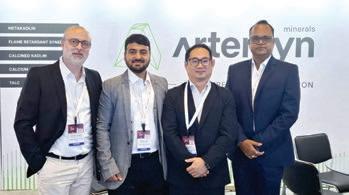
MINERALS ENGINEERED FOR A SUSTAINABLE FUTURE
EMPOWERING PEOPLE, PRESERVING NATURE, INNOVATING WITH MINERALS
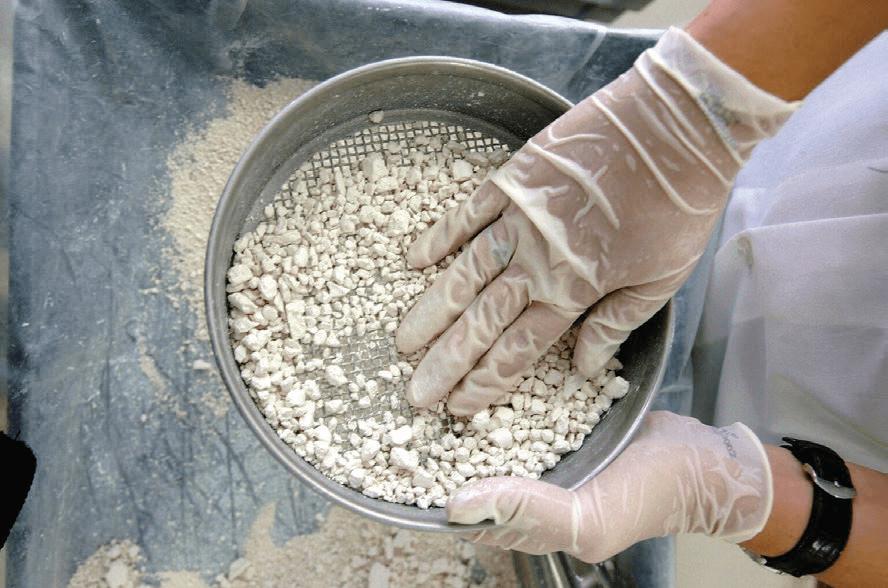
Applications: Mineral solutions for Reinforcement and Improved processing, Flame Retardancy and Volume Resistance in Wires & Cables Brands Elastomyn FR Shield | Elastomyn MK | Artelux & MicroPlast
Elastomyn FR Shield is Non-Toxic, Non-Halogenated, Non-Brominated, alumino-silicate based Smoke Suppressant, Char promotion and Thermal barrier additive/Synergist which improves flame retardancy performance yet optimum cost components
Elastomyn MK is a dehydroxylated, high-purity with low Iron (Fe2O3), Titanium Dioxide (TiO2), and Potassium Oxide (K2O) high-performance metakaolin engineered for enhanced chemical efficiency and reactivity. Its optimized morphology and high aluminosilicate activity make it ideal for minimizing ionic conductivity, which is critical for volume resistivity in PVC cable compounds.
www.artemyn.com
Kaolin, Calcium Carbonate & Talc
From Process to Performance: Insights from the Niehoff–Mikrotek Symposium
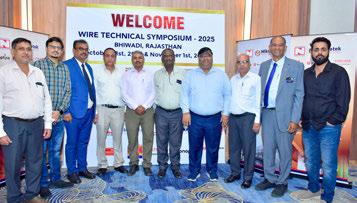
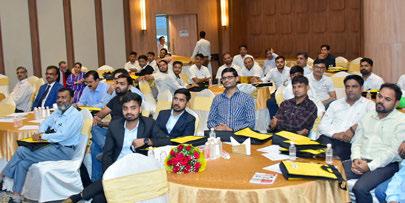
The recent Wire Technical Symposium, organised by Niehoff and Mikrotek on October 31 and November 1 in Bhiwadi, Rajasthan, brought together industry leaders, engineers, and manufacturing professionals to exchange insights on process excellence, material performance, and machine reliability in the wire and cable sector.
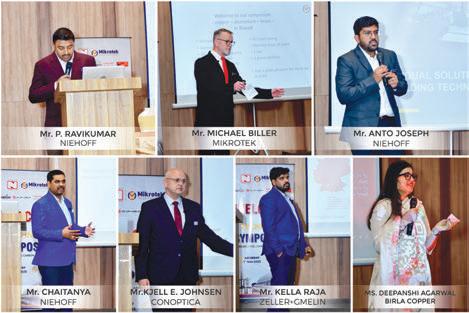
Mr. Lalit Sharma (COO, KEI Industries) inaugurated the symposium along with Mr. Jitendra Agarwal (MD, Pushp Profiles). They were joined by industry leaders Mr. Thalaj Malhotra (Director, Malhotra Cables), Mr. Kamal Babu (Chairman and MD, Mikrotek), Mr. Anto Joseph (Sales Manager, Niehoff India), Mr. P. Ravi Kumar (Technical Manager, Niehoff India), Mr. Michael Biller (European Sales Director, Mikro), and Mr. Kjell E. Johnsen (Head of Wire and Cable Division, Conoptica).
From the outset, the symposium focused on learning rather than selling. Lalit Sharma remarked, “This kind of initiative is what keeps our industry moving forward. Everyone walks away with practical insight that can be implemented back at their plant.”
Kamal Babu noted that hosting the event in an industrial hub encouraged direct engagement between factory professionals and field experts. With domestic manufacturing expanding under Make in India, he emphasised the need for sustained investment in technology, innovation, and product development.
P. Ravi Kumar observed that the symposium’s strong technical simple machine maintenance and multi-wire machines process took it apart, as participants tackled issues from material variability to automation and quality control to align with global standards.
Michael Biller shared insights on the role of wire drawing dies in improving plant efficiency, while Chaitanya Goli of Niehoff Cable emphasised that data-driven testing and skilled operator
involvement are essential to maintaining those performance standards.
Deepanshi Agarwal of Birla Copper pointed out that even small improvements in drawing, annealing, and insulation can significantly enhance efficiency and reliability.
The symposium highlighted steel wire applications, reflecting rising performance demands across sectors. Speakers underscored the growing importance of machine maintenance in optimising costs, improving drawing quality, and enhancing overall operational efficiency. Discussions also showcased modern Niehoff wire drawing and testing systems that boost precision, reduce downtime, and strengthen process reliability. Kjell E. Johnsen added that effectively
measurable environmental gains.
The symposium concluded with a session by Dr. Murlidharan (Founder and Director, Value Enablers’ Academy), who shared insights on process efficiency and manufacturing optimization, emphasizing that motivation, skill, and mindset distinguish great manufacturers from good ones.
The conversations in Bhiwadi revealed that performance thrives where knowledge meets action. The symposium left participants with a shared conviction that the future of the industry will be shaped by those who continue to learn, innovate, and raise the bar for excellence.
Bansal Wire Industries Launched LRPC Wire at Dadri Plant
This strategic move will diversify the company’s product portfolio and significantly boost sales. The new product will support sales by an expansion of 18,000 MT units.
Dec 02, 2025
Bansal Wire Industries Limited has launched a new product, LRPC (Low Relaxation Prestressed Concrete steel strand) Wire at the Dadri plant, Gautam Buddha Nagar, on Dec 01, 2025.
This strategic move will diversify the company’s product portfolio and significantly boost sales. The new product will support the company through an expansion of 18,000 MT units.
“By addressing untapped market segments, we are set to expand our footprint by capturing greater market share. The introduction of this product also strengthens our brand authority and deepens customer relationships. As demand for the new product grows, we expect steady revenue
growth, ensuring long-term financial stability,” says the company in its filing.
The industrial product will be used in construction to reinforce concrete structures like bridges, beams, and slabs by providing pre-stress to the concrete.
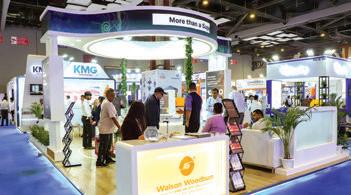
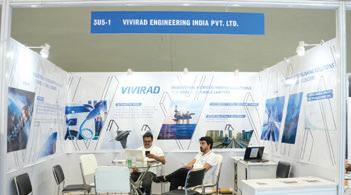
Cable & Wire Fair 2025 Concludes With High Industry Appraisal
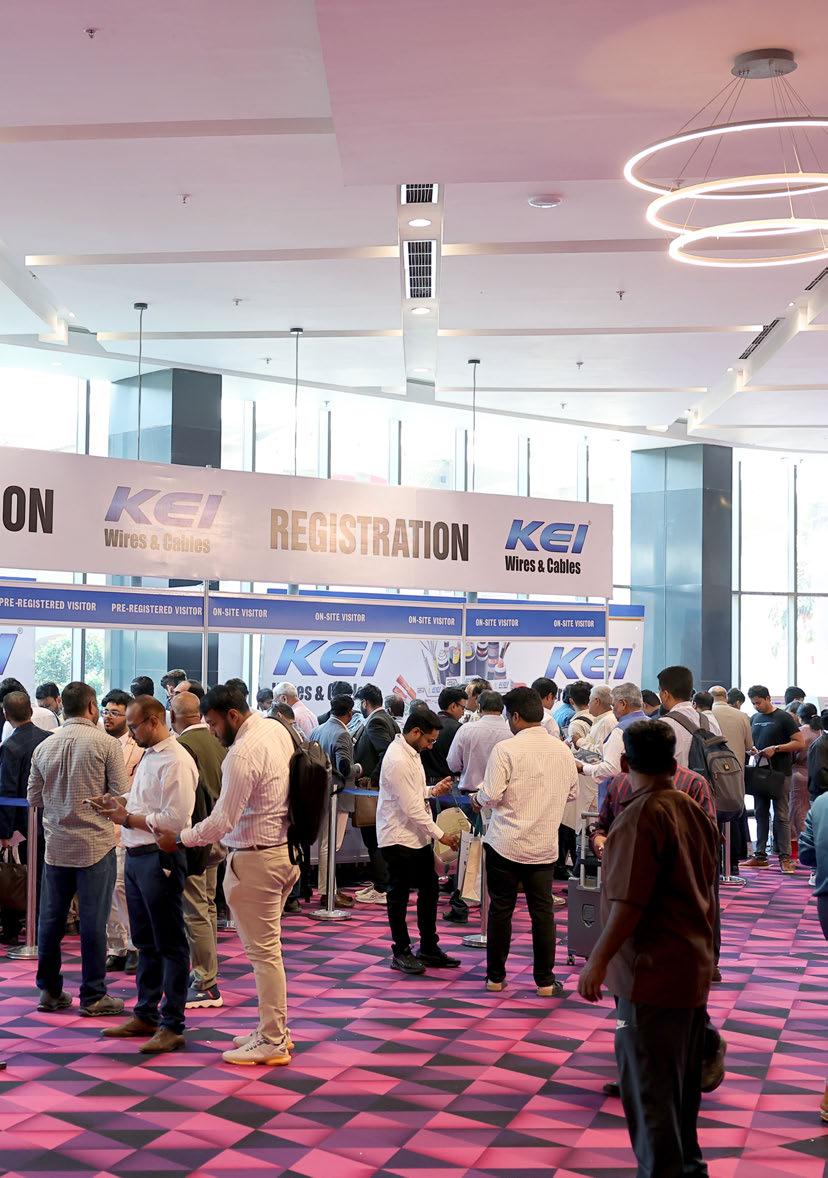
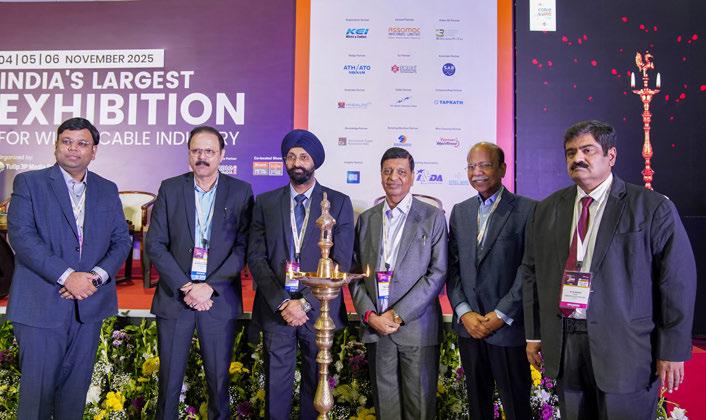
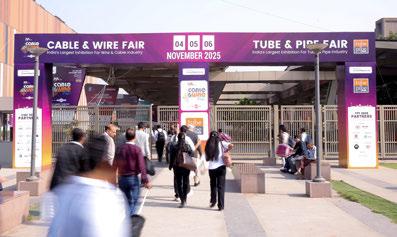
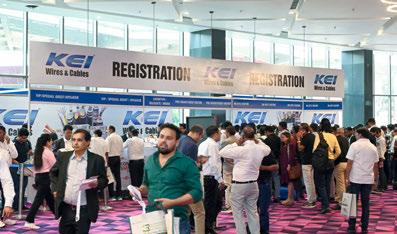
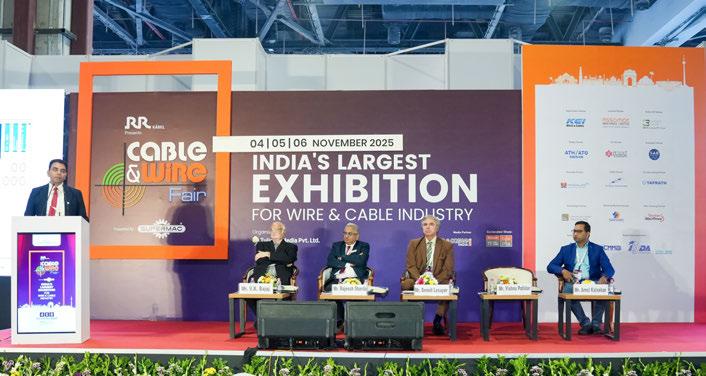
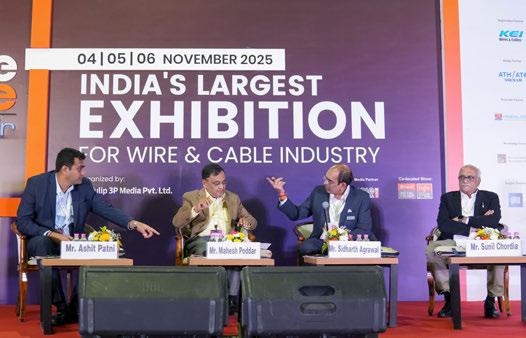
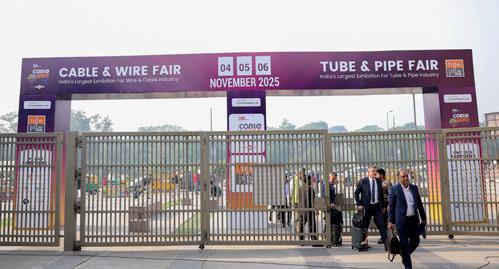
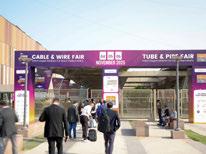
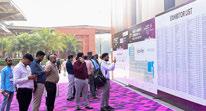
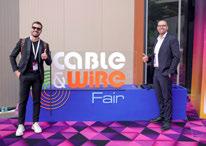
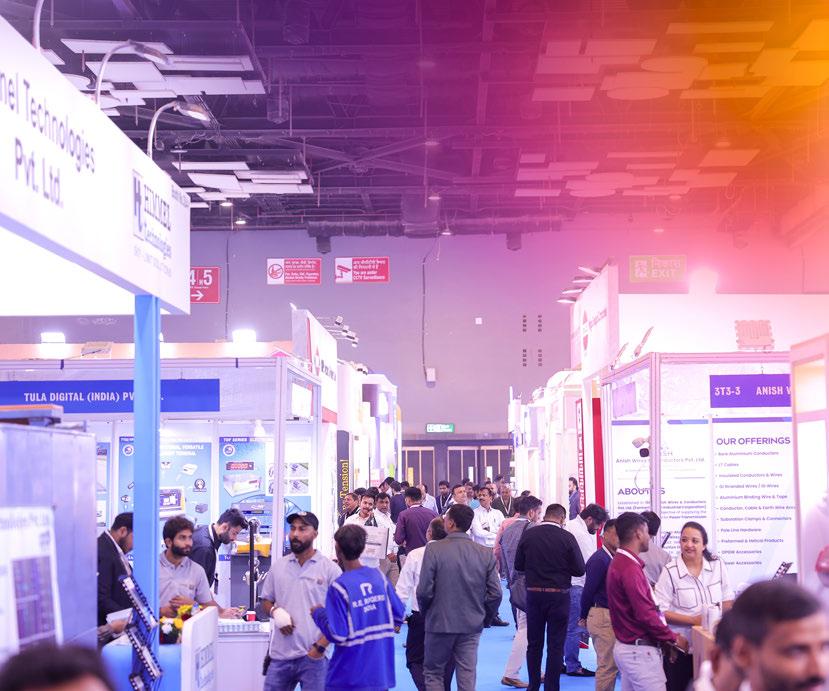
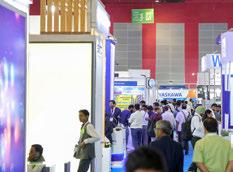
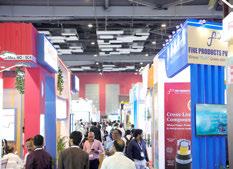
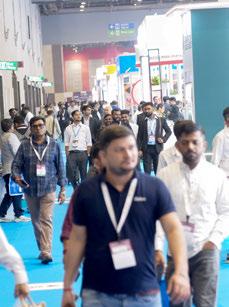
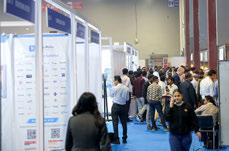
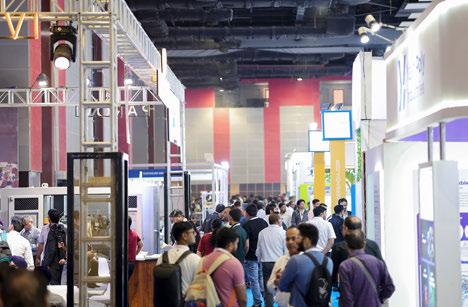
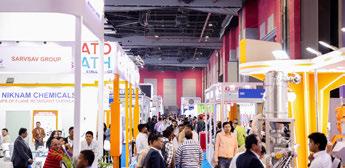
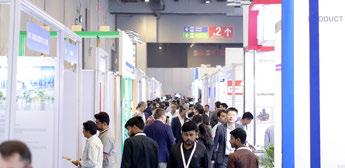
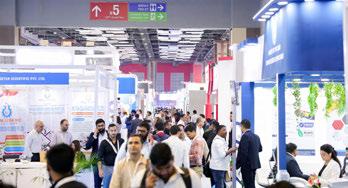
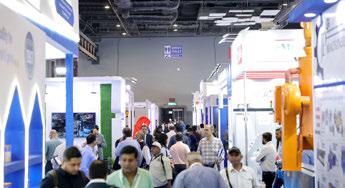
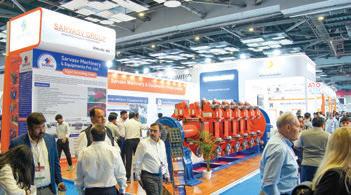
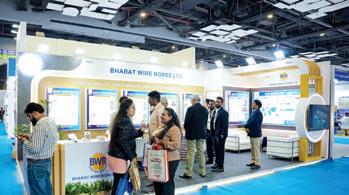
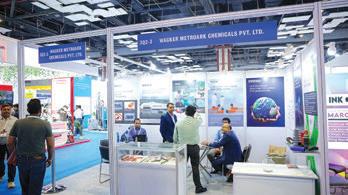
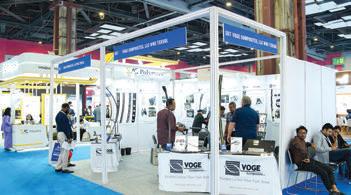
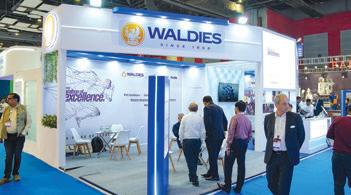
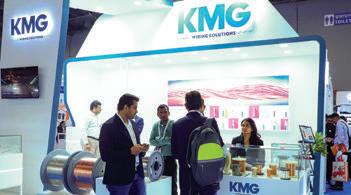
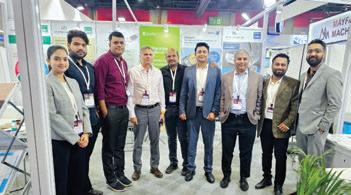
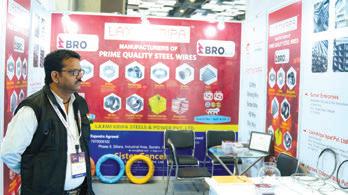
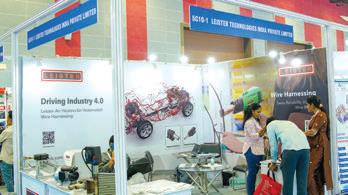
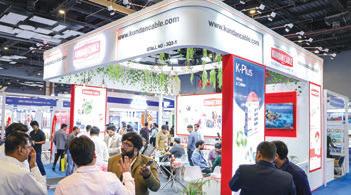
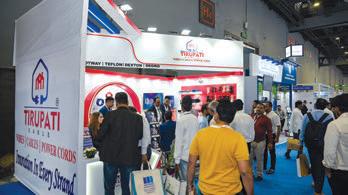
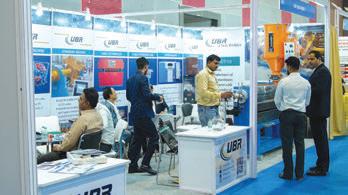
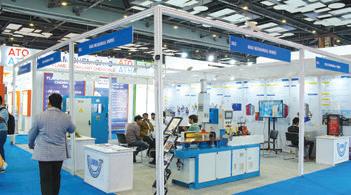
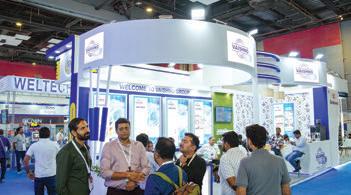
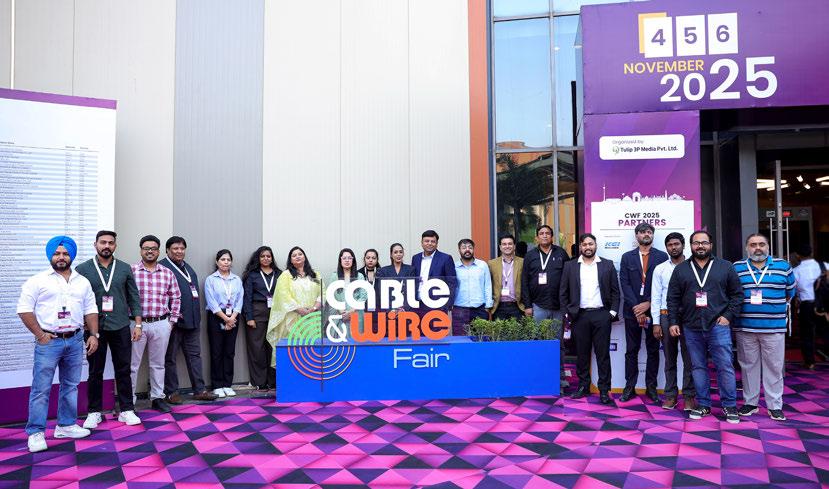
The 6th Edition of the Cable & Wire Fair (CWF) was the event’s largest and most appreciated by the industry yet. Organized by Tulip 3P Media Pvt. Ltd., Cable & Wire Fair 2025 concluded on a high note showcasing the country’s fastest growing innovations and technologies by 424 exhibitors from 4-6 November 2025 at Halls- 2,3,4 & 5 of Pragati Maidan, New Delhi, India. The co-located event held in Hall 6 — Tube & Pipe Fair — witnessed participation from 133 exhibitors, taking the overall exhibitor count to 557. Spanning 35,000 sq. m gross area, it is India’s Largest International Expo for the Wire and Cable Industry witnessed a very strong visitor footfall of 16,393.
Since its debut a decade ago, CWF has evolved from 70 exhibitors in a modest 3,000 sq. m space to a flagship event now spanning 35,000 sq. m area and has grown 12x since its launch. The scale of CWF this year was unprecedented, reflecting not only the fair’s steady expansion but also the rising global stature of India’s wire and cable industry.
CEO Priyank Jain attributes this steady, rapid ascent to a focus on staying current—regularly surveying exhibitors and visitors to ensure that each edition meets technical needs and mirrors shifting market trends. Feedback has led to continual recalibration and innovation, making CWF the country’s fastestgrowing showcase in the field.
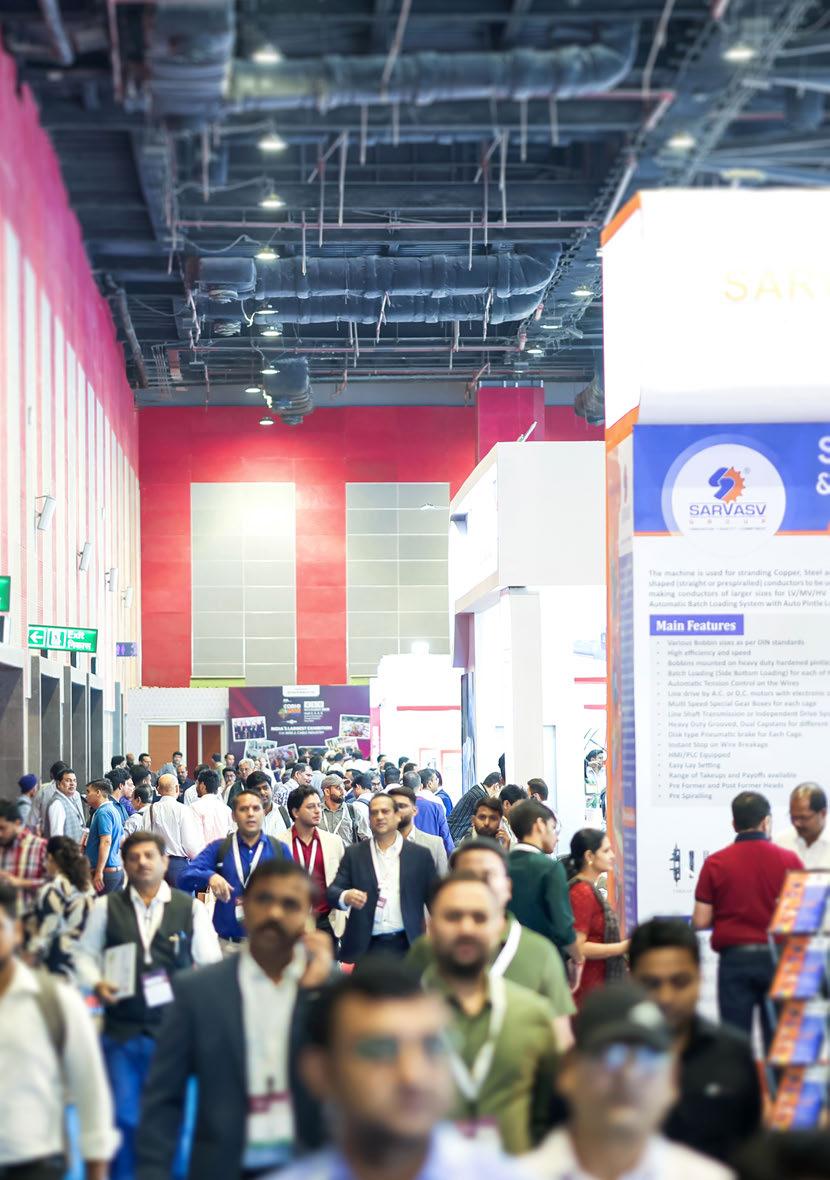
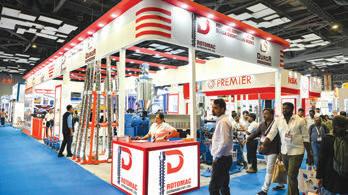
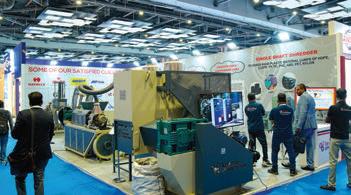
At the 2025 staging, the visitors saw the show floor packed with machinery, including equipment for drawing, extrusion, cabling, coiling, stranding and more. Attendees could analyze process efficiency, output quality, and technical specs
firsthand, engaging directly with experts ready to field questions and discuss implementation. There was also a deep focus on materials: steel, copper, aluminum, specialty compounds, advanced polymers, and all manner of control, measurement, and testing systems were on display, along with finished product solutions such as steel wire, power cables, specialty cables and fibre optics.
CWF’s international profile continued to expand with 89 foreign exhibitors from 24 countries including Austria, Bahrain, Belarus, Belgium, Canada, China, Denmark, Estonia, France, Germany, Italy, Japan, Nepal, Netherlands, New Zealand, Norway, Oman, Singapore, South Korea, Spain, Sweden, Switzerland, UK, USA etc. For visiting professionals, it was a rare opportunity to benchmark competing global technologies, products, and solutions in one comprehensive venue.
The show consistently draws a cross-section of the entire sector: management, plant owners, executives, senior engineers, R&D and procurement heads, and decision-makers from major cable users like railways, telecom, power, EPC, and renewables. CWF provides a balance between networking, business marketplace and a center for technical insight.
Another key asset is CWF’s two-day Technical Conference and CEO Conclave, which run parallel to the main exhibition. The conference agenda directly aligns with what’s happening on the show floor, with sessions focused on emerging themes such as- From ‘Make in India’ to ‘Made in India’: Competing in Global Cable Markets; Riding the Multi-Sector Growth Wave: Cable Demand Across India’s Expanding Economy; Future-Ready Power Networks: Smart, Safe, Green & Resilient; From BharatNet to 6G: Cabling the Next Wave of Connectivity; Steel Wire: Past, Present & Future – Building Strength Through Innovation; Smart Manufacturing: Technology and Material Science Behind Cables. These programs provide not only the latest knowledge but also a venue to network and brainstorm with industry leaders.
Jain said that what sets CWF apart is the balance of serious buyers and technical decision-makers—they can have detailed product discussions without filtering through multiple layers. The event draws both domestic and international visitors, and exhibitors often open new export channels. “We are thrilled with the outcome of Cable and Wire Fair 2025,” said Priyank Jain. “The enthusiasm from our exhibitors and attendees reflects the vibrant state of the cable and wire industry. This event not only showcases innovations
The enthusiasm from our exhibitors and attendees reflects the vibrant state of the cable and wire industry. This event not only showcases innovations but also fosters collaboration and knowledgesharing that will drive the industry forward.
but also fosters collaboration and knowledge-sharing that will drive the industry forward.”
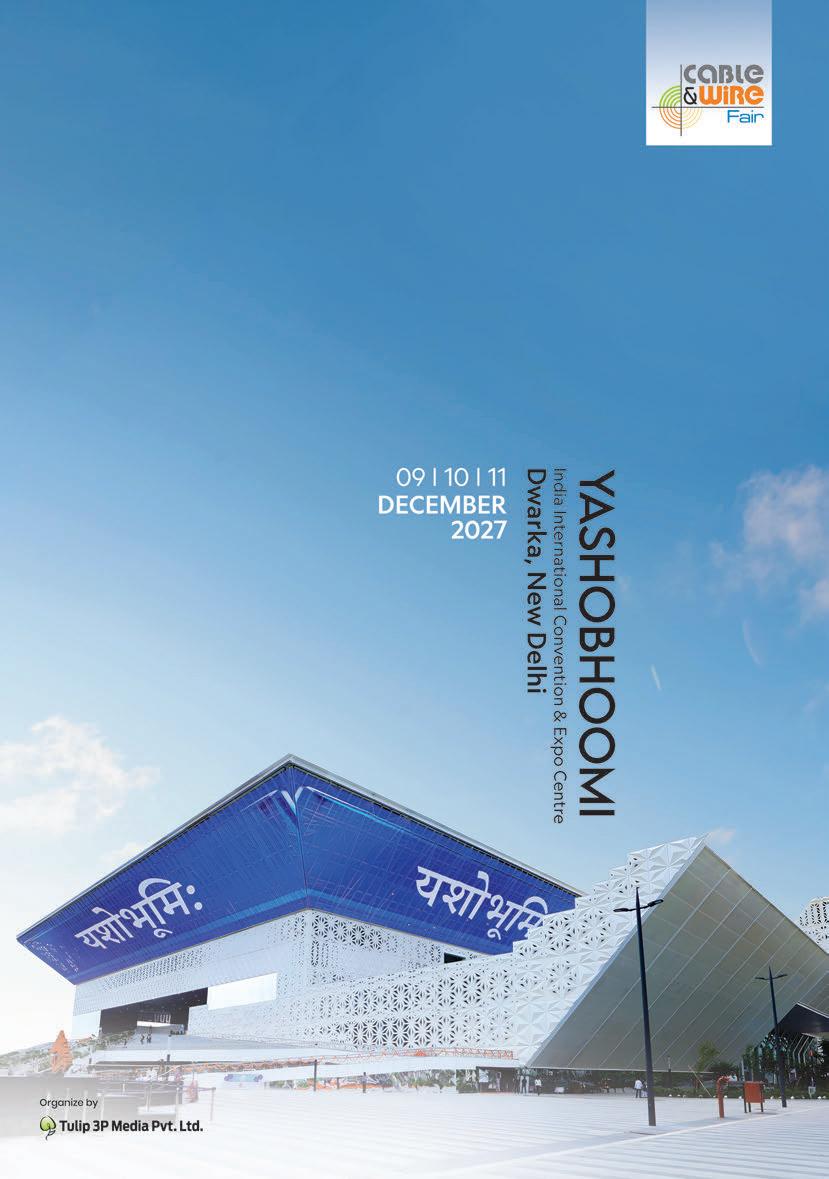
As we look ahead, the Cable and Wire Fair 2027 dates will be out soon. We invite industry professionals to prepare themselves for another exciting event filled with learning, networking, and exploration of the latest trends and technologies.
The information, including facts, figures, statements, and views presented herein has been reported directly from the CWF 2025 Conference, based on remarks made by the respective speakers. These details are reproduced in good faith and are intended solely for informational purposes. Any inadvertent errors, omissions, misinterpretation or discrepancies in facts, figures and ideas are unintentional and do not represent the views or opinions of the publication or its editorial team.
From ‘Make in India’ to ‘Made in India’: Competing in Global Cable Markets
Today we are looking at a pivotal moment for India’s cable and wire industry, a point where the journey from ‘Make in India’ to ‘Made in India’ is no longer an aspiration but a national priority. The global supply-chain landscape is shifting, the China+1 opportunity is real, and the world is looking for reliable, competitive, innovation-driven partners. India has the scale, the talent, the capacity and the zeal to rise and fill up the industry gaps.
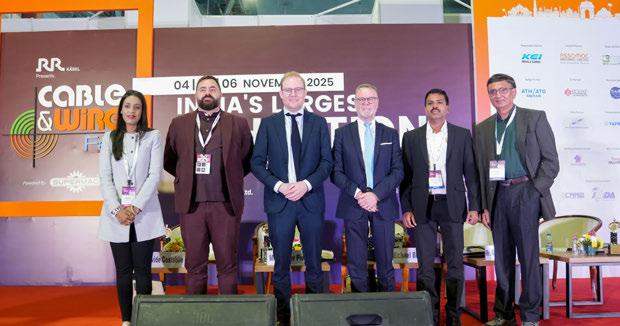
The session ‘From ‘Make in India’ to ‘Made in India’: Competing in Global Cable Markets’, held at CWF2025 Conference on November 04, shed light on how India can strengthen its manufacturing base, moving decisively from assembly-led growth to true indigenous design-to-delivery capabilities. The session explores how the industry can localize raw materials, tooling, and engineering; align products with global standards; and build export-ready competencies that meet the expectations of international buyers.
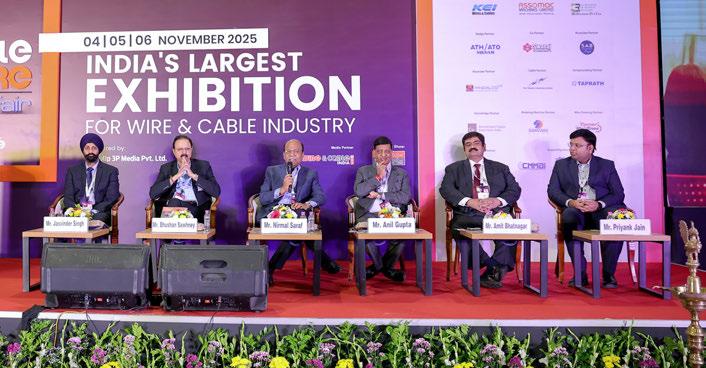
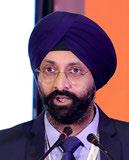
Panelists Mr. Anil Gupta, Chairman & Managing Director, KEI Industries Limited; Mr. Nirmal Saraf, Managing Director, Nirmal Wires; Mr. Bhushan Sawhney, Chief Revenue Officer, Aditya Birla Group; Mr. Jasvinder Singh, Managing Director, Supermac Industries (India) Limited; Mr. Amit Bhatnagar, Founder, Diamond Power Infrastructure Ltd., discussed the trade dynamics shaping competitiveness– from tariffs and FTAs to logistics efficiency and non-tariff barriers, and examine how Indian manufacturers can position themselves as trusted global suppliers through quality, compliance, and innovation. As specialty cables, highperformance products, and differentiated solutions become essential drivers of global market share, India must strengthen its supply chain, product quality, logistics, customer centric approach and after-sales support to serve diverse geographies with agility.
Mr. Anil Gupta, Chairman & Managing Director, KEI Industries Limited
“There were times when India used to feel threatened by neighboring small countries, but now time has changed and the new India makes eye-to-eye discussion with world’s leading economies”, firmly echoed Mr. Anil Gupta, in his naugural speech. Wire and cable is the backbone of the entire energy sector, and India is rapidly emerging as a global supplier in this sector. Mr. Gupta also drew attention on how important it is to strengthen the country politically and economically.
Emphasizing the importance of self-reliance, he highlighted that India’s longterm security and stability depend on strengthening its manufacturing and technological capabilities. “Until we build our economic might and technological strength, whether in
artificial intelligence, information technology, or other emerging domains, we will continue to face external threats,” he noted.
He pointed to the defense sector as a strong example of the progress made under the ‘Make in India’ initiative. “One positive development in recent years is the significant momentum in the defense industry. India is now producing high-quality defense and wartime equipment–aircraft, missiles, and much more, under the Make in India banner,” he noted.
Further, drawing attention towards machinery manufacturers, while there are new players coming up in the industry, Mr. Gupta also put into perspective the importance of “getting the right machines, at the right price and also within the delivery time”. He noted, “The major problem that we face in India from the machine suppliers is the time commitment or delivery commitments are very poor and weak, which leads to a continued dependence on China, who can deliver the large machines maximum within six months at a much better price vis-a-vis Indian suppliers. And the quality is definitely undoubtedly good.”
He stressed that for ‘Make in India’ to become meaningful, the manufacturing ecosystem must evolve beyond intent. “Make in India can succeed only when machine manufacturers and cable producers strengthen their plant capabilities, vendor networks, and supply chains. They must be able to deliver equipment on time and at scale,” he added.
With a vision for the wire and cable industry, Mr. Anil Gupta talked about the development of the semiconductor industry after the government’s push for domesting chip manufacturing. “The government’s push for semiconductor manufacturing in India is finally taking shape, addressing the country’s massive annual imports. While initial production may not be high-end, significant infrastructure is now being built to support the future growth, design, and manufacturing of advanced semiconductors”, he said.
He stressed that the industry now carries a collective responsibility to build a quality-first culture. “Indian manufacturers are not just making products; we are creating a legacy of innovation. The quality mindset we build inside our factories is the foundation of a nation
capable of exporting world-class products. We cannot have one standard for India and another for the world”, he emphasised.
“Our processes must be clearly defined, our quality assurance plans must be robust, and our in-process teams must be well trained. A good product is possible only when we check quality at every stage, from raw material to in-process checks to finished goods,” said Mr. Anil Gupta.
He highlighted that KEI’s journey is inseparable from the people who have built it over the years. “KEI’s growth story is also the story of every engineer, supplier, channel partner, employee, and electrician who has stood with us in powering the nation. Together, we’re creating impact at every level- from homes to highways, from cities to industriespushing India toward becoming Viksit Bharat.”
With 40 years of experience, Mr. Anil Gupta urged the industry to be proficient in quality, to make it a part of our culture. “We have to benchmark someone. So, I think now is the time to benchmark
our level of scale with China and level of quality with Europe. Then we’ll become a Viksit Bharat and a good ‘Make in India’ product”, concluded Mr. Gupta.
Mr. Nirmal Saraf, Managing Director, Nirmal Wires
“Dream like your customer and then make it a reality. That’s where success lies”, emphasised Mr. Nirmal Saraf, keeping customer needs paramount. He further drew attention towards what is actually the meaning and consequence of the ‘Made in India’ label for the manufacturers. “Once you have put the label of ‘Made in India’ on your product, you are putting the nation’s pride at stake. The product that has been made in India becomes primary, everything else becomes secondary. And that is the responsibility you take, that yes, I am putting my nation’s pride at stake, because if something goes wrong, if the product is not up to the mark, it is India’s name which is sullied. It is not just the brand”, said Mr. Nirmal Saraf.
Sharing the recipe of a ‘Made in India’ product, he said, “ There is one word which differentiates why your product will sell or why your product has got value. The difference between ‘also’ and ‘only’. Some things are also made in India, this product is also made in India, versus this product is only made in India. He elaborated that achieving this distinction requires complete self-reliance in design and manufacturing. “You have to do end-to-end designing and production here right from the basics,” he said. “When everything is done in-house, within the country, you gain the capability to make rectifications, to innovate continuously, and to keep improving your product.”
Emphasizing the essence of customer-centric innovation, Mr. Nirmal Saraf spoke about how the true success of ‘Made in India’ lies not only in meeting standards but in exceeding expectations and creating unmatched value. “Complying with a standard is like crossing a qualifying barrier,” he explained. “But to win the race, you have to go far beyond it. Business success comes when you consistently exceed your customer’s expectations.”
He further noted that innovation and value creation transcend trade barriers and pricing. “It doesn’t matter what your competition is doing or what tariffs exist,” he added. “If your product is truly innovative and valuable, customers will choose it regardless of cost. They will pay the price because the value you deliver outweighs it. Focusing on that
value proposition is what will make ‘Made in India’ a resounding global success.”
Focusing on the importance of automation, he noted how humans are susceptible to making mistakes but while using automation, once the programmes are right, mistakes corrected once, cannot be repeated. “The more you automate, the more your quality is assured. There may be errors in programming or automation initially, but once rectified, they don’t recur. Human errors, however, can,” noted Mr. Saraf.
Highlighting an oftenoverlooked aspect of manufacturing excellence, Mr. Nirmal Saraf emphasized the role of packaging and supply chain management in defining product quality and customer experience. “It doesn’t matter how good a product is when it leaves the factory, what truly matters is the condition in which it reaches the end consumer. Your packaging and supply chain management ensure that the product arrives in perfect condition. No consumer will accept excuses like ‘the delivery person made an error.’ If a damaged product reaches the
customer, the manufacturer bears the blame,” he noted.
He concluded by stressing the importance of robust systems that uphold product integrity through to delivery. “We must build strong delivery chains and design packaging that guarantees the product reaches the customer in flawless, usable form. Everyone else is part of the supply chain, but it’s the end consumer who truly matters.”
Mr. Bhushan Sawhney, Chief Revenue Officer, Aditya Birla Group
Mr. Bhushan Sawhney offered a fresh perspective of Swachh and Surakshit Bharat within the context of the wire and cable industry, emphasizing the critical importance of electrical safety. He urged the manufacturers to stop running towards speed, and focus on innovation and safety. Mr. Sawhney uniquely pointed out the need for customer awareness for the industry. Citing a relatable example on the importance of choosing the right product, he said, “I’ll not say that India doesn’t have a good product. It is available in the market. The real question is how aware are you about it. We buy a house worth INR 30 crore- INR 50 crore, maybe it is second-hand, maybe it is new- but nobody goes there and checks which wire is inside, how much load it can take. People are very particular about fancy tiles, about fittings, about decor, but not about the wire.”
Highlighting demand driven by electrician based influential selling, Mr Sawhney sights, “Eighty percent of the business is being run by the electricians. Selling is a good aspect, but I feel awareness is more important. When awareness will come, people will make decisions and buy the right product. Along with selling, it is also a moral duty to make people aware. Buy the right product.”
Having spent 25 years in the industry, Mr. Sawhney reflected on India’s progress in technology and innovation. “If you look around, you’ll see tremendous advancements– new machines, modern designs, and innovative solutions. But when we compare ourselves with international standards, we still find ourselves lagging behind,” he observed. Talking further about the future of technology in the wire and cable industry, he said, “ Imagine if the product itself could speak, it would say, ‘I’m going to burn, I’m losing my life.’ But that’s not
the dream,” he said. “The future lies in innovation, in IoTenabled cables that can communicate their condition, alert when replacements are needed, and ensure safety before failure occurs. This technology is not far away; we may soon see it in practice right here.”
In his closing remarks, Mr. Sawhney reflected on the enduring legacy of the Aditya Birla Group, which has stood strong for over 150 years. “As part of a 150-year-old legacy, we continue to live by the values that built this organisation,” he said. “It may be too early to define what we will do or how we will do it, but our purpose remains clear, to think beyond ourselves, to think about the nation, and to deliver the best products possible.”
Mr. Jasvinder Singh, Managing
Director, Supermac Industries (India) Limited
Mr. Jasvinder Singh began on a humble note, expressing his gratitude for being part of the remarkable transformation of India’s cable and wire machinery industry, a journey that has evolved from ‘Make in India’ to ‘Made in India’ since the initiative’s launched
by PM Modi in 2014. Breaking the long-held stereotype that ‘Make in India’ equates to inferior quality, Mr. Singh highlighted the sector’s growth, potential, and promising future. He also urged manufacturers and suppliers to produce world-class products, emphasizing that the ‘Make in India’ movement is not just a matter of national pride but also one of trust and responsibility.
Drawing from his extensive industry experience, Mr. Jasvinder Singh emphasized that India’s manufacturing growth must go beyond capacity expansion to global brand recognition. “For a ‘Make in India’ product to truly become a ‘Made in India’ product, it must be built on trust in quality,” Mr. Singh remarked. “That trust comes from manufacturers’ unwavering commitment, not just to deliver, but to deliver on time and in line with the quality standards expected by customers worldwide.”
Mr. Jasvinder Singh noted the growing global acceptance of Indian manufacturing, while underscoring the need for continued progress and collaboration across the industry. “Indian cables and machinery are now being widely accepted around the world,” he said. “However, there is still a long way to go before we reach the benchmarks set by major European, Japanese, and American players. To achieve this, the entire industry must come together, each stakeholder must play their part in manufacturing, supplying, and delivering top-class products that meet the expectations of developed nations.”
Challenging the perception that ‘Make in India’ products imply inferior quality, Mr. Jasvinder Singh stressed the need to redefine this narrative. “Whenever the ‘Make in India’ concept is discussed globally, it is often associated with cheap products,” he said. “Yes, we enjoy a demographic advantage through affordable labour, but that should not translate into cheap quality. Instead, this advantage must be leveraged to produce superior-quality products at competitive costs– products that are more trustworthy, more innovative, and truly reflective of India’s manufacturing potential.”
Over the years, the government has played a pivotal role in supporting the cable industry through policy initiatives and infrastructure programs. From the launch of Smart Cities to new investments and development projects, these efforts have significantly contributed to the expansion of manufacturing capacities. However, Mr. Jasvinder Singh emphasized that growth must come with
accountability.
“It’s not just about expanding our capacities, we must also take greater responsibility,” he said.
Highlighting India’s growing presence on the global manufacturing map, Mr. Singh urged both manufacturers and suppliers to focus on quality excellence.
“In the past, we relied on products made in Germany, Japan, or the USA. Today, we must build the same level of trust in products Made in India,” he stated. “That trust will come only when manufacturers produce with the genuine intent to deliver the best possible quality.”
In his concluding remarks, Mr. Jasvinder Singh called upon all stakeholders in the cable ecosystem, from suppliers to machinery manufacturers to unite in strengthening India’s global manufacturing identity. “I urge all my cable suppliers, cable machinery manufacturers, and allied partners to contribute towards building a ‘Made in India’ brand that earns global trust, one that stands at par with European, Japanese, or American products,” he said. “It is our national duty.
Just as soldiers protect the nation at the borders, we have an equal responsibility to build a brand that is recognized and respected across the world.”
Mr. Amit Bhatnagar, Founder, Diamond Power Infrastructure Ltd.
Started off at the young age of 22 years, Mr. Amit Bhatnagar, with now 32 years of experience in the cable and wire industry, in his address focuses on the major bottlenecks of the sector, solutions, and an honest appeal to the manufacturers to trust more-and-more Indian suppliers and local vendors to strengthen and build a robust ecosystem which is truly ‘Made in India’.
Logistics, supply chain is considered the backbone of any business. Highlighting its importance, Mr. Bhatnagar said, “The biggest challenge our country faces is the cost of logistics and the time of logistics. How fast we can get our product out of the country and tell a global buyer that we are reliable and we’ll be on time.”
Emphasizing the need for technological selfreliance, he highlighted that India’s manufacturing ecosystem can advance only when large domestic manufacturers actively support Indian suppliers. “Technology is the second critical pillar,” he said. “Large manufacturers must become braver in supporting Indian suppliers. Unless we take the risk of using their products, our suppliers will never develop new technologies or invest in innovation because they believe Indian manufacturers won’t buy from them.” He explained that the reluctance often stems from specifications favoring international brands or a lack of confidence in domestic capabilities. “If major manufacturers collectively decide to promote Indian products, we can truly elevate the Indian supplier ecosystem to global standards,” he added. “A cable labelled Made in India cannot be truly Indian if 50% of its components are imported.”
Highlighting another critical pillar of industry advancement, Mr. Bhatanagar stressed the urgent need for focused skill development within India’s wire and cable sector. “After 32 years in this industry, I joined at the age of 22, I’ve realized that skill development is absolutely essential,” he noted. “Yet, we are not investing in it. There isn’t a single college in the country offering an ITI or diploma specifically in wire and cable technology, simply because the industry has not taken the initiative.”
Pointing to improvements already underway,
he acknowledged the progress of domestic suppliers. “When I review production reports today compared to earlier years, the variation in output and quality has disappeared. Indian suppliers have matured. But unless we actively support them, they won’t grow– and if they don’t grow, neither will our competitiveness.”
He also highlighted scale as a crucial component for global relevance. “We must begin thinking in terms of volume and scale,” he said. “When I visited a cable company in China in 2016, I found that they had more CCV machines in a single facility than we had in the entire country. That scale is what drives global competitiveness, and that’s where we need to aspire to be.”
Mr. Bhatnagar emphasized that while challenges exist, the responsibility to transform India’s manufacturing landscape ultimately lies with industry stakeholders themselves. “There are many issues we need to address. We often say the government isn’t doing enough, but over the last 10–11 years, the government has been extremely proactive, doing far more than
what was expected,” he said. “Now it’s our turn to open our minds, open our purses, embrace entrepreneurship, take bold steps, support Indian suppliers, and think at a global scale. Only then can we truly say our products are Made in India and globally competitive.”
He stressed that global competitiveness goes beyond cost. “Competitiveness is not just monetary. It’s about technology, product quality, presentation, delivery timelines, and overall customer experience,” he noted. “Across every input parameter, we are strong. What we lack is scale, logistics efficiency, and adequate encouragement for our suppliers. This must change.”
He called upon producers and manufacturers to take a holistic approach to growth. “The time has come to think in terms of global scale, ecosystem building, skill development, logistics, customer service, and more. If we move in this direction, I’m confident that as Modiji envisions, by 2047 we can achieve Viksit Bharat. And I hope that journey is driven by world-class, globally competitive ‘Made in India’ products.”
Riding the Multisector Growth Wave: Cable Demand Across India’s Expanding Economy
The session ‘Riding the Multisector Growth Wave: Cable Demand Across India’s Expanding Economy’ held on November 04, at CWF 2025 examined the rise in cable demand driven by concurrent growth in infrastructure, renewable energy, EV ecosystem, telecom/data, and real estate. Panelists Mr. Sandeep Aggarwal, Managing Director and Promoter, Paramount Communications Limited; Mr. Shashi Amin, Chief Executive Officer, Apar Cable Solutions, Apar Industries Limited; Mr. Saurabh Khedkar, President and CEO, Specialty Aluminas and Speciality Chemicals, Hindalco Industries Limited; and Mr. Abhishek Jain, Director Operations, Chandresh Cables Limited (AVOCAB) gave deep insights about the cable sector diversification, increasing opportunities for specialization and giving an understanding of sector-specific technical standards and procurement cycles that is key for cable manufacturers and suppliers.
India today stands at the cusp of infrastructural and renewable transformation with the wire and cable industry being the core of this change. The multi sectoral growth wave across India’s expanding economy is creating a huge demand and opportunity for the wire and cable manufacturers, suppliers and industry as a whole.
Mr. Sandeep Aggarwal, Managing Director and Promoter, Paramount Communications Limited
According to Mr. Sandeep Aggrawal, India currently stands at the threshold where the country’s manufacturing capability meets international standards. “So, today an Indian manufacturer is not afraid of competing with China, US, Germany or any other country.”
“India is now a USD 4 trillion economy with USD 900 billion coming out of export. Out of which USD 400 billion is the value added in the manufacturing sector. This is almost about 10%. But if you look closely, the total is close to 16%. Now the manufacturing
sector needs to grow from 16% in 2025 to 25% in 2035 as per the government of India ambition and various schemes are coming to promote the ‘Make-in-India’ initiative in every sector, and in every possible way. So the manufacturing in the next 10 years has to go up by 15% minimum. That is the kind of growth rate which the manufacturing sector is eyeing. Each sector of India, from EV to solar to steel to power, will require huge amounts of technologically superior and new design cables. Each product which we will manufacture is going to add to the growth of Indian GDP and showcase the story of India, ’’ says, Mr. Sandeep.
Mr. Shashi Amin, Chief Executive Officer, Apar Cable Solutions, Apar Industries Limited
As per Mr. Shashi Amin, most of the cable companies are expanding their capacity. “The size of the cable industry is around INR 75,000 crore in FY24. The numbers of FY25 are yet to be finalized.”
He reports, ‘‘If you see the market product composition, 48% of the total composition is the low voltage cables, light duty cables constitute around 34%, medium and EHV cable around 13%, and the elastomeric cable is around 5%. And if one sees the CAGR growth for each and every segment, LV cable has grown at around 14%, MV cables is at 11%, EHV has witnessed a slight dip in FY20, but in the last three years, this trend is also moving in the upward trajectory. All put together, the CAGR growth of cables is around 12%.’’
Considering the growth of the wire and cable industry which currently stands at USD 9 billion, can easily become a USD 14 to USD 15 billion industry as there are various projects coming up within India. ‘‘As a manufacturer, and as a compound supplier, I think we need to enhance our capacity. Today, with the ‘China+1 strategy’, a lot of countries internationally are looking at India.’’
He further says, ‘‘If you look at the US consumption, it is around USD 50 billion as opposed to USD 9 billion in India. The EU along with the UK is around USD 42 billion dollars. We can expand our focus to international markets as there is a significant opportunity for us to capture. However, to make the most of it, we must consistently deliver high-quality products and ensure timely supply. Many customers in Europe and the US are increasingly
looking towards India as a reliable sourcing destination.’’
As far as India is concerned, the government has set ambitious targets. The country aims to achieve 800 gigawatts of power generation capacity by 2030, reflecting a projected growth rate of around 6% CAGR. Additionally, the urban population is expected to rise from 31% to 40% by then. To support this growth, the government has already announced major initiatives — such as the National Transmission Plan including the grid strengthening program, and an INR 3 lakh crore RDSS project. Phase one of the RDSS project is nearing completion, and phase two is about to commence. These projects will generate substantial demand for cables, presenting significant opportunities for suppliers in this segment.
These figures represent the planned investment that will be directed towards strengthening the country’s infrastructure and power sector. For instance, while airports such as Jewar and Navi Mumbai are being commissioned, many other airports across the country are undergoing a major revamp. Additionally,
several new metro lines are being developed nationwide. Overall, India’s infrastructure landscape is rapidly improving, and the government is actively investing in this segment to drive growth and modernization. The government is also planning to approve around 500 gigawatts of solar power projects. Notably, a 30-gigawatt solar plant is being developed in Gujarat by Adani, NTPC, and others. The government has also launched the Pradhan Mantri KUSUM scheme, which is driving demand for rooftop solar installations. As a result, the requirement for cables and wires— particularly panel and string wires, as well as evacuation cables for large-scale projects—is set to rise significantly. These are some of the major developments shaping India’s solar energy landscape.
Now coming to the wind sector, India currently has an installed capacity of around 40 to 50 gigawatts, and the government plans to increase this to 100 gigawatts by 2030. The sector is receiving strong policy support through measures such as wind RPO mandates, ISTS charge waivers, and generation-based incentives. The wind projects are significantly driving the demand for cables. Each wind tower typically requires cables worth INR 40–50 lakh, including tower cables, nacelle cables, and auxiliary cables, for this segment. Moreover, the government is focusing on both onshore and offshore wind projects, which will further accelerate growth opportunities in the sector.
In the Indian Railways sector, the government has set an ambitious target of achieving 100% railway electrification by 2030, which will substantially increase the demand for catenary wires. An investment of around INR 2.5 lakh crore has been earmarked for this purpose.
Alongside this, the Mumbai–Ahmedabad HighSpeed Rail Corridor and bullet train project is progressing, and the government is also exploring the development of high-speed rail networks in different states.
The government plans to introduce 800 Vande Bharat trains — a significant jump from the 46 trains in operation. Furthermore, the development of Gati Shakti terminals for freight movement is also underway. In addition to it, India has about 1,200 kilometers of operational metro lines, and this network is expected to double within the next five years.
These initiatives collectively highlight the government’s strong push toward modernizing and expanding the nation’s transportation infrastructure.
Another major area of focus is electric vehicles (EVs). The government has set a target for 30% of private cars, 70% of commercial vehicles, and 100% of buses to be electric by 2030. Achieving these ambitious goals will require a robust charging infrastructure across the country, which in turn requires a lot of cables. The government is actively seeking reliable suppliers to power the charging networks, making this another key growth segment.
Another segment that cable manufacturers should seriously consider is the defence sector. Under the Atmanirbhar Bharat initiative, the government is encouraging Indian companies to step forward and indigenize various imported products. Currently, a significant volume of cables is imported from countries such as Russia, Austria, and France. However, the government is now focused on promoting domestic manufacturing
for these products. By 2028, it aims to ban the import of around 4,000 items across the Army, Navy, and Air Force, creating substantial opportunities for local suppliers in the Military, Navy or Air Force. The major expansions in the defence sector also includes new air freight carriers and the addition of 24 submarines — up from the current 12. This means the submarine fleet alone is set to triple in size, reflecting a significant increase in overall defence capacity.
The real estate sector is also booming. Property prices are rising, and consumer spending has also increased. The people are increasingly investing in luxury lifestyles. The government is also allocating about INR 1.5 lakh crore annually towards urban housing and Smart City projects, underscoring the sector’s growth potential.
In addition to this, a significant wave of data centers is coming up across the country. Global tech giants like Amazon, Google, and Microsoft, along with leading Indian players such as Yotta, CapitaLand, and CtrlS, are driving this expansion. Around 150 to 200 megawatts of new data center capacity is expected to be installed over the next 12 to 24 months. ‘‘Considering all these developments, I firmly believe that the cable industry is on the right track as far as growth momentum is concerned.’’
‘‘Even if we don’t achieve a 12% CAGR and instead grow at around 10%, the cable industry would still reach a size of USD 14–15 billion. However, one thing we must remain absolutely clear is the focus on quality products. Whatever we produce must meet the highest safety and performance standards. Safety is a critical aspect, and as an industry, we will need the continued support and collaboration of all suppliers and machinery manufacturers to work closely with cable manufacturers in enhancing both the quality and safety of cable products,’’ he concludes.
Mr. Saurabh Khedkar, President and CEO, Specialty Aluminas and Speciality Chemicals, Hindalco Industries Limited
Moving forward, Mr. Saurabh Khedkar said that the wire and cable is at a very interesting play point at this time. Anything and everything in the world, and humanity in general, is driving the growth of wire and cable. Particularly in India, the infrastructure, renewable energy and sustainability, telecom, processing power, AI, machine learning, electricity, housing, is working through the wires and cables. The growth in any of these
sectors means the need for ample high quality, high performance,and technologically advanced wire and cables.
Talking about fire safety, he said that one out of 5 fire incidents happen in India. There are multiple incidents that have happened recently. The economic impact of these incidents, beyond the impact on life, is colossal. From there comes the need for fire safety and the need for flame retardants.
Flame retardant materials are essentially of two types. One is a halogenated flame retardant material, which is a high smoke flame retardant material, essentially made from chlorinated organic compounds as well as brominated organic compounds. But the more popular one globally is the nonhalogenated flame retardant, which is the low smoke variant, made from aluminum trioxide, magnesium hydroxide and organophosphorus compounds. We, at Hindalco, are in the first part of this step, making the aluminum trihydrate.
Mr. Saurabh cited that the global flame retardants market is valued at USD 2.8 billion in 2024, and
it is expected to reach USD 3.8 billion by 2033. Within this, the ATH segment accounts for around 40%, while brominated and chlorinated compounds make up about 20%. The remaining share comprises halogen-free flame retardant materials. Globally, the market is projected to grow at around 8%, but in India, the growth rate is significantly higher—estimated at 12–14%, and potentially reaching up to 15% if the current expansion plans materialize.
In India, however, the situation is quite challenging, as there was major dependence on imports for this material. Supplies primarily come from Europe and China, leading to variability and frequent disruptions. In recent years, factors such as the COVID-19 pandemic, global supply chain disturbances, container shortages, freight rate fluctuations, and geopolitical tensions have severely impacted the market. As a result, many domestic users have been forced to maintain high inventory levels to ensure business continuity and sustain operations.
Talking about the development in Hindalco, he says, ‘‘Hindalco has built India’s first and only precipitated superfine hydrate plant at Belagavi. We started working in the flame retardancy space about 10 years ago and back then, it was a protected technology held only by few people in Europe. And therefore, we decided to build this from scratch in the lab. So this is a flask to factory technology that we’ve built with our inventors at the Aditya Birla Science and Technology Company and at our Hindalco Innovation Center who have put it together. From the state of 100% import dependence for this important product, we have transitioned, and are hopeful that the market also transitions and grows to the domestic supply of Hindalco’s PPT-ATH production.’’
He further says, the cable industry is witnessing multi-sectoral demands leading to a doubledigit growth. But growth alone is not enough. ‘‘As an industry, we will have to come together to make and deliver safer wires and cables to the world. We’ll have to work together on building the right standards such as IEC and the BIS certifications, which will stand the test of scrutiny across the world. The growth for the safe material will depend on the switch and the adoption of HFFR as a material of choice by the wire and cable manufacturers.’’
Value chain integration is another important
aspect in the wire and cable industry.
‘‘We lose a lot of value in the movement of the material across the country. So colocating facilities, making sure that we are always available to the clients is very important. It is imperative that we as an industry work together to develop and deliver the promise of global export excellence, focusing on the Make in India and Made in India labels.’’
‘‘I think the wire and cable industry is seeing a lot of growth, and the raw material suppliers are also catching up. Players like ourselves have invested heavily in making safer aluminum, copper, and aluminum trihydrate for usage by the wire and cable industry. So, let’s come together and deliver the promise of Swadeshi products under the leadership of our Prime Minister Modi and his vision for India,’’ he concludes.
Mr. Abhishek Jain, Director Operations, Chandresh Cables Limited (AVOCAB)
Mr. Abhishek Jain further walks us through India’s rapid expansion across multiple industries including energy mobility, data, real estate, that is driving a multi-sector demand
wave for cables and how AVOCAB or any other manufacturer is taking benefit or should take a benefit out of it.
The market size of the cable industry in India is currently valued at USD 21 billion and is projected to grow to USD 33 billion by 2030, at a CAGR of around 9%. The country is not just growing, it’s transforming. Over the past decade, we’ve shifted from a consumption-led economy to an investment-led and infrastructure-driven economy. The GDP of the country has grown from USD 2 trillion in 2014 to USD 3.6 trillion today, and we are driving towards a USD 5 trillion economy in 2027, aiming for a USD 30 trillion economy under the Viksit Bharat Vision of 2047. Infrastructure capex is projected to rise from INR 3 lakh crore to INR 10 lakh crore by 2025. The National Infrastructure Pipeline projects worth INR 111 lakh crore are planned across key sectors such as energy, transport, housing, and logistics. India’s growth is not a headline, It’s a hardware story where every rupee of CAPEX translates into kilometers of wiring cable.
He says, ‘‘When we talk about wiring India’s growth story, cables form the nervous system of infrastructure — carrying energy and data and powering India’s growth engine. The country’s journey from a USD 4 trillion to a USD 30 trillion economy by 2047 will be built on connectivity, with cables at its very core. As India develops new highways, power grids, and digital infrastructure, our industry plays a vital role in ensuring safety, reliability, and efficiency every step of the way.’’
In 2025, India generated 1,821 billion units of electricity — a 5% increase over the previous year. ‘‘Our per capita power consumption has risen to 1,395 kilowatt-hours, marking a 46% jump over the past decade, though it still stands at just one-third of the global average. The country’s grid network has expanded to over 4.6 lakh circuit kilometers and is expected to reach 6 lakh by 2030, with transmission investments projected to exceed INR 10 lakh crore by 2032. This growth aligns with India’s ambitious commitment to achieving 500 gigawatts of nonfossil fuel capacity by 2030.’’
He further emphasized that cables are quite literally the arteries of this expansion. Every metro line, data center, and solar array translates into kilometers and kilometers of aluminum and copper conductors and cables — underscoring
Our Product Range
• Straight Line Wire Drawing Machine
• Inline Wire Rod Preparation System
• Inverted Drawing Machines (IVD)
• Wet Wire Drawing Machines
• Wire Rope Machines:
Stranding | Closing | Bunching
•
Patenting | Annealing
Galvanizing lines
the immense scale and vital role of the cable industry in powering India’s growth. The global wire and cable market stands at around 28 million tonnes per year. India accounts for only about 6% of this, despite representing 18% of the world’s population. ‘‘Our per capita cable consumption is just 5–6 kg, compared to 15 kg in South Korea and 20 kg in Saudi Arabia — clearly showing how much potential lies ahead for India to reach developed-economy levels. In many ways, India is still underwired — and this gap between India and global consumption represents one of our greatest opportunities.’’
Earlier, cable demand was largely driven by utilities and power projects. Today, however, the scope has diversified into a robust, multisector ecosystem powered by five key growth engines — infrastructure, renewable energy, the EV ecosystem, telecom and data, and real estate. This broad-based demand ensures resilience and sustained growth for the cable industry in India, making it one of the most dynamic sectors driving the nation’s progress.
The demand for specialized cables — such as HFFR, fire-survival, and low-smoke halogenfree (LSHF) cables for metros and airports — has surged. Over the past six to seven years, technical specifications have become increasingly stringent, pushing manufacturers to upgrade their skill sets, technology, and innovation capabilities to stay relevant.
Looking at the renewable sector, the solar DC cables, which were non-existent 10 years ago in India, have started contributing significantly in the energy sector. Similarly, flexible and tinned copper cables for EVs and instrumentation cables for process industries are witnessing strong demand.
The design conversation is winning in today’s market with early engagement with consultants, EPCs, and OEMs to ensure specification approval and compliance even before the tender stage. It’s not just important to educate customers, but equally important to bring awareness among the consultants and stakeholders about the latest technologies and innovations available in the market — and how these can benefit them in the long run.
‘‘Often, the Indian mindset focuses on shortterm cost savings rather than long-term value. As manufacturers, it is our responsibility to bridge that gap by demonstrating that while an advanced or innovative product may cost slightly more upfront, it delivers substantial savings and reliability over time. This proactive, collaborative approach builds trust and clearly differentiates us from commodity players. We don’t just supply products — we co-engineer solutions with our partners to deliver lasting value.’’
He further says, ‘‘When we talk about delivering a truly Make in India and Made in India product, it’s not just about serving the domestic market — it’s equally about catering to global demand.’’ Indian quality today commands global trust, and that’s reflected in the growing export footprint of Indian manufacturers. ‘‘AVOCAB, for instance, exports to over 20 countries across Africa, the Middle East, and Southeast Asia, where our products are being widely adopted. It is not just about traditionally following IEC or BS standards, but manufacturers around the world have begun accepting Indian standards as well. This not only validates the quality of Indian products but also gives us a natural edge in terms of both performance and cost competitiveness. So cables are not just a product, they are India’s industrial ambassadors to the world.’’
Viksit Bharat 2047 envisions a developed and energy-secure India, a mission led by our Hon’ble Prime Minister The initiative aims to achieve: 24/7 reliable power for all, net zero emissions by 2070 and 50% non-fossil energy capacity by 2030. Meeting these ambitious goals will require next-generation cables and cuttingedge technologies.
Building export-ready specs as per IEC and BS standards, the future of cable is not just about conductivity, it’s about intelligence, sustainability and performance. Every megawatt of energy transferred, every byte of data transmitted is travelled through a cable that is safe, smart and sustainable. Whenever energy flows, data travels, and infrastructure grows, there are always cables that enable it. India’s transformation is no longer about potential. It’s about the execution of powering a smarter world. So, let’s together wire India’s future.
Future-Ready Power Networks: Smart, Safe, Green & Resilient
The session themed ‘Future-Ready Power Networks: Smart, Safe, Green & Resilient’ conducted on November 04, at CWF2025 Conference examined the need for resilience in india’s power networks amid the increasing demand across sectors. As the nation expands solar, wind and distributed energy systems, the reliability and flexibility of transmission and distribution (T&D) networks have become central to sustaining this transition. This session set the stage for a deep-dive into how modern power systems must evolve to meet the demands of a rapidly changing energy ecosystem.
To be ready for the demands of the decades ahead, the power networks today need to be truly smart, safe, green and resilient. In the session, panelists- Mr. V.K. Bajaj, Senior President & Chief Technology Officer, APAR Industries Limited; Mr. Rajeesh Sharda, Executive Director, Fort Gloster Industries Limited; Mr. Benoit Lecuyer, CEO, Prysmian India & ACPL; Mr. Vishnu Patidar, Senior Analyst, Base Metals, CRU and Mr. Amol Kalsekar, Director-Marketing, International Copper Association India, shared their years of wisdom, challenges and suggestions to make the industry better and safer.
Mr.
V.
K. Bajaj, Senior President & Chief Technology Officer, APAR Industries Limited
Reflecting on APAR’s long journey since its establishment in 1958, Mr. V.K. Bajaj, shared that today the company has sales of around INR 20,000 crore, driven by three major verticals– oil and lubricant, overhead speciality conductors, and electrical and telecommunication cables. “Innovation is the hallmark for APAR… our tagline is ‘tomorrow’s solutions today’, and that is what is driving our innovative product solutions,” he emphasized.
Mr. Bajaj spoke at length about the future of aluminium conductors, particularly in lowvoltage distribution. He explained how low-voltage cables, though not visible, form a crucial part of any network where reliability is essential. With rising copper prices globally, he noted a
growing shift toward aluminium, but cautioned that aluminium presents its own challenges, especially at the contact points. He detailed how oxidation, heating and cooling cycles, thermal expansion, and the creep behaviour of aluminium can gradually degrade joints, increase contact resistance, and even lead to overheating or fire if not monitored. Explaining the concept of creep, he elaborated on how aluminium elongates under thermal cycles and does not fully return to its original shape, causing terminals to loosen over time.
He presented a comparison showing that while copper performs best, the 8000-series aluminium alloys behave far closer to copper than the commonly used EC-grade aluminium. He highlighted that countries like the USA have already switched 100% to 8176/8000-grade aluminium due to its superior mechanical strength, durability, corrosion resistance, and suitability for automotive and electrical applications. “In India, people are still using EC-grade aluminium… it is time we should look at 8000 series for long-term reliability and safer networks,” he advised.
Mr. Bajaj then shifted to the second major aspect– XLPE insulation. He pointed out that while Indian cables rely on 90°C insulation, the USA commonly uses 105°C insulation, which significantly impacts performance in hightemperature regions like Delhi or Rajasthan. “If insulation is 105-degree rated, then you have a cushion available to work even during the summer… 105-degree can actually give you more than 10% extra current carrying capacity,” he explained. He added that Indian specifications currently do not allow 105°C insulation and recommended working with BIS to enable customer choice.
Concluding his discussion, Mr. Bajaj reinforced his recommendation for the future: the adoption of 8000-series aluminium and 105°C insulation. “These can reduce O&M cost for network users and offer higher current carrying capacity,” he stated, adding that while the initial cost may rise by 3–4%, the long-term benefits far outweigh it. “If the circuit is down, the loss of revenue is much, much more than what we are talking.”
Mr. Rajeesh Sharda, Executive Director, Fort Gloster Industries Limited
Mr. Rajesh Sharda opened his address by briefly setting the backdrop of Fort Gloster, noting that
the company belongs to the House of Bangurs, one of India’s oldest and most diversified industrial groups with strong leadership positions across cement, paper, jute, fashion jute and graphite. He underlined the company’s heritage by highlighting, “We were established in 1958, but incorporated in 1873, 74 years before independence. We have seen three centuries.”
He also recalled the organisation’s pioneering role in the evolution of cable manufacturing in India, saying, “The first CCV line was brought into the country in 1979 by us. We partnered with Sumitomo Electric to bring the first cross-linking line when it became a global innovation.”
Fort Gloster was also the first in India to produce 132 kV cables in 1989, and he credited the legacy to the group leadership: “It belongs to House of Bangurs and the Executive Chairman is Mr. Hemant Bangur.” The company today manufactures the full spectrum of power cables including LT, HT, control cables, aerial bunch and covered conductors.
He connected the theme of the sessionsmart, safe, green and resilient power
networks, to the organisation’s own philosophy. “Our vision and mission statements talk about safety as a hallmark, concern for society and giving back to society,” he said, adding that Fort Gloster has invested INR 600 crore to modernise its entire facility. Entering the broader context, he emphasised that India today is expanding at an unprecedented pace, “If the globe is growing at 4%, we are almost growing at 8 to 10%.” He referenced the scale of investment saying, “We have INR 9 trillion planned between now and 2032, think about the kind of investment that is coming to India.”
While this rapid progress offers tremendous opportunities, he pointed out that it also places enormous responsibility on the ecosystem to ensure that networks remain “safe, secure, smart, reliable and green.”
He focused on two major themes- trends and drivers. The first, he said, is India’s emergence as a digitally powered economy, where data mobility and smart grid investments are expanding rapidly. “There is mounting investment happening in the smart grid,” he pointed out. He reiterated that the national renewable policy’s target of 600 GW by 2032 is transforming the power landscape and creating new opportunity clusters. Calling data centres the fastest growing element of the digital backbone, he remarked, “Data centres are coming in a very big way, including AI, and the power networks of today and the future have a very deep impact on the overall economy.”
With INR 2 lakh crore expected to flow into Indian data centres by 2030, he noted that even if only 2% of that capex goes to cables and wires, it translates into INR 4,000 crore of opportunity. But he cautioned that this 2% has disproportionate influence. “If this network is not going to be safe and secure and smart enough, it is going to lead to a lot of disruptions in the economy,” noted Mr. Sharda.
Mr. Sharda described smart networks as those with high reliability, strong safety and continuous monitoring capability. He emphasised that India must adopt realtime data, digital automation and predictive technologies similar to those used in Europe. “Smartness comes with continuous monitoring of the networks,” he said. He listed distributed time pressure sensing, DTS, partial discharge systems and dynamic line rating among others as essential tools for resilient grid performance. He explained how underground cable networks
face thermal gradients that directly affect joints and terminations, leading to failure, flooding and prolonged outages. “Take the example of Bangalore, a highly underground network city, but we see the network going down for six to eight hours,” he said, noting that without real-time monitoring large urban centres will continue to face outages.
He observed that India is significantly behind global best practices. “The tenders in India do not have dynamic line rating concepts. Monitoring is seen as an add-on. We treat sensors as optional,” noted Mr. Sharda. He called cables “blind assets” unless we really monitor them well and underlined that BIS and CEA standards need to evolve to mandate rather than suggest smart monitoring. There is also a human capital gap, he said, “There is a lack of trained staff who can collate and analyse the data. We do not have SCADA integration.”
On safety, Sharda noted that while many compounds exist, including low smoke and zero halogen, their usage remains limited. “Ninety percent of the fires
in India happen because of short circuits,” he reminded the audience, urging mandatory adoption of halogen-free jackets across metros and urban corridors. He recommended that India align with global fire safety standards such as IEC 60332, 61034 and 60754, and emphasised that safety depends not only on product technology but also on laying technology and EPC practices. “A lot of standards and SOPs have to be worked out. A lot of handbooks have to be created,” he said.
He then moved to the “green” dimension of power networks, calling it essential despite inherent challenges. Renewable energy’s intermittency, he said, introduces instability. “Green energy is not continuous energy, it creates a lot of imbalance in the system,” he cautioned. He argued for a full life-cycle perspective, saying India needs benchmarks similar to global construction product regulation guidelines to ensure reliability of XLPE insulation over 15–20 years. He advocated deeper policy changes including carbon footprint disclosure per kilometre of cable, use of bio-based polymers, discouraging lead and encouraging aluminium overlays. “Recyclability is one of the factors that we should emphasise,” he added.
He reiterated that India must move beyond L1 procurement. “India must move beyond lowest price tendering and reverse sustainability to align with net zero 2070 goals,” he said, stressing that reliability cannot be sacrificed for cost. A holistic resilience strategy, he emphasised, should involve cyclone-proof and flood-proof joint bays, hybrid overheadplus-underground corridors and secure underground feeders for critical infrastructure. “This would ensure our grid can withstand cyclones, floods and security threats while keeping cost manageable.”
He concluded with a call to action, to standardise smart monitoring, mandate halogen-free jackets, localise LSZH advanced compounds, align with global certification models and prioritise skilling for digital power management. He ended with a reminder that the scale of growth must not overshadow quality, “Cables are the invisible backbone of a futureready India and the choice we make today will decide whether our grid in 2047- Viksit Bharat, will be truly smart, safe, green and resilient.”
Mr. Benoit Lecuyer, CEO, Prysmian India & ACPL
Mr. Benoit Lecuyer began by introducing himself as the Head of Prysmian India and Associated Cables, explaining that the company operates through three structures in India, a factory in Chiplun near Ratnagiri, imports of cables from Turkey, Oman and Malaysia, and a joint venture near Pune which will soon become 100% Prysmian. He reiterated Prysmian’s global and domestic intent by adding, “We are living today in a very abrupt world, but we try to be an architect of the electrified world and shape a better future.” According to him, the last five years have transformed the industry dramatically.
“Disruption brings energy, and when there is energy, there are opportunities,” he said, signalling a positive lens amid uncertainty.
He stressed that the first mega risk the world faces is longer power interruptions due to ageing grids. “The grid is like a backbone and we are asking from this backbone much more effort, muscle, brain and very often the bones break.”
Large economies such as France, India and the US still operate grids that are 60–70 years old, exposing significant vulnerabilities. The second risk is longer outages driven by extreme weather caused by climate change, and he highlighted “towns totally devastated, whether it is in Dehradun, Valencia in Spain, in the US, in Canada.” These disruptions, he said, force the industry to imagine new solutions, much more resilient, technologically advanced, in order to withstand those adversities.
Mr. Lecuyer then highlighted the accelerating global shift toward electrification and the pressure it places on natural resources. “For the first time, we are speaking about resource shortage because copper is not renewable,” he said, warning that by 2032, 10–20% of global demand for aluminium and copper may remain unmet. “It will put a lot of pressure on the demands that all the projects have in India,” he cautioned. He spoke of a paradox that the industry must urgently solve, the coexistence of unemployment and a shortage of skilled labour. “There will be availability, but sometimes the mobility of the people is not optimum,” he remarked, adding that Prysmian is itself participating in developing skilled manpower through educational partnerships.
He underlined that cost has become one of the toughest challenges for the industry. Space constraints also play a defining role in energy infrastructure decisions. “Everybody wants wind energy, but no one wants to have near his garden those nacelles turning,” he remarked, describing why offshore wind is emerging as the most feasible and socially acceptable renewable solution.
He then shifted to opportunities that will dominate the next decade. Electricity demand worldwide, and especially in India is expected to grow sixfold by 2035. “It will require to build, in terms of generation, transmission, distribution, massive investments that we have not seen during the last decade,” he said. He noted that a new phenomenon, data centres, now absorbs staggering amounts of power. “All the information, the data, are kept on the cloud–and data centres consume a massive amount of energy,” he said, explaining why optical fibre and Cat7 cables have seen dramatic demand acceleration. With this, the market for cables is “going to grow every year more by six to seven
percent.” He also highlighted growing consciousness around fire safety, “Consultants specify more and more firesafe cables versus PVC, which will, of course, help us because the turnover will be much higher.”
He pointed to renewable energy and electric mobility as the biggest engines of demand expansion.
Electric buses and rickshaws are soaring, and India is already the world leader in electric rickshaws. He added, “Electric water pumps, all of this massive element of renewable energy, will give a tremendous boost to our energy.” Alongside, geopolitical risk is fuelling defence and aerospace growth.
“One of the major industries in defence which is growing is drones,” he said, describing drones, aircraft, nuclear submarines and aerospace cables as rapidly scaling opportunities. “In aerospace, our very light cables are multiplied by two,” he added.
Urban aesthetic goals and scarcity of land will also push utilities toward underground cabling. “Underground cables of 66 up to 400 kilovolt
will skyrocket,” he predicted. He announced that Prysmian’s latest tests have concluded installation capability of superconductive cables “up to 600 kilovolt HVDC, which has far less losses than HVAC.” He highlighted the growing adoption of solar rooftops, saying, “The consumer can produce his own energy, maybe he can also sell to the grid. Who would have thought about that 10 years ago?” On offshore wind, he said, “The government is doing a tremendous job to improve the ports,” but also acknowledged a bottleneck, “When you want to create offshore wind farms, you need vessels with a carousel of 5000 kilometres, and today these vessels are fully booked until 2030.”
Artificial intelligence, according to him, is reshaping the landscape, both positively and negatively. “Artificial intelligence has reached a moment which is becoming huge opportunities, but also a danger,” he observed. For the cable industry, AI increases demand for “low voltage, Cat6, Cat7 optical fibre,” while also enabling predictive maintenance and virtual plants. On the risk side, “cyber engineers criminal work” and cyberattacks require robust preventive strategies. He emphasised that preventive maintenance is absolutely critical because installation failures often originate not in the cable but in the accessories. “A very sensitive element is not so much the cables, it is the joint and the termination. Very often, it can blast and create massive fires.” He spotlighted Prysmian’s PRICAM monitoring technology in India, which anticipates failure risk through corona and partial discharge detection.
He warned that grid obsolescence is accelerating, and the high intermittency of renewable sources makes grid management even more complex. He cited a study showing daily global electricity demand variation reaching 85 gigawatts which can again create outages and major cuts. He recalled that “Spain and Portugal were almost totally blacked out because the grid could not manage the mix between renewable, DC, AC, wind, solar and traditional.” This is why he called energy storage a non-negotiable need: “Sometimes they make so much energy that they are sitting at a loss because they don’t know what to do with it.” He said future electricity consumers may be paid to absorb and return energy, highlighting, “You should ask EV owners to charge during the night and during the day give back electricity to the grid.”
MARTINAL® Fine Precipitated ATH
MAGNIFIN® Precipitated MDH
HYDRAL® Fine Precipitated ATH
KEMGARD® Smoke Suppressants
DOWLEX™ Linear Low Density Polyethylene
ELITE™ Linear Low Density Polyethylene
ENGAGE™ Polyolefin Elastomers
INFUSE™ Olefin Block Copolymers
FUSABOND™ Functional Polymers
ELVALOY™ Acrylate Copolymers
ELVAX™ EVA
POLESTAR™ 450 Metakaolin
POLESTAR™ 200R Calcined Kaolin
OP200R Calcined Kaolin
IMERCARB® Calcium Carbonate
ENSACO® Conductive Carbon Black
TIMREX® Primary Synthetic Graphite
C-NERGY™ Conductivity Additives for Li-ion Cells
C-THERM™ Thermal Conductivity Additives
CHARGUARD™ Organoclay Fire Retardant Synergist
He concluded by saying that the pace of change itself is the most striking trend. “All these mega trends and opportunities were not known four years ago, and I am sure if I am young enough to return in four years, there will be many new things.” He then announced Prysmian’s upcoming innovations in India: Alessia drum management, Precam partial discharge technology and luminescent cables for mines. Of the lifesaving potential of the latter, he said, “With 10× luminescent cables they can easily find the exit because everything will be fluorescent, phosphorescent, and they will be able to live longer.” He ended the session with appreciation, “What I have mentioned here is also thanks to the fact that we work with a lot of universities and researchers worldwide, including in India.”
Mr. Vishnu Patidar,
Senior Analyst – Base Metals, CRU
Mr. Vishnu Patidar, opened his presentation by expressing his pleasure at joining the audience. Before starting the market analysis, he offered an overview of CRU, noting its long-
standing presence in global market intelligence. He said, “The headquarters of the company is in London, the company was established in 1969, and we provide services related to market research, cost, pricing analysis and consulting in metals, mining and fertiliser.” He emphasised CRU’s extensive commodity coverage, remarking that “we cover a broad spectrum of commodities- copper, aluminium, steel, tin, lead, nickel, you name it and we provide comprehensive research and analysis services to manufacturers, refiners, machinery producers and major industry participants.”
Mr. Patidar highlighted CRU’s long experience in the wire and cable sector. He said, “For the last 30 years, we have been studying this particular market, and a lot of copper, aluminium and steel goes into the metallic wire and cable industry, so we work on that as well.” He added that CRU’s global wire and cable team operates from multiple regions including India, Europe, China and North America, covering everything from winding wires to low-, medium-, highvoltage and extra-high-voltage cables, as well as optical fibre, a segment where CRU has a strong reputation.
He then shifted to the global market outlook, stating, “The global metallic wire and cable industry is expected to grow by 2.8%, and the overall consumption in volume terms is expected to reach around 23,600 kiloton conductors.” Moving region by region, he described South Asia as the fastest-growing segment, saying, “South Asia’s consumption is expected to grow by 10.2% year on year, and a major chunk of that actually comes from India.” He noted that Southeast Asia is expected to grow by 5.5%, while the Middle East continues its pattern of more than 5% annual growth due to infrastructure investments. On Europe, he added, “The demand in Western Europe is expected to recover and grow by 1%, while Eastern Europe is expected to grow much higher at 1.9%.” He described the US market as flat for the year, highlighting several reasons: “One of the major factors is the tariff-related uncertainties. After the imposition of tariffs, product costs went high, inflation went high and consumer confidence weakened.” He further said, “The US has also removed a lot of subsidies from electric vehicles, which is impacting demand from charging and EV infrastructure, and the downscaling of some offshore wind
projects has hampered the demand for HV and EHV cable.”
Turning to China, Mr. Patidar noted its dominant presence, saying, “China consists of around 41% of global demand, and we think the Chinese market is expected to grow by 3.1% year-onyear this year because of huge infrastructure projects and demand for high-voltage and extra-high-voltage cable.” He then shifted to India’s macroeconomic backdrop, explaining how it shapes future cable demand. He said, “India’s GDP is expected to grow at a robust pace of more than 6% in 2025. Car production is expected to grow by more than 5%, and construction output is still growing at a steady pace, though a bit slower than GDP.”
He acknowledged recent shocks, saying, “Global economic headwinds and the disruption we had in the region in mid2025 have shaken consumer confidence,” but added that the government has responded with measures such as interest-rate cuts, GST reforms and incometax adjustments. “The inflation is at its lowest in the last five to six years, and these factors are expected to contribute to
industrial production,” he said.
Discussing India’s wire and cable market, he said, “India’s insulated wires and cables demand is expected to grow by around 10.2% year on year, and production is expected to grow by 11.5% to reach around 1,600 kiloton conductors.” He described it as the fourth consecutive year of double-digit growth and said CRU expects the sector to maintain that momentum. He also presented mid-year projections showing high single-digit growth, aligning closely with other speakers at the conference.
Speaking on the energy transition and its impact on cable demand, Mr. Patidar said, “Electricity generation in India is expected to grow by 5% in 2025 to reach around 2,200 terawatt-hours, and it is expected to keep growing at 5% until 2030 to cross 2,800 terawatt-hours.” This expansion, he noted, directly drives the requirement for transmission and distribution infrastructure. Based on CRU’s projections, he said, “In 2025, the bare overhead conductor demand in India is expected to grow by 7.8%, copper power cables by 17.8%, and aluminium power cables by 5.6%, and all three categories are expected to grow robustly between 5% and 8% until 2030.”
He then highlighted the rapidly expanding data-centre sector, describing it as a major global demand driver. “This sector is very energyintensive and requires a robust power-cable infrastructure to operate. Apart from power cables, you require a lot of low-voltage cables and winding wires within the data centre,” he said. He pointed out that “the demand from this sector globally for metallic wire and cable is expected to grow by 32.3% year on year in 2025 to reach 751 kiloton conductors, which is half of India’s total consumption.” Looking ahead, he added, “In the next five years, we expect the sector to consume around 1,120 kiloton conductors,” signalling strong opportunities for producers worldwide.
Mr. Patidar also spoke about India’s export performance, describing it as increasingly competitive. He said, “Indian exports of metallic insulated wires and cables grew by 9% in 2024 and are expected to grow even faster in 2025. In the first half of 2025 alone, exports grew by 29% year on year.” Europe, the US, Australia and the Middle East remain the largest markets, with Europe and the US together taking more than half of all Indian exports. He emphasised the
UNIVERSAL
APPLICATIONS
Medium Voltage Power Cables
High Voltage (HV) Power Cables
Insulated Power Cables
Underground Power Cables
Flexible PVC Cables
Solar Cables
Armoured Cables
Electric Vehicle (EV)
MVCC Cable
APPLICATIONS
Communication Cables
Control Cables
Instrumentation Cables
Marine Cables
Building and Construction Cables
Automotive Cables
Solar Power Cables
Data Centers an IT Cabling
impact of US tariffs, noting, “Because of tariff-related uncertainties, in the first half of 2025 itself, Indian producers exported more to the US than they exported in the entire year of 2024.”
He stressed the importance of certification and compliance to access these markets, saying producers are increasingly securing UL and CPR certifications to leverage global sourcing shifts such as the China-plusone strategy. He noted that CRU works closely with many global wire and cable manufacturers, analysing performance and helping expand business horizons.
Mr. Patidar concluded by summarising the major global demand drivers, saying that sectors such as high-voltage systems and data centres are growing at 22-25% annually, while offshore wind, EVs, solar PV and onshore wind continue to expand steadily. He emphasised that “electricity transition, e-mobility, digital infrastructure and effective transmission and distribution systems are driving global demand for wires and cables.
Mr. Amol Kalsekar, Director –Marketing, International Copper Association India (ICAI)
Mr. Amol Kalsekar opened his address by introducing the organisation as a not-for-profit body representing the copper industry. He explained that ICA India works extensively to support the UN Sustainable Development Goals and to strengthen India’s electrical safety, clean energy transition and circular economy goals. Speaking about stakeholder engagement, he said, “We are working with various ministries like the Bureau of Indian Standards, Ministry of Renewable Energy, Bureau of Energy Efficiency and many others, and under our Green and Healthy Building Initiative we train more than 10,000 electricians, contractors and consultants across India on safe electrical installation practices.”
Drawing a comparison between India’s rapid economic rise and its troubling safety record, Mr. Kalsekar noted that although India is emerging as one of the top three global economies, the country is simultaneously placed among the top three nations with the highest electrical accidents. Highlighting this contrast, he said, “As far as electrical accidents in our country are concerned, we are amongst the top three countries where the accidents are more, but when we talk about the economy, we are aiming to be amongst the largest three.” Referring to NCRB data, he stressed the severity of the issue, stating, “Around 13,000 fire incidents were registered in India during 2020–23, and approximately 14,300 people died due to electrical accidents.” He described this as a “sad state of affairs” directly linked to the poor condition of electrical infrastructure.
Speaking about the role of wires and cables, he reminded the gathering that they are “the veins of all electrical infrastructure,” and therefore central to the safety of both buildings and nonbuilding structures. He outlined four major reasons behind electrical failures- faulty design, defective materials, workmanship and lack of verification, while clarifying that his focus would remain on the first two factors. Emphasising the importance of proper design, he said electrical systems must consider current-carrying capacity, derating, choice of insulation and conductor class, and should follow the guidelines set out in the National Electrical Code of India and the National Building Code of India.
SANT ENGINEERING INDUSTRIES fo nded in the ear b Mr Krishan LaI
Malhotra is the leading Man fact rer and E porter of all t pes of Plas c and Cable Machiner orld ide and is commi ed to fostering E cellence in this field.
We ha e the pleas re to introd ce o rsel es as one of the leading man fact rers and e porters of all t pe Plas cs & Cable machine of ide ranging si es / specifica ons in India ha ing e perience of o r si decades. O r compan strateg is to gi e lot of emphases on C stomer sa sfac on, q alit control & also in co-opera on inno a on / technological, ad ancement in plant & machiner . We dedicated in energ sa ing / cost economic, C stomer Ser ices & en ironment friendl techniq es.
O r e per se in follo ing areas :
• High speed Insulation line and Sheathing line for House Wiring, Multicores Flat / Round & Control Cables.
• High output and best in class Sheathing lines for Power cables.
• Efficient Triple Extrusion line for SIOPLAS (XLPE) cables.
• State of the art Extruders - upto 175 MM.
• Robust Payoffs & Take ups of all types and sizes as per requirement upto 4 Meters
• Cross Head Single / Dual / Triple.
• Haul Off Catterpillars upto 5000 Kgs traction force.
Mr. Kalsekar highlighted one critical misconception in the market related to cable sizing. He said, “There is a myth in the system that for a particular load a certain size is fine, but that is just a myth. We need to select the size of cables depending upon the short-circuit capability and the tripping time of protection devices.” He also underscored an important safety mandate from NEC and NBC regarding aluminium conductors. “Our National Electrical Code of India and the National Building Code of India specifically say that aluminium conductor sizes less than 16 square millimetres cause termination problems leading to heating at the terminal and hence the possibility of fire, and so they say only copper conductor should be used for conductor sizes less than or equal to 16 square millimetres,” said Mr. Kalsekar.
He pointed out another key requirement regarding emergency systems, stating that circuit integrity or fire survival cables must be used for emergency lighting, lifts and firefighting systems. He reinforced the importance of
adhering to standards by citing a powerful line from regulatory documents. “The current carrying capacity as claimed by the manufacturer under normal conditions may reduce up to 50% depending on the situation and method of installation,” he said. This, he stressed, places significant responsibility on consultants, installers and consumers to choose the right cable for the right application.
Mr. Kalsekar also addressed widespread confusion over cable categories such as FR, FRLSH, HFFR and FS, noting that such terminology is uniquely prevalent in India. He explained that internationally cables are broadly classified into halogen-free and fire survival types, and said, “There is always confusion created in the market, whether to take FR, FRLSH, HFFR or FS cables because normal audiences are not aware of these terminologies.” He clarified the differences among these types, stressing that HFFR cables, governed by IS 17048, offer “no smoke and no spread of fire,” making them far safer than conventional FR and FRLSH categories.
Discussing the copper-versus-aluminium debate, he referred to ICA India’s thermographic studies in commercial and residential buildings aged 5 to 30 years. He said, “We found issues such as overheating, oxidation, hot spots, termination clearance problems, expansion and contraction and various other parameters highlighting the risk of short circuit when aluminium conductors were used compared to copper.” He reiterated that NEC and NBC advise exclusive use of copper conductors in conductor sizes up to 16 sq. mm and in high-risk buildings such as hospitals, airports and metro stations where human density is high.
Mr. Kalsekar then addressed the widespread belief that copper cables are expensive, countering it with data from construction economics. He said, “The cost of wires in any building is not more than 1 to 1.5 percent of the total construction cost, yet wires and cables are responsible for more than 70 percent of fire incidents in the building. So the idea that copper cables are costly is a myth.”
Turning to compliance issues, he pointed out that despite standards like IS 17293 for solar DC cables and IS 17505 for fire survival cables being mandatory under the Quality Control Order,
many tender documents, both government and private, still fail to follow them. He emphasised that non-adherence to mandatory standards is a punishable offence. He then presented an example of misleading market practices, citing a cable manufacturer that labelled its product as “HRFR LSH E-beam aluminium conductor class 5 as per IS 694.” Calling this out, he said, “IS 694 clearly says that the conductor shall consist of plain or tinned annealed copper conductor and does not allow aluminium for class 5, and there is no mention of E-beam technology in IS 694. Something is really wrong in our system if such
mislabelling is allowed to reach the market.”
Mr. Kalsekar concluded with a strong reminder about the legal and safety implications of non-compliance, saying, “If we do not follow the standards, codes and regulations, it can severely impact us in terms of safety as well as jurisdiction.” He urged manufacturers, consultants, developers and installers to prioritise correctness over convenience, and to ensure that electrical systems are designed and installed in full alignment with Indian standards to prevent avoidable fire tragedies in the future.
Lubrizol Features Advanced TPU-Based Solutions at Cable & Wire Fair 2025
The company is advancing the TPU technologies that deliver durability, safety, and sustainability, enabling faster development and deeper collaboration
Oct 24, 2025
Lubrizol, a global leader in specialty chemicals and advanced materials, announces its participation in the Cable & Wire Fair 2025, taking place from November 4–6, 2025 at Bharat Mandapam (Pragati Maidan), New Delhi. Lubrizol will spotlight its ESTANE® thermoplastic polyurethane (TPU) portfolio, designed to meet the evolving demands of the wire and cable industry with a focus on performance, safety, and sustainability.
Lubrizol will be participating in the Cable & Wire Fair 2025 alongside its strategic distribution partner, IMCD India, reinforcing their joint commitment to delivering highperforming engineered polymer solutions to the Indian market. IMCD’s deep market reach and technical expertise complement Lubrizol’s innovation-driven product portfolio, ensuring customers receive tailored solutions and localized support.
Lubrizol’s TPU offering includes the following product series tailored for specific cable types:
• ESTANE ZHF Series – Halogen-Free Flame Retardant TPUs for EV charging, automation, and robotic cables
• ESTANE EV Series – UV-stabilized, hydrolysis-resistant TPUs for electric vehicle (EV) charging cables
• ESTANE 58000 Series – High abrasion resistance for industrial and geophysical cables
Lubrizol’s wide range of durable TPU resins are applied in diverse industries including telecom, transportation, renewable energy, and marine.
“India’s wire and cable industry is evolving rapidly, and we’re proud to support this transformation with advanced TPU technologies that deliver durability, safety, and sustainability, partnering with IMCD allows us to bring these long-lasting innovations closer to our customers, enabling faster development and deeper collaboration,” said Mittal Shah, Business Head – Medical Devices and Engineered Polymers, IMEA, Lubrizol.
“We are excited to collaborate with Lubrizol at Cable & Wire Fair 2025. Our partnership is built on shared values of innovation and customer-centricity. Together, we aim to empower cable manufacturers with advanced TPU solutions that not only meet global standards but also address India’s evolving market needs,” said Nirjhar Negi, Business Director – Advanced Materials, IMCD India.
Discover Lubrizol’s sustainable innovations and learn about customized solutions for the Indian market at IMCD’s and Lubrizol’s joint booth #2X3at Cable & Wire Fair in New Delhi, from Nov. 4-6.
From BharatNet to 6G: Cabling the Next Wave of Connectivity
The session addressed the theme ‘BharatNet and the Futuristic Promise of 6G Technology’ on November 04 at CWF 2025 where panelists Mr. Pramod Srivastava, Chief Executive Officer, Westcoast Optilink; Mr. Vipul Nagpal, Founder & Managing Director, Orient Cables India Limited; Mr. Vishnu Patidar, Senior Analyst, Base Metals, CRU; and Mr. Deepak Sanghi, Executive Vice President & Head – IP & Transport, Wireline Network, Bharti Airtel; discussed about the different phases of BharatNet and its contribution to the optical fiber and optical cable industry. They also examined 6G technology and how it will push the telecom infrastructure and will increase data speed and connectivity at unprecedented rate that has never been imagined before.
Mr. Pramod Srivastava, Chief Executive Officer, Westcoast Optilink
Mr. Pramod Srivastava opened his address on the topic ‘BharatNet and the futuristic promise of 6G technology’. He began by recalling the evolution of BharatNet that originally started in 2011 under a different name, the National Optical Fiber Network (NOFN). The initial objective of NOFN was to connect blocks to gram panchayats across the country. Under this initiative, 250,000 gram panchayats were to be connected through a linear optical
fibre topology. The project was entrusted to various public sector undertakings (PSUs) for execution. The phase one of the NOFN project was completed, with 100,000 gram panchayats connected with it. Following this, the project was put to hold, and the entire working model of this project was discussed. The discussion suggested involving private companies to co-built this network and create a model with viability gap funding. It was believed that monetization of the network could be done by leasing the dark fiber, or by selling
the bandwidth. The government decided to pay the difference between the capex and the monetization.
With the ‘Digital India’ drive coming into picture, the government once again started thinking about this ambitious project. There was a rebirth of this project and it was renamed as BharatNet from NOFN.
This time there was a noteworthy idea of the public-private partnership (PPP) model and the involvement of the progressive states, that could come forward and build this network. A few states came forward and decided to share the cost to try to build this network. And that’s how BharatNet came into existence in 2017. Certain states like Maharashtra, Telangana and Gujarat tried to build their own network. So Maharashtra came up with the ‘Mahanet’ project, Telangana came up with the ‘T-Fiber’ project and Gujarat came up with the ‘Gujarat Fibernet’ project. That’s how the implementation of phase 2 started. This phase also took its own time to further connect the blocks, gram panchayats, and the district headquarters in the ring topology.
A lot of discussion happened about the technology, switching and routing. Some preferred IP-based MPLS technology, while others talked about MPLS-TP technologies. And finally, there was a mix of these technologies which has gone in phase two that continued till March 2025.
One significant development that happened during this time was the boom in e-commerce as well as the UPI payment. This required connectivity even in the remotest part of India, including villages. So, while formulating the strategies for phase three, it has been considered that the project must not stop at the gram panchayat level but transcend to the villages. More than 600,000 villages in the country get connected to the gram panchayat in phase 3. ‘‘For this, the country needs to deploy 1.4 million kilometers of cable additionally in three years’ time and further, operations and maintenance of this project will take another seven years,’’ says Mr. Pramod.
There is a growing interest from the large infra players and the project got awarded to a lot of diversified industrial houses, including EPC players, system integration players and large infra players. ‘‘The requirements for this project have already started flowing in. So this will bring a lot of positivity for the optical fiber industry and cable industry in general,’’ he says.
Taking the discussion forward, he says, ‘‘This national asset which is being built across the country is not only going to improve India’s GDP, but is also going to contribute towards the digital economy. We expect India to become the world’s third largest digital economy by 2030, and this project is definitely going to prove itself as a very strong vehicle for this vision.’’
He further says, there has been a discussion in the last few years about 6G technology or the sixth generation technology, which is definitely going to bring real speed in communication. ‘‘The speed in 4G was around 100 Mbps, which would be close to 10 Gbps. From there, we are going to leap to 1 Tbps connectivity in the 6G network, which is going to drastically increase the surfing or net downloading time for the users.’’
Talking about the fusion between BharatNet and 6G technology, he says, the government is spending a lot of time and effort to develop and build 6G capability in India, and supply this technology across the globe. The government has
already set up different subcommittees, and global capability centers (GCCs) that are working to bring 6G technology in the country. Once we get a robust optical fiber network in place, then riding 6G technology on that optical fiber connectivity is really going to give Indian users a true feeling about the connectivity and next generation application that people, especially the Gen-Zs are dreaming about.
‘‘Optical fiber is an important element of this 6G experience and to provide true 6G experience to the masses, we have recently started an optical fiber project in Hyderabad. We have our second cable manufacturing facility in Hyderabad after Mysore. So, we have two manufacturing facilities for cable and optical fiber as backward integration. Being a part of the large SK Bangur group, a legacy-rich and highly respected industrial house, we are quite committed to this revolution in the country,’’ he concludes.
Mr. Vipul Nagpal,
Founder & Managing Director, Orient Cables India Limited
Mr. Vipul Nagpal gave a macro view on the cable industry, and explained the overall
demands for the cables, particularly the optical fiber cables and networking cables (broadband cables). He said that India is a shining beacon of growth today. “If you compare India, vis-a-vis major economies, our GDP growth rate is the highest in the world, roughly about 6.5% and projected to grow at about similar levels in the next few years. If you look at per capita GDP, the growth rates of India vis-a-vis the USA, Germany, China, or the UK, it is roughly about 8.5%, compared to around 3% for some of these countries.”
He adds that one might think that it is an overhang of the COVID-19. When the world was shut down, suddenly there was a boom in cable demands and now one is unsure whether such demand will be possible in the future. “Well, the good news is that the demand will continue, in fact the growth rate projected for the next five years is from 5.3% to 5.6%, for the overall wire and cable market. And if we talk about optical fiber cables within that, it is about 5% of this entire market, that’s about USD 11.1 billion, which is projected to nearly double in the next five years to about USD 20 billion. The broadband cable market in itself grew at about 10% in the last six years and is projected to grow at about 10.5 % in the next five years. So it means that in the next five or six years, the market size is going to double. And if we go into the geographic distribution of this demand, it is coming from the Middle East region and the South American region,where the growth rates are somewhere highest. There is also a large quantum of business coming from this APAC region, primarily from India and China.”
So drilling down to this trend, the broadband cable market is divided into two segments, optical fiber cable and the networking cable. He says, “Today, the optical fiber cables are roughly about three-fourths or 75% of the entire broadband cable market and going forward, it will carry a lion’s share in business, and within that the growth rate for optical fiber cables is about 16%, and networking cables is close to about 20%. And the market for optical fiber cables is supposed to double in the next five years.”
There are millions of broadband subscriptions, fixed wireline networks. “The number for India is 39.3, whereas the similar number for China is 636. That is a staggering number. So this
number is roughly about 18 to 19 times in China.” So there’s a huge headway for us as a country to see the growth of broadband, wireline, fixed broadband connections.
“If you see the percentage of fixed broadband in India in terms of number of households, as compared to other countries, one can observe that in France, the percentage is 49%, in Germany, it is about 46%, in China, it is about 45%, but in India, it’s less than 5%. So, less than 5% of Indian households today are connected with broadband connections.”
So one can only imagine what is the trajectory for growth in the coming years. Again, this equates to higher demand for cables, optical fibers, networking towers, hardware, and everything that goes along with this ecosystem.
“Apart from residential and commercial applications of optical cables, one point that I want to particularly highlight is the growth of data centers.” With the Government of India mandating that the country’s data must remain within national borders, there has been a surge of development of
data centers in India. India, being a vast nation with the world’s largest population, is driving an enormous need for robust, high-capacity digital infrastructure. A lot of investments are directed towards data centers with Reliance, Amazon and Google setting up data centres on the domestic soil. This is creating a very dense space for cables. And not only data centres, but the entire ecosystem that needs to be built up around it also requires cables.
Talking about the number of fixed broadband subscribers, “In FY 2019, there were 18.5 million wired broadband subscribers and then it reached 40.41 million in FY24 and is expected to double to 96-108 million in the next five years. So it’s a massive 19 to 22% growth in this segment.” Not only that, within households, the amount of data consumption is increasing exponentially. As the appetite for data is increasing at a staggering rate due to Netflix and other OTT platforms, the DTH is vanishing. Further, video calls are driven by data, and all these trends will surge with the coming of 6G technology. Not only that, a lot of new applications will be supported by this dynamic technology, running several gigabytes (tetrabytes) per second.
Moving forward, he highlights how Reliance and Airtel are doing a great job in the 5G and fixed wireless domain, in terms of their investments. These two companies are constantly increasing their network by going to remote areas for building connectivity. The government is also doing its fair share. With initiatives, like BharatNet, the government is bridging the digital divide between cities and rural areas. Further, a National Broadband Mission has been launched to ensure that data is available to every single person in the country. Locally, some schemes are formulated to incentivize ISPs that are actively providing data, FTTH connection, and wireless/ wireline connections to rural, low paying customers.
There’s also some speculation around Starlink with people wondering why was BharatNet even needed when Starlink is already creating market disruptions? One could easily connect a village via Starlink, and then distribute it through a local ISP. Although there are a lot of advantages to this technology such as last mile inclusion in remote areas, and in cases of disaster relief, or accidents, the biggest challenge in this new technology
is the cost. “The monthly subscription of Starlink is about USD 120 dollars with an additional cost for hardware. People in India are used to Airtel and Jio having monthly plans for INR 400-500 with zero cost upfront. So, I believe that this new technology is great but it’s going to have a limited impact on the wireline broadband and the traditional model.”
Mr. Vishnu Patidar, Senior Analyst, Base Metals, CRU
Mr. Vishnu Patidar shared the global perspective about the developments in the optical fiber cable industry. He says “In 2025, the global optical fiber cable market will grow by 1.7%. This growth is actually followed after two years of contraction. The overall consumption of optical fiber cable around the world this year is expected to be around 533 million FKM. For next year (in 2026), the market is projected to grow by 4.4% while the overall consumption is expected to cross 556 million FKM.’’ China, holds the biggest share in both optical fiber and optical cable production and consumption. However, it has
been contracting consistently because of the saturation both in production and consumption, which is impacting the global dynamics. He emphasized that it is the time for the global industry to actually closely monitor the situation. The Western European market is expected to remain flat, while Eastern Europe is expected to see a modest growth, from the Czech Republic, Balkan countries, and Hungary. But, in general, the growth of Eastern European countries is miniscule volume-wise. ‘‘If I talk about the Middle East, it is growing consistently in terms of optical cable demand because of the infrastructure investments, their IoT, and oil and gas related requirements.’’
He adds, North America is actually the best performing region as the demand in the North American market is growing at a single digit this year (2025) and expected to grow at the double digit for the next year (2026). It is one of the best performing markets that has actually caught the attention of the global producers around the world and everybody trying to cater to this particular market. The major factors driving the demand in the North American market is the consistent investment from the telecommunication companies towards fiber network build outs, especially in the US and the data center related developments. The US is far ahead in terms of data center sectors than any other country in the world.
The Asia Pacific region is expected to grow by 4.5 % year on year in 2025, with India being one of the major contributors to this growth, having around 27% share in the regional demand. We expect the Indian market to grow this year as well.
China and Western Europe are mainly witnessing contraction in production activities, due to the lower demand in the major countries there. The cost of production is another factor which is driving this contraction. A lot of global producers have actually mouthballed their optical fiber and optical fiber cable production units. A lot of them are in the process of shifting those units to Eastern European countries where we have also seen a lot of cluster building, especially in countries like Poland and Hungary. Poland is one of the biggest markets for this segment as the resources are readily available. So companies are shifting their bases from Western Europe to Eastern Europe, which enables them to enjoy a much lower cost of production.
The Middle East, Saudi Arabia, UAE, and Kuwait are also driving the demand. In the recent past, there has been an influx of new factories in these regions. For example, Atmel, a Scottish producer, has built a new factory in Abu Dhabi. Local producers like Arabic Fiber Optic Cable Company (AFOC), and Taihan Cable and Solutions have set up their factory in Kuwait and recently ZTT has initiated its optical cable production facility as there are strict local content mandates in those countries. The global producers that aim to cater to the Middle Eastern market need to have their presence in the region.
‘‘If I talk about other Asia Pacific, the optical cable production is expected to grow by 7% year-on-year in 2026. Focusing on India, the country’s total internet subscribers, based on the recent government data, has actually crossed the 100-crore mark. The composition includes 94.5% mobile wireless subscribers, 4.6% wired internet subscribers, and 0.9%, (almost 1%,) FWA subscribers,’’ he says.
Among the total internet subscribers,
over 2 crore are narrowband subscribers and 97 crore are broadband subscribers. Urban Internet subscribers are around 57.94 crores while rural subscribers are also not far behind, which is more than 42 crores in India.
As of December 2024, the infrastructure of the telecommunication towers is around 1 million and there are 3 million BTS units installed. The operators are actually shifting their focus to 5G-enabled BTS installation. Initially the pace of installation was quite high. But in the recent past, the pace has slowed down a little bit. The Indian demand is projected to grow by 5.4% year-on-year in 2025 and is expected to reach around 17.6 million FKM.
This projection is actually adjusted. Earlier this year, we were expecting double digit growth because of some of the developments like BharatNet projects. But the demands have been subdued due to the slow procurement activities from telcos and slow execution of BharatNet has actually prompted the downward revision. Reliance Jio’s procurement remains slow as they are focusing on FTTH that requires low fibercount cables. Their procurement is also slow in terms of FKM volume. Airtel, on the other hand, is actually procuring at a steady pace but they have recently concluded their bidding for a FY 25-26 procurement cycle, after several months of delays. This delay is expected to be due to some kind of implication in the domestic demand as well. However, one of the major factors for the subdued demand has been the slow execution of BharatNet phase 3. Even now, some of the packages are still at the bidding stage. And that is one of the major things concerning the industry. However, prior to this project, there was no demand in the industry. The companies had to venture out of India to keep their machines running and at the same time were also facing duties from one of the major markets like Europe. Amid those kinds of developments, BharatNet phase 3 actually actually brought little relief for the optical fiber cable industry in India.
‘‘This year, we expect the optical fiber production in India to contract by 4.7%. The optical cable production in 2025 is expected to rebound and to grow by 1.6 % year-on-year.’’
In CRU, we also tracked the global prices of fiber types, especially the prices for G.652.D and G.657.A1 fibers. By complying with International
Connecting Industries Creating Opportunities
Organization of Securities Commissions (IOSCO) norms, and working with the global producers and consumers of optical fiber around the world, our last bimonthly survey assesses the global fiber pricing index, which has been studied for more than six months. The assessment states that the global fiber prices in the US, China, Europe, and India, have gone up which is good news for the industry, but not for the cable producers, especially those based in India.
In China, we have seen the prices of G652D have grown by 10%. In India, the fiber prices have grown by 5.4%. In Europe, the fiber prices increased by 2.8%, and in the US, where the fiber prices are already three times higher than that of China, the prices again went up by 1.5%. Being one of the biggest markets, China has its influence in the global prices. There is an interesting trend which is going on in China where a certain demand of G65782 fiber type has picked up and in order to cater to that demand, almost all the producers in China, has actually allocated half of their fiber drawing capacity to produce G65782
fiber, which has created an artificial supply crunch for G652D, thereby increasing the fiber prices in the country. At the same time, fiber prices around the world are growing as well.
In India, future projections indicate a positive demand for cables. However, cable prices are not increasing at the same pace, while raw material costs continue to rise rapidly. This is putting significant pressure on manufacturers, leaving them with very narrow margins. It’s a trend that warrants close monitoring moving forward. The Indian exports have seen substantial contraction of both-optical fibers and cables. The contraction is around 27% contraction in 2023, and around 32% contraction in 2024. In 2025, the exports is recovered, but we need to keep in mind that the base number in 2024 was quite low. Indian producers have seen anti-dumping duties as one of the biggest support. But even after having countervailing duties, I don’t think it is going to have a drastic material impact. If we talk about the influx of Indian products into the European market. This again is going to hamper the margins of the producers who are actually catering to that particular market.
However, Indian producers in the recent past have actually seen a good momentum of exporting their products to the US market. They are actually riding on the growth phase of the US, driven by the data centers demand. A lot of producers, especially those who can offer the cables for DCI (data center interconnect) application, with products like Intermittently Bonded Ribbon (IBR) cable, have seen a huge surge of exporting from India to the US market.
Data centers are one of the factors driving the demand for optical fiber cable around the world. The optical fiber cable consumption is expected to grow in this particular application by 52%. Around 32.6 million FKM is expected to grow only to cater to the demand of data centers around the world.
A lot of investment is happening in the US market, especially from the major hyperscalers like Amazon, Google, Meta, and Microsoft, who are investing heavily in this particular sector. This will increase the demand of optical fiber cable, not only in the US market, but also in the Chinese market, and hopefully in the Southeast Asia market as well. ‘‘We expect that a lot of investment from hyperscalers will also come to the Indian market as well, ‘’ he concludes.
Mr. Deepak
Sanghi, Executive Vice President & Head – IP & Transport, Wireline Network, Bharti Airtel
Mr. Deepak
Sanghi talks about the bandwidth consumption and demand side of the story. He said that being part of Airtel, since the last eight years, he has seen consistent growth in data on the B2C side, roughly 30% annual
B2C side, including mobile internet and fixed internet that have evolved from 2G, 3G, 4G, and now currently in the 5G phase. ‘‘With every generation, we have seen at least a 10x growth in requirement and this trend is likely to continue with the 6G network. A similar trend is visible in data speeds. Earlier, users operated at just a few kilobytes per second. Today, 1 Gbps plans have become routine, and with technologies like XGSPON, we may soon see 10 Gbps speeds delivered directly to homes through FTTH networks,’’ says Mr. Deepak.
On the B2B side, there is a similar evolution. The lease line requirements have jumped from some 100 of Mbps to 100 of Gbps and even terabits. ‘‘So this 10x factor just continues after every 2 to 3 years. We are seeing that the bandwidth growth is exploding on multiples of 10, and the next
even BSNL. So there is a good chunk of the population that still has to witness benefits and utilization of 5G technology.’’
He further emphasized on fiber saying that it is a major aspect that is gaining traction in India and around the globe. Even satellite constellations like Starlink or Amazon’s Project Kuiper, cannot sustain without fiber at the backend. So fiber is the second most strategic asset after spectrum.
He adds, there are four principal aspects in fiber that I would like to put on the table. First, coverage, which is the most popular and relevant parameter that is needed to cover every nook and corner of the world, connecting homes and even data centers. Talking about the fiber kilometers, he says, ‘‘In India, the fiber kilometres on a per capita basis is pretty low. So there is a lot of headroom even if we include the BharatNet program into the picture.’’
The second most important aspect is the capacity of fibre. The bandwidth is growing, and the physics of optics is touching its limits. There is no readily available equipment that can pack more
capacity in the same fibre strand now. ‘‘Earlier, we used to see 4X growth every 2 to 3 years in the same fiber strand. But now that journey has stopped and we have come to a standstill. So, if the capacity has to increase, we need to have more fiber pairs in a single strand.’’ The cables with 12 pairs or 48 pairs of fibers will not be enough. There will be a need for more cables with more fibers.
The third aspect about building fiber is the quality. He says, ‘‘In India, we witness a highly unstable public infrastructure, and a large chunk of fiber networks are getting destroyed and damaged every year due to uncontrolled construction, and unregulated construction. So this needs to be strengthened.’’
Finally, he talks about the last aspect, that is, sustainability. He says, BharatNet, with its timespan of nearly 15 years, has lost in terms of speed and sustainability. The concept was great and probably one of the most ambitious projects around the globe at the time of conception. But over time, it has lost on the sustainability aspect. On the evolution side, fiber capacities are running out. There is a limited capacity that can be packed in a fiber strand. There are new inventions taking place such as ‘holo-core fiber’ that gives a promise of increased capacities as well as lower latency. ‘‘Latency is not a hot topic today but it will be a topic of debate in time to come, especially when data centers are flowing and flocking to India.’’
He further says, India is 20% of the global population and we see more and more data centers coming to India because we represent a good chunk of the population and an even higher chunk of data percentage globally. So data centers have to have land in India.
FTTH is another critical aspect of fiber and largely responsible for growth in volumes. India is largely under-penetrated on the FTTH side. BharatNet has seen a long journey. The architecture and some of the aspects of the project could have been put right from day one but nevertheless things have improved in phase two and phase three. The isolated build from Tehsil to DHQ has almost been fixed and stitched with the BSNL backbones, paving the way for proper commercialization and usage of BharatNet.
On the challenge side, fiber is tough, but Right
of Way (ROW) is a bigger challenge. It is the legal right to pass through public or private land to build infrastructure like fiber optic cables. There are massive opportunities to combine our effort across industry, particularly entities that enjoy ROW, be it railways, roads, or power and gas. ‘‘Today, large companies are operating in silos, and if we continue to do so, we continue to bear the damage of roads and constructions,which in turn damage a lot of fibers. As a result, India as a country will suffer because we are devoid of stable infrastructure.’’ He adds, there have been a lot of efforts from the Centres of Influence (COI) recently to bring everybody together. ‘‘We see traction in power lines where entities, state transcos have started leveraging their OPGW builds. Many of those transcos today have laid cables that are only 12-pair or maybe 24-pair. But we anticipate that most of these power lines are going to get upgraded very soon to 96-fibre or maybe more.’’ The same is true on the gas pipeline side and even railways. NHAI has initiated a very aspirational project after large debates whereupon they are planning to put fiber all along the national highways which is a
comparable if not bigger project than BharatNet.
‘‘Lastly, I believe, we are at a turning point in India. As operators, we continue to build roughly around 50,000 to 60,000 kilometers of fiber lines every year and I don’t see any stoppage in this in the time to come. On the 5G front, we have a fraction of our sites laid with fiber but for 6G, we will need fiber on every site for sure. This means that the requirement for fiber cables will increase three to four folds in the future.’’
He adds, ‘‘The time has come where we all need to put our energies across industries and on the supply side. We also need to focus on some of the aspects that probably we haven’t touched, particularly on the services side, which is equally a big industry as manufacturing of cable.’’
There is a big chunk being spent on the services side. The challenge today is not whether one can build cables, but the speed and the volume of cable rollouts. The industry needs to focus their energies on India-specific rollout technology and evolution, that will add to the speed along with volumes, in the wire and cable industry.
WOYWOD – Manufacturer of the well-known PLASTICOLOR Brand presents:
DOUBLE DOSING SYSTEMS
(COLOR CHANGE)
· Cutting down on waste and rejects during production
· Instant color change during production
· Simple handling and operation
· Extreme small amount of pre-mixed material
· Reduction of setup/production cost
· Synchronized operation (speed of dosing unit synchronized with speed of production machine)
Dosing & Mixing Systems Made in Germany
For further information, please contact us: Woywod Kunststoffmaschinen GmbH & Co. Vertriebs-KG Fon +49 (0) 89 854800 · info@woywod.de
Endless Opportunities woywod.de/en
Steel Wire: Past, Present and Future– Building Strength Through Innovation
In the steel wire panel discussion at CWF2025, Mr. Sidharth Agrawal, Managing Director, Systematic Industries Ltd., beautifully stitched together the journey of India’s steel wire industry through three different phases- past, present and future, with panelists Mr. Mahesh Poddar, Chairman, Miki Wire Works Pvt. Ltd., Mr. Sunil Chordia, Founder & Promoter, Rajratan Global Wire Ltd. and Mr. Ashit Patni, Chief Marketing Officer, ESL Steel Limited. The session highlighted the journey of the Indian steel wire industry dating back from the resilient 1950s, to the present day world of automation and digitisation, offering a rare, comprehensive view of India’s steel wire evolution.
THE PAST: FOUNDATION OF INDIA’S STEEL WIRE INDUSTRY
Sidharth Agrawal: Sir, you have witnessed the wire industry from its early days. How did it all begin in India? What defining moments shaped the evolution of the Indian wire industry?
Mahesh Poddar
“The real journey of the steel wire industry in India started somewhere in the 1950s. During British rule, most steel came from England, and wire mostly from Germany and Italy.”
He explained that India’s first organised wire factory emerged in Jamshedpur under Indian Steel and Wire
Products, not Tata Steel. The post-independence decades were marked by scarcity of resources, restricted imports, bureaucratic controls, and limited technology. “In the 1960s, even wire nails were being imported. The wire that was made locally was rolled in Calcutta in small 100-kg coils..,” he added.
He highlighted several major turning points in the evolution of the Indian steel wire rod and wire products industry, beginning with the formation of Hindustan Steel, which later became SAIL, marking the earliest phase of organised steelmaking in the country. This was followed by the emergence of the Bhilai
plant, which introduced 600-kg wire rod coils, an important shift in scale and capability.
The industry then witnessed the rise of dedicated wire rope manufacturers through the 1960s and 1970s, laying the foundation for a more diversified downstream sector. Over time, highcarbon wire rod began entering the market, albeit slowly, signalling a transition toward more specialised and higherperformance applications. The landscape changed more decisively in the 1980s with the arrival of controlledcooling wire rod mills, established by companies such as Mukand Limited,
THE PRESENT: CHALLENGES, INNOVATION & TECHNOLOGY
Sidharth
Agrawal: What are the biggest challenges and opportunities in the steel wire industry today? How do you balance innovation with cost pressure?
Usha Martin, and Modi Steel, which significantly elevated product quality and positioned India for more advanced industrial demand.
Recalling the struggle of new entrants, he said, “When I started high-carbon wire in the late ’80s, it took intense persuasion to get an allocation of just 50 tonnes per month.” The 1990s marked a shift when Rashtriya Ispat Nigam Limited (RINL) started rolling high-carbon wire rods, democratizing access and breaking monopolies.
“Availability of raw material was the biggest defining moment for India’s wire industry.” He also
Sunil Chordia
Mr. Chordia began by reflecting on his 35-year journey in the industry, noting how “from a small INR 30-lakh investment in 1991, we have become a INR 2,500-crore company,” a transformation that mirrors the evolution of India’s wire and wire rod ecosystem itself.
He underscored the structural challenges that continue to shape the sector- raw material volatility that accounts for nearly 50-70% of product cost, rising energy expenses, tightening environmental norms, and the growing pressure to produce greener bead wire amid increasing global disruptions, logistics imbalances, and shifting tariff regimes in markets like the US. At the same time, he emphasised that India’s massive and rapidly
emphasized the impact of infrastructure expansion, metro railways, and the explosion of the automotive components sector, which created demand for alloy, spring, and high-tensile wire.
He reflected on the financial and structural challenges, “Funding was a big constraint. Only Birlas and Tatas could go for public issues.” He noted the rise of induction-route steel producers in the last 20 years, “Today nearly 50% of mild steel wire rod comes from small manufacturers who never existed 25 years back.” He emphasized that India’s entrepreneurial wave post-liberalization propelled the industry forward.
expanding market has created unprecedented opportunities, with wire demand rising almost tenfold over the past three decades, supported by a China+1 sourcing shift and accelerating consumption of high-value, specialty, and performance-critical wires. He noted that this shift toward sustainability is not just regulatory but commercially rewarding, adding that “customers are willing to pay 15-25% premium if you make a sustainable product.”
Drawing from his earlier observations on the industry’s technological evolution- from the era of basic mills to today’s controlled-cooling plants and specialised highcarbon manufacturing, he explained how Rajratan has embraced TPM, TQM,
automation, data-driven shop-floor operations, and inter-plant learning as core drivers of competitiveness. “There are no registers on the shop floor now. Everything flows through ERP and digital systems,” he said, emphasising that digitalisation, waste-heat recovery, and continuous innovation have enabled profitability despite rising input costs. He reinforced that the future will belong to companies that invest in quality, sustainability, automation, and global compliance, as the Indian wire industry moves from capacity-driven growth to capability-driven leadership.
Mr. Sidharth Agrawal, Managing Director, Systematic Industries
THE FUTURE: GUIDANCE, GROWTH & INDUSTRY EVOLUTION
Sidharth Agrawal: Ashit ji, since you have been closely involved with the wire industry for the past five to six years despite being a wire rod manufacturer. What is your assessment of where the industry is heading? How has the journey been, what has changed, and what future do you foresee for the wire ecosystem?
Ashit Patni
“The industry which was earlier a very unfragmented, unorganised one has turned into a largely organised one focusing on automation, quality and sustainability.”
He highlighted that automation has sharply improved productivity saying, “Automation has helped in improving process time and reduction in losses.” He pointed out that upskilling and structured quality systems have played an equal role: “Upscaling has helped in improving the quality again.”
Ashit added that the shift toward TPM, TQM, and circular economy practices is now visible across the sector. “These are all pivotal for sustainability in the future, which is also a requirement of global wire manufacturing.” He also acknowledged the government’s role, saying, “There has been good support in terms of PLI schemes, Make in India, and pushing the industry for new specialty products.”
He emphasised that India has now begun manufacturing several specialty wires– automotive, high tensile, and highimpact grades, resulting in a sharp reduction in imports. Confident about the long-term outlook, he said, “I am very confident that the Indian wire industry is capable of sustaining its global presence with good quality and sustainable operations, and I foresee at least a CAGR growth of 8% for the next five years.”
Vision for steel and wire rod sector in India over the coming decade
“India is on a journey of growth, we are in a nation-building phase with the aspiration to become a developed economy.” He explained that this ambition is anchored in macro strength, “Our steel demand to GDP has a multiplier of 1.6, and the key drivers remain building and construction, infra, automobile and renewable sectors.”
He stressed that none of this is possible without wires. “This could not have been possible without wire because to achieve all our infra projects, wire is the connecting dot.” Over the last five years, he noted, the wire rod industry has grown at nearly double digits.
Discussing structural triggers, he pointed to the government’s roadmap.
“The National Steel Policy (NSP) lays out a vision of 230 million tonnes of steel production by 2030, and all plants have gone for capacity additions.” He added that with current progress, “There is a possibility that India may surpass it with the kind of capacities and demand coming in.”
He detailed the infrastructure surge. “There are projects worth USD 2.6 trillion in the pipeline.” He also cited the government’s massive capex thrust. “The capex this year itself was INR 11.21 lakh crores for infra–roads, connectivity, metros and ports, where speciality steel will be required.”
On automotive and renewables, he said, “India is likely to be the second largest producer of automobiles by 2032.” “Renewables will reach almost 550 gigawatts by 2032,” he added.
He emphasised that these sectors demand high-quality wires, and the industry is at a pivot point. “Today the wire industry is at a point of inflexion- rapid urbanisation and renewable energy demand are pushing the need for high-quality wires.” He assured readiness on the supply side, “We as manufacturers are aligned, and we assure we will work together to provide highquality wire rod for strong wire manufacturers.”
Bottlenecks in the Indian wire industry today
He outlined the key hurdles in the industry, noting that
“raw material volatility has remained a question we have always been discussing,” while “upscaling is something where wire manufacturers can improve the quality further.” He added that “automation has been largely implemented and new machines have improved productivity and quality,” yet challenges persist because “this is a
very fragmented market where quality consciousness is low, and big players get impacted.”
Emphasising the importance of differentiation, he stressed that “more branding in wire will help manufacturers going forward,” and highlighted sustainability as a critical priority, stating that “circular
economy is something all can implement and effective waste utilisation can be improved.” He closed with optimism and confidence in the industry’s trajectory, saying, “All these will enable us to come out with solutions and have a strong global presence.”
Mr. Sidharth Agrawal wrapped the panel
discussion with shared objectives- the future belongs to technology, sustainability, high-value products, and globally integrated supply chains. With India’s demand surge and shifting global sourcing patterns, the coming years presents the biggest opportunity in the industry’s history, provided the ecosystem evolves together.
Kennametal Showcased Advanced Wire and Cable Manufacturing Solutions at Cable & Wire Fair 2025
Kennametal India Limited showcased its engineered wear solutions and tungsten carbide tooling technologies developed for the wire and cable industry at the Cable & Wire Fair 2025, held from 4–6 November at Pragati Maidan, New Delhi.
Nov 4, 2025
Kennametal India Limited participated in the Cable & Wire Fair 2025, held from 4–6 November at Pragati Maidan, New Delhi. The company showcased its engineered wear solutions and tungsten carbide tooling technologies developed for the wire and cable industry, with applications spanning construction, mining, packaging, machinery and aerospace sectors.
Kennametal displayed a comprehensive product line tailored to meet the rigorous demands of drawing and forming processes for the wire and cable industry. These include steel mill rolls, wire drawing pellets, bar drawing pellets, tube drawing pellets and pressure dies. Each of these products is designed to withstand the severe wear conditions and mechanical stresses common in wire and cable manufacturing environments.
Kennametal’s cemented carbide wire drawing pellets deliver high dimensional accuracy and consistency in metallurgical properties, ensuring smooth surface finishes and flawless wire drawing operations. The company’s bar and tube drawing pellets are optimized for stability and durability under high-pressure conditions, enabling efficient processing with minimal downtime.
The portfolio also includes mill rolls manufactured from cemented tungsten carbide grades, designed to perform in hot mills producing wire rods and rebars. Available as semifinished rolls with ground inner diameter and thickness, or as fully finished rolls manufactured to customer specifications,
these solutions extend service life while reducing the frequency of roll changes.
Kennametal’s pressure dies are developed to deliver uniformity and reliability, further supporting consistent production in high-volume environments. Together, these solutions reflect the company’s focus on precision engineering, advanced materials science and applicationspecific design.
With its long-standing expertise in carbide technology and deep industry knowledge, Kennametal continues to be a trusted partner to wire and cable manufacturers, enabling customers to achieve higher productivity, lower operational costs and improved product quality.
Kennametal’s solutions are trusted by OEMs and operators worldwide for both standard and severe service applications, helping protect mission-critical assets and drive operational efficiency.
Smart Manufacturing: Technology and Material Science Behind Cables
The technical session “Smart Manufacturing: Technology and Material Science Behind Cables” held on November, 05 at CWF25 featured presentations by Mr. David Costabile (MFL Group), Mr. Xander Pierik (Borouge), Mr. Michael Biller (Mikro Diamond Tools), Mr. Ranjit Balachandran (Shakun Polymers), and Mr. Suren Shah (Shakun Polymers). The session examined energy efficiency in extrusion, advanced material behaviour, degassing science, wire drawing precision, and high-voltage compound development, highlighting how manufacturing technology and material science jointly shape cable performance, sustainability, and reliability.
Mr. David Costabile, Area Sales Manager, MFL Group
Mr. David Costabile talks about the energy consumption in the wire and cable machineries, especially extrusion machineries and provides patented solutions like EXA and EXB extruders,
along with extrusion screw profile to help cable and wire manufacturers minimize energy consumption.
He begins by addressing that there has been increasing regulation on energy use and motor efficiency in India, promoting industrial decarbonisation through national programmes like ‘Perform, Achieve And Trade.’ and the ‘Net Zero 2070 mission.’ These initiatives encourage manufacturers to adopt energy efficient machinery that helps lower emission and improve overall performance.
He says,‘‘Energy represents a large part of extrusion lines. Sustainability goals, and energy efficiency helps meet corporate ESG targets and reduce carbon footprints. Cost saving is another target for companies. Making energy efficient equipment is not just a cost saving choice, but a step towards regulatory compliance.’’
Talking about the extrusion line, he cites that in the extrusion line, the primary sources of energy consumption are the barrel heating system and the screw drive. Maintaining the barrel at the required process tempera-
ture demands significant energy, and the motor driving the screw is another major consumer, especially when operating at high torque and speed. In addition, downstream equipment—such as cutting, cooling, and accumulators—as well as ancillary systems like vacuum pumps and air compressors, also contribute noticeably to overall energy use.
Another factor that affects energy efficiency could be the material that the manufacturers are using such as halogen free flame retardant (HFFR) compounds or low smoke zero halogen (LSZH) compounds that often require higher temperature and longer residence times, increasing the consumption.
These compounds fall under the high friction materials category. They are halogen-free and selfextinguishing types used for conductor insulation or for the filling and sheathing of multipolar cables.
Line configuration also impacts energy consumption. Factors such as whether the line uses a single-layer or multi-layer setup, as well as the machine’s age and maintenance condition, play a significant role. Older machines generally operate less efficiently due to outdated motor controls and mechanical wear.
Using energy-efficient motors—such as IE3 or IE4 class motors—along with frequency inverters significantly improves overall efficiency. Enhanced
barrel insulation, including thermal insulation jackets, helps reduce heat loss and maintain stable process temperatures. Advanced temperature control systems with PID control and smart heating zones further minimize energy waste. Optimizing vacuum degassing through sensors and intelligent control systems ensures effective venting while avoiding unnecessary energy use. Regenerative drives can also capture energy generated during acceleration and feed it back into the system, contributing to additional savings.
With IoT-based monitoring and digitalization, realtime tracking of energy consumption across each section of the line becomes possible. This level of visibility enables targeted optimization and supports predictive maintenance, helping identify inefficiencies and prevent unplanned downtime.
He further says, with the introduction of strict regulations on cable performance under flame conditions, plastic material manufacturers have significantly increased the use of inert fillers. These fillers help prevent flame propagation and limit plastic dripping during combustion. Due to this change, it has been observed that during the high-speed extrusion process, a large amount of friction is generated, which turns into heat from within the extrusion cylinder. The challenge therefore is to cool the extrusion cylinder effectively to counteract the heating effect caused
by friction generated inside the cylinder. ‘‘If, during the extrusion process, the reaction temperature of the metallic hydrates in the compound is accidentally reached, the material will activate prematurely, compromising the cable’s properties. As a result, the cable becomes unusable and must be scrapped.’’
Notably, HFFR, based on aluminium or magnesium, has a very specific working temperature limit behind which the material decomposes, releasing water molecules that delay flame spread. At the same time, the melt temperature must be controlled very quickly so it never exceeds the material’s decomposition point. Even when the line slows down (deaccelerates) or speeds up (accelerates), such as during coil changes in the extrusion line.
He discusses MFL’s patented technology as a solution provider. He says, ‘‘The patented solution adopted in our company is EXB extruder range that is aimed at maintaining the plastic in the best processing condition and achieving high production output. To accomplish this, we have also designed an extrusion screw profile capable of delivering high output at a low rotation speed, significantly reducing shear stress of material.’’
He adds, ‘‘Additionally, our extrusion cylinder features a larger sternum cooling surface and unlike other solutions in the market, the cooling air is forced directly onto the extrusion cylinder, enabling direct cooling without passing
through other surfaces.’’ The barrel heating system features a larger sternum cooling surface and cooling air forced directly onto the extrusion bar, enabling direct cooling.
‘‘So, in our machine, the thermocouple is placed directly in contact with the melt, allowing it to detect any temperature change quickly and accurately, eliminating any possibility of delay in reading. We are not only controlling the temperature of the extrusion cylinder, but are also performing melt thermoregulation.’’
In traditional construction, the thermocouple is positioned on the extrusion barrel, away from the melt. This is just to give you an example of the difference in traditional thermocouple and compared with our system.
‘‘All solutions that we have adopted have allowed us to achieve superior performance in terms of both the quality and output of the extruder products.’’ In this type of extruder,energy consumption is not driven by electrical heaters as they are practically not used during the operation. ‘‘In our EXB extruder, electrical power is used to run the motors that turn the extrusion screw and power the fans that generate the cooling air.’’
Additionally, low friction materials like FAP, PEEK and PPSU are materials that are typically melted at a temperature of 350 degrees, without generating significant amounts of
friction. In this case, the heat required for melting is provided almost exclusively by electrical heaters, placing contact with the extrusion barrel, while cooling is carried out simply by turning off heaters.
‘‘Unlike EXB range, where the goal is to have a high effect in cooling, our EXA extruders are designed to heat the extrusion barrel very quickly to minimize energy consumption. The thermocouple in this case is mounted in contact with the extrusion cylinder to quickly detect the temperature supplied by heaters. The outer surface, in this case, of the extrusion cylinder is smooth, so as to have a large exchange surface and speed up the temperature transfer to the melt. To prevent corrosion, the extrusion cylinder is made with internal armoring to prevent the aggression on chemical parts, while the extrusion screw is made entirely from anti-corrosive material. In the end, to minimize the electrical consumption required for heating and increase the working life of components in this type of machinery, we are using infrared heaters, which provide saving up to 30 %, as compared to the traditional Joule effect resistor,’’ he concludes.
Mr. Xander Pierik,
Manager, Application Marketing Energy Solutions, Borouge, Asia- South
Mr. Xander talks about the efficient degassing process for the low carbon future. He says that in high voltage cables, degassing is not a one-dimensional process. It’s much more complex, and covers many different aspects.
He emphasized, these days, high voltage cables like 132 kV to 220 kV, even 400 kV cables, are produced with XLPE and Semicon layers. All high voltage XLPE cables require degassing. Degassing involves removal of volatile by-products released from XLPE compounds. This takes place after the insulation process, and is typically done in a heated chamber called a curing tube.
The chemicals and the byproducts generated in the curing tube, eventually, need to be removed. One of the major byproducts is methane. The degassing chamber is like a sauna for cable drums at the temperature between 60 to 70 degrees.
He further talks about how methane and other byproducts are released in the crosslinking process.
He said that the chemical composition of XLPE starts with dicumyl peroxide. The dicumyl peroxide creates several byproducts, like methane, acetophenone, and cumyl alcohol that helps in cross-linking. But several small methane bubbles that appear in the insulation material need to be removed as it causes pressure between XLPE and aluminum and lead sheets, which is not wishful. Secondly, the small methane bubbles do not have very good dielectric properties. During an electrical test and a factory acceptance test (FAT), the cable will fail and one has to reproduce it. Also, methane is flammable in nature and can escape during cable installation, which can cause fire. Methane can migrate from the cable conductor to the joint that can cause electrical failure. So it’s important to remove the methane from the cables.
In the degassing chambers, there are several variables that impact the degassing behavior such as degassing temperature, insulation thickness, conductor construction, material selection and degassing room conditions. One can play around with all these different variables to improve the degassing time as degassing time is costly, and if increased, it does not allow cable manufacturers to invoice the cables and ship them on time.
Degassing temperature is a critical aspect. ‘‘If you degass the cable at 60, 65, 70 degrees, it would require a cable drum. The cables
are winded on the cable drums and being rolled into the degassing chamber. It is important to note that cables on the outer side of the winding will degass first and the cables in the center core, close to the steel drum belly, will degas much later. So when we produce a degassing study, we take a sample from the outer winding because it’s the easiest to capture, but it might not give the full information.’’
Degassing will also depend on insulation thickness and conductor construction. The thicker the insulation, the more peroxide will be present, and the longer it will take for degassing. Material selection is also an important and critical parameter. There are different types of degassing room conditions depending upon the number of heaters, the composition, and the airflow that affects the phenomena.
He further said that the XLPEs for high voltage and medium voltage cables are completely different, but we cannot see it with our eyes. It’s based on the chemical structure and the design of XLPE.
He compares classical crosslinking technology with supercure crosslinking technology. He states that in a classical cross-linking process, one peroxide bond creates one cross-link. So if you need to create more cross-links, you need more peroxide. However, the peroxide will create more byproducts, which will need longer degassing. In
the Borealis, Borlink, and Borouge, we use supercure crosslinking technology where one peroxide bond creates more than one crosslink. So basically, less peroxide will create the same amount of crosslinking, taking less degassing time, making it a chemical innovation.
He moved on to a case study in Malaysia where he tested a 132KV cable with a competitor XLPE type, having the same cable construction, and same insulation thickness. The degassing time for this cable was seven days at 60 degrees. But with the Borlink technology (Borlink™ LS4201S), the same cable degasses within four days at 60 degrees.
This technology can bring significant efficiency in the degassing process for cable manufacturers. Not only can they save on power consumption as they only have to heat up the room for four days instead of seven days, but they can also ship out their cable drums faster to the power utility and get the cash flow running earlier. So the energy savings will be close to 4.3 megawatt.
He revealed that this technology can save up to 900 kg of CO2, which is quite a lot for just one kilometer of cable. So for one kilometer of cable, the cable manufacturer can save USD 283 on power cost. Furthermore, completing the degassing process three days earlier can yield USD 88 per metric tonne. So it brings a lot of additional benefits to
the cable manufacturers. But there are many factors at play in the degassing process. So it must be mentioned that the cable manufacturer needs to test it themselves.
He shared that the best way to test methane content is through gas chromatography technology. It’s a time consuming method , but gives a precise value. When one starts doing this study, one can collect all the data, include it in Copilot or AI to extrapolate the data, and understand different cable types and what their expected values are going to be in the future. He recommended the cable manufacturer to not follow one example, or one research study, because there are multiple different factors playing a role.
He concludes by saying, ‘‘degassing looks quite simple, but it is not. There are multiple factors that play a role. And we don’t need to oversimplify it, because it can lead to electrical breakdowns on site and some hazardous health and safety issues. The degassing is a dynamic process and we need to take into account different factors and conditions to improve the degassing performance.’’
Mr. Michael Biller, Sales DirectorGermany, Mikro Diamond Tools
Introducing himself as a seasoned professional with “18 years working in the field of wire and cable industry,”
Mr. Michael Biller explained that he represents Mikrotek, part of the Mikro Group— headquartered in Bangalore and supported by nearly 400 employees. For over three decades, Mikrotek has specialised in manufacturing natural diamond dies, PCD dies, shaped dies, diamondcoated dies, extrusion tools, and die-making machinery. He explained that the company begins its process by “collecting and selecting a diamond– a natural diamond or a PCD,” emphasising that jewellery-grade stones are unsuitable because wire drawing requires far superior purity, consistency, and structural strength.
Before diving into technicalities, he reminded the audience that wire drawing quality is never the outcome of a single component. “If you want to produce a wire, you need a tool,” he said, but added that blaming only the die is misleading. “It’s not the tool or the machine or the lubricant. It’s a combination of all five,”
referring to the tool, the machine, the lubricant, operator discipline, and overall process control. This holistic view serves as the foundation for why die quality, lubrication, machine condition and geometry must all be synchronised for consistent output.
Mr. Biller described Mikrotek’s product spectrum in detail. The company produces dies ranging from rod breakdown sizes to ultra-fine wire dies as small as 10 microns, noting, “Your hair has a thickness of 80 microns.” He highlighted the fast-growing demand for shaped wire dies in the European automotive and EV sectors, along with specialty dies, compacting dies, bunching and stranding dies, and diamond-coated dies, calling the latter “a fantastic tool to reduce the friction in your drawing process.” He also emphasised that Mikrotek provides a complete die repair and re-polishing ecosystem, extending die life and ensuring consistent geometry, which he described as essential for cost control and operational stability.
Transitioning to the historical section of his PPT, Mr. Biller offered the audience what he called “a small tour back to the history of wire drawing.” Wire, he explained, dates back 5,000 years to ancient Egypt, where metal was lengthened by hammering, stamping and cuttingprimitive but effective methods long before the modern drawing process existed. Wire drawing as we know it began about 1,000 years ago in Europe
where metal was pulled through oak plates and later brass plates. A major leap occurred around 1870 when craftsmen first drilled diamonds, and an even greater revolution came in 1974 with the introduction of PCD (Polycrystalline Diamond), which brought unprecedented durability and consistency to wire drawing dies.
Using his PPT visuals, Mr. Biller then explained the internal geometry of a die–entrance, reduction cone, meeting point, bearing, back relief, and exit. He stressed that consistency of geometry is the single most important parameter for preventing wire breakages. “The main characteristic to reduce wire breakages is consistency,” he said. In multi-wire machines, even a 1% elongation variation can cause chaos: “If you draw one metre of wire and have only one percent change… the wire gets one centimetre longer or shorter, and this is a big problem.” He explained the significance of the “meeting point”, the first contact location between wire and die, and how drawing rings formed there allow operators to “read a die like in a book” to diagnose problems within the process.
Mr. Biller compared drawing copper vs aluminium using insights from his PPT. Although the die geometry remains the same, aluminium demands exceptionally smooth polishing and flawless internal blending. Without “fantastic polishing inside the die,” aluminium fines accumulate, friction increases, scratches form, and
the wire becomes unsellable. He highlighted how blending, the transition between the reduction cone and the bearing, must be precise and mirror-polished to maintain low friction levels.
Lubrication and filtration formed another key theme. The alignment, spray angle, and flow distribution of lubricant jets greatly influence heat removal and friction levels. If lubrication fails to reach the critical zone, fines bake inside the die, heat skyrockets, and breakages become inevitable. He reminded the audience that die geometry and lubrication must always be considered together not separately.
The final and most crucial factor he addressed was temperature. “The critical point in a drawing die with a diamond inside is the temperature,” he stressed. Although dies are ideally meant to run around 80°C, real conditions often push them beyond 100–120°C. If lubrication is blocked, temperatures can spike to 200–400°C. Under such stress, even small temperature shocks can crack the die. Drawing a vivid analogy, he said: “If you take a glass from the dishwasher and put it into ice water, it breaks immediately.” The same phenomenon creates horizontal cracks inside a diamond die, the most common and destructive mode of die failure.
Summarising his PPT’s final section, he explained that wire breaks typically arise
from incorrect die diameter, poor geometry, improper bearing length, rough polishing, mishandling of tools, wrong die sequence, or insufficient maintenance. The solution, he emphasised, lies in proactive inspection and consistencymicroscope-based geometry checks, proper lubrication settings, clean working conditions, and disciplined handling practices.
Mr. Ranjit Balachandran, Technical Support & Development Manager, Shakun Polymers
Mr. Ranjit Balachandran introduced the theme of his talk — the journey of Shakun Polymers into high-voltage and extrahigh-voltage (154 kV and 220 kV) semiconductive shielding compound production. “Shakun is a world-class Semicon and ZHFR manufacturing company which operates from Halol, Gujarat,” he said, adding that the company has been “into the business for more than three decades.” The portfolio is deep and diverse, covering ZHFR compounds, thermoplastic, cross-linkable, silane crosslinkable and e-beam crosslinkable materials; semicon compounds for Sioplas and CV lines; MVCC covered
conductor compounds; specialty PVC; and select PE compounds.
He then explained the core subject of the day– the role of Semicon shielding compounds in cable design. Semicons, he noted, are essential because they “act as the stress-relief layer in the cable insulation,” ensuring that electric field stress is uniformly distributed, defining the boundary layer, containing the electric field, and also facilitating grounding. At the heart of Semicon performance lies carbon black. “While selecting the Semicon shielding material, the important factor is the carbon black distribution… it ensures the conductivity and long-term performance of the cable,” he added.
He transitioned to the key requirements of a highperformance Semicon compound. “It should be clean with minimal residuals and minimal sulfur or ionic contents,” he emphasised. Uniformity is the driving principle, he said, “Carbon black must be compounded in a way that the distribution is uniform and the extrusion process must offer a uniform flow rate and scorchretardant behaviour with smooth curing in the CV line.” Proper extrusion setup – screw design, tooling, temperature management, CV tube settings is equally critical.
He then presented the 154 kV testing regime, which is significantly more demanding than
medium-voltage levels. He highlighted the stringent standards:
• High-voltage withstand test at 2.5×U₀ for 30 minutes
• Partial discharge test where PD < 5 pC at 1.5×U₀
He noted that “requirements for 154 kV are more stringent for protrusion, fall-in and voids compared to 66 kV,” reinforcing the need for smoother, cleaner Semicon layers manufactured with tight process control.
Technical and Sales Consultant, Shakun Polymers
Mr.
year veteran of cable manufacturing, elaborated on the standards landscape. Mr. Shah detailed the global benchmark standards governing medium, high and extra-high-voltage systems–ICEA S-108-720, AEIC CS9, IEEE 48, IEEE 404, IEC 60840, IEC 62067, explaining how the requirements intensify as voltage classes rise. He walked through a comparison, saying, “While a 46 kV cable may allow protrusion up to 7 mils into the conductor shield, highvoltage cables shrink this allowance dramatically down to less than 3 mils on both conductor and insulation shields, with void tolerance dropping to 2 mils and even 1.8 mils at 220 kV.”
Returning to the production side, Mr. Balachandran outlined the HV Semicon compounding process, beginning from raw material selection, purity control, carbon black quality, peroxide choice, all the way to Shakun’s controlled compounding environment. Peroxide dosing accuracy becomes critical for consistent high-voltage curing behaviour. “Our range of test equipment makes us capable of venturing into the high-voltage Semicon area,” he said.
He then introduced Shakun’s major leap, a new state-ofthe-art Semicon facility, commissioned in October 2024. With a capacity of 20,000 MT/year, the facility is “fully automated from raw material to finished goods,” equipped with clean-room technology,
integrated alarms, control systems, and a dedicated R&D and innovation centre. Their comprehensive lab infrastructure supports physical testing, electrical volume resistivity measurement, tape extrusion for surface smoothness assessment, DSC, TGA, FTIR, MFI, ODR, RPA and more. Backed by an IMS certified to ISO 9001, 14001 and 45001, Shakun’s entire pipeline is designed for precision and global compliance.
He added that Shakun maintains “tight control on processes,” with key parameters tracked
on control charts, and highlighted the company’s culture of responsiveness: “Our engineers travel frequently to provide technical support.”
Toward the conclusion, he presented Shakun’s product portfolio for MV, HV and EHV cables, conductor shields, bonded and strippable insulation shields, bedding ZHFR compounds, HDPE and ST12 materials, and outer semi-conductive jackets. He announced the upcoming high-voltage product SP-SCXL-9999-HV, designed for up to 154 kV, and revealed that “220 kV Semicon is in progress”.
Mr. Suren Shah,
Suren Shah, a 40-
VISITORS
Spanning 35,000 sq. m gross area, India’s Largest International Expo for the Wire and Cable Industry witnessed a very strong visitor footfall of 16,393. At the CWF 2025 staging, the visitors saw the show floor packed with machinery, including equipment for drawing, extrusion, cabling, coiling, stranding and more.
I have been attending cable and wire exhibitions not only in India but also in Shanghai and Düsseldorf. The Make in India initiative has clearly boosted the industry; most companies now manufacture indigenous machines, from wire drawing to sheathing lines. It’s impressive to see how much the show has developed. The exhibition quality continues to improve. Overall, the show was wonderful. I visited to explore expansion opportunities in cable companies, and the strong growth in infrastructure is supporting the entire sector.
UK General Manager, Director of International Sales
& Marketing, SACO AEI Polymers
Our company produces compounds for low-voltage cables, including jacketing and insulation, using technology brought from our U.S. operations through a joint venture between Saco AEI Polymers and the Bihani Group. We brought our technology and compounds here to showcase our products to customers. It has been a very good experience. It’s a big fair and a big moment for us. As a new company in this market, displaying our cable-application compounds here has been valuable. It’s a great experience and a wonderful place to be. One word for the show - Fantastic. It’s one of the biggest shows in the world.
Our experience at the event was very positive. We were happy to meet so many customers and partners during the exhibition and discuss our automated packaging solutions for their valuable cables. Windak Group has been in the business for more than 30 years and is a leading manufacturer of machines and solutions for cable packaging. Our core competencies are coiling, spooling, and rewinding. We are based in Estonia and are market leaders globally, especially in the United States. At this exhibition, we presented several new innovations, particularly in coiling. One highlight was a sustainable solution that allows cables to be packed in a carton box without any plastic. We also showcased inline spooling solutions for solar cables, which offer high efficiency for cable manufacturers. One word for show- Incredible
Rene Stockl, Sales Director, Rosendahl Nextrom
Rosendahl Nextrom has served the global wire and cable industry for 65 years, providing solutions in extrusion, stranding, forming, welding, and corrugation. As always, we were excited to take part in the exhibition, and it proved to be an amazing opportunity to build new connections and reconnect with long-time partners. We invest 5–7% of our annual turnover in R&D, resulting in many new products across the automotive sector, including bus bars, hairpins, and physical forming. This is our strength, and there’s more to come. One word for the show—amazing.
The experience is very good as always. The show is very active and we are very pleased to see our Indian friends and customers. So our company is leading the market in terms of rotating equipment for the wire and cable industry. We make all types of twisting, cabling and threading equipment. So here we display, we are showing every machine we have already sold in India and following the market needs from single twist to double twist machine, rigid strander, drum twister for high voltage cables, including rigid strander up to 169 wires. And also latest technology is the large double twist machine where we have already supplied several lines in India with a double twist machine from up to 2 meters and even up to 2.6 meters able to make 61 wires up to 630 square millimetres of aluminum. The Double Twist is now leading the market because our customers are changing from rigid strander to large Double Twist machine in order to improve their productivity. And we already deliver several lines. And now with this kind of machine, our customers are able to boost their productivity. One word for the show- Incredible.
(L to
R) Martino Castelli, Area Manager
- Wire and Rope, Davide Costabile, Area Manager - Wire and Cable, and Nicola Corti, Sales Director - Wire and Cable, MFL Group
Mario Frigerio has been present in India since 1992, where we worked with Usha Martin as our first customer. Over the years, we have developed a broad customer base, and we are now present with both ferrous and non-ferrous divisions. At the exhibition, we displayed all the machines in our portfolio. We are the only company that can supply machines from A to Z, starting from drawing, stranding, multi-wire, and also cable treatment. We believe strongly in the Indian market, and we are planning to establish a company here in India where we will provide service and also manufacture machines locally. This is our plan for the market. The show was excellent. Good organization, many visitors, good customers, and we are very satisfied with the event. The experience was very good, and the Indian market remains extremely important for us.
Mike Hovey, Director of Sales, Bartell Machinery Systems
The event has been great, with exceptionally strong attendance. The Indian wire and cable market is very active, and as the largest Cable & Wire Fair in India, it was a privilege to participate in such a world-class event. India is the fastest-growing major wire and cable producing region globally, showing very strong CAGRs and playing an increasingly important role in the global market. We see Indian manufacturers making a clear push toward exports, and much of the sector’s growth is coming from global demand. At the same time, international suppliers, including Bartell, are strengthening their presence in India by expanding service and support capabilities—an important industry trend. Bartell, headquartered in New York, manufactures industrial machinery serving the wire and cable, tire and rubber, and oil and gas industries. At this event, we showcased our roll-form stranding double-twist machinery—an innovative solution with unique capabilities—as well as our industry-leading strip armoring equipment.
Cable & Wire Fair is one of the most marquee events of the wire & cable industry. The footfall has significantly increased from the previous edition and we are very happy with the response. The show has been very well organised. It is one of the most fulfilling shows. The biggest trend right now would be the high-voltage space where the cables are made for 150kV and above. Shakun Polymers has a good position in terms of semi-conductive compounds. This is one of the mega trends that will shape the wire & cable industry. One word for the show- Superb!
Pranav Bansal, Managing Director and CEO, Bansal Wire Industries Limited
We are the second largest steel wire company in India, with stainless steel, high carbon, low carbon, and speciality wire as our main products. The experience has been good. The footfall has been good. I think this is a much bigger exhibition this time around. We have met a lot of old as well as new customers. Overall, it is a nice place to be. The most important thing today is customer centricity, whether it is quality or the way you approach a customer, everything should revolve around the customer. Along with the approach, innovation is something which cannot be left behind. One must continuously innovate, be it in product, technology or processes, to stay ahead of the curve. One word for the show- Fantastic!
Ashish Tyagi, Managing Director of ASSOMAC Machines Limited
ASSOMAC Machines Limited is a 55-year-old company manufacturing wire machinery and allied equipment such as galvanizing lines, coating lines, welding wire lines, wire ribbing lines, and more. We have long been market leaders in sales, volume, and technology, with many industry firsts. This year, we introduced a new direct spindle drive technology, eliminating gearboxes, V-belts, and transmission losses. The machine is powered directly by a special servo spindle motor, improving efficiency and performance. The Cable & Wire Fair has been transforming year after year, and this edition has grown significantly in both quality and scale, surpassing any other wire show in the country. The industry today is focused on energy efficiency and manpower reduction—areas where ASSOMAC is also advancing through our direct spindle machines and other energy-efficient systems. These technologies help customers reduce their operational footprint, manage rising land and establishment costs, lower manpower needs, and achieve higher productivity with top-level efficiency. Overall, the fair was marvelous and excellent.
Amit Kapoor, Director, Sarvasv Group
At Cable & Wire Fair, we displayed our 24-bobbin fully automatic stranding machine. Our experience was really nice. The organizers organise the event really well and every edition is better than the previous. Technology enhancement will be the key pillar. All technology providers should upgrade their machinery and keep up with the trend to get the best production from each machine. One word- Very Nice!
Niknam Chemicals is engaged in manufacturing, exporting, and supplying of quality fire retardants, flame retardants & smoke suppressant chemicals. The exhibition has grown over the years. This edition is approximately 2x the previous. Many industries participated in this exhibition, which is a good thing. The first day was good and the second was even better with an increase in footfall. One word- Fabulous!
B. Kamal Babu, Managing Director, Mikrotek Machines Limited
The exhibition was excellent—far better than we expected. It’s impressive to see how the organizers have built this event over the past 10 years, and I’m truly proud of it. This is a very important sector, the backbone of Indian industry. With the Prime Minister’s Make in India initiative, significant investment has come into this field, and it’s essential for suppliers, especially machinery companies, to bring in technology and innovations that match international standards. This will help the industry grow rapidly.
We are a die manufacturing company and also make machines for die maintenance. At this exhibition, we showcased our full range of die-polishing machines suitable for dies from 10 microns to 30 millimeters. Overall, it was an excellent experience and a great opportunity to meet our existing contacts and new prospects.
Felix Hinke, Plant Manager, Henrich Maschinenfabrik GmbH
We are a wire drawing machinery manufacturer, and we were very happy to be part of the Cable & Wire Fair in Delhi. It was a very good experience and an excellent place to connect with both existing and potential customers. It offered a meaningful exchange for everyone involved. We serve the wire and cable industry, specializing in wire drawing machines, and we strive to be a reliable partner for customers worldwide, especially in India. Looking ahead, developing energy-efficient, high-productivity machines will be essential. We are proud to have participated in the fair and hope everyone had a few great days there.
We are the largest polymer compounder in India, catering to almost all cable industry customers both domestically and globally. We produce about 20,000 tonnes of cable compounds per month. We have been a regular exhibitor since the beginning, and our experience at the fair has always been very good. However, we would like to highlight one point: there are very few international visitors. We mentioned this last time as well and request that efforts be made to attract more international participation. Overall, the event is good and well organized.
Rajat Sharma, Global Head -Flame Returned Business, Hindalco Industries Limited
This time the experience was quite pleasant. We saw over 500 exhibitors, all focused on the wire and cable industry. With India investing heavily in this sector, the next two decades clearly belong to it. There is significant growth ahead, and this fair has become a central attraction for the industry across the country. At Hindalco, we showcased two key products: copper, where we are a major supplier, and flame retardants used in the cable industry for fire protection. We also launched our new product, precipitated hydrate, with a production capacity of 30,000 tonnes per annum. Hindalco is the first and only manufacturer of precipitated hydrate in India, and our upcoming plant in Belagavi will help transform the industry by replacing imports and supporting India’s self-reliance. One word for the show: Amazing.
Sanjay Mittal, Vice President- Cable Compounds, KLJ Group
Our experience has been really good. From my own past experience, the footfall usually comes on the second day of the exhibition. However, here the footfall was high since Day 1 and we got potential inquiries. We have displayed our full range of cable compound and plastisizer at our stall. Trends have been changing continuously. Currently, what is in trend is ZHFR cable compounds with huge demand in metro, solar cables, EVs, etc. I would like to request that the organiser organise this event every year.
We have been participating in this exhibition since day one, and it has grown bigger every year. It feels more like a festival where you meet friends, colleagues, business partners, and customers- a truly great place to be. As the industry evolves rapidly, those who optimize and integrate AI into their manufacturing processes will shape the future. We introduced our new fiber optic cable plant and are very optimistic about it. With data driving everything, we are excited to strengthen our presence in this field. One word for the show: Fantastic.
Renato Railz, President, Eurolls S.p.A.
This was our second time exhibiting at the Delhi exhibition, and we have seen clear growth in the market as well as continuous improvement in the exhibition itself. We have great expectations from this market, and we appreciate the platform the exhibition has provided. The Indian market is growing rapidly, and we are confident that the wire and cable industry will expand significantly in the near future. That is why we are here and why we are planning to establish our subsidiary in India. We are currently evaluating potential locations, and we expect to set up our service and sales operations here very soon. Our company is based in Italy, with subsidiary companies worldwide, and we specialize in manufacturing equipment for the wire and cable industry and related sectors. We have numerous innovations and patents, and we see strong potential in this market.
Kjell E. Johnsen, Head of Wire & Cable Division, Conoptica
Since 1992, we have been providing measurement solutions for the wire and cable and machine tool industries. In the morning, it was a bit slow and as the day progressed, things picked up the pace. Last edition was fruitful for us and we expect the same this year as well. AI is the most trending topic. The importance of AI has been constantly growing and will become an integral part of the manufacturing setup. I think we also see a more data-driven approach to wire-drawing technology. One word- Fabulous!
Mike Patel, Director of Marketing, Teknor Apex
We are a global manufacturer of polymer systems, providing solutions for a range of applications in a variety of industries. Our product range includes PVC compounds, TPE, ETP, as well as some specialty masterbatches and also low smoke zero halogen compounds. The experience this time was a little bit better than last time.. I think there are more exhibitors, but I don’t know if the traffic has been the same. I hear a lot from customers that their business is impacted by the US tariffs. Maybe that has impacted the number of visitors coming to the show. But overall, it was worth it for us to be here and meet our customers, meet new customers and develop new relations and look forward to growing our business in India. Well, we’re always evaluating growth opportunities and what we might want to do in India. One word for show- Interesting!
We are a producer of dosing and mixing, conveying and drying equipment made in Germany. The administration is near Munich and the production site is near Berlin, which is the capital of Germany. My experience is really good. We participated for the first time in Delhi. This show is well organized and we had a lot of good conversations with many customers. I’m very happy about it. We have high quality dosing equipment and mixing equipment and our focus is mainly on the high-end products, which is the production of formed insulation and XLPE cables. We have special solutions to increase the product quality, i.e, a stable grade of cross-linking and a very unique and stable form of the insulation.
Vedant Bhatnagar, Corporate Affairs, DICABS
We are one stop solutions for the power transmission and distribution needs. We are one of the leading manufacturers of wires, cables & conductors. This is the first time we are participating in Cable & Wire Fair. The exhibition was much bigger and better than we expected. It has been a good experience visiting and meeting all our suppliers and competitors. I hope that the next edition of the exhibition will be much bigger and grander than this edition. One word for the show- Outstanding!
Dmitry Savin, Head of Export, Energo Complekt
This was our first time exhibiting here, and it was a very positive experience. We look forward to great feedback, new potential customers, and fruitful cooperation with both Indian and international companies. Energo Complekt is a cable producer from the Republic of Belarus with more than 30 years of experience. We offer a wide range of power and special cable products and continue to invest in new equipment and development to support the company’s growth. We wish the exhibition continued professionalism and growth in the years ahead, attracting more companies from around the world and contributing to the overall progress and prosperity of the Indian market.
Vedavyas Nayak S, Head- Business Development (Motion Business Area), ABB India Limited
We represented ABB’s Motion Business Area – Motion Drive Products Division at Cable & Wire 2025. It was a very good experience. Having attended the fair for the past two years, I can clearly see it growing bigger every time. All partners from across the cable and wire ecosystem—end users, OEMs, and technology suppliers like ABB—were present. This was the first time the Motion Business participated, and we showcased our complete Motion Drive Products portfolio, including drives, motors, servo motors, PLCs, and HMIs for every stage of the cable and wire process—from rod breakdown and annealing to extrusion, take-up, and rewinding. We are market leaders in drive technology and are bringing new innovations in servo technology as well. With India’s rapid growth and expanding infrastructure, the demand for cables and wires is rising, and many Indian manufacturers are emerging. The future will be driven by smart, connected machines that enable smart factories. IoT technologies and high-speed motion systems will be key, and the industry is clearly moving in that direction. One word for the show: Fantastic.
Tim Schnettler, Sales Manager- Industrial Compounding, Melos GmbH
We are a leading producer of halogen-free flame-retardant cable compounds from Germany. India is strongly focused on cable production with crosslinkable cable compounds, which is what we specialise in. It’s our first time here, and we enjoyed it a lot. We experienced good traffic and met new customers.
Subbakrishna.K.S,
Sales Head - India Intrastructure Business, Kennametal India Limited
Our experience has been good. We are expecting more visitors at our stall. We have displayed our wide range of products for the wire & cable industry. The wire & cable industry is expected to grow at a 7.9% CAGR by 2032. There will be huge opportunities for everyone associated with this industry.
Prateek Saraf, Director, Group Nirmal (Nirmal Wires Pvt. Ltd.)
Cable & Wire Fair has always been very close to us, and it remains a great platform where we meet our clients, suppliers, and the industry at large. We have been participating since the very first edition of the fair, and it has consistently been a very good experience. Based on what I have read and observed, traditional products are gradually being replaced by new-age solutions. Traditional cable conductors are giving way to HTLS and other special conductors. Similarly, traditional galvanized wires will be replaced by high-technology wires designed to enhance performance. We are a wire manufacturing company, now in our third generation, with a history of more than 50 years. We currently produce about 12,000 tons of steel wire and have recently started manufacturing aluminium wire rods. We are also moving into cables and conductors. Additionally, we have begun producing zinc wires used for metallizing, and we are one of the first companies in India to manufacture zinc-aluminium wires. Going forward, we plan to enter the wire ropes and patented wires segment.
Mayank Mittal, Jt. Managing Director, Bharat Wire Ropes Ltd.
Our experience at the exhibition was very good. We met many customers and vendors, making it a fantastic experience. We manufacture wire ropes, LRPC strands, and wire rope links, with a monthly production capacity of approximately 5,000 tons. At the exhibition, we showcased products including elevator ropes, general engineering ropes, and LRPC strands. We believe IoT and data analytics will play a significant role in this sector, and India is well-prepared for this advancement. One word for the show — Excellent.
Edgardo Vago, International Business Manager, PAN Chemicals S.p.A.
The experience was very good. We met many partners, existing customers, and potential new ones. With India’s wire and cable sector growing, we believe eco-friendly solutions will shape the future, and we are ready to provide these to manufacturers. At the exhibition, we showcased our core products: wire-drawing lubricants and coatings for ferrous wire drawing. We also presented wire-drawing dies manufactured by our distributor, Kaypee Dies. Thank you to everyone, and we hope to participate again in the future.
Mukesh Kumar Sen, Executive Director, Swaraj Technocrafts Ltd.
Our experience was good. Footfall was high. AI is the new buzz in the industry. People incorporating AI into their supply chain will benefit. Also, an IoT-enabled manufacturing facility will help in the improvement of the product.
We have been participating regularly in the Cable & Wire Fair, and this time we showcased a lot of new machines, including automatic machines for the cable industry, along with our new product range of wiping pads, air wipers, and contact solutions. Our experience was truly wonderful. This year, the exhibition was really good, and we saw many new customers. I think the exhibition area was almost twice the size of last year, and we really appreciate Mr. Priyank and his team for organizing such a wonderful fair.
The wire and cable sector is growing very fast, and exhibitions like this help in evolving new technologies and synchronizing them with industry needs. So we think the sector will grow at a very rapid speed. One word for the show- Perfect
Mario Colpa, Director- Technical Support and Sales, AESA Cortaillod
The event has been very promising for our partners and us. We recognize the huge potential of the Indian market, which is why we were glad to participate. The wire and cable industry will continue to see growing demand for precision measurements and higher quality standards, especially for export markets. It’s also important to advance approval processes for both local and international requirements. Thank you to the organizers. The Cable & Wire Fair was very well executed. The catalogues, marketing, and overall arrangements made it one of the key industry events for us in India.
Daniel Doring, Key Account Manager, iiM GmbH
We were very happy with the event and had an excellent time here with several promising contacts, exactly what we had hoped for. We’ll now evaluate the potential these interactions may bring. We believe testing will become increasingly important, especially as Indian companies explore more export opportunities. We hope our devices will support this transition. VisioCable Pro manufactures equipment for measuring cable geometry, which is essential for health, safety, and overall cable performance. Our systems automatically measure cable diameters and wall thicknesses. Our latest innovation, Velox, performs all these calculations automatically, offering a faster and more efficient solution.
Sunish Bhatia, Country Manager (India), Proton Product International Ltd.
The exhibition was really good, with a strong turnout. While the first day was slower, the crowd since the second day has been excellent. Although AI is a hot topic, the fastest trends in the industry are in advanced measurement technologies. We showcased several measurement solutions, including OD controllers for diameter and ovality, spark testers, preheaters for wire extrusion lines, and offline measurement gauges for wiring cables. Overall, it was an excellent show. We are very happy to have participated and look forward to future editions.
Benjamin Joachim, Sales Manager, FUHR GmbH & Co. KG
We are a manufacturer of rolling mills for the cold rolling of special-shaped wires. This was my first time attending an exhibition in India, and it was an amazing experience at the Cable & Wire Fair 2025. We met several of our existing customers as well as potential new customers and had very good discussions. I was often surprised at how quickly each day passed. Our future plan is to strengthen and increase our business in India. It is already a very important market for us, and we want to maintain our position as a premium market leader for rolling mills in India while further expanding our business here. As mentioned, the show was really good. The organization was excellent, the booth setup was good, and there were many important people attending the show. There were also other exhibitors worth visiting. I am sure we will be back.
Jonas Hagstedt, Owner & Director, Lämneå Bruk
We are here in India to sell our machines for the wire industry and we are supplying payoff, mechanical descaling equipment, drawing machines and take-ups. Our innovation is the non-twist coiler, where we are taking up the wire in a non-twist coiler concept, where you have a very nice payoff afterwards. The experience of this fair was pretty good. It exceeded my expectations, and we had a lot of nice inquiries from the show. For us, the Indian market is very important. We are looking forward to exploring it even more. We started here 20 years ago, and we are absolutely seeing that this is an interesting market that will grow in the future for us. I’m impressed with the show, with many people visiting us and also the size of the show.
Guido Kellmann, Head of Global R&D, Application Engineering, Traxit (Kluber Lubrication GmbH)
My experience at the Cable & Wire Fair was excellent. Over the three days, we had many visitors and very fruitful discussions. I was pleasantly surprised by how strong and active the business in this industry is. Our future plans are to focus on growing and pushing ourselves in the R&D direction to meet market needs, while also strengthening relationships and building long-term partnerships with our customers.
Dr.-Ing. Christian Kohler, CEO, rubicon Gummitechnik und Maschinenbau GmbH
Altogether, it was a positive experience at the exhibition. This was our first time participating in an exhibition in India, and we could see a lot of development in the country. We are a German-based, family-owned company. At the exhibition, we displayed posters and videos of our machines, including silicone wire and cable extrusion lines. In India, curing systems like the ones we offer—based on infrared technology—are still very new, as the basic equipment used here is different. Our key technology is shortwave radiation technology for the curing of silicone cables. Overall, the show was good for us. While it was not as large as exhibitions we are familiar with in Germany, the visitors we met were genuinely interested in our machines, which made the experience valuable.
Volker Biladt, Head of Sales - Business Area PTFE, Lenzing Plastics
We are an Austrian manufacturer of components for the cable industry, especially PTFE films and tapes, which are used in aerospace and other high-end cables. We are participating in this exhibition for the first time. The fair has turned out to be very interesting for us, much bigger than we had expected. And our decision to participate is correct, as India is trying to get into high-end cable manufacturing, and we can supply the required material. One word- Promising!
Andy Lewis, Commercial Manager (Non-ferrous wire drawing lubricants), Metalube
As always, the experience has been really good. This is an amazing platform to meet our existing customers as well as new potential customers and get an understanding of the businesses for what’s planned in the coming years. I think there is a real focus on sustainability and also generating energy from renewable sources. The domestic wire infrastructure will grow immensely in the coming years.
Metalube is an industrial lubricant manufacturer with HQ in the UK and office in India as well. We have been promoting our new lubricants for multiwire machinery. One word- Fantastic
Akheleash Raghuram, Head of Marketing Department, InnoVites
InnoVites is basically a software solution for the wire and cable industry and we would like to call ourselves as a strategic partner who brings digital transformation to the wire and cable industry. This edition was okay for us because we got to know that there are a lot of small and medium-sized wire and cable manufacturers and hopefully we will be able to bring out some proper solution which would be not only beneficial for them but help them scale towards a better transformation. For the next phase, I definitely feel AI would be one of the features that is going to revolutionize the wire and cable industry. If you talk about the product-wise, there are a lot of products, especially with respect to cable design, planning, scheduling, where AI can actually revolutionize and bring in the changes that are actually required. One word for the show- Well done.
Naval Singhal, Chief Business Officer, Navank
I think this is one of the best shows we have seen in the last few years. The number of exhibitors in this show has been increasing year on year and we have had an amazing experience at this show. For India’s wire and cable sector, the next key trends are mostly towards solar and EV, where we see a massive growth because there is a lot of focus on renewable technologies. And that’s one of the thrusts our Prime Minister, Mr. Narendra Modi, is also focusing on. In this exhibition, we have been focusing on our wires, tapes, and also on compounds, which are quite popular in the Indian market. And we have been growing massively over the last 10 years. One word for the show- Spectacular.
Gregory D’Souza, Representative-India/South Asia, RSD and Partner, Frantech Services
It’s our fifth time participating since the first show and our experience has been great. We felt good meeting people from the cable industry. This is by far the biggest edition of Cable & Wire Fair. In my opinion, the cable industry is really booming in India. There have been many capacity expansions and innovations in product types. A lot of technology has been added to the cable and wire production. AI will define the next phase of India’s competition with the rest of the world. We have a high-speed printing machine, which is used for house wiring, control cables, and instrumentation cables that are used by a lot of the branded cable manufacturers in India. And we also have different types of products for marking and surface defect detection, etc. One word for the show- Amazing.
Our experience at the fair has been good. We received lots of inquiries and we have already finalized some of them. Footfall has increased significantly compared to the previous edition. I would like to thank the organizing team for such a wonderful experience. We are here at the exhibition with some of our latest products, for example, sioplas and installation lines. We are currently working on improving our line speed. In the past, we have received feedback from many foreign players to increase the line speed of the machine. Through R&D, we were able to achieve a line speed of 1000 meters per minute.
Riccardo Ippoliti,
Amit Takkar, Director, Takkar Polchyem Pvt. Ltd.
This Cable & Wire Fair is excellent and we received a lot of good inquiries from the customers. It’s a very good platform for meeting new customers. We are exhibiting our complete range of ZHFR compounds, anti-rodent and anti-termite master batches. In addition to our existing product portfolio, we have also introduced a new production of PVC compounding. Furthermore, we have launched a new book at this exhibition. One word for the show- Outstanding!
Sales Manager, Vipa Srl
We are an Italian company that produces compounds such as PVC, halogen-free polyethylene, polypropylene and polyurethane. We sell all over the world, and we are starting now to approach the Indian market. We had a very good experience, and we got a lot of contacts. We are just trying to enter the Indian market. We have already made a lot of friends here and have been discussing business with them. And I think that the experience here would be very positive, it would be a good start for the next path of our business. For the wire and cable sector, in my opinion, the next material, according to what we produce actually, is the polyurethane that will grow for sure. It’s started already in the last couple of years and I think that we’ll have a bright future. We propose the compounds that we sell regularly in Europe and all over the world. And we have some of the grades that can be clearly good for the Indian market. Thanks very much for allowing us to be here and to meet all the people we met here. It is a great pleasure. It was a very positive experience.
Emilio Di Crescenzo, Export Manager, Vipa Srl
Our experience at the event was amazing. We met many people from the market, which made it very interesting. There are several new projects coming up, and we believe the market for EV charging cables will grow significantly as electric vehicles are clearly the future. We are a supplier of compounds—PVC, halogen-free, TPU, polypropylene, and polyethylene—for the wire and cable industry. We are a global company, exporting from Argentina to China. Our latest development includes TPU compounds designed specifically for electric vehicle charging cables.
Michaele Tieze, Sales Manager, IDEAL-Werk
I must say, the event was impressive. The venue is huge, and it was a really big fair for us. I thoroughly enjoyed being here. We specialize in welding technology, particularly flash butt welding, bandsaw, and cable welding solutions. At the event, we had the opportunity to showcase our solutions for semi- and fully-automatic welding of wires and cables. We displayed videos, courses, hardware, and brochures to present our capabilities to customers. One word for the show - fantastic. It was an honor to participate alongside my partner from Delhi, and we look forward to future events in India.
Nilesh Chorage, General Manager- Sales, SIKORA India Pvt. Ltd.
Our experience at the event was excellent, far exceeding our expectations. The turnout and participation were very good, and overall, we are highly satisfied. SIKORA is a German-based multinational company and a technology leader in process control solutions for the cable industry, as well as for wire, hose, and other related industries. We provide highly sophisticated, technical equipment, including X-ray-based devices for in-line thickness measurements of round and sector cables. We also offer length measurement equipment and measurement devices for data cables. At the show, we displayed our latest X-Ray 6000 Pure device, which measures the thickness of sector and round cables, and our new CenterView Pro, designed for data cables to measure thickness, IDOD, E-sensitivity, and consistency. The event was truly fantastic; a wonderful platform to showcase our advanced technology.
Rahul Jha, Technical Consultant, DEM S.p.A.
This edition has been very good, with many exhibitors and a noticeable increase in international participation, especially from Italy. It has been a valuable experience, and we’ve seen a strong focus on innovative technologies. DEM S.p.A has traditionally worked in the steel industry, but we are now expanding our innovations into the copper sector, particularly for power applications such as transformers and CTC wires. This event gave us an excellent opportunity to showcase our advanced copper machinery to companies across India.
Amit
Uppal,
Director, Aqua Refrigeration
We are agents for a wide range of wire and cable equipment manufacturing companies in India and the Middle East, representing companies such as RichardApex, Rautomead, Betasistemi, Lukas Anlagenbau GMBH, and Gimax. Our portfolio covers the full process, from copper rod to finished wire.
The exhibition was excellent, providing opportunities to connect with many customers and partner with new suppliers to market their products. We see the next focus in the wire and cable sector being copper and its alloys—copper-magnesium, copper-silver, copper-tin, and ferrous-copper alloys. At this edition, we focused on the railway sector, particularly copper-magnesium rods and wire drawing solutions. One word for the show: Excellent.
Ronak Shah,
Director, Kemtree International LLP
We are based out of Mumbai and we represent a few companies from Europe and the USA as they are distributors and agents in India. It was a very good show. We had a good number of visitors. The quality of the visitors was very good and we had some important discussions and hopefully, after the show, we will look forward to more and more conversions after the meetings that we have had. Productivity is the key. If you can help customers improve their productivity every hour, every shift, and every day, it naturally reduces costs and adds real value. Focusing on solutions that enhance productivity is the future. The event offered wonderful networking opportunities, and it was great to return and reconnect with everyone.
Shehla Ismail, International Sales Team, Walson Woodburn Wire Die
Day one was quite slow, but day two went well. We showcased our wire-drawing dies and related tools, and we look forward to even greater footfall.
We are a machinery manufacturer for the wire & cable industry. Our product range includes material testing, spring making (both CNC and manual) and spring testing equipment. Our experience was really good. We were able to connect with many potential customers. We have displayed our CNC machines. One word for the show- Excellent!
Ankit Bagaria,
Director, Ruby Mica Company Pvt. Ltd.
We are the only and the largest fully integrated mica company in India. We are known for manufacturing the highest-quality mica-based electro-thermal insulating materials, catering to diverse industrial applications globally. Our experience at the event was good. We were there to meet and greet people. We were able to meet and spend time with our existing customers, and we also networked with new customers. As the show’s popularity is rising, we could see new companies coming and participating, giving us a platform to reach a wider audience and connect with customers from across the globe. We will continue to exhibit here for as long as we can. The power sector has been booming. We see a lot of advancements coming in safety cables in the next few years, and that is where our mica tapes come into the picture. We manufacture insulating tapes for fire-survival cables. One word for the show — Fabulous!
Angad Singh, Owner, Kay Kay Industrial Corporation
We have been one of the leading manufacturers of wire and cable machinery in India since 1971. We manufacture and export all types of rotating machinery, including armouring machines, skip stranding machines, tubular stranding machines, rewinding line machines, etc. We have been participating in Cable & Wire Fair since the first edition. In this edition, our experience has been great. Every edition has been an upgrade to the previous edition. The footfall has been really good, especially the domestic footfall was impressive. Moreover, the international footfall was also good. Automation and artificial intelligence are the key pillars which will define the next phase of the wire & cable industry. At Kay Kay, we are upgrading ourselves consistently to provide our customers with the latest machinery. At the exhibition, we are displaying a batch loading machine, which will minimize the loading time. One word for the show- Fantastic!
Siddharth
Chopra, Director, Duplast
We are manufacturers of chemicals for the wire & cable compounds, mainly calcium stabilisers and FR additives like ATH and zinc borate. This exhibition is a much more focused exhibition for us. As a supplier, we are able to meet potential customers from the industry. One word for the show- Excellent!
We are a manufacturer of steel wire ropes. We have a pan-India presence and export to more than 15 countries. We are here to exhibit our products, meet our customers and cater to the industry. My experience has been very good. The footfall has been really nice. We are overwhelmed with the response from our customers, from our industry peers and from new people who are looking to purchase our products. New technologies are constantly evolving and what we are looking forward to in the wire ropes industry is specialised ropes which are not currently/widely available in India. One word for the showExcellent!
Deepak
Ojha, Managing Director, Waldies
This is the fourth time we are exhibiting at Cable & Wire Fair and it has been wonderful for us. We got to interact with our existing customers and also got a chance to meet new customers. We were also able to explore new avenues, as we have our new plant coming up near Jaipur, planned to be inaugurated by next month. Waldies manufactures stabilizers for the PVC wire & cable industry. At the exhibition, we are exhibiting high-performance lubricants and green stabilizers like calcium and zinc, fit for all sorts of applications. We believe exports are going to play a crucial role in the growth of the wire & cable industry. We have seen in the past few years that the exports by Indian manufacturers have significantly increased. One word for the show- Exceptional!
Akhil Periwal, CEO, Periwal Polymers
We are a 40 years old company, manufacturing PVC compounds and ZHFR compounds. We have recently started the manufacturing of polycarbonate compounds also. It’s been a pleasant experience exhibiting here, with good footfall and incredible knowledge sharing. One word for the show- Good Networking Event.
Stalin Stephen Rajasingh, Managing Director, Brightrod Engineering India Pvt.
Ltd.
We are a manufacturer of continuous casting machines catering to 6 segments. This edition has evolved significantly compared to the previous edition. I have been participating in this exhibition for the past 4 years. With every edition, there is a growth in the opportunities that we get. Overall, the fair is good and we will recommend it to others as well. The market is shifting from a commercial, volume-driven model to a quality-focused one. Instead of prioritizing quantity, consumers are increasingly seeking high-quality products. With this shift toward quality, India is positioned to manufacture better products, shaping the trajectory of the industry over the next decade. One word for the show- Absolutely Fantastic!
Ashok Jain, Partner, Machine & Controls
We manufacture machines for optical fiber cables, power cables, energy cables, medium- and highvoltage cables, and extra-high-voltage cables. This fair has brought manufacturers and cable producers together, and it will surely improve our productivity, performance, and competitiveness while supporting overall industry growth. This year has been an all-time boom, especially in the power cable segment, where companies are performing exceptionally well and are optimistic about the next five to ten years. Automation is playing a key role, with artificial intelligence and Industry 4.0 technologies enhancing automation, maintenance, problem diagnosis, and downtime reduction. These advancements will significantly boost productivity and benefit the industry. It was an excellent show with outstanding efforts from the organizers, and we truly appreciate their work.
Monty Singh, Director, Xtreme Machines
We are a manufacturer of compounding lines for PVC, PE, HDPE, and ZHFR polymers. This was my first time participating in the Cable & Wire Fair and the experience has been good. We’ve seen strong and relevant footfall, and we’re optimistic that many of these interactions will convert into buyers. The trend that is emerging is ZHFR or HFFR- which have been in constant demand.
Jenet Ajmera, Business Head- Market Development and Innovations, Taprath Elastomer LLP
Taprath specialises in NBR and SBR powders, rubber compounds, thermoplastic compounds, and research on high-tech materials. This is the third edition we participated in, and our experience had been brilliant. We will be participating in the next edition again and we are always happy to be at this exhibition. The scope of development in infrastructure will be a prominent factor for the boom of the wire & cable sector. With all the developments happening in the railway industry, automotive industry, and solar industry, the wire & cable sector is expected to grow phenomenally. At the exhibition, we displayed our electron beam crosslinkable compounds that can be used in various applications. One word for the show- Excellent!
Ranadip
Bhaumik,
General Manager Technical - (QA, QC & Design), Fort Gloster Industries Limited
We had an amazing experience at the fair, because right from 10 o’clock we have been getting a huge crowd and a very good response. In terms of positivity, aspiration, and passion, we are receiving an excellent response, and I really want to thank the organizing team for arranging such a beautiful event. We are the oldest manufacturer of cables and wires. We started our journey in 1958, and we are essentially a technology-based wire and cable company. Currently, we are in the segment of power and control cables. Currently, we are displaying our innovative wire and cable products, which include our power products, high-tension products, low-tension products, control products, and other specially designed power products. As I already mentioned, the show is truly amazing, and I am cheering on behalf of our company for organizing such a great event.
Karan Shah, Director, Lifeline Technologies
Our experience at the event was quite good. Many key customers visited our booth, and we had several productive meetings with industry professionals. Overall, it was a very positive experience. Lifeline Technologies is a manufacturer of specialty additives and masterbatches, with the wire and cable segment being a strategic focus for us. We offer a wide range of products designed to protect cable sheathing and insulation. Our main offerings include rodent, termite, squirrel, and our newly launched monkey repellent, along with FR additives and masterbatches. We showcased all these products at the event, along with innovations from our partners—Delta Tecnic from Spain, a specialty masterbatch manufacturer, and Mixer Compounds from Europe, known for rubber compounds. With the rapid growth of data centers in India and globally, FR solutions will be key for the developing wire and cable sector. Our repellent range and UV additives will also play an important role in protecting cables going forward. Overall, it was an innovative event and an excellent platform to gain knowledge and connect with industry professionals.
Satyendra Debdas, Assistant Vice President- Industrial Lubricant, APAR Speciality Oils, APAR Industries Limited
Our experience at the event was good. This was our first time participating in this exhibition and our first time in Delhi to better understand customer requirements. Apar Industries Limited is a group of companies with a turnover of 1.8 billion USD and a presence in more than 140 countries. We are pioneers in aluminium conductors and among the largest conductor manufacturers in the world. On the cable side, we focus on industrial B2B cables and supply extensively to the renewable energy and defense sectors. In specialty oils, we are among the top ten Indian companies, offering a full range of B2B and automotive lubricant solutions. At this exhibition, we participated from the specialty oils and lubricants division, where we introduced Q8Oils, a European company that is a pioneer in wire and cable industry lubricants. They have been offering innovative wire drawing lubricants globally for more than 100 years and were the first in the world to introduce lubricants for the wire and cable industry. We look forward to understanding customer applications in India and promoting Q8 products in this wide and growing market. One word for the show—Excellent.
A.V. Chandra Gupta, CEO - Growth Centre, Patil Group
Our experience at Cable & Wire Fair 2025 in Pragati Maidan, Delhi, was excellent. We were able to meet our customers, competitors, and suppliers, making it a great forum for engaging with our entire ecosystem. Patil Group is a leading manufacturer of railway track components with a pan-India presence and is one of the country’s major suppliers of sleepers. We have three wire manufacturing plants that primarily cater to our captive requirements, and we are now focusing on expanding into the high-carbon wire industry, which is why we participated in this event. We showcased products that will be developed from the wire produced in our new plant. While the current market largely offers general commodity products, the future will move toward premium, high-quality wires with greater corrosion resistance and higher carbon strength. One word for the show — Fantastic.
Duncan de Voogt, Process & Sales Engineer, Lindor
Our experience at the exhibition was very good and busy. We are very happy with the number of visitors this year. We are Lindor, specializing in producing soaking solutions for XLPE cables. At the exhibition, we showcased our soaking solutions, including our soaking drums and a demonstration mixer. A key trend we see is that India will be able to produce extra-high-voltage cables in the future at much higher capacities than today. One word for the show — Electrifying.
Praveen Paul, Vice President, Laser Power & Infra Private Limited
I had a great experience at this exhibition. Having attended such events for 27 years, I’ve seen the quality of products, displays, and organization improve steadily, and I never miss them. Our company specializes in cables and conductors and is a frontrunner in product innovation. We focus on developing new solutions to lead the industry. This time, we showcased high-temperature, low-sag (HTLS) conductors, highlighting our commitment to technological advancement and safe, sustainable solutions for the electrical industry. Overall, it was an excellent experience, and I look forward to seeing the exhibition continue to grow in the years ahead.
Rahul Mogha, Director, Smeets & Loypos
It was a very nice experience, although we found fewer players from the wire and cable industry this time. Still, it was a great platform to meet many potential customers. We believe the future lies in power cables, as India’s power cable infrastructure is rapidly developing and holds immense potential.
We showcased our water-blocking tapes and yarn, which we import from Korea. The organization of the event was splendid. Thanks to the entire team for their hard work—I know they worked day and night to make this exhibition successful. My heartiest congratulations to the whole team, especially Priyank Jain ji, for his tireless efforts.
Jean-Pierre
Toussaint, General Manager, Indusma
This was my first experience at Cable & Wire Fair in India, and it was very interesting to meet potential customers and business partners. Indusma, founded by me in 2020, trades in second-hand machines for the cable industry. While I didn’t display machines, I explained our work in buying, refurbishing, and delivering machines to professional cable manufacturers worldwide, covering both new and older technologies. The show was very well organized, with great people, and I look forward to returning in two years.
Sumant Bhayaskar, Chief Manager- Business Development, KEC Asian Cables Ltd.
We manufacture a complete range of cables, from EHV 220KV and HT cables up to 33KV, to LT cables. We also produce overhead conductors, including AAC, AAAC, and ACSR, and plan to expand our ACSR manufacturing capacity. While the turnout was slightly affected by the holiday, overall, the experience was positive. We are focusing on zero-halogen and environmentally friendly “green” cables, which we see as a key technology for the industry. At the exhibition, we showcased our full range of products, including HT and EHV cables, overhead conductors, hybrid cables, and green cables.
We manufacture extrusion plants and machinery for the wire and cable industry up to 33 kVA. This exhibition was a very good experience, and I congratulate the organizers for ensuring high-quality footfall throughout the first two days and on the final day as well. It was a well-organized event with many exhibitors and visitors. The industry is clearly moving toward higher output, better quality, and more durable machines. In the next phase, we expect Industry 4.0 and AI to become integrated with machinery. India is growing rapidly—both as the world’s fastest-growing economy and in the wire and cable sector—and we are optimistic about the future. This time, we displayed our HT extrusion lines and high-speed extrusion line capable of producing building wire up to 800 meters per minute. For HT cables, we showcased our medium-voltage covered conductor line and HT cable line up to 33 kVA. We also presented our Sioplas extrusion line, along with screw barrels, crossheads, and spools that customers frequently require. Overall, this edition of the show was even better than the previous one, and we believe it will help us grow further in both business and manufacturing under Make in India.
Harcharan Singh, Vice President- Marketing, Aarti Steel International Limited
Aarti Steel International Limited is the flagship company of Aarti Group of Industries, with business interests in steel and textiles. In steel, we operate a 35-ton ABB electric arc furnace along with rolling mills. Our high-carbon manufacturing unit is equipped with state-of-the-art machinery, including mechanical descaling, electro-pickling, straight-line wire drawing machines, and a galvanizing furnace with ceramic tanks and nitrous wiping. We produce a wide range of high-carbon steel wires, including tire bead wire for reinforcement, as well as wires used in ropes, auto control cables, and springs. Our experience at the exhibition was very good. It provided an excellent opportunity to interact with both existing customers and new potential clients. Technology in the industry is evolving rapidly, with new wire-drawing systems, energy-efficient equipment, and advanced machinery being introduced. Many suppliers visited us and showcased their latest innovations. We wish the Cable & Wire Fair continued success and look forward to the next edition.
Our experience at the exhibition was good. We had quality visitors this year, and despite it being a weekday, the footfall was very strong. We also expected higher footfall during the holidays, and overall, the experience was positive. We were able to interact with many industry peers, and the second day brought a good turnout of visitors. Our company is based in Nepal. Hulas Wire is part of the Golchha Organisation and has a legacy of around 45 years. We operate in both the ferrous and non-ferrous sectors. On the ferrous side, we manufacture GI wire, TMT, ERW pipes, and strips. On the non-ferrous side, we produce copper and brass sheet foils, with thicknesses up to 0.04 microns. We are pioneers in GI wire manufacturing. As part of our new product additions, we have entered the CAQ segment—cable armoring tapes—which has strong business potential in the Indian cable industry. At the exhibition, we displayed our non-ferrous foils and strips, CAQ wires, core wire, ERW pipes, and gabion products. Gabions, used to prevent landslides, have promising market potential in both India and Nepal. With rapid advancements in AI and other emerging technologies, every product goes through a lifecycle, and we expect new innovations to replace older technologies over time. It will be interesting to see how the future shapes the cable industry. One word for the show — Show-stopper.
M.S. Negi,
CEO, Marvel Wires
This is our 3rd edition and the experience has been wonderful. We faced no problem and we are very much happy with the exhibition. The wire & cable industry has lots of potential to grow. We are the manufacturer of super fine enamelled wire.
Vaishnavi,
COO, Chemoro Industries Limited
We manufacture chlorinated paraffin wax. Our experience was good. We were able to meet most of our customers, and we were able to generate over 200 potential leads. One word for the show- Fantastic!
Pooja Yadav, EA to MD, Vinyl Products
We are one of the largest manufacturers in India for PVC stabilizers, plasticizers and PVC compounds. It was a good exposure. We had very interactive customers, suppliers and we went to many stalls also and it was very fruitful.
We are extremely happy that we participated in Cable & Wire Fair, as we got the chance to meet our customers during the exhibition. The first day was a bit slow; however, from the second day onwards, things got really interesting. The second day was extremely good and the third day was even better. In spite of it being a holiday, we were able to meet many potential customers on the third day. We have displayed a wide range of our products, ranging from glove boxes to drawing to conveyance products. The tables have turned. All the European and other manufacturers are thinking of manufacturing in India. So I would say, the Indian wire & cable industry is booming. One word for the show- Fantastic!
Roopam Upadhyay, CEO, Continental Furnaces
We are the manufacturer, supplier, and exporter of aluminum melting furnace, tower type aluminum melting furnace, tower melting furnace for aluminium, crucible type holding furnace, aluminium melting holding Furnace, and more. We have expanded significantly in the last 5 years and we are keen to grow in the wire & cable industry. Our experience has been very good. We were able to generate potential leads. The exhibition also helped us to meet our existing customers. I believe innovation and R&D are the key moments that will define the next phase of the wire & cable industry. India is moving in the right direction. One word for the show- Absolutely Amazing!
Rahul
Ambardar,
Wholetime Director, KPL International Limited
KPL International is a leading marketing & distribution company based in India specialising in the distribution of raw materials to various industries. The wire & cable industry is a growing industry and we have participated in Cable & Wire Fair to display our various offerings for the industry. This is our first participation. We did not know the show was well attended and the size of the show is quite large. We are very happy to exhibit here. As we all know that infrastructure is very important and key to the growth of the country. There are new trends emerging consistently, and we have to work according to the trends. For example, undersea cables are one such trend in recent times, which will now define India’s reach to the world. We, at KPL, have new solutions and technology to support the local producers. One word for the show- Very well done!
Heena Mistry, Manager Marketing, Control Print Limited
We manufacture printers for coding and marking. The exhibition is good. We were able to meet our existing customers, including KEI Industries, APAR Industries, Finolex Cables, etc. One word for the show- Terrific!
We are a manufacturer of copper wire, tin copper wire, bunch copper wire, etc. This is the first time we are exhibiting at Cable & Wire Fair and we had an amazing experience. Since the opening day, we have received an amazing response from the customers. One word for the show- Awesome!
We specialise in electroplating chemicals, specialty coatings, industrial lubricants, and turnkey engineering solutions for surface treatment plants. Our experience has been fairly good. We are expecting more footfall compared to the previous day. The demand in India is increasing not only for solar cables but also for specialty cables in the railway and other infrastructure sectors. One word for the show- Nicely Arranged!
Nishank Goyal, CEO, Masters India Pvt. Ltd.
We are a manufacturer of aluminium wire rods, sheet coils and foils. This was our first participation and we got a chance to meet our existing customers and new prospects. There is a strong industrial growth in the industry today and the wire & cable industry forms the backbone of this industrial growth. One word for the exhibition- Wonderful!
Our experience at the Cable & Wire Fair was excellent. We received many promising leads and met a large number of customers, even more than last year. We are a leading manufacturer of bobbins, baskets, and high-process reels, including flange reels for annealing purposes. At the exhibition, we showcased our high-process reels and process bobbins. Looking ahead, we are developing larger machines for highspeed operations and larger drills. The show was amazing, with significantly more exhibitors and visitors compared to last year, making it a very successful experience for us.
Dev Bengani,
Director, Fine Products Pvt. Ltd.
We are one of the leading manufacturers of PVC compounds for various types of wires & cables. Our experience was really nice. We could see many suppliers, buyers and I think the whole industry was here. Every company needs to keep evolving. This will help the companies to stay ahead of the curve. We displayed a wide range of our products at our stall, including PVC and halogen free compounds. One word for the exhibition- Lively!
Abhishek Chhabra, Director, Cab Device Industries
We have been participating in this exhibition since the first edition, and our experience this time was very good. The footfall for us was strong, and everything went very well. We are Cab Device, a company started by my father, Mr. M. L. Chhabra. I am the second-generation entrepreneur, Abhishek Chhabra, with more than 43 years of experience in wire and cable lines. We specialize in annealing machines, wire plating machines, and preheaters, and we serve many major companies such as Apar, Polycab, Havells, RR Kabel, Lapp India, Leoni Cables, as well as customers in international markets including Dubai, the Middle East, African countries, the USA, and the UK.
Our experience at the exhibition was fabulous, exceeding our expectations. The footfall and inquiries were higher than anticipated. We are Surya Roshni Limited, a company with over 50 years of history. We are a major manufacturer of LED and modern lighting across all categories. Recently, we have also started manufacturing wire and cable under our license, which was a key focus at this exhibition. In addition, we showcased our steel pipes, PVC pipes, water tanks, fans, and electrical products, highlighting the breadth of our offerings. In the wire and cable segment, there is growing demand for green wires, and we have introduced ROHS-compliant compounds for house wiring insulation. The next technological advancement in this area is expected to be e-beam, but widespread adoption will follow after maturing ROHS 3 compliance. One word for the show — Splendid.
We are here for the third time and we are having a very good experience. Every time we participate, we are able to generate amazing leads and gain new customers. We are the manufacturer of the plastic tools, plastic granules and plastic automotive parts for the wire & cable industry.
Nilesh Patil, Vice President - Sales & Business Development, The Motwane Manufacturing Company Pvt. Ltd.
Our overall experience at the exhibition as Motwane Manufacturing Company was excellent. With almost 400 stalls, it was a great opportunity to showcase our full range of innovative and technologydriven products. Motwane is a 100-year-old company in the domain of testing and measurement services and products. Today, we are focusing on highly innovative, R&D-based solutions. At this exhibition, we showcased comprehensive solutions for the cable industry, including cable fault finding instruments, the Compact 12, VLF 20, insulation testers, LR meters, MCRM, and more. Our display covered the full spectrum of cable testing, diagnosis, and fault-finding equipment, including our cable fault testing van. As India moves toward becoming the third-largest GDP globally, the power infrastructure must be supported by robust cable and transformer industries. In line with the shift toward a highly technological and digital world, all our products feature Bluetooth and cloud connectivity, enabling digital asset monitoring, parameter tracking, comparison, and trend analysis. This represents a significant technological shift toward digitization in the industry. One word for the show — Great.
Our experience at the exhibition was excellent. We have been exhibiting almost every year at the Cable & Wire Fair, and it continues to be a great platform. We are authorized distributors for several companies, including Pine Organic and Sheetal Industries. At this exhibition, we participated in collaboration with Artemyn, which provides many specialty additives for the wire and cable industry. Through our specialty additives, we serve applications across India, and it has always been an amazing experience to exhibit here.
Partha Pratim Seal, Business Development Manager-Metal Working Fluids, Carl Bechem Lubricants (India) Pvt. Ltd.
Our experience at the exhibition was excellent and very impressive. Over the past one and a half days, we witnessed a huge footfall of customers, making it a great show for us. Many customers from across India visited our stall, providing opportunities for exchanging information, technology, and insights for development and improvement. We are Carl Bechem Lubricants, a subsidiary of Carl Bechem Germany, a 190-year-old global company. We have been active in the Indian market for over 20 years, covering the entire country from east to west and north to south with our products tailored for wire drawing.
At the exhibition, we showcased our new product, Unipol AL 570, a water-soluble solution for aluminum wire drawing and rod breakdown. We also launched two new products for copper drawing. As a market leader, we aim to provide stable, problem-free, and technologically advanced solutions to our customers, including synthetic technologies, base oils, IT packages, and total customer solutions. India is a growing market, and we continue to innovate and improve based on evolving needs. The response at the exhibition exceeded our expectations. Overall, it was an excellent show, and we look forward to participating every year. One word for the show- Spellbound!
P.B. Kulkarni, General Manager- Operations, Litel Infrared Systems Pvt. Ltd.
We represent Litel Infrared System Product Limited, a company that provides infrared-based heating solutions, and this was our first time participating in the event. We showcased some of our specialized handheld products designed for rapid shrink-fitting of sleeves, completing the process in just 10–15 seconds compared to the usual 50 seconds to a minute. We also displayed a video of a new product developed specifically for this industry. Although wire and cable is just one of the 18 verticals we serve— including aerospace and plastics—the response to our solutions was encouraging. We see significant scope for further development and research in the applications we demonstrated, including rubber curing. Overall, it was a well-organized show in every respect.
Ajay Sharma, Chief Technical Officer, Bharti Group of Polyadditives
We are the manufacturers, suppliers, importers, & exporters of a broad range of chemicals. This was a wonderful event. In the wire & cable industry, we are seeing innovations and developments and new products are emerging. One word for the show- Marvellous!
Our experience at the exhibition was excellent. The organizers did a fantastic job with the arrangements and directories, and the footfall and response were very impressive. We look forward to participating in future editions as well. We are Universal Wire LLC, based in the Sultanate of Oman, and a subsidiary of Cabrol Group. Cabrol Group supports the cable industry with steel cable drums. In 2018, we acquired a government subsidiary in Oman, now called Universal Wire LLC, where we manufacture hot-dip galvanized wires, both high and low carbon. Our product range is 0.8 mm to 5 mm, with customized coating, tensile strength, and packing based on customer specifications. At the exhibition, we displayed our wire samples and products. We are expanding our plant and will soon introduce ACS aluminum-clad steel wires. Our machines are commissioned, and we expect to execute trial orders by the end of this year.
Our R&D team ensures we adopt the latest technologies, including nitrogen and pad wiping for precise zinc coating requirements, using 99% pure zinc wire rods. Overall, it was a wonderful experience, and we thoroughly enjoyed exhibiting at this show.
We have been participating in this fair since the beginning. I have seen the fair evolve each edition. We have not faced a single problem over these years. Since our business is performing well, we are planning to expand in the near future. One word for the show- Fabulous.
Akanksha Verma, Export Manager, SIPCON
It’s been a great experience, as we’ve been participating in this expo for the past 10 years. Our 48-year-old company, SIPCON, showcased our full range of cable testing equipment, as we have in previous editions. We believe AI will play a major role in shaping the future of the cable industry. While our equipment already incorporates advanced technology, AI has the potential to be a game-changer in the next phase of development. This year, we highlighted our patented Cable Genie, an image-based instrument that measures minimum insulation thickness at 10,000 points. We also showcased slicing solutions for XLP and PVC household-controlled cables and introduced our entry into the drawing die industry. Overall, it was a fabulous experience, providing valuable insights from competitors and other exhibitors at the expo.
Apoorv Bansal, Director, Universal Polychem India Pvt. Ltd.
We have been manufacturing specialty compounds for the wire and cable industry for the past seven years. Our experience at the event was excellent, allowing us to meet a wide range of vendors, suppliers, and customers. We believe that while India is currently behind in the AI boom, the next 5–10 years will see AI significantly shaping the cable industry and the country’s industrial growth. At the show, we displayed our range of cable compounds, including HFFR, RHFR, and PVC compounds, as well as some of our plastic sheets. One word for the show- Excellent.
Arun Krishna Kumar, Director, Rollring Industries
We are a Kerala-based company specializing in winding machines, particularly our Traverse Unit. This was our second time in Delhi, and the exhibition felt much bigger than last year, with a very positive response. We had the opportunity to connect with many existing customers and meet new ones. We see automation as the next key trend in our industry, as many operations are still manual. Our focus is on providing customers with more automated solutions. At the show, we displayed our Traverse Units, which are used to wind cables and wires onto bobbins. We are currently the number one manufacturer of Traverse Units in India. One word for the show- Excellent.
V Kumar, Managing Director, Sci-Mach Industrial
We represent three companies in India: AESA Cortalloid (Switzerland), Proton Product (UK), and iiM GmbH (Germany). We have always enjoyed participating in this fair. We showcase a wide range of instrumentation used in cable manufacturing, from diameter gauges and online process equipment to lab testing systems for CAT5 to CAT8 cables. At this edition, we displayed iiM’s cable geometry measurement instruments and VisioCable Pro systems for cable testing. Overall, it was a very positive and relevant experience for us.
Jigar Parikh, CEO, Arvind Anticor Ltd.
Our experience at the Cable & Wire Fair has been very positive. This platform allows us to connect with customers and establish innovation partnerships. We have participated in this exhibition four or five times and always found it to be an excellent opportunity. The industry is evolving rapidly, with new technologies emerging, and this fair provides a great platform to showcase our innovations. It also allows us to engage with clients, gain valuable feedback, and generate meaningful business opportunities. Overall, this is a very well-organized show and an excellent platform for presenting our solutions.
Sarvesh Gilada, Partner, Prestress LLP
Prestress Steel LLP is proud to exhibit at Cable & Wire Fair. We are manufacturers of all kinds of high and low carbon galvanized as well as un-galvanized steel wires. We have recently come out with our new product- cable armour wires and strips. This show has been a roaring success. So I would like to congratulate the team as well. The experience has been good. The football was especially good on the second day. So overall, it’s a good experience exhibiting. We have been exhibiting for the last three or four shows continuously and hopefully we’ll keep on exhibiting always. One word for the show- Roaring success!
At this exhibition, we focused on promoting our PVC compounds and understanding market trends, industry growth, and new opportunities in India. We met many industry colleagues and showcased a wide range of specialty compounds for various applications. Shriram Polytech is a part of DCM Shriram Limited, one of India’s oldest companies with a legacy of over 125 years. The group has a diversified portfolio across chemicals—including caustic soda, fertilizers, cement, PVC resin, and PVC compounds. Shriram Polytech, established in 1963 with a manufacturing plant in Kota, Rajasthan, operates under this umbrella and benefits from one of the best R&D setups in the country. During the event, we worked to tell customers about our PVC compounds and share knowledge about our product portfolio. With EVs rapidly gaining popularity in India, we are also developing specialized compounds for the electric vehicle segment—an important next-generation opportunity for the industry. This was our third time participating, and the show has been fantastic as always, offering excellent benefits.
Soumajit Dhara, Marketing Executive, Jainco Power Limited
We had a very good experience at the event. We were able to meet all our existing customers as well as many new potential customers, and the interactions were truly valuable.
Siddharth Sharma, Business Head, Modvak Engineering Ltd.
Our experience at the show was very good. We received strong footfall at our stall and truly enjoyed being part of the event. Modvak Engineering is a 27-year-old company manufacturing wiring terminals, connectors, and precise customized automotive solutions for OEMs, auto electrical companies, and appliance manufacturers. Looking ahead, we believe extreme localization, India’s strong GDP growth, and the need for new-age components will shape the industry. India is steadily moving toward replacing markets like Japan, China, and Germany by developing in-house manufacturing and strengthening R&D. One word for the show: Amazing and Growing.
Arvind
Nautiyal,
Marketing Communications, Markem-Imaje India Pvt. Ltd.
We are one of the suppliers of industrial marking and coding systems, which are very important for product marking. At the show, we displayed our CIG printers and laser printers. We also launched a new high-definition printer featuring tiny font capability and long running time, which is a key USP of our extrusion inkjet printers. The response at the show was very positive, as we met our existing customers, new prospects, and several potential customers with whom we can develop business opportunities. Our company is a French organization and part of the Dover Group, a Fortune 500 company. We specialize in industrial marking and coding systems and offer multiple technologies globally, including CIG, laser, end-of-line solutions, and proprietary software. We work with manufacturers across industries such as extrusion, pharmaceuticals, and food and beverages, with a strong installation base in India and a pan-India and global presence. While CIG printers are widely used today, in the future the industry will increasingly move toward UV laser and laser printing technologies. Overall, the show was excellent for us. We had productive meetings with good customers and prospects, and we look forward to even greater industry participation in future editions.
Under our brand, Peddington Group, we have two companies, Peddington Lubricants and Coatings Private Limited and Peddington Chemical Industries India. The edition of the fair has been good. The first day was a little slow. The second and third days were good. And we appreciate, you know, our time at the exhibition and it was a good exhibition. We are expanding our capacity. We’ve built a 3.5x capacity expansion. We have three state-of-art factories all over India and we export to 40 countries globally.
Rama Chandran HR Manager, Sai Extrusion Tek Inc
This is our third time participating in this exhibition, and our experience was very good. You provided good services.
Subham Joshi, Strategic Business Unit Manager- CIJ Business, Indomax
At Cable & Wire Fair, we are displaying a wide range of marking and coding machines. We participate in every edition. Experience has been great and we have generated good leads from the fair. The footfall has been really good this year. The show has always been great in generating leads. Marking & coding is very important as it helps in identifying the products. Permanent marking is required on the products so that it does not come off easily when the product is exported. We are displaying our products that do permanent marking on the products.
Prasanna Kumar, Head of Sales- Yarns Division, Kalyani Polymers Pvt. Ltd.
We are participating for the first time at the Cable & Wire Fair. The experience has been tremendous. It is a good networking platform. We are expecting to meet different players in the industry and we have received good feedback for our products. We generated really good leads. The technological upgrades are happening at a rapid pace. These kinds of exhibitions should take place more often to better understand our position and scope of improvement. We are looking forward to participating in Cable & Wire Fair again. Here at Cable & Wire Fair, we are displaying our products like cable fillers, binder tapes, and nylon yards, etc. One word for the exhibition- Absolutely amazing!
We manufacture graphite dies for this copper cast, used for the casting of copper rods, billets, strips etc. We are participating for the first time, and overall it’s a good experience. I think since everything is getting modernized so maybe some advanced computerized machines and everything that can I think better improve the production of the cable and wire industry. I think we have to go for the new technologies and new trends in this one. One word-It is a good one.
Paras Dadhaniya, Director, Prime Microns India LLP
We are manufacturers of finest Egyptian calcium carbonate for all grades. My experience at this fair has been really good. We are very glad to present ourselves here at the fair. So far it has been very beneficial for our company. We like it here. It was outstanding and all the organization and the support staff were very good. We are displaying here all grades of calcium carbonates and PP fillers, and all our applications. So far so good. This was my first experience here. But it was so good and I am so glad I took part here. I will definitely take part in the next exhibition.
We deal in wire & cable machines and machine bobbins. This is the 5th time we are participating. The experience has been really great. The footfall was more than expected. We were able to generate valuable leads and it is a great platform to reach to the target audience. In the next phase of the wire & cable industry, we expect more technological advancements, more automation, and since we deal in the wire & cable segment, we are expecting more advanced wire drawing, bunching and other machines. We have a wide range of products at display, from machine bobbins to wire drawing and bunching machines. One word for the show- Fantastic Experience!
We had a great experience at the exhibition. We not only got new customers but also added new vendors to our company. The technology displayed at the exhibition has been good and we are happy with our participation. I believe the phase of PVC cables has ended and now the industry is moving towards the adoption of silicone and ZHFR cables. At our booth, we have displayed our full product range, including silicone rubber cables, PVC cables, power cords etc. One word for the show- Outstanding!
Prateek Panchal, COO, JP Machinery
The 6th edition of Cable & Wire Fair has been good. It has evolved quite well since the last edition. The number of exhibitors and the infrastructure have increased significantly. The future of the wire & cable industry is good. From our perception, the growth has been significant. One word for the show- Very Nice!
Founded in 1996, we manufacture copper purity testing machines, tensile testing machines, and heating ovens, which are our core instruments. We are also providing the complete lab setup as per the customer’s requirements. Recently, we have transitioned from proprietorship to a private limited company, which has helped us to gain bigger contracts. We have participated in this exhibition previously as well, and this year, to be very honest, my experience is quite great. On the first day, the visitors were fewer. The second day, the output was good. We were able to gain potential leads and also met important clients. We had a good conversation with our old clients, and we met the new clients as well. For me, the key technology which we are focusing on in our company is FR-LESS and HD Cable Lab testing. Sustainability is the main core of this industry. In the exhibition, we have displayed our instruments on the flex, like the copper purity, the tensile testing machine, and the heating oven. One word for the show- Fantastic.
Vipin Poddar, Director, Meera Engineering
We provide automation solutions to the wire & cable industry. Our experience at the Cable & Wire Fair 2025 was wonderful. We met many customers and received a good number of inquiries. We have displayed our complete solutions for the wire & cable industry. One word for the show - Fantastic!
Sarthak Jain, Business Manager, Narendra Polyvinyl Private Limited
We are manufacturing PVC compounds for the wire & cable industry. The experience was great. On all three days, we networked with many raw materials suppliers and our existing customers. In my opinion, industry innovations will be the defining moment for the next phase of growth. At Cable & Wire Fair, we displayed our wide range of PVC compounds and our new range of zero halogen compounds. One word for the show- Great!
T.N. Gupta, Proprietor, Tirupati Cable
At Tirupati Cables, we manufacture a wide range of wires, cables and power cords using the latest technology. We are also manufacturing PVC moulded two-pin, three-pin multi-purpose cord cable for electric appliances. We are very happy with our participation in the Cable & Wire Fair. The exhibition provided a great opportunity for us to showcase our products to the industry. One word- Excellent!
Fabio Morelli, EMEA New Business Development Manager, Lubrizol
We are investing a lot in the Indian market and we think that this is a perfect event. My experience and our experience as a company was beautiful. There was a great occasion of contests with people and so far it has been very good. Our company is one of the global leaders in the production of chemicals and especially here we are presenting our TPU. We have compounds for non-halogen flame retardant applications and we are also introducing some new materials for automation and charging cables. The show is perfectly organized in a very nice location. Services are great. So it’s my first time here. I’m happy to be here. I will come back.
Anaghaa Bhalla, Marketing Director, Paras Enterprises
Paras Enterprises is a trusted name in heat-shrinkable tubing and sleeves, offering high-quality solutions for electrical, electronic, and automotive industries. The exhibition was good. We got to know about recent developments in the wire & cable industry. One word for the show- Great Experience!
Sahil
Wadehra,
Director, Orton Cables
Our experience at the event was very good. The footfall was strong, with many visitors as we had expected. We have nearly 35 years of experience in manufacturing PVC copper conductor wires and cables, cords, and solder compounds and polymers. Our operations are divided into three verticals: wire and cable, moulded cords, and PVC polymers. In the wire and cable segment, we manufacture PVC-insulated wires, including flexible single-core hookup wires, multi-core cables, speaker wires, PTFE cables, and FLRY cables used in the automobile industry. One word for the show — Fantastic.
Praveen Kumar
Surroch, AVP- Solution Sales IIoT & Special Projects, AVL India Pvt. Ltd.
It was a wonderful experience. Many manufacturers and companies from the cable industry exhibited, providing great exposure and opportunities to connect across the sector and gain valuable insights. AVL is a multinational company based in Austria, founded in 1948. With over 75 years in the industry, we operate in 26 countries, employ more than 11,000 people, and serve 1,100 clients. We focus on new technologies such as safer energies, e-mobility, and industrial IoT, helping cable and wire industries digitize their manufacturing processes and transition from manual systems to digital workflows. At the exhibition, we showcased our industrial IoT solutions, designed to enhance productivity, efficiency, cost-effectiveness, manpower optimization, and energy management. Our platform provides actionable insights to improve operations and ROI. The next trend is leveraging AI and machine learning, and our Daksh Veda AI tool delivers quick, actionable insights for cable manufacturers to enhance productivity and operations. It was an excellent show, we look forward to participating in more events—ideally 2 shows per year.
K.P. Karuvela Muthu, Jt. General Manager- Sales & Marketing, Shibaura Machine India Pvt. Ltd.
Our experience at the exhibition was very good. As pioneers in supplying equipment for the cable industry, this is an excellent forum to showcase and market our products. Shibaura Machine, formerly Toshiba Machine, continues to innovate and improve its product range. We showcased solutions like our intelligent compact drying system and centralized conveying system with data acquisition connected to SAP for reorder management. We provide complete, AI-based solutions tailored to customer needs. This time, we had a catalog booth since we could not display our entire product range. We presented our products through videos, covering everything from the silo to the end extruder. The next phase of our technology will focus on self-learning systems, where equipment can adapt automatically to different cable specifications. We are already working on these innovations and expect to roll them out in the coming months. Overall, it was an amazing experience, and compared to Mumbai, the footfall has improved significantly.
Yash Vaishnav, Lead Strategist, Pawan Putra Plastic Udyog
We manufacture reprocessed granules and are developing a range of innovative PVC granules with anti-brittleness properties that remain flexible even in harsh cold conditions, down to –20°C. The event was excellent—we connected with many like-minded professionals, learned a great deal, and generated strong prospective leads. Overall, it was a very good opportunity for us. In terms of industry trends, carbon neutrality is playing a major role in shaping the segment. At the fair, we showcased our three product series: the Carbon Smart Series, which includes the world’s first PVC granules with a 60% lower carbon footprint compared to conventional PVC; our FRLS and ZH series, as we are among the few Indian manufacturers producing these grades along with reprocessed PVC; and our Cold Flex Series, which offers PVC that does not become brittle even at –20°C. One word for the show: Incredible.
Tarun
Bansal,
Director, Arun Polyvinyl (India) Pvt. Ltd.
We manufacture masterbatches for the wire & cable industry. My experience was really good. The footfall was amazing. I could see many visitors and it was a great feeling. The exhibition is a great platform to network with new as well as existing customers. Apart from this, we are here to gather insights and know what is trending in the industry to keep ourselves ahead of the competition. We get to know what changes we need in the future.
Anuj Gaur,
Chairman, Coptech Wire & Cable Pvt. Ltd.
The experience was excellent. A lot of people attended, discussions were active, and the footfall was noticeably higher than last year. We displayed our machines and other products, and everything was well showcased. When it comes to technology, the focus is on artificial intelligence, cloud-based systems, and data. Machines now generate data, which is then processed and fed back into the system, enabling machines to operate more autonomously. This reflects the future—integrated with ERP systems, IoT sensors, and Industry 4.0. The fair is strong and continues to grow. With the consistent CAGR of the wire and cable industry, it’s a great platform for networking and business, and I believe it will keep expanding year after year.
Kundan Sharma, Managing Director, Kundan Cable India Pvt. Ltd.
The experience was very good—truly outstanding. We are working on various new types of cables and continuously innovating to introduce products that are fresh to the industry. At the Cable & Wire Fair, we showcased a range of cables, including household, submersible, round, speaker, and flat varieties. What stood out was the level of innovation across the industry. Everyone is eager to develop new features; some are creating anti-rodent cables and other specialized solutions. This spirit of innovation is impressive and highly encouraging for manufacturers, traders, and vendors. Overall, the fair was extremely helpful and motivating.
As far as the business is concerned, our experience was good. We are into polymer compounds, and we have been serving the wire and cable industry for quite some time. We were actually sharing knowledge about our compounds and displaying the LSZH compounds that we manufacture, as well as the samples that our customers have been making using our compounds. The show was good.
Rishabh Gandhi,
Director, KMG Wires Pvt. Ltd.
We manufacture copper wires and cables, and this was our second time participating. The event has grown significantly, from just one or two halls initially to more than four now, reflecting its increasing popularity and providing greater opportunities for exhibitors. India’s wire and cable sector has huge internal demand. Key growth factors include improved technology, better machinery, enhanced quality control at every stage, and greater awareness among industry professionals, leading to more investment in the right equipment. Our products include bare copper, tin-plated, silver-plated, and nickel-plated wires. We specialize in producing ultra-fine wires, down to 0.03 mm bare and tin-plated, using an entire setup of German machines. This ensures precise control over diameter, elongation, and tensile strength, critical for the electrical wiring industry. One word for the show: the largest Cable and Wire exhibition. We wish it continued growth and success.
Jai Prakash Hisaria, Director, Jai Packing Solution Pvt. Ltd.
We have been participating in the Cable & Wire Fair for the past 3 editions. We were able to network and build relationships with new clients from across India. The fair is extremely beneficial for us as we get many leads and orders through this platform. My only suggestion would be to attract more cable manufacturers as participants.
Shivam Arora, Director, Atma Metchem Pvt. Ltd.
This was our first time exhibiting at the Cable & Wire Fair, and it turned out to be a very positive experience. It offered a great opportunity to network with existing clients and connect with potential customers. Our focus is on the steel wire sector, particularly the manufacturing of steel wires. We now specialize in both dry and wet lubricants designed for low consumption, low dusting, and high productivity. In addition, we produce copper coating chemicals and have begun manufacturing dies under our brand DuraCore, along with our Glidex range of lubricants. These products support wire manufacturers in achieving ultra-high precision while maintaining excellent quality.
Harsh Jain, Managing Partner, Himalaya Polypast Industry
We are Himalaya Polyplast Industry, manufacturers of PVC, EVA, and PE masterbatches. Our experience at the event has been very positive, and we’ve received some promising overseas enquiries. We believe ZHFR technology will see rapid growth in the current scenario. At the show, we displayed samples of our masterbatches as well as wires and cables made from them. One word to describe the event: spectacular.
D.R. Chapadia, CEO, Gujarat Wire & Metal Industries
We manufacture copper wire products used in the electrical industry. It has been a wonderful experience for our team, with excellent arrangements and management at the event. We displayed our main products, including copper ropes, copper connectors, and braids, and received a very positive response. We look forward to participating in the next edition of the exhibition. One word for the show- Excellent!
Bharat Prajapati,
Sr. Marketing Manager, DCG Cables & Wires Limited
We had a great experience at this exhibition. Our product was well showcased and we benefited a lot from the influx of visitors. We are happy with our participation. At DCG Cables & Wires, we offer an extensive range of high-quality copper products that are designed to meet the demanding requirements of industrial and commercial applications. One word for the show- Good!
Our experience was good. My company, Shri Sudharshan Enterprises, is a 16-year-old company dealing in electrical tape, BOPP tape, cross filament masking, double-sided tissue tape, wire harnessing tapes, and various other types of tapes. It was my first experience here and it was the best experience.
One word for the show- Good
Bhumi Bisht,
Business Development Manager, Hitech Inkjet Pvt. Ltd.
It was a very good experience, and we generated many potential leads. We enjoyed the event and had a truly positive experience overall. Our company, Hitech Inkjet Private Limited, operates under the brand name Pacejet. We supply industrial inkjet printers for coding and marking solutions across the wire and cable industry, food industry, FMCG, and other manufacturing sectors. At the exhibition, we displayed our full range of inkjet printers, including coding and marking inkjet systems, laser printers, TIJ printers, and plasma units—all assembled in India. The only thing we look forward to improving next time is having a larger booth space, as this time it felt a bit congested. One word for the show: Amazing. We definitely plan to participate again—with a bigger space.
Our experience was a wonderful experience at the Cable & Wire Fair 2025. We got a lot of customers and met many new clients, and we think about having very good business with them throughout the year. It was a nice way to meet and interact with new customers and new people. We, Essemm Chemicals, are channel partners for many multinational companies, including Arkema, Evonik, and Momentive and we supply raw materials in the wire and cable industry. We were displaying polyamides, a few monomers, and silicon gum. India, as you are very much aware, is booming in the wire and cable industry. In the coming future, we see a lot of exports happening from India to many countries. That is what the future is going to decide about where the wire and cable industry will be taken care of. One word for the show- Fantastic show.
Our experience was tremendous. Even on the final day, we received an unexpectedly large crowd, and throughout the three days, we were extremely busy. It was truly a tremendous experience at the Cable & Wire Fair 2025. We showcased PPM Triazine, our REACH-compliant and EcoVadis-recognised certified product. This product is a flame retardant and an HFR (halogen-free retardant). On the other side, we are working on a joint venture between our main company, Anar Chemicals, and the Swiss company MCA Technologies. Dr. Kaul, a renowned scientist, is behind our patented product. From India, through Anar Chemicals, we are manufacturing solvent dyes and other products that are completely halogenfree. These sustainable products are essential for India and other countries, as they help protect the environment and secure the future for the next generation. One word for the show- Tremendous
Mudit Gupta, Owner, Divar Chemicals
My experience at the fair was extraordinary. We are Divar Chemical Private Limited, manufacturers and distributors of pigments and additives for the wire and cable industry, serving the market for 25 years. At the exhibition, we showcased our polymer processing additives, waxes, and pigments. One word to describe the show: Excellent.
It was a great experience at the Cable & Wire Fair. Over the three days, we saw strong footfall from day one through day three, making it a very positive experience. We showcased our LAN cables, including CAT 7, CAT 6, CAT 5E, and CAT 6A SFTP cables, developed using the latest technology. We are expecting good business outcomes from the exhibition. We are based in Jaipur, and our company manufactures LAN cables, control cables, data cables, instrumentation cables, bus cables, and flexing duty cables. We are currently expanding our operations, and in the coming years, we plan to grow our business worldwide. We will also begin exporting soon. In the future, we also plan to manufacture armoured cables, including armoured CAT 6 cables. We look forward to participating in the next Cable & Wire Fair as well.
Sonu Malik, Director, Fastag Cables Pvt. Ltd.
We had an excellent experience at the fair. The footfall was amazing and we got enquiries from many customers. The Cable & Wire Fair, I believe, will help us to accelerate our growth and many customers as well as companies have complimented our products’ quality. We are one of the fastest-growing companies in the Indian cable industry. Our competitive edge lies in product innovation and superior quality, as we are one of the few companies to manufacture 3-layered cables.
Rahul T. Nalawade, Service & Sales Manager, Beijing Holland Co. Ltd.
We had a good experience and truly enjoyed the fair. Over the two to three days, we met many good customers. Our company has been manufacturing copper extrusion machinery, as well as machinery for producing copper strips, bus bars, and CTC machinery, in India since 2003. At the fair, we displayed our copper extrusion machinery and CTC machinery. We also introduced new technology and launched new models recently, and many customers showed interest and enquired about these new machines. One word for the show- Excellent.
Zhangchangyou, General Manager, Shanxi Yitaike Electrical Equipment Co., Ltd.
We are very happy to have participated in the Cable & Wire Fair. At the exhibition, we met many highquality Indian companies and had productive discussions about our equipment. It was encouraging to see how much the cable and wire industry in India has grown and improved since our last visit. Our company manufactures E-beam equipment, suitable for irradiation cross-linking of cables and wires. Our equipment is highly efficient, cost-effective, and reliable. At the exhibition, we displayed our E-beam accelerator, which received a lot of interest. Overall, the show was excellent.
Maulin Bhatt, Partner, Kritonics
The experience was nice, and the event management was also very good at the Cable & Wire Fair. Our company, Kritonics, manufactures wire butt welding machines and conductor welding machines for the wire and cable industry. We offer welding solutions ranging from 0.2 sq. mm to 16 sq. mm, including bunch welding machines for standard cables and conductors. At the fair, we displayed various types of welding machines, such as bunch welding machines, standard butt welding machines, strip welding machines, and automatic butt welding machines. We continue to focus on improving our welding technology and driving innovation in welding solutions. Overall, the show was excellent, and the crowd was very genuine.
Jainam
Shah, CEO, Flexochem Ventures Pvt. Ltd.
It was a great experience at the exhibition. We received good exposure and in my opinion, this is a strong platform to showcase our new products. We at Flexochem Ventures Private Limited, based in Ahmedabad, manufacture aluminium foil bags, corrugated boxes, and liners for wire and cable compounds, especially for XLPE, semiconductors, HFFR, and ZHFR. At the exhibition, we displayed aluminium foil bags, jumbo bags with aluminium liners, corrugated boxes with aluminium liners, and 25 kg aluminium foil bags for packaging XLPE compounds. We strongly believe that while cables need good compounds, those compounds must also be packed in high-quality packaging. Good packaging ensures that cable manufacturers can use these compounds effectively to produce high-quality cables.
It has been a very good experience at the Cable & Wire Fair. Overall, it turned out to be an excellent experience for us, and we look forward to participating next time as well. We are Shivas Projects. We have been in the surface treatment and pickling industry since 1991. Our product range focuses on the treatment of wires and metal surfaces. We introduced fumeless pickling to the wire industry, and our latest innovation is an inline electrophosphating line, which will be launched soon. At the exhibition, we displayed our full range of products, including storage solutions for harmful chemicals, fumeless and batch pickling processes, scrubber systems, and ETP solutions. In the next edition, we plan to showcase our inline electrophosphating line, which will be the first of its kind in India and is expected to enter the market soon. One word for the show- Very Nice!
The Cable & Wire Fair was a very nice exhibition. We had a great opportunity to connect with many OEMs and explore new machinery and packaging ideas. We manufacture all types of wires and cables, including tinned and bare copper rods and conductors, as well as PVC granules and masterbatches. Our product range also includes house wires, submersibles, and multicores. At the exhibition, we showcased all of these products. The fair was an excellent platform for newcomers, MSMEs, and small startups, helping them promote and accelerate their products to a higher level.
Shreyas Desai, Manager, Yash Packaging
The Cable & Wire Fair was definitely a good experience. We received a strong response, especially from the North region. Coming from Gujarat, we have been in the wire and cable industry for the last 20 years, and we are happy with the leads and potential opportunities generated by this exhibition. We manufacture corrugated boxes. At the exhibition, we showcased copper cable and compounding boxes with heavy-duty capacity. Looking at new trends in the wire and cable industry, and considering environmental concerns, we are developing cardboard spools for copper winding. Currently, we manufacture octo-bin boxes with a carrying capacity of 2 tons and compounding boxes with a 1.5-ton capacity. We also displayed our future packaging solutions for copper tubes. One Word for the show- Really good.
Nitin Goyal, General Marketing Manager, Aggarwal Brothers
It was a fantastic experience at the Cable & Wire Fair. We had the opportunity to meet our existing customers and connect with prospective clients, with the potential for future deals. We also interacted with industry consultants and other professionals, which made the experience very valuable. We manufacture a wide range of insulation and industrial tapes, customized to meet the specific requirements of cable companies. Our products include barium chromate tape, cotton tape, fiberglass tape, mica tape, and many other specialized industrial tapes. At the exhibition, we showcased polyester tape, mylar tape, barium chromate tape, cotton tape, fiberglass tape, EPR tape, PVC tape, LD tape, masking tape, and PVC insulation tapes, among others. Overall, it was a fantastic show.
P K Mishra, Marketing Head, PC Laminations
The show was good. We are a provider of cable manufacturing raw materials like aluminium foil and polyester tape. Our product range includes aluminum foil and polyester film tape, like mica and poly-L tape.
We had a very good experience at the fair, and the best part was that the footfall in the exhibition was very good. This is one platform where we kind of meet all the friends, partners and all the customers. We are manufacturers of PVC and ZHFR compound, masterbatches, colour masterbatches and engineering polymers. We also have a very good R&D facility at our factory. At the fair, we displayed our new compound, the XLPO compound. Along with it, we have also displayed our ZHFR compound. The show was huge and had a very good footfall. It was a pleasure attending it.
Suraj Mundhra, Partner at BR Plastics
We have been in the business of manufacturing PVC compounds for the wire & cable industry for over 20 years. Our experience has been great at Cable & Wire Fair 2025. We have been able to meet new customers and we have received a wide variety of enquiries for our products from customers. We really liked the response. HFFR compounds interest customers the most and it is going to be the next big thing in the industry. We are displaying our PVC and HDPE compounds for the wire & cables. I cannot describe the show in one word as it will not be enough. However, I am excited for the upcoming editions of the Cable & Wire Fair.
Our company, Cablomech Industrial Solutions, deals in FEP Fluoropolymers and machines like wire drawing machines and bunchers imported from China and supplied in India. Our experience was really good at the fair. We met new people at the fair and had a nice experience. In the future, as the fair evolves, it can be really good and will continue to grow well. We are displaying FEP raw materials and some models of the machines at the fair. One word for the exhibition- Nice.
Rahul Ddua, Business Development Specialist, Freedom Chemtech
Our experience at the fair has been great. We met many potential customers relevant to our business, making our decision to exhibit at Cable & Wire Fair fruitful for us. There is a noticeable gap in the market and we expect new products to emerge soon. We are also looking forward to bringing new solutions to our customers. We are displaying additives like titanium, calcium, waxes, pigments and other products used in the compounding process. One word for the show- Exceptionally Good.
Nagender Singh, Partner, Global Instrumentation
We are proud Indian machine manufacturers for the wire & cable industry. We manufacture cutting and stripping machines and other related tools. We had a great experience at the fair. We met and had fruitful discussions with new clients, which will help us to grow our business in the coming years. On the display, we have a wire cutting-stripping machine, a crimping machine and fully automatic cutting machines. We will definitely participate in the coming editions of the fair and display new machines. One word for the show- Amazing.
Dr. Aman Goel & Mr. Nitin Goel,
Directors, Goel Polymers
We have been participating in the Cable & Wire Fair for the past two editions. This year again, our experience has been good. We get a new experience every time we participate in this exhibition. We met clients coming from all over India. I think the team should focus more on the chemical and polymer business. As for the technology part, the show is doing great. We are exhibiting the PVC reprocessed compounds and we have received great response. One word for the show- Very nice!
Vidyesh Sapre, CEO, Indpro Engineers
We are manufacturing machines for the cable manufacturing companies and compounds. Initially, we thought, Cable & Wire Fair was just another casual exhibition. We never expected such a wonderful response. The last 2 days have been fantastic. I wish good luck to the organiser and must say they did a splendid job. The Indian wire & cable industry is booming and has the potential to go even further. India has all the opportunities to rule over the world.
We deal in highly efficient machines, for example, extruders, bunchers, wire drawing machines, PVC conduit pipe machines, and PVC profile machines. We had a wonderful experience at the fair. We had good conversations with clients and we are hoping to work with some on their projects in the future. One word for the exhibition- Fantastic!
Lakshman
Kumar, Marketing Manager, Noida Electronic
We are a manufacturer of wire harnesses and power cords. The exhibition was good. What I liked the most was the cleanliness. The organising team had maintained the cleanliness throughout the exhibition and I was impressed. Many machinery and cable manufacturers have participated in this exhibition. I believe wire harnesses will play an important role in the near future and I am happy to network with all these industry leaders. I would like to suggest that the organising team should focus more on wire harness manufacturing companies and would like their participation in the next edition.
Prashant Goyal, Manager, ADI Insulations
It was an excellent experience at the Cable & Wire Fair. We are very satisfied with the response, and many clients attended the fair, resulting in good sales for us. We manufacture submersible winding wires, used in the production of submersible pumps. At the exhibition, we showcased the submersible winding wires and overall, the fair was outstanding for us.
Windak Showcases Sustainable and Smart Packaging Technologies at Cable & Wire Fair 2025
At Cable & Wire Fair 2025, Windak highlighted two key technologies reshaping cable packaging processes worldwide: its Coil-in-a-Box solution and its AR Series Automatic Spoolers, both designed to support Indian manufacturers in reducing manual work, cutting plastic use, and improving production stability.
Dec 05, 2025
Windak Group, a global leader in automated cable packaging solutions, successfully concluded its participation at Cable & Wire Fair 2025 in New Delhi, engaging with cable manufacturers across India to discuss the future of efficient, sustainable, and automated production.
This year, Windak highlighted two key technologies reshaping cable packaging processes worldwide: its Coilin-a-Box solution and its AR Series Automatic Spoolers, both designed to support Indian manufacturers in reducing manual work, cutting plastic use, and improving production stability.
NEW INNOVATION- MultiCoiler MC260: Cutting Down Plastic Use and Manual Work
Windak arrived in India with a new innovation: the newly developed MultiCoiler, specially designed for winding house wire into aircoils and packaging them in a cardboard box without any additional plastic. Fully automatic and smart.
By removing plastic from the process and reducing operator involvement, the solution offers manufacturers a smarter, faster, and more cost-efficient way to package short-length coils.
Visitors showed strong interest in:
• Fully automated coil transfer into the box,
• Improved presentation and consistency of the finished product,
• Reduced labor dependency in high-volume production environments.
AR Spoolers: Tested with Solar Cables and Built for Reliable, Smart Production
Windak also presented its AR Series Spoolers, wellrecognized for their precision and robust performance. Tested with solar cables and engineered for demanding production environments, the AR models provide:
• Consistent and precise winding quality
• Flexible configuration for a wide range of spool sizes
• Smooth operation with minimal downtime
• Smart, stable operation with intelligent scrap handling
Many visitors at the Windak booth showed strong interest in the spoolers’ ability to maintain continuous, reliable production while reducing operator intervention.
A Strong Outlook for India
“We had a great show with many meaningful conversations and valuable insights into how the industry is evolving,” said Dieter Gerger, Sales Manager EMEA, Windak Group. ““Indian cable manufacturers are moving rapidly toward automation, and we are committed to supporting this transition with proven solutions that cut manual work, reduce plastic consumption, and deliver long-term reliability. Our Coil-in-a-Box and AR Spooler technologies align perfectly with these needs.”
Windak continues to expand its presence in the Indian market, supporting cable manufacturers with innovative, reliable, and sustainable packaging systems tailored to local production needs.
KEI Industries Begins First Phase of Commercial Production at New Sanand Cable Facility
KEI Industries has launched commercial production at its new Sanand cable plant, marking a major step in its nationwide capacity expansion strategy.
Dec 11, 2025
KEI Industries has commenced the first phase of commercial production at its greenfield cable manufacturing unit in Sanand, Ahmedabad. The new facility, located in the Sanand-II BOL Engineering Industrial Estate, began operations on December 10, 2025, and is currently producing LT and HT cables as part of the company’s multiphase expansion plan.
This development follows earlier disclosures under SEBI Listing Regulations outlining KEI’s significant capex programme to strengthen its presence in LT, HT and EHV cable segments. As of November 2025, the company had an annual capacity of 2,26,700 km of cables, 23,89,000 units of house wires, and 9,000 MT of stainless steel wires, with utilisation levels above 67% across products.
Once fully scaled, the Sanand project will add 60,732 km of cable capacity. The total investment for the project is around INR 2,000 crore, funded through QIP proceeds and internal accruals. KEI said the expansion will enable it to cater to growing demand in power infrastructure, real estate, and other high-growth sectors.
Laser Power & Infra Won New Orders Worth INR 836 Crore For Utility Sector Projects
The company has won new orders from NTPC, Kanpur Electric Supply Company (KESCo), and Jodhpur Vidyut Vitran Nigam (JDVVNL), under Revamped Distribution Sector Scheme (RDSS), and involve the supply of the company’s in-house manufactured power cables, conductors, and systemstrengthening materials, for infrastructural development and upgradation.
Nov 27, 2025
Laser Power & Infra has won new orders worth INR 836 crore from NTPC, Kanpur Electric Supply Company (KESCo), and Jodhpur Vidyut Vitran Nigam (JDVVNL) for utility sector projects.
These contracts fall under Revamped Distribution Sector Scheme (RDSS), and involve the supply of the company’s in-house manufactured power cables, conductors, and system-strengthening materials.
The company received an INR 422.11 crore project from KESCo that included the supply of cables and conductors and INR 212.06 crore from NTPC, J&K for loss-reduction work in Udhampur ad Reasi. The company will supply HT/ LT cables, AB cables, and overhead conductors as a major
proportion of this project. And lastly, JDVVNL Rajasthan has INR 202.13 crore order placed for feeder segregation and infrastructural development , anchored around the company’s in-house manufactured distribution conductors and cabling systems.
APAR Industries Unveils “APAR Shakti” Green Wire
APAR Industries has unveiled “APAR Shakti” Green Wire, setting up a new benchmark in safety, sustainability, and trust.
Nov 19, 2025
APAR Industries Limited has recently announced the launch of APAR Shakti - Green Wire. The newest addition to APAR’s cable family brings together everything the company stands for — safety, sustainability, and superior performance.
Built with 99.97% pure annealed copper and HR-FRLSH insulation (Heat Resistant, Flame Retardant, Low Smoke, Low Halogen), the Green Wire offers unmatched protection against fire, smoke, and toxic emissions. Its balance of high conductivity, mechanical strength, and thermal stability makes it the smart choice for modern electrical environments and most importantly, it’s 100% recyclable and completely lead-free.
“Green Wire isn’t just another product — it is a statement of purpose, reaffirming APAR’s vision to build wiring solutions that light homes, power industries, and preserve the environment for generations to come”, said Mr. Shashi Amin,
CEO – Cable Division (APAR Industries).
What makes APAR Shakti – Green Wire stand out is its uncompromised safety: HR-FRLSH insulation limits flame spread and smoke output. The wires are lead-free, RoHS & REACH compliant, and 100% recyclable. APAR Shakti – Green Wire is durable in design and offers superior conductivity. Each feature is a deliberate choice — not just to meet standards, but to set new ones.
Polycab Green Wire - India’s 1st GreenPro Certified House Wires
Polycab becomes the first Indian company to receive GreenPro certification from CII–IGBC for its Green Wire+ product.
Nov 10, 2025
Polycab India has achieved a significant industry milestone by becoming India’s first company to obtain GreenPro certification from CII–IGBC for its Green Wire+ product. The certification demonstrates an unwavering commitment towards providing safe, eco-friendly, and high-performance electrical solutions.
GreenPro is an eco-labeling scheme by the Confederation of Indian Industry (CII)–Indian Green Building Council (IGBC) that certifies products as environmentally friendly throughout their entire life cycle. It assures the customers that Polycab’s Green Wires are ideal for both residential and commercial applications.
The Green Wires are manufactured using 99.97% pure copper, deliver higher current-carrying capacity and come with built-in protection against rodents, moisture, and abrasion, ensuring durability. Equipped with flame stop technology and certified as REACH and RoHS compliant, Polycab Green Wires+ are free from over 250 hazardous
substances, ensuring safety for consumers and the environment alike.
Additionally, the company has launched a new TVC campaign for its flagship product, Polycab Green Wires, aimed at reshaping consumer awareness around electrical safety and the unseen choices that protect our homes and loved ones.
Rooted in a powerful consumer insight that people invest heavily in what’s visible in their homes, often overlooking the unseen yet vital elements that ensure safety. The wires behind the walls, though hidden, play a crucial role in protecting our loved ones and our belongings.
This campaign draws attention to the importance of choosing the right wires. Through emotionally resonant storytelling, this campaign reminds consumers that true care begins with the choices we make — even the ones no one sees. With Green Wires+, Polycab offers a silent guardian that safeguards what matters most: our families, and our homes.
This TVC captures special moments, subtly reminding viewers that behind every safe and happy home, lies a network of trusted wiring. With Green Wires+, Polycab reinforces its commitment to quality, safety, and innovation — offering wires that have higher heat resistant, lead free and ensure low smoke and low toxic fume emission during emergencies.
Havells India Names Manjit Singh Sethi as President –Cables
Havells India has appointed industry veteran Manjit Singh Sethi as President –Cables, bringing over 35 years of electrical sector leadership experience to the role.
Dec 15, 2025
Havells India Limited announced the appointment of Manjit Singh Sethi as President – Cables, effective December 15, 2025, in a senior management move disclosed to stock exchanges.
Sethi, who has more than three decades of experience in the electrical industry, has held key leadership positions at firms including ABB India (now Hitachi Energy) and KEC International, driving growth in transformer and cable businesses and working on renewable EPC strategies.
An electrical engineering graduate from Punjab Engineering College, Chandigarh, Sethi also holds an M.Tech in Management Studies from Indian Institute of Technology Delhi. Havells clarified this is a senior management appointment and not a change at the board level.
KSH International Opens a Multi-Product Plant in Supa, Maharashtra.
KSH International has established a new multi-product plant- Unit 4, at Supa, Maharashtra. This plant will majorly manufacture magnet winding wires.
Oct 22, 2025
KSH International, a manufacturer of bare and insulated rectangular & round winding wires and transposed cables in India, has established a new multi-product plant-Unit 4, at Supa, Maharashtra. This plant will majorly manufacture magnet winding wires.
Magnet wire or enameled wire is a copper or aluminium wire coated with a very thin layer of insulation. This plant will cater to the transformer, motor, automotive, railways, air conditioning, and refrigeration industries and other sectors.
With this plant, the company will meet the growing demands of the industry, expand its production and solidify its positioning in the market.
Mr. Manjit Singh Sethi, President – Cables, Havells India