Jan Hoet
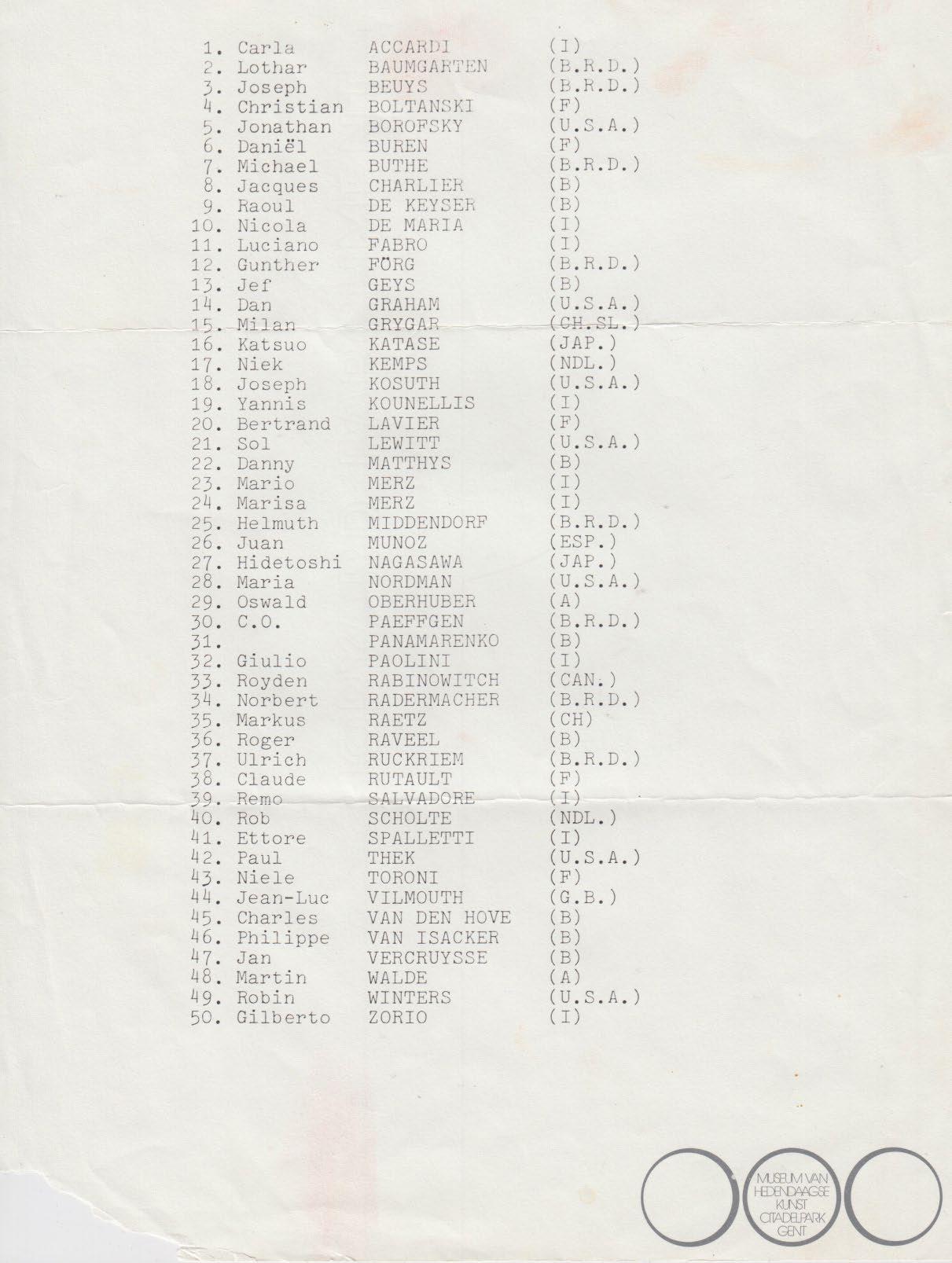
A list of 50 of the participating artists and their country of origin.
Carla Accardi (Italian), Lothar Baumgarten (German), Joseph Beuys (German), Christian Boltanski (French), Jonathon Borofsky (USA), Daniel Buren (French), Michael Buthe (German), Jacques Charlier (Belgian), Raoul De Keyser (Belgian), Nicola De Maria (Italian), Luciano Fabro (Italian), Gunther Förg (German), Jef Geys (Belgian), Dan Graham (USA), Milan Grygar (Czechoslovak), Katsuo Katase (Japanese), Niek Kemps (Dutch), Joseph Kosuth (USA), Yannis Kounellis (Greek-Italian), Bertrand Lavier (French), Sol Lewitt (USA), Danny Matthys (Belgian), Mario Merz (Italian), Marisa Merz (Italian), Helmut Middendorf (Germany), Juan Muñoz (Spanish), Hidetoshi Nagasawa (Japanese), Maria Nordman (German-American), Oswald Oberhuber (Austrian), Carl Otto Paeffgen (German), Giulio Paolini (Italian), Royden Rabinowitch (Canadian), Norbert Radermacher (Germany), Markus Raetz (Swiss), Roger Raveel (Belgian), Ulrich Rückriem (German), Claude Rutault (French), Remo Salvadori (Italian), Rob Scholte (Dutch), Ettore Spalletti (Italian), Paul Thek (USA), Niele Toroni (Swiss), Jean-Luc Vilmouth (French), Charles Van Den Hove (Belgian), Philip Van Isacker (Belgian), Jan Vercruysse (Belgian), Martin Walde (Austrian), Robin Winters (USA), Gilberto Zorio (Italian).
I have been struggling to write something about my work, and specifically about the work I did in Ghent, Belgium for the Chambres d’Amis exhibition. At the time of this writing, many of the main characters are gone or have some debilitations that make it rather difficult to recall events of the past. I am lucky to still be alive and functioning. I am not the only witness and I am sure that there might be other conflicting versions of the elephant, but I thought that while I still have a semblance of wits about me I would try to tell a story about one of my most memorable art experiences.
I remember walking into the Museum in Ghent and seeing this funny little man in a grey suit, talking very loudly and excitedly to a group of museum attendees.
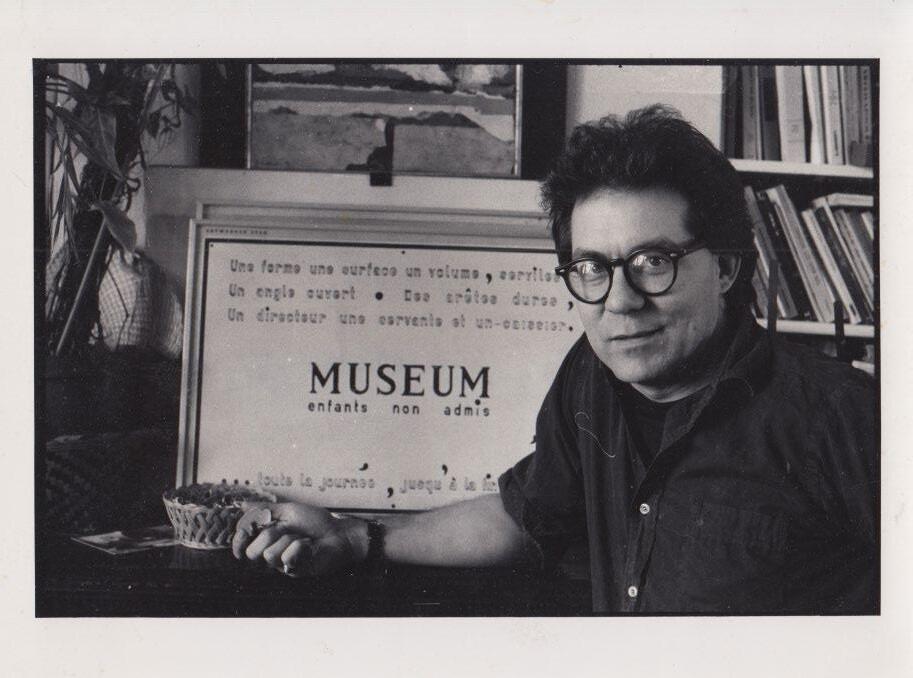
I thought that the man was a Museum guard or perhaps a docent and that they were a little out of control or had some quirky boundary issues, but it was clear, even though I barely spoke the language, that they were extremely enthusiastic about the art in front of them. I think they were gesticulating towards a Panamarenko flying machine blimp of sorts, made out of what looked like clear plastic garbage bags and tape. This man, as it turned out, was the director of the Museum, Jan Hoet! I’ve come to wish that there were more brave and inventive curators and museum directors like Jan, who were willing to find new ways to challenge artistic activities and notions of what it is to do an art show. I was used to the idea that a museum director was a person in an office upstairs who mainly talked to rich patrons and barely spoke with artists, let alone the general public.
I think it was Marina Abramović who first introduced me and Jan. The two of them were planning to dance the Tango at some later date. I had been traveling around with Marina and Ulay and our agent at the time, Michael Klein.
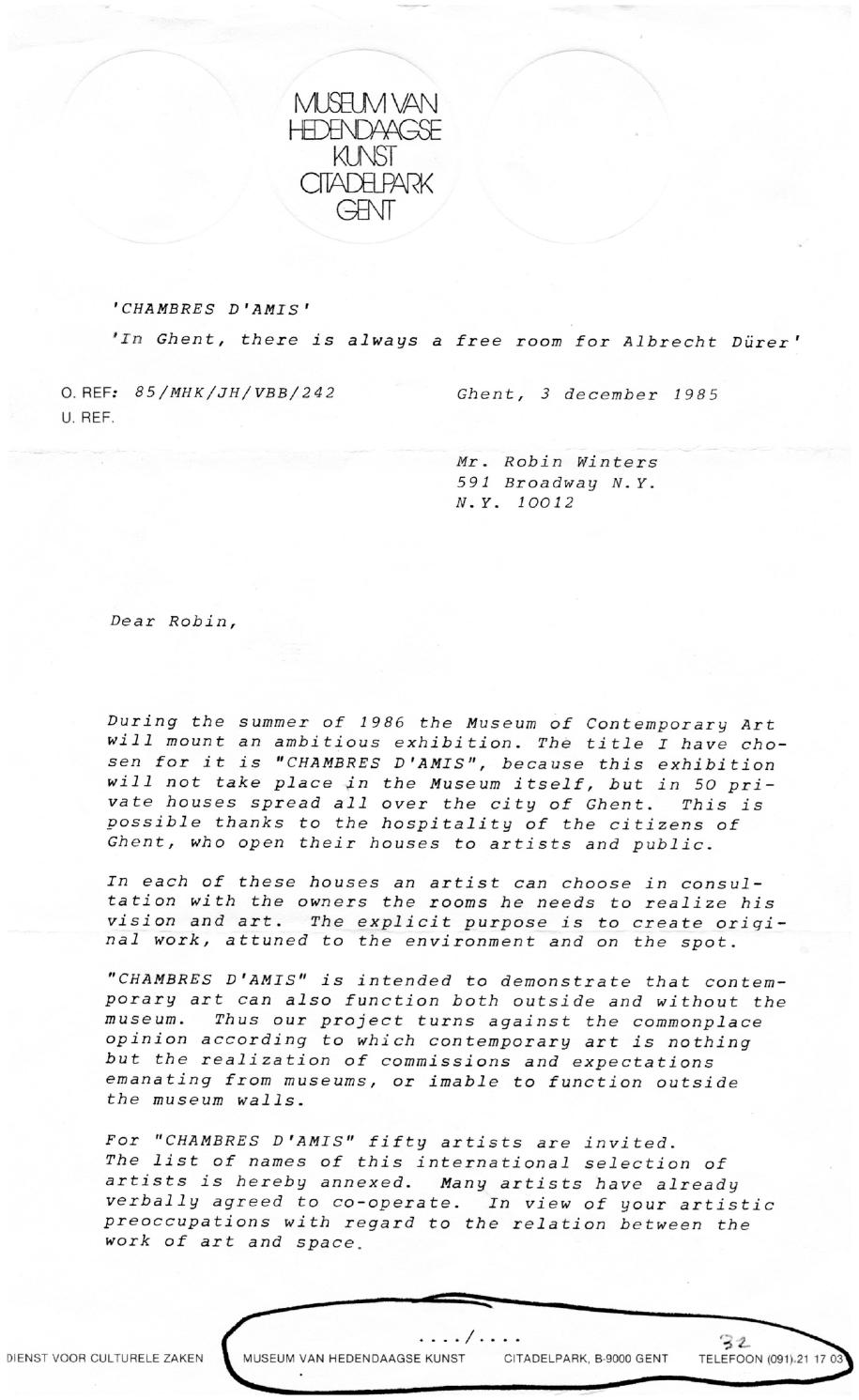
We drove around looking at locations for Ulay and Marina to do a new performance. Marina and I sat in the back seat eating pralines while Michael drove and Ulay navigated. It was unexpected that these adventures turned into an introduction with Jan. The chemistry was immediate. The next thing I knew, I got a formal written invitation to participate in the exhibition Chambres d’Amis!
The invited artists all converged in Ghent and took a tour of the prospective homes that the kind citizens of Ghent had offered to be used for exhibiting art. As you can imagine, there were some homes that were more suitable for a museum style installation and those homes were heavily desired.
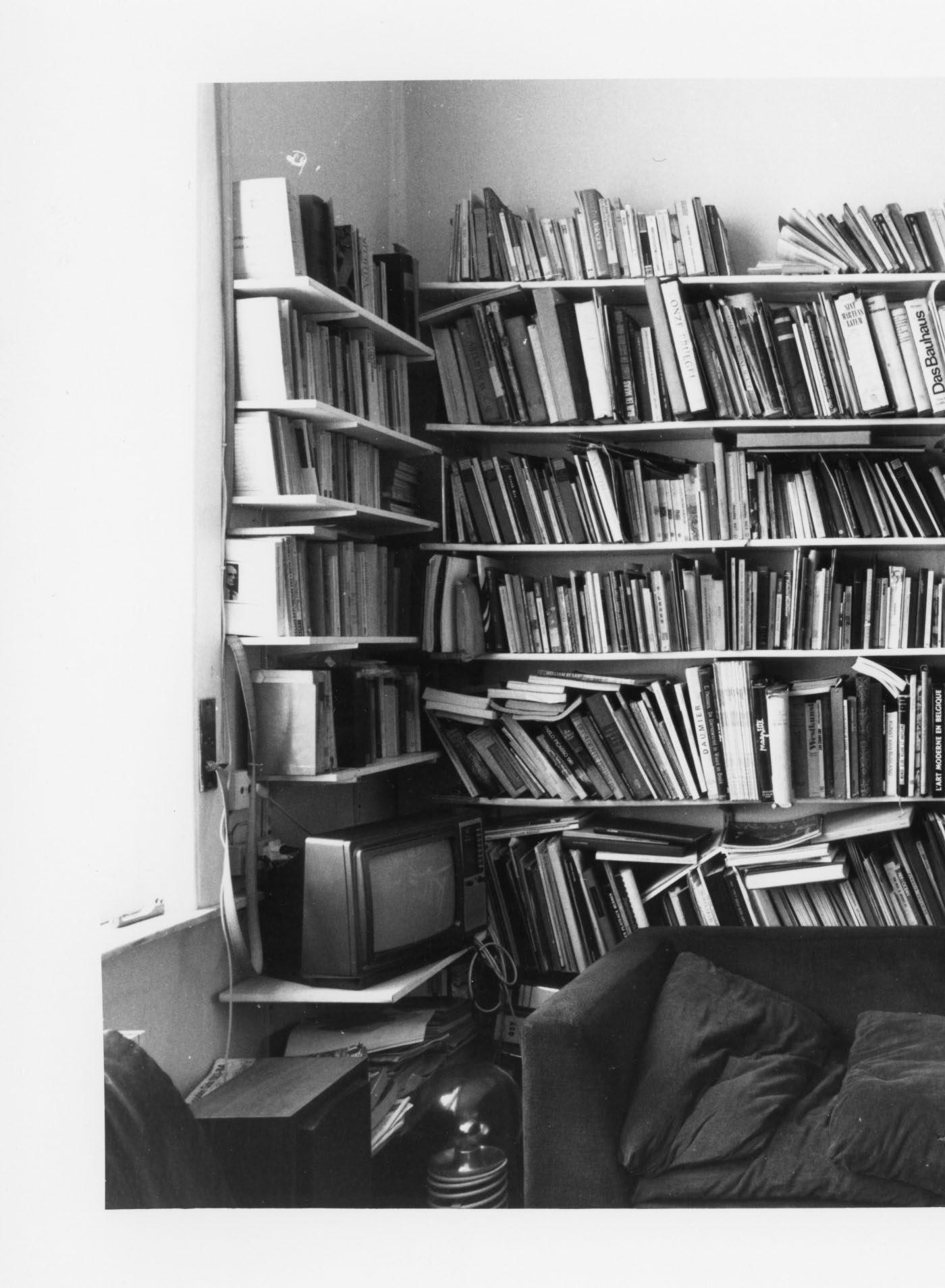
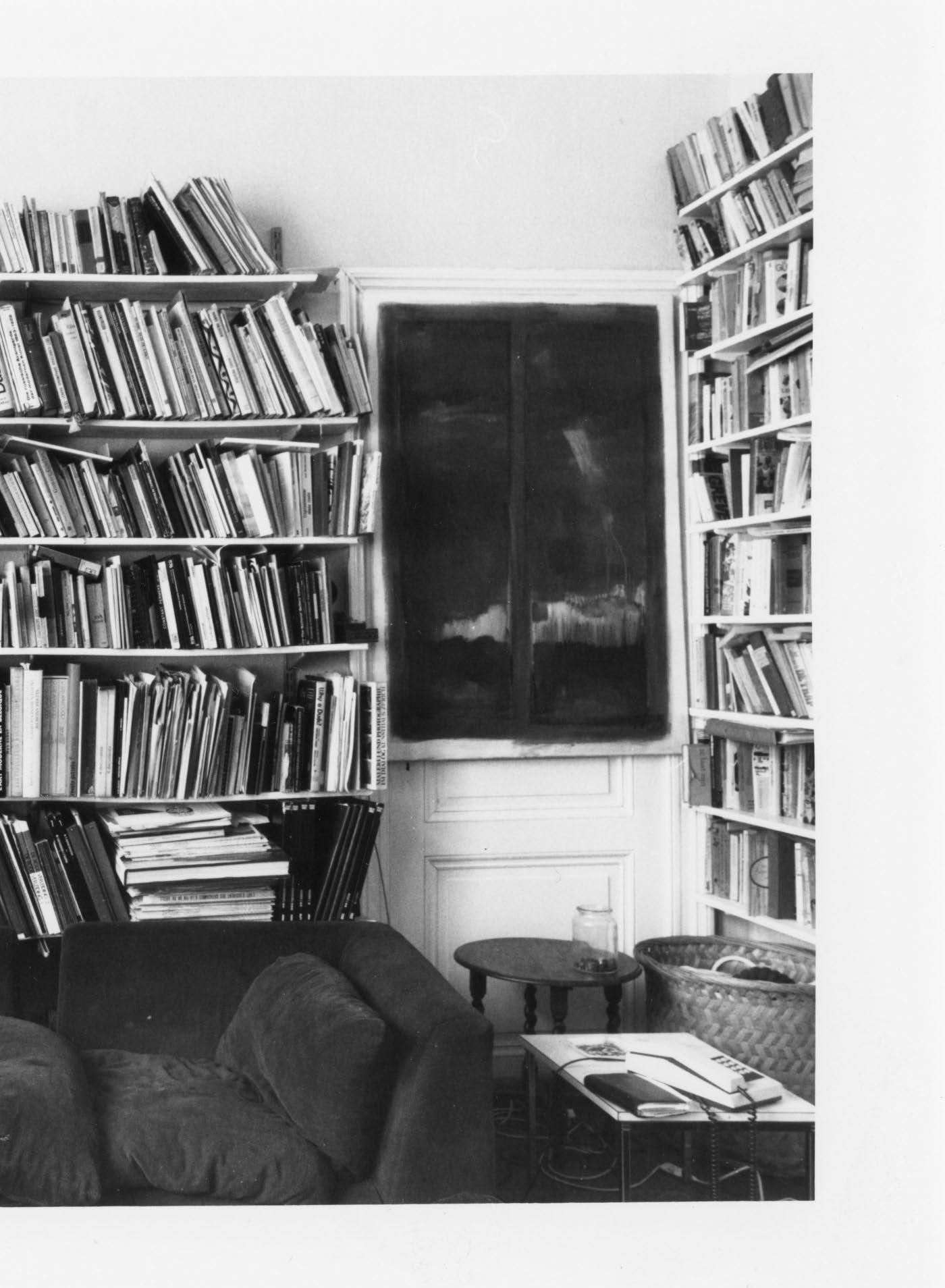
My own personal choice was the house of an art historian, Chantal de Smet, full of life with kids, books, and a rabbit! My idea was to make a nice house for the rabbit in the backyard, since its lodgings were lacking the comforts that I thought a rabbit should have. There was a subtitle for the show that said “In Ghent, there is always a free room for Albrecht Dürer,” and I thought of his famous rabbit picture. I had also heard that Dürer came to Ghent to draw a Rhino in the Ghent zoo after he had first drawn one entirely from a description of the said beast! I cannot find any validation of this story so perhaps I made it up. Dürer did travel to Ghent in order to see the Van Eyck altarpiece, however.
I also had plans to work in another house belonging to Pat Jacobs (the smallest house in the entire exhibition) in collaboration with the Dutch artist, Rob Scholte. Who says in the catalog regarding our collaboration “niet op de school der schone bomeen kan men leren zien een bosbrand” or in English “not in the school of beautiful trees can one learn to see a forest fire.” I simply said, “I work on trust—I trust Rob Scholte.”
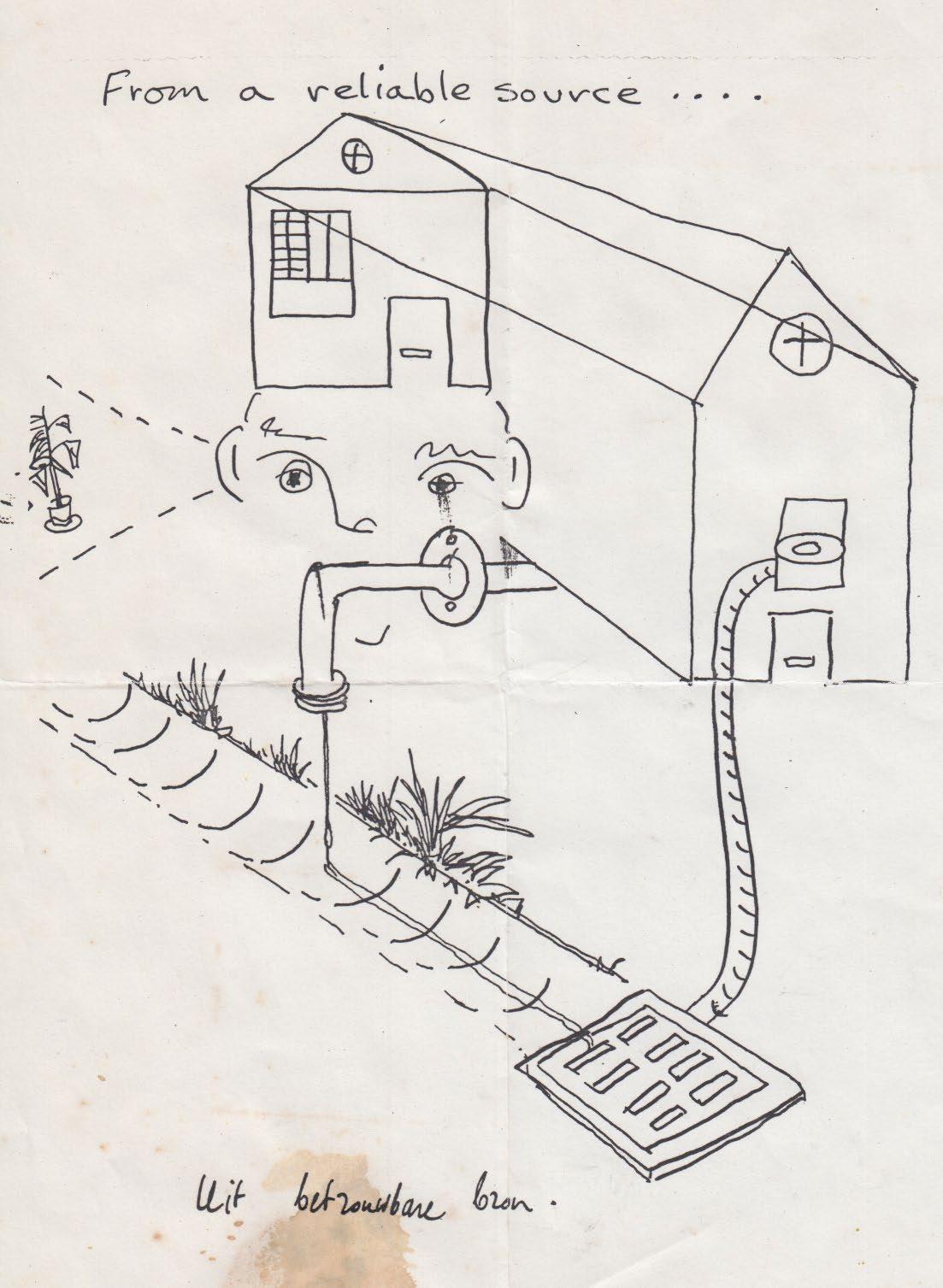
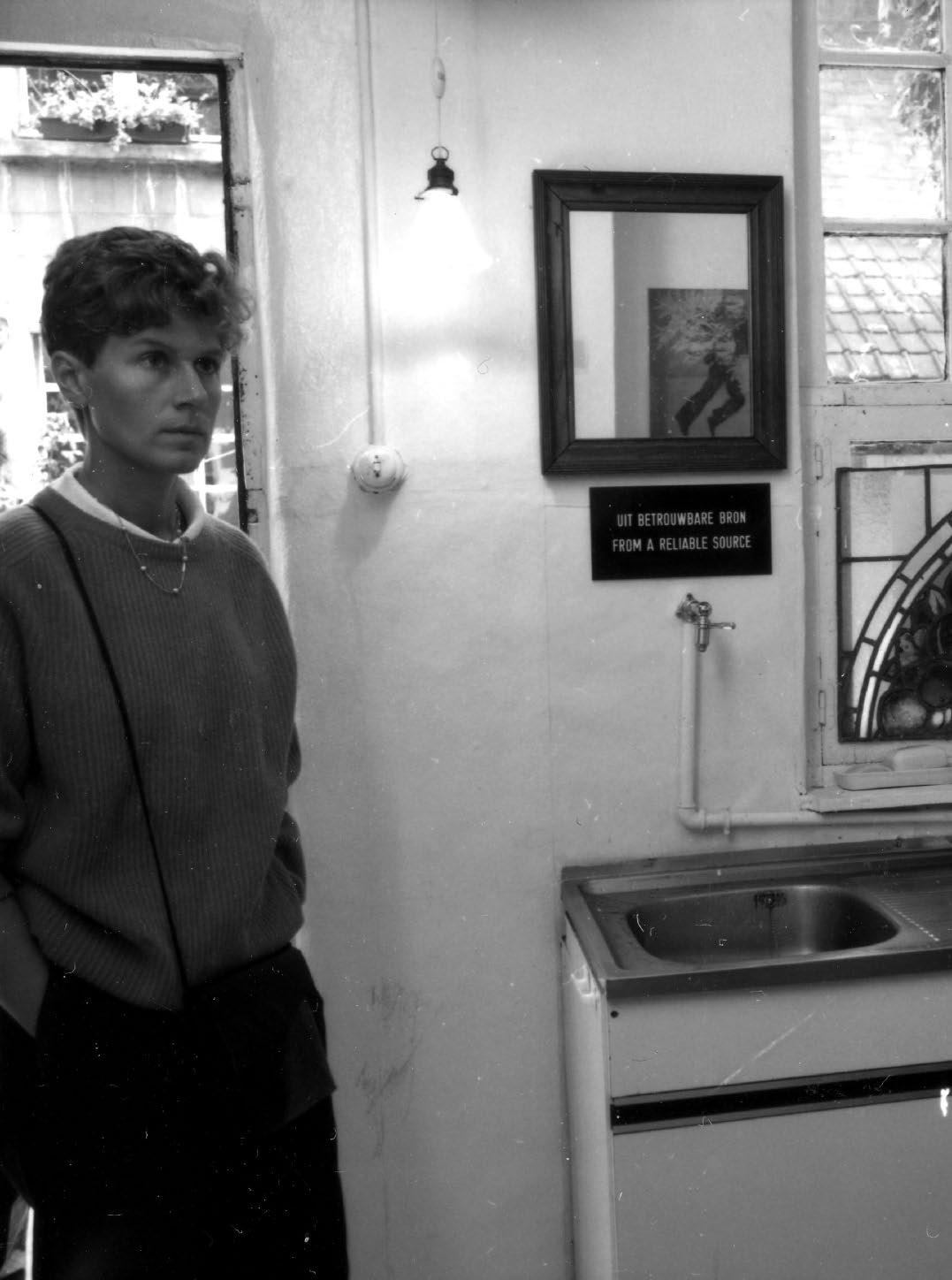
From a Reliable Source, drawing by Robin Winters and
Rob Scholte.
Rob and I went to meet the homeowner, Pat Jacobs, in his tiny house and we asked him what he would like us to provide to him in terms of our art services. Pat said basically that we were free to do whatever we wished! I then told Pat that he needed to move out of his house and that I wanted to paint the entire house and its contents inside in black! Pat looked at me so sadly and Rob also looked askance. I quickly said, “I’m kidding!”
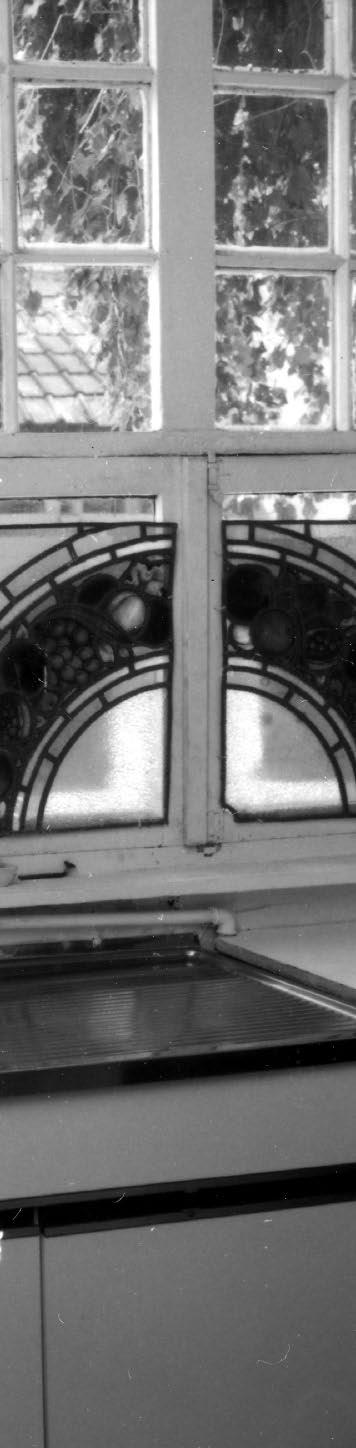
I noticed that his kitchen sink was draining rather slowly and the drain was what is called a “French drain,” connected to an outside cistern by a series of above ground channels. The channels were clogged and needed cleaning so I planned to begin by cleaning the drains to make the water flow more smoothly.
I returned to New York after my initial viewing and selection of houses, preparing to make some sort of magic for public and private alike.
Just before, I was committed to a Museum installation of my work and a performance at the ICA in Boston. My performance was called Playroom. I spent weeks behind a two-way mirror in the basement of the museum, drawing on cardboard boxes in collaboration with hundreds of people, many of whom were school children. They could never see my face (I always had a cardboard box on my head). They would enter the Playroom and be confronted by a big mirror. The mirror would fade and become a window, with me inside, holding a marker and drawing faces on the box on my head. The window returned back into a mirror and a little trap door would open and my cardboard box would fall out, along with various colored markers. As you might imagine, every square inch of the playroom was covered with drawings and boxes with drawings by the end. Meanwhile, upstairs, I had many years of my paintings, drawings, and objects on display.
I returned to Ghent later in the year to begin my work in the homes of Chantal de Smet and Pat Jacobs. I brought myex-student Rodney Samuelson from my teaching days at CalArts to assist me with my projects. I have to say that everyone treated us like royalty! The museum put us up in a beautiful hotel and we were able to eat at an amazing restaurant in town for free every night. So, after a day of recovery from jet lag, I went to Chantal’s house to begin my project, making a house for the rabbit. I arrived at the house only to learn that the poor bunny did not survive the winter! I was at a complete loss.
I sat in the living room rather depressed, drinking coffee and thinking about what to do. I had no idea and I was already critical of the lack of women in the show as well as the ego of the artists who seemed to be treating the private homes as surrogate museum spaces for their works without much consideration for the people living there.
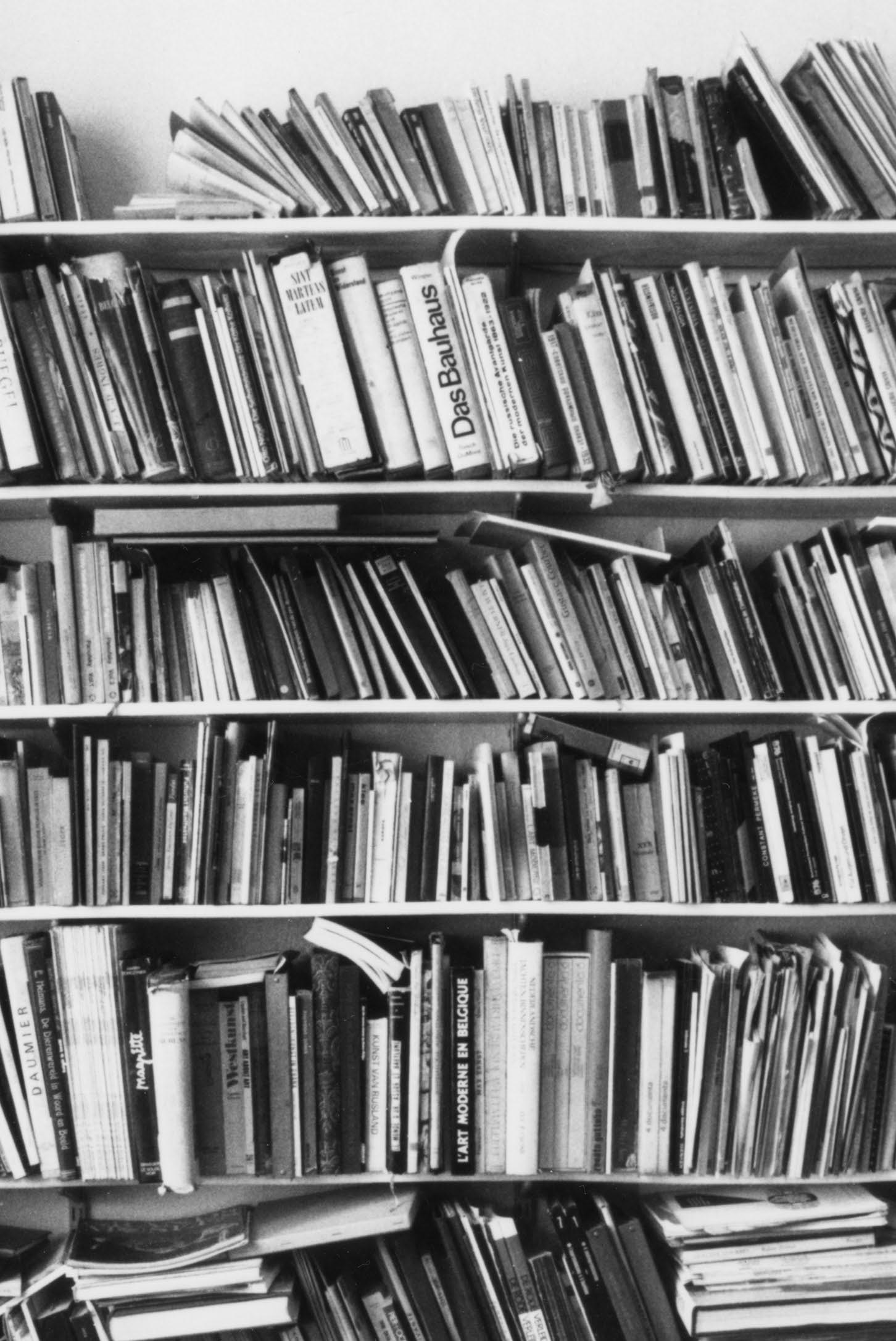
I started looking at books in Chantal’s library. I opened a book and a letter fell out! The letter, as I remember, was from Madame Leger, the widow of the painter Ferdinand Leger, to Chantal. I assumed Chantal must have done some research on the painter. A light went on in my head! I remembered that when I was a kid I would hide fake Abraham Lincoln letters in my father’s old law books as well as treasure maps and other works on paper.
I have always liked hiding things and playing with the way people view works of art and questioning the context and the social relationships therein. Recently, Mary Boone, the New York gallerist, reminded me of an instance that occurred after I urged her to exhibit the work of my friend Kiki Smith and she had declined. I responded by hiding one of Kiki’s works inside of one of my pieces on display at the gallery. I guess you could say that I have always been somewhat of a troublemaker or trickster of sorts.
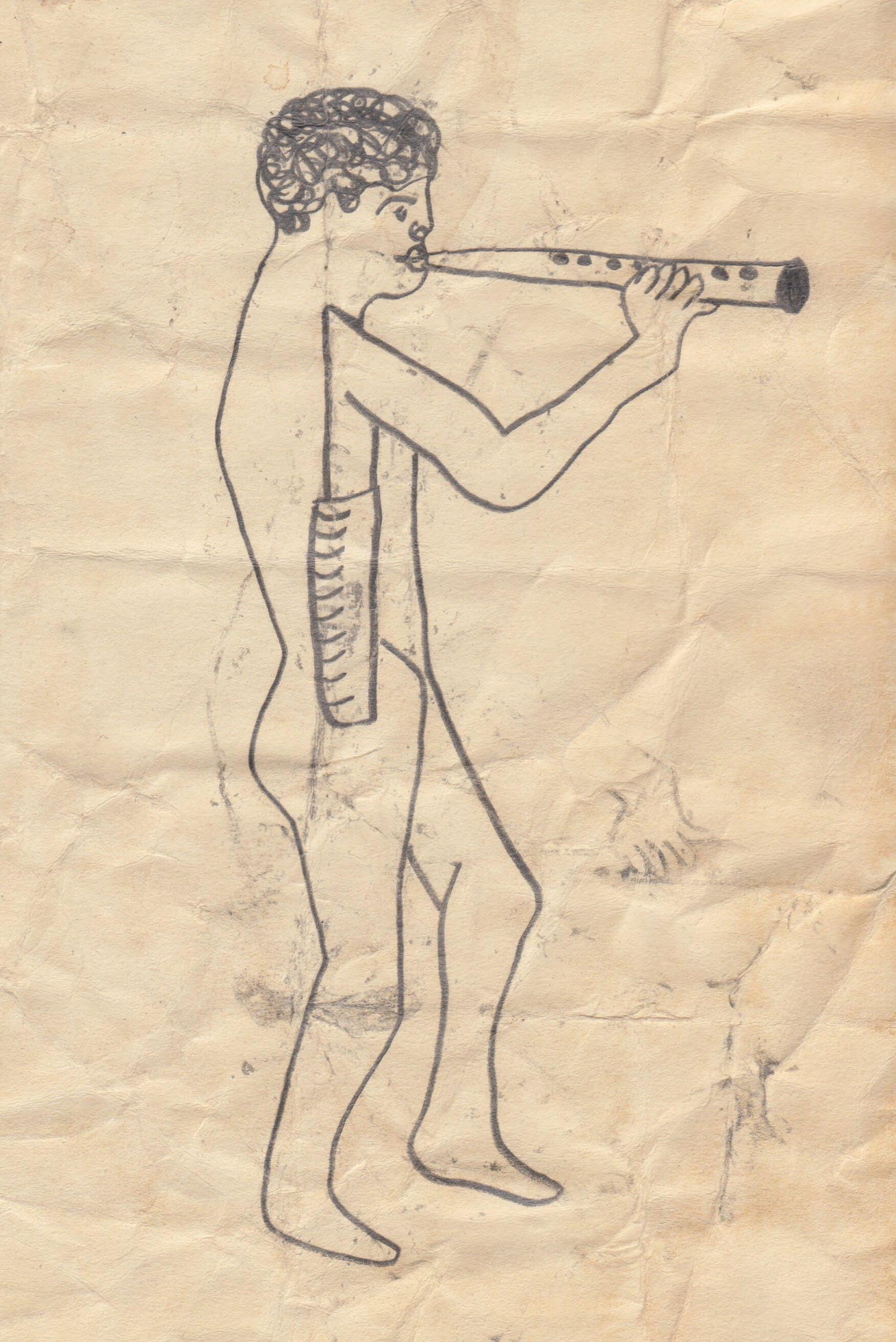
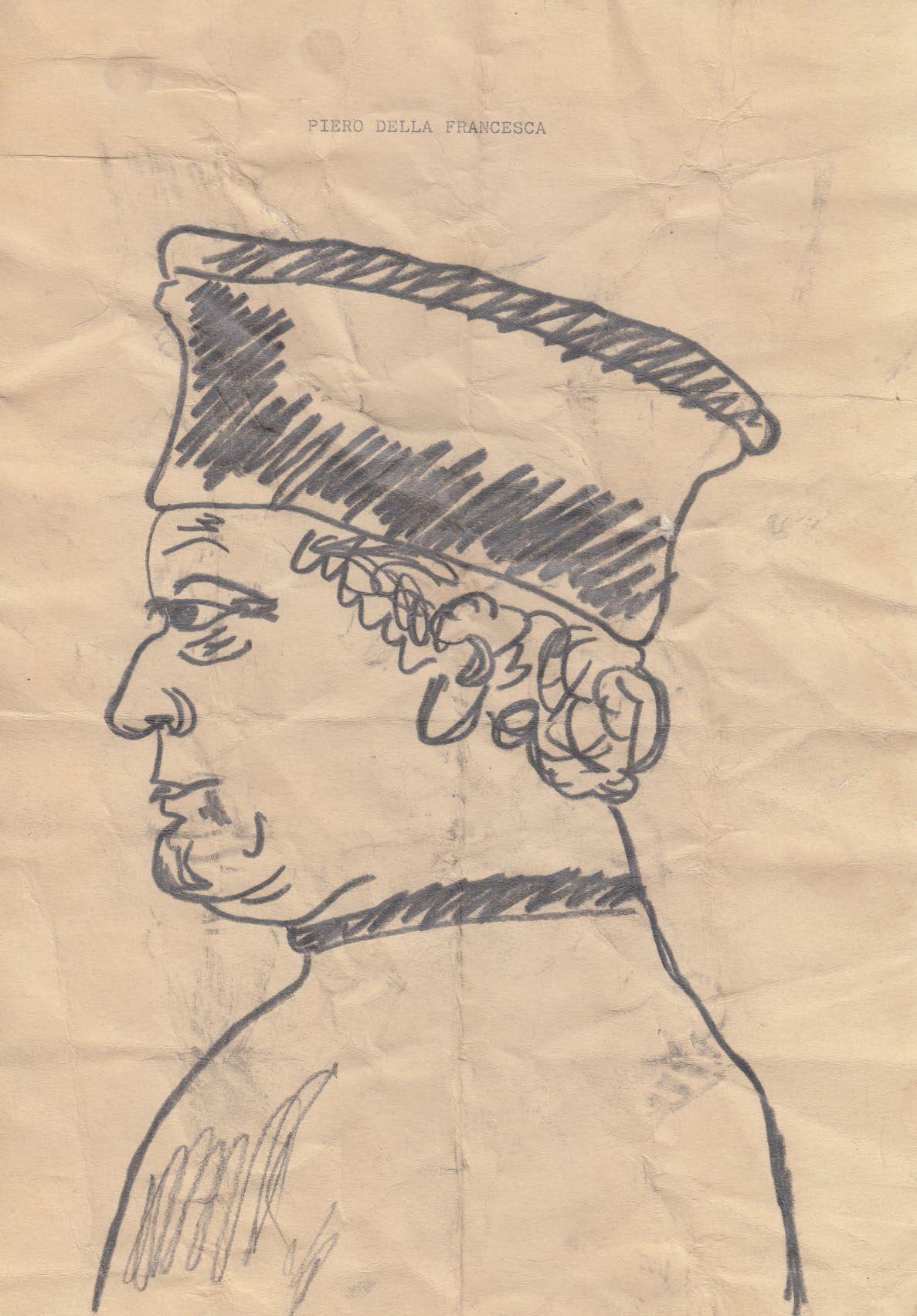
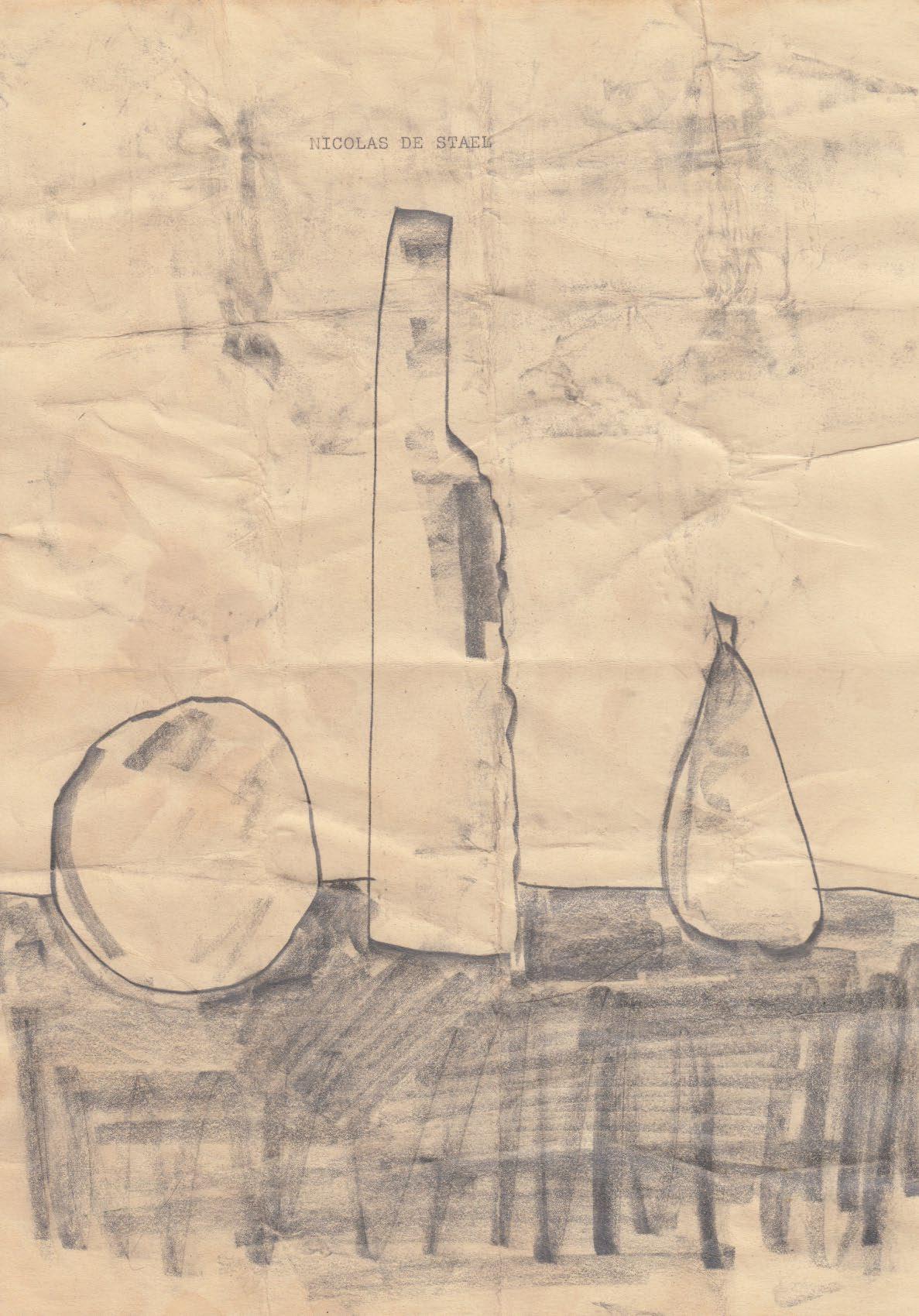
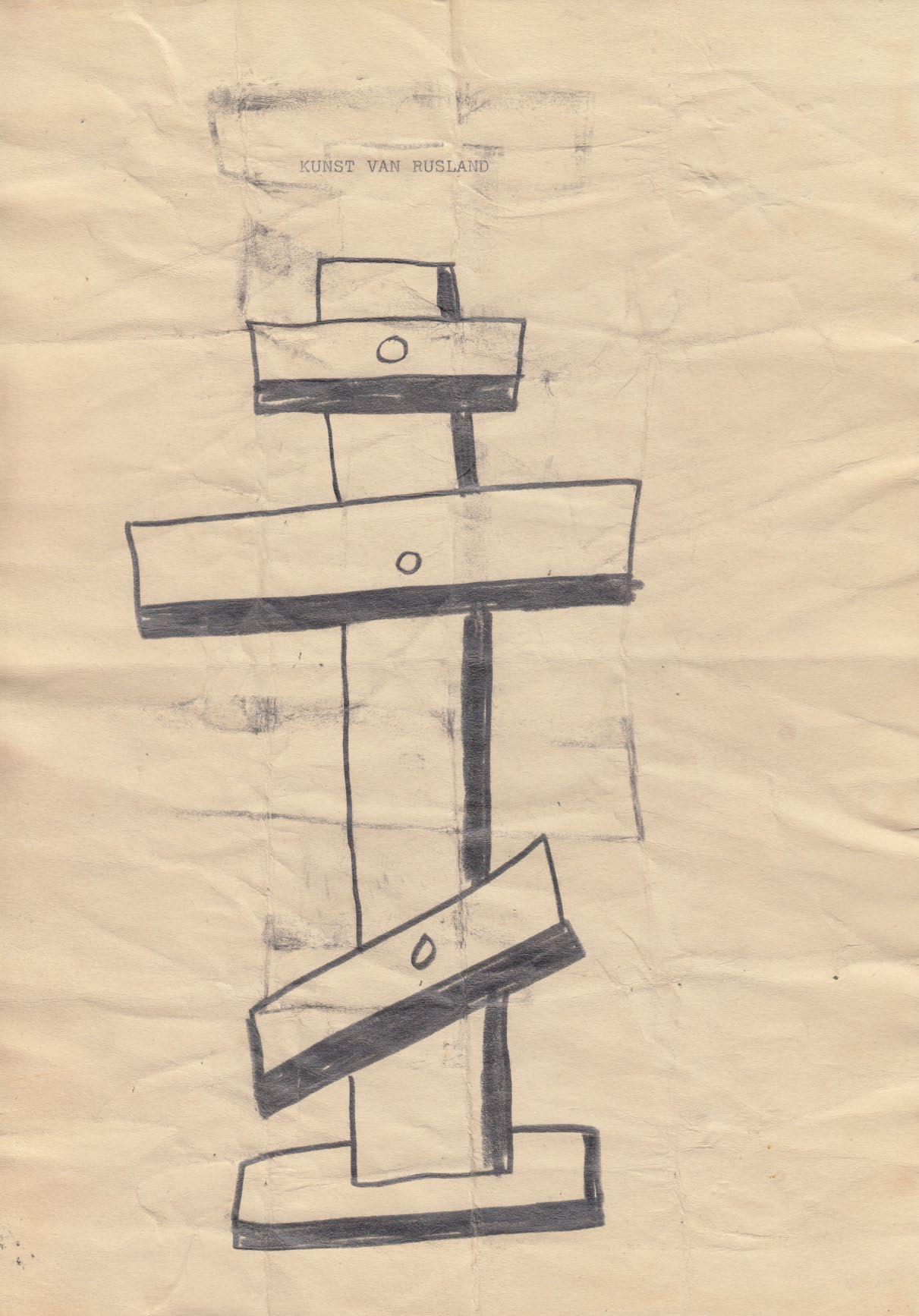
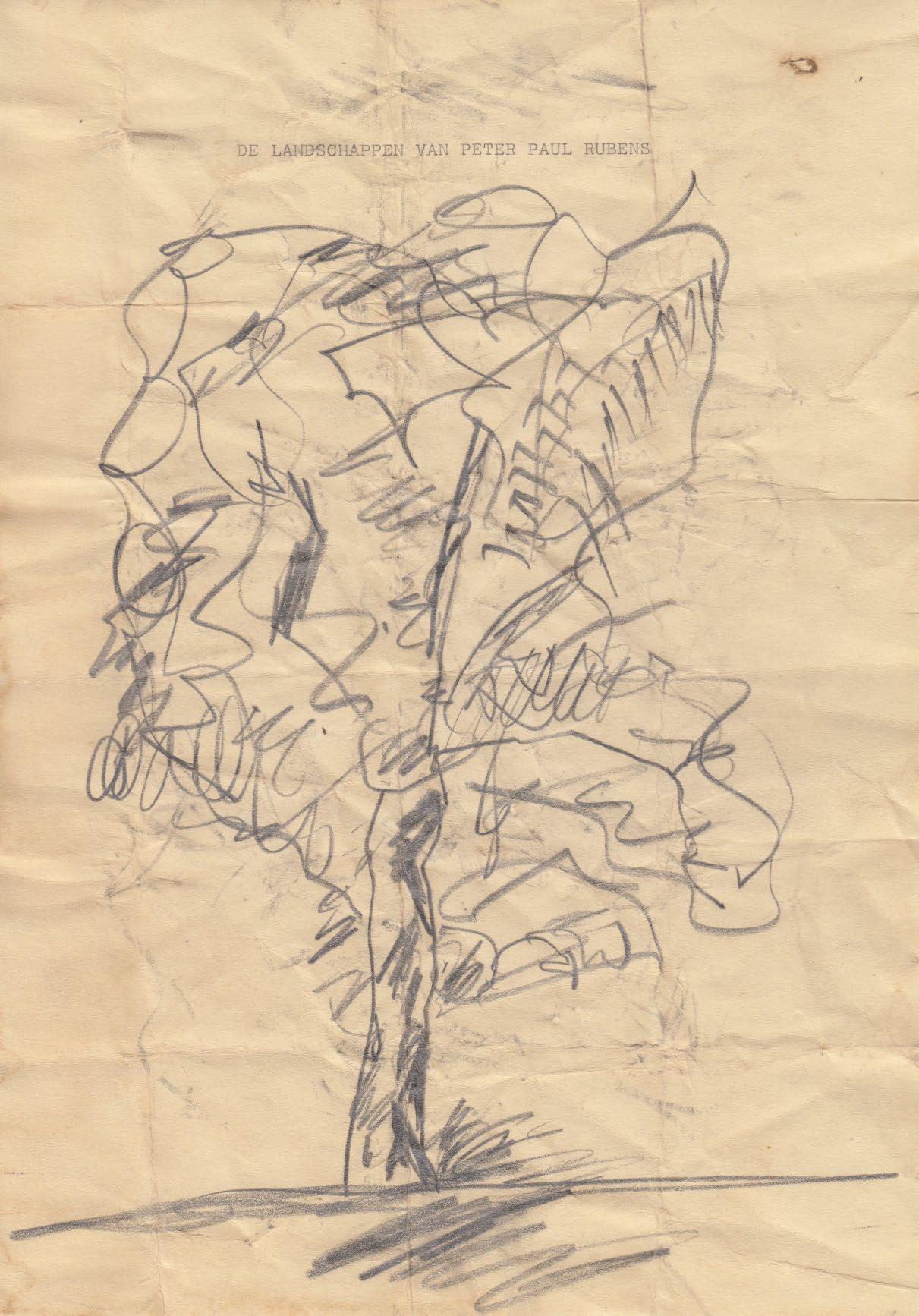
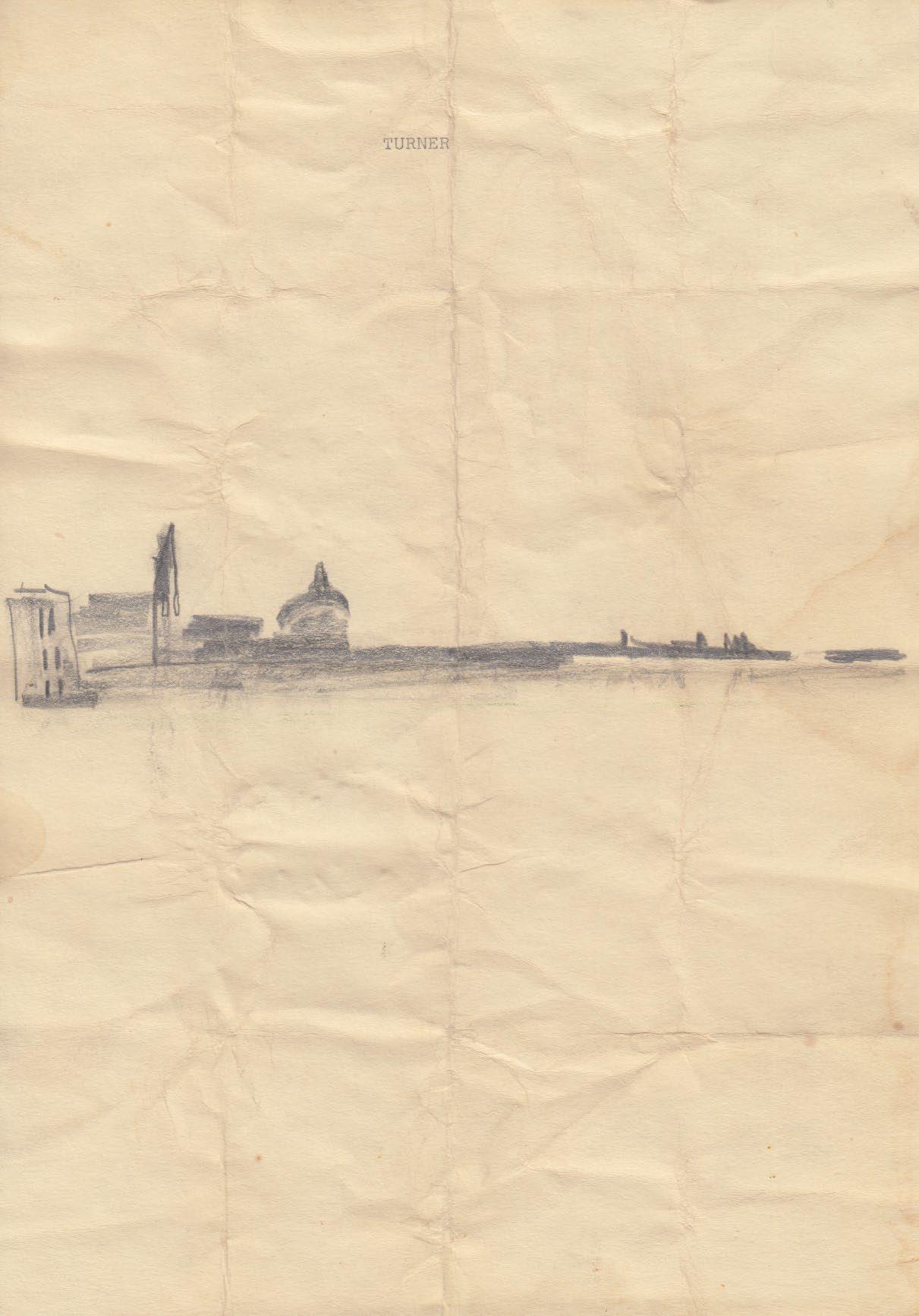
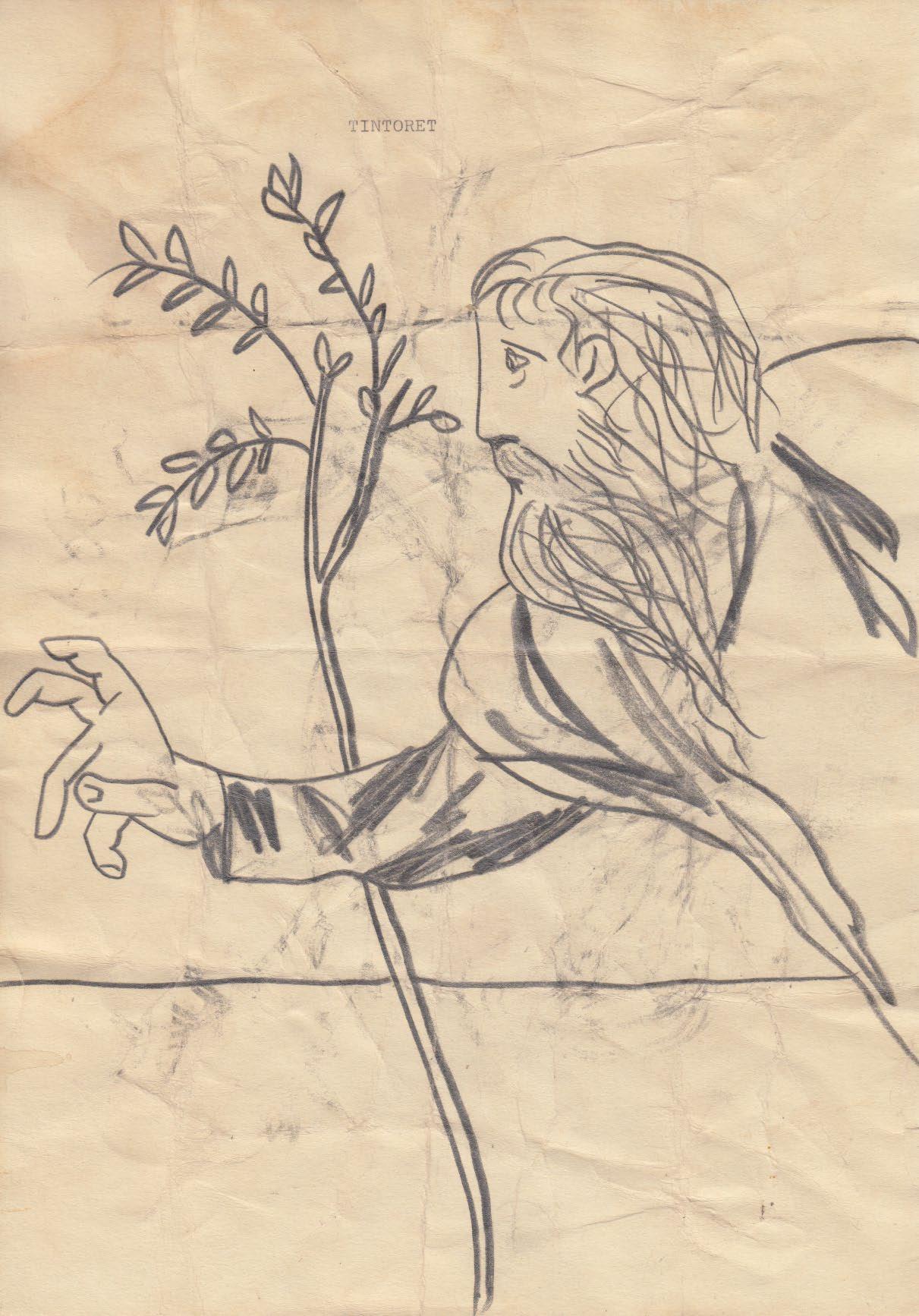
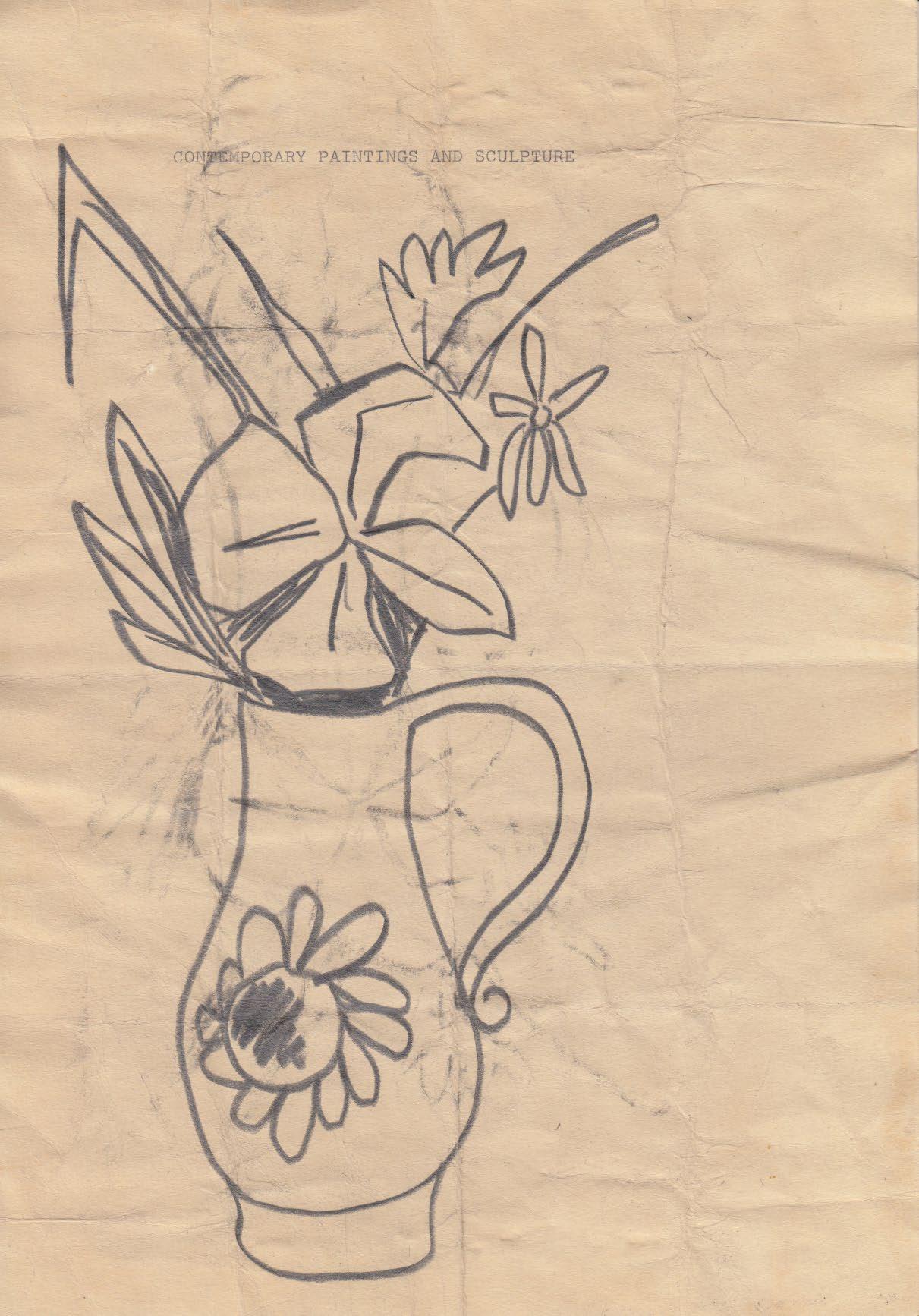
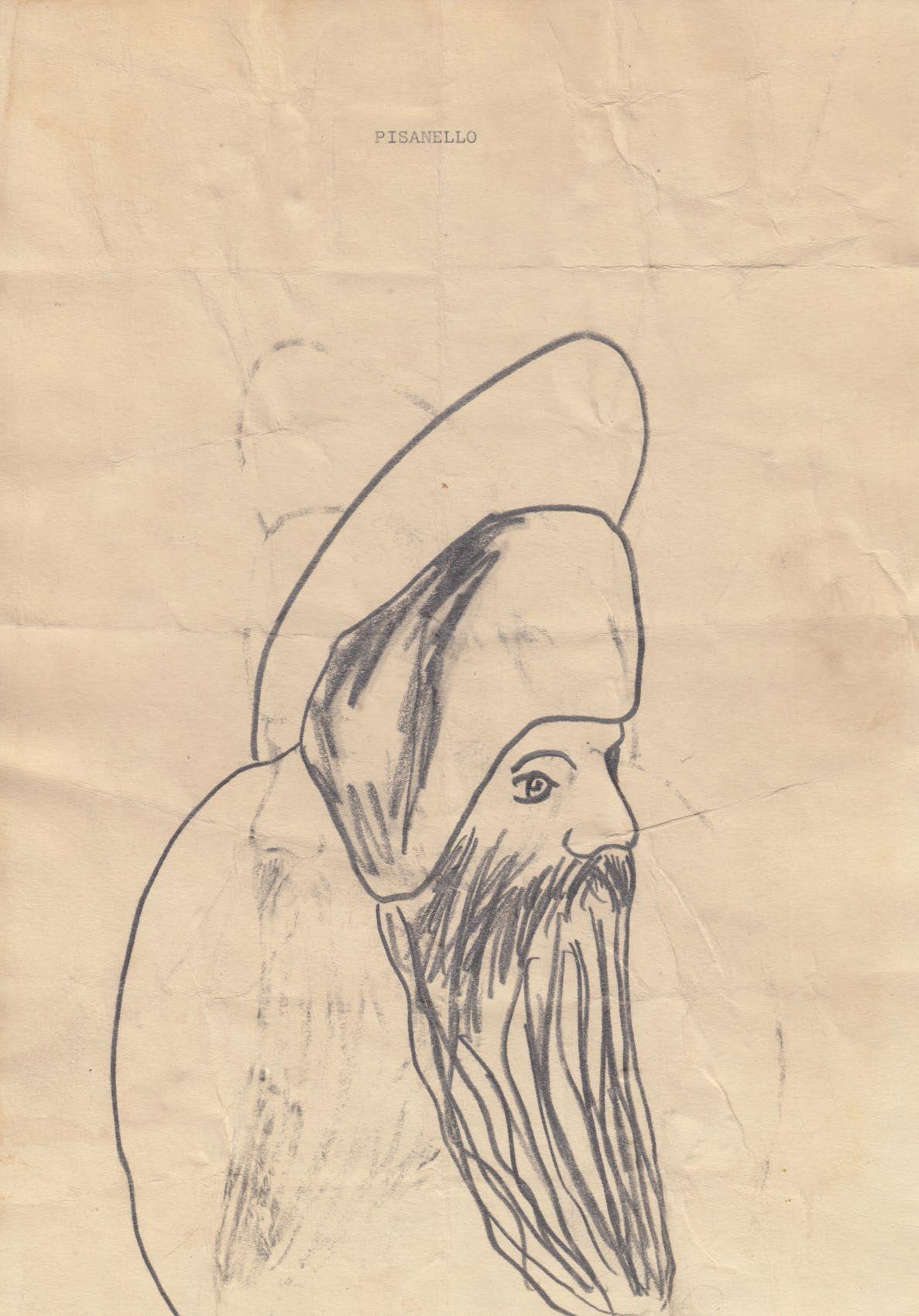
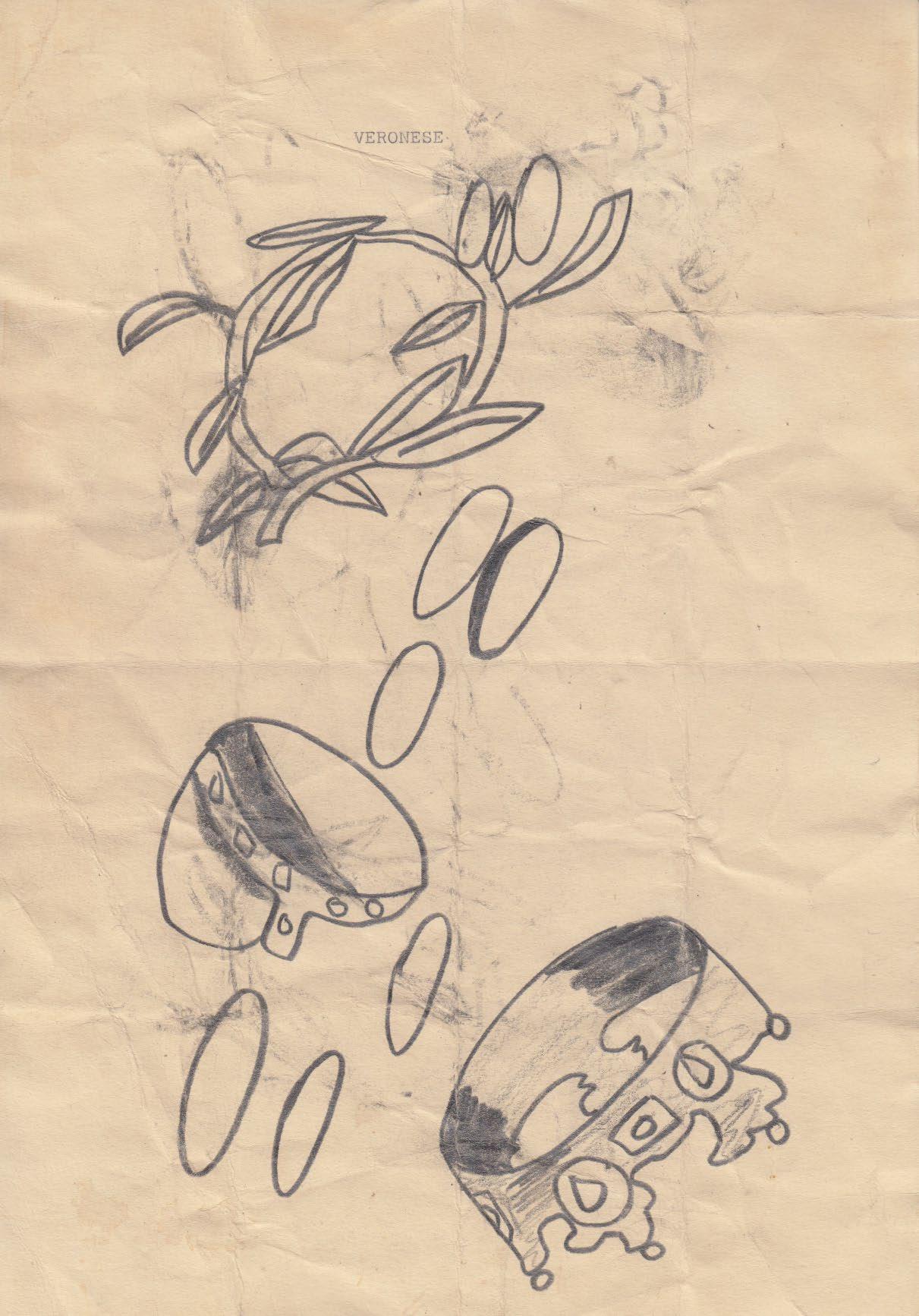
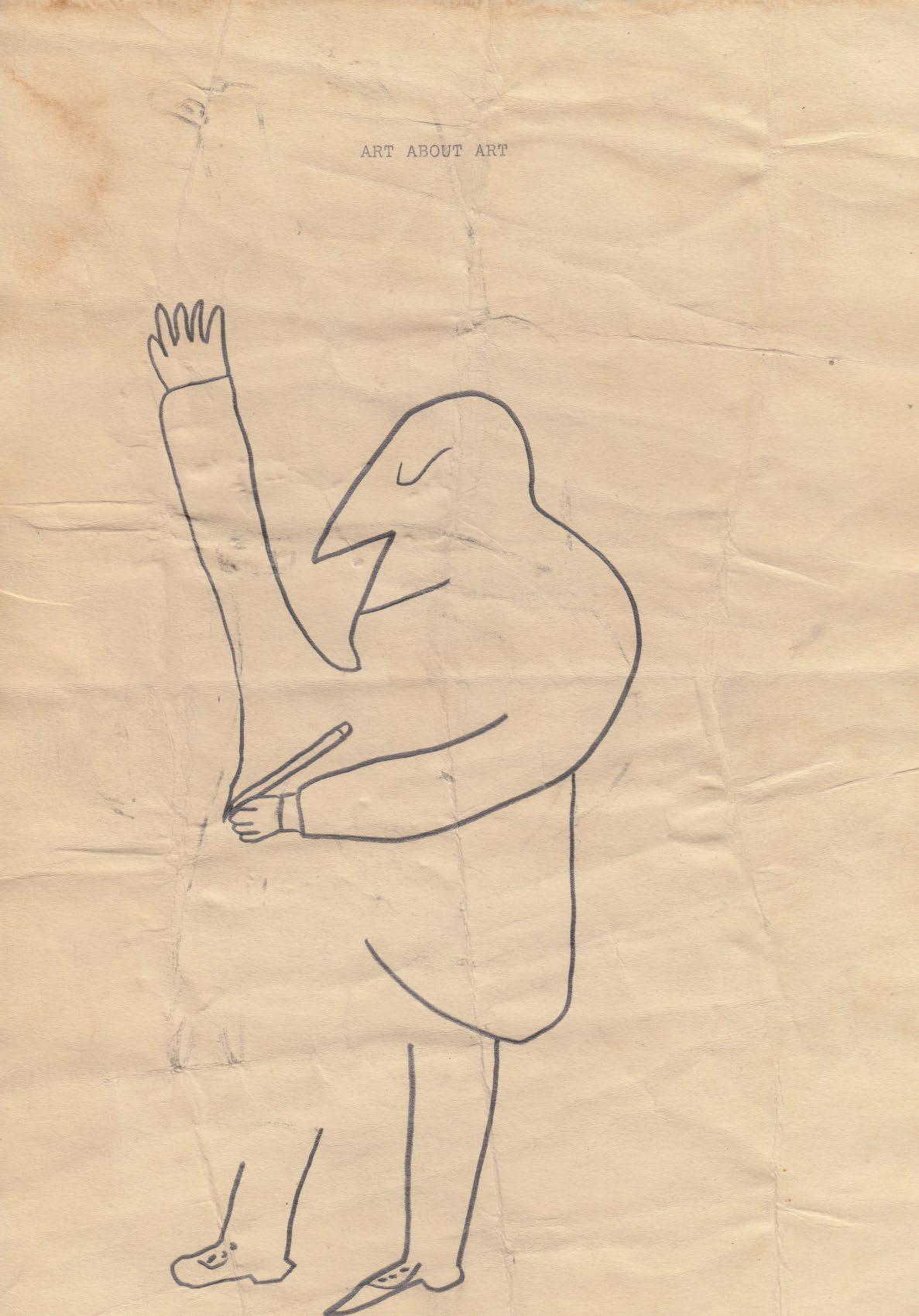
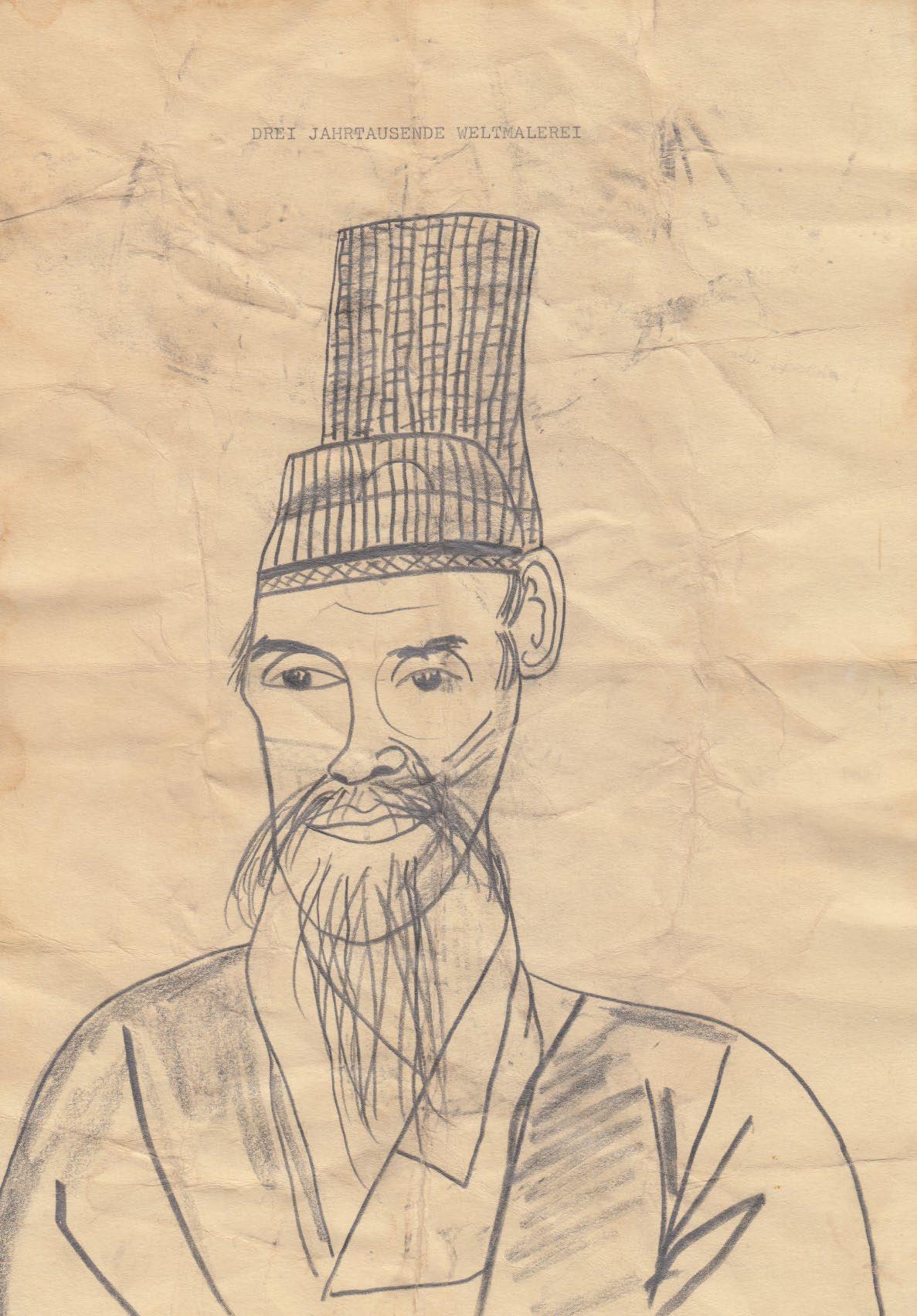
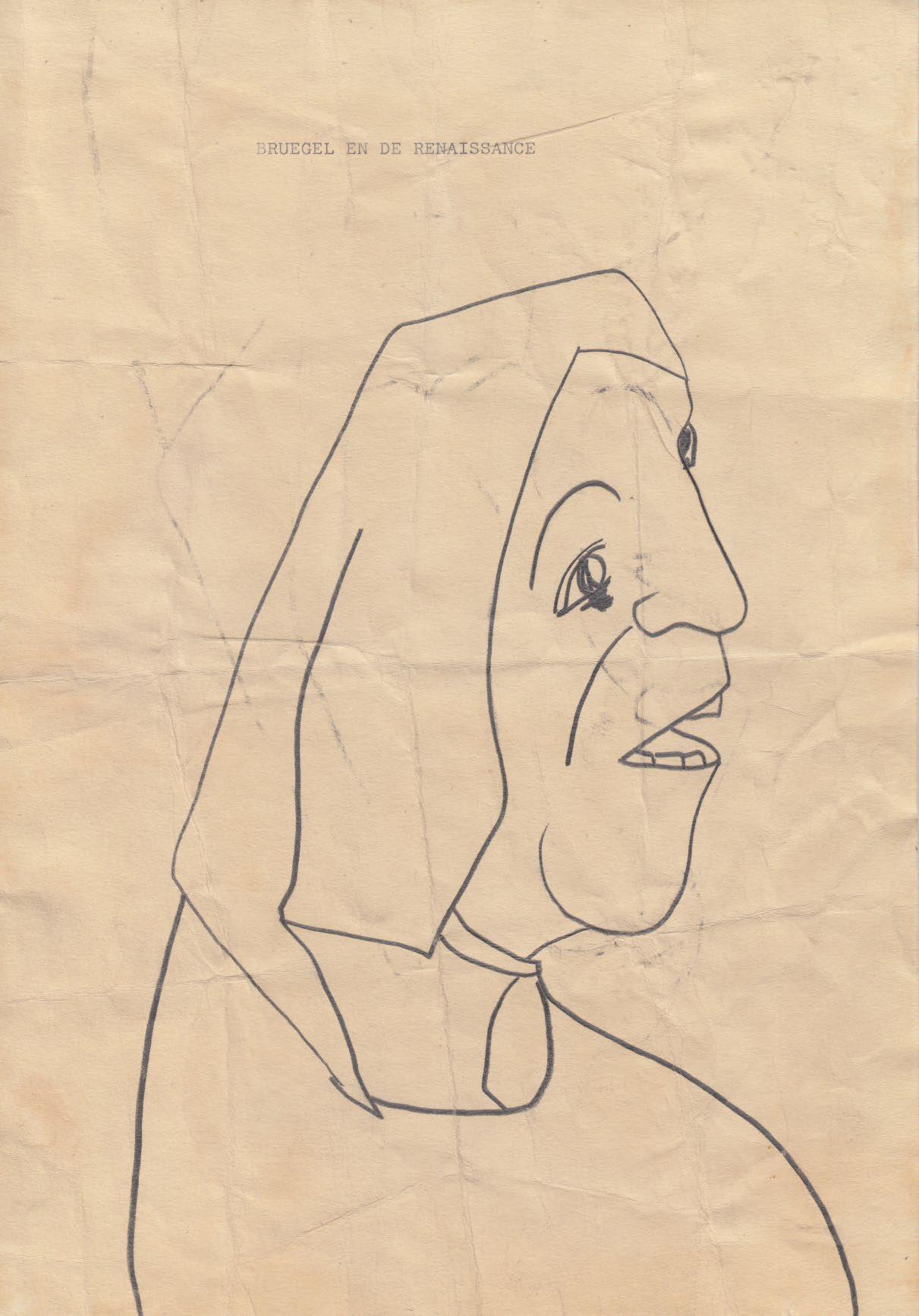
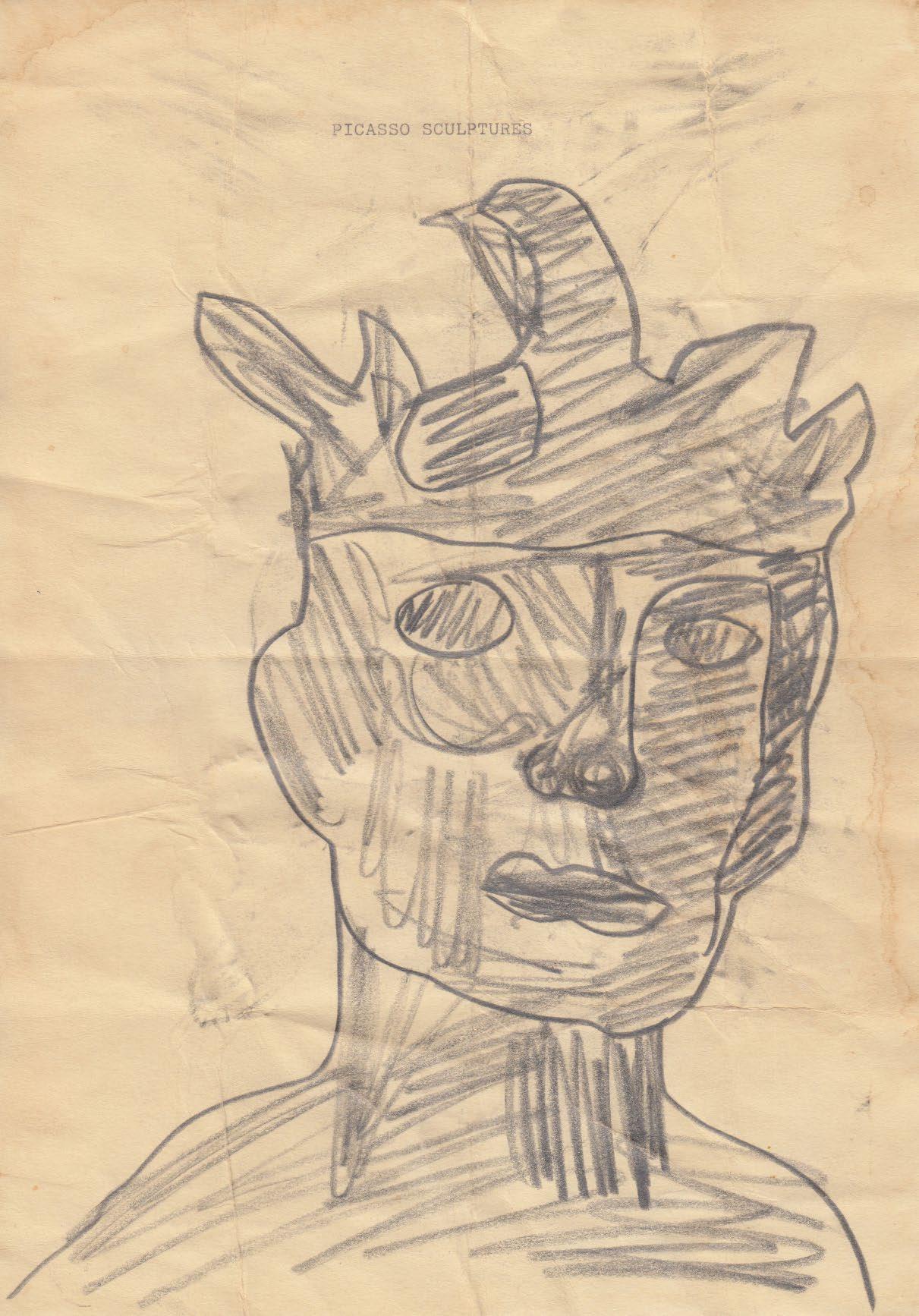
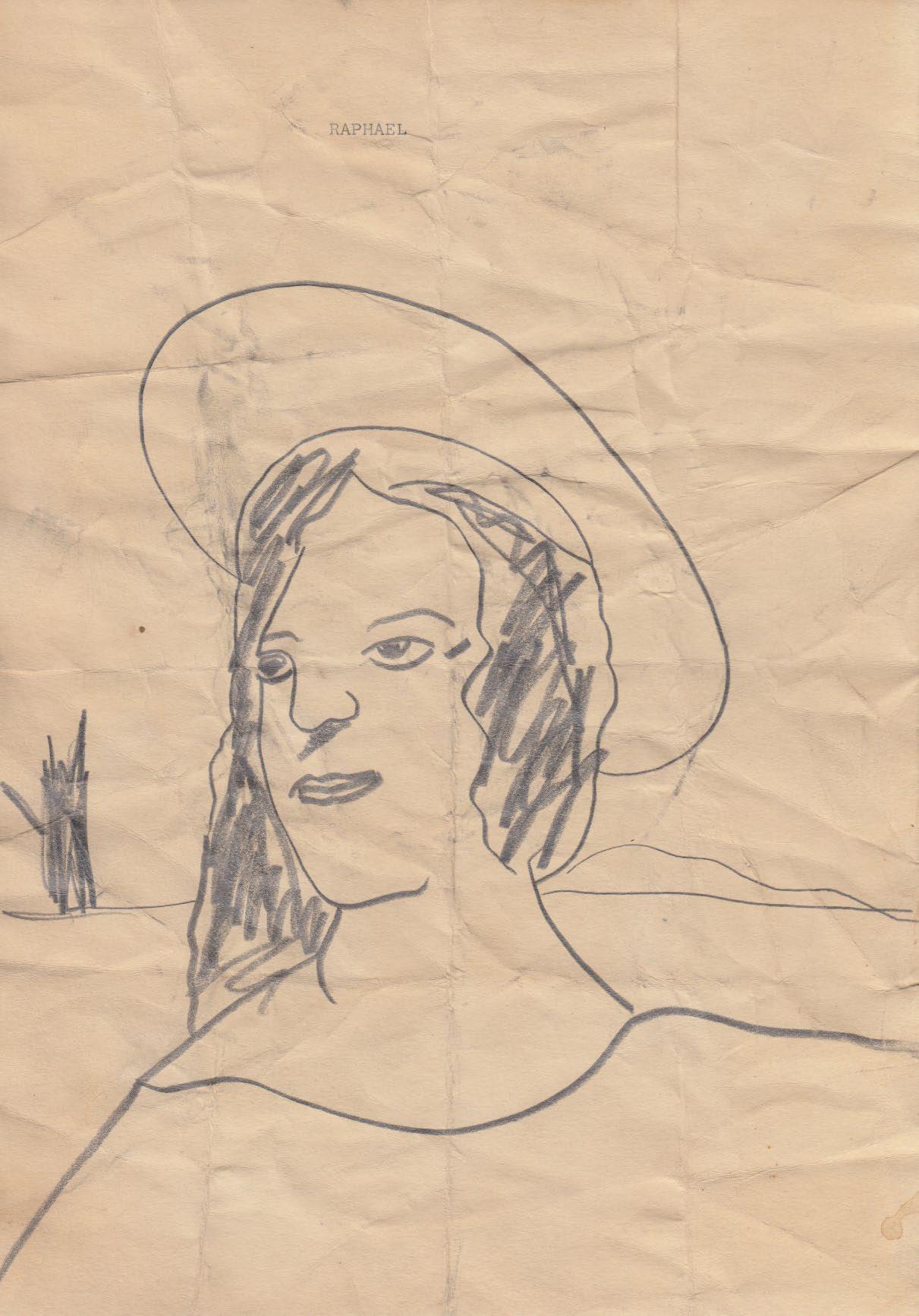
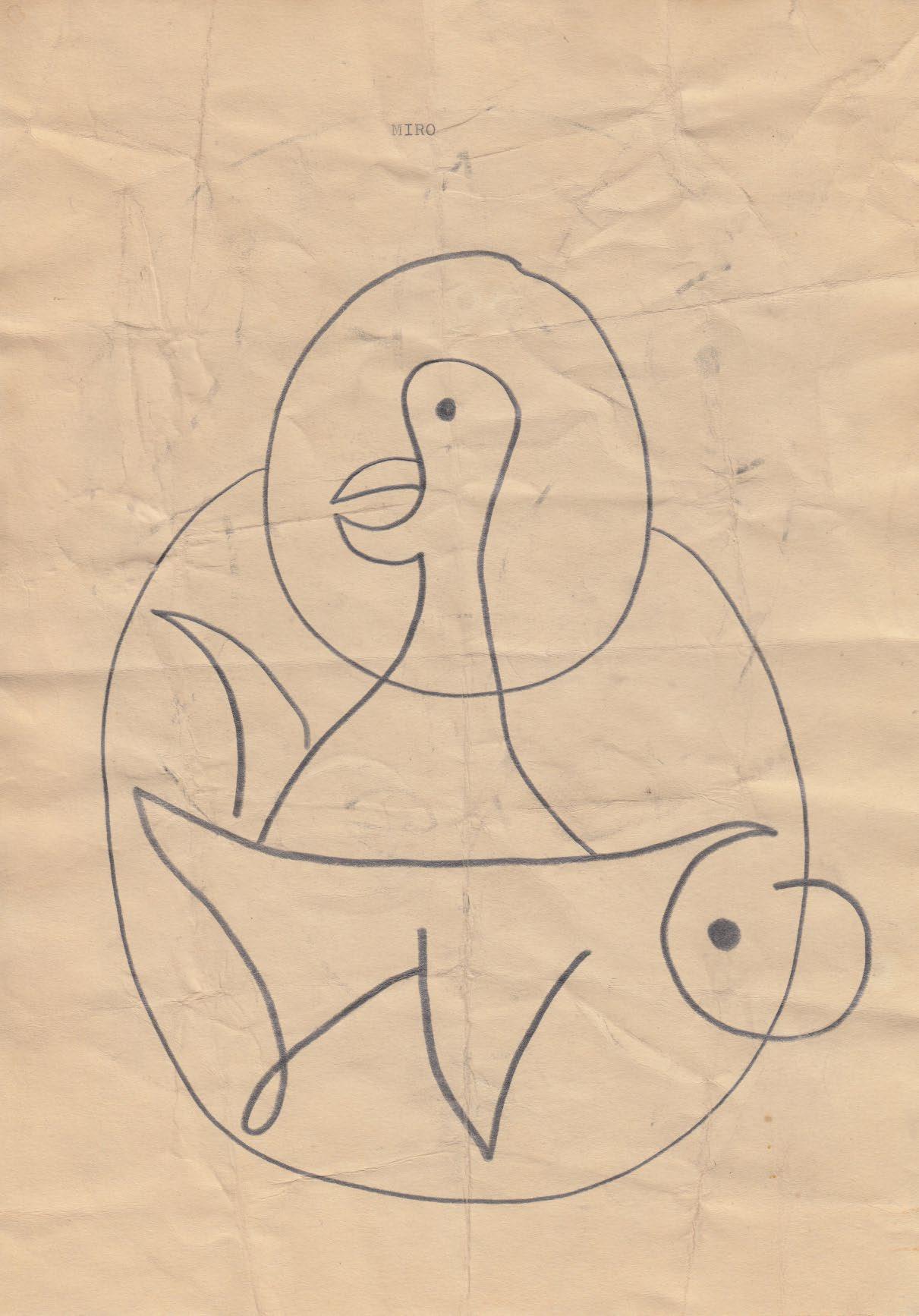
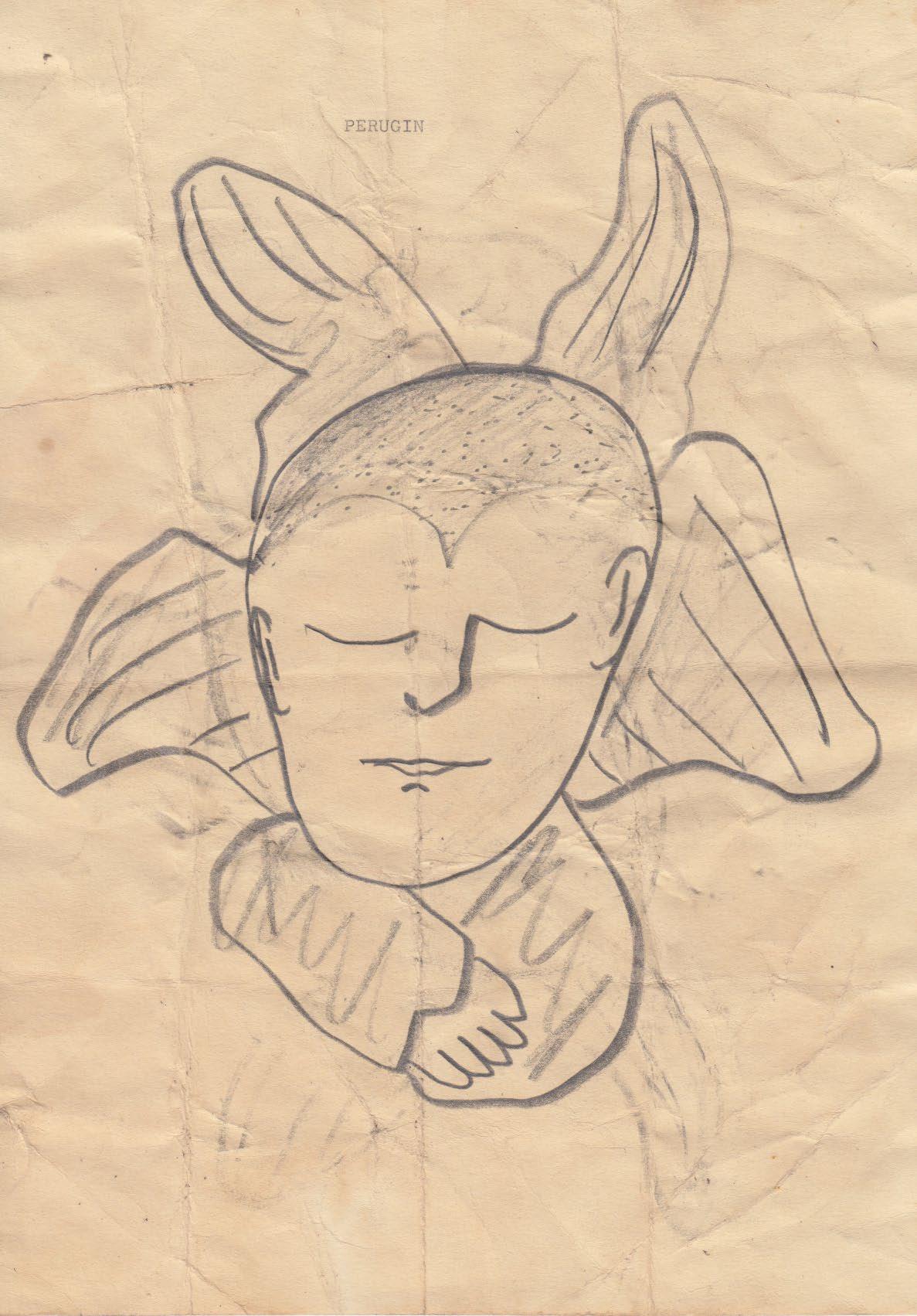
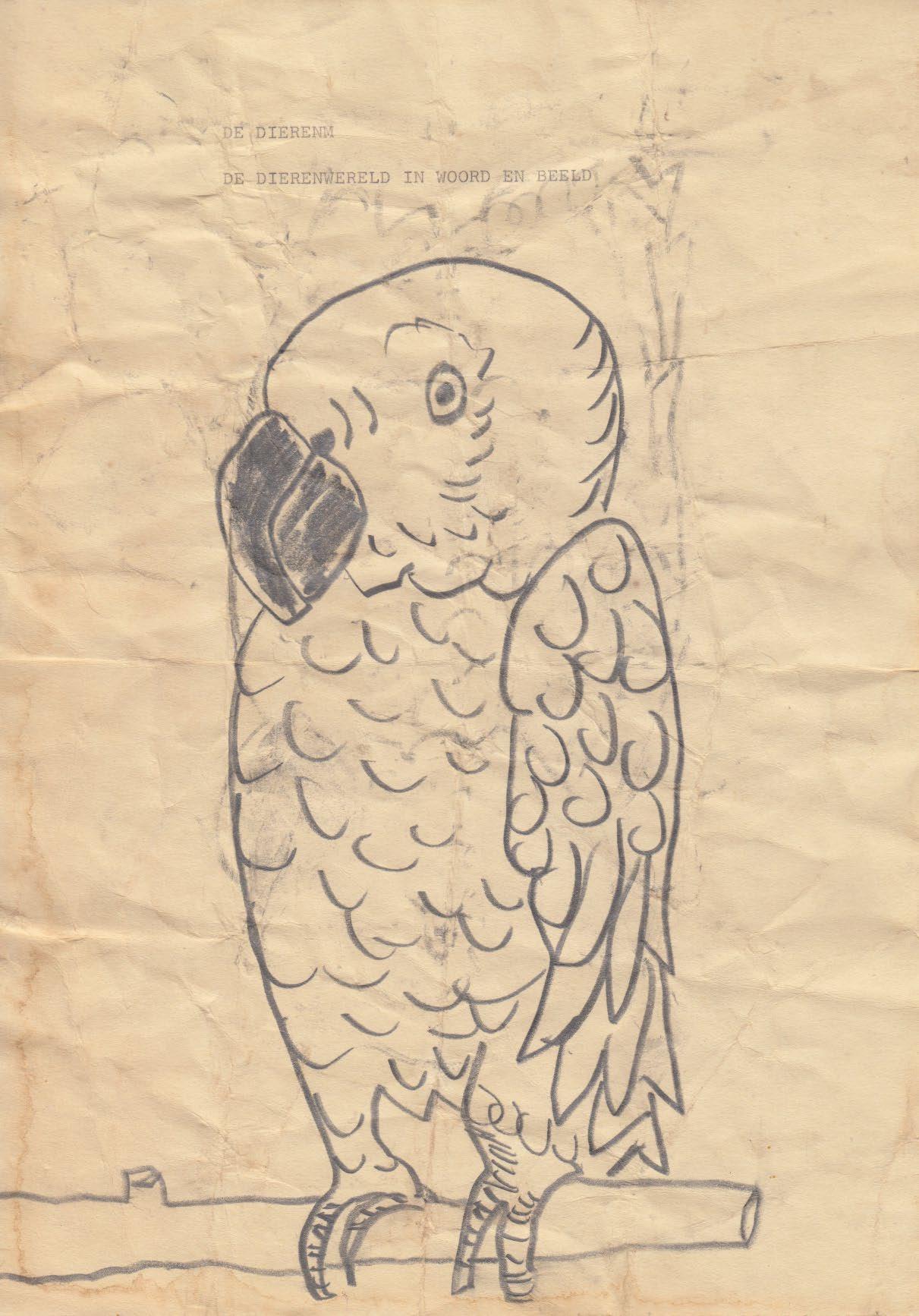
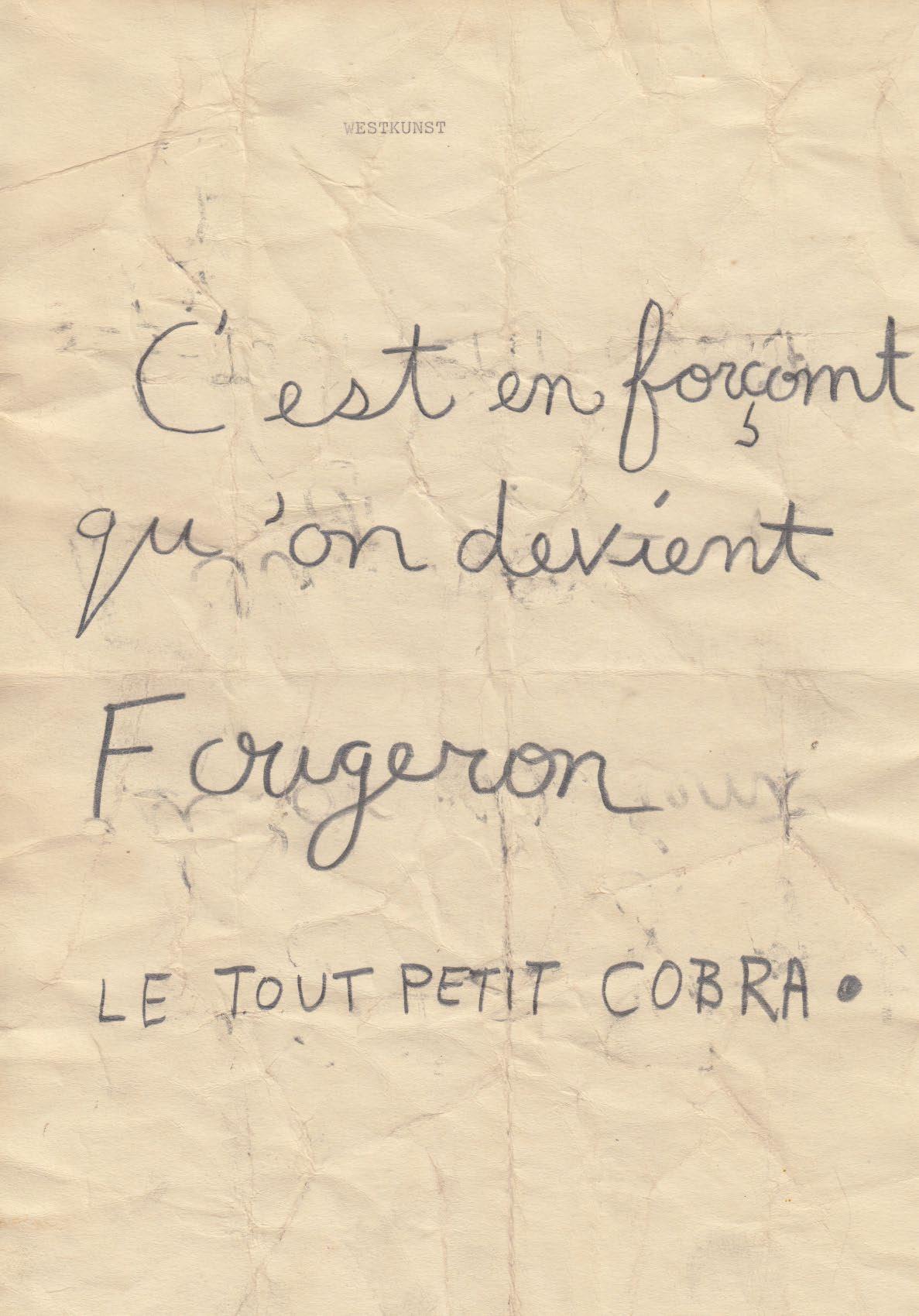
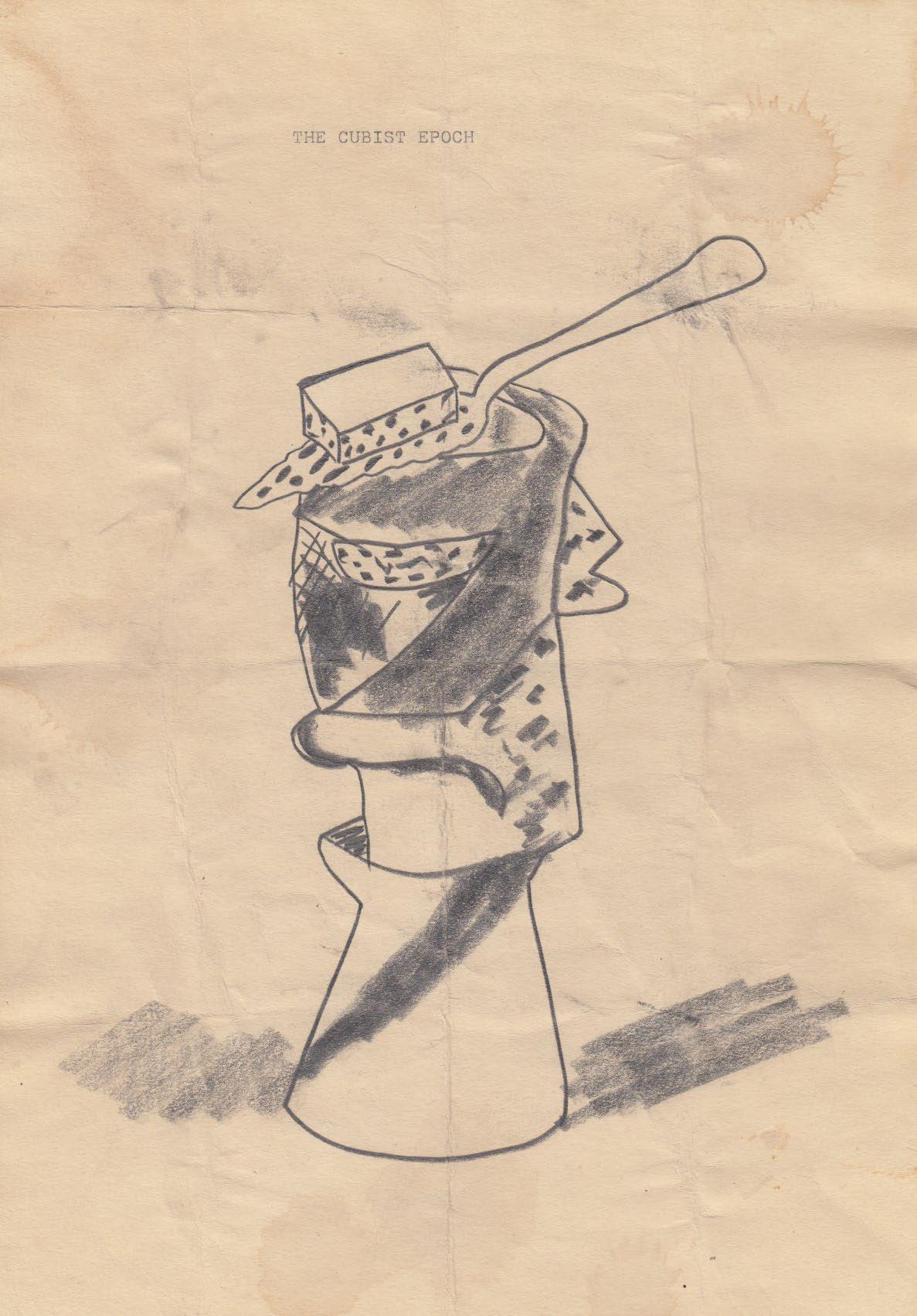
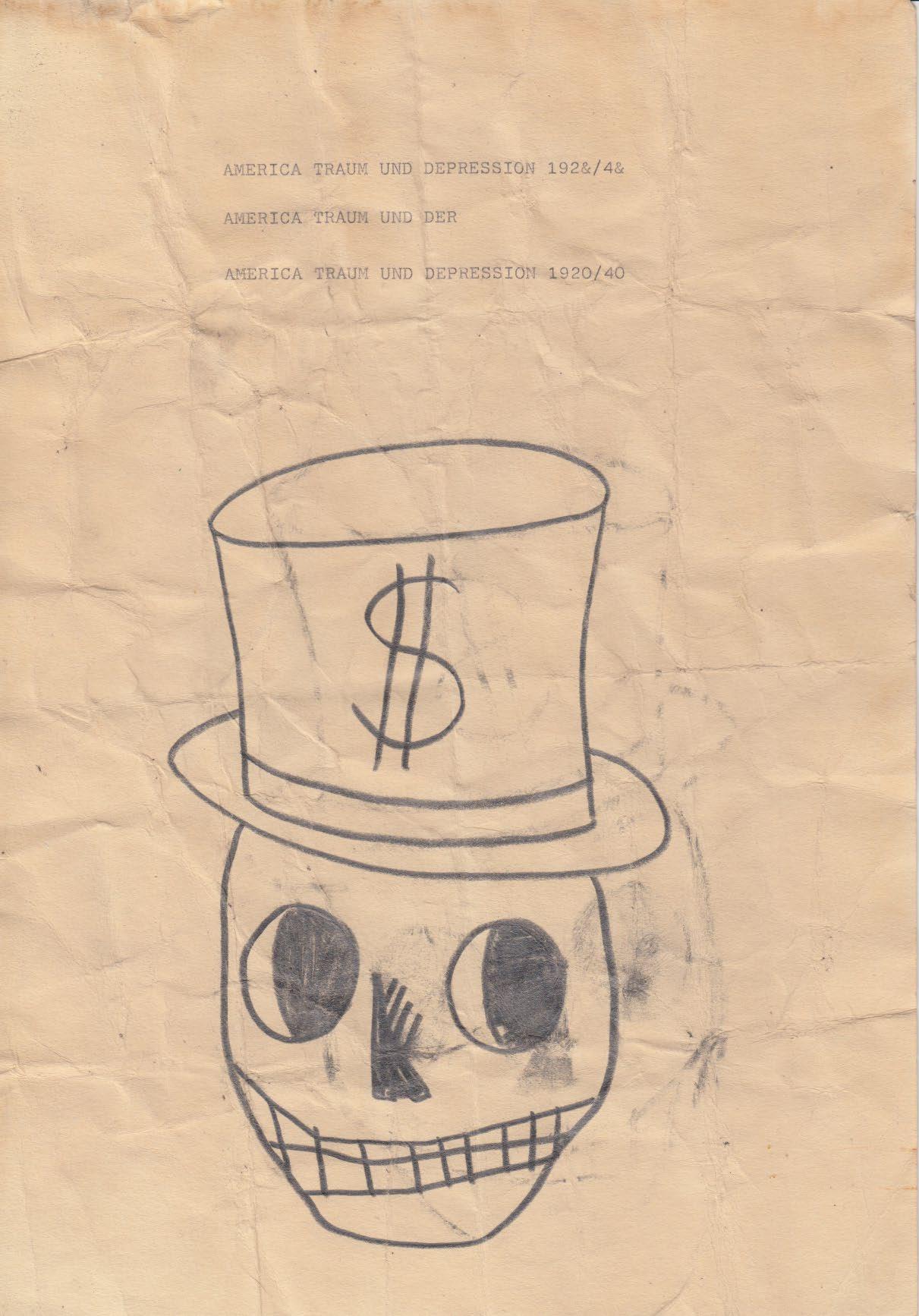
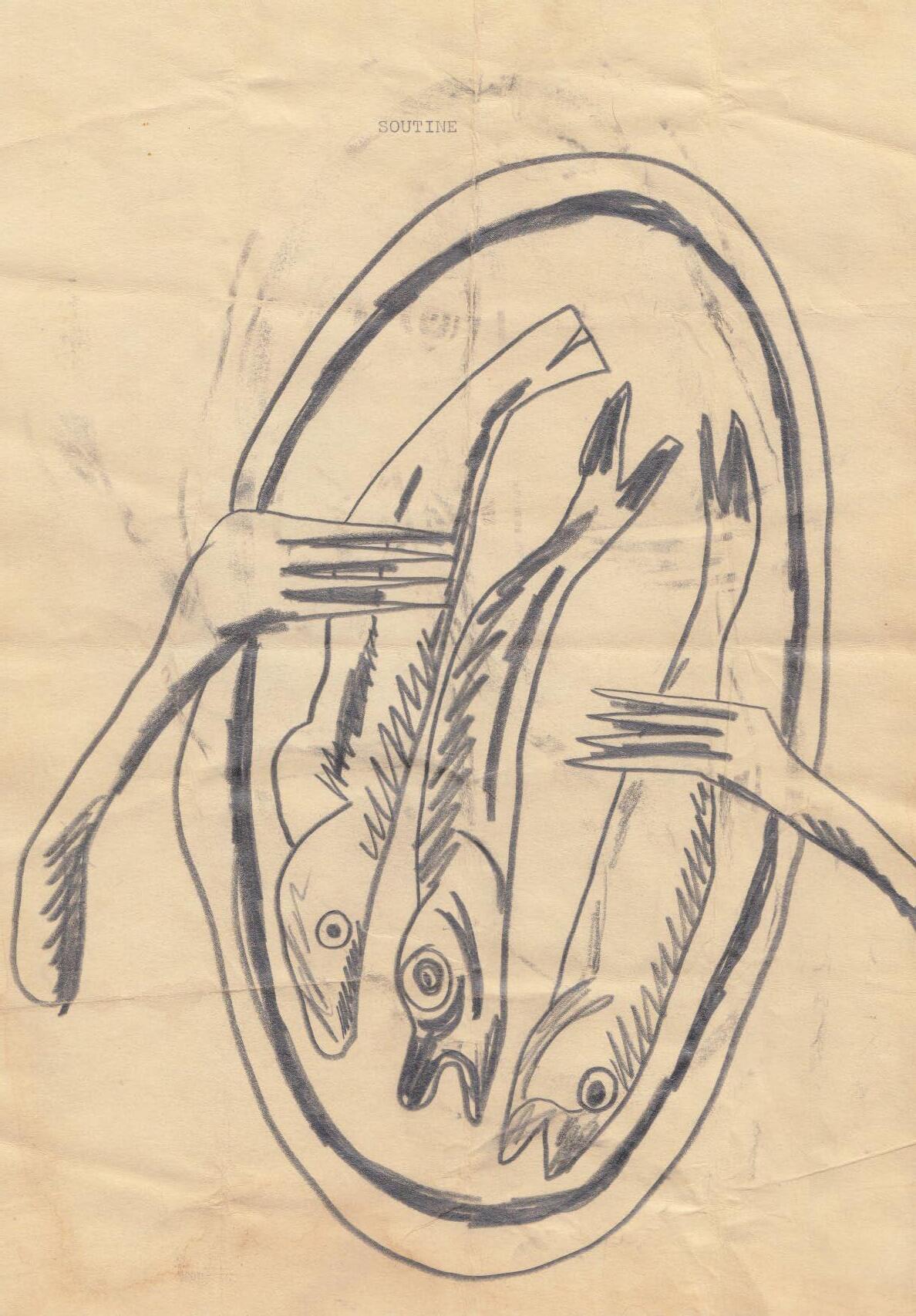
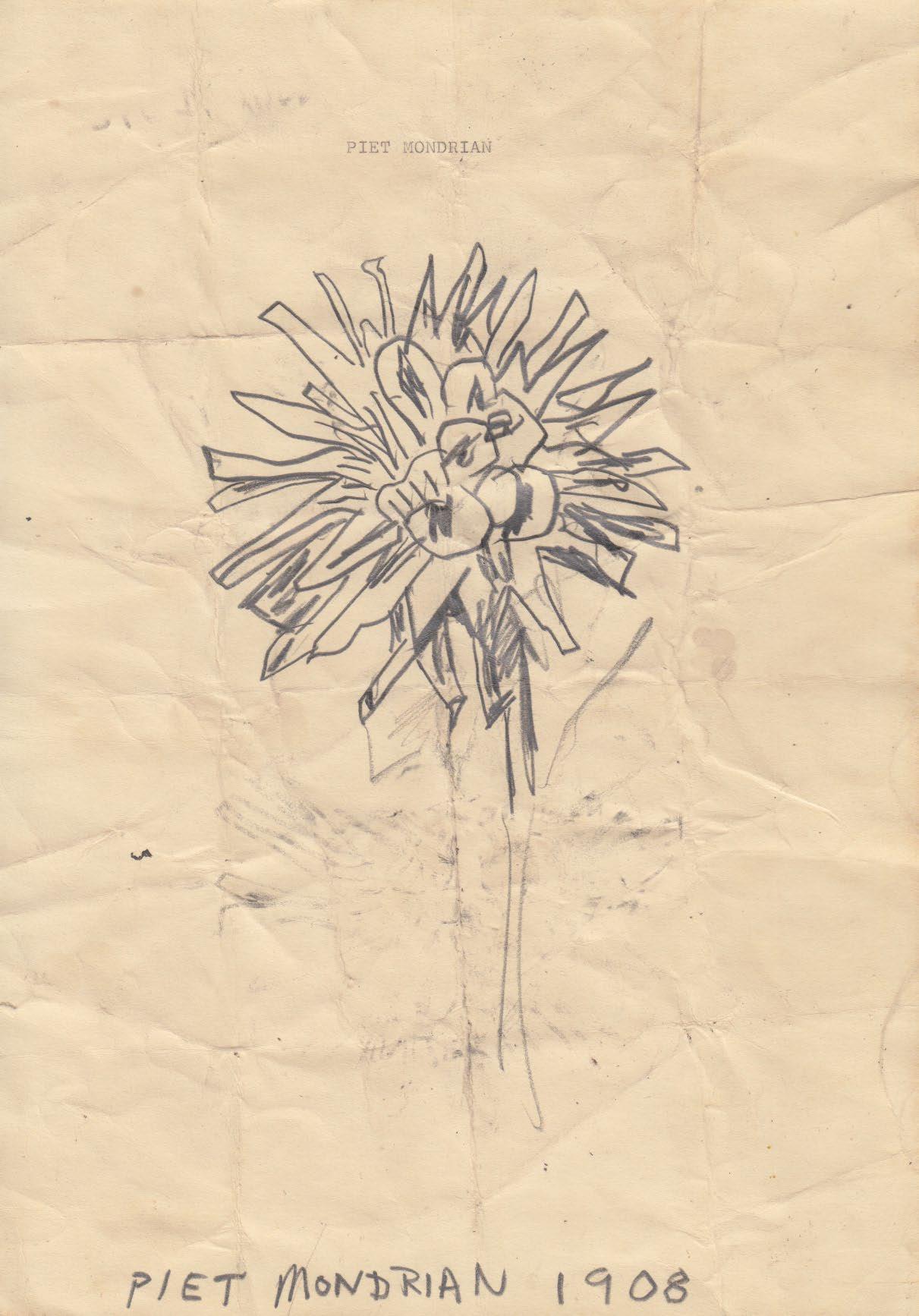
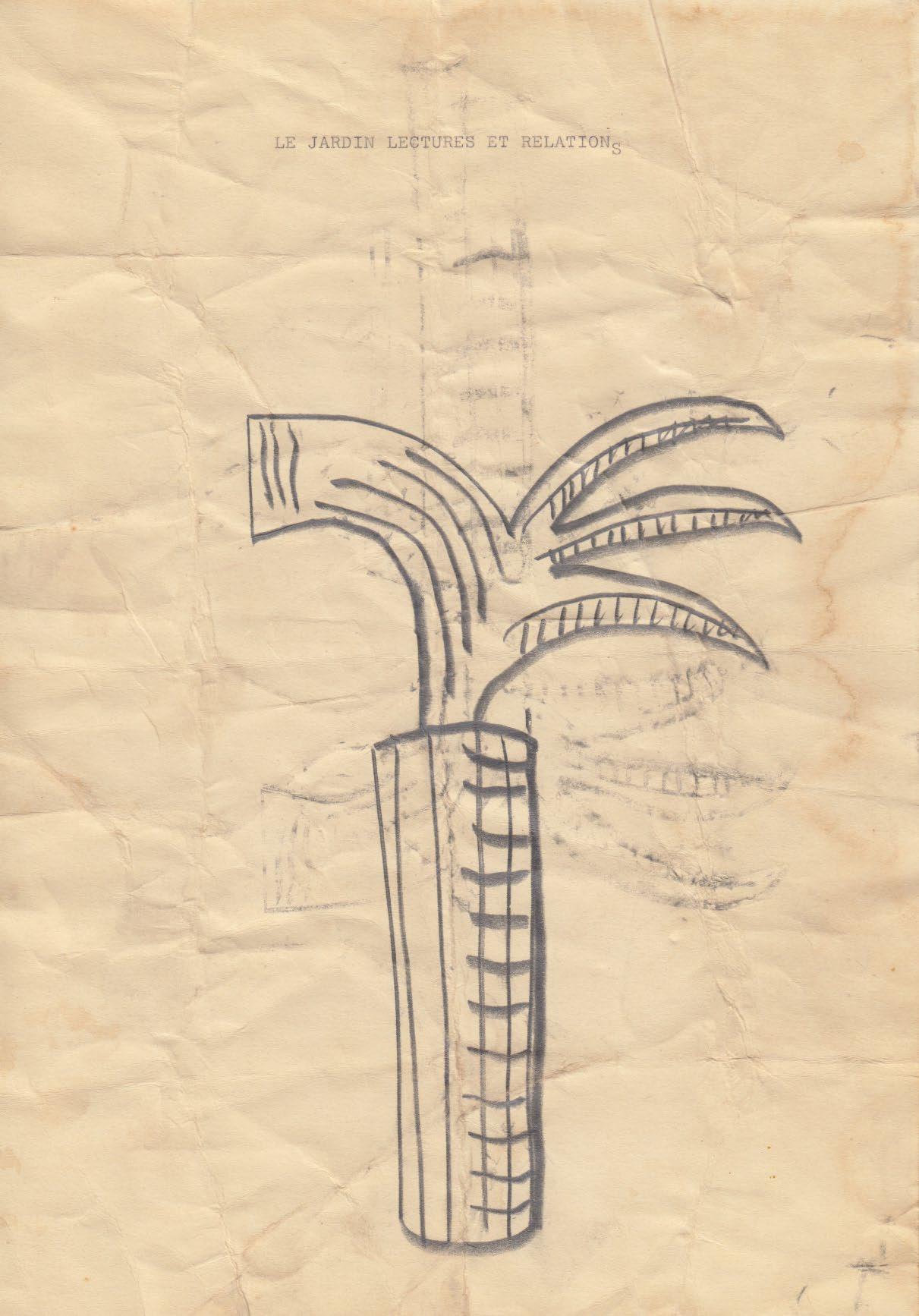
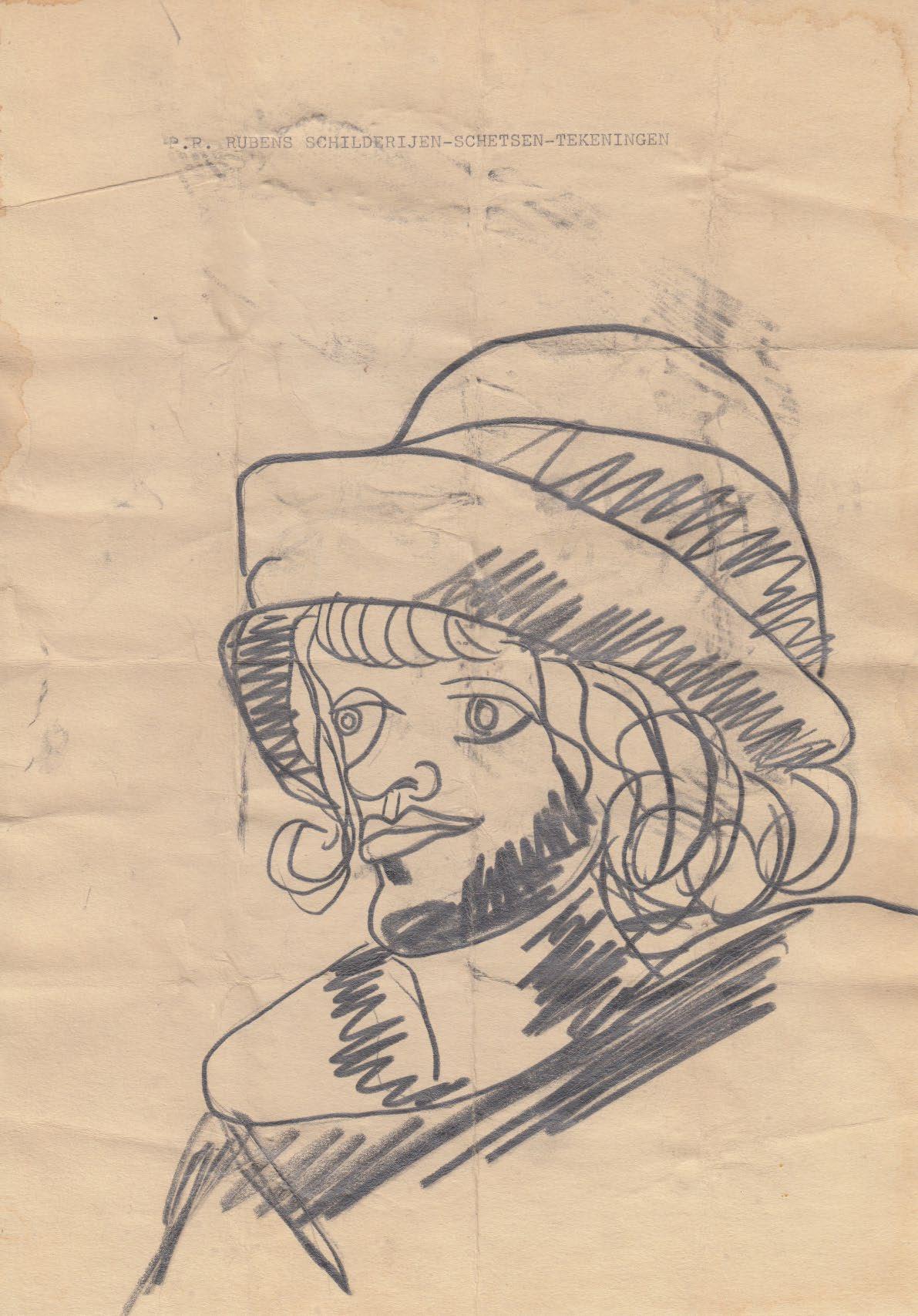
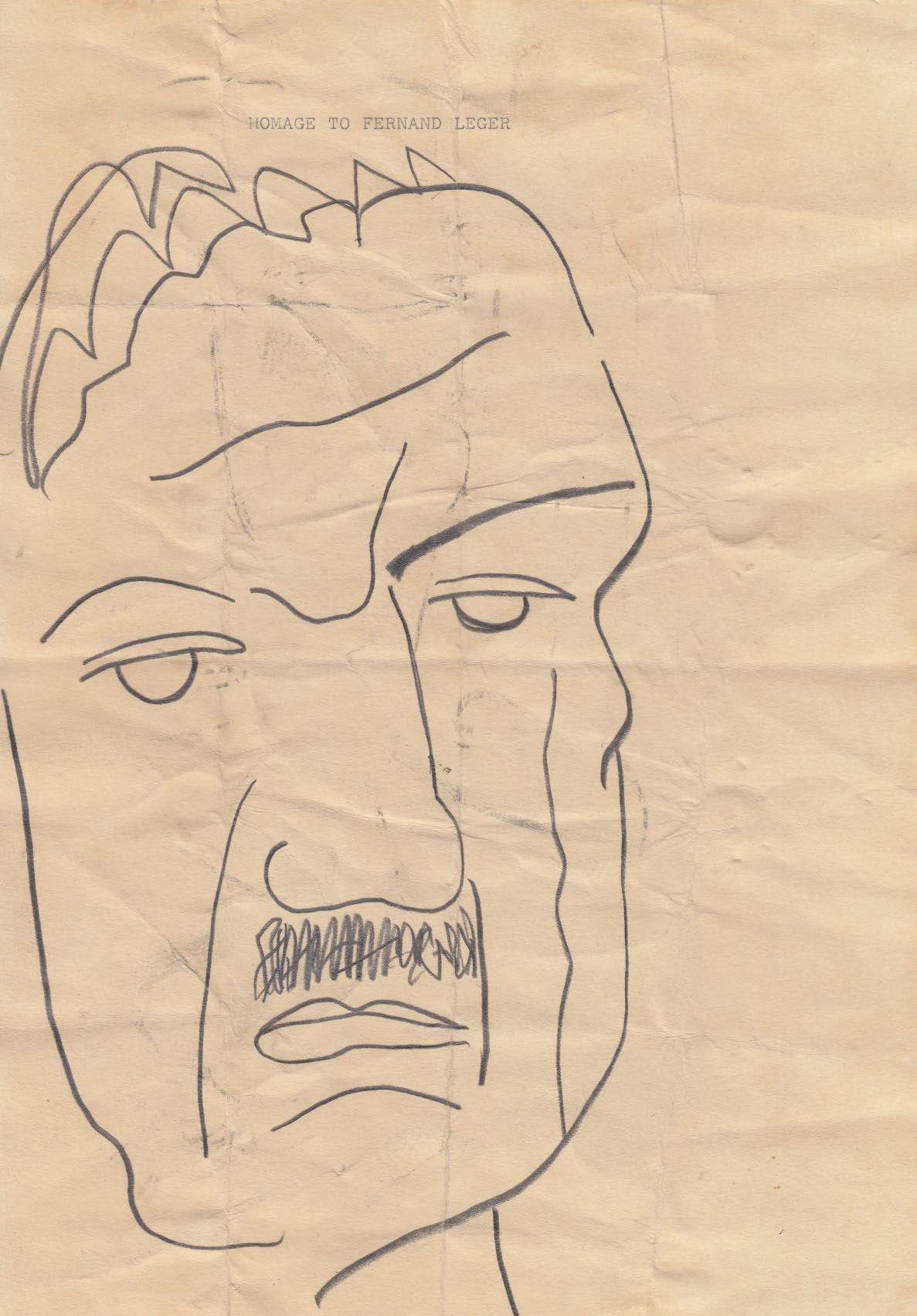
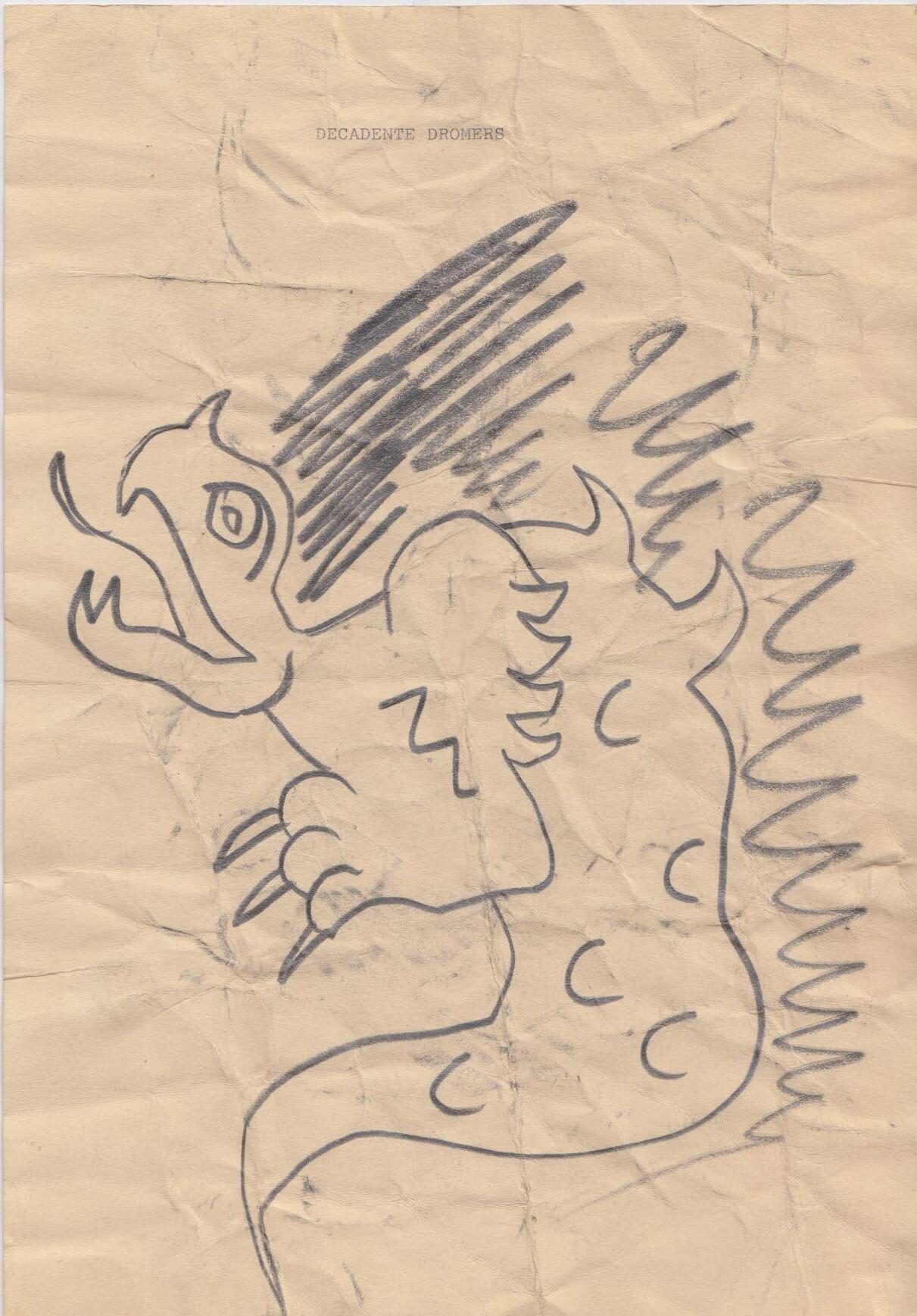
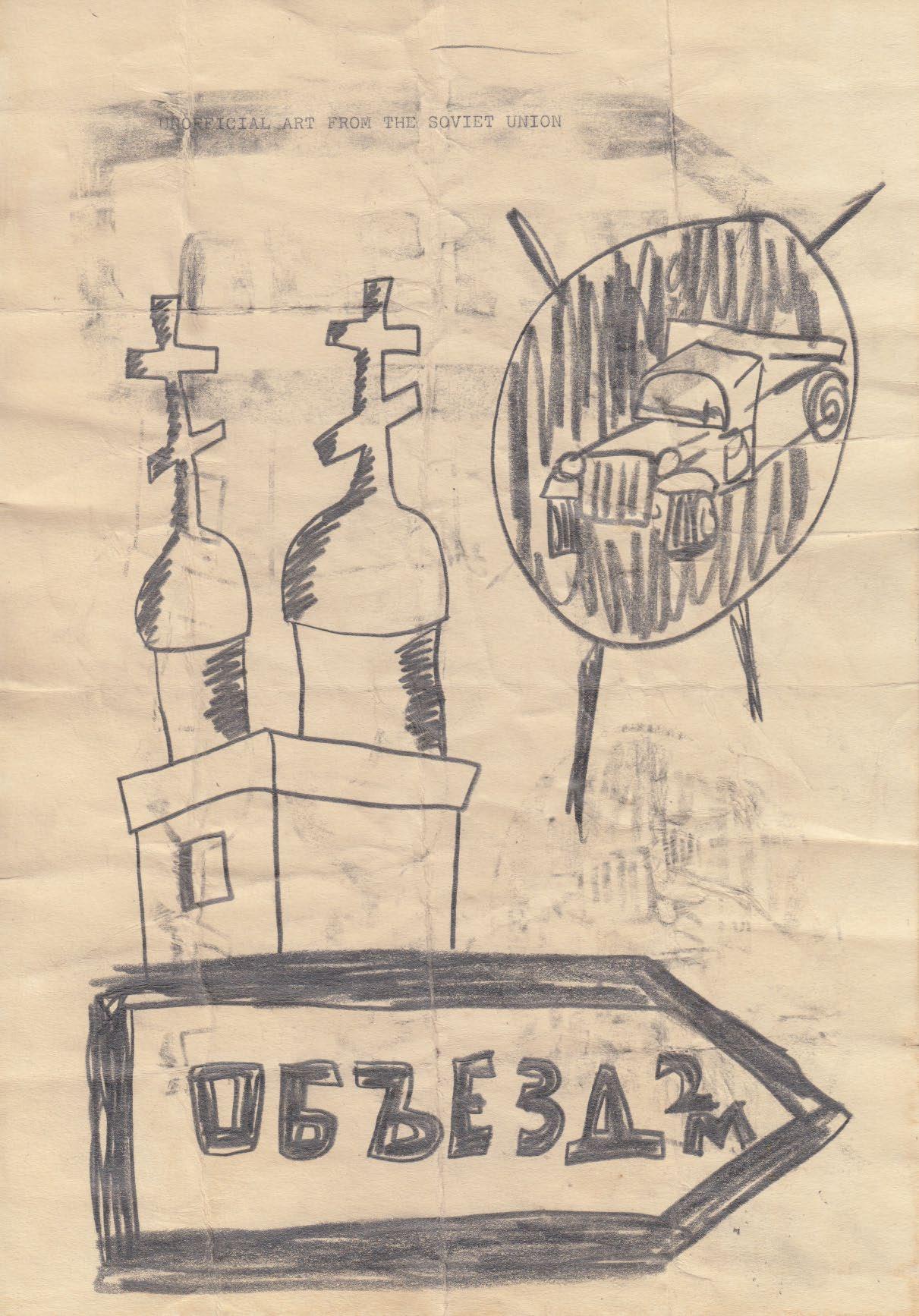
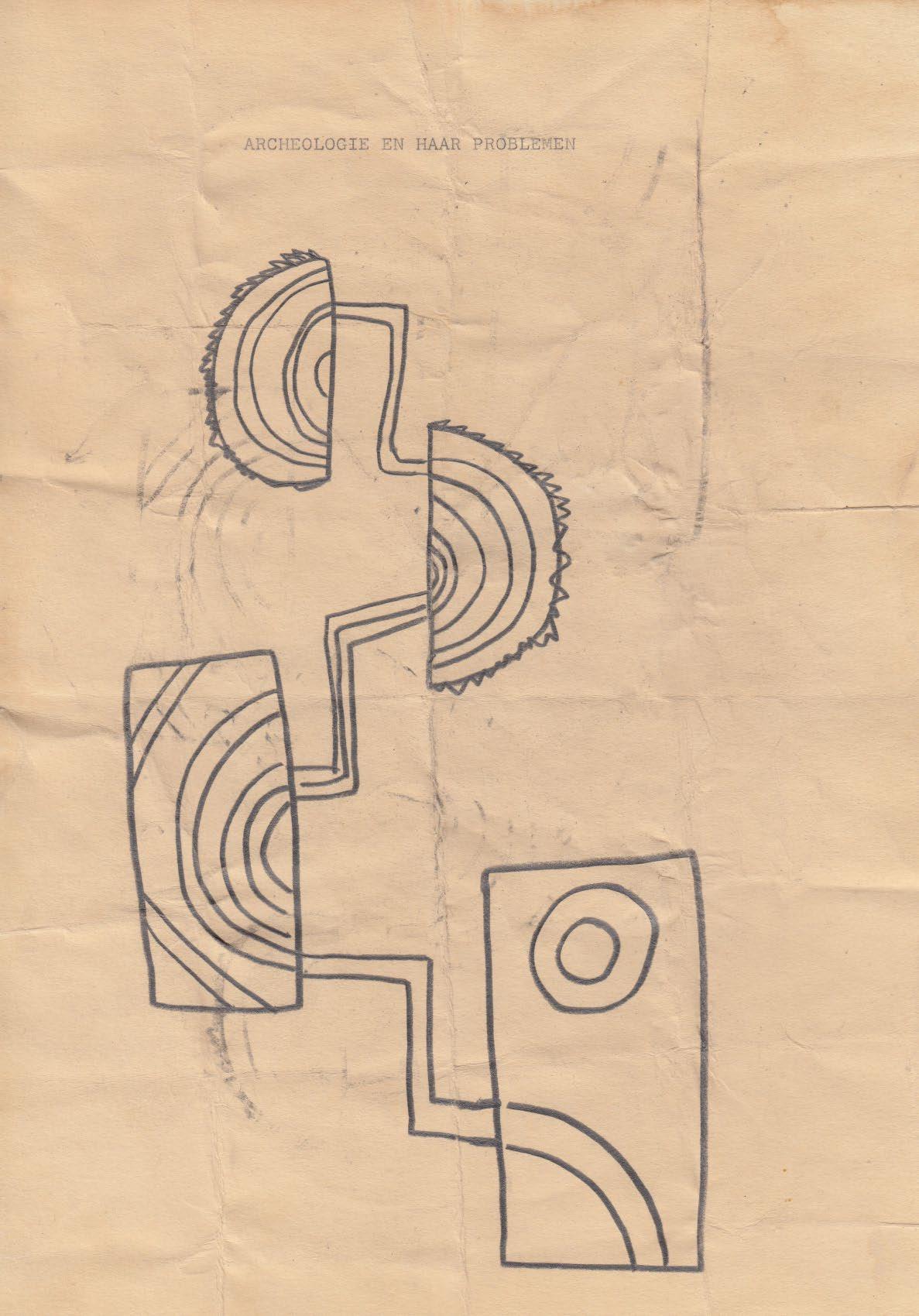
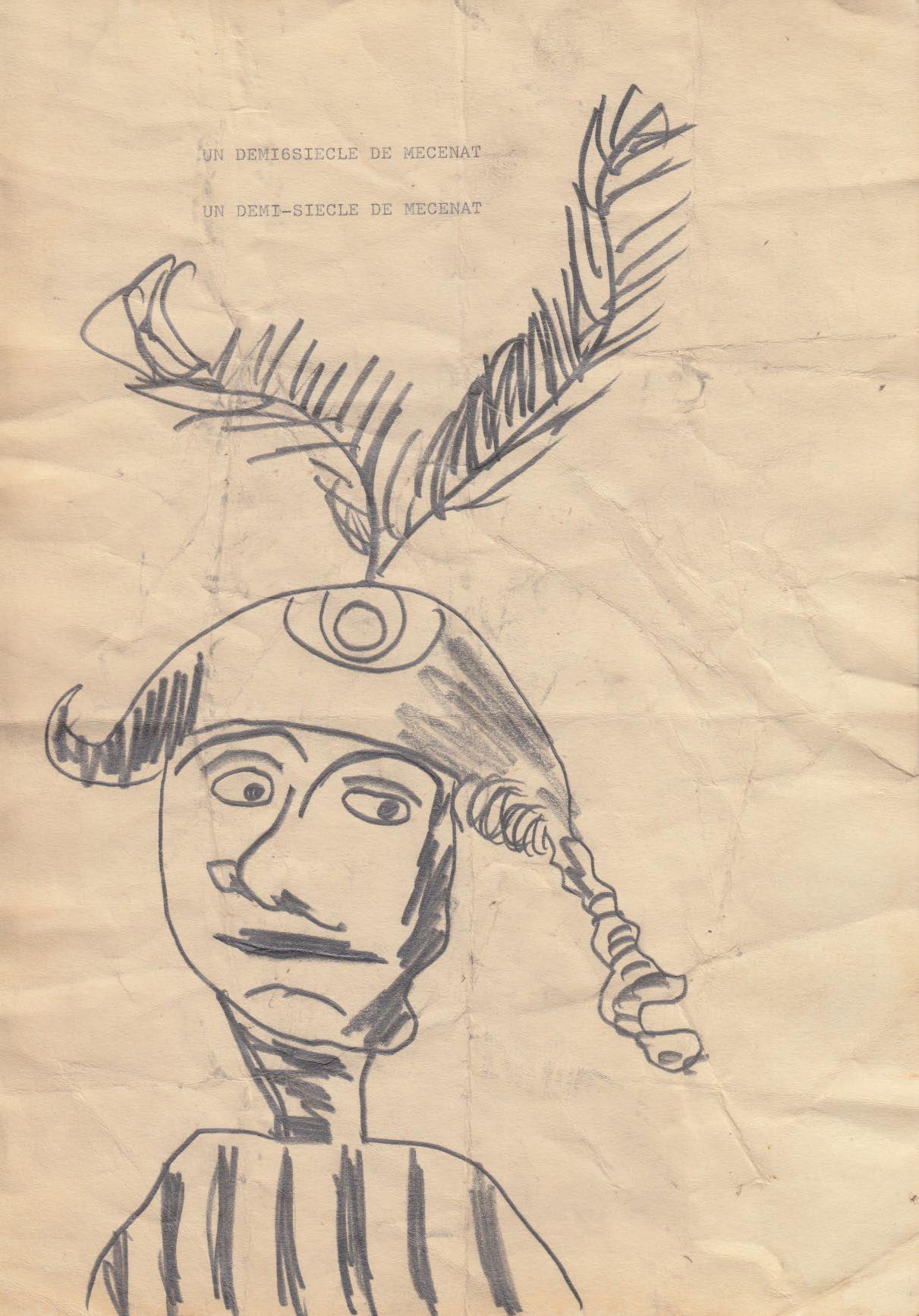
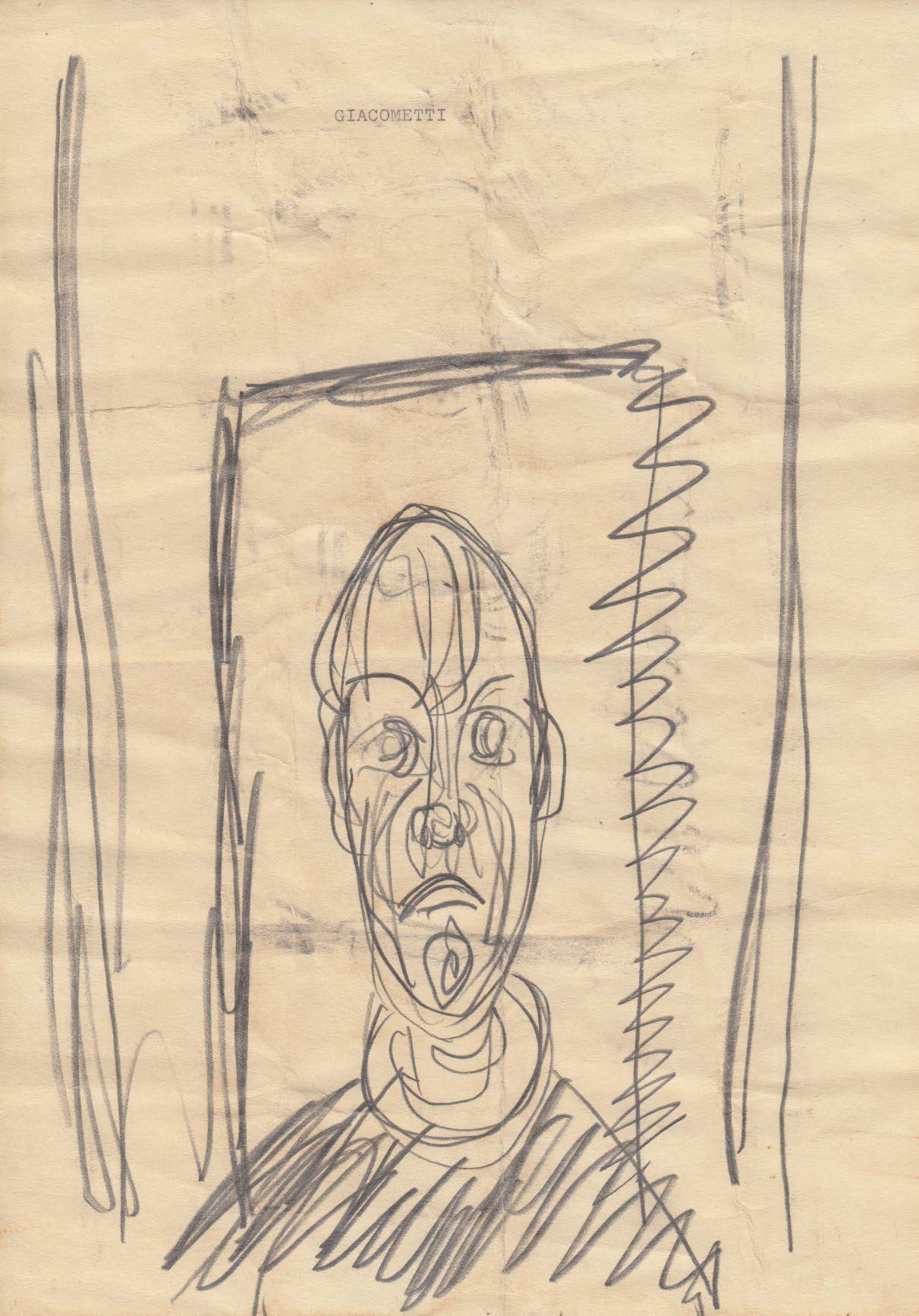
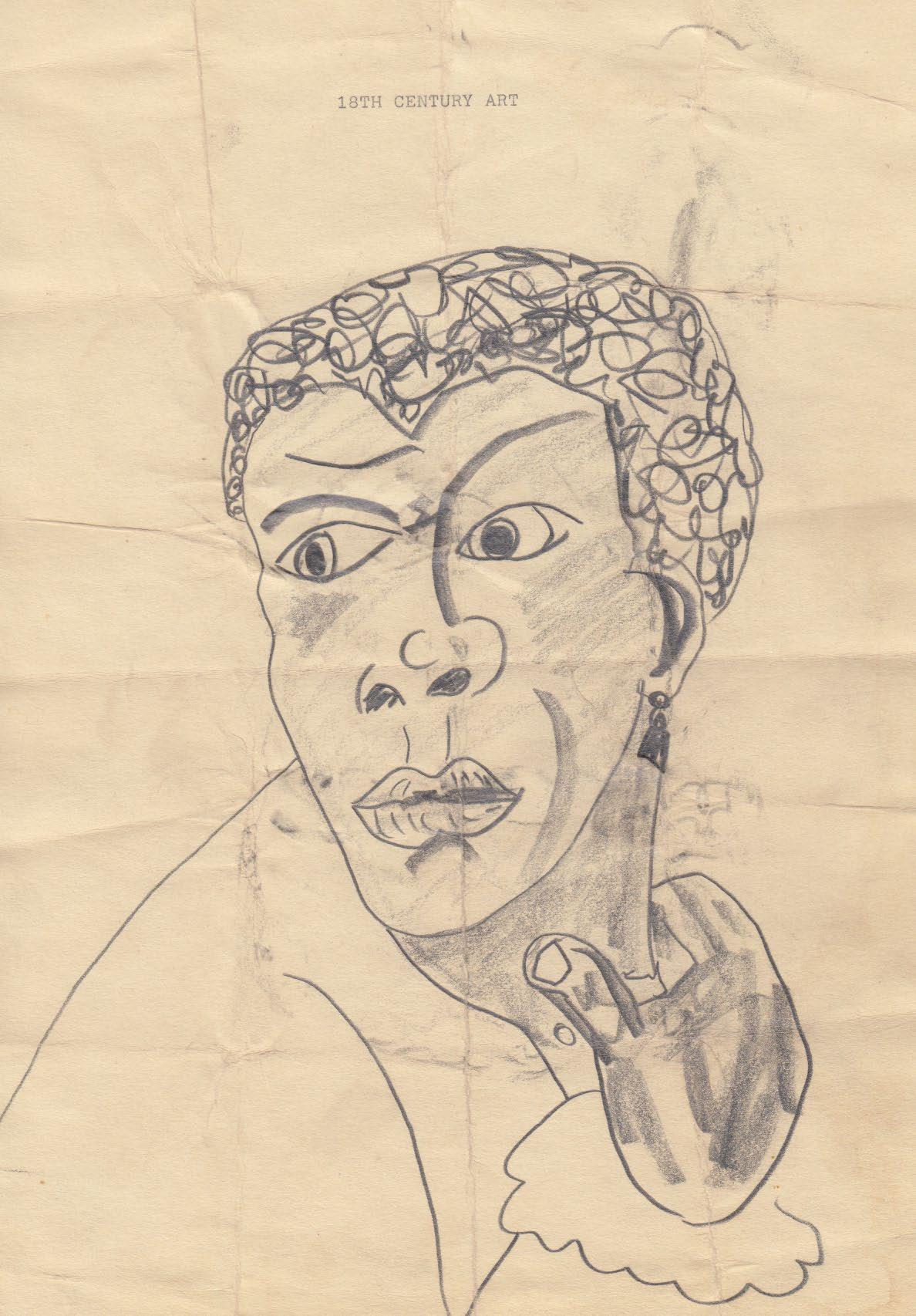
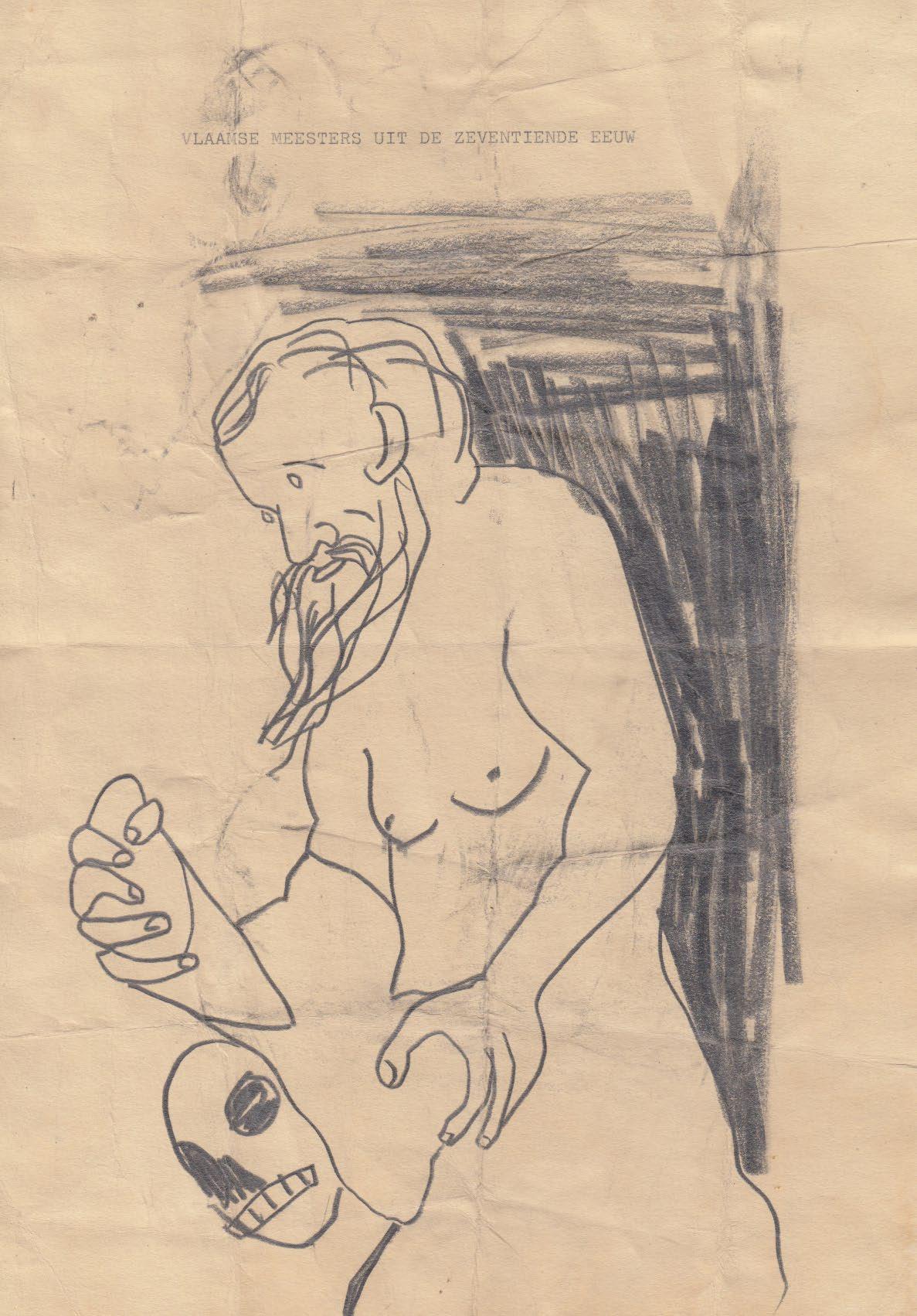
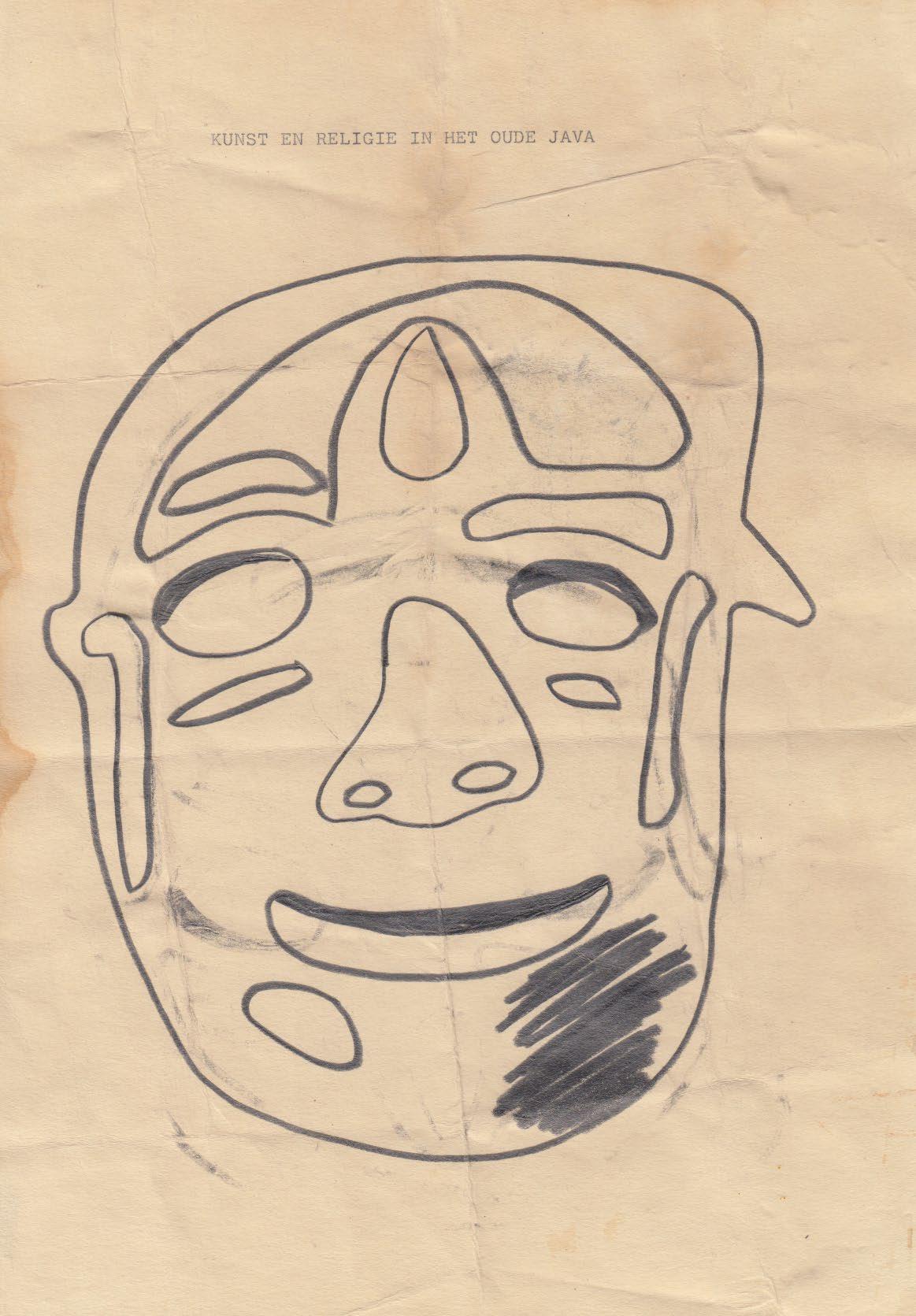
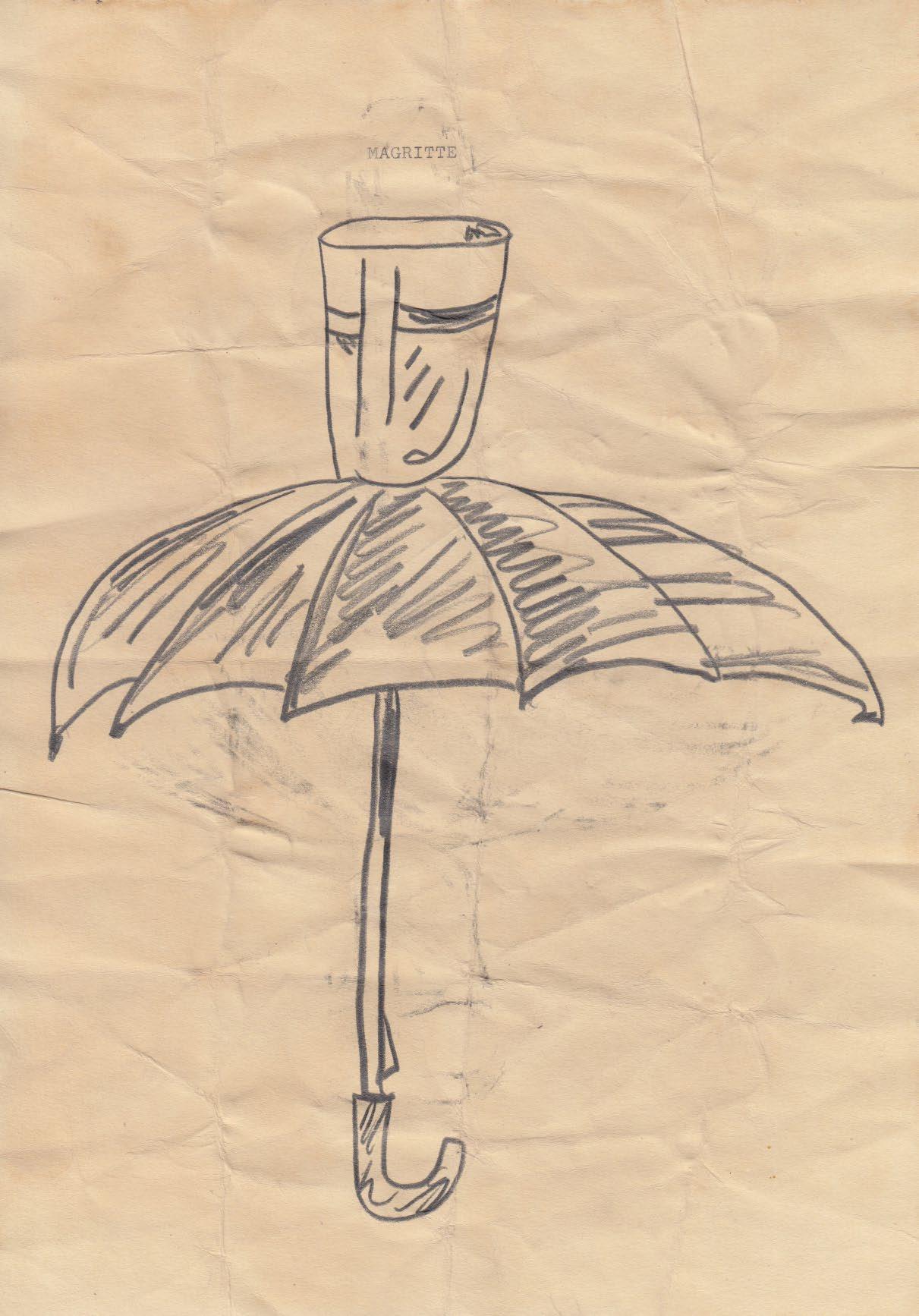
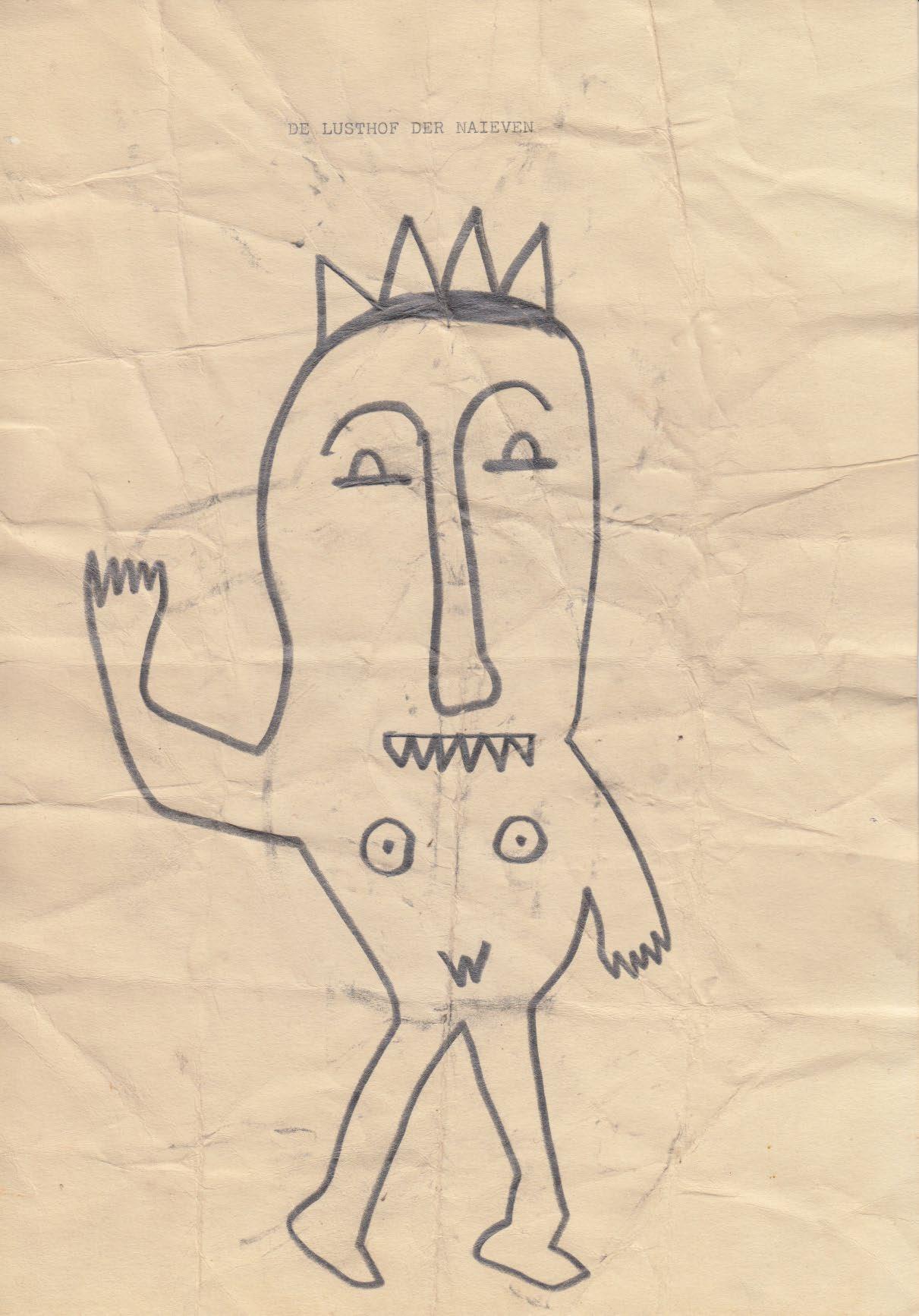
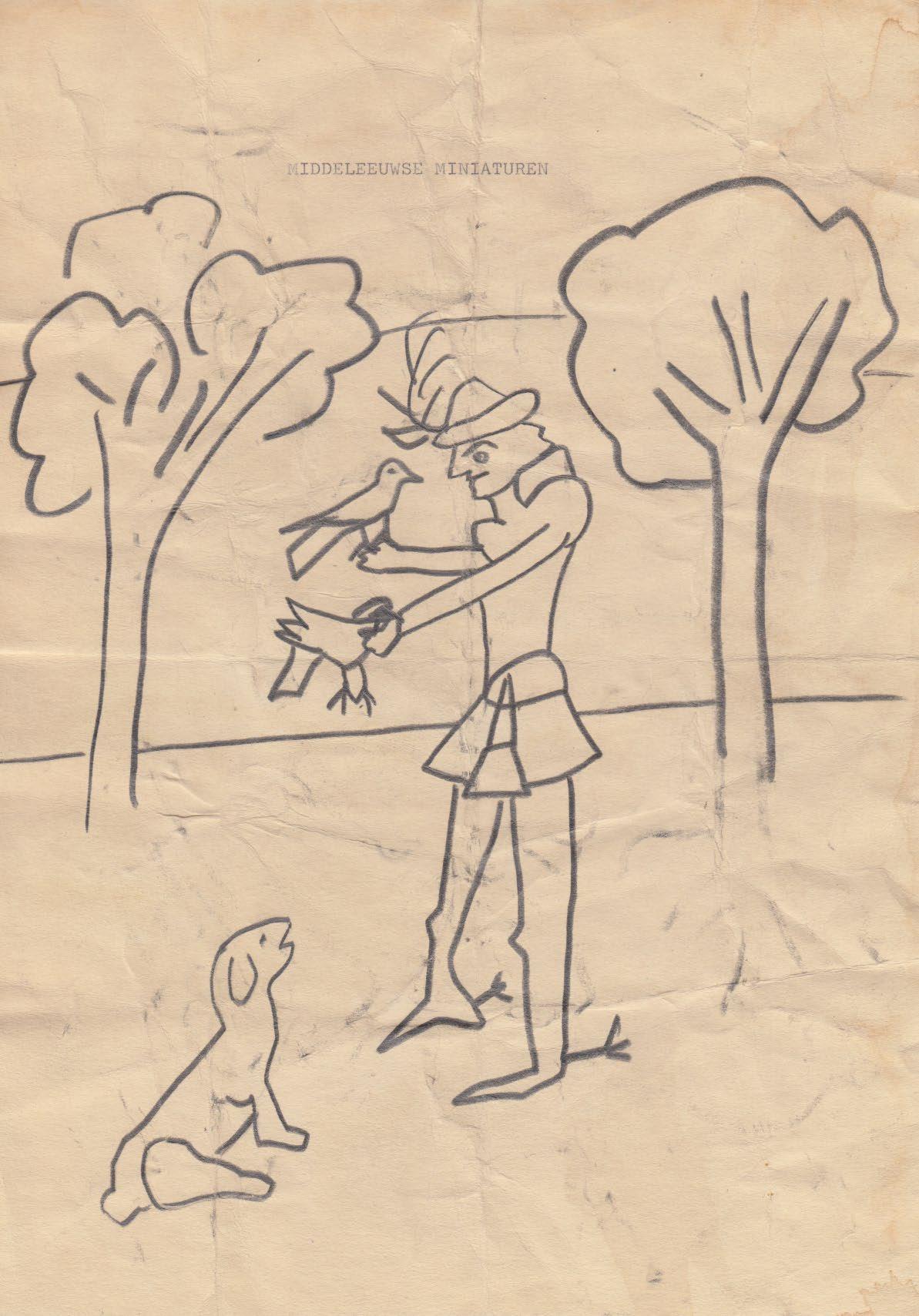
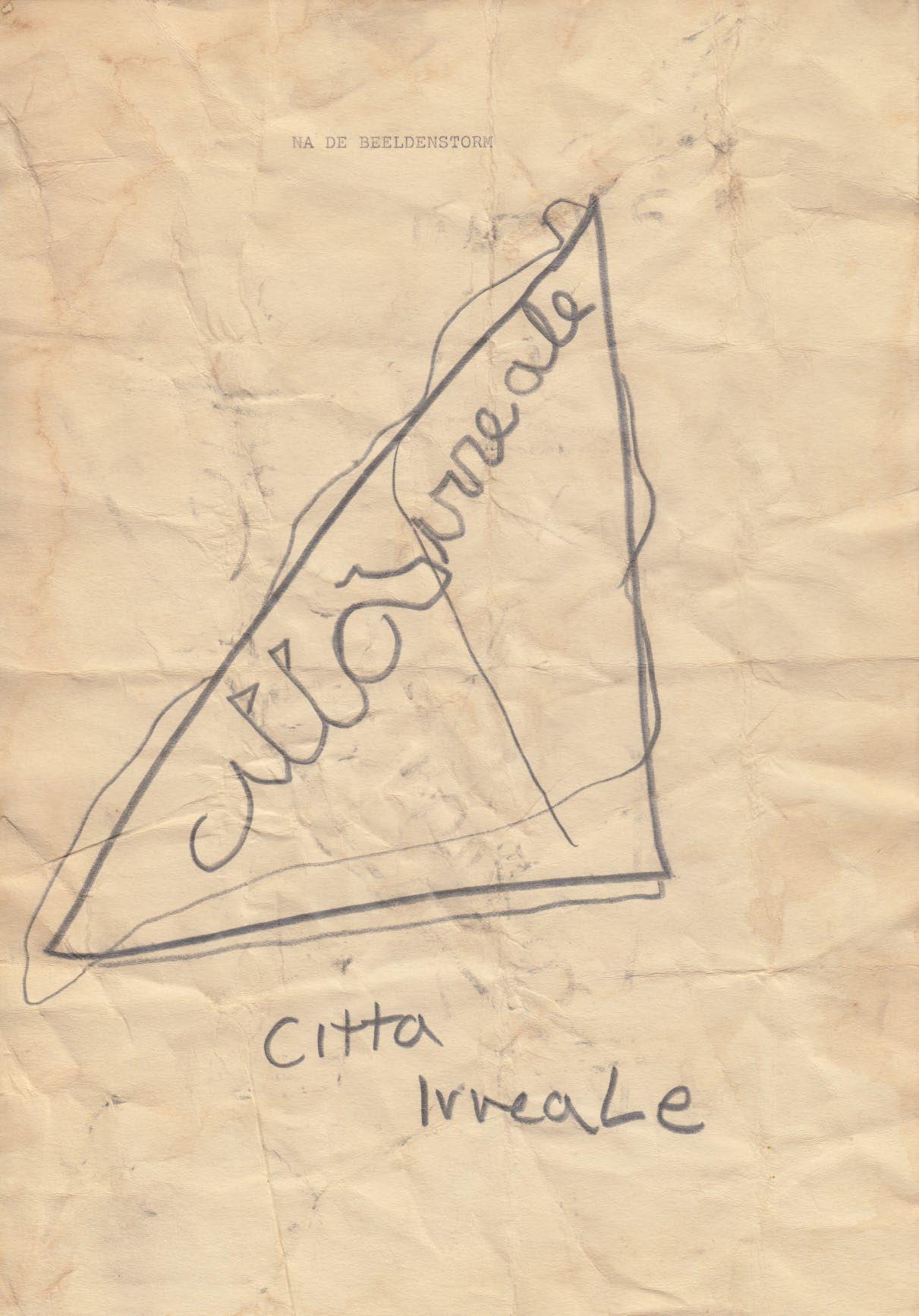
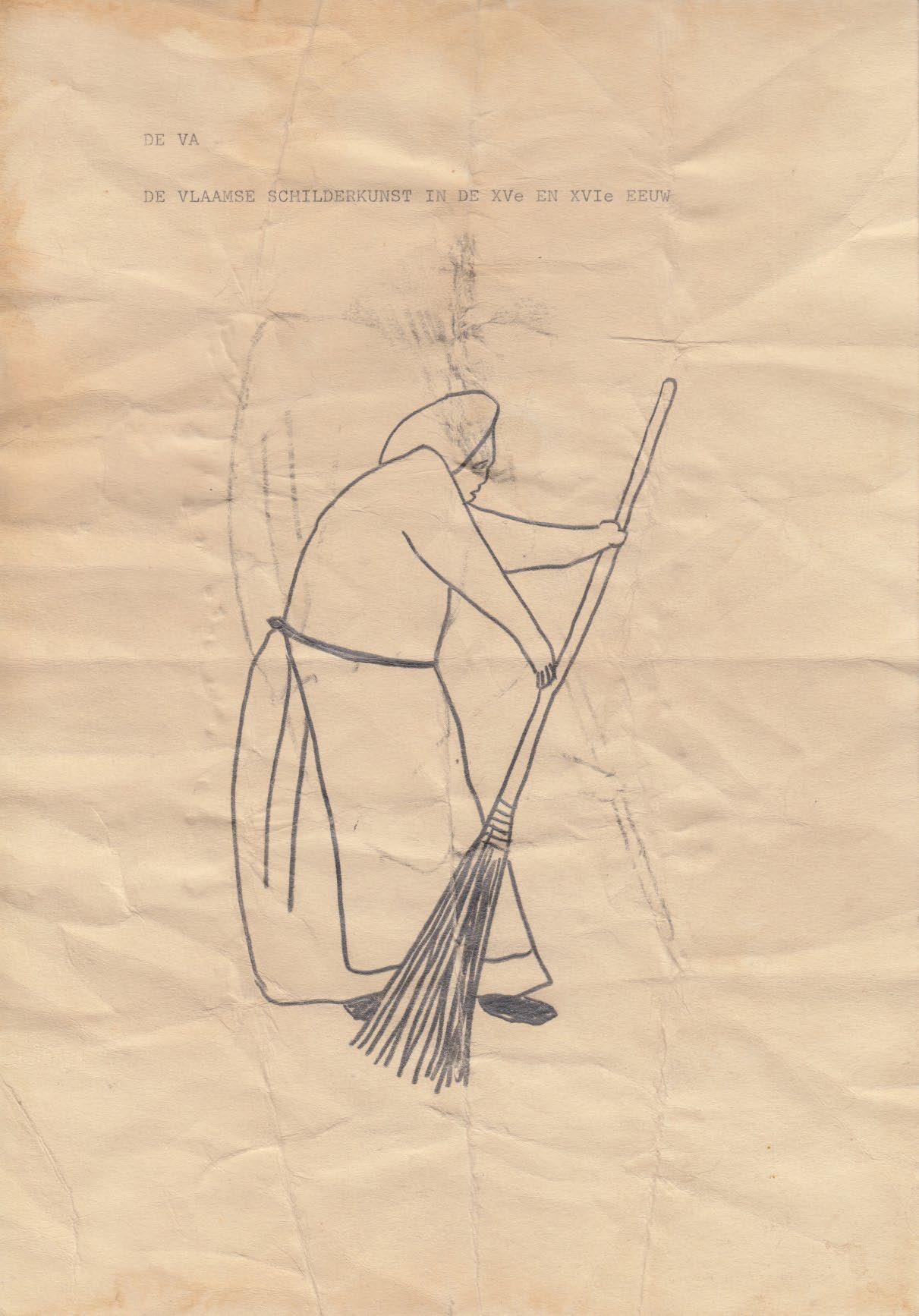
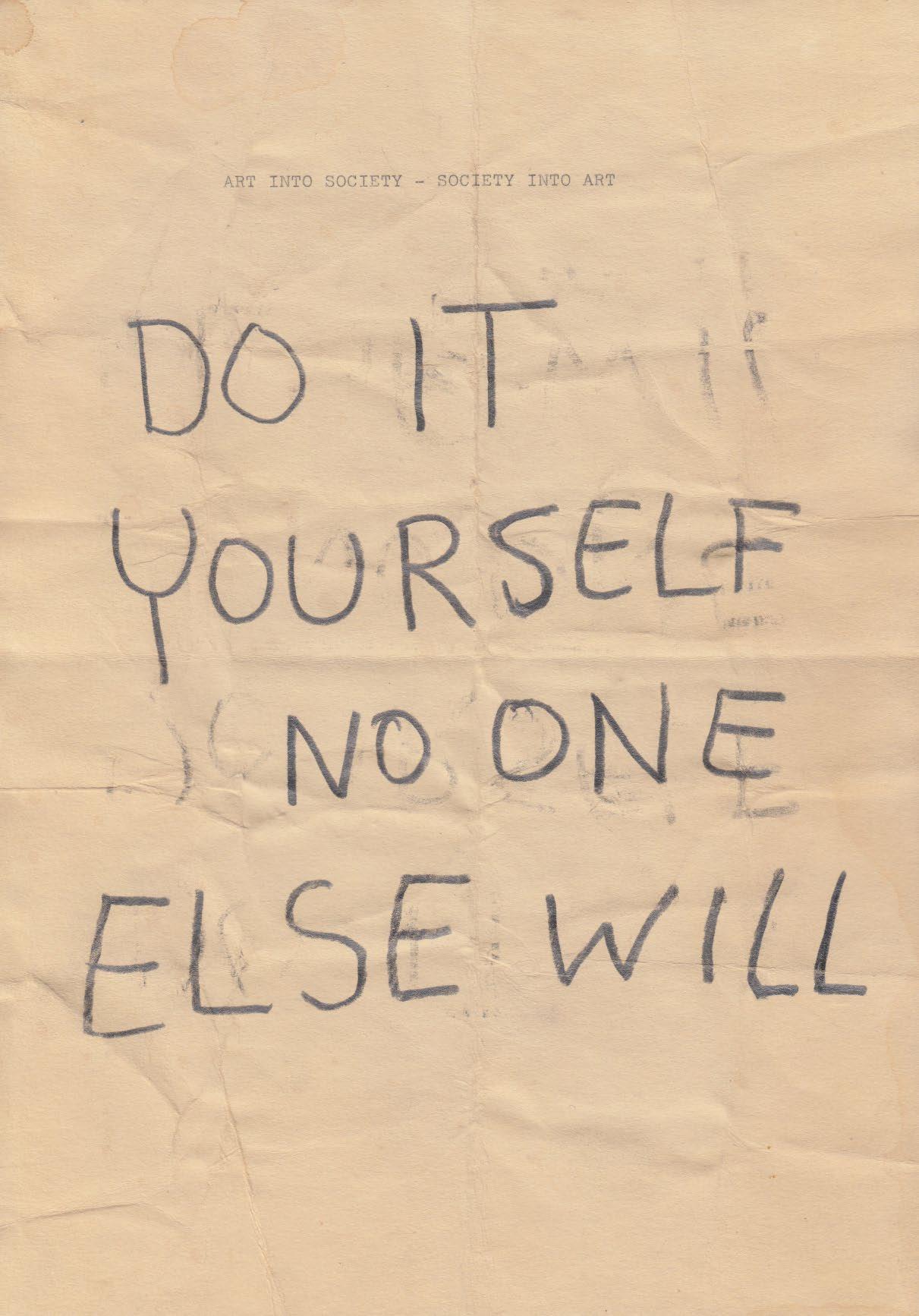
I began looking at various images in Chantal’s books and intuitively choosing pictures to make sketches on paper that I would age by folding and crumpling and staining with coffee and tea.
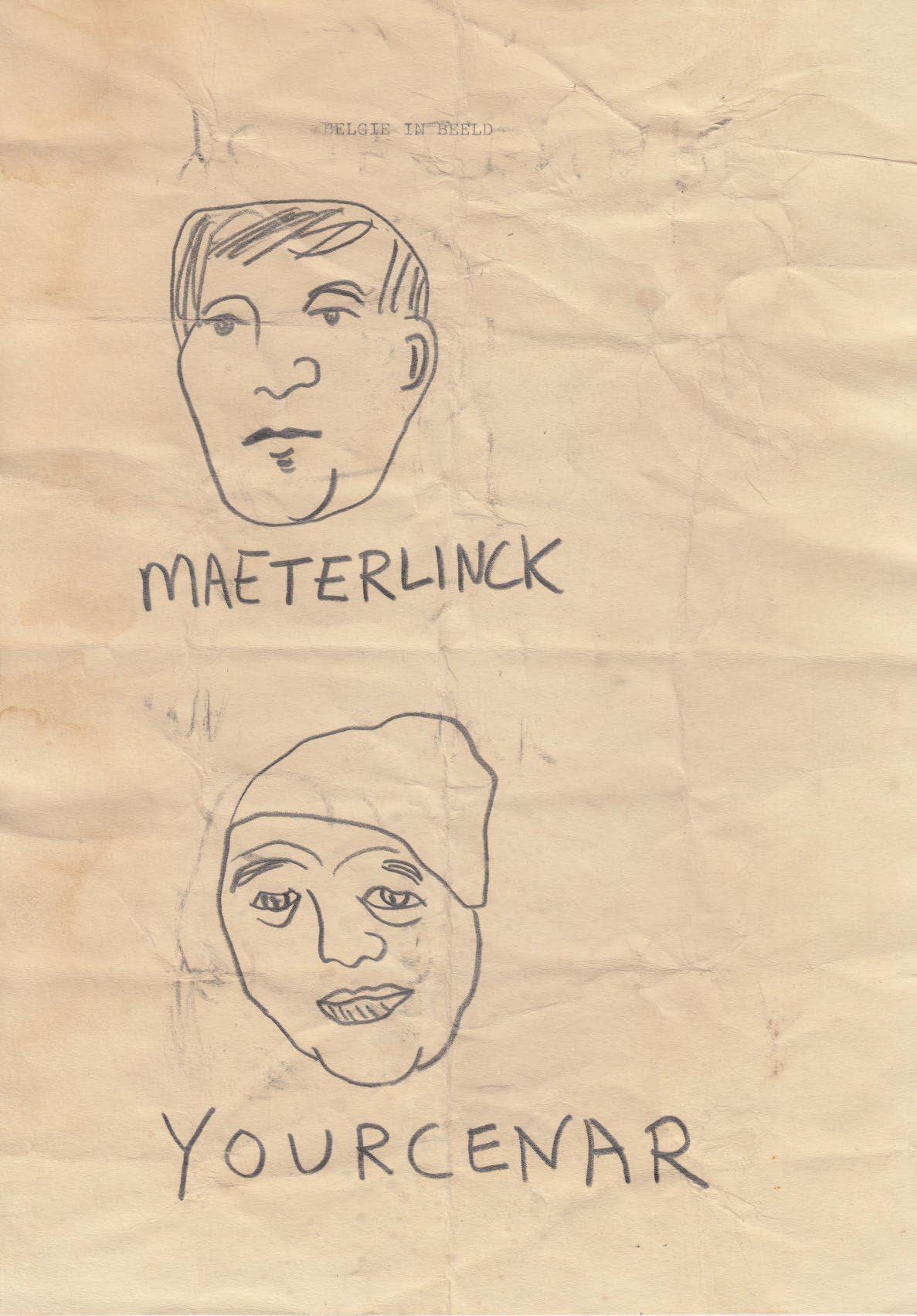
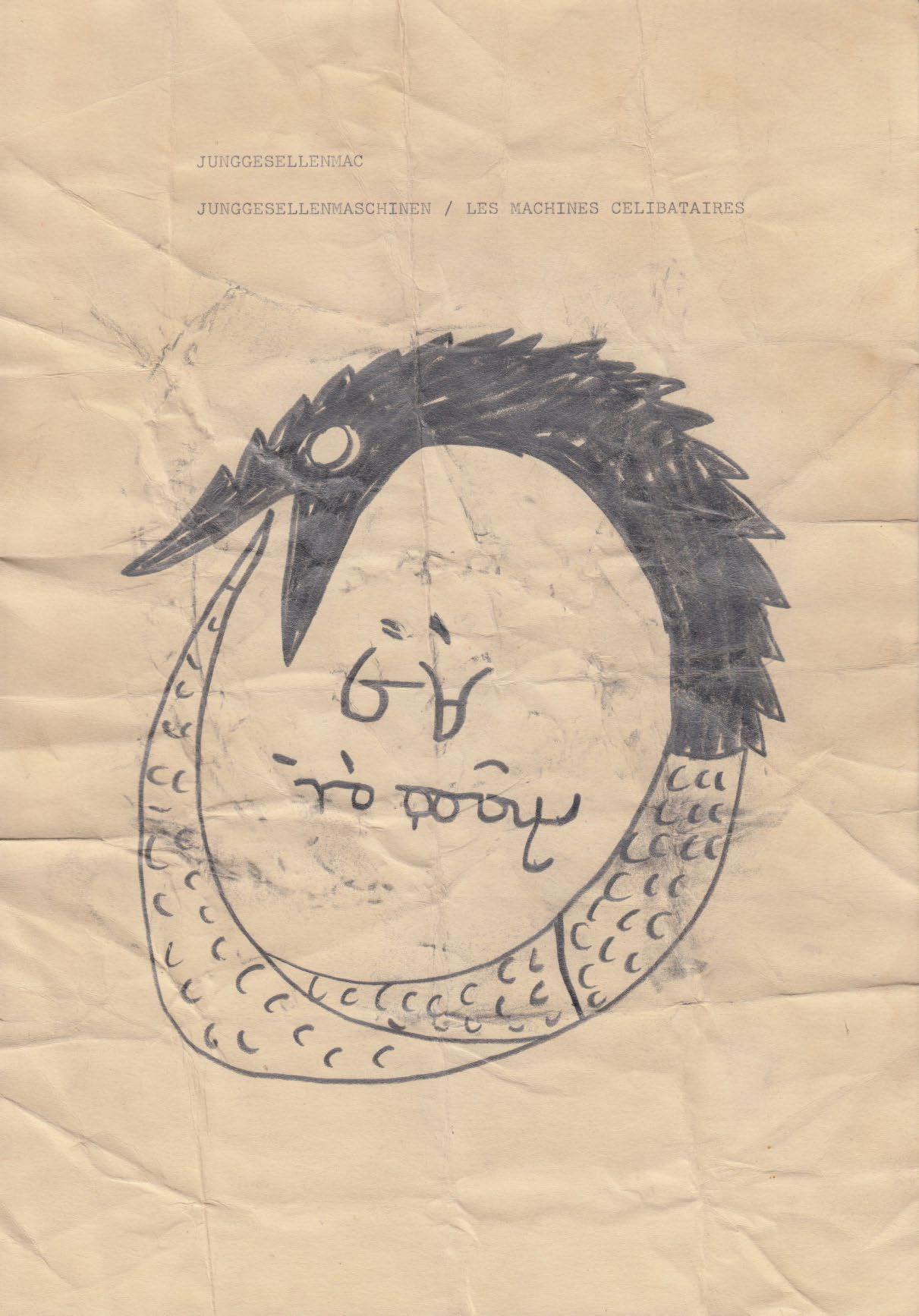
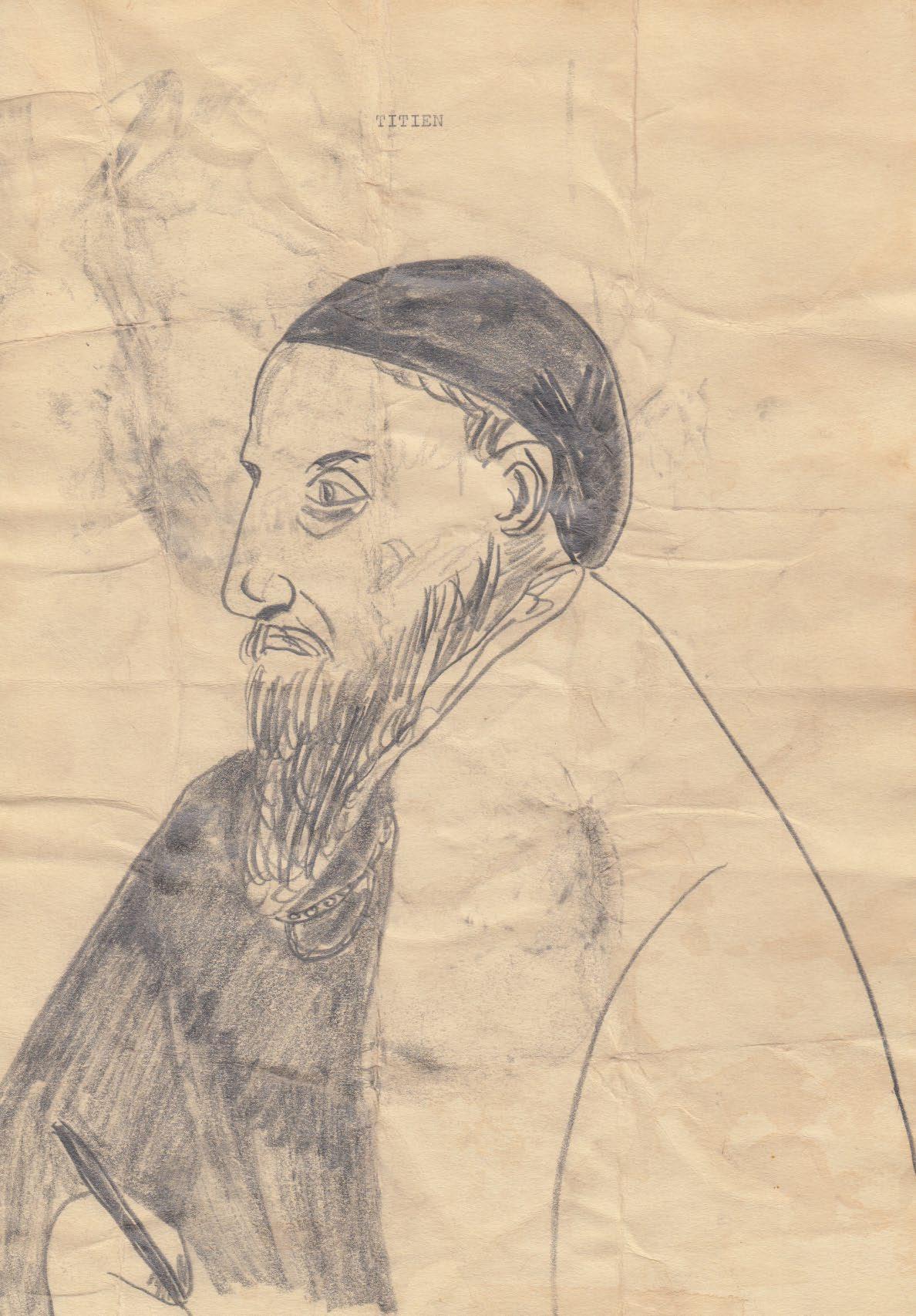
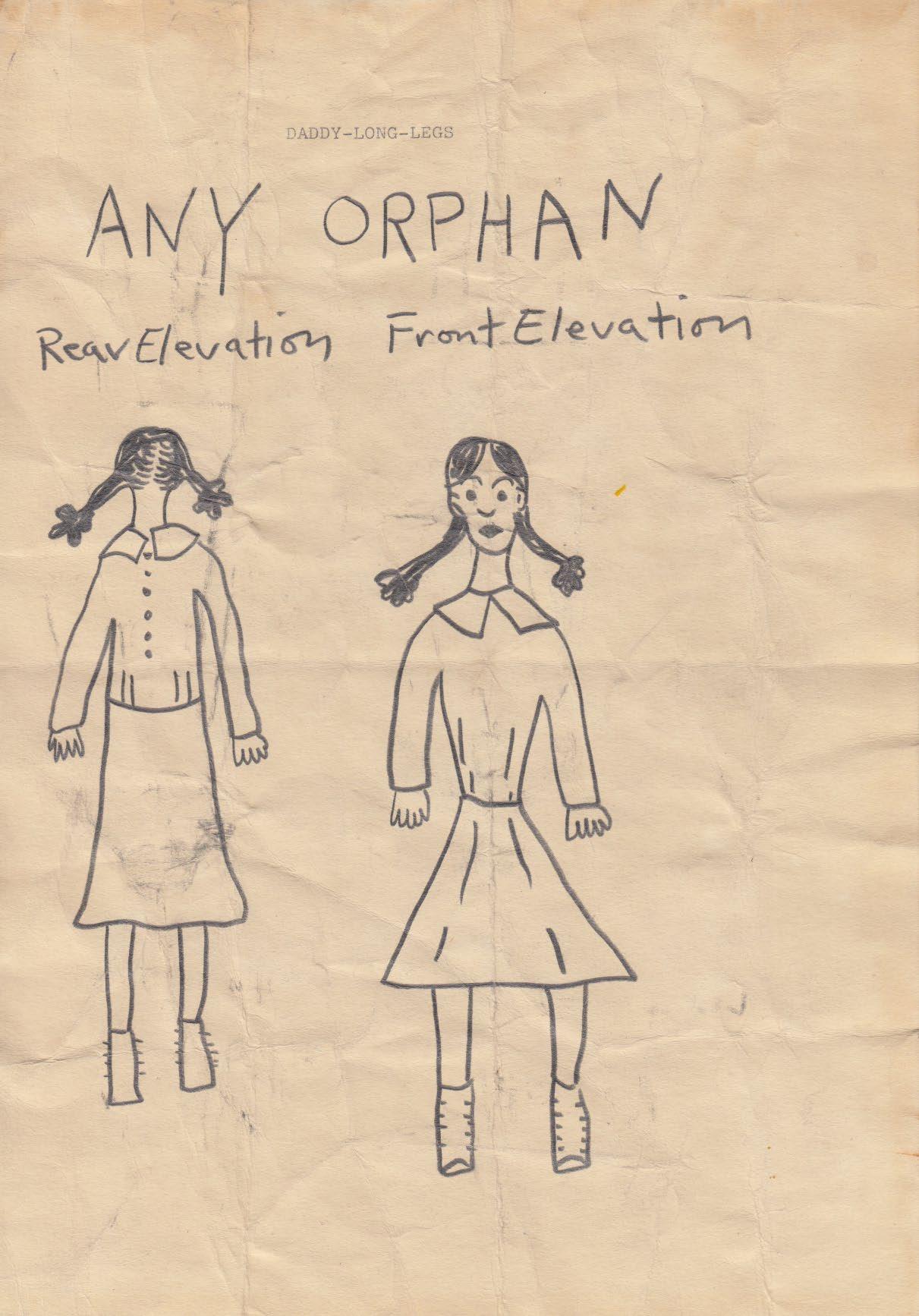
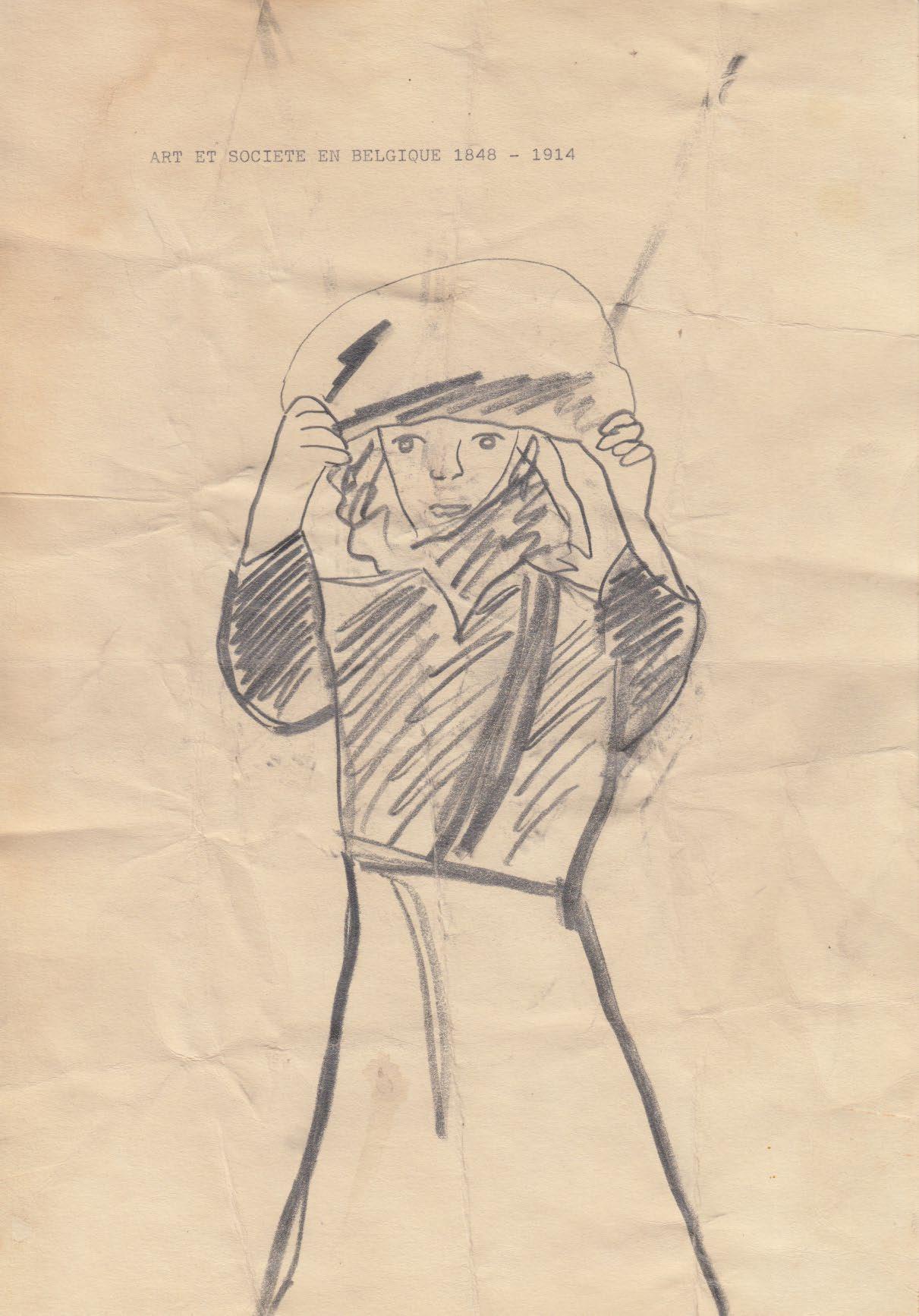
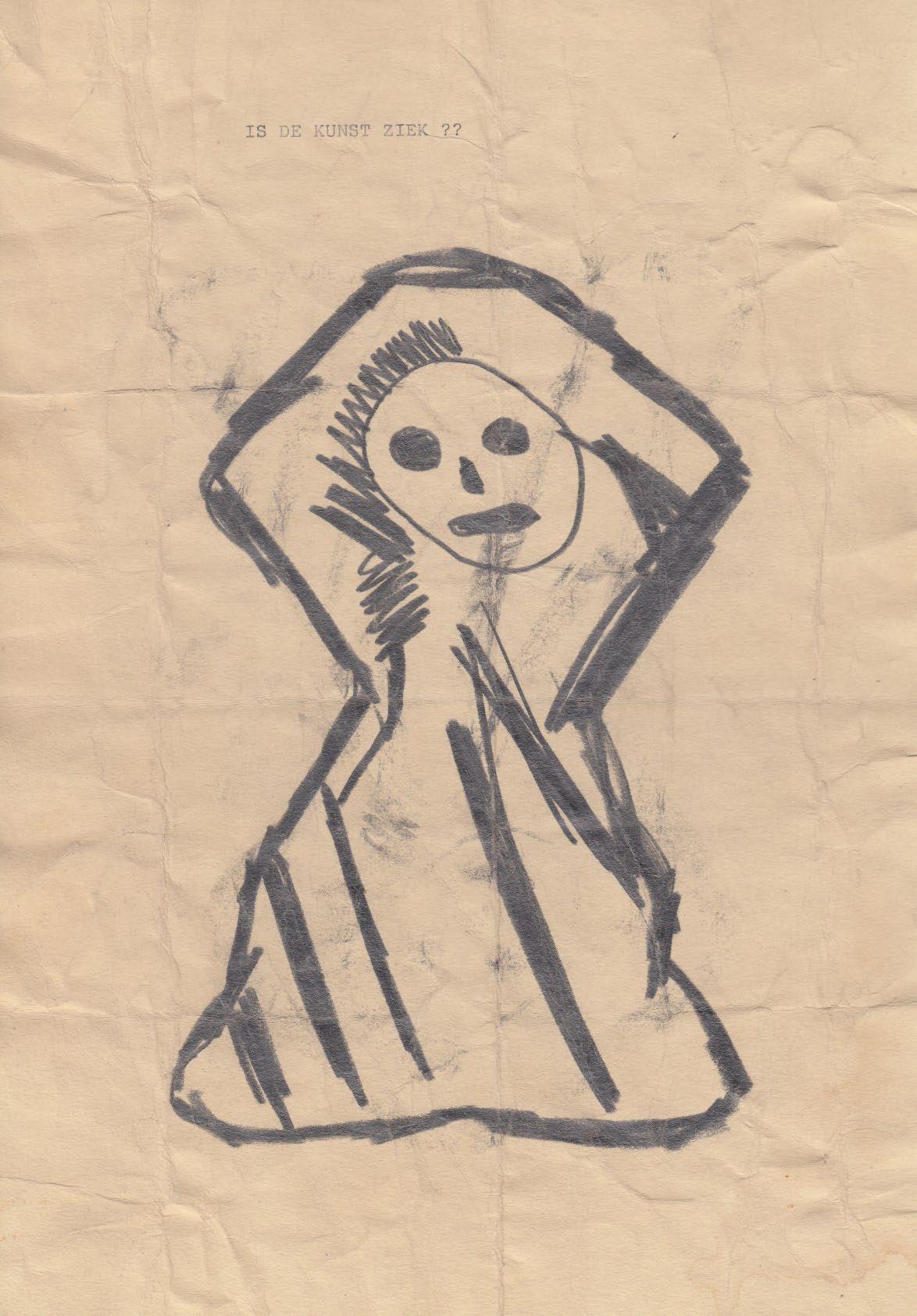
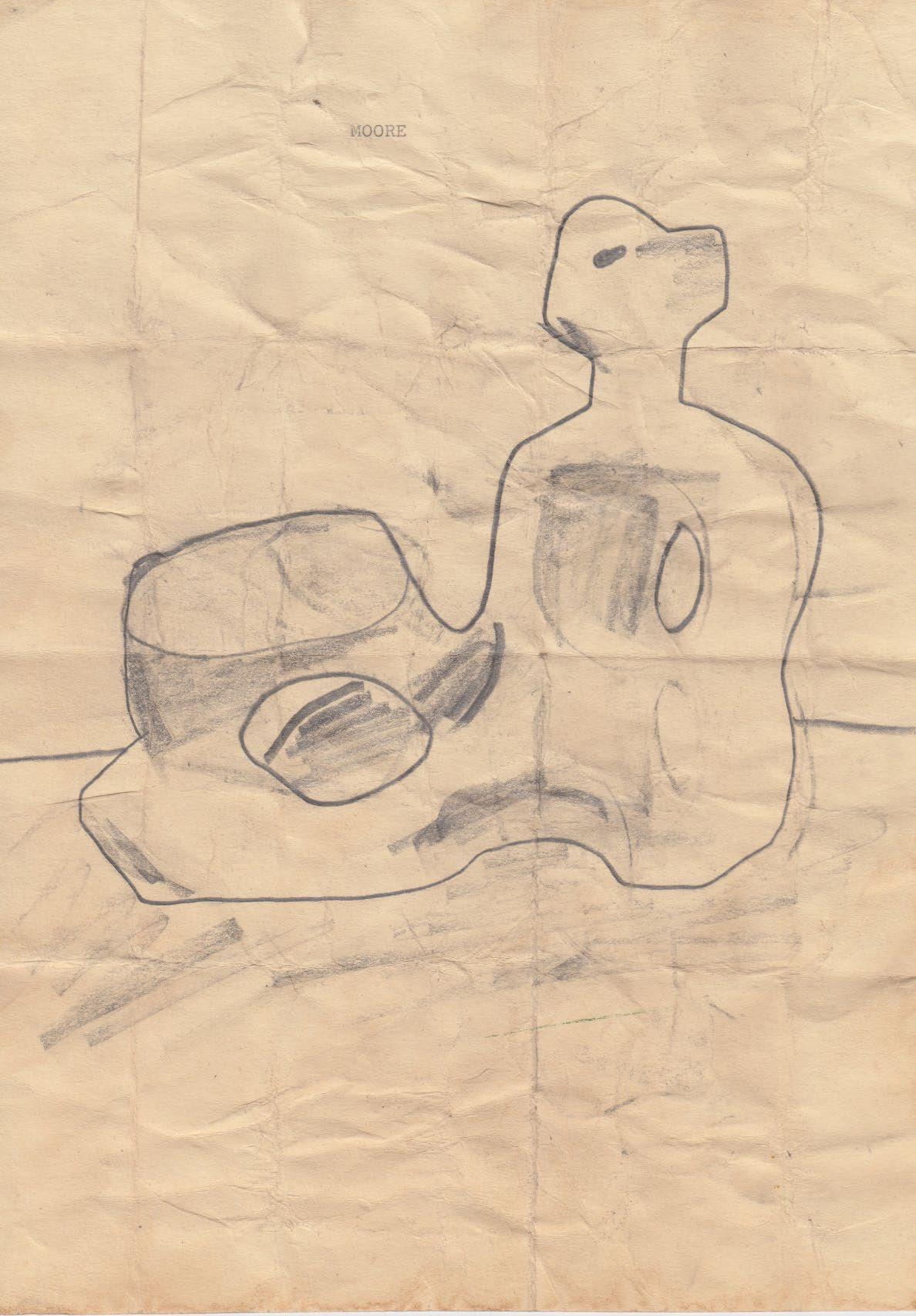
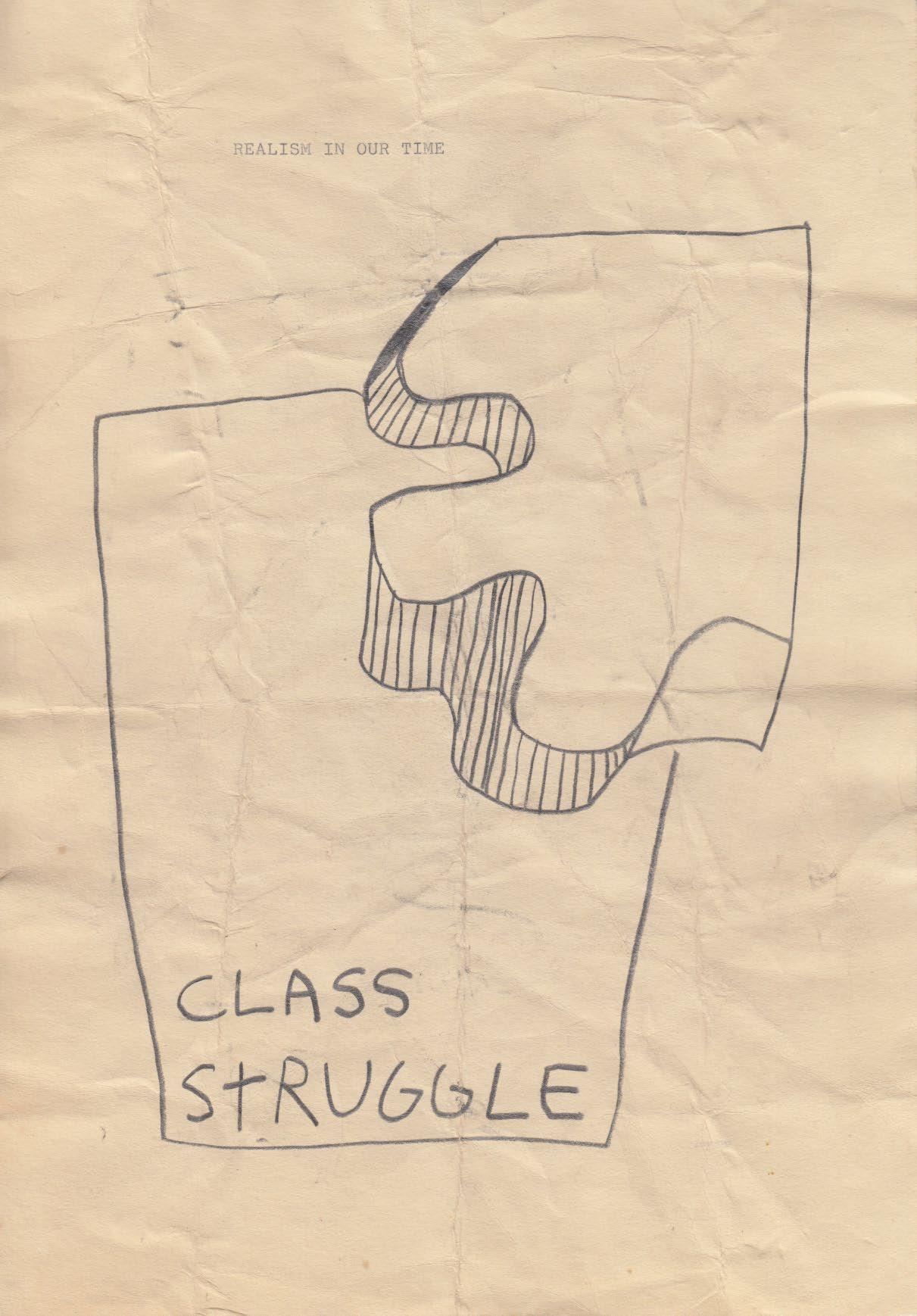
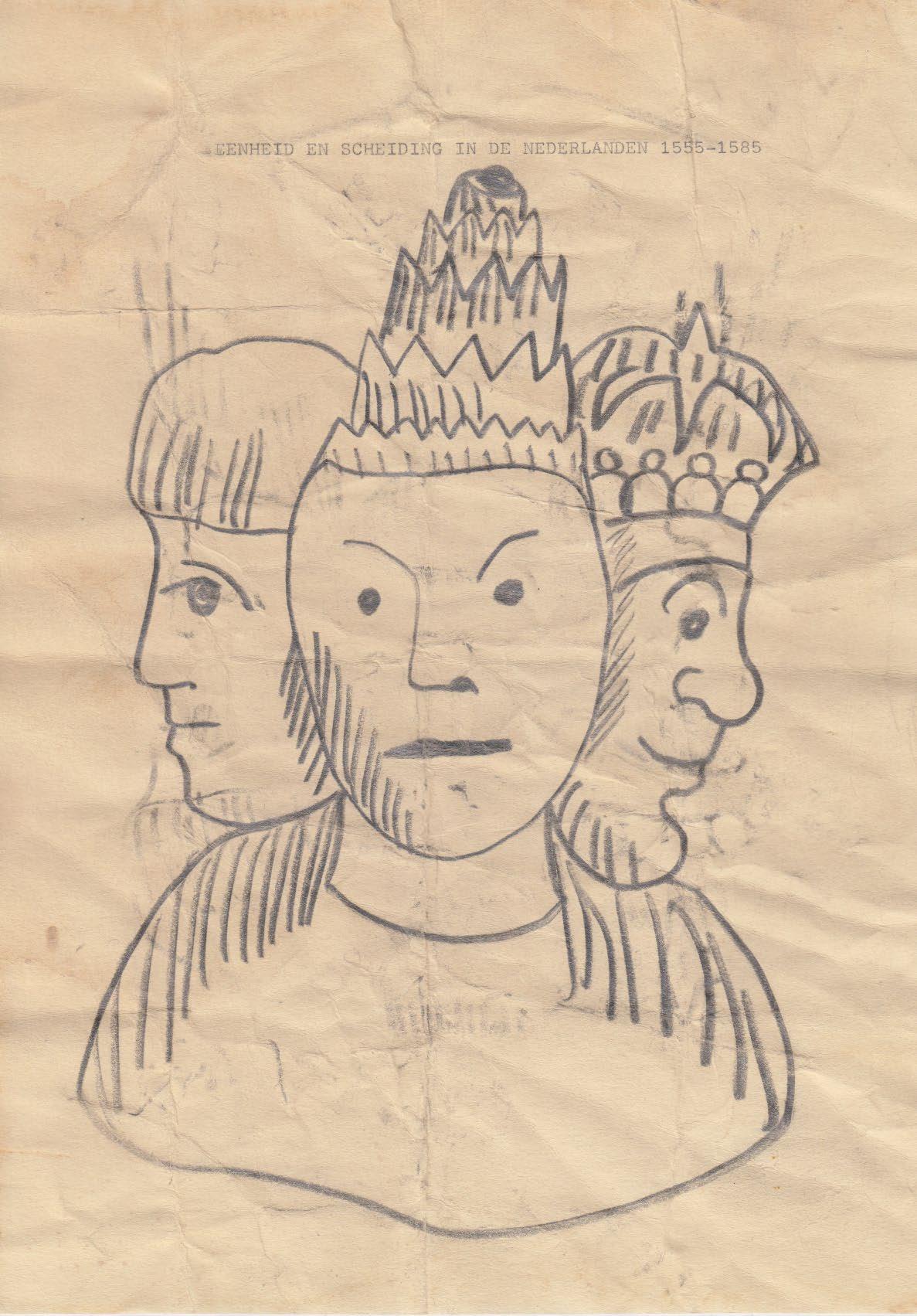
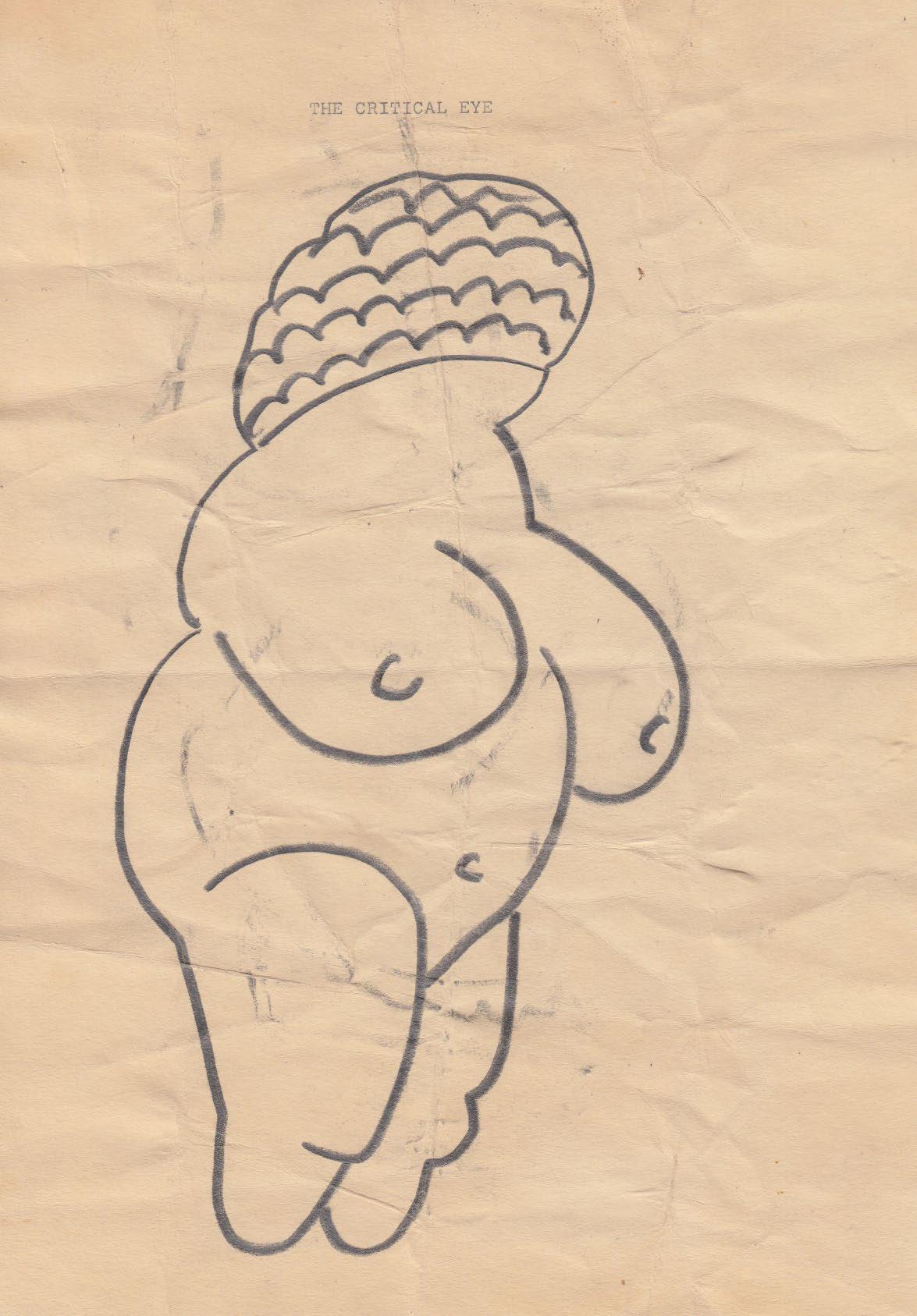
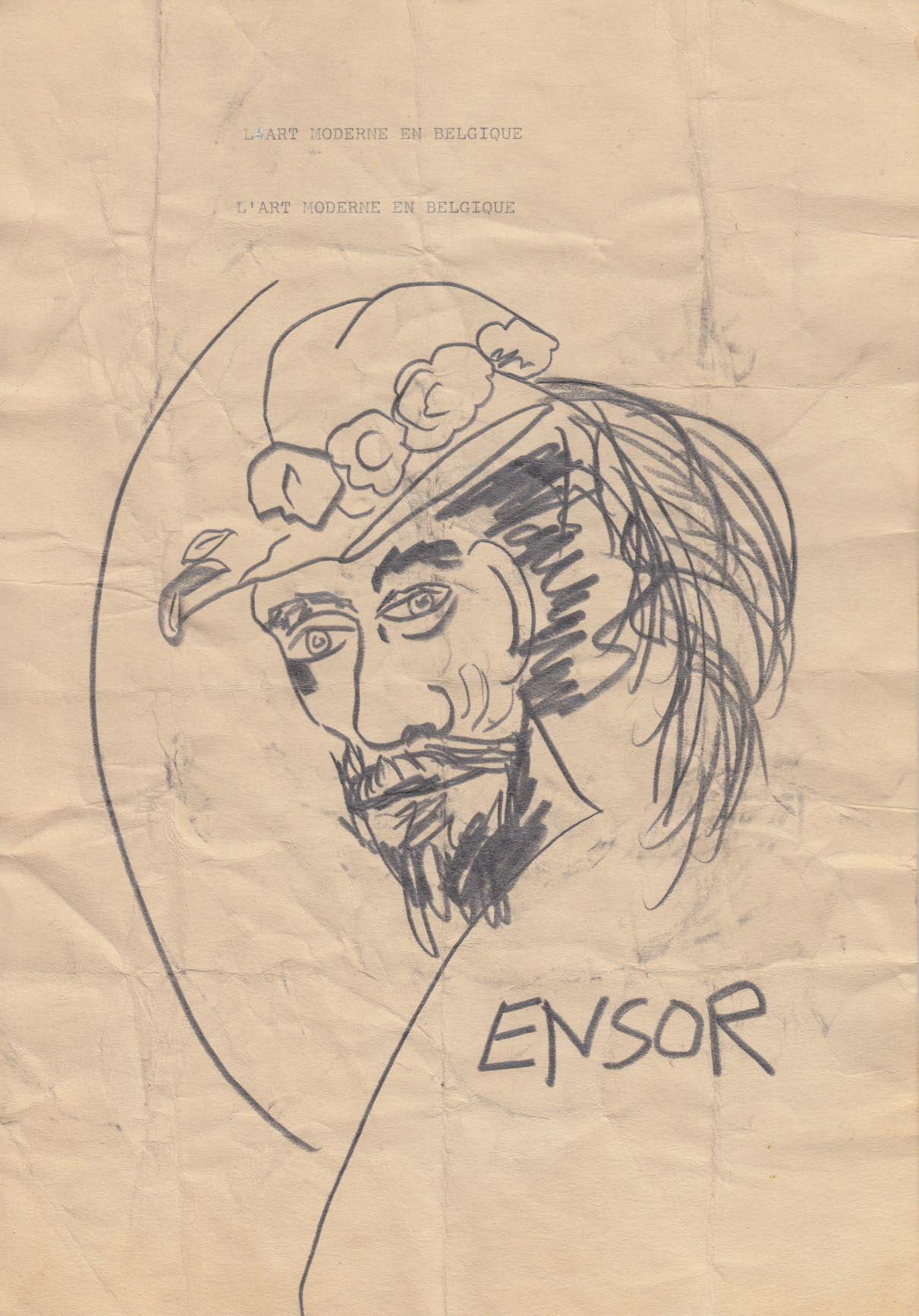
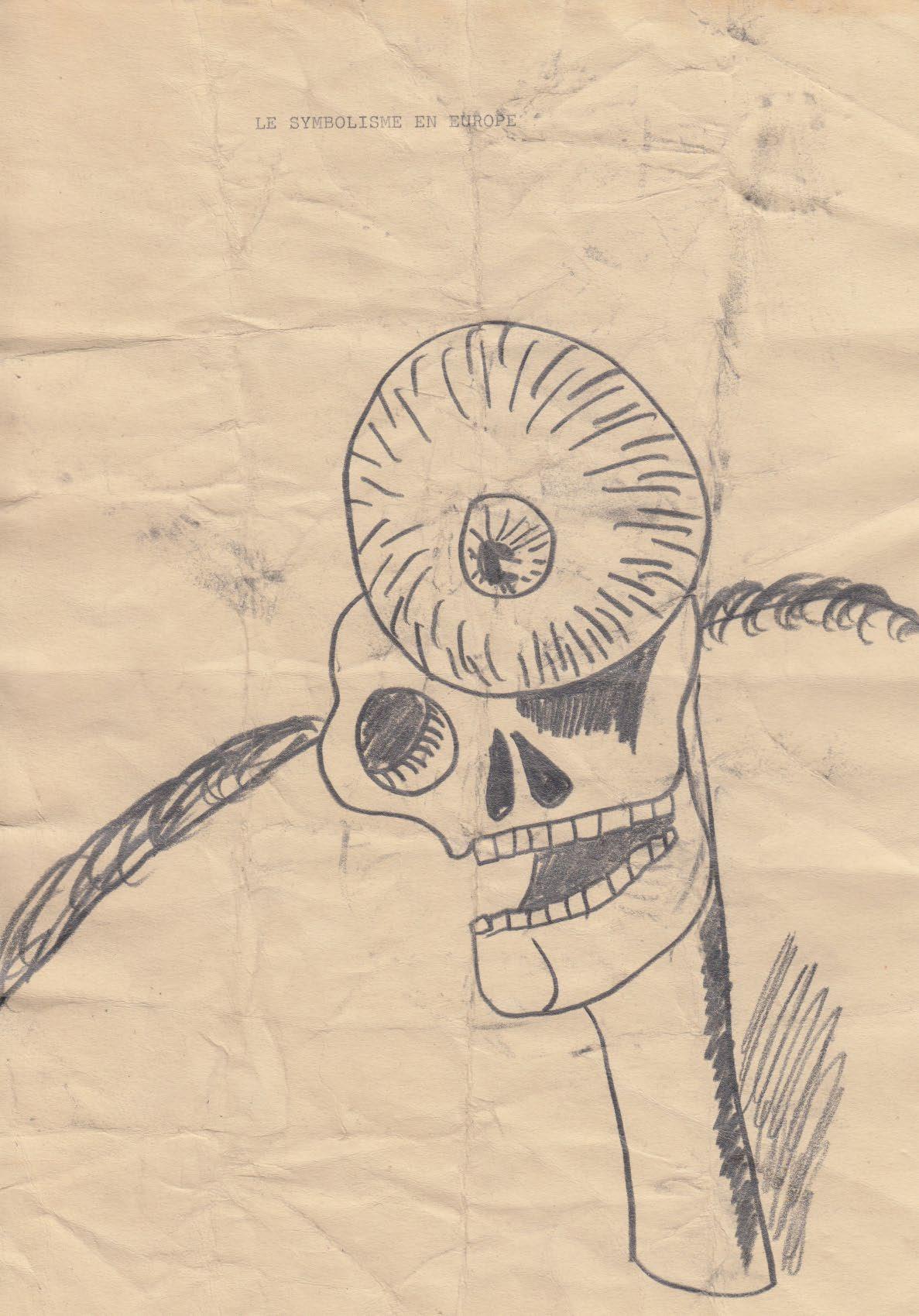
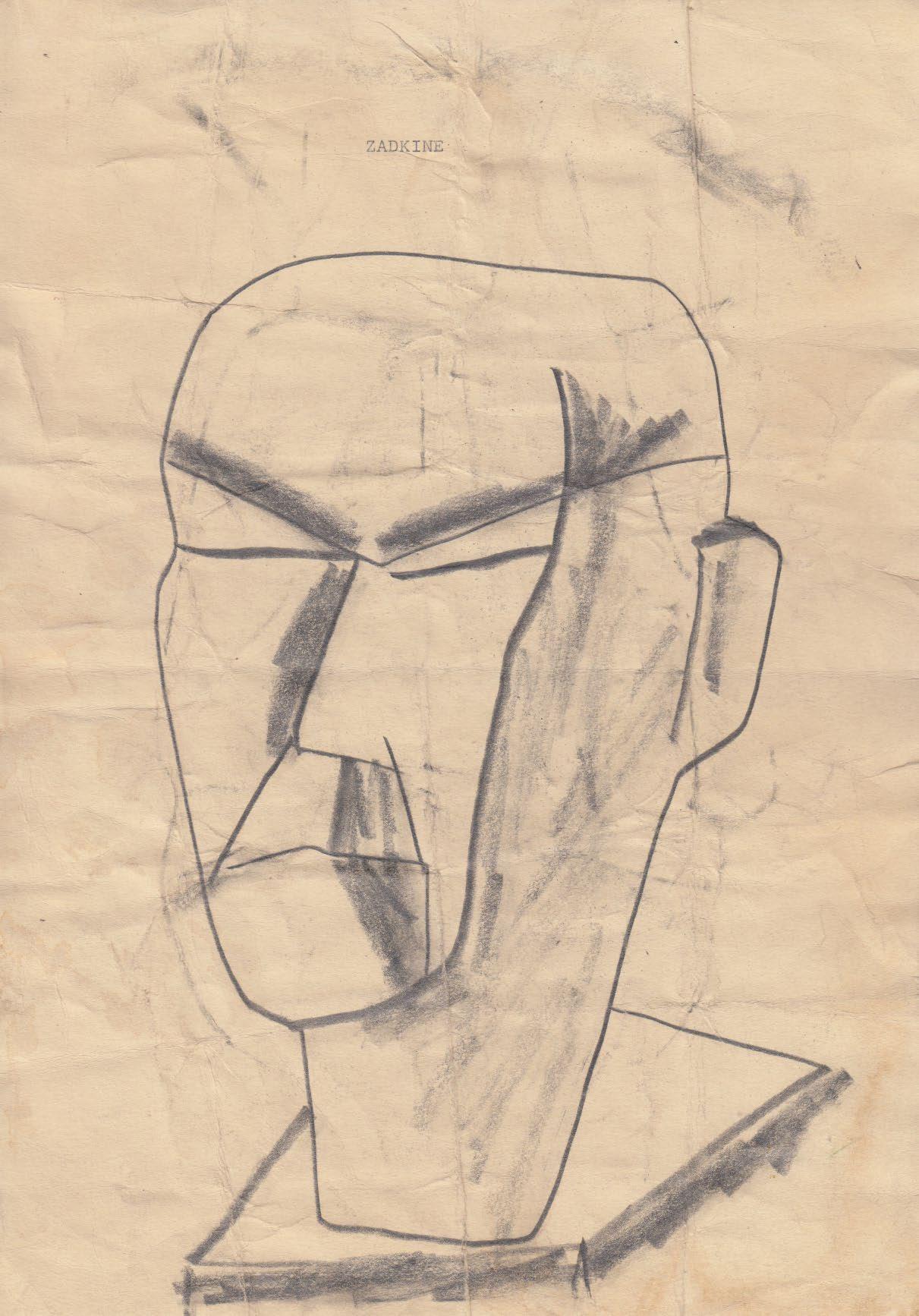
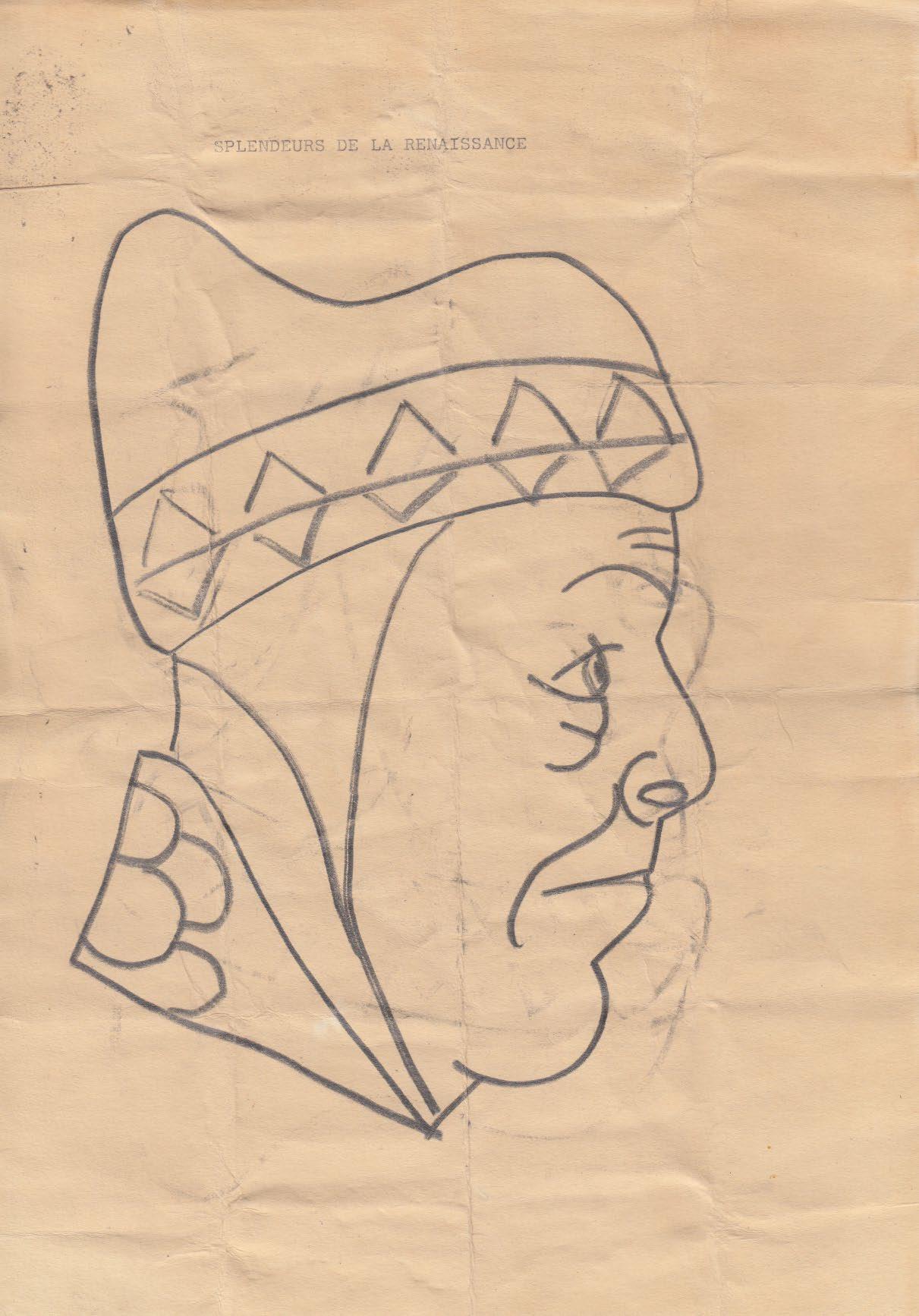
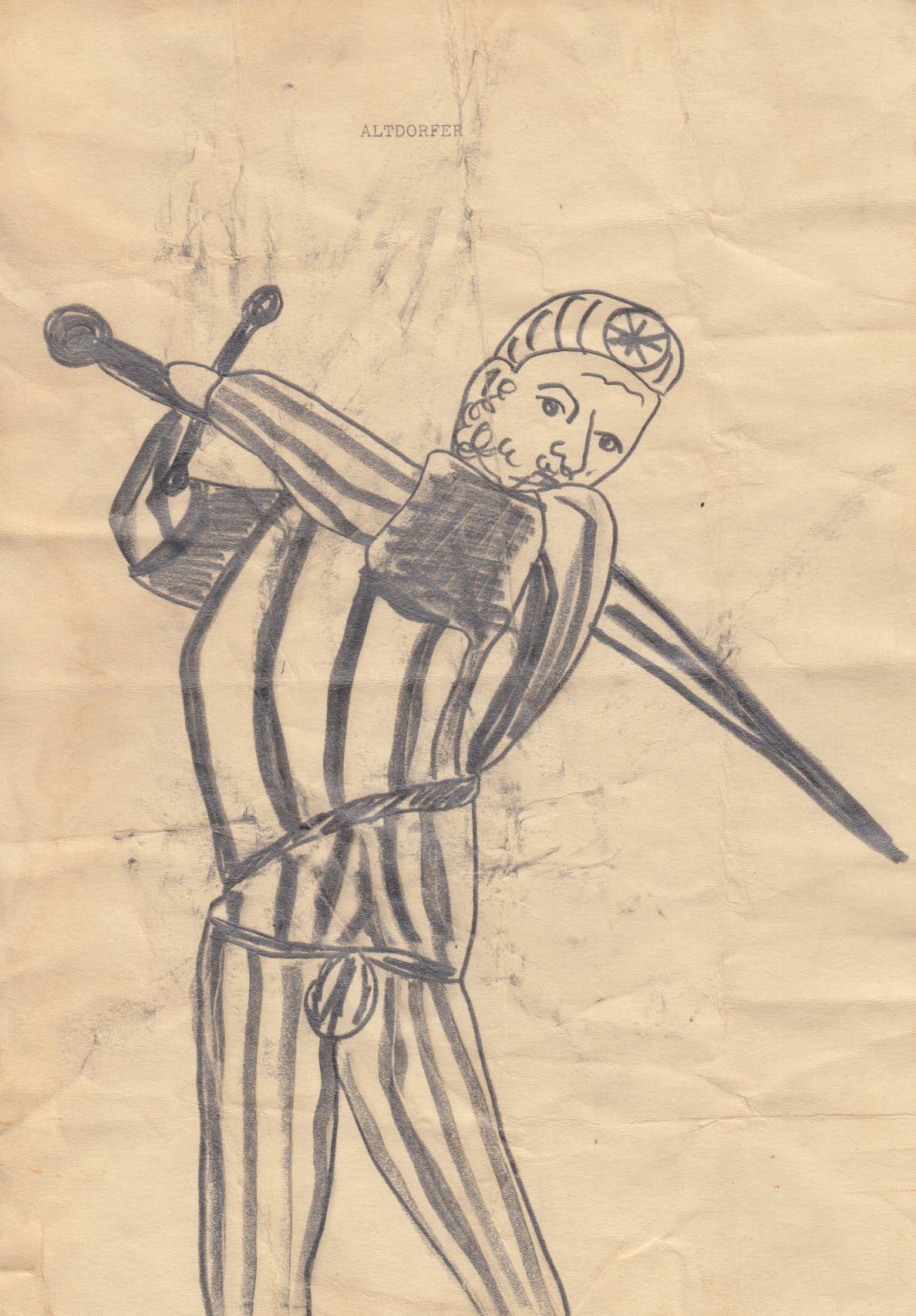
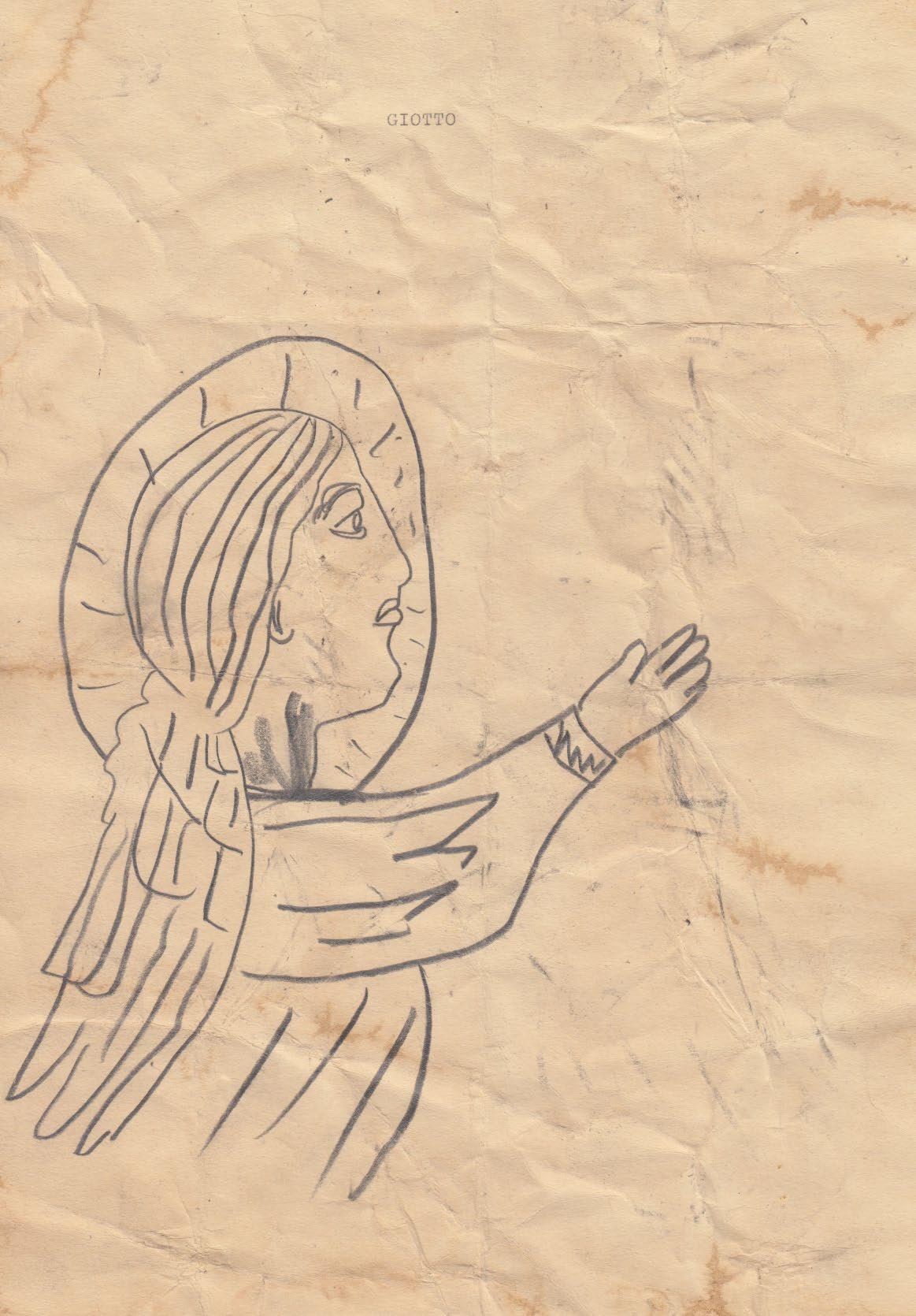
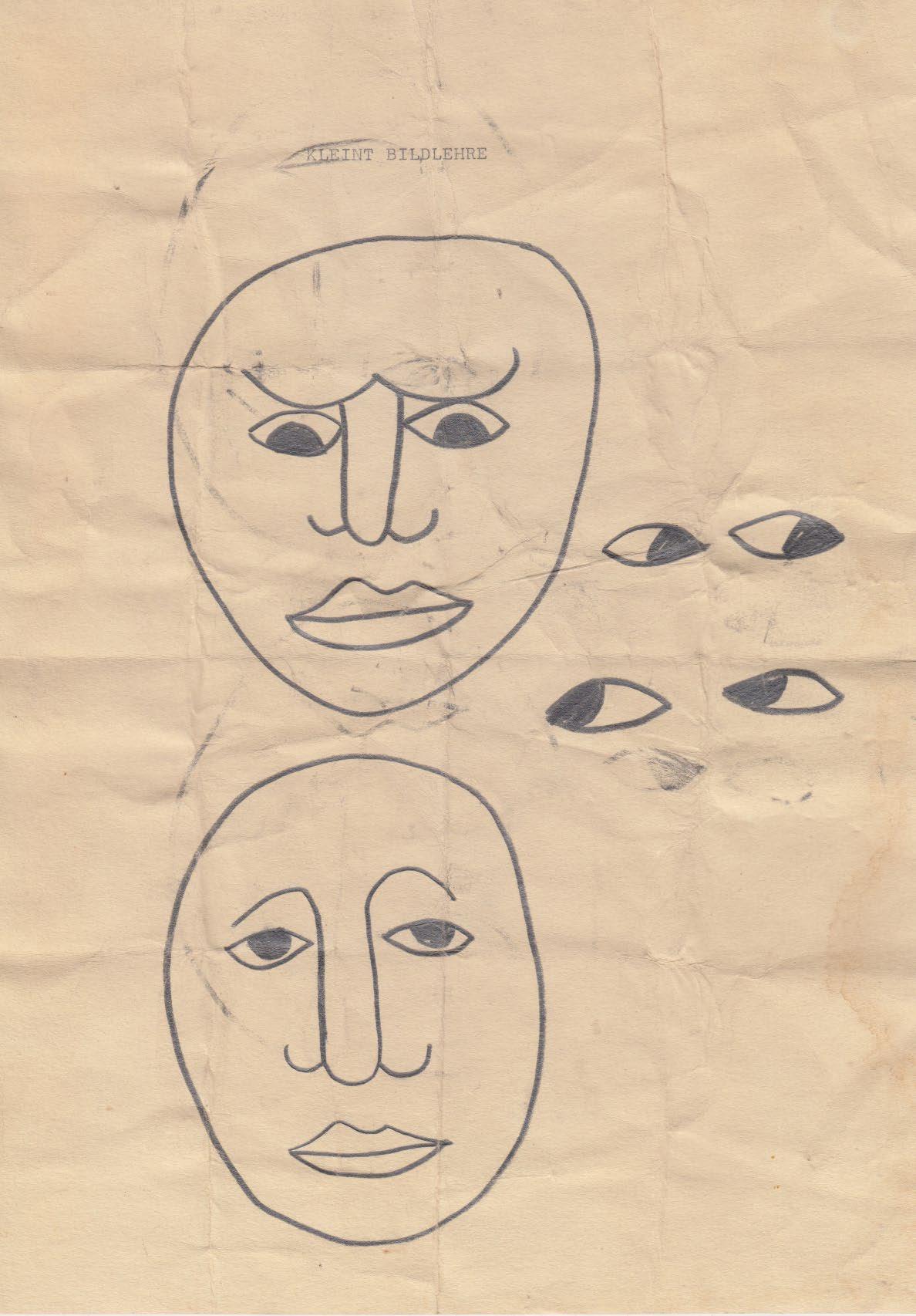
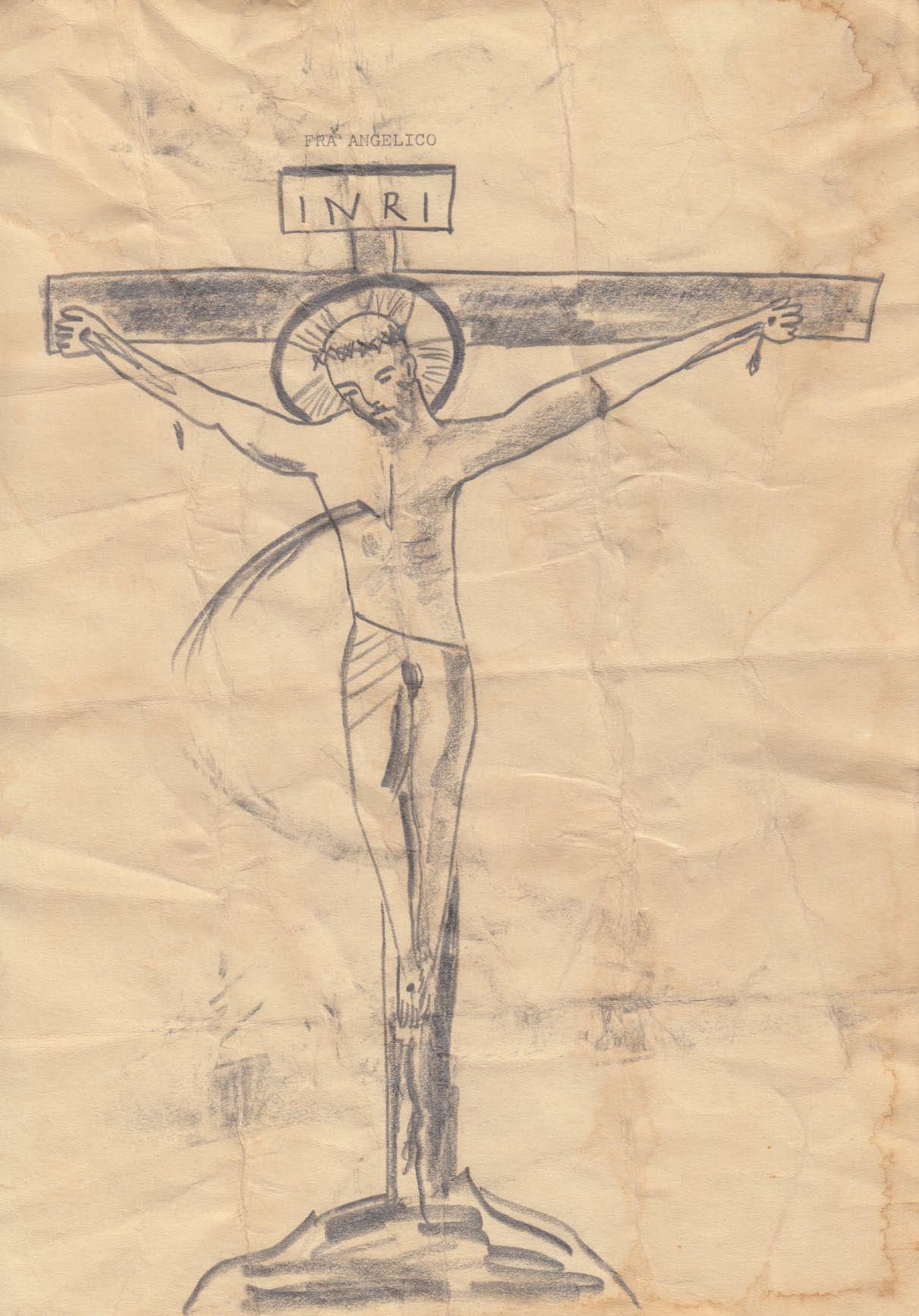
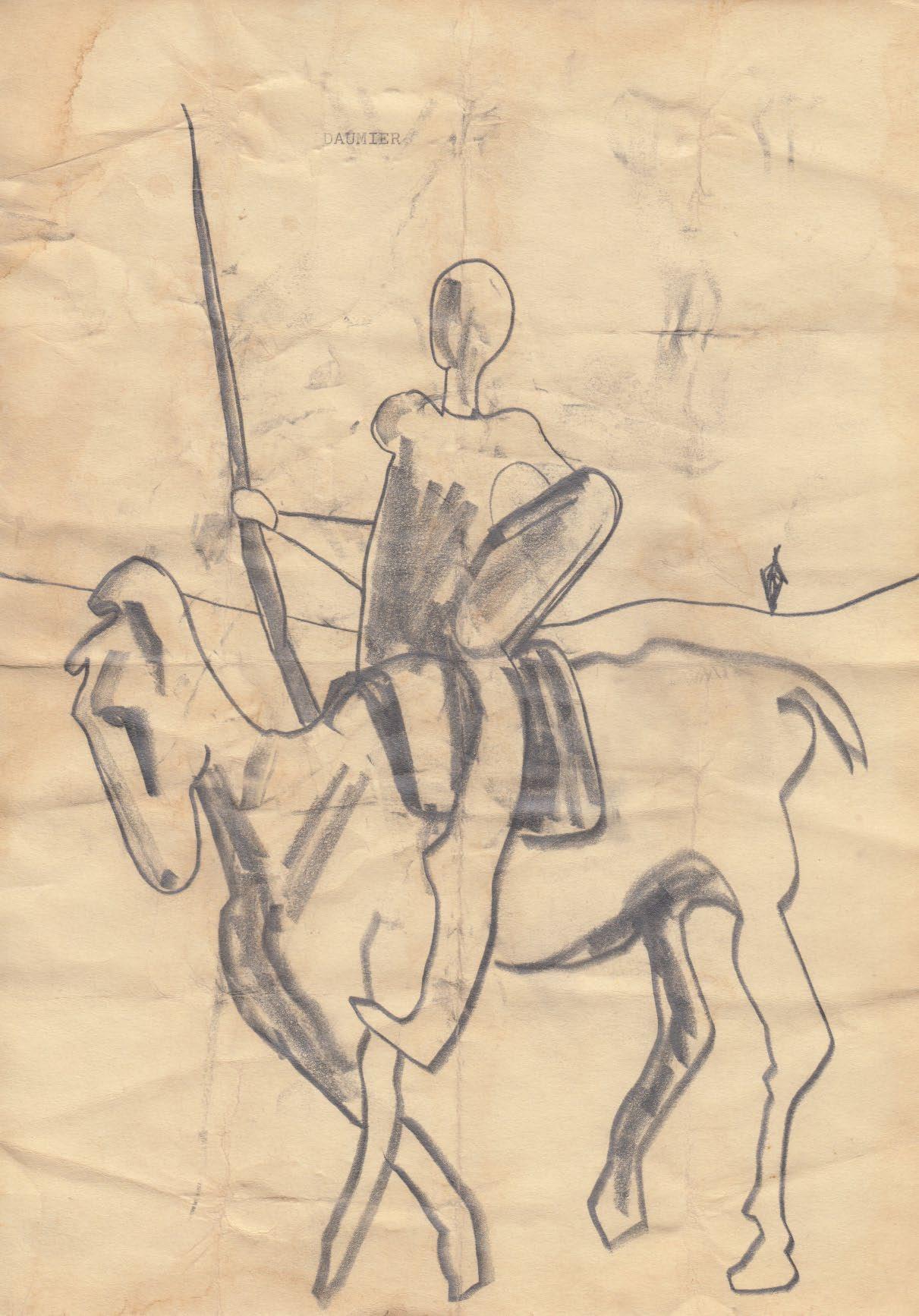
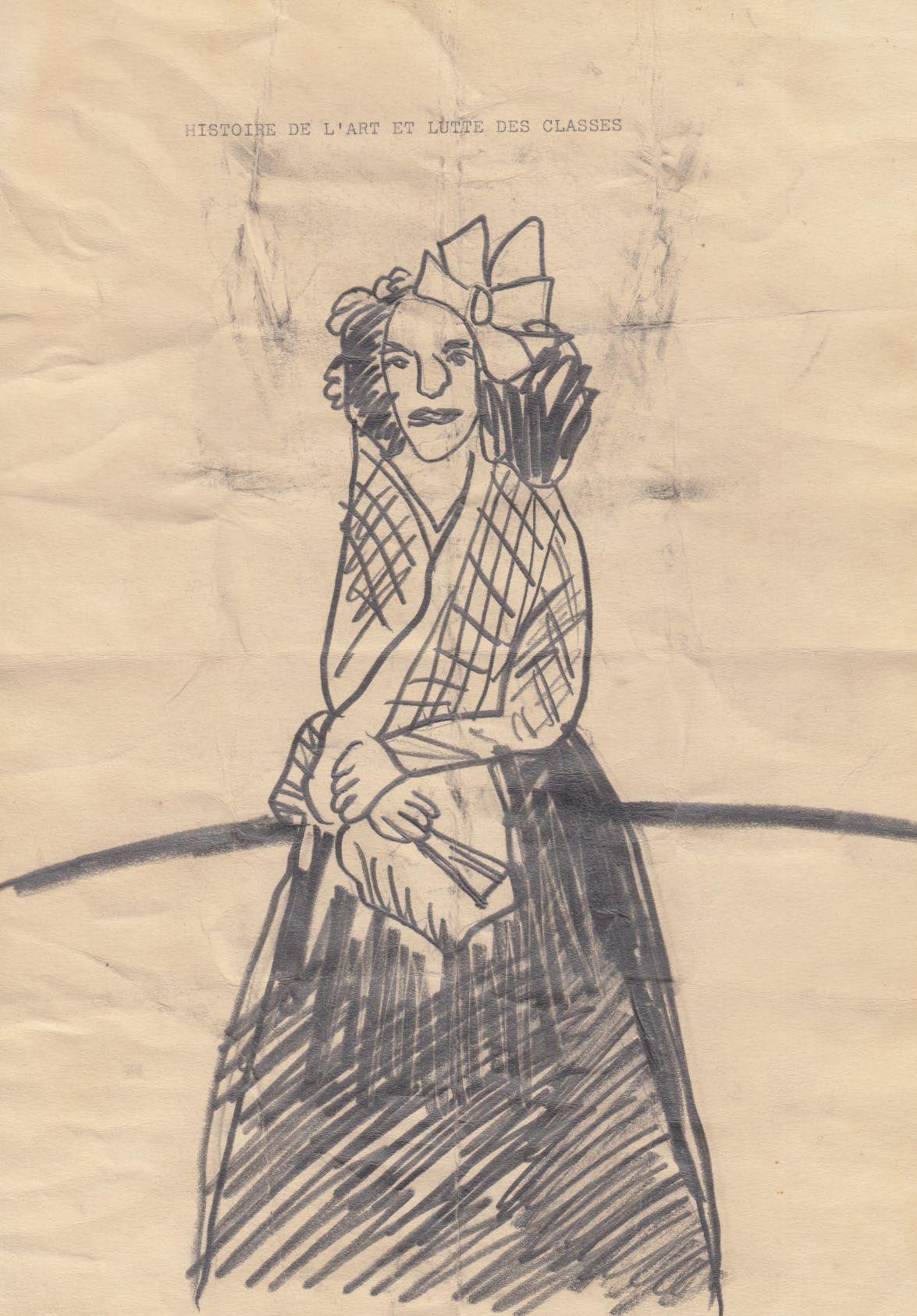
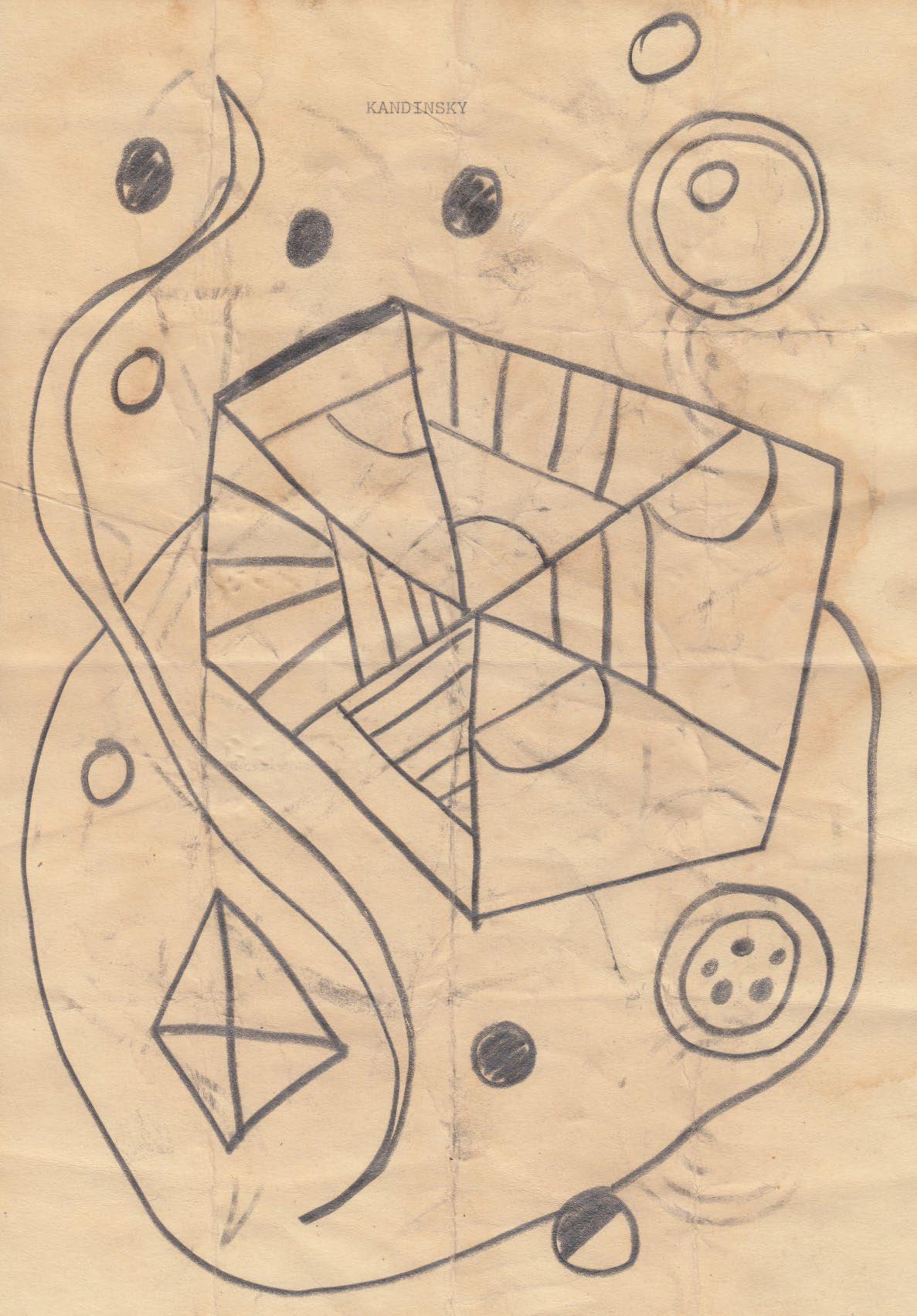
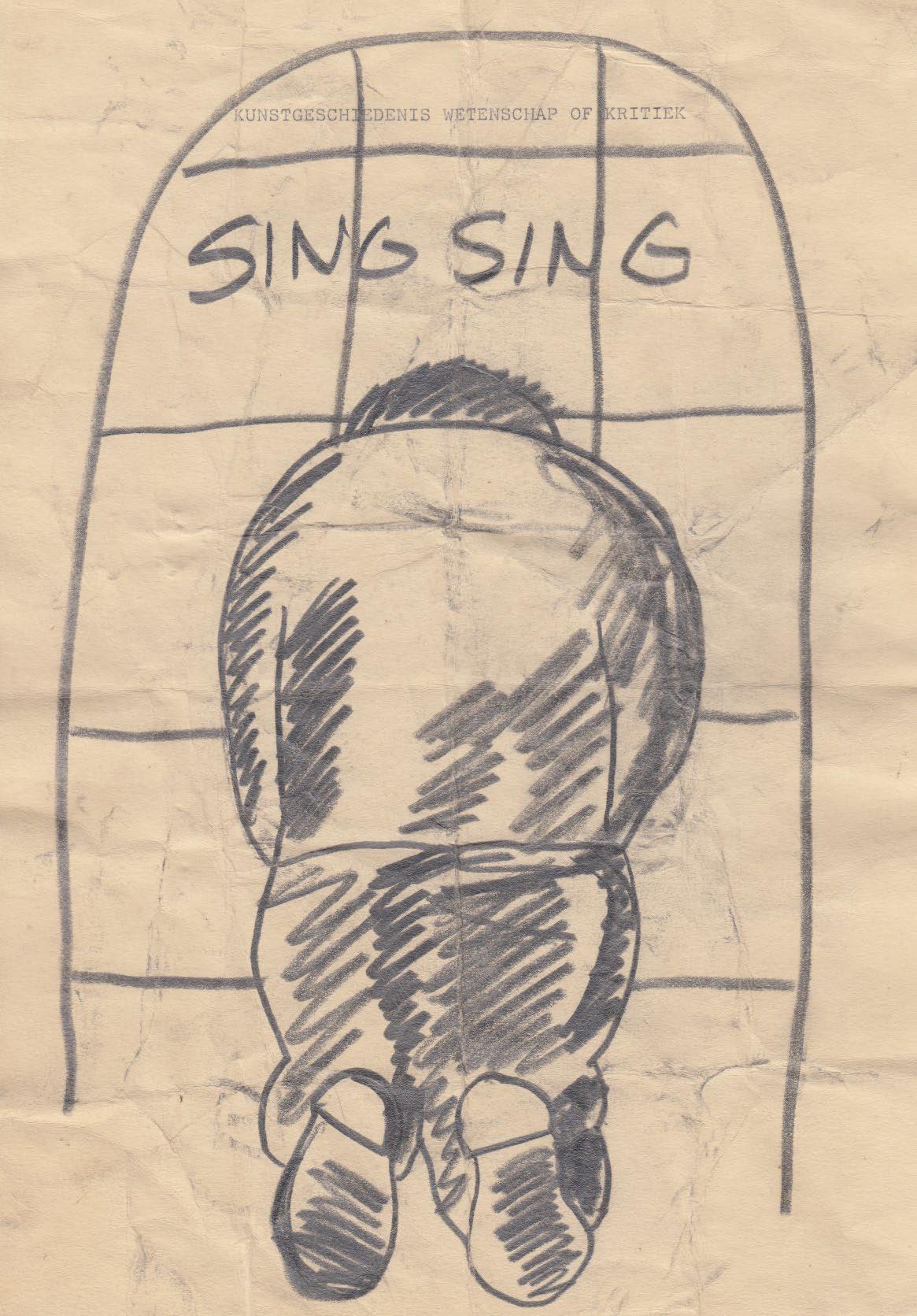
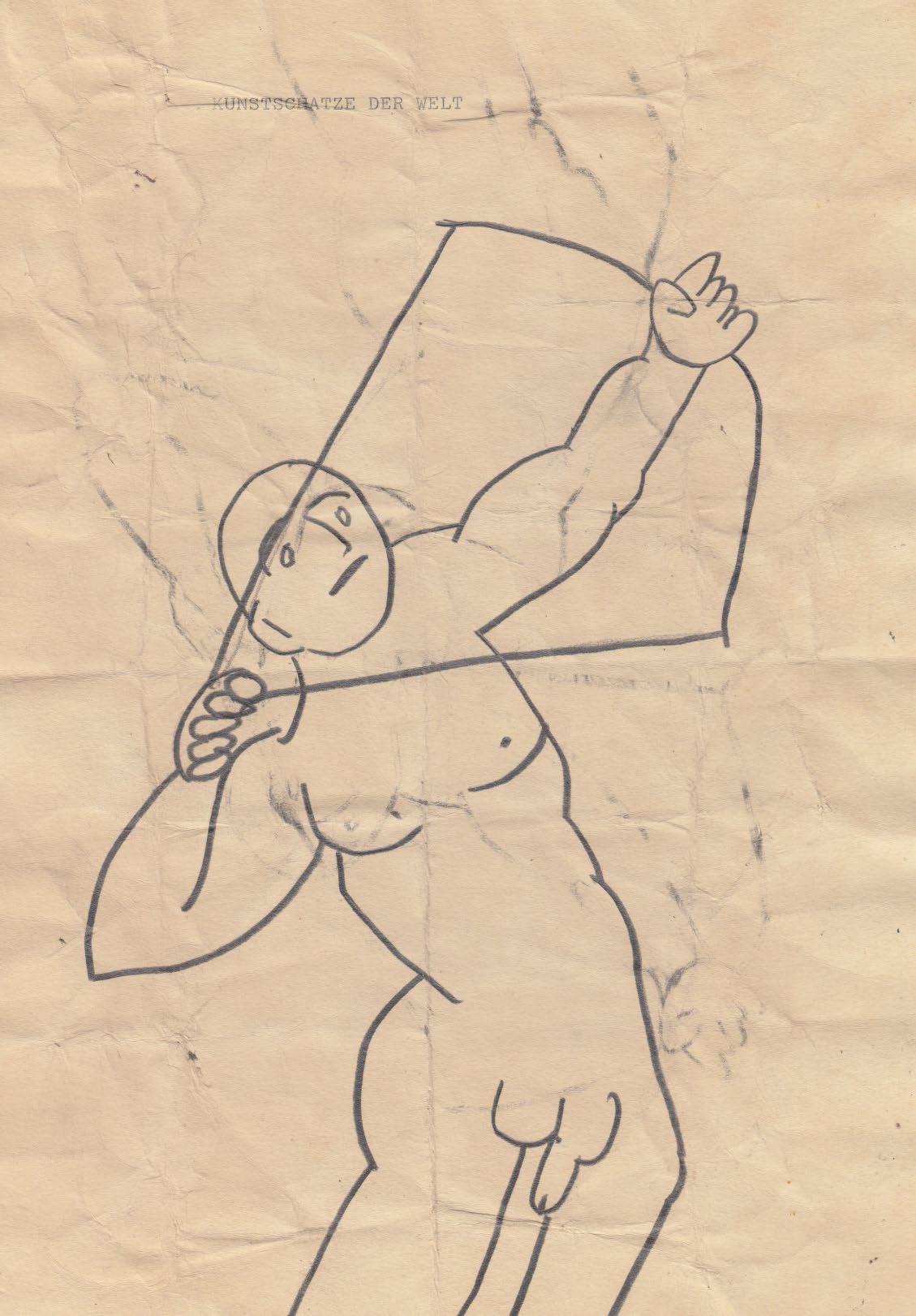
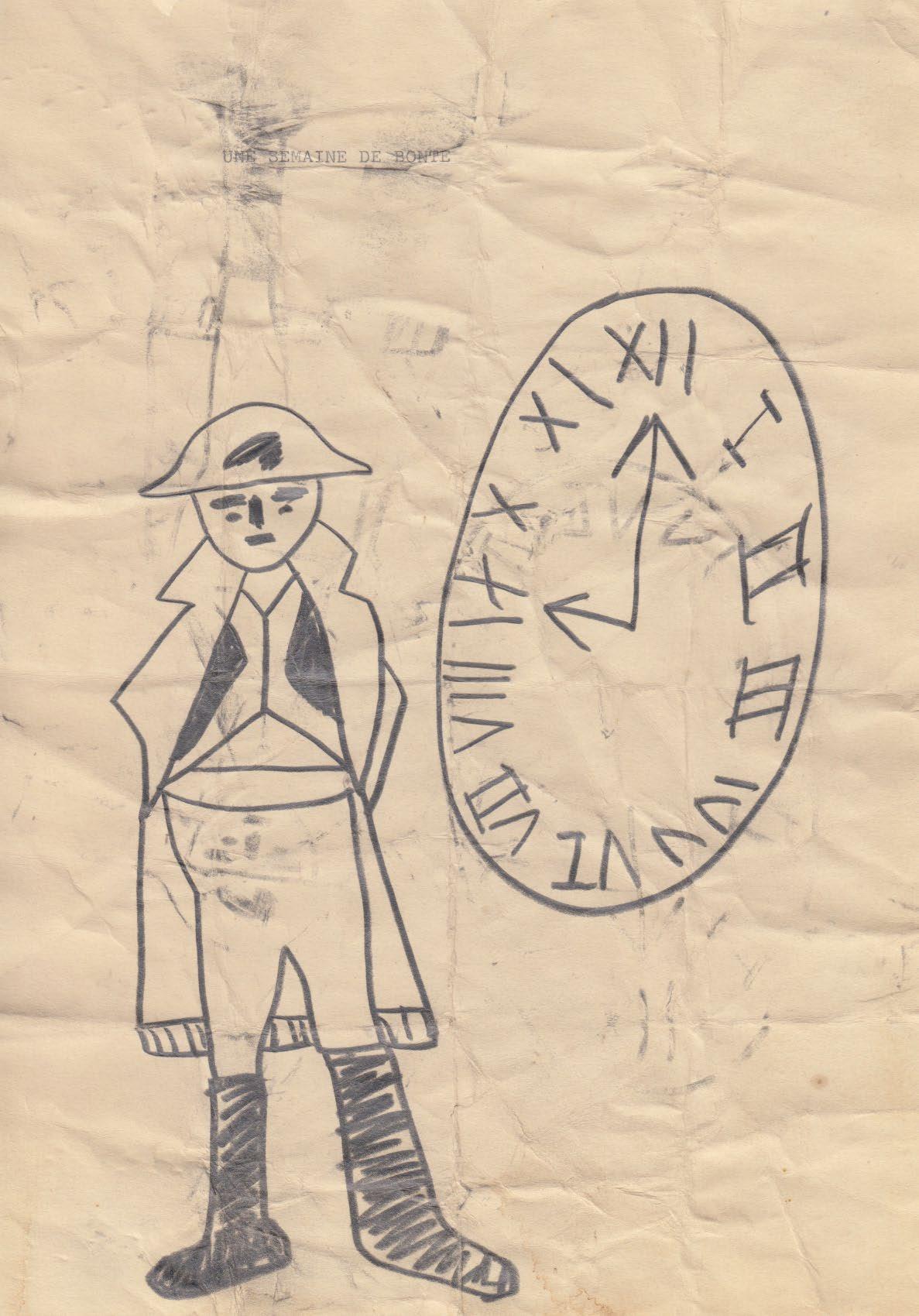
I also decided to make three sets of each drawing. One set to be hidden in the books I had copied from. One set to keep for myself and one set that could be seen by the public in the museum during the exhibition. I used carbon paper between sheets of paper so that my drawings would transfer and I typed some information on each drawing, sometimes the book title or maybe just the name of the artist or theme I was drawing from.
I realized that it was perhaps problematic to hide my drawings in the books and that in order to make a clear statement to the public I would have to do something to explain and entertain. I decided to show the work of James Ensor and Marcel Broodthaers in the foyer of Chantal’s house and to have a docent give an explanation regarding the reason I made my installation private as a reflection of the private public conundrum.
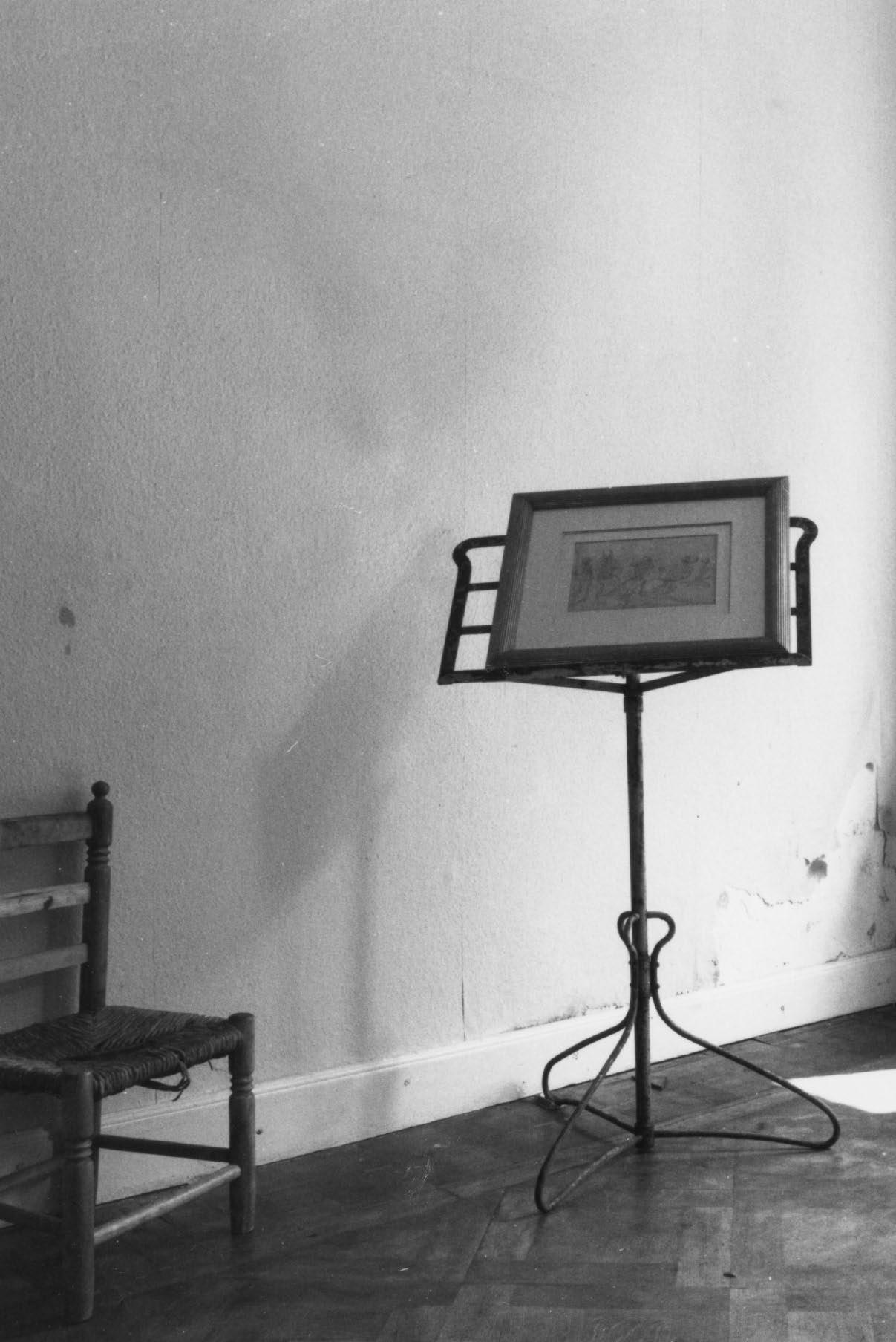
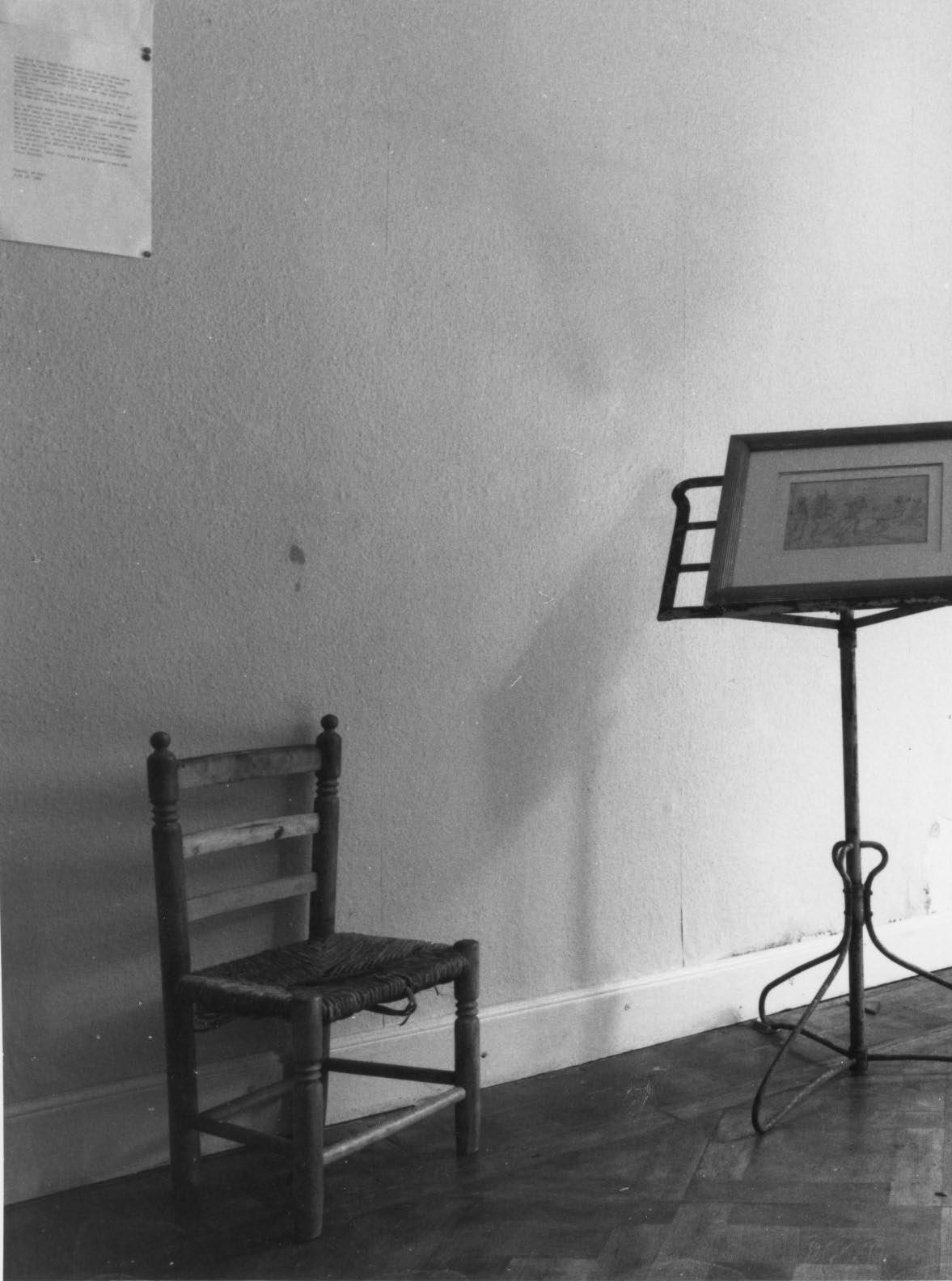
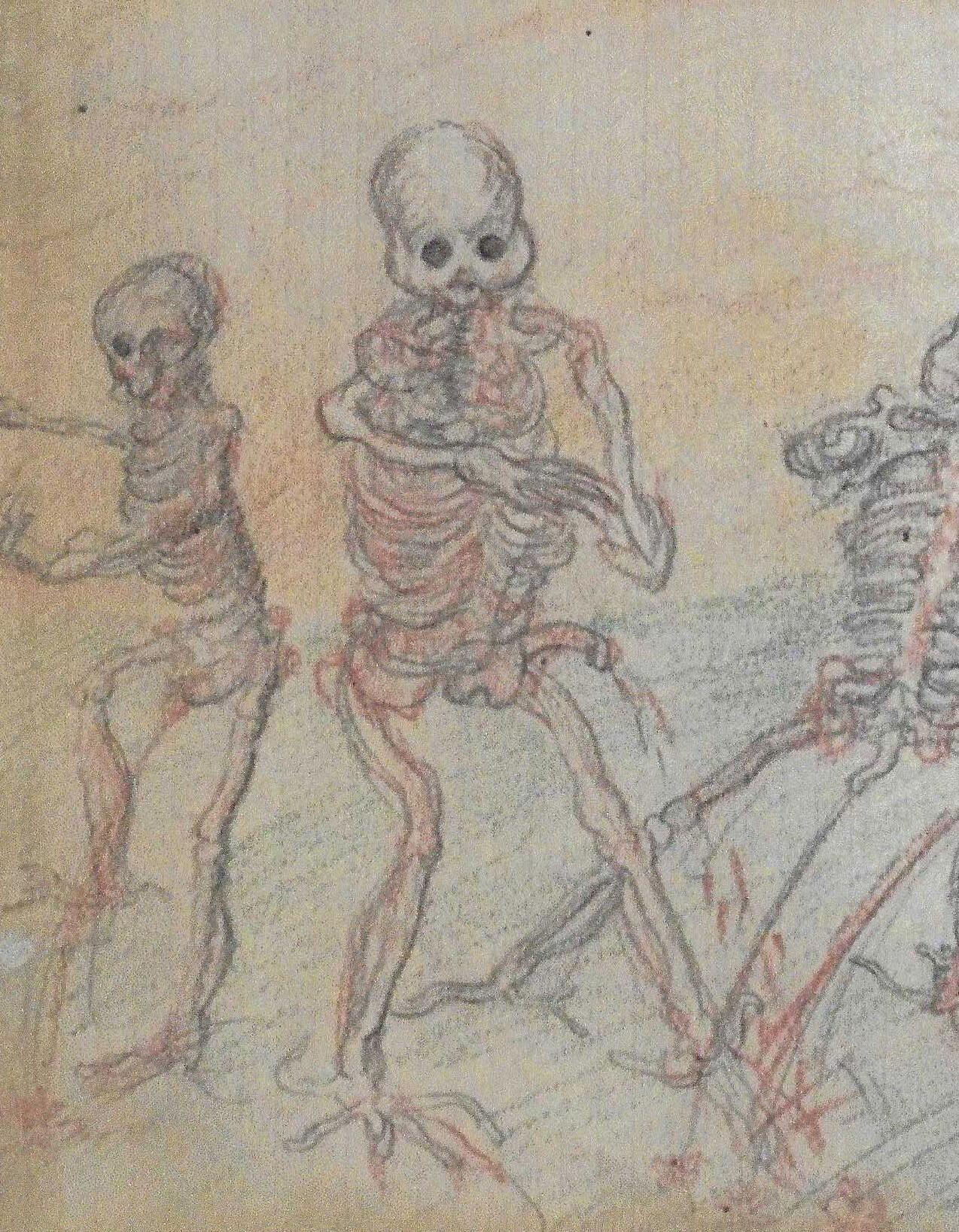
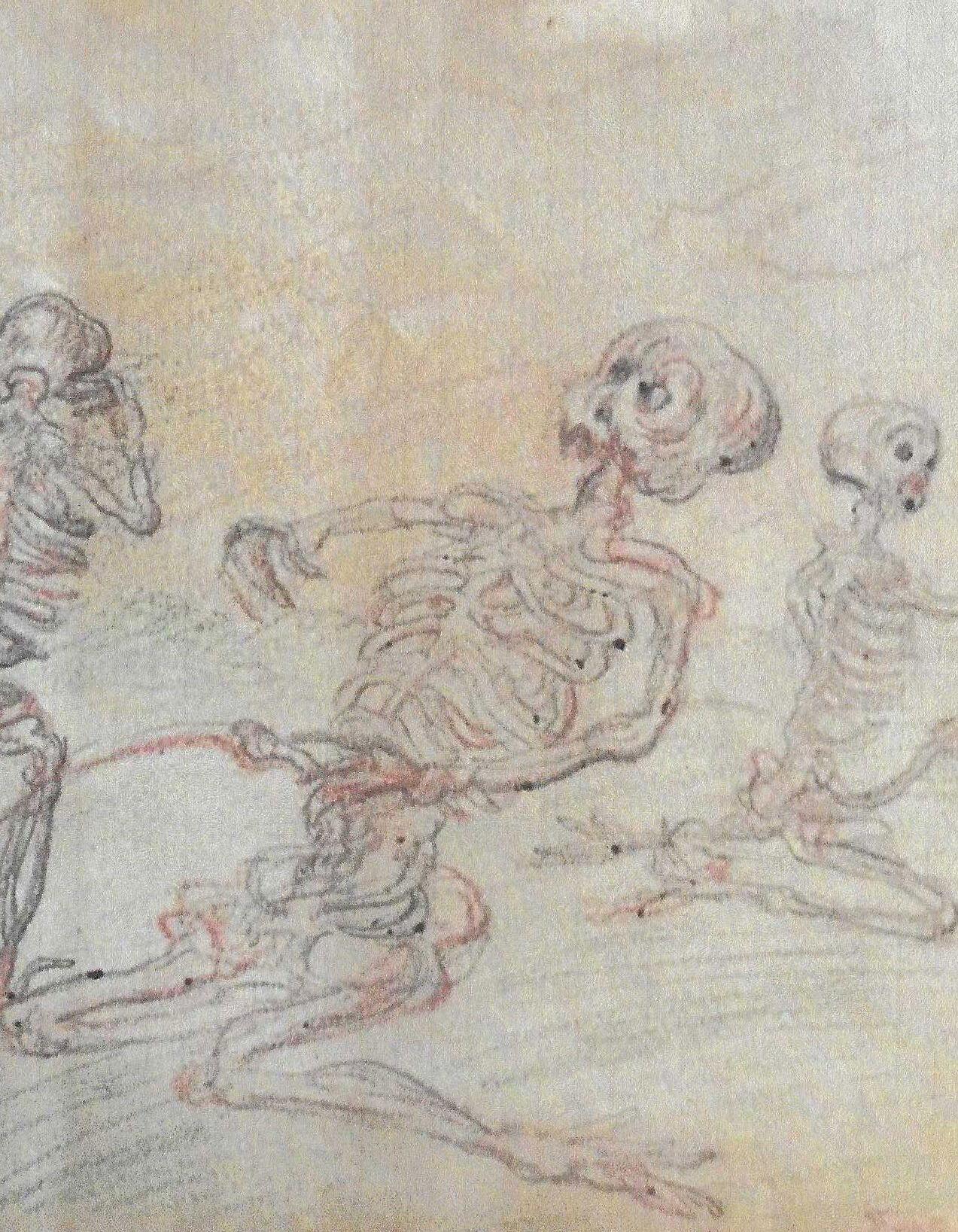
The Ensor was a picture of skeletons pissing on flowers entitled Joyeux Arroseurs (“happy waterers.”) Ensor had traded his doctor this drawing for a harmonium. The doctor’s wife wrote on the back of the drawing that Dr. Lambotte had found it quite amusing to trade skeletons for music!
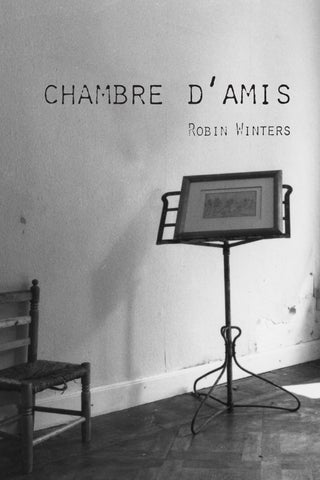
The Marcel Broodthaers’ work was a print that said “Museum Enfants Non Admis.” I placed the Ensor on a music stand and the Broodthaers on the wall by the entrance to the living room. The docent Johan Creten, who is now a renowned sculptor, was a recent graduate from the art academy and he totally understood my intentions and was able to theatrically explain to viewers exactly why my work was to be private.
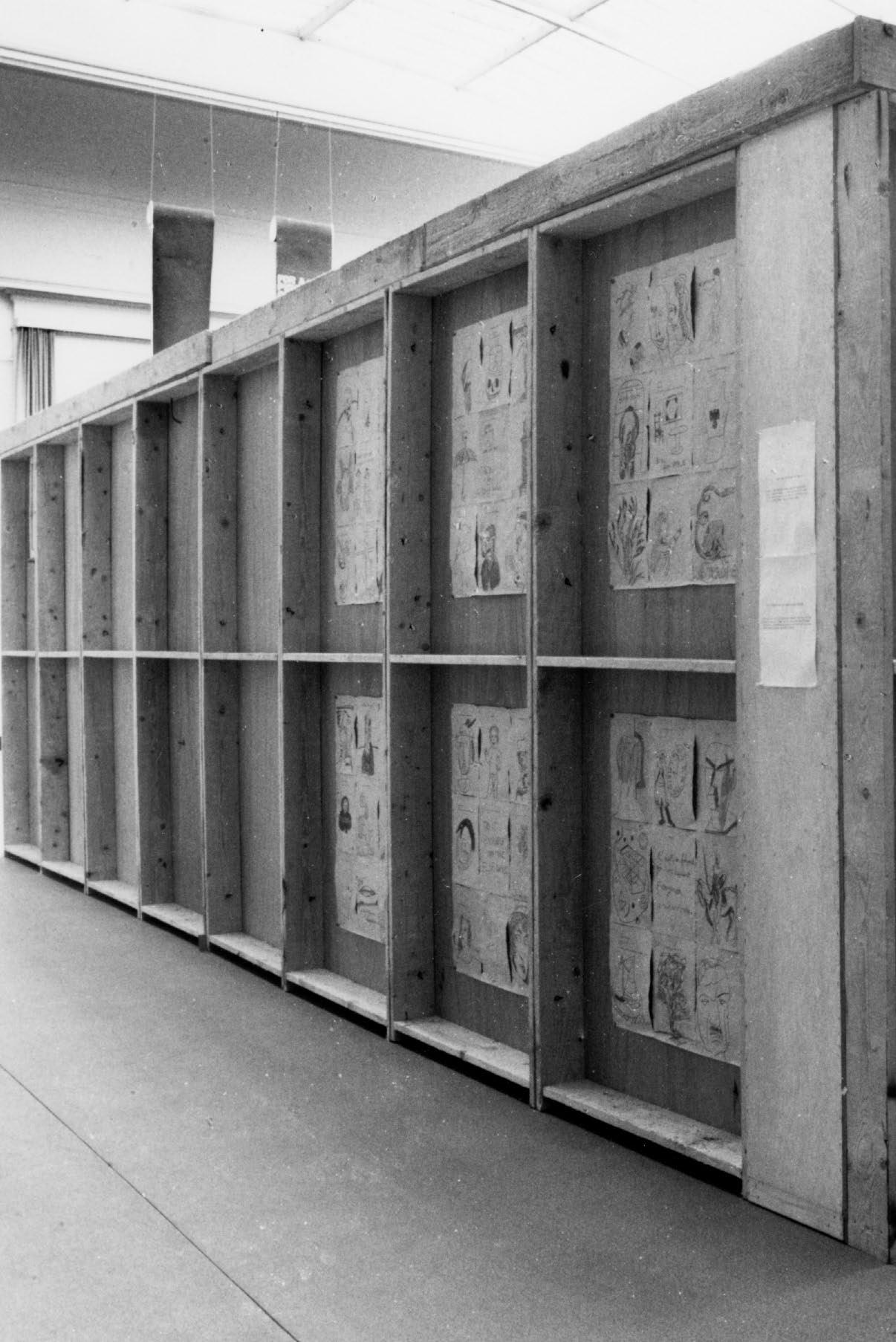
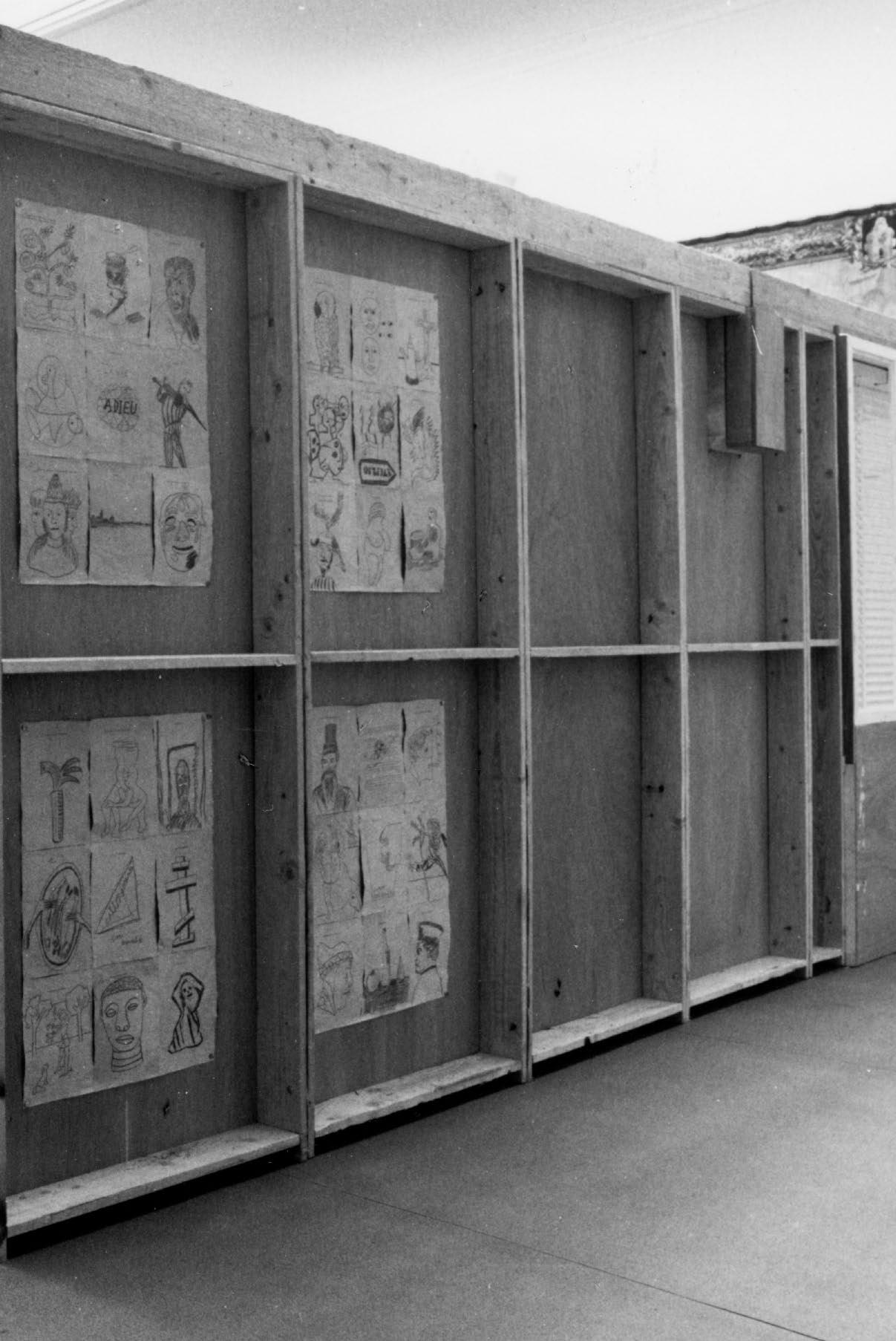
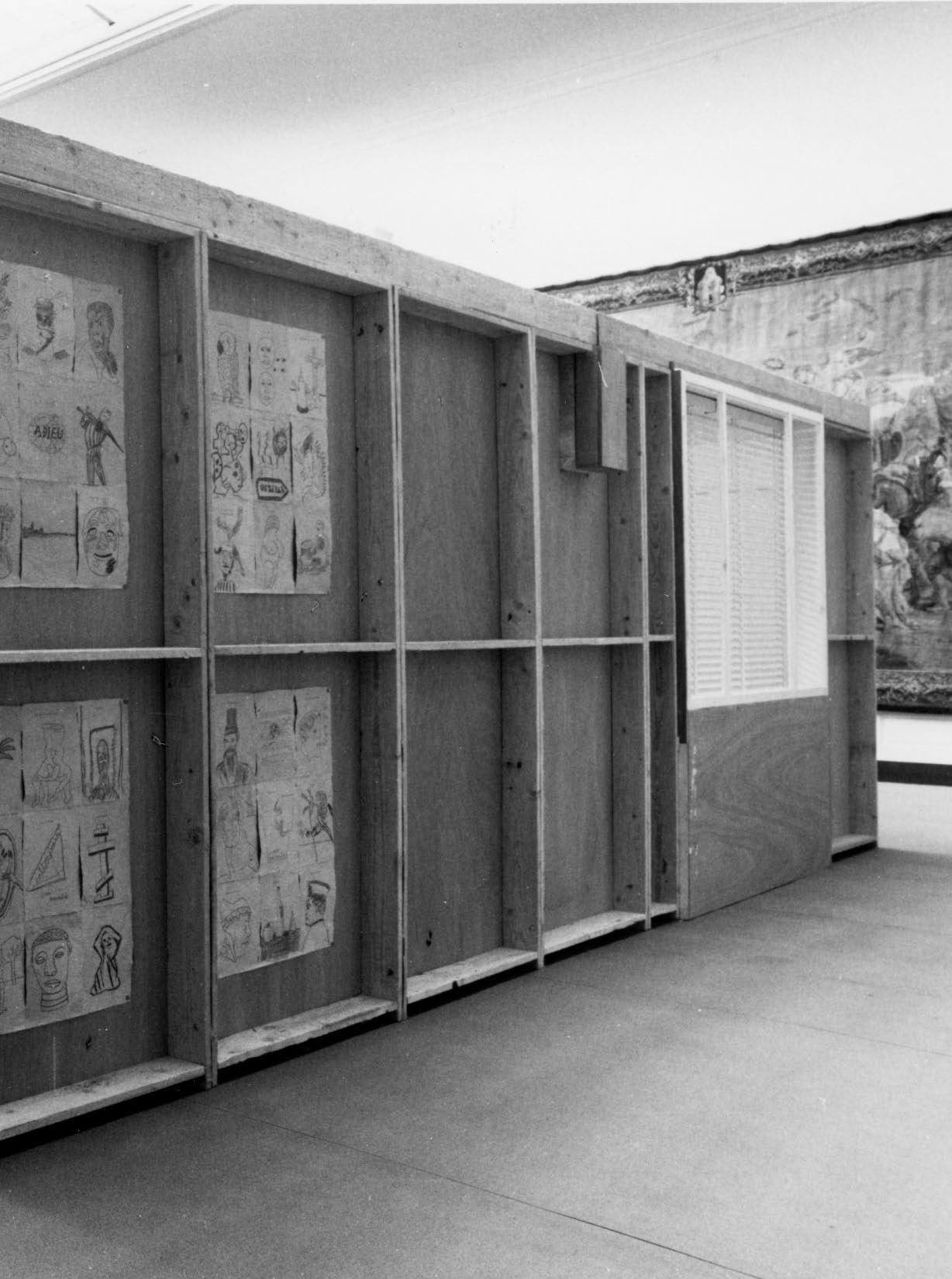
To further the fictional narrative aspect of the work as a subtle political protest, I placed one copy of my series of drawings on the outside of Daniel Buren’s exhibited work, which was a replica of the art collector Anton Herbert’s guest room in which Buren had made wallpaper stripes. Herbert was the only homeowner who preferred to keep his space private even though his home was the equivalent to a major museum exhibit. I pretended that my drawings had been hidden in his walls since the 1950s and that the exposed beams on the outside of the re-creation of his guest room had exposed my hidden drawings. Of course there were objections from both Buren and Herbert, but Jan Hoet defended my intervention. He said that the museum paid for the walls and the reproduction of the inside of the room, but that I was welcome to continue my fiction on the outside.
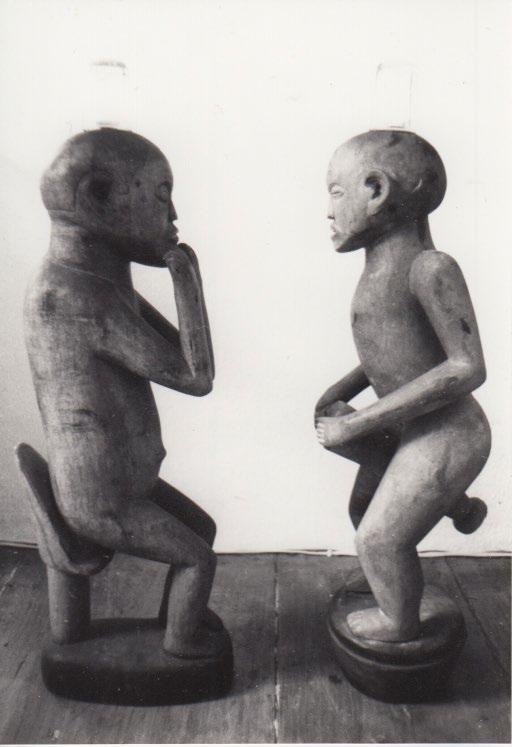
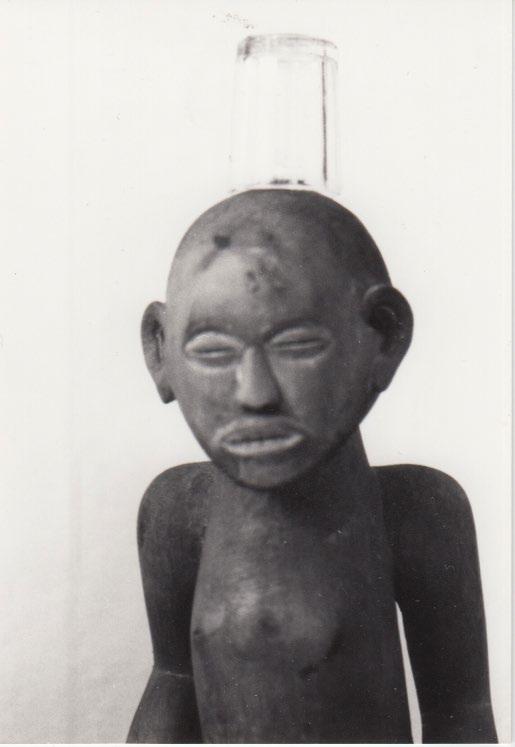
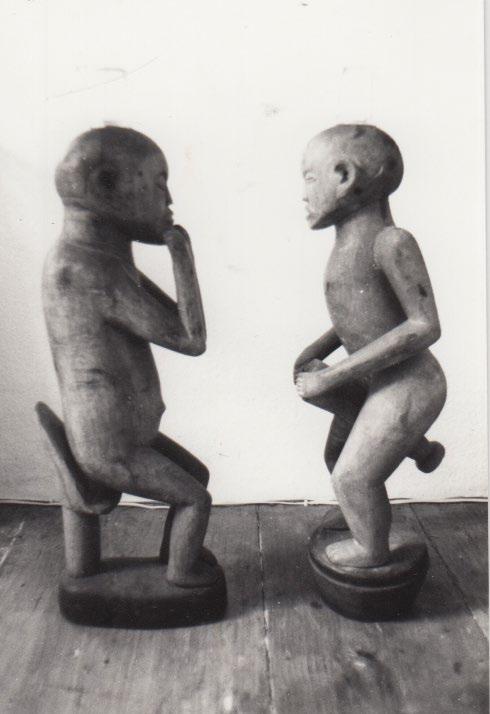
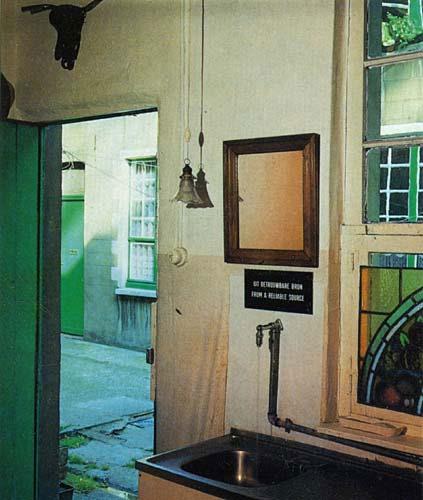
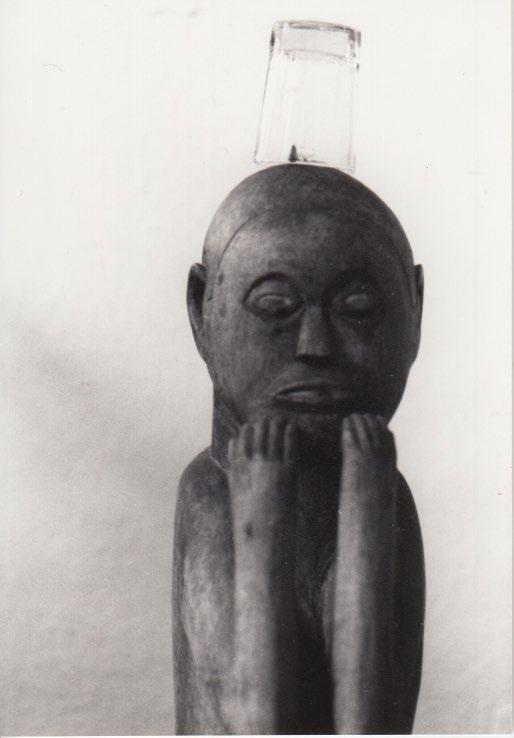
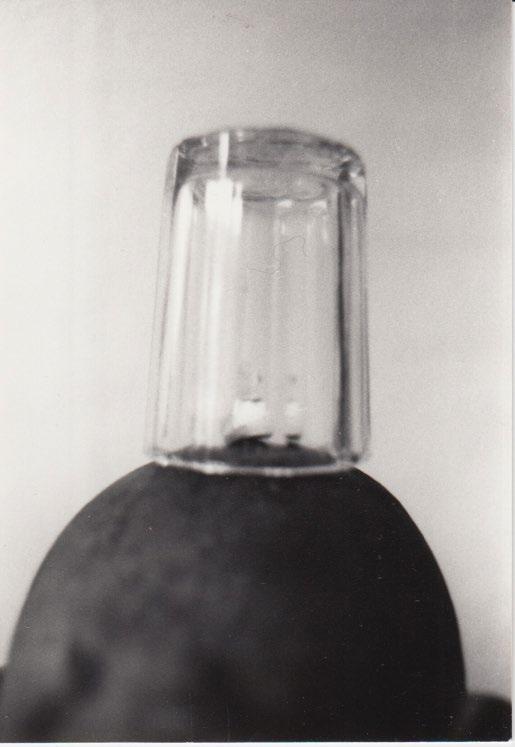
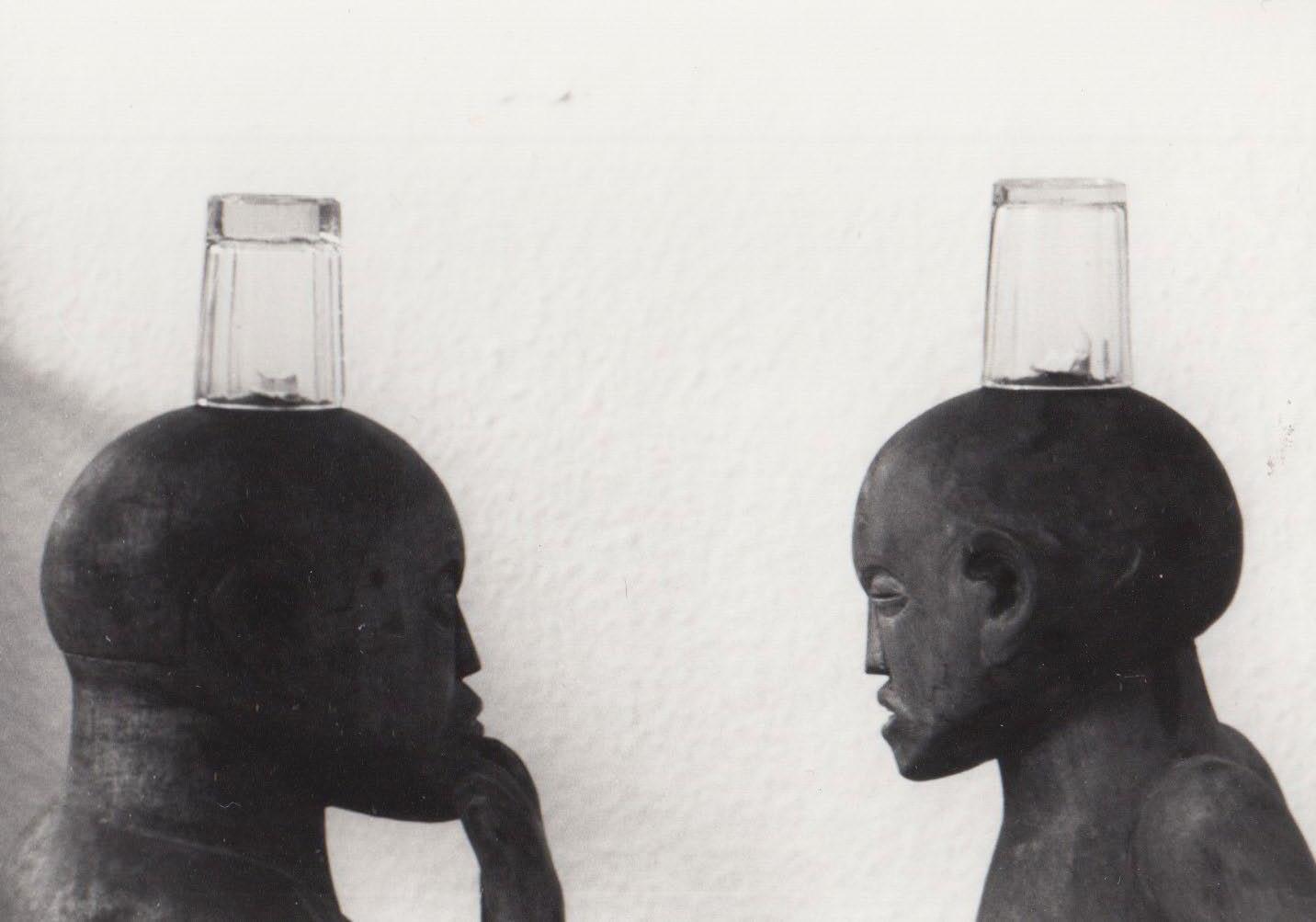
In collaboration with Rob Scholte, we completed our installation in the house of Pat Jacobs. I came into the house and took small drinking glasses from the kitchen and placed them on top of wooden carved African heads with secret notes folded inside under the glass hats. We cleaned the drains of the house, left the water on and Scholte made a sign, which said, in Dutch, “Uit Betrouwbare Bron” and in English, “From a Reliable Source.”
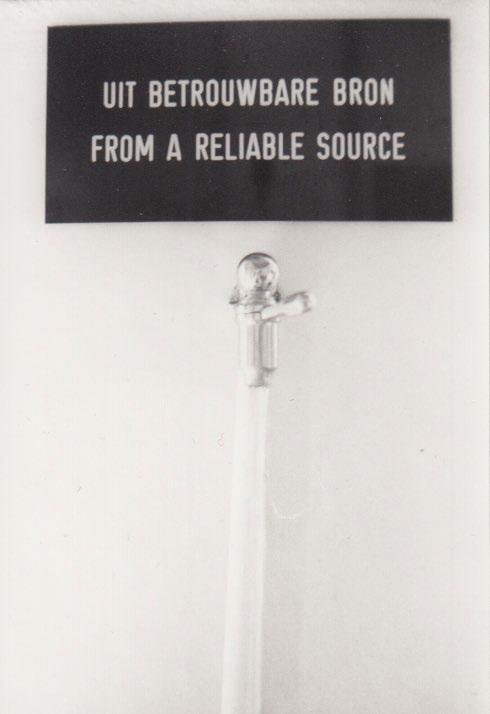
Scholte.
From a Reliable Source, installation by Robin Winters and Rob
Reliable
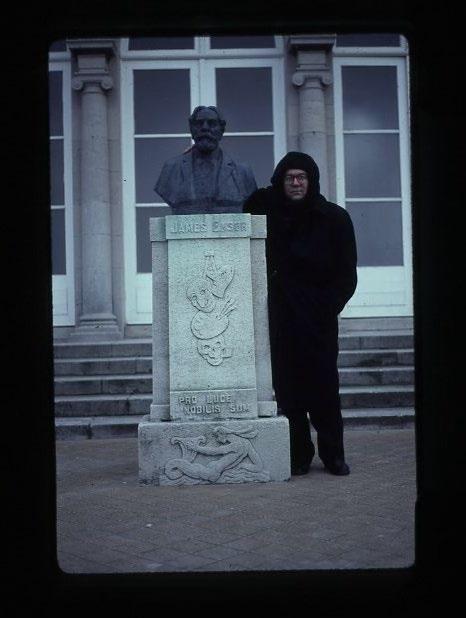
Winters heard that Ensor was still a living artist when they made this sculpture honoring him. It was said that Ensor would occasionally place flowers on it.
Chantal de Smet
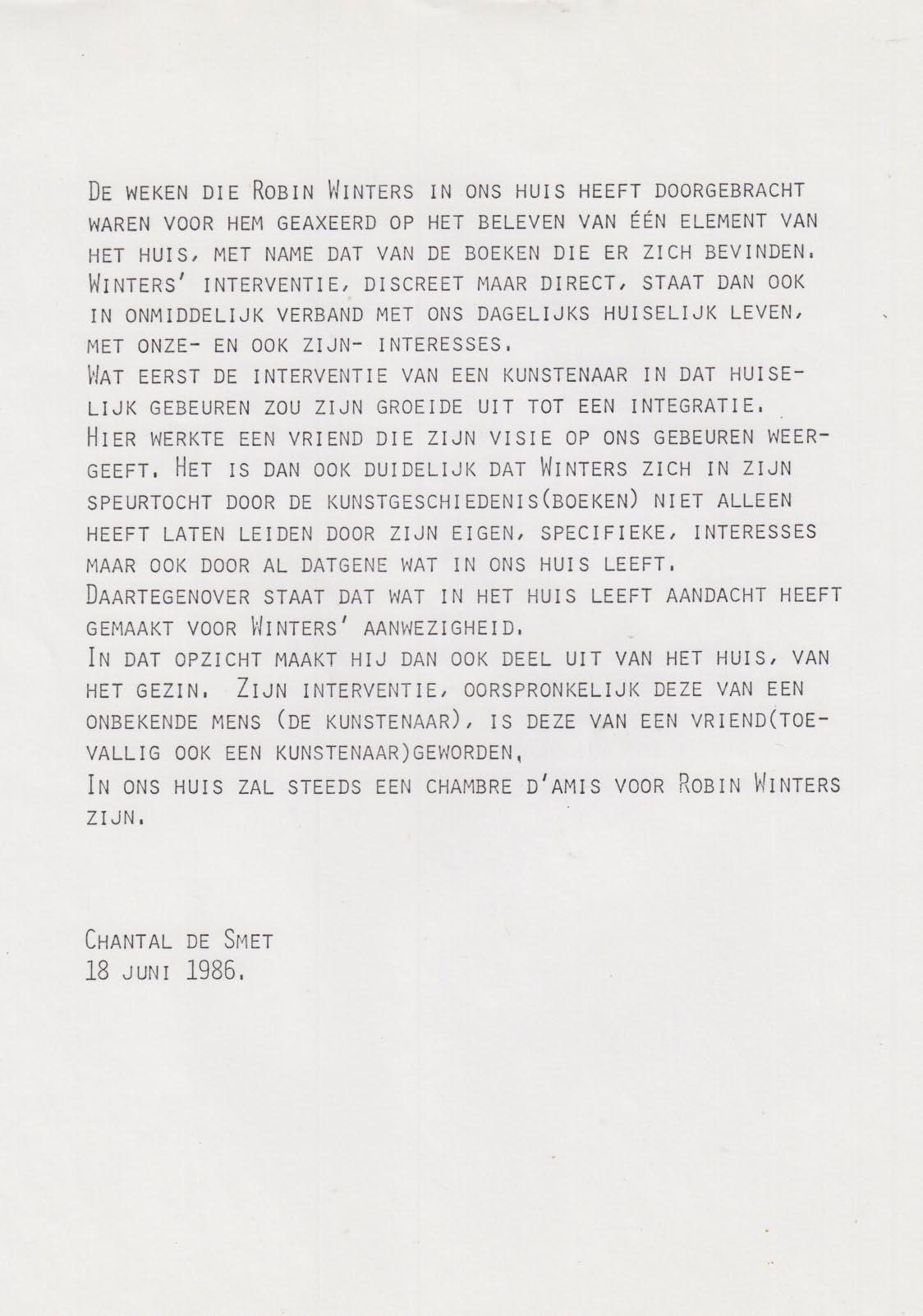
Letter by Chantal de Smet regarding Robin Winters’ installation.
THE WORKS THAT ROBIN WINTERS HAS BROUGHT INTO OUR HOUSE WERE CREATED BASED ON HIS EXPERIENCE OF AN ELEMENT FROM OUR HOME, NAMELY OF THE BOOKS THAT WE HAD. WINTERS’ INTERVENTION, DISCREET BUT DIRECT, IS DIRECTLY LINKED TO OUR DOMESTIC LIFE BUT ALSO TO OUR AND HIS OWN INTERESTS.
WHAT HAD FIRST BEEN THE INTERVENTION OF AN ARTIST IN A DOMESTIC SETTING HAS NOW BECOME AN INTEGRAL PART OF THE HOME. A FRIEND HAS BEEN WORKING ON HIS OWN VISION OF OUR DOMESTIC DISPLAYS. IT HAD BECOME CLEAR THAT THROUGHOUT HIS RESEARCH AMONG OUR ART HISTORY BOOKS, WINTERS WAS NOT ONLY LEAD BY HIS OWN SPECIFIC INTERESTS, BUT ALSO BY WHAT HE HAD FOUND LIVING IN OUR HOUSE.
IN RETURN, WHAT WAS LIVING IN OUR HOUSE FULLY GRASPED WINTERS’ PRESENCE.
IN THAT SENSE, HE WAS ALSO PART OF THE HOUSE, PART OF THE FAMILY. HIS INTERVENTION, ORIGINALLY THAT OF AN UNKNOWN PERSON (THE ARTIST) BECAME THE INTERVENTION OF A FRIEND (INCIDENTALLY ALSO AN ARTIST).
IN OUR HOUSE THERE WILL ALWAYS BE A “CHAMBRE D’AMIS” FOR ROBIN WINTERS.
CHANTAL DE SMET 18 JUNE 1986.
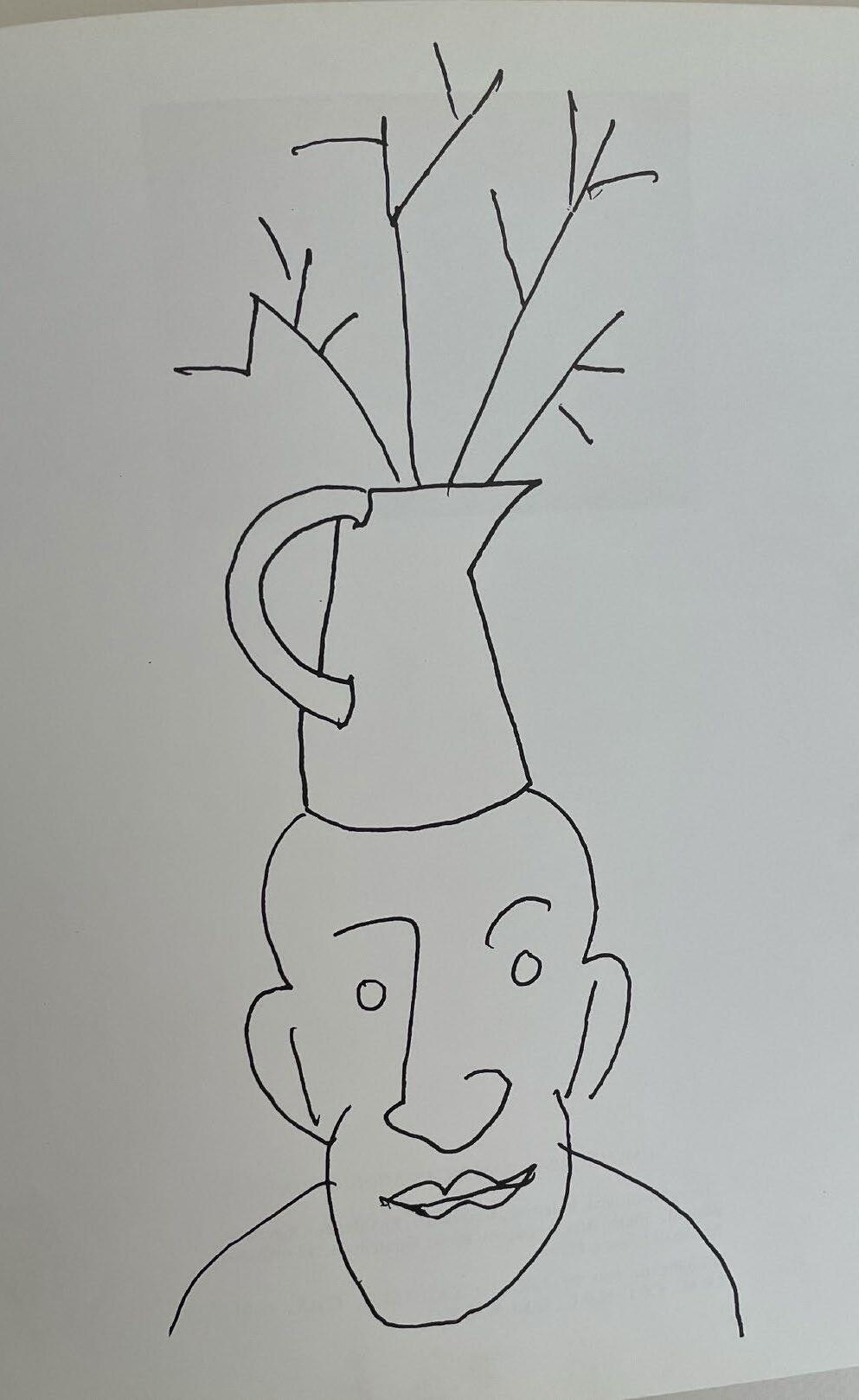
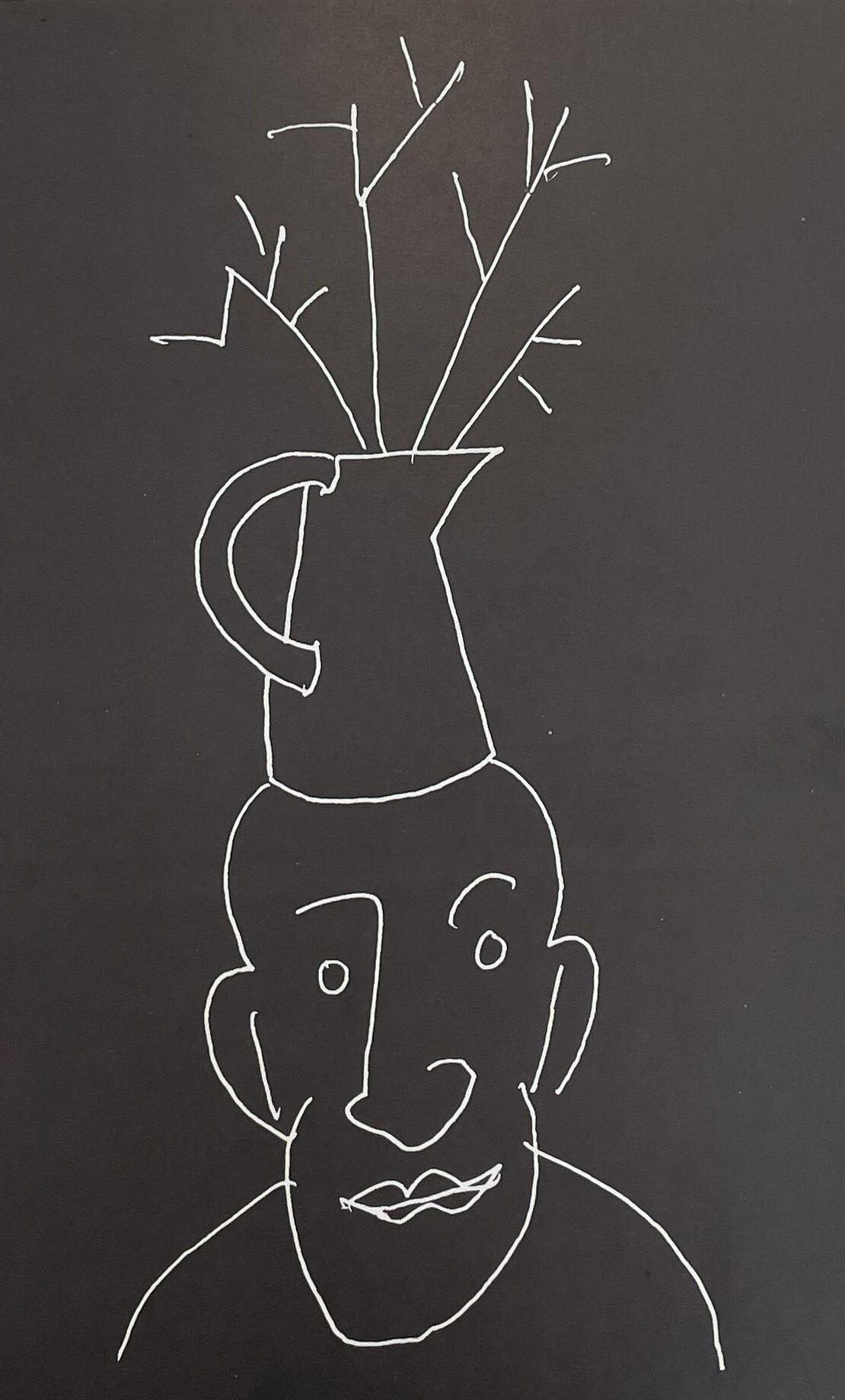
Robin Winters’ drawings, contributions to the Chambres d’Amis catalog.
Johan Creten
Dear Robin,
My memories are a bit foggy, time has worn out the colors of the images but that summer of 1986 was amazing and still resonates in my life today.
(Yesterday I gave a lecture at the YSL Museum in Paris and spoke about Chambres d’Amis with one of the young visitors)
Your question brings me back to another time.
I was young, must even have been beautiful, I was innocent, skinny, and wore my jeans tight. I was a young artist, fresh out of art school getting ready for the next step. But... First... Getting a summer job, the perfect excuse to stay a few more weeks in Ghent, enjoy the freedom and not have to return to the province.
Jan Hoet was looking for guards for his group show Chambres d’Amis
Artworks were installed in private houses all over the city of Ghent. The concept of the show was unheard of, new, fresh, shocking and “revolutionaire.”
Homes of rich people, poor people, young, old, in different neighborhoods, all over the historical city were open to the artists and to the public. Special installations were made for every home.
Visitors would walk the streets with a small map, finding the houses in question, ring the doorbell, wait to be shown in by a young guard, stay a few minutes, and then move onto the next home.
People would talk in the street, exchange stories, and show the way to new arrivals.
The artworks were very “eclectique,” some “excentrique.” Michael Buthe installed animal bones and pictures by Von Gloeden in a beautiful home, the bones started to stink and the juices flowed into the wooden floors. Kataze changed the colors of the sky in a wonderful unexpected way, Mario Metz, Buren, etc. etc. each of the works were very confrontational and new.
People were thrilled by the hunt and were filled with curiosity. Older women in small groups were excited to visit homes they normally “only saw from the outside.”
Dutch tourists, a strange mix, timid at first, and large dense crowds almost overwhelmed the circuit.
There was one home that needed a special guard as there was “nothing to see.”
Jan Hoet wanted a special guard, this was a “difficult place.” So I got “the part.”
Nothing to see?
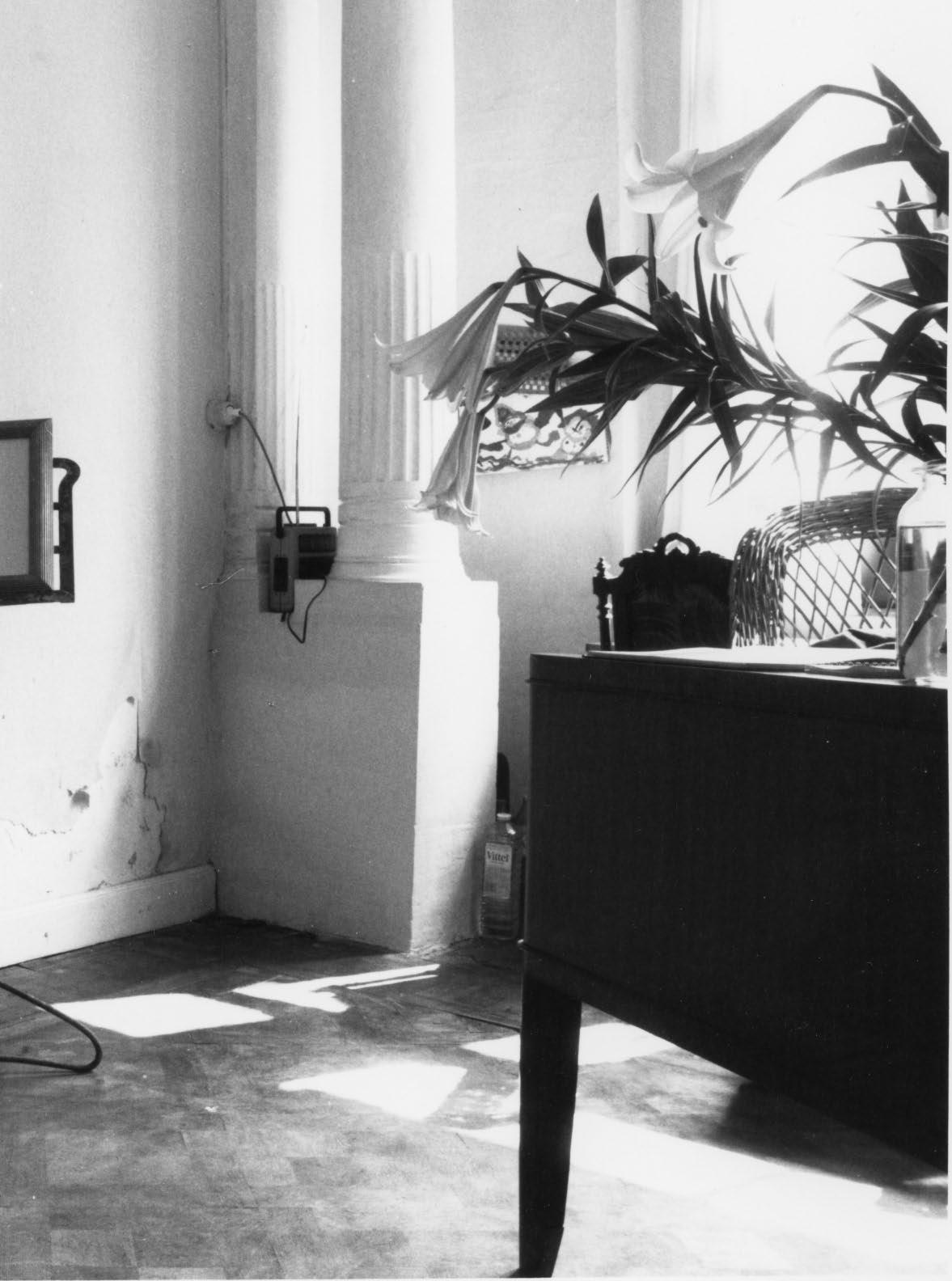
The house was wonderful, 19th century, lived in by a sweet woman, filled with books and art, high white ceilings, refined stucco plasterwork, wooden floors. The home of a sophisticated and cultivated woman.
But the artist Robin Winters made a “political” artwork, complex, sharp.
......
I got picked to be the guard of the temple, bought white lilies every other day and they would fill the rooms with a delicious, heavy, and symbolical smell. In the living room, on a small stand, stood an engraving by Ensor.
On the record player I played Billie Holiday (one of the late records, her broken voice, her raw emotions).
The doorbell gave a wonderful sound.
Small groups would wait outside in the street to be shown in. After a small high corridor, I would let them into the living room, overflowing with books, a beautiful space but... Surprise... No special artwork, no shocking installation, no bright neon, just a warm wonderful space.
What was going on?
As nothing Robin Winters made could be seen, I had constructed a story to tell.
......
Robin Winters had hidden drawings in the huge library, the visitors could not look for them, they were hidden gifts to the owner of the house.
Were there 50 or 100* drawings?
Would they all be found one day, or would “Chantal” find a drawing “tomorrow?”
Was this installation about the personal, private experience of finding an artwork made in reaction to the work by Daniel Buren, an installation within the home of a top collector not to be visited by the public but partly shown at the museum?
So many questions, no answers...
Was it a political statement? What did it say about the nature of Art? How did Ensor relate to the Robin Winters’ drawings? How did smell and music relate to the piece? So many questions, no answers...
So I let small groups in, they would wait in the space unsure of what to look for. Was “it” the Ensor? Was “it” the craque in the ceiling, was “it?”
......
Slowly a narrative would develop, discussions would start, some violent, some sweet, we were in the middle of a sociological experiment.
It was as if the spirit of Beuys would suddenly pop up.
I would steer the discussions, activate the dialogue. The invisible works by Robin became objects of both fantasy and imagination, projection and tools for political discourse. *There were 90, each indeed hidden within the books.
I would dress up for the act.
I also believe Robin was the only one making a political statement in the catalog about the show, regretting the relative absence of woman artists in the show. In the weeks that followed, I became part of the artwork, I developed my own ideas and my own position as an artist.
The work of Robin was as the “declencheur.”*
A visitor turned out to be a television producer and asked me to present a series for the Holland festival on Dutch television...
Other visitors were young art dealers and became my dealers a few years later (Transit and Bert and Dirk still are today).
Some artists got into heated discussions, and I still talk with them so many years later, a Dutch painter... friends for life.
A few months ago I was at a diner in Amsterdam sitting across from an elegant older woman, for some strange reason the discussion turned to Chambres d’Amis She remembered a place with “nothing to see” except for a warm, happy young man... It turned out she was talking about me... how funny ;)
I spoke with hundreds of people and the experience pushed me to leave Belgium, to start moving... Make my work in clay, look for freedom.
*A trigger, of sorts!
I did not speak with Jan Hoet, I was still too timid but he would show up a few times to show the place “with nothing to see” and the young guard that made people talk.
Have a great day, Johan Creten
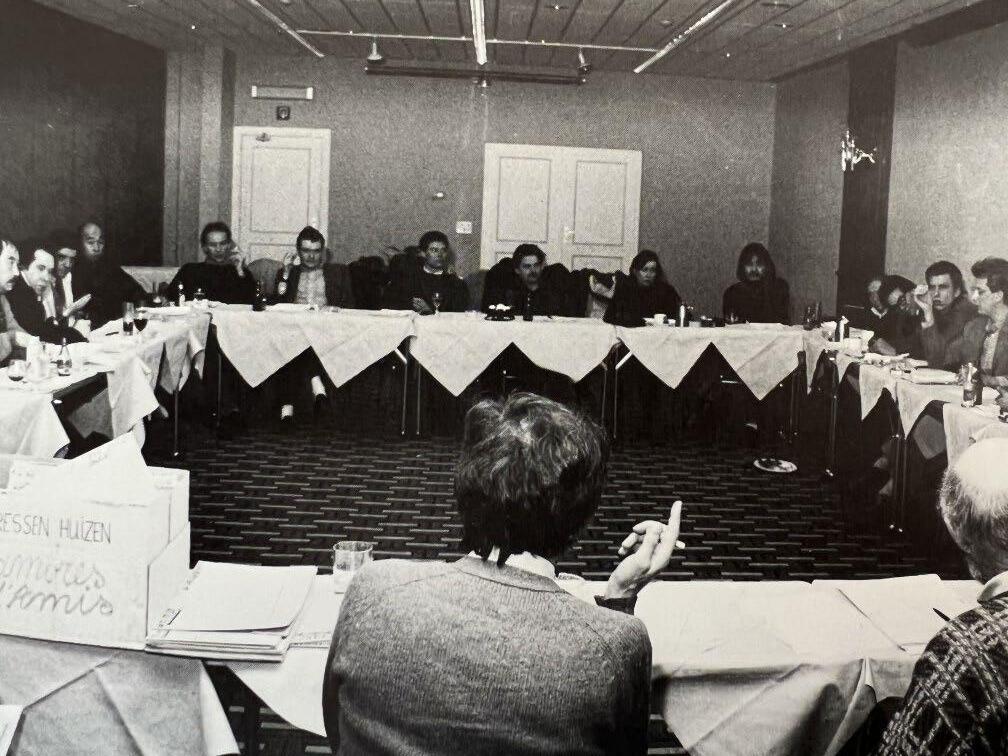
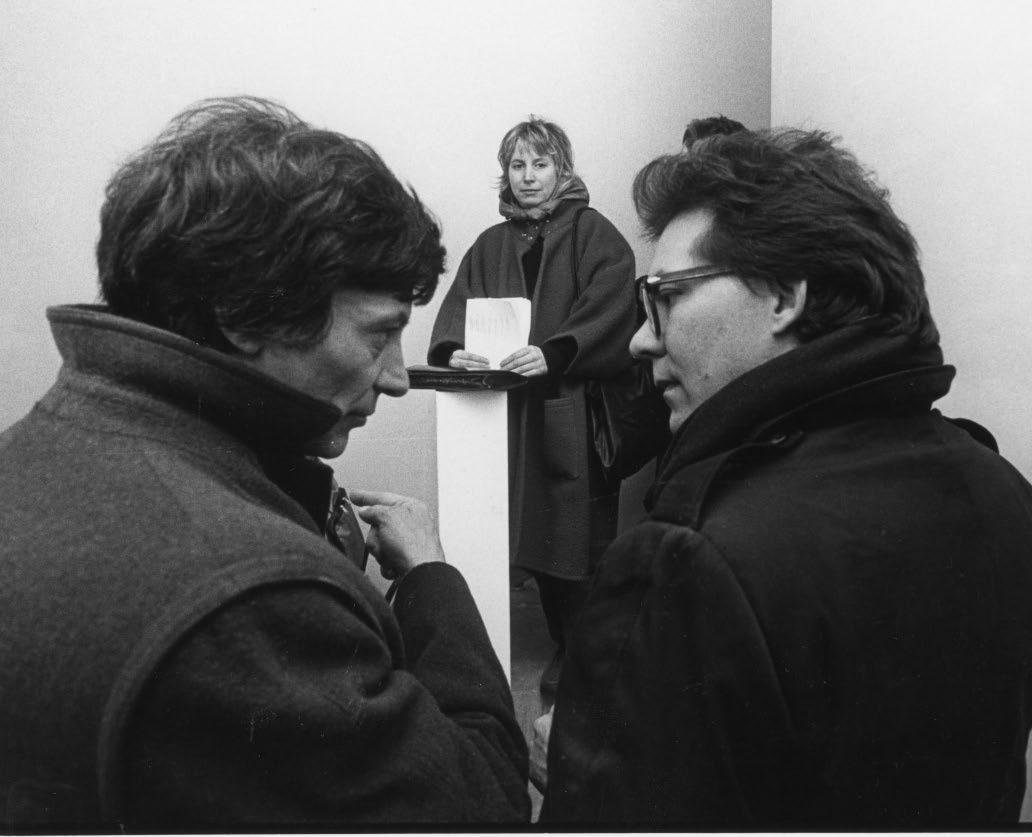
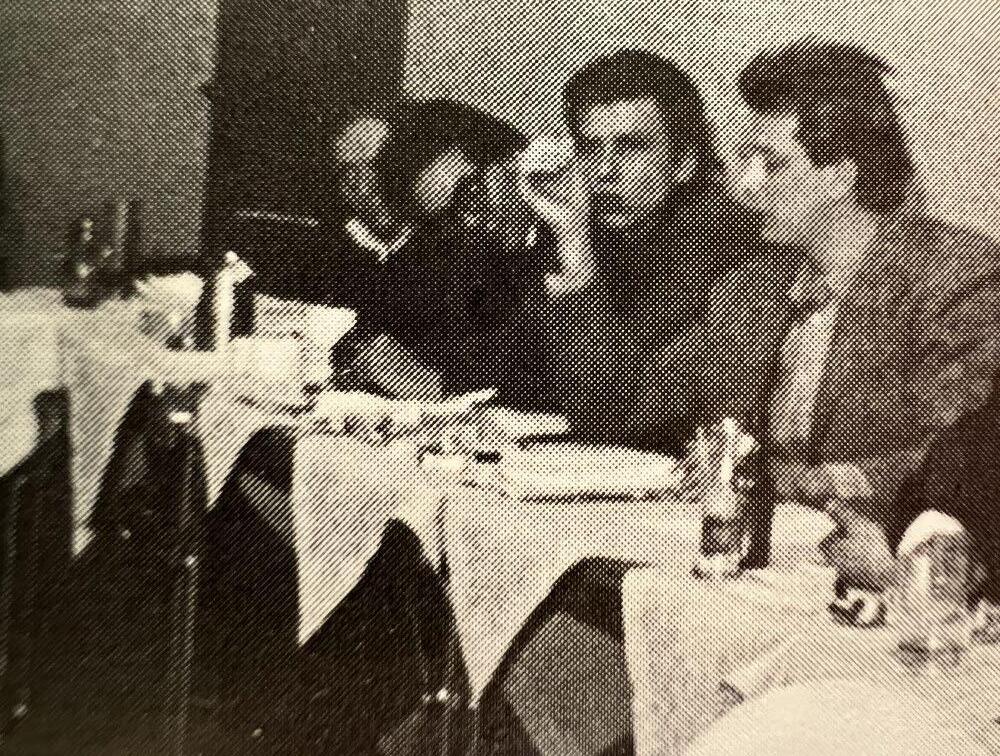
Artist participants sit for a discussion before their installations.
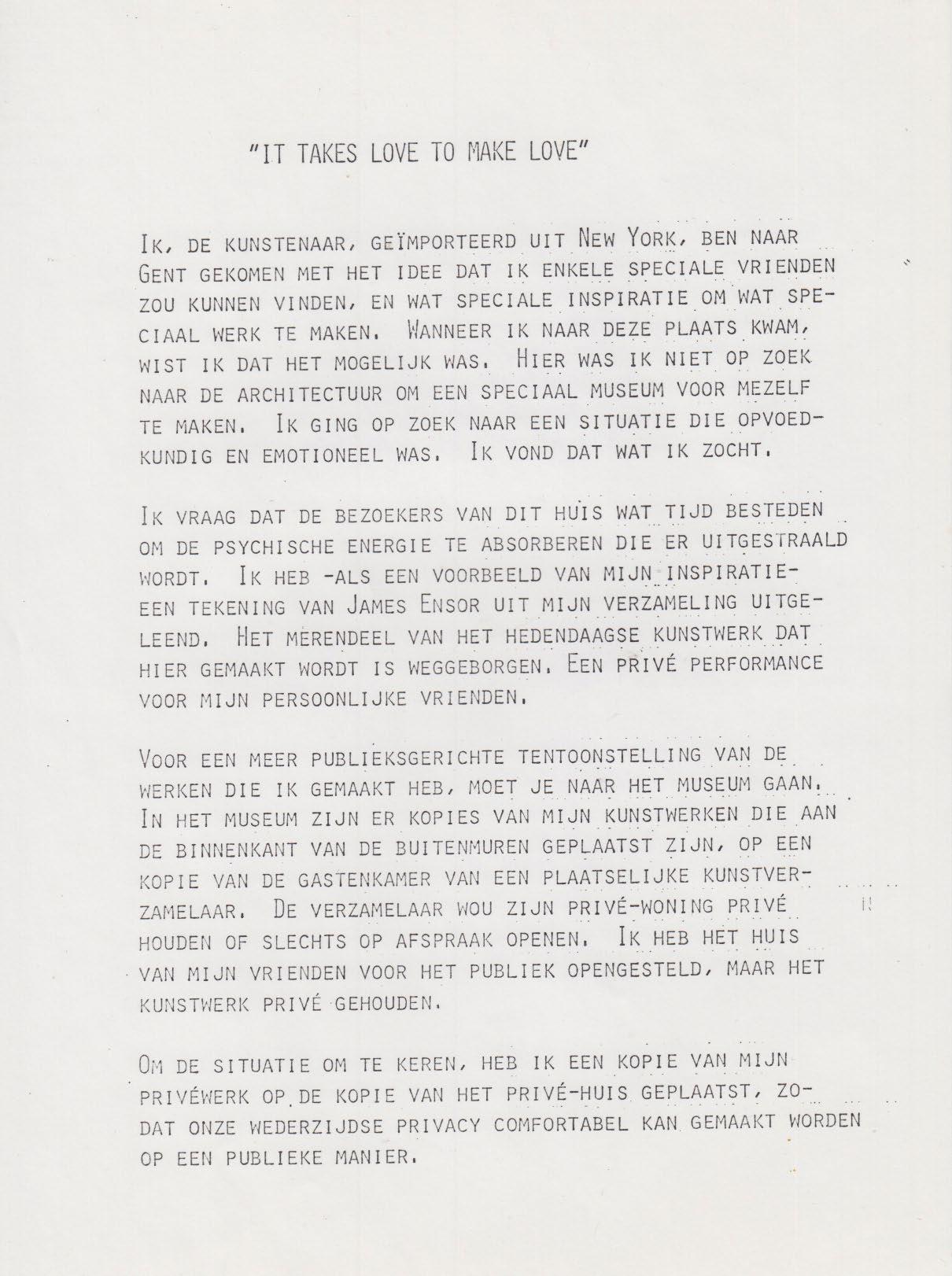
“IT TAKES LOVE TO MAKE LOVE”
I, THE ARTIST, IMPORTED FROM NEW YORK, CAME TO GHENT WITH THE IDEA THAT I MIGHT FIND SOME SPECIAL FRIENDS, AND FIND SOME SPECIAL INSPIRATION TO MAKE SOME SPECIAL WORK. WHEN I CAME TO THIS PLACE, I KNEW IT WAS POSSIBLE. HERE, I WAS NOT LOOKING AT THE ARCHITECTURE TO MAKE A SPECIAL MUSEUM FOR MYSELF. I WAS LOOKING FOR A SITUATION WHICH WAS EDUCATIONAL AND EMOTIONAL. I FOUND WHAT I WAS LOOKING FOR.
I ASK THAT THE VISITORS OF THIS HOUSE SPEND SOME TIME TO SOAK UP THE PSYCHIC ENERGY EXPENDED HERE. I HAVE PROVIDED, AS AN EXAMPLE OF MY INSPIRATION, A DRAWING BY JAMES ENSOR FROM MY COLLECTION. THE MAJORITY OF THE ACTUAL ARTWORK PRODUCED HERE IS HIDDEN AWAY. A PRIVATE PERFORMANCE FOR MY PERSONAL FRIENDS.
I HAVE MADE THE HOUSE OF MY FRIENDS OPEN TO THE PUBLIC, BUT THE ARTWORK PRIVATE. FOR A MORE PUBLIC PRESENTATION OF THE WORKS I HAVE MADE, YOU MUST GO TO THE MUSEUM. I HAVE PLACED COPIES OF MY ARTWORKS ON THE OUTSIDE WALLS OF DANIEL BUREN’S CHAMBRE D’ AMIS PIECE, TITLED LE DÉCOR ET SON DOUBLE
BUREN CREATED A REPLICA OF THE WORK HE INSTALLED IN THE PRIVATE GUEST ROOM OF THE ART COLLECTORS ANNICK AND ANTON HERBERT. THE COLLECTOR WISHED HIS PRIVATE HOME TO REMAIN PRIVATE OR BY APPOINTMENT ONLY. SO, IN ORDER TO REVERSE THE SITUATION, I HAVE PLACED A COPY OF MY PRIVATE WORK ON THE COPY OF THE PRIVATE HOME, SO THAT OUR MUTUAL PRIVACY MAY BE MADE COMFORTABLE IN A PUBLIC WAY.
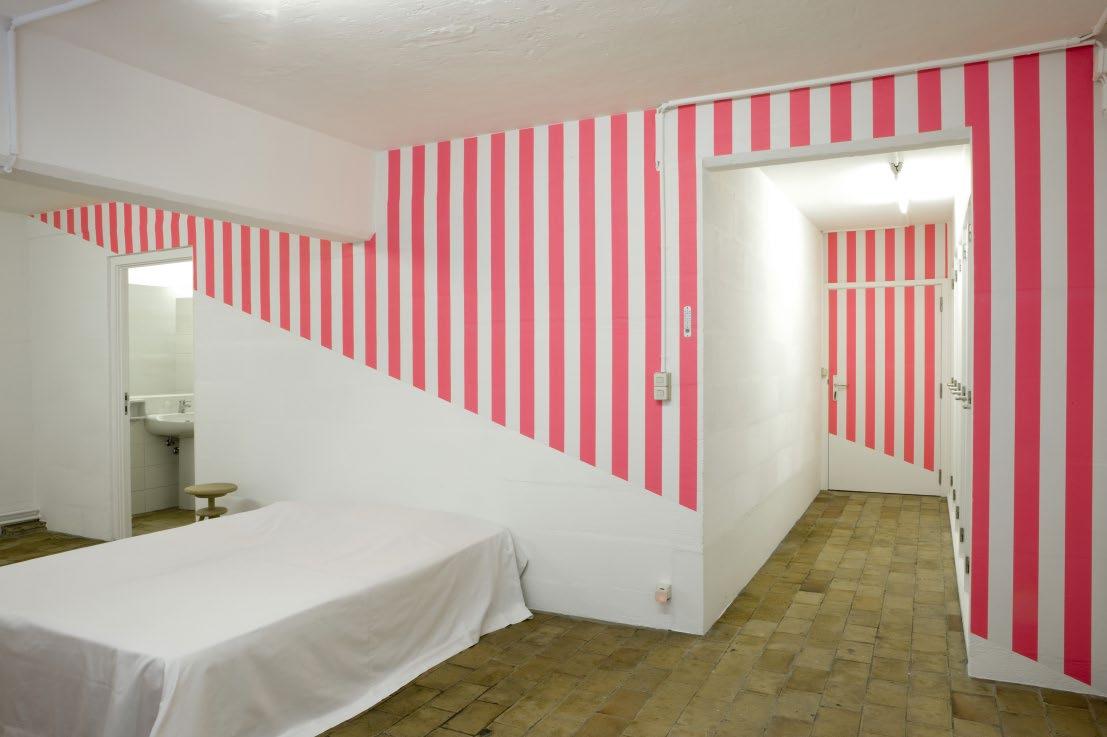
For the Chambres d’Amis exhibition in 1986, Daniel Buren disrupted the white walls of a guest room in the house of two local art collectors, Annick and Anton Herbert. He also installed a copy of the room in the museum at the time.
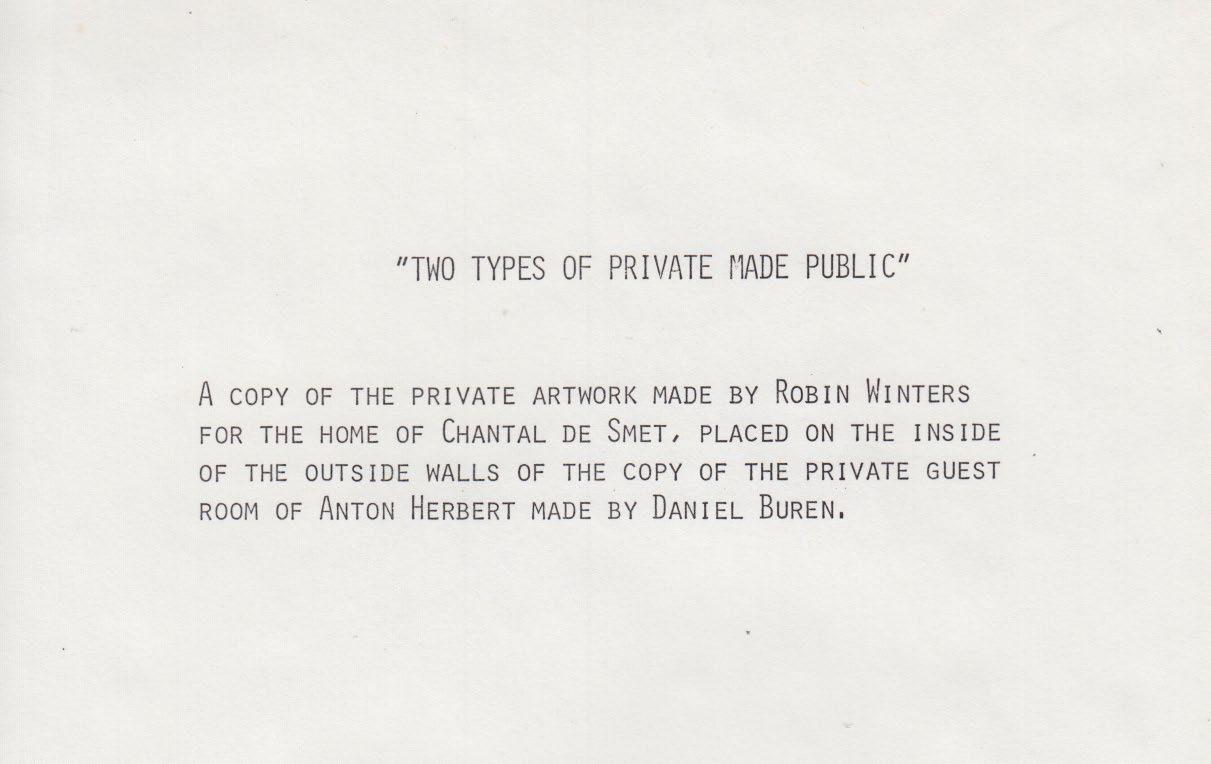
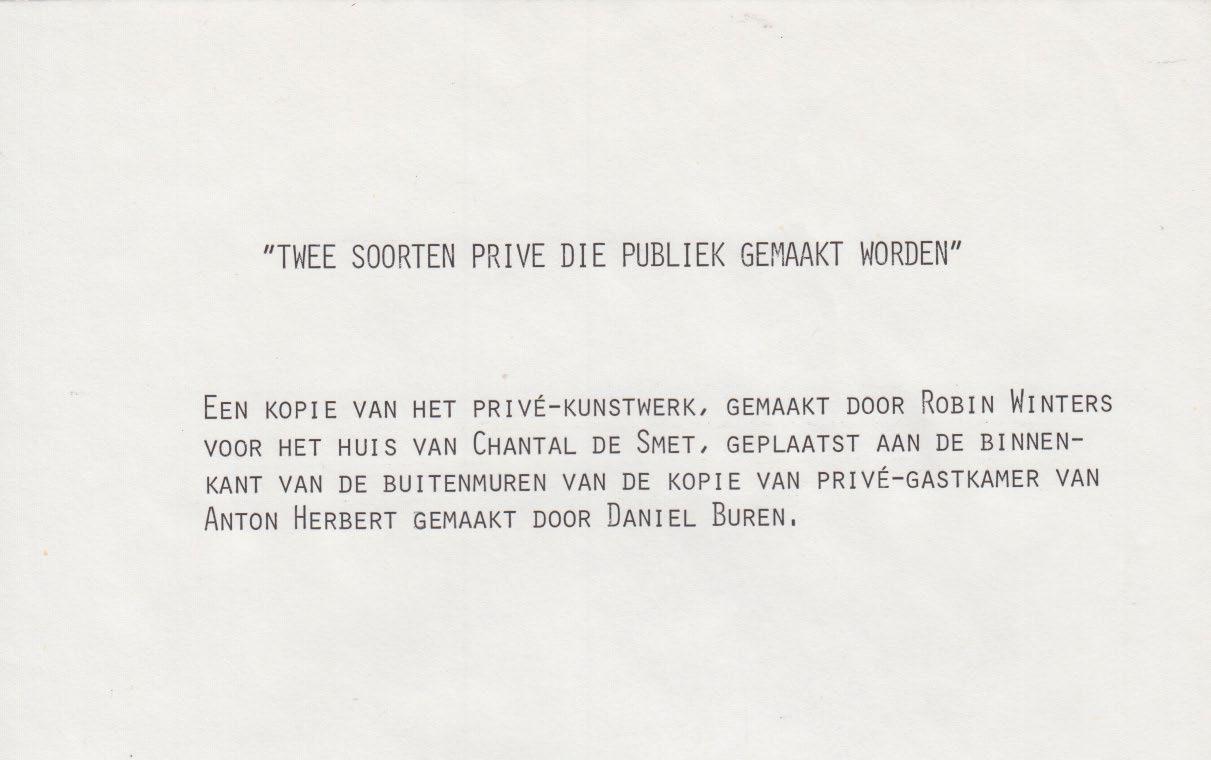
Wall text from Robin Winters’ intervention on Daniel Buren’s replica installation.
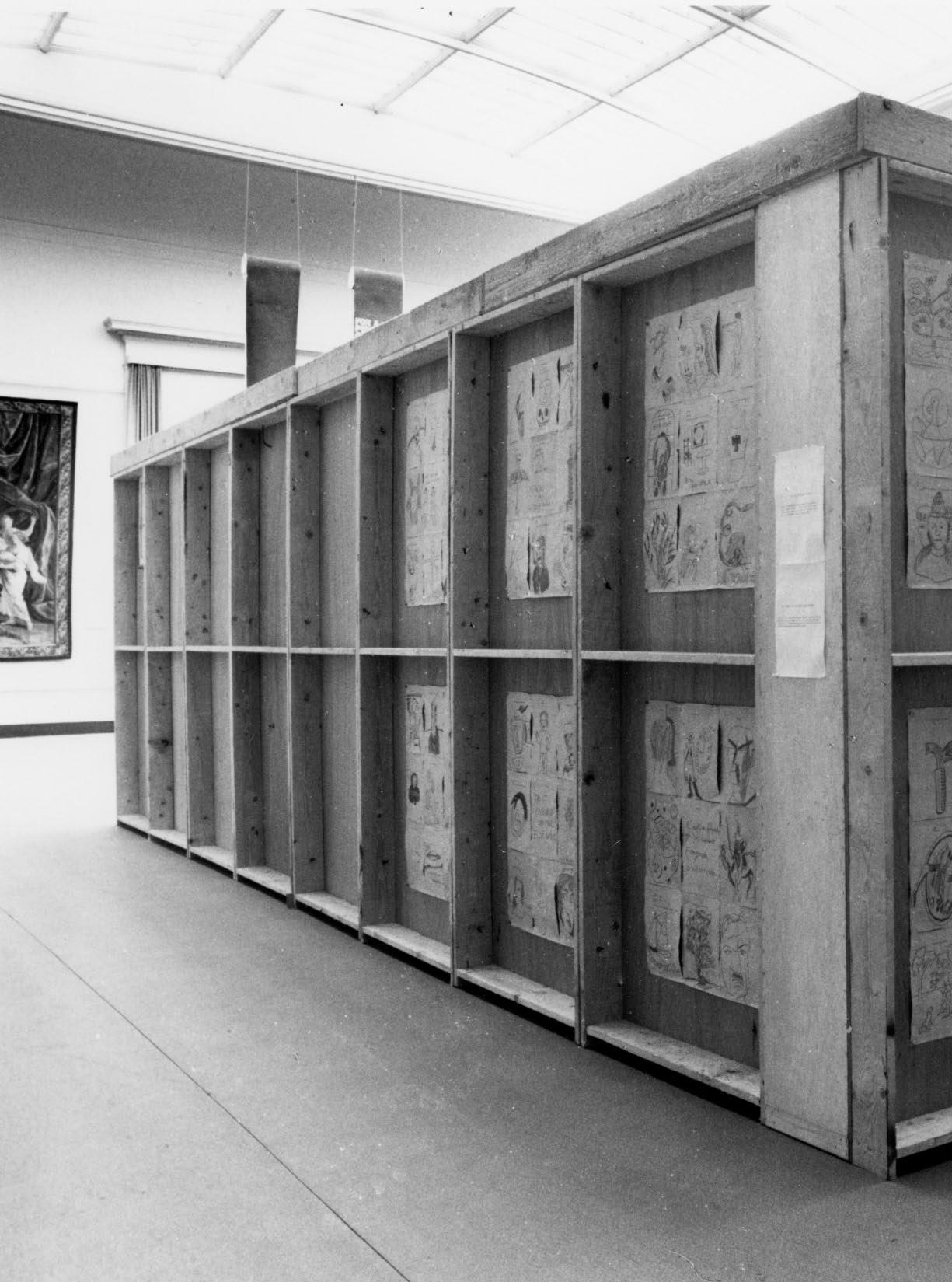
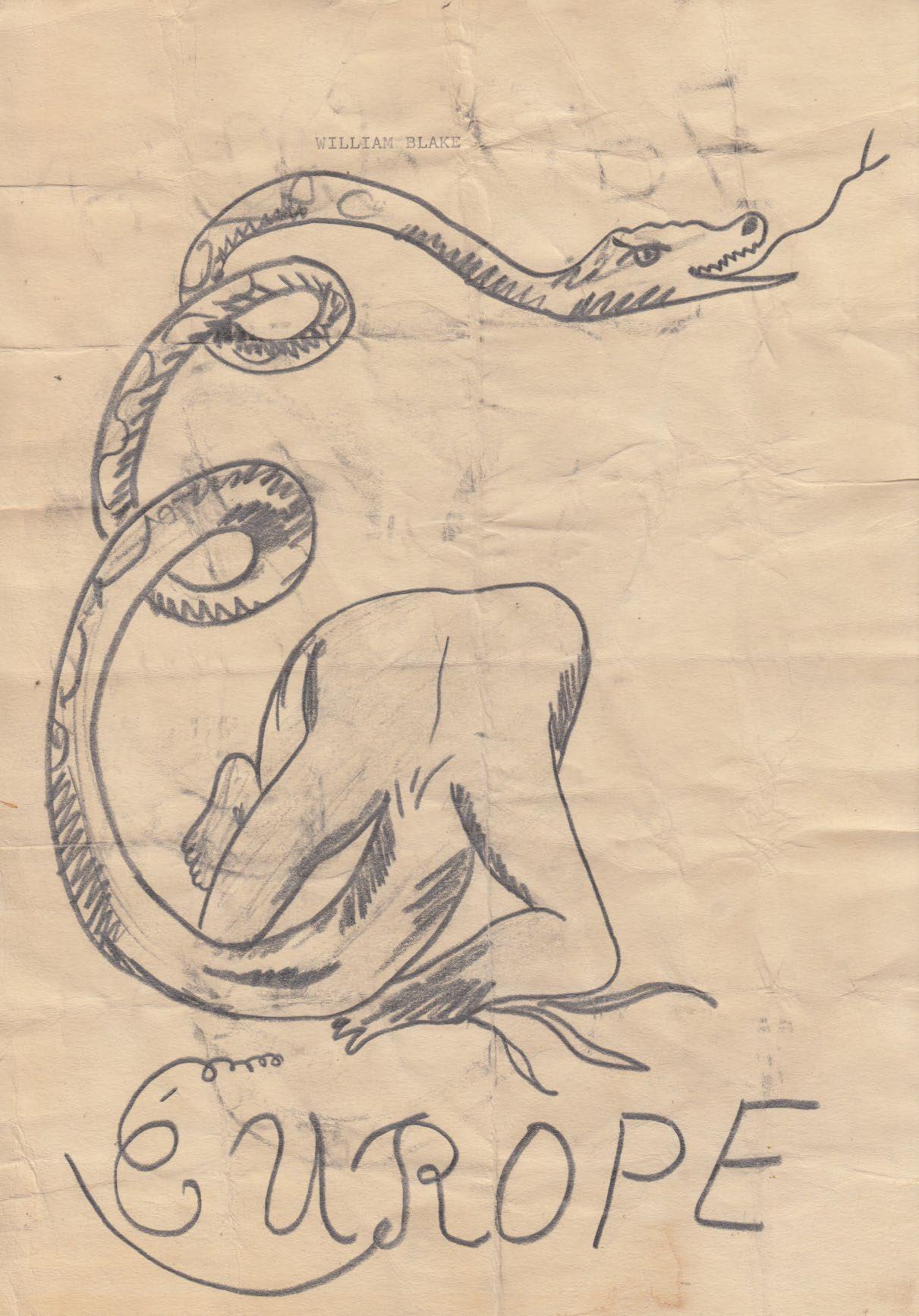
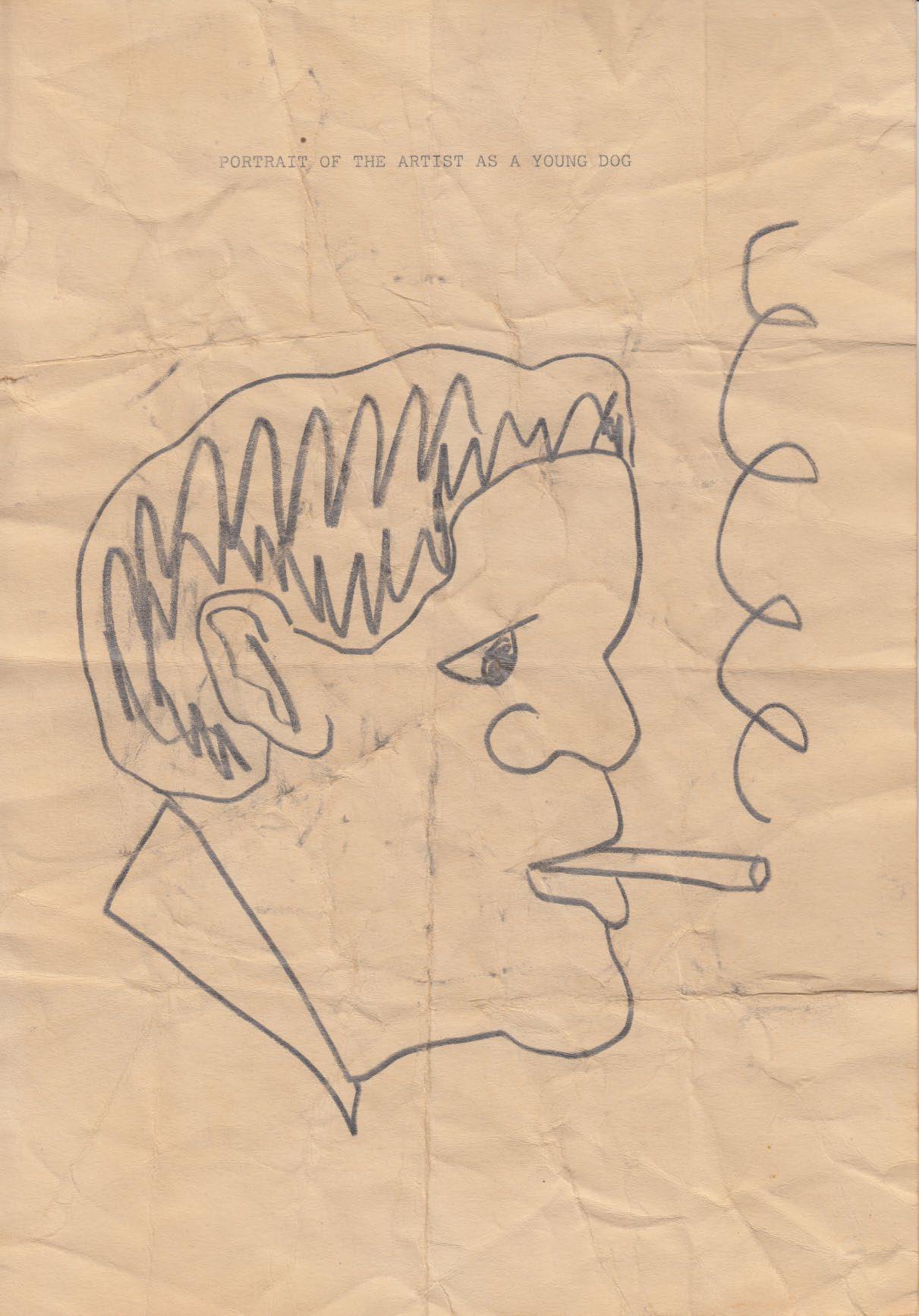
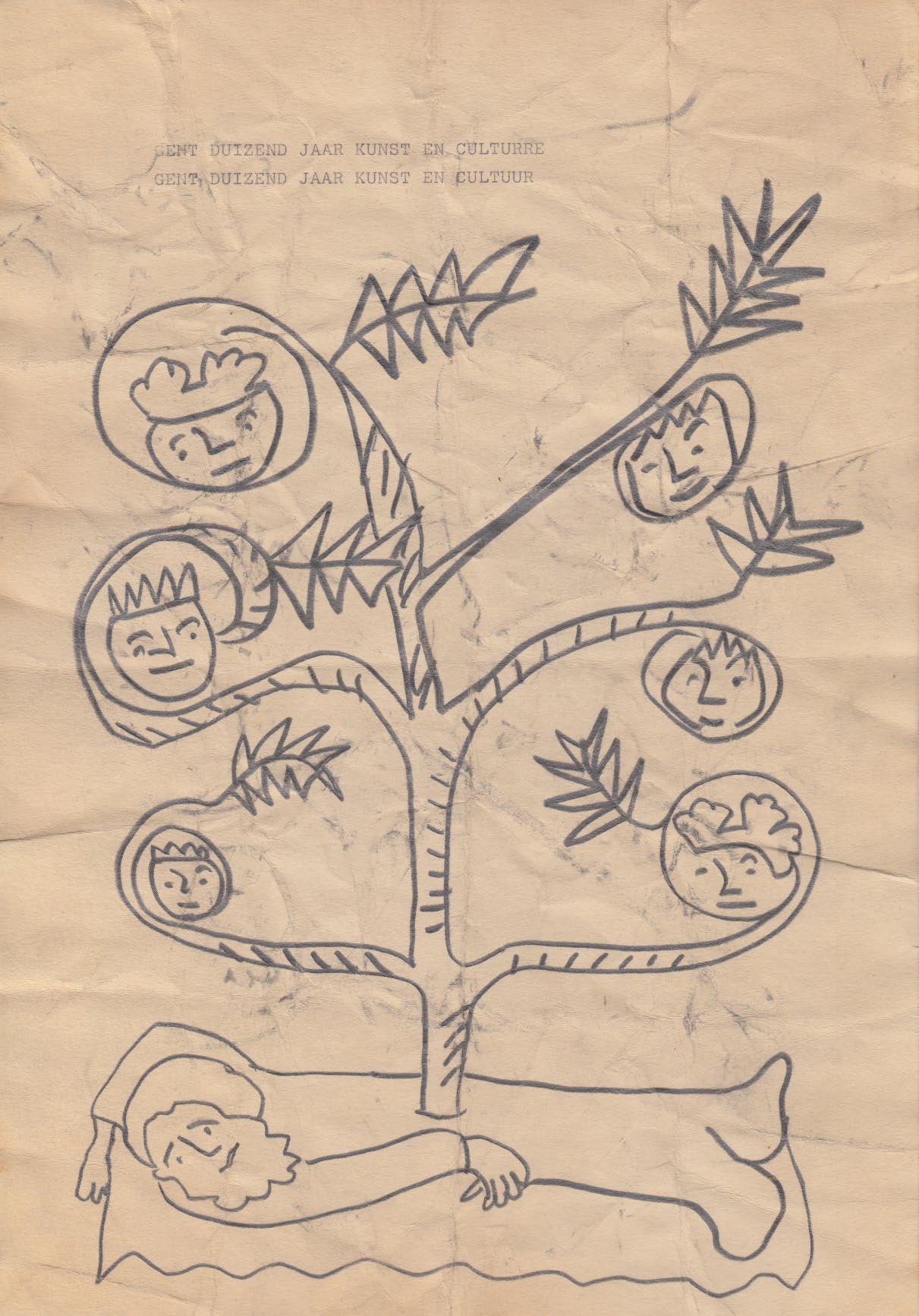
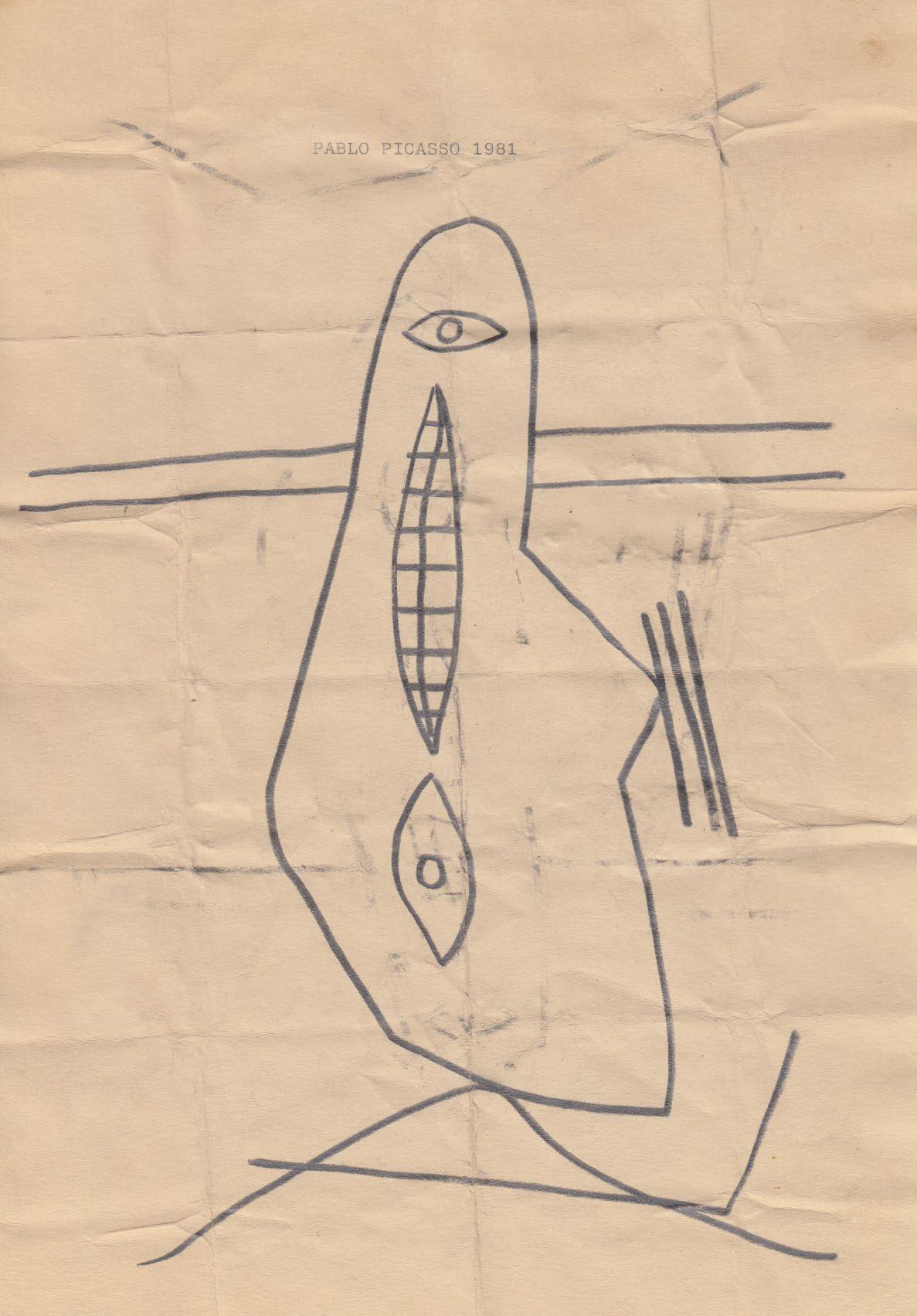
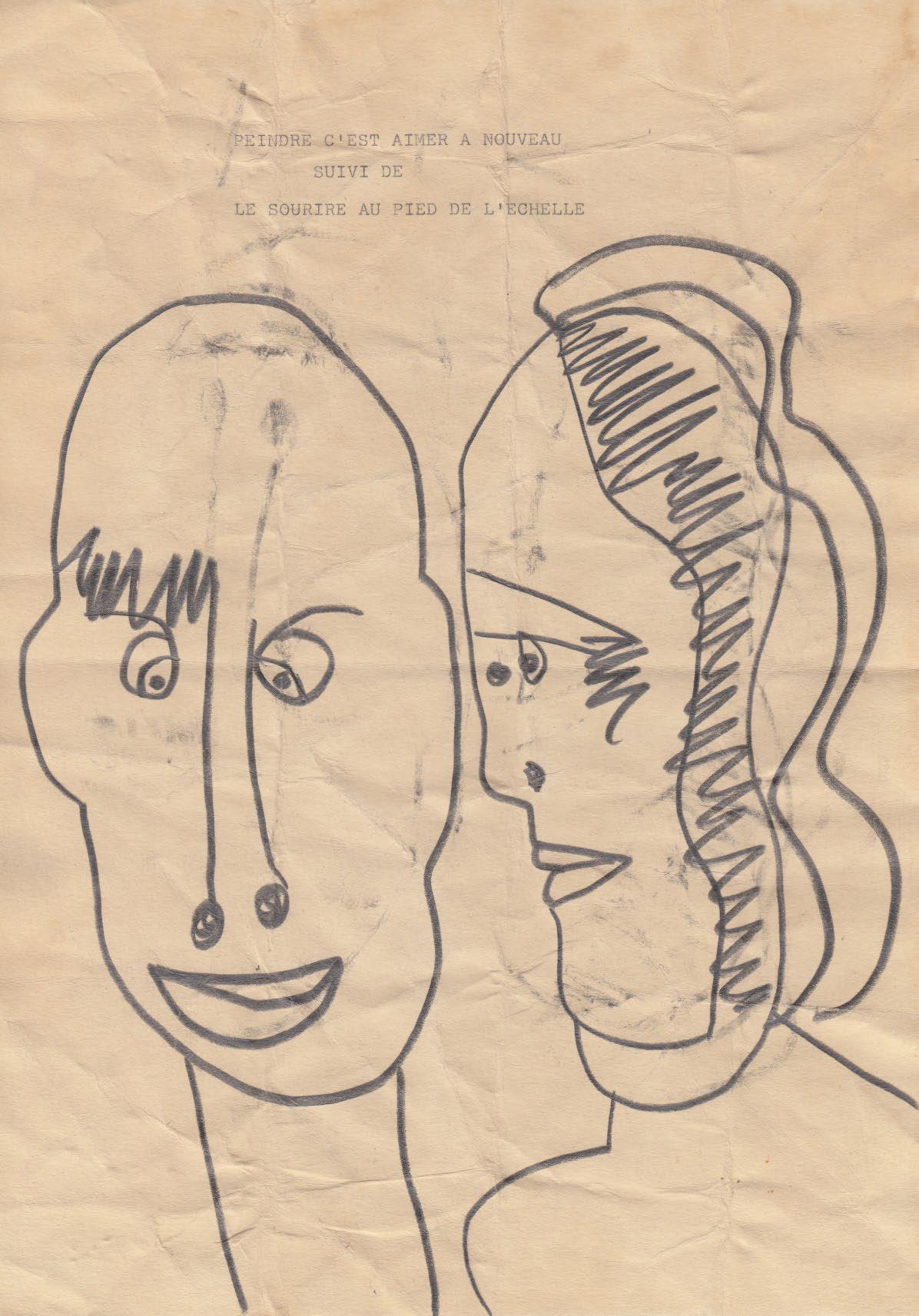
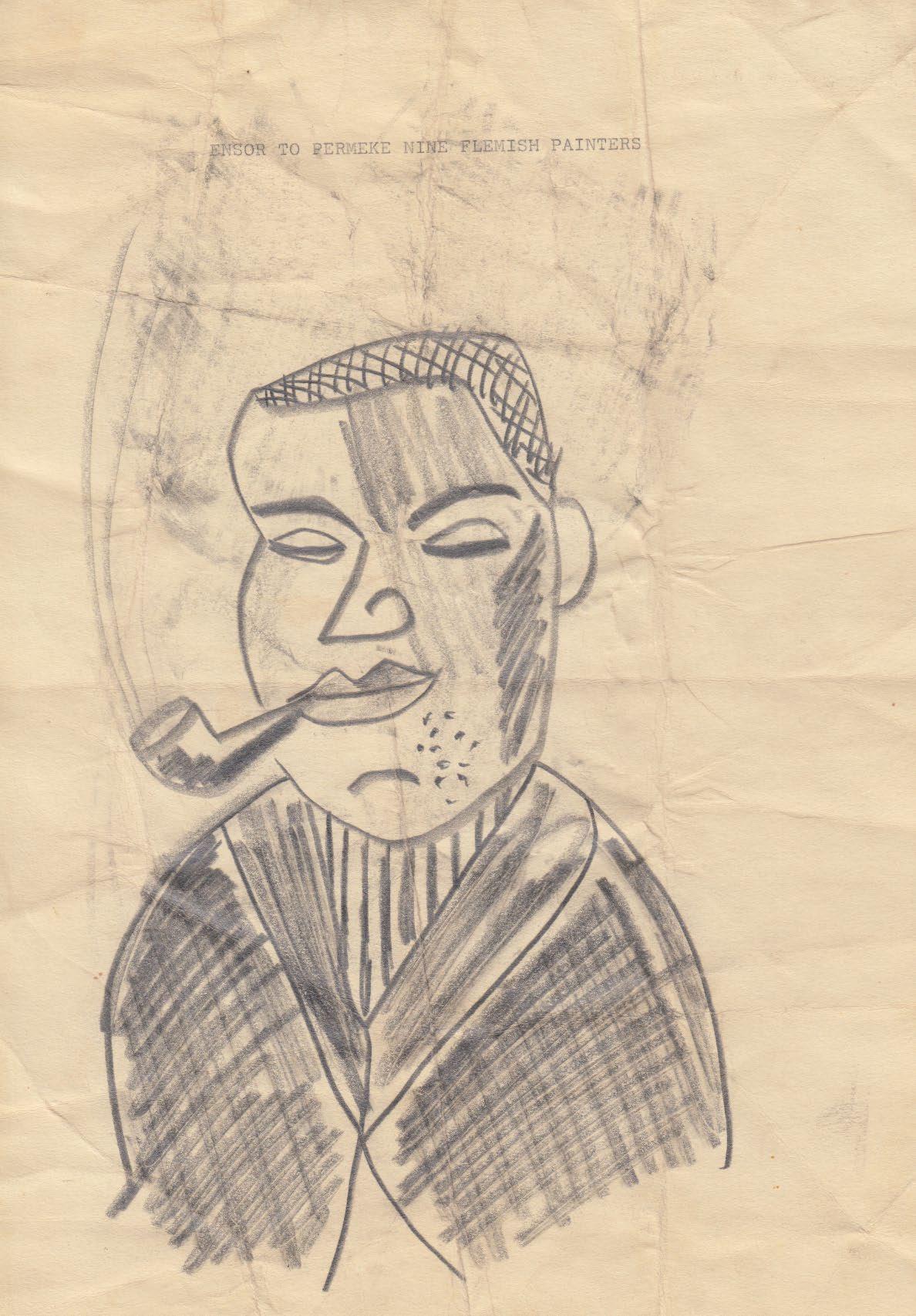
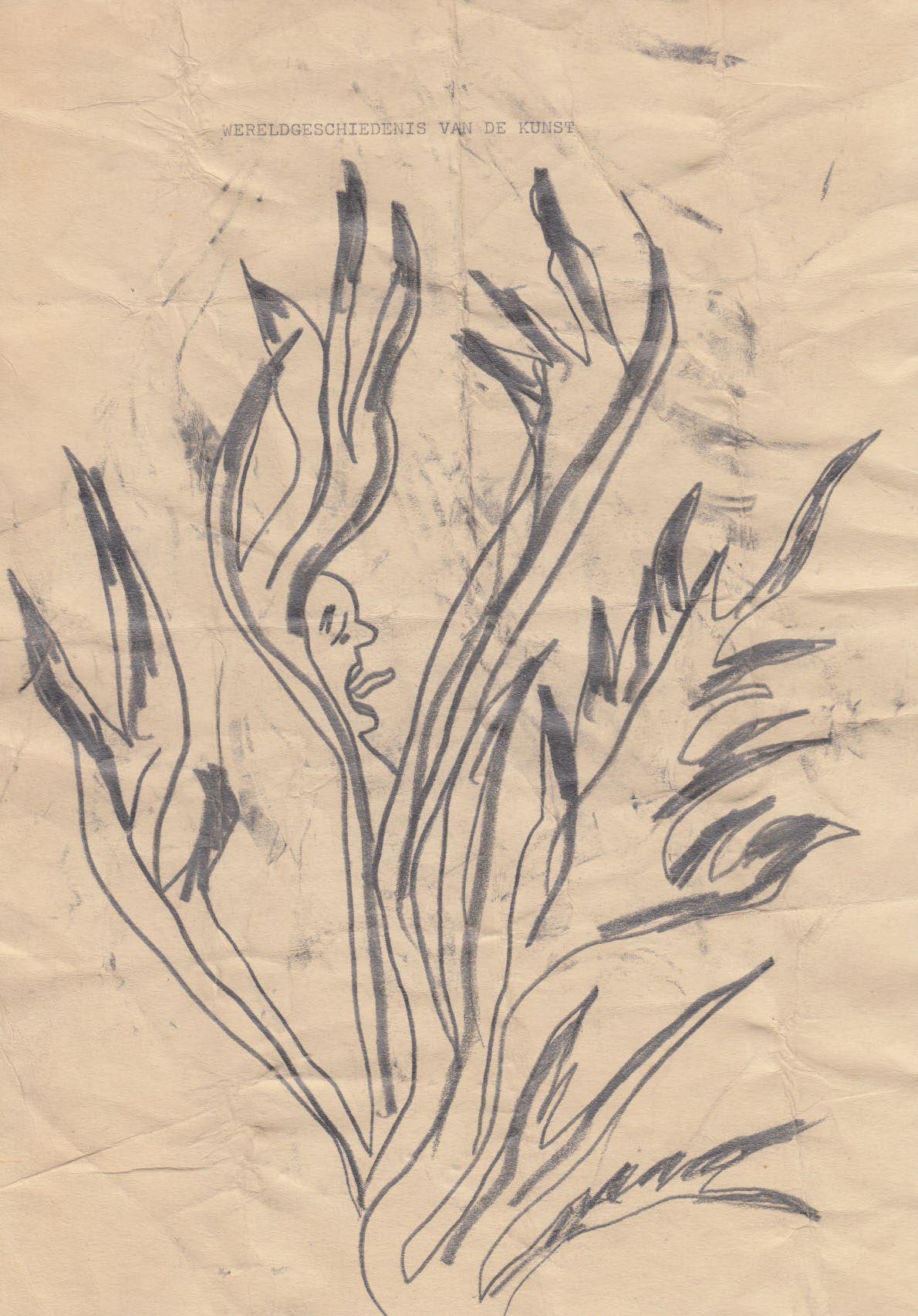
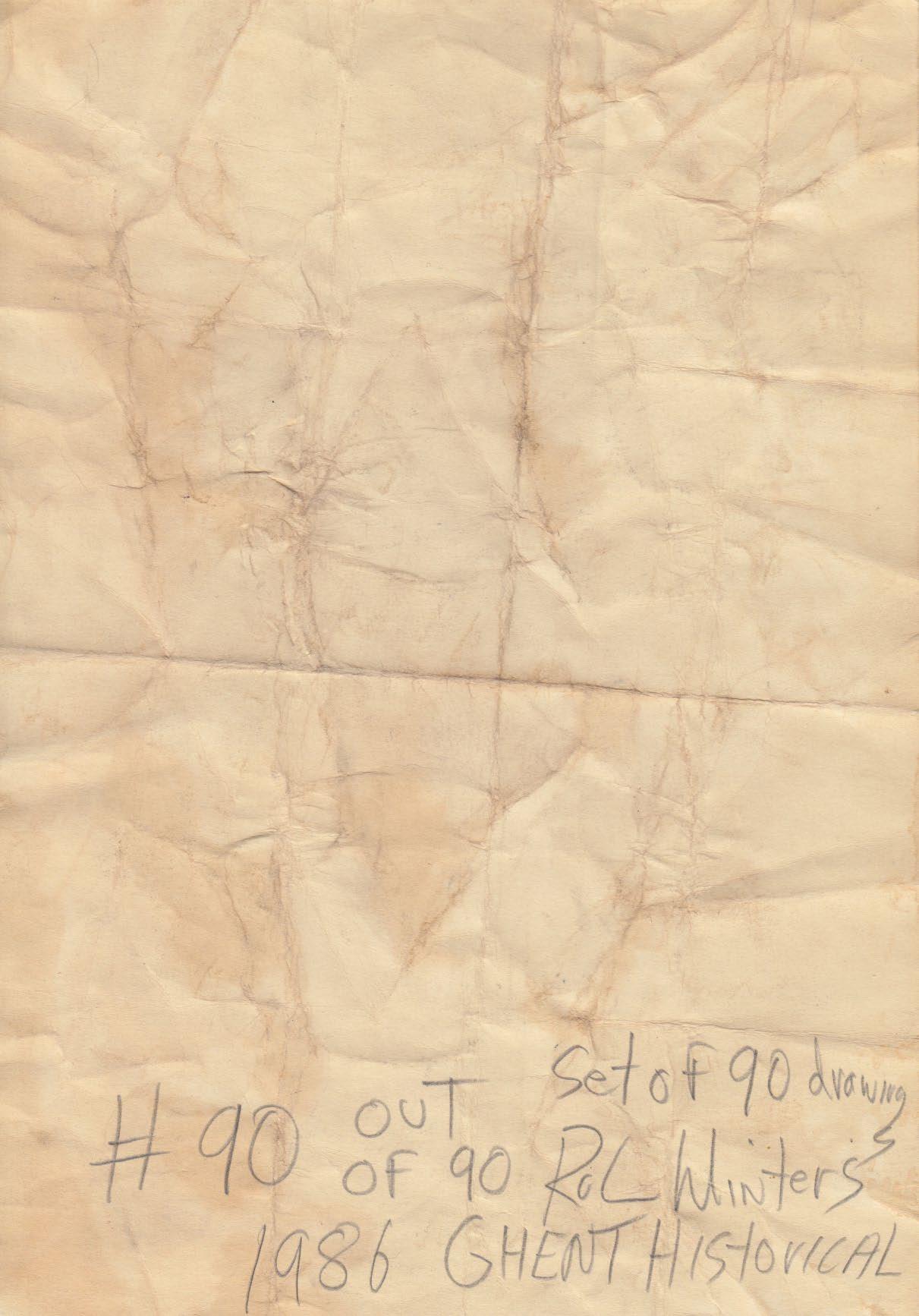
Produced in 1986 for Chambres d’Amis, the following 90 drawings are evocative, inspired, critical, and playful.
Revealed in the pages of this book, they first found their home in Chantal de Smet’s living room.
Sandwiched between the pages of her books, this intervention responded to and embedded itself within the natural flow and important qualities of de Smet’s home life. Robin Winters’ goal was not to disrupt, rather to augment.
Using carbon paper, he created two sets of duplicates. The following pages are scans of one of the three sets he produced, this one for himself. The other set remained in Chantal de Smet’s library. The third set was then displayed for the public, at the Museum Van Hedendaagse Kunst, on the exterior walls of Daniel Buren’s installation.
The information written above each drawing refers to the book titles, artists, and themes that influenced them.
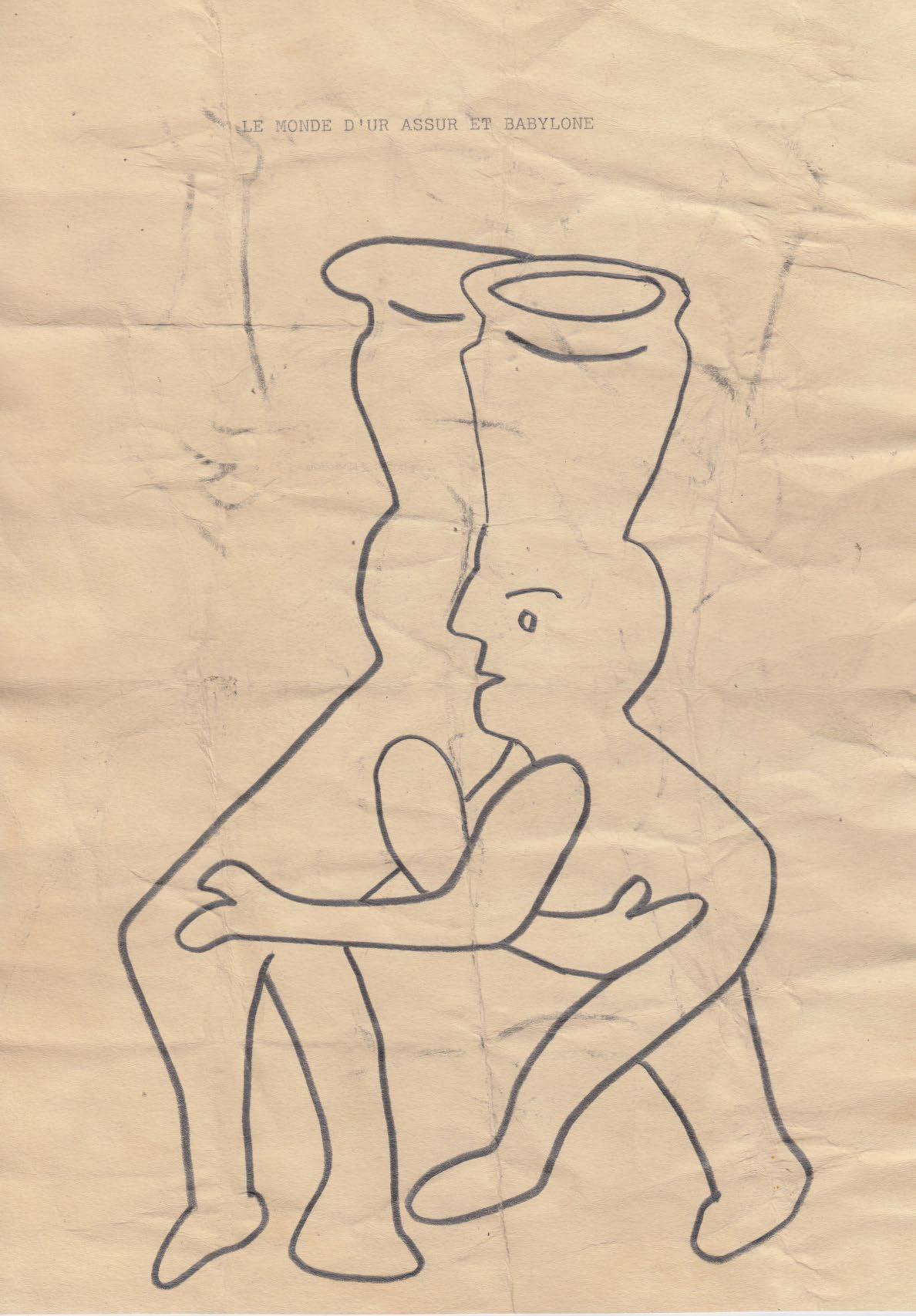
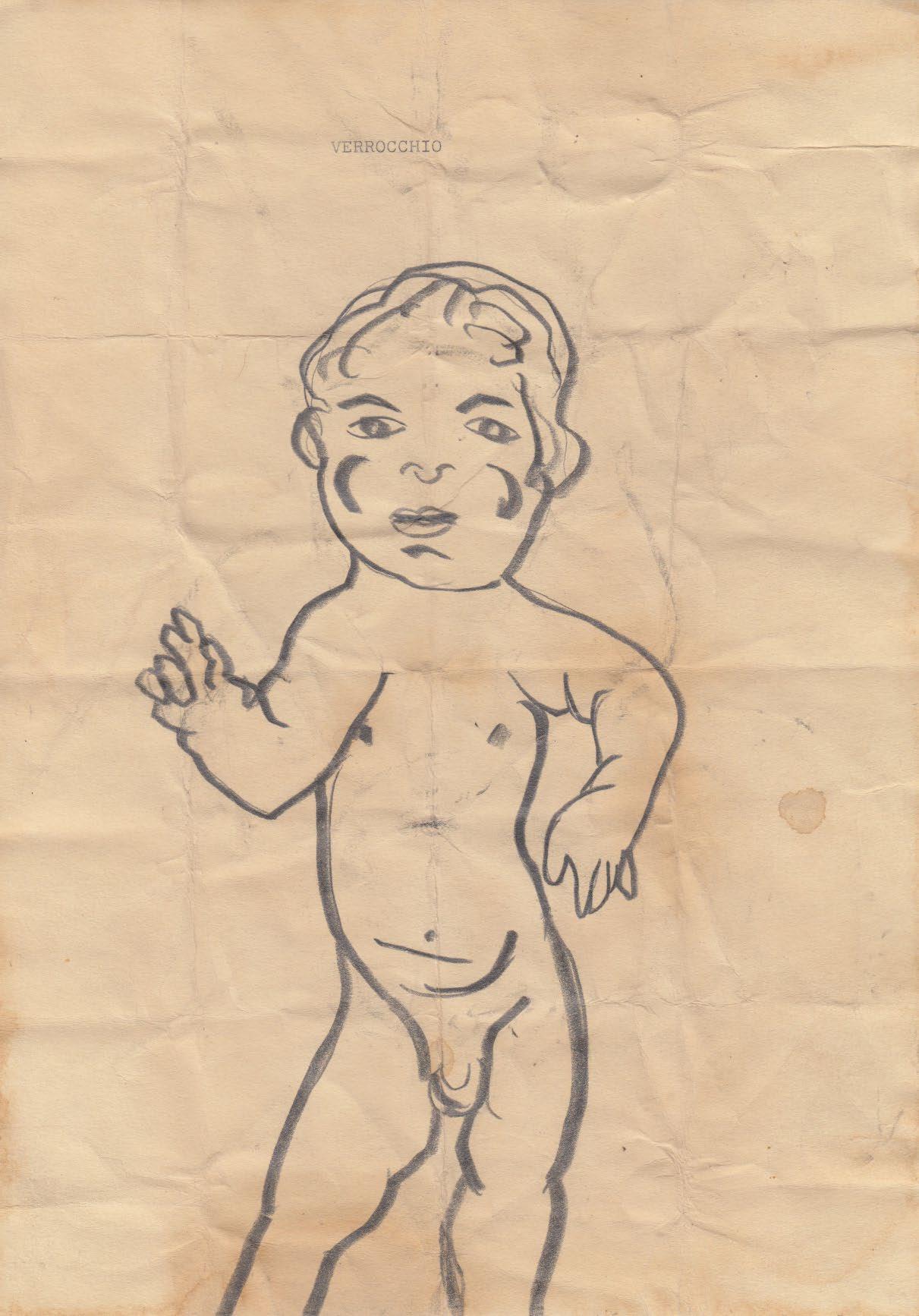
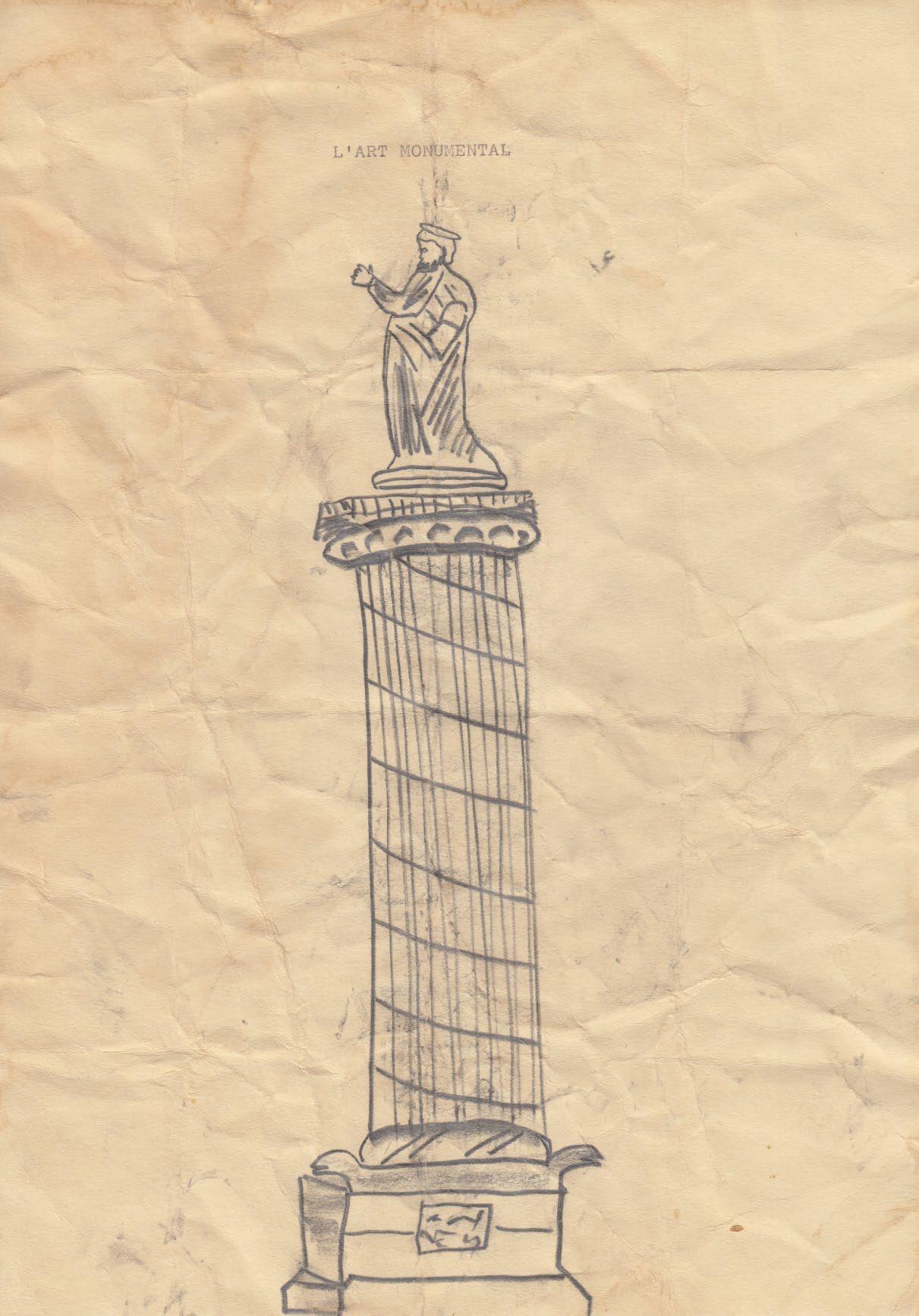
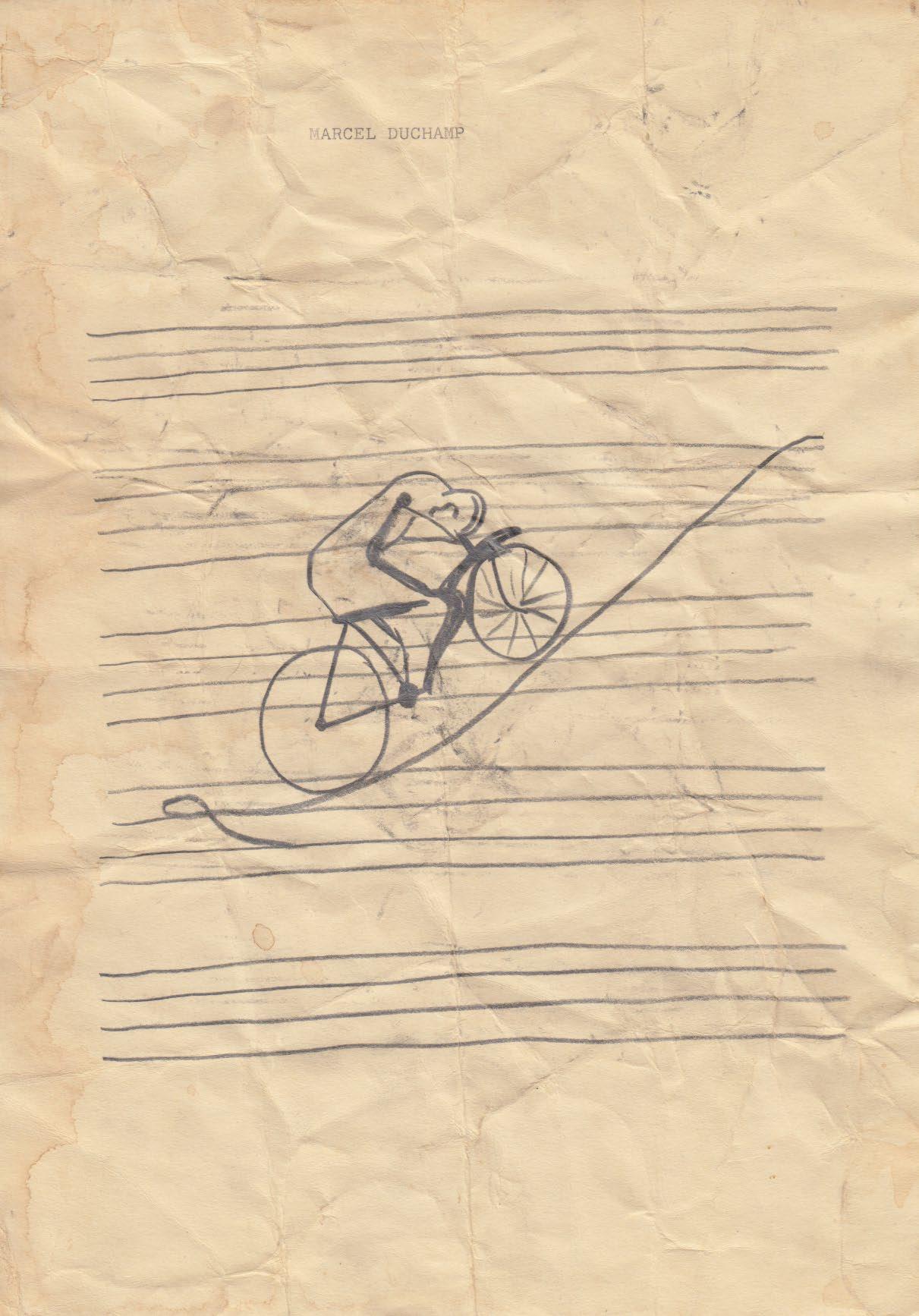
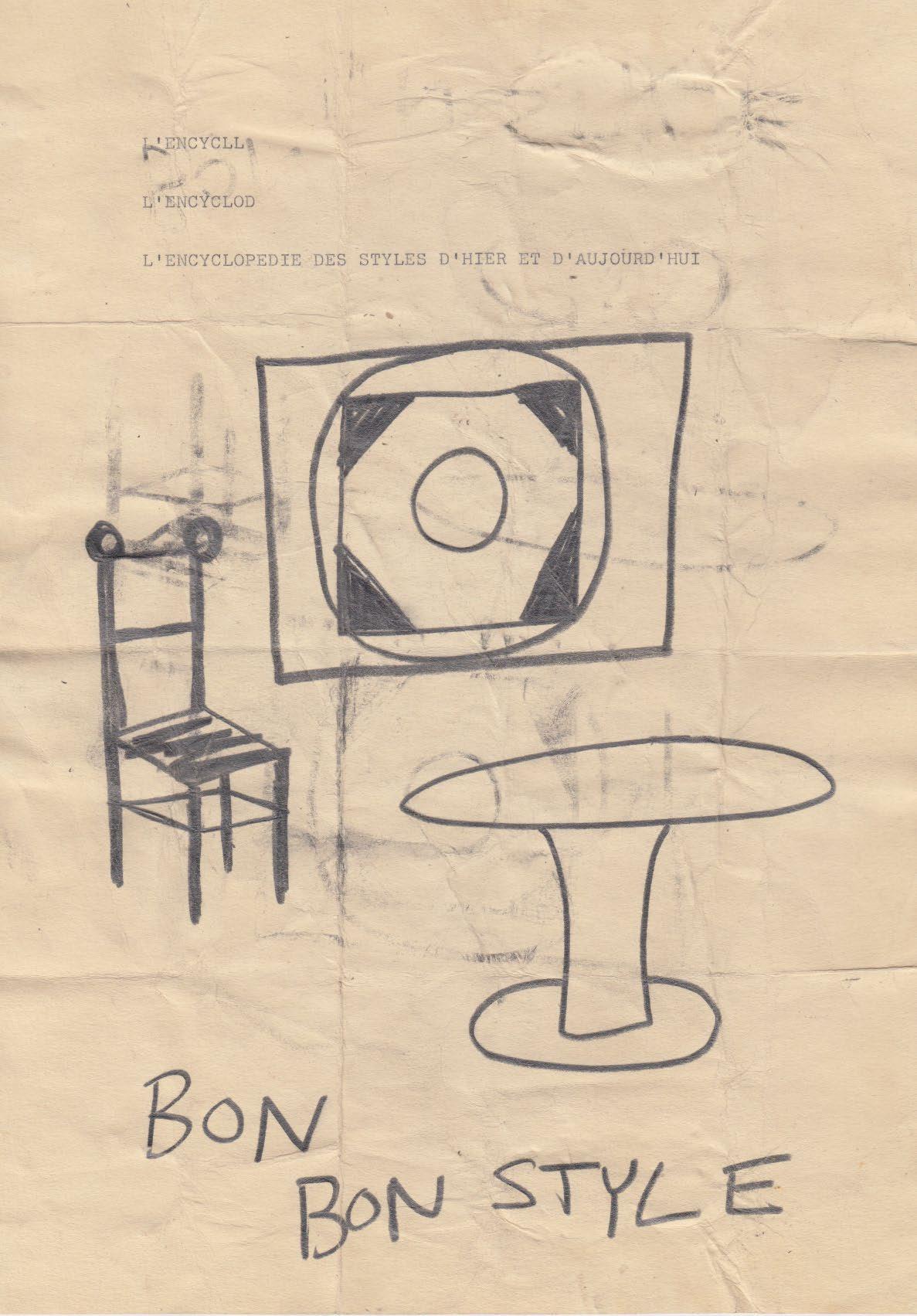
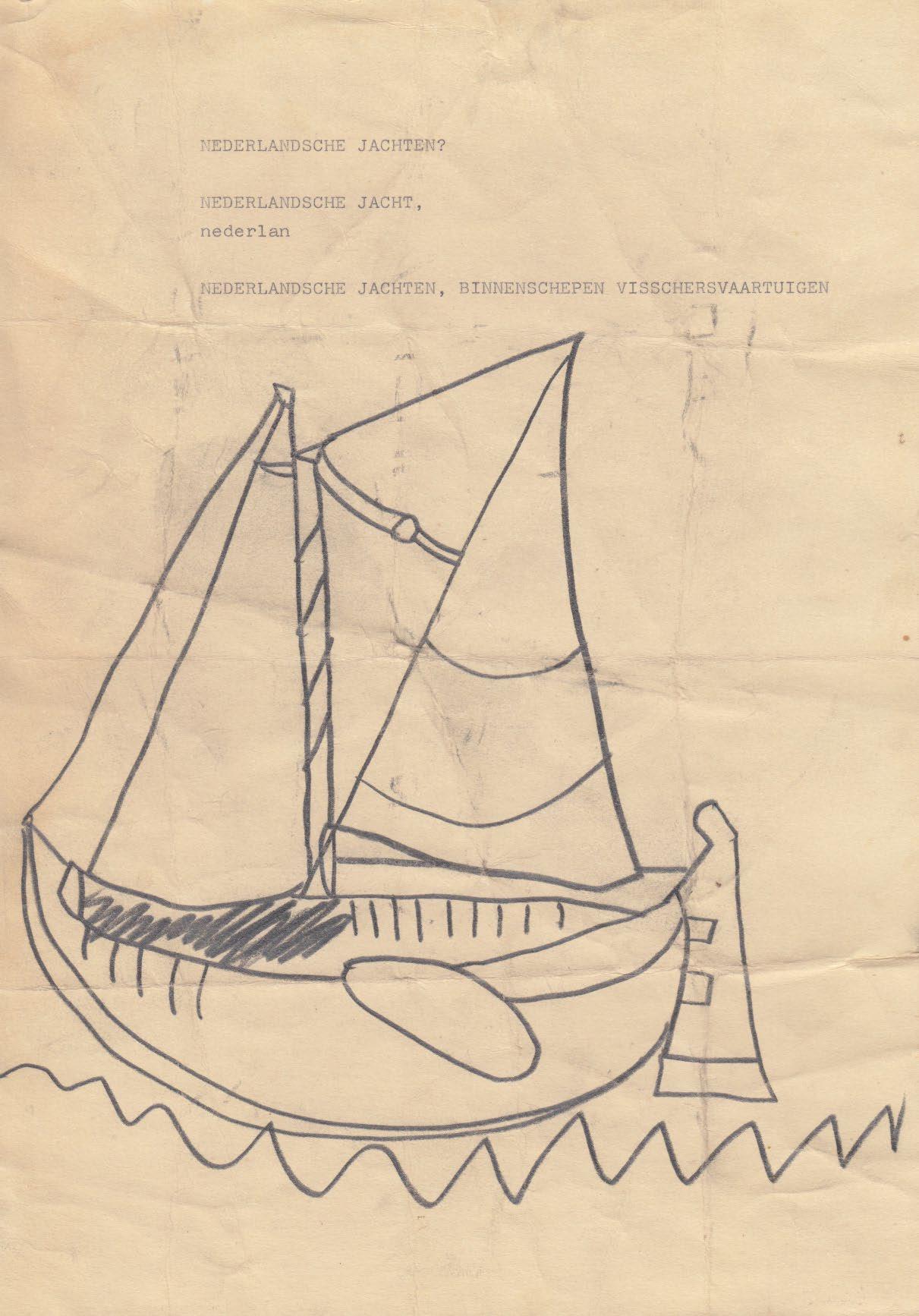
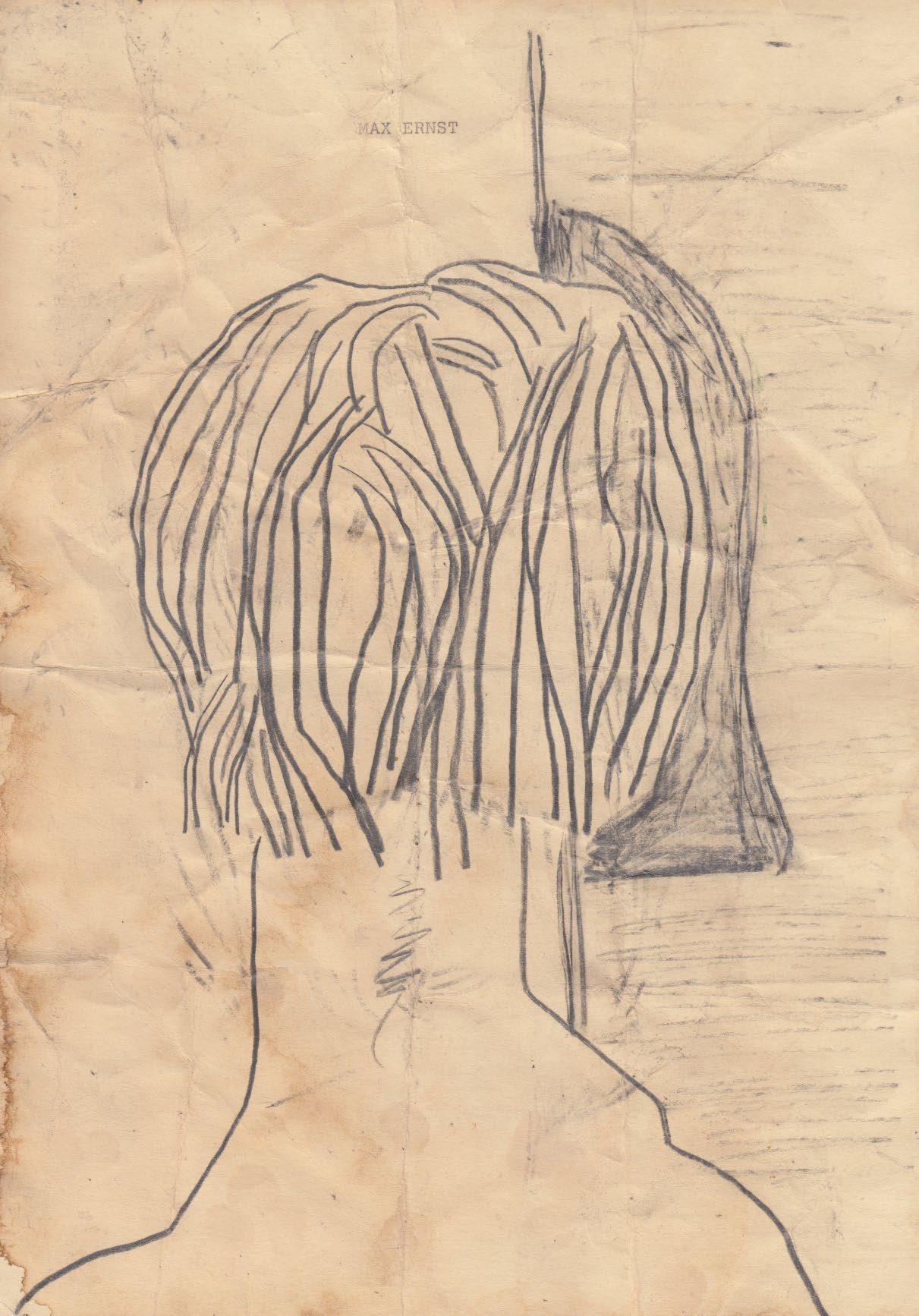
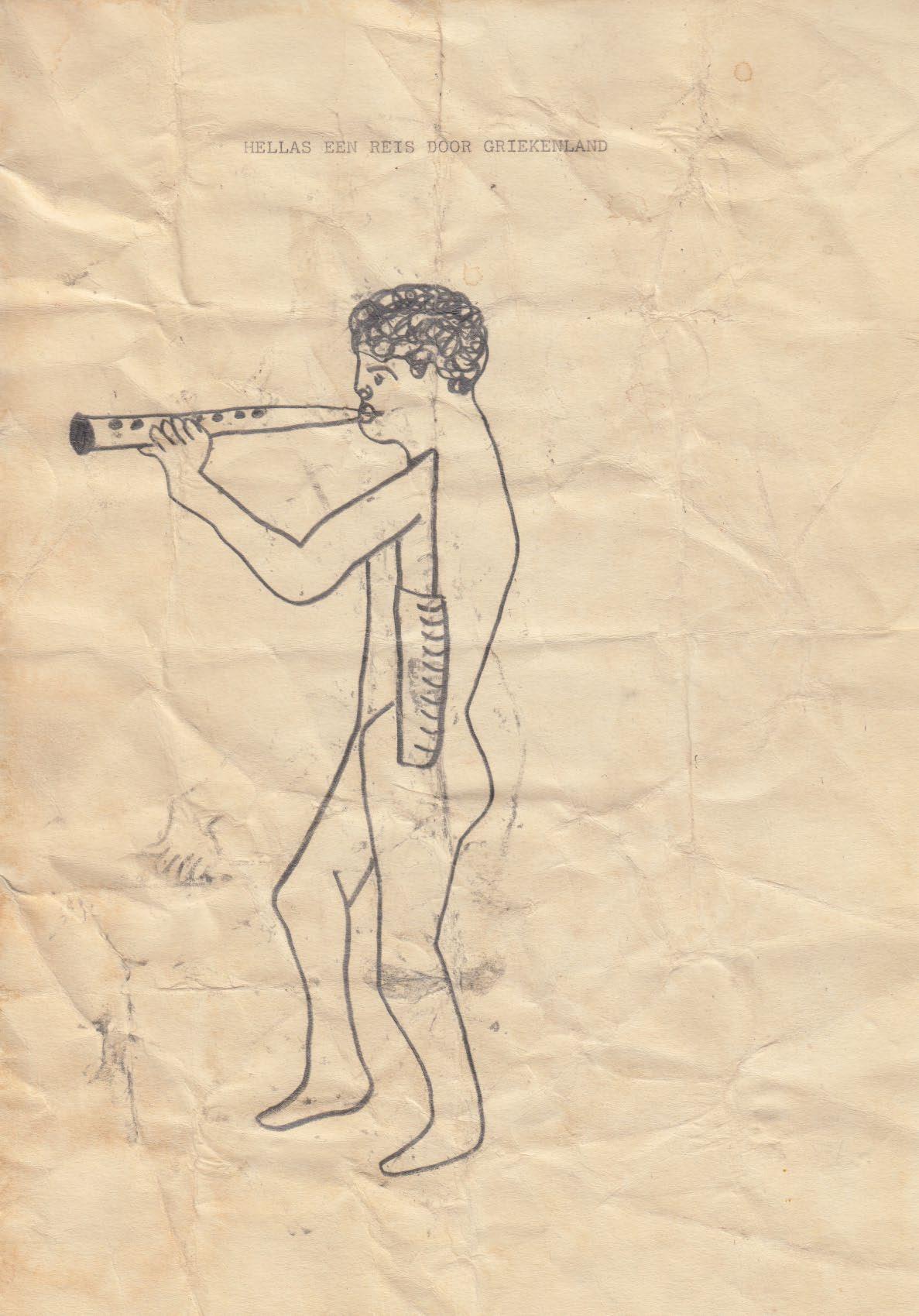
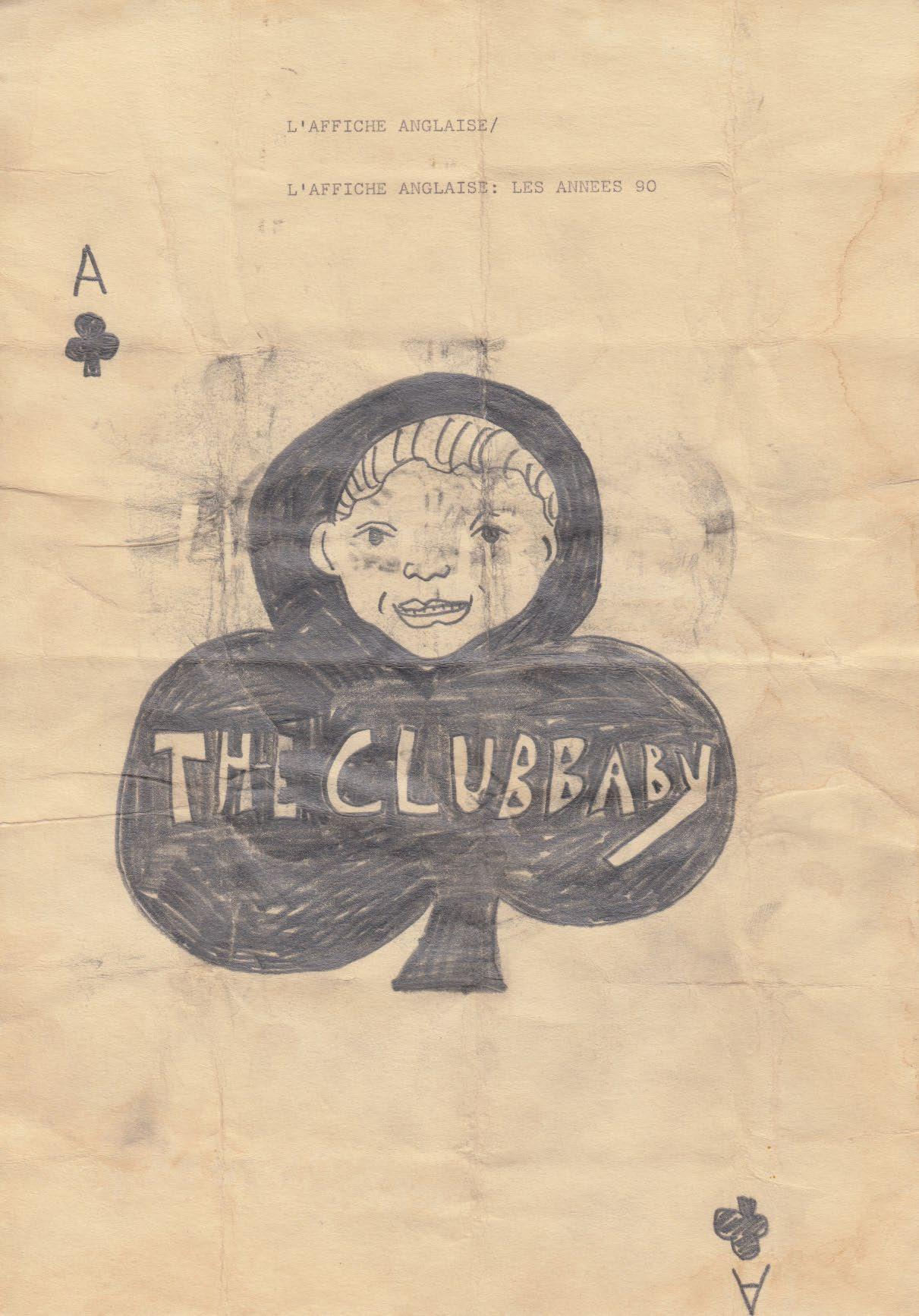
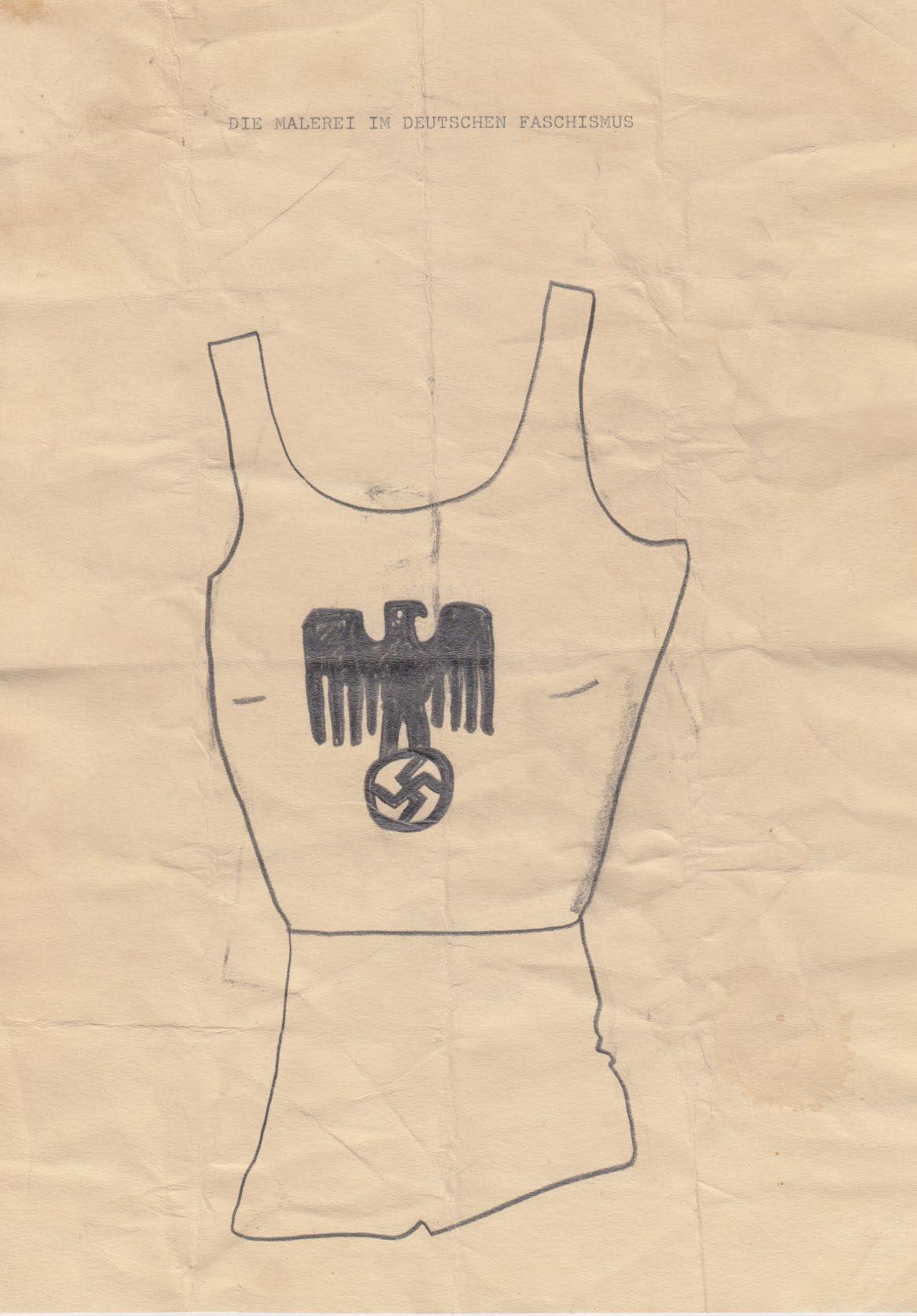
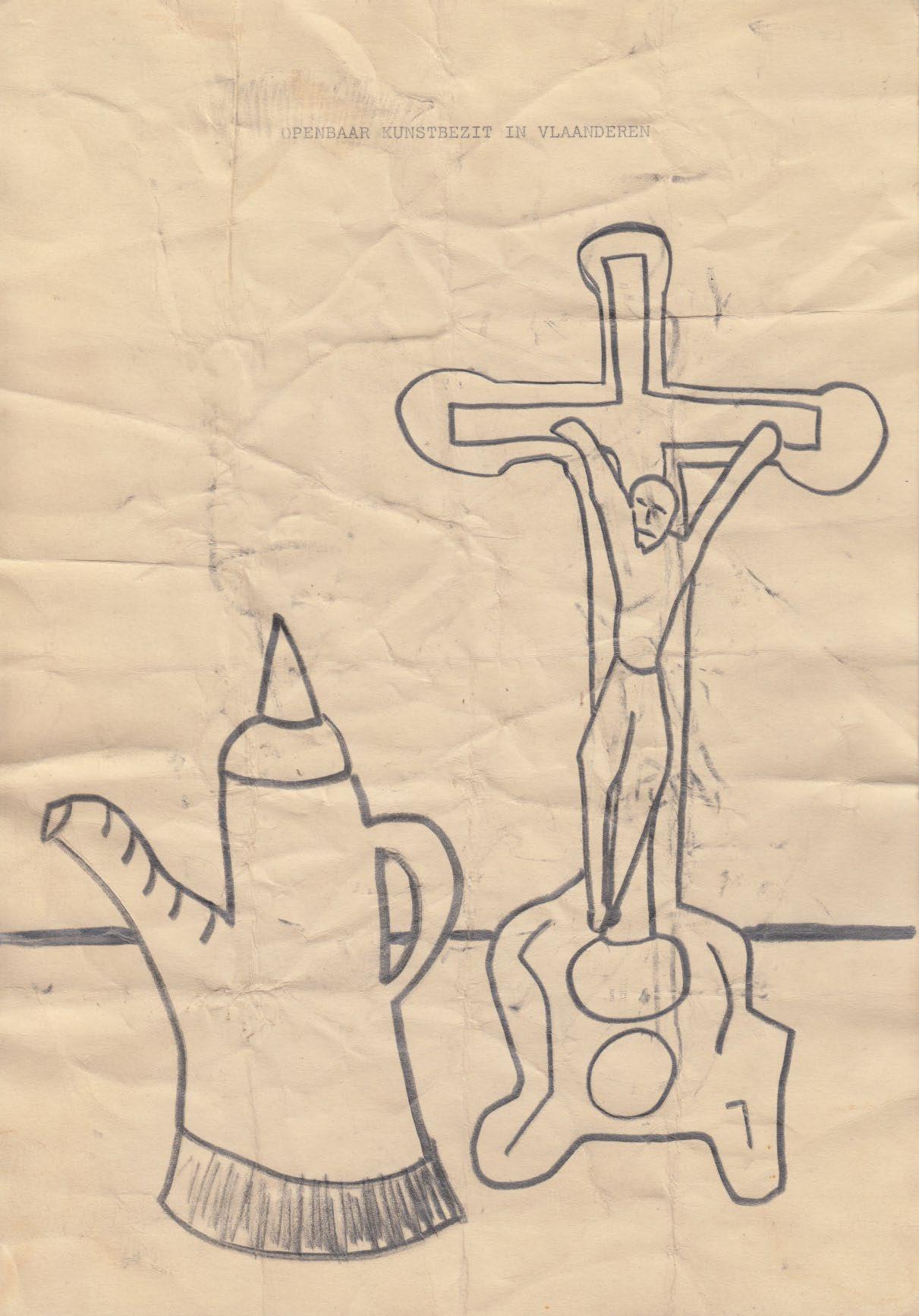
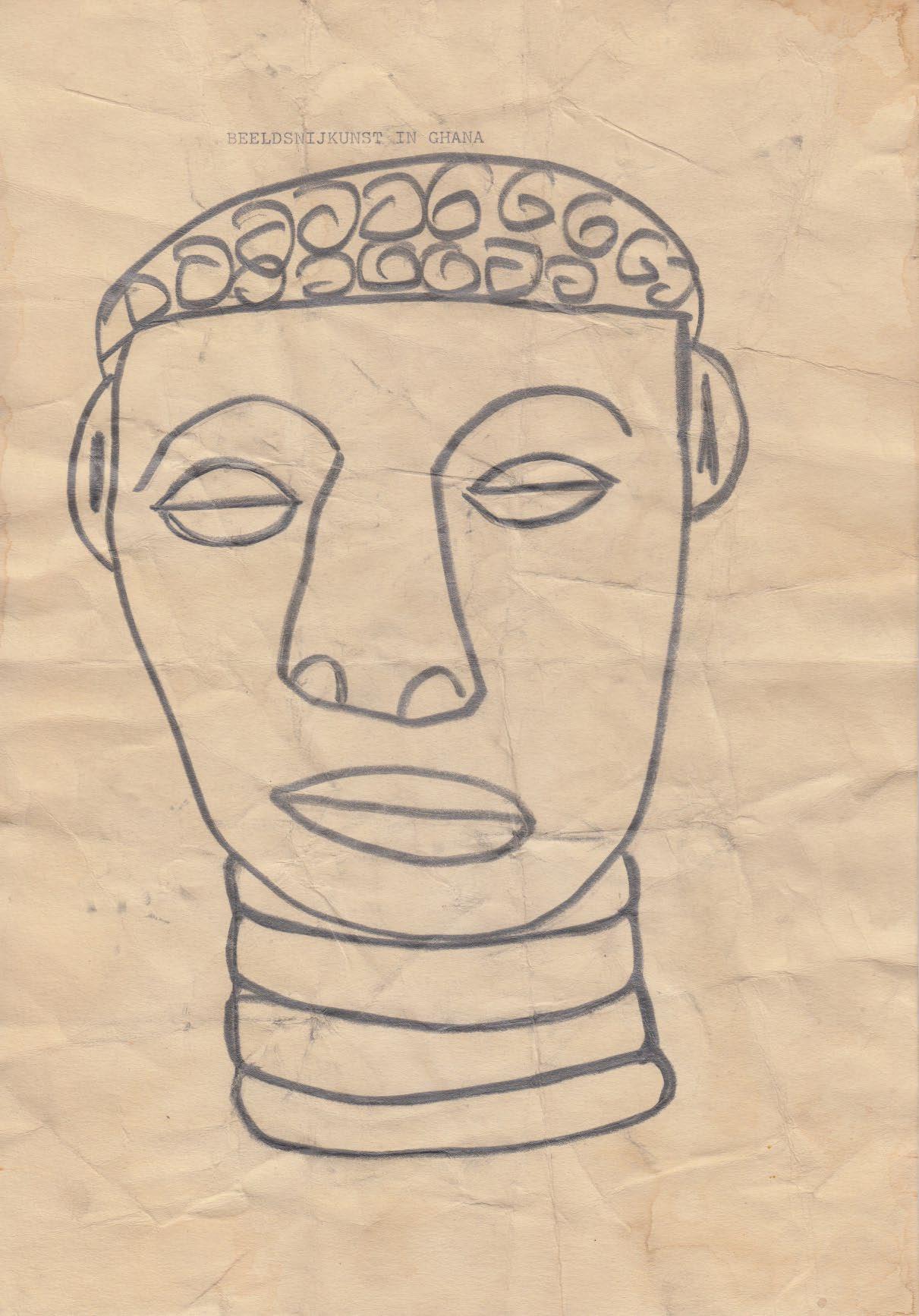
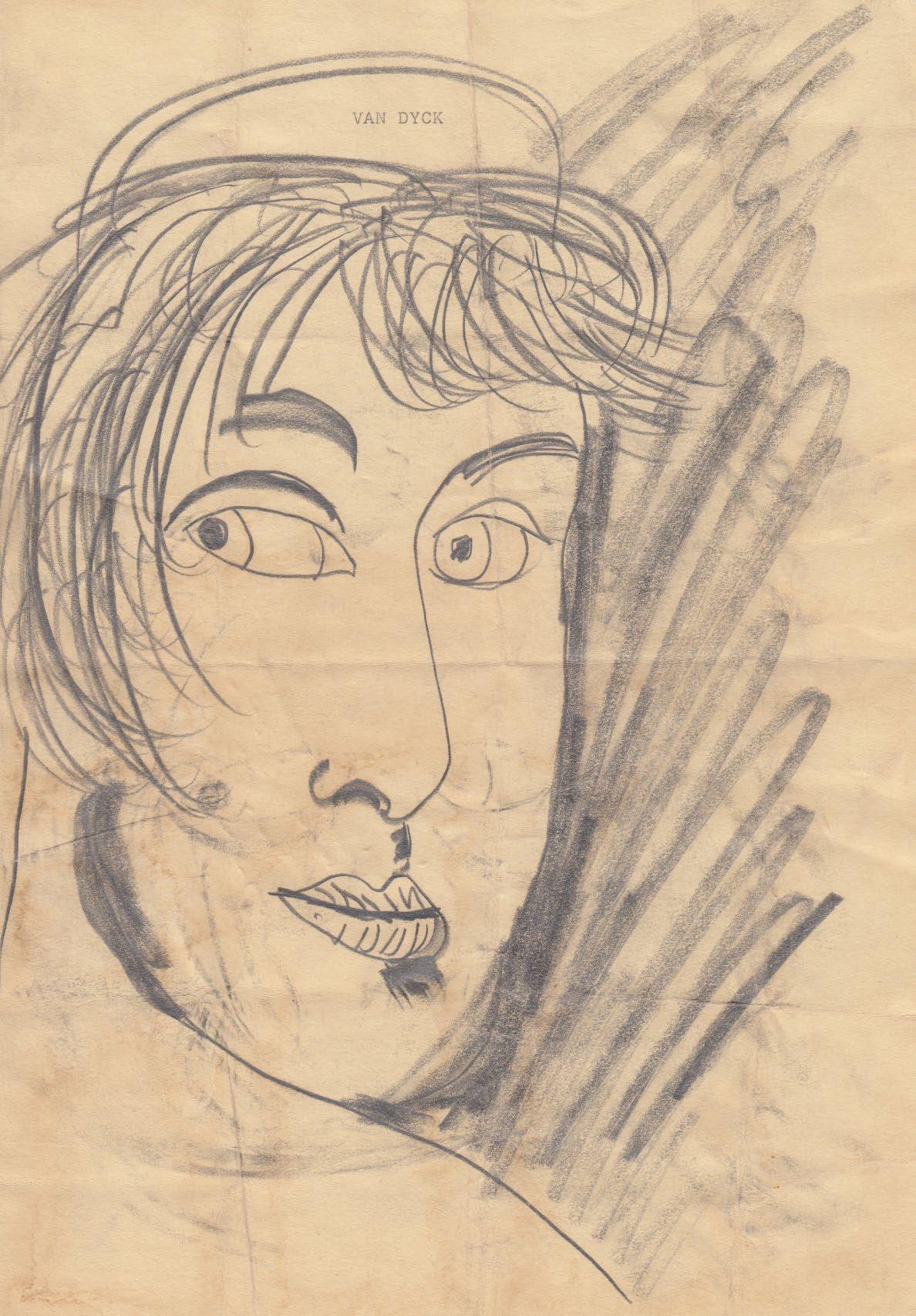
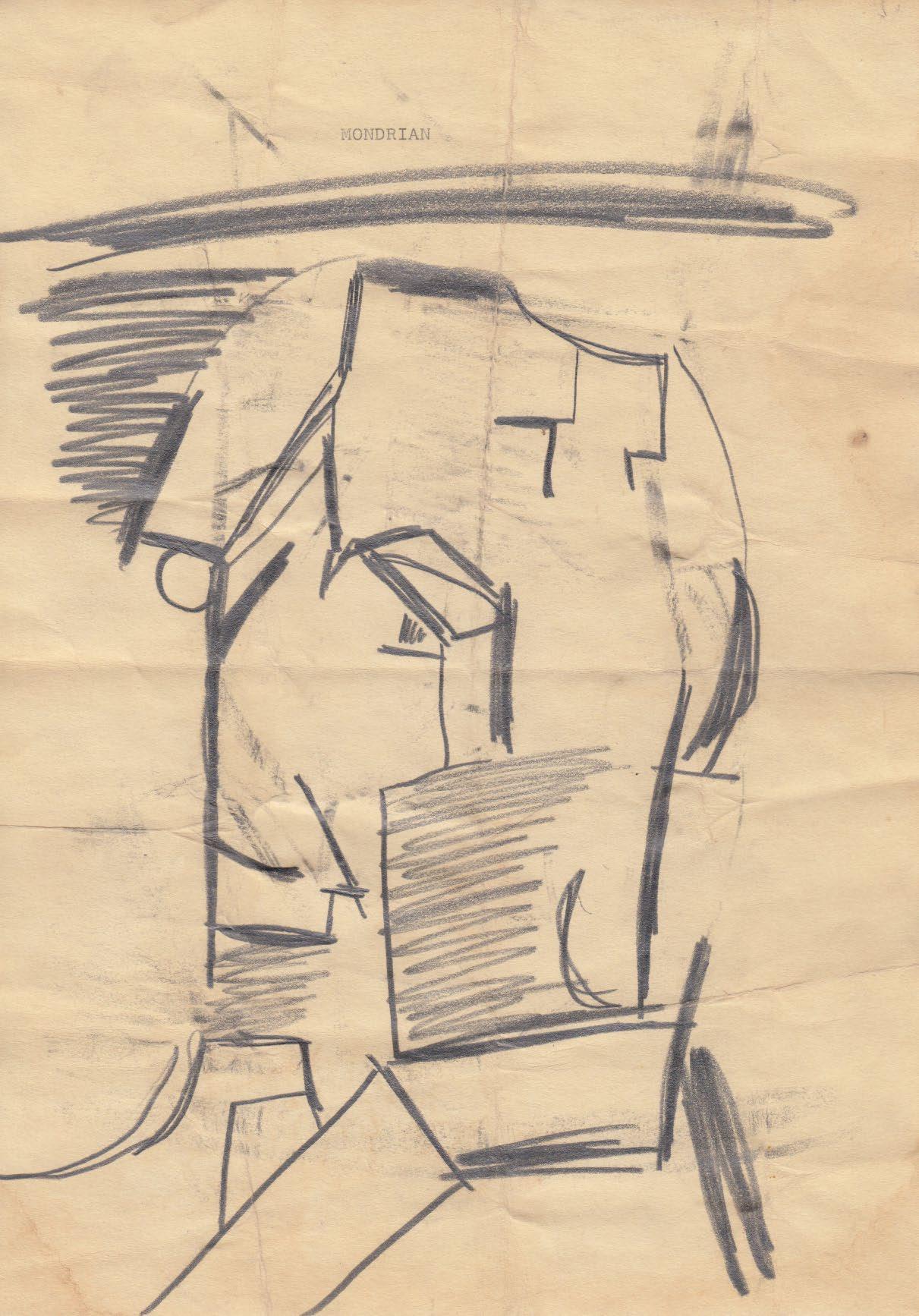
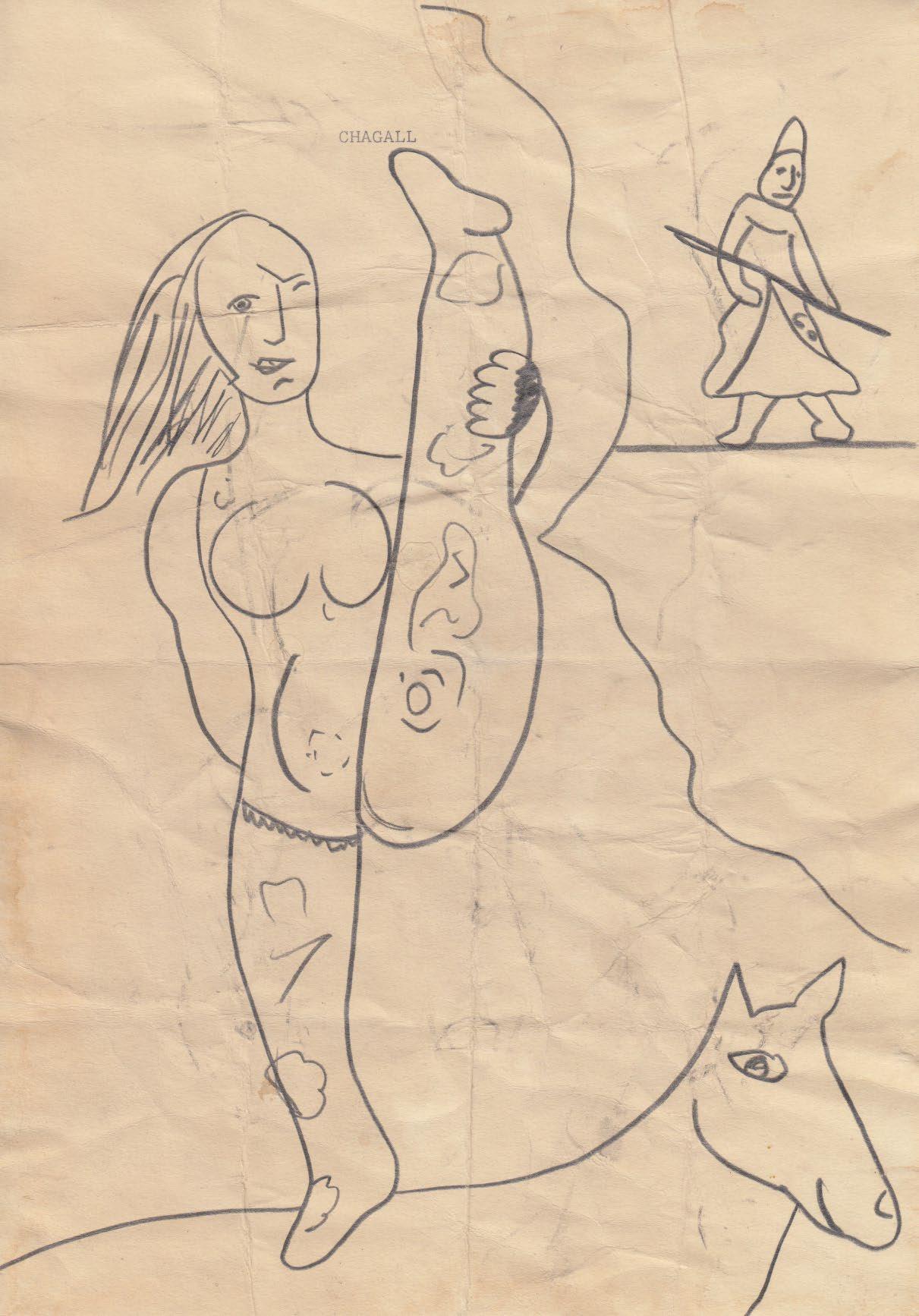
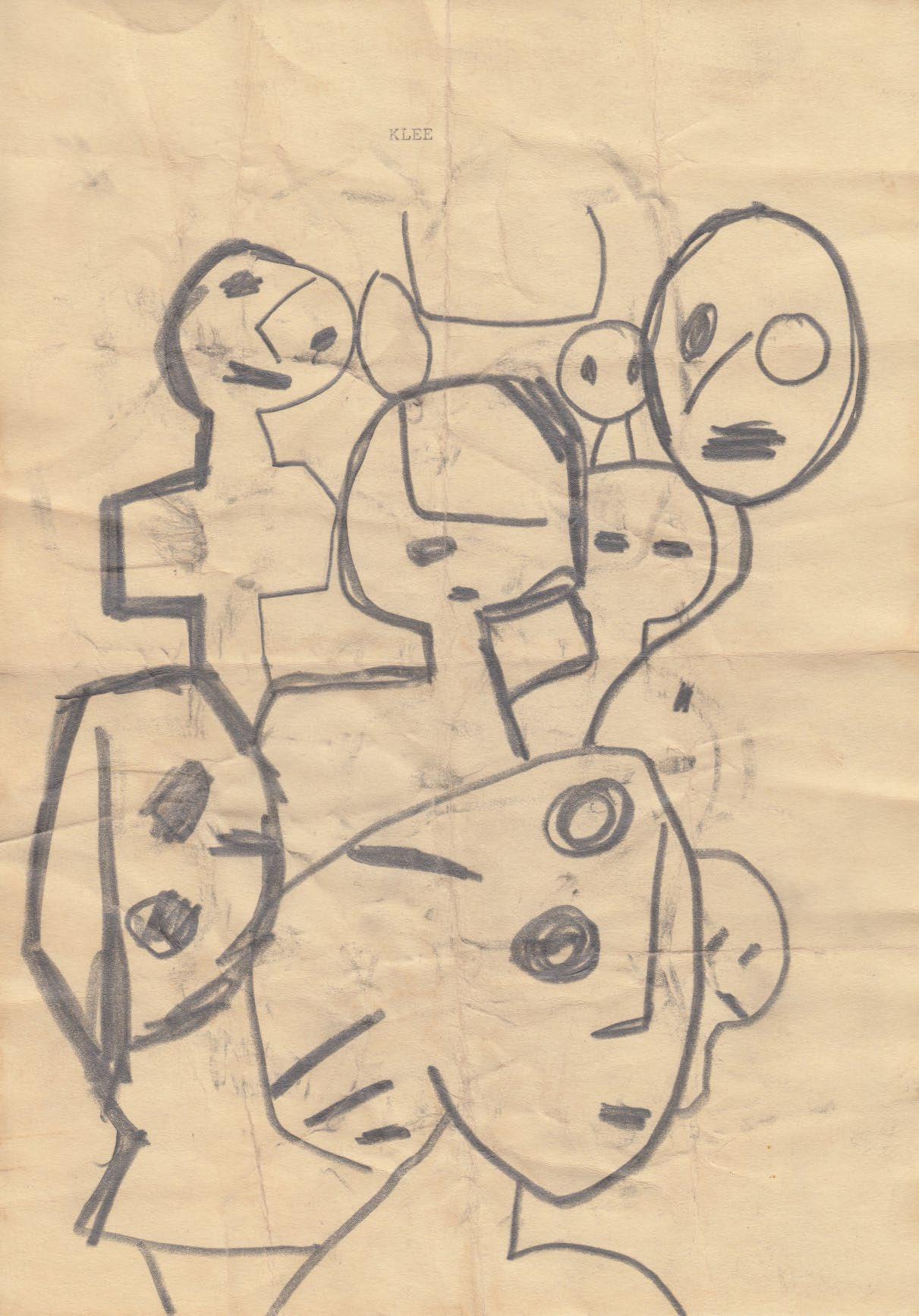
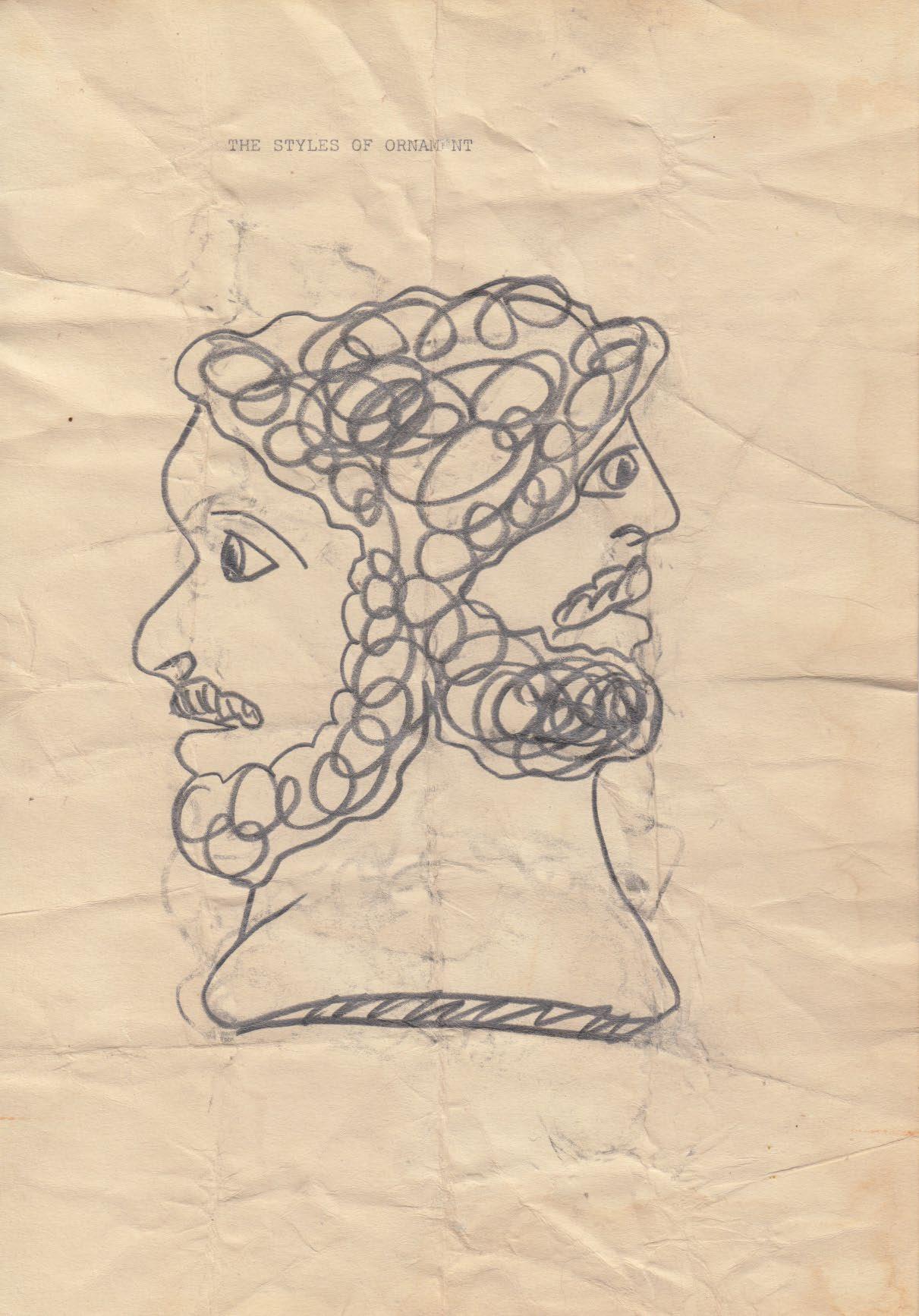
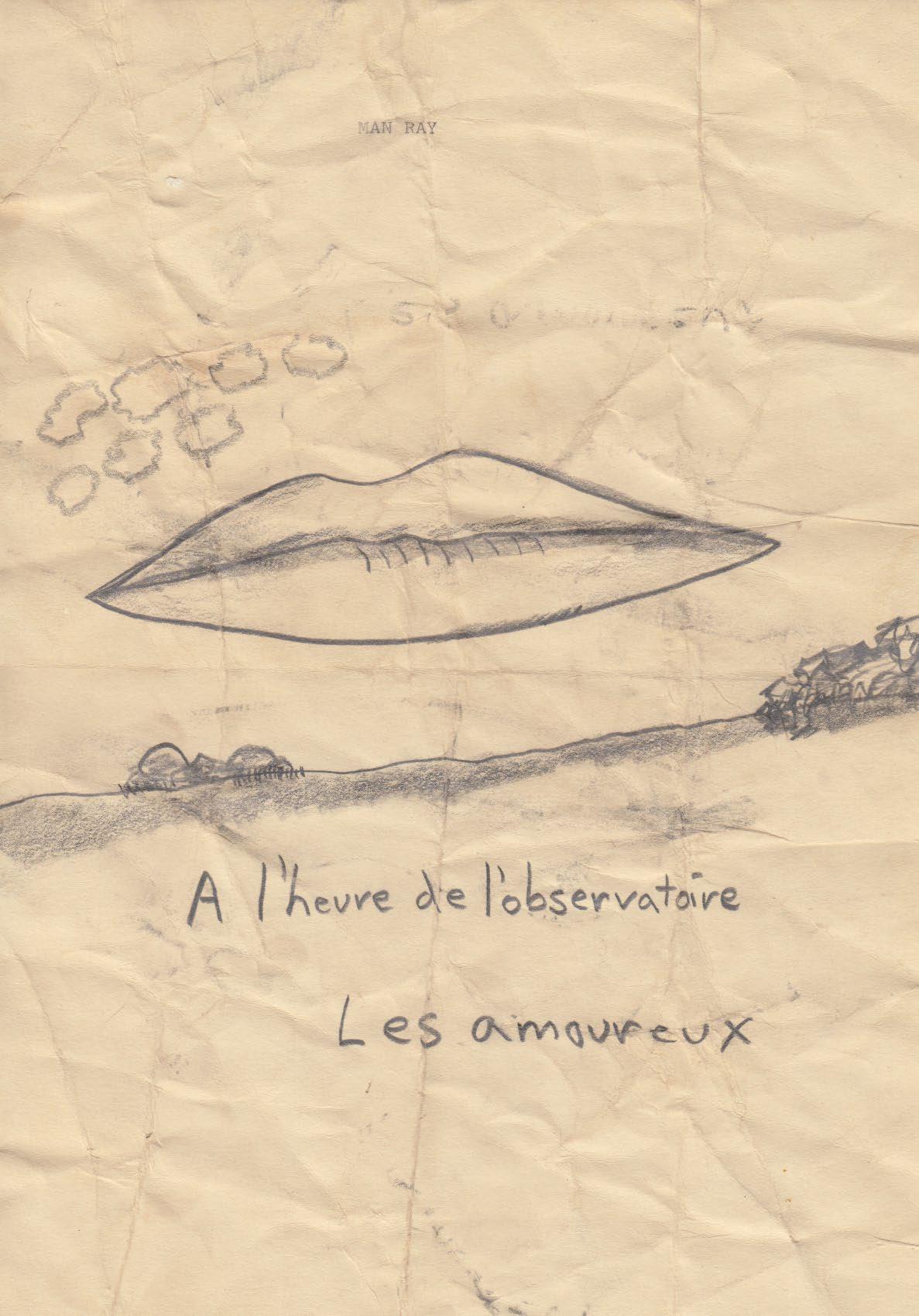
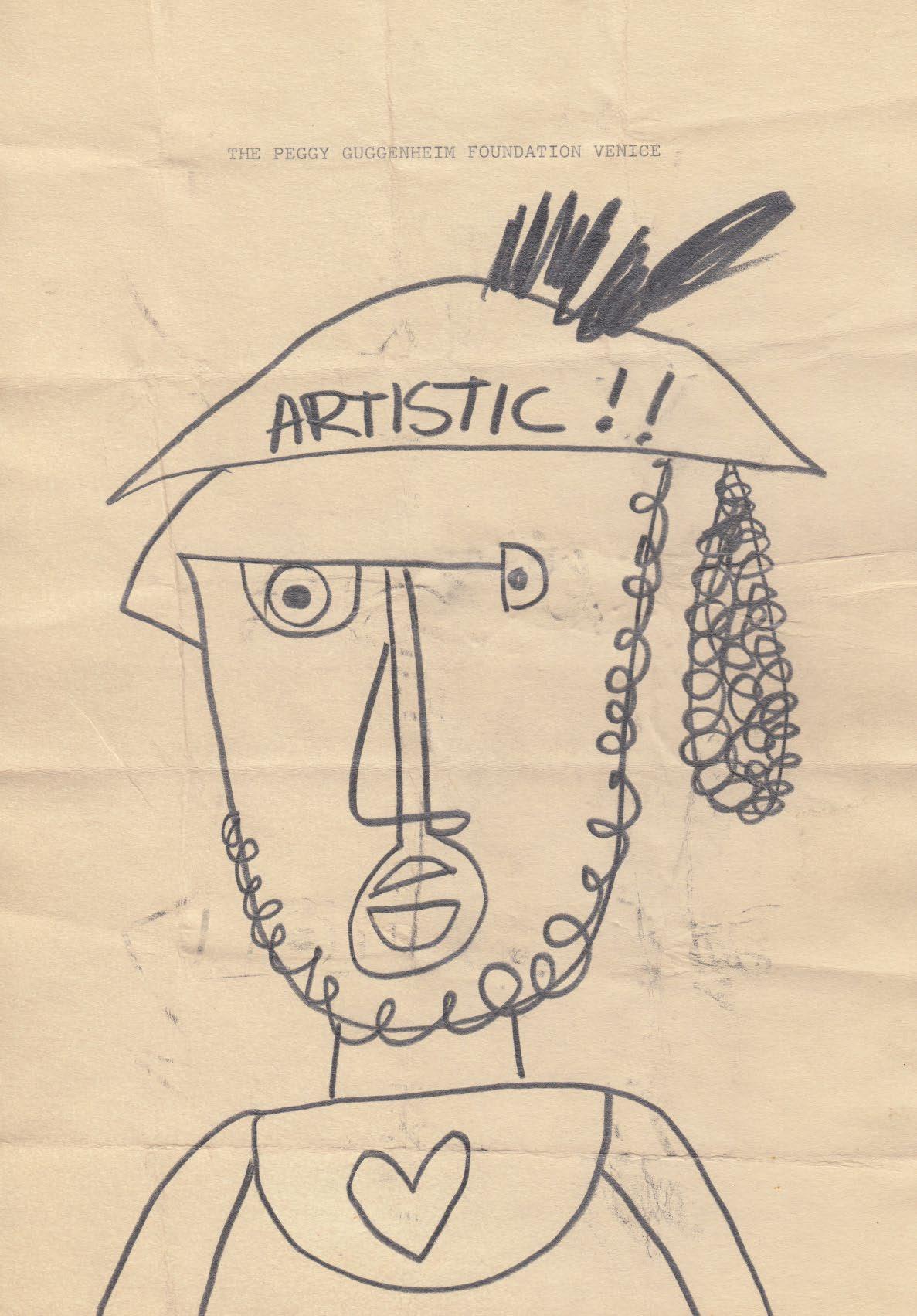
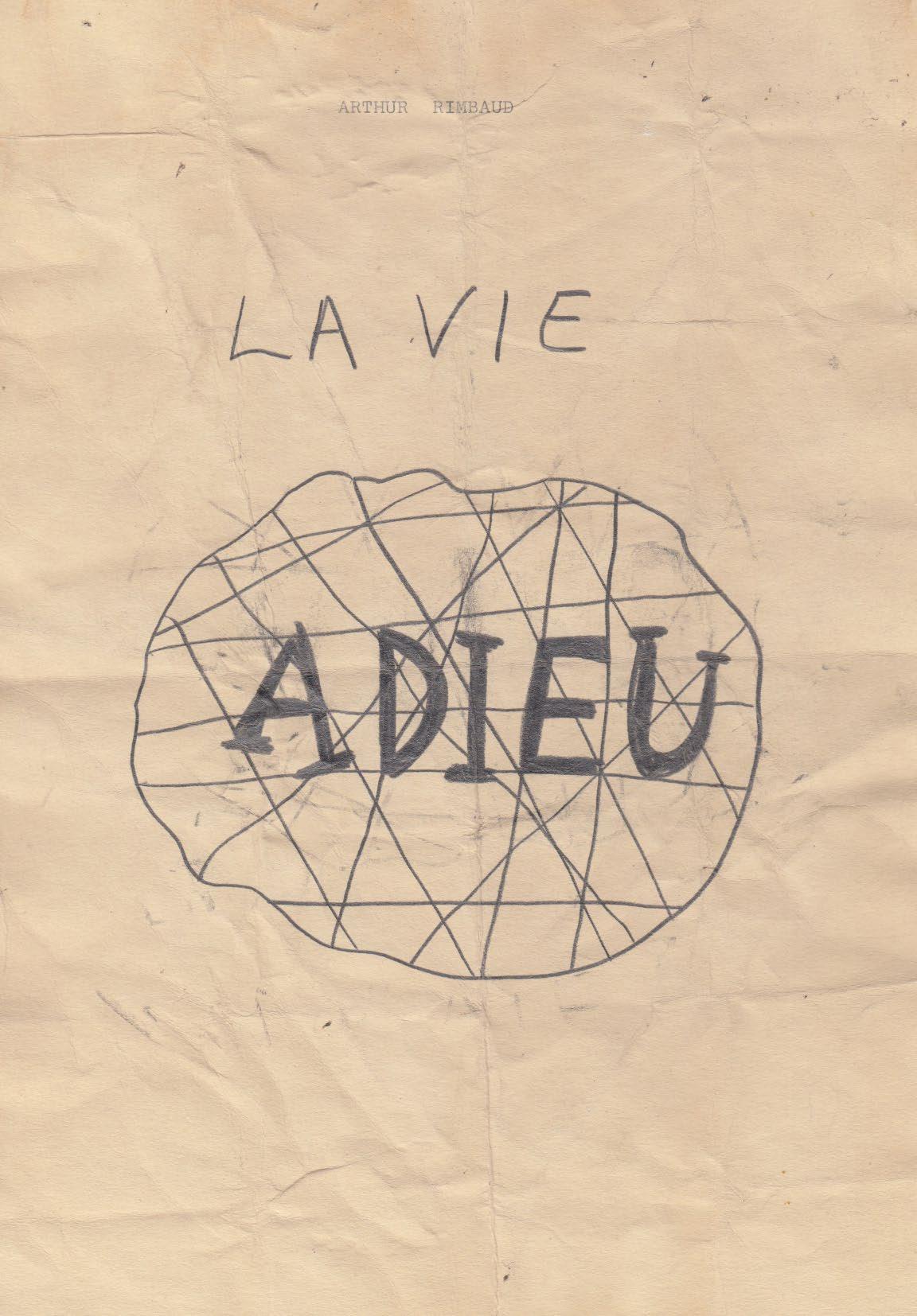
PEINDRE C’EST AIMER A NOUVEAU SUIVI DE LE SOURIRE AU PIED DE L’ECHELLE
Raina Wellman
Knowing Robin Winters both personally and through the lens of his artworks, it’s clear to me that he has long existed as both a friendly troublemaker and a thoughtful host. It only follows that he would strive to be a gracious guest and a playful trickster in his creations. Since his earliest years he has been committed to the craft of making art, the actual doing of it becoming both a performance and a practice. This makes it quite fitting that the Ghent, Belgium exhibition he was invited to participate in was one of the first to embrace artists’ burgeoning practice of working in the realm of relational aesthetics.
The exhibition, curated by Jan Hoet in 1986, was titled Chambres d’Amis, which translates in English to “Guest Rooms.” The project placed artists and their installations within over 50 volunteered private homes (later made partially open to the public) in Ghent, with the intention of bringing art into the world and outside the interiors of institutions, galleries, museums, and private collections.
In an Art Forum article on the project from September 1986, the art historian, Pier Luigi Tazzi, wrote: “[Hoet’s] project takes the exhibition structure off its hinges, goes beyond the limits of the frame and spills over, whole, into an interior. Art here no longer offers a mirror or a window, nor constitutes the privileged sign of a choice, but is an actual, provocative presence, confirming its difference both from the museum space, which has lost its sanctity, and from the contextual frame in which the object serves as a fetish.”1
Through this curatorial project, art making and exhibiting, frequently relegated to the museum walls, was curiously positioned within the private life of local families. All sorts of homes were offered up as zones of display, entirely or partially, each of the spaces having their own existing history and personal character that artists were encouraged to consider.
1 Chambres d’Amis (Art Reproduction), Artforum International, v. 30 (April 1992), p. 63.
The task, for Winters and the other selected artists, was to transform permitted areas within the home, outlined by the homeowners, into spaces in which the greater public could view and engage with art. It also became, for the curious, a chance to peek into others homes, to be welcomed through the doorways of previously private strangers and unvisited neighbors. As Hoet himself expressed in the exhibition catalog, “Chambres d’Amis evades the overwhelming nature of large, prestigious exhibitions by cutting the museum to pieces and scattering it all over town.”
In a time where art fairs and exhibitions feel increasingly commercial, often relegated to spaces like convention centers, the project idea feels deliciously generative and intriguing. Where, after all, does art come from? And where does it so frequently belong?
Visitors to the show were charged only $6 and issued a ticket from the Museum van Hedendaagse Kunst with detailed information and directions. The paper included local street addresses and artists’ names, arranged in numbered order, alongside an empty checkbox. Hoet wanted guests to have the impression that they were, “in the work, not just in front of it.” The organizational feat and welcoming spirit of all those involved is impressive to consider.
In a piece about her time visiting the installations across Ghent, Ingrid Schaffner, a curator, writer, and contemporary art educator, likened her experience to that of a treasure hunter, of sorts. She noted that the exhibition guide informed her, “You need two days to visit all the houses. Therefore, two circuits have been mapped out: Circuit A (red) on Tuesday, Thursday, and Saturday. Circuit B (blue) on Wednesday, Friday, and Sunday.”2
2 Schaffner, Ingrid. “Return Guest: Chambres d’Amis.” Ingrid Schaffner, https://ingridschaffner.com/2013/01/return-guest-chambres-damis/
Schaffner, after visiting the collaboration between Winters and Rob Scholte at Pat Jacobs’ home, wrote about the installation: “. . .in the corner of one living room, the owner’s pair of kneehigh wooden Congolese figures (possibly the only whiff of Belgium’s colonial past in the entire exhibition) stand on the floor with overturned water glasses resting on their heads. This was one of the many mighty slight gestures by Robin Winters, who used his space in the catalog to protest the lack of women artists in the show.”2
Winters had written, “It is like an insurance convention in Norman, Oklahoma. Mainly imported men, installed in private homes. I am deeply critical. . .”3
Schaffner also noted that Hoet did actually invite four women artists, including Maria Nordman. Nordman used her catalog pages to claim her own “priority within the project.” She wrote, “This work begins with the first visits to Ghent, starting in 1968.” Nordman had left a door ajar in a building in the center of the city “where people live and work” to create an unscripted social space. Hoet acknowledged Nordman’s claim stating that, “Her creations have precisely that dimension which Chambres d’Amis is aiming for: in which space is no longer a neutral, abstract, aspect . . . but a concrete, tangible material affected by life, upon which the artist must graft his or her work in a flexible, creative way.”2
Given that the subtitle of the Chambres d’Amis exhibition referenced Albrecht Dürer, Winters had also been inspired by Dürer’s practice of drawing bunnies. He considered making Chantal de Smet’s pet rabbit a more cozy enclosure, but when the bunny unfortunately passed away, he turned his focus to creating a series of drawings, works that pulled from the imagination-fueling qualities of de Smet’s book collection.
Delighted by Hoet’s vision and grateful for his place in de Smet’s home, Winters thoughtfully played with the tension between public display and private setting. His drawings were only available for de Smet and her family’s perusal, stashed within the books that made up the home’s private library.
3 Chambres d’Amis, exhibition catalog, Ghent: Museum van Hedendaagse Kunst, 1986.
For the public, Winters displayed an Ensor and Broodthaers piece for viewing. His space came alive with assistance from an assigned docent, the artist Johan Creten, who would theatrically present to viewers why Winters’ drawings were to remain private, though they could be viewed within the associated museum exhibition.
As a whole, the project immersed visitors in the city, creating the impression Hoet desired. In his introductory essay in the show’s catalog he wrote, “Art seems to be running wild; it has lost its regular place, its center.” Without the confines of a museum space, art was released from its suffocating tight frames and found new realms in which to exist and interact.
When I visit Winters’ home and studio in Soho, which he has worked in for over 50 years, he is quick to offer me a cup of tea, and cookies if he has them. Perhaps this is a way of making art too. Not only that, he also frequently has visitors and always has the company of two playful cats, hiding in cardboard boxes or attempting to tear up archival material. I know him as someone who is radically committed to lifting up other artists, through his home gallery, organizing such shows as The Batman Show, The Doctors and Dentists Show, The Dog Show, and Key Club, and through frequently attempting to connect other artists, introducing all sorts of people he believes in to each other, curators, and “big shots.”
In his work, he challenges group think cruelty and speaks up about issues of lack of representation. He is definitively un-snotty. I see him as not driven by fame, money, or prestigiousness, but instead by a real love of art and community building. Because of all this, his inclusion, intentions, and creations for the Chambres d’Amis exhibition make all the more sense to me.
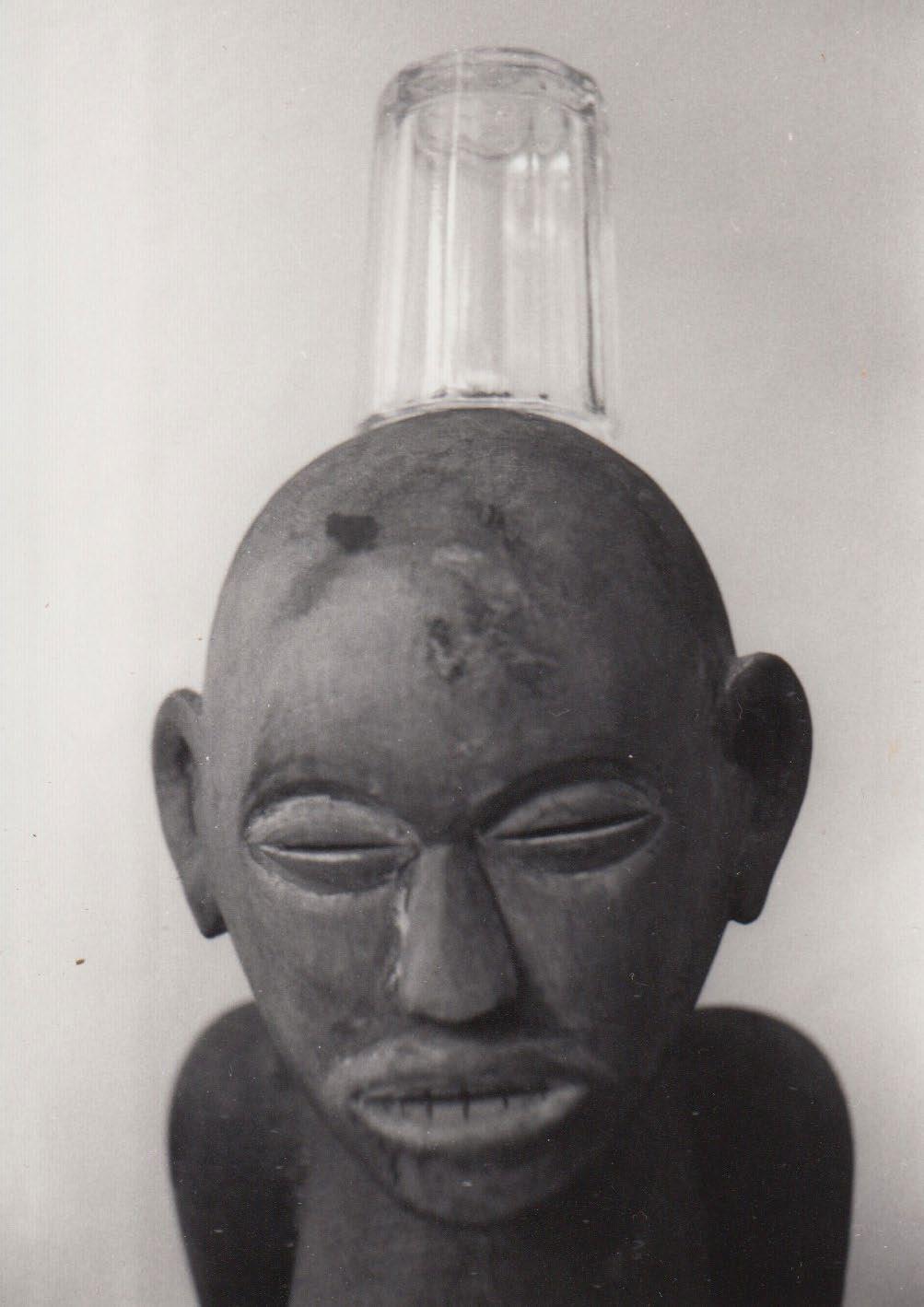
From a Reliable Source. Secrets notes are hidden under the overturned glasses.
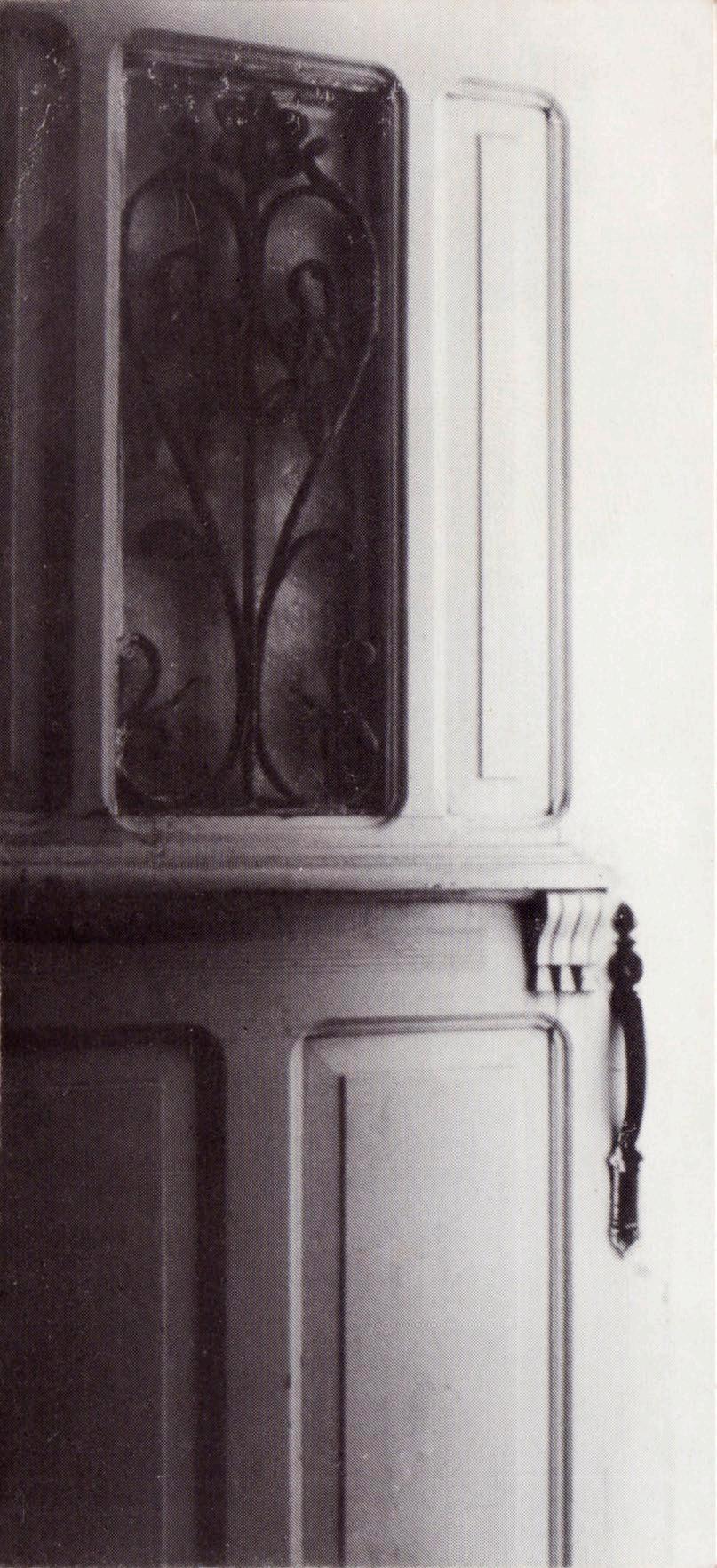
In 1986 I was living in Brussels while organizing an exhibition on the Belgian artist Henry van de Velde for the Royal Museum of Fine Arts in Antwerp (KMSKA). A month or so after I arrived in January, the exhibition was postponed until late 1987. While I continued working on this project, I also began writing reviews and getting involved with several contemporary art exhibitions. Through artist friends I heard about the Chambres d’Amis and soon met Jan Hoet, the curator/impresario of this ambitious exhibition.
Hoet was then the curator/director of the museum he had co-founded in 1975, the Museum voor Hedendaagse Kunst (MHK) (Museum for Contemporary Art) in Ghent (renamed in 1999 as the Stedelijk Museum voor Actuele Kunst (SMAK)) and then housed in the Museum of Fine Arts. Hoet’s background provided the foundation for his unique approach to curating. Early on he studied art at the Academy of Fine Arts in Ghent (he would remain an amateur painter throughout his life) and later, art history at the University of Ghent. Hoet was also an amateur boxer, who loved the challenge of boxing and brought the same aggressive, feisty, and dynamic energy to his curatorial practice. His strongly held opinions, intense personality, mercurial temperament, and rather improvisational style could be challenging to colleagues and his staff, but his steadfast commitment to artists and contemporary practices along with his friendships with many artists often resulted in stimulating, cutting-edge exhibitions.
Chambres d’Amis would establish Jan Hoet’s career and lead to invitations to organize other international exhibitions including Documenta IX (1992). The idea of inviting artists to show their work in private homes certainly broadened the parameters of curatorial practice but it was not the only exhibition in Ghent that summer. The parallel exhibition, entitled Initiatief 86 (Initiative 86), sponsored by the Association for the Museum of Contemporary Art (VMHK) was organized by Kasper Konig, Jean-Hubert Martin, and Gosse Oosterhof with the assistance of the young curators Bart De Baere and Bart Cassiman (Hoet also contributed to the catalog) and took place mainly in St. Peter’s Abbey.
Several salon-type shows were also organized in response to the Chambres show including Initiatief d’Amis on view in the Vooruit building and Antichambre, an exhibition of more than a hundred artists that took place in factory buildings on the Drongensesteenweg. All these exhibitions opened the same day and night and remained on view throughout the summer of 1986.
The location of these exhibitions in Ghent was not without significance. One hundred years earlier, Ghent was the site of radical social activism, centered around the co-operative collective Vooruit (“Forward”) that distributed bread, published a newspaper, organized for worker’s rights, and helped to form the Belgian Socialist Party in 1885. Beginning in the 1860’s, social unrest and strikes occurred with increasing frequency throughout Belgium, culminating in the early 1880’s with worker’s riots mainly in coal mines and glass factories in the south and anarchist actions in Brussels and other cities. The general strike of 1886 led to a violent repression by the Belgian government with twenty striking demonstrators killed and hundreds injured. In the aftermath, a parliamentary Labor Commission was created, resulting eventually in labor legislation that marked the first time a workers’ revolt gained concessions from the national government.
In the early 1980’s, a global economic downturn and recession saw the recurrence of labor unrest in Belgium, leading in 1986 to demonstrations by the civic guard and miners, among others, and culminating that May with a march of 50,000 people in central Brussels. During this period, the rail workers were particularly active, regularly staging walkouts, slow downs and strikes that often paralyzed the trains (especially in the summer), making travel to Ghent unpredictable, slow or infrequent.
The opening for the Chambres d’Amis was held on the longest day, the summer equinox, June 21st, 1986. The city was alive with artists and events and Jan Hoet seemed to be everywhere. He challenged a few participants to boxing matches (in between interviews with the press). I remember encountering him at 5 AM near St. Peter’s Abbey, still full of energy.
The organizing concept for Chambres d’Amis (literally “friend’s houses” or “guest house”) was to take art out of the public space of the museum and into the private space of the home, 51 invited artists making works in 58 mainly middle- and upper-class homes spread throughout the city. There was quite a range of approaches. Some artists imposed their aesthetic on private space, while others tried to be sensitive to those who had offered their homes to be open for the duration of the summer. In one home, the two rooms set apart for an artist (who will remain unnamed) literally needed to be propped up with additional support. Others made more modest artistic interventions: Sol LeWitt’s mural illuminated by a single light bulb was placed in a hallway where children’s bikes were regularly stored; Jef Geys installed doors painted with the words ‘liberty,’ ‘equality,’ and ‘fraternity’ that opened onto blank walls in six worker’s houses, the words referencing both the French revolution and Ghent’s own radical history. Other artists’ choices reflected their own interests. Joseph Kosuth, for example, presented blacked out texts by Sigmund Freud on the walls of the home of the psychoanalyst Andre Vereecken.
I interviewed many of the artists when they were installing their works and enjoyed meeting younger artists like the Spanish sculptor Juan Muñoz, the German installation artist Heike Pallanca, and Robin Winters, each of whom chose to collaborate with their hosts and had sincere and unique approaches to the theme. During the run of the show, I also visited most of the homes as well as the other exhibitions on view throughout the summer.
Unfortunately, most of the interviews remain unpublished, with only a few appearing in the Dutch-language Museumjournaal (3-4, 1986, 220-227). The following is an excerpt edited from my review of the exhibition and introduction to these interviews: Chambres d’Amis aimed to be a bold experiment designed to bring contemporary art out of its hermetic museum sanctuary and into direct contact with the general public. For this show, fifty-one international artists created works for rooms in private homes which were then open to the public. Yet, despite its provocative premise, this show failed to break new ground. Instead, it only re-affirmed the pre-eminent position of the museum and the autonomous nature of most contemporary art.
The exhibition actually sustained many of the conventional attitudes it tried to dispel. Removing the museum context from the artwork does not make it any less “difficult,” nor does a new location liberate it from cultural enframement. Rather, one milieu was replaced by another. Indeed, the placement of art works in private homes only recalled the origins of the modern museum in the collections of the nineteenth century bourgeoisie. Ironically, the politics of patronage, often disguised in the museum with whitewashed walls and discrete labels, was laid bare. In fact, it was hard when entering many of these homes not to associate contemporary art with the leisure-time activity of the affluent upper and middle class.
The issue of patronage bothered some artists more than others. While Gilberto Zorio’s graciously arcing canoe was a beautifully fashioned object, it seemed tailor-made for a space that was quite obviously the homeowner’s personal gallery. Daniel Buren’s response was to reconstruct a copy of the work he had installed in the bedroom of a prominent private collector in the middle of the museum (the collector refused to let the public into his home). Robin Winters ruefully exposed this duplicity by displaying carbon-copy drawings on the outer walls of Buren’s manufactured museum model.
Significantly, the Belgian artists had the most to say on this question of patronage. Panamarenko exhibited a bird cage filled with money that cleverly symbolized the imprisonment of art by corporate and private sponsorship. Philip van Isacker first contacted his audience in local pubs and cafes and then placed his clay and steel structures in the courtyards of public housing projects and (as noted above) Jef Geys installed his works in the homes of poor people.
Not all the artists were as socially engaged as these three Belgians. For some, it was just another show. Thus it was oftentimes difficult to distinguish the living or dining room emptied of furniture with walls painted in complimentary colors from the museum environment. As the Chambres d’Amis demonstrated, when the fabricated and rarefied atmosphere of the museum is brought into the public sphere, all concerned—the curator, the artists, the owners of the houses, and the general public—have to re-evaluate their understanding of the role of contemporary art within the context of everyday life.
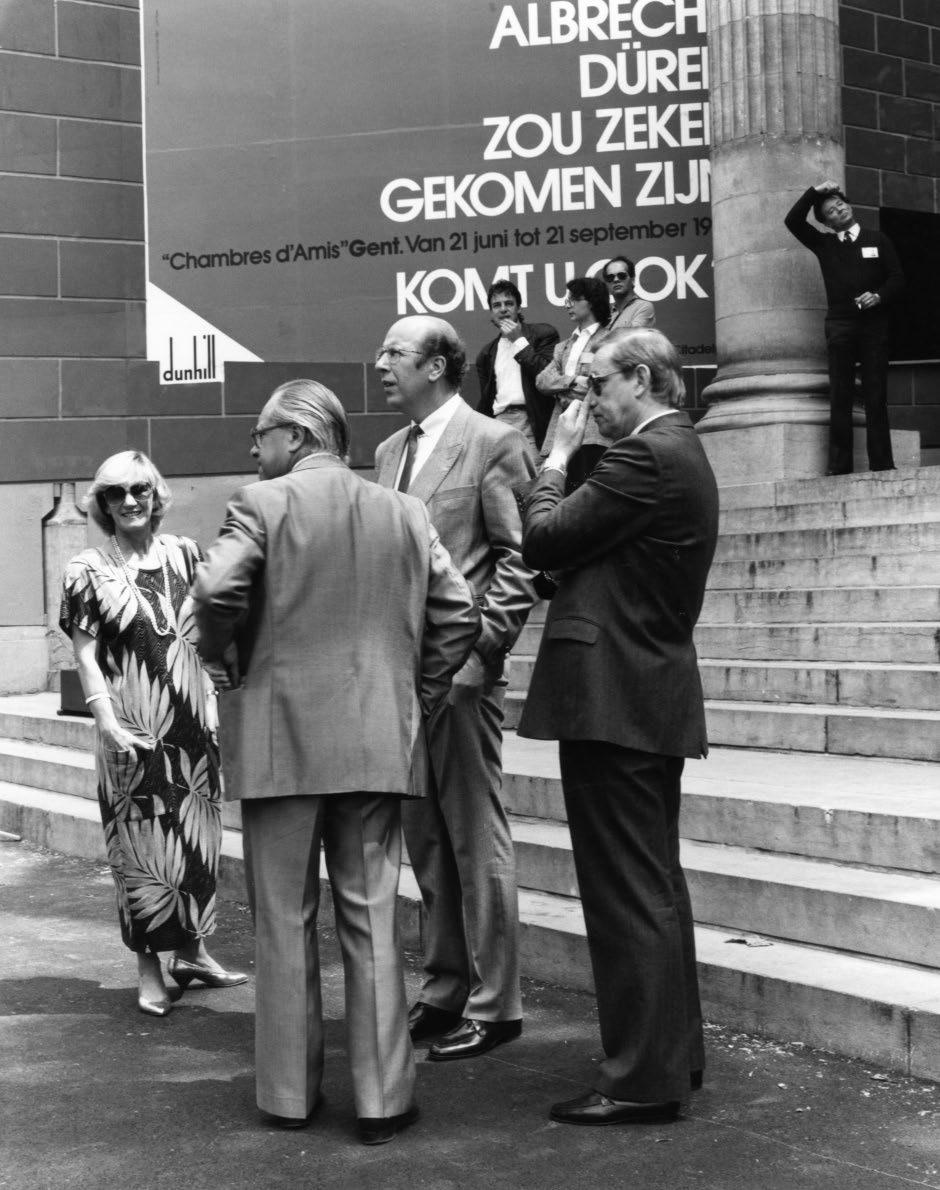
Visitors gathered outside the museum.
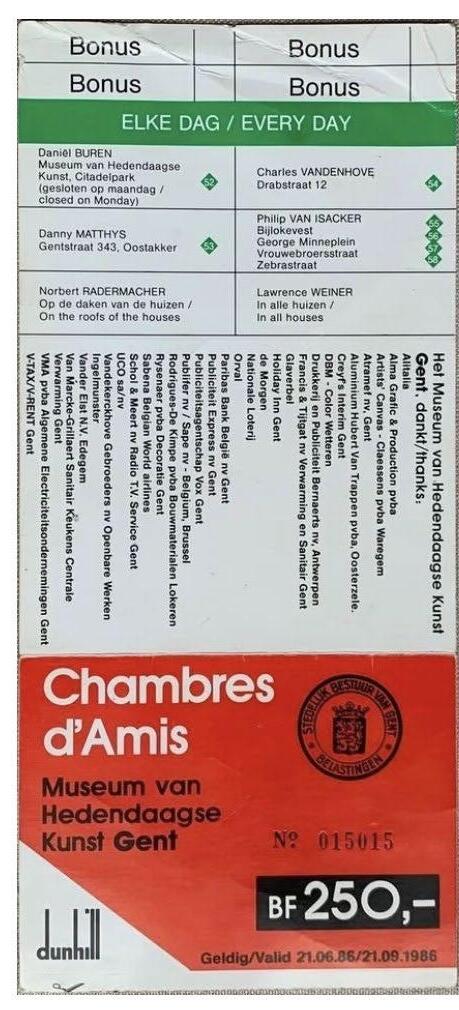
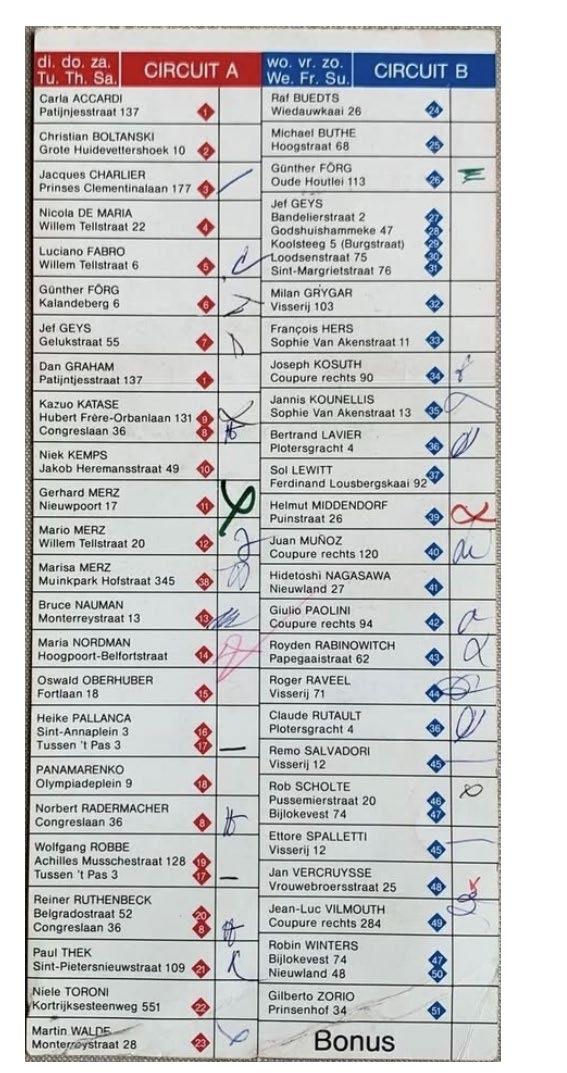
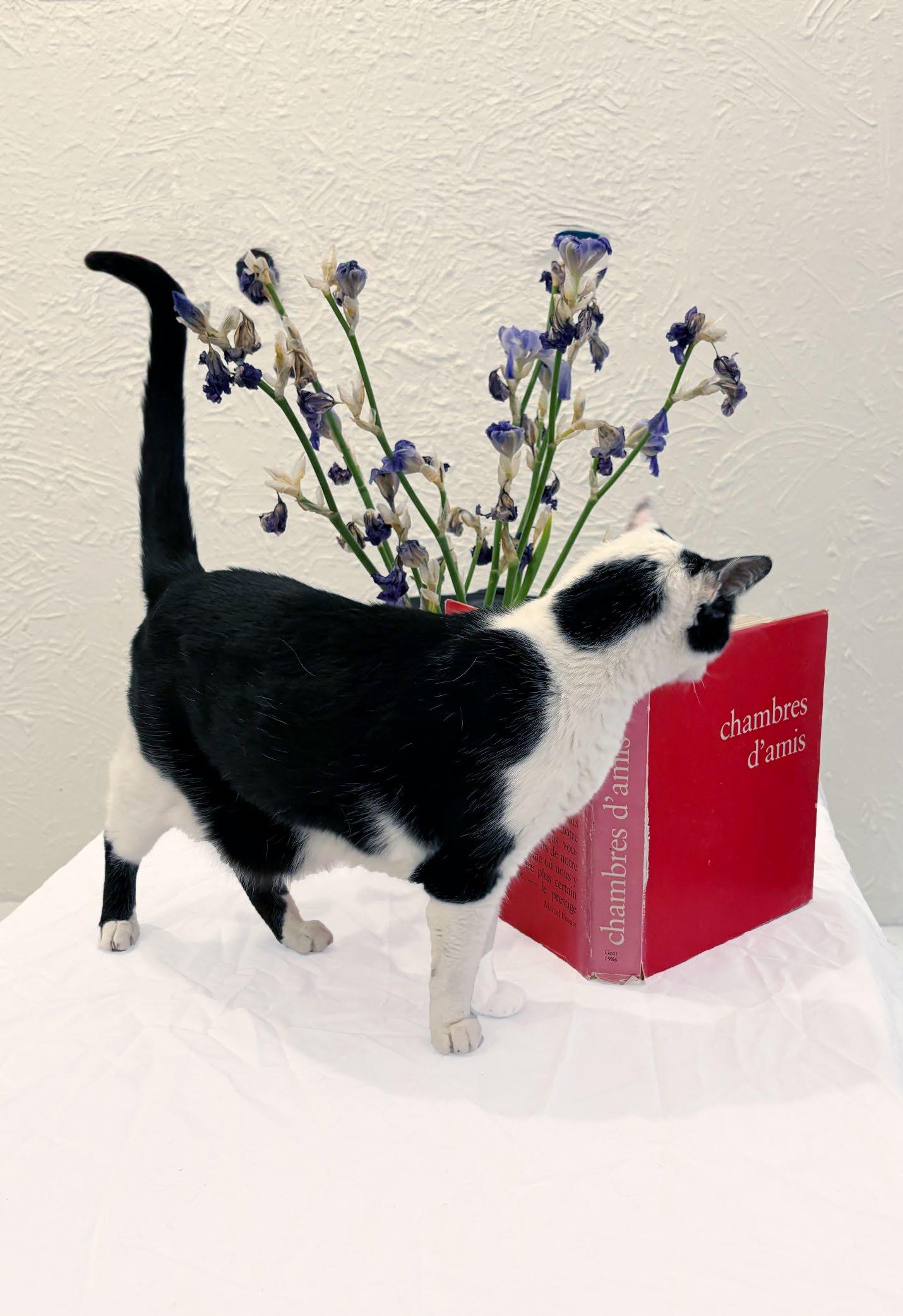
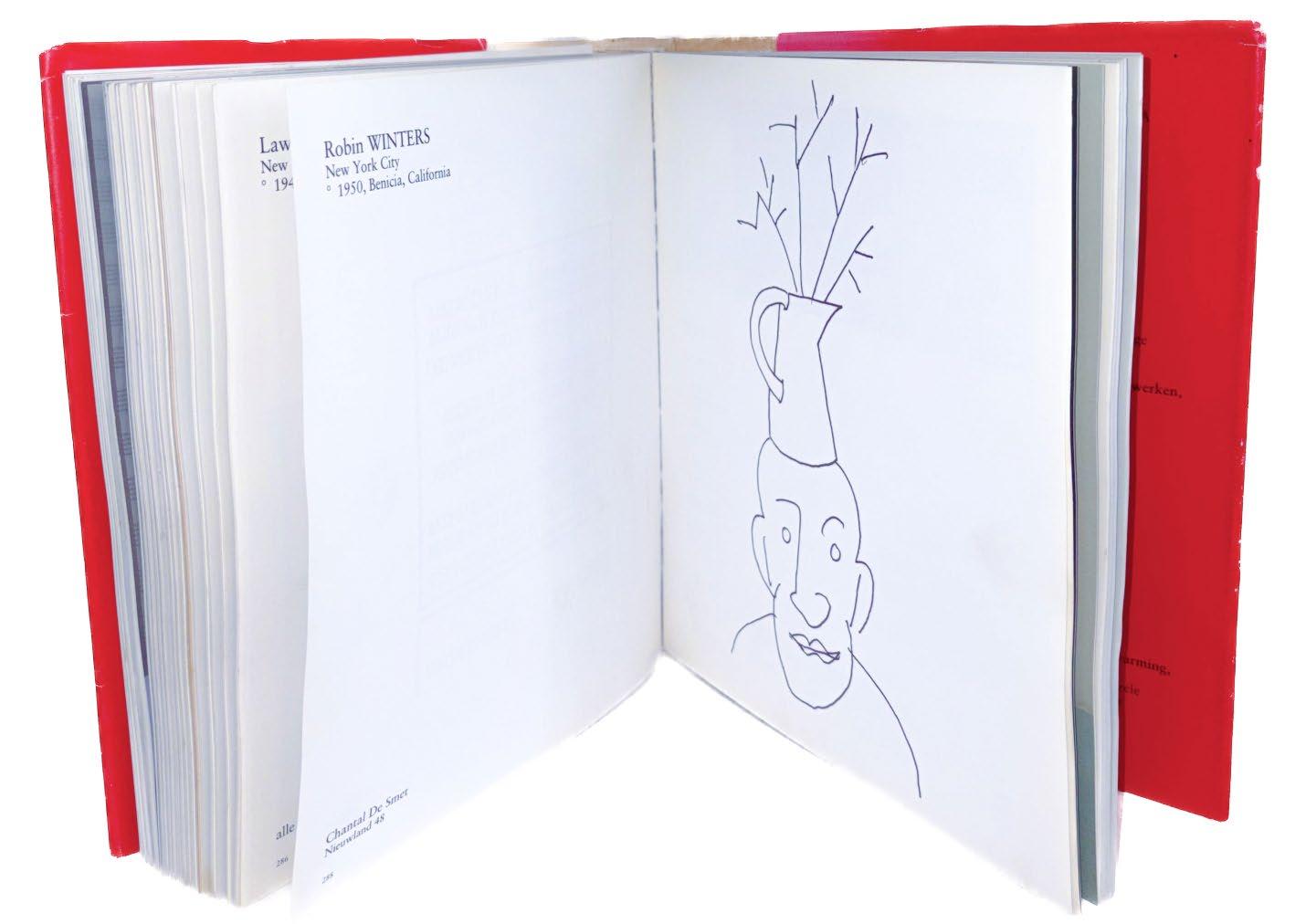
The Chambres d’Amis catalog, produced alongside the exhibition, included 367 pages of works created to document the participating artists’ projects. It also featured submissions meant to accompany the project installations.
The following pages are pulled from Winters’ contributions to the catalog.

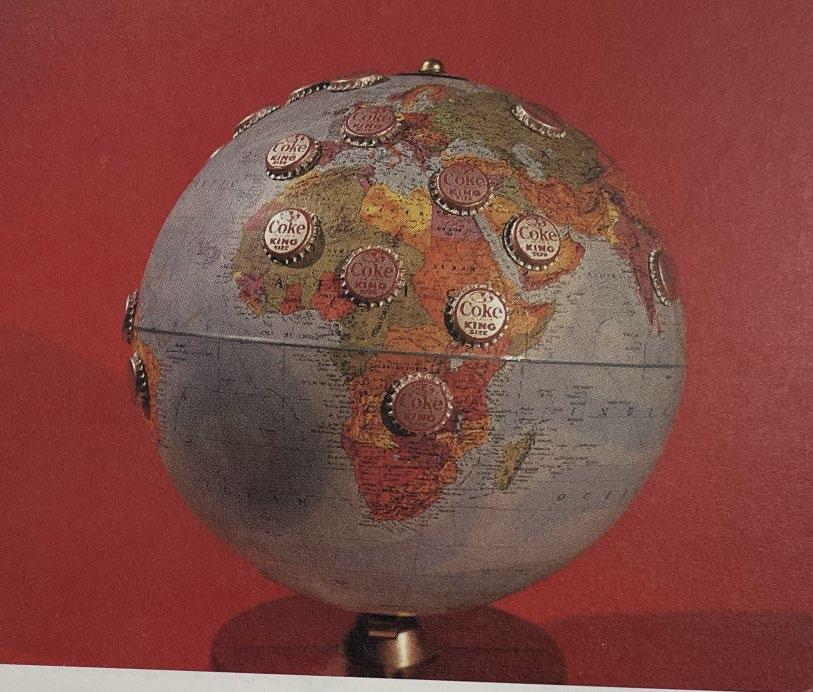
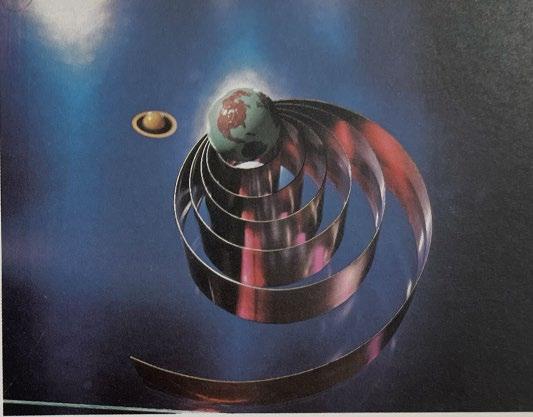
Libya, Nicaragua, Palestine, Cambodia, El Salvador, Grenada, Bhopal, South Africa, Puetro Rico, Guatemala, Hiroshima, Marshall Islands, Haiti
Brought to you by U.S.A, C.I.A., I.M.F, C.B.S, G.M., I.B.M., F.B.I., N.B.C., U.S.I.A., E.T.C.
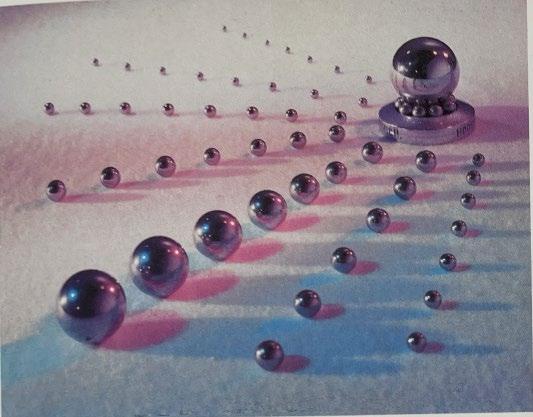
PRESIDENT
SENIOR
VICE PRESIDENT
DIVISION MANAGER
DEPT.
MANAGER
SUPERVISOR
FOREMAN
CLERK
DRONE
WAGESLAVE
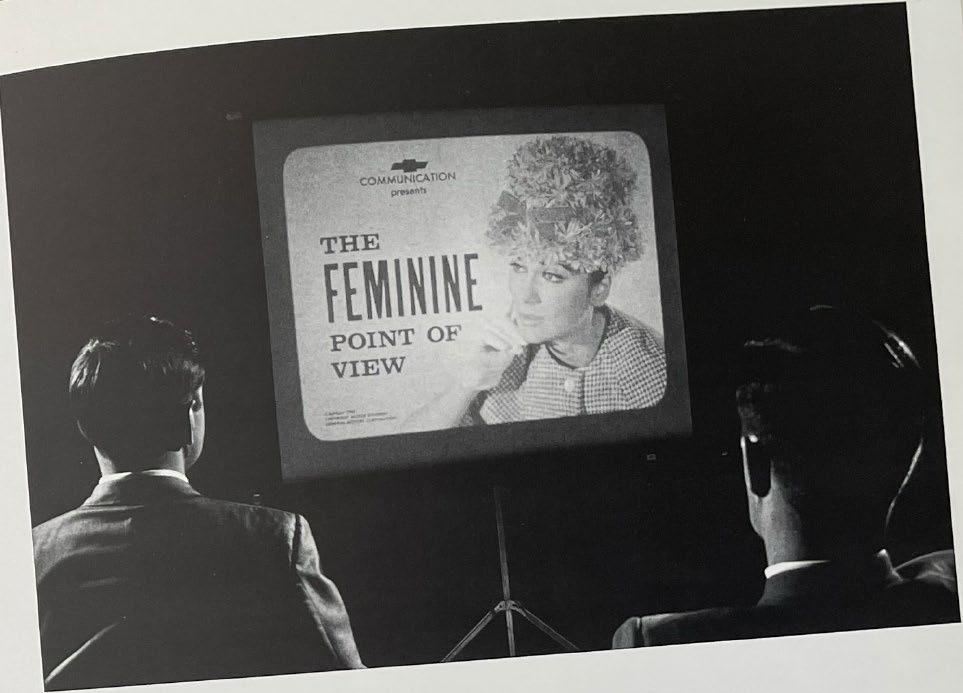
The feminine point of view is not represented in “CHAMBRES D’AMIS.” It is like an insurance convention in Norman, Oklahoma. Mainly imported men, installed in private homes.
I am deeply critical of the curatorial neglect of women artists in this exhibition. My friends are women! I prefer a more mixed group. Great art comes from the attempt to make a greater life.
This is my main complaint. I love the idea of this private/public interchange. I have written this note for the catalog in the spirit of communication and friendship.
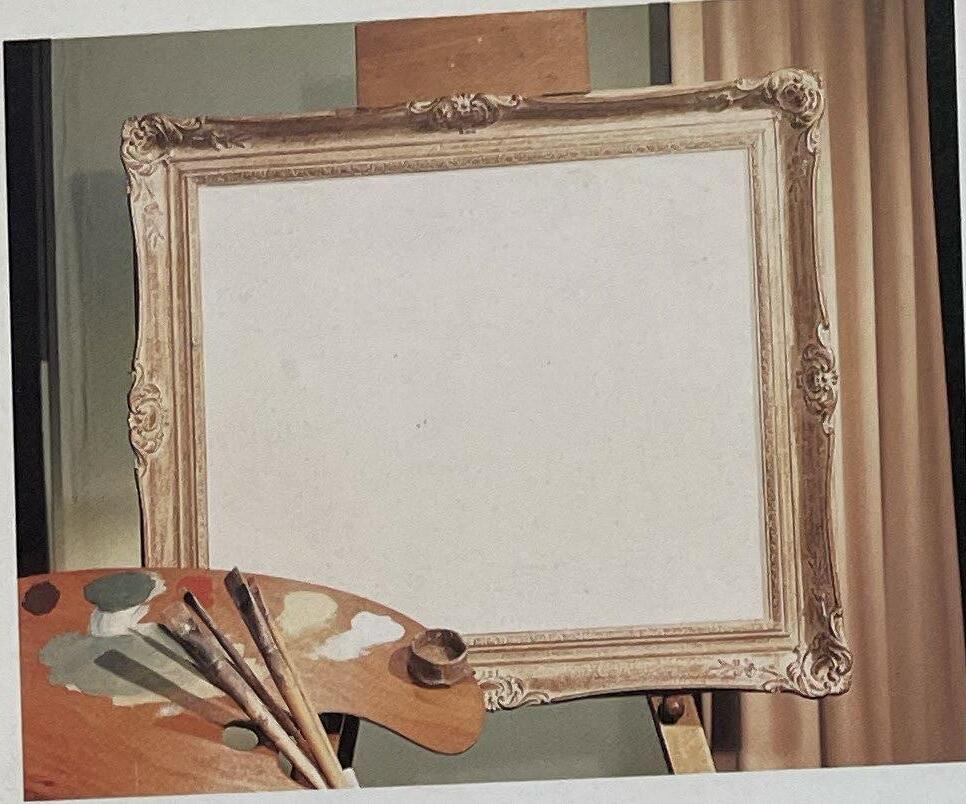
“The painter Wu Tao-tzu painted on a palace wall a glorious landscape, with mountains, forests, clouds, birds, people, and all things as in Nature, a veritable world-picture. While the Emperor his patron was admiring this painting, Wu Tao-tzu pointed to a doorway on the side of the mountain, inviting the Emperor to enter and behold the marvels within. Wu Tao-tzu himself entered first, becking the Emperor to follow; but the door closed, and the painter was never seen again.
When a painting has reached divinity, the artist is anonymous and there is an end of matter.”
Anonymous
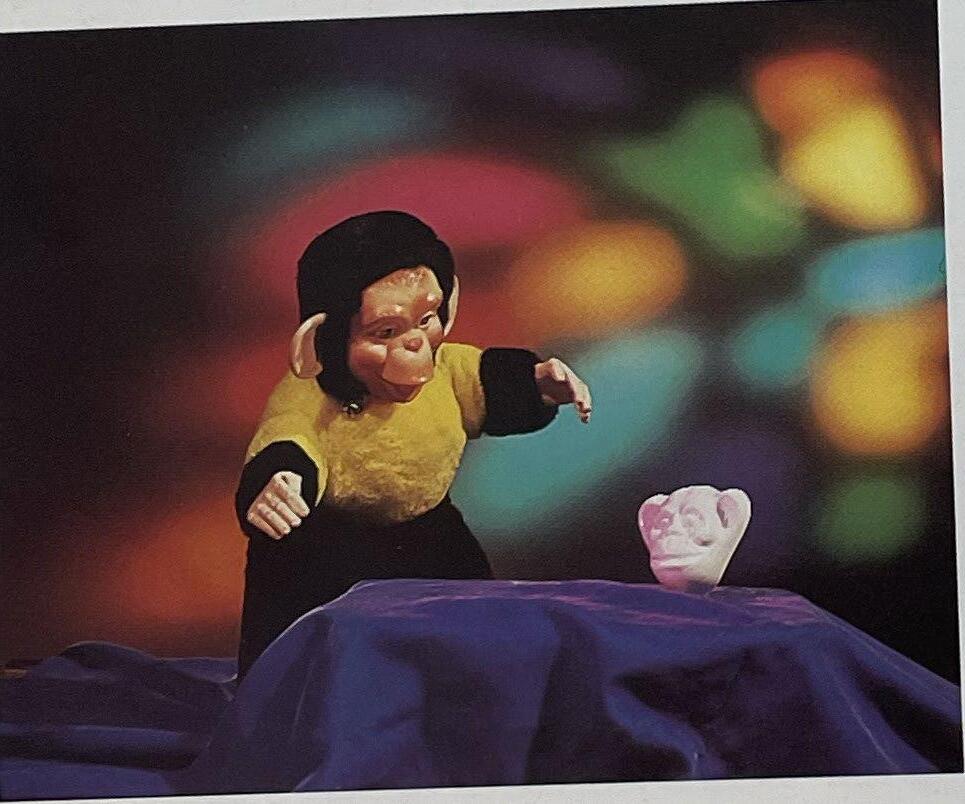
“I am a transplant from my ‘natural’ environment, New York, to the private home of Chantal De Smet in Ghent, Belgium.
My intentions as an artist are to make works of art which are both alive and of the moment, as well as to create ‘Masterpieces’ which will last forever. Forever is a long, long time.”
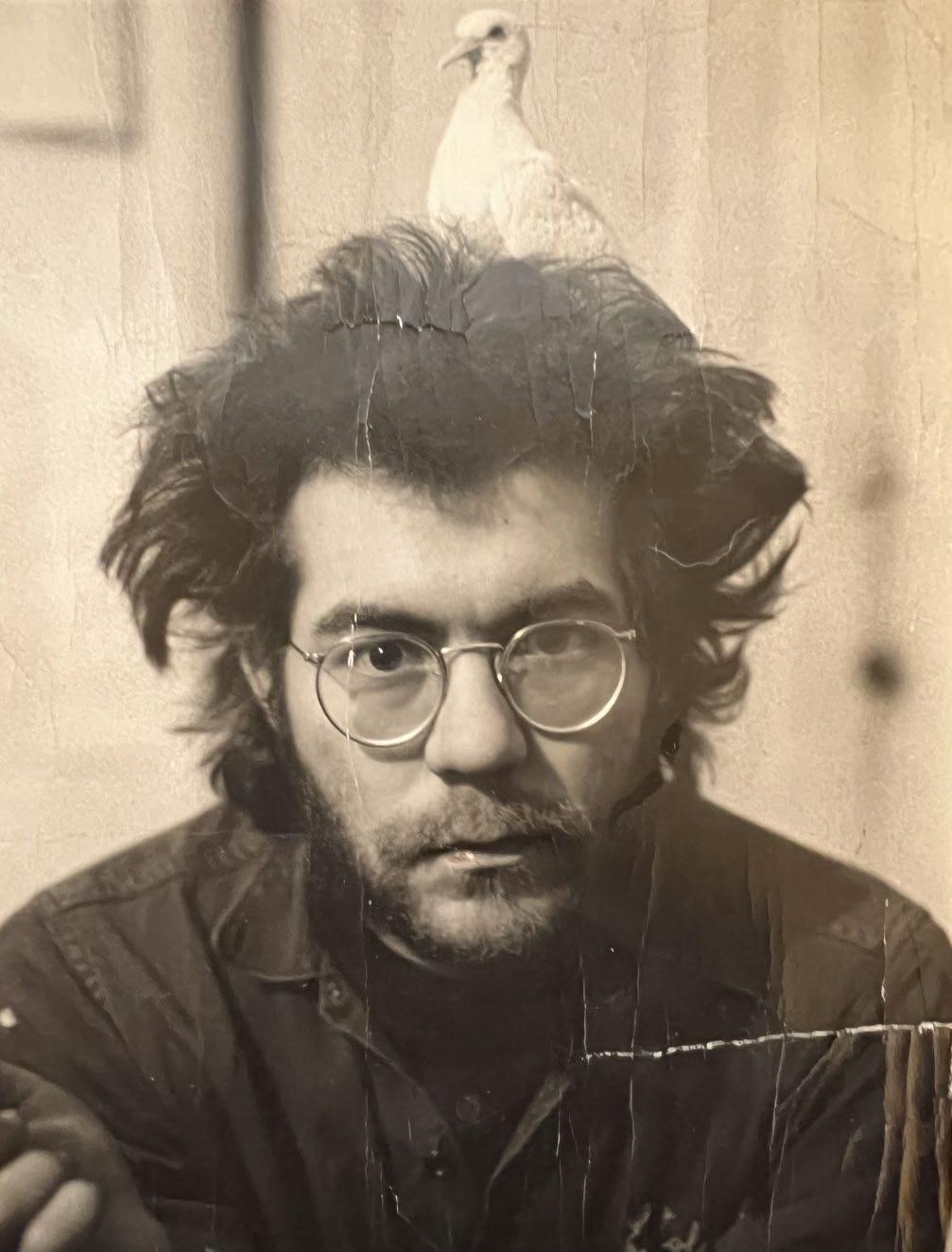
“Birds are by nature the most joyous creatures in the world. I do not mean this in the sense that they always bring you joy whenever you see or hear them, but that they themselves feel joy and gaiety more than any other animals. The other animals normally look serious and grave, and many of them even appear melancholy; they seldom give signs of joy, and when they do, these are slight and brief, during most of their enjoyment and pleasures they do not show exhilaration or any indication of gaiety. Even if they derive pleasure from the green fields, from the open and beautiful vistas, from the brilliant sunshine, from the crystalline and sweet aire, the do not give any outward sign of it — except for the hares, about which it is said that at night when the moon shines, and especially when it is a full moon, they hop and play together, rejoicing in that brightness.”
by Giacomo Leopardi
Featured Artwork
Daniel Buren
James Ensor
Marcel Broodthaers
Rob Scholte
Robin Winters
Photographers
Ann De Knock
Attilio Maranzano
Chambres d’Amis Catalog
Dirk Pauwels
Raina Wellman
Robin Winters Archive
Rony Heirman
S.M.A.K. Archive
Teri Slotkin
Design
Raina Wellman
Writing and Editorial Contributors
Chantal de Smet
Hélène Ginestal
Johan Creten
Raina Wellman
Robin Winters
Susan Canning
Thank You
To Jan Hoet for putting together the unique Chambres d’Amis exhibition and to S.M.A.K., the Municipal Museum of Contemporary Art, for their assistance in putting this book together.