

2026’S HAPPILY EVER AFTER Commencement Farewells:
By Leena Devendran Banner Staff
As we close out the 2025-26 school year, The Banner honors our retiring faculty and staff as we celebrate their time at Winsor and share their plans for the future.
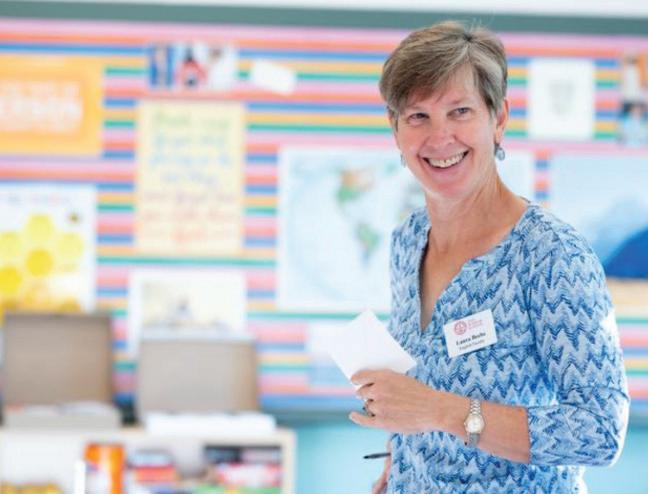
Lower School Class Coordinator and English Teacher Ms. Beebe will be retiring after 16 years at Winsor. Ms. Beebe was first introduced to Winsor because her mother attended the Lower School and her great-aunts were alumni. She first joined Winsor 30 years ago, left to help raise her family, and later returned to teach full time. She will miss working with students the most. She said, “Especially when I’m discouraged about what’s going on in the world, young people give me hope and add joy to my life. I’ll miss the humor, silliness, and capability [of Winsor students].” In retirement, Ms. Beebe hopes to hike and garden more with her husband, travel, and build a greenhouse!
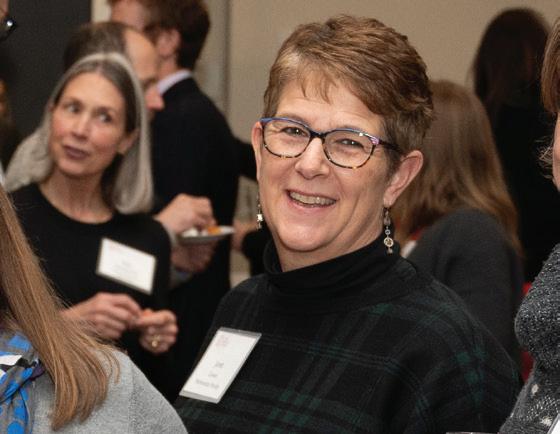
Upper School Math Teacher Ms. Cowan will be retiring after seven years at Winsor. Throughout her time here, Ms. Cowan has admired how Winsor students are “smart, motivated, and caring. There’s no one here who doesn’t want to do their best, and that makes teaching students a joy.” She also shared, “[I’ll miss] getting to teach with other teachers who are passionate, interested, curious, and willing to try new things.” Ms. Cowan’s ge-
Saying Goodbye to Retiring Faculty and Staff
ometry student Annie Fitzpatrick ’29 reflected, “I love Ms. Cowan’s cheerful attitude and her commitment to helping students. Anytime I have a question, she’s always there to help!” Ms. Cowan hopes to stay active with hiking, running, and training for races in her retirement!
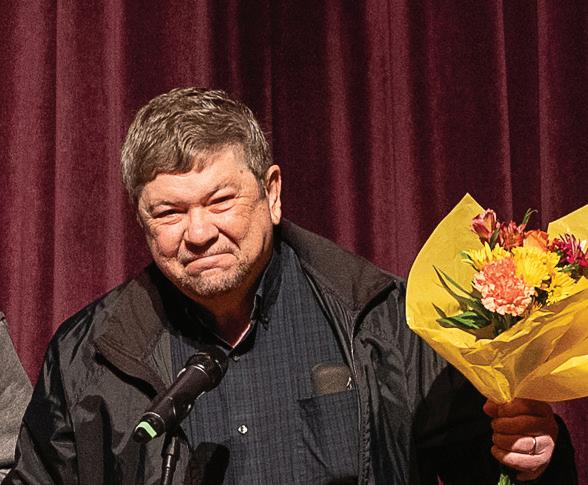
Facilities Director Mr. Crompton will be retiring after 13 years. He first came to Winsor temporarily to lead the LOC project in 2013 (he even remembered the exact date–May 20!), and then joined full time after two years because of the “phenomenal” students and facilities team at Winsor. In reflecting on his time at Winsor coming to an end, he said, “If I could continue what I’m doing and make this place a little bit better, then that will be wonderful, but all things pass.” He said his retirement brought “mixed emotions”—he is looking forward to more time with his grandchildren and reopening his consulting business, but he is going to miss “every one of my 470-plus daughters here.”
Visual Arts Department
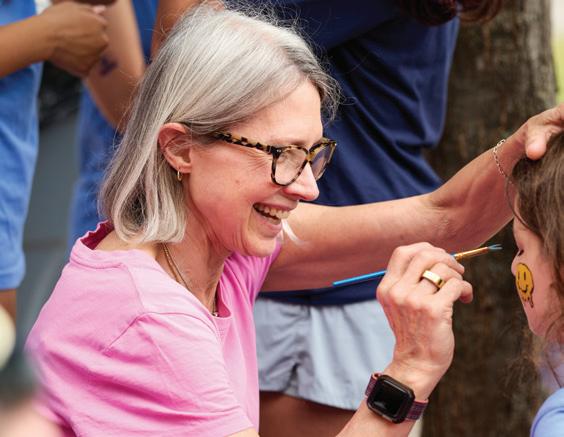
Head Ms. Macaulay is also retiring after a remarkable 42 years. Ms. Macaulay said that she “loves helping students become the best artists they can be and watching them grow…It’s exciting and fun work to help them move along in their journey.” She specifically highlighted her AP Portfolio students this year, whose “portfolios were the most amazing swan song for me to have this year.” Ms. Ma-
caulay is looking forward to more dog walks and horseback riding, an art residency with her sister in France, and traveling with her family in the coming years.
Upper School English
Teacher Mr. Murdock will be retiring after 22 years at Winsor, saying, “That’s a long time, but it has gone very quickly—I choose to interpret that as a sign that I’ve had a great time!” In his 22 years, he noted that he has felt “gratitude for being able to do a job that has felt purposeful, valuable, and fun,” and that his fondest memories at Winsor were centered around the “positive and hardworking” students and faculty. While he said he will definitely miss Winsor lunches, he will also miss the “vibrant” student discussions and watching his students grow. Mr. Murdock plans to spend more time with his grandchildren, building furniture, sailing, and flyfishing.
Each of these community members has had a tremendous impact on their respective departments, colleagues, and students they have taught and worked with. We are going to miss all of them very much! ☐

Winsor Welcomes Leslie Dewan ’02 as Commencement Speaker
By Nina Gersen Banner Executive Staff
For most of the student body, the guest speaker at Winsor commencement comes as somewhat of a surprise. They first hear the speaker’s name during commencement rehearsal and only truly learn about them while they speak at graduation. However, in actuality, these speakers are carefully catered to match the graduating class. This year’s speaker, Leslie Dewan, is no different.
Each year, the senior class gathers to begin the process of finding its commencement speaker. First, the grade meets to discuss the values and priorities they want the commencement speaker to reflect. According to Class VIII president, Liana Min ’26, the seniors “wanted someone who could represent our spirit and commitment to the Winsor community.” Senior Class Dean Mr. Griffin took this criteria and worked with the Winsor Communications department to begin the search for a speaker.
Eventually, they found Les-
lie Dewan, a member of Winsor’s class of 2002 and an innovative nuclear engineer. Though the Commencement speaker is not always a Winsor graduate, Dewan perfectly corresponded with the determination and community orientation of this year’s senior class, and her alumni status made it clear she would understand the seniors’ appreciation of the Winsor community.
Since graduating, Dewan has pursued an incredibly successful career in nuclear physics. After Winsor, she attended the Massachusetts Institute of Technology (MIT), where she majored in mechanical engineering and nuclear engineering, and later received a PhD. After graduating from MIT, she worked as a nuclear engineer at several companies, earning her a place on the Forbes
“30 under 30” list for innovators in energy. Currently, she is working at Neutronic Designs, a consulting firm that she founded in 2024, focused on making nuclear technology clean and safe.
Though her achievements are numerous, what truly sets Dewan apart as a scientist and as a commencement speaker is her constant commitment to innovation and forward thinking.

take a look inside this issue!
2
Lilac and Isabella Nguyen ’28 speak with Michael Dukakis about his career and hopes for the future
6
Arts Opinions
Take a peek behind the scenes of Chicago rehearsals with Bella Holt ’27 and Grace Whitworth-Neufeld ’29
Angeliki Agape Volandes ’28 weighs the culpability of AI in human mistakes
Sports
Kathy Wang ’28 celebrates Ms. Granese’s impact on Winsor Athletics
Backpage
Find out what advice graduating seniors would give to rising freshmen
Page 8

Learn how some of The Banner seniors are applying their journalism experience to their ILEs Scan the QR code and check out the online version of The Banner for additional articles, photos, games, and more!
Throughout her entire career as a nuclear engineer, she has worked tirelessly to make nuclear power a more reliable energy source. At an event in 2014, Dewan said, “I think I can save the world with nuclear power.” It is this commitment to bettering the world that is reflected by this year’s senior class. According to the Winsor website, “the 2026 Commencement ceremony will celebrate the achievements of Winsor’s graduating seniors and honor the school’s enduring commitment to imparting a joyful and fulfilling education to young women,” and Leslie Dewan will certainly help make this ceremony one to remember. ☐
Ms. Beebe Winsor Canto
Ms. Cowan Winsor Canto
Ms. Macaulay Winsor Canto
Mr. Crompton Winsor Canto
Mr. Murdock Winsor Canto
Leslie Dewan Speaking at Scientific Forum in 2016 International Atomic Energy Agency
A Student Publication of The Winsor School
In Craigville: Winsor’s Annual Junior Retreat
By Aya Goldwasser Banner Staff
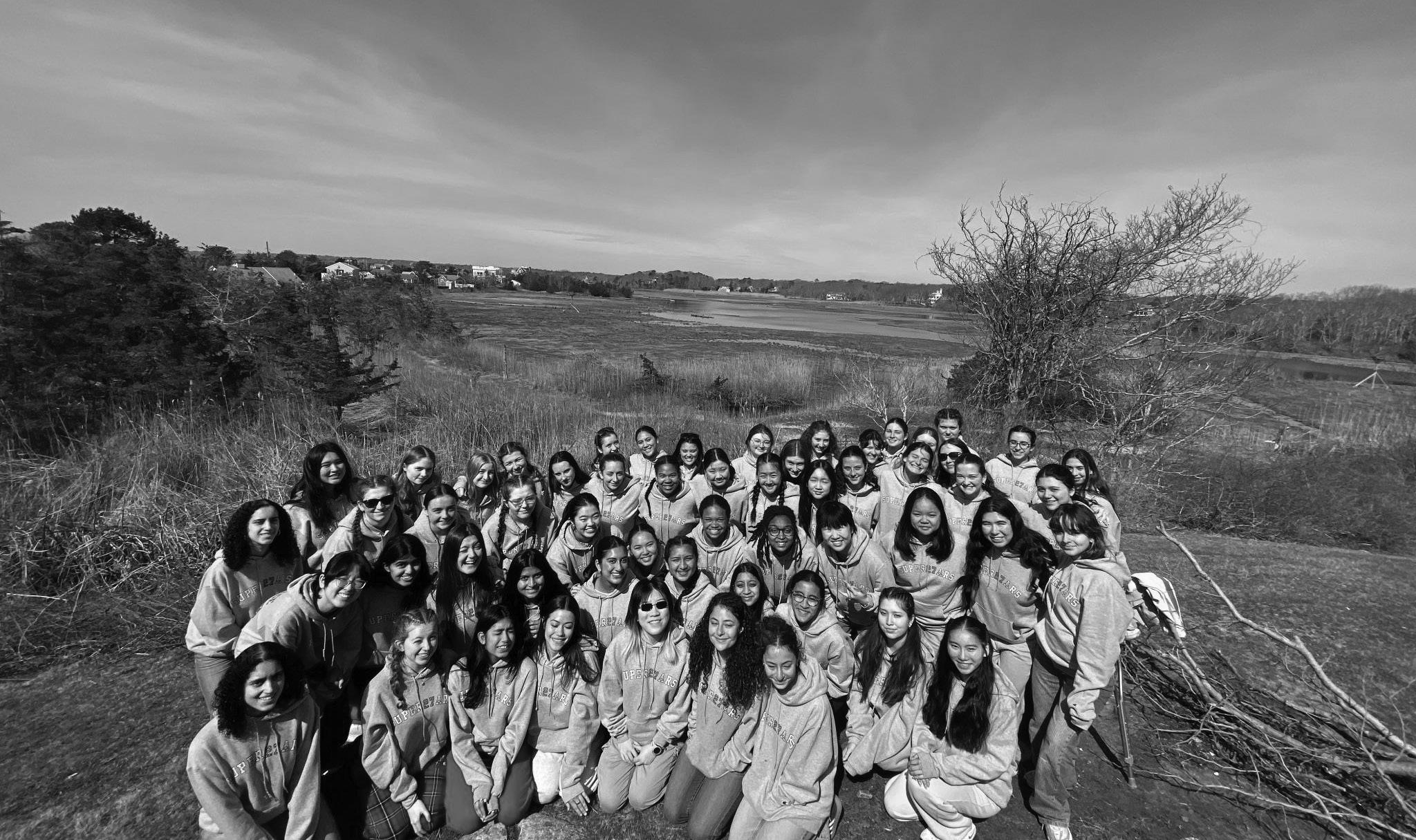
As the bus ride jolted to a close, I awoke to find myself in Craigville, Massachusetts, a quaint area of Cape Cod full of marshes, cottages, and windy beaches. Of course, I was not alone on this adventure— Craigville became a temporary haven for me and 66 other juniors as we embarked on the annual Winsor Class VII Retreat.
From April 13-14, our class stayed on the Cape with most of our time spent inside the Lodge, a large, airy cottage that served as our main meeting place (and, as a nice bonus, where my room was located). Over the course of two packed days, our grade played bonding games, debated scenarios, wrote ourselves letters, and, of course, picked our theme for senior year—and yes, I’m sorry to say the rest of Winsor will have to wait until September to find out what we chose.
One of my personal favorite activities was Dolphin, a chaotic
game during which one person leaves and then reenters to complete an unknown task (chosen in their absence) with only emphatic “YES”es and “NO”s as clues. Other highlights included a high-energy talent show, some much-needed down time, the occasional walk on the beach, and an impromptu ice-cream party disguised as “45 more minutes of scenarios” that was received with glee.
As for the results of this trip, I do think we achieved what we set out to do. We satisfied the stereotypical goals of “class bonding” and crafting our senior year. Yes, we planned our logistical agenda for next year, but I also managed to talk to people I don’t normally talk to, sing along to nostalgic songs with my whole class, and connect with others in a way I didn’t expect.
Emma Roffman ’27, one of our class presidents, thought the retreat served as “a really great bonding experience for our class” and shared two personal highlights: “picking our homeroom
theme and doing the talent show.”
Ms. Crowley, Winsor’s Learning Specialist and Class VII Dean, mentioned that her personal goal was for our grade to “get thinking about the transition from junior to senior year, where you will be the leaders of the school,” and for students to
“think about what kind of leader they want to be.” She added that the aim was also to “bond off campus and get a break from the intensity of classes.”
Although our retreat was only two days, the small getaway was a much needed break from the hectic aspects of
daily life, while also providing a chance to reflect on our own Winsor journeys thus far and our transition into this final chapter. Besides, who doesn’t enjoy a little seaside vacation, complete with karaoke, raucous games, and some late-night frozen delights? ☐
Banner Seniors Apply Journalism Skills to ILEs
By Bonnie Shao Banner Staff
To Winsor students, The Banner is many things: a chance to appreciate the writing of one’s classmates, an excuse to seek out teachers for interviews, or perhaps just a means of passing time between classes. As ILE season rolls around, however, it has become apparent that The Banner also equips students with skills to thrive in ventures outside Winsor.
Every May, seniors participate in the Independent Learning
Experience (ILE), in which they embark on a self-selected project under the guidance of a mentor. This year, several Banner seniors used their ILEs to take their journalism skills to the next level.
Leela Uppaluri ’26, 2025-26 Editor-in-Chief, wrote a picture book on the experience of children with autism. She explained that the book is “about the walks that I take with my brother every day.”
Throughout these walks, “he would always be observing the environment and…I would always want to rush.” However, “eventually, I
began to appreciate that part of him.” Uppaluri hopes to “[expose kids] to characters with autism early on” and enable them to receive “more acceptance from their peers.”
Uppaluri also cited her experience writing for The Banner as a key foundation for her work. Seeking to capture the nuances of her brother’s experience, she utilized her journalism skills to interview a variety of people. She shared, “I’ve been able to talk to his classmates, him, and parents of other autistic children, and I’m not as scared to do that
because I’ve had the experience interviewing people for The Banner.”
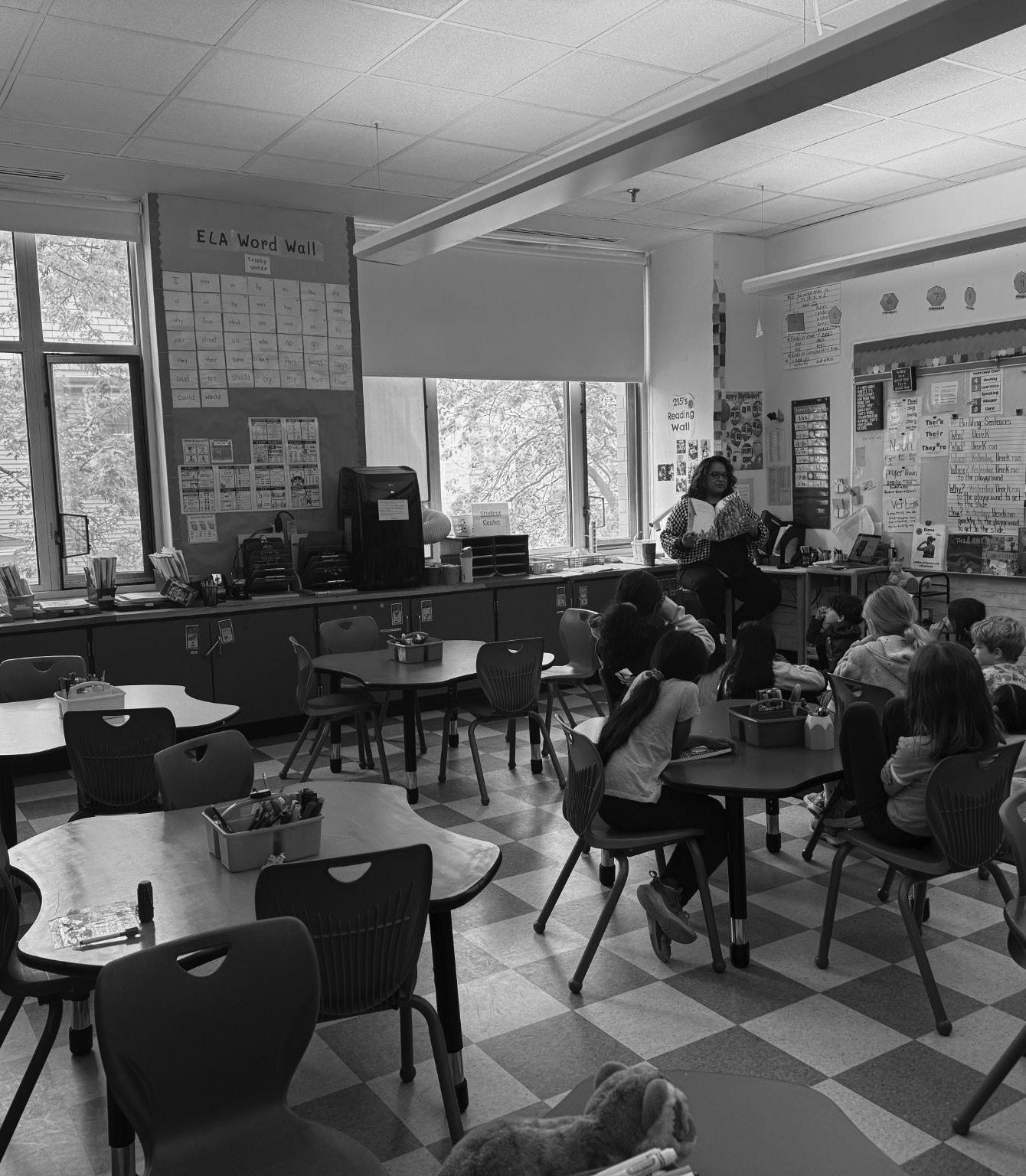
Louisa Furman ’26, 202526 Executive Editor, brought her journalism to a slightly different setting: the classroom. As a teacher’s assistant at Baldwin Elementary School, she helped students create a newspaper of their own. She shared her inspiration for this project:
“I was patrolling the classroom during one of the free periods, and I saw [the kids] working together on blank sheets of paper. They were making newspapers! I have loved my time at The Banner…So
I wanted to bring a mini version of that to their classroom.” She added, “I think people really like being able to see their own work put together in one final piece, and I’m excited to give that to all of the kids.”
While The Banner functions as a school newspaper, the skills that its writers acquire extend far beyond student journalism. The Banner wishes Uppaluri and Furman all the best in their projects, and we cannot wait to see how next year’s seniors might apply their Banner experience to their ILEs! ☐

Editor-In-Chief Bonnie Shao ’27
Executive
’27
News Editor Jaya Goud ’27
’27
Opinions
Anaisha Malik ’27
Cantos Samantha Simpson
Tom Wensink
Sophie Chan ’27
Leena Devendran ’29
Kathy Wang ‘28
Staff Writers
Daniela Antras ’28
Livia Bene ’29
Avery Fantasia ’29
Lillian Feng ’29
Charis Liu ’28
Molly Ma ’28
Eleanor Musto ’29
Cordelia Song ’29
Isha Vachhani ’29
Esther Zhang ’28 Arts
Beatrix van den Bosch ’29
Charlotte Wheler ’27
Yakoobian ’28
Louisa’s Baldwin Classroom
Louisa Furman
Backpage Editor
Aya Goldwasser ’27
Social Media Manager
Isha Vachhani ’29
Juniors at Craigville Retreat Center
Ms. Crowley
Marathon Monday Unites Communities
By Jaya Goud Banner Staff
On a chilly Patriots’ Day in Boston, over half a million people lined the streets from rural Hopkinton to downtown Boston cheering and waving giant poster boards. The event? Marathon Monday, or the 130th Boston Marathon, during which over 30,000 runners from 120 countries—including members of the Winsor community—took part in a challenging 26.2-mile course weaving
through Massachusetts. Along the way, runners passed through eight cities and towns, including iconic locations such as the Wellesley College “Scream Tunnel” and Heartbreak Hill where spectators gathered to offer encouragement to participants throughout the day.
Qualifying to even partake in the marathon is no easy feat. Runners must either complete another marathon under a certain time or raise a minimum of $5000 for charity. Angie Fang ’26 chose the latter when she decided to
run this year. She explains that although she initially “decided to run the marathon because it seemed like the pinnacle of endurance at the time,” her motivation ultimately arose from the charity she ran to support: the Brookline Senior Center, an organization that provides a community for senior citizens to socialize and stay active. Fang describes how she “had lots of opportunities to meet seniors” and when she was tired on race day, she “imagined all of them cheering [her] on.”
These efforts are part of a massive city-wide wave of philanthropy. In total, the 2026 Boston Marathon is expected to have raised more than 50 million dollars towards various charitable causes including nearly 200 nonprofit organizations. The largest charity group was Dana-Farber Cancer Institute, which is located just down the street from Winsor; they aimed to raise 8.75 million dollars for cancer research during the 2026 race.
For many, the marathon’s impact extends far beyond race day itself. Grace Murphy ’27, who hopes to run in 2027, explained, “The Boston Marathon has been my favorite part of spring forever because it brings so many people together from all over the world. Whether they are incredible athletes or raising funds for an amazing organization, it’s the perfect energy to bring as we leave the winter season.” To the Boston community, the marathon is more than a simple test of endurance; rather, it is a citywide celebration of resilience, unity, and shared purpose. ☐
Introducing Boston’s 2030 Climate Action Plan
By Charlotte Wheler Banner Staff
On April 27, Mayor Michelle Wu announced the Boston 2030 Climate Action Plan. As the city’s first fully integrated climate action strategy, the plan addresses ways the city can mitigate climate change, augment climate resilience, and improve climate justice all at once.
Currently, the city has reduced its greenhouse gas emissions by 22.4% compared to 2005 levels. Before the new plan was announced, the city was already on track to reach a 48% reduction by 2030. Central to the plan is the goal to increase that reduction to 50% by 2030
using a variety of strategies.
One such strategy involves transportation, the second largest source of greenhouse gas emissions in Boston following the building sector. Personal vehicles make up 90% of these emissions; by contrast, MBTA operations only account for 5% of these emissions.
By 2030, the city aims to ensure that all residents are within a five minute walk from an electric vehicle charging station, a bikeshare station, and a form of public transit as a way to increase the accessibility of sustainable transportation. The city also hopes to promote public transit by creating lanes where buses can bypass traffic and making bus routes 23,
28, and 29 permanently fare-free.
The warming climate is already affecting Boston, especially compared to less urban areas. Consequently, as Ms. Beebe, the faculty advisor for the Lower School Planet Protectors club, said, “The plan talks about strengthening tree policies so that Boston is expanding the tree canopy, improving street tree growing conditions, and preserving the existing tree canopy.” She added, “Trees are…one of our best methods to tackle climate change. They mitigate problems like pollution, heat, and water runoff.” In the last five years, the strides that the city made in tree-planting were entirely offset by the removal of trees on private land. Thus, the
plan will promote the planting of trees on private property while bolstering tree-planting initiatives in public spaces. It will also increase the use of permeable pavement, which allows water to reach the roots of trees and absorbs less heat than non-permeable pavement.
The city also hopes to simplify the permit process for installing solar panels and increase the number of residents enrolled in the Boston Community Choice Electricity Program, which currently serves 200,000 residents. The program provides residents with electricity from renewable sources at a rate competitive with those of third-party companies that provide electric-
ity from non-renewable sources.
Overall, the 2030 Climate Action Plan highlights Boston’s determination to increase its climate change prevention and resilience in a way that benefits Bostonians of all backgrounds and income levels. Elena Bird ’27, head of the Conserve Our World club, added, “I think the fact that Boston has this plan…indicates their interest in engaging the public in climate action, which is really important.” The Banner encourages you to read the full, publicly-available plan online at Boston.gov if you would like to learn more about its potential impacts on your community or ways you can support Boston’s mission. ☐
Artificial Intelligence in Lower School: Helpful?
By Lower School Newspaper Club
Current Lower School students are all well aware of artificial intelligence (AI) as the majority of students use it in their daily lives. As the years pass, AI has progressively grown in prevalence and become a common topic of discussion in Lower School classrooms and hallways.
Many Lower School students think of AI in a more negative way, and as a resource that must be used responsibly. Several Class I and II students noted that AI can be untrustworthy. Yolanda Yu ’32 states, “AI is made by humans, so it’s obviously going to have a lot of biases, and sometimes that is very harmful to certain groups of people.” Students also raised concerns over the potential misinformation that AI spreads. Yu explains, “AI is not always going to be an entirely reliable source because of the fact it is not always based on credible sources.”
Despite these worries, various Lower Schoolers do agree that AI can be a helpful resource if used properly, specifically for academic purposes and answering everyday questions. Most Lower Schoolers believe that if fact-checked and based on correct sources, AI can be used as long as it’s only for explaining a challenging problem or helping students study. Some Lower Schoolers also use AI to ask everyday questions, such as Aleena Fereja ’32, who says, “I would use it for daily needs… like something I would [ask] Google.” Trisha Dumervil
’32 adds, “I would ask [AI] about everyday life stuff, like recipes.” English Faculty Mr. Crompton believes that “AI can be super helpful for personalized brainstorming. The best AIs are incentivized to find results that work for you in ways that traditional search engines simply aren’t. This personalized approach often offers a pathway into engaging in the learning process more fully. In a broader sense, I think AI is best used as an accordion-style thought partner. If I have a really narrow idea, AI can expand the possibilities and scope of that idea. If I have a really broad set of disparate thoughts, AI can help distill those thoughts into a workable path forward. In a school setting, I think we can use this narrowing and expanding aspect of AI to help plan multi-step, long-term projects, as well as to get us going when we’re stuck in a sea of endless options.” He noted that while he also uses artificial intelligence occasionally for questions and brainstorming, “[s]imply having AI produce things for you, in a school setting, is a recipe for short-term and long-term disaster. For example, having AI write anything for you both robs you of the opportunity to practice writing and creates a dependency on outsourced writing for the future.”
Although Mr. Crompton is concerned with the academic problems with AI and Class Is and IIs are apprehensive about the biases surrounding AI, Class IIIs and IVs are more concerned
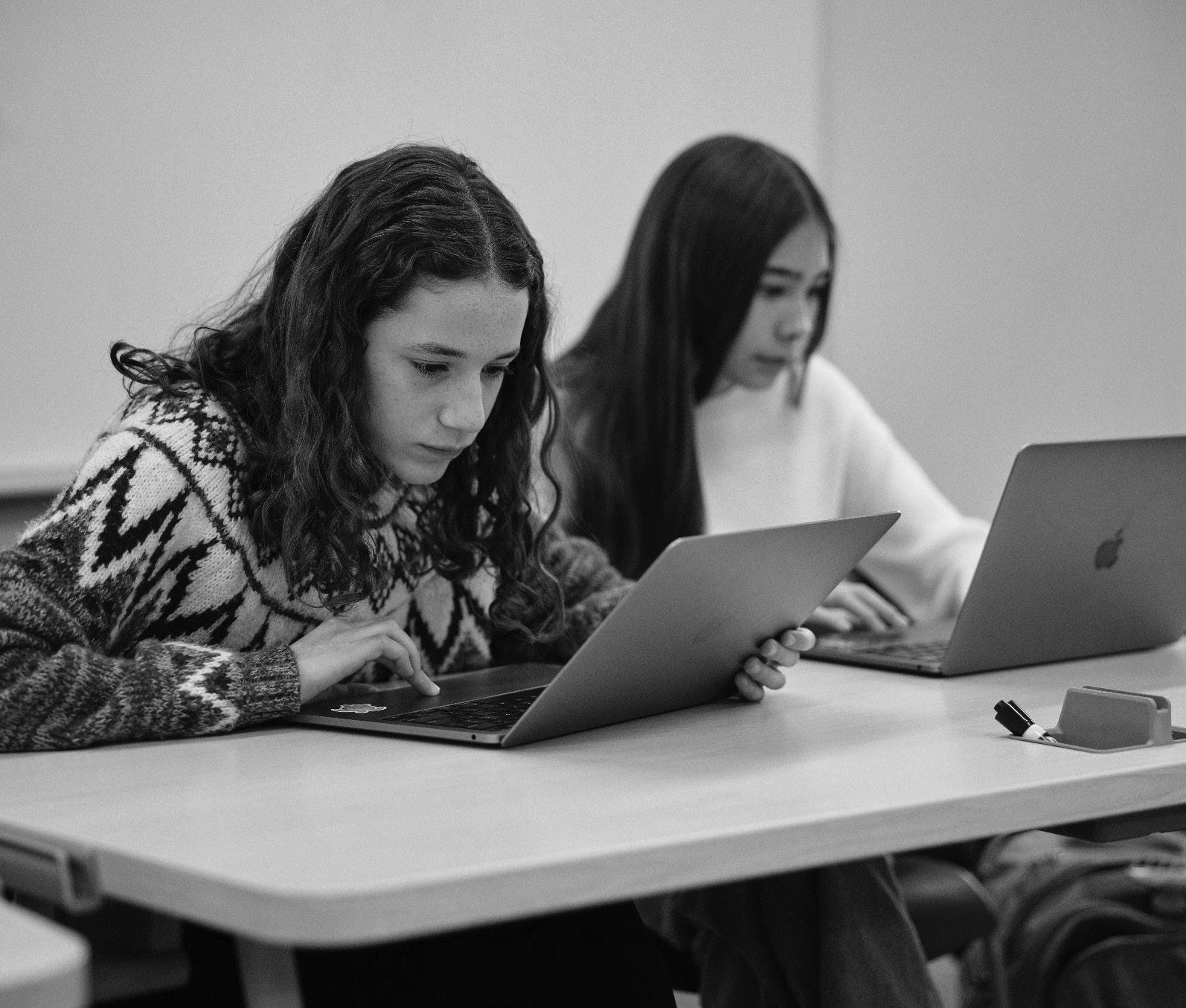
about the environmental effects of AI use. For months, news articles and social media posts concerning the large amounts of water used to build and operate AI data centers have circulated around Winsor, opening conversations about the benefits versus the disadvantages of generative AI. When asked about her concerns on AI’s water use, Eden Tierney ’31 reflected, “There should be more
information about AI and the environment because I think a lot of people think, ‘Oh, this chatbot’s just gonna create [something] and there will be no side effects.’”
Many Lower Schoolers echo Tierney’s concerns and refuse to use AI. However, others do not restrict their AI use entirely, as it is becoming increasingly difficult to avoid AI when using the internet. Although using AI
when completing school work raises concerns about academic integrity, students like Alice Gorman ’30 highlight the differences between asking AI “to do stuff for me” versus asking it “to help me.” The distinction between asking AI to complete tasks and using it as a tool to aid learning is crucial as all humans, but particularly students, learn how to navigate this new age of AI.
Lower School Newspaper Club
Lower School Students in Class
Shell Yeah! Josie Go ’27 Explores Oysters’ Beauty
By Bela Patel Banner Staff
Walking down the cafeteria hallway, you may have noticed the beautiful oyster paintings decorating the walls. With their layered textures, rich colors, and intricate details, the works immediately stand out and transform the hallway into a gallery. I interviewed Josie Go ’27 about her artistic journey,
the inspiration behind her project, and how she uses art to advocate for environmental conservation.
What is your journey with art?
I first discovered my love for art at a young age, painting alongside my mom and attending summer art camps. In middle and high school, I started taking formal art classes and found my favorite subject: oysters. Their intricacy and detail make them fascinating

to paint, but I also use my work to spotlight oysters—a species deeply threatened by overfishing and habitat loss.
What was your inspiration for DWJG?
I started Dirty Water JG, inspired by the song “Dirty Water” by the Standells, which celebrates Boston pride. That sense of local pride made me reflect on the pride we should feel for oysters—the natural filters that clean our waters and support our ecosystem. Through my art, I hope to educate and inspire others about oysters’ importance and the need to protect their habitats. All proceeds go to the Massachusetts Oyster Project, an organization that supports oyster restoration and conservation efforts in MA. This organization’s efforts have contributed immensely to mitigating climate change and environmental challenges.
How has Winsor supported
you with your Oyster Series?
Winsor’s art teachers have been instrumental in my art. Ms. Davenport encouraged me when I first wanted to try oysters and brought in shells to further my exploration. Additionally, Ms. Macaulay has guided me throughout my AP Portfolio on this subject; she especially encouraged me to try different media and color palettes. Winsor has also given me the space to showcase my pieces to help the community see my art and the environmental significance behind it.
What is your next move?
I am working on developing a couple more products, including a hat and prints. I have also been working with the Massachusetts Oyster Project to plan to sell my products at their events! Lastly, I’m visiting a couple of oyster farms in the coming months to better understand an oyster’s lifecycle and industries around this mol-
lusk. In terms of what’s next for my art, in my senior year, I am aiming to focus on highlighting an oyster’s life. This year, I spent so much time emphasizing the intricacies of oysters, and now I want to capture how humans interact with oysters and what an oyster looks like from a broader lens.☐

An Insider Perspective on Chicago Rehearsals
By Grace Whitworth-Neufeld and Bella Holt Banner Staff
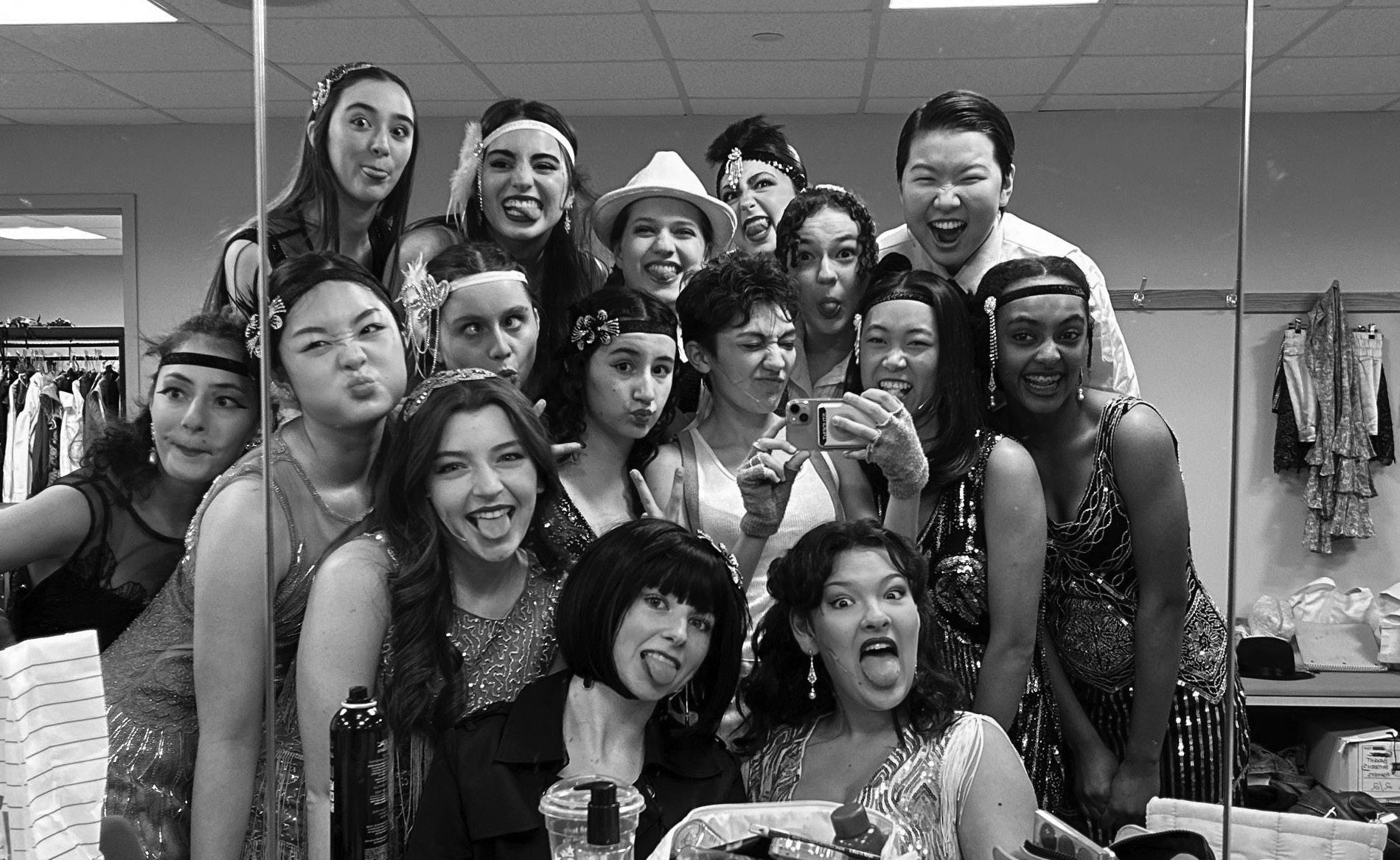
On April 24, Winsor Theater’s production of Chicago opened before a roaring audience. The crowd watched as a story of deception, adultery, and murder unfurled before their eyes. Backstage, a different story was told: one of a community coming together.
Set in the Roaring ’20s, Chicago follows two glamorous murderesses as they manipulate
their stories to reach fame. Its plot is based on a true story of highly publicized, female-perpetrated murders that swept the city of Chicago into a frenzy. Known for groundbreaking choreographer Bob Fosse’s stylized and sultry choreography, Chicago requires a lot of time, effort, and dedication to perfect. Devoting their after-school energy to two to four hours of dancing and singing, the Winsor cast—which included both of us—began rehearsing about three months ago in early February. Rehearsals were mostly led
by Alyssa Tschirgi, who co-directed with Mr. Johnson while he directed Swept Away (see pg. 5). In the past, Ms. Tschirgi has been our choreographer—a role she continued even while directing the acting, coordinating lights, and leading the overall show. She explained, “It was a fun, wild experience to be the goto person of authority.” Ms. Tschirgi also ensured that actors maintained their sanity: “Especially after spring break, I … [reminded] myself of the times that we could end rehearsal a little early or try to take small

breaths…There’s definitely a risk of over-rehearsing.”
Helina Adugna ’29 played the role of Mona Lipschitz, who murdered her boyfriend due to “artistic differences.” Adugna had a blast getting to connect with her character: “I think it was really fun to explore a character that is almost nothing like me…it pushed me to really act and not just pull on parts of myself that I’ve experienced before.” Additionally, Adugna explained that “the biggest part of the musical for me, especially with it being my first
Winsor production, was actually getting to know people.” From our daily check-ins all the way to our last performance group huddle, the theater community knows how to build lasting bonds like no other. As actors in the show ourselves, we experienced these connections firsthand. In a sense, high school theater is like a sport: after months of training, hours of encouragement, and one final scrimmage, winning the game is certainly the goal, but the byproduct, inevitably, is a team. ☐
Behind the Scenes on the Sophomore Banner
By Eleanor Musto Banner Staff
For over 90 years, the banner has been a time-honored tradition, and its yearly unveiling is anticipated throughout the school. Although the history behind the start of this tradition varies, a 1936 issue of The Lamp noted how “banners that for several years Class VI made for Class VIII” hung at Winsor’s 50th anniversary celebration. This custom of Class VI creating the banner has continued as the whole grade collaborates to honor the senior class.
The process starts for Class VI around December when their grade meets in a homeroom to brainstorm ideas for the banner. Class president Sophia Cheng ’28 shared her grade’s goal of “encapsulating [the seniors’
theme] perfectly,” while Ms. Pribble, Performing Arts Faculty, highlighted how the “sophomore class is always very ambitious and wants to do something that hasn’t been done before” in order to put their own mark on this tradition. This year’s “Once Upon a Time” theme was captured in the banner through a winding yellow brick road leading to a fairytale castle; the back was complete with embroidered stars, each featuring the seniors’ initials.
Then, each Class VI advisory visits the costume shop to learn new sewing techniques and skills to contribute to the banner. In the months leading up to the banner’s reveal, Cheng spoke to the importance of “communication” within her grade and coordinating to continue progress. Ms. Pribble shared a special quality of the process: that
“everybody has the opportunity to touch the banner and work on it.”
Ms. Pribble acknowledges the often unseen work of the banner and said, “It surprises people how much effort it takes to do a really complicated design.” Although getting a whole grade to work together on one project has its challenges, Cheng concluded that at the final unveiling at assembly, “[she] was really proud of what [her] grade had produced.” The immense time and dedication from the sophomore class each year are often forgotten in the excitement over the final product; however, this behind-thescenes work is what allows us to continue this long-standing tradition. The banner is not only a way for our community to celebrate the seniors but also the devoted work of the whole sophomore class.☐
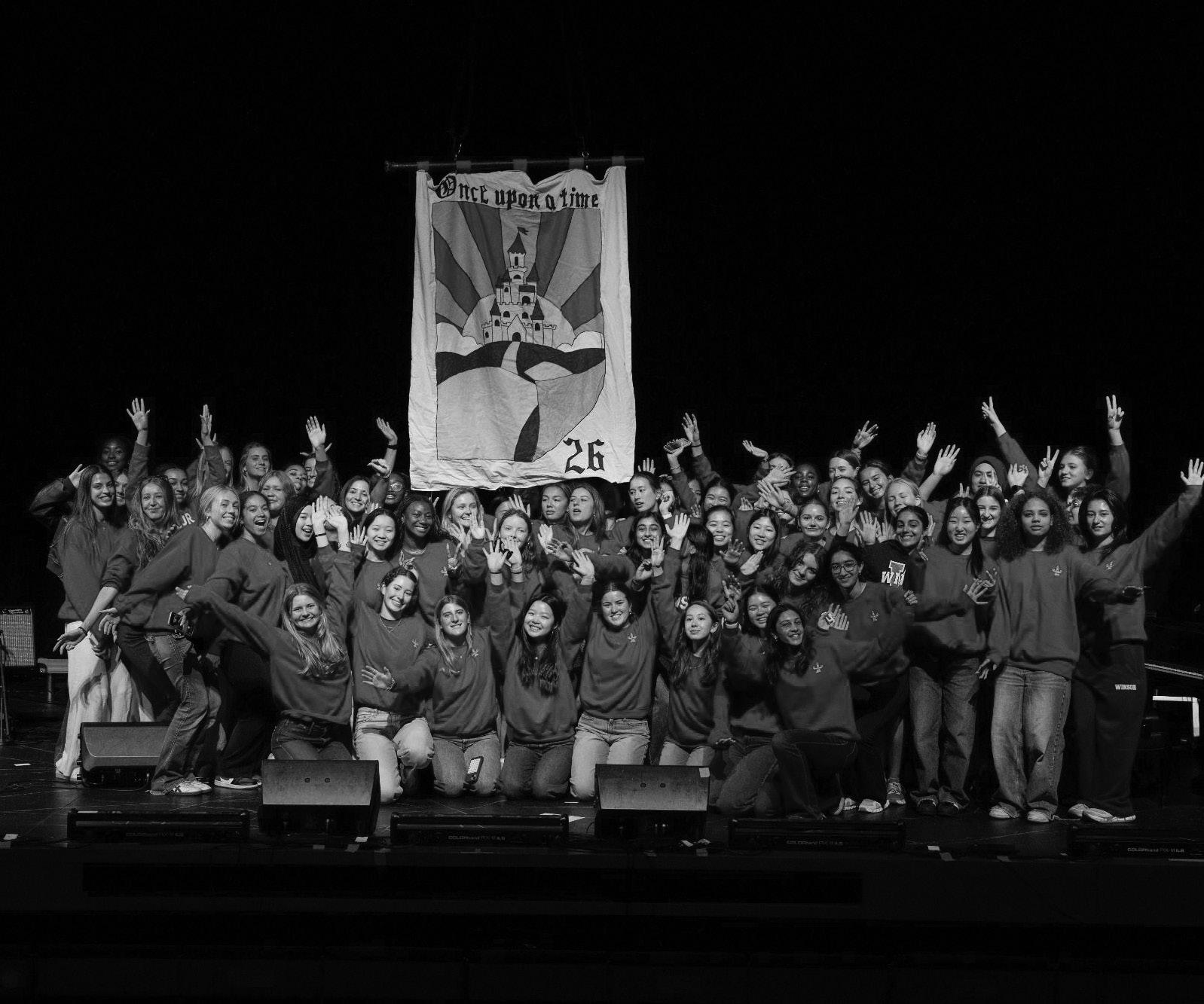
The Seniors with the Banner
Winsor Canto
Spread, 2026
Josie Go
Open Face, 2026 Josie Go
Chicago
Ray Neufeld/Grace Whitworth-Neufeld Behind the Scenes
Luisa Griffith-Gorgati
A Tide of Winsor Pride for Swept Away
By Lilac Nguyen Banner Staff
Four men are stranded on a 13-foot-long lifeboat somewhere in the Atlantic Ocean without food, fresh water, or any respite from the glaring sun. Their options: face their impending death, or…eat the cabin boy.
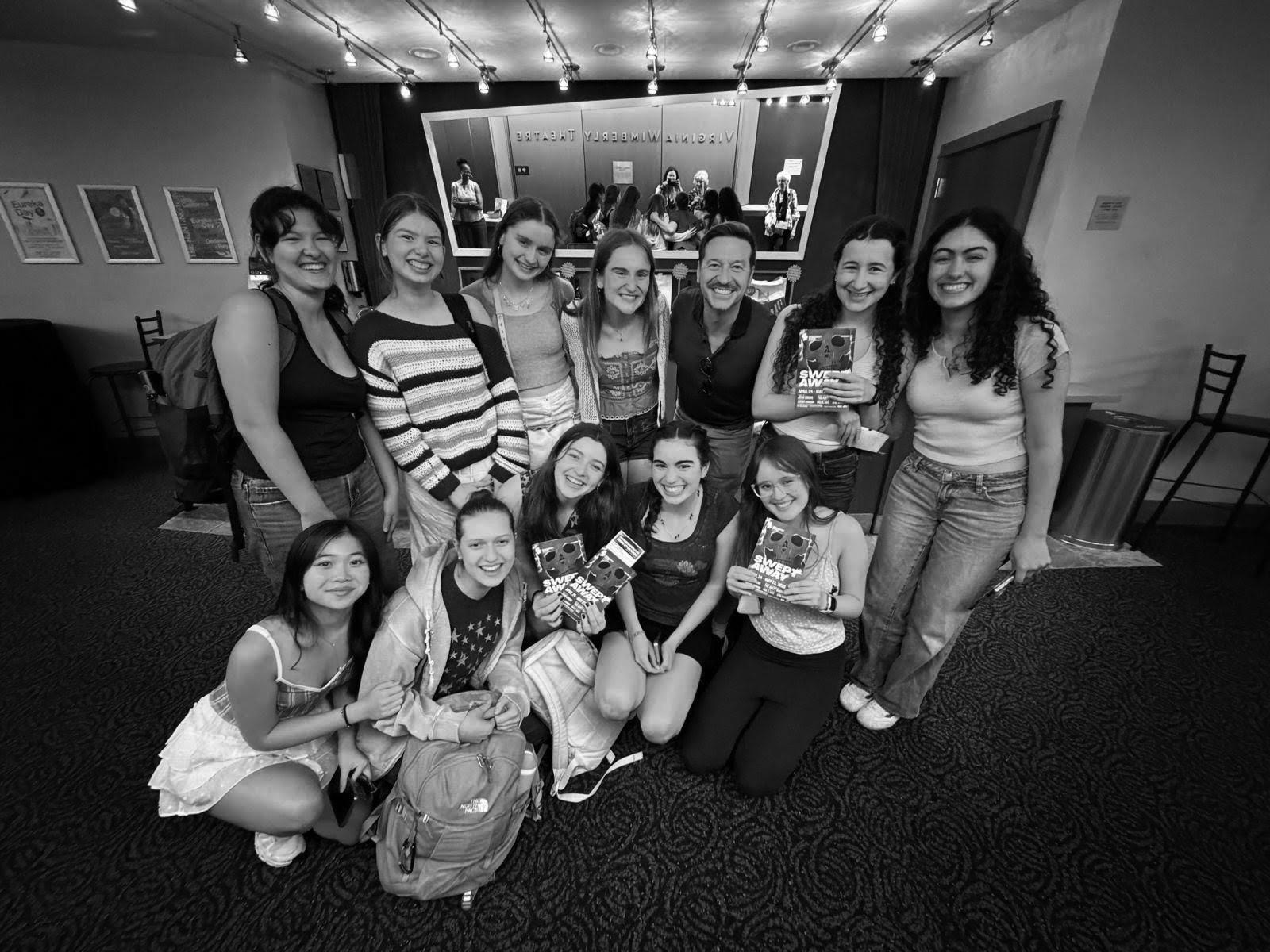
This horrifying scenario is the tragic story of the 1884 Mignonette shipwreck. The questions of sacrifice and morality this tale inspires take on a new life in the jukebox musical Swept Away, featuring music from the American folk rock band The Avett Brothers. After shows throughout the country, including a 2024 Broadway run, its most recent regional premiere in Boston is the culmination of a painstaking year of research, casting, and rehearsal by its director: Winsor’s own Jeremy Johnson! Swept Away was presented by the SpeakEasy Stage Company
at the Boston Center for the Arts. During its run from April 24 to May 23, the emotionally resonant show, featuring an aerialist, a constantly changing set, and an extremely strong cast, was praised by the Boston Globe as a “must see.”
Mr. Johnson, whose father and grandfather were sailors, notes the musical’s connection to our state. Whaling, deeply rooted in local history, and Mr. Johnson’s personal ties to the ocean drew him to the musical. Additionally, in the fall, Mr. Johnson’s directing students explored the play Trophy Boys, in which modern masculinity is framed, he explains, as a “bid for status.” Working with a mostly male cast on Swept Away, he found himself asking, “What if men just allow themselves to be vulnerable?”
On May 20, Upper School students, Winsor faculty, and staff filled row after row, united by our shared celebration of a person who has given so much to the Winsor
community. Almost every Winsor student has taken one of Mr. Johnson’s classes, participated in the Class IV play, or experienced how his works connect us through our peers’ incredible theatrical talents. Despite the play’s heavy themes, Winsor students left the theater with an overwhelming sentiment of pride. As Sarah Finkelstein ’28, who has worked closely with Mr. Johnson for six years, reflected, “it really felt like Winsor was a part of the whole experience.”
Mr. Johnson said that involving his directing class in the early stages of the casting and concept development process influenced the show. Most of these students were again present for the show’s final moments, flooding the space with palpable Winsor support in what Mr. Johnson described as a “moving, full circle” moment. During a discussion following the May 20 performance, Mr. Johnson lauded the “intelligence, sophis-
tication, and professionalism” of his Winsor students, with whom he works at the same high level as he does with Swept Away’s professional cast.
While the show closed on May 23, the pride it inspires in the Winsor community stays with us. If the fight for survival is the body of the musical, its soul is the human forgiveness that prevails between the four very different main characters. We, too, must appreciate the essential Winsor connections that keep us afloat on the most turbulent seas. ☐
Lorie Hamermesh: Passion and Contradiction
By Yasmeen Alam Contributing Writer
When I first walked through Gallery NAGA’s shared entrance with Church of the Covenant, my

initial reaction to Lorie Hamermesh: Into The Fire was that it looked a bit sparse. Seventeen watercolor paintings, ink prints, and mixed-media works sat equidistantly spaced around the small traditional “whitebox” gallery. However, the stark layout amplifies the heavy, complex themes of vulnerability and transformation underlying each work.
It is this balance that makes this exhibition of the Boston-based artist’s recent work strikingly powerful and among the most compelling displays of contemporary art I have seen this spring.
Originally from Colorado, Hamermesh moved to Boston in the 1980s and studied part-time at the School of the Museum of Fine Arts. Her work, as Sreeja Ghosh ’28 beautifully describes, “is playful, but also deep and thought-provokingly captures the fleeting nature of life.”
While the works composing Into The Fire represent a thematic departure from Hamermesh’s past body of work, which dealt with topics of identity, childhood trauma, objectification, and gender roles, they continue to explore the experience of being a woman in contemporary society. The displayed works focus on the process of aging and the passage of time.
In the exhibition, The End of the Innocence 2, a torn chine-collé print, the central figure’s erosion asks viewers to contemplate the societal erasure that comes with aging as a woman. Her torso is ripped off, while her appendages are enveloped in steely tones evocative of an underpainting. Alternatively, hanging on the other side of the gallery, Time Waits for No One, depicts a nude woman self-protectively contorted next to a duplicate shadow form.
The work considers the second self, or the spiritual, emotional, and mental experiences of life.
The exhibition draws its name from the motif of a layered cake with seemingly infinite, vibrantly burning candles. Occurring repeatedly throughout the collection of works in a variety of colors with various adornments, these cakes are just as thought-provoking as they are visually striking. Hamermesh explains that the candles are, in many ways, a metaphor for her life: “The fire does not fade with time but intensifies to reveal passion and contradiction.”
Another aspect of these works is that each is named after a well-known song (e.g. “Time Waits for No One” by the Rolling Stones). Charlotte Fitzpatrick ’27 had a chance to visit the exhibition and shared “[the titling] is a very interesting creative choice…the
artist very successfully deepens the viewer’s connection to the art by inviting them to attach their own past relationship with the music to the new visual piece.”
Lorie Hamermesh: Into The Fire is on view through June 5 at Gallery NAGA, located at 67 Newbury Street, Boston, MA 02116. ☐

What Makes a Good Commencement Song?
By Anaisha Mallik Banner Staff
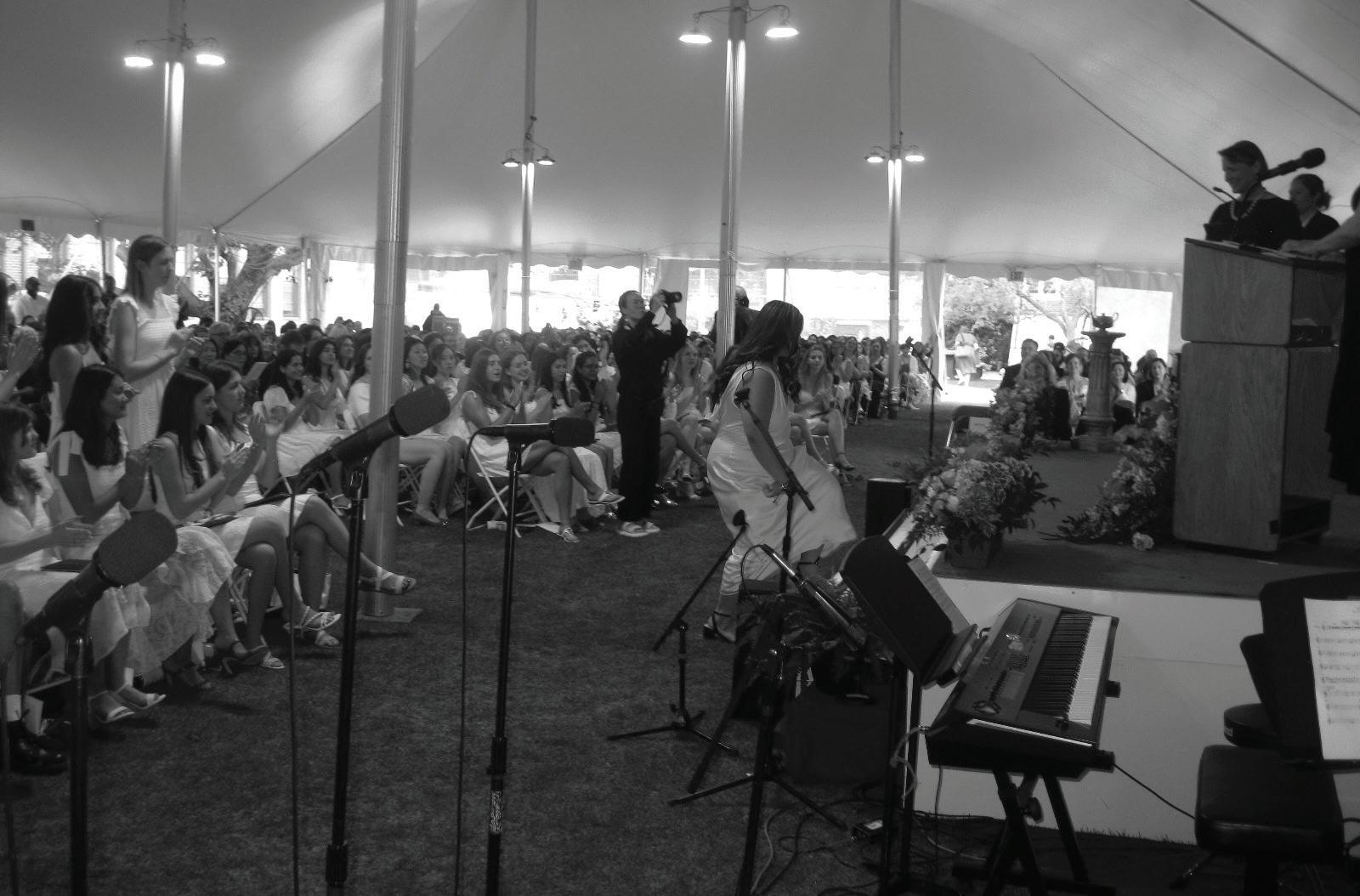
Every graduation has a soundtrack. At Winsor, that moment when everybody stops, comes together, and sings a song chosen by the seniors captures the mix of nostalgia, excitement, and uncertainty that comes with graduation. Ms. Brady Lopez shares, “The seniors often spend many days or
even weeks choosing a song that connects to their class as a whole.”
However, this moment only works with the right song. In past years, songs like “Landslide” by Fleetwood Mac, “Good Riddance (Time of Your Life)” by Green Day, and “Vienna” by Billy Joel have delivered just the right balance of emotions to be remembered by both the graduates and the audience. These songs are not usually
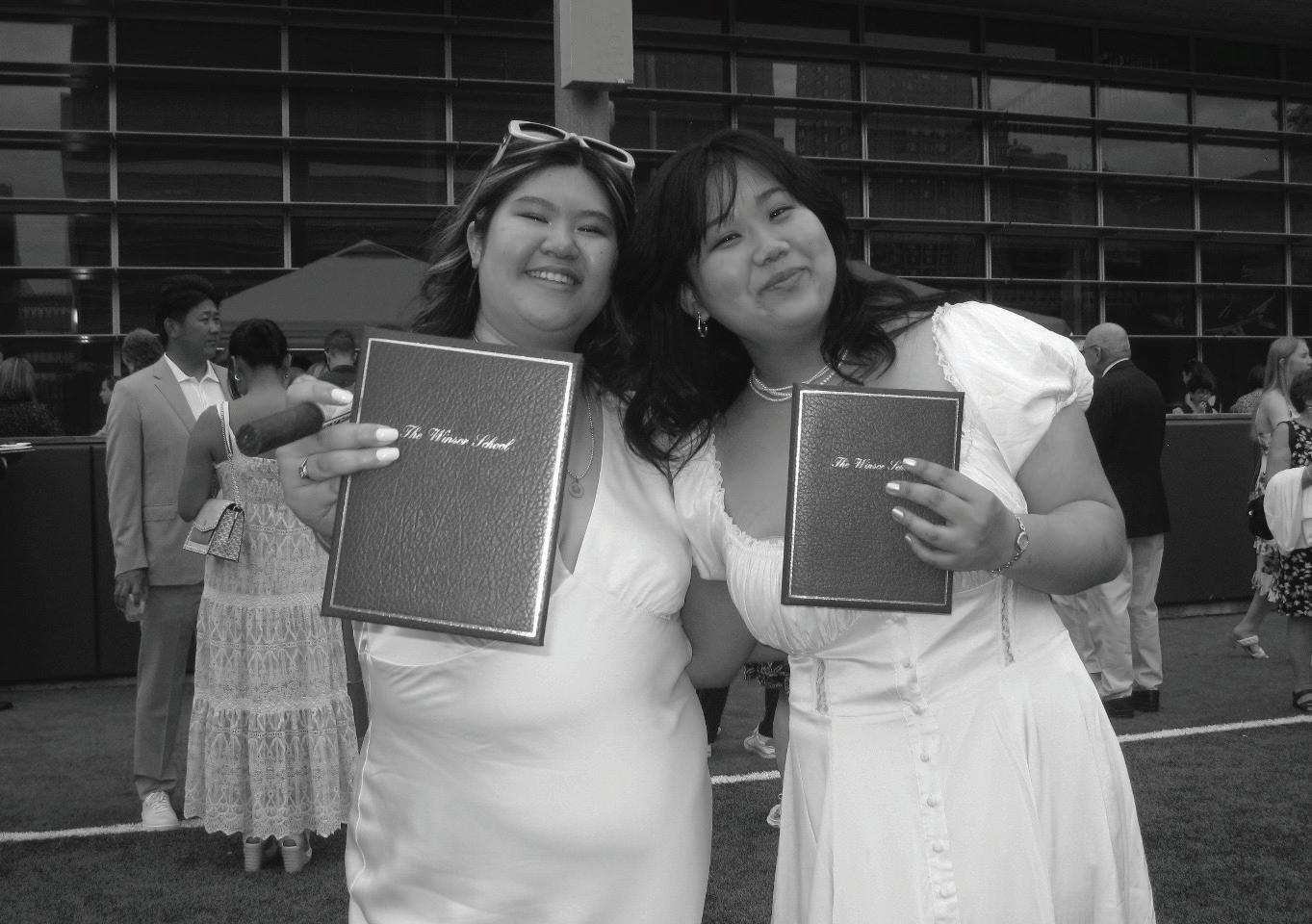
musically complicated, as Izzy Lai ’27 notes, “the songs usually only have about three to four repeating chords and a simple melody with a few harmonies.” Her experience playing piano or violin at the past two Commencements shows that what makes these songs memorable is not necessarily the music itself. So what makes these songs so perfect for graduation? The best commencement songs share three important qualities: nostalgia, optimism, and direction.
First, nostalgia matters. Graduation is about looking back as much as looking forward. “Landslide” resonated because it reflected on change and growing older in a way that feels personal and vulnerable. Students often connect to songs that acknowledge how difficult change can be.
Second, resonant Commencement songs offer hope without sounding forced. “Good Riddance (Time of Your Life),” became a graduation classic because it is bittersweet rather than overly cheerful. The song recognizes that the future is uncertain while still
encouraging listeners to appreciate the experiences they had.
Finally, direction gives the songs a purpose. “Vienna” offers advice to the graduates and the school by emphasizing the need to slow down and appreciate life. This suggestion is especially relevant as the graduates enter a more uncertain future.
Ultimately, the best Commencement songs resonate because they make graduates feel
understood. They do not need to promise that everything will work out perfectly. Instead, they capture the emotions that come with leaving behind familiar routines, friendships, and memories while stepping into a new and exciting world. This year’s song, “We Are Going to Be Friends” by The White Stripes is a perfect encapsulation of each of the qualities that make up a good graduation song. Congratulations, seniors!
Tiny Dancer Lori Hamermesh
Light My Fire 2 Lori Hamermesh
Swept Away
Bella Holt
Rock On Vocalists at Commencement
2024 Nina Gersen
Students Celebrate at Commencement 2024 Nina Gersen
The Bright Side: Michael Dukakis’ Case For Hope
By Lilac & Isabella Nguyen Banner Staff
Michael Dukakis sits in an armchair, wearing a sweatshirt from his years at Swarthmore College, smiling at the memories it holds.
Dukakis, former governor of Massachusetts for a record three terms and the Democratic Presidential Nominee in 1988, has witnessed decades of American politics. Scott Kerman’s 2025 book The Duke describes him as the “last honest politician,” but another of his qualities stands out: his optimism.
A Harvard Youth Poll found that only 13% of young Americans believe their country is headed in the right direction, citing fears about AI, the economy, climate change, and political instability. At a time when many young people feel uncertain about the future, Dukakis argues that America today is far better than it was 60 years ago.
He points to Massachusetts, which had “serious corruption problems” in the 1950s that have since been “cleaned up” significantly, creating a more transparent,
democratic political process. He also recalls how, while attending Swarthmore in the 1950s, he cut the hair of Black classmates after local barbers denied them service. Now, he believes one of the clearest signs of progress is the racial and ethnic diversity of leaders in public life.
Another source of Dukakis’s hope is his faith in younger generations. Our passion and willingness to engage, he says, prove that change is possible. To students unsure whether they can make a difference, Dukakis says, “You are part of a terrific generation … It is important for you to get involved now. I urge you on.”
So what can the average Winsor student do? Grette Buttner ’27, head of Winsor’s Current & Political Events Club (CPE), encourages students to start locally, where their voices can “make a real difference.”
Madelyn Litofsky ’28, a frequent attendee of the club, adds that our generation will one day inherit the responsibilities of leadership, and she encourages students to join clubs like CPE as a first step toward political involvement.
In a recent Upper School
meeting, where students described Winsor’s political climate in one word, a shared sentiment prevailed: political discourse at Winsor feels sparse and one-sided. At a time when polarization often discourages cooperation, Dukakis stresses the importance of connecting with others on a human level. Reflecting on working alongside Republicans whose views sharply differ from his own, he says that, for the most part, “people are very reasonable.” Buttner echoes this mindset, saying Current & Political Events Club gives students a space to “sit with disagreement,” which she calls “the foundation of staying civically engaged.”
Even at 92 years old, Dukakis can still be found bettering his community one step at a time: painting over graffiti, picking up trash, and sharing life advice with neighborhood children. If a man who lived through World War II can still believe in progress, perhaps hope begins not in grand gestures but in small acts of engagement and advocacy that make our communities a little better. ☐

Thank You to the 2025-2026 Banner Executives!
By Bonnie Shao, Nina Gersen & Bella Holt Banner Executive Staff
To Leela, Lara, and Louisa, Through long layouts, lunchtime meetings, and late-night edits, you have been an inspiration to us all at The Banner. In February, you launched an online initiative that made The Banner accessible to the wider Winsor family and alumnae community. In March, you invited a speaker to share her experiences in journalism and inspire us as student journalists. You never failed to answer our last-minute texts about layout formatting and InDesign struggles. We thank you for your dedication, passion, and leadership!
Leela’s journey with The Banner began due to her love of writing. During her freshman year club fair, she “saw a club where
she could write,” and knew that she had to join The Banner. She quickly realized that “writing a news article was not like writing an essay”; yet, she was determined to keep writing for The Banner She eventually gravitated towards
writing news articles and became news co-editors with Louisa during their junior year. Leela is grateful for the experiences that she gained through writing for The Banner because “there were a lot of times where I wouldn’t have
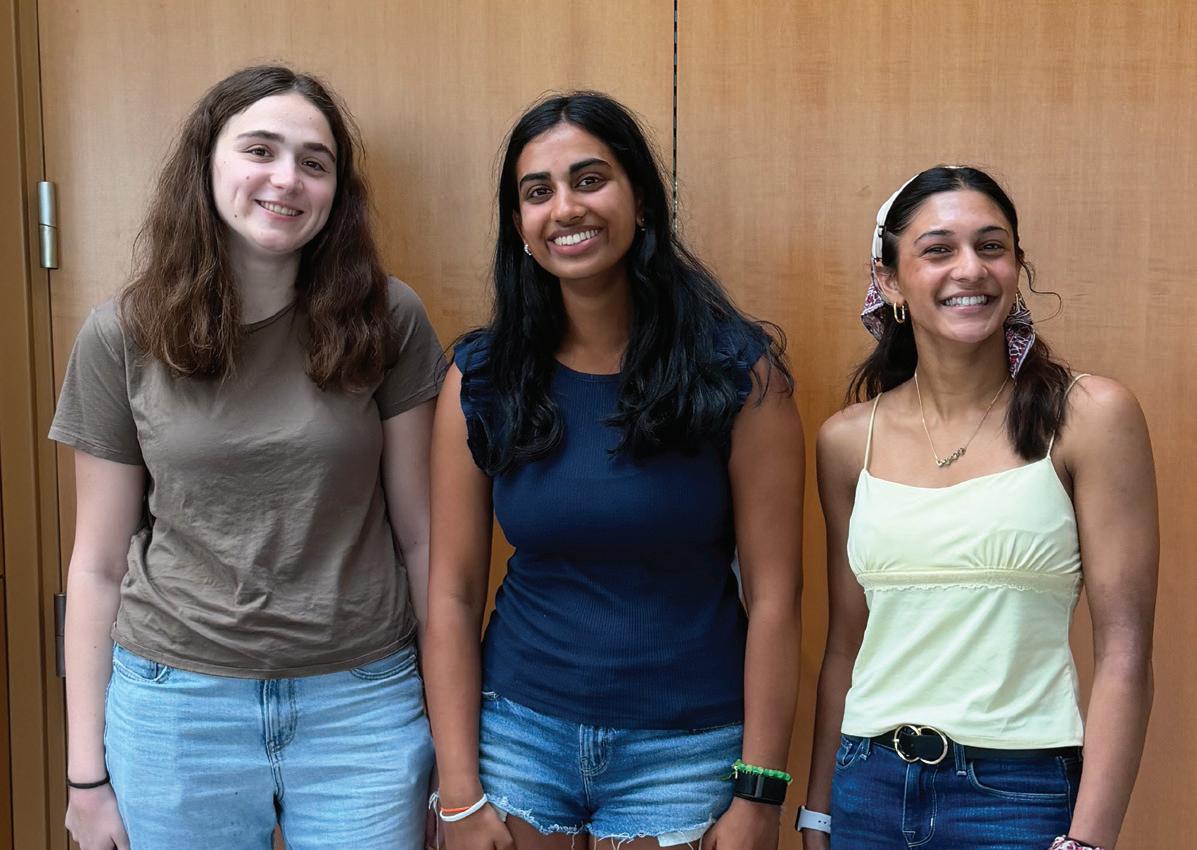
learned about something if I wasn’t interviewing somebody about it, or wasn’t going to an event to write about it for The Banner The Banner pushed me to do things that I wouldn’t have otherwise.”
Despite being initially intimidated by the huge crowd that attended The Banner’s introductory meeting, Lara decided to pursue the club when she realized that she could “fully express who [she was] on the page.” Since then, Lara has written articles on topics ranging from generative AI in the classroom to TimeOut’s untimely closure and rescue. According to Lara, the key to her Banner experience has been learning to trust her gut: “Don’t spend too much time worrying about what other people want. Spend more time just letting your heart out on the page, and it can always be revised from there.”
Louisa’s interest in journal-
ism began at a young age: “My journalism career started in fifth grade, when I started a newspaper with my friends at my old school. And then, in seventh grade, we also noticed that my middle school did not have a newspaper. So I, again, created a new newspaper.” Her first article for The Banner was about the 2022 midterm elections, for which she emailed (and received responses from) both then-Governor General Maura Healey and U.S. Representative Ayanna Pressley. Louisa’s passion and initiative have remained evident throughout her time as an Executive Editor. Leela, Lara, and Louisa: you have left your mark on The Banner forever, and we can’t wait to see what you do next. We hope you will continue journalism in the future and that you will stay connected with The Banner community here at Winsor. We will miss you! ☐
Inside the Rehearsals for Class IV Shakespeare
By Lower School Newspaper Club
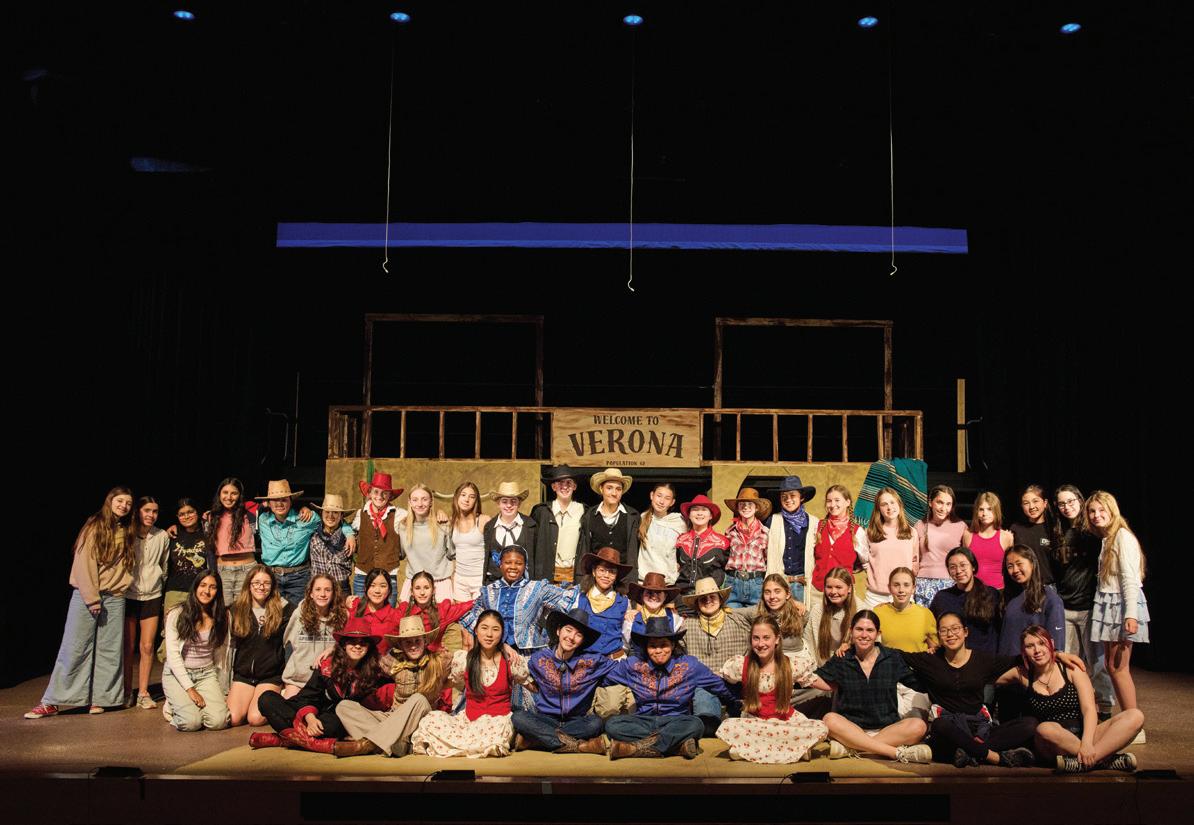
On May 14 and 15, the Class IVs performed Romeo and Juliet as their iteration of Winsor’s 95th annual Shakespeare play. As one of the many Class IV traditions, the grade performed two plays with the same script: one set in the Renaissance and one with a modern theme chosen by Performing Arts faculty and director, Mr. Johnson. This year, the theme was the Wild West. The actors in the Wild West and the Renaissance show had the same lines, but different costumes, sets, props, and blocking. Mr. Johnson explained, “When you change the time or location of a play from its original locale, you need to make sure that there is a strong reason for the change.”
He described that he found the “lawlessness [and] vigilante jus-
tice” of Romeo and Juliet similar to “America in the mid to late 1800s.”
Since February, Class IVs have been collaborating to put together costumes, sets, music, and scenes. Garden Gall ’30, who worked on the costume committee, said, “My favorite part was having costumes come together.” She loved finding one piece of an outfit and digging through the bins in the costume shop to find other parts.
In the Renaissance production, actors wore pantaloons and vests if they were playing a male character and traditional Renaissance dresses or skirts if they were playing a female character. In the Wild West production, actors wore vests, jeans, and cowboy boots if they were playing a male character, and western-patterned dresses if they were playing a female character.
Zadie Schopf-Malone ’30 of the set committee explained
how she “picked out the set pieces for the Renaissance play. We used AI to come up with some of the lighting ideas—we would put in a prompt and then it would come up with a picture so that we could show Mr. P.” Performing Arts faculty member Mr. Puigbo oversaw set and lighting design, helping the show run smoothly.
The music committee was responsible for playing music during transitions and fight scenes. Committee members had to be prepared for cues and learn how to time them to the actors’ lines. Rianne Chen ’30 said that the hardest struggle on the music committee was “syncing and collaborating with the other members, all of whom were extremely talented and helpful.”
The biggest challenge of the Shakespeare project for many was the acting. Many students had not participated in a play be-
fore, so the project offered them a chance to try acting and take risks. Students worked to memorize lines, and practiced fight and dance scenes over and over again.
The 95th Shakespeare play brought the Class of 2030 together as a grade, pushing students out of their comfort zones and challenging them to make big acting choices. Despite a few challenges, the teamwork and dedication of all the cast and committee members made both shows a great success! ☐
The Cast of Romeo and Juliet
Canto
Michael Dukakis
Northeastern University
Louisa, Leela, and Lara
Leela Uppaluri
Athlete of the Issue: Zaara Mehra ’26
By Annie Fitzpatrick Banner Staff
If you have ever been by the Charles River, you most likely have seen the Winsor Crew team speed by. At the front of the boat sits coxswain and crew captain Zaara Mehra ’26, using her expert steering and enthusiastic motivation to empower her rowers. The Banner recently had the chance to talk with Zaara about her Winsor Crew experience as her senior season comes to an end.
How is your role as a coxswain different from a rower?
It’s my job to direct the boat and command my rowers. As a coxswain, I am there to be the brain for my rowers and help them push themselves beyond what they think they can do.
What is your favorite part about being on Winsor’s crew team?
My favorite part about Winsor Crew is my teammates because they genuinely push me to be a better version of myself. They make me realize how much that we can all do when we work all together.
How have you grown as a person throughout your time as a coxswain?
I have become a lot less shy. Being a coxswain gave me a place where I was really able to find my voice and be in control by knowing what I am doing. Where I found confidence in the boat, I was able to
bring that confidence to other aspects of my life. I am a lot less afraid to speak and share my opinions because I believe in myself more. What is the biggest lesson you have learned from coxing or
being a crew member?
I have learned from rowing that all you need is persistence, resilience, and relentlessness. I have learned that if you want it more than your opponents, you can genuinely

do anything. Rowing has taught me that nothing is impossible. Who is someone you look up to or that you aspire to be like when you are coxing?
I look up to my dad as a leader. His big thing is leading with humility, and as a coxswain, I know that I am not rowing, and my rowers are going through a lot. When I am talking to the rowers, I try my very best to be humble and take their wants and their feelings and use that to make them go faster. I try to lead with humility, like my dad, especially when leading the other coxswains and as a captain.
Winsor’s Head Crew Coach, Maura Flanagan, also shared, “Zaara is a true athlete. She is fiercely competitive. She’s loyal to her teammates, and she’s never stopped learning. This has made her improve year after year into an incredible coxswain that leads this team.” Thank you, Zaara, for taking the time to share your experiences as a Winsor coxswain. We wish you the best of luck in your future endeavors as a Georgetown coxswain next year! This interview has been edited for brevity and clarity. ☐
Winsor Needs a Humanities Internship Program
opportunities in the humanities.
It’s the middle of the spring semester of your junior year, and you, along with all other students, are scrambling to find an internship or a summer opportunity that both interests you and is willing to hire you as a high school student, a nearly impossible task. If you’re interested in science, you’re in luck. Winsor has a science internship program with job opportunities in various STEM fields and even a grant fund to help those students who would otherwise have to work over the summer. For those of us who are humanities kids, however, there’s no such program.
As two students interested in the humanities, we’ve watched many of our peers receive support and opportunities from Winsor to pursue academic interests and topics outside of school. Both the Independent Research course and Summer Internship facilitate co-curricular work for students interested in STEM. The current institutional support for students interested in STEM fields is valuable, but it is unbalanced. For those students passionate about history, English, language, or essentially any other non-STEM field, the opportunities are lacking.
The inequity in this support does not actually reflect the interests of Winsor’s student body. While there are many students interested in pursuing STEM in college or careers, in a survey conducted for this article among this year’s junior class, 57% of respondents said that they envisioned themselves pursuing the humanities in college. Additionally, in this survey, many students expressed their wish that Winsor had more
Winsor’s main internship resource, the Science Internship Program, originated in the early 2000s as an effort by the science department to help support students interested in pursuing external opportunities in STEM fields.
Science Faculty Ms. Labieniec, who is managing the Science Internship Program this year, said that before this program’s creation, “students sometimes found these opportunities, if they had families who were in science, or if they had a family friend, and so they could find opportunities, if they had connections to the scientific field. For a number of years, we had students doing projects, but there was no set program. Many of the science faculty were wondering: ‘How can we really formalize this program
more in order to have something where Winsor supports students?’”
Eventually, the science faculty developed the Science Internship Program, which places roughly 20-30 Winsor students a year at labs or data-centered research projects in the Boston area. Last summer, Aoife Keane ’27 participated in the Science Internship Program, and thanks to the experience she gained and the connections she made, this summer she will continue working in the same lab. “I was able to get an internship that aligned perfectly with one of my specific interests. Doing this internship allowed me to gain experience analyzing data and working on a paper in a lab, and I am looking forward to returning this summer.”
An internship is an opportunity to gain real-world work
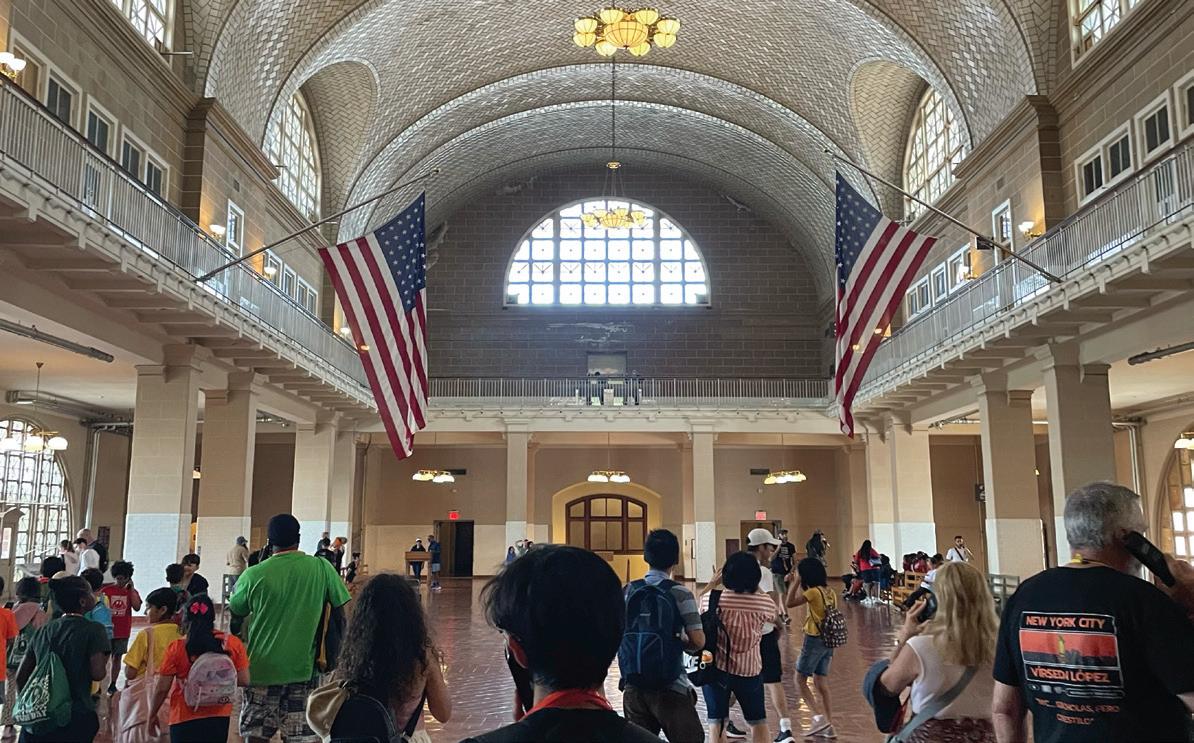
experience in a field that interests you, and, especially as juniors face college applications in the fall, this experience can help clarify our interests and passions. Finding an internship in the humanities on your own is difficult, but it is not impossible. There is plenty of interesting humanities-centered work and research happening in Boston, but this work is inaccessible to most high school students. The benefit of the Science Internship Program, however, is not only the opportunities it provides, but the structure and support it gives to these opportunities.
Right now, Winsor is in a similar stage as it was before the
creation of the science internship; there are many students finding these humanities opportunities through connections and family friends, but there is no formal program. However, many students don’t have access to these connections, creating a massive inequality in opportunities due to a lack of institutional support. Taking these already existing opportunities and turning them into a structured internship program, as was once done with the Science Internship Program, would allow students to have more equal access to opportunities and provide support for all those students currently struggling to find an internship this summer.
Winsor Students’ Broad Interests Alice Lohr
By Nina Gersen & Yasmeen Alam Banner Staff
a Humanities-based Summer Program
Bella Holt
Students at the School of the New York Times,
Mehra at a Regatta this Spring Canto
Sherren Granese’s Reflections on Her Leadership
After 17 years as Winsor’s Director of Athletics, Ms. Granese will retire at the end of the school year.
Every student at Winsor has received Ms. Granese’s weekly emails announcing game schedules, early dismissals, and athletic achievements. Behind those updates lie nearly two decades of leadership that shaped and transformed Winsor’s athletic program.
During her time at Winsor, Ms. Granese has significantly increased the number of athletic programs available to students.
She founded Winsor’s volleyball program in 2017, starting with a junior varsity team before growing it into a full program with varsity and Lower School teams as well.
What started with just a single game in the first season grew into a thriving program that won the EIL Championship this year and qualified for the Class A NEPSAC Tournament. She also started Winsor’s golf club, which participated in the NEPSAC Girls Golf Championship and solidified its place as a program with multiple top five team finishes since its conception.
Beyond building new pro-
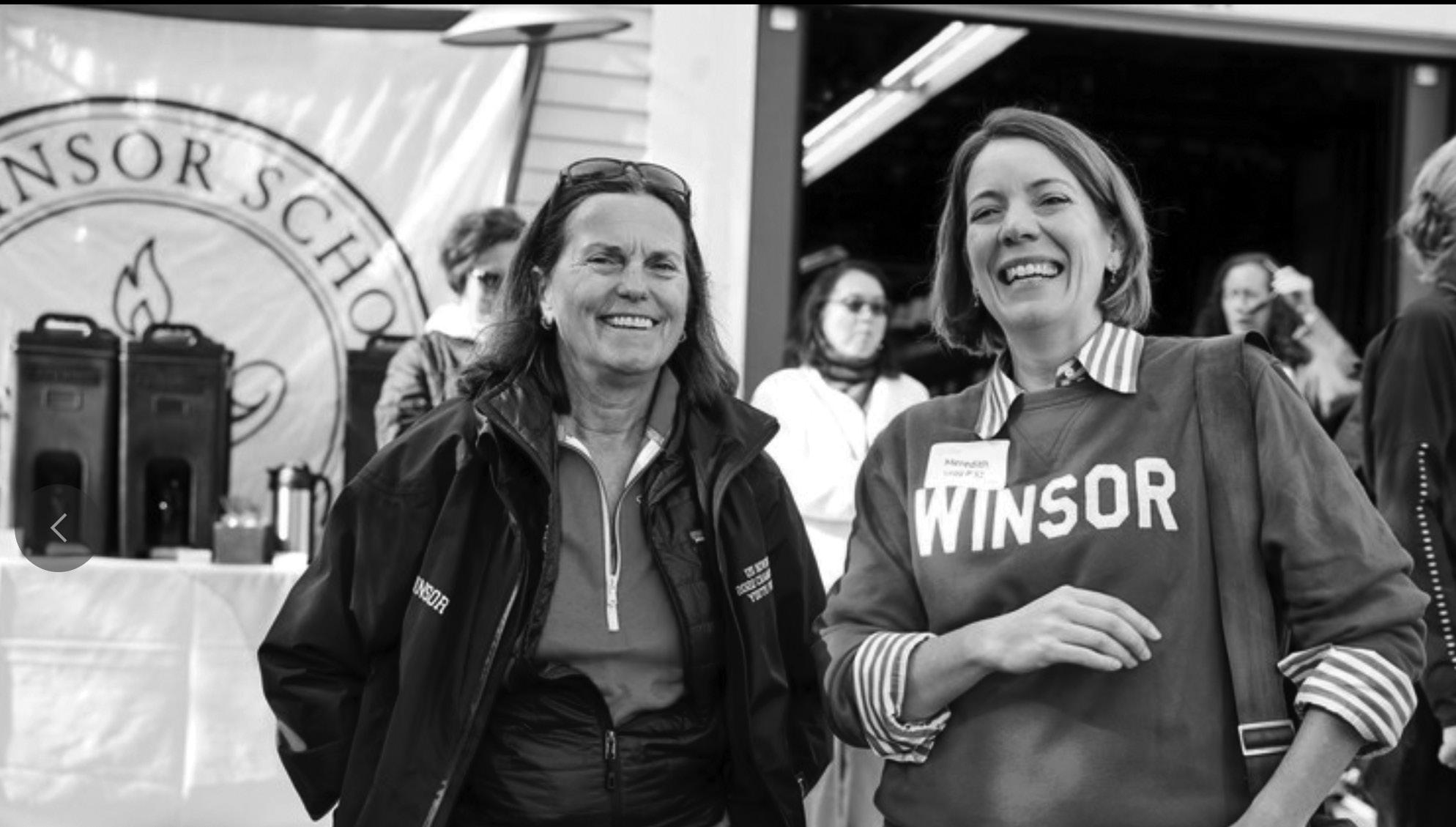
grams, much of Ms. Granese’s work occurred behind the scenes. She ensured that every athletic season ran smoothly by arranging transportation, hiring and monitoring coaches, and scheduling games. She especially focused on bringing in high-caliber coaches that would help take programs to the next level. One principle she often emphasized to coaches was from Pat Summit, a former Division I basketball coach: “The kids don’t care how much you know until they know how much you care about them.” Ms. Granese was also instrumental in organizing one of Winsor’s most beloved traditions: Under the Lights. She has guaranteed that Under the Lights, or UTL, is a school-wide event that brings athletes, alumni, and families together to celebrate Winsor fall athletes and school spirit.
Under her leadership, Winsor has won numerous championships and raised countless banners in the gymnasium. But for Ms. Granese, the most meaningful aspect of her job was not the victories but “watching students grow from Class I to Class VIII” and witnessing their development into “strong, confident young women.” Her fa-
vorite moments include attending games, meeting parents, and celebrating with Winsor athletes after major wins. Her constant support and presence had a big impact on students. When Ms. Granese was coaching Mid 1 Field Hockey, Aarna Sundaram ’29 felt especially impacted by her “constant encouragement and belief in every player.” Evelyn Tian ’28 recalled that Ms. Granese “made [her] feel really supported right away” during her first introduction to Winsor athletics—the Crew swim test.
That sense of care and support is what Ms. Granese aims for students to remember about her. Above all else, she hopes that students will know she “cared about them as people first, and then as athletes.” Looking forward, she is excited to spend more time with friends and family, including her grandson.
While her weekly emails will soon come to an end, Ms. Granese’s contributions to Winsor will continue to resonate among students long after her retirement. The programs she started and the culture of support she prioritized will remain central to Winsor Athletics.
Winsor’s First Annual Spring Rally: A Photo Essay

Two Minutes: A Look at the 2026 Kentucky Derby
In an era of constant sports coverage with instant replays, the 2026 Kentucky Derby stands out as one of the few events that still feels larger than the sport itself. Held at Churchill Downs, the race delivered its mix of high stakes, tradition, and unpredictability, drawing national attention for both the result and the atmosphere surrounding it. Once called the “most exciting two minutes in sports” by former Churchill Downs president Matt Winn, the Derby maintained that reputation in 2026 with a tightly contested finish that kept viewers engaged until the final strides.
The race unfolded under the usual spectacle that defines the Derby: a packed grandstand, elaborate hats filling the crowd, and the ceremonial buildup that distinguishes the event from other major horse races. This year’s field was considered especially competitive, with no clear dominant favorite. As the horses
rounded the last turn, the lead shifted rapidly, setting up a finish that came down to fractions of a second and a final surge that ultimately decided the winner at the line. Golden Tempo won the race with a time of 2:02.27 and made trainer Cherie DeVaux the first woman trainer to win the Derby. The appeal beyond the race itself is that the Derby once again functioned as a cultural event as much as a sporting one. Fashion remained a defining feature, with spectators continuing the longstanding tradition of bold hats and formal attire. Social media amplified these visual elements, with short clips of the crowd and final moments of the race circulating widely within minutes of the finish. The combination of tradition and digital visibility helped the Derby maintain relevance even for audiences who do not regularly follow horse racing.
At Winsor, the Derby surfaced mainly through these brief clips and conversations rather than full live viewing. “I didn’t watch the full broadcast, but I kept see-
ing the finish everywhere,” said Sarah Finkelstein ’28. “It was one of those moments where you don’t need context to understand it felt intense.” Students referenced the unpredictability of the finish and the visual spectacle of the event more than the specifics of the field or race strategy. Madelyn Litofsky ’28 noted that “it feels like one of those events where even
if you’re not into sports, you still end up knowing what happened.”
While horse racing remains a niche sport, many students still point to the Derby as an example of how tradition continues to sustain cultural relevance. Anika Gupta ’29 explained, “[The Derby is] more than just a horse race. There’s a lot of history behind it, but there’s also the exitement of
the competition, which makes people want to keep watching.”
The 2026 Kentucky Derby’s defining moments, including its exciting close finish, detailed visual traditions, and rapid spread through digital platforms reinforced why it remains a fixture of American sporting culture, even for audiences who only encounter it in passing. ☐

By Kathy Wang Banner Staff
By Bella Holt Banner Staff
By Charis Liu Banner Staff
Ms. Granese and Ms. Legg
Winsor Canto
2026 Kentucky Derby
The Pressbox
Lacrosse Game Winsor Canto The Softball Team before a Game
Winsor Canto LS Students at the Spring Rally
Winsor Canto
Predicting the Dream Finals in the NBA Playoffs
By Talia Ziblatt
Contributing Writer
The NBA Conference Finals began on May 22. The final four teams, New York Knicks versus the Cleveland Cavaliers, and the San Antonio Spurs versus the Oklahoma City Thunder, all have a chance to punch their ticket to the Finals. My initial predictions preceding the finals are outlined below. While there is still plenty of time for unexpected contenders to emerge and win this year’s NBA championship, it will be interesting to see how these predictions hold up.
Eastern Conference Finals
The Knicks, who swept the 76ers in one of the most dominant games New York played all season, are coming off a ninegame win streak. On the other hand, fourth-seed Cleveland, despite benefiting greatly from the James Harden acquisition, has had a rockier road to the Conference Finals. Unlike the Knicks, the Cavaliers have not reached the Conference Finals since having Lebron James on the team in 2018.
Both of the Cavaliers’ series went to seven games, the first one against the Toronto Raptors and the second against the Detroit Pistons. As long as key players on the Knicks stay healthy and their defense stays strong, the Knicks have a strong case to move on. But the Cavs could make this a close and extremely interesting series if they take care of the ball to minimize the turnovers that plagued them in the past two series and stay on the defensive rebounds.
Alexis Sanborn ’27 reflects, “I want the Cavs to win. Hear me out, I was just watching last night’s game (Game 1), loosely. But I still think they are going to win.” This will be an exciting and close matchup—Knicks in Five.
Western Conference Finals
The Thunder versus the Spurs is a highly anticipated game. Every time these teams have played, the game feels gritty, passionate, and extremely competitive. The number one seed, OKC, has had perhaps the smoothest road to the WCF: a sweep of round one Phoenix Suns and a sweep of Lebron James and the Los Ange-
les Lakers. Their deep bench and rotating starting lineup have been one of OKC’s biggest strengths. Shai Gilgeous-Alexander was just named the NBA MVP award for the second year in a row, and is looking to add a back-to-back NBA Champion title to that accolade.
The number two-seeded Spurs, with Defensive Player of the Year Victor Wembanyama, won their first series against the Portland Trailblazers in five games
and the second round against the Minnesota Timberwolves in six.
Keep in mind that the Spurs are 4-1 this regular season against the Thunder and have a very real possibility to upset the favorites. I predict that if OKC gets hot, they will win in six. Still, I would like the Spurs to win this series and go to the Finals, so–Spurs in seven. I believe the most exciting Finals matchup would be Spurs versus Knicks. Mr. Mirelman
agrees with the above and believes “the Spurs will win because of Wemby, but [he wants] the Knicks to win because Brunson is fun.” Whoever ends up in the Finals, it is pretty clear that both of the Western Conference teams are favored. Depending on whether the Knicks stay in their hot shooting streak, it could be OKC in Five or Spurs in Six.
As of May 31, the Knicks and the Spurs are in the NBA finals. ☐

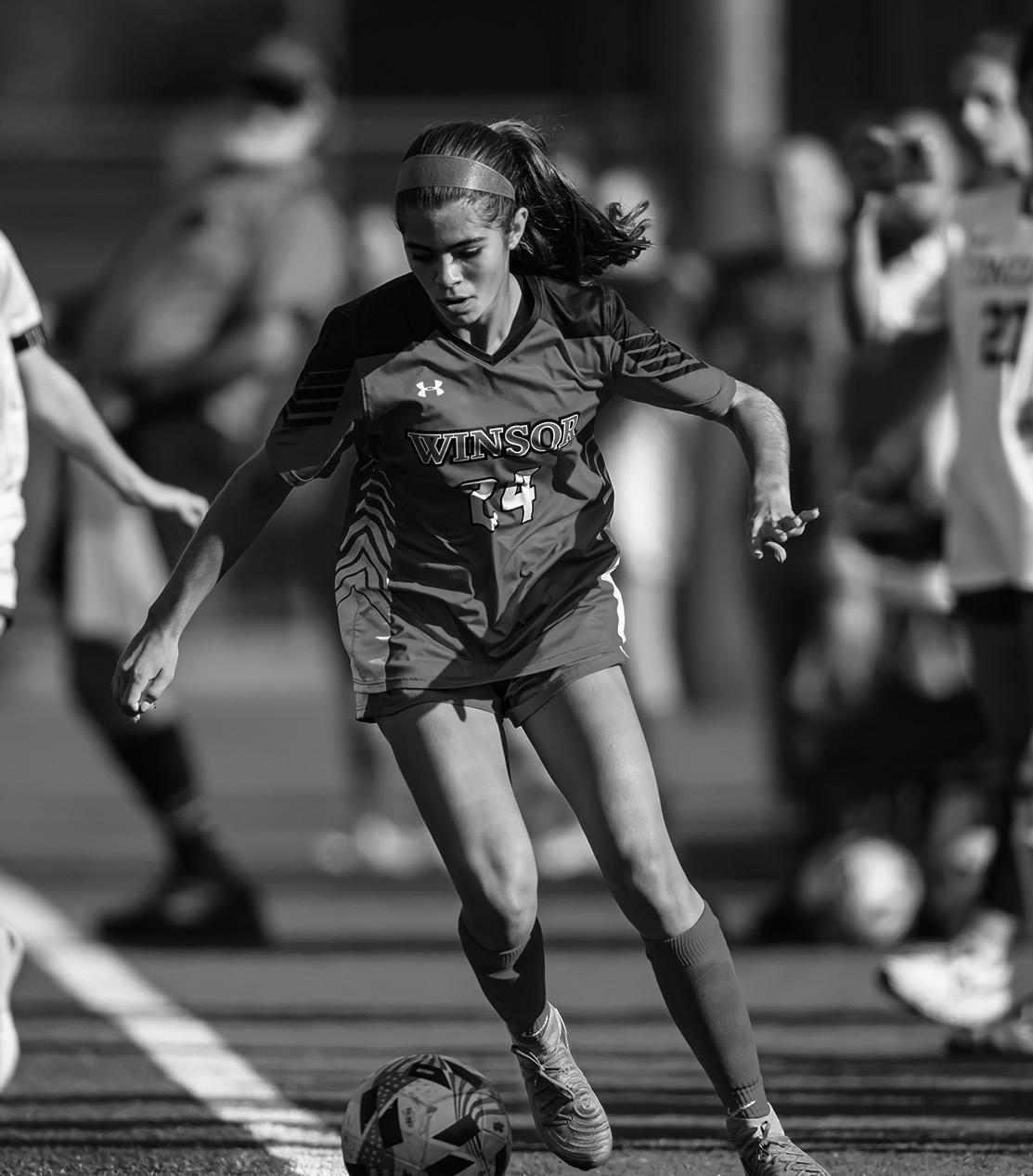
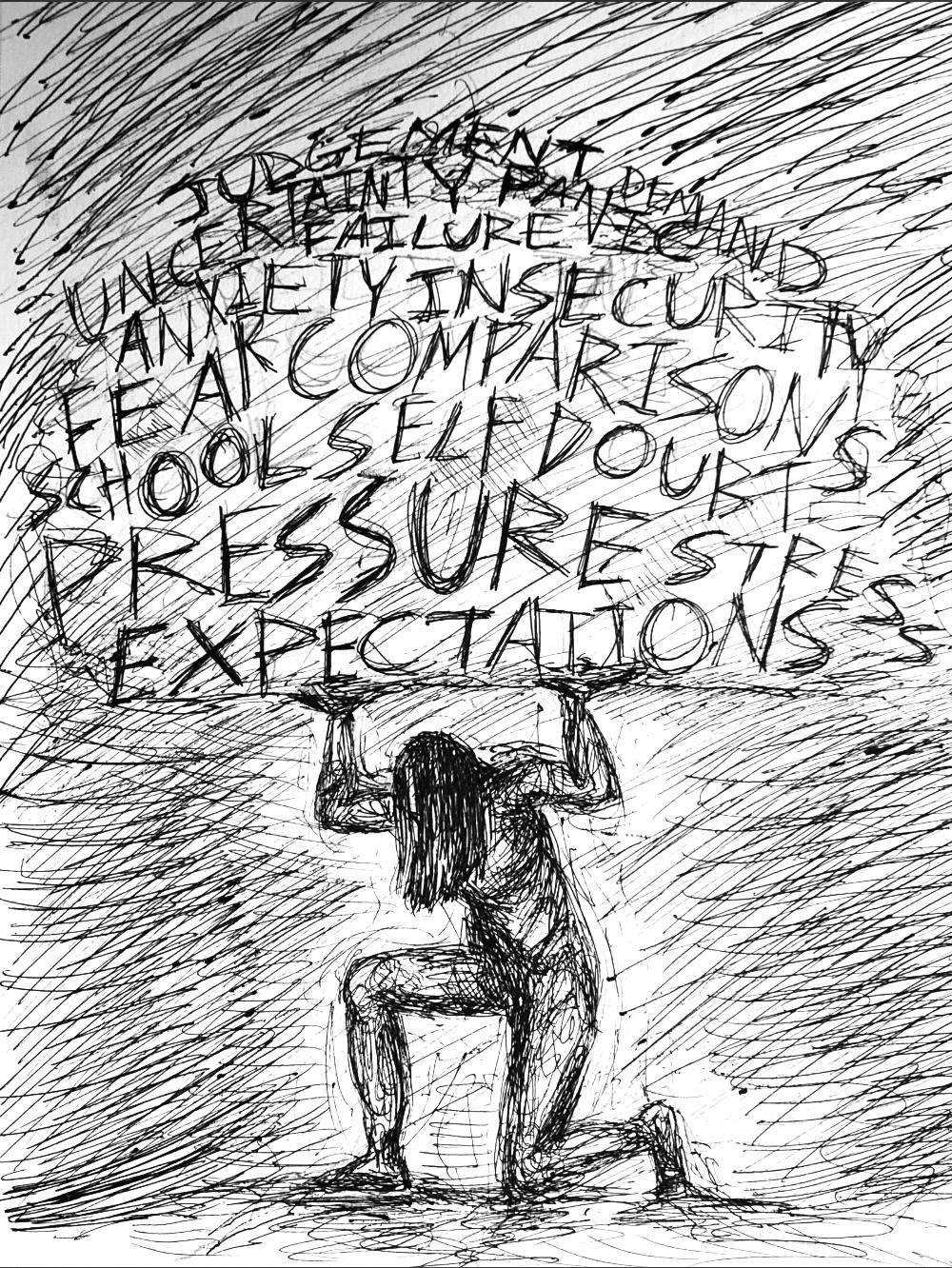
Mental Health Awareness Month: Athlete Edition
mental challenges and prevent the struggle of overthinking mistakes and second-guessing themselves.
Athletes constantly train to strengthen their bodies, but the all-too-forgotten mental side of sports is just as important. Mental health is often overlooked in athletics, and the stigma surrounding it can make athletes hide their self-doubt and feel alone in their struggles. However, even elite athletes like Simone Biles, Naomi Osaka, and Kevin Love have spoken openly about the importance of mental health to help create a more supportive and open conversation around athletes’ mental well-being.
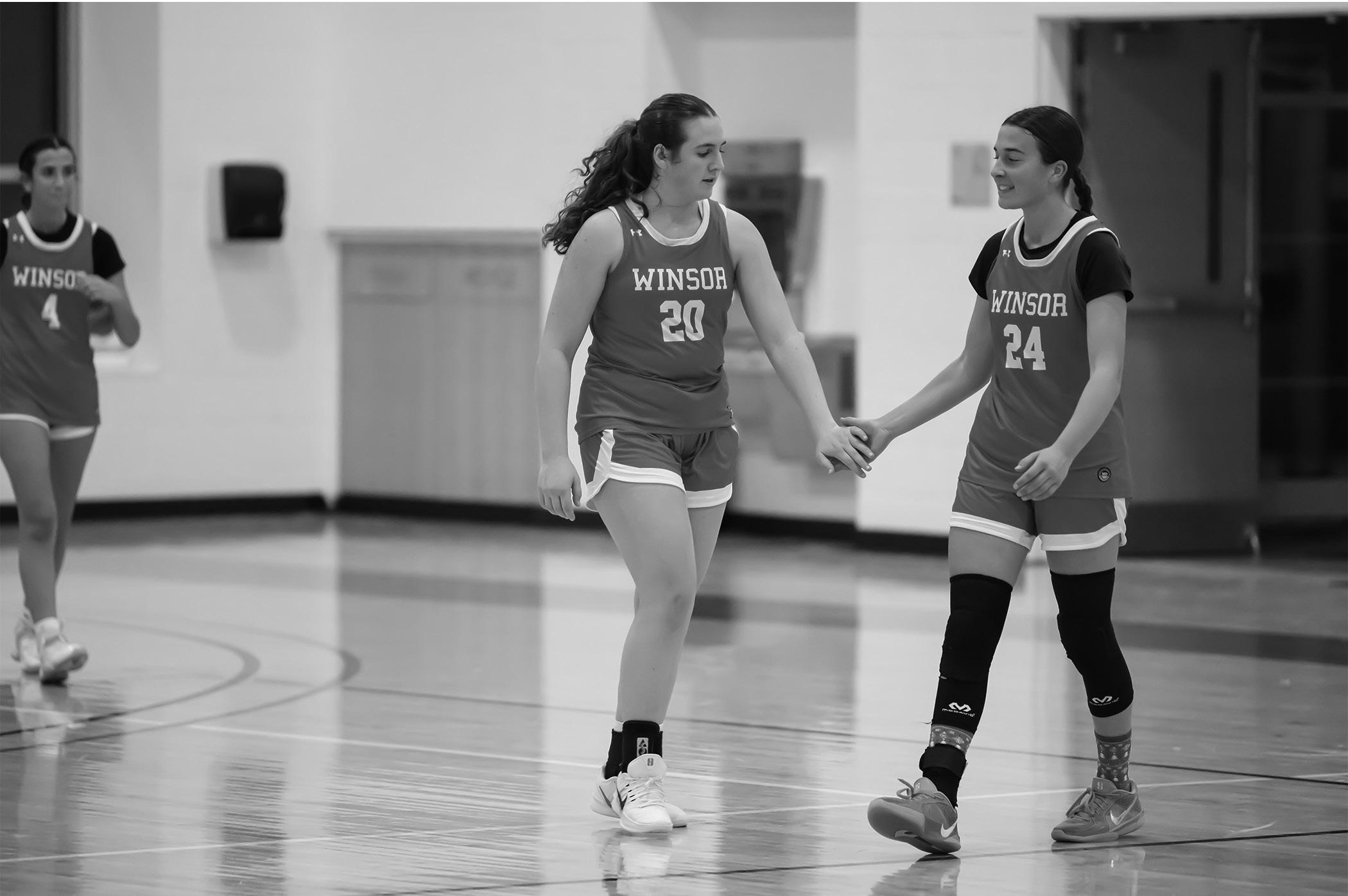
Liv Todd ’28 shared that when she plays basketball, she thinks about impressing her coaches and parents and sometimes focuses too much on not making mistakes. She added, “When I’m confident, I play more freely and trust my instincts. But when my confidence drops, I second-guess myself, which usually hurts the way I play.” I have experienced this struggle in basketball as well: hesitating for even one second can lead to a blocked shot or missed opportunity. Winsor Athletic Trainer Mr. Newell reinforced this idea by saying, “Confidence breeds success, and success breeds confidence.”
Todd appreciates how her club team talks about the mental side of basketball to help her maintain confidence before and during games. She has formed strategies to reset mentally instead of focusing on mistakes, such as breathing slowly, talking with teammates, and focusing on the next play because “thinking too much about mistakes just leads to more frustration.”
Todd believes that “athletes should definitely be taught more about confidence and mental health in sports” because better support can help athletes overcome
Coaches emphasize how learning from mistakes is key to improving and staying positive after tough games. Varsity Softball
Coach Kallan Roys uses a strategy called “well, better, next” with the softball team: athletes first think of what went well to build confidence and what could have been better, and then they focus on the “next play” to learn from, rather than dwell on the mistake. Coach Kal finds this to be the best way for athletes to improve and maintain confidence after playing.
Injuries create major mental challenges for athletes as they are separated from their team, unable to compete, and may feel as if they are falling behind. Although many successful athletes are grateful that their injuries taught them resilience, maintaining a positive attitude can be difficult during a long recovery.
Tessa Laurans ’28 reflected on her injury before her sophomore soccer season and explained, “When I first tore my ACL, I thought the nine-month time frame seemed so daunting, and it felt like I would never get there.” She said the mental side of recovery was especially difficult because rebuilding confidence in her ability to play felt more challenging than regaining physical strength.
Varsity Basketball Coach Brittany Bushman shared a similar experience: “When I tore my ACL, for the first two years after I could play, it was constantly in the back of my mind.” Mr. Newell acknowledged how he sees many athletes face this struggle and explained, “If you’re afraid to get hurt, it’s going to affect how you play. That fear of injury makes you more likely to be injured if you’re not acting naturally and trying to protect something.” It is important for athletes
to mentally trust their physical training in order to regain the confidence to play at full speed again. Mental health is just as important as physical health in sports;
yet, many athletes hide their struggles. As more professional athletes break the stigma surrounding mental health and encourage open conversations about it, schools and teams can begin dedicating more time to mental health and mental training so that more and more athletes can feel better mentally when they play their sport.
By Emily Yakoobian Banner Staff
NBA Players ESPN
Tessa Laurans
Winsor Canto Pressure
Abby Sheu
Liv Todd and Emily Yakoobian
Winsor Canto
Whose Mistake Is It? The AI or the Human?
By Angeliki Agape Volandes Banner Staff
When AI makes a mistake, a person is almost always responsible. “The computer did it” is the newest lazy excuse. Unfortunately, that excuse already has a track record. A California lawyer tried it in 2025 after filing a court brief built on cases that did not exist—all of them invented by ChatGPT. A court found that 21 of the 23 quotes in his brief were fabricated. His defense was that he never read what the program produced before sending it
in. The judge was unmoved and fined him $10,000. Reading the work had been his job, and the tool’s failure did not erase that.
The stakes climb from there.
In 2020, Robert Williams was handcuffed in front of his children for a crime he did not commit after a facial recognition system wrongly matched his face to a shoplifter’s. Williams’s predicament was not an isolated incident either. At least seven people, nearly all of them Black, have been wrongfully arrested in the United States after a false facial recognition match. Yes, the software
was wrong, but software does not make an arrest. An officer chose to trust the match and skip the investigation that would have cleared an innocent man. Caroline Wellington ’28 commented, “I find it really saddening to hear about AI’s impacts on people, which for some includes destroying their lives.”
The pattern is the same each time: one excuse, wildly different consequences, one underlying problem. To be fair, there is a harder case. Sometimes AI does something so unexpected that no person could have predicted or prevented, and pinning the blame
on a human feels wrong, such as the Flash Crash of the British Pound in 2010, when a series of algorithmic mistakes caused the currency’s value to drop by 6 percent. That kind of mistake is real but rare. The headlines are almost always about something far more ordinary: a person used the tool to save time and never checked what it handed back. Almost no one says “the AI did it” out loud—it sounds too much like a confession. Instead, the defense comes dressed up: I didn’t know, I didn’t realize, the tool messed up. But under-
neath, it is the same plea: don’t blame me, blame the machine. Talia Ziblatt ’27 says, “I’m a believer in accountability when it comes to using AI—those who use it have to bear the consequences of their actions. They were the ones typing the prompt into the chatbot; they were the ones passing its work off as their own, with or without mistakes.” The stakes at school are smaller, but the principle is the same there as it is anywhere else. Whoever takes the credit when AI works takes the blame when it doesn’t. ☐
Pros and Cons of Winsor’s New Bus Schedule
By Daniela Antras Banner Staff
I’m sure my parents aren’t the only ones who’ve spent hours in rush hour or Red Sox game traffic on their way to pick me up from sports practice. While very fun, extracurriculars make pick-ups difficult, especially for students who live far away or normally take the bus. However, Winsor’s athletes, actors, and their parents’ gas bills are in luck, as there will be changes to the bus schedule next school year. Currently, Winsor runs six buses in the morning and six in the afternoon; next year, however, only three afternoon buses will leave at the usual time of 3:05 while three “late buses” will depart at 5:30. But will this change truly benefit the Winsor community?
Despite their downsides, these later
routes will ultimately be a great improvement to Winsor’s bus schedule.
One drawback is that there will only be three different afternoon routes, each going to a North, West, or South area, and these hub-style stops will be more spread out. Evie Cleary ’28 voiced that fewer stops may increase students’ distance from home to their bus stop. “North, West, and South is pretty general,” Cleary expressed, “so I don’t know where it’s going to land in relation to where I live.”
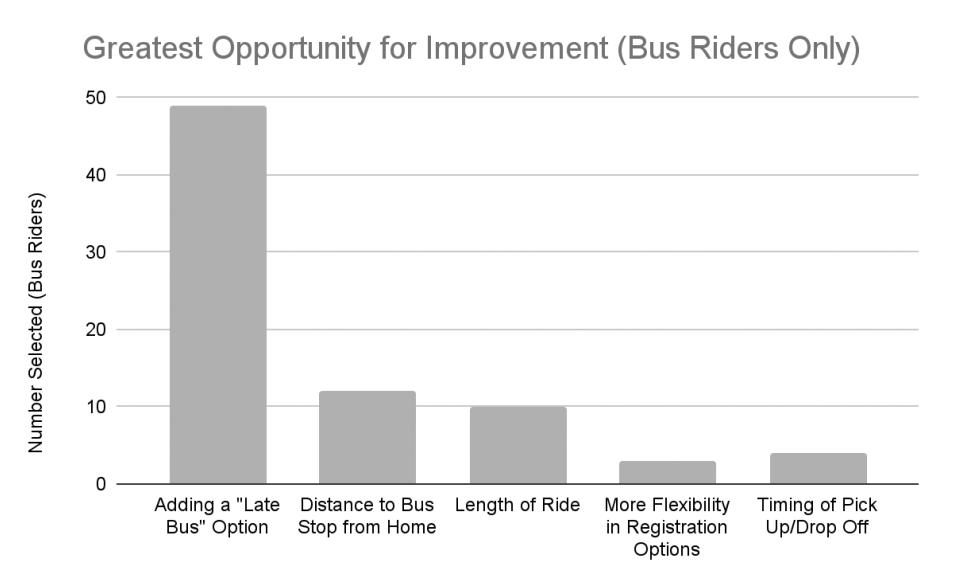
Opportunities for Bus Improvement
This drawback, however, doesn’t make the new schedule an overall downgrade; in the words of Chief Operating Officer Karen Geromini, it will “hopefully save people a lot of time.” Operations Manager Brooke Elmore explained that “with the traffic in this area, it takes people a long time to get here and to get out,” so the goal is “to get students out to an area where their families can meet them.”
It can be difficult to pick students up when there is heavy traffic, so a later bus, even one that doesn’t stop right near their home, will make families’ lives much easier. Ms. Geromini noted that the schedule will both reduce parents’ driving time and allow students to “actually have dinner with [their] families and get home a bit earlier.” The fewer stops will also make routes more efficient. Ms. Elmore explained, “With less stops, it’s just less time
students are spending on the bus.”
Later buses will also be a great option for students who don’t participate in extracurriculars. Cleary remarked, “Even if I’m not doing a sport, I feel like being able to stay after school, like if I need to work out for P.E. credit…[the updated bus schedule] will be really helpful.” This option would give her a new opportunity to stay at Winsor for longer, since “normally, I’d have to leave right away; otherwise I’m not getting home.” Overall, the benefits of Winsor’s new bus schedule certainly outweigh the cons. Later buses will provide a better way of getting home after extracurriculars and save everyone time in the long run. As a bus rider myself, I eagerly anticipate the introduction of this schedule in the coming school year! ☐
Beyond the Trophy: Are Arts Competitions Valuable?
By Eunha Basu Contributing Writer
A famous pianist, Béla Bartók, once said “Competitions are for horses, not artists.” This sentiment reflects the common criticism of arts competitions as unnecessary and even detrimental given the inherently personal and creative nature of the arts. It may seem baffling to see artists judged, scored, and ranked by mere tenths or hundredths of a point in the realm of subjective art form. While these criticisms may not be entirely unfounded, competitions in the
arts can provide immense benefits, especially when approached with a thoughtful and healthy attitude. One important advantage of arts competitions is the motivation they instill in students. According to Ms. Brady-Lopez, the head of Winsor’s Performing Arts department, competitions provide “a deadline for preparation” and “a high standard for which to reach,” as well as potential recognition, including prizes, performance opportunities, or publications. Arts competitions also provide a forum to display and memorialize one’s achievements in front of experts in the field for feedback. In this way,
competitions encourage participants to challenge themselves and strive for improvement. They enhance creativity and develop discipline by pushing students to refine their skills and explore new ideas. Admittedly, arts competitions are not without their limitations. Since art is subjective, judges may value different aspects and disagree on which artist produces the “best” work, and navigating these different perspectives may be frustrating for participants. Competitions can also be stressful because of their emphasis on winning— even experienced young artists are not immune to competition stress.
“It’s easy to get caught up in results,” says Chloe Wang ’28, a ballet dancer who has participated in competitions for many years. The high stakes and constant comparison can make competitions a tense and sometimes discouraging experience for even the most dedicated artists. However, when approached with a healthy mindset, these challenges can be managed without losing focus or passion for the art itself. Wang explains, “I try not to take results too personally and just focus on what I can control,” allowing her to keep in mind why she loves dancing in the first place. Similarly, Ms. Brady-Lopez emphasizes the im-
portance of perspective, encouraging students to view competitions as “stops along the way in a journey of life-long music making.” By focusing on personal improvement rather than external validation, students can learn resilience, maintain their passion, and use competitions as a constructive part of their artistic development rather than a source of discouragement and stress. While competitions in the arts may not always seem fair or even proper, they remain a valuable tool in supporting and encouraging creative growth among students, if they are not relied upon as the only measure of artistic ability. ☐
The Ultimate Debate: Starbucks vs Dunkin’!
By Cordelia Song & Sophie Wang Banner Staff
As the world tumbles through war and uncertainty, the age-old debate still remains unsolved. Which coffee shop chain is better, Starbucks or Dunkin’?
Through a survey sent to the Upper School community, the school has spoken. Starbucks is the winner of this debate! Of the 80 respondents, 55 people (68.8%) voted in favor of Starbucks. Nine out of twelve teachers prefer Starbucks, with one stating, “Starbucks tastes like coffee—Dunkin’ tastes like burnt water.” Many people wrote that Dunkin’s coffee is of lower quality than Starbucks’ and can be very “hit or miss.” Students
who prefer Starbucks like it due to the wide range of food items, such as its grilled cheese (our personal favorite) and bakery selections. Although Starbucks is more expensive, it offers a wider variety of options and higherquality products. In our opinion, the food is worth the higher price. Ada Horton ’29 likes Dunkin’ more because “it’s a MA classic, and less gimmicky,” but locality just can’t beat quality. On the other hand, another student voting for Starbucks “prefer[s] Starbucks because Starbucks gives [them] the choice to customize [their] drink.”
Ms. Tu, a faculty member in the World Language Department, expresses her opinion: “I enjoy the taste of Dunkin’ coffee more.” She also adds, “As a Bostonian, I feel
a sense of hometown pride and enjoy supporting a local brand that started in my home state.” Starbucks’ drinks are usu-

ally around $4-6, whereas Dunkin’ drinks are usually $3-4.50. Along with this price difference, Starbucks’ ambiance consists of “third place” seating, music, and Wi-Fi, and it is commonly known as a place to relax and work. Dunkin’ is more focused on quick-service and is centered around drive-thru/ pickup culture. We personally like a cafe with a serene atmosphere and seating areas for working, so Starbucks is the best choice. Even though Starbucks is the personal favorite of most Winsor students, Dunkin’ also has its charms. The brand is local, and the cafe sells donuts. The two companies are extremely different, and one’s favorite can differ based on what one likes, but we, and most of the school, prefer Starbucks. ☐
Daniela Antras
Patriot Press
Starbucks vs Dunkin’
2026 World Cup: Can the U.S. Welcome the World?
By Eileen Lee Banner Staff
With excitement building up for the 2026 FIFA World Cup, the United States has the opportunity to host one of the world’s biggest sporting events. Fans from all over the world are preparing to travel to see this historic moment. In Massachusetts, five groupstage matches and two knockout matches are scheduled at Gillette Stadium (set to be called Boston Stadium for the 2026 World Cup).
Fans are eager for the energy and atmosphere the World Cup will bring. Co-head of Fanatics Club Ella Paterniti ’26, currently working with Boston Legacy FC, stated, “Boston is well-known for its passionate sports fans, and I’m excited to see that same energy at the matches being played at Gillette Stadium.” For many fans, the World Cup is more than just a soccer tournament. Annie Frigerio ’26, co-captain of Varsity Soccer, recalled watching the World Cup with friends and neighbors and said, “The World Cup is an
event that everyone enjoys.” She added, “Watching it with all of your friends is so much fun” and emphasized that the tournament connects people across countries and generations. Coach Brittany Bushman compared the World Cup to the Olympics, noting, “It’s really exciting that it’s here in the U.S. this year.” She also said the World Cup offers “a really awesome opportunity to bring diverse cultures and communities together around one central sport,” giving fans a chance to celebrate the game together all summer.
However, recent U.S. travel policies have raised concerns about whether fans from around the world will be able to attend.
The Trump administration introduced a “visa bond pilot program” that requires some B-1 and B-2 visa applicants to pay refundable deposits up to $15,000. Even though the deposit is returned if travelers leave within the required period, this policy creates a financial barrier for international fans seeking to attend the tournament.
On May 13, the State Department changed its policy. Foreign

fans who purchased confirmed World Cup tickets and signed up with FIFA PASS before April 15 no longer need to meet the bond requirement. This exemption applies to fans from 50 countries, including those supporting Algeria, Cape Verde, Côte d’Ivoire, Senegal, and Tunisia, all of which qualified for the World Cup.
Even with this change, the exemptions are limited. Fans who delayed ticket purchases due to financial constraints are not eligible. Besides, with the
tournament less than a month away, supporters from countries such as Haiti and Iran still face U.S. entry restrictions.
Grette Buttner ’27, co-head of Current and Political Events Club, stated that these restrictions contradict the World Cup’s intended message. “The World Cup is built on a message of global unity, and barring fans from countries like Haiti and Iran directly contradicts that,” she said. Buttner described the policies as “unjust” because they “target ordi-
nary citizens—people who simply want to watch their team play.”
The U.S. Travel Association continues to advocate for easing visa bottlenecks. Still, there is no sign that the bond requirement will be lifted for tourists who do not meet the narrow FIFA-affiliated criteria. The World Cup is one of the few events that can bring millions of people from all over the world together, regardless of nationality, language, or politics. If fans from certain countries continue to face disproportionate barriers, the tournament risks losing part of its meaning.
Whether the United States can truly welcome the world depends not on whether the U.S. makes changes but if those changes are enough to ensure that all fans—not just some—can participate in the event. As our school community gets ready for one of the world’s largest international events, Winsor students should continue to question whether current policies truly reflect the values of inclusion and global unity that the World Cup is meant to represent. ☐
Why We Need to Talk About Mobile Gambling
By Esther Zhang & Julianna Shi, Banner Staff & Contributing Writers
With a smartphone in every student’s pocket and a tap of a notification just seconds away, a new kind of risk is quietly spreading through our generation: one that doesn’t come from social media or energy drinks, but from the rise of mobile gambling. Since the 2018 Supreme Court decision to legalize online gambling and betting platforms, the rate of gambling activity has skyrocketed, particularly in the sports betting industry. During March Madness alone, Americans across the country wagered more than $3.3 billion in games and tournaments.
While gambling may sound like something only adults would do, recent statistics from the Na-
tional Council on Problem Gambling finds that over 10.3% of youth under 18 had gambled online in the past 12 months globally. What makes gambling so addictive is the “dopamine rush” that comes with each win. The technology factor has only made gam-
bling increasingly accessible, especially to the younger generation. Where there once were age limits and physical supervision in local casinos, teenagers can now easily create accounts and bypass restrictions on mobile platforms with just a few taps on a phone screen.

Beyond the obvious dangers of betting real money, a more subtle threat comes from prediction markets that simulate gambling without money. Many teens may not realize the harm behind “free” casino-style games or prediction platforms, thinking that since no money is involved at the start, no real risks exist. However, Technology Support Specialist Mr. Cox believes “mobile gambling intentionally exploits teens by teaching them reward pathways and setting them up to be more and more addicted as they grow up.” He states bluntly, “Any interaction teenagers have with gambling, whether it involves money or not, is very harmful.” When it comes to mobile gambling’s impact on teenagers, opinions in our school are divided, partly due to the fact that many students don’t realize just
how prevalent it has become. Molly Ma ’28 shared a different perspective: “I’ve played those free prediction games before a long time ago, and it didn’t feel like gambling to me. It was just for fun with friends. I don’t think it automatically leads to real betting.” While Ma’s point highlights how normal these platforms have become for teens, the research suggests that this kind of normalization is precisely the danger. The larger takeaway is that we cannot wait until a crisis hits to act. Schools should incorporate lessons focused directly on gambling mechanics in games and apps. Parents need to treat mobile gambling risks as seriously as other issues. As students, we can start by talking openly about how these platforms are designed to hook our attention as teenagers. The first step isn’t a ban—it’s awareness. ☐
Should We Turn Off the Music While Studying?
By Abby Sheu & Grace Whitworth-Neufeld Contributing Writers
We’ve all sat through the Upper School meetings or read The New York Times articles warning us of the dangers music can pose to our learning, but how bad could it possibly be? We asked our Upper School student body, as well as our learning specialist, Ms. Crowley, for their opinions on the matter.
In a form sent to the Upper School, exactly 50% of students say that they always listen to music while studying, and 43.8% sometimes do. The most popular musical genres include calm/soft (22.2%) and pop music (35.6%). Additionally, patterns in the Upper School form suggest that students’ music selections are heavily dependent on the type of work. During tedious assignments that
require less reading, students tend to listen to upbeat and catchy music with lyrics. However, with reading, writing, or assignments that require more focus, we find it difficult to concentrate while listening to lyrics and opt to listen to instrumental and classical music.
Ms. Crowley offers an explanation for this choice: “The idea is that when you are listening to music with lyrics, you are using the same language processing skills that you need to be using while you are studying, so doing
the two simultaneously is going to be too much work on your brain to be able to absorb the material.” If you still prefer to listen to lyrical music but also want to maximize your productivity, Ms. Crowley suggests songs in a language you can’t understand, as you will not be trying to actively process it. Maybe that improves your focus but if you can’t listen to your favorite tunes, then why even listen to music at that point? What interests us, however, is that while at least 93.8% of the
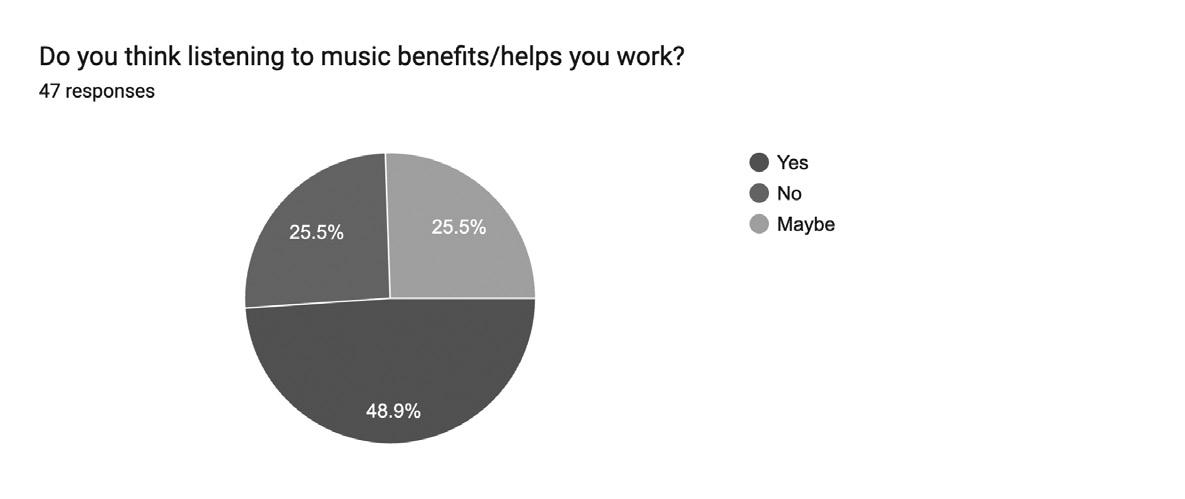
form’s respondents have listened to music while working before, only 48.9% believe it helps them focus. That is, the majority of students continue to listen to music while studying even though it may not benefit them. Many anonymous comments from the form report that music makes homework and studying more enjoyable. So, while music may hinder some students’ productivity, it has the benefit of making work more fun. The form results correlate surprisingly well with our own
opinions. Calm and lowkey music commonly increases our motivation and focus; however, similar to the form responses, upbeat music often makes it more difficult to focus. We agree that music can be an incredible resource to increase productivity when used properly. While everyone’s brains are different and have unique preferences, we believe that to optimize the amount you get out of studying, you should stick with the non-lyrical, lo-fi beats, and leave the SZA for your train rides! ☐
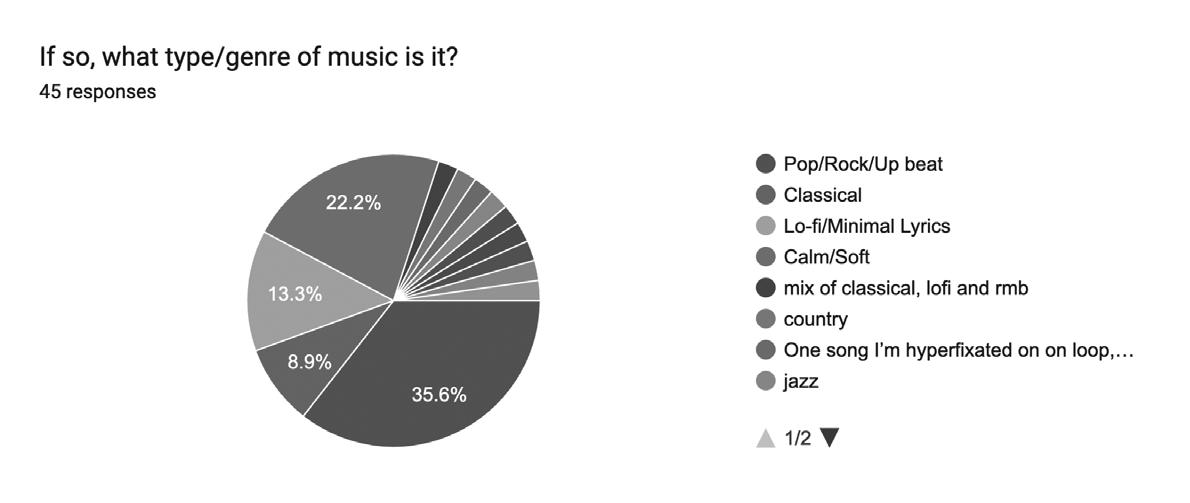
AP
Haitians Celebrate Their Qualification for the 2026 World Cup
Shutterstock Mobile Gambling
What Makes Winsor Commencement Special?
By Leila Pan Banner Staff
Commencement! The day when the Winsor community comes together to celebrate the graduating seniors. As the final week of the school year rapidly approaches, I’m curious what feelings people have about Commencement. For me, Commencement is an opportunity to celebrate and commemorate the seniors’ journey as Winsor students. To gain more insight into how fac-
ulty in the Winsor community feel about Commencement, I asked the Class VI Dean Ms. Albright, who responded that her “favorite part is when everyone sings the song that the seniors picked” because she “love[s] that we can all participate” in celebrating the seniors together. She also shared that her favorite memory was watching last year’s Commencement, since she was the Class VIII Dean and recognized that it was “the last moment before they go off.”
I also wondered if Winsor Upper Schoolers and Lower Schoolers would
Dear Class IV, Love Seniors
By Livia Bene and Lillian Feng Banner Staff
As the Class of 2026 prepares to leave Winsor, we frequently commemorate our beloved graduating seniors. However, we want to highlight another incoming change: the arrival of a new class of ninth graders. As many of us know, the transition from Lower School to Upper School can be difficult; therefore, we asked our seniors to offer advice for the Class of ’30.
When asked what they would tell their 14-year-old selves, Luisa GriffithGorgati ’26 responded, “You don’t need to stress yourself out over so many things. Take it day by day and don’t lose your optimism.” Aria Wang ’26 noted that it’s important to “try new things! You never know what might suddenly become the most important thing in your life. I quit my sport of seven years to row for Winsor, and it was the best decision I ever made.” When transitioning from Lower School, we’ve found it’s striking how greatly the number of non-academic opportunities within Winsor increases. While that sudden influx can feel overwhelming, many seniors have
These new avenues to passions and interests have given many seniors opportunities for self-discovery and personal growth. Griffith-Gorgati shared that “Theater at Winsor has hugely impacted me… When I was a freshman, theater became the space where I could be my true self.” She notes that she also found value in her interactions within the theater: “My cast mates and directors changed me into a more confident, well-rounded, and thoughtful individual…I learned so much from the [older students] who mentored me and who became my role models.”
Finally, the seniors reflected on lessons they learned about growth, balance, and making the most of their time in the Upper School with current and future students. Wang reminds us to “stay humble. You don’t have to have it all figured out yet, nor should you…Allow yourself room to explore and grow as a person, student, athlete, and friend. There are so many lessons to be learned from the people around you.”
As the Class of 2026 prepares to leave Winsor behind, their message to the Class of ’30 is clear: embrace the process of selfdiscovery, remain open to new experiences, and allow both your individual identity
have similar perspectives. Clara Humphrey ’28 shared that her favorite parts of Commencement are “watching the seniors get their diplomas,” “cheer[ing] everyone on,” and “pictur[ing] what it will be like when [her] grade is up there.” Humphrey added that walking into the tent “is when it really sinks in that the school year is ending.”
Lucy Mohan ’30 commented, “My favorite part of Commencement is when the seniors walk into the tent. Everyone’s clothes and smiles are so beautiful, and there’s a big feeling of excitement.”
Commencement is not only a time of celebration and a final goodbye to the seniors, but it also closes the school year with a community event that Winsor students participate in until they’re seniors themselves, creating an impactful full-circle moment. The fact that various people within the Winsor community have different favorite memories and ideas about the importance of Commencement demonstrates how special the event can be for everyone and how it truly brings so many great memories for any student or faculty of the Winsor community. ☐
Crossword: Sunlit Search!
By Caitlin Weeks Banner Staff


Across
6. This event is where juniors and seniors dress to impress!
7. Certificate of completion
9. You sing it at graduation
11. You tell these at a campfire
13. This fruit is 92% water!
14. From caterpillar to ___
15. Fun in the ___
16. “I'm walking on ___ woooah and don't it feel good!”
17. It's yummy on the cob!
Down
1. Tart beverage
2. The sound birds make
3. Noisy summer bug
4. Place to cool off
5. Longest day of the year
8. Sweet treat on a stick
10. "On field day, Upper-Schoolers take the math ___"
11. Effect of too much sun
12. Winsor's final celebration
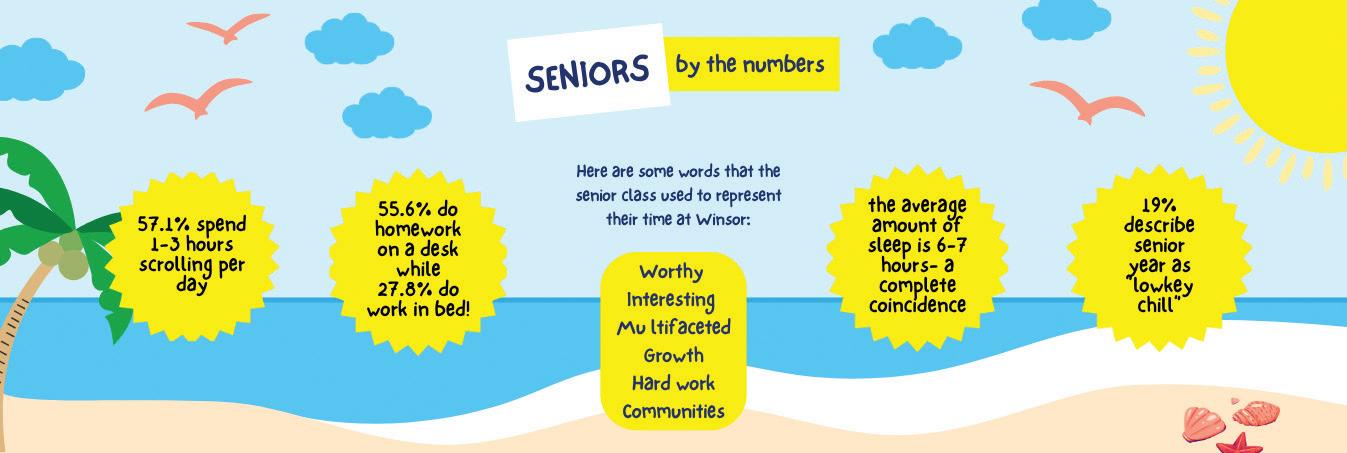
By Isha Vacchani Banner Staff
A Letter from the Seniors
Bella Holt