
+313 744 2946
info@winintelligence org
25363 Eureka Rd, Taylor, MI 48180 winintelligence org

@win-semich
The Workforce Intelligence Network for Southeast Michigan (WIN) is a workforce collaborative comprised of seven Michigan Works! Agencies (MWAs) and nine community colleges in a 19-county region representing approximately 63% of the total labor force in Michigan. The counties in the WIN partnership include Clinton, Eaton, Genesee, Hillsdale, Huron, Ingham, Jackson, Lapeer, Lenawee, Livingston, Macomb, Monroe, Oakland, Saint Clair, Sanilac, Shiawassee, Tuscola, Washtenaw, and Wayne.
The WIN data and research team analyzes job posting data at the occupation level within 11 customized occupation groups built using specific Standard Occupational Classification (SOC) codes to provide more contextualized information Occupation groups combine data for jobs with similar skillsets, educational attainment, and experience requirements, which provides a more in-depth snapshot of the current labor market when compared to traditional industry data based upon North American Industry Classification System (NAICS) codes Occupation outlook sections utilize these metrics to identify and display the top in-demand jobs, their entry requirements, and their earning potential
This report highlights labor market information and real-time job posting data for the City of Detroit, including a workforce overview that identifies key components of the area’s labor market such as labor force status, demographic, and commuting data The WIN analysis of online job postings, a proxy for employer demand, is a pioneering method for tracking the labor market’s health This data is used to provide real-time demand and job posting information for both employers and job seekers. This report analyzes the first quarter 2026 labor market information from the City of Detroit for the Business and Finance, Energy, Health Care, Information Technology (IT), and Skilled Trades occupation groups.
WIN also generates a WIN Region quarterly report covering a 19-county region, utilizing data from all 11 occupational groups. Additionally, a separate quarterly report for the City of Detroit focuses on five occupational groups relevant to the local labor market Annually, county-specific reports are produced, each highlighting five occupational groups selected to represent the unique labor market of that county
For more information pertaining to the labor market in southeast Michigan, the custom occupation groups within this report, or any other workforce-related data projects, please visit WINintelligence org or contact the data and research team at info@WINintelligence org

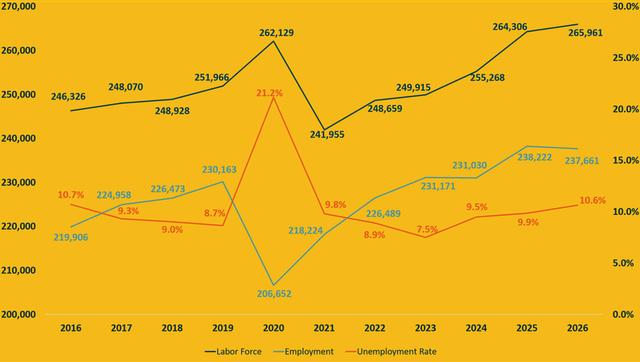
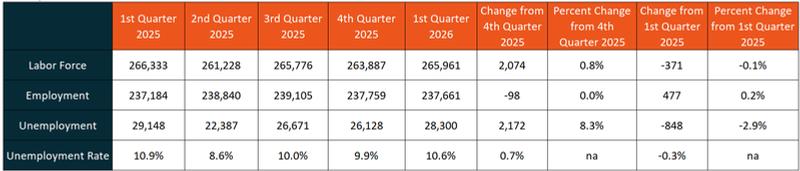
There was a slight increase in the total labor force during the first quarter of 2026, coupled with a slight increase in the unemployment rate at 10 6 percent While the size of the labor force decreased by 0 1 percent from Q1 2025, the number of unemployed workers decreased 2 9 percent from Q1 2025, and the number of employed individuals increased by 0 2 percent from Q1 2025
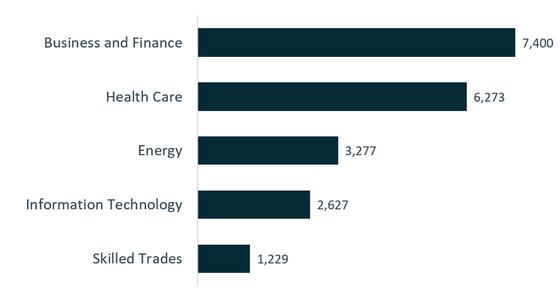
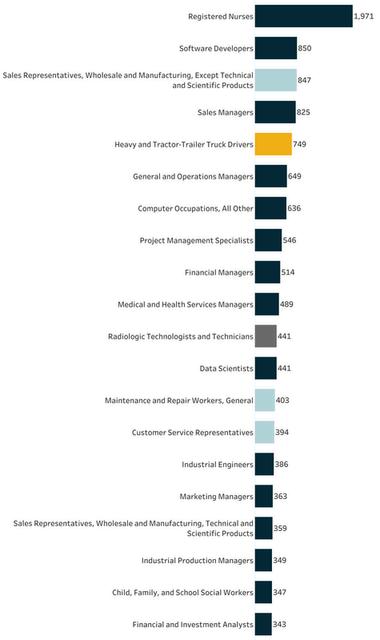
Registered Nurses top the list as the most demanded occupation, accounting for 1,971 job postings. Business and Finance occupations represent the most in-demand occupation group, accounting for 7,400 job postings or 1,127 more than the Health Care occupation group in the City of Detroit.
Annual Labor Market Information
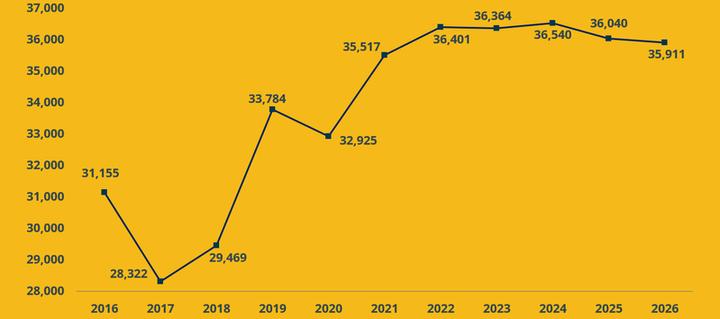
The labor force in Detroit increased between 2025 and 2026 by 1,656 individuals, from 264,306 to 265,961 individuals. Employment decreased by 561 individuals (0 2 percent) and unemployment numbers increased by 2,217 individuals (or 8 5 percent), respectively
Special note: Due to the government shut down, no State of Michigan Labor data has been updated since Q2 2025.
Quarterly Employer Demand Overview
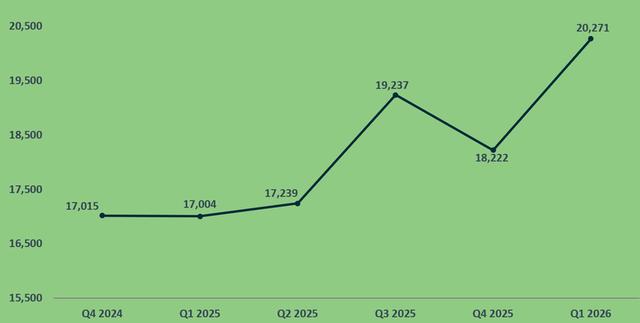
Employer demand in the City of Detroit increased in Q1 2026, with an average of 20,271 unique job postings per month The Q1 2026 average exceeded Q4 2025 by 2,049 postings and Q1 2025 by 3,267 monthly job postings. Job posting activity increased over both the previous quarter and the same quarter one year earlier, although economic and seasonal factors may influence employer demand
Annual Labor Force, Employment, Unemployment Rate 2016–2026
Average Quarterly Posting Analysis City of Detroit Q4 2024 - Q1 2026
25.3%
Employer demand increased by 25.3 percent, a gain of 7,074 job postings since Q4 2025 a decrease of 98 workers since Q4 2025 In Q1, employment totaled
237,661
During Q1 2026, there were 35,083 job postings in the City of Detroit Employers in Business and Finance, Health Care, and Energy occupation groups were the highest posting in Q1 The top posted job occupations include Registered Nurses; Software Developers; Sales Representatives, Wholesale and Manufacturing, Except Technical and Scientific Products; and Sales Managers More information about in-demand job postings is available on page 7.
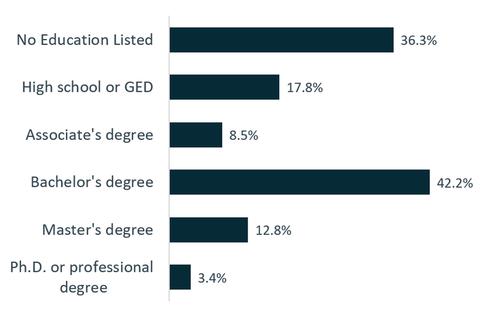
Of the 35,083 unique postings in the City of Detroit during Q1 2026, 14,806 (42.2 percent) required a Bachelor’s degree. An additional 5,676 postings (16.2 percent) required an advanced degree. The high demand for Business and Finance and Information Technology roles within the city drives this growing need for college education
For Q1 2026, the labor force increased by 2,074 individuals (0.8 percent) over Q4 2025. Employment decreased by 98 workers from Q4 2025, and unemployment figures also showed a decrease of 848 from Q1 2025 to Q1 2026 with 28,300 individuals in Q1 2026. Also, the unemployment rate increased by 0.7 percent from the previous quarter for an overall Q1 2026 unemployment rate of 10 6 percent More information regarding this year’s unemployment rate and other labor market indicators can be found on page 4
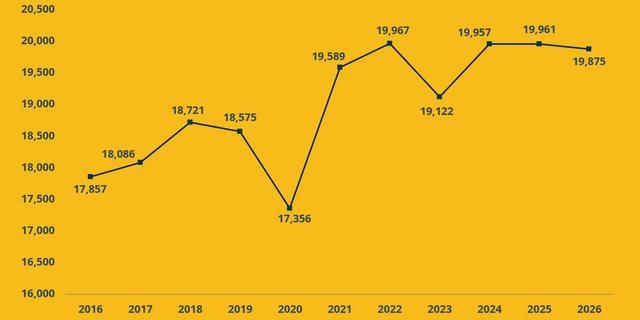
The labor force in the City of Detroit experienced growth year over year from 2015 through 2020 and peaked in 2020 with 262,129 workers. During the pandemic, the labor force marked a 7.7 percent decline to 241,955 in 2021 but has since increased to 265,961 in 2026. Employment showed a similar trend, with growth year over year from 2015 through 2020. The COVID-19 pandemic ushered in a significant drop, with employment dipping 10.2 percent in 2020 over 2019. Employment figures have since resumed an annual growth pattern from 2021 through 2026 Meanwhile, the number of unemployed individuals in the City of Detroit increased by 2,217 workers, or 8 5 percent, between 2025 and 2026

Data: Bureau of Labor Statistics
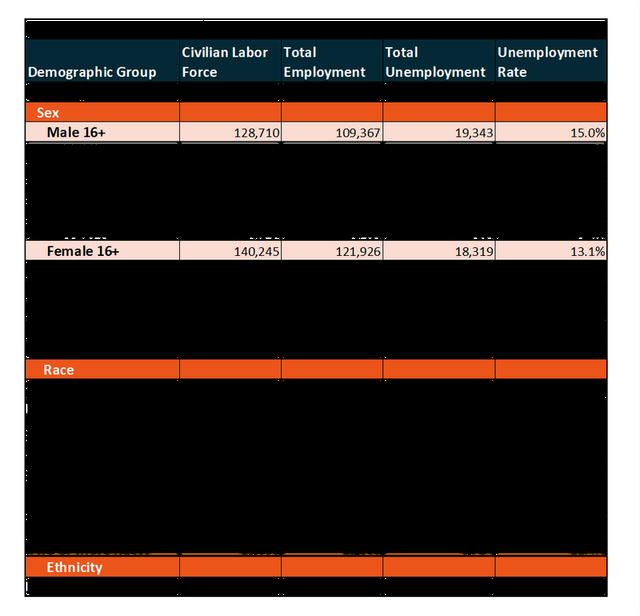
During 2024, there were 268,955 individuals in the labor force, meaning they were either working or seeking employment. Employed workers make up 86.0 percent of the city's labor force. The highest unemployment rates in 2024 were those individuals 24 years old or younger Within this age cohort, there were 58 0 percent of unemployed individuals identifying as males compared to 42.6 percent of unemployed individuals identifying as female. Overall, males had a higher unemployment rate than females, at 15.0 percent and 13 1 percent respectively Native Hawaiian and Pacific Islander job seekers faced the most challenge in securing employment, with an overall unemployment rate of 93.5 percent. This group was followed by Black or African American job seekers at 15.7 percent.
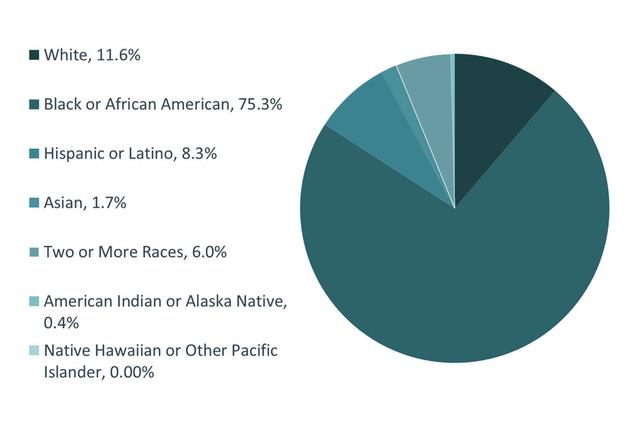
According to data from the most recent Census Bureau 2024 ACS Five-Year estimates, the City of Detroit population increased by about 0.3 percent between 2023 and 2024. During 2024, there were 638,530 people living in the city. The gender of the populace was split almost evenly, with about 52.6 percent of the population identifying as female and the other 47.4 percent identifying as male. A majority of the population identified as Black or African American (75.3 percent) with the second largest number of individuals identifying as White (11 6 percent) The region is facing an aging populace with 26 7 percent of the population over the age of 54, compared to 34 0 percent under the age of 25
Population Gender Demographics
Population Race Demographics
Population Age Demographics
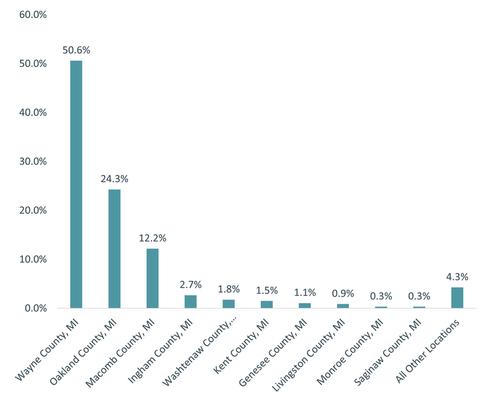
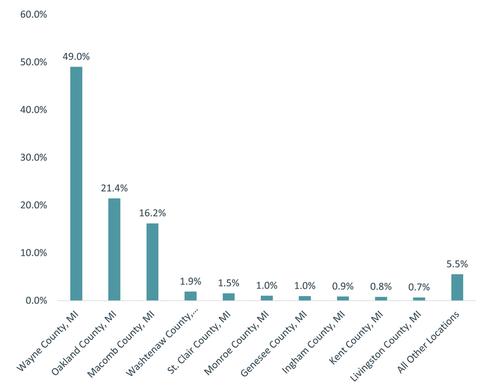
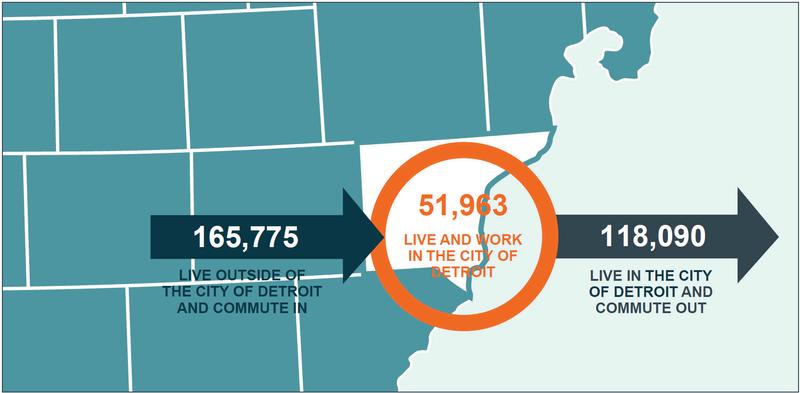
According to the most recent OnTheMap data set from the Census Bureau, Detroit's 2021 workforce consisted of 170,053 individuals There were 51,963 (30 6 percent) residents also worked in the city, while the remaining 118,090 residents (69 4 percent) traveled outside for work With 217,738 workers employed in the city during 2021, there were 165,775 (76 1 percent) workers living outside of the city and commuting in While there is a higher percentage of both inbound and outbound commuters in Detroit than other areas of the WIN regions, Detroit is ultimately a net importer of jobs, with more workers commuting into the area for employment
Where
Where
Registered Nurses are the highest in-demand occupation during Q1, with 1,971 unique online job postings Software Developers are the second largest occupation by job postings with 850 Sales Representatives, Wholesale and Manufacturing, Except Technical and Scientific Products (847 postings) round out the top three occupations in Q1. Over half of the top 20 posted jobs in the city require a Bachelor’s degree.
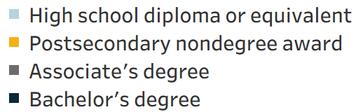
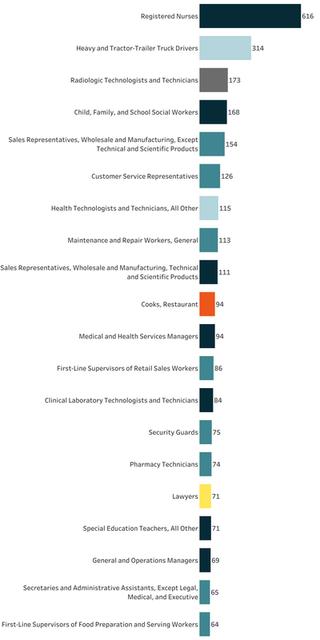
Entry-level jobs, which usually require zero to two years of previous experience, account for 21 4 percent of postings in Detroit Four of the top ten entry-level occupations require a Bachelor’s degree, while the remaining six require a High School diploma, postsecondary non-degree award, or Associate degree. Those who enter the workforce with a college degree can expect entry wages nearly double from those without. Registered Nurses were the top posted entry-level jobs with 616 postings, requiring zero to two years of experience and a Bachelor’s degree.
2026 DETROIT
Jmj Phillip Group
Henry Ford Health
Accenture
Deloitte
Detroit Medical Center
Soliant Health
PricewaterhouseCoopers
Tenet Healthcare
Wayne State University
City Of Detroit
Ernst & Young
Dmc Sinai Grace Hospital
Huntington Bancshares
KPMG
Detroit Edison
Delaware North
GPAC
GE Aerospace
Molina Healthcare
Dmc Children's Hospital Of Michigan
*Employer names are listed as they appear in online job postings.
Lifting Ability
Nursing
Medical Records
Auditing
Workflow Management
Marketing
Project Management
Social Work
Billing
Customer Relationship Management
Valid Driver's License
Registered Nurse (RN)
Communication
Customer Service
Management
Operations
Leadership
Detail Oriented
Problem Solving
Sales
Coordinating
Microsoft Office
Basic Life Support (BLS) Certification
Master Of Business Administration (MBA)
Cardiopulmonary Resuscitation (CPR) Certification
Advanced Cardiovascular Life Support (ACLS)
Certification
Board Certified/Board Eligible
Project Management Professional Certification
Teaching Certificate
American Registry Of Radiologic Technologists (ARRT) Certified
Commercial Driver's License (CDL)
First Aid Certification
Certified Public Accountant
Licensed Practical Nurse (LPN)
Basic Cardiac Life Support
Licensed Master Social Worker
Certified Nursing Assistant (CNA)
Bachelor Of Science in Nursing (BSN)
Nurse Practitioner (APRN-CNP)
Professional Engineer (PE) License
Jobs in the Business and Finance occupation group can be found in nearly every type of establishment throughout the city. These workers require strong mathematical and accounting abilities along with project management and planning skills. Workers in this occupation group are in high demand in Detroit.
Business and Finance Education and Experience
129 Business and Finance Workers
0.4% decrease from 2025
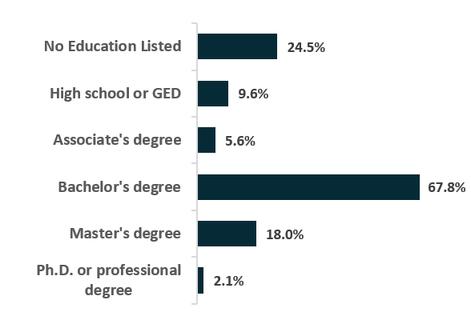
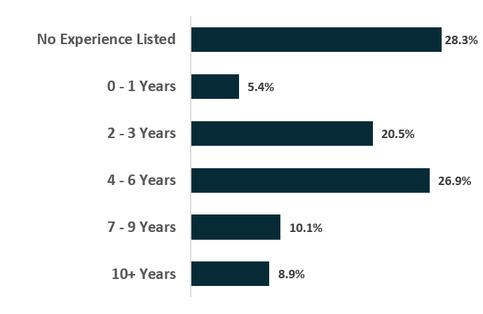
The Business and Finance occupation group offers high paying job opportunities for workers A Bachelor's degree is the most in-demand education level in Q1, as noted in 5,017 postings. A Master's degree is the second most in-demand education level with 1,333 postings, while 1,813 postings do not specify any education level. Many Business and Finance occupation postings do not specify the required length of experience, although almost half of the postings list a requirement of two to six years of experience.
The Business and Finance occupation with the highest number of Q1 postings (847) was Sales Representatives, Wholesale and Manufacturing, Except Technical and Scientific Products. This was followed by Sales Managers (825); General and Operations Managers, with 649 postings; and Project Management Specialists (546) While most of the top jobs typically require a Bachelor’s degree, the highest-posting occupation, Sales Representatives, Wholesale and Manufacturing, Except Technical and Scientific Products, requires a High School diploma and offers moderate on-the-job training for those without prior experience
SalesRepresentatives,WholesaleandManufacturing,ExceptTechnicalandScientificProducts
SalesManagers
GeneralandOperationsManagers
ProjectManagementSpecialists
FinancialManagers
MarketingManagers
FinancialandInvestmentAnalysts
Managers,AllOther
AccountantsandAuditors
ManagementAnalysts
MarketResearchAnalystsandMarketingSpecialists
HumanResourcesSpecialists
BuyersandPurchasingAgents
Logisticians
PublicRelationsManagers
CostEstimators
ComplianceOfficers
FacilitiesManagers
Securities,Commodities,andFinancialServicesSalesAgents
Property,RealEstate,andCommunityAssociationManagers
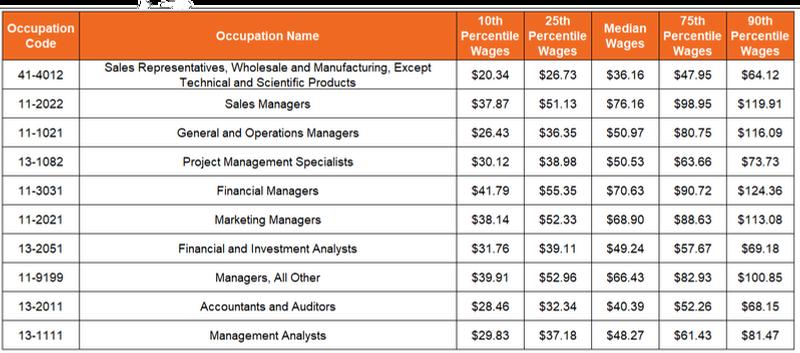
For job seekers able to obtain the required education, Business and Finance occupations offer lucrative opportunities. The top posted occupation, Sales Representatives, Wholesale and Manufacturing, Except Technical and Scientific Products, offers median hourly wages of $36.16 ($75,213 annually), while Sales Managers have a median hourly wage of $76 16 ($158,412 annually) Even the lower-paying occupations among the top posted jobs in the occupation group exceeded the state median hourly wage of $23 69, indicating strong earning potential across these occupations
High School Diploma: 9.6%
Associate Degree: 5 6%
Bachelor's Degree: 67 8%
Master's Degree: 18 0% Ph
Energy-related occupations include jobs in engineering, science, mining, and extraction. Workers in this field have a range of skills related to keeping businesses and homes powered. Energy companies employ workers in a variety of occupations, many of which are also included in other WIN occupation groups. Posting data referenced in this section pertains only to job postings from Energy-related businesses.
86 Energy Workers
0.4% decrease from 2025
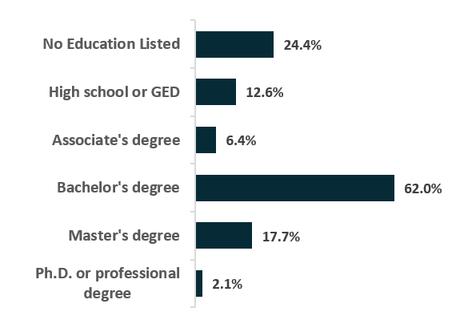
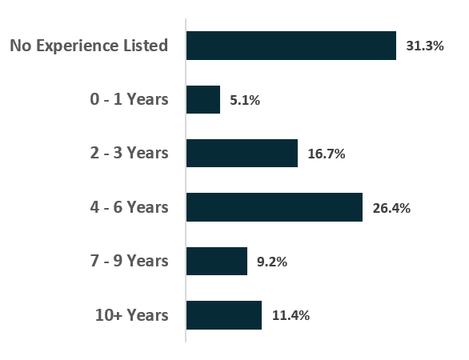
The Energy occupation group requires a specialized workforce with specific skills A Bachelor's degree is the most in-demand education level in Q1 with 62 0 percent of 4,107 postings A Master’s degree is the second most in-demand education level with 17 7 percent, while 12 6 percent require a High Schhol diploma or equivalent. The amount of experience required varies widely from none to over five years. Many Energy occupation postings do not list any specific experience (31.3 percent).
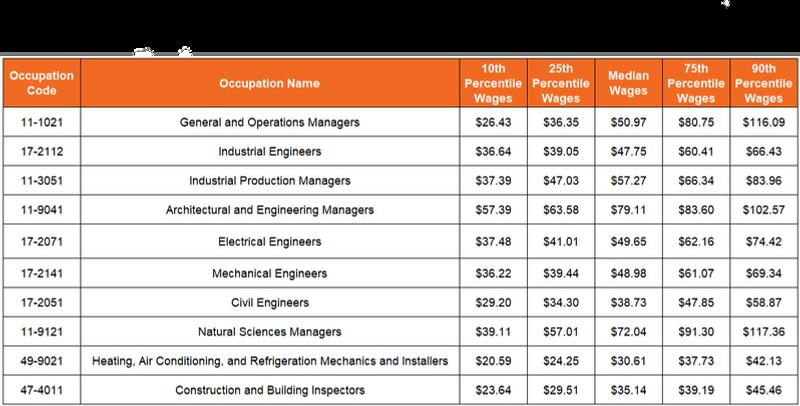
Most high-demand Energy occupations are engineering or management positions requiring a Bachelor’s degree. General and Operations Managers remained the highest in-demand Energy occupation in Q1 with 649 postings Other top posted jobs requiring a Bachelor’s degree include Industrial Engineers (386 postings), Industrial Production Managers (349 postings), Architectural and Engineering Managers (263 postings), and Electrical Engineers (176 postings)
GeneralandOperationsManagers
IndustrialEngineers
IndustrialProductionManagers
ArchitecturalandEngineeringManagers
ElectricalEngineers
MechanicalEngineers
CivilEngineers
NaturalSciencesManagers
Heating,AirConditioning,andRefrigerationMechanicsandInstallers
ConstructionandBuildingInspectors
ChemicalEngineers
OperatingEngineersandOtherConstructionEquipmentOperators
ArchitecturalandCivilDrafters
PhysicalScientists,AllOther
Engineers,AllOther
Drafters,AllOther
MobileHeavyEquipmentMechanics,ExceptEngines
TelecommunicationsEquipmentInstallersandRepairers,ExceptLineInstallers
Chemists
TelecommunicationsLineInstallersandRepairers
High demand for engineers and managers in the Energy field provides lucrative opportunities for job seekers able to obtain the required educational level The top posted Energy job, General and Operations Managers, offers a median hourly wage of $50 97 ($106,017 annually) Construction and technician-focused positions generally have shorter educational requirements and pay higher median wages than similar occupations in other industries.
In-Demand Technical Skills
Continuous Improvement Process
Project Management Process Improvement Auditing AutoCAD
High School Diploma: 12 6%
Associate Degree: 6 4%
Bachelor’s Degree: 62 0%
Master’s Degree: 17 7%
Ph D or Professional Degree: 2 1%
The Health Care occupation group includes jobs related to health care support and practitioners Employment in this group has seen marginal growth since 2021, although Health Care workers remain in high demand to care for Michigan’s aging population Annually, there are about 4,800 job openings for these positions in Detroit, and this is projected to continue increasing
Employment Over Time 2016-2026
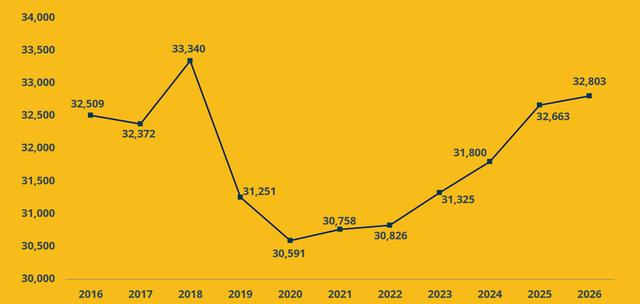
140 Health Care Workers
0.4% increase from 2025
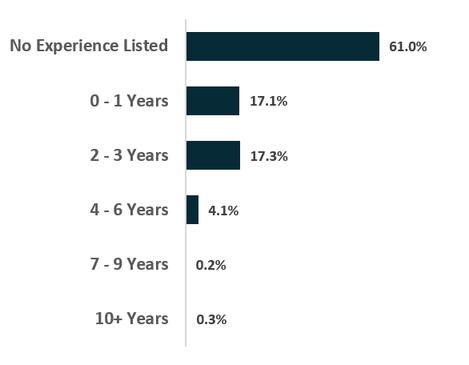
The Health Care occupation group offers many job opportunities for active job seekers at all experience levels. A Bachelor’s degree is the most in-demand education level in Q1, with 1,597 postings. A High School diploma or equivalent is the second most in-demand education level (1,093 postings). Many postings from this occupation group do not request any specific experience
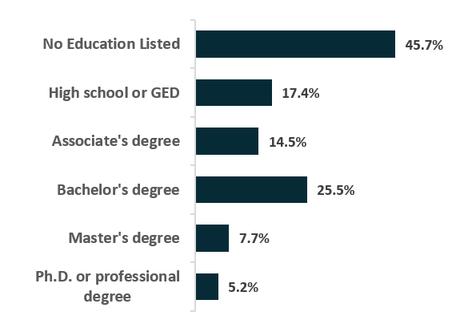
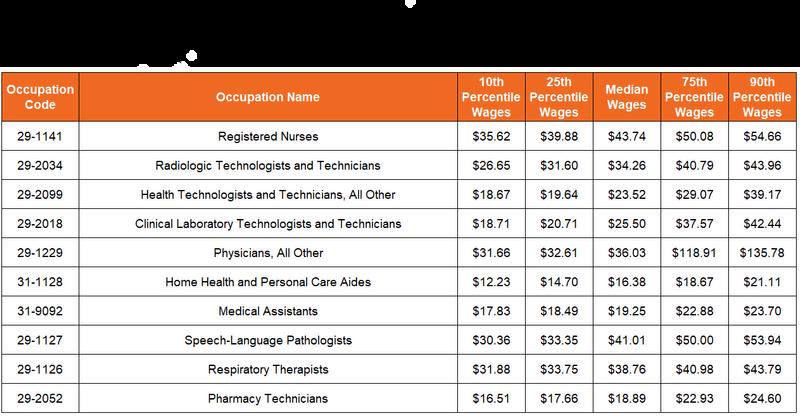
Registered Nurses were the highest in-demand Health Care occupation with 1,971 total postings, a number significantly higher than all the other occupations. A Bachelor’s degree is the most in-demand education level amongst Health Care occupations, indicated in 25.5 percent of postings. A High School diploma or equivalent accounts for 17.4 percent of posting requirements. Other top posted jobs include Radiologic Technologists and Technicians (442 postings), Health Technologists and Technicians, All Other (310 postings), Clinical Laboratory Technologists and Technicians (274 postings), and Physicians, All Other (260 postings).
RegisteredNurses
RadiologicTechnologistsandTechnicians
HealthTechnologistsandTechnicians,AllOther
ClinicalLaboratoryTechnologistsandTechnicians
Physicians,AllOther
HomeHealthandPersonalCareAides
MedicalAssistants
Speech-LanguagePathologists
RespiratoryTherapists
PharmacyTechnicians
NursingAssistants
NursePractitioners
OccupationalTherapists
DietitiansandNutritionists
PhysicalTherapists
Radiologists
Pharmacists
Pediatricians,General
LicensedPracticalandLicensedVocationalNurses
FamilyMedicinePhysicians
2026
DETROIT
Wages in Health Care are generally higher than the state median hourly wage of $23.69, with pay generally increasing in line with required education, training, and experience for Health Care’s top jobs. Registered Nurses, the top posted Health Care job in Q1, offers a median hourly wage of $43.74 ($90,979 annually). As Health Care services continue to expand and evolve, many positions now require an Associate degree or higher
In-Demand Technical Skills
Nursing
Nursing Care
Medical Records
Patient Preparation
Radiology
Communication
Leadership
Management
Teaching
Customer Service
In-Demand Education Level* Top Posting
High School Diploma: 17.4%
Associate Degree: 14 5%
Bachelor’s Degree: 25 5%
Master’s Degree: 7 7%
Ph D Or professional Degree: 5 2%
*Not all job postings indicate the required educational attainment level; the percentages indicated may not equal 100 percent.
Registered Nurse (RN)
Basic Life Support (BLS)
Certification
Advanced Cardiovascular Life Support (ACLS) Certification
Valid Driver's License
American Registry Of Radiologic Technologists (ARRT) Certified
Henry Ford Health
Detroit Medical Center
Tenet Healthcare
Dmc Sinai Grace Hospital
Soliant Health
Dmc Harper University Hospital
Dmc Children's Hospital Of Michigan
Corewell Health
AMN Healthcare
CompHealth
Information Technology (IT) jobs include occupations that are associated with entry-level, technical, and professional careers related to the design, development, support and management of hardware, software, multimedia, and systems integration services While the Information Technology group does not currently employ as many individuals as the other groups here, it is quickly growing
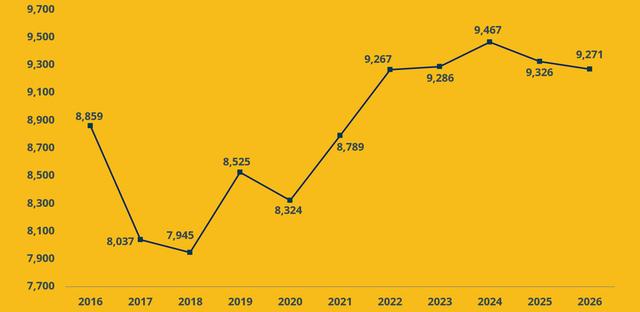
55 Information Technology Workers
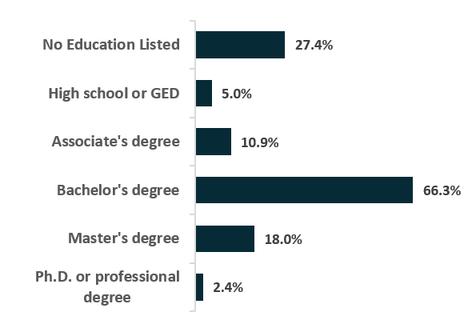
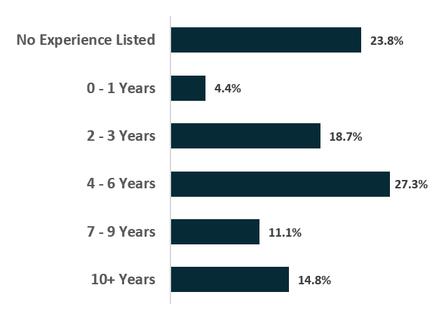
The Information Technology occupation group offers ample opportunities for active job seekers, with 2,627 postings in Q1. A Bachelor's degree is the most in-demand education level, with a Master’s degree the second most required education level. Many IT occupation postings were open to workers with four to six years of experience, with 717 postings. Workers with two to three years of experience are also heavily indemand with 490. Although 624 postings do not request any specific experience level, 116 postings requested workers with zero to one year of experience.
Software Developers were the highest in-demand IT occupation in Q1, with 850 unique postings. Computer Occupations, All Other was the next most in-demand occupation with 636 unique postings. While most of the top jobs require a Bachelor’s degree, Computer User Support Specialists (139 postings) only prefer some college education, but do not require a degree.
SoftwareDevelopers
ComputerOccupations,AllOther
ComputerSystemsAnalysts
ComputerUserSupportSpecialists
DatabaseArchitects
DatabaseAdministrators
NetworkandComputerSystemsAdministrators
ComputerandInformationSystemsManagers
ComputerNetworkArchitects
SoftwareQualityAssuranceAnalystsandTesters
ComputerandInformationResearchScientists
WebandDigitalInterfaceDesigners
InformationSecurityAnalysts
WebDevelopers
ComputerProgrammers
ComputerNetworkSupportSpecialists
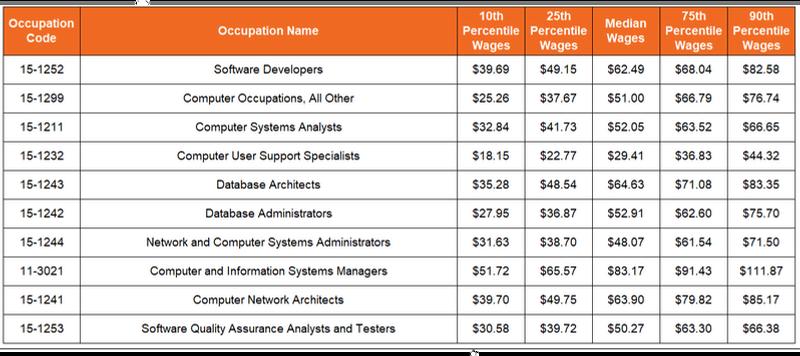
Most IT jobs offer high wages, making for a lucrative opportunity for job seekers able to obtain the additional education related to these jobs. Software Developers, the top posted IT job in Q1, offers a median hourly wage of $62.49 ($129,979 annually). Computer User Support Specialists, which requires some college, no degree, offers a median wage of $29.41 ($61,173 annually).
Computer Science
Artificial Intelligence
Workflow Management
Automation
Scalability
High School Diploma: 5.0%
Associate Degree: 10 9%
Bachelor’s Degree: 66 3%
Master’s Degree: 18 0%
Ph D Or professional Degree: 2 4%
Solving
Certified Information Systems
Security Professional
Valid Driver's License
Microsoft Certified Professional
Master Of Business
Administration (MBA)
Project Management Professional
Certification
KPMG
Ensono
The Skilled Trades and Technicians occupation group includes jobs related to advanced manufacturing Southeast Michigan has one of the highest demands for skilled trades labor, such as CNC machinists and welders, in the country.
NOTE: Skilled trades related to construction and assembly are not included in this cluster, as the focus is on advanced manufacturing only.
Employment Over Time 2015-2025
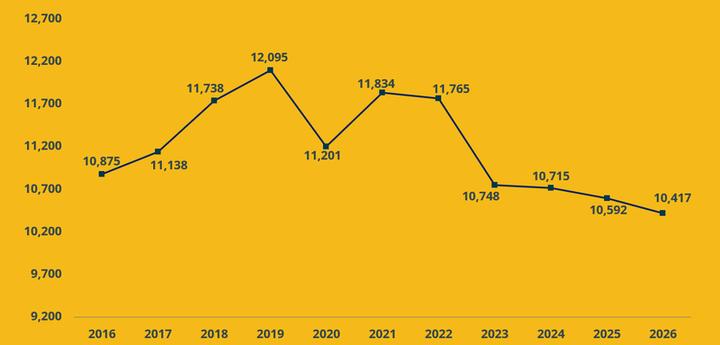
175 Skilled Trades Workers
1.7% decrease from 2025
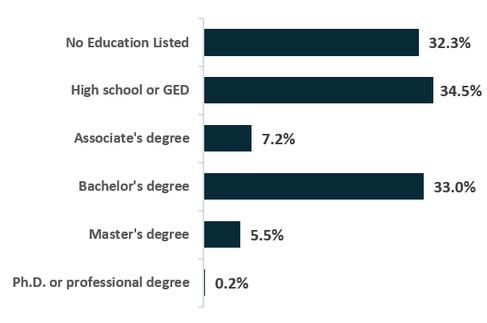
The Skilled Trades occupation group offers many opportunities for active job seekers in southeast Michigan. A High School diploma or equivalent was the most in-demand education level (424 postings), while a Bachelor's degree was the second most in-demand education level (406 postings) Many Skilled Trades occupation postings were open to workers with zero to three years of experience
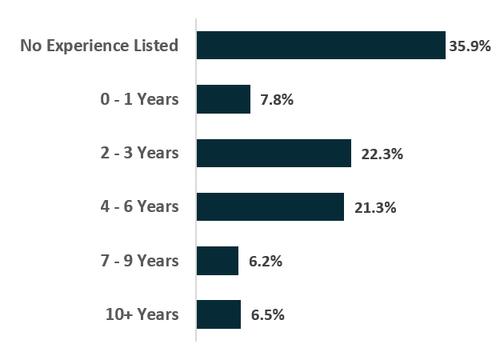
Maintenance and Repair Workers, General was the highest in-demand Skilled Trades occupation during Q1 (407 postings) Other top posted jobs include Industrial Production Managers (349 postings), First-Line Supervisors of Production and Operating Workers (127 postings), Production Workers, All Other (104 postings), and Electrical and Electronic Engineering Technologists and Technicians (38 postings). The majority of this occupation group's top posted jobs required either a High School diploma or equivalent, or an Associate degree and offered moderate to long-term on-the-job training in lieu of experience.
MaintenanceandRepairWorkers,General
IndustrialProductionManagers
First-LineSupervisorsofProductionandOperatingWorkers
ProductionWorkers,AllOther
ElectricalandElectronicEngineeringTechnologistsandTechnicians
Machinists
ToolandDieMakers
IndustrialMachineryMechanics
StructuralIronandSteelWorkers
ComputerNumericallyControlledToolProgrammers
IndustrialEngineeringTechnologistsandTechnicians
EngineeringTechnologistsandTechnicians,ExceptDrafters,AllOther
Electro-MechanicalandMechatronicsTechnologistsandTechnicians
SurveyingandMappingTechnicians
Welders,Cutters,Solderers,andBrazers
FoodProcessingWorkers,AllOther
CalibrationTechnologistsandTechnicians
Grinding,Lapping,Polishing,andBuffingMachineToolSetters,Operators,andTenders,MetalandPlastic
Boilermakers
Cutting,Punching,andPressMachineSetters,Operators,andTenders,MetalandPlastic
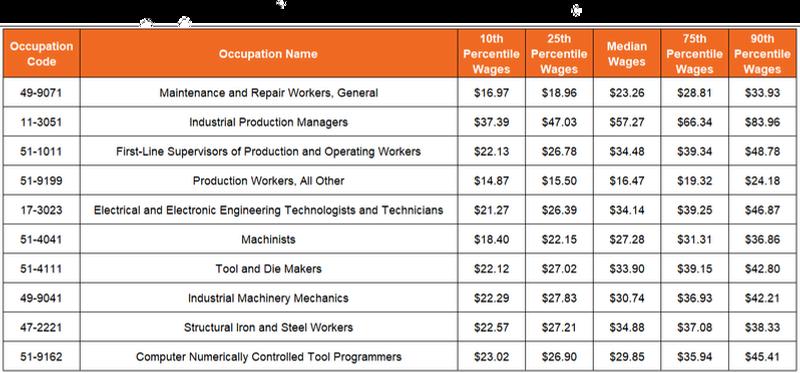
Eight of the top ten in-demand Skilled Trades occupations offer median hourly wages above $23 69 Maintenance and Repair Workers, General, the top posted Skilled Trades job in Q1, offered a median hourly wage of $23 26 ($48,381 annually) Job seekers can expect to see a significant shift in wages based on experience and education requirements: Industrial Production Managers require an additional five years or more of work experience and offers a median hourly wage of $57.27 ($119,121 annually).