





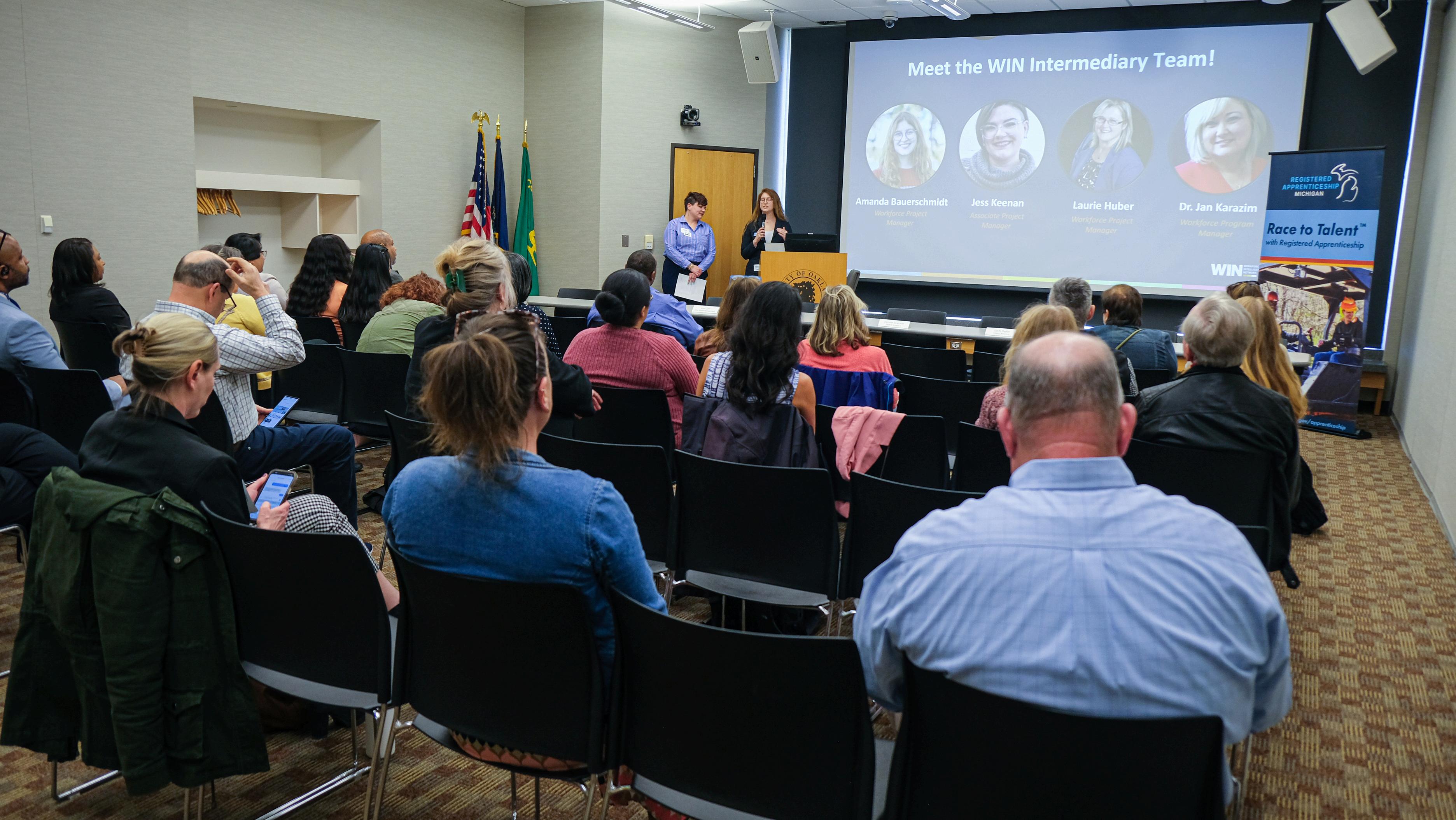

In 2025, the Workforce Intelligence Network (WIN) continued to expand its role as a trusted leader in workforce research, employer engagement, and talent development across Southeast Michigan.
Building on the momentum of prior years, WIN strengthened its impact through strategic partnerships, innovative apprenticeship programs, and data-driven solutions that align workforce supply with industry demand. From advancing emerging work in artificial intelligence and hydrogen to expanding employer-led collaboratives in healthcare and mobility, WIN remains at the forefront of workforce transformation.

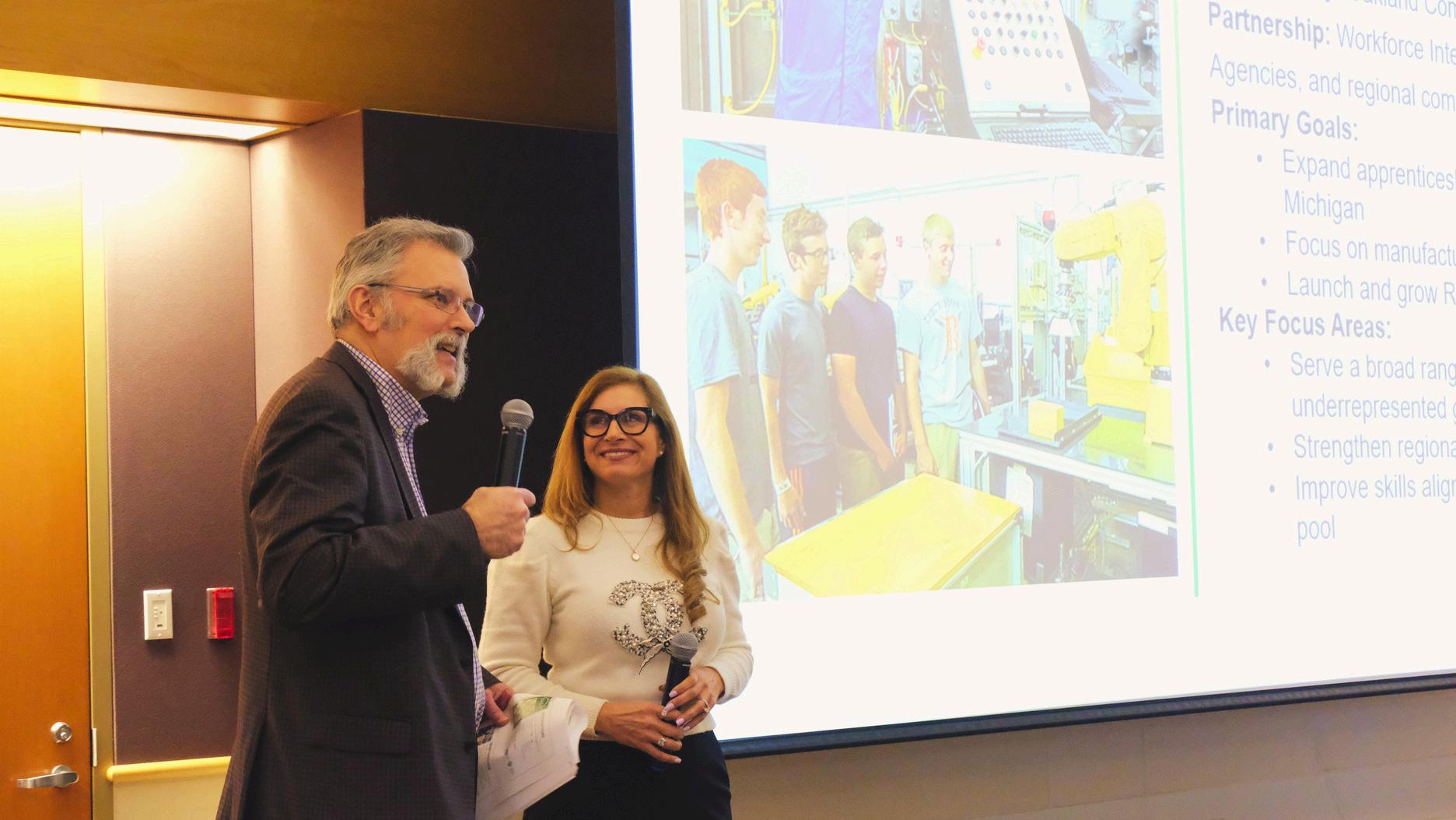
Throughout the year, WIN deepened engagement with employers, educators, governmental agencies, and community partners by supporting talent pipelines in critical industries, including healthcare, advanced manufacturing, information technology, and mobility. Across all initiatives, WIN engaged over 12,500 individuals, reflecting the scale and reach of its programs and partnerships.
As we look ahead, WIN remains committed to advancing equitable workforce solutions, expanding Registered Apprenticeship opportunities, and driving economic growth across the region. By continuing to align data, partners, and programs, WIN will help ensure a resilient and future-ready workforce for Southeast Michigan.
With appreciation,


100% 82% $299M 911 2,039 63%
2
OF THE SOUTHEAST MICHIGAN WORKS! AGENCIES IN THE WIN REGION ARE ACTIVE WIN BOARD MEMBERS
SOUTHEAST MICHIGAN COMMUNITY COLLEGES ARE ACTIVE WIN BOARD MEMBERS
IN TOTAL DIRECT AND INDIRECT FUNDING BROUGHT TO THE REGION FROM WIN INITIATIVES, SINCE 2011
REGIONAL RESEARCH STUDIES AND DATA PULLS IN 2025
ENGAGED EMPLOYERS AND STAKEHOLDERS
THE APPROXIMATE LABOR FORCE IN THE STATE SERVED BY THE WIN BOARD OF DIRECTORS
U.S. DEPARTMENT OF LABOR AWARDS | THE ADAPTIVE LEADERSHIP
The Workforce Intelligence Network (WIN) cultivates a cohesive talent system by facilitating data-driven workforce solutions to ensure responsiveness to changing labor market demands.
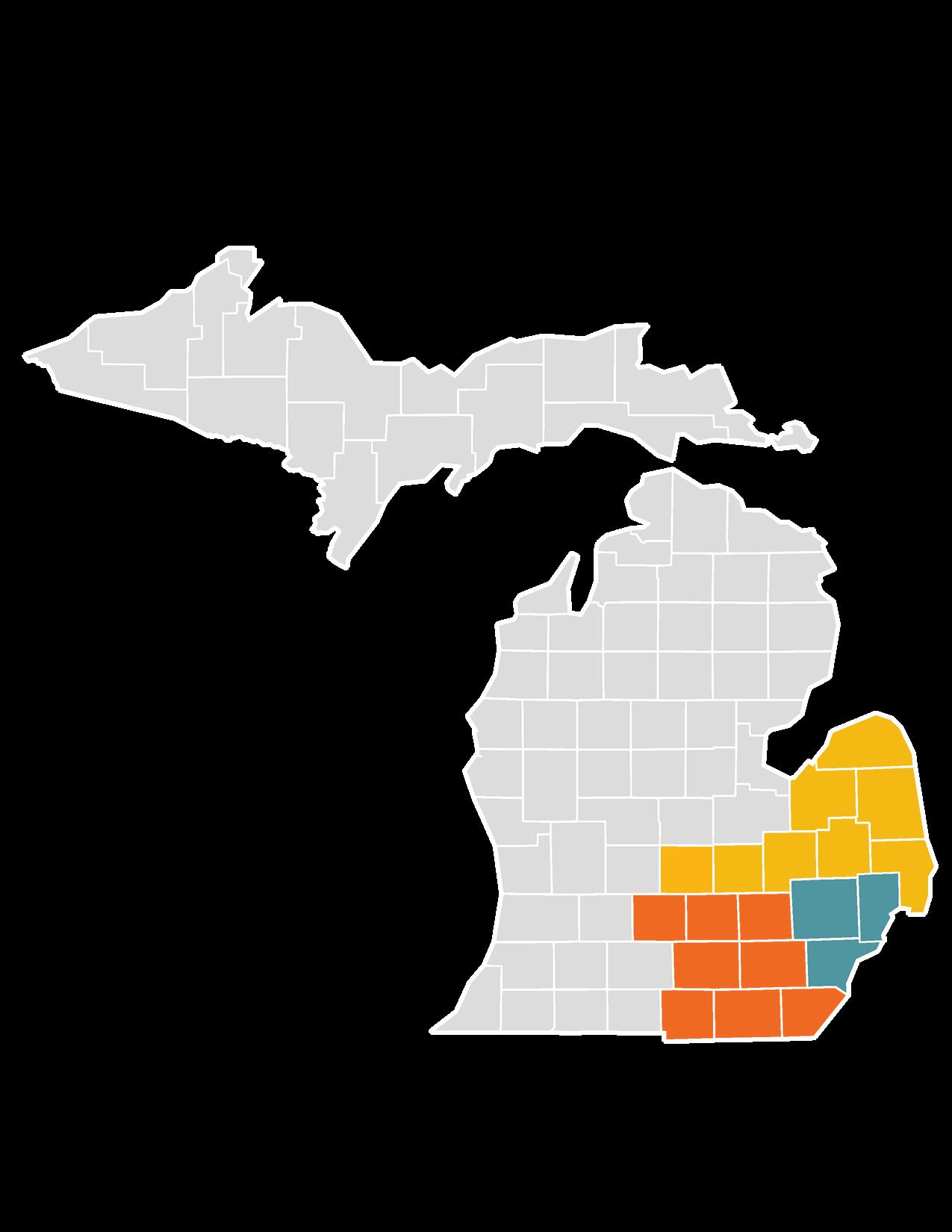
The WIN Board of Directors includes representatives from nine community colleges and seven Michigan Works! agencies within Southeast Michigan. By working together these organizations are building lifelong career pathways and stackable credentials dedicated to providing real-time labor market insights, workforce development strategies, and collaborative solutions that strengthen Southeast Michigan’s talent pipeline. WIN aims to align workforce supply with industry demand, ensuring economic growth and opportunity for all.
WIN is a division of the Southeast Michigan Commu Alliance (SEMCA) Michigan SEMCA serves as WIN's prim fiscal and hiring agent.
WIN operates on three pillar
WIN gathers, analyzes, and distributes real-time labor su demand intelligence on wor needs and characteristics s the southeast Michigan regi
WIN convenes, facilitates, e and serves as a connection business, industry, and othe stakeholders regarding work development.
WIN develops education and strategies for the delivery of workforce development pro through its partners.
2,039 EMPLOYERS AND STAKEHOLDERS ENGAGED TO FOSTER PARTNERSHIPS AND DEVELOP SOLUTIONS TO ADVANCE WORKFORCE DEVELOPMENT INITIATIVES
$4.6 MILLION OF DIRECT FUNDING SUPPORTING JOB TRAINING AND SKILLS DEVELOPMENT PROGRAMS IN MICHIGAN
56 PUBLISHED REPORTS
ANALYZING REGIONAL JOB TRENDS, INDEMAND OCCUPATIONS, AND INDUSTRY FOCUSED REAL-TIME LABOR MARKET INTELLIGENCE DATA TO HELP EMPLOYERS AND CAREER SEEKERS MAKE CRITICAL DECISIONS
12,696 INDIVIDUALS ENGAGED IN REGIONAL WORKFORCE INITIATIVES ACROSS SOUTHEAST MICHIGAN (2025)
3,512 INDIVIDUALS SUPPORTED IN ACCESSING REGISTERED APPRENTICESHIPS AND/OR INDUSTRYRECOGNIZED CREDENTIALS
$876M ESTIMATED ECONOMIC IMPACT
The WIN board is comprised of seven Michigan Works! agencies and nine community colleges in the greater southeast Michigan,19-county region, serving approximately 63% of the total labor force in the State.
The WIN network of 16 board member organizations work as a collective partnership to deliver intentional talent development strategies that consistently exceed grant performance outcomes.
The WIN Board of Directors and their team of workforce experts achieved significant outcomes during the 2025 fiscal year.
When reflecting on the impact of WIN, board members highlighted transformative results across the region. Thousands of workers have been trained through programs such as registered apprenticeships, healthcare, and advanced manufacturing initiatives. These efforts have expanded educational opportunities within the community college network, enhanced workforce development services, and supported skills-pipeline initiatives in partnership with large employers and educational institutions.




Capital Area Michigan Works!
Carrie Rosingana
Chief Executive Officer
GST Michigan Works!
Jody Kerbyson
Chief Executive Officer


Henry Ford College
Dr. Patricia Walker Chatman
Dean, School of Business, Entrepreneurship, and Professional Development
Detroit Employment Solutions Corporation (DESC)
Dana Williams
President
Jackson College
Jamie Vandenburgh
Assistant Dean of Instruction
Macomb Community College
Dr Michael Balsamo
Dean, Business, Information Technology, and Culinary
“By collaborating with industry leaders, educational institutions, and community partners, the WIN Board of Directors is committed to driving economic growth and innovation in Southeast Michigan.”
Michele Economou Ureste, WIN Executive Director
Macomb-St. Clair Michigan Works! Agency and Workforce Development Board
Justin Al-Igoe
Executive Director
Michigan Works! Southeast
Shamar Herron
Executive Director
Monroe County Community College
Barry C Kinsey
Director, Workforce Development
Mott Community College
Robert Matthews
Associate Vice President of Workforce and Economic Development
Oakland Community College
Joseph L. Petrosky
Associate Provost, Academics and Workforce
Oakland County Michigan Works!
Jennifer Llewellyn
Manager, Workforce Development at Oakland County & Director, Oakland County Michigan Works! Agency
Schoolcraft College
Amy Jones
Senior Director of Workforce Development
SEMCA Michigan Works! Gregory Pitoniak Chief Executive Officer
Washtenaw Community College
Dr. Michelle Merusi Vice President, Economic & College Development
Wayne County Community College District
Glenda Wapegan-Magarrell Dean of Career Programs
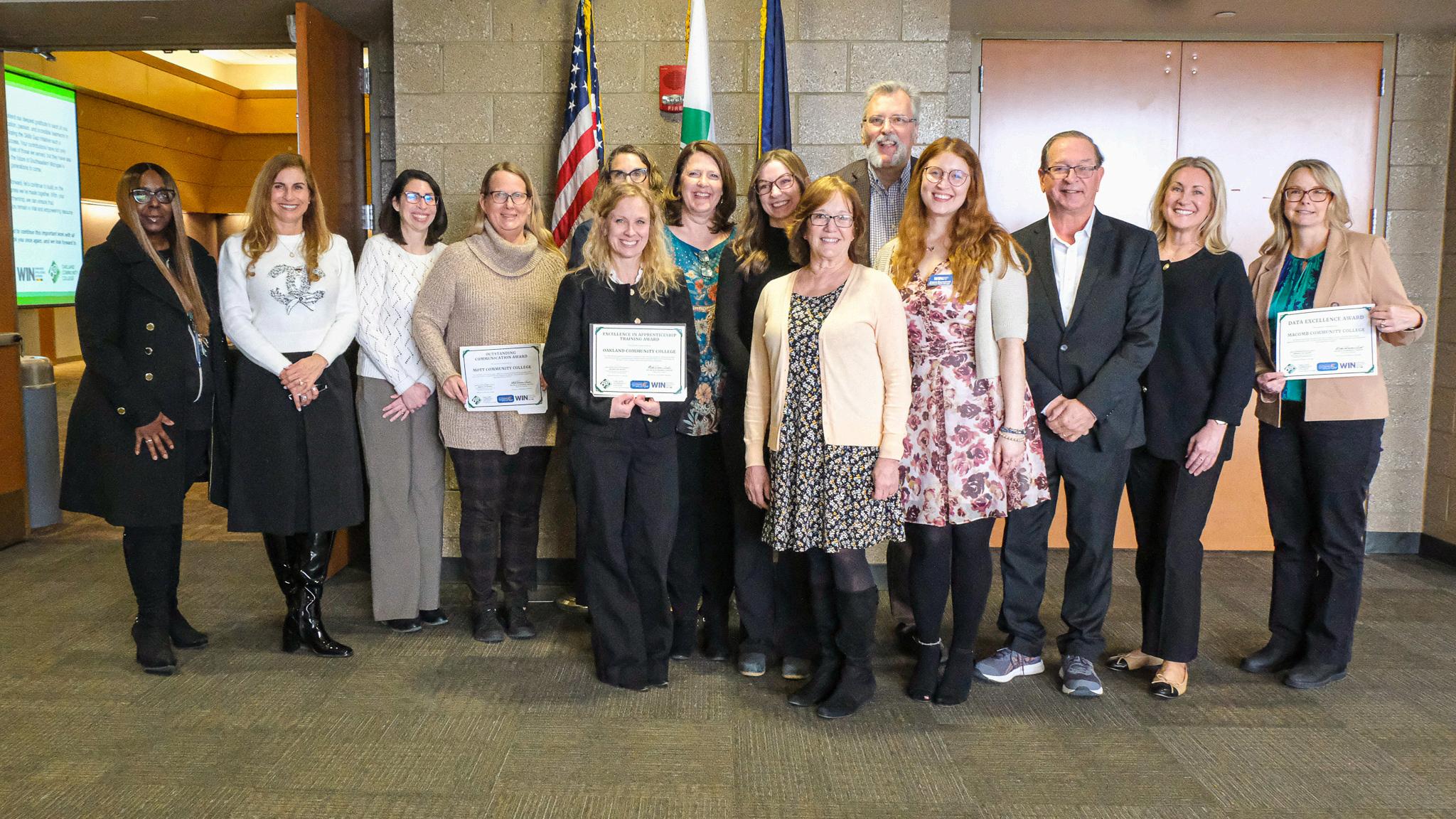
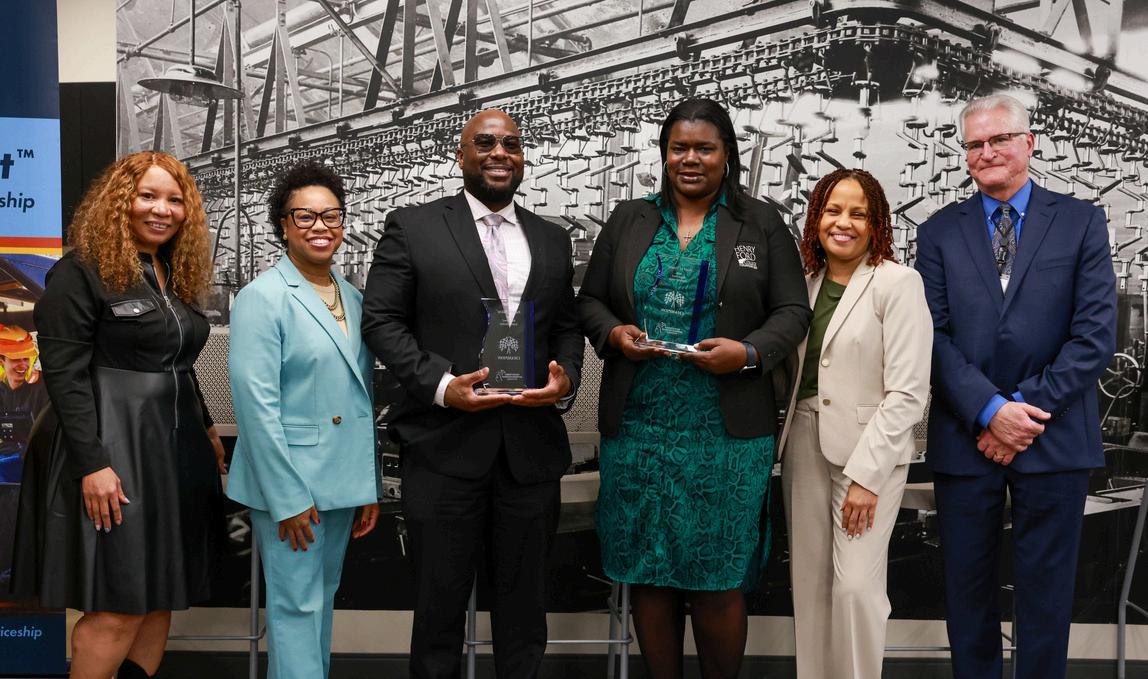
The WIN collaborative efforts received national recognition in 2025, including the U.S. Department of Labor’s Sustainability and Expansion Award and Adaptive Leadership Award for the Closing the Skills Gap initiative.















At Zaman International, registered apprenticeships are creating pathways to economic mobility for individuals facing significant barriers to employment, including poverty and English as a second language.
Through partnership with WIN, Zaman has leveraged apprenticeship as a proven workforce development strategy, connecting individuals to meaningful careers while helping employers address critical talent needs.
“Apprenticeships represent hope and possibility. For women and families facing poverty and language barriers, they are a chance to learn skills, gain confidence, and step into careers that change the course of their lives,” said Gigi Salka, Chief Workforce Development Officer, Zaman International.
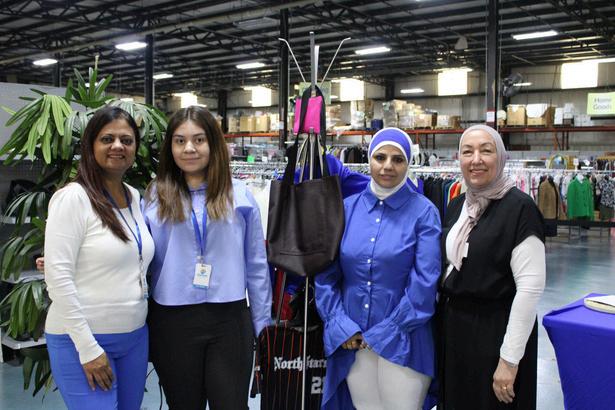
Zaman’s programs demonstrate how apprenticeship can drive both individual transformation and community impact, equipping participants with industry-relevant skills while building confidence and long-term career pathways.
Through this work, WIN and its partners are advancing a more inclusive workforce system, ensuring that opportunity is accessible to all and that employers benefit from a diverse, skilled, and resilient talent pool.
“Apprenticeships offered through Zaman International are a proven workforce development strategy for advancing lowincome and English-language-learner populations into stable employment… The result is a stronger labor market, increased community resilience, and measurable contributions to regional economic growth.”
— Gigi Salka, Chief Workforce Development Officer, Zaman International
ALYSHA ALBRECHT Communications Manager
DR. DAYOUNG AN Economic Research Manager
KRISTI AYERS Workforce Program Manager
AMANDA BAUERSCHMIDT Workforce Project Manager
DEBORAH BAYER Director of Regional Initiatives and Grant Compliance
KEVIN CRANICK Economic Research Manager
LAURIE HUBER Workforce Project Manager
DR. JAN KARAZIM Workforce Program Manager
JESS KEENAN Associate Project Manager
HALEY PORTER Associate Project Manager and Research Analyst
MICHELE ECONOMOU URESTE Executive Director
KATIE WEBBER Workforce Project Manager
Dhanush worked as a member assistant at Sam’s Club His goal was to become a Certified Nursing Aide (CNA) as a first step to building clinical hours toward his future goal of pursuing medical school He determined that enrolling in the Certifi Nursing Assistant/Patient Care Technician program at Oakland Community Colle was the best path to start reaching that goal. He’s currently working at Holt Senior Care and Rehab Center as a CNA. In 2024, there were 1,321 job postings for Certified Nursing Assistants and Patient Care Technicians in Oakland County, reflecting strong demand for these roles. These positions also offer stable earnin per hour.

hen Whitney connected with the SEMCA Michigan Works!, she was determined build a better future for herself and her 7-year-old daughter. Although she had arned an associate degree in Health Information Technology, she faced hallenges finding childcare and securing employment in her field With support om her Career Coach, Whitney accessed childcare resources, attended orkshops and job fairs, and received supportive services, including job readiness upplies and professional clothing assistance Her persistence paid off in April 025 when she began working full-time as a Medical Records Representative ith Henry Ford Health in Troy, earning $16.67 per hour. Whitney credits SEMCA ichigan Works! for helping her gain confidence, overcome barriers, and uccessfully launch her healthcare career.

When Rocktech Systems’ senior leadership attended a Race to Talent™ event hosted by the Macomb/St. Clair Michigan Works! apprenticeship team in January 2025, they were exploring the possibility of launching an apprenticeship program, but were unsure where to begin. Through the event and continued support from th Michigan Works! Apprenticeship team, Rocktech gained guidance on the process available resources, and program requirements In the months that followed, the company partnered with Michigan Works! to establish a Machinist Apprenticeship P d f ll l h d it fi t pprenticeship opportunity, creating a and career advancement.
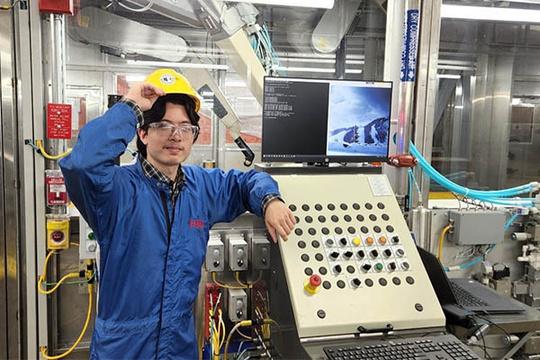
aduated from high school without knowing what he wanted to do e. He didn’t plan for the traditional college route, so instead, he Oakland Community College’s 14-week PLC and Robotic Technician am. After completing the training, he was hired as an Automation OBAL Automation Technologies. The demand for PLC and echnicians remains strong, with 185 job postings in Oakland County These positions also provide above-average pay, with a median wage of $29.85 per hour
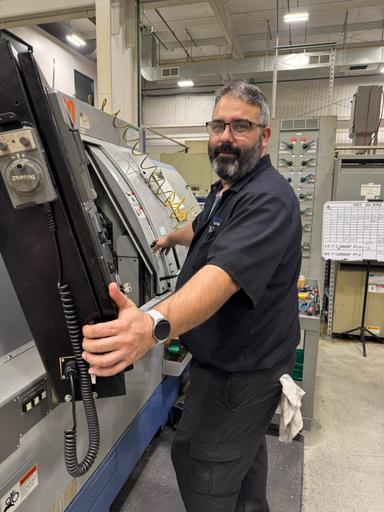

Jacquelyn began working for Tuscola County as a Jailer in December 2024 and quickly realized corrections was more than a job, it was the career path she wanted to pursue. Determined to grow professionally, she set her sights on becoming a Certified Correctional Officer. With support from GST Michigan Works!, Jacquelyn received assistance covering the cost of academy training, along with supportive services such as tools and mileage reimbursement. The support allowed her to focus fully on her training and success. Her hard work paid off when she earned the Academy Award for Best Performance in Defensive Tactics, recognizing her discipline, resilience, and dedication. Her journey reflects how training and support can help individuals confidently pursue meaningful new career paths.

eta was working as a coordinator for her church and always had an interest . While she didn’t have any previous formal training, she loved problemsolving and had built a computer at home with her son. She went through the 10-week Computer Support Technician program at Okalnd Community College. Upon completion, she started a job as a Helpdesk Analyst. In 2024, there were 1,415 job postings for Computer User Support Technicians in the region, making it one of the most in-demand fields. These positions also offer competitive wages, with a median pay of $28.27 per hour
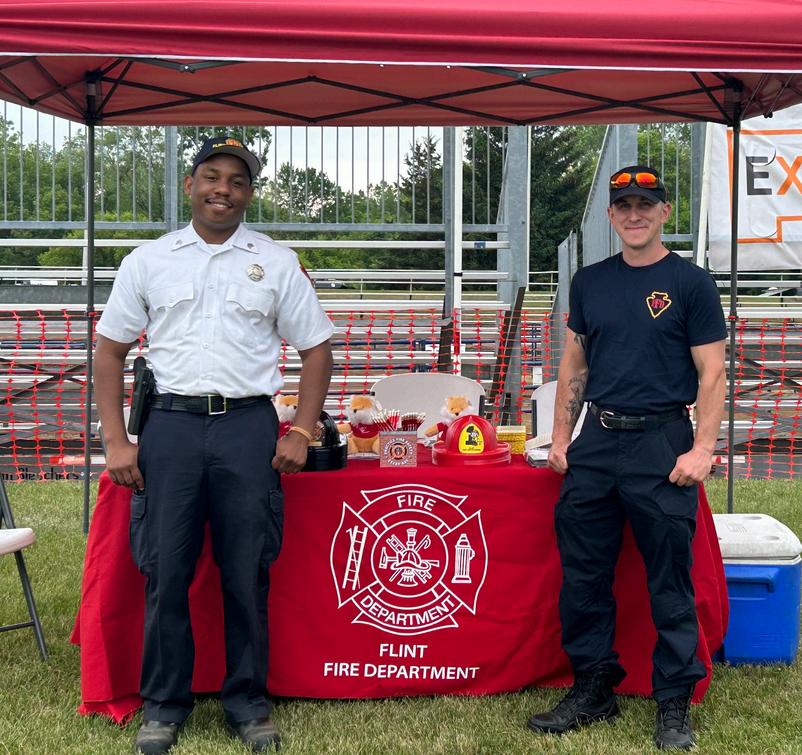
John was already working as a firefighter and EMT with the Flint Fire Department when he connected with GST Michigan Works! to pursue training through the Law Enforcement Regional Training Academy at Mott Community College. Through GST Michigan Works! and Industry Infinity Funds, John received support covering police academy training, uniforms, and mileage reimbursement. After completing 16 weeks of training, John graduated from the Police Academy and earned his Certificate of Completion. His journey reflects how workforce partnerships and targeted training opportunities can help individuals expand their skills while continuing to serve and strengthen their communities.

Ashtar “Stella” is pursuing her goal of becoming a registered nurse through Macomb Community College’s nursing program while balancing work and family responsibilities as a single mother. Currently working as a Certified in the Cardiovascular and Surgical Trauma Intensive Care Unit at Henry Ford Macomb Hospital. Stella has completed her nursing prerequisite courses with a perfect GPA and was recently inducted into the Phi Theta Kappa Honor Society. She plans to continue her education with the long-term goal of becoming a Certified Registered Nurse Anesthetist (CRNA), driven by her passion for helping others and making a meaningful difference in patients’ lives.
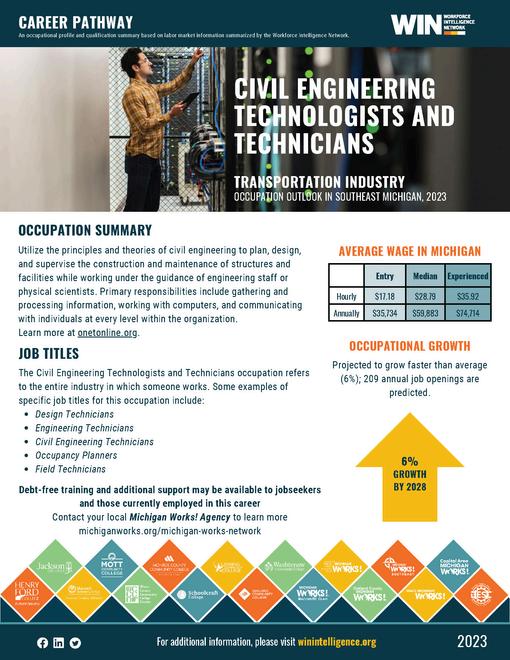
The WIN One Workforce Industry Infinity team developed strategic career pathways for high-demand occupations, focusing on short-term training credentials in Cybersecurity, Transportation, and Advanced Manufacturing. By leveraging data collected in 2023, these pathways serve as essential tools for workforce planning, career counseling, and program development, ensuring job seekers and employers have clear roadmaps for success.
A key component of this initiative is the Industry Infinity Supply Chain training model, which integrates a diverse mix of credentials, microcredentials, and customized training programs This model is designed to support individuals at various career stages, offering:
Pre-hire training for those entering the workforce
Post-hire upskilling to help employees gain new skills and advance in their careers
Pathways to higher education and promotions through stackable learning opportunities
Download the full Industry Infinity Career Pathways Guide, or explore individual career pathways at winintelligence.org/CareerPathways. By investing in flexible, high-impact training solutions, Industry Infinity is helping to build a stronger, more skilled workforce, ensuring that individuals and businesses can thrive in today’s evolving job market.
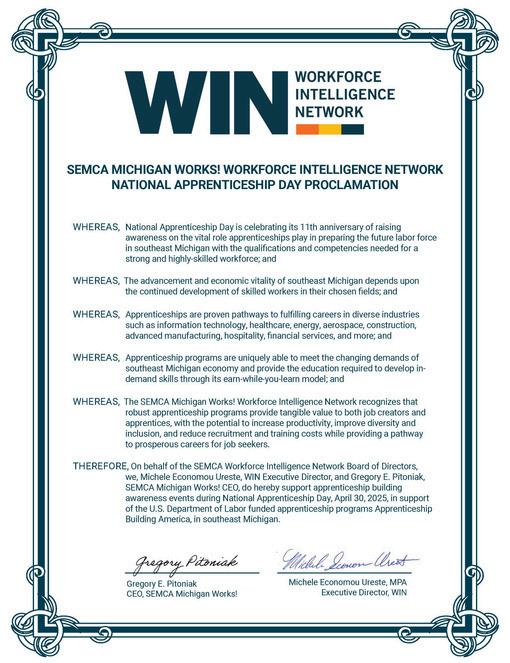
The SEMCA Workforce Intelligence Network (WIN) declared April 30, 2025, as National Apprenticeship Day in Southeast Michigan, joining the U.S. Department of Labor nationwide celebration recognizing the critical role apprenticeships play in building a highly skilled workforce.
In partnership with the WIN Board of Directors and organizations affiliated with the Advance Michigan Center for Apprenticeship Innovation (AMCAI), more than 20 regional events were hosted throughout Southeast Michigan. Activities included career fairs, employer workshops, industry tours, networking events, and apprenticeship information sessions designed to increase awareness of apprenticeship opportunities and connect employers and career seekers to workforce training resources. The initiative highlighted WIN’s continued commitment to expanding registered apprenticeships and strengthening talent pipelines across key industries in the region.
The Southeast Michigan Community Alliance WIN team was selected as a regional hub through Michigan’s Inclusive Training, Technology and Equity Network (MITTEN) program, receiving funding to support digital literacy and inclusion efforts in Region 9.
The MITTEN initiative, led by the Michigan High-Speed Internet Office (MIHI), was created to help bridge the digital divide by expanding access to digital skills training, affordable broadband resources, device distribution programs, and online accessibility support for communities across the state.
Through this initiative, WIN was ready to help residents gain the digital skills and resources needed to connect to employment, education, healthcare, and other essential services in today’s increasingly connected economy. The program supports Michigan’s broader Digital Equity and Inclusion Plan and reflected continued investment in strengthening workforce participation and economic opportunity through technology access and digital literacy.
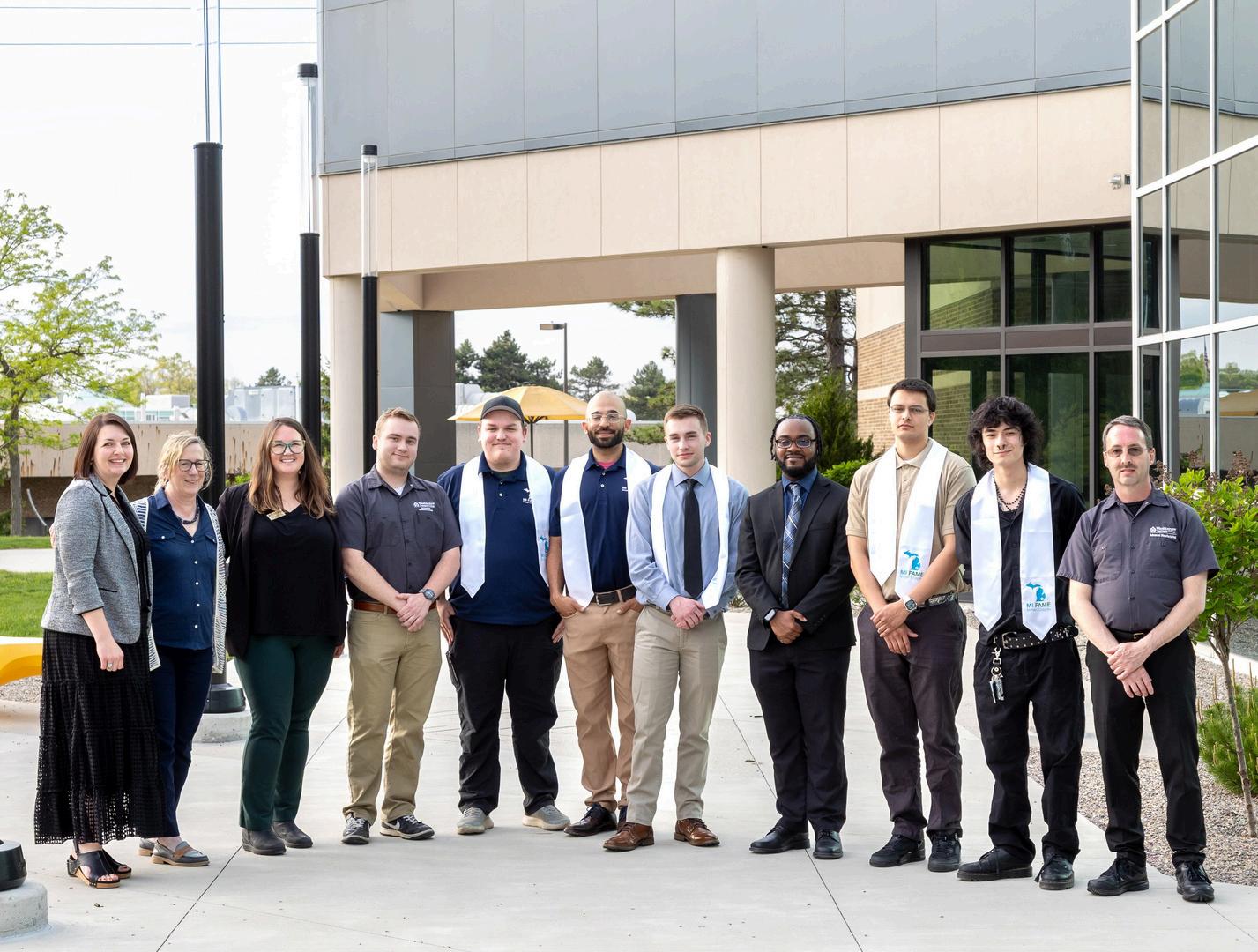
Washtenaw Community College celebrated the graduation of Michigan’s first Federation for Advanced Manufacturing Education (FAME) apprenticeship cohort, marking a major milestone in advanced manufacturing workforce development. The inaugural graduates earned advanced manufacturing-related associate degrees while gaining valuable hands-on experience through employer partners, including
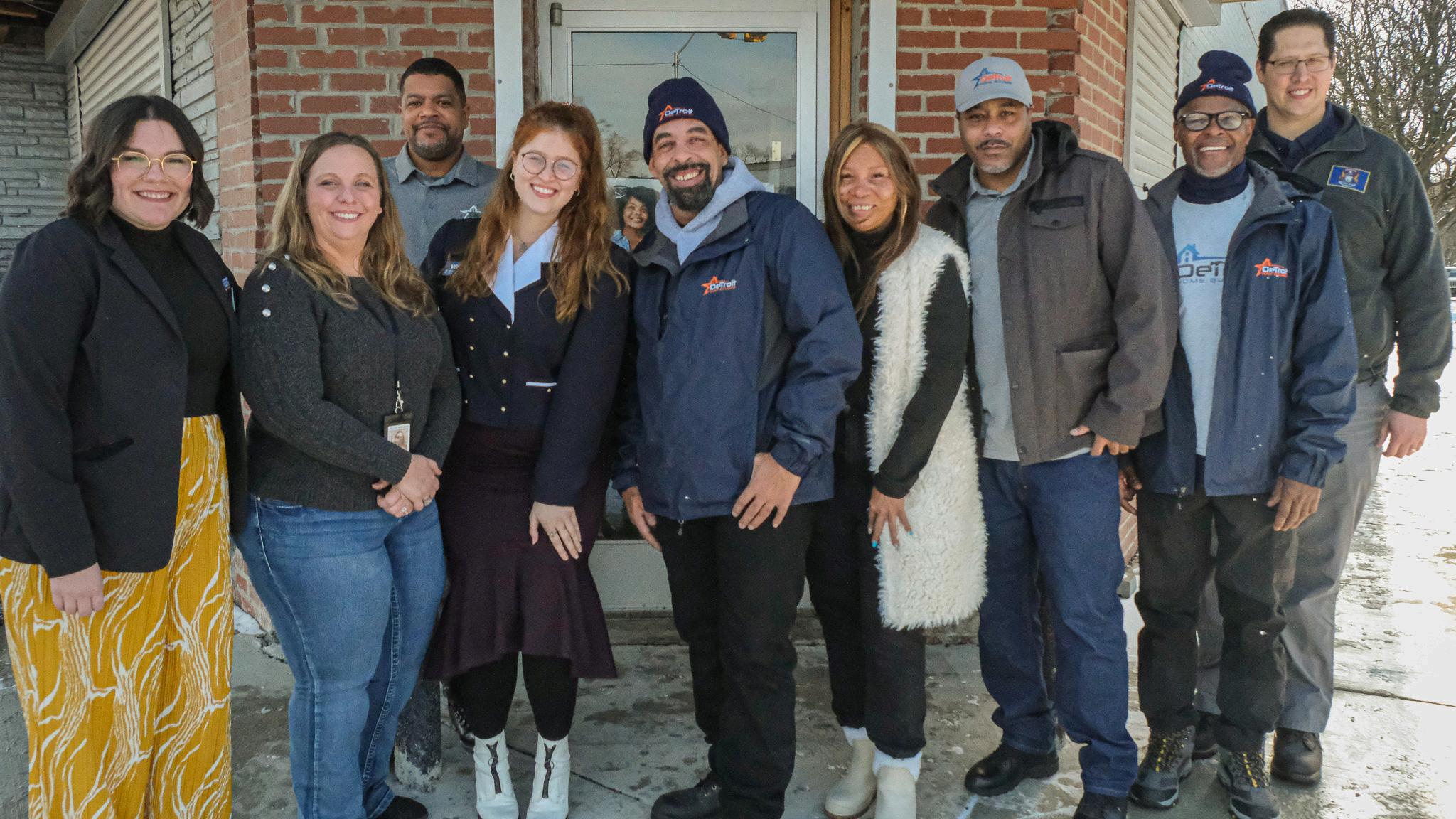
“Our Registered Apprenticeship Program would not be possible without the help and support of WIN. We consider WIN part of the Detroit Home Builders family,”
AnThony Legins, President of Detroit Home Builders
As Detroit continues to grow and revitalize its neighborhoods, Detroit Home Builders (DHB) is helping shape the city’s future by creating career pathways in the skilled trades while rebuilding communities one project at a time Through a strong partnership with the WIN, DHB has expanded access to Registered Apprenticeship and pre-apprenticeship opportunities that prepare individuals for long-term careers in construction
Founded on a mission to provide both quality construction services and workforce opportunities, DHB combines hands-on training, mentorship, and real-world experience to help develop the next generation of construction professionals The company’s apprenticeship journey began in 2022 when President AnThony Legins connected with WIN to establish a U.S. Department of Labor (USDOL) Registered Apprenticeship Program (RAP) for Construction Craft Laborers WIN provided technical assistance and guidance throughout the development process, including training on apprenticeship standards, industry best practices, and USDOL requirements. WIN certified the DHB RAP and began managing the program as part of the WIN Apprenticeship Intermediary Program. After relaunching and expanding the program in 2023, DHB experienced significant growth by implementing a highly personalized training model pairing apprentices directly with experienced journeyworkers in a 1:1 training environment. The company also partnered with Detroit Employment Solutions Corporation (DESC)/Detroit at Work to connect Detroit residents with apprenticeship and career opportunities in the skilled trades.
Recognizing the need for more accessible entry points into construction careers, DHB worked with WIN to develop a Construction Craft Laborer Pre-Apprenticeship Program designed to prepare participants for success in registered apprenticeship opportunities Drawing from textbooks and training materials developed by Legins himself, the program combines classroom instruction with hands-on learning in roofing, property maintenance, construction safety, and essential trade skills
In 2024, WIN connected DHB with the Michigan Department of Labor and Economic Opportunity (LEO), leading to certification of the program through the Michigan Apprenticeship Readiness Certificate (MARC) Program The pre-apprenticeship program now serves as a scalable workforce solution for training providers, educational institutions, and workforce organizations throughout the region
DHB has continued expanding its impact through partnerships with Henry Ford College, the Department of Defense SkillBridge Program, and workforce organizations in Flint and greater Southeast Michigan These collaborations are helping connect more individuals, including transitioning service members and underserved populations, to meaningful career opportunities in the skilled trades
Through its partnership with WIN, DHB has transformed an innovative idea into a growing workforce development model that is strengthening Detroit neighborhoods while preparing individuals for sustainable, family-supporting careers. By supporting employers like DHB, WIN continues to advance apprenticeship expansion, workforce training, and talent development across Southeast Michigan, creating pathways to opportunity while helping employers build the skilled workforce needed for the future.
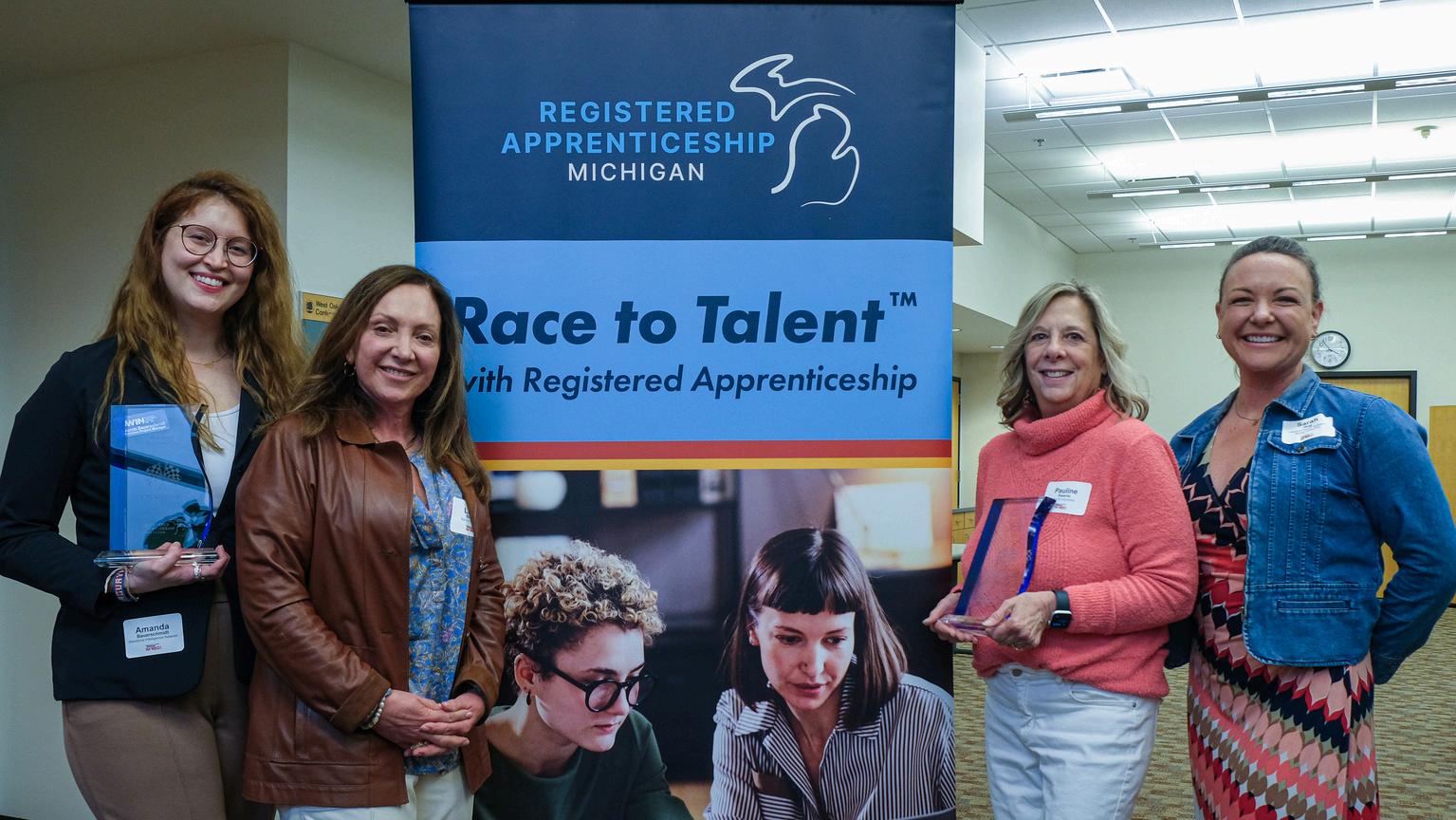
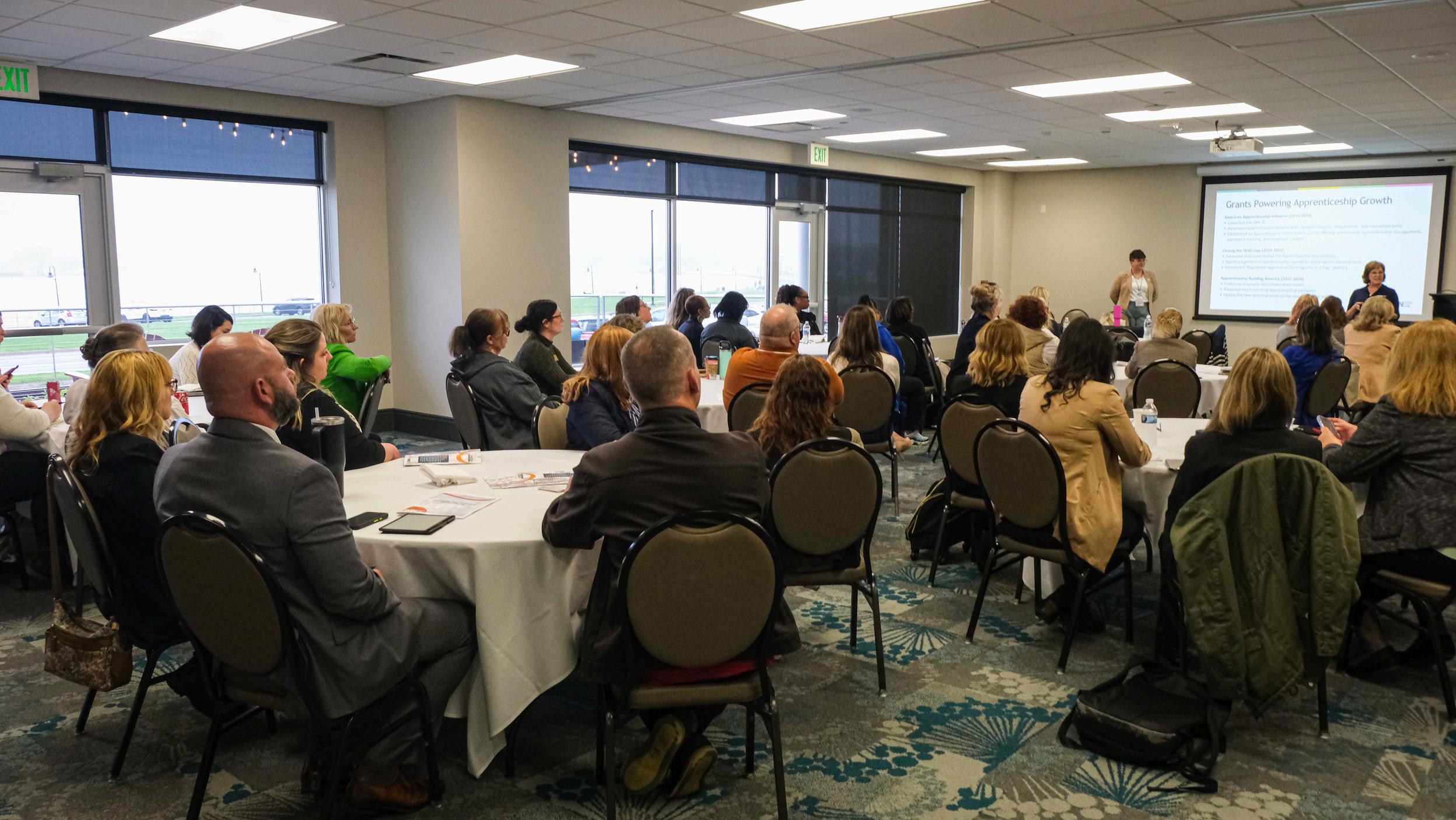
As demand for skilled talent continues to grow across Michigan, employers throughout Oakland County are increasingly turning to Registered Apprenticeship Programs as a workforce development solution. In 2024, Oakland County Michigan Works! supported more than 200 apprentices while helping employers connect workers to career pathways in advanced manufacturing, information technology, healthcare, education, and professional services.
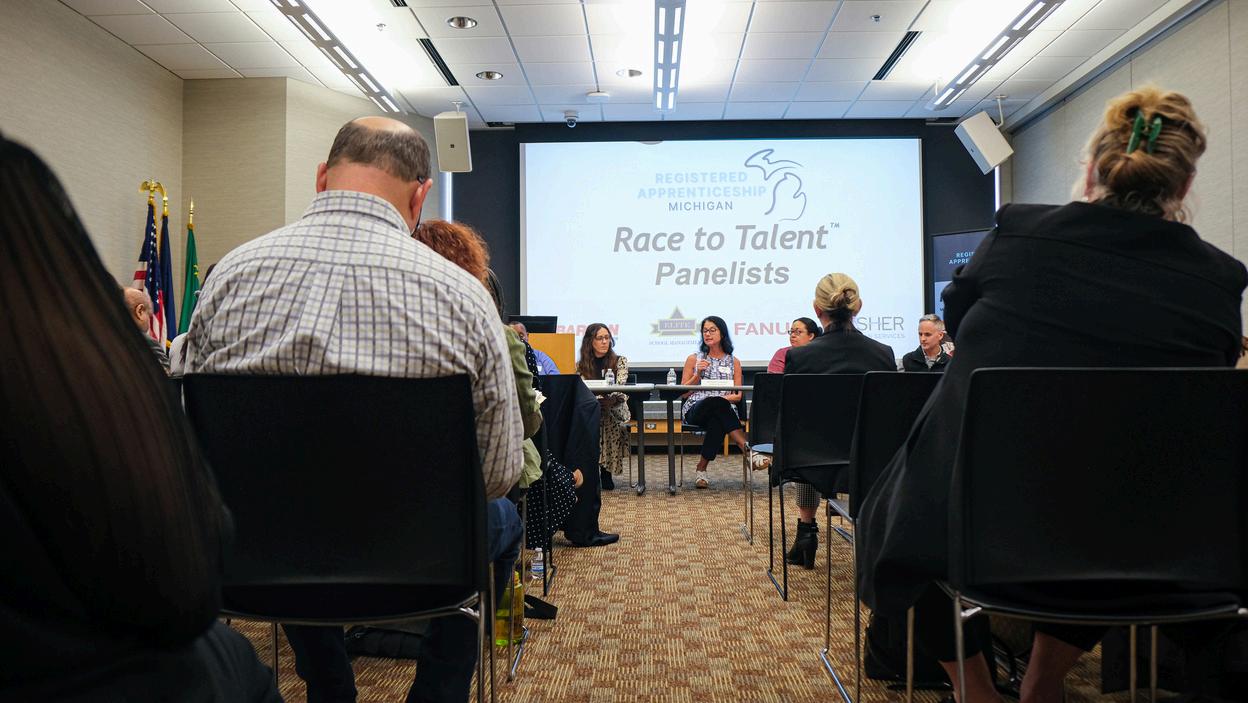
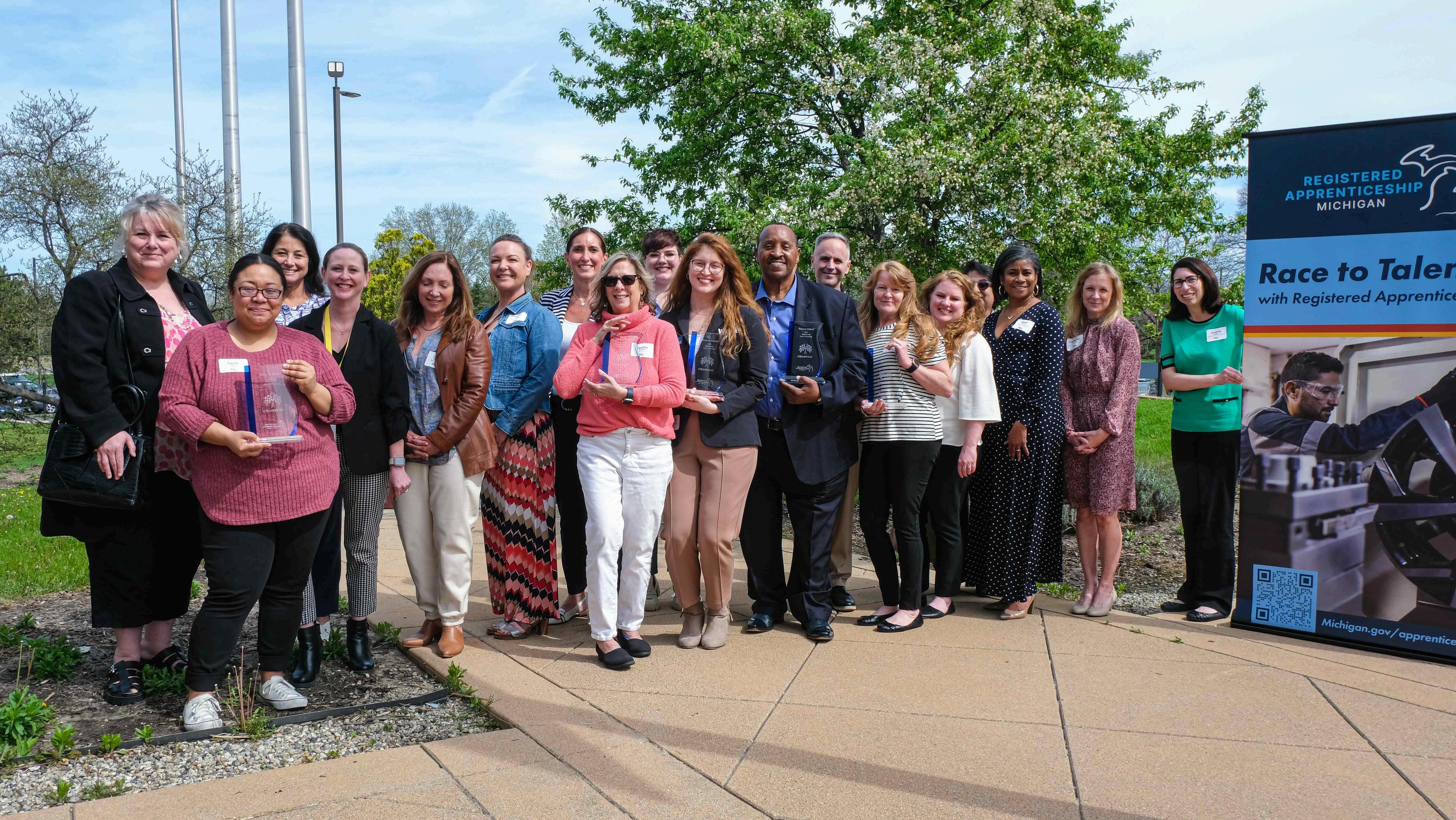
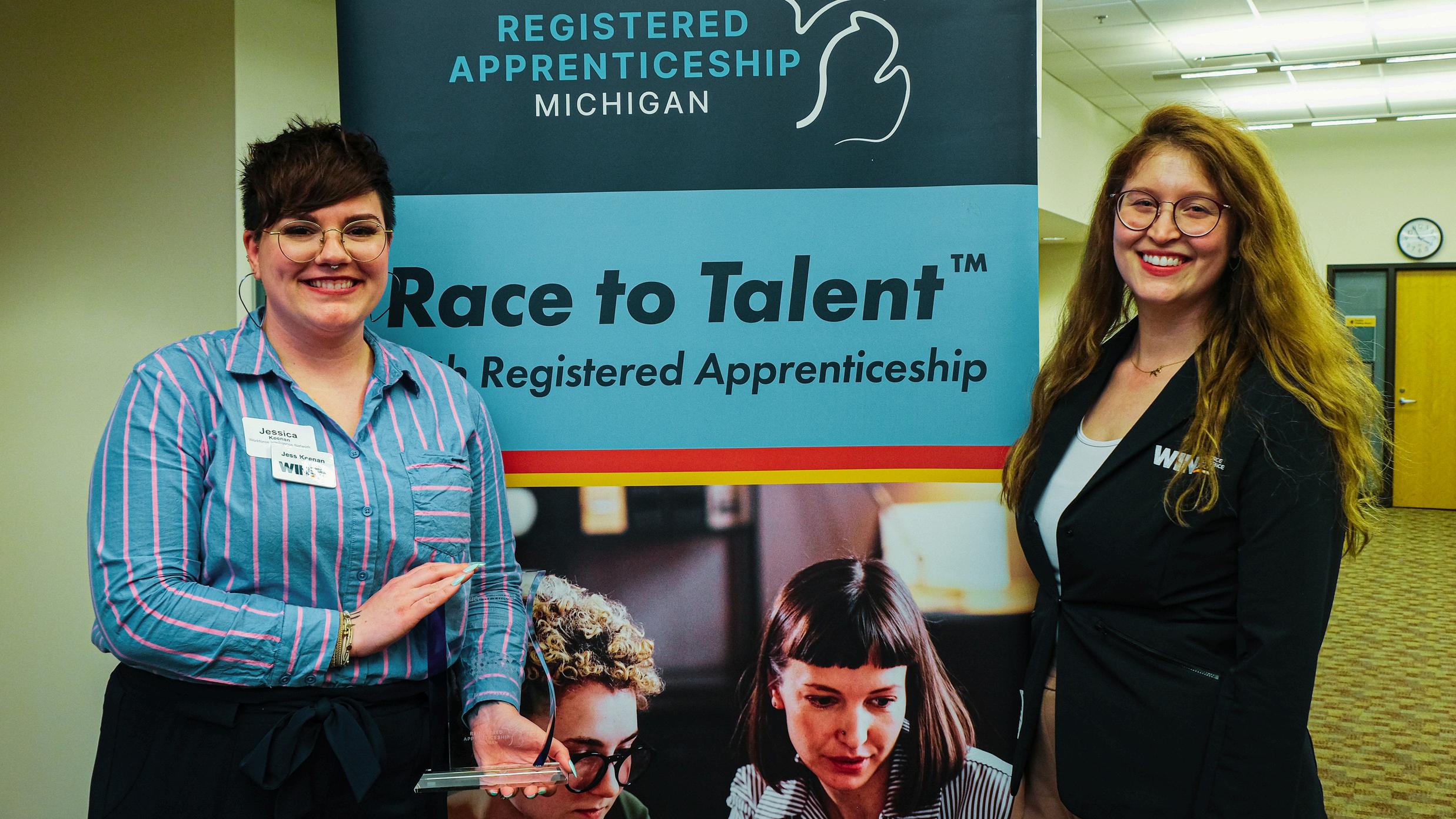
During the annual Race to Talent™ event hosted by Oakland County Michigan Work partnership with the Michigan Department of Labor and Economic Opportunity, Ba Industries, Elite School Management, FANUC America Corporation, Gesher Huma Services, and WIN were recognized for their commitment to growing and strength workforce through apprenticeship programs
WIN was also recognized for its leadership in helping employers establish and ma Registered Apprenticeship Programs throughout Southeast Michigan Since 2018, supported more than 90 employers in launching apprenticeship programs, includin programs in the past year alone.
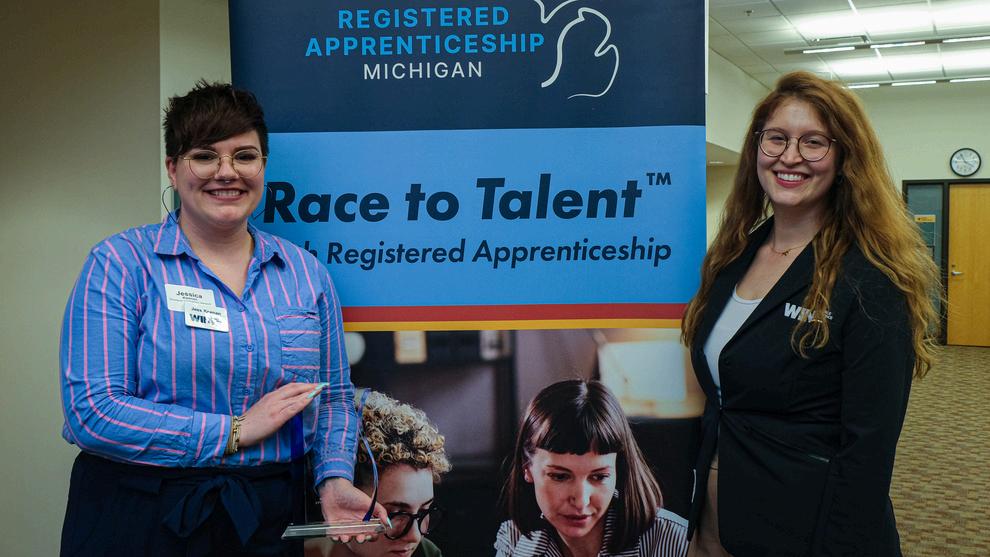
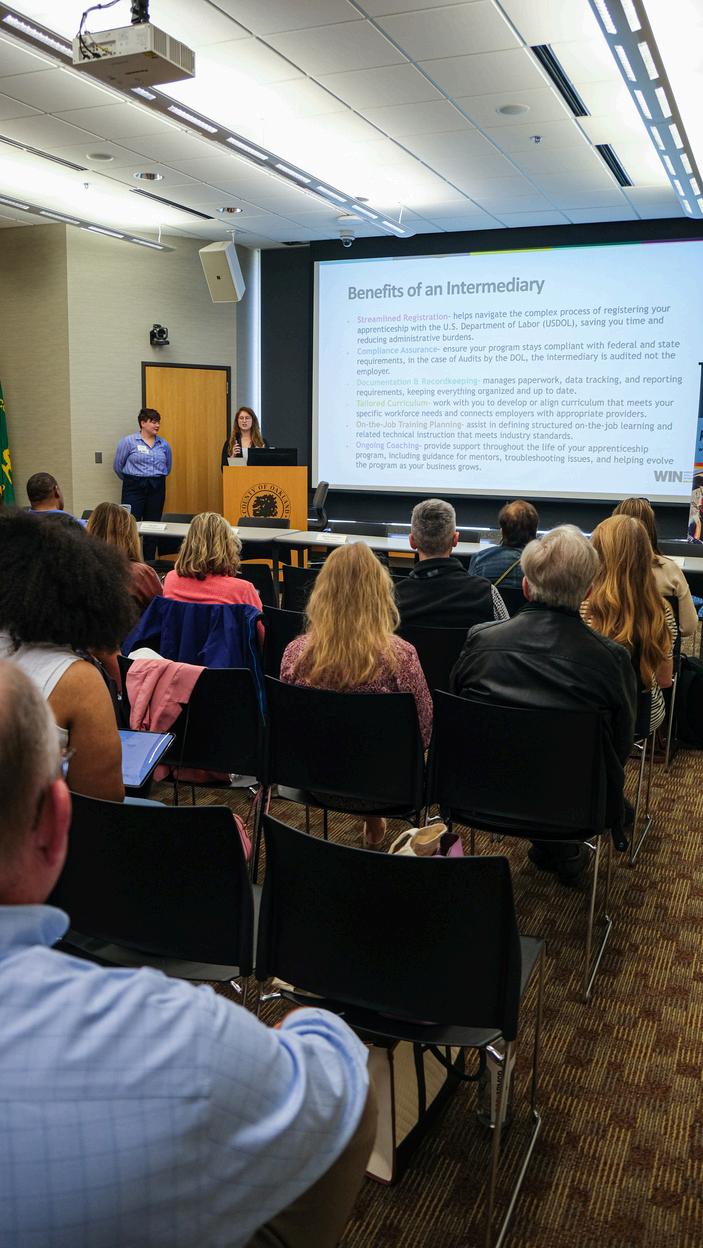
WIN serves as an apprenticeship intermediary, guiding employers through the development and implementation of U.S. Department of Labor Registered Apprenticeship Programs. Through funding provided by the U.S. Department of Labor Apprenticeship Building America grant, WIN helps employers create apprenticeship and pre-apprenticeship programs while reducing administrative barriers and strengthening long-term talent pipelines.
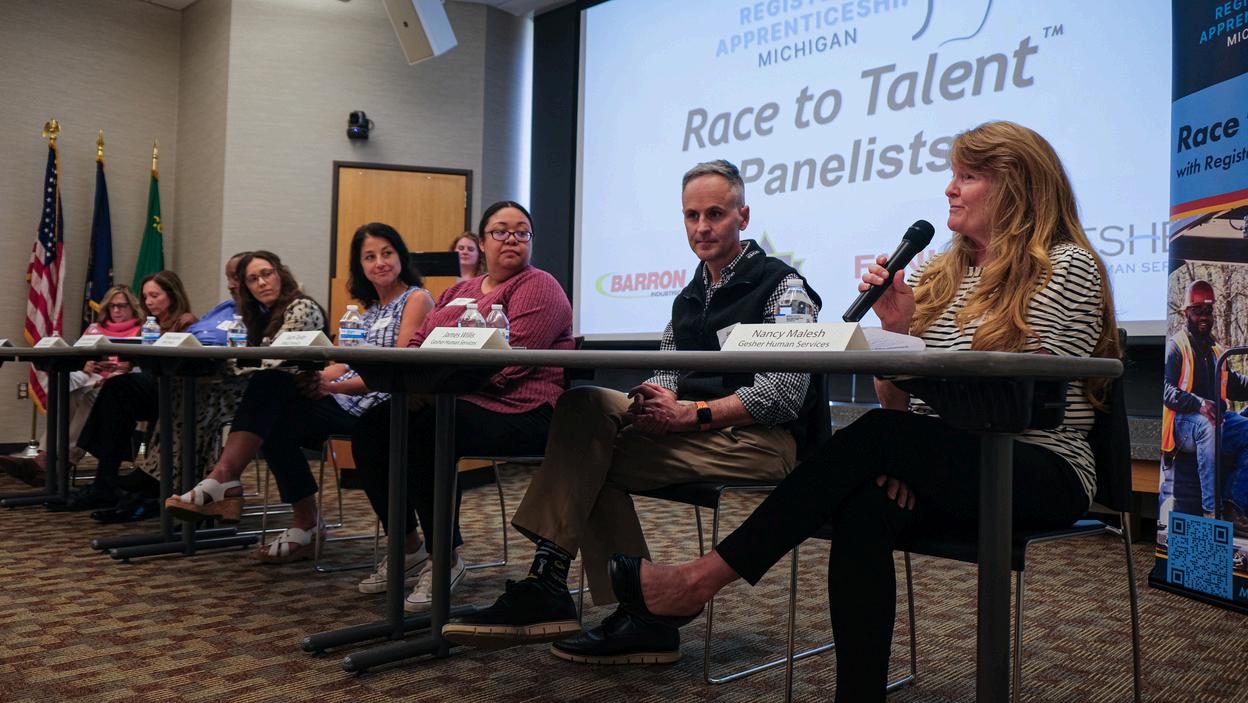
Employers participating in the event highlighted the value of apprenticeship programs in addressing workforce shortages, building internal talent, and preparing the next generation of skilled workers Companies such as FANUC America Corporation and Barron Ind emphasized apprenticeship as a critical strategy for developing advanced manufact talent, while Elite School Management and Gesher Human Services demonstrated t growing use of apprenticeship models in education and human services careers
Shining Star Pre-School first connected with Macomb/St. Clair Michigan Works! through an Apprenticeship 101 event in July 2024 and quickly became one of the first employer partners in the Early Childhood Education Apprenticeship initiative. Soon after, Kayla White began her journey as an Early Childhood Education apprentice, demonstrating strong commitment and determination throughout the program.
Kayla became the first apprentice in the program to earn both her Child Development Associate (CDA) and the U.S. Department of Labor registered apprenticeship credentials. Motivated by her success, she is continuing her professional development through a second apprenticeship program as she works toward becoming an Early Childhood Program Director from Macomb Community College and ultimately a Center Director at Shining Star PreSchool.
Throughout her journey, Macomb/St. Clair Michigan Works! provided guidance, resources, and supportive services to help Kayla succeed. When an unexpected car accident created transportation challenges, Michigan Works! connected her to scholarship funding that allowed her to remain focused on both work and training.
Kayla credits the apprenticeship pathway and the support she received from Michigan Works! staff for helping her build confidence, overcome barriers,

“Evylon from Michigan Works! has been incredibly helpful throughout this entire process, from getting started to navigating next steps. This was all new to us, and her support has made a huge difference. I feel like every accomplishment is celebrated with her. I also appreciate the support from Victoria, who helped me find the scholarship opportunity and continues to ite, tion ntice
WIN is proud to celebr apprentices in the Workforce Educat
Amanda Bauerschmidt
Jennifer Tucker of SEMCA on A Amanda and Jennif the value of hands-on learning, ment
Their achievement represents more than completing a program; it reflects a continued investment in developing the next generation of workforce educators and trainers who will help strengthen workforce development efforts across the region.
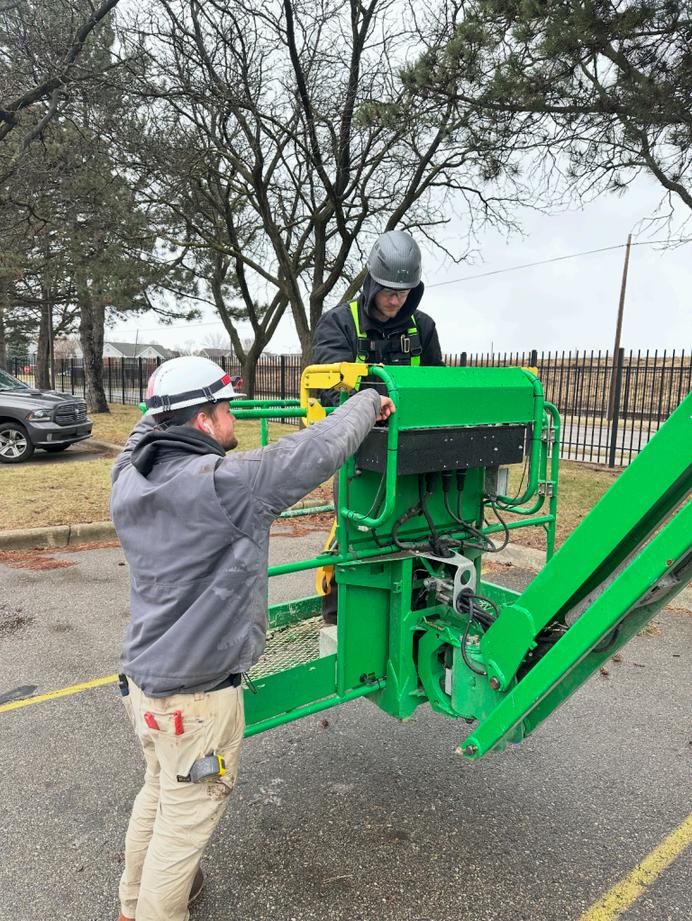
“This program is setting me up for long-term success as an electrician,” Trevor said. “I’m already earning a good income and getting ahead without taking on student debt.”

When Trevor began his apprenticeship with Power Solutions, he was looking for more than just a job, he wanted a stable, hands-on career in the skilled trades. Through the apprenticeship program, Trevor gained real-world experience, structured mentorship, and the opportunity to earn an income while learning on the job.
With guidance from his mentor, Jerry, an experienced journeyman electrician, Trevor has developed both technical and professional skills, including blueprint reading, conduit installation, commercial wiring, problem-solving, and time management. When Trevor faced challenges accessing a National Electrical Code (NEC) book early in the program, Macomb/St. Clair Michigan Works! stepped in to provide the tools and resources needed to support his success.
Just six months into the apprenticeship, Trevor has already contributed to major commercial projects, including electrical installations at Jinya Ramen Bar. He credits the apprenticeship with helping him build confidence, avoid student debt, and establish a strong foundation for a long-term career as an electrician.
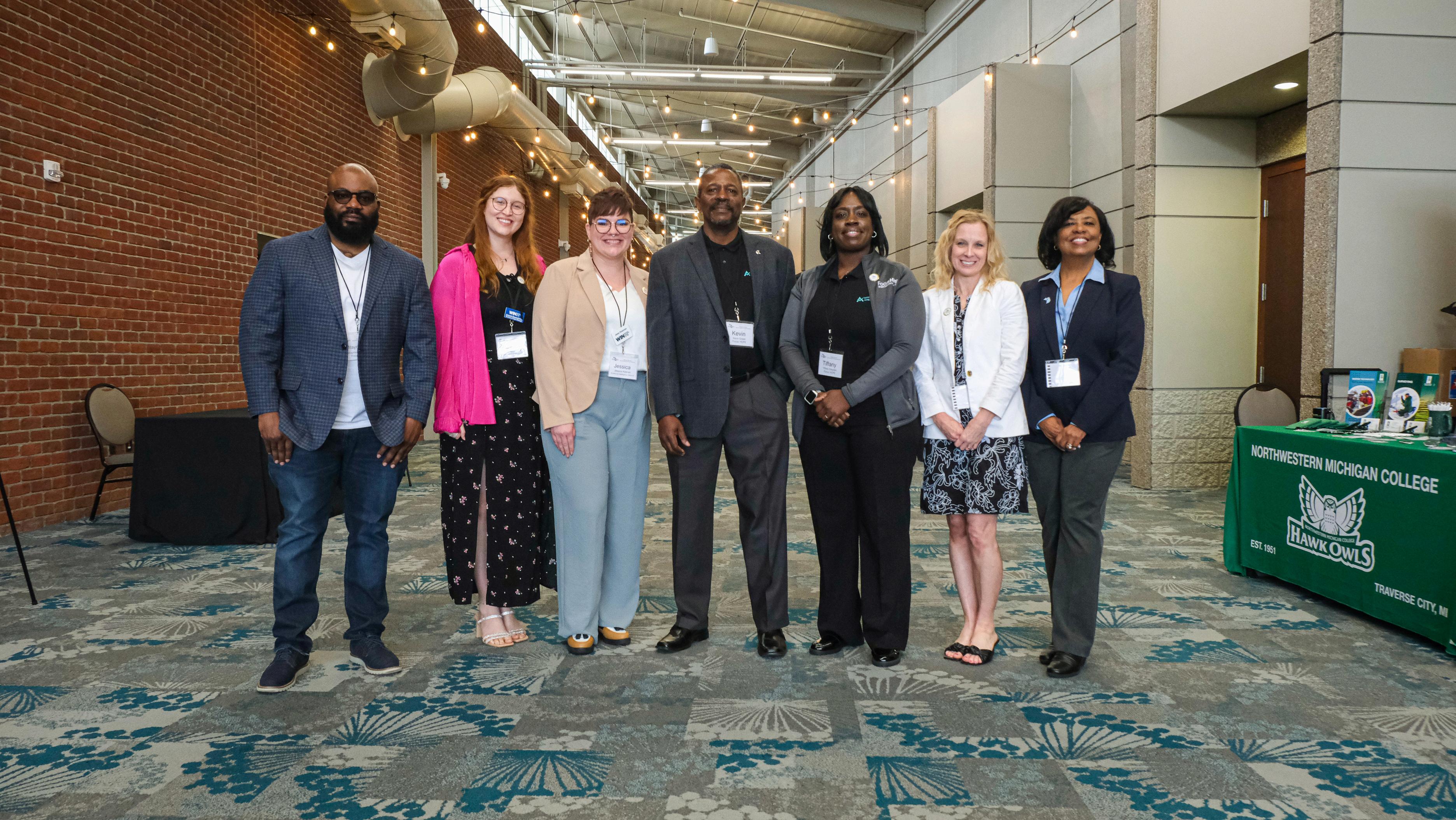
The WIN economic research managers continued to receive numerous data research requests which inform workforce, education, and economic development strategies.
In 2025, WIN expanded its research portfolio and published the following high-impact studies and reports:
Published a Health Industry Cluster Analysis for the Capital Area Health Alliance
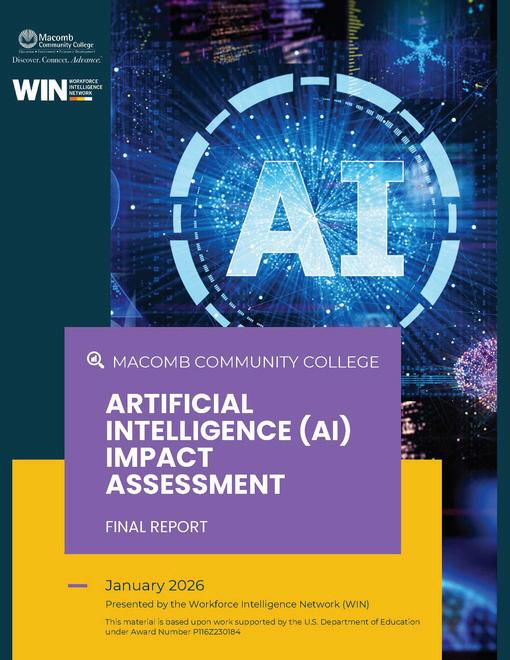
Developed the Macomb Community College Artificial Intelligence (AI) Impact Assessment study for Southeast Michigan
Produced a Hydrogen Social Network Analysis ecosystem mapping 739 unique organizational clusters and more than 2,300 nodes of activity in Michigan and Ohio
Expanded career pathway tools and workforce planning resources
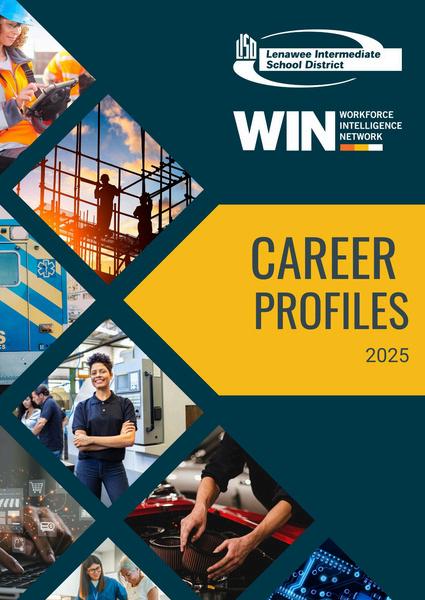
Development of 28 Career Profiles for Lenawee Intermediate School District
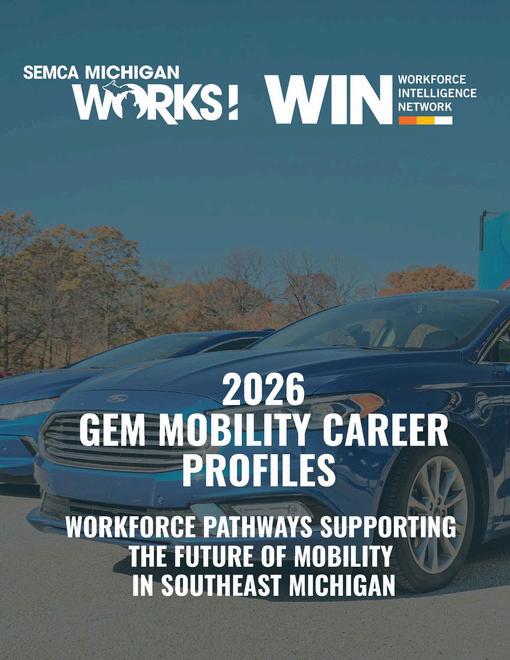
Led the Global Epicenter of Mobility (GEM) Tech Study and created 32 GEM Career Profiles
Ongoing consulting engagements supporting organizational sustainability and workforce planning
WIN also enhanced access to real-time data through customized reports and dashboards.
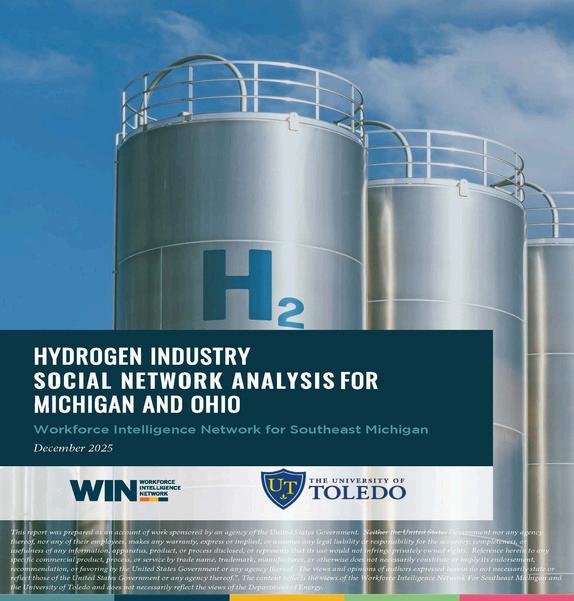
"We have utilized SEMCA (WIN) reports in 3 critical areas: satisfying National Accreditation requirements for our Public Safety Department, Strategic Planning for our Township & DDA, and data support for Grant Writing. The consistency of the reports, quick turnaround, and output options have been invaluable.”
- Gavin Beckford, PhD, MBA, BBA, Economic Development and DDA Manager for Canton Township, Michigan.
The WIN Industry Infinity initiative, funded through the U.S. Department of Labor’s H-1B One Workforce grant, continued to serve as a cornerstone strategy for developing a skilled workforce in high-demand, middle- to high-wage occupations.
Focused on key sectors including Information Technology, Advanced Manufacturing, and Transportation, Distribution, and Logistics, the initiative supports both training delivery and curriculum development to meet evolving industry needs driven by automation and technological advancement.
In 2025, Industry Infinity achieved significant outcomes across Southeast Michigan:
1,568 participants enrolled, exceeding original program goals
1,301 individuals completed education or training activities
1,250 industry-recognized credentials awarded
740 individuals served who identified as low-income
633 youth participants between the ages of 17-29
604 participants entered employment, with over 500 in training-related roles
467 incumbent workers enrolled, with 346 incumbent workers advancing due to training
The program prioritized inclusive workforce development, with strong engagement among youth, low-income individuals, and underrepresented populations, and helped expand access to career pathways in high-growth industries.
A key component of Industry Infinity is its collaborative training model, which brought together:
Michigan Works! Agencies providing case management, career navigation, and employer connections
Community colleges delivering training programs and developing new curriculum aligned with employer demand
Employers actively shaping talent pipelines and upskilling incumbent workers
Through this partnership model, each college developed new programming while updating existing courses, resulting in dozens of industry-aligned training programs and credentials across IT, cybersecurity, robotics, transportation, mobility, and advanced manufacturing fields. The initiative also supported:
Expansion of short-term, credential-based training programs
Development of career pathways tied to in-demand occupations
Increased incumbent worker training, with hundreds advancing within their careers
Industry Infinity continues to demonstrate how coordinated, data-driven workforce strategies can deliver measurable outcomes and connect individuals to career advancement opportunities while helping employers address critical talent needs.

PERFORMANCE OUTCOMES
1,568 EXCEEDED GOAL OF 1,075 BY 179%
PARTICIPANTS
1,250
CREDENTIALS OBTAINED
633
YOUTH PARTICIPANTS (AGES 17-29) LOW-INCOME INDIVIDUALS SERVED
142%
OBTAINED EMPLOYMENT
740
*Cumulative through December 2025
Industry Infinity would not be possible without the hard work and dedication of the Michigan Works! Agencies and Community Colleges on the WIN board.
Through the U.S. Department of Labor’s Apprenticeship Building America (ABA) initiative, WIN has advanced a comprehensive, employer-driven approach to expanding Registered Apprenticeship Programs (RAP) and Pre-Apprenticeship Programs across Southeast Michigan, strengthening talent pipelines in both traditional and emerging industries. The ABA initiative has served as a critical catalyst for scaling apprenticeship models, deepening employer engagement, and building long-term workforce system capacity across the region. Key accomplishments include:
Expansion of Registered Apprenticeship and pre-apprenticeship programs, supporting both new program development and the enhancement of existing employer-led training models
Strong employer partnerships, enabling businesses to invest in incumbent worker upskilling and create structured career pathways aligned with industry demand
Development of sector-based collaboratives, including the Health Careers Alliance (HCA) & Michigan Alliance for Greater Mobility Advancement (MAGMA) to address critical workforce shortages through coordinated, data-driven strategies
Support for apprenticeship intermediaries and system infrastructure, strengthening WIN’s role as a USDOLrecognized intermediary managing apprenticeship standards across multiple employers and occupations
Launch of pre-apprenticeship programs with partners, including Detroit Home Builders and Zaman International, expanding early access to career pathways.
A core strength of the ABA initiative has been its focus on employer-led solutions, ensuring apprenticeship programs are directly aligned with real-time workforce needs. Through this, employers have been able to: Build customized training programs that support both new hires and incumbent workers
Improve talent retention and internal career advancement pathways
Increase competitiveness in a tight labor market by investing in workforce development
As highlighted in the WIN 2024 Annual Report, employers emphasized the value of ABA in strengthening their workforce strategies: “The ABA Grant enables us to invest in our employees by creating a career path through training and development… nurturing our existing talent ensures our competitiveness while meeting customer demands,” said Julie Kirkpatrick, Sr. HR Generalist of The Oakwood Group
In addition to direct program outcomes, ABA has driven system-level impact by:
Expanding apprenticeship into nontraditional sectors, including healthcare and IT
Strengthening partnerships among employers, community colleges, Michigan Works! agencies, and training providers
Advancing earn-and-learn models that provide accessible, work-based pathways into high-demand careers
In partnership with employers, education providers, and workforce development organizations, the ABA initiative advanced apprenticeship growth and workforce accessibility across multiple sectors. The following outcomes demonstrate the initiative’s continued regional impact and success:
109 new Registered Apprenticeship Programs (RAPs) developed, exceeding the goal of 75
181 RAPs expanded, surpassing the target of 75
40 pre-apprenticeship programs expanded, achieving four times the goal of 10 793 unduplicated employers and stakeholders engaged through apprenticeship and workforce initiatives
69 new apprenticeship sponsors added
1,001 reportable individuals served
630 enrolled in Registered Apprenticeship Programs
209 enrolled in pre-apprenticeship programs
Through ABA, WIN has further solidified its leadership in apprenticeship innovation, building on its national recognition as a top-performing workforce collaborative and advancing scalable models that continue to shape Michigan’s talent development system.
793 RAPs & PRE-RA DEVELOPED & EXPANDED
EMPLOYERS & STAKEHOLDERS ENGAGED EXCEEDED
1,001
INDIVIDUALS
330
69
NEW APPRENTICESHIP SPONSORS
Through the U.S. Department of Labor’s Apprenticeships: Closing the Skills Gap initiative, led by Oakland Community College, WIN, and its partners have significantly expanded the region’s apprenticeship ecosystem, creating scalable, employer-driven solutions to address critical talent shortages in advanced manufacturing and other high-demand industries
In 2025, the initiative demonstrated strong outcomes in both system-building and participant impact, exceeding key performance goals and establishing sustainable workforce infrastructure across Southeast Michigan.
Key accomplishments include:
Expansion of Registered Apprenticeship Programs (RAP), with 305 new programs created and reaching 184% of the original USDOL Apprenticeship Building America (ABA) grant target outcomes, and 152 RAP expanded to meet evolving employer needs
Significant employer engagement, with 602 employers participating in apprenticeship development that is more than triple the initial ABA grant goal, demonstrating strong industry adoption of the apprenticeship model
Participant success and scale of 4,250 individuals served, with over 1,257 registered apprentices enrolled, and more than 1,000 participants completing training activities

305
NEW REGISTERED APPRENTICESHIP PROGRAMS EXCEEDING GOAL OF 166 BY 184%
602
EMPLOYERS ENGAGED EXCEEDED GOAL OF 179 BY 336%
Strengthening the apprenticeship intermediary model, with WIN serving as a USDOL intermediary group sponsor for employers and expanding regional capacity by training partners to become independent intermediaries
A key focus of the initiative has been building a coordinated regional workforce system, aligning community colleges, Michigan Works! Agencies, employers, and training providers to deliver seamless pathways into apprenticeship and employment These partnerships have enabled: Delivery of wraparound support services, including career coaching, financial assistance, and barrier reduction strategies (e.g., transportation, childcare) to improve participant success
Development of pre-apprenticeship and early pipeline programs, connecting K-12 students and job seekers to high-demand careers through structured, work-based learning pathways
Creation of industry-aligned curriculum and training models, informed by real-time labor market data and employer feedback
The initiative also expanded outreach to underserved populations and ensured broader participation in apprenticeship opportunities through targeted recruitment, community engagement, and inclusive program design Beyond program outcomes, Closing the Skills Gap has driven system-level change by:
Streamlining apprenticeship implementation processes for employers
Developing tools and resources to support program design and sustainability
Embedding apprenticeship strategies within education and workforce institutions
As the grant period concluded, the USDOL presented two prestigious awards to the collaborative: the Sustainability and Expansion Award and the Adaptive Leadership Award The Closing the Skills Gap initiative has established a sustainable, employer-led apprenticeship model that continues to expand across the region, ensuring long-term talent pipeline development and strengthening the competitiveness of Michigan’s workforce
4,250
PARTICIPANTS SERVED
1,257
APPRENTICES ENROLLED
152
EXPANDED RAP EXCEEDED GOAL OF 120 BY 127%

Through the Advance Michigan Center for Apprenticeship Innovation (AMCAI), the WIN Registered Apprenticeship Intermediary Group Sponsor Program continues to serve as an employer-driven workforce solution by supporting the development, expansion, and long-term sustainability of U.S. Department of Labor Registered Apprenticeship Programs across Southeast Michigan and beyond.
Through a structured “share, build, certify, and manage” model, WIN provides end-to-end support for employers, simplifying the apprenticeship process while ensuring programs are aligned with industry needs and federal standards.
In 2025, WIN was recognized twice by Michigan Works! Agency partners through the State of Michigan Department of Labor and Economic Opportunity Race to Talent™ initiative, which highlights employers and partners building sustainable talent pipelines through Registered Apprenticeships and innovative workforce strategies. This work reflects a broader shift from workforce awareness to implementation, with employers actively investing in long-term talent development, expanding its impact by strengthening both program delivery and system capacity, supporting employers across a growing range of traditional and non-traditional occupations.
349 apprentices served since 2018
91 employers engaged in Registered Apprenticeship Programs
57 active employers
52 approved and active registered apprenticeship occupations
43 new apprentices registered in 2025
21 apprentices earned U.S. Department of Labor credentials
16 new employers joined WIN Intermediary standards in 2025
6 new occupations or occupation variations added in 2025
The WIN intermediary model not only supports individual employers but also builds regional and statewide infrastructure for apprenticeship expansion.
Through the Apprenticeship Building America (ABA) initiative, the WIN AMCAI hub has played a critical role in training and supporting intermediary partners across Michigan. Since the launch of ABA, multiple organizations have advanced their capacity to serve as active apprenticeship intermediaries, including:
Michigan Works! Agencies across Southeast, West Central, Southwest, Oakland County, and Macomb/St Clair regions
Detroit Regional Workforce Alliance
UP Michigan Works!
Community-based and education partners, including Schoolcraft College, Washtenaw Community College, and Community 2 Me Network
In 2025, WIN continued this momentum by providing technical assistance, training, and capacity-building support, ensuring partners can effectively develop and manage apprenticeship programs in their regions.
This growing network strengthens the statewide apprenticeship ecosystem and creates a scalable model for expanding Registered Apprenticeships across industries and communities
Employers consistently highlight the value of the WIN hands-on support and expertise:
“Jennifer and all of her counterparts (WIN, SEMCA, and AMCAI) have been extremely helpful from the inception of wanting to have a registered apprenticeship program, successful completion of registering the program, and continued support of the company and apprentices ”
— Jared (Chip) Philbeck, President, Starboard Industries
“WIN's support through the Apprenticeship program has been instrumental in our journey at Actually Clean. With their guidance and resources, we've been able to scale our operations across 15 cities in Michigan, including expanding into the Upper Peninsula, and even opening our first location in Miami. The Apprenticeship model has empowered us to train and develop a skilled workforce, driving sustainable growth and making a tangible impact in the communities we serve.”
Kelli Williams, CEO of Actually Clean
Through these partnerships, WIN is helping employers:
Build sustainable talent pipelines
Upskill incumbent workers
Expand into new markets
Improve retention and workforce quality
As apprenticeship continues to evolve into a flexible, industry-driven workforce strategy, WIN remains at the forefront, supporting employers, strengthening partnerships, and advancing economic mobility across Southeast Michigan.
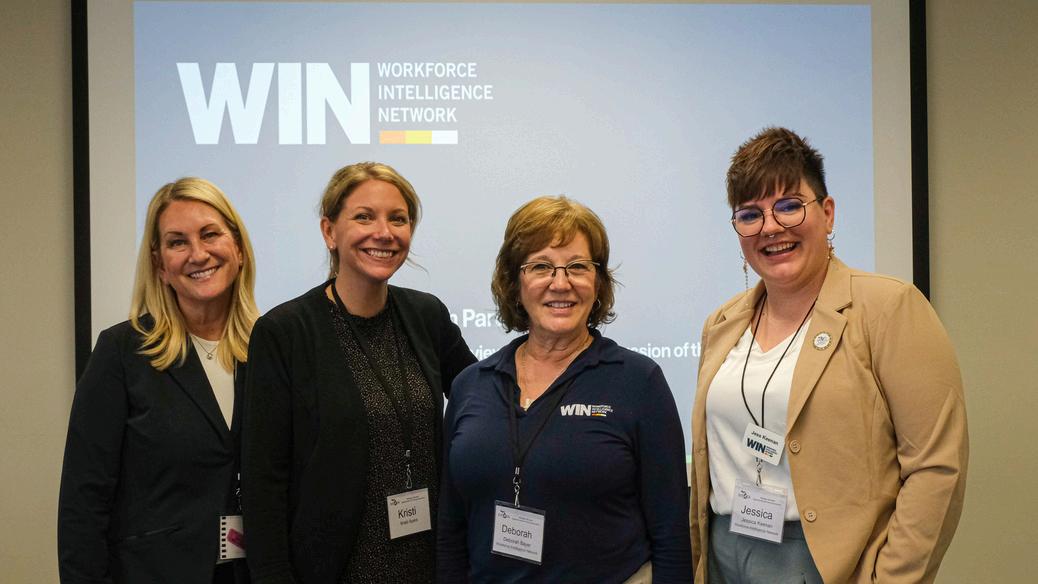
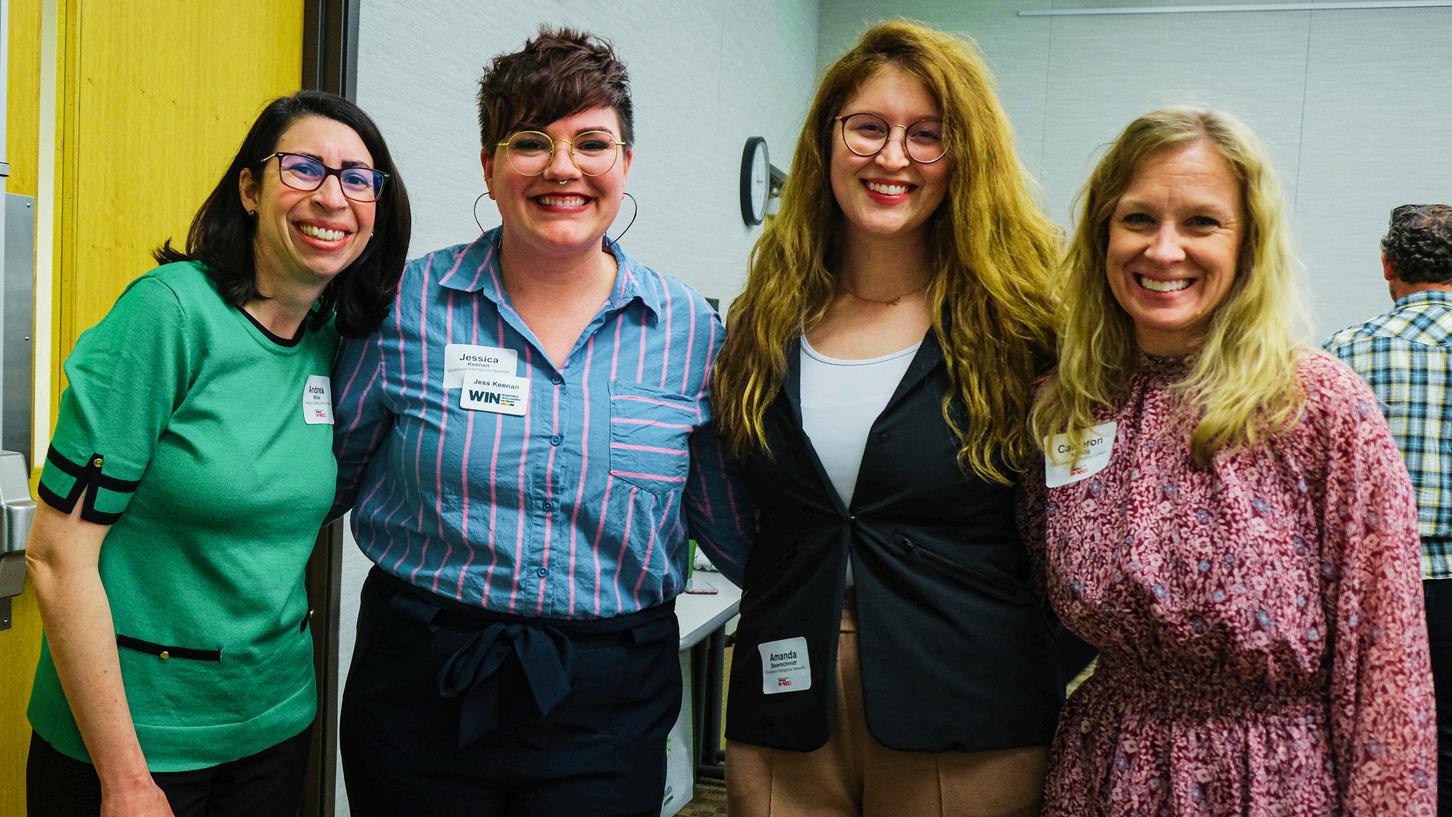
The Michigan Alliance for Greater Mobility Advancement (MAGMA), convened by WIN, continued to serve as a premier employer-led collaborative addressing workforce challenges across Michigan’s mobility and advanced manufacturing sectors.
In 2025, MAGMA brought together automotive OEMs, suppliers, educators, policymakers, and workforce leaders through quarterly Advisory Council meetings and strategic convenings focused on the future of work.
These sessions explored critical topics shaping the mobility ecosystem, including:
Artificial intelligence and emerging technologies, and their growing role in manufacturing and workforce transformation
Hydrogen innovation and clean energy workforce needs, including analysis of over 700 organizations supporting the hydrogen economy and identifying key skills gaps
Regulatory and policy trends, including Workforce Innovation and Opportunity Act (WIOA) updates and industry investment strategies impacting talent demand
Global economic and tariff impacts, and their implications for supply chains, job growth, and workforce planning
Through these engagements, MAGMA continues to function as a critical convening space for cross-sector collaboration, ensuring that workforce strategies remain aligned with rapidly evolving industry needs.
MAGMA also plays a key role in translating insights into action by:
Informing training program development and curriculum design
Supporting employer-led talent pipeline strategies
Connecting workforce, education, and industry partners to drive innovation
With participation from leading employers, educational institutions, and
JOHN KERR DENSO International
JAYME POWELL Detroit Regional Workforce Partnership
JOHN NASARZEWSKI Downriver Career Technical Consortium
ANN THOMPSON Ford Motor Company
TRACY DISANTO General Motors
DR. PATRICIA CHATMAN Henry Ford College
MEHRDAD HOSSEINI ZADEH Kettering University
TIM DEBASTOS LG Energy Solutions
BEN CRUZ & NELSON KELLY Macomb Community College
BRIAN EGGART & JOEL MAGUIRE Michigan Technological University
KEVIN CHEANEY Nissan
BEAU EVERITT Oakland Community College
JUSTIN ALLEN Robert Bosch, LLC
PAUL BOWSER Roush Performance
PEARL WALKER & STACEY ZUSY SAE International
FRANK ABKENAR Schoolcraft College
GREGORY PITONIAK SEMCA Michigan Works!
OLIVER GROSS Stellantis
KEVIN MEHREN State of Michigan Infrastructure Office
ADAM KARIBIAN & MEG WALLACE Toyota North America
ASHLEE BREITNER University of Michigan Economic Growth Institute
ALAN LECZ Washtenaw Community College
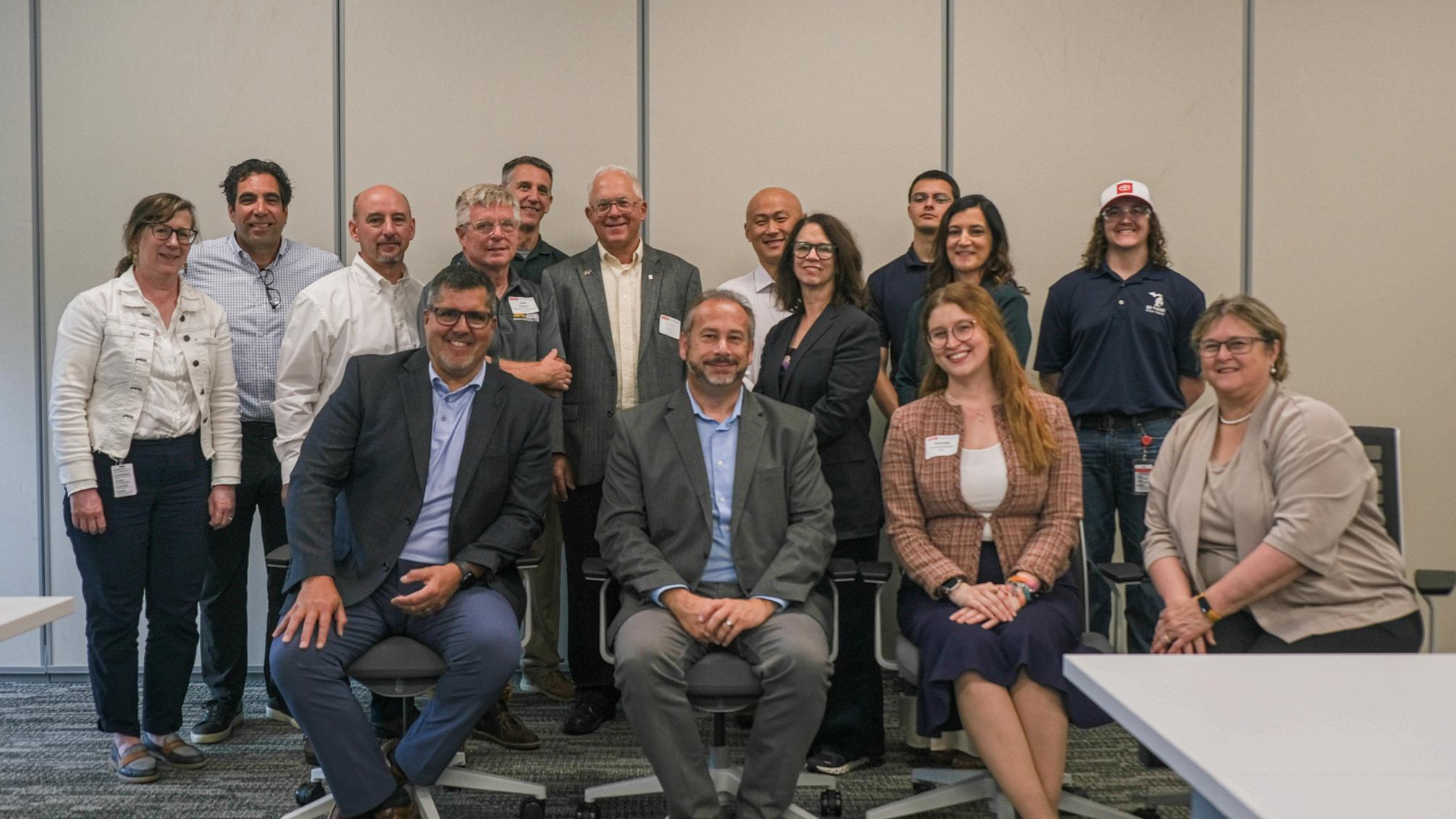
The Health Careers Alliance (HCA), convened by WIN, continued to address critical healthcare workforce shortages through a highly engaged, employerled collaborative bringing together providers, educators, and workforce partners across Southeast Michigan.
In 2025, HCA focused on advancing both incumbent worker strategies and talent pipeline development, aligning employer demand with education and training systems to meet the region’s most urgent healthcare workforce needs.
Key priorities and initiatives included:
Expansion of Registered Apprenticeships Programs (RAP) across highdemand healthcare occupations, including nursing (LPN, RN), surgical technologists, radiography, and optometric assistants, with new programs in development for respiratory therapists and medical laboratory technicians
Development of structured career pathways, supporting progression from entry-level roles (e.g., CNA, Medical Assistant) to advanced credentials (LPN, RN, BSN), improving retention and long-term career mobility
Strengthening employer-driven training models, emphasizing work-based learning, clinical experience, and alignment with credentialing requirements to ensure job readiness
Scaling innovative partnerships with community colleges and healthcare systems to modernize program delivery, expand access, and respond to employer feedback on curriculum and scheduling
HCA also continued to respond to critical labor market challenges, including persistent nursing shortages and high-demand occupations across healthcare systems. In Michigan alone, projected annual openings for registered nurses exceed 6,000, with a majority of counties designated as healthcare shortage areas.
Through the employer-led model, HCA translates industry input into action by:
Designing and launching apprenticeship and training programs
Informing education program development and delivery models
Expanding career pathway awareness and access, particularly for underserved populations
Leveraging state and federal funding to scale workforce solutions
With participation from major healthcare systems, workforce agencies, and education partners, HCA continues to serve as a critical driver of healthcare workforce innovation, strengthening talent pipelines while improving patient care outcomes across the region.
EMPLOYER
WORKFORCE AGENCIES AND STATE GOVERNMENT
INSTITUTIONS OF HIGHER EDUCATION AND K12 SCHOOL DISTRICTS
Apprenticeships in
Sincere gratitude is extended to employers, educators, workforce agencies, and community partners whose collaboration drives WIN’s success. Together, we are building a stronger workforce and a more resilient regional economy.
SEMCA Workforce Intelligence Network (WIN) is a nonprofit organization committed to workforce and economic development in Southeast Michigan. EIN #: 38-2675191
Be part of shaping the future workforce of Southeast Michigan. Learn more about research, programs, and initiatives at winintelligence.org.
+313.744.2946