THE WINE MERCHANT.
An independent magazine for independent retailers Issue 158, June 2026

Seven Cellars, which had huge public support in its battle against eviction, receives bad news about its planned move
Brighton independent Seven Cellars – whose battle against eviction by the Co-op became a cause célèbre in the Sussex city and on social media – has received a major setback in its plans to relocate.
Owner Louise Oliver was thwarted in her first attempt to find new premises by a landlord who later decided to try to sell the property rather than lease it. She then found an alternative unit in the Seven Dials neighbourhood, but that deal has now been scuppered by objections from a tenant in the flat above.
Oliver has spent many thousands of pounds on wasted legal and licensing fees as well as other costs associated with the planned relocations.
Although she has not yet given up hope of finding another Seven Dials site, the business will retrench to its much smaller store on June 26 when the Co-op takes back the keys.
“We’d exchanged draft leases, and I’d applied for the licence,” says Oliver, referring to the most recent saga.
“The plan was for it to be a wine shop and deli with a small ancillary wine bar. I’m a retailer, I love being a retailer – that’s always going to be my thing – but as we were going to be tripling our rent, I just needed to make sure that we had that extra revenue coming in.
“There were only going to be four
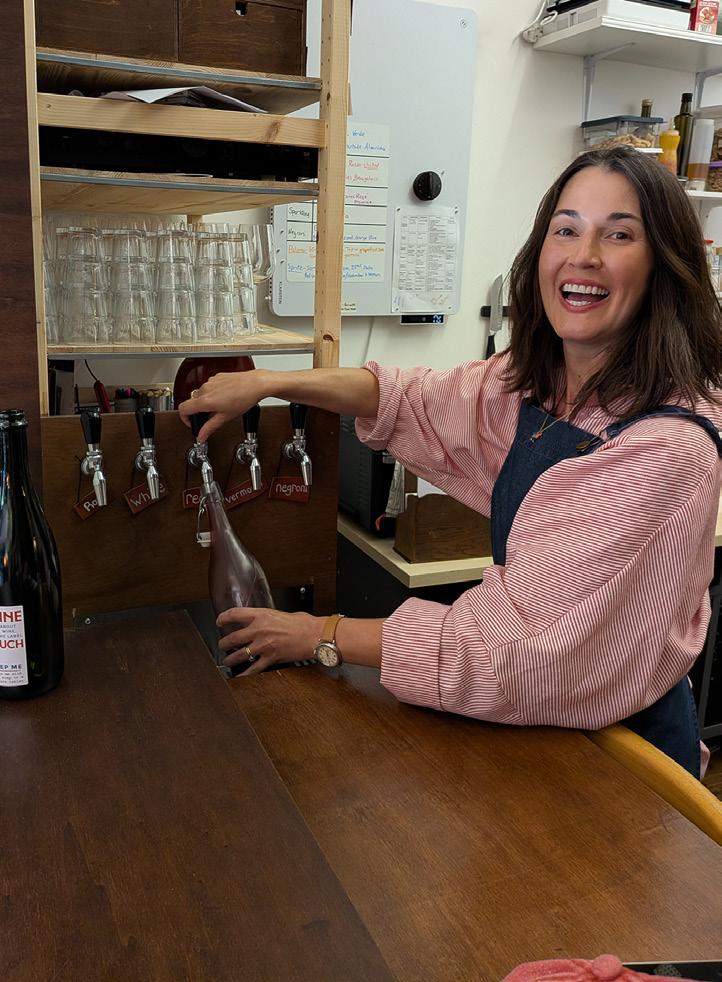
Steph DiCamillo, owner of Wine & Such in south east London, is one of several independent merchants who say offering wine on tap creates savings for their business as well as for their customers. Read how in our feature starting on page 48.
comings
Relocations for indies in Nottinghamshire and Suffolk
12 bright ideas
Picnic boxes are profitable sideline for a new Berkshire merchant
17 the burning question
How would you improve your store if money was no object?
24 merchant profile
We’re off to Hungerford to see what’s going on at GrapeSmith
39 Italian wines
Reds take much of the glory, but Italy has some world-class whites
48 wine on tap
Indies explain how dispense systems have become indispensible
52 rob hoult
Yes, times are tough in the on-trade. But do consumers need to know?
53 riesling panel tasting
We’ve got limes, we’ve got slate, we’ve even got a barbed plimsoll
63 Q&A
Mentzendorff boss Justin Liddle faces our ruthless interrogators
tables. But the second the guy who lives above found out that I’d put in for an on-licence he went absolutely apeshit. He lost sense of proportion and went around telling everyone I was opening a pub.”
Even with the support of the council and the local community, the tenant held all the cards because he was the previous owner of the building.
“He sold it in 2018 and wrote himself a new lease with lots of stipulations in there to protect himself,” says Oliver, “one of them being that no shop that comes into the unit can affect his happiness of living in his flat. The landlord lives in Monaco, and I get the feeling he doesn’t want any hassle, so whatever his tenant said to him caused him to lose faith in me and decide not to go ahead.”
The station site is performing well, Oliver reports, but she is determined not to abandon hope of maintaining a presence in Seven Dials – a popular part of Brighton with a village-type vibe.
“We have an incredible group of core customers there who love to support us, so I don’t want to leave.”
There is a slim chance of another unit, but Oliver is keeping that under her hat for now.
“We’re going to have a little goodbye party – the lady in the Portuguese deli next door is going to do the food and we’ll do
the wine and beers,” she says. “Hopefully I can just move down the road, but nothing is clear yet.”
On a more positive note, Oliver reports that the wholesale side of her business is flying. “It has more than doubled this year – it’s doing amazingly well,” she says.
“I’ve got the shop at the station and some temporary storage organised, so we’ll keep the website as it is and continue working with our customers.
“I’ve always said to myself that I’m not defined by my business: that if it failed, I’d be fine. What I’ve actually discovered is that I am defined by my business. I love it and I absolutely hate the thought of some little no-mark arsehole having some kind of influence over it.”
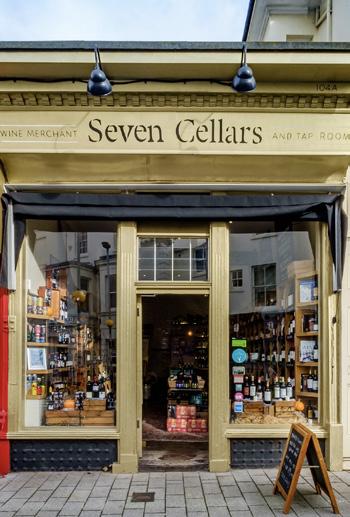
June 26 will be the last day of trading


Editor and Publisher: Graham Holter graham@winemerchantmag.com
Assistant Editor: Claire Harries claire@winemerchantmag.com
Reporter: Jacob Stokes jacob@winemerchantmag.com
Advertising: Sarah Hunnisett sarah@winemerchantmag.com
Accounts: Naomi Young naomi@winemerchantmag.com
Admin and reader liaison: Charlotte Gingell charlotte@winemerchantmag.com


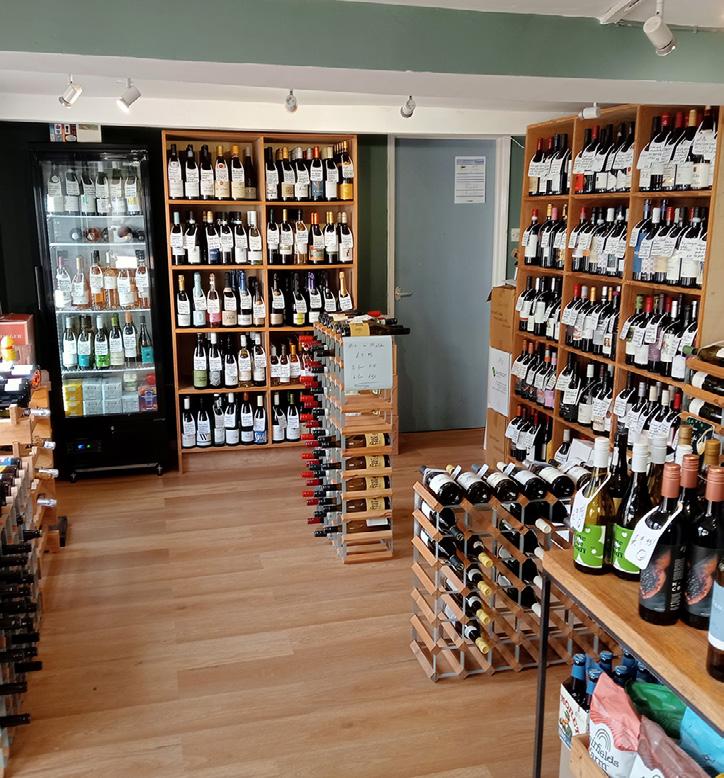
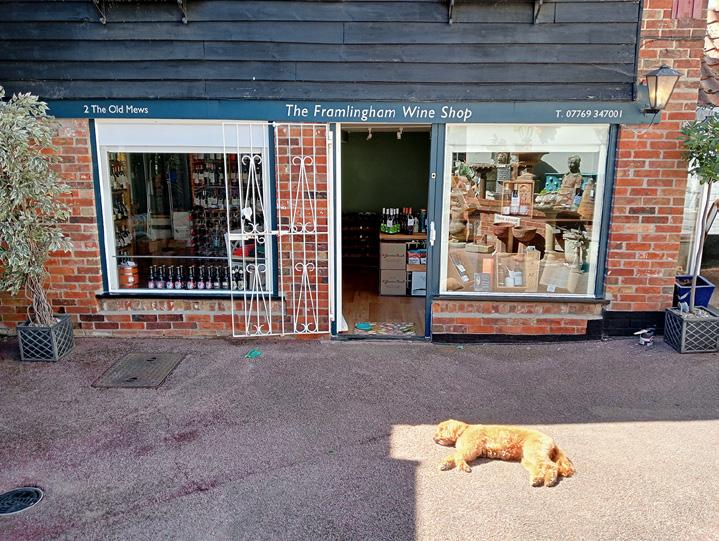
The Framlingham Wine Shop in Suffolk relocated last month. The new shop is smaller than the original premises where Richard Taylore established the business 12 years ago, but the central location is more than making up for that.
“I was a bit isolated where I was and it was getting very difficult to park, which wasn’t really convenient for my customers,” says Taylore.
“You’re always looking at what you can do but [a move] was becoming more pressing and it was just a case of right place, right time. Being more central has been a big improvement and the footfall has increased considerably.
“It’s smaller, but that actually works better because I was paying for space that I wasn’t using at the old shop. When you have a smaller space, you think a bit more carefully about how things fit, so it looks a lot better.
“I don’t think you need to hold on to a lot of stock in this game. You place your orders with your suppliers on a Tuesday and it arrives on a Wednesday, and then it goes over the weekend, so it’s a much leaner operation.”
Taylore’s new neighbours include a butcher and a deli – “people can do everything in one tiny little circle, it’s really convenient” – and, most importantly, a dog.
“It’s the neighbour’s dog,” he explains. “He seems to enjoy spending most of his time lying in the sun in this little courtyard, or on my front door, like a doormat. He just attracts people who want to give him a bit of fuss.”
• Stoke Newington independent The Little Wine Shop has expanded. The second store is just a couple of miles away in Chatsworth Road, Clapton, in the borough of Hackney.
“When


A monthly column from Alliance Wine/ H2Vin exploring practical, creative ways independents can sell smarter - covering everything from fine-wine offers to pricing tweaks and experiential events
Imagine: a customer walks in, chats for 20 minutes, buys several bottles of Burgundy, and leaves. You never see them again –not because they didn’t love it, but because you had no way to reach them.
The mailing list is one of retail’s oldest tricks, and it still works: email consistently outperforms social media at converting interest into a sale. Yet amid the day-to-day of running a shop, it sometimes slips down the priority list.
The real question is: are you capturing that data? Every customer who walks out without leaving an email is a conversation that ends at the door – someone you can’t invite back for the next tasting, tip off about an allocation, or remind when their favourite producer lands.
Once you have a mailing list in place, getting strategic doesn’t require much. A rough content calendar – a new arrival, a seasonal pick, a tasting invitation, once or twice a month – keeps your business front of mind. Don’t forget to periodically health-check your list: remove duplicates and contacts who haven’t opened anything in over a year, and check you’re following local data privacy laws.
Plenty of email platforms make scheduling and tracking straightforward, and the data they provide, such as open rates and click-throughs, helps tell you what your customers want.
The customer who bought that Burgundy? With one email, they could become a regular.
If you need any help with content, please contact me at Ned.Llewellyn@alliancewine. com.
Ned Llewellyn Alliance/H2Vin sales director – off-trade
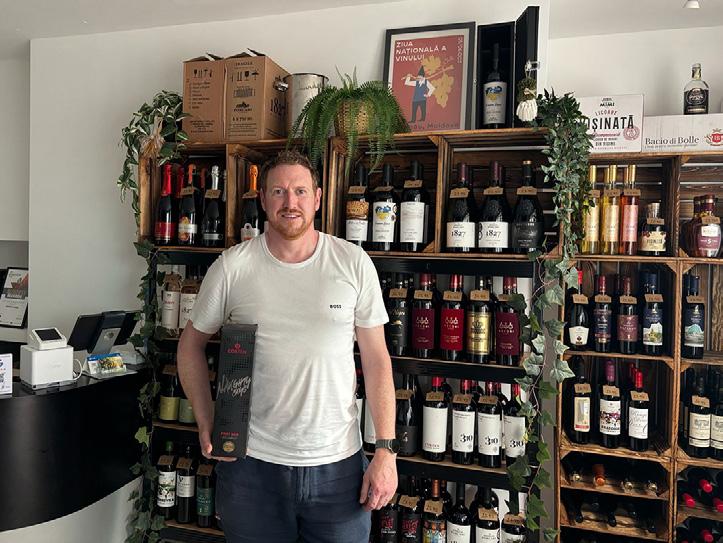
Nottinghamshire’s eastern European specialist, InKnotts, has relocated from Mansfield to Newark.
“You sort of evolve your plan as you go along,” says owner Martin Flowers, “so when we first started, it was mostly going to be with an emphasis on online sales.
“But it became apparent, especially with the regions and countries we represent, that a physical presence was key. It’s about people coming in and doing wine tasting events.
“We opened in Mansfield two years ago and it was convenient because it was near where we lived. We’ve got some very good customers but not enough to keep our business growing.
“Having done some wine tastings in Newark with local wine clubs, we saw a lot more interest and realised the area is much more aligned with what we do.”
The 100-strong wine range, some of
which is imported by Flowers directly from producers, comes from Georgia, Romania and Moldova.
“We’ve also got some Greek and North Macedonian and we’ve just got a new supplier from Bulgaria,” he adds.
“We’re going to do a little bit of Hungary and some Lebanese wine, so we’re trying to keep it really around the Black Sea and Balkans region of Europe.”
Situated in the heart of a “strong independent quarter” on Chain Lane, with plenty of bars, restaurants and other independent businesses, the new premises will welcome up to 16 people at a time for tasting events.
• Plans for a new wine shop called The Wine Flight in Graham Road, Malvern, are being considered by Malvern Hills district council. Proposals submitted by Katherine Thomas say that wine would be sold in wine flights or by the glass as well as by the bottle for consumption off the premises. Opening hours are suggested to be 12pm to 8pm Monday to Saturday, and 12pm to 4pm on Sundays.



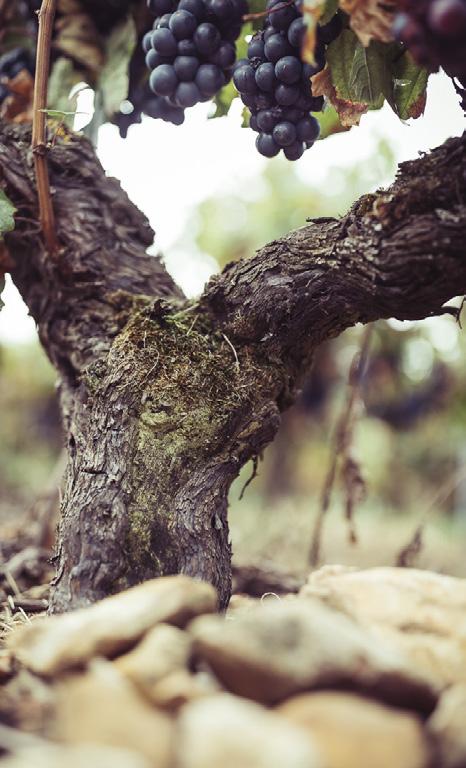


Domaine Romy is a 25ha property located in the premium Beaujolais area known as ‘Les Pierres Dorées’, named after the golden-coloured granite stones found in the vineyards.
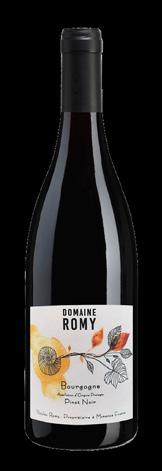
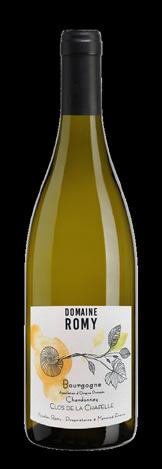
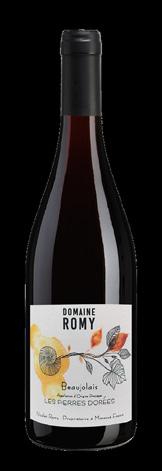
A family estate dating back to the 1700s, Domaine Romy follows a natural, hands-off approach to viticulture, creating wines that express the terroir. Certified Terra Vitis, the domaine works with sustainable practices to produce healthy, ripe fruit full of flavour.
ROMY, OWNER
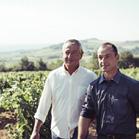
Three wines available in the range: Bourgogne Chardonnay ‘Clos de la Chapelle’, Beaujolais ‘Les Pierres Dorées’, Bourgogne Pinot Noir ‘Les Pierres Dorées’
7 Contact Hatch Mansfield, the exclusive UK importer of Domaine Romy wines. info@hatch.co.uk | hatchmansfield.com


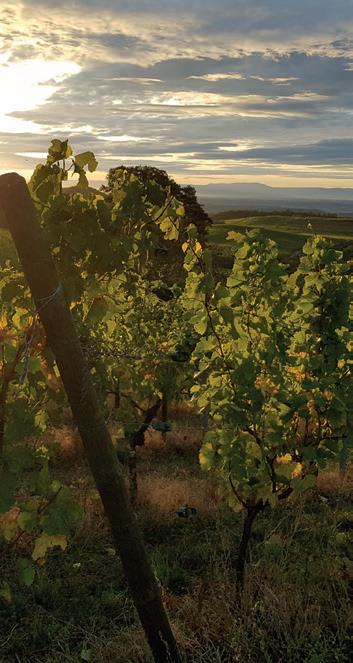
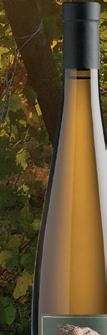
A perfect expression of the terroirs of the Rhine basin.
The estate, which practises organic viticulture, features the only vineyard planted on blue Alsatian shale. From its Alsace vineyards, three Sélections Parcellaires are produced.
Lieu-Dit Berg 2021, at higher elevation, balances mineral finesse with stone and citrus fruit notes.
Lieu-Dit Buehl 2021, planted on the same blue shale as Berg, is the most exuberant of the trio, with exotic fruit and a touch of salinity.
Lieu-Dit Fels 2021, is a racy, mineral wine with stony minerality and citrus notes. Intense yet elegant.
All three wines demonstrate Riesling’s nobility and the potential of this unique terroir.













VinVan Cymru in Cardiff closed at the end of March.
The business began life as an online retailer and events company with a focus on Welsh wine. Owner Sara Hobday opened her first shop in Newport in 2022, later relocating to the Welsh capital. But she has recently found the events side of the business, and the inevitable unsociable hours, to be incompatible with a young family.
“I was seeing less and less of my daughter, particularly on weekends, and I don’t want to miss out while she’s at the age of thinking I’m the best human in the world!” Hobday says.
“I’ve already started a new job heading events at a local mental health charity, so I’m still doing what I love: creating fun, memorable experiences, just without the alcohol.
“In all honesty, I’m really enjoying having a steady nine to five with holiday pay and sick pay, knowing exactly how much money
Beau Constantia
is coming in every month and not having to wear all the hats. It’s funny how working for yourself for so long can make you appreciate such basic things.”
It’s not goodbye to the wine trade forever, though, as Hobday’s heart still beats for the Welsh wine industry.
“I’ll definitely still host wine tastings in the future,” she says, “and I want to actively support the Welsh wine industry through my podcast @uncorkedwelshwine.”
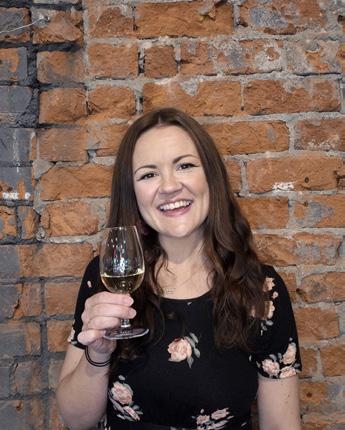
will “definitely host wine tastings” in the future
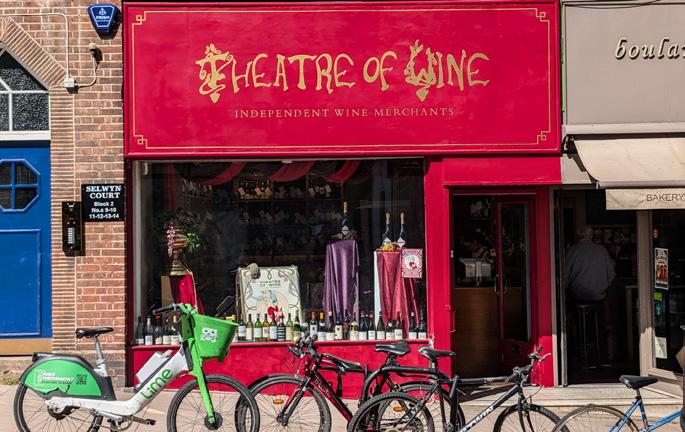

never sold to them, and we never will
I just wanted to respond to a great pair of articles in last month’s Wine Merchant magazine, calling out WineDrops’ disingenuous marketing practices.
It was a fantastic read, and echoes my thoughts when WineDrops’ spurious and misleading content appears in my social feeds. The biggest frustration I have is seeing Tignanello (solely imported by Berkmann) used to promote WineDrops’ own “Super Tuscan”, which they purport to be worthy of the same reverence … while costing under £10 per bottle.
I’d like to give your readers (our customers) complete assurance that, contrary to the contention that Tignanello is “most certainly bought through UK agents”, Berkmann have never sold WineDrops a bottle, and I’ve personally given direction that we must never do so. The 2019 (we’re now on 2023) shown on WineDrops’ website was likely bought by them on the open market, via a broker, following import by us, which tells you everything about their “cutting out the middle-men” claims – in the case of Tig, there must be at least two “middle-men”, not one (or none, as goes their claim).
The articles were an excellent piece of calling-out, which deserve to be in a more public forum for consumers, not just merchants.
David Kelly Head of sales –independent specialists off-trade Berkmann Wine Cellars
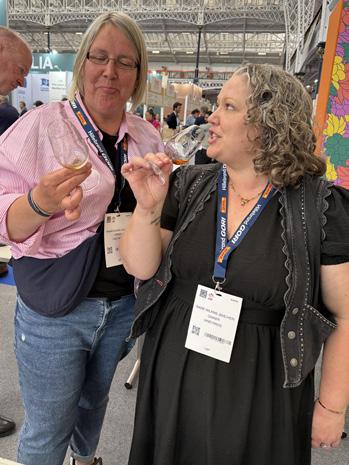
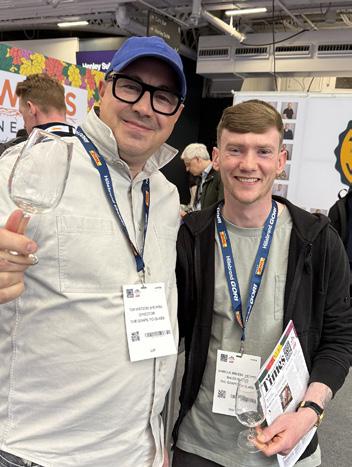
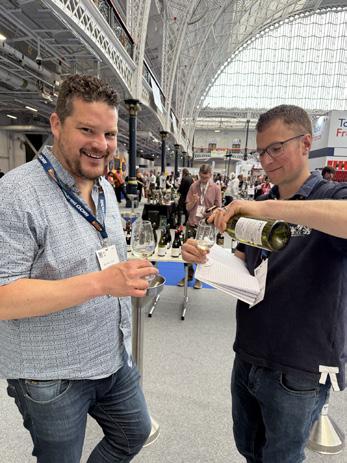
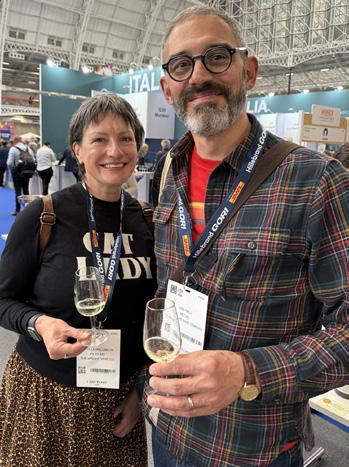

Thanks to the many independent merchants who stopped by at The Wine Merchant Top 100 stand at last month's London Wine Fair.
Some of them are pictured here. From left to right, top to bottom, they are:
Hannah and Sadie Wilkins, Vineyards, Sherborne; Stella Mallinson and Les Hall, The Wright Wine Co, Skipton; Tim Watson and Marcus Breese, The Grape to Glass, Rhos on Sea; Norman Gover, The Little Tipple, Bristol; and Michael Jelley and Graeme Woodward, Grape Minds, Oxfordshire.
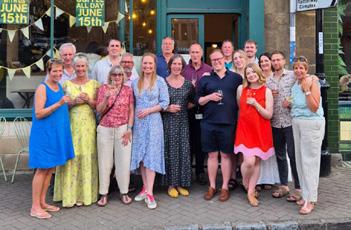
The Amps name has been synonymous with retail in Oundle since the first shop was opened by John Amps in 1901. One hundred and 25 years later, his great-grandson, Philip, continues to run the family business, which under his stewardship has veered away from grocery and provisions to focus entirely on wine.
Rather than the more formal event the business organised to mark its centenary, Philip was relieved that this time the celebrations were more of a family affair.
“Last time we did a big sort of gala lunch and we invited all of our customers and producers who’d worked with the family over the years,” he says. “But you won’t believe how many people you accidentally upset, and I just wasn’t going to do that again.

“This time we did something very different. We just had the staff and their partners coming and we had a Champagne tasting. The last generation was my father and his brother, and so their children and grandchildren were also invited. It was very informal, very relaxed and we drank some nice wines.”
Reaching this milestone doesn’t mean the business is standing still, and a significant change is already in motion. Before the party in May, there was the closure of the Oundle Wharf store which, not having storage space and coming to the end of its lease, was let go in favour of a potential new site.
“We are now
seeking a new purpose-built warehouse with an onsite retail shop, preferably in Oundle,” Philip says.
As for the next generation, Philip doesn’t want to assume that either of his children will follow in his footsteps.
“I wasn’t allowed to go to university; my father said ‘no, I need you to come into the business now,’ so I begrudgingly came. I don’t regret it, it worked for me, but I have made the decision that both my children go out and explore and come back if they want to. Also, our industry has changed. In the olden days you could make money. Today it is so difficult.”
Over four decades as a wine merchant, it is the face-to-face interactions that Philip continues to treasure, and he prefers to be hands-on.
“Danielle [Freer] left us just after Christmas,” he says, “so I’ve been covering her roles, and I’ve so enjoyed being in the shop on Saturdays because you actually get to talk to customers and get them enthused about wines.

“If you’re not careful you end up just running the business rather than doing what I enjoy doing, which is actually going out, talking to people and selling products, buying products, listening to producers talk about how they’re making their wines, and what they’re doing in the vineyards. That’s the exciting part.”

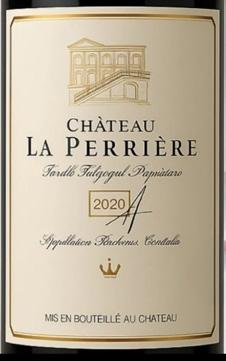
WineDrops customers will doubtless be excited to learn that they can buy a bundle of six Bordeaux Superieur wines for £59.99 instead of £180. But what exactly is this wine? Let’s zoom in on the label.
It’s “Chàteau” La Perrière, and if there was any doubt about its quality it might not be dispelled by the claim “mis en bouteillé au chateau”. But let’s not get sniffy about missing or incorrectlydeployed accents. Let’s instead focus on the other wording on the label, in a script typeface that is hard to read on screen but almost certainly gibberish in its printed form.
“Fardló Futgogul Papriataro” is our best guess for the subtitle. Then, under the vintage date, we have something resembling “Sjopdlation Rackenis Condalia”, though frankly the letters are so mangled by AI that it’s hard to be sure.
“This won’t last long,” declares the accompanying social media post. Plenty of people in the UK wine trade are certainly hoping not.
Three cheers for Jamie Tonkin of Old Chapel Cellars in Truro, who picked up the General Excellence in Wine Buying Award at the London Wine Fair. He clearly wasn’t expecting victory: we last saw him crouched on the Olympia floor, desperately trying to squeeze his framed certificate into a very small and already bulging backpack. It was like watching a cobra swallowing a deer. Jamie was heading back to Cornwall on the sleeper train. Presumably the award ended up perched beside his couchette as a reminder of his win.

In a nutshell: A more sustainable, but stylish, picnic option for spontaneous summer adventures. The box is complimentary with a purchase of £25 or more.
Tell us more.
“When we were looking ahead to the better weather and what that meant for customers, we thought of picnicking.
“People might have their own baskets and everything with them, which is fantastic, but for more of a spur-ofthe-moment thing we wanted to create something that was single-use. As sustainability is one of our key values, I did a lot of research to find the right box and contents.
“We wanted to capture that picnic experience and make it a bit special. I found these boxes at WBC. They come in three different sizes and we’re stocking the middle one, because it’s the same length as a bottle of wine. It’s 100% reusable and recyclable and we’ve included that in the messaging on our website.”
Do you add your own branding?
“Asking a company to brand it for you makes sense if you’re buying in huge quantities, but for us, just starting out, we’ve got an old-school ink stamp with our logo on it. We’ve been stamping and branding the picnic boxes and all our existing stuff. It means we can change it

seasonally if we want to.
“We love that the boxes are flat packed, so they don’t take up nearly as much room as traditional picnic hampers.”
This brings the wine and the provisions part of your shop together nicely. Tell us about the contents customers can opt to buy for their boxes.
“This is where we had to divert slightly from the sustainability angle. For example, a lot of the staple provisions that we have are in glass jars because they are easily recyclable. However, picnicking is more about convenience, and people might dispose of everything afterwards, so we’ve
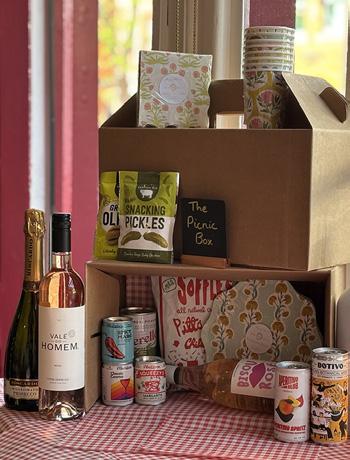
adapted our provisions range with this in mind. There’s obviously crisps, olives and crackers and all that kind of stuff.
We’ve found pouches of things, and we discovered another independent business that provides shelf-stable charcuterie, so we stock that too.
“For people doing it on the fly, we’ve got paper cups, napkins and plates. We also stock insulated stainless steel travel wine bottles, which will keep wine cold for 12 hours. Our fridges are fully stocked so it’s easy if people want to decant their white or rosé into one of those.”
You’ve also provided suggestions of local picnic spots …
“A lot of the people that we serve at the moment are locals, so everyone knows where everything is, but we are coming into tourist season in Windsor. With so many massive events such as the Royal Windsor Horse Show, the flower show, the dog show, and the second year of Windsor & Eton Pride coming this summer, there are massive opportunities for tourists to come in, so we wanted to be clear in our messaging. They can pick up this lovely picnic box and fill it to the brim with icecold wine, cocktails, beers, soft drinks and snacks – everything! The map is a gentle way to help them navigate the town, whether they want a quiet riverside picnic or they’re doing something a bit more touristy.”
Charlotte wins a WBC gift box containing some premium drinks and a box of chocolates.
Tell us about a bright idea that’s worked for you and you too could win a prize.
Email claire@winemerchantmag.com
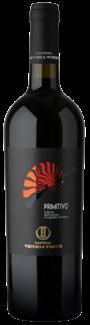
A simple, unpretentious co-operative wine that could do a useful job on an indie wine list. It’s a bright and cheerful style of Primitivo, not aggressively sweet; the fruit is ripe but winemaker Ennio Cagnazzo hasn’t forgotten to maintain a little zip. Smooth and plummy, with some careful oak underpinning.
RRP: £15-£16 ABV: 13.5%
Barton Brownsdon & Sadler (01403 710100) bbswine.com TRIED & TESTED
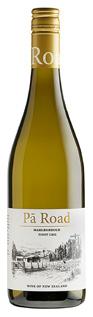
A 5% Gewurztraminer component was field-blended in during harvest and you have to assume it’s worked some Marlborough magic. The exact aromatics slightly eluded us in the bustle of the London Wine Fair but the honeysuckle and orange blossom promised in the tech sheet seem probable. A textural delight on the palate, with hints of honey and white pepper.
RRP: £16.50 ABV: 13.5%
Schenk Family Wines (01753 521 336) schenkfamily-wine.co.uk
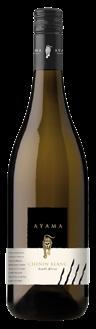
We tend to find something to love in pretty much every Cape Chenin we taste, so we have to be careful not to damn with faint praise. This Paarl iteration, fermented in stainless steel after 24 hours on its skins, has some subtle tropical squelch and a lovely oily texture, with some mineral salinity rising to the fore as you take it all in. Very happy with this.
RRP: £18-£19 ABV: 14%
DellaVita Wines (0161 908 1300) dellavitawines.com
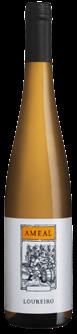
Loureiro, originating in Vinho Verde’s Lima subregion, where this wine is made, is said to have great potential for ageing. But when the wines are as vivacious and ready-to-go as this, you wonder why you’d be so patient. Extended time on fine lees puts some extra depth behind the stone fruit and citrus flavours. Fixed penalties for anyone who drinks it indoors.
RRP: £16.80 ABV: 12%
Hatch Mansfield (01344 871800) hatchmansfield.com
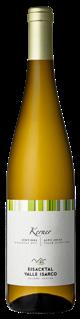
Kerner, that often overlooked German crossing of Trollinger and Riesling, is not found in vast quantities in Alto Adige. But this artisanal co-operative has access to some of what little there is, and a cracking job they’ve done with it. It’s as pure and bracing as the mountain air, with a steely sort of peachiness.
RRP: £19.95 ABV: 13.5%
Delibo Wine Agencies (07802 405627) delibo.co.uk
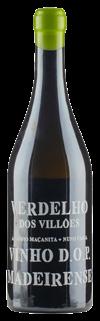
This absolute ripper from Madeira’s northern coast is proof of the island’s dry wine credentials. Its seething acidity races through the palate like a lunatic, pushing past the cascade of lime, salt, smoke and sea in its path. Such an appealing style of wine with a precision and persistence that punches way above its ABV.
RRP: £38 ABV: 12%
Indigo Wine (020 7733 8391) indigowine.co.uk
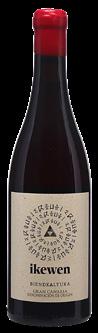
Ikewen hails from the phylloxera-free picón soils of Gran Canaria’s hight point. A blend of Listán Negro, Listán Prieto and local whites from old ungrafted vines above the cloud line, it’s a total heart throb. Like some sort of nomadic Nebbiolo descendent, there’s dried cranberries, scorched violets and iodine with a herbal amaro bitterness.
RRP: £32 ABV: 12.5% Indigo Wine (020 7733 8391) indigowine.co.uk
Gary Jordan splits his time between Stellenbosch and East Sussex. Although fanatical about making wines with a sense of place that express their terroir, he’s used some old barrels from Jordan Estate Nine Yards Chardonnay here, and they seem to add a warm Cape richness to the racier English style. It’s a winning mix.
RRP: £39.99 ABV: 12%
Awin Barratt Siegel (01780 755810) abs.wine

Thirty-five emails later and after battles with AI, I think I have a card machine

Ijust spent 30 minutes talking to a charming American lady while trying to sort out my new card machine. It was only when she said “that’s great!” and “take your time and let me know when you are ready” for the tenth time that it dawned on me that she wasn’t real.
I’m quite happy talking to AI if they can resolve the issue. This one couldn’t. I got moved suddenly to a male voice asking me to rate my experience before cutting me off. Not to be deterred, I rang back and Ms AI and I picked up where we had left off.
The issue I had was that I had been
migrated from UTP/Barclaycard Card Services to MyPOS as MyPOS had bought out UTP and stopped their relationship with Barclaycard. Normally money taken by card would appear in my bank the next
The machine does loads of stuff I’ll never need like taking payments in 52 currencies and playing a jig when someone uses Mastercard
day and I would get a bill the following month for the commission charges. The nice (real) person who initially contacted me had explained that the money would sit in a MyPOS wallet and I could do with it what I wished. I wished it to go straight into my long-standing business bank account. That apparently was fine and easy. It bloody wasn’t.
The AI lady told me I couldn’t use the app I had been obliged to download and would need to log in to the website. She waited while I did that and held my hand while we navigated to the bit where I could move my money.
“How much do you want move?”
“Well, all of it, every day.”
“I’m sorry Dave, I’m afraid I can’t do that.”
As the crew of Discovery One discovered in 2001, you can’t argue with a computer. She told me I needed to talk to a human and put me through to one – eventually.
The human told me I could do it via the app. And we set about setting it up. That took another hour. I had to go into the “send money” option. I had no money in my “wallet” to send so before we could start I put a pound on my debit card. I could now go to advanced options and ask it to transfer the full balance, daily at 20:00 hours starting tomorrow.
Oh, you have to put an end date. What? OK, let’s set that sometime in 2028. Apparently not. Anything after December 31, 2026 is greyed out. So now all the money should be transferred daily into my regular bank account until the end of the year, when I will have to remember to set it up for another year.
We were almost there but it still wasn’t letting me complete the task. Ah, I hadn’t filled in the amount I wanted to transfer even though I had ticked the “all of it” box. I filled that in. Oh, apparently the amount can’t be less that a pound. Although I had put a pound on my card my “wallet” only had 97p in it because they had taken their 3p transaction fee off it.
I put another pound on my card, closed the app and then opened it again and went through the whole procedure again until
it let me click to the next screen and give them my bank details. Well phew! All ready and set up to go. Well not quite.
While I was taking a breather the phone rang. It was an old boy who can no longer drive. He lives in a remote place and I am happy to deliver to him (it won’t be for ever!) He pays by card over the phone. Not an issue as today I am still using my old machine. Looking at the new machine it wasn’t obvious how to do it.
Luckily someone from the help desk rang to answer my query about when the old machine might stop working, so I sidestepped my AI friend.
“How do I take phone payments?”
“You don’t.”
He agreed to send me a form to fill in which he would send off for approval. The form was arduous. It required my “366” and “MCC” number, which of course I had to ask them for. I had to ask what a “billing descriptor” was. Apparently it is what shows up on a customer’s statement. I had no idea what shows up on a customer’s statement but remembered I’d been a twopound customer recently so it showed on my banking app.
The following morning my application to be able to take payment by phone was approved. I got an email telling me to log on to my account, go to POS Devices and click MO/TO virtual terminal. I followed that and found a page where I could enter a customer’s details. At the end of the email it said to make sure to grant employees access via the Teams menu. I found it via Google AI rather than spending another hour on the phone. I’ll let Alice sort that one out.
The new machine is as sleek and white and cool as Zaphod Beeblebrox’s Heart of Gold. It does loads of extra stuff I will never need like taking payments in 52 currencies and playing a jig when someone uses Mastercard.
It took 35 emails to authorise me to have the bloody thing in the first place. I’m sure my old provider didn’t need to see a photograph of the back of my wife’s driving licence. This one did.
David Perry is the owner of Shaftesbury Wines in Dorset
If money was no object, what changes would you make to your premises?

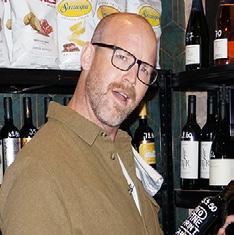

�If money was no object I would hire loads more staff. It is so prohibitively expensive to employ people that we have to operate on skeleton crews, asking more and more of good people and cutting corners we wish we didn’t need to, just to operate at as small a loss as possible. If I had limitless money I’d hire a bunch of young wine lovers, give them the chance to learn all about this great product and cultural touchpoint that we call wine, and pass that on to our customers.”
Tom Sneesby * Champagne winner *
Whole Bunch Wines,
Manchester
�To be honest regardless of money there’s not much we can do, as we have no capacity to expand the premises. However, I love to spend my time outside people watching and so if I could, I would create a little area for a few tables and chairs out the front.”
Dan Steggles
Claret & Brew, Manningtree, Essex




�I’d transform The Uppingham Cellar into an intimate destination for private wine experiences. The heart of it would be our converted cellar space. I’d focus on creating something immersive and personal, with a strong emphasis on storytelling, discovery and hospitality. Think relaxed luxury: soft lighting, wood panelling, leather seating, great glassware, artisan cheeses and charcuterie, and the feeling of stumbling across a hidden wine bar in Beaune or Porto.”
Charles Pilcher
The Uppingham Cellar, Leicestershire
�If I could change anything currently it would be to get a few sets of new tables and chairs. After six years the ones we have could do with a refresh for sure. I have my eye on some in fact. Customers being very comfortable is certainly part of the service that we want to offer at Kork, and new tables and chairs would improve their experience instantly.”
Shawn Darling-Cooper Kork Wine & Deli, Whitley Bay

The oldest wine house in Champagne: Äy 1584

Mouse & Grape has attracted much industry recognition since it opened just 18 months ago.
Owner Jessica Summer says that Sinéad has played a pivotal role in this success.
“Sinéad was my first hire and has been instrumental in building Mouse & Grape into the business it is today,” she says.
“She has taken on an exceptional level of responsibility from a young age, helping shape both the operational and customerfacing side of the business, particularly within our wine offering.”
In addition to Sinéad’s operational responsibilities she regularly hosts the in-house wine and cheese tastings and events.
“She confidently guides customers through regions, styles, and pairings in an approachable and engaging way,” says Jessica.
“She has played a huge role in developing our team culture, mentoring staff and creating an environment where people feel supported and valued. For someone so early in their career, she already demonstrates the leadership qualities and commercial awareness of someone much further along in the industry.”
“I really missed the customer-facing and the sales side, so I trained as a barista,” she says. This move eventually lead her to managing the flagship store for Bird & Blend Tea Co, which is where she was working when she spotted Mouse & Grape.
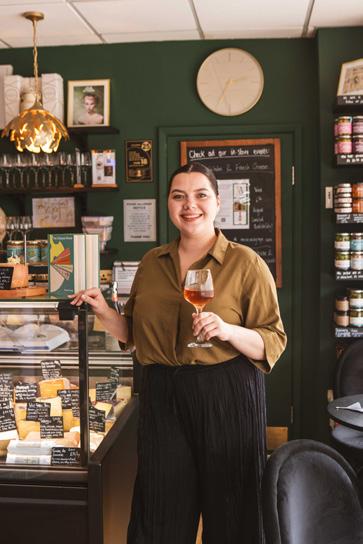
“As a date night idea, my partner had shown me Jessica’s Instagram post saying there was a wine bar coming to our area,” says Sinéad.
“I messaged Jessica on LinkedIn straight away. I quit my job and started working with her within two weeks and then a month later, we opened the store together.
“It’s a joy to work here. No day is the same, and there are always things that we’re exploring such as new products, menus, events and community initiatives because we’re continually trying to be such a unique business.
“I think Jess’s passion for wine and cheese and my passion for what the hospitality industry can offer to people, not only as a career but also to the local high street, means we’re just really fuelled to make this the best it can be.”
Sinéad knows that an indie’s superpower lies in the experience it can provide.
After leaving university Sinéad took what she describes as a “filler job” working part-time in a tap room and craft beer shop. “I ended up falling in love with hospitality and beer,” she says. A subsequent role at Lucky Saint – where she “helped build their B Corp handbook” – made her realise that she wanted to get back to hospitality.
“People say the high street is dead, but it’s actually not true,” she says. “It’s just the consumer has changed.
People want a more memorable experience.
“They go back to places because of the customer service, because of the passion and because of the intention behind the products. Brand ethos is more important now than it was 10 or 15 years ago.”
Sinéad wins a bottle of Champagne Devaux Cuvée D courtesy of Liberty Wines
If you’d like to nominate a Rising Star, email claire@winemerchantmag.com
Photo: Laura Jalbert
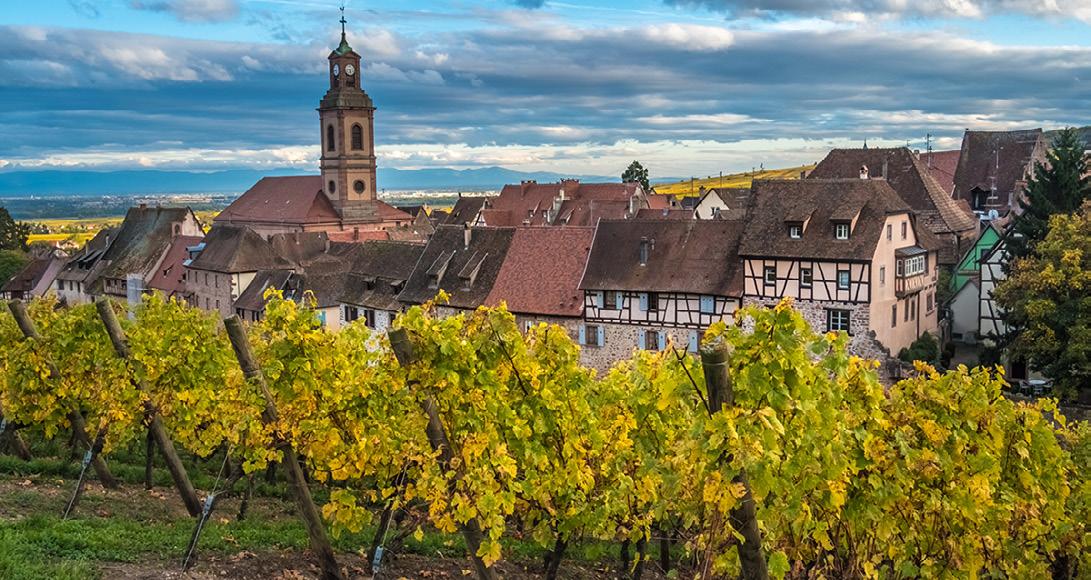
Alsace has no shortage of white varieties with which to express its distinctive terroir. These wines are undoubtedly world class. But the region also has a loyal following for its red wines, made from Pinot Noir.
This isn’t a new development – in fact the first Pinot was planted in Alsace as long ago as the Middle Ages. But with so much focus on white styles, it often comes as a pleasant surprise for consumers when they discover this lessfamiliar Alsatian offering.
Red wine production in Alsace is divided into two categories. Pinot Noir d’Alsace Rouge Léger, the lighter, paler style, typically has notes of redcurrants or raspberries and rarely sees oak. Served chilled, it’s a wonderfully delicate and refreshing wine.
The style most likely to be found in the UK is Pinot Noir d’Alsace Rouge, which has a deeper red colour, often with garnet glints. On the nose, expect delicious aromas of black fruits as well as leather or vanilla notes; on the palate, tannins are typically silky, adding structure to long and harmonious wines with lively wild-berry fruitiness.
Alsace’s continental climate suits Pinot Noir, and it often performs particularly well in areas where there’s a clay component to the soil (this helps stretch out the ripening period, adding welcome acidity to the grapes). Unusually, Alsace’s granite soils suit the variety too, radiating heat at night, draining efficiently, and adding a delicate spicy note as well as finesse.
Warming temperatures have persuaded more vignerons to work with Pinot Noir, and now the variety accounts for around 11% of Alsace’s vineyard area. It’s a figure that looks likely to increase as the wines win more and more international plaudits – both for the quality in the glass and for the value for money they represent.
Pinot Noir d’Alsace Rosé
Rosé wines from Alsace are another avenue for consumers to explore – and these too are made from Pinot Noir. Typically pale salmon in colour, these crisp, gently fruity wines are versatile with food and perfect for al fresco summer drinking.
Crémant d’Alsace has become one of the region’s biggest success stories. Indeed this traditionalmethod sparkling style now accounts for around 40% of Alsace AOC production, such is its popularity.
Now celebrating 50 years as an AOC, Crémant d’Alsace is outsold only by Champagne in the sparkling category, with annual production as high as 48 million bottles.
Brut wines are usually blends, with Pinot Blanc and Auxerrois typically providing the backbone of the cuvée with their moderate acidity and soft fruity character. Other varieties in the mix include Pinot Gris, Pinot Noir, Riesling and Chardonnay. The brut style is fresh and approachable, often with a crisp orchard-fruit character on the palate.
At a more premium level, look out for singlevarietal wines. These might be made with Riesling (which offers keen acidity and attractive mineral notes), or Pinot Gris and Chardonnay (which can deliver fuller, richer styles).
There are some interesting Crémants d’Alsace made with lower dosage and extended lees ageing, and these wines are appreciated for their complexity and gastronomic potential. Look out too for terroir-driven wines, which can take the style in some unexpected directions.
Crémant Rosé d’Alsace
Because Pinot Noir ripens reliably in Alsace and retains its acidity, it’s no surprise that rosé styles of the region’s crémant have wowed consumers and critics alike. Like the still wines, these are typically pale pink in colour, with red berries on the nose and a fresh, elegant but structured palate.
Alsace’s Grand Crus are closely tied to specific vineyard sites, many of them small, geologically complex, and quite distinct from one another.
The classification system itself developed gradually: between 1975 and 2007, 51 sites were officially recognised as Grands Crus, with vineyard areas ranging from as little as three hectares up to around 80.
From the outset, the category came with stricter production rules than standard Alsace AOC wines: lower yields, higher planting densities and tighter controls in the vineyard. Since then, individual Grand Cru sites have been given more scope to define their own regulations, reflecting the growing emphasis on site identity.
In 2011, the single Alsace Grand Cru AOC effectively split into 51 separate appellations, each linked to a named vineyard. It marked a broader move towards recognising the individuality of the region’s best-known sites.
Growers have increasingly focused on farming practices aimed at preserving soil health and vineyard biodiversity, whether through organic, biodynamic or lower-intervention approaches.
The Grand Cru rules permit four main grape varieties: Riesling, Muscat, Pinot Gris and Gewurztraminer, with Sylvaner allowed in Zotzenberg under a specific exemption. In practice, though, the conversation around Alsace Grand Cru tends to centre more on terroir than varietal character alone.
You still see the classic markers of each grape – Riesling’s acidity and precision, Gewurztraminer’s aromatics, Pinot Gris’ breadth, Muscat’s floral lift – but the best sites often show a strong mineral or structural identity that can trump varietal differences. Depending on the vineyard, that might come through as saline tension, smoky mineral notes, texture, breadth or a particular kind of acidity. Three Grands Crus – Kirchberg de Barr, Hengst and Vorbourg – are devoted to Pinot Noir.
A couple of sites, notably Altenberg de Bergheim and Kaefferkopf, still allow the coplantation of different grape varieties, reflecting older Alsatian traditions that predate modern ideas of varietal labelling.
Many of these wines are built with ageing in mind. Producers will often talk about the time needed both in the vineyard – where older vines are seen as key to expressing the deeper soils and geology – and in bottle, where the wines can evolve slowly over many years.
Once again, 15 indies are being offered bursaries which they can use in any way they see fit to help boost sales of Alsace wines. No bunting, no corkscrews, no nonsense: just helpful cash to allow merchants to make their own decisions and tap into the creativity of their teams. Digital assets (including logos and photography) will be supplied.
Each approved participating merchant will be awarded £300, allowing them to put in place a promotional strategy that best suits their customer base and business model. Retailers are free to list any AOC Alsace wines (Vin de France is not included).
To be considered for the bursary, you must:
• Have very few, or no Alsace wines currently on your shelves.
• Commit to providing full details, along with photographic evidence, of the new Alsace wines in store. (No existing Alsace wines should be delisted!)
• Provide evidence of any promotional activity, such as window displays, in-store activities, posters/flyers, etc – the more the merrier. Digital marketing such as social posts, blog posts and email should also be considered as part of the promotional mix.

#DrinkAlsace Instagram: winesofalsace facebook: alsacewinesofficial YouTube: WinesofAlsace www.vinsalsace.com
apply for your bursary today
If you can fulfil the criteria opposite, you can apply for your £300 bursary straight away.
Email charlotte@winemerchantmag.com with your full details including business name and address.
You must have a bricks-and-mortar shop in the UK to be eligible. The final decision on the 15 bursaries will be taken by Alsace Wines.
Approved merchants will be contacted to say they have qualifed for the bursary. Money will be transferred once the promotion is complete, and after a report has been sent describing how it went.

Rebecca Tomlinson
Bouquet Wine Cellar
Little Eaton, Derby
Favourite wine on my list
A customer at our monthly wine club asked me to try and get a Pécharmant to try in the group. The closest to this appellation I could find was the Bergerac Blanc La Cuvée des Conti, Domaine Albert de Conti 2024. It’s an absolutely great price for a Bordeaux blend. You get all the quality without the heavy price tag and it has become a firm favourite amongst our staff team.
Favourite wine and food match
I absolutely love a sparkling wine, so oysters and Champagne is a perfect pairing for me.
Favourite wine trip
We visited Minervois in the Languedoc last summer. It was great driving around the French countryside and popping into so many vineyards. We were lucky enough to meet a couple of winemakers whose wine we stock which was really interesting: Château Maris and Clos de Gravillas.
Favourite wine trade person
I met Maxwell Allwood when he was sommelier at Grace & Savour a few years ago. We kept in touch and I am now a client of his at Thorne Wines.
Favourite wine shop
I recently visited a really cool little shop-cum-small tapas style bar in Florence called In Vino Veritas. It has such a lovely selection of wines with a great deli style counter and awesome focaccia-style sandwiches.
Winemakers across England are facing repeated bouts of severe frost that have hit vineyards in several regions during a critical stage of budburst, raising concerns about the size of the 2026 harvest and adding to already rising costs.
Jacob Leadley, who owns Black Chalk winery in Hampshire, said the business was already spending far more than planned on frost protection. “We’re about five times over our budgeted frost expenses,” he said.
In East Sussex, America Brewer, winemaker and owner of Oastbrook Estate, said the past few weeks were “probably the most significant frost event we’ve experienced since planting”.
Vinetur, May 26

Beer has nudged ahead of wine in France for the first time in modern history, according to figures from Brasseurs de France.
The change arrives as global wine consumption keeps sliding under the weight of economic pressure and climate disruption.
French consumers drank 22.1 million hectolitres of beer last year, narrowly pipping wine consumption, which the International Organisation of Vine & Wine put at 22 million hectolitres.

France remains the world’s secondlargest wine market after the United States, although consumption has now fallen 3.2% year on year and sits 7.2% below the fiveyear average, according to the OIV.
The Drinks Business, May 20
Chapel Down has announced a new multi-year partnership as the Official English Sparkling Wine partner of The Jockey Club.
As part of the deal Chapel Down wines will be served across all 15 of The Jockey Club’s racecourses, including within the main retail bars and hospitality areas at each venue.
The Jockey Club stages many of the nation’s most celebrated racedays and festivals, and welcomes over 5 million racegoers each year.
Racing TV, May 28
French billionaire Olivier Goudet has expanded his presence in the global wine industry with the acquisition of Wine-Searcher, the leading wine price comparison and data platform.
The deal follows his growing investment activity across the international wine sector, including a major stake in Treasury Wine Estates.
Wine-Searcher said it will continue to operate from its Auckland headquarters while retaining its UK office. Future growth efforts will focus heavily on the United States and other key international markets.
The company plans to boost its use of artificial intelligence.
The Drinks Business, May 19
Despite growth in transactions and the total area traded in French winegrowing regions, the value of vineyard land in France decreased again in 2025.
The price for one hectare of AOP vineyard fell to €171,400, a decline of 2.9% compared to 2024. When excluding the Champagne region, the average price dropped even further to €87,400, representing a 6.8% decrease from the previous year.
Non-AOP vineyards were valued at just €12,800 per hectare, a 7.7% drop and the third consecutive annual decline. Prices for AOP brandy production (Cognac, Armagnac) effectively collapsed, falling 54.5% to €23,200 per hectare. Meininger.de, May 28
• Alcohol-specific deaths in the UK are declining for the first time since 2018, the latest Office for National Statistics report has revealed. There were 9,809 such deaths registered in 2024 – a decrease from 10,473 in 2023 and the lowest figure since 2021.
European Medical Journal, May 28
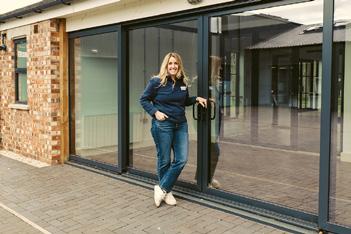
North South Wines has relocated its headquarters within the Bicester Motion estate, moving from The Guard House to the larger Command Works facility.
The expanded site will support 37 staff and allow the business to scale up its operations.
MD Kim Wilson (pictured) said: “Moving into a larger space gives us the capacity we need to continue to grow our wine distribution operations while staying true to our sustainability commitments.”
The company, which relocated to the Bicester Motion estate in 2023, has since increased its annual turnover from £25m to £40m.
Oxford Mail, May 25

With Flying Füchs
1. What was the name of Haut-Brion’s 17th-century haute cuisine outpost in London? (a) Pontack’s Barrow (b) Pontack’s Head (c) Pontack’s Pittance (d) Pontack’s Belly
2. Which Beaujolais Cru is the smallest in size? (a) Chénas (b) Morgon (c) Fleurie (d) Moulin-à-Vent
3. Which former Man City player owns a winery in Gran Canaria? (a) David Silva (b) Peter Barnes (c) Joe Hart (d) Kolo Touré
4. Xarel-lo is used for the production of which sparkling wine?
5. William Pitt the Younger would drink a bottle of what before every House of Commons speech? (a) Port (b) Madeira (c) Claret (d) Milk
Answers on page 57
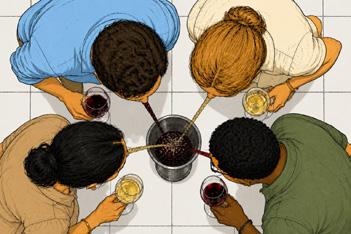
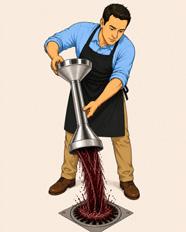
your spittoon style ? we all have to spit out wine for a living, and everyone has their own favoured method ...


by Brett




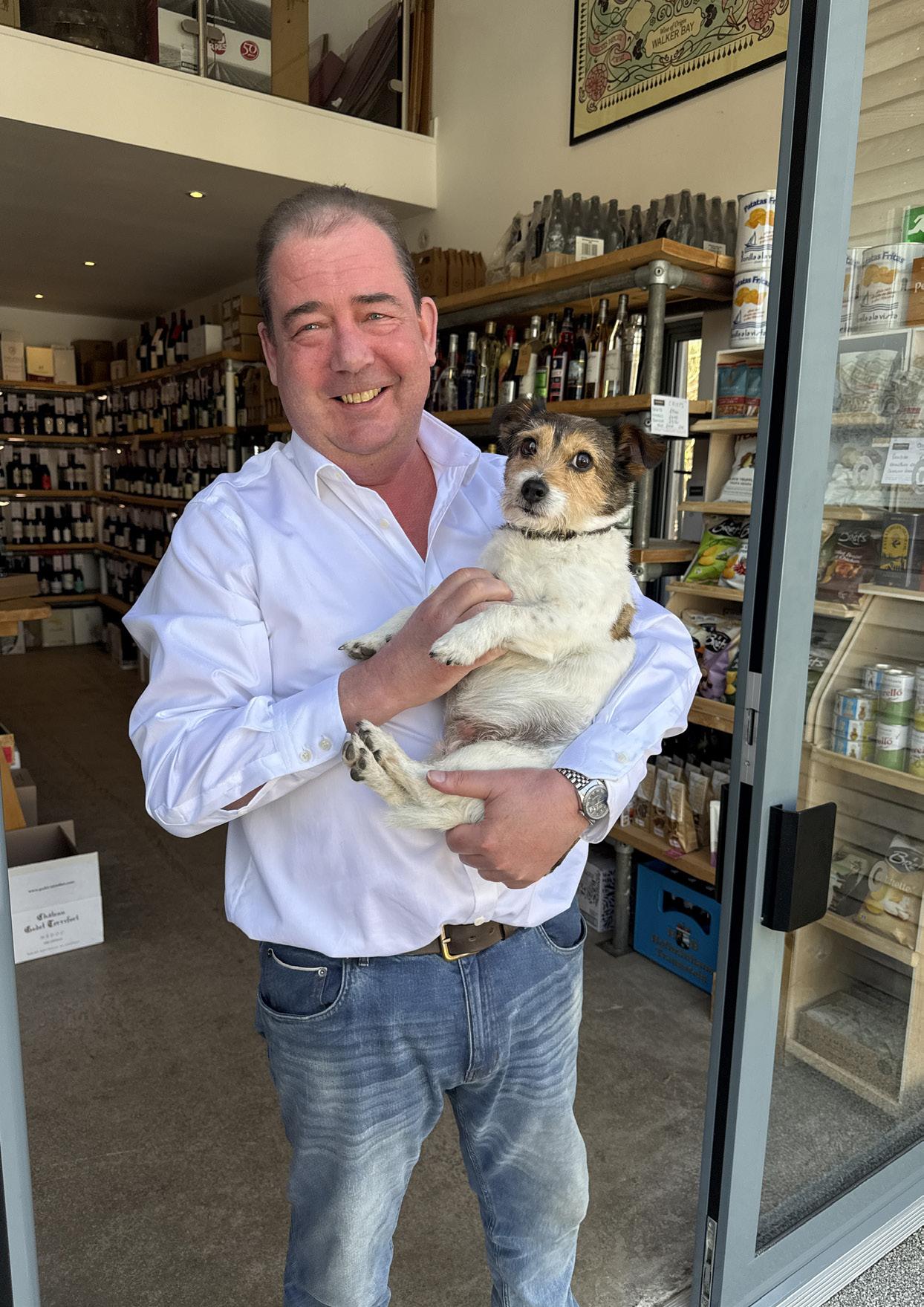
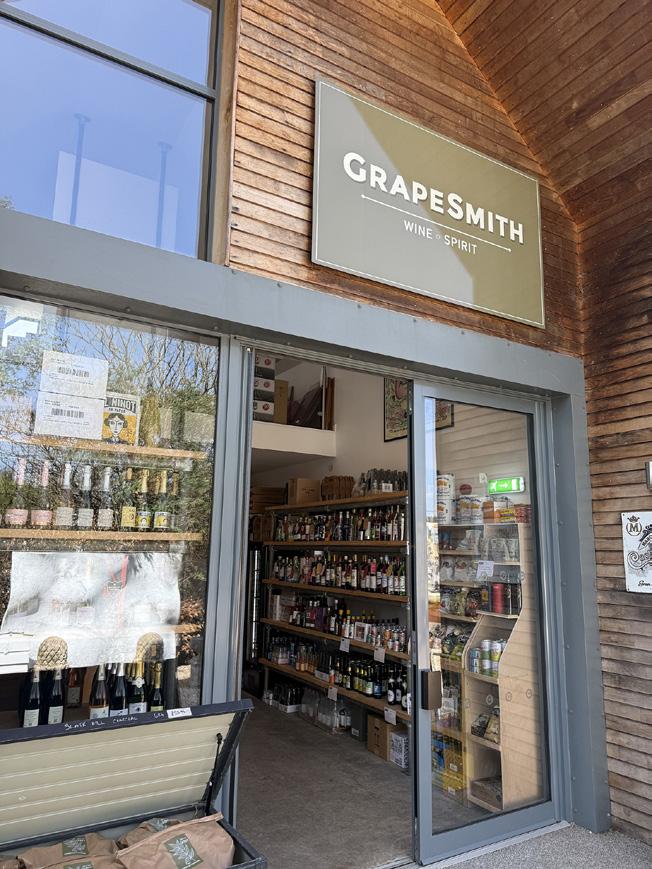
GrapeSmith segregates its wine range into three sections according to price: Quaff, Savour and Cellar. As owner Barnaby Smith tells Graham Holter, it’s a system that makes life a whole lot easier for customers, and a key part of what makes his nine-year-old Hungerford business tick
It takes real ineptitude not to be able to find GrapeSmith, located as it is just off the A4 on the edge of Hungerford. Yet somehow my satnav has taken me to a residential close a couple of miles away and I’m late for my appointment.
On the plus side, this diversion has allowed me chance to take in the quiet charms of the Berkshire market town on the banks of the Kennet & Avon Canal, its Georgian buildings home to the sort of independent shops that tell you that the cost of living crisis is perhaps not as severe here as it is in most other places.
Barnaby Smith is enjoying the sunshine when I arrive, his jack russell terrier Rufus happily sniffing around near the statuary sold by one of the neighbouring traders at Barrs Yard, all of whom have been encouraged not to feed him. It’s a popular spot, near a busy junction, where motorists can park up and shop for flowers, artwork and garden ornaments, and then relax over tea and cake in the café.
GrapeSmith was one of the original tenants when the site opened nine years ago.
“I was a stockbroker,” says Barnaby. “I stopped, and then set up a fund for about seven years, which was a disaster, and then decided I really wanted to get into something more tangible.
“There’s only so many market crashes you can put up with. On the last one we had a prime broker: the person basically has all your money and looks after all your stockholdings, and they went bust in the credit crunch. So that was an absolute nightmare. We did get the money back in the end, but it took a bloody long time.”
Wanting a change of pace, Barnaby got a job at Caviste in the middle of Hungerford and stayed there for a while after it was sold to The Naked Grape before going it alone. GrapeSmith doesn’t consciously go head to head with his former employer, he says, focusing more on trade from outlying villages rather than Hungerford itself.
The wines are arranged in three categories, according to price point: Quaff (under £15), Savour (£15-£24) and Cellar for anything above that.
“We try and have Quaff for everyday drinking, and Savour as your dinner party, weekend wines,” Barnaby explains. “Cellar doesn’t necessarily mean stick it in your cellar; it’s your posh wines.
“The wines are all effectively price delineated, because people come in in the shop and the first thing they always say is, ‘I’d like a really nice bottle of wine, please’. And then, because you’re all frightfully English, you don’t want to say, ‘well, how much money do you want to spend?’ But that’s obviously the critical factor. So I say, are we in the Quaff section? That used to be up to 10 quid. It’s now up to 15 quid. It starts at about £9.50.
It’s hard to find good wines below £10 now. Really hard. And to be honest with you, it gets harder and harder for people like me to deliver a palpably better product than they can buy at that price somewhere else.
“People come in in the shop and the first thing they always say is, ‘I’d like a really nice bottle of wine, please’”
I think Boutinot are incredible and their wines really over-deliver at the lower price points compared with anyone else. But you go into Waitrose or M&S, if you spend £10 you’re gonna get a decent bottle of wine. You have to admit that. So I think more and more, I have to have this [Quaff] area, but you’ve got to target more £15 to £25.
Waitrose put on their 25%-off-six-bottles offer at Easter time. That’s a big discount, and our customers are aware of it, because they’re shopping at Waitrose anyway.
The three-tier system is a good idea. It must make customers feel welcome even if they don’t have a lot of money to spend.
Absolutely and that’s partly why I’ve really increased the amount of crisps and treats as you come in, so you’re not just walking into a shop faced with a wall of wine, with some snooty idiot who thinks he knows everything.
People always say to me, “I end up choosing a wine just because of the label”. And I go, “well, what else have you got to go on?” I mean, that’s not stupid, because you can’t taste it, you don’t know what it tastes like, so you’ve got to go on what the label looks like. And I actually think what the label looks like is important as well.
Which suppliers are you working with?
Boutinot are our number one. Bancroft, Mentzendorff; I’ve recently started using Fells. I did some en primeur with Cachet last year, which was a bit random. I do a little bit with Hallgarten as well.
How often do you mix up the range?
I’m always on the hunt. I’ve just opened an account with Domaine Gayda because quite a lot of customers have come in asking for Gayda. So I tracked them down, and they also bring in a
“Round here it’s just as ritzy and smart as the Cotswolds, just a bit under the radar”

whole load of other wines from other people in the Languedoc region. I hate talking about Languedoc as a region because it’s so massive, it’s just sort of stupid: it’s probably three times the size of England, you know? So there are other like-minded vineyards in their range, they’re generally all organic, and there are some absolutely stunning wines.
I don’t really want to open many more accounts with new suppliers. But there’s always wines from the suppliers that I’ve already got that can come in.
Is there a part of the world or a style of wine that you particularly gravitate towards, and perhaps over-index with?
Well, currently I’m really liking these fresher, more modern styles of wine coming out of Spain. I love some of the wines from north western Spain. Not just the Albariño, but some of the reds and field blends you get from around there.
The Te Mata Chardonnay from Fells … that’s really nice, not overly oaked. I do think Fells is dragging me into the new world, which is good, because I do tend to be a little bit old-world centric.
But you’ve got to be a bit careful, because that’s me being eclectic. The customer base isn’t there. I bought some orange wine recently, and that didn’t fly. Not in west Berkshire.
How’s business been?
We had a really good run-up to Easter, really amazing. Easter is obviously a big occasion. It’s a big moment for entertaining; a lot of people have family over. You look back on numbers and it’s always a busy time. It’s a bit like Christmas. We took eight grand over three days.
What’s the customer base like here?
Round here it’s just as ritzy and smart as the Cotswolds, just a bit under the radar. There are some affluent people out there.
And do they spend money locally?
They do spend money. Well: it’s tricky. The really rich ones don’t necessarily go to places like me, because they’ll go to Berry Brothers or Justerini’s or whatever, direct, and they’ve all got wine merchants. A lot of people are with The Wine Society. But no one only deals with one wine merchant.
We’ve got Lambourn up the road [a training facility for thoroughbreds] so the trainers and the Barnaby is “always on the hunt” for new wines – but not keen to open many more accounts
horsey lot come here because Hungerford is their go-to town.
Places like this are so good for wine merchants. You’re just off a main road with parking. It’s absolutely critical. I mean, out there that’s the A4, up there’s the M4. You know, wine’s heavy. I remember, before I started in wine, just as a consumer, I would be driving through London, and if there was a parking space outside the wine shop, I’d pull in and buy some wine. But if there wasn’t, I’d keep going to Majestic.
As a former stockbroker you’re obviously a numbers guy. Does this place make money? I’m not rich enough not to make money. I mean, I’m not making huge money. But enough money. During lockdown, our sales went through the roof. We were doing £600,000 to £800,000. Most of the time now it’s £450,000.
This morning I’ve delivered 14 cases of wine already on my way to work. We do have a few good, big clients. You could be sitting here most of the day twiddling your thumbs – well, not twiddling your thumbs, as there’s always plenty to do – and then someone will come in and spend 600 or 700 quid.
Do you work six days a week?
Quite often. But I’ve now got a nice guy coming in to help me one and a half days a week, so I don’t work on Tuesdays. And obviously Sundays we don’t open. And then I have another guy who does one Saturday a month for me.
I’ve seen your wife in your social media. Is she involved in the business?
She’s the fashion buyer for a shop in the high street called Roxtons, and they’ve got two other shops. She’s my gin and Prosecco expert.
Is gin still flying for you?
No. At one point we did have loads, virtually 100, but not really at all now. Tequila sells more than gin. We sell quite a lot of Lillet. I love vermouth.
Tell us about your website. It looks like you spend some time and effort on it. Thank you. Not true! It’s a Shopify website; we use Lightspeed for our EPoS system, and that links with Shopify. I’m always tempted to switch from Lightspeed on the front end to Shopify so that they
Customer parking is one of the key benefits of Barrs Yard
“During lockdown we were doing £600,000 to £800,000. Most of the time now it’s £450,000”
integrate even better, because there’s always little glitches. To be honest, I hardly ever do anything. We set the products out, get the photo, do the write-up, blah, blah, blah, and then push the button saying publish. I think it was well designed in the first place. I should do a lot more. I don’t have a lot of time to do it, but the amount of business we get through the website is really surprising.
How much of your turnover comes from online? About 15%. We get orders from all over the place, all over the country. You get a lot of local people that want to order, and I deliver in the van. There will normally be about five of those a week. Then you get some random ones from London, funnily enough with Astrum products. I think people go out for dinner in London, and have a nice wine, and then google it. But I’ve never paid for any sort of Google ads. I guess there are a lot of improvements we could make.
You could update your blog. No other merchant has done that for about five years. Apparently, that’s how you get up through the rankings: keep making changes to all these things. My daughter works for Google advertising up in Manchester, so at some stage I might get her involved in that side of things.
I do have a newsletter which we send out, and how that’s changed is really interesting. We used to send out a newsletter once a month with an offer, and you could pretty much guarantee that you’d get a flurry of orders. But nowadays, you just don’t get anything.
I’ve spoken to a few other merchants and they say it’s the same. I don’t know whether people feel they’re getting bombarded.
I have a girl who helps me with a social media and she comes in and films some stuff. We find the more personalised things work much better. Some of the things that she does I really like because they look really smart and professional. But she and I have talked about this and, you know, almost in a way it might be giving the wrong impression.
We did this rather disastrous Insta campaign of “At Home with Mr & Mrs Smith”. We’re there at the kitchen counter and I say, “Mrs Smith, what are we doing for dinner tonight?” Then I pair it with a wine, and basically everyone completely took the piss. And people were recommending it. My wife’s mother said, “I think it’s brilliant, I’ve been telling all my friends if you’re at all down, it’s guaranteed you make you laugh”. And I was like, “No! This is not what I want at all! I’m not doing that ever again.”
Social media is not measurable. The most important thing is the weather. This year we had that rain in January – OK, the numbers were slightly up on last year, but it was hard yards. As soon as the weather got better, business boomed.
Prices have moved a lot. Has that put people off?
Pricing is a permanent nightmare. Initially, I was fighting everything, trying to keep a lid on this. But you just can’t, you’re fighting a losing battle. So I just had to go, look, the price is what the price is, and you’ve got to run with it. This is what you’ve got to pay now. And everyone knows the situation. It’s the same with everything else they’re buying.
Do you get to go on any trips?
Not really. Of course I’d like to. I went to Cognac with Mentzendorff, and Polly [Gibson, a former member of staff] used to go on quite a few trips.
In my last newsletter, I wrote a piece saying, much as I’d love to tell you that I travel around the world trying to find these amazing wines, unfortunately, that’s not how my model works. But realistically, I think having someone like Raymond Reynolds sourcing your Portuguese wines, or Domaine Gayda finding lovely wineries in the Languedoc – they’re going to do a better job.
What kind of tastings and events do you run?
We used to do a lot of events. But ever since Covid, it hasn’t really happened so much. Quite a lot of hard work goes into putting these things on and promoting them. And then it was always quite confusing as to how you targeted it. Was it a free tasting whereby you hoped the people would then put their hand in their pocket and buy a whole load of wine? Or was it better if you did a more of a ticketed event? But then they definitely wouldn’t put their hands in their pocket.
And because of where we are, because people had to drive here it didn’t really work that well, and it would be the early-evening entertainment before they were going out for dinner. And most of the customers that we have you know are quite busy and don’t necessarily want to be sitting around here and doing a wine tasting.
We used to do education upstairs: WSET. That was popular. But again, I’m not sure really whether it’s that profitable opening all those bottles. They’re quite annoying people to deal with, WSET, as well.
“We did this rather disastrous Insta campaign of At Home with Mr & Mrs Smith. I’m not ever doing that again”
Some people find wine courses a bit joyless. I always think that wine is such a fluid, amazing subject. It encompasses so many different things. I don’t like rules with wine. People say, “which wine is better?” There’s no such thing as better here. All the wines are different. Someone’s gonna like that one and someone’s gonna like that one. Doing tests about wine and stuff like that is almost against my principles.
I think wine is all about enjoyment and joy. And that’s why people shouldn’t get too snotty about the whole thing. I think a bit of knowledge is good because it’s like anything: if you know a bit about it, you can get more out of it.
Independents often say that it’s no longer
possible to simply open the door and wait for customers to come in. But it sounds like that’s kind of what happens here. Pretty much. It’s amazing, isn’t it? I like to think that we know what people want, whether it be slabs of Hawkstone beer – and we get through absolutely loads of it – or the right tonic waters, the right vermouths …
The crisps are just a little add-on, you’re never going to get rich selling crisps and olives. But it sends a signal to people. I think it’s making sure that you’ve got different things, like Angostura bitters. If people are making cocktails, where the hell are they going to get their shit from? They know that GrapeSmith has those sort of niche products. Have you heard of Clamato? It’s a Canadian tomato juice with some clams in it, but you can’t taste them. It sells out immediately.
Are you happy to see out the rest of your working life here? Or have you got plans to do
“Have
you heard of Clamato? It’s a Canadian tomato juice with clams in it. It sells out immediately”
anything else with your career?
No, not really. I mean, I’m 59; my lease comes up next year, and I’ll sign up for another five years. At 65 I’ll think about what else to do then. Whether I could sell it or not, I don’t know.
All in all has your change of career given you what it hoped you would, in terms of business and lifestyle?
Yeah, for sure. I mean, I bought Rufus for a case of Talmard Chardonnay. So that’s a big winner.
I’m very happy with this but I suppose it’s slightly tinged by the fact that I’m not feeling 100% and it’s physically pretty demanding. But I’m really proud of how it’s gone. It’s been quite successful. It’s always a bit of a leap into the unknown. There’s already another established wine merchant in the town. There’s a Waitrose and a Majestic in both Newbury and Marlborough, and we know how competitive wine is anyway. But a lot of things have worked really well.
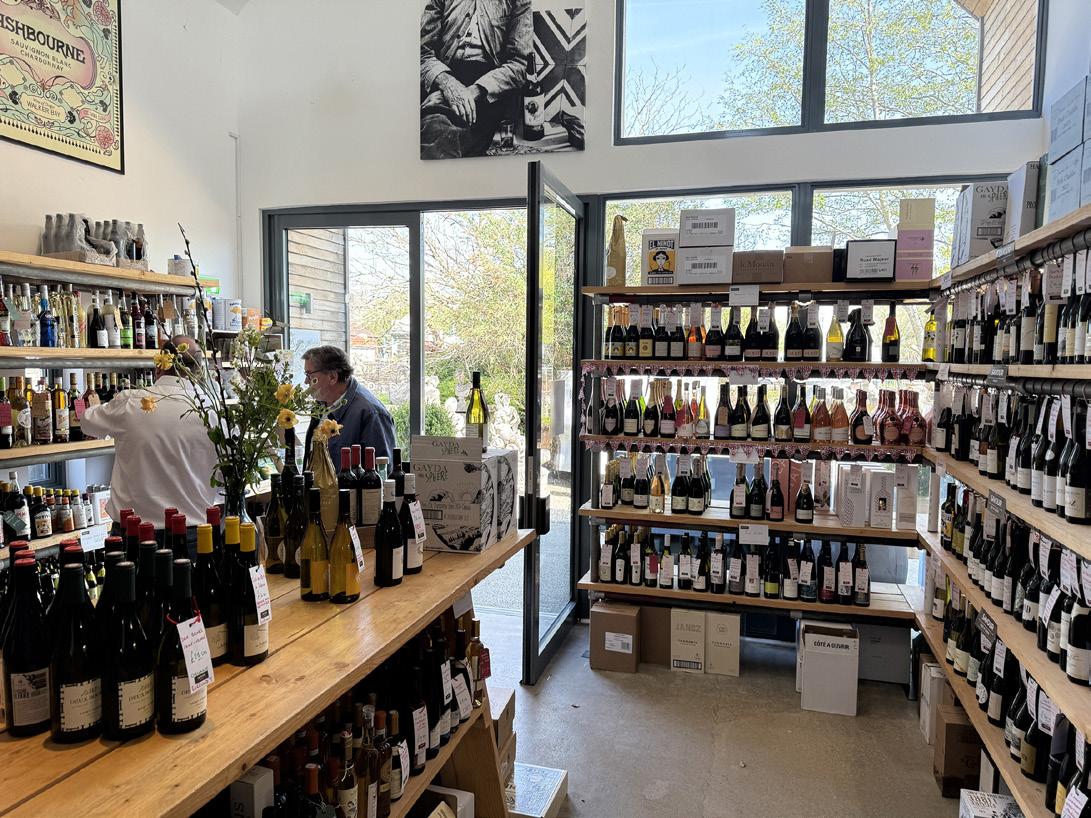
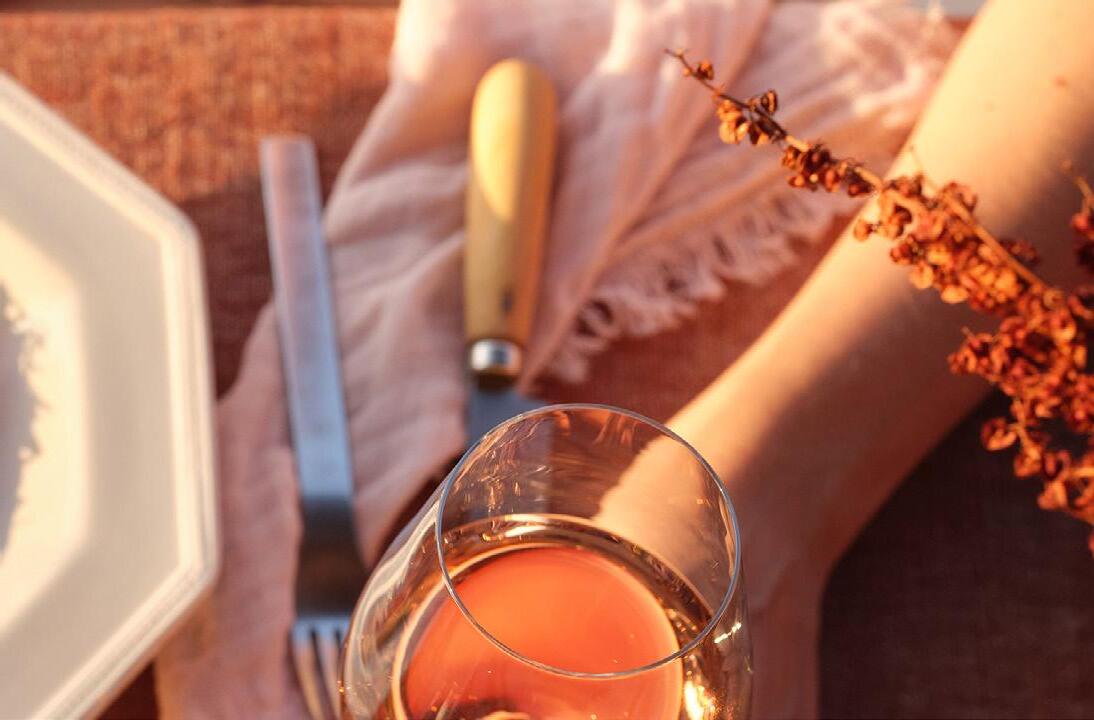
Forty rosés get the indie taste test.
Here, we reveal the top 20
Provence rosé is a phenomenon. It’s hard to think of an independent merchant who doesn’t sell it, and almost impossible to conceive of a wine retailer who isn’t asked for it. But how often do we get the opportunity to taste and compare what’s available?
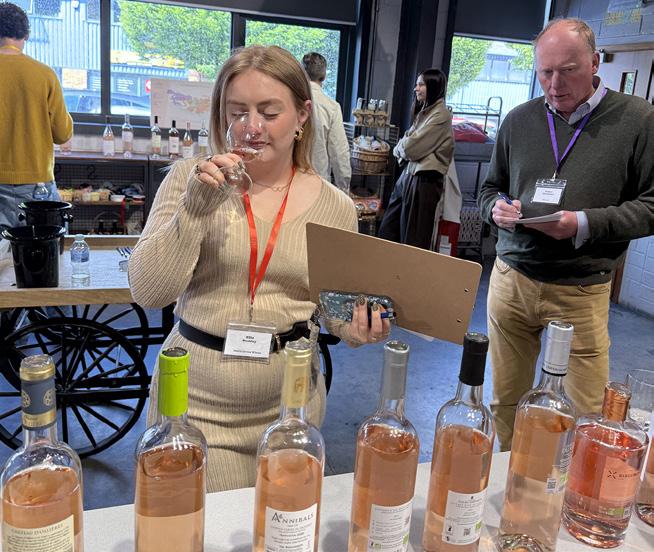
The Wine Merchant recently teamed up with Vins de Provence to organise a tasting of 40 rosés, from a variety of price points, representing all three of the region’s AOPs. We recruited a panel of independent merchants to put the wines through their paces and arrive at a top 20.
Joining us is Ray O’Connor MW, UK ambassador for Vins de Provence, who gives the tasters a quick reminder of how the region’s vineyards are demarcated.
“There are three appellations,” he says. “Côtes de Provence is the largest, created in 1977.” This AOP, to the east of the region and stretching out towards Saint-Tropez, can be quickly summarised as “soft on the palate, with a bit of roundness: easy to drink”.
But Côtes de Provence is not one contiguous AOP. To the west, there are other blocs that claim the same classification, including Sainte-Victoire. “These wines are also very easy to drink, but perhaps crisper and more linear; you could say racy,” Ray explains.
Then there’s Coteaux d’Aix-en-Provence. “This is the next largest AOP, and the second to be established as an AOP, 30 minutes up the road from Marseille.
Ray says “these wines are often described as fresher and lighter” – but adds that even neighbouring producers can have varying styles that make such generalisations redundant.
“Finally, there is Coteaux Varois en Provence [in the centre of the region], which is a very verdant area; when it rains it creates all sorts of canals that the water runs through.” The wines here are sometimes described as particularly fresh and gastronomic.
Provence rosé appeals to independent merchants and their customers on many levels, and a responsible approach to wine production is one of them.
“Across the whole region, 67% of producers are either organic or HVE [Haute Valeur Environnementale – High Environmental Value]. It means that they just do something a bit more. They take care of the health of the soil, water management, reduce sprays. It’s not as strict as organic, but it very much focuses on the health of the environment.”
Our panel of tasters
Jacqui Adams Fine Wines of Mayfield/Tunbridge Wells
Robert Boutflower Tanners
Ellie Buckley Noble Green Wines, west London
John Kernaghan Liquorice, Shenfield, Essex
Liam Plowman Wild + Lees, south London
Jessica Summer Mouse & Grape, Pinner, Middlesex
Thanks to WBC for their generous
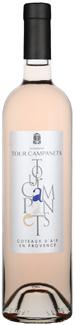
As well as noting its keen value for money, our judges were impressed by the versatility and food-pairing credentials of this organic Grenache-Syrah blend. Bold and generous on the palate, it has sour cherry and cranberry hints and a satisfying saline note on the finish. “A real crowd pleaser,” one judge remarked.
Appellation: Coteaux d’Aix-en-Provence
Distributor: Thorman Hunt
RRP: £18
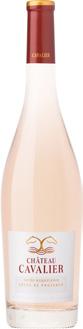
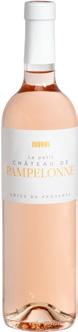
There’s no doubt that appearances can count for a lot in consumer purchasing decisions and in this eyecatching example – an organic blend of Grenache, Cinsault and Rolle – “the bottle matches the taste”, one judge commented. Another added: “Beautifully complex, with perfect fruit.”
Appellation: Côtes de Provence
Distributor: Berkmann Wine Cellars
RRP: £29.25
Mourvèdre, Grenache and Syrah are equal partners in this blend, with Cinsault making a cameo appearance. “Bright, crisp and fruity, with balanced acidity,” remarked one judge, noting the strawberry and cherry flavours. “This would do well on a restaurant list. It tastes more expensive than it is.”
Appellation: Côtes de Provence
Distributor: Savage Selection
RRP: £18
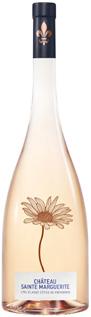
A wine we’re told has been served at L’Élysée presidential palace since 2007 also won favour with our collection of indies. “Very complex – perfect with scallops, goats’ cheese and salads,” said one. Another picked out red cherry and citrus notes, adding: “It would be lovely with olive tapenade.”
Appellation: Côtes de Provence
No UK representation
Ex-cellar price: €7.80
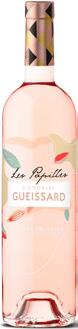
Cuvée Premium 2025
The blend here is a well-judged mix of Grenache, Rolle, Cinsault and Syrah. There’s a distinct candied note on the nose, but on the palate there’s freshness and bite. “Very bright and lively in a way that some rosés aren’t,” said one judge. A wine that would work well with lightly spiced dishes.
Appellation: Côtes de Provence Cru Classé
Distributor: Matthew Clark Bibendum
RRP: £28
Le Fil d’Ariane 2025
Our judges were wowed by the fruit-driven style on display here. “Tropical, vibrant and creamy,” said one, picking out its peachy notes. “This would be a delicious wine with goats’ cheese or fresh salads. Expressive and moreish.” Another praised the “long and complex” finish.
Appellation: Côtes de Provence
No UK representation Ex-cellar price: €10.40
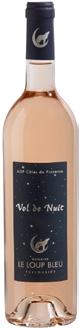
Another attractive bottle that caught the judges’ eye – and the wine (a blend of Grenache, Cinsault, Tibouren and Syrah) lived up to the packaging. “Super elegant, with fresh, subtle summer fruits,” said one taster. Others described it as “very light, crisp and refreshing” and “spicy and fresh”.
Appellation: Côtes de Provence
Distributor: Matthew Clark Bibendum
RRP: £22
The highest-priced wine in the line-up was also the most widely admired. “Stunning” was the verdict of one judge. “It lives up to the price. An indulgent wine; I love the floral character and notes of lychee, peach and raspberry.” Another added: “It’s fine and light, but packed with flavour and complexity.”
Appellation: Côtes de Provence La Londe
Distributor: Berkmann Wine Cellars
RRP: £47.50
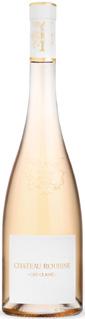
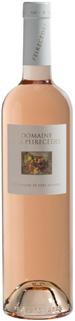
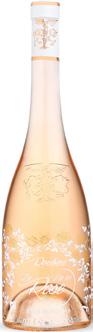
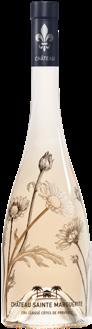
Provence rosé is associated with youthful drinking but this example, aged in oak for 10 months, is built for ageing (and gastronomy). It was something of a curveball for our judges, but it found favour. “Just the right amount of oak not to lose the vibrancy,” said one, picking out “vanilla and buttery brioche” notes.
Appellation: Côtes de Provence
Distributor: Awin Barratt Siegel
RRP: £43
Classique 2025
A 50-50 blend of Grenache and Cinsault, this wine comes from vineyards at 300m to 400m altitude. The wine is matured on fine lees, contributing to the creamy roundness that our judges enjoyed. A “floral, subtle, sunny” wine, one commented, “with strong commercial appeal”.
Appellation: Coteaux Varois en Provence
Distributor: Les Caves de Pyrene
RRP: £19
Marafiance 2025
The 2024 was named best rosé in the world in the Decanter World Wine Awards so it’s no surprise to see the 2025 making our top 20. Clever work in the winery with skin and lees contact adds weight to an already complex blend of eight varieties, which judges praised for its intensity and length.
Appellation: Côtes de Provence
No UK representation Ex-cellar price: €8.90
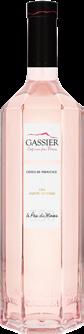
An organically-grown blend of Cinsault, Grenache, Syrah and Rolle, packaged in a distinctive bottle shape that intrigued judges, who variously described the wine inside as “refreshing” and “very flavoursome” with herbal aromas suggesting rosemary. The long finish was also a talking point.
Appellation: Côtes de Provence Sainte-Victoire
Distributor: Enotria
RRP: £20.03
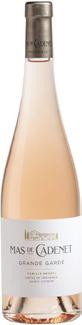
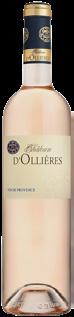
Seven varieties go into this organic blend, using grapes that mature slowly and evenly in a Trévaresse plateau microclimate. “Lively” and “vibrant” were the adjectives reached for by our judges, who could see the wine’s potential as a convivial aperitif with its “pure, crisp flavours” of strawberry and watermelon.
Appellation: Coteaux d’Aix-en-Provence
Distributor: Boutinot Wines
RRP: £19
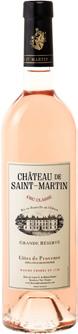
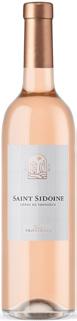
Saint
From fruit grown on stony south-facing soils, on an estate dating back more than a century, this is “a wine to sip on the beach”, according to one judge. “Peach and strawberry, but also lemon peel – I like the contrast.” Another added: “Clean and crisp, with a great pale salmon colour. And a good price.”
Appellation: Côtes de Provence
Distributor: Davy’s/The General Wine Company
RRP: £15
Provençal producers are adept at preserving the freshness and aroma of their fruit by cooling grapes immediately after destemming, and then pressing gently. The technique certainly pays dividends with this wine. “Totally for outside dining – super gluggable,” said one. Another was drawn “to its warmth and vibrancy”.
Appellation: Côtes de Provence
Distributor: Woods Wine, Henley on Thames
RRP: £32
The subtly darker hue appealed to some of our tasters, who also appreciated the shelf appeal of the label.
“The taste is lovely and fresh – it would be fab with grilled fish and vegetables,” said one judge. Others picked out herbaceous notes, and even our hardest-toplease indie enjoyed its “decent shape and character”.
Appellation: Côtes de Provence
Distributor: Carte Blanche Wines
RRP: £20.97

Suivez-moi-jeune-homme 2025
This organic blend takes its name from the ribbons that once streamed from French women’s hats when they were encouraging male attention. Our judges were happy to give this wine some time. “It ticks every box,” remarked one. “Lovely colour; fresh; thirst quenching. Great on its own or with grilled chicken.”
Appellation: Coteaux Varois en Provence
Distributor: Carte Blanche Wines
RRP: £23
“I simply could knock this back all day,” enthused one of our tasters. Another judge was impressed by the depth of the wine and its firm structure. It’s a blend of Grenache Noir, Cinsault, Syrah, Rolle, Ugni Blanc and Mourvèdre, aged in vats on fine lees for a fuller body and creamier texture.
Appellation: Côtes de Provence
Distributor: Ellis Wines
RRP: £15.25
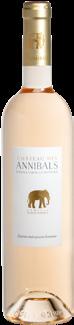
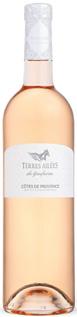
An organic blend of Grenache, Tibouren and Cinsault, judges described this as a “quiet” wine which reveals its charms on a second tasting. “Nicely shaped and with a fluid feel,” said one. “There’s some herbs and soft red fruit.” Others were impressed by its “perfect” colour and refreshing character.
Appellation: Côtes de Provence
Distributor: Wadebridge Wines
RRP: £23
Another Provence rosé designed with food matching in mind (its creators suggest roasted langoustine or grilled lobster), this five-varietal blend comes in a smart embossed bottle that would look good on the dinner table. Our judges enjoyed the “round and soft” palate and “decent length”.
Appellation: Côtes de Provence
Distributor: Matthew Clark Bibendum
RRP: £33
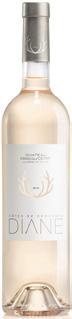
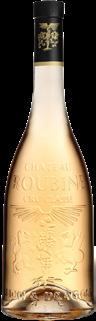
Marlborough may be the powerhouse of New Zealand wine production. But there’s another region on South Island that tends to capture the imagination of specialist wine merchants like Camilla Wood, owner of Somerset Wine Company, who paid a recent visit
Some wine regions entrance you with their prettiness (Alsace), intimidate you with their grandeur (Bordeaux), or beguile you with their stereotypically satisfying beauty (Chianti). But there can be none that strikes you so monumentally, so profoundly with its magnificence as Central Otago in New Zealand.
This is an elemental, mystical place fitting for filmmakers of Tolkien tales. A mountainous, lake-filled land, borne of millennia of geological contractions, tectonic faulting, erosion and glaciation leaving a landscape of mountain ranges, alternated with moraines and basins, underpinned by 85-million-year-old schist.
The Māori called it Otakou, pilgrimaging to this dry, inland, sun-filled region for healing and hunter-gathering, harvesting its unique flora for rongoā, traditional Māori medicine.
Altitude combined with a 45-degree latitude on par with Patagonia creates a continental climate with the widest diurnal temperature range and a low disease pressure environment, perfect for all kinds of fruit growing – stone fruits and cherries particularly.
The wine region falls within the Cardrona Valley, linking the towns of Wanaka and Queenstown and forming a triangle shape with three lakes at its points: Lakes Wanaka, Dunstan and Wakatipu.

Water is the life force here. The encircling mountains of the Crown, Pisa and Criffel ranges vibrate with an electric alpine energy. No other wine region in the world is so remote nor so cut through by mountain chains slicing its six subregions.
Crucially, “Central”, as the locals call it, is the only New Zealand wine region without a maritime-influenced climate. Its continentality and altitude, married with high-UV sunlight, result in well-ripened grapes with great vibrancy and acid retention.
But before grapes, there was gold. Fortune hunters arrived in Otago in the 1860s, swelling the small sheep-farming population. European, American and Asian prospectors came, saw and conquered, panning nuggets as large as 32kg out of the Dunstan Gorge. Flush with mining success, Jean Désiré Feraud turned his hand to liquid gold, planting vines in 1864 at his Monte Christo estate and won medals in Sydney for his “Burgundy”.
Then, in 1895, Romeo Bragato, an Italian viticulturist, was invited to Central Otago by the government to assess its potential for grape growing and proclaimed “there was no country on the face of the earth which could produce better Burgundy grapes”.
Regrettably, government naysayers intervened,
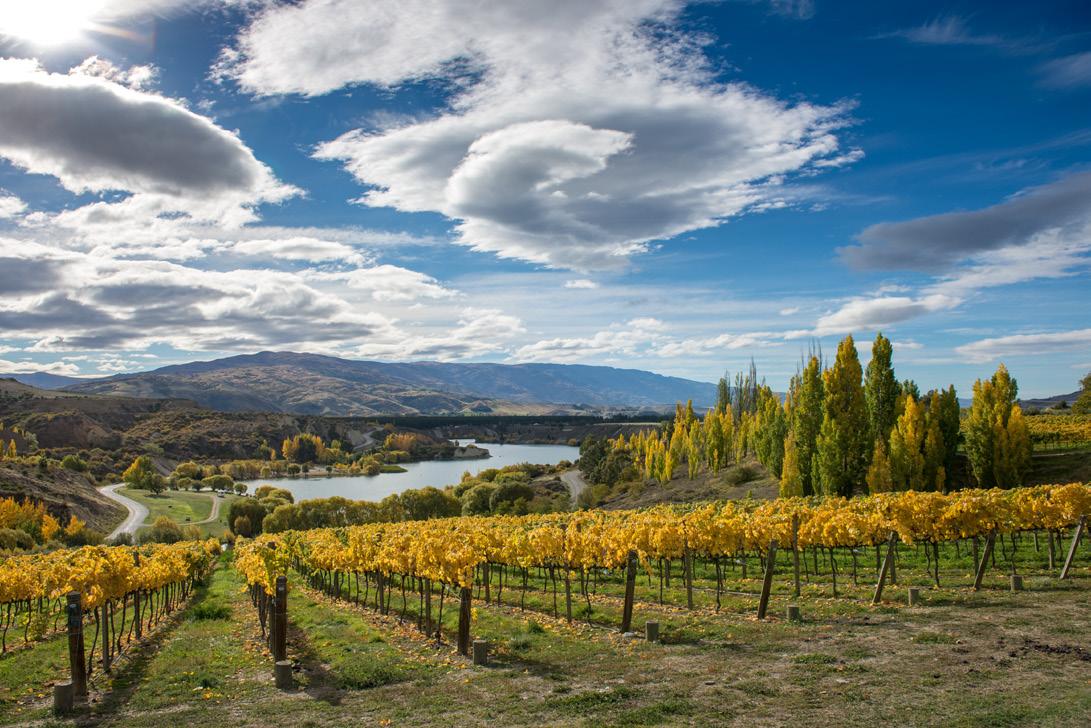
Mountains and lakes help define an “elemental, mystical place”
declaring the region too cold. It would take another century to override this decision, until the mid 1970s saw vine planting on the shores of Lake Wanaka by Rolfe Mills of Rippon, Alan Brady at Gibbston Valley and Ann Pinckney at Speargrass Flat.
This plucky trio had little wine nouse between them but persevered, supporting and learning from each other. And this collaborative spirit between growers and makers, young and old, is still strong today. Boutique family wineries with quality/value outputs (Folding Hill) rub shoulders with bigger players (Mount Difficulty) but very few are corporate-owned and most remain small enough to deliver a quirky, authentic style of their own without the need for percentage games. Over 30% are certified organic or biodynamic; sustainability and regenerative farming practices are the norm here.
Mills at Rippon had early success with aromatic grapes like Riesling, Pinot Gris and
Very few wineries are corporateowned and most remain small enough to deliver a quirky, authentic style of their own
Gewürztraminer; Pinckney and Brady with Pinot Noir. This forges on in the region today with Misha’s Vineyard making a fine off-dry and late harvest Gewürz, actor Sam Neill’s Two Paddocks label making peaky blinding good Riesling; Brennan, Mount Edward, Burn Cottage and Domaine Rewa working some innovative orange magic with skin-contact Pinot Gris and lovely textural blends with Muscat, Gewürz and Grüner Veltliner.
Pinot Noir quality has always been high, but today it feels like it’s found its stride. Twentythree years ago, on my last visit, Pinots tasted overly oaked and jammy. Now they are pared back, nuanced, savoury, ageworthy: older vine age has clearly helped.
Prophet’s Rock, Mount Edward, Amisfield, Two Paddocks and Felton Road showed the best examples of this maturing evolution. Let’s see more older vintages over here, please.
It begs the question, though: why was Chardonnay, the natural Burgundy bedfellow,
originally left out? The answer lies both in wine trends and a lack of confidence. Aussie Sheila Chardy, all gold blousy and over-oakscented, had saturated the market in the 90s, and jaded palates prompted an ABC uprising. Meanwhile, Kiwi Savvy B was riding high and estates like Kumeu River in the North Island were leading the charge with a more elegant style of Chardonnay which Central growers felt reluctant to rival.
Happily, all is changing now and finessed, preserved lemon, Chablis-esque Chardonnay is the big growth story. Amisfield, among others, has planted another seven hectares of Mendoza clone; Prophet’s Rock’s Cuvee Aux Antipodes Chardonnay (a Kiwi-French winemaking bromance between Paul Pujol and François Millet of Chambolle-Musigny fame) won the New Zealand White Wine of the Year 2025; Felton Road Block 6 and Block 2 2023 Chardonnays scored 17.5 on JancisRobinson.com.
Why, then, is there not more quality sparkling wine coming out of cool Central? Quartz Reef’s classy Brut Chardonnay is the only traditional-method fizz made in-region; others vinify up in Marlborough. However, local intel is that a new facility –Methode Services, opening soon in Cromwell –will address this.
Valli, with respected winemaker Jen Parr at the helm, creates the only single subregion range of Pinot Noirs, all at premium level, which proved a great concluding tasting to my trip.
Each one beautifully expressed the individuality, climate and terroir of the subregions: floral, red-fruited, feminine Gibbston, from the highest, coolest area, countered the richer, mocha-noted, masculine moderate-climate Bannockburn, fronting up to black-fruited, earthy, tannic, muscular Bendigo, the warmest, driest region, with zippy, minerally, thyme-scented, mountain-fringed Pisa adjudicating in between.
Intriguing, though, was the wine from Waitaki in North Otago, the most marginal climate region with only a handful of brave growers. A cyclone meant no Pinot Noir was harvested there in 2023 but 2024 produced an ethereal wine of great tension, of roses and wild strawberries: savoury
Finessed, preserved lemon, Chablis-esque Chardonnay is the big growth story
meets sweet spice with the silkiest tannins. The Valli and Wild Earth Rieslings, also made by Parr, were from Waitaki fruit too, all vivacious lime and white pepper, like licking a light bulb.
Central Otago is in a good place, unperturbed by global warming thanks to varied subregional climates, justifying its premium wine prices and “Burgundy of the new world” status. It’s no doubt also checking over its shoulder at what the North Otago region might herald in the future.
But that’s for another report.
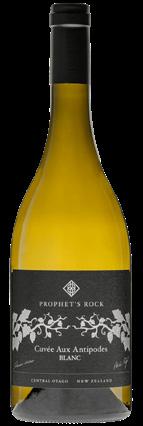
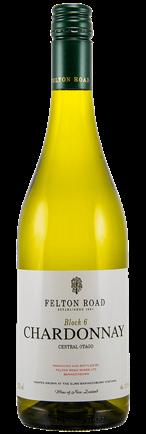
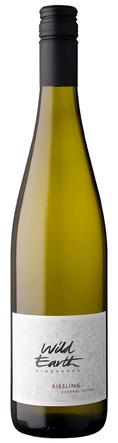
Prophet’s Rock – Jascots Valli – New Generation Wines
Mount Edward – Alliance Wine Folding Hill – Vindependents
Felton Road – Liberty Dicey – Matthew Clark Bibendum
Brennan – The Antipodean Sommelier
Two Paddocks – Fells & Haynes Hanson & Clark
Burn Cottage – Liberty Wild Earth Wines – Liberty Amisfield – Inverarity Morton Mount Difficulty – Ellis Wines
Rippon – Lea & Sandeman Carrick – Ministry of Drinks
Doctor’s Flat - BBR Hawkshead – Humble Grape
Quartz Reef – seeking new representation
Misha’s Vineyard – seeking new representation
‘It’s just like the early days of the business’
In the second part of our celebration of Condor Wines’ 15th anniversary, Lee Evans shares his excitement about the New Zealand project – and hints that there may be more surprises to come
Condor Wines started out modestly, with minimal overheads and a list of fewer than 30 Argentine wines. As the business has grown, Lee Evans – who co-founded the company with his wife Maria in 2011 – has been determined to stick to the original principles. “Passion”, “integrity” and “collaboration” are three of the core values that ring truest on the company’s homepage.
Wines from Chile and Uruguay were added to the roster, meaning that Condor –like the bird which inspired its name – could span the Andes.
Today, the business regularly ranks among the top suppliers in The Wine Merchant’s annual Survey of Independents. The days of being purely a husband-and-wife team are long gone.
Aaron Irons is sales and category development manager; operations executive Rob Burnard looks after the supply chain. The sales team includes Mark Jeffries, Fiona McLaughlin and Rachel Hollis. Linda Smith takes care of accounts and Tracy McIntosh handles marketing.
“Every Monday morning we all have a half-hour meeting,” says Lee. “And every three to four months, we get together as a sales team.
“We have an ops meeting every week with Rob, just making sure that we can supply our customers. We follow up every line and say, where was it ordered? Where
is it in the supply chain? How much stock do we have on this? What’s the rate of sale?
“Aaron spends a lot of time looking at the portfolio. What’s slow moving? What’s fast moving? If it’s slow moving, let’s get it out quick. Or what do we need to change about it? Is it the label?
“We do a customer survey every year, but I think the best feedback we get is just talking to customers. That’s something we do try to do as regularly as possible.”
Aaron says suppliers like Condor have to work harder than ever before. “You’re under a great deal of scrutiny, because there are a lot of pressures out there – perhaps more than ever before.
“I know if I go and see anybody – new customer, old customer – that the portfolio is very strong. Quality is very strong. And I know that I’ve got a lot to offer that works at lots of price points.”
This year Condor sprung a surprise with the announcement of its first foray outside South America, with Flight of the Condor – a new umbrella brand for a range of New Zealand wines.
Lee says: “We’ve built the South American business, and we’ve had a lot of growth, and we’ve got to the stage where we think, OK: do we stay where we are?
“But I didn’t really get into this business with that mentality. It was always with a
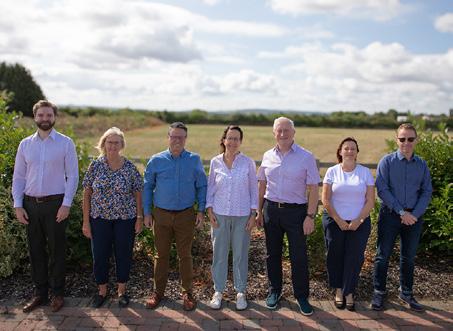

07508 825488 | condorwines.co.uk lee@condorwines.co.uk



passion for growth and a passion for pushing things, which probably drives Aaron and the team nuts at times. Also, we have a very red-heavy range, and New Zealand is very complementary to our portfolio, as it’s mainly white wine, so it’s a nice balance.”
Condor is importing wines from Mt Beautiful in North Canterbury and Ant Moore in Marlborough. It’s early days but the response from indies has been hugely encouraging. Lee acknowledges that, for some merchants, the idea of buying from a supplier which only offers South American wines had been problematic.
“Expanding into New Zealand gives us that opportunity to say, well, we also have these wines that you can put into an order. It makes it easier for us to be able to work with people, and gives them more reasons to work with us as well. We’ve had indies already reorder with us that maybe didn’t order as much last year as they did the previous year.”
Asked where the condor might fly to next, Lee smiles cryptically. “It’s interesting, because when I’m with customers and ask them what they think, some say Australia, some say South Africa,” he says.
“We’re pretty happy with the two we’ve got. Maybe we’ll look at something else from North Island; maybe something from Central Otago. We’ll have to wait and see. But there are certainly opportunities in other areas of southern hemisphere.”
Diversifying into New Zealand “has been exciting and a lot of fun”, Lee says – “just like the early days of the business”.
He adds: “You know, we’ve set up this concept, Flight of the Condor – and the condor, in theory, could fly anywhere.”
He laughs. “Does it mind crossing the Atlantic or the Pacific? They’ve got big wings! And if you’re in this industry, you’ve got to have an adventurous spirit.”

I’m glad business is booming. But there are times when folk music comes first
At this time of year we start groping for suitable metaphors of acceleration. Maybe we’re screaming on a roller-coaster, maybe careering round a helter-skelter, maybe driving 90 miles an hour down a deadend street. All capture our feelings of exhilaration mixed with terror as the summer season starts to peak.
When I mention summer, I should say that our version of it up near the north pole is far more pleasant than most readers of The Wine Merchant have to endure. As I write, the afternoon temperature in Orkney is 13 centigrade; in London it’s 31. In July or August we’ll regularly head up towards 20˚C, and probably exceed it on a few days. Even that extreme heat is not enough to justify filling our shelves with well-chilled rosé, no matter how many suppliers tell us we should.
We have our own extremes. Extreme seasonality is one: the shop is deathly quiet from January to April, extremely busy from May to mid-September, then quiet again in October and November. (Christmas is its own category of madness, as we all know.) The summer busyness comes from two sources. First, there’s the sheer number of visitors the islands get. As I’ve mentioned previously (because it dominates my life), Orkney is the busiest cruise liner destination in the UK. This year we’re expecting 212,000 passengers to disembark, exactly 10 times the resident population.

Luckily, they don’t all come on the same

day: that total is spread out in a classic bell-curve over the summer months. By the time we get to July and August, it’s common to have liners on five or six days a week, with two, three or even four thousand passengers each day. They don’t all come into Kirkness & Gorie, as Orkney boasts some other attractions even more exciting than my carefully curated selection of Frappatos and Bourboulencs. (Hard to believe, but true: some folk just have a weird liking for pristine beaches, standing stones, Viking cathedrals and pawky puffins.)
Nonetheless we do get hundreds of extra customers on a big liner day. They rarely buy wine, as the liners insist they drink from the over-priced and mediocre onboard lists, but we do sell lots of Orkney whisky and gin, not to mention fudge, oatcakes and cheese. At the same time our local regulars continue to come in, and large numbers of independent travellers do too, and are much more likely to buy a bottle or six from us.
Hours can go by with the shop NEVER BEING EMPTY. Imagine, customers coming in and out all day long! It’s so disruptive: don’t they realise I have work to do?
One of the kinds of work that retail customers interrupt is my looking after our wholesale customers. With tourism booming as it is, I shouldn’t be surprised that every restaurant, hotel and bar we supply is jam-packed. What does surprise me is the speed with which the craziness comes upon them, and so onto us. In the middle of May, an average restaurant might get through five dozen bottles a week; by the first week of June it’s 25 dozen. It’s not unusual for us to receive and break down a pallet of wine in the morning, only to load it all back into our own van for delivery in the afternoon.
I’m not complaining about the turnover. Heaven forbid. What I am complaining about is restaurants forgetting to order on the agreed delivery days (Monday to Friday) and instead phoning my mobile on a Saturday afternoon, 10 minutes before I’m due onstage with my band for our appearance at the Orkney Folk Festival. “It’s an emergency! We’ve run out of wine! Can you deliver?” The customer is always right, even when they’re completely wrong, so an hour later – eschewing an after-show beer with my bandmates – I drive back to the shop in my sweaty cactus-themed stage shirt, load in 40 six-packs, and drive past pristine beaches and standing stones to our most distant restaurant customer.
As I drive, I conjure up happy memories of my first appearance in The Wine Merchant, way back in 2012, when I was pictured wearing a cowboy hat and clutching a snazzy white guitar. Somehow the magazine had heard that I was about to depart with my band on a six-week tour of the USA, and it seemed worth a story.
Six weeks! How on earth did I manage to get away for so long? Let me check the sales records: Ah! Turnover has increased by an almost Trumpian 250% since 2012. Jings, little wonder I’m a bit frayed at the edges. And that’s not just the fringes on my cowboy shirt.
Duncan McLean is proprietor of Kirkness & Gorie, Kirkwall
In terms of prestige and reputation, Italy’s whites have slightly lagged behind its reds; the category simply lacks the equivalent of a Nebbiolo or Sangiovese in terms of celebrity status.
But it’s not through a lack of trying. Over the years, efforts have been made to push many a shining star to the fore as the next all-conquering wine style, most recently Timorasso. But like its offering as a whole, Italy’s white wines are far too diverse and subregionally embedded to be rendered into a simple message or a few kingpin wines.
Over 50% of indies named Italy as the region of most interest in this year’s Wine Merchant Survey of Independents, but that won’t be based solely on Puglian Primitivo, Chianti Classico, Valpolicella Rispasso, Barolo, Montepulciano d’Abruzzo and Prosecco. Merchants love Italy for its absurd amounts of indigenous gems scattered across the country, with many of the most enthralling of these being white.
It’s Italy’s ability to service the extremes of both the mass and niche market which makes it such a friend to wine retailers. But in persisting with attempts to create a white superstar, the niche excitement that comes with the category threatens to be compromised.
We have seen the devaluation of Soave, Gavi and Pecorino happen right before our eyes in recent years, resulting in much of a muchness in terms of style and representation of place as volumes increased.
But actually, when you search out the proper expressions of these wines
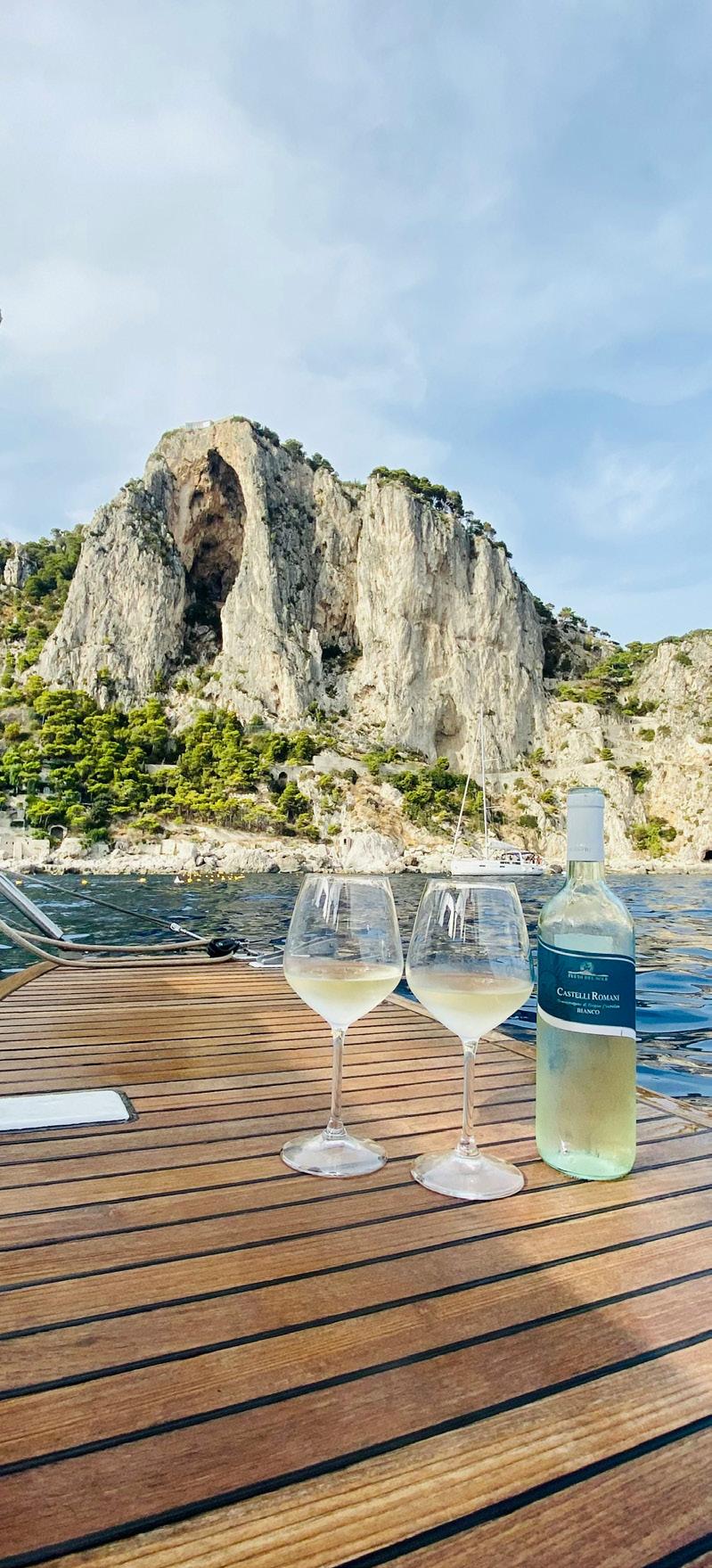
Italy’s superstar red wines often eclipse its wealth of superb whites. This doesn’t have to be the case, argues Jacob Stokes
– probably how the majority presented before racing to the bottom – they’re fantastic, arguably adding to the excitement of the category in a backwards kind of way. Of course, even if Italy subjected a few more of its white varieties to this kind of expansion, it’s not at risk of running out of options. But it can’t be the right way to go, regardless of how well equipped it is to do so.
Instead of pondering restlessly over its
wealth of magic, choosing which wine to push onto the stage kicking and screaming next, Italy needs to embrace the fact that interest in its whites thrives in the niche market. And that in attempting to sell more, they devalue the category and the varieties within it beyond recognition.
That’s not to say that producers should just sit on their hands and expect everyone to come and find their Trebbiano Spoletino without prompt. But equally they shouldn’t
Maybe an exhaustive journey of Vermentino alone wouldn’t quite take a lifetime, but it would certainly take you through the Italian riviera into coastal Tuscany and then across the Tyrrhenian sea to Sardinia. Across all three of these Vermentino homelands lies a range of expressions and personalities to explore.
Liguria is characterised by its craggy terrain, with the Apennine interior performing a gradual, forest-laden diminuendo right down to the narrow coastal strip. Here, Vermentino, also known as Pigato, grows most successfully in the region’s far east, on the border with Tuscany. Here the cliffside terraces of Cinque Terre, where blends with the native Albarola and Bosco reign supreme, and sprawling hills of Colli di Luni produce world-class expressions.
change what their wines inherently are, which is more often than not a delicate expression of place and tradition, in order to rub shoulders with the big-name reds. With engagement levels rising amongst acid-thirsty youngsters, Italy’s whites are poised to welcome these consumers with open arms, offering a journey between the Alps and the Med that could last a lifetime. Here are three for them to be getting on with.
Just over two hours down the road into Tuscany lies Maremma, an increasingly notable outpost for Vermentino. The region may flaunt its Bolgheri and Morellino di Scansano credentials, but Vermentino is actually its fastest growing variety in terms of area under vine. This is likely due to Maremma’s ability to season Vermentino’s citrus and yellow fruit core with sufficient lashings of salt and rocks.
And it’s this thirst for coastal extremities which undoubtably places Sardinia at the top of the Vermentino empowerment tree, specifically the northern territory of Gallura. Here, sun and wind are served neat, and on the rocks. A quite merciless expression of the variety prevails, with as much salt, crushed rocks and dried herbs as one could wish for, often tempered by nervy lemons and unctuous white peaches.
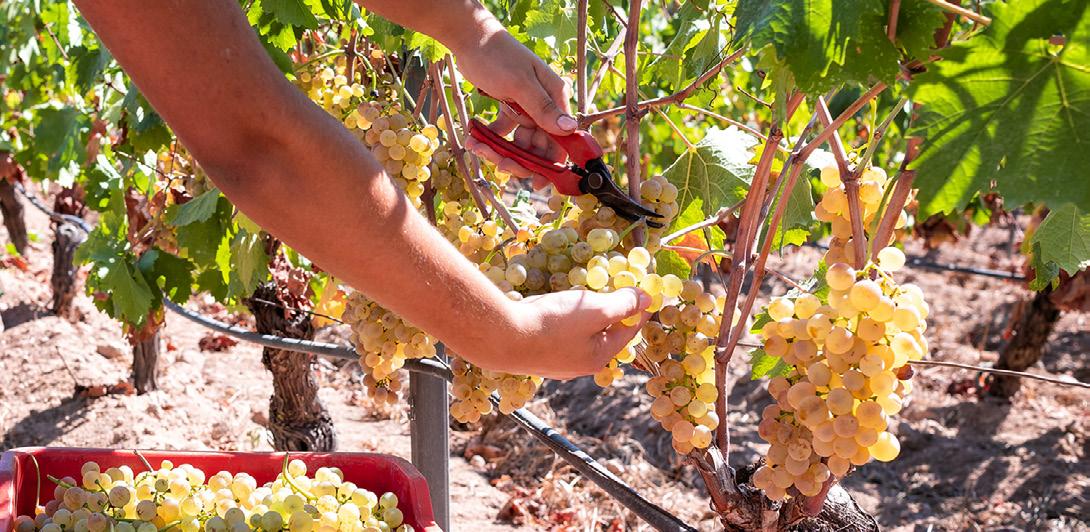
Sicily is realigning itself with market demands by placing more emphasis on its white wines. It’s not hard to see why a move away from chunky Nero d’Avola might be wise, but on paper, the ethereal, scorched rose-kissed reds of Mount Etna seem perfectly suitable for the modern palate. However, the quality potential of Carricante has been impossible for Etna growers to ignore. At one time white varieties only accounted for 30% of plantings, but the area under vine is now reported to be an almost 50/50 split between red and white. And despite increasing availability, over the past few years white grapes have begun to cost more than red ones.
Often occupying the highest elevation sites on Etna’s slopes,
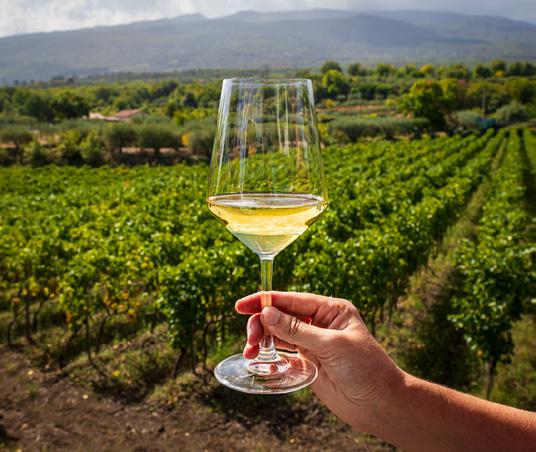
there’s a precision and verticality to Etna’s whites. Like the lovechild of Riesling and Assyrtiko, there’s the searing acidity and lean fruit tension of the German king, with a minerality more aligned to Santorini-like winds armed with shards of salt, whipping up tornados of volcanic dust. Naturally they age well too, often developing Riesling-like kerosene notes over time.
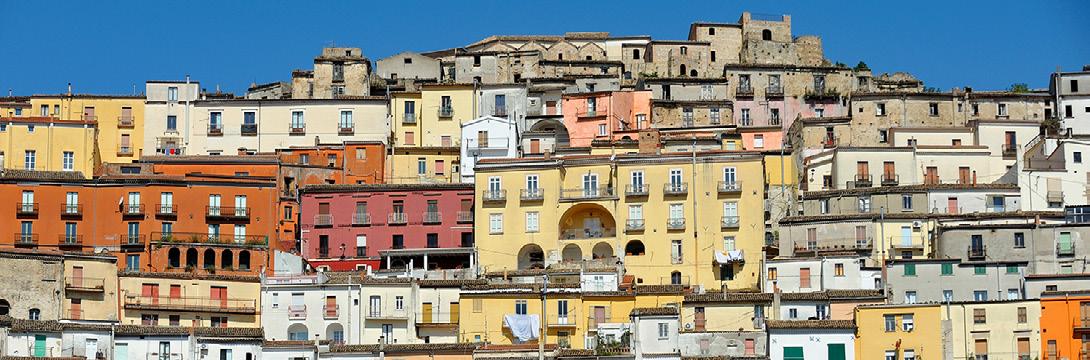
Campania’s three main white varieties feel like they share the international limelight. “Fiano, Falanghina and Greco” seems to roll off the tongue as effortlessly as Pavarotti, Domingo and Carreras, as though they’ve been introduced to adoring fans a thousand times over across the globe.
This was indeed the case in the Roman period, where Campanian wines, in particular a wine called Falernian, were seen as some of the best not just Italy, but the wider Mediterranean. Today, in the absence of a Pliny the Elder to fly the flag, Campanian whites are criminally overlooked.
It’s possible that Falanghina may have provided the basis for the Roman Falernian wine, on the same volcanic soils where the greatest examples are still made today. The Campi Flegrei DOC – meaning “burning fields” – is a particular highlight. The Romans built thermal baths on this volcanic caldera, which stretches across the gulf of Naples. In phylloxera-free sandy soils, vines are ungrafted, and despite once being seen as a
substandard variety compared to Fiano and Greco, Falanghina is proving its worth as growers become more quality-conscious. To find the greatest expressions of Greco and Fiano, though, one must leave the caldera behind and head inland, up into the rugged limestone hills of Irpinia. Here lie Campania’s highest quality white regions: Greco di Tufo and Fiano di Avellino DOCG. With elevations between 350 and 700 metres, temperatures in these hills are notably cooler than in the bay, achieving wines of balance and elegance and varietal character.
Greco is the racier of the two, with more of a focus on minerality and sapidity than aromatic flair. With its high polyphenol count, Greco often exhibits a dusting of phenolic bitterness, like green almond shavings. Fiano is comparatively more generous and delicate with a waxy texture and ripe peach and mandarin fruit. In Avellino the green almond shavings of Greco are more likely to be honey-dipped.
There are parallels to be drawn between Umani Ronchi’s philosophy and the identity of the Marche region: “a connection that is not accidental,” says Michele Bernetti.
“The Marche is Italy’s best-kept secret. It’s unspoiled and unhurried. The Marche is still completely itself, and the authenticity we find here is what we try to translate into every bottle.”
Umani Rochi’s Verdicchio is, he says, “a wine of paradoxes”. “It is both refreshing and complex, approachable and ageworthy. It has a unique ability to hold acidity and structure without feeling heavy.
“When you drink a great Verdicchio, you notice freshness first, with citrus, white flowers and the trademark hint of almond. But then the wine opens up to reveal real depth and minerality.”
It wasn’t always like this. Over the past few decades, Verdicchio has undergone a quiet revolution. “When I look back at where Verdicchio was 30 or 40 years ago, the transformation is remarkable,” says Michele.
“At that time the category was following the prevailing trends: simple, neutral, easydrinking wines which didn’t do real justice to the quality of our grape and terroir.”
By analysing the great white wines of Burgundy, the Loire and the finest whites from Austria and Germany, understanding how terroir and technique interacted in those places, Marche producers “began rethinking the details”.
Casal di Serra RRP £21.95
Produced for over 40 years, Casal di Serra represents the original vision of Michele’s father to give Verdicchio a single vineyard home, “a founding conviction that runs through everything Umani Ronchi does today”.
As the entry point of the range, it is “immediately joyful to drink” with 100% stainless steel handling and light lees ageing to ensure the preservation of Verdicchio’s natural character and vitality. “It never feels excessive,” says Michele. “It is the result of 40 years of understanding this specific place.”
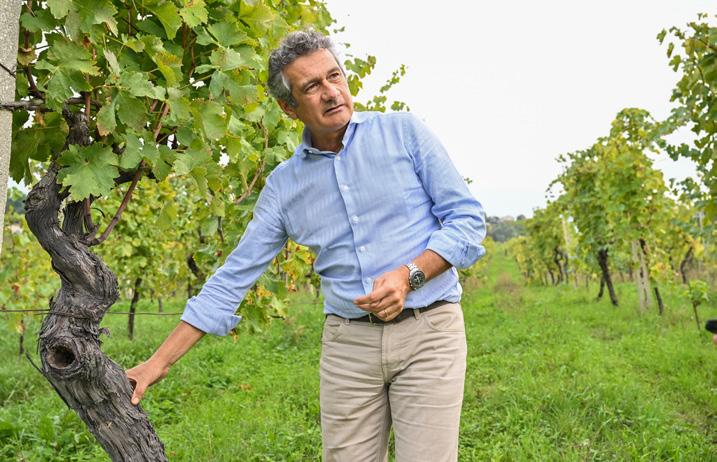
It was nearly 70 years ago that Massimo Bernetti founded Umani Ronchi. He saw the potential of the Marche’s finest terroir, with the native Verdicchio at the heart of it. Building on these foundations, his son, Michele Bernetti, now heads up the operation. He discusses Verdicchio and the special place it calls home.
In association with Berkmann Wine Cellars
“We have learned to avoid over-ripening, to harvest at the right moment, to preserve the natural acidity and salinity of Verdicchio, rather than correcting it away in favour of weight and power. The result is an elegance that was always present in the grape. We didn’t impose it; we simply stopped getting in the way.”
Michele is in no doubt that Castelli di
Vecchie Vigne RRP £33.50
“This is a project that I conceived personally when we came to restore this vineyard. Rather than replanting entirely, we decided to preserve a portion of the original vines, carefully rehabilitating the old plants and giving them the best possible conditions to express themselves fully,” says Michele.
After stainless steel fermentation, the wine rests for a year in traditional concrete vats to preserve the wine’s natural energy while allowing for a slow, patient integration. It’s fresh and vertical with a striking precision and tension.
Jesi is the place for elevating Verdicchio to its highest level, and over the last two decades Umani Ronchi has been committed to studying the territory carefully, finding which combination of hillsides, soils and elevations best capture Verdicchio’s distinctive character. “All of the work is now showing in the glass,” he says. “And the wine world is beginning to take notice.”
Plenio Riserva
Plenio has evolved over three decades into “something more balanced and more nuanced – a wine where no single element dominates, where alcohol, acidity, depth and ageing potential all find their place in a coherent whole. Elegance rather than power. Refinement rather than statement.”
The 30th anniversary black label edition represents that journey distilled into a single bottle. “It is the most complete expression of where this wine has arrived — and a marker of where we intend to continue.”
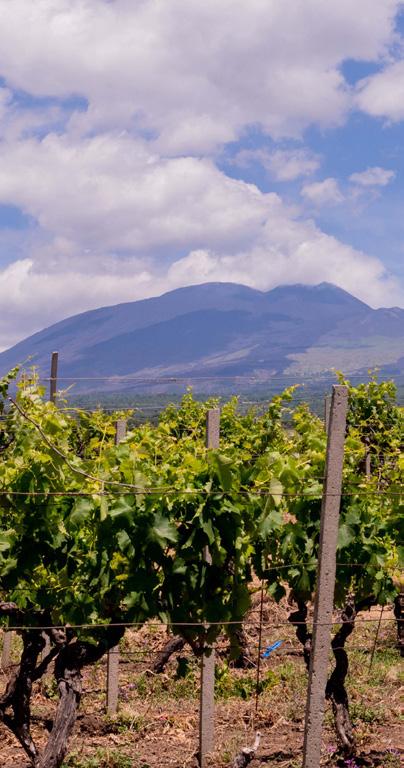

Taking inspiration from Sicily’s Mount Etna, the Gaja family began their next winemaking adventure with IDDA, a joint venture with the Graci family, established in 2017. Contrada Stella is a striking expression of Carricante grown on some of Etna’s oldest soils, formed of ancient lava flows, and marks IDDA’s first interpretation of a single vineyard site. Distinctive and complex, Contrada Stella is the embodiment of the estate’s commitment to the Carricante grape and channels the signature energy, saline minerality and blood orange character of this southwestern corner of Etna. Contrada Stella joins IDDA Bianco and Rosso in the range.
IDDA WINES ARE EXCLUSIVE TO INDEPENDENT RETAIL.
Contact Hatch Mansfield, the exclusive UK importer of IDDA wines. info@hatch.co.uk | hatchmansfield.com
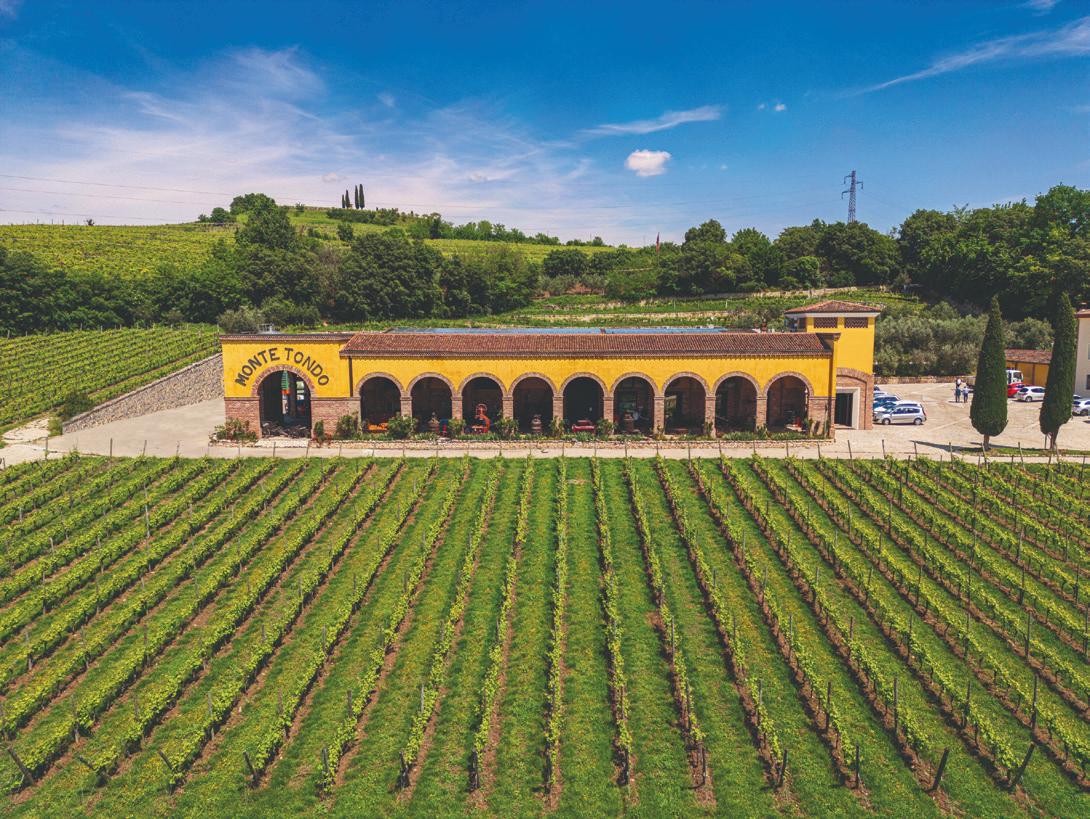

Monte Tondo, owned and run by the Magnabosco family for three generations, captures the true character of Garganega from the volcanic hills of Soave Classico. Old vines, meticulous vineyard work, and a strong focus on sustainability (vegan certified, SQNPI) deliver wines of freshness, precision, elegance and authenticity.
Soave Mito
Soave Classico
Soave Classico Casette Foscarino
*Recommended Retail Price
For more information on Monte Tondo wines, contact their exclusive UK importer, Astrum Wine Cellars. www.astrumwinecellars.com | info@astrumwinecellars.com
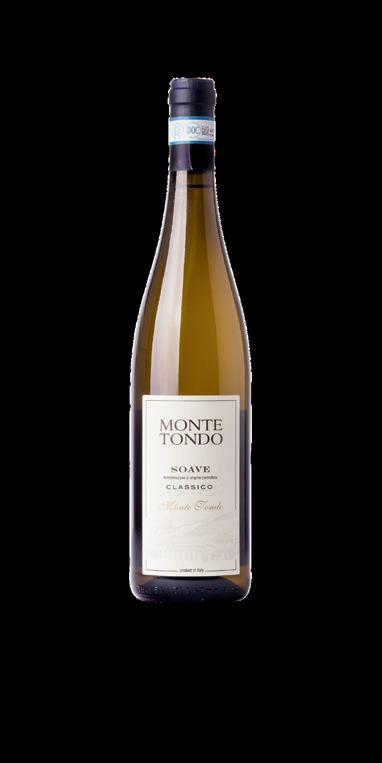


In recent years The Wine Merchant has led two buying trips to Sicily to visit Stefano Girelli, the man behind both Santa Tresa and Cortese, neighbouring (but subtly different) estates in the municipality of Vittoria.
This time, Stefano came to us, hosting a masterclass focusing just on Cortese wines. Distributed by North South Wines, the range is loved by indies for its lively packaging and keen pricing. But it’s the purity and freshness of the wines that really seals the deal.
Stefano is from the north of Italy, in Trento, where his company – The Wine People – is based. Yet his commitment to organic viticulture, and insistence on biodiversity on his estates, has drawn him inextricably to Sicily.
The event took place at Norma, a Sicilian restaurant in Fitzrovia, central London, where the wines paired beautifully with seared tuna, rigatoni alla norma, crispy duck and Sicilian cheeses.
Feature published in association with Azienda Agricola Cortese. To find out more about Cortese wines, contact North South Wines: northsouthwines.co.uk
Terre Siciliane IGP RRP £15
Stefano points out that there are three distinct clones of Catarratto, with the shiny-skinned Lucido offering lower yields and higher concentration than the one favoured by Marsala producers. The grapes are hand-picked and allowed to chill overnight – which is kinder both to the fruit and to the people working in temperatures of up to 46 degrees centigrade.
The grapes go into a pneumatic press, which creates a gentle vacuum to extract the juice with minimal skin damage, which would create unwanted bitterness. After fermentation, the wine remains on fine lees until bottling.
Tolga Koymen of Bacchus N4 in London loves the wine for “its minerality and freshness, its complexity, its balanced taste of spices, light citrus notes and fresh acidity on the finish”.
Terre Siciliane IGP RRP £15
Etna’s favourite grape variety is now popular across Sicily and produces “completely different” wines away from those volcanic slopes, Stefano says. This one is grown at much lower elevations and the vines are prolific in these conditions, keeping the pruning teams busy.
The wine is made in a similar way to the Lucido, “but the grapes are picked a week to 10 days later, with longer maceration and fermentation”.
Whereas the Lucido is sleek and rounded, the blossom and stone fruit-scented Carricante has a more noticeable structure and mineral note. “To me it feels like the more gastronomic wine of the two,” says Dan Leak of The Bishop’s Cave in St Albans.
Bianco Terre Siciliane IGP RRP £17
Now in its third vintage. Orange-Utan feels like a modern idea but, as Stefano says, “this is how my grandfather would have made wine 40 or 50 years ago”. It’s 80% Inzolia and 20% Zibibbo.
“Inzolia is a grape that needs an extra push to come out and express itself,” says Stefano. “So we give it three weeks’ maceration on the skins. And the idea of Zibibbo is that we want to have a very pronounced, almost aromatic nose.”
The eye-catching label adds to the fun, but it’s the fresh, fruity wine, with its notes of citrus, balsamic and mint, that wins over even the most rigid of orange wine refuseniks. There’s no funkiness, and no sediment.
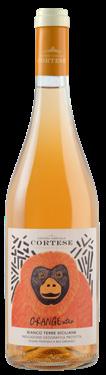
Matt Smith of Quaff in Brighton says: “It’s refreshing to taste an orange wine which isn’t oxidised and I can understand why customers have been piling through it in our shops.”
Bianco Terre Siciliane IGP RRP £21
“This is a blend of Catarratto, Grillo and a little bit of Fiano,” Stefano says. “After being chilled down the grapes are destemmed and go into a red wine fermenter for two days. We finish the fermentation in large barrels. We keep the wine on fine lees and it’s amazing how it develops. The first vintage was 2016, which today is tasting wonderful: a combination of structural complexity and freshness.”
Visitors to Cortese on Wine Merchant trips have always been wowed by vertical tastings of Vanedda and the differences between vintages as the wine evolves.
Matt Smith of Quaff says: “This was the highlight for me as it’s great to taste a white that has some power and weight behind it – a great alternative to oaky Chardonnay or white Rioja.”
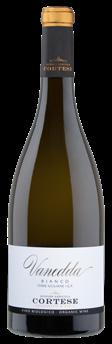
Terre Siciliane IGP RRP £15.50
“Nerello has a similar story to Carricante,” says Stefano. “It’s a wine that is mainly produced on Etna but not the rest of the island. In a climate like Sicily’s, we expect big wines with a lot of muscle, but here we have elegance, we have fruitiness, and we have really good balance.
“We don’t use any oak here, and we let the wine sit on fine lees for as long as possible. It has a little more structure than a Frappato. It’s not as versatile, but it’s a beautiful, easydrinking wine.”
Nero d’Avola Sicilia DOC RRP £24.50
We taste this wine beside the Cerasuolo and the difference is striking, even though the vinification process is pretty similar. “It has firmer tannins, but the fact that it’s been in oak for up to 10 months allows us keep those tannins relatively soft,” says Stefano. “As you can see, we’re not extreme in our use of oak –we’re not in the oak-flavouring business. We use the oak in order to elevate the tannins.”
Produced in very small volumes, Senia is deeply coloured with plum and blackberry aromas and a hunt of liquorice. Despite its full body, it’s surprisingly refreshing on the palate.
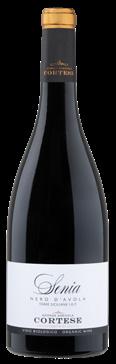
Terre Siciliane IGP RRP £15
Served slightly chilled and brimming with wild strawberry notes, this wine may seem easygoing. But the variety is “a freaking nightmare” for viticulturists, Stefano admits, with its big bunches, thin skin and susceptibility to overripeness, green tannins and mould. The clone is native not just to Sicily but to Cortese’s Vittoria terroir, and the team have found a way of getting the best out of it.
“In the past four years this wine has been extremely successful and very much liked by the new generation,” says Stefano. “This is the red wine that Sicilians drink with fish. You have very good acidity on the palate, and it’s really balanced, with the right amount of alcohol and tannins. It’s a foodie wine.”
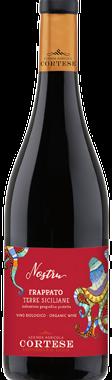
Cerasuolo di Vittoria DOCG RRP £24.50
The Cerasuolo di Vittoria DOCG is celebrating its 20th anniversary and deserves a higher consumer profile. A blend of Nero d’Avola and Frappato, the wines can be dense and concentrated, but in this example the tannins are very approachable. That’s because the Nero d’Avola is separately fermented in open-top barriques, with the skins gently immersed by hand.
The Frappato is fermented in amphorae – partly a homage to the winemaking traditions of a historic Greek colony in Sicily, but also because the porosity of the terracotta means the wine can stay in contact with its skins for longer – in fact 12 months – with the tannins moderated by the oxygen that’s allowed in.
It’s another star wine for Tolga Koymen: “There are flavours of ripe cherry and sweet raspberry with cacao, spice and liquorice on the palate,” he says. “Also soft tannins and a long finish.”
Terre Siciliane IGP RRP £60
We’re returning to Frappato but in a completely different expression. “Here we focus on a specific vineyard where we control the yield dramatically,” Stefano explains. “We’re down to about 35, 37 hectolitres per hectare. These are the grapes we pick last, around the end of September. We very gently crush the grapes, if necessary, because just the fact that you destem the grapes is enough to crack the berries. Then the fermentation takes place in amphora and we keep the wine on the skins for at least one year.”
It’s a fascinating wine, with notes of red fruit, ginger and orange. “It’s a unique and totally unexpected wine for Sicily,” says Stefano. “A complex wine, terrific with food.”

Natural wines that don’t taste of manure, dirt and cider vinegar? What’s going on?
natural wine tasting. I was not a fan. Everything tasted of dirt, manure, apple cider vinegar, or a combination of all three. There were so many faulty wines in the room, and I do mean this in the conventional sense of being undrinkably bad, and they were definitely not, by any metric, OK.
However, many years later, and I’m finding it is rarely my experience now. The question is whether the wines that today identify in this bracket are just the rebranding of wines that already existed.
Has natural wine become mainstream? I remember the good ol’ days, when wine was wine and men with beards were the only people that wanted wines that tasted of dirt (before you throw the mag down in disgust, please keep reading).
A pivotal moment in mine and Mr B’s relationship happened this weekend just gone, and I don’t think he realises it. Seated to enjoy a Sunday lunch whilst away for a few days, I noted that much of the wine list was from Les Caves de Pyrene – well known for their low intervention (and beyond) wines. A moment of nervousness for me here because Mr B is very conventional when it comes to wines.
So, with some trepidation I chose a Fiano with assistance from the sommelier, trying to ensure that the trigger words were not mentioned. Poured, it was a beautiful golden colour, albeit cloudy. But one sniff and Mr B was happy. Fiano of course lends itself very happily to the extended skin contact it had clearly had. But even the more challenging palate didn’t put him off.
The point here is that Mr B has always been my benchmark for the “average drinker” for the past 15 years or so. He’s a man who, despite his confidently incorrect stories eagerly shared with my customers at many years of my big wine tastings, knows little about wine. He really enjoys drinking it, he doesn’t mind me spending money on it (I always tell him it was 20
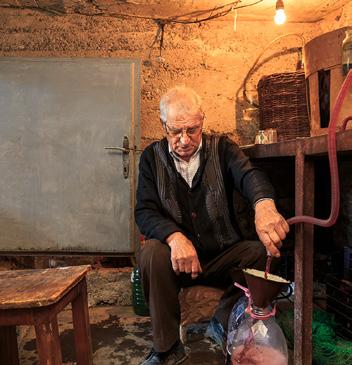
Ezio, or perhaps his great-grandfather
eBay pounds,which is code for “don’t ask”), but he’d happily drink Gallo rosé and relive his 20s again.
You may wonder how I am married to this man. I do ask myself this question, but we’ll leave that in a box for another day. The reality is that this wine that he should have not enjoyed (that 10 years ago he’d have hated) he loved.
Years ago, before having my own business, I accompanied a friend to a
Italians are not adding ingredients to their food when they don’t have to, and the same
is true
of their wines
Was Ezio always making wines the way his great-grandfather had 100 years ago? It’s just that he didn’t shout about it because nobody cared: the fad was American oak and he wasn’t going to get rid of his Slavonian oak botti, so he was just a little unfashionable. Selling enough in the local market to not worry that export wasn’t a success.
Yet here we are now, with so many small producers and importers trying to get away from the homogenised crap that adorns the supermarket shelves, talking about indigenous yeasts, and declining to add (much) sulphur. Italy has been on this train for a long time. Just look at their food: they’re not adding ingredients when they don’t have to, and the same is true of their wines. The only difference is that now it’s cool to talk about it, and so wines that I would have quite happily labelled as “conventional” can frequently fit in the “natural” pigeonhole.
Of course, if you’re creative enough, you can make anything natural. After all, what is wine but a natural product? Are you telling me that the cheap supermarket piss I drank as a student isn’t natural? OK, that was a bad example.
So, have we reached that point where “natural” winemaking has become mainstream, or is it just a marketable term for what many have been doing for years? Is it instead possible that what we’re suffering is a lack of definition – and an overarching reliance on “vibes”?
Cat Brandwood is head of private client sales at The Naked Grape
Whether you have travelled there or not, the Algarve feels deeply familiar. Year-round sunshine, glorious beaches, world-class golf courses … and top-notch wines?
In April, Sarah Ahmed led the inaugural UK trade and press tasting of Wines of Algarve to an open-minded audience who had no idea what to expect, even as committed importers of Portuguese wines. Such is the success of the region’s tourist industry only 12% of local wines currently leave the country. “But Algarve wines are a dark horse no more,” says Ahmed. “The mission is to raise their profile in the UK.”
Having made multiple visits to the region in the last four years, Ahmed is an enthusiastic ambassador, making clear that “the wines are not Alentejo wannabes … the producers are taking a different tack, and with every visit there’s more confidence from the winemakers”. She adds: “The wines have brio and flair, with balance and freshness.
“There’s all sorts going on in what is quite a complex region.”
Working across four DOs – Lagos, Portimão, Lagoa and Tavira – producers tend to favour the broader, and easily recognisable, IG Algarve on their labels. Nevertheless, the terroir is varied and complex. Sandy soils dominate the coastal vineyards, whereas those in the uplands are typically rocky schist and granite. In between, in the Barrocal, there is sandy clay, limestone and alluvial clay too.
As the tourist brochures attest, local wine growers enjoy over 3,000 hours of sunshine every year. From April to September the area is refreshed by the Canary Current – nature’s answer to air conditioning. Ocean breezes also play an important role in moderating temperatures, with the eastern DO Tavira experiencing a wind akin to the Mistral, which one producer describes as “a rotational wind tunnel”.
The Algarve’s popularity means that land comes at a premium, which impacts both wine prices and the size of wine estates. Of the wines tasted in the masterclass, all but one came from boutique properties, with between 10 and 20 hectares of vineyard. There is one remaining cooperative, but the emphasis is on individual, estate-grown
Sarah Ahmed celebrates a region that needs no introduction to British tourists – but may be under the radar for wine lovers, at least for now
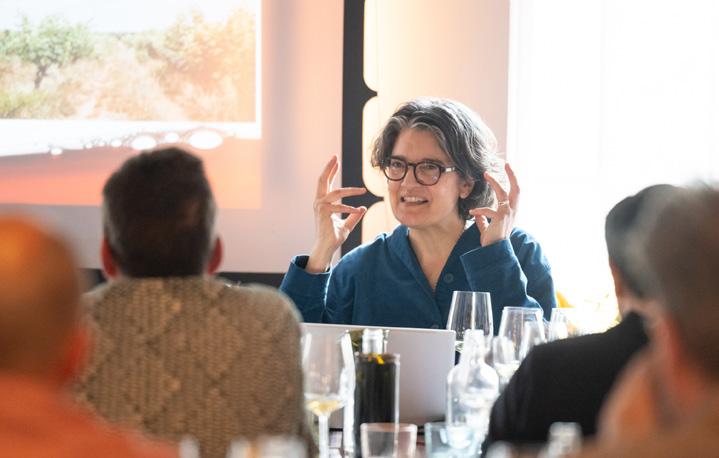
wines, with numbers doubling in the past decade. There are currently 800 hectares of vineyards for wine production and almost 50 economic agents authorised to produce and/or sell wine.
Touriga Nacional is the most widely planted grape variety, but a close second is Algarve’s USP: the indigenous Negra Mole. A droughtresistant, late-ripening variety, with large berries that vary from blue to blush pink, it is a grape of many talents. To emphasise the point we taste it as a sparkling, a rosé and a red.
Cabrita Negra Mole Blanc de Noir Espumante 2016 is a distinct traditionalmethod sparkling with a strong autolytic influence. As Ahmed says, “this is not a canapé sparkling but one to enjoy with meatier dishes … a wine with freshness and persistence”.
Quinta da Penina Foral de Portimão Rosé 2024 has lovely acidity and a very on-trend pale pink colour. The palate is chewy and textural with an abundance of summer berry fruits.
João Clara’s Tinto de Ânfora 2024
garners some impressive ooh and aahs, with one MW remarking: “It’s deliciously drinkable, and quite unique”. There’s a hint of the Burgundian about it: lithe, full of fruit and wonderfully fresh.
Moving to other varieties, a white that found favour with the audience was the Morgado do Quintão Branco de Anfora 2024. It’s 100% Crato Branco, hand-harvested and then whole-bunch pressed, with no SO2 added until the end of fermentation, which took place in 140-year-old, 1,500 unlined talha. Textural more than fruity, this is a top gastro white.
Casa Santos Lima has the largest wine operation in the Algarve, and its Al-Ria Red 2022 showed that there is good value to be had. A blend of Touriga Nacional, Alicante Bouschet and Syrah, the freshness found here would be hard found in other Portuguese reds at the £13-£14 price point. Ahmed is right: Algarve wines have a delicious point of difference that make them worthy of further exploration.
In association with Algarve Wines Visit vinhosdoalgarve.pt/en/
With nearly half of indies now operating as hybrids, kegs and taps seem more suited to the modern wine shop than ever before. For merchants wrestling with slender margins and rising costs, wine on tap offers more than sustainability credentials alone: it offers genuine savings through streamlined hospitality, easing the headaches of storage, spoilage and service. And that’s without the novelty of bottle refills.
But after a nearly 400-year reign of the wine bottle, how likely are merchants and their customers to ditch it in favour of something so closely associated with beer? We spoke to a few indies who offer the service to find out how it works for them.
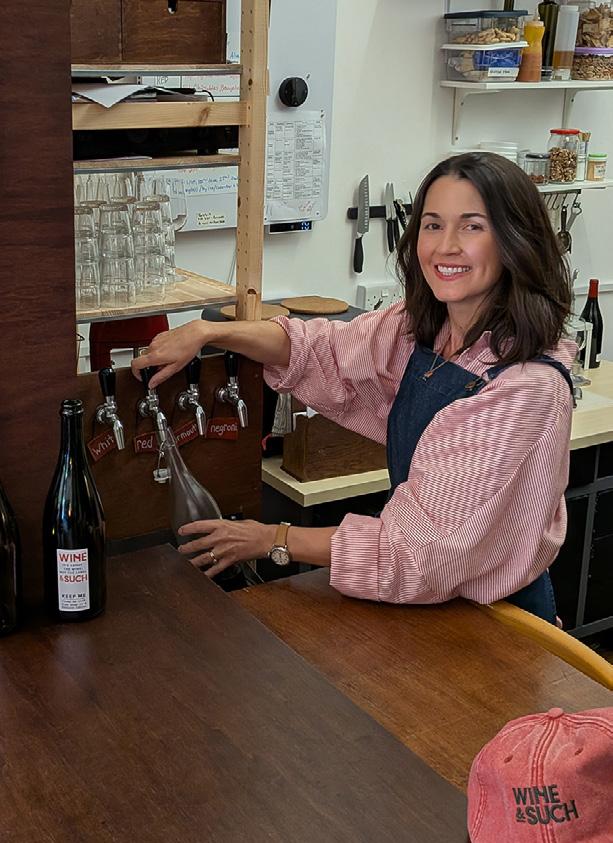
Stephanie Di Camillo Wine & Such, south east London
Bruce Evans Grape & Grain, Crediton, Devon
I’ve got three wines on tap at the moment, and I know you can get really posh wines now and the quality is really good, but we tend to use it, not for house wines, but reliable mid-range wines.
I have one Bordeaux blend from Graft, a New Zealand Sauvignon Blanc from Hatch Mansfield and an Argentinian Malbec, so they’re commercial things that sell really well, leaving the more interesting stuff for the bottle list.
The condition of the wines is always really good: the longest we have had one on was a Spanish Bobal for five months and it was still doing fine at the end.

A lot of the time people won’t even know it’s coming out of a keg; they’ll just order a glass or carafe of something.
The only issue I’ve had is, because I’m away from the city, getting the empty Keykegs back to be recycled – there’s no circular economy for it here in Devon yet. But if you talk to people in urban environments, they’re much more likely to be able to do it.
Wine on tap is incredibly important to us; it was one of our main USPs from the beginning.
We wanted people to be able to enjoy a quality product in the refillable format – it means people are able to grab a smaller amount of wine (we have people come in for just a glass to take back for the night) but not be restricted to either dreadful airplane bottles or expensive half-bottles.
Now that we have moved to offering wine by the glass in the shop, it means we have basically zero wastage on our house wines too. Another benefit is space. It’s remarkable how little space you need for such large amounts of wine in keg. It is also a fun and interesting offering to guests. Many remark how similar it is to when they go to France or Spain and are able to just fill up their bottles.
It allows us to offer our house wine at a very reasonable price, both by the bottle and by the glass. It also means customers get savings, since they aren’t paying for the bottle, labelling and shipping. The biggest example we have had is the Provence rosé. If I ordered the regular bottle, it would be £27 on the shelf, but on tap we could offer it at £20 per bottle.
We have two taps for our house white and red, which we keep as crowd pleasers, and a third tap for anything else. We have a rotation of three to four house wines we use. The favourites by far are Vinho Verde and Refosco. It’s coming to rosé season, and
I suspect that will start to fly too. And now that more and more wineries are offering wine in keg, there’s some really fun stuff, like Italian orange, flor-aged white from Spain, juicy natural reds and biodynamic Provence rosé.
Almost all of my suppliers offer kegs now. Uncharted is our main one, then Les Caves de Pyrene, Boutinot and Moreno. There is a very good selection; every time I log on to Uncharted there seems to be more and more options, including high-end stuff, like Meursault.
We also offer Spanish vermouth on tap which everyone loves, and we do a seasonal Negroni as well. This is great for parties; people will come fill up a litre bottle and have it ready to pour with no fuss.
Louise Etienne
La Cave de Bruno, south London
We’ve been doing wine on tap since day one, 12 years ago. I guess it came from wanting a good, quality house wine at a reasonable price. It also felt authentic to us as many of the French co-operatives have similar systems. It’s great watching the locals come and refill their flagons with the local wines.
We do a red and white all year round and add a rosé from spring each year. The white and rosé feed through a cooler so they pour out cold straight into the customer’s bottle. We also serve it by the glass and carafe for our house wine on the terrace. The customers absolutely love it. It’s their midweek staple.
We tend to have a Rhône for the red, and a Picpoul for the white, both of which we import ourselves. We do try to mix it up at times, however, it’s important to us that the quality is there at a good
price, so it’s not always easy to find. Once we find one we and the customers love it we tend to stick with it.
It also helps a lot environmentally. By selling wine on refill, we dramatically reduce the number of single-use glass bottles, whilst cutting down on associated packaging and transport waste.
Jana Postulkova Forest Wines, east London
Wine on tap has become a really nice addition to our range. We’ve built a solid local customer base of people who initially bought bottles from us and now return regularly for refills. It also works very well as part of our bar offering.
One of the biggest benefits is the reduction in glass waste in the bar, which has been fantastic for us from both an operational and sustainability perspective. There’s definitely a strong and growing selection available now too, and more suppliers seem to be introducing the Keykeg format, which is great to see. For us, easydrinking, aperitif-style whites and lighter reds tend to perform best.
We currently work with Les Caves de Pyrene, Modal Wines and Graft, although we’re always on the lookout for new producers and suppliers to expand the range.
Like any draught setup, it requires cleaning and maintenance to keep everything running smoothly, but overall, we’ve been really happy with it and find it straightforward to manage.
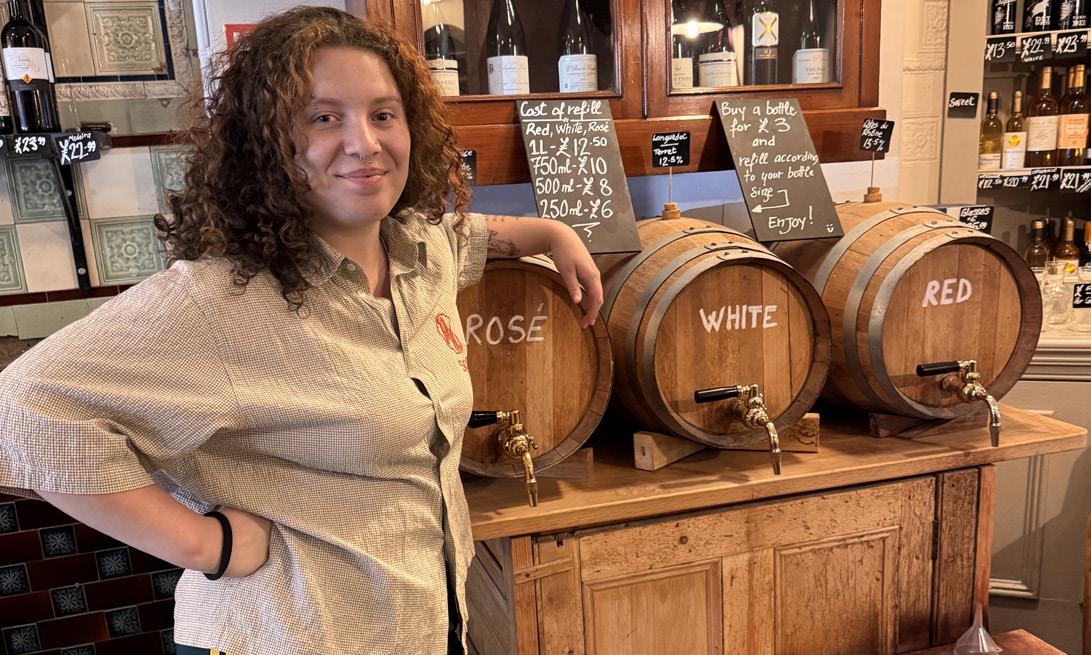
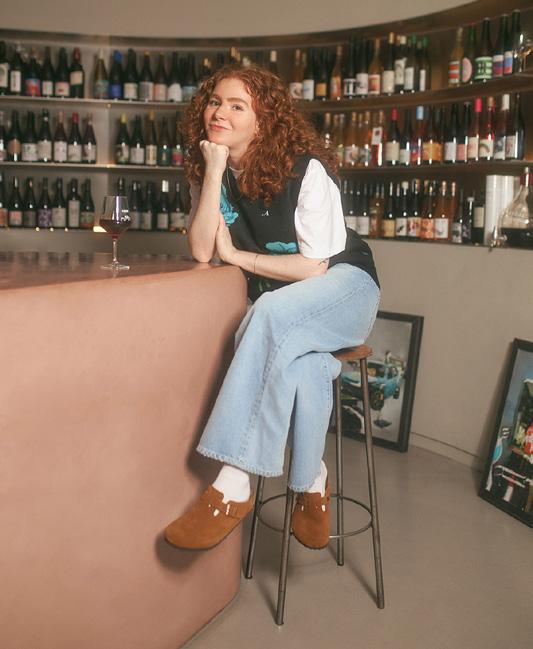
Fiona Boulton Kerb, Manchester
The environmental benefit is huge, it’s all in Keykeg so we recycle it all and people can refill their own bottles. We also barely have any storage, so it’s a good use of space, but that wasn’t a factor in us first getting it.
We have a white, red, orange and rosé; the orange is probably the best seller. We use Distant Lands, Uncharted, Wrights and Modal. We were using also using New Theory, but they’ve just gone into administration. The availability for natural wines in kegs is getting wider, which is great to see, although it’s difficult to find a wide variety of sparkling wine.
People used to assume that it’s lesser quality wine compared to bottles, but we’ve been getting that question less and less over the years – particularly as we have the same wine available in bottles.
It works well for us – and it’s here to stay.
‘A more conversational style of selling’
Lanchester Wines offers a range of 20-litre Keykeg wines.
Key account manager Ben Cotts says: “We work with independent merchants who are successfully combining traditional retail with wine on tap to create something a little different, whether that’s through refill stations, by-the-glass sampling or in-store events.
“One of the biggest challenges for independents is encouraging customers to explore beyond their go-to choices. Wine on tap opens up new opportunities here, allowing retailers to offer small tastes or by-the-glass options that lower the barrier to trial.
“This makes it easier to introduce less familiar varietals or styles, helping customers trade up or discover something new with confidence. The format naturally lends itself to a more relaxed, conversational style of selling.”
Liam Plowman Wild & Lees, south London
When we opened in 2016, craft beer was a much more important part of the shop than it is now, so we got ourselves a two-tap Lindr machine to serve draft beer alongside our wine list. It wasn’t wildly popular and after about six months I went to a Les Caves de Pyrene tasting where they had some really good wine in Keykeg that was right up our street, so we changed over to wine on the tap instead.
We do a natural Sicilian Catarratto on one and a Côtes du Rhône on the other. They go really well; people really like the process of bringing in a bottle and filling it up and we manage to knock them out for well under £15 a bottle. I’d ideally like to get another machine to get some higher-end wines on tap too. There’s definitely an appetite for that, even if it would be slightly slower.
We do both of those wines by the glass, too, and that helps to fund the whole thing, really. We can charge a little bit more and that extra margin means we can keep other wines by the bottle down too. We’ve had the Lindr for years now and it’s more than paid for itself many times over.
It means we aren’t recycling as many bottles as we used to. There’s always conversations about packaging in the industry and by avoiding glass it’s a huge reduction in the carbon footprint of wine. It’s appealing for a lot of customers for that reason. You can pick up a 20-litre Keykeg with one hand but if you tried doing that with 27 full bottles, you’d put your back out.
In terms of recycling the kegs, we’re part of something called Quantum Waste Collective who remove the necessity for a big bin in the street by coming round to collect recycling a couple of times a week. We just crush the kegs down and put them in a bag with our cardboard and they’re sorted into the correct recycling streams.
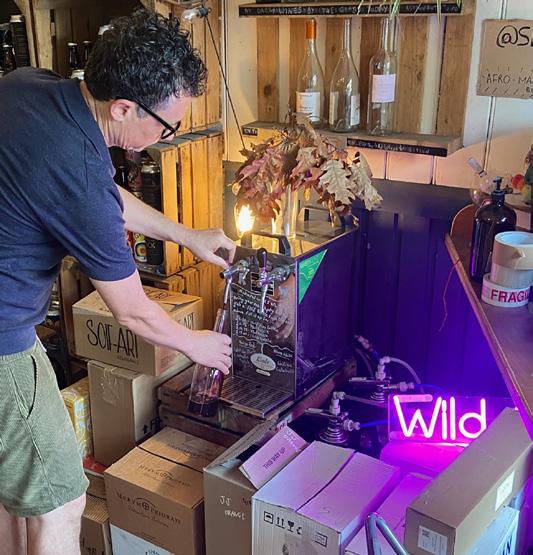
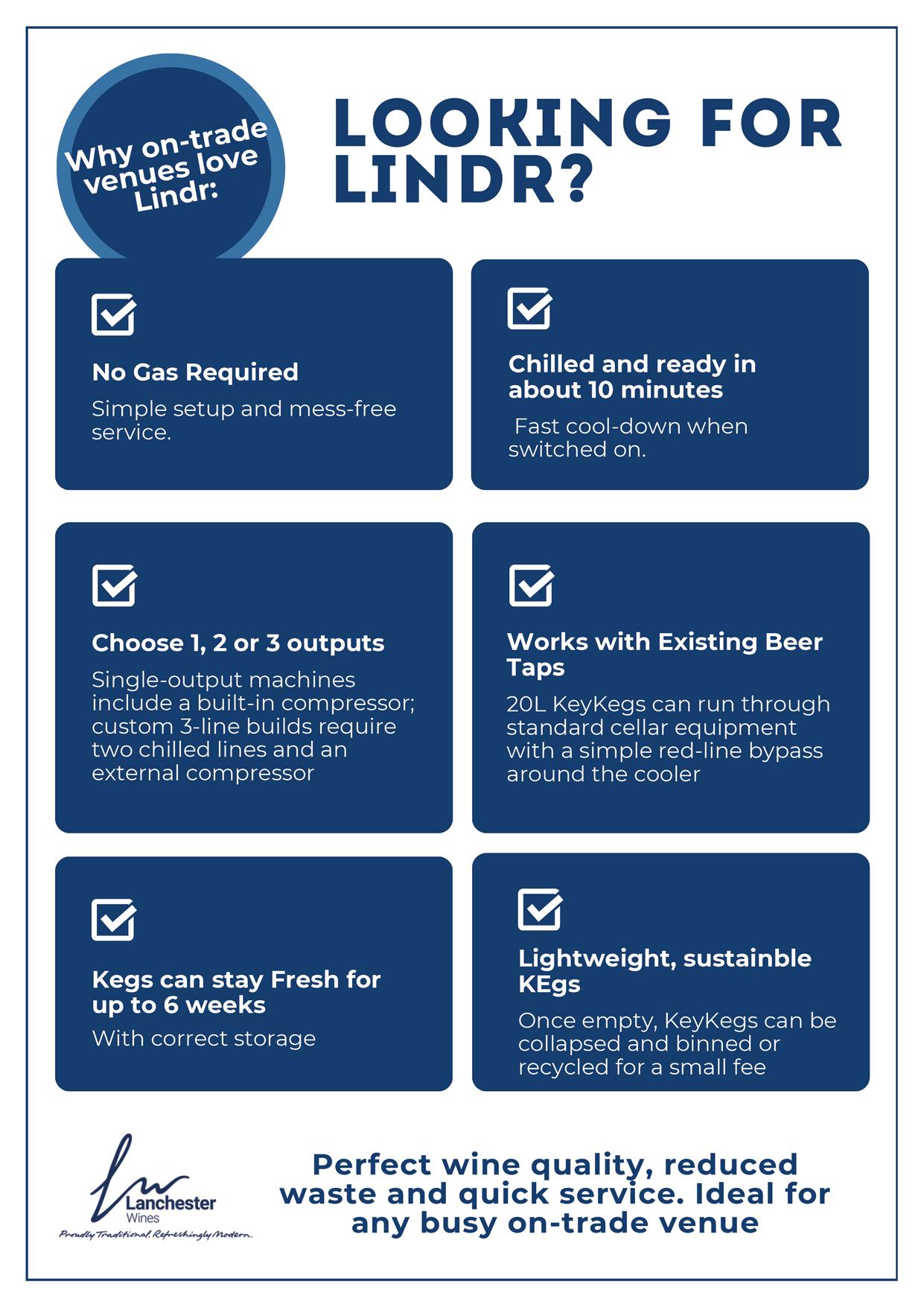

Misery and negativity don’t help sales. So let’s call a halt to sad-face social media

A meagre 15p profit for all that artistry
Sex sells. Hundreds of Cosmo front covers and 80 branches of cheaplyuncomfortable-looking-smutwear retailer Ann Summers are testament to that.
It’s a phrase that has been proven true for over a century, at the very least, but one thing I’m sure doesn’t help sales is misery. Which is why I am slightly baffled by the response to the current crisis in the hospitality industry.
As a wine merchant with both a retail and a wholesale element, we are inextricably linked to the success, or otherwise, of the hospitality industry. I
want that trade to be buoyant, profitable and filled with happy staff and owners alike.
This year social media, and the mainstream news, have been filled with tales of woe. Restaurants are losing money every day and only remaining open to
keep their staff in gainful employment. There is video after video on Instagram and Facebook showing how a £3.60 cup of coffee only generates a profit of 12 pence or that a £7 pint provides a profit of just thruppence. The claims in these videos are spurious at best and tend to use the sort of cheaty economics that are generally employed by those who want to get you to vote for them.
I’m not saying that the hospitality sector isn’t having a tough time. Far from it. But what I don’t get is advertising how awful it is to anyone who will listen. You only have to glance through any of the number of cookbooks that grace your shelves at home to know that looks count when it comes to food: perception is important.
Menus are written to make you dreamily wistful as you read just how far down they “dived, by hand” to get those scallops; you don’t want to know that scallops eat “phytoplankton, algae and detritus”.
Dining out is a treat. No matter how much or how little you spend, you want to feel good. It’s hard to get this feelgood factor when you know that your very presence is apparently causing the restaurant to lose money. I’m obviously being slightly facetious but the point remains that it’s positivity that sells, not misery.
Maybe what the hospitality industry needs to do is take a leaf out of the gambling sector’s playbook. If despairinducing addictions to sports betting and slot machines can be made to seem like they bring life-affirming joy then surely a Filet Mignon with sauce Bearnaise should create a near euphoric state.
This despair driven-honesty isn’t only confined to hospitality. I see it creeping into retail, too, and it really doesn’t help.
Hospitality is having a tough time. But what I don’t get is advertising how awful it is to anyone who will listen
We currently reside in a railway arch a few hundred yards from Huddersfield train station, which is part of a multi-billion pound upgrade project.
Huddersfield teems with folk in high-vis orange and hard hats. Roads around us are regularly closed for weeks and months. In the first year of the project we were twice told that we would need to vacate our shop
for an unspecified number of months. All of this has been unsurprisingly stressful: for a while I found anyone walking past the shop window in orange induced a sort of PTSD reaction, but we have never passed the thought of this stress on to our customers.
We’ve worked round it, found solutions, kept as positive as we could and, thankfully, the project has been changed to work around us, rather than through us. Two businesses a couple of doors down decided that all of their ails were due to this project and figured that going as public as possible would help.
It didn’t. It just meant that they appeared in the local paper doing one of those photos where the photographer tells you to look cross about a pothole.
They even got the local MP and BBC Look North involved. Inevitably we were asked for our opinion, vox-pop style. We were relaxed, happy and positive about things and asked not to be mentioned in any sob-story or press release, and that way we didn’t have to do a sad-face photo either.
The only time that negativity sells is when it’s one of those awful miseryporn books of the late 90s, Angela’s Ashes or A Boy Called It, one of the more perverse publishing success stories.
Even at the point of writing this, when you need to make a 10-minute detour to get to the front of the shop and customers come in telling us that it’s ridiculous, we keep a smile on our faces and congratulate their Captain Cook-like intrepidness.
I remember my father telling me that M&S always suffered more when it was reported that they had posted lowerthan-expected profits and were seen to be struggling.
His logic was that nobody wanted to buy their smalls from a company that wasn’t a success: what if the underwear they sold was now badly made too? And nobody wants holes in their pants where they’re not supposed to be. Well, except for Ann Summers customers, maybe.
Wine Merchant Panel Tasting
Trade folklore insists that Riesling is the favourite white grape variety of everyone in the wine industry.
Selling it is another matter. Despite decades of merchant effort, consumers still call it Ryesling and insist they won’t like it because it’s all sweet.
Maybe one day that will change, and people will finally see Riesling for what it is: a noble grape, capable of making the most stunning white wines on earth. Or simply wines with moderate alcohol, with freshness and bite, and which are versatile food companions.
Until then, maybe we’ll just have to continue selling Riesling to other people in the wine trade.
Our tasting panel convened in a sunny garden in Hull for an afternoon of Riesling appreciation.
Jacob Stokes introduces the 12 wines that impressed us most overleaf.
Rob Hoult owns Hoults Wine Merchants in Huddersfield

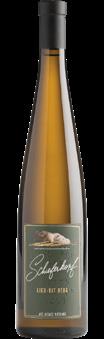
Chapoutier Schieferkopf Lieu-Dit Berg, Alsace 2021
Hatch Mansfield, RRP £35
Schieferkopf represents Chapoutier’s exploration into Alsace, with Berg being the marginal favourite of three stunning lieu-dit wines. There’s brioche dabbed in Calvados and pine nuts toasted on a diesel burner. There’s an explosion of chalk which powders the mouth like a colony of ants, tirelessly foraging for the remnants of lemon pith and apple core. If you connected Berg to the grid, it could electrify a small town.
Gassman Kappelweg de Rorschwihr, Alsace 2019
Liberty Wines, RRP £41.99
There’s the sweet must of old books, the spreading of marmalade and the reducing of apricots. There’s dates mashed with mixed peel, red apple skin crusted with flecks of slate and molasses being stirred into melting beeswax. This is the hug of merino wool in a golden gloaming and the glint of amber from an open fire. It’s crying out for ginger biscuits and autumn nights.
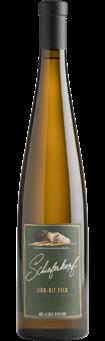

Chapoutier Schieferkopf Lieu-Dit Fels, Alsace 2021
Hatch Mansfield, RRP £35
This couldn’t bear any less resemblance to Chapoutier’s Rhône whites if it tried. It’s a sniper shot of rocks, salt and shells, piercing through every enemy lemon in its sight. Like all three of these Schieferkopf wines, there’s a psychotic intensity which borders on intimidating. You can imagine it doing ten thousand press-ups in the pouring rain, followed by a 10-mile crawl through sodden earth just to reach mental equilibrium.
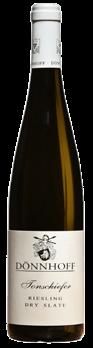
Awin Barratt Siegel, RRP £31.75
Faced with a range of embryonic Riesling samples, the panel devised a system to rank tautness based on sour sweets: this one attained apple Chewits status for its bracing granny smith spine. Textbook dry Riesling on the nose; there’s lemon blossom, freshly severed tennis balls and slate in abundance. It’s astoundingly long with prickles of pith, sourdough and steel throughout. Either shove this into a dark corner for a few years or break out some fresh salty fish and get down to business.
5 Chapoutier Schieferkopf Lieu-Dit Buehl, Alsace 2021
Hatch Mansfield, RRP £35
Buehl is the problem child of Chapoutier’s Alsatian triplets. There’s unfortunately a touch of cork taint, but the wine is still too good not to include: it’s entirely possible that without the fault it would’ve topped the charts. Lemon and lime fruit seeps out of every corner of the mouth like a series of broken citrus mains. There’s a storm of minerality, like rainsoaked concrete, chalk laden winds and lightning-struck seawater. Take cover.
6 SA Prum Erden, Mosel 2018
Delibo Wine Agencies, RRP £28.50
Very few wine styles represent wisdom and balance like Feinherb Mosel Riesling. It’s observed many a wine saga come and go, some of which have threated its own credibility. But regardless it emerges, unfazed, unchanged and quietly unyielding. Erden’s brush of sweetness is matched with a hand-drawn acidity, its oily texture lined with the crunch of red apples and its spring blossoms dripped with a pipette squeeze of petrol.
7 Delheim Staying Alive, Stellenbosch 2023
Delibo Wine Agencies, RRP £21.50
8 SA Prum Blue, Mosel 2023
Delibo Wine Agencies, RRP £23
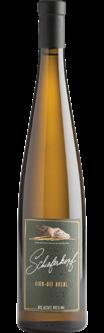
Staying Alive is the product of a collaboration between Delheim Estate and Weingut Hammel in the Pfalz. By using a yeast strain isolated from a Swiss wine made in 1895, the pair have achieved a nose which suggests whole rye loaves being thrown into the vessels to assist lees ageing. It’s exceptionally savoury; there’s tilled earth, wild flowers, green chillies and white pepper. What starts as a satin textured entry morphs into a vice crank of lemon juice and apple core. Absolutely enthralling.
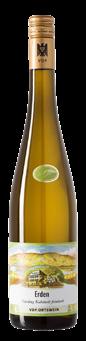
This should be the industry standard for teaching dry German Riesling to students. Named after the famous blue slate soils of the Mosel, it’s absolutely classic, flaunting every typicity of the style with class and clarity. A tightrope of chalk gives passage to all the usual suspects; green apples, lemons, limes, biscuits and blossoms. It needn’t do any more; this is essential drinking.
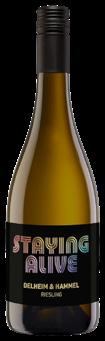
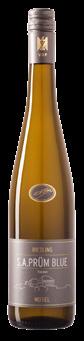
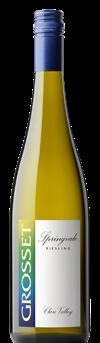
9 Grosset Springvale, Clare Valley 2025
Liberty Wines, RRP £34.99
At this age, Eden Valley Riesling feels like nothing short of a smack in the face from a barbed plimsoll. It’s an act of deception first, with a nose of mandarin skin, cut grass, cucumber and mint suggesting sanctuary and calm. But with the first hallowed sip comes the remorseless attack of chalk and lime, a punishment for being so stupid as to approach this now. I’m not saying this will mature into a small-C conservative, but it will be out of its college communist era in a few years.
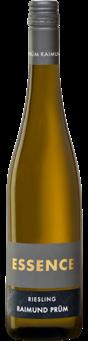
Delibo Wine Agencies, RRP £14.50
The value for money across the tasting is excellent, but this is the pick of the bunch. As the name suggests, it’s the essence of off-dry Riesling. The nose is bustling with ripe fruit; white peaches, honeydew and lemon. A decent lick of residual sugar is balanced by a patrol of lemony acidity across the palate, ensuring modern law and order. The balance and intensity this shows for under £15 is fantastic.
Alliance Wine, RRP £19.95
Richter opens with an intense perfume, like jasmine and cut grass steeped in fresh rainwater. There’s a vivacity to Richter’s palate entrance, brimming with honeysuckle, apricot and peach, all dusted with lemon sherbet. Like Prum’s Essence, there’s an effortless balance between residual sugar and acidity. This is a welcome respite after a flight of Eden Valley youngsters keen to practice their martial arts on the panel.
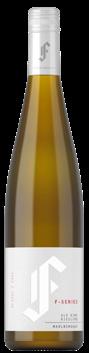
2023
Liberty Wines, RRP £30.99
You can always rely on Marlborough to conjure up an aromatic mind bender. There’s sencha being stone ground, pea shoots growing through cracked quartz and bees jumping from one dandelion to another. Padron peppers are being plunged into acacia honey and preserved limes are being thrown at anything made from rubber. It’s spicy, dicey and, less usual for New Zealand, bone dry.
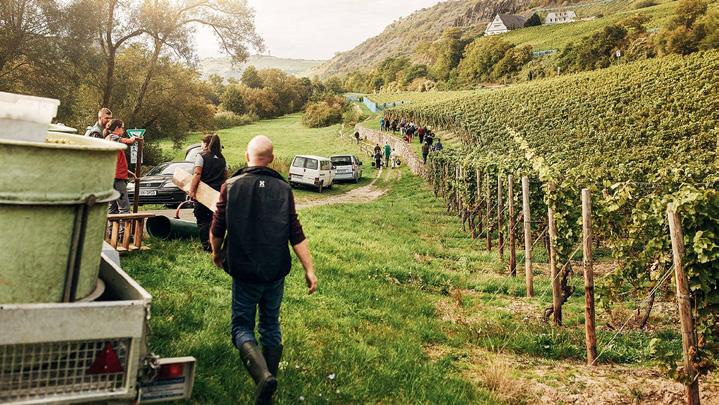
Join Awin Barratt Siegel for its annual celebration of wines and winemakers from Germany, Austria and Alsace.
Attendees can meet the people behind the bottles and be among the first to taste the newly released 2025 Rieslings, alongside 2024 Pinot Noirs fresh from the cellar, including from Germany: Dönnhoff, Nahe; Jean Stodden, Ahr; Robert Weil, Rheingau; Louis Guntrum, Rheinhessen; and Rudolf Fürst, Baden.
Austria is represented by Allram, and Alsace by Vins Julien Schaal.
Registration: email lesley@abs.wine.
Wednesday, July 1
The Caledonian Club, Morrison Room 9 Halkin Street
London SW1X 7DR
Answers to questions on page 23
1. (b) Pontack’s Head 2. (a) Chénas 3. (a) David Silva 4. Cava 5. (a) Port
If you answered “Peter Barnes” to question 3, we share your disappointment
The business, formed in 2024 through the merger of Goedhuis & Co and Waddesdon Wine, will showcase a portfolio featuring wines from the Rothschild family estates, Penfolds, and a selection of exclusive partner producers.
For registration contact sarah@ goedhuiswaddesdon.com.
Wednesday, July 8
Fishmongers’ Hall 110 London Bridge
London EC4R 3TJ



We have all met a narcissist, especially in this line of work. The entitled customer who swaggers in and demands your full attention, whilst displaying a total absence of empathy or understanding for you or your staff. They won’t accept less than VIP treatment and will sap your time and energy with long-winded stories about their exceptional knowledge of geography, vintages and the evening they were hosted at an actual dinner with the actual owner of the actual property …
Dealing with narcissists requires a firm state of mind, maintaining a professional stance at all times and setting boundaries (very politely) to highlight the unacceptable behaviour in front of you. Confronting them is likely to be futile as, frustratingly, you can’t out-narcissist a true narcissist. Narcissism is nearly always rooted in very low self-worth and ultimately they just want to be liked and admired. Validation from others is everything, so make it worth your while. What better way is there for a narcissist to show us how great they are than to spend large sums of money in your shop/bar/restaurant and for us to express just how much we value them in return?
It is very unusual for a narcissist to seek counselling, because of course it is always someone else who is the problem. But it is very common for people who have narcissists in their lives to come for therapy, especially if the narcissist in question is their partner or someone emotionally close. There are different types of narcissism, and it can vary in the way it manifests within a relationship.
A healthy level of narcissism can be a good thing, but Narcissistic Personality Disorder, at the other end of the scale, is a highly destructive, diagnosable mental illness that requires specialist treatment. It’s worth reading up on the topic or exploring with a trained therapist if you are directly affected by a narcissist and are struggling to cope, or feel unable to escape their toxic influence.
Rachel is an integrative counsellor and a member of the British Association for Counselling & Psychotherapy. She formerly ran Wine Utopia in Winchester. She offers ongoing online counselling sessions at the reduced rate of £35 per 50 minutes, so mention this article. Email rachel@rachelgibsoncounselling.co.uk or visit rachelgibsoncounselling.co.uk




Phoebe Weller of Valhalla's Goat in Glasgow is our unregulated agony aunt

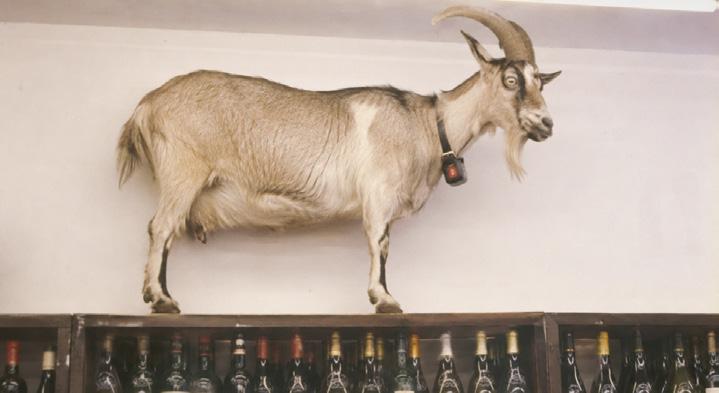
Dear Phoebe
I work in a shop where my colleagues have Enthusiastic Tastes. They keep recommending bottles to customers that I personally think are undrinkable – either over-extracted fruit bombs or screaming sharpness that’d take your eye out. How do I diplomatically steer a customer toward something actually good without looking like I’m undermining my own team?
Shirley, Jersey
Dear Shirley
I have long been a proponent of only having four bottles in the shop. Sure, keep the other ones, but remove the liquid so that no one is inclined to sell them. Or why not take a leaf from the Great, Late, Jeremy Clarkson with his GPS collars for his goats? You can programme the collar to emit a high pitched noise when a colleague reaches for something unsuitable, and if it gets as far as the till it can release a brief electric pulse to disarm the salesperson. Working with technology is my advice!
HTH, Phoebe
In a right old pickle with right wingers
Dear Phoebe
I’m finding the shop floor increasingly polarised. Last week, I had a regular get their knickers all twisted ranting about “the metropolitan elite” and how “broken” the country is, all while I was just trying to sell him a Reliable Rioja. He’s a good customer, but he expects me to nod along to his views on the ECHR and “taking back control” as part of the service. I want to stay professional, but I’m worried that staying silent looks like agreement, and speaking up will lose us the sale.
Roger, Rochfort
Dear Roger
Yeh it probably will lose you the sale. You don’t get Lidl banging on about the decentralisation of all state power into local, self-governing workers’ councils that manage the economy according to human need rather than market demand, do you?
That’s why people go there! It’s time to choose: barter the bottles in your shop for crocheted mushrooms or get on the Shut Your Mouth and Sell the Shit Train. As the Late, Great Jeremy Clarkson says, Choo Choo Agadoo!
HTH, Phoebe
Dear Phoebe
I’ve realised with some horror that people actually listen to me. I’ll make a passing comment about the resurgence of oak or a way to handle a breakup and, a week later, the customer returns to tell me they’ve bought a case of the wine and ended their five-year relationship. It’s a lot of pressure! How do I provide expert advice without becoming a defacto life coach for every person who walks through the door?
Lulu, Looe
Dear Lulu
I found your letter really worrying. There are professional people who can help with this level of delusion. No one is listening to you. Not even me. These thoughts of Omnipotent Grandeur require professional advice and perhaps even medication to overcome. Don’t see this as a sign of weakness – the Great, Late Jeremy Clarkson used his Omnipotent Grandeur to start a farming revolution. In the meantime, I would hold more customer tastings and increase the amount of pound coins in your till. Or get a cat!
HTH, Phoebe
Fells House, Station Road
Kings Langley WD4 8LH
01442 870 900
For more details about these wines and other wines from our awardwinning portfolio from some of the world’s leading wine producing families contact:
info@fells.co.uk www.fells.co.uk

@FellsWine

je_fells




A double bill of SOUTH AFRICA’S finest joins the Fells Portfolio...


For more info please contact info@fells.co.uk
liberty wines
020 7720 5350
order@libertywines.co.uk www.libertywines.co.uk

@liberty_wines



Ranked among Greece’s leading wineries, Kir-Yianni has been instrumental in realising the potential of the native red variety Xinomavro in the Naoussa and Amyndeon regions. Founded in 1997 by visionary Yiannis Boutaris after he left the historic family business Boutari Wines, the estate is today run by his son, fifth-generation winemaker Stellios Boutaris (pictured). In 2024, KirYianni became the first Greek winery to measure and verify its carbon footprint and joined the International Wineries for Climate Action as a Silver Member, underscoring its pledge for continuous environmental improvement.
Focusing on site-specific winemaking, Kir-Yianni farms 48 hectares of hillside vineyards in Naoussa (10 of which are certified organic), mapped into 42 individual blocks, and 54 hectares in Amyndeon, Greece’s coolest vine-growing region. Both are key appellations for Xinomavro, the remarkable versatility of which is showcased across Kir-Yianni’s range, from its bright, crisp Rosé and elegant traditional-method Sparkling Brut from Amyndeon, through to its powerful yet refined and ageworthy reds from Naoussa.
Assyrtiko also thrives in the estate’s high-elevation Amyndeon vineyards, giving fresh and structured mountainous expressions that offer a distinctive and exceptional-value alternative to Santorini’s volcanic style. Kir-Yianni was among the first to explore the potential of the region to produce what are now some of Greece’s finest whites.
New Bank House
1 Brockenhurst Road
Ascot SL5 9DL 01344 871800
info@hatch.co.uk www.hatchmansfield.com

Hatch Mansfield
hatchmansfield

28 Recreation Ground Road
Stamford Lincolnshire PE9 1EW 01780 755810
orders@abs.wine www.abs.wine




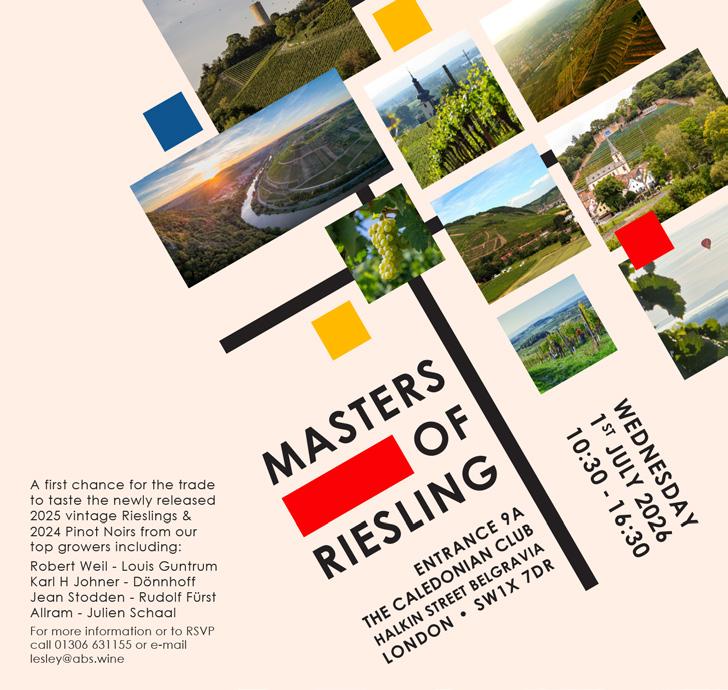
schenk family uk
Unit 5, The E Centre
Easthampstead Road
Bracknell RG12 1NF
01753 521336
www.schenkfamily-wine.co.uk @schenkfamilyuk

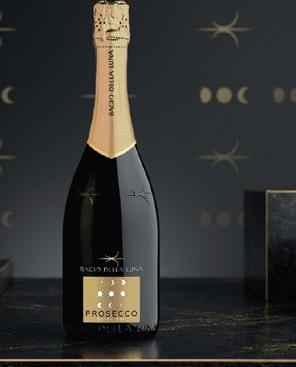

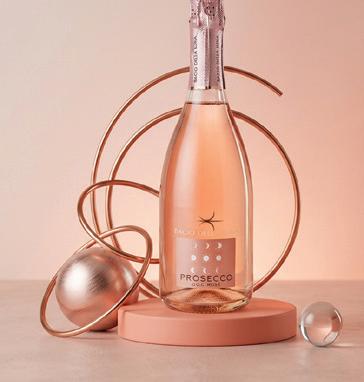
Bacio della Luna Nestled in the Prosecco hills, the estate spreads across 25 hectares of sustainably farmed vineyards. Delicacy and intensity, glamour and freshness, are the qualities that define every Bacio Della Luna wine.
The Links, Popham Close Hanworth TW13 6JE 020 8744 5550
Mark Isham, head of RWA: mark@richmondwineagencies.com
Tim Hawtin, south west & London: tim@richmondwineagencies.com
Julia Langshaw, north of the UK: julia@richmondwineagencies.com
Monika Kent, north of UK and other regions monika@richmondwineagencies.com

COMING TO RWA THIS JUNE: Queen Côtes de Provence Rosé!
A collaboration with Queen’s Roger Taylor and Les Caves du Commandeur, this elegant wine brings together heritage, craftsmanship and a spirit that’s unmistakably rock ‘n’ roll. It’s produced in Provence by Les Caves du Commandeur, where over 90% of vineyards are certified organic or High Environmental Value.
Queen Côtes de Provence Rosé captures the pure essence of Provence with a rhapsody of wild strawberry and ripe red berry aromas. Its beautifully balanced texture harmonises ripe, supple fruit with fresh citrus acidity, giving a silky creaminess to the mid palate.
Queen’s Provence rosé scored 95 points at the International Wine Challenge 2026 and is the only still rosé wine to receive a Trophy at this year’s awards. It also won Gold at this year’s Global Rosé Masters.
CUVÉE ROCK ‘N’ ROLL 2025: 70% Grenache and 30% Cinsault. Vegan friendly. For all enquires please contact the team at RWA.
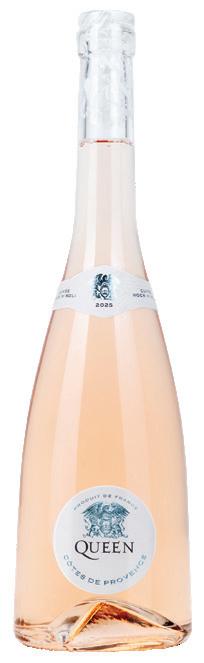

hallgarten wines
Mulberry House
Parkland Square
750 Capability Green
Luton LU1 3LU
01582 722 538
sales@hnwines.co.uk www.hnwines.co.uk

@hnwines


The Woolyard
52 Bermondsey Street
London SE1 3UD
020 7840 3600
info@mentzendorff.co.uk
www.mentzendorff.co.uk

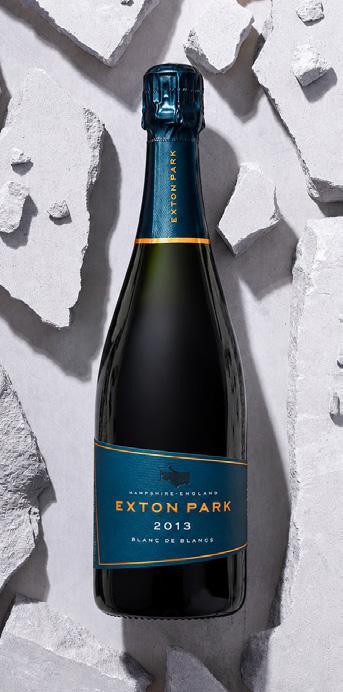

Celebrating English Wine Week with Exton Park
Just in time for English Wine Week this June, Exton Park is launching their Blanc de Blancs 2013. Crafted from 100% estate-grown Chardonnay, this rare vintage spent an exceptional 11 years on lees, making it the longestaged English Blanc de Blancs from 2013 currently available.
It’s the perfect premium addition for the week’s celebrations, a wine with remarkable depth and a complex palate of brioche, stewed apple, and candied macadamia, all while retaining freshness and precision.
For more information, please contact your Account Manager.
“I haven’t picked up the sticks for years, but I still miss it”
Born in 1971, Justin worked for Oddbins, The Barnes Wine Shop and Yapp Bros before joining Mentzendorff in 1998 as a regional sales manager. He later joined the board but in 2008 left to become MD of Stokes Fine Wines. He returned to Mentzendorff in 2017, where he has been MD since November 2023. He divides his time between London and Somerset.
What’s the first wine you remember drinking?
Rioja, possibly Marques de Riscal which I used to enjoy with my grandfather. My family has a strong Latin influence and as such I was given small glasses of wine at family dinners from an early stage.
What job would you be doing if you weren’t in the wine trade?
I have always felt there are parallels between fine wine and jewellery, so I like to think I could easily have pursued a career in precious stones. That said, I married an ex-chef so perhaps I would have ended up with a nice country pub or restaurant.
How do you relax?
By getting out of London and into the Somerset countryside. Nothing beats a good walk and a pint in a country pub. We are lucky to have several beautiful pubs around us, a growing number of which are owned by the Chickpea group who are doing a fantastic job. The wines are supplied by Gardner & Beedle.
What’s the best book you’ve recently read?
I try to make time to read as much as possible, but it can be hard balancing my time. I very much enjoyed the Bollinger Everyman Wodehouse Prize-winning
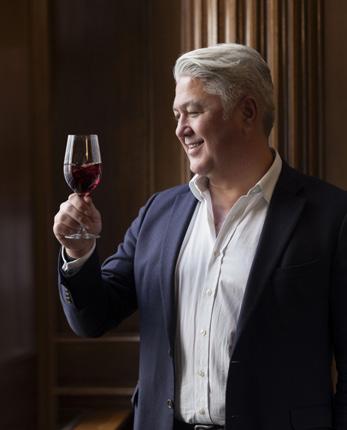
book, A Little Trickerie by Rosanna Pike. Last year was the 25th anniversary of the prize and our association. The judging process involved reading as many of the shortlisted books as possible, which was a real pleasure.
Give us a TV recommendation
I am not a great TV watcher but every now and again something grabs me and draws me in. The last one was probably Adolescence. I do love a good film though and must mention One Battle After Another, which was outstanding.
Do you have any sporting loyalties?
I am a bit of a rugby fanatic. As a youngster I was won over by Bath and the great names of Gareth Chilcott, Stuart Barnes, Richard Hill and David Trick. When I moved out of London to Somerset in the mid-90s I started going to the Rec and was smitten. I have been a season ticket holder for more than 25 years.
Who’s your favourite music artist?
Music is a big part of my day, and my musical taste is very wide reaching. Anything from indie to dance, rap to rock. It’s impossible to single out just a single act but I am very much looking forward to seeing Pulp at the End of the Road Festival this September.
Any superstitions?
I am a bit bothered by the folklore around magpies and find myself saluting single birds and wishing them a good morning.
Who’s your favourite wine critic?
My palate is pretty aligned with Neal Martin when it comes to Bordeaux so I always enjoy reading his views on a new release or vintage, but for all she has done for the wine world I must applaud Jancis Robinson MW.
What’s your most treasured possession?
A 1968 Rolex Oyster Perpetual which my father was rarely seen without until his death in 2018. I wear it as often as possible.
What’s your proudest moment?
In life, seeing my daughters, Alice and Daisy, growing up into the amazing young women they are. I love spending time with them both. In work, I am extremely proud to be leading Mentzendorff and working with such a talented and energetic team.
Who’s your hero?
I continually marvel at how much my wife, Margo, has achieved both in her career and as a mother. Her endless energy has provided me with the support and stability I always needed.
Any hidden talents?
My teenage years were taken up with playing the drums in numerous bands and although I haven’t picked up the sticks for many years, I still miss it.
What’s your favourite place in the UK?
The city of Bath on game day. A fine spring Saturday afternoon, a good lunch and fast-paced running rugby with friends and family. It’s my happy place.
If we could grant you one wish, what would it be?
Clearly I should choose something truly worthy like world peace, but if it was closer to home I would grant the family labradoodle, Manuka, immortality!