THE WINE MERCHANT.
An independent magazine for independent retailers Issue 157, May 2026

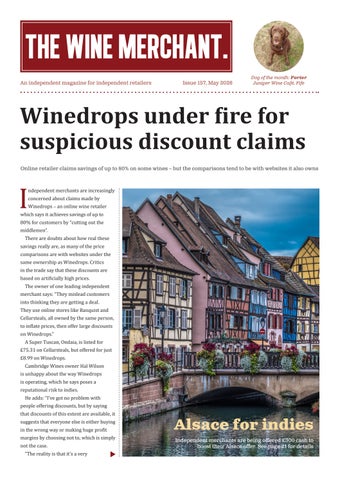
Online retailer claims savings of up to 80% on some wines – but the comparisons tend to be with websites it also owns
Independent merchants are increasingly concerned about claims made by Winedrops – an online wine retailer which says it achieves savings of up to 80% for customers by “cutting out the middlemen”.
There are doubts about how real these savings really are, as many of the price comparisons are with websites under the same ownership as Winedrops. Critics in the trade say that these discounts are based on artificially high prices.
The owner of one leading independent merchant says: “They mislead customers into thinking they are getting a deal. They use online stores like Banquist and Cellarsteals, all owned by the same person, to inflate prices, then offer large discounts on Winedrops.”
A Super Tuscan, Ondaia, is listed for £75.31 on Cellarsteals, but offered for just £8.99 on Winedrops.
Cambridge Wines owner Hal Wilson is unhappy about the way Winedrops is operating, which he says poses a reputational risk to indies.
He adds: “I’ve got no problem with people offering discounts, but by saying that discounts of this extent are available, it suggests that everyone else is either buying in the wrong way or making huge profit margins by choosing not to, which is simply not the case.
“The reality is that it’s a very

Independent merchants are being offered £300 cash to boost their Alsace offer. See page 21 for details
4 comings & GOINGS
Why isn’t there an indie in Chipping Norton? Don’t worry, there is now
12 bright ideas
Make it a knight to remember with an in-store chess challenge
16 david perry
The strange case of the customers who come in just to stare at stock
26 merchant profile
We’re off to England’s smallest city to visit The Grape and The Good
34 a davy’s deep dive
What might this revered London merchant get up to next?
41 england’s dreaming
Our panel of tasters takes the plunge with some still wines
56 focus on portugal
How Portuguese wine became such a hit with independent merchants
62 twelve under 12
The kids who we’ll all be working for within a couple of decades
71 Q&A
Some things you didn’t know about Tuggy Meyer, and won’t forget
competitive market, with costs rising all the time, but Winedrops are making it seem like an uncompetitive market – and that they have created the solution.”
When promoting its offers, Winedrops has implied that it offers a superior service to “merchants” whom it suggests can’t match its pricing, quality, delivery terms and satisfaction guarantee. Wilson argues this is a bogus claim to make about wines that only Winedrops, or its sister websites, are selling.
Winedrops’ claim that it is “cutting out the middlemen” to achieve big savings for customers has also come under scrutiny.
Writing in this month’s Wine Merchant, Daniel Grigg, managing director of Museum Wines in Salisbury, says: “The reason why I recently called out Winedrops publicly on social media is that they actually don’t cut out the middleman. The wines they use as marketing tools, such as Bollinger, Veuve Clicquot, Chocolate Block, Whispering Angel and Tignanello, are most certainly bought through UK agents.”
Winedrops charges an annual membership fee of £119. On average, it says, members save £550 a year. Winedrops claims to have more than 45,000 “happy members”, but as of April 28, the 18 most recent customer reviews on its own website were one-star.
One, from a customer named Stephen,
says: “Awful – won’t let me cancel. So complicated, wine at inflated prices, renewal without notice.”
Another, from Anguy, says: “My wine has not arrived and I am really struggling to contact you. No direct telephone number to be able to discuss what’s going on.”
Several reviewers say they were hooked by ads they saw on social media but were unaware they would then have money debited for a membership fee.
Anthony Caluori writes: “Took advantage of the ‘bait’ offer for Whispering Angel – six bottles. Be aware that they will immediately sign you up to a subscription of £119. At no point did I tick a checkbox acceptance or agree to any terms and conditions. Zero response to my request for a refund.”
There have been a series of complaints made to the Advertising Standards Authority about Winedrops’ social media and email claims to consumers, all of which have been upheld. These involve ads that claimed savings of over 95% on 100-point scoring declassified Bordeaux from the most prestigious château in Saint-Emilion.
Winedrops founder Jonny Inglis has not responded to requests for comment.
• Daniel Grigg: page 18.



winemerchantmag.com 01323 871836 Instagram/Bluesky: @WineMerchantMag Unit 52 Newhaven Enterprise Centre, Denton Island, Newhaven, East Sussex BN9 9BA
Editor and Publisher: Graham Holter graham@winemerchantmag.com
Assistant Editor: Claire Harries claire@winemerchantmag.com
Reporter: Jacob Stokes jacob@winemerchantmag.com
Advertising: Sarah Hunnisett sarah@winemerchantmag.com
Accounts: Naomi Young naomi@winemerchantmag.com
Admin and reader liaison: Charlotte Gingell charlotte@winemerchantmag.com The Wine Merchant is circulated to the owners of the UK’s 1,033 specialist independent wine shops. Produced in Sussex by East Print. © Graham Holter Ltd 2026


Chipping Norton Cellars is set to open in June. Oli Gauntlett, who owns Eynsham Cellars and has a stake in The Oxford Cellar Door at Oxford Covered Market feels he can breathe easy now he has the keys to his new shop.
“You’re never certain until you have them in your hand,” he says.
“The actual shop is in fairly good condition. We’ve been in there giving everything a really good clean and doing some some ceiling painting and things like that. Once the shelving’s in, we’ll be cracking on with it from there.”
The branding will tie in with Eynsham Cellars, the business Gauntlett set up in 2010 in the newly vacant Wine Rack premises.
“I was looking after a couple of Wine Rack stores in north Oxford and Iain [Boyce] and I took this one when they went bust and made me redundant,” he explains.
Before Boyce relocated to Australia, Gauntlett says that a second shop was something they had thought about.
“We’d had a look on and off over the years. I think it was probably about 2018 when we had a look in Norton – we just didn’t pull it off at the time. But the right opportunity has come up eventually.”
The shops are separated by a 30-minute drive and Gauntlett will be splitting his time between the two.
“Each shop will have its own manager and some part-time staff. We’ll have a similar range, though that may adapt over time. We’ll see what people need,” he says.
• Online wine club Harwood Wines has plans to open a bricks and mortar premises near Bury. Owner Anthony Jackson, who has been operating pop-ups and private tastings, has applied for licensing for a former storeroom.

North Yorkshire hybrid merchant
Fourteen Drops has the announced closure of its store on Yarm High Street after nine years.
Citing “government changes” for its decision, the business deemed it impossible to continue in its original location.
In a social media post, Fourteen Drops called the move “an evolution, not an end”. Its newer, larger site in Yarm Market
Hall will remain fully operational, offering everything its customers “have come to know and love”.
• Orlando’s Wine & Spirits in Plymouth has closed. Italian specialist Alan Norchi will continue the business through private tastings, pop-up events, a new website and local deliveries.
• April saw the closure of the Crouch End branch of The Humble Grape. Six branches of the business remain throughout London including in nearby Islington.

By WSTA chief executive Miles Beale


We want your views on duty reform
The Government has published the terms of its much-anticipated evaluation of the impact of the 2023 reforms of the alcohol excise duty regime. The evaluation will consider how successful the new regime has been in meeting the intended objectives that underpinned the reforms:
• Greater consumer choice, particularly of low-strength products
• Reduced alcohol-related harm
• Support for on-trade via draught relief
• Support for small producers via relief for all alcoholic products under 8.5% abv
• Reduced administrative burden and a simplified process for users.
The Government is seeking the views of stakeholders, by June 1, 2026, on:
• Changes in product strengths, product lines and pricing since August 2023
• Trends in alcohol-related harm
• Impact of draught relief on producers and the on-trade
• Impact of small producer relief
• Business experiences of approvals, returns and payments under HMRC’s simplified processes; and
• Any other relevant evidence aligned to the objectives.
While the Government has been explicit in stating this will be a backward-looking evaluation and not address potential future reforms or rates, we should not be constrained in our ambition. In particular the evaluation should not be viewed in isolation, nor should we shy from making the case for further reform of the duty regime.
We are keen to hear your experience of managing the new regime. What were the start-up costs and what are the ongoing costs? Would you favour a return to the regime that levied duty on wine within a certain abv range (previously 11.5%-14.5%) at a single amount? And what should that range be? Have you reduced your number of SKUs? Do you now carry a narrower abv range of ABVs? We are really keen to hear your thoughts. Please contact the WSTA’s policy director, Simon Stannard: simon@ wsta.co.uk.
Find out more at wsta.co.uk
When the Leytonstone branch of Theatre of Wine closed in March last year, it was said that future retail sites may materialise. The opening of its latest shop last month, in London’s Blackheath Village, is welcome proof that a little bit of judicious pruning can lead to healthy growth.
Tom Ilsley, co-director of the business alongside his father, Daniel, says: “It became a dream for me to have a Theatre of Wine here because it really works with the other local businesses.
“One of my best friends bought the butcher’s a few years ago and has really transformed that, and there’s a great fishmonger’s now. I think by the end of this year there will be a cheese shop moving in.
“There’s a farmer’s market at the weekends – it’s a lovely village anyway, but it’s become a hub for good food and shopping.”
Just two weeks after signing the lease on the new premises, Theatre of Wine was ready to open.
“I think we approach things like we’re dressing a stage set – to make it look as beautiful as possible. But don’t look too closely,” laughs Tom. “
“We’ve pitched our tent, and then we’ll carry on refining on it, but we really just wanted to get the doors open and get people in.
“Daniel is really a great artist, and he did a beautiful poster which we put in the window and that got a really lovely response.
“We’re in Greenwich anyway and for many years we’ve done a lot of charity tastings and events, and stuff with the local church in Blackheath and some of the local schools, so we’ve already had a lot of people coming in. They’ve been so excited and positive.”
Hove in East Sussex welcomed a new wine shop and bar in early April. Tipsy Mares, owned by Debbie Aquilina and named for her love of horses, is wholeheartedly embracing locally made wines, beers and spirits.
“I’ve spent the last five years learning about wine in more detail,” says Aquilina. “I visited so many local vineyards and I’ve been working with Dedbest and Spirit of the Downs distilleries to create a list of cocktails using their ingredients. We do loads of other local spirits as well but those two have been really amazing.
“We also have wines from Ashling Park, Poynings, Tinwood, Highweald, Ridgeview, Roebuck … you name it. There’s a lot of Sussex.”
Aquilina has transformed a previously “dark and dingy” premises into a bright and vibrant space full of shiny new Enomatics – a novelty in Brighton & Hove –and they are already proving very popular.
“For opening night I put on wines including a white Châteauneuf-du-Pape, Chablis, Sancerre and Saint-Emilion Grand Cru,” explains Aquilina. “Customers were loving it because they were trying a 25ml taster and the outcome was, ‘I am going to pay X amount of money for a bottle now that I’ve actually been able to taste it without feeling like I’ve got a hole in my wallet.’”
Aquilina is also working with Vintage Roots, whose range of organic and biodynamic wines she finds appeal to the sensibilities of the locals.
“The demographic has a large number of vegans and people interested in more ethically made wines, and Vintage Roots is incredible,” she says.
“I think as people get to know us, they’ll see that we’re not just a bar and we are a shop as well.”
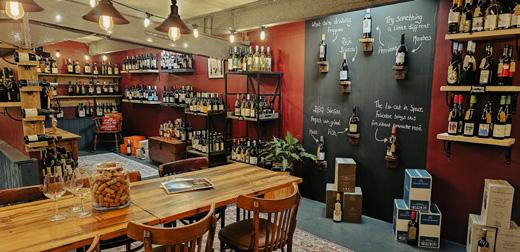
Tipsea Wines in Whitby has applied for a premises licence for a town centre location on the aptly named Grape Lane.
Adam Sheldon and Chris Hadley began their wholesale business in Whitby three years ago, and last summer they added a retail element by opening a shop and tasting room on the mezzanine floor of the warehouse (pictured). They’ve been encouraged by its success to find a high street location.
“We started off really wanting a bricks-and-mortar shop, says Sheldon. “It’s how we’d envisioned the business in the first place, but the right shop never came up, and now to have the opportunity of having a wine shop with the address 1 Grape Lane is ideal.”
Should planning permission be granted, retail will be from 10am6pm and wine tasting events from 6pm-10pm.
The original warehouse and shop will continue to operate although it is expected that the high street location will generate more retail sales. “People have been coming here and their feedback has definitely helped us realise that we need to be in town where people can access it more easily,” says Sheldon.


A monthly column from Alliance Wine/ H2Vin exploring practical, creative ways independents can sell smarter - covering everything from fine-wine offers to pricing tweaks and experiential events
An indie merchant I met at a tasting earlier this year told me, quite cheerfully, that she’d never really considered us for her shop.
“You’re more of an on-trade supplier, aren’t you?” she said, swirling something from our Rhône range. She wasn’t being unkind, it was just the impression that she had settled on. I also heard a story of quite a good customer of ours saying “I can’t come to your tasting, but it’s OK as I know all your wines.”
These are versions of conversations we hear more than you’d think. People seem to either associate Alliance as a particular type of agent or feel that they have already unearthed every inch of our range – which has changed dramatically over the last few years.
This isn’t about opening eyes to what we offer, necessarily (although we would always encourage our customers to look a little deeper than first impression) but highlighting the benefits of consolidation and the value of partnering with key suppliers. Choice is a wonderful thing, but it can be paralysing – trying to make all those decisions and then managing the resulting relationships.
In an increasingly complicated business world, taking some of the administrative complexity away by consolidating – whoever that might be with – reduces the pressure and frees up time from paying invoices, managing deliveries, meetings and additional tastings. It all costs time, energy and money.
Using that time on the important task of selling more wine, and speaking to key suppliers to find out what more they can offer your business in return for consolidation, feels like a win. If you would like any assistance with our portfolio, and the parts you don’t know so well, please contact Alex Baudouin, head of independent offtrade on alex.baudouin@alliancewine.com
Ned Llewellyn Alliance/H2Vin sales director – off-trade
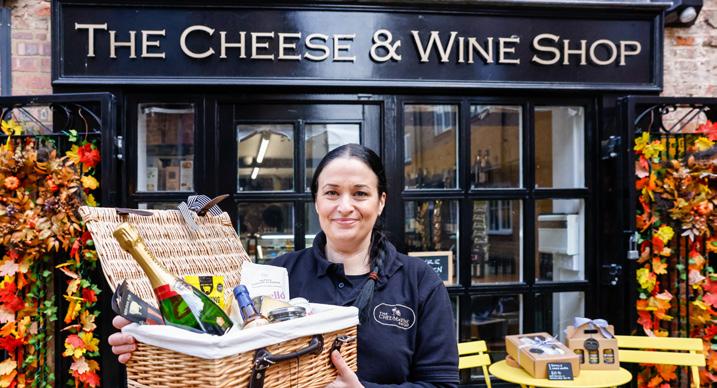
The Cheese & Wine Shop in Darlington has moved. There’s been a few changes in ownership since the business was established in 1999, but Caroline and Dean Elliot have been at the helm for the past 18 months and decided a larger premises would support their plans for growth.
“The original shop was about seven by three metres, and very small,” says Caroline. “With the new place, we’re talking 15,000 square feet all in all, which is fantastic space to play with. Having the space upstairs will allow us to hold larger wine and cheese tasting events – and have them more often, too.
“In the shop on the ground floor, we’ll have capacity for about 15 to sit and have a glass of wine and a cheese board at any time throughout the day. We were doing that before, but because the shop was so tiny we were having to rotate the tables every hour and we’d have 15 minutes in between to reset. It was hard going, but has definitely helped build the business and enabled us to move to this bigger venue.”
Caroline says the major change was to keep regular hours.
“I don’t think the previous owners really ran it as a business,” she explains. “It was
more of a hobby, and they were open between 10am and 1pm. We’ve opened 9am until 5pm every day, and that’s definitely been a huge success.”
The new shop is “fewer than 200 steps” away from the original Clark’s Yard site and it ticked all the boxes on the wish list.
“We wanted to find a venue with a large space downstairs as well as upstairs and we wanted step free access. A building with character was also really important, and we’ve got all of that,” Caroline says.
The ground floor of the listed building was already modernised, but a bit of work upstairs has revealed some Victorian gems such as a marble fireplace.
“We’ve taken the heritage colours from outside to make the downstairs environment more classic, calm and relaxed, and upstairs will be very traditional. We’ve sanded all the floors where we could save them and replaced the fluorescent lighting with a crystal chandelier.”
Caroline says they took inspiration from other merchants.
“We’ve spent time visiting competitors, we wanted to see some of the bigger guys down in London; Hedonism, for example. We loved that there is an area to sit and chill – there were some guys playing cards and having a glass of wine, but you can also select wine to take away. That mix was really appealing to us.”



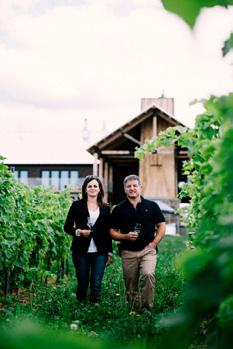

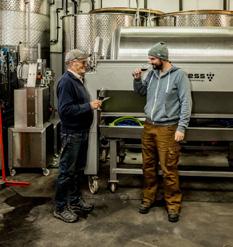

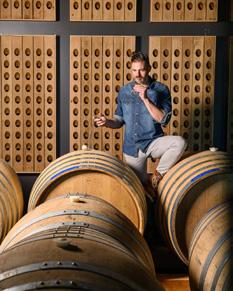


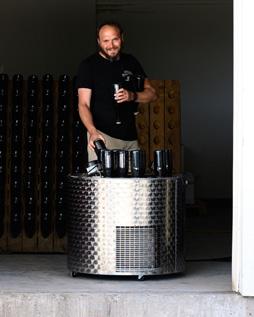
A selection of Nova Scotian Wines are now available in the UK.





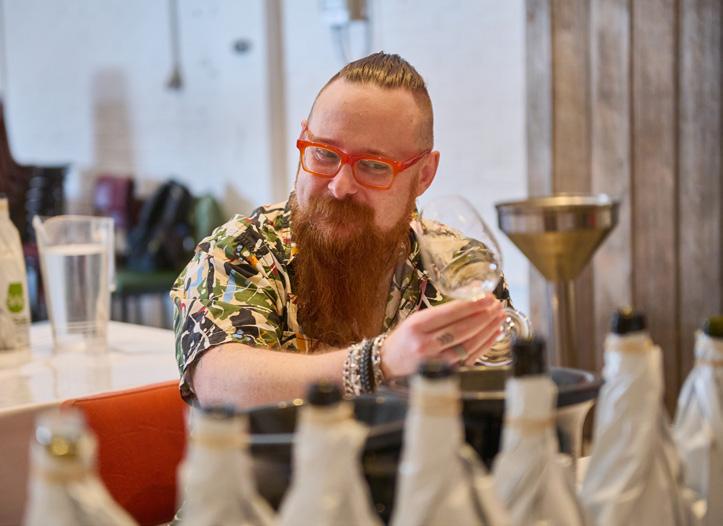
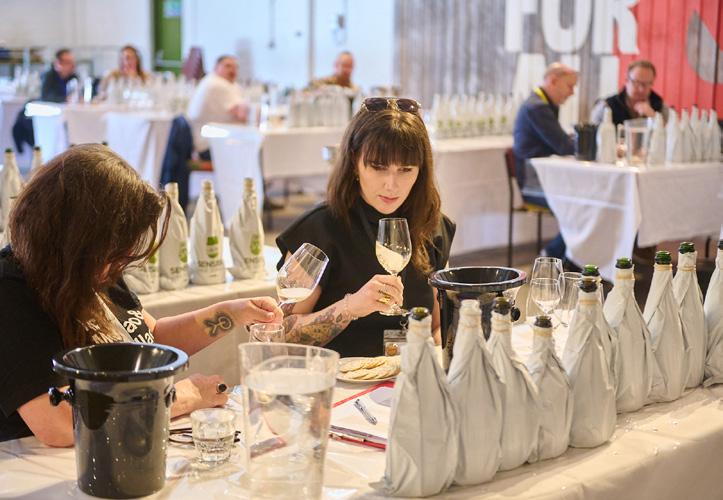
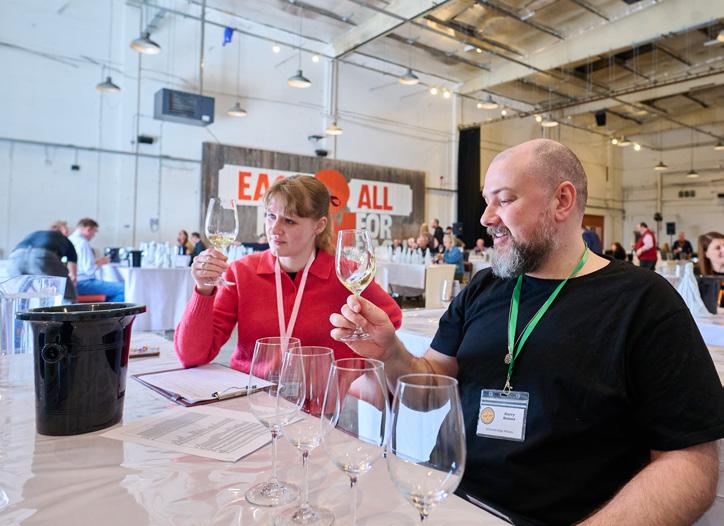
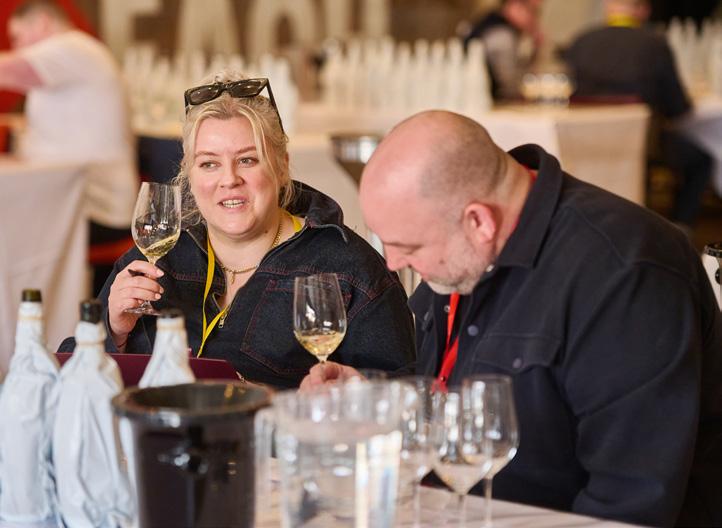
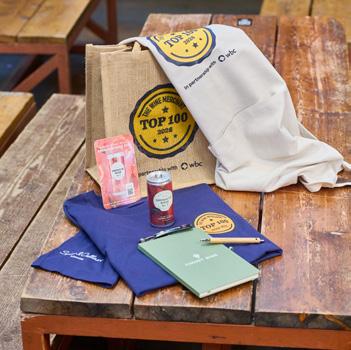
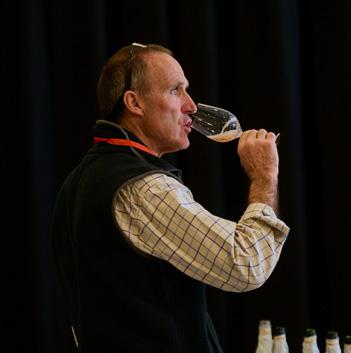
Judging for this year’s Wine Merchant Top 100 is now complete, thanks to the efforts of 40 hard-working independents who convened on Big Penny Social in Walthamstow, east London, for a day of tasting.
With a record number of entries to work through over two sessions, it was a long day – and beers were welcome at the end of it.
Winners will be announced on May 18.

Wine merchants and florists are masterful conveyers of apologies. Professionalism of the non-judgmental kind is required when transcribing the contrite messages accompanying their goods. But our friends at Westwell Wine Estate in Kent found themselves wondering what on earth had prompted the following expression of regret to send out with some of their bottles: “Sorry for being twats, hope this can begin to make up for it.”
You can go down some strange rabbit holes by glancing at the “meet the team” sections of merchants’ websites and Instagram feeds. Some examples: Henry Butler, of Butlers in Brighton, is known as “Butty” or “Big Daddy”. Noel Young, of NY Wines near Cambridge, is the proud owner of seven barbecues. Sarah from The Jug & Bottle in Bubwith “had a horse for a year before her husband knew”. What happened to the old classics of “enjoys Rioja and walks in the countryside”?
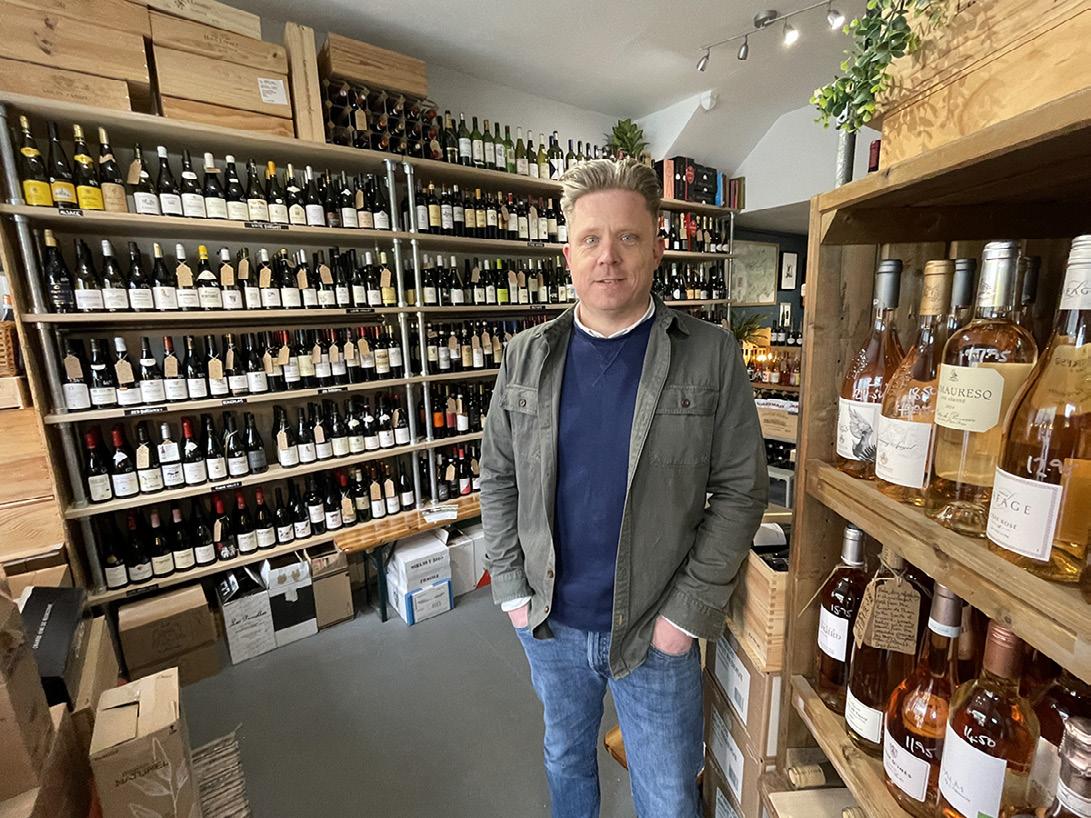
We think of Andrew Lundy of Vino in Edinburgh as an outgoing sort of fellow but he confesses to us that this isn’t really the case at all and he’ll do anything to avoid appearances on social media. “I’m thinking of getting a puppet made of myself just so I don’t have to be filmed,” he confides. Well, we’ve got a picture of him on page 10 opposite – any budding Geppettos among our readership know exactly what they need to do.
This month’s list of things and people said to be “ageing like a fine wine”: Harry Kane (Vincent Kompany); Jon Hamm (Hello! magazine); Danny Welbeck (all football pundits); Kurt Russell (various X posters following his One Show appearance); and finally Don’t Tell Mom the Babysitter’s Dead (Collider.com). More as we get it.

Ben Ludford
In a nutshell: For customers who know en passant from en primeur and for those who don’t, it’s an easy gambit to put wine and chess together.
Tell us more.
“I have been doing a wine chess club for a little while, but as one-off events, and mainly for industry folk. The big success was a day at Balfour because their winemaker, Fergus, is a chess player. He hosted us, and we had a walk around the vineyard, did a bit of a tasting over lunch, and played chess in the afternoon.
“I thought it would be fun to create a similar thing in store. We don’t charge; all we ask is that people put £20 on their sampling card for the Enomatics as a minimum spend for the evening. We invite them to bring their own snacks, and they can arrive any time, but play starts at 7pm and we call it a knight – or rather, night – at 10pm.”
Do people have to know about Scholar’s Mates and Zugzwangs?
“There had been conversations about needing to be a particular level. That was people’s biggest worry: ‘What’s the average rating of people who play? Is there any point showing up?’ But every social chess event I’ve been to, there’s always been such a mix. And anyone who has more experience than the person they’re playing, they end up talking about the game. People are interested in teaching, so it’s a great

opportunity to learn.
“When it’s a low-key social event in a wine shop, there’s absolutely zero judgement.”
So beginners to grandmasters are welcome …
“Definitely! Even if people have never played the game before, I’m there to facilitate the learning.
“We’ve only had the one chess event so far, and there weren’t any beginners, but there are some who have signed up for

the next one. I’ll do a half-hour to explain how the pieces move and how to be ready for their first game. I’ll set up some chess puzzles, which is a useful exercise for people to discuss and work out.”
Was there much opportunity to talk about wine?
“We have up to 80 wines available through the machines and we encourage them to drink while they play to give people the best of both worlds and combine the two things they enjoy. We recommend downloading a chess clock app so they don’t spend too long overthinking a move while their wine gets warm.”
With two new Netflix documentaries about chess, your timing is good.
“There was a huge explosion in popularity for chess during the pandemic. As a kid I’d learned how all the pieces move, but I didn’t play myself until six years ago. The Queen’s Gambit was on our screens at the time, so I guess this is kind of on the back of that.”
This sounds like something other merchants can easily replicate.
“As long as there’s someone in your shop who likes chess, then why not? I’m interested enough in playing some people who will show up, so that’s how it’s worth it for The Sampler. We ask people to bring their own boards, but even if you buy a couple for the shop, they aren’t expensive.”
Ben wins a WBC gift box containing some premium drinks and a box of chocolates.
Tell us about a bright idea that’s worked for you and you too could win a prize.
Email claire@winemerchantmag.com


Let us take you on the journey through Vinho Verde and Douro with wines made by Mafalda Magalhães.
Find us at London Wine Fair (stand D40) to taste the sustainable wines of Quinta do Ameal and organic range of Quinta dos Murças, to transport you to Portugal in a single sip.
do Ameal
and Quinta dos

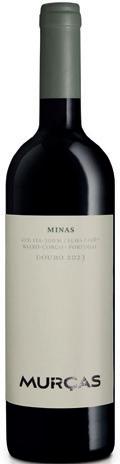
are wines exclusive to Independent Retail

Contact Hatch Mansfield, exclusive UK importer of Esporão wines:
info@hatch.co.uk www.hatchmansfield.com

BIRMINGHAM 22 JUNE 2026
The Grand Hotel, 1 Church Street, Birmingham, B3 2FE
Contact: uk@wineaustralia.com chris.stroud@nzwine.com
• Presented by Emma Symington MW and Anne Krebiehl MW
• Sparkling wine, Sauvignon Blanc, Chardonnay, Pinot Noir and Shiraz/Syrah
/ 14.00–15.30 Free-pour tasting 10.00–17.00
• 60 wines from 27 regions across Australia and New Zealand
• New releases and older vintages from iconic producers
• Aromatic whites, rosé, alternative varieties, new wave styles, and more
More information and register here
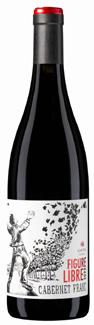
Cabernet Franc isn’t a grape you encounter very much in the south of France, but this Pays d’Oc example makes you question why that should be the case.
Grown on sandstone at 200m altitude, it’s got the crunchy vegetal notes that true Cab Franc fans crave, a hint of graphite, and ripe red fruit on the nose.
RRP: £21 ABV: 13%
Domaine Gayda (07379 295497) domainegayda.com
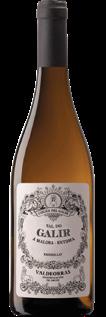
We can all think of another Galician white variety that consumers will ask for by name, but Godello from Valdeorras should also be on their wishlists. This one is variously fermented and aged in stainless steel, oak and concrete to accentuate the complexity of the freerun juice, and spends time on its lees for extra texture. Atlantic wildness, a citrus kick – but weirdly calming.
RRP: £21.45 ABV: 13.5%
Hatch Mansfield (01200 613122) hatchmansfield.com
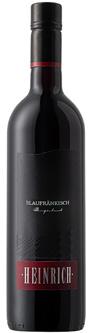
Heinrich takes us on a journey up the Blaufränkisch ladder with her Burgenland wines, but even here on the bottom rung the quality is mesmerising. Grown on loamy soils, and in Heinrich’s hands, the variety attains a smoky richness and depth of flavour that might suggest oak – but there is none.
RRP: £20.95 ABV: 13%
Third Floor Wines/Boutinot (0161 908 1300) boutinot.com
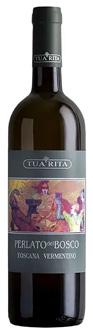
Maremma, on Tuscany’s coast, is an exciting place to visit and in winemaking terms it’s the wild west (especially by comparison to Chianti). This Vermentino captures some of the aromas of the herby hillsides and Tyrrhenian sea spray. It’s zesty and mineral and, frankly, far too gluggable.
RRP: £20 ABV: 13.5%
WoodWinters (01786 475720) woodwinters.com
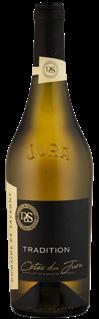
There’s masochistic pleasure in a down-and-dirty Jura yeast bomb, but this is aimed at those seeking out cleaner fun. A blend of Chardonnay and Savagnin from a 45ha estate established three decades ago, it’s tight, bright and juicy, with nutty overtones and of course that oxidative character that recalls fino headaches.
RRP: £23 ABV: 12%
Les Grands Chais de France (07789 008540) lgcf.fr
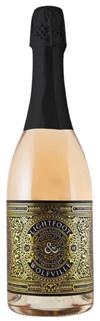
Another one of Daniel Lambert’s new line-up from Nova Scotia, this is a 50-50 blend of Pinot Noir and Pinot Meunier which goes through full malolactic and extended lees ageing. As Steve Lee of L&W explained at the trade tasting: “I want a sparkling rosé I can enjoy with a good steak and butter”. And here it is.
RRP: £34.50 ABV: 12%
Daniel Lambert Wines (01656 661010) daniellambert.wine
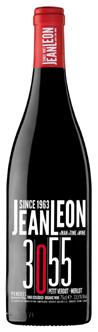
Jean Leon’s Penedès wines, bearing the number of the New York City taxi licence he once held, are useful staples of many an indie list. Unoaked and uncomplicated, this has enough freshness to withstand a light chilling, enough sweetness to make it fun, and enough grip to keep it serious.
RRP: £14.99 ABV: 13.5% Fells (01442 870900) fells.co.uk
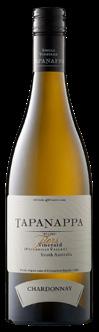
The Adelaide Hills producer, founded by Brian Croser in 2002, prides itself on terroir-driven wines that express soil and geology. They also reflect the climate, and the coolest in a succession of cool vintages gives a wine that still has honeyed intensity, but also a grapefruit acidity and stony note on the finish.
RRP: £47 ABV: 13%
Mentzendorff (020 7840 3600) mentzendorff.co.uk


Most of our customers are lovely. Some are less lovely. Some are just plain weird.
The ones that spook me most are the ones that just stand there staring. I generally manage to make eye contact and say hello as they come in, but once they’ve turned away it is hard to re-establish contact. I have to stand like an idiot behind the counter while they stand facing a wall of wine and not moving.
What is happening in their heads? How can you stare straight ahead for so long without moving? Honestly, sometimes it seems like half an hour, but is probably just minutes – but even so, that’s still too long to be normal. I try and break the spell.
“Are you OK there?”
“Yes, thank you. Just browsing”
No you’re not. You are standing motionless and staring ahead. Move! Do something! Talk to me!
It is 10 times worse if they close the door after themselves as they arrive. It’s a bit rude to push past and re-open it, but the reassuring sounds of life outside makes it more bearable. Standing in a closed room
Sometimes people have muttered they would like to look at the whisky and then done just that – looked at the whisky. Nothing more
with a lurker is more than a bit awkward. A chap the other day must have stood motionless for at least 10 minutes and then, in a sudden flurry, picked up three bottles totalling over £100 and became normal again. Most eventually break the torpor, turn on their heels and head for the door, often looking over their shoulders and saying “thank you”. Thank me for what? Allowing you to play statues in my shop?
I do wonder what they are thinking. Are they really browsing? Are their eyes roving over the shelves even if their head is stationary? Can they read the descriptions from there? I doubt it.
It is such a strange way to behave. In any other circumstance there would be a medical intervention. I’m sorry sir, but by standing by the road and staring ahead for 10 minutes you made me think you were having some sort of stroke or breakdown. Now I realise you were just imagining that you were looking at bottles of wine. I’ll put the stretcher away and go about my business.
I used to blame it on the overprescription of Valium, but it is often middle aged men, usually wearing beige anoraks, rather than women of a certain age. They are unlikely to be habitual ketamine users so there must be another reason.
It would be flattering to think that they are overwhelmed by the wonderful selection, beautifully displayed. It is more likely they are mentally adding up how much it is going to cost before remembering they have dyscalculia and the numbers are just swimming in front of them.
All the time they are stood there I have to stand around too. I can’t go back to my laptop and carry on with whatever it was I was doing. I can’t go back to the comfort of the heater or turn the radio on. I have to just stand there in an embarrassing silence. I could have another go at re-establishing contact but if they have their back to you it’s a bit tricky. You can’t make some comment about the weather. You could make a remark about the wine they are considering, but that’s tricky, too, because
they aren’t considering anything specific. Just staring at the wall.
There is a scenario that is possibly a little more unnerving and that is the whisky lurker. The whisky is immediately behind the till (and me). There have been a few times when someone has muttered that they would like to look at the whisky and then done just that – looked at the whisky. Nothing more. Just looked at it. I have to step to one side and try not to stare back at their unmoving eyes. After what seems an eternity, they may ask to look at a bottle. You hand it to them and they look at it. The same as previously, but closer up. Why? It makes no sense. It is as if they are going through the motions of a shopping trip but missing the fundamental element of interaction. Often they will hand the bottle back, say thank you and go away. If staring at stuff is a hobby or a fetish it is a bloody strange one.
Back in the Peter Dominic days we were taught, and taught our staff, to always ask open questions. It is not natural so I used to get my staff to practice until it was natural. The trick is not to ask a question which can be answered with a yes or no. If you do ask a closed question such as “can I help you?” or “are you OK?” You will inevitably get a yes or no answer and be no further on. Then you have to ask a second question which is uncomfortable. But open questions like “what are you looking for?” sound a bit brusque and accusatory.
I tend to opt for just making a statement. “That’s a cracking red. Full of cassis fruit.” Only to be answered with “I wanted a dry white”. Really? You have been staring at the clarets for 10 minutes now. How did you not notice they weren’t white?
There have been occasions when this approach too has been met with continued silence. Then, after a further few stifled minutes, the lurker’s partner has come in and they have started chatting away in foreign. I’ll let them off: I’d be the same in a Bulgarian shop.
Do you find social media fun, or is it something you could do without?


�We enjoy it! It keeps us connected to our customers and hopefully keeps them entertained as we don’t mind being a bit stupid. It helps break down some of the barriers surrounding wine and gives it a more relaxed vibe. It’s probably the only place where advertising feels less like work and more like fun – along with being free! The hardest part is coming up with a stream of ideas to make the posts unique and attract more followers, which we hope converts to more customers.”
Jamie Breeden
The Malmesbury Wine Co, Wiltshire
�To be honest, I find it a bit of a palaver, but you’ve got to give it a go. I think it’s another angle to inspire or educate people about wine, particularly the younger generation. Along the way I’m hopefully attracting a few more sales and customers in the process.”
George Read
The Cellarhand, Bruton, Somerset




�For me social media is definitely a necessary evil. Luckily, I have someone to do it alongside me who is also a customer, which really helps for knowing the business well. I find getting miked up and doing the content quite stressful, but realise that in order to stay relevant these days you have to get the content out there. There is a huge emphasis on going viral but I’m happy with using social media to encourage new customers – and also remind the old ones to come back!”
Emma Kerrawn * Champagne winner * Hoc Loco, Leeds
�I’m inconsistent with our social media goals because creating thoughtful, engaging content takes up so much time, which we often don’t have. To be brutally honest, being a little older I find some aspects of it little complicated to navigate. On the positive side, we are very organised in what we generate and work to a plan, and we try to avoid being overly polished. Our posts are updated on a weekly basis, trying different ideas and using pictorial content taken by us alongside professional images.”
Paul
Morgan
Fourth & Church, Hove
David Perry is the owner of Shaftesbury Wines in Dorset


Gosset
The oldest wine house in Champagne: Äy 1584
Winedrops says its customers enjoy big discounts because it ships direct. But how genuine are these offers and how are the wines really sourced? Like many in the trade, Daniel Grigg, managing director of Museum Wines in Salisbury, is sceptical
Winedrops claims to “cut out the middleman” by buying directly from producers. This is not a revolutionary practice. We do it at Museum Wines, importing from 25 producers in the Cape winelands, as well as eight producers in France and now three in Spain.
I’m sure a significant number of my fellow merchants also import their own wine and thus cut out “middlemen” such as Alliance, Berkmann, Liberty et al. It’s good schtick and customers do like it: I often tell them the only way they’ll get a better price is by shipping 600 bottles themselves and going through the many horribly painful processes this involves.
If your local wine merchant was rolling up to their shop in a new Bentley or Ferrari there might be significant savings to be made by cutting out this evil middleman. But often we’re driving our own branded van, having done the morning or afternoon deliveries ourselves. There’s also no shame in buying from your chosen UK-based supplier.
The reason why I recently called out Winedrops publicly on social media is that it actually doesn’t cut out the middleman. The wines it uses as marketing tools, such as Bollinger, Veuve Clicquot, Chocolate Block, Whispering Angel and Tignanello, are most certainly bought through UK agents. I also challenged its discounting practices.
There’s a familiar tactic used by multiples in which products that are unfamiliar with consumers are offered at an inflated price in order to then accommodate a juicy-looking discount. It’s more difficult to do with branded goods. A bottle of Laurent-Perrier 2015 Champagne was promoted by @emmaboucherwine – a paid-partnership influencer on Instagram – as having been discounted from £130 to just £67. A few clicks on wine-searcher.com shows that the same bottle can be bought from London merchant Hatton & Edwards for £60 with no claim of it being discounted from a higher price. In fact, the closest price I could find to £130 is from Hedonism which is selling it for £170 … per magnum.
To its credit Winedrops did respond to me on Instagram, acknowledging it was not always “possible or preferable” to skip the middleman if the company got a better price buying through an agent. However it assured me that these were
I received a text: White Burgundy for £4.99!? It can’t be! That’s because it’s not. It’s a Vin de France non-vintage Chardonnay
“rare occasions” which were “few and far between”.
That may well be true but it doesn’t get away from the fact that these rare occasions just so happen to feature the wines it chooses to state it’s buying directly from the producer.
Winedrops’ advertising antics haven’t escaped the attention of the Advertising Standards Authority, with two complaints upheld.
One, in November 2025, held it accountable for insinuating that a “declassified” Bordeaux was in fact one of the top wines of Pauillac (that would be Château Lafite, Latour or Mouton Rothschild, then) which was not only a 100-point wine but potentially worth over £500 and had been relabelled because the estate had produced “too much juice” and was struggling to sell it. So it needed Winedrops to pick up the slack and give it a helping hand.
The other took it to task over inflated RRPs which implied savings which did not exist, and an ad which suggested it had a five-star rating on Trustpilot when it did not. In fact Trustpilot recently placed Winedrops under review for breaching its guidelines.
In response to my public criticism, Winedrops founder Jonny Inglis offered me a free lifetime membership (ordinarily £9.95 per month – billed annually) and
£100 credit to allow me to use the app, choose some bottles and see what I thought. And this is what I thought.
Any card-carrying wine geek will be bereft once they start scrolling the homogenous dross. There is nothing from Sierra de Gredos or Tenerife, scant Brunello, no Barolo. The Bordeaux range seems sponsored by Maison Sichel’s generic appellation cuvées, save for a smattering of unfamiliar petit châteaux. There are big names such as Whispering Angel, Marques de Riscal and Chocolate Block alongside lesser-known producers of familar, safe crowd pleasers such as New Zealand Sauvignon Blanc, Rioja, Primitivo, Prosecco et al.
At the time of writing the choice of wines from South Africa is much improved and mostly supplied by UK importer RAKQ (that would be a middleman, then). Keet First Verse, detailed as being “vintage 2019-2021”, is being offered at £37.75 – a genuinely good price compared to other UK retailers. On the other hand, something called “Cape Dream Chenin Blanc” claims to have an RRP of £23 prior to its generous 57% discount down to £9.99 … though other retailers offer the same wine for between £9.97 and £11.90. So, what did I buy?
Pol Roger Brut Reserve
At £29.99 this was a legitimate discount and a verified bargain. Anyone who buys from Pol will know that Winedrops is losing money selling it at this price and that it did technically buy it from the producer but it didn’t import it itself, the same as every other UK retailer.
Bollinger
This was £41.49, which is about what you’d expect to pay in a supermarket – not an especially good deal compared to other online merchants. North & South Wines are £39.99 and Berry Bros are £42.75. This
would have been sourced from UK agent Mentzendorff.
Domaine de la Genillotte Chablis 2024 Chablis at £16.99 had to be worth a go so into the basket it went. The wine was very good, quintessential Chablis and good value compared to other retailers selling the same wine at £22.99 or above. Imported by Armit Wines: still no middlemen being cut out as far as I can see.
Jacques Bourguignon Chardonnay (NV) Now, this is the wine I do take umbrage with. Only minutes after having signed up for an account I got a text from Winedrops (signed off by Jonny) asking me why I hadn’t bought any wine yet. Then almost at the same time another offering me Whispering Angel at £9.99. Then, 50 minutes later, I received this text: White Burgundy for £4.99!? It can’t be!
That’s because it’s not, Jonny!
The link took me to a non-vintage Chardonnay. By the time I clicked it the price had changed to £9.99 so I cannot verify whether it was actually ever


available at £4.99. But I can verify that it is decidedly NOT a white Burgundy.
It’s a Vin de France, made by someone whose name admittedly does look a little like “Bourgogne”. The wine, imported by major Tesco supplier WTO Ltd, is certainly nowhere near good enough to ever be £20 and whilst it would be passable at £4.99 I certainly wouldn’t recommend it at £9.99.
Winedrops has previous form for advertising wines as being from grander appellations than they belong to.
In July 2025 Tom Cannavan posted a thread on his wine-pages.com site in which he explained how Winedrops had sent him two bottles of “Rioja” to write up ahead of its launch. The wines were in fact non-vintage Vino de Mesa Tempranillo and listed on Banquist.com for £18 and £19 (Banquist Ltd is the registered company that trades as Winedrops).
He queried the price as the quality did not warrant such a high price (he scored both wines 85) and was told that they would be sold at £6.99 and £7.99 on Winedrops.
He also pointed out that the wines were not Rioja and should not be sold as such. An honest mistake, perhaps – yet almost a year later one of those wines still appears on Banquist described as a “lovely Rioja” from the Rioja Alta DO.
But quality is not the issue here. The issue is that Winedrops talks about having “cut out the middleman” when it hasn’t.
We should also question whether the agents who are selling to Winedrops and seeing their wines marketed in a misleading way should be holding them to a higher standard. We should ask the content creators who are happily taking their cash to consider their own integrity, or at least do some due diligence, before parroting that Winedrops has reinvented the wheel with its fictional direct importing and savings of up to 80%.

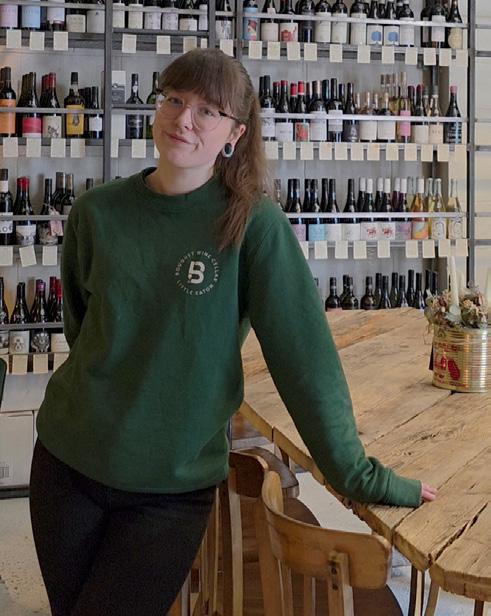
Lily has been working at Bouquet Wine Cellar since November. As bar manager she also works across the retail side of the business, helping customers choose wines to take away as well as enjoy in situ.
“We put Lily on her WSET Level 2 before she joined us,” says owner Rebecca Tomlinson. “She got a really high score, so she obviously worked hard and she’s really applied that learning in her role. She’s getting more confident with her wine knowledge and being able to find the right wine for the customers.
“We didn’t used to have any tags with tasting notes on our bottles and she’s also just done a fantastic job with creating those – they all look beautiful. Lily helps with tastings and she’s great in the kitchen as well –she does absolutely lovely-looking food. Lily is good for the business, for sure.”
Lily hit the ground running as she started her hospitality career straight out of school.
“I was just shy of 16 when I started working in an independent coffee shop,” she says. “I then worked for a brewery looking after trade customers and the wholesale side. They had two micro pubs and eventually I was promoted to running them both. That was really my first venture into wine because we were selling wines from George Hill Wine Merchants in Loughborough.”
Part of the attraction of Lily’s new role at Bouquet was the opportunity to develop her wine education. “My mum trained in culinary school and part of that was learning to pair wine and food, so growing up I always knew she was into wine,” she says. “And when Rebecca sent me on my WSET course it opened my eyes to the world of wine and how interesting it is. I’ve just loved learning how it’s made, the intricacies of it – everything about it.”
She adds: “I’m yet to discover a wine that I’m not
particularly fond of, which is great. To begin with – and I think this also possibly applies to a lot of younger people – I always thought that I didn’t like red wine, which is daft. Now I probably drink more red wine than anything else and at the minute my absolute favourite is a nice, chilled red.”
Working for a hybrid ticks all the boxes for Lily. “It’s brilliant,” she says. “I’m able to look after people, which is what I love about hospitality; help find the right wines for them and share my knowledge, but I also enjoy the fact that we serve independent local beers as well.
“In addition to what we sell by the glass, we've got an Enomatic and I always think if you can try before you buy, that really helps. I just love it!”
Lily wins a bottle of Champagne Devaux Cuvée D courtesy of Liberty Wines
If you’d like to nominate a Rising Star, email claire@winemerchantmag.com
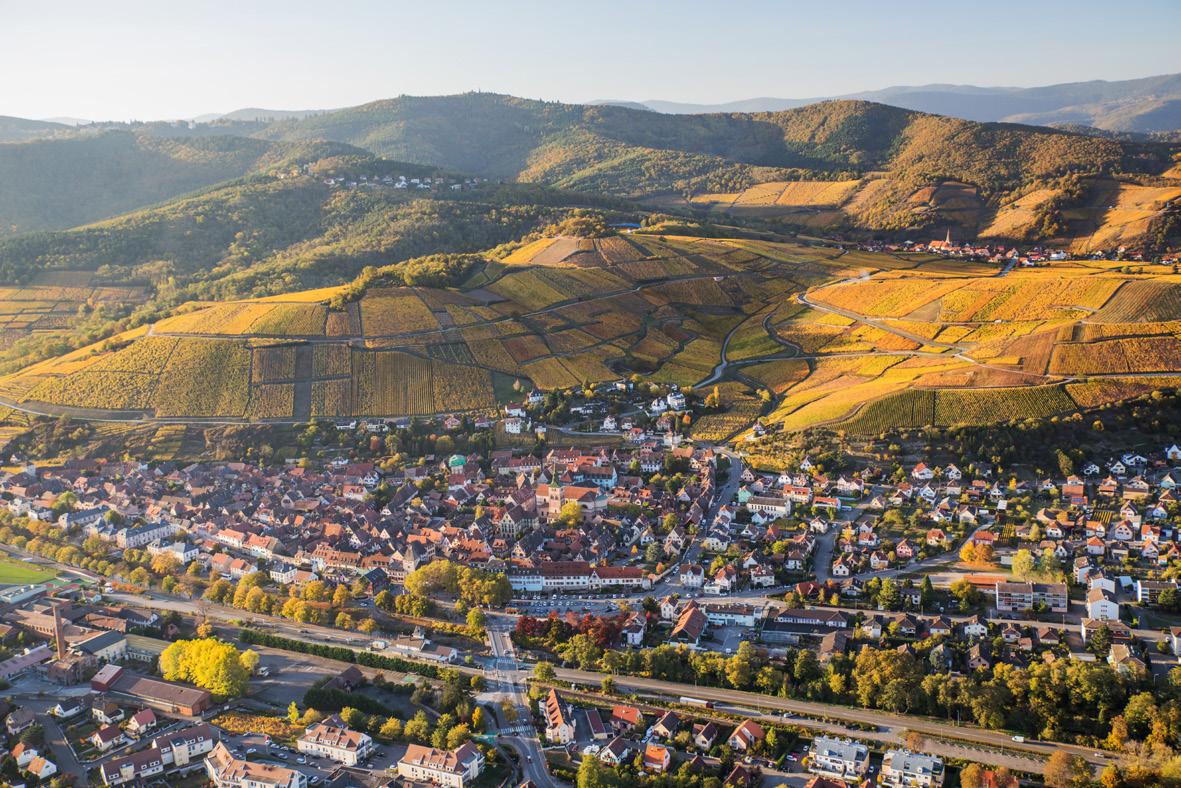
Last spring, Alsace Wines introduced an innovative promotional campaign for independent merchants – and it’s back with a bang for 2026.
Once again, 15 indies are being offered £300 bursaries which they can use in any way they see fit to help boost sales of Alsace wines. No bunting, no corkscrews, no nonsense: just helpful cash to allow merchants to make their own decisions and tap into the creativity of their teams. Digital assets (including logos and photography) will be supplied.
The Alsace Wines trade campaign has been a big success, with the UK climbing to fourth place in the region’s export league table – a sure sign that the trade’s longstanding affection for Alsace is transferring to consumers. The UK is also the number three export market for Crémant d’Alsace.
Each approved participating merchant will be awarded £300, allowing them to put in place a promotional strategy that best suits their customer base and business model. Retailers are free to list any AOC Alsace wines (Vin de France is not included).
To be considered for the bursary, you must:
• Have very few, or no Alsace wines currently on your shelves.
• Commit to providing full details, along with photographic evidence, of the new Alsace wines in store. (No existing Alsace wines should be delisted!)
• Provide evidence of any promotional activity, such as window displays, in-store activities, posters/flyers, etc – the more the merrier. Digital marketing such as social posts, blog posts and email should also be considered as part of the promotional mix.
apply for your bursary today
If you can fulfil the criteria opposite, you can apply for your £300 bursary straight away.
Email charlotte@winemerchantmag.com with your full details including business name and address.
You must have a bricks-and-mortar shop in the UK to be eligible. The final decision on the 15 bursaries will be taken by Alsace Wines, based on information submitted by participating merchants. Approved merchants will be contacted to say they have qualifed for the bursary. Money will be transferred once the promotion is complete, and after a report has been sent describing how it went.
#DrinkAlsace Instagram: @WinesofAlsace www.vinsalsace.com

Alsace has an impressive number of family-owned estates, many of which have been making wine for several generations. As the locals are fond of saying, “there is a sense of responsibility for the next generation”. The vine growers of Alsace regard themselves as stewards of the land.
Organic and biodynamic viticulture lies at the core of this guardianship, with 35% of Alsace vineyards being certified organic, including 7% which have biodynamic accreditation.
The Vosges mountains are the geological and structural heart of Alsace. They serve as a barrier to rain and help harness 1,800 hours of sun per year.
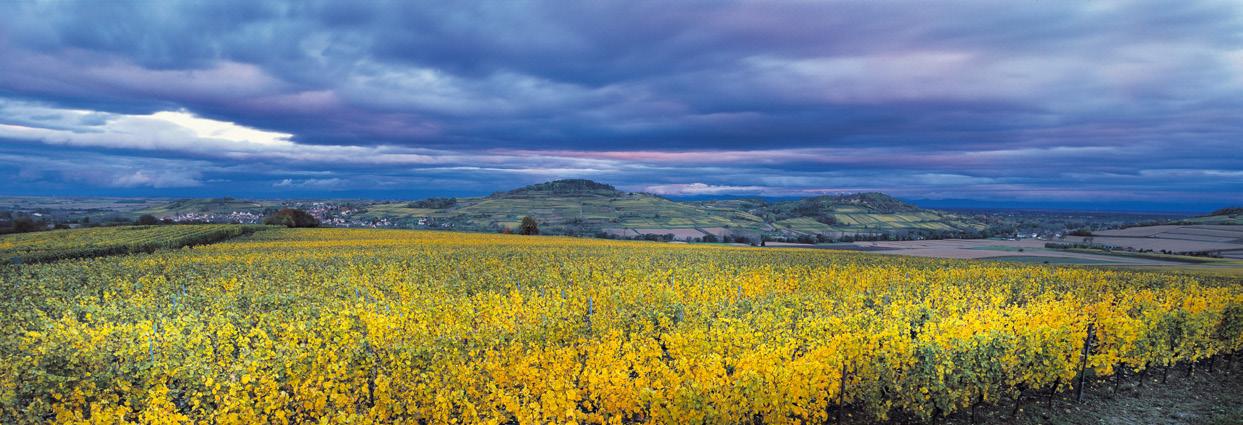
The region’s turbulent geographical history has left an extraordinarily varied and complex range of terroirs. You will find all of the geological formations from the Palaeozoic to the Quaternary eras in Alsace.
The wines are the greatest storytellers of the terroir, with each soil type influencing what’s in the glass. Wines from high-altitude schist soils tend to be svelte and austere, while those with sandstone origins are livelier, with strong varietal expression. In the Vosges foothills, marly limestone yields full-bodied, well-structured and peppery wines, while pure limestone gives flavours of lemon and fine acidity. On the mountainside, granite and gneiss crumbles into coarse sand: an acid soil which gives rise to light and expressive wines.
As sommeliers and foodies can attest, the wines of Alsace have outstanding versatility for matching with food.
Remember too that Alsace has some of the best cheese and wine pairing options. Cheeses such as Blue Stilton or Stinking Bishop taste their absolute best with a glass of AOC Gewurztraminer in hand.
“Alsace produces some of the greatest white wines in the world”
Hugh Johnson

The 51 AOC Alsace Grands
While they represent just 3% of the total wine production in Alsace, the region’s Grands Crus wines are right at home with the great fine wines of the world.
These most special vineyards bask in the sunshine, on the slopes of the Vosges. With 51 Grands Crus cited, the diversity of soils is clear. Each wine tells the story of its individual terroir, through its structure and aromatic profile.
Though every wine is unique, there are qualities that all AOC Alsace Grands Crus wines share: elegance, with the structure to age for many years. Saline and mineral, the wines have impressive tension, breadth of flavour and power.
In addition to the 51 Grands Crus there are two additional labels to look out for, especially for those with a sweet tooth. Vendanges Tardives and Sélection de Grains Nobles are sweet, opulent, powerful wines made from grapes affected by noble rot.
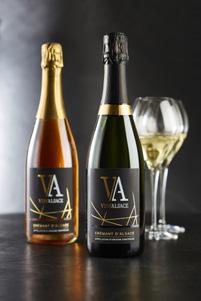
Any indie promotion for Alsace wines will inevitably go big on its famous varietal wines. But don’t forget the region’s excellent sparkling wines, which have a massive following in their own right and are celebrating their 50th anniversary as an AOC.
Traditional-method sparkling wine has been made in Alsace since the late 1800s. Winemakers have been refining their art for more than a century, with the official AOC Crémant d’Alsace granted in 1976.
Today, Crémant d’Alsace (including the rosé style) is the most popular sparkling wine, not including Champagne, consumed in France and indeed around the world.
The wines are versatile with a variety of foods that could range from starters to dessert – seafood, white meats, ripe cheeses are classic matches – but work just as well as a convivial aperitif.
“Crémant d’Alsace offers some of the best value traditionalmethod sparkling wines in the world”
jancis robinson mw

#DrinkAlsace Instagram: winesofalsace facebook: alsacewinesofficial YouTube: WinesofAlsace www.vinsalsace.com
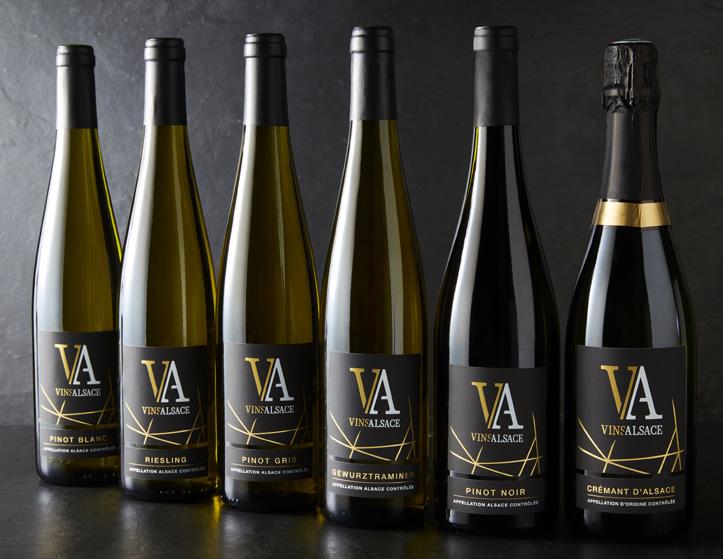
White wines dominate Alsace wine production, representing 88% of the still wines made. It is important to note that the region also produces fine reds from Pinot Noir, delicious AOC Crémant d’Alsace sparkling wine, and unimaginably complex sweet wines too. On the shelf, the wines present like a dream for indies, with grape varieties named on the labels. Here’s a whistlestop tour of the most widely planted varieties in Alsace, and the roles they play.
AOC Alsace Gewurztraminer. Regions around the world envy Alsace’s exotic and exuberant varietal. The wines can be tropical, sometimes spicy and maybe even floral – but always exciting, and a truly fantastic option to pair with food. The sweet wines are without parallel.
AOC Alsace Pinot Blanc. Always charming, in the hands of Alsace winemakers Pinot Blanc yields fragrant, stone fruit-flavoured wines that are supple and deliciously moreish.
AOC Alsace Pinot Gris. Locals recommend that Pinot Gris be allowed a little time in the glass, to let its autumnal stone fruit, ginger spice and smoky notes emerge. The variety gives wines with super balance and a generous mouth feel.
AOC Alsace Riesling. Riesling can reach world-beating heights in Alsace. Always fine and linear, flavours range from citrus to spice, floral to orchard fruit. The more complex wines show great minerality.
AOC Alsace Pinot Noir. Don’t miss Pinot Noir from Alsace. Delicate, with bundles of vibrant summer berry fruit, it’s very much a wine style being sought out by consumers right now. Pinot Noir thrives in Alsace, where it is free to show off its terroir-expressing credentials.
“There is now a new confidence in Alsace Pinot Noir, with wines showing real substance and finesse”
andrew jefford

Sam Howard Fredricks, Diss, Norfolk
Favourite wine on my list
Miani Sauvignon is a powerhouse – and ageworthy. I’ve had bottles 10-years-old+ that have joined us for a special occasion and memorable meal.
Favourite wine and food match
I like to pair great wine with a simple meal. Most of us have probably been guilty of placing too much emphasis on intricate pairings that compete for attention. At home, it can often be something natural, with fresh tomatoes and olive oil on toast. Add some sunshine and this pairing is hard to beat.
Favourite wine trip
The Douro, which took me by surprise. I’m not sure what I thought I was expecting from a World Heritage Site, but the trip encouraged me to explore more of Portugal’s table wine heritage.
Favourite wine trade person
Oz Sultan introduced me to the world of authentic Italian wines. He’d guide me, not on how to taste, but on what to taste. At wineries he’d take me to the vineyard first, then to lunch and perhaps afterward to the cellar. He knew from the vineyard whether the wines were worth trying.
Favourite wine shop
Of all time: Enoteca Mascareta. Long before Coravin it boasted 100 wines by the glass, which offered a crash course in Italian varietals and hand gestures. Recent: The Terrace Rooms & Wine in Ventnor. Tom is a fantastic host and the wine selection has plenty of interesting bottles to keep someone with their own wine shop entertained.
France is uprooting 28,000 hectares of vines. Approximately 5,800 growers have applied for financial support to grub up vineyards in a state-backed programme aimed at rebalancing supply and demand.
The majority of requests are reportedly in the south west of France, reflecting the weaking market position of the French red wine category.
Of the area marked for removal, around 37% will be cleared entirely, with the remaining 63% being subject to partial removal and replanting.
The Drinks Business, April 27
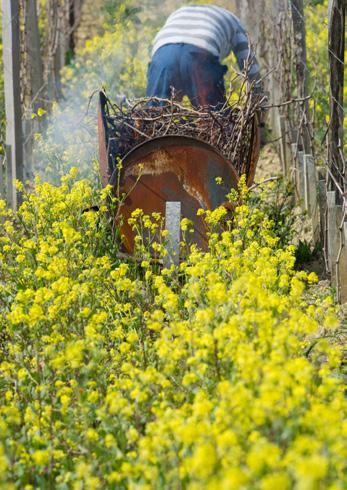
Most applications are from south west France
Champagne Taittinger will once again serve as Official Champagne of the FIFA World Cup in 2026, extending a partnership that has been in place for more than a decade.
To mark the tie-in, the house will roll out a limited-edition bottle across the UK.
The Drinks Business, April 28

Australia’s Treasury Wine has seen its share price surge by 17%, the sharpest one-day gain in over five years.
The surge is underpinned by strong demand for its flagship Penfolds brand in China, with distributor sales rising 40% in the quarter ended February 2026 compared with a similar period last year.
Reuters, April 22
Harper Adams University in Shropshire made its first wine.
It planted 10 varieties over two hectares in 2023 on its Edgmond campus. One of the university’s professors says its Buttery Hill rosé release could be called a “byproduct”, coming from a vineyard that “is a classroom and a laboratory”.
But he adds: “That doesn’t mean we don’t try to get a really high-quality product.”
Harper Adams is in the process of developing a series of courses related to viticulture and oenology.
BBC News, April 28
Footage from the aborted White House Correspondents Association dinner shows several guests grabbing bottles of wine on their way out following a shooting.
The video, which has since gone viral, drew mixed opinions, with one person on X referencing one of the culprits as a “hero”.
The Independent, April 27
Vinarchy is launching an RTD sold under its Jam Shed wine brand in the UK containing cola.
Jammy Red Wine x Cola will go on sale next month at UK cut-price retailers B&M, Home Bargains and Savers. Vinarchy has secured a listing at Tesco, which starts in August.
The Australian wine major said it was looking to “unlock new occasions for wine and excite shoppers” amid rising demand for RTD products.
Just Drinks, April 28

original wasn’t sweet enough for some
Cult Wine’s CEO Tom Gearing said steps taken to stabilise the wine investment business were already showing signs of success, with the first quarter of this year seeing consecutive growth after a “better than expected” final quarter of 2025.
It followed the publication of the company’s annual accounts, which revealed pre-tax losses of £5m in the 12 months to December 2024. Turnover was also down 43% and there was an increase in net liabilities to £21.6m, up from £17.1m the previous year.
But Gearing said that in addition to an improved trading performance in 2025, where revenue and sales exceeded those in 2024, the first quarter of 2026 had been its strongest on record, up 97% quarter-onquarter and 68% year-on-year.
The Drinks Business, April 14
• Broken glass and Prosecco was left spread across the M4 after a lorry carrying 20 tonnes of wine collided with another HGV.
BBC News, April 27

respect his words




With Flying Füchs
1. Which wine did Rory McIlroy drink to celebrate his first Masters victory in 2025?
2. Gaglioppo is indigenous to which Italian region? (a) Piedmont (b) Lazio (c) Emilia-Romagna (d) Calabria
3. Pope Leo XIII carried a hip flask of Vin Mariani, a Bordeaux wine mixed with what? (a) Opium (b) Seawater (c) Coca (d) Tree resin
4. What is the name of the small wine producing island that neighbours Madeira?
5. The chemical compound rotundone is responsible for which distinctive aroma found in Syrah and Shiraz wines?
Answers on page 60
by Brett







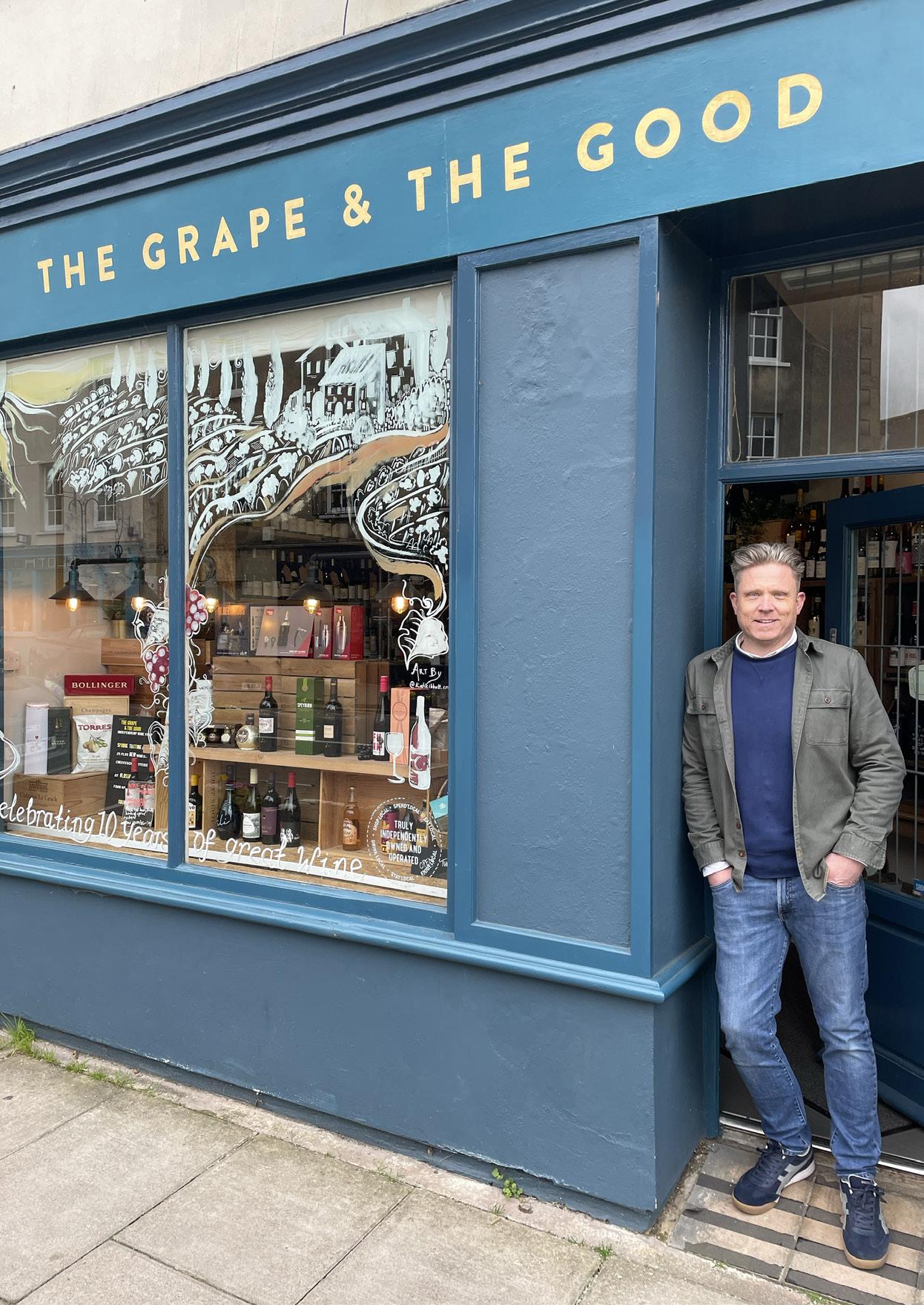
The Grape & The Good has been serving the burghers of England’s smallest city for just over a decade, and is established as a core part of its independent retail scene. It’s a place where walk-in trade can still be relied upon, though Andrew Kinnersley runs four set-piece tastings a year to keep the locals enthused. Nigel Huddleston pays a visit
Like many independent wine retailers, Andrew Kinnersley served time with Bottoms Up and Majestic in his student days, but while others found such experience a source of life-changing inspiration, for Andrew it was a period he now describes merely as “nothing much, just delivering stuff”.
It was his next, and first proper, job in wine that really seeded a passion for the subject: perhaps unsurprisingly when you consider it was based in Nice, supplying the likes of Lafite and Romanée-Conti to superyachts berthed around the Mediterranean in the summer and the Caribbean in the winter.
“It was all top-end wines, stuff you’d never be able to afford to drink yourself,” he says. “It was great fun and a good way to learn a lot. However, the wine would come in and you’d sell it and look after it and deliver it, but you never actually tasted it.”
After starting a family, he and his wife returned
to Wells in Somerset, where he’d gone to school, and Andrew carried on doing the superyacht gig remotely before starting his own thing with The Grape & The Good in 2015.
“A small shop opposite the current one came up for rent,” he recalls. “It was small enough and cheap enough to see how it went and decide whether it was worth pushing on with.
“It was in a good spot. There were other independents all around – the dry cleaner, the deli round the corner, a bakery, a few clothes shops. It’s a nice independent area.
“A lot of town centres are a bit ghost-towny but Wells is busy. Waitrose has been good for bringing people in from outlying villages who might previously have gone to Bath or Bristol.
“It’s very touristy in the summer, though that doesn’t do much for me really. They might want some local cider or wine if they’re at a campsite or an Airbnb, but the main thing about tourism is that it keeps the place buzzing.”
There’s also the occasional buzz when film location scouts are seduced by the city’s oldeworlde charm. Its biggest claim to fame was as the backdrop for Edgar Wright and Simon Pegg’s 2007 cop comedy Hot Fuzz
“Even 20 years on you get people coming for Hot Fuzz weekends and doing tours,” says Andrew. “They filmed a lot in the marketplace and there’s a newsagent where they went to buy a Cornetto in the film, so you’ll always see people eating one outside. Loads of people in the city were extras in it.
“A lot of people think the wine shop is sonamed because ‘the greater good’ was one of the catchphrases in the film – but it’s nothing to do with it.”
“A lot of people think the shop is so-named because ‘the greater good’ was one of the catchphrases in Hot Fuzz – but it’s nothing to do with it”
Until recently, Andrew was pretty much running things single-handed, slotting in deliveries after the shop closes at 4pm, but he has now started working with wine communicator Mimi Avery [daughter of the late John Avery MW], who’s going to be hosting more events and providing cover in the shop.
The Grape & The Good moved a few yards to its current slightly bigger site in February 2020, a month before you-know-what.
What were your thoughts when Covid hit so soon after you moved?
I thought “what the hell have I done?”, but it just

went crazy with home delivery. I opened for three or four weeks and then the shop turned into a warehouse for a couple of months. There was no point in opening because there was no one around. I was just delivering everywhere. The weather was good, petrol was cheap, the roads were quiet.
Have you retained that element of the business? I have, though nothing like to the same extent. I was doing 20 deliveries a day at one point, but now there’s still someone somewhere who wants something most days. I’ve still got a few customers who I deliver to who, as far as I know, have never been in the shop.
Do you take ecommerce further afield?
I don’t really push it much and the website is pretty basic, but I’ve got customers who’ve moved away from the area who order from me. I also deal with a couple of companies who send thank-you gifts every couple of months, and send wine to suppliers at Christmas. But it’s mostly local people who order once a month and I deliver it.
We want everyone [in the indie sector] to survive. If I start trying to sell loads of wine to people in Brighton it’s potentially taking business from good wine shops there, such as Seven Cellars or Butler’s. And to make sure you’re 50p cheaper on every single wine when someone Googles it … you’ve got to have a dedicated team, your margins are getting
smaller and smaller, couriers aren’t 100% reliable and the cost of packaging is going up.
Is wholesale part of the mix?
Yes, more than I intended it to be. Most of my wholesale customers have come from the Covid era, when the bigger wholesalers scaled back. I’ve got about a dozen pubs and restaurants, and one nice country B&B, and they’re generally people I know and trust, mostly in Wells or the surrounding area. They’re all good customers; I think I’ve only had one in 10 years who stopped paying, but they didn’t owe that much.
Wells is often described as England’s smallest city, with a population of 11,145 in the 2021 census
There’s a lot of work and logistics involved for not very much, in terms of margins, but if a customer is buying 10 cases of Pinot Grigio every week it helps me meet minimum orders and get better price bands with suppliers. Boutinot are very good for cheaper house wines. They have larger minimum orders but you can do that because you’re buying a dozen cases every couple of weeks of wines that you’re not selling in the shop. A pub that’s selling a wine for 20 quid doesn’t want me selling the same wine for £8 in retail.
Where is your entry level in the shop?
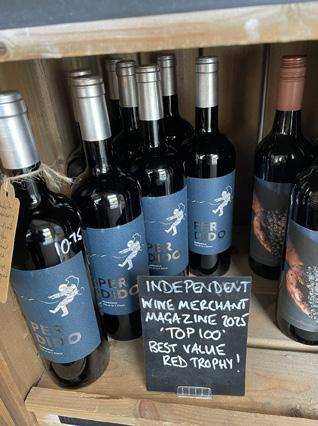
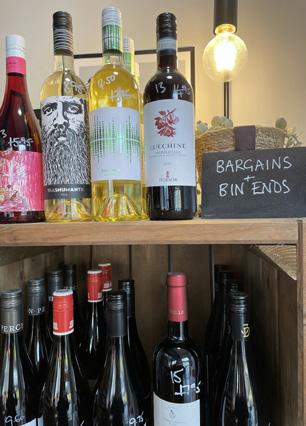
I used to tell people all the time that £10-£12 is really good value but that’s really pushed to £12£15. The sweet spot is £12-£20. I’ve got a bargains and bin-ends section at the front of the shop which used to be £7.95, £8.95 but is now £9.95, £10.50. It’s becoming harder to juggle with the £10-£12 price point these days, but I wouldn’t just go and find anything that I could put on the shelf for 10 quid.
A lot of people have gone down the eastern European route in that respect.
“I’ve still got a few customers who I deliver to who, as far as I know, have never been in the shop”
I’ve got a Romanian Pinot Noir which is just over a tenner, which is a really good wine and great value. I’ve got Bulgaria and Georgia but they’re at about £18, so I haven’t gone looking for cheaper stuff from countries that people might presume are cheaper. We want people to think the 12 quid spent here is well spent, rather than sell things they see all the time with £10 stickers on in the supermarket. I keep the bargains and bin-ends together because Wells has an older demographic. There are a lot of regular customers who live within walking distance and pop in a few times a week who will only go to that section. They’ll come in and get the other stuff at Christmas and birthdays. A lot
of people think wine shops are a bit scary, so that section is a way of bringing everyone in.
So, most of your business is still walk-ins? It is really. It’s people coming in. Wholesale is probably about 20% of turnover because a few of them are quite big places or do really good wine. The margin is lower but it’s an important part of the business. I’m quite happy with the balance.
It seems like quite a bustling city centre. It is. There’s a market on Wednesday and Saturday, which brings people in. Wednesdays are a bit unpredictable for us, because some people will come in but only go to the market, while other regular customers won’t come in at all because it’s hard to park when the market’s on. Saturday’s always busy, because it’s Saturday.
Does the older demographic dictate the makeup of the range in any way?
Even though the demographic of Wells is older, the average age of my customers is younger, but the range is still more old world than new world. When I opened, I intended Italy to be the biggest part because that is my personal passion. When I was in Nice, I used to say the best part about living there was being really close to the border to get into Italy easily. I’ve always got too much Nebbiolo because it’s my favourite grape.
However, France naturally caught up. People asked for more French wines and I found more when I started going properly to trade tastings. White Burgundy takes up a bit of space because I want to cover a few different price points, even though it’s not the biggest selling section by any stretch. Greek wines have taken off quite well in the past couple of years, especially in the summer.
You have a fine wine shelf, with Barolo and super-Tuscans. What’s the demand like there?
You can count the number of customers who buy them on one hand but there are a few who come in every couple of weeks who will only go to that section. For some people, 50 quid is what they’d normally spend on a bottle of wine. There are a few who will come in and only buy those, and a bit of Champagne or Burgundy.
The new world seems to have rather less space. The range is very much European-based, which
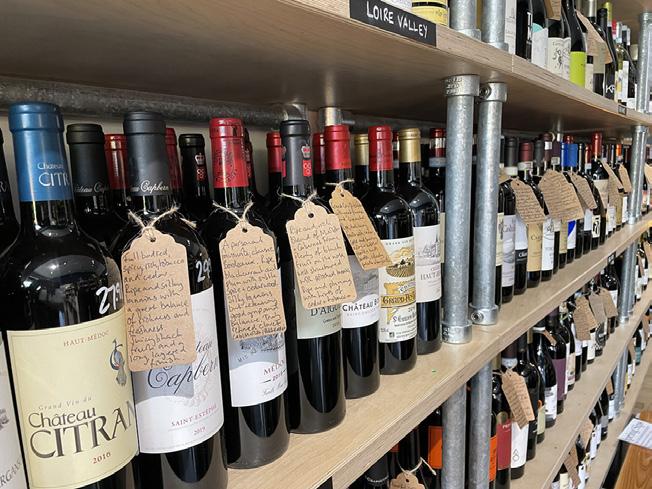
is what people are asking for. New world has a bit of a spike at Christmas, for gifting. If people know someone likes Shiraz they’ll go to the new world because they’re not necessarily going to realise that northern Rhône is going to be Shiraz, or Syrah. The same with Malbec: it’s one of those that people buy in December, because they know that’s what friends and family like.
What’s the supplier base like overall?
Boutinot and Alliance are ones I’ve worked with since day one. Boutinot aren’t my favourite supplier, or the most proactive, but they have the range and the price points and they would be the biggest by volume and spend. I order from them about three times a month.
Hallgarten are very important and they’re good to deal with. They keep adding wines and you can order in multiples of three rather than six.
Mentzendorff and González Byass are strong in certain areas and Cachet are really good. Their range isn’t huge but the price points are good. Samples are key. They’ll often send a sample with an order, and that works because all my customers expect me to have tasted everything. Going to London for tastings is quite a commitment and I’ll only bring in a new wine if I’ve tried it. Cachet keep sending samples and there’s going to be a certain strike rate.
Tell us about your seasonal tastings.
I’ve always done big summer and winter ones at The Crown in the marketplace, which is a customer of ours. They’re like mini portfolio tastings and we normally get five suppliers in with 10 or 12 wines on each table. It’s a good evening out for £25 and the orders are usually pretty good from them.
We do the spring and autumn ones in the café next door, for about 30 or 40 people. This spring it’s me and a rep from Hallgarten, with new wines from them that I tried at a tasting and want to stock. I’ll also have a table for new wines from other suppliers, so it’ll be the first time that a lot of customers will have tried them. It’s wines that I want to stock, but if it turns out half the people there are going “what the hell is this?” I won’t.
It’s always interesting to see which wines get the best orders. At Christmas, you might get a couple of more expensive wines where a couple of people buy six, which is good, but then they’ll be others where 25 people buy two bottles each, and that’s
the wines you think have broad appeal and work well in the shop.
Spirits are prominent, particularly a big range of cocktail liqueurs.
Spirits are steady over the year and bonkers in December. We have a lot of things that people can’t get elsewhere, things Waitrose once stocked and the computer now says no, and there’s no one to ask in there if they can get it in. Frangelico seemed to have a thing last year: it only takes a few cocktails to start doing the round for things like that to go.
There are also a fair few Italians in Wells because a lot of Italian families moved here and helped rebuild the city after the second world war. Things like Amaro Montenegro – everyone who buys that is Italian. I probably sell more grappa than I would if I was down the road in Glastonbury or somewhere.
What about the spirit staples, such as gin?
“I’ll only bring in a new wine if I’ve tried it. Cachet keep sending samples and there’s going to be a certain strike rate”
Gin has shrunk. I used to have 35 or 40 at one point and now it’s about 10, mostly local. There’s no point in selling Manchester gin when you can get a good one from Glastonbury. It used to be that you’d never go a Saturday without selling several bottles of gin and now you can go a whole week without selling one. People have got so much of it, haven’t they? If people buy you gin for Christmas and your birthday,
and you also buy it yourself … there’s only so much you can drink.
Beer has a lot of space too.
Beer is quite a big thing in the area. We stock a lot of local craft brewers that turn over pretty quickly because there’s no one around here selling those beers. If you go to Bristol and Bath they’re everywhere. Alcohol-free has grown: the quality’s better, so demand has increased. Belgian beers are really popular with the people who are into them and, again, they’re not something you can get everywhere. Obviously, you’ve got to sell a lot of beer to make much money, but it’s good. Friday afternoons are all about the beer.
What about future plans? Is hybrid on your radar for example?
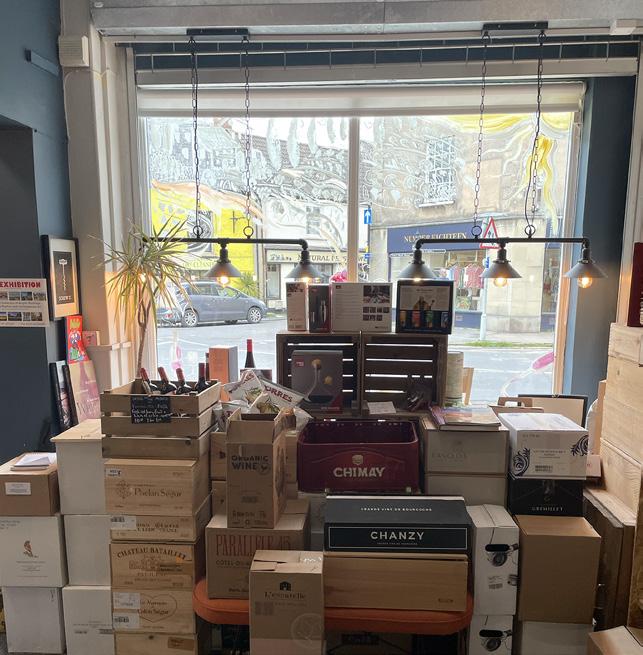
When I moved in hybrid was the idea. You wouldn’t think it now, but the area by the window space, where all the boxes are stacked, was going to have
“The people in the window drinking could get annoyed at people coming in with dogs and wellies and screaming kids”
a high table and a couple of stools. Covid happened and the shop got so much busier and storage became an issue, so that stuff’s there literally because I’ve nowhere else to put it.
Is hybrid something you might revisit?
I don’t really know whether it would be worth it now. Sometimes I think it can confuse customers about what the place is: it can put some people off if there are other people sitting in the window drinking. And if it was busy on a Saturday, the people in the window drinking could get annoyed at people coming in with dogs and wellies and screaming kids.
But, to be honest, I’ve got two young kids now myself and I don’t want to be working evenings, so you’d have to start employing people, which is fine, but it’s got to be the right people. That’s why it’s good to have Mimi on board because I know I can leave her to it. I don’t want to change what’s working too much.

Gluck’s job was to talk up supermarket wines. These days, they don’t need anyone’s help
Readers of a certain vintage will recall The Guardian’s trailblazing wine column that ran from 1989 until 2005. It was called Superplonk and it was the work of Malcolm Gluck, a writer who delighted in provoking pretty much everybody in the wine industry. He was irascible and, to many, quite annoying. But his influence was huge and his spin-off books were bestsellers.
Superplonk’s mission was to prove to Guardian readers, and the wider world, that supermarkets sold plenty of wine that was worth drinking. At the time, it was undoubtedly true. Whether the same could be said now is another matter.
Every Saturday, Gluck reeled off £2.99 bargains that his followers would buy in their droves. As he recounts in an interview he gave in November to Anthony Rose for The Drinks Business (worth seeking out online), supermarkets would complain they hadn’t had enough prior notice of a Superplonk mention, hastily dispatching lorries to Romania in pursuit of more budget Pinot Noir to cope with demand.
Independent merchants weren’t fans. One informed Gluck’s publisher that he intended to kill him because he had lost so much custom to his multiple rivals.
“I pointed out in my reply to this aggrieved dinosaur that Guardian readers
Consumers are being fed the line that wines under £10 are worth a special journey. They palpably aren’t

were more than capable of making up their own minds,” Gluck later wrote, “and that if they found value and fascination at his shop, they would continue to patronise it.” They didn’t, and the merchant went out of business.
These days, few if any critics have the sort of power that Gluck and some of his contemporaries enjoyed in the 1990s. But one thing hasn’t changed: reviewers remain fixated on supermarket wines.
We might find this frustrating, at a time when the indie offer has never been broader. But it’s also understandable. Most critics are freelancers, if they get paid at all, and time is money. Their audiences tend to be national rather than local. Editors want them to talk about wines that aren’t too expensive and which are in national distribution (and might even have a budget for advertising).
Wine writers and influencers will swarm around tastings organised by Tesco, Waitrose, the Co-op or Majestic because they can cover a lot of ground very efficiently. Organise your diary properly over a few weeks and you’ll have enough in the bag for your summer rosé feature,
your chillable reds article, your focus on Chenin Blanc and plenty more besides. Your recommendations will be affordable, and easy for your readers and followers to track down.
Try to do the same job by navigating the multitude of tastings organised by suppliers such as Boutinot, Liberty, Alliance or Fells. How much more time would it take, how much higher would the average prices be, and how much research would it take to work out – and list – where the wines were sold? Plus, on top of all this, you’d still have to do the supermarket beat.
So it’s not really fair to berate critics for being lazy or in hock to the multiples. But neither is it fair to say that wines sold in indies are getting the attention they deserve. Consumers are being fed the line that wines under £10 are worth a special journey. They palpably aren’t. And this distorted sense of the value of wine is a problem for everyone in the supply chain.
It’s true that you can sometimes stumble upon a piece that acknowledges the role independent shops now play, perhaps with a few recommendations from one of the higher-profile players. But it often feels like most wine writers don’t really have a handle on what’s happening in the indie scene at all. (A few years back, we at The Wine Merchant had an idea for a series of articles in which journalists would be invited to tell us about their favourite independents. We gave up after two issues because no one we spoke to seemed to have any suggestions. “Does The Wine Society count?” enquired one.)
When Malcolm Gluck started writing Superplonk, supermarket wines were rather marginalised, and grateful for critical interest. Now, for most wine consumers, they’re the default option. People buy these wines anyway, all the time. They don’t need any help from journalists or TikTokers.
When I scroll through my Instagram feed, most of what I see these days is independent merchants extolling the virtues of their own wines. They’re doing a pretty good job of it, which is just as well, because they’re not getting much assistance from anyone else.
’
As Condor Wines celebrates its 15th anniversary, Lee Evans reflects on the key connections he established in the early days of the business
Lee Evans has worn out a lot of tyres getting to know the UK’s independent wine merchants. In the early days of Condor Wines – the business he created with his wife Maria in 2011 – he was clocking up 30,000 miles a year and working whatever hours it took to get his wines in front of indies and their customers.
“If I was in Newcastle on Wednesday, and somebody asked me to do a tasting in Cornwall on Friday, I’d do it,” he says.
“I had a little Ford Fiesta that my parents helped me buy. We had some money saved but without the help of both sets of parents, we just couldn’t have done it. Some friends lent us £40,000 at the time, and we paid them back within about five years. But you know, for 18 months we didn’t make any money. You can’t.”
Lee had grown up in a hospitality environment and his last job before Condor was with Carlsberg. “They gave me central London because it was their biggest wine region, and my background of hospitality meant at least I knew how to put a list together,” he says.
When Lee decided to take a sabbatical, the couple headed to Maria’s native Argentina for 11 months and the idea of creating a wine business gradually took shape.
“I went out to Mendoza in August 2011,” he recalls. “We met 20 producers in just over a week. We reduced it down to about five or six we wanted to work with, tasting through the wines with a sommelier called Nigel Tollerman, who ran a wine business out there.”
Lee refers to the “triangle” of wine buying: quality, people and price. “It doesn’t matter how good the wine is and how good the price is: if you haven’t got the relationship, it doesn’t work,” he says. “So you need to have all three things. That was my approach when I met the first wineries. But obviously I also had some convincing to do, because at that time, we had no business.”
Condor’s first UK order was placed on December 31, 2011, by the Society of Vintners. “They wanted half a container, and I had to fill the other half. So that was a really good start, very helpful.” A second order, for a full container, soon followed.
Lee worried he had “no previous experience of working with independents” and zoomed through WSET courses up to Level 3 to boost his confidence.
“It was that time when we were heading into a triple-dip recession,” he says. “So nobody was looking to add suppliers, but I

07508 825488 | condorwines.co.uk lee@condorwines.co.uk



managed to get some listings early on with a bit of persistence. And then I discovered a wonderful world of independents.”
He adds: “I remember being nervous as hell, going into those first meetings with wine merchants, because these are like hallowed spaces where they worship wine. They’re at an educational level with wine that takes years to get to. And then you go through the door and you meet characters like Bruce at Grape & Grain, Richard at Great Grog, Yannick at Le Vignoble, John at Oxford Wine Company, and they’re just good people.”
Lee believes that being a “kindred spirit” was a key part of forging relationships with fellow entrepreneurs.
“But also it helped that Malbec was doing well, so I was going in and offering them new things that weren’t being offered by other importers,” he says.
“When you get your wines listed with an indie it’s important you get your pricing right, that you deliver on time and, if there’s a problem, you resolve it promptly. It’s also key to engage with them about your wines; find out what is working or not working. Over time, you build trust – without trust, you can’t build anything.”
In association with Condor Wines
Next month: the adventure continues …
It's one of London's most traditional wine businesses, with an estate that includes several haunts beloved by City types, including the fabled El Vino bars. But throughout its history, Davy's has never been afraid to change course. Might a pivot towards more hybrid wine shops be the next move? Graham Holter talks to chairman James Davy
What exactly is Davy’s? It really depends on which angle you view it from.
The company runs the sort of oldschool wine bars that Rumpole of the Bailey would recognise. It imports, and distributes, wines from family estates across Europe and beyond. It has a hybrid wine shop and bar in central London in addition to the store at its Greenwich HQ. It sells cigars and snuff in Covent Garden. But you could ignore all of the above and simply go ten-pin bowling at the alley it opened in a spare upstairs space in 2024. (It’s called Vintners Lanes.)
Chairman James Davy exudes the calm wisdom of a man imbued with the experience not just of his own wine career but that of four generations who went before him. This is a business that has survived two world wars, depression, recession and pandemic.
There are new challenges to face now, driven by government policy and lifestyle changes as well as the sluggish economy. As a family business, Davy’s can ride out lean years without worrying about restless shareholders. But tough decisions have to be made.
Last December, it closed one of its best-known wine bars, The Crusting Pipe in Covent Garden. Davy sets aside any sentimental attachment to the site and describes the decision to hand back the keys as a positive move for the business.
As a family business, Davy’s can ride out lean years without worrying about restless shareholders
“Go back to 1980 and imagine what Covent Garden was like. It was the place to go in London,” he says. “When we opened there, it was just refurbished from its fruit and veg past. We were an anchor tenant, and there were queues down the street. We were there for 45 years and, for 35 of them, it was by far our most successful business.”
Davy estimates that 50% of customers were international tourists, 25% domestic visitors and 25% local workers and residents. But Brexit began to take its toll, and other parts of London – Davy cites Borough Market, the South Bank and Camden as examples – began to broaden their appeal.
Suddenly, Covent Garden was quiet after 8pm. “Effectively we were losing a session a day in a very expensively rented place,” he says. “So we have mixed feelings. I’m quite glad to get out, actually, because something that’s been amazing can become pretty tragic in a short space of time. It wasn’t a case of The Crusting Pipe having had its day. It hadn’t at all. Covent Garden’s had its day.”
Davy was similarly phlegmatic when, in 2024, the company offloaded its in-bond wine storage, broking and en primeur services to Jeroboams. He explains: “The deal we did with them really worked for us: we still keep that customer list, so we still sell fine wine to all those people, just not en primeur or in bond, until November this year, and then we can do what we want again.”
Does Davy think his forebears would recognise the modern incarnation of the business?
Wine has always been at the core of its mission, he maintains. “When we started in 1870 it was a wine house – other people might have called it a pub. It majored in wine in a way that lots of people didn’t.
“From there, a wholesale business emerged, and that grew. We had cellars in Barking, and we had a number of wine houses; we had a number of wine shops. We started own-label in the early 1900s.
“We still have wine shops. We still have wine houses, with all the wine bars. Nobody [in the early years] could have foreseen my father starting wine bars properly – no longer in pub premises – and an era where the City of London just drank all day, every day. People were introduced to a new concept: wine was approachable, and made available in a way that had never been done before.
“That was why we became known as Davy’s Wine Bars. Everyone forgot about the wine merchants and all the rest of it for a period of 40 years. It was astonishingly successful.”
Davy suggests the current model is nearer to the earlier ethos of the company. But he thinks his predecessors would be surprised by the popularity of new world wine – and the way consumption patterns have changed: “What do you mean, nobody drinks? What do you mean, they don’t come to work?”
Since 2020, “people have developed a magnetic attraction to going home” rather than heading for an after-work drink. Alcohol plays a diminishing role in many lifestyles. And, Davy argues, we’ve become rather more “brittle” as a nation.
“If it’s too hot outside, people won’t get on a train. If it’s too cold, they won’t get on the train. If it’s too wet, they won’t get on the train. Give them another reason: if there’s a tube strike coming in two weeks’ time, they probably won’t get on a train today. And if they were on a train like I was on last night, where it’s just hell and takes two hours, they won’t get on a train tomorrow.” None of this is good news for hospitality operators.
Davy’s has a wholesale wine list that’s easy to love. Not because it ticks every box – it definitely doesn’t – but because the producers it works with (including for its
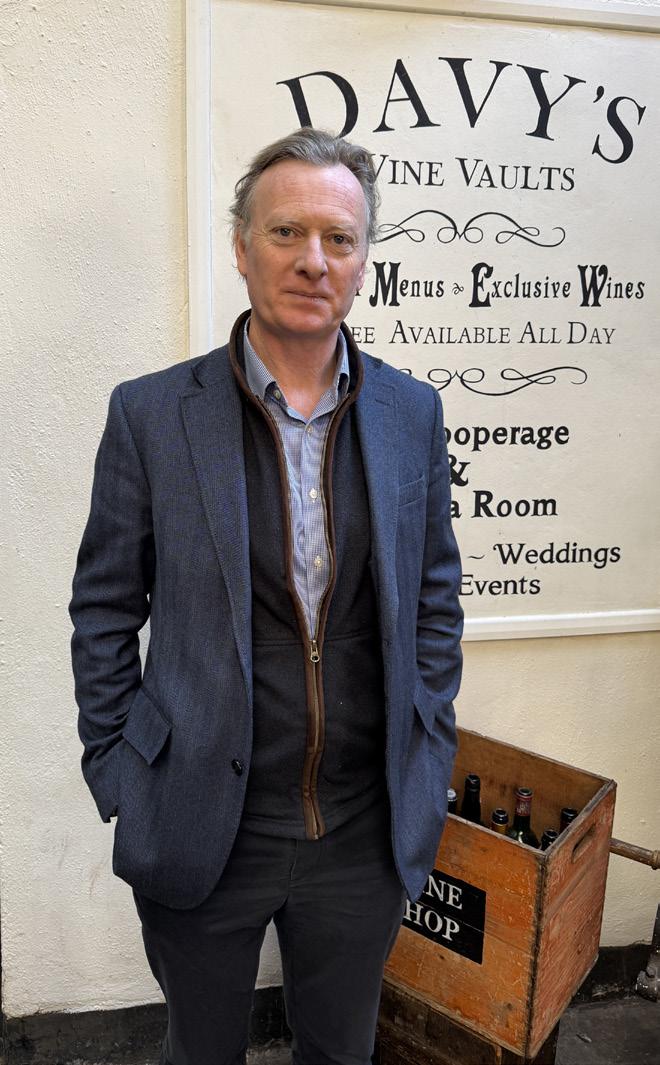
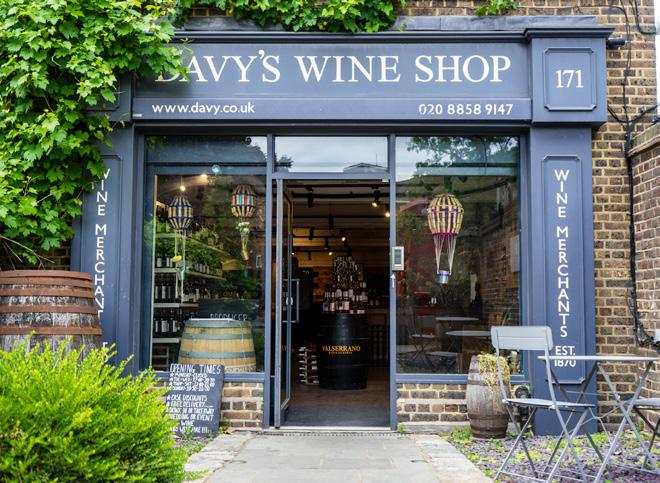
own-labels) are usually small-scale, sustainable enterprises making genuinely interesting wines in a very non-shouty sort of way. Whisper it, but the prices often look like misprints too. There is value to be had.
France makes up about 70% of sales, and while tradition plays a part in the selection process, both Davy and managing director Andrew Chudley are keen to emphasise that the focus is also on producers with a more dynamic approach.
Davy’s does not work as an agency business, but has been keen to forge alliances with regional partners across the UK to build bigger distribution for its range – including among independents, who currently account for about 30% of its wholesale trade.
“Because we’re quite small and quite nimble, we can work well with these emerging producers who don’t really want mass market. It’s not the kind of relationship where we’ve got to sell 1,000 cases,” Davy says.
Chudley has been gradually adding wines to the line-up: Bodegas del Río, a fairly new sherry house,
“Because we’re quite small and quite nimble, we can work well with these emerging producers who don’t really want mass market”
is supplying a manzanilla which has got the team energised.
“We’re bringing in some Cypriot wines this year, and they’re very exciting,” he adds. “We brought in some Montsant wines last year, from Josep Grau –they’re unbelievable.
“We brought in a few Beaujolais producers last year as well, including some really interesting fine wine and drinking vintages.”
Davy isn’t concerned that the new world is being left behind in the portfolio. “Durigutti in Argentina are amazing – and being aligned with a really, really good winery, that we represent exclusively, is probably OK at the moment in terms of what we need from there. The same really applies to our relationships in South Africa, Chile and New Zealand.
“We’ve got Stonyridge, which is considered by some to be the best wine out of New Zealand; Te Kano, where there’s been enormous investment and the wines are of huge quality. Those are two really different boutique, very high-end producers to work with. Mount Brown is more volume, but

they make lovely wine. So there’s quite a lot going on in those other countries.”
Davy’s has spacious shop in Greenwich, which has the advantages of being both rent-free and a short walk from the station.
“It’s not really the right location,” Davy admits. “Although we’ve had a bit of luck, because the DLR in Greenwich town centre is shut. So, for the best part of a year, we’ve had people coming past here who would normally go straight to the centre. We’ve seen quite a significant increase in trade and some of that might stick.”
Then there’s the hybrid branch in Holborn. “It’s probably less turnover, because it’s not such a big place, and you can’t drive to it, but it has quite good spend,” Davy says.
“We also have a couple of tiny kiosk shops by El Vino Fleet Street and El Vino Blackfriars: you get quite a steady number of people popping in because they need something better than they’ll get in one of the supermarkets.”
Online sales are also significant. “It was a small business that grew tenfold during the 18 months of Covid,” Davy reports. “It then went to half that, to a quarter that, and now it’s just better than it was pre-Covid.” Davy’s has only modest ambitions for further online growth, given that its direct competitors are big spenders such as Laithwaites and The Wine Society.
The days when companies like Davy’s had cash sloshing around in the bank to invest in expansion projects are long gone. Its most recent accounts at Companies House (for the year to March 30, 2025) report an operating loss of £715,000 on turnover of almost £7.2m. The numbers are an improvement on the previous year, and the company has equity of nearly £9m to conjure with. But the economic climate remains precarious – and, like its rivals, Davy’s has been battered by rising labour costs and business rates.
Given the pressures facing hospitality at the moment, it’s not surprising that Davy is cautious about exposing the company to unnecessary risk. But is he ever tempted to open a Davy’s shop and bar in a market or commuter town within striking distance of the capital?
“We’d love to do hybrid wine shops,” he says. “They extend the brand. We’re very confident with our portfolio, only because people tell us it’s great,
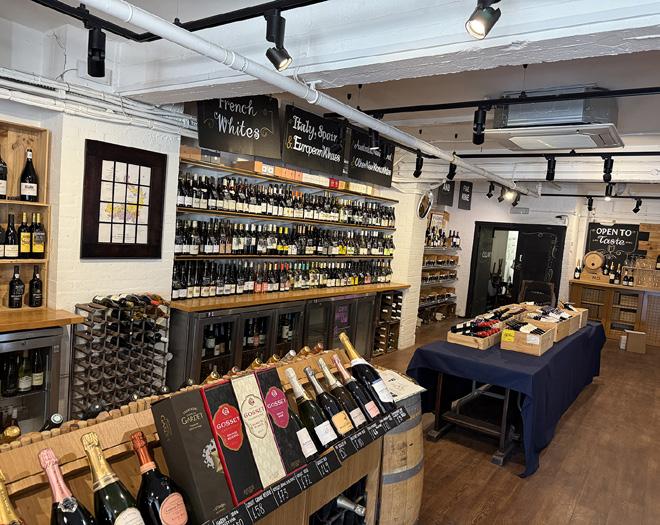
which is nice. So we’re very confident to move further afield.”
It’s a more attractive option, he believes, than online expansion: “Because that has distribution and couriers and it’s not glamorous.”
It's also a more affordable prospect than setting up anything resembling The Crusting Pipe.
He says: “When you look at the difference between setting up a bar-restaurant in the City of London or the West End in 3,000 square feet … it’s a pretty depressing number.
“These days, you might get change from £2m if it’s a nice, relatively well-done place. I think you can set up a hybrid wine shop for probably £100,000 – and that’s quite a nice one – and the rent will be a third or a quarter or even a fifth of what it would be for the bar-restaurant.
“You can be very flexible, too, because the investment’s not so great, and therefore the lease term doesn’t need to be so great.
“I
think you can set up a hybrid wine shop for probably £100,000 – and that’s quite a nice one”
“So that would be an interesting area to invest in, much more so than further bars and restaurants. We have some really good ones, so we’ve got to keep maintaining those. We have others where we need to consider whether they’ve got a future. I love them, and the people that go there love them, but from a P&L point of view they’re not very attractive.
“So we need to de-risk out of that in order to move forward. And, luckily for us, we’ve got different strings to our bow.”
see where it all started.

Another Thing
We all like likes, but when it comes to sociable media, there’s nothing like email

Social media: it’s an all-pervading thing and, love it or loathe it, the chances are that you are in some way engaged with it.
As business owners we are told that we “need” to have a proper social media presence. I see a number of my peers obviously employing social media experts to help them produce content.
Over the years I have been pestered by plenty of companies that have offered their skills to help me “build my brand” and my online presence. The one thing that was missing with every proposal was me, us, our business. It’s all very easy to show a few videos of me wandering around my shop looking like a very smart, handsome and clever wine merchant (my words, not
theirs). But nothing that anyone showed me – or that I have seen from any other outsourced media helper – manages to capture the essence of me, or you, if you use one.
Tom Gilbey is riding high on Insta fame, and rightly so. I’ve been aware of him for a few years and, whilst he may be the current face of Insta wine, you only have to scroll back through a little of his Insta history to
I’ve long since ditched X, I eschew Facebook and I only use Insta when there’s wine trips to be won or it’s Christmas
Yes, there were videos, but nothing like the content nowadays. It just goes to show you the learning curve and the effort that has gone into Brand Gilbey. The number of customers that, knowing I enjoy running, have suggested to me that I do a marathon and drink a wine every mile “like wot that guy did” just makes me think of all those folk that said they could easily have an unmade bed and call it art.
Thinking of it after someone else does it does not make it an original thought, and it really isn’t how art works. What makes Tom Gilbey work so well is the very fact that it’s Tom Gilbey. Yes, nowadays he may lean into the whole sweary posho thing a little more, but there is joyous sense of fun to it. Plus, it’s short.
Crikey, I have lost count of the number of folk who have tried to do a Gilbey-esque takedown of a big brand and let it stretch out over countless, cringeworthy minutes, and I’ve only kept watching to see just how close to the 10-minute mark they get. As Shakespeare wrote, “brevity is the soul of wit”. That’s a line from Hamlet which generally, in its uncut form, comes in at around four hours. That might explain why it’s not one of his comedies.
I’ve done a few Insta videos, drinking wine in the bath, being hosed down tasting rosé in the garden, talking about semen in a swimming pool, the usual sort of stuff (the last one was the fault of Facebook’s auto captions not recognising Sémillon with a Yorkshire twang. I mean, the word Sémillon, and they didn’t even go for the obvious!).
But Instagram is not really for me. Yes, the vids get the likes and a few talked about “lols”. But, most importantly for me, they don’t seem to engage the shop till properly. You see, as hopefully these 1,000 words (actually 977 now – Ed) will demonstrate, I like the long form. Why do a knockabout 45-second video when you could hastily type half a dozen paragraphs? I’ve long since ditched Twitter/X, I eschew Facebook and I only use Insta when there’s wine trips to be won or it’s Christmas.
The rest of the time I am fully team email. Email allows me to be me, in my most florid and verbose fashion, and I’m
not hamstrung by attention span in the same way. I can read back over it and make sure I don’t get in too much trouble with the pedants, and most of all I can see quantifiable results in the shop.
That’s what all these social media things, websites and assorted touchpoints, are meant to be all about: sales. Does all of your hard work and money make you more sales? If not, then it’s just a vanity project. For all the likes and occasional comments on social media, whenever I send an email I get a pretty instant response in my till.
The important thing here is to realise that social media gets quick likes and instant validation but nothing immediately tangible. Sociable media, as I’m coining it, gets results.
When I first started sending out emails to customers with offers it was just that: an email with an offer in it, black and white, boring, but to the point. Then I realised that if I wanted to get people to read what I was writing then I had to make it readable. I moved away from the simple “wine on a deal” format and made it more of a newsletter. It had stories in there and not necessarily stories that were related to wine but always stories that were related to me, or Bridget or Chadders, our lovely driver.
I built an idea of what and who we were, I added humour and warmth and I made darn sure that they were properly readable by ensuring that I read them twice before pressing send.
When an email goes out, and it’s once every one or two weeks, we see the sales that are generated from it, the conversations it sparks in the shop and it’s lovely to see it generate cold hard cash instead of just likes.
Come Christmas I will be doing my 11th email advent calendar, an email a day with a silly, non-wine related story, a bad joke and an awesome offer, all written the night before. It’s a challenge, a labour of love –but boy does it work for sales. And, most importantly, it connects us to the customer in a way that no other media can.
Rob Hoult owns Hoults Wine Merchants in Huddersfield

Edited by Susan Keevil Académie du Vin Library, £70
In the distant past, when I was teaching English to foreigners, a student told me that he didn’t believe in luck. He didn’t believe in evolution either, but that’s beside the point. I’d never heard of The Judgement of Paris wine tasting at the time, but I think it suggests that he was wrong, and that luck plays a huge role in our lives.
I suppose readers of The Wine Merchant know the story: Steven Spurrier organised a face-off in Paris between wines from California and Bordeaux and Burgundy in 1976, and the Americans won. It has been presented as a key moment in the recent history of wine, when the French were knocked off their pedestal.
The role played by luck is very clear if you read a new book on the subject published by Académie du Vin Library, to commemorate the 50th anniversary of the event. An American reporter called George Taber from Time magazine was present at the tasting, and it was his article which set the ball rolling. As Spurrier himself notes in an excerpt from his autobiography which is reprinted here, Taber only accepted the invitation to attend “with the caveat that if something else cropped up, he wouldn’t be able to make it”. “Had George not been present to witness the tasting and to report the story,” Spurrier continues, “our little adventure would probably have sunk without trace.”
The book starts well, with a chapter about Paris in the 1970s. There are splendidly evocative pictures of the city as it was, including one which reminds you just how awful the Centre Pompidou looks. There’s also the odd amusing piece of commentary: “Pavement café society was alive and well in 1970s Paris, as was the notoriously aloof attitude of the waiters.” I haven’t been to Paris in a few years, but that still held true on my last
visit, and I speak French.
The account of the lead-up to the tasting and the event itself is very entertaining. I learned a few facts I was unaware of. For one, the competitive element was sprung on the French judges, who were not aware that they would be comparing American and French wines. “Fortunately, they accepted,” Spurrier reports. Again, luck. Second, I didn’t know that the line-up of red Bordeaux wines was really stellar: Mouton-Rothschild, Haut-Brion, Montrose and Léoville las Cases. I knew which wines had won, but that was it.
The book struggles to maintain these heights. There’s a chapter featuring tasting notes of the wines sampled at Spurrier’s event, along with descriptions of later vintages of the same wines. It’s the sort of thing which will only appeal to those who’ve tried them. A lot of space is allotted to people within the industry pontificating about the significance of the event. Mostly, it’s boilerplate, with a lot of repetition.
A couple of enjoyable chapters come towards the end. A rather humorous piece written by Raymond Blake concerns the challenges of blind tasting, while another lists “Eight Events that Shook the Wine World”. Needless to say, the Judgement of Paris makes the cut.
The Judgement of Paris – a controversial term in some quarters, I discovered – occurred half a century ago. I think it’s time the world of wine moved on. As for the book, it’s hard to see what the target market is. It looks great, but it’s eye-wateringly expensive. Perhaps it will be snapped up by those who are lucky enough to consider Ridge’s Montebello Cabernet Sauvignon a weekday wine.
Michael Walker



Roughly once an hour, every working day, the shop phone rings and the following conversation ensues:
“Hello how are you?” “Fine thanks.” “Can I speak to the owner?” “Speaking.” “This is Bank Security Department …” “Goodbye!” There’s always the echoing chatter of a call centre in the background, and the accent is always south Asian.
Sometimes the script varies slightly:
“Hello how are you?” “Fine thanks.” “Can I speak to the owner?” “Speaking.” “This is
National Gas Company …” “We don’t have gas in Orkney.” “Would you like gas in … where you said?” “Goodbye!”
It’s always a fake bank or a fake utility call, and the scripts are so identical and flimsy that they have absolutely no chance of extending beyond 10 seconds in duration. Hey, scammers, let me give you a tip, this might work better: “Hello how are you?” “Fine thanks.” “Can I speak to the owner?” “Speaking.” “This is Burgundy Security Department. I can get you 50 cases
of Chablis and Gevrey-Chambertin at half the usual price …” “Tell me more!” It occurred to me recently that I’m probably going to have to repeat, “Fine thanks … speaking … goodbye …” 10 times a day for the rest of my working life. There’s no escape: it’s like telephonic tinnitus. Given that they’re inescapable, I asked myself: how can I make these calls bearable, if not pleasurable? I’ve tried having real conversations with the callers, but it never works: whoever is monitoring their performance and paying them a few paise a day clearly has firm rules about not straying from the script. So I’ve decided to think of the calls as a recurring chorus in the day-long music of Kirkness & Gorie.
Opening up the shop involves a fanfare of cheery greetings between me and the staff. There’s the hum of the hoover, and the rhythmic clank and swish of the bucket and mop across our lino floor. Emptying the cashbox into the till produces a series of different clatters and jingles, with pound coins rattling and pennies making the merest plink. At 10am we open, and the rumbling of our door-blind being pulled up coincides with the cathedral bells bonging sonorously from the other side of the street.
The most common tune of the day is provided by glass bottles in various percussive permutations. Six-packs tinkle brightly as we carry them from the store to the shop floor; that is, they tinkle if they don’t have internal dividers. If they do have dividers, the tinkle is reassuringly muted. There’s the bump and slide of the bottles being put on the wooden shelves that need replenishing, and the chime of the new bottle striking the bottles already there. (Careful!) From time to time there’s
I’ve decided to think of the hourly scam calls as a recurring chorus in the day-long music of Kirkness & Gorie
the clang of customers setting their chosen wine on the metal counter by the till, and the rustle of us wrapping it in tissue. The till supplies a little electronic sonata all by itself. Our original analogue till was like a Victorian pipe-organ, with the mechanical clanking of its keys, the scraping of its metal cash drawer and the whirring of its receipt printer. Now we’re entirely digital, and the iPad, card reader and bluetooth receipt printer let out a series of beeps and boops signalling unnecessarily that I’ve just done something. “BEEP … you have scanned a bottle.” “I know! I just picked up the scanner and a bottle and pointed one at the other! You don’t need to tell me!” A deeper, scolding BOOP means Barcode Not Recognised. “I thought we checked all the bottles and all the barcodes just yesterday?” “We did, but … technology, you know.”
We have two chairs at the desk behind the counter. One has wheels and rumbles as you pull it out. The other has steel legs, the rubber plugs from which disappeared long ago, so it skraiks across the floor like an angry violin when you move it. And when we’re sitting there, it’s hour after hour of clacking keyboards. Typing orders, updating costing spreadsheets, checking those darn barcodes in the stock system … tap tap tap … emailing customers, replying to charity donation requests, finessing the poetry of restaurant wine lists … tap tap tap … applying for an occasional licence for a pop-up wine-bar in June, purpling some prose for our next wine club booklet, expanding (again) our Hazard Analysis Critical Control Point food safety management system to make sure we don’t kill anyone with our cheese and olives … tap tap tap …
By this time I’m delighted when the phone rings. “Hello how are you?” “Fine thanks.” “Can I speak to the owner?” “Speaking.” “This is Microsoft Apple Corporation …” “Goodbye!”
Duncan McLean is proprietor of Kirkness & Gorie, Kirkwall

English and Welsh winemakers have built their reputations on traditional-method sparkling wines. It’s not controversial to argue that our domestic fizz can stand comparison with the world’s best. In blind tastings, it’s become almost routine for at least one English sparkler to outscore grande marque Champagne.
But what about the still wines? Once an enamel-stripping hotchpotch of Reichensteiner, Müller-Thurgau and Seyval Blanc, today’s wines are commercial rather than comical.
Climate change has played a role – in parts of the UK, it’s no longer unusual to achieve high levels of ripeness in Chardonnay and Pinot Noir. But expertise in the vineyard and in the winery is also on the rise, meaning that, in the best years, still wines from England and Wales have an appeal that goes beyond the farm gate.
With still wines now accounting for around 30% of production, and producers growing ever-more confident about their creations, it was high time for The Wine Merchant’s panel to do some exploring.
Jacob Stokes introduces our 12 favourites overleaf. Wine Merchant Panel Tasting


1 Freedom of the Press Pinot Gris, Crouch Valley 2022
Halo Wines, RRP £22.50
This is statecraft wine, a rousing speech where every quip, smile and pause is expertly placed. Like JFK, Freedom of the Press stands and asks not what your country can do for you, but what you can do for your country. It’s beeswax setting on apricot skin and flowers growing through cracks in splintered wood. There’s brioche soaked in lemon juice and grapefruit rind plunged into salted caramel. Simply wonderful.

Roman Road Chardonnay, Kent 2023
Hallgarten & Novum Wines, RRP £32
Let’s consider: when the Romans built roads through Kent nearly 2,000 years ago, would they sit on lunch break and talk about the potential of North Downs chalk for barrel-aged Chardonnay? Well, they certainly would now. This whirls with acrobatic decadence: white peaches somersaulting into a pool of butterscotch and vanilla pods vaulting over a floor of jasmine. The acidity is like sheet lightning, illuminating the palate through clouds of creamy lemon fruit.

Derringstone Pinot Meunier, Kent 2023
Hallgarten & Novum Wines, RRP £25
This blanc de noirs has the sophistication of fine Provence on the nose. It’s like spring shrubs, pine sap and cherry skin ground up and left to dry in the wind. A skirmish of savoury spice breaks loose on the palate; there’s pink peppercorns for bullets and thorn bushes as bayonets. Strawberry jam bleeds into chalky soil. As it closes, a few fragments of fresh gunflint are left to cool to the echoes of fleeing horses.


4 The Heretics Cantillon Rosé, Crouch Valley 2024
Direct from producer, RRP £24
Before Cantillon became a heretic, it took a gap year to find what type of rosé it wanted to be. After offending the vignerons of Provence with its interest in colour, it was banished west to Tavel. Here, Cantillon found sanctuary in extended macerations and peace in old oak ageing. Back in the Crouch Valley, it tells the story of its trip with texture and intensity. There’s lashings of squishy oxidative fruit; dashes of tangerine rind and wax spilled on satin.
5 The Heretics Deluxe Seven, Crouch Valley 2023
Direct from producer, RRP £35
Like a tsunami, as water retreats from a tense shoreline, lean green fruits and flecks of ginger are uncovered amongst stones, kelp and sea shells. Rubbing their eyes at the first sight of sun, they’re pristine, glinting with flecks of drying saltwater. Then comes the force of nature on the palate. A slingshot of flavour coats helpless tastebuds, an aquatic cavalry of green apple, gushing with tectonic fury. We hope you can swim.


6 Artelium Motley Wild, West Sussex 2023
Alliance Wine, RRP £30
Motley certainly is wild. His Artelium teammates must speak behind his back, mocking his dress sense, sneering at his love for organic abstraction and laughing at his unlikely genetics of Chardonnay, Pinot Meunier and Pinot Gris. But Motley is oblivious. He dances nude in the face of convention with a drumstick lolly in one hand and a wicker basket of baking spices, blueberry jam and Greek yogurt in the other.
7 Freedom of the Press Pink Pinot Noir, Crouch Valley 2023
Halo Wines, RRP £23
Another rosé willing to throw Provence propaganda to the wind. There’s revolution in that London clay! Like the kinetics that fuel tribal life, there’s blood orange oil soaking into spiralling grains of mossy wood and cranberries drying over peat smoke thick with wildflower pollen. There’s paprika being spun into soy wax, the beat of rawhide drums and the low hum of chieftains and cicadas. This is hunter-gatherer freedom.
8 Simpsons Rabbit Hole Pinot Noir, Kent 2024
Hallgarten & Novum Wines, RRP £32
Rabbit Hole doesn’t want to grow up to be England’s finest Burgundy imitator – quite the opposite. This is reaching for red crunch, herbal lift and green spice straight out of the gates. It’s banking on precision over complexity for the moment, but the liberal kiss of wood might see this mature into something very different. It’s got a touch of something to be excited about. But we are happy to leave it up to time to tell.

9 Simpsons Railway Hill Rosé, Kent 2023
Hallgarten & Novum Wines, RRP £22
This is a British picnic kind of wine. There’s strawberries and cream, still lemonade and the grandeur of chalk cliffs. There’s the constant tension of unpredictable weather but it’s negligible compared with Dad’s commitment to a day out. There’s even the static smell of a Scalextric that the kids wish they were playing on. All eventualities are covered. And if the worst comes to worst, this rosé will bring the sunshine.

Halo Wines, RRP £23
The warmth of the Crouch Valley and the 2022 vintage is on full display here. It’s like Babylonian gardens trapped in brilliant sunshine, the warming of terracotta pots, the gentle sway of bergamot trees and falling of quince blossom onto spotless stone slabs. There’s red fruit ripe enough for the most noble of patricians and the ancient equivalent of chinotto to wash it all down with.
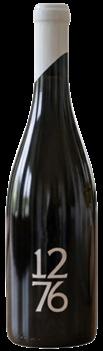
Direct from producer, RRP £27
Pear drops melted down and used to seal cracks in a leaking coconut. Vanilla blossom stirred into Cornish cream and smashed pistachios held captive in melon compote. Everything is bound together by a sickle swish of acidity, sharp enough to cut your tongue in half. This somehow has the ripeness and generosity of a new world Chardonnay at just 11.5%. There’s a slight sweet-sourness to it, which might please as many as it provokes, but it’s certainly an interesting effort.
12 Artelium Pinot Gris, West Sussex 2023
Alliance Wine, RRP £25
Artelium takes Andalucia! There’s Padrón peppers and green paprika slapped on top of sourdough doused in olive oil. The fruit is lean and green, jumping in and out of the limelight like a nervous stage performer. The spice and savour suggests Pinot Gris, but not like you’ve had it before. These might be Alsace clones, but this is a different beast altogether. It leaves you longing for salty anything: capers, anchovies, olives. As we say, this has its heart in Jerez.

I’m smitten with South Africa. So why am I heading off to Australia?
As an unashamed centrist, or what Boris Johnson would call an “intergalactic bedwetting lefty”, it’s very rare that I feel so strongly about something that it leaves me unable to find compromise or at least see the rationale behind an opposing argument.
But to my surprise, the wine trade has presented numerous topics over which I have managed to form quite unshakable opinions. One is my belief that South Africa is the most exciting and engaging wine region on the planet.
Like the Mind Flayer inside Will Byers, South Africa has gained quite the visceral hold on me since my first visit in September. And just as Will dug a web of tunnels for the benefit of his possessor, I feel it my duty to do the same for South Africa.
All I want to drink is South Africa, all I want to sell is South Africa and, despite being knee deep in a research project on Pinotage, I’m not even close to being tired of writing about South Africa.
Last week, I persuaded a close friend, and staunch Pinotage critic, to try Natte Valleij’s NAT Pinotage. The look on his face when out of the glass spilled flowers, crunchy berry fruit, wormwood and
Like the Mind Flayer inside Will Byers, South Africa has gained quite the visceral hold on me
orange peel opposed to bananas and burnt rubber was perfect. And I feel like, as South Africa develops, its capacity to reset opinions is becoming one of its greatest assets. Whether it’s Polkadraai Syrah, Bot River Grenache, Stellenbosch Assyrtiko, Darling Cinsault or Chenin from just about anywhere, there’s more ways to experience the Western Cape than ever before.
I’ve lost track of which “new wave” of South African producers we are now in, but ever since the UK debut of that first Swartland crew in 2015 the momentum and energy has just carried on building, inspiring a change in approach across the whole region and fuelling what seems like endless waves of young winemaking talent.
Given my totalitarian stance on irrigation, South Africa’s commitment to dry farming is
another big pull for me. Both because of the severe droughts of the last 10 years and its history of dry farming, South Africa seems to recognise more poignantly than other places that water is a human resource before a winemaking asset. And its commitment to limiting irrigation through the use of old vines, bush vine plantings and cover crops as well as research into isohydric varieties feels second nature.
So, why am I not flocking straight to the Cape to get my hands dirty? No idea. I’m starting to wonder the same thing. Before this itch began to grow, I had planned to move to Melbourne after my degree, to celebrate the breaking of my educational chains. But it will be in the absence of anything remotely meaningful from a wine perspective, probably involving work in one of the establishments that gives Melbourne its crown for most wine bars per capita of any city in the world. I’ll likely be selling Aussie wine, or bigwig European imports, though: two things I don’t hold a lot of love for.
It’s not that cleaning the inside of an old barrel in a Cape Dutch cellar is objectively more appealing than a run around Albert Park, followed by a drink in a trendy coffee spot before a floaty shift in a beanie hatladen wine bar, but at least it would mean something. Although, my question is, do we always need to be pushing for the next big step? Or can we just go somewhere cool and act daft for a year without any guilt? Maybe I need to consult our resident agony aunt.

Shame it’s nothing much to look at

Does English wine taste better if it’s aged in the sea? I was about to take the plunge

Iam nothing if not a sceptic. I’ve visited vineyards that wouldn’t let me record the noises playing in their maturation room as this was their “unique’”sound that was helping the wines to mature (it’s fucking Gregorian chant mate, not magic). I’ve rolled my eyes at the idea that we shouldn’t linger too long in a cellar lest we bring up the ambient temperature and upset the wine.
I’ve listened to hail cannons “blowing” the clouds away while I’m sat in a tasting room listening to the booming in the background. Actually, that last one was pretty cool. Does it work? No idea, but my gut feeling is no.
But sea aged wine? Well, you can only imagine the depth of my eye roll. They were so intent on whether or not they could that they didn’t stop to think if they should.
What’s wrong with ageing wine the normal way? [read the following in a Yorkshire accent] In my day we ad whate’er barrels were lyin’ around and we ‘ad t’walk 10 miles in’t snow with no shoes.
OK, OK, I am young enough to still believe in progress. So, to have an opinion on this, I did decide I should put my money where my mouth is and try it.
The opportunity presented itself last year and was delivered to me in time for Christmas (happy Christmas to me!). Can I even mention the C word at this time of
year? Two bottles of local fizz from the same vintage/cuvée, one matured 60 metres above sea level, the other one 60 metres below. Was I, despite my obvious scepticism, drawn in by the sea bottle looking manky and barnacle covered? Why yes, I was.
What struck me and my fellow tasters was just how different the two wines were. They were oceans apart (OK, I’m trolling you now), and as far as I can tell (like most English producers, information on the wines was not quite as useful as it could be – downloadable tasting pack, my arse) the only difference between them was the 12 months that the sea wine spent, well, in the sea.
The effect that the sea ageing had on the wine was incredible. The aboveground wine was classically theirs, with the signature elegance and balance of the estate and perfect for food. The sea wine was just unbelievably intense on the nose – everything that was in the other wine, but dialled up to 11, with a honeyed, spicy character showing.
Upon tasting, the sea wine was so harmonious, but with a really rich character as we’d expected from the nose. It was like slipping into expensive sheets in a hotel. Super-comforting (although perhaps not the tasting note they were aiming for).
What surprised us the most, though, is that once we threw food at it, the wine seemed to get lost. We had picked out a range of seafood to enjoy with the wines, a chaotic 20 minutes had been spent with three of us cooking at the same time, and we were sad that the wine did not appreciate it. The land wine, however, was thrilled with the food and absolutely sang –as I knew it would.
Despite my scepticism, was I drawn in by the sea bottle looking manky and barnacle-covered?
Why yes, I was
Would I buy the sea wine again? Probably not. Am I glad I got to try it? Absolutely, the scientist in me was fascinated. I really want to talk to someone cleverer than me to work out why the sea wine developed so quickly. I can’t quite get my head around it.
Cat Brandwood is head of private client sales at The Naked Grape
It’s no secret that Ribera del Duero is home to some of the most celebrated red wines on the planet. For a region that only started taking its red wine production seriously in the 1980s, its rise to international acclaim has been a spectacular one.
But when you start to dig deeper into the characteristics of this region, nestled around the bends of the mighty Duero river, it’s easy to understand why the wines of Ribera del Duero have become so unmistakable.
During a spring lunch at Wild by Tart in London, hosted in association with the Ribera del Duero DO, Tim Atkin MW guides a group of indies through the region, giving his insight on the only place that rivals Rioja in terms of Spanish red prestige.
The rise of Tinto Fino
“This is a region that’s both very old and very young,” says Tim. “Remains of Roman viticulture have been found in Burgos, where most of the vineyards are planted today. But the Denominación de Origen was only created in 1982, mainly as a way to promote the local rosado called clarete, a certain type of rosado where red and white grapes, usually Garnacha Tinta and the local white grape Albillo Mayor, would be picked and fermented together.”
He adds: “The oldest winery in the region is Vega Sicilia, founded in 1864. The next most important winery was Pesquera in 1975, where founder Alejandro Fernandez planted Tempranillo at high altitude with a lot of success. This did an enormous amount for the region, especially after Robert Parker called Pesquera the ‘Petrus of Spain’.
“Following this, in the 80s and 90s, there was this massive expansion of red winemaking. People began moving away
from clarete – and the boom of Tempranillo, known locally as Tinto Fino or Tinta del País, began.”
At the time of the DO establishment there were just 10 bodegas. Today there are 316 producing 90-100 million bottles a year, roughly a fifth of Rioja’s total production
Stretching 115km across 27,500 hectares, the region is split into four main provinces: Burgos, Valladolid, Soria and Segovia.
Tim says: “Ribera del Duero is shaped like a Christmas cracker, with the narrower bits at the end and a central chunk, which is Burgos. The province, which is the largest in the appellation and responsible for 69.8% of total plantings, takes its name from the city of Burgos just north of the DO boundary and is home to one of the most beautiful cathedrals in the world.”
The next most important province in terms of hectarage is Valladolid, at 24.1%, located to the west of Burgos.
“Some people think of Valladolid as being the most famous part of the region, not because the most vineyards are there, but because Vega Sicilia and Pingus are here,” says Tim. “This doesn’t mean it’s the most important province; Pingus gets most of its grapes from Burgos.”
At the eastern limit of the DO, towards the source of the river, lies Soria, a province with some of the oldest vineyards in the world. Tim attributes Soria’s extreme remoteness and sandy soils to its survival of phylloxera. It accounts for just 5.3% of total hectarage. And finally there’s Segovia, a tiny sliver of land in the south of the region, responsible for less than 1% of plantings.
Just two hours north of Madrid, and on the same central plateau, Ribera del Duero’s average altitude is 835m above sea level, and home to some of Europe’s highest vineyards.
Tim says: “Like Madrid, the climate here is continental – it’s very cold in winter and very hot in summer. But you do get this marked diurnal variation between day and night – even in the summer, the nights are really cold.”
The result is an “extreme place to grow grapes”, he says. “It has one of the shortest growing seasons in the world and it’s stormy, too – you get a lot of wind. And whilst you have boiling summer days of up to 40 degrees centigrade, there’s still severe frost as late as June.” But regardless of a what some locals call “three months of winter and nine months of hell”, the early ripening Tinto Fino survives, shutting down in the cold nights and making the most of what Tim describes as “a chance to breathe”.
These extremities result in high vintage variation, and a phenomenon known as Atlantic and Mediterranean years. “It’s ridiculous to talk in these terms, given we are in the central part of Spain, but the influences still come in the form of noticeably hotter or cooler vintages,” says Tim.
“Hotter, Mediterranean vintages were historically considered better because of the short growing season; the main concern was always getting the grapes

A minimum of 75% Tempranillo is required for red Ribera del Duero, with other permitted varieties including Cabernet Sauvignon, Garnacha Tinta, Malbec, Merlot and old field blend parcels planted before 1982
ripe. It wasn’t unusual to hear stories of people harvesting in thick snow.”
But with climate change, these trends have become less reliable, with 2023 and 2024 showing a bit of everything from severe frost to heatwaves in summer and cold rainy weather in September. Since 2003, only one vintage started harvesting in October as would have been standard in the 20 years prior; the rest began picking in September or even as early as August in the past few years.
“When you look at a soil map, it’s like Burgundy – there’s 30 different soil types across the region,” says Tim. “But the soil is generally based around limestone and clay.”
Sandy alluvial soils are found on the banks of the river, with clay loams across the whole region. As you go up, the valley slopes; limestone becomes more prominent,
Stay up to speed with Ribera del Duero: Instagram: @riberadelduerouk www.riberadelduero.es
with the most significant outcrop being up on the páramo, a high moorland plateau at the top of the valley where altitudes reach close to 1,100m. “The variation comes from the washing down of various soils into the valley,” says Tim.
Tim says: “Many people have an idea of what they think Ribera del Duero tastes like; powerful and dense with high alcohol and lots of oak. But the wines I’ve brought today illustrate something very different. This is a new movement in Ribera: one of finesse, elegance and vineyard origin, and one that I’ve tried very hard to promote. People are prioritising balance over power.”
The native white, Albillo Mayor, permitted for the DO since 2019, is also playing its part in the reshaping of Ribera del Duero.
“White wine is growing in importance, despite being responsible for only 375ha,” says Tim. “Being a parent of Tempranillo, Albillo Mayor can make some really interesting styles, especially on the higher limestone slopes. Like white Rioja, the wines do tend to age well, but Albillo definitely has more character than Viura as a variety.”

The whites were outstanding value and feel like the next big thing. They feel like an insider’s tip-off. We know big flashy reds can be done, but it’s the lighter styles that are more important, especially with the trend towards chillable reds.
Geraldine Shearer, Cellar Door Wines, St Albans

I didn’t know much about the region before the tasting. Having such a clear overview was really helpful for understanding the wines produced, especially the environmental challenges with the short growing season and frost risk. I was fascinated to learn about the older vineyards and the other grapes originally grown there before Tempranillo became so dominant.
We always have a couple of Ribera del Duero wines on our shelves, but will now seek out some from these older vineyards with field blends. I had tried a couple of white Riberas before and was delighted to see some at this tasting. I thought they were exceptional and would like to see more on all wine merchants’ shelves, not just ours. These were real standouts for me.
Wines served with lunch
Territorio Luthier Blanco de Guarda Reserva 2022, Amathus, RRP £65
This is majority Albillo Mayor with some Malvasía, Pirulés and Viura, sourced from vineyards aged 90+ years at 1000 metres above sea level. Tim says: “There’s dry extract in these wines from pre-ferment maceration. There’s real structure, depth and concentration with a slightly salty character.”
Milsetentayseis 2022, Enotria, RRP £55
From one of the highest vineyards in the region, this is a Tempranillo-dominant field blend with six white varieties in the mix along with red varieties like Bobal and Garnacha. “Almost halfway towards a clarete in style”, this is bright, vibrant and lively, with an elegance that defies the extreme heat of 2022.
Félix Callejo Majuelos de Callejo 2022, Moreno Wines, RRP £35
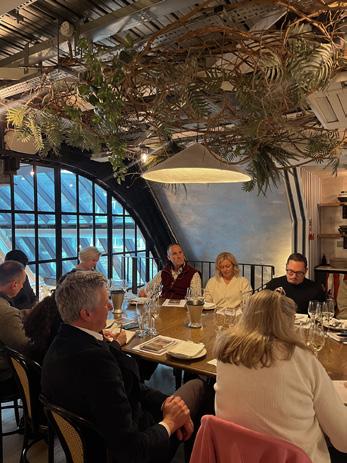

Currently we take a very small range of Ribera del Duero, but this tasting has opened up that there’s a lot of range in terms of quality and price. We often use Rioja as a way to push people into Ribera del Duero; for us the really premium stuff won’t work like that, but wines around £45 definitely could. The whites were the most interesting for me: food-friendly with lots of body and texture. Knowledge is improving amongst customers and new things on the ground like that are interesting for us to sell.

A very interesting tasting. There are some excellent wines, with the less famous names selling for £30 to £60 being very good and classy. The gap in quality between the top priced wines and the wellmade wines in the tasting was small yet the price difference was enormous! For us, Ribera del Duero needs to be a hand-sell. It is known by wine enthusiasts but few others, so we have to explain the difference to wines of Rioja, the marginal climate etc, and dismiss the myths. Because of the cult wines, the perception is it only produces £100-plus wines, so there’s lots of education to do.
“The word majuelos means a small allotment of vines that people would have had alongside a few goats, sheep and a vegetable patch to survive. It’s an homage to the Ribera del Duero of old,” says Tim. 100% Tempranillo, this is dense and plush with dark fruit, orange rind and cocoa, kept in line by a ripping acidity.
Felix Callejo Parajes 2023, Moreno Wines, RRP £21
Parajes is a blend of Tinto Fino, Garnacha and Albillo Mayor from a mosaic of vineyards in the páramo. Aged in concrete, foudre and an old 500-litre barrel, this prioritises the freshness and vitality of its high-altitude origins. It’s buzzing with fresh berries and flowers with a touch of spice. A great alternative to a Côtes du Rhône.
Dominio de Cair Cruz del Pendón 2023, Alliance Wine, RRP £105
This is from four vineyard plots planted between 1941 and 1947. “Because historically people would plant all sorts and see what survived, there are dozens of varieties in these vineyards, often ones that nobody knows anything about,” says Tim. The result here is a wine of incredible purity. A dark-fruited spine tingles with electric cherries, wormwood and violets.
García Figuero Pago de Torrosillo 2019, Waud Wines, RRP £90
“This is a good example of what many people consider typical Ribera to be,” says Tim. “100% Tinto Fino, it’s powerful and rich with 50% new
wood. It stands out against the others in terms of style but gives a sense of how the wines age, too.” The site, planted in 1950 on clay soils, is in La Horra, an area which lends itself to concentration and density.
Wines tasted after lunch
• Tinto Pesquera Albillo Mayor 2023, Armit, RRP £42
• Aprisco Arzuaga 2020, C&D Wines, RRP £32.50
• Valtravesco Crianza 2021, Vinothentic, RRP £19
• Viña Magna 2021, Tanners, RRP £32
• Dos Alas Rojas 2021, Elevage Wines, RRP £45
• Cuesta de las Liebres 2021, Enotria, RRP £180
• Tinto Pesquera Millenium 2018, Armit, RRP £130
• Corimbo I 2019, Mentzendorff, RRP £49
• El Anejón 2021, Enotria, RRP £110
• Territorio Luthier 2020, Amathus, RRP £66
• Corimbo 2021, Mentzendorff, RRP £30
• Nabal 2024, Solaris, RRP £17
The interview with Shari and Garen Staglin is arranged for London’s Corinthia Hotel, where they’ve been staying during their trip to the UK. Shari is on time but Garen is running late: he’s coming from a meeting with Lord Stevenson of Coddenham, a man who shares his passion for mental health issues.
I tell Shari that the last time I interviewed her husband, back in 2019, he told me he was having so much fun he should be arrested. Is he still having fun, I ask – and has he been arrested? Shari laughs. “He says that a lot,” she shrugs, as we make our way to a table which turns out to be within range of a surprisingly loud piano. “He hasn’t been arrested yet.”
Shari and Garen didn’t start out as wine people. “I grew up in South Dakota, and all I drank was milk,” Shari says. “Garen’s father was born in Italy so he had wine with meals growing up. I met Garen at UCLA and his parents would take us out for dinner and order wine, which was totally different for me.”
Garen served with the US Navy in Vietnam and worked in the Pentagon; Shari, with a Master of Public Administration degree under her belt, had senior health roles in New York City and the Bay Area of California.
In 1985, as wine enthusiasts rather than professionals, they bought a 61-acre estate on Napa’s Rutherford Bench and began a new adventure, switching to organic viticulture as an early priority. Chardonnay and Cabernet Sauvignon thrive here, and the late Michel Rolland was on hand to help them get the best from these varieties.
“He wanted to get this richer mid-palate
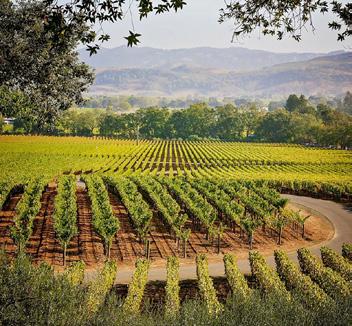
Staglin's Napa wines have a loyal fanbase in the US, both for the quality they represent and for the $1.2bn they've raised for good causes. In the UK, where they're represented by Pol Roger Portfolio, there's an equally enthusiastic reception. Graham Holter meets the founders
In association with Pol Roger Portfolio

to the wines,” says Garen. “Basically, it was a matter of managing yields and being more selective and moving to hand-sorting. It was a big transition from making 7,000 cases of Cabernet to making 4,000 cases of Cabernet. Half of it was Staglin, and the other half was Salus [the label that raises funds for charity]. So that was a huge transition for us. It took a lot of courage, but it’s proven to be absolutely the right decision.”
Rolland’s work was questioned in the 2004 film Mondovino, described by Garen as “a hatchet job”. He adds: “I think he respected terroir and, even more precisely, typicity of the place in his wine. We’ve always made wines to reflect our place. We never made wine for wine critics. We just make the best wine possible that we believe reflects the soil and our conditions.”
If the vintage doesn’t live up to
expectations, as in 2011, wine is sold in bulk. “If you build a brand over 40 years, you wouldn’t put your name on something that would disappoint.”
Charitable work is central to the Staglin project and it’s calculated that the business has raised $1.2bn for good causes, principally focused on mental health and child welfare. Garen suggests that Staglin is probably “the most philanthropic winery in the world”, but it’s a matter-of-fact sort of claim that suggests he feels it’s an essential part of being in business.
“Great wines for great causes has been our motto,” he says. “We think giving back is not only an opportunity, but an obligation, and we treat it that way.”
Staglin Family Salus Estate Chardonnay 2023
The 2023 growing season gave Staglin pretty much everything it could have hoped for. After a long winter, with rain at just the right intervals, the vines were nicely rested, and soil moisture replenished. During the bud break and bloom periods, the weather was temperate, encouraging healthy canopy development and cluster formation. Summer was mild rather than hot, so grapes matured slowly, without excess sugar loading. The harvest was weeks later than normal: it was clear the wines would have unprecedented balance.
Salus Estate Chardonnay bursts with energy. On the nose, expect jasmine, pine resin and citrus zest. The palate is mouthwatering, suggesting lemon, melon and starfruit, giving way to an intriguing spiced honeycomb note on the lingering, bright finish.
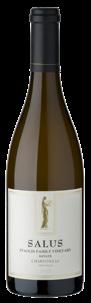
The fireplaces are Elizabethan. The cellars date back to when the Thames ran right up to this stretch of the Embankment. Rudyard Kipling once lodged upstairs. Gordon’s Wine Bar has been part of the fabric of London since 1890 – and if you didn’t know better, you’d think nothing here had changed at all.
But look a little closer, and you’ll find something unexpected tucked alongside the ancient wine bottles and flickering candles: a piece of modern technology that has transformed how one of London’s most beloved institutions actually runs – Square.
"I can’t name shame,” says Amanda, who manages Gordon’s, “but the systems we’d been using for years … we were trying to integrate contactless payments with ordering and product information, and none of it gelled. None of it. One was trying to integrate with the other and it kept falling over. We couldn’t reconcile our numbers. Then Square came along, and it was like: bam.”
a place unlike anywhere else Gordon’s is, by any measure, one of a kind.

Family-owned and family-run, it started life serving port and fortified wines before evolving over 130 years into the central London institution it is today – an extensive global wine list, decadent cheese boards, a candlelit cellar for intimate evenings, a sun-trap terrace for everything else, and an area tucked behind the bar for private celebrations.
Next door, the new Gordon’s Deli serves salads, picnic boxes and homemade Scotch eggs that have acquired a devoted following of their own.
“Wherever I’ve been in the world, there’s always been someone who knows Gordon’s,” says Amanda. “We’re blessed with that.”
The community that fills Gordon’s each day is, as Amanda puts it, “a really broad church”. From families out in the sun, to office workers
grabbing lunch from the deli, to first dates in the cellar. “People come back because Gordon’s is very relaxed,” she says. “You can get good quality wine and food at a reasonable price for central London, in a fantastic space. We’re very inclusive.”
running a 130-year-old business in the modern world
What looks effortlessly relaxed from the outside is, behind the scenes, a genuinely complex operation. Each morning, food deliveries arrive, the kitchen fires up, cheese fridges are filled, candles are lit, and the deli counters are stocked from top to bottom. Five separate areas prepare food and drink orders simultaneously, all of which need to work in perfect coordination the moment service begins.
“We present ourselves as historic,” says Amanda, “but we’ve had to evolve very quickly with technology. Square enables us to keep a high-quality service while still maintaining Gordon’s quirk.”
That last point matters enormously at Gordon’s. The wrong technology doesn’t just cause operational headaches – it threatens the atmosphere that customers travel specifically to experience.
Square now runs across every part of the business: the bar, the deli, and the online shop, all integrated into a single system. On busy days, its handheld devices send orders instantly to whichever of the five preparation areas needs them. “It’s crucial that orders placed are sent to the correct printers,” Amanda explains, “because we have five different places to prepare drinks and food. That really has to work simultaneously – so we can deliver orders quickly, all together. And Square delivers that for us. It’s been a real joy.”
For Amanda, the day begins with Square before she’s even set foot in the space. “The first thing I do when I wake up is look at the Square report to see what trading was like the day before. It’s a fantastic little snapshot – it shows our takings, our service charges, the top products, who the top salesperson was, and it very quickly shows the trend of the day.”
growing without losing what matters
When Gordon’s was ready to expand, Square grew with them. The online shop, which now sells some of Gordon’s more unique wines, was built using Square Online. When opening the deli, the team was able to plug straight into Gordon’s existing Square setup without starting from scratch.
“Square enables us to set up another account,” says Amanda, “so we can piggyback onto what we already have. That’s a great bonus.”
And the savings? Since switching, Gordon’s has cut around £10,000 a year in card processing fees alone. “The proof,” as Amanda puts it, “is in the pudding.”
For more information, visit Square.com
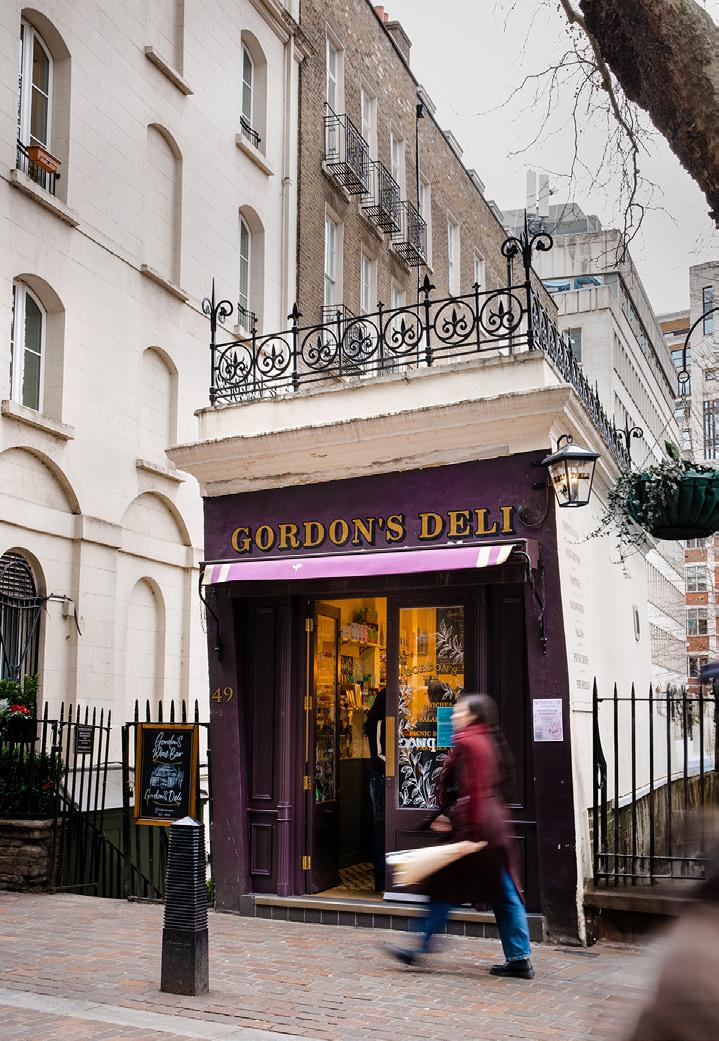

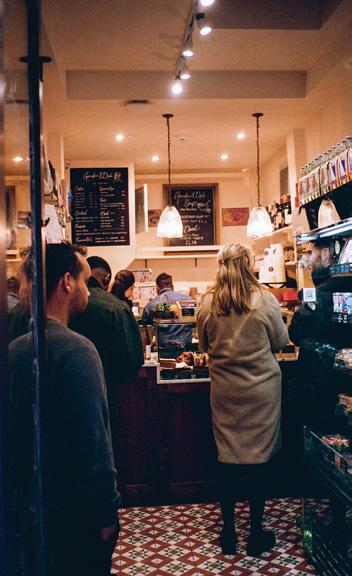
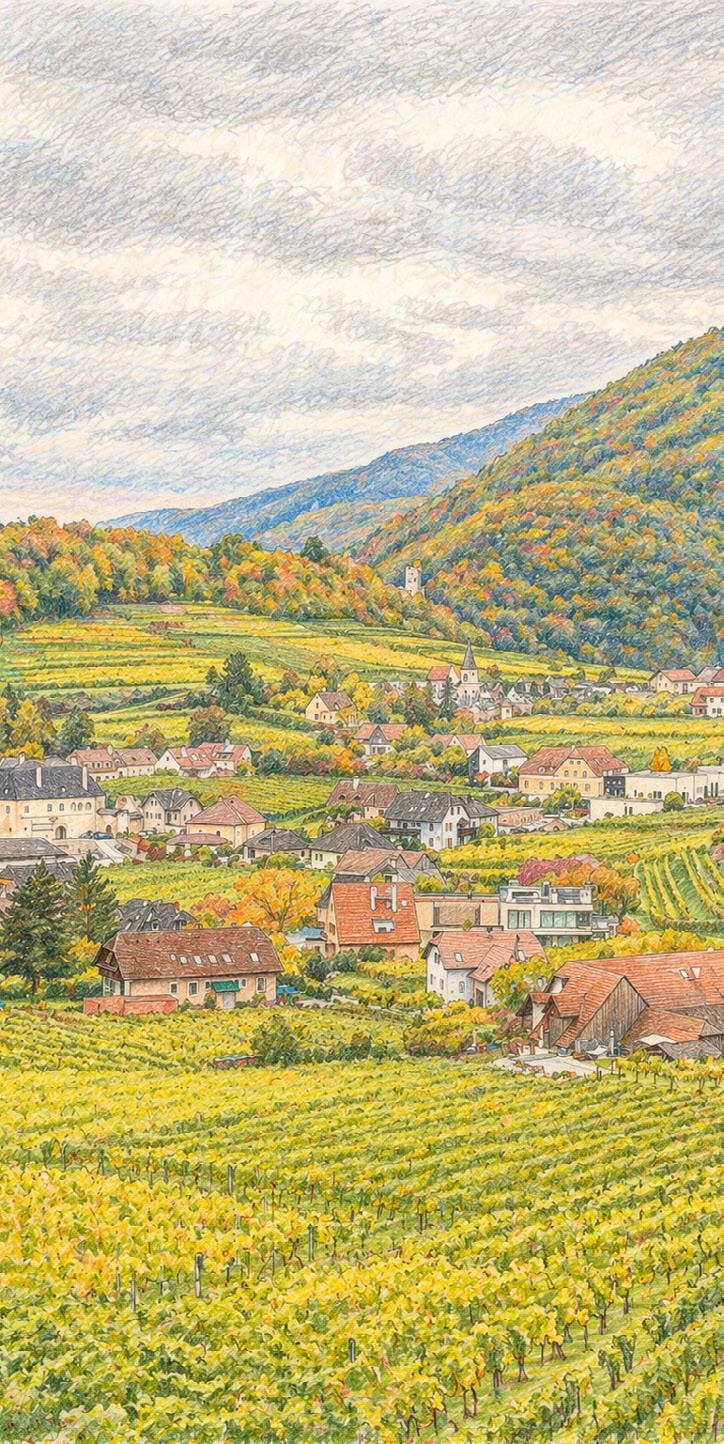
Jacob Stokes weighs up the factors that have made Austria’s signature white variety so successful – and where it goes from here
Grüner Veltliner has become a case study for aspiring indigenous varieties around the world.
It has broken into the UK’s heavily saturated market without racing to the bottom. Its rise doesn’t feel like that of Rías Baixas Albariño or any other of the recent supermarket-led successes of the era. Grüner feels like it has sidestepped the mass market to plant itself firmly in the hands of specialist retailers. In return, it has had its image carefully marshalled, steered by those who want to guide consumers out of their comfort zones with inspiration and excitement rather than appealing price tags alone.
Grüner has subsequently found itself fronting a long line of alternatives to Sauvignon Blanc, a necessary evil in consumer encouragement. And even though the reality is that Grüner’s closeness to Sauvignon is mainly limited to a smashing lick of acidity and tendency to be bone dry, being a knee-jerk alternative to such a juggernaut isn’t a terrible position to be in. Not least because every captured convert represents exploration and engagement, firstly into the Alps, and hopefully beyond, next time without the soft launch of a Sauvignon Blanc comparison.
Grüner Veltliner makes up 32.3% of the area under vine in Austria and of that, 91.7% of it is in Niederösterreich, where its most notable wines are being made in the regions of Kamptal, Kremstal, Wagram, Wachau and Weinviertal. But it’s the diversity of styles within these regions that sometimes goes unspoken.
Of course, the cool-fermented, stainless steel-treated expression of Grüner is a pervasive one. These styles represent the historic benchmark for the variety: brisk and precise, with delicate aromatics, gushing acidity and the characteristic kick of white pepper. The wines often represent excellent value compared to rivals in Europe and beyond.
But despite this strong calling card, Grüner also has a high ceiling for more premium interpretations. As borne out by Austria’s move to develop its own cru system, Grüner Veltliner has the potential to be extremely transparent to the site in which it grows, with huge variation in body, flavour profile, texture and minerality.
The soils in Niederösterreich alone span from powdery calcareous loess, crystalline granite-rich gneiss and coarse-grained gravel to unconsolidated limestone, sandstone and marl. This Burgundian-like variation in soil makes a cru system an absolute must, and Grüner is appearing as the best candidate to fly the flag.
Premiumisation is also presenting itself through innovation in the winery. Although it’s unusual to see new oak on Grüner Veltliner, old large-format casks, extended lees ageing and bottle ageing are all tactics deployed by quality-focused producers. So, despite the stainless-steel conventions of its past, there is a thrilling journey of site and style to be enjoyed with Grüner. And that’s without even leaving Austria.
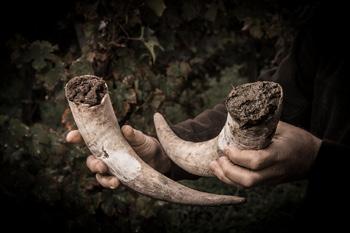
Since 2017 the biodynamically cultivated area in Austria has doubled (to 1431ha in 2025). And as this relationship with biodynamic farming strengthens, Grüner, and Austria as a whole, are reaching new heights.
Under Austria’s two biodynamic control bodies, Demeter and Respekt, there are a total of 89 member wineries, with more in the transition phase. And of the country’s certified organic vineyards, 14% are already farmed biodynamically.

5 M a s te r s to ra i s e y o u r G a m e

Best in Vienna
Grüner Veltliner Bruch spicy and fruity
Christ ticks all the boxes: delicious, organic, vegan, clean. For the thoughtful.
2 Grüner in the range Gemischter Satz!
Wines like diamonds
Loibenberg Smaragd pure and mineral
Alzinger is cult for mineral complexity For the wine explorer & building a cellar.
4 Grüner in the range. Try older vintages!
Your new Superhero
Grüner Veltliner Fels rounded and seductive
Waldschütz is our hero range for indies.
For *everyone*!
6 Grüner in the range and loads more. Check that Eiswein!
Cool in the Heat
Ried Kreuzkapelle vibrant and exotic
Two brothers make this gem, a cool climate wine in a hot region. For the customer used to New World styles. Sweet Wine Masters!
Alpine Wines have defiantly built a BIG list around the Alps. Brilliant producers. Lively wines. Focus on personality & craftsmanship. All varieties, all styles, intriguing bottles your customers won’t find everywhere
Contact Tim Killen 020 31513454 tim@alpinewines.co.uk | www.alpinewines.co.uk
Princely Excellence
Ried Karlsberg spicy and full bodied
A bold Grüner made for the Princes of Liechtenstein’s events. For dinner parties and quiet sipping Signature Sparkling!

Unpronounceable grape varieties and complicated blends were said to be a handbrake on Portugal’s export ambitions. But they turned out to be its trump cards, as Jacob Stokes reports
Twenty years ago, Portugal held the key to winemaking treasure –though perhaps lacked a map to find the chest.
A wealth of potential world-beater regions seemed to be listless. It might have been tempting for producers to grub up their 60-year-old Donzelinho and follow the new world into a sunrise of star-studded international varieties. Some would have argued this was a good way to simplify Portugal’s export offering and elevate its still wine reputation.
At that time, Portugal’s wide range of tongue-twisting indigenous varieties and its tendency to blend thousands of them together at once was regarded as a problem (at least for UK consumers) rather than a trump card. Of course, this wasn’t and isn’t an issue exclusive to Portugal. Italy, with all its export clout, still hasn’t pinned down flagship white varieties in the same sense that Sangiovese and Nebbiolo fly the flag for reds.
But who really cares anymore? Italian whites arguably offer a more exciting journey for that reason. And in today’s market where points of difference, regional identity and authentic stories are prized assets, Portugal is centre of attention.
Instead of turning to Cabernet and Chardonnay to galvanise its credentials, Portugal focused on elevating its key regions. After all, the foundation of Europe’s power brands like Chianti, Chablis, Côtes du Rhône, Rioja and Champagne are all built on the idea of place rather than variety – some with complicated blends of their own.
What followed was the rewriting of Portugal’s industry playbook. Styles and quality began to change with the
harnessing of technology and pooling of expertise, supported by more synchronised marketing strategies and plans for international presence.
One of the most notable examples of this change in attitude was the Douro Boys partnership. It was established in 2003 in a region which boasts over 2,000 years of winemaking history and 300 years of success in international markets – but had too many eggs in the fortified wine basket. The Douro Boys saw the region’s wealth of old vines, indigenous varieties and generational know-how as a means of making world-class still wines, not just port.
Over the next 20 years, the Douro Boys held seminars, tastings and auctions across the globe, cultivating international acclaim for these wines that call this breathtaking UNESCO world heritage site home. The quality was always there, the expertise was always there: it just needed packaging up and presented into something fit for the modern trade.
Niepoort, one of the four Douro Boys producers, has continued to pioneer in the Douro and beyond, bringing a whole new attitude to Portugal’s wine offering. Its range has the depth and dynamism to please every extreme of the UK market: pét nat for the skatepark hipsters, providing the energy for kickflips and stick-and-poke tattoos. Classy stills for enthusiasts, and
Around 30 million visitors arrive each year, with tourism now accounting for about 20% of GDP
all those discussions on oak integration, the texture of cold soaking and minerality of schist soil. And of course, some of the planet’s best port; the most fitting accompaniment for discourse on 17th century naval strategy, and a necessary ingredient to the Nelson’s Blood cocktail.
The rapid expansion of Portugal’s tourism industry has further exposed the country’s wines to the world. Portugal is now a magnet for all types of travellers from across the globe: around 30 million visitors arrive each year, with tourism now accounting for about 20% of GDP.
In Porto (or more accurately Vila Nova de Gaia) tourists are now drawn in by the World of Wine attraction and high-class hotels built by the Fladgate Partnership (The Yeatman) and Kopke. The Douro Valley is now far more accessible from the city by road.
Wines from the Douro are enjoying a higher profile, but so are those from a once rather overlooked region to its north.
In the 10 years from 2003 to 2013, Vinho Verde saw a 63% increase in global export volume and 91% in value. Sales to the UK in 2003 were worth £1.3m. Fast forward a decade and the UK import figures from 2024 still show growth, 7% in volume and 5% in value, worth a total of £6m.
Over this same 20-year period, Vinho Verde has undergone a huge transition in terms of its stylistic offering too. Despite its lightly spritzy, crisp white blends still being foundational to the region’s production, attention has gradually shifted to more premium, still expressions of single varietals and single vineyards.

select some of their star performers

Sheldons
“We’ve had many customers coming in asking us for wines from what I would consider to be the less traditional areas of Portugal,” says Shane.
“People are looking beyond Vinho Verde and asking for specific wines from different areas, so that was a prompt for us to explore what might be available and we have been looking to extend our range.
“I think there’s been more coverage of Portuguese wines in the press and they’re associated with being good value; good wine at a good price. In our experience customers are not looking necessarily for the top wines from Portugal, they’re looking for wines that just have great flavours and perhaps are a little bit different but sensibly priced.
“Our average bottle price last year was £25.11 and I’d say that £15£30 bracket is our sweet spot. We sell a range of Portuguese wines in that bracket, excluding port.”
Shane reports that customers “expect that Portuguese whites are going to be relatively light”. But he adds: “Some of the wines we’ve got are almost the opposite of that, and offer real flavour intensity which, once people have latched on to, they come back and repeat purchase.”
The Invincible series of wines from Marc Kent has proved to be particularly popular with Shane’s customers.
“Marc is more normally associated with Boekenhoutskloof in South Africa,” says Shane, “but he married a Portuguese lady and started making wine in Portugal. The wines have really wacky labels, and we’re seeing more openness from people towards the type of packaging that’s a bit crazy – just look at the branding on some cans of beer.
“Another producer that does really well for us is Casa Ferreirinha, famous for Barca Velha, but we have their Vinha Grande, which is one of their entry-level wines. It’s fantastic at £17.50 and that really goes out in some volume.”
“
People are looking beyond Vinho Verde and asking for specific wines from different areas
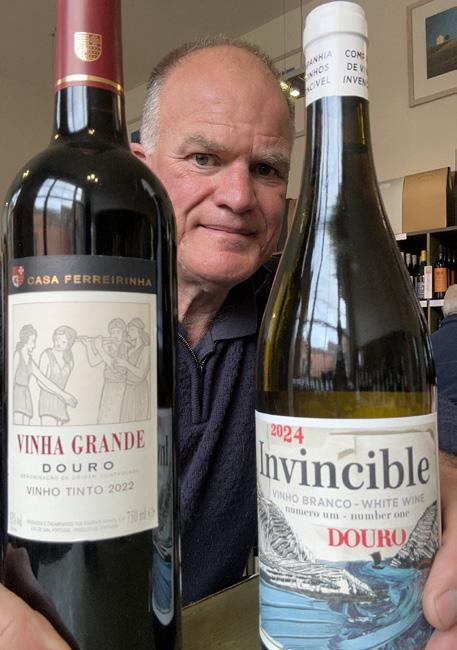
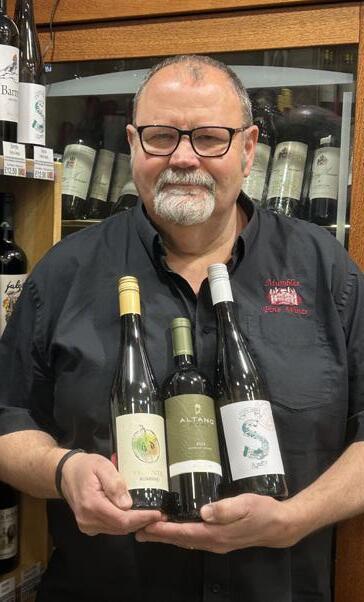
Jon has grown his Portuguese list over the last couple of years, taking it from a range of eight to around 25.
“
We just try and keep things moving and continually refresh our range
“Basically, people were coming back from holiday and coming into the shop and asking for Portuguese wine,” he says.
“Our core range consists of Altano from Symingtons, because when I’ve been to Portugal, that brand is quite widespread out there, so it’s very well known. We’ve got two reds, a white and a rosé from that range. I think they are the most recognisable for people who have been to Portugal.
“In addition to that core range, we just try and keep things moving and continually refresh our range. That can be hard because you do get some people who you cannot sway from their favourite wine, but mostly you can get them to try something similar. If they are a very good customer we’ll probably keep something in stock especially for them, even if it’s not on the shelf.
“We have three Alvarinhos at the moment and the Semente Alvarinho from Richmond Wine Agencies is probably the most popular. As lower-alcohol styles are more in demand, Vinho Verde also does well for us: we’ve got three in at the moment. We’re very happy with our Portuguese sales.”
“Portugal was one of the best attended and quickest selling tastings that we put on last year,” says Jamie.
“We think part of the popularity might be because there is a direct flight from Newquay airport to Faro and so we get a lot of local people who holiday there.
“We have recently put quite a bit of effort into our Portuguese range to expand the offer. Classics such as the Douro sell very well. Alentejo is also very customer-friendly and it hits a really good price point. There’s good quality for the money, and that goes up through the range as well.
“We went on a Hatch trip a couple of weeks ago to Esporão and we just added their Reserva white, which retails at about 20 quid. So I do see Alentejo as generally pretty solid for customers.
“We have also taken Casa Santos Lima, Lisbonita from North South Wines (RRP £11.99). I hate saying things like this, but the packaging is good. I’m definitely more a ‘what’s in the bottle’ kind of guy but packaging is important and I can’t pretend it’s not.
“
There is a direct flight from Newquay to Faro and so a lot of local people holiday there
“Albariño gets more expensive from Spain, so there’s definitely an opening for the Alvarinhos of Portugal.
“The other thing that we do really well with is Vinho Verde. We import that excellars, and we even do an own-label for one of our restaurants. It’s just a nice, easy, refreshing drink. Get the barbie on, chuck some sardines on it and away you go.
“I think Portugal is a big beneficiary of the new duty regime because they were already making lower alcohol wines. They haven’t had to doctor it or tweak a blend.”
Jamie was too shy to have his photo taken so the wines are pictured with team members Tessa Osbourne (above right) and Emily Bone.
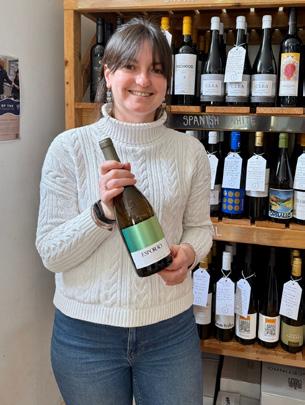
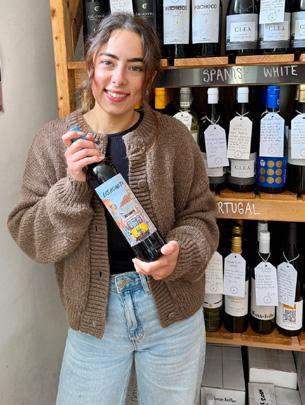

with Rachel Gibson MBACP

Suicide is a very difficult topic to talk about for so many reasons – it’s not easy to write about either, but it’s important. It is the leading cause of death for all people under the age of 35 in the UK and for men under the age of 50 (source: ONS, 2023) and this statistic is not improving.
Life can be unbearably hard, and those of us in the wine trade are of course no exception. Many of us are feeling overwhelmed right now, due to intolerable emotional, mental, financial and possibly physical pain. These emotions can end up suppressed and, in the worst situations, feel impossible to live with.
Words like “my family are better off without me”, and “no one can help me out of this dark hole” are alarmingly common in the therapy room. In counselling we carefully work with these thoughts and feelings to understand them. Most people who consider suicide don’t actually want to die, but they cannot find a way to live either. There is always another option – to stay alive and find a way forward, even if the level of pain and fear feels insurmountable, and perhaps accepting the future is not how we hoped or expected.
Suicide touches so many of us and the ripple effects impact far and wide, and can last forever.
During my time working in the wine trade I lost two customers to suicide – I will remember my initial shock, disbelief and sadness forever. Many of us know others, perhaps customers, colleagues or even close family members who have taken their own lives and have no choice but to survive that cavernous loss. We may have considered suicide ourselves. It could be in our minds right now. If you are, or know someone who may be feeling this way, please reach out for help, to a friend, a trained counsellor or The Samaritans (who are free 24/7 and offer an incredible service – their phone number is simply 116 123).
Rachel is an integrative counsellor and a member of the British Association for Counselling & Psychotherapy. She formerly ran Wine Utopia in Winchester. To support clients in the wine trade, she offers ongoing online counselling sessions at the reduced rate of £35 per 50 minutes, so mention this article. Email rachel@rachelgibsoncounselling.co.uk.
A tasting organised by the Embassy of the Slovak Republic.
Registration: nina.spisiak@mzv.sk
Monday, June 1
Slovak Embassy
25 Kensington Palace Gardens
London W8 4QY
Join the OVC team for one of largest tastings of old-vine wines
In addition to the walk-around tasting of 150 wines, there will be three masterclasses throughout the day.
Register at swirl.eventcase.com.
Monday, June 8
St John’s Church, Waterloo Road London SE1 8TY
The opportunity to taste a wide selection of wines from producers including Poggiotondo, Villa di Petrognano, Capezzana and San Polo.
Email events@libertywines.co.uk.
Tuesday, June 9
Central London venue
With over 75 producers attending, this is a great opportunity to meet the families and teams behind the bottles.
Discoveries are promised among the 400-plus wines on show alongside familiar favourites from the portfolio. Register by emailing hvansusteren@bancroftwines.com.
Tuesday, June 9
The Lindley Hall 80 Vincent Square London SW1P 2PB
The second edition of the UK’s rosé-only trade tasting promises 200 different wines, across 55 varieties and at various prices. This walk-around event is designed to showcase the diversity of styles from Provence and beyond. There will be four masterclasses led by Elizabeth Gabay MW and Ben Bernheim.
Registration: email ben@pink.wine.
Wednesday, June 10
Crypt on the Green St James Church, Clerkenwell Close London EC1R 0ER
A tasting designed to “challenge perceptions and discover a fresh side of Australian and New Zealand wine”.
It includes a masterclass to taste sparkling wine, Sauvignon Blanc, Chardonnay, Pinot Noir and Shiraz/Syrah and discuss why they’ve become signature styles of the regions. Registration: uk@wineaustralia.com.
Monday, June 22
The Grand Hotel, 1 Church Street Birmingham B3 2FE
Winemakers from Premium Independent Wineries of South Africa (PIWOSA) and their mascot Wino the Rhino place a spotlight on the diversity of South African wine. For more information and to register email eleanor@randr.co.uk.
Wednesday, June 24
Quo Vadis, 26-29 Dean Street London W1D 3LL
QUIZ TIME
Answers to questions on page 25
1. 1990 Lafite Rothschild 2. (d) Calabria 3. (c) Coca 4. Porto Santo 5. Black pepper
We think of port as one of the most seasonal drinks – with that season being Christmas and the winter months. How wrong are we?
You’re not wrong, you’re just not making the most of a very versatile drink. The ruby style is probably more of a winter drink but tawnies and whites are definitely suited to all weathers.
How can wine merchants persuade their customers that port has summer potential? By showing their customers just how versatile port can be, often just by serving it properly chilled. The more well-known route is White Port & Tonic, with orange peel and some fresh mint leaves, using one of our drier white ports.
Does you also include your more traditional ports in your summer activity?
We also include the aged tawnies, namely 10 Years Old and 20 Years Old as well as some younger single-year tawnies: “Colheitas”. If I were to choose one Colheita for summer serving it would be the 2001 or the 2005; young enough to be affordable, but with time well spent in barrel to show their unique ageing potential and full scope of flavours achieved from slow barrel ageing, a stone’s throw from the Atlantic Ocean, in Vila Nova de Gaia, on the Atlantic coast of Portugal. We serve them all chilled to taste them at their best.
What sort of food matching potential can port have in the warmer months?
It’s all a question of how creative you are in the kitchen, but two “out of the box” pairings come to mind. I really enjoy scallops, pan fried and served alongside a fresh summer salad with a chilled glass of Kopke 10 Year Old White Port. We also make home-made pear tartin with a chilled glass of Kopke 20 Year old Tawny.
Is there evidence that consumers who enjoy port in the summer months are often novice port drinkers who then go on to enjoy port in the winter ... or are we really talking about extending port’s appeal among its existing consumer base?
Just to put things into context, we have seen a huge growth in port sales over the past 10 years in South Korea, for example, where novice Seoul based port drinkers
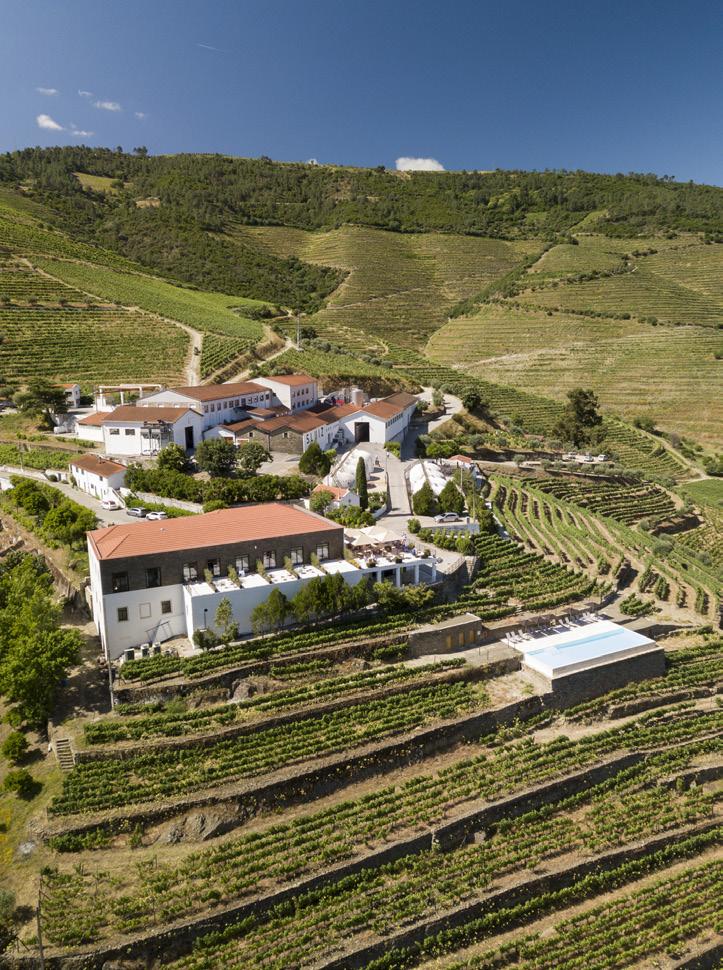
Carlos Alves, chief blender and winemaker, explains how the oldest port house has a very modern approach to the warmer months
started sharing bottles of Kopke 10 Year Old Tawny, in bars, on ice.
Kopke seems to have quite a bond with the UK independent trade. Why do you think this is the case?
The fact that Kopke is the oldest port house (established in 1638) must have something to do with this, along with our unique hand-painted bottles, keeping traditional craftsmanship alive. I think we can also say that we were one of the first port producers to really focus on the potential and versatility of both white port as well as tawny ports, when we designed a long-term strategic plan for the UK, back in 2015.
We were constantly in the field and very focused on independents. It wasn’t easy. I remember one of the first tasting we held in the UK, back in 2015, at The Big Fortified Tasting – we had bought out the big guns, older Colheitas and aged whites
and nobody really understood what we had to offer. It’s amazing to see just how much has changed in the UK consumer mindset in just 10 years.
We hope Kopke has helped to change perceptions and show just how versatile port can be. It’s jumped outside its “fortified wine box” and into the bigger world of just being a great wine, to enjoy throughout the whole year.

As The Wine Merchant unveils the winners of this year’s competition, it seems clear that the future of the UK wine trade is in safe hands.
Meet the kids who we’ll all be working for within a couple of decades …
The fermentation of Theo’s abandoned beaker of Capri-Sun Tropical, discovered under his bunk bed after what is thought to have been a period of eight months, was accelerated by its proximity to a radiator. Potent enough to send the family labrador into an 11-hour stupor, the juice was “unstable, unappetising and unpleasant”, according to parents Cathy and Sam, but appreciated by the natural wine fans next door, who commissioned more of the same – not realising it contained elbow scabs.

Bailey is regarded (by classmates) as one of the most influential viticultural mavericks in the East Cheam area. His experiments with the two rows of Solaris vines on his stepdad’s allotment have so far involved tying canes into reef knots and burning off bark with a Bic lighter. His seemingly random approach to green harvesting has been criticised by some as merely a source of ammunition for grape fights with the McCluskey twins. But there is no doubt yields have reduced.

A well-meaning aunt informed Orla that “ABC” could also mean “Anything But Chardonnay”. So the girl pursued this line of reasoning through the rest of the alphabet, arriving at phrases such as “Don’t Enjoy Frappato”, “God Hates Inzolia”, “Just Kill Lambrusco” and “Most Nebbiolo’s Overhyped”. Orla’s vehement disdain for Italian wines seems arbitrary and ill-judged. But it makes about as much sense as “Anything But Chardonnay” – and that’s persisted since at least 1989.

Winmau is an expert on wine faults with acute sensitivity to the ruinous effects of TCA, brett, volatile acidity, light strike, mousiness, smoke taint and squidged ladybird contamination. When asked to fetch and open bottles from his parents’ cellar for dinner guests, Winmau detects one or more of these faults about 30% of the time, and so rejects the wine – suggesting the scale of the problem may be massively under-reported. Further tasting research then takes place in the tree house with various cousins.

Inspired by shows such as Saturday Kitchen and Sunday Brunch, Alicia first delivered precocious reviews of her parents’ Aldi and Lidl wine purchases aged just seven, parroting phrases like “perfect with a big bowl of pasta!” and “ideal with friends and good conversation!”. Of course, Alicia never actually drinks any of these discount wines herself and would probably not enjoy them if she did, which stands her in excellent stead for a future role as a TV wine expert.

Digby’s acclaimed Year 7 assembly talk on knife crime ended memorably as he produced an heirloom cavalry sword and performed an act of sabrage on a bottle of La Gioisa. “You see, there are more convivial purposes for these deadly blades!” he declared, drowning out the screams of those showered in Prosecco and glass. Now self-training as a freelance sommelier, Digby is hampered by a ban from local cafes, and a police caution, but determined to follow his dream.

In 2024, young Bella took a sniff of her mother’s glass and asked: “Mummy, why does your wine smell of poo?” It was Domaine Prieuré Roch, a notoriously pungent Burgundy, and the girl’s perceptiveness won raucous applause from the assembled supper guests. Bella repeated the feat with other glasses around the table, drawing compliments that she might be a gifted super-taster with heightened sensory faculties. Admittedly, Bella currently thinks all wine “smells of poo”, but time is on her side.

A keen entomologist, Kabir has bred a novel species of aphid which preys on phylloxera: a feat of genetic engineering with profound benefits for global viticulture. Sadly, this helpful louse also transmits a pathogen that withers grapes, so Kabir has developed a second bug that kills it before it’s mature enough to destroy fruit. This super-bug is a game-changer, but unfortunately causes blindness and infertility among vineyard workers. Funding has been pulled, so Kabir is now reliant on a paper round to support his laboratory work.


A freakishly early reader, blessed with what turns out to be a photographic memory, Poppy shocked her parents by learning every word of The Oxford Companion to Wine, which had been left in her bedroom as an ersatz doorstop. Poppy’s level of wine knowledge is therefore near MW standard – though as it was the 1994 edition of the Companion, she knows nothing of orange wine, biodynamics or Vivino. However she has written a play about the life of Steven Spurrier.

A maths prodigy, Chuks has a formidable grasp of mental arithmetic which means his progress is being monitored and encouraged by potential employers such as Corky’s Wine Shop in Leatherhead. Says owner Cliff Frond: “I tell Chuks the ex-cellar figure and ABV and in seconds he can give me an on-shelf price taking into account duty, FX, customs clearance, shipping, warehousing, allowance for breakages and a 38% margin.” Frond faces competition for Chuks’s signature from Citibank and Goldman Sachs.
Georgiana lives on the Aurelian Hills wine estate in West Sussex, founded by her investment banker father Gerard in 2016, and is its new head of hospitality. She replaces an AA-rosetted chef and a former deputy manager of Grantley Hall in Yorkshire, whose ideas were described by Georgiana as “boring” and by her dad as “expensive”. On non-school days, Georgiana sings songs from Frozen for visitors and pairs some of the cuvées with Haribo, Cheerios and Pom-Bears.

Conceived, it is alleged, in a secluded nook on Hermitage Hill, Sprout is the unborn child of Tamsin and Giles Rathbone – the loveable MWs behind the Sip Happens podcast. He (or she) is demonstrating remarkable wine appreciation even in utero. When mum takes a small sip of Ornellaia or DRC, any foetal agitation is instantly relieved, but repeat the exercise with 19 Crimes and Sprout is apt to kick violently and assume breech position. She (or he) is similarly soothed by the audiobook of Hugh Johnson’s memoirs.





Phoebe Weller of Valhalla's Goat in Glasgow is our unregulated agony aunt

Dear Phoebe
I’ve spent years at my husband’s prestigious, correct, award-winning shop, K–– & Co – but the atmosphere is cold and stale. I’ve secretly started moonlighting in The V–– Vault down the street and the energy is intoxicating. I feel so alive! The Red Judge has seen me in both and is judging my disloyalty. Should I jump for the Tingles or stick for my reputation?
Nan, Nantwich
Dear Nan
Woah woah woah, don’t you feel a lot? Jeez. Maybe you should take a moment to examine the fleeting nature of these “feelings”. They come, they go. You can identify them and not let them drag you about like a septum-tagged bovine. Is there
nothing else going on with you except your wine fanny?
HTH, Phoebe.
I
Dear Phoebe
I love my new wine shop and I love my boss – we have an insane connection and work is a joy … mostly. He won’t let me down into the cellar, which weirdly he calls the attic, and I hear noises coming from there. He won’t talk about it. Sometimes customers come in and he shoos me away, pretending I’m the cleaner. I want to be an equal, not a secret. What’s going on?
Janet, Stanedge

Dear Janet
I’ve met this guy. Very charming, sure, but then comes the “up is down” discombobulation and the cleaner stuff. With me it was pretending I was his dogwalker and literally moving the location of the lavatory after hours. He took me home once and went the wrong way down the M8, saying rules were for other people. Eventually I was so confused and lovesick I let gerbils loose in the air ducts of the building. Be warned. HTH, Phoebe.
Dear Phoebe
This shop has been here since the 1700s and, quite frankly, so have I. One minute, we’re a cellar for Sack and Sherry, the next we’re Vinho Verde and Vitality. The customers are asking whether we’re a Natural Wine shop or a Claret Merchant. They don’t understand that we’re both and neither. How do I navigate the entire history of fermented juice that is swishing in my head?
Roland, Rowland
Dear Roland
I sympathise, I really do. As someone who is many things and also nothing, the relentless carping of “that’s not like you” or “I expected more from you” gets right on my septum-tagged wick. Why do I need to fit neatly into one of your little boxes? So you can sell anti-cellulite leggings to me? Buck it, you can be vitality and Madeira and up and down and chips and cheese and falafels. You are the box and the box is you!
HTH, Phoebe.

New Bank House
1 Brockenhurst Road
Ascot SL5 9DL 01344 871800
info@hatch.co.uk www.hatchmansfield.com Hatch Mansfield


28 Recreation Ground Road
Stamford
Lincolnshire PE9 1EW 01780 755810
orders@abs.wine www.abs.wine




Alivini Company Ltd
Units 2-3, 199 Eade Road
London N4 1DN
020 8880 2526
london@alivini.com

Distributing Italian Excellence to the UK since 1975

liberty wines
020 7720 5350
order@libertywines.co.uk www.libertywines.co.uk
@liberty_wines




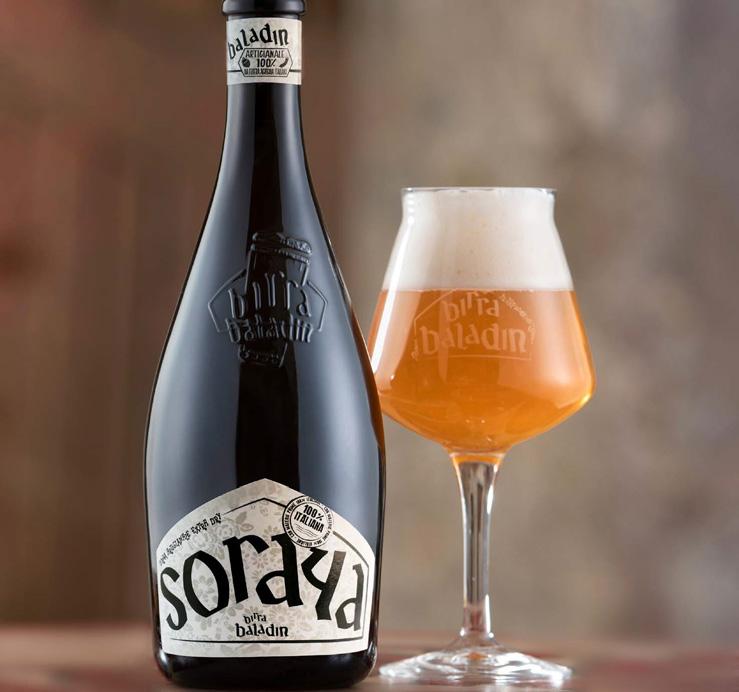
Baladin - Italy’s first craft brewery, producing unique beer and cider from 100% Italian ingredients
9TH JUNE 2026, 10.00AM TO 5.00PM, CENTRAL LONDON
Join us on Tuesday 9th June to meet the producers and taste a wide selection of wines from our Tuscany portfolio, featuring:
Terre del Buontalenti
Poggiotondo
Villa di Petrognano
Selvapiana
Capezzana
Villa Di Trefiano
Dievole
Isole e Olena
Fattoria San Giusto a Rentennano
Fontodi
Tenuta Valdipiatta
San Polo
Fossacolle
Conti Costanti
Biondi-Santi
Poggio al Tesoro
Tenuta Meraviglia
For more details and to register your interest, please email events@libertywines.co.uk (strictly Trade & Press only).
Fells House, Station Road
Kings Langley WD4 8LH
01442 870 900
For more details about these wines and other wines from our awardwinning portfolio from some of the world’s leading wine producing families contact:
info@fells.co.uk www.fells.co.uk

@FellsWine

je_fells




Fells is delighted to introduce...

A brand new project from Italy’s oldest wine family. Winemaking innovation - almost a millennium of Tuscan heritage. For more info please contact info@fells.co.uk

Every month. The Wine Merchant is the only publication devoted entirely to the independent trade. If your wines deserve to be part of what we write about, contact sarah@winemerchantmag.com

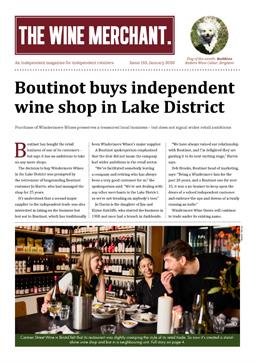
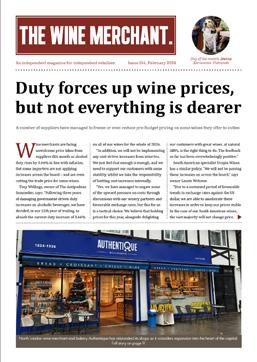
schenk family uk
Unit 5, The E Centre
Easthampstead Road
Bracknell RG12 1NF
01753 521336
www.schenkfamily-wine.co.uk

richmond wine agencies
The Links, Popham Close Hanworth TW13 6JE 020 8744 5550
Mark Isham, head of RWA: mark@richmondwineagencies.com
Tim Hawtin, south west & London: tim@richmondwineagencies.com
Julia Langshaw, north of the UK: julia@richmondwineagencies.com
Monika Kent, north of UK and other regions monika@richmondwineagencies.com

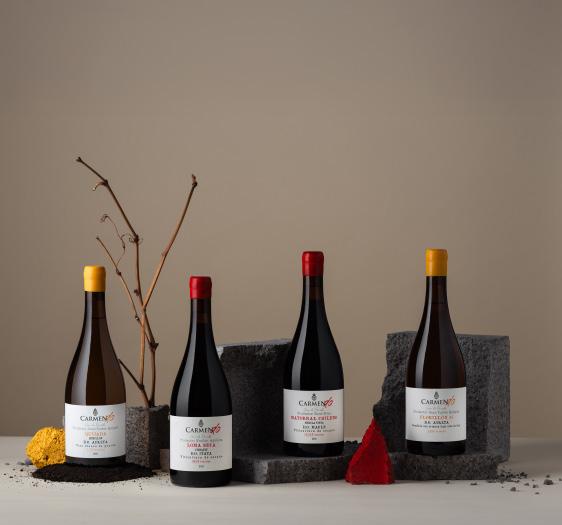

From unique vineyards in Maule, Itata and Apalta, Carmen D.O. craft limited wines of true originshaping a movement for the future of Chilean wine.

Richmond Wine Agencies will once again be exhibiting at the London Wine Fair. On show will be a special selection of our diverse and exciting portfolio. We have plenty of new additions as well as classics and wine essentials. Please come and visit us on stand D58 and say hello!
Contact your account manager to make an appointment.
Mark Isham Head of RWA 07824 816971 mark@richmondwineagencies.com
Julia Langshaw North of UK 07932 770636 julia@richmondwineagencies.com
Monika Kent North of UK & Midlands 07776 652341 monika@richmondwineagencies.com
Tim Hawtin South of UK 07584 238573 tim@richmondwineagencies.com
hallgarten wines
Mulberry House
Parkland Square
750 Capability Green
Luton LU1 3LU
01582 722 538
sales@hnwines.co.uk
www.hnwines.co.uk

@hnwines


mentzendorff
The Woolyard
52 Bermondsey Street
London SE1 3UD
020 7840 3600
info@mentzendorff.co.uk
www.mentzendorff.co.uk


An Unprecedented Union: Champagne Bollinger and The Ritz London
In March, Champagne Bollinger hosted a historic launch for La Grande Année 2018. The Ritz London opened its doors for its first-ever private business takeover - an honour usually reserved for Royal milestones!
Guests enjoyed a bespoke menu by Executive Chef John Williams MBE, designed to perfectly pair with the 2018 vintage. The event also highlighted Bollinger’s partnership with the Royal Academy of Culinary Arts, celebrating a mutual dedication to craftsmanship and education under the patronage of HM The King.

“If I had just shut my mouth, I’d have learnt so much more”
After a brief stint at Paddington Post Office Tuggy went into the family antiques business for 23 years. The part-time wine company he started in 1990 became a full-time occupation 20 years ago. He says: “The pay is poor and the taxes hurtful, but you visit some of the best places in the world, meet mostly wonderful people and eat and drink well.”
What’s the first wine you remember drinking?
Jean Hugel Gewurztraminer Vendage Tardive, 1960s vintage, in 1972, aged seven. My father was a big fan of Jean Hugel but when it was the sweeter stuff, Vendage Tardive or Sélection de Grains Nobles, I was allowed (and enjoyed) the taste. A Peter Dominic shop was opposite and they always stocked it.
What job would you be doing if you weren’t in the wine trade?
I’d own a plumbing business. I’ve been shopkeeping for 43 years and it just gets tougher, with 15 or so taxes. To run a plumbing business is recession-proof and I believe would do very nicely thank you. That or be an undertaker.
How do you relax?
I don’t.
What’s the best book you’ve recently read?
Robert Caro’s 3,000 page tome on LBJ. The pathology of LBJ is compelling and a little terrifying. There’s much talked about Donald Trump but I think Trump is comparatively a schoolboy compared to the determined, ruthless LBJ.
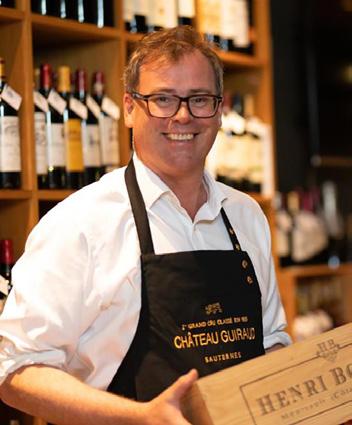
Give us a TV recommendation. Killed by my Debt: a simple but immense message about the quantum shift that local government and utility companies indulge in, pretty much treating so many of their customers like criminals. Cheers: which was just very cleverly written and, unusually, the women almost always got the cutting line – be that Carla or Diane.
Do you have any sporting loyalties?
Middlesex CCC; Tottenham Hotspur; Buffalo Sabres. My cousin used to date a Middlesex and England cricketer so aged 13 I’d regularly meet the Middlesex & England boys at Lord’s and the Oval. I played regularly at the MCC indoor school and was lucky enough to play with the likes of Gower, Gatting and characters like Herschelle Gibbs. Sadly I am not as up with Middlesex as when I used to watch Wayne Daniels, Norman Cowans, Simon Hughes, NF Williams, Edmonds and Emburey etc.
Who’s your favourite music artist?
The Clash. Mozart. Led Zeppelin.
Any superstitions? No.
Who’s your favourite wine critic?
Jancis Robinson. At trade tastings she is a tireless worker; even in a hospital waiting room, she is writing away! Also, avoiding the Parker scoring system (50-100) she just feels way less judgemental.
What’s your most treasured possession? My son.
What’s your proudest moment?
MCC Indoor Lord’s Cricket League & Cup Double Winner 1992-1993. Building a drystone wall in Kilkenny. As a soft-handed 15-year old city boy, to help an Irish farmer build a six or seven foot high wall that’ll be there 100 years after I’m gone … I felt like I’d built the Pyramids.
What’s your biggest regret?
Not listening enough to people more experienced and more intelligent than me. Living in Kensington I have met world leaders, Oscar winners, Olympic champions, authors, actors, war heroes and worldrenowned musicians. If I had just shut my mouth, I’d have learnt so much more.
Who’s your hero?
Too many to list. Glenn Hoddle; Gareth Bale; Johnny Wilkinson; James Cagney; Powell and Pressburger; Phil Silvers; my late stepfather. I’ve met dozens of them: Princess Diana; Steve Redgrave; Margaret Thatcher; Harold Wilson; Mikhael Gorbachev; David Gilmour; Jeremy Clarkson; Richard Attenborough …
Any hidden talents?
Balancing an upside-down broomstick on my foot.
What’s your favourite place in the UK?
Kensington W8. Tresco, in the Scilly Isles, which has its own microclimate, the finest white sandy beaches in the south of England, incredible local characters among the fisherman and boat people, great lobster, no cars. Apart from the rats and the Co-op food, a unique place.
If we could grant you one wish, what would it be?
Stop worrying.