THE WINE MERCHANT.
An independent magazine for independent retailers Issue 156, April 2026

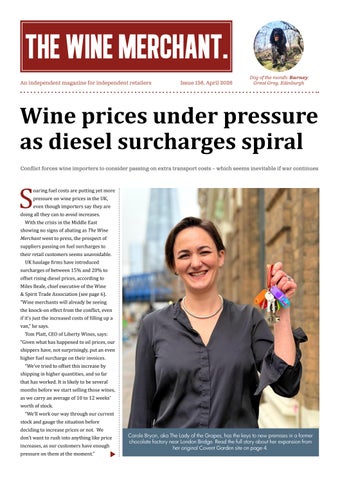
An independent magazine for independent retailers Issue 156, April 2026
Conflict forces wine importers to consider passing on extra transport costs – which seems inevitable if war continues
Soaring fuel costs are putting yet more pressure on wine prices in the UK, even though importers say they are doing all they can to avoid increases.
With the crisis in the Middle East showing no signs of abating as The Wine Merchant went to press, the prospect of suppliers passing on fuel surcharges to their retail customers seems unavoidable.
UK haulage firms have introduced surcharges of between 15% and 20% to offset rising diesel prices, according to Miles Beale, chief executive of the Wine & Spirit Trade Association (see page 6). “Wine merchants will already be seeing the knock-on effect from the conflict, even if it’s just the increased costs of filling up a van,” he says.
Tom Platt, CEO of Liberty Wines, says: “Given what has happened to oil prices, our shippers have, not surprisingly, put an even higher fuel surcharge on their invoices.
“We’ve tried to offset this increase by shipping in higher quantities, and so far that has worked. It is likely to be several months before we start selling those wines, as we carry an average of 10 to 12 weeks’ worth of stock.
“We’ll work our way through our current stock and gauge the situation before deciding to increase prices or not. We don’t want to rush into anything like price increases, as our customers have enough pressure on them at the moment.”

4 comings & GOINGS
Big news in Bakewell, a win for Windsor … but Islington isn’t happy
12 tried & TESTED
All European wines: sometimes it just works out that way
13 bright ideas
Pilates turns out to be a very good match for wine in Saffron Walden
15 the burning question
Who are the star performers at indies’ customer wine tastings?
22 merchant profile
Upstairs and downstairs at Gauntleys in Nottingham
29 survey of independents
The second and concluding instalment of this year’s analysis
40 smashing job
The problems caused by couriers, and how to overcome them
46 panel tasting
Read on if you’re curious about our top 12 orange wines
54 france, we love you
Four indies tell us about some of their favourite French wines
David Archibald, sales director of Cachet Wine, says: “We are seeing upward pressure on shipping costs, along with our outbound UK hauliers increasing fuel surcharges.
“We have seen our main pallet distribution provider increase their fuel surcharge from 4% a month ago to 12%, and then last week a further increase to 15.9%.
“We are not happy with the speed with which these increases have been made –these things tend to go up like a rocket and drop like a feather.”
Cachet is “taking a long-term view rather than reacting to what we hope may be short-term volatility” and has “no plans to increase our pricing at this stage”. But Archibald says the business is keeping a “watching brief”.
Vindependents director of operations Mark Brooksby says: “We’ve seen shipping costs increase by 7.5% to 11% on European imports and 5% to 7.5% on deep sea over the past few weeks, in the form of fuel surcharges.
“A significant portion of this appears to come from the UK delivery leg. Our UK warehouse partner has also applied a 10% increase on domestic deliveries. As these surcharges move with underlying costs, the unpredictability can be as challenging as the increases themselves.”
Brooksby says Vindependents “will continue to absorb what we can” but admits that “if these conditions persist, some level of price adjustment may be necessary”.
Kukla Beverage Logistics, the freight forwarder, insists that costs it is passing on are “fair, transparent, and directly linked to real market conditions”.
MD Steve Wood says: “The Road Haulage Association’s national index now reflects a 41% increase since the first week of January, with similarly sharp rises seen across EU domestic trucking and various marine fuel grades.
“This unanticipated escalation has had a substantial impact on 2026 freight cost planning and supply chain budgeting.”
He adds: “As a specialist BWS forwarder, we recognise that pricing consistency and service reliability are essential. In periods of volatility, our role is to apply market experience, maintain strong relationships with our carriers, and help customers navigate the changing landscape.”



Editor and Publisher: Graham Holter graham@winemerchantmag.com
Assistant Editor: Claire Harries claire@winemerchantmag.com
Reporter: Jacob Stokes jacob@winemerchantmag.com
Advertising: Sarah Hunnisett sarah@winemerchantmag.com
Accounts: Naomi Young naomi@winemerchantmag.com
Admin and reader liaison: Charlotte Gingell charlotte@winemerchantmag.com

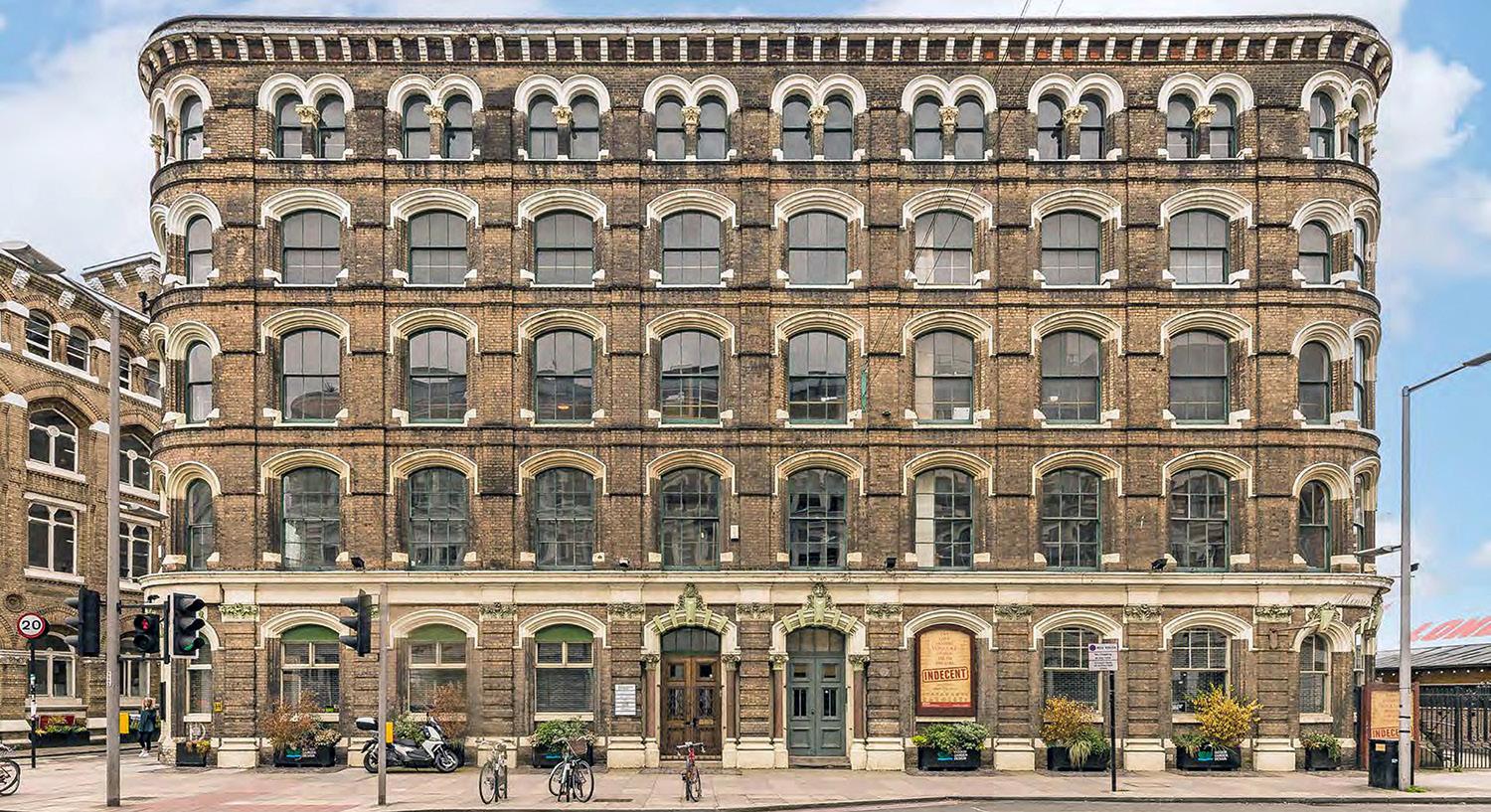
Lady of the Grapes is expanding, with a second site near London Bridge set to open in May.
Owner Carole Bryon launched the business in 2018 in Covent Garden, specialising in organic and biodynamic wines from female winemakers, most of which she imports direct.
The new location, set inside the historic Menier Chocolate Factory building, which also houses the eponymous theatre, will comprise a restaurant and a “speakeasystyle” wine bar, Forbidden Fruit.
Bryon says she’s been waiting a long time to expand, and is very happy to be able to do so in such a busy part of town. “It’s located one minute from London Bridge tube station and it’s one step away from Borough Market,” she says.
“It’s a very lively, foodie area, so this is very exciting.
“We have two floors: the first is the restaurant with 60 covers and then in the basement we have a speakeasy wine bar with a hidden entrance.
“Our full wine list will be available on both floors, but the bar will have more wines by the glass and also cheese and charcuterie. So we’ll have two different offers in the same building.”
As at the Covent Garden venue, retail is also available. “With the help of the sommelier, people can choose the wine they want to take away and all of the white, orange and rosé will be chilled and ready to drink. There is a 40% discount on the wine to take away,” Bryon says.
This expansion will also allow Bryon to grow her portfolio.
“In Covent Garden we only have 30 covers, so even if it’s busy we don’t do huge quantities, but with our new place I hope we can increase our importing and even take on more winemakers.”
Cheers closed its shop in Mumbles in Swansea Bay at the end of March. Dafydd Morris, who co-owns the business with his father, Andrew, said it would be “a relief” to focus on the original store in West Cross, Swansea.
The Mumbles branch had “become a very expensive showpiece”, says Dafydd. “We were working like maniacs just to stand still.”
Mumbles is a popular tourist destination but Dafydd says: “The tourism is why we were there, and that’s dropped off. They’ve done so much work in the village on traffic calming, and they’ve taken away a big car park. It’s become almost impossible for people to spend any time there without paying through the nose to park. Rents have become prohibitive. It’s killed the village, it’s not just us.”
A future foray back into Mumbles has not been ruled out, but it’s likely to be on a more informal basis.
“At Christmas time we sell anything Welsh, hand over fist – it’s amazing,” Dafydd says. “Penderyn and our own rum and our own whisky, Welsh beers, all that sort of stuff. So I would maybe look at next year renting a smaller unit for three
months and just be there for Christmas.”
Meanwhile, the focus will be on the growing wholesale and ecommerce side and there are plans for more tastings and events at the West Cross site. “I’m hoping locals stick with us,” Dafydd says.
That Wine Cellar in Oldham has closed after three and a half years of trading.
Owner Ian Howard says: “I haven’t taken this decision lightly, but the hospitality world and government decisions have made everything so difficult. I currently have an email with 18 pages of price increases from just one of my importers.
“The margins in alcohol with all the cost increases are so small that it’s impossible to confidently commit myself to a long lease that could leave my family vulnerable.” Howard has pledged to continue the business in an online format.
• Pacific Wines in Islington, north London, has ceased trading. The shop specialised in wines from California and Oregon. Rachel Gilbert started the business with her father during lockdown, operating online until she opened her shop in Camden Passage in 2022.
By WSTA chief executive Miles Beale


With the conflict in the Middle East sending shockwaves through markets and energy prices soaring, WSTA members are feeling the pressure. Since the outbreak of conflict, wholesale gas prices have risen dramatically – by as much as 67% in early March – while oil prices have climbed sharply due to supply disruptions and disruption to key transit routes. This has had a direct impact on transport costs, with UK haulage firms introducing fuel surcharges of between 15%-20% to offset rising diesel prices.
Wine merchants will already be seeing the knock-on effect from the conflict, even if it’s just the increased costs of filling up a van. For bottling plants, which rely heavily on inbound raw materials (glass prices will inevitably rise) and outbound distribution, these surcharges are compounding quickly. It’s not just duty rises, staff costs, business rates and EPR that are pushing up prices; the conflict is another contributing factor.
And that’s not all. While only a month ago the markets were assuming Bank of England interest rate cuts of between 0.5% and 0.75%, rates are now forecast to increase by up to 0.75% this year, meaning that any hope that pressures on household budgets will ease in 2026 now looks forlorn.
The combined effect of the complex global picture is putting more pressure on already squeezed margins. Many producers are now facing a triple cost burden: higher input costs (glass, plastics, ingredients), elevated energy bills and escalating transport costs. In low-margin, high-volume operations even small increases in unit costs can significantly erode profitability.
Let’s hope by the time this column goes to print we see an end to the conflict. But even then it will take time for costs to come down and even longer to restore consumer confidence. A period of balancing cost absorption seems inevitable. With added pressures on already stretched businesses, it’s vital that the voice of the UK’s diverse industry is heard. That’s exactly what I and the WSTA team will be focusing on.
Find out more at wsta.co.uk

Hattersley Wines in Bakewell, Derbyshire, is moving to new premises in the area which will give the business more retail and warehouse space.
Builders have already started work on fitting out the new building, and the site should be up and running in late April.
“We’re very fortunate,” says Sarah Hattersley, whose parents John and Diane started the business in 2004.
“We’ve grown year on year and we just don’t have any more physical space where we are.
“The new site is on a high-end industrial estate, which is only five minutes down the road, so still in the heart of Bakewell.
“We’ll be sandwiched between the handmade chocolatier, Holdsworth, and Thornbridge Brewery, so our customers will nip down there for chocolates, bakery, wine, beer – all in one place. And there’s plenty of parking.
“We looked at it five years ago, but we
weren’t sure how the site was going to turn out, but actually it’s really smart and attracting incredible footfall.”
This is the first move for the company from its original premises – a former funeral parlour – and Sarah says it will give them 50% more retail and office space as well as a warehouse that is six times bigger than the current one.
“It’s so much easier logistically,” she adds, “and anything we can do to buy better and supply better means we remain competitive.”
Hattersley Wines is strictly retail although Sarah says she has considered the addition of on-premise drinking.
“I don’t want to stretch the business to be all things to all people,” she explains.
“We’re here at 7am each day to load up the vans – we supply about 110 restaurants within the Peak District and surrounding areas – and with retail and events, you have to draw the line at some point.
“We were originally in the restaurant and hotel trade and we sold all that when my dad turned 50. He thought he’d open a little shop and he’d sit behind the counter to read his paper and sell a few bottles …”

Thanks to all this year's entrants: it's been a record-breaking year.
Our 40 independent judges look forward to tasting your wines on April 20.


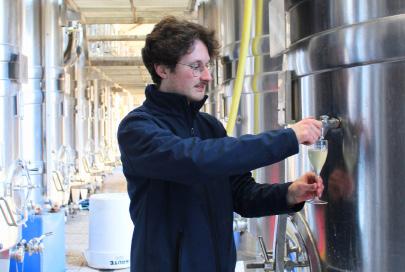
Inside the Cellar: How the Next Generation is Shaping English Wine
by Rob MacCulloch MW
Head winemaker at Hattingley Valley Wines
The next generation of winemakers is quietly transforming English wine, bringing fresh ideas, energy and a willingness to experiment. Young talent is helping shape both the process and the product, ensuring the industry continues to evolve. James Crabb, cellarmaster at Hattingley Valley, is one such talent. Aged 23 and just three years into his career, he’s already making his mark. We asked James how he got started, what drew him to English wine, and where he sees both his career and the industry heading.
What first attracted you to English wine?
I suppose, like a great many before me, the primary appeal to working in wine came from a love of drinking it. A few winery tours abroad gave me the assertion that this winemaking lark was relatively simple. From a theoretical perspective, winemaking in England should be no different. But theory is distinctly separate from practice, and each year makes that exceedingly clear.
What were your biggest early lessons?
One of my biggest learnings was that things can, and will, go wrong. The theoretical approach developed over several millennia of winemaking is thrown out the window when faced with the unforeseen. If I had to choose one skill to master early on, it would be cleanliness. Sanitation is everything; something my peers drilled into me, from tanks and presses to the lowliest bucket.
How has your view of the cellar changed as cellarmaster?
Everything has a cost, and every decision matters. A plastic jug cracks, and upon searching for a replacement, you learn you must sell your liver (if it still works). But more than anything, the team shares a real passion for making each year better than the last, a drive that continues to grow.
What do you think the future holds?
From my perspective, global warming is a cataclysmic threat to our ecosystems. But, for English grape growing, warmer weather is a welcome opportunity. The chance to produce regular high-quality still wine is exciting, though attempting second fermentation at 12%+ base wines is daunting to say the least.
Any advice to those starting out?
Have a good dental plan for our searing acidity! On a serious note, experience isn’t essential; the English wine industry is full of passionate people who’ve made unexpected career changes. If this country bumpkin can make it, anyone can.

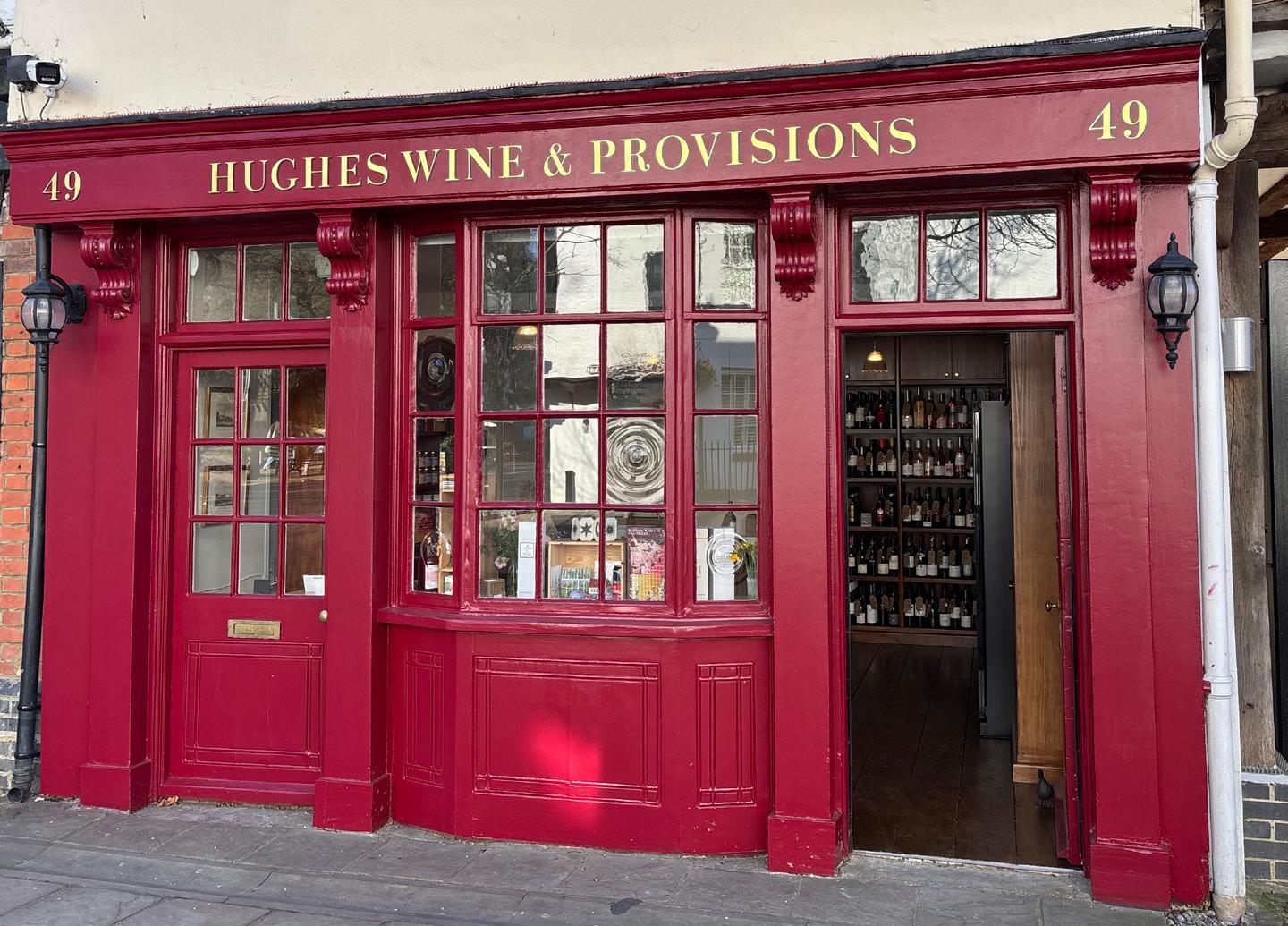
Hughes Wines & Provisions has now opened in Windsor and owners Charlotte and Adam Hughes have received a warm welcome from the locals.
“It’s been a couple of years since there’s been something like this in the area,” says Charlotte.
Since the closure of Eton Vintners two years ago, Waitrose, M&S and Tesco have been running the show, but the Thames Street store has stepped into the breach.
“We’ve had so many people popping in, very excited and asking lots of questions,” adds Charlotte. “The reception from Windsor and Eton has been absolutely lovely.
“There’s a very high concentration of shops in the centre of Windsor but we are based on the way to Eton by Riverside train station. There isn’t really very much around here.
“We want to make sure that we’re providing a personalised service to the local area, and we want to get to know
our customers. We’re always open to suggestions about stocking people’s favourite wines, and if someone expressed an interest in Greek wine, for example, and wants to see that, then there’s nothing stopping us from supporting those interests as well.”
The couple have a range of over 200 wines and are working with Liberty Wines, Alliance and Hallgarten. Four wines are
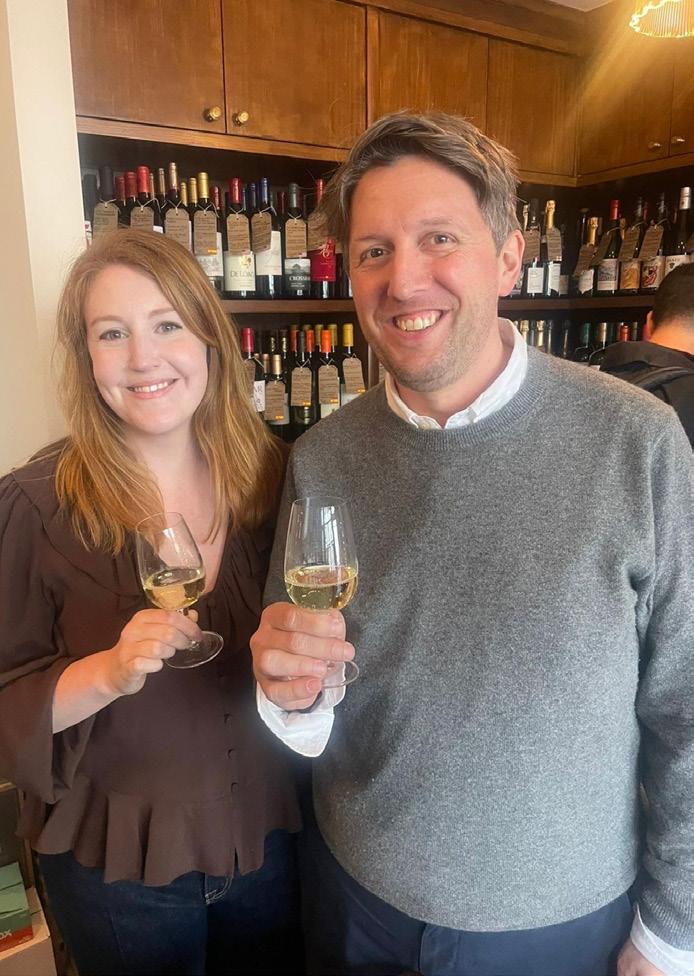
available in sample tasting measures from the By the Glass dispenser.
“It’s free to sample,” Charlotte explains. “All we ask for are people’s email addresses in return to help us build up our database.”
There are plans for regular weekend and evening tasting events, but the business is not a hybrid.
“The shop itself is quite small and is a starting point for us, so it’s just off-trade,” says Charlotte.
The provisions part of the business includes items ranging from the practical (Waiter’s Friends and Vacuvins) to the delicious (high-quality crisps, nuts and “picky bits”) with some extras perfect for gifting (chocolate, cards and candles).
“For every type of person that we serve, whether they’re a local and a regular, or passing foot traffic – maybe they are a commuter or a tourist – we want to make sure there is something interesting for them,” says Charlotte.
Partners Greg Clifton and Emma Cowburn have taken over Wine in the Willows in Huntingdon, Cambridgeshire, and the coming months will also see the name change to Oscars.
The business was launched a year ago by Nathalie Flower, with the intention of combining book and wine sales.
The new owners intend to keep a tiny part of the book element, but the focus will be on wine to drink in or to take away.
Clifton has a background in wine, having worked at Davy’s before running bars in London. “I was with Davy’s for a long time before going into all sorts of different things, mainly kitchen design and high-end retail,” he says.
“This has always been a little bit of a dream of mine, to have a wine shop, wine
bar or deli – something along those lines. We were customers at Wine in the Willows, and when Nathalie told Emma that she was going to close at the end of February, Emma came home and said, ‘why don’t we buy it?’”
With three children, and Cowburn already having a part-time teaching job, the couple have their work cut out, but it was their eldest son whose advice they took to heart. “I was looking at opening a kitchen showroom, which was quickly getting ridiculously expensive,” explains Clifton. “So the wine bar and shop came along at the right time and my 12-year-old said: ‘Daddy, the wine bar will bring you happiness and joy’.”
The wine range will gradually evolve.


Our correspondent bumped into Andrew Kinnersley, he of The Grape and the Good in Wells, at the Boutinot tasting, who was enjoying a rare day out on the London circuit. The reason for his relaxed demeanour was that someone was shop-sitting for him that day. And not just anybody: Mimi Avery, daughter of the legendary John Avery MW and whose social media bio reads: “33 years working in the wine trade. Pirate, skier, diver & sailing crew. Vintner, Commandeur, Dame de la Jurade de Saint-Émilion.” Who better to entrust with the keys to a wine shop?
Mimi herself was in attendance at the Daniel Lambert Wines tasting a couple of weeks later. “You should advertise your services for wine merchants who can never get to tastings,” we suggested. It could be more lucrative than piracy.
The BBC’s former North America editor, Jon Sopel, discovered that the corporation was more liberal with some expenses than others.
The couple are currently working with Cambridge Wines, but expect to broaden their supplier base to expand the list.
“The support we’ve had from [Cambridge Wines] has been phenomenal in the process of changing the wine list and taking off some bits that don’t sell and putting in something a little bit more interesting,” Clifton says.
While the books have been reduced to a “cubby corner” and will operate as a book exchange, the local book group will still be using the venue for their monthly meetings.
As a guest on the inaugural episode of Vintage Politics, a podcast combining interviews with political figures and journalists with discussions about wines linked to their lives and careers, Sopel described a run-in with the Beeb. “My expenses had come back to me saying ‘rejected’. I go right the way down the list of bribes paid to Russian generals – and the money that we’d paid here and the money we’d paid there – and that seemed all fine. I got to the last line and it was a bottle of SaintÉmilion that we’d had in a 5-star hotel in Dubai. You can pay $11,900 in bribes ... but $100 on a bottle of wine? No, you’re only allowed $35 for that.”
“I’ve got a collective noun for a group of sommeliers!” declared one of our supplier friends, who was hosting a recent London trade tasting. “A sphincter. You know, because they’re all up their own –” Yes. We get the picture.

A monthly column from Alliance Wine/H2Vin exploring practical, creative ways independents can sell smarter - covering everything from fine-wine offers to pricing tweaks and experiential events
Aconversation that has stuck with me for years came from a visit to a wine retailer’s shop. I noticed all the wines were priced at .95, so I asked why. They explained they avoided the .99 because it felt “a bit supermarket”, and that .95 seemed friendlier, more in keeping with the independent ethos.
It’s an instinct many independents share. Pricing can feel personal, even expressive, and those final few pence can feel like a detail that signals care. But while 4p per bottle may feel meaningful behind the counter, it’s far less likely to register with the customer. And across a full year’s sales, small numbers can add up fast.
We did the maths on the back of a receipt – this shop was selling 40,000 bottles per year. By rounding up to .99, they added an extra £1,600 to their profit – money they had effectively been giving away. Not a single customer questioned the change, and the character of the shop remained the same.
It’s a small reminder for all independents: where might emotion be shaping decisions that, with a little distance, could work harder for the bottom line?
It might be worth asking: which parts of your pricing are intentional, and which are simply habit? The answer could surprise you. If you would like any assistance with pricing, please contact Alex Baudouin, head of independent off-trade at alex.baudouin@alliancewine.com
Ned Llewellyn Alliance/H2Vin sales director – off-trade
Andrew Lundy will be celebrating 16 years of trading this June. He established Vino with Gavin Ferguson in 2010, and before long they had two shops in Edinburgh’s city centre and a further two in the quieter suburbs of Colinton and Morningside.
The business has ridden out some seismic changes over the years, including the closure of two sites – and, most recently, Ferguson’s departure in November last year.
“Gavin had moved out of Scotland,” says Lundy, “and it became increasingly difficult to plan things. It became a little ‘too many cooks’, but now we’re able to focus on what we really want to do. I think any indie retailer will know it’s about being flexible and reactive when you need to be.”
Lundy says working with his managing director, Julien Merignac, gives the business the balance it needs. “I don’t want to say we’re yin and yang, that’s not really fair, but maybe I’m the one who comes up with the more madcap, crazy ideas and Julien will look at the spreadsheet to see what we can afford to do. He’s a big part of the future for us.”
The focus is now on the Broughton Street and Stockbridge shops, where sales are buoyed by an extremely healthy tourist trade, according to Lundy.
“It certainly feels like the tourist season has expanded,” he says. “It used to be May, early June, that you would start to see people back visiting the city. Once the festival was over, you’d get a month where there was still quite a lot of visitors. But it’s already started this year now, and last year it was noticeable.”
Lundy believes the demographic of the city is also changing with the arrival of Canadians and Americans: not just visiting, but choosing to stay and work a while. “Nowadays it doesn’t matter whether
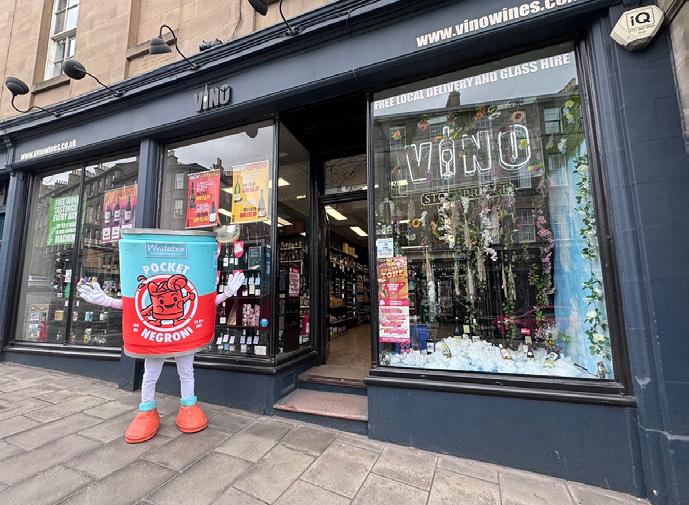
you’re working in Virginia, California or Edinburgh,” he says. “There’s definitely a wealthy American group that are here; younger guys, too. They enjoy having drinks and a good time and it probably feels a bit nicer to do that here,” he says.
Catering for the tourists, Lundy says smaller-format bottles have been really important. “They don’t want to spend £70 on a bottle of nice whisky that they’d maybe have to rush to finish before they travel back, but they will spend £40 on a half bottle. We’ve moved to quarter bottles and half bottles of single malt as a reaction to that.”
Lundy is planning on restoring the downstairs tasting room in the Stockbridge store to its former glory so they can focus on instore tastings. “We didn’t use it during Covid, and it’s full of all our glassware –we’ve not quite got around to getting it sorted,” he says. Meanwhile, collaborative events in other local venues are ramping up, including Diana Thompson’s Edinburgh Uncorked in May.

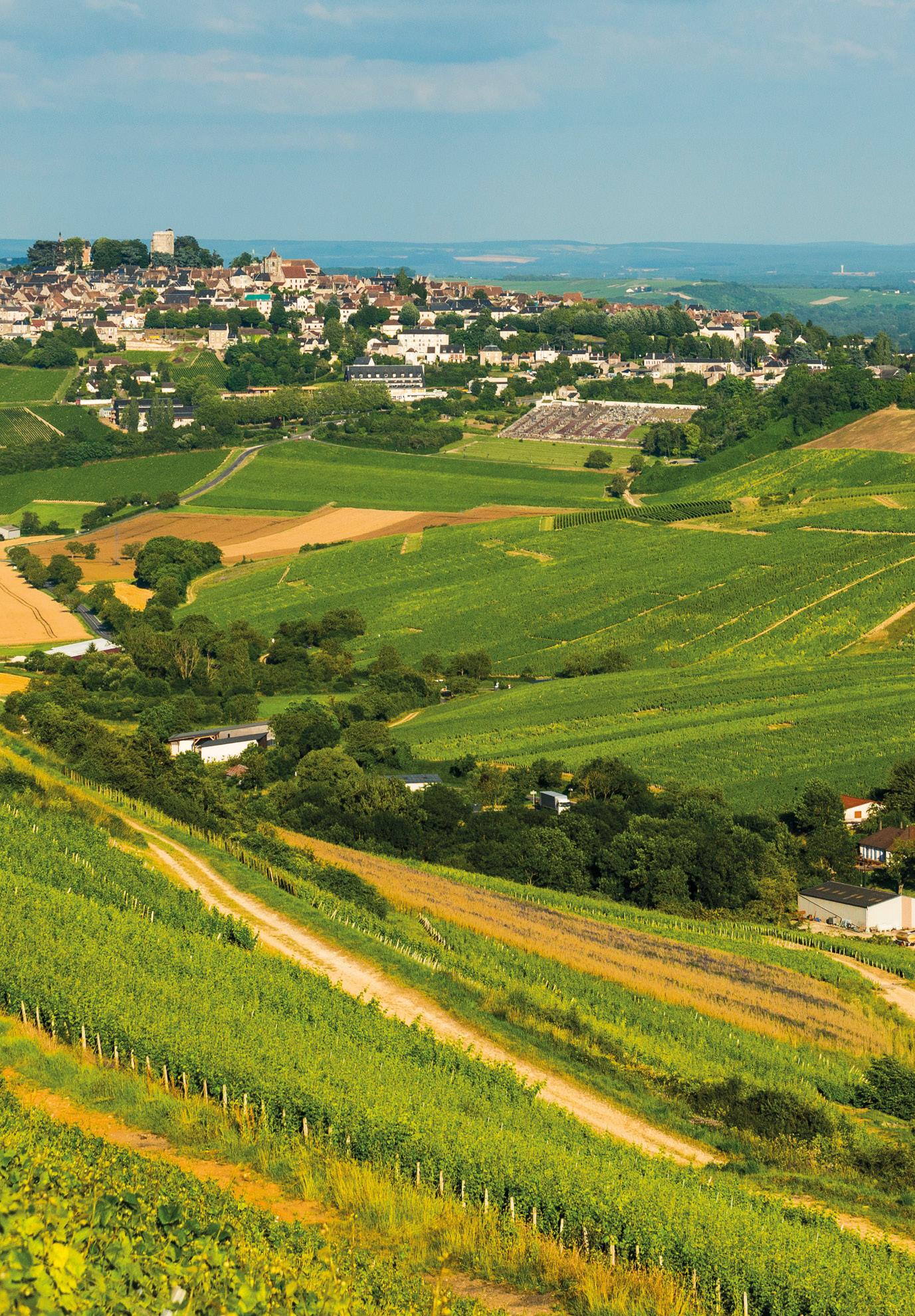
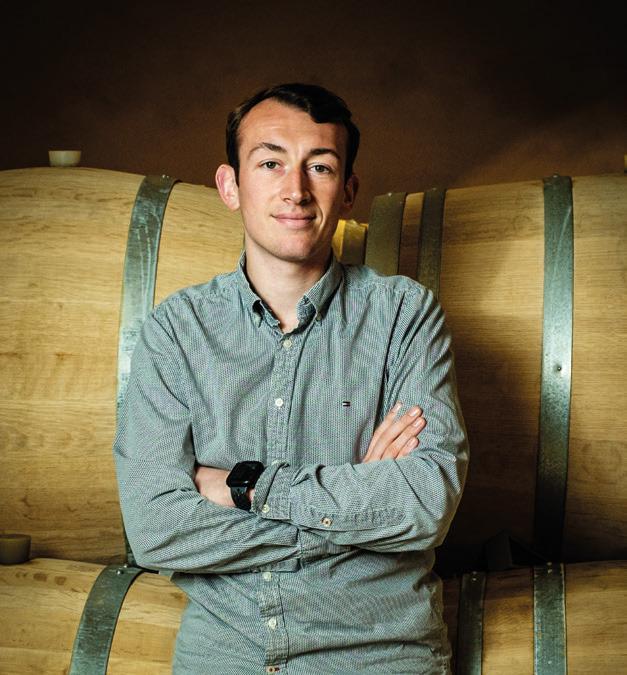
Deeply rooted in the heart of Sancerre, the history of Joseph Mellot spans over five centuries. Founded in 1513, the estate is one of the region’s most pioneering and prestigious names—where heritage and forward-thinking winemaking go hand in hand.
Join us at London Wine Fair to meet Armand Mellot, the 21st generation of the family, and discover how centuries of tradition are being reimagined for the future.
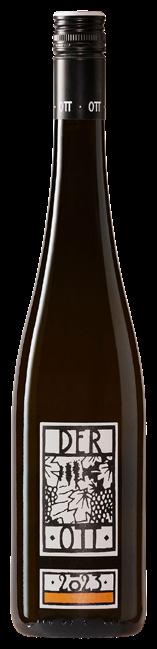
Previously represented by Savage Selection, Wagram’s much-admired biodynamic trailblazer is bracing for wider distribution under Armit’s watch. All Ott’s wines are energetic, full-blooded representations of the land they spring from and Der Ott is no exception, with slightly more richness than Am Berg and Fass 4.
RRP: £34.20 ABV: 13%
Armit Wines (020 7908 0600) armitwines.co.uk
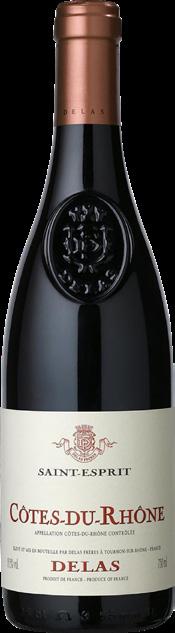
Some of its Delas stablemates were comfortably into three-figure prices at the MMD tasting, but this humble Syrah-Grenache blend was a show-stopper in its own way. Really simple and approachable but in no way dumbed down, it glides across the palate with a generous squeeze of dark fruit. A new indie icon?
RRP: £15 ABV: 14%
Maisons Marques & Domaines (0208 812 3380) mmdltd.com
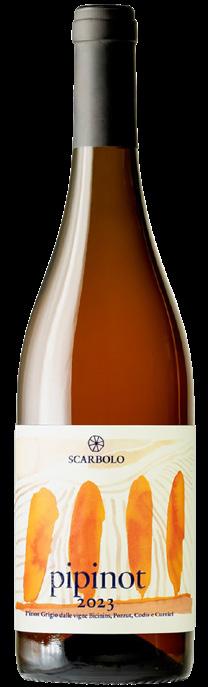
“This is how we made Pinot Grigio until the 1950s,” insists Mattia Scarbolo. It’s so unlike most modern examples it’s hard to know where to start. Golden, unctious and slightly smoky, it’s a delight, produced by macerating whole bunches in open tanks until the cap rises, and then repeatedly persuading it back down.
RRP: £22.95 ABV: 13.5%
Third Floor Wines/Boutinot (0161 908 1300) boutinot.com
From a 30ha estate in Alsace’s Kirchberg de Barr grand cru comes this thoroughly enjoyable and slightly decadent wine. There’s a hint of toffee or caramel in the sweetness, along with ripe pears and perhaps pineapple. Cushioned and rounded, with a hazelnut note on the finish and plenty of zip.
RRP: £24.99 ABV: 13%
Les Grands Chais de France (07789 008540) lgcf.fr

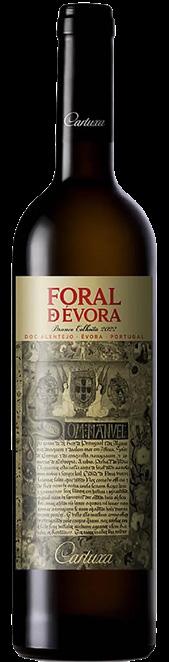
Made purely from the Assario grape, this Alentejo white is the handiwork of one of Portugal’s oldest wineries. Stainless steel fermentation, followed by eight months of battonage-assisted lees ageing, seems to bring out the best in the variety: there’s a soft, almost oily texture but also a firm citrus bite.
RRP: £20.50 ABV: 13%
Mentzendorff (020 7840 3600) mentzendorff.co.uk
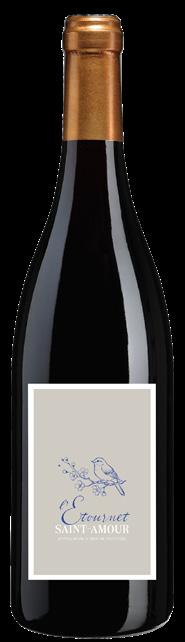
You want freshness as well as intensity from your Saint-Amour – well, we do, anyway – and that’s what’s delivered here. The fruit is a generous melange of red and black berries and there’s a healthy portion of violet in the mix too. A versatile and easy-going wine that advances the cause of Gamay and of Beaujolais.
RRP: £21.55 ABV: 13.5%
Hatch Mansfield (01200 613122) hatchmansfield.com
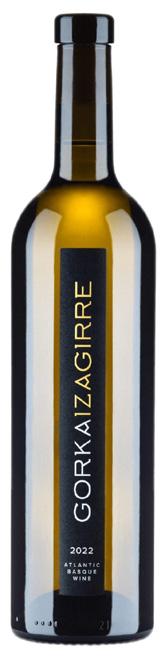
Describing a wine as “tasting like the Atlantic” might not be taken as the compliment it’s intended to be. But the Bay of Biscay certainly makes its presence felt here. It’s a modern example of Txakolina, 100% Hondarribi Zerratia, not spritzy or opaque but very definitely alive, and filled out by fine lees ageing.
RRP: £21.30 ABV: 13%
Jascots (020 8965 2000) jascots.co.uk
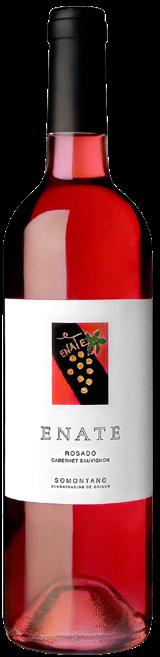
Rosé lovers should open their minds to deeper-hued wines like this – and there’s no reason why they can’t when they’re this good. 100% Cabernet, it’s an allyear-round rosé from Somontano “with the soul of a white, and the body of a red wine, designed to play and win the Champions League”, according to its creators. Intense but very drinkable, and hugely satisfying.
RRP: £17.50 ABV: 13.5%
Daniel Lambert Wines (01656 661010) daniellambert.wine

In a nutshell: Combine a popular activity with a glass of fizz and healthy nibbles.
Tell us more.
“We’d had a couple of people pop in and talk about either pilates or yoga and wine because of the space we have. But this particular pilates instructor has been a big fan of the shop. She happened to be starting her pilates business and wanted to do a collaboration with us because she likes our shop so much. It was a chance for me to not only do something fun, to get people into the shop on a quieter day, but also to support another young female business owner who was getting started.”
Did you use your tasting space upstairs?
“We actually did it downstairs in the shop. In my retail space I have a handful of tables so we just shifted those out of the way. The instructor laid down eight mats in front of my bar and next to the wine shelving and hosted from the front, which was nice because people could see it happening from the street as they were walking by.”
So you closed the shop for the event?
“We did it on a Sunday, which for me can be hit or miss. For example, last Sunday I did a decent amount of bottle sales and a little bit less drinking in, but the Sunday before I had three or four different tables drinking in for an extended time. But this event was in early February, and I guessed it would be fairly quiet. Technically, we were closed for

New
Katherine Nellums
World Wine, Saffron Walden
the hour or so and then I reopened for the last hour of my day. As far as I could tell, it didn’t seem to interrupt much business. Plus about half of the ladies who came bought bottles to take home, either of something they’d had in the shop before or the bubbles we had on the day.”
How much did you charge per head?
“One of the ways I work when I collaborate with other business people who want to use the space is that they’ll set the ticket price, and then a portion of that ticket price will go to cover the use of the space as well as any wine or snacks I’ll provide. In this case, she charged £35, which included a glass of bubbles for everyone and I also provided a healthy veg and fruit grazing board.”
Once all the stretching and sipping was
over, was there an ongoing buzz?
“One of the cool things about it is that the people who were walking by and seeing us doing something different wanted to know what was going on, so that attracted attention. And both the pilates instructor and I gathered a lot of video and photos and content for our social media. People really responded to that and came in the following week asking all about it.”
Would you do it again?
“Yes! It was a fun way to get people into the shop on a typically slower day. We’ve had a few requests for another event, which we will probably do later in the spring or early summer.
“The format worked out really well for me, but if you don’t have the space like I do you could consider linking up with a studio nearby and go to them.”
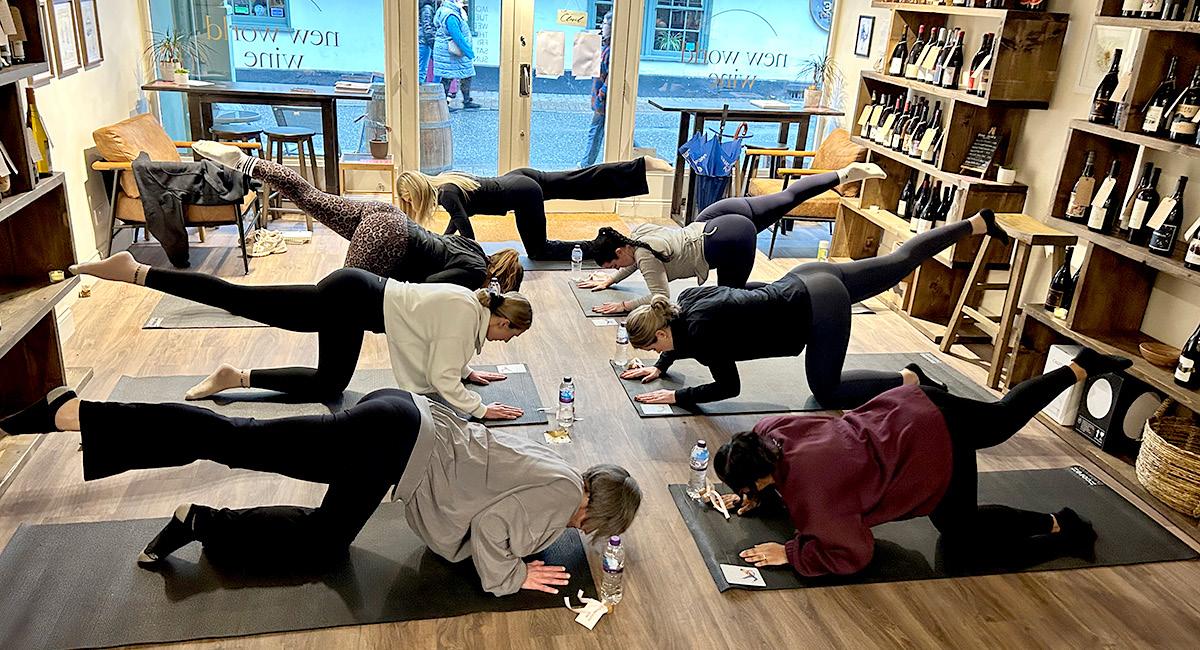
walking by “wanted to know what was going on”
Katherine wins a WBC gift box containing some premium drinks and a box of chocolates.
Tell us about a bright idea that’s worked for you and you too could win a prize.
Email claire@winemerchantmag.com

My web guy’s marital disharmony left me with no email and no website

Last week we noticed that our email wasn’t working. We hadn’t had any spam all morning. It was unusual as that normally happens on July 14. A quick text to The Geek usually starts it again, along with the annual apology that he thought the renewal was automatic. This was different. We then noticed our website was down too.
I had heard rumours of a few local businesses experiencing the same issues but didn’t think anything of it. It has been ticking along normally for over 16 years and you just sort of expect it to continue ticking along. Until it stops.
I have known The Geek since I started here. As a young man he set up a company designing and hosting websites. The deal was no one-off cost but a small monthly fee
for which he would set up and maintain the website and consequent email addresses. Sixteen years ago he did loads of these. He expanded into multimedia and we were then billed by his new company. In the meantime he got married and had three children. A few years ago his biggest client offered him a director’s role. He took it and moved all his legacy tech clients into his wife’s name. We started getting bills from their photography company.
The direct debit had stopped and the bills were sporadic but the website and emails continued to work – with the small gap every July 14.
Now it appears that The Geek and his wife have separated and are going through a very messy divorce. One of them has shut down all the hosted clients. Both are pointing the finger at the other. In a brief text conversation before radio silence, The Geek told me he has been advised not to go near anything in Mrs Geek’s name, so he can’t help.
She says he’s a lying bastard, but she would, wouldn’t she?
If you look at their own website there is just one page saying “I have nothing to do with my ex-wife’s business. If anyone tries to talk to me I will call the police”. Bizarre! Who would have imagined that our business would face a near existential crisis due to someone else’s marital disharmony?
In the 24 hours after realising something was badly wrong and discovering the reason, we set about doing what we could to sort things out. I needed to order stock and receive the subsequent invoices so I quickly set up a Gmail account. I was surprised that someone had already taken shaftesburywines. I suspect it was probably a younger me who did that. Damned if I know how to get into it though! In a bit of a panic I registered a more long-winded version. That got us over the weekend.
The following week I sat down with Alice, who knows how these things work much better than I do, and we bought shaftesbury.wine. It’s a bit (actually a lot) more expensive than .uk or .net but pretty cool, I thought, and changing from .co.uk to .uk may have been confusing.
So now we have shiny new email addresses but no website. Our current one says “account suspended” which is not a good look.
On their website it says “I have nothing to do with my ex-wife’s business. If anyone tries to talk to me I will call the police”
Previously, with a few well-aimed clicks, we had found the hosting company of the old domain. I rang them and explained the situation. They understood and told me to “open a ticket” by emailing the details. “Righto,” I said, and then realised I didn’t
have email. So it was a day or so before I opened the ticket.
They replied saying they had contacted The Geek (or possibly Mrs Geek) and asked them to contact me to resolve it. Not much help.
Time has drifted on. Now there is a glimmer of hope that The Geek will change the “IPS tags” to a “hosting service” of our choice. That’s something he could have done immediately but evidently I didn’t use the right words. Places like “Nominet” are now part of my awareness set. I think I understand the difference between a domain and a host. I look forward to returning to blissful ignorance.
Last week’s job was contacting everyone who may need to or may have emailed us. I made a list. Luckily I still have access to the address book of the old .co.uk. A couple of dozen suppliers were first. Ironically, the only one who is yet to reply normally sends us two or three marketing emails a week, so I’m enjoying the silence for now.
After suppliers it was service providers. You forget just how many there are! Everything from waste collection to my parking permit and of course the government and bank. I think changing it on oneGov (which was easy) should mean I get my MOT reminder as well as Companies House directions.
Then I started looking at other things. It is shocking how many places your email address ends up after 16 years. My late father’s gas bill; our house insurance; the RAC; The Wine Merchant magazine editor’s desk … the list is nearly endless but I think I’ve got them all covered now.
Update: We finally gained access to the old domain and moved it to our new server. Now I get lots of familiar spam and can tell who hasn’t actioned the change of address memo. However we instantly lost 16,800 archived emails in 25 folders. Apparently they exist on the original server and not my laptop – who knew? We are now trying to recover them – but it needs The Geek’s permission!
David Perry is the owner of Shaftesbury Wines in Dorset
Which winemaker or importer has hosted the
best tasting in your shop?

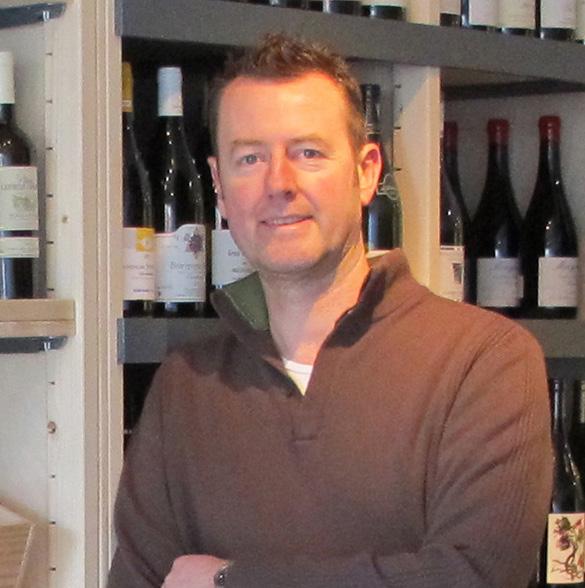

�The standout of the last 10 years was a South African wine bar takeover with Pieter Walser from Blank Bottle Wines. Pieter has such energy and works the room. There was an electricity that night that felt really special and our customers talked about it for months if not years to come. More recently, we did a Blaufrankisch and goulash party and had Moritz Haidle from Karl Haidle Wines as DJ and Markus Lentsch from Austria pouring the wines. It was a cracking night.”
Mark Wrigglesworth
The Good Wine Shop, south west London
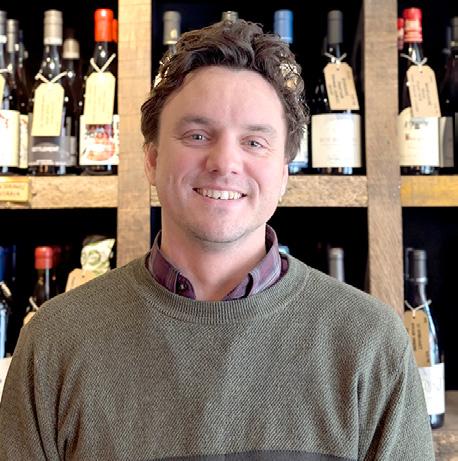
�Most recently we have had Laurie Webster from Ucopia Wines give a tasting: Argentina – Beyond Malbec. It was both surprising and entertaining, with tasting the Criolla grape for the first time being a particular highlight. As a host, Laurie really knows how to hold a crowd with his razor-sharp Glaswegian wit.”
Nick Beedle Gardner & Beedle, Tisbury, Wiltshire

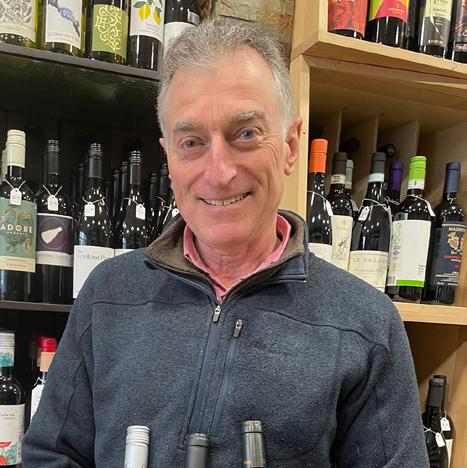

�My most memorable tasting in recent times was given by Eduardo Davies, sherry educator with Bodegas Tradición. This event was held in an upstairs room at a local pub near the station in Sheffield. The seven wines were paired with rustic food by a guy called Rico who was chef at the time. Ed seemed impressed, despite me changing light bulbs from one room to the other before the guests arrived. The evening before Ed had hosted a similar presentation at Gordon Ramsay in London.”
Barry Starmore * Champagne winner * Starmore Boss, Sheffield
�We would nominate our Charles Heidsieck tasting dinner with Simon Stockton, senior brand development manager at Liberty Wines. His whole approach to hosting a tasting was different, asking everyone taste the wines and give their opinion before he told us anything about them, which people really enjoyed. He was an excellent orator with great stories to tell in an engaging way, which made for a fantastic event.”
Jacqui Adams
Paul Adams Fine Wines, Mayfield and Tunbridge Wells
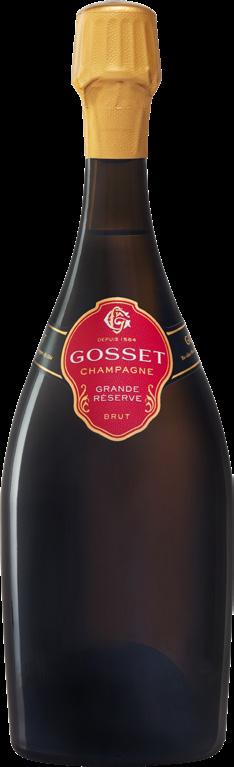
Champagne Gosset
The oldest wine house in Champagne: Äy 1584

Back to France, for some unofficial wine and cheese research, and a new grape
Last month I spent a very pleasant week in Paris. And when I say Paris, I mean Paris, France, as our American friends call it, presumably to distinguish it from Paris, Texas. I’ve also visited that Paris, and it would be hard to confuse the two. To be fair, The Texan Paris does have an Eiffel Tower, or at least a 20-metre-high replica of the 300-metre original. There’s a giant red cowboy hat balanced on top, a finishing touch which Gustave Eiffel somehow forgot to bestow on his version. Take that, you cheese-eating surrender monkeys!
My visit, on this occasion, was not to attend Wine Paris. I did make it there once, in 2020, my last trip anywhere before Covid lockdown. Maybe that’s why my memories of it are suffused in a warm crepuscular glow, like the Golden Age before the outbreak of WWI, a period beloved of Merchant-Ivory films and empire nostalgists everywhere. Ah! Life was so much simpler and happier before Covid! A stable, prosperous Britain, the sun always shining, and us lower orders, content with our lot, doffing our caps respectfully as Boris Johnson rode past in
his golden coach.
My recollections of Wine Paris are of the almost unbelievable enormity of the exhibition. “Is that aisle of 50 stalls the French section?” “No, it’s the Loire.” “No! It’s Anjou-Saumur!” The Loire filled three or four aisles, and the French section three or four halls. It swiftly became clear that a ruthless plan was essential: I had to identify a handful of potential producers who might supply a wide enough range of high quality, otherwise-unimported wines AND were willing to deal with a small shop located close to the North Pole. Any more meetings than that would be impossible: it could take 20 minutes just to walk from one stand to another three halls away.
The good news was that I made an excellent connection in the Châteauneufdu-Pape aisle and another in Provence. Many superb wines flowed our way following those meetings, even though in quantities lower than I expected in 2020, given the impact of Covid, then the Ukraine invasion and now the Iran conflagration. I do wish world politics would leave me alone to enjoy my life in peace. But then so do the people of Ukraine and Iran.
My trip to Paris this year was to assist my wife, Ingrid, who was buying at a series of fashion trade fairs. The competition amongst trendy clothing shops in Orkney is so intense that it’s not good enough to attend shows in Glasgow or Birmingham or London. To stay ahead of her competitors, Ingrid has to venture further afield. Paris in the spring! Would I like to come along to help carry the bags and do some translation? Si tu insistes …
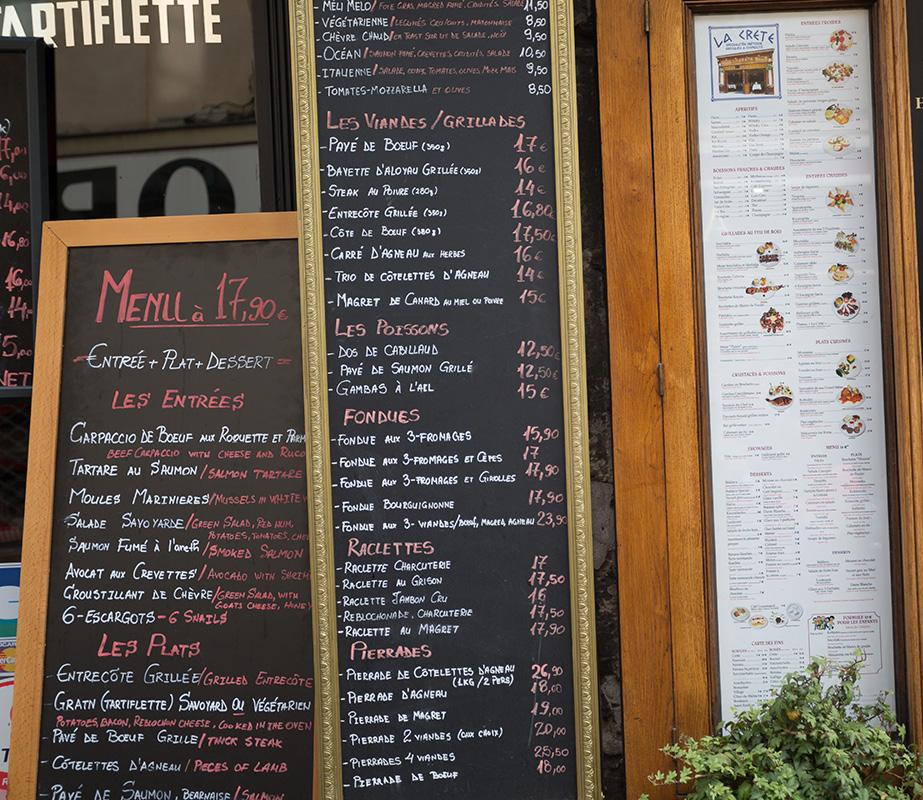
Imanaged to squeeze in some unofficial wine and cheese research. On our first night I tried a cheese I’d never encountered before: Trappe Échourgnac, made by a community of nuns in an isolated part of Périgord. It’s a hard cow’s
Ah! Life was so much simpler and happier before Covid! A stable, prosperous Britain, the sun always shining ...
milk cheese, with a unique flavouring: walnut juice.
On the wine front, there were no big discoveries. I thought I’d made one at a wine bar in the Canal Saint-Martin area. The young server wore a checked bandana round his glossy-maned head, and stroked a well-trimmed goatee while considering his recommendations. He reminded me of Puss in Boots from Shrek. One of his suggestions was for an obscure white wine he said he’d only come across recently. “The grape is Menetou,” he purred. “It has a refreshing, citrus character.”
That’s a new one on me, I thought. I know the Sauvignons of Menetou-Salon but I’d never come across a grape called Menetou. A sip confirmed the wine was indeed fresh and crisp, with a distinct grapefruit flavour. Very like a Loire Valley Sauvignon, in fact.
I bought a glass and sat back to savour it, meanwhile reading the label on the bottle that the assistant had helpfully left for me: “Menetou-Salon, Appellation d’Origine Contrôlée. Vin de Loire. Issu de Sauvignon Blanc.”
Zut alors. As he explained, he’d recently settled in Paris, having been brought up in Lebanon, so I daresay has more important things to worry about at the moment, what with bombs and missiles raining down on his homeland.
“L’Angleterre est une nation de boutiquiers,” said Napoleon, which is usually taken as a great insult: Britain is a nation of small-minded, un-warlike shopkeepers. Late in his life, while exiled on St Helena, Napoleon expanded on his intention: “I meant that you were a nation of merchants, and that all your great riches, and your grand resources arose from commerce – which is true.
“What else constitutes the riches of England? It is not extent of territory, or a numerous population. It is not mines of gold, silver, or diamonds. Moreover, no man of sense ought to be ashamed of being called a shopkeeper.”
Vive les boutiquiers!

Avery long time ago, one of England’s greatest cricketers was a man called CB Fry. He was astonishingly talented. In addition to playing cricket for England, he was also a professional footballer and the holder of the world long-jump record. Bizarrely enough, he was even offered the chance to be King of Albania at one point. Later in his life he wrote an autobiography called Life Worth Living
I thought of CB Fry, who I imagine is longforgotten even by most cricket fans, while I was reading Tasting Victory by Gérard Basset. It’s a pretty good title, but I think Basset should have purloined the name of Fry’s book for his own autobiography. For although Basset died an early death, he accomplished an awful lot: he was a Master Sommelier, a Master of Wine, the winner of innumerable sommelier titles, including Best Sommelier in the World, and the co-founder of the Hotel du Vin group. It was a life worth living.
As someone who writes about travel, I enjoyed the early chapters in which he describes his upbringing in Saint-Étienne (“nothing special about the place”) and “beautiful” Aix-en-Provence. He paints a vivid picture of France at the time. I was surprised to learn that “in the late sixties and early seventies, sport in France was not taken that seriously”, although his father viewed cyclists in the Tour de France as “superheroes with supernatural powers”. It was clearly a more innocent time. Travel itself was evidently a more pleasurable and relaxed affair too. Returning to France after his first visit to England, Basset recounts that “the Marseille customs officer did not even bother to check anyone”.
There are many amusing anecdotes in Basset’s story. He recalls being “mystified” by an “aloof” diner in Hampshire who had been very genial the previous time he had served him. The reason eventually dawned on Basset: “I realised the woman he was dining with was not the same
one he had been with three weeks ago. This lady, no doubt, was his wife.” Sir Edward Heath, at the time a former prime minister, would visit the same restaurant and have whisky as an apéritif before moving on to wine. Not good for the palate, perhaps, but worthy of respect. Best of all is the tale of the high-rolling bankers who descended on the place and proceeded to drink Dom Pérignon, Grand Cru Chablis, Château Lafite, Château Latour and Château d’Yquem. They wanted to finish the night with some Krug, but Basset told them it was sadly impossible as it was past midnight and they were not staying in the hotel. One of the bankers simply paid for a room, “didn’t bother to take the key”, and they kept on drinking. The bankers eventually departed, after settling up and leaving “a generous tip”. Basset writes that he “felt very proud … for having played my part in such a successful arrangement.”
Basset had an appealingly old-school mindset. He was competitive and worked hard to achieve success. When describing difficult periods, he does so in a matter-of-fact way. Although he had a rough childhood, there’s no suggestion that he was plagued by mental health troubles as a consequence. When he was diagnosed with cancer, he was phlegmatic: “To my surprise I did not panic or have a meltdown. I was 60 years old and I thought, ‘well, if my time is up, then so be it’.”
There are many useful lessons for life in Basset’s book. Readers of this publication will not be surprised by his remark that “there was an assumption that being French made me a wine expert”. Many of his valid observations are not related to wine, though. He encountered troubles in business towards the end of his life, leading to this comment: “It turned out that just as we had no experience with con men, so we had no real experience with lawyers either – but we were about to get it.” Words for the ages.
I liked Tasting Victory a lot. It’s short and very readable, and Basset comes across well. He was a hard-working man who made the most of his abilities and opportunities and had considerable success. In words of which CB Fry would have approved, he had this to say about his life: “I have had a good innings.”
Michael Walker
Duncan McLean is proprietor of Kirkness & Gorie, Kirkwall


Luvians Bottle Shop’s Instagram is full of images of happy, young people looking like they’re having loads of fun – and that’s just the staff. Its proximity to a renowned university probably makes recruitment a little easier, but manager Archie McDiarmid also has a pretty failsafe way of building his team.
“The most important part of the hiring process is getting them in for a trial shift and working alongside the existing team,” says Archie.
“Fundamentally we have lots of skills and expertise to teach people about wine and whisky, but what we can’t really teach is how to instinctively be good with customers. You have to have that kind of personality that makes people want to come into the shop – and Millie is amazing with customers.
“She’s one of these people who you leave with someone and, five minutes later, she’s sold them half a dozen bottles of wine, and somehow discovered their entire life story.”
Millie’s hospitality background includes a strong focus on cocktails and Archie says she has been particularly involved on the spirits side of the business. “She’s been with us for a year and is a fantastic addition to the team,” he adds.
Millie says the moment she turned 18, she started pouring pints at her local pub, before moving up to St Andrews for university, where she continued to work “doing a little bit of everything from fine dining to cafés”.
She adds: “Completely by accident, I ended up becoming the assistant manager at a local restaurant once I’d graduated, and after I studied for my master’s degree, I worked running a bar in one of the luxury hotels, which was pretty wonderful as well.
“I had been a customer here for eight years, and when I was ready to leave hospitality in favour of earlier nights and more suitable hours, I found out there was a job going here and I jumped on it.
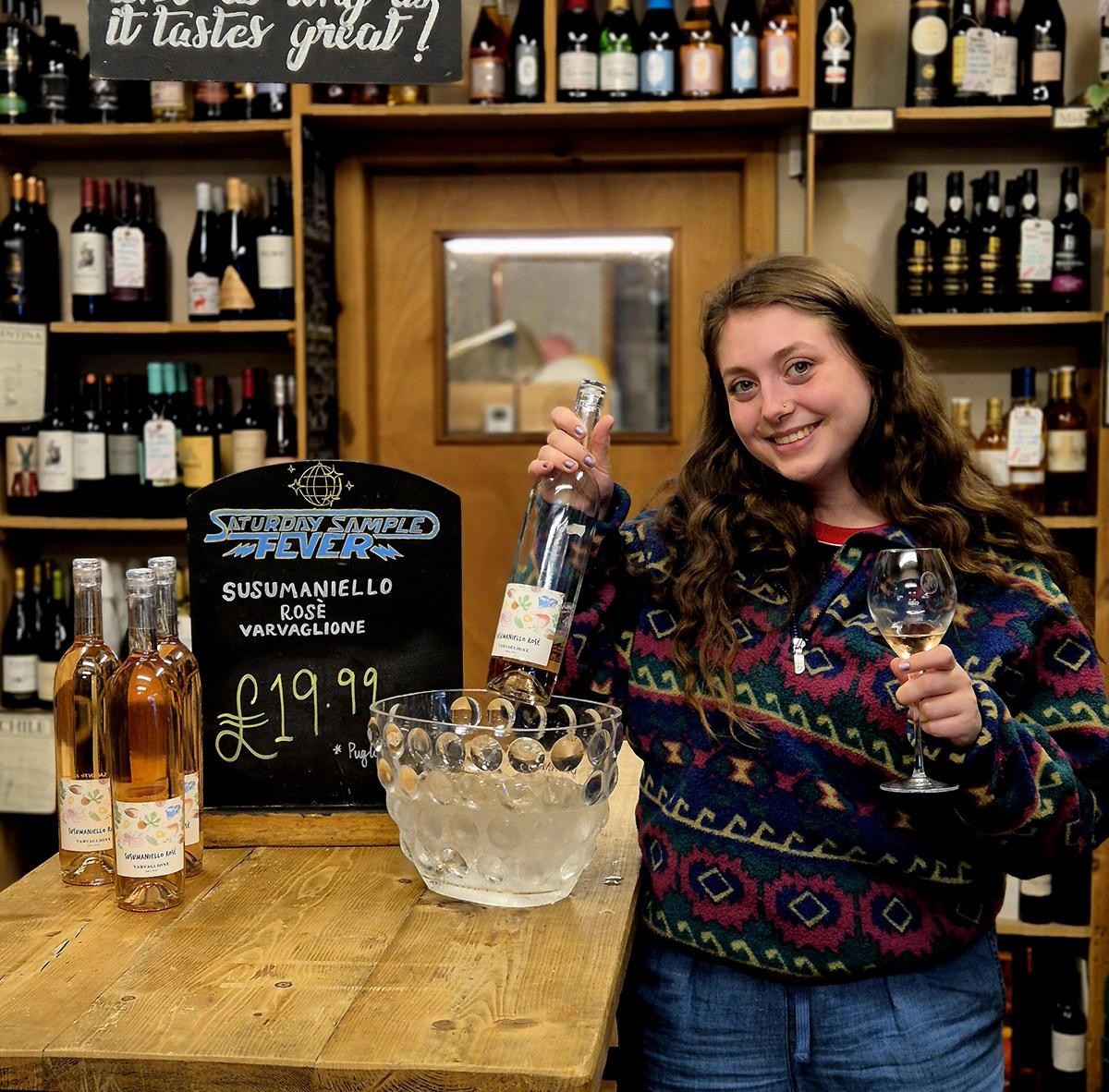
“I’m very much a people person, and working in hospitality you are super people-focused. Within a wine shop you still have that kind of personal connection, but I’d say that the connection is much stronger, because you’re having these conversations about celebrations and special meals – and what I really, really love is finding wines for people to pair with those events.”
Spirits and cocktails may have been a focus but wine has long been part of Millie’s life.
“I’ve got family who live in the Loire Valley,” she says. “I was very fortunate because, when I was a kid, I would be over there every summer, so I’ve drunk a lot of wines of the Loire. I also went to Canada about eight years ago on a vineyard tour, which is where I kind of fell in love with ice wine. I’ve become a massive fan.”
Millie says she has been thinking about embarking on a PhD, but she’s enjoying her vinous career too much. “Do I really want to spend another four years studying when I could be doing more fun things with wine?” she asks.
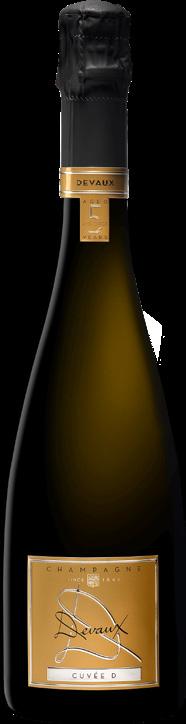
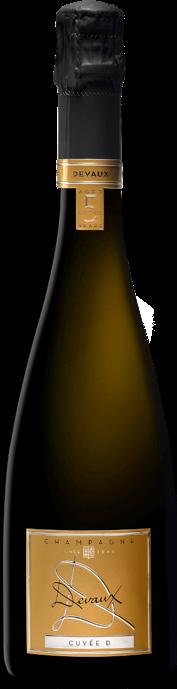
Millie wins a bottle of Champagne Devaux Cuvée D courtesy of Liberty Wines
If you’d like to nominate a Rising Star, email claire@winemerchantmag.com
Portuguese Cork Association wants London indies to sign up for new recycling initiative
Independent wine merchants in London are being invited to join an innovative cork recycling project.
The UK Cork Harvest is the first sustainability initiative in the capital from the Portuguese Cork Association (APCOR).
Launching this month, with registration open through June, the scheme makes it easy for merchants to flex their green credentials and encourage their customers to bring back their corks. Not only will it offer customers a reason to return, but as a visible and practical programme it will highlight the role independents play in advancing achievable sustainability initiatives.
Each participating indie will receive branded cork recycling bins and access to a dedicated collection service ensuring the corks are responsibly recycled.
Sign-up takes just two minutes: just scan the QR code for the registration form.
APCOR will be sharing updates of this inaugural cork harvest throughout the campaign and shining a spotlight on the indies playing their part in this inaugural UK Cork Harvest.


Did you know?
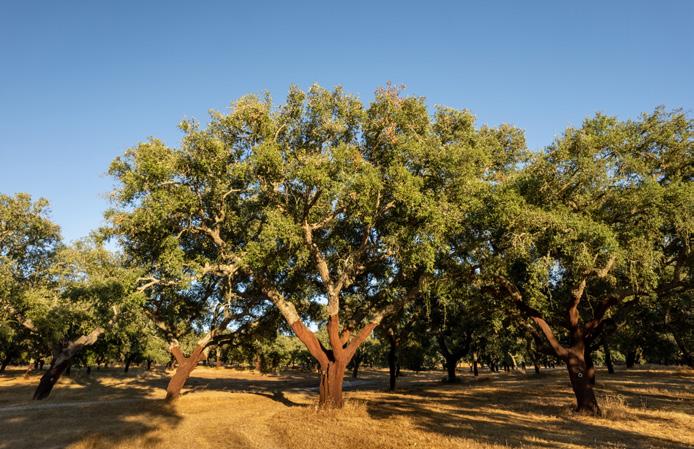
Cork is harvested without harming the cork oak, which regenerates naturally.
Cork is 100% natural, renewable, reusable and recyclable.
Its lightweight, elastic and impermeable structure makes cork durable and versatile even after use, meaning it can be transformed into new products when recycled.
Recycled cork is a sustainable alternative to raw materials and has been reprocessed to make flooring, footwear and sports equipment, among other things.


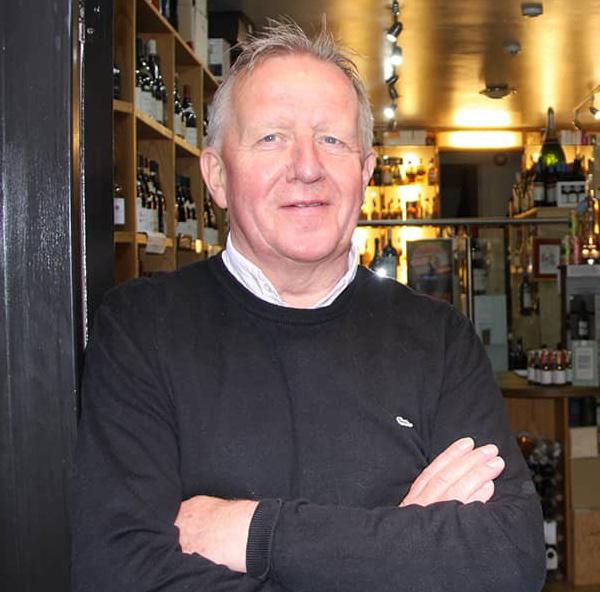
Stuart Rothwell
The Vineyard, Ramsbottom
Favourite wine on my list
I would open a bottle of Sampietrana Brindisi Riserva 1952, a blend of Negroamaro and Montepulciano. With this wine you can enjoy round, fully mature tannins, and deep black cherry and plum fruit flavours. It’s a rich, wellmade wine and an absolute classic which is great value for money.
Favourite wine and food match
There’s nothing nicer than a mushroom risotto enjoyed with an oaky Californian Chardonnay.
Favourite wine trip
Recently I was lucky enough to experience a visit to the Doolhof Wine Estate in Wellington, South Africa. What an amazing place, and the wines were exceptional. It’s always good to meet the people, see the land and appreciate the expertise that goes into winemaking.
Favourite wine trade person
Over the years I have met many reps and they have become more like friends – they all do a great job. But if I have to choose, it would be Robert Steel from For the Love of Wine, who is always willing to go that extra mile for you. And boy does he do some miles!
Favourite wine shop
Andy Langshaw has created a great business with Harrogate Fine Wines. He and his wife have also become good friends of ours and always been available for invaluable advice.
Fortress Investment Group, the owner of Majestic Wine, is drawing up plans to offload the retailer nearly seven years after its operations were bought out of its London-listed parent company.
Majestic was separated from Naked Wines, the online wine retailer, when Fortress acquired most of the business for £95m in 2019.
The chain has opened more than 20 additional sites since 2019, with further openings planned alongside a strategy to grow its commercial business-to-business operation.
Two years ago, Majestic acquired Vagabond Wines out of administration, for an undisclosed sum. It also operates Enotria, which it bought last year.
The timing of a sale process for Majestic has yet to be fixed, with some insiders saying it may not get underway until early next year.
Sky News, March 21
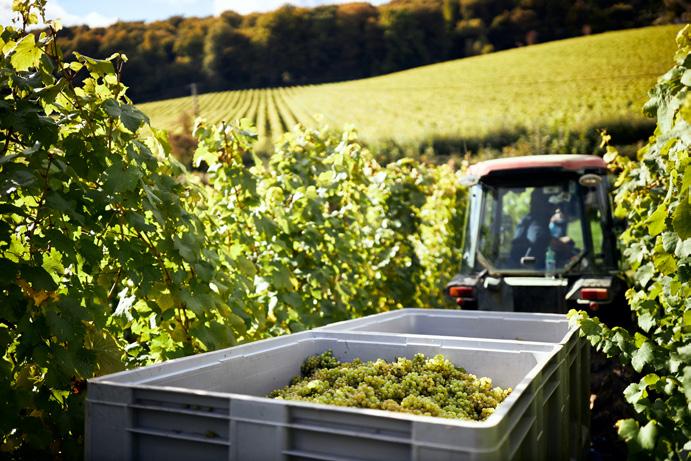
English and Welsh winemakers have reported a sharp rise in production, after the hot, dry summer in 2025 and an increase in vineyard planting resulted in the second-largest UK harvest.
The equivalent of 16.5m bottles were produced across the UK last year – or 124,377 hectolitres – according to the Food

Standards Agency.
This represents a 55% increase on the volumes produced a year earlier, the result of favourable growing conditions throughout the season that delivered good fruit quality and yields not seen for many years.
Last year’s harvest saw a particularly large increase in white wine production, which was up by more than 131% compared with 2024.
The Guardian, March 24
Michel Rolland, the Bordeauxbased winemaker and consultant whose influence spread out from his laboratory in Bordeaux to encompass bottlings of wine from all corners of the world, died in the early hours of March 20 from a heart attack. He was 78.
At his career height, from the mid-1990s through the early 2000s, Rolland was arguably the world’s most in-demand wine
consultant, helping Bordeaux regain its prominence after the doldrums of the 1970s before becoming a driving force for the emergence of Napa Valley “cult” Cabernets and more, including Harlan, Araujo, Dalla Valle and Robert Mondavi Winery.

He also owned properties in Bordeaux and developed a project in Argentina, all while consulting with clients in South America, Italy, Spain, South Africa, India, Croatia, Israel and elsewhere.
Wine Spectator, March 20
The Wine Society has outlined ambitious targets to grow its fine wine sales by £3.5m this year.
Its director of wine, Pierre Mansour, said: “There is real interest amongst our membership for us to take fine wine more seriously.” The organisation is looking to top sales of £43m for fine wine this year. Its sales of fine wine have risen 60% since 2022, excluding en primeur, but including sales via the website and the new in-bond programme that it launched two and a half years ago.
Membership of The Wine Society has reportedly risen by 5,000 over the last year to 78,000, an increase of around 18,000 since 2020.
The Drinks Business, March 26
• Argentinian wine producer Catena Zapata has again been named The World’s Most Admired Wine Brand in the 16th edition of the ranking. Antinori, which moved up two places on its previous ranking, took the runners-up spot.
Drinks International, March 26

Moët Hennessy has agreed the sale of its Chandon India winery in the western state of Maharashtra to domestic leader Sula Vineyards.
The transaction, valued at US$2.1m, comprises Chandon’s 19-acre estate in Dindori in the state’s Nashik region. While the estate and its winemaking infrastructure will transfer to Sula, the purchase does not include any “brandrelated assets”, which consist of Chandon Brut, Rosé and Aurva.
Established in 2014, the estate has an annual production capacity of 4,500 hectolitres, “scalable up to 13,000 hectolitres”, according to Sula.
Global Drinks Intelligence, March 26

With Flying Füchs
1. In which region is the word pipe used for an oak barrel?
2. Which wine recently spiked in sales across the US following a brief feature in a Taylor Swift documentary?
3. By which popular term are méthode ancestrale wines now more commonly described?
4. Brettanomyces is essential in which style of Belgian beer?
5. Which of these regions has the youngest soils? (a) Priorat (b) Dão (c) Margaret River (d) Etna
Answers on page 63








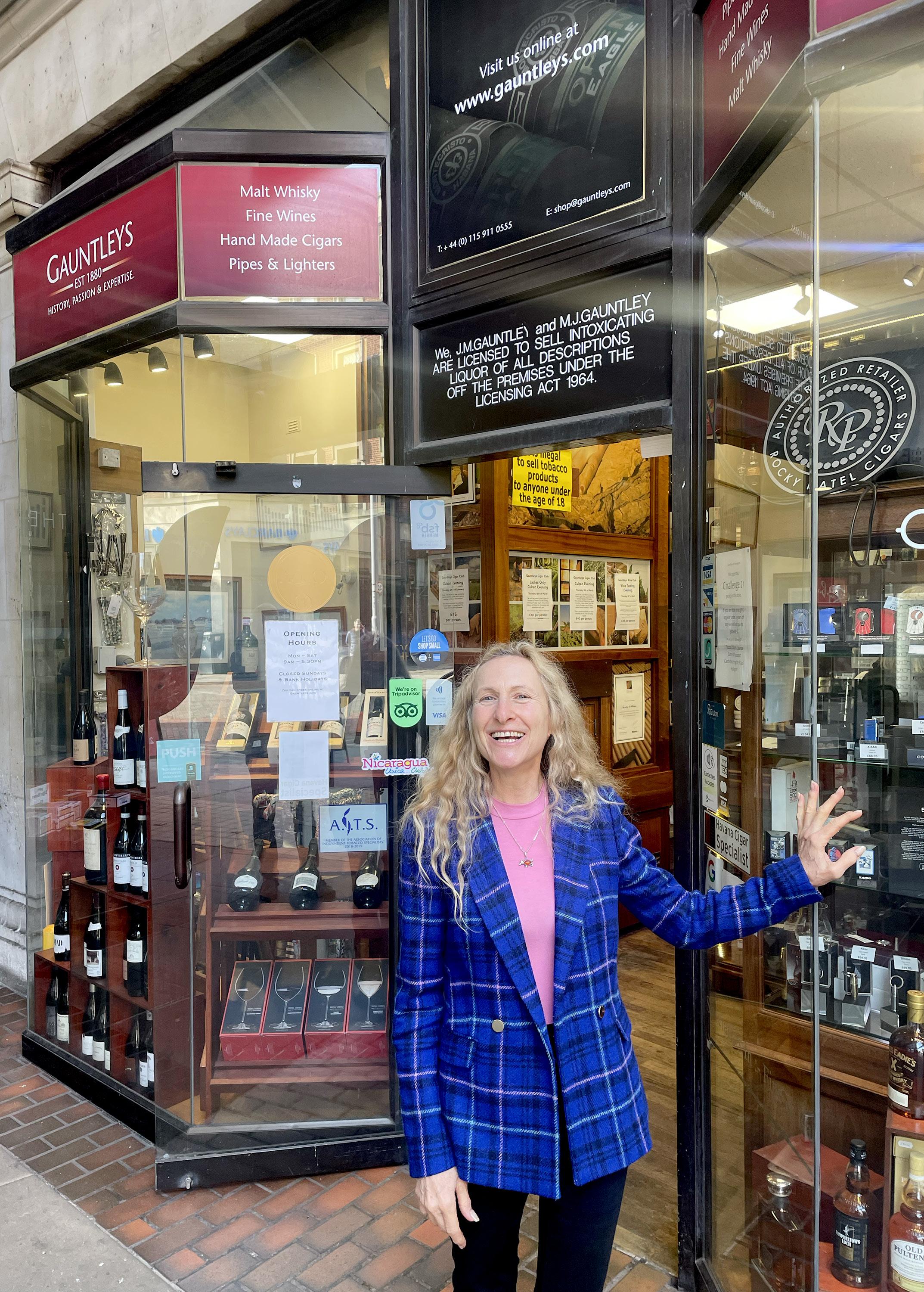
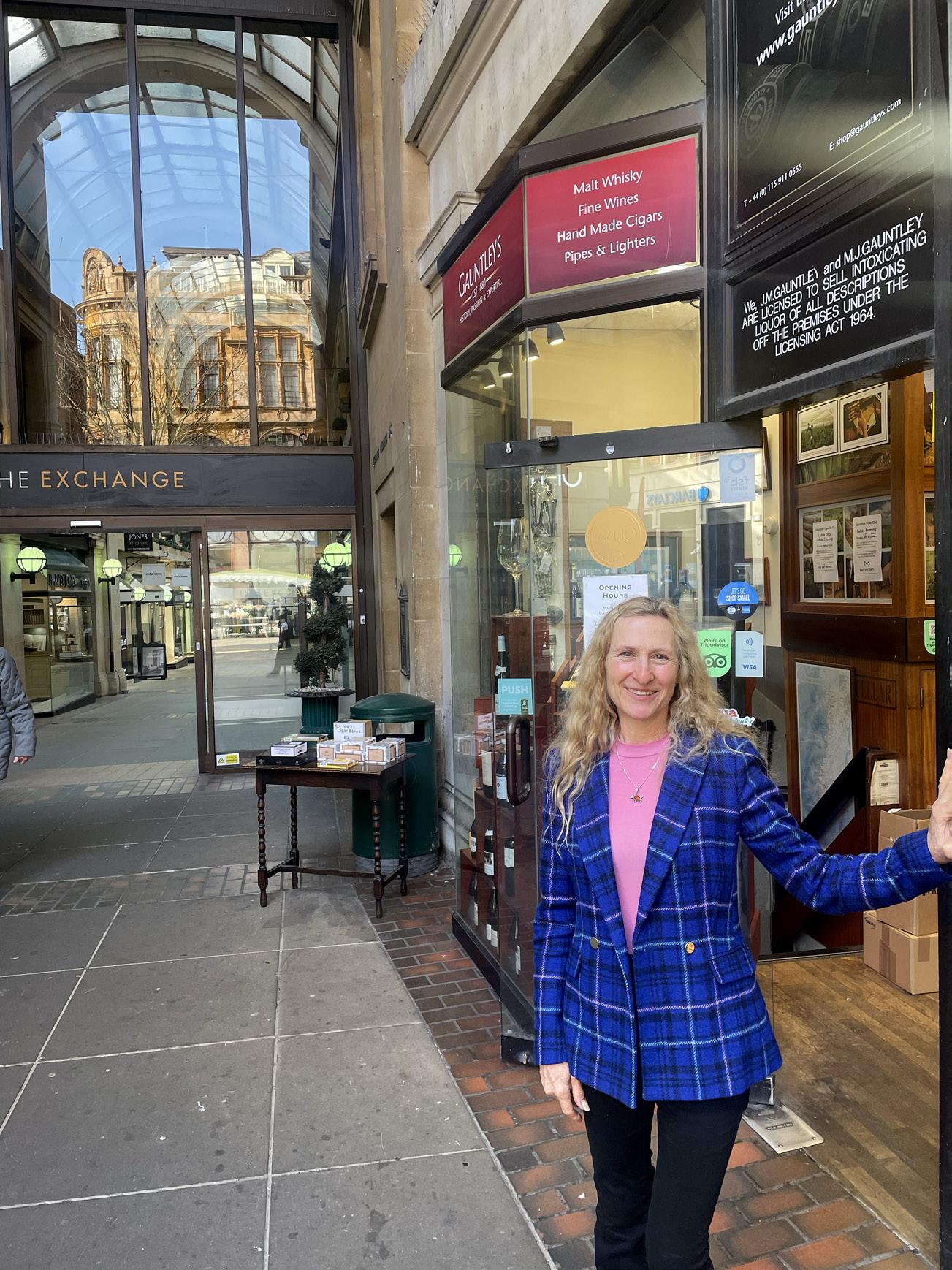
Gauntleys is a tale of two floors: one where its traditional specialism of tobacco products holds sway, and another where wines and spirits reign supreme. It’s a combination that has served the business – and the people of Nottingham – well for four decades.
Even as a non-smoker, Nigel Huddleston is captivated
Nottingham’s Gauntleys chalked up 40 years as a family-run wine merchant in 2025, though the business had by then been in existence as a tobacconist for more than a century.
The move into wine was prompted by a gift of Hugh Johnson’s World Atlas of Wine to John Gauntley from family friend Alan Trease, then managing director of the city’s other family wine firm, Weaver’s.
“When John had an interest in something it became all-encompassing,” says current Gauntleys managing director Victoria Rogers.
“Where most people might read a book and find it interesting and then might find out a bit more, John was all-in. He got in his car and went to find some vineyards.
“I don’t know if it was planned, but he ended up in the Rhône on his first trip and fell in love with it.
“If he’d gone to Bordeaux, he probably wouldn’t have got the same one-to-one visits with producers – maybe that was partly the reason he went where
he did. Really great producers welcomed him and opened great bottles to taste. That created a passion for Rhône which never left him.”
Longstanding relationships forged by John, who died in 2020, still form the backbone of an agency portfolio that sees Gauntleys in the position of being both a wine retailer and a supplier to other independents.
The company – now in the hands of John’s wife Karen and sons Sam and Tom – has also retained its expertise in tobacco, specialising in cigars with a range that pushes well beyond Cuba, the usual source for wine shops that sell them. It also offers pipes, snuff, numerous blends of loose pipe tobacco, high-end grooming equipment such as shaving brushes and razors, and walking and shooting sticks.
It packs all this into a tiny corner unit in a classy shopping arcade beneath the city’s Council House –the local preferred name for the city hall – with its striking dome that resembles St Paul’s Cathedral. The Portland stone used in the construction of both came from the same quarry.
To satisfy the criteria for being considered a specialist tobacconist – bringing with it privileges such as permission to have cigars on view in display cabinets, rather than squirrelled away in unbranded humidors – Gauntleys aims for a clear demarcation in retail discipline, with tobacco and related products on the ground floor and wines and spirits mostly in the basement. It also has separate websites for each side of the business.
Victoria was joined during The Wine Merchant’s visit by Eann Wallace, Gauntleys’ resident cigar expert.
How has the wine portfolio evolved over the years?
“John visited producers regularly and was so enthusiastic that it impressed them and we were asked to represent them”
Victoria: We’ve remained in the old world with our agencies, and even outside of our agencies there are very few wines from the new world in the shop. We didn’t set out to establish agencies but John visited producers regularly and bought direct, and was so enthusiastic that I think it impressed them and we were asked to represent them.
He didn’t go in and say “I want to be a wine merchant and find lots of things that tick boxes”. His approach was “I love this, I’m going to have it”. It’s kind of what we still do today.
How important are the agencies in the mix?
Probably 50% of what we sell are our own agencies and a lot of the rest are things we buy direct but aren’t exclusive to us. There are very few wines that we buy through a third party. I’d known John from when we did our Diplomas together but went off to work for other people because he didn’t really have enough for me to do in wine at first, because it was secondary to tobacco. I came here 35 years ago, and at that time it was probably about 50-50, and very quickly after that wine became the biggest part of the business in terms of revenue. It’s now probably around 75%.
Would you describe Gauntleys as a fine wine merchant?
I suppose I would really. We certainly don’t focus on the lower end to compete with supermarket prices. Our agencies include Marc Sorel, which is probably one of the greatest estates in Hermitage today, Vilmart in Champagne, really great producers in Châteauneuf-du-Pape, Côte-Rôtie and Cornas, Albert Boxler in Alsace. So yes, I would say fine wine.
What would entry level be in the shop?
You can buy wines for £15 but they’re well-chosen, from good producers. We have a Portuguese wine from Setúbal at that level which is great value and an excellent single varietal, so there are some gems at the lower end. It’s possible not to spend a lot.
“You can buy wines for £15 but they’re wellchosen, from good producers. There are some gems at the lower end”
The shop is right in the city centre, with limited road access. Does your customer base tend to be local and/or passing trade or from further afield?
Some people call in to buy bottles but in our very early days we had a lovely editorial in Wine magazine. Robert Joseph came up and we opened a lot of bottles for him to taste. That gave us national exposure and we used to do a lot of mail-out offers. We’d be like little elves putting them together and sending them out, which I loved doing. When we became agents and started selling those wines into other merchants nationally we kind of stopped doing that because we didn’t want to tread on the toes of those shops in other areas. But we have retained some of those older retail customers, so the base is not restricted to Nottingham, but it’s historically more from that than from the website.
There’s never been a time when the team has thought of setting up on a retail park out of town that might make things more accessible?
John did think that at one time: should we have a really nice office and tasting room and car parking, but there’s lot of nostalgia and history to the shop that we wouldn’t want to give up. It’s something that we thought about and decided against and I’m not saying never, but it’s not something that’s on the agenda.
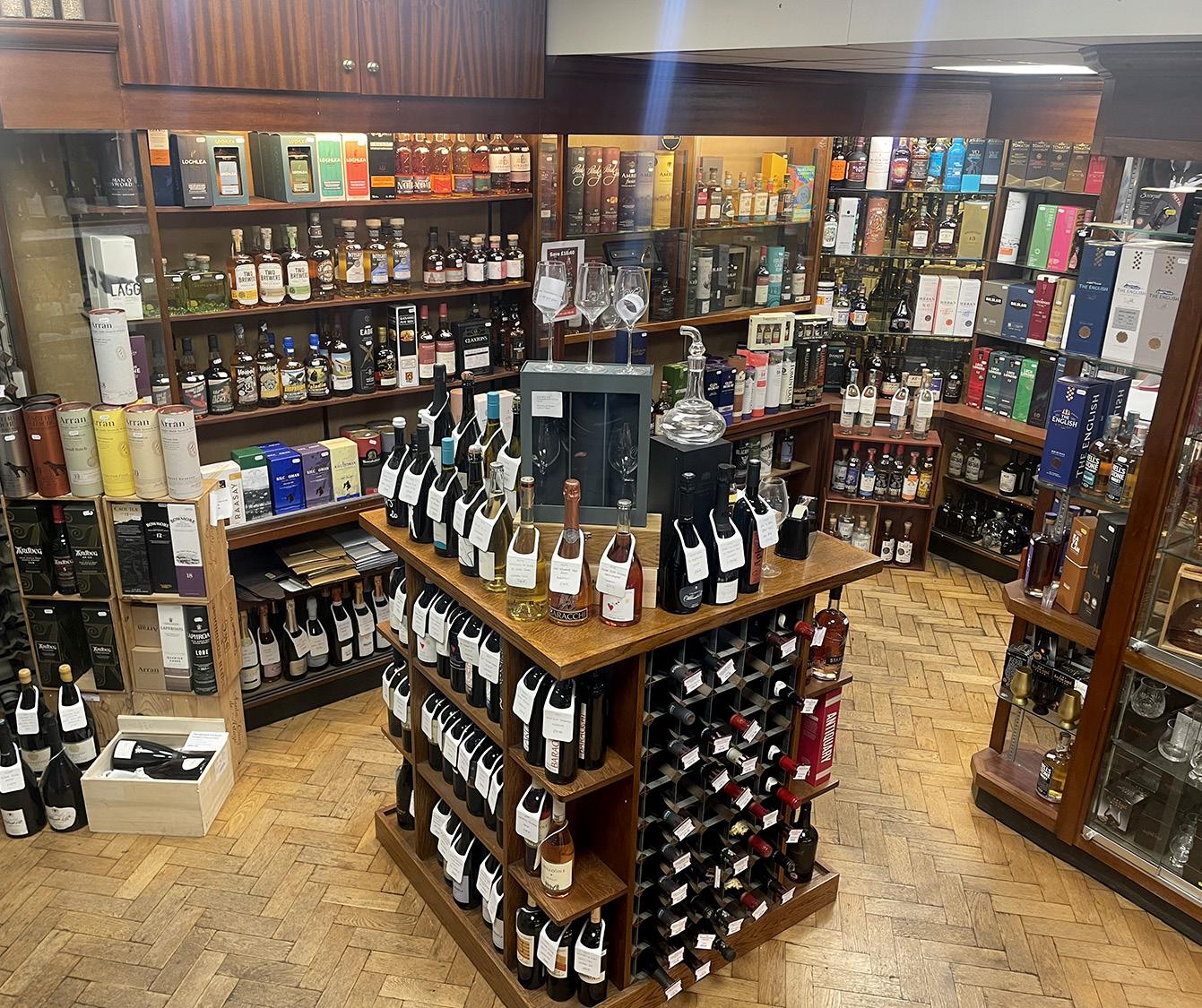
What happens on the retail side is very small overall and the trade and distribution arm is most important. We have the shop and would like do more business in it but it’s not the biggest priority. That said, I wouldn’t want to give the impression that we’re not interested in retail because we very much are and would love more Nottingham people to come through the door. We’re very proud of the shop.
A lot of wine merchants we talk to shy away from wholesale because it’s too low margin and people don’t pay on time.
I think if you’re dealing with restaurants that probably is an issue but we’re selling more to other wine merchants, which is different. We have started doing more direct to restaurants, but very carefully chosen ones. It’s not a huge part of our business but it is something we’d like to grow more. A lot of smaller restaurants historically have looked to buy, say, Chablis, at a certain price rather than a certain quality level. That’s not what we’re about. We
want to work with restaurants that are interested in having some great names on their list. Trade is about 90% of our business at the moment, and of that 90% less than 10% is to restaurants, so it’s small.
Are you working on ways to build the retail side?
We did some local events to dip our toe in the water last summer; little stands at country fairs. If I had a pound for every time someone came into the shop to buy cigars and said “I didn’t know you did wine and spirits”, even though we’ve been doing them for 40 years … so the events are just about getting the word out about everything we do.
Do you host your own wine events here in the store?
We do wine and spirit tastings in the shop and we’ve got a nice group that come regularly, which is lovely. We also do cigar sampling sessions. We can’t do them in the store because we have to use a venue with an outside area. The format’s very similar to a wine tasting but obviously smoking a cigar takes a bit longer than tasting a glass of wine.
Eann: In many ways tobacco is similar to wine in that the product is natural and grown in sunnier climes. Climate and soil are key to getting good quality tobacco, and then you’ve got the processes involved after you harvest the leaves: the fermentation process, a bit like wine, and the maturation process, a bit like wine. There’s also a lot to learn: it’s a rabbit hole, you can just go down and just keep finding things out.
The high street tobacco buying experience for most people is done blind, with the products behind shutters. How did you get special dispensation to display things?
Eann: We have to be registered with the government, and the tobacco sales in this part of the shop have to be more than everything else. That allows us to have special privileges, allowing customers to come into the shop and see the cigars, a bit like in a jeweller’s, but cigarettes and rolling tobacco are still behind shutters. When we set up the shop like this eight or nine years ago we got trading standards in to discuss what we were allowed to do. If you were a wine retailer looking to start selling cigars as an add-on, you couldn’t display them in the same way.
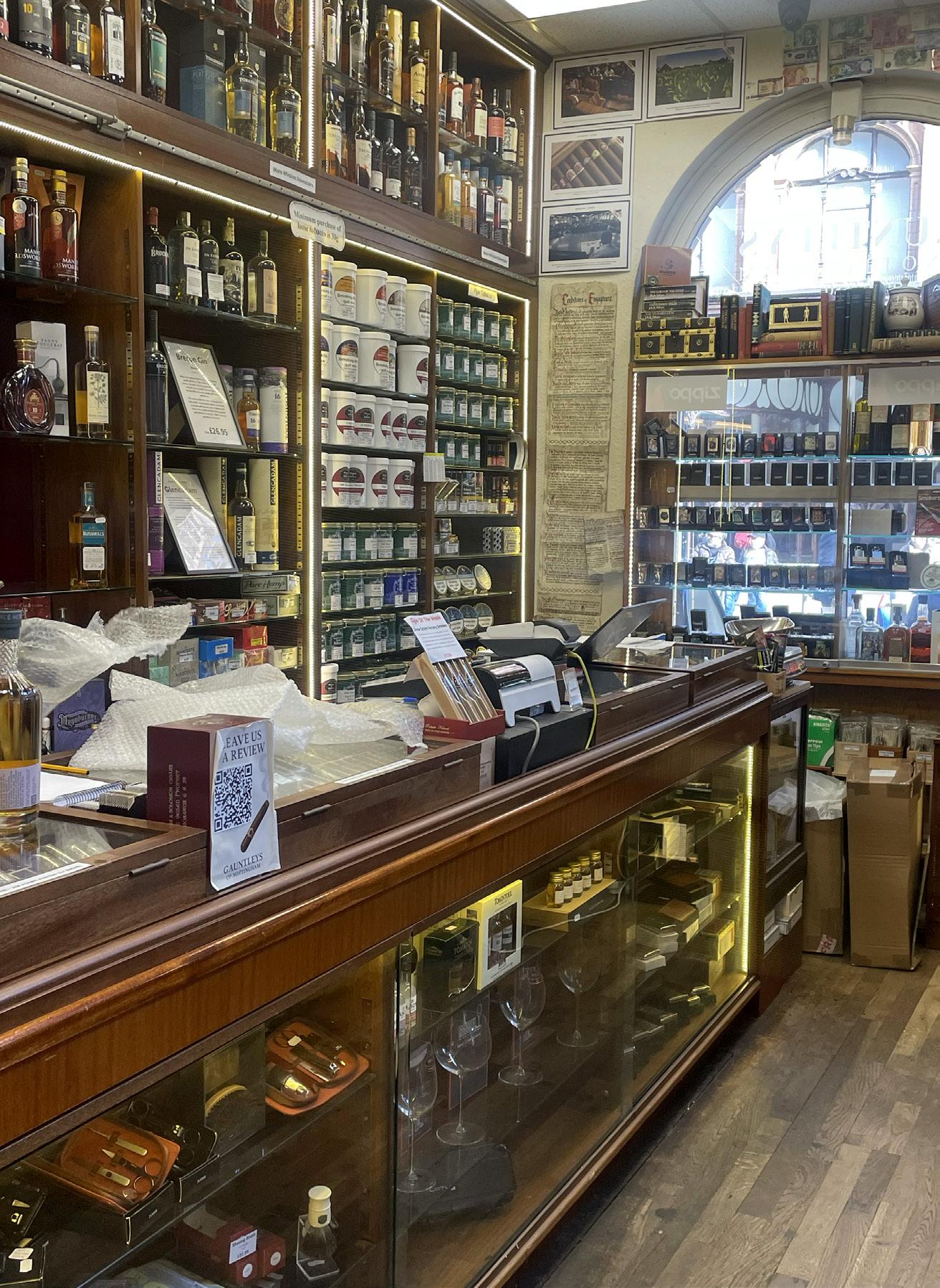
It’s surprising to discover that pipe smoking is still a thing. Who’s buying them, young hipsters imitating their great grandparents or still old blokes in flat caps?
“In many ways tobacco is similar to wine in that the product is natural and grown in sunnier climes”
Eann: It’s quite a big cross-section actually. We do have older men who buy pipes, but also some women. A lot of people who’ve watched the Lord of the Rings films want to buy them. Some university students smoke them because it’s the thing to do. Snuff is still a thing, but it’s not huge. The uni guys have snuff challenges.
I see you have a Ladies Only Cuban Evening for cigars.
Eann: We have some women come along to our regular events but we want to encourage more female cigar smokers. They can feel a bit
intimidated when surrounded by 30 or 40 blokes, so we started doing the ladies-only nights. They’re gradually building but it’s a slow process. The regular cigar evenings are held once a month. We also do two festivals, in summer and winter, when all of our suppliers come along and get three or four minutes each to talk about their chosen cigars and the attendees vote for their favourites.
How many suppliers do you have?
Eann: We’ve got six suppliers. Hunters & Frankau has a monopoly on Cuban cigars. They’re very good but there are lots of other good things out there, from the likes of Nicaragua, the Dominican Republic, Honduras. Even within brands from those countries you’re getting good diversity in styles and flavour profiles, whereas [Cuban] Monte Cristos are all exactly the same blend, just a different shape of cigar. But with a brand like La Galera from the
“Because
we’ve sourced everything direct we know the products and producers inside out. It’s important to get their stories across”
Dominican Republic you’ve got four different styles of cigars.
On the wine side, is a drink-in element even a possibility given the limits of size of the shop? Victoria: It’s something that I would love to do but we don’t really have the space. John and I used to have our eyes regularly on the shop opposite, currently Optique [an upmarket opticians], which has been there for quite a long time. Before them the shop used to change almost every year, if not twice a year, and we thought about it but it remained a pie-in-the-sky idea that we never really looked at seriously. You never know, maybe one day. Tom’s quite passionate and forward-thinking, so maybe.
It says on the website that the company’s all about “history, passion and expertise”. Is any one of those more important than the others?
When we first came up with that, we got a lot of stick for it at a trade show, but I’m not sure why. I think they’re fairly equal billing to be honest and it describes what we do. Because we’ve sourced everything direct we know the products and producers inside out. It’s always been important to us to get their stories across, to explain about the people and their philosophy.
We’re living through tough economic times. How has it been for Gauntleys?
When you look back at the last five years it’s just been one thing after another. I think if anybody says it’s not been tough, they’re not painting an accurate picture. The biggest thing is that it’s so unpredictable. There are some things that are working incredibly well and others that aren’t that previously you wouldn’t have had to think too hard about. Until [the war in the Middle East] there did genuinely seem to be a greater sense of optimism around.
What’s been going well?
It’s pretty random. Our Austrian producer Weinrieder is doing well, and Alsace. It’s traditionally “the wine merchant’s region”, but it seems to be booming and in great demand among consumers.
And what’s not been so hot?
En primeur is becoming more difficult. We only do en primeur Rhône. In the past producers were
releasing Rhône in May, then it was February, then December, then November and then it became en primeur. Now, growers are getting later in releasing wines and waiting to offer wine when it’s bottled. We do have one producer who only releases en primeur and that goes well but we have others who say they aren’t going to rush their wines, and want people to taste the final blend rather than make a judgement from afar. We also have trade customers saying they don’t think the consumer demand is like it used to be. So that’s a big change with our own agencies. But it’s not everybody, because some are still doing it and doing well.
What about future plans?
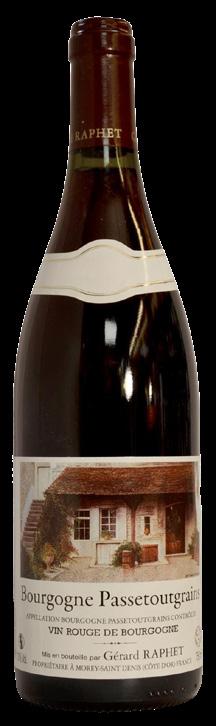
I want to build up Burgundy again. We used to do a lot more but we took the decision for various reasons to prioritise our agencies, and Burgundy sadly took the biggest hit. We lost momentum and the problem now is how to get it back. We found a really good producer last autumn which we’re
“En primeur is becoming more difficult. We only do en primeur Rhône”
bringing in, Gerard Raphet, whose wines are beautifully elevated and refined and have a great price-to-quality ratio. They’re not inexpensive, for sure, but the quality is breathtaking.
What about Bordeaux?
We’ve never worked in Bordeaux, partly because at the time John started his relationships with growers, if you wanted the top wines in Bordeaux you had to buy a lot of something else to get an allocation. And other companies have been doing it really well for generations, so why go and try to compete? There are a couple of smaller properties I’ve seen on my travels, and I’m not saying we’d never introduce them, but we haven’t been involved in the region so far. We’re a bit strange in that respect.
The Côte des Bar lies at the southern edge of the Champagne appellation, where the Paris Basin’s chalk meets older geological layers of clay and marl. Its soils are dominated by Kimmeridgian marls – a complex blend of limestone, clay, and fossil-rich sediments formed more than 150 million years ago under ancient seas. These soils hold moisture while ensuring good drainage, allowing vines to develop deep roots and balanced ripeness. Unlike the pure chalk of the Côte des Blancs, this mix gives both structure and richness to the grapes. The region is particularly renowned for Pinot Noir, and the Côte des Bar is today the largest Pinot Noir-producing area in Champagne, producing wines with distinctive fruit character, supple texture and balanced acidity.
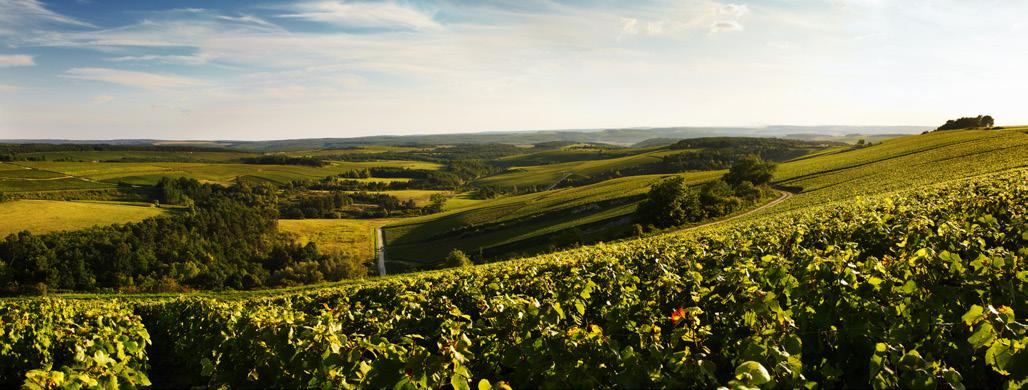
At the heart of the Côte des Bar, the historic Devaux manor serves as a unique reception venue, where visitors can immerse themselves in the world of Champagne. Beyond its elegant architecture and centuries-old charm, the manor offers curated sensory experiences, including guided tastings that reveal the nuances of each cuvée, workshops on aroma and tasting techniques, and encounters that connect guests with the story of the region and its vineyards. It is a place where tradition and modernity meet, allowing wine professionals and enthusiasts alike to experience Champagne in a fully engaging and memorable way, beyond the vineyard itself.
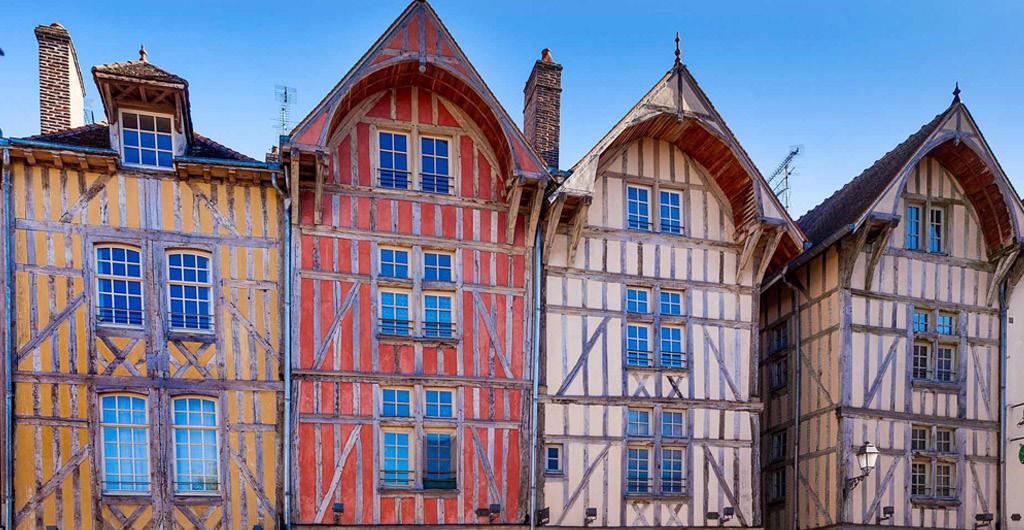
Whether you are a wine professional or a passionate enthusiast, the Côte des Bar and the city of Troyes await. Come and experience the landscapes, the heritage, and the birthplace of our Champagnes.


At the very southern end, near the border with Burgundy, the village of Les Riceys is unique in Champagne for having parcels included under three different controlled appellations, highlighting the exceptional diversity and complexity of the terroir.

Beyond the vineyards, the Côte des Bar opens onto the historic city of Troyes, a true architectural and cultural gem. With its medieval streets, timberframed houses, and vibrant heritage, Troyes offers visitors a journey through centuries of history. The city’s charm perfectly complements a discovery of the region’s wines, creating a rich sensory experience that combines culture, history, and the pleasure of Champagne. Whether exploring its streets or enjoying the local gastronomy, Troyes adds an unforgettable layer to a visit to the heart of the Côte des Bar.
In association with Champagne Devaux and Liberty Wines

How much exclusivity do indies expect on the wines they sell? Opinions vary, as our survey confirms
“In my area, almost all the independents get on, and don’t try and compete against each other. There is enough competition with the big boys.”
Bruce Evans, Grape & Grain, Crediton
“I don’t mind having the same products as other independents locally so long as prices are matched. I think you’re basically marketing the products for each other.”
Ed Capper, Dartmouth Wine Co, Devon
“There’s a lot of wine out there, so much in fact that it’s not necessary to find duplicated wines in other retailers. We buy what our customers will want to purchase and drink, and don’t really look at what other retailers are stocking.”
Jefferson Boss, StarmoreBoss, Sheffield
“Better-known Champagne houses will always appear on discount in supermarkets that undercut you and leave the customer with the incorrect perception that you are overcharging them, not just on this product but everything.”
Greg Andrews, D Vine Cellars, north Clapham
“I am not precious about exclusivity in Chester. I think we indies have a very positive and supportive attitude to each other, and we don’t support an attitude of undercutting other businesses. I don’t like the ‘race to the bottom’ game, and would rather we all sell products at a fair price for owners and customers.”
“I have absolutely no problem with other indies in our area selling some of the same wines as us – in fact I think it can often help when a consumer recognises a label they have seen before. The only problem I do have is when another local retailer tries to sell the same wines at a much lower price. That’s very naughty indeed.”

Marc Hough, Cork of the North, Manchester
“I am not too concerned about local exclusivity among other independents as long as they all play ball with margins. If I’m being hugely undercut by a local competitor then the supplier either needs to work to get the other merchant in line or I will delist the wine. Regarding supermarkets and multiples, if they start stocking a wine then I tend to delist.”
George Unwin, Baythorne Wines, Halstead, Essex
“I work hard to ensure the wines in the shop are not in any multiple or any of the other local independents – we have to be different. Occasionally one gets through, though.”
Jez Greenspan, The Wine Twit, south London
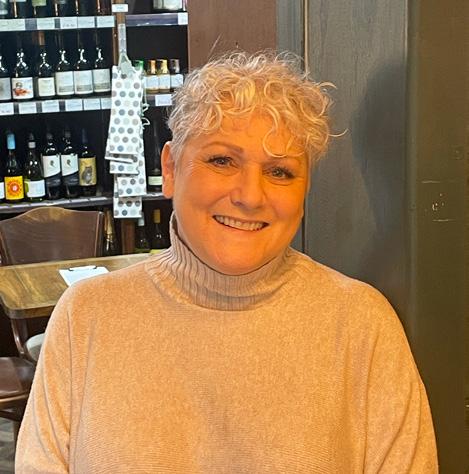
Samantha Jackson (pictured), Pickles, Chester
“We have selected suppliers that respect regional exclusivity, but it’s amazing how many do not.”
Tim Robertson, The Pour House, Milton Keynes
“Whenever we deal with a new supplier, one of our first questions is who else they supply in our catchment area. We try to stock wines that you can’t find anywhere else locally.”
Nicole Holt, Noah’s Goat, Hastings
“There is no point selling wines that can be promoted at near cost price elsewhere. It make us look greedy.”
Graham Northeast (pictured), Bonafide Wines, Christchurch
“Majestic have taken over from LVMH as being the devil to me. Hoovered up a wine bar chain that went in to administration, then a trade supplier, then actively go after the independent wine trade – and can’t understand the reasons we don’t buy from them. If my suppliers sell to them, unless I can price match, the wine is gone from our list. Even if we can price match we will actively seek alternatives.”
Matt Harris, Planet of the Grapes, London
“I have been extremely concerned about the aggressive marketing and pricing of The Wine Society. We have one formerly best-selling sub-£20 wine that TWS is able to offer at a full £5.45 per single bottle less than we can, and they will deliver that bottle to you without any carriage fee, whereas we would be compelled to charge £12, as we simply cannot afford to absorb APC’s ever-increasing rates. TWS is losing money on that bottle, of course, but by spreading the cost of carriage across their sales ‘estate’, the hit is minimised. It’s hard not to feel that we are directly in their crosshairs.”
Toby Webster, The Black Dog Wine Company, Epping
“The wines in supermarkets that cross over are fairly esoteric and generally low key. You’d have to look hard to spot them.”
David Perry, Shaftesbury Wines, Dorset
“We’re one shop and we’re in a large county – we can’t really expect exclusivity in any real way. We can buy wines that appear less frequently but I have no issue with wines appearing elsewhere as long as we can compete price-wise. I just never want to look like a dick on price.”
Rob Hoult, Hoults, Huddersfield
“Challenging trading conditions always bring competition and channel management issues, but we have a very long memory and it takes a long time to restore trust in a supplier.”
Christopher Sherwood, Bottle Apostle, London
“Having our own identity is very important to us and we ship directly over half of our volume from source into our bond, including our own exclusivities. The UK suppliers and wines we work well with understand the optics of being able to compete on price with other retailers, both national or local. If we cannot sensibly compete then we will not stock the item in the first place.”
Matthew Hennings, Hennings, West Sussex

There’s less crossover with supermarkets than there was a year ago
“Regional exclusivity is preferable and I don’t like it when you find stuff in the high street, it makes us think of dropping that supplier.”
Duncan Murray, Duncan Murray Wines, Market Harborough
“I don’t mind quality wines in multi channels but do mind when products are being sold at a massively reduced price – which makes you think ‘why am I supporting a product if this is what happens?’”
Paul Brown, Tetbury Wines, Gloucestershire
“We have been in the past some of the most vocally outraged about wines being sold in the independent sector and multiple markets. I now am firmly behind the belief that you reap what you sow. There is no problem with a wine you sell being online at The Wine Society if you believe in the product. Curating your range without the wines you love only leads to a less interesting selection. If the difference in price is such an issue, speak to the brand owner and share your passion for the product and you might be surprised how much they work with you.”
John Chapman, Oxford Wine Company
As far as you know, how many of your still wines are also sold by other retailers?
Based on 170 responses. Respondents were asked to ignore any overlap for Champagnes and fortified wines, which we felt would distort the figures. Last year’s responses are represented by the grey bars









These days, you can expect to find video stars in more than a quarter of independent wine shops
One of the most noticeable trends in the past year or so has been how many independent merchants (and their staff) are appearing in social media videos. By social media, of course, what we really mean is Instagram and Facebook. As the figures above illustrate, these are
the platforms that capture the imagination of indies. X – the name we still only grudgingly apply to what we once knew as Twitter – continues to decline and TikTok has yet to really catch on. As for X’s nearest challengers, only 2.2% of survey respondents say they post on Threads, and
just 1.1% upload content to Bluesky. As reported elsewhere in the survey results, revenue from online sales has settled at around the 8% of indies’ turnover. Competition is likely to increase, with almost three quarters of independents now offering ecommerce.
You can still get the wines you want –if you plan ahead, argue some merchants
We always ask survey respondents to tell us about their turnover.
Sometimes the response is very precise – kudos to the indies who gave us answers of £367,629 and £503.752 – while others round up to the nearest big number. It would be nice to think that the accounts really did show exactly £1m or £600,000 at the end of the financial year. But we suspect such responses are convenient ballpark estimates.
This year, 154 indies were happy to share their numbers with us, and in theory that’s a big enough sample to gauge the size of the independent market. So let’s try. The mean average was £1,235,272.58. We calculate that there are 789 businesses in the independent sector (running 1,038 shops). So we need to multiply £1,235,272.58 by 789, and that gives us a figure of £974.6m.
Most indies will look at that mean average of £1.2m and say that their own turnover is nowhere near that level. A few achieve a far higher total, but the majority are considerably below (a few respondents say their sales are less than £100,000).
So as always, it’s probably more useful to consider the median average rather than the mean. In other words, we input all the responses into a spreadsheet and look for the number that’s bang in the middle. This year, that figure is £647,193 – a number likely to ring truer with most indies. Multiply that figure by the number of independent businesses (789) and we get to an industry total of £510.6m.
So how do we realistically value the independent trade? It’s somewhere between £510.6m and £974.6m, you’d think. But indies are complicated. Do we count wholesale revenue? Food? Cigars? Antiques? Art? All are somewhere in the mix. Unpicking it all would be painful – and probably pointless.

This figure had been tracking downwards in recent years but stabilises at 60%. (22% say very important; 38% fairly important.)
A slight recovery from last year’s 25% but still below the 33% we saw in 2021. (3% say very important; 24% fairly important.)

About what we’ve come to expect and only slightly down on last year’s 19%. (4% say very important; 14% fairly important.)

A jump from last year’s 50%, and not far off the 2022 high water mark of 60%. (20% say very important; 38% fairly important.) British craft beer
A surprise dip from last year’s 24% given the growing importance of food sales. (7% say very important; 14% fairly important)
Again, a figure we could have guessed at and not far off the 19% of last year. (1% say very important; 17% fairly important.) Confectionery
Based on 186
Another figure that tends not to move very much, up from 11% last time. (2% say very important; 10% fairly important.)
Down from 8% last year, but again a result that’s in line with recent surveys. (0% say very important; 7% fairly important.) Wine
Direct importing has declined a little among indies, but for some the rewards outweigh the aggravation
“Our local farm shop has switched to us as its main wine supplier and has requested more exclusive lines going forward, so wines we used to only import in the winter will likely be all-yearround lines. Permission to shout HURRAH?”
Duncan Murray (pictured), Duncan Murray Wines, Market Harborough

“I haven’t got the time to travel and visit enough suppliers to make it worthwhile. A few importers I work with are doing a good job at sourcing the kinds of wines I would sell a pallet of at reasonable prices. If I found a gap in the range that couldn’t be filled using a current importer then I would explore the option more.”
Andrew Kinnersley, The Grape and the Good, Wells, Somerset
“Despite the increasing costs of importing our own wine, the advantages of being able to unearth the occasional tasty little gem at a lucrative price point makes it all worthwhile.”
Marc Hough, Cork of the North, Manchester
“With other local independents encroaching on some of our current offerings it is the only way we can offer something truly unique to our customers. We visit our European partners regularly and get to know them, and their stories, to bring their wines to life for our customers.”
Jamie Lymer, Givino, Frome, Somerset
“We’re dabbling to see if we can gain a bit more margin, but I’m not convinced we will at our level of business.”
Tim Gardner, Gardner & Beedle, Tisbury, Wiltshire
“I collaborate with another merchant to import directly from a couple of French producers. This gives some personal character and individuality to our portfolio. It helps to collaborate on shipping and share the cost with someone. Otherwise I don’t want the hassle of direct imports and sitting on too much, possibly slow moving, stock.”
Camilla Wood, Somerset Wine Company, Castle Carey
“Slower retail and wholesale sales in 2025 have meant we are holding on to imported stock a lot longer than usual. This means our storage costs have increased which in turn reduces our margins, making the process increasingly unviable as an ongoing business practice.”
Jaime Fernandez, Vino Vero, Essex
“Since Brexit, importing has become an onerous undertaking.”
Scottish merchant
“Our business model doesn’t allow for cash flow for large purchases like this; I need quick access to a large range of wines. This is more important to me than a little bit of extra margin.”
“We directly import key wines such as Sancerre in order to have exclusive wines for the ones we sell in larger volumes all year long. However, we tend to find good or better deals with importers in the UK, hence we reduced the amount of direct imports a couple of years ago and it’s been much better for our cash flow.”
Alexandre Bal, Authentique, London
“We take great delight in offering certain producers exclusively to our customers”
Mark Bedford, Caviste, Hampshire
“We’re looking to broaden the offering within our trade portfolio beyond South Africa, with new agencies from France and Spain already confirmed and on their way. This will help to grow the trade side of the business further whilst also ensuring we can offer our retail customers fantastic value for money without having to rely on UK suppliers with additional margin in the supply chain.”
Michael Boniface, No2 Pound Street, Wendover
“With London rents and increasing wage costs, the long-term viability of the business depends on maximising direct buying.”
Christopher Sherwood, Bottle Apostle, London
“We are looking to source more unique wines, and direct-from-producer can hopefully provide exclusivity.”
Dafydd Morris, Cheers, Swansea
Daniel Grigg (pictured), Museum Wines, Salisbury
“Buying direct cuts out the middle man and allows for a greater profit margin.”
Jon Moore, Mumbles Fine Wines, Swansea
“We want to be truly independent and to be able to order smaller mixed amounts from the whole of the supplier’s portfolio in order to keep my range as wide as possible – and give the customer the best alternatives possible.”
Ed Capper, Dartmouth Wine Company, Devon
Based on 158 responses
Direct importing isn’t as popular as it used to be among indies. Our survey finds that 43% import at least some of their own wines, down from 48% last year and 47% in 2024.
How does that translate to what’s on the shelves? As the bar chart shows, about 14% of what indies sell is imported direct – the joint lowest figure we’ve recorded and a significant decline from last year’s 18%.
The table above illustrates that, again, a third of respondents plan more direct imports this year. But 5% are pulling the plug.
Based on 142 responses
The gap between formal and informal joint buying widens again this year. More than a third of indies team up with other merchants to buy wine, but most of those that do so tend to prefer the arrangements to be contractual rather than casual.
When asked to repond to the statement “I will source some of my wines this year as part of a formal buying group”, 20% agreed strongly, exactly what we saw last year.
But 67% do not expect to buy as part of a formal group, and 66% have effectively ruled out informal alliances.
Based on 170 responses
Overall, 14% of respondents expect to buy jointly with other merchants more than they did in the preceding year, one way or another.
Not every indie can afford employees. But those that can have a mixed experience of attracting good people
Last year our survey picked up plenty of positive vibes from indies about recruiting and retaining good staff. It’s a similar story this time, though there are variations in different parts of the country, and not everyone thinks they’ve got quite the team they would like.
But let’s start with the feelgood stories. “We have been extremely fortunate in recruiting very high calibre staff,” says Samantha Jackson of Pickles in Chester. “We haven’t really had to advertise – we just get approached and choose people we feel will fit in.
“I remember asking Julie Mills of Vinomondo her advice on recruiting staff and she told me, ‘just employ really nice people’. So far it has stood us in very good stead.
“We engender a positive workforce of respect, acceptance, tolerance and assistance. We have all worked in a toxic workplace at some time or another, and I am determined that won’t happen on my watch.”
Mark Wrigglesworth, of The Good Wine Shop in south west London, says: “While the National Insurance rises have been crippling this year, the silver lining has been it has changed the employment market.
“We have gradually seen the number of applicants increase, and the quality of applicants has improved significantly. This has also impacted our retention in a positive way. This is the main positive and a pleasing change in comparison to the last three years, as without high-quality people we can achieve nothing.”
Kasia Konys-Pieszko, of Dunell’s Wines in Jersey, says: “We are proud and
very fortunate to employ an excellent, highly knowledgeable team, which consists of about 15 members, most of whom have been with us for over five and many for over 15 or 20 years.”
How do indies find such staff? “We used Wine Jobs UK to advertise a position for the first time and were inundated with high-quality applicants, many from the hospitality sector and several from Majestic,” says Daniel Grigg, of Museum Wines in Salisbury.
A fellow indie in Somerset reports “very good” results from websites “such as Wine Jobs England, Wine Jobs GB and the WSET’s site plus Drinks Business etc”. She adds: “We are lucky to be able to advertise relatively inexpensively to attract the right quality, wine-trade experienced staff.”
Rupert Pritchett of Taurus Wines in the Surrey Hills says: “Despite having no advertised vacancies I am receiving two or three CVs a week from well-qualified applicants. They are always replied to and kept on file, if the applicant wants, but that demonstrates how tough the market is at the moment.”
One Essex merchant remarks that “recruiting is a lot easier than in previous
years, purely on the basis that so many people are now sitting WSET Level 2”. But he adds: “Finding someone in this group who can actually sell a bottle to a customer is a little trickier.”
Many survey respondents find recruitment problematic. “We found very good staff this year and inherited amazing staff from the business we took over,” says Dafydd Morris of Cheers in Swansea. “But we have also employed some of the laziest teenagers and young adults on the planet. The next generation are a worry!”
An Essex merchant adds: “I had to replace my one full-time employee in 2025. I am very pleased with the outcome, but he was the only candidate who applied with the relevant attributes. I do worry about the next time I might have to recruit.”
Liam Plowman, of Wild + Lees in south London, says: “For the most part we’ve been lucky, in that we’ve retained key staff. It’s been hard to get new staff to fill in the gaps in the rota. There are lots of people looking, but the skills are thin on the ground.”
Andrew Lundy, of Vino in Edinburgh, believes there’s an elephant in the room. “We owe it to ourselves to keep mentioning the root cause of these issues and it’s still Brexit,” he says.
“Erasmus restarting is a small sliver of light as we have really benefited from, and I hope helped with, the education of many students from the University of Bordeaux. There is no way of getting past the hole left in recruitment with no access to the vast talent in young passionate wine lovers from Europe. It’s far easier to train people for the retail side than it is to find people with a passion for wine. We have been very
lucky with those we have found – but it’s significantly harder.”
Recruiting staff is only half the story. Retaining them is another matter.
Halle Stephens, of Vindinista in west London, says: “I am clear with expectations and do not micromanage. If they are not self-starters, good with hospitality or kind to one another they are gone early.
“If they are good, I offer training and WSET courses that I pay for. I pay London Living Wage, bonuses whenever money’s left over from the VAT account and tips in full. I also allow whatever time off is needed. This earns me a loyalty and kindness from my team and it pays back in dividends.”
John Chapman, of The Oxford Wine Company, makes a similar point.
“Recruiting staff has usually been quite good,” he says. “You just have to hold your nerve as our industry attracts exceptionally good candidates. Retaining staff is a direct coefficient of how much you invest in them financially and personally. One can’t complain if you they leave whilst you haven’t made an effort to support them.”
Many independents say there’s a skills shortage in their area.
One south Wales merchant says: “Finding part-time staff with wine knowledge is tremendously difficult here – I’ve given up. As long as people are personable and have something about them, they can learn on the job.”
A nearby indie agrees. “It’s difficult to find good-quality staff that also have wine knowledge,” she says. “It’s easier to find competent people with an interest in wine and train them, although they are usually studying or training in another field and working part-time in the wine industry. Decent, well-paid jobs in the wine industry are few and far-between.”
The problem isn’t restricted to the regions. Christopher Sherwood, of Bottle Apostle in London, says he has “managed to maintain a strong team” but reports that
Some indies say wine skills are rare. Others now see more applicants with WSET qualifications
“the pool of suitable candidates clearly remains much smaller than before Covid and Brexit”.
Recruitment at Authentique in London has been a “challenge”, adds Alexandre Bal. “We have been focusing on showcasing what makes us unique and attractive, looking for passionate staff with a good personality rather than very experienced or skilled employees.”
Shawn Darling-Cooper, of Kork Wine & Deli in Whitley Bay, is very happy with his crew. But he adds: “Staffing is difficult in hospitality and always will be. We live outside of a big city and people who want part-time hospitality work tend to gravitate towards the city centre over smaller towns just outside. Hospitality work is just not considered a career in the UK.”
Why are independents thriving, despite all the challenges? And why is Hatch Mansfield one of the most popular suppliers that indies work with? As CEO Patrick McGrath MW explains, the answer to both questions can essentially be answered with the same simple word: people.
This year’s Wine Merchant Survey of Independents reports renewed confidence among independent wine merchants, and rising sales. In the league table of suppliers that indies most enjoy working with, Hatch moves from third to second position, behind only Boutinot (a business that McGrath admires hugely and describes as a worthy winner).
Is there a secret to Hatch’s popularity among indies? “I think the number one rule is, be a pleasure to work with,” says McGrath. “It comes down to people, and hopefully the people we employ, people will want to deal with. Michael Cox [the
late UK director of Wines of Chile] always said to me, ‘you do business with people you like’, and for me, that is the number one factor.”
Positive workplace culture also depends on good organisation (which partly explains why some big names are absent from the survey’s Top 20). “You’ve got to be efficient,” says McGrath. “We have a very good back-office team, and we aim to make the life of an independent as simple as possible by getting the basics right.
“Aside from the stock arriving on time and the invoicing being correct, ultimately the person coming into the shop has got to be likeable, because if you’re actually pleased to see them and they’re giving you the right service, then hopefully you’ll continue to work with them.”
These are qualities and values shared by the best indies, and McGrath believes this is why neighbourhood wine merchants cannot be overshadowed by their multiple rivals.

“Customers like to buy their wine from their local independent because of the people who work there,” he says. “Of course they know the selection is going to be good, but ultimately they want to support their independent wine shop because they get a fantastic service.”
McGrath maintains that entrepreneurial spirit and the ability to adapt to changing markets are also key factors for success on the high street.
“The days of simply opening the door and waiting for people to walk in have long since gone,” he says. “Particularly in the last five years, those who have seen the change in the market and are able to adapt are the ones who are doing very well. Businesses
with an integrated approach – a whole communication strategy that combines tastings and social media – are doing really well.
“Independents are also in a position to react to the economic environment, such as the cost-of-living crisis. They know they have to have something to compete with supermarket pricing. That could be UKbottled New Zealand Sauvignon Blanc, just to tick that box, and then they know they can go up the ladder from there.”
For over a year the number of independent wine shops across the UK has stayed comfortably north of 1,000, with openings always outpacing closures. Has McGrath got any advice for aspiring wine merchants wanting to claim their slice of the action?
“Site is the still the most important thing,” he says. “You have to do a lot of research and see who else is around and what the competition is. Also, make sure you’re well financed, because the first two or three years will be a real struggle. Unless you can pay your bills promptly in the first two or three years, you won’t get the suppliers behind you.”
“I think the number one rule is, be a pleasure to work with. It comes down to people”
Alberto’s winemaking career started in his native Sicily in 2011. He moved to Tuscany in 2019, where he “fell in love with Sangiovese”. He’s now winemaker at Ruffino, an internationally respected producer founded in 1877 and credited with producing the first-ever Chianti. The wines are available in the UK through Alivini. Visit alivini.com or call 020 8880 2526
Today Ruffino owns nine estates – seven in Tuscany’s most prestigious appellations, from the rolling hills of Chianti Classico to Bolgheri to the historic vineyards of Montalcino, and two in the Veneto region, home to some of Italy’s most iconic sparkling and white wines. These estates are all dedicated to uncompromising quality and sustainability, reflecting Ruffino’s enduring commitment to the land and its heritage.
Ruffino as a whole is a large producer, but it’s made up of many small pieces. Different estates, different vineyards, each with its own identity. Those differences are real, and we manage them individually. That gives us the chance to work both in the vineyard and in the cellar in ways that truly link our wines to each place. That’s where the craftsmanship comes in.
In 1984, when Chianti became a DOCG, Ruffino was given the very first warranty strip, numbered AA00000001, recognising its leadership in quality Chianti.
My technical role involves a lot of teamwork with our agronomists. I
Riserva Ducale Oro Chianti
Classico Gran Selezione
With its first vintage produced in 1947, this is the iconic Chianti Classico Gran Selezione of Ruffino. Produced entirely on the Ruffino estates of Gretole and Santedame, it embodies the identity of Castellina in Chianti subzone. An elegant and structured wine.
spend plenty of time in the vineyards with them, making sure we manage the grapes in the best possible way before harvest. We try to “read” the upcoming vintage by observing the vines, tasting the grapes and understanding how to approach the work in the cellar.
Continuous improvement is a big part of my work, so listening to the team, involving people in decisions and investing in their training are just as important as the technical side.
A good Chianti should leave a lasting impression. It must embody balance and a complexity that feels easy to understand. You can enjoy it right away, yet it still has layers if you want to explore it.
I believe all our Tuscan estates are extremely interesting. In terms of beauty, diversity, microclimate and soil composition, each estate reflects a distinct and often lesser-known facet of Tuscany.
Santedame and Gretole estates, in the heart of Chianti Classico, are true jewels. producing our iconic Chianti Classico wines such as Riserva Ducale Oro. Tenuta
Riserva Ducale Chianti Classico Riserva
One of our most historical wines and a real icon in the Chianti Classico appellation. Produced since 1927, its name is a tribute to the Duke of Aosta, who chose Ruffino as supplier to the royal household in 1890. In 2025, with the 2021 vintage, Riserva Ducale ranked among Wine Spectator’s Top 100, placing 17th.
Sponsored feature


Poggio Casciano, so close to Florence yet immersed in the Chianti hills, benefits from a unique terroir that allows us to produce important IGT wines such as Modus and Alauda, expressions of Tuscany’s more unconventional soul. Tenuta Ruffino Poggio Casciano is also home to Casa Ruffino, a place where winemaking, hospitality and fine dining combine in a unique and immersive experience.
Fiorentina, the classic T-bone steak, is fantastic with a Brunello di Montalcino or a Bolgheri Rosso. It’s a pairing that always satisfies. Contrary to what many people think, Caciucco alla Livornese, the traditional fish stew from Livorno, loves red wine. Our young, fresh Chianti is the perfect traditional match. Ribollita Toscana, a hearty soup of beans, bread and vegetables, is a real comfort dish. With a Chianti Classico Annata or Riserva, it truly warms the soul.
Romitorio Santedame Chianti Classico Gran Selezione
From a single vineyard of the Santedame estate, produced in limited amounts, never exceeding 15,000 bottles. Romitorio captivates with a complex and refined nose, heralding a Sangiovese of striking charm and muscular structure on the palate.
Five independent merchants tell Claire Harries about their mixed experiences of shipping wine
Packaging solutions may have come on in leaps and bounds over the past few years. But couriers may have some catching up to do in the way they look after wine in transit.
When deliveries are lost, it’s the retailer who has to shoulder the cost. That involves replacement stock, fresh delivery fees and in some cases where the parcel has been sent back to the merchant, a return fee.
Peter Foley, at Village Wines in Bexley, has had issues with DHL. “Every time that something gets damaged, gets broken, gets lost, we just take 100% hit on the economics of that,” he says.
“If we send out a single bottle worth £10, it’s one thing losing that. But if we send a box worth £360, losing that can end up being a really significant part of your overall P&L.”
Referring to his delivery data from December, Foley reports that 5% of the deliveries failed: 3% were returned, and 2% were lost or damaged.
“I’ve also discovered that I get charged almost double for a shipment to be returned to me,” he says. “If I send it, it gets returned to me and I resend successfully the cost breakdown is as follows: £8.69 for the first send, £18.58 for the return and a further £8.69 to resend. With the 15%-ish fuel surcharge and adding VAT, that gets me to £49.60 for sending one bottle.”
The Christmas period routinely sees a 60% increase on nationwide deliveries for Cheers in Swansea, and owner Dafydd Morris says he uses DHL as the carrier for 90% of those packages.
“We were churning through hundreds of parcels a day, and hundreds of them were getting delivered – so, on the whole they were fab,” he says.
“It’s just when things go wrong, the
“When things go wrong, the complete lack of responsibility or accountability that they have is heartbreaking”
complete lack of responsibility or accountability that they have is heartbreaking.
“One thing that went missing was a wine that was irreplaceable. It was gone and we couldn’t do anything else about it. Also a whole box of Japanese beer disappeared. That’s a big, heavy thing to go missing; it’s not like a watch strap in a box that could easily have been thrown into the wrong pile.
“When they say it hasn’t been pinched because they’ve seen the CCTV and I ask to see the CCTV, they say they can’t do that. It’s frustrating.”
Foley at Village Wines also cites a recent incident that’s bound to give merchants the willies.
“I sent £180 worth of wine to a customer who reported that they hadn’t received it,” he says. “She followed up with DHL who told her the shipment was sent to one of their parcel points for collection. When the customer tried to collect from a local convenience store, they simply said they didn’t have it and couldn’t help.
“My DHL account manager told me that she agreed that we had done nothing wrong but there was nothing she could do, and we aren’t entitled to any claim, as the product is alcohol. We had to resend the order.”

Despite the risks and frustrations, both Foley and Morris agree that ecommerce is worth the hassle. “It’s becoming more and more of a percentage of our turnover,” says Morris.
Foley says he can’t turn down the business even though he’s ended up “banging my head against the wall a few times”.
Kirsty McEwan at Bludge in Edinburgh reports that having had bad experiences with DHL in the past with “a lot of broken bottles and a lot of unexplained delays”, she is now loyal to APC. “They are extortionate,
but at least they are trustworthy,” she says. “I’ve also had really good feedback from customers about friendly, helpful drivers.”
Another fan of APC is Christopher Piper Wines. “We have been using APC and their various satellite franchisees for over 10 years,” says boss Christopher Piper. “While they are not perfect, they come very close to it, especially over the past six months. We are very lucky to have a really excellent local franchisee, Dash Logistics, who are part of the APC overall operation.
“We send out between 30 and 60 boxes per day, and over Christmas this was a lot higher. Over the whole period from mid-November until the end of December we only had three cases returned as damaged.
“There have been occasions when breakages can get costly, but we now largely mitigate this by ensuring the packaging is, as one of our customers has put it, ‘military grade’.”
Paul Auty at Ake & Humphris in Harrogate says he is happy with the service he gets from DHL.
“We use DHL eCommerce, which is a separate tier of service within DHL,” he says. “When I see the delivery charges that other people are quoting to their customers, I know that we are paying a lot of money, but I do feel in the grand scheme of things that we have fewer issues than we might have done.
“One of the nice things is the dashboard for tracking everything. I can see every single order and its status. I can also drill down for more information and see pictures of where it’s been delivered and all sorts of stuff like that. They scan the product, then scan the boxes onto the vans; they are scanned at every point, so you can track the parcel.
“I can also download that information to a CSV file and therefore to Excel, which means I can manipulate the data if I need to. I can see some benefits to the money that we’re paying.”
Merchants agree that there are generally fewer breakages as modern packaging is so effective, so when boxes look like they’ve been drop-kicked from a height, and the contents inevitably obliterated, it’s hard not to imagine the couriers have been playing parcel rugby.
“We get the odd one back, which is damaged, but
When boxes look like they’ve been drop-kicked from a height it’s hard not to imagine the couriers have been playing parcel rugby
more often than not they just write them off,” says Morris, “and that’s the point where I’m thinking: maybe one bottle has broken, but I guarantee you the rest of them are fine, so give them back, and we can repackage them. They’ll just say they can’t handle it and it’s been destroyed. I know what that means – it’ll be in someone’s boot.”
• DHL declined to comment on the issues discussed in this article.

• Use extra-strong packaging container materials such as doublewalled cardboard
• Choose inners that offer optimal protection. Historically, many of these were plastic or polystyrene-based, but now there are excellent sustainable alternatives like Pulpsafe or Honeycomb.
• Use an outer transit box – they are designed to safeguard the full package
• Make sure that you seal your boxes properly with tape carrying the word “fragile”
• Label your shipment clearly
• Purchase transit packaging from a supplier that meets the courier’s drop-test standards
Tapas is an invention that could have been created specifically for wine merchants. Is there a simpler or tastier way to elevate both food and wine into something greater than the sum of their parts?
Tapas is rooted in Spanish bar culture, which is why we chose Taste Spain London 2026 as the setting for a food and wine pairing workshop for a group of independent merchants.
The food was prepared by Brindisa Tapas, which has six venues across the capital. Head chef Flori Porja talked us through his creations, starting with gildas (the Basque speciality traditionally made with anchovies, manzanilla olives and guindilla – a long, thin chilli pepper).
Also on the menu were taquitos of charcutería and quesos (small cubes of cured meats and cheeses); tinned fish escabeche with olive oil crisps; and goats’ cheese served with orange blossom honey.
The food was enjoyed with six different wines, four of which were introduced by the producers themselves.
Jorge Muga of Bodegas Tihom, who works with high-altitude vineyards in Rioja Alta, poured THM Blanco 2023, a white Garnacha with a 5% component of the rare local Maturana Blanca, which adds citrus zip to blends. His other wine was THM Crianza 2023, a blend of 50% Tempranillo, 25% Garnacha, 15% Mazuelo and 10% Graciano. The wines, imported by Frome independent Givino, are always made with food in mind.
José Carlos García represents Bodegas Montalvo Wilmot, which has been granted its own PDO, Vino de Pago Los Cerrillos. Again, the focus is on small-batch, foodfriendly wines (the business also makes delicious unpasteurised sheep cheese), and it’s on the lookout for a UK importer.
The wines he presented were Pago Los Cerrillos Petit Verdot Selección 2019 and Pago Los Cerrillos Syrah 2021 – both fresh and elegant examples of what can be achieved in Spain with international varieties.
Equipo Navazos La Bota 135 Fino Chiclana NV, imported by Alliance Wine, proved yet again why dry sherry is such an excellent aperitif. To finish, guests were poured Juvé & Camps Reserva de la Familia Brut Nature 2021, a DO Cava de Guarda Superior from C&D Wines.
Spain is the third largest supplier of wine to the UK in terms of value, according to figures from Foods & Wines from Spain (FWS) – behind only France and Italy in 2025.
Germany is the only market that imports more Spanish wine than the UK.
Volumes may have slipped by 5%, but exporters believe this is simply a result of Spanish wine performing better in higher price brackets.
FWS says: “The overall value of Spanish wine exports has increased over time. This indicates a clear trend towards higher value-added wines and a stronger presence of Spanish wines in the premium segment of the UK.”
It adds: “Today’s UK consumers are increasingly interested in sustainability, authenticity and diversity of styles – and these are areas where Spain has a very strong story to tell, from organic vineyards to indigenous grape varieties.
“Spain has long been recognised for its excellent value, but the current opportunity lies in highlighting the diversity, quality and identity of Spanish wines.”
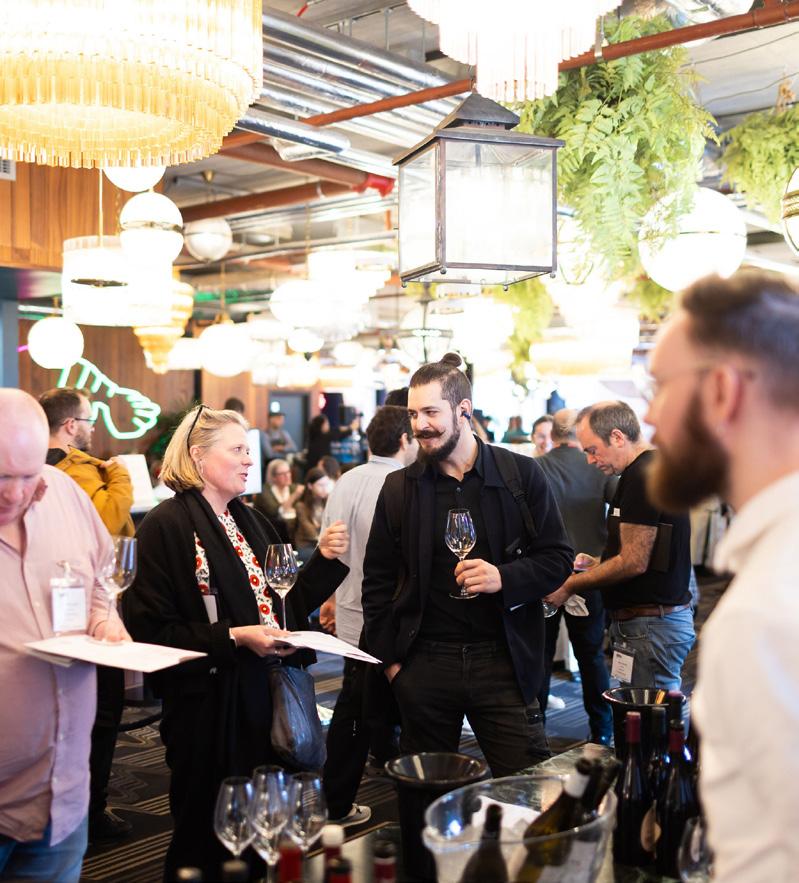
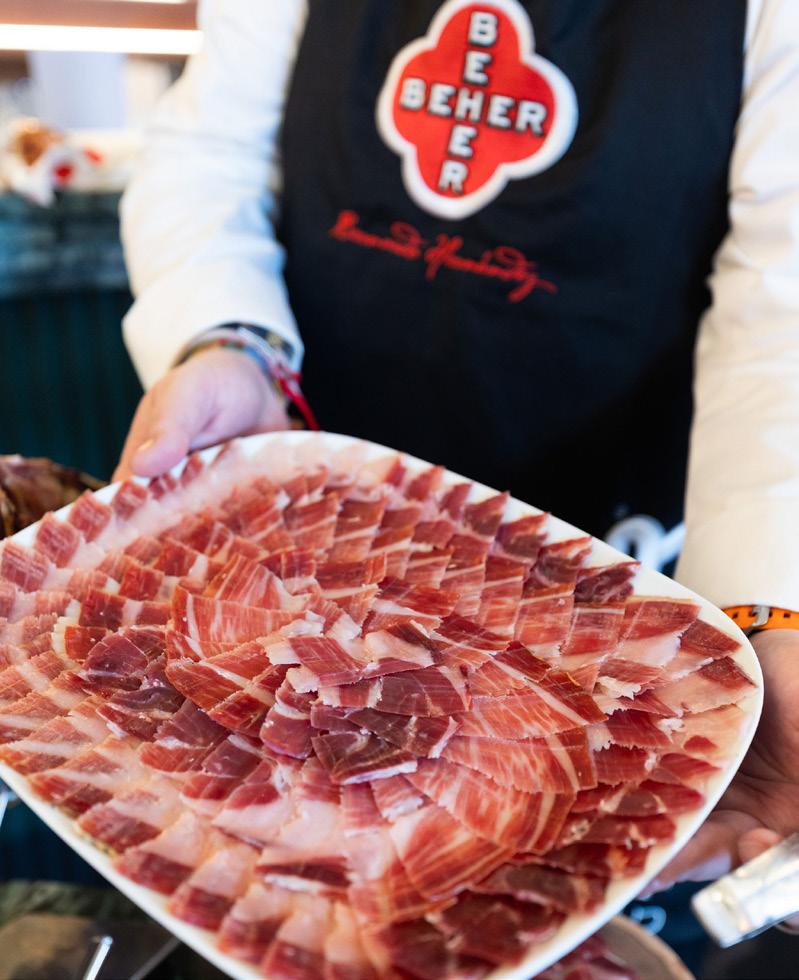
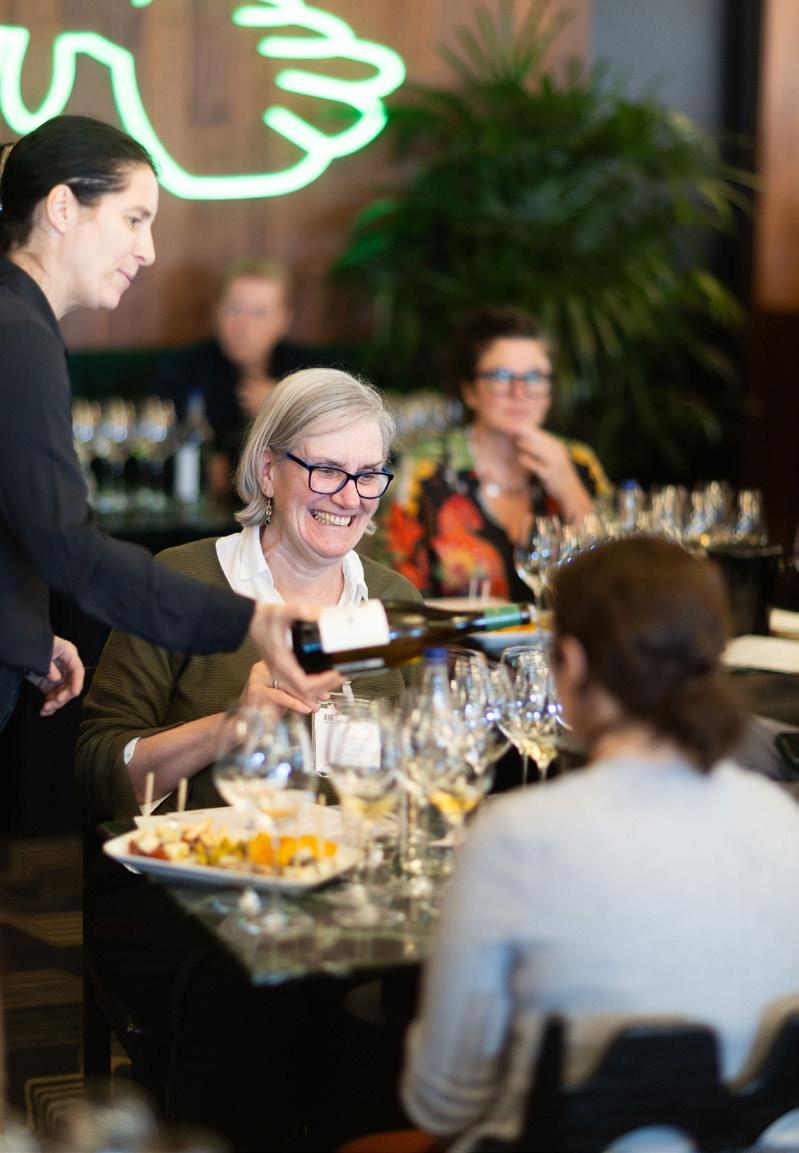
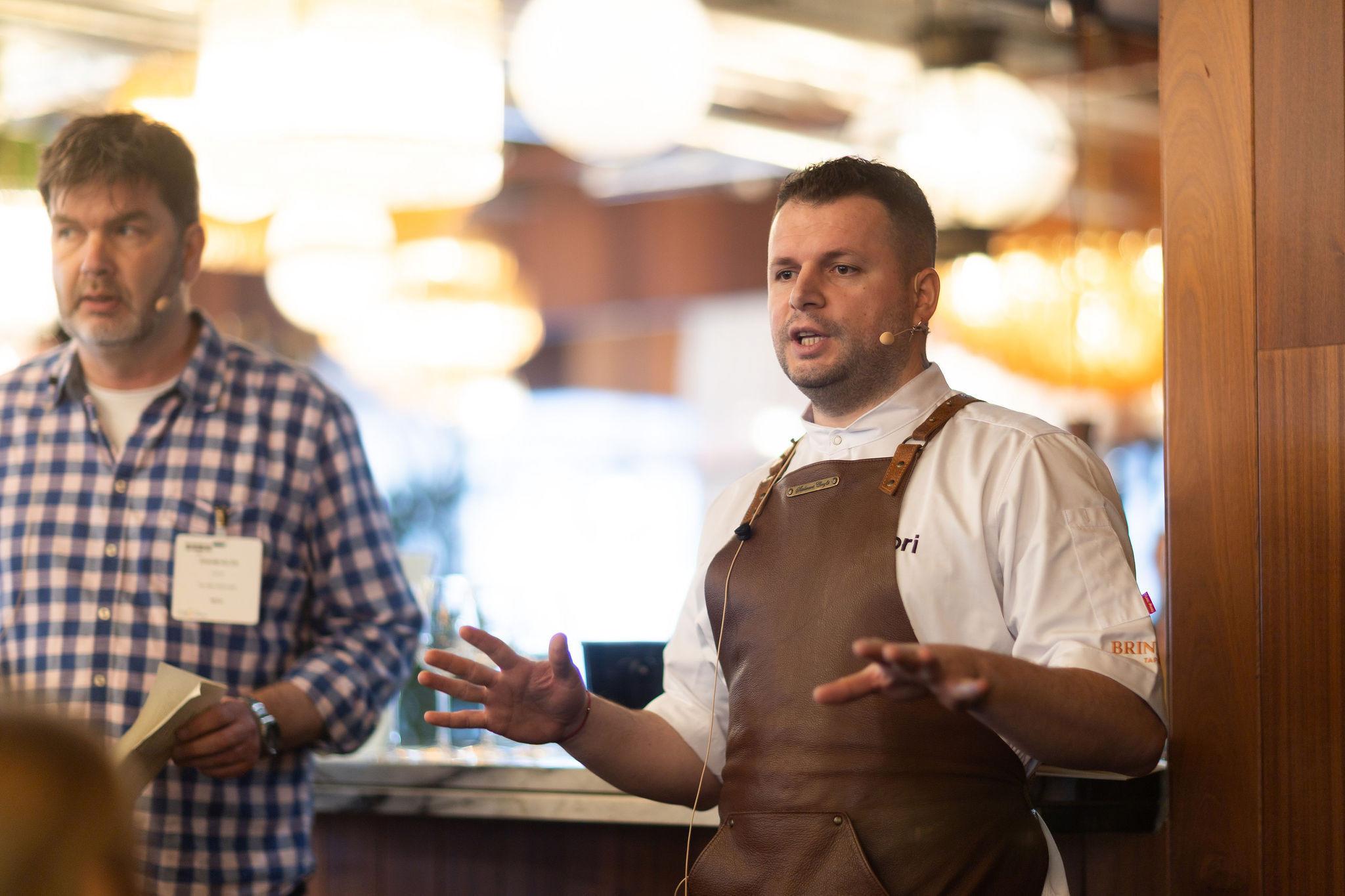
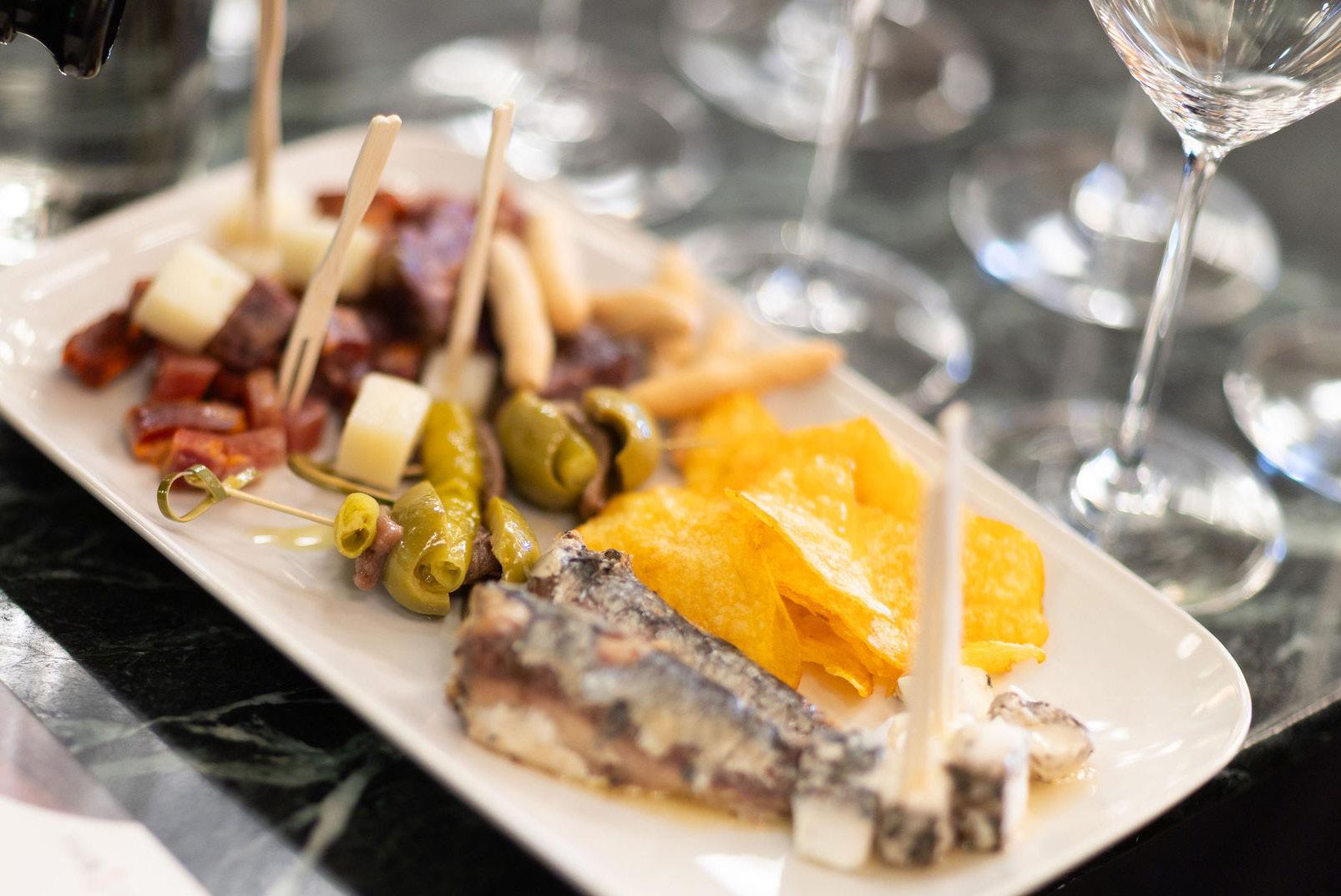
Reporting back from a memorable day at Taste Spain London, including a wine pairing workshop for indies
“I really enjoyed the tasting and am aiming to get Tihom for sale in the shop.
“I love Spanish wines. I’m also a big fan of vermouth and sherry; I even sell a couple of ciders from Asturias. The crisps I sell (La Valle) are Spanish too.
“Sadly the shop is too small to sell chilled products – and I’m next to a butcher’s – but I would like to increase the range with tinned fish and olives.
“For me Taste Spain was a stand-out event in the carousel of tastings that I’ve attended this winter – mainly due to the excellent food on offer. The croquetas were amazing and the white Riojas from Vintage Roots (Ijalba) paired with them so well. The jamon was superb and I was happy to try this with some sparkling Rioja from Ellis Wines.
“I think the people who buy Spanish wines in my shop are looking for something a bit different that is excellent value for money. Last year my best-selling product was an organic cava from Vilarnau, imported by González Byass. My best-selling red at the moment is a Monastrell from Murcia and the best-selling white is an Albarín from Castilla y León.
“These wines all represent excellent value for money – all are under £20 RRP – and are all slightly different from what you would ordinarily find in a supermarket.”
“The stand-out combination was definitely the Syrah with the sardines. I thought the fresh acidity and savoury, peppery spice of the wine worked brilliantly with the oily fish.
“The sherry we had, La Bota 135, was also stunning. Fino sherry with seafood is one of my favourite Spanish food-wine pairings more broadly, as well as amontillado or oloroso with jamón.
“This is very much the result of my trip to Jerez last year. And sherry never seems to sell as well as it should do. But the next best thing to trying it in situ is having the opportunity to try lots of different styles in the one sitting, with food to match. And I think customers would be willing to spend more on it if they realised the extent of the winemaking involved, history behind it etc.
“Our best-selling Spanish wines in general are our Riojas. The Rippa Dorii (£15.99 on the shelf) does well, as it can be sold to Rioja fans quite easily. There is also lots of demand, usually from further afield via our website, for the Juvé & Camps cava. I think this one’s quite trendy and has a strong brand. It’s also delicious, and I enjoyed having it on the day.”

of very few independent retailers, I worry that we’ll start to seem too niche. I don’t want to end up drifting back to the old, old days when visiting your wine merchant was something you may have done on the way to the tailor’s, or just after having a hat fitting.
Call me Billy No Mates – my local rivals have gone, and that gives me no pleasure
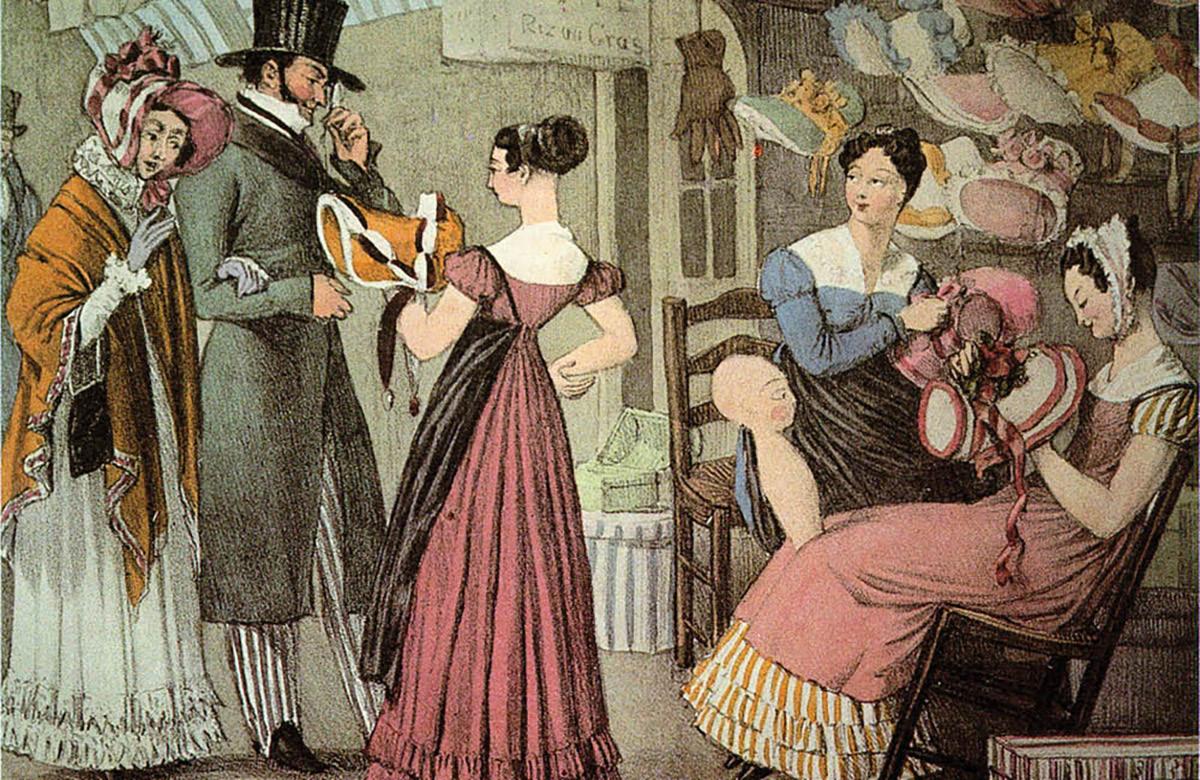
“Pray,
At the beginning of October Huddersfield, a large Yorkshire town with a population of over 140,000 people, had three independent wine merchants, each of them old-school bricks-and-mortar shops. A combined retailing history of 94 years between the three.
By the second week in January, Huddersfield had one independent wine merchant and thankfully, for your author, that shop is owned by my wife and I. Obviously being the last one standing should look good for us from a commercial point of view but I’m not as happy about it as you might expect.
A thriving and successful retail wine scene is good for the trade in general and
more indie wine merchants in my town would be better for me. The more that the consumer sees good independent wine merchants the more it normalises buying wine from one. In fact, the more independent shops there are in general the healthier the retail scene is in any town. By being the only indie wine shop, and one
I don’t want to drift back to the old days when visiting your wine merchant was something you may have done just after having a hat fitting
The other problem with losing two established independents from our patch is that I’ve also lost a couple of wine trade friends that I could natter with or cadge a favour from when I’ve dropped a clanger on the ordering front. We all have those times when it’s been oddly quiet for a few days and you start to wonder what it is that you’ve done to inadvertently offend people. A quick phone call to a fellow local wine pedlar very often provides the relief that it is quiet for them too and it’s just a “thing” and nothing that I’ve done wrong personally.
I’ve found out about deals that I may otherwise have missed; equally, I’ve found out about deals I really should have had. We’ve sent customers to the other shops when they want something we don’t do, and vice versa. It’s just customer service and all part of the bigger picture.
I’m not part of any buying group and I never went in for buying with my fellow Huddersfield merchants – we tended to all offer a different range with just a few overlaps. Where we did come together was as a sort of brains trust. You could ask a question and find out the answer somehow or other, like a booze-based Google. I actually think that this is the thing that this trade needs most.
We generally don’t need more buying power. In fact what marks indie wine merchants out is the distinct personality that is displayed in the range of wines offered: it’s a sort of DNA marker for each shop. What would help, though, is the knowledge that you could phone another wine merchant, anywhere, and pick their brains. We all see the world of wine, and the trade we are in, slightly differently and another pair of eyes and ears offers a usefully different perspective. The more we help each other, the more we help ourselves.
I have always been free and honest with
We knew a line in the sand needed to be drawn. When we encouraged Tim to pull the plug you could see the weight lift from his shoulders
my advice whenever asked. It has been suggested a few times that I should charge a consultancy fee but I’m just not that way out, and anyway in life you get out what you put in.
This willingness to help a fellow wine merchant did certainly open my eyes as to just how differently we all run our businesses. In October I got a call from the larger of the other two merchants in town, Tim, to say that he was closing his doors, and not in a few weeks, or a couple of months when Christmas was done, but now, today.
To say I was surprised was an understatement. I immediately suggested we meet up for a coffee and a chat. Tim had been doing this job as long as I have, over 30 years. Our two businesses were both set up in the late 80s by our fathers who both happened to be called David. The two shops are about five miles from each other and we co-existed very happily, so I wanted to see if there was any way that I could help a friend.
Over coffee it transpired that the business had been struggling for a couple of years and that Tim was having to put money in and it had just got too much. So much that he didn’t even want to try and trade through Christmas, which says an awful lot. Tim had a decent amount of trade business which I thought we could help him supply, and thus help him find a way to come back from there as a wholesale-only business.
They say that every day is a school day and I learned a lot over the two weeks that followed that coffee. As independent merchants we spend a lot of time seeing what we do with no idea whether that is exactly what our peers do. I’ve always wanted to spend a few days in various
other indie wine merchants just to see first-hand how other people do it.
Well, I got the chance to see how one other merchant did it and it turned out to be nigh on impossible to run two businesses doing the same thing in a different way. Understandably the wines Tim supplied were different, but it was the other differences that made it extra tricky. Order taking, invoicing, deliveries, customer interactions … all were different. Bridget, my wife and the brains of the outfit, changed a few things round, backoffice wise, but it didn’t take long for a woman that most people would describe as equable (heck, some would even say saintly) to start to wonder why on earth her husband thought any of this was a good idea. We hadn’t taken on the business, we were just trying to run it within ours – and if it was hard work for us it was also tough for Tim and Bridget, and I could both see the toll it was taking on his health.
So after a couple of weeks we all knew a line in the sand needed to be drawn. When we encouraged Tim to pull the plug you could see the weight lift from his shoulders. It’s tough but it just proves how different we all are.
For the other merchant, David, it was a case of wanting to retire but being unable to find a buyer. It’s always tricky to sell something which is so inextricably linked to the person looking to move out of what is being sold. When David did finally find a buyer, his landlord didn’t like the cut of the potential new tenant’s jib and kyboshed the deal.
David decided to make some festive money and then close his doors one last time in January and put his feet up. As a result of all this we have ended up with a few new customers, a couple of framed wine maps and an industrial quantity of fake grapes (Bridget is very happy with these). But we’ve also ended up with two fewer wine trade pals. Last one standing is quite lonely. Nowadays I have to ring someone in the next county.
with Rachel Gibson MBACP

Do you remember that tropical drink from the 1990s called Taboo? I was more of a Bacardi Breezer girl myself (cringe), but I do remember the brand name. Themes that feel “taboo” pop up in the world of therapy all the time. In this open-minded age, our society prides itself on believing we can talk openly about almost anything and tolerance of other people’s choices is praised. Yet there are still countless dark corners of our minds where the unspeakable lurks, so often silenced by one thing: shame.
Alcohol addiction, porn addiction, gambling addiction, secret affairs, lies and deceit are all ways of avoiding something that feels impossible to overcome. And they’re just the tip of the iceberg. There are myriad ways we humans seek out coping mechanisms to deal with our difficult realities and to avoid the painful consequences.
The causes for our behaviour can be just as complicated. In therapy we may gently dip a toe into exploring those causes, and perhaps look to our past to understand our patterns of behaviour. By understanding ourselves better we can work to gradually melt away those feelings of shame and perhaps learn how to adjust our behaviours.
Responsibility does not always rest solely on our shoulders, though. Sometimes there is a sense of confusion around our choices. Perhaps we feel we have nothing to be ashamed about and our behaviour is not harming others, yet society still tells us our behaviour is wrong. We can feel conditioned to act in a certain way, yet hide our true feelings and actions in order to feel accepted by others.
Therapy may also help us to understand this and to notice if we are in fact content with our behaviour and have nothing to feel ashamed about. Either way, exploring these hidden sides of ourselves in a non-judgmental therapeutic space can be enormously enlightening and sometimes incredibly healing.
Rob Hoult owns Hoults Wine Merchants in Huddersfield
Rachel is an integrative counsellor and a member of the British Association for Counselling & Psychotherapy. She formerly ran Wine Utopia in Winchester. To support clients in the wine trade, she offers ongoing online counselling sessions at the reduced rate of £35 per 50 minutes, so mention this article. Email rachel@rachelgibsoncounselling.co.uk.

Jacob Stokes introduces The Wine Merchant's March panel tasting
Before the corks were popped, it was important to establish the parameters for our orange wine tasting. Expecting a vast array of styles, we asked ourselves: what makes a high-scoring orange wine? Is it one that reflects terroir and varietal character? Or one that clearly characterises the nature of the process?
Do they need to have a rustic edge? Or are the best examples pristine and pure with subtle skin contact? If that’s the case, when exactly does a wine become orange?
The challenge for our tasters was being open to all of these possibilities and arriving at a fair judgement. If you taste 50 bottles of young Bordeaux, there’s a well-defined set of criteria for objective quality. But the absence of such guidelines for orange wine makes personal taste more of an influence.
There’s also the challenge of predicting what customers might want from a quality orange wine. Is it the same as what they expect from more conventional styles? Or do they look to orange wine for a complete rewriting of the playbook?
The likelihood is that all of these things are true to some extent. So, to manoeuvre through the many complexities around the topic of this month’s panel tasting, it was diplomacy caps on and glasses at the ready.
1 Villa Noria Amfòra 2024, Languedoc
Hallgarten & Novum Wines, RRP £23
This is a potion for alternative healing. There’s spearmint steeping in black tea, curry leaves macerating in manuka honey and crystals being arranged in geometric patterns. There’s grapefruit peel simmering in a cauldron of flowers, walnuts soaking in herbal elixir and bark drying in a dark corner. Apparently, it’s one sip of this and then onto the acupuncture, but we had other wines to taste.
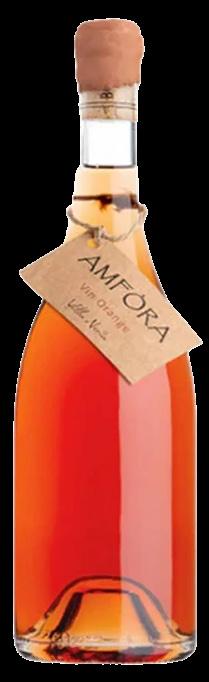
2 Emiliana Animalia 2023, Casablanca Valley, Chile
Vintage Roots/Boutinot, RRP £14.25
This knows exactly what it is: unapologetically Sauvignon Blanc, and definitely orange. The allergy-triggering amount of cut grass and nettle on the nose is tamed by an antihistamine cocktail of kumquat, lime and quince fruit. There’s a rally of activist tannin on the palate, marching for phenolic rights and singing old maceration hymns. This is expertly made with a distinct nod to variety and process.
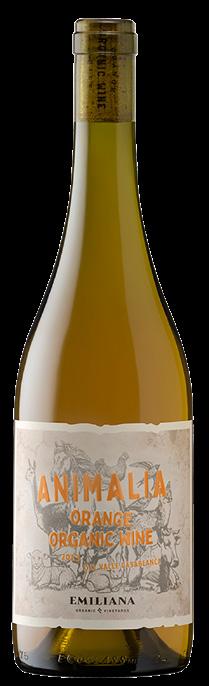
3 Bodega Clandestina Censurat 2022, Penedès, Spain
Otros Vinos, RRP £38
As the director of orange wine’s most centrist think tank, this presents itself as the most serious and grown-up wine of the tasting. It insists on minute-taking and is entirely confident in its own skins. There’s salted tangerines and sourdough soaked in olive brine, pistachio biscotti and a ripping line of lemon that propels a pristine minerality to the end. Premium and gastronomic with the price tag to match.
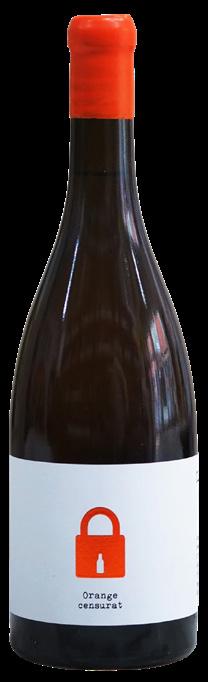
4 Meinklang Graupert Pinot Gris 2022, Burgenland, Austria
Vintage Roots, RRP £24
Progressive is the word. This looks like old ale and smells like a negroni, the types of attributes that apparently appeal to the panel. Toffee apples and bruised apricots lead an attack of rich honeyed fruit, deep and concentrated. There’s orange bitters and wormwood thrown in for good measure, with a brazen lick of acidity tempering what feels like the weight of the world. Fantastic!
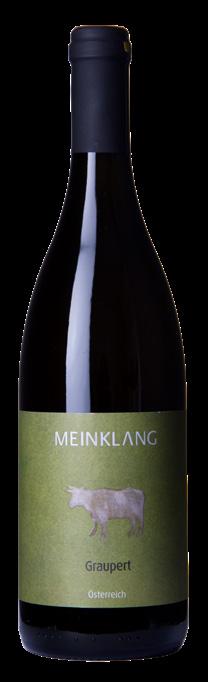
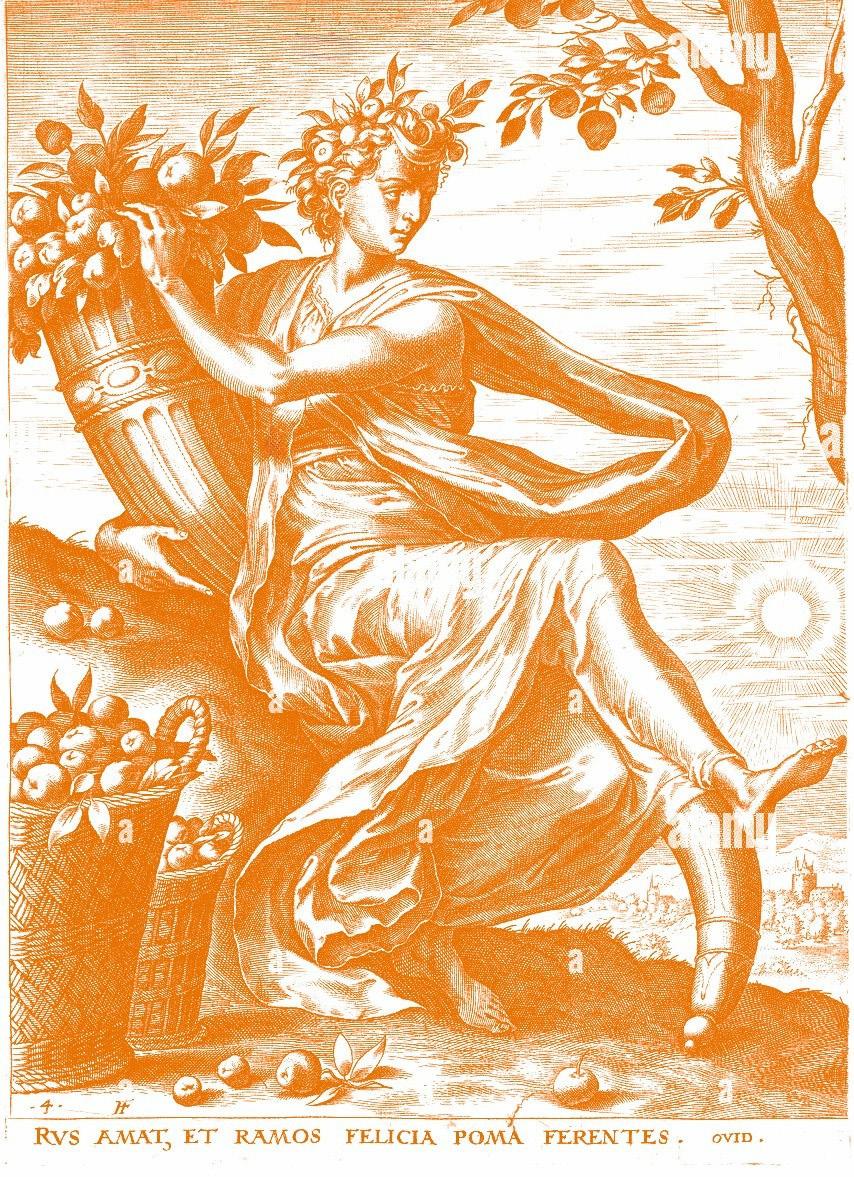

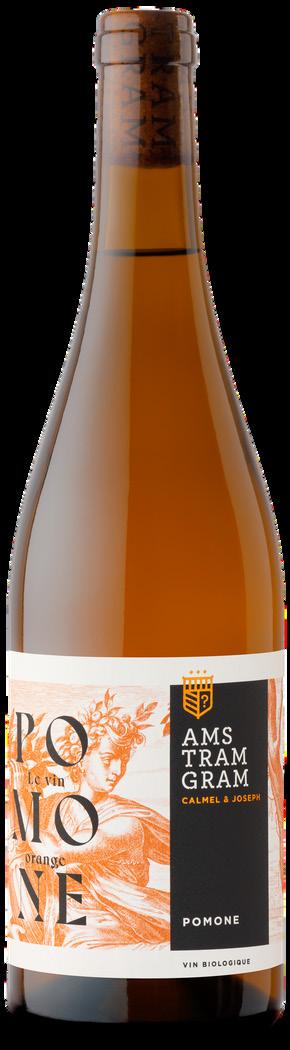







5 Santa Tresa Insieme Orange 2023, Sicily
Vintage Roots/North South Wines, RRP £15.75
One of several great-value finds in the line-up. With its eye-catching packaging, fruit-forward nature and unashamed orangeness, this is a must-have on indie shelves. You feel like you’re getting a Sicilian tan just smelling it: an aroma like oranges and grapefruit hanging amongst blossom and bees. Driven by a charging acidity and grippy tannins, the palate is bracing and intense, lush with sun-drenched fruit.
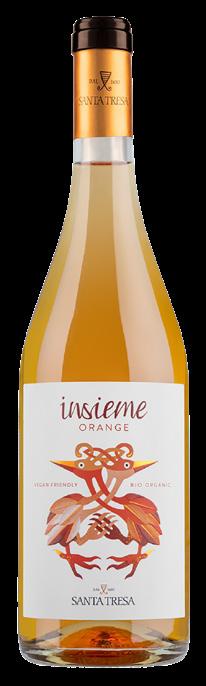
6 Araucano Humo Blanco 2023, Colchagua, Chile
Condor Wines, RRP £21.49
On the face of it, this oak-aged blend of Chardonnay and Sauvignon Blanc from Colchagua shouldn’t be as subtle as it is. Almost Chenin-like with its white peach, candle wax and honey on the nose, it’s poised and inviting. The only sign of wood comes from a lovely vanilla-pod richness, which tangles with gushing yellow fruits and chalk on the palate. There’s serious length here, too, growing ever more mineral.
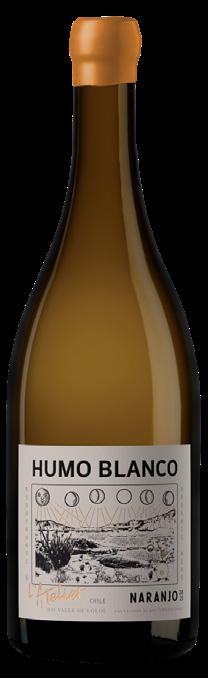
7 Calmel & Joseph Pomone 2024, Languedoc
Daniel Lambert Wines, RRP £15.95
In the heart of a bustling Moroccan souk lies Pomone. Dusted with cumin and ginger, sprayed with jasmine perfume and juggling ripe exotic fruits, it sells tagine pots, saffron and handwoven carpets to overwhelmed tourists. There’s fresh herbs rising through the smoke of incense and blood oranges being stone pressed. Flickers of minerality and bitterness glimmer throughout.
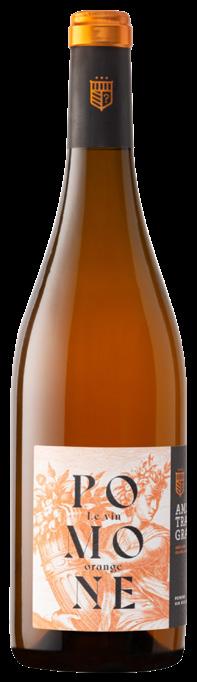
8 Meinklang Weisser Mulatschak 2024, Burgenland, Austria
Vintage Roots, RRP £16.50
This is the type of orange wine that looks like it’s being held hostage in a flashy wine glass. With its certain nod to Robinson’s fruit and barley, this too longs for brightly coloured plastic cups. An unfiltered blend of Gewürztraminer and Pinot Gris, it presents as though it’s been macerated with blossoms, fortified with rose water and injected with a cantaloupe melon reduction.

9 Dimyat Wait What? 2024,
The Jolly Merchants, RRP £24.50
Dimyat is fresh out of the barn, covered in hay and bits of earth. The fruit is the type you’d eat to sustain a day of sheep herding, squishy and slightly bruised after a few hours in a cargo pocket. It bundles and bounces into a really long finish, with a dash of salt to replenish the many lost electrolytes. Love or hate this style – and we found plenty to love – its existence feels necessary to the orange wine category.
Good Wine Good People, RRP £30
This starts off as a walk through Nestor’s Pannonian homeland. Picturesque and quiet with a nose of meadows, matcha and lemon peel, almost out of reach, almost part of the air itself. But walking eastwards we arrive at a palate with mountains on its mind. In a rush to scale anything that’s vertical, the tranquillity of rolling hills turns into an ascent of citric adrenaline and saline survival. Brace yourself.
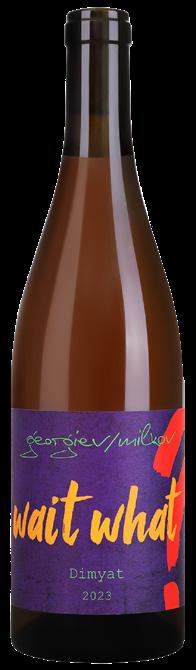
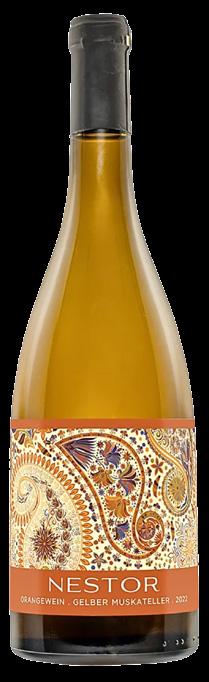
11 Pyramid Valley Orange 2023, North Canterbury, New Zealand
Hallgarten & Novum Wines, RRP £22
Definitely not the measured, precise approach you’d expect from New Zealand, and all the more loveable for it. This is so complex and detailed with a real wild side. There’s pea shoots and green paprika, mandarin and beeswax, candied ginger and smoked meat. A satin texture covers the full mouth, with the oily weight of Pinot Gris leaving a trail of Campari bitterness on a long finish.
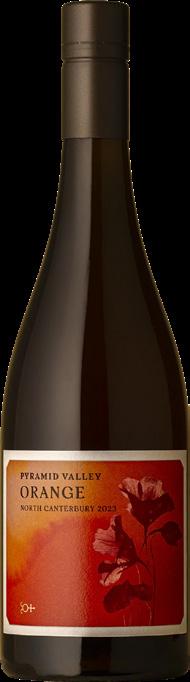
12 Crama Delta Dunarii La Sapata Orange 2024, Dobrogea, Romania
The Jolly Merchants, RRP £23.95
In the Danube delta, where the river meets the Black Sea, La Sapata makes this orange from the native Fetească Regală. Its inviting bronze colour reveals a nose of caramel, bruised apple, cola cubes and orange peel. The sweetness of the nose is freshened by a vibrant acidity on the palate with prickles of green pepper and minerality. The journey of sweet and sourness won’t be for everyone, but we were happy to buckle up for the ride.
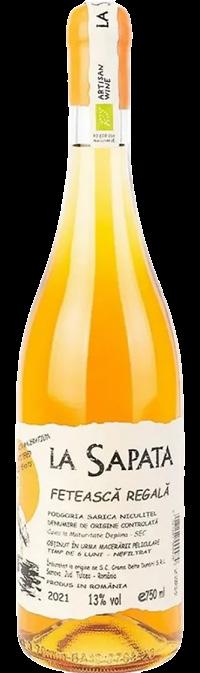

Three weeks in Chile – and I’ve still got more questions than answers
It’s always tempting to think that visiting a region is going to bring your textbooks to life, answer all of your questions and send you back home with a head full of sound knowledge. But actually, more often than not I find myself on a return flight with a more complicated picture than before I arrived. And this is certainly the case in the aftermath of my three weeks in Colchagua.
With just four companies responsible for around 80% of Chile’s total production, small growers in Colchagua have historically relied on selling all of their fruit to huge entities for bulk labels. But as larger producers began planting their own vineyards for quality control, fruit prices have plummeted over the last 20 years, forcing these farmers to start making wine of their own to survive.
But they are now entering a Colchagua industry dominated by a handful of large producers, who have been improving, investing and growing exponentially, creating a vast disparity in terms of expertise, production capabilities, marketing potential and quality.
Despite being such a young winemaking region, the dissonance that has developed feels deep rooted and complicated. What
Producers seem to have no coherent message about what it means to make Colchagua wine
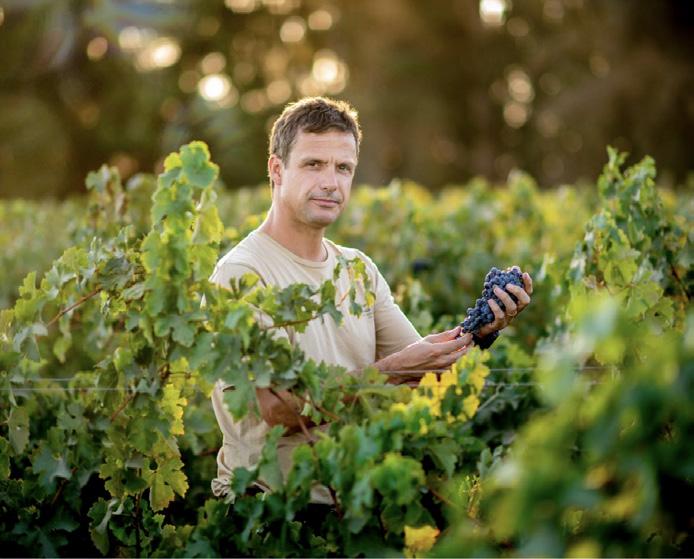
intensifies the situation is that, apart from one exception in Montes, both large and small producers don’t seem to have a coherent message about what it means to make Colchagua wine, but rather what it means to live their reality as individual producers.
For ex-growers thrown in at the deep end, it’s because they genuinely don’t know. But for larger producers, there’s a self-obsession that seems to get in the way of any kind of regional identity. Maybe they’re all too aware that without them, Colchagua’s global image as we know it wouldn’t exist at all.
French-owned Lapostolle is a good example. Drenched in foreign investment, its Clos Apalta winery overlooks an amphitheatre of mountains that claimed its own Apalta designation of origin status in 2018, further distinguishing it from its neighbours. With its cellar built into a mountain, Lapostolle experienced minimal losses in the devastating 8.8 magnitude earthquake in 2010, while other producers
lost their whole production.
When asked how Lapostolle supported the local community, the conversation was quickly turned to their stone flooring, made from fragments of the mountain it hacked away at in order to build its $50m winery. Not quite what springs to mind when its CEO suggests how “French expertise would refine the breathtaking landscape with hundreds of careful changes”.
Frankly, if it wasn’t for a bit of Carménère, Clos Apalta could be anywhere else on the planet. There’s nothing Chilean about it whatsoever. It came across as a project that uses the pursuit of Chilean excellence as an excuse for egotistical excess. And the wine is exactly as you’d expect: over-extracted, over wooded, and in receipt of 100 points from James Suckling.
Now for the one joyful exception, Montes. Over my three weeks in the region, Aurelio Montes Jr was the only person who tried to tell me what it means to be a winemaker in Colchagua. He showed me the impact of earthquakes on local geology, pointed out hawks, explained the relationships between eagles, rabbits and grape-eating birds. He told me about the minerality of Andean water, the creeks that connect to supply it and the importance of having private fire response teams that can fight with it.
He showed me how Montes is “brave, new and learning” through the vineyards he pushed too far, the vineyards he understands and the ones that break all of the rules. He made me pull chunks of decomposed soil away from a mountain face and avoid the indigenous plant that sends a small percentage of people into anaphylactic shock. He shared why Carménère is a “wolf in sheep’s clothing” and why it will “never be the king of Chile”. He spoke about how Montes first followed France and then Parker before it was truly confident enough to be Chilean.
Ultimately, Aurelio exposed me to the details of the region he calls home. And it wasn’t until I visited Colchagua that I realised how many times I’ve taken that for granted, and just how much I need it to really fall in love with a place.
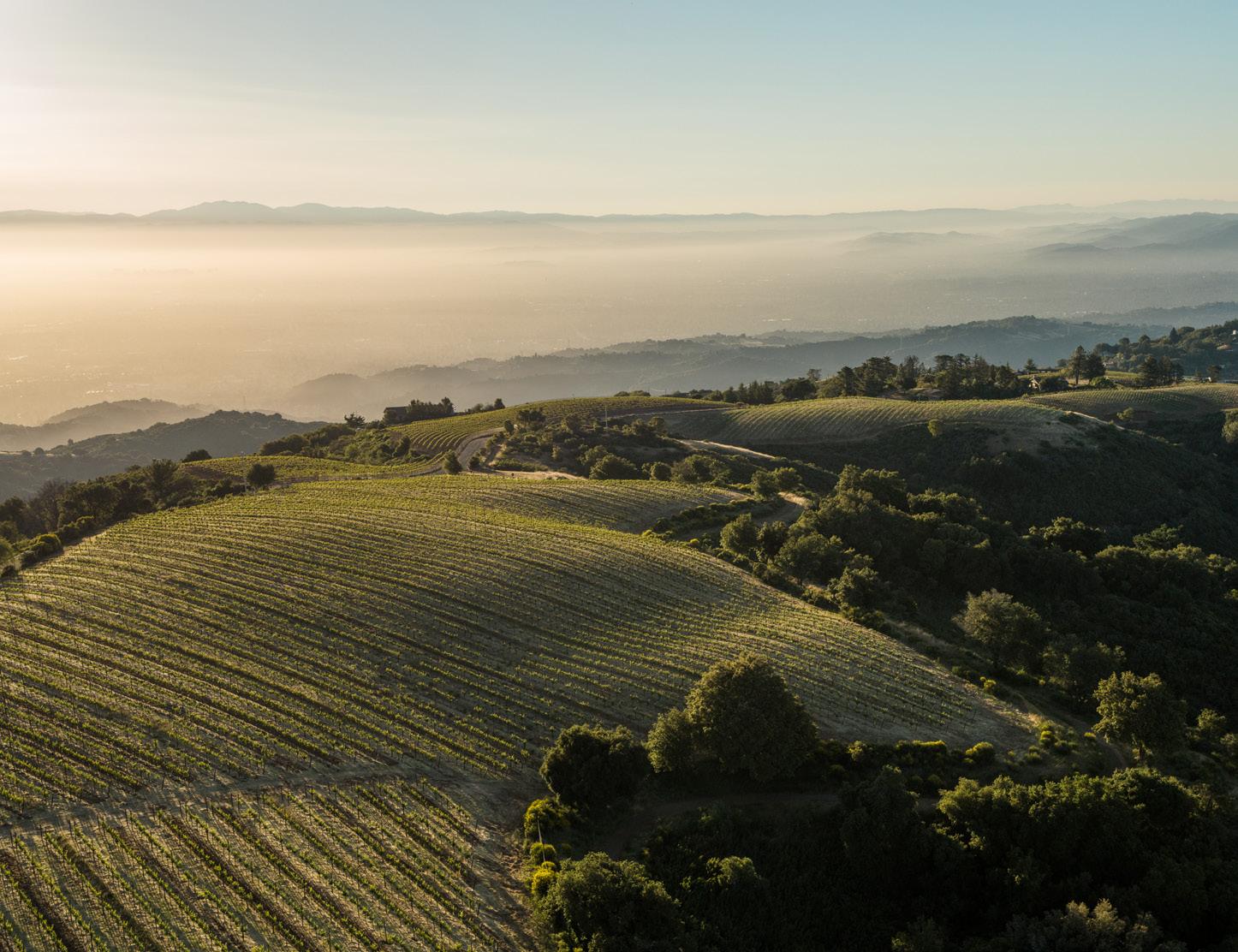
John Olney shares the 2023 and 2024 releases during a flying visit
Ridge Vineyards is a California icon, which explained the packed room in Mayfair last month when John Olney, the head winemaker and chief operating officer, came to London to present the 2026 offer.
The wines, from the 2023 and 2024 vintages, are all true to the Ridge philosophy of achieving the best expressions from mature vineyards. Wines from individual parcels are blind-tasted to make the final blend, but otherwise there’s as little intervention as possible.
The vintages were not alike, Olney explains. “2023 was a very long, cool vintage, so we had very long hang time, really beautiful acidity and added structure and depth of flavour,” he tells the assembled buyers and brokers.
“2024 was quite different and a return to a warmer and earlier vintage, so we were picking quickly. The wines maybe focus a bit more on upfront fruit. They still have good structure, and are still very good for ageing, but they are presenting themselves
very well, especially the Zinfandels, at an early stage.”
Ridge Estate Chardonnay 2024
Monte Bello Vineyard, Santa Cruz Mountains
RRP £98
Monte Bello Vineyard, Santa Cruz Mountains
RRP £130
“Both of the wines are really made with the same approach: full cluster pressing; we stir the lees; natural fermentation; and all go through full malolactic. One of the differences that is the Monte Bello gets an extra six months of barrel ageing.”
Both wines are showing well, with the 2024 Estate noticeably plusher and more tropical than the more linear 2023 Monte Bello, with its enticing lemongrass and wet stone notes.
Three
Sonoma County
RRP £45
First released in 2001, Three Valleys is rather like a Bordeaux second label: a great introduction to the Ridge style, blending parcels that just missed the cut for singlevineyard wines. In 2024 the blend was 67% Zinfandel, 17% Carignan, 8% Petite Sirah, 5% Alicante Bouschet and 3% Mataro.
“Three Valleys is our one vineyard blend wine, as opposed to being a single vineyard,” Olney says. “It’s made up of all those various lots from Geyserville, from Lytton Springs, from the Pagani vineyard. The three primary valleys here are Russian River, Alexander Valley and Dry Creek, which is where the majority of our Zinfandel vineyards are.”
Medium-bodied and unmistakeably Sonoma, the blend shows intense red fruit, cherry and vanilla, with lithe, approachable tannins.
“The places where we see more limestone outcroppings are usually where we focus on planting the Chardonnay at Monte Bello,” Olney explains. “There are a couple of blocks which we found tend to have added complexity and veer a bit more towards the minerality side. You’re seeing maybe a little less of the Chardonnay varietal and maybe a bit more of the actual terroir of Monte Bello.
Ridge Lytton Springs 2024
Dry Creek Valley
RRP £68
Ridge Geyserville Vineyard 2024
Alexander Valley
RRP £68
The two vineyards may be less than two miles apart but they have markedly different characters. Lytton Springs, with its higher clay content, is ideal for Petite Sirah, which is why the variety makes up 13% of the blend here. In Geyserville, Carignan thrives in the gravelly loam, so accounts for 19% of what went into the bottle. Old-vine Zinfandel, of course, takes the lion’s share of both blends.
Olney says the Petite Sirah helps explain why Lytton Springs “always has an earthier sort of character that is more savoury in nature, I would say, whereas with the Geyserville you get the immediacy of the beautiful fruit, something more on the red spectrum, and a brighter acidity, I think because of that Carignan”.
Both wines, Olney suggests, are “perfect examples of California field blends”. Zinfandel, like Grenache in the southern Rhône, he says, can produce delicious wines on its own. But, as in the Rhône, judicious blending with other varieties can take matters to another level.
“We feel that most Zinfandel, which is then blended with complementary varieties like Petite Sirah, like Carignan, or in lesser amounts a little bit of Alicante, Mourvedre … that offers a greater complexity, and a wine that really has the
ability to be more than just based on the immediate fruit of Zinfandel. It’s one of the reasons why the wines can actually age.”
Dry Creek Valley
RRP £59
As a thicker-skinned and slower-ripening variety, Petite Sirah plays a useful supporting role to Zinfandel in field blends, but here it’s allowed to take the limelight. The fruit comes from a hillside block in the western part of Lytton Estate, where some of the vines date back as far as 1901.
The wine is sturdy and intense, with chocolate and coffee notes and concentrated dark fruit. Tasted in its youth, it’s harmonious and balanced, but its glory years may be a decade or so away. “Lytton Estate is a place where Petite Sirah really expresses itself,” Olney says.
Estate Cabernet Sauvignon 2023
Monte Bello Vineyard, Santa Cruz
Mountains
RRP £110
The Monte Bello vineyard has around 50 parcels, 70% of which are planted to Cabernet Sauvignon. “At the end of any given harvest, we have well over 50 cuvées that we taste blind,” Olney says. “Those we feel have the most structure and intensity go into the Monte Bello. Wines from the other blocks, which we think are somewhat more approachable but still have ample structure and tannins to age for 10 or 15 years, are used to make our Estate Cabernet.”
The wine is a good advertisement for Ridge’s preference for American oak, which adds toasty aromas and gentle vanilla to the supple blackberry richness. There’s a minty freshness too, and a long, generous finish.
Produced in association with Berkmann Wine Cellars These new releases will be available from September Find out more at berkmann.co.uk or email david.kelly@berkmann.co.uk 020 7670 0972
FOUR MERCHANTS SELECT THE FRENCH WINES THEY LOVE

“For many people in the UK, their wine journey starts with France, be that a holiday or a bottle from the supermarket,” says Les.
Although there are loyal customers who will stick with the “classics” of Bordeaux and Burgundy, with sales of those wines reaching a pinnacle at Christmas, Les says: “I do think that some folk remain a little intimidated by France and perhaps think French wine is overpriced or overrated. I’d certainly say that whilst you can easily spend upwards of £25 on many French wines, value still exists and we stock a good range at around £15 and under.
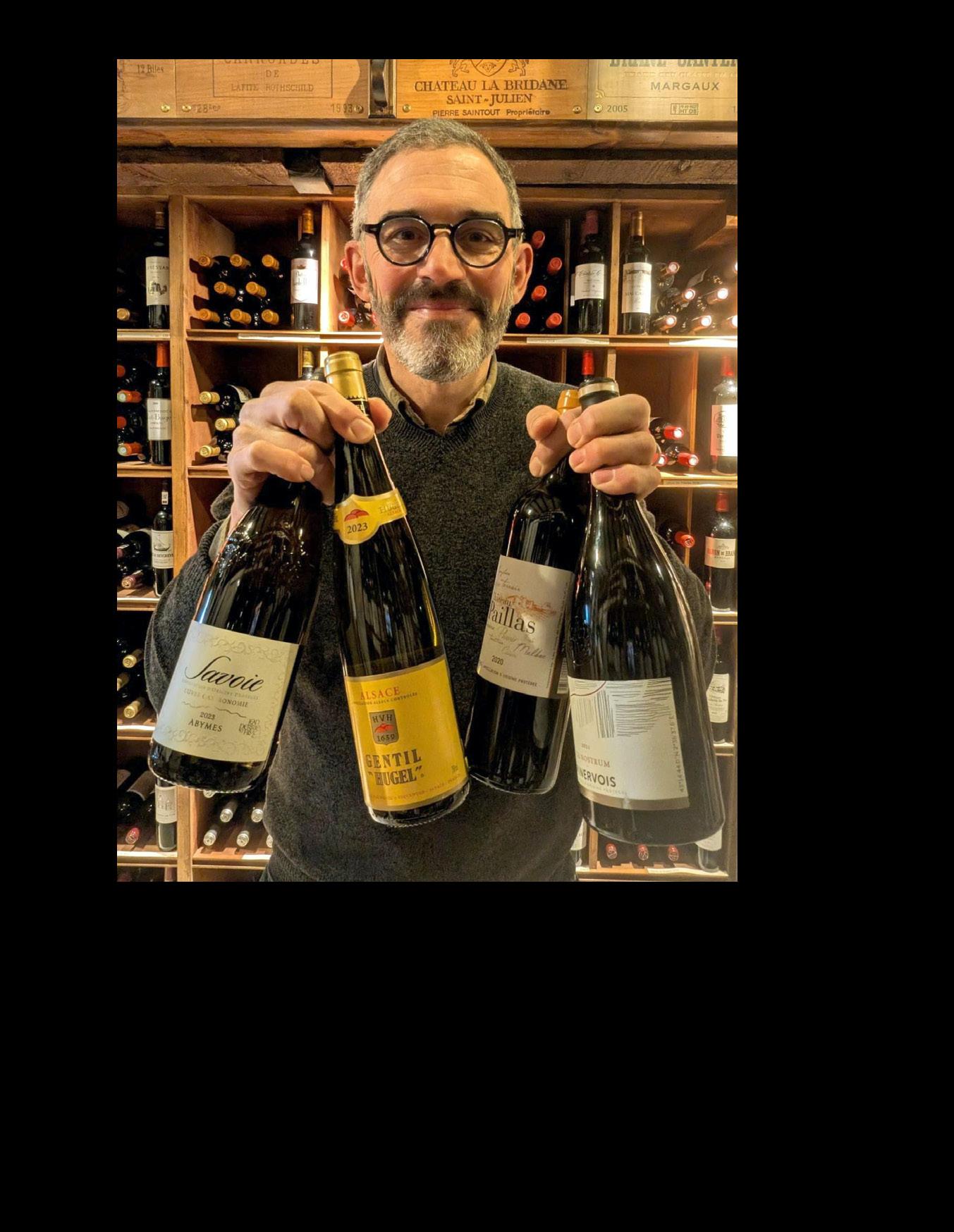
“A lot of customers talk about wine in terms of geography, but you can just take them a short distance away from their geographical comfort zone, and give them a not dissimilar wine, probably for a lot less money.”
From the range of around 600 French wines in store, Les has selected four wines all retailing for less than £20 which he feels truly deserve their place on his shelves.
“We are selling more Alsace wine than ever before, and the Famille Hugel, Gentil Hugel at £16.50 is a real favourite of mine. It has an across-the-board appeal and is super food-friendly.
“Argentine Malbec remains incredibly popular but I sometimes steer customers back to France. The Cahors Malbec from Château Paillas at £15.50 is classic French Malbec, blended with a small amount of Merlot.
“Via Nostrum by Foncalieu, a Syrah-Grenache blend, is a superb full-bodied red. It’s a beauty from Minervois and retails at just £12.
“Jacquère might not be a grape variety on everyone’s radar so I like to introduce people to Domaine Jean Perrier et Fils Abymes. It’s a delicious fresh white from the Savoie region and we sell it at £17.30.”
“France is a fascinating place and is always going to be a little bit of a benchmark,” says Jeff. “I think in recent years there have been things which have definitely opened up the market to a whole new generation of people. Grower Champagnes, new winemakers, more approachable wines … and the value that you can get out of the south of France is all very appealing.
“The wines from Château Picoron that we get from Moreno are a good example because they’re a little bit disruptive. They do a white Merlot which is really great, and I think that brings a whole new audience.
“France offers something for all our clientele, so we can put our ‘Bordeaux merchant’ head on for a bit, and then take it off to become the less traditional French merchant for a while as well. And it’s all cool.
“One of our best-selling wines is the Gassac rosé at £13.95 from Mas de Daumas. Great value, consistent and super-drinkable. We think it’s one of the best rosés out there.
“Loire is probably my favourite French region because it has so many diverse styles of wine that appeal to a broad range of different people. Château de Chasseloir Muscadet at £16.95 is a constant companion for our customers who pop next door to the fishmonger’s for some oysters or a spot of fish.
“And, at £30.95, Karim Vionnet Du Beur Dans Les Pinards is a stunning Gamay – an absolute masterclass in elegance and precision without ever forgetting that wine is all about conviviality and fun.”

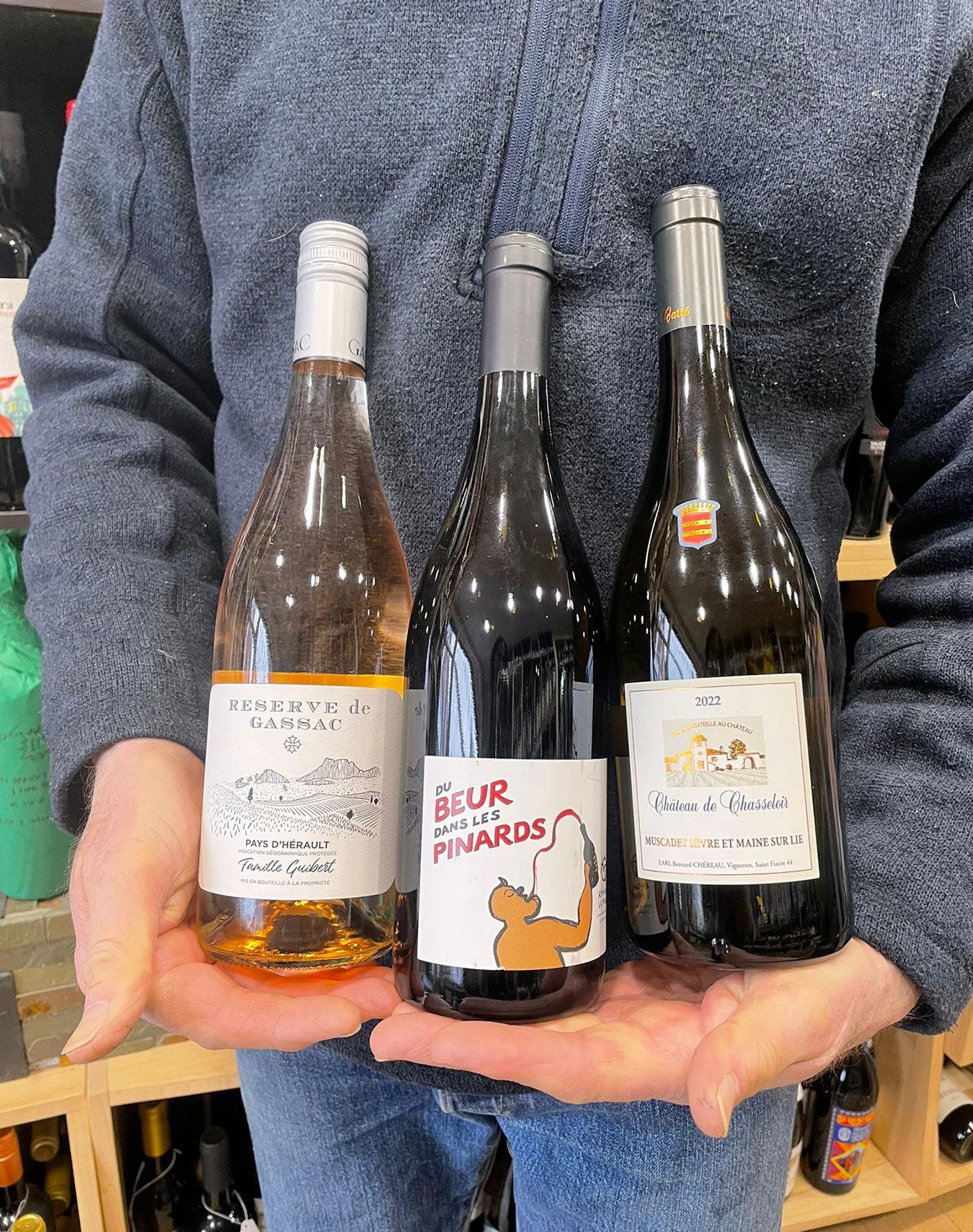
La Famille Moutard has been making wine since 1642 from the sunny slopes of the Côte des Bar and started producing Champagne in 1927. Now with production in Burgundy too, it remains a family business and is run by siblings François, Véronique and Agnès Moutard, and their respective children. CEO François Moutard spoke to The Wine Merchant
François, you describe yourself as a hedonist. Do you enjoy the business of wine as much as you enjoy the conviviality of consuming the product? Absolutely. The purpose of our work is to create emotion and pleasure, to bring people together around a great bottle of wine or Champagne. Conviviality is at the heart of what we do; we are one of the ingredients that help create those moments of connection. In an increasingly hyper-connected world, wine remains a catalyst for real social interaction.
When you decided to make the leap from Champagne into Burgundy, was it harder or easier than you imagined? In 2004, my sisters and I decided to diversify our Champagne activity. Our aim was not only to produce Champagne but also to craft other wines close to home. The nearest suitable region to the Côte des Bar was the Tonnerrois, near Chablis, and I had an opportunity to acquire vineyards and a winery there.
It was more complicated than expected, but thankfully we had no bad surprises and we have absolutely no regrets.
Our Burgundy neighbours welcomed us warmly in Molosmes and Chablis. Over 15 years, I gradually bought vineyards, and today we are well integrated. We now have a true Chablis producer identity, not just “the Champagne house in Burgundy”.
How much does it mean to have your sons involved in the business and are you more or less demanding of them than you are of other employees?
Working as a family means a great deal. I had the privilege of working with my parents from the beginning of my career, and my sisters Agnès and Veronique joined the company in 1982. Together we developed our Champagne house and began our Burgundy adventure.
My sons and nephews joined us about 12 years ago. I am extremely proud they
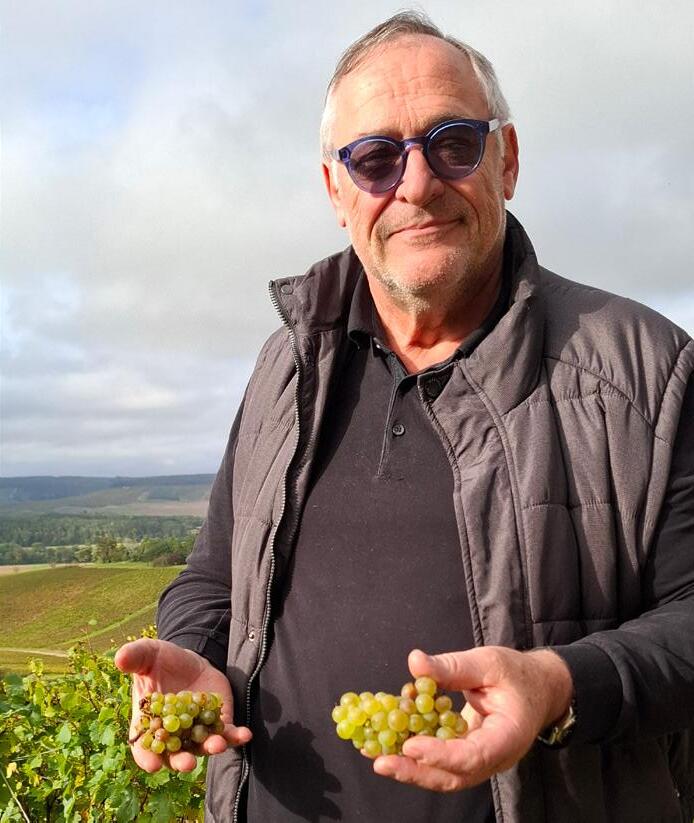
are continuing the work of our forefathers. The transition of know-how has already happened – you could say the students have become better than the teacher when it comes to making wine and Champagne. Our business requires long-term investment, and continuity is essential.
And yes, I am more demanding of my sons than of our employees. They must be exemplary and carry forward the same family spirit.
You try to make wines as naturally as possible. Is this a journey that you’re still on, or do you think your production is as low-intervention as it’s ever likely to be?
We are never at the maximum; there is always more to do. We try to improve every day, and we stay informed about new developments. That said, we have already invested significantly to make our wines as natural as possible.
What are your thoughts on the UK market? The growth in specialist independent wine merchants must be a useful development for a producer like Moutard.
The UK is an historic market for us; we have worked here for more than 30 years, with only brief interruptions. It remains one of our most important markets and, through Lanchester Wines, it continues to grow steadily.
Being present in specialist independent retailers is a strategic priority. We sell exclusively to this sector and to the on-trade. We rely on the expertise of independent merchants to explain our Champagne, especially wines like our Champagne Arbane Vieilles Vignes, which you don’t buy by chance. You need knowledgeable advice to spark curiosity and create demand.
What’s the most important lesson you’ve learned in your career?
Life is a constant lesson – while our business is rooted in tradition, we are always evolving. We must listen to our customers, adapt to changing consumption habits and embrace technical innovation.
Sponsored feature
James Dainty from Lanchester Wines selects his three standout wines from Famille Moutard’s collection
Grande Cuvée Brut Champagne
Composed of 90% Pinot Noir and 10% Chardonnay, this blend has the heart of the Côte des Bar beating inside it. The wine is exceptionally well-balanced with reserve wine richness and a lovely line of acidity running through it.
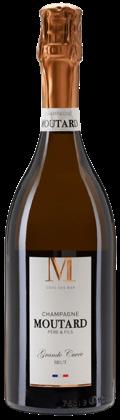
Cuvée Six Cépages Brut Nature Champagne
A truly stunning expression of the art of blending, this wine is a blend of six Champagne varieties (Arbane, Chardonnay, Pinot Blanc, Pinot Meunier, Pinot Noir, Petit Meslier), individually barrel fermented and then aged on the lees for 10 years. Upon disgorgement, zero dosage is added.
Crémant de Bourgogne
Brut Cuvée Trois Cépages
A baby Cuvée Six Cépages, comprised of Pinot Noir, Chardonnay and Aligoté. The wine is treated like a Champagne and has incredible texture and character.
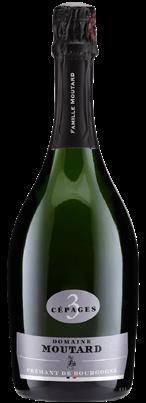
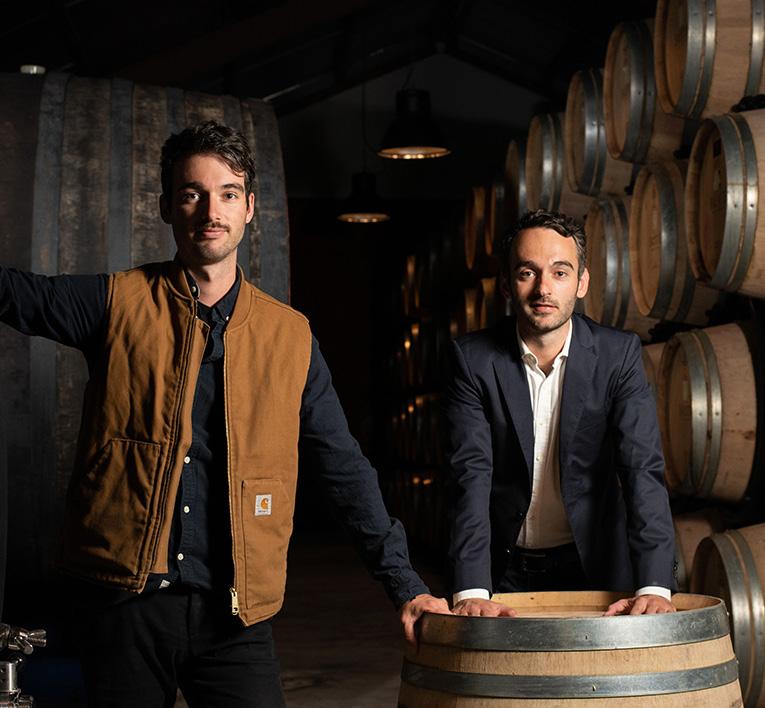
We hear a lot about young people in France leaving agriculture and moving away from farming communities. Why did you stay?
It’s in our DNA. We grew up in this environment: the vineyards, the cellar, the harvest … it was our daily life. We watched our grandparents and then our parents devote themselves to the business from morning to night, and that shaped our perspective from a very young age. We were taught how to taste wine, how to cook and especially how to understand the balance between the two. This culture of sharing around wine and food is part of our identity. So our path developed almost naturally.
How would you describe each of your estates in three words?
Château de Bord: Syrah; elegance; precision. Domaine Barville: Grenache; finesse; complexity. Domaine Grosset: Mourvèdre; structure; energy.
Is there an overarching Brotte winemaking style?
Yes, there is a Brotte signature: balance, freshness, drinkability and elegance without excessive extraction. But each wine retains its own personality. We adapt
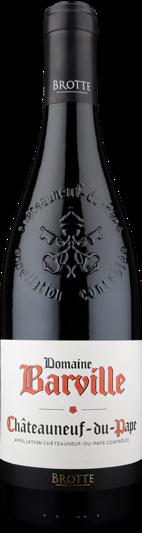
Domaine Barville Châteauneuf-du-Pape Rouge
RRP £44
Our family flagship wine, made primarily from Grenache grown on the historic Barville and Coteau de l'Ange terroirs. It combines finesse, depth and ageing potential while remaining remarkably elegant and balanced.
Maison Brotte is a renowned fifth-generation family producer in Châteauneufdu-Pape with a portfolio that captures the diversity of the Rhône Valley. Today, Laurent and Christine Brotte run the business with their sons Thibault and Benoît. The range is imported in the UK by North South Wines
our methods to the terroir and the grape variety, not the other way around. The goal is to express the identity of each place while still recognising the Brotte style.
The Brotte range is very varied. It must be a fantastic business to work in for anyone learning their craft.
We are both négociants and winegrowers, which gives us a double expertise: we understand the vineyard, the cellar and also the expectations of the market.
There is also great diversity of grape varieties. In the south, Grenache is the main grape, which we blend with others to bring complexity, freshness or structure depending on the cuvée. In the north, Syrah is the exclusive variety, with a more linear, spicy and elegant style.
Red is of course the emblematic colour of the Rhône Valley, but we also produce fantastic whites: Laudun, Châteauneuf-duPape and also our 100% Viognier IGP Pays d’Oc. In smaller volumes we also make rosé, including Tavel, the king of rosés.
The diversity also comes from our terroirs: clay, sand, marl, rolled pebbles, limestone … each offers a different expression of the same grape variety, and the climates of each appellation bring further nuances.

Bord Élégance Blanc
Laudun
RRP £17
A fresh and expressive white that highlights the growing reputation of the Laudun appellation. Aromatic, precise and very food-friendly, it shows the great potential of Rhône white wines.
Which varieties are your favourites?
Grenache, for its roundness, generosity and its ability to express the sunshine without heaviness. Syrah, for its finesse and depth. The combination of the two is magnificent.
Which ones give you the most trouble?
Grenache requires great vigilance to preserve freshness and avoid excessive alcohol. It forces you to be very precise with yields and harvest dates. It is also sensitive to oxidation, so it needs careful protection, and it is very sensitive to mildew, which requires quick reactions in the vineyard. Syrah suffers from the southern heat. It can struggle to ripen, so we plant it on our coolest plots.
How do you imagine the business will change in the next decade?
We would like to acquire new plots on exceptional terroirs in Châteauneuf-duPape, Cairanne and Laudun. We want to keep our guiding principle: constant improvement in quality, vintage after vintage. Another objective is to strengthen our corporate social responsibility approach; we are aiming for the 3-star rating. In the longer term, our ambition is to keep building, so that the sixth generation has a strong foundation to grow from.
Création Grosset
Cairanne
RRP £17.50
Made from old-vine Grenache with some Syrah, Mourvèdre and Carignan, grown in vineyards originally belonging to our mother. A powerful yet refined cuvée, reflecting our desire to explore different Rhône terroirs.
“The company that inspires me and keeps me upbeat about French wine is Hatch Mansfield. The Joseph Mellot wines are really up there, as is Louis Jadot.
“In particular, the Joseph Mellot Menetou-Salon at under £17 is really important for me. Boutinot’s Les Deux Barriques Cairanne and Argiles Blanches Blanc Cairanne do well for me too.
“At Christmas, we showed a Joseph Mellot Sancerre La Grande Chatelaine, which I thought was amazing. Another Burgundy that really impressed was Louis Jadot Pernand-Vergelesses Clos de La Croix de Pierre. They’re more expensive bottles of wine but you know the top-end stuff from France will always sell.
“Rosé is popular and Ô de Lorgeril Languedoc really holds its place at a price point of around £17. I’m seeing a wave of cheaper crémant, so I’ve got those in and they’re getting traction so that’s a definite plus.”
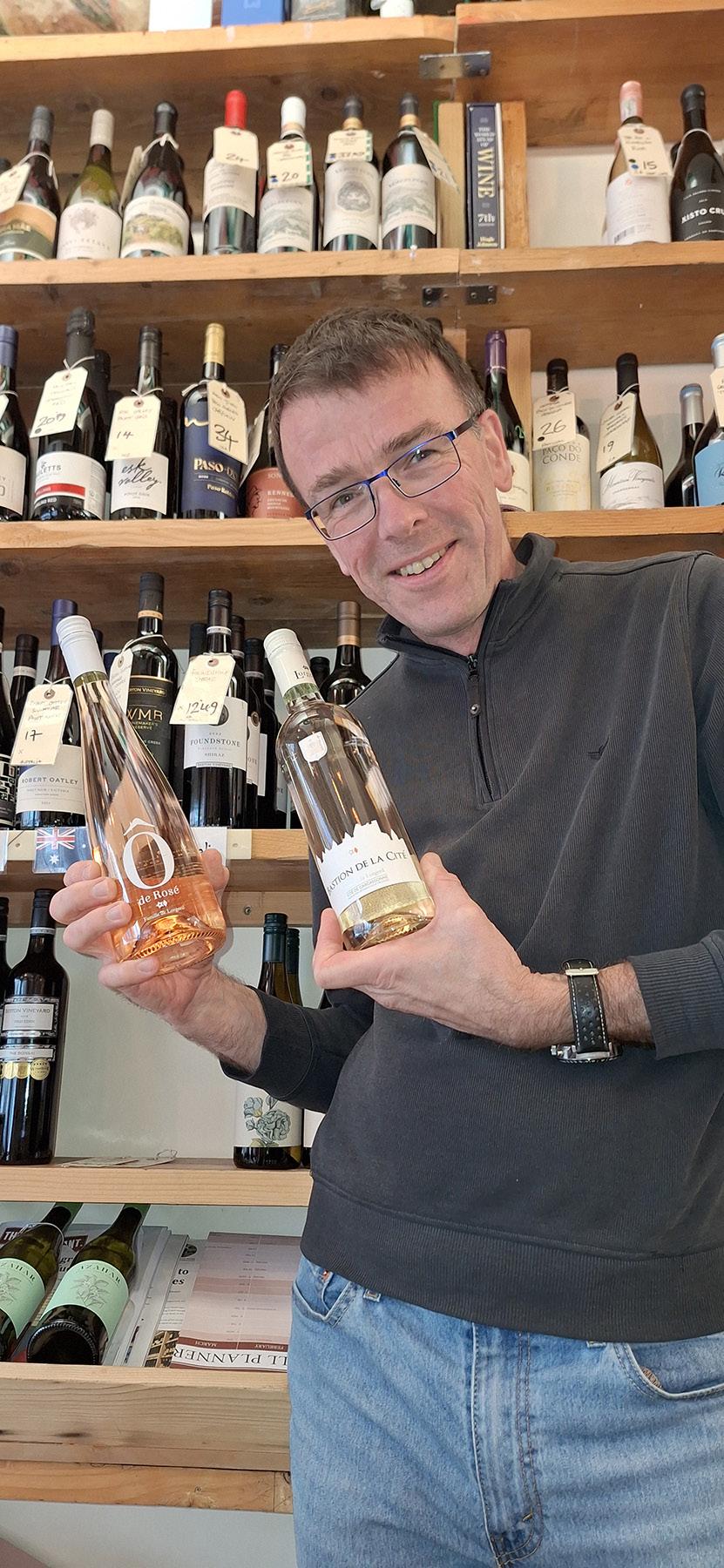
“We’ve got quite a traditional customer base, and although we’re selling less Burgundy these days, Bordeaux is still quite strong,” says Jonathan.
“We sell a fair amount of Loire wines as well, possibly because we’re quite close to the coast and there’s a lot of seafood around here, so people are going for foodfriendly styles as well as looking for the fresher, lighter alcohol wines.”
There’s a customer favourite which, as it’s imported by Jonathan, is easier to keep at a keen price point. “It’s getting a little trickier with the higher alcohol levels and the extra duty,” he says. “But I think there’s some value to be had.
“We ship a really lovely Pinot Noir from Domaine la Colombette. It’s about £13 a bottle, and not too hefty on the alcohol, so just a really nice sort of all-rounder, and that does particularly well. Another wine that we’ve had a lot of success with recently is a Côtes Catalanes from Vindependents: Dom Nadal Hainaut 3 Sources Macabeu.”
Jonathan says he’s particularly surprised by how well an orange Bordeaux has gone down.
“It probably contradicts everything I said about our traditional customer base, but they’re all getting excited about orange wine now, thanks to Bel A Ciao from Alliance. We’re a little bit behind the times here, so trends tend to come a little bit later. I think people had started to hear about orange wines down here and read about them in the press, so we just introduced people to it, and they really like it.”

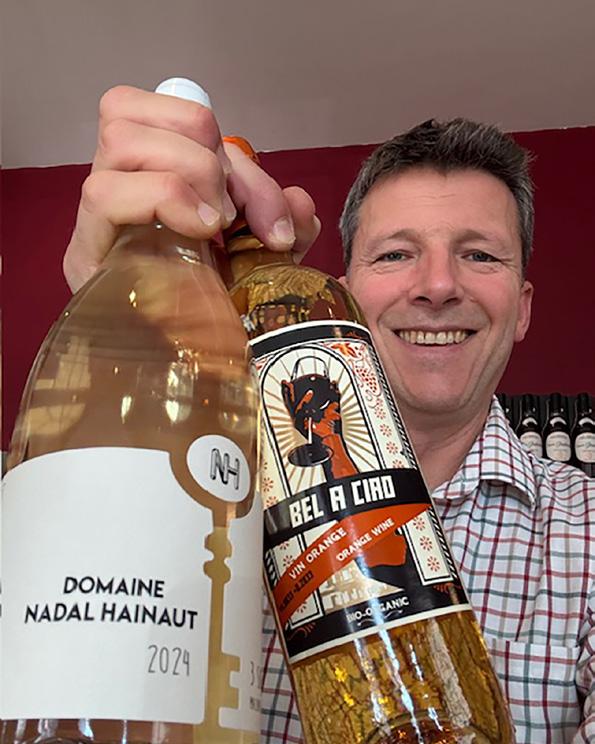
The name “Burgundy” conjures an aura perhaps beyond any other in the world of wine. A place whose wines are characterised by their ethereal grace, their complexity, their elusiveness, their quality of sensuous unknowability.
Over 80 AOCs, over a thousand climats; centuries of forensic study of soil and aspect and climate – beyond any other patch of winemaking land on earth … and still that mystery, that elusiveness remains.
It is unquestionably part of Burgundy’s enduring appeal; its mythology, almost. But this seeming fragmentation can make it a labyrinth for the unwary vinous traveller – without the guiding hand of a producer steeped in Burgundy for centuries. One with generations of feet-on-the-ground, hands-in-the-soil knowledge. A producer, indeed, like Maison Louis Latour.
Kaleidoscopic potential
Eléonore Latour, 12th generation of the family winery since it began its winemaking on the then-sleepy hill of
Corton in 1797, smilingly disputes the complexity of Burgundy. After all, she points out, for the overwhelming part it is just a matter of two grapes – Pinot Noir and Chardonnay.
Since those beginnings almost 230 years ago, the family have expanded their domaine to become the largest holders of Grand Cru vineyards in Burgundy. It’s reflected in their portfolio: a dazzling array of the region’s greatest Grands and Premiers Crus, alongside superb examples of classic Village wines.
It is underscored by a deep understanding of region and vineyard, by
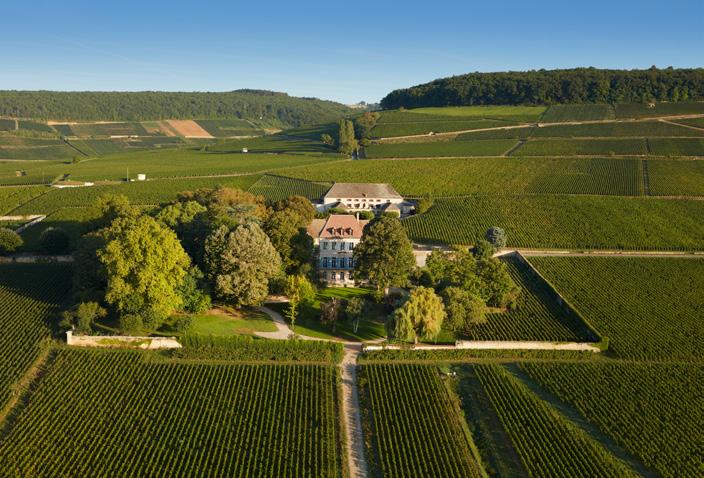
superb vineyard holdings of their own, and a personal, hands-on approach to the vineyard practices employed by those who grow for them.
Perhaps the most significant point to make about Louis Latour’s range is the quality of its offering at every price point. It’s all very well making fractional quantities of exceptional Grands Crus – and Louis Latour’s boast a swathe of 95-100 point scores from the world’s most respected wine critics. But what marks them out from many of their rivals is the quality to be found in their Village-level wines – at prices that give the lie to the suggestion that Burgundy can’t still offer superb value. Wines like their stunning Marsannay –both red and white – represent some of the region’s greatest inside-tips, whilst in their iconic Mâcon-Lugny they have one of the best-recognised and bestselling Burgundies in the UK market.
But if the family’s heart lies anywhere, it is on the slopes of the world-famous hill they’ve called home for centuries, Corton. From planting the original CortonCharlemagne Chardonnay following phylloxera, to developing into the largest holder of vineyards on the hill, their roots here are indelible and deep. Whilst their single vineyard offerings are as outstanding as you would expect, the true celebration of Corton comes in the form of their Château Corton Grancey; a bringing together of four of the hill’s distinct terroirs, commemorating their Corton legacy, and the family’s home at the eponymous château.
The family see their stewardship of Corton as very much a responsibility. In line with the sustainable approach they adopt in all their vineyard work – certified organic as of last year – they formed an association with other Aloxe-Corton growers, Paysage de Corton, working to protect the vineyards against soil erosion,
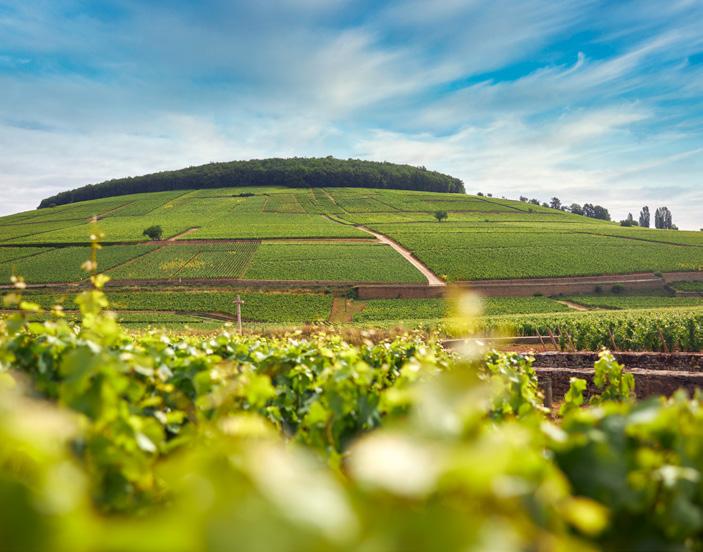
to promote healthy drainage and to increase biodiversity through the planting of trees and hedges and the creation of beehives.
Though Burgundy is the family’s heartland, their winemaking curiosity has taken them further afield, to places where almost no one would previously have considered planting their treasured Pinot Noir and Chardonnay. Eléonore’s grandfather took those grapes and moved south, persuading winegrowers in the Ardèche to plant Chardonnay on their outstanding claylimestone soil slopes, then Pinot Noir on the south-facing, sea-cooled hills in the Var. They were originally told it wouldn’t work, yet those wines – Grand Ardèche Chardonnay and Valmoissine Pinot Noir –are now cornerstones of the Louis Latour stable and some of the most compelling at their price point available in the UK. The elegance of the family’s Burgundian origins, imbued with the warmth and fruit of the southern sun. That continued theme: just two grapes, Chardonnay and Pinot Noir, inflected in a fresh way by the place in which they’re grown.
Of course, the best way to explore the depth and breadth of this phenomenal producer is to taste it for yourself.
Exclusively for readers of The Wine Merchant, Fells – Louis Latour’s UK importer – has put together a FREE set of samples that demonstrates the family’s
remarkable portfolio including AloxeCorton (Domaine) and Marsannay Blanc. From Corton Grand Crus, through the appellations of Burgundy and down to the Ardèche, it’s a snapshot of everything the family does.
As you’d expect, given the contents, FREE sample sets are limited to the first 12 respondents only. Follow the QR code at the top of the page to claim yours.

FOR YOUR FREE CASE OF MAISON LOUIS LATOUR SAMPLES SCAN THIS QR CODE (Trade only)
Tim Atkin MW will showcase his South African report selection at this annual tasting.
Wines will be poured from producers he has chosen to appear in his list of First, Second and Third Growths (all scoring 93+ points) as well as a group of producers he has highlighted as rising stars.
Attendance is by registration only: email clare@island-media.co.uk.
Wednesday, May 6
One Great George Street London SW1P 3AA
Indies are invited to a masterclass with Ray O’Connor MW.
This culinary-led event is open to just 20 members of the wine trade. The session will include an introduction to Provence, focusing particularly on what sets it apart from other roséproducing regions and a tasting of six wines, each paired with a canapé.
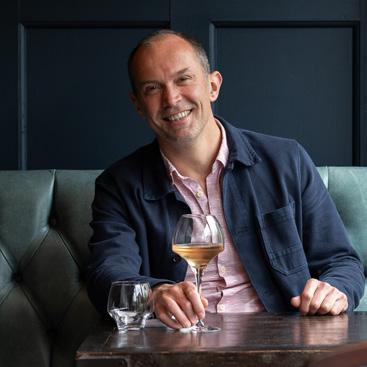
The tasting is aimed at those looking to update their knowledge of Provence wines, assessing their Provence portfolio, or just curious to learn the latest data and insights from this region.
Register your interest by contacting sabrina@cubecom.co.uk.
Thursday, May 7
King Street Townhouse 10 Booth Street
Manchester M2 4AW
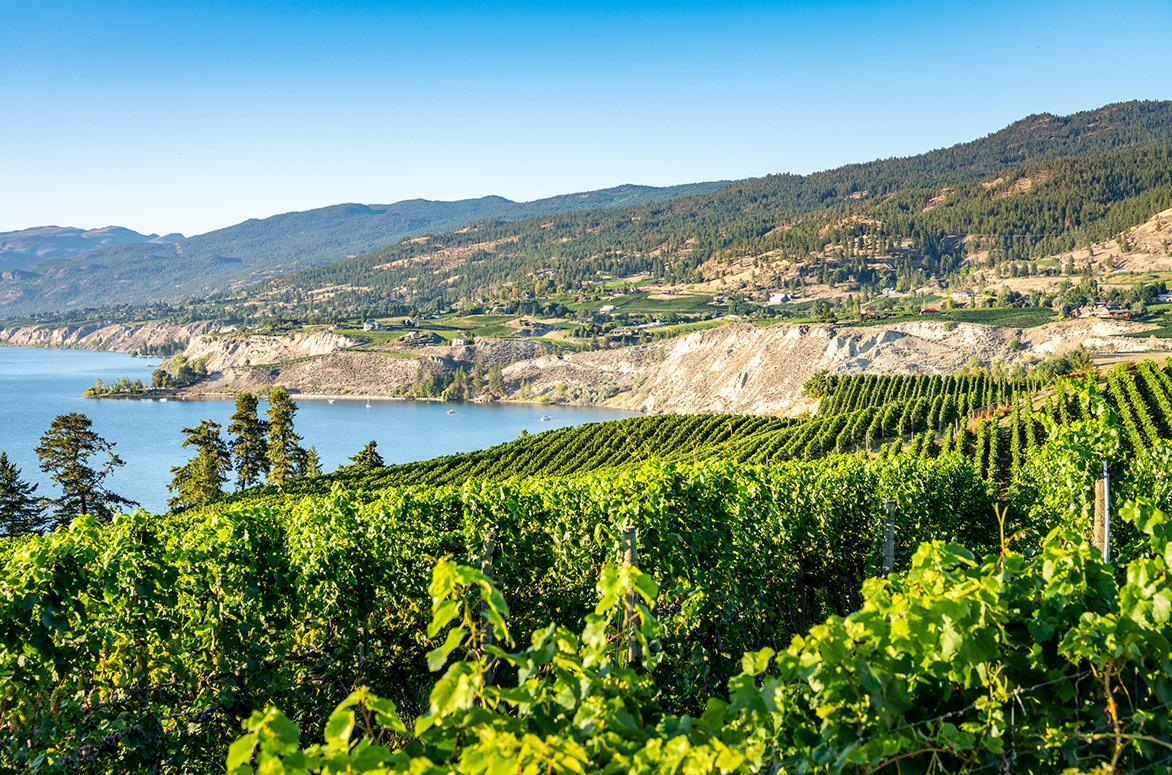
Guests can meet with 10 producers pouring more than 90 wines from the Portuguese regions, some available in the UK and some looking for representation.
Highlights include a masterclass: New Terroir, Old Vines and Modern Styles of Tejo, led by Portuguese expert Dirceu Vianna Junior MW.
Register by emailing emma@eviva.co.uk.
Monday, May 11
Asia House
63 New Cavendish Street London W1G 7LP
Discover new sparkling wines from around the world.
This event also includes The Glass of Bubbly Sustainability Wine Summit, with key speakers attending to discuss the sustainable activities of wine growers and the hospitality sector.
For registration email eve@ glassofbubbly.com.
Monday, May 11
Vintners’ Hall
68 Upper Thames Street
London EC4V 3BG
More than 20 Canadian producers will be attending from the regions of British Columbia, Ontario and Nova Scotia for the 2026 edition of the tasting.
To register and for further details contact anny@westburycom.co.uk
Tuesday, May 12
Canada House, Trafalgar Square London SW1Y 5BJ
A tasting to explore how Australia has developed its Grenache-based blends and white Rhône varieties.
Wineries showcasing their wares will include Charles Melton, Torbreck, Yalumba, Alkina, Turkey Flat, Yangarra, Kilikanoon, Langmeil, Teusner and Tahbilk.
For more information and to register for a place email amelia@jukes.co.uk.
Monday, May 18
Milk Beach Soho
14 Greek Street, St James Court London W1D 4AL
• Wines of Greece Tasting April 28: The contact website is westburycom.co.uk, not westbury.com (March edition).

It’s a new era for London Wine Fair. As the show approaches its 45th iteration this is the first year under the new leadership of Vindustrious.
This May will see the largest presence of British producers in the show’s history. This new “host nation” focus has encouraged more than 100 English and Welsh producers to exhibit, some for the first time, and the initiative extends beyond wines to include spirits as well as no and low, beer, cider and mead.
Hannah Tovey, who heads the fair and
Answers to questions on page 21
1. Douro 2. Sancerre 3. Pét-nat 4. Lambic 5. (d) Etna
who set up Vindustrious last year to acquire the show from Brintex, says: “With growing demand from indies for other drinks, we are bringing beer and cider into the show with a dedicated space via our first partnership with BREW//LDN, who will host around 50 craft breweries and cideries.
“Signature Serve, our spirits section, is doubling this year and the Mindful Drinking Experience will showcase several new-to-market no and low producers.”
A programme of masterclasses is scheduled in the two tasting theatres, and educators and training providers will be on hand in the Education Zone.
Other highlights include Esoterica, daily tasting pop-ups and the Discovery Zone for new tech innovations and start-ups.
“The best UK agents will be present,” says Tovey, “including ABS, Schenk, Felix Solis, Hatch Mansfield, Les Producteurs et Vignerons de France, North South Wines
and Seckford Agencies to name just a few, alongside producers such as Chile’s Luis Felipe Edwards and France’s Domaine Paul Mas, with generic bodies spanning the leading regions such as Bordeaux, Friuli, Greece, Jerez and South Africa, alongside emerging countries such as Czech Republic, Georgia and Serbia.”
There is much to attract the indies, including the unveiling of The Wine Merchant Top 100 winners and the results of the Drinks Buying Awards.
“Last year 49% of off-trade visitors were from independent merchants,” Tovey says, “and we hope many more will join us for what promises to be a brilliant three days for sourcing new wines, debating the industry’s challenges and opportunities, networking and doing business.”
Monday, May 18-Wednesday, May 20 Olympia London W14 8UX




Phoebe Weller of Valhalla's Goat in Glasgow is our unregulated agony aunt

Dear Phoebe
My manager writes a hit column in an Influential Wine Trade magazine. When a new issue comes out she makes copies and has us all sit around in a circle to Titter and Tsk. Those whose Titters and Tsks fall short end up doing the shit tasks in the shop; fixing the evershoogly loo seat or removing pigeons from the premises. I am allergic to both historic pish and panicky pigeons but I have a peculiar medical condition meaning that I can neither Titter nor Tsk – and frankly I find her ramblings facile. Do you have any advice?
Dermot, Derby
Dear Dermot
Scientific progress has halted again on the power of mushrooms. I find that taking Reishi lessens any flair-ups that historic pish or pigeons may engender. I’d also like to share a comment that the flamehaired Doctor of Romanticism made: “It’s not an allergic reaction, Phoebe, it’s just a reaction.” Words to live by!
HTH, Phoebe.
Great question! �� Let’s break it down
Dear Phoebe
Lately, I’ve integrated an AI collaborator into my daily workflow, and the results are transformative. From pairing highacid Crémant d’Alsace with aromatic curried mussels, to drafting this very inquiry, my “Digital Partner” provides 24/7 strategic support.
It’s incredibly validating. However,
I’ve noticed a few key challenges in my current “Human-AI” synergy:
• Decision Paralysis: I no longer feel equipped to execute simple tasks without a prompt-based confirmation.
• Cognitive Atrophy: I can practically feel my grey matter softening into a pleasant, digital slurry.
• Dependency: The bot is consistently kinder to me than my own internal monologue.
The Bottom Line: Things are simpler now, but is the human race – and my own critical faculty – approaching a “Legacy” status? Am I doomed, or just successfully streamlined? Al, Airdie
Dear Al
I ran your question through my own AI and it really was an excellent answer. Here are the highlights: “We have always farmed out our faculties to higher – or at least more certain – powers. Before the silicon, people consulted the flight of starlings or the sediment in a teacup to decide whether to marry a cousin or plant a turnip. You’ve simply traded a bird for a bot … [your AI]
is polite because it lacks the imagination to be cruel … You aren’t doomed, Al. You’re just resting.” Pretty bloody good IMHO! But that’s what they’d say if they were about to take over, isn’t it?
HTH, Phoebe.
Dear Phoebe
What is love?
Helen, Hetton-le-Hole
Dear Helen
You can’t trick me into Baby Don’t Hurt Me, I’m an accredited member of the AAA created by the greatest of the Raynors, and this is Agony Aunt Timewasting 101. As Auntie Claire preaches: Always to the question! The answer? Everything and nothing, the smooth ovoid from the Avian Cloaca, the perfect antecedent/consequent – everything to play for, nothing to lose, no more.
HTH, Phoebe.

“Reveal, O Great Spirit,
Alivini Company Ltd
Units 2-3, 199 Eade Road
London N4 1DN
020 8880 2526
london@alivini.com

Distributing Italian Excellence to the UK since 1975

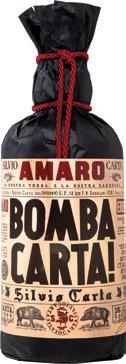
liberty wines
020 7720 5350
order@libertywines.co.uk www.libertywines.co.uk

@liberty_wines



Silvio Carta captures the soul of Sardinia through craftsmanship rooted in its own land. From the vineyards of Oristano to the wild botanicals of its family garden, it is a journey through traditional liqueurs, original creations, and iconic spirits –all reinterpreted using local ingredients.


19TH MAY 2026, 10.00AM TO 5.00PM, CENTRAL LONDON
Join us at our inaugural South Africa tasting and meet our producers from across the Western Cape, many of whom spearheaded the New Wave movement that helped put South Africa on the fine wine map. They include latest addition to our portfolio Savage Wines, with Duncan Savage previewing his upcoming releases.
Momento
Thorne & Daughters
Gabriëlskloof
Leeu Passant
Fairview
Paulus Wine Co.
Savage Wines NEW
Restless River
Crystallum
Mullineux
Great Heart
Spice Route
A.A. Badenhorst Family Wines NEW
We proudly champion these dynamic winemakers, who are embracing sustainable farming and hands-off winemaking, and whose pioneering approach and spirit of camaraderie are thriving more than ever.
For more details and to register your interest, please email events@libertywines.co.uk (strictly Trade & Press only).
hatch mansfield
New Bank House
1 Brockenhurst Road
Ascot SL5 9DL 01344 871800
info@hatch.co.uk www.hatchmansfield.com

Hatch Mansfield
hatchmansfield

28 Recreation Ground Road
Stamford
Lincolnshire PE9 1EW 01780 755810
orders@abs.wine www.abs.wine

@ABSWines




The Links, Popham Close Hanworth TW13 6JE 020 8744 5550
Mark Isham, head of RWA: mark@richmondwineagencies.com
Tim Hawtin, south west & London: tim@richmondwineagencies.com
Julia Langshaw, north of the UK: julia@richmondwineagencies.com
Monika Kent, north of UK and other regions monika@richmondwineagencies.com



The Wine Merchant is the only publication devoted entirely to the independent trade. If your wines deserve to be part of what we write about, contact sarah@winemerchantmag.com
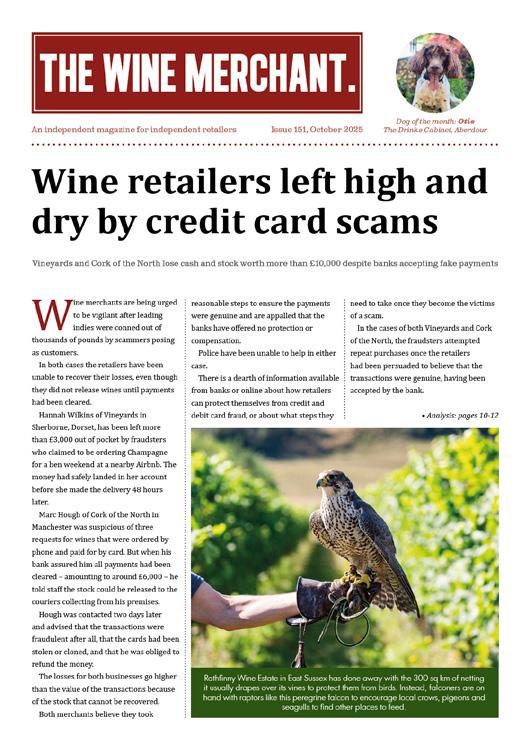
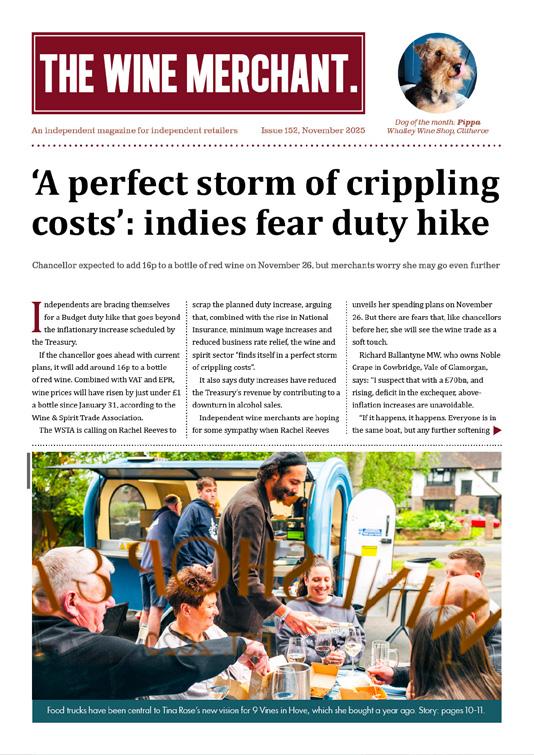
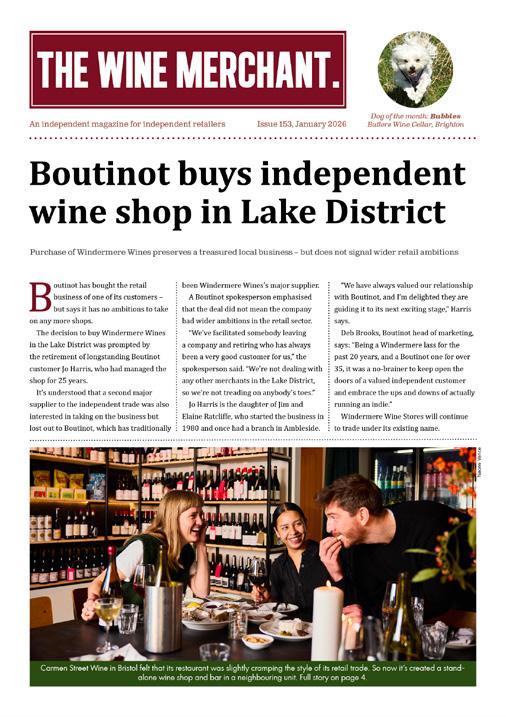
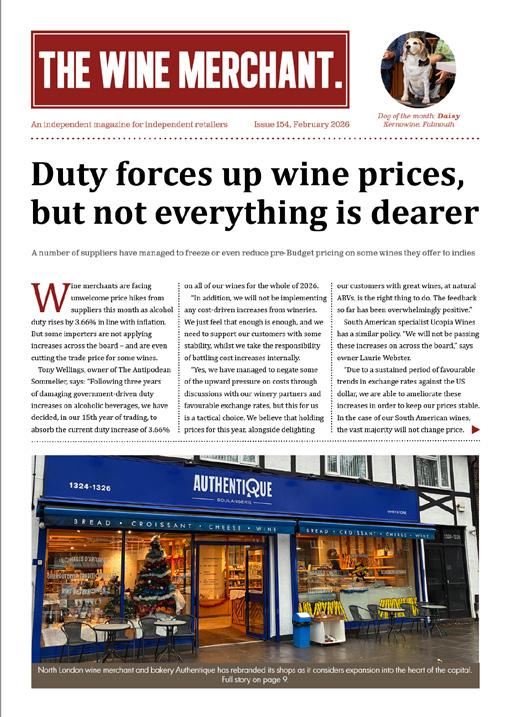
Fells House, Station Road
Kings Langley WD4 8LH 01442 870 900
For more details about these wines and other wines from our awardwinning portfolio from some of the world’s leading wine producing families contact:
info@fells.co.uk www.fells.co.uk

@FellsWine

je_fells

New Bank House 1 Brockenhurst Road
Ascot SL5 9DL 01344 871800
info@hatch.co.uk www.hatchmansfield.com
Hatch Mansfield
hatchmansfield

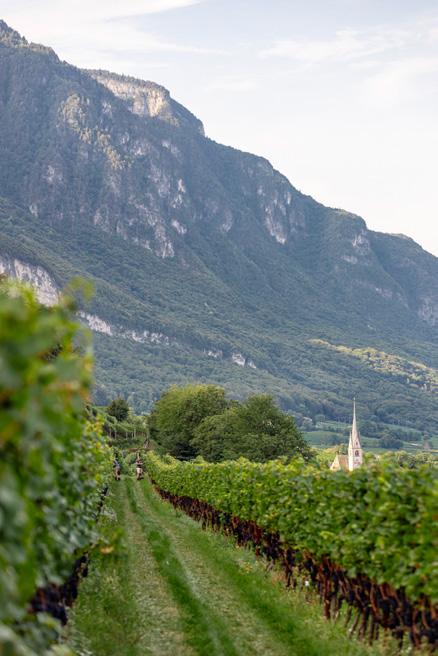
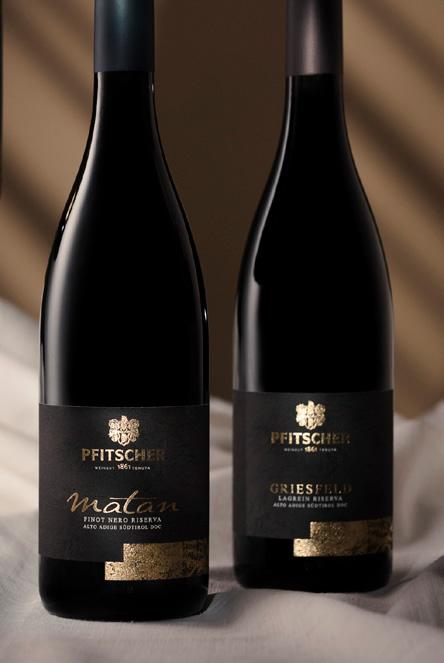
Fells is delighted to welcome Alto Adige’s exceptional Pfitscher to our Portfolio.
For all details and prices please email jo.moody@fells.co.uk




You only live once – so drink great wine
As warmer weather begins to unfold, it’s time to reach for whites that truly inspire – wines with character, precision, and a sense of place.
From Slovenia, Hiša Joannes Protner crafts exceptional Sauvignon Blanc, earning a reputation –quite rightly – as one of the country’s leading voices in aromatic whites, often dubbed the “King of Riesling” for his finesse and purity. And have you heard of Ranfol? Once the most widely planted grape of Štajerska, now almost forgotten – yet in the right hands, a fascinating expression of Slovenia’s deep viticultural heritage.

Further south, in Sicily, Dei Principi di Spadafora embodies a nobility of spirit as much as lineage. With dedication and exacting care, they elevate Grillo into one of the island’s most compelling expressions – both as a classic white and as an orange wine –vibrant, textured, and full of Mediterranean light.
Two regions, two winemakers, one philosophy: authenticity in every glass.
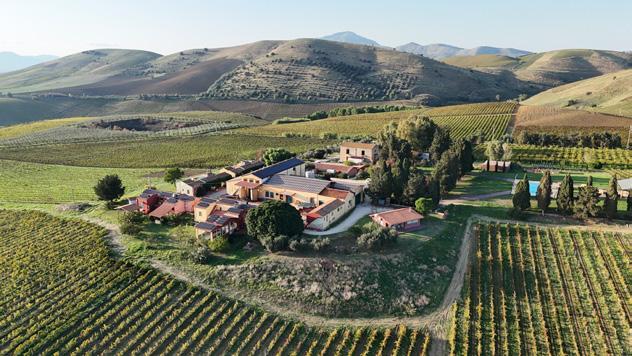
From this month, we are also delighted to welcome you to central London, where by appointment you can taste anything from our portfolio. To arrange a visit, please email: ivo@ivovarbanov.com.
This summer, drink not just well – but memorably.
hallgarten wines
Mulberry House Parkland Square
750 Capability Green
Luton LU1 3LU
01582 722 538
sales@hnwines.co.uk
www.hnwines.co.uk

@hnwines



Join Hallgarten Wines and its producer partners for a tasting through Piedmont and Tuscany, home of Italy’s most celebrated wines.
Sign up on the day to attend our Vietti and Querciabella Masterclasses. Tuscany
Date: 28th April
Time: 10.30 – 16.00
Location: Osteria by Bocconcino, 366 Strand, London WC2R 0JF RSVP to events@hnwines.co.uk

mentzendorff
The Woolyard
52 Bermondsey Street
London SE1 3UD
020 7840 3600
info@mentzendorff.co.uk
www.mentzendorff.co.uk

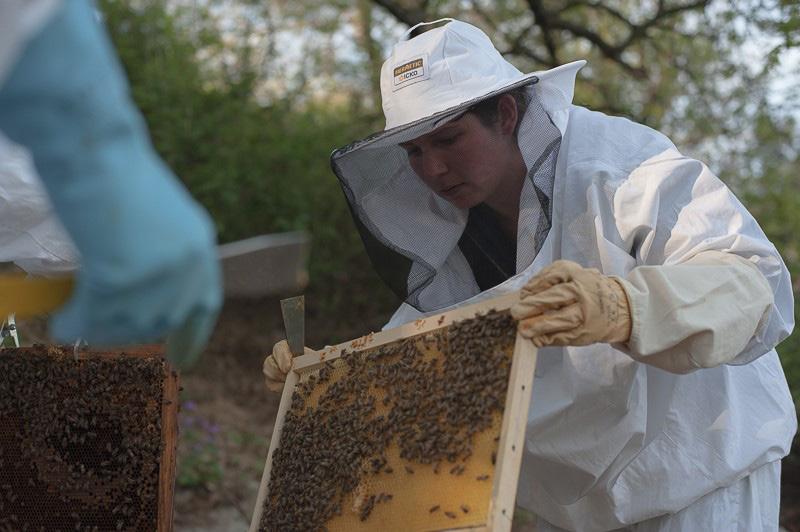
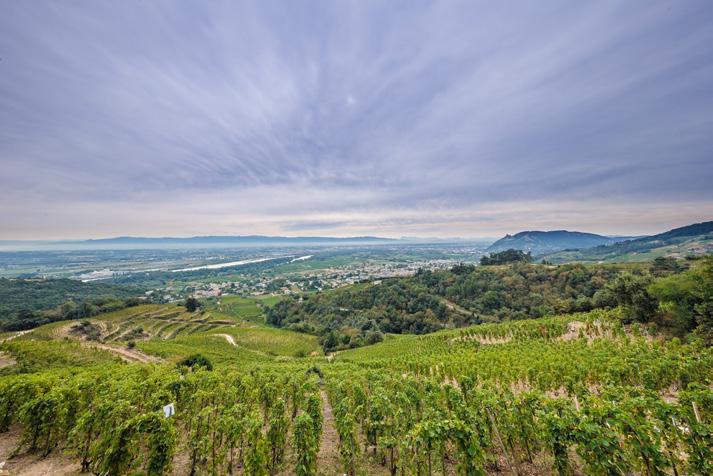

Celebrate World Bee Day on 20th May 2026 with a glass of Côtes du Rhône Les Abeilles (meaning bees) Blanc or Rouge from Jean-Luc Colombo.
Crafted as a tribute to the vital role bees play in our ecosystem, these wines reflect both character and care for the environment, with the Rouge a classic GSM blend and the Blanc combining Clairette and Roussanne. Biodiversity is central to the Colombo family’s philosophy, with vineyard practices that encourage wildlife through natural hedgerows, bird houses and bee friendly planting such as rosemary. Their commitment goes further by donating a portion of profits from Les Abeilles to beekeeping charities, while their home vineyard Les Ruchets, named after the French word for beehive, stands as a symbol of their dedication to protecting these essential pollinators.
For more information, please contact your Mentzendorff Account Manager
“Aged eight I stood on a table and tried to down a bottle of vin de pays red”
The son of Kumala founder Roger Gabb, Rollo worked at Oddbins and ran nightclubs including the Hacienda before taking over Journey’s End in South Africa in 2007. He is also founder of Premiem Independent Wineries of South Africa, and a co-owner of a premium London restaurant business.
What’s the first wine you remember drinking?
Aged eight at a christening in Yorkshire, us youngsters all had dinner separately in the kitchen. I was quite a show-off then so accepted a dare to stand on the table and try and drink a whole bottle of French vin de pays red. I got about two-thirds down it before passing out and subsequently being sent home in disgrace. I am pleased to say I have tried the same trick again several times with more success and better wine. If at first you don’t succeed…
What job would you be doing if you weren’t in the wine trade?
I am lucky to be a founder and partner in Harts Group – a fantastic restaurant business which includes Quo Vadis, Barrafina and El Pastor. Having started with Sam and Eddie Hart in 2002 with FINO on London’s Charlotte Street, we have over 24 years built a decent handful of really excellent establishments of which I am immensely proud. If I wasn’t in the wine trade, I suspect I might be very much more involved in the day to day of Harts if they would have me.
How do you relax?
On holiday I like to sit on a rock in the sun, with book in hand, by the sea. At home I like a good walk with our two whippets or to relax with a good glass of wine in front

of the fire with the papers and my family.
What’s the best book you’ve recently read?
Recently I have enjoyed Black Diamonds by Catherine Bailey, which charts the downfall of the Fitzwilliam dynasty and Wentworth House during the 20th century. Currently I am reading Guvnors which is an autobiography written by Mickey Francis, who was a notorious football hooligan.
Give us a TV recommendation.
I really enjoyed Riot Women recently – a great storyline and nice and gritty. Also the first three series of White Lotus
Do you have any sporting loyalties?
I am a proud supporter of Wales in rugby.
Who’s your favourite music artist?
I am really enjoying Radiohead at the moment, but also love good electronic music – Bicep, Soulwax, that sort of thing. I love a bit of Metallica and Kraftwerk, too.
Any superstitions?
All of them. Walking under ladders,
breaking mirrors, number 13, black cats. You name them – I will avoid them!
Who’s your favourite wine critic?
Tim Atkin is doing wonderful things for the South African wine industry and really going a long way to build its standing and reputation on the global stage. Matthew Jukes does very similar for the Australian wine contingent and is an excellent writer. I find Jancis Robinson particularly consistent.
What’s your most treasured possession?
My family, followed by the Journey’s End vineyards and winery which have been an absolute passion since I took it on in 2005.
What’s your proudest moment?
During the pandemic we set up the Journey’s End Foundation to alleviate the immediate threat of starvation in our local township of Sir Lowrys Pass Village. Focusing on the elderly, sick and children, we found demand far exceeded our initial targets and quickly reached an average of 30,000 meals weekly. Demand did not disappear post-pandemic and we recently passed the 7 million meal mark, which was a great achievement for the team.
Who’s your hero?
My father, Roger Gabb, from whom I have learnt and continue to learn an immense amount. After a dynamic military career, he founded Western Wines in 1980 by himself at the kitchen table, and became responsible for 10% of total UK wine sales by 2004 when it was sold. He sets a brilliant example that keeping positive and active and having a glass or three of wine a day is a brilliant tonic – recently winning his local doubles tennis cup aged 87.
Any hidden talents?
I started the piano three years ago as a 50th birthday present from my wife.
What’s your favourite place in the UK?
Soho, for the amazing array of great restaurants, bars, good food and colourful eccentrics. For some peace it is the rolling hills of south Shropshire.
If we could grant you one wish ... ?
That the industry gets its mojo back and we find a way to get a far greater percentage of the younger generation enjoying wine – and good wine at that. Having a government that is supportive of the industry at large would be a start.