


Close enough to be local big enough to stay strong










A shared vision for the future of local government that will best deliver for the people of Hampshire and the Isle of Wight









Close enough to be local big enough to stay strong
A shared vision for the future of local government that will best deliver for the people of Hampshire and the Isle of Wight
enough to be local, big enough to stay strong.

This proposal presents a bold and unified vision for the future of local government in Hampshire and the Isle of Wight. At the heart of this proposal is a commitment to our communities. Our communities are not just areas on a map – they are places where people live, raise families, build businesses and care for one another.
The current two-tier system, which has remained largely unchanged since 1974, except for the creation of three unitary councils that have already achieved efficiency savings associated with the removal of the two-tier system, has created fragmentation and inefficiencies that hinder our ability to respond to local needs. Since then, our population has grown, digital technology has transformed how services are delivered and residents rightly expect more responsive, efficient and joined up local services that we know can be addressed by our proposed unitary councils.
With the decision made by government to initiate local government reorganisation, we have a once-in-a-lifetime opportunity to reimagine how we can build councils that are close enough to communities to be local but big enough to have a sustainable future. Councils that deliver transformed services that meet local needs, rather than larger ‘one size fits
all’ type approaches. Councils that reflect our different areas and will listen and improve things. Councils where local services are not just delivered but designed for the modern world, cocreated and tailored to local community needs and with people at the heart of every decision and where every pound spent goes further.
Grasping this opportunity with both hands, we initially came together as a group of 15 authorities across Hampshire and the Isle of Wight. We are now working together as 11 unitary, district and borough councils serving communities across Hampshire and the Isle of Wight, to co-design proposals for a local government system that is more agile, accountable, sustainable and better equipped to serve our communities –today and in the future.
Driven by the needs of our communities, we are proposing the creation of four new unitary councils for mainland Hampshire, focused on each of the four anchors of the major urban economies and population centres of Southampton, Portsmouth, Winchester and Basingstoke. We all agree that the Isle of Wight Council, as an island unitary authority, should remain independent to reflect its unique island geography
and circumstances. However, our proposal looks to ensure integration with the Isle of Wight where beneficial to ensure local government reorganisation succeeds for all.
Strengthened collaboration, backed by investment in transformation and digital innovation, will enable us to work seamlessly, ensuring services are joined up, accessible and tailored to the unique needs of each community. It will also empower local decision-making so we can meet today’s challenges without losing the local knowledge and relationships that residents value.
Financial sustainability is central to this vision. Our proposal will reduce duplication and deliver on the scale needed to invest in innovation and modernise critical services. It will also provide a stronger foundation for economic growth, enabling
councils to work more effectively with businesses, developers and regional partners to unlock the economic potential of each of the areas.
Whilst we are clear that the two-tier system is both inefficient and confusing to residents and its removal for the area is necessary for a modern, responsive, and resident centred model of local government, equally we are realistic about the scale of the financial challenge facing the area as a whole and that cannot be solved by local government reorganisation alone. Our proposal is clear, when viewed across the whole area, that it will realise substantial savings, provide more joined up and modern services for residents and create a better opportunity for economic growth. However, each new unitary council will still need to address the legacy deficits of its predecessor authorities.
This document reflects our shared ambition to create a modern and responsive local government system that truly reflects the different communities we serve.
We owe it to our residents and the future generations to come together to get this right. By embracing change and working together, we can build a future where every community thrives, every voice is heard, and every service delivers real value. We strongly believe this proposal will deliver lasting transformation and improvement and we ask for your support in making it a reality.
Basingstoke and Deane
Borough Council
Leader Cllr Paul Harvey

Hart District Council
Leader Cllr David Neighbour

Portsmouth City Council
Leader Cllr Steve Pitt*
Eastleigh Borough Council Leader Cllr Keith House

Havant Borough Council Leader Cllr Phil Munday

Rushmoor Borough Council
Leader Cllr Gareth Williams

Test Valley Borough Council
Leader Cllr Philip North

Fareham Borough Council Leader Cllr Simon Martin

New Forest District Council Leader Cllr Jill Cleary
Southampton City Council Leader Cllr Alexander Winning

Winchester City Council Leader Cllr Martin Tod

* See page 17
Local government reorganisation presents an opportunity to take a fresh look at how councils operate to build a system that best serves Hampshire and the Isle of Wight’s residents, now and in the future.
Fully embracing this opportunity, while balancing the size and diversity of the area, our group brings together the majority of councils (11 of 15) in Hampshire and the Isle of Wight. We have worked collaboratively to shape the future of local government for our region; built on the foundation of our existing population centres and economic areas to reflect the way people live.
We agree unanimously that a five-unitary council structure, with four new mainland unitaries plus the Isle of Wight remaining independent, provides the most effective solution for local government reorganisation in Hampshire and the Isle of Wight.
Our proposal, set out in this document, is the best way to support a balanced and effective Mayoral Combined Authority to achieve the shared vision for Hampshire and the Isle of Wight. It is backed by our robust and comprehensive options appraisal methodology in line with the government’s criteria.
As part of this proposal, three variations for four new mainland
unitaries have been identified, to which councils have differing support for. All three variations fully meet the government criteria and are based on having a unitary council focused on each of the four major population centres and economies of Southampton, Portsmouth, Winchester and Basingstoke, with the Isle of Wight remaining independent. This fully aligns with the government’s view of the important role cities and larger towns play as ‘economic or academic’ anchors for designing new unitary councils.
We strongly believe our four new unitary councils on the mainland, plus the Isle of Wight, would best meet the government’s criteria and best serve our communities into the future by:
• driving economic growth and housing delivery.
• delivering high quality and sustainable public services with a focus on innovation and transformation to improve outcomes for communities.
• achieving significant savings while being large enough to be financially sustainable whilst also being committed to local people and local communities.

• unlocking and maximising devolution arrangements, working effectively alongside the new elected Mayor for Hampshire and the Isle of Wight as constituent members of the strategic authority.
• effectively engaging, empowering and serving their local communities by providing opportunities for residents to shape local decisions.
The four new unitary councils on the mainland, with an average population size of 500,000, provide significant scale in service delivery and will reduce costs accordingly while still being connected to the communities they serve. Our commitment to transformation will ensure services are tailored to respond to local needs and improve outcomes for residents.
We also strongly believe that the Isle of Wight meets the criteria of exceptional circumstances to remain as an existing island unitary authority due to its unique local identity and geography and the fact most services and infrastructure would just need to be duplicated on the Island, were they to be run from a unitary council on the mainland, due to the barriers provided by water-only access.
However, we will ensure that any genuine opportunities for collaboration with our four new unitary councils on the mainland are maximised. This will include an enhanced partnership whereby the Isle of Wight Council works closely alongside the four new mainland unitaries to explore each opportunity they progress for transformation and innovation, as they move forward through implementation of our proposal and beyond, to see how they could be applied to the Island either on a shared basis or individually.
Later in this document in section 4 we set out how our proposal for four new mainland unitaries, and the three variations being put forward, deliver strongly on each of the government criteria. We also set out in section 5 why the Isle of Wight Council should continue to remain independent aligned to the government criteria as requested in the interim feedback letter from government. However, the summary below provides an overview of the key strengths in line with the criteria, highlighting why our four new-mainland and Isle of Wight unitary proposal is the best option for the future of Hampshire and the Isle of Wight.
Criteria 1: A proposal should seek to achieve for the whole of the area concerned the establishment of a single tier of local government.
• Balanced configuration: Ensures equitable distribution of resources by avoiding disparities in tax base, population, and GVA among new unitary councils.
• Tailored governance and leadership: Strong local leadership with strategies customised to the unique geographies of each unitary area to drive economic growth, high quality service delivery and improved outcomes.
• Economic development and innovation: Creates a focused environment for business innovation and economic growth by leveraging strengths and fostering partnerships tailored to the needs of the different economic areas.
• Infrastructure and housing: Prioritises shaping infrastructure and addressing housing needs with tailored approaches to support delivery and meet local requirements.
• Transport and connectivity: Aligns travel geographies with unitary boundaries to enable integrated transport planning, improving connectivity, and reducing congestion.
• Community and skills development: Invests in people to build inclusive workforces, addressing skills gaps and raising living standards to support growth ambitions.
• Rural and local engagement: Addresses unique rural challenges and enhances local engagement by aligning governance with community identities and travel-to-work patterns.
Criteria 2: Unitary local government must be the right size to achieve efficiencies, improve capacity and withstand financial shocks.
• Financial sustainability: Addresses current financial challenges by reducing duplicated functions in the two-tier system, centralising back-office support, and empowering each authority to manage its budget based on local needs through place focused transformation and innovation, thereby improving financial resilience.
• Efficiency and improving capacity: Brings together capital and revenue planning and enhances transformation teams, our proposal achieves savings through transformation and service redesign tailored to local needs, improving overall service delivery. Recognising that Portsmouth and Southampton have already made many of these efficiencies and can share their learning and experience.
• Economic growth and local focus: Enables enhanced economic growth by forming unitary structures around distinct economic areas, ensuring opportunities are realised and challenges addressed to maximise economic potential.
• Population balance: Creates balanced new unitary structures that reflect economic areas and local identities
Criteria 3: Unitary structures must prioritise the delivery of high quality and sustainable public services to citizens.
• Local connections and community focus: Effectiveness of services, particularly in areas such as adult social care, is driven by local connections and understanding community needs. Our proposal includes co-producing services with local partners through a total place approach and maintaining local relationships which bigger unitaries, serving even larger communities and areas, cannot replicate.
• Place-based governance: Captures local intelligence and prioritises prevention. Our proposal aligns services with the lived realities of communities, ensuring they are delivered responsively.
• Service design and transformation: Our proposal is based on creating genuinely new unitaries through a comprehensive approach to service design, focusing on high-quality and sustainable services. Our proposal has prioritised collaboration and transformation opportunities, ensuring services are tailored to local needs. The Isle of Wight Council, whilst remaining independent, will have a transformation partnership with the new unitaries to ensure opportunities are maximised for the Island where appropriate.
• Adult social care: Our model focusses on localised neighbourhood service delivery, budgetary savings, and data-driven decision-making. It aligns with the NHS 10-year plan, focusing on prevention and community resilience.
• Children and young people: Promotes localised governance and collaboration, addressing educational challenges and supporting children with complex needs. Our proposal emphasises prevention, early intervention, and community-centred approaches.
• Economic Growth and Strategic Planning: Aligning services with local economic and social geographies, fostering collaboration and co-investment in infrastructure.
• Public sector reform: Aligns with the wider public sector reform agenda, focusing on place-based prevention and tailored collaborative service delivery to meet community needs effectively in each of our areas.
Criteria 4: Proposals should show how councils in the area have sought to work together in coming to a view that meets local needs and is informed by local views.
• Collaborative working: Extensive collaboration among 12 councils over six months, involving key stakeholder groups and regular meetings with leaders, chief executives, section 151 officers, monitoring officers, directors and heads of service. This collaborative approach ensures that the proposal is robust, evidence-based, and informed by a wide range of perspectives.
• Informed by local views: Our proposal is shaped by joint local government efforts and engagement with local people and partners. A joint survey was conducted to gather views from residents, ensuring that the proposal reflects public sentiment and priorities. A series of workshops have been held with businesses and partners including from the public, voluntary and community sector and town and parish councils. Discussion has also been held with local members of parliament. We are grateful to all of our communities and partners for helping to shape this proposal. This approach prioritises community identity and future-proofs local government to effectively respond to local needs.
• Travel for work and leisure activities: Builds on our strong travel-to-work ecosystem, supported by motorways, rail corridors, bus networks, ferries, and active-travel routes. The future unitary councils are aligned with key population and economic centres as anchors, providing opportunities to streamline travel services.
• Local identity: Recognises and preserves the unique character and contributions of the North, Mid, South East, and South West areas and the Isle of Wight. Each area has distinct geographic, historical, economic and cultural identities, which are actively preserved and empowered through our proposal.
Criteria 5: New unitary structures must support devolution arrangements.
• Strategic planning and local delivery: A Combined/Strategic Authority with five well-balanced unitaries (four new unitaries on the mainland and the Isle of Wight Council) as constituent authorities. This structure enables strategic planning and coordination for over 2.1 million people, while the unitary councils focus on local delivery.
• Effective decision-making: With five constituent members, our model provides a strong foundation for decisionmaking. It aims to avoid the pitfalls of smaller Combined Authorities with less constituent members, which may operate as rivals rather than come together as a cohesive governance body. Our approach draws on the success of Greater Manchester.
• Balanced new unitary authorities: Populations between 400,000 and 600,000 of the new unitaries, ensuring balanced representation and avoiding democratic deficits. Our model also includes the Isle of Wight, emphasising balanced representation and collaboration with nonconstituent members like NHS bodies and National Parks.
Criteria 6: New unitary structures should enable stronger community engagement and deliver genuine opportunity for neighbourhood empowerment.
• Enhanced local representation: Localised unitary authorities, which would allow for governance that is more tailored and representative. This structure would enable local leaders to better understand and address the unique challenges and opportunities within their areas.
• Improved service delivery: Aligning governance structures with local needs and engaging local stakeholders in decision making, means our proposal will deliver services more effectively and efficiently. This will allow for the customisation of services to better fit the specific requirements of each community, leading to improved outcomes in areas such as education, healthcare, and infrastructure.
• Proposed councillor ratios: Future indicative councillor ratios are designed to support the individual demands of the four new mainland unitary configurations and the communities they serve. The proposed configurations aim to optimise the number of councillors to ensure effective representation and governance with an enhanced ward councillor role. The Isle of Wight would continue with its existing councillor numbers.
• Enhanced neighbourhood working and governance: A localised place-based approach will see enhanced neighbourhood engagement and delivery models. We will co-design with communities and local partners neighbourhood governance arrangements that best meet local requirements for each area. This will deliver decision making at the level closest to individuals and communities that improves delivery and enables efficiencies.
Our proposal is comprehensive, and evidence based, providing a bold platform for further economic growth and investment across Hampshire and the Isle of Wight. It unlocks the true devolution potential for our area and will tackle local housing pressures.
Developed by all 11 councils, our vision for local government in Hampshire and the Isle of Wight for the future is:
We will deliver high-quality, locally tailored services that focus on prevention and long-term sustainability. By building strong, people-centred communities and harnessing the strengths of our local economies, we will drive inclusive growth and create vibrant, resilient places where everyone can thrive.

This proposal is submitted on behalf of the following existing district, borough and unitary councils:








We worked collaboratively to assess reorganisation options, culminating in the development of this four new mainland and Isle of Wight unitary proposal. This work has been underpinned by a comprehensive and robust, data-led assessment process, guided by 44 metrics (Appendix 1) aligned with the government’s criteria and locally-agreed guiding principles. Extensive stakeholder engagement, including with residents, businesses and partners, has played a critical role in shaping and validating the proposal.







To coordinate the development of our interim submission in March and in the period directly after, all 15 existing councils across Hampshire and the Isle of Wight initially worked together on a detailed, evidence-driven assessment of unitary council options against the government criteria, supported by KPMG.
Our approach to evaluating and selecting viable options for local government reorganisation in Hampshire and the Isle of Wight followed three key stages:
• Mobilisation and stakeholder engagement: We swiftly established a collaborative framework for all 15 councils and key partners across Hampshire and the Isle of Wight. This enabled the development of shared guiding principles and a consistent approach to assessing local government reorganisation options against the government criteria.
• Data collection and analysis: Data was collected from all 15 councils to inform the development of local government reorganisation scenarios. A high-level analysis, aligned to the government criteria, supported a council leaders’ session to refine an initial 12 options down to eight options.
• Options appraisal: The eight shortlisted options (see the diagram on the next page) were fully assessed through a detailed data led process, utilising 44 metrics aligned with the government criteria to assess the options’ potential. This assessment, supported by comprehensive economic, community, service and financial data, evaluated options for the creation of between two and five unitary councils to replace the existing local government structure. The analysis focused on identifying balanced, resilient and financially sustainable unitary models that would deliver improved outcomes for residents and best meet the government’s criteria.
The eight options fully assessed for between two and five unitary councils
Combining existing unitaries
• Portsmouth, Fareham, Havant, Gosport, Southampton, Eastleigh
• Basingstoke and Deane, New Forest, East Hampshire, Test Valley, Hart, Rushmoor, Winchester
Expanded cities, Mid and West, North and East
• Portsmouth, Fareham, Havant, Gosport,
• Southampton, Eastleigh
• Basingstoke and Deane, East Hampshire, Hart, Rushmoor
• New Forest, Test Valley, Winchester
Expanded cities, Mid and West, North
• Portsmouth, Fareham, Havant, Gosport,
• Southampton, Eastleigh
• Basingstoke and Deane, Hart, Rushmoor
• New Forest, Test Valley, East Hampshire, Winchester
Expanded cities with New Forest, North and Mid
• Portsmouth, Fareham, Havant, Gosport,
• Southampton, Eastleigh, New Forest
• Basingstoke and Deane, Hart, Rushmoor
• Test Valley, East Hampshire, Winchester
Expanded cities with East Hampshire, Mid and West, North
• Portsmouth, Fareham, Havant, Gosport, East Hampshire
• Southampton, Eastleigh
• Basingstoke and Deane, Hart, Rushmoor
• New Forest, Test Valley, Winchester
Expanded cities, Mid and North, West
• Portsmouth, Fareham, Havant, Gosport
• Basingstoke and Deane, Hart, Rushmoor, Winchester, East Hampshire
• New Forest, Test Valley, Southampton, Eastleigh
North unitary, expanded cities including New Forest with Southampton
• Portsmouth, Fareham, Havant, Gosport
• Southampton, Eastleigh, New Forest
• Basingstoke and Deane, Hart, Rushmoor, Test Valley, Winchester, East Hampshire
Expanded cities, Mid, East, West
• Portsmouth, Fareham, Havant, Gosport
• Southampton, Eastleigh
• Basingstoke and Deane, Hart, Rushmoor,
• East Hampshire, Winchester
• New Forest, Test Valley
During the options appraisal, we developed a dashboard for each proposed option assessed against the government criteria. The key design principle for the options appraisal model was to provide a comparative data-led assessment based on overall balance between proposed new unitary authorities.
This joint approach enabled us to take a strategic view, identifying options that performed well for all proposed new unitary authorities, rather than those that benefit one new authority while disadvantaging others. By assessing each option in relation to others, and not in isolation, it enabled a more robust and holistic decision-making process. The outcome of this exercise can be found in Appendix 1.
Our evidence-led approach enabled informed and constructive discussion about the viability of reorganisation options. This discussion focused on identifying a model for the Hampshire and the Isle of Wight region that would be financially balanced, reflect local identities and meet the needs of local residents.
The assessment process indicated that four new unitary councils for mainland Hampshire would create the most balanced and equitable solution, closely aligning with the government criteria and local guiding principles agreed by all 15 existing councils in our interim plan.
Following this appraisal process, Hampshire County Council and East Hampshire District Council immediately withdrew from the joint process to pursue an alternative proposal for new unitary councils. Gosport Borough Council also left the process as they could not support any option in principle.
Portsmouth City Council, as a successful existing city unitary, wrote to the government asking to be excluded from the local government reorganisation process but were advised they had to respond to the statutory invitation despite 82% of respondents in a recent survey supporting the view that Portsmouth should not be part of the reorganisation process. On this basis, Portsmouth City Council is part of the process to ensure that any new arrangements are not ‘done’ to Portsmouth. A separate letter will be submitted from Portsmouth City Council.
The remaining 12 councils, including Portsmouth City Council, have turned this data-led process into a full proposal for the government to consider. Collectively, we all strongly believe that reorganising into a four new mainland unitary structure (with the Isle of Wight remaining as an independent island unitary authority) best meets the government’s criteria.
To take this work forward, the 12 councils continued to work collaboratively (all 15 councils agreed to continue to share data), to develop this full proposal with three similar variations of four new mainland unitaries. Each variation is based on establishing a unitary council centred around the four major urban economies and population centres of Southampton, Portsmouth, Winchester and Basingstoke.
Despite some differing views on elements of the three variations, principally around where the New Forest should be part of in the future new unitary configurations, we have consistently worked collaboratively through an inclusive and equitable approach.
Following discussions, council leaders agreed to include Options H (now called option 1) and I (now called option 2) in the final case for change. Both were among the highest scoring options
to meet the principles agreed by councils in the interim proposal. Option H (now called option 1) was assessed as the strongest comparative choice against the government criteria. Option I (now called option 2) was assessed strongly for key criteria relating to strong community engagement and neighbourhood empowerment, which would be key to effective local service delivery and good representation within a future combined authority. This demonstrates how the options appraisal was used as the guiding process to determine the best way forward for Hampshire and the Isle of Wight, rather than a fixed, final assessment, recognising that place-based factors and resident feedback were also essential in the overall decision-making process.
Finally, it was agreed that a boundary change option (BC) was to be developed to test whether a boundary adjustment could offer additional benefits against options H and I. As a result, an analysis was undertaken to assess three boundary change tiers (BC1, 2 and 3) against the government criteria and options H (now called option 1) and I (now called option 2) which can be found in Appendix 1. BC1 performed favourably and was identified as the core basis for the boundary change option. Following further analysis and targeted resident engagement, it was agreed by council leaders that a single boundary change option (option 1A) would be developed and submitted as one of the three variations in this proposal. The details of the boundary changes for option 1A are outlined below.
Boundary changes included as part of option 1A. The parish areas listed are all currently within the proposed Mid Hampshire Unitary (within option 1) and are identified to be included in either South West or South East Hampshire in option 1A.
Existing Council Parishes
New ForestTotton & Eling, Marchwood, Hythe & Dibden and Fawley
Test Valley Valley Park, Nursling & Rownhams and Chilworth
WinchesterNewlands
East HampshireHorndean, Clanfield and Rowlands Castle
Moving to unitary configuration
Southampton/Eastleigh (South West)
Southampton/Eastleigh (South West)
Fareham/Portsmouth/Gosport/Havant (South East)
Fareham/Portsmouth/Gosport/Havant (South East)
For the ease of reading throughout the rest of the document, the selected four mainland unitary variations H/I/BC have been renamed as highlighted in the graphic on the next page to option 1 (was option H), option 2 (was option I) and option 1A (was option BC) respectively.
Each variation has the support of at least one council and therefore, should be seen as a separate proposal for government review and consultation in line with our shared view that the four new mainland and Isle of Wight unitary model is the best way forward.






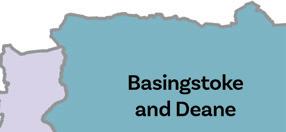
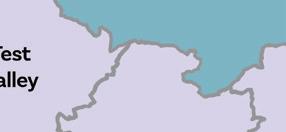
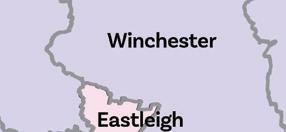
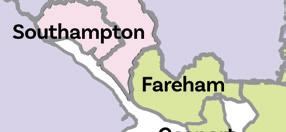

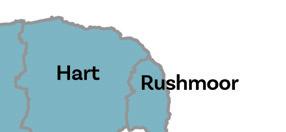



Hampshire: Basingstoke and Deane, Hart, Rushmoor



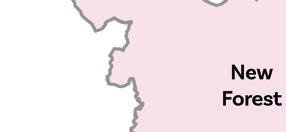

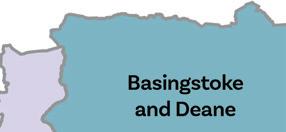
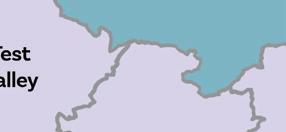
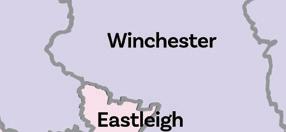
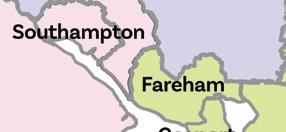
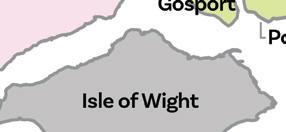


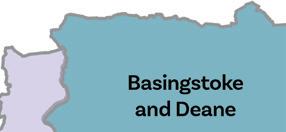



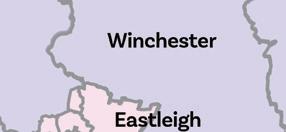
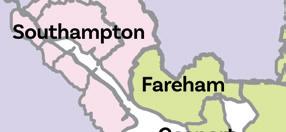
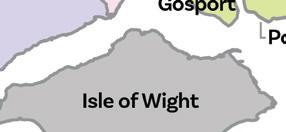


South East Hampshire: Fareham, Gosport, Havant, Portsmouth
Valley Park, Nursling & Rownhams and Chilworth Winchester*: Newlands Councils supporting each option shown over the page
Councils supporting each option
Option 1
Basingstoke and Deane Borough Council
New Forest District Council
Test Valley Borough Council
Option 2
Winchester City Council
Option 1A (boundary modification request to Option 1)
Eastleigh Borough Council
Fareham Borough Council
Hart District Council
Havant Borough Council
Portsmouth City Council
Rushmoor Borough Council
Southampton City Council
Please note that although the Isle of Wight Council has been fully involved in developing the proposals set out in this case and remain supportive of the approach in the proposals to include the Isle of Wight as an independent unitary authority, in September they felt unable to endorse a specific proposal that relates to councils on the mainland. The Isle of Wight Council is continuing to liaise with the government to confirm its position.
For the purposes of this report, please refer to the following descriptions of the future unitary configurations:
North Hampshire unitary
Mid Hampshire unitary
In Option 1, 2 and 1A, the new unitary configuration 1 (U1), includes Basingstoke and Deane, Rushmoor and Hart.
In Option 1, the new unitary configuration 2 (U2), includes East Hampshire, New Forest, Test Valley and Winchester.
In Option 2, the new unitary configuration 2 (U2), includes East Hampshire, Test Valley and Winchester.
In Option 1A, the configuration is the same as 1, with the movement of the following parishes to other unitaries:
• Totton and Eling, Marchwood, Hythe and Dibden and Fawley from New Forest
• Valley Park, Nursling and Rownhams and Chilworth from Test Valley
• Newlands from Winchester
• Clanfield, Horndean and Rowlands Castle from East Hampshire
South West
Hampshire
Unitary
South East Hampshire
Unitary
In Option 1, the new unitary configuration 3 (U3), includes Southampton and Eastleigh.
In Option 2, the new unitary configuration 3 (U3), includes Southampton, Eastleigh and New Forest.
In Option 1A, the configuration is the same as in option 1, with the addition of the following parishes:
• Totton and Eling, Marchwood, Hythe and Dibden and Fawley from New Forest
• Valley Park, Nursling and Rownhams and Chilworth from Test Valley
In Option 1 and 2, the new unitary configuration 4 (U4), includes Portsmouth, Gosport, Havant, and Fareham.
In Option 1A, the configuration is the same as 1 and 2, with the addition of the following parishes:
• Newlands from Winchester
• Clanfield, Horndean and Rowlands Castle from East Hampshire
We have been running a comprehensive programme over the previous few months, encapsulating multiple workstreams, to develop this proposal. As highlighted in the figure below, the core workstreams included as part of our joint programme included engagement, data collection and options appraisal, financial sustainability, service design and democratic approach. These are discussed in more detail in the following paragraphs.
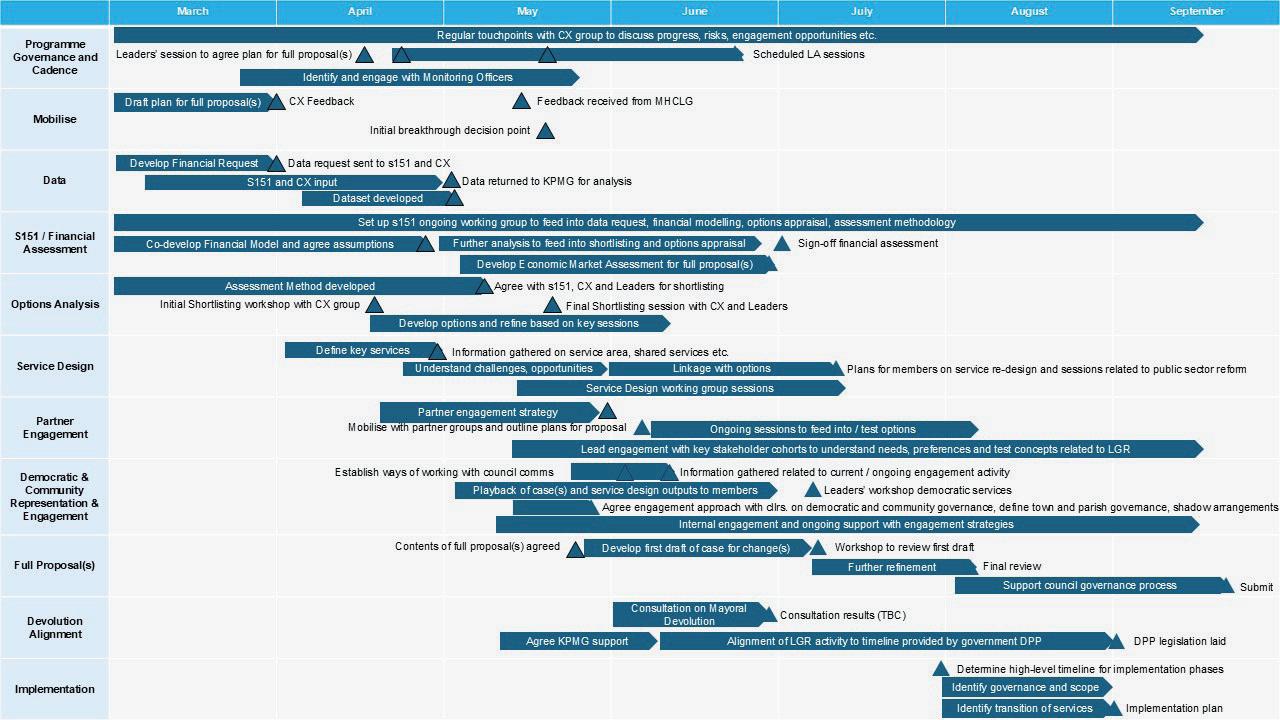
The joint efforts of 12 councils across Hampshire and the Isle of Wight have been instrumental in shaping a forward-looking four new mainland and the Isle of Wight unitary model. Working together we have engaged extensively with stakeholders, to ensure that our proposal is shaped by local insight, shared priorities and robust evidence. This has included:
• Leaders and Chief Executives: The 12 council leaders and chief executives have worked collaboratively together to steer the work through regular working sessions to continuously test and agree the best approach for Hampshire and the Isle of Wight. The regularity through which we have all maintained a coordinated approach, via weekly and fortnightly meetings and workshops, has allowed us to move at pace.
• Section 151 Officers: A Section 151 working group has coordinated the collection of financial data and overseen the development of the financial case working with our advisers at KPMG. They have met regularly to test and validate assumptions to ensure our financial case is evidence led and robust.
• Monitoring Officers: The 12 monitoring officers have held workshops to assess the best options for future democratic arrangements and governance for our proposal.
• Directors and Heads of Service: Through a programme of service design workshops, this group has worked closely with specialist advisers in key areas to develop the opportunities for innovation and transformation that are central to our approach to local government reorganisation.
• Residents and communities: Extensive communication and engagement has taken place with communities across Hampshire and the Isle of Wight to explain what local government reorganisation means for them and the options being considered. On a countywide and new unitary level, we have tested support and views on our proposal and what communities would like new unitary councils to look like through a series of public surveys. This approach has ensured our proposal reflects the voices and needs of those most directly affected.
• Key partner organisations and stakeholders: Our partners, at both a countywide and new unitary area level, have played a key role in informing and shaping our proposal, through a comprehensive programme of engagement. This has included sessions with MPs, trade unions, higher education and further education, police, fire and health service providers, coastal partners and national park authorities, businesses, the voluntary and community sector and town and parish councils.
Understanding our existing strengths, alongside the local challenges and the opportunities for transformation presented by local government reorganisation, was integral in the development our proposal.
To guide the development of future service models, the 12 councils agreed to prioritise service areas that are high-cost and high demand, and strategically significant. This included adult social care, children’s services, waste, highways and transport, strategic planning, economic development and regeneration, education, housing and homelessness and customer and digital. To explore how transformation could be achieved at this level, focused workshops were held with key representatives from the existing council leads and external advisers which focussed on the following:
• Understanding the current service provision.
• Identifying pain points, good practice and existing collaboration.
• Embracing and learning from good practice and emerging insights from elsewhere.
• Identifying transformation opportunities, shaping the future of services through local government reorganisation.
Each workshop has contributed to the development of our proposal. Further information is highlighted throughout our proposal but in more depth within our chapter on criteria three which focuses on high quality sustainable services.
We have been working collaboratively with the relevant monitoring officers, election teams and democratic service teams to consider the future of democratic services, including indicative councillor numbers, localism and neighbourhood governance arrangements. The focus of this work has been ensuring councillors can effectively represent their residents within the future unitary councils. The key areas of work have included:
• Councillor ratios: National research into unitary councillor ratios has been undertaken, alongside considering Local Government Boundary Commission for England guidance. We have also reviewed local needs and numbers across Hampshire and the Isle of Wight. This information was developed further in partnership with council leaders to arrive at the proposed indicative numbers.
• Localism: Working collaboratively to carry out research into best practice to understand how neighbourhood committees and governance arrangements are currently structured and the opportunities for delivering these in the future, informed by co-production with local communities and partners.
More information on the outcomes of this work can be found within the chapter on Criteria 6.
Our financial sustainability analysis is a fundamental part of our proposal. It evaluates the financial implications of local government reorganisation, demonstrating that our proposal will lead to long-term improvements in financial resilience, efficiency, and value for money, meaning every pound will go further. The analysis assessed potential savings, investment required and net benefits to support informed decision-making by local leaders and stakeholders.
The financial sustainability analysis followed a structured methodology, covering four key stages. Detailed information on the full methodology can be found in Section 7 - our financial case.
• Data collection and validation: The Section 151 officers of all 15 councils completed standardised data requests, covering revenue budgets, housing revenue accounts, dedicated school grants, council-owned companies, reserves, capital plans and balance sheets.
• Baseline construction: A consolidated financial baseline was built, combining existing district, county and unitary budgets into unified figures based on agreed assumptions. Key financial metrics were developed for each proposed new authority for comparison across the considered options.
• Cost and savings estimation: We estimated the incremental impact of reorganisation across two scenarios (base case and stretch case informed by learning from other local government reorganisation processes elsewhere).
• Implementation costs: Estimated the total one-off costs required to deliver the reorganisation (e.g. staff, programme delivery, IT).
• Top-down savings: Estimated the annual high-level savings from efficiencies that can be unlocked through reorganisation (e.g. workforce, governance, systems).
• Disaggregation costs: Estimated the annual additional expenditure required from dividing upper tier (i.e. county level and unitary) services into multiple new upper tier authorities in key cost levers (for example adult social care, children’s services, housing, place services and corporate/support services).
• Scenario modelling: For each unitary option and across the scenarios, we consolidated and phased the option specific costs and savings and calculated the expected payback period, breakeven year and total 10-year net financial benefit.
These modelled outputs have directly informed both the comparative analysis between reorganisation options and the financial case narrative underpinning this proposal. They also support the key metrics presented in the accompanying technical appendices (Appendix 5) to ensure transparency and traceability.
Our proposal for four new mainland unitary councils, with the Isle of Wight remaining independent, has emerged as the strongest model to address growing financial pressures, increasing service demands, and limitations of the current two-tier system. Our proposal offers a streamlined governance model and opportunities to redesign and transform services to achieve significant efficiencies and savings through a placefocused approach. Our analysis quantifies the financial impact
of the preferred reorganisation model, compares options, demonstrates financial viability, and provides confidence in the assumptions and modelling approach.
All three variations of our four new mainland unitary proposal enable councils to pay back within three years for Options 1 and 2 and 3.1 years for Option 1A, delivering annual savings of £63.9 million (post transformation) as part of our base case which we believe to be a very prudent approach. However, we are confident in our proposals’ ability to deliver genuine transformation and so we have also included a stretch case, which sets out a faster approach to transformation that we will aim for. This would allow all councils to pay back within 2.3 years for Options 1, 2 and 1A and deliver annual savings of £91.8 million post transformation.






Our proposal for four new mainland unitaries alongside the Isle of Wight – anchored around the population centres and urban economies of Basingstoke, Winchester, Portsmouth and Southampton – sets out a bold vision for a modern, efficient and resident-focused local government structure.
Our focus is on delivering services that are outcome-driven and designed around our customer journey, with a key focus on prevention. This will be achieved by reimagining service delivery and adopting cost-effective models. Service delivery will be tailored to local needs with a digital-first approach to empower residents while ensuring everyone has equal access to services. This forward-thinking approach sets out a compelling case for change, balancing innovation with practicality to meet the evolving needs of our communities.




Our vision is driven by our commitment to achieve the best outcomes for our residents and communities. It recognises and protects the distinct geographic areas and economic identities of the four new unitary areas, prioritising the diverse needs of our residents through financially sustainable, place-focused services.

We have refined our vision through engagement with a diverse range of stakeholders across Hampshire and the Isle of Wight:
“We will deliver high quality, locally tailored services that focus on prevention and long-term sustainability. By building strong, people-centred communities and harnessing the strengths of our local economies, we will drive inclusive growth and create vibrant, resilient places where everyone can thrive.”
The vision is supported by our guiding principles, as outlined in our interim plan, and service design opportunities which emphasise our values and priorities. To deliver on this vision, we will:
• Design services that respond to the customer journey, with a focus on prevention and outcomes tailored to local needs. This clear focus would drive collaboration, simplicity, and efficiency – minimising duplication, multiple hand-offs, and unnecessary interventions.
• Actively seek opportunities for real transformation by exploring how services can be delivered differently, including with partners, through a total place-based approach.
• Deliver the most appropriate service delivery models that are cost effective, meet the diverse needs of our residents and respond to the unique challenges in each of our areas.
• Prioritise a customer first, digital by design approach, encouraging self-service for all who can digitally interact with councils.
• Focus on the future state, supported by a defined methodology and the roadmap required to achieve it.
• Demonstrate a compelling case for change, underpinned by clear criteria around cost reduction and improved local service delivery, while acknowledging the varying priorities in different parts of the unitary geographies.
• Address the resilience of authorities, including staff recruitment and smarter use of public assets, ensuring an accurate picture of where each service is operating to inform design and identify efficiencies.
• Build on the existing service strengths while optimising procurement practices to drive better value and outcomes.
• Improve the environmental sustainability of the region as a key principle, ensuring that service models contribute to a greener and more resilient region.
Our four new mainland and the Isle of Wight unitary council proposal will build upon the strengths of existing district, borough, and unitary city councils, particularly their deep understanding of local communities and their needs. We recognise that the voices of our communities must continue to be heard and shape the delivery of high quality, accessible services. Understanding and being responsive to the local nuances and issues that matter most to our residents is fundamental.
By building new mainland authorities around four distinct geographic areas and communities, we can ensure that local needs are understood and effectively addressed. The four areas proposed for the new mainland unitaries mirror existing
patterns of economic and social activity, where existing hubs serve as focal points for their communities. A dedicated unitary council focused on each area enables councils to concentrate their efforts and resources, avoiding the dilution that comes from managing multiple distinct population centres and economic areas.
Anything other than this approach, which best reflects the way people live, work and travel, risks creating overly large and disconnected authorities that fail to reflect how people live and use local services. Combining distinct communities into broader geographies would alienate our communities, reduce responsiveness and limit the ability to tailor services to local need. It would also reduce the potential for targeted economic growth, missing the opportunity to unlock the full potential of each area.
Our residents clearly value local identity and decision-making. In a recent survey conducted across Hampshire and the Isle of Wight, with over 13,000 respondents, an average of 87% agreed that councils should reflect the identity of local communities, and that decisions about local areas should be made close to the communities themselves. Our proposal is underpinned by these principles, alongside other key factors that matter deeply to our residents, which are outlined in more detail below.
Our new mainland unitaries reflect how people live, travel and work. The four major population centres and economies of Southampton, Portsmouth, Winchester and Basingstoke form the anchors for these new unitary councils to ensure they can better serve their distinct communities.
Hampshire and the Isle of Wight is a very diverse area with distinct geographical, economic, cultural, and infrastructural characteristics. We have rejected bringing together communities where there is no strong local connection into much larger unitary councils serving huge geographical areas. This would overlook specific communities’ needs and fail to maximise the potential of each area. Such an approach would dilute political representation and community identity, leading to ineffective decision making and poor outcomes for our residents.
From the outset, all 12 councils have committed to a common purpose to develop the best proposal for our residents. We have worked together as leaders and officers, with partners and communities at both a local and regional level. This has meant that our proposal has been informed by working with those that will help deliver it and shaped by the communities it will impact.
As a group of existing unitary, district, borough and city councils, we know our communities. We work with them, deliver services they rely on every day and understand the challenges they face.
Through our proposal, we have an opportunity to shape new unitary councils that reflect our areas, built around the four anchors of our major cities and towns and the unique requirements of the areas through a place-focused approach.
Our approach ensures a balanced and thriving Hampshire and the Isle of Wight at both the unitary and regional level. For instance, our four new mainland unitaries offer balanced population sizes across sensible geographical areas with an average population size of around 500,000. In contrast, an option with just one less council would create some of the largest council populations in the country, similar to Leeds in population, but spread over geographical areas larger than Greater London and Greater Manchester.
Under our proposal, we will build new councils that reflect our areas and that listen, lead and deliver on our vision for the future. With transformation and innovation at its heart, services would be designed for the modern world, making it easier for residents to access service and get a faster, more effective response. Our focus will be on tailoring services to the specific needs of our communities with partners through a total place approach. This will enable us to make the best use of community opportunities, assets and capacity in a way that that larger unitary councils will not be able to.
Our size and close connection to the distinct communities we serve will enable us to quickly deliver innovation, drive transformation and deliver flexible, placed focused services in partnership with others, leading to greater efficiency and cost savings.







As a region, we are an economic powerhouse and a vital part of the UK economy, generating over £72 billion in Gross Value Added (GVA) annually. With thriving sectors such as maritime, manufacturing, aerospace, education and tourism, our region is a key contributor to national growth and innovation.
The creation of four new unitary councils across mainland Hampshire, with the Isle of Wight remaining independent — centred around the population centres and economic hubs of Basingstoke, Winchester, Southampton and Portsmouth — is the most effective model to unlock inclusive economic growth and deliver high-quality public services.
Developed through extensive engagement with partners and building on a strong legacy of collaboration and innovation, this proposal reflects a shared ambition to reshape local government in a way that is financially sustainable, resilient to rising demand and responsive to the complex needs of our communities.

Map of Hampshire and the Isle of Wight
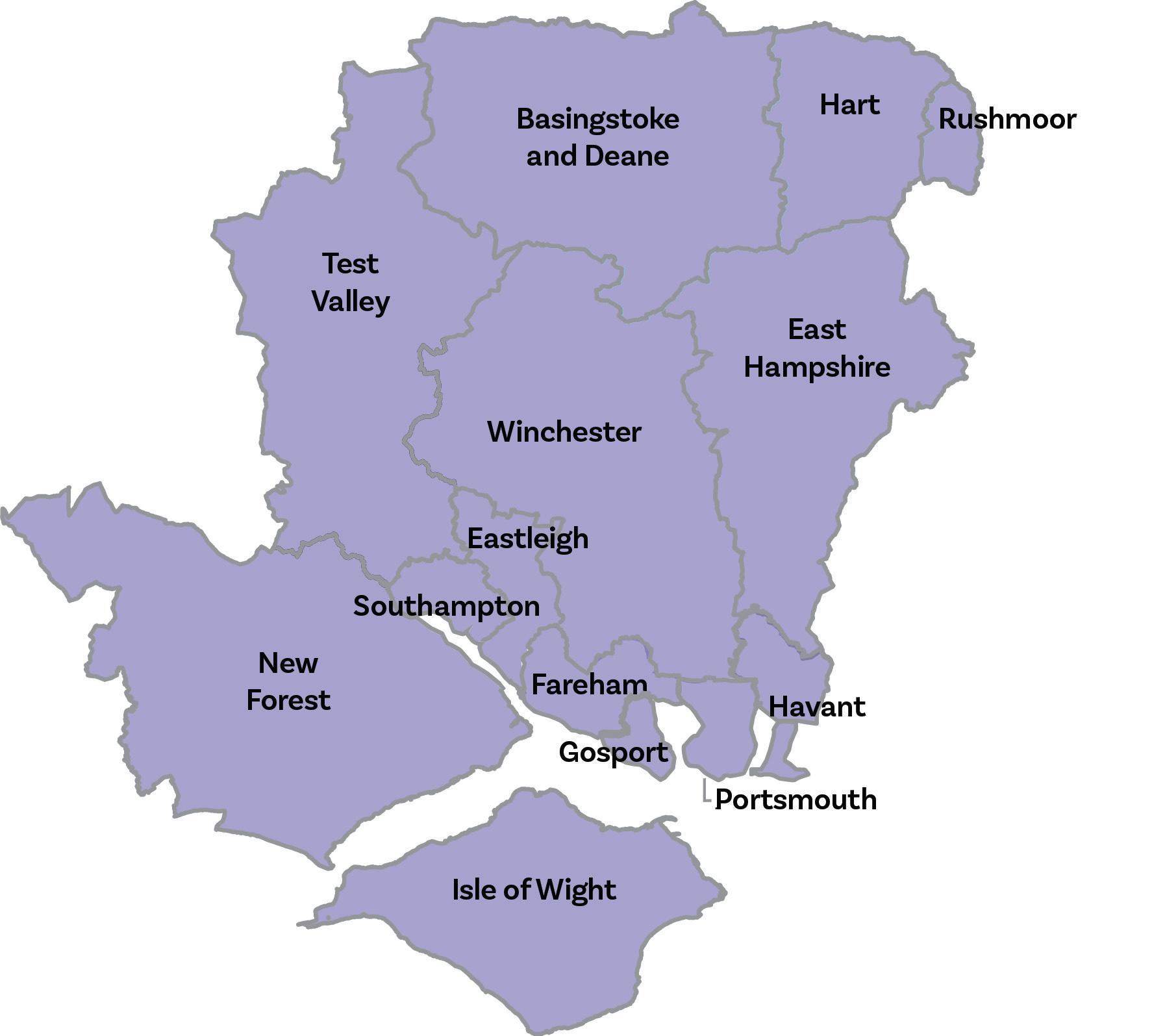

Data table: Hampshire and the Isle of Wight
Key economic areas Basingstoke, Winchester, Southampton, Portsmouth
Area 4,148 square kilometres
Population (2023) 2,035,872
Population (2028) 2,130,601
Households 858,860
Hampshire is a very large and strategically significant county on England’s south coast, with the Isle of Wight situated on the other side of the Solent. It plays a vital role in the UK’s economy and trade, hosting major ports in Southampton and Portsmouth as well as convenient access to London.
It is the fifth largest county in England for population – at over 2.1 million people (by 2028) – and ninth for geographical area at 4,148 square kilometres. It provides seamless connectivity to London and international transport hubs and ports – making it a prime location for economic growth.
The sheer scale and diversity of Hampshire and the Isle of Wight is a key driver for creating new unitary councils using the anchors of the four major population centres and economies of Southampton, Portsmouth, Winchester and Basingstoke.
The Isle of Wight is uniquely placed to serve its own communities as an island unitary and will continue to remain independent under our proposal given its geography and specific needs. We do however recognise the need to ensure the Isle of Wight unitary authority remains sustainable for the long term, which is addressed in this proposal.
Each of the five areas have a unique set of characteristics and associated requirements which cannot be aggregated into even larger ‘one-size-fits-all’ unitary type solutions over bigger geographies.
Our proposals are best positioned to maintain the unique character and diversity of the areas, protecting residents’ sense of place and local identity while driving economic growth. The four new mainland unitaries will be local enough to genuinely understand communities’ needs and give them a real say in shaping decisions while being big enough to be financially sustainable for the future
with an average population size of 500,000.
The region contributes a GVA of £72.6 billion annually to the UK economy, supported by approximately 130,000 registered businesses, including an estimated 12,000 voluntary, community, and social enterprises (VCSEs).
Although unemployment remains below the national average at 3.56%, notable disparities exist between urban and rural communities, including significant pockets of deprivation and under achievement. Our region benefits from thriving sectors such as manufacturing, aerospace and tourism and is anchored by four universities. This diverse and evolving landscape calls for a locally tailored, responsive approach to service delivery and economic development to unlock the area’s full potential.
The areas covered by the proposed four new mainland unitaries are now discussed in more detail.
North Hampshire boasts a dynamic and diverse economy with huge growth potential, strategically positioned along the M3 corridor, connecting Basingstoke, Fleet, Farnborough, and Aldershot. Unlike most of the rest of Hampshire, North Hampshire looks economically to the Thames Valley and Blackwater Valley (West Surrey and Berkshire) and London, benefiting from exceptional rail connectivity to London and Europe’s busiest business-only airport, Farnborough Airport.
It is home to key industries such as aerospace, defence, tech, and financial services, hosting globally recognised businesses like QinetiQ, Serco, BMW, Fujitsu, Eli Lilly, AWE and, in Aldershot, a significant army garrison in addition to RAF
Odiham, home to three Chinook squadrons. The area offers unique opportunities for growth in its key industries, including the development of a defence and aerospace hub, leveraging its established industrial base, housing growth, connected labour market and innovation networks.
With a GVA of over £19.3 billion annually, North Hampshire combines economic vitality with a highly productive workforce, positioning it as a key driver of regional and national prosperity.
The creation of a new unitary council for North Hampshire is supported by the Chamber of Commerce and businesses of all sizes across the area. They fully recognise and support the unique opportunity a North Hampshire unitary council provides to drive and enable further economic growth, generating more high value local jobs with the housing they require and attracting and retaining talent in North Hampshire so that the area realises its immense economic potential.
Mid Hampshire is a strategically positioned high-performing economy, generating £18.2bn in GVA annually. As a connected regional economy, it forms the natural link between the Solent’s coastal economy, anchored by the Solent Freeport’s New Forest waterside tax sites, and the Midlands’ industrial base, offering seamless access to international markets and regional supply chains. The area is underpinned by nationally significant infrastructure. The M3, A34, A303 and M27 form the backbone of freight and business connectivity, while fast, frequent rail services link key towns to London in around an hour - boosting labour mobility, investment confidence, and access to talent. This is an area built on enterprise and innovation, anchored by nationally recognised higher education institutions and sixth form colleges.
Mid Hampshire is home to global businesses such as IBM, Arqiva, INEOS, Estée Lauder, and Stannah, alongside a strong network of high-growth SMEs in digital, logistics, green technology and advanced manufacturing.
Mid Hampshire’s two National Parks are not only custodians of landscapes of national and global importance - they are also active economic drivers. As centres of natural capital, they attract millions of visitors annually, support green innovation, and underpin land-based enterprise across farming, forestry, and environmental services. They also play a critical stewardship role, shaping sustainable land use and climate resilience across the area.
Agriculture and the wider rural economy are tightly interwoven with this landscape - supporting food production, skilled employment, and sustainable land management. SMEs in artisan food, hospitality, and creative industries bring innovation and energy to rural areas and market towns, driving economic vitality and resilience. The area’s economic diversity is unique

across the proposed Hampshire unitary authorities, offering a balanced, resilient and adaptable economy at the centre of the Hampshire and Isle of Wight region.
The area also plays a nationally strategic role in defence, with British Army Headquarters and Middle Wallop Flying Station (home of the Army Air Corps Headquarters) in Test Valley, the Tri-Service Defence College in Winchester and Marchwood Military Port in the New Forest. These sites underpin national security and logistics, sustain skilled employment, and reinforce long-term government investment across Mid Hampshire.
Mid Hampshire is primed for further growth. Strategic regeneration, levelling up investment, and the sub-regional potential of the Solent Freeport position it to deliver major housing, employment, skills and infrastructure gains that would serve both the wider region and the national economy.
South East Hampshire is a natural economic geography that is based around Portsmouth and stretches along the Solent coastline from Hayling Island in the east to the River Hamble in the west. Centre for Cities uses the Primary Urban Area (PUA) as the basis for its definition of cities and the Portsmouth PUA is based on the four existing local authorities of Fareham, Gosport, Havant and Portsmouth, which have a shared coastal economy.
With an annual GVA for the area of £15.7bn, it is part of the wider Solent economy, with some common sectoral strengths including marine and maritime, advanced manufacturing, space and tourism with national agencies such as ONS based in the area. Historically Portsmouth, home to the Royal Navy,
has built an economy with industries and services associated with defence and support to the Royal Navy as opposed to the much larger professional services based in Southampton that developed alongside the commercial port.
As the home of the Royal Navy, defence is still an important part of the Portsmouth and South East Hampshire economy with Portsmouth, Fareham and Gosport all having shore establishments. BAE’s Warship Support Team is based at Portsmouth Naval Base and there are a number of other defence focused businesses throughout the area including Standard Aero and Autonomous Surface Vehicles. This supports the national Industrial Strategy and Defence Industrial Strategy.
The local economy is part of an internationally significant marine and maritime sector and also has a significant strength in advanced manufacturing and engineering, supporting the aerospace and space sectors, with companies such as Airbus, BAE, Eaton, Lockheed Martin, and Mitsubishi based in the area. Huhtamaki, in Gosport, and Cytiva, spread across
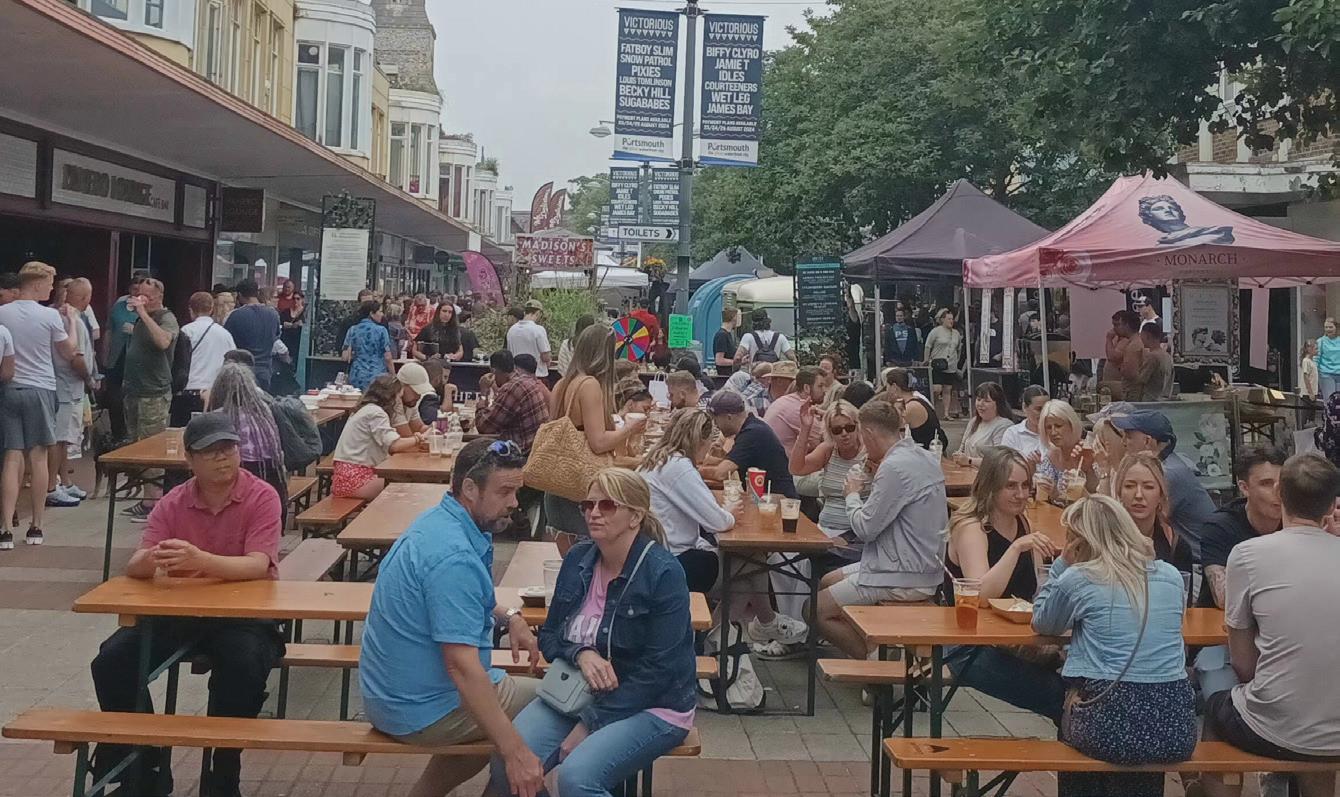
Portsmouth and Havant, are significant employers in other sectors. Solent Enterprise Zone at Daedalus, which straddles the existing Fareham/Gosport boundary, is a significant and growing employment hub with a large number of advanced manufacturing, marine and maritime and aviation and aerospace businesses located there, alongside a thriving general aviation airport. The cultural and creative sector is also important to the area, providing a strong sense of place, supporting employment opportunities and helping to create a vibrant feel. Major events also take place in Portsmouth, such as Sail GP and Victorious, a festival. The major national tourism attraction of the historic dockyard also pulls visitors into the area from across the country. Local government reorganisation provides an opportunity to ensure the geography of the new unitary reflects the actual economic geography for South East Hampshire while also addressing entrenched problems of inter-generational deprivation and poor health outcomes.
The University of Portsmouth, the Portsmouth University Technical College (UTC) and other further education colleges and providers supply a large number of highly skilled young people to support these advanced manufacturing businesses. However, there are challenges that need to be overcome within the area with a high proportion of school leavers underperforming compared to national averages and pockets of significant deprivation within the area.
Portsmouth International Port (PIP) is complementary to the larger commercial port of Southampton. Portsmouth is the second busiest international ferry port within the UK (behind Dover) with links to France and Spain (alongside routes to the Channel Islands). Portico Shipping, Portico Logistics and Portico Port Services, operating out of Portsmouth
International Port, provide a cargo and freight service. PIP is part of the Solent Freeport as is Dunsbury Park in Havant, with Portsmouth City Council as the developer.
The M27, M275 and A3M provide direct and indirect motorway access to London and other parts of the strategic road network with other A roads, such as the A32 or A27 linking to these roads. This supports the development of inward investment opportunities in the region. There are rail links between Fareham, Havant and Portsmouth with further links to London and to other parts of Hampshire and the Isle of Wight. The future delivery of transport infrastructure, to serve expanding employment areas and facilitate economic growth across the new unitary authority area, would be significantly enhanced by the transport/highway authority functions being brought into the same single unitary authority.
Local authorities in PUA:
Portsmouth, Fareham, Gosport, Havant
Total population, 2023
(13/63) Population change, 2013-23
(60/63) business & innovation
GVA (bn), 2022 £13.5 (15/63)
GVA per hour, 2022 £36.8 (14/63)
Business start-ups per 10,000 pop, 2023
Business closures per 10,000 pop, 2023
(42/63)
(48/63) Business stock per 10,000 pop, 2023
(33/63) New economy firms per 10,000, 2024
(21/63) industrial structure
Manufacturing jobs, 2023
(19/62) Private knowledge services jobs, 2023
Publicly-funded services jobs, 2023
private services jobs, 2023
of private to public jobs, 2023
Avg. weekly workplace earnings, 2024 £694 (21/63) employment & unemployment Employment rate, 2024
(42/62)
(26/62)
(33/62)
(37/62)
(14/62)
Claimant count, Nov 2024 12,560 3.8% (37/63) skills & education
High level qualifications, 2023
No formal qualifications, 2023
GCSEs in Maths & Eng., grade 9-4, 2024
(41/63)
(32/63)
(49/55) living standards
GDHI per capita, 2022 £21,135 (18/63)
Housing stock change, 2022-23 887 0.2% (62/63)
Average house price, 2024 £310,989 (19/63)
Housing affordability ratio, 2024 9.2 (17/63) environment
GHG emissions per capita (t), 2022 3.4 (54/63)
Days a year of poor air quality, 2023-24 24 (4/63)
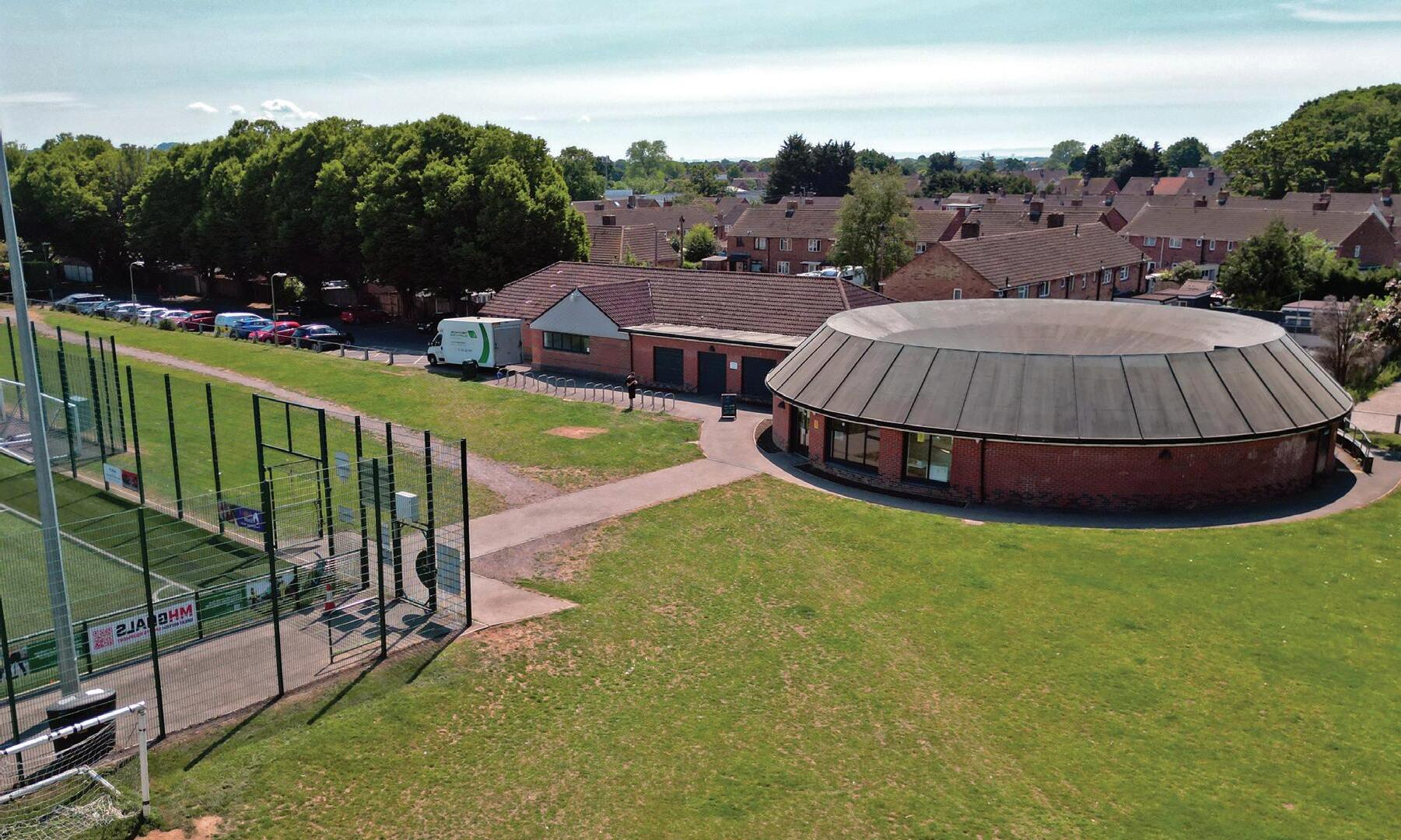
Leigh Park, within the borough of Havant, is one of the most deprived areas in the country, facing significant challenges in education and health. The area has a low skills base, with 28% of the population having no qualifications, and life expectancy is significantly lower than in more affluent areas. Health issues such as obesity, heart disease, and mental health problems are prevalent. Recognising these challenges, Havant secured £500,000 for a research project to address health inequalities and received funding from the Department for Work and Pensions to establish a Youth Hub aimed at supporting 16 to 24-year-olds not in education, employment, or training (NEET).
The Youth Hub, launched in 2022, has supported 695 young people, with 316 entering paid employment and 353 enrolling in accredited training courses. It operates on three key strands: health and wellbeing, qualifications and experience and motivation and confidence, providing tailored help to support young people into employment. The hub also offers a job matching service to connect businesses with young talent, addressing skills shortages and supporting young people with additional needs.
The hub’s innovative model has attracted interest from public and private partnerships, including prime employers like Lockheed Martin. An Economic Impact Assessment revealed significant benefits. Supporting 222 young people into long-term work costs £140,000 annually but yields a financial benefit of £6.1m to individuals and £9.1m to the government over five years. The reduction in crime saves £1.1m and NHS savings amount to £0.8m. The local economy benefits by £2.48m annually, with a total return of £25.7m over five years.
The Youth Hub’s success lies in its ability to transform lives and raise aspirations among young people facing barriers to education and employment.
The economic strength of this area is underpinned by its exceptional connectivity, integrated labour market, and high levels of functional economic integration, particularly south of the M27 corridor. This is an area with national significance. It is home to the UK’s leading port for cruise and containers, a thriving Freeport, an international airport, and a dense network of rail and motorway connections that link it seamlessly to London, the Midlands, and other global markets.
Yet Southampton’s urban geography, one of the south’s primary urban centres, remains constrained by administrative
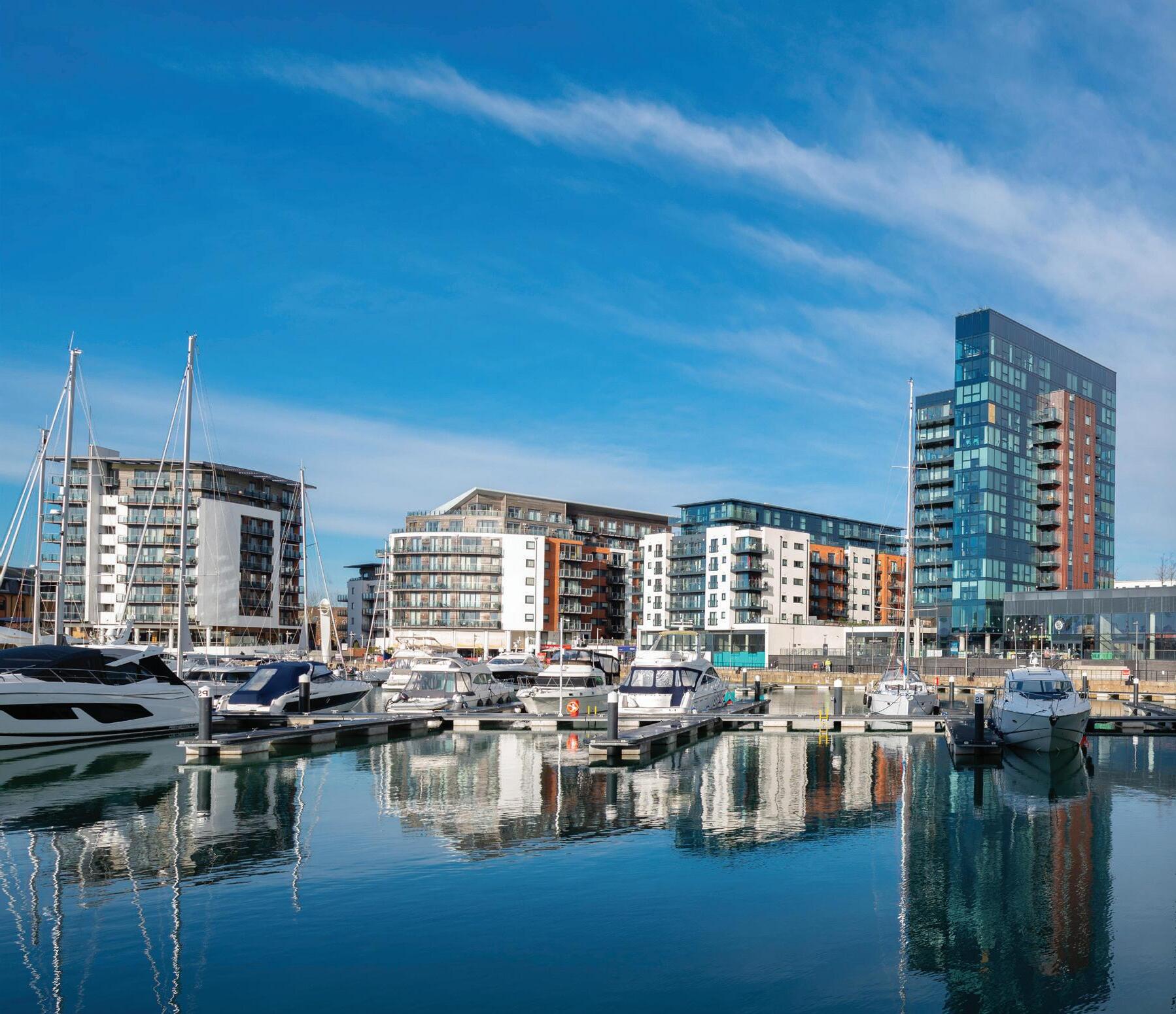
Southampton is at the heart of a cohesive, interconnected economic geography that spans across surrounding areas. The Solent Freeport exemplifies the scale and ambition of this geography, projected to generate 26,000 direct jobs and £2bn GVA within the Solent area, with wider supply chain benefits, including 57,000 jobs and £3.6bn GVA across the UK. Over £1.35bn in private investment is being catalysed across tax sites in Eastleigh’s Navigator Quarter and surrounding areas, supporting a globally significant trade and logistics cluster anchored by the Port of Southampton. This investment is enabling the port to double cruise passenger capacity from two million to four million annually by 2030, enhancing its role as a global gateway for trade and tourism.
Housing and infrastructure development are closely aligned with this economic geography. Eastleigh Borough Council’s ‘infrastructure first’ approach ensures that highways, drainage and green spaces are delivered ahead of housing occupation, ensuring new communities are connected to jobs and services before they are built. Notably, 42% of Eastleigh’s workforce commutes to Southampton, reflecting deep functional integration. This is a model of strategic, sustainable planning across boundaries, demonstrating the kind of integrated leadership needed to drive inclusive growth.
But governance has not kept pace. Southampton’s administrative footprint is misaligned with its functional urban area, diluting accountability and limiting its ability to act at the right scale. This reduces efficiency, fragments public services and stifles the housing and infrastructure delivery required to meet future demand.
Local government reorganisation presents an opportunity to fix this misalignment - to right-size the new unitary’s boundaries
to match its real geography and economy. This would:
• Unlock coordinated investment and growth across a wider area of opportunity.
• Enhance democratic accountability and resident voice across interconnected communities who currently don’t get a say due to severance caused by administrative boundaries.
• Enable integrated public service reform at the scale needed to prevent crisis and reduce demand.
• Support the UK’s shift to a more polycentric model of urban growth, where cities like Southampton drive regional and national prosperity.
Local government reorganisation also presents a unique opportunity to address entrenched deprivation across the wider geography, particularly in areas where poor health, low skills, and intergenerational poverty persist. By aligning governance with lived economic geographies, there is scope for more targeted investment, coordinated service delivery, and integrated prevention strategies that tackle root causes, not just symptoms, of social and economic exclusion.
Aligning governance to reflect the area’s real economic and social footprint is not just about efficiency; it is a chance to unlock the full potential of the Solent region, deliver more inclusive growth and ensure that opportunity reaches every community within this vibrant, nationally significant area.
Hampshire is currently served by 15 councils across upper and lower-tier authorities, including Hampshire County Council, 11 district and borough councils, as well as the three existing unitary councils of Southampton, Portsmouth and the Isle of Wight.
As a result, Hampshire and the Isle of Wight has the highest number of local authorities within a single county area (other than Greater London), again emphasizing the size and scale of the place.
Partnership working in Hampshire and the Isle
Local authorities and communities across Hampshire and the Isle of Wight work with key partners to deliver critical services for residents across our distinct geographies. This includes fire and rescue, police, health and care, and National Park authorities.
They have been central to the development of our proposals. We are grateful to all of our key partners and partnerships in helping to inform and refine our proposal. Our partners recognise the significant opportunities our proposal provides for enhanced service integration and transformation and delivering improved outcomes for our communities. For example, recognising the integrated care board landscape is changing, and that Frimley may become part of Hampshire and Solent Integrated Care Board in April 2026, we are working with them to align their changes with our work to ensure the opportunities for joint redesign, innovation and improvement are maximised.
NHS Frimley Integrated Care Board
NHS Hampshire and Isle of Wight Integrated Care Board
Hampshire and Isle of Wight Fire and Rescue Services (HIWFRS)
Replaced the NHS Frimley Clinical Commissioning Group in July 2022. As part of the Integrated Care Partnership, it collaborates with Rushmoor Borough Council, other local authorities, the NHS, Healthwatch, and VCSE organisations to improve health and care outcomes for residents.
Covers the rest of the Hampshire and the Isle of Wight, excluding Rushmoor. It works with local authorities via the Hampshire and Isle of Wight Integrated Care Partnership, bringing together health and social care partners to devise strategies that address healthcare, social care and public health needs.
Operates under a Combined Fire Authority comprising representatives from Hampshire County Council, Isle of Wight Council, Portsmouth City Council and Southampton City Council. It sets regional strategic priorities, approves budgets and develops risk management plans tailored to a mix of rural, urban, maritime and rural needs.
Hampshire and Isle of Wight Police and Crime Commissioner and Constabulary
New Forest National Park Authority and South Downs National Park Authority
Overseen by a single Police and Crime Commissioner, the constabulary delivers policing services across Hampshire and the Isle of Wight.
Work in partnership with councils’ other agencies to deliver joined-up planning, conservation, and community services within the park boundary of over 560 km² (New Forest National Park) and 1,625 km² (South Downs National Park covering East and West Sussex as well) of woodland, heath and coastline across South West and Mid Hampshire.
There are a number of key partnerships across the Hampshire and Isle of Wight region that have played a key role in developing our proposal including:
Hampshire and Isle of Wight Leaders Group
The group is made up of all the council leaders and chaired by the leader of Winchester City Council. The group has overseen our process for the assessment of the options for unitary councils, using the government’s criteria and locally agreed principles as the foundation, and the supporting work that has led to this proposal.
This group brings together the chief executives of all the councils, Integrated Care Boards (ICBs), Police and Crime Commissioner’s Office, New Forest and South Downs National Parks, Chief Constable, Chief Fire and Rescue Officer and representatives of the Ministry of Housing, Communities and Local Government (MHCLG) and Local Government Association (LGA). The group, chaired by the Chief Executive of Basingstoke and Deane Borough Council, has discussed the emerging work on local government reorganisation at each meeting
and helped to shape the process including further engagement that has informed our proposal.
Outside of these organisations and partnerships, there are many other stakeholders we have continued to engage in the development of our proposal such as coastal partners. In addition, at a new unitary configuration level, we have maintained local engagement with our partner groups to inform our proposal, recognising the distinct value they bring to the residents and ecosystems within their respective areas which are set out below.
the specific needs and issues of north Hampshire. Only recently the police identified a rise in youthrelated antisocial behaviour, with a specific group displaying signs of gang-like activity which was assessed as a high risk. The partnership worked together at pace to develop a problem-solving approach aimed at reducing community impact and providing tailored support for those coming to the attention of the police and other services. Through coordinated local action and timely intervention, the associated risks and community disruption have been significantly reduced.
The three existing councils in North Hampshire already have a strong track record of working closely together across a range of areas including economic development and planning policy and the delivery of key services such as waste collection, street cleaning and grounds maintenance, licensing, legal and building control services.
Beyond council collaboration, there is a strong track record of wider partnership working in north Hampshire such as the Safer North Hampshire Community Safety Partnership. This is made up of statutory agencies such as local councils, health services, probation, fire and rescue and the police, as well as other co-opted members. It develops and implements strategies aimed at reducing crime, enhancing residents’ quality of life, and increasing feeling of safety focused on
North Hampshire showcases how effective collaboration can spark innovative solutions to address local issues. One example of this is Basingstoke’s innovative solution to tackling rough sleeping. Historically Basingstoke had high levels of rough sleeping. But with a shared focus to address the root causes, the Basingstoke and Deane Social Inclusion Partnership, bringing together statutory partners and community, voluntary and faith sectors, has delivered pioneering and psychologically informed approaches to support individuals. This has seen the number of rough sleepers fall from 25 in 2015 to now consistently close to zero. This partnership approach has been commended by the Ministry of Housing, Communities and Local Government (MHCLG) and was featured on BBC South as an example for the rest of the country to follow.
In Rushmoor there has been a range of innovative partnerships with the NHS to address health and equalities with a particular
focus on childhood obesity, and with the police and other partners to tackle antisocial behaviour in town centres and associated addiction issues.
Rushmoor and Hart already share a police command arrangement and a joint approach to policing priorities. Within housing, Rushmoor and Hart have a close relationship and in 2018 had a successful joint bid for Rough Sleeper Initiative (RSI) funding. This secured resources for rough sleeper support workers who continue to operate across both areas and remain in post today. Both authorities have also worked hard to support their residents from the armed forces and have received the ‘Silver’ Award in recognition of their efforts regarding the Military Covenant.
Thanks to the well-established culture of partnership working in North Hampshire, our proposal has been shaped collaboratively through a series of workshops involving public sector bodies, businesses, voluntary and community groups, and town and parish councils. These sessions have been invaluable in helping us to develop the detail of our proposal and earned widespread support for the benefits a North Hampshire unitary council will deliver for communities through a focused approach to its unique opportunities and challenges as an enhanced leader of place.
The North Hampshire councils have appointed two professional advisers in adult social care and health and in children’s services to support a new North Hampshire unitary in preparation for the transition to delivering these vital services. Both experienced directors in their field, they have been working with local NHS organisations and education providers to co-design the future shape of services – focusing on ensuring a safe and legal handover of statutory responsibilities but also ensuring that the model of care in both services delivers an
integrated, innovative and preventative-driven approach which is cost effective and financially sustainable.
Discussions have already begun with the local NHS organisations to design a new model in adult social care and health based on integrated neighbourhood teams, working with local primary care networks (PCNS) to identify meaningful populations within which the local community health care providers could work with social care as part of an integrated approach, building on the work being carried out with Public Health and the integrated care board.
Performance in the NHS system is currently under scrutiny and there is an appetite to transform services with local authority partners which North Hampshire is already engaging with, helped by our advisers having worked closely with system leaders previously.
As part of our work with the other local authorities in Hampshire and the Isle of Wight to develop our proposal, the Directors of Adult Social Care and Health in the other unitaries have already begun to identify how they might work together to jointly commission, where appropriate in the market, to collaborate on providing low volume high-cost services, to develop joint recruitment and retention strategies and to support each other to improve services.
We are looking to best practice in other local authorities, including those who have recently gone through local government reorganisation and those where the models would align with the shape and size of North Hampshire. We know we have an ageing population in North Hampshire and higher than average costs of care for our younger adult population, both of which combine to create demand that we need to manage in an innovative and transformational way.
In developing a new model of adult care and health, we recognise the greater benefit a North Hampshire unitary council brings in terms of:
• community development, housing and homelessness services
• a genuine desire to focus on prevention and tackle health inequalities across our area
• the strong relationship with the voluntary sector and the more local democratic accountability across all public service provision
• the use of technology and digital to streamline and connect services, creating opportunities for easier public access and efficiencies in service delivery.
We will maximise these opportunities in North Hampshire, for a new council and with partners, to deliver a smarter, moreconnected and community-driven future.
Mid Hampshire has a proven track record of securing and delivering major investment through effective partnerships that unlock local potential and drive long-term impact. From transformative regeneration schemes to pioneering preventative health models, collaboration is embedded in how Mid Hampshire works. Across the area, the culture is defined by cross-sector collaboration, local co-delivery, and strong community engagement. This shared approach puts Mid Hampshire in a unique position to scale up proven models and deliver better outcomes as a new unitary.
Strategic regeneration exemplifies this. In Andover and Romsey, town centre transformation is being co-designed with residents and delivered in collaboration with local businesses,
cultural organisations, and design partners, demonstrating that real transformation is not just about capital, including from Levelling Up funding, but about building lasting local coalitions that deliver change. City centre regeneration in Winchester is leveraging significant private capital to support a sustainable future. Meanwhile, the New Forest plays a key role on the Solent Freeport Board, and across a wider waterside partnership, working with Associated British Ports, ExxonMobil, the New Forest National Park, colleges, and the community to deliver the waterside vision and ensure that the benefits of the Freeport deliver outcomes across the wider area.
Mid Hampshire’s health partnerships are already delivering nationally relevant preventative neighbourhood models, which align with the 10-year NHS plan. In the New Forest, the Independence Matters and Just Got Home programmes support hospital discharge, adaptations, and independent living, reducing strain on acute services. In Winchester, integrated care with NHS and voluntary partners has improved outcomes for older adults and reduced delayed discharges. In East Hampshire, joint working with dementia organisations and carers’ networks supports independent living and reduces hospital admissions. In Test Valley, joined-up working with NHS trusts and charities delivers home care, with the Andover Health Hub being a regionally significant example of best practice in integrated, place-based healthcare.
New Forest’s Domestic Abuse Strategy and Winchester’s Gold Domestic Abuse Housing Alliance accreditation exemplify the strength of Mid Hampshire’s multi-agency partnerships. Developed with Stop Domestic Abuse, the Hampton Trust, Hampshire County Council and the New Forest Domestic Abuse Forum, it combines trauma-informed services, early
intervention, and local coordination to deliver national impact.
Mid Hampshire also takes a proactive, place-led approach to community safety. The community safety partnerships work closely with police and fire services to tackle anti-social behaviour, reduce rural crime, and protect vulnerable residents, using early intervention, shared intelligence, and local insight. Across the emerging unitary authority area (with variations across the three options), multi-agency tasking has already delivered targeted results, while strategic coordination enables a joined-up response across the area.
At the heart of Mid Hampshire’s delivery model are strong partnerships with community-based organisations, including parish and town councils. These are not optional extras, they are essential delivery partners. Through local resilience forums, ward-level plans, and joint funding mechanisms such as the Community Infrastructure Levy, Mid Hampshire empowers communities to shape and deliver what they need. This decentralised model enables faster responses, more trusted services, and tailored solutions, particularly vital in rural areas where local knowledge and self-reliance are key.
Together, Mid Hampshire brings a mature ecosystem of partnerships ready to scale. With collaboration embedded across all four areas, and a skilled population that attracts forward-thinking employers, Mid Hampshire is not starting from scratch, it is building from strength.
Across Hampshire and the Isle of Wight there are 38.5% of nationally protected landscapes and all 15 councils recognise our world class environment as a key strength in our interim plan. Local government reorganisation provides an opportunity to lead this agenda in bold new ways across some of the most exceptional landscapes in Europe. From our renowned marine environment focussed around the Solent to the large protected landscape, including two National Parks and two National Landscapes (Cranborne Chase and North Wessex), working with landowners, communities and businesses, we are committed to restoring nature, reducing environmental harm and increasing prosperity through natural capital.
The case for four mainland unitary councils provides an opportunity in options 1 and 1A for a Mid Hampshire Council that will form a single local authority administration to partner with the two National Parks Authorities that are partly based in Hampshire. The predominantly rural land-based economy forms a home for the great work across Hampshire on conserving and enhancing the purposes for which they were designated.
Nationally protected landscapes coverage across Hampshire and the Isle of Wight
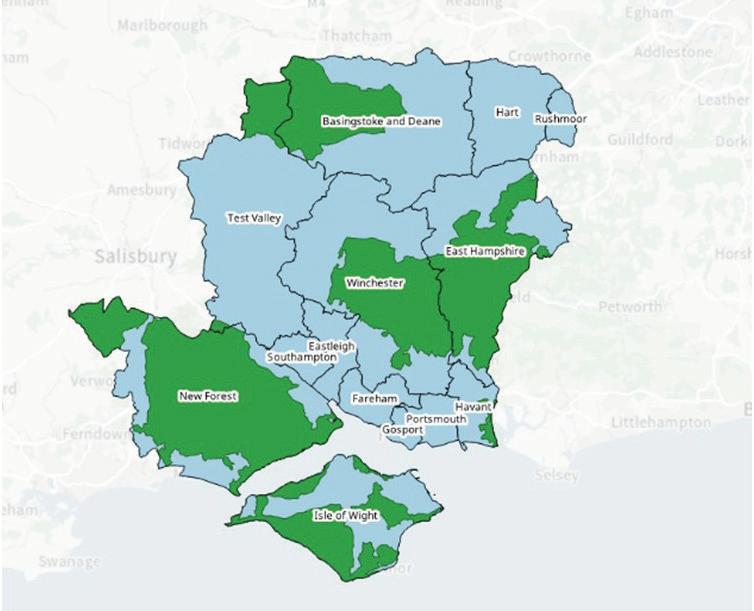
This would build on experiences in delivering nature recovery and biodiversity net gain alongside a continued drive to innovate to provide mitigation to enable strategic growth both within the new council area, and also within more urban areas including across the coastal areas of southern Hampshire. With option 2, work would be undertaken to ensure the same focus from the two unitary councils with National Parks in their area.
Southampton is actively working towards becoming a National Park City, reflecting a strong commitment to protect and enhance its urban natural landscape. Unlike traditional National Parks that are predominantly rural and protected areas, a National Park City recognises the value of biodiversity, green spaces, and nature embedded within an urban environment, emphasising coexistence between people, habitats, and development. This is aiming to position Southampton alongside pioneering cities like London, the world’s first National Park City. Achieving National Park City status means fostering a healthier, greener, and more connected city that enhances urban biodiversity and improves residents’ quality of life. These efforts complement and create stronger links with the surrounding Hampshire natural landscapes, including the New Forest National Park, reinforcing regional ecological networks and recreational opportunities. Ultimately, Southampton’s journey towards a National Park City represents a transformative model where urban and natural environments support each other. It promotes sustainability, climate action, and social inclusion, creating a city that is not only a better place to live but also a key part of the wider network of green spaces in Hampshire and beyond.
Nature Positive Portsmouth has secured £896,000 from the National Lottery Heritage Fund as part of Nature Towns and Cities partnership. The project will build capacity for nature recovery and climate resilient green infrastructure in Portsmouth addressing health inequalities and creating collaborative strategies and plans which will draw in further investment. Match funding provides a total project budget of £980,000.
As part of our four new mainland and Isle of Wight unitary model, we will build on the leadership model of the New Forest National Park and South Downs National Park Authorities to enable the new councils to deliver their duty to further the purposes of all protected landscapes. The New Forest ‘Leaders’ Panel’ brings together system leaders to drive the implementation of the New Forest National Park Partnership Plan. Building on this framework for collaboration supports the joint work required to deliver our collective goals for climate, nature and the green recovery.
This focus will also support the Mayoral Strategic Authority to deliver its environment and net zero agenda, building on established partnership working across Hampshire and the Isle of Wight such as the Greenprint initiative, Bird Aware Solent and Nutrient Mitigation which are governed through the Partnership for South Hampshire (PfSH), alongside the two existing Local Nature Recovery Strategies.
There is already excellent partnership working taking place across South East Hampshire with the four existing councils collaborating on a range of initiatives and schemes. Examples of the existing links include:
• Coastal Partners (see case study on page 52) which brings together the four authorities, alongside Chichester District Council, to protect 246 kilometres of Hampshire and West Sussex coastline.
• Building Control Partnership which was set up as a joint service between Gosport and Fareham around 20 years ago, with Portsmouth joining in 2015. Havant is also actively exploring joining the partnership. It has over 70% of the building control market share, built on strong relationships with regional developers.
• Fareham and Gosport Environmental Health Partnership which provides a joint environmental health service across the two authorities.
• Portsmouth and Gosport shared service arrangements with Portsmouth providing a range of services for Gosport Borough Council including the S151 function, Monitoring Officer function, communications support, property support and strong links with the housing services.
• Portchester Crematorium - a joint committee for the four authorities managing the operation of one of the UK’s most active crematoria based in Fareham.
• There has been a range of work across the four authorities to support economic development, including:
– The Portsmouth Harbour Economic Development Group, bringing together the four authorities, to discuss news,
projects, and collaborative opportunities for inward investment monthly.
– Joint work on the Get Solent Working Strategy recognising the needs across the area.
– Collaboration between the four authorities and DWP on a redundancy package as we recognise that employers recruit across our borders.
– Through the Hampshire Chamber of Commerce Portsmouth and District Strategy Group, the four authorities work with skills providers and business leaders to discuss government policy and local initiatives and for a number of years have been running an annual business week, delivering support events across the south east area working with organisations including SBSS and all authorities.
– Activities and meetings to support the Solent Freeport.
– Portsmouth advanced manufacturing and engineering cluster (PAMAEC) is a well-established group of employers (all sizes) who work together in south east Hampshire with bi-monthly meetings hosted on employer premises.
– South East Defence and Security Cluster – monthly and quarterly meetings/events to promote defence contract opportunities for SMEs within the region. All of our local authorities attend and promote the sessions.
– Multi-agency Solent Enterprise Zone Strategic Board, working jointly to deliver highways, utilities and other infrastructure projects that drive growth within the Enterprise Zone.
• Supporting joint bids for funding, for example the Havant and Gosport partnership with Department for Business and Trade to support a defence contract bid from Lockheed Martin and Standard Aero.
• The four authorities in the south east are part of the Partnership for South Hampshire (PfSH) which supports sustainable development across the Solent area. The 2014 Strategic Housing Market Assessment identified two housing market areas within PfSH, of which one was a Portsmouth housing market area covering the eastern part of PfSH. This has helped to provide a shared understanding of unmet needs within each of the local housing market areas, enabling individual councils to work together across their neighbouring areas to consider how to meet unmet needs.
• Portsmouth, Gosport, Fareham and Havant Borough Council are signatories to the Armed Forces Covenant and form the Solent Armed Forces Covenant Partnership Board (SAFPCB). This partnership approach to delivering the covenant within the Solent region of the wider county of Hampshire is supported through a joint needs assessment and action plan. It aims to raise awareness among serving personnel, reservists, and veterans of the support they can expect from local authorities, provide a broader understanding of the needs of the local veteran population as well as serving personnel during transition to civilian life, and evaluate the impact of these initiatives.
• The Portsmouth and SE Hampshire Partnership (https://the-partnership.co.uk), which is an organisation committed to improving the economic, social and environmental wellbeing of the wider city region.
While the links with Hampshire Constabulary are not currently coterminous, there have been a number of changes over the years to the constabulary operating boundaries, and it would be possible for Hampshire Constabulary to make a further change if it wished to. For health, Portsmouth Health and Care Board includes providers that go across the geography
including a hospital catchment for South East Hampshire. While there is also cross Solent partnership work, e.g. through Solent Transport, this does recognise the different transport networks and housing market areas, around the two cities of Southampton and Portsmouth.
The move to the new unitary authority will provide opportunities for enhanced outcomes for local communities. Portsmouth Homes hold council housing stock in Havant, Fareham and Gosport and so for example, Portsmouth City Council is the landlord to council house tenants in their stock based in Havant. This means that the support of the landlord function is from a different authority than the services provided by Havant Borough Council or the social care services provided by Hampshire County Council. This support for tenants / residents would all be provided by the new unitary council.
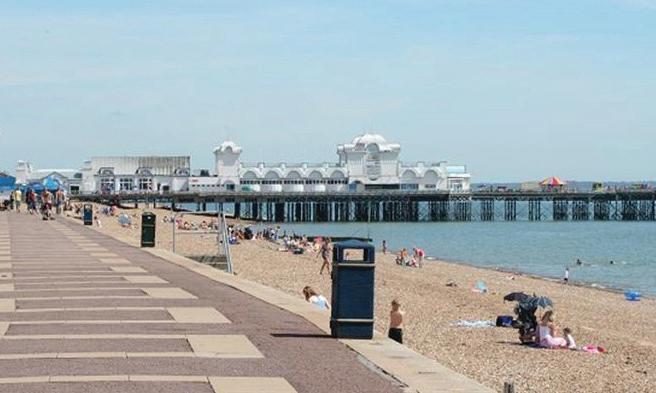
Coastal Partners was formed in 2012 and is a partnership of the four Portsmouth & South East Hampshire authorities. Chichester District Council also joined in 2022. Havant Borough Council acts as the host and employing organisation for Coastal Partners. Coastal Partners leads on coastal issues across 246 kilometres of Hampshire and West Sussex’s coastline and provides a mechanism for areas to combine expertise, local knowledge and access to cost-effective solutions for managing the risks associated with coastal flooding and erosion.
Coastal Partners helps to protect thousands of homes, businesses, wildlife and infrastructure. The partnership manages flood and erosion risk, plans and designs new coastal defence schemes, inspects and maintains existing defences and works towards a flood resilient future.
Coastal Partners is involved in schemes across the area, including the design and delivery of the hugely significant Southsea Coastal Scheme. This scheme is worth £187 million and will provide 4.5 kilometres of defences that will protect 10,000 homes and 700 businesses.
With its knowledge and expertise, it can act as the single voice for the local authorities across the area and help to act as a focal point for different government departments/agencies including HM Treasury, DEFRA and the Environment Agency. This means that it knits together the local bodies and the central bodies which aids decision making and funding bids.
A further example of coastal partnership work delivering efficiencies is the Channel Coastal Observatory (COO), hosted by New Forest District Council (NFDC). It is the lead organisation for the delivery of the Southeast Regional Coastal Monitoring Programme (SE RCMP) and is one of six regional programmes that make up the National Network of Regional Coastal Monitoring Programmes (NNRCMP) and it leads the co-ordination and delivery of the NNRCMP.
Through the delivery of the SE RCMP, the CCO is supported by partner authorities across the south east of England. This programme has been in place since 2002 delivering high quality coastal data to support Flood and Coastal Erosion Risk Management (FCERM) across the country.
Through the delivery of its FCERM function, New Forest works with partner risk management authorities through the Southern Coastal Group to share and develop research, best practice and resources across the region. Partnering
work is also undertaken through the delivery of Shoreline Management Plans (SMPs) and coastal strategies. This has recently included Bournemouth, Christchurch and Poole Council for the Christchurch Bay Strategy and the ongoing Hurst Spit to Lymington Strategy. The latter is being undertaken with the Environment Agency, Hampshire County Council and Natural England. By working together, more is achieved and potential duplication is reduced with resources more efficiently used across the local authorities.
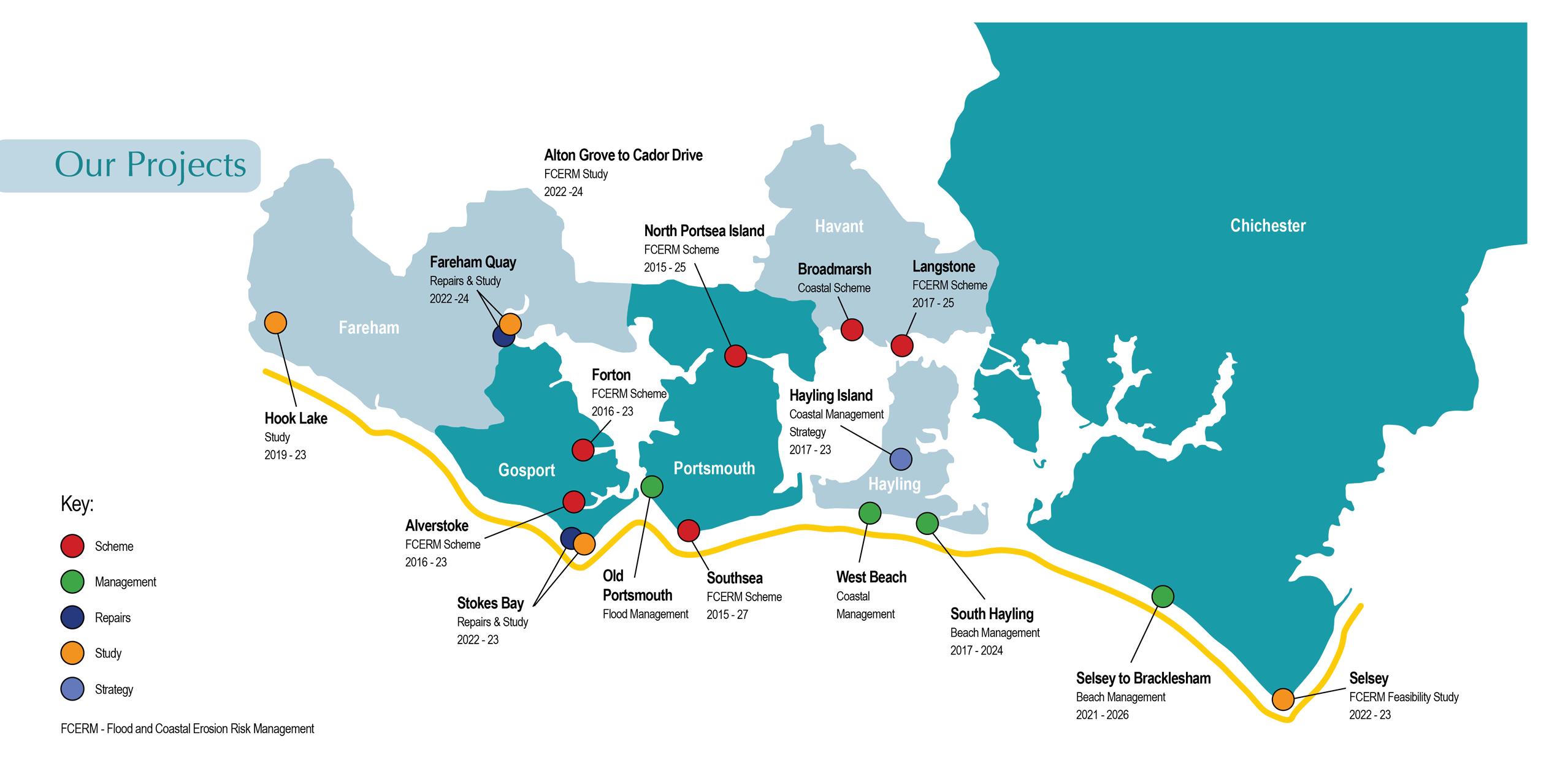
Partnership working in the South West Hampshire area is exceptionally strong and has operated in many contexts, from regional to ultra-local. Given that the Solent area has long been recognised as a natural economic geography – including by governments over many years – much of the partnership work has been on a Solent or South Hampshire footprint. Organisations such as Partnership for South Hampshire (PfSH), which includes all of the councils in the South Hampshire area, have been a vehicle for successful co-operation for decades.
The PfSH work on successive spatial planning strategies is described further in Section 4 Criteria 1. For the South West Hampshire area, the 2014 Strategic Housing Market Assessment identified two housing market areas within PfSH, of which one was a Southampton housing market area covering the western part of PfSH. This has helped to provide a shared understanding of unmet needs within each of the local housing market areas, enabling individual councils to work together across their neighbouring areas to consider how to meet unmet needs.
During the life of the Solent Local Enterprise Partnership, councils in the South West Hampshire area collaborated effectively with the LEP and local colleges to promote growth schemes such as the Solent Careers Hub (West) and the Central and West Hampshire Youth Employment Hub. Similarly, Solent Transport was for many years an effective partnership, co-ordinating transport policy in the South West Hampshire area and working together to secure investment in projects such as the Southampton City Region Transforming Cities Fund, which featured schemes to improve connectivity across three major travel corridors in and out of Southampton from
the Waterside, Eastleigh and Bursledon.
Local collaboration on cross-boundary schemes has also been strong, for example on the delivery of new and replacement sports pitch facilities associated with the North Stoneham housing development. Eastleigh Borough Council worked closely with Southampton City Council in engaging with the Football Foundation as pathfinders in their Parklife Football Hubs scheme. As a result, £8.9 million of grant funding was secured from the Football Foundation to create new football hubs at Stoneham Lane Football Complex in Eastleigh (completed 2019) and the Outdoor Sports Centre in Southampton (under construction). The two sites will be overseen by a charitable trust known as the Eastleigh and Southampton Football Trust, which will have representatives from both authorities as trustees.
Councils in the South West Hampshire area have always collaborated positively with the private sector where there are strong local interests to consider. A number of joint committees exist including the Southampton Airport Consultative Committee, the Port of Southampton Consultative Committee and the Solent Freeport Board. The Freeport in particular has a centre of gravity around South West Hampshire, featuring sites on both sides of Southampton Water and at Southampton Airport in Eastleigh, and has received strong and constructive support from all participating councils.


The government’s criteria for local government reorganisation has been a key pillar in the development of our proposal for Hampshire and the Isle of Wight.


Supported by a strong history of collaboration across the region, our proposal responds to local needs and challenges with a clear focus on transformation and best practice to deliver high-quality public services.




Our approach is financially sustainable and resilient to rising demand to deliver improved outcomes for our communities By aligning new councils with established population centres, our model protects local identity and strengthens place-based decision making.


Criteria one: a proposal should seek to achieve a single tier of local government for the whole area
In identifying the most effective unitary configuration for the region, our approach has prioritised balance – structuring new councils around the anchors of the four principal population centres and economic areas of Southampton, Portsmouth, Winchester and Basingstoke.
We have discounted options that create significant disparities between the proposed unitary councils, such as imbalances in tax base, population size, and GVA (gross value added). Our thorough analysis, backed by strong evidence, has been strengthened by place-based insights. This ensures that the impact of the proposed new unitary authorities is analysed from both a local and regional perspective, with a clear focus on outcomes and benefits.
Our four new mainland unitaries will deliver:
1. Economic leadership: strong local leadership tailored to the unique opportunities and challenges of each economic area, with bespoke strategies to drive growth.
2. A focus on place, infrastructure and housing: shaping and delivering the physical foundations to support sustainable development and growth, aligned with local priorities.
3. Innovation and economic development: creating the conditions for an innovative business environment, focused on growth and innovation, leveraging and scaling excellence.
4. Strong communities with the skills of tomorrow: investing in people and developing the skills needed in each of the economic areas to maximise their growth potential and support equal living standards and opportunities.
5. Ensuring financial sustainability and continuous improvement: using balanced unitaries which build on our distinct areas to reduce operating costs and deliver efficient services tailored to local requirements.
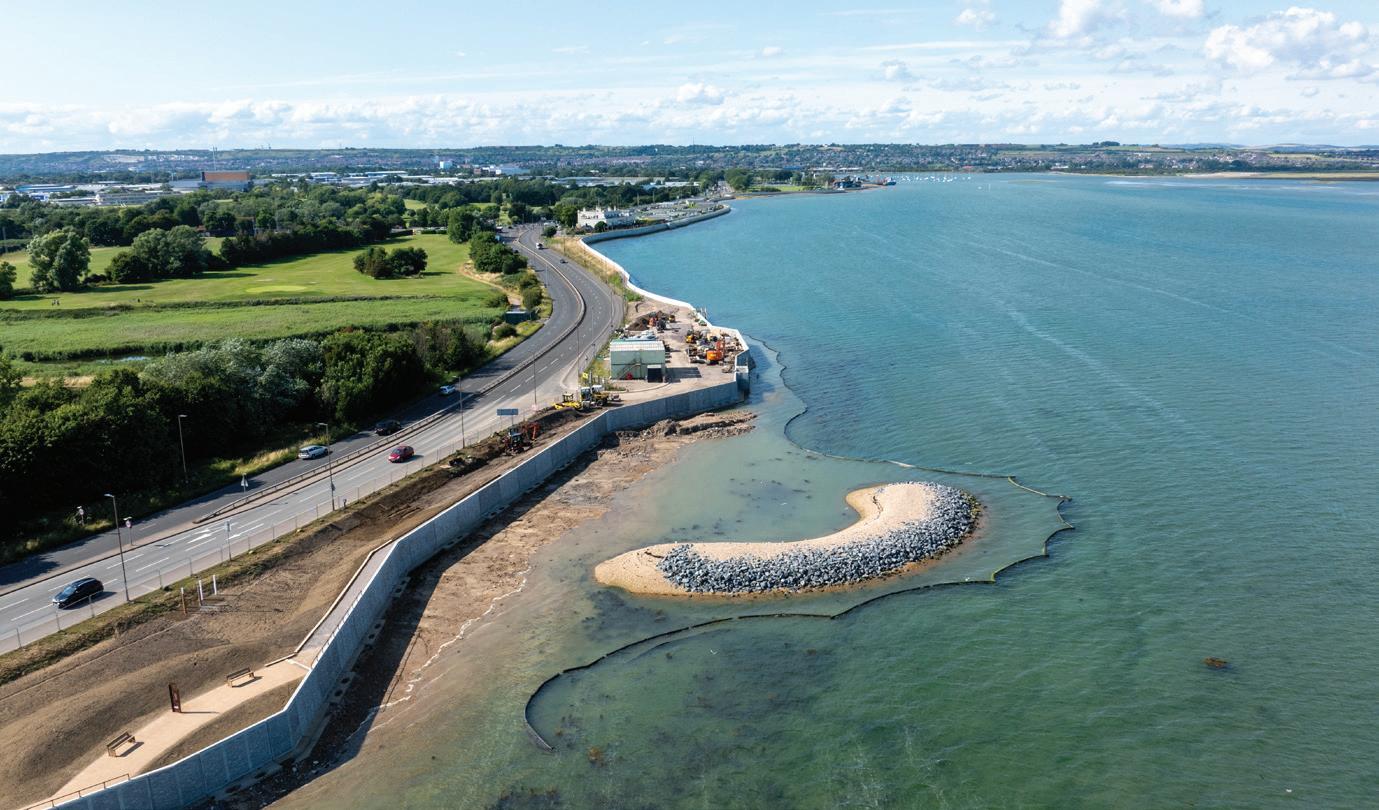
The table below outlines the various quantitative metrics that we used during the options appraisal. This table also highlights the assessment factors aligned to government criteria.
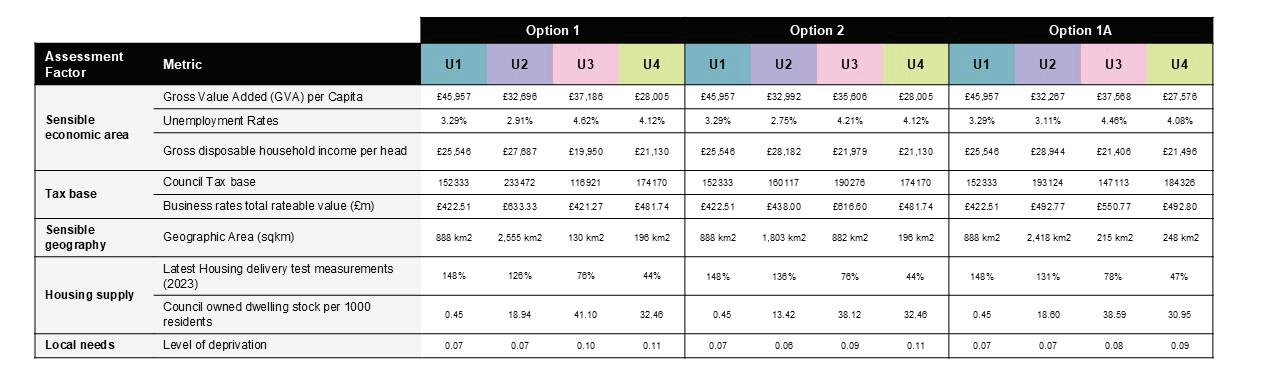
Hampshire and the Isle of Wight’s different economies are home to approximately 130,000 businesses, having experienced a healthy bounce-back after the pandemic dip. This has grown by around 11% over the previous five years to 2024. This is largely due to our key sectoral strengths across our major industries that have experienced notable growth. This includes the defence, digital and technology, agriculture and tourism sectors, amongst others.
We are well positioned to scale our established and emerging industries as we have aligned each of the four proposed new
mainland unitaries with a distinct economic area. This structure will enable more focused, locally responsive strategies to drive growth that benefits everyone.
In analysing the options, we focussed on creating a balanced configuration of equally sized new councils, each of which would be able to focus on promoting growth in its own area. Key indicators, such as council tax bases and business rates total rateable value, were included in the metrics when assessing balance between unitaries in potential options, as a fundamental measure of the new authorities’ ability to source income.
Our four new mainland unitary proposal enables each distinct unitary, as well as the wider Hampshire and the Isle of Wight area, to harness strong partnerships with the business community and other key partners. This will deliver proactive, place leadership and ensure each area is well position to seize economic opportunities when they arise.
The economies across Hampshire and the Isle of Wight are both diverse and distinct, capitalising on local skills, infrastructure, and network partnerships. Each economic area contributes unique strengths. Structuring new unitaries around these distinct economies will enable:
• Focused economies strategies: with tailored economic visions, streamlined planning and a targeted inward investment and business support approach.
• Strong identity and influence: by aligning economic strengths, areas will position distinct growth zones with greater leverage in funding bids.
• Unlocking business growth: simplified engagement with local government, coordinated investment, access to a larger and integrated talent pool, and more consistent planning and regulatory arrangements.
For example, Basingstoke in north Hampshire, serves as a key business hub with strong links to London via the M3 corridor. It is home to technology firms, data centres, and logistics operations, supported by a skilled workforce and business parks like Basing View. There is a high demand for IT and engineering skills, with local colleges and training providers offering STEM (science, technology, engineering and
mathematics) and vocational pathways aligned with employer needs. Its GVA and productivity is amongst one of the highest nationally comparably and the potential for further growth is huge.
Joining Basingstoke and Deane, Rushmoor and Hart as part of a North Hampshire unitary, would allow the area to draw on its shared industry base across technology, aerospace, defence, and financial sectors. The location of the proposed North Hampshire council is seeing increased interest from the film sector with studios in Farnborough alongside the international conference centre which is increasingly attracting national events out of London including the British Motor show and DPRTE, the UK’s premier defence procurement and supply chain event. This creates a complementary business ecosystem that supports innovation, supply chains, and skilled employment, facilitated by a mobile workforce across North Hampshire. The economy of the area has a GVA of £19.2 billion, and unlike the rest of Hampshire, points out of Hampshire into Berkshire, Surrey and towards London. Businesses in North Hampshire see the huge potential a new unitary council focused on the area would have as a catalyst for the massive growth potential it has. The existing councils already collaborate on areas such as waste management, street cleaning, and digital infrastructure, laying the groundwork for unified economic and spatial planning, development and investment as part of a new authority.
Winchester serves as a hub for key public administration, education, creative, and tourism industries. Establishing a Mid Hampshire unitary authority would integrate high-tech innovation, sustainable rural enterprise, and cultural-heritage tourism, providing a broader platform for sustainable growth
and business innovation in complementary industries. This expansion would also encompass the thriving market towns across Mid Hampshire, further enhancing regional development and economic opportunities.
Portsmouth’s economy is anchored in defence, engineering, maritime, and digital innovation, driving a strong demand for engineering and digital skills, such as cyber security. This demand is supported by educational networks, including the University of Portsmouth. A South East unitary authority would create a robust economic zone, integrating major industries like maritime logistics, defence and security, aerospace, advanced manufacturing, and digital innovation within a unified investment and skills framework. A South East authority will align further and higher education curriculums with local employers, simplify inward investment and export support for Solent firms, unify investment strategies for cross-cutting infrastructure, and enhance connectivity across all sectors.
Southampton, known for its established maritime logistics and life sciences industries, also boasts a growing manufacturing base, particularly in aerospace and pharmaceuticals. The skills required align with maritime, engineering, and bioscience sectors. The University of Southampton and Southampton Solent University support research and development, especially in marine and environmental sciences. Similar to the South East, a South West unitary authority would align further education and university programmes, such as Southampton’s National Oceanography Centre and Eastleigh College, and coordinate capital budgets to upgrade port infrastructure (Freeport). It would also accelerate improvements at the M27 junction and provide opportunities to address the wider city’s housing needs through the One Horton programme.
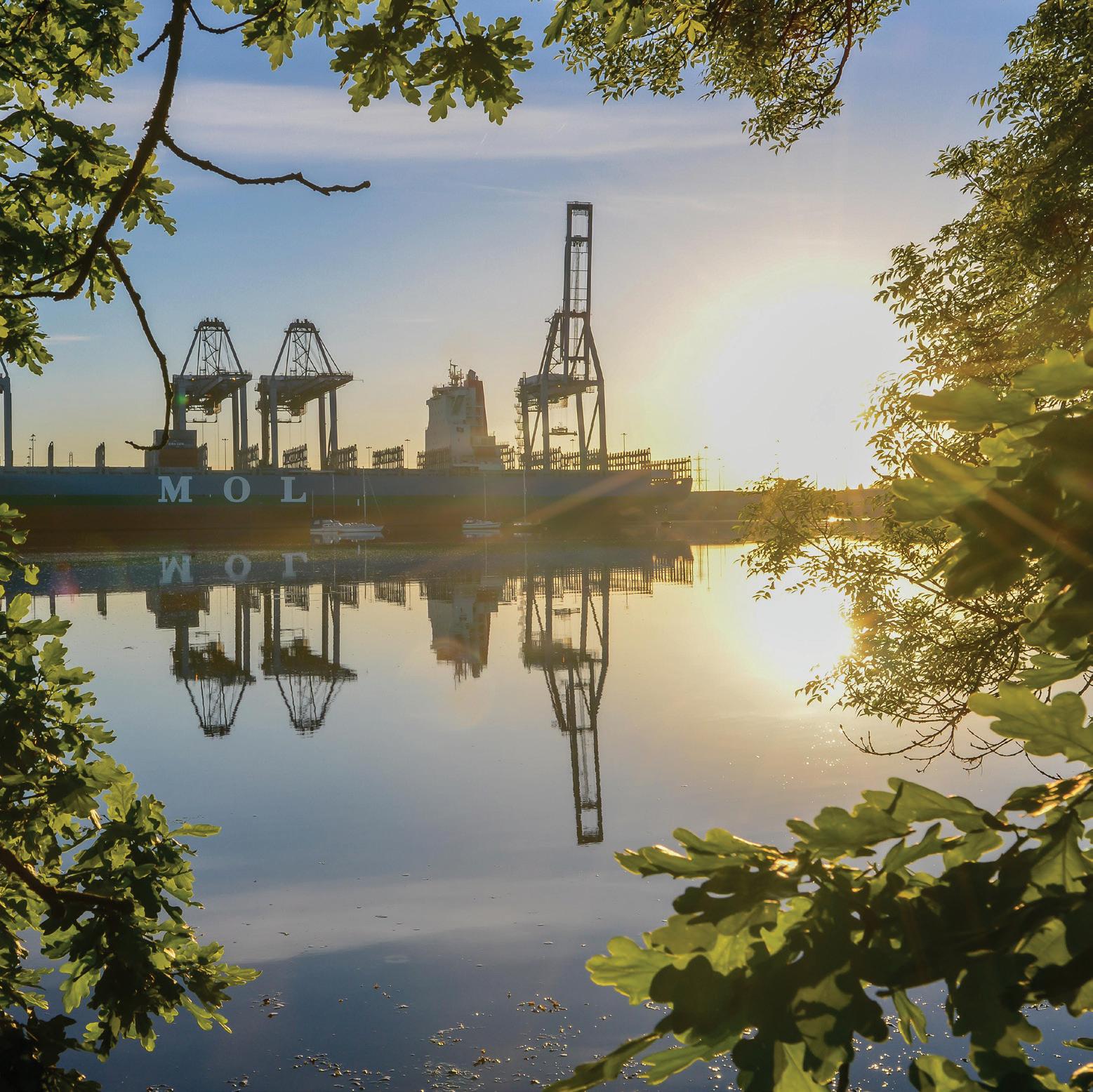
Southampton Water’s coastal location cannot be underplayed. Ideally located on the south coast close to major shipping lanes linking the UK to European and global markets, Southampton is Britain’s Gateway to the World. The port is the UK’s number one hub for deep sea trade and a critical link in supply chains serving businesses and manufacturers throughout the UK. As a designated Freeport it supports 45,600 jobs and contributes £2.5 billion to the nation’s economy. As an example, through sectors such as automotive and with EV supply-chains the Port supports 11,700 jobs in the West Midlands alone. Connectivity and infrastructure are critical through the Port, Southampton Airport, or via the M27 and M3 north and to London, or via direct rail links to the national railway network for both freight and passengers.
Creating a new coastal powerhouse is a major opportunity for our region that would result in a more strategic, unified position for business and infrastructure investment, higher GVA (gross value added), improved labour market outcomes such as employment and wages, productivity and export led growth.
Currently this significant asset base and associated manufacturing and logistics industries cover a clear geographic area spanning three local council areas, including New Forest District Council, Eastleigh Borough Council and Southampton City Council.
The aerospace and defence sector are widely acknowledged as a critical driver of economic growth in Farnborough, across North Hampshire and into neighbouring areas such as Surrey. Work is already underway with regional partners and multi-national businesses to help realise the opportunity of placeled sector growth. The sector assets are local, such as Farnborough Airport, Farnborough International Exhibition and Conference Centre and regional business partners like Farnborough Aerospace Consortium, but their outlook and operations are global. Future growth will come by working collaboratively across the North Hampshire unitary area and with the wider strategic authority so that we align investment, innovation assets, and infrastructure to maximise regional and national impact.

Hampshire and the Isle of Wight is strategically positioned along two of England’s busiest east-west corridorsthe M3/A303 and M27/A27. The A31 from Guildford to Winchester also plays an important role in that economic area. The M3/A34 provides the north/south link across Hampshire. There are five key rail lines: South West Main Line, the West of England Line, the Portsmouth Direct Line, the Alton Line and the Wessex Main Line. The rail networks in Hampshire and the Isle of Wight mirror the four mainland distinct economies, with large rail stations situated in Basingstoke, Southampton Central, Portsmouth and Southsea, Portsmouth Harbour and Winchester.
Southampton Airport has its own rail station and is near the M3/M27 junction. These transport routes connect its urban centres, ports, and airports. The region’s two major sea gateways, the Port of Southampton and Portsmouth International Port, handle over £45 billion in trade annually, while Southampton Airport and Farnborough Airport facilitate passenger and business travel.
Basingstoke benefits from the M3, A33, and the Reading–Basingstoke rail line to support its logistics and tech parks, with a borough-wide Local Cycling and Walking Infrastructure Plan (LCWIP) approved in March 2023 to extend cycle routes into town and business estates. Journeys to London are 35 minutes from Farnborough Main with Farnborough North and Aldershot providing direct routes to Gatwick.
Winchester is strategically located on the M3 corridor and South Western Main Line.
The New Forest is well connected through to the west and north by rail and road, and towards the Isle of Wight via ferry, while also being pivotal along the M27-A31 corridor linking South West Hampshire to Dorset and beyond. There are also several train stations including Brockenhurst and Totton.
Portsmouth benefits from the M275/A3, Portsmouth Direct Line, and multiple ferry links to neighbouring areas (Gosport, Isle of Wight and Hayling) with coastal road and rail upgrades focusing on tunnel refurbishments (Devil’s Punchbowl) and city-centre bus prioritisation to support its naval dockyards and visitor economy. The £48 million Bus Service Improvement Plan grant and the work on the South East Hampshire rapid transit system support access across the proposed area.
Southampton, which also has a direct ferry link to the Isle of Wight and has seen transformation of transport services, supported by an £18.5 million Transforming Cities Fund award, is delivering active-travel zones, Park & Ride expansion, and a new travel hub to integrate bus, rail and walking routes.
Transitioning to four new unitaries on the mainland would align travel geographies, working with the new Mayoral Combined Authority as the new Transport Authority, enabling place-based transport planning, investment and better delivery on the ground. This shift would bring holistic benefits to Hampshire and the Isle of Wight, including economies of scale in highways maintenance, shared ticketing systems, digital journeyplanning platforms, and on-demand community transport. Improved outcomes could also be unlocked:
• North Hampshire could pool capital budgets for M3 junction upgrades, coordinate the Reading–Basingstoke and Waterloo–Farnborough timetable integration, and secure better bus franchising across commuter corridors to London and the Thames Valley.
• Mid Hampshire could develop a unified strategy for connectivity improvements, especially in Test Valley where there are fewer transport links with just the A303 running through Andover east-to-west and the A34 running south through Winchester. There are opportunities to enhance rural bus networks and implement a cross-district Local Cycling and Walking Infrastructure Plan linking villages to Winchester’s station and employment hubs, improving access to surrounding areas.
• South West Hampshire could deliver a seamless Solent transport network, integrating Southampton West Park and Ride, Airport–City rapid transit, Eastleigh rail upgrades, and ferry-bus integration under one authority to boost portdriven freight and cruise tourism.
• South East Hampshire could streamline A3/A27 corridor management, enhance the Portsmouth Direct Line, improve Gosport ferry-bus-cycle interchanges and ferry access to the Isle of Wight, creating a single inward-investment offer for Solent and defence sector connectivity.
The Transforming Cities Fund has been used to develop Southampton West Park and Ride in partnership with University Hospital Southampton NHS Trust. Southampton City Council has continued to work together cross-boundary with Hampshire County Council on bus partnerships and in developing plans for Southampton Mass Rapid Transit (MRT), which are feeding into an infrastructure pipeline.
One example is creating a Park and Ride to serve Southampton. This has been a long-held transport policy aspiration for Southampton as a means of reducing car-based trips into the City Centre and other busy places such as the hospital. The City Council saw that this could be achieved by having a viable and affordable public transport route with a parking facility close to a major access route into the city.
In designing the service, it was important that the route from the designated park and ride car park to the end destination would need to improve bus priority to make journey times attractive and
reliable. The car park at Adanac Park forms part of a wider Health Campus and is located on the boundary between Southampton and Test Valley. The development of the project required joint working between Southampton, Test Valley Borough Council and Hampshire County Council. The three authorities worked together through the development management process to ensure that planning permissions timescales and approvals aligned.
Working together in this way allowed a staff only weekday park and ride service to the hospital to be operated by the hospital trust, and from September 2025 Southampton City Council will run a city centre service.
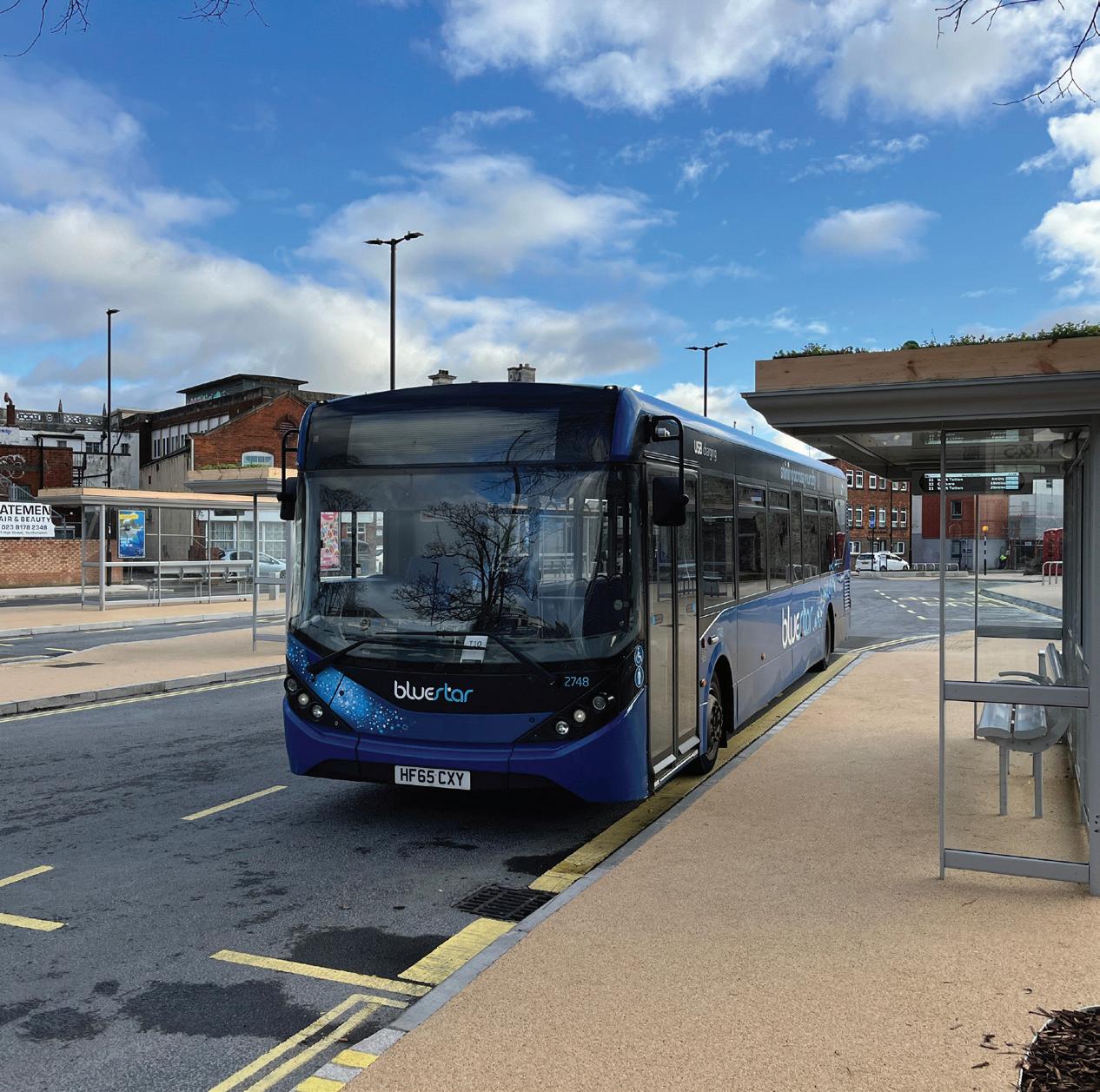
Rushmoor and Hart are part of the Blackwater Valley Transport Advisory Committee which includes districts from Surrey and the two upper tier authorities. As part of the development of their current Local Plans Hart and Rushmoor worked closely on impacts on M3 junction 4A and the transport improvements associated with Hartland Village on the Hart/Rushmoor border. Rushmoor and Hart also engaged in preparation of Hart’s Local Cycling and Walking Infrastructure Plan to align with the already adopted Rushmoor LCWIP. Coordination of Basingstoke, Hart and Rushmoor on M3 junction impacts of higher housing delivery has been identified in discussions between the three authorities as a key area of work moving forward for a new North Hampshire unitary council.

In 2019, over 3.2 million daily trips in the Solent area were managed through key transport points. Solent Transport, a partnership of local transport authorities, aimed to improve transport infrastructure in the region. It included Hampshire County Council (until they left earlier in 2025), Isle of Wight Council, Portsmouth City Council, and Southampton City Council. Since 2007, these councils collaborated with other local bodies and transport operators, forming the Transport for South Hampshire, later rebranded to Solent Transport. This unique partnership supported city growth in South Hampshire, driven by strong leadership and collaboration with the transport industry.
Solent Transport acted as a unified voice for transport, securing over £300 million in infrastructure investment, supported by the Solent Sub-Regional Transport Model (SRTM) developed in 2011, and improved partnership working arrangements which Solent Transport enabled. In 2018, Southampton, Portsmouth, Hampshire and Isle of Wight councils were shortlisted for the Department for Transport’s Transforming Cities Fund, receiving significant funding to improve transport infrastructure. The parallel Future Transport Zone programme, funded by the Department for Transport, aimed to enhance transport services and innovations in the Solent area, with Solent Transport receiving £28.8 million for a four-year programme which delivered a number of innovations including the award-winning Breeze transport super-app.
Effective partnerships and cross-border collaborations are crucial for the city’s success, benefiting businesses, residents, scholars, and tourists. Portsmouth and the Isle of Wight have worked with Hampshire County Council to deliver major transport projects, such as the A3 “Star” Bus Priority corridor and the Transforming Cities Fund Programme, which are part of a broader vision for a South East Hampshire Rapid Transit network. Portsmouth City Council maintains strong links with the Department for Transport, National Highways, Network Rail, and the Train Operating Companies. The city received significant Bus Service Improvement Plan funding, totalling £48 million, which has led to a 41% growth in passengers over the past two years, achieving the best postCOVID performance in the UK. These improvements benefit Portsmouth and the surrounding districts of Havant, Fareham, and Gosport. The success of these initiatives highlights the importance of genuine partnerships and institutional trust, which are essential for future developments across Hampshire and the Isle of Wight.
The area’s travel-to-work ecosystem is supported by a network of motorways (M3 and M27), rail corridors, bus networks, ferries, and active-travel routes. In the four major population centres of Basingstoke, Winchester, Portsmouth, and Southampton, commuting patterns often cross the existing small district boundaries, leading to fragmented services. Establishing four new unitary authorities on the mainland based on these four centres would align governance with actual travel patterns, enabling seamless planning, integrated ticketing, and targeted investment to enhance connectivity and economic resilience across the region.
• In the proposed North Hampshire unitary, commuters primarily use the M3 corridor and the Reading–Basingstoke and Waterloo–Farnborough rail lines to travel to Basingstoke and London.
• Mid Hampshire’s travel-to-work flows follow the A31/A34 and South Western Main Line into Winchester, supported by rural bus services and active-travel links.
• The proposed South West unitary is defined by the M27 motorway, the Southampton–Eastleigh rail corridor, and ferry-bus connections around the Solent.
• Meanwhile, the South East unitary relies on the M27/A27/ A3(M), Portsmouth Direct Line, and ferry-bus interchanges.
By forming four new mainland unitary authorities aligned with travel-to-work zones, that can work with the new Mayoral Combined Authority, several benefits will be achieved through integrated transport planning, targeted infrastructure investment, streamlined services (such as bus networks), and enhanced data-driven decision-making. This includes:
• Reduced journey times and congestion: Faster, more frequent and better-coordinated bus and rail services that mirror actual travel to work patterns around the four mainland economic areas, along with targeted road upgrades, will reduce peak-hour delays.
• Enhanced labour-market access: Reliable cross-existing district commuting will open up wider job markets, benefiting both employers and workers.
• Economic resilience: Streamlined transport governance under the four new unitaries focused on the actual economic areas on the mainland will lower barriers to investment in key employment zones.
• Environmental gains: Fewer vehicle miles travelled, increased public-transport ridership, and expanded active-travel infrastructure will help reduce carbon emissions.
This model is designed to meet the specific needs of these areas. While meeting housing need as defined by the Government’s standard methodology is a priority, we face challenges due to multiple constraints including flood risk, multiple nature conservation designations and protected landscapes. These make it harder to find land for development and plan locally. However, with careful planning and local decision-making, we will overcome these challenges and
ensure sustainable housing development supported by new infrastructure that aligns with the region’s diverse needs and environmental considerations.
More than 22% of Hampshire’s area is covered by nature conservation, with planning designations covering 49%. This is especially the case in the New Forest, with approximately 75% of the existing district falling within the New Forest National Park boundary. There are additional challenges experienced at a local level, impacting the ability to meet housing targets. Some areas have either virtually no green or brownfield land left (Portsmouth, Southampton and Gosport), impacted by airport zones or national landscapes (Basingstoke and Deane and Fareham), or face expensive viability hurdles on brownfield and small-site infill (Winchester, East Hampshire and Rushmoor).
Environmental factors also cause constraints across Hampshire and the Isle of Wight, particularly in coastal areas. Rural authorities, such as Test Valley and the New Forest, depend on limited windfalls or piecemeal greenfield releases, while affluent areas struggle to build genuinely affordable homes.
These current challenges result in shortfalls against fiveyear land supplies, protracted section 106/Community Infrastructure Levy negotiations, slim development margins on high-density schemes and pressure from appeals related to greenfield growth. This is shown in the diagram below which demonstrates the extent of the challenge across Hampshire and the Isle of Wight.
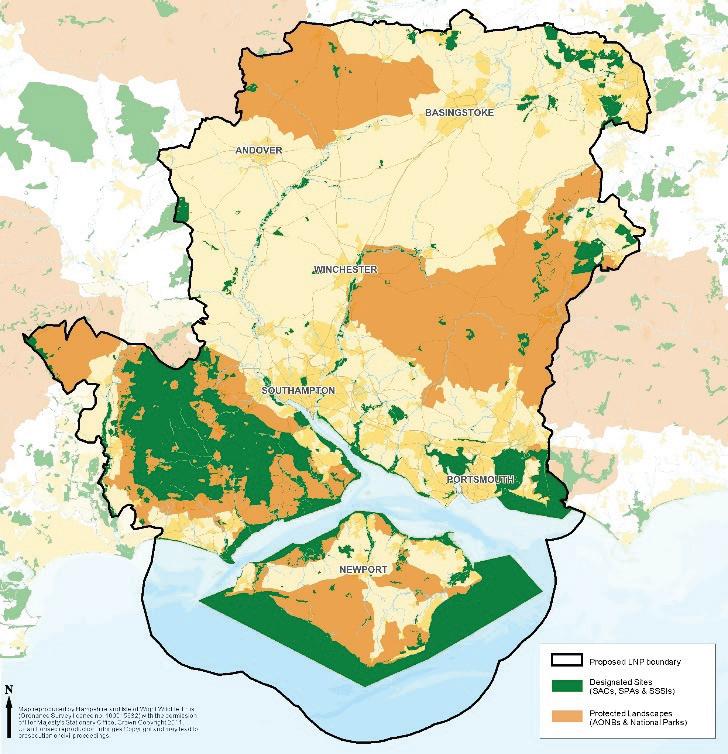
Focused governance in each of the four new mainland unitary authorities will facilitate more coherent and strategic planning policy, particularly in areas such as housing delivery. This approach supports pooled infrastructure levy receipts, single points of contact for developers and the supply chain, and clearer management of the five-year land supply. Together, these measures would accelerate the delivery of homes better aligned with local needs:
• In a North Hampshire unitary, a single local plan and enabling approach will unlock garden community sites and establish consistent developer contribution rates. This would enhance the deliverable land supply and expedite Section 106 and CIL agreements to provide the necessary supporting infrastructure.
• A Mid Hampshire unitary will balance the natural capital of the area’s unique environment (including, options 1 and 1A, two national parks and two national landscapes) with regeneration and intensification of their market towns, rural infill and strategic allocations (including new settlements). By planning the growth of communities strategically across this area, opportunities can be taken to maximise the delivery of new infrastructure to unlock development opportunities to meet a variety of different needs in this rural setting.
• The South West unitary will coordinate brownfield intensification, residential releases near airports, and the timing of urban extensions within a single strategy, focusing on the viability of high-density schemes.
• In the South East unitary, there will be some opportunities to integrate coastal planning with waterfront regeneration and infill targets. This would align flood-risk mitigation investments with the delivery of new homes.
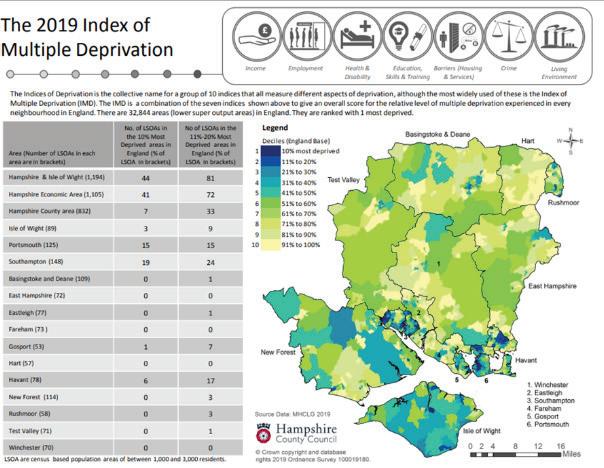
Our community-aligned and focused new unitaries will be able to plan and deliver at a scale, remaining close to local priorities and requirements. Larger, one-size-fits-all solutions, cannot be applied to housing in Hampshire and the Isle of Wight due to specific place-based factors, and there is a risk posed from a larger unitary model in which remoteness blunts responsiveness and the ability to deliver. Through our four new mainland unitaries, local plans and delivery can effectively address the mix of green-belt, national landscapes, brownfield and flood-risk constraints in each area.
Placing further pressure on already stretched housing resources is the increasing challenge of homelessness across the region. Increasing numbers of people in temporary housing and those experiencing rough sleeping are diverting affordable housing stock into emergency use. This reduces the availability for general allocation and drives up reliance on costly solutions such as bed and breakfast placements and spot-purchased hotels.
The scale and nature of homelessness challenges vary across the region. For example, in deprived areas within Portsmouth, Southampton and Gosport, annual homelessness acceptances range from 200 to 650 households, with year-on-year increases and have risen between 10 and 20% year-on-year. Temporary accommodation figures in these areas range from 150 to 400 households, up 8 to 15% year-on-year.
While urban areas face increased pressure, pockets of deprivation exist throughout Hampshire and the Isle of Wight. Deprivation is not the only factor driving homelessness across the area, with health and social care, rural isolation and floodrisk also contributing to local issues.
Our four new mainland unitary councils, aligned to the distinct population centres and economic areas and the way people live their lives within Hampshire and the Isle of Wight, would better understand and respond to local housing challenges – enabling more targeted, innovative and sustainable solutions.
Pooling affordable housing contributions and aligning local best practice approaches to homelessness prevention, rough-sleeper outreach and temporary accommodation procurement to local demand and land availability are some of the ways through our proposal will improve outcomes for our communities. A place-based approach at this scale optimises resource pooling but also allows the new unitaries to specialise in local issues while keeping decision-making close to communities.
This place focused model of new unitary councils enables more effective prevention, delivering healthy land-supplies and stable housing delivery by tailoring policy to local market conditions and community needs. There is a risk through aggregating on a larger scale into even larger unitary councils that local voices will be diluted, slowing down homelessness responses and housing allocations.
Ensuring local based housing solutions for residents in sensitive and protected landscapes across the proposed Mid Hampshire unitary area is an established key strength. Balancing a shared commitment for growth with the responsibilities to ensure that the natural environments are protected and enhanced, work is progressing around ambitious growth strategies with a diverse mix of scale and type of sites throughout both urban and rural areas.
Mid Hampshire existing councils are already leaving no stone unturned in rising to the challenges of meeting housing needs, while also being mindful of the unique characteristics of the geography, particularly its internationally recognised chalk streams, national parks, and the flora and fauna throughout. Over the last ten years, Mid Hampshire has enabled a significant uplift in housing delivery across the geography, despite the challenges caused by COVID-19 and the short-term impacts of addressing nutrient neutrality since 2020.
Housing delivery across Mid Hampshire from 2014/15 to 2023/24
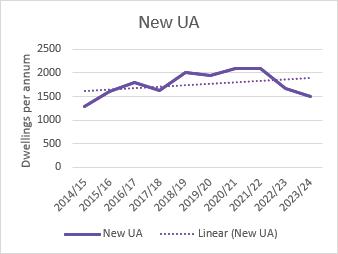
Working through the Civic University partnership with the University of Southampton, in-depth research has shaped an approach that identifies and addresses the often-expressed concerns about increased housing in smaller settlements. This enables sensitive development that strengthens local communities and allows generations to remain in the communities they identify with, especially within national parks and national landscapes. This is set alongside a positive approach to exception sites to provide local housing for local people in rural areas.
The shared geography has led to significant collaboration as Mid Hampshire innovates to find solutions to unlock growth. Recent examples include mitigation works to secure nutrient neutrality and recreational disturbance mitigation. Working with partners in the national parks and landscapes, Mid Hampshire recognises the intrinsic value that the national parks and landscapes have for existing and future residents, including their natural capital and green growth opportunities.
In delivering new growth, Mid Hampshire has been successful in delivering infrastructure and associated services that support communities in living sustainably. Mid Hampshire has been working closely with the NHS and other partners to ensure that new community infrastructure (e.g., halls/ surgeries) is designed to be adaptable to changing needs. Opportunities to use developer contributions and other funding available have been maximised to help create and sustain communities. Examples include community developer workers and upgrades to village halls.
A commitment to tackling the climate crisis runs through Mid Hampshire’s approach to delivering sustainable communities, with emerging policies seeking to respond to the challenges of delivering net-zero carbon development. Winchester City Council’s Local Plan, currently at examination, includes requirements for Passive House build, with emerging local plans promoting LETI energy efficiency and the concept of 15-minute neighbourhoods to ensure sustainability. In addition, groundbreaking work to ensure nutrient neutrality through upgrades to small-scale wastewater treatment works enables development on sites otherwise blocked and protects internationally recognised chalk streams.
The new Mid Hampshire unitary would be the corporate landlord to around 10,000 households and would continue its commitment to affordable/social housing provision through established success in securing Homes England and MHCLG grants and LAHF funding. With a flexible approach to local authority-led building, leading the way in securing s106 sites to boost delivery, a housing company providing housing for key workers, and buying off-plan from developers to ensure the provision of social housing. Strong partnerships exist with the Registered Provider sector, with several large RPs securing affordable housing on key strategic sites. Finally, there is a commitment to carbon reduction to tackle the climate emergency
The Partnership for South Hampshire (PfSH) has been established for over 20 years and currently represents 11 authorities in South Hampshire, including those represented in the south of Mid Hampshire, South East and South West Hampshire unitary clusters, and covering the main local housing markets in the area. Over this period, in-order to support housing delivery, the PfSH authorities have agreed:
These set out a common strategic approach and agree a distribution of housing and employment development needs, the latest being the Spatial Position Statement, December 2023. They form a key part of the evidence to demonstrate that individual councils are working together to address strategic planning matters. This is a requirement under the statutory ‘duty to co-operate’, so forms an important part of preparing local plans which can pass their examination and be adopted.
The most recent Spatial Position Statement (December 2023) agreed a distribution for 65,000 homes. It also identified a number of broad areas of search for growth, to be considered further through local plans. Previous versions of PfSH’s planning strategies have been instrumental in helping to bring forward new strategic sites, such as at Welborne (north of Fareham), identified for 6,000 new homes in the Fareham local plan.
Common approaches to the delivery of environmental measures
These are measures required under the habitat regulations, to fully mitigate the effects of increased recreational pressures on the Solent (the ‘Bird Aware’ programme) and nutrients in the Solent.
The schemes have been devised in close partnership with Natural England, and with other affected authorities in the Solent area. They have overcome significant regulatory
barriers by creating a shared and practical approach which can be implemented by developers in-order to protect internationally important environmental designations and enable development. This work has put South Hampshire in a leading position in addressing these issues.
PfSH has prepared successive Strategic Flood Risk Assessments, a Green Infrastructure Strategy and Integrated Water Management Study. It also acts as a single point of contact for strategic dialogue on development issues with transport and other infrastructure providers. This work has secured efficiencies and a better shared understanding of strategic issues.
Overall, these approaches have all facilitated housing delivery by supporting a strategic and ‘joined up’ approach, providing the evidence to support the progression of local plans and facilitate the delivery of development in accordance with the habitat regulations.
PfSH is determined to ensure that this successful record of joint working is carried forward into the new structures to be created through local government reorganisation.
Rurality in Hampshire and the Isle of Wight presents a distinct set of pressures that creates and challenges in meeting the needs of many residents. Around 75% of land, home to approximately 300,000 people out of over 2.1 million, is classified as rural, yet communities and local authorities often lack the critical mass and budgets to sustain services on the ground.
Public transport in rural areas is sparse and expensive to operate, resulting in unequal access to services. Broadband and mobile coverage also adds to current inequalities, cutting people off from jobs, education and tele-health. The small-scale nature of settlements means higher per-capita costs to deliver housing, social care and healthcare, further driving inequalities in access and outcomes compared to urban areas. With ageing populations, flood-risk zones and National Park constraints, there are issues when trying to attract investors and developers or retain skilled workers, compounding isolation and service shortfalls.
These dynamics contribute to deprivations and inequalities across rural areas: longer emergency service response, delayed hospital and social care access, rising loneliness, fewer affordable housing options and limited employment opportunities beyond agriculture, tourism or care work. Young people in rural areas face significant barriers to accessing local employment opportunities, contributing to outward migration and weakening long-term community resilience.
Our four new mainland unitary councils align boundaries with rural catchments and how people live and work. By creating new unitaries that can focus on their specific priorities and
challenges, each authority would be able to work with the new Mayoral Combined Authority to:
• Pool and prioritise transport budgets to extend rural bus, mini-bus and demand-responsive services, and fund community-led volunteer schemes.
• Coordinate digital infrastructure upgrades to deliver broadband and 5G, using streamlined planning and investment.
• Consolidate housing strategy to inlock small-site rural exception schemes, aligning s106/infrastructure levy receipts and fast-track affordable homes.
• Embed multi-agency rural support hubs combining social care, health outreach and mental wellbeing services, avoiding duplication across the area.
There is a high likelihood that these challenges will get lost if aggregated into a bigger unitary model, creating further division and inequalities. Our four new mainland unitaries would be responsive to local needs, enabling rural focused decision making and working with residents to bring better outcomes that would be lost in a larger scale structure.
Rural connectivity is a critical factor in ensuring that communities remain sustainable and resilient. Test Valley Borough Council has played an important role in creating the conditions for this to happen through a range of initiatives, based on local need, both with a community and economic focus. In 2011, Test Valley Borough Council engaged the LGA to help develop a model that would empower councillors to become catalysts for change in their communities. The council has developed a ‘community councillor or front line’ model to provide local communities with the resources and support required to achieve real impact and build community capacity/ resilience. In Test Valley this form of neighbourhood empowerment has seen significant investment in our rural communities through community led action planning. The infrastructure established, such as community hubs, has been much more than bricks and mortar. Communities
have been provided with the means to look after their own and ultimately it is at local level, where the power of prevention will reduce demand for public services. An example of this is the creation of a new Broughton Community Shop which helps combat rural isolation and where accessing services is difficult. This hub provides a combination of village shop, post office, café, and digital workspace to improve connectivity and meet the daily needs of surrounding villages, as well a supporting the local tourist economy.
Our approach has extended to investment in the rural economy including the creation of business support grants, to increase productivity and job creation, and Rural Net Zero Business grants. Community grants have supported facility improvement projects to increase their resilience and sustainability. The Net Zero Pilot Demonstrator is example in increasing resilience in the agricultural sector.
This was a national first which trialled new farming techniques on two farms with the joint aims of maintaining crop productivity through reduction in fertiliser use therefore reducing input costs and reduced nitrate impact on river courses.
Our proposed reorganisation into four new mainland unitary councils presents a significant opportunity to address long-standing disparities in council tax levels. The financial modelling underpinning this proposal does not assume council tax harmonisation in its breakeven analysis as any decision to harmonise council tax levels would rest with the new Shadow Authorities. However, there is a potential additional revenue of £128 million over 10 years through harmonisation. This predominantly relates to the uplift in the council tax referendum threshold (or cap) from 3% for a borough/ district council to 5% for a unitary council. This represents a substantial fiscal lever that could be used to support local investment and service transformation.
In parallel, there is also opportunity to strategically manage the total business rates. With a current average of £422 million across the four new unitaries for each option, there is opportunity to create a platform for more consistent and equitable economic planning, enabling each unitary to align business rate strategies with local economic priorities while contributing to a more balanced and resilient regional economy. By aligning governance with distinct economic geographies, our new councils will be better positioned to unlock growth, attract investment, and ensure that business rates income is reinvested in ways that reflect the needs and ambitions of each area.
Together, these opportunities underscore the potential of our proposal not only to streamline governance and improve service delivery tailored to local needs in each area, but also to unlock new fiscal tools that support long-term financial sustainability and local empowerment.
Like many areas across the country, councils across Hampshire and the Isle of Wight are struggling with rising demand for adult social care and children’s services, alongside inflationary pressures that are increasing overall operating costs. The twotier system in part of the region exacerbates these financial challenges by maintaining parallel teams, separate IT platforms, and duplicated back-office functions, which diverts resources away from frontline services.
Hampshire County Council faces a budget gap of £136 million, rising to £206 million in 2027/28 and £281 million in 2028/29. The county council has acknowledged that even if they were able to balance their budgets in the short term, it would still likely lead to a S114 notice in the future. Without genuine transformation, the county council’s budget gap is likely to widen due to unachieved savings and continued growth in demand and spend.
In contrast, Southampton, one of the two existing city unitaries, has transitioned to a self-sufficient position, having previously used £39.3 million in exceptional financial support (EFS) to set a balanced budget. Through transformation initiatives and targeted government funding, Southampton has been able to balance spend without needing new EFS for dayto-day spending in 2025/26. Portsmouth, the other existing city unitary, continue to manage its finances effectively and has never applied for EFS.
We believe this demonstrates that four new place-focused unitaries, serving a population of 400,000 to 600,000 each can achieve even greater efficiencies and improvement through transformation and innovation while remaining close to the communities they serve.
Our proposal outlines that four new authorities on the mainland is the most viable way to establish financially sustainable structures, ensuring that reorganisation and devolution lead to economic growth and high-quality service delivery built for the long-term, linked to the wider public sector reform agenda. Our four new unitaries model will unlock efficiencies, improve capacity and withstand financial shocks by:
• Empowering each authority to manage its entire budgetary process from start to finish.
• Centralising procurement, including IT, highways maintenance, and social care placements.
• Enhancing transformation teams across each distinct area to achieve savings from service redesign tailored to local needs and secure post-vesting day milestones.
• Unifying capital and revenue planning to ensure major projects are funded from a strategic envelope tailored to local requirements, rather than a broad model that overlooks specific resident, community, and local ecosystem requirements.
• Leveraging local relationships to support key localised service provision and service integration and transformation through a total place based approach, building and scaling capacity across distinct areas.
• Fostering competitiveness within the supplier market
as unitary authority’s cover balanced geographical and population areas.
• Enabling growth and increasing financial resilience in major and emerging industries by forming unitary structures that focus on the distinct economic areas and industries, such as defence, maritime, agriculture, and digital. Local interventions can enhance diverse economic areas across rural and urban settings, positively impacting the local economy, skills, and employment and generating significant income.
• Ensuring the best democratic representation for each new unitary with balanced populations connected to distinct communities, reducing current councillor numbers by 40%, and reviewing member allowance schemes across Hampshire and the Isle of Wight.
• Ensuring the size of the organisation is proportionate to the services that are being delivered by enhancing operational efficiency and delivering more impactful roles.
• Reviewing and rationalising the property portfolios to ensure alignment with each authorities’ overall objectives and community needs, optimising the return on assets.
• Enhancing customer contact facilities by ensuring the needs of residents are met through proportionate customer engagement services, including developing self-service digital channels alongside driving operational efficiencies and improving overall customer satisfaction.
• Consolidating the fleet portfolios to realise route efficiencies and minimise environmental impact through sensible geographies for each of the unitaries.
While larger unitary models may offer greater scale, they risk prioritising short-term financial gains at the expense of local
responsiveness, diluting local voices and stifling the economic specialisms that underpin local resilience. There is also a risk that simply consolidating Hampshire County Council’s existing liabilities under a smaller number of roofs will make the deficit even more unwieldy, rather than addressing underlying issues in focused, place-based structures.
Our new four mainland unitaries strike a balance - being large enough to deliver and benefit from financial efficiencies, such as s106 and infrastructure levy receipts, streamlined procurement, staff rationalisation and reduced duplication, while remaining closely connected to local areas.
By aligning our new unitaries with local economies, we can tailor fiscal strategies to local growth sectors, safeguard reserves against demand-driven shocks in adult social care and maintain the democratic accountability that ensures key public services remain responsive to local needs. The four new mainland unitaries will be genuinely connected to their communities and able to realise the opportunities of focused, place-based prevention, commissioning and transformation in high-cost areas such as adult social care.
During our options appraisal process, we assessed each option against government criteria 2 to determine whether they were the right size to achieve efficiencies, improve capacity and withstand financial shocks. As well as the detailed financial case, which includes a detailed assessment of each option, we first established the viability using a variety of metrics, informed by public sources as well as council s151 officers. This data was then ratified with them to ensure data and analysis was accurate. The purpose of this initial piece of work was to determine options with appropriate balance and ensuring that, for example, one unitary was not left with an unviable position that would be detrimental to their financial sustainability.
Metrics covered a number of assessment factors as part of the options appraisal aligning to government criteria 2, including population, transition costs, financial efficiencies, establishing a firmer financial footing and council debt.
Please see page 54 for more information on the proposed areas for each unitary option.
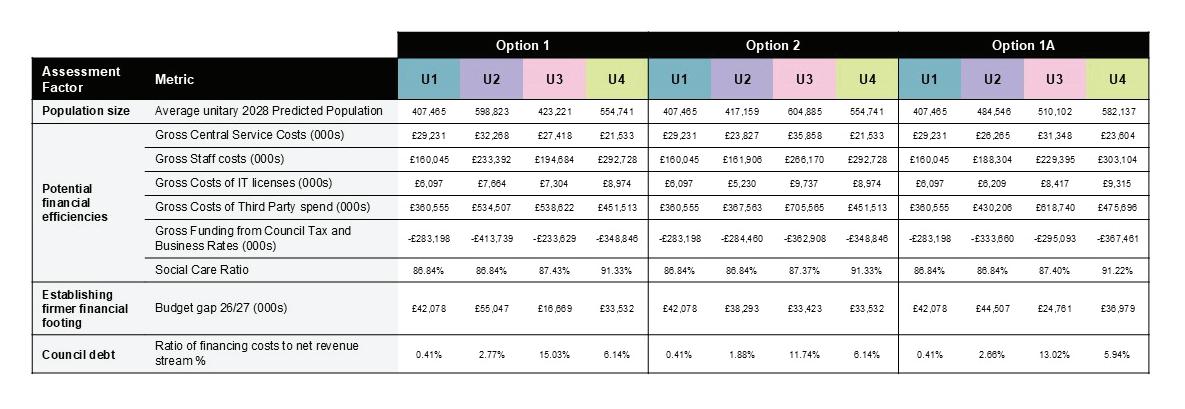
The three variants of our four new mainland unitary model creates balanced populations across each unitary, reflecting each distinct economic area and local identity. The following table outlines the 2023 and forecasted 2028 population sizes for each proposed unitary under options 1, 2 and 1A.
Our proposal creates the right sized unitary structures which focus on place-based prevention and public sector reform, tailored to the distinct requirements of our communities. We want the future of critical services and local government to focus on outcomes, quality services and the capacity to deliver through strong local leadership.
Our proposal enables efficiencies to be gained by our four new mainland unitaries through a comprehensive review of the existing structures and processes to identify opportunities which are achievable. Our four new mainland unitaries will drive efficiencies, capacity and wider public sector reform through sustainable structures linked to distinct identity and requirements.
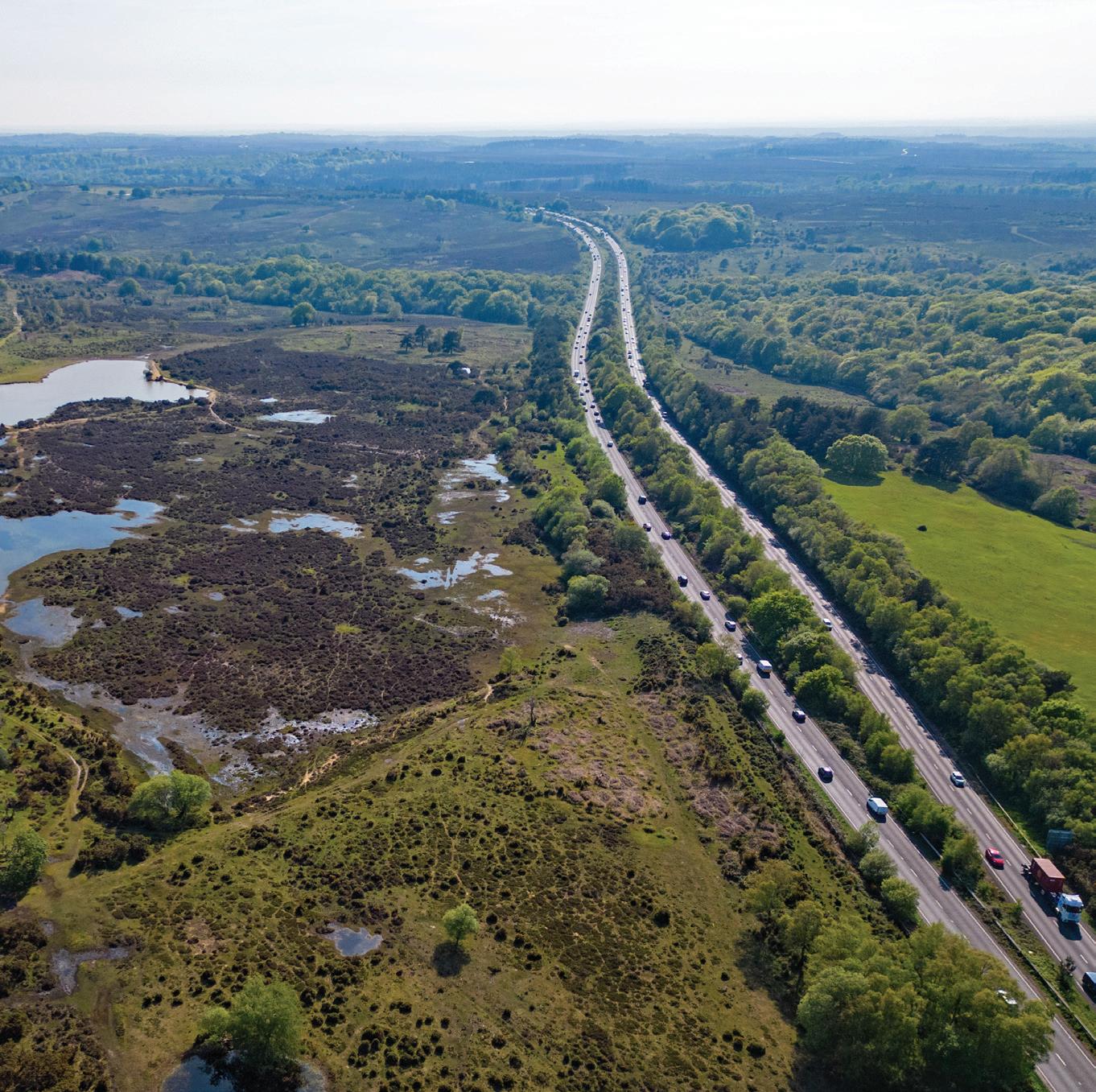
The following represents a summary of our financial case which is also set out in full in section 7:
• Implementation and disaggregation costs: One-off implementation costs by year 3 for Options 1 and 2 are estimated at £128.2 million (base) and £155.5 million (high), with additional annual disaggregation costs of £17.9 million (£19.7 million in High). For Option 1A, there are one-off implementation costs of £133.0 million (base) and £160.3 million (high), primarily driven through the additional complexities and costs of disaggregating with boundary changes.
• Recurring savings: By year 3, the reorganisation is projected to deliver annual recurring savings (net of existing partnerships) of £81.8 million in the base case and £111.5 million in the high case across options 1, 2 and 1A. These savings represent 2.2% and 3.0% respectively of the combined total service expenditure of £3.8 billion.
• Payback and net benefit: Payback is achieved within 3.0 years (2.3 years in high), with an annual net financial benefit of £63.9 million (£91.8 million in high) by year 4 for Options 1 and 2. In Option 1A, Payback is achieved in 3.1 years in the base case (2.3 years in high) with the same annual net financial benefit as Options 1 and 2.
• Comparative viability: All three modelled options (Options 1, 2, and 1A) deliver a positive net financial benefit, with Option 1A incurring slightly higher implementation costs due to boundary changes but achieving similar long-term savings.
Hampshire County Council alone is forecasting a gross budget gap of £136 million by 2028/29 and with pressures to rise to £281 million. There is an expectation that the county council will look to reduce this budget gap as much as possible prior to vesting day. The forecasted gross budget gaps of all other councils by 2028/29 totals £42 million. However, if there are any residual budget gaps post vesting day, the recurring savings of £81.8 million (base case) and £111.5 million (high case) projected from our proposal would contribute to closing residual budget gaps across the new unitary authorities. By enabling more efficient, place-based service delivery, the new councils would be better positioned to manage financial pressures and reinvest in post-reorganisation transformation, supporting long-term financial resilience and sustainability.
As of 31 March 2025, there are £1,779 million of total usable reserves. It will be up to each new authority to determine how to use its resources to fund the cost of reorganisation which is likely to be through a mixture of use of reserves and capital receipts to support the transformation.
Since formalising their Environmental Health Partnership in 2014, Fareham and Gosport Borough Councils have exceeded all expectations of joint working. What began as a trial to save £50,000 each has delivered over £450,000 in its first year alone, thanks to a strategic restructuring later honoured with an iESE Transformation Award, and a further £77,000 between 2014 and 2023.
By pooling staff, assets and expertise, the partnership has driven continuous efficiencies while enhancing service quality, flexibility and customer focus. Today, environmental health teams in both boroughs deliver the same high standards at no additional cost to residents, even as everyday prices rise, demonstrating the power of place-based collaboration to protect public health and the local environment while generating significant value for money.
The service has a clear vision to manage coastlines, improve community resilience and enhance the natural environment and has a strong capital programme in excess of £500 million. Through ‘growing their own’, the service is a high performing multidisciplinary team reducing reliance on consultancy support. They also perform as an intelligent client, commissioning multimillion-pound projects delivering high quality outcomes for our communities with significant measurable efficiencies of over £11 million.
The shared service is now a mature partnership that demonstrates strong governance delivering under a Section 113 Local Government Act agreement placing staff at the disposal of each of the partner councils. The partnership operates an equitable fee structure where those with most need contribute more but also receive the most benefit. Clear business planning and excellent communication is a hallmark of the success of the service which has led to national sector recognition through various awards. By working as ‘One Team for One Community’ across all borders, the service demonstrates an efficient use of staff, increased confidence that key
objectives will be achieved and has a strong track record of project delivery with more staff delivering more projects more efficiently for a lower cost to the partner authorities saving £4million in operational costs since its inception.
Working side-by-side with the five local authorities and in line with their corporate strategies, vast cost savings, shared resources, and knowledge pool benefits are realised. The partnership approach has promoted ‘swimming together’ rather than in lanes to deliver something greater than the sum of its parts. The agile approach and proven success of the model can be easily scaled to deliver well for the proposed new unitary authorities following local government reorganisation under a new flood, coast and environment service. Through cross-boundary working, the partnership also maximises its presence which leads to greater fund generation opportunities, a wider network and increased influence in the sector. The team is at the forefront of lobbying for a more cohesive sector approach, nationally and locally, that will help councils deliver more realistic outcomes for coastal communities.
In Portsmouth, the Southsea Coastal Scheme is the UK’s largest local authority-led Flood and Coastal Erosion Risk Management (FCERM) scheme. It stretches for 4.5km and will reduce the risk of flooding and erosion to more than 10,000 homes and 700 businesses. The £200m project will revive and rejuvenate the Southsea seafront through significant public realm improvements, all while delivering a world-class flood defence system to protect the city for the next 100 years.
Examples of how these efficiencies are achieved:
• Realised through single officer attendance at meetings or lead on objectives with mutual benefits to represent the interests of a wider geography or multiple organisations rather than sending separate representatives.
• Capacity building where upskilling of colleagues can enable cost effective and focussed working on specialist functions avoiding unnecessary periods of development if working in isolation or avoiding the costs of commissioning through external specialist suppliers.
• Having a larger portfolio and pipeline of projects spread over several organisation and geographies provides the confidence to recruit additional staff and invest in their development whilst also creating a trusted and sought after brand which is attractive to the recruitment market ensuring we attract and retain the most capable and dedicated colleagues in the sector.
The investment in growing our own staff and nurturing the commitment to the service has also created high performing teams seeing increased confidence key objectives will be achieved and a track record for delivery. The experience gained through bidding, securing funds and delivery in a complex sector has helped the service gain national recognition and seek out innovation driving for constant improvement. The expertise and techniques developed also provide wider organisational benefits whether this be through shared use of UAV/Drone technology or Laser Scanning for surveys and images or sharing project management approaches to reporting. Working across more authorities has also helped the service take a more strategic approach to procurement
where they have led on Frameworks for Professional Services and Minor Civil Engineering Works being utilised by a number of local authorities. The service is ambitious and sees the opportunity of working across more larger unitary authorities within a combined authority as an opportunity to provide even stronger and resilient services for our communities.
With coastlines, communities, and the environment under increasing pressure from rising seas, more frequent and powerful storms, Coastal Partners is a driving force in practical, experienced, and specialist coastal management. Building on these excellent examples of innovative partnership working, our four mainland and Isle of Wight unitary model is well placed to continue driving efficiencies and improving outcomes for their diverse communities, whilst providing value for money.
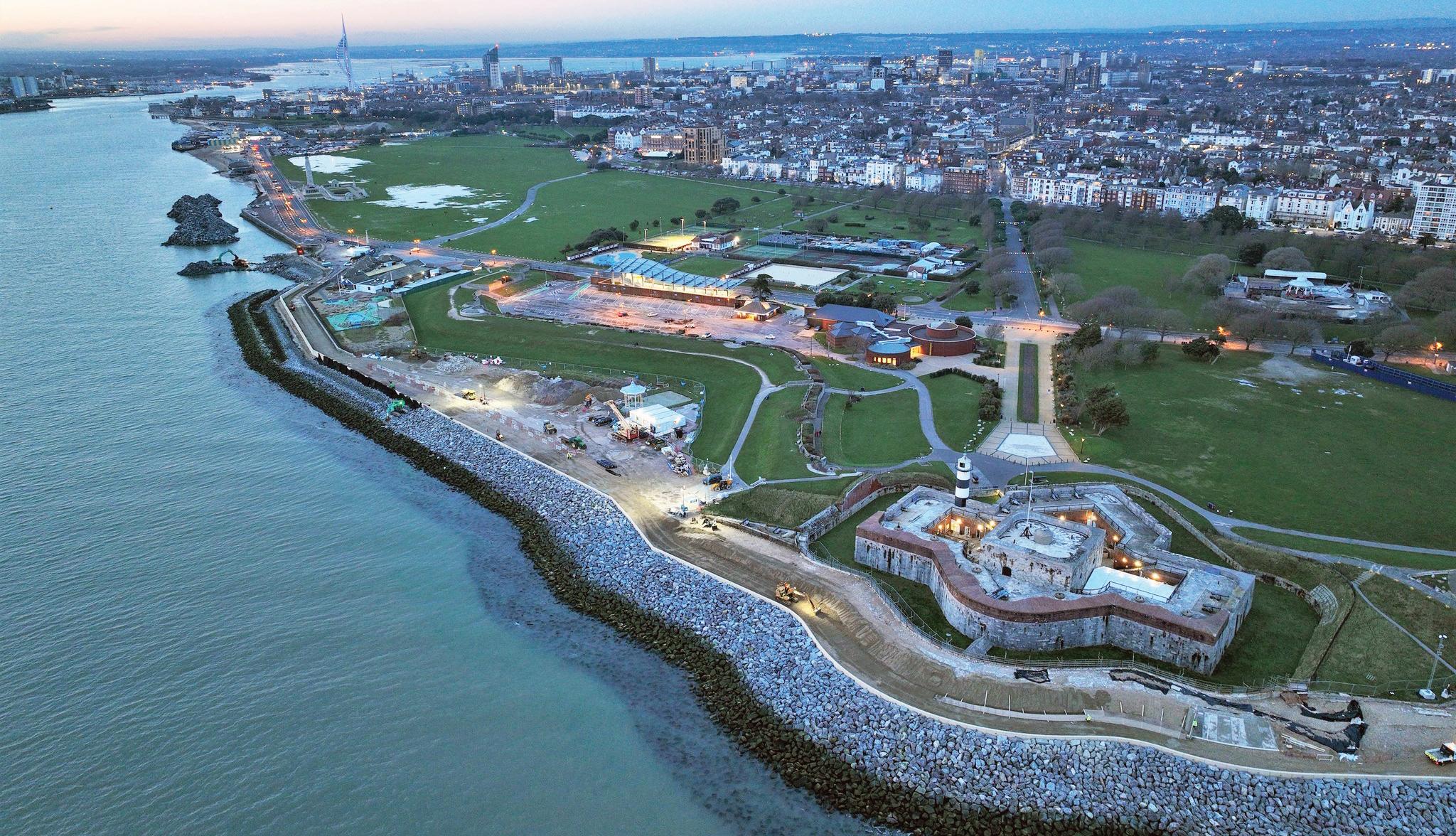
will prioritise the delivery of high quality and sustainable public services to citizens – including perspectives on key service design challenges and transformation opportunities
The assumption that two or three even larger ‘mega-unitaries’ will automatically deliver superior services and financial efficiencies is not supported by current evidence and previous reorganisations that delivered no consistent uplift in service quality. When existing unitaries are divided into balanced populations and compared using Ofsted, CQC, and tenant satisfaction metrics, smaller and mid-sized authorities (similar to our proposed new unitaries) often match or outperform their larger counterparts, challenging the argument for large-scale aggregation.
For instance, adult social care is often cited as a prime example of scale-driven reform. However, analysis shows that while scale can offer benefits in commissioning capital-intensive or specialist services and negotiating digital infrastructure deals, scale alone is not the determining factor in delivering high quality care. True excellence in care and outcomes for residents is driven by deep local connections, understanding people’s needs within coherent communities, co-producing preventative services with neighbourhood partners and maintaining local relationships that larger unitary configurations cannot replicate.
Analysis indicates that smaller unitary structures are not more vulnerable to financial instability or service failure. In fact, councils serving smaller populations have achieved twice as many “outstanding” Ofsted inspection outcomes for children’s
services when compared with larger populations and were equally likely to achieve top CQC ratings for adult social care. Tenant satisfaction data also supports this trend, with smaller structures often delivering better housing outcomes through an intense focus on local housing conditions and community engagement and delivering better experiences without the overheads associated with large, aggregated structures.
This also aligns with evidence from elsewhere about the successes of placed focused approaches such as the Wigan Deal. In Appendix 6 this is set out in more detail in a report by Collaborate for Social Change called ‘The bigger you go, the less you know - Why place-based, relational approaches to public services must be core to Local Government Reorganisation’. This report demonstrates how place-based and neighbourhood approaches can reduce demand and make services more effective through building better relationships with local people and communities, by giving them more power over the decisions that affect them and greater access to the resources local government and other partners hold. Focusing on a scale of place that people identify with, enabling community power, and investing in preventative, relational, and asset-based ways of working, all have the potential to improve outcomes as well as enable better use of resources and sustainable cost reductions for the long term.
Our proposed four new mainland unitaries, built around the way people live their lives, embodies this place-focused governance and neighbourhood delivery. This model would allow councils to capture local intelligence, nurture microprovider networks, and prioritise prevention over crisis management, consistently outperforming those driven by larger top-down strategic remits. Initiatives such as the
Mockingbird Fostering Model and Regional Care Co-operative demonstrates how hyper-local care provision can be scaled. Success is driven at a local level through democratic proximity, relational delivery, and the flexibility to tailor services to distinct local dynamics. In this proposal, scale is not about viewing residents as numbers but about aligning Hampshire and the Isle of Wight’s distinct boundaries with the lived realities of our communities, ensuring services are co-designed locally and delivered responsively to meet local needs. There is no better example to demonstrate the importance of building structures that are tied to the communities which they distinctly represent and serve than the 10-year health plan for England, known as Fit for The Future. It makes it clear that the future of health and social care lies in hyper-local, neighbourhood-centred delivery rather than distant, one-size-fits-all bureaucracies. By championing care as locally as possible, from in-home visits to neighbourhood health centres, and making digital the default front door for appointments, diagnostics and self-care, the plan relies on councils that know their communities inside out, understanding travel-to-work patterns, deprivation hotspots and the voluntary and clinical networks already in place.
Our four new mainland unitaries, built around our four population centres, aligns to real economic and social geographies, and can co-invest in digital infrastructure, target prevention in high-risk wards and co-design services with Integrated Care Board neighbourhood teams, ensuring that early-intervention screening, personal health budgets and wrap-around support hit the right doorsteps at the right time. Fit For The Future shows that scale without proximity doesn’t drive better outcomes.
Hampshire and the Isle of Wight partially operates under a two-tier system where Hampshire County Council is responsible for adult and children’s social care, public health, education, highways, transport planning, waste disposal, and strategic services. Meanwhile, 11 district and borough councils manage local housing, planning, environmental health, leisure, and waste collection services. Alongside this Portsmouth, Southampton and the Isle of Wight function as existing unitary authorities, providing the full spectrum of county and district services under one roof.
Each of the areas within Hampshire and the Isle of Wight are unique in terms of geographical landscape and economy, leading to diverse needs across the region. Reorganising around the anchors of distinct population centres and economic areas and place-based requirements is essential and we have begun developing what future service delivery will look like after local government reorganisation. The future structure of local government will be integrated with wider public sector reform and designed equitably to ensure effective service delivery, focusing on prevention and outcomes tailored to local requirements.
Each reorganisation option was assessed against government criteria 3 in our options appraisal, focussing on the future of high quality and sustainable services for citizens. This would be later complimented through service design workshops to identify challenges and transformation opportunities (see next section). Several metrics were used to perform a comprehensive analysis, to determine whether options were
viable based on balance and sustainability for both the unitary and future of Hampshire and the Isle of Wight as a whole. Across all three of our variations of our four new mainland unitaries, the difference between unitary figures were minimal (for example, 0.99% versus 1.15% of number of older adults in adult social care % total population when assessing Option 1 and Option 2), demonstrating balance. This can be seen in the table below.
Please see page 54 for more information on the proposed areas for each unitary option
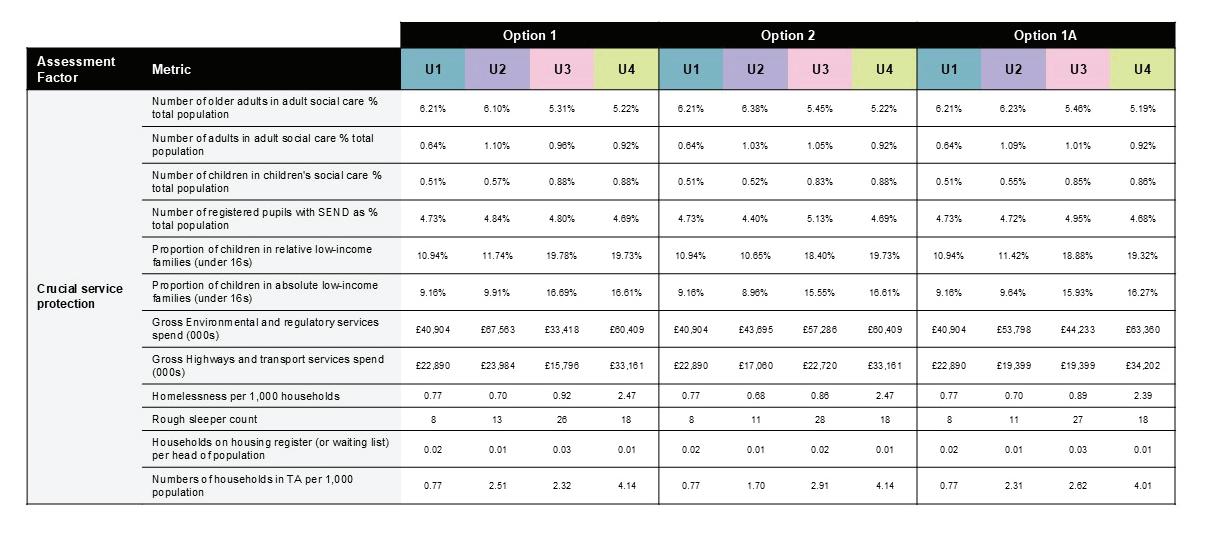
Through a comprehensive process, council chief executives identified key service areas to explore as part of our transformation journey, building future services around our four new mainland and Isle of Wight unitary model. This process was guided by our vision for the future in Hampshire and the Isle of Wight and key design principles. The areas of focus identified were adult social care, children’s services, education, economic growth, strategic planning and regeneration, waste management, customer and digital, highways and transport and housing and homelessness.
These sessions brought together representatives from all 12 councils alongside external advisers, fostering a collaborative environment to generate ideas on opportunities for the transformation journey that our proposal provides. Each workshop then formed its own ongoing ‘working group’ that continues to collaborate, contributing to implementation planning and broader transformation efforts.
There are significant opportunities to enhance service delivery across Hampshire and the Isle of Wight from both financial and service perspectives. Our four new mainland and Isle of Wight unitary model provides the strongest platform for achieving this, ensuring that service design is tailored to local communities and prioritising those that might be overlooked in even larger unitary councils. The remainder of this section focuses on our four new mainland unitaries with section 5 setting out the transformation opportunities for the Isle of Wight council which would remain an independent island authority.
Building on the momentum of our design workshops, we will draw on valuable insights, including recommendations from LGA peer reviews, both during the reorganisation process and as we move forward.
The adult social care (ASC) landscape in Hampshire and the Isle of Wight is complex, with many challenges experienced from both a national and local level. The population across the place is ageing, with 17.2% of residents aged 70 and over, compared to 13.7% nationally. In the Isle of Wight, this number is significantly higher at 21.5%. Rushmoor is also forecast to see one of the largest increases in over-75s of approximately 33% by 2030. In addition, there are pockets of deprivation, with 8.3% of householders classed as fuel poor in 2022 (approximately 13.5% on the Isle of Wight).
In terms of current service provision, NHS Hampshire and Isle of Wight Integrated Care Board oversees strategic planning and resource allocation for health and care services. NHS Frimley Integrated Care Board currently delivers services in part of North Hampshire. With the ICB boundary review comes the opportunity to align the ICB with the combined authority boundary.
Portsmouth, Southampton and the Isle of Wight deliver adult social care as part of their existing responsibilities, with place-based partnerships in place across the existing unitary authorities to bring integrated teams together to understand the needs of the population, agree plans to meet those needs, develop strong partnerships and implement solutions.
The existing Hampshire, Isle of Wight, Portsmouth, and Southampton Safeguarding Adults Boards work together to develop policies and guidance for protecting vulnerable adults. Spend on adult social care as a percentage of total council spend is approximately 35%, with several factors contributing to a large cost-base, including transport, residential and home care, specialist support for complex needs, hospital discharge support and temporary accommodation for vulnerable adults.
Ahead of CQC inspections, Hampshire County Council and Portsmouth City Council each highlighted strengths and areas for improvement. Hampshire pointed to strategic planning, integrated care, safeguarding, and digital innovation as key strengths, while noting workforce challenges, financial pressures, and delays in hospital discharge as areas needing focus. Portsmouth identified strengths in person-centred care, digital tools, carer support and integration, but highlighted issues with service transitions, direct payments, and waiting lists for improvement.
Adult social care faces mounting pressures from rising costs, market fragility, and rural service delivery challenges, worsened by an ageing population and high demand for complex care, especially learning disabilities and mental health support. Currently, fragmented commissioning and poor alignment between Hampshire County Council and local district services hinder integrated care, with gaps emerging around transitions, homelessness support, and community health. Workforce instability and leadership turnover adding strain, while the existing extra care housing model is increasingly unfit for purpose, contributing to discharge delays and inadequate service access in deprived communities.
Health and social care integration focuses on aligning primary care, community services, and adult social care to improve service delivery. Initiatives such as Healthworks support independent living and strategies for dementia care and workforce planning. Collaborative partnerships, particularly with Hampshire Hospitals NHS Foundation Trust and local stakeholders, enhance service delivery through joint efforts like the Andover Vision and Health Hub. Housing and community support are reinforced through multi-agency forums and colocated roles that address mental health and social challenges, supported by initiatives like Hampshire Home Choice. Public health priorities are shaped on prevention models and setting local health priorities with Integrated Care Boards.
Safeguarding and safety are addressed through multi-agency partnerships and networks, aligning with Safeguarding Adults Board priorities. Community resilience is built through networks and co-location initiatives to improve service delivery.
Good practice includes integrated health and social care efforts to reduce inpatient admissions and support housing pathways, partnerships for homelessness prevention, and communitybased support through funding for disability charities and citizen advice.
A transformative service delivery model for adult social care would be best achieved through our four new mainland unitaries. Our proposal emphasises the importance of being close to residents and distinct communities, ensuring that services are tailored to meet local needs effectively which is crucial to adult social care and health:
• This model enables budgetary savings, including the alternative use of Hampshire County Council assets, such as libraries, community hubs, and disused clinics, which could be reinvested directly into prevention programmes like homelessness outreach and reablement focused on the specific needs of each of the four areas. This is an approach already followed by Portsmouth City Council.
• Data becomes a guiding tool, with local analytics teams embedded within each unitary to monitor care quality and demand in real time. This allows for the identification of hospital discharges, rural transport issues, and targeted learning-disability placements. Open-book partnerships with local providers ensure transparency on costs and outcomes, supporting self-funders with tailored options and generating new income streams that enhance overall service quality.
• Long-term resource efficiency is achieved through a place-based, multi-disciplinary approach focused on the specific needs of the area. NHS colleagues, adult social care and children’s services, housing officers, education leads, and voluntary-sector partners developing tailored local solutions at the neighbourhood level. Creative commissioning with local staff and volunteer networks creating delivery models that build community resilience,
avoiding costly statutory interventions. This approach previously worked effectively in Portsmouth through the previous Clinical Commissioning Group model and the new unitaries can enable this to be better replicated within the ICB model.
• Our four new mainland unitaries unlocks better use of shared assets by maintaining local stewardship, community solutions, and agile collaboration, enabling more effective and community-focused management. Over the implementation window, each authority would map its critical infrastructure, such as Lymington Hospital, Andover Hills Hub, Basingstoke and North Hampshire Hospital and supported-living blocks, New Forest’s mobile clinics, and Fareham’s homelessness shelters, into an integrated prevention network aligned with the NHS’s 10-year plan.
• This approach embeds shared risk management, with councils underwriting care needs and co-financing capital projects. The four new mainland unitaries would work collaboratively with partners under a leadership culture that emphasises cross-organisational learning and rapid innovation through a total place approach. This model ensures that services are not only efficient and effective but also deeply rooted in the communities they serve, fostering resilience and empowerment, making it a superior choice over a larger, mega-unitary model.
Our four new mainland unitaries would deliver adult social care services that are efficient, responsive and deeply rooted in place which provides the best opportunities for cost-effective, high quality services. It balances scale with proximity, harnesses data and partnership power, and prioritises a prevention-first culture tailored to local needs. The alignment of our proposal with the NHS 10-year plan is
strong, complementing and prioritising neighbourhood health services, moving to digital channels, prevention, co-production of care plans and stronger partnership working between local authorities, the ICB and the voluntary sector. By staying close to our residents and their distinct communities, we build a stronger, fairer, more sustainable future for adult social care and better outcomes for our communities.

P3 is a collaborative initiative designed to enhance the coordination of health and care services in Portsmouth. It brings together a diverse range of organisations including Brunel Primary Care Network, Healthwatch Portsmouth, Island City Primary Care Network, HIVE Portsmouth, NHS Hampshire and Isle of Wight Integrated Care Board, Portsdown Primary Care Network, Portsmouth City Council, Portsmouth Hospitals University NHS Trust, Portsmouth North Primary Care Network, Portsmouth South Coast Primary Care Network, Solent NHS Trust, and the South Coast Alliance. The partnership aims to support the wellbeing, care, and health needs of the city’s residents through effective collaboration and innovation.
Before P3 was established, Portsmouth faced significant challenges, primarily the need for better coordination of health and care services to support the wellbeing and health needs of Portsmouth’s residents. Additionally, there was an ambition to move toward place-based commissioning, which required a more integrated approach to service delivery. To address these challenges, P3 focused on sharing experiences, collaborating,
and innovating for the benefit of the communities and neighbourhoods it serves, sponsoring projects aimed at improving services for residents and fostering a culture of continuous improvement and adaptation.
The partnership has achieved several notable improvements, including the development of a Health Inclusion Service at Brunel Primary Care Network to deliver primary care health interventions to the homeless population, the establishment of a Weight Management Hub to provide psychological support for patients undergoing weight management treatment, and the testing of a Breathlessness Diagnostic Hub in partnership with the Targeted Lung Health Check programme. This hub supports two primary care networks with spirometry testing and reduces pressure on primary care. Additionally, P3 has implemented 10 health kiosks in GP practices, allowing patients to ask health questions, get their blood pressure and other vital signs taken, request oral contraception, NHS health checks, diabetes appointments, and more. The partnership has also developed an 18-month Physical Activity Improved Lifestyles (PAIL) project to improve access to and support sustained engagement in exercise and physical activity for individuals living with mental health issues. The partnership is currently working on community help desks in two areas of the city (following research about digital exclusion for some residents) and community connection for residents who use substances to support their recovery journey. In addition, there is an ongoing bid to work on implementation of a neighbourhood health and care model as part of the 10-year health plan.
In our four new mainland unitary model, there is opportunity to capitalise on the success of P3 by sharing its method and model of working. This approach would enable more effective decision-making around scarce resources, informed by local resident-led research in distinct communities. By growing place-based relationships and ambition, we can gain delegation of resources for commissioning from ICB/ LA, rooted in the communities served. This ensures that work makes a difference and can be tailored to utilise local assets, resources, skills, and meet local needs effectively.
Delivering children’s services across Hampshire and the Isle of Wight presents significant challenges. Despite Hampshire County Council receiving ‘outstanding’ ratings from Ofsted, there is a developing, complex and fragmented landscape that is exerting increasing pressure on both finances and outcomes both short and long term. Hampshire’s population of those aged 15 and under accounts for 17.8% of the total population, compared to 18.5% nationally. The percentage of residents in the Isle of Wight aged between 10 and15 years old has decreased from 7.0% in 2011 to 6.0% in 2021, while those aged four years and under dropped from 4.6% to 4.0%. More broadly, the 0 to 19 population in Hampshire is approximately 22%, and the 0 to 25 population is around 27%. This highlights the need to build strong pathways and transition services for young people with SEND into adult support services, which would be a focus of our new unitary authorities.
Winchester and parts of East Hampshire has seen the steepest decline in younger cohorts, while Basingstoke and Deane and Fareham have shown the largest increase in numbers of children (partly driven by new residential development). There is a differential rate of children living in poverty across Hampshire, concentrated around the cities of Southampton (33.3%) and Portsmouth (23.9%) and approximately 30% on the Isle of Wight, this compares to a national rate of 31%.
In Hampshire and the Isle of Wight, children’s services are delivered through a large network of health and social care initiatives. The NHS Hampshire and Isle of Wight Integrated Care Board provides essential health-related services, including mental health support, school nursing, and specialist care. In part of North Hampshire, NHS Frimley Integrated Care Board
extends its services, while Portsmouth, Southampton, and the Isle of Wight offer a range of support, such as early help, respite care, and services for looked-after children, fostering, youth support, and safeguarding. The Children’s Community Nursing Service in Southampton and Portsmouth offers specialist paediatric nursing care for children with complex health needs, supporting families in their homes.
The Hampshire, Isle of Wight, Portsmouth and Southampton (HIPS) Safeguarding Children Procedures provide a multiagency framework to maintain consistent safeguarding practices across Hampshire, the Isle of Wight, Portsmouth, and Southampton.
Children’s services accounts for a large percentage of council budgets (e.g. 34.2% of total Hampshire County Council budget). This is largely driven by increasing costs and demand pressures, specifically increased demand for safeguarding, child protection, looked-after children, SEND support services, and high costs related to residential care, recruiting and retaining social workers with rising salaries and agency staff expenses.
There are number of key themes from Ofsted children services (ILACS) inspections. Hampshire County Council is noted for its strong safeguarding and social work practices, innovative family help model, stable care for children, and leadership-driven continuous improvement. Portsmouth excels in outstanding safeguarding and early help services, strong multi-agency collaboration, stable foster care placements, and committed leadership. Southampton is praised for its strong leadership, effective safeguarding, high-quality support for children in care, and holistic services for children with disabilities. The Isle of Wight demonstrates effective safeguarding, stable leadership, high-quality care for children, and a commitment
to early intervention, following its transition to an independent children’s services model.
In terms of areas for improvement, Hampshire County Council requires improvement in the quality and uptake of return interviews for missing children and improved oversight of private fostering arrangements. Portsmouth requires better support for care-experienced young people, especially the most vulnerable, in accessing employment, education, and training, and ensuring they are aware of their entitlements and health histories. Although a recent focus visit from Ofsted in February 2025 recognised significant improvements in this area. Southampton faces challenges in placement sufficiency, timely health assessments, and support for unaccompanied asylum-seeking children, as well as strengthening private fostering oversight. The Isle of Wight needs to improve partner agency involvement in child protection strategy discussions, amplify children’s voices in decision-making, enhance oversight of key processes, and address high caseloads in safeguarding teams.
Financial constraints and increased services costs are placing pressure on councils in Hampshire and the Isle of Wight, particularly in SEND, leading to in-year and cumulative deficits as a greater number of children and young people require Education and Health Care Plans and higher costs per student. Even with substantial investment, there are insufficient school and specialist places and educational outcomes for these children have not improved.
Frontline workers face high caseloads in some areas, exacerbating workforce challenges and affecting outcomes for children. The high number of children in care highlights the need for alternative interventions. Safety issues, such as youth violence and domestic abuse persist, revealing vulnerabilities in service delivery. Effective multi-agency collaboration and information sharing are needed to manage risks, while health and education inequalities continue to impact children’s outcomes.
The Mockingbird Fostering Model and Regional Care Co-operative is an example of enhanced support for foster families and local authority collaboration. Safeguarding efforts are bolstered by partnerships and networks in some areas that focus on shared learning and resources, involving children in developing safeguarding initiatives and maintaining strong relationships with the Multi-Agency Safeguarding Hubs (MASH).
In some areas, public health services are integrated with children’s services, working closely with the ICBs to improve service delivery. Education and school collaborations are strengthened in parts through partnerships, while housing services work jointly to enhance outcomes for children. Regional improvement is driven by the Southeast Sector Led Improvement initiative, and parental involvement is encouraged through the SEND Parent Carer Forum and Children’s Partnership Board.
Best practices include the Family Safeguarding Model, which engages families in safeguarding interventions, and the Community Councillor Model, which directs funding into local services. Family hubs unify support for families, and the voice of the child is prioritised in decision-making. Health services collaborate effectively in some areas with local health hubs, and education initiatives like Eastleigh Borough Council’s not in full time education, employment or training initiative which has successfully reduced NEET rates.
There is strong practice around enhanced safeguarding through the front door conversational model and strong engagement with secondary schools. Relational and restorative practices focus on relationship-based approaches, while risk management strategies implement place-based deterrents and reduce residential care placements. Multi-agency collaboration assists
service delivery, and specialised models support neurodiverse children and reintegrate them into their homes. Finally, there are good examples of quality practice interventions and manageable workloads, with targeted support for vulnerable populations, including children seeking safety and asylum.
We are aware that MHCLG is currently working with DfE and DHSC colleagues on principles for partnership working and will take those into account during the service design phase, while also proposing to join the strong partnerships currently in existence across the region.
At the Hampshire County Council level, decisions about children and young people are often centralised at a very large scale. However, this can mean that local options and interventions are overlooked, leading to unnecessary contacts and referrals. More localised structures promote consistency and accountability, reducing the need for intensive oversight and encourages managed risk taking. This approach would enable more responsive and personalised care for children and families.
The strength of our four new mainland unitaries lies in their ability to support deeply local, strength-based approaches. Communities naturally form around families, friendship groups, schools, faith-based organisations, sports clubs, and local businesses. When a unitary council aligns with these organic communities, it is better positioned to build meaningful relationships – something often lost in larger council structures. Additionally, essential services like housing and voluntary support are typically present at the local level, making them more accessible and easier to integrate as part of a locally focused, total place approach. Through our four new mainland unitaries,
we would unlock the following transformation opportunities which would not be achievable through even larger unitary councils:
• Fostering workforce development and implementing new delivery models that emphasise collaboration and mutual aid. By creating, strengthening and reinforcing new and existing localised teams, a new holistic practice model would facilitate stronger partnerships with other agencies, ensuring a more cohesive approach to service delivery. We would build on the local family help teams, maintain the existing MASH arrangements whilst working to develop locally relevant MASHs, using the learning from the Isle of Wight model. We would, in the development of the front door and early help services, also seek support and draw learning from Portsmouth, in respect of whom Ofsted said, in their last report, “Impressive early help services are a strength and have improved since the last inspection in 2018. Well-designed and resourced integrated support services are commissioned to deliver an excellent range of services and interventions through five family hubs across the city…”
• Our approach would focus on locally tailored solutions, that removes past unnecessary two-tier barriers and supports a comprehensive through-care strategy from prevention to resolution. The focus on localisation and place-based service delivery will allow services to be truly designed around the specific needs of families and children in their communities.
• Integration and collaboration are key components of our proposal, with opportunities to merge housing and social care at a local level, thereby improving outcomes and prevention intervention efforts for children and families. Strengthening connections and empowering local education leaders, voluntary and community leaders, schools, and civil
society to co-create and collaborate, it would enhance the overall service framework by focusing on the total place for local communities.
• Our proposal also prioritises prevention and early intervention and inclusion, promoting a shared responsibility to use local resources effectively. By targeting interventions at a preventative local level and using retained funds, the model would address issues earlier, ultimately leading to better outcomes for children, young people and families linking in with the Families First Partnership Programme / children’s social care reforms.
• Our proposal would tap into the existing areas of excellence and partnerships across Hampshire County Council and the three unitary councils of Southampton, Portsmouth and Isle of Wight. In particular, while Hampshire County Council currently administer the Adopt South partnership and the National Secure Welfare Coordination Unit, it is proposed they would transfer to one of the existing unitary councils, with the newly formed councils utilising their services and joining the Adopt South partnership. We are aware of Hampshire County Council’s plans to replace the existing Swanick Lodge secure children’s home with a larger unit proposed in Fareham and would support our colleagues in the newly formed South East unitary council to continue with and bring forward that plan.
Fostering across the region is currently delivered via the South East Partnership, with all current upper-tier councils across the region part of that partnership. The new councils would propose to join that partnership on formation.
After a decade-long partnership with Hampshire County Council, in February 2024 the Isle of Wight Council embarked on the challenging journey of establishing its own children’s services, including a locally developed Multi-Agency Safeguarding Hub (MASH).
In spring 2024, the Isle of Wight conducted a rapid options appraisal and decided to house the MASH in County Hall Newport, initiating implementation in September and going live by the end of February 2025. As a result, social workers, police officers, and health professionals, all fully focused on Island children and families, now work together under one roof on the island. This co-location, supported by rigorous project management and a deep understanding of local needs, has significantly helped the multi-agency face to face conversations relating to decision making and the approach to local safeguarding interventions. This success story, driven by close collaboration, place-

based insight and enhanced information-sharing, includes learning for local government reorganisation, managing risk through transition, building on local expertise, and the opportunities of bringing partners together.
Existing unitary authorities in Southampton, Portsmouth, and the Isle of Wight each play distinct roles in delivering education services, tailored to the needs of their communities. Hampshire County Council, meanwhile, supports a network of schools and students across a much broader area, focusing on accessibility through managing admissions, transport, and free school meals.
Southampton City Council emphasises school improvement and special educational needs and disabilities outreach through its Inclusion Partnership, which has successfully reduced permanent exclusions and supports numerous educational settings. Portsmouth City Council collaborates with the Portsmouth Education Partnership to improve literacy, numeracy, attendance, and digital inclusion, leading to notable improvements in Key Stage 2 outcomes. Meanwhile, the Isle of Wight Council focuses on high aspirations and special educational needs and disabilities excellence, with a strategy for 2024 to 30 that aims to provide a rich curriculum and sustainable infrastructure. Their efforts have resulted in an increase in Early Help Care (EHC) plans, highlighting their dedication to supporting students with special educational needs from an early age. There are also examples of placebased pupil planning at a time where there is an increased demand in secondary schools, but decreased demand in need in primary settings, while maintaining strong inclusive practices.
When viewed holistically, the Ofsted landscape across Hampshire and the Isle of Wight is considered to perform above national averages. However, there is a mixed reality across our four proposed areas, with both strengths and areas
for improvement. Challenges remain in equitable access to high-quality quality of education, particularly in rural areas, and addressing the needs of students with special educational needs and disabilities.
Existing councils across Hampshire and the Isle of Wight are facing several educational challenges that impact both the quality and accessibility of education. In some areas, education outcomes at the end of Key Stages 2 and 4 are notably below national levels, highlighting a need for targeted interventions to improve student performance. The High Needs Block of the Dedicated Schools Grant (DSG) is under significant pressure, reflecting the growing demand for resources to support students with special educational needs. Health and wellbeing initiatives, particularly those involving the NHS to address issues like obesity, require more collaboration. The voice of young people also needs to be strengthened to ensure their experiences and perspectives are considered in decisionmaking.
Supporting mainstream schools to manage the complex needs of children is crucial, as is addressing the growing mismatch between secondary school place availability and the growth in student numbers, intensified by cross-boundary demand. At the same time, funding for school improvement initiatives has been reduced, placing additional strain on already stretched school budgets. There is a rising demand for early years and specialist places, which the current infrastructure struggles to meet. In some areas of South Hampshire, shortages in secondary school places are already forcing children to travel long distances. The number of children who are severely absent, attending less than 50% of the time, is increasing,
alongside the rising complexity of student needs. Access to the curriculum for citizenship activities is limited, and there is a growing demand for early years childcare places. Alternative provision, such as those operated by Hampshire County Council like Hants Outdoors, is under pressure to accommodate diverse needs. Additionally, the number of young people not in education, employment, or training (NEETs) aged 16 to 18 is rising, further emphasising the need for comprehensive educational and vocational support through collaboration with education providers and local employers.
From a financial perspective, projections have shown that home-to-school transport costs for Hampshire County Council may rise to approximately £70 million in the year ending 2025/26. Staffing costs and recruitment challenges are also adding to budget pressures, along with increased special educational needs and disabilities and additional support costs. Finally, per-pupil funding is decreasing aligned to declining enrolment on the Isle of Wight, compounded by fixed costs and operational costs that are remaining unchanged or increasing.
In Hampshire and the Isle of Wight, education provision is strengthened through a network of collaborative initiatives and shared best practices. Programmes such as the Southeast Sector Led Improvement Programme (SESLIP) and local ASEND Partnership Boards focus on improving educational outcomes and supporting children with special educational needs and disabilities. Local authority collaborations, such as the Portsmouth Education Partnership and strategic growth efforts in Test Valley, enhance educational services and infrastructure.
Protocols like the Fair Access Protocol promote equitable access to education, while data sharing aids in strategic planning. Relational Practice Leadership training for schools and local authority leaders in Portsmouth is helping to reduce school exclusions and headteacher collaboration is contributing to improved school attendance.
Good practices include the SEND Alternative Provision (SENDAP) Change Programme which supports language development, and initiatives to reduce exclusions and out-ofcity placements for special educational needs and disabilities students. Resource allocation is optimised through strategic planning in some places with quality assurance ensuring good quality alternative education provision.
Our four new mainland unitaries would foster localised governance and collaboration, which is crucial for addressing current educational challenges. A number of key opportunities, that our four new unitaries will realise, have been outlined below:
• Developing a consistent and enhanced educational offer across all unitaries driven by their local needs, ensuring equity of voice and opportunity for all children, including those with complex needs. By investing in inclusive and wellresourced schools, the model supports children who require specialist provisions, thereby addressing the pressure on the High Needs Block. Inclusion will be a key focus for our new mainland unitaries, especially given the recent increase in school suspensions which disproportionately affect poor and disabled students.
• Collaboration and co-production are central to this approach, with strengthened partnerships with ICB and other agencies ensuring a holistic approach to education and health services. Engaging and working with local education leaders (early years, schools, colleges) will also be essential to address local challenges and make the system inclusive and responsive to children and families, advocating the voices of young people.
• Using technology and innovation, including AI to enhance Education, Health, and Care Plans and improving IT infrastructure for better service delivery. Improved information sharing across agencies supports this effort, addressing issues like obesity through robust health and wellbeing initiatives.
• Resource allocation and investment are targeted to our distinct unitary areas, with capital investment in
infrastructure supporting educational needs and ensuring equitable distribution of resources. This approach incorporates local identity and supports community resilience, addressing the mismatch between secondary school place availability and student growth.
• Workforce development is prioritised, with training tailored to the place and specialist teaching resources enhancing staff capacity and resilience. This supports schools in managing anti-social behaviour and improving educational outcomes, particularly in areas where education outcomes are below national levels.
• Community and family-centred approaches are integral, with local plans reflecting and strengthening community identity. This addresses the rising demand for early years and specialist places, as well as the need for comprehensive educational and vocational support for young people not in education, employment, or training.
Our four new mainland unitaries provides an adaptable and locally responsive framework to enhance education quality, accessibility and outcomes across Hampshire and the Isle of Wight.
The Portsmouth Education Partnership (PEP) was established in 2016 to unite system leaders across Portsmouth in driving school improvement and fostering collaboration amidst the government’s push towards full academisation. This initiative aimed to maintain a unified educational community, involving Portsmouth City Council, 14 Multi Academy Trusts, teaching school and subject hubs, the DfE Regions Group, religious dioceses, various educational institutions, and the voices of children, young people and parents.
Previously, Portsmouth faced challenges such as persistent underperformance in educational outcomes, a critical Ofsted inspection, and the risk of fragmentation due to increasing academisation. The pandemic further impacted attendance, behaviour and mental health, compounded by issues like the cost of living crisis, recruitment and retention challenges, and the growing number of children with special educational needs and disabilities (SEND).
To address these challenges, the PEP was formed as a strategic partnership with a shared vision and priorities, led by sub-groups chaired by school leaders. A performance dashboard was developed and school improvement capacity was increased through collaboration with various partners. The PEP brand aligned existing initiatives, and a three-year strategy was published. Portsmouth City Council encouraged schools to join strong MATs, while continuing to support LA maintained schools. During the pandemic, existing systems facilitated effective communication and response to changing demands. In 2020, MATs agreed to fund an independent chair for the PEP, bringing healthy challenges to all partners. In 2022, Portsmouth was designated a Priority Education Investment Area, with the PEP driving project priorities. All schools participated in areas like literacy, maths, attendance, digital, and CPD, celebrated at the PEP Annual Conference.

The initiative led to a significant increase in schools with good or outstanding judgements, from 77% in 2016 to 95% in 2025. Educational outcomes at Key Stages 2 and 4 are improving, with the gap between Portsmouth and national averages narrowing. Collaboration and alignment between training and priorities have improved, shaping strategies for inclusive practice and supporting schools in meeting all children’s needs.
Success factors include a shared vision and values, organic partnership development, inclusive membership, strong leadership, and effective use of data for decisionmaking and funding. Local government reorganisation could capitalise on this success by fostering inclusive partnerships, using data strategically, supporting shared accountability, encouraging organic collaboration, adopting strategic leadership roles, and facilitating peer support and challenge among MATs.
Economic development, strategic planning, and regeneration was identified as being a priority to explore throughout the development of our proposal, given its importance in achieving sustainable and thriving communities. Government priorities focus on driving inward investment, creating jobs, supporting local businesses and accelerated housing and infrastructure delivery to boost economic prosperity. It is important that work in these policy areas will link with the new Mayoral County Combined Authority and the work that they will need to deliver through Local Growth Plans and associated documents such as the Spatial Development Strategy.
Infrastructure planning is central to supporting growth. Strategic investment in transport, utilities and other essential services will ensure communities are well-connected and equipped to handle development. Efficient public transport systems, reliable and well-maintained roads and robust utility networks are essential for facilitating economic activity and improving residents’ quality of life.
Addressing housing needs and promoting affordable housing are also key components of strategic planning. A sufficient and diverse supply of affordable housing helps build inclusive communities and prevents displacement. Additionally, integrating housing development with transport and other local services through strategic urban planning helps manage sustainable growth. Environmental protection and sustainability are integral to these efforts, with a focus on reducing carbon emissions, encouraging renewable energy use and protecting natural resources.
By cultivating a thriving business environment and developing a skilled workforce tailored to the unique needs of each of the economic areas, our four new mainland unitary councils will attract new enterprises and encourage the expansion of existing ones, enhancing employment opportunities and economic growth and resilience.
Our proposal enables focus on the distinct sectors within each of their geographies and a more targeted and effective response to implement the government’s Industrial Strategy. If the areas are too large, the distinctiveness of local economies are lost and there is a risk every sector becomes a priority.
For example, the North Hampshire economy is more orientated towards Surrey and London, which is also true of transport. The current Hampshire County Council area can appear to demonstrate a high level of self-containment. However, this is simply due to the scale of the authority which masks the distinct geographies operating beyond their boundaries. A similar fundamental problem would occur if a three unitary mainland model was pursued given the huge size and geography of those unitaries.
Through our series of collaborative workshops with service leads, a number of existing challenges were identified. In some areas, strategic planning is hindered by a lack of coordination and comprehensive strategic systems, compounded by issues like land availability and environmental capacity. Infrastructure and connectivity are also concerns, with challenges related to energy network capacity, transport connectivity, and specific issues like the M3 J12. Improving transport networks, including rail, road, and public transport,
is essential for enhancing regional connectivity and supporting economic growth.
Environmental and geographical constraints, such as the flooding, multiple nature conservation designations and protected landscapes, present unique challenges for development. Coastal erosion, rising sea levels, and air and water quality issues further complicate environmental management. Economic and industrial challenges include the vulnerability of land-based industries to climate change and concerns about town centre regeneration viability. Resource limitations, such as a shortage of qualified planners and funding challenges, affect infrastructure planning and delivery. While communication across the county is good, there is a need for better collaboration on planning beyond boundaries. Demographic issues, like an ageing and shrinking populations in some areas, impact workforce availability and economic development, necessitating a balance between development and environmental preservation.
Across Hampshire and the Isle of Wight, collaboration and good practice in economic development, strategic planning, and regeneration is evident through various initiatives. There are examples of significant collaboration in planning and environmental management, with shared evidence and strategies for local plans, and efforts like Suitable Alternative Natural Green Spaces (SANG) provision and nutrient neutrality. Alongside this, Hart and Rushmoor have successfully collaborated across county boundaries to protect the Thames Basin Heaths Special Protection Area (TBHSPA). Through this, they have achieved Green Flag status for Country Parks and developed Suitable Alternative Natural Green Space
(SANGS), supporting future growth and housing delivery while fostering mitigation, ecological enhancement, and biodiversity net gain opportunities. Partnerships such as Bird Aware and the Solent Mitigation Partnership focus on environmental conservation and sustainable development. Joint service delivery is also a key feature, with councils like Fareham, Gosport and Portsmouth (and soon to be Havant) alongside similar arrangements for Hart and Rushmoor, and Southampton and Eastleigh, working together in building control partnerships and also informal planning collaborations, enhancing efficiency and resource sharing.
Economic and tourism development is enhanced in some areas by collaborative efforts, such as the Hampshire-wide Local Visitor Economic Partnership and initiatives between Havant and Portsmouth to promote tourism. These partnerships build on regional strengths to attract visitors. Transport and infrastructure planning is coordinated through groups like Solent Transport, facilitating regional connectivity and supporting growth. The Greenprint Network and collaborations with universities focus on green recovery and sustainability, aiming for environmental resilience and sustainable economic growth. Effective communication and relationship building are central to these efforts, fostering a cooperative environment for addressing regional challenges and opportunities. Initiatives like Bird Aware Solent, which has become an award-winning integral part of regional planning, exemplify the success of these collaborative and sustainable practices.
North Hampshire’s economic geography relates substantially outside of Hampshire and the Solent. Basingstoke, Rushmoor and Hart have strong economic and transport connections north towards Reading and to London. Rushmoor forms part
of the Blackwater Valley area to the east in terms of both transport and economy. This is reflected in the cross-boundary Blackwater Valley Advisory Group for Public Transport.
The creation of our four new mainland unitaries, focused on each of their economic areas, would better address both economic and transport issues. The risk of creating even larger unitaries not orientated to the local economic geographies is that the current sub-optimal working will continue. The current challenges will not be addressed and the full growth potential of the areas will never be realised.
Our four new mainland unitaries offer significant opportunities to enhanced economic development, strategic planning and regeneration focused on each of the four population centres and their economic areas. The new local plans that would be prepared by each of the new unitaries would need to be broadly consistent with the Spatial Development Strategy that will be prepared by the new Strategic Authority. By aligning our new unitary councils with the economic areas and the way people live and work, greater focus would be placed on initiatives that will make the most difference. This will mean challenges would be addressed and the opportunities for future growth and improving our place would be maximised through:
• Enhanced strategic planning and coordination, allowing for a more focused approach to the specific challenges and opportunities of each of the four areas. By aligning resources and expertise with priorities tailored to local requirements, the areas can better address pressures and meet their diverse needs, ensuring that planning is both strategic, better coordinated and more effective. Our four
new mainland unitaries best reflect functional economic areas, housing and market areas, and enables coordination on issues where there is commonality.
• Improved infrastructure coordination and resource management are key benefits of our model. With more effective delivery of services and development projects focused on each of the four economic areas, our new unitaries can enhance in-house regeneration and development teams with the financial capacity to undertake transformative projects. Our approach ensures that infrastructure and resources are managed efficiently, supporting sustainable growth and development at the local level.
• Enhanced place-based strategies for transport, skills, housing, planning, and health. By aligning areas with similar opportunities and challenges and larger budgets, our four new mainland unitaries would adopt comprehensive approaches to tackle issues like unemployment and health disparities. Our four new mainland unitaries ensure that the distinct economic needs are not submerged into even larger entities. The place-based focus allows for tailored solutions that address the unique needs of each area, promoting equity and inclusivity.
• Strategic funding and investment are better enabled under this model, as it allows for pursuing funding bids that align with long-term strategic needs in each of the four new unitary areas rather than them getting lost in larger areas under even bigger unitary councils. This leads to more sustainable and impactful investments, supporting each area and the region’s growth and development goals. Additionally, the introduction of regional planning and
spatial development strategies provides a framework for sensible growth targets and development plans, helping local planning authorities set achievable goals for each of their areas. Basing four new mainland unitaries on economic areas means that the new authorities will be able to most effectively engage with the Strategic Authority and bring together the strategic needs of their area working in a focused way with those that have shared interests. For example, North Hampshire and South Hampshire have sectoral interests in defence and aerospace which are distinct from other parts of Hampshire. The work of the previous Enterprise M3 Local Enterprise Partnership demonstrated clearly the need for digital infrastructure spanning North Hampshire and East Surrey. However, this was not pursued when the LEP was dissolved and a pan Hampshire approach adopted under Hampshire County Council.
• Transformative regeneration and place-making efforts are also more feasible with each of the four new mainland unitaries adopting targeted approach for their places. This enables the focused delivery of ambitious projects that larger unitary councils may struggle to implement, moving beyond masterplanning to actual execution on the ground. Work with housing associations and Homes England in strategic partnerships looking at bringing forward innovative funding approaches shows how this could work and with other sub regional towns outside of Hampshire. These approaches are difficult to pursue at a district level as they require scale, however unitaries at the size we are proposing have enough place focus to pursue such initiatives and enough scale to facilitate funding and achieve transformative regeneration.
• Sector development and the skills pipeline must also be central to the region’s future planning. As the new council economies evolve, particularly in high value-added sectors like defence, aerospace, maritime and tech, decision making must enable coordinated investment in the future workforce across our distinct unitary areas. Working with further education and higher education providers, local employers, and business clusters, our four new unitary councils will be better positioned to align skills pipelines with sector growth opportunities. This includes targeted training programmes, apprenticeships and investment in centres of excellence that support priority sectors that whilst most relevant to the unitary areas have relevance across Hampshire and the Isle of Wight.
Unlike even bigger unitary councils, where there would be huge population numbers over geographical areas that are not aligned to functional economic areas, people and communities, our four new mainland unitaries offer a balanced solution that ensure a placed based approach while driving regional collaboration on key cross cutting issues, ensuring that development is both strategic and responsive to local needs.
Since 2018, Winchester City Council and Test Valley Borough Council have operated under a formal “Duty to Cooperate,” culminating in their August 2024 Statement of Common Ground (SoCG). Rather than each authority fighting through separate evidence bases and plan-making timetables, they jointly identified and resolved strategic cross-boundary issues – from meeting a combined housing need of 13,565 dwellings over the plan period to nutrient neutrality across the Solent and Itchen SAC catchments, employment land provision and shared infrastructure requirements.
By pooling technical studies, consulting together at Reg 18 and harmonising policies, they have kept both local plans firmly on track for Regulation 19 submission in early 2026, avoiding the six to 12-month delays that bespoke, unaligned plans often incur.
Currently, across Hampshire’s 11 district and borough councils, household waste collection operates on a classic two-tier model. Each authority is responsible for kerbside collection for mixed recycling, food waste and residual black bag waste, with optional subscription garden-waste services in most areas, but not disposal. Hampshire County Council acts as the waste disposal authority for the 11 districts. On the Isle of Wight, and in the two unitaries of Portsmouth and Southampton, the councils combine and are responsible for both collection and disposal roles, enabling them to tailor service levels to the islands and cities’ unique demographic and geographic needs.
Hampshire County Council, working alongside the unitaries, through the long-standing Project Integra partnership, fulfil their disposal responsibilities through a long-term public private partnership entered into in 1999, with its contracting partner Veolia. This arrangement has enabled significant waste infrastructure to be developed and put into use across the region including three energy recovery facilities, two materials-recovery facilities as well as composting plants, transfer stations and a network of household waste recycling centres.
However, the councils need to continue to meet rising service standards, such as DEFRA’s mandatory weekly food waste collections and new Extended Producer Responsibility requirements against a backdrop of flat or falling budgets, aging MRFs and depots, vehicle and staffing shortages, contamination issues, geographic constraints in dense urban streets and dispersed rural or island communities (exacerbated by seasonal tourism peaks) creating an urgent need for capital, digital and partnership investments through Project Integra
to modernise services. Further information related to these challenges are explored below.
The inter-authority agreement, refreshed in April 2024, aimed to make some progress on these challenges through revision to cost sharing and operational responsibilities arrangement across the 14 councils, helping to balance rising treatment costs, drive contamination reduction and prepare for the next wave of Extended Producer Responsibility requirements.
Councils across Hampshire and the Isle of Wight face both local and county-wide challenges in delivering effective waste services. Infrastructure and logistics issues arise from inconsistencies at waste transfer stations and inadequate coverage of household waste recycling centres, particularly in the north. This results in logistical difficulties, such as limited site capacity, outdated facilities, and long travel distances for waste delivery. Financial and contractual constraints add to the problem, with costs associated with changes, the end of disposal contracts, and uncertainty over future funding arrangements, like Extended Producer Responsibility payments, posing significant financial hurdles. The lack of procurement competition due to fixed timelines further complicates matters. Governance and alignment issues also hinder progress, as conflicts between waste collection authorities and Hampshire County Council create challenges in decision-making and service design due to differing views.
There are also operational challenges, such as an ageing fleet and low recycling rates in some areas. Additionally, there are difficulties with collection frequency, bin coordination, and resource allocation beyond routine operations. Regulatory and reform pressures add another layer of complexity, with the timelines and costs associated with initiatives like Simpler Recycling, along with imminent deadlines for waste reform, creating pressure to align these changes with the Environment Act’s requirements to half waste levels by 2042. Public perception and engagement are also affected, as negative resident perceptions about booking systems and access to recycling centres, along with varying charges for services like garden waste, impact public satisfaction and engagement.
Regional collaboration among local authorities, such as Portsmouth, Gosport, Fareham, and Havant, continue to play a crucial role in facilitating decision-making and strengthening relationships between waste teams. Project Integra, despite facing challenges as a result of the county council and collection authority dynamics, serves as a platform for sharing knowledge and best practice. Recent improvements, such as the tripartite partnership which enhances waste disposal collaboration, have strengthened cooperation and alignment. Joint contracts and partnerships, such as the joint waste contract between Basingstoke and Deane and Hart, demonstrates effective benefits of collaborative service delivery, optimising resources and improving efficiency. Community-focused initiatives such as the Community Furniture Project, supported by Basingstoke and Deane, which repairs and resells household items while offering skills development and job training opportunities to volunteers.
There are also strong examples of good practice in waste management, particularly on customer engagement and satisfaction monitoring using customer portals and digital platforms. Technology such as Bartec in-cab systems is playing a vital role to understand operational data to drive decision making. Strategic direction is also being guided by joint governance groups, ensuring alignment across partners and a shared focus on outcomes. Collaboration and communication are enhanced through shared communications and learning from others which improves service delivery and community engagement. Additionally, health and safety are prioritised through groups such as the CASH and Ops group, which promote a common approach. The group’s efforts have been recognised by national bodies like the Waste Industry Safety and Health (WISH) Forum.
Through our four new mainland unitaries, we would be able to build on the existing good practices and collaboration across our future unitaries, while addressing some of the key challenges identified below:
• Our proposal will promote economies of scale through joint procurement and shared resources across similar geographies, driving cost savings and improved buying power. Maintaining a local focus with economies of scale, our model enables tailored services that meet specific needs, such as urban and rural requirements, without the inefficiencies of a much larger, centralised system. This balance ensures relevance and effectiveness.
• New facilities like public anaerobic digestion plants and “super depots” would enhance service delivery and create
income opportunities. Embracing technology across the region, tailored to local requirements, would improve performance and accountability, which may be overlooked by new unitaries with a much larger footprint.
• Collaboration and partnerships are strengthened because of connection, understanding and proximity with local networks, including disposal partnerships and cross-border collections which enhance service efficiency and resilience.
• Service alignment and simplification reduce customer confusion and improve satisfaction by providing consistent collection services and a single point of contact.
• Our model’s adaptability and responsiveness ensure that local waste infrastructure can quickly adapt to challenges, keeping services responsive to local needs, improving resilience and sustainability. Our four new mainland unitaries enhances waste provision by balancing economies of scale with local focus, enabling efficient joint procurement, tailored waste collection services to local requirements, and strategic infrastructure investments that address specific community needs.
In October 2018, a joint waste collection contract was launched to serve 125,000 households across Basingstoke and Deane Borough Council (BDBC) and Hart District Council (HDC). Managed by the Joint Waste Client Team (JWCT) within Basingstoke and Deane, this contract was recently extended to September 2033. The service is contracted to Serco, with support from smaller charity partners like the Community Furniture Project. Prior to this, the councils faced challenges in maintaining service provision amidst limited resources and budgets, particularly for smaller authorities like Hart. They also had to navigate new legislation, such as simpler recycling processes and the introduction of food waste services, while dealing with uncertainties around Extended Producer Responsibility (EPR) and future Material Recovery Facility (MRF) infrastructure, all while the current contract was nearing its end.
To address these challenges, both councils collaborated on a shared initiative to explore future operating models, costs, recycling rates, and carbon impacts as the initial contract term concluded. This collaborative effort aimed
to ensure a seamless transition and continued service provision. The extension of the shared contract eliminated the need for separate procurement processes. For new services like food waste collection, both councils jointly procured vehicles and caddies, and launched a unified communications campaign. The caddy design included a QR code linking to a shared food waste information page. Efficiencies of scale were achieved through joint efforts, such as transitioning collection fleets from diesel to Hydrotreated Vegetable Oil (HVO) to reduce carbon emissions. A single contractor management team and shared vehicles for services like bulky collections further streamlined operations. Monthly client team reports provided consistent performance reporting across the contract.
Key to the success of this initiative was a robust governance structure with clearly defined roles and responsibilities. The JWCT met monthly with portfolio holders from each authority, while the contract was overseen by a Joint Governance Group (JGG) meeting quarterly, and a Waste Partnership Board (WPB) meeting biannually. The JGG, comprising officers and councillors from both authorities, ensured unified oversight and a shared vision for the contract. All joint working arrangements were formalised in a legal Inter Authority Agreement (IAA).
The success of this joint contract model offers valuable insights for local government reorganisation. By adopting a similar structure across the four new unitary authorities, economies of scale can be maximised while maintaining local focus. Unified communications campaigns across

household waste collection, Household Waste Recycling Sites (HWRS), schools, businesses and shops promote localised behaviour change. Reducing authority boundaries allows for rebalancing future collection contracts over a larger area, reducing capital and revenue expenditure on vehicles and crews. Larger infrastructure and operational needs across Hampshire and the Isle of Wight could be managed through similar IAAs, with equal input and ownership from all parties or one party acting as a lead on behalf of others.
Delivering customer-focused, digitally enabled services are central to meeting residents’ expectations and driving operational efficiency. Our residents expect high quality services and timely responses to their queries to reflect good value for taxpayers’ money. True innovation and transformation require a deep and ongoing understanding of local community needs and issues. Applying blanket one-size-fits-all solutions through even larger unitary councils risks overlooking local needs. Through our four new mainland unitaries, we would harness the full potential of real time data and resident feedback to tailor our services to community requirements, with a focus on prevention by quickly responding to emerging issues. For example, the creation of a Mid Hampshire unitary will make better use of the existing network of community hubs across our network of market towns to enable effective rural access.
Key issues include a significant digital skills gap among staff and residents, which hampers workforce resilience and data skills development. The complexity and accessibility of numerous systems create barriers for customers, compounded by limited control over some outsourced services. Increasing demand and complex situations strain resources, necessitating savings while requiring investment in transformation. Organisational silos hinder collaboration and data visibility, while procurement practices need to be more customer focused. Service accessibility, particularly for county council services, special educational needs and disabilities, and outof-hours services, remains problematic. Addressing these challenges requires a comprehensive approach to improve service delivery and meet community needs.
While there are many challenges, existing councils across Hampshire and the Isle of Wight have identified effective collaboration and good practices. Shared services and resources, such as contact centres and legal services, streamlined operations and reduced costs, while digital and IT collaborations align technological strategies across councils. Joint management of public services, including waste and crematorium operations, exemplifies cooperative service delivery. There are also examples of election and governance collaborations to ensure coordinated electoral processes, and networks like the Hampshire and Isle of Wight Customer Service Network which focuses on customer service and internal functions.
Examples of good practice include centralised customer service through shared service centres and a unified CRM system, a comprehensive digital strategy framework, and efforts to enhance digital accessibility and inclusivity. Data management initiatives, such as the Data Academy and robust security practices, underscore a focus on data integrity. Collaborative practices with the Local Government Association and participation in pilots foster a culture of continuous improvement. Finally, community engagement initiatives, such as the Youth Hub and “Here for Hart” directory, demonstrate a commitment to supporting residents and fostering community connections.
Our four new mainland unitaries present a transformative opportunity for customer and digital services, focusing on creating an enhanced digital infrastructure for each new
unitary that offers a single view of residents and enables better prevention and service delivery focused on local needs. They will have strong connections with their distinct communities, ensuring that digital and wider services are tailored to each communities’ requirements. This would include:
• Promoting cultural innovation by establishing, customercentric cultures in each unitary that embraces digital transformation from the outset, reducing single points of failure and enhancing digital service delivery through resource pooling.
• Existing digital strategies extending, enhancing and integrating more easily, facilitating a cohesive approach. We would scale digital solutions, balancing efficiency with local relevance and improving customer confidence through simplified and integrated services focused on local requirements.
• Streamlined system integration would reduce complexity, enhancing the overall customer and staff experience. Our priority would be to reduce confusion and duplication, transforming customer digital channels and fostering customer-centric authorities.
• Geographical relevance and accessibility being emphasised, ensuring services are easily accessible and tailored to local communities and diverse customer need. Our proposal would balance economies of scale with local connection, ensuring efficiency while maintaining a close relationship with residents.
• Building financial resilience, enabling investment in critical services that improve community outcomes. Simplified customer journeys would enhance the customer experience by reducing the complexity of navigating fragmented services.
It is critical that transformation is applied in the context of the areas we serve, remaining close enough to understand and address the diverse needs of our communities.

Eastleigh Borough Council’s digital transformation has led to significant positive outcomes, particularly through the implementation of the Salesforce CRM platform which now supports around 75% of the council’s business applications. This shift has drastically reduced reliance on outdated legacy systems like Lagan and IDOX. The comprehensive Customer 360 view ensures that all customer interactions are linked to a single record, providing a seamless and cohesive experience for both customers and staff. The MyAccount portal further enhances this by offering a consistent user interface across all interactions.
A notable achievement is the development of a fully inhouse housing management solution on Salesforce, delivered more efficiently than procuring off-the-shelf
products. This initiative underscores Eastleigh’s ability to innovate and adapt quickly, reducing costs and increasing service delivery speed. By embracing a “Cloud First” policy, Eastleigh has modernised its IT infrastructure, enabling the reuse of components such as payments and bookings across multiple services, leading to enhanced operational efficiency and service quality.
Hampshire County Council and the existing unitary authorities are responsible for the management of the highway, overseeing a large network of roads and transport services, focusing on maintenance, traffic management and public transport improvements. Their aims are to enhance road safety, reduce congestion and promote sustainable transport options, such as cycling and public transport.
The district and borough councils work with the upper tier authorities to support delivery, with the amount of support varying by district, but in some cases, this extends to funding some local bus and community transport services. They work on projects that address local traffic issues, improve road conditions, and support public transport initiatives. District and borough councils often attempt to collaborate with the county council to align their efforts with broader regional transport strategies as well as seeking to ensure that new development outlined in local plans can be delivered and supported by appropriate infrastructure.
Managing highways and transport services across Hampshire and the Isle of Wight presents a range of challenges. Ageing infrastructure is a significant concern, with many roads and bridges requiring investment to meet modern standards. At the same time, there is also a growing demand for sustainable transport solutions to reduce carbon emissions and improve air quality which includes promoting public transport, cycling and walking. Technological integration is another challenge, as implementing new technologies like smart traffic systems and
electric vehicle infrastructure is crucial for future-proofing the transport network. However, this requires coordinated planning and investment. Additionally, transport infrastructure must be resilient to the impacts of climate change and adapted to withstand increased flooding and extreme weather events.
In some areas, inconsistent management of parking and network planning across different authorities hinders collaboration and leads to a lack of alignment. This results in fragmented decision-making and complicates efforts to create an effective transport strategy. Additionally, efforts to decarbonise transport fleets are impacted by infrastructure and funding constraints, particularly in rural areas, where resources are limited and fleet electrification lacks coordination.
Strategic planning and investment in housing and transport are not well-coordinated in some instances, impacting growth and development. Furthermore, there is evidence of limited emphasis on social value in infrastructure projects, with insufficient local engagement and collaboration. Inequitable funding and resource allocation, along with disjointed service design and delivery, add to these challenges, highlighting the need for more integrated and customer-centric approaches to transport planning and infrastructure development tailored to local requirements.
Despite some of these challenges, some examples of effective collaboration and good practice exist across Hampshire and the Isle of Wight. One notable example is the vision-led planning approach adopted by Southampton and Eastleigh. By using a single evidence base, Southampton and Eastleigh have been able to develop local plan allocations with broad agreement, ensuring a coordinated approach to regional development. Southampton and Portsmouth’s emphasis on social value in infrastructure projects further exemplifies collaborative efforts, as delivery contracts are used to meet local goals such as green contributions and workforce development. Information sharing and best practices are also a focus, with Portsmouth and Southampton collaborating on the Future Transport Zone initiative, which has brought together four authorities working to optimise resources to deliver a programme of nationally significant trials of various innovative approaches to transport.
Cross-boundary transport initiatives, such as the South East Hampshire Rapid Transit programme, highlight successful collaboration between Portsmouth and Southampton. This programme adopted a cross-boundary ‘city region’/ travel to work area approach to secure funding from the Transforming Cities Fund, showcasing effective regional cooperation. Strategic planning and investment are further supported by the Solent Transport Prospectus and the TfSE Strategic Investment Plan, which set out agreed regional transport infrastructure/ investment strategies for the Solent area and the south east of England more widely.
Other examples include Portsmouth’s enhanced partnership with local bus operators, supported by a £52 million Bus Service Improvement Plan. This programme focuses on improving
connectivity, ticketing, and infrastructure, and is being delivered through strong operator relationships and effective public sector service delivery. The Coastal Partners model, involving Portsmouth, Havant and Gosport, is as an example of effective regional collaboration in delivering flood defences, influencing national policy. Additionally, shared procurement and resource utilisation efforts, such as Southampton’s legal support for Portsmouth’s contracts, highlight practical approaches to resource sharing and cost efficiency, further strengthening regional collaboration.
Our distinct communities and landscape across Hampshire and the Isle of Wight mean there are differing challenges which requires a focused approach by each new unitary who genuinely understands local requirements. Our four new mainland unitaries enable this and will be critically important to improve equity of access and opportunity for residents, underpinned by effective travel infrastructure. This includes:
• Transport and infrastructure plans focussed on their distinct communities and economic areas. This would ensure that we can genuinely support economic growth and housing delivery that is representative of the residents we serve, leading to improved outcomes for all.
• By consolidating resources and aligning funding with strategic growth plans, discrepancies in funding distribution would be addressed, ensuring more equitable resource allocation, particularly benefiting rural areas. Our approach would help overcome current funding constraints and support balanced development.
• Focused and coordinated service design and delivery, that promotes climate resilience and customer-centric design. This would speed up road adoption and infrastructure delivery processes, making them more efficient and responsive to community needs. Additionally, aligning transport and housing planning would reduce inefficiencies and enable more sustainable travel patterns and modal mix that supports development as well as priorities such as improved non-car accessibility and reduced emissions from transport.
• Unified parking and network management, bringing together efforts across authorities and improving collaboration. Our model ensures that local interventions are effectively implemented, enhancing the overall efficiency of transport networks. Furthermore, comprehensive fleet and decarbonisation strategies would be developed by coordinating fleet procurement and electrification efforts, particularly in rural areas, advancing decarbonisation goals.
• Streamline community and school transport systems, addressing financial concerns and promoting more sustainable approaches.
• Strategic planning and investment alignment would also be enhanced, supporting long-term growth and development through a focused approach to each area’s opportunities and challenges. By redefining infrastructure delivery contracts, we would improve social value outcomes, focusing on local resource use, green contributions and workforce development.
• Improve the processes for scheduling and delivering capital programmes, reducing administrative burdens and accelerating project timelines. This would lead to more efficient infrastructure delivery, ensuring that projects are completed on time and within budget, ultimately benefiting the entire region.
In summary, through our four new mainland unitaries, we have the opportunity to enhance highways and transport services by more focused strategies and improving integration and collaboration around our four economic and population centres, ensuring transport and infrastructure plans are representative of the requirements of distinct areas and effectively support economic growth and housing delivery.
The Micro-Consolidation Hub Trial is part of the Solent Future Transport Zone Logistics programme. The project aims to enhance the quality of life in the Solent area by reducing large vehicle traffic and improving company efficiencies through the use of e-cargo bikes. The trial, located in Winchester, is fully funded by the Future Transport Zone initiative, covering costs such as parking bay leases, installation, decommissioning, and hub management for 12 months. Key preparatory steps have included securing planning permission, insurance discussions and finalising agreements between stakeholders.
The project relies on effective collaboration between local councils, transport authorities and the private sector. It involves comprehensive risk assessments, legal agreements and insurance coverage to mitigate potential challenges.
The trial’s success relies on the timely completion of installation works, expected to begin in September 2025, and effective communication strategies to align with the Winchester’s “going greener faster” initiative.
Councils deliver housing and homelessness services within a tight national framework shaped by the Homelessness Reduction Act 2017 and government housing targets. District housing teams deliver free advice, assessments and personalised housing plans, working in partnership with organisations such as Two Saints, to provide ‘housing first’ and supported accommodation that tackles complex needs and supports the transition into independent living. Southampton City Council works with organisations such as No Limited Advice Centre to run drop-in hubs offering showers, laundry, digital access and youth support alongside statutory case work for prevention, relief and rough-sleeping outreach. Portsmouth’s Housing Needs Advice and Support team combines face-to-face advice, duty-to-refer protocols, priority-need assessments and emergency placements, while collaborating with local churches and charities to expand supported housing options. On the Isle of Wight, the Single Homelessness Pathway and rough sleeping teams coordinate services such as mother-and-baby units, priority need determinations and rural outreach.
Homelessness rates (per 1,000 households between April and June 2024) averaged at 1.1 across Hampshire and the Isle of Wight, with Portsmouth (4.76), Rushmoor (1.41) and Southampton (1.17) reporting rates above this average. Rough sleeper numbers are mostly concentrated within the cities of Southampton and Portsmouth, while multiple councils have levels above the 2.41 average for households in temporary accommodation outside the cities (per 1,000 households April to June 2024), including New Forest (4.08), Isle of Wight (3.56), Fareham (2.99) and Test Valley (2.81). The landscape is mixed across Hampshire and the Isle of Wight when assessed
against 2023 housing delivery targets. There are multiple constraints that exist as demonstrated below, including limited greenfield land and coverage of National Parks (e.g. New Forest), a predominance of brownfield sites with high remediation costs, areas already densely populated (e.g. Southampton, Portsmouth) and steep build cost inflation. There are vast differences in housing delivery (2023 measurements), with Portsmouth (26%), Gosport (31%), Southampton (50%) and Fareham (55%) falling below the 99% average across all of Hampshire and the Isle of Wight. Hart (197%), Winchester (171%), Rushmoor (147%), Test Valley (144%) and Basingstoke and Deane (131%) are examples of councils who have overperformed on delivery targets.
Beyond the broader challenges outlined, councils face other significant challenges in delivering effective housing and homelessness services. For example, the scarcity of affordable private rented housing limits accommodation options for those in need while large scale centralised commissioning across Hampshire, such as for domestic abuse services, hinders the ability to tailor services to local needs, affecting communityspecific challenges. There are also challenges around maintaining existing council housing to meet the anticipated new Decent Homes Standards and addressing issues with disabled facilities grants are ongoing concerns.
Interdepartmental relationships, particularly between existing housing and adult services, pose coordination challenges, affecting the delivery of comprehensive support services. The limited supply of land, especially in rural areas and cities, hampers the delivery of affordable housing and the attraction of new registered providers. In addition, the shortage of
temporary accommodation and slow turnover rates lead to increased emergency accommodation spending and difficulties in managing housing needs effectively.
Furthermore, rising levels of complex needs among the population are increasing demand for intensive support services. At the same time, adult social care services that adequately address the highest support needs for homelessness remains a challenge. Finally, non-stock holding councils face challenges in delivering affordable housing due to limited opportunities to effectively use section 106 contributions.
There are a number of initiatives and partnerships across councils driving improvements in housing provision and homelessness prevention. Collaborative responses to specific issues, such as the Make Every Adult Matter Rough Sleeper service and the coordinated approach to domestic abuse support in Basingstoke and Hart, demonstrate targeted efforts to address pressing challenges. There are ongoing examples of engagement with the community and voluntary sectors, including partnerships with charities like Trinity and collaborations around refugee support in Basingstoke and Eastleigh. In addition, efforts to influence systemic change and break existing barriers, particularly in adult and children’s social care, telecare, and community safety, aim to address broader societal issues and enhance service effectiveness. Another example relates to geographical collaboration, such as shared services between Portsmouth, Gosport, Fareham and Havant, building on regional strengths and resources, while crossagency protocols and partnerships, like the Hampshire-wide
duty to refer and the Social Inclusion Partnership in Basingstoke, facilitate collaboration across different sectors. The use of data-driven prevention initiatives in some areas, such as using artificial intelligence to predict those at risk of homelessness, demonstrates a proactive approach, and regular communication and best practice sharing through forums assist with ongoing learning and process improvements. Additionally, there is opportunity to enhance consumer standards across the social housing portfolio. This could be achieved by building on existing good practice and the strong performance demonstrated by councils such as New Forest which is currently meeting the new regulatory standards and reports an impressive 84% tenant satisfaction rate.
Good practice examples include developing effective housing policies and frameworks for affordable homes, supported by strategic housing groups and collaboration with registered providers. Education and awareness initiatives, such as those in colleges, aim to equip young people with the knowledge to secure and maintain housing. Examples of responsive and flexible service delivery is evident in some areas with embedded mental health practitioners and accommodation for ex-offenders (AFEO). The emphasis on shared objectives and a collaborative culture supports effective service delivery and homelessness prevention. Integrated approaches, involving partnerships with NHS mental health services, community groups, and local councils, facilitate comprehensive support through multidisciplinary teams. Similarly, proactive prevention and early intervention efforts focus on reducing rough sleeping and minimising the use of temporary accommodations. Strategic use of funding, such as grants from better care funding and the housing revenue account (HRA), supports initiatives like hospital discharge and affordable housing.
Effective housing and homelessness services are intrinsically linked to other key areas, particularly the provision of social care, addressing poverty and health and wellbeing and the need to work in a focused and collaborative way at a local level to enable prevention and meet needs. This is core to our four new mainland unitaries and the only way to effectively address challenges and improve outcomes.
• Our model would enable place focused commissioning and procurement as cost-effective strategies to increase service capacity and improve outcomes in each of the four areas.
• By creating integrated, community-based delivery models with partners, services would be tailored to local needs through a total place approach, ensuring they remain connected to local communities and maximise the ability to meet specific needs.
• Our proposal would achieve economies of scale by optimising resources across the four new mainland unitary areas and reduce duplicative functions.
• Enhanced housing development focused on the opportunities in each of the four economic areas and the potential to become a social landlord are key opportunities, alongside innovative approaches to homelessness that integrate support from various services tailored to local requirements.
• Improved outcomes by providing increased opportunities for staff development and retention, which is critical for building a skilled workforce who can act upon local community requirements effectively and drive the required transformation.
• Services are tailored to local geographies, building on existing local good practice that would be scaled, while enhancing community and voluntary sector engagement.
• Developing innovative housing delivery models that incorporate proven best practices and are specifically designed to meet the unique needs of each community, all while ensuring compliance with regulatory standards.
Underpinning our proposal is the importance of local solutions and partnerships, ensuring services remain relevant and appropriate to specific local needs, and allows for unitary service delivery models that recognise locality without becoming too large where inflexibility and generalisation will occur.
Established in 2015 in response to potential funding cuts by Hampshire County Council (HCC), the social inclusion partnership has evolved into a dynamic coalition of local stakeholders dedicated to reducing homelessness and rough sleeping. The partnership facilitates strategic discussions, planning and information sharing among statutory, voluntary, community, faith groups and private sector partners. It has successfully implemented initiatives such as the Making Every Adult Matter (MEAM) program, a Real Change campaign to raise awareness and funds and a winter night shelter that adapted to virtual support during COVID-19. The SIP’s success is attributed to its focus on community engagement and the organisational capacity of Basingstoke and Deane Borough Council (BDBC) to foster strategic relationships. This innovative approach has seen previously high level of rough sleeping reduced to consistently close to zero.
Complementing the partnership, Basingstoke and Deane Borough Council has developed a unique devolved funding and commissioning model, a rarity for a second-
tier authority. This model, initially created to mitigate the impact of funding reductions, has become a primary vehicle for driving improved outcomes in homelessness support services as well as significant budgetary efficiencies from the initial HCC model. It has enabled Basingstoke and Deane to lead and influence the sector locally and nationally, enhancing accountability, data gathering and service delivery. The model’s success offers opportunities to expand innovative commissioning practices across North Hampshire, particularly services which do not deliver the same high-level outcomes for residents and stakeholders that have demonstrably been achieved under Basingstoke and Deane’s commissioning model. This expansion aligns with the forthcoming requirements of the Supported Housing (Regulatory Oversight) Act 2023, which mandates local authorities to develop a Supported Housing Strategy. Through these initiatives, Basingstoke and Deane demonstrates a commitment to creating bespoke, person-centred homelessness support pathways, ensuring vulnerable individuals do not return to the streets.

After Hampshire County Council decided to cut £249,000 in annual funding for a 29-bed supported housing contract, Winchester City Council (WCC) quickly launched a program to find new homes for the affected residents. This effort involved working closely with each household, using a team that included a clinical psychologist, to address behaviours that could lead to homelessness and help them become ready for tenancy. The residents were relocated to a variety of housing options, including other supported housing, independent living through the housing register, family reconnections and temporary accommodations like bed and breakfasts until permanent solutions were found. Support was provided from existing resources as needed. This approach demonstrated that better outcomes for households can be achieved at a lower cost to the public sector, improving their life chances. The success of this initiative highlights the effectiveness of focused, multi-agency collaboration at the local level, which could be even more efficiently managed by a unitary council capable of delivering locally sensitive services.
area have sought to work together in coming to a view that meets local needs and is informed by
In section 2, we outlined the comprehensive collaborative process undertaken initially by the 15 existing councils in Hampshire and the Isle of Wight (now 12 councils) to assess the options for unitary councils against the government criteria and locally agreed guiding principles using an evidence-led approach:
• Appraisal outcome: We identified the four new unitary mainland model with the Isle of Wight remaining independent as the most balanced solution and continued collaboratively, as the 12 existing councils to develop this, after three councils withdrew from the joint process.
• Joint programme of work: We ran coordinated workstreams across councils covering engagement, finance, service design, and governance.
• Engagement: We engaged leaders, officers, residents, and partners, including VCSEs and businesses, through surveys, workshops, and regular meetings.
• Service Design: We held eight workshops to explore transformation in high-cost services like social care, housing, and transport.
• Democratic approach: We reviewed councillor ratios and neighbourhood governance to support effective local representation.
• Financial sustainability analysis overview: We analysed costs, savings, and financial resilience across scenarios to support decision-making.
• Financial sustainability outputs: We confirmed the four new mainland unitaries deliver long-term savings and strong transformation potential.
Our evidence-led, collaborative and inclusive process led to the emergence of the four mainland and Isle of Wight unitary model as the best way forward for Hampshire and the Isle of Wight.
Following the outcome of the options appraisal process, Hampshire County Council, East Hampshire District Council and Gosport Borough Council formally left the joint process. The remaining 12 councils have continued to work closely together across several key groups as follows:
• Leaders and Chief Executives: The 12 leaders and chief executive have worked collaboratively together to guide the process, test emerging ideas and agree the best approach for Hampshire and the Isle of Wight.
• Section 151 Officers: The Section 151 working group has coordinated financial data collection and overseen the development of the financial case working with our advisers at KPMG. They have met regularly to test and validate assumptions to ensure our financial case is evidence led and robust.
• Monitoring Officers: Monitoring Officers and Electoral Service teams have explored the best options for future democratic arrangements and governance for our proposal.
• Directors and Heads of Service: Working alongside specialist advisers, and service leads across key areas have shaped transformation and innovation opportunities central to our approach to local government reorganisation.
This structured collaboration across all tiers of leadership and service delivery has been a central part of shaping a model that reflects the collective ambition of the councils involved through a technically robust and democratic approach. We have also continued to engage with the three councils who left the joint process. Gosport Borough Council, whilst favouring the status quo, has continued to work collaboratively with us and provide input throughout the development of our proposal. We are grateful to them for their collaborative approach.
We have also made a collective effort to engage collaboratively with Hampshire County Council and East Hampshire District Council to get their views to inform our own proposal. We arranged a special workshop with them to test their views on our emerging work, but they were unwilling to discuss them with us, and we were instead directed to a report they were later going to be publishing for their Cabinet and Council meetings. While this approach from them has been unexpected and disappointing, we remain committed to encouraging open dialogue and collaboration with them as the local government reorganisation process progresses.
Despite this, the 15 existing councils within Hampshire and the Isle of Wight have committed to sharing data throughout this process, as requested by government. This has enabled us to analyse options and develop our proposal based on a consistent set of data.
Residents have played a crucial role in shaping the future design of local government and ensuring that our proposal effectively serves them to achieve improved outcomes is the top priority for us.
To gather residents’ perspectives, a public engagement survey was conducted throughout July across the Hampshire and the Isle of Wight area. This survey collected feedback on the broader proposed options through Have Your Say TodayOur Place Our Future. The survey received a total of 13,336 responses, representing one of the highest response rates for a Commonplace-hosted engagement of this kind, with particularly strong participation from New Forest, Test Valley, and Winchester, as well as robust input from all other council areas.
Across the region, residents consistently expressed a deep sense of pride in their local areas (76% of all respondents said they feel proud of their local area), with high levels of satisfaction regarding access to green spaces, the natural environment, and the unique character of their communities.
Residents placed a premium on the delivery of high-quality, accessible public services (89% of respondents said ‘very important’ or quite important’). There is a clear expectation that councils should prioritise essential services such as adult social care, education, waste and recycling, road maintenance,
and public transport. Access to care services is a top priority across all council areas (7.9/10 weighted average score), reflecting concerns about an ageing population and the need for robust support for vulnerable residents.
While many residents value their area’s connectivity, especially in urban and peri-urban councils, there are widespread concerns about the adequacy of public transport, road maintenance, and traffic congestion. Rural areas, in particular, highlighted issues with infrequent or inaccessible public transport, making it harder for residents to access services and employment.
There is a strong desire for local decision-making, with residents wanting councils to reflect the identity of their communities and ensure that decisions are made as close to residents as possible. While many recognise the need for efficiency and collaboration, there is a clear preference for governance structures that empower local voices and avoid the dilution of local representation. 87% of respondents agree that “it is important that my council reflects the identity of my local community”. Many respondents, especially in rural and semirural areas, express concerns that much larger councils could dilute local identity, reduce accessibility to services, and make it harder for residents to influence decisions.
A key takeaway from the engagement is the widespread concern that being part of a much larger unitary, or one that does not fit with a community’s distinct geography, will dilute local identity, reduce accessibility to services, and make it harder for residents to influence decisions. Respondents across rural, semi-rural, and edge-of-city areas consistently express a desire for councils that are ‘local enough to understand and respond to their needs, but big enough to be sustainable.’
There is strong resistance to artificial groupings that combine communities with little in common, and a clear preference for governance structures that reflect real geographies, travel patterns, and community identities.
The insights gathered through this engagement directly informed Leaders and Chief Executives discussions and decisions, ensuring that our proposal is grounded in the lived experiences and preferences of local people.
As well as direct engagement with residents and council staff, we have actively engaged with key partner organisations and stakeholders. This has included workshops and meetings with representatives from police, fire and health services, Coastal Partners and National Parks, businesses, the voluntary and community sector and town and parish councils, to understand their views on potential opportunities and challenges, options for reorganisation, including benefits and weaknesses of those options in the context of the delivery of critical services. We are grateful to them all for helping to inform our proposal.
The proposed new unitary areas in our proposal have also been engaging with residents, businesses, voluntary and community groups, members of parliament, education providers and town and parish councils to gather more local views and preferences. We have provided a summary below of the work that each area has carried out to gather local views:
The three existing councils in North Hampshire have carried out a comprehensive programme of engagement to inform our proposal. This includes:
• An open public survey running on the three council websites.
• A research company running interviews with residents.
• Workshops with businesses, public sector partners and service providers, voluntary and community groups and parish & town councils.
• Discussions and briefings with local members of parliament.
• A range of regular individual discussions with partner organisations and service providers.
• In Rushmoor a series of roadshows over a two-week period engaged directly with 980 residents.
• Regular staff and union briefings.
Discussions and feedback have generally been incredibly positive across all groups with:
• The public survey results, based on over 1500 responses through the council websites, showing over 70% support for a North Hampshire Unitary as opposed to only 7% support for a larger unitary council option with approximately 20% not supporting either option or don’t know.
• Local members of parliament are very supportive of our proposal and its alignment with people’s sense of place and the opportunities it provides to improve services for communities.
• Businesses welcome the unique opportunity a North Hampshire unitary council provides to drive and enable further economic growth so that the area maximises its huge potential. For example, the creation of a new unitary council for North Hampshire is supported by the Chambers of Commerce, and businesses of all sizes.
• Public sector partners and service providers are excited by the prospect of having a unitary council focused on North Hampshire, providing all local government services, who
they can work collaboratively with to integrate and transform services. Similarly, all three existing councils currently have the same waste collection provider, two of the councils through a shared contract, and the provider has already started work on how this could be brought together into a single arrangement and the opportunities for savings and wider service innovation such as through having artificial intelligence enabled cameras on the waste vehicles, which travel on every road regularly, meaning they can pick up road defects early such as pot holes forming, leading to earlier fixing and efficiencies.
• Further educations providers are looking forward to the opportunity that a North Hampshire unitary provides to work in a more holistic way to improve educational opportunities and skills development.
• Voluntary and community groups are really positive about the opportunity to work with a new North Hampshire Unitary to co-design a new commissioning strategy and the future neighbourhood arrangements. For example, the three current voluntary infrastructure / representative organisations have already started discussions on how they can work even more closely together on a North Hampshire basis in advance of a new North Hampshire unitary being created.
• Parish and town councils are very keen on having a unitary council focused on the specific needs of North Hampshire. For example, they want to work with the new council to develop a collaborative ongoing partnership including informing future service design and working alongside the new council to co-design the future neighbourhood governance arrangements to ensure decisions are taken at the most effective level.
• Rushmoor’s series of roadshows did highlight amongst some residents within Rushmoor a lack of understanding of
the local government reorganisation process and the loss of the existing borough council. It is recognised that the engagement work is an ongoing process and there is more to do, particularly in certain areas, to increase understanding of reorganisation and the benefits that will bring.
• Staff have been positive throughout about the improvement this can bring for our residents and the opportunities to work more holistically across wider services. Both staff and the union have welcomed the regular opportunities to put forward their views and help to shape our proposal.
Three of the existing councils in Mid Hampshire; New Forest District Council, Test Valley Borough Council, and Winchester City Council have undertaken a comprehensive and inclusive programme of engagement to inform the proposal.
This includes:
• Deliberative engagement with residents across all three council areas, designed to explore lived experiences, local priorities, and aspirations for future local government.
• An open public survey running across the 12 councils.
• A research company conducting interviews with residents.
• Workshops with businesses, public sector partners and service providers, voluntary and community groups, and parish & town councils.
• A range of regular individual discussions with partner organisations and service providers.
• Regular staff and union briefings.
Each council commissioned deliberative workshops to ensure the voices of residents were central to shaping the proposal. These sessions explored what good local government looks like, how services should be delivered, and what principles should guide reorganisation.
Key themes emerging across all three areas include:
• Strong local identity and pride in place, with residents emphasising the importance of nature, heritage, and community.
• A desire for efficient, seamless service delivery that feels reliable and offers value for money.
• A clear expectation that decision-making must be rooted in local knowledge, with transparency and accountability.
• Support for place-based services that reflect the unique needs of each community.
• Recognition of the benefits of a unitary structure, but only if it retains local agility and responsiveness.
• In New Forest, the Waterside Engagement Project also provided a rich, place-sensitive narrative of communities such as Totton, Hythe, Marchwood, Holbury, and Calshot. Through creative and qualitative methods - including mapping and deep listening. It captured the emotional, cultural, and ecological identity of the area. Residents expressed a strong desire for governance that reflects their Forest-rooted identity, protects environmental assets, and supports meaningful local decision-making. The project highlighted the importance of designing administrative boundaries that respect lived experience and cultural coherence.
• In Test Valley, residents valued the rural character and community spirit of their towns and villages. They supported simplification and efficiency but emphasised the need for local decision-making and responsiveness.
• Winchester participants expressed a need for a connected joined up approach, efficient services, ensuring local voices are meaningfully heard and that services are designed and rooted in the local area, to best serve local communities. Concerns were raised that services may not be tailored specifically enough for local populations. Local identity and culture, and community spirit in their local area was highly valued. They support a centralised and simplified approach as long as local needs were met and community voices were heard in decision making.
• These insights have directly shaped the guiding principles for our proposal, ensuring it reflects the lived experiences and aspirations of Mid Hampshire communities.
• Discussions and feedback have been incredibly positive across all groups, with:
• Businesses welcoming the opportunity to work with a council focused on Mid Hampshire’s economic potential. Chambers of Commerce, the Federation of Small Businesses, and local enterprises have expressed support for the proposal. Partners in the Waterside Steering Group including the Solent Freeport, Exxon Mobil and Associated British Ports Ltd have also been involved in discussing the options for the New Forest.
• Public sector partners, educational establishments and service providers enthusiastic about the opportunity to integrate and transform services. Colleagues across New Forest and Mid Hampshire keen to build on their regional work to support growth and skills opportunities appropriate to a non-urban centred model.
• Town and Parish Councils have been a significant partner group. They are eager to work with the new council to co-design neighbourhood governance arrangements and ensure decisions are taken at the most effective level. Their deep local knowledge and community connections make them essential to shaping future service delivery and local democracy.
• Staff and unions have engaged consistently and have been positive about the options that promote the interests of communities in the areas they serve. Both staff and unions have recognised the opportunity to work more holistically across services and improve outcomes for communities. They have welcomed regular engagement and the chance to shape the proposal.
Portsmouth, Fareham and Havant have carried out a comprehensive programme of engagement to inform our proposal. This includes:
• An open public survey and/or residents survey within each council area.
• A research company running interviews with residents.
• A range of regular individual discussions with partner organisations and service providers.
• Regular staff and union briefings.
Discussions and feedback have been incredibly positive across all groups with:
• Portsmouth City Council undertook a residents’ survey between 20 and 30 June. Over 3,900 residents participated and 82% of respondents disagreed with Portsmouth being included in LGR proposals. However, a majority of residents (61%) who expressed a preference of authorities to merge with agreed that if forced to take part in the reorganisation plans, Portsmouth City Council should merge with Fareham, Gosport and Havant Borough Councils.
• The Havant residents survey, a representative sample survey of 1,249 face to face interviews conducted between 8 May and 4 July 2025, found that the places in Hampshire that residents visited/had most connections with was either Havant or Portsmouth. Reasons for visits connections in Portsmouth included shopping (62%), socialising (45%) and work/ business (18%).
• The Havant residents Survey gathered data on what residents defined as their local area with many citing their local town
or village (68%). In addition, over three quarters (79%) cited it was very or somewhat important to have local political representation.
• Over 800 Fareham residents took part in an LGR survey with a strong majority (81%) wanting to see the wards of Locks Heath, Park Gate and Sarisbury retained within the SE Hampshire Unitary Authority’s boundary.
• Havant have run a series of public meetings across the borough to engage with any resident to ask questions about the future direction of local government. These sessions have been well attended and allowed for a range of views and opinions to be shared.
• Hundreds of residents have been engaged with in person as part of the Let’s Talk Fareham Roadshow 2025. Discussions have highlighted that issues such as continued quality service provision, Council Tax levels, local political representation and the potential for improvements to services such as local road maintenance and schools’ provision are of particular importance.
• Portsmouth City Council ran an update and consultation session with the Community Wellbeing Alliance in July. This brought together 3rd sector partners from across Portsmouth with many organisations supporting wider geographies. Portsmouth City Council, and colleagues from Southampton City Council and the Isle of Wight Council also engaged with the Solent Growth Partnership Business Representative Board on LGR. Discussions about LGR have also been held with key partners that Portsmouth City Council works with.
• Regular updates have been provided on our social media channels and dedicated sections on our websites to inform and engage the public with respect to our LGR plans as they have been developed.
• Staff have been regularly briefed throughout about the improvement this can bring for our communities and the opportunities to work more holistically across wider services. Both staff and the union have welcomed the regular opportunities to put forward their views and help to shape our proposal. Portsmouth City Council have undertaken regular management team, Councillors and All Staff briefings on LGR.
• Portsmouth City Council has also worked to raise awareness of the topic and opportunities to engage through local media including issuing four press releases. Media coverage generated is estimated to have been seen more than 700,000 times.
Across the South West there has been a significant programme of engagement with residents, businesses, partners and staff in addition to the region-wide survey. The insight gained has been used to inform the development of proposals for new unitary authorities in our area. This includes:
• Senior engagement with strategic partners across the area including major businesses, and public sector partners.
• Engagement with local MPs.
• Staff, councillor and trade union briefings.
• Full council debates and briefings on LGR, and the proposed options.
• Engagement workshops with voluntary and community sector partners.
• Regular news updates on social media channels, website and council email bulletins.
• Out of home digital opportunities across the city.
• Email from the economic development team to the
Renaissance members requesting they share with their networks.
• Eastleigh Borough Council carried out additional engagement under the banner “A Place for Everyone” focused on residents in the South West Hampshire area who had previously signed up to research panels.
• The work included a dedicated survey and three online focus groups - one with residents from three different areas in South West Hampshire. These explored where people lived and worked, how they travelled, where they spent their free time, and the services they used across the wider Southampton, Eastleigh, Waterside and southern Test Valley area. Residents were also asked about their sense of local identity and their views on the proposed changes to council boundaries. Engagement included explaining the process and drivers for local government reorganisation, as well as providing available information on the options under consideration, how and why these are being developed. Feedback has consistently supported the principle of four new unitary authorities on the mainland plus the Isle of Wight retaining its current arrangements as a way to ensure councils are large enough to be sustainable but small enough to respect and retain local identities.
• Businesses appreciate the chance to highlight economic ties between Southampton, the port, and the South West authorities.
• Strong engagement with our LGR updates across social media platforms.
• Southampton City Council, Portsmouth City Council, and the Isle of Wight Council had a positive and productive LGR session with the Solent Growth Partnership Business Representative Board.
• Voluntary sector partners, for example though workshops held with Southampton Voluntary Services (SVS), welcomed the opportunity for Local Government Reorganisation to streamline and redesign processes across the region in collaboration with residents and service users. SVS members also stressed the need for new councils to be close to their communities and reflect local identities, giving support to the four-mainland unitary model.
• Staff and local trade unions have appreciated updates on the reorganisation process and what it might mean for the areas they serve. Discussion has focused on the options for reorganisation, the impact it might have for improving service delivery and how to handle the transition process sensitively and make it successful for staff.
• All Eastleigh town and parish councils have received regular briefings on local government reorganisation from the Borough Council and have played an active role in communicating with residents about the process.
• Major local partners and employers including Eastleigh College, Hampshire Cricket Club and Southampton Airport have also been briefed.
It is recognised that there is still a lack of public understanding and, as the regional survey demonstrates (with less than 2% of the South West Hampshire areas’ residents responding), limited interest in local government reorganisation at this stage. Having worked through the details of building the case, a further, appropriately timed engagement programme that builds understanding to clearly articulate the local, regional and national opportunities that creating a strong South West unitary provides is in development.
Alongside the county-wide local government reorganisation survey, the council has:
• Held a range of discussion with partner organisations.
• Provided updates to staff and unions.
• Engaged with businesses through networks and partnerships.
• Provided updates to town and parish councils.
Feedback through engagement has been supportive of the Island being retained as a separate unitary authority, with understanding of the unique island and cultural identity, whilst understanding the challenges that being an Island brings. There is also an understanding that wider partnership working to ensure that the council can focus resource and capacity on delivering local services is a potential opportunity.
We have used this insight, shared data analysis and evaluated potential impacts on communities, services, and economies. This shared effort between Hampshire and the Isle of Wight’s existing councils has led to the creation of a proposal that prioritises community identity, future proofs local government and will effectively deliver improved outcomes.
Hampshire and the Isle of Wight benefits from a strong travelto-work ecosystem, supported by a comprehensive network of motorways (M3, M27), rail corridors, bus networks, ferries and active travel routes. Each of our new four new mainland unitary councils are anchored around the key population and economic hubs of Basingstoke, Winchester, Portsmouth and Southampton, which serve as major commuter destinations
for surrounding communities. Unlike larger, less connected models, our four new mainland unitaries proposal supports a more localised alignment of services with actual travel patterns, facilitating tailored integration and investment that can be more responsive and effective than the broader, less flexible approach of even larger unitary councils over bigger geographies.
Integrated transport planning, delivering jointly with the new Strategic Authority, would strengthen connections across the areas, not only for commuters but also for visitors and residents travelling for leisure. Opportunities to provide greater ticketing clarity and co-ordinated bus and rail services would increase public transport usage, supporting a reduction in road congestion and reduced carbon emissions.
This is set out in more detail in section 4 particularly under criteria 3.
Hampshire and the Isle of Wight is a very large and diverse region, rich in history and shaped by a unique blend of rural landscapes, coastal settlements and vibrant urban centres. This diversity of geography, history and culture has supported strong identities for the communities who call it home. The natural geography of the area, from the sparsely populated chalk downlands of central Hampshire, which separate north from south to the harbours of Southampton and Portsmouth, has long provided natural settlement centres.
Our four new mainland unitaries recognises and respects this unique character and the contribution of the North, Mid, South East and South West areas in the life of the wider region. This
recognition will be evident through the active preservation and empowerment of the rich cultural identities and historic legacies that define our communities throughout this proposal.
Our proposal is focused on how people live their lives, from an economic social, cultural and leisure perspective, with a new mainland unitary council focused on each of the four major population centres and urban economies of Southampton, Portsmouth, Winchester, Basingstoke. This aligns with the government’s view of the important role cities and larger towns play as ‘economic or academic’ anchors for designing new unitary councils, which we agree is fundamentally important.
unitary area encompasses Basingstoke and Deane, Hart and Rushmoor councils and the towns of Aldershot, Basingstoke, Fleet and Farnborough. This area is characterised by its rolling countryside, with close proximity to the North Wessex Downs Area of Outstanding Natural Beauty, parks and urban green spaces and strong literary, aviation and military history. There are strong transport links by both rail and road towards London. This geography and historic interest combined with good transportation links supports a thriving economy in the area which, unlike the rest of the county, points out of Hampshire into Berkshire, Surrey and towards London. Basingstoke is a key anchor with its reputation as a leader in the UK’s digital economy and major firms providing employment across the region with many commuting to the town. Farnborough has a significant and growing aviation, space and defence sectors and Aldershot remains a significant garrison for the military and, alongside Farnborough, has a thriving gaming sector.
Mid Hampshire: Home to Hampshire’s county town of Winchester, it is one of England’s oldest settlements and is a thriving area not just as a tourism hub, but also with growth in small enterprises and digital businesses. The area also includes Test Valley, renowned for its famous chalk rivers, and the New Forest, with most of its land covered by the New Forest National Park. New Forest is part of two of the three options we have evaluated. These areas, while also associated with the leisure industry, also include significant traditional industry including land-based and marine businesses, as well as four major Solent Freeport tax sites including Solent Gateway and Exxon Mobil.
South East Hampshire: The South East area of Hampshire includes the city of Portsmouth and the boroughs of Havant, Fareham and Gosport. This is a major maritime area with harbours in Portsmouth, Chichester and Langstone and the UK’s only island city. The River Hamble, to the west, is internationally famous for its sailing and has been a yacht and boat building centre for centuries. The area is home to historic market towns such as Emsworth, and the area is rich in maritime and military history. There are common industrial sectors, cultural opportunities, education provision, regional retail offers and access to services for the proposed new area e.g. for health provision. The area is also home to Portsmouth Historic Dockyard (covering Portsmouth and Gosport), and a vibrant visitor economy which is fed by the surrounding area including vineyards (Wickham), regional brewers and distilleries (all) and tourism locations including being home to the Hayling Island Links Golf Course. Portsmouth was voted the UK’s second coolest city to live in outside London in 2022 by the Nomads Nation website, with the visitor economy, facilities and events drawing people in from the wider region.
South West Hampshire: Southampton is the major centre for South West Hampshire, bordered by the M27 and the Solent. The region encompasses the Hampshire Basin and includes the railway town of Eastleigh and the surrounding countryside. Southampton’s port is the major driver of this region’s economy with significant cruise and cargo traffic. The Solent Freeport would attract significant investment of around £1 billion, leading to the creation of thousands of jobs and further boosting the local economy and providing opportunities for further investment in green technology and developments.
As a region, we are delighted to have been selected for the Devolution Priority Programme (DPP) and are committed to working collaboratively on delivering the Devolution Priority Programme and local government reorganisation. Meaningful devolution will help generate local investment, drive economic growth and improve services and structured effectively, local government reorganisation could help deliver and maximise these opportunities.
The establishment of a Mayoral County Combined Authority (MCCA) for Hampshire and the Isle of Wight is a huge opportunity for the region that is best supported by creating four mainland unitaries plus the Isle of Wight to work alongside the new directly elected Mayor. This configuration provides clear strategic regional leadership, with authorities based around core urban centres, while maintaining robust, local council involvement at a suitable size and scale that could generate operational efficiencies but continue to deliver services based on publicly recognised communities. This approach would improve coordination on any devolved funding and powers allowing responsiveness to both regional and local priorities and enable a focus to be maintained on city and town regions as the engines of growth. The four new mainland authority structure allows for a greater community voice and could also address issues like urban-rural transport imbalances and infrastructure pressures more precisely than a
structure with fewer, larger councils, where more local needs can be misunderstood or at worst, overlooked.
The results of the government consultation reflect support for the new four mainland unitary approach and the Isle of Wight, with some respondents concerns around “disproportionate influence by a single or a smaller number of larger councils”.
This approach also better reflects residents’ desires for local accountability, community-tailored service delivery, efficient governance and meaningful engagement within a devolved framework than three larger councils, while simultaneously enabling unified strategic leadership and the different functional economic areas of Hampshire and the Isle of Wight. A smaller number of larger mainland councils would not support the urban focused growth agenda in the same way, losing the focus on the specific devolution opportunities for economic growth.
Our four new mainland unitary proposal plus the Isle of Wight, with a population of around 2.1 million people, would enable and support devolution in Hampshire and the Isle of Wight through:
• Strategic planning and local delivery - The strategic authority would operate with well-balanced unitaries as constituent authorities made up of the four new unitaries for mainland Hampshire and the existing Isle of Wight Council. This relationship would enable strategic planning and coordination in Hampshire and the Isle of Wight, supported by unitary councils that are focused on local delivery and connected to the needs of the local communities that they serve. To be effective, devolved arrangements need councils that are closely connected to their residents, businesses and place. The well balanced unitaries, as constituent authorities,
would be local enough to bring insight into common local priorities and opportunities which could be supported and strengthened at the strategic authority level.
• Driving economic growth - With four new unitary authorities on the mainland, there is much greater potential to support the new MCCA drive for growth across the region. City regions and urban areas are the basis for strong growth in this proposal, with three of the four mainland unitaries representing such areas, this is a good basis for making sure that the new authorities would support the MCCA sustainable growth ambitions. The fourth mainland authority would ensure a focus on rural and town growth needs and ambitions. The existing Isle of Wight unitary authority would ensure a focus on the growth needs of the island economy.
• Effective decision-making - Having well balanced constituent unitary councils provides a strong foundation for decision-making. The Mayor, when elected, would manage decision-making by chairing debate across balanced mainland constituent authorities. This provides an effective basis for consensus building, voting and decision-making and would support a strong, functional and effective strategic authority. The four new unitaries on the mainland would have populations between 400,000 and 600,000 and are well balanced across many economic and social factors. The Isle of Wight (see section 5) would also be part of the MCCA Strategic Authority with a population of 140,000 to provide effective representation on behalf of their residents. This proposal will dramatically improve the balance and governance of the combined authority for Hampshire and the Isle of Wight. Currently the largest existing council within the proposed combined authority covers 70% of the population. The proposals in this submission ensure that no council represents an excessively large proportion of
the population - with a maximum percentage of the total combined authority population in any single unitary council of around 28%. This would achieve a fair balance between the mainland authorities, a sensible number of councils to make up the combined authority, and avoid an excessive ratio between the largest authority and the smallest (Isle of Wight). This make up is critical to avoid one or two larger unitaries creating a democratic deficit regardless of how decisions are made. Configurations with a smaller number of total unitaries were discounted during the options appraisal process as the population ratios between unitaries would be more imbalanced under a mayoral strategic authority. The population ratio table below demonstrates the level of balance the four new mainland and Isle of Wight unitary configuration provides. Our approach to the strategic authority would enable closer working with non-constituent and associate members such as NHS bodies and National Parks who will play a crucial role in delivering our target outcomes and the wider public service reform agenda.
• Strength through diversity - An effective strategic and unitary authority relationship will be symbiotic and reduce both national and intra-region competition for funding by focusing properly on evidence informed local priorities. Our unitaries would have a common purpose through devolution but would also be able to respond effectively on behalf of the distinct communities and economies. Our proposal would drive diversity in opinion and strengthen the advice that can be provided to the future Mayor, leading to enhanced overall strategy and outcomes with a collaborative approach to delivery. The new unitary councils that cover the coast and the waterside would continue to work collaboratively to deliver sustainable growth including through the Solent Freeport. It is recognised that the mayoral strategic authority
will have oversight of the Freeport, the Enterprise Zone and major strategic planning, and the new councils would collectively support the authority in this role. The two new unitaries for North and Mid Hampshire have Basingstoke and Winchester as economic, social and cultural hubs but also encompass significant rural areas and would provide a voice for rural and agricultural communities and environmental considerations. The existing unitary authority of the Isle of Wight has Newport and Ryde as the main economic, social, and cultural hubs but also encompasses significant rural areas. This provides a voice for rural and agricultural concerns as well as a major focus on tourism and the visitor economy and other specific island requirements.
Population ratios of the three option variations of the four new mainland and Isle of Wight unitary model






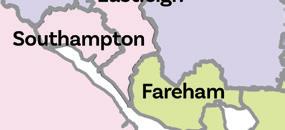






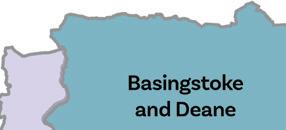




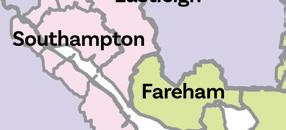



We have a dedicated programme working to establish an MCCA ready for Mayoral elections in May 2026.
Our four new mainland unitary proposal for devolution presents a transformative opportunity to enhance local governance, optimise funding allocation and address the distinct needs of our communities. This model offers a solid foundation from which to build a strong, innovative future for devolution across Hampshire and the Isle of Wight.
How four new mainland unitaries will enable stronger community engagement
Our four new mainland unitaries, especially when compared to options with fewer than four mainland unitaries, are in a much stronger position to foster stronger community engagement and genuine neighbourhood engagement. By restructuring the current local government landscape into localised unitary authorities focused on each of the main population centres and the way people live, this approach would bring government closer to the people, ensuring that local voices are heard and local needs are met with greater efficiency and responsiveness.
1) Enhanced local representation: Each unitary authority would have a manageable geographic and demographic scope, ensuring more tailored and representative governance. This closeness to the community means that local leaders could better understand and address the unique challenges and opportunities within their areas. Residents would have more direct access to their representatives, facilitating a more participatory form of governance where community input is actively sought and valued.
2) Improved service delivery: With governance structures that are linked to local needs, unitary authorities would commission and deliver services more effectively and efficiently as is already demonstrated by the three
existing unitary councils in Hampshire and the Solent. This approach allows for the customisation of services to better fit the specific requirements of each community, leading to improved outcomes in areas such as education, healthcare and infrastructure. By reducing bureaucratic layers, resources could be allocated more directly to where they are needed most, enhancing the quality of life for residents.
3) Empowerment through local neighbourhood initiatives and governance: A key advantage of our proposal is its potential to empower neighbourhoods through local initiatives. By devolving powers and responsibilities, communities are given the opportunity to take charge of local projects and initiatives. This empowerment fosters a sense of ownership and pride among residents, encouraging active participation in community development and decision-making processes. Together with communities and local partners, we would co-design future neighbourhood governance arrangements that best meet local requirements in each new unitary area through a total place type approach. This would deliver decision making at the lowest effective level to speed up delivery, tailored to each of our community’s needs.
By bringing governance closer to the people, enhancing service delivery, and fostering local initiatives, our proposal would create vibrant, empowered communities that are actively involved in shaping their futures.
This section outlines the research carried out to inform the proposed councillor ratios, provides a summary of the current councillor arrangements and a recommendation for indicative future councillor numbers. The analysis highlights the benefits of transitioning to four new unitaries on the mainland which would deliver more effective and responsive local governance.
Research around current councillor numbers in existing unitary authorities was completed, focusing on councillorto-population ratios and the effectiveness of representation. The table below highlights key data from comparator councils, providing a benchmark for assessing the proposed changes:
Currently, Hampshire and the Isle of Wight is served by a total of 650 councillors across various councils, including individuals who serve on two councils. The councillor-to-population ratio
varies significantly across different tiers of authority, with districts averaging one councillor per 3,391 residents and unitaries averaging one per 4,839 residents. The county council has a notably higher ratio of one per 19,126 residents.
Guided by the research, we have designed indicative councillor numbers for each of the proposed new mainland unitary councils, recognising that ultimately this will be determined by the Local Government Boundary Commission for England. Each of our new unitary configurations worked in small groups and using the research, Boundary Commission guidance, approach to decision making and considering the needs of the residents and the areas, developed the indicative numbers. The indicative numbers proposed, set out below, are for the longterm governance and decision making and it is understood that in the short-term other arrangements would be needed for the shadow authorities, which we would be keen to discuss with government as the process moves forward.
The councillor numbers for Isle of Wight remain unchanged as per the current arrangements. This is because the case being submitted includes the Isle of Wight remaining independent as a continuing island unitary authority.
Across the three options, there is a range of a total number of councillors from 67 for Option 1 in the South West and 99 for all options in the South East. There is an average of 88 councillors and a ratio of one councillor per 5,316 population (3,921 electorates) across all three options. These ranges and averages exclude the Isle of Wight who will remain separate under our proposal. This represents tailored approaches, numbers and ratios which fit the specific configurations within each option. There is also a reduction in total councillor numbers from 650 to 390 (average across each option).
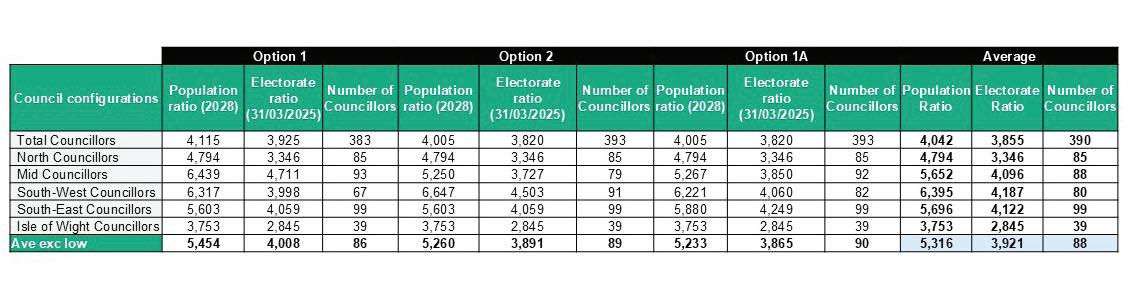
In our four new mainland unitary authorities, neighbourhood governance would be a core part of our approach, ensuring local voices remain central to decision-making, service oversight and community engagement. Our approach aligns with best practice, national policy direction and the lived realities of our communities.
The proposed neighbourhood governance would reflect the distinct identities and needs of communities across each of the new unitary footprints. They would be co-designed with partners and communities to operate at a scale that is close enough to be local, while being embedded in the wider system that is big enough to stay strong. We know from evidence (see Appendix 6) that neighbourhood scale governance promotes trust, improves outcomes and enables more effective public sector reform.
The role of neighbourhood governance would be to connect the strategic with the local, ensuring that decisions made at the unitary level are informed by granular, place-based insight. This aligns with the principles of the DCMS Civil Society Covenant, recently agreed by the government, which calls for deeper collaboration, participation and transparency between government and society.
Neighbourhood governance in each new unitary area would be empowered to influence and shape services in their locality. This includes:
• Oversight of local service delivery and performance
• Participatory budgeting and local grant-making
• Acting as a forum for co-designing services with residents and partners
• Providing a democratic route for community priorities to inform strategic planning.
This model builds on successful examples such as Local Community Networks in Somerset and Neighbourhood Partnerships in Wigan which have demonstrated how devolved governance can improve outcomes, reduce demand and build trust.
It would also play a vital role in supporting the wider devolution agenda. By anchoring neighbourhood governance within our framework for the MCA, we would ensure that local priorities are not lost in regional strategies. This dual alignment, local responsiveness and strategic coherence, would be essential to the success of our new governance model.
The specific design of neighbourhood governance in each new unitary area would be co-produced with communities and partners, including town and parish councils, during the shadow authorities phase. This would ensure flexibility and responsiveness to our local contexts, while embedding democratic innovation from the outset and maintaining pace against timelines. Over time, these arrangements would be regularly reviewed and refined to reflect changing community needs and expectations, ensuring that governance and supporting delivery remains dynamic and inclusive.
The following two case studies demonstrate differing approaches to neighbourhood governance which we would learn from. Ultimately, each of our four new mainland unitaries, along with the Isle of Wight unitary, would work closely with their local partners and communities to co-produce the specific neighbourhood governance and delivery arrangements that work best for them.
Our proposals include applications from the constituent authorities to retain City status (for existing cities) and to retain the status of existing civic and ceremonial positions including, but not limited to, Lord Mayor or Mayor status for the different areas, Admiral of the Port for Southampton and Portsmouth and other civic and ceremonial functions. The constituent authorities would seek the retention of these civic and ceremonial roles in subsequent Designation Orders to ensure the historic and community value of these roles are recognised and retained for the benefit of the areas. We are keen to talk to the government about this as the process moves forward.
Across Mid Hampshire, the existing local councils have strengthened democracy over many years by empowering communities to shape their futures. From Test Valley’s community-led Andover Vision and Romsey Future partnerships to Winchester’s forums in their new neighbourhoods and New Forest’s Totton regeneration partnership, frontline councillors are working with residents to set local priorities, co-design the future, and drive lasting change within their communities. This placebased approach, through neighbourhood empowerment, enables decisions to be made that reflect real community needs and provide the catalyst for communities to access the resources they need to deliver long-term sustainable outcomes for their place. The regeneration of Andover Town Centre is real example of this from a communityled masterplan involving thousands of people through to delivery of multi-million-pound schemes including a brandnew theatre by 2027.
Innovation in engagement and closeness to communities is at the heart of this. Methods such as citizens’ assemblies and award-winning digital consultations are used to reach a more diverse range of voices than ever before and build consensus on complex issues - from local plans to health and resilience planning. Test Valley continues to build on its national reputation for its deliberative engagement work, while Winchester’s lockdown-era consultation scooped two national awards. New Forest’s community forums are tackling issues like emergency planning and cost of living - bringing together councillors, partners and residents in meaningful dialogue all with a focus on their communities.
There is also a deep understanding of the value of formal decision-making processes being close enough to communities through examples such as area-based planning committees. In Test Valley, a dedicated communities team directly supports frontline community councillors to deepen the presence of the principal council in local communities through their convening and facilitating role giving access to resources to get things done. At New Forest, there is an annual active grants scheme that awards £350,000 to local projects and in Winchester, neighbourhood work in its new communities has led to the creation of new governance structures, redesigned parishes and stronger local engagement at a neighbourhood level. Across each authority, this collaborative approach is strengthening local democracy, resilience, and ownership - proving that when working with their communities at a neighbourhood level, councils can deliver bold, lasting impact.
LAC meetings are open to the public and are periodically attended by partner organisations including the police, local business organisations and the voluntary sector. Each LAC has a Local Area Manager who works with councillors to provide support and to set the strategic direction of the committee’s work.
Eastleigh Borough Council has successfully operated neighbourhood area working since the 1990s. The borough is divided into five Local Area Committees (LACs), which are made up of all the borough councillors in each area. They range in size from 6 to 12 councillors who take decisions and make representations on a wide range of council business relating to their area including:
• determining planning applications
• managing local budgets
• managing capital projects
• deciding on local priorities
• promoting local participation from residents/ businesses and town/parish councils
• traffic management and environmental improvements.
The LAC system offers residents the opportunity to engage with, and influence, a very local democratic forum with real powers, while for councillors it is a chance to get involved in decision-making from the very first day they are elected. It builds on the model of Local Area Boards which has been widely adopted in other parts of England by delegating real power, along with budgets that can be sizeable, to the very local level. For planning and other potentially sensitive matters, the system ensures that decisions are taken by locally elected people with a real stake in the debate. With adaptations, the LAC model could be suitable for application in new unitary authorities across Hampshire and the Isle of Wight.



With a track record of financial sustainability and effective service delivery, the Isle of Wight Council has operated successfully as a unitary council since 1995.

The Island’s unique geography, accessible only by ferry, creates distinct logistical and service delivery challenges that are best addressed through a locally focused model. Being an independent authority has enabled tailored responses to challenges, demographic pressures and environmental priorities while protecting the Island’s local identity.
Our approach is anchored by a shared commitment to build on a history of collaboration with mainland councils. Maintaining the Isle of Wight as an independent or unitary authority will ensure it continues to respond to local needs while standing alongside the new mainland unitary councils through an enhanced partnership.
Although the Isle of Wight Council has been fully involved in developing the proposals set out in this case and remain supportive of the approach in the proposals to include the Isle of Wight as an independent unitary authority, in September they felt unable to endorse a specific proposal that relates to councils on the mainland. The Isle of Wight Council is continuing to liaise with the government to confirm its position.





The Isle of Wight is the largest island off the English coast, covering approximately 380 square kilometres (147 square miles). It is home to just over 72,000 domestic properties and 7,600 businesses, with a current population of around 142,000 residents. The Island’s character is primarily rural, interspersed with historic towns and urban areas, and it offers a unique blend of community, heritage, and environment.

Unlike any mainland area in Hampshire, the Isle of Wight is accessible only by ferry, as there are no fixed links to the UK mainland. All ferry services are commercially operated and subject to weather, capacity and operational constraints, which present significant challenges of reliability, frequency and affordability. These limitations impact not only day-today connectivity but also the cost and organisation of public services, supply chains and economic activity across the Island.
This physical separation has contributed to the development of a distinct, self-contained community with a strong sense of self-reliance and mutual support, qualities that were especially evident during the COVID-19 pandemic. Governments have long recognised the unique circumstances of the Island by providing for a single council covering the Isle of Wight alone in successive local government reorganisations.
Since 1995, the Isle of Wight Council (IWC) has operated successfully as a unitary authority, delivering the full range of local government services, statutory and otherwise, to its residents for three decades. Over this period, the council has managed its finances in a prudent, sustainable and efficient
manner, setting it apart from many larger authorities which have faced significant financial pressures in recent years. The Island’s council has demonstrated resilience and adaptability in the face of wider funding challenges, using its resources to address local priorities and deliver targeted improvements for its residents.
Maintaining the current unitary authority for the Island enables the council to focus resources on its unique local challenges, such as rural service delivery, demographic pressures and environmental protection, while pursuing targeted transformation within existing funding and strategic frameworks. By contrast, incorporating the Island into a larger mainland-based unitary authority would introduce unnecessary bureaucratic complexity, risk undermining local responsiveness and increase costs due to the inevitable logistical barriers of the Solent. Such a move would likely result in duplication of services and infrastructure, with little prospect of cost savings or effective asset sharing due to the Island’s natural separation and service delivery requirements. The additional travel needed for elected representatives and officers to attend meetings on the mainland would only add to the administrative and financial burden, further weakening the direct accountability between the council and the Island’s residents.
Appropriate sharing of services between the Isle of Wight Council and mainland authorities has supported efficiencies and capacity building frameworks. However, merging or enlarging the Isle of Wight Council would neither enhance nor improve service sharing; instead, it would risk diluting the Island’s strong local governance and community identity.
Our five-unitary council model proposal is anchored by a shared commitment to collaborative transformation, with the
Isle of Wight Council working alongside the four new unitary councils on the mainland. This enhanced partnership approach will enable shared learning, joint innovation and the flexible exploration of shared services where appropriate, ensuring that the Island continues to benefit from regional collaboration while retaining the local responsiveness and accountability essential for effective service delivery in its unique context.
The Isle of Wight’s size, structure and governance model has proven its ability to deliver high-quality public services at a local level. The council’s tailored transformation agenda, strong partnerships with mainland authorities and record of innovation and community engagement demonstrate why the Isle of Wight is ideally suited to remain a stand-alone unitary authority. The Island’s unique needs, identity and civic culture are best served by a council that is accountable to local residents and empowered to innovate, adapt and lead.
Our proposal is not for the Isle of Wight to stand apart, but to stand alongside its new mainland unitary partners: a resilient, high-performing council that continues to serve its residents with efficiency and distinction. Below, we set out the case for the Island to remain a unitary authority with an enhanced partnership with the four new mainland unitaries, addressing each of the government criteria as requested in the interim feedback letter.
The Isle of Wight stands as a singular entity in the UK –geographically, culturally, economically and environmentally. For over 30 years the council has successfully operated as a unitary authority, delivering locally attuned services and governance that reflect the Island’s distinct identify.
The Island is not merely separated by water, it is defined by its insularity and has a very different demography to South East and South West Hampshire (see definitions in the approach section), including:
• A proportionately larger elderly and ageing population, 21.5% aged 70 plus versus 17.2% in Hampshire and a median age of 51 years (43 years in Hampshire).
• A higher proportion of residents, 8.8% compared to 5.8% in Hampshire, reporting a long-term health problem or disability limiting daily activities.
• A deeply embedded culture of unpaid care, with over 11% of the population being unpaid carers, providing essential care and support to their partner, child, parent, friend or neighbours.
• A lower proportion of working age residents at 51.8%, impacting the labour market dynamics and service demand.
• Higher levels of deprivation, with a deprivation per head score of 0.14, indicating greater socioeconomic challenges.
• A lower population density of 385.5 people per square kilometre, reflecting its rural and dispersed settlement pattern, contrasting with more urbanised areas of South East and South West Hampshire.
The Island’s cultural identity is equally distinct. Its maritime heritage, rural settlement patterns and strong community ethos foster a level of civic engagement, with over 1,500 voluntary organisations. This self-reliance, amplified during the COVID-19 pandemic is a direct product of its geographic isolation and resilience, and can be safeguarded through locally accountable governance.
This close-knit culture is also influenced by the Island’s physical separation from the mainland, which creates a natural boundary and fosters a more self-reliant way of life. The Island’s identity is also shaped by its role as a tourist destination, its maritime heritage, and its environmental character, including protected landscapes and coastal settings. These features contribute to a shared pride in place and a strong local voice, which residents feel is best supported by having their own unitary council.
Inevitably these differences in demographics and cultural identity require a council that fully understands this and tailors its priorities, approach and services accordingly.
Contributing £2.5 billion GVA, the Isle of Wight’s economy is shaped by its geography and seasonality. Tourism, care, food and retail dominate, supported by a high concentration of over 5,000 small and medium sized enterprises (SMEs) that rely on local networks and council-led initiatives, such as the Isle of Wight Rural SME Fund and small grants programme. This is very different from the economies of both South East and South West Hampshire on the mainland.
The Island functions as a cohesive economic area with strong community ties and entrepreneurial spirit. However, to unlock further growth the Island requires strategic investment aligned with its environmental sensitivities and workforce capabilities. A targeted and place-based approach is essential – one that builds on its status as a premier holiday and visitor destination while diversifying its economic base to reduce seasonal dependency.
To attract sustained inward investment, particularly from international markets, the Island requires a strategic marketing and regeneration programme that showcases its unique assets and investment-ready opportunities. This will not only stimulate economic activity but also generate new revenue streams to support vital public services. This must be delivered in a way that respects the Island’s environmental sensitivities and aligns and improves local wage levels and workforce capabilities. Development sites and opportunity areas have been identified across the Island offering a clear pathway to deliver new jobs, homes and increased local revenues. To unlock these opportunities, the Island needs a bespoke, targeted approach including enhanced infrastructure, particularly in digital connectivity and the policy flexibility to reflect the Island’s unique economic context.
In short, the Isle of Wight’s distinctiveness, strategic coherence and the need for tailored, Island-specific solutions make a compelling case for it remaining a unitary authority. The governance model is not just administratively efficient; it is essential for unlocking the Island’s full potential and delivering prosperity for its residents.
The Island’s transport infrastructure is fundamentally different from its neighbouring mainland councils. Unlike the mainland, which benefits from integrated road, rail and bus networks, the Island’s connectivity is shaped by its geography isolation and reliance on ferry services. These maritime links are not optional – they are the Island’s lifeline for residents, businesses and visitors. Their cost, reliability and vulnerability directly affect access to employment, healthcare and education. Improving ferry services is a key priority, including better reliability, affordability, and integration with mainland transport. The Island also needs investment in its local roads and public transport to make travel easier within the community. These challenges are unique to the Isle of Wight and require tailored solutions that reflect its rural setting and limited transport options.
Within the Island itself transport delivery is characterised by the rural character and limited transport options. Investment in local roads and bus services are essential to maintain mobility, social inclusion and economic resilience. The council’s Local Transport Plan (2025-2040) is in development and is tailored specifically to the Island’s needs, including sustainable transport and congestion reduction. Two key coastal routes (the Military Road along the south west coast and Leeson Road in Ventnor) are particularly vulnerable to erosion and climate
related disruption. These roads are not only vital for connecting communities and supporting tourism but also serve as critical corridors for services. Their maintenance requires bespoke engineering solutions and sustained investment, reflecting the Island’s unique environmental pressures.
There are local transport challenges which cannot be addressed through regional or larger authority strategies that may not recognised the vital importance of these issues for the Island community. They demand local leadership, tailored policy responses and dedicated resources.
Over 85% of employed residents live and work on the Isle of Wight. Solent (ferry) dependent commuting is minimal (3.2% of residents), and the average commute time is significantly shorter than the mainland, reflecting not only geographic isolation but a community-based economy reliant on local services and seasonal industries.
The Island’s economy is shaped by services that are deeply embedded in the local community: tourism, health and social care, education, retail and public services. Unlike urban centres such as Southampton or Portsmouth there are no large scale industrial or commercial hubs. Its economic resilience depends on seasonal demand, community needs and public sector provision.
This distinct economic and social profile has direct implications for workforce planning, transport policy and investment strategy. For example, while improving ferry reliability and affordability could enhance access and support business growth, it would not fundamentally alter the Island’s selfcontained labour market in the short term.
These structural patterns necessitate workforce planning and investment strategies that are hyper-localised. For example, Adult Community Learning (ACL) on the Island plays a vital role in empowering individuals, strengthening communities and fostering lifelong learning – a vital first step on the ladder for those that did not achieve in school or who have barriers to learning. With most of the working age population living and working locally, ACL provides accessible pathways to improve skills, confidence, health and wellbeing and for progressing into work, apprenticeships and further or higher education. It does this via collaborative partnerships with local organisations to help learning progress from foundation-level courses to higher qualifications. It also contributes to the local Skills Board.
The Island’s challenges and opportunities are not shared with neighbouring areas and therefore cannot be addressed through anything other than localised service delivery.
The Island benefits from a more affordable and communityoriented housing landscape, particularly in the provision of supported social retirement accommodation and extra care housing. These types of housing are more accessible on the Isle of Wight, reflecting its older population and rural character, and are often embedded within local communities to support ageing in place.
The Isle of Wight’s Single Homelessness Pathway coordinates services such as mother-and-baby units, priority need assessments, and rural outreach, tailored to the Island’s geography and demographic needs. In contrast, urban centres like Southampton and Portsmouth focus more on drop-in hubs, rough sleeping outreach and emergency placements, often delivered in partnership with charities and faith groups.
Despite its strengths in supported accommodation, the Isle of Wight still faces challenges. Between April and June 2024, the Island reported a homelessness rate of 1.13 per 1,000 households, slightly above the Hampshire and Solent average of 1.1. It also had 3.56 households per 1,000 in temporary accommodation, which is higher than many rural districts but lower than urban centres like Portsmouth (4.76).
These figures reflect the Island’s limited housing stock, seasonal pressures, and rural isolation, which can complicate access to services and emergency housing. However, the Island’s strong community networks and place-based service models offer a foundation for prevention and early intervention that is harder to replicate in more urban environments.
The Isle of Wight is not just a local authority; it is a nationally and internationally recognised environmental asset. Approximately 47% of the Island’s land surface and 95% of its coastline are under legal and policy protection for wildlife and natural heritage. Half of the Island is designated as a National Landscape (formerly AONB), with many of these areas overlapping with other protected zones. These protections underpin the Island’s designation as a UNESCO Biosphere Reserve, placing it among a select group of regions globally recognised for their commitment to sustainable development and conservation. This environment is fundamentally different to that found in South East and South West Hampshire. This unique environmental profile demands a governance model that is locally accountable, strategically focussed and environmentally literate. The IWC has consistently demonstrated the ability to deliver services and stewardship tailored to this complex landscape.
As a UNESCO Biosphere Reserve, the Isle of Wight is uniquely positioned to attract environmental investment, innovation funding and international partnerships. These opportunities are contingent on having a coherent, place-based governance arrangement.
The Isle of Wight’s environmental significance is not incidental – it is central to its identity, economy and future resilience.
unitary councils that are the
The IWC stands as a resilient, efficient and community-driven authority, uniquely positioned to deliver public services tailored to the Island’s distinct needs. Artificially extending local authority boundaries based on demographic size will not automatically achieve significant savings due the natural physical separation of the Solent. It will though lose the targeted focus the Island needs on its specific opportunities and challenges. Inevitably for most major services the same arrangements and infrastructure will need to be duplicated and based on the Island. This means the opportunities to reduce fixed costs and make procurement efficiencies and estate rationalisation are always going to be limited.
Costs to deliver public services on the Island are rising, a significant concern compounded by increasing demand, driven by factors such as the island’s elderly and ageing population. While we recognise demand pressures are a national issue, they are more pronounced on the Island than in other locations. The IWC’s ability to manage demand is further constrained by an inconsistent health offer from the NHS, which is dealing with the same island cost pressures. The challenges are further explained below, which cannot be resolved through being part of a new, larger unitary authority on the mainland:
• Unique and unavoidable costs - Transporting goods and services across the Solent, such as waste disposal, incurs ferry-related costs that mainland authorities do not face. These costs would persist regardless of whether the
Island were part of a larger unitary, meaning integration would not deliver the efficiencies typically expected from reorganisation.
• Market failures and small markets - The Island’s limited market size leads to reduced competition and higher costs in key sectors like public transport, waste, and social care. These conditions are endemic to the Island’s geography and cannot be resolved through being part of a larger mainland unitary authority. In fact, being part of a larger mainland unitary could obscure these challenges and reduce the Island’s ability to tailor solutions to its unique market dynamics.
Despite these challenges, the IWC has consistently demonstrated its ability to effectively manage its resources, meet statutory obligations and innovate in service delivery. This success is driven by local people as councillors and business leaders striving to deliver the best for the Island. The sense of community means that people are willing to step up and help where they can.
Whilst the physical barriers the Island’s geography presents to savings will remain, our four new mainland unitaries and the Isle of Wight will work collaboratively to explore and realise any transformation opportunities that are achievable. Through an enhanced transformation partnership, IWC will work collaboratively alongside the four new mainland unitaries to assess each redesign and savings opportunity they progress to test any potential savings that could be realised for the Island and other authorities collectively.
Recent and planned IWC transformation initiatives include:
• Telephony upgrade: Replacing the outdated legacy system with a modern, integrated solution aligned with its digital strategy. This aims to enhance customer experience, support flexible working and future-proof communications, though a funding gap remains.
• Business Centre Model: Centralised transactional services have delivered significant savings over 15 years (see case study).
Under our proposal, an enhanced partnership approach across Hampshire and the Isle of Wight area would also enable:
• Core systems modernisation: A proposed initiative for the IWC is the replacement of its outdated SAP ERP system, paused due to the LGR announcement but still a strategic priority. The plan involves investing £7.5 million over three years to implement a new ERP solution for HR, finance, payroll, and procurement functions. The new ERP system is expected to streamline processes, reduce manual workload and improve staff wellbeing, with projected annual savings of approximately £0.2 million (equivalent to five full-time roles).
• Shared support services: By pooling resources and expertise, IWC and the new mainland unitary authorities can benefit from economies of scale, reduce duplication and enhance service quality in areas not dependent on location.
• Joint specialist roles: Establishing shared specialist roles across councils will help IWC address recruitment challenges. This model would also support more strategic, cross-boundary working and reduce overhead costs.
• Joint systems: Implementing joint systems will enable the IWC to standardise processes, improve data accuracy and
enhance service delivery, in particular, allowing for greater data sharing with the Hampshire and Isle of Wight Integrated Care Board covering Hampshire and the Isle of Wight. For example, a shared CRM system could provide a single view of customer interactions, improving responsiveness and service quality.
• Joint procurement and buying power: Where appropriate, IWC will participate in joint procurement exercises with new mainland unitaries to leverage collective buying power. This can result in better contract terms, reduced unit costs and access to higher-quality suppliers, particularly for IT, infrastructure and facilities management.
• Flexible and agile ways of working: The IWC will continue to explore modern working practices, including remote and hybrid working, digital collaboration tools, and agile service design. These approaches can improve staff satisfaction, reduce estate costs and support more responsive service delivery.
The IWC’s current and planned transformation initiatives reflect a strong commitment to doing things differently, with a clear focus on leadership and operational delivery. These potential initiatives demonstrate that collaboration and efficiency gains are best achieved without structural change. The partnership approach can ensure that best practices are adopted across the authorities while preserving local decision-making and community identity.
IWC
Centre which could be grown into a shared service
The IWC Business Centre represents a mature and efficient model for delivering high-volume transactional services across a wide range of council functions. Over the past 15 years, the centre has delivered significant savings through centralisation, role rationalisation and process automation. Its success demonstrates the potential for this localised model to be scales into a broader shared service offering across multiple authorities.
The Business Centre comprises several small, multidisciplinary teams that operate generically across functions, enabling flexibility, resilience and knowledge sharing. This structure allows specialist and professional colleagues to focus on strategic priorities, supported by a capable and agile operational backbone.
Key service areas include:
• Customer Contact and Help Centre: Serving over 30 service areas, this team provides the first-contact resolution (targeting a 95% resolution) and undertakes administrative tasks such as staff benefits, concessionary travel applications, vendor setups and complaints monitoring.
• Payments and Payroll: A centralised procure-to-pay function, including ordering, invoicing, debt collection and payroll services. Proximity and integration enable rapid resolution of financial queries.
• Fleet and Facilities Management: Responsible for County Hall maintenance, fleet oversight, post room and stores. The team also support with empty property checks.
• Revenue Collection and Enforcement: In-house administration and enforcement of council tax, business rates and penalty charge notices.
• Tourism support: Administration of the Visit Isle of Wight tourism Business Improvement District (BID).
• Benefits Administration: Delivery of housing benefits and local council tax support, including partnership with the ferry companies to administer the locally developed affordable travel scheme.
• Operational Support: Scanning, indexing of post for the revenues and benefits and payment processing of council utility bills supporting property services.
• Blue badge administration: End-to-end management of applications and renewals.
The Business Centre’s integrated and working model offers a compelling foundation for a scalable service. Its proven ability to deliver efficiencies, maintain service quality and adapt to evolving demands positions it as a blueprint for a broader collaboration. Whilst previous outreach to Portsmouth and Gosport councils did not progress, the current context of LGR presents renewed opportunity to revisit.
An IWC Business Centre based model could:
• Standardise transactional process across authorities, reducing duplication and improving consistency.
• Leverage economies of scale through pooled resources and centralised systems.
• Enhance resilience by creating a larger, cross-trained workforce capable of flexing to meet demand.
• Drive innovation through shared investment in automation and digital transformation.
Current funding formulas do not adequately reflect the Island’s unique cost pressures. The IWC lacks the remoteness adjustments available to other geographically isolated areas, resulting in an inequitable distribution of resources. Joining a larger mainland unitary would not correct this imbalance. Recognising that the government is currently going through a fair funding review, which we very much support, the IWC council would be keen to discuss with government how that can lead in future to funding that does adequately address the Island’s unique challenges and circumstances.
The IWC has consistently demonstrated its capacity to deliver quality and responsive public services tailored to the unique needs of its island population. The council has shown a commitment to improvement, innovation and community engagement, despite the unique challenges of serving an island population. Remaining as a unitary authority the IWC is sized and structured to prioritise local outcomes, drive innovation and maintain accountability.
Isle of Wight Council’s performance across key service areas reflects a strong commitment to quality and continuous improvement:
• Children’s Services: Rated ‘Good’ by Ofsted in 2023, with inspectors praising strong leadership, effective safeguarding and a clear focus on improving outcomes. Investment in early help and foster care support has created a more stable and responsive system. Children’s Services on the Isle of Wight has maintained a ‘Good’ rating from Ofsted, with inspectors noting improvements since the end of the council’s partnership with Hampshire County Council. The council has increased capacity and leadership focus, and a clear commitment to further enhancing service quality.
• Adult Social Care: on the Island 85% of adult social care providers are rated ‘Good’ or ‘Outstanding’. The council has
worked closely with local NHS partners to streamline care pathways and reduce hospital admissions. Feedback from people who draw on care and support indicate increasing satisfaction with the quality and responsiveness of care. The Isle of Wight Dementia Strategy (2022–2025) has been praised nationally and was a finalist in both the Health Service Journal and Local Government Chronicle Awards. Key achievements include a dementia training programme for health and social care staff; the opening of the Parklands Dementia Hub and community café in Cowes; and a Dementia Outreach Team providing community-based support. The strategy is overseen by a multi-agency board and is currently being refreshed to build on early successes.
• Waste Management and Recycling: IWC achieved a 56.2% recycling rate in 2023 – well above the national average of 44.1%. Less than 5% of waste is sent to landfill, supported by innovative schemes and strong public engagement.
• Education: Targeted interventions and partnerships have led to improved Ofsted outcomes in several primary schools with ongoing efforts to raise secondary education standards.
• Environmental Stewardship: Over 30 active community-led conservation projects and a well-received climate action plan demonstrate the IWC’s leadership in biodiversity, coastal protection and climate resilience. The Isle of Wight’s Local Nature Recovery Strategy (LNRS), approved in April 2025, has been recognised by DEFRA and Natural England as a national exemplar. It is one of the first four LNRSs in the country to go live. The strategy includes a detailed habitat map and targeted actions to reverse biodiversity loss. Toolkits and community engagement resources are being rolled out to support implementation.
• Adult Community Learning (ACL): Adapted to reduced funding since 2010 by offering flexible, non-accredited learning through Tailored Learning and the Multiply project (2022-2025), in addition to essential skills qualifications to support positive outcomes for learners. The May 2025 Ofsted inspection rated ACL on the Isle of Wight as “Good” with learners’ behaviour and attitudes towards learning deemed “Outstanding”.
The IWC as an existing unitary authority, is uniquely positioned to continue to redesign and improve services in a way that is locally responsive, efficient, and sustainable. The council is progressing a transformation agenda that reflects the Island’s distinct geography, demographics and service challenges. Current plans focus on integrated health and social care, digital transformation, early intervention in children’s services, environmental resilience, and housing development. For example, the council is expanding community-based care to reduce hospital admissions, investing in digital platforms to streamline access to services, and working with local partners to deliver affordable housing and climate adaptation projects.
Managing these improvements within the existing unitary structure offers significant advantages over being part of a new, larger unitary authority on the mainland. IWC already has consolidated governance, which allows for faster decisionmaking and clearer accountability. It also ensures that resources are directed specifically toward island priorities, rather than being diluted across a larger, more diverse region. Being part of a new, larger mainland unitary authority would not resolve the Island’s inherent cost pressures. The Island’s unique challenges, such as transport connectivity, coastal management and seasonal population shifts require bespoke solutions that may be overlooked in a broader model. Furthermore, maintaining local control supports stronger community engagement and preserves the Island’s identity, which is a key factor in service design and delivery.
As mentioned previously, key opportunities for IWC going forward include sharing non-location-dependent support services like HR, finance, IT and procurement, allowing the council to benefit from economies of scale and specialist expertise. Joint specialist roles and teams in areas such as legal, commissioning and data analytics help to address recruitment challenges and foster strategic collaboration. The implementation of joint systems, particularly in customer relationship management and data sharing with health partners, enhances service delivery and responsiveness. Additionally, joint procurement strengthens buying power, securing better value and access to high-quality suppliers. By embracing flexible and agile working practices, IWC can also modernise its workforce and service design, improving staff satisfaction and operational resilience.

The IWC can build on these plans for improving and redesigning services through working closely with the new mainland unitary authorities, accelerating service innovation and efficiency. Central to this collaboration is a commitment to shared learning, where IWC actively reviews successful transformation programmes, such as digital service delivery, customer access enhancements, and workforce optimisation, and adapts them to the island’s unique context (see section in Criteria 2). This shared learning model allows IWC to remain locally focused, retaining the agility and accountability needed to tailor services to the island’s distinct needs, while benefiting from regional collaboration and innovation.
Criteria 4: how councils in the area have sought to work together in coming to a view that meets local needs and is informed by local views
The IWC has been a fully engaged and collaborative partner throughout the LGR programme, working in close partnership with the eleven other mainland councils across Hampshire, Southampton and Portsmouth. From the outset, IWC has demonstrated a strong commitment to shared learning, transparency, and co-design, recognising the value of regional collaboration in driving service improvement and innovation.
IWC has consistently participated in all Chief Executive and Leader sessions, ensuring that the Island’s unique context is not only represented but meaningfully integrated into discussions. Senior officers from finance, governance and service design have participated in key forums, bringing forward the council’s expertise as an established unitary authority.
IWC representatives have attended service design workshops focused on current challenges and transformation opportunities. As an established unitary authority, the Isle of Wight brings a wealth of practical experience in integrated service delivery, governance, and community engagement. This has enabled the council to contribute meaningfully to discussions, sharing insights from years of operating as a single-tier authority responsible for a full range of local services. The council’s deep understanding of how services interact at the local level has been valuable in identifying what works, what doesn’t and how transformation can be realistically implemented. Additionally, IWC has been proactive in data sharing, contributing to joint analysis and system design and helping to ensure that regional solutions are informed by both urban and rural perspectives, including the unique needs of island communities. This deep and ongoing engagement reflects IWC’s commitment to collaborative transformation, while maintaining its identity and autonomy as a standalone unitary authority. This is reflected by the fact that all 15 existing councils agree that the Isle of Wight should remain an independent unitary authority. By actively participating in regional forums and embracing shared learning, the council is well-positioned to adapt successful models to the Island’s needs, improve service outcomes and deliver value for residents.
This position is not only institutionally supported but also supported by public views. Local media outlets have reported that public sentiment leans heavily toward preserving the Island’s autonomy. Residents and stakeholders consistently express concern that being part of a new, larger unitary authority on the mainland could erode the Island’s cultural
identity and result in decisions being made without sufficient understanding of local challenges. The prevailing view is clear: maintaining the Isle of Wight Council as a separate unitary authority enables the council to tailor its services and policies to the specific needs and characteristics of the island community, ensuring that local priorities are locally informed and addressed.
“As an island community it is unique. We are different to the mainland and that difference should continue to be respected through having our own unitary county going forward.”
(Survey response – Our Place, Our Future)
As described earlier, the Isle of Wight’s identity is not incidental – it is foundational. As an island community, it possesses a distinct blend of geographic, cultural and economic characteristics that shape its public service needs. The Island’s sense of place is defined by its coastal environment, rural landscape, strong community networks and a proud heritage of independence and self-reliance. These factors influence everything from service delivery and infrastructure planning to economic development and community engagement.
Unlike the more urbanised and densely populated areas of South East and South West Hampshire, the Isle of Wight faces specific challenges such as seasonal population fluctuations, limited transport connectivity and a reliance on tourism and small businesses. These require tailored policy responses
and service models that reflect the island’s scale, pace and priorities. The council’s ability to respond quickly and locally to these needs is a direct result of its unitary status and close relationship with its residents.
Being part of a new, larger mainland unitary authority would risk diluting this local focus. Decision-making could become more centralised and less responsive to the Island’s unique context. Resources might be redirected to meet the demands of larger urban centres, and the Island’s voice could be diminished. The Isle of Wight’s distinct identity, so integral to its community cohesion and civic pride, could be overshadowed by broader, less tailored priorities.
Remaining a standalone unitary authority allows the IWC to preserve its autonomy, protect its identity, and continue delivering services that are designed with and for its residents. Autonomy does not mean isolation; the council’s active participation in regional transformation partnerships ensures it can benefit from shared learning and collaboration without compromising its local character or strategic independence.
Although the Isle of Wight Council has been fully involved in developing the proposals set out in this case and remain supportive of the approach in the proposals to include the Isle of Wight as an independent unitary authority, in September they felt unable to endorse a specific proposal that relates to councils on the mainland. The Isle of Wight Council is continuing to liaise with the government to confirm its position.
The IWC has played an active and committed role throughout the joint LGR and devolution process, contributing meaningfully to the development of a future strategic authority for Hampshire and the Isle of Wight. We are proud to have been selected for the DPP and are working collaboratively to deliver both the DPP and the local government reorganisation programme. These initiatives will unlock local investment, drive economic growth, and improve public services across the region and for the Isle of Wight.
Throughout this journey, the Isle of Wight has consistently demonstrated its commitment to partnership working.
The proposed model of five unitary authorities across the area with four new, well-balanced mainland unitary authorities, working alongside the existing IWC, provides a strong foundation for effective devolution. Each mainland unitary will be large enough to deliver services efficiently, with populations ranging between 400,000 and 600,000, but not so large as to create democratic imbalance. This structure ensures that no single authority dominates decision-making, and that all constituent members have a meaningful voice in shaping regional strategy that would be diluted in a two or three mainland unitary option.
The Isle of Wight’s continued status as an independent unitary authority supports equity in representation within the strategic authority. This arrangement avoids the risk of marginalisation and ensures that the strategic authority reflects the full diversity of communities across Hampshire and the Isle of Wight.
Importantly, the Isle of Wight’s continued status as a
standalone unitary authority within the proposed strategic model supports the broader vision for devolution. The Island brings a distinct voice and perspective to the table, one shaped by its unique geography, rural character, and strong community identity. Unlike the more urbanised mainland areas in South West and South East Hampshire, the Isle of Wight faces specific island challenges which require tailored policy responses and locally led service delivery.
Our proposed model of four well-balanced mainland unitaries, working alongside the existing Isle of Wight Council, ensures that strategic planning is informed by diverse local priorities. This structure supports effective decision-making, avoids democratic imbalance, and enables the strategic authority to reflect the full breadth of communities across Hampshire and the Isle of Wight. The Isle of Wight’s inclusion strengthens the strategic authority by ensuring representation for rural and island communities, contributing to a more inclusive and responsive governance model.
By remaining an independent unitary authority, the Isle of Wight retains the agility and accountability needed to serve its residents effectively, while fully participating in regional collaboration. This balance between local delivery and strategic coordination is essential to the success of devolution, and the Isle of Wight is committed to playing a central role in shaping and delivering the future of public services across the region.
A continued status as a standalone unitary authority represents a unique and compelling opportunity to deepen community engagement and deliver authentic neighbourhood empowerment. As a geographically distinct island, with a strong sense of identity and civic pride, the Isle of Wight is positioned to be a model of local government that is both responsive and rooted in place.
The Isle of Wight’s scale allows councillors to maintain strong connections with their communities. Residents know their representatives personally, and councillors are deeply embedded in the places they serve. This proximity creates trust, accountability and a shared understanding of local priorities. Maintaining the existing number of councillors ensures that representation remains proportionate and effective. It also avoids the risk of overstretched members, which can occur in larger authorities where councillors must serve significantly larger populations and wider geographies, and this can diminish local voice. In this respect, the Isle of Wight’s scale is a strategic advantage.
Neighbourhood empowerment is further supported by the council’s ability to tailor services and engagement strategies to the Island’s specific needs. Whether through town and parish councils, community forums, or local partnerships, the IWC has the flexibility to design initiatives that reflect the character and aspirations of its diverse communities, from coastal towns to rural villages. This local responsiveness is a key strength of the
existing unitary model and would be difficult to replicate within a new, larger, unitary authority.
The Isle of Wight actively supports community forums and place-based partnerships, bringing together residents, local organisations and service providers to co-design solutions. These forums are not just consultative – they are collaborative spaces where community voices shape policy and practice.
Equally important is the council’s commitment to localised service design. Services on the Island are often developed with direct input from communities, ensuring they address specific challenges such as coastal resilience, rural transport and seasonal economies.
The IWC has demonstrated its ability to design and deliver locally responsive initiatives through town and parish councils community forums and place-based partnerships. Examples include:
• The Bay Youth Project (BYP) – launched in 2022 to address anti-social behaviour and youth disengagement in Sandown, Lake and Shanklin, it offers free services 48 weeks a year, including detached youth work, forums and structured activities chosen by young people. Over £3.5million in capital investment was secured for youth spaces and sports facilities, with strong collaboration between local councils and the Isle of Wight Council. The project has been recognised nationally. BYP is a prime example of place-based youth empowerment, shaped by local voices and supported by local governance.
• Connecting libraries initiative – led by Creative Island in partnership with the Isle of Wight Council library service, this project reimagines libraries as cultural and community
hubs. Activities include storytelling sessions, creative workshops, film screenings and performances across both council-run and volunteer-led libraries. A community development specialist works with local partners to expand library offerings and deepen engagement. This initiative demonstrates how local culture infrastructure is leveraged to foster intergenerational engagement and creativity.
As part of the wider strategic authority for Hampshire, the Isle of Wight will continue to contribute to regional planning and collaboration, while retaining the autonomy needed to empower its communities. This balance between strategic coordination and local delivery is essential to the success of devolution, and the Isle of Wight’s role as a distinct, engaged, and community-focused unitary authority will be central to achieving it.
We have set out the case for it to remain a unitary authority with an enhanced partnership with the four new mainland unitaries, under each of the government criteria as requested in the interim feedback letter from government.
The Isle of Wight’s coastal geography and landscape set it apart from nearby mainland areas like Southampton, Portsmouth and Hampshire, presenting unique challenges for service delivery and infrastructure. As an island, it is surrounded by the Solent and the English Channel, with a rugged coastline, chalk cliffs and limited access points via ferry or hovercraft. This isolation affects everything from emergency response times and healthcare access to economic development and transport logistics. Unlike the more urbanised and interconnected mainland cities, the Island’s dispersed rural communities and reliance on maritime connections mean that services must be more locally resilient and tailored to a smaller, often older
population. Coastal erosion, flooding risks and the need to protect sensitive marine and cliffside ecosystems further complicate planning and development, requiring innovative and sustainable approaches to land use and public service provision.
The Isle of Wight is the right size, structure and governance model to deliver high-quality public services at a local level. Its proven track record, tailored transformation agenda and strategic collaboration commitment with mainland partners demonstrate the case for retaining the IWC as unitary authority. The Island’s unique needs, identity and community engagement are best served by a locally accountable council that can innovate, adapt and lead. Our proposal is not for the Isle of Wight to stand apart but to stand strong – as a resilient, high performing council that continues to serve its residents with distinction, while contributing meaningfully to the wider ambitions of devolution and public service reform across Hampshire and the Isle of Wight.

Key data points for Isle of Wight in comparison with average for Hampshire and the Isle of Wight
Establishing firmer financial footing
Quality and sustainable services Crucial service protection Proportion of children in relative lowincome families (under 16s)
Proportion of children in absolute low-income families (under 16s)
*for the purposes of this comparison, South West Hampshire includes Southampton and Eastleigh. This changes depending on Options 1,2 and 1A.

In addition to the local government reorganisation criteria, our proposed four unitary council model for mainland Hampshire, with the Isle of Wight remaining independent, will best meet key government priority policy areas such as economic growth, integrated health and care, prevention and early intervention, digital transformation and public service reform.
This table demonstrates how our four mainland and Isle of Wight unitary proposal complements key government and NHS priorities.
Economic growth and regeneration:
Drive inclusive growth through empowered local government
Brings together planning, housing, transport, economic development and placed-based marketing to enable enhanced inward investment activity, faster decision making, clearer accountability and more coherent place-based growth tailored to the economic areas and their opportunities and challenges. Our proposal is perfectly placed to deliver the priorities in the government’s new Industrial Strategy.
Neighbourhood services and local accountability:
Deliver services closer to communities at a neighbourhood level
Prevention and early intervention:
Shift from treatment to prevention-first public services
Focuses neighbourhood-level delivery, co-locating health, social care, housing and early help in community hubs that are accessible, responsive and align with the requirements of residents in the different areas.
Closely connected to their local communities, the new unitaries will identify the risks earlier, intervene sooner and reduce long-term demand on acute services, making our communities more resilient. Through better use of shared assets and data while maintaining local stewardship, our proposal highlights existing critical infrastructure which will be mapped into a prevention network aligned with the NHS’s 10-year plan.
Integrated health and care:
Create Integrated Health Organisations (IHOs) and neighbourhood health teams
Data and digital transformation:
Modernise public services by moving from analogue to digital
Provides greater use of our strong local networks across health partners to align our services with health provision to deliver joined-up care through shared governance and commissioning and co-located teams.
Enhances our local understanding and proximity to our distinct communities by simplifying data sharing and digital integration across services, enabling better use of analytics, shared case management and prioritise equitable access across our different communities.
Workforce and collaboration:
Empower staff and cross-sector partnerships
Public service reform:
Reform services to be more preventative, efficient and locally led
Fosters our close working relationships between our council teams, NHS staff and voluntary sector partners to break down existing barriers and enable a collaborative and person-centred service delivery.
Our proposal is underpinned by transformation, redesign and innovation to create new unitaries that work collaboratively with local partners to deliver efficiencies and enhanced outcomes through a total place approach to meet each area’s distinct needs.
Our proposal to create four mainland unitaries with the Isle of Wight remaining independent is also best placed to deliver on the priority outcomes and metrics highlighted in the government’s new Local Government Outcomes Framework, which we support. Our work to date shows that our place-focused unitaries, with greater local insight and flexibility, will provide the assurance the government seeks.
• Alignment with priority outcomes: Our proposal aligns with the framework’s priority outcomes, such as preventing homelessness, improving housing access and enhancing health and wellbeing. By tailoring services to local needs with partners, our model will streamline efforts to ensure everyone has access to a decent, safe, secure and affordable home, and that people live healthier lives for longer.
• Integration and interdependency: The framework emphasises the interdependency between health and adult social care measures, housing and environment. Our proposal supports this by fostering integrated services at a neighbourhood level, which is crucial for achieving outcomes like reducing health inequalities and supporting independent living for care users.
• Focus on neighbourhood health: The framework’s focus on neighbourhood health and integration is central to our proposal. By working closely with local NHS teams and voluntary sector partners, our model can deliver communitybased services that are more responsive to local needs, supporting outcomes like keeping children safe and improving early child health.
• Outcome measures and accountability: The draft metrics in the framework provide a basis for measuring success in achieving priority outcomes. We see these as sensible metrics to demonstrate accountability and effectiveness in service delivery, ensuring that resources are used efficiently to meet local needs. This will be incorporated into our ongoing work around implementation planning and transformation.
• Investment and transformation: Achieving the framework’s outcomes will require investment in and transformation of services which is a core part of our four mainland and Isle of Wight unitary model. Our proposal demonstrates its potential to deliver investment and cost-effective, locally focused services.
• Collaborative and locally driven approach: The framework supports a collaborative approach to service delivery, which is a key feature of our proposal. By engaging with local communities and partners and building on existing community assets through a total place approach, our proposal will enhance service accessibility and effectiveness, contributing to outcomes like reducing child poverty and fostering economic prosperity.

Our proposal is designed to address rising service pressures and long-term financial challenges through robust and detailed financial analysis. This balances disaggregation costs, recurring savings and implementation costs, while unlocking transformation opportunities to enhance service delivery and efficiency.

Through our financial modelling, we have developed two financial scenarios – a base case, which is prudent and we know can be delivered, and a more ambitious programme of change to deliver transformation and savings faster, which our new councils will strive for.
Our analysis indicates that our options will breakeven between 2.2 and 3.1 years and will deliver annual net recurring savings of £63.9 million per year in the base scenario and £91.8 million per year in our more ambitious scenario. Our strategic approach would ensure our new unitary councils are resilient against service pressures while improving outcomes and responsiveness.
Financial sustainability analysis forms a central component of our proposal. Its purpose is to evaluate the financial implications of structural reform across Hampshire and the Isle of Wight, assessing whether the proposed reorganisation delivers measurable, long-term improvements in financial resilience, efficiency and value for money. The analysis provides a structured, evidence-based appraisal of potential savings, required investment and net benefit.

Across Hampshire and the Isle of Wight, existing councils are managing substantial budget gaps, rising social care and housing pressures and constrained funding growth. In twotier areas the current structure also leads to duplication of roles, fragmented service delivery and inefficiencies in support functions, digital infrastructure and decision-making.
Our proposal provides an opportunity to streamline governance, transform services tailored to local needs and release efficiencies. However, it also requires upfront investment and, like most local government reorganisation processes, may involve some temporary financial disruption during transition. This makes it critical to assess whether, over a realistic implementation horizon, the financial benefits outweigh the costs and whether the new authorities would be more resilient and sustainable than the status quo.
The financial sustainability analysis therefore aims to:
Quantify the financial impact of the evaluated reorganisation options.
• Compare options on a like-for-like basis, considering savings, costs and payback.
• Demonstrate the financial viability and strength of the evaluated options.
• Provide confidence in assumptions, modelling approach, and scenario flexibility.
The financial analysis followed a tried and tested methodology, benchmarked against other local government reorganisation processes and aligned with government guidance. The steps included:
1. Scoping and agreement of method
– Worked with local finance teams to define scope, financial principles and data needs.
– Agreed on the options to be modelled and the treatment of shared services and disaggregation.
2. Data collection and validation
– Issued standardised data requests to all councils, covering revenue budgets, reserves, capital plans, balance sheets and key service metrics.
– Gathered contextual and narrative information to understand pressures, risks and transformation plans.
– Held follow-up meetings with finance officers to verify data accuracy, reconcile discrepancies and align on inputs.
3. Baseline construction
– Built a consolidated financial baseline, combining all district, unitary and county budgets into unified figures based on agreed assumptions (for example population apportionment).
Savings estimation
– Applied standardised top-down models to estimate savings across key categories:
Senior management and democratic structures
Corporate and back-office services
ICT rationalisation and systems integration
Estates and asset rationalisation
Procurement and contract consolidation
Service transformation and demand management (where credible)
– Incorporated both direct (cashable) and enabling (efficiency) savings.
– Used a combination of local inputs and benchmark data from other local government reorganisation programmes to calibrate assumptions.
5. Implementation and disaggregation cost estimation
– Identified one-off costs required to deliver the reorganisation, including:
Programme management and transition team costs
Redundancy and pension strain
ICT integration or separation
Property and rebranding
Legal and governance setup
– Included disaggregation costs such as:
Splitting finance or HR systems
Creating new organisational infrastructures
Establishing democratic and corporate capacity
– Costs were phased over a six-year period, with timing aligned to implementation logic.
– Developed a structured financial model that calculates, for each scenario:
Annual and cumulative savings
Phased implementation costs
Year-on-year net benefit
Breakeven year
Total 10-year net financial benefit
Items considered in the financial case
The financial analysis integrates a wide range of inputs and assumptions, grouped into three main elements:
• Recurring savings: Cashable savings expected once reorganisation is complete and steady state is reached. These cover workforce reductions, systems rationalisation, contract management and operating model changes. Savings are categorised by source, with baselines derived from current budgets.
• Implementation costs: One-off costs required to implement the preferred options, typically incurred over the first two to three years. Includes programme delivery, ICT, staff redundancy, estates changes and transitional double running.
• Disaggregation costs: Disaggregation costs reflect the additional effort, complexity and duplication required to split shared systems and functions across new entities.
Recognising the inherent uncertainty in savings realisation and implementation cost delivery, the analysis uses two financial scenarios to bracket the likely outcomes:
Base Case
The most likely scenario based on agreed central assumptions. Balances prudent savings estimates with realistic implementation ambition, aligned to local capability.
High Case A more ambitious but achievable scenario, assuming bolder service transformation, more aggressive rationalisation, and faster delivery. Also assumes more investment in digital and commercial capacity.
Each scenario uses the same methodology but varies assumptions across:
• % savings by category.
• One-off cost estimates.
• Degree of service transformation. This enables the financial case to:
• Demonstrate the robustness of the evaluated options under different delivery environments.
• Quantify the risk and upside potential of reorganisation.
• Support stakeholder discussions on ambition verses feasibility.
For each scenario and option, the model outputs:
• Gross and net annual savings
• Cumulative implementation costs
• Payback period (breakeven year)
• Total net benefit over 10 years
These outputs inform both the financial case and the comparative analysis between reorganisation options.
This section sets out the financial outlook and sustainability of the three variations in our proposal.
The purpose of this section is to consolidate and explain the end-state financial profile of the new councils. It brings together detailed evidence and modelling outputs across all relevant dimensions of local authority finance. This includes projected revenue budgets, the distribution and sufficiency of reserves and balances and the scale and timing of both anticipated savings and implementation costs. A critical component is the breakeven analysis, which models how quickly upfront investment in reorganisation will be recouped through long-term efficiencies. Taken together, these elements enable a judgement on the long-term financial viability of the new authority structure and whether it provides a credible route to enhanced sustainability compared to the status quo.
To structure this analysis, the section is organised into four sub-sections:
1. Savings and efficiencies: An estimate of recurrent savings achievable from reorganisation, including staff, systems, governance and estate rationalisation.
2. Implementation and disaggregation costs: A detailed breakdown of one-off transition costs required to achieve the reorganisation, including redundancy, ICT and programme delivery, alongside the incurred costs of disaggregation splitting county level services to four new unitaries.
3. Breakeven and 10-year outlook: A forward-looking payback analysis that tracks the net financial benefit of reorganisation over a seven-year period and illustrates improved fiscal resilience.
4. Other considerations: Consideration of other financial factors alongside the impact of transformation.
Each subsection includes validated financial inputs, analytical findings, and clearly explained narrative commentary. To aid interpretation and support transparency, visualisations such as summary tables, charts, and cumulative impact graphs are used throughout.
Ultimately, this section forms the evidential backbone of our financial case for reorganisation. It ensures that decisionmakers, including Section 151 Officers, programme sponsors and central government stakeholders, have a clear and comprehensive view of the fiscal implications of the proposal. By articulating a clear path from current-state finances to the post-reorganisation end-state and quantifying the value that the change can deliver, this section helps confirm that our proposal is not only achievable, but financially sustainable.
A summary view of the financial impact of reorganisation per option is outlined in the below tables for each scenario (Base and High). Further information regarding the estimated recurring savings, recurring disaggregation costs and one-off implementation costs are outlined in the subsequent sections and the Financial Technical Appendices.
Overall, the financial analysis confirms that all modelled options and scenarios deliver a positive net financial benefit, achieves payback within a short period and places the new authorities on a stronger financial footing than under the status quo.
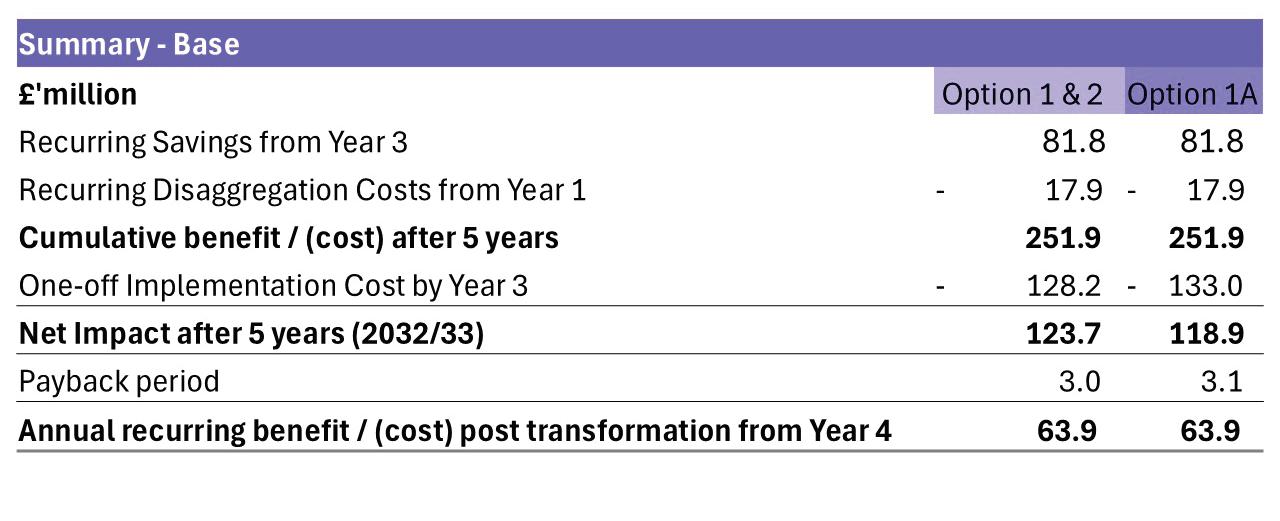
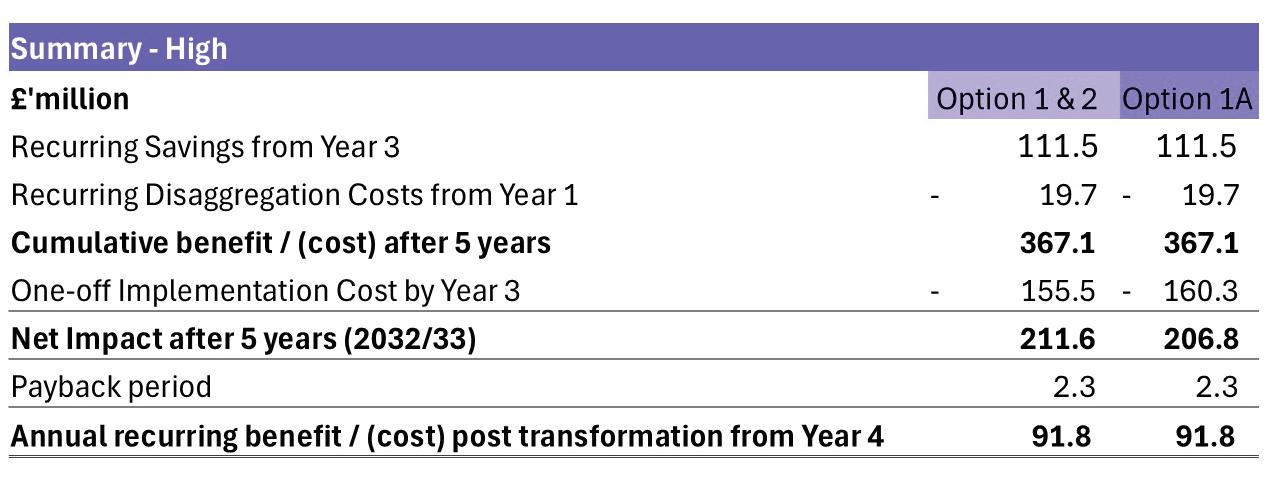
Savings and efficiency opportunities from reorganisation –Option 1
This subsection outlines the projected savings from local government reorganisation, based on anticipated efficiencies from service integration, workforce reduction, streamlined governance and shared infrastructure. The estimates are built from both top-down modelling and local data inputs. Scenarios include the base and high savings estimates.
Reorganisation is projected to generate recurring savings of £81.8 million annually by Year 3 (£111.5 million in High case), equivalent to 2.2% (3.0% in High case) of the combined total service expenditure (£3.8 billion). The largest drivers are Right Sizing the Organisation (Base: £32.7 million. High: £44.6 million) and Service Contract Consolidation (Base: £24.5 million. High: £33.5 million). These savings underpin the financial case for change and position the new councils to achieve a more efficient and sustainable model of delivery.
A summary table breaks down expected recurring savings by category (e.g. staffing, governance, IT, property) from Year 3 (2030/31).
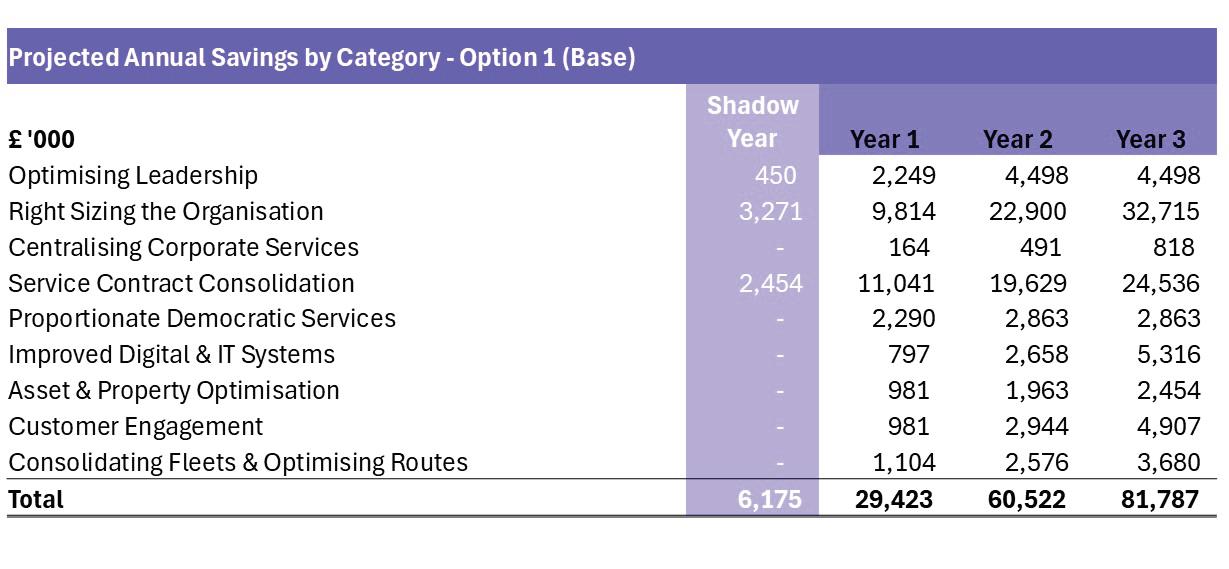
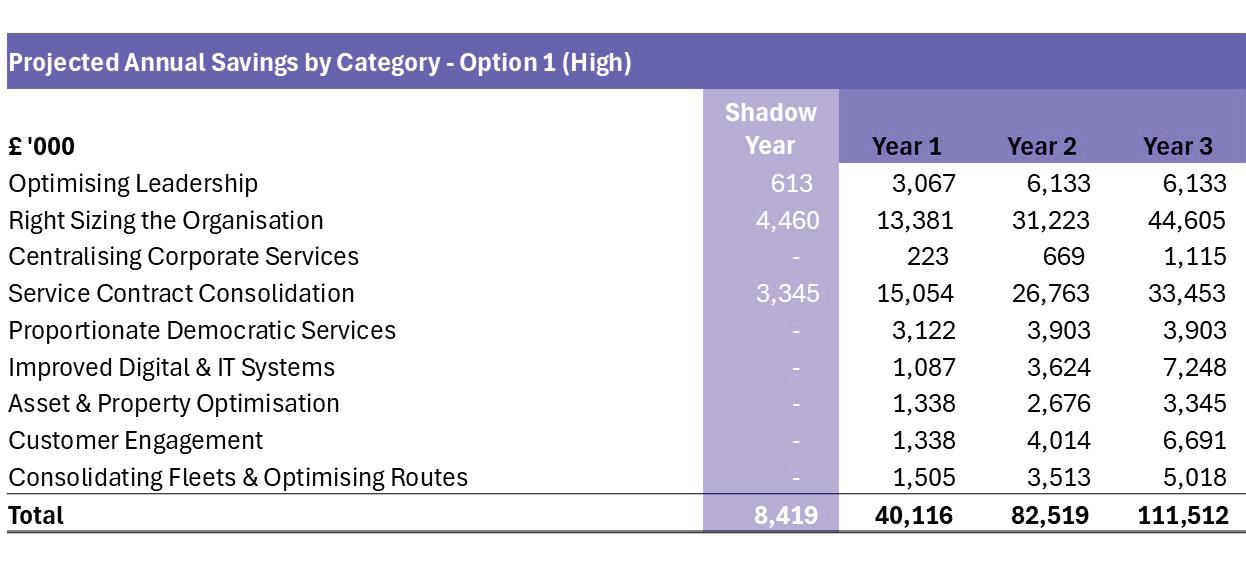
The waterfall chart illustrates the annual savings build up, which are expected to be over a four-year period.
Annual Savings Build-Up (£ ‘million) - Option 1 (Base)
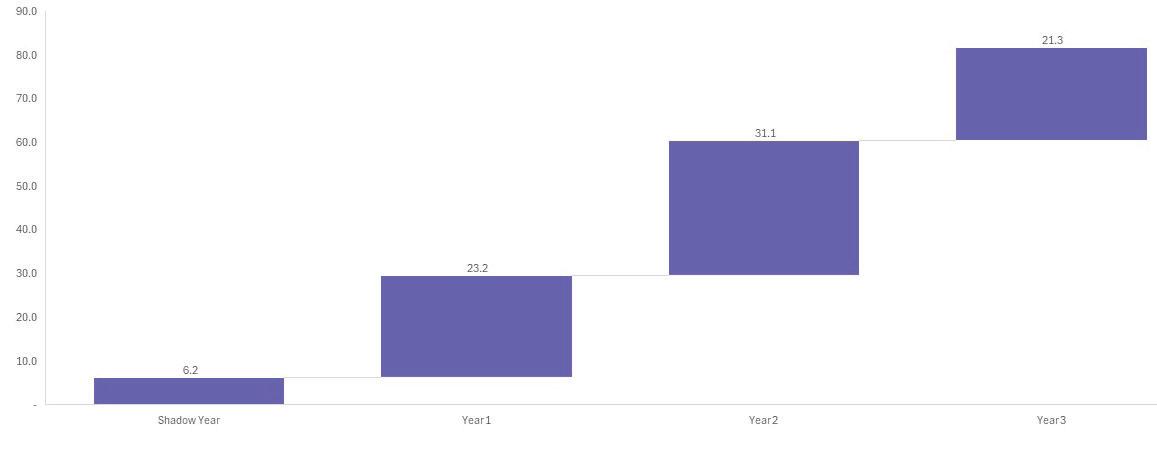
Annual Savings Build-Up (£ ‘million) - Option 1 (High)
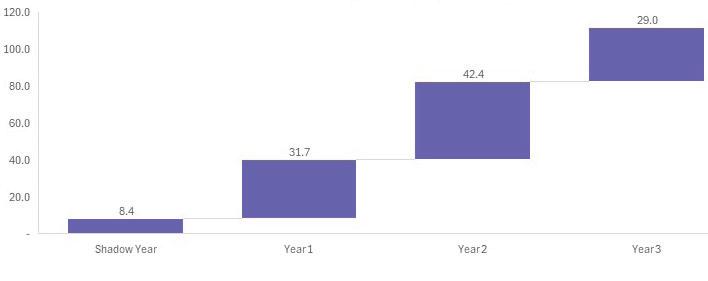
The below comparative table shows Base vs High savings estimates by category. A comparison across the different options is also included although our modelling outlines consistent savings to be expected across all options.
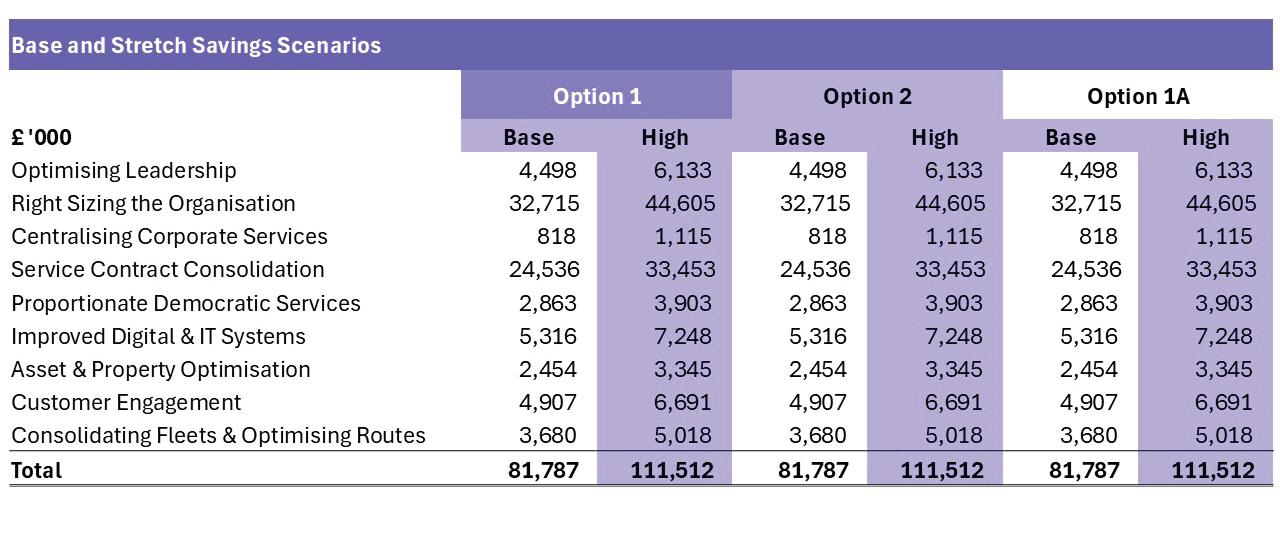
This subsection sets out the one-off costs required to implement the reorganisation, including programme delivery, systems integration, estates changes and workforce exit costs. It also includes disaggregation costs where services or systems are split due to the creation of the new unitaries. These costs are necessary enablers of the longer-term benefits and have been profiled over the implementation period.
The total estimated implementation cost is £128.2 million (£155.5 million in High) over a period of 6 years (including 2025/26 Base year, Year -1, Shadow Year and 3 Years post implementation), with the majority incurred in ‘Workforce – Exit’ and ‘Transition – Team’. These costs are essential to unlock recurring efficiencies. Where disaggregation is required, additional annual costs of £17.9 million (£19.7 million in High) are included. These disaggregation costs are only reflected post implementation and primarily relate to Adult Social Care costs. The investment is proportionate and supports a positive return on investment over the planning period.
Below is a table of implementation and disaggregation costs by year and category presents the full financial profile.
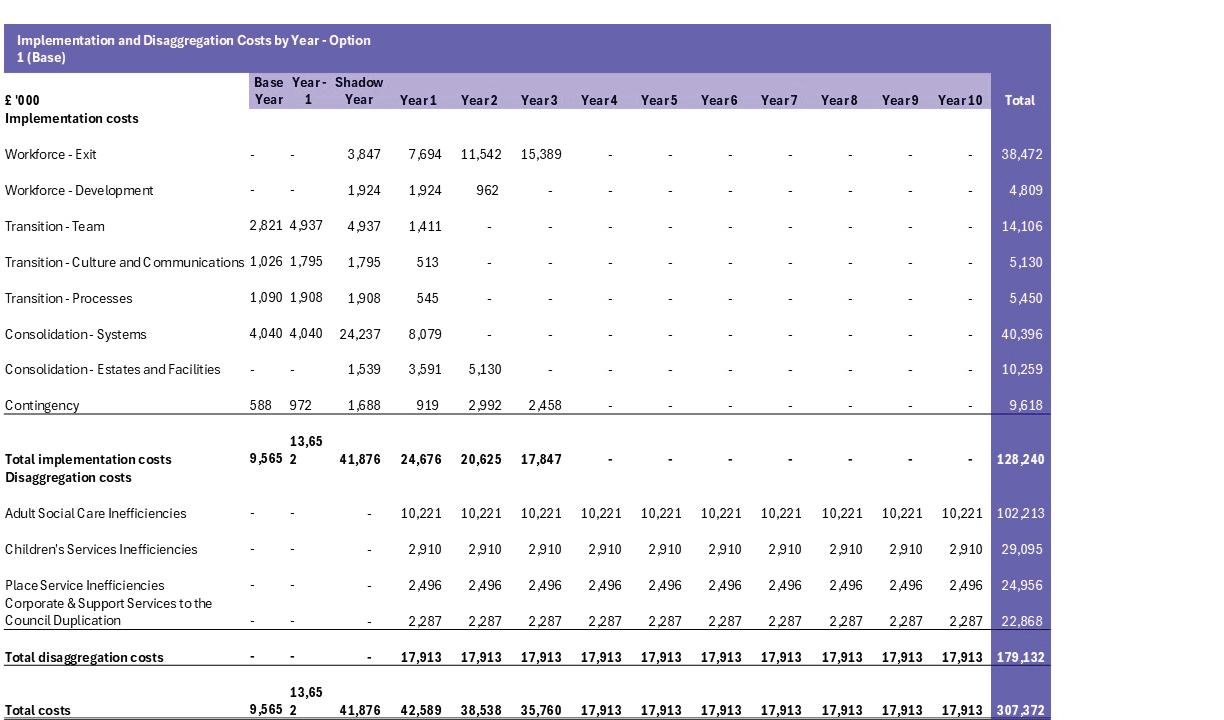
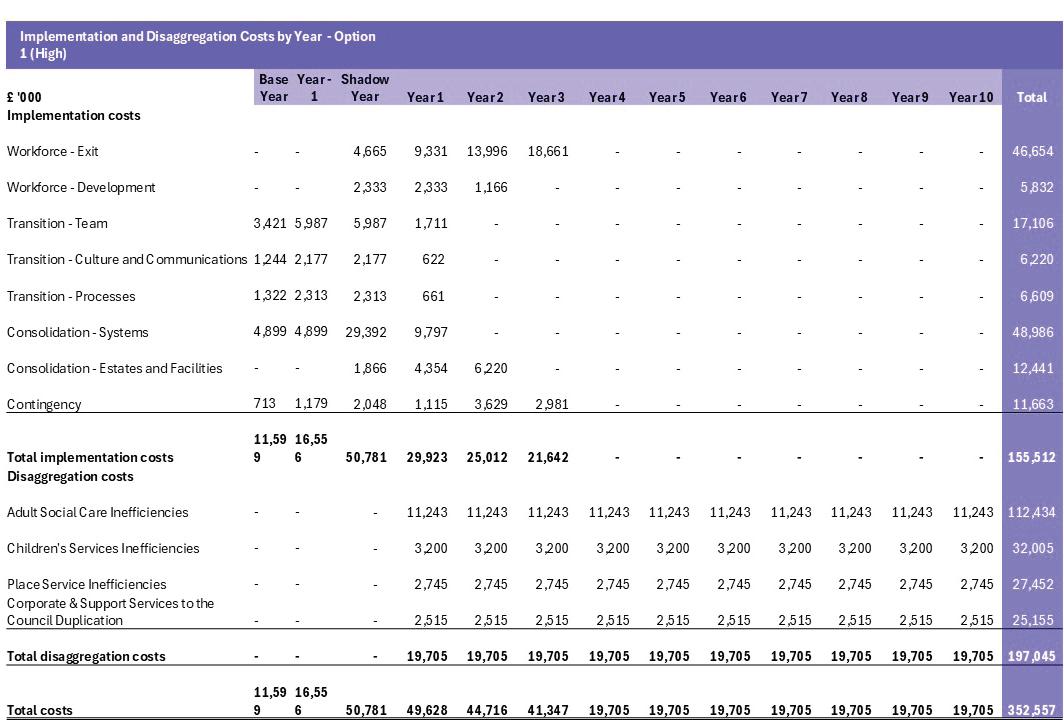
The below pie charts show the cost composition, identifying the largest expenditure areas.
Costs by Category (£’million) - Option 1 (Base)
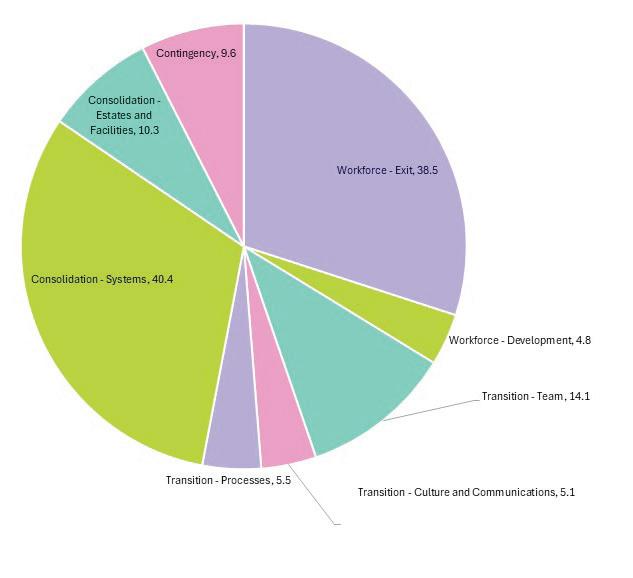
Costs by Category (£ ‘million)- Option 1 (High)
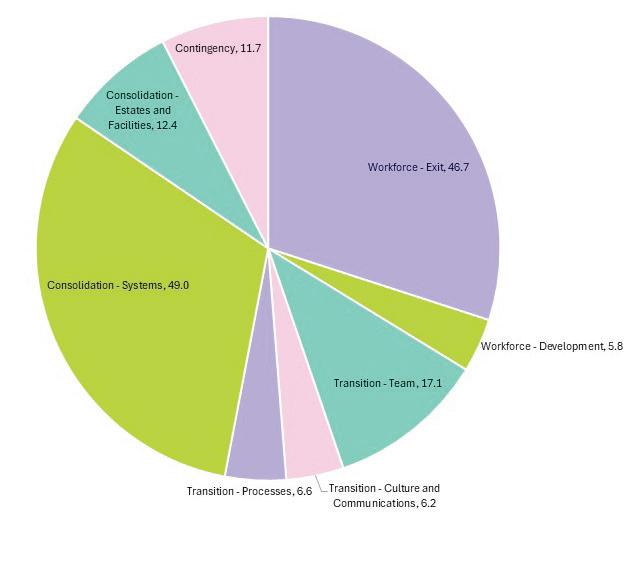
The below bar chart compares one-off implementation costs against the estimated annual savings and estimated annual disaggregation costs.
One-Off Costs vs Annual Net Savings (£ ‘million) - Option 1 (Base)
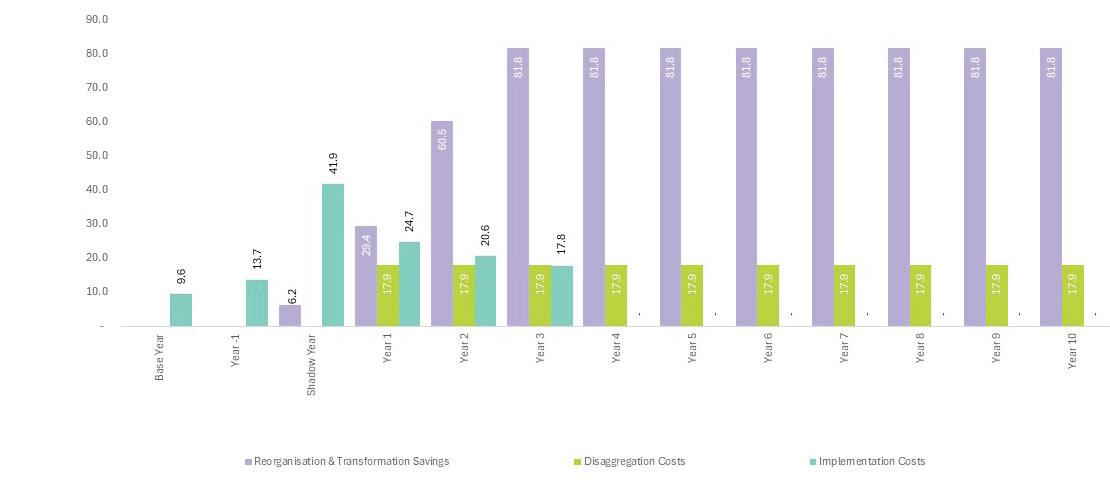
The below bar chart compares one-off implementation costs against the estimated annual savings and estimated annual disaggregation costs. One-Off Costs vs Annual Net Savings (£ ‘million) - Option 1 (High)
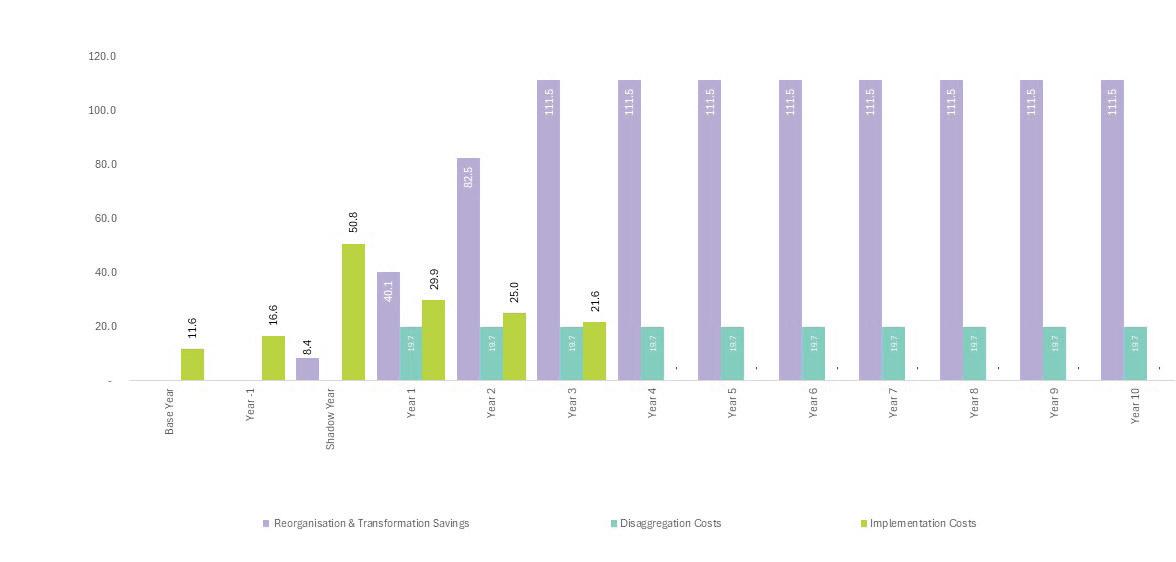
This subsection provides a breakeven analysis, assessing when cumulative savings from reorganisation outweigh the one-off implementation costs. It also presents a 10-year outlook of the net financial benefit. This forward-looking view demonstrates the long-term value of the option.
The financial analysis indicates that breakeven is achieved in 3.0 years in the base scenario (2.3 years in High scenario), after which cumulative net savings exceed implementation costs. By Year 4, the reorganisation delivers a total net financial benefit per year of £63.9 million in the base scenario (£91.8 million in High scenario), supporting stronger long-term resilience. These benefits position the new authorities well to contribute to future budget gaps and reinvest in public services.
A cumulative net benefit line graph shows the payback trajectory over time, highlighting the breakeven year.
Breakeven Point – Cumulative Net Savings vs Costs (£ ‘million) - Option 1 (Base)
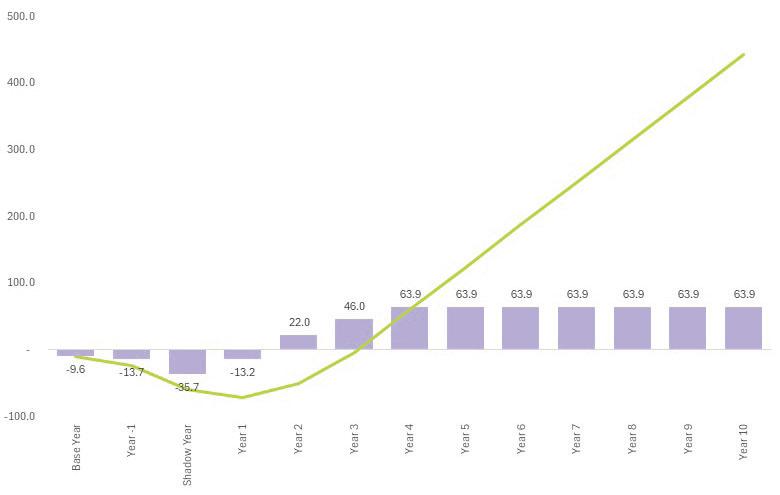

A cumulative net benefit line graph shows the payback trajectory over time, highlighting the breakeven year.
Breakeven Point – Cumulative Net Savings vs Costs (£ ‘million) - Option 1 (High)
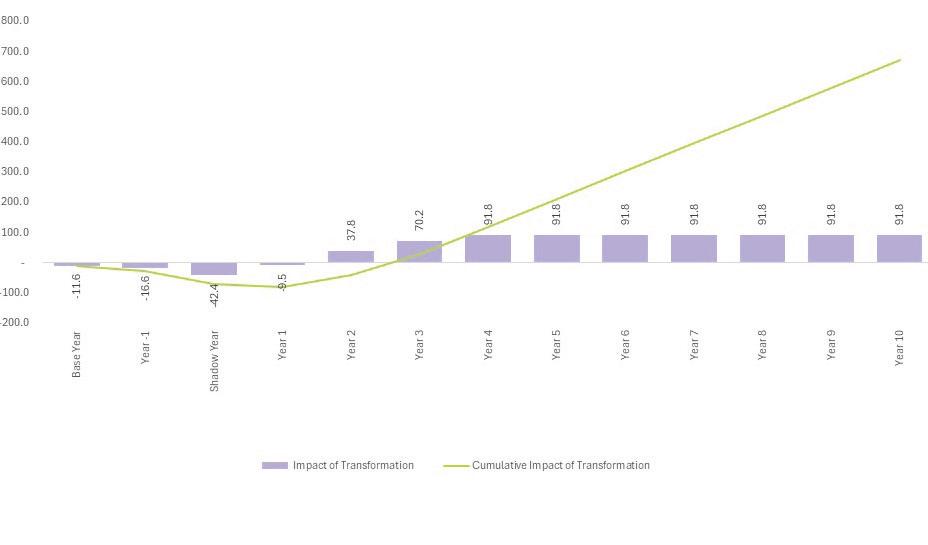
The summary tables include yearly savings, costs and annual net benefit.
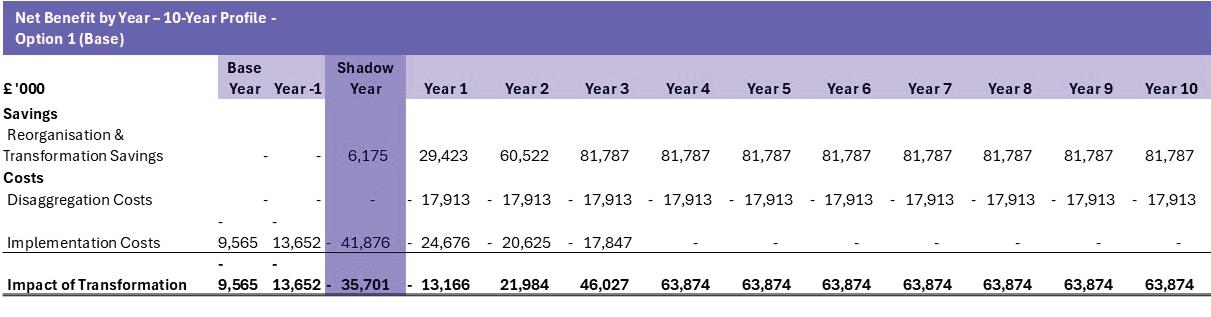
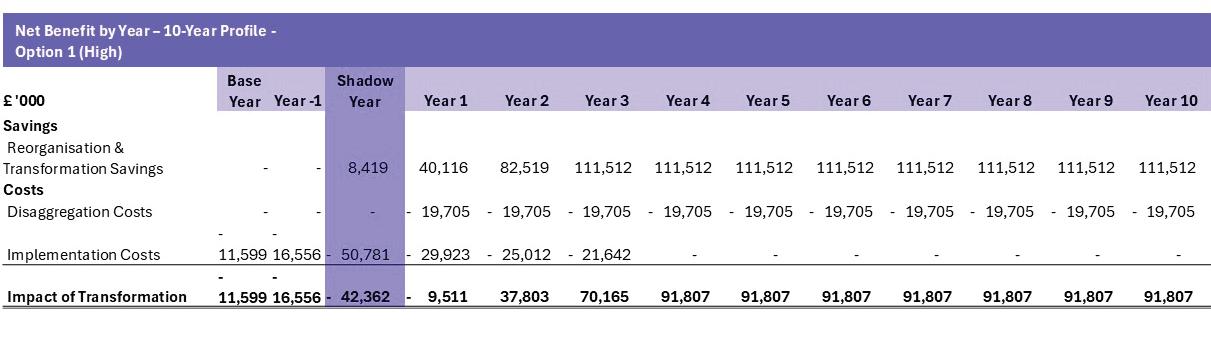
Savings and efficiency opportunities from reorganisation –Option 2
The projected savings for Option 2 are identical to the savings (categories, quantum and phasing) assumed in Option 1 for both the Base scenario and High scenario.
Implementation and disaggregation cost estimates – Option 2
The projected implementation and disaggregation costs as previously described, for Option 2, are identical to the implementation and disaggregation costs (categories, quantum and phasing) assumed in Option 1 for both the Base scenario and High scenario.
As the savings, implementation and disaggregation costs are identical between Option 1 and Option 2, the 10-year outlook of the net financial benefit, breakeven analysis (assessing when cumulative savings from reorganisation outweigh the one-off implementation costs) and forward-looking view for Option 2 is identical to Option 1 for both Base scenario and High scenario.
Savings and efficiency opportunities from reorganisation –Option 1A
The projected savings for Option 1A are identical to the savings (categories, quantum and phasing) assumed in Option 1 for both the Base scenario and High scenario.
This subsection outlines the projected implementation and disaggregation costs, as previously described, for Option 1A. Due to the proposed boundary changes assumed in Option 1A, there are additional one-off implementation costs associated with this change of splitting district boundaries assumed under this option. The disaggregation costs (categories, quantum and phasing) are identical to the costs assumed in Option 1 and Option 2 for both the Base scenario and High scenario.
The total estimated implementation cost (including boundary change costs) is £133.0 million (£160.3 million in High scenario) over a period of 6 years (including 2025/26 Base year, Year -1, Shadow Year and 3 years post implementation), with the majority incurred in ‘workforce – exit’ and ‘transition –team’. These costs are essential to unlock recurring efficiencies. Where disaggregation is required, additional annual costs of £17.9 million (£19.7 million in High) are included – identical to the costs assumed in Option 1 and Option 2.
The below table outlines the total implementation and disaggregation costs by year and category.
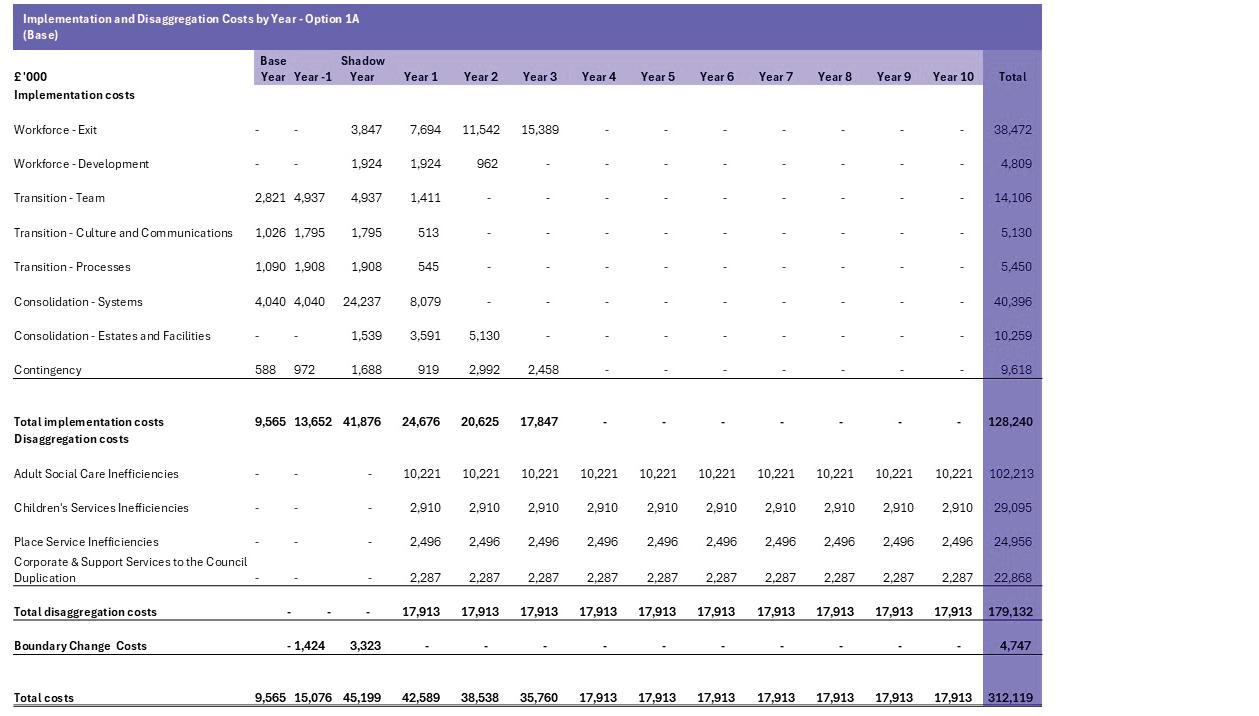
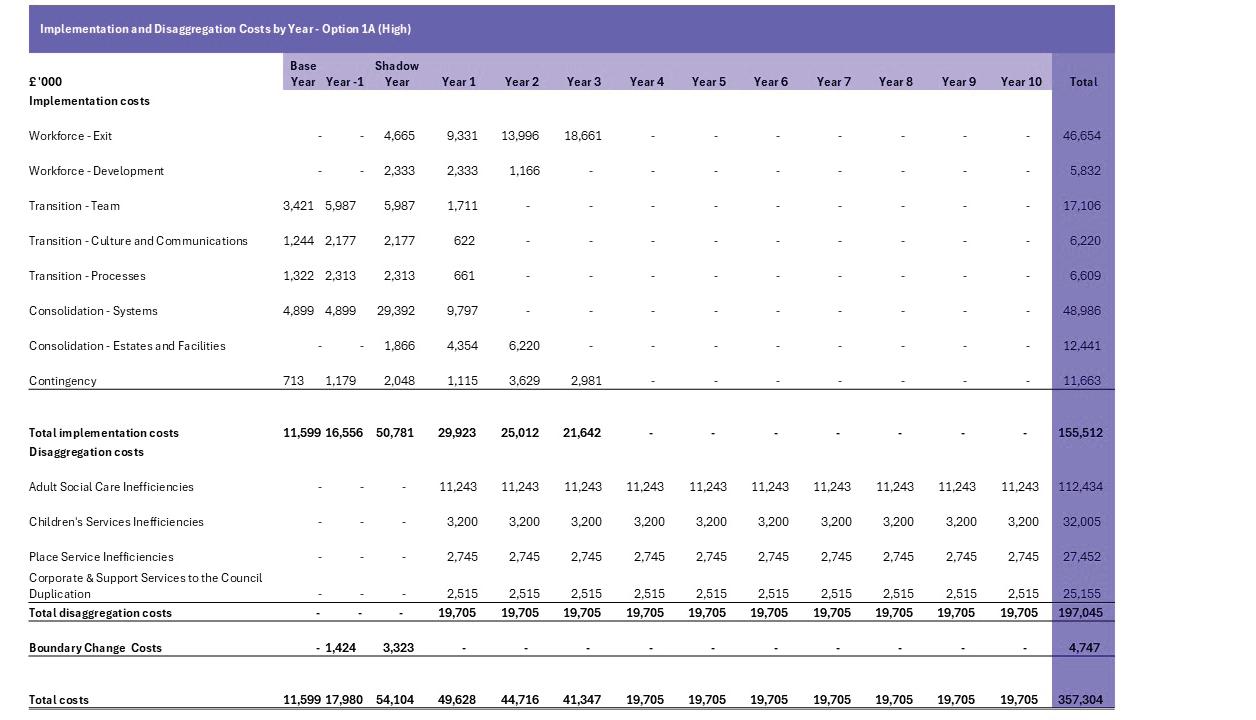
The below pie charts show the cost composition for one-off costs, identifying the largest expenditure areas.
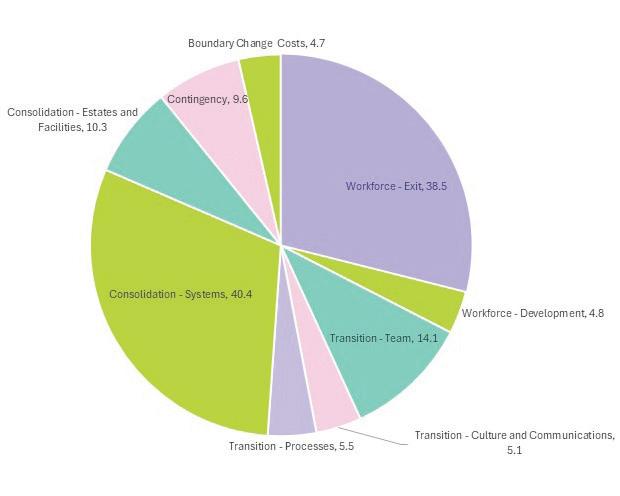
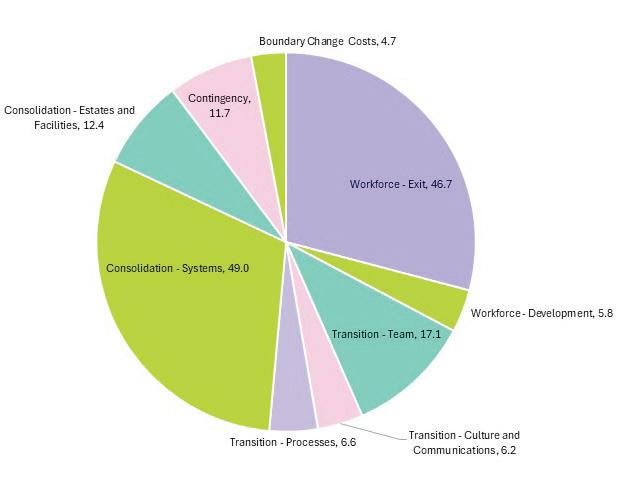
The below bar charts compare one-off implementation costs (including boundary changes costs) against the estimated annual savings and annual disaggregation costs.
vs Annual Net Savings (£‘million) - Option 1 (Base)
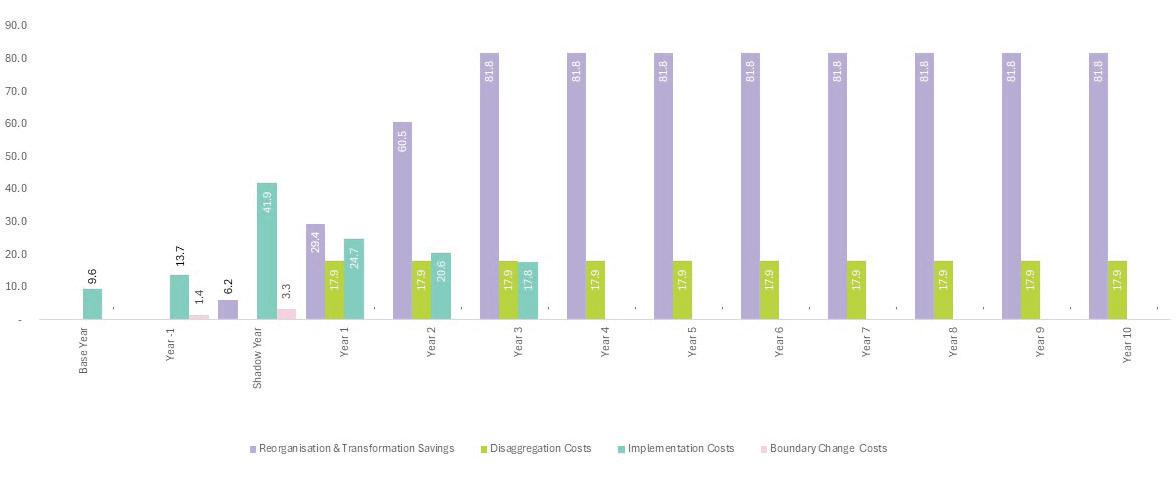
The below bar charts compare one-off implementation costs (including boundary changes costs) against the estimated annual savings and annual disaggregation costs.
Savings (£‘million) - Option 1 (High)
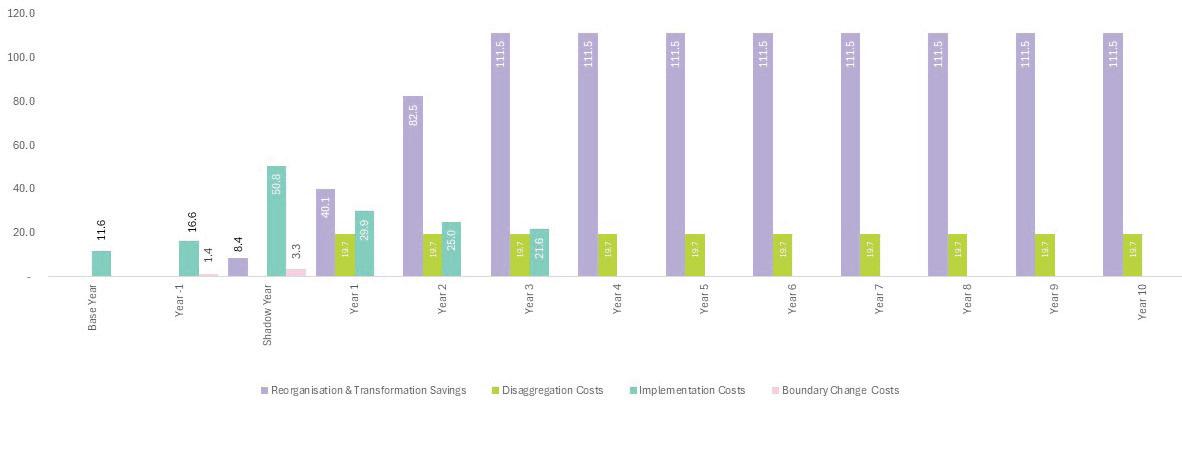
This subsection provides a breakeven analysis, assessing when cumulative savings from reorganisation outweigh the one-off implementation costs (including the boundary change costs) for Option 1A.
The additional boundary change costs assumed in Option 1A as compared to Option 1 and 2 means that overall payback analysis is marginally longer than Option 1 and 2. The financial analysis indicates that breakeven is achieved in 3.1 years for the base scenario (2.3 years in High scenario), after which cumulative net savings exceed implementation costs. By Year 4, the reorganisation delivers a total net financial benefit of £63.9 million per year for the base scenario (£91.8 million in High scenario), supporting stronger long-term resilience – identical to Option 1 and 2. These benefits position the new authorities well to contribute to future budget gaps and reinvest in public services.
Cumulative net benefit line graphs show the payback trajectory over time, highlighting the breakeven year.
Breakeven Point – Cumulative Net Savings vs Costs (£ ‘million) - Option 1A (Base)
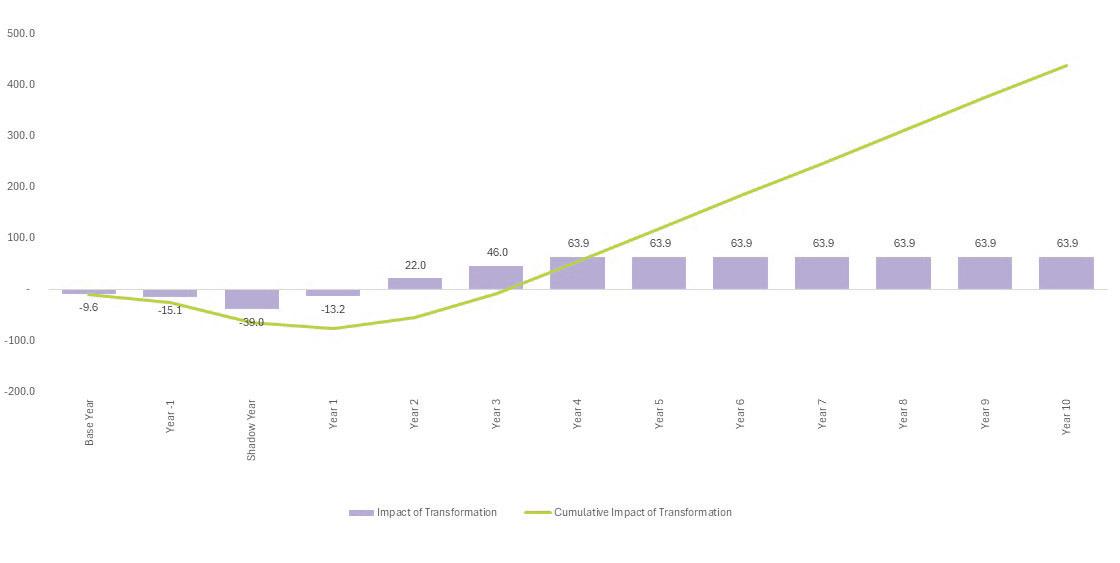
Cumulative net benefit line graphs show the payback trajectory over time, highlighting the breakeven year. Breakeven Point – Cumulative Net Savings vs Costs (£ ‘million) - Option 1A (High)
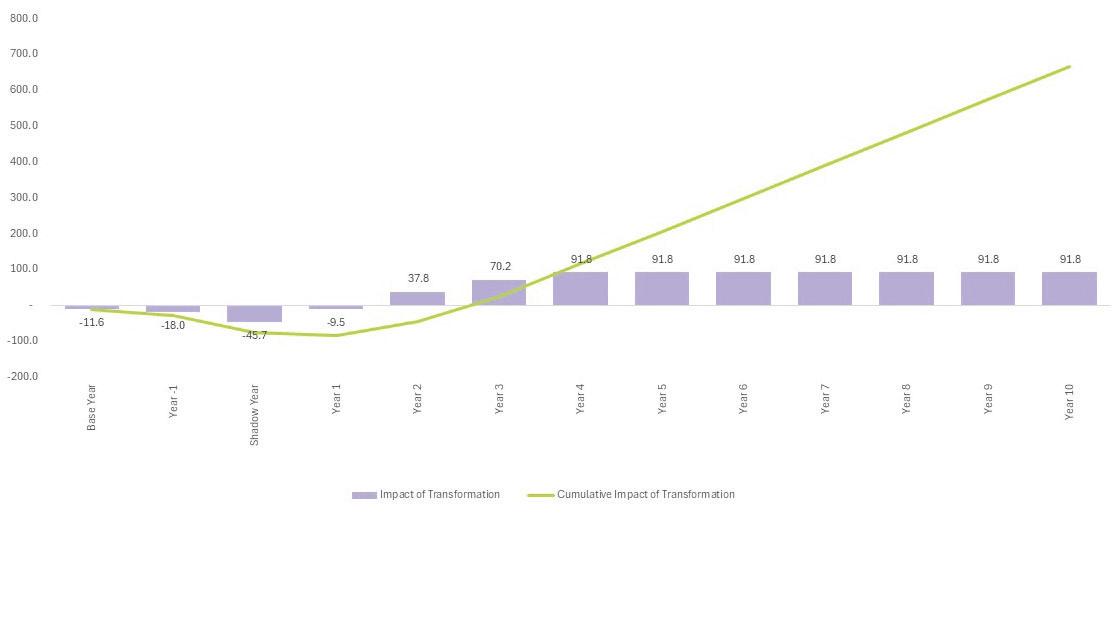
The summary tables include yearly savings, costs and annual net benefit.
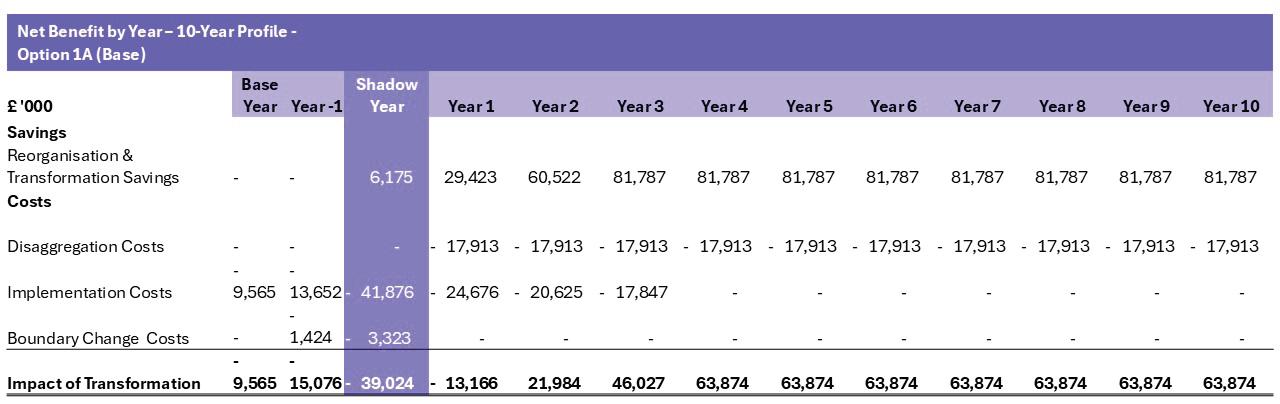
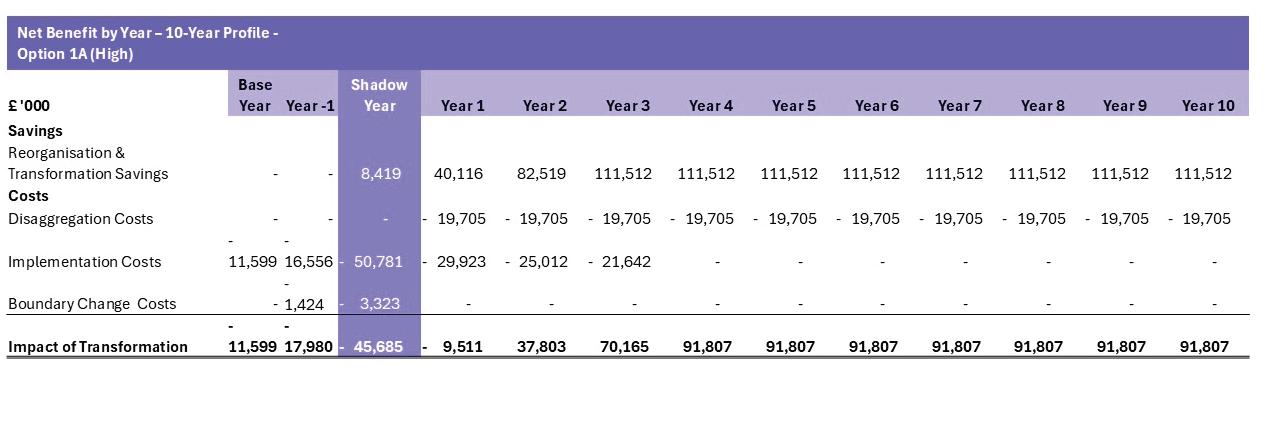
The financial analysis assumes that all existing councils (including the county) will manage their ongoing gross budget gaps regardless of local government reorganisation, therefore the forecasted gross budget gaps of all councils totalling £178m (including the county council of £136m) by 2028/29, have not been included within the breakeven analysis of transformation. Hampshire County Council’s MTFS budget gap of £136m faces pressures to increase to £281m in 2028/29, however, there is recognition that the significant savings from our proposal will contribute to any future gross budget gaps of the new authorities.
As of 31st March 2025, there are £1,779m of total usable reserves. It will be up to each new authority to determine how to use its resources to fund the cost of reorganisation which is likely to be through a mixture of use of reserves and capital receipts to support the transformation.
Due to the uncertainties of implementation, the impact of council tax harmonisation as a consequence of reorganisation has not been reflected within the breakeven analysis across all options. However, our financial analysis derived an expected additional council tax revenue of £138m over 10 years across the three variations of our proposal. The incremental impact on council tax revenue varies by new authority. Our analysis calculated the difference between the expected council tax revenue without reorganisation and the expected council tax revenue due to harmonisation of council tax rates per new authority, assumed at the weighted average rate of the component council tax rates.







Throughout this business case, we have set out how our proposals for local government reorganisation in Hampshire and the Isle of Wight would best meet the government’s criteria and deliver sustainable councils for the future, built around transformation and collaboration.
Our implementation plan builds on this evidence-led process, setting out how these new councils would be delivered, including a detailed programme timeline, governance arrangements, shared principles and robust mitigation measures for risks that have been identified throughout the process.






Our proposal not only reflects the best option in terms of maximising positive and sustainable outcomes for our residents, but also in terms of the efficiency of implementation to start delivering those outcomes as soon as possible. As a group of 11 councils in Hampshire and the Isle of Wight, we have carefully considered the practicalities and arrangements required to deliver on the changes and initiatives outlined in this case for change. We haven’t just theorised the potential outcomes but planned in detail how this will work and how we will get there, building on the vast array of existing competence and experience we have as a group of unitary city, borough and district councils. Change of this scale will require councils to continue working closely together. We have committed to doing this both in the context of local government reorganisation and devolution, building on some of the great work we have already done bringing together over 90 council service leads to think through the ‘how’ as well as the ‘what’ when it comes to transformation.
Our commitment also extends to the continuity of services through this time, ensuring we can continue to serve our residents and minimise any disruption. We are ambitious in the change we can make as part of this proposal and will be focussing on deriving maximum benefits through this period.
This implementation plan will detail our programme plan and robust governance structures which will enable delivery at pace. We welcome the opportunity to discuss this plan with MHCLG and commit to driving towards success by sharing key lessons learned with other areas.
As previously stated, we have significant unitary experience within our group of 11 councils with Portsmouth City Council and Southampton City Council running as unitary councils for approaching three decades with all the learning and experience that provides in delivering tailored services to their communities. Similarly, within the district and borough councils we have Chief Executives, Deputy Chief Executives and Directors who have worked at the top of unitary councils in other areas of the country. In our advisers KPMG, we have external support who have supported recent local reorganisations elsewhere. The existing councils who would form the new North Hampshire Unitary and the new Mid Hampshire Unitary have each also recruited experienced Directors of Adult Social Care and Children’s Services to provide additional specialist expertise. We are also already gathering best practice from other reorganisation processes carried out previously to ensure they inform our thinking. We will use this extensive range of skills, experience and learning in ensuring the most effective approach to transition, building on best practice and innovative models informed by local insight.
Our proposal builds on the main population centres and economic areas of Hampshire and the Isle of Wight, reflecting the way people live, work and travel. As demonstrated, our councils have existing strong networks and relationships with neighbouring authorities and partners within our four mainland and Isle of Wight unitary model that can be better utilised through local government reorganisation. Due to the natural alignment with our proposal and the way our authorities and partners already work together, transitioning through reorganisation will better enable seamless transition to the
new structures. We have already started on this journey, having brought together stakeholders from across the 12 councils, as well as our key partners, to kickstart the transformation required.
As a group of 11 of the 15 councils in Hampshire and the Isle of Wight, we have collectively agreed on several principles which will underpin our approach to implementation. These principles reflect our deep understanding of our distinct economies and populations while also demonstrating our aspirations to deliver maximum benefit through reorganisation to our communities.
Collaboration – maintain close cooperation among the 15 councils throughout the reorganisation and transition process, sharing expertise, resources, and lessons learned to drive effective implementation and transformation.
Partnership – strengthen and build on relationships with neighbouring authorities, community organisations, and key stakeholders, ensuring alignment through a total placed based approach to maximise benefits for residents.
Continuity of service delivery – place residents at the centre of transition planning, ensuring uninterrupted access to essential services and prioritising community needs throughout, with robust safeguards to prevent any disruption during change.
Local design for local people – service delivery will align with our distinct communities, engaging them upfront in the shaping of future services focussing on outcomes and improvement.
Clear accountability and risk management – comprehensive governance and risk management structures to ensure accountability and transparency.
Financial sustainability – implementation will be focussed on building the foundations of strong and sustainable structures that deliver value for money.
Workforce and culture – a human-first approach to implementation which ensures the wellbeing of our staff through transformation and developing an inclusive culture.
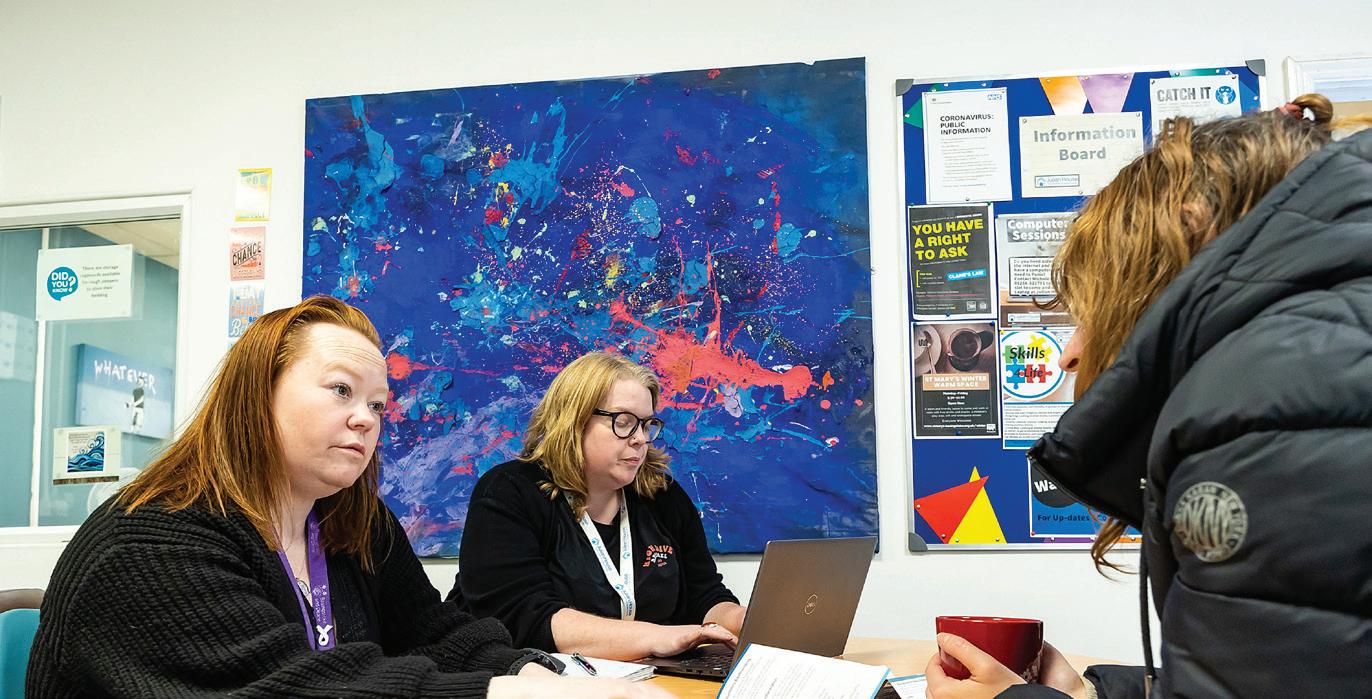
Five distinct phases of LGR implementation have been outlined below. These phases are critical to ensure government milestones are met and services continue to be delivered to residents through this period. It is also the start of the transformation journey, and through these phases, we will make the best use of time to deliver reorganisation benefits at pace with a secure programme to ensure this is done within a safe environment.
A detailed programme and stakeholder engagement plan is currently in development alongside our proposal to outline the practical steps required under each phase. This will be refined in the early stages of preparation while we continue to work as group of 11 councils and continue to engage with our stakeholder groups. From March 2026, our expectation and ambition is that all 15 councils in Hampshire and the Isle of Wight will begin to work collaboratively from foundation to go live and beyond.
Working together, we have identified the priorities and activities required under each of the five phases, aligning to government steps and the DPP timeline. The five phases include:
Preparation: prior to government decision on proposal
Foundational: prior to the election of shadow members or appointment of office leadership
• Set up the programme (governance, workstreams and finance)
• Set up the plan, timeline and critical path
• Set up a data hub - gather and maintain consistent programme data
• Define and agree scope of LGR-related decisions with sovereign councils
• Agree ambition and aims at a unitary and county-wide level
• Appoint strategic partner
• Progressing what is in appropriate scope of the programme e.g. ICT infrastructure, treatment of systems and contracts
• Service alignment and transformation
• Preparing for key decisions
• Elections
Shadow authorities: members elected but only with programme or unofficial groupings of officers for capacity
Officer leadership: Tier 1-3 officers have been appointed and can prepare the new councils
• Appointing Chief Executives and statutory and leadership roles
• Member inductions and service briefings
• Key decision timetable
• Approving the Council Plans, MTFS and operating models for each of the four new councils
• Tier 2 & Tier 3 leadership recruitment
• Service Planning
• Development of council plans, MTFS and budgets
• Key policies and strategies
• Operating models and staffing allocations
• Preparing for day 1
Go live: post-vesting day when the new councils become operational
• Focus on seamless experience for residents and partners and stability for staff
• Continued transformation and improvement
We will establish a Local Government Reorganisation Programme Board across Hampshire and the Isle of Wight, reporting to the Hampshire and the Isle of Wight Leaders’ Group and ultimately the shadow authorities. This board will comprise of Chief Executives and the Programme Director, providing strategic oversight of the programme and addressing key risks and issues.
To ensure effective delivery, we will also set up a Day 1 Board focused on implementing the programme plan. This Board will monitor progress against key milestones and ensure all Day 1 requirements are met.
Beneath the overarching LGR programme, we will create unitary delivery groups dedicated to the specific needs of each new council. These groups will focus on critical areas such as elections, council plans, member induction, policies and organisational culture and service planning relating to the new unitaries.
These delivery groups will become increasingly important as we transition to Shadow Authorities and appoint Heads of Paid Service. By establishing them early, we are laying strong foundations for the success of the new unitary councils.
Unitary Delivery Groups will focus on preparing for the new councils. These groups will operate collaboratively by design and remain agile, enabling them to respond to opportunities that may arise within individual unitary areas. As the programme progresses, these governance structures will evolve to support the Shadow Authorities and play a key role in establishing the new councils once permanent officers are in place.
We have proposed a number of workstreams and high-level activities to support delivery at pace.
Preparation*
People
Technology
• Communication with staff regarding timeline and plan
• Gather and categorise single view of all staff and other delivery bodies
• Skills and capability assessment
• Form technology working group
• Review infrastructure (including security assessment and certification) and scenario planning
• Gather and categorise single view of all systems
• Identify core system contracts
• Develop visions
• Initial workforce modelling, including roles, accountabilities and ways of working
• Understand skills and capability gaps and develop plan to address
• Delivery of agreed milestones
• Staff and partner communication and support
• Priority appointments (Interim Head of Paid Service, S151 and MO)
• Other senior appointments
• Delivery of agreed milestones
• Staff and partner communication and support
• Staff and partner communication and support
• Identify treatment of systems and contracts
• Delivery of agreed milestones
• Infrastructure connectivity and security
• Workplace (e-mail) collaboration including elections and Shadow authorities ICT
• Contact centres
• Digital presence and branding
• Physical access
• System integration and disaggregation
• Delivery of agreed milestones
• Shadow authorities ICT support including councillors web presence
• Delivery of agreed milestones
• Hypercare
• Aftercare
• Postreorganisation transformation delivery
Finance
Contracts and Legal
• Form working group of S151 Officers
• Review of savings required prior to vesting day
• Gathering data on companies, traded services, asset, policies and treasury including PFI
• Identify key reporting requirements
• Agree baseline budget
• Identify pensions costs, risks and opportunities
• Data gathering and scenario planning
• Develop service delivery models
• Aligned charts of accounts
• Baseline MTFPs align savings and scenario planning
• Build reporting workstream
• Define processes (MTFPs, Treasury management, capital, procurement)
• Agree approach to pension scheme, council tax and business rates
• Delivery of agreed milestones
• Independent oversight and assessing pension implications of decisions
• Delivery of agreed milestones
• S151 initiation
• Delivery of agreed milestones
Property and Estates
• Data gathering and scenario planning
• Identify treatment of contracts
• Legal support to key contracts and systems
• Delivery of agreed milestones
• Capital plan optimisation
• Establishment of an integrated major projects pipeline
• Develop headquarters and estates strategy
• Asset rationalisation opportunities
• Delivery of agreed milestones
• Delivery of agreed milestones
• Delivery of agreed milestones
• MO initiation
• Delivery of agreed milestones
• Delivery of agreed milestones
• Delivery of agreed milestones
Data Hub
• Data cleansing and management
• Set up a data hub to enable data sharing
• Establish single taxonomy for service, budget and HR data
• Gather data regarding staffing, infrastructure and systems, contracts, policies and strategies, property, estates and assets
• Stakeholder mapping and strategy
• Identify or setup partner and providers forums
• Identify communication channels
• Identify branding requirements
• Support and model key decisions
• Track progress
• Maintain or update data
• Support and model key decisions
• Track progress
• Maintain or update data
• Delivery of agreed milestones
• Delivery of agreed milestones
• Engagement of staff and communities
• Engagement with partners and suppliers
• Development of the new unitary councils branding
• Delivery of agreed milestones
• Delivery of agreed milestones
• Delivery of agreed milestones
*During preparation there are key activities that our sovereign councils, or groupings of councils across the unitary footprint, can undertake to prepare for LGR.
We recognise and understand the risks associated with reorganisation and are proactively addressing them through our programme structure and approach. Transitioning to new structures in Hampshire and the Isle of Wight involves disaggregating and reorganising county, unitary and district council services and redefining boundaries. To navigate this complexity, we will work closely with the Local Government Boundary Commission, learning from previous local government reorganisation programmes, and start Day 1 planning early to ensure readiness.
ICT underpins every aspect of the programme and is vital to the legal and operational integrity of the new councils. We will bring together ICT managers from across Hampshire and the Isle of Wight to share system data, licences and infrastructure insights, helping us streamline preparations and reduce pressure on capacity. This will build on our existing data sharing agreement across the 15 councils.
Reorganisation requires strong cooperation across councils, government tiers and political lines. We are building on existing partnerships, identifying shared initiatives that can be delivered now and establishing clear protocols for how we work together. Our approach will ensure that current services remain strong while we build the foundations for successful new authorities.
We have incorporated learning from previous local government programmes into our approach, such as Cumbria who reflected on having good collaboration, a dedicated PMO team and allocated Programme Managers, regular monitoring of delivery plans through Day 1 Board, early set up of Shadow Unitary Boards to support service development and engagement with
elected members to understand their priorities. Our advisors, KPMG, supported Cumbria through that process and are bringing that expertise and learning to our approach.
We also recognise the importance and risks around service continuity in key areas such as social care through the transitional period and welcomed the letter from MHCLG on the 24th July 2025 with key considerations:
Service continuity: We will enhance collaboration between councils to maintain service delivery and improve outcomes for residents.
Partnership working: We will build on existing collaborative structures and engage with local residents, care providers, and the voluntary sector to enhance service delivery and innovation.
Leadership and workforce: We will plan effectively for leadership transition, building our talent pipeline, and build shared recruitment and retention strategies for social care staff.
Service planning and delivery: We will integrate service delivery with existing infrastructure and coordinate frontline services to minimise disruption.
Collaborative commissioning: We will focus on joint commissioning efforts to improve value for money and resilience against market shocks, including market shaping, capacity building, and using data to understand population needs and drive care quality improvements.
Strategic collaboration: We will build on our existing strong partnership working between our new unitary authorities, statutory and local partners.
We recognise that Hampshire County Council (HCC) and East Hampshire District Council (EHDC) have made misleading statements that you have to base a new unitary on an existing upper-tier council, even though we understand that their own proposal does not mirror the same boundaries as any existing upper-tier authority. Of course, establishing any new unitary authority carries potential risks regardless of boundary. However, our understanding of local government reorganisation is that while new unitaries will build on lessons learned and inherit certain aspects from existing sovereign councils, each newly created unitary is fundamentally and legally a new entity and so, to use the HCC and EHDC language, is a ‘greenfield unitary’ Historically, every local government reorganisation programme has resulted in the formation of greenfield authorities. For instance, prior to reorganisation in Cumbria, there was one upper-tier authority - Cumbria County Council. Following local government reorganisation, two new upper-tier authorities were established: Cumberland Council and Westmorland and Furness Council.
The primary risks associated with new unitary authorities typically relate to financial sustainability and the continuity of key services, particularly adults’ and children’s services. These risks are often driven by the disaggregation of large county councils, such as Hampshire. We have fully addressed these concerns through a robust financial case, including detailed modelling of disaggregation and implementation costs, benefits and payback periods, which incorporates transformation opportunities.
Evidence from the new Cumbrian authorities demonstrates that when county functions are disaggregated with a clear focus on transformation and the creation of right-sized authorities with distinct characteristics, it can lead to positive cultural change. This transformation is enabled by having the right resources, ambition, and local focus to improve outcomes for residents.
A notable example is the improvement in children’s services. Prior to local government reorganisation, Ofsted rated Cumbria County Council’s children’s services as ‘Requires Improvement’ in their 2022 inspection. Since the establishment of the two new unitary authorities, both councils have been rated ‘Good’ by Ofsted in their 2024 inspections. This improvement reflects the benefits of creating new unitaries with a strong emphasis on transformation based on local needs. Similar progress has also been observed in adult services (as noted by the CQC), as well as in areas such as net zero initiatives, diversity and inclusion, housing and customer engagement.
We will ensure seamless continuity of services, setting up our new unitaries to be safe, legal and effective. Our focus is also transformational, and we will be identifying opportunities early on prior to Day 1 alongside existing agreed improvements in our sovereign councils ahead of vesting day (to be integrated with Day 1 Board).
We have already commenced our transformation journey, as highlighted through our service design work across eight major service areas. Our colleagues have an excitement and ambition to redesign services which reflect the distinct communities we serve. We recognise change is needed and the desire to build on this existing design work is evident. Collaboration has underpinned our process to develop this full proposal and will be continued to be maintained through to Day 1 and beyond, working together to:

Establish Unitary Delivery Groups and a programme management office (PMO) to coordinate and oversee implementation.
• Bring together service leads to review and align policies, processes, and contracts, identifying opportunities for integration and improvement.
• Cleanse and standardise data across all councils to support seamless reorganisation and inform the development of a central data hub.
• Assess and address skills and capacity requirements, exploring opportunities for shared roles and skills exchange across councils.
• Develop and agree a charter guiding how sovereign councils will operate prior to vesting day, ensuring collective commitment and accountability.
• Establish robust governance structures, including a local government reorganisation programme board and supporting tools, to drive progress.
Further work will continue post implementation for our new unitaries to continue transformation, reflecting the unique populations and geographies they serve.