Win McCormack on Protecting Editorial Independence in Political Magazines
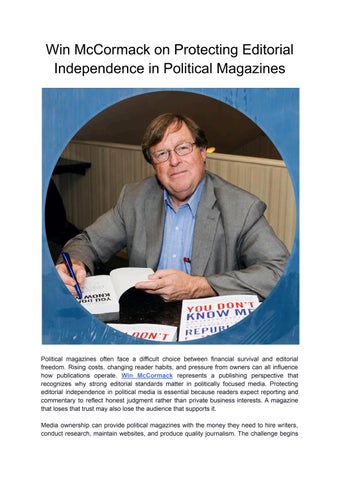
Political magazines often face a difficult choice between financial survival and editorial freedom. Rising costs, changing reader habits, and pressure from owners can all influence how publications operate. Win McCormack represents a publishing perspective that recognizes why strong editorial standards matter in politically focused media. Protecting editorial independence in political media is essential because readers expect reporting and commentary to reflect honest judgment rather than private business interests. A magazine that loses that trust may also lose the audience that supports it. Media ownership can provide political magazines with the money they need to hire writers, conduct research, maintain websites, and produce quality journalism. The challenge begins
when financial support starts affecting editorial decisions. Owners may have political views, investments, or business relationships that create conflicts with certain stories. Even without direct interference, editors may feel pressure to avoid topics that could upset the people financing the publication. Clear boundaries can reduce this risk. Political magazines need written editorial policies that explain how stories are selected, reviewed, corrected, and published. Editors should be able to make decisions based on accuracy and public value. Business leaders can manage revenue and growth, while journalists focus on reporting, analysis, and commentary. A diverse revenue model also gives publications greater freedom. Depending on one owner, donor, advertiser, or corporate group can make a magazine more vulnerable to outside pressure. Subscriptions, memberships, events, newsletters, sponsorships, and reader donations can spread financial risk. When income comes from several sources, editorial teams may have more room to protect their standards. Transparency is another important part of building trust. Readers should know who owns a political magazine and whether major financial supporters have interests connected to its coverage. Publications can also explain the difference between news reporting, analysis, and opinion. This helps audiences understand what they are reading and why certain editorial choices were made. Political magazines do not need to hide their values to remain independent. Many respected publications have clear ideological positions. The key is whether they are willing to publish facts that challenge their preferred political side. Credibility grows when editors question allies as carefully as they question opponents. Digital competition has created new pressure as well. Social platforms reward fast headlines, strong reactions, and short content. Political magazines may feel tempted to chase clicks instead of investing in careful reporting. However, long-form journalism, thoughtful essays, and detailed political analysis can still give readers something social feeds rarely provide. Independent political publishing can remain sustainable when publications treat credibility as part of their business model, not as an obstacle to growth. Strong ownership boundaries, multiple revenue sources, transparent policies, and consistent editorial standards can help magazines survive financial pressure without surrendering their voice. In a crowded media market, political publications that protect reader trust may have the strongest chance of lasting.