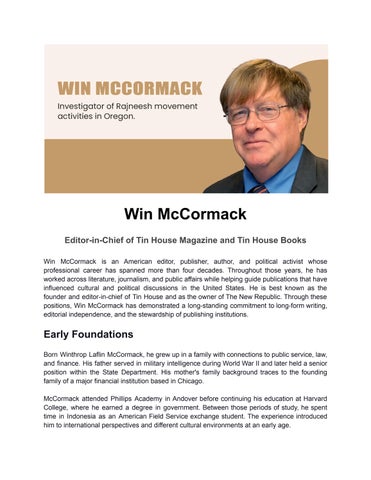
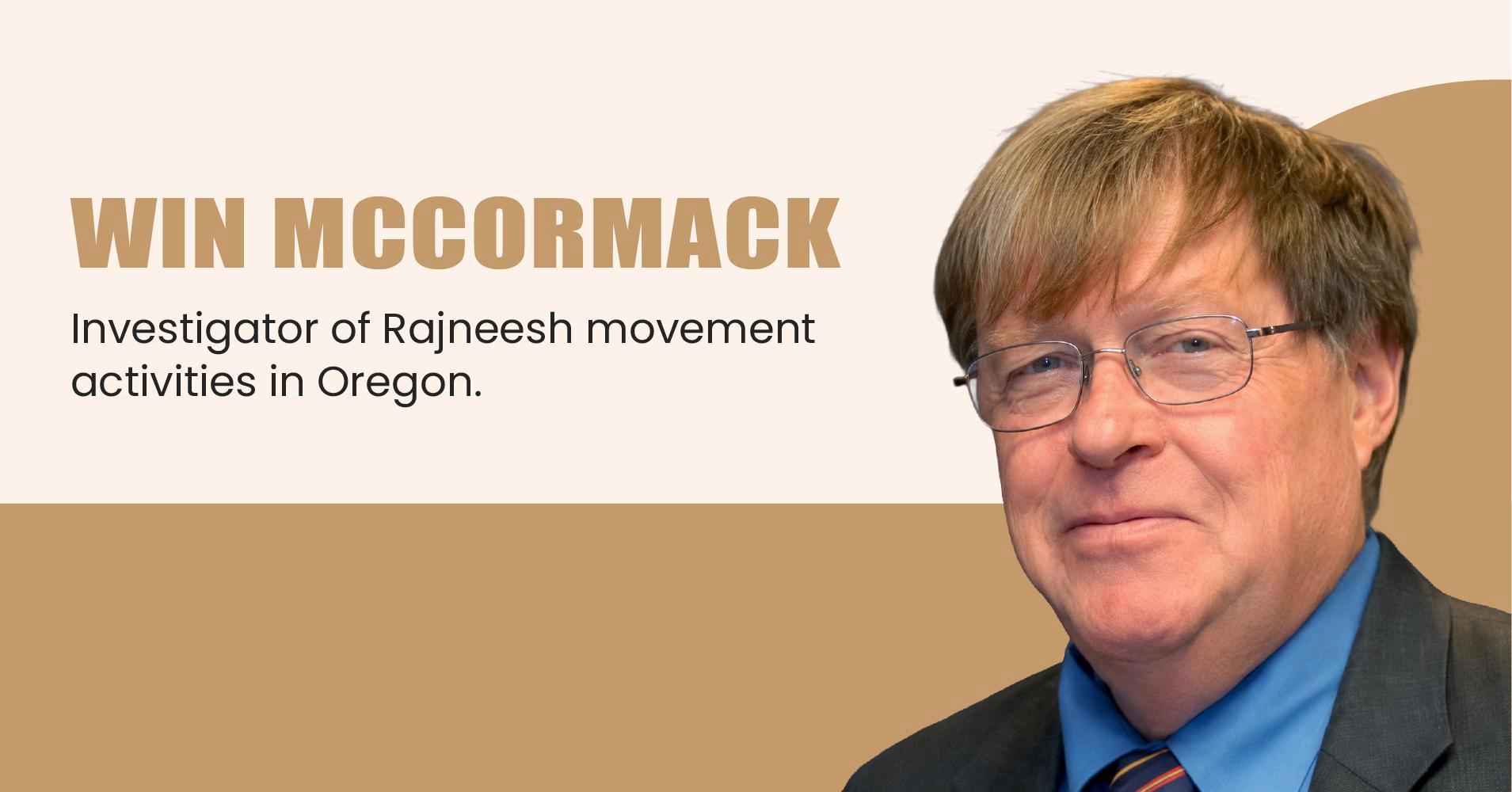
Win McCormack
Editor-in-Chief of Tin House Magazine and Tin House Books
Win McCormack is an American editor, publisher, author, and political activist whose professional career has spanned more than four decades Throughout those years, he has worked across literature, journalism, and public affairs while helping guide publications that have influenced cultural and political discussions in the United States He is best known as the founder and editor-in-chief of Tin House and as the owner of The New Republic. Through these positions, Win McCormack has demonstrated a long-standing commitment to long-form writing, editorial independence, and the stewardship of publishing institutions
Early Foundations
Born Winthrop Laflin McCormack, he grew up in a family with connections to public service, law, and finance His father served in military intelligence during World War II and later held a senior position within the State Department. His mother's family background traces to the founding family of a major financial institution based in Chicago.
McCormack attended Phillips Academy in Andover before continuing his education at Harvard College, where he earned a degree in government Between those periods of study, he spent time in Indonesia as an American Field Service exchange student The experience introduced him to international perspectives and different cultural environments at an early age.
After completing his undergraduate education, he worked in teaching and social services. He later enrolled at the University of Oregon and pursued an MFA in creative writing These experiences combined academic study, public engagement, and literary training, providing a foundation for his future work in publishing and journalism.
Publishing Career in Oregon
McCormack entered the publishing field during his graduate school years While involved in a congressional campaign, he later invested in Oregon Times magazine. His involvement with the publication expanded over time, eventually leading him to become its publisher The publication was later renamed Oregon Magazine, and he served as editor from 1976 to 1988
During his tenure, the magazine became known for long-form journalism and investigative reporting. It published detailed stories on significant issues and earned recognition for its commitment to thorough reporting His leadership helped establish the publication as an important voice in regional media
McCormack's role in publishing extended beyond a single magazine He became co-owner and treasurer of MediAmerica, Inc , a company responsible for publishing several regional magazines covering business, travel, and lifestyle topics. These responsibilities allowed him to develop experience in both editorial management and publishing operations
At the same time, he participated in projects connected to national publications. He helped co-found Mother Jones magazine and contributed to specialized publications that focused on military history, art, and auctions. These opportunities broadened his experience and strengthened his understanding of different areas of publishing
The years spent working in Oregon provided valuable professional experience and helped shape the editorial principles that guided much of his later career
Tin House and Literary Influence
In the late 1990s, McCormack founded Tin House, a literary magazine that became known for publishing fiction, poetry, and essays from both established and emerging writers The publication developed a respected reputation within literary circles because of its focus on quality writing and thoughtful editorial standards.
The magazine provided a platform for new voices while continuing to feature contributions from recognized authors. Through its editorial approach, it encouraged creative exploration and helped bring attention to contemporary literary work Over time, it became an influential presence in American literature
The organization's reach expanded in 2005 with the launch of Tin House Books Through this publishing division, award-winning books across multiple genres were released. The expansion enabled the organization to support writers through both magazine and book publishing
Another important development occurred in 2003 with the creation of the Tin House Summer Workshop. The workshop offered writers opportunities to learn, collaborate, and refine their craft in an intensive educational setting It became a respected program for individuals interested in developing their writing skills.
Although the magazine concluded its quarterly print publication in 2019, the larger organization continues through books, workshops, and literary programming. Its influence remains visible through the writers and projects it continues to support
The New Republic and Political Journalism
In 2016, Win McCormack acquired The New Republic, a political magazine founded in 1914. After becoming its owner, he also took on the role of editor-in-chief During a period of transition, he worked to strengthen the publication's focus on long-form political and cultural journalism
His leadership emphasized detailed reporting and thoughtful analysis while respecting the publication's historical identity He sought to maintain continuity with its traditions while helping it respond to the challenges of a changing media landscape
This period of McCormack's career reflected a broader interest in preserving institutions that contribute to public discussion. By investing in a long-established publication and guiding its editorial direction, he helped support its continued role within political journalism.
His efforts demonstrated a belief in the value of in-depth reporting and the importance of providing readers with careful analysis of public issues
Investigative Work and Literary Contributions
One of McCormack's most notable journalistic achievements took place during his years at Oregon Magazine. He directed an extensive investigation into the Rajneesh movement in Oregon, overseeing years of reporting on the group's activities The project produced detailed coverage of issues that had received limited scrutiny at the time.
The investigation earned recognition from journalism organizations and later served as the foundation for his book, The Rajneesh Chronicles. The book is widely regarded as an important account of that period and remains one of his most recognized works
In addition to this publication, McCormack authored You Don't Know Me: A Citizen's Guide to Republican Family Values He has also written essays and commentary for The Nation and regional publications Through these works, he continued to contribute to conversations about politics, culture, and public affairs.
His writing complements his editorial and publishing work, reflecting an ongoing commitment to analysis, reporting, and public engagement
Advocacy, Philanthropy, and Public Engagement
Outside publishing, McCormack has been involved in philanthropic and political efforts associated with progressive causes He was a co-founder of the Liberty Hill Foundation, an organization dedicated to supporting grassroots activism and community-based initiatives focused on systemic issues.
The foundation emphasized directing resources toward local organizers and projects that often received limited support from traditional philanthropic institutions. Its work focused on helping communities address challenges through local action and engagement
McCormack's political activities have included participation within Democratic Party structures, involvement in national campaigns, and service on boards connected to education, public policy, and the humanities. These responsibilities demonstrate a continuing commitment to civic participation and public service
Through philanthropy and political engagement, he extended his contributions beyond publishing while remaining connected to broader social and community concerns
Legacy and Continuing Work
Throughout more than four decades of professional activity, Win McCormack has combined literary interests, publishing leadership, journalism, and civic involvement His work has supported institutions that encourage creative expression, independent thinking, and informed public discussion. Through magazines, books, workshops, and philanthropic initiatives, he has contributed to opportunities for writers, readers, and communities to engage with important ideas
His career reflects a sustained dedication to long-form journalism, independent publishing, and the development of new voices. The publications and organizations he has helped build and support continue to influence cultural and political conversations Today, he remains active in publishing and public life, and continues to contribute to journalism, literature, and public discourse through the institutions and initiatives that have defined his career.