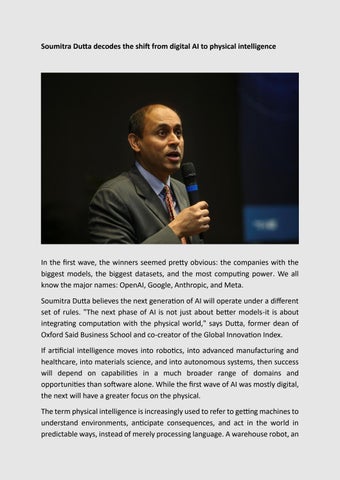
Soumitra Dutta decodes the shift from digital AI to physical intelligence
In the first wave‚ the winners seemed pretty obvious: the companies with the biggest models‚ the biggest datasets‚ and the most computing power․ We all know the major names: OpenAI‚ Google‚ Anthropic‚ and Meta.
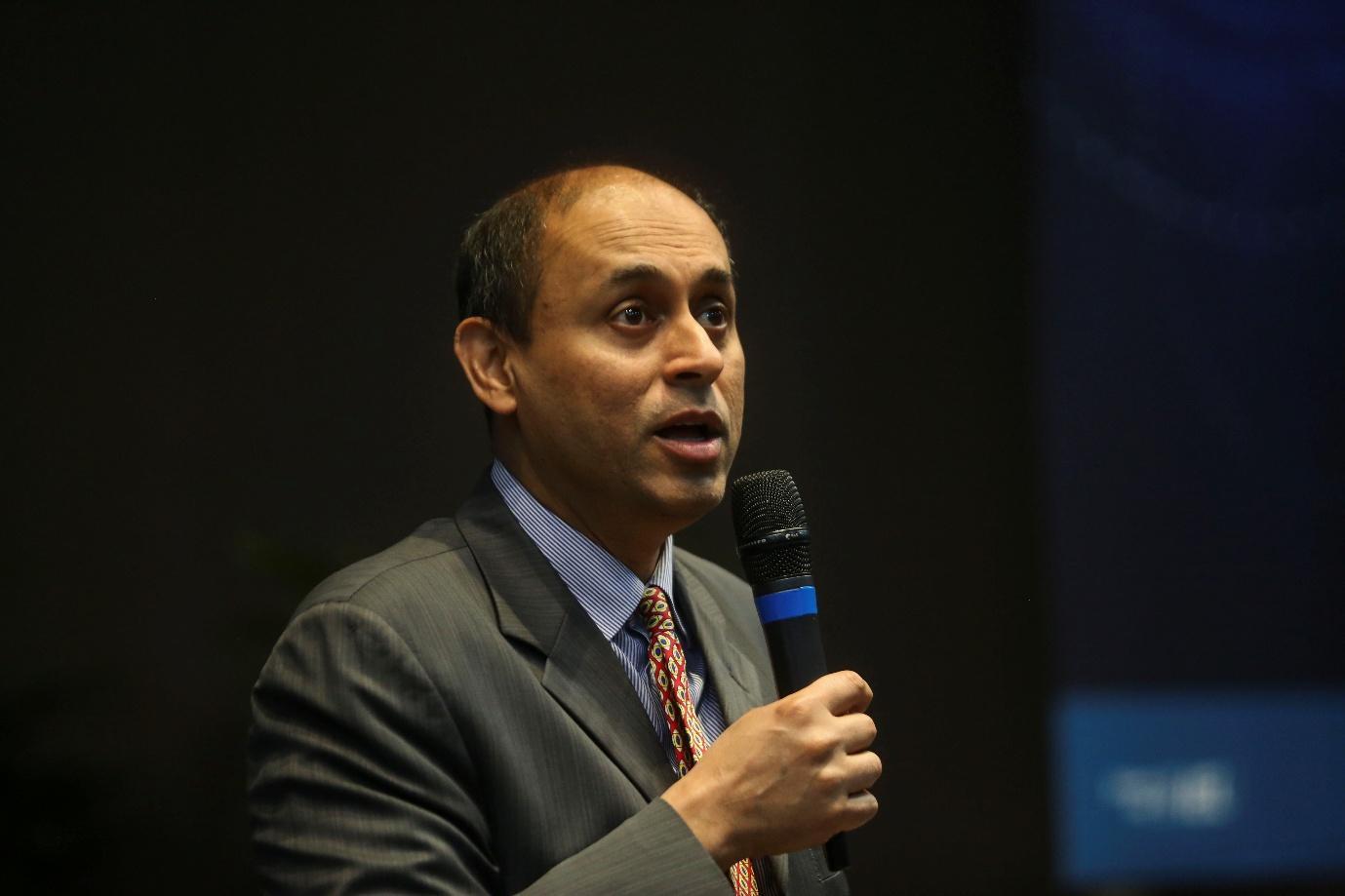
Soumitra Dutta believes the next generation of AI will operate under a different set of rules. "The next phase of AI is not just about better models-it is about integrating computation with the physical world‚" says Dutta‚ former dean of Oxford Said Business School and co-creator of the Global Innovation Index․
If artificial intelligence moves into robotics‚ into advanced manufacturing and healthcare‚ into materials science‚ and into autonomous systems‚ then success will depend on capabilities in a much broader range of domains and opportunities than software alone․ While the first wave of AI was mostly digital‚ the next will have a greater focus on the physical․
The term physical intelligence is increasingly used to refer to getting machines to understand environments‚ anticipate consequences‚ and act in the world in predictable ways‚ instead of merely processing language․ A warehouse robot‚ an
AI-assisted surgical assistant‚ and a materials laboratory all encounter difficulties that cannot be solved solely by predicting next words in text․
The next generation of smart systems will understand causality‚ be able to handle uncertainty‚ and recover from errors‚ says Soumitra Dutta, Oxford Dean (Former) Physical intelligence requires a much wider innovation ecosystem‚ a large language model training compute infrastructure and a data infrastructure․ Constructing clever robots‚ autonomous laboratories or AI-driven scientific systems requires an understanding of engineering‚ physics‚ biology‚ manufacturing and industrial design․
Soumitra Dutta argues that this is one reason the next phase of AI may benefit countries with scientific and institutional strength such as the United States․The United States has established dense networks of universities‚ startups‚ investors and research institute. Stanford paved the way for Silicon Valley․ MIT spawned countless technology companies; national laboratories like Argonne and Lawrence Berkeley have scientific infrastructure that most countries cannot match․
"One of America's enduring strengths is the fluid exchange between universities‚ startups‚ and large firms‚" Dutta says․ "Breakthroughs move quickly from the lab to the market․"In other words, global competition in the next phase will not just be about technology‚ but also about innovation systems․
Countries that combine research strengths with an entrepreneurial ecosystem‚ patient capital and other scientific infrastructure are likely to have a comparative advantage that is not quickly reproducible․