Finding the Perfect Golf Enclosure Size for Your Home Setup
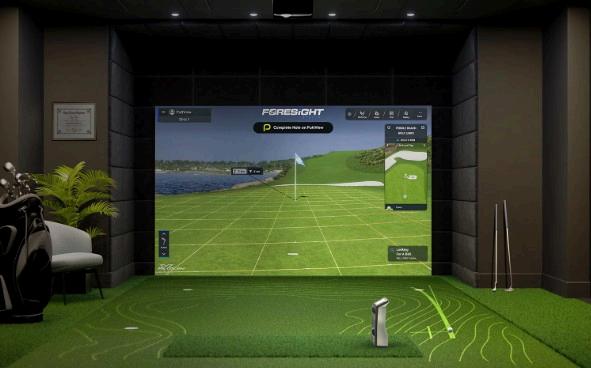
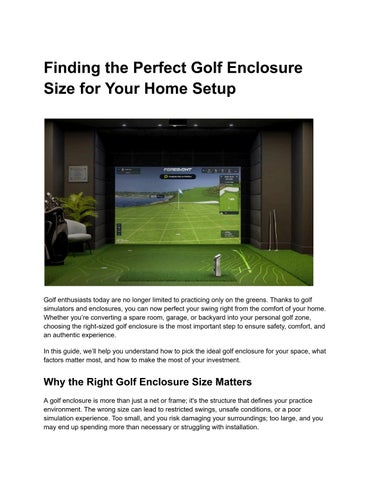
Golf enthusiasts today are no longer limited to practicing only on the greens. Thanks to golf simulators and enclosures, you can now perfect your swing right from the comfort of your home Whether you’re converting a spare room, garage, or backyard into your personal golf zone, choosing the right-sized golf enclosure is the most important step to ensure safety, comfort, and an authentic experience
In this guide, we’ll help you understand how to pick the ideal golf enclosure for your space, what factors matter most, and how to make the most of your investment
Why the Right Golf Enclosure Size Matters
A golf enclosure is more than just a net or frame; it's the structure that defines your practice environment The wrong size can lead to restricted swings, unsafe conditions, or a poor simulation experience Too small, and you risk damaging your surroundings; too large, and you may end up spending more than necessary or struggling with installation.
Choosing the perfect enclosure ensures:
● A safe hitting area where the ball stays contained
● Accurate simulator readings, as sensors perform best with proper spacing.
● A comfortable swing environment that accommodates your height and club range
● A professional feel that mimics an authentic driving range or golf bay
1. Measure Your Space Properly
Before you even begin shopping for an enclosure, grab your measuring tape. Accurate measurements are the foundation of a perfect setup
Here’s what you should measure:
● Ceiling Height: Most golf simulators need at least 9–10 feet of clearance If you’re tall or use a driver frequently, aim for a higher ceiling.
● Room Width: Ensure you have enough width to swing freely Ideally, 12–15 feet gives you enough room for full shoulder rotation.
● Room Depth: The minimum recommended depth is 15 feet, which includes space for your swing, ball flight, and projector placement.
Once you have these dimensions, you can start comparing enclosure sizes that match your available area.
2. Choose the Right Enclosure Type for Your Setup
Golf enclosures come in various types depending on your space and goals:
● Standard Enclosures: Perfect for garages, basements, or spare rooms. These typically range from 8 to 10 feet high and offer balanced performance for both casual and serious golfers.
● Compact Enclosures: Ideal for smaller spaces, these versions allow you to enjoy simulation without needing a massive area.
● Custom or Oversized Enclosures: For those who want a professional studio experience, custom-built enclosures can match your exact measurements and design preferences
If you’re unsure, start by visualizing your swing and walking around your available area You should be able to move freely without feeling confined.
3. Focus on Quality and Durability
A high-quality golf enclosure should last for years, withstand powerful shots, and maintain a clean appearance. Look for features such as:
● Impact-resistant nets and screens that can handle repeated use
● Strong aluminum or steel frames for better stability
● Easy assembly systems for quick setup and takedown.
● Compatibility with golf simulators like SkyTrak, Garmin, or TrackMan.
If you’re shopping online, it’s worth exploring reliable suppliers For instance, you can find durable and size-diverse options through Simspace voucher codes, helping you save while purchasing premium enclosures.
4. Match Enclosure Size to Simulator Type
Not all simulators require the same space The type of golf simulator you use will also influence your ideal enclosure size.
● Camera-Based Simulators (like SkyTrak or GC3): These usually need a little extra depth for accurate readings.
● Radar-Based Simulators (like Mevo+): These perform best with longer flight distances, ideally 15–20 feet in depth.
● Infrared Simulators (like OptiShot): These work well even in tighter spaces but may need wider enclosures for accurate swing data.
Before purchasing, check your simulator’s minimum space recommendations and make sure your enclosure size supports it.
5. Consider Lighting and Projector Placement
Lighting is often overlooked but crucial for a realistic experience Poor lighting can affect simulator accuracy and screen visibility. If your space allows, install ambient LED lighting that eliminates shadows
When using a projector, ensure your enclosure height accommodates the projector mount, and the distance allows for a clear, centered image on your impact screen. The best setups strike a balance between functionality and realism giving you the feeling of being on an actual course
6. Plan for Comfort and Safety
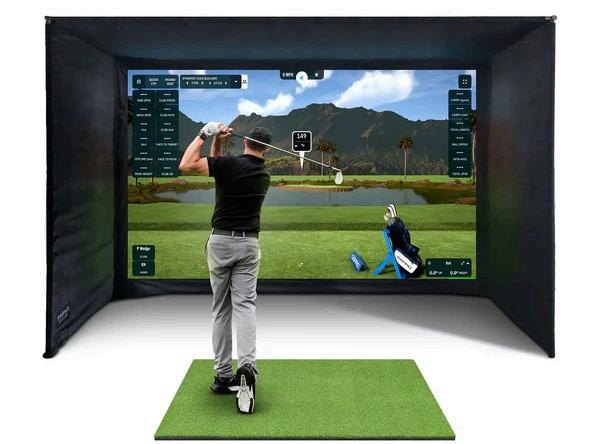
Your golf enclosure should make you feel confident and comfortable with every swing. Here’s how to achieve that:
● Keep at least 18 inches between the enclosure sides and your swing path.
● Use thick turf mats to protect your floor and joints
● Add side barriers or curtains for extra safety
● Make sure your simulator, cables, and projector are securely mounted to avoid accidents
A safe, well-designed environment not only protects your surroundings but also lets you focus entirely on improving your game