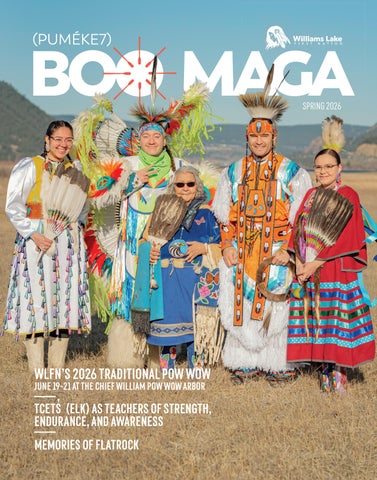
TCETS ̓ (ELK) AS TEACHERS OF STRENGTH, ENDURANCE, AND AWARENESS
MEMORIES OF FLATROCK
SPRING 2026
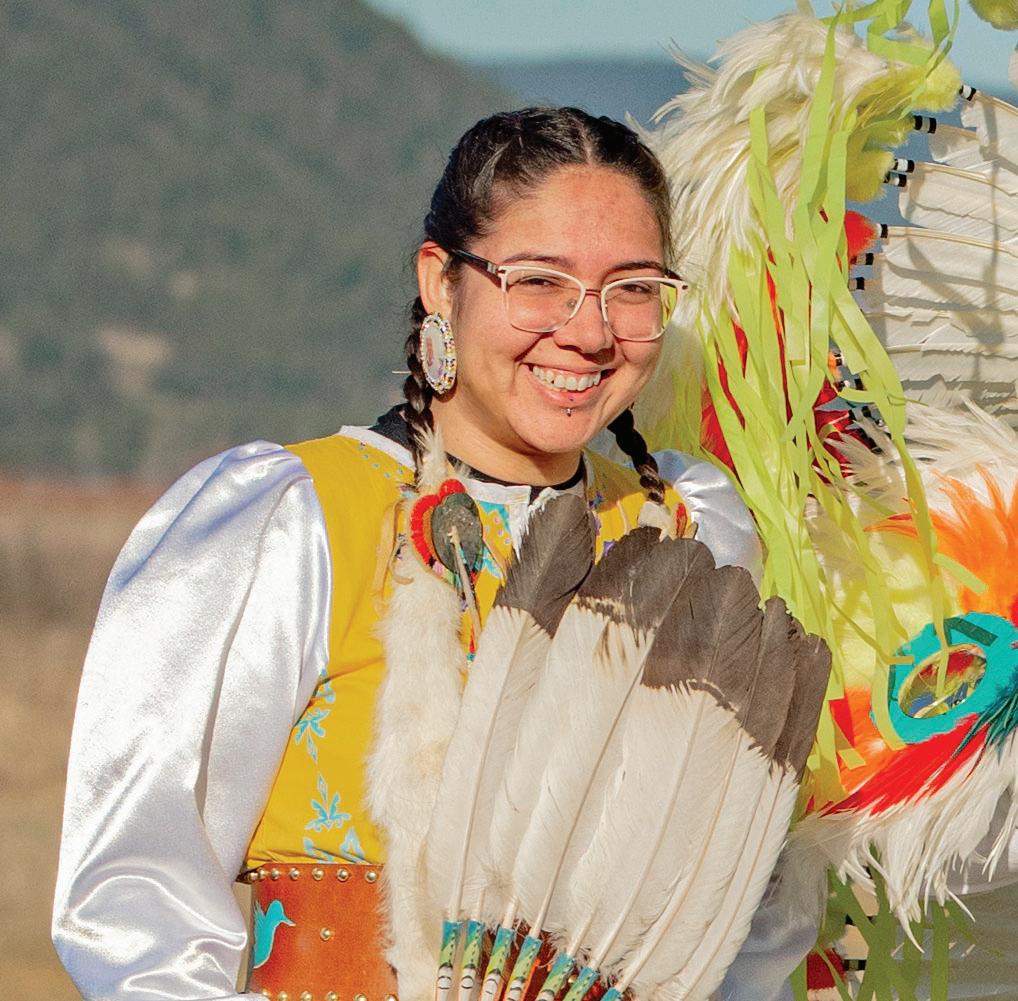
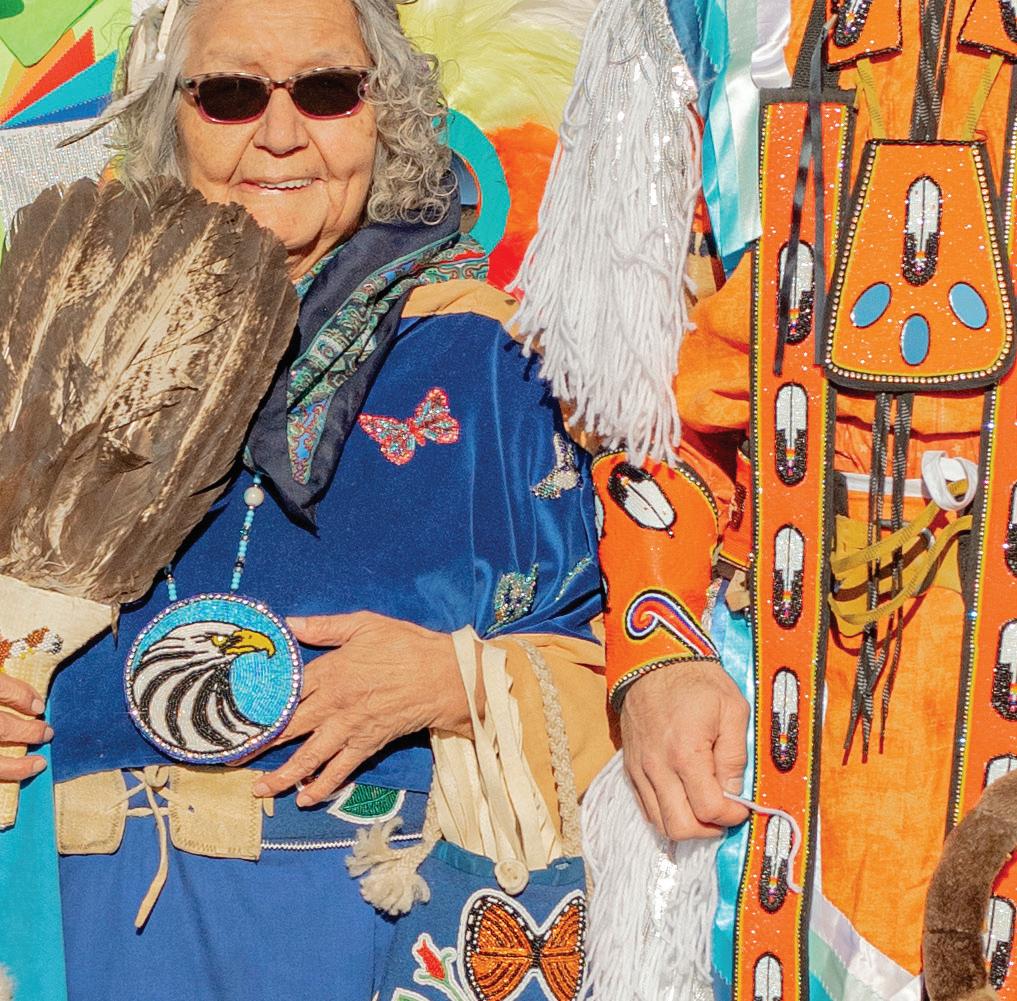
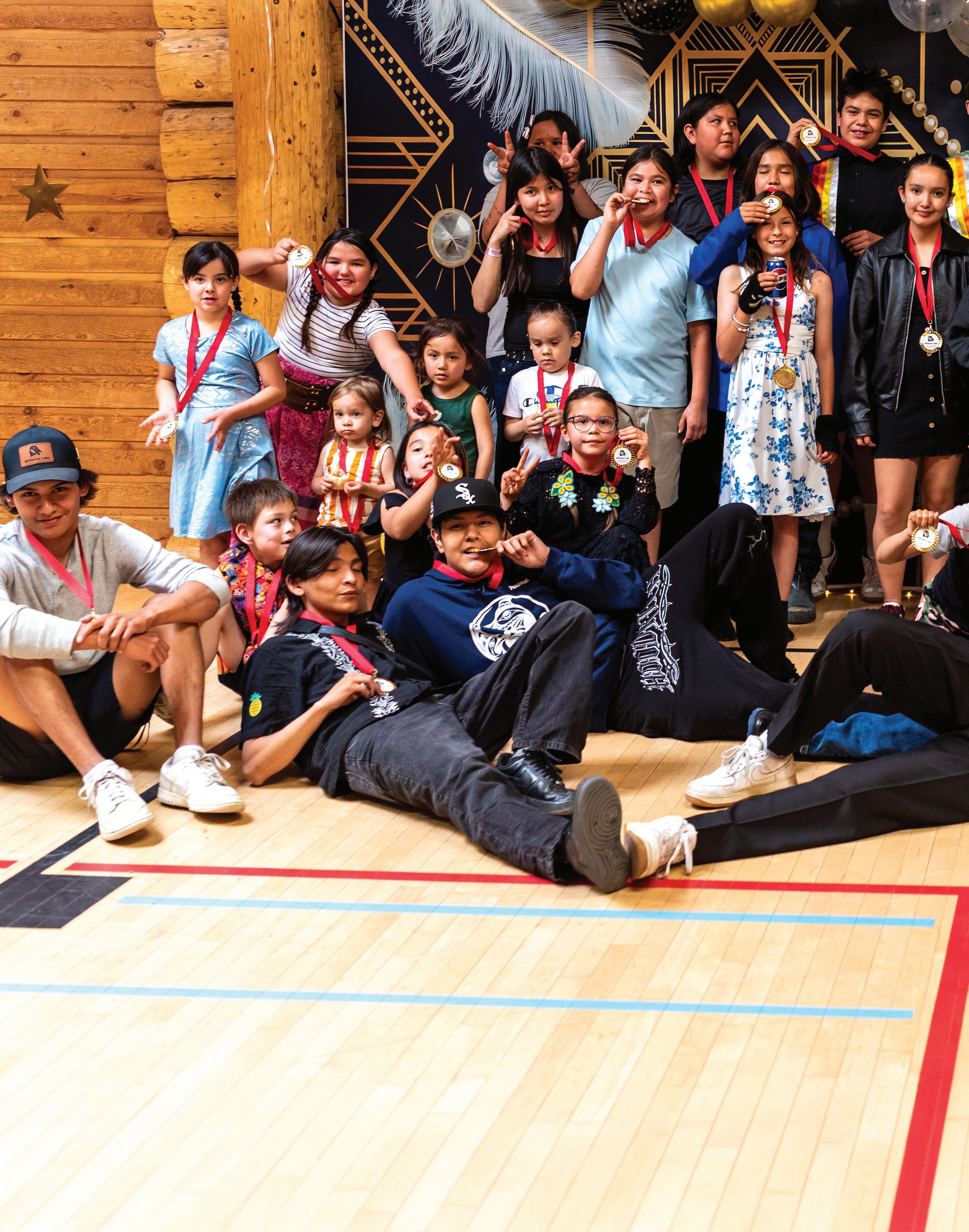
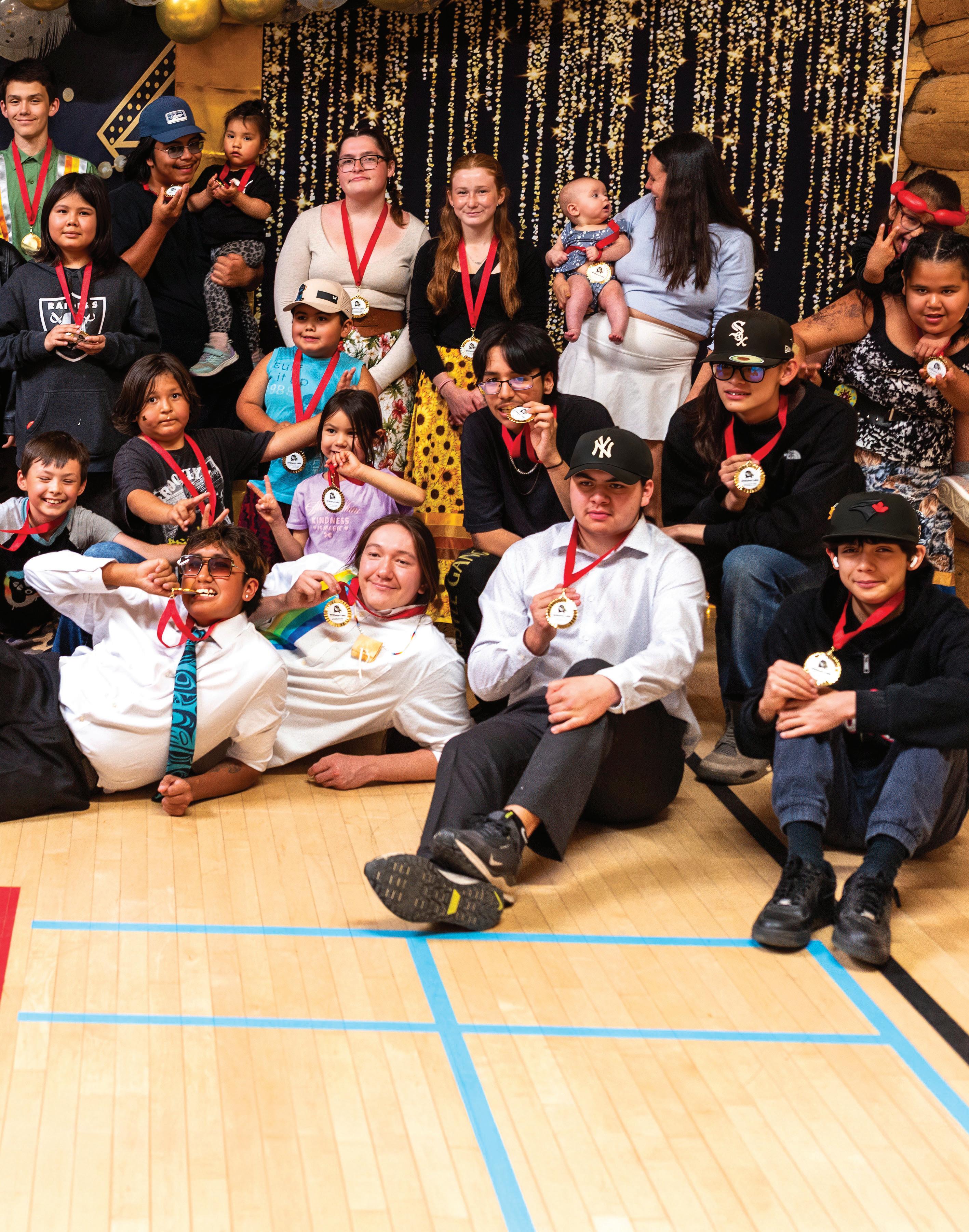
Group shot from WLFN’s Honouring Our Youth Gala event, May 27, 2026 at the Elizabeth Grouse Gym.
4. Message from WLFN Councillor Shae Chelsea 6. Going with the Flow: Elders Canoe Excursion 8. Following Our Ancestors: Tcets̓ (Elk) As Teachers Of Strength, Endurance, And Awareness
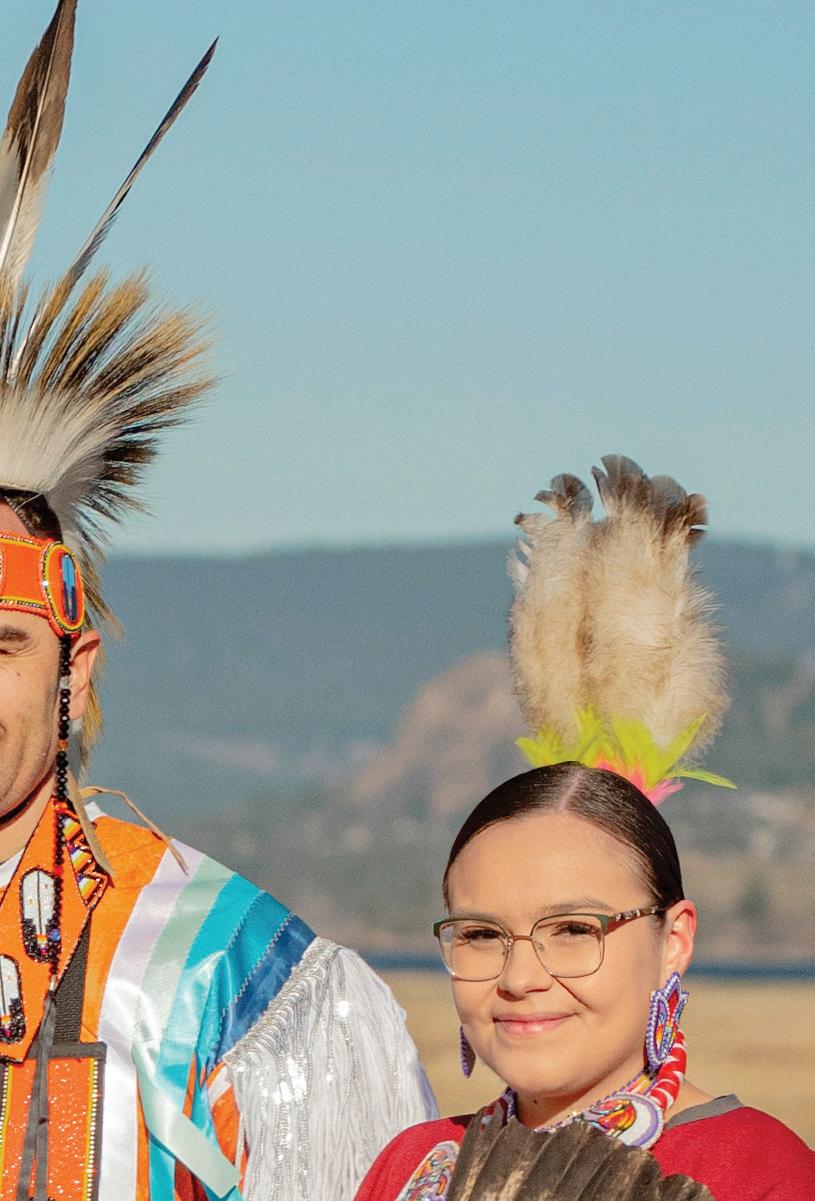
12. 2026 Traditional Pow Wow
14. Feature: WLFN’s Events Team 16. Memories of Flatrock, by Chris Wycotte
Mother’s Day Highlights 22. Events in and around WLFN
Message from WLFN Councillor Shae Chelsea:
It is a privilege to share an update with our membership on the work, gatherings, and community involvement I have been part of over this past while.
One of the standout events was our Beat the Bluesing space for community members to come together, connect, and enjoy time with one another. The event included a wide range of activities for all ages such as a bouncy castle, a creative bookmark-making station, colouring activities, board games and cards, a photo booth, and interactive group games. It was uplifting to see so many families and individuals enjoying the day, strengthening
relationships, and supporting one another in a good way.
Chief and Council also attended Our Gathering, an important annual forum that brings together First Nation leadership and federal partners from across British Columbia. This event provides an opportunity to advance common priorities, build and strengthen nation-to-nation relationships, and engage in open and respectful dialogue around reconciliation and self-determination. The gathering is coordinated in partnership with the First Nations Leadership Council—made up of the First Nations Summit, the Union of British Columbia Indian Chiefs, and the British Columbia Assembly of First Nations—alongside Indigenous Services Canada (ISC) and Crown-Indigenous Relations and North-
meaningful space to advocate for our Nation and collaborate on issues that impact our people.
In addition to these larger engagements, I continue to contribute to key community initiatives, including the Community Safety Plan and the Pow Wow Committee. This work supports the planning and success of both our Traditional and Competition Pow Wows, helping ensure these important
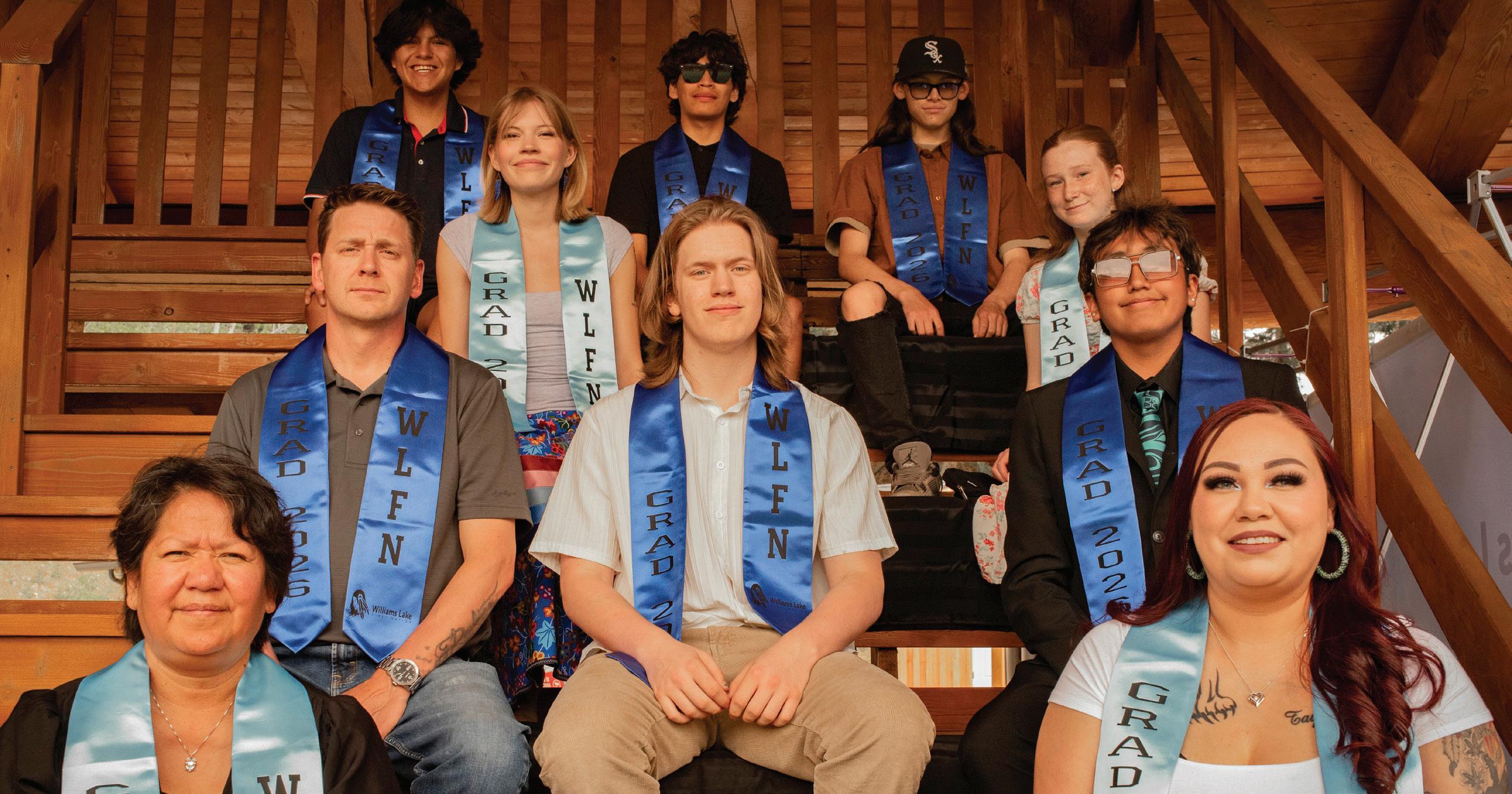
Graduates at the 2026 WLFN Education Ceremony. Excluded: Iona Chelsea, Shawna Robbins, and Kendelle Thomas.
cultural gatherings remain strong, organized, and grounded in our Secwépemc values.
I have also had the opportunity to attend several
The Easter dinner was a wonderful gathering that brought many members together in a spirit of sharing and celebration. We also welcomed Dr. James Makokis and Len Pierre to the community, whose visits provided valuable knowledge and perspecwonderful events for the membership from the continuous important feedback from the community members.
I participated in the Citizens’ Assembly, which brings together members of the Northern Secwépemc te Qelmúcw each year to celebrate culture, language, and traditions, while also engaging in important discussions around Treaty and Self-Government. I also attended the Education Engagement Session, which created an important space to learn more about what our school and Education department have been doing to support the education of our community.
Another highlight was the Youth Gala, where we came together to recognize and celebrate the accomplishments of our young people. It was inspiring to see their achievements acknowledged and to witness the strength and potential within the next generation. The youth were happy, laughing and excited for this event as they came together with our youth council to help celebrate one another.
The turnout across these events has been very encouraging and speaks to the strong sense of connection within our Nation. One of the most meaningful parts of my role is having the opportunity to connect directly with community members—sitting down, listening, and sharing in conversation. These moments are what continue to guide the work we do.
On behalf of Chief and Council, I would like to extend my heartfelt congratulations to all the 2026
graduates from the Williams Lake First Nation
are incredibly proud of each of you for your hard work, perseverance, and dedication in reaching this achievement—whether you are graduating from high school or completing post-secondary education.
vidual commitment, but also the strength of your families, supporters, and community who have walked alongside you on this journey. You represent the future of our Nation, and we look forward to seeing the positive impact you will continue to make.
I would also like to share a special and personal congratulations to my son, as well as my niece and nephew. Watching your growth and success has been a proud and meaningful experience. Your determination and achievements are inspiring, and I wish you all continued success in the next steps of your journeys.
Congratulations once again to all graduates—your community stands behind you and celebrates with you.
As a community, we continue to stand together, support one another, and move forward with resilience and unity. It is through this collective strength that we will continue to build a strong future for our Nation.
Thank you to all of our members for your continued support, involvement, and trust. It is an honour to serve our community, and I remain committed to working alongside you as we move forward together.
Kukwstéc-kuc,
Councillor Shae Chelsea
GOING WITH THE FLOW
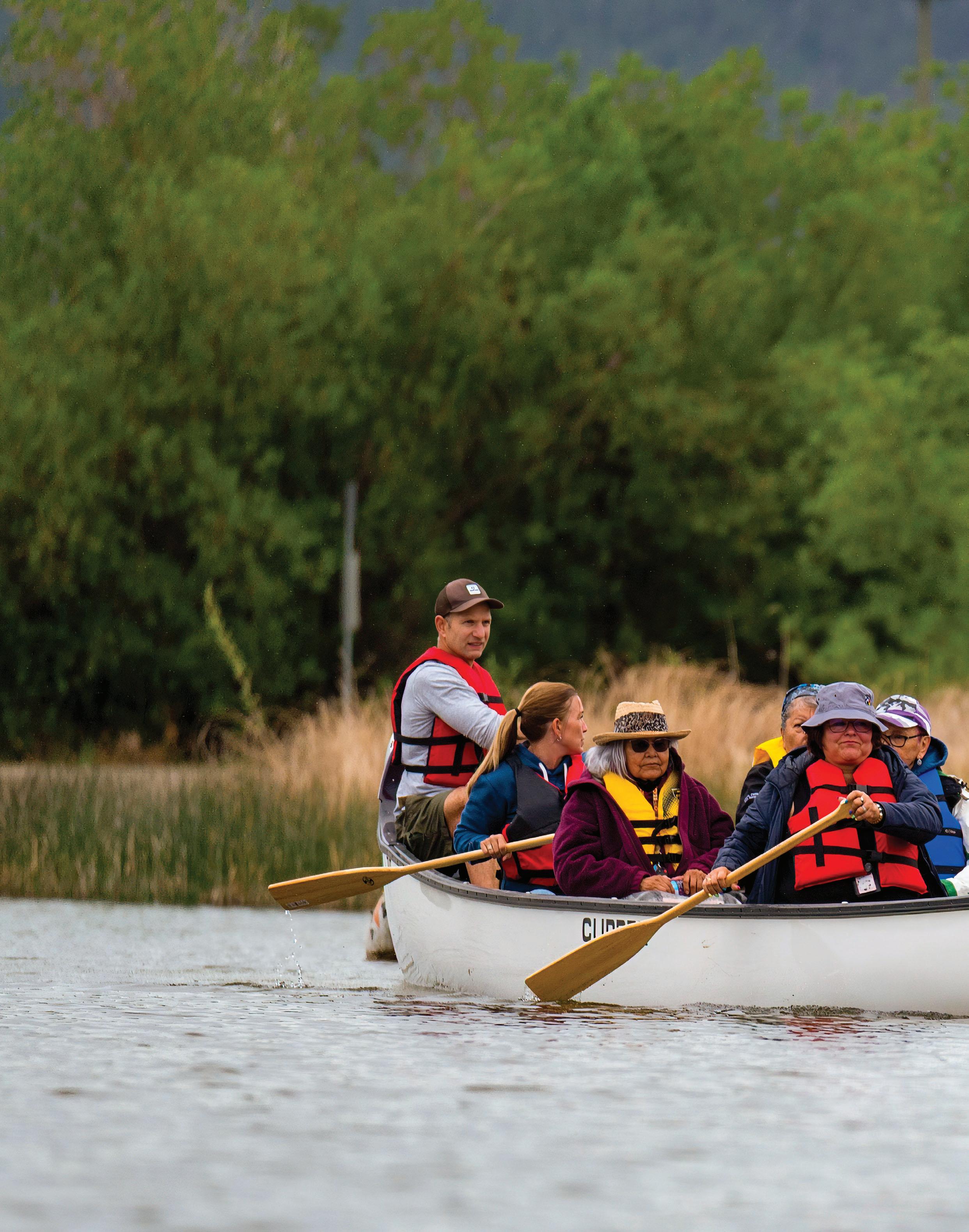
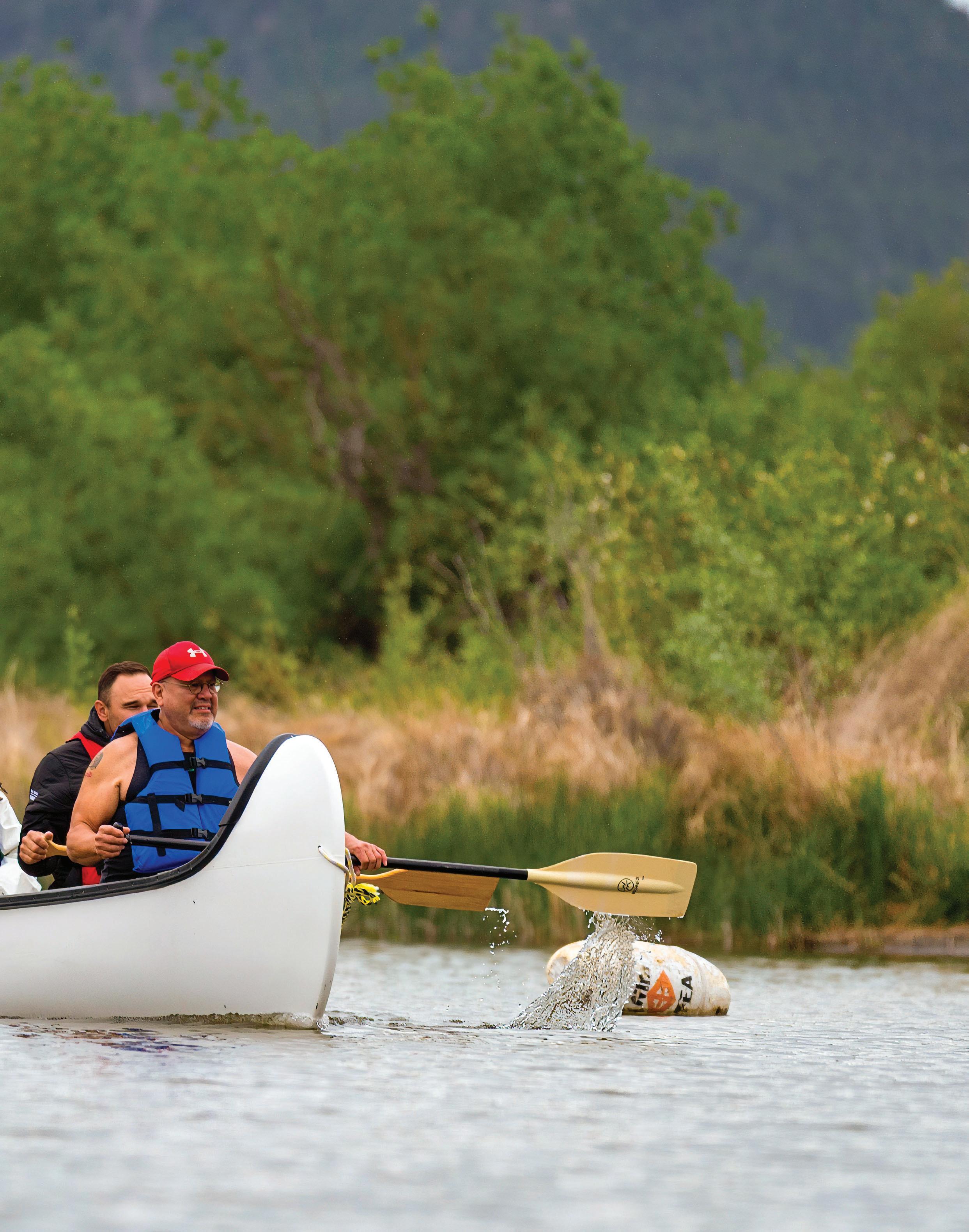
Pictured here, George (back) and Jim (front) lead a canoe outing with WLFN Elders and guests — just one example of the many ways they help support wellness, connection, and community.
WLFN’s Health and Wellness Counsellor George Warr has been instrumental in developing and leading a number of successful programs, including Men’s Group, Recovery Café, and the Wellness & Recovery Group. He is also known for organizing regular outings and activities that encourage members to get out on the land, connect with one another, and spend time in nature.
Since joining the team, Outreach Worker Jim Aleck has quickly become a valued partner in many of these initiatives, helping support existing programs while bringing new opportunities to the community. Jim has been supporting Tsqilye ceremonies and recently launched the Good Grief group, creating a welcoming space for people to come together to share, learn, and talk openly about grief. George has also been involved in supportingproach both men bring to their work.
Together, George and Jim continue to create opportunities for healing, learning, cultural connection, and community building across WLFN.
FOLLOWING OUR ANCESTORS
TCETS ̓ (ELK) AS TEACHERS OF STRENGTH, ENDURANCE, AND AWARENESS
Before European contact, tcets (elk) were essential to the Secwépemc, providing a reliable source of food, hides for clothing and shelter, and sinew for sewing and crafting. Beyond their physical uses, tcets
frequently appearing in traditional Secwépemc narratives and teachings. These teachings hold detailed knowledge of tcets behavior and migration patterns, helping to guide hunting practices and maintain healthy populations, but also hold valuable lessons about respect, responsibility, survival, and living in balance with the land.
Tcets populations in BC declined substantially from the 1700s into the early 1900s, likely due to a combination of pressures. Disease, predation, severe winters, increased hunting, and habitat alteration from ranching and agriculture have all contributed.
With the outlawing of cultural burning practices, forests across Secwepemcúlecw gradually shifted from open grasslands and lightly wooded ranges into denser, thicker forests. These open landscapes had long been favourable to tcets, whose herd behavior relies on broad sightlines, open movement
corridors, and expansive grazing areas. As the land became increasingly overgrown in the absence of regular burning, habitat conditions began to favour moose instead; a species better adapted to dense willow, brush, and heavily forested environments. Prior to contact, moose were not prevalent throughout much of Secwepemcúlecw.
“Logging activity and the expansion of road networks have likely contributed to changes in habitat use and species distribution,” says WLFN Wildlife Stewardship Coordinator Madison No-
regrowth and cutblock habitat, while elk are generally more sensitive to long-term disturbance and sustained pressure on important winter range. It is also plausible that the arrival of cattle in the grasslands of Secwepemcúlecw in the mid-1800s introduced bovine diseases that could be transmitted from cattle to elk.”
In Secwépemc oral histories and cultural teachings, tcets are not animals, but relatives, moral teachers, and ecological guides. Secwépemc teachings illustrate that the animal world and human world are inseparable, with tcets holding an important role within the balance of both.
Councillor Chris Wycotte:
“Elk have played an important cultural, economic, and ecological role in Secwépemc culture and oral traditions since time immemorial. Before contact, their presence language, spirituality, food, manufacturing resources, and ecosystem balance. Even though their populations have declined greatly, this remains true to this day.”
Secwépemc oral histories like Wolf and Wolverine and The Story of Porcupine connect the physical, moral, and spiritual worlds to Secwépemc life, featuring tcets prominently.
In Wolf and Wolverine, these two eponymous characters once lived together as companions, with Wolf relying on tcets (elk) and tsi7 (deer)ver). When Wolf’s prey begins to grow scarce, he
Wolf, hoping his old companion will take pity on him and share his newfound abundance. But when Wolverine arrives at Wolf’s lodge, Wolf ignores him, boiling meat, eating it in front of him, and carelessly throwing away the rich broth withoutine leaves in search of a new territory of his own. Using his supernatural powers, he causes Wolf’s hunting success to disappear. Wolverine eventuthrive once again.
Before long, Wolf is driven to near starvation and goes searching for Wolverine, hoping for help. Wolverine responds by treating Wolf exactly as he had once been treated: cooking meat in front of him, eating it, and discarding the broth.
The Story of Porcupine tells of a long-standing
and the Deer People, led by Elk. Swan believed their ongoing rivalry stemmed from ignorance, with each group believing its own ways were superior. Hoping to bring peace, Swan decided to invite Elk and his people to meet and share theirtation in exchange for dentalia, but spent his time winter journey. Swan instead sends Porcupine, despite Coyote mocking him as too small and weak for the task.
Porcupine endured the harsh winter conditions and successfully delivered the invitation to Elk, who agreed to visit. Elk and his people arrived, and Swan treated them to a feast. After the feast, Swan and his people knelt before Elk and told
groups — all the ways they believed that Elk and the Deer People could improve — giving all the
Swan, giving him all the knowledge of his people, completing the exchange so that both groups now shared a larger collective knowledge. The two groups went on to live easier and happier lives, in greater harmony with one another and the land.talia, much to Coyote’s envy.
These two oral histories (paraphrased from the transcription by ethnographer James Teit in The 1909) teach about respect, responsibility, and community, and enforce values that remain central to Secwépemcciety and looking out for those around you.
Central to Secwépemc traditions is the understanding that animals possess spiritual and physical importance. Tcets are not viewed as passive resource but as an ecological guide who participates in reciprocal relationships with humans. Stories often tell of tcets hunters who act with humility and consideration.
Successful hunting is not framed as dominance over nature, but as the outcome of good and proper behaviour within nature. If hunters are wasteful, arrogant, or disrespectful, oral teachings warn that tcets may withdraw from the territory.
Councillor Chris Wycotte continues:
“Elk also serve as models of strength, endurance, and awareness. Observations of elk behavior, such as their alertness to danger, protective care for calves, and ability to endure harsh winters, are woven into teachings about community responsibility and resilience. Young people are not only taught practical survival skills but also social values by listening to and understanding these stories. The cooperative dynamics of tcets
collective care, reinforcing the importance of unity within Secwépemc communities”
Beyond moral instruction, Secwépemc teachings hold detailed ecological knowledge about migra-
tion patterns, rutting periods, wintering grounds, and the relationships between tcets, plants, predators, and people. These oral histories preserve environmental understanding across generations, while also guiding when and how hunting should occur. They function as both educational tools and law, teaching how to live in balance with the land.
Spiritual protocols are also rooted in these teachhunt, giving thanks after a harvest, and using evthat tcets are sacred beings who deserve respect. Hunting is never approached simply as acquisition, but as a responsibility grounded in humility, reciprocity, and accountability.
Oral histories are living systems of knowledge through which generations learn ethical principles, ecological stewardship skills, and spiritual cultural identity, environmental care, and relationships with all living beings are interconnected.
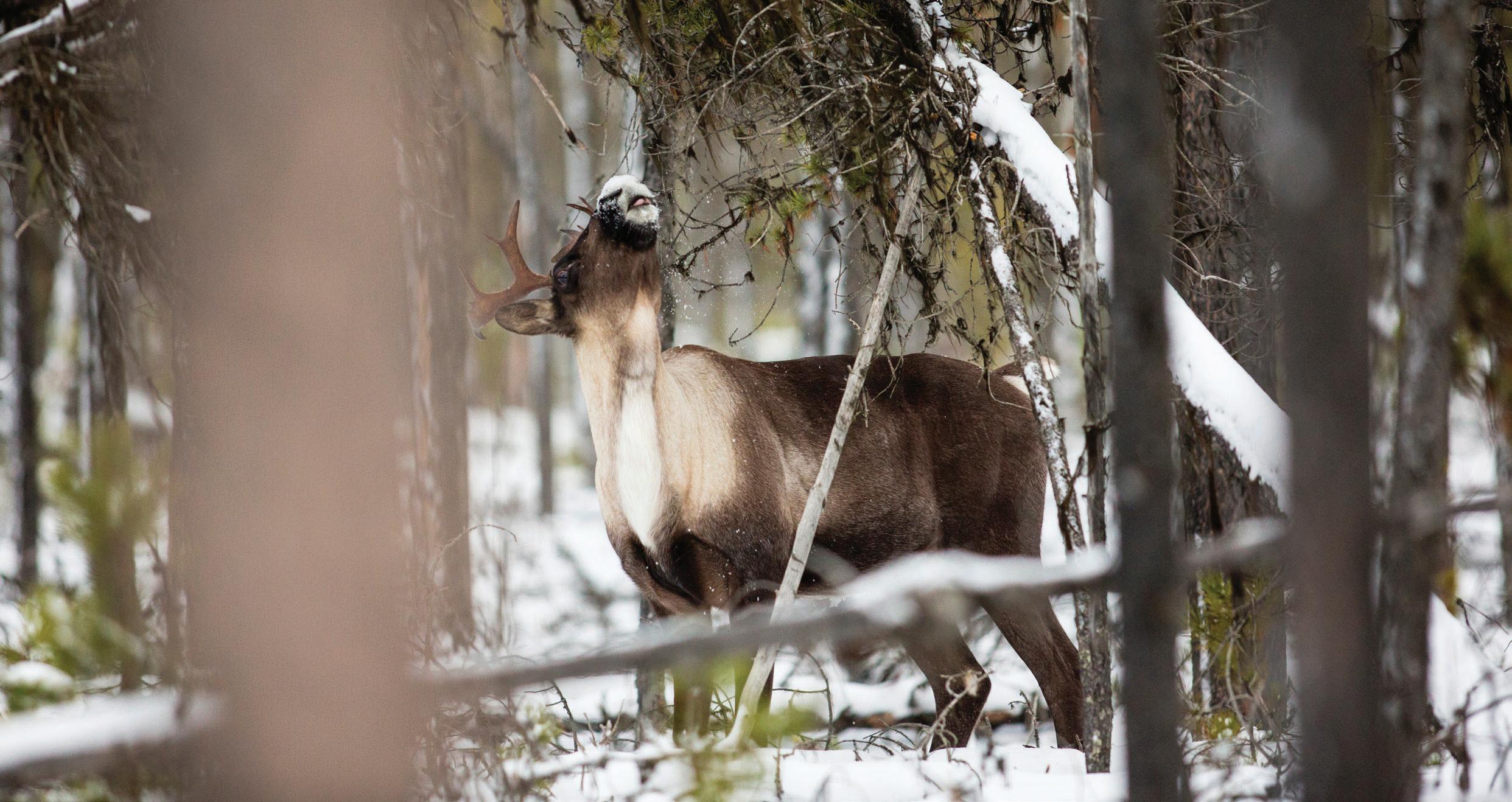
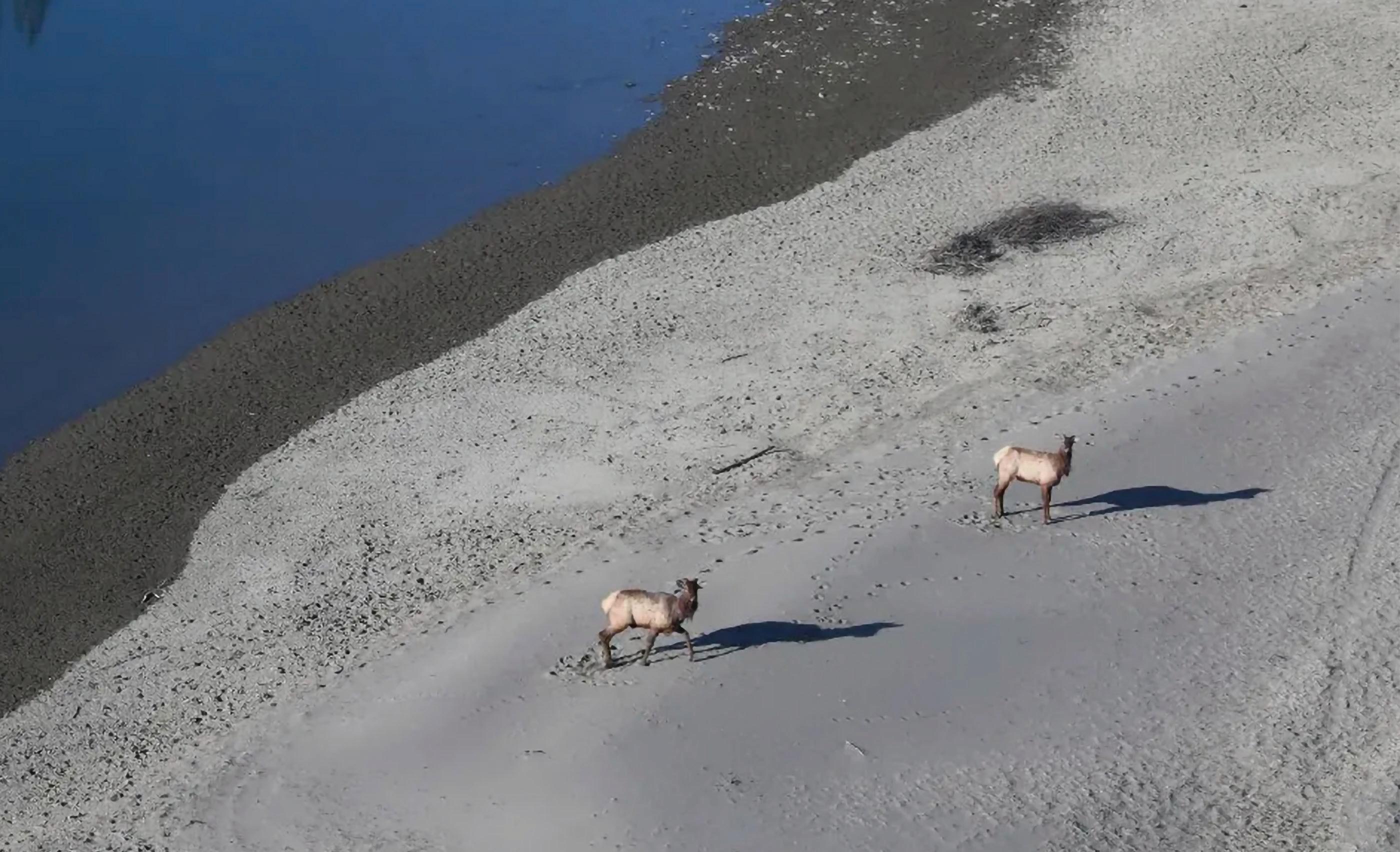
Tcets̓in the Horsefly area, photographed during the 2024 Elk Survey.
While tcets remain deeply embedded in Secwépemc culture and life, our understanding of their current population and health within Secwepemcúlecw remains limited.
Presently, tcets are occasionally seen near T’exelc and the Mount Polley area. A small herd also per-
aerial surveys in 2024 recording 57 tcets in the surrounding forests and agricultural lands.
While useful, these surveys have limitations and do not fully capture size or health of local herds. It is known that the population remains highly vulnerable, and harvesting at this time poses a serious risk to recovery.
In September 2025, WLFN issued the Tcets (Elk) Harvesting Directive, stating that WLFN does not authorize or support the hunting of tcets within Williams Lake First Nation Traditional Territory. The Directive asks all harvesters to refrain from hunting tcets permits will be issued to community, Indigenous or non-Indigenous hunters, and opposes any provincially managed Limited Entry Hunt or open -
tecting tcets so they may recover and once again support Secwépemc food systems, cultural practices, and stewardship responsibilities.
WLFN Manager of Natural Resources Ty Sorensen:
“We are still seeing elk on the land, but in numbers far too low to support harvesting. Right now, our responsibility is to protect what remains, rebuild the population, and ensure future generations can once again maintain that relationship with tcets. Our goal is to rebuild the population in a way that allows WLFN Members to responsibly resume harvesting in the near future without jeopardizing the long-term health and recovery of the herd.”
With the teachings of traditional narratives like Wolf and Wolverine and The Story of Porcupine echoing loudly in our hearts, WLFN has worked to share valuable knowledge and resources with the Province of BC in support of tcets recovery. In 2025, WLFN’s Natural Resources Department partnered with the Province to establish the WLFN–BC Collaborative Elk Research Program. The program began with a systematic camera trap
to gather more detailed information on tcets population, habitat use, movement patterns, and herd health.
In parallel, WLFN’s Natural Resources Department continues to work closely with the Ministry of Water, Land and Resource Stewardship to ensure Secwépemc knowledge, priorities, and stew-
a provincial elk stewardship plan for the Cariboo Region. This spirit of cooperation, collaboration, respect, reciprocity, and balance, are paramount to the teachings of our Secwépemc oral history and identity.
Together, this research and collaborative planning process will strengthen WLFN’s ability to make informed management decisions and establish a clear path toward recovery. Williams Lake First
day restore tcets populations to a level where the community can harvest sustainably, guided by the teachings of our ancestors and aligned with Secwépemc laws, stewardship responsibilities, and community food security needs.
| SPRING 2026
POW WOW TIME
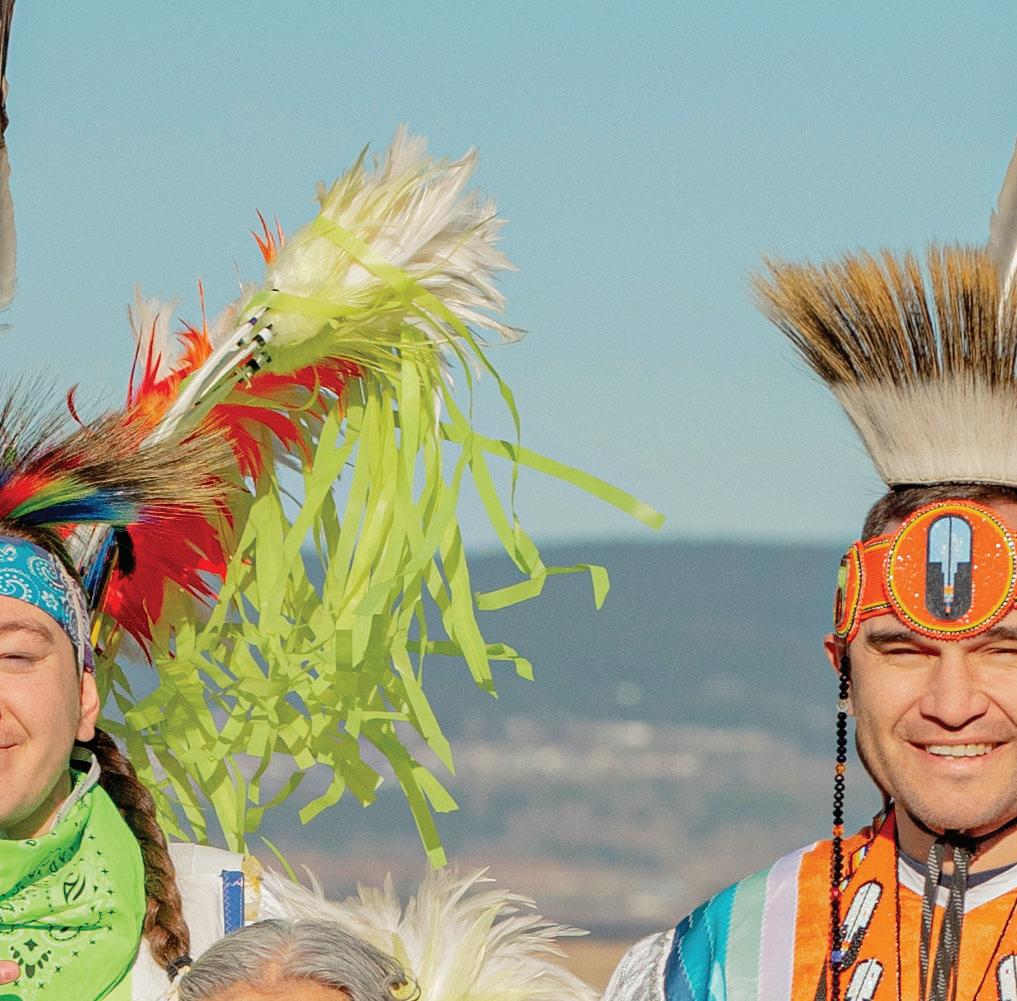
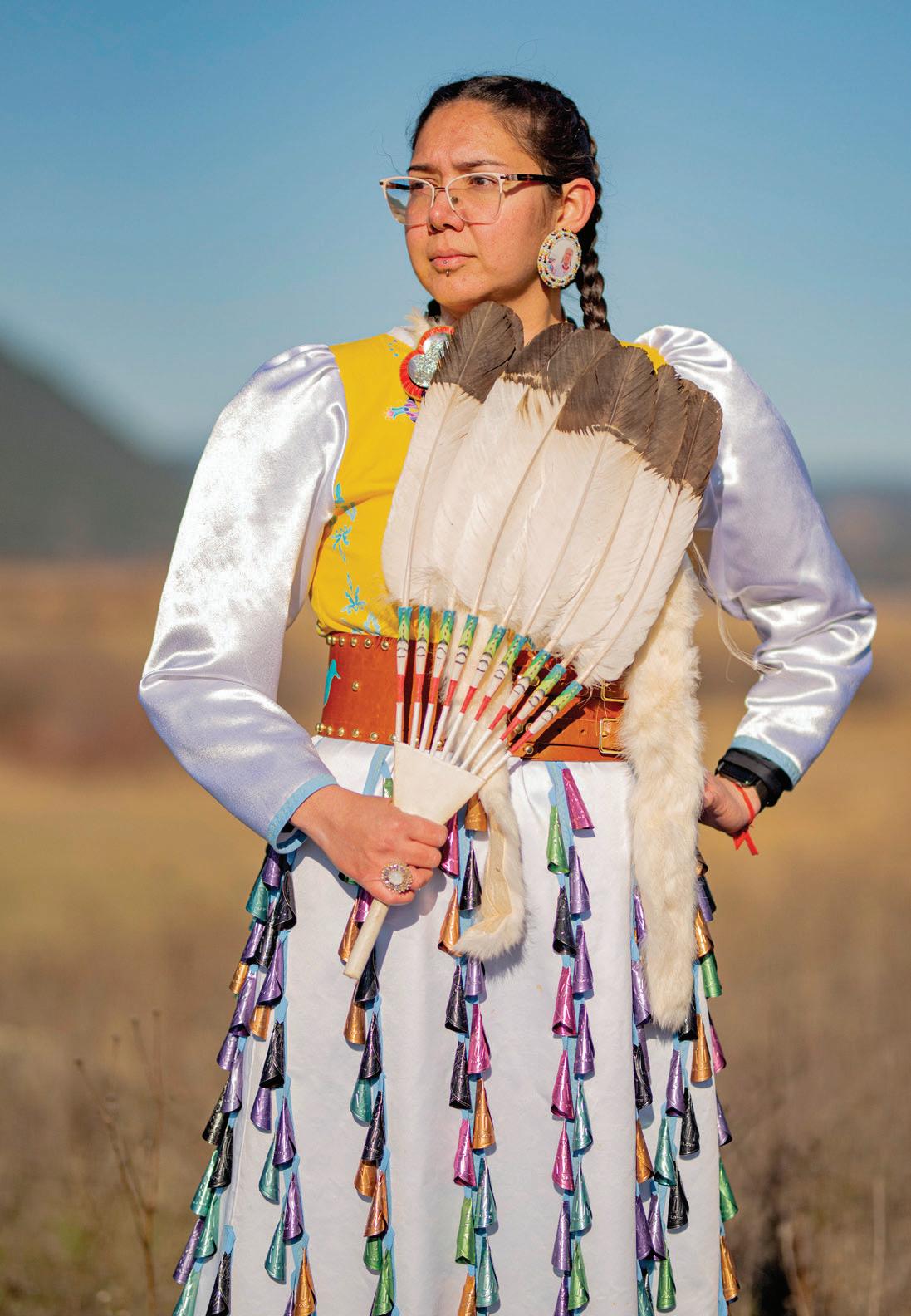
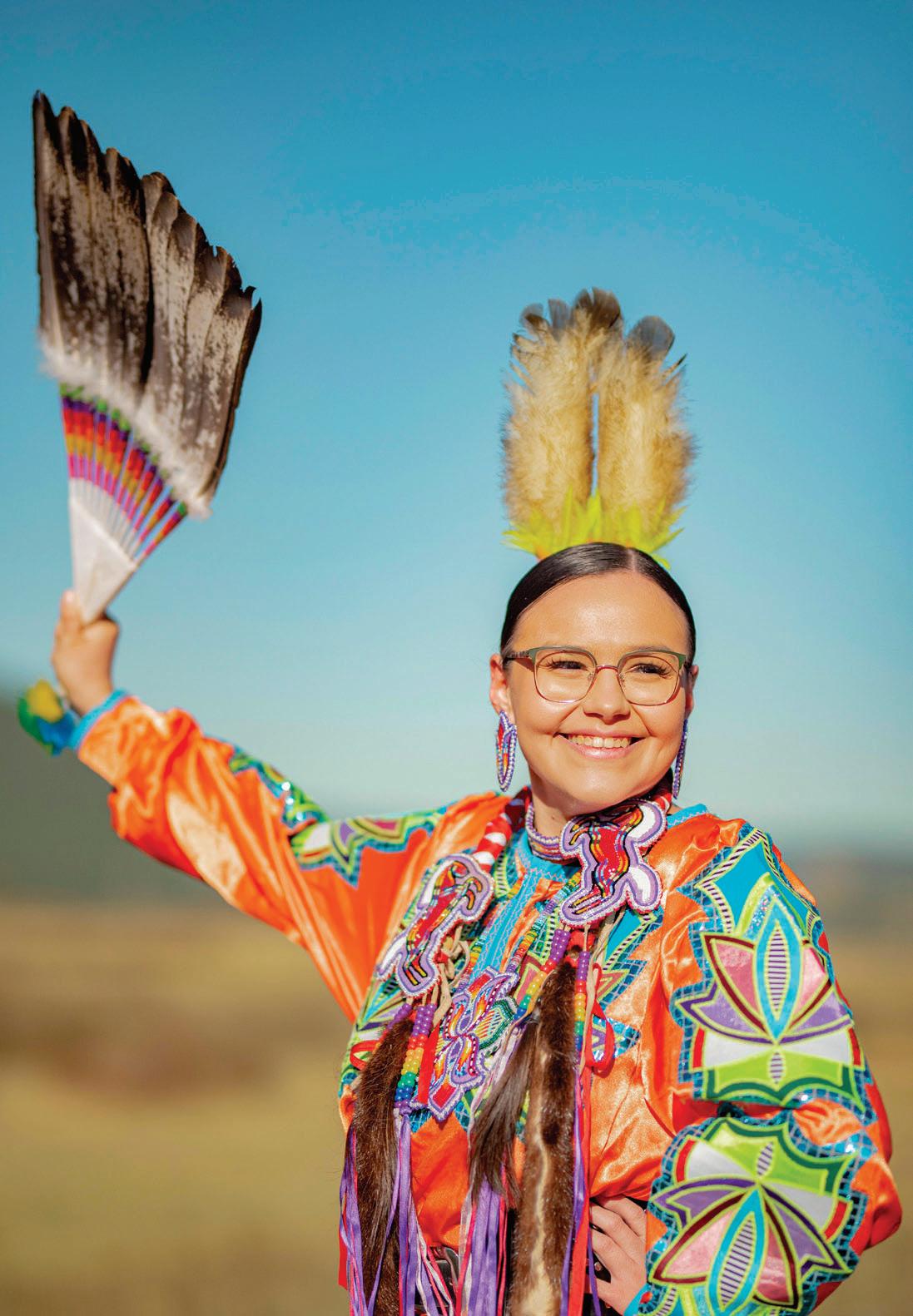
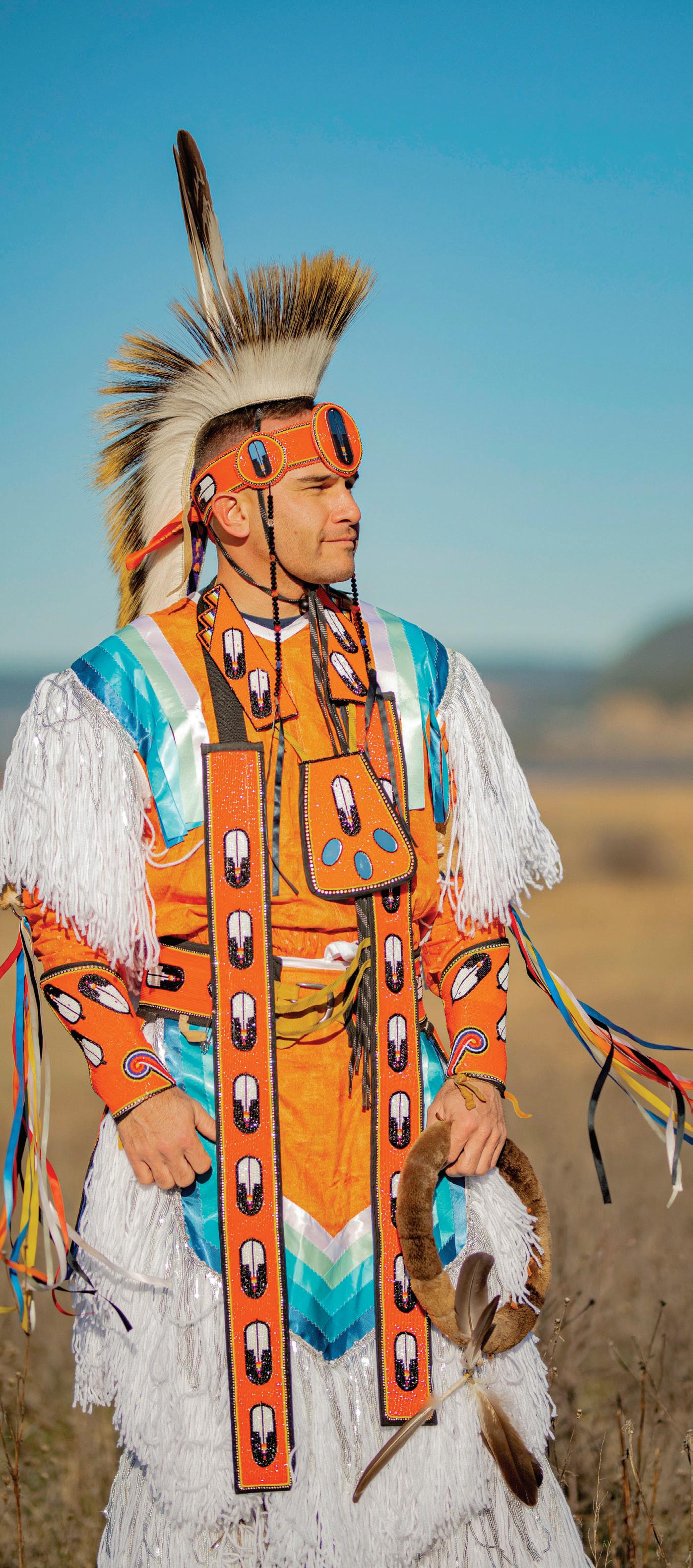
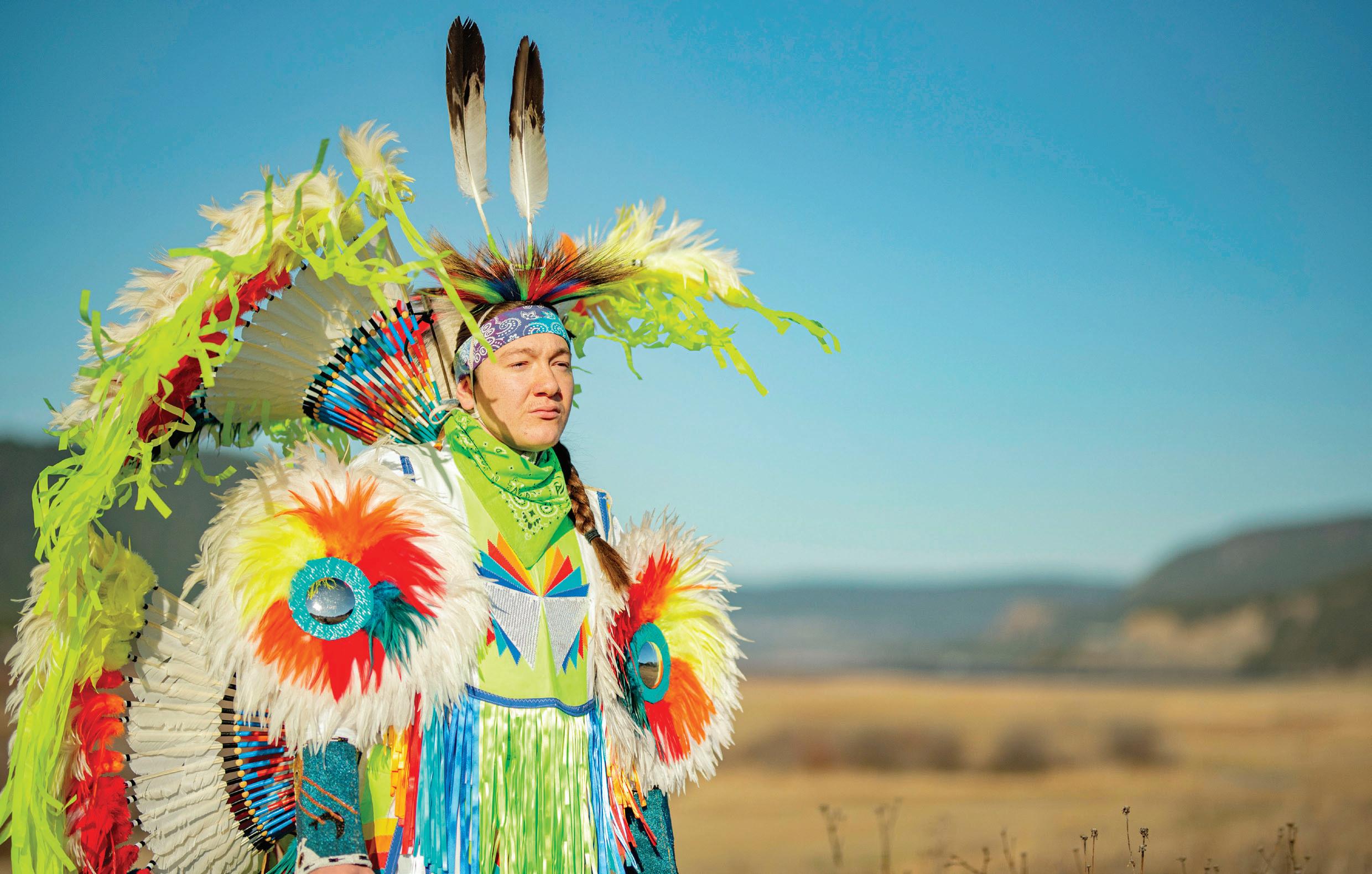
Mark your calendars! WLFN’s 2026 Traditional Pow Wow returns June 19-21 at the beautiful Chief William Pow Wow Arbor in T’exelc (2581 Cariboo Hwy 97S, Williams Lake, BC). Join us for three days of dancing, drumming, and culture, featuring all dance categories, seven specials, pageants, a hand drum contest, more than 40 vendors, free admission, and free on-site tent camping. Everybody is welcome.
Grand Entry is Friday at 7:00 PM, Saturday at 1:00 PM and 7:00 PM, and Sunday at 1:00 PM.
New for this year, the Traditional Pow Wow will have a rotating host drum. We’re calling all drummers, and offering $1,000 honorariums to each of the first four drums registered (minimum six singers per drum).
For vendor applications and additional information, please contact: Jaydeen.Sargent@wlfn.ca.
WLFN’s Dynamic Events Duo
One thing that’s undeniable about Williams Lake First Nation: we have a lot of events.
260 for community members and registered members, and 60 that were also open to the general public. These included everything from departmental engagement sessions, lunch-and-learns with the Culture team, dances, pow wows, yoga classes, melámen picking excursions, and arts and crafts workshops; the list goes on and on.
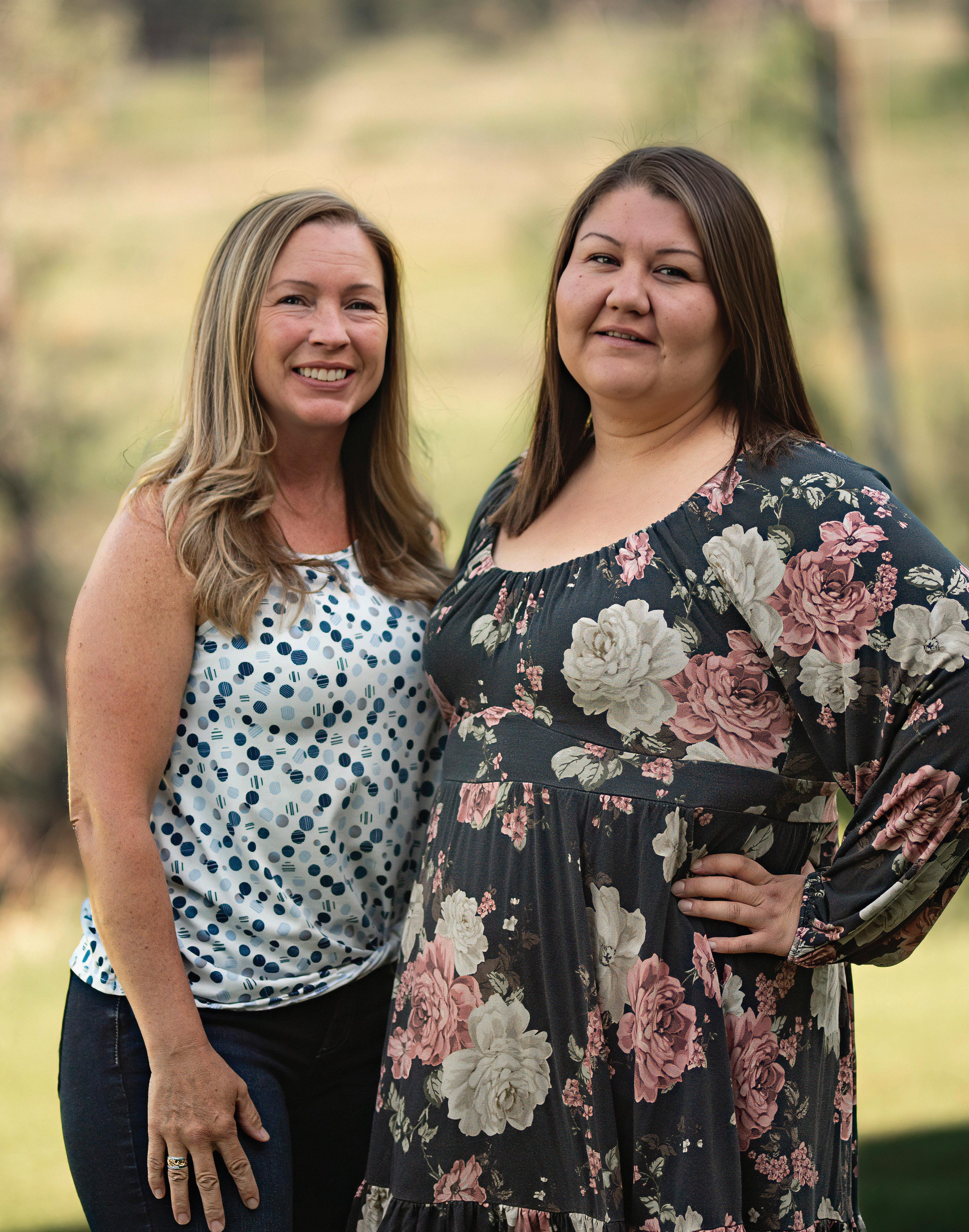
We’d like to recognize two individuals who help bring WLFN’s events to life. Whether leading an event themselves or supporting another department, Lisa and Jaydeen work behind the scenes to ensure every detail comes together. From coordinating catering and booking photographers to arranging vendors, preparing spaces, and creating welcoming, beautiful décor, they help turn ideas into memorable experiences for our community.
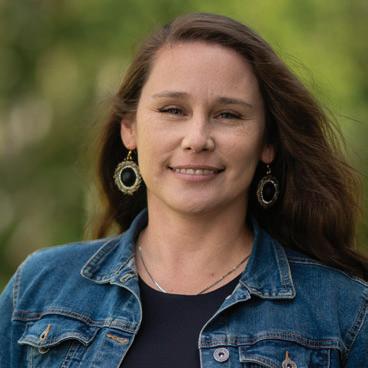
Jaydeen Sargent is no stranger to the WLFN scene. A band member herself, she was heavily involved in community events long before
Whether she’s wrangling vendors for a pow wow or spending her downtime making bannock for a community event, Jaydeen brings her love for the community to everything she does, and it shows.
We’re also very excited to welcome a new face to WLFN’s Events team. Lisa Wessels has joined us as our new Events Coordinator.
Born and raised in the Cariboo, Lisa has three adult children, an 18-month-old grandson, and another grandchild on the way. She worked
Events team. Lisa loves spending time outdoors, camping, exploring back roads, hiking, discovering beautiful new places, and observing wildlife.
She has jumped into the position with both feet and is already having a great time connecting with the community.
Kukwstép-kucw, thank you Lisa and Jaydeen for all you bring to Williams Lake First Nation.
MY MEMORIES OF FLATROCK
By Councillor Chris Wycotte
Iwrote this story for my grandson, Colten Wycotte. In June 2025, Colten applied to the University of BC and was accepted into the Indigenous Land Stewardship Bachelor’s Degree program. His year-end group assignment was to research WLFN Stewardship strategies. Colten never had the opportunity to experience Flatrock, and this story was to develop a visual of how our practices create our relationship with our part of Secwepemcúlecw.
Secwépemc laws and cultural practices are central to land stewardship because they’re built on thousands of years of direct experience with our land. They guide how we interact with ecosystems to maintain balance, ensure renewal, and respect all living beings. This means that we are expected to care for the water, animals, and plants so they remain healthy for future generations. These practices align with the concept of sustainable management, combining ethics, traditional knowledge, and Secwépemc governance into a system that has sustained the Secwépemc since time immemorial.
place and camp has been severely impeded by the present ranch owner, whose land we must travel
place, when, and for how long, even deciding that the only people who could go through his property were members of the Williams Lake First Nation. If you weren’t a member (including relatives from other communities), he denied you access. The harassment had become so bad and exhausting over the years that our members eventually
However, this was not always the case; the previous owner had a good working relationship with the people of our community. Even to the point where members of our community worked for the ranch. These members had good memories of their relationship with the previous owner. He not only gave them work when they needed it, but he would bring garden vegetables to our camp to
trade for fresh salmon.
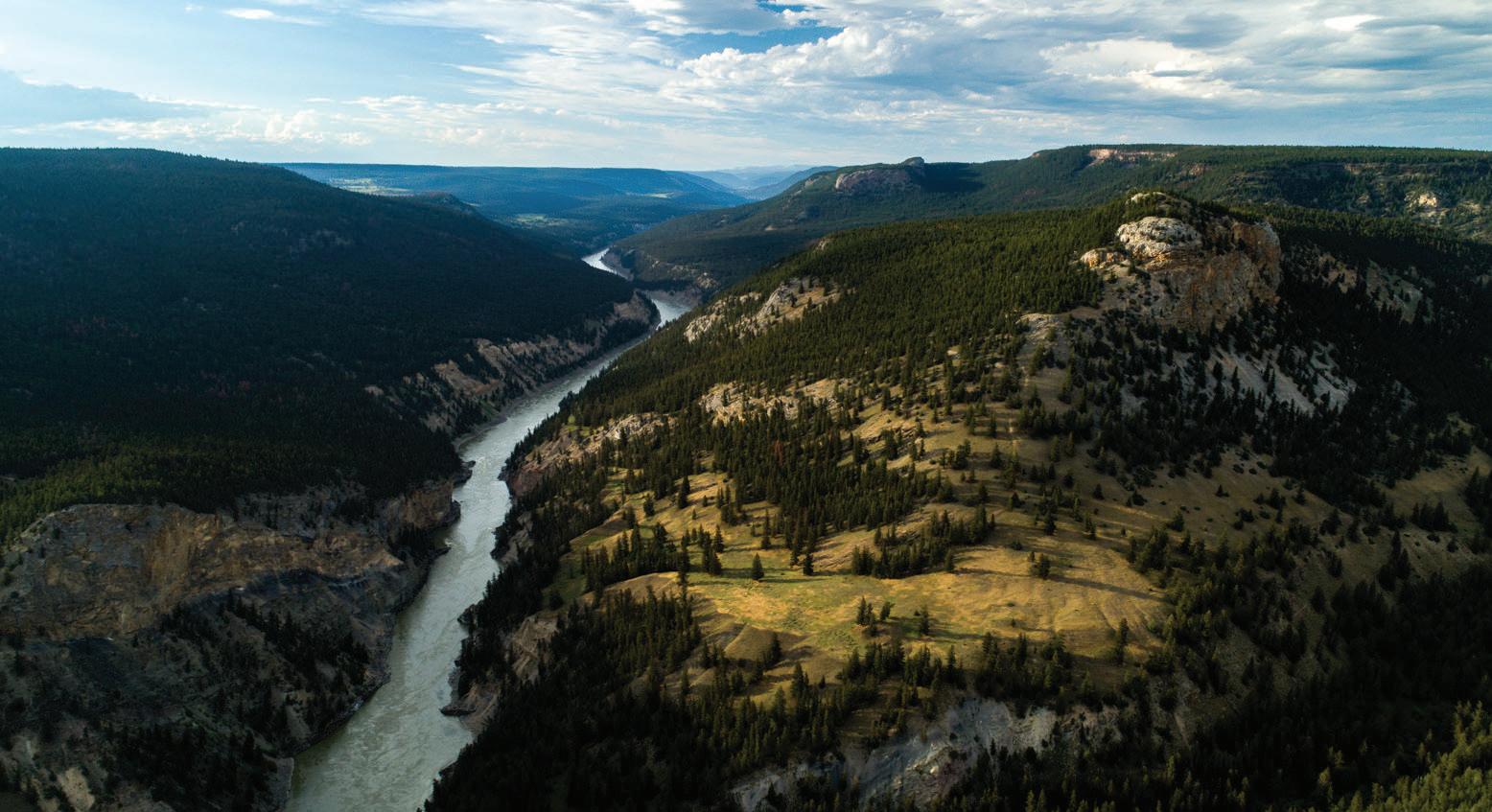
In 1808, explorer Simon Fraser and his party camped near our winter village at the junction of the Fraser River and Chimney Creek. The village, Nellye7, with the lands in its immediate vicinity
in the written records of the Hudson Bay Company’s Fort Alexandria, which obtained furs and much of its salmon supply from the Flatrock Village. According to a census taken by the compa-
any measure a substantial Secwépemc settlement, and a village that was one of the few Secwépemc -
nial maps of the area. As a prominent Secwépemc winter village site, Flatrock certainly should have
Crown would soon put in place to protect Indigenous people in the dispossession of their villages and other settlements.
Sadly, the history of the Flatrock lands has not been a good one. During the land pre-emptions in the mid 1800s, Amandy Isnardy arrived in the area approximately in 1866. He met and befriended Chief William, whose daughter he married, giving Isnardy access to land within the Flatrock Village site area. He eventually pre-empted Lots 10 and 11 at Flatrock. The land changed hands over the years, and Williams Lake First Nation was left with the situation we have today.
The oral history of the Williams Lake people tells the story of our traditional use and occupation of the Flatrock site. Much of the oral history was gathered in 1997, 1998, 2012, and 2018 and relates mainly to our people’s use of Flatrock after our use of and access to the site had been restricted by settlers’ taking of large areas of the village site, beginning in the 1860s and by the creation of
oral history underscores our people’s continued connection to and use of the land, including por-
by settlers.
An example of our oral histories is the testimony provided by my cousin Jean William. Jean States: Yeah, at Flatrock and there’s a story in regard to Flatrock that my grandmother told me. This is, more or less, in the most recent years. The big rock that’s there my grandmother said his name was Tsmut and the little rock across from Flatrock is called Tsmumt…. Tsmut and Tsmumt were married. They were a married couple and they -- when they separated Tsmut stayed on this side and Tsmumt went on the other side and that’s why the Fraser River goes and that separates the river. That’s the story about that. I remember my grandfather used to ride to the top of that Tsmut to see… that was another way that he could tell how much salmon was going to be coming.
we wouldn’t catch very many he…. early
saddle his horse. And that was my job. My Uncle George and I we used to have to go out and get the horses and ride… he used to ride horseback to the top of Tsmut and then he’d look down and see all those people… camped down by Flatrock and as soon as he seeing those people catching all these
be hung up he’d go back and rest. He’d tell the old lady, my grandmother, I got to rest now because in a few days we’re going to be working hard. There’s going to be lots
there was a lot of salmon because it took a few days for the salmon to get up to where we were from Flatrock because there was quite a bend around there too. And so, he’d rest and that’s how he’d tell that there was a lot of salmon. And of course, people used to ride horseback back and forth. We didn’t
berry picking and they we used to have…. every now and then we used to come and visit with us. People from Flatrock and then my grandmother like I said use to go to the top of Tsmut and look down and see, yeah
few hundred feet from Flatrock.
As I get ready to begin my shift dipping for salmon, I take one last look at my surroundings. I look downriver, then up. Upriver, there is a rock face that has stood there since the beginning of time. However, I don’t see a rock form but landmarks that have held our oral traditions since time immemorial. Tsmut and Tsmumt, rise from the riverbank like a memory made of stone, sheer, weathered, and watchful. Their surfaces etched with centuries of wind and rain, a slow handwriting of time that has softened its edges but not its presence. At certain hours, when the sun leans low and shines across the water, Tsmut and Tsmumt seem almost alive. Shadows gather in their crevices,
toward each other, but apart.
At their bottom, the river moves with a quiet murmur. It is wide here, deceptively calm at the surface, though its depths carry a steady, unyielding force. The current divides the land as cleanly as a knife cut, separating one shore from the other with a distance that feels larger than it is. The wa-
cloud, and passing light, but never revealing what it holds beneath.
Our people who have lived near or visited this place for generations do not see the landmark as merely stone. They see the outlines of a man and a
The story, carried in voices written in the wind,
became everything. They were once together, it is said, moving through forests and along the riverbanks in a world that felt whole. But something,
them, set the river between their lives. Whether it widened overnight or grew slowly over time depends on who tells the story, but all agree on the ending: they were left on opposite sides of the Fraser River, within sight but beyond reach.
The telling of the story Tsmut and Tsmumt is not simply a reminder. It is a transformation. The land itself bears witness to the moment separation becall out, do not move, they endure. They face each other and cannot forget each other in memory of who they were.
Standing there, you can feel the weight of it, not just the age of the rock or the steady passage of the river, but the persistence of the story itself. It lives in the sudden wind gusts, in the rhythm of water against the riverbank. Even those who hear it for
they’ve stepped into an unfolding story.
And perhaps that is why the place holds such pow-resolved. A reminder that some distances are not measured in miles, but in moments that can never be changed.
Secwépemc life was and still is closely tied to the diverse terrain. These activities naturally require strong situational awareness, pattern recognition, and attention to subtle environmental cues such as the weather, animal behaviour, and plant cycles.
be on this side of the river, her form suggested by a long slope of stone that curves like a bowed head. Across the water, Tsmumt that is the man.
What can be said about our cultural practices, history, and environment shapes how our people pay attention to our surroundings. Our knowledge transmission provides for skills like observation
and awareness. We are taught through storytelling, mentorship, and hands-on learning from a young age. This can lead to people appearing especially attentive because it’s a practiced, natural skill we begin to learn at an early age. Our cultural values emphasize respect, balance, awareness, spiritual and physical connection to the environment and other living beings.
So, if you’ve noticed our Elders and Knowledge Keepers as being very observant, it’s best understood as the result of learned cultural knowledge, lived experience, and environmental awareness. Through the eyes and experiences of a learned Secwépemc, we could describe our daily activities as follows:
Morning light creeps gently over the mountains, slowly shining on our camp, touching our canvas, wood, and earth with a soft glow as the day begins
followed by quiet footsteps and low conversation as people rise, wrapping themselves in the cool air of early dawn. Smoke curls upward, carrying the
move with practiced purpose, preparing tools, checking nets, and preparing warm food before the work begins. There is a focus in every movement, a sense of readiness shaped by generations who have risen in this same way. As the camp fully awakens, families gather their gear and begin the walk toward the river, following well-worn paths through grass and trees still heavy with dew.
ing them forward until they arrive, they take their places with quiet respect. Here, at the river’s edge,
caretakers of a living tradition, moving in rhythm with the land, the water, and the returning salmon.
over smooth stones, and the air carries the cool scent of water and the forest, there is a felt presence, quiet but enduring, the presence of our an-
tices. Their knowledge lives in the return of the salmon, the careful placement of nets, and the respectful pause before each catch. It is as if they are watching and moving with the river itself, ensuring our balance is maintained, and gratitude is never forgotten. Every motion, every dip, waiting, and dipping again is done with an awareness that this is not merely a harvest, but a relationship shaped across generations. The salmon are welcomed as returning relatives, and the ancestors, though unseen, remain close, overseeing, teaching, and reminding us that they are part of a much older story, one rooted in respect, responsibility, and continuity.
and alive, curling between stones polished smooth by time. Each movement sends ripples outward, catching the last light of the evening but trying to a quiet rhythm that feels older than time.
Above, a sudden cry splits the air, sharp, wild, unmistakable. I look up just in time to see an ea-
against the fading light. It circles once, powerful and unhurried, then glides on the warm currents of air, its cry echoing across the valley like a reminder that this place is shared, watched, alive.
The breeze carries the scent of earth and water, brushing gently against my skin, warm from the day but soft with the promise of night. It moves through the grasses and trees along the bank,
in the low light.
Down by the riverbank, laughter rises, bright, carefree, full of life. My younger brothers and cousins play by the shore, their voices weaving into the soundscape of water and wind. Some skip rocks, others watch, judging who has the best rock skipping skills. Their joy echoes across the water while the river blends the past and present together in a single moment in time.
Play and fun are part of the experience, but life’s lessons begin without formal instruction. The
the water, how they notice subtle shifts and timing in the current, and the behaviour of the salmon themselves. Their observation builds patience and understanding, qualities they will need when they take over the nets. It teaches that knowledge can’t be rushed, but learned through presence, respect, and careful listening.
-
long lessons. As they watch and listen, the boys hear histories of success and failures and stories of their ancestors, of how some salmon runs failed, and others didn’t, of hardships and resilience. These stories anchor them in their identity, connecting them to place and culture. The rivercomes a way of transmitting an unbroken chain of knowledge.
Ultimately, being here helps shape the boys’ understanding of their future role in their community. It teaches them that they will be the providers, not just consumers. This knowledge carries the responsibility that they learned from observation and is not just spoken about. Through watching, they begin the slow, meaningful process of becoming knowledgeable, respectful members of their community.
Everything feels connected here: the river at my feet, the eagle overhead, the breeze on my skin, and the laughter carried across the water. Time slows, stretches, and for a moment, the world is simply there, alive, breathing, and shared.
At its core, Flatrock is central to our identity and the strength of our culture. The annual return of salmon is not just a food source. We are taught that our people and our environment are tied to responsibility, respect, and reciprocity of ourselves, the land and water. Flatrock is a place where these relationships were renewed, practiced and passed
on to future generations.
Culturally, Flatrock was a living classroom with our Elders passing down traditional knowledge to the younger generations, how to catch, clean, and preserve salmon, but also it told the stories, held the songs, and protocols that guided our respectful harvesting practices. Socially, Flatrock strengthen community bonds. Families gathered, worked collectively, and supported one another, reinforcing kinship ties and a sense of belonging. It also served as an intergenerational space where identi-
ing the sustainability of Secwépemc values. Ecologically, Flatrock reinforced sustainable resource management practices developed over thousands of years. The Secwépemc approach to salmon harvesting emphasizes balance of taking only what is needed, ensuring future runs remain strong, and maintaining respect for the river and salmon.
Finally, Flatrock is an example of cultural resilience. It is a place of learning, and it has taught many generations, including myself. The place holds our history, our ancestors, our stories and place names. But unfortunately, we have been
of a right but also a denial for three generations of our youth the opportunity to continue learning their culture and values from a highly valued part of our territory. The “cost” can also extend to the loss of identity, language, health, knowledge, and cultural continuity. Flatrock was and still can be a living connection to who we are, where we come from, and how we carry our culture forward.
SOME WELL DESERVED PAMPERING
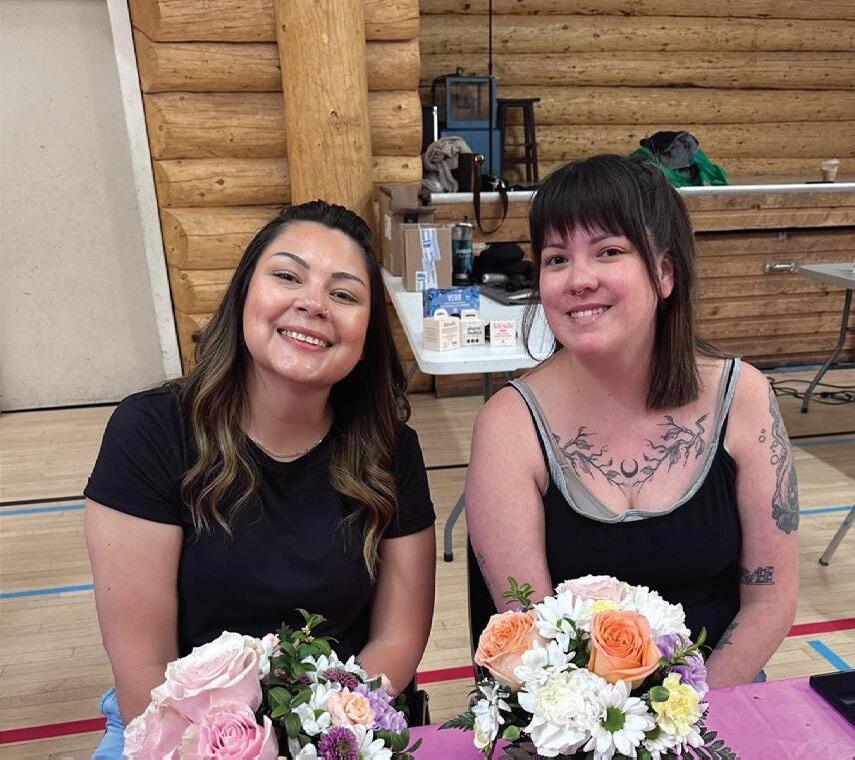
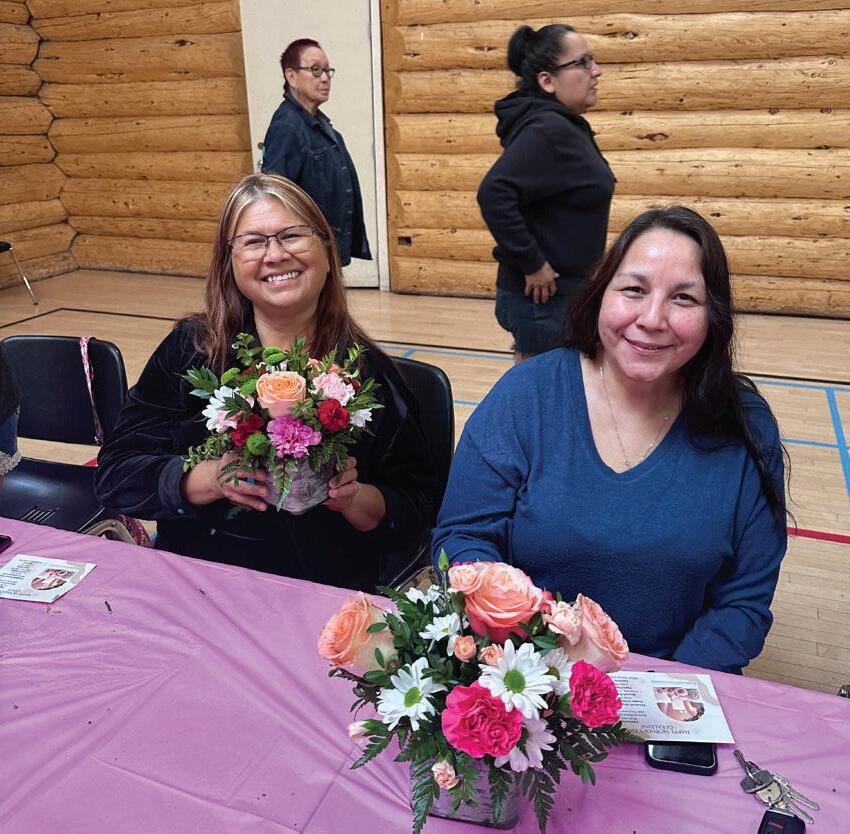
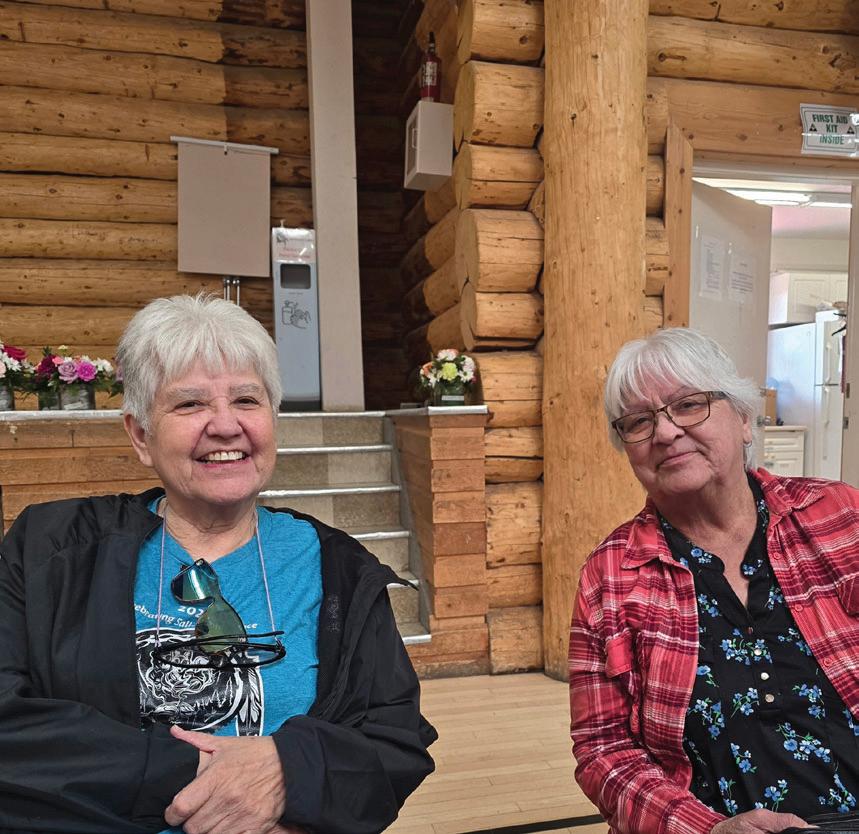
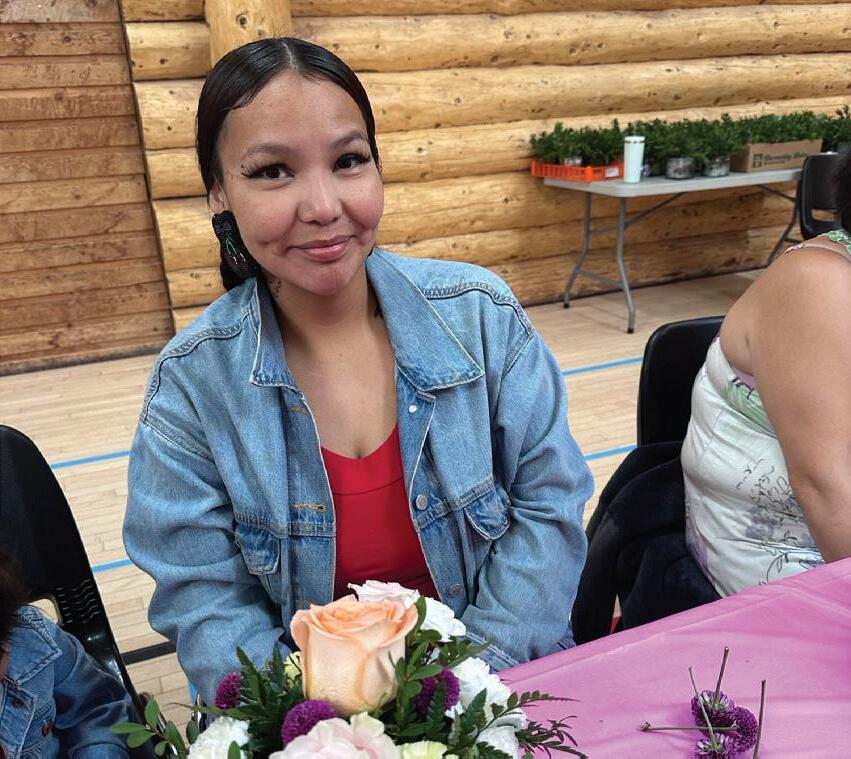
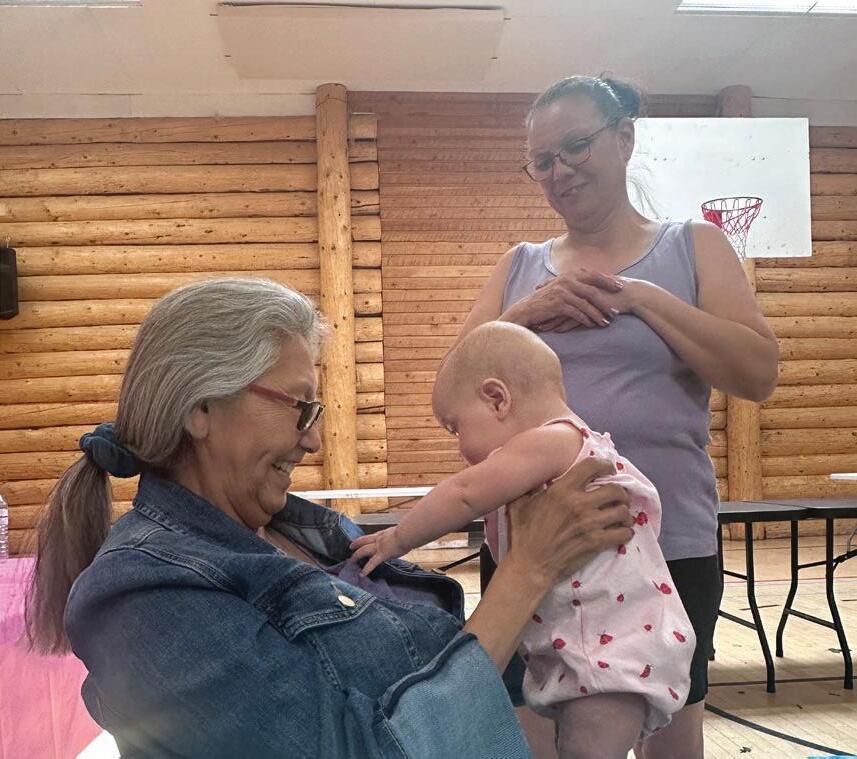
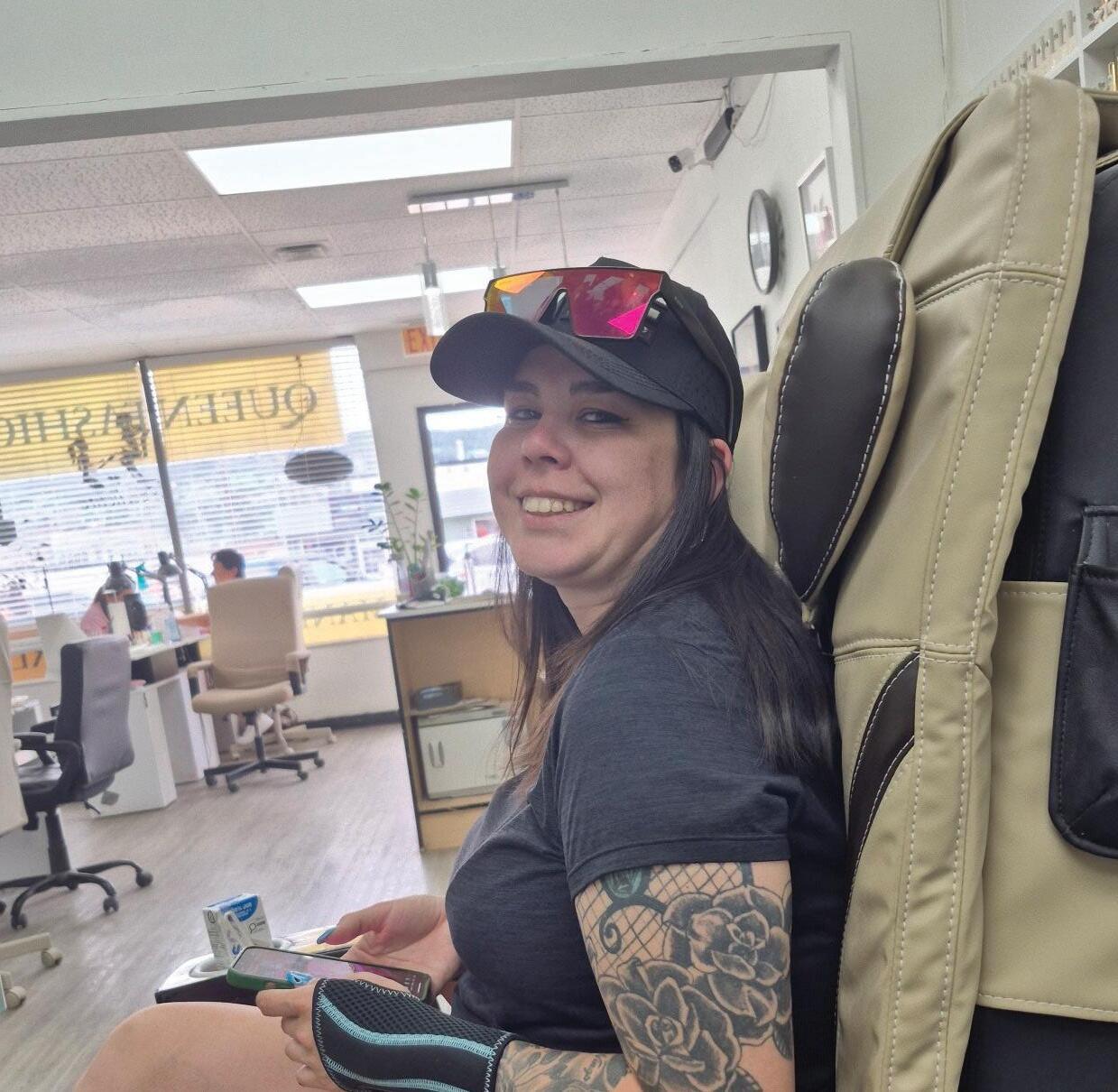
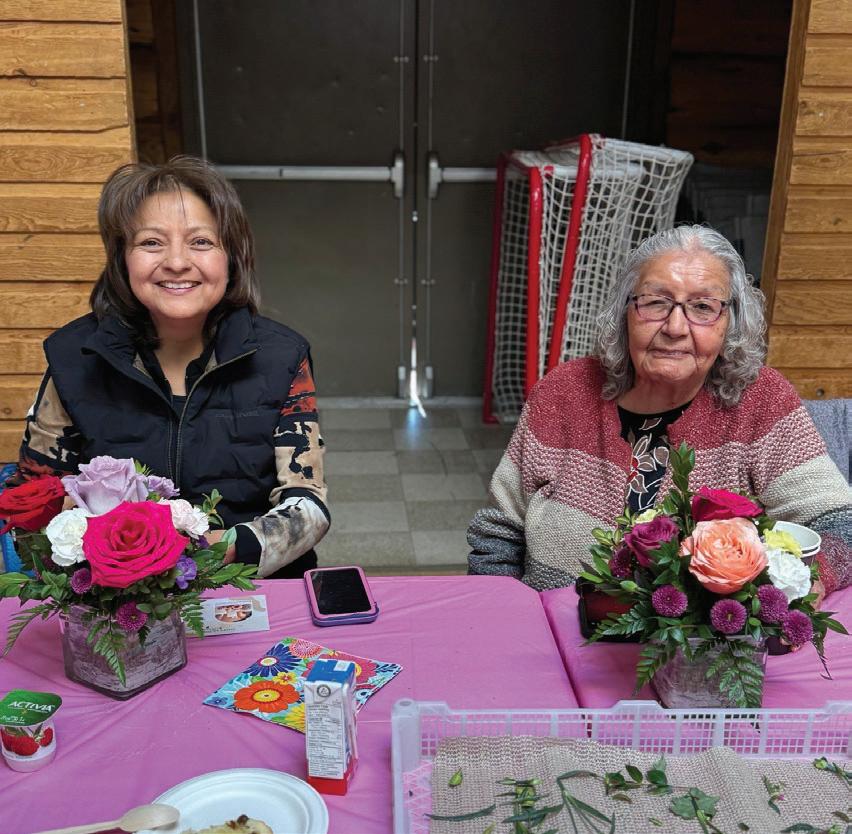
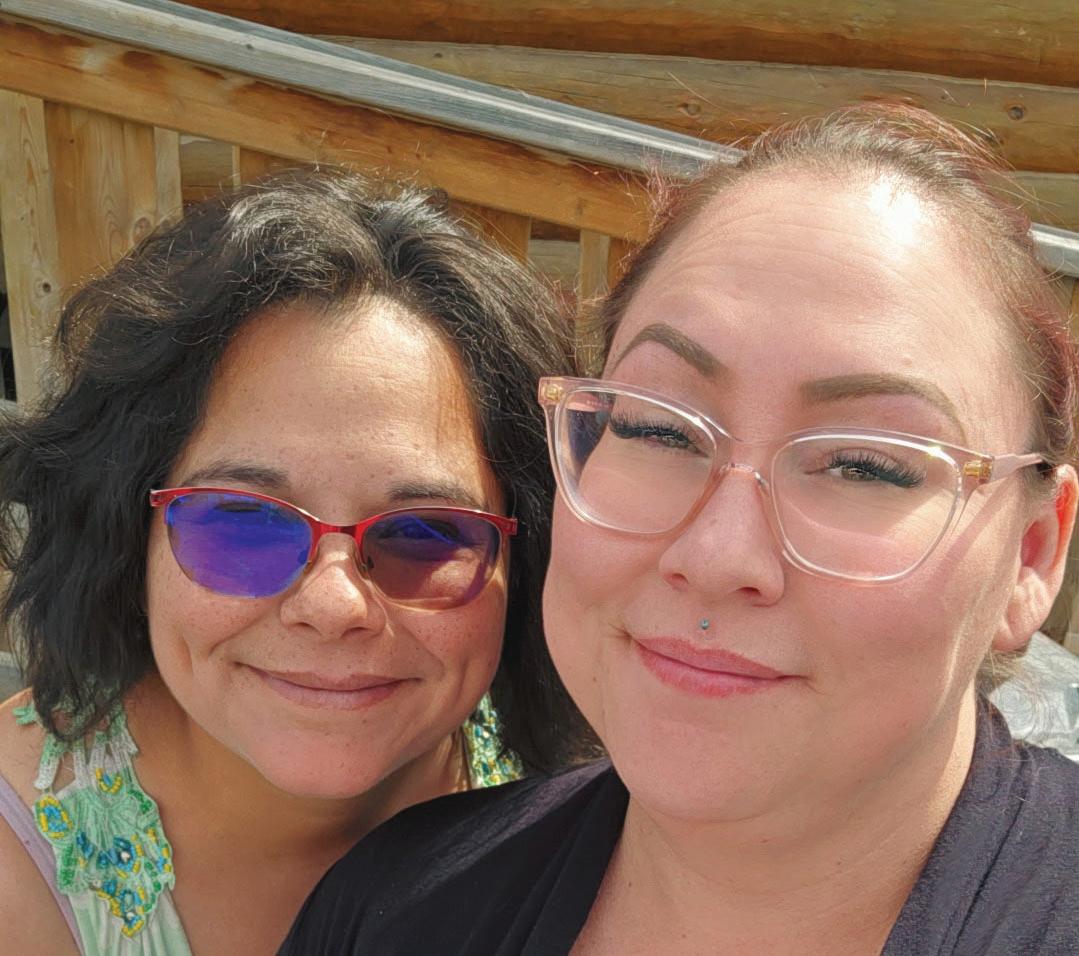
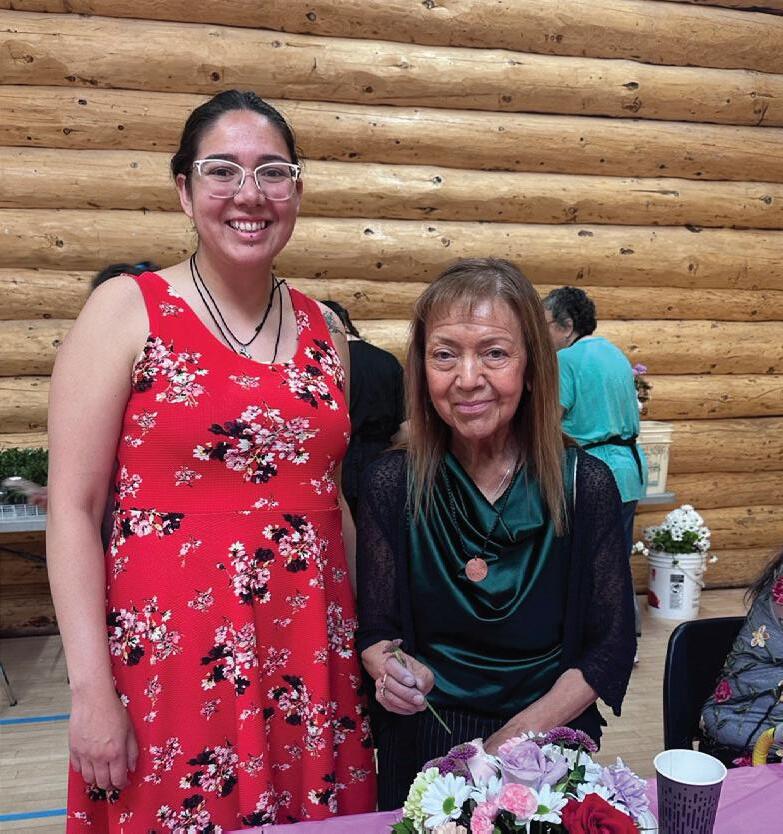
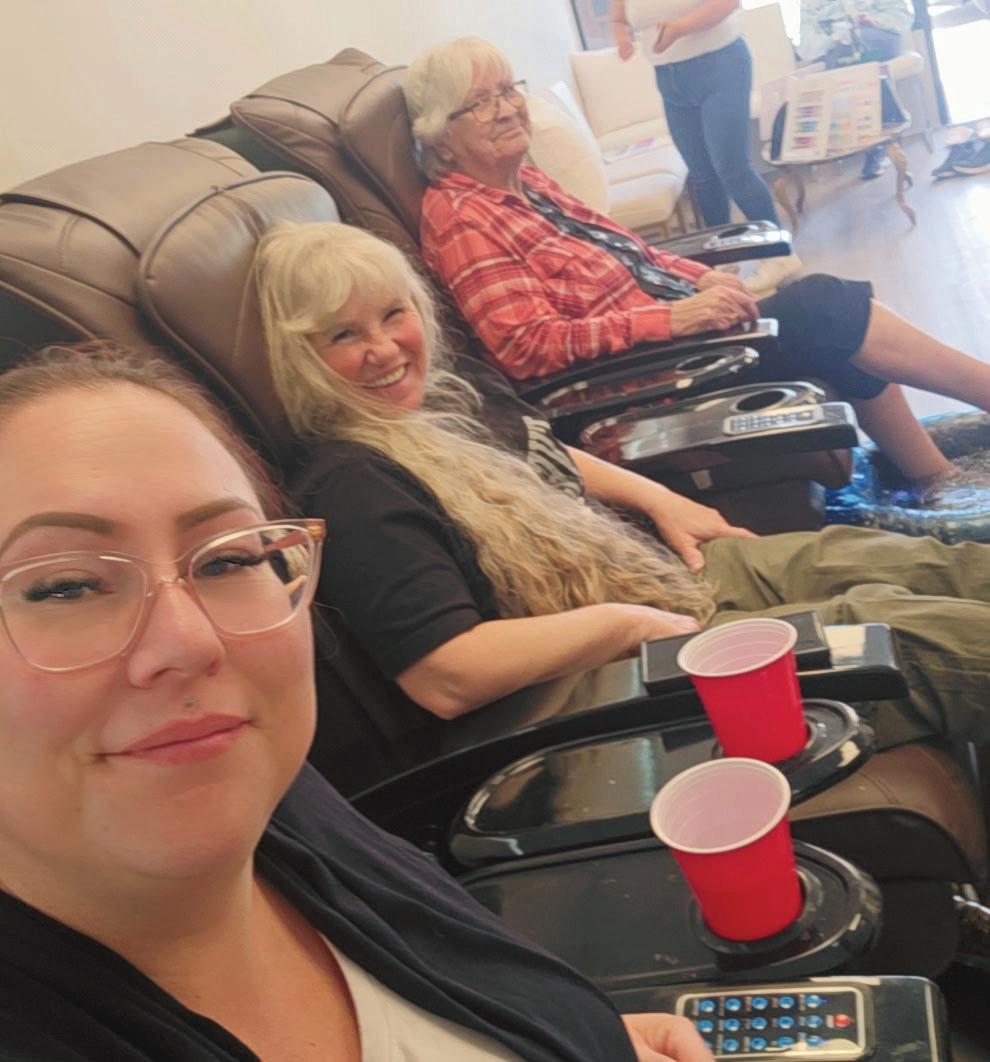
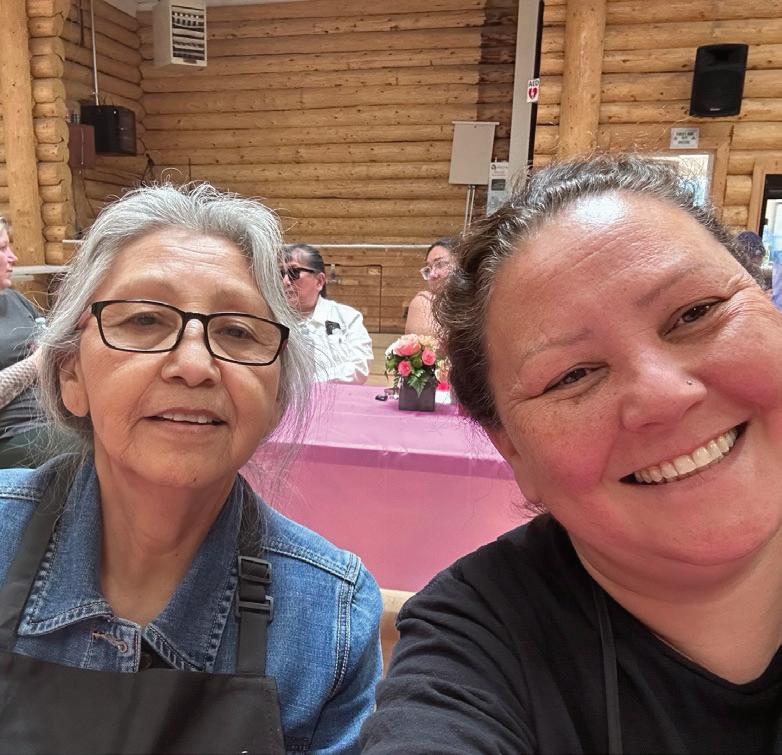
On Mother’s Day, WLFN mothers and matriarchs were invited to a choose-your-own-adventure spa treatment including haircuts, flower bouquet making, painting, a buffet lunch at CJ’s, and a choice of a manicure or pedicure. Our Social Development team was delighted to provide a day of fun and relaxation to 61 hard working women.
EVENTS
Here’s what’s happening around WLFN. For a complete and up-to-date listing, visit wlfn.ca/events
June 11 @ 5:00 pm - 9:00 pm
Pow Wow Co-ed Sweats with Cecil Sheena
Tsqilye Building, Byron Louie Memorial Park, 301 Mission Road, Williams Lake, British Columbia, Canada
Everyone is welcome to join us for a series of sweats down at the WLFN Tsqilye site (in Byron Louie Memorial park). We will be having sweats once a week starting May 26 thru to June 17 starting at 5:00pm, lead by Cecil Sheena. On June 19, we will be having our Pipe Ceremony at the Tsqilye starting at 9:00am
June 13 @ 9:00 am - 10:30 am
WLFN Early Bird Father’s Day Pancake Breakfast
Culture and Language Building, 189 Groundhog Drive, Williams Lake, BC WLFN Community, you are invited to join us as we celebrate our fathers, grandfathers, and male guardians with a delicious pancake breakfast. Guests are welcome to stay and enjoy breakfast with us, or take advantage of our convenient drive-thru option. Simply pull up to the building for a hot breakfast to go.
June 13 @ 10:30 am - June 14 @ 5:00 pm
WLFN Men’s Group
Overnight Hike to Cameron Ridge
We will be embarking on an exciting overnight hike to Cameron Ridge, located beyond Likely and the north arm of Quesnel Lake. Departure is scheduled for 10:30 a.m., immediately following the pancake breakfast, with a return to the community the following day at approximately 5:00 p.m. Please note: this is a physically demanding outing. Participants must be fit and capable of carrying a 40 lb pack for approximately five hours over moderately steep terrain. Registration and further details about what to bring with you and where to meet: Please contact george.warr@wlfn.ca
June 17 @ 9:00 am - 11:00 am
Plant Identification Sessions with Amy Sandy
Chief William Pow Wow Arbor, 2581 Cariboo Hwy 97 S, Williams Lake, British Columbia, Canada
Everyone is welcome to join this two-day session with WLFN Elder Amy Sandy. On June 17th and 24th, we will meet at the far parking lot of the Chief William Pow Wow Arbor. Everybody is welcome to join (not just WLFN members). Coffee, drinks, and snacks will be provided. There will also be door prizes. Please RSVP with Wenona Gordon at wenona.gordon@wlfn.ca, or Terri Macdonald at terri.macdonald@wlfn.ca
June 17 @ 5:00 pm - 9:00 pm
Pow Wow Coed Sweats with Cecil Sheena
Tsqilye Building, 301 Mission Road, Williams Lake, British Columbia, Canada
Everyone is welcome to join us for a series of sweats down at the WLFN Tsqilye site (next to the Byron Louie Memorial park). We will be having sweats once a week starting May 26 thru to June 17 starting at 5:00pm and lead by Cecil Sheena. On June 19, we will be having our Pipe Ceremony at the Tsqilye starting at 9:00am
June 18-21, 2:00 pm - 5:00 pm each day
Nakoda Connections & Îyârhe Nakoda Equine Healing Program
150 Mile Ranch, 20 Valley Road, 150 Mile House, BC
Nakoda Connections & Îyârhe Nakoda Equine Healing Program is a horse culture-based healing program developed to foster and balance the connection between the horse and participant. WLFN, in partnership with the 150 Mile WLFN Ranch, is pleased to offer this program for WLFN Youth and Adult members. Transportation will be provided. Application forms are available by contacting Kyleen.Toyne@wlfn.ca
June 18 @ 5:00 pm - 6:00 pm
Yoga
WLFN Elders Building 2682 Shuswap Drive, Williams Lake, BC, Canada
WLFN Community & Staff, you are welcome to come join and Stretch, Strengthen and Breathe with Yoga instructor, Marissa Bruneau. Please bring water and wear comfortable clothing. Please arrive a few minutes early to get settled. To register your spot, contact Amanda Schulz, 250-296-3507 ext. 151
June 19 @ 8:00 am - June 21 @ 5:00 pm
2026 Traditional Pow Wow
Chief William Pow Wow Arbor 2581 Cariboo Hwy 97 S, Williams Lake, British Columbia, Canada
Everybody Welcome! Free Admission • All Categories • Seven Specials • Rotating Host Drum • Pageants • Free Tent Camping on Site • Over 40 Vendors • Hand Drum Contest, and more! Drummers: We’re paying out $1,000 ea. for the first four drums (minimum six singers per drum). Grand Entry: Friday June 19, 7PM • Saturday June 20, 1PM & 7PM • Sunday June 21, 1PM. To apply to vend and for more information, please contact Jaydeen.Sargent@wlfn.ca
June 22 @ 1:00 pm - 4:00 pm
WLFN Drop-In Culture Mondays
Culture and Language Building, 189 Groundhog Dr, Williams Lake, BC
Join us every Monday bat the Culture and Language Building (the old O&M building off the Mission Road) for everything from melamen picking, pow wow dance practice, arts and crafts making, and all kinds of other great traditional activities. On June 22, we will be tea blending. Drop in any time between 1 and 4 pm. For more information, contact: kim.swanson@wlfn.ca