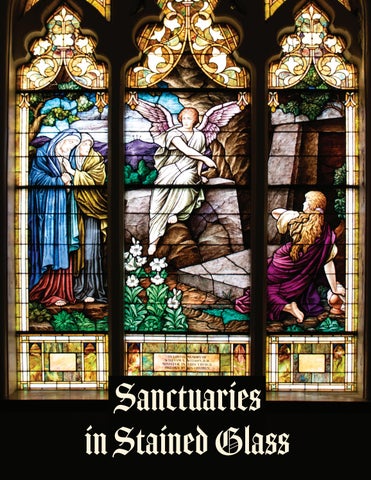
Sanctuaries in Stained Glass
BYARS-COBBS UNITED METHODIST
GLADE SPRING, VA
Long before a dedicated church building existed, like many other churches of the region, local Methodist believers gathered wherever space allowed. From these early gatherings in Glade Spring emerged what is now known as Byars-Cobbs United Methodist Church, a congregation shaped by both spiritual commitment and family legacy. The church bears the names of two interconnected local families: Byars and Cobbs. Their connection is embodied in the life of William Byars Cobbs (1866–1897), who was raised in the Byars household after the death of his mother. The Byars family was well established in the Glade Spring area, and their home provided stability and guidance during William Cobbs’s formative years. Although he died at a young age, William’s life and family ties left a lasting impression that would later influence the founding of the church. William Cobbs’s widow, Augusta Hundley Cobbs, later remarried and moved to Covington, Virginia. Despite living elsewhere, she maintained a strong emotional connection to Glade Spring and to the families who had shaped her husband’s life. In 1913, Augusta Cobbs made a significant financial donation to fund the construction of a new Methodist church building in Glade Spring. Her gift was given as a memorial to her late husband and in recognition of the Byars family, whose care and influence had been central to his upbringing. In gratitude, the congregation named the church Byars-Cobbs, permanently linking both families to the spiritual life of the community.
The church building, completed in the early 1910s, quickly became more than a place of worship. As Glade Spring experienced change through the twentieth century the church remained a steady presence. Its congregation adapted ministries and programs to meet the evolving needs of the town while preserving long-held traditions of Methodist worship and fellowship. Today, Byars-Cobbs United Methodist Church stands as a living testament to the enduring power of faith, generosity, and community memory. Its history reflects both the wider story of Methodism in the region and the deeply personal contributions of families whose legacy continues to shape the life of Glade Spring.
CHILHOWIE UNITED METHODIST
CHILHOWIE, VA
In the closing years of the 19th century, as the community of Chilhowie matured into a regional crossroads, a congregation of Methodists sought to build a permanent house of faith that reflected both their spiritual aspirations and the architectural ambitions of the era. Between 1893 and 1894, the Chilhowie Methodist Episcopal Church which is today known as Chilhowie United Methodist Church was constructed. The building was made in the distinctive Late Gothic Revival style using locally produced golden-brown pressed brick. Its cruciform plan, tall central bell tower with steeple, lancet windows, and prominent rose window established it as one of the town’s most visually striking and enduring landmarks. The church’s design, while not documented to a specific architect, is believed to have been shaped by E. J. Rutland, an English-born manager of the nearby brickworks whose familiarity with Victorian forms influenced the building’s stylistic choices. The result was a structure that contrasted with the simpler, wooden rural churches common in Southwest Virginia at the time making it assertive in both form and material.
Methodism in the Chilhowie area, however, has roots extending back decades earlier. The town and surrounding region were touched by early Methodist camp meetings and preaching gatherings in the antebellum period, reflecting the broader growth of the Methodist movement in Virginia and the Appalachian frontier throughout the early 19th century. Materials for the later brick edifice were reportedly drawn from an earlier church site at Sulphur Springs Road, an area historically associated with camp meetings as early as 1819. Throughout the 20th century and into the present day, the congregation at Chilhowie United Methodist Church has continued its life of worship, fellowship, and community engagement. Today, this venerable church stands not only as a place of ongoing spiritual life but also as a testament to the region’s religious heritage and the enduring legacy of Methodist presence in Virginia’s small towns.
LEE STREET BAPTIST
BRISTOL, VA
In the year 1865, at the dawn of their freedom from slavery, a congregation of 39 original members met in a series of homes separate from the churches predominantly attended by White locals, feeling like they could better serve without the pressures of racial inequality. The original Lee Street Baptist congregation made an application to the Church for letters of admission and organized under “Anglo African Baptist Church” in Bristol, Virginia. Despite surviving the horrors of enslavement, the pressures of racism, and facing poverty, this congregation remained steadfast in their beliefs to begin a new era as believers attending a fully independent Baptist Church.
Under the leadership of the first pastor, Reverend Lewis Parks of Atlanta GA, an acre of land was purchased for school purposes. On this land an 18 ft by 33 ft building was erected, serving as The Old Bush School house, but also provided a meeting place and a place of worship. A new pastor, Reverend Charles Henry Johnson arrived in 1890. Being a man of education with his doctorate, the Reverend showcased to people that he was “a mover, a motivator, a model, a mentor”. Reverend C. H. Johnson took just five years to add over 100 names to the list of 139 names already on the Church book. 1896 marks the year the Church purchased a lot at the corner of Lee and Sycamore Streets for the sum of $2,000 and another adjoining small lot for $600. Between the years 1905-1925, a new building was erected for Lee Street Baptist Church as it stood for more than fifty years. Reverend Charles Henry Johnson served as church leader until he died during his 42nd year as the pastor in 1932. Not only was Reverend Johnson a fearless Church leader, but he also was a trailblazer that helped Black communities grow, advising them on how to become homeowners and build their own businesses.
In 1966, the congregation moved to a new building as periodic flooding of the original tract of land caused the proud Lee Baptist Church to become weakened and unsafe to remain standing. The new building erected on 1 W Mary Street in Bristol, VA is still the current home for Lee Street Baptist Church and houses original pews, stained glass, artifacts, and histories of the legacy that still stands.
MADAME RUSSELL METHODIST
SALTVILLE, VA
Elizabeth Henry Campbell Russell (1749–1825), remembered as “Madame Russell,” was one of the most influential figures in the early spread of Methodism in southwestern Virginia and northeastern Tennessee. Born into one of Virginia’s most prominent families, she was the sister of Revolutionary patriot and first governor of Virginia, Patrick Henry. Her first husband was William Campbell, son of Charles Campbell who had earlier taken part in the first expedition that found salt deposits in modern day Saltville. He was also a colleague of Elizabeth’s politically celebrated brother, which is how the couple met. The two married in 1776 and during the Revolutionary War, William Campbell commanded forces at the Battle of King’s Mountain in South Carolina, served in the Virginia General Assembly, and was with Lafayette on the Virginia Peninsula when he became ill before the Battle of Yorktown. Shortly after he had been taken with illness he died, leaving daughter Sarah, and infant son Charles Henry. Sarah “Sally” Campbell went on in life to marry Francis Preston and moved from Saltville to Abingdon where they built what is now the Martha Washington Inn.
In 1783, she remarried and in 1788, Elizabeth and her second husband, General William Russell, moved to Saltville to manage the development of the region’s valuable saltworks, an industry essential for food preservation and military supply in the early United States. Shortly after settling in Saltville, both experienced a profound religious conversion and formally embraced Methodism, then a relatively new denomination still organizing its earliest conferences and circuits. Following General Russell’s death in 1793, Madame Russell devoted the remainder of her life to advancing the Methodist faith. She opened her home to itinerant circuit-riding preachers, hosted worship services, and provided critical financial assistance to Methodist societies throughout the Holston region. Her correspondence and personal influence helped sustain ministers traveling long distances through harsh terrain. Guided by her religious convictions, she also emancipated the enslaved people she owned, reflecting her belief that slavery conflicted with Christian principles. Her leadership directly supported the formation of one of the earliest Methodist congregations in the area. A church known as Elizabeth Church existed by the early nineteenth century, and the nearby Elizabeth Cemetery preserves the memory of the religious community she helped establish.
The present Madame Russell Memorial Methodist Church, constructed in 1898, stands on the site of her former home as a tribute to her enduring legacy. Built of local limestone in the Gothic Revival style, the church serves both as a place of worship and as a memorial to a woman remembered as the “Mother of Methodism” in this region. Today, it remains a central landmark within the Saltville Historic District, preserving a story of faith, leadership, and early American religious life.
ROYAL OAK PRESBYTERIAN MARION, VA
Royal Oak Presbyterian Church stands as one of southwest Virginia’s oldest continuously active congregations, with roots stretching back to the formative years of the American nation. Organized in 1776 as the “Upper Holston congregation”, it was founded on land owned by early settler John Campbell in the area then known as Royal Oak in present-day Smyth County. At a time when the Upper Holston Valley was frontier territory, Presbyterian settlers, many of Scots-Irish descent, gathered for worship in a simple log meetinghouse. These early gatherings provided spiritual nourishment, community support, and social cohesion for families carving new lives out of the Appalachian wilderness. For several decades, the congregation remained in its rural setting as the surrounding region slowly grew. By the mid-19th century, economic development and population movement brought new focus to what would become the town of Marion. In 1853, the congregation relocated from its original rural meeting place into the emerging town, reflecting both growth in membership and a desire to serve a more centralized community.
The first building established in Marion stood on what is now West Main Street, marking a period in which the congregation had become a prominent fixture in town life. Leaders and members from this era helped shape religious and civic life in Marion during a time of expansion and change. A defining moment in the church’s physical and cultural presence came in 1923 with the construction of the current sanctuary at 139 West Main Street. Designed by Clarence B. Kearfott, a noted architect whose work appears in multiple significant buildings of southern Virginia, the new church was built in the Late Gothic Revival style. The structure’s brick exterior, central bell tower, and pointedarch windows embody key Gothic Revival elements, while its substantial scale, eleven bays deep and anchored by a prominent tower, reflects the congregation’s confidence and stability during the early 20th century. Now more than 240 years old, Royal Oak Presbyterian Church remains an active congregation in Marion, continuing to worship, serve, and adapt to the needs of its community. Its sanctuary is not merely a historic artifact, but a living testament to faith sustained across changing times, a place where history, architecture, and community intersect on the corner of West Main Street.
SINKING SPRING PRESBYTERIAN
ABINGDON, VA
Sinking Spring Presbyterian Church traces its origins to the earliest years of settlement in Southwest Virginia, standing as one of the region’s oldest Presbyterian congregations. Its history reflects the perseverance of frontier families, the growth of Abingdon, and the evolving life of American Presbyterianism. The congregation’s recorded beginnings date to April 1772, when the Hanover Presbytery authorized a call to serve Presbyterian settlers living near a large natural spring south of present-day Abingdon. Although the first minister, James Campbell, died before assuming his post, Reverend Charles Cummings accepted the call in 1773, becoming the church’s founding pastor and a central figure in its early development. Worship initially took place in a modest log meetinghouse near what is now Sinking Spring Cemetery, a site that remains closely tied to the church’s identity. As the settlement grew, a larger log structure replaced the original building in the 1780s, and the congregation became a stabilizing presence in the developing frontier community. By the early nineteenth century, Abingdon
had emerged as a regional center, prompting the construction of a new church on Main Street between 1831 and 1833. This building, later known as the Barter Theatre, illustrates the close relationship between the church and the town’s civic life.
National divisions within Presbyterianism reached Abingdon during the Old School / New School controversy of 1837, resulting in a split congregation. Under the leadership of Rev. James S. McChain, the New School faction constructed a fourth church building on East Main Street, completed in 1851. The division endured through the turmoil of the Civil War, but on April 9, 1865, the very day of General Robert E. Lee’s surrender at Appomattox, the two congregations reunited in an event long remembered as a symbol of reconciliation. Growth in the late nineteenth century led to the construction of the fifth and present sanctuary, dedicated in 1890. Built in the Gothic Revival style, the brick church with its soaring spire remains a defining landmark within Abingdon’s historic district. For more than 250 years, Sinking Spring Presbyterian Church has endured through war, division, and change, continuing its mission as a place of worship, community, and historical memory in Southwest Virginia.
ST. THOMAS EPISCOPAL ABINGDON, VA
Founded in 1841, St. Thomas Episcopal Church is one of Abingdon’s oldest religious congregations and a lasting witness to the town’s spiritual, cultural, and civic life. Originally part of Holston Parish, early Episcopalians in Abingdon gathered for worship in the Washington County Courthouse, reflecting both the small size of the congregation and the close ties between faith and community in the town’s early years. The congregation was named for Saint Thomas the Apostle, whose symbols associated with craftsmanship and steadfast belief came to represent the parish’s identity. The first church building was constructed in 1846 and quickly became a prominent landmark in Abingdon. It housed what was believed to be the first pipe organ west of the Blue Ridge Mountains, an extraordinary achievement for the time, hauled across mountain terrain by ox cart. During the American Civil War, Confederate troops removed the church bell from the steeple to be melted down for cannonballs, a reminder of how national conflict touched even sacred spaces.
St. Thomas also shares a notable connection to national history. Elliott Bulloch Roosevelt, father of First Lady Eleanor Roosevelt, worshiped here while living in Abingdon and donated a lectern Bible in memory of his wife. That Bible was later lost when disaster struck. On December 27, 1924, a fire spreading from a neighboring business destroyed the original church building. Undeterred, the congregation rebuilt almost immediately. The present structure, completed in 1925 and consecrated in 1928, reflects a 14th-century English Tudor Gothic style, emphasizing continuity with Anglican tradition. After the fire, Eleanor Roosevelt donated a new lectern Bible in memory of her parents, renewing a family legacy within the church. Today, the church stands as a symbol of resilience rebuilt from ashes, shaped by history, and sustained by faith for more than 180 years.
WILBUR MEMORIAL UNITED METHODIST TAZEWELL, VA
Established in the years following the Civil War, the congregation of Wilbur Memorial United Methodist Church reflects the determination of formerly enslaved and free Black citizens to build institutions rooted in faith, mutual support, and independence during a period of profound social change. The origins of the congregation date to 1869, when Black Methodists in the Tazewell area began worshiping together in a log church building. This early structure marked the formation of one of the town’s first Black congregations and provided a spiritual and social center for a growing community. As membership increased, the original log building was replaced in 1875 with a new church structure. This second building served the congregation for several decades and appears on late-19th-century maps as an African Methodist Episcopal (AME) church, reflecting the broader movement of Black Methodists to form independent denominations following emancipation. These churches were not only places of worship, but also centers for education, leadership, and collective action.
Around 1900, the congregation constructed a third and more permanent building and the structure that survives today as Wilbur Memorial United Methodist Church. Designed in a modest Gothic Revival style, the frame church featured pointed-arch windows and vertical proportions common to Protestant church architecture of the period. Its location along what was then Fincastle Street, near the western edge of the town known at the time as Jeffersonville, placed it within a historically Black neighborhood. Over time, denominational affiliation evolved. While the church was once identified as AME, later records indicate its incorporation into the Methodist Episcopal tradition. The origin of the name “Wilbur Memorial” is not definitively documented in surviving county records. Oral histories and denominational sources suggest the name may honor a visiting minister or benefactor, possibly an evangelist with the surname Wilbur, who supported the congregation during the period leading up to the construction of the 1900 building. Today, Wilbur Memorial United Methodist Church is recognized as one of the last surviving physical reminders of Tazewell’s historic Black residential district. While much of that neighborhood has disappeared through redevelopment and demographic change, the church continues to stand as a testament to resilience, faith, and continuity. For more than 150 years, Wilbur Memorial has served not only as a house of worship, but as a symbol of community strength bearing witness to the lives, struggles, and enduring spiritual legacy of Black Americans in Tazewell County.
For a full list of citations visit: williamkingmuseum.org/exhibit/sanctuaries-in-stained-glass/
Abingdon United Methodist Church traces its beginnings to the early Methodist movement in the United States shortly after the American Revolution. Informal Methodist gatherings began around 1783, when local believers met in homes for prayer and study before any formal church building existed. At that time, itinerant “circuit riders”, clergy who traveled between widely dispersed congregations, served the community, as ordained pastors were scarce in the young republic.
The congregation’s first known physical worship location was on Valley Street in Abingdon, where meetings were held in the Masonic Temple. By 1822, the group had moved into its own space, the first building dedicated to the Methodists in the area, located on what is now Court Street. This early congregation was formally known as Abingdon Methodist Episcopal Church.
In 1826, the church attained a significant milestone by becoming the first church in the Holston Conference to receive its own appointed pastor, marking its transition from a group relying on circuit riders to one with a unique pastoral leadership. As the congregation continued to grow, it replaced its original frame structure with a new brick building in 1848.
The cornerstone for the present sanctuary was laid on August 9, 1883, and included memorabilia placed within the structure, reflecting the deep community investment in the building’s construction. Over the ensuing decades, the church adapted alongside broader Methodist denominational changes, including the 1939 Methodist unification and the 1968 merger that created the United Methodist Church, while maintaining its commitment to worship and service.
Today, Abingdon United Methodist Church remains an active congregation and an enduring part of Abingdon’s religious and civic heritage, with roots reaching back over two centuries.
Abingdon Baptist Church in Abingdon, Virginia, traces its roots to early Baptist activity in the mid-19th century. Although Baptists were present in the Abingdon area as early as the 1840s and 1850s, including efforts under the Goshen Baptist Association to establish worship there, these initial efforts were unstable and eventually lapsed following the Civil War era.
A definitive chapter in the church’s history began in the early 20th century. Around 1907, local residents perceived a renewed need for a Baptist congregation in Abingdon and organized efforts to build a dedicated church. With funds raised and leadership emerging, a lot was donated by Captain Henley M. Fugate in honor of his son, Rev. Henley Fugate, a Baptist minister. Uniquely, the church building was constructed before a formal congregation had been organized, reflecting the community’s collective commitment to establishing a Baptist presence in the town.
The first official gathering took place on October 23, 1910, and marked the formal organization of Abingdon Baptist Church. Services, ordinances, and congregational life commenced shortly afterward, with the first baptismal service recorded in 1911. By June 15, 1913, the church celebrated its first dedicatory sermon on a debt-free building, demonstrating early growth and financial stewardship.
Throughout the 20th century, the church underwent significant physical expansion and renovation to support its growing ministry. Between 1935 and 1939, a basement and Sunday School rooms were added, and later mid-century improvements included a remodeled sanctuary, foyer, balcony, and stained glass windows during the 1940s and 1950s.
Over the decades, leadership changes and facility expansions reflected both continuity and adaptation. By its centennial in 2010, Abingdon Baptist Church had become a longstanding institution in Abingdon, bearing witness to more than a century of worship, mission activity, and community engagement.
Mount Pleasant Methodist Church in Marion, Virginia, was founded shortly after the American Civil War, during a period when newly freed African Americans sought independent worship and community leadership. Around 1871, newly free Black residents of Smyth County established the congregation, withdrawing from white-led churches to create a spiritual and cultural center of their own. Initially they shared a simple frame sanctuary with a local Baptist congregation before erecting their own dedicated building. In 1914, skilled Black brickmasons completed a new brick sanctuary for Mount Pleasant, built in architectural styles influenced by Gothic and Romanesque Revival traditions. This structure stood at 320 South Main Street and became a landmark in Marion’s African American community, not only for religious worship but also as a hub for civic life. Local organizations, civic lectures, musical performances, and meetings of the NAACP’s Marion branch were among the activities the church hosted, reflecting its role as both a spiritual and social center.
Throughout the 20th century, Mount Pleasant’s pastors and members worked to support broader educational and community efforts. One notable figure was Reverend Amos Carnegie, who became pastor in 1927 and led community initiatives including the founding of the Carnegie High School for African American students.
After serving its congregation for 131 years, the church closed its doors in 2002 due to declining membership and shifting community needs. Soon thereafter, local preservationists began efforts to save the historic structure and reinterpret it for future generations. With leadership from former church members and volunteers, the building was transformed into the Mount Pleasant Preservation Society & Museum. Today it preserves and interprets the history of African American life in Smyth County, offering exhibits and research opportunities that honor the legacy of both the church and the community it served.
Ebenezer United Methodist Church in Glade Spring, Virginia, is one of the oldest African American Methodist congregations in Washington County, with origins rooted in the period immediately following the American Civil War. Although precise early records are sparse, the church was organized sometime between 1865 and 1873 under the denomination then known as the Methodist Episcopal Church. This period saw strong growth in Black Presbyterian and Methodist congregations across Southwest Virginia as formerly enslaved people and free Black residents sought autonomous places of worship and community in the Reconstruction era. In 1873, church trustees Jeremiah Hammons, Daniel Edwards, Rush Crockett, and Barney Miller purchased a half-acre lot from Robert F. Smith for $75 to build the first dedicated church building just outside of Glade Spring’s then corporate limits.
By May 1880, the congregation had completed a larger frame church on Water Street (now Chestnut Street) within the corporate limits of Glade Spring. This move placed Ebenezer in the heart of the community and made it more accessible to worshippers from town and surrounding rural areas. Early pastors included Reverends J. M. Bean, Shannon, R. T. Smith, J. H. Butler, G. P. Moore, G. W. Branner, J. H. Burley, and C. H. Herd, indicating a vibrant pastoral rotation in the late 19th century.
In the first decades of the 20th century, Ebenezer continued as a key spiritual and social center for African Americans in Glade Spring despite socioeconomic challenges that reduced rural Black populations during the 1920s and 1930s. Membership figures show fluctuations, with about 97 members listed in 1900 and 34 by the mid-1930s as many families migrated to cities for education and employment.
Throughout the 20th century and into the 21st, Ebenezer United Methodist Church maintained its presence through community engagement, homecoming celebrations, and worship services, even as its membership and pastoral leadership evolved.
Elk Garden Methodist Church, often simply referred to historically as Elk Garden Church, stands among the oldest places of worship in Russell County and reflects early settlement and frontier Methodist expansion in Southwest Virginia. The church traces its origins to 1788, making it the second-oldest church in Russell County, established only 14 years after the end of the American Revolution. Its founding coincided with early European- American settlement of the Clinch River frontier in the late 18th century, when church- going and religious organization helped bind scattered farm families together socially and spiritually.
The location at Elk Garden was a significant early community node: settlers built a stockade fort there in 1774 to defend against conflict on the frontier, and by the 1780s religious life followed settlement, including Methodist and other Protestant groups. Elk Garden Methodist Church quickly became a core community institution in the newly settled area, offering not only worship but also forums for social exchange and mutual support in an isolated frontier environment.
By the late 19th century, the church was integrated into the broader Methodist circuit system used by the denomination in rural Appalachia. In 1881, records indicate that W. W. Hicks was sent as pastor to the Elk Garden Circuit, suggesting that multiple Methodist congregations in northern Russell County were being served through shared ministry itineraries, a common practice in largely rural Methodist districts of that era.
In the 20th and 21st centuries, Elk Garden Methodist evolved to meet changing community needs. While the historic church building remains a local landmark, ministries associated with Elk Garden have expanded beyond purely worship services; for example, partnerships with the Holston Conference and community organizations have supported local outreach programs, community gardens, and assistance efforts during times of economic hardship.
Charles Wesley United Methodist Church is an historically African- American congregation located at 322 East Main Street in Abingdon, Virginia, and it plays a long - standing role in the town’s religious and cultural life. The church was founded in the late 19th century during a period when African- American Methodists in the post - Civil War era sought separate congregations within the broader Methodist Episcopal Church, South. In 1873, local Black Methodists organized the congregation under the name Charles Wesley Methodist Episcopal Church, in honor of Charles Wesley (1707–1788), the famed hymn- writer and early leader in the Methodist movement whose ministry and hymns shaped Methodist piety across the English- speaking world.
The first building for the congregation was completed and dedicated on November 20, 1877, on property purchased on the east end of Abingdon. This location had previously been occupied by a building associated with the Academy of Visitations, a Catholic institution, which was removed so the new church could be constructed. Shortly thereafter, in 1878, Charles Wesley Church was formally connected with the Methodist Episcopal Church, South, and by 1878–1879 was included in the Washington County Conference of that denomination before later being served through the East Tennessee Conference.
Over the succeeding decades, the congregation has remained active as part of what would become the United Methodist Church following the denominational mergers of 1939 and 1968. It has maintained a distinct identity within Abingdon as a historic African- American church and community anchor, providing worship services, community outreach, and cultural continuity for generations. In recent years it continues to minister in partnership with neighboring congregations in the Holston Conference of the United Methodist Church, where it is recognized for both its heritage and ongoing service in the Abingdon community.
Charles Wesley UMC remains a testament to the resilience and faith of its founders and their descendants.
St. Anne’s Catholic Church in Bristol, Virginia, is a historically significant Roman Catholic parish that traces its origins to the post - Civil War era. The parish was formally established on April 25, 1868, when a group of Catholic and Protestant men pledged funds to Rev. Michael Duggan to build a Catholic church in what was then “Goodson”, the community straddling the Virginia–Tennessee line that later became Bristol. This early congregation primarily served Irish, Romanian, and Czech migrant railway workers, reflecting the ethnic diversity of the region’s growing workforce in the late 19th century. Land for the first church on Spencer Street (also known as Railroad Street) was donated by local resident Sam Goodson, and the building was completed in 1873 at a cost of $2,207.19, with notable involvement from General John Mosby, the famed Civil War cavalry leader.
In the early decades of the parish’s life, St. Anne’s mission territory was served by clergy assigned first by the Diocese of Wheeling and later by priests from the Benedictine Order of Cullman, Alabama, who provided pastoral care until 1928. The parish’s first resident pastor, Rev. F. Leo Theodosius, OSB, arrived in 1903, followed by Fridolin Meyer, OSB, who expanded the parish infrastructure, including the purchase of additional property and construction of a pastoral residence.
By the 1930s, growth necessitated a larger church building. A cornerstone was laid on June 28, 1935, for a new church adjacent to the parish cemetery on Euclid Avenue; the structure was dedicated on November 22, 1936 at a cost of approximately $75,000.
Throughout the 20th century, St. Anne’s continued to expand its ministries. A parochial school was established in 1949 under the Sisters of St. Joseph to serve Catholic families and became a significant educational institution in Bristol.
In 1974, the parish was transferred from the Wheeling Diocese to the Diocese of Richmond, aligning Southwestern Virginia parishes under one ecclesiastical administration.
Stras Memorial Episcopal Church is a historic Episcopal parish located in Tazewell, Virginia, whose origins date to the late 19th century. The congregation was founded in 1884, during a period of significant church construction in the rapidly growing town after the American Civil War. The present church building was completed in June 1886, and it has been the site of continuous worship, including Morning Prayer and Holy Eucharist services, ever since.
Architecturally, the church is an outstanding example of Gothic Revival style in rural Southwest Virginia. The single -nave frame structure is characterized by its steeply pitched roof, pointed- arch windows and doors, and a multigabled louvered belfry topped by a modest spire. Noted architectural historian Anne Carter Lee describes Stras Memorial as “the most picturesque” of Tazewell’s late -19th-century frame churches, highlighting its stained glass and ecclesiastical proportions.
Stras Memorial is also a contributing property in the Tazewell Historic District, which was listed on the National Register of Historic Places in 2002. The historic district documentation specifically cites the Episcopal church as a distinctive late -19th-century religious structure that survives as one of the few intact buildings from that era in the town.
In addition to its architectural importance, the church has served as an active parish within the Episcopal Diocese of Southwestern Virginia, participating in regional ministry partnerships such as the Appalachian Alliance of Episcopal Parishes. Through these connections, Stras Memorial has engaged in collaborative outreach efforts, including community meal distribution and mission work with other local congregations.
Today, Stras Memorial Episcopal Church remains a living symbol of Episcopal heritage in Tazewell, preserving over 140 years of continuous worship, community engagement, and historic significance.
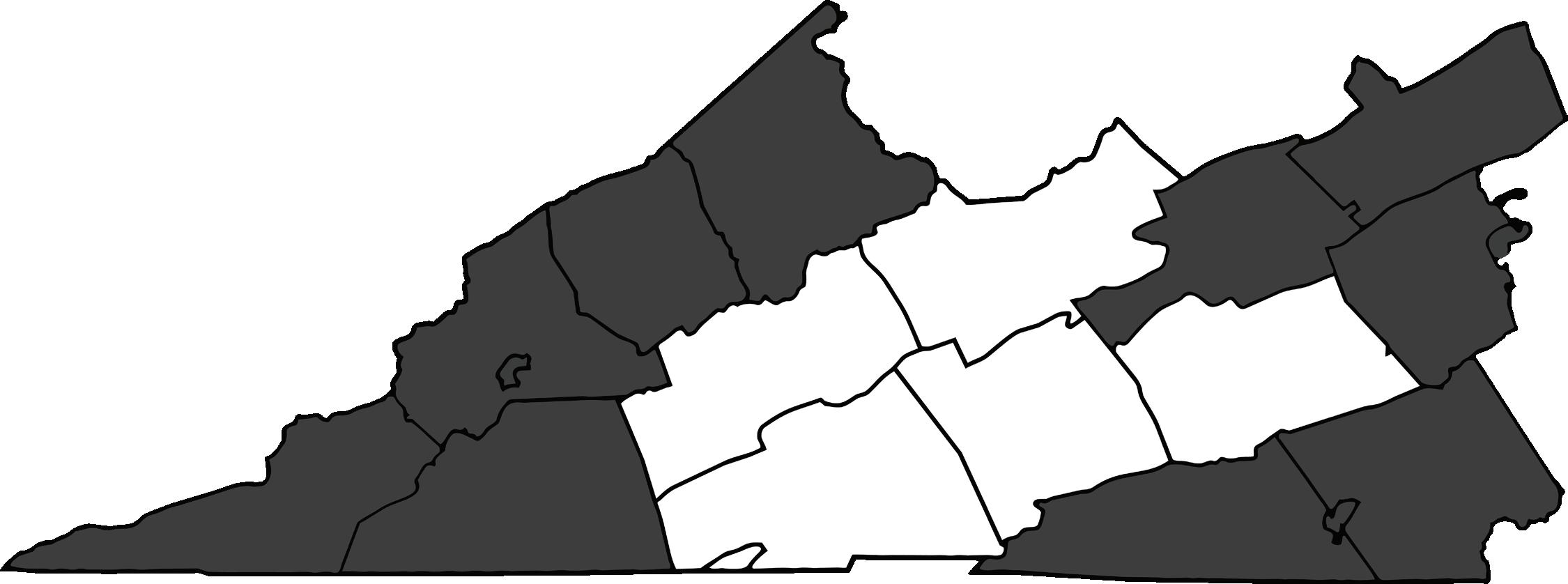
CHURCH LOCATIONS
1. Lee Street Baptist
1 W Mary St, Bristol VA 24201 (276) 669-2760
2. St. Annes 316 Euclid Avenue, Bristol, VA 24201 Phone: (276) 669-8200
3. Abingdon United Methodist 101 E Main St, Abingdon, VA 24210 Phone: (276) 628-2321
4. Abingdon Baptist 361 W Main St, Abingdon, VA 24210 Phone: (276) 628-8126
5. St. Thomas Episcopal 124 E Main St, Abingdon, VA 24210 (276) 628-3606
6. Sinking Spring Presbyterian 136 E Main St, Abingdon, VA 24210 (276) 628-3361
7. Charles Wesly United Methodist 322 Lee Hwy, Abingdon, VA 24210
8. Byars-Cobbs Memorial United Methodist 307 W.Glade Street, Glade Spring, VA 24340 (276) 429-5288
9. Ebenezer United Methodist 203 Chestnut St, Glade Spring, VA 24340 Phone: (276) 628-1385
10. Chilhowie United Methodist 501 Old Stage Rd, Chilhowie, VA 24319 (276) 646-8718
11. Madame Russell Methodist 115 1st Ave, Saltville, VA 24370 (276) 496-7971
12. Royal Oak Presbyterian 139 W Main St, Marion, VA 24354 (276) 783-3412
13. Mt. Pleasant Methodist 200 Mount Pleasant Rd Wytheville , VA 24382 (276) 223-1492
14. Wilbur Memorial 651 Jeffersonville St., Tazewell , VA 24651 (276) 988-4939
15. Stras Memorial Episocopal 251 Central Ave, Tazewell, VA 24651 (276) 988-2889
16. Elk Garden Methodist 189 Hayters Gap Rd, Rosedale, VA 24280 Phone: (276) 889-8041
Sanctuaries in Stained Glass
April 30, 2026 – November 29, 2026
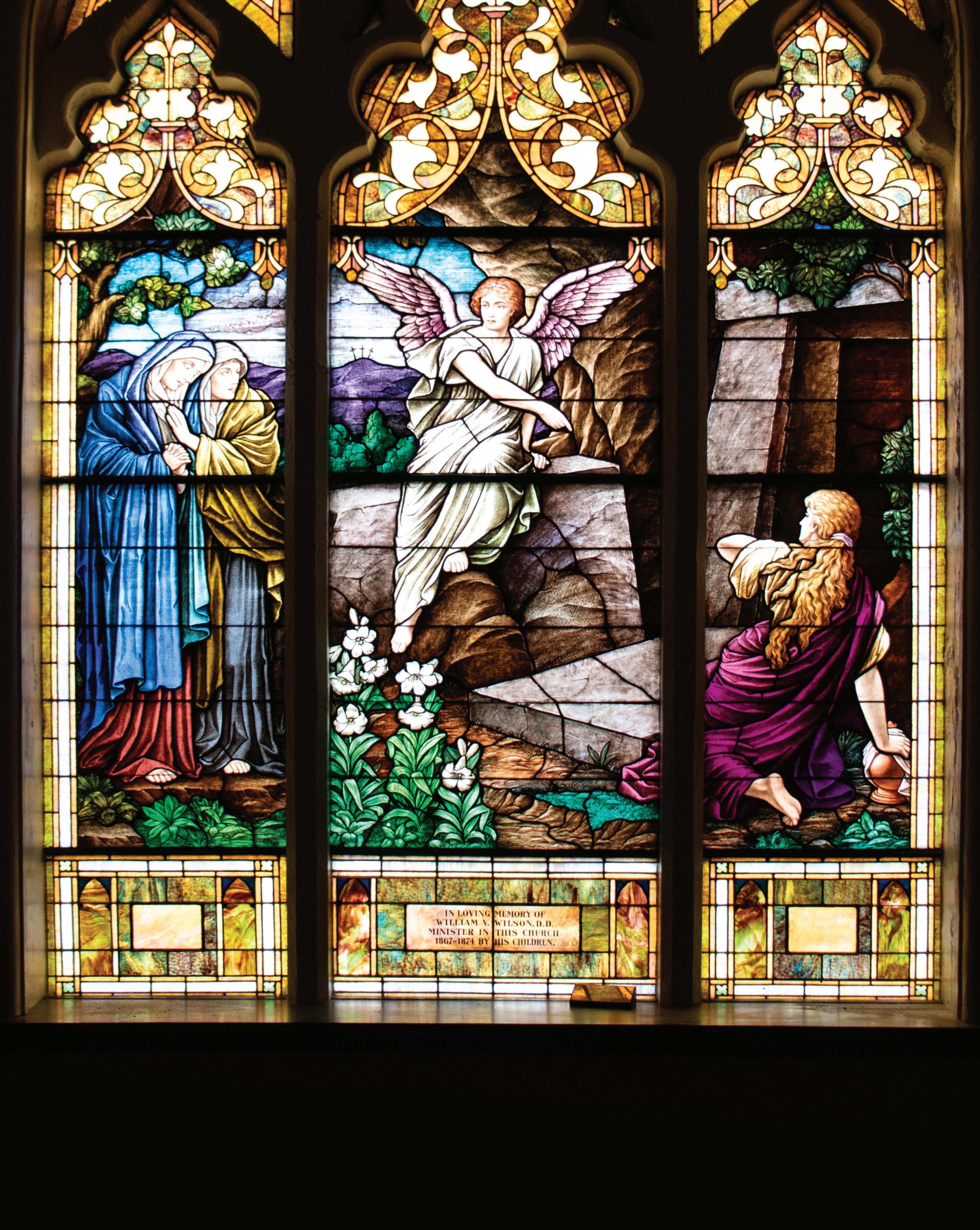
The history of stained glass in Southwestern Virginia is inseparable from the movement of people through the Appalachian region. Beginning in the early 18th century, settlers traveled southward along the Great Wagon Road, a vital migration corridor stretching from Pennsylvania through the Shenandoah Valley and into the backcountry of Virginia and the Carolinas. This road brought thousands of German, Scots-Irish, and English settlers into the mountain valleys, shaping the region’s religious traditions, building practices, and cultural values. Early communities established along the Great Wagon Road emphasized practicality and restraint. Churches and meetinghouses built during the 18th and early 19th centuries were typically plain, constructed of wood or local stone, and fitted with clear or lightly tinted glass. Ornamentation was limited; stained glass, long associated with European cathedrals, was largely absent. The priorities of frontier life were mobility, economy, and survival, which left little room for decorative architectural arts.
By the late 19th century, however, Southwestern Virginia had changed. Railroads expanded towns such as Roanoke, Covington, and communities along older wagon routes, transforming former migration paths into permanent settlements. With growth came prosperity and a desire for architectural expression. Churches began adopting Gothic Revival styles, characterized by pointed arches, tall windows, and decorative stained glass. These designs connected local congregations to broader national and European traditions, signaling stability and continuity after generations of movement. Stained glass entered the region primarily through church construction and renovation between the 1880s and early 20th century. Most windows were commissioned as memorials, donated by families to honor loved ones or mark significant community figures. Unlike large urban centers, Southwestern Virginia did not develop industrial stained glass workshops. Instead, many original windows were produced by regional studios or local artisans, resulting in designs that were modest in scale but deeply personal in meaning.
Today, stained glass in Southwestern Virginia remains a scattered but powerful legacy. Preservation efforts now focus on aging windows affected by weather, time, and changing building use. Contemporary artists continue to work in stained glass, drawing on traditional techniques while expanding the medium beyond historic churches. From the wagon ruts of early migration to the glowing windows of late 19th-century sanctuaries, stained glass in Southwestern Virginia reflects a journey from movement to settlement. These windows stand as quiet witnesses to the people who traveled the Great Wagon Road and to the communities they built when the road finally ended, signalling home.