CEO, Barking and Dagenham School Improvement Partnership
Claire Dorer OBE
CEO, National Association of Special Schools
Phil Harrison CEO, Manor Hall Academy Trust
Andrew Lewer MBE
Former MP for Northampton South, and former member of the Education Select Committee and the All-Party Parliamentary Group for Independent Education
Nicola Maher
Senior education leader and SEND specialist
Hayley Mintern Partner, Anderson Quigley
Sophie Mustoe-Fairplay
Speech and Language Therapy Manager, Speech and Language Link
Andrew Thraves
Chair of Big Education Trust, non-executive director of Academies Enterprise Trust and board member at The Confederation of School Trusts
Hugh Viney CEO and founder, Minerva Virtual Academy
DESIGN & PRINT
Fellows Media Ltd
The Gallery, Southam Lane, Cheltenham GL52 3PB 01242 259241 hello@fellowsmedia.com
ADVERTISING
Alice Ireson alice.ireson@fellowsmedia.com 01242 259249
PUBLISHER
William Clarence Education Ltd
DISTRIBUTION
(Print & Digital)
SENDsational Futures is distributed at the Schools and Academics Show twice a year; to all UK independent and special school Sencos, and across our media partners.
Foreword
Hello and welcome to our second quarterly print issue of SENDsational Futures.
It feels like barely five minutes has passed since the government launched its Schools White Paper and SEND reforms, and already the consultation on its proposals has ended.
We await further announcements but, in anticipation of what is to come, there is a strong inclusion thread running through our articles in this edition.
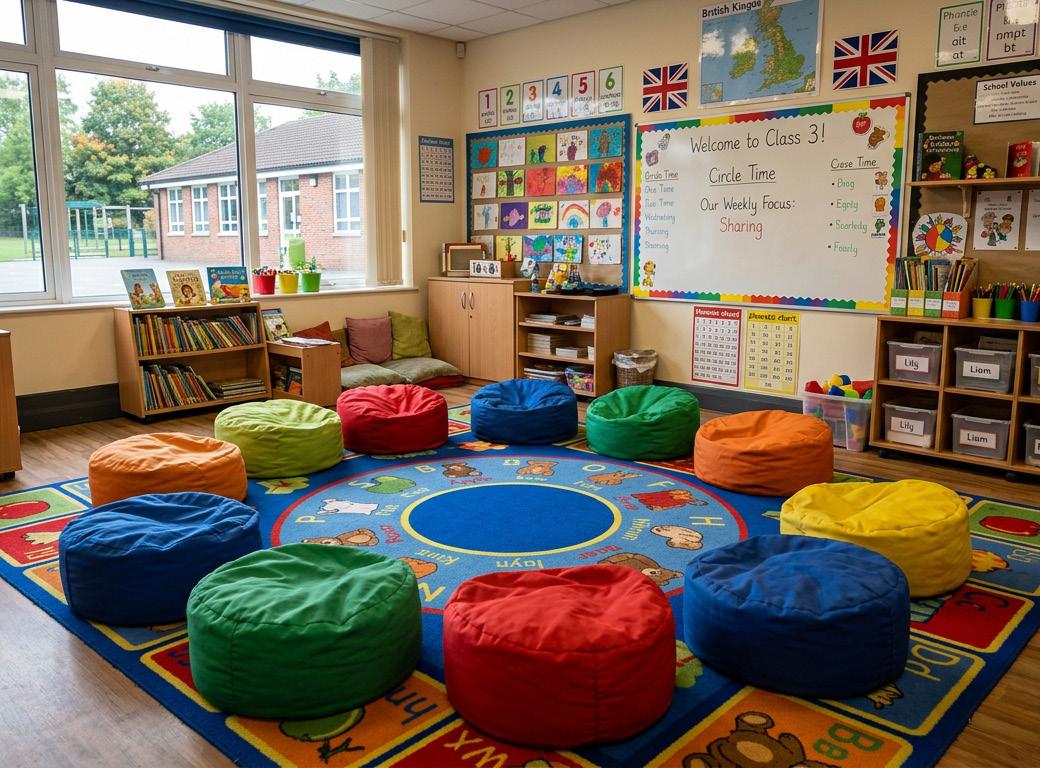
We look at how to turn your classroom into a fully inclusive environment for pupils on page 10, and what new school construction might have to look like in the future, on page 12.
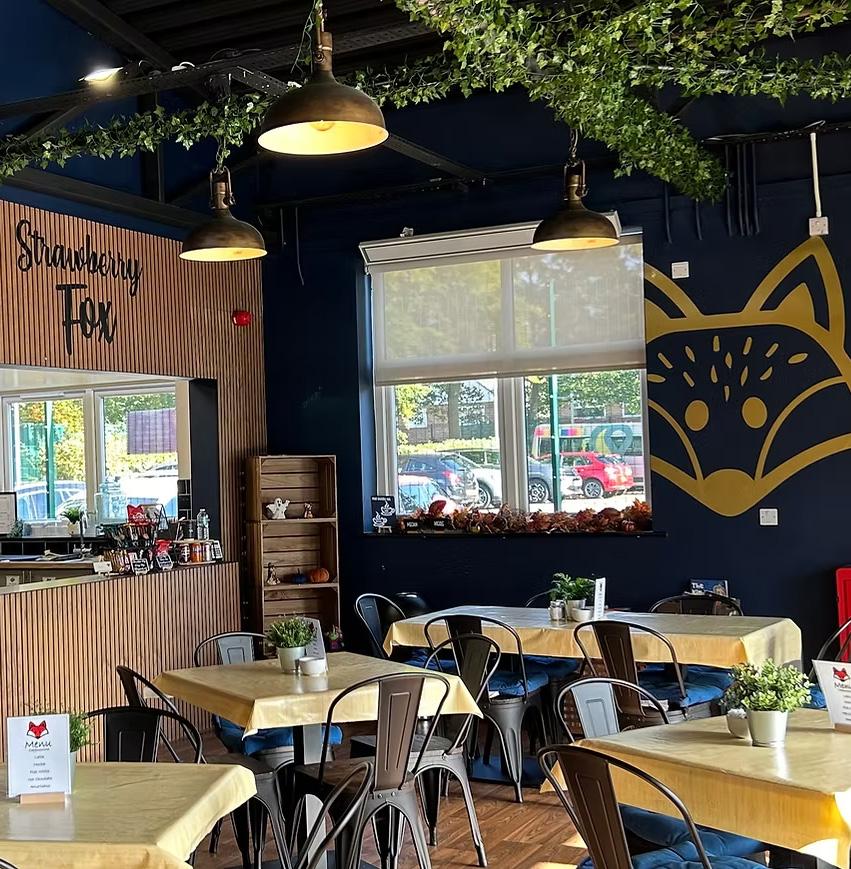
On page 16, Stephanie Smith explains how a BTEC in esports is helping pupils at her special school develop vital skills for adulthood and, on a similar theme, we visit Strawberry Fox Café on page 22, where SEND students gain work experience by running their own coffee shop.
Barry Wheller outlines the importance of reading and speaking out loud in the classroom and how, for some children, vocalising is a vital part of learning. His fascinating insights are on page 30.
Our ‘In Conversation’ piece is with autistic illustrator and comic creator, Bex Burgess, whom I had the pleasure of meeting at a conference recently, and left in no doubt that her story deserved a wider audience. See page 26.
If your SEND child has recently taken SATS or public exams, then you may be interested in a campaign by parent, Rebecca Herbert, calling for an end to high-stakes testing and assessment. Read about her petition on page 33.
There is lots more inside, too!
Our next edition will be out in the autumn but, in the meantime, do visit the website at sendsationalfutures.com, where we regularly update our news and features sections.
I hope you enjoy this issue. Have a restful summer break.
No part of this magazine may be reproduced without the permission of the publisher. The information contained in SENDsational Futures has been published in good faith and every effort has been made to ensure its accuracy. All liability for loss, disappointment, negligence or damage caused by reliance on the information contained within this publication is hereby excluded to the fullest extent permitted by law.
CONTENTS
School Management Plus has launched a new sister website focused on one of the most important areas of UK education: special educational needs and disabilities (SEND).
IN THIS ISSUE
SENCO CORNER
6 Profile: Katie Yeomans
LOCAL AUTHORITIES
8 Delivering 'Experts at Hand' INCLUSION
10 Creating an inclusive classroom
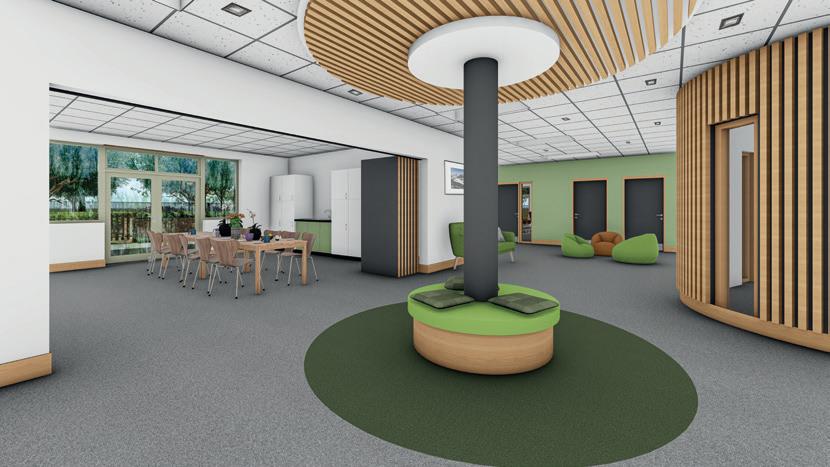
13 Building a school for the future, from the ground up
LEARNING TECHNOLOGY
16 Using esports to develop personal and workplace skills
CPD & TRAINING
18 Drafting your school's inclusion strategy
20 How sensory processing affects pupil behaviour
THE SCHOOL EXPERIENCE
SENDsational Futures is aimed at everyone involved in supporting children with special educational needs. A new and growing online and print publication, it offers a wealth of advice and information on working in – and navigating – this challenging but vital part of the education system. Our content includes topical news articles, opinion pieces and school profiles.
If you’re a school or MAT leader, Senco, teacher, SEND expert/consultant or parent who wants to contribute to our coverage, please get in touch: editor@SENDsationalfutures.com
SENDsational Futures
Find us at sendsationalfutures.com and @sendsationalfutures
Check in regularly on our website, follow us on LinkedIn and look out for our future print issues being published later this year.
SCHOOL
Adelaide School, Crewe ROLE Lead Senco for the Northern Hub of Manor Hall Academy Trust
How did you come to have your current role?
I fell into the role – it wasn’t a career choice.
My journey with SEND began while working in a mainstream school, where I was asked to set up a 'nurture' group to teach English and maths to a group of pupils who needed a level of support that a class of 30 pupils could never provide.
PROFILE: Kate Yeomans
Kate 'fell into the role' of Senco but quickly developed a thirst for knowledge about how she could help pupils with learning difficulties
How long have you worked with children who have SEND?
I worked in mainstream with children with significant additional needs for 13 years before joining Adelaide School in Crewe, part of the Manor Hall Academy Trust, 14 years ago.
I gave them a soft start to the day working with me, doing some English and maths, before they joined the rest of their year group to move to other subjects such as art. They would be with me from registration until breaktime.
Later, when I returned from my maternity leave, I was given a full English timetable and during this time achieved Advanced Skills Teacher status. The school Senco at the time, Val, who was an absolute inspiration to me, moved on to work for the local authority, and I was asked to take her role.
Together with the assistant Senco, we achieved Nurture Network accreditation for our work with the additional needs pupils. These were very early days for the concept of nurture in a mainstream secondary school.
After that, I moved to Adelaide School as an English teacher but became the Senco at the point that Statements of Education were transferring to EHCPs. Overnight, I saw a side to special education I had never openly acknowledged before and developed a thirst for knowledge.
SEND is such a broad field that I wanted to learn as much as I could, and I returned to university several times to acquire postgraduate qualifications in autism, mental health and dyslexia, as well as a Master's in educational psychology.
What is it like working across several settings and provision?
When you work across multiple settings, you need to ensure that you keep your mind open and spend time getting to know the pupils in your charge.
No two schools are identical, and you cannot be effective in any role in SEND without really knowing the pupils you are working with and seeing first hand the challenges they face in lessons. That is when you can really provide appropriate and personalised advice and guidance.
Relationships with parents are also critical to effective SEND coordination, and not being based on one site can make building these relationships difficult.
Working across multiple sites gives you opportunities to share great practice. I see so many innovative approaches, and it’s really good to share and give credit where credit is due.
Have you introduced any strategies or initiatives to support children with SEND in your school?
I have introduced lots of initiatives over the years, but what I love to see most is when staff on-site take one of my ideas and mould it to make it their own.
I don’t ever want to come across as a ‘knowit-all’, and the most rewarding aspect of my role today is seeing newer or younger staff really understand the concepts and theory behind an initiative and deploy strategies to make real changes to the provision for pupils.
Effective SEND provision requires a family approach and investment from everyone to make it work.
What have you done in your role that makes you feel proud of your own work, or that of your team?
I feel proudest when colleagues tell me how they have used strategies or followed a procedure I have instigated.
I am the geek behind the scenes, and that is where I belong.
In Adelaide School, a pupil from my form group is now a teaching assistant, and a teaching assistant from when I taught English is now the deputy head teacher.
I am under no illusion that this is down to me, but I get a sense of satisfaction that they will both go on to drive SEND forward with the passion I have.
How do you relax when you're not working?
I like to take my mind off work by paddleboarding or painting. I find both excellent opportunities to reflect and process, as well as generate new ideas or solutions.
Secretly, I also study. I read the education journals, and I complete courses relating to work and really enjoy expanding my own understanding. As I said, I’m a geek, and I need to know ‘why’!
If you hadn't gone into teaching, what might you have done instead?
The 16-year-old me wanted to be a graphic designer until the careers advisor told me it was a competitive field!
Doing this article has made me reflect on my career and whilst there was a time I would be embarrassed about being a teacher and the teasing I would get about long school holidays, this is what I was always supposed to do.
The young people I have worked with, and all of my excellent colleagues, have made me who I am and taught me the importance of empathy.
If you had 10 minutes with the education secretary, what advice would you give her? Here’s hoping she’s reading this with her morning coffee!
It’s time for truly inclusive education. It’s time to level the playing fields between maintained and independent settings, and to reinvest in an education system that reduces class sizes, so that our excellent teaching community has a greater opportunity to increase inclusive practices without the compromise of day-to-day pressures of too many pupils and not enough time.
The recent White Paper and SEND reforms acknowledge this need but don’t dig deep enough into the steps required to effect real change.
…and now I am stepping down from my soap box.
Delivering ‘Experts at Hand’ through trusted connections
Strong relationships in Barking and Dagenham form the foundation for greater inclusion
Inclusion is no longer just a principle; it is a system expectation.
As SEND reform moves forward and the concept of 'Experts at Hand' takes shape, the question for schools is not whether they value inclusion, but how they access the expertise needed to make it work in practice.
Across the country, leaders are grappling with rising complexity of need and finite capacity. The answer lies not in abstract policy, but in grounded, accessible support that strengthens what happens every day in classrooms.
At Barking and Dagenham School Improvement Partnership (BDSIP), this is not a new ambition; it is the foundation of our work.
Through a combination of strategic support, professional networks and targeted development programmes, we work alongside schools to ensure inclusion is both embedded and sustainable.
This includes deliberately creating opportunities for schools to learn from one another, connecting leaders and practitioners, sharing effective practice, and building trusted relationships that strengthen the system as a whole.
This work is supported by a local authority that is taking a proactive and strategic approach to the model of 'Experts at Hand'.
Inclusion
as a system, not a standalone
Inclusion is most effective when it is built into the fabric of school
improvement. It is not an additional initiative, but a lens through which leadership decisions, curriculum design and teaching practice are shaped.
At BDSIP, we work with the local authority and schools to align inclusion with their wider strategic priorities. Feedback from recent evaluations highlights that schools consistently experience our support as ‘relevant and aligned to their school development plans’, while also strengthening leadership confidence and understanding.
This alignment matters. When inclusion is integrated into whole-school strategy, it becomes more than compliance; it becomes culture.
From expertise to everyday practice
One of the central challenges for schools is translating guidance into action. Leaders and teachers are committed to inclusion but often need clarity on what effective practice looks like in their context.
Evaluation data reflects this impact, with consistently strong ratings (3.86 out of 4) across measures including:
• providing actionable strategies
• supporting measurable changes in practice
• influencing school improvement
• enhancing leadership confidence. This consistency reflects an approach that prioritises both quality and usability, ensuring that expertise leads to tangible, sustained change in classrooms.
Inclusion is most effective when built into the fabric of school improvement
BDSIP’s role is to bridge that gap. Schools value working with specialists who combine up-to-date knowledge with a deep understanding of school realities.
Our support is described as practical, responsive and immediately applicable, whether through audits, targeted CPD, or specialist advice.
Strong networks
A key strength of our work is the depth of the commissioned professional networks already in place. We facilitate:
• Senco networks, enabling collaboration, shared problem-solving and dissemination of current thinking
• Additional Resourced Provision (ARP) leadership networks, supporting mainstream schools delivering specialist inclusive bases. These networks are a key mechanism for developing school-to-school support. By bringing together leaders who share similar challenges, they enable effective practice to travel, reduce isolation and
build collective confidence across schools and trusts.
Within our ARP network, in particular, this collaborative approach is underpinned by the sustained input of BDSIP’s inclusion advisers, who work alongside leaders in their setting to develop provision that is both responsive and evidence-informed.
At Becontree Primary this partnership contributed to the provision being recognised as an example of effective inclusive practice, which included hosting a visit from the Secretary of State for Education during the development of the SEND White Paper.
Building strategic leadership capacity
Alongside network leadership, Barking and Dagenham Local Council is taking a strategic and forward-looking approach to system development, investing in the next layer of capacity: leaders who can anticipate and respond to future need.
Our commissioned Strategic Leadership of SEND programme, now in its second year, is designed to support secondary schools as they prepare for increasing complexity, particularly as cohorts entering Year 7 bring a broader range of needs.
The programme has been evaluated as 4.8 out of 5, reflecting both its relevance and impact. What stands out most strongly is the value of collaboration and shared learning.
Participants consistently highlight:
• the strength of collaborative activities
• the balance of research-informed input and practical application
• the importance of safe, open professional dialogue without judgement.
This programme is intentionally designed as a multi-year model. Its third year will focus on embedding and sharing ‘what works', ensuring that effective practice is scaled across schools.
This collaboration is strengthened further through wider professional learning opportunities, including conferences and cross-phase events, where schools can showcase practice, test ideas and learn from peers beyond their immediate context.
BDSIP’s trusted relationships and deep knowledge of local schools allow this sharing to be purposeful rather than performative.
In this way, leadership development becomes a core mechanism for inclusion, building capacity not just within individual schools, but across the system.
Delivering ‘Experts at Hand’ through local strength
In Barking and Dagenham, the local authority is already taking a strategic approach to shaping this model, recognising that BDSIP is well placed to support its delivery, particularly through a focus on universal or ordinarily available provision.
This is where the greatest difference can be made. By strengthening the quality of everyday provision, schools are better equipped to meet needs early, reducing reliance on reactive or specialist intervention.
Our approach already reflects the key features of an effective 'Experts at Hand' model:
• accessible expertise, grounded in real school contexts
• ongoing relationships, rather than one-off engagement
• a broad specialist network, available when needed
• a focus on universal provision, ensuring inclusion is everyone’s responsibility, Rather than creating something new, the local authority is deliberately building on an established and effective model, embedding expertise within a system schools already trust.
Inclusion that works
Ultimately, inclusion is measured by impact: whether pupils experience belonging, access learning and achieve their potential.
Our trusted partner evaluation data shows consistently high levels of satisfaction with our inclusion service, but more importantly, it reflects:
• changes in classroom practice
• increased confidence among leaders and staff
• stronger, more coherent systems within schools.
Inclusion is not a fixed endpoint; it is an ongoing process. But with the right expertise, structures and relationships in place, it becomes both achievable and sustainable.
As the SEND landscape evolves, the message is clear: 'Experts at Hand’ is not just about access; it is about connection between expertise and classrooms, and between schools themselves.
When effective practice is shared through trusted relationships and supported by local system knowledge, inclusion becomes scalable, sustainable and real.
Lee Boyce is CEO of BDSIP and has 30 years’ experience in education, specialising in inclusion, SEND and whole-school improvement.
Enabling environments: Supporting neurodivergent learners in the classroom
Being mindful of SEND pupils’ needs can support learning for all
One of the true joys of working in a primary class is that there exists a rich and complex spectrum of learner needs.
Whilst this can be challenging at times, it is also one of the most rewarding parts of the job when you can see all the pupils thriving.
Many children present with neurodivergent profile – whether formally identified or not – while others may experience challenges with attention, sensory processing, communication or selfregulation at different points in their learning journey.
Over the past few years, I have been exploring
ways of making my primary classroom more neurodivergent-friendly.
Crucially, this has not been about targeting specific groups but creating an enabling environment that supports all learners to engage, participate and succeed. In doing so, I have found that approaches designed to reduce barriers for some often improve learning conditions for everyone.
Here are a few ways in which I have sought to ensure that our learning environment enables effective conditions for all children in my class.
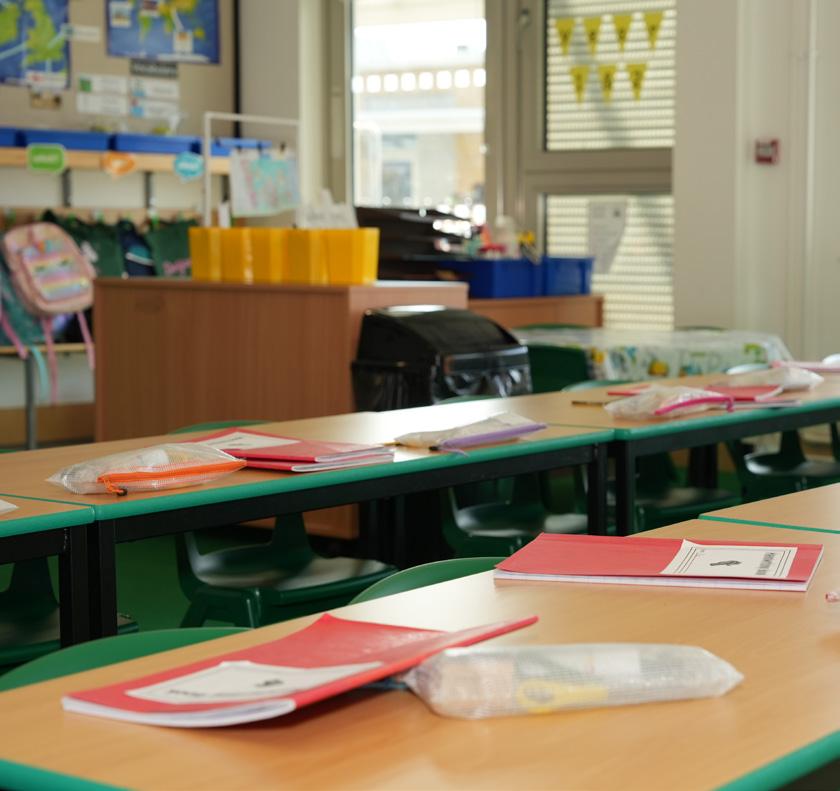
Flexible seating
Over several years, I have been increasingly able to vary the workspaces available in our classroom.
These include:
• The cwtch (a well-known Welsh term for a ‘hug’)
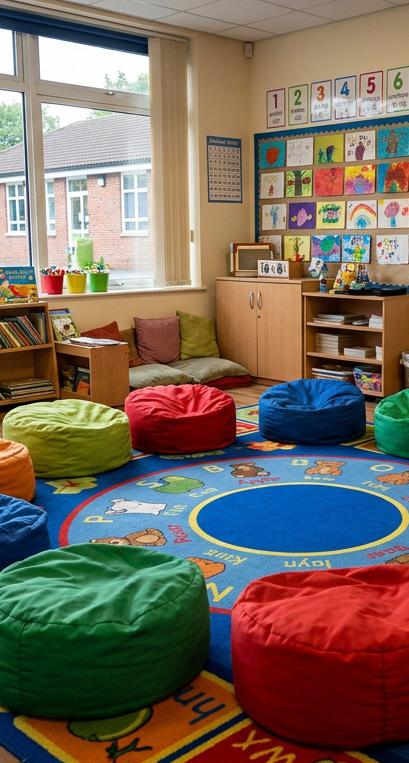
This space comprises a low-slung canopy under which children can sit on an array of cushions, selecting their preferred colour of diffused lighting through wall-mounted push lights. It creates a more enclosed, low-stimulation environment, helping to reduce ambient noise and visual distraction. This space is regularly chosen by learners who benefit from a
calmer sensory experience or who need support with focus and regulation.
• The standing station
A high-level table allows children to stand comfortably while working. This has proven to be one of the most popular spaces in the classroom. The ability to shift weight, move subtly and maintain physical engagement appears to support thinking, particularly during the early stages of independent tasks when ideas are being organised or refined.
• Carpet surfer seats
These ‘s’-shaped plastic seats are designed for use on the carpet, providing both a seat and a raised working surface. They have significantly increased the usability of floor spaces, allowing children to adopt comfortable and stable working positions. They are particularly effective during collaborative tasks, offering a defined personal workspace within a shared environment, while supporting those who benefit from additional physical stability.
• Bean bag corner
This area offers a more secluded working space using a structured, highbacked bean bag, positioned close to the teacher’s base. It is frequently used by
learners who require a balance of independence and reassurance, enabling them to maintain focus while remaining within easy reach of adult support for informal check-ins or guidance.
Lighting
As with most school settings, our classroom is fitted with overhead, cold-white LED lighting. When combined with light-coloured surfaces, this can create an overly harsh visual environment. Learner feedback reinforced this, with several children commenting on how ‘bright’ the room felt, so I explored some adjustments:
• Dimming overhead lighting By reducing the intensity of the main lights (where possible), the overall atmosphere becomes noticeably calmer and less visually overwhelming. This simple adjustment has become part of our daily routine.
• Adjustable, colourchanging lights
Rechargeable, colourchanging lights – both wall-mounted and tabletop – allow children to select lighting that suits their preferences within different working
areas. Softer tones such as warm yellow, orange and purple are frequently chosen, suggesting a general preference for less intense lighting conditions.
• Uplighters These provide diffused lighting, reducing harsh shadows across workspaces. They also help to define different zones within the classroom, supporting learners in navigating and selecting environments that best meet their needs.
• Maximising natural light Where possible, I ensure that blinds and curtains are fully opened to allow natural light to fill the space. Even in environments where natural light is limited, prioritising its use has a noticeable impact on the feel of the classroom.
Fidgets
The use of hand-held fidget tools can be contentious, and without clear structures they can quickly become a distraction. However, when used purposefully, they can support concentration, selfregulation and sustained engagement for a wide range of learners.
cases, the most impactful changes have come from rethinking how existing resources are used, rather than purchasing new ones.
For example, flexible seating can be created by simply repurposing cushions, unused mats or even allowing children to safely access floor spaces that may previously have been under-utilised.
Inclusive practice is not dependent on high-cost solutions but deliberate, reflective choices
In our classroom, fidgets are available to all children via a shared resource jar. We establish clear expectations through open discussion at the start of term:
• If you choose to use a fidget, your focus must remain on the learning.
• If the fidget becomes a distraction, it is returned immediately.
Careful selection of resources has been key. We avoid items that are overly complex, noisy or toy-like. The most effective tools have been simple, tactile objects such as rubber hand stretchers, threaded nuts and bolts, and silent button or wheel fidgets.
These provide sensory input without drawing attention, allowing learners to regulate their focus in a subtle and unobtrusive way.
Implementation
One of the most reassuring aspects of developing an enabling environment is that it does not require significant financial investment. In many
The ‘cwtch’ itself is just a thoughtful use of fabric, soft furnishings and a willingness to reimagine a corner of the classroom. Similarly, standing stations can be improvised using existing furniture, while carpet surfer-style working can be replicated through clipboards or low-cost alternatives.
These adjustments are rooted more in mindset than in budget, which is especially important during the current climate of reducing school budgets, when many teachers resort to personally funding their own classrooms.
The same principle applies to lighting and fidgets. Before introducing any new resources it is worth exploring what is already within your control – adjusting blinds, dimming lights is possible, or simply reducing reliance on harsh overhead lighting can make an immediate difference.
Low-cost rechargeable lights are now widely available but even without
them, thoughtful positioning within the classroom can help to create more comfortable working zones.
Fidgets do not need to be specialist items; simple, everyday objects such as elastic bands, small rubber balls or platted fabric strips can serve the same purpose when used with clear expectations.
In short, it is important to recognise that inclusive practice is not dependent on high-cost solutions but on deliberate, reflective choices about how we shape the environments in which our children learn.
Final reflections
What has become increasingly clear through this work is that designing for inclusion is not about adding layers of provision, but about refining the environment so that it works more effectively for everyone. By reducing sensory barriers, increasing flexibility and offering greater autonomy, we create conditions in which all learners – regardless of need – are better able to engage, think and thrive.
In many respects, these approaches align closely with the principles of universal design for learning: anticipating variability, rather than reacting to it. When we do this well, we move closer to classrooms that are not only inclusive in intent, but inclusive by design.
Marc Bowen is deputy head of Raglan CiW VC Primary school, in Raglan, Monmouthshire.
Reducing Catering Complexity Without Compromising Quality
The ability of SEND schools to deliver consistent, high-quality meals is increasingly under pressure. Rising costs, tightening budgets and staff shortages are making school catering one of the most operationally vulnerable parts of the school day –impacting on meal uptake and, ultimately, pupil health and wellbeing.
High-quality, nutritious school meals can make a real difference in pupils’ lives, especially in SEND schools where dietary needs and routines play a crucial role in wellbeing and learning. However, for many of these schools the challenges they face extend to the kitchen with high food costs, inflation and staff turnover having a huge impact on the quality of meals being served to pupils.
The effects of labour shortages are not just felt in the classroom but also in the kitchen, with many schools struggling to recruit catering staff. Research by The School Food People found that a staggering 78% of caterers report a lack of applicants for job postings. Not only are
SEND schools facing a labour crisis in the kitchen but also a skills shortage, with 63% of caterers reporting that they fail to receive applications from those with the required skills to produce meals that suit pupils’ dietary requirements and preferences [1].
Traditional catering models can be demanding, requiring skilled kitchen staff time-intensive preparation and complex procurement processes, all while meeting strict nutritional standards and supporting varied dietary needs. This leads to mealtimes becoming vulnerable to disruption when staffing levels fluctuate.
Given the crucial role that school meals play in supporting pupils and giving them the fuel needed for learning, these challenges pose a significant concern.
Rather than adapting around growing complexity, many schools are now rethinking how their catering is delivered and seeking approaches that reduce operational strain whilst protecting the quality of food and nutritional standards.
operations does not mean compromising on quality. With the right approach, schools can continue to provide nutritious, appealing meals without carrying the full burden of complex inhouse production.
Simplified catering solutions, such as utilising pre-prepared meal offerings, are increasingly emerging as a practical solution. By removing labour-intensive preparation and streamlining kitchen processes, these models can significantly reduce day-to-day pressures while maintaining consistency and compliance. This not only supports more efficient operations but also builds resilience and enables schools to continue delivering high-quality meals even during periods of staff shortage or absence.
The benefits extend beyond the kitchen. A more streamlined approach can reduce the need to redeploy teaching or support staff into catering roles, helping schools maintain focus on their core priority: supporting pupils.
Importantly, simplifying
In practice, this shift is already delivering tangible results. For example, utilising apetito’s pre-prepared provision reduces schools staffing requirements by up to 50%, while still delivering nutritious meals that pupils enjoy. By removing the reliance on skilled chefs and reducing operational complexity, schools are better protected from labour market volatility and can ensure greater consistency in their catering offer.
As pressures on school catering continue to grow, simplifying catering operations will be essential to maintaining both nutritional standards and pupil wellbeing.
At apetito, our expert chefs, dietitians and nutritionists have developed a huge range of delicious, nutritious meals for schools to choose from, and our dedicated team are on hand to guide you through every step, from menu planning to staff training.
Building an inclusive mainstream school, from the ground up
Graven Hill Primary was designed with inclusion and SEND pupils in mind
For Matt Green, creating a new school from scratch was about making the best use of all the space available, for the benefit of all pupils.
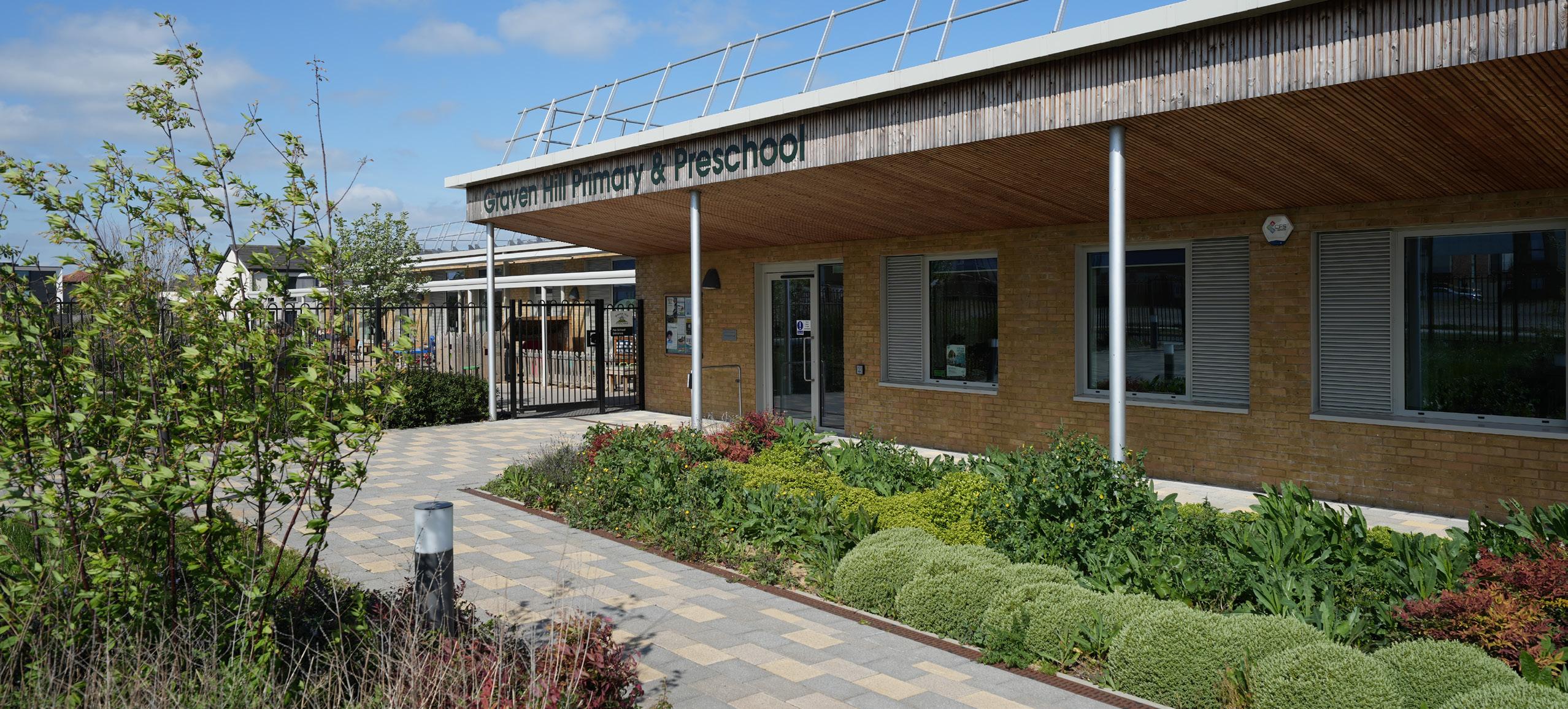
The headteacher of Graven Hill Primary School, in Bicester, Oxfordshire, didn’t quite have a blank page to work with, but his input into creating a fully inclusive school was significant.
Today, almost three years after opening, Graven Hill stands as an example of what can be achieved, within government building guidelines, with some creativity and forward thinking.
It is also an illustration, according to the architects, of what schools need to consider in the upcoming era of greater inclusivity in mainstream education, following the publication of the Schools White Paper and SEND reforms.
Graven Hill stands on a housing estate highlighted by the Grand Design spin-off series The Streets, which followed ordinary people buying plots of land and building pretty much whatever kind of house they wanted, according to their own taste and specifications.
Such an ambitious and innovative initiative required a local school in keeping with its
surroundings, as families moved in and children came along.
“I joined the school project after the initial design conversations had already taken place about what the school should look like,” Green explained.
“But there were certain things that we wanted the school to include so that we could accommodate every pupil who wanted to come here, regardless of any SEND they might have.
“I wanted this to be a fully inclusive school that would welcome everyone, and in which every child could thrive.”
Creative use of space
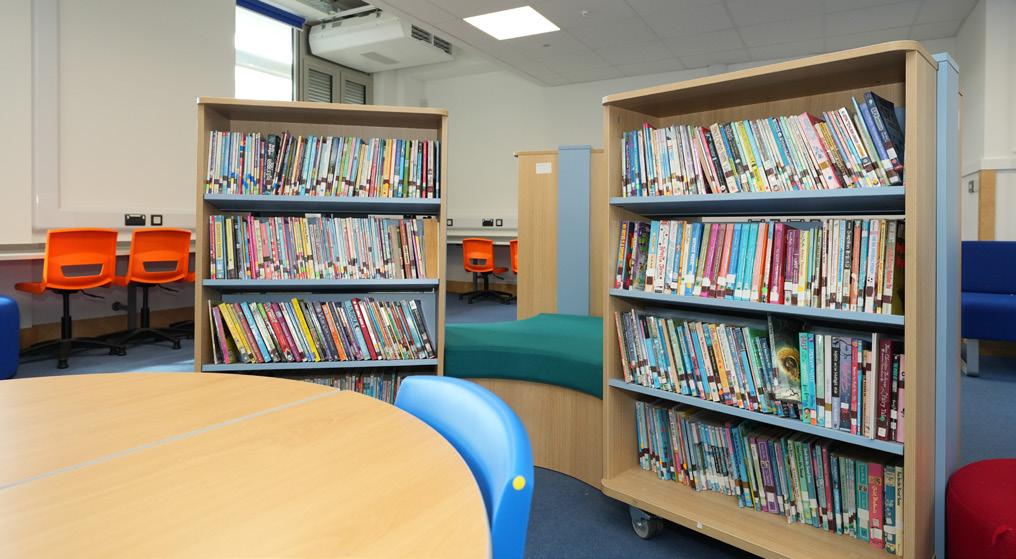
At Graven Hill, then, everything is on one level. There are no stairs or ramps, and doors and door frames are bigger than standard to allow wheelchairs to access.
Spaces can be converted into larger or smaller teaching areas with the use of mobile wall dividers. Hygiene rooms are equipped to deal with toileting accidents and other clean-ups associated with young children and the physical needs of some SEND pupils. F
For children with SEND and sensory issues, nature is really important, and they need to know it is around them
There are sight lines throughout the school. In architectural terms, these are hypothetical straight lines that draw the eye to an object or area and can dictate how we perceive, navigate or experience spaces.
At Graven Hill, all corridors end with a window or door giving view of what is outside. The playground has a range of sensory toys and resources for a variety of activities.
Green said: “We wanted to bring the outdoors inside by allowing pupils to see the trees and plants in the playground and beyond, as this can have a calming effect on children who are dysregulated.
“All children, and not just those with SEND, love to feel the grass under their feet and the sand between their toes, and we encourage them to play without their shoes and socks when possible.”
Natural materials
The school is carbon neutral and has a modern ventilation system that allows fresh air constantly to circulate around the building from outside. It means that pupils – and staff - are less likely to get tired in the afternoon.
In the post-Covid era, the constant introduction of clean air carries other health benefits.
Neutral pallets and colour schemes are used throughout the school on walls and display areas, so that they are not harsh on pupils with sight or sensory issues.
Lee Fordham, associate director of architects Architype, said school design needed to become more creative going forward.
“Graven Hill is an example of a school built to the same dimensions and guidance as all new-build schools, but we just use the space differently,” he said.
“For example, we try not to have long, straight corridors, and to use them in a different way.
In the buildings guidance you’ll have a certain area in square metres ear-marked for circulation, another for classrooms and so on.
“What we do is use up some of the space devoted to corridors to open things up and perhaps create a library, or an IT space. The corridor won’t be one straight line, but it will have little areas that open out, every ten metres or so.”
This creates a more open plan effect that makes it easier for teachers to observe pupils, highlighting any trouble spots and making disruption and running more difficult.
This innovative use of space, and larger windows and doors, mean that more natural light is allowed into the school. In architectural terms, the thinking is that if you can see the outside, it makes the building easier to navigate.
Fordham added that working closely with the headteacher was a key factor in getting the school right.
“We spoke regularly and Matt was very involved throughout," he added. “He was instrumental, for example, in the design of the nursery. His ideas really improved the space, and we have now adopted this for other school projects.”
Careful consideration
Similarly out-of-the-box thinking would be needed to create better spaces for SEND children in existing schools, including what materials to use –all of which can affect their sense of wellbeing, as well as behaviour and concentration levels.
“Most of our school stock was built in the last 50 years, and wasn’t designed with inclusion in mind,” Fordham said.
“We can’t knock these schools down and start again, so it’s going to take some clever design to ensure they’re suitable for all children.”
For Green, it meant implementing an inclusive culture together with the right building environment.
“Schools will have to consider both in the future, and will need funding to go with the policies,” he said.
Ministers should take note.
Dorothy Lepkowska is an award-winning education journalist and editor of SENDsational Futures.
Game on: using esports to develop personal and workplace skills
At The Cavendish School, online gaming is preparing SEND pupils for adulthood
Despite its growing popularity, many people still view online gaming as a hobby rather than what it can be: a powerful vehicle for developing skills and preparing young people for their chosen career.
Home to one of Europe’s largest communities of student esports players, the UK is a leader in the gaming sector. In 2025, UK gaming revenue grew to £5.4 million - an increase of 86% over a decade, while the esports market in the UK is expected to double in size by 2029.
For many autistic people, online gaming offers a safe environment, not least children and young people, for whom it has become a special interest.
With that in mind, is it surprising that they may wish to pursue a career in the gaming industry?
In fact, the gaming industry’s trade body, UKIE, found that nearly a fifth of people in the gaming industry have at least one neurodevelopmental condition and employment rates for autistic people in the industry are almost four times higher than any other.
Gaming, and specifically esports, can be used to scaffold autistic students’ learning and help them build important personal and technical skills for their future career.
That’s why, at The Cavendish School, we decided to offer our Year 10 and 11 students the opportunity to gain a BTEC Level 2 qualification in esports.
Since we launched the qualification, we have found that the thoughtfully structured programme has supported both students’ personal and academic development during the course of the two years.
Using
esports as a vehicle for skills development
Esports can offer a more inclusive alternative to physical sports, being gender neutral and disability friendly while covering a variety of game titles and genres. While gaming has been proven to have cognitive benefits, at our school we use esports to focus learning, foster student agency and build their personal and technical skills.
Esports is the lens through which our Key Stage 4 students can learn practical business, finance and marketing skills as well as communication, leadership and creativity.
We use esports to focus learning, foster student agency and build their personal and technical skills
These skills are aligned with each student’s education, health and care plans (EHCP) to help them achieve their individual aspirations. Our esports qualification is not about producing professional gamers but using our students’ special interests to develop the skills and knowledge that will help them to succeed, whether they go on to further or higher education or the workplace.
Preparing
students for careers of the future
Cambridge, where our school is located, is home to several wellknown companies that specialise in games development.
You may have heard of Jagex, the company behind the ever-popular Runescape game, Ninja Theory, Microsoft, or Frontier. Studying esports gives students a glimpse into the prospective career pathways that are available on their doorstep.
And, with an estimated 92 million jobs estimated to be obsolete by 2030, we have a responsibility to prepare our students for roles that don’t even exist yet.
Developing the person, not the player
Just as gaming can develop resilience, confidence and social connection, so can the BTEC Level 2 qualification in esports. For some students, developing communication or language abilities is outlined in their EHCP and each unit of their esports programme is designed to strengthen this skill through presenting, group discussion and providing peer feedback.
independent thinking skills. Yet their learning goes beyond this.
They are developing their executive function and learning to plan, focus and think flexibly. Through webbased research and technical games development, students also enhance their digital literacy.
Underpinning this development is a strong interest in the subject matter and a sense of belonging, which can be hugely motivational for young autistic learners.
The skills and knowledge students gain go far beyond the screen
The World Economic Forum emphasises that technological skills need to be balanced by creative thinking, resilience, curiosity and flexibility, which will be prominent skills for today’s young people to avoid barriers to employment.
Not only does our esports programme prepare students with the digital and technical skills that they need to pursue a career in the IT, media or games industry, it also develops the skills and attributes that employers are actively looking for such as creativity, leadership and analytical thinking amongst others. By the time they complete their esports qualification, they have a portfolio of work that evidences their knowledge and technical skills, which helps them progress to the next level: be this an apprenticeship, further education or employment.
One of the optional units that our students can choose to study as part of their programme is focused on positive health and wellbeing in esports. By examining the different aspects of physical and mental health and developing a report evaluating the impact on player performance, students build their knowledge of the factors that impact their own wellbeing and practical ways to apply these to their own lives.
Many autistic children can also struggle with dietary challenges and learning about the impact of a balanced diet for sporting success can help them understand the importance of hydration and nutrition in their own lives – an important step on their journey to becoming independent, healthy adults.
Building measurable, relevant skills
All the skills and knowledge that our students gain through their esports qualification go far beyond the screen.
Whether they are investigating the different genres of esports games, planning an esports event or developing a visual identity for their esports brand, students build important research, analysis, time management and
They learn to confidently and critically create, evaluate and communicate information using technology. This directly prepares them for an increasingly technologically enabled workplace.
Online safety
Naturally, when we prepared to launch the esports qualification, some parents had questions about the screen time involved in pursuing a games-related qualification or had concerns about games content and online safety.
At our school, we have used the introduction of the BTEC as an opportunity to have meaningful conversations about practical ways to stay safe online.
The structured programme of the BTEC and our rigorous safeguarding processes reassure parents about their child’s online safety and wellbeing. Fundamentally, the esports programme is vastly different to spending free time gaming at home: the emphasis is not on playing games but on developing the strategic and technical skills that result in a game and its corresponding tournament.
Since introducing our esports qualification, our students leave us not as professional gamers, but as confident, capable young people who are prepared for their next steps.
Stephanie Smith is headteacher of The Cavendish School, Cambridgeshire and Director of SEND at the Eastern Learning Alliance.
Turning SEND pledges into practical action
How school leaders can meet the end-of-year deadline to create an inclusion strategy
With the Education for All Bill included in the government’s new programme of legislation, promising ‘generational reforms’ of the SEND system, it will be down to trust and school leaders to turn those words into practical action.
We know from the details of the Schools White Paper and SEND consultation that informs the King’s Speech legislation, that all schools will be required to publish an annual inclusion strategy by 31 December, and then to update it every year.
The requirement is timed so that schools will be able to take into account the needs of their September cohorts and is, in principle, very welcome because it represents a fundamental shift in inclusion, moving it from tick-box compliance towards a concrete strategy.
This approach needs to be built on a deep understanding of SEND and inclusion practice on the ground, and the practical work that needs to happen in order to meet that deadline will be substantial.
Getting started
Many will see it as yet more work on top of a dozen other priorities, but it must be done and there are steps that you and your teams can take now to get that process moving.
Some trusts will already have developed a coherent SEND and inclusion strategy but for others this will be an area in need of rapid development.
They will need a clear picture of where they are and what they need to do in the seven inclusion areas (see panel) and produce a strategy that will need to:
· identify predictable needs within their pupil population
· show how the school will resource and deliver inclusion, using core funding, notional SEN funding and the inclusive mainstream fund
· align activity with seven defined inclusion areas
· be evidence-based, publicly accessible, ofsted ready and scrutinised by governors/trustees.
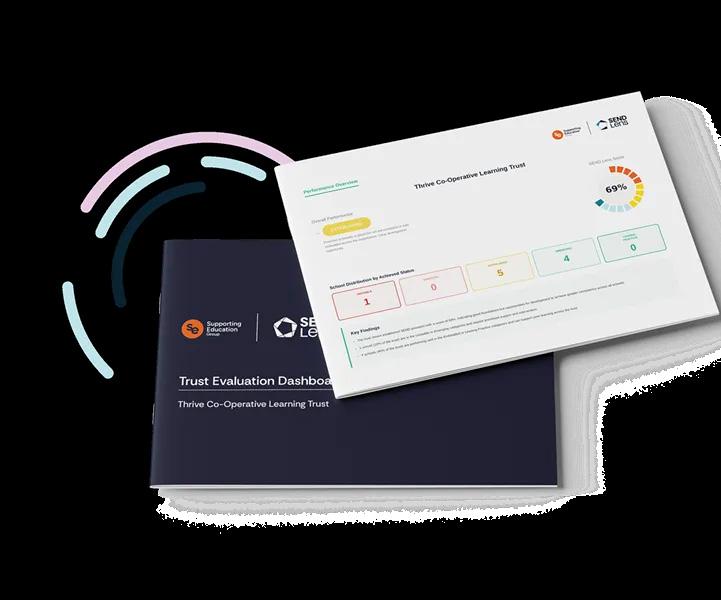
We’ve developed a new evaluation tool called SEND Lens to help trusts and schools begin and support that process.
It contains questions formulated by triangulating key themes from the Ofsted framework, Schools White Paper and SEND consultation and the existing statutory compliance, including the SEND Code of Practice and legislation.
The tool provides a systemic framework to evaluate an existing inclusion strategy, to enable the development of a new one that mirrors the vision set out by the Schools White Paper.
Key questions to kick-start your strategy
Here are 12 key questions to help you determine where your trust is in two key areas: professional learning and workforce development and the early and accurate identification of SEND needs –crucial elements of the seven inclusion areas described by the government.
There is an impatience to move beyond compliance towards practical, concrete action
Professional learning and workforce development
1 Is SEND professional development included within a whole school improvement plan?
2 Do TAs and pastoral leads receive regular, high-quality professional development to support identification of need?
3 Have teachers received training on effective TA deployment?
4 Does the Senco hold (or is working towards) the NASENCO Award/NPQ Senco?
5 Are supply staff intentionally onboarded with necessary information to support SEND pupils?
6 Do you have a system for assessing the impact of professional development activities and programmes?
Early and accurate identification of SEND needs
1 Does the school review whether specialist services are used in a timely and efficient way to support effective identification of need?
2 Is there a reliable system for early identification and accurate assessment of pupils’ additional needs, with clear timescales and record-keeping?
3 Does the school have a detailed SEND register in place demonstrating specificity of cohort needs and an analysis of this?
4 Do the Senco and SLT regularly interrogate identification of needs data against local and national trends?
5 Is there a clear graduated approach process in place, used consistently by teachers?
6 Is there a strategic approach to screening pupils both at transition points and when presentation of need might indicate this is necessary, and an understanding of how to interpret these to identify barriers to learning? These questions are sourced from the SEND Lens evaluation tool, which is designed to help trusts and schools assess their performance in a range of crucial SEND areas,
including leadership, governance and professional development.
SEND Lens, which is part of Supporting Education Group’s new SEND and Inclusion Hub, can be used to help trusts and schools prepare their inclusion strategies in readiness for the 31 December deadline.
Used within the SEND Lens tool, your responses to these questions will inform an analysis of strengths and weaknesses, and provide actionable recommendations that will move your school or trust towards embedding inclusion into everyday practice.
Everyone is hoping that the SEND legislation does deliver on its promises. The emerging details are encouraging and show an impatience to move beyond compliance towards practical, concrete action. Knowing where your school and trust is on SEND and inclusion readiness is the first, important step.
The seven inclusion areas
The government’s 2026 Schools White Paper, 'Every Child Achieving and Thriving', lists seven inclusion areas that form the core of the Universal Offer, a framework designed to ensure that inclusion is embedded into everyday practice, rather than treated as an add-on, to help schools raise standards and improve outcomes for all learners.
The seven areas are:
1 Ambitious leadership and governance
2 Early intervention and evidencebased support
3 High-quality, inclusive teaching
4 Accessible, enriching wider provision
5 A safe, respectful culture
6 Strong partnerships with families and wider services
7 Improved inclusive environments and accessibility.
For more information about SEND Lens and other SEND support and resources from Supporting Education Group, go to sendandinclusion.com
Liz Murray is SEND director at Supporting Education Group (SEG). Formerly director of SEND for Star Academies, Liz has worked in education for more than 25 years as a teacher, senior leader and national adviser, and was the UK’s first Advanced Skills Teacher for SEND. supportingeducation.com/services/send-inclusion
Understanding behaviour through a sensory lens Poor conduct isn’t always what it seems
Every child in the classroom is processing the world through their sensory
system, and no two children experience it in quite the same way
Differences in processing can impact a child’s ability to engage in everyday activities such as learning, dressing, eating, socialising or participating in school routines.
When these differences significantly interfere with daily life, they can be described as Sensory Processing Difficulties (SPD).
In 1972, Dr Jean Ayres stated, “Learning is dependent on the ability to take and process sensations from movement and the environment and use it to plan and organise behaviour.”
When educators understand SPD, they are better equipped to place the unique child at the centre of their thinking and can adapt the environment and task to meet individual sensory needs. Even small adjustments to classroom routines or expectations may result in significant progress.
Sensoryseeking behaviours should not be dismissed as attentionseeking
One observable reality is that behaviour such as a child covering their ears, walking away from an activity or shouting out in class may well result from a sensory processing difficulty.
Coping with overwhelm
Without this knowledge, the behaviour may be moralised as bad behaviour. Many sensoryrelated behaviours are regulation strategies rather than defiance. A child who rocks, mouths objects or covers their ears in class is often attempting to cope with an environment that feels overwhelming.
A common misconception is that specific sensory tools calm everyone; however, it is known that what supports one child may dysregulate another. These differences highlight the importance of understanding the individual child rather than applying universal strategies.
A child who makes loud noises, or struggles to stay seated during lessons, is a child who is likely hyposensitive and seeking more sensory input. They may need increased movement or more intense sensory experiences to feel regulated.
In contrast, some children may avoid certain clothing, foods, or close physical contact. These children may be hypersensitive and are avoiding certain sensory input. They experience sensory stimuli such as noise, light or touch as overwhelming and distressing.
Sensory-seeking behaviours occur when a child actively looks for additional input to help their nervous system feel organised and alert. These behaviours should not be dismissed as attention-seeking.
The child seeks to reach an optimal level of regulation. Sensory-avoiding behaviours occur when a child attempts to reduce or escape sensory input that feels overwhelming.
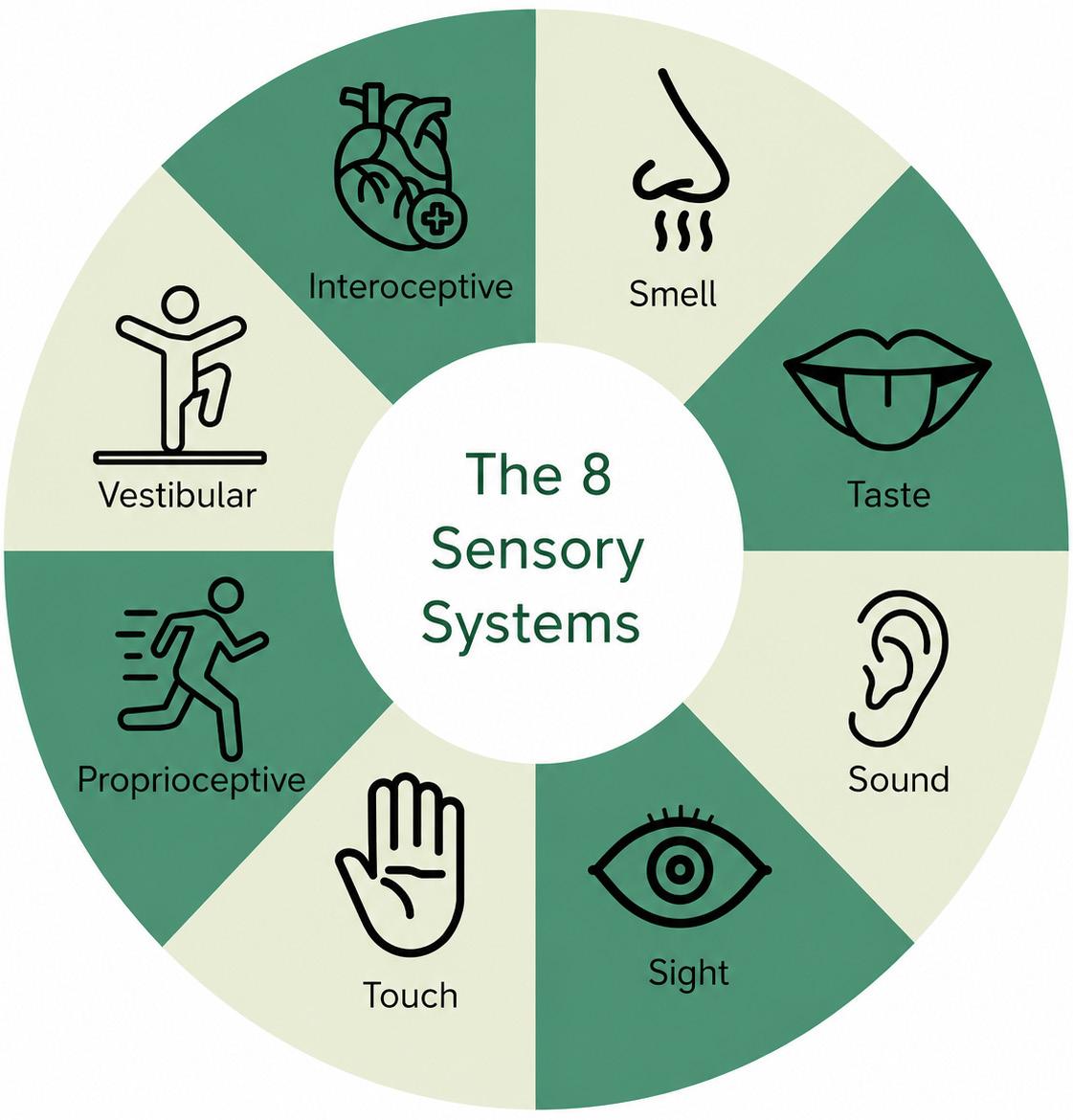
Additional sensory systems
While most people are familiar with five senses – sight, sound, smell, taste and touch – there are three additional sensory systems that play a crucial role in behaviour and participation.
Fewer people have had the opportunity to consider proprioception, vestibular and interoception.
The proprioceptive system helps us understand where our body is in space and how much force to use. Children with difficulties in this area may appear heavy-handed, break equipment or engage in over-physical play with others.
The vestibular system is responsible for movement and balance. Some children may seek constant movement, including spinning, jumping or fidgeting, while others may avoid movement altogether and become avoidant during physical activities.
Interoception refers to the awareness of internal body signals such as hunger, thirst or emotional states. Difficulties in this area can affect a child’s
ability to recognise when they need the toilet; can result in difficulties regulating emotions; or their ability understand physical sensations within their body. This is often why behaviour can appear sudden or unpredictable.
Regulating the nervous system
In the classroom, we may notice behaviours we would describe as challenging such as, fidgeting, roaming, withdrawal, aggression or refusal. These behaviours are not always deliberate acts; they may be attempts to regulate the nervous system by either increasing or reducing sensory input.
Sensory-driven behaviours occur at a neurological level and are often outside of the child’s conscious control. Children may cope in one environment but struggle in another, depending on the sensory demands. When sensory stress is reduced, these behaviours decrease or settle.
Because sensory-driven behaviours originate from the nervous system’s attempt to regulate, behaviour management approaches such as sanctions or punishments are ineffective. Punitive approaches fail to address the underlying needs of the child and are unlikely to prevent the behaviour reoccurring.
By adjusting the environment and/or the demands of the task, educators can significantly improve a child’s ability to participate.
Effective support requires a preventative and protective approach. This approach involves adapting the environment and staff expectations to reduce sensory stress and support regulation. The aim is to understand and meet need, not simply to correct or control behaviour.
Learning as a three-way task
The Person, Environment and Occupation model (PEO) provides a useful framework for understanding participation. It highlights that behaviour and learning are shaped by the interaction between the child, their environment and the task we are asking them to do.
The PEO model was developed within the field of Occupational Therapy and is used for understanding occupation and participation.
Sensory processing differences sit within the ‘person’ component of the PEO model. However its impact is best understood when considered alongside the environment and task. Difficulties often arise not just because of the child’s actions, but because of a mismatch between the three elements of the PEO model.
Simple strategies can make a big difference for children with sensory needs. Adaptation may include chunking tasks into more manageable steps, allowing extra time for transitions or ensuring the availability of alternative activities. Simple planned strategies such as limited choice can increase a child’s sense of control and safety, and support with the sensory experience by planning to increase, or reduce, the sensory input.
Shifting our understanding of behaviour
Enhancing participation begins with a shift in how we understand behaviour. When educators recognise that what is described as bad behaviour may be better understood as sensory processing differences, we encourage the move from attempts to control behaviour to a focus on meeting need.
By adapting environments and occupation (the task), we reduce sensory stress and support regulation. When children are regulated, they feel safe, understood and ready to learn. Without regulation, participation is difficult. But when regulation is supported, meaningful engagement, inclusion and progress can follow. Regulation must come before expectation.
To find out more about our Principles of Sensory Processing course or any of our other courses, scan the QR code or email us at Enquiries@ therapeutic thinking. co.uk
Louise Baldwin is senior consultant at Therapeutic Thinking Ltd.
The School Experience
“What
can I get you?”
Pupils at Pioneer House High are gaining valuable work experience in the school’s own café
Getting a foot in the door of work experience is difficult for any young person.
For teenagers with SEND it can be even harder. Which is why staff at Pioneer House High School took the matter into their own hands.
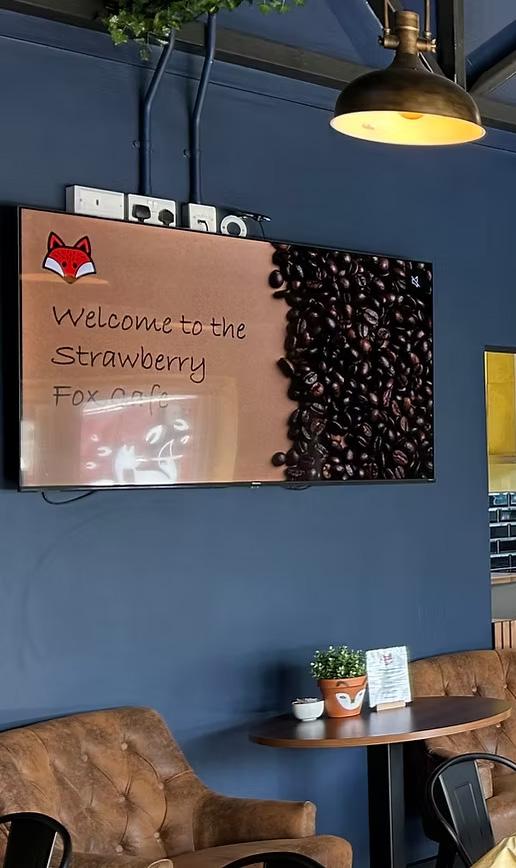
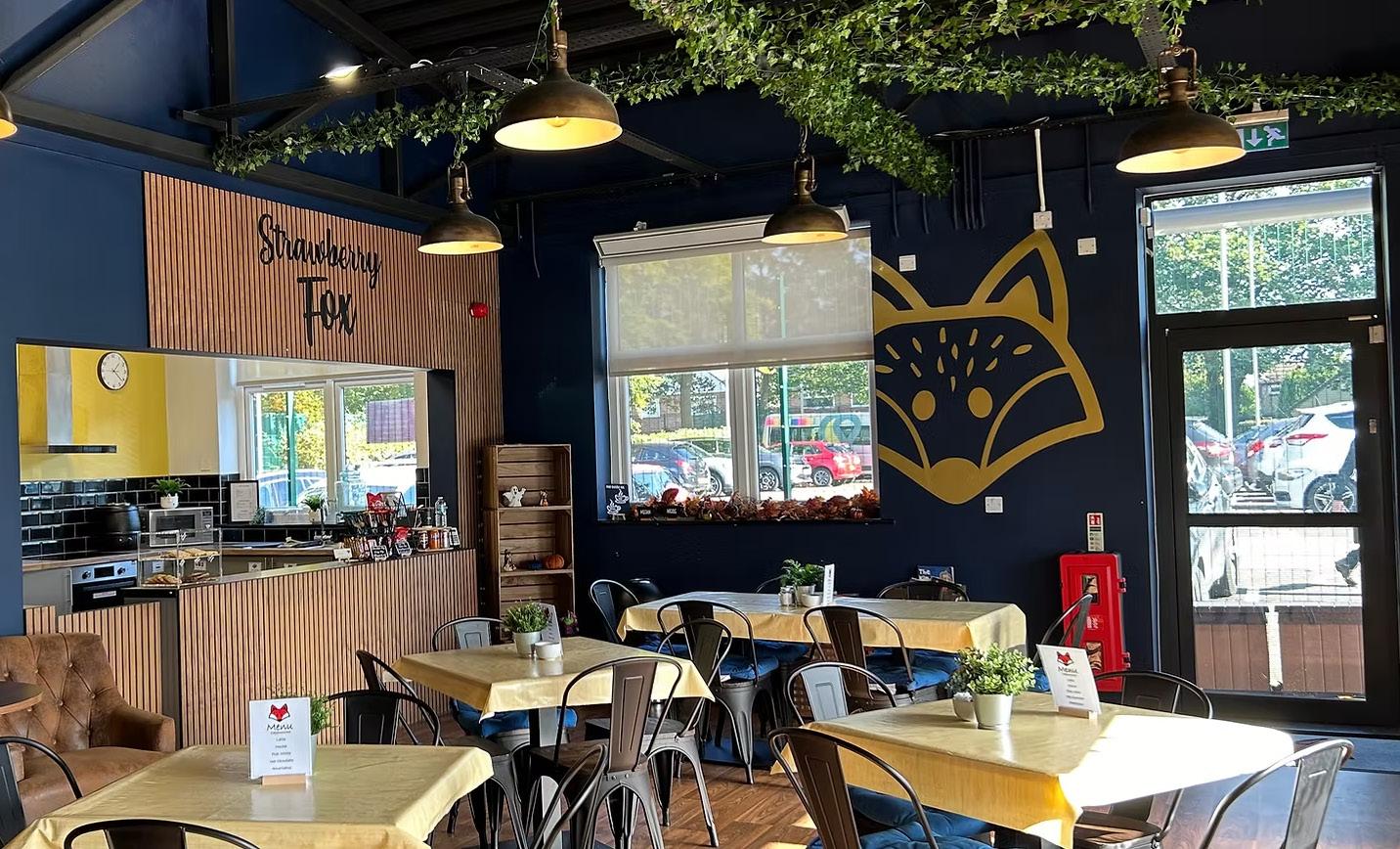
Two years ago, they set up the Strawberry Fox Café in an under-used area of the school to help their students gain the skills needed for the workplace, and to encourage local businesses to be more open about employing young people with learning difficulties.
The venture has been so successful, that the café has expanded and now has a mobile coffee shop taking its catering to wherever it is needed, including community events.
Students at the Manchester special school have a range of SENDs, including autism and significant learning difficulties. Many enter Year 7 with the working ability of a Year 2 pupil, and some are less independent than others.
As Diane Ainsworth, the former deputy head of the school, who was involved in setting up the initiative, explained: “We have more than 170 pupils aged 11-19 years in the school, but the café is really aimed at those aged 15 and over to give them valuable skills and experience.
“We know from research that only about 5% of young people with significant learning difficulties are in paid employment so we wanted to do something to reverse that, and to allow our students to engage with the local community a bit more.
“We wanted to remove the stigma of being in a special school, and in a deprived area of the city, and to help the young people feel like they’re part of the community.
“The café used to be just a white room with a fridge in it. Now it is beautifully laid out and somewhere people want to come.”
The name of the café, thought up by students, originates from the fact that they grow strawberries in their forest school, and there is a fox that is known to visit the school site at night.
A local interior designer designed the café, and the students put together a menu and decided how they wanted to utilise the space.
A welcoming space
The café is not open to the public due to safeguarding guidelines, but local businesses, community groups and the council use it for meetings and events, with the students serving drinks and food. This gives them an opportunity to mix with the ‘movers and shakers’ in Manchester and to develop connections.
On some days they prepare lunches for school staff and are also developing relationships with the local community. For example, the café is open to older people who want to improve their computer and digital skills, as well as to parents who can attend workshops. Local primary schools bring pupils over to play board games.
Some of these initiatives help both students, and people living alone, the opportunity to mix, and to tackle social isolation.
For me, the biggest benefit of this initiative will be society’s acceptance of our young people
their meetings, and it’s been well-utilised by the director of education and Greater Manchester Combined Authority.
Students at Pioneer House High School also produce merchandise, such as tote bags, coffee cups and candles that people can purchase in the café.
Ainsworth said: “We offer the café out as bookable space so groups can reserve a date and time with us for
“The students are developing customer service skills, communication, leadership and problem-solving, among others, in a safe environment. They are building the confidence and resilience to be able to go up to someone they don’t know and speak to them, by asking what they would like to eat or drink.
“The venture has been so successful that we have bought a coffee van and are taking this out on the road to give these young people experience of doing this out in the community, and not just in their safe space.
“So, we might attend an event taking place in a park, or a local activity. It’s a significant step forward for some of our students.”
Crucially, the café gives the pupils an opportunity to show what they can do, which tackles negative assumptions about people with SEND.
Working towards qualifications
All students get an opportunity to work in the café, though it isn’t a role that appeals to all. Those who particularly enjoy it are working towards a barista qualification.
The students’ work in the café also feeds into Manchester City Council’s Skills for Life scheme, an approach which raises the profile of skills for children and young people to equip them for life. The five skills are: communication, problem solving,
self-belief, self-management and teamwork/ leadership.
From this year, their progress on the scheme is being tracked and recorded by staff at Pioneer House so they will be able to demonstrate their skills and what they have learned.
Two of the older students deliver weekly coffee mornings to a group called Wythenshawe Good Neighbours (WGN). The session is a welcoming space for older residents to connect, socialise and receive support.
Participants have described both boys as having exceptional hospitality skills, a warm presence, organisational skills and dedication, all of which have created a positive, friendly atmosphere.
At least one of the boys hopes to go on to gain employment in a café and has gained unit awards towards a qualification.
“Recording and tracking their progress
means that those skills that they’re learning, and all that experience, will go with them to their next steps,” Ainsworth added. “It’s also about helping them to understand the transferability of those skills, because not everybody wants to work in a café.
“But if they can communicate, turn up on time and look smart then I think it will set them up nicely for the future.
“Though, for me, the biggest benefit of this initiative will be society’s acceptance of our young people.”
Pioneer House High School won the Community Engagement Initiative of the Year Award 2025 in the TES Schools Awards. For more information, go to: strawberryfoxcafe.com
Maggie Todd is a freelance education journalist.
EARLY YEARS at the heart of SEND reform
Why school readiness matters
When schools talk about 'school readiness', the conversation often focuses on children arriving able to sit, listen, communicate and cope within a busy classroom environment.
But for some children with SEND, those foundations are not developmental milestones that simply emerge over time. They are skills that need to be carefully nurtured through specialist support, therapeutic understanding and consistent early intervention.
Long before a child walks through the school gates, specialist early years providers are doing the quiet, complex work of helping children learn how to communicate, regulate emotions, build relationships and feel safe enough to learn.
Yet underneath the anxiety was a child who clearly wanted connection.
“She had so much to say but couldn’t,” staff later reflected. “Lots of facial expressions and gestures were used.”
At first, the goals were intentionally small. Not academic targets or formal learning outcomes, but the building blocks that underpin later access to education: developing trust with an adult engaging in shared play learning to communicate wants and needs beginning to tolerate turn-taking reducing distress
• feeling safe alongside peers.
And as needs across the sector become increasingly complex, that work matters more than ever.
Across the country, Early Years practitioners are supporting growing numbers of children with significant communication difficulties, sensory needs, emotional dysregulation and social anxiety.
Many children are still awaiting assessment pathways or specialist input. Families are often exhausted, isolated and deeply worried about what the future may hold.
The need to connect
At Springboard Opportunity Group, staff work with young children during the earliest stages of development, helping
At Springboard Opportunity Group, staff work with young children during the earliest stages of development
them build the foundations that make later learning and inclusion possible.
One little girl, referred to here as N, arrived after her parents were signposted by speech and language therapists. She had moderate hearing loss, no spoken language and found group environments overwhelming.
Noise caused distress and she preferred to isolate herself with an adult away from other children. Emotional dysregulation was frequent and intense.
Practitioners used highly responsive strategies tailored to N’s individual profile.
Language was reduced. Instructions were sung rather than spoken as demands. Visual supports and Makaton were embedded consistently. Favourite activities were repeated predictably to build confidence and understanding.
One simple activity, 'what’s in the box?', became a breakthrough moment.
N’s natural curiosity motivated her to engage, copy sounds and gradually begin communicating intentionally. Staff tapped out syllables, paused during nursery rhymes to encourage participation and used objects of reference to support understanding.
To an outside observer, these moments may have looked like ordinary play.
In reality, they were carefully structured therapeutic interactions grounded in specialist knowledge of F
The School Experience
communication development, sensory processing and emotional regulation.
Progress is not linear
N struggled when peers approached her play. Sharing felt intolerable. Noise could quickly overwhelm her nervous system. At times, she screamed, cried or withdrew entirely.
Staff responded not with punishment, but with calm co-regulation, predictable boundaries and emotionally attuned support. Over time, the changes were remarkable.
Single words emerged, followed by phrases and eventually sentences. Visual choices became verbal requests. Episodes of distress reduced significantly in both frequency and intensity. Most importantly, relationships began to grow.
The child who once avoided peers now has close friendships and engages in imaginative play. The child who could not tolerate group environments can now participate socially with increasing confidence.
By the time N left Springboard, she had made substantial progress across communication, relationships, listening, attention and self-management.
Making sense of a child’s needs
Across the country, Reception teachers are supporting increasing numbers of children arriving at school with complex communication, sensory and emotional needs.
At the same time, many families describe long waits for assessment, uncertainty about where to seek help and growing anxiety about whether their child will cope within a busy school environment.
For some parents, specialist early years provision is the first place where they feel truly understood and supported. Alongside helping children develop communication, confidence and emotional security, skilled practitioners are also helping families make sense of their child’s needs, navigate systems and begin to feel hopeful about the future.
Stories like this are not unusual within specialist early years provision.
Sharing felt intolerable. Noise could quickly overwhelm her nervous system
What is often overlooked, however, is the wider impact this support has not only on children and families, but on schools themselves.
Specialist early years settings are doing vital preparatory work before school entry: helping children develop communication systems, emotional regulation strategies, sensory tolerance, confidence and social understanding.
Transition challenges
For many children with SEND, the transition into school is not simply about adapting to a new environment. It involves navigating communication demands, sensory challenges, group expectations and separation from familiar adults, often while still developing the fundamental skills that make these experiences manageable.
Specialist early years provision helps children begin building those foundations early: the ability to communicate needs, regulate emotions, tolerate shared spaces, form relationships and feel secure enough to engage with the world around them.
This does not 'fix' children for school. Rather, it gives children, families and schools a stronger starting point from which inclusive education can grow.
The early years are a period of enormous neurological development and opportunity. Timely support during this stage can alter trajectories not only for children, but for families and schools too.
If we want schools to succeed in meeting increasingly complex needs, early years expertise must sit at the heart of SEND reform.
And for many children and families, that support at the very beginning can shape not only how children start school, but how they experience learning, relationships and inclusion long into the future.
Ruth Glover is CEO of Springboard Opportunity Group. Go to: springboardweb.org.uk
‘low brow’ and discouraged in favour of editorial illustration or fine art.
How many books have you illustrated or written, and where do you get your inspiration?
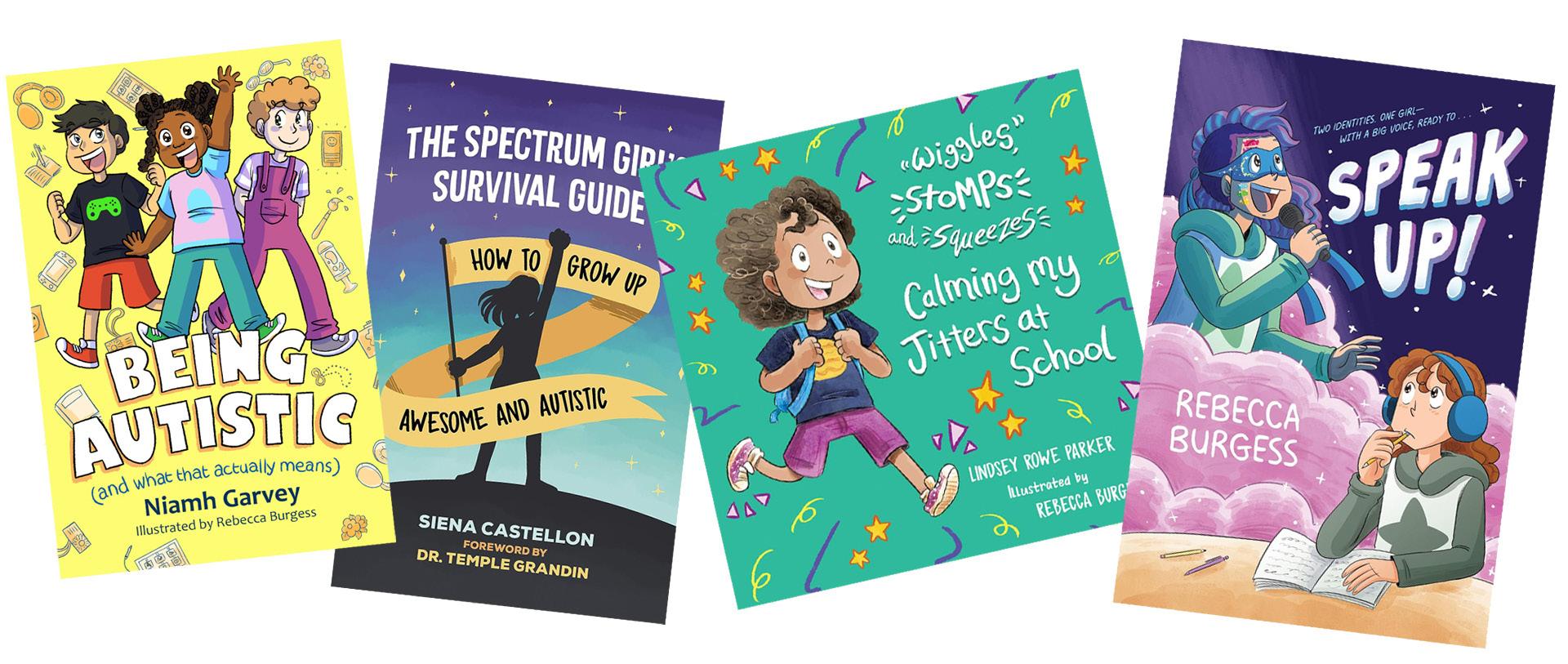
I’ve illustrated 10 books and written or illustrated five graphic novels, alongside a lot of smaller jobs with charities and newspapers. My ideas for stories come from my personal life - either directly from my experiences, or inspired by places, relationships and conversations that are happening around me. Even my historical fiction is a way for me to share my personal and modern-day reflections on autism.
In Conversation with Bex Burgess
Rebecca ‘Bex’ Burgess is 36, autistic, and a full-time illustrator and author
Your job sounds amazing. When did you discover your talent?
I’ve loved drawing and telling stories, ever since I could hold a pencil!
At home, my mum always encouraged it. She worked as an illustrator for a long time, before becoming a therapist.
In school, it wasn’t encouraged at all. We were all pushed to get into IT or science.
I ignored this and went to art college and an arts uni, but even here children’s illustration and comics were considered
wrong and I didn’t know how to articulate it. I seemed clever in some ways and yet made such obvious mistakes. I found it hard to make friends and was bullied a lot. Consequently, I was incredibly shy and found it difficult to make conversation.
I really flourished when I got into art college and was suddenly around kids who were as weird as me, and easier to talk to. Being treated like an adult and having some autonomy made things less stressful.
What kind of outlet did your talent provide for you?
When I was feeling hyper anxious, I would draw things that brought me comfort or an escape into other worlds. I would pour my feelings into characters and stories. I especially liked drawing heroes who had the same difficulties I had, even if they were also doing amazing things, as a way to make me feel like it was okay to be struggling.
What was school like for you? Was it a supportive environment?
School was very difficult for me. I wasn’t diagnosed until later and was very overwhelmed and anxious most of the time. Any tiny little change would send me spiralling into meltdowns. After the age of 14, I figured out how to ‘contain’ myself but I still had meltdowns. Although they didn’t perceive me as causing trouble deliberately, teachers didn’t understand what was
This is something I still do in my kids’ graphic novels, so readers can see heroes that make them feel confident in both their strengths and struggles.
How did you family respond to your autism?
I’m lucky to have a twin sister who understands me in a way other people don’t, and is always there, no matter what.
Because I was diagnosed late, my parents and older sister didn’t really understand
what was going on. My mum is incredibly compassionate and did her best, but there were many moments of exasperation, because neither of us was equipped with the right language for my inside feelings.
Being a therapist, she tried all the usual techniques for anxiety but, of course, these didn’t always help.
career. We were the first to convince big conventions like MCM London to give small press artists a space to sell their books.
We established and grew the webcomic platforms like Webtoon, which had overwhelming success with Heartstopper, and is now an avenue through which younger artists can establish careers in publishing.
When feeling hyper anxious, I would draw things that brought me comfort
For example, she would patiently talk me though CBT techniques and then put me through the stress of blow drying and tying up my hair, dragging me to a birthday party with loud music, and making me eat food I’d never had before!
How did you get your ‘big break’ in publishing?
It happened slowly. I’ve been making and self-publishing comics for conventions since I was 13 and have naturally ended up surrounding myself with people who work professionally in that world. My first gigs were mostly older, established friends asking me to help them out with a job they were working on. My first published comic was in an anthology about World War 1, which came about because the publishers had seen a comic about this that I had submitted to a competition.
I am part of a generation of artists who made it possible to turn comics into a
I see The Phoenix magazine and its serial comic Monkey and Bunny in every supermarket now. But this began in 2009 via conversations on Twitter about how we need to bring back serialised kids’ comics.
What is the most important aspect of your work to you?
I like connecting and starting interesting conversations. Because I tend to draw from real-life experiences, parents tell me their kids are excited to find a character who’s dealing with the same problems as them. It feels like a weight of shame is lifted.
It really means a lot to me to share experiences that made me feel lonely when I was younger, that I can then
see are shared by others and hopefully helped them feel less alone.
You do workshops in schools. What does this involve?
Drawing together is a good opportunity to do things like give specific advice on how to draw something or come up with a story, or wider things like talking about overcoming perfectionism or expressing feelings.
Because it’s art, it is flexible and meets everyone where they’re at, with no pressure, just the joy of drawing.
For me, workshops are important because I can emphasise to anyone getting into comics that they’re VERY easy to make. If you can draw and have access to a photocopier, you can create something and share it with others.
Workshops also encourage pupils to understand that, if they want to see something in the world, they could genuinely just make it themselves.
What advice would you give to a neurodivergent child who has a talent?
Try and spend as much time as possible doing the things you love. Through your passions you will find a way to socialise, explore the world, step out of your comfort zones, and create achievements that mean something to you on a personal level.
Even if your passion doesn’t convert into a career immediately (I was a cleaner for a while), it is important to have that something in your life. In an ideal world, jobs wouldn’t define so much of our self-worth.
But if you specifically want to get into comics or illustration, look out for art/ comic competitions, grants, artist residencies. These have all been set up by the comic and illustration community to help give you, at the very least, a good motivation to try and start/finish a comic project or portfolio.
And, at the very best, a chance to get your first jobs or contacts!
For further details of Rebecca’s work, go to: rebeccaburgess.co.uk
When reading isn’t the problem
Talking out loud can help some learners to process information and make it stick
Afew weeks ago, during a learning assessment at a primary school, an eight-year-old girl described what was happening for her in the classroom better than many adults do.
She told me she could not process information when she read silently. She had to read the text out loud for it to make sense.
It wasn’t that she couldn’t read. She could read the words without any problem. The issue was that silent reading wasn’t sticking. Hearing the words helped the information go in in a way that reading silently in her head didn’t.
She wasn’t describing a reading problem in the way schools often think about reading problems. This wasn’t about phonics, accuracy or decoding. It was about processing.
Seeing the words on the page and reading silently was not enough on its own. Reading aloud gave her something extra: she could see the information, say it and hear it. This made the text easier to understand and easier to retain.
The more I thought about her comments, the more I realised that this issue went beyond one pupil describing her own learning experience.
Processing information
Research suggests that reading aloud can improve how information is processed and remembered because it involves more than one pathway.
A study conducted at the University of Waterloo found that reading words aloud improved memory compared to reading silently, a phenomenon sometimes called the 'production effect' (Robidoux & Besner, 2017).
Instead of simply seeing words on a page, the reader is seeing them, saying them and hearing them.
Interestingly, this is not just something children do. A national survey of 529 adults across Britain by Duncan and Freeman found that reading aloud takes place regularly at home, at work and in everyday life, for purposes including understanding, memory, thinking and social connection (Duncan & Freeman, 2019).
In other words, reading aloud is not an unusual habit or a fallback strategy; for some people, it is simply how information makes sense.
Needing a running commentary
It also made me think about the learners who talk themselves through everything. The pupils who quietly narrate tasks, verbalise instructions or seem to need a running commentary to stay on track.
We do not always view this positively in classrooms. Sometimes it is seen as unnecessary talking, poor focus or a habit that needs correcting. But what if, for some learners, this is not the problem but the strategy?
Think of the person we have all worked with who tells the office exactly what they are doing, making a coffee, sending an email, going to the printer, even though none of it requires an audience. It can seem odd, unnecessary or even slightly irritating.
But what if verbalising the task is helping them organise, process and stay on track? What this eight-year-old described through reading aloud may sit within a much wider picture of how some people think and learn.
For some people, spoken language is not simply communication; it is part of how information makes sense.
Changing our assumptions about reading
What does this mean for classrooms? Firstly, it may mean thinking differently about some of our assumptions around silent reading.
Strategies such as silent reading during form time are usually well-intentioned attempts to build reading habits and promote enjoyment. For many pupils, they work well.
But for learners who struggle to process information through silent reading, these experiences may feel very different. Sitting quietly with a book does not automatically lead to understanding, enjoyment or engagement.
If the information is not going in, the issue may not be motivation or effort; it may be access.
Reading
of helping children enjoy reading and develop independent reading habits.
Yet for some learners, the expectation to sit silently with a book may not feel enjoyable at all. In fact, it may reinforce the very difficulties that make reading hard to access in the first place.
A pupil who can decode fluently but has difficulty processing information may leave a silent reading session appearing compliant, while having retained very little of what they have read.
This does not mean silent reading is wrong or that independent reading should be abandoned. Rather, it raises a question regarding flexibility.
If the goal is to help pupils access, understand and ultimately enjoy reading, might some of these approaches need to be reimagined for certain learners?
Could a pupil listening to an audiobook, using text-to-speech, whisper reading or quietly verbalising ideas still be developing positive reading habits?
Inclusion may not always mean changing the destination. Sometimes it means widening the routes available to get there.
A lifelong strategy
The more I thought about this, the harder it became to see it as simply a childhood or classroom issue.
In workplace assessments, I regularly meet adults who describe remarkably similar experiences.
Some talk themselves through tasks, verbalise instructions, re-read emails aloud or quietly narrate what they are doing to stay organised and focused.
aloud is not an unusual habit or a fallback strategy; for some people, it is simply how information makes sense
We already recognise this in another part of education. Readaloud support exists as an exam access arrangement for some learners because, in certain circumstances, hearing text can support access to written information.
Yet outside exams, we do not always stop to consider what this might mean for everyday classroom practice.
This does not mean every pupil needs to read aloud, nor does it mean giving up reading initiatives.
It may mean reconsidering them. Quiet read-aloud options, paired reading, audiobooks, text-to-speech tools, or allowing pupils to process text through more than one pathway may all have a place.
Supporting pupils to enjoy reading may, for some learners, require more than simply asking them to read silently.
This can create an interesting tension in schools. Many literacy initiatives are built around the understandable goal
Many have developed these strategies instinctively over years, often without fully recognising what they are doing or why it helps. What begins in childhood as 'reading aloud' or 'thinking out loud' does not necessarily disappear with age.
For some people, spoken language continues to play an important role in how they process information, organise thinking and make sense of written material.
Perhaps the real lesson here is that these differences do not suddenly appear in adulthood or vanish after school; they simply surface in different environments, masked beneath strategies people have developed to cope.
Barry Wheller is an inclusive assessment specialist, access arrangements assessor and founder of Inclusion Compass. For tailored advice on EAAs or support with assessment in your school, FE setting or apprenticeship programme, email barry@inclusioncompass.co.uk.
Academic performance is never more important than
a child’s wellbeing
Rebecca Herbert has launched a petition calling on the government to move away from high-stakes exams and testing
Our outdated education system places too much emphasis on academic performance over wellbeing, and compliance over connection.
This puts pressure on schools, teachers and parents and, most importantly, children.
We know that when children are anxious or stressed, they cannot learn effectively.
We saw it with our own daughter when she reached Year 2. Learning was suddenly ramped up in preparation for SATs, and her wellbeing, self-esteem and love of learning all went into decline.
Although Year 2 SATs are no longer compulsory, many schools have continued to use them to assess pupils, in line with the compulsory Year 6 SATs.
We have since discovered that our daughter is dyslexic and we are on the waiting list for an autism assessment. But, at the time, the after-school explosions
got worse, there were more distressed behaviours and, by the end of Year 3, she was unable to cope with the pressures of school any longer.
Unsustainable pressures on children
She had the kindest teacher you could hope for, and the school put in place all the reasonable adjustments that it was possible to give.
But what we couldn’t change was the pressure she felt from the curriculum, the fast pace in lessons which meant she always felt behind and the increasingly difficult content and learning which she just couldn’t cope with anymore.
Like so many other children and young people, my daughter now cannot attend school, and she deserves so much more. There must be a different, better and kinder way.
This isn’t about lowering standards. We already know that in countries like Finland, New Zealand and Canada,
education systems maintain high standards while relying less on high-stakes exams and more on continuous and project-based assessment. These systems are often associated with higher student wellbeing, stronger engagement, and more inclusive approaches to education. The UK is now an outlier in how heavily it depends on a one-sizefits-all education system – a system that does not work for the estimated 1.6 million children in England who have an identified SEND.
That is the equivalent of one in five children in every classroom, and there will be many others who have no diagnosis but are also struggling.
SATs in primary schools
Let’s look first at primary pupils in England who face some of the highest levels of
formal testing in the world.
Many parents, teachers, and school leaders say SATs place unnecessary pressure on children, impact wellbeing, and particularly affect pupils with SEND.
But until we move away from SATs, the curriculum cannot change. The narrow and rigid focus on English and maths, with a particular emphasis on grammar, means that less time is spent on creative subjects and activities, which many SEND children might excel in.
The result is that this high pressure and narrow focus has led to many children becoming disengaged with their learning.
GCSEs
The one-size-fits-all GCSE system is failing many children, particularly those who struggle with the pressure of final exams. We have to ask ourselves: F
what are we examining exactly and for what purpose?
We need a more balanced approach, with moderated coursework included in every subject to create a fairer system where different needs and ways of learning are properly recognised and supported.
What
my campaign is asking
We need to see more projectbased learning in primary schools, with a more inclusive and creative approach. This would help to support different learning styles and allow children to learn at their own pace, in a way which helps them to thrive. It would mean that more children are intrinsically motivated to learn, and would allow for more teacher autonomy and flexibility, which we know helps children to be included. Schools could take a fresh look at classroom design which also helps facilitate inclusion. Instead of 30 children sitting at their desks for most of the day, there would be movement, more chatter, more creative group work.
can’t remember because dyslexia, ADHD or another SEND has robbed them of a working memory.
To quote the Department for Education’s Independent Neurodivergence Task and Finish Group, February 2026, 'Schools need the flexibility and incentives to adapt environments, curricula, and assessment processes so that inclusion is embedded by design'.
So why is this not happening?
Time for change
Real inclusion happens when wellbeing is put right at the heart of education, not as a token add-on.
We know that when teaching staff are regulated and calm, it has a significant positive effect on children. However, we are seeing the opposite of this in too many schools.
Wellbeing is important for
When teaching staff are regulated and calm, it has a significant positive effect on children
There would be quiet, cosy corners for those who need it, with every classroom having a creative area as well as an area for play. In secondary schools, meanwhile, we need more coursework across all GCSE subjects so that children with SEND can show what they can do, rather than be penalised for what they don’t know – or what they
everyone in a school. It has a ripple effect.
Only when we give more time for children to play, move, laugh and talk, will they be given a chance to learn in different ways, to feel motivated and inspired. That is what real inclusion looks like.
We know that far too many children are struggling with their mental health. If PSHE is given more priority in the curriculum then children can learn how to develop more empathy, acceptance of difference and kindness towards others as well as improving their emotional wellbeing.
That would certainly help schools to become more inclusive.
Wider context
The 2026 Schools White Paper and SEND reforms state that there will be greater inclusion in schools. This is a call to government to listen to this campaign, to the lived experience of children, parents and teachers.
So many parents have told me that their children
have lost their spark and love of learning and, in some cases, devastatingly, even their love of life when they can no longer cope with the pressure of school.
How can we allow this to continue?
Improving inclusion can only happen with education reform of the whole system – when we see assessment change and a move away from an exam-based and highly academic curriculum, with children learning the same thing, in the same way, all at the same time.
This is not inclusion, and it is failing too many children.
Rebecca Herbert is a former teacher, SEND adviser and team leader for a city-wide autism outreach service. She set up Turning Things Around to spread awareness of neurodivergence, at turningthingsaround. org. Her petition can be found at: https:// petition.parliament. uk/petitions/765125