SCHOOL INTERNATIONAL magazine



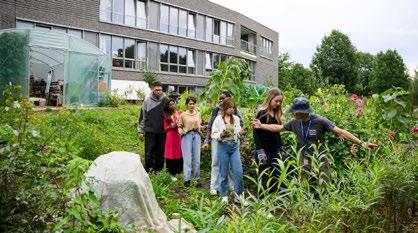







“ We have found Cambridge Insight data helps us develop informed teaching and learning interventions before the start of each Cambridge course. This has led to better results in Cambridge exams.”
Jackline
Aming’a, Head of School, Oshwal Academy Mombasa, Kenya www.cambridge.org/insight


schoolmanagementplus.com
Our School Management Plus online platform offers a wealth of information to keep education professionals up to date, including:
• latest news, regular features and opinion
• monthly newsletter and jobs to your inbox
• the chance to contribute your own ideas and opinion

• the chance to join our webinars and round-table discussions.
We are the leading opinion platform for those running a modern international school. We are always keen to hear about the issues that matter to you most, so get in touch to have your school’s voice heard. editor@schoolmanagementplus.com

4 International schools have a new dedicated website: International Schools Today EDTECH
6 Jack Dougall explores how teachers can thrive in the ‘attention economy’.
8 Heather Rhodes delves into the benefits of hybrid international schools.
SEND/WELLBEING
10 Stephanie Jarosova explains why bereavement can be different in international schools.
12 Dr Helen Kelly asks why schools often take the wrong approach to staff appreciation.
LEADERSHIP AND MANAGEMENT
14 Federico Verri explains why schools must tread carefully when parents apply pressure.
18 Denry Machin explains all you need to know about procurement to a new international school.
21 Christina Astin takes a look at training for middle leaders.
CLASSROOM
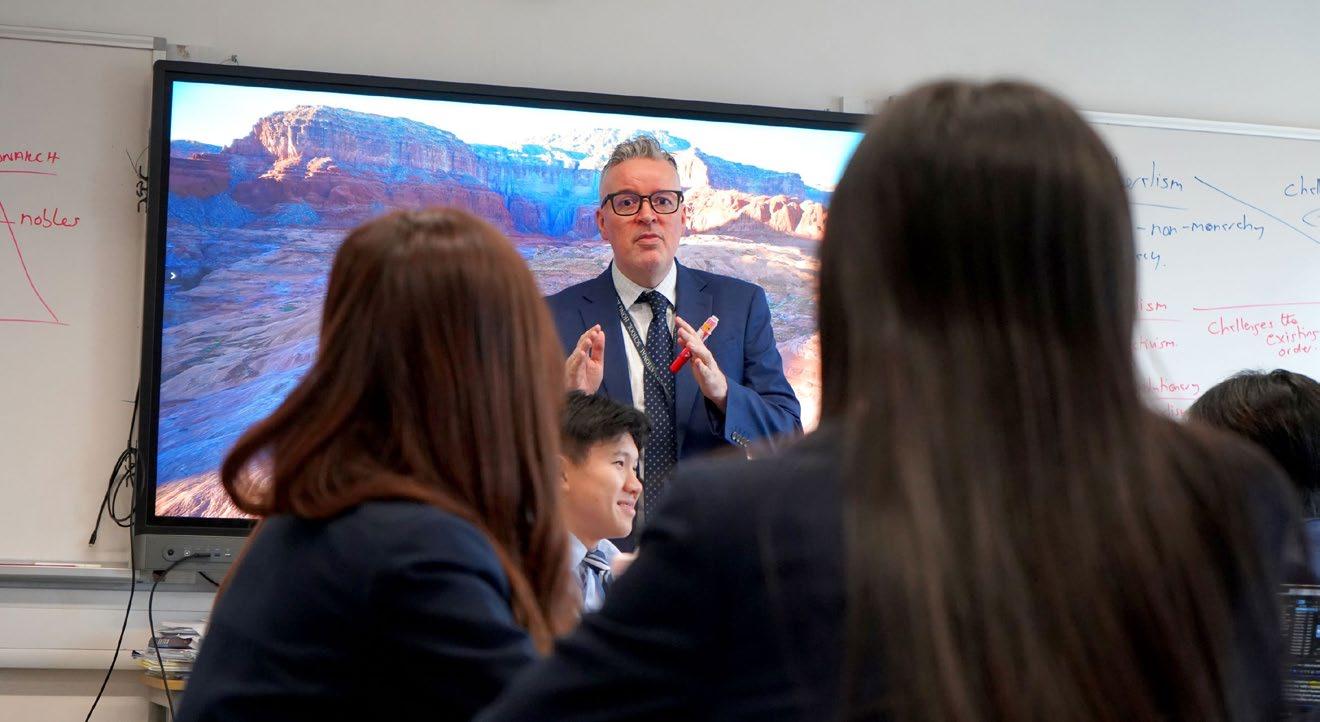
24 David Tuck writes about his experiences teaching history and politics in international settings.
26 Katie Benson eschews dull CPD for some more uplifting approaches.
SCHOOL SPOTLIGHT
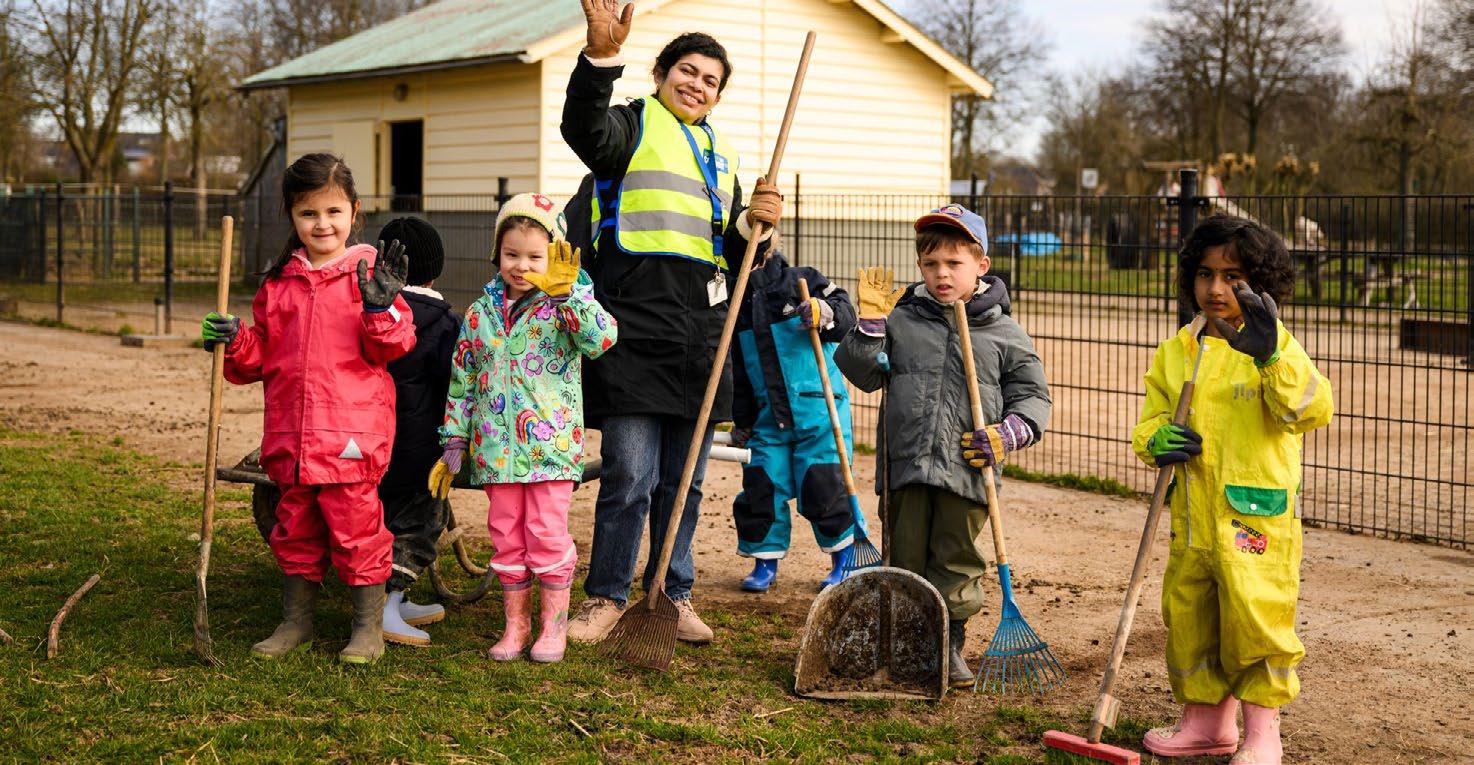
28 UWC Maastricht puts the emphasis on values.
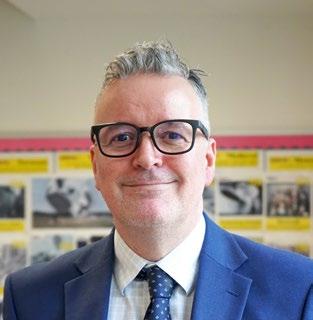
30 David Tongue, principal, Doha College, Qatar.
ASK THE RECRUITER
32 Hayley Mintern looks at the importance of professionalisation in international school leadership.

The leading source of news, opinion, features & jobs for all professionals working in independent and international education. @ International School News


ON THE COVER Attention please! page 6




International Schools Today will focus on leadership, learning and the commercial aspects of international education

For many, it couldn’t come to soon. The launch of our new website for international schools has already been a huge success, drawing in readers from across the world.
Internationalschoolstoday.com, which went live this spring, is the latest online publication in the School Management Plus stable, and will become the new home for all our online international schools coverage. This will give us more space to shine a spotlight on this most diverse, exciting and expanding schools sector.
Focusing on everything from leadership to the classroom via commercial aspects of schools and school groups, we aim to inform, entertain and celebrate international schools.
In order to do this to the full, we will need your help and we are inviting comment, news and feature contributions from all corners of the globe.
So whether you’re in the rainforest of Belize or the sands of Saudi, get in touch and let us know what is going on in your classroom, school or school group.
We want to know about everything from cutting edge curriculum and pedagogical approaches to new school launches and issues specific to your country or region.
We are also keen to highlight brilliant schools in our “Spotlight” features and sit down with outstanding school leaders in our familiar “30 minutes with” section.
The new website will go alongside this quarterly publication, International School Magazine, which will continue to highlight some of our best articles. ◆
If you think you have something that might work well on the site or the magazine do get in touch now on the usual editorial email: editor@schoolmanagementplus.com

Teachers need to acknowledge the challenges they have in an attention economy where the masters of the craft are online, writes Jack Dougall
Anew study on school phone bans has produced some surprising results. The obvious effects were there: less phone use during the school day and slight improvements in behaviour. But over the long term, the academic gains were found to be virtually negligible.
To me, this comes as no surprise. Social media hasn’t just changed children’s relationship with phones. It
has fundamentally changed their relationship with concentration itself.
Over nearly two decades of teaching, observations have consistently highlighted the didactic side of my lessons as a strength. This is no surprise, as aside from teaching, I regularly speak at large conferences, run teacher training sessions and write for magazines.
I’m used to holding the attention of large groups, and I lean into this in my lessons with refined explanations, stories and humour.
A year ago, I decided to share “my talents” by starting a YouTube channel, BizEdMadeSimple, teaching IGCSE and A-level business studies to the masses.
Naively, I uploaded my first video and waited for the views and accolades to roll in. They did not.
“I’m embarrassed by how simplistic my understanding of attention really was in the modern era.”
My view count was in the single digits, with the “average watch time” on my carefully crafted 20-minute explanation being under 30 seconds.
Ego bruised, bemused and
desperate, I decided to inflict it on a captive audience, my year 11s. It’s very strange watching students watch you. Normally, you’re too busy speaking to notice. This time I just sat there, watching the novelty wear off and eyes glaze over in real time. Traumatic.
Looking back, I’m embarrassed by how simplistic my understanding of attention really was in the modern era.
After a year of devoting my life to little else, I’m now painfully aware that getting people’s time and attention may be one of the hardest and most valuable things on Earth.
In fact, despite my best efforts at hooks, humour, self-deprecation and narrative, statistically many of you probably will not even reach this sentence.
Masters of their craft
We often roll our eyes at YouTubers, streamers and influencers. But many of them are absolute masters of their craft. Beyond the clickbait thumbnails and dramatic titles sits an unbelievably sophisticated science of audience retention.
Online, people do not politely pretend to listen like some Year 9s sometimes do. They just leave.
At first, I approached my YouTube struggles the way teachers naturally do. I reflected on clarity, explanations and years of lesson observation feedback, but with surprisingly little effect.
Meanwhile, YouTube itself was screaming analytics at me, desperately trying to point out and correct all of my weaknesses. It gives you retention graphs showing the exact second people stop listening, the percentage of viewers still listening after thirty seconds, and the moments people skip backwards or forwards. Maintaining attention has become less about instinct, it is measurable, second by second, word by word.
That’s the important bit schools underestimate: attention is now a science worth billions.
However, the analytical data from social media platforms is far less useful at telling you exactly how to solve all of your shortcomings. That became the steepest learning curve of all: endless testing and rerecording. But the irony in all of this is that some of my greatest teachers in how to improve it were, in fact, my own students. Here are some of the key things I learned.
• Three uninterrupted minutes of talking feels like a geological era to an audience. Several of my students insist
that if I really wanted their sustained attention, I should probably have “Minecraft parkour videos” hovering above my head or, at the very least, “popping” subtitles.
• Pacing matters obsessively. Too fast and people disconnect. Too slow and they vanish. Some online creators even practise speaking to 92 beats-perminute metronomes to optimise delivery.
• Suspense matters too. No hook? Gone. Answer your hook too quickly? Also gone. The audience needs a reason to stay listening.
• Vulnerability and authenticity also outperform polish surprisingly often. (Some of my biggest spikes came not from polished graphics, but when my dog wandered into the background or when I left mistakes in.)
• And then there’s sound. Slightly muffled audio, background chatter, poor acoustics or mumbling and audiences disappear. Once students start straining to follow what you are saying, attention drifts frighteningly quickly.
I’m pleased to say my business studies YouTube channel has now taken off and even developed into a school learning platform, but this has been the hardest, most scientific and datadriven thing I’ve ever had to learn.
Your classes, almost regardless of age, know pacing. They know dead time. They know authenticity. They know when something drags. They know
when somebody is trying too hard. They know when your energy drops. Because they have grown up surrounded by platforms whose entire existence depends on scientifically fighting for their attention.
What do we do
That does not mean teachers should suddenly become TikTok dancers, nor does it mean classrooms are doomed. Teachers have long known that a purely didactic lesson is rarely a good lesson. Modern classrooms are already built around interaction, activities and group work.
But some parts of education will always require spoken explanation and direct instruction. The problem is that many of today’s students have grown up in an environment that obsessively and algorithmically engineers audience retention at a level schools rarely even discuss.
Senior leaders banning phones during the school day and arming me with a strong behaviour policy and a colourful slideshow does not suddenly turn me into a captivating speaker at 3pm on a Friday afternoon.
Teachers are trying to hit a constantly moving target in an environment where attention has become scientific, measurable and fiercely competed for. Yet teacher training offers none of that. We’re trying to win a quantitative war with qualitative tools.
Perhaps the first step is simply acknowledging how difficult that challenge has become. ◆

Jack Dougall is a secondary school teacher, AI lead, international speaker and educational content creator based at The British School of Gran Canaria. He is the founder of the social enterprise Ecmtutors and creator of the BizEdMadeSimple learning platform and YouTube channel.

Hybrid international schools ensure that geography does not dictate aspiration, writes
Heather Rhodes
Imagine a world in which pupils have access to an outstanding education, regardless of where they live.
That has always been the driving force behind my work, and it is exactly what inspired a new partnership between Highgrove Education, where I am the founding principal, and Himalayas Valley Educational and Charitable Trust in Uttar Pradesh.
Through this partnership, we are delivering a British curriculum secondary education from Highgrove Online School to pupils based at a new, purpose-built 100-acre campus in rural North India.
At the end of the academic year, pupils will also have the opportunity to study at Harrow School, in North London that has educated seven British Prime Ministers. For me, this is about more than prestige; it is about access. It is about ensuring that geography does not dictate aspiration.
This initiative responds to two powerful trends I see shaping international education today: the growing global demand for British education, and the increasing difficulty schools face in recruiting the right teachers locally.
The UK’s updated International Education Strategy highlights just how strong this demand has become, noting that curricula inspired by the UK system account for over 40 per cent of international school offerings worldwide. At the same time, COBIS’s Annual Research Survey 2025 reports that 87 per cent of responding international schools find teacher recruitment somewhat or very challenging.
In this region of India, Uttar Pradesh, which is the largest state in India, 65 per cent of people are under the age of 35. There’s a youth bulge at the moment, which is a really great thing for the country in terms of its growth and its future potential, but only if those young people are educated.
The quality of education will make a huge difference to the future of the

country as a whole and that region in particular; the region of Uttar Pradesh being relatively rural, it would really benefit from being a leading centre of research and expertise in sustainable development.
“This is about more than prestige, it is about access.”
I believe hybrid education offers a natural and sustainable solution. It allows expert teachers to deliver high-quality instruction regardless of where pupils are physically located. But for me, this is not simply about solving a staffing problem. Hybrid education is transforming how students learn.
At Highgrove, we combine flexible
asynchronous self-study with live, teacherled lessons. Rather than using live lessons to deliver content, we adopt a flipped learning approach: pupils engage with core material independently, and live sessions focus on consolidation, discussion, and application. This model develops strong independent study habits while allowing for natural differentiation. Pupils can move at an appropriate pace, and teachers can focus their time where it is needed most.
I believe the way you develop a country

ethically and sustainably is through ethical education and giving children the knowledge and the understanding to drive that development forward in the future.
I think it’s a wonderful thing to be able to do that within a country, rather than those young people having to relocate to another country in order to get that same high quality of education.
I have long believed that a one-size-fitsall model of education does not serve all students equally well. Smart use of technology enables us to deliver a more bespoke approach. By separating content delivery from live instruction, we free teachers to provide meaningful one-toone support. Education becomes more efficient and more personal with each child receiving the attention they need, without others sitting idle.
We have already seen the impact of this model. When our predecessor, Harrow School Online, operated using this same approach, pupils consistently outperformed their peers at A-level at Harrow School. That success strengthened my conviction that this is not just innovative; it works.
In a world being reshaped by technology and global connection, I see extraordinary potential when tradition, innovation, and shared purpose come together. ◆
“The quality of education will make a huge difference to the future of the country as a whole.”
Heather Rhodes has been a pioneer in online and hybrid education for over ten years. She was the founding principal of Harrow School Online, and went on to set up Highgrove Education, an online school and provider of hybrid education to bricks and mortar schools across the world and in the UK.

Internationally mobile children affected by grief need staff who understand they are not starting from zero every time they join a new school
“In my old school,” a Year 8 student once told me quietly, “people would have known her.”
She was speaking about her grandmother, who had died three months earlier in another country. By the time she returned after the funeral, her homeroom teacher had left, her closest friends had relocated, and her new classmates knew almost nothing of her history.
She was “doing well” – attending lessons, laughing at the right moments – but there was something flattened about the way she spoke about the loss, as though it belonged to another life entirely. “What do you miss most?” I asked.
She shrugged for a long moment before answering. “Just… people remembering.”
That sentence has stayed with me because it captures something essential about grief in international schools.
“What she seemed to miss was not only her grandmother, but the shared memory of her grandmother.”

What she seemed to miss was not only her grandmother, but the shared memory of her grandmother – the sense that her loss existed in the minds of others. In many international schools, the shared memory that helps hold a child’s grief is often the first thing to disappear.
For many children, bereavement rarely arrives alone. It exists alongside other losses: friendships fractured by relocation, distance from extended family, disrupted cultural belonging, and the quiet exhaustion of constant adaptation.
This does not mean international school students are fragile. In many ways, they are remarkably capable. But it does mean grief often unfolds differently in highly mobile communities.
In more stable environments, bereavement is a rupture in a continuous social fabric. A death is felt collectively because the community carries memory. International schools work differently. Here, transition is not exceptional; it is structural. People arrive knowing they will leave. Friendship groups dissolve over a single summer. Staff turnover is expected. Students learn early how to enter, adapt, and move on again.
A Year 5 student once told me she had stopped making “best friends” because “they always go away anyway.” She said it while colouring in a worksheet, matter-of-fact and not sounding sad at all. Children do not say this kind of thing because they feel nothing – but because they are trying to protect something tender inside themselves.
One of the paradoxes of international schools is that children can appear highly resilient while carrying significant, unspoken grief.
Sometimes the grief is obvious – a bereavement, a divorce, a crisis back home. More often, it is cumulative and harder to name: the friend who moved away, the language that no longer feels fluent, the country that no longer quite fits, or the version of themselves that existed before the last move.
In these settings, one of the most painful losses is the loss of witnesses. In more settled communities, others hold our stories with us. In international schools, those who carried our history are often the ones who leave.
Teachers move on. Friends relocate. Counsellors change postings.
And so grief can become strangely unanchored –not only the absence of the person who died, but the absence of people who remember what that absence means.
International schools also hold less visible forms of grief that are easily overlooked because transition is considered normal. A friendship ending because of relocation may be met with well-meaning reassurance.
“Instead of praising how quickly students adapt, we can also notice what they carry forward.”
“You’ll stay in touch. You’ll make new friends.”
And often, they do, but something still changes. Something still hurts.
As one teenager once told me while scrolling through old group chats after another friend moved away:
“It’s weird. Nobody died, but sometimes it feels like they disappeared.”
In communities built on mobility, there can be a subtle pressure not to stay too long with grief. Students learn that successful adaptation means moving forward quickly and smoothly. Many become skilled at performing this competence – introducing themselves repeatedly, navigating new systems, and saying goodbye without visibly falling apart.
This adaptability is real and it is often admirable, but adaptation is not the same as integration.
Some children experience what is known as disenfranchised grief – grief that is real but not fully recognised by the world around them. In international schools, this is not usually because people do not care, but because the continuity that sustains shared memory is constantly disrupted.
Loss is also often normalised or minimised, with children told they are “lucky,” which can make it harder for their grief to be recognised as grief at all.
This is where relational care becomes essential. Not because schools can prevent grief, but because they
“Children can appear highly resilient while carrying significant, unspoken grief.”
can help ensure children do not disappear inside it.
In practice, this can be surprisingly simple, and deeply human.
It might look like shifting how we understand resilience – not as endless bouncing back, but as continuity. Instead of only praising how quickly students adapt, we can also notice what they carry forward.
The small stories of their lives, their losses, their rituals, and their attachments matter just as much as their academic records. When these are passed between teachers with care, a child’s history does not vanish at each transition.
It might also look like making memory part of everyday presence. A teacher remembering a name months later. A pastoral leader asking, gently, about a friend who has moved away. A passing comment that shows: your past is still here with you. In small moments like these, the school becomes a kind of holder of continuity in a changing world.
And it might mean recognising that grief in these communities rarely comes alone. It sits on top of a long stack of smaller losses – the bedroom left behind, the favourite park, the pet rehomed during a move, the language slowly fading. When a child is grieving, we are often not looking at a single loss, but at the accumulated weight of many goodbyes.
None of this requires grand interventions. It requires remembering that children are not starting from zero each time we meet them.
Perhaps this is the quieter work of care in international schools: not protecting children from loss – which is impossible – but ensuring that neither they nor their stories quietly disappear in its aftermath. ◆

Stephanie Jarosova (they/them) is a child and adolescent mental health practitioner with over 20 years’ experience in international education and more than a decade across both school- based and clinical mental health settings in Asia and Europe. Their work explores the intersection of education and clinical practice, focusing on how school systems shape emotional and developmental experience, and how care can be embedded more meaningfully into everyday school life.
Staff recognition and appreciation matter more than ever in international schools, where many workers are living far from their support networks, writes Dr Helen Kelly
Most of the focus on improving staff wellbeing in schools is on workload – reducing administrative tasks, cutting back on marking and keeping meetings to a minimum.
Leaders are often frustrated, however, that after the initial relief, trimming workload has no appreciable impact on complaints about exhaustion and burnout. The missing piece here is recognition and appreciation.
Two teachers can face the same timetable, parent pressures, safeguarding concerns and the same latenight marking. Yet one feels energised and valued, while the other feels depleted. This is because one feels
“Many leaders default to big gestures, like appreciation breakfasts and branded gifts.”

recognised and appreciated and the other feels invisible.
Recognition as a wellbeing buffer
Research shows that recognition and appreciation at work has a massive impact on how the brain interprets demand and processes stress.
When people feel recognised and appreciated, effort becomes associated not only with challenge, but also with reward.
Human beings are deeply relational. Our nervous systems constantly scan for cues about whether we are safe, valued and connected to others.
When staff only hear from leaders when something is wrong, the brain associates work with threat. Over time, this contributes to emotional exhaustion, cynicism and disengagement – the early stages of burnout.
When we feel appreciated, however, our brain associates work with reward, making us more motivated and increasing our capacity to sustain effort, despite a heavy workload. This sense of reward changes the emotional experience of work pressures and acts as a buffer against chronic stress and burnout.
People can tolerate a heavy workload surprisingly well
when they feel that their efforts matter but, when recognition is absent, even manageable workloads can feel draining. In the UK Teacher Wellbeing Index 2024, 55 per cent of teachers and 64 per cent of support staff identified “not feeling appreciated” as a major contributor to poor wellbeing, ahead of workload and poor work-life balance.
Early findings from my Global Study on International School Staff Wellbeing 2026 show that over a third of 500 staff surveyed so far do not feel recognised by leadership for their contribution. This should give schools cause for concern.
How leaders get recognition wrong I have seen first-hand from working with thousands of school staff, how leaders often get recognition wrong. Many default to big gestures, like appreciation breakfasts, branded gifts, social media shout-outs or annual awards ceremonies.
While these can be well-intentioned, they miss what staff truly value.
Staff
consistently tell me that they just want leaders to notice and give feedback on the things they are doing well. I call this “Noticing and Mentioning”. It needs to be low-key, feel personalised and be given in-the-moment, rather than performative, generic and untimely. This kind of interaction makes staff feel seen, trusted and respected as professionals.
“I noticed how calmly you handled that parent meeting.”
“Your support really helped that student settle.”
“Thank you for covering for a colleague when the team was stretched.”
These moments may seem small, but psychologically they are powerful.
They communicate – I see you, I value you. They are most effective when they are embedded into everyday culture rather than reserved for occasional events.
International schools face unique challenges
Recognition and appreciation matters even more in international schools, where many staff are living far from their support networks. For them, school is their social ecosystem and what happens there takes on a much greater significance.
A culture where staff feel genuinely valued and connected to their leaders can create a powerful sense of belonging and community. Conversely, environments where staff feel invisible or constantly criticised can intensify isolation and increase the likelihood of staff leaving at the end of their contract.
Recognition is not about lowering the bar
Some school leaders worry that building a culture of recognition and appreciation

means avoiding difficult conversations, lowering standards or being forced to give constant praise.
In reality, staff are often more open to constructive feedback when they feel valued. Staff also have a finely-tuned radar for disingenuousness. Bland or empty praise can feel manipulative or insincere and will erode trust and belonging. The schools with the healthiest cultures are not those where staff hear only positive messages. They are the schools where people feel treated with respect and dignity.
Small changes can make a big difference
The encouraging part is that effective recognition and appreciation does not require a large budget to make an impact, like elaborate wellbeing programmes. In a sector facing increasing workload pressures, recruitment challenges and rising emotional demands, recognition and appreciation may be one of the simplest and most cost-effective wellbeing strategies available to schools.
An occasional quick
conversation in a corridor can have a huge impact. Because people are more able to cope with challenge when they do not feel alone, invisible or taken for granted.
Culture is built through repeated everyday interactions. It really comes down to leadership habits. Do leaders only communicate when there is a problem? Do leaders notice effort as well as outcomes? Do support staff receive the same level of appreciation as teachers?
Other ways leaders can show real appreciation
1. Treat all roles with respect – value support staff, TAs, admin, premises, every role as essential
2. Collaborate on problem solving – bring people in early to help figure out solutions
3. Consult before decisions –ensure staff voice is part of decisions that affect their work
4. Provide autonomy –trust people to make professional choices and give them space to use their judgement
5. Acknowledge expertise –offer opportunities for staff to lead, share, mentor, and contribute from their strengths
6. Support career growth –invest in CPD, mentoring, clear progression pathways, so people see that their future matters to you. ◆
Former international school leader and lawyer Helen Kelly is a researcher, writer, speaker and consultant in the field of school wellbeing.

Becoming too flexible with parents on standards can lead to an undesirable shift in school culture, writes Federico Verri
Over the past fifteen years working in international education, I have seen schools speak often and sincerely about the importance of trust.
We say that trust sits at the heart of strong schools, and in many ways that is true. Trust builds relationships with families, helps staff feel supported, and gives students a sense of security.
It is one of the reasons many international schools are able to create strong, close-knit communities. Yet experience also teaches something more uncomfortable: in fee-paying schools, trust
“One of the most dangerous mistakes leaders can make is to confuse parental satisfaction with institutional credibility.”

is never a simple virtue. It exists within a financial relationship.
The families whose confidence matters most are often the same families whose fees sustain the institution. That reality does not make parental engagement inappropriate, nor does it mean schools should become distant or defensive. But it does mean that school leaders must be honest about the pressures that can emerge when educational judgement operates inside a market environment.
The difficulty is that standards are rarely
weakened through single dramatic or openly unethical decisions. More often, they are softened gradually, through a series of small compromises that seem reasonable at the time. A parent asks for a borderline decision to be reviewed once more. A report comment is adjusted to avoid conflict. An admissions concern is treated more flexibly than it should have been. A progression decision becomes harder to uphold because leadership is aware of the financial implications of losing a family.
“Schools become vulnerable when they rely too heavily on goodwill and not enough on process.”


In isolation, each decision can be justified as sensitivity, pragmatism or relationship management. Taken together, however, they may begin to create a culture in which academic boundaries feel negotiable. That is where schools can lose their footing. One of the most dangerous mistakes leaders can make is to confuse parental satisfaction with institutional credibility. The two are not the same.
Parents may be satisfied because a school is responsive, accommodating and warm. Those things matter. But credibility depends on something deeper. It depends on whether families, staff and students believe that decisions are fair, principled and consistent, especially when the outcome is not what someone hoped for. In the long run, a school’s reputation is protected not by avoiding every disagreement, but by showing that important decisions are made with integrity.
For that reason, governance matters far more than many schools are willing to admit. Good governance is not a bureaucratic add-on to school life. It is what allows a school to remain both humane and professionally serious. It creates the structures that protect teachers, guide leaders and reassure families that decisions are not arbitrary.
In my experience, schools become vulnerable when they rely too heavily on goodwill and not enough on process. Good intentions alone are rarely enough when pressure becomes personal, emotional or financial.
One of the clearest protections is to separate communication from decisionmaking. Parents deserve transparency, courtesy and timely explanation. They deserve to be heard properly. But they should never feel that the outcome of an academic decision depends on the intensity of a conversation, the persistence of a complaint or the status of a family within the school community.
When review procedures are clear, when responsibilities are named, and when thresholds for appeal are explicit, leaders are better able to defend decisions without turning them into personal confrontations.
The process itself carries part of the weight. Policy also needs to be lived, not simply written. Many schools already F
have policies on assessment, admissions, reporting and appeals. The real issue is often not the absence of policy, but the inconsistency of application.
be left alone in moments of pressure. One of the fastest ways to damage standards is to allow staff to feel exposed when difficult conversations arise.
“Teachers are far more likely to maintain calm, fair and professional boundaries when they know they will not be left alone in moments of pressure.”
Staff quickly notice when rules are upheld in ordinary cases but softened in more sensitive ones. Once that pattern becomes visible, confidence begins to erode internally as well as externally. Teachers start to wonder whether professional judgement will truly be protected. Parents start to sense that persistence may matter more than principle.
That is when culture begins to shift in unhealthy ways. Leadership support is equally important. Teachers are far more likely to maintain calm, fair and professional boundaries when they know they will not
In strong schools, teachers know that they are expected to act professionally, but they also know that leadership will stand behind them when they do. That kind of backing builds confidence across the institution. Schools should also pay closer attention to patterns of exception. A single unusual decision may be understandable. A recurring pattern of informal adjustments, special cases and quiet reversals is something else.
It may signal that the school is moving away from principled flexibility and towards negotiated judgement. Leaders monitor enrolment, finances and
inspection outcomes very carefully. They should be just as alert to the smaller indicators that academic boundaries are coming under strain.
None of this means that schools should become rigid or adversarial. International schools work best when they build genuine partnership with families. Parents are not the enemy of academic integrity. In many cases, they are among its strongest supporters. But partnership only remains healthy when both sides understand that listening does not always mean agreeing, and care does not require concession.
The strongest schools I have known are not those that avoid tension altogether. They are the ones that can remain respectful, transparent and compassionate while still holding their ground when it matters. In fee-paying education, that may be one of the most important tests of leadership. The real measure of trust is not whether everyone leaves happy. It is whether, even in disappointment, people still believe the school acted fairly and did what was right. ◆
Federico Verri is an international educator, examiner, and academic leader with over 15 years of experience in international schools, higher education, and education in complex contexts. He currently teaches IBDP economics and Cambridge programmes and has worked across Europe, Africa, Asia, and the Middle East.




Password and international admissions
Research shows proficiency in English language is a key predictor of attainment for learners with EAL.
Schools only using tests of academic potential designed for monolingual English populations may inadvertently put multilingual pupils at a disadvantage.
Password’s community of partner schools embrace equity, access and inclusion for English language learners by using our reliable test of academic English, to enhance or replace cognitive ability test data.
Password Pupil tests at a glance
Cost-effective 60 minute online test with instant results
Optional writing component
Designed by language acquisition experts
Aligned to international standards
Informative results data
"As a school it’s very easy for us to recommend working with Password. Their tests provide a really clear baseline that we are able to use to assess students against before they even arrive at the school.”
Thomas David Blower Head of EAL, King Henry VIII College, Malaysia





Password Pupil English
Pupil English Younger
Password Pupil Maths
Test of maths designed for learners with EAL
www.englishlanguagetesting.co.uk | contact@englishlanguagetesting.co.uk





Good procurement decisions can ensure a successful international school launch, ensuring trust and credibility from the start, writes Dr Denry Machin
Anyone involved in new school start-ups will tell you that a lot happens last minute. Buildings finished the night before opening, teachers unpacking resources as students arrive, essential equipment held at customs. The stories are as endless as they are alarming.
And behind many of these stories? Procurement that went wrong or wasn’t prioritised.
When purchasing goes right, your school “opens well”. When it goes wrong, it creates chaos, delays teaching, and undermines confidence among families and staff. Poor procurement slows everything down: induction, teaching, branding, and credibility. Procurement isn’t just buying things, it ensures your school can function. The shiniest and most spectacular new building is of little use if empty of essentials.
Ordering desks, textbooks, science kits, or IT equipment doesn’t happen in isolation. What you procure – how much, from where, what specification, and within what budget – is a significant part of the opening process.
Successful procurement involves input from teachers and leaders, many of whom you may not yet have recruited. It requires alignment with enrolment forecasts, which may still be emerging or uncertain.
It demands understanding lead times, customs bureaucracy, and installation requirements. And critically, it requires sufficient time for resources to be unpacked, installed, tested, commissioned, and for staff to be trained in their use. All before the first student arrives.
Real examples from real openings
I’ve known new schools where:
• Furniture arrived on time but was stuck in customs. Teachers spent induction week assembling locallysourced essential furniture.
• Classroom furniture arrived promptly, but all tables were adult height…including those for Eary Years. The school had ordered correctly, but in an attempt to cut costs, a cheaper supplier had clearly cut corners (just not off the table legs!).
• Sports equipment arrived months late, impacting induction, curriculum, ECA, and boarding activities.
• One school’s library opened without books; the founding team underestimated the time regulators would need to screen titles for cultural sensitivities.
• In a frontier country, suitable local uniform suppliers simply didn’t exist, and importing carried significant lead-times. The project manager ended up working with local retailers and seamstresses to stitch together – quite literally – a temporary uniform solution.
• Check for regulatory red flags Some resources (science kits, chemicals, library books and textbooks) may need local approvals. Check early and avoid surprises at customs or with inspectors.
• Don’t forget IT Despite what suppliers will tell you, when it comes to devices, projectors, networks, and MIS systems, little of it is plug-and-play. It all needs setup, testing, and often staff training. Order early and allow time for configuration.
• Consolidate suppliers The more suppliers you use, the more complex everything becomes: more invoices, more delivery schedules, more room for things to go wrong. Where possible, consolidate. Fewer suppliers means simpler communication, better oversight, and fewer moving parts to manage. Experienced organisations like CES Holdings can dramatically simplify things, and help you to avoid red flags.
“Poor procurement slows everything down: induction, teaching, branding, and credibility.”
These examples might seem extreme but they (and similar issues) are far from uncommon. They highlight an important truth: procurement directly shapes your school’s first weeks and first impressions.
Getting procurement right
The issues above aren’t always avoidable, but many can be anticipated, mitigated, or managed. So, what can founding teams do differently?
• Align with admissions and headcount It sounds obvious, but it’s easier said than done. Course texts, resources, and uniforms all need to reflect enrolment. While it makes sense to delay orders until numbers are clearer, don’t leave it too late. Your best estimate, with some buffer, may have to do. It might be costly, but, if you under order, you can always place a smaller follow-up order to cover any shortfall.
• But start early That said, order what you can earlier than you think you need to. Lead times vary. Begin conversations with suppliers as soon as possible, especially for specialist equipment like science and DT resources. If an order isn’t tied directly to student numbers, place it early.
• Plan for delivery and unboxing Procurement doesn’t end when the order is placed. Who will receive the deliveries? Where will items be stored if buildings aren’t ready? Who will manage inventory, ensure the right boxes go to the right classrooms, and handle the unboxing? Teachers will want to set up their own rooms, but will they have time to unpack everything as well? Make sure these tasks are planned in advance. And that you have enough headcount to get it all done in the time available.
• Expect disruption and build buffer Delays happen: out-of-stock items, customs issues, local sensitivities, or unexpected substitutions. Build in time for things to go wrong. A realistic buffer can prevent small delays turning into major disruptions.
• Procure well, open well Procurement for start up international schools is about far more than buying resources. It’s about building trust – before opening, on the day of opening, and every day thereafter. And it’s often overlooked or left to the last minute. Get it wrong, and it cascades, impacting culture, rhythm, and reputation. Get it right, and you support every aspect of your opening; you’ll ‘open well’. ◆
Dr Denry Machin is a former head of seniors, a consultant, author, and university lecturer. He specialises in international school starts-ups and project management. Contact him on denry@pedagogue.ac


For high-achieving students targeting Oxbridge or the Ivy League, the summer holidays are far more than a period for routine revision. Instead, this extended window represents a critical opportunity to build on their extracurricular candidacy and demonstrate true readiness for the world’s most competitive institutions. Admissions officers on both sides of the Atlantic look for applicants who actively seek out intellectual challenges, meaning a strategic, high-level summer plan is essential for standing out in an ultra-competitive global pool.
Independent research projects are an exceptional way to showcase this. Ambitious students should spend these weeks diving into an original piece of academic work, such as a formal research paper or an advanced scientific literature review. This self-directed inquiry directly mimics undergraduate dissertation work. For Oxbridge, it proves a student’s supercurricular depth and capacity for autonomous critical thinking, perfect for

elite US universities, independent research is increasingly expected. This shift is reflected in the Common App itself, which features a dedicated research section.
Selective summer programmes offer another highly effective pathway, though students must navigate this landscape with discernment. Today, a vast array of pay-to-play university experiences exists, many of which hold little to no weight in the admissions office. The key is to target genuinely merit-based, competitive programmes. These are characterised by exceptionally low acceptance rates and rigorous entry requirements. Securing a coveted place on one of these elite courses acts as an external endorsement, signalling a student’s elite potential to admissions committees.
Furthermore, high-impact work experience remains a vital pillar for a competitive profile. For younger students in Years 9–10, brief work shadowing or corporate insights are

1,739
4,028
invaluable for confirming whether a chosen field is truly the right fit, helping them discover a specific niche or passion. For older students in Years 11–12, this exposure must evolve into high-contribution internships where they can point to tangible deliverables or real-world problem-solving.
For international schools across Europe, guiding families through these complex pathways and structuring summer milestones can be an overwhelming challenge. With the stakes higher than ever, providing the highly individualised guidance required to map out a competitive summer, and beyond, demands significant resources. This is why forward-thinking international schools are increasingly partnering with external university admissions specialists, ensuring their global cohorts are equipped to transform their vital summer months into an undeniable competitive advantage.
459
4,525



Middle leaders are seen as the powerhouse of an international school, yet many step into the role with little or no preparation, writes Christina Astin
Middle leaders are often described as the engine room of a school, yet few are offered training to prepare them for leadership.
In international schools, where staff turnover is high and teams are culturally diverse, this gap matters even more. If we want consistent, high-performing teams, we need to invest deliberately in the people who make it happen day to day.
“Without opportunities to revisit and embed learning, the impact of short courses may be limited.”
“When you were appointed to your first middle leadership role, what preparation did you receive? What would have helped?”
Responses to these questions in informal polls were revealing. Nearly half of respondents prioritised coaching or mentoring alongside training, while a third wanted short, early intervention courses to support them at the start of their role. Opportunities to collaborate with peers were also valued. F

But the most striking finding was this: many had received no leadership training at all.
This is a familiar story. In education, strong classroom practice is often seen as sufficient preparation for leadership. Yet middle leadership is a fundamentally different role. It requires influencing colleagues, navigating complexity, and translating whole-school strategy into effective practice.
It is therefore unsurprising that middle leaders report some of the highest levels of stress in the profession. The question is not whether they need support, but what kind.
What actually helps?
There is a growing array of leadership programmes aimed at middle leaders. While content broadly overlaps, the structure and format can differ widely. Understanding the strengths and limitations of each can help schools identify the “sweet spot” for them.
Long vs short
Some programmes take place over 12 or 18 months, offering time for reflection, application and sustained development. However, they can be difficult to sustain in contexts where staff turnover is high or where immediate impact is needed.
Shorter programmes, particularly those front-loaded at the start of a role, can provide timely support and build early confidence. The risk is that without opportunities to revisit and embed learning (as we know from teaching students), their impact may be limited.
The most effective models tend to strike a balance: accelerated but sustained. They provide early support, while building in opportunities for reflection and application over time.
Theory vs practice
There is clear value in drawing on research – whether in areas such as team dynamics, spotting signs of stress, or how to handle tricky conversations. However, the challenge for the emerging leader is how to find their authentic leadership voice and put this into practice.
Programmes that combine evidence-informed frameworks with pragmatism, combined with peer learning, are more likely to translate into meaningful change.
Online vs face-to-face
Face-to-face learning offers depth – trust builds more quickly, nuance is easier to read,
There is value in addressing these specific contexts.
At the same time, many of the core challenges are shared: leading former peers, establishing credibility, managing upwards, and navigating change. A strong foundation in these transferable leadership skills, combined with opportunities to explore individual contexts, is often the most powerful combination.
The missing ingredient: coaching
Coaching provides something that training alone cannot –a confidential space to think, to test ideas, and to connect learning directly to practice. It
“In international contexts, leaders must quickly build trust, navigate cultural complexity and establish credibility within diverse teams.”
and relationships can form that sustain beyond the programme.
Online delivery, meanwhile, offers accessibility – particularly important in international contexts. It enables collaboration across schools and regions, and can be more cost- and time-effective.
Again, a blended approach often proves most effective: high-quality facilitated online sessions, complemented by opportunities for connection and reflection.
General vs role-specific
Middle leadership roles vary widely: academic, pastoral, cross-curricular, or operational.
supports leaders not just in acquiring knowledge, but in developing judgemen and confidence.
For many new middle leaders, this can be the difference between surviving and thriving.
This is particularly important in international contexts, where leaders must quickly build trust, navigate cultural
complexity and establish credibility within diverse teams.
Finding the sweet spot
There is no single model that works for every school. But the evidence points towards a clear set of principles:
1. Early support
2. A balance of theory and practice
3. Opportunities for peer learning
4. Access to coaching Programmes designed around these principles – often accelerated, coaching-led and grounded in real practice – can be highly effective, particularly in international contexts.
A strategic investment
In most sectors, stepping into a leadership role is accompanied by professional development offered in protected time. In education, this is still far from universal. And yet, the case is clear. When middle leaders are confident in leading people, schools benefit from stronger implementation of priorities, improved team culture and greater staff retention – particularly important in international settings.
Investing in middle leadership is therefore not simply a professional development decision. It is a strategic one: recognising that middle leadership is not simply the next step in teaching, but a distinct professional role requiring deliberate support. Because when middle leaders are supported to lead well, the impact is felt across the whole school. ◆
Christina Astin is an education consultant and executive coach and is programme director of ‘Middle Leadership: The First 100 Days’. astinconsulting.com.
































































































































45,000+ independent & international professionals
15,000 social media reach accross six channels
Included in weekly jobs newsletter













































Standard listing PLUS
Featured listing at the top of the Careers Section
Advertising alongside relevant content throughout the site
ATTRACT THE BEST STAFF WITH THE LEADING DIGITAL PLATFORM FOR INDEPENDENT AND INTERNATIONAL SCHOOL PROFESSIONALS WORLDWIDE
School Management Plus is the leading print, digital and social content platform, for leaders, educators and professionals within the independent and international education sector worldwide.
Our readership spans every stakeholder within fee paying education worldwide from Heads, Governors, Bursars, Admissions, Marketing, Development, Fundraising and Educators – to catering, facilities and sports. Our jobs & careers center is the natural meeting point for those already in the sector, aspiring to join it, or hiring from within it.



























Featured listing PLUS







Free listing if the vacancy is not filled
Included on magazine digital distribution to 150,000 readers
Included in school directory
Listing experience hosted on Kampus24



















Premium listing PLUS
Unlimited job listings throughout the year to our audience
Newsletter presence every month for your school
Exposure and features on your school in main careers section
Print adverts for your listings each term
Listing experience hosted on Kampus24
The rst 100 schools to sign up will receive 20% o a year’s unlimited package
•Social following of 15k across 6channels
• 60% annual growth in web tra c
• Core readership of Heads, Senior Leaders, Heads of Department, Bursars and Finance managers, Marketing and Admissions, and Development across the sector
Teaching history and politics in a genuinely international environment pushes teachers to learn far more about themselves, writes David
Tuck
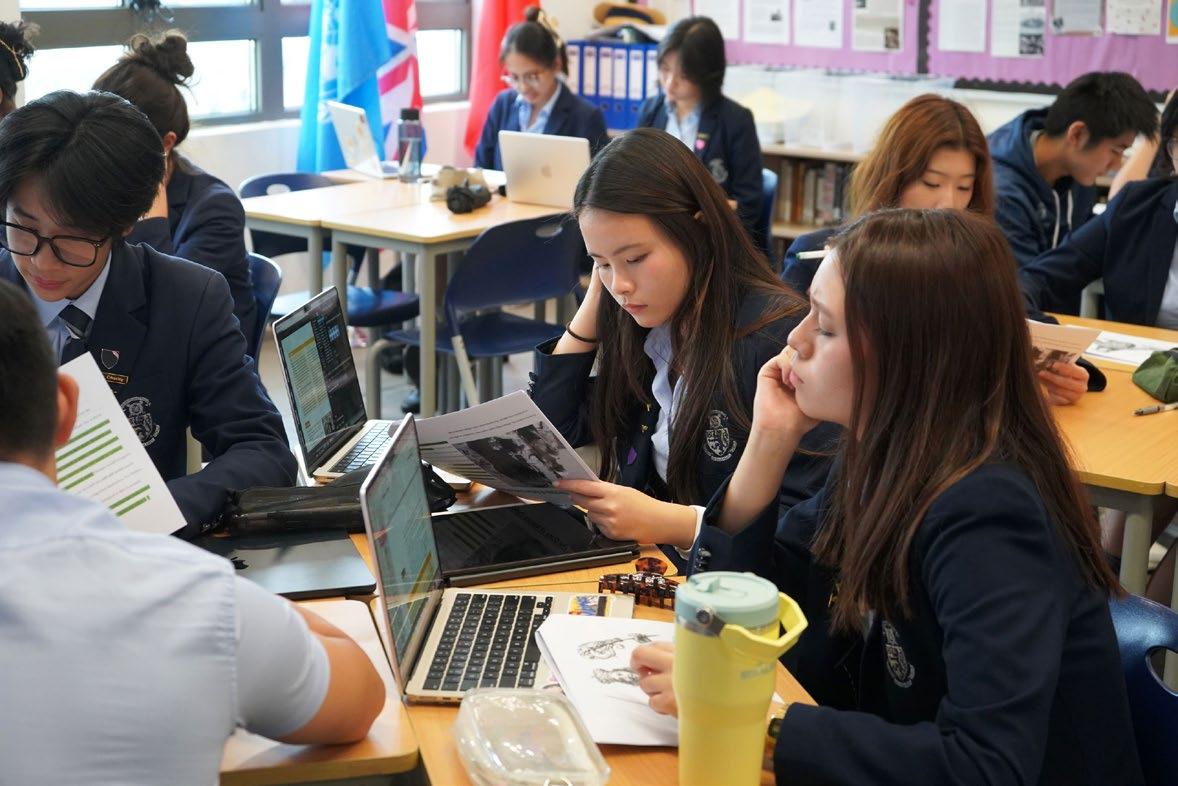
When I arrived at Harrow International School Hong Kong in August 2022, I spent the early weeks waiting for lessons that never quite materialised. The debates I had always taken for granted simply weren’t happening, and my first instinct was to assume the fault was mine.
Teaching A-level politics in Hong Kong turned out to require not a change in what I taught, but a fundamental rethink of how I understood the students. That experience, it turns out, is not unique to Hong Kong: colleagues teaching across the international school network, in Dubai as much as in East Asia, recognise the same patterns, even where the cultural contexts differ considerably.
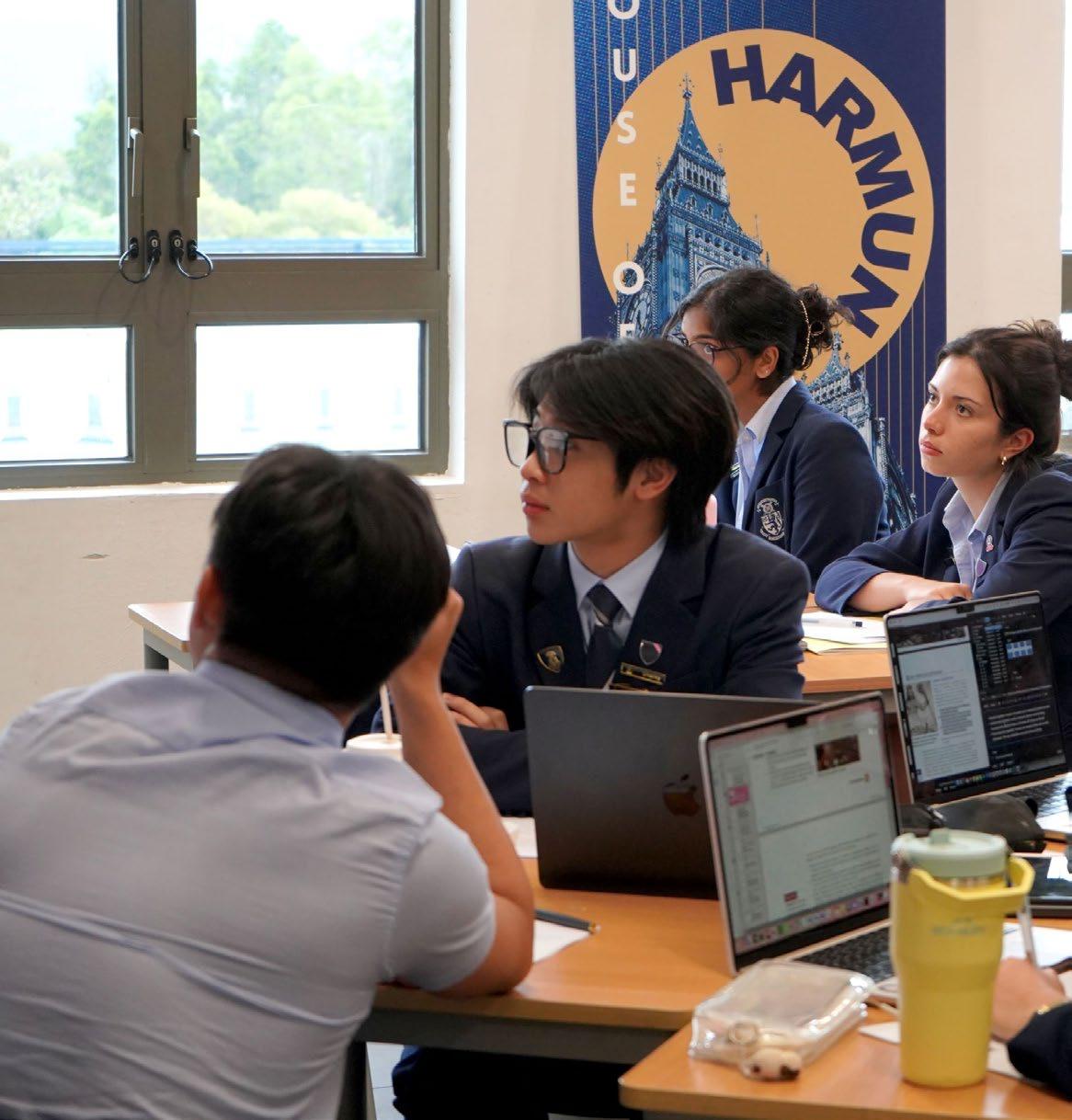
more nationalities throws up challenges you don’t anticipate until you’re in the room, and Dubai is no different.
Most of my students were indigenous Hong Kongers or from mainland China, and it was becoming clear that the adjustment required was mine, not theirs. In the Confucian educational tradition, the teacher is not a neutral facilitator but an authoritative source whose views deserve to be heard before students venture their own. I established clear parameters early, and students quickly got used to me playing devil’s advocate, probing ideas rather than endorsing them. Establishing this classroom etiquette saw classroom discussion flourish, albeit with impeccable politeness.
That experience in Hong Kong, it turns out, is one half of a wider picture. Teaching A-level politics to students from sixty or
Emily Griffin, head of history and politics at Jeremiah College Dubai, knows this as well as anyone. The UK curriculum rests on cultural shorthand that home students absorb unconsciously but which means nothing to international learners. References like “Waitrose woman” or “white van man” land as blank looks until you unpack them, and unpacking them turns out to be far more instructive than simply moving past them. As Griffin puts it, explaining those terms to students unfamiliar with the British class system means confronting the assumptions you didn’t realise you were making. Once you do, the confusion becomes the lesson.
Above almost everything else, what distinguished my history and politics students was attitude. I had come from UK independent schools, where ambition and parental expectation are hardly in short supply. This was something else entirely.
The Australian academic Simon Marginson traces it to a deeply rooted educational tradition in which achievement is a collective family endeavour and intelligence something you build through persistence rather than something you simply have. So did the tutoring culture: private academic support here is not a last
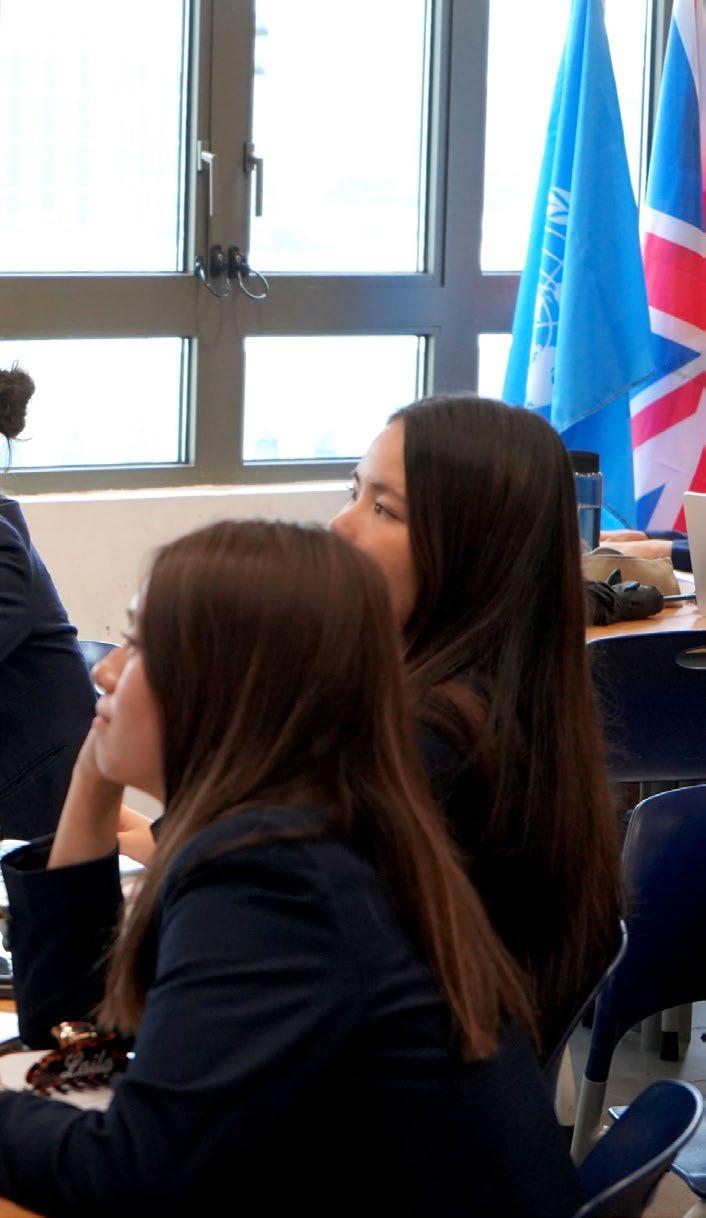
resort but a routine part of how students invest in themselves. That intensity of ambition is not unique to Hong Kong.
Anna Claeys, head of politics at Dubai College, describes a multicultural form group, yet the drive is identical. The cultural roots may differ, but the expression is the same: students targeting Oxbridge, Russell Group and Ivy League US universities, focused on academic success.
The weight of expectation
The flip side of that commitment was stress, and it ran deeper than I had anticipated. A test result here is not a private matter: as educationalist Susan Fang told me in conversation, it travels home and is felt by the whole family. The UK is not immune to that pressure, but out here it cuts deeper. International schools work hard to reduce it, but no pastoral policy fully reaches the cultural current beneath it. Claeys recognises the same phenomenon in Dubai, where students equally “feel the heat of exam pressure”, suggesting this is less a culturally specific trait than a structural one.
That pressure changes what feedback needs to do. Research by Black and Wiliam makes clear that the quality and tone of feedback directly affects how students process it. When the stakes feel familial as much as academic, what students and parents need, alongside reassurance, is an honest strategy for improvement and, occasionally, a realistic sense of what is
“The debates I had always taken for granted simply weren’t happening.”
achievable. I came to understand that partly through research, but mostly through living it. My eleven-year-old daughter attends Harrow HK, and watching her become considerably more Hong Kong about assessment has been one of the most illuminating parts of the experience. She asked for a maths tutor herself, because that is simply what everyone does, and will spend a couple of hours a week on maths and science over the summer. A year ago, it would never have occurred to any of us. That is the power of the culture you immerse yourself in.
Teaching history and politics in a genuinely international context does something that no amount of professional development quite manages: it makes visible the assumptions you did not know you were carrying. Dubai and Hong Kong tell the same story: cultural shorthand that needs unpacking, driven students, and real pressure. Adapting to the students’ culture, rather than expecting students to adapt to us, turned out to be the making of the experience. The classroom we thought we knew how to read turns out to require an entirely different kind of literacy. ◆
David Tuck is head of history and politics at Harrow International School Hong Kong.
• Tweed, R. and Lehman, D. (2002) ‘Learning considered within a cultural context’, American Psychologist, 57(2), pp. 89–99.
• Anderson, J. and Trahar, S. (2009) ‘Towards culturally responsive curricula’, in Trahar, S. (ed.) Teaching and Learning: The International Higher Education Landscape. London: Routledge.
• Huber-Kriegler, M., Lázár, I. and Strange, J. (2003) Mirrors and Windows: An Intercultural Communication Textbook. Strasbourg: Council of Europe Publishing.
• Marginson, S. (2011) ‘Higher education in East Asia and Singapore’, Globalisation, Societies and Education, 9(1), pp. 23–48.
• Black, P. and Wiliam, D. (1998) ‘Assessment and classroom learning’, Assessment in Education, 5(1), pp. 7–74.
‘Training
International school teacher CPD is often top-down and dry – but that needn’t be the case, writes Katie Benson

Prostock-studio/Shutterstock
When I first started teaching around the turn of the century, one of the buzzwords was “engagement.” Children should be engaged.
I bought into this, planning lessons that were highly engaging – children busy, active, occupied. As I gained experience, I realised that engagement was only part of the picture. Children can be engaged in cutting out or colouring, yet not truly learning. Perhaps a better term than “active engagement” would be purposeful engagement. As a school leader, this is what I want to see in classrooms.
There is an irony in teaching: when we support teachers’ professional growth, many of the strategies we hope to develop – active engagement, autonomy, differentiation – are often absent in the training itself. Too often, CPD is one-size-fits-all, top-down, and dry in its delivery.
“Too often, CPD is one-size-fits-all, top-down, and dry in its delivery.”
Of course, there are times for meetings to develop alignment on school priorities or training on aspects of the curriculum. But alongside this, we have tried to take a more creative approach to professional learning in our school.
At the British International School of Washington, we have created Professional Learning Communities (PLCs), under the stewardship of a dedicated professional lead. These are designed and led by teachers on topics they determine themselves. Themes range from aspiring leaders, to AI in the classroom, to concrete maths techniques in Key Stage 2 and 3. Teachers have autonomy to decide what to join, what the focus will be, how they will learn, and how they will share their journey.
Like most schools, we have talented and knowledgeable teachers who are an excellent resource within our building. We all learn so much from our peers. Time is always a challenge, so we try to optimise it by holding regular “sharing great practice” events, where teachers volunteer to present something they have found useful or something they do in their classrooms. Colleagues then choose the sessions they want to attend. These short CPD sessions provide a quick snapshot of

ideas and are not too daunting to lead – a win-win.
Being an international private school, we don’t always have the CPD offerings locally that would be available within a UK local authority. While there is tremendous strength within our faculty, there can still be a belief that “proper CPD” means going on a course. We therefore look for additional opportunities, whether by bringing in speakers to work on a specific area or by creating experiences that feel relevant, engaging, and grounded in practice.
The Festival of Education USA – sister to the popular Festival of Education UK – has been hosted in the Washington DC area for the past three years. As it has grown, the organisers have been keen to explore how it might develop further. Moving the festival to a British international school in the heart of the city felt like a natural next step that also aligns closely with the festival’s ethos of collaboration and professional learning rooted in classrooms. This will be the first time the festival is hosted at our school, and we are delighted to be part of its next chapter. This opportunity resonated strongly with us because of our shared belief that high-quality professional learning should be accessible, relevant, and purposeful. All of our teachers will attend the
festival, and we have adjusted our school calendar to support this. We are also hoping to welcome delegates from across the country and beyond, creating a professional community where ideas, perspectives, and experiences can be shared. The festival is not just about listening, but about learning with and from one another.
We are particularly excited to have Doug Lemov confirmed as a keynote speaker. As the author of Teach Like a Champion and a leading voice in evidence-informed classroom practice, his work has influenced teachers and school leaders worldwide.
Alongside keynote input, workshops will be led by practising educators, reflecting a core strength of the festival: that some of the most powerful professional learning comes from peers sharing what they have tried, what has worked, and what they are still refining. Further details, including opportunities to apply to speak and ticket information, can be found at educationfestusa.com.
We hope this approach enables purposeful engagement for all who attend – adults as well as children. After all, if we believe in inspiring and energising our students every day, why shouldn’t the same be true for teachers’ professional growth? ◆


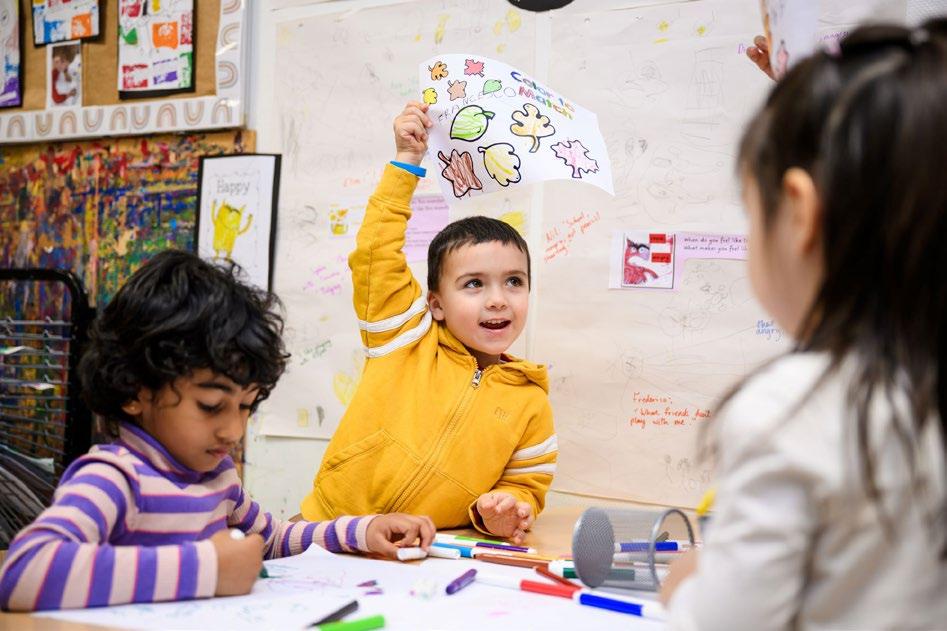
An award-winning programme supporting girls from conflict-affected regions is just one initiative underscoring UWC Maastricht’s values-driven education
What happens when young people from many backgrounds learn side by side every day? At UWC Maastricht, that question sits at the heart of school life.
As part of the global United World Colleges movement, the UWC Maastricht combines the International Baccalaureate with a strong commitment to peace, sustainability and mutual understanding. Learning here is not only about academic
achievement, but about how students grow as people and how they learn to live with differences.
Founded in 2010, UWC Maastricht started with a small international community and has grown steadily into a full continuum IB school, continuously adapting its programmes and support structures as the community expanded.
“Education at UWC
Maastricht is ultimately about relationships,” says Viki Stiebert, head of college.
“When students feel safe to be themselves and curious about others, deep learning becomes possible. That is when education really starts to matter.”
Located in the south of the Netherlands, UWC Maastricht brings together local and internationally mobile families and students who join from around the world for the final years of secondary education.
This mix of over 900 students gives the school its distinctive character. It shapes conversations in classrooms, friendships in corridors and the
way the community responds to events beyond the school gates.
The campus sits on the edge of the historic city of Maastricht, close to nature, (international) institutions and the borders of Belgium and Germany, giving students daily exposure to both local life and a wider European context.
A diverse community by design
UWC Maastricht offers the full International Baccalaureate continuum: Primary Years Programme, Middle Years Programme and Diploma and Career related Programmes. Alongside day education, the
“Living and learning on campus adds a strong sense of shared responsibility.”
school also has a residential programme for older students. Living and learning on campus adds a strong sense of shared responsibility and creates a community that continues well beyond the school day.
Students arrive with different languages, cultural references and educational experiences.
For many, this is their first time learning in such an international environment. In classrooms, this diversity becomes a powerful learning resource. Students encounter new perspectives daily and are encouraged to listen, question and reflect. At the same time, it asks a great deal of staff who work carefully to ensure lessons are accessible, challenging and inclusive for everyone.
Inquiry and perspective are central to learning across the school. Students are encouraged to explore how knowledge is shaped, whose voices are heard and how different viewpoints can exist side by side. These conversations help young people develop curiosity, empathy and critical thinking. Such skills take time and guidance to develop. Teachers create classroom cultures where students feel safe to speak and to disagree respectfully. Learning is structured, so that every student can participate regardless of background or confidence level.
Much of life at UWC
Maastricht happens beyond formal lessons. Student led projects, community service and conferences are a valued part of the school experience.
Students may find themselves organising international conferences, working with local refugee organisations, leading sustainability initiatives on and off campus or talking with peers about global issues that directly affect their own lives. In recent years, the school has become more intentional about how these experiences are shaped. Rather than many separate initiatives, the focus is on projects with clear purpose, strong partnerships and good support. This helps ensure that students can take genuine ownership while projects remain meaningful and sustainable.
One initiative that captures this approach is the Female Empowerment Project. The programme supports girls from conflict-affected regions through scholarships to the school, combined with
academic guidance and wellbeing support.
The school aims to offer scholarships to at least five to ten girls each year, and has already supported 53 girls through full or partial scholarships.
What began as a small network has grown into a strong community effort involving students, staff, donors and other partners.
This work recently received international recognition when UWC Maastricht was awarded the Diversity, Equity and Inclusion Award at the Tes Awards for International Schools. The judges described the project as “an outstanding initiative to empower women and harness the resources of the school and its community for global impact.”
“For us, this award is not about one programme or one moment,” says Sandra van den Tillaard, director of advancement. “It recognises years of shared commitment from students, staff, families and partners who believe that education can genuinely remove barriers and create opportunity.”
Responding to challenge and change
Like many international schools, UWC Maastricht
does not exist in isolation from the world. Global events and conflicts often affect students directly through their families and personal histories. This can make world news feel very close to home. As a result, conversations about international developments often move naturally from the news into classrooms, assemblies and student-led initiatives, allowing learning to respond to real and immediate global contexts.
In response, the school places strong emphasis on care and shared responsibility. Support comes from many directions: teachers, tutors, pastoral teams and peers. Wellbeing is treated as part of everyday school life, shaping how students learn, connect and develop.
As UWC Maastricht continues to grow and develop, the school aims to strengthen teaching practice, nurture student wellbeing and deepen connections with the local region. It continues to learn from experience, adapting while staying true to its values. ◆
UWC Maastricht is in Maastricht, The Netherlands.

Irena Barker talks to David Tongue about a fascinating career that has taken him from Spain to the Middle East via the Falkland Islands
Clearly not shy of adventure – or one to waste time – David Tongue jetted off to his first international school geography teaching job in 2004, just days after his wedding.
The former Watford Grammar pupil and Loughborough University graduate was delighted with his role at the renowned Runnymede College in Madrid, and stayed over six years, eventually becoming curriculum director.
But Tongue, a former county running champion, is clearly not someone content to stagnate, and his next posting – to the Falkland Islands – provided the kind of CPD most leaders can only dream of.
As headmaster of the senior school on the islands, he was also made director of education on the archipelago, overseeing up to 20 schools, some in incredibly remote locations.
Directly reporting to the legislative assembly, he also got the chance to think about educational policy at the national level for the first time.
“There was something about the remoteness and adventure and the role was fascinating – I was very young at the time,” he says.
“It was incredibly exciting, but it coincided with quite a lot of events,” says Tongue, who was there in the run-up to the 2013 referendum on the islands’ status as a British Overseas Territory.
“There was a lot of media focus on the islands,” he says, “The South American nations, with the exception of Chile, had blockaded the islands so it was very difficult to get on and off. You had to go
through Ascension Island on a military flight to leave.”
As it was a role limited to two years, Tongue swapped the excitement of the Southern Atlantic for a six-year stint at Brighton College International, founding its schools in Al Ain and Bangkok.
Working in the for-profit sector has been vital for sharpening his commercial awareness, he says, even though he now prefers to work in not-for-profit schools such as Doha College.
“Having that commerical grounding is really really important,” he says.
In 2019, he opted for the glamour of St George’s British International School in Rome, only to be met with another rather intense opportunity for professional growth – in the shape of the Covid-19 pandemic.
“Italy was the epicentre of that for a period, it was the first country outside China to lock down, it really did feel like you were in the eye of the storm.”
was incredibly instructive too, he says.
He adds: “That academic depth of getting into the nuts and bolts of what leadership is and what management is, I certainly found to be invaluable and I always recommend it to people I work with.”
He also counts working as an inspector for the National Association of British Schools in Spain, early on his career, as “really fundamentally useful when I did become a head”.
He now sees all these experiences as excellent preparation for his latest role as head of the 3,000-student Doha College in Qatar. He took the role in August 2023, moving there with his wife and three children, who all attend.
“There was something about the remoteness and adventure and the role was fascinating.”
It was in 2020 that Tongue became more visible on the wider international scene, becoming a non-executive director at the Council for British International Schools (COBIS), a role he embraces as a careerinternationalist.
But Tongue is also keen to point out that it was not just his in-role challenges that have helped him develop as a school leader. His masters in educational leadership
When the US and Israel attacked Iran in March this year, a host of peaceful and prosperous Gulf nations, including Qatar, found themselves under attack by missiles and drones from Iran.
Airports were shut, families fled and the whole region and its education system were thrown into uncertainty.
While Doha escaped the worst, exams were cancelled and the conflict has thrown up challenges for everyone.
The college now has pupils on two assessment routes: those who had already sat modules who will receive extrapolated grades, and those who will have a portfolio,
“It’s a really compelling region to work in education.”
including in-house assessments, submitted to exam boards.
“What it’s meant for the majority of our pupils is they’ve effectively sat all of the exams but in a much shorter time frame, with much less preparation for it, during a period when they’ve just been through what many consider to be quite a stressful experience,
“So the fact that they’ve done it with such positivity, such stoicism, is a real credit to them – I’m incredibly proud of them and of course the teachers,” says Tongue.
In Doha, he says, pupils could technically have sat their exams, but the decision to cancel was, on balance, “the right decision”, given the levels of anxiety at the time and the pupils trapped in overseas locations.
They were, as it happened, able to get back much more quickly than anticipated, but “hindsight’s a wonderful thing”, says Tongue, whose Year 13 son has had his A-levels disrupted by the crisis.
He says that while some schools in the region have struggled, Doha has been less affected by pupil and staff turnover issues due to the conflict.
It is seen as a more a family-friendly destination where people tend to take up longterm work.
He insists that Qatar has lost nothing of its embrace of innovation, something that attracted him to work there in the first place.
He says: “There’s such a drive to diversify away from oil, they put a huge amount of investment into start-ups, into enterprise, it just makes it a really compelling region to work in education.
“If you’ve got an idea, if you’ve got something you would like to introduce, it’s so much easier to get the funding for it and interact with people who might like to be involved.”
And despite the strains of recent conflict, Tongue is driving technical innovation at Doha College, something that has been made easier, cheaper and faster thanks to the recent availability of artificial intelligence.
“Time from idea
to development to launch is just coming down and down and down,” he says.
One project involves the development of a digital platform – “The Staff Hub”–which helps staff to prioritise incoming messages and to access information on everything from induction programmes to social events.
“It’s basically taken an area that was causing frustration for the team and within a couple of months we’ve been able to build a project that totally solves that problem.”
The 3,000-pupil school is also trialling its in-house automated platform to manage cover, which has been programmed to allocate staff “in the fairest possible way prioritising pupil experience”.
Tongue says: “There are human fail-safes as well – the cover superviser will review what the algorithm is creating to ensure there are no points of unfairness within a cold algorithm.”
At events hosted by the school, Tongue says he has been surprised by how reactive schools are becoming to technological developments and threats.
But he recommends that schools explore creating their own bespoke tools rather than taking them off-the-shelf.
He adds: “Almost every school I visit is investing a huge amount of money in technical products that aren’t meeting their requirements.
“Almost all are relying on commercial products that
are by their very nature one-size-fits all.”
The school is also continuing to innovate on its curriculum, particularly developing skills for the future such as debating and oracy.
Evidence that the school might already be strong in this area comes in the shape of former head girl Arwa Elrayess, who was elected speaker of the Oxford Union in 2024.
It is clear that Tongue has a lot to be proud of at Doha College, not least its pupils and staff who have soldiered through some difficult times of late.
And his faith in Qatar’s ability to bounce back is strong.
“The situation is still somewhat fluid”, he says, “But in the medium to long term, Qatar will exit this situation in a stronger position than it entered it.”

It’s a typical show of optimism from an international school leader who has navigated choppy waters before. ◆
Hayley Mintern explains why international school leadership is now a strategic investment question
International schools are no longer simply growing, they are institutionalising. Across the sector, rising demand, group expansion, investor interest and more sophisticated governance are reshaping what successful schools look like.
What was once a market defined largely by entrepreneurial founders, distinctive school identities and relatively autonomous operating models is becoming more structured, more accountable and more operationally complex.
For boards, owners and investors, this is a positive evolution. Greater rigour can support scale, strengthen resilience and improve long-term value creation. But it also raises a more strategic question: does the leadership capability at the top of the organisation match the complexity of the environment it now operates in?
The expectations placed on heads, principals and directors are materially different from those of even a decade ago. Educational credibility remains essential, but it is no longer enough on its own. Leaders are increasingly expected to navigate organisational complexity, lead transformation, engage confidently with boards and investors, interpret performance data, understand commercial drivers and build cultures that can thrive within more sophisticated operating structures.
“The expectations placed on heads, principals and directors are materially different from those of even a decade ago.”
At Anderson Quigley, we see this shift clearly in leadership appointments across the market.
Boards are not simply looking for strong educators, they’re looking for leaders who can translate vision into organisational performance, balance mission with sustainability and preserve the character of a school while operating effectively within increasingly complex systems. That is why the professionalisation of the sector is not just changing how schools are managed. It is redefining what credible leadership now looks like.
Historically, many international schools were led by highly visible educational figures whose success rested on academic leadership, community trust and the strength of the school proposition itself. Those qualities still matter deeply, but they no longer tell the whole story.
Today, leaders are often expected to operate across multi-school groups, manage post-acquisition integration, respond to fee sensitivity, oversee digital transformation and maintain educational quality while delivering against growth and performance expectations. In that environment, leadership becomes not only an educational question, but an organisational and investment one too.
Several forces are driving this shift at once:
• consolidation among school groups
• increased private equity and institutional capital
• rising expectations from governing bodies
• greater regulatory scrutiny
• more sophisticated use of technology and data
• intensifying competition in key growth markets. Taken together, these forces are moving the sector towards a more institutional model.
As schools become part of larger systems and networks, leaders must work within frameworks that demand consistency, scalability and measurable outcomes without losing sight of culture, trust and educational quality. This demands a shift in mindset: from leading a school as a standalone institution to leading an organisation within a wider system.
The capability gap boards and investors cannot ignore
One of the most significant questions facing the sector is whether leadership development is keeping pace with organisational change. In many cases, it is not.
Many experienced school leaders have progressed through academic and operational pathways that did not require deep exposure to strategic transformation, financial planning, enterprise risk, organisational design, investor relations or data-led performance management. Yet these capabilities are now central to the leadership brief in many international schools.
This matters because leadership quality is increasingly a determinant of whether growth ambitions can be converted into long-term institutional success. A strong school proposition can create momentum, but without the leadership capability to manage complexity, performance can stall quickly.
The leaders who stand out now are those who combine educational credibility with organisational sophistication. They understand that educational outcomes and operational excellence are not competing priorities; in the strongest schools, they reinforce one another.
So, what are the leadership capabilities that will define the next generation?
Systems thinking: Future leaders must be able to see how staffing, enrolment, curriculum, technology, reputation and investment decisions interact across the whole organisation
Strategic change leadership: Transformation is becoming a constant rather than an exception. Whether integrating a newly acquired school, implementing new technology, reshaping structures or responding to changing market conditions, leaders need to guide organisations through change while sustaining trust, clarity and momentum.
Commercial acumen: Commercial understanding is now part of leadership credibility. This is not about diluting educational purpose; it is about ensuring that educational ambition is supported by a sustainable model, disciplined decisionmaking and a clear understanding of the drivers of growth, risk and resilience.
Data and evidence-based decision-making: The volume of data available to school leaders has never been greater, but the differentiator lies in how effectively it is used. The ability to interpret information, identify
patterns and make better decisions on enrolment, staffing, outcomes and investment is becoming a core leadership capability.
Stakeholder influence: International school leaders now operate in a far more complex stakeholder environment. Boards, owners, investors, parents, regulators and staff each bring different priorities, and success depends less on authority alone than on influence, communication and the ability to align competing expectations.
Talent leadership: In a sector where people remain the greatest differentiator, attracting, developing and retaining exceptional talent will continue to define organisational success. The strongest leaders treat succession planning, leadership development and culture-building not as secondary priorities, but as strategic assets.
As organisations become more sophisticated, the importance of effective leadership only increases. The schools and groups best positioned to succeed will be those that balance operational discipline with strong culture, trusted relationships and a clear educational purpose.
Those organisations that invest early in defining and developing this broader leadership capability will be best placed to build resilient institutions, deliver sustainable performance and shape the future of international education. ◆